1956 First Edition
THE THIRD EYE
By T. Lobsang Rampa [Cyril Henry Hoskin]
KEY DETAILS
Condition: Very Good
Format: Hardcover, 8vo; approx. 220 x 140 mm
Published By: Secker & Warburg, London, 1956
Language: English
Provenance: A large, flamboyant ink ownership inscription appears on the front free endpaper, apparently reading 'Olive Noble', although the surname remains uncertain. The inscription features an unusually elaborate initial flour...
Collation: 256 pp., with black-and-white illustrations
Dust Jacket: Yes, Very Good
SKU: BTETM0001532
Shipping Info: Approximate Package Dimensions H: 12.5, L: 30, W: 25 (Units: cm), W: 2Kg
Tracked Shipping, Insurance Coverage as per Customer Request
DESCRIPTION
The Third Eye
The Autobiography of a Tibetan Lama
First edition, first impression of The Third Eye (London: Secker & Warburg, 1956), the original worldwide publication of T. Lobsang Rampa's controversial bestseller, retaining its original illustrated dust jacket, unclipped and priced at 18s. net.
The narrative follows the supposed early life of Lobsang Rampa in Tibet, his entry into a Buddhist monastery, his religious and spiritual education, and his initiation into extraordinary mystical disciplines. Central to the account is the opening of the 'third eye', described as an operation intended to awaken clairvoyant perception and enable the observation of spiritual phenomena beyond ordinary human sight.
The book contains black-and-white illustrations by Tessa Theobald, who also designed the distinctive original dust jacket.
Although initially presented as an authentic autobiography, the work subsequently became the subject of considerable controversy. Investigations revealed that its author was Cyril Henry Hoskin (1910–1981), an Englishman with no established connection to the Tibetan monastic life he described. Hoskin nevertheless maintained that the spirit of the Tibetan lama Lobsang Rampa had entered his body, enabling him to recount experiences from another existence.
Despite the exposure of its questionable authorship, The Third Eye continued to attract an international readership, becoming one of the best-known works associated with twentieth-century popular occultism, reincarnation and Western interpretations of Tibetan spirituality.
The first edition is of particular historical interest for its original presentation of the narrative as a genuine autobiographical account, including the publisher's foreword written before the subsequent controversy.
Historical Significance
Published in 1956, The Third Eye occupies an unusual position in twentieth-century esoteric literature. Its combination of purported Tibetan autobiography, clairvoyance, spiritual initiation and sensational mystical experiences captured the imagination of a substantial Western readership.
The revelation of its author's true identity transformed the work into one of the more remarkable literary controversies of the period. It remains an important example of how representations of Eastern spirituality were adopted, transformed and popularised within Western occult and New Age culture.
A first edition of a significant and controversial work of modern esotericism, complete in its original, unclipped illustrated dust jacket.
PROVENANCE
A large, flamboyant ink ownership inscription appears on the front free endpaper, apparently reading 'Olive Noble', although the surname remains uncertain. The inscription features an unusually elaborate initial flourish.
CONDITION, COLLATION & COPY NOTES
COLLATION
256 pp., with black-and-white illustrations
A Very Good copy in the original publisher's brown cloth, with gilt lettering against a red spine panel. Both boards are firmly attached, the internal hinges are sound, and the binding remains secure.
The text is complete through page 256. The pages are generally clean, with some age-related toning and minor discolouration consistent with the book's age.
The original illustrated dust jacket is present and retains its printed price of 18s. net to the front flap. The jacket exhibits general rubbing, edge wear, creasing and small tears, particularly around the spine extremities. It has not been price-clipped.
An attractive and structurally sound copy of this notable first edition, retaining its original dust jacket.
Please see Photos as part of condition report.
REFERENCES
OCLC 2080609
CiNii Books BA63564864
Open Library OL22104906M
See also Donald S. Lopez Jr., Prisoners of Shangri-La: Tibetan Buddhism and the West (1998), pp. 86–113.
AUTHOR BIO
T. Lobsang Rampa (1910–1981) was the pseudonym of Cyril Henry Hoskin, an English author born in Plympton, Devon, who achieved international fame with The Third Eye (1956). Presented as the autobiography of a Tibetan lama, the book became a bestseller before a 1958 investigation exposed Hoskin's true identity and established that he had never visited Tibet. Hoskin maintained that his body had been inhabited by the spirit of a Tibetan lama, a claim he continued to defend throughout his life. Despite the controversy, he published numerous further works on mysticism, reincarnation and occult philosophy, becoming an influential figure in the development of popular Western esotericism. He died in Calgary, Canada, in 1981.

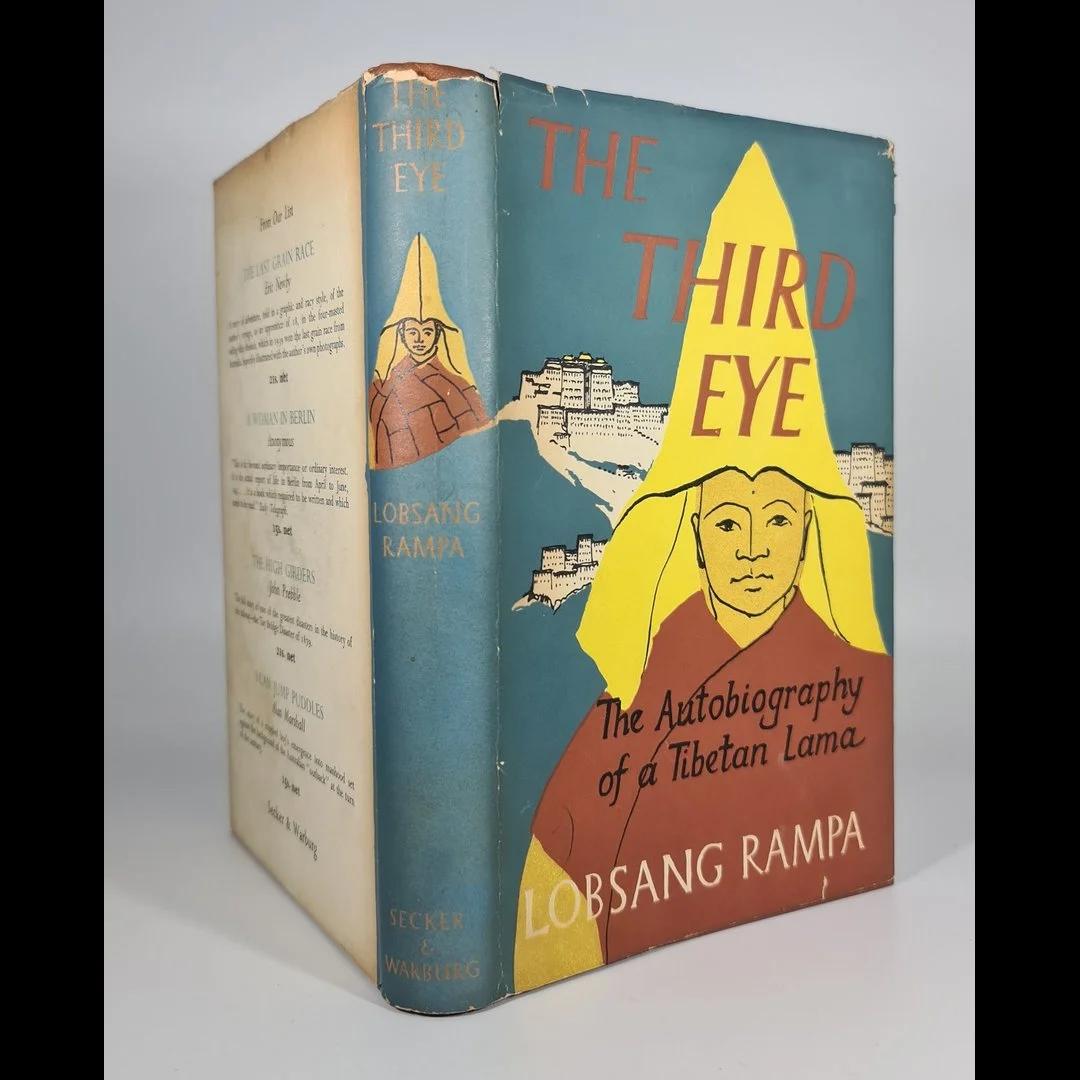 Image 1 of 16
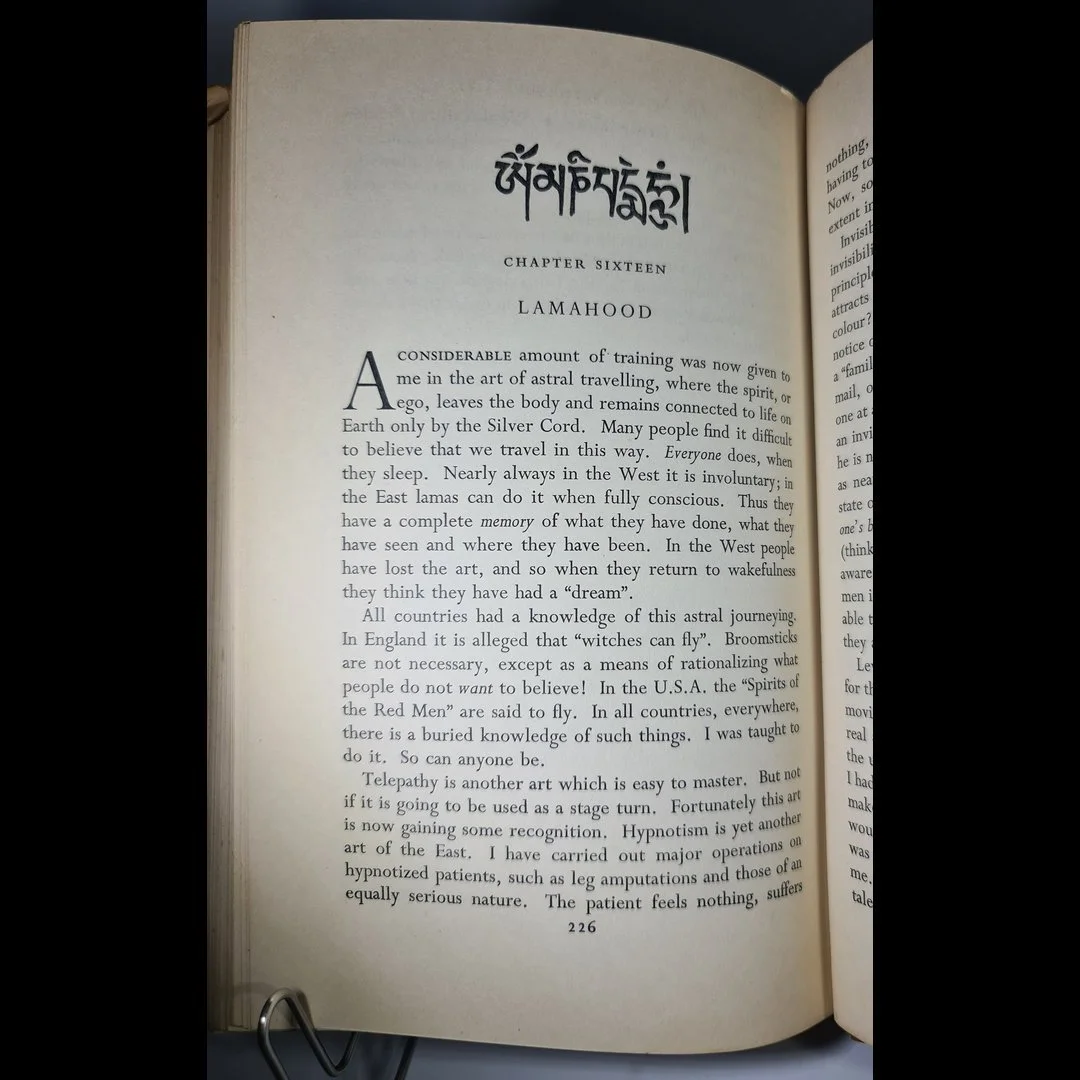 Image 2 of 16
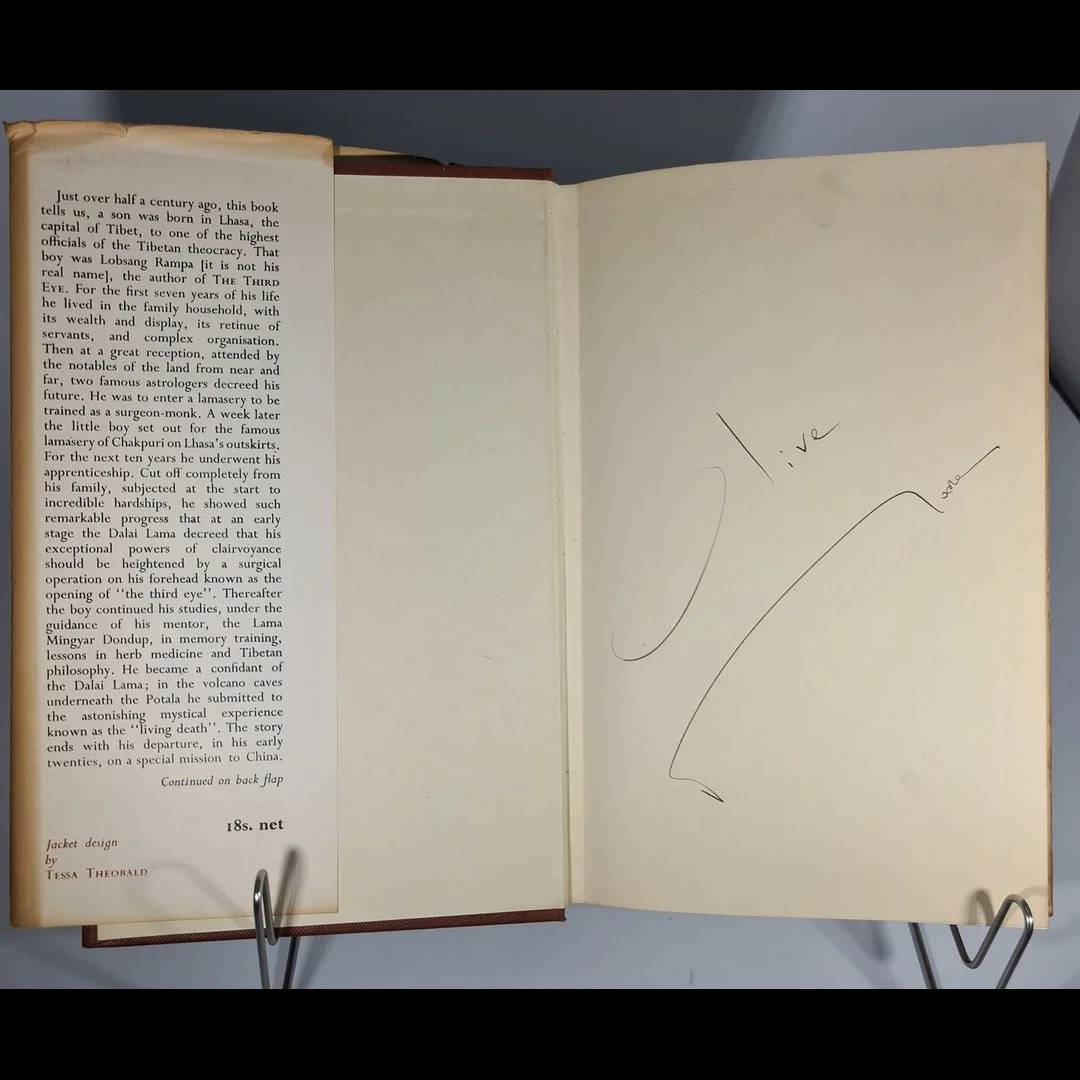 Image 3 of 16
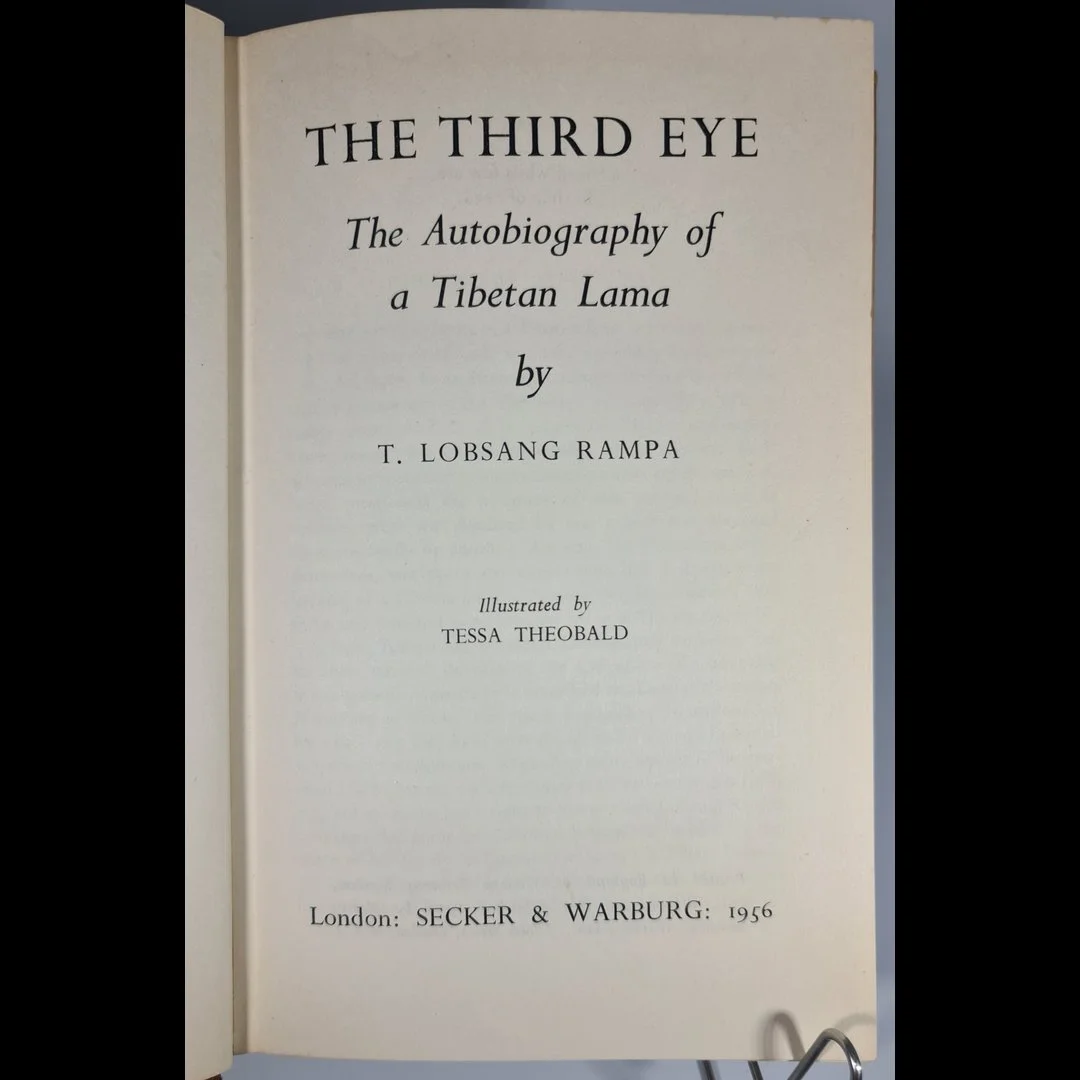 Image 4 of 16
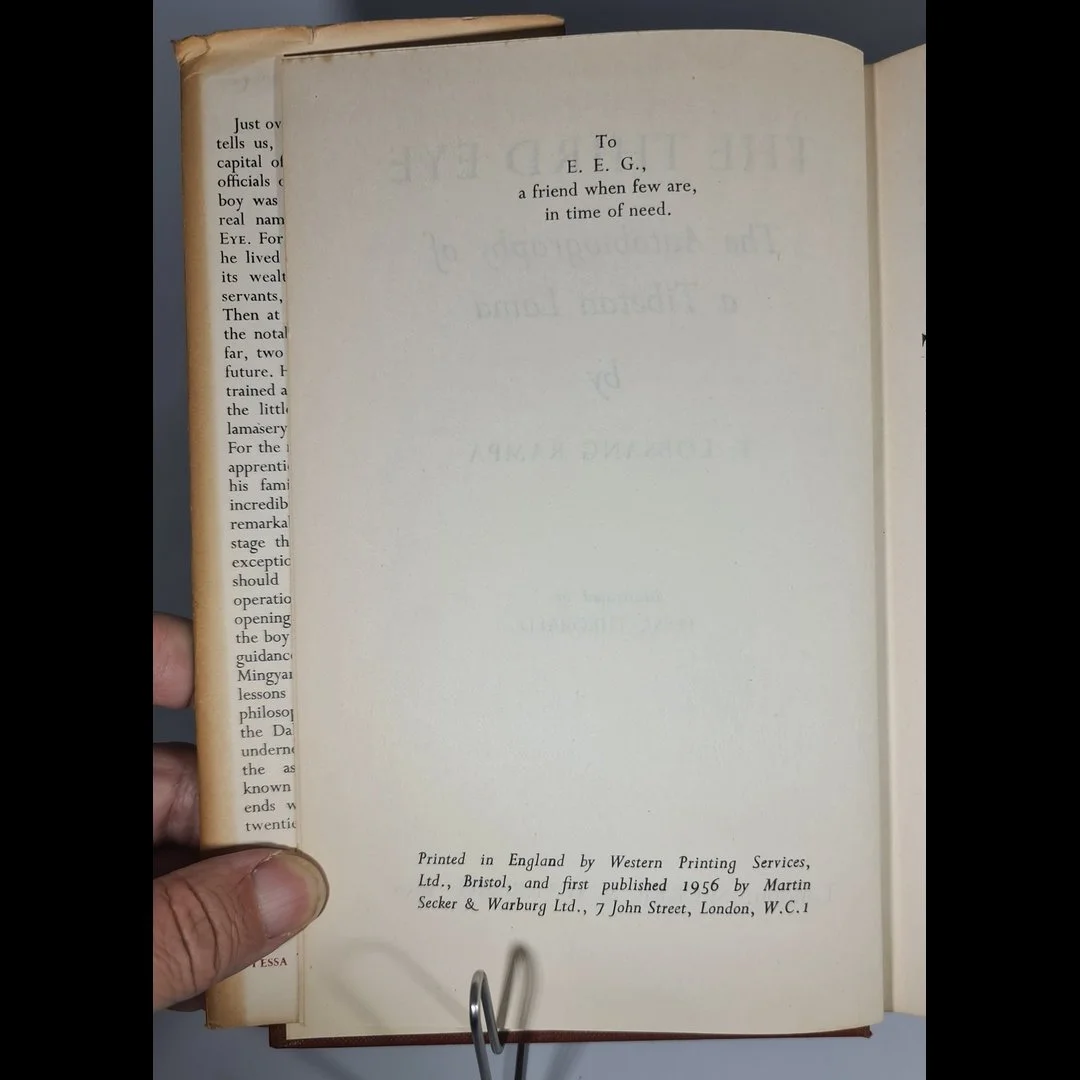 Image 5 of 16
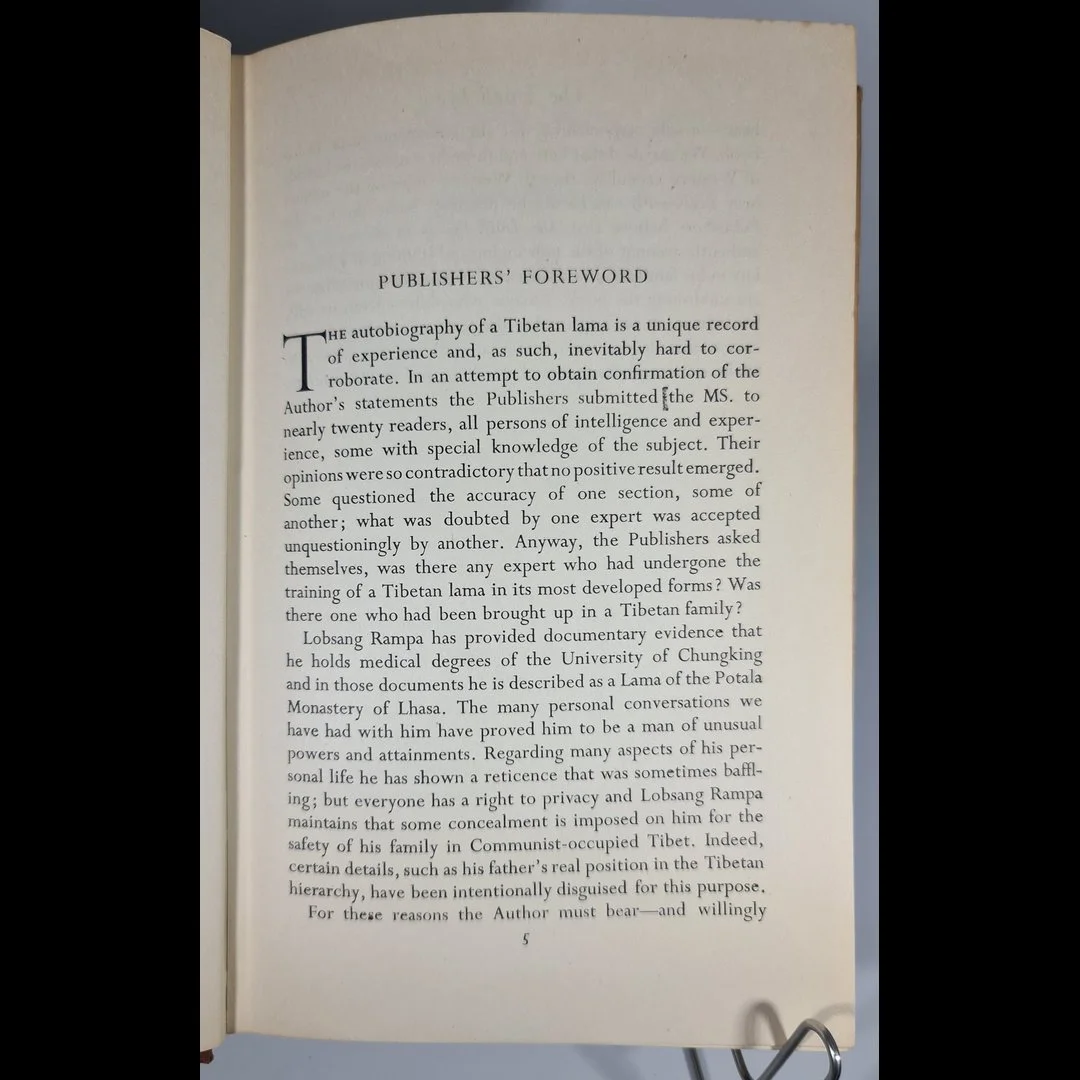 Image 6 of 16
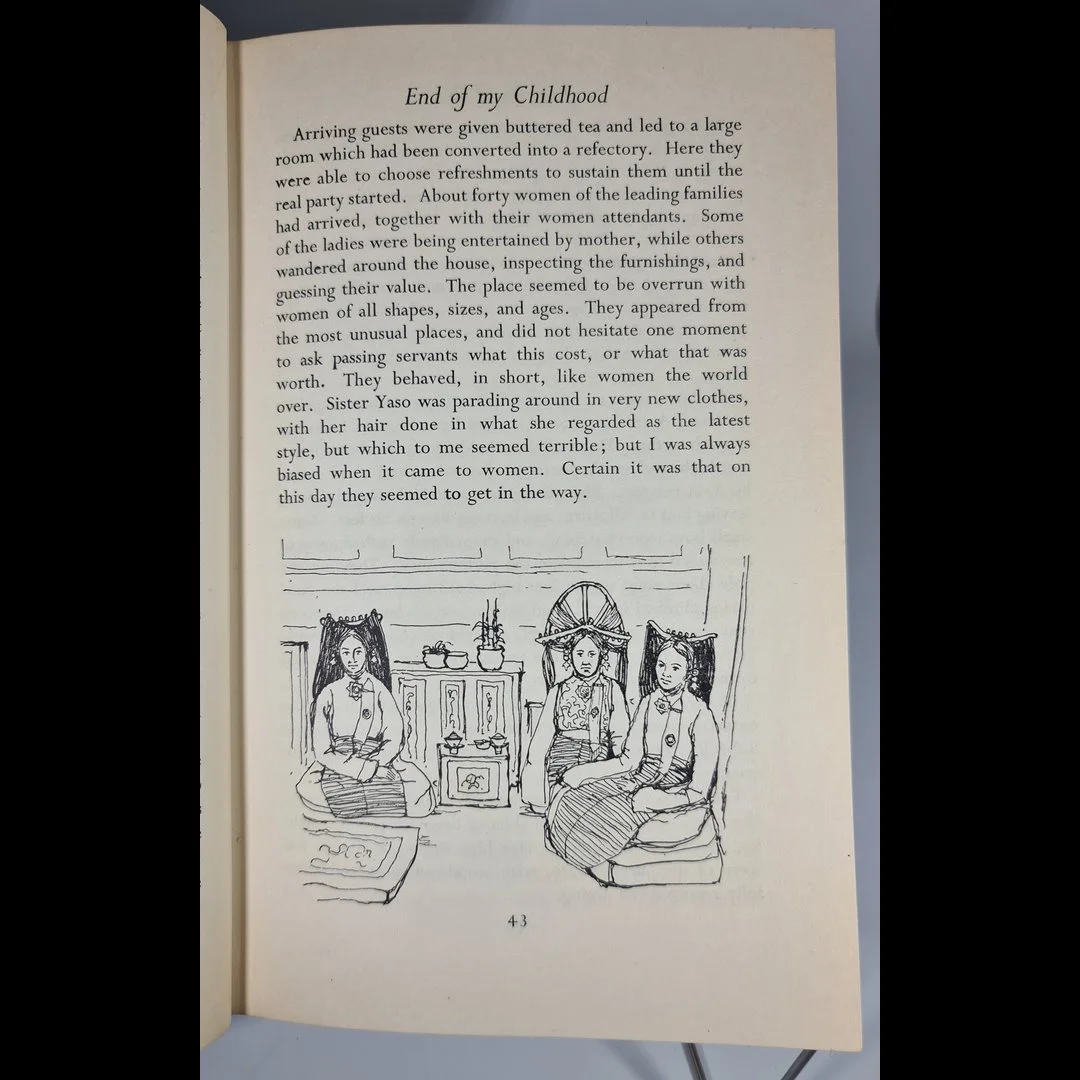 Image 7 of 16
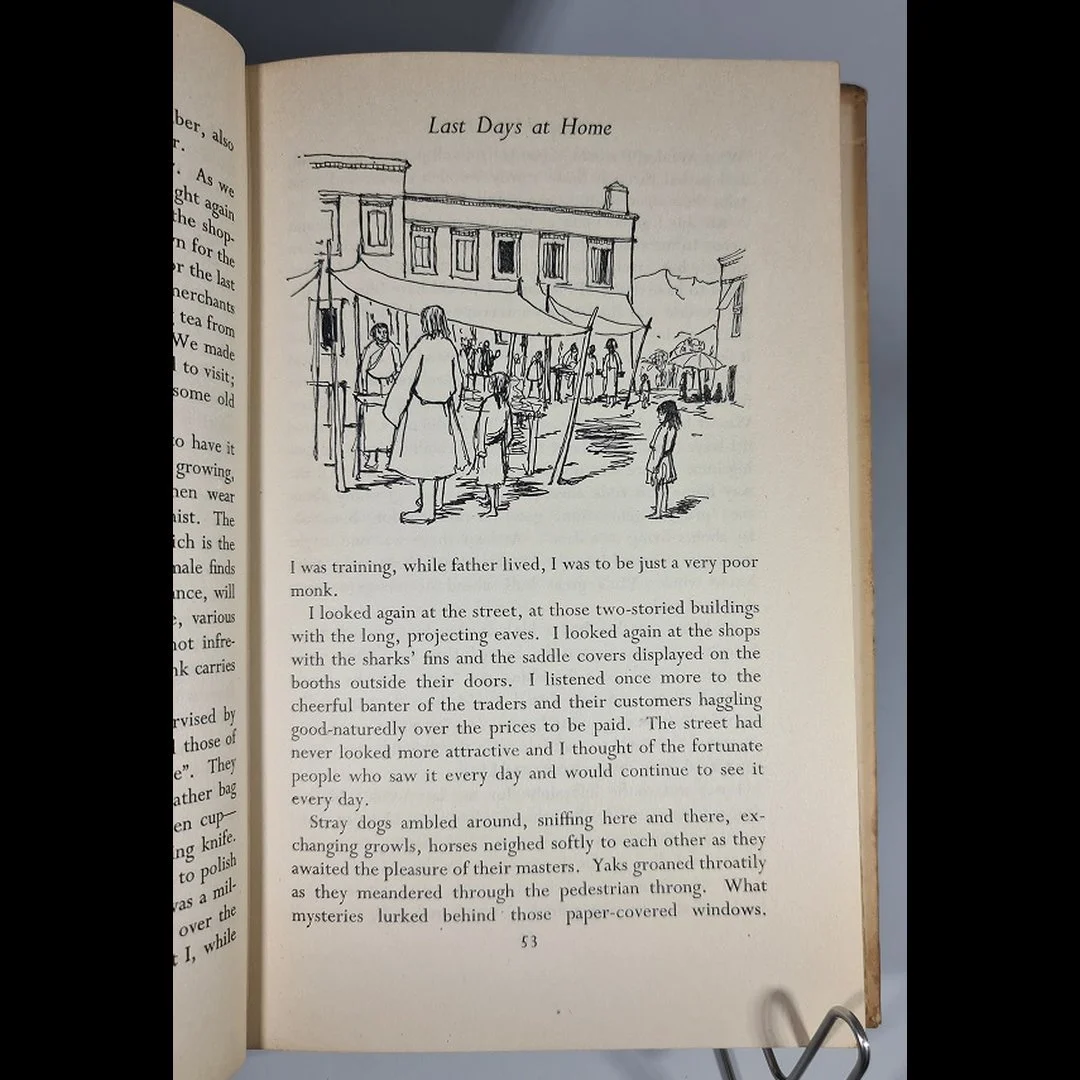 Image 8 of 16
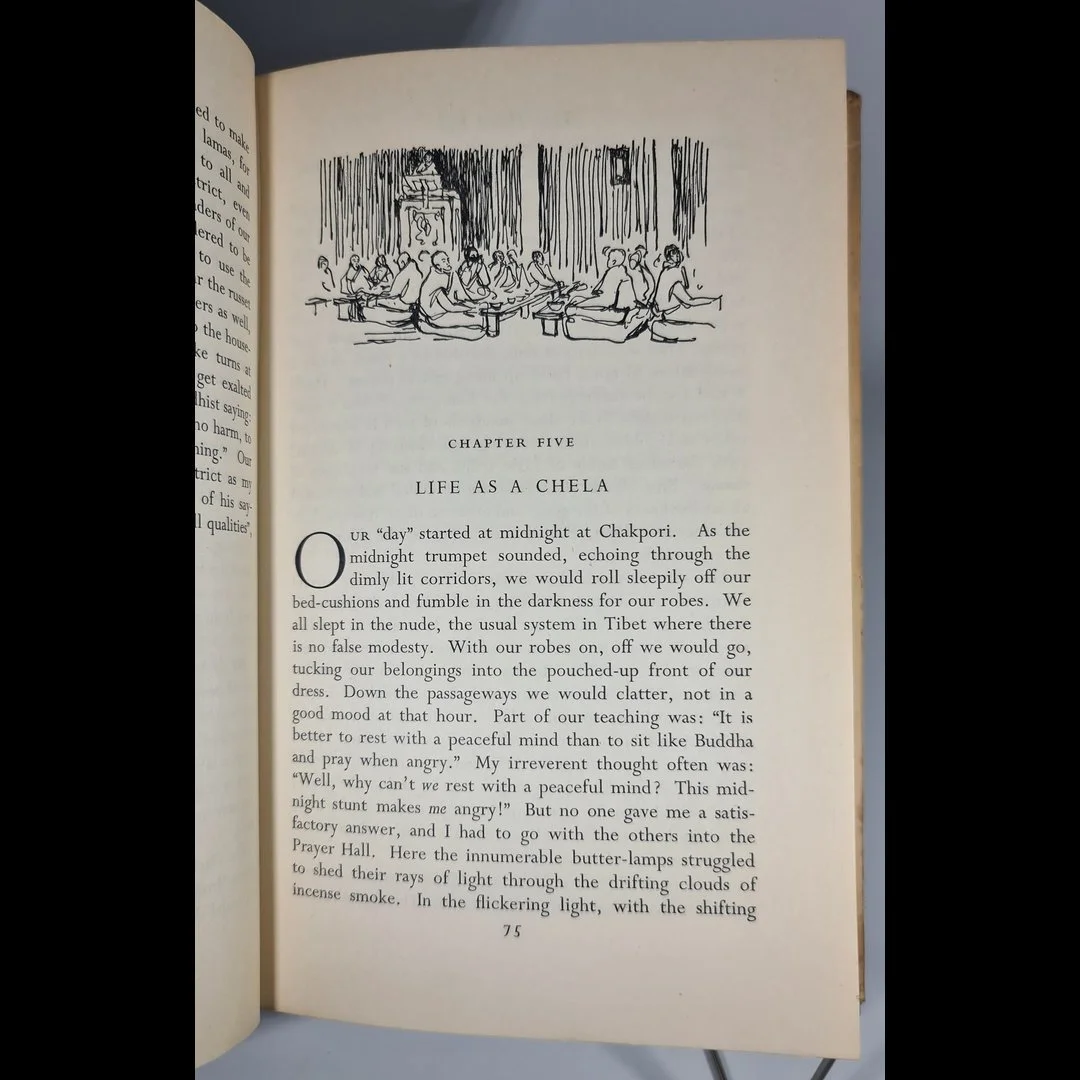 Image 9 of 16
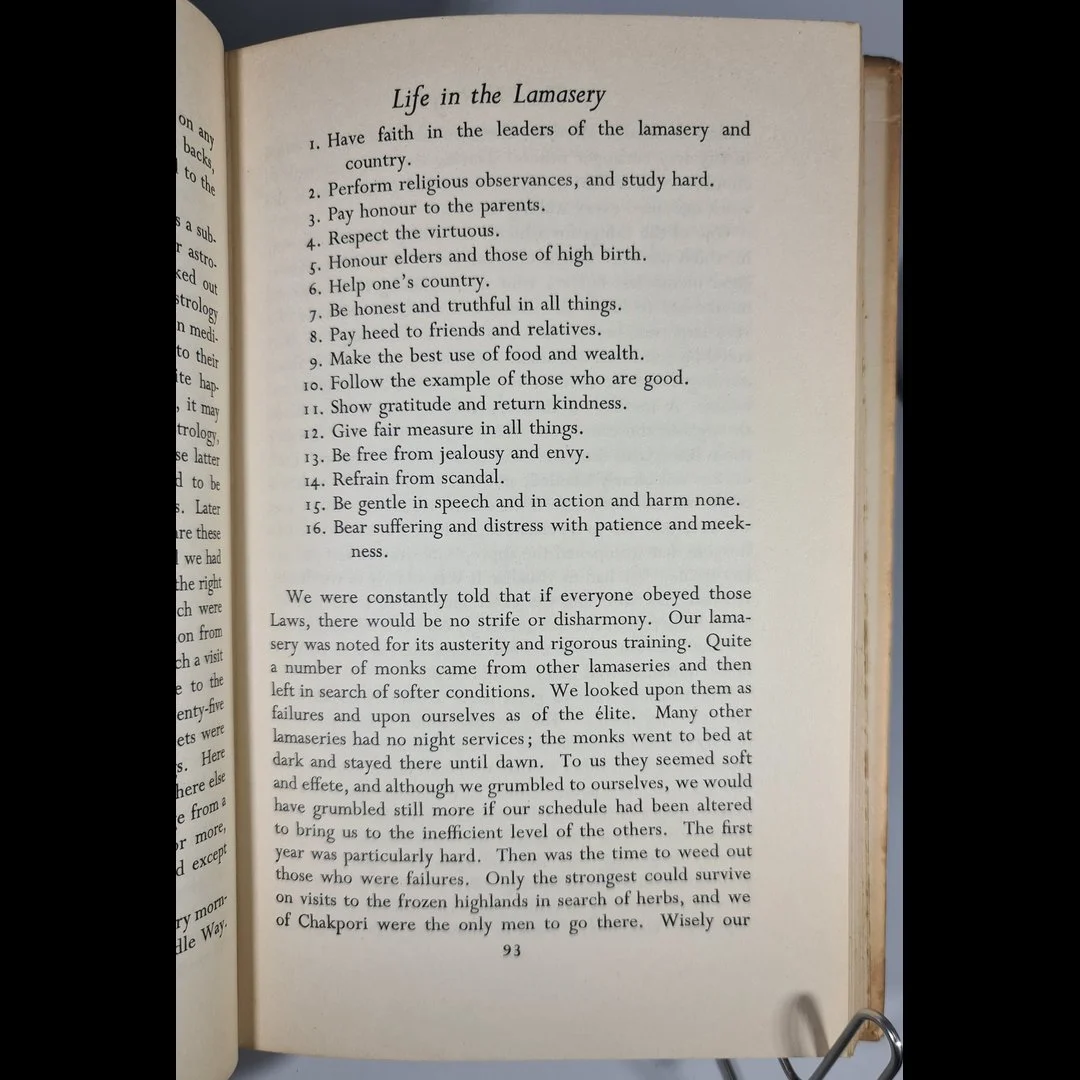 Image 10 of 16
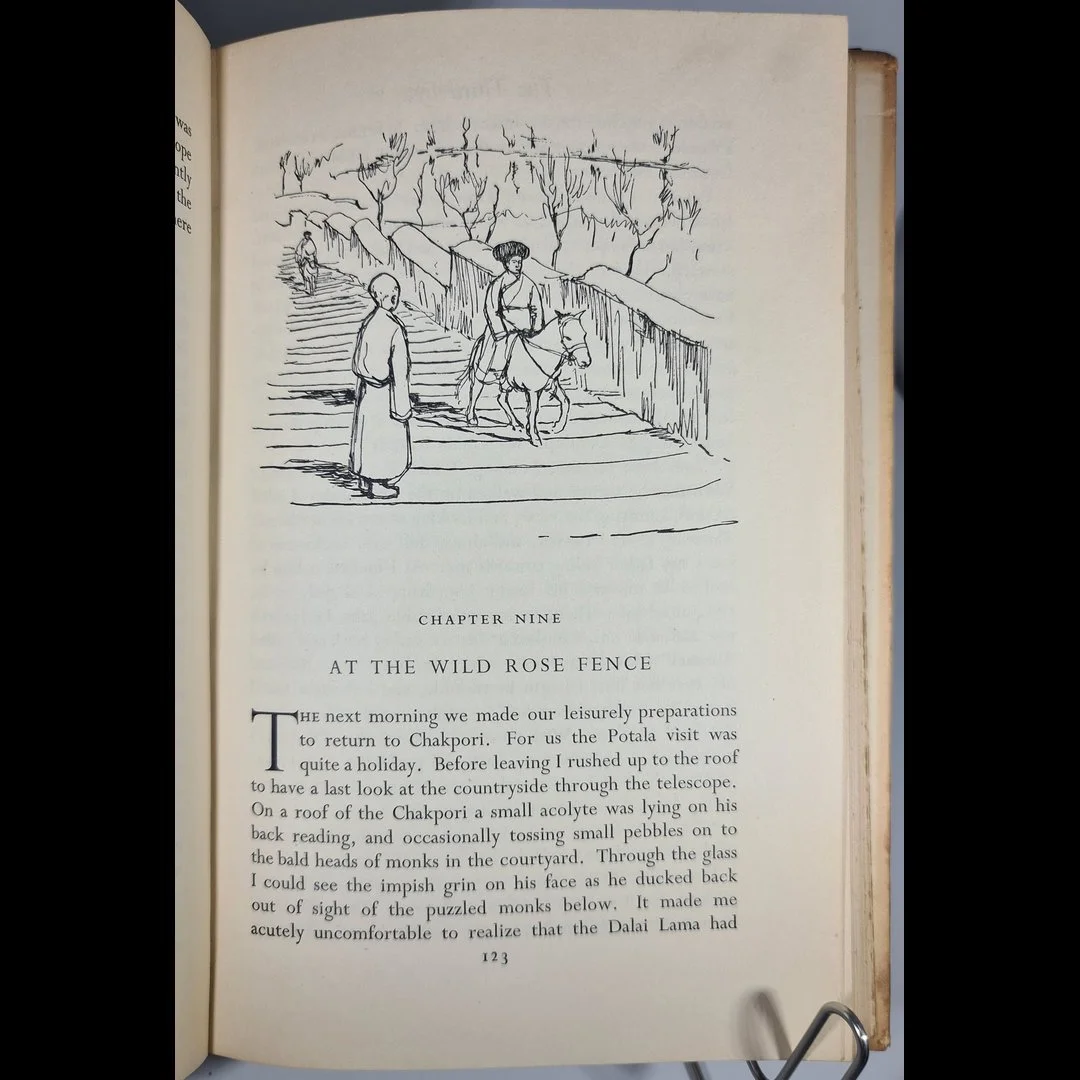 Image 11 of 16
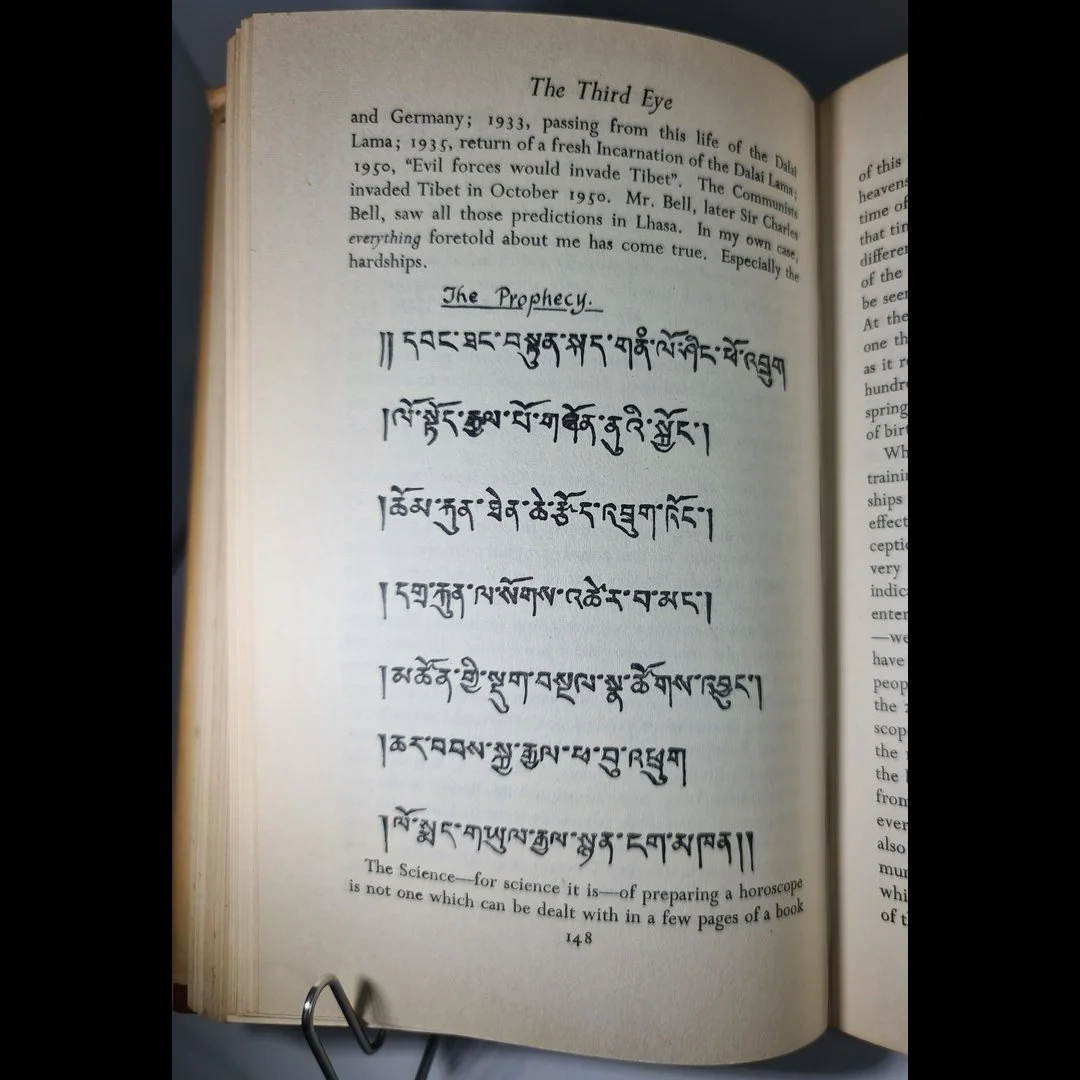 Image 12 of 16
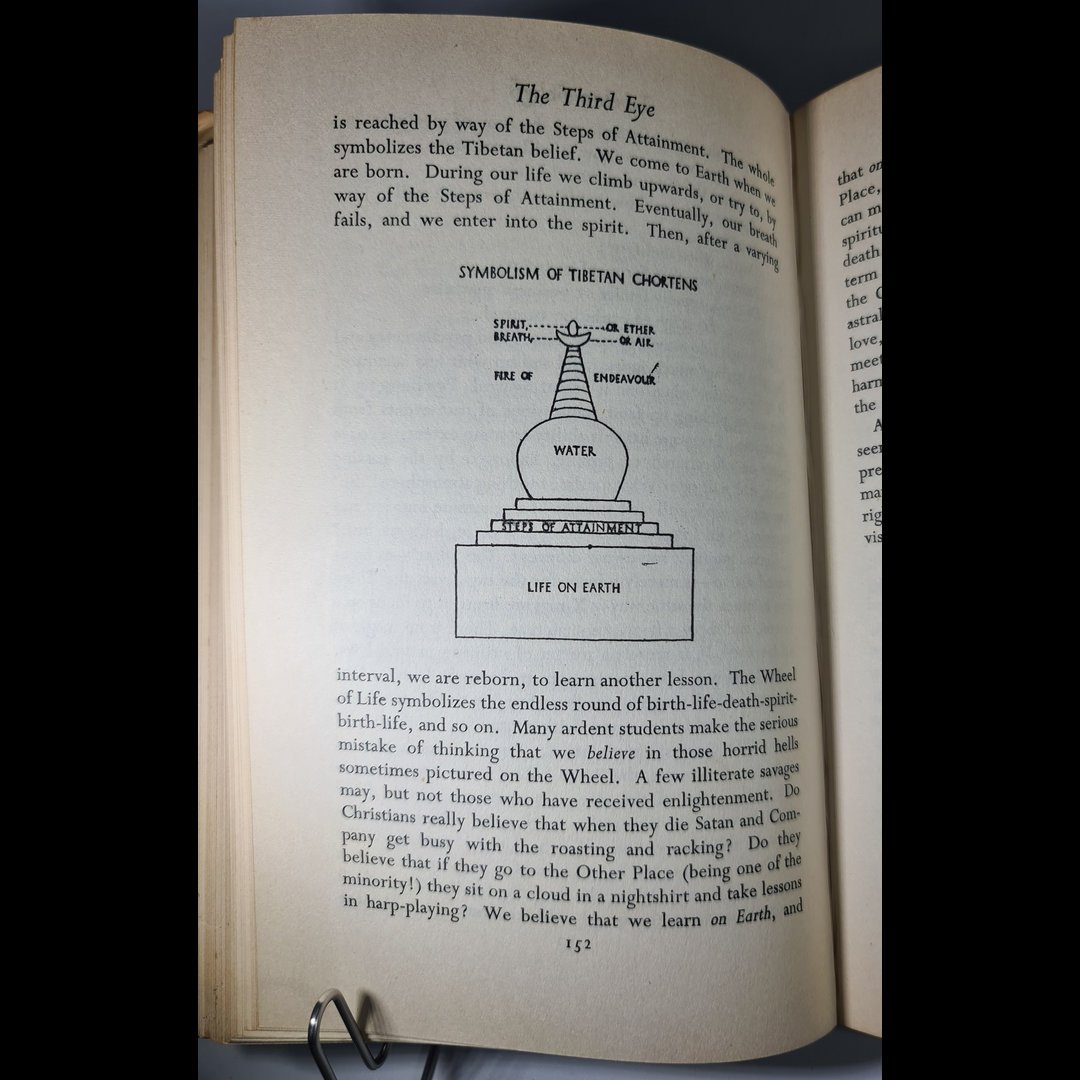 Image 13 of 16
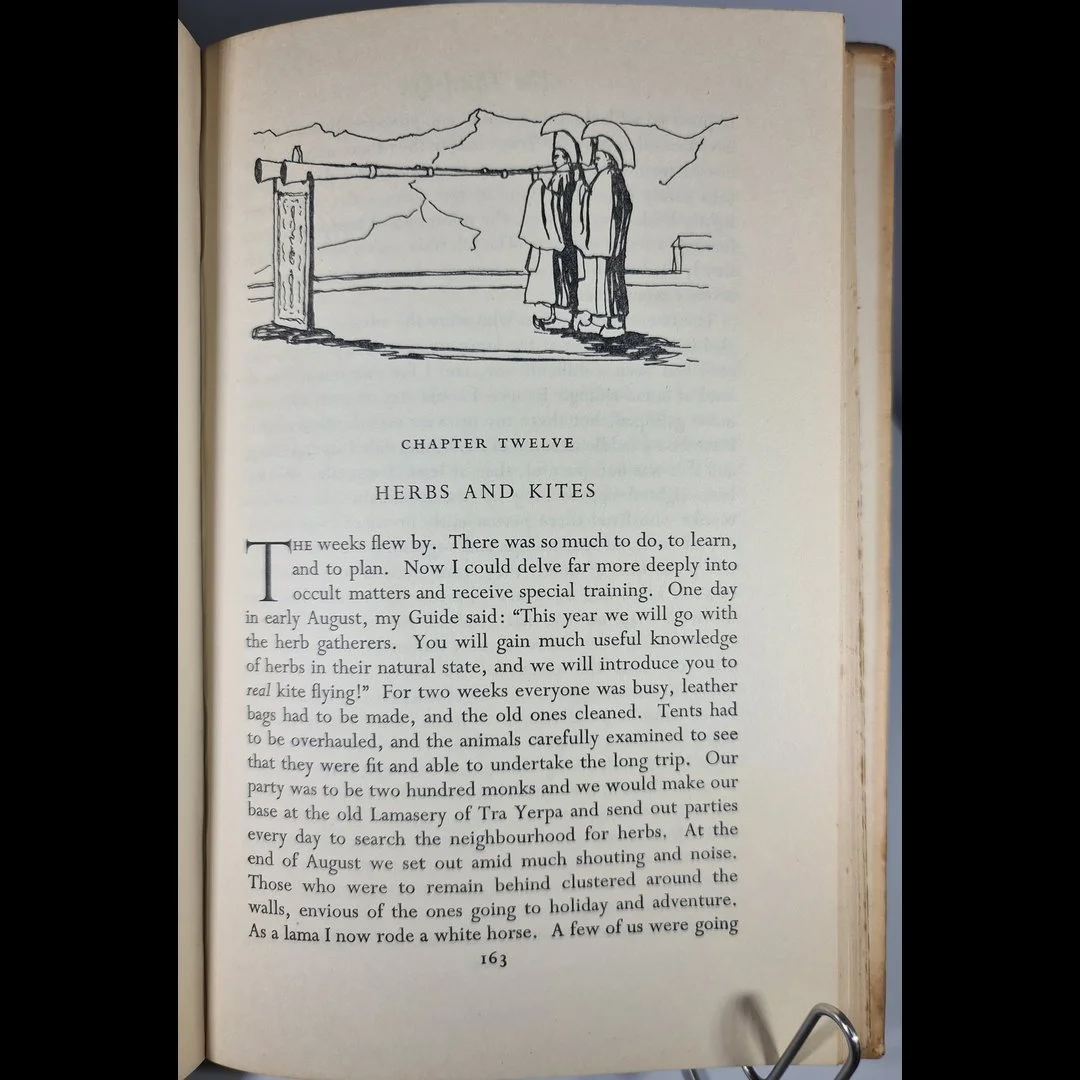 Image 14 of 16
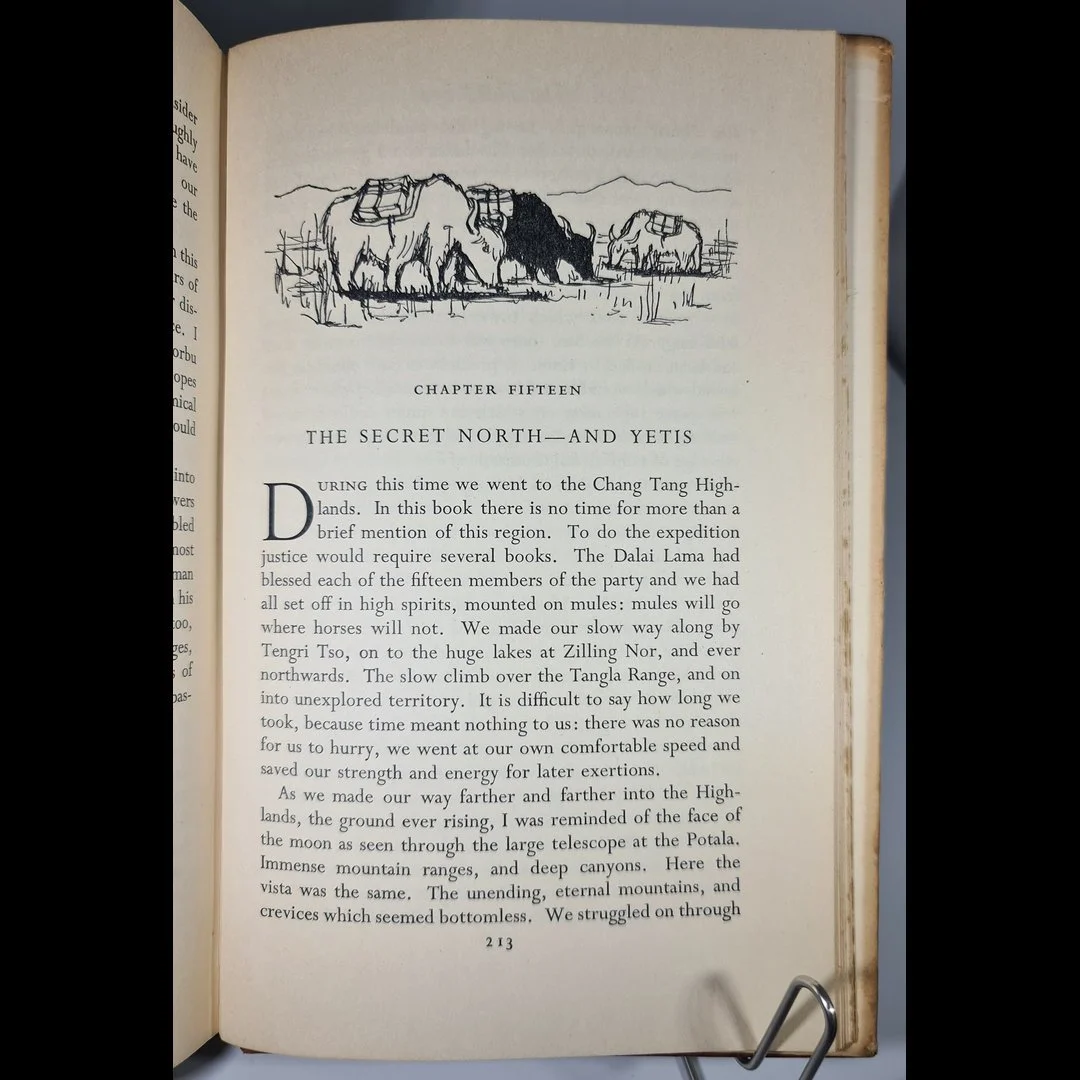 Image 15 of 16
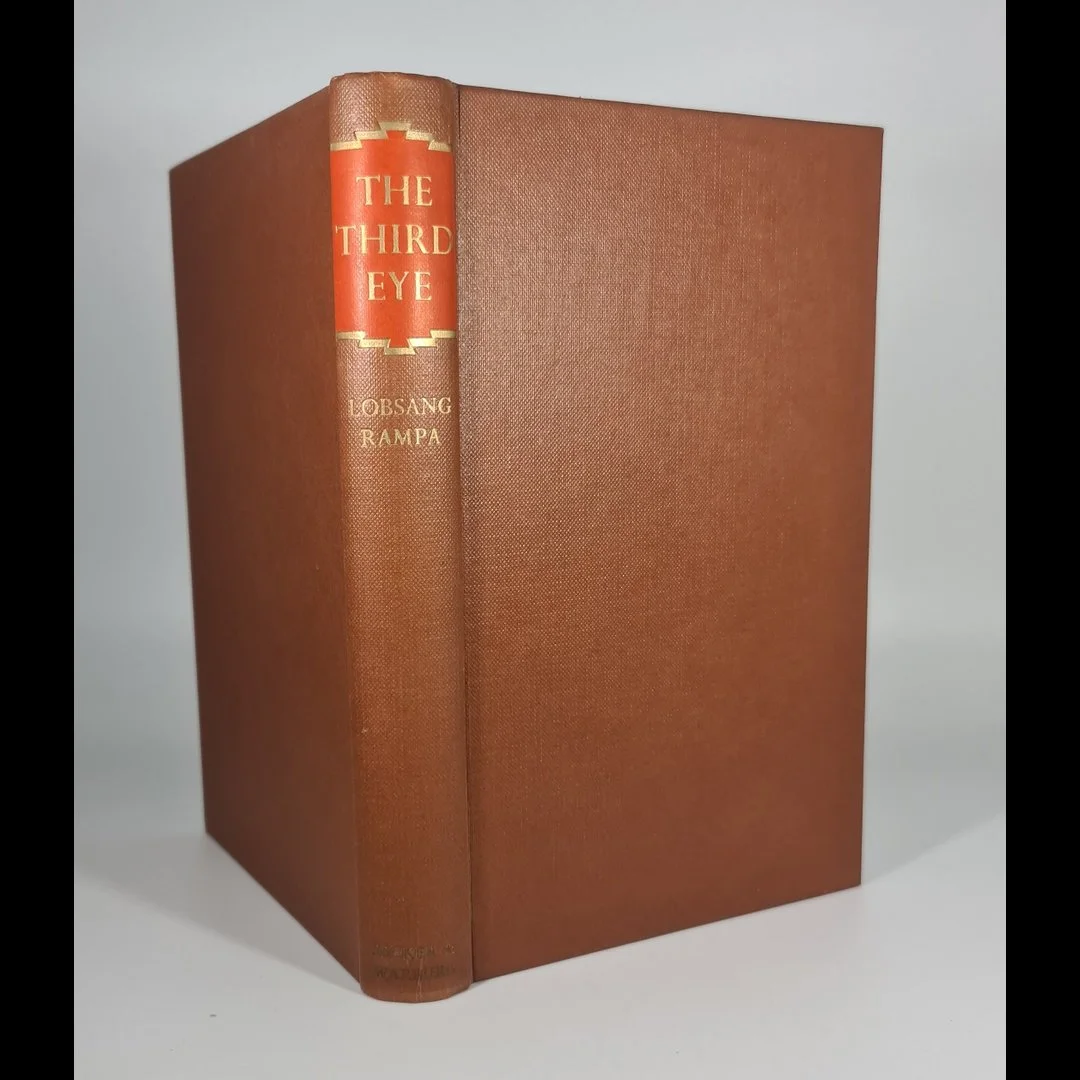 Image 16 of 16