Please Note:
For U.S. customers while non-book items from the UK are subject to tariffs, books are exempt from tariffs (they may still incur local GST).
Featured Products

1494 Haguenau Incunable; With Provenance
ANTHIDOTARIUS ANIMAE: THE ANTIDOTE FOR THE SOUL
By Nicolaus Salicetus
KEY DETAILS
Condition: Very Good
Format: Vellum, Approximately 156mm x 107mm
Published By: Haguenau [Hagenau, Alsace]: [Heinrich Gran], France, 1494
Language: Latin
Provenance: Unidentified early readers, responsible for the substantial Latin devotional headings, marginal notes and navigational annotations throughout.
Collation: A–R⁸, 136 leaves, including the final blank R8. Complete.
Dust Jacket: None, as issued, No Jacket
DESCRIPTION
Full Title: Liber meditationum ac orationum devotarum qui Anthidotarius anime dicitur cum tabula insertus.
Haguenau [Hagenau, Alsace]: [Heinrich Gran], 5 September 1494.
Incunable. Octavo. A–R⁸. 136 leaves, including the terminal blank R8. COMPLETE. Printed in Gothic type in two columns, 35 lines to the page. Extensively rubricated throughout in red and blue, with alternating Lombard-style initials, paragraph marks and numerous large flourished initials with extended penwork into the margins. Later stiff-board binding covered with reused early-modern German manuscript parchment.
A complete and extensively rubricated copy of the 1494 Haguenau edition of Nicolaus Salicetus’s Anthidotarius animae — the “Antidote for the Soul” — one of the most successful devotional compilations of the late fifteenth century.
Printed at Haguenau in Alsace by Heinrich Gran, one of the most important early printers of the Upper Rhine, the work belongs to the final decade of the incunable period, when printed devotional manuals were increasingly bringing texts formerly associated with monastic and clerical use into the hands of private readers.
Salicetus conceived the work through a striking therapeutic metaphor. Just as an antidotarium supplied remedies for the ailments of the body, the Anthidotarius animae offered remedies for the illnesses of the soul: sin, temptation, spiritual weakness and disorder. The collection brings together prayers, meditations, examinations of conscience and devotional exercises intended to guide the reader through penitence, thanksgiving, Marian devotion, invocation of saints and angels, preparation for death and other aspects of late-medieval spiritual practice.
That medical metaphor is particularly apt in Salicetus’s case. Before entering the Cistercian order, he had received medical training and is recorded as having taken a doctorate in medicine at Paris in 1461. His best-known work therefore stands at an unusual intersection of medicine, monastic spirituality and early printing.
The text proved highly successful. First printed at Strasbourg in 1489, it was repeatedly reissued during the final years of the fifteenth century, demonstrating the considerable contemporary demand for structured personal devotional literature.
This copy is especially attractive for its extensive contemporary rubrication, carried throughout in red and blue. Numerous large initials are flourished with long pen extensions into the margins, giving the small-format volume considerable visual presence.
Equally significant is its evidence of prolonged use. The book was not merely decorated and preserved: it was repeatedly read, navigated and adapted by successive owners.
An early hand has supplied a series of Latin devotional and navigational headings, apparently intended to make the book easier to use as a working prayer manual. Legible examples include:
Gratiarum Actio pro singulis beneficiis — “Thanksgiving for individual blessings”
Orationes de Angelis — “Prayers concerning the Angels”
Ad proprium Angelum — “To one’s own [guardian] Angel”
Litania
a heading relating to the Rosary / Marian devotion
probable headings for prayers concerning the Apostles and other devotional sections
These are accompanied by shorter early marginal annotations, occasional underlining and attention marks. A distinctly later layer of manuscript cross-references, including blue-ink numerical references, demonstrates further use in a subsequent period.
The result is a particularly tangible example of a late-medieval devotional book functioning over centuries not simply as an object of ownership, but as a practical instrument of private devotion.
PROVENANCE
Unidentified early readers, responsible for the substantial Latin devotional headings, marginal notes and navigational annotations throughout.
Unidentified private owner, 1901. Rectangular ink ex-libris stamp reading “EX LIBRIS / 1901”, incorporating an unidentified PH monogram, present on the colophon leaf and one further leaf.
A possible association with Paul Heitz (1857–1943) of Strasbourg — publisher, bibliographer and noted scholar of fifteenth-century printing — has been considered because of the initials, date, geographical context and Heitz’s known ex-libris, but no direct comparison has yet been possible and the attribution remains unconfirmed.
Sven Borgström (1927–2022), Swedish chemist and collector of early printed books, maps and historical works.
From the dispersal of the Borgström collection:
Stockholms Auktionsverk, The Rare Books, Maps & Manuscripts Collection, 10 June 2025, Lot 9.
The Stockholm catalogue erroneously reported folio LI as wanting. Subsequent physical collation confirms folio LI present in sequence and the copy complete.
Later offered through Catawiki, September 2025.
CONDITION, COLLATION & COPY NOTES
Physical collation confirm all required leaves present.
Earlier auction descriptions contained two collation errors:
Stockholms Auktionsverk described folio LI as wanting; it is present.
The printed text concludes with the colophon:
Hagenow, Anno domini incarnationis MCCCCXCIIII, Nonas Septembris corresponding to Haguenau, 5 September 1494.
Printed in Gothic type in two columns, 35 lines per page.
Extensively rubricated throughout in red and blue, with alternating initials and paragraph marks and numerous large flourished initials with extended penwork.
Several generations of manuscript annotation are present, including early Latin headings and devotional notes, later marginal references and occasional underlining.
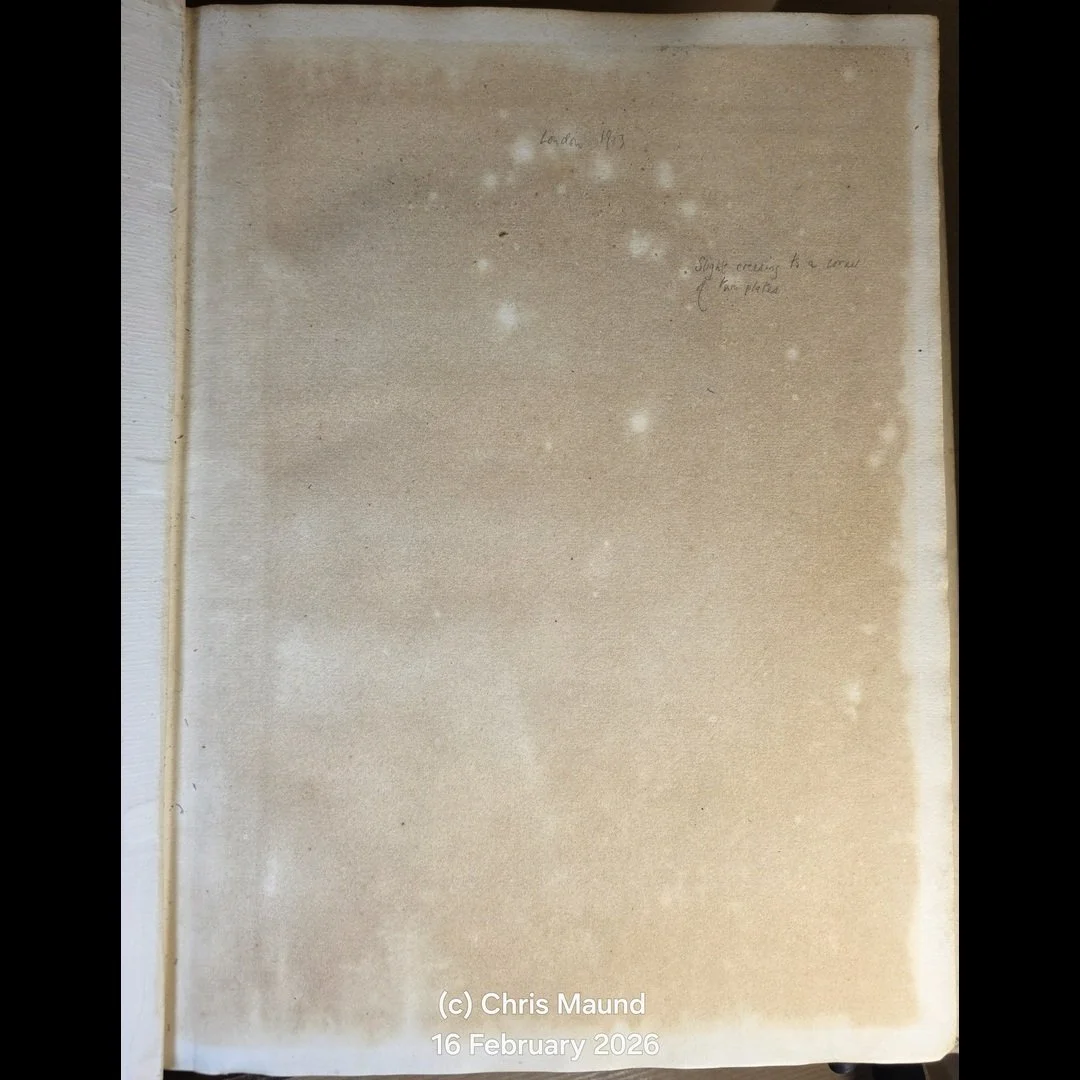
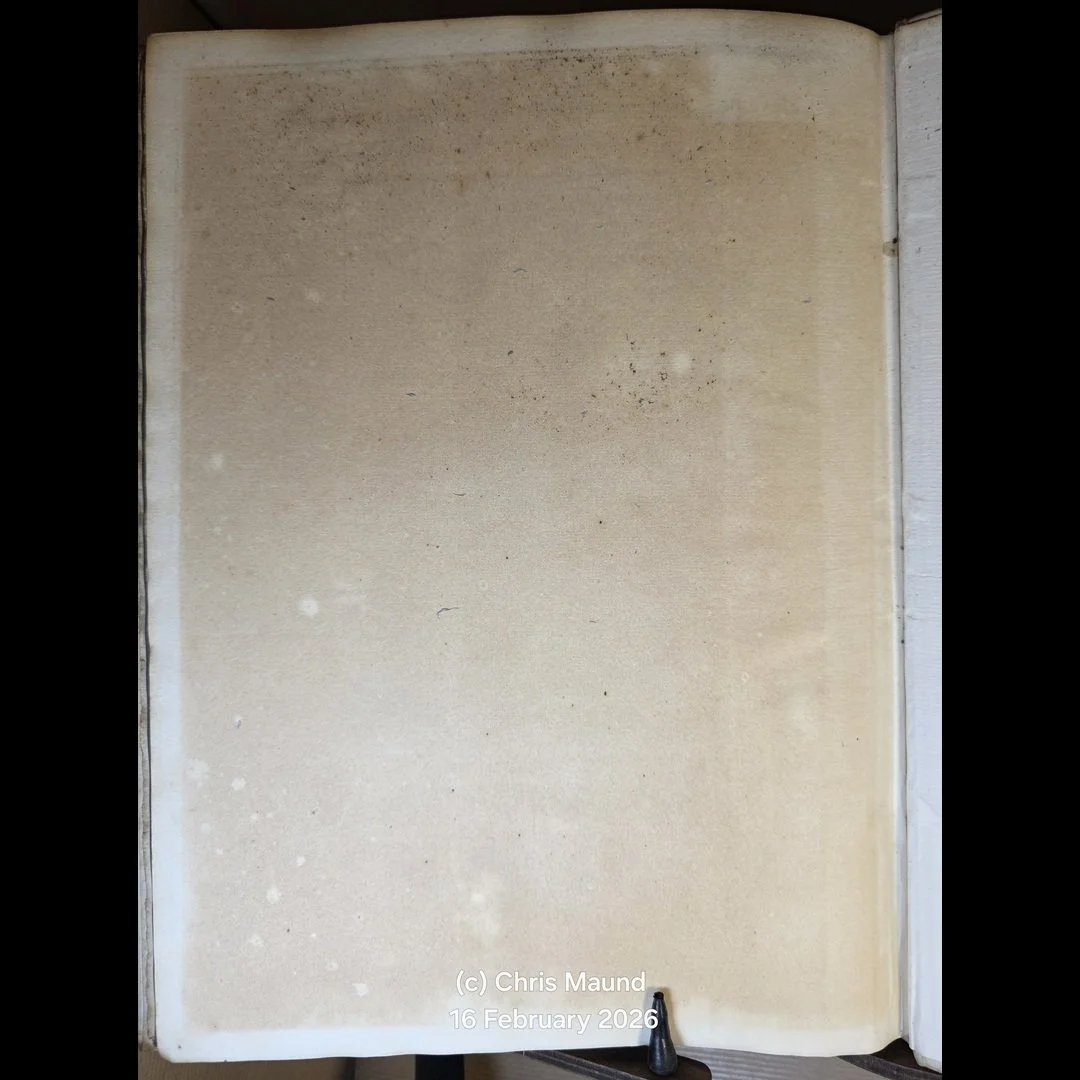
Scattered spotting, marginal soiling and handling marks; intermittent staining and localised damp marking, generally confined to margins and without significant loss of text. Occasional small marginal defects and age-related wear. Printing generally strong and dark, with good legibility throughout.
The book has clearly seen sustained devotional use but remains remarkably well preserved for a small-format working incunable of 1494.
Binding
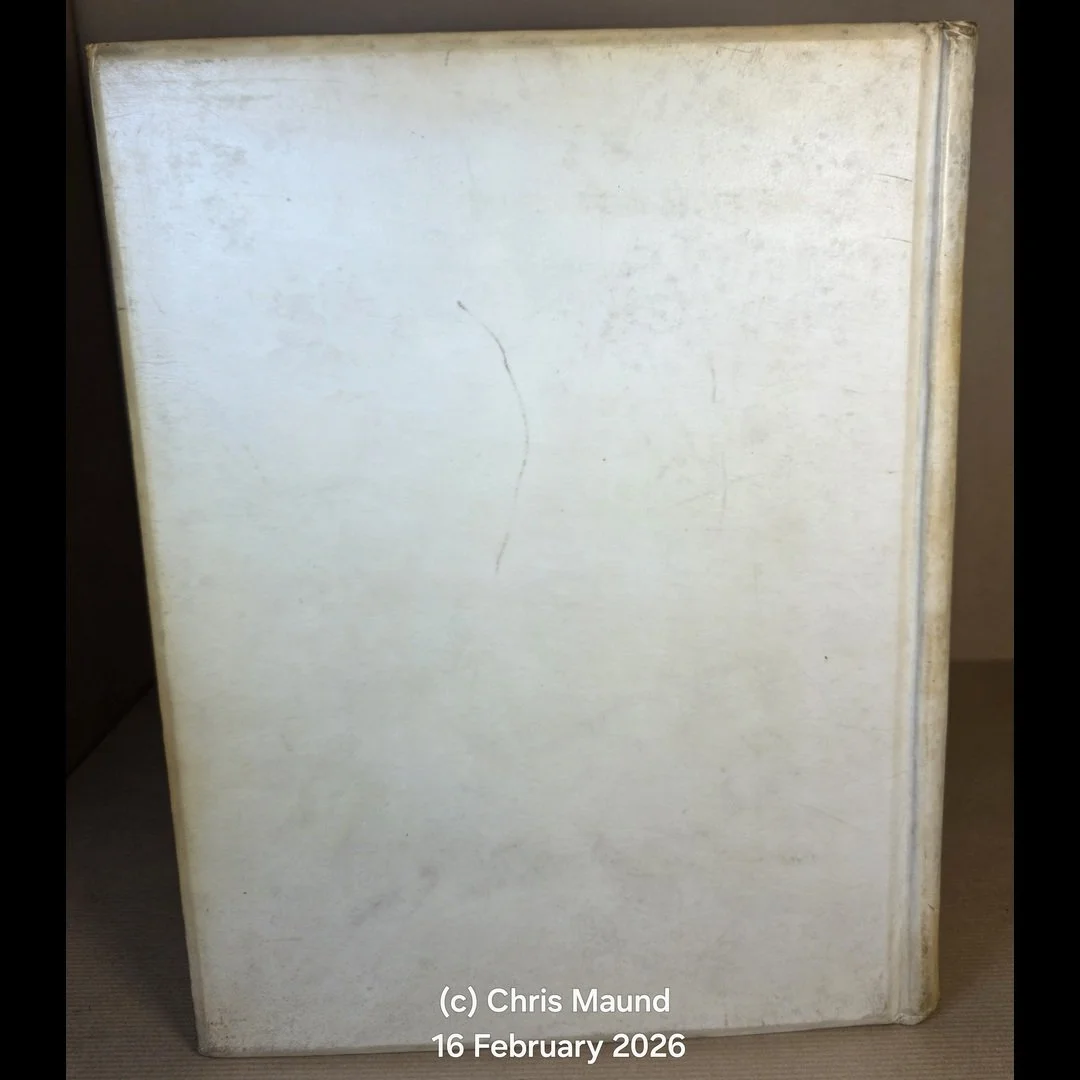
Later stiff boards covered with a reused early-modern German manuscript parchment document, with plain paper pastedowns.
The manuscript covering is written in German chancery script and appears to preserve portions of the formal titulature of a Habsburg imperial document, probably a privilege, confirmation, rescript or related chancery instrument.
The surviving language is compatible with late-sixteenth-century imperial formulas used under Maximilian II and Rudolf II. The document has traditionally been dated to approximately 1580, which, if correct, would place it in the reign of Rudolf II; however, neither the ruler’s name nor an unequivocal date is presently visible in the exposed portion, and the attribution should therefore remain cautious.
The manuscript covering wraps continuously around the spine and boards and is considerably earlier than the present binding structure.
Ex-libris stamp dated 1901 to colophon leaf and one further leaf.
Overall: Very Good, particularly for a substantially used and annotated fifteenth-century devotional incunable.
Please see Photos as part of condition report.
REFERENCES
ISTC: is00042000
GW: M39476
Goff: S-42
Hain-Copinger: HC 14165
BMC: III, 683
SYNOPSIS
The Anthidotarius animae — literally an “Antidote for the Soul” — is a late-medieval devotional compilation designed to provide spiritual remedies for the moral and psychological ailments of Christian life.
Its organising metaphor is explicitly therapeutic. The soul, like the body, is vulnerable to illness; temptation, sin, fear, pride and spiritual indifference therefore require appropriate remedies. Prayer, meditation, penitence, confession, thanksgiving and examination of conscience become the spiritual equivalents of medicines.
The work guides the reader through a wide range of devotional situations, including Marian prayers, invocations of saints and angels, prayers of thanksgiving, litanies, penitential exercises and preparations for death and judgement.
Its compact octavo format made it particularly suitable for personal use. The extensive early headings and annotations in this copy show precisely how such a book could function in practice: individual prayers were identified, grouped and revisited according to devotional need.
The work’s repeated printing during the incunable period demonstrates its considerable contemporary popularity. Rather than being an obscure Cistercian text of limited circulation, the Anthidotarius animae formed part of the rapidly expanding printed devotional culture of the later fifteenth century.
AUTHOR BIO
Nicolaus Salicetus, also known as Nicolaus von Wydenbosch / Weidenbusch, was a late-medieval physician, Cistercian monk and devotional writer associated with Alsace.
He received medical training in Paris and is recorded as having obtained the degree of Doctor of Medicine in 1461. He subsequently entered the Cistercian order and became abbot of the monastery of Baumgarten in Alsace, serving from approximately 1482 until shortly before 1490.
He died around 1493–1494.
His medical background lends particular significance to the title Anthidotarius animae. Medieval antidotaria were collections of pharmaceutical remedies; Salicetus transformed that language of physical medicine into a programme of spiritual therapy.
The Anthidotarius became his most successful work and was repeatedly printed during the final years of the fifteenth century.
HEINRICH GRAN [Printer]
Heinrich Gran was one of the principal early printers active at Haguenau in Alsace.
Working from approximately 1489, Gran became a prolific producer of theological, scholastic and devotional works. Haguenau developed into an important printing centre serving the German-speaking lands, particularly for religious and academic literature.
Although the printer is not named in the colophon of the present edition, modern incunable bibliography attributes the printing securely to Gran.
SKU: BTETM0002663
Shipping Info: Approximate Package Dimensions H: 12.5, L: 30, W: 25 (Units: cm), W: 2Kg
Tracked Shipping, Insurance Coverage as per Customer Request

1565 2nd Plantin Edition
BIBLIA, AD VETUSTISSIMA EXEMPLARIA CASTIGATA
Louvain Latin Vulgate — Johannes Hentenius — Christophe Plantin, Antwerp
Biblia, ad vetustissima exemplaria castigata. Quid in horum Bibliorum castigatione praestitum sit, subsequens praefatio latius indicabit.
A scarce and appealing mid-sixteenth-century Plantin Bible: the second Plantin edition of the Latin Louvain Vulgate, printed at Antwerp in 1565 by Christophe Plantin, one of the great printer-publishers of the European Renaissance.
The text derives from the Louvain revision of the Vulgate associated with the Dominican biblical scholar Johannes Hentenius (c.1500–1566). Produced during the confessional and scholarly upheavals of the Reformation period, the Louvain text represented an important attempt to establish a corrected Catholic Latin Bible through comparison with earlier textual witnesses.
This compact octavo edition is particularly attractive as an example of Plantin's scholarly printing. The title is set within an architectural woodcut border incorporating Plantin's celebrated printer's device, while decorative woodcut initials appear throughout. The Bible is printed in two columns and is accompanied by extensive printed marginal references, including Hebrew and Greek characters. Bound at the end is the valuable 32-leaf glossary of Hebrew, Chaldean/Aramaic, Greek and Latin biblical names.
An evocative Renaissance Bible in old vellum, retaining considerable visual and historical appeal despite the clearly described supplied and missing leaves.
Bible, Latin Vulgate
By Johannes Hentenius
Format: Hardcover, Octavo (Standard) (8vo 6 × 9 in 152 × 229 mm )
Note: Binding/size selection follows standard bibliographic conventions and is approximate; exact measurements may vary.
Language: Latin
Published By: Antverpiae, ex officina Christophori Plantini [Christophe Plantin], Antwerp
Condition Report:
Dust Jacket: No Jacket, Dust Jacket Condition: No Jacket
Good - bibliographically defective. An attractive old vellum-bound copy, the binding with manuscript title to spine and expected age-related rubbing, staining, soiling, bumping and wear to the extremities. The vellum remains characterful and gives the volume strong shelf presence.
Original title page present, printed within the elaborate architectural woodcut border and incorporating Plantin's woodcut printer's device. Decorative woodcut initials throughout. Title with small marginal losses and general signs of age and handling.
Printed in two columns, with extensive printed marginalia and references, including Hebrew and Greek type. The separate 32-leaf glossary/index of Hebrew, Chaldean/Aramaic, Greek and Latin biblical names is present.
Text generally age-toned and browned, with scattered foxing, staining and occasional marks from historical use; heavier staining occurs on some leaves. There are occasional marginal losses. The final leaf is narrowly trimmed with small marginal losses affecting a minor number of letters. Front flyleaf with twentieth-century ownership inscription.
The majority of the original sixteenth-century text block remains sound and legible, with a generally strong printed impression. The original Plantin title page, extensive biblical text, scholarly marginal apparatus and terminal glossary give the volume considerable antiquarian and bibliographical interest.
A handsome working and collector's copy of an important Plantin Bible, offered with the supplied opening leaves and other completeness defects fully described.
Collation: *8 A-Z8 a-z8 Aa-Cc8 A-P8 (P8 blank).
[8], 392, 98, [20 of 22], [32] leaves. The opening numbered leaves 1–16 are supplied in reproduction/facsimile. Printed leaf P7 is lacking, together with the final blank P8. These defects are reflected in the condition assessment and should be noted by prospective purchasers.
Please see Photos as part of condition report.
References:
USTC 402605
Adams B-1069
Voet, The Plantin Press, 681 & 1749
Sorgeloos 138
BT 444 & 5919
STC Dutch (BL) 22
Pettegree, Netherlandish Books, 3773 & 5007
Author Bio: Edited by Johannes Hentenius
Editor Bio:
Johannes Hentenius, or Jan Henten (c.1500–1566), was a Flemish Dominican theologian, biblical scholar and exegete associated with the University of Louvain. He is particularly remembered for his work on the Louvain recension of the Latin Vulgate, an important sixteenth-century Catholic biblical text prepared through comparison with earlier manuscript and printed witnesses.
The Louvain Bible became an influential Latin biblical text in the decades preceding the definitive post-Tridentine editions of the Vulgate.
Printer Bio:
Christophe Plantin (c.1520–1589) was one of the foremost printer-publishers of Renaissance Europe. Establishing his press in Antwerp, Plantin developed an international publishing enterprise distinguished by exceptional typography and the production of major works of theology, biblical scholarship, humanism, science and classical learning.
His celebrated printer's device — a hand holding a compass accompanied by the motto Labore et Constantia — became one of the most recognisable marks in early European printing. The Plantin printing house survives today as the Plantin-Moretus Museum in Antwerp.
Synopsis: The Biblia ad vetustissima exemplaria castigata presents the Latin Vulgate text in the corrected Louvain recension associated with Johannes Hentenius. Its title announces a Bible “corrected according to the most ancient exemplars,” reflecting the sixteenth-century scholarly concern with recovering and establishing more authoritative biblical texts.
Plantin's compact octavo printing made this substantial scholarly Bible considerably more portable than large folio editions. Alongside the biblical text are extensive cross-references and marginal notes, together with a glossary of Hebrew, Chaldean/Aramaic, Greek and Latin biblical names, illustrating the increasingly philological character of Renaissance biblical scholarship.
The 1565 edition is generally described bibliographically as the second Plantin edition of the Louvain Latin Bible and remains an attractive example of Plantin's early biblical printing.
SKU: BTETM0002405
Shipping Info: Approximate Package Dimensions H: 12.5, L: 30, W: 25 (Units: cm), W: 2Kg
Tracked Shipping, Insurance Coverage as per Customer Request
2025 First Black Letter Press Edition 1st Printing
THE DISCOVERIE OF WITCHCRAFT
By Reginald Scot; Paul Summers Young
KEY DETAILS
Condition: Fine
Format: Hardcover, quarto (4to 9 1⁄2 × 12 in 241 × 305 mm )
Published By: Black Letter Press, Obernkirchen, Germany, 2025
Language: English
Limited Edition: Collectors Edition 58/150 Copies
Signed By: Signed by Author(s)
Provenance: One of three Collector’s Edition copies signed by Paul Summers Young for Books That Expand The Mind.
Collation: pp. 600
DESCRIPTION
Revised, Edited & Introduced by Paul Summers Young
A particularly desirable signed example of the Collector’s Edition of Black Letter Press’s 2025 first edition of Reginald Scot’s landmark The Discoverie of Witchcraft, numbered 58 of only 150 specially bound copies.
First published in London in 1584, Scot’s Discoverie is one of the foundational works in the history of witchcraft, demonology and conjuring. Written primarily as an attack upon credulity surrounding witchcraft and upon the persecution of alleged witches, it paradoxically preserved an extraordinary body of contemporary magical, demonological, folkloric and conjuring material, ensuring its enduring importance to historians of both witchcraft and Western esotericism.
The present Black Letter Press edition was revised, edited and introduced by Paul Summers Young from the original 1584 text, with modernised spelling and punctuation intended to improve readability while retaining the character of Scot’s Early Modern English. The illustrations and remarkable decorative initials are drawn from the first edition rather than the less crisp seventeenth-century reprints.
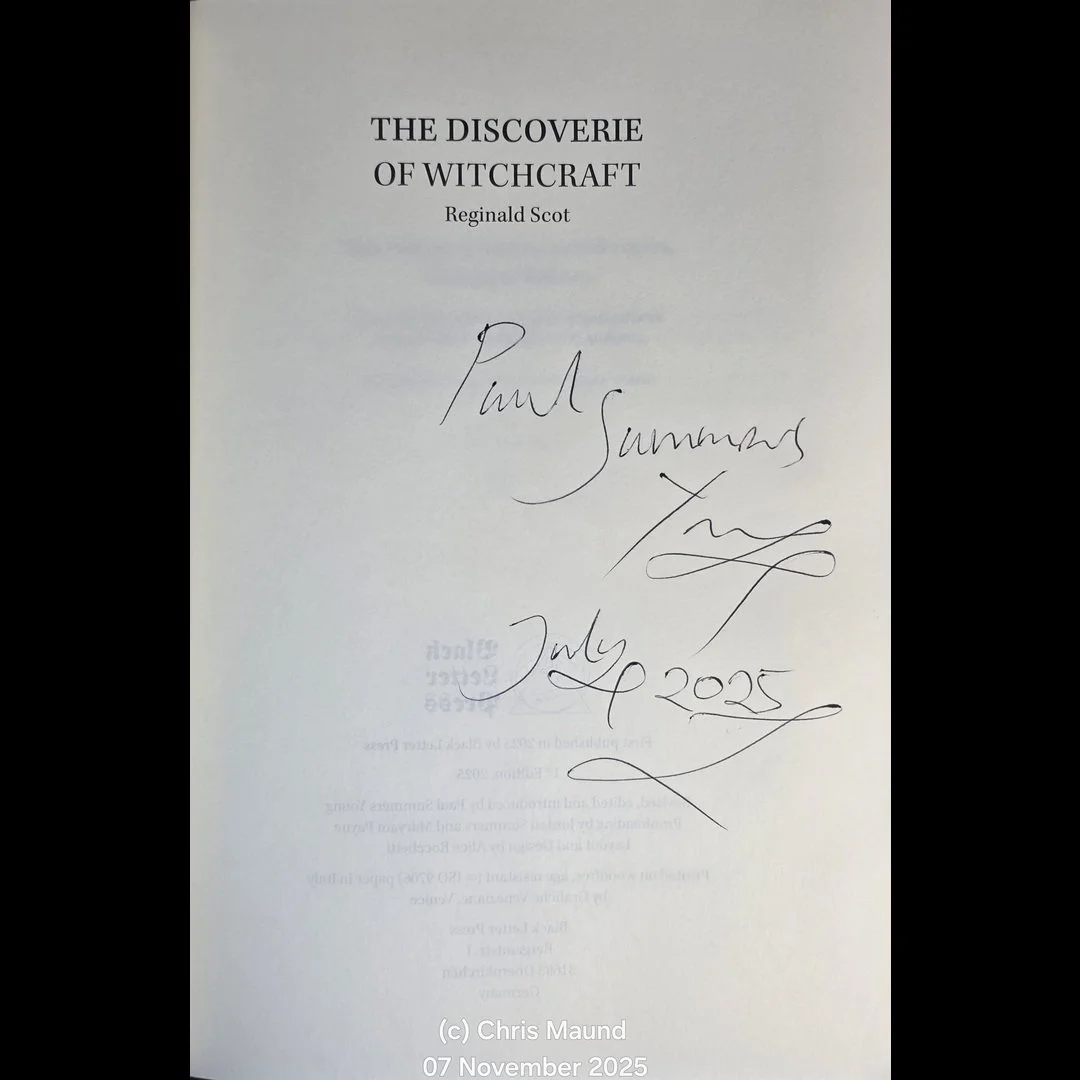
This copy is additionally of particular interest as one of three Collector’s copies signed by Paul Summers Young for Books That Expand The Mind. Young has signed the title page in full and dated it “July 2025.” The signing was personally witnessed by the proprietor of Books That Expand The Mind.
The Collector’s issue itself is now sold out at the publisher. Black Letter Press issued the 2025 first edition in a total limitation of 950 copies: 800 standard copies fully bound in Wibalin and just 150 hand-numbered Collector’s copies quarter-bound in Wibalin with printed marbled-paper boards. This is copy No. 58.
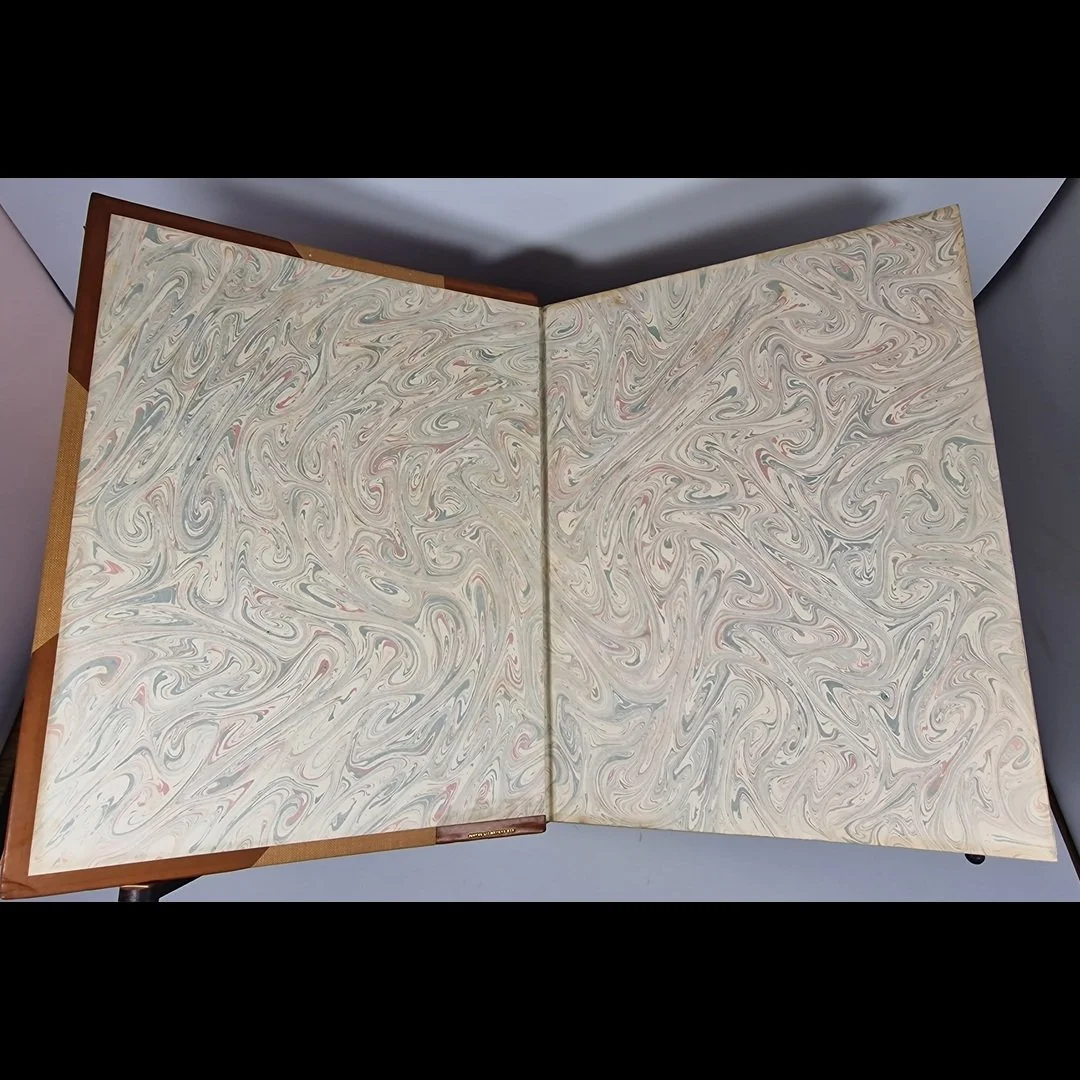
A handsome and substantial production, quarter-bound in deep burgundy Wibalin with richly patterned marbled-paper boards, elaborate gilt spine decoration, gilt edges and two ribbon markers. The combination of the small numbered limitation, sold-out status and directly provenanced PSY signature makes this a notably scarce state of an already collectible modern esoteric edition.
PROVENANCE
One of three Collector’s Edition copies signed by Paul Summers Young for Books That Expand The Mind.
The copies were obtained through BTETM’s direct association with Young, and the signing was personally witnessed by the proprietor.
Young’s signed books were not issued as a general signed state of the edition; signed examples were supplied separately in very small numbers to specialist booksellers. The present copy therefore combines the formal limitation of 150 Collector’s copies with the considerably scarcer signed state.
No claim is made that only three signed copies exist worldwide; the stated limitation relates specifically to the three copies signed for Books That Expand The Mind.
SYNOPSIS
Reginald Scot’s The Discoverie of Witchcraft is one of the great paradoxes of early modern esoteric literature.
Scot wrote the book not to promote witchcraft but to challenge belief in it. Confronted by prosecutions founded upon accusations of supernatural harm, demonic pacts and impossible magical acts, he sought to demonstrate that much supposedly diabolical activity could instead be explained through deception, natural causes, mental distress, popular superstition and the activities of professional conjurers.
To make his argument, however, Scot assembled an extraordinary survey of the magical world of sixteenth-century England.
Across sixteen books he discusses witches and witch-hunters, spirits and demons, charms, astrology, divination, alchemy, magical healing, poisons, conjuration and popular supernatural belief. His sceptical intention required him to describe the very practices he wished to expose, with the result that The Discoverie became an invaluable repository of Renaissance magical and folkloric material.
Particularly celebrated are the sections devoted to jugglers and legerdemain, in which Scot explains how apparently supernatural feats could be produced through skill and deception. These passages make the work a foundational text not only in witchcraft studies but also in the history of stage magic and conjuring.
The book also preserves material deriving from Johann Weyer’s Pseudomonarchia Daemonum, helping transmit descriptions of named spirits that would later become embedded within the ceremonial magical and grimoire traditions.
This Black Letter Press edition aims to reproduce the character of the 1584 first edition, including its illustrations and decorative chapter initials, while making the text more readily accessible to the modern reader.
It additionally contains as an appendix Abraham Fleming’s A Straunge and Terrible Wunder wrought very late in the Parish Church of Bongay (1577), the celebrated contemporary account of the spectral black dog said to have appeared during a violent storm at Bungay church in Suffolk. Young specifically notes its inclusion in his editorial preface.
A major text for collectors and readers interested in witchcraft, demonology, grimoires, magic, conjuring, folklore, Renaissance occultism and the intellectual history of scepticism.
AUTHOR BIO
Reginald Scot (c.1538–1599) was a Kentish gentleman, landowner, Member of Parliament and one of the most remarkable sceptical writers of Elizabethan England.
Published in 1584, The Discoverie of Witchcraft arose from Scot’s opposition to the persecution of people—particularly the poor, elderly and vulnerable—accused of witchcraft. He argued that many alleged supernatural phenomena resulted instead from fraud, misunderstanding, illness, superstition or deliberate trickery, and considered the torture and execution of supposed witches both irrational and contrary to Christian teaching.
Yet Scot’s determination to expose magical deception resulted in something extraordinary. In documenting the beliefs and practices he wished to refute, he preserved a vast body of information relating to charms, spirits, astrology, alchemy, conjuration, demonology, divination and folk belief.
Of particular importance are his sections on legerdemain and conjuring. Scot explained methods involving coins, cards, ropes and other effects in sufficient detail that The Discoverie of Witchcraft is regarded as the first English book to give a substantial account of the techniques of conjurers and illusionists. The material was repeatedly borrowed by later writers on stage magic.
Scot’s scepticism was controversial. James VI of Scotland attacked his views in Daemonologie (1597). The oft-repeated story that James later ordered all copies of the Discoverie burned has become part of the book’s mythology, but modern scholarship notes that there is no contemporary evidence for such an order.
Editor Bio
Paul Summers Young is a Kent-based writer, translator and editor specialising in early modern magical, philosophical and esoteric texts.
His work with Black Letter Press includes editions and translations of Heinrich Cornelius Agrippa’s De Occulta Philosophia, Ars Goetia, Ars Theurgia, Johann Weyer’s Pseudomonarchia Daemonum, Giambattista della Porta’s Natural Magick, The Black Pullet, The Red Dragon and other works central to the Western magical tradition.
For the present edition, Young revised and edited Scot’s 1584 text, modernising spelling and punctuation while retaining its Early Modern English character, and contributed a substantial new introduction placing Scot and his work within the intellectual, magical and folkloric landscape of Elizabethan England.
CONDITION, COLLATION & COPY NOTES
Format: Hardcover, quarter-bound Collector’s binding, approx. 245 × 175 mm
Binding: Burgundy Wibalin spine with gold-tooled title and decorative devices; printed marbled-paper boards; gilt edges; two ribbon markers
A very well-preserved example of the Collector’s Edition.
The quarter-bound burgundy Wibalin and marbled-paper boards remain clean and bright, with the elaborate gilt spine decoration crisp and well preserved. Gilt page edges remain bright. Corners and extremities present extremely well, with no significant wear apparent from inspection.
Internally clean, fresh and apparently little handled. Printed on woodfree, age-resistant paper conforming to ISO 9706. Binding firm and sound.
The title page is signed in full by Paul Summers Young and dated “July 2025.”
Numbered limitation leaf present, recording this as copy 58 of the 150 quarter-bound Collector’s copies.
A particularly attractive signed example of this sold-out limited issue.
Collation:
pp. 600
Please see Photos as part of condition report.
References:
STC (2nd ed.) 21864 — original London edition, 1584.
ESTC S116888 — original London edition, 1584.
Toole Stott 618 — A Bibliography of English Conjuring, 1581–1876.
Norman 1915 — first edition reference.
Cornell University, Digital Witchcraft Collection, witchcraft081 — digitised copy of the 1584 first edition.
Black Letter Press — Reginald Scot: The Discoverie of Witchcraft, Collector’s Edition, 2025.
The original 1584 edition is bibliographically recorded as STC 21864 / ESTC S116888 and was printed by Henry Denham for William Brome. Contemporary copies preserve the work’s extensive woodcut initials and illustrations.
Note: Binding/size selection follows standard bibliographic conventions and is approximate; exact measurements may vary.
SKU: BTETM0002553
Shipping Info: Approximate Package Dimensions H: 12.5, L: 30, W: 25 (Units: cm), W: 2Kg
Tracked Shipping, Insurance Coverage as per Customer Request