1927 First Montague Summers Edition With Provenance
DEMONIALITY
By Ludovico Maria Sinistrari
KEY DETAILS
Condition: Very Good
Format: Hardcover, Octavo (Standard) (8vo 6 × 9 in 152 × 229 mm )
Note: Binding/size selection follows standard bibliographic conventions and is approximate; exact measurements may vary.
Published By: The Fortune Press, London, 1927
Language: English
Limited Edition: 396/1290 Copies
Provenance: Armorial bookplate bearing the name CAMPANELLA, depicting three lions rampant beneath an elaborate helm and mantling, surmounted by a bell bearing the letter C and the Latin motto Non Tacebo (“I shall not be silent”).
Collation: [xliii], 127 pp.; Limited edition: Number 396 of 1,290 copies, comprising 90 vellum-bound copies and 1,200 buckram-bound copies.
SKU: BTETM0001192
Shipping Info: Approximate Package Dimensions H: 12.5, L: 30, W: 25 (Units: cm), W: 2Kg
Tracked Shipping, Insurance Coverage as per Customer Request
DESCRIPTION
Demoniality
Or, Incubi and Succubi
Translated from the Latin, with Introduction and Notes, by the Rev. Montague Summers (1880–1948)
First edition of Montague Summers's English translation of De Daemonialitate, et Incubis et Succubis, the remarkable seventeenth-century treatise on the nature of incubi and succubi by the Italian Franciscan theologian Ludovico Maria Sinistrari.
One of 1,200 numbered copies printed on Batchelor handmade paper and bound in the publisher's original black buckram, from a total edition of 1,290 copies. The first 90 copies were issued on Arnold unbleached handmade paper in vellum.
This copy is numbered 396.
Published by the Fortune Press under the direction of R. A. Caton, this edition represents Summers's independent translation of Sinistrari's Latin treatise, accompanied by his extensive introduction and scholarly notes.
The edition has particular historical interest for its connection with the British censorship proceedings of 1934, when the publication was condemned under the Obscene Publications Act and copies were ordered destroyed.
PROVENANCE
Armorial bookplate bearing the name CAMPANELLA, depicting three lions rampant beneath an elaborate helm and mantling, surmounted by a bell bearing the letter C and the Latin motto Non Tacebo (“I shall not be silent”).
The motto and bell emblem are notably associated with the Italian philosopher and theologian Tommaso Campanella (1568–1639), who employed the device alongside the biblical motto Propter Sion non tacebo (Isaiah 62:1). The relationship, if any, between the owner of this bookplate and the philosopher remains unestablished.
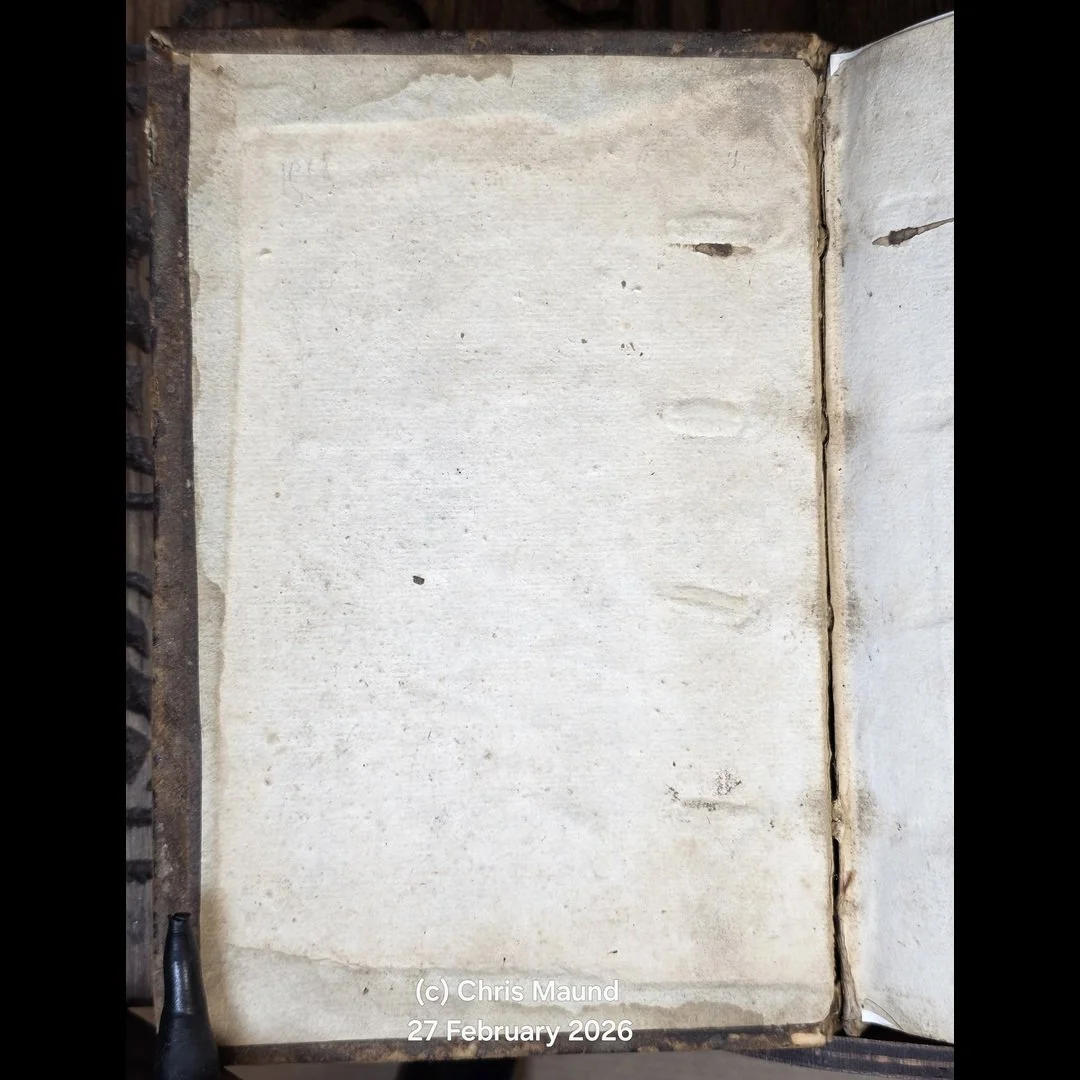
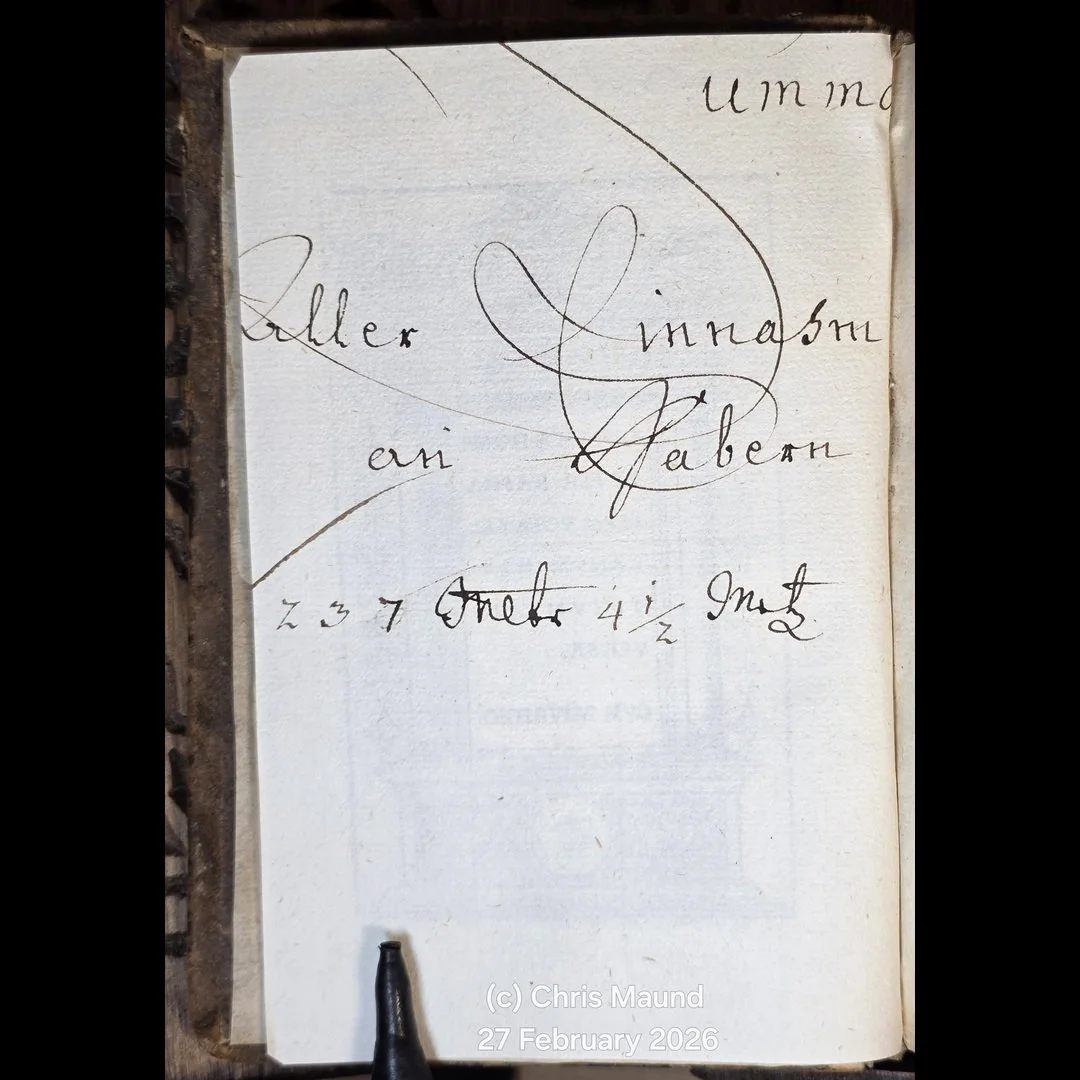
An early ink presentation inscription to the front free endpaper, apparently addressed to Marie, records a Christmas gift dated 1935. The identity of the recipient and donor has not been conclusively established.
CONDITION, COLLATION & COPY NOTES
COLLATION
[xliii], 127 pp.
Limited edition: Number 396 of 1,290 copies, comprising 90 vellum-bound copies and 1,200 buckram-bound copies.
Without dust jacket.
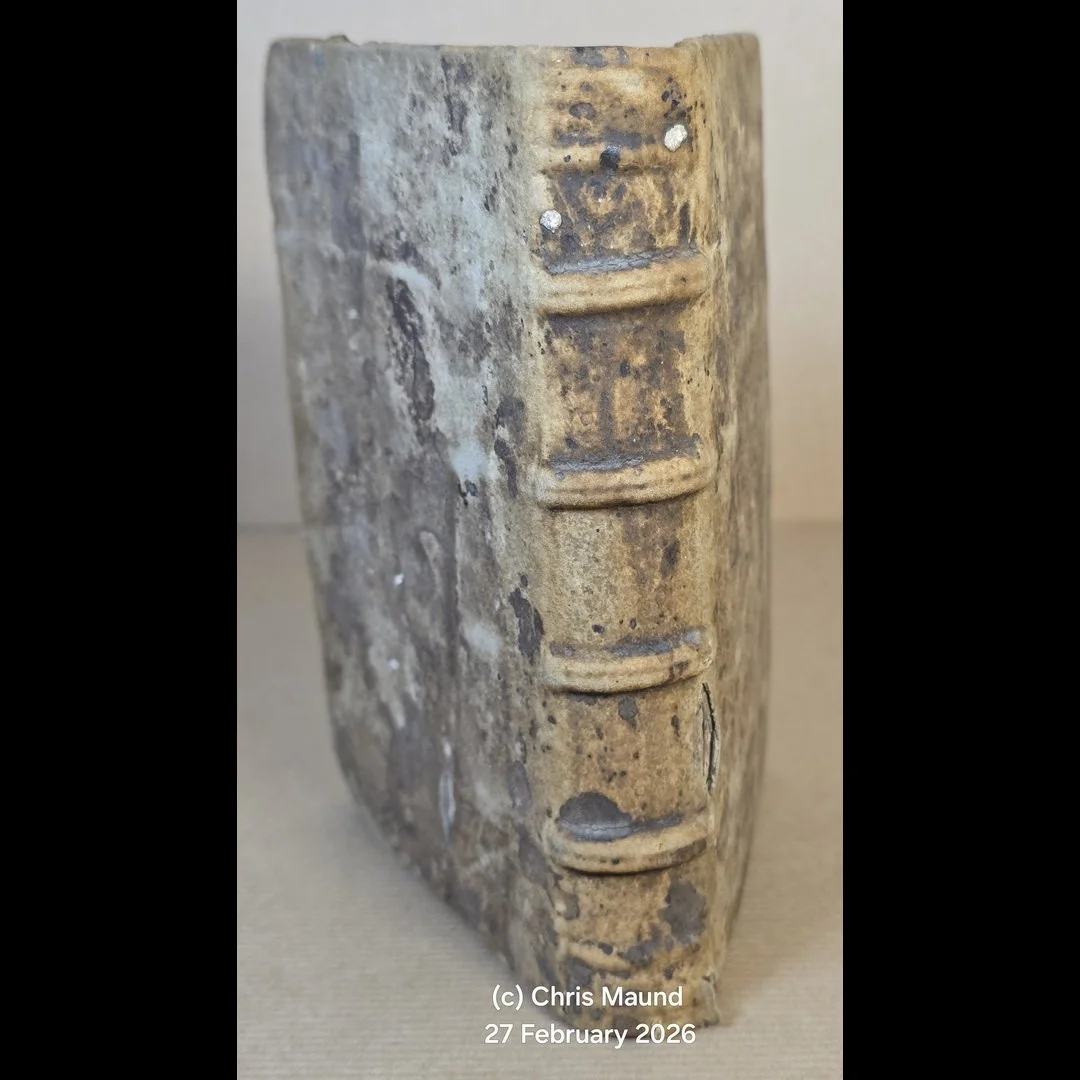
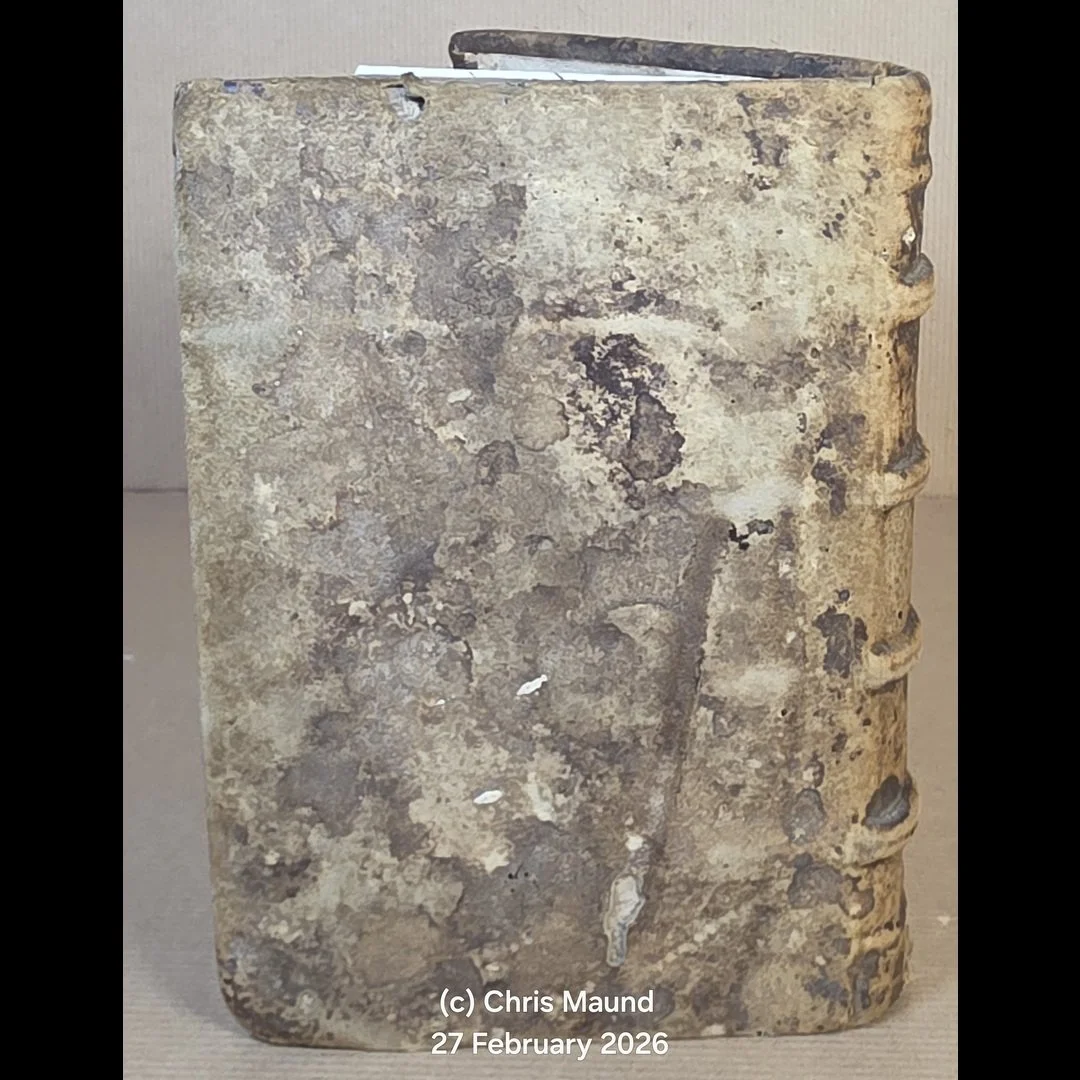
Original publisher's black buckram, spine lettered in gilt. Binding showing rubbing, scuffing and irregular mottling to the cloth, more pronounced to the spine, with wear at the extremities. Spine gilt worn but legible. Corners exhibiting little or no significant bumping.
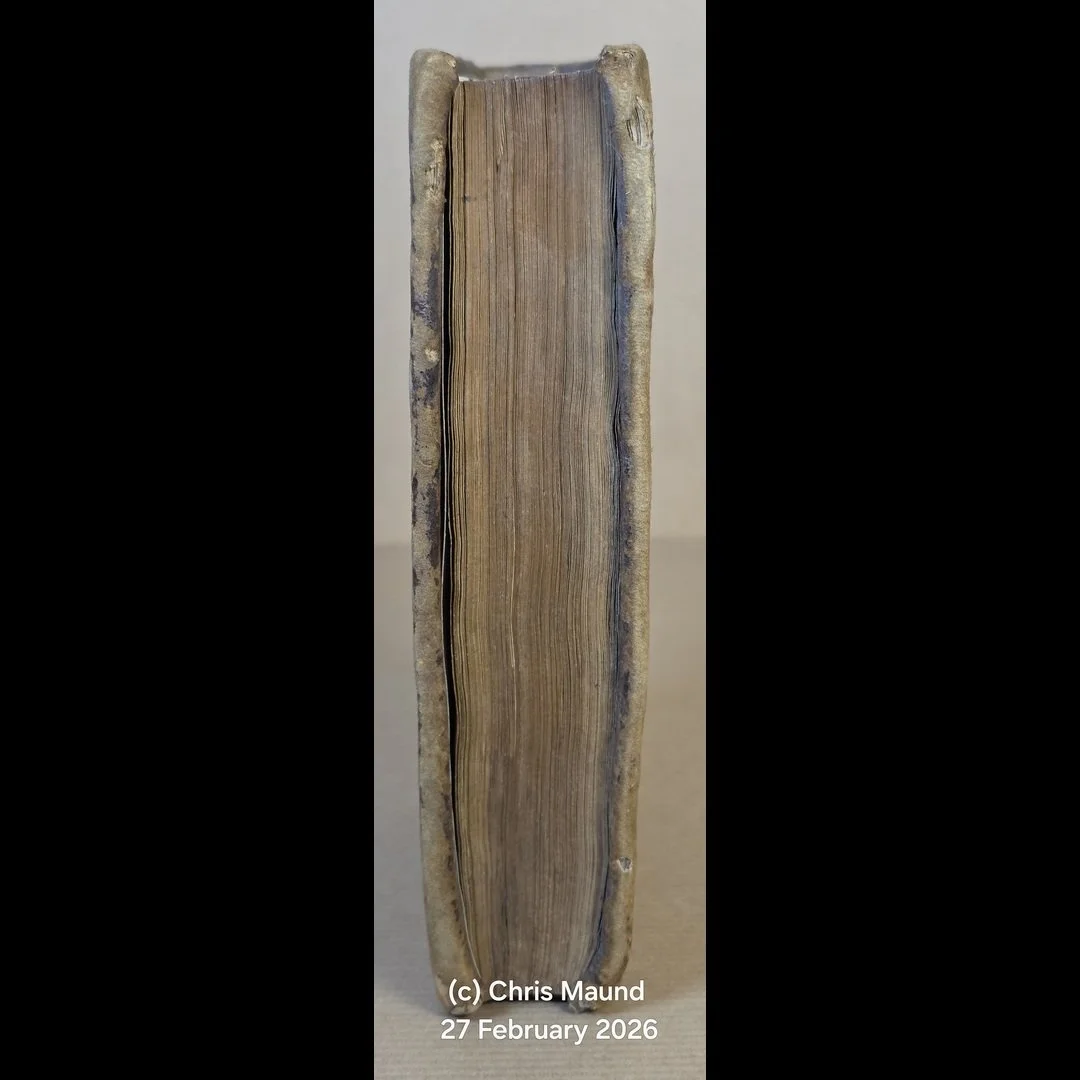
Top edge gilt; lower edge with characteristic deckle edges, and other edges retaining the irregular finish of the handmade paper.
Internally, the leaves remain generally clean and well preserved, with modest age-toning. The text block is sound and the book is structurally solid.
Campanella armorial bookplate to front pastedown and a dated 1935 presentation inscription to the front free endpaper.
Please see Photos as part of condition report.
REFERENCES
d'Arch Smith, Montague Summers: A Bibliography, B10 — reference to be checked against the original bibliography.
Coumont, Demonology and Witchcraft, S71.8 — reference to be independently verified.
Contemporary bibliographical and bookseller records of the 1927 Fortune Press edition.
SYNOPSIS
Demoniality; or, Incubi and Succubi occupies a curious position between seventeenth-century Catholic theology, demonology, natural philosophy and the history of human sexuality.
Written by Ludovico Maria Sinistrari, a Franciscan theologian associated with the Roman Inquisition, the treatise examines the existence and supposed activities of incubi and succubi — supernatural beings traditionally believed to engage in sexual relations with human beings.
Sinistrari attempts to establish a theological and philosophical distinction between such beings and the fallen angels conventionally identified as demons. Drawing upon scholastic reasoning, scriptural interpretation and purported historical accounts, he explores their physical nature, reproductive capabilities, relationship with humanity and possible position within the created order.
The original Latin manuscript was reportedly discovered in a London bookshop by the French publisher Isidore Liseux in 1872. Liseux published the Latin text with a French translation in 1875, followed by an English translation in 1879.
Montague Summers returned to the work in 1927, producing a fresh English translation with an extensive introduction and notes.
The result is both an unusual primary text in the history of demonological thought and an important example of the revival of early supernatural literature among twentieth-century antiquarians and occult scholars.
AUTHOR BIO
Ludovico Maria Sinistrari (1622–1701) was an Italian Franciscan theologian, jurist and writer on moral theology and demonology. Born in Ameno, he entered the Franciscan Order in 1647 and subsequently taught philosophy and theology at Pavia.
His writings concerned ecclesiastical jurisprudence, religious discipline, supernatural phenomena and questions of morality. His De Daemonialitate remains his best-known work among collectors of demonological literature.
TRANSLATOR
Augustus Montague Summers (1880–1948) was an English writer, scholar and translator celebrated for his studies of witchcraft, vampires, werewolves and supernatural literature.
Among his best-known publications are The History of Witchcraft and Demonology (1926), The Geography of Witchcraft (1927), The Vampire: His Kith and Kin (1928), and his English edition of the Malleus Maleficarum (1928).
His translations and historical investigations played an influential role in bringing early demonological and supernatural literature to twentieth-century readers and collectors.

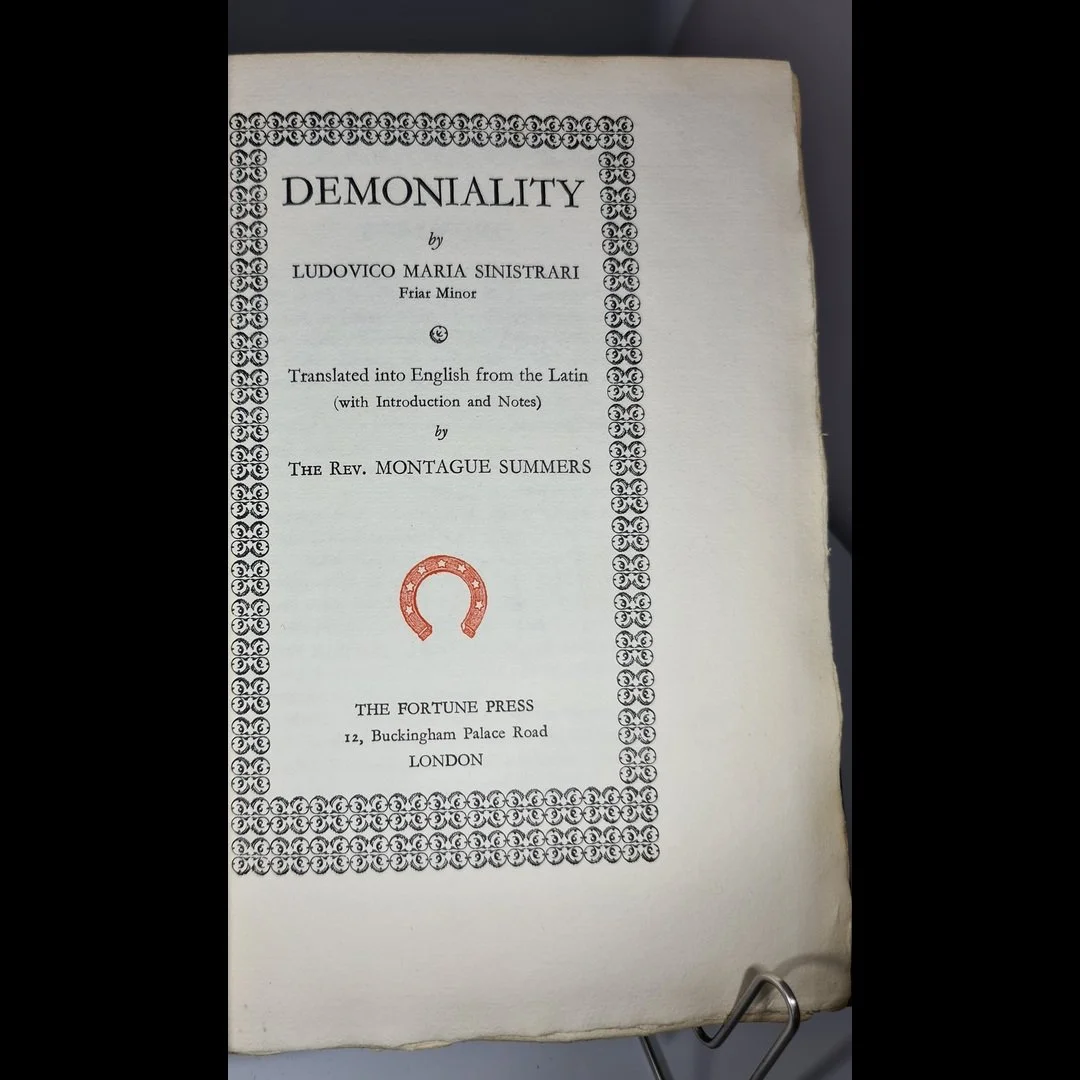 Image 1 of 15
 Image 2 of 15
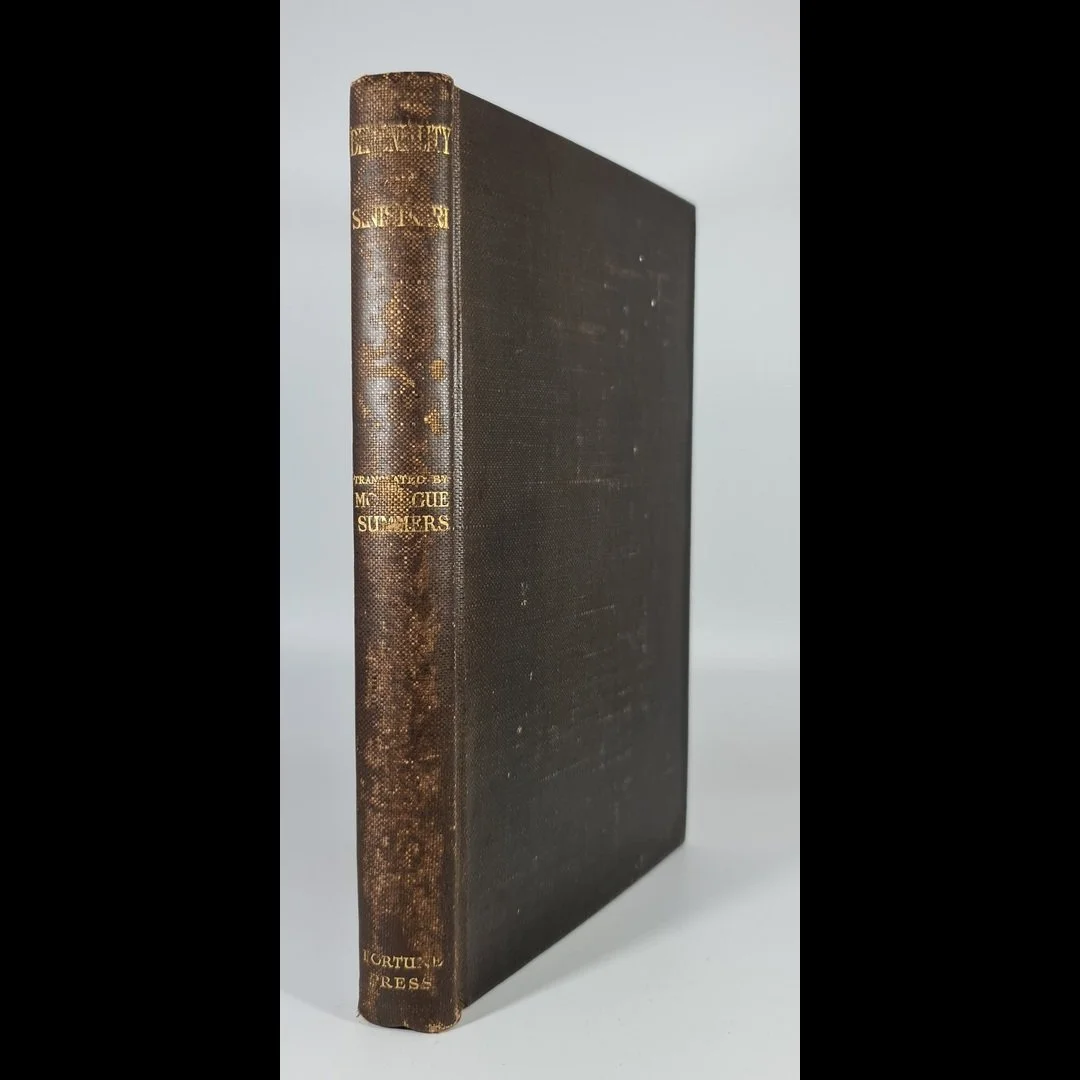 Image 3 of 15
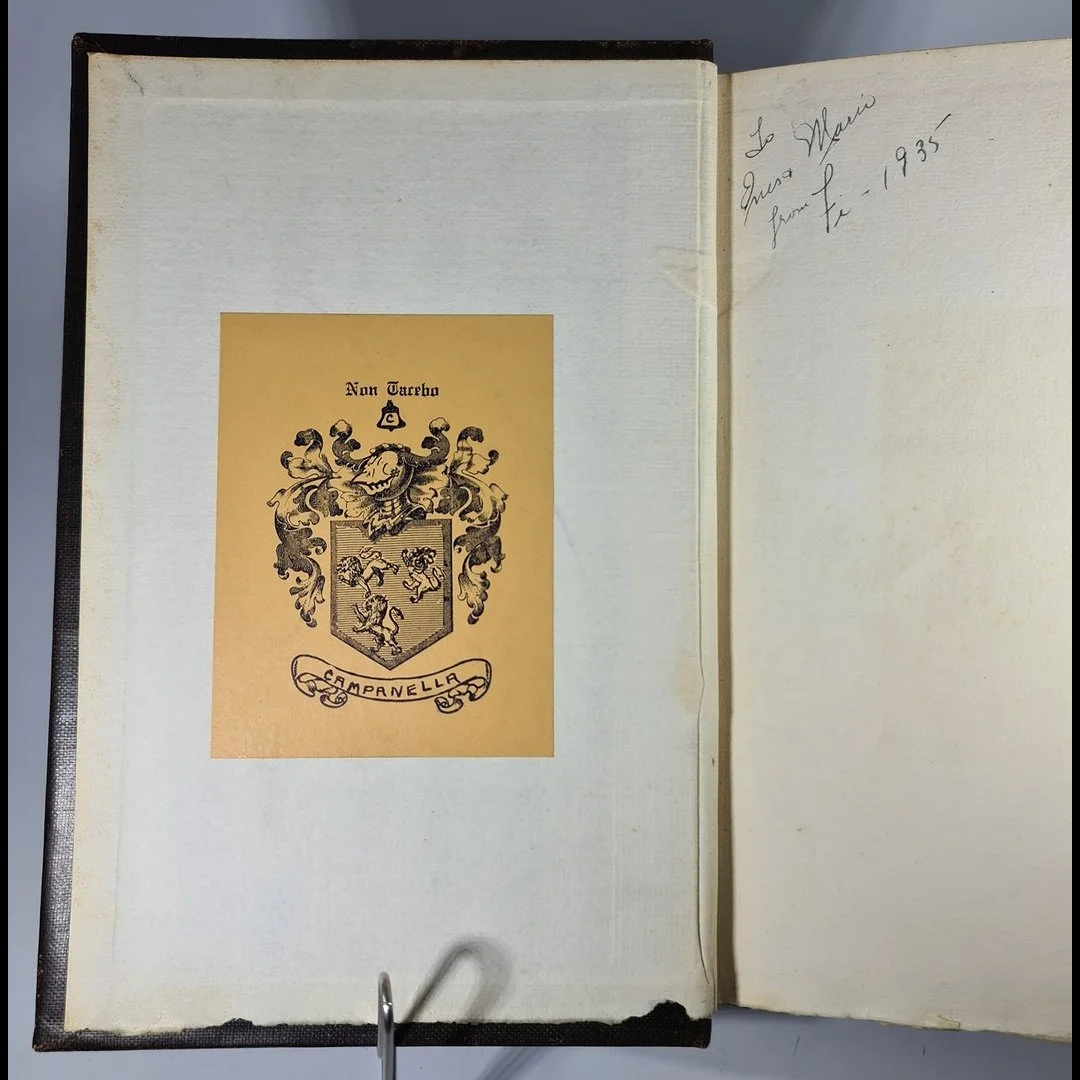 Image 4 of 15
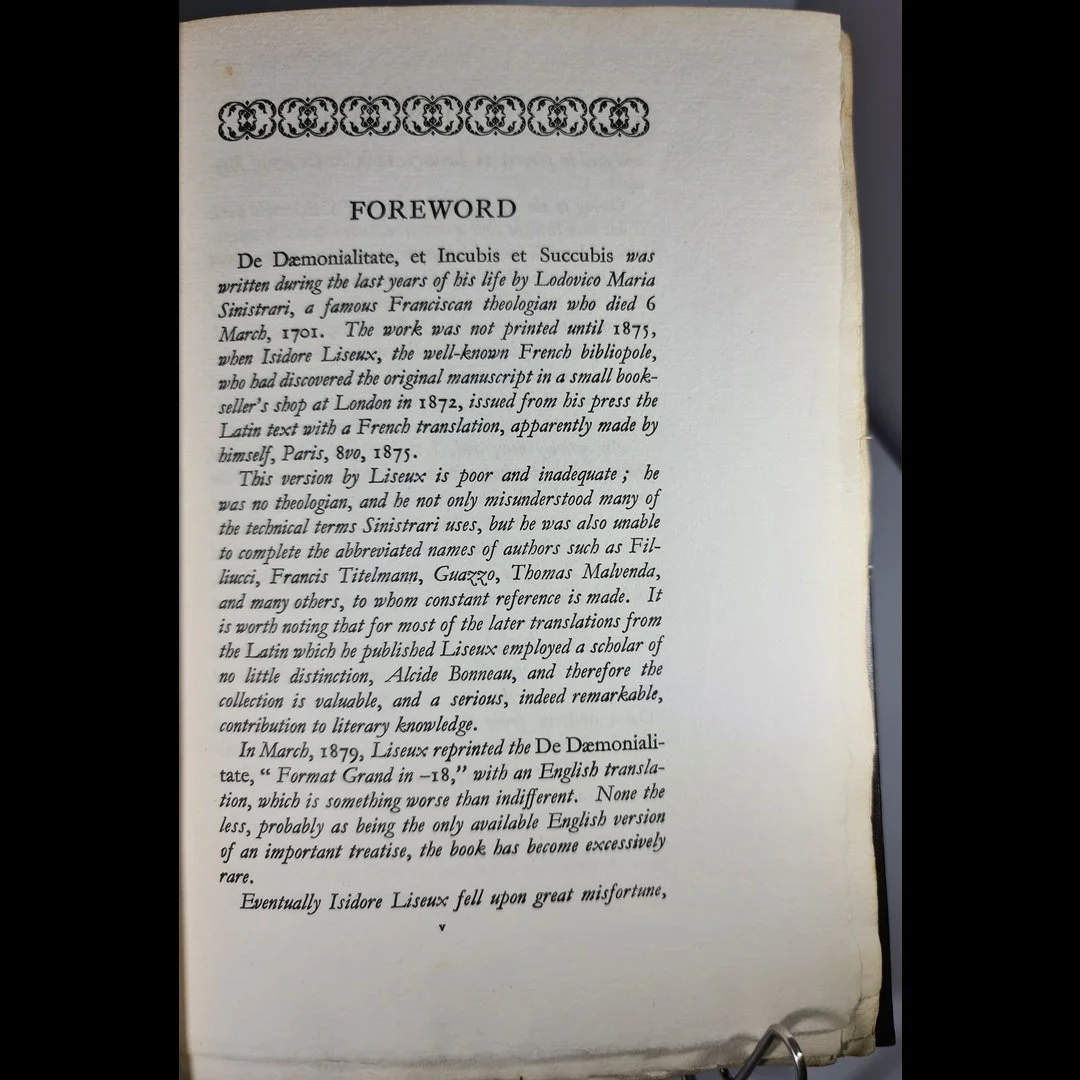 Image 5 of 15
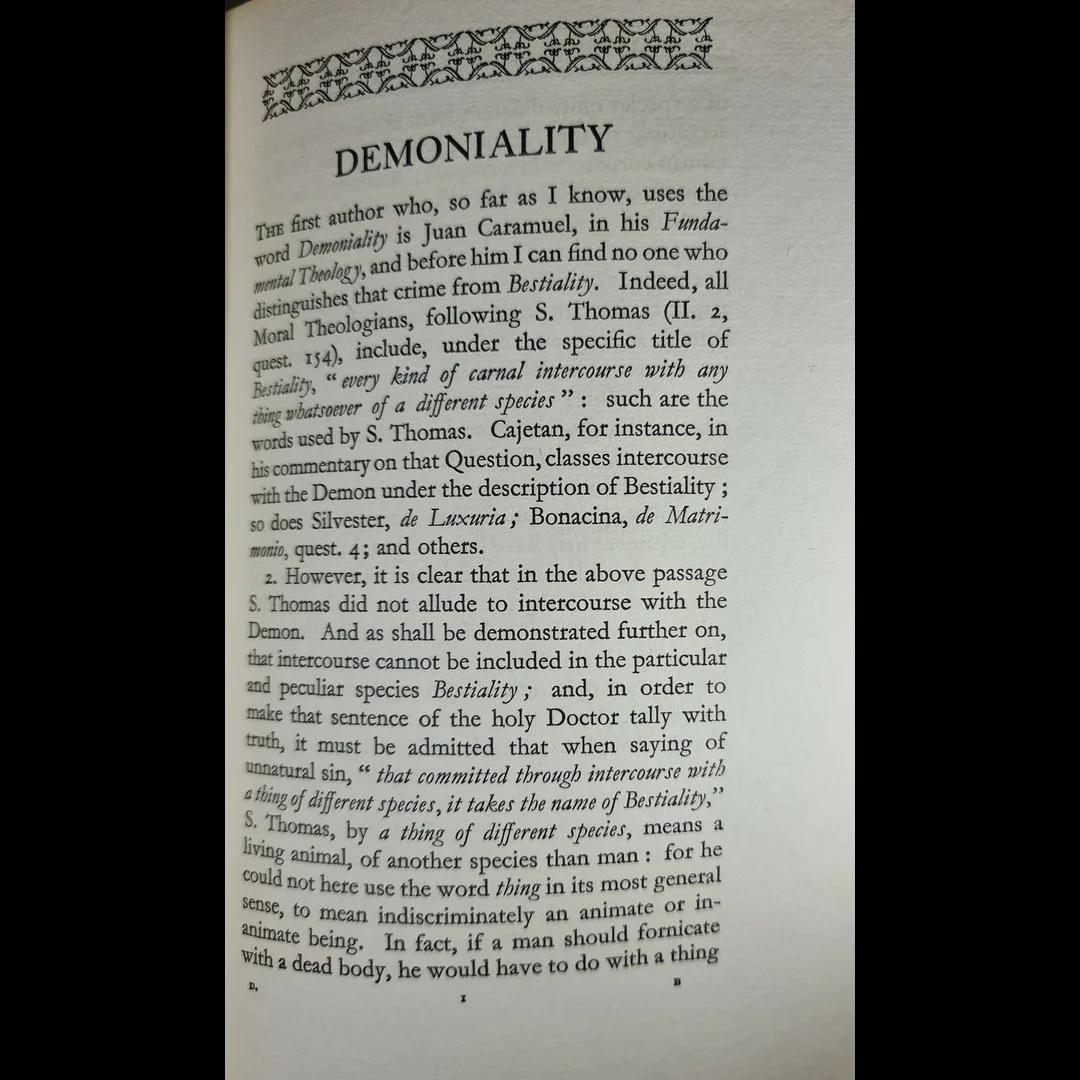 Image 6 of 15
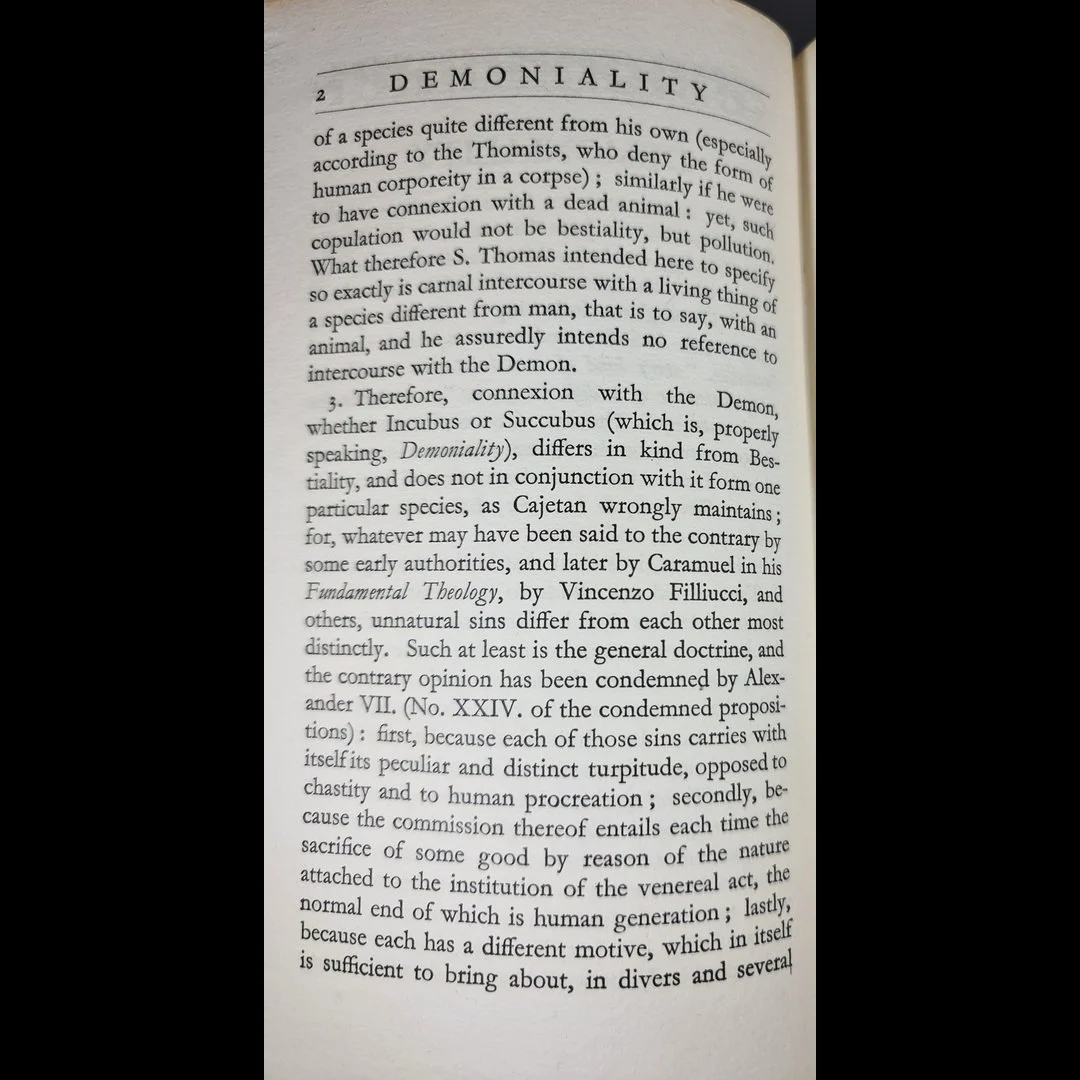 Image 7 of 15
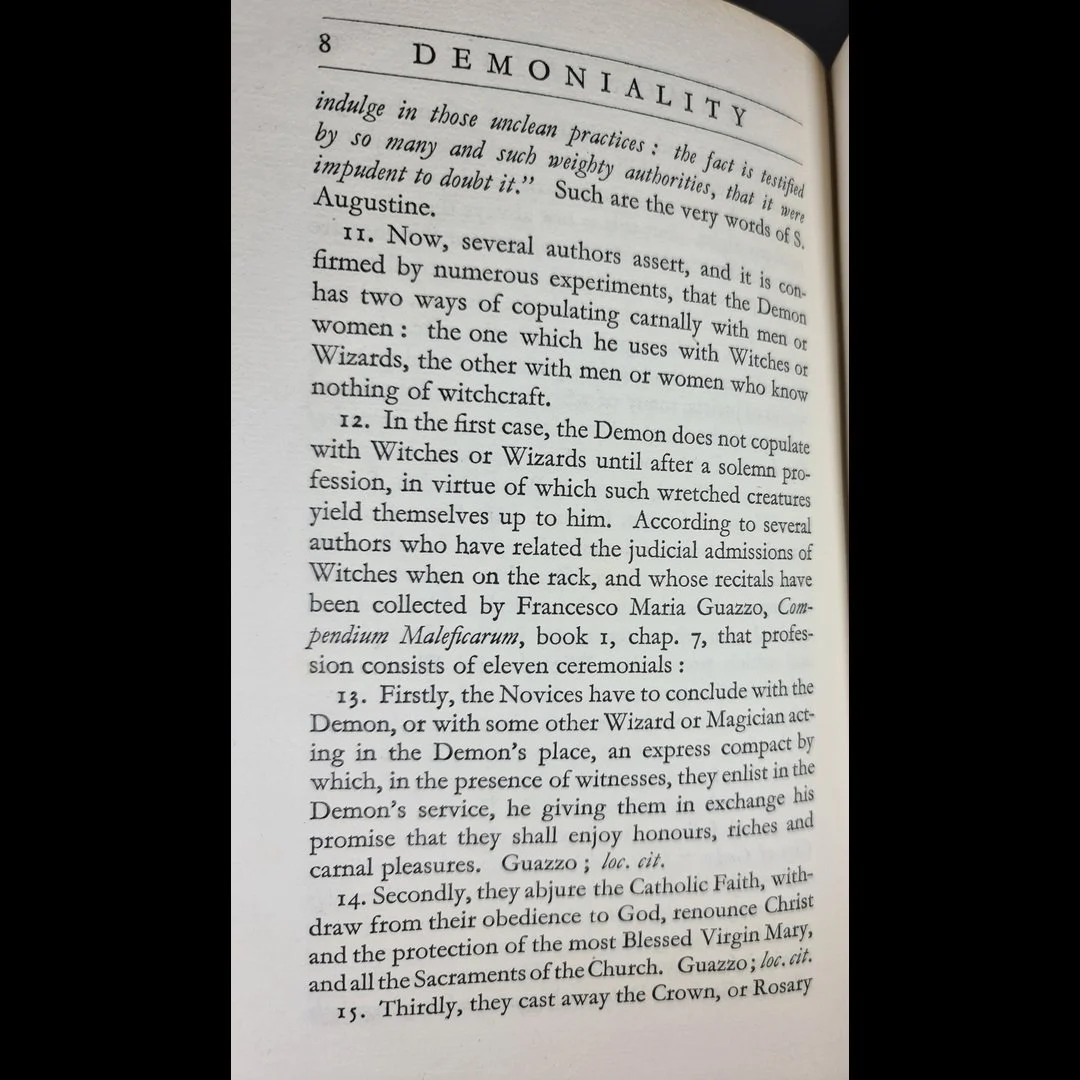 Image 8 of 15
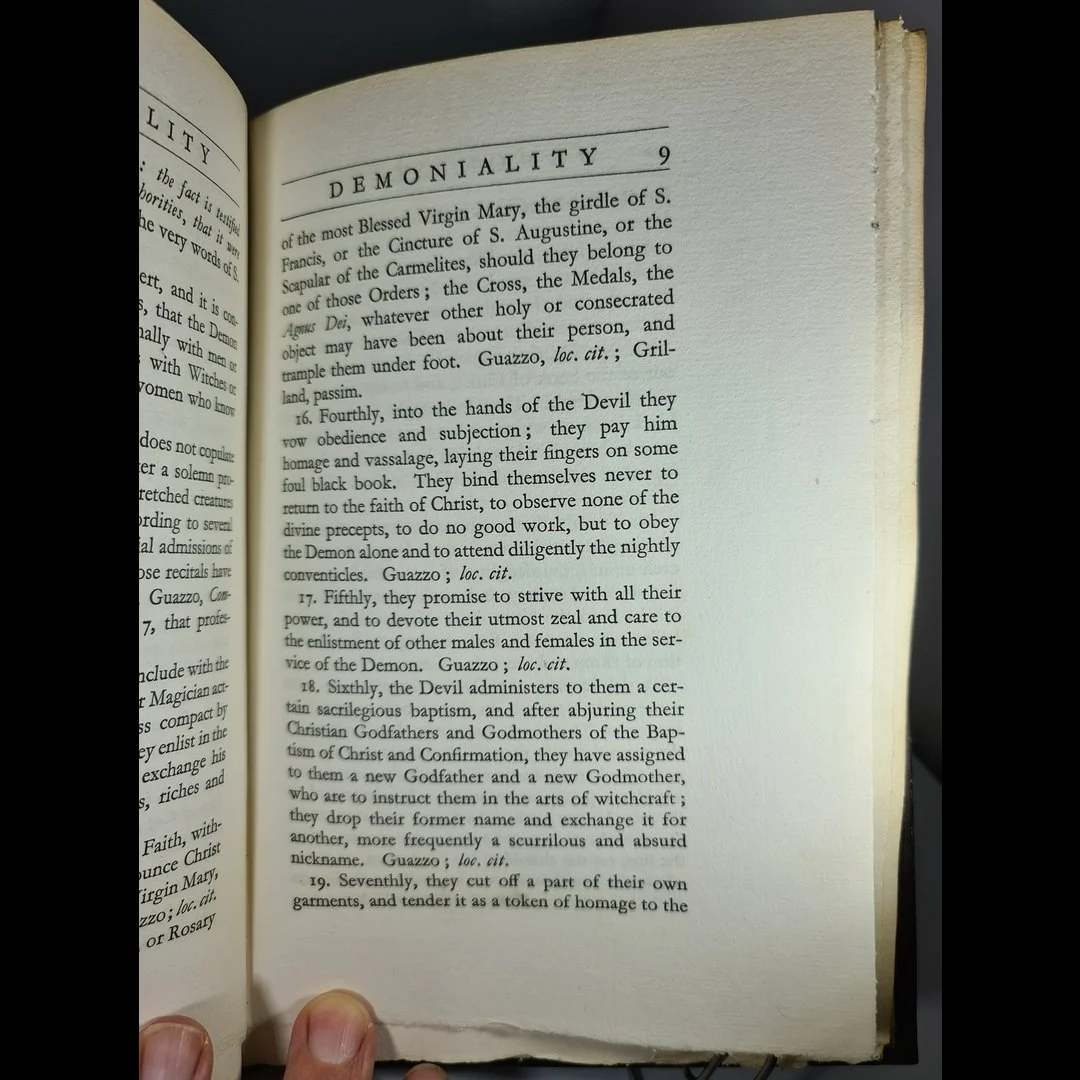 Image 9 of 15
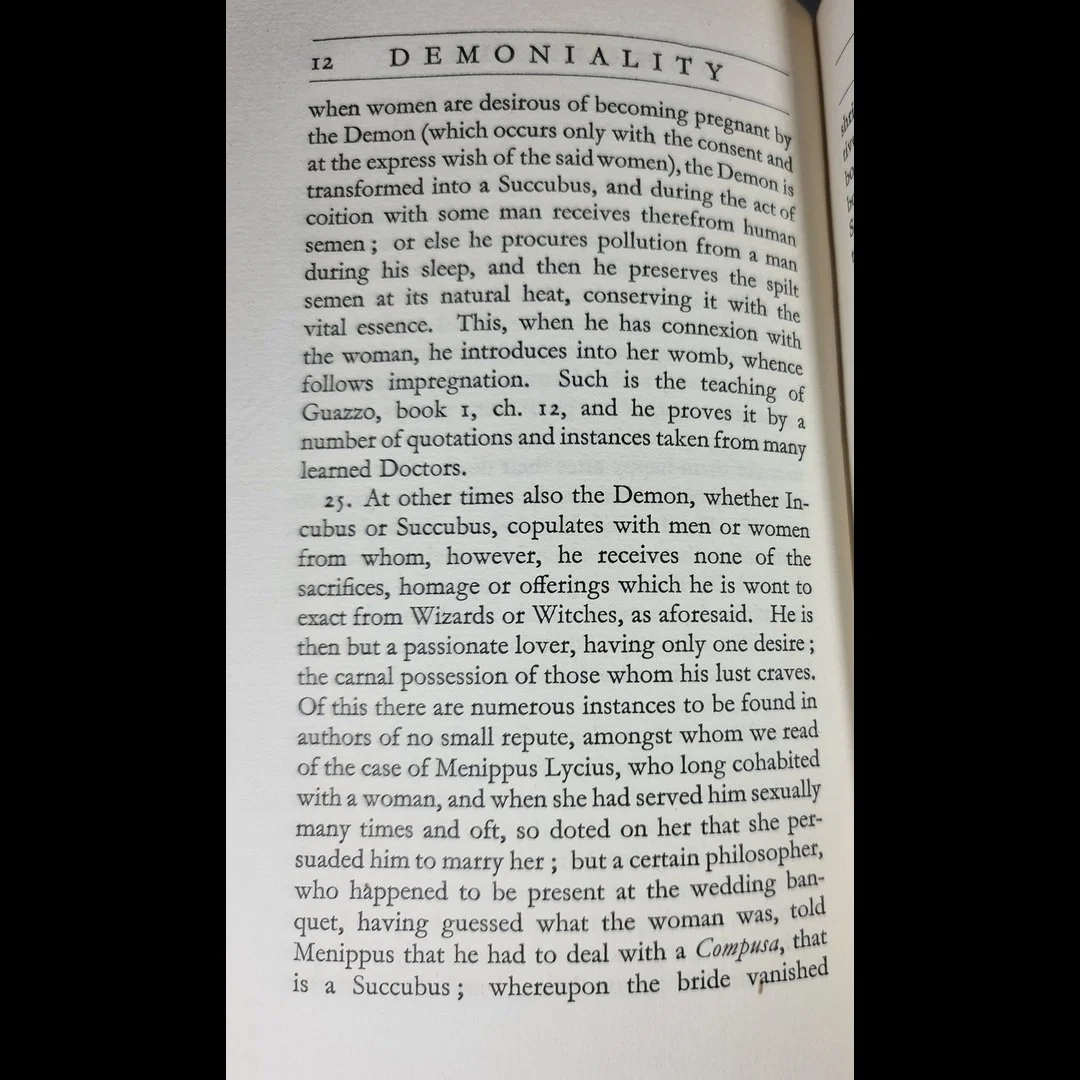 Image 10 of 15
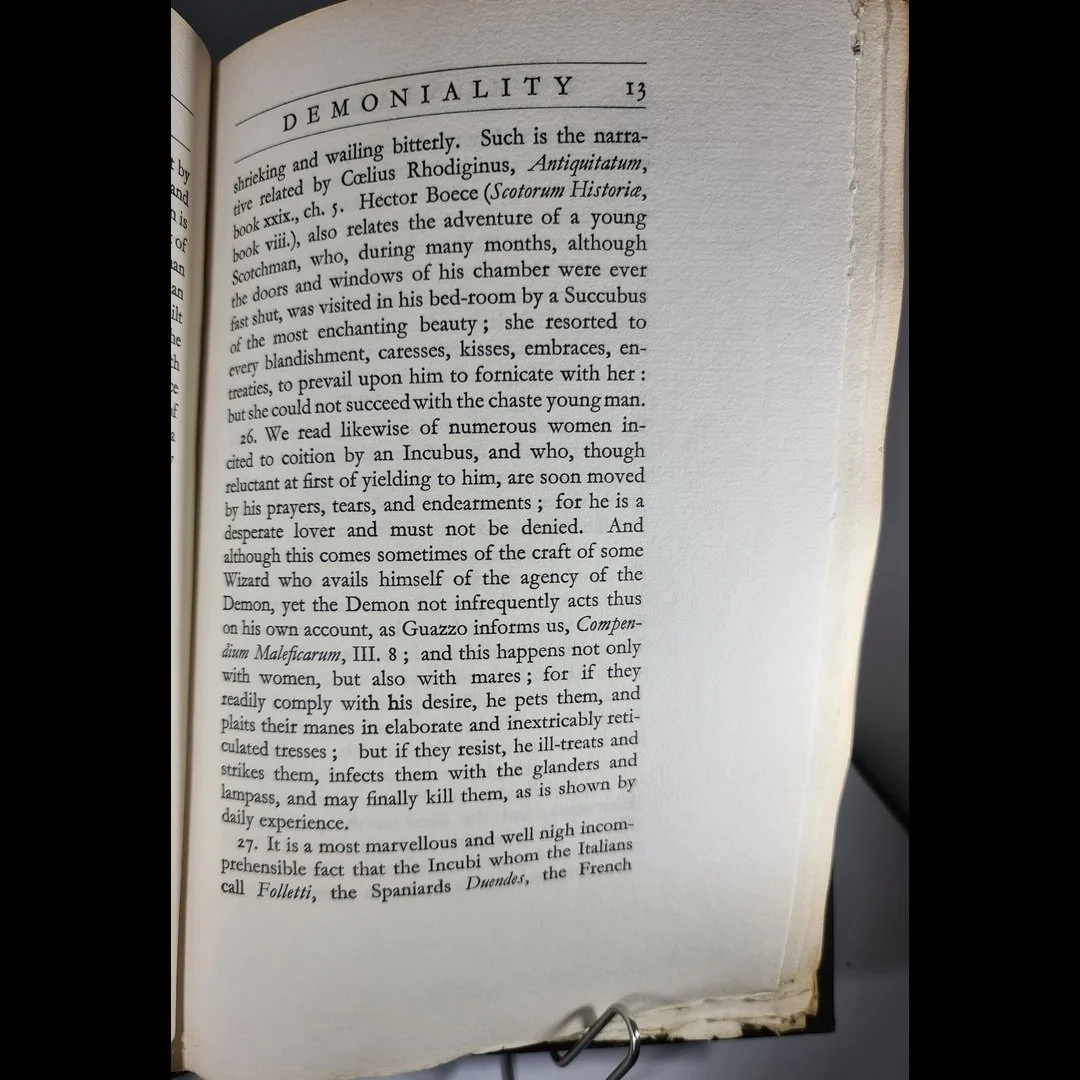 Image 11 of 15
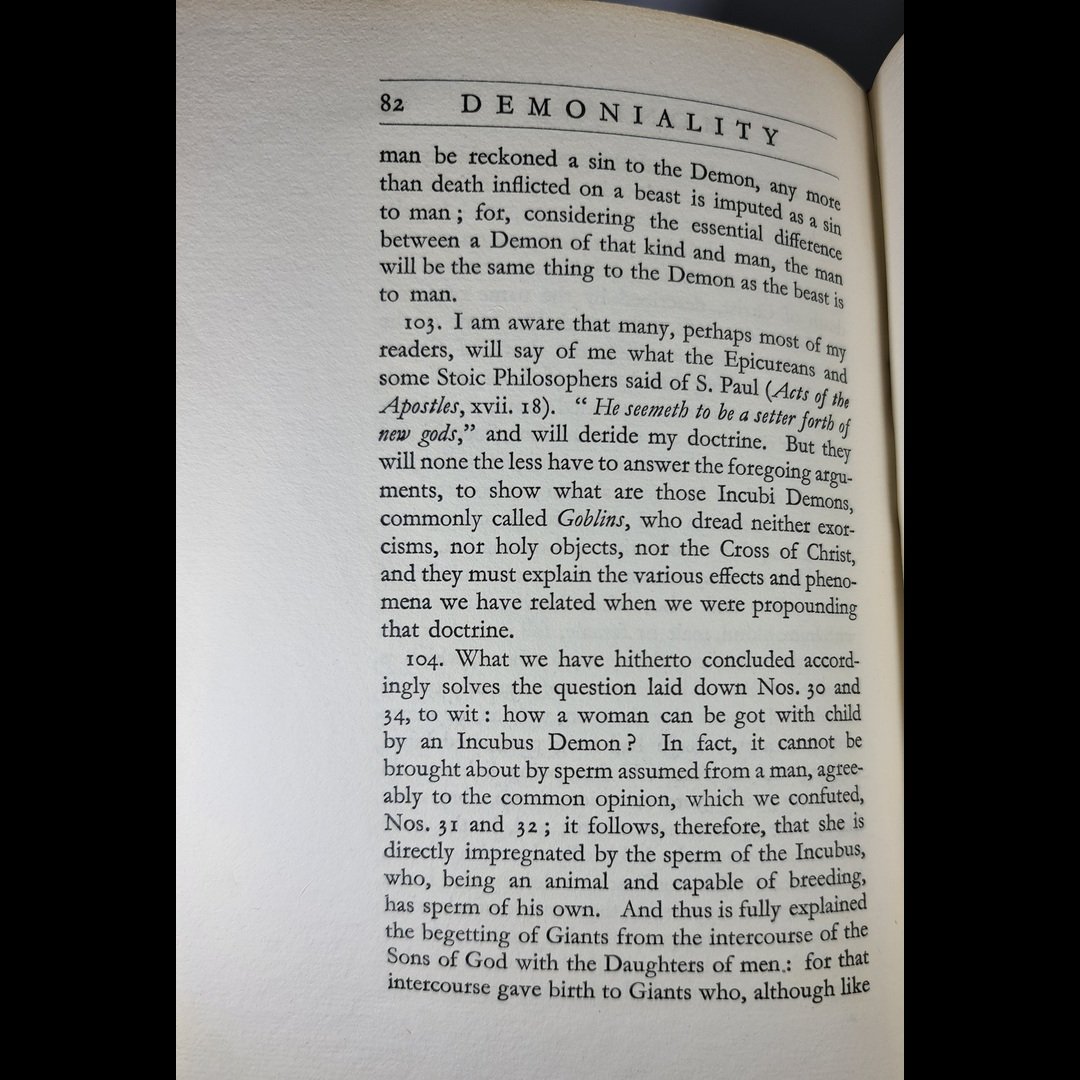 Image 12 of 15
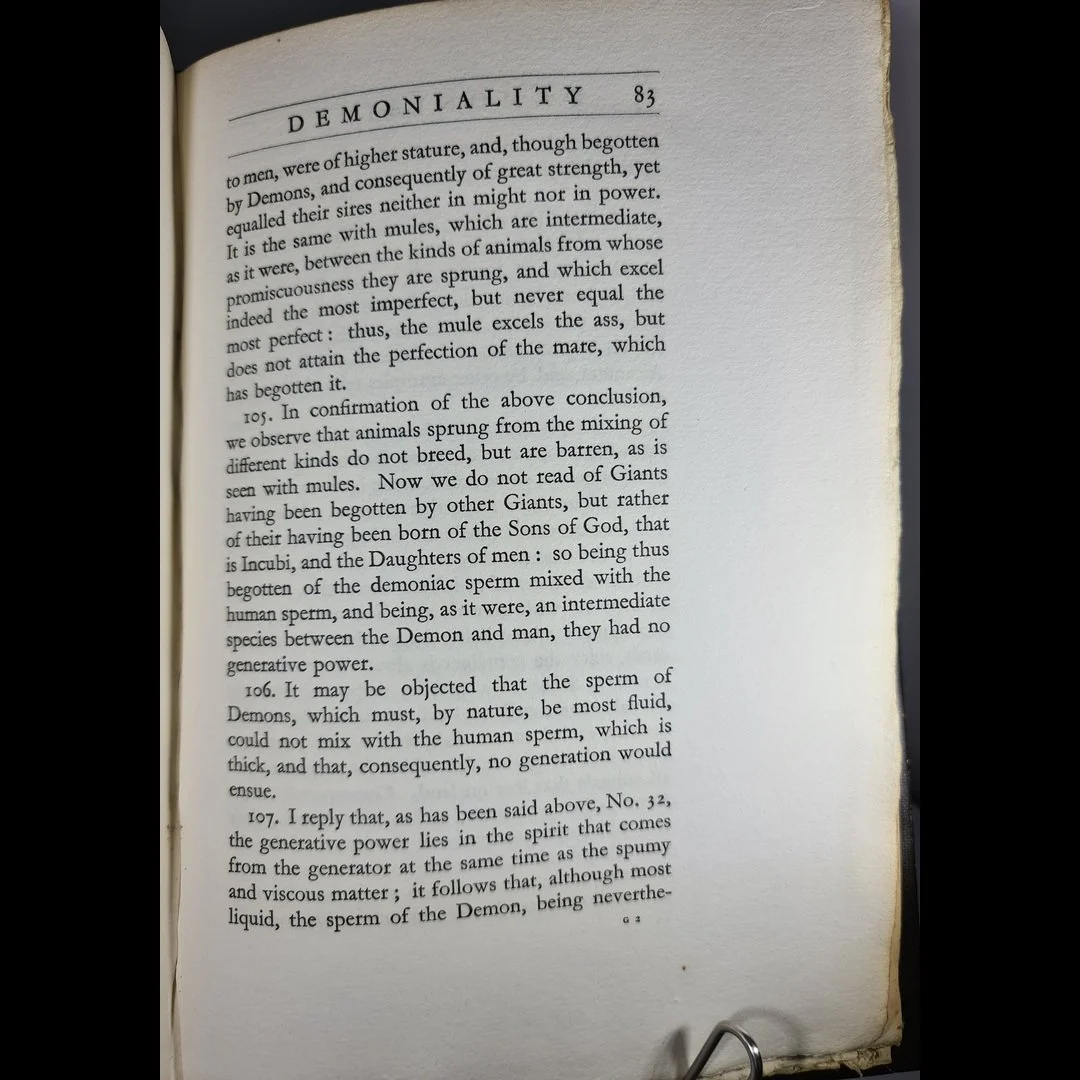 Image 13 of 15
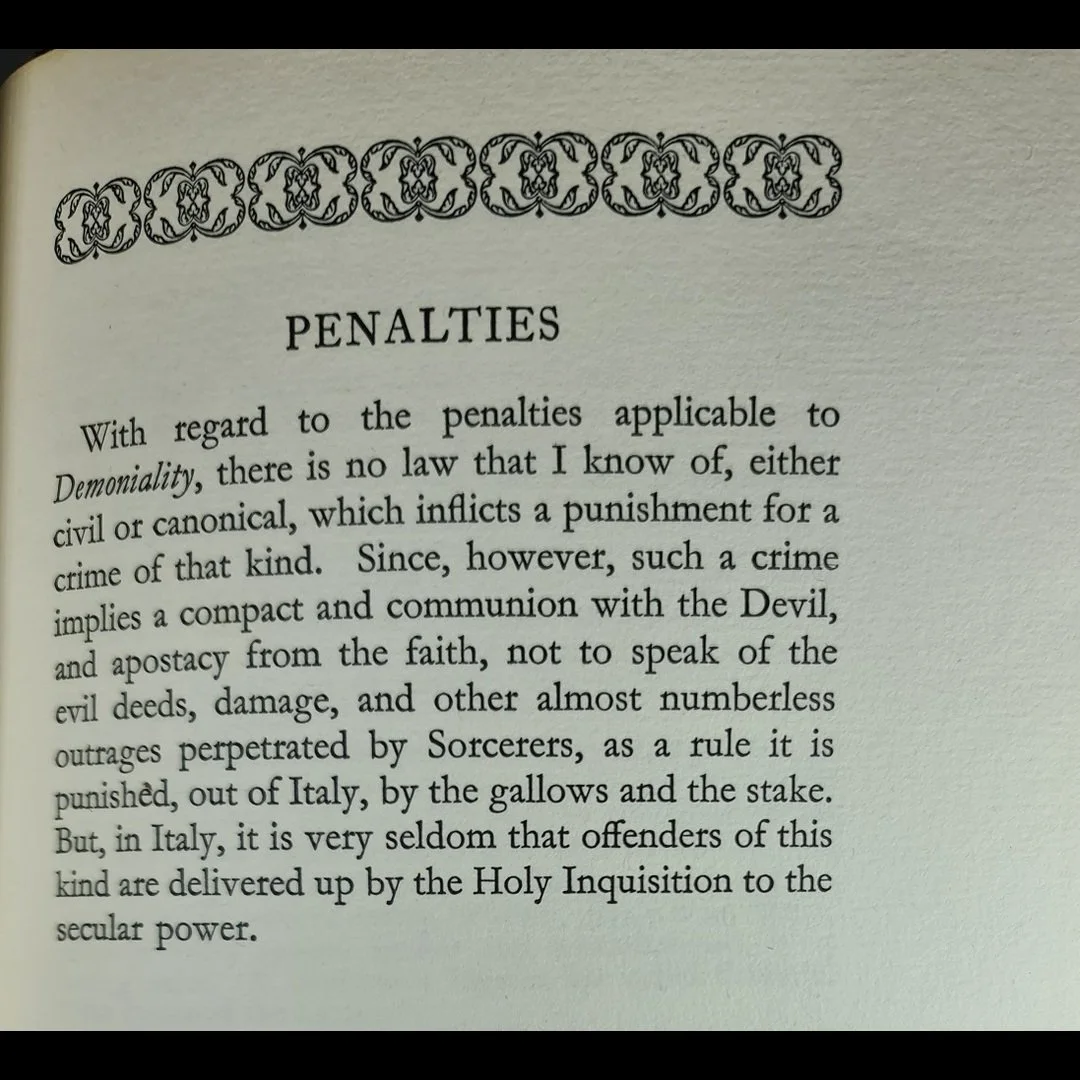 Image 14 of 15
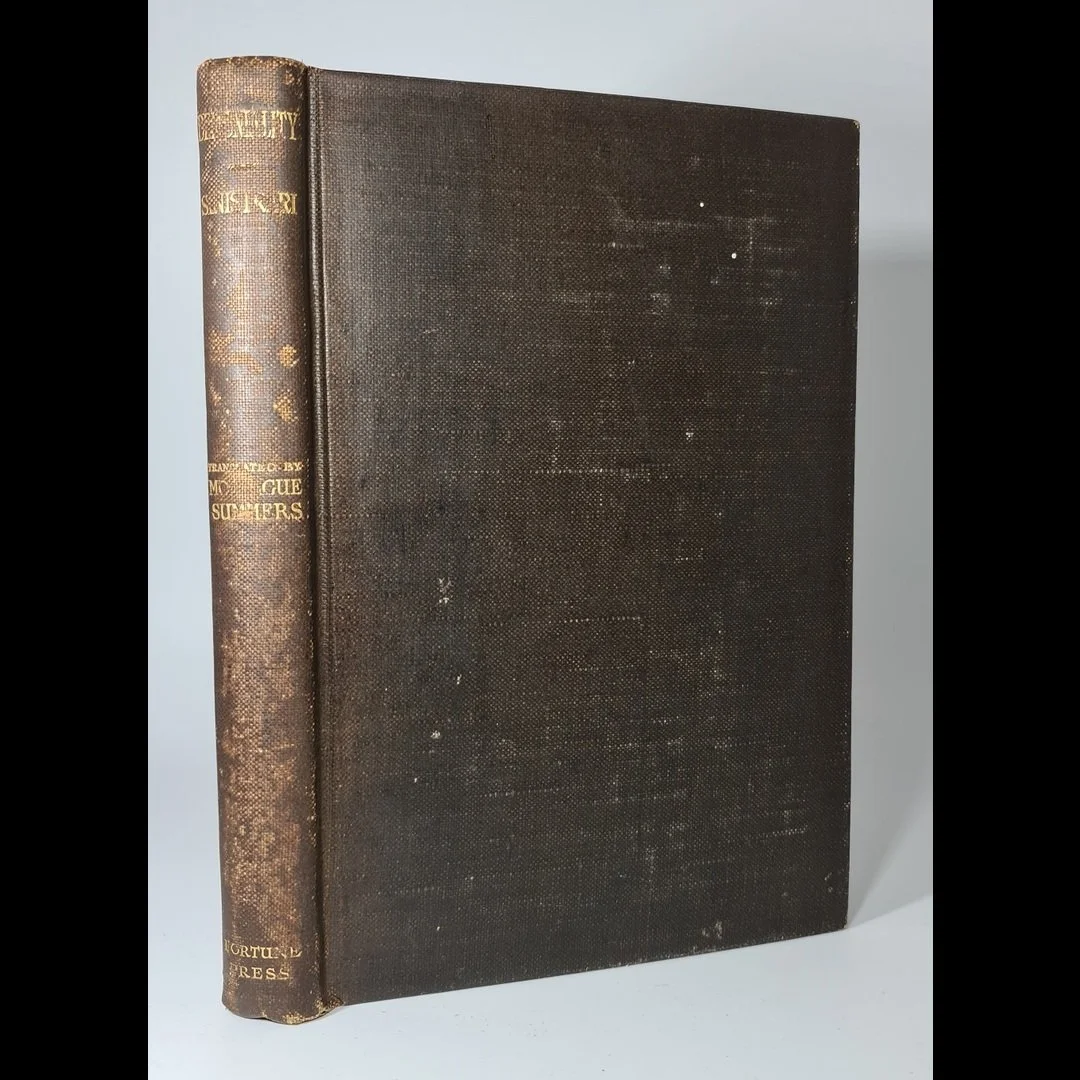 Image 15 of 15