1927 First Edition 3rd Printing
THE BUDDHA'S WAY OF VIRTUE
By W. D. C. Wagiswara and K. J. Saunders
KEY DETAILS
Condition: Very Good
Format: Hardcover, 12mo; Approx. 170 × 120 mm.
Published By: John Murray, London, 1927
Language: English
Provenance: An ink ownership signature to the front free endpaper reads “Roger J. Blin-Stoyle”, apparently corresponding to Roger John Blin-Stoyle FRS (1924–2007), the distinguished British theoretical physicist and academic.
Collation: pp. 112; Complete.
Dust Jacket: None, as issued
SKU: BTETM0001369
Shipping Info: Approximate Package Dimensions H: 12.5, L: 30, W: 25 (Units: cm), W: 2Kg
Tracked Shipping, Insurance Coverage as per Customer Request
DESCRIPTION
The Buddha's Way of Virtue
A Translation of the Dhammapada from the Pali Text — 1927
An early twentieth-century English translation of the Dhammapada, one of the most celebrated texts of Buddhist religious and ethical literature, translated directly from the Pali by W. D. C. Wagiswara and Kenneth James Saunders, both members of the Royal Asiatic Society, Ceylon Branch.
Published in John Murray's influential Wisdom of the East Series, edited by L. Cranmer-Byng and S. A. Kapadia, this is the August 1927 printing of a translation first issued in July 1912 and subsequently reprinted in October 1920.
The work presents the 423 verses of the Dhammapada, arranged in 26 chapters and exploring the moral and spiritual foundations of Buddhist teaching, including mindfulness, compassion, self-discipline, the nature of suffering, desire, wisdom and the attainment of liberation.
The translation is particularly noteworthy for the collaboration between Saunders, a British scholar of comparative religion and Buddhism, and Wagiswara, himself a Buddhist who had spent many years as a bhikkhu (Buddhist monk). In his introductory note, Saunders emphasises their intention to produce a translation faithful to the Pali original, drawing upon both Buddhist religious experience and contemporary Western scholarship.
The volume includes an introduction, explanatory notes, illustrative sayings of the Buddha's disciples and an appendix entitled The Buddhist Ideal.
An attractive example retaining its original red publisher's cloth, decorated in pale silver-white with a portrait-style vignette, the title and the Wisdom of the East Series emblem.
Of additional interest is an ownership inscription reading “Roger J. Blin-Stoyle”, probably that of the distinguished British theoretical physicist and Fellow of the Royal Society.
PROVENANCE
An ink ownership signature to the front free endpaper reads “Roger J. Blin-Stoyle”, apparently corresponding to Roger John Blin-Stoyle FRS (1924–2007), the distinguished British theoretical physicist and academic.
Blin-Stoyle was a prominent figure in nuclear and particle physics and played an important role in the development of the University of Sussex, where he became the founding Dean of the School of Mathematical and Physical Sciences in 1962. Elected a Fellow of the Royal Society in 1976, he subsequently served as President of the Institute of Physics from 1990 to 1992.
His wider intellectual interests extended to the philosophical implications of modern physics, although no independent documentary evidence has been established of a particular interest in Buddhism.
The distinctive name and initials provide a plausible identification, but the handwriting has not been independently authenticated against a known specimen of Blin-Stoyle's signature. The attribution is therefore presented as probable rather than conclusively established.
An intriguing potential association between an influential English translation of Buddhist philosophy and a significant twentieth-century British scientist.
CONDITION, COLLATION & COPY NOTES
COLLATION
pp. 112; Complete.
Original publisher's red cloth binding with pale silver-white lettering and decorative stamping to the front board and spine. Minor rubbing and handling wear to the cloth, with slight wear at the extremities and some light age-related discolouration. The decorative stamping remains clearly visible.
Both boards are firmly attached, and the internal hinges are sound.
Internally, the pages are generally clean and legible, with occasional light foxing, scattered minor spotting and the expected age-toning. Ink ownership inscription to the upper portion of the front free endpaper.
Please see Photos as part of condition report.
REFERENCES
Finnish National Library (Finna), bibliographical catalogue record for The Buddha's “Way of Virtue”, London: John Murray, 1927; 112 pages.
Wagiswara, W. D. C., and K. J. Saunders. The Buddha's “Way of Virtue”. London: John Murray, 1912; reprinted 1920 and 1927. The earlier text is reproduced in the Internet Sacred Text Archive.
Elliott, J. P. “Roger John Blin-Stoyle, 24 December 1924–31 January 2007.” Biographical Memoirs of Fellows of the Royal Society, vol. 54 (2008), pp. 31–45.
Wilkinson, Denys. “Roger Blin-Stoyle.” The Guardian, 20 February 2007.
SYNOPSIS
The Dhammapada, traditionally attributed to the teachings of Gautama Buddha, is among the most widely translated and influential works of Buddhist scripture. Comprising 423 concise verses arranged into 26 thematic chapters, it presents the fundamental principles of Buddhist ethical conduct, mental cultivation and spiritual liberation.
Through memorable aphorisms and illustrations drawn from everyday life, the text addresses the consequences of human actions, the dangers of anger and attachment, the cultivation of compassion and wisdom, and the possibility of transcending suffering through disciplined thought and conduct.
Published during a period of growing Western engagement with Asian philosophy and religion, this translation sought to make the teachings of the Dhammapada accessible to English-speaking readers without losing the meaning and character of the Pali original.
As part of The Wisdom of the East Series, the volume reflects an important chapter in the transmission of Buddhist philosophical and religious literature to Western audiences.
AUTHOR BIO
W. D. C. Wagiswara was a Buddhist scholar and former bhikkhu who collaborated with Kenneth James Saunders on this translation. Saunders acknowledged Wagiswara's long experience of Buddhist monastic life and his contribution to ensuring that their English rendering faithfully represented the original Pali teachings.
Kenneth James Saunders (1882–1937) was a British scholar of Buddhism and comparative religion who worked extensively in Ceylon and India. He served as Vice-Principal of Trinity College, Kandy, and later became Professor of the History of Religion at the Pacific School of Religion in California.
His publications included The Story of Buddhism (1916) and Buddhism and Buddhists in Southern Asia (1923). His scholarship contributed to the early twentieth-century study and interpretation of Buddhist traditions within English-speaking academic and religious circles.

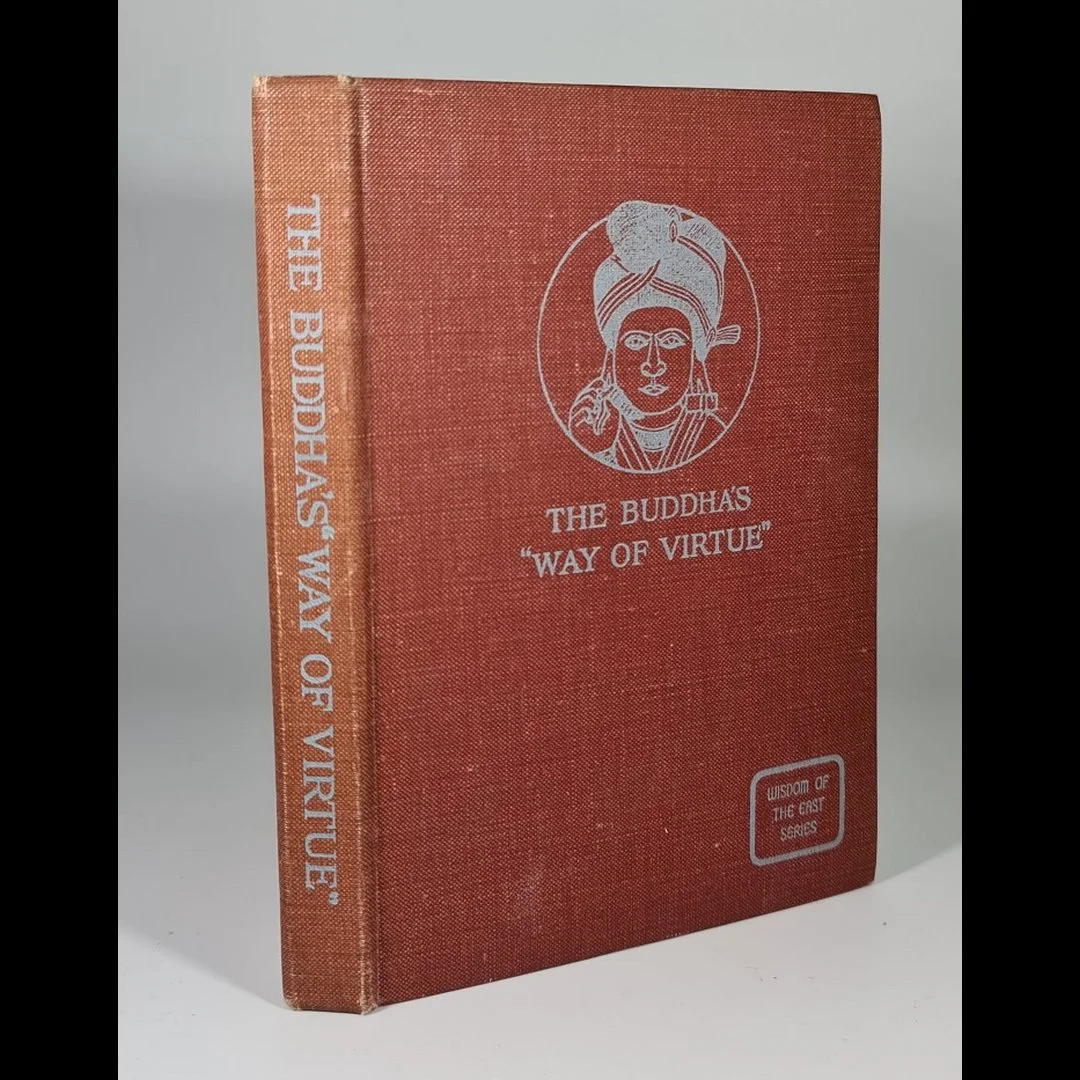 Image 1 of 12
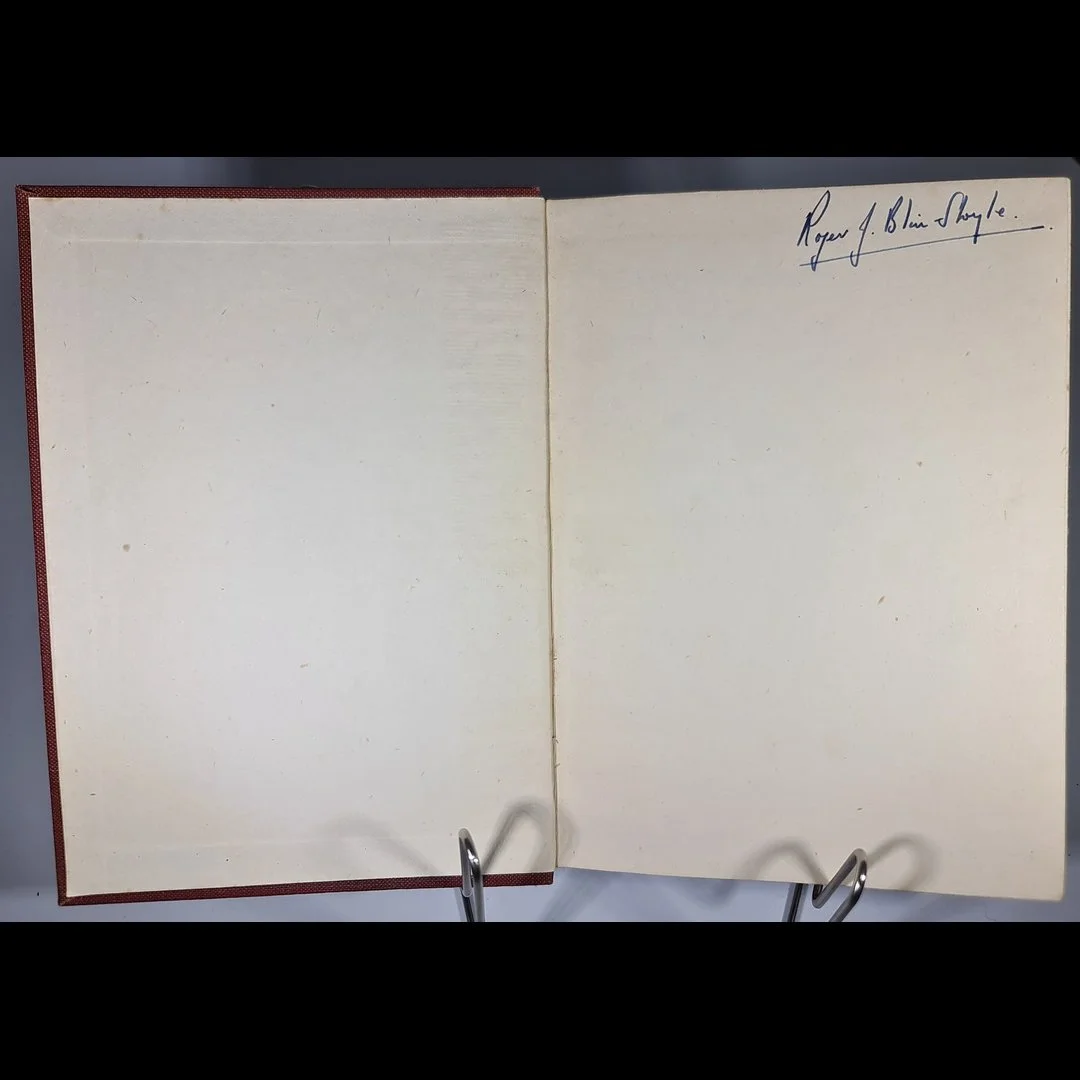 Image 2 of 12
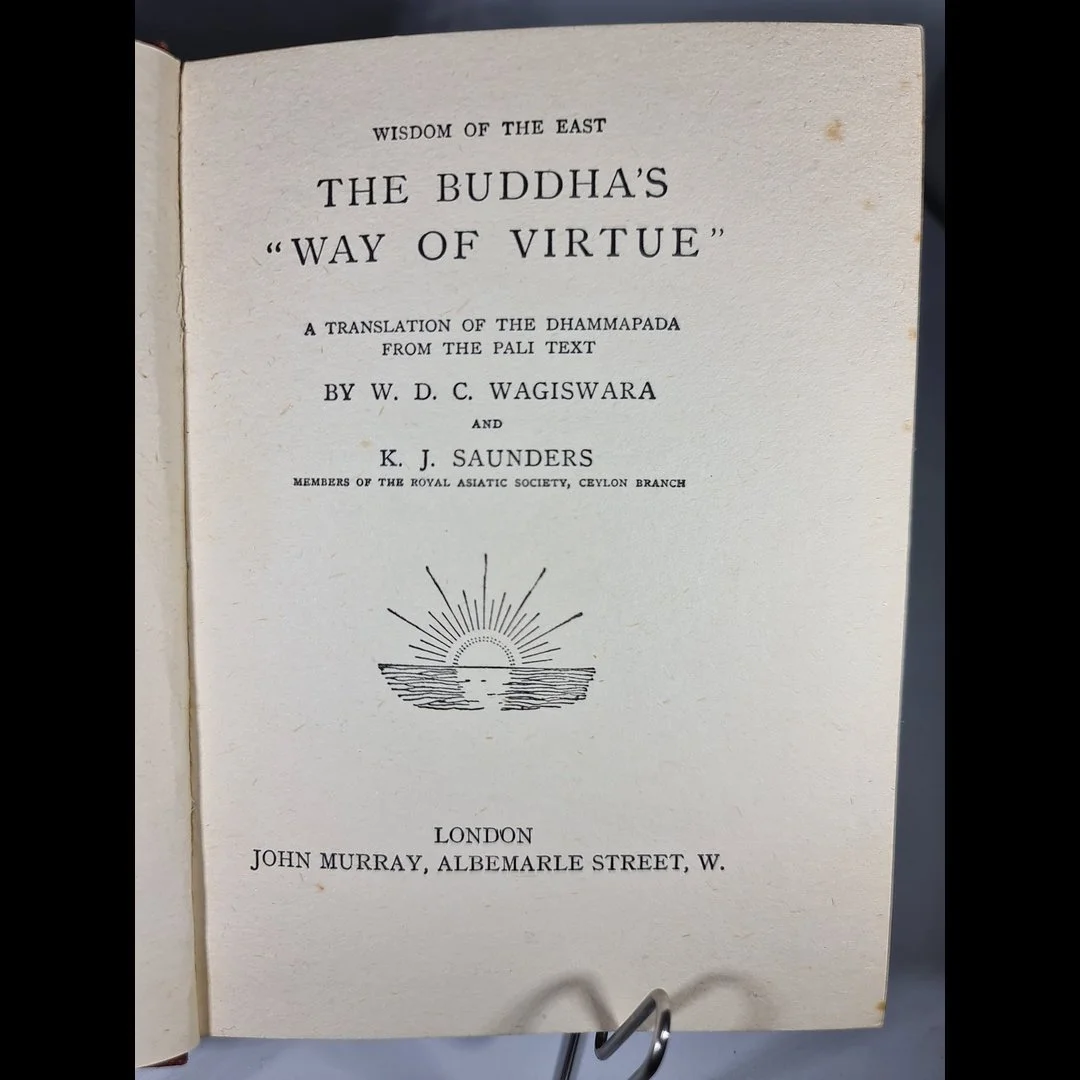 Image 3 of 12
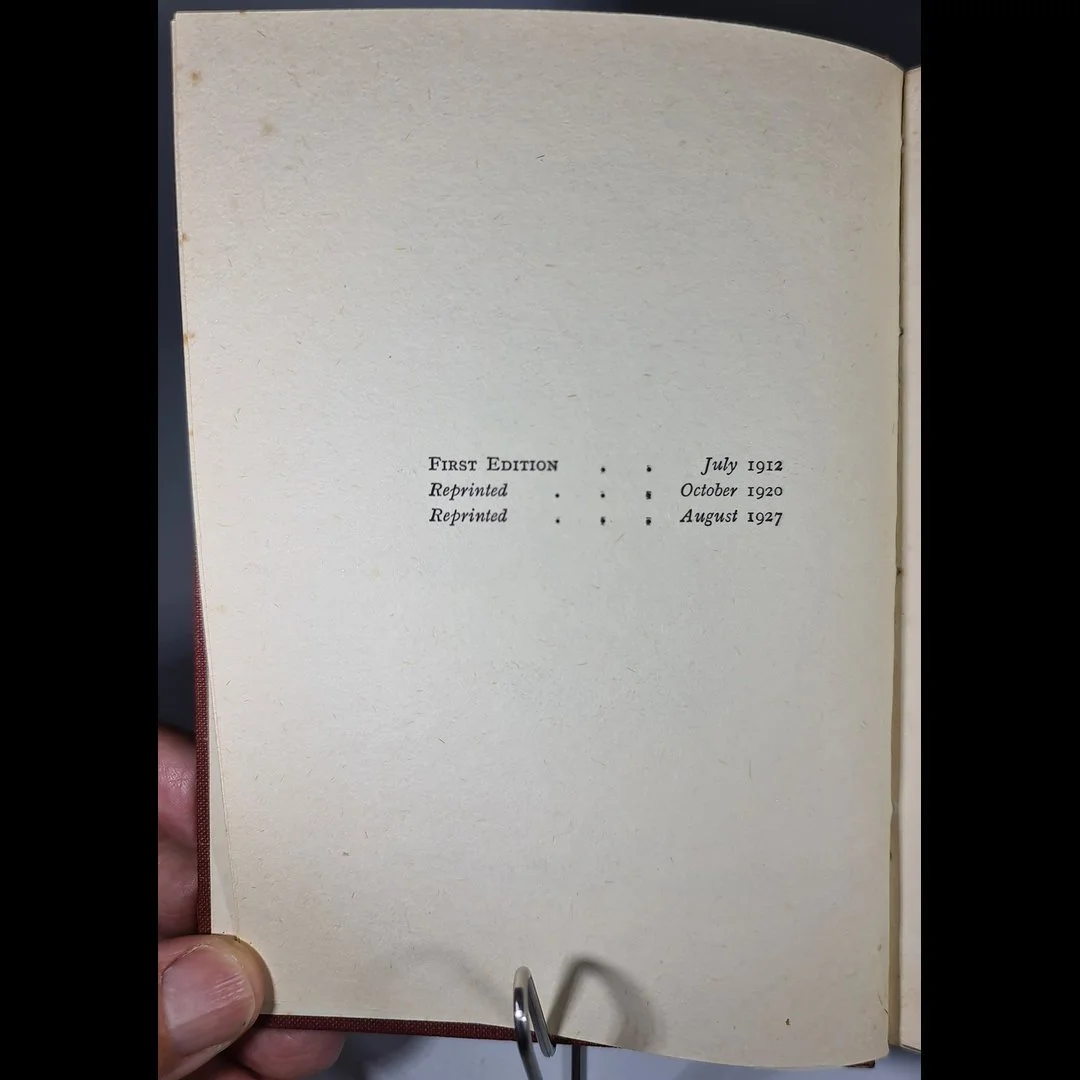 Image 4 of 12
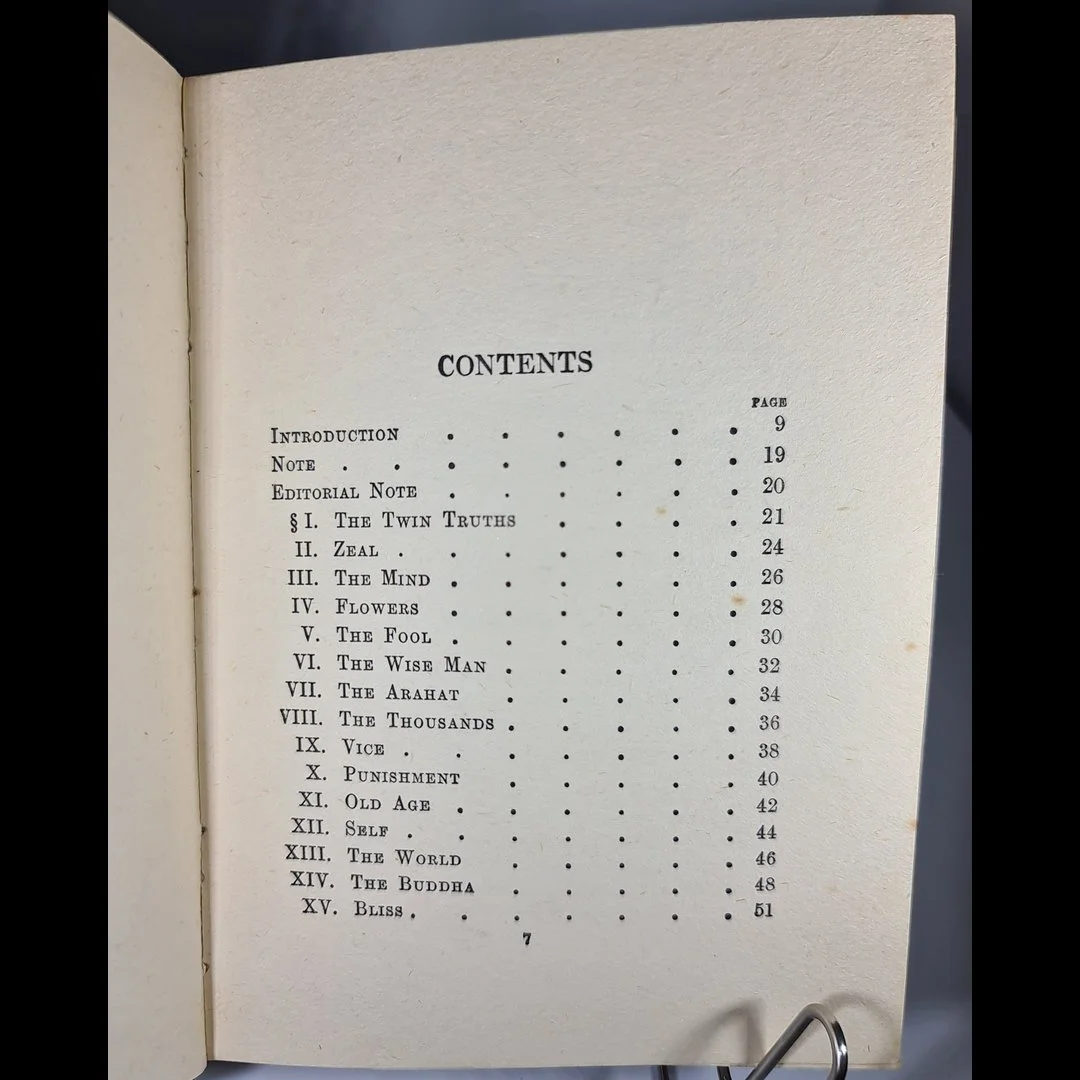 Image 5 of 12
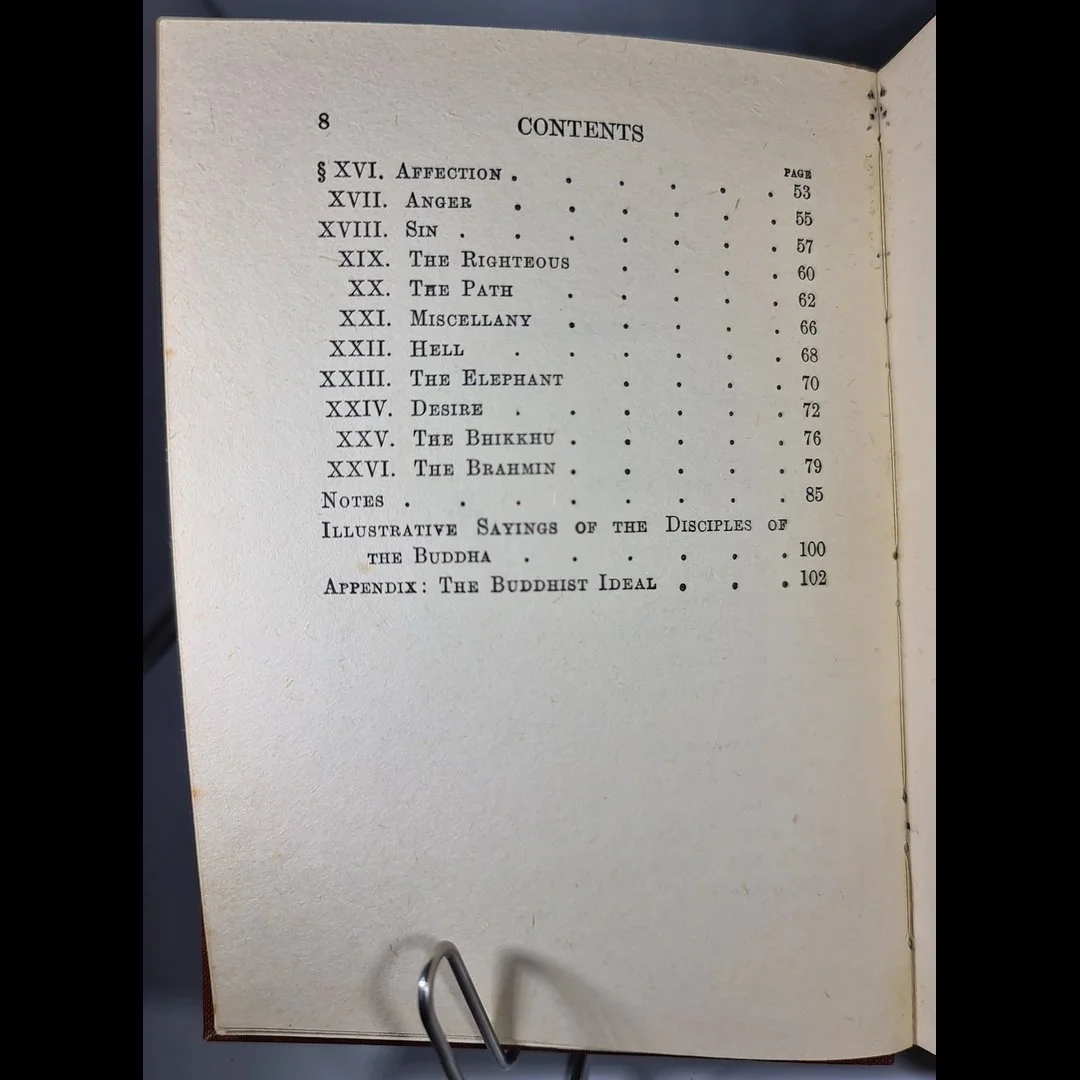 Image 6 of 12
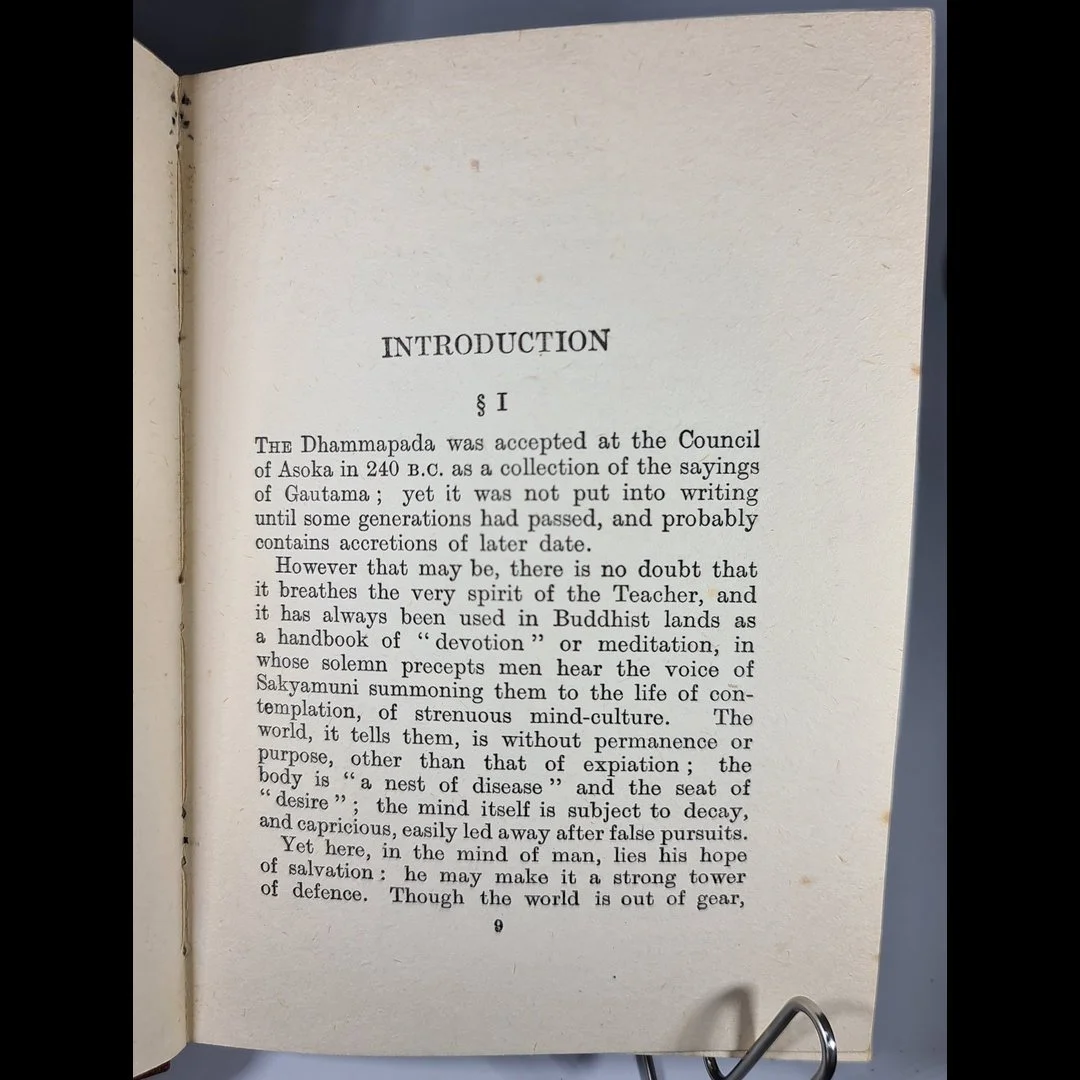 Image 7 of 12
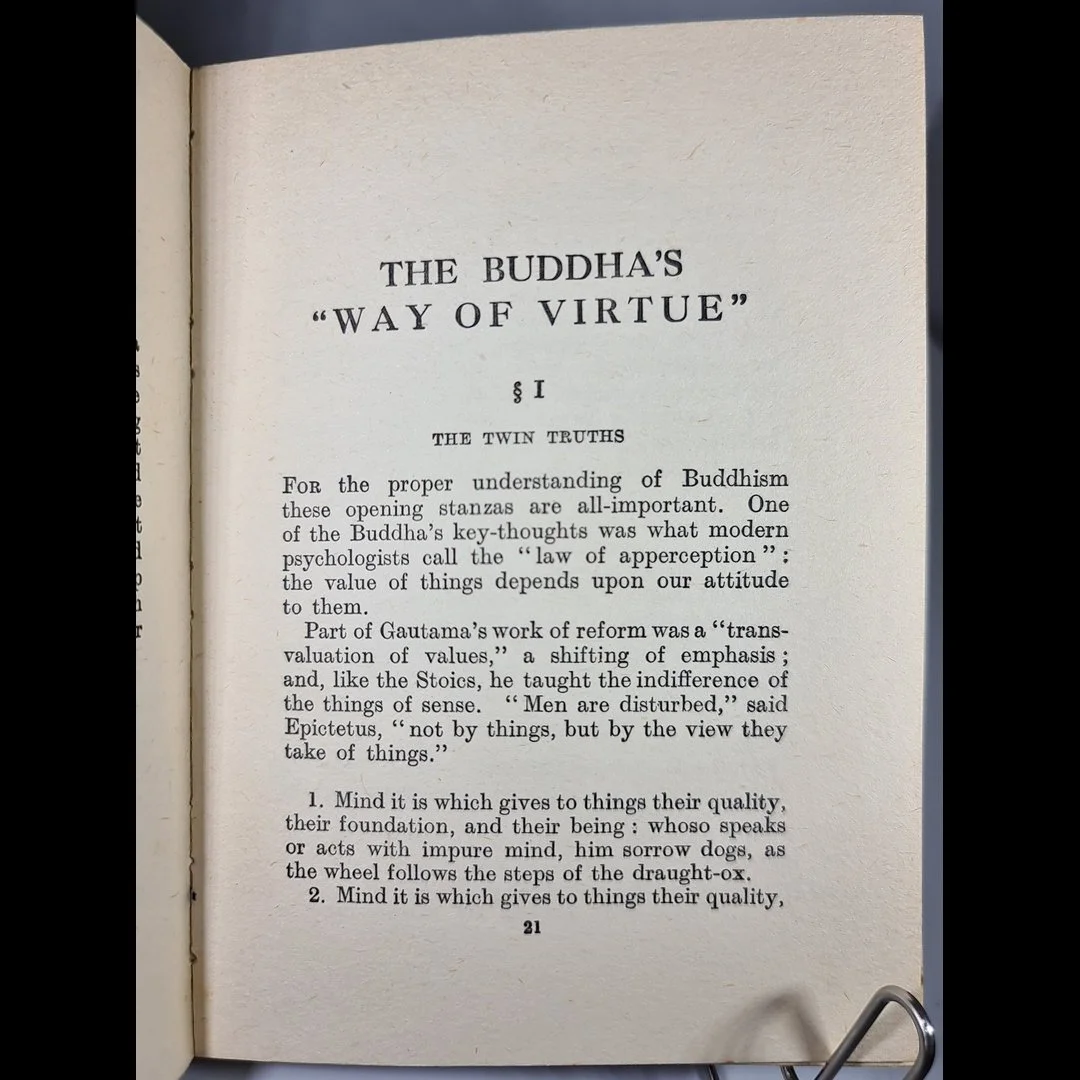 Image 8 of 12
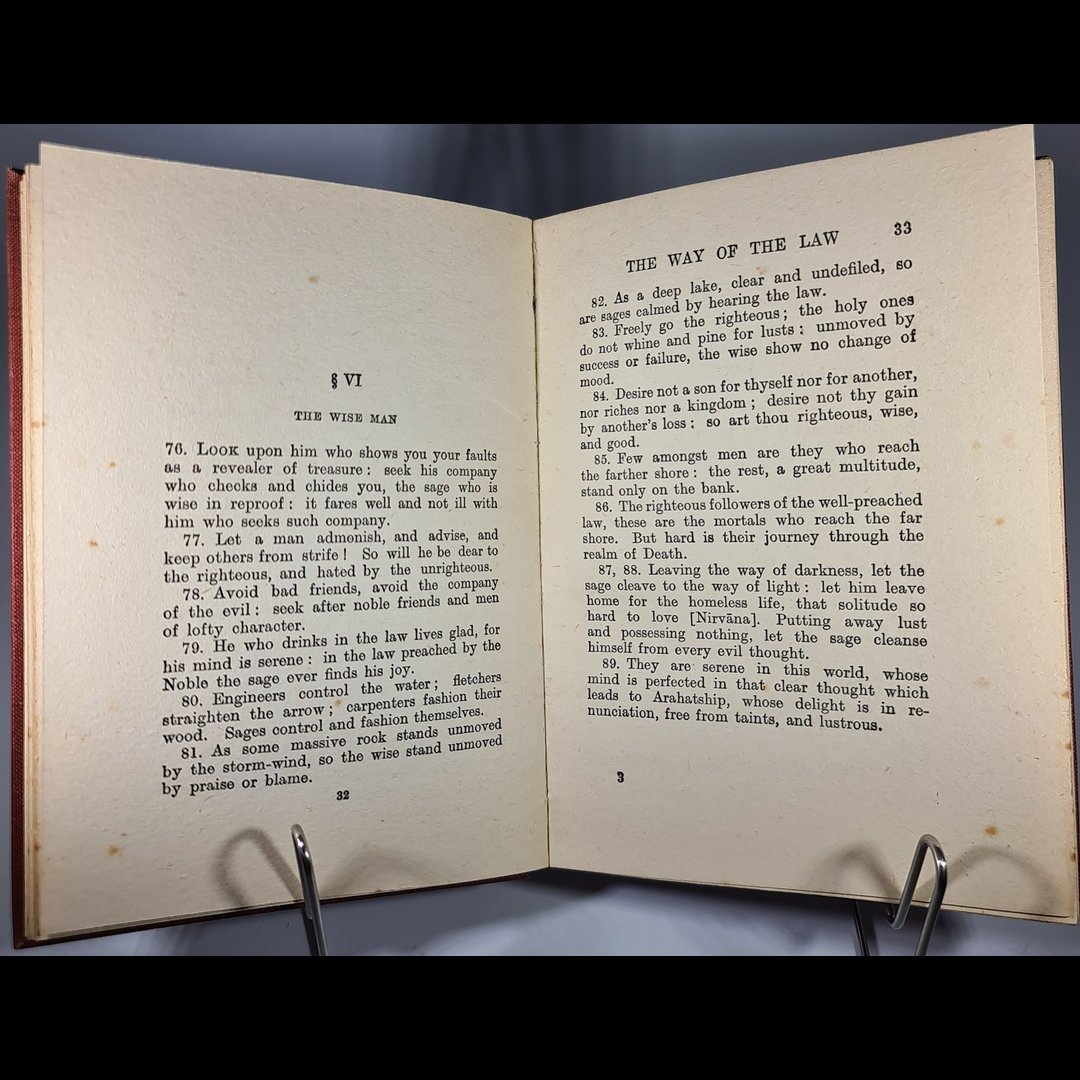 Image 9 of 12
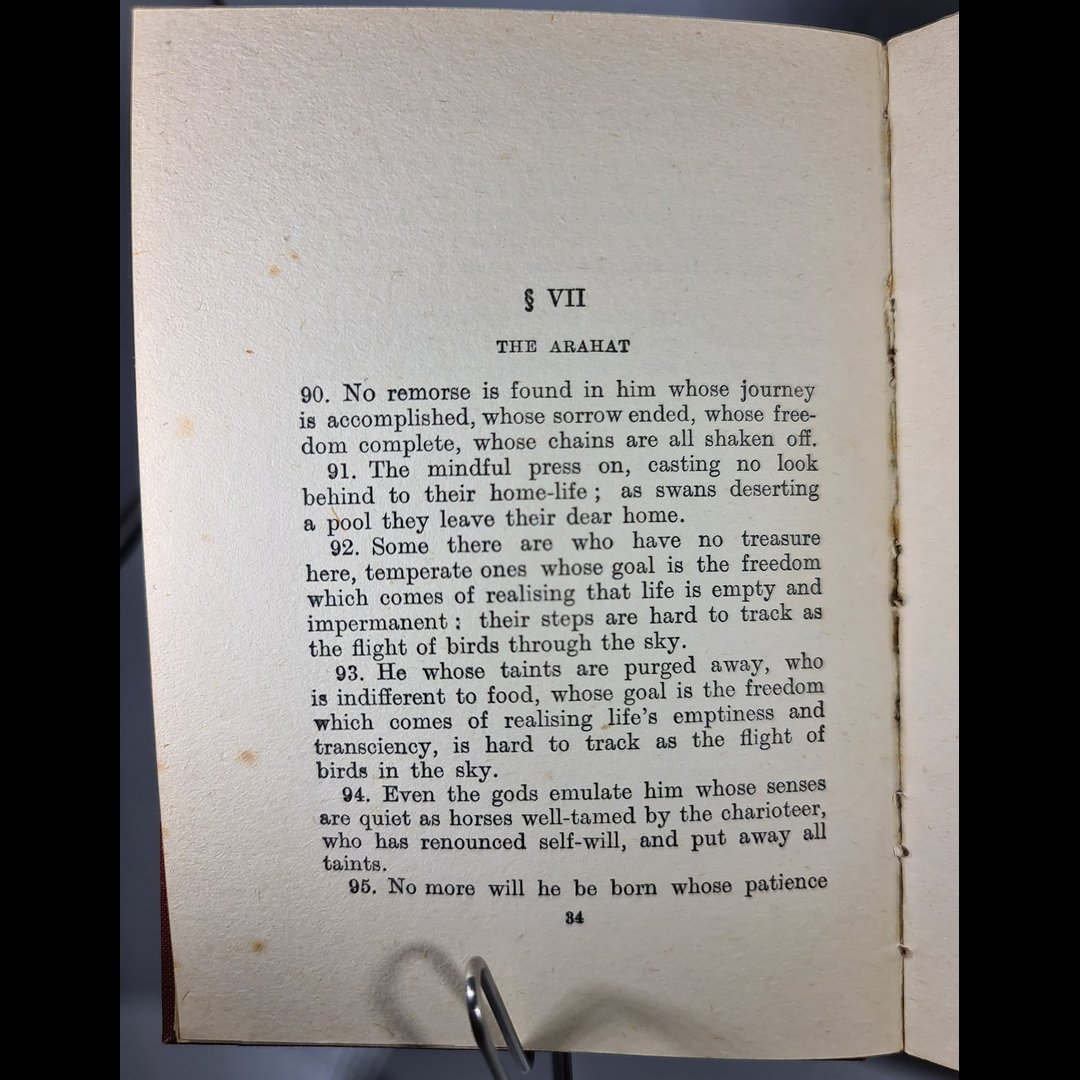 Image 10 of 12
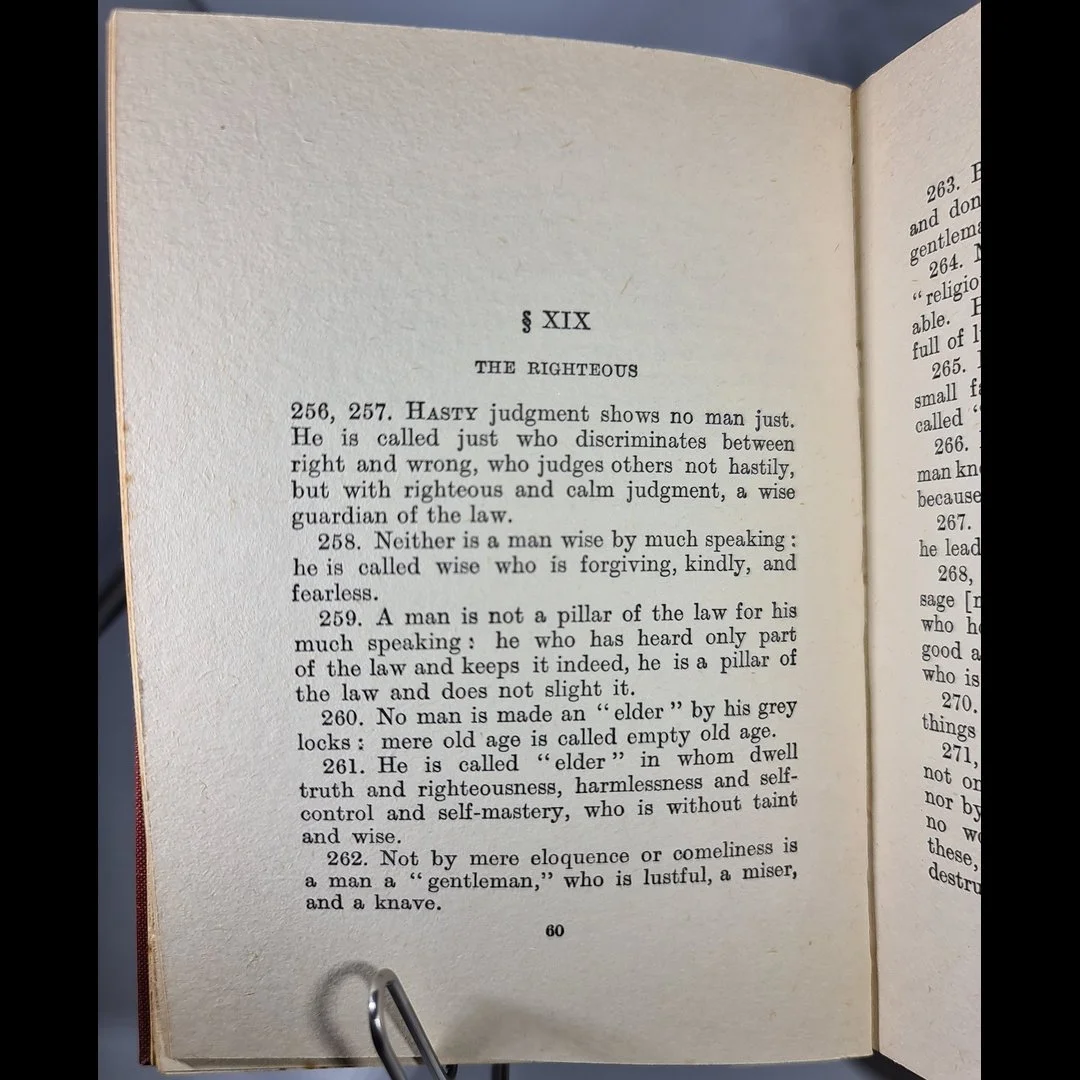 Image 11 of 12
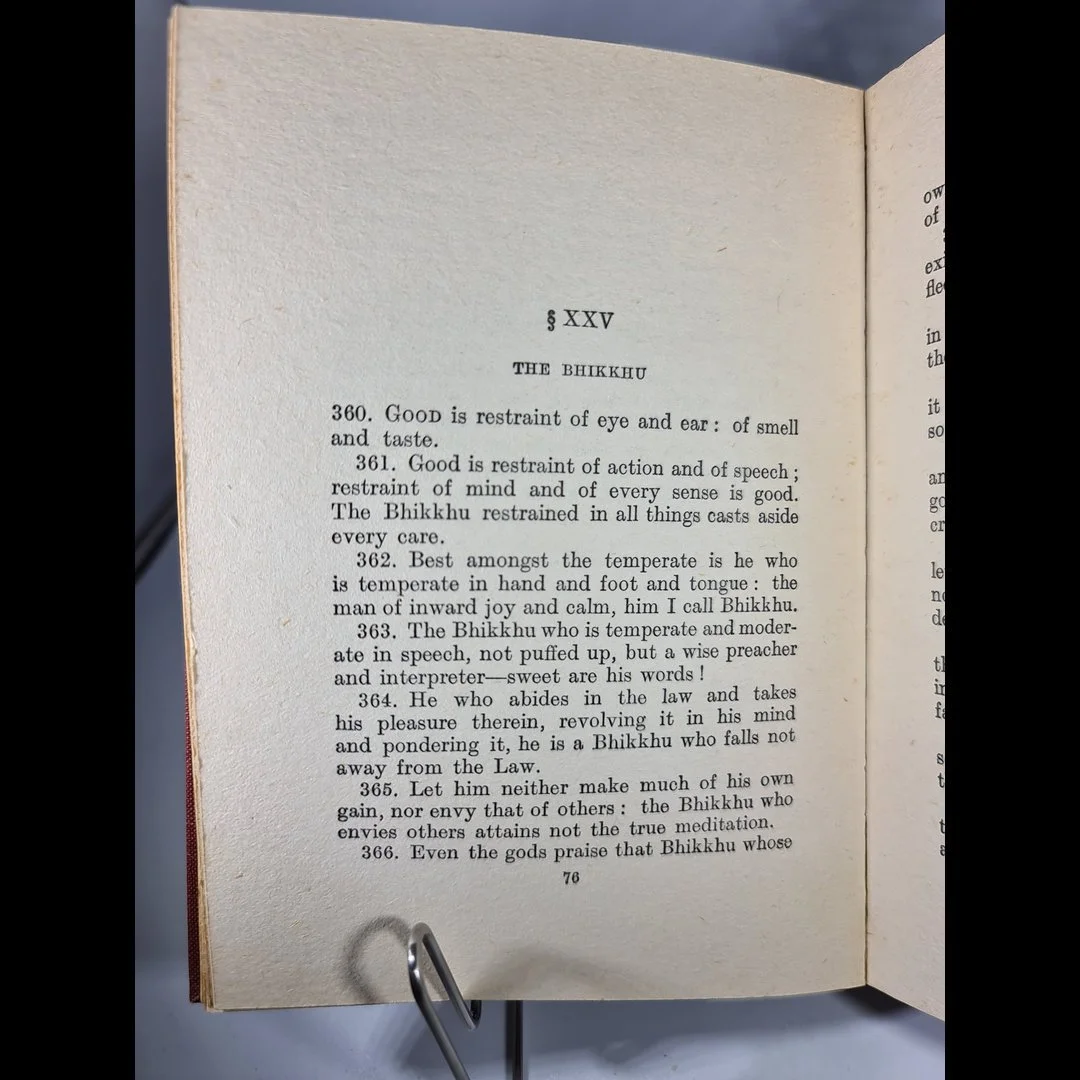 Image 12 of 12