1732 Second Edition With Provenance
ALCIPHRON
By George Berkeley
KEY DETAILS
Condition: Very Good
Format: Hardcover, Octavo (Standard) (8vo 6 × 9 in 152 × 229 mm )
Note: Binding/size selection follows standard bibliographic conventions and is approximate; exact measurements may vary.
Published By: J. Tonson, London, 1732
Language: English
Collation: pp. 707
SKU: BTETM0001889
Shipping Info: Approximate Package Dimensions H: 12.5, L: 30, W: 25 (Units: cm), W: 2Kg
Tracked Shipping, Insurance Coverage as per Customer Request
DESCRIPTION
ALCIPHRON
Or, The Minute Philosopher in Seven Dialogues
CONDITION, COLLATION & COPY NOTES
COLLATION
pp. 707
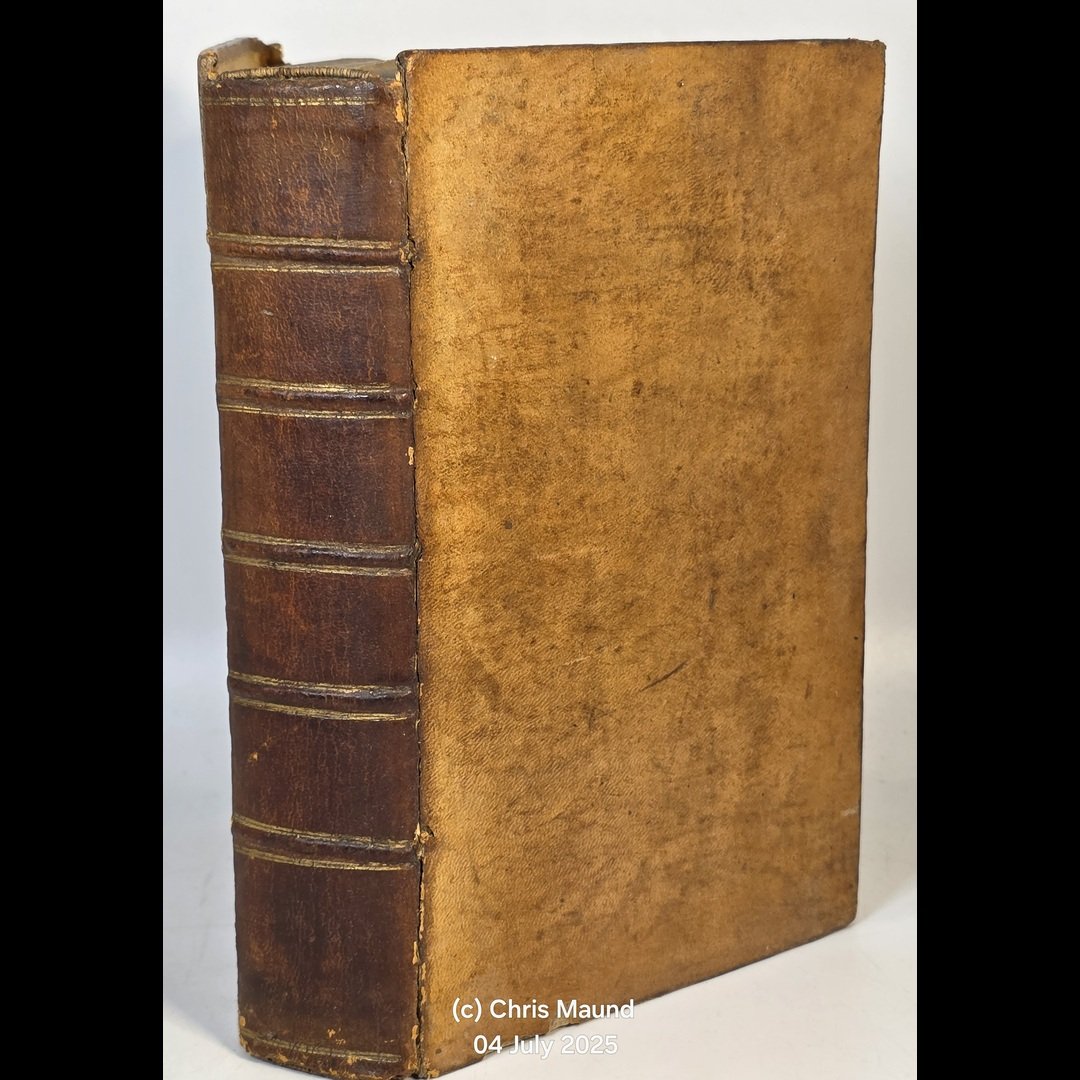
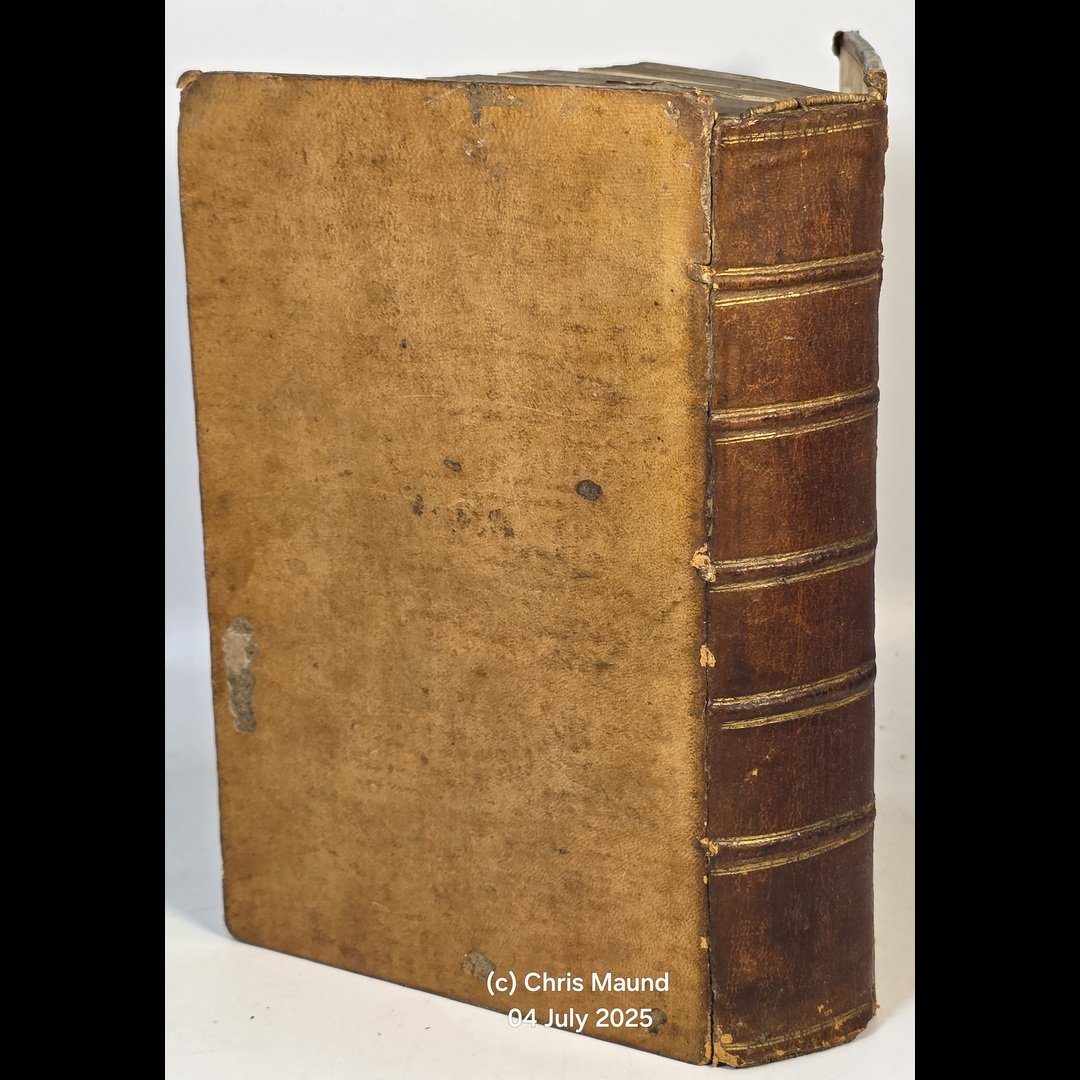
Boards rubbed and bumped; text block and binding firm and strong. A lovely copy.
Please see Photos as part of condition report.
SYNOPSIS
1732 ALICIPHRON: OR, THE MINUTE PHILOSOPHER in Seven Dialogues containing an Apology for the Christian Religion against those who are called free-thinkers
Two volumes - complete set 356 pp & 351 pp - Title pages with engravings, various ornamental engravings at end of chapters and end of volume.
Printed for J. Tonson in the strand 1732
By George Berkeley
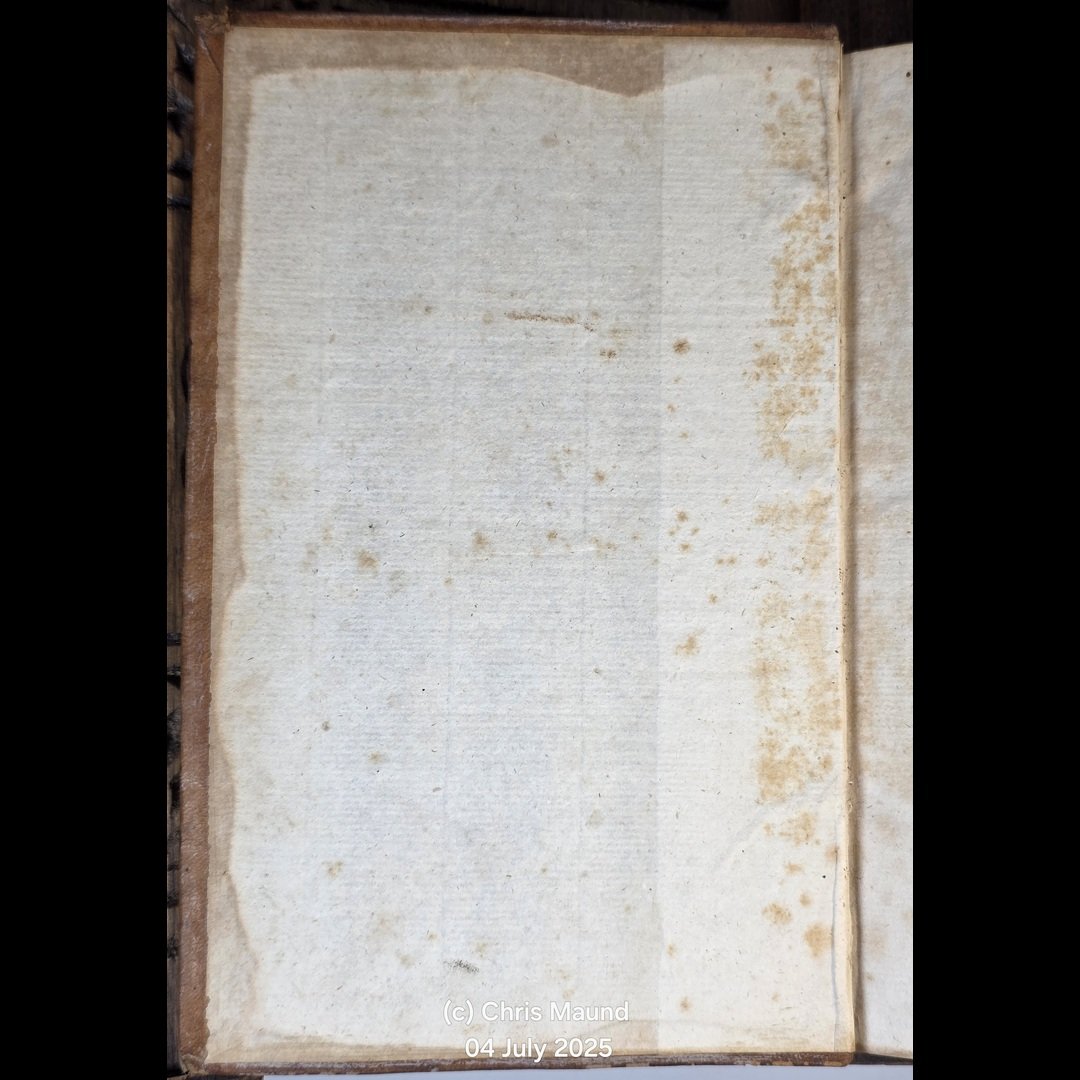
Book plate for The Right Honourable The Earl of Portsmouth in FEP
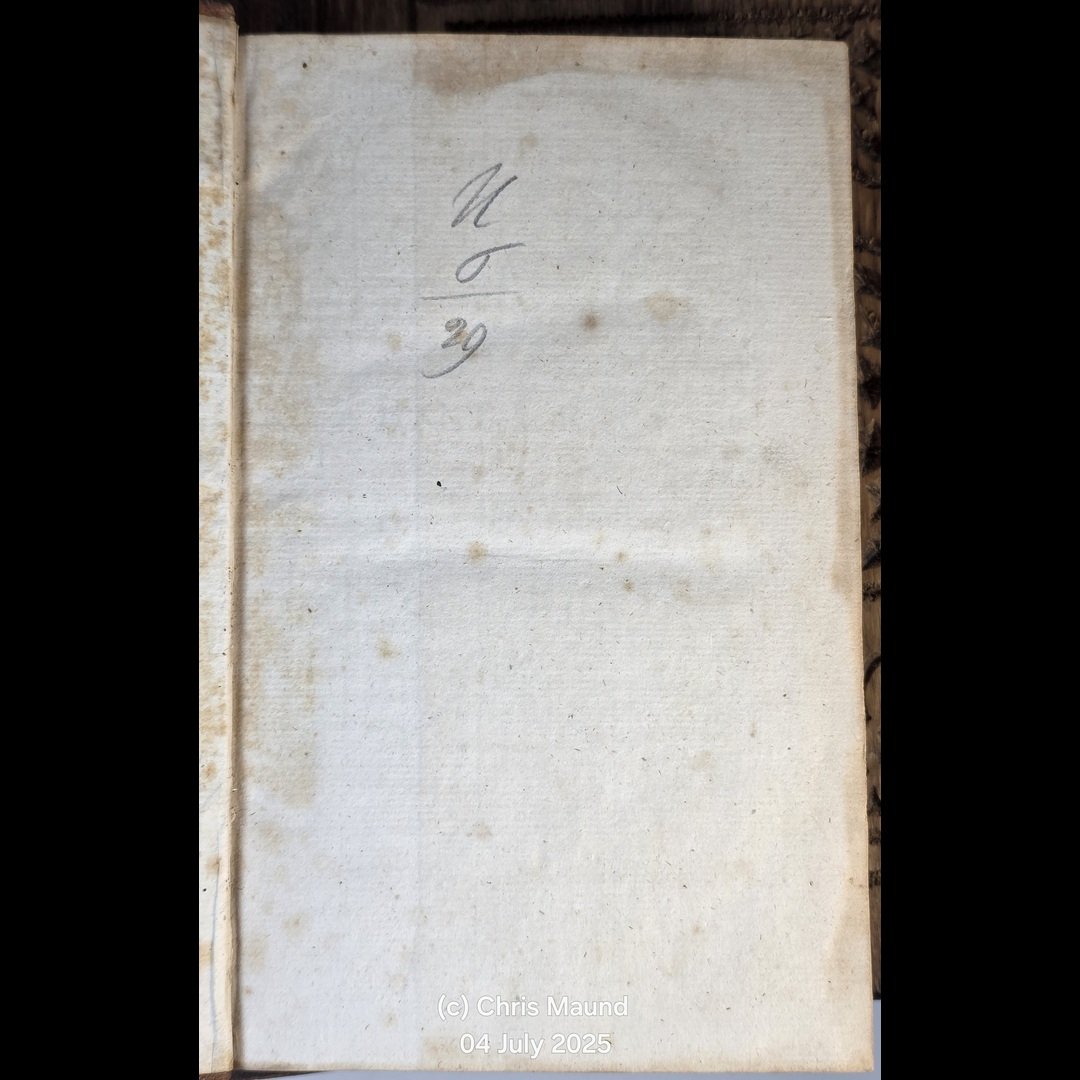
Earl of Portsmouth is a title in the Peerage of Great Britain. It was created in 1743 for John Wallop, 1st Viscount Lymington, who had previously represented Hampshire in the House of Commons.Previous owner inscription on FEP.
AUTHOR BIO
George Berkeley (12 March 1685 – 14 January 1753) – known as Bishop Berkeley (Bishop of Cloyne of the Anglican Church of Ireland) – was an Anglo-Irish philosopher whose primary achievement was the advancement of a theory he called "immaterialism" (later referred to as "subjective idealism" by others). This theory denies the existence of material substance and instead contends that familiar objects like tables and chairs are ideas perceived by the mind and, as a result, cannot exist without being perceived. Berkeley is also known for his critique of abstraction, an important premise in his argument for immaterialism.
1732 Second Edition With Provenance
ALCIPHRON
By George Berkeley
KEY DETAILS
Condition: Very Good
Format: Hardcover, Octavo (Standard) (8vo 6 × 9 in 152 × 229 mm )
Note: Binding/size selection follows standard bibliographic conventions and is approximate; exact measurements may vary.
Published By: J. Tonson, London, 1732
Language: English
Collation: pp. 707
SKU: BTETM0001889
Shipping Info: Approximate Package Dimensions H: 12.5, L: 30, W: 25 (Units: cm), W: 2Kg
Tracked Shipping, Insurance Coverage as per Customer Request
DESCRIPTION
ALCIPHRON
Or, The Minute Philosopher in Seven Dialogues
CONDITION, COLLATION & COPY NOTES
COLLATION
pp. 707
Boards rubbed and bumped; text block and binding firm and strong. A lovely copy.
Please see Photos as part of condition report.
SYNOPSIS
1732 ALICIPHRON: OR, THE MINUTE PHILOSOPHER in Seven Dialogues containing an Apology for the Christian Religion against those who are called free-thinkers
Two volumes - complete set 356 pp & 351 pp - Title pages with engravings, various ornamental engravings at end of chapters and end of volume.
Printed for J. Tonson in the strand 1732
By George Berkeley
Book plate for The Right Honourable The Earl of Portsmouth in FEP
Earl of Portsmouth is a title in the Peerage of Great Britain. It was created in 1743 for John Wallop, 1st Viscount Lymington, who had previously represented Hampshire in the House of Commons.Previous owner inscription on FEP.
AUTHOR BIO
George Berkeley (12 March 1685 – 14 January 1753) – known as Bishop Berkeley (Bishop of Cloyne of the Anglican Church of Ireland) – was an Anglo-Irish philosopher whose primary achievement was the advancement of a theory he called "immaterialism" (later referred to as "subjective idealism" by others). This theory denies the existence of material substance and instead contends that familiar objects like tables and chairs are ideas perceived by the mind and, as a result, cannot exist without being perceived. Berkeley is also known for his critique of abstraction, an important premise in his argument for immaterialism.

 Image 1 of 16
 Image 2 of 16
 Image 3 of 16
 Image 4 of 16
 Image 5 of 16
 Image 6 of 16
 Image 7 of 16
 Image 8 of 16
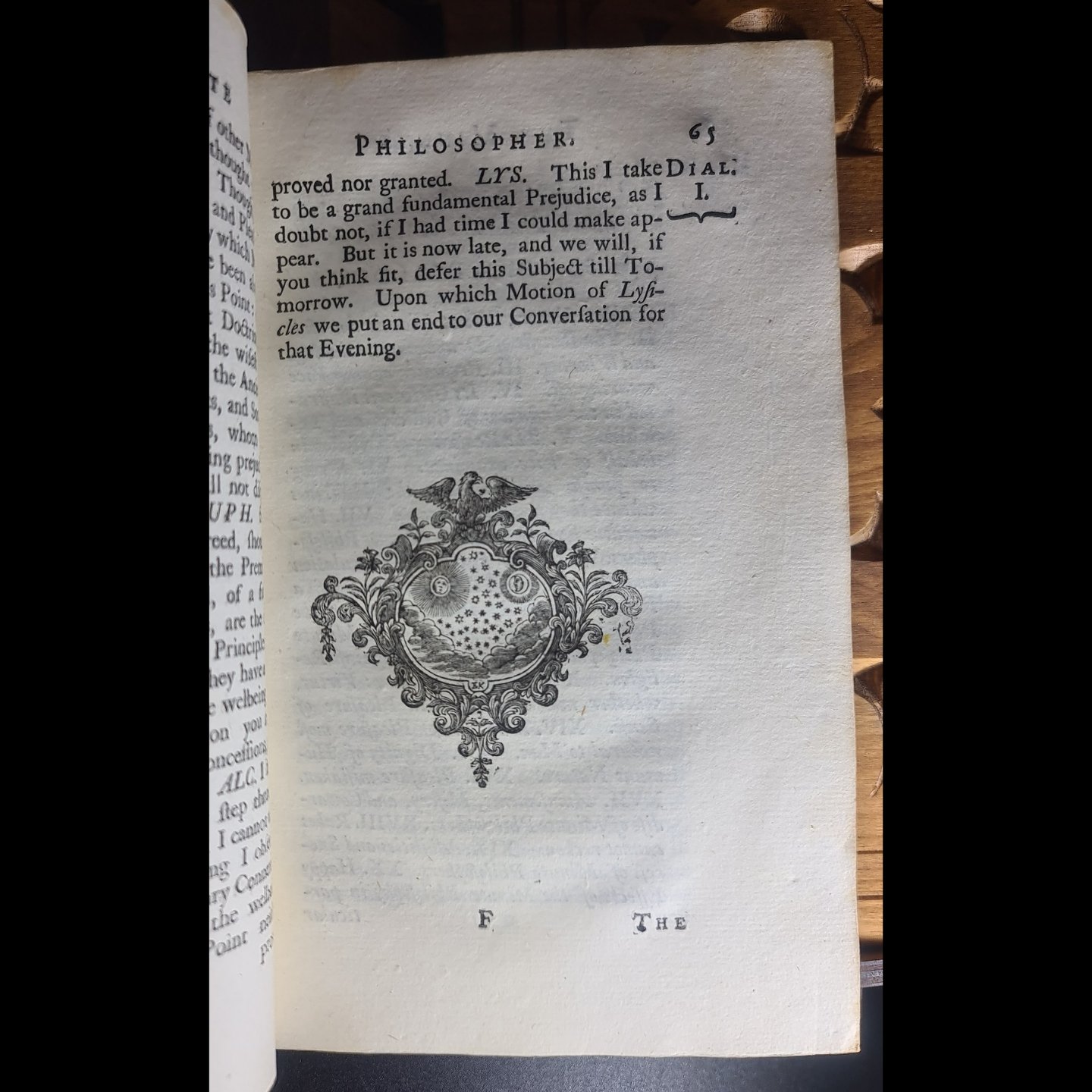 Image 9 of 16
 Image 10 of 16
 Image 11 of 16
 Image 12 of 16
 Image 13 of 16
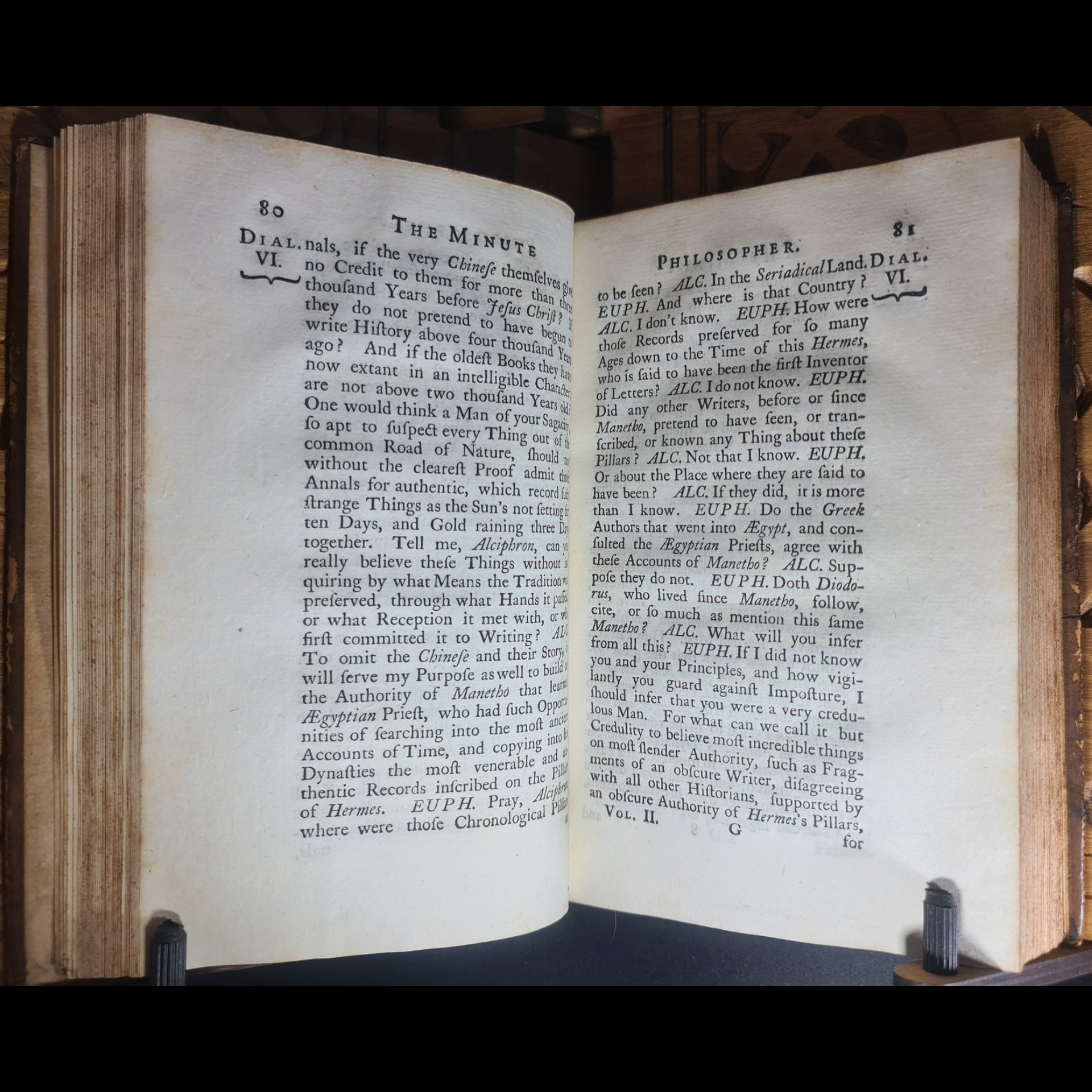 Image 14 of 16
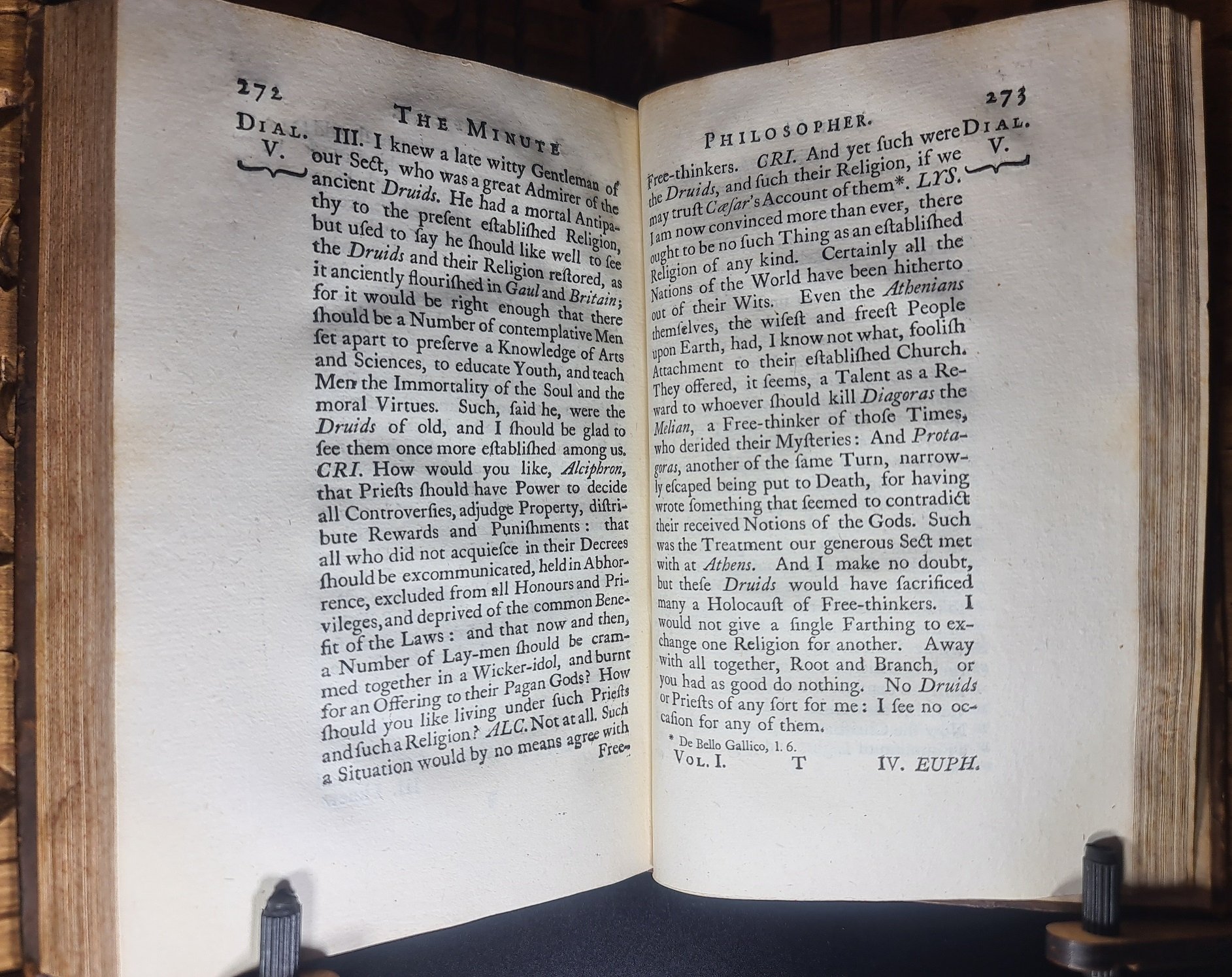 Image 15 of 16
 Image 16 of 16







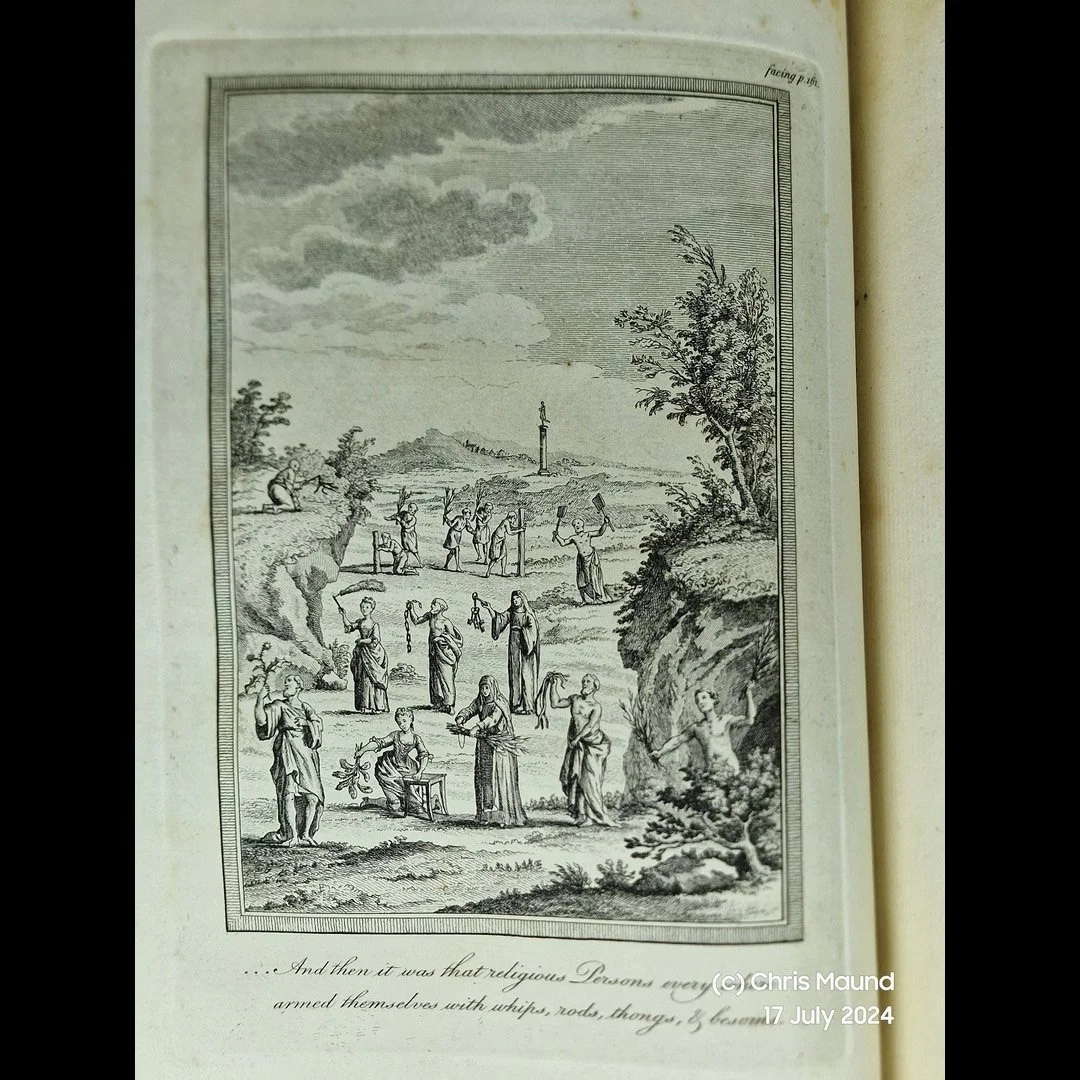
![1777 First English Edtn THE HISTORY OF THE FLAGELLANTS By Somebody Who is Not Doctor of the Sorbonne [Jean-Louis De Lolme] Illus. Anonymous](https://images.squarespace-cdn.com/content/v1/634dab4938c13d5c1f88d382/1721240505822-Q6UDIHPOLJTYYQ2C7ONA/20240717_154202-12.jpg)