1863 First Edition
LIFE OF WILLIAM BLAKE
By Alexander Gilchrist
KEY DETAILS
Condition: Good
Format: Hardcover, Large Octavo (Large 8vo), approx. 236 × 152 mm
Published By: Macmillan and Co., London and Cambridge, 1863
Language: English
Illustrated By: W. J. Linton
Collation: Vol. I: xiv, [ii], 389, [1] pp.; engraved portrait frontispiece and 11 plates, with numerous further illustrations in the text.
Dust Jacket: None, as issued
SKU: BTETM0001966
Shipping Info: Approximate Package Dimensions H: 12.5, L: 30, W: 25 (Units: cm), W: 2Kg
Tracked Shipping, Insurance Coverage as per Customer Request
DESCRIPTION
Life of William Blake
1863 FIRST EDITION — THE FIRST MAJOR BIOGRAPHY OF WILLIAM BLAKE
LIFE OF WILLIAM BLAKE, “PICTOR IGNOTUS”
With Selections from His Poems and Other Writings
Two Volumes
The first edition of Alexander Gilchrist’s landmark Life of William Blake, “Pictor Ignotus”, published in two volumes by Macmillan in 1863.
This was the first substantial biography of William Blake and one of the most important books in the nineteenth-century revival of his reputation. Blake had died in 1827 still regarded by many contemporaries as an eccentric and comparatively obscure artist and poet. Gilchrist’s biography helped establish the modern conception of Blake as a major visionary poet, painter and engraver.
Gilchrist began researching Blake’s life during the 1850s, drawing upon surviving friends, acquaintances and documentary sources at a time when first-hand memories of Blake were still accessible. Gilchrist died unexpectedly in 1861 before completing the work, and the manuscript was prepared for publication by his widow, Anne Gilchrist, with important assistance from Dante Gabriel Rossetti and William Michael Rossetti.
Volume I contains Gilchrist’s biography of Blake, tracing his childhood, apprenticeship to the engraver James Basire, artistic development, poetry, marriage to Catherine Boucher, visionary experiences, years at Felpham, relationships with figures including John Flaxman and Henry Fuseli, financial difficulties and later life.
Volume II is particularly significant. Rather than functioning merely as supplementary material, it contains selections from Blake’s poetry and prose, letters, descriptions of his paintings and engravings, and an early catalogue of his work.
Dante Gabriel Rossetti played a major role in the literary contents of the second volume. Among the material included are 29 poems printed here for the first time, taken from Blake’s manuscript notebook then owned by Rossetti.
The illustrations give the edition additional importance as an object directly connected with Blake’s graphic work.
Volume II contains 21 plates reproducing Blake’s illustrations to the Book of Job and 16 impressions derived from surviving plates associated with Songs of Innocence and of Experience. Volume I additionally includes three impressions from Blake’s original woodblocks prepared for Robert John Thornton’s edition of The Pastorals of Virgil.
The result is not simply a biography of Blake, but an important nineteenth-century vehicle through which Blake’s poetry, art and reputation were transmitted to a new generation of readers, artists and collectors.
The elaborate gilt decoration of the original publisher’s cloth gives the set considerable visual appeal and makes the survival of both volumes in their original bindings particularly desirable.
WILLIAM BLAKE
William Blake (1757–1827) was an English poet, painter, printmaker and visionary whose work occupies a unique position within British Romanticism.
Trained as an engraver, Blake developed his own methods of combining image and text, most famously in illuminated books such as Songs of Innocence and of Experience, The Marriage of Heaven and Hell, Europe, America and Jerusalem.
His writings draw upon Christianity, mythology, radical politics, mysticism and an extraordinarily personal symbolic universe. Blake rejected conventional distinctions between imagination, spirituality and artistic creation, regarding imaginative vision as fundamental to human existence.
Largely neglected or misunderstood during his lifetime, Blake came to be recognised during the nineteenth and twentieth centuries as one of Britain’s greatest poets and graphic artists. Gilchrist’s 1863 biography was instrumental in that transformation.
CONDITION, COLLATION & COPY NOTES
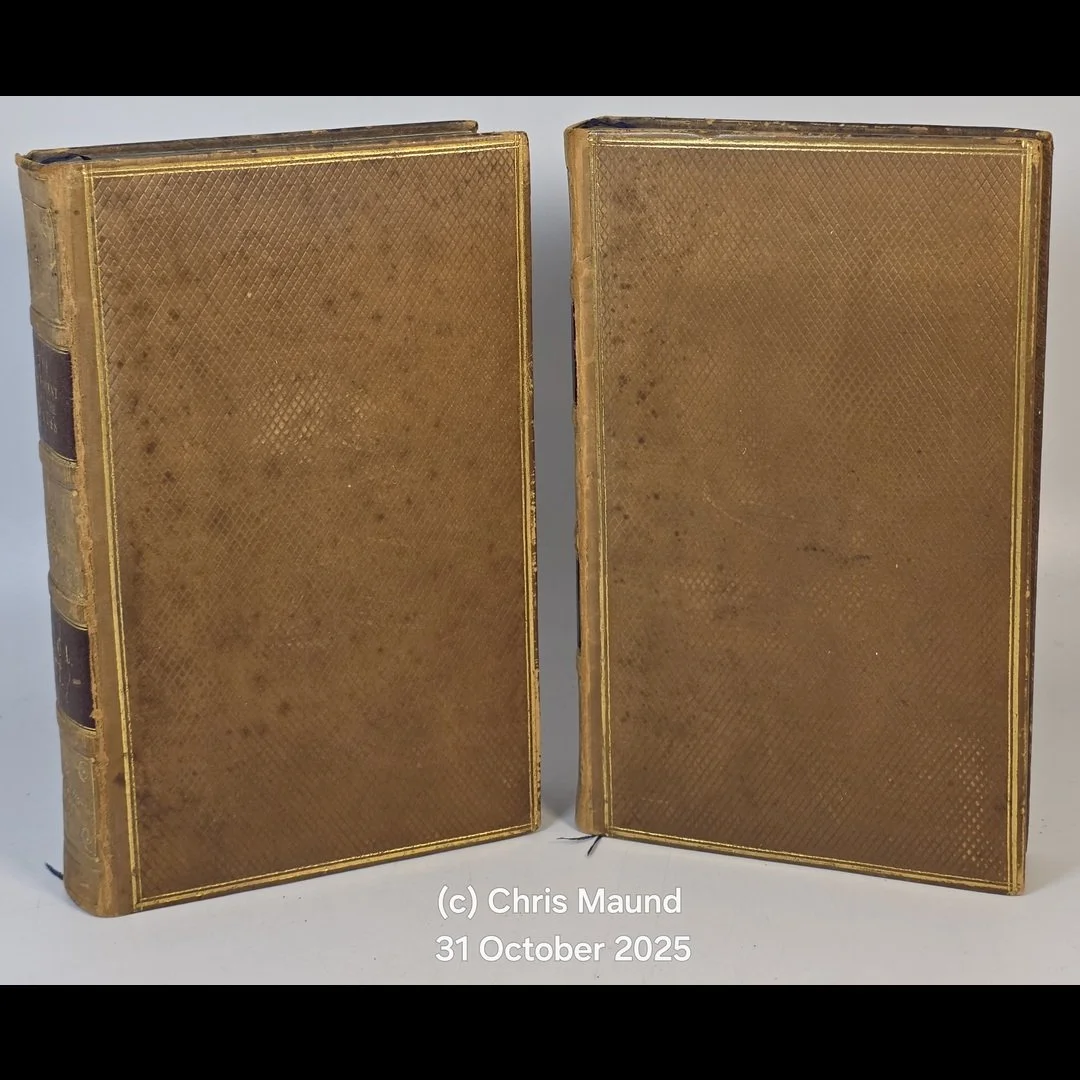
Complete in two volumes and retaining the original publisher’s decorated cloth bindings and endpapers.
The burgundy/maroon cloth remains attractive, with the elaborate gilt designs to the upper boards particularly well preserved and visually striking.
Both spines show substantial fading from the original burgundy tone to a lighter brown/tan, with rubbing and some fraying at the spine ends. Corners and extremities show general shelf wear and bumping consistent with age.
The bindings remain substantially sound.
Internally, there is scattered foxing, most noticeably to the engraved portrait frontispiece of Blake in Volume I and the adjoining preliminary leaves. Elsewhere the text is generally considerably cleaner, with occasional spotting and age-related toning.
The folding Canterbury Pilgrims frontispiece to Volume II is present.
The important illustrated material is present, including the 21 Book of Job plates and 16 Songs of Innocence and of Experience plates in Volume II.
An attractive and bibliographically significant copy in the original publisher’s cloth, showing honest external wear and spine fading but retaining strong shelf and display appeal.
Please see Photos as part of condition report.
REFERENCES
Bentley, G. E., Blake Books.
Gilchrist, Alexander, Life of William Blake, “Pictor Ignotus”, Macmillan and Co., 1863.
The edition is notable for the contributions of Dante Gabriel Rossetti and William Michael Rossetti and for the inclusion of previously unpublished Blake material together with impressions derived from Blake’s surviving engraved plates and original woodblocks.
SYNOPSIS
Alexander Gilchrist’s Life of William Blake follows the life and career of one of Britain’s most original artists and poets, from his childhood in London and apprenticeship as an engraver through his visionary poetry, illuminated books, artistic commissions and often difficult professional life.
Gilchrist presents Blake not simply as an eccentric mystical figure but as a serious and original creative artist whose poetry, engraving, painting and spiritual imagination formed a unified body of work.
The second volume preserves a substantial selection of Blake’s poetry, writings and artistic material, including poems that had never previously appeared in print. Together, the two volumes played a major role in rescuing Blake from comparative obscurity and establishing the reputation he enjoys today.
AUTHOR BIO
Alexander Gilchrist (1828–1861) was a Scottish-born writer, critic and biographer.
He became deeply interested in William Blake at a time when Blake’s reputation remained uncertain and much of his work was difficult to access. Gilchrist devoted several years to reconstructing Blake’s life, interviewing people who had known him and gathering documentary and artistic evidence.
Gilchrist died from scarlet fever in 1861 at the age of only thirty-three, before his biography was completed. His widow, Anne Gilchrist, continued the work and oversaw its publication with assistance from members of the Rossetti family.
Life of William Blake became Gilchrist’s enduring achievement and remains important because much of the testimony he recorded came from people with direct memories of Blake.
ILLUSTRATOR
W. J. Linton
W. J. Linton, after William Blake’s own works
William James Linton (1812–1897) was an English-born wood-engraver, artist, political reformer and author. His facsimile work helped make Blake’s visual imagination available to a wider Victorian readership.
1863 First Edition
LIFE OF WILLIAM BLAKE
By Alexander Gilchrist
KEY DETAILS
Condition: Good
Format: Hardcover, Large Octavo (Large 8vo), approx. 236 × 152 mm
Published By: Macmillan and Co., London and Cambridge, 1863
Language: English
Illustrated By: W. J. Linton
Collation: Vol. I: xiv, [ii], 389, [1] pp.; engraved portrait frontispiece and 11 plates, with numerous further illustrations in the text.
Dust Jacket: None, as issued
SKU: BTETM0001966
Shipping Info: Approximate Package Dimensions H: 12.5, L: 30, W: 25 (Units: cm), W: 2Kg
Tracked Shipping, Insurance Coverage as per Customer Request
DESCRIPTION
Life of William Blake
1863 FIRST EDITION — THE FIRST MAJOR BIOGRAPHY OF WILLIAM BLAKE
LIFE OF WILLIAM BLAKE, “PICTOR IGNOTUS”
With Selections from His Poems and Other Writings
Two Volumes
The first edition of Alexander Gilchrist’s landmark Life of William Blake, “Pictor Ignotus”, published in two volumes by Macmillan in 1863.
This was the first substantial biography of William Blake and one of the most important books in the nineteenth-century revival of his reputation. Blake had died in 1827 still regarded by many contemporaries as an eccentric and comparatively obscure artist and poet. Gilchrist’s biography helped establish the modern conception of Blake as a major visionary poet, painter and engraver.
Gilchrist began researching Blake’s life during the 1850s, drawing upon surviving friends, acquaintances and documentary sources at a time when first-hand memories of Blake were still accessible. Gilchrist died unexpectedly in 1861 before completing the work, and the manuscript was prepared for publication by his widow, Anne Gilchrist, with important assistance from Dante Gabriel Rossetti and William Michael Rossetti.
Volume I contains Gilchrist’s biography of Blake, tracing his childhood, apprenticeship to the engraver James Basire, artistic development, poetry, marriage to Catherine Boucher, visionary experiences, years at Felpham, relationships with figures including John Flaxman and Henry Fuseli, financial difficulties and later life.
Volume II is particularly significant. Rather than functioning merely as supplementary material, it contains selections from Blake’s poetry and prose, letters, descriptions of his paintings and engravings, and an early catalogue of his work.
Dante Gabriel Rossetti played a major role in the literary contents of the second volume. Among the material included are 29 poems printed here for the first time, taken from Blake’s manuscript notebook then owned by Rossetti.
The illustrations give the edition additional importance as an object directly connected with Blake’s graphic work.
Volume II contains 21 plates reproducing Blake’s illustrations to the Book of Job and 16 impressions derived from surviving plates associated with Songs of Innocence and of Experience. Volume I additionally includes three impressions from Blake’s original woodblocks prepared for Robert John Thornton’s edition of The Pastorals of Virgil.
The result is not simply a biography of Blake, but an important nineteenth-century vehicle through which Blake’s poetry, art and reputation were transmitted to a new generation of readers, artists and collectors.
The elaborate gilt decoration of the original publisher’s cloth gives the set considerable visual appeal and makes the survival of both volumes in their original bindings particularly desirable.
WILLIAM BLAKE
William Blake (1757–1827) was an English poet, painter, printmaker and visionary whose work occupies a unique position within British Romanticism.
Trained as an engraver, Blake developed his own methods of combining image and text, most famously in illuminated books such as Songs of Innocence and of Experience, The Marriage of Heaven and Hell, Europe, America and Jerusalem.
His writings draw upon Christianity, mythology, radical politics, mysticism and an extraordinarily personal symbolic universe. Blake rejected conventional distinctions between imagination, spirituality and artistic creation, regarding imaginative vision as fundamental to human existence.
Largely neglected or misunderstood during his lifetime, Blake came to be recognised during the nineteenth and twentieth centuries as one of Britain’s greatest poets and graphic artists. Gilchrist’s 1863 biography was instrumental in that transformation.
CONDITION, COLLATION & COPY NOTES
Complete in two volumes and retaining the original publisher’s decorated cloth bindings and endpapers.
The burgundy/maroon cloth remains attractive, with the elaborate gilt designs to the upper boards particularly well preserved and visually striking.
Both spines show substantial fading from the original burgundy tone to a lighter brown/tan, with rubbing and some fraying at the spine ends. Corners and extremities show general shelf wear and bumping consistent with age.
The bindings remain substantially sound.
Internally, there is scattered foxing, most noticeably to the engraved portrait frontispiece of Blake in Volume I and the adjoining preliminary leaves. Elsewhere the text is generally considerably cleaner, with occasional spotting and age-related toning.
The folding Canterbury Pilgrims frontispiece to Volume II is present.
The important illustrated material is present, including the 21 Book of Job plates and 16 Songs of Innocence and of Experience plates in Volume II.
An attractive and bibliographically significant copy in the original publisher’s cloth, showing honest external wear and spine fading but retaining strong shelf and display appeal.
Please see Photos as part of condition report.
REFERENCES
Bentley, G. E., Blake Books.
Gilchrist, Alexander, Life of William Blake, “Pictor Ignotus”, Macmillan and Co., 1863.
The edition is notable for the contributions of Dante Gabriel Rossetti and William Michael Rossetti and for the inclusion of previously unpublished Blake material together with impressions derived from Blake’s surviving engraved plates and original woodblocks.
SYNOPSIS
Alexander Gilchrist’s Life of William Blake follows the life and career of one of Britain’s most original artists and poets, from his childhood in London and apprenticeship as an engraver through his visionary poetry, illuminated books, artistic commissions and often difficult professional life.
Gilchrist presents Blake not simply as an eccentric mystical figure but as a serious and original creative artist whose poetry, engraving, painting and spiritual imagination formed a unified body of work.
The second volume preserves a substantial selection of Blake’s poetry, writings and artistic material, including poems that had never previously appeared in print. Together, the two volumes played a major role in rescuing Blake from comparative obscurity and establishing the reputation he enjoys today.
AUTHOR BIO
Alexander Gilchrist (1828–1861) was a Scottish-born writer, critic and biographer.
He became deeply interested in William Blake at a time when Blake’s reputation remained uncertain and much of his work was difficult to access. Gilchrist devoted several years to reconstructing Blake’s life, interviewing people who had known him and gathering documentary and artistic evidence.
Gilchrist died from scarlet fever in 1861 at the age of only thirty-three, before his biography was completed. His widow, Anne Gilchrist, continued the work and oversaw its publication with assistance from members of the Rossetti family.
Life of William Blake became Gilchrist’s enduring achievement and remains important because much of the testimony he recorded came from people with direct memories of Blake.
ILLUSTRATOR
W. J. Linton
W. J. Linton, after William Blake’s own works
William James Linton (1812–1897) was an English-born wood-engraver, artist, political reformer and author. His facsimile work helped make Blake’s visual imagination available to a wider Victorian readership.

 Image 1 of 37
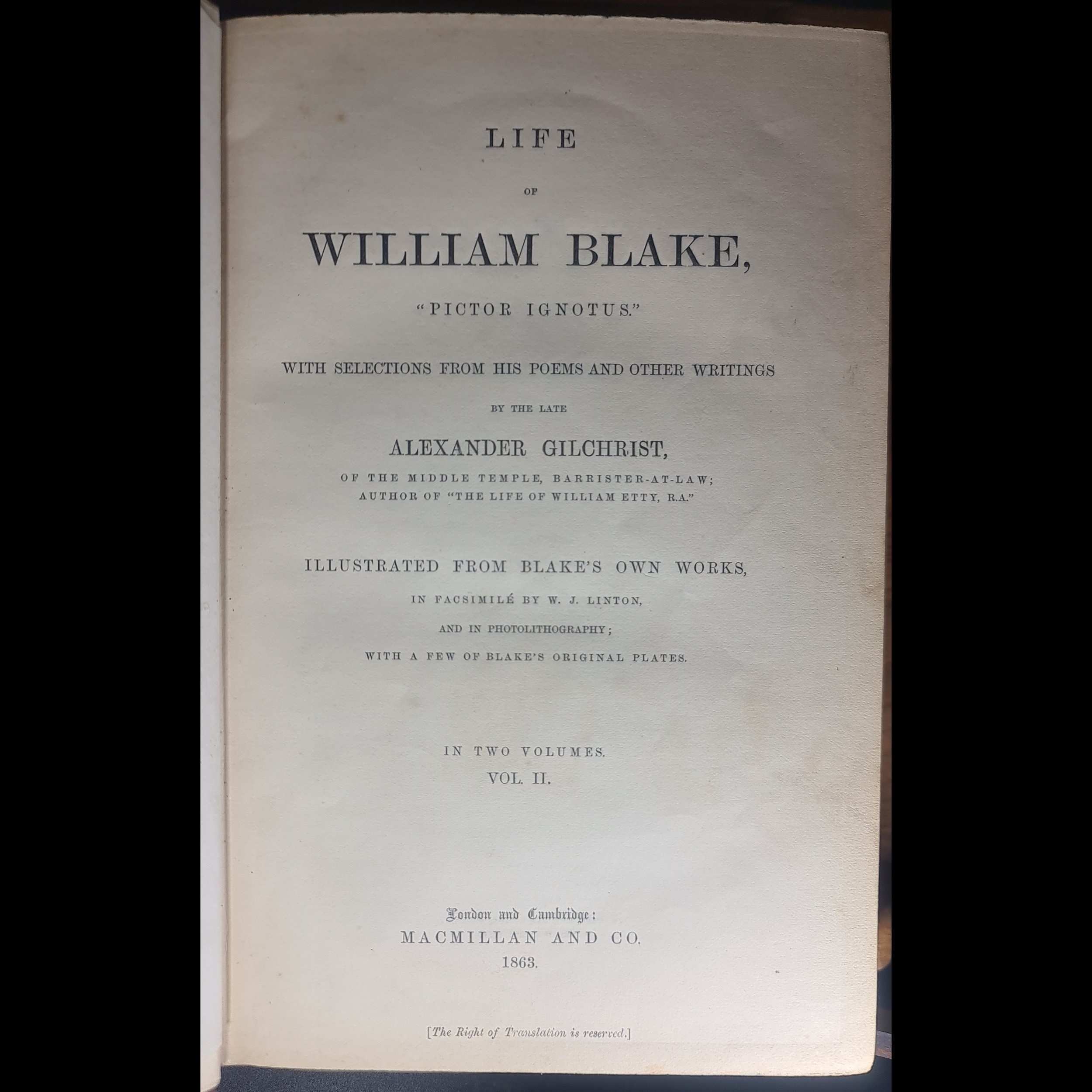 Image 2 of 37
 Image 3 of 37
 Image 4 of 37
 Image 5 of 37
 Image 6 of 37
 Image 7 of 37
 Image 8 of 37
 Image 9 of 37
 Image 10 of 37
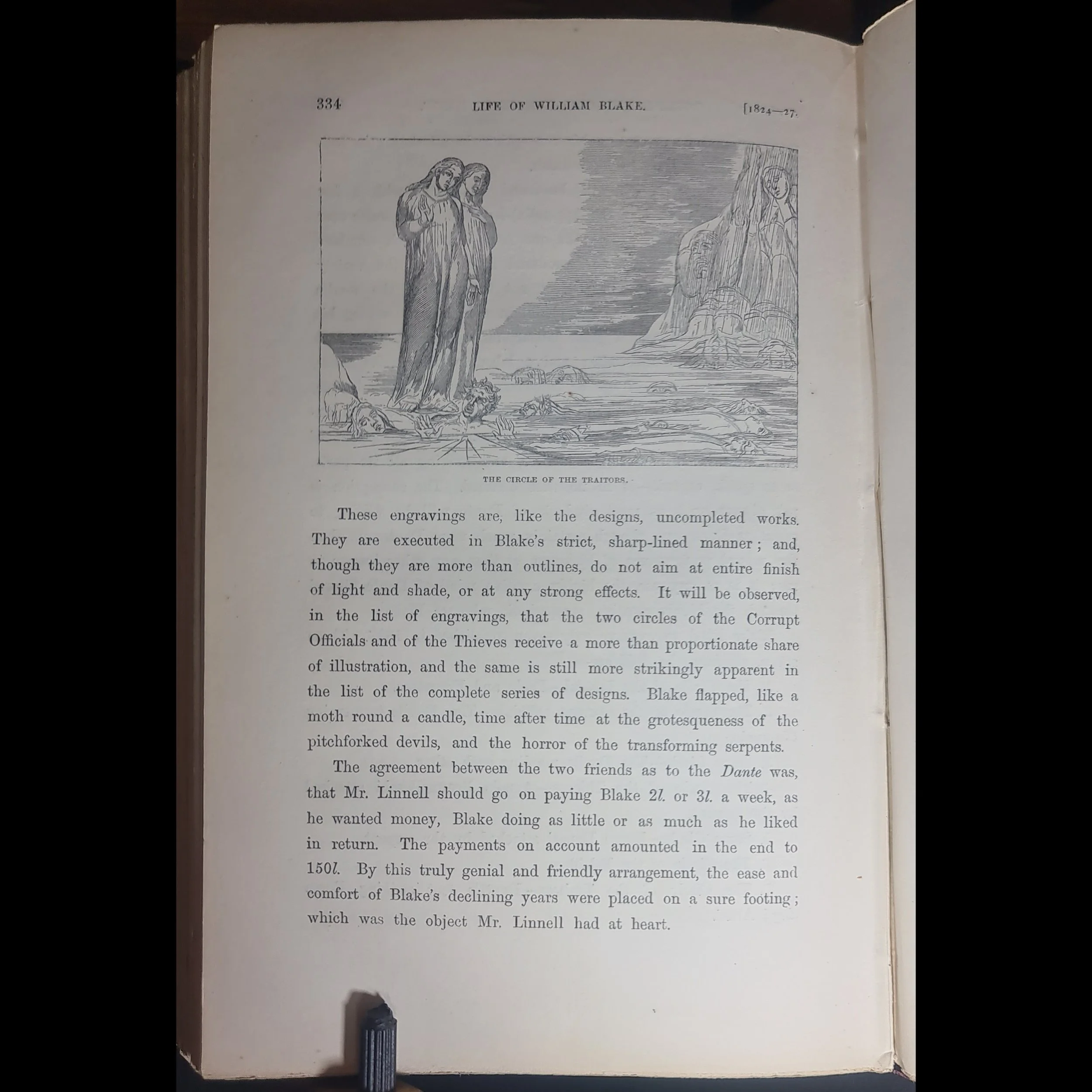 Image 11 of 37
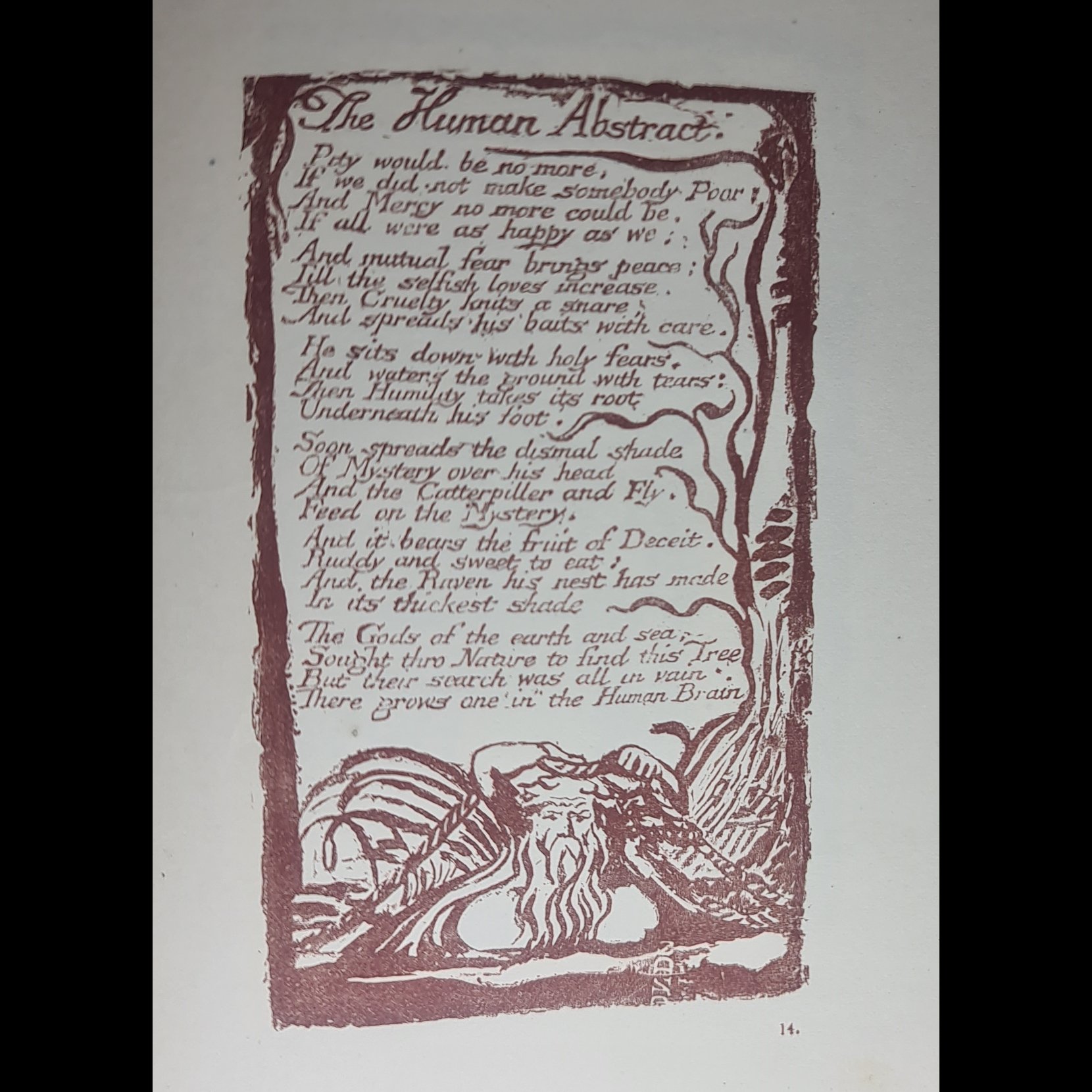 Image 12 of 37
 Image 13 of 37
 Image 14 of 37
 Image 15 of 37
 Image 16 of 37
 Image 17 of 37
 Image 18 of 37
 Image 19 of 37
 Image 20 of 37
 Image 21 of 37
 Image 22 of 37
 Image 23 of 37
 Image 24 of 37
 Image 25 of 37
 Image 26 of 37
 Image 27 of 37
 Image 28 of 37
 Image 29 of 37
 Image 30 of 37
 Image 31 of 37
 Image 32 of 37
 Image 33 of 37
 Image 34 of 37
 Image 35 of 37
 Image 36 of 37
 Image 37 of 37