1629 Elzevir Edition
INTRODUCTIONIS IN UNIVERSAM GEOGRAPHIAM; BOUND WITH SLEIDAN
By Philipp Cluverii; Johannes Sleidanus
KEY DETAILS
Condition: Very Good
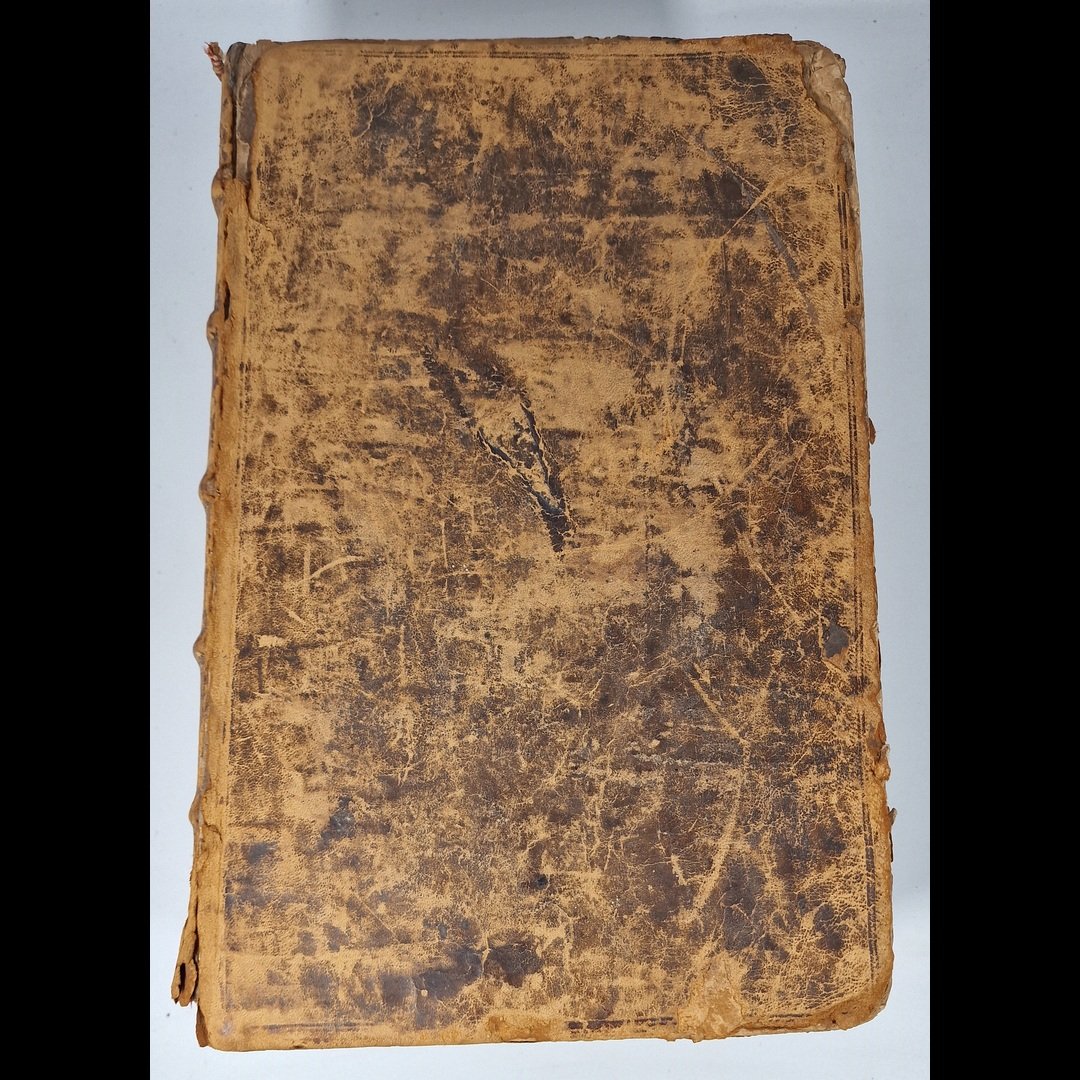
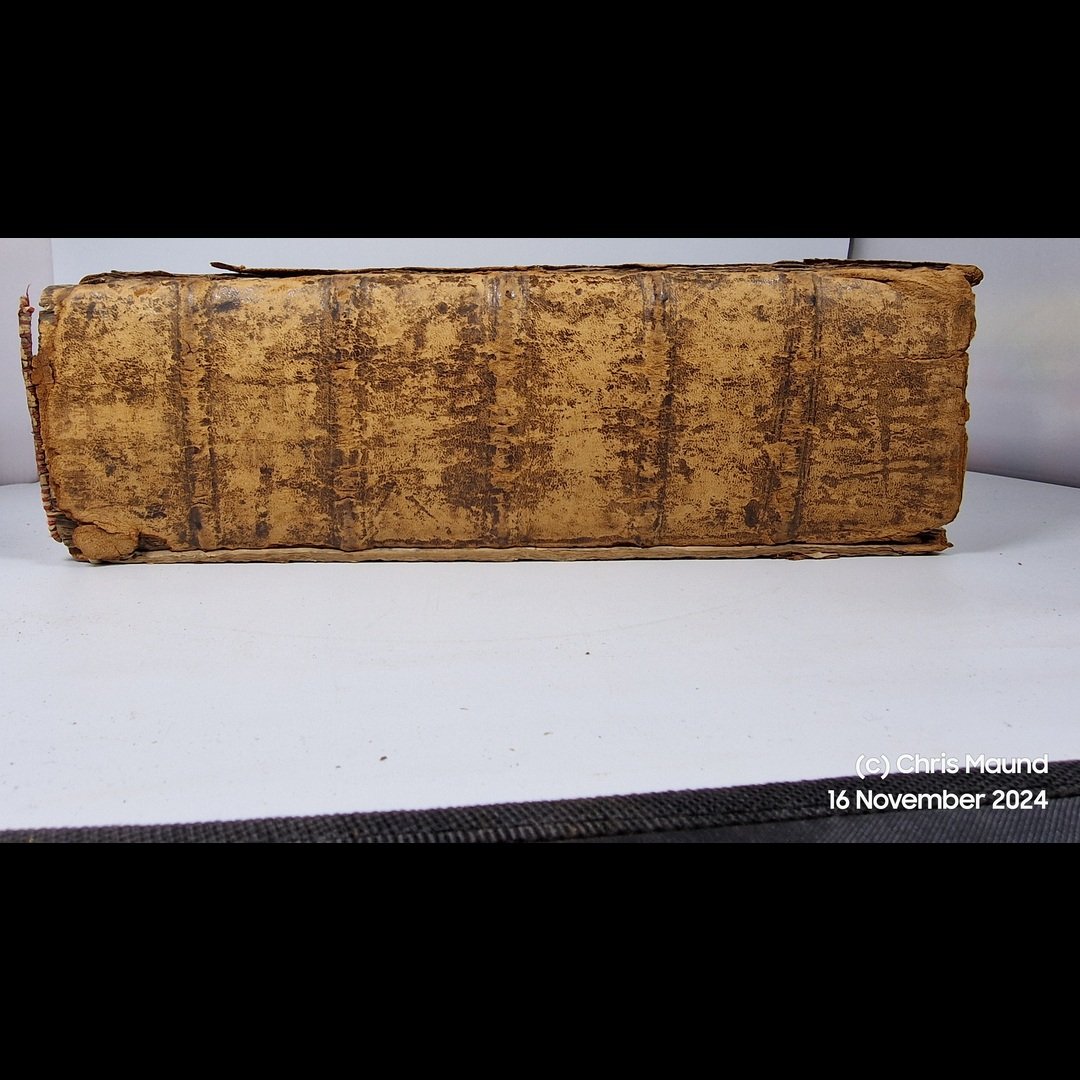
Format: Leather, 24mo, approximately 110 × 70 mm. Seventeenth-century full vellum over boards.
Published By: Lugduni Batavorum [Leiden]: Ex Officina Elzeviriana, 1629; bound with Leiden: Ex Officina Elzeviriana, 1631., Amsterdam, 1629
Language: Latin
Provenance: An early manuscript ownership inscription appears along the upper margin of the engraved title of the Clüver and is provisionally read “Sigismundi Schulij”, a Latin genitive form meaning “[the book] of Sigismund Schul...
Collation: Clüver: engraved title; 352 pp., the final page misnumbered 252; [8] pp. tables; 3 folding engraved plates/tables, complete, facing pp. 29–31.
Dust Jacket: None, as issued
SKU: BTETM0001997
Shipping Info: Approximate Package Dimensions H: 12.5, L: 30, W: 25 (Units: cm), W: 2Kg
Tracked Shipping, Insurance Coverage as per Customer Request
DESCRIPTION
Introductionis in universam geographiam; Bound with Sleidan
PHILIPPI CLUVERII INTRODUCTIONIS IN UNIVERSAM GEOGRAPHIAM, TAM VETEREM QUAM NOVAM, LIBRI VI
Philipp Clüver [Philippus Cluverius]
Bound with: I. SLEIDANI DE QUATUOR SUMMIS IMPERIIS LIBRI TRES (1631)
Johannes Sleidanus [Johann Sleidan]
An attractive and complete seventeenth-century Elzevir Sammelband containing two complementary pocket works of geography and universal history.
The principal work is Philipp Clüver's Introductionis in Universam Geographiam, tam Veterem quam Novam, Libri VI, Leiden, Ex Officina Elzeviriana, 1629: an early pocket-format edition of one of the most influential geographical handbooks of the seventeenth century.
Clüver sought to reconcile the geography of the classical world with that of his own age, combining ancient literary authorities with topographical observation and contemporary geographical knowledge. The first book establishes the mathematical and physical principles of geography, including the globe, zones, climates, longitude and latitude, winds and systems of measurement. The remaining five books survey Europe, Asia, Africa and the Americas, repeatedly relating modern regions and peoples to their ancient antecedents.
The work is illustrated with an engraved architectural title and the complete suite of three folding engraved plates or tables situated at pp. 29–31. These comprise diagrams relating to the terrestrial globe and climates, wind diagrams, and the folding Typus intervallorum variarum gentium, comparing systems of geographical measurement.
Bound immediately afterwards is Johannes Sleidan's I. Sleidani De Quatuor Summis Imperiis Libri Tres. Postrema editione hac accurate recogniti, Leiden, Ex Officina Elzeviriana, 1631, with its own engraved allegorical title.
Sleidan's compact universal history is arranged around the traditional succession of the four great world empires — Babylonian/Assyrian, Persian, Greek or Macedonian, and Roman — tracing political and historical chronology from antiquity through the Roman imperial tradition.
The conjunction of the two works is particularly appropriate: Clüver provides a portable survey of the physical and historical geography of the known world, while Sleidan supplies a corresponding universal political history. Both were produced by the Leiden Elzevir press in the same miniature scholarly format only two years apart.
PROVENANCE
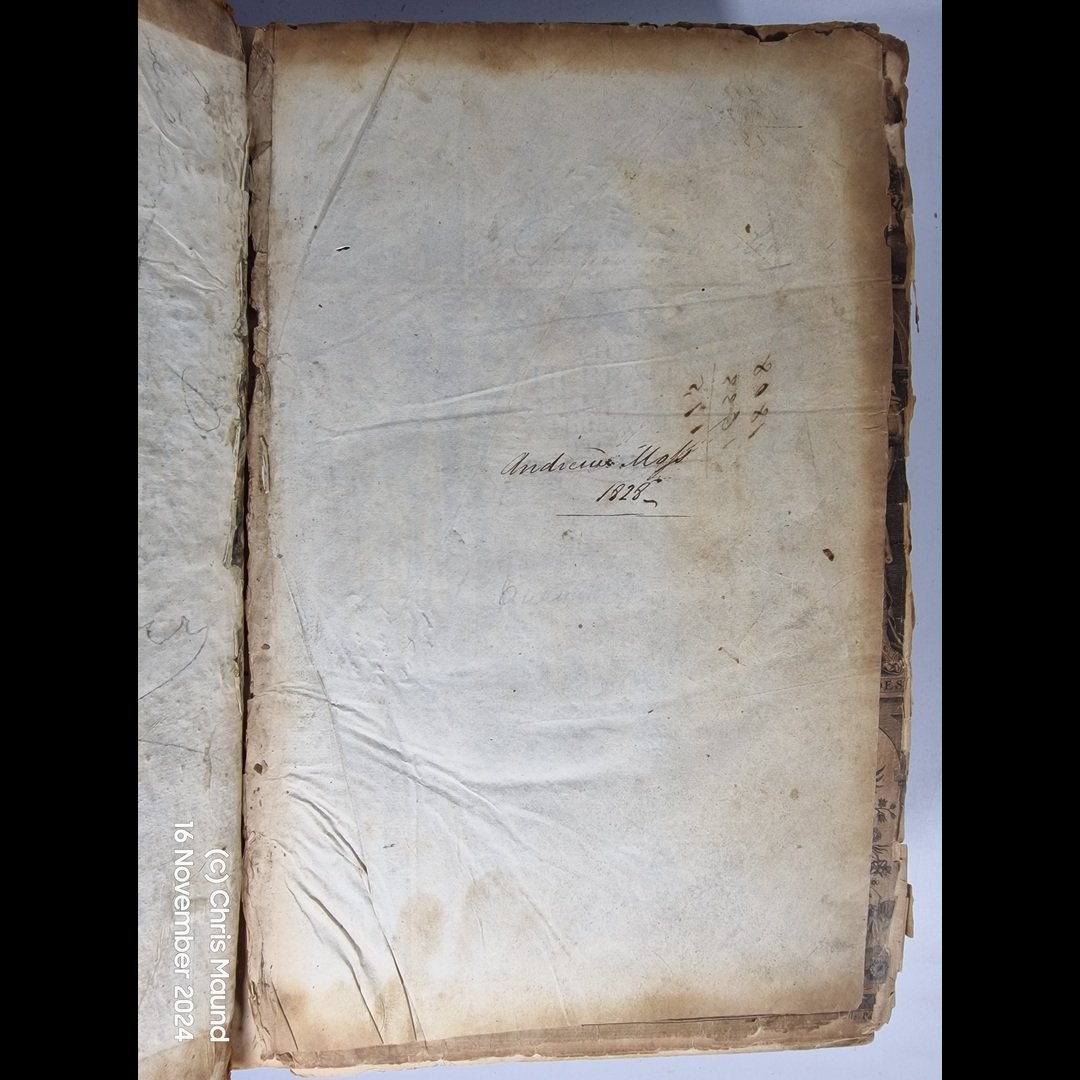
An early manuscript ownership inscription appears along the upper margin of the engraved title of the Clüver and is provisionally read “Sigismundi Schulij”, a Latin genitive form meaning “[the book] of Sigismund Schulius”.
Research has identified a contemporary Sigismund Schulius recorded at Strasbourg on 8 October 1644 in the Stammbuch of Johannes Hetzelius, now preserved at the Herzog August Bibliothek, Wolfenbüttel. A Sigismund Schul of Nuremberg is also recorded by the antiquarian Fortunio Liceti in 1653 as having brought an excavated Roman lamp from Rome to Padua; a Sigismund Schul, born 1621 and later councillor and secretary at Burg Friedberg, died in 1666. These records form a compelling research trail, although identification of the owner of the present volume with this documented seventeenth-century figure remains under investigation pending handwriting comparison.
The front endpaper additionally bears a prominent early “Metzler.” mark with an adjacent notation appearing to read “1690”. The coincidence with the Stuttgart bookseller and publisher August Metzler, who succeeded to the bookselling concern of Johann Gottfried Zubrodt around this period, is of interest but cannot presently be established as an ownership or stock mark with certainty.
A later ownership inscription in blue ink is also present.
CONDITION, COLLATION & COPY NOTES
COLLATION
Clüver: engraved title; 352 pp., the final page misnumbered 252; [8] pp. tables; 3 folding engraved plates/tables, complete, facing pp. 29–31.
The three Clüver folding plates are present. They include the globe/climate diagrams designated for p.29, the wind diagrams associated with p.30, and the folding Typus intervallorum variarum gentium for p.31.
Sleidan: separate engraved title; 334 pp.; 20 unnumbered leaves of index; 3 final blank leaves.
Early manuscript ownership inscriptions and marks as described under Provenance.
A complete and appealing early Elzevir Sammelband in a seventeenth-century vellum binding.
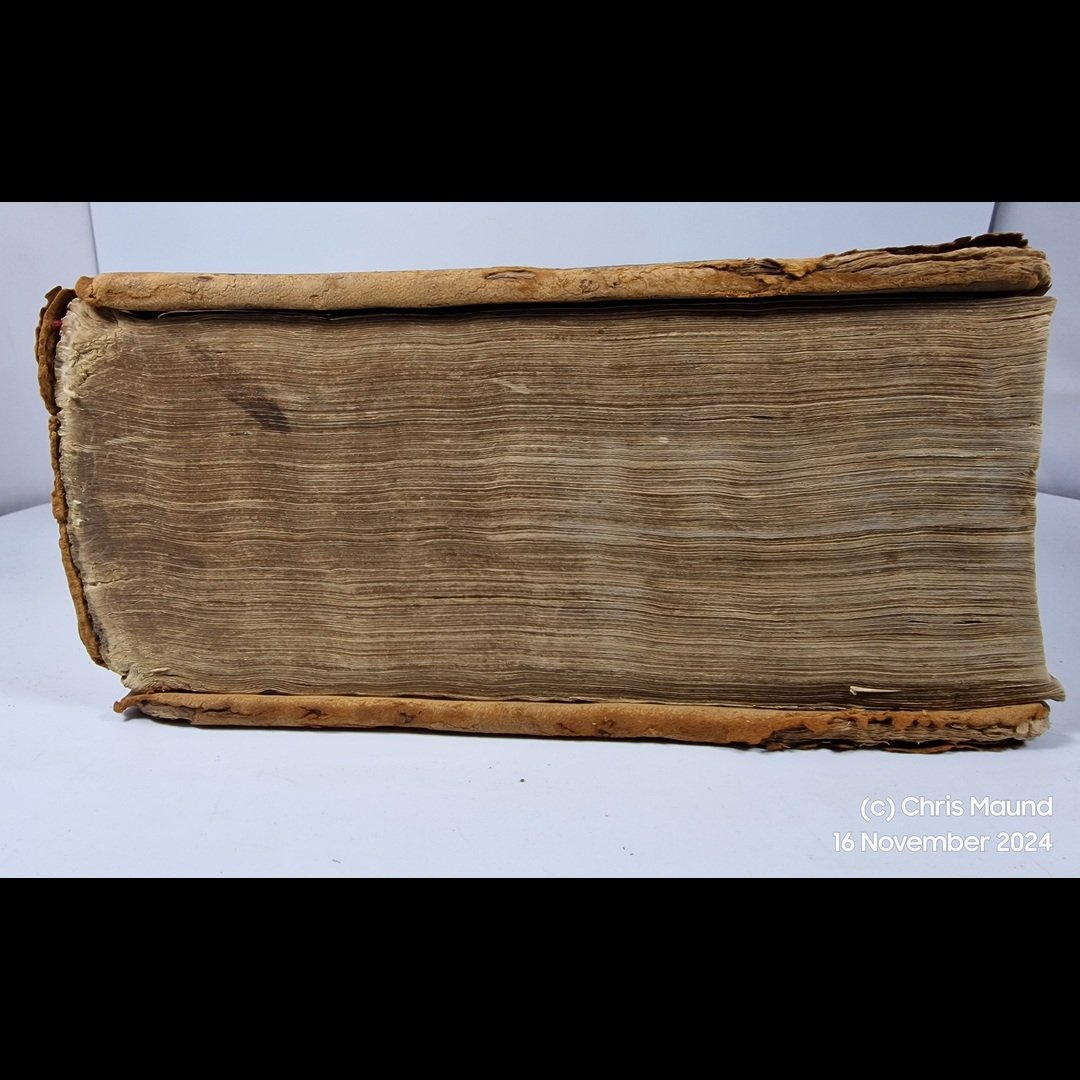
Seventeenth-century full vellum over boards, the vellum naturally darkened and soiled with age, rubbed and worn at the extremities, with wear and small losses around the spine ends and board edges. Faded early manuscript titling to the spine. Binding remains characterful and appropriate to the period.
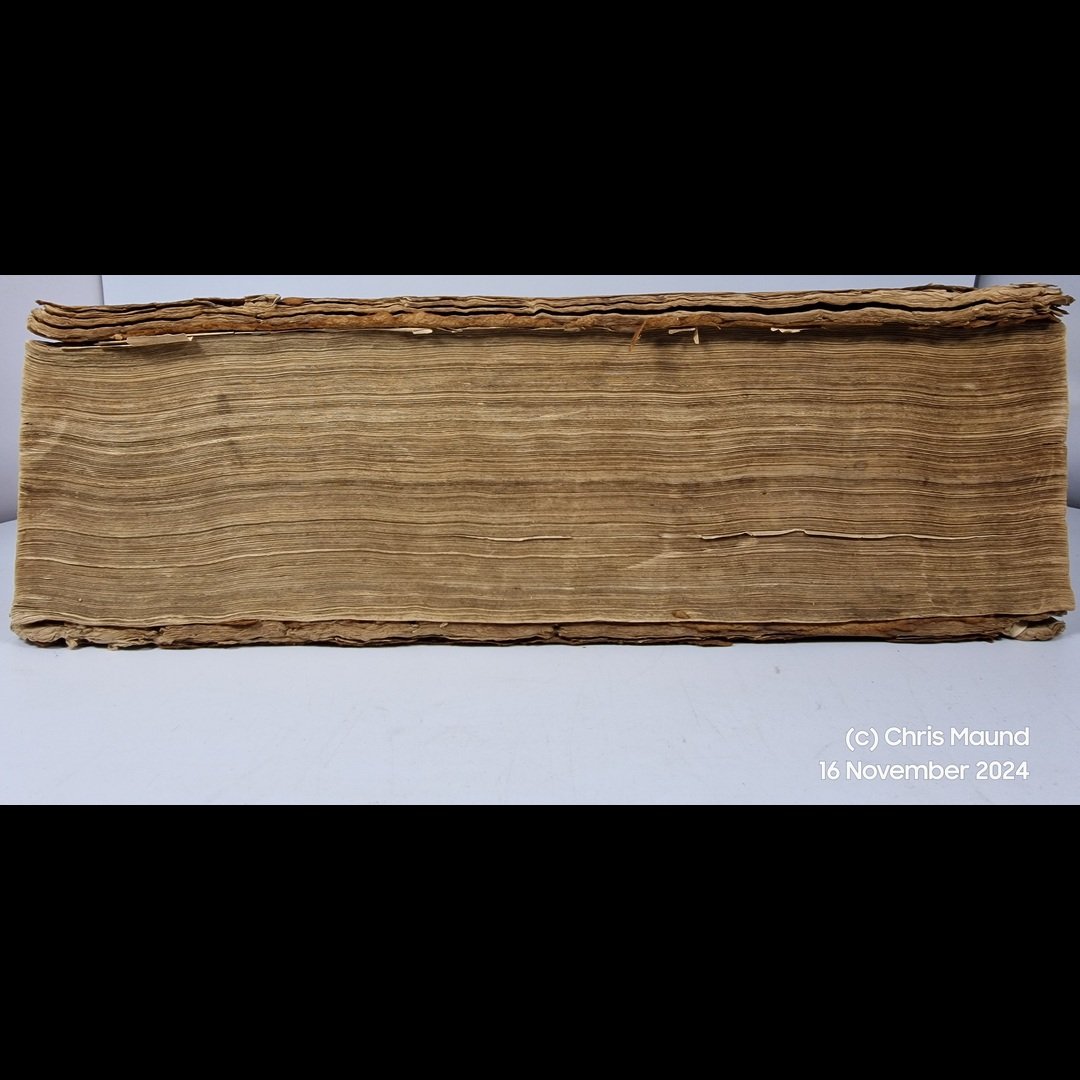
Internally very good for a small-format volume approaching four centuries old. General light age-toning, occasional spotting, soiling and handling marks, with some wear around the gutters and edges. Engraved titles remain strong and well defined.
Please see Photos as part of condition report.
REFERENCES
Willems, Les Elzevier, no. 309 — Clüver.
Willems, no. 358 — Sleidan.
Sabin 13805 — Clüver, edition list.
Goldsmid, A Complete Catalogue of All the Publications of the Elzevier Presses.
Clüver: 1629 Leiden Elzevir edition, 24mo, engraved title, 352, [8] pp., with three folding engraved plates/tables.
Sleidan: Leiden, Ex Officina Elzeviriana, 1631; engraved title; 334 pp. with index; Willems 358.
SYNOPSIS
Philipp Clüver's Introductionis in Universam Geographiam was first published in 1624 and became one of the principal geographical textbooks of seventeenth- and early eighteenth-century Europe.
Clüver's importance lies particularly in his synthesis of ancient geography with contemporary topography. Rather than treating classical geographical writing simply as inherited authority, he compared literary sources with landscape, travel, place names and physical geography. His work consequently occupies an important place in the development of historical geography.
The six books proceed from the general principles of geography to a survey of the known world. Europe occupies a substantial proportion of the work, followed by Asia and Africa, while the concluding sections incorporate the Americas, including North and South America and the regions then understood as Mexico, Florida, New Granada, Peru and Magellanica.
The small Elzevir format placed an enormous quantity of geographical knowledge into a genuinely portable scholarly book.
The accompanying Sleidan is an equally characteristic example of the Elzevir pocket library. De Quatuor Summis Imperiis compresses universal history into the succession of four principal empires and was widely read as a convenient historical and chronological handbook.
Together, the two works form an unusually coherent seventeenth-century pocket compendium of world geography and world history.
AUTHOR BIO
Philipp Clüver (1580–1622), Latinised as Philippus Cluverius, was a German geographer, antiquary and historian associated with Leiden University.
Extensive travel through Europe informed his geographical scholarship, and his combination of classical textual study with direct observation distinguished his work from many earlier geographical compilations. His studies of Germany, Italy, Sicily and the ancient world established his reputation, while the posthumously published Introductio in Universam Geographiam became his most widely disseminated work.
Clüver is consequently regarded as an important early figure in the development of historical geography.
JOHANNES SLEIDAN
Johannes Sleidanus, or Johann Sleidan (1506–1556), was a Luxembourg-born historian, diplomat and chronicler of the Reformation.
Educated at Liège, Cologne, Louvain, Paris and Orléans, he became closely involved in the religious and diplomatic politics of the Reformation period and represented Strasbourg in diplomatic affairs.
His De Quatuor Summis Imperiis was conceived as a concise universal history organised through the traditional four-monarchies model. Its compact structure made it particularly suited to repeated publication in the portable Elzevir format.

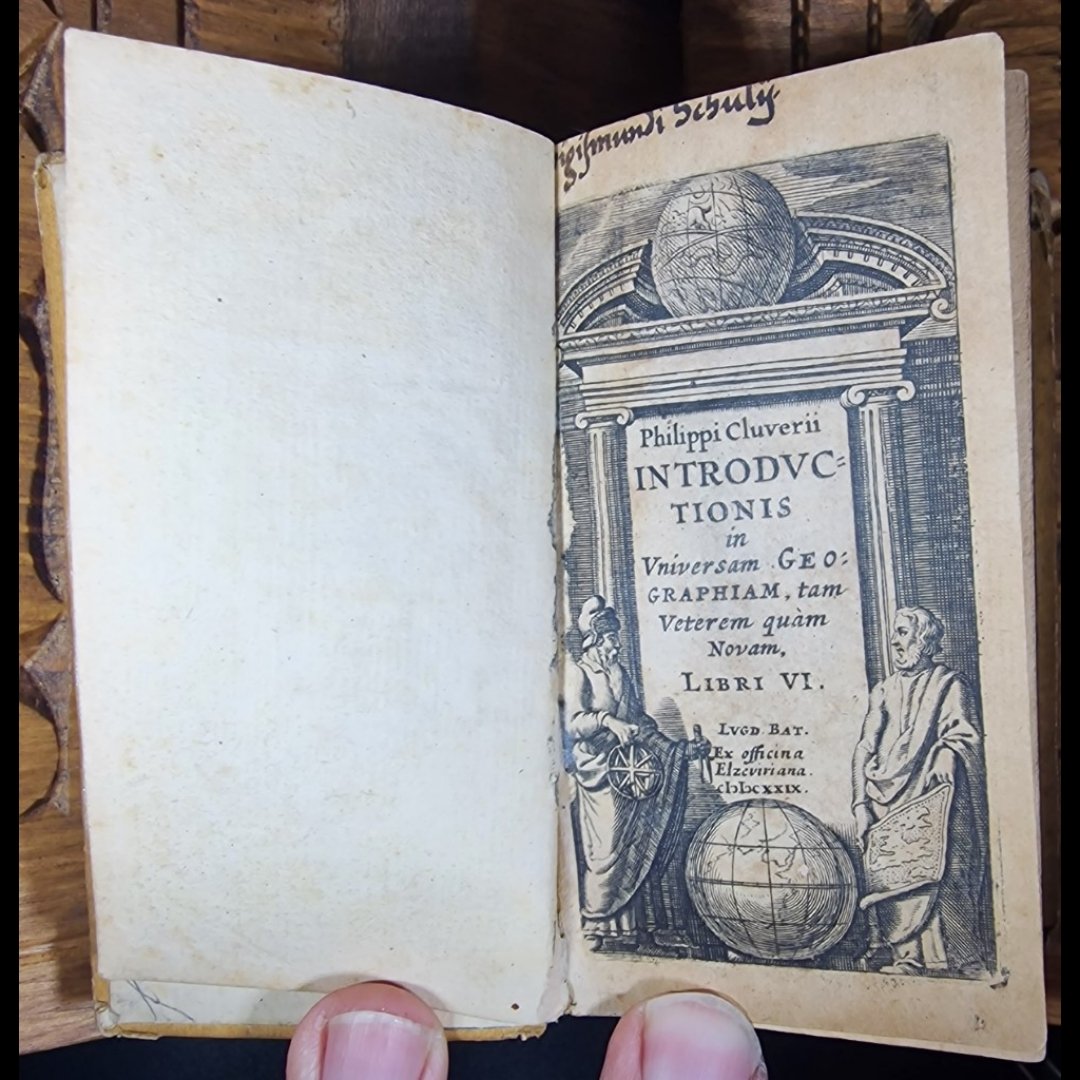 Image 1 of 21
 Image 2 of 21
 Image 3 of 21
 Image 4 of 21
 Image 5 of 21
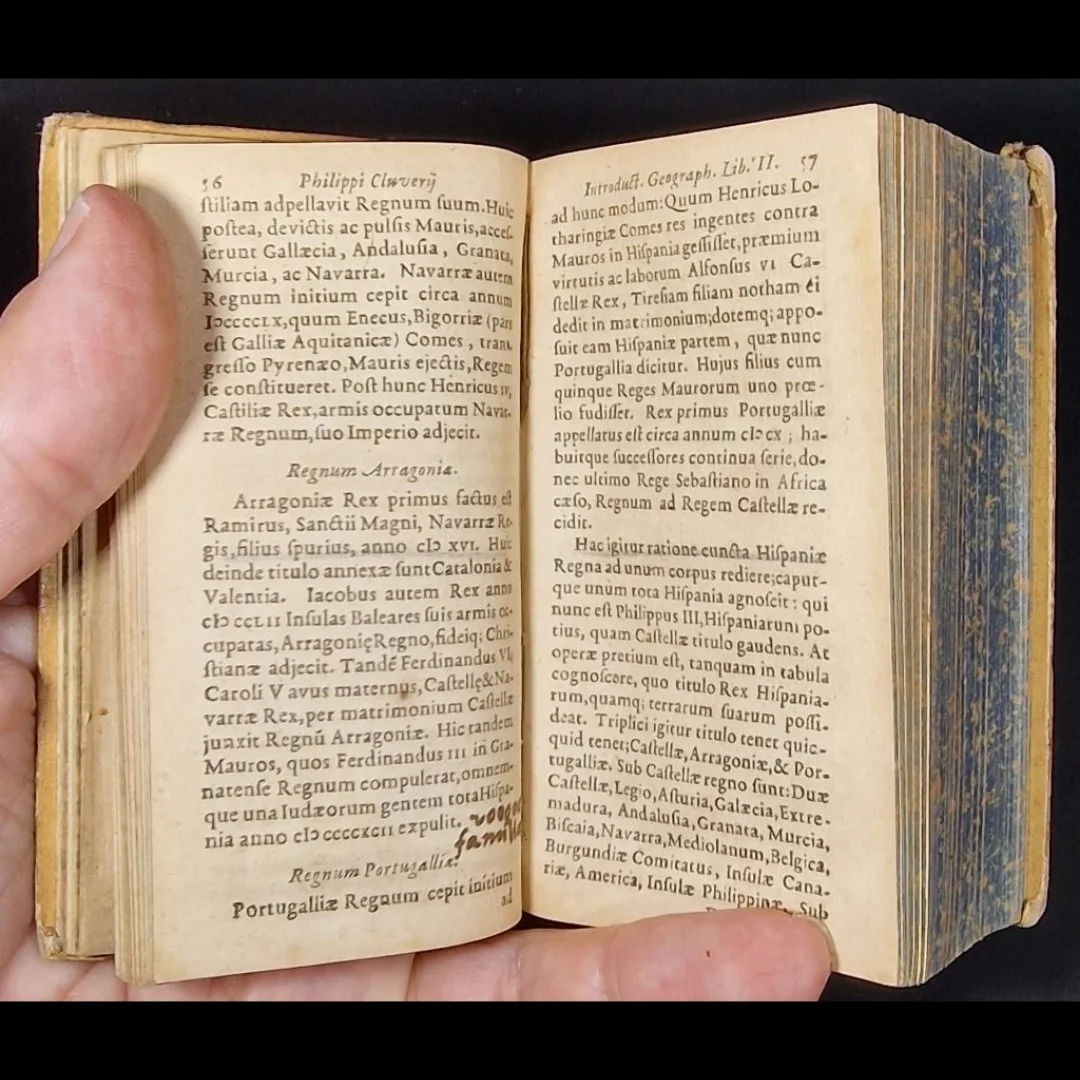 Image 6 of 21
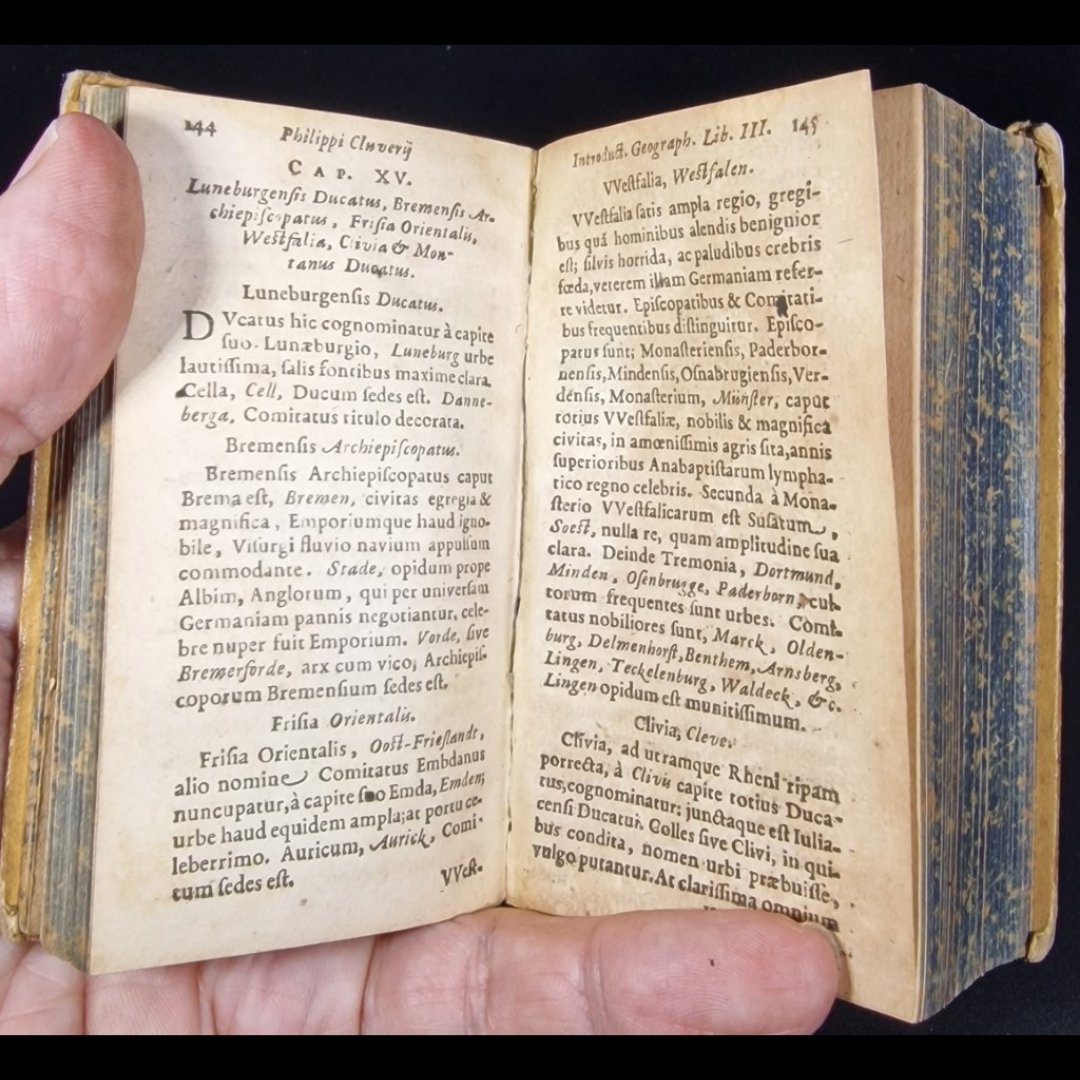 Image 7 of 21
 Image 8 of 21
 Image 9 of 21
 Image 10 of 21
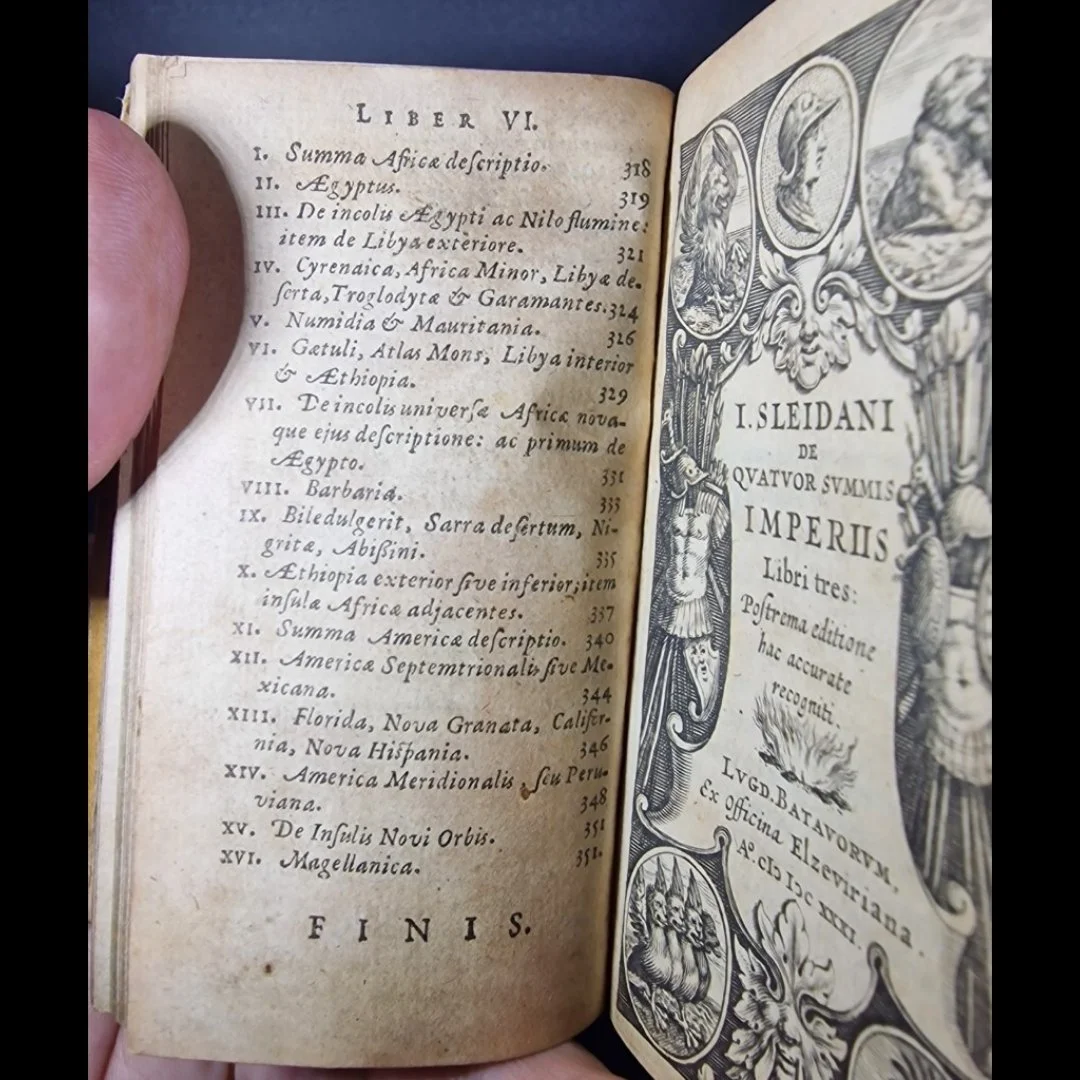 Image 11 of 21
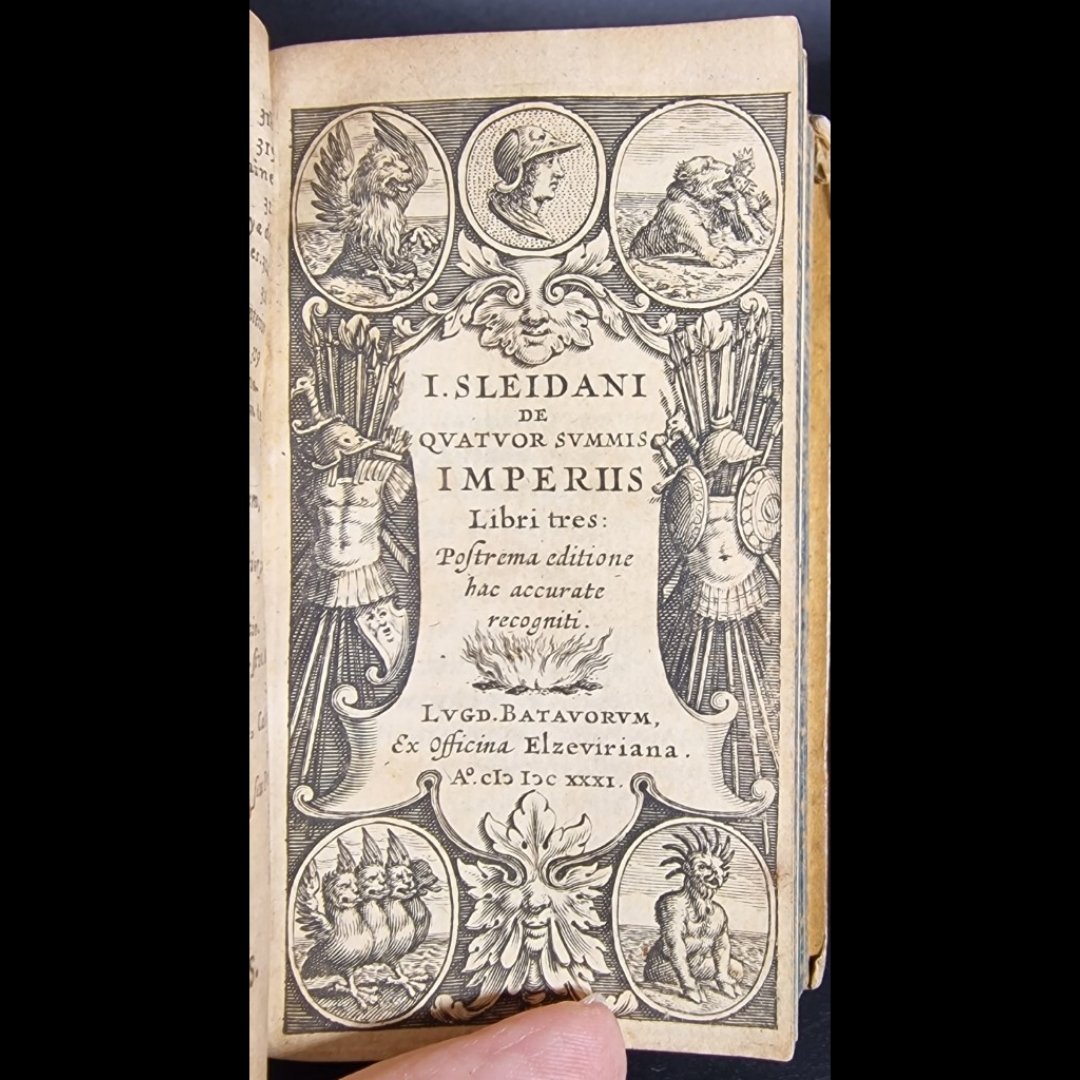 Image 12 of 21
 Image 13 of 21
 Image 14 of 21
 Image 15 of 21
 Image 16 of 21
 Image 17 of 21
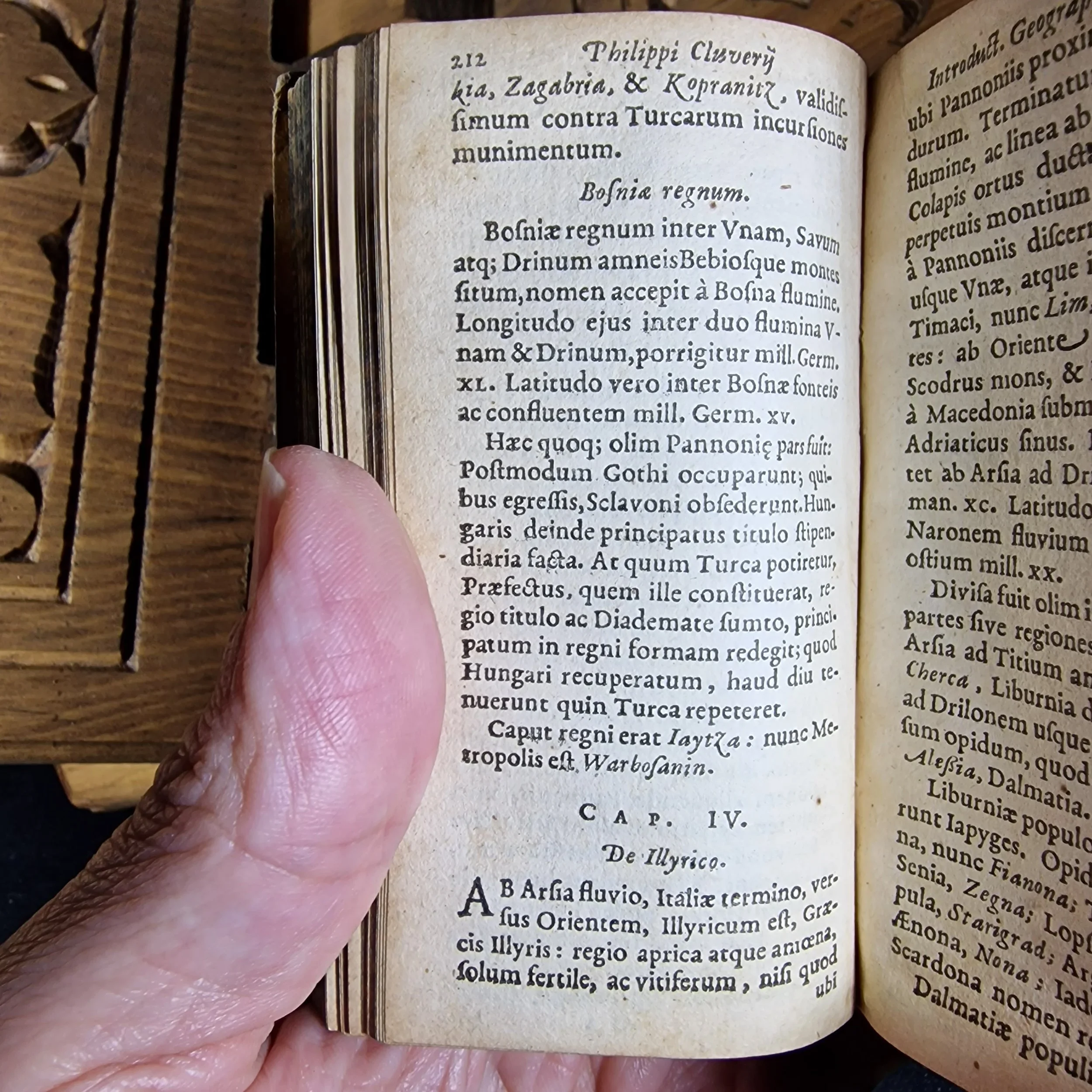 Image 18 of 21
 Image 19 of 21
 Image 20 of 21
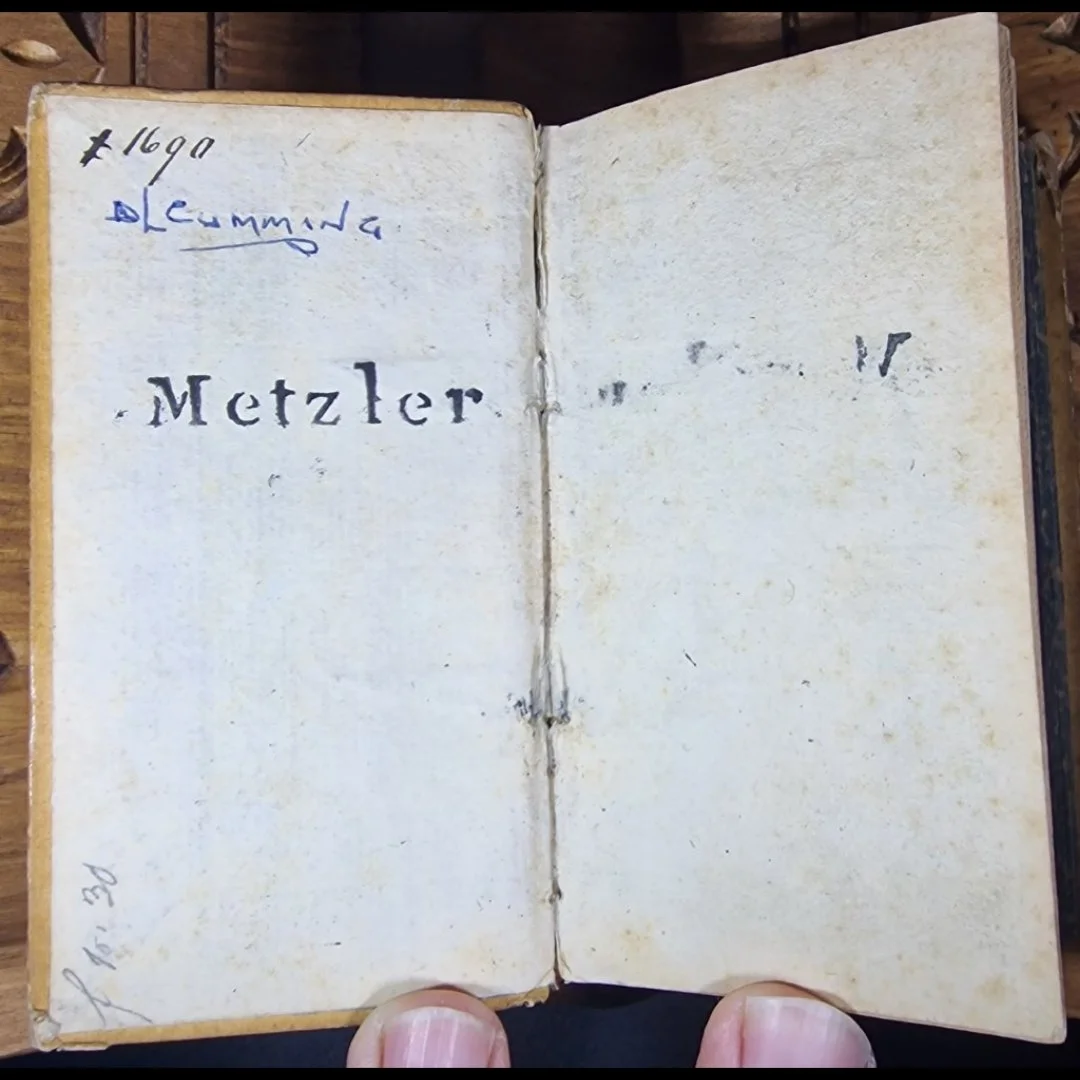 Image 21 of 21