1747 First Edition With Provenance
IL MANDEL SPIRITUAL
By Johann Heinrich Heidegger, Translated By Dumeng Conradin Bonorand
KEY DETAILS
Condition: Good
Format: Leather, Small 8vo; Contemporary full leather over boards, retaining remnants of an original cord or textile fore-edge fastening.
Published By: Scuol [Schuls]: Jacob Nott Gadina, Switzerland, 1747
Language: Ladin
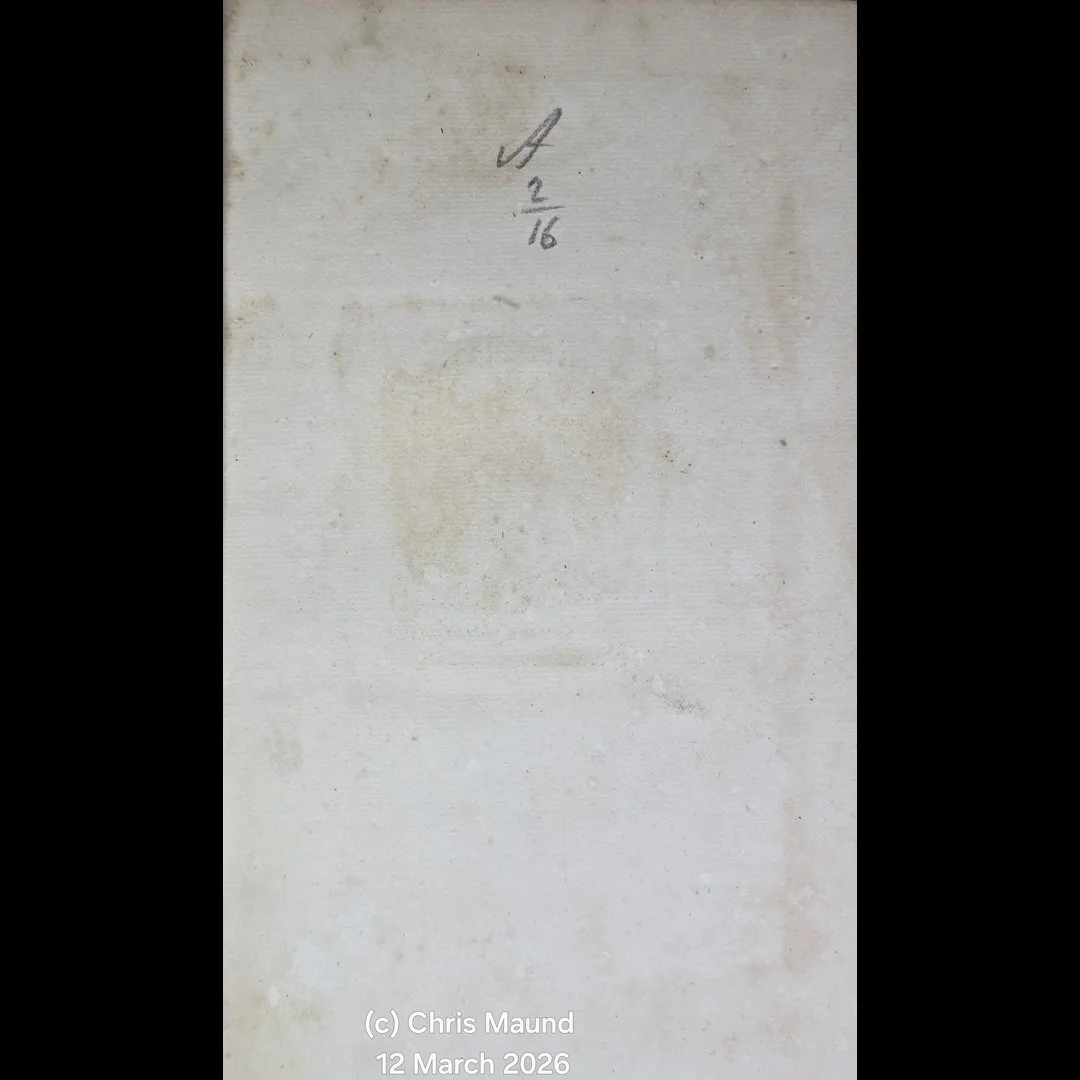
Provenance: The front endpaper contains nineteenth-century manuscript ownership and devotional inscriptions in Romansh.
Collation: [8], 566, [2] pp. ; Complete, including the terminal two-page Register dalla materia listing the contents of all twenty-eight chapters.
Dust Jacket: None, as issued
SKU: BTETM0002024
Shipping Info: Approximate Package Dimensions H: 12.5, L: 30, W: 25 (Units: cm), W: 2Kg
Tracked Shipping, Insurance Coverage as per Customer Request
DESCRIPTION
Il Mandel Spiritual
Que ais il Minz dalla Cristiauna Theologia our dalla S. Scrittüra
By Dumeng Conradin Bonorand
Adapted and compiled from Johann Heinrich Heidegger’s Medulla Theologiae Christianae
First edition of Dumeng Conradin Bonorand’s Romansh adaptation and compendium of the Reformed theology of Johann Heinrich Heidegger, printed at Scuol in the Lower Engadine in 1747.
The title, Il Mandel Spiritual, may be translated approximately as “The Spiritual Almond: the Kernel of Christian Theology from Holy Scripture”, the almond or kernel serving as a metaphor for the essential substance of Christian doctrine extracted from Scripture and presented for a Romansh-speaking readership.
Bonorand’s title page describes the work as being “tratt’ oura” by him, indicating that the text was drawn out, extracted or compiled rather than being a straightforward translation. It also states that the volume was printed “A cuost dai Authur”, at the author’s expense.
The theological source is identified within the book itself. The Latin Operis Approbatio describes the work as a theological compendium drawn from Johann Heinrich Heidegger’s Medulla and arranged in erotematic or question-and-answer form. The work therefore represents a vernacular adaptation of Heidegger’s systematic Reformed theology for use within the Romansh-speaking Protestant communities of Graubünden.
Printed religious literature played a central role in the development and preservation of Romansh as a literary language, particularly in the Engadine following the Reformation. Il Mandel Spiritual belongs to that important tradition of vernacular theological and devotional printing.
Il Mandel Spiritual is scarce in commerce and of particular interest to collectors of Romansh printing, Swiss and Graubünden history, vernacular Reformation literature, historical theology and minority-language printing.
Its appeal lies especially in the combination of an uncommon Romansh theological text, provincial Engadine printing, contemporary working binding, complete terminal register and surviving evidence of nineteenth-century devotional use.
PROVENANCE
The front endpaper contains nineteenth-century manuscript ownership and devotional inscriptions in Romansh.
One inscription appears to begin with the ownership formula “quaist cudesch ais da…”, meaning approximately “this book belongs to…”, followed by a name that is not fully secure but may read Caspar B. Bischoff, Schoff or a similar form.
A further devotional inscription is clearly dated 1859.
Additional manuscript annotations and pen trials appear elsewhere in the volume and to the rear.
The inscriptions provide evidence that the book remained in active private or devotional use within a Romansh-speaking context more than a century after publication and add considerably to the historical interest of the copy.
CONDITION, COLLATION & COPY NOTES
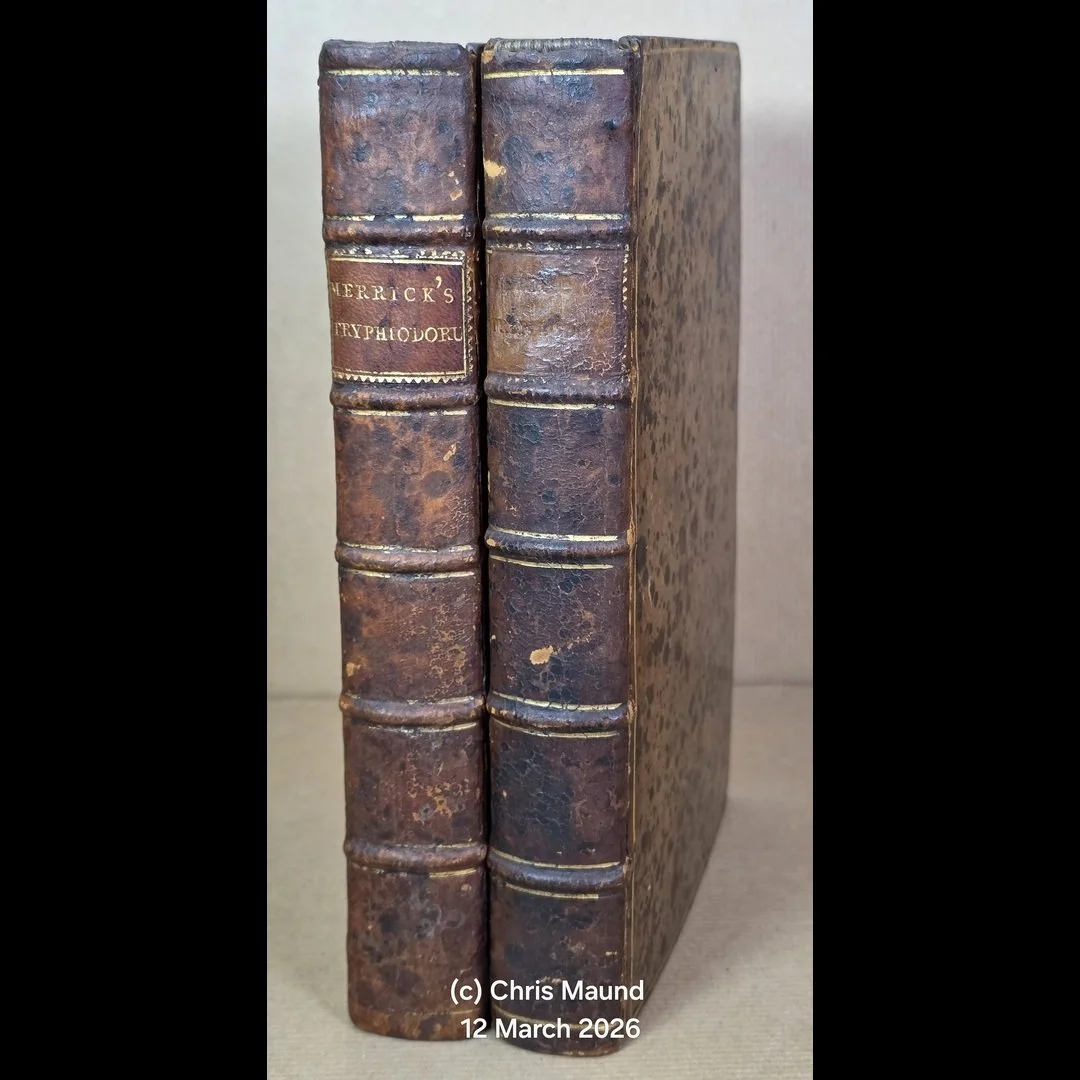
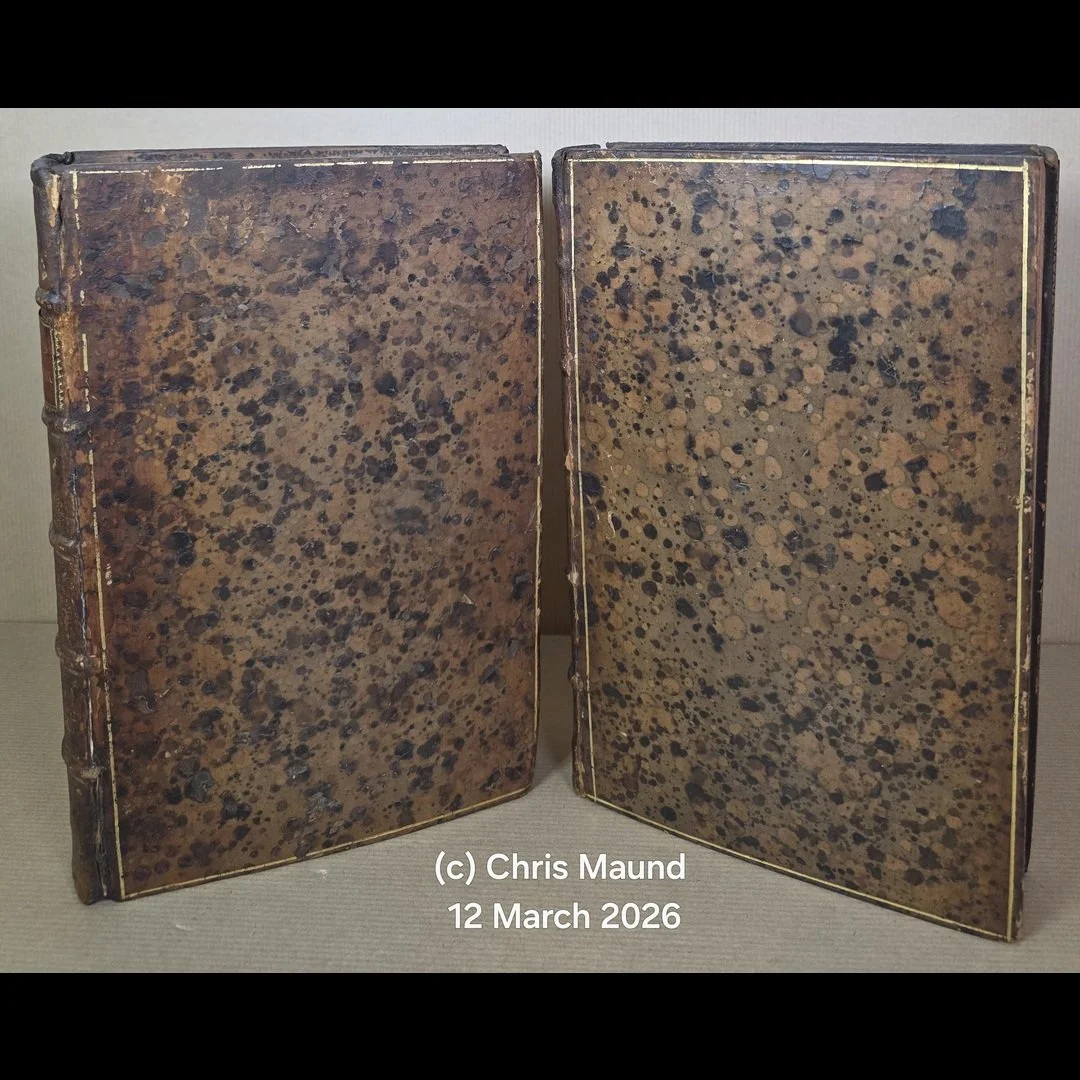
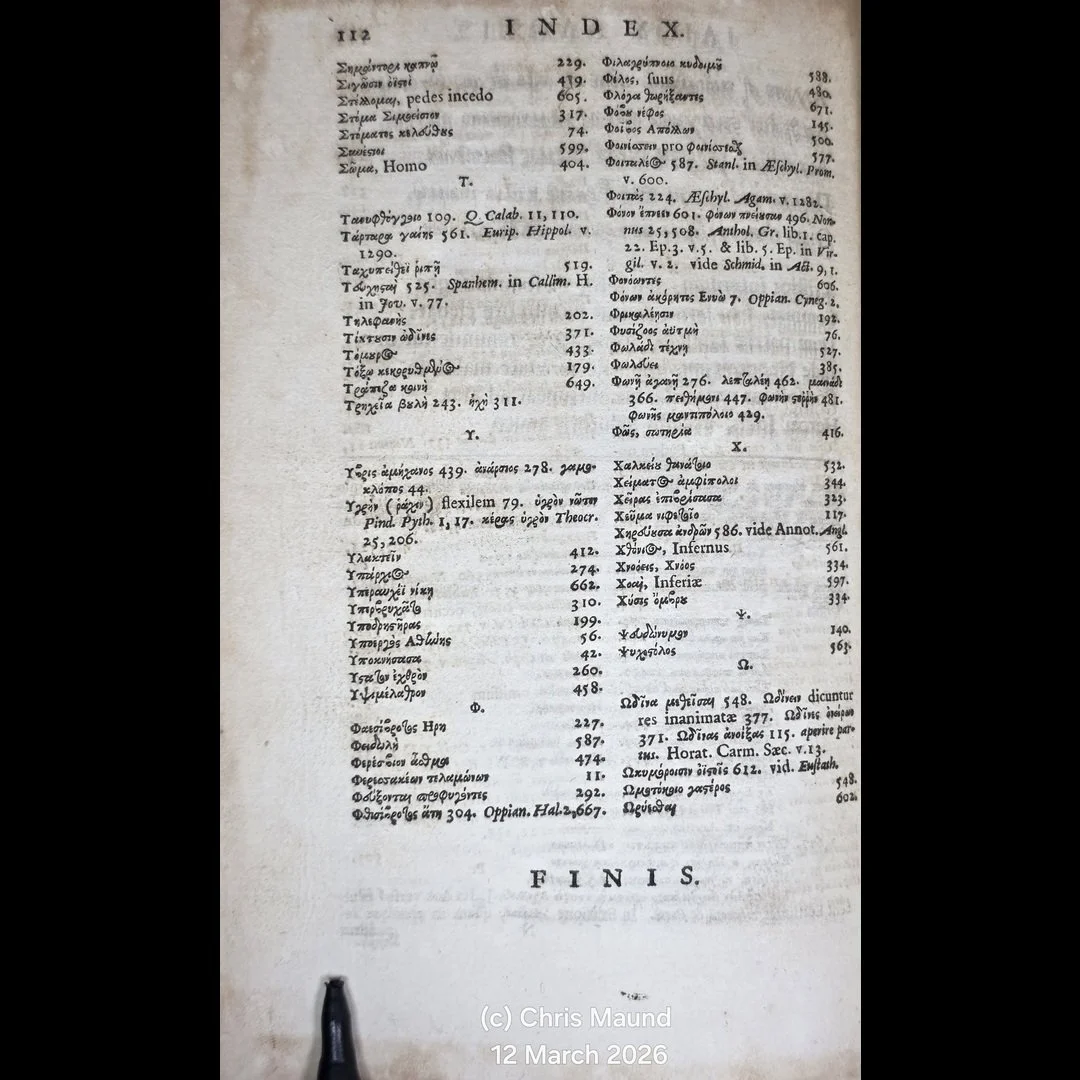
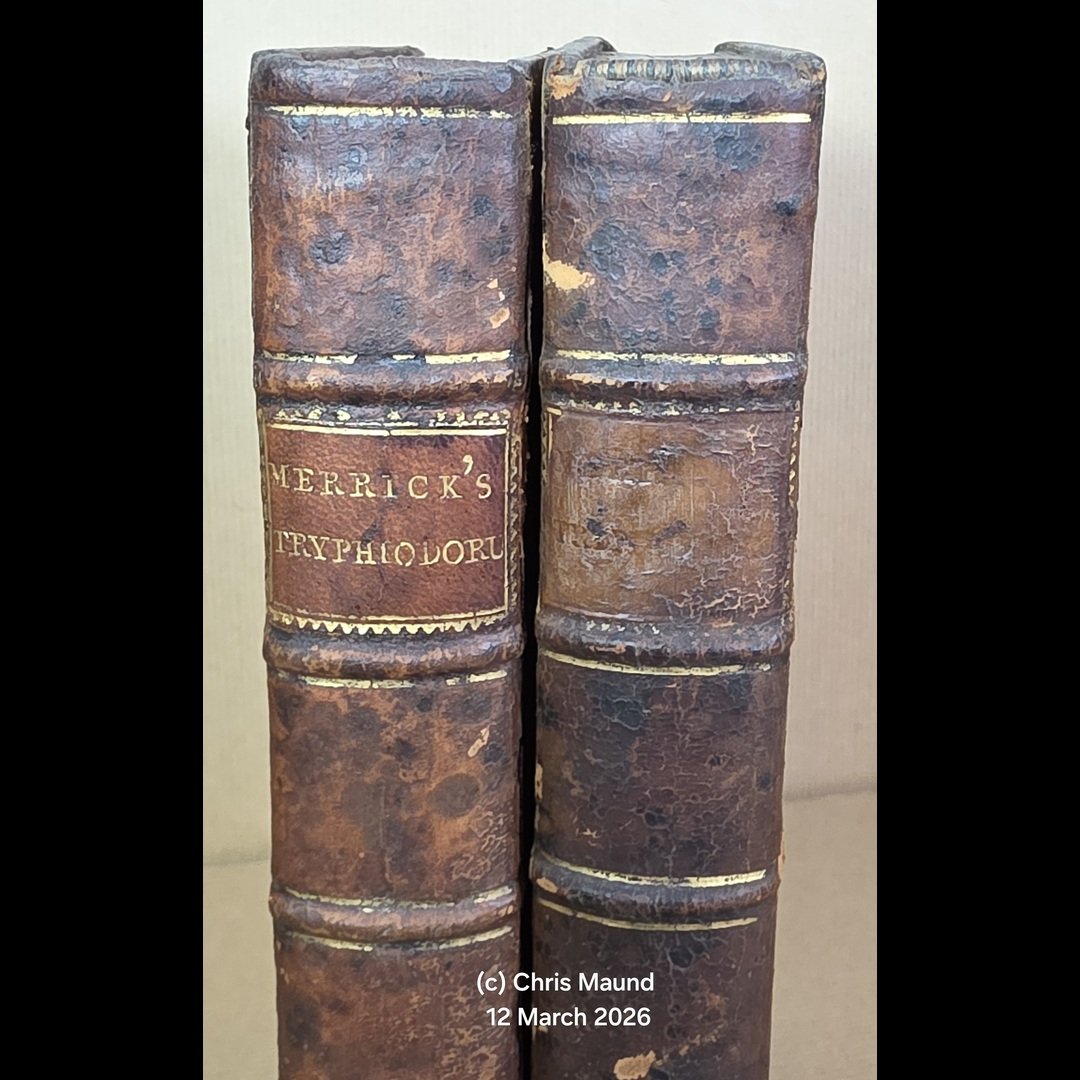
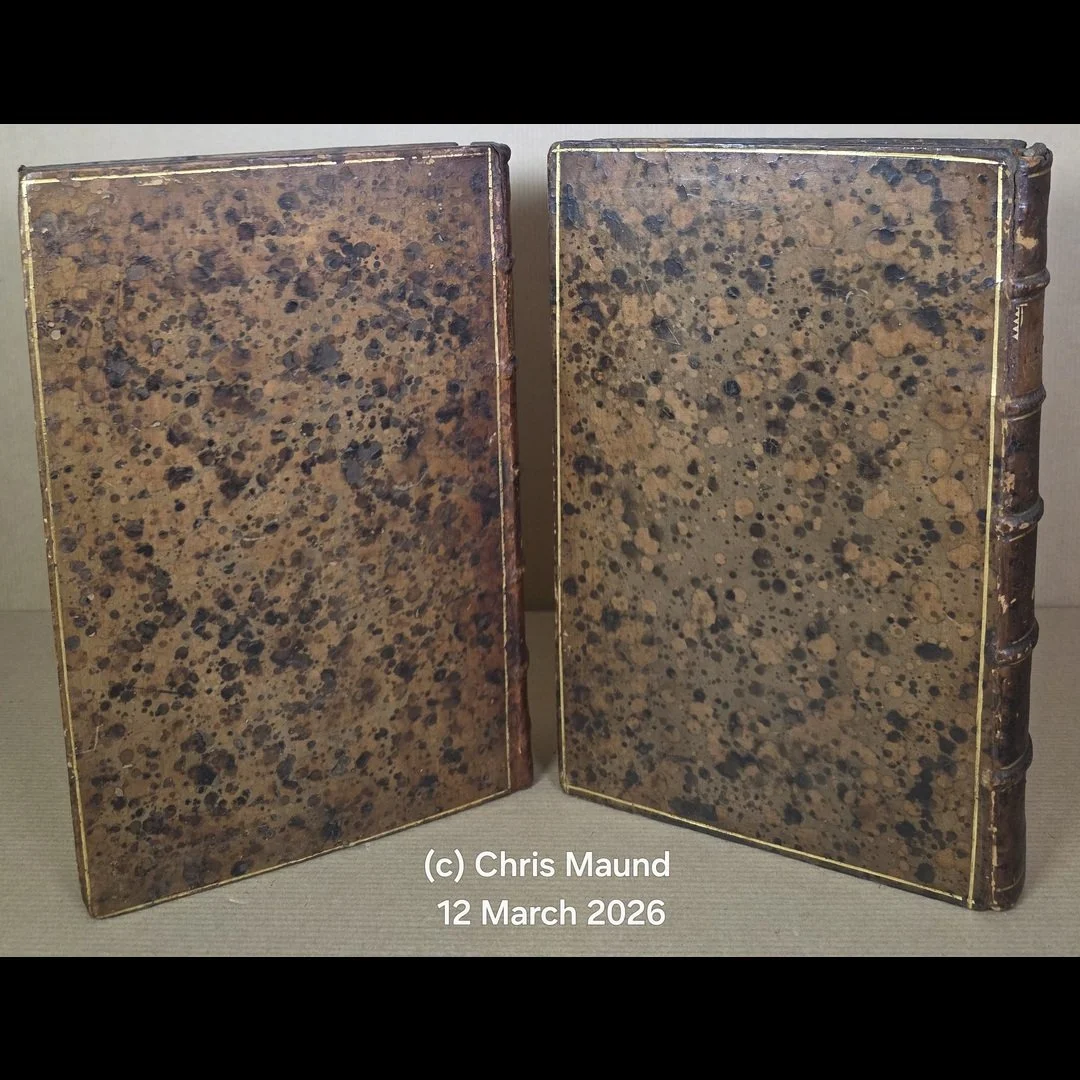
Contemporary full leather over boards, heavily rubbed and worn from sustained use, with pronounced abrasion and areas of loss to the spine and extremities. The boards remain attached and the text block is firm.
Remnants of an original cord or textile fore-edge fastening survive.
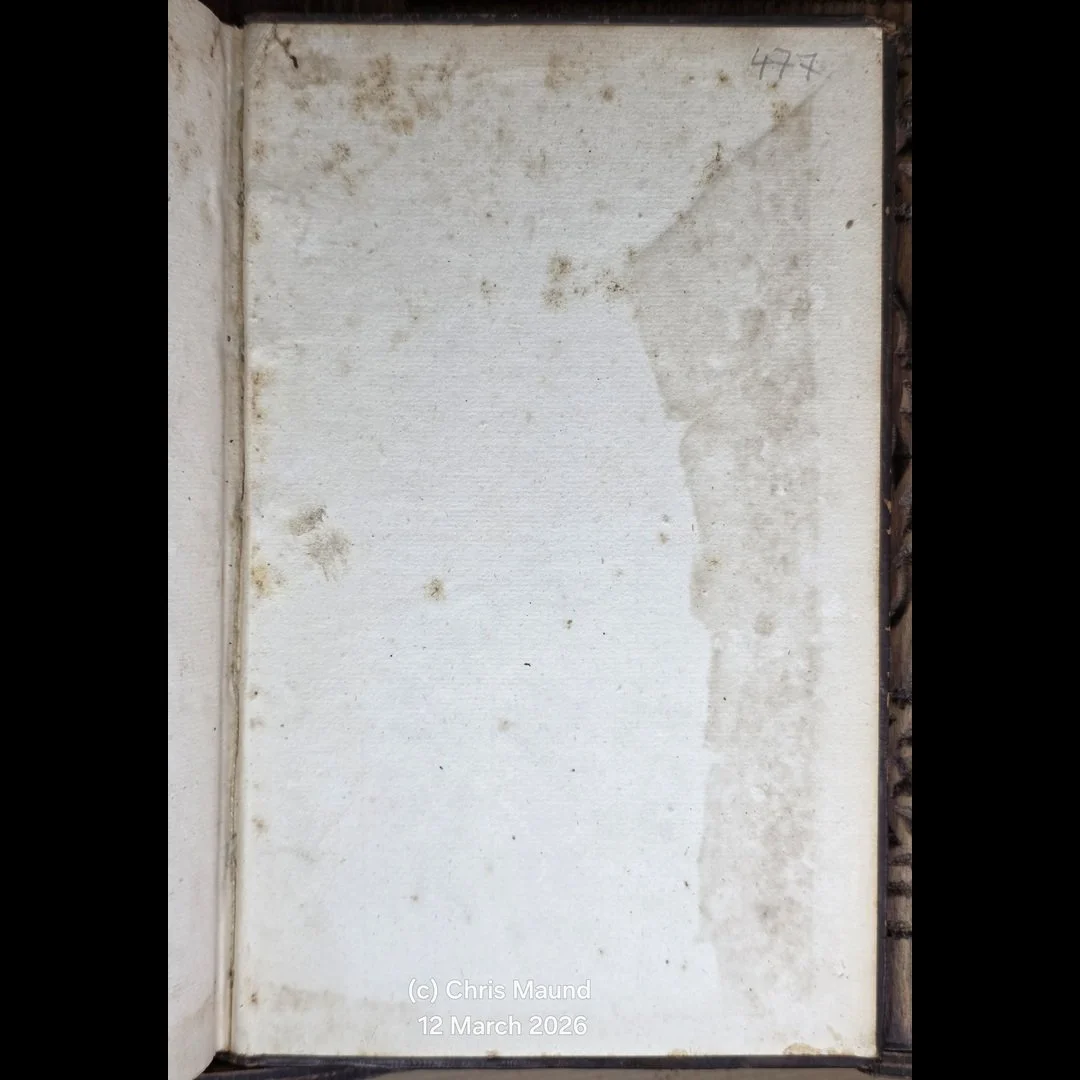
Internally generally sound, with age-toning, occasional spotting, staining and handling marks consistent with prolonged devotional or instructional use. A diagonal crease or old fold is visible to the title page.
Nineteenth-century manuscript ownership and devotional inscriptions appear to the front endpaper, including a dated inscription of 1859, with further manuscript annotations to the rear.
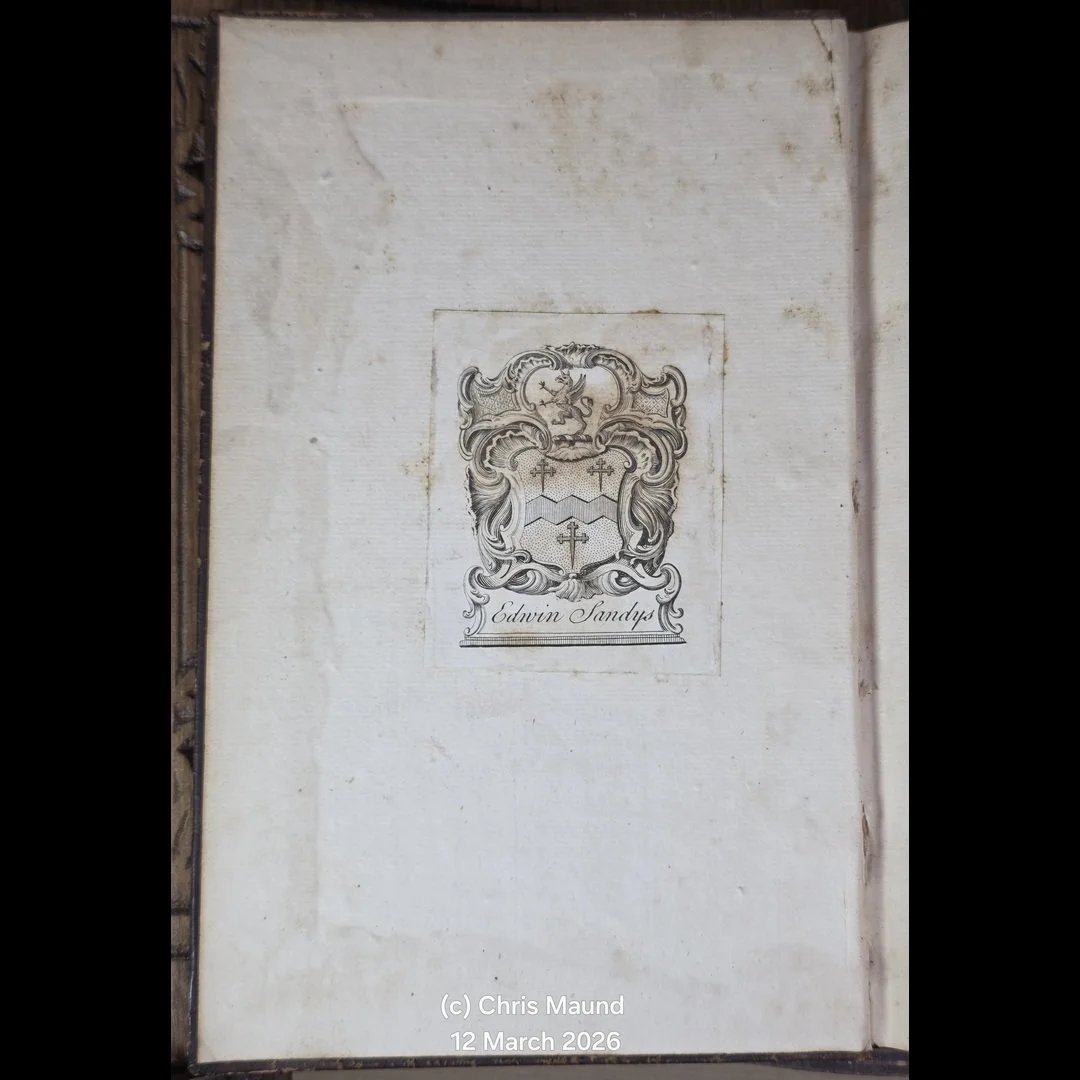
Please see Photos as part of condition report.
REFERENCES
Bibliografia Retorumantscha, BR 676.
Swiss National Library / Andri Peer Collection: Dumeng Conradin Bonorand, Il mandel spiritual. Que ais il minz dalla cristiauna theologia our dalla S. Scittüra, Scuol, 1747.
Zentralbibliothek Zürich: Johann Heinrich Heidegger, Medulla theologiae Christianae, Zürich, 1696.
Falk + Falk, Auction 37, 9 May 2015, lot 296: Il mandel spiritual, Scuol, 1747; 4 leaves, 566 pp., 1 leaf.
Contemporary and later specialist catalogues likewise record the standard collation as four preliminary leaves, 566 pages and one terminal leaf.
SYNOPSIS
Il Mandel Spiritual is a substantial Romansh presentation of Reformed systematic theology arranged in catechetical question-and-answer form.
Beginning with the nature of theology itself, the work proceeds through the authority of Holy Scripture, the nature of God and the Trinity before addressing predestination, creation, divine providence and angels.
It then develops the theology of covenant, treating the Covenant of Works, the Fall of Man, the Covenant of Grace and its historical manifestation through the patriarchs and Mosaic law.
Further chapters discuss the Ten Commandments, ceremonial and judicial law, the person and states of Christ, His offices, the Gospel, Christian calling, justification, sanctification and perseverance.
The concluding sections examine external divine worship under the New Testament, the Church, civil government and ultimate glorification.
The terminal Register dalla materia confirms the work’s twenty-eight-chapter structure:
Theology
Holy Scripture
God
The Holy Trinity
Predestination
Creation
Providence
Angels
The Covenant of Works
The Fall of Man
The Covenant of Grace
The Covenant under the Patriarchs
The Law of Moses
The Ten Commandments
Ceremonial Law
Judicial Law
The Person of Christ
The State of Christ
The Offices of Christ
The Gospel
Calling
Justification
Sanctification
Perseverance in the Covenant of Grace
External Divine Worship under the New Testament
The Church
Government
Glorification
The book should therefore not be confused with Heidegger’s Formula Consensus Helvetica. Its source is instead his broader systematic theological work, the Medulla Theologiae Christianae.
AUTHOR BIO
DUMENG CONRADIN BONORAND
Dumeng Conradin Bonorand was a Romansh clerical and literary figure associated with the Reformed culture of Graubünden.
In Il Mandel Spiritual he adapted and reorganised Heidegger’s academic theological system into a more compact vernacular form suited to a Romansh-speaking readership.
His work forms part of the important body of seventeenth- and eighteenth-century religious literature through which Romansh developed and survived as a written theological and literary language.
The presence of Il Mandel Spiritual in a number of historic Graubünden collections demonstrates that the book enjoyed meaningful regional circulation and importance despite its comparatively limited linguistic market.
JOHANN HEINRICH HEIDEGGER
Johann Heinrich Heidegger (1633–1698) was one of the leading Swiss Reformed theologians of the later seventeenth century and served as professor of theology at Zürich.
His Medulla Theologiae Christianae, first published at Zürich in 1696, was conceived as a concise but systematic presentation of Reformed Christian doctrine and provided the theological foundation from which Bonorand developed Il Mandel Spiritual.
Heidegger was also closely associated with the Formula Consensus Helvetica of 1675, but that distinct theological document should not be confused with the present work.
1747 First Edition With Provenance
IL MANDEL SPIRITUAL
By Johann Heinrich Heidegger, Translated By Dumeng Conradin Bonorand
KEY DETAILS
Condition: Good
Format: Leather, Small 8vo; Contemporary full leather over boards, retaining remnants of an original cord or textile fore-edge fastening.
Published By: Scuol [Schuls]: Jacob Nott Gadina, Switzerland, 1747
Language: Ladin
Provenance: The front endpaper contains nineteenth-century manuscript ownership and devotional inscriptions in Romansh.
Collation: [8], 566, [2] pp. ; Complete, including the terminal two-page Register dalla materia listing the contents of all twenty-eight chapters.
Dust Jacket: None, as issued
SKU: BTETM0002024
Shipping Info: Approximate Package Dimensions H: 12.5, L: 30, W: 25 (Units: cm), W: 2Kg
Tracked Shipping, Insurance Coverage as per Customer Request
DESCRIPTION
Il Mandel Spiritual
Que ais il Minz dalla Cristiauna Theologia our dalla S. Scrittüra
By Dumeng Conradin Bonorand
Adapted and compiled from Johann Heinrich Heidegger’s Medulla Theologiae Christianae
First edition of Dumeng Conradin Bonorand’s Romansh adaptation and compendium of the Reformed theology of Johann Heinrich Heidegger, printed at Scuol in the Lower Engadine in 1747.
The title, Il Mandel Spiritual, may be translated approximately as “The Spiritual Almond: the Kernel of Christian Theology from Holy Scripture”, the almond or kernel serving as a metaphor for the essential substance of Christian doctrine extracted from Scripture and presented for a Romansh-speaking readership.
Bonorand’s title page describes the work as being “tratt’ oura” by him, indicating that the text was drawn out, extracted or compiled rather than being a straightforward translation. It also states that the volume was printed “A cuost dai Authur”, at the author’s expense.
The theological source is identified within the book itself. The Latin Operis Approbatio describes the work as a theological compendium drawn from Johann Heinrich Heidegger’s Medulla and arranged in erotematic or question-and-answer form. The work therefore represents a vernacular adaptation of Heidegger’s systematic Reformed theology for use within the Romansh-speaking Protestant communities of Graubünden.
Printed religious literature played a central role in the development and preservation of Romansh as a literary language, particularly in the Engadine following the Reformation. Il Mandel Spiritual belongs to that important tradition of vernacular theological and devotional printing.
Il Mandel Spiritual is scarce in commerce and of particular interest to collectors of Romansh printing, Swiss and Graubünden history, vernacular Reformation literature, historical theology and minority-language printing.
Its appeal lies especially in the combination of an uncommon Romansh theological text, provincial Engadine printing, contemporary working binding, complete terminal register and surviving evidence of nineteenth-century devotional use.
PROVENANCE
The front endpaper contains nineteenth-century manuscript ownership and devotional inscriptions in Romansh.
One inscription appears to begin with the ownership formula “quaist cudesch ais da…”, meaning approximately “this book belongs to…”, followed by a name that is not fully secure but may read Caspar B. Bischoff, Schoff or a similar form.
A further devotional inscription is clearly dated 1859.
Additional manuscript annotations and pen trials appear elsewhere in the volume and to the rear.
The inscriptions provide evidence that the book remained in active private or devotional use within a Romansh-speaking context more than a century after publication and add considerably to the historical interest of the copy.
CONDITION, COLLATION & COPY NOTES
Contemporary full leather over boards, heavily rubbed and worn from sustained use, with pronounced abrasion and areas of loss to the spine and extremities. The boards remain attached and the text block is firm.
Remnants of an original cord or textile fore-edge fastening survive.
Internally generally sound, with age-toning, occasional spotting, staining and handling marks consistent with prolonged devotional or instructional use. A diagonal crease or old fold is visible to the title page.
Nineteenth-century manuscript ownership and devotional inscriptions appear to the front endpaper, including a dated inscription of 1859, with further manuscript annotations to the rear.
Please see Photos as part of condition report.
REFERENCES
Bibliografia Retorumantscha, BR 676.
Swiss National Library / Andri Peer Collection: Dumeng Conradin Bonorand, Il mandel spiritual. Que ais il minz dalla cristiauna theologia our dalla S. Scittüra, Scuol, 1747.
Zentralbibliothek Zürich: Johann Heinrich Heidegger, Medulla theologiae Christianae, Zürich, 1696.
Falk + Falk, Auction 37, 9 May 2015, lot 296: Il mandel spiritual, Scuol, 1747; 4 leaves, 566 pp., 1 leaf.
Contemporary and later specialist catalogues likewise record the standard collation as four preliminary leaves, 566 pages and one terminal leaf.
SYNOPSIS
Il Mandel Spiritual is a substantial Romansh presentation of Reformed systematic theology arranged in catechetical question-and-answer form.
Beginning with the nature of theology itself, the work proceeds through the authority of Holy Scripture, the nature of God and the Trinity before addressing predestination, creation, divine providence and angels.
It then develops the theology of covenant, treating the Covenant of Works, the Fall of Man, the Covenant of Grace and its historical manifestation through the patriarchs and Mosaic law.
Further chapters discuss the Ten Commandments, ceremonial and judicial law, the person and states of Christ, His offices, the Gospel, Christian calling, justification, sanctification and perseverance.
The concluding sections examine external divine worship under the New Testament, the Church, civil government and ultimate glorification.
The terminal Register dalla materia confirms the work’s twenty-eight-chapter structure:
Theology
Holy Scripture
God
The Holy Trinity
Predestination
Creation
Providence
Angels
The Covenant of Works
The Fall of Man
The Covenant of Grace
The Covenant under the Patriarchs
The Law of Moses
The Ten Commandments
Ceremonial Law
Judicial Law
The Person of Christ
The State of Christ
The Offices of Christ
The Gospel
Calling
Justification
Sanctification
Perseverance in the Covenant of Grace
External Divine Worship under the New Testament
The Church
Government
Glorification
The book should therefore not be confused with Heidegger’s Formula Consensus Helvetica. Its source is instead his broader systematic theological work, the Medulla Theologiae Christianae.
AUTHOR BIO
DUMENG CONRADIN BONORAND
Dumeng Conradin Bonorand was a Romansh clerical and literary figure associated with the Reformed culture of Graubünden.
In Il Mandel Spiritual he adapted and reorganised Heidegger’s academic theological system into a more compact vernacular form suited to a Romansh-speaking readership.
His work forms part of the important body of seventeenth- and eighteenth-century religious literature through which Romansh developed and survived as a written theological and literary language.
The presence of Il Mandel Spiritual in a number of historic Graubünden collections demonstrates that the book enjoyed meaningful regional circulation and importance despite its comparatively limited linguistic market.
JOHANN HEINRICH HEIDEGGER
Johann Heinrich Heidegger (1633–1698) was one of the leading Swiss Reformed theologians of the later seventeenth century and served as professor of theology at Zürich.
His Medulla Theologiae Christianae, first published at Zürich in 1696, was conceived as a concise but systematic presentation of Reformed Christian doctrine and provided the theological foundation from which Bonorand developed Il Mandel Spiritual.
Heidegger was also closely associated with the Formula Consensus Helvetica of 1675, but that distinct theological document should not be confused with the present work.

 Image 1 of 14
 Image 2 of 14
 Image 3 of 14
 Image 4 of 14
 Image 5 of 14
 Image 6 of 14
 Image 7 of 14
 Image 8 of 14
 Image 9 of 14
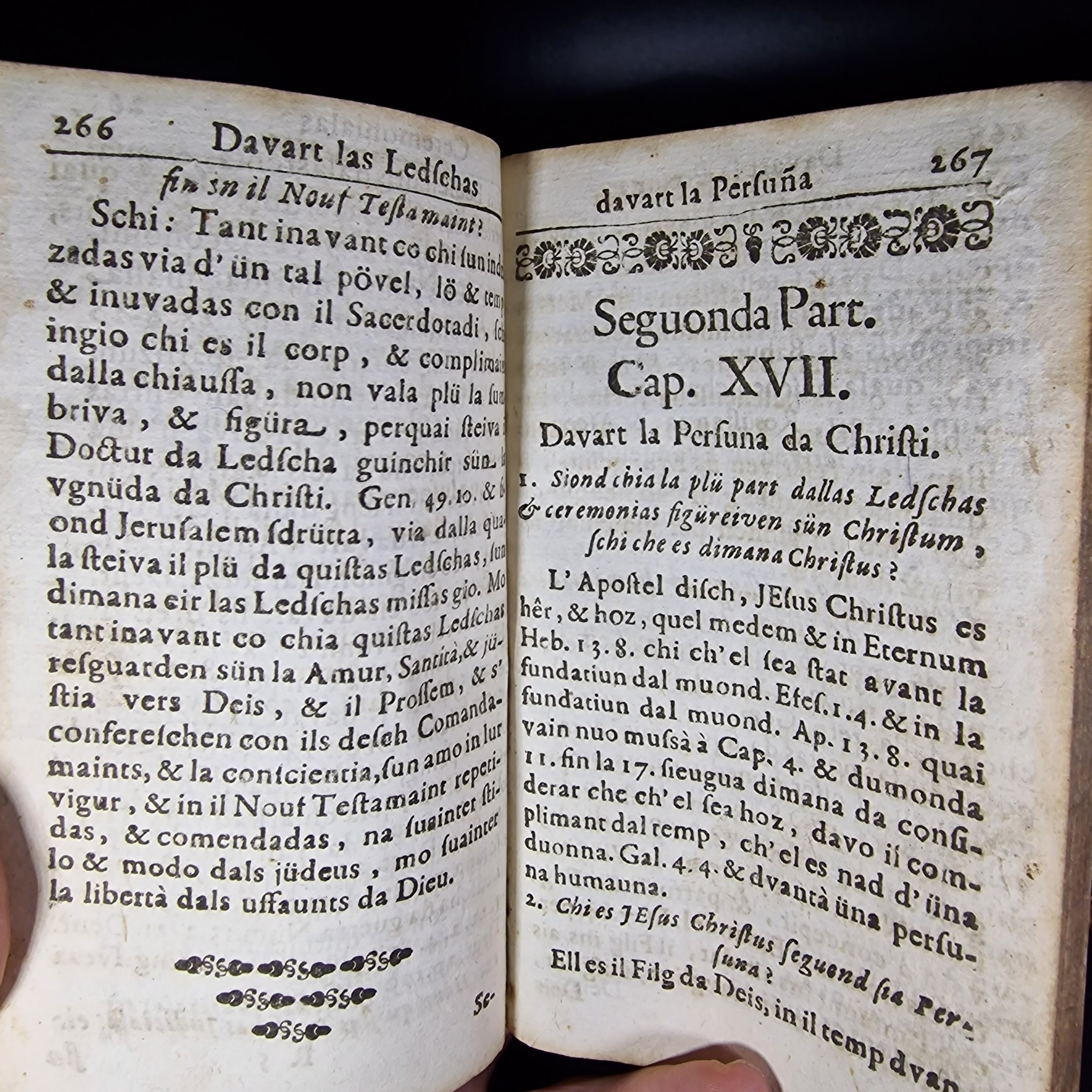 Image 10 of 14
 Image 11 of 14
 Image 12 of 14
 Image 13 of 14
 Image 14 of 14