Sale Price:
£400.00
Original Price:
£450.00
1877 Early Illustrated Edition
LES VOYAGES EXTRAORDINAIRES HECTOR SERVADAC
By Jules Verne
KEY DETAILS
Condition: Very Good
Format: Hardcover, Super octavo (8vo 7 × 11 in 178 × 279 mm )
Note: Binding/size selection follows standard bibliographic conventions and is approximate; exact measurements may vary.
Published By: Bibliothèque d’Éducation et de Récréation, J. Hetzel et Cie, Paris, 1877
Language: French
Illustrated By: Paul Philippoteaux
Collation: Two preliminary leaves and 395 pp.
Dust Jacket: None, as issued
SKU: BTETM0002069
Shipping Info: Approximate Package Dimensions H: 12.5, L: 30, W: 25 (Units: cm), W: 2Kg
Tracked Shipping, Insurance Coverage as per Customer Request
DESCRIPTION
LES VOYAGES EXTRAORDINAIRES HECTOR SERVADAC
Voyages et aventures à travers le monde solaire
An early illustrated grand-in-8 edition of Jules Verne’s astronomical adventure, preserved in the publisher’s elaborate red pictorial cloth binding known as the “au monde solaire” or “à la sphère armillaire” design.
First published in 1877 as part of Verne’s celebrated Voyages extraordinaires, Hector Servadac combines interplanetary adventure, speculative astronomy, satire and survival fiction. The story follows a disparate group of travellers carried away from Earth upon the wandering celestial body Gallia and forced to adapt to an extraordinary journey through the Solar System.
The volume is illustrated throughout after drawings by Paul Philippoteaux, engraved by Charles Laplante. Its richly decorated publisher’s binding, blocked in black and gilt with an armillary-sphere motif, is among the most distinctive designs associated with Hetzel’s editions of Jules Verne.
The title page is undated. The binding characteristics—including the front-board signature of Engel, the apparent absence of a binder’s signature at the foot of the spine and the absence of a publisher’s advertising catalogue—support a probable issue date of circa 1880–1882.
CONDITION, COLLATION & COPY NOTES
COLLATION
Two preliminary leaves and 395 pp.
Publisher’s advertising catalogue not present.
An attractive and collectable early Hetzel volume in its original red pictorial cloth binding, elaborately blocked in black and gilt.
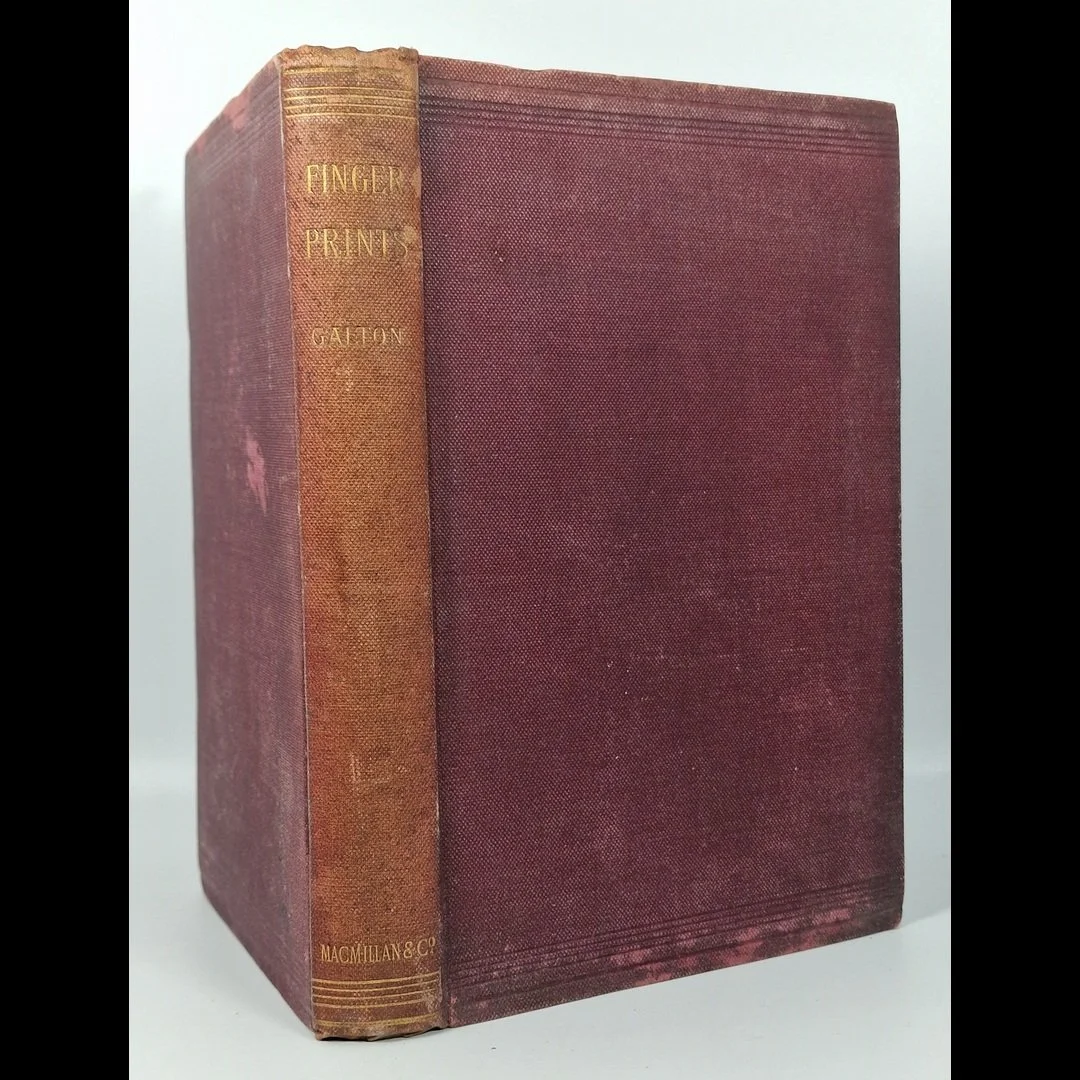
The binding shows general rubbing, scuffing and surface wear. The corners and board edges are bumped and worn. The spine is faded in comparison with the boards, with rubbing and loss of brightness to the gilt lettering and decoration.
There is pronounced wear at the head of the spine, including fraying, splitting and areas of cloth loss. The tail of the spine is rubbed and worn, with minor fraying. The front and rear boards display further rubbing, marking and age-related soiling, although the principal armillary-sphere design remains clearly visible and visually appealing.
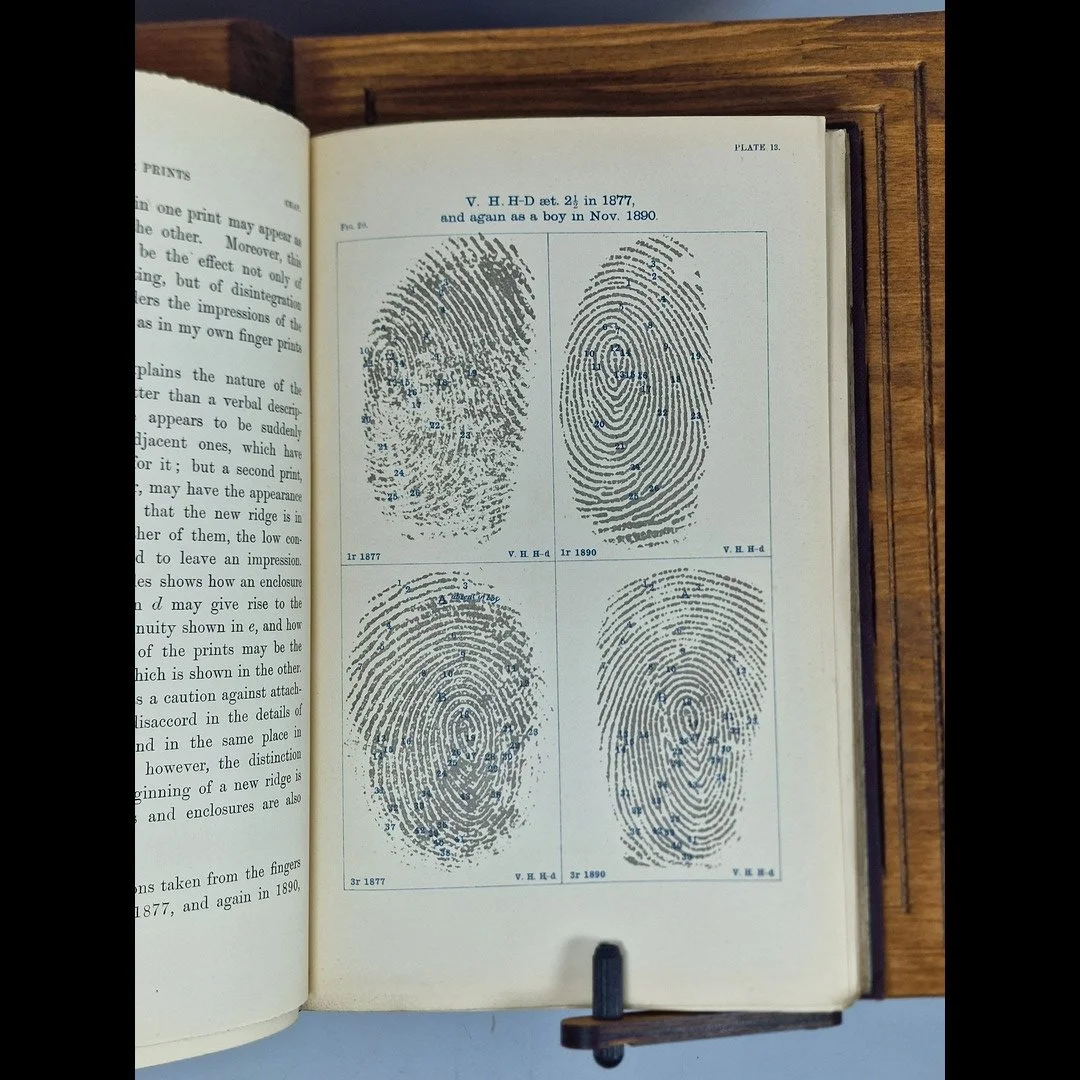
The inner hinges show some strain and should be handled with care, although the volume remains held. Endpapers, page edges and text leaves display expected age-toning. Occasional light spotting, foxing and handling marks may be present, but the printed text remains clear and legible. The numerous engraved illustrations retain good definition.
The binder’s signature is not visible at the foot of the spine. The publisher’s advertising catalogue, including Catalogue J, is not present.
A decorative example of one of Hetzel’s most recognisable Jules Verne bindings, with condition faults consistent with age and use. The wear should be considered when assessing the volume, but the book retains considerable shelf presence and collecting appeal.
Please see Photos as part of condition report.
REFERENCES
Jauzac, Philippe, Jules Verne: Hetzel et les cartonnages illustrés, p. 215, ill. 214.
Bottin, André, Bibliographie des éditions illustrées des Voyages extraordinaires de Jules Verne en cartonnages d’éditeur de la collection Hetzel, p. 243.
Gondolo della Riva, Piero, Bibliographie analytique de toutes les œuvres de Jules Verne, Tome I, pp. 51–53.
SYNOPSIS
Captain Hector Servadac is stationed in French Algeria when a catastrophic celestial encounter tears portions of the Mediterranean coastline away from Earth. Servadac, his orderly Ben-Zouf and a scattered group of survivors gradually discover that they have been carried into space upon a comet-like body later named Gallia.
The travellers include soldiers, sailors, settlers, a Russian count, a young Italian girl, a merchant and the irascible astronomer Palmyrin Rosette. Brought together by extraordinary circumstances, they must establish shelter, obtain food and prepare for increasingly severe cold as Gallia moves farther from the Sun.
Rosette’s calculations reveal the scale of their predicament and the path Gallia is taking through the Solar System. The survivors experience altered gravity, shortened days, extreme changes in temperature and encounters with fragments of the world they have left behind.
Blending scientific speculation with adventure, comedy and social satire, Hector Servadac is one of Verne’s most overtly interplanetary novels. Its unusual premise allowed him to transform the Solar System into a landscape of exploration while examining how an unlikely community might respond to isolation, danger and the possibility of returning to Earth.
AUTHOR BIO
Jules Gabriel Verne was born on 8 February 1828 and died on 24 March 1905. He was a French novelist, poet and playwright whose collaboration with the publisher Pierre-Jules Hetzel produced the celebrated Voyages extraordinaires series.
His best-known works include Journey to the Centre of the Earth, From the Earth to the Moon, Twenty Thousand Leagues Under the Seas and Around the World in Eighty Days.
Verne combined geographical exploration, contemporary scientific ideas and technological speculation with the conventions of the adventure novel. His fiction had a major influence on the development of scientific romance and modern speculative literature, and he remains one of the world’s most widely translated authors.
ILLUSTRATOR
Paul Philippoteaux
Drawings by Paul Philippoteaux
Engravings by Charles Laplante
Illustrator Bio
Paul Dominique Philippoteaux was a French painter and illustrator known for historical scenes, panoramic works and illustrated publications. His compositions for Hector Servadac helped visualise Verne’s imagined astronomical landscapes, celestial phenomena and scenes of exploration.
Charles Laplante was a prominent nineteenth-century French wood engraver. He worked extensively for publishers including Hetzel and Hachette, translating artists’ drawings into detailed engravings for books and periodicals.
1877 Early Illustrated Edition
LES VOYAGES EXTRAORDINAIRES HECTOR SERVADAC
By Jules Verne
KEY DETAILS
Condition: Very Good
Format: Hardcover, Super octavo (8vo 7 × 11 in 178 × 279 mm )
Note: Binding/size selection follows standard bibliographic conventions and is approximate; exact measurements may vary.
Published By: Bibliothèque d’Éducation et de Récréation, J. Hetzel et Cie, Paris, 1877
Language: French
Illustrated By: Paul Philippoteaux
Collation: Two preliminary leaves and 395 pp.
Dust Jacket: None, as issued
SKU: BTETM0002069
Shipping Info: Approximate Package Dimensions H: 12.5, L: 30, W: 25 (Units: cm), W: 2Kg
Tracked Shipping, Insurance Coverage as per Customer Request
DESCRIPTION
LES VOYAGES EXTRAORDINAIRES HECTOR SERVADAC
Voyages et aventures à travers le monde solaire
An early illustrated grand-in-8 edition of Jules Verne’s astronomical adventure, preserved in the publisher’s elaborate red pictorial cloth binding known as the “au monde solaire” or “à la sphère armillaire” design.
First published in 1877 as part of Verne’s celebrated Voyages extraordinaires, Hector Servadac combines interplanetary adventure, speculative astronomy, satire and survival fiction. The story follows a disparate group of travellers carried away from Earth upon the wandering celestial body Gallia and forced to adapt to an extraordinary journey through the Solar System.
The volume is illustrated throughout after drawings by Paul Philippoteaux, engraved by Charles Laplante. Its richly decorated publisher’s binding, blocked in black and gilt with an armillary-sphere motif, is among the most distinctive designs associated with Hetzel’s editions of Jules Verne.
The title page is undated. The binding characteristics—including the front-board signature of Engel, the apparent absence of a binder’s signature at the foot of the spine and the absence of a publisher’s advertising catalogue—support a probable issue date of circa 1880–1882.
CONDITION, COLLATION & COPY NOTES
COLLATION
Two preliminary leaves and 395 pp.
Publisher’s advertising catalogue not present.
An attractive and collectable early Hetzel volume in its original red pictorial cloth binding, elaborately blocked in black and gilt.
The binding shows general rubbing, scuffing and surface wear. The corners and board edges are bumped and worn. The spine is faded in comparison with the boards, with rubbing and loss of brightness to the gilt lettering and decoration.
There is pronounced wear at the head of the spine, including fraying, splitting and areas of cloth loss. The tail of the spine is rubbed and worn, with minor fraying. The front and rear boards display further rubbing, marking and age-related soiling, although the principal armillary-sphere design remains clearly visible and visually appealing.
The inner hinges show some strain and should be handled with care, although the volume remains held. Endpapers, page edges and text leaves display expected age-toning. Occasional light spotting, foxing and handling marks may be present, but the printed text remains clear and legible. The numerous engraved illustrations retain good definition.
The binder’s signature is not visible at the foot of the spine. The publisher’s advertising catalogue, including Catalogue J, is not present.
A decorative example of one of Hetzel’s most recognisable Jules Verne bindings, with condition faults consistent with age and use. The wear should be considered when assessing the volume, but the book retains considerable shelf presence and collecting appeal.
Please see Photos as part of condition report.
REFERENCES
Jauzac, Philippe, Jules Verne: Hetzel et les cartonnages illustrés, p. 215, ill. 214.
Bottin, André, Bibliographie des éditions illustrées des Voyages extraordinaires de Jules Verne en cartonnages d’éditeur de la collection Hetzel, p. 243.
Gondolo della Riva, Piero, Bibliographie analytique de toutes les œuvres de Jules Verne, Tome I, pp. 51–53.
SYNOPSIS
Captain Hector Servadac is stationed in French Algeria when a catastrophic celestial encounter tears portions of the Mediterranean coastline away from Earth. Servadac, his orderly Ben-Zouf and a scattered group of survivors gradually discover that they have been carried into space upon a comet-like body later named Gallia.
The travellers include soldiers, sailors, settlers, a Russian count, a young Italian girl, a merchant and the irascible astronomer Palmyrin Rosette. Brought together by extraordinary circumstances, they must establish shelter, obtain food and prepare for increasingly severe cold as Gallia moves farther from the Sun.
Rosette’s calculations reveal the scale of their predicament and the path Gallia is taking through the Solar System. The survivors experience altered gravity, shortened days, extreme changes in temperature and encounters with fragments of the world they have left behind.
Blending scientific speculation with adventure, comedy and social satire, Hector Servadac is one of Verne’s most overtly interplanetary novels. Its unusual premise allowed him to transform the Solar System into a landscape of exploration while examining how an unlikely community might respond to isolation, danger and the possibility of returning to Earth.
AUTHOR BIO
Jules Gabriel Verne was born on 8 February 1828 and died on 24 March 1905. He was a French novelist, poet and playwright whose collaboration with the publisher Pierre-Jules Hetzel produced the celebrated Voyages extraordinaires series.
His best-known works include Journey to the Centre of the Earth, From the Earth to the Moon, Twenty Thousand Leagues Under the Seas and Around the World in Eighty Days.
Verne combined geographical exploration, contemporary scientific ideas and technological speculation with the conventions of the adventure novel. His fiction had a major influence on the development of scientific romance and modern speculative literature, and he remains one of the world’s most widely translated authors.
ILLUSTRATOR
Paul Philippoteaux
Drawings by Paul Philippoteaux
Engravings by Charles Laplante
Illustrator Bio
Paul Dominique Philippoteaux was a French painter and illustrator known for historical scenes, panoramic works and illustrated publications. His compositions for Hector Servadac helped visualise Verne’s imagined astronomical landscapes, celestial phenomena and scenes of exploration.
Charles Laplante was a prominent nineteenth-century French wood engraver. He worked extensively for publishers including Hetzel and Hachette, translating artists’ drawings into detailed engravings for books and periodicals.

 Image 1 of 23
 Image 2 of 23
 Image 3 of 23
 Image 4 of 23
 Image 5 of 23
 Image 6 of 23
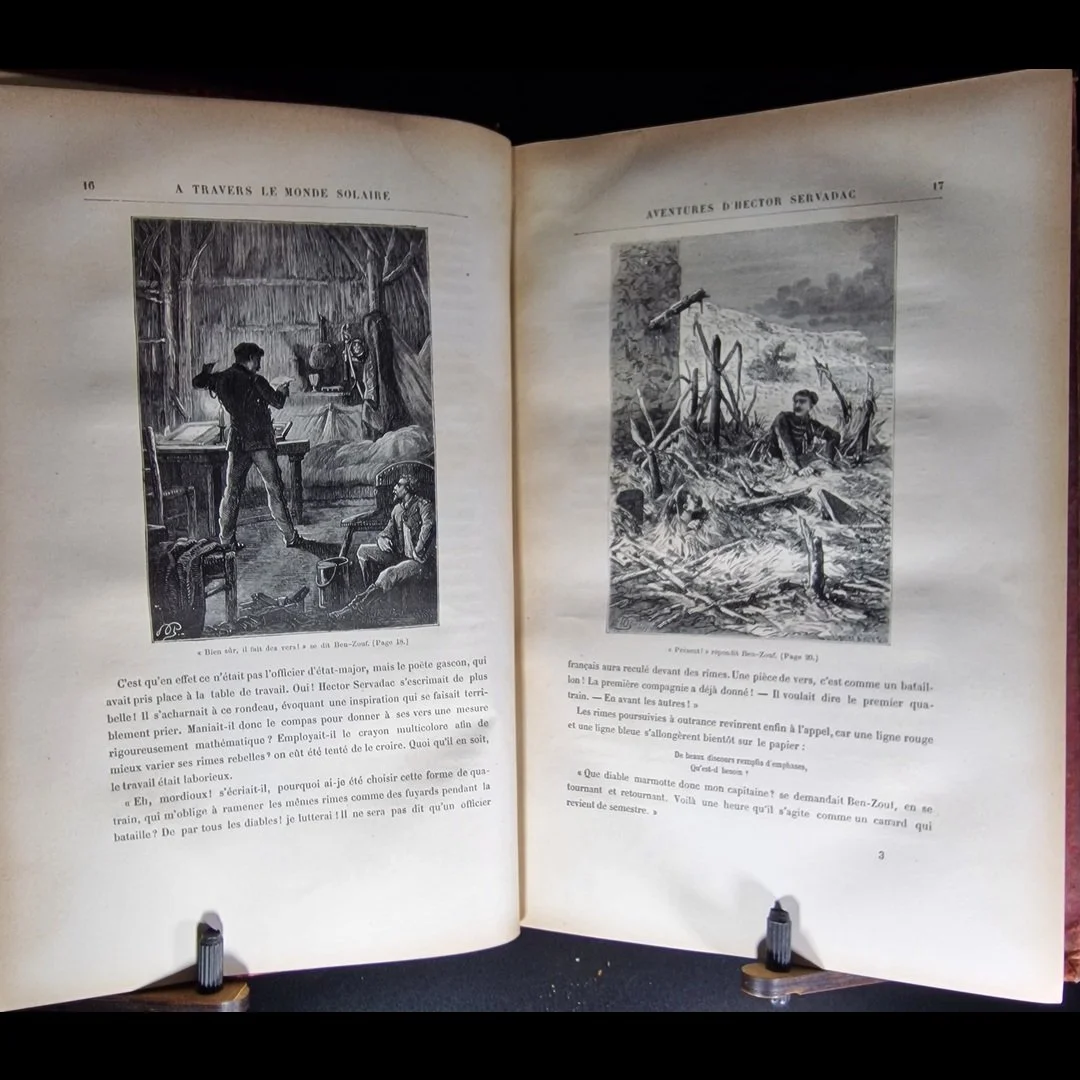 Image 7 of 23
 Image 8 of 23
 Image 9 of 23
 Image 10 of 23
 Image 11 of 23
 Image 12 of 23
 Image 13 of 23
 Image 14 of 23
 Image 15 of 23
 Image 16 of 23
 Image 17 of 23
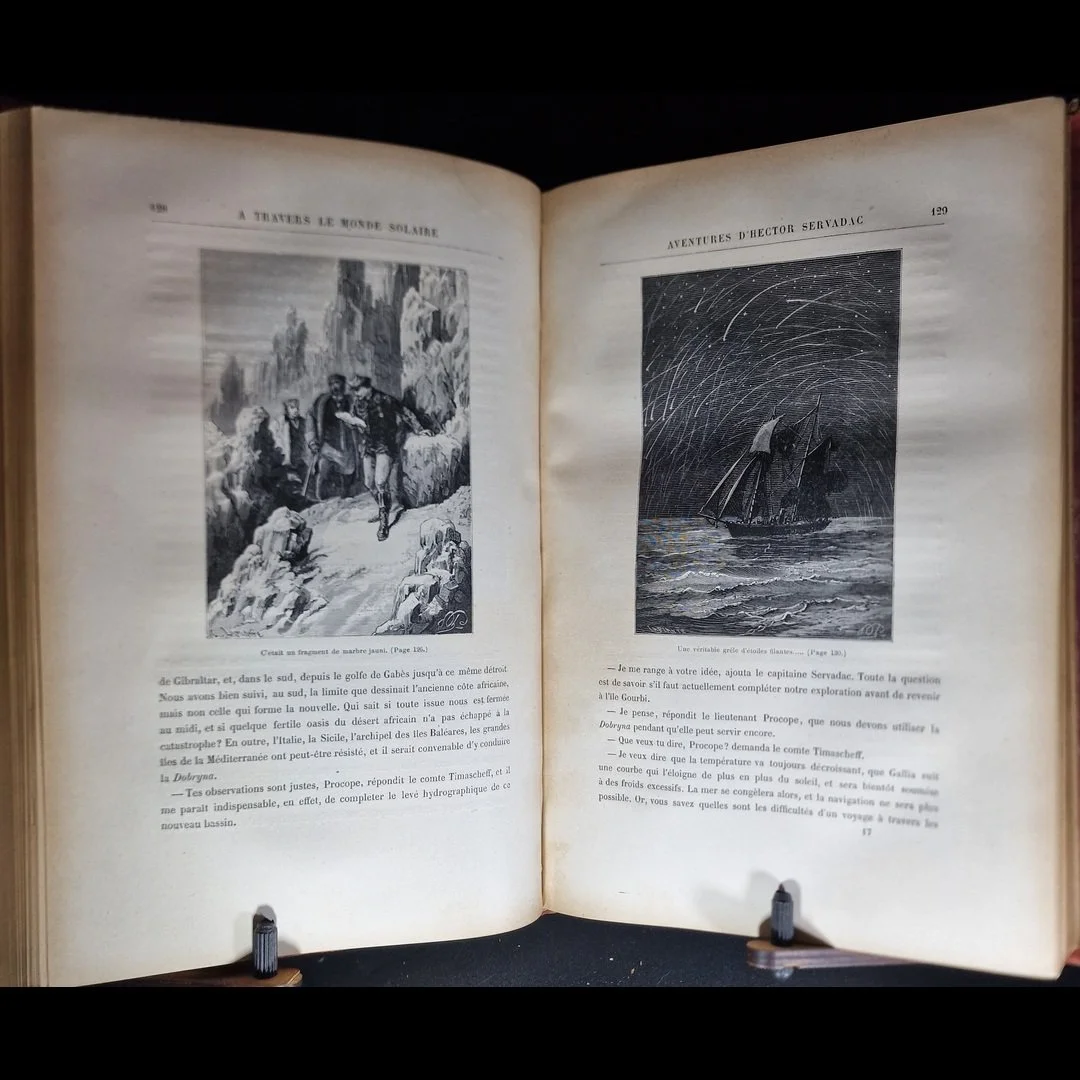 Image 18 of 23
 Image 19 of 23
 Image 20 of 23
 Image 21 of 23
 Image 22 of 23
 Image 23 of 23