Sale Price:
£325.00
Original Price:
£360.00
1846 First Edition With Provenance
AN ANTIQUARIAN RAMBLE IN THE STREETS OF LONDON
By John Thomas Smith
KEY DETAILS
Condition: Good
Format: Hardcover, Octavo (Standard) (8vo 6 × 9 in 152 × 229 mm )
Note: Binding/size selection follows standard bibliographic conventions and is approximate; exact measurements may vary.
Published By: Richard Bentley, New Burlington Street, London, 1846
Language: English
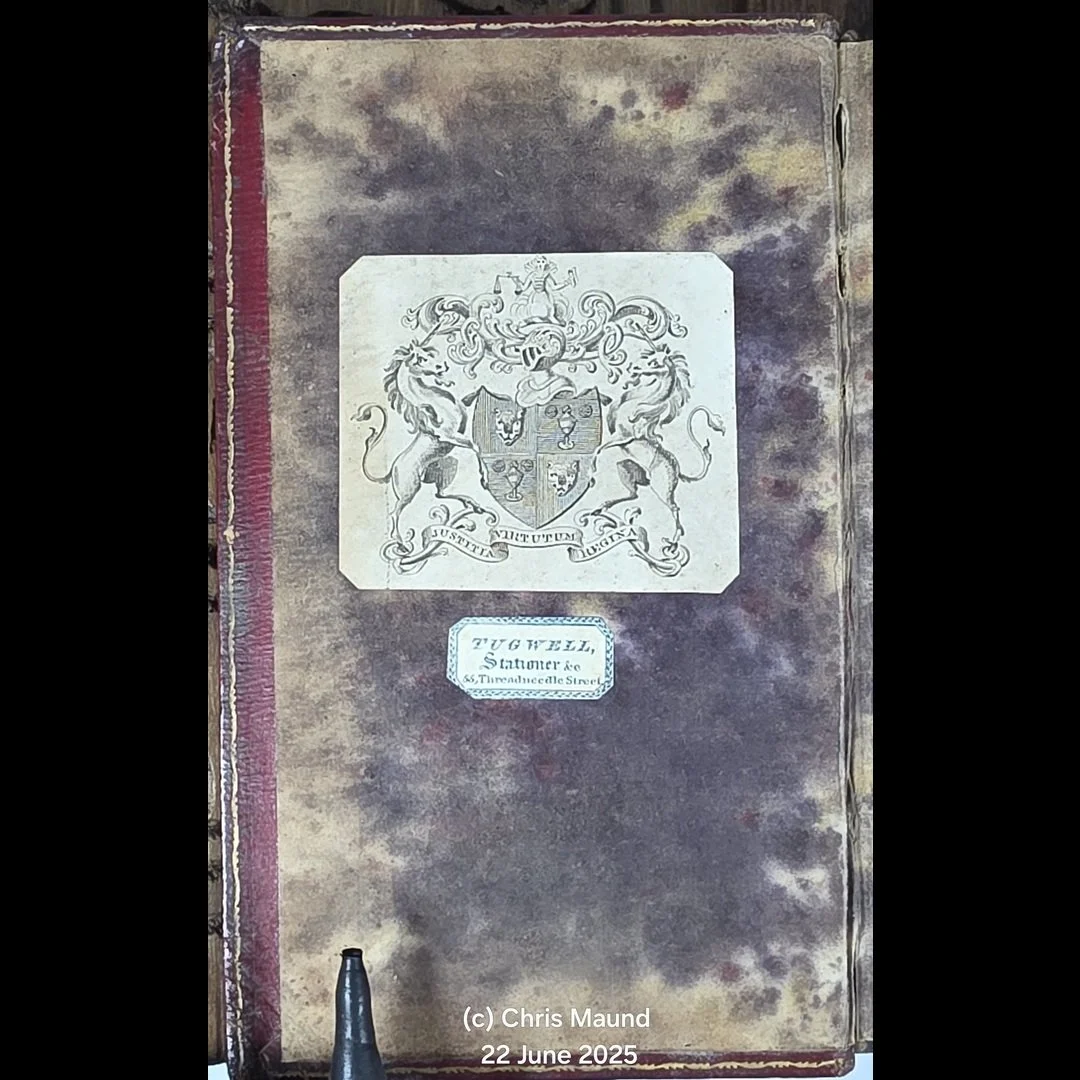
Provenance: From the library of Sir Monier Monier-Williams, KCIE, D.C.L. (1819–1899), with his printed bookplate.
Collation: Volume I: x, 414 pp.; Volume II: x, 465, [1] pp.
Dust Jacket: None, as issued
SKU: BTETM0002157
Shipping Info: Approximate Package Dimensions H: 12.5, L: 30, W: 25 (Units: cm), W: 2Kg
Tracked Shipping, Insurance Coverage as per Customer Request
DESCRIPTION
AN ANTIQUARIAN RAMBLE IN THE STREETS OF LONDON
With Anecdotes of Their More Celebrated Residents
In Two Volumes
Edited by Charles Mackay, LL.D.
By John Thomas Smith
An appealing first-edition set of John Thomas Smith’s posthumously published antiquarian survey of London. Arranged as a succession of walks through the capital, the work combines topographical and architectural history with literary, theatrical and biographical anecdote.
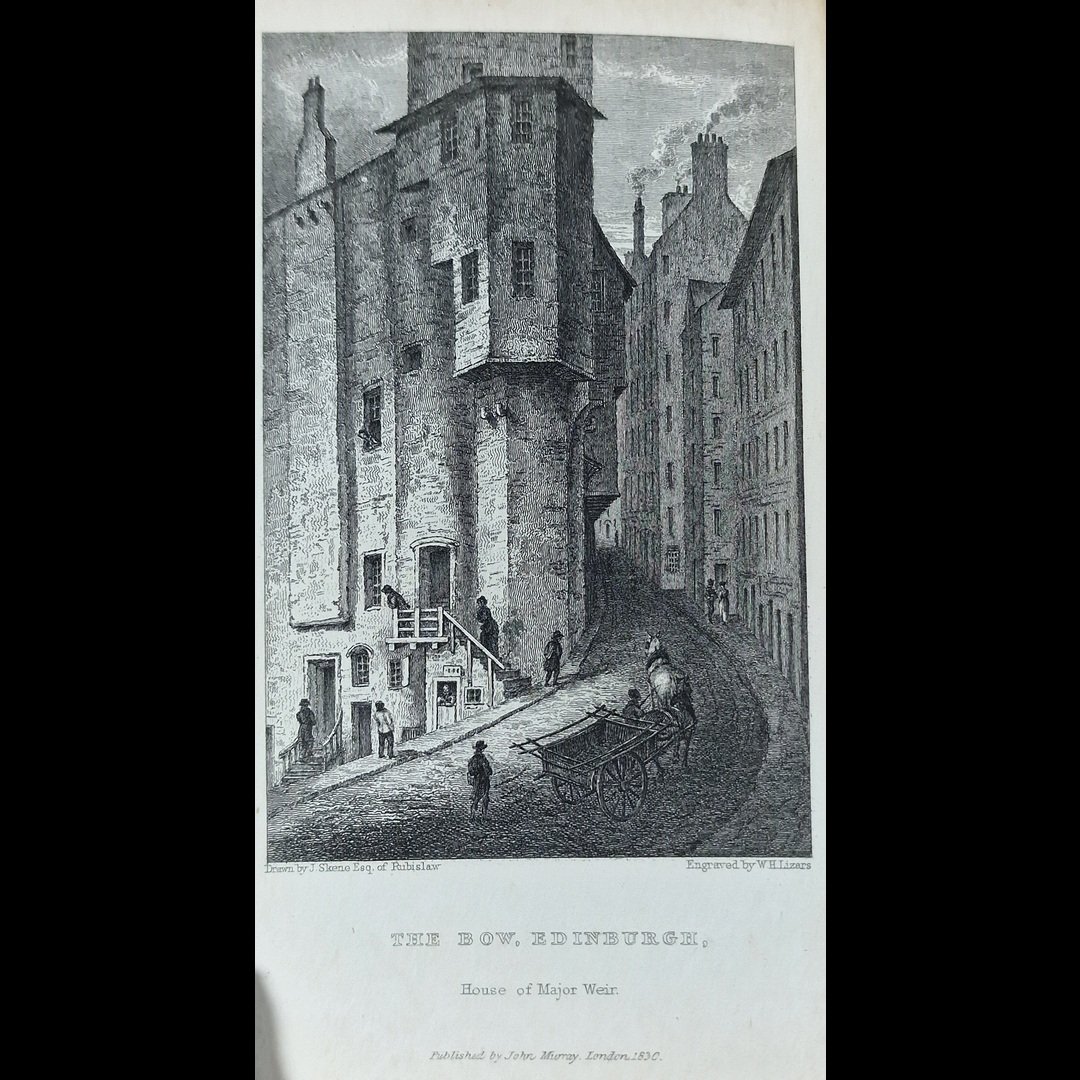
Volume I travels from Hyde Park Corner to Charing Cross, Westminster, Waterloo Bridge and Temple Bar. Volume II continues eastward from Temple Bar through Blackfriars, Cheapside and London Bridge to the Tower. Along the way, Smith records the histories of streets, churches, palaces, theatres, taverns, clubs and vanished buildings, enlivening his account with stories of the celebrated residents and personalities associated with them.
This set is distinguished by the printed bookplate of Monier Williams, C.I.E., D.C.L., Boden Professor of Sanskrit at Oxford, to the front pastedown. Later known as Sir Monier Monier-Williams, he was appointed the second Boden Professor of Sanskrit at Oxford in 1860 and was the principal force behind the establishment of the University’s Indian Institute. The bookplate gives the volumes a notable nineteenth-century Oxford scholarly provenance.
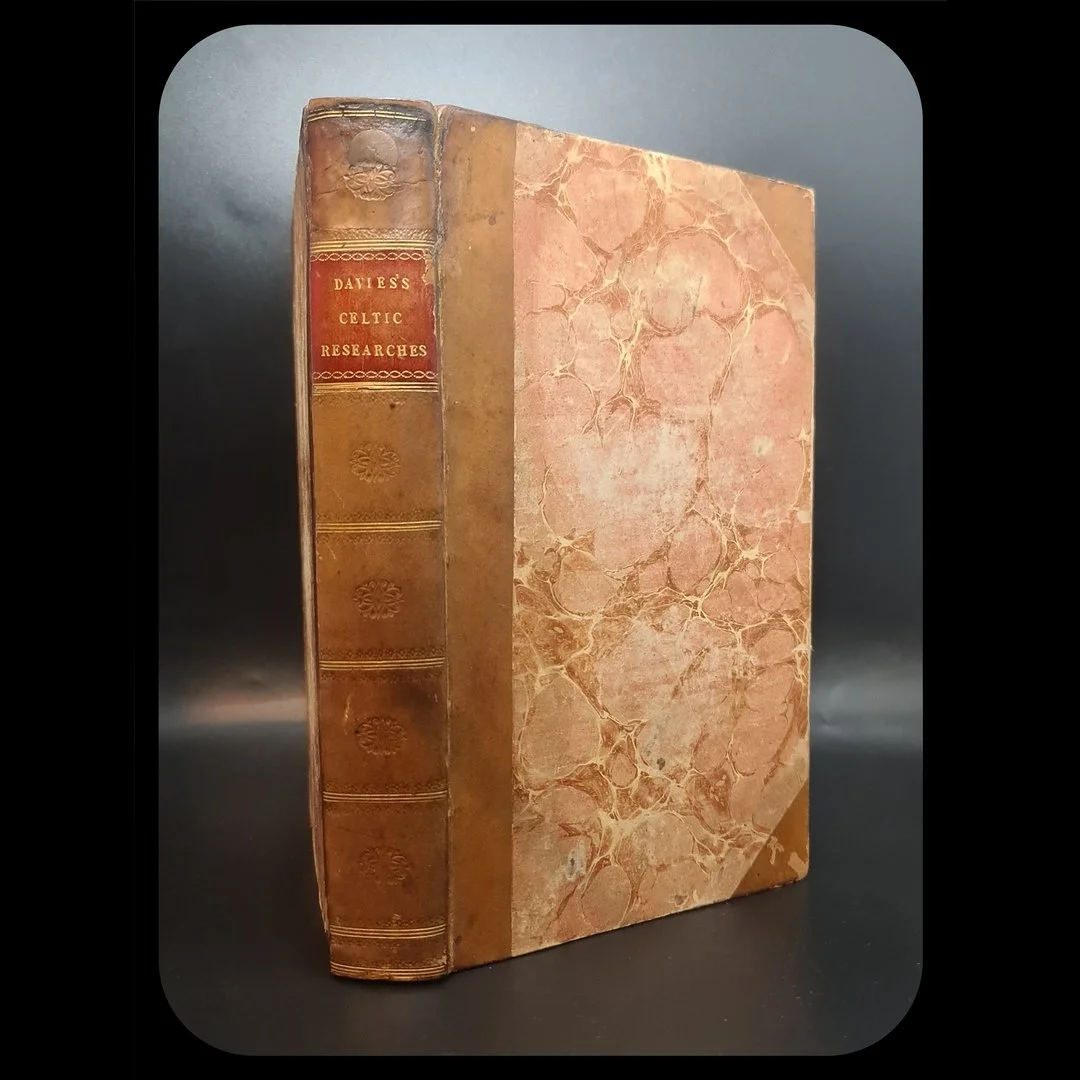
In contemporary half calf over blue marbled boards, with gilt-ruled spines, black title labels and gilt volume numbers. Despite pronounced external wear, the bindings retain an attractive period character, and the marbled boards give the set considerable antiquarian shelf presence.
PROVENANCE
From the library of Sir Monier Monier-Williams, KCIE, D.C.L. (1819–1899), with his printed bookplate.
Monier-Williams was appointed the second Boden Professor of Sanskrit at the University of Oxford in 1860. A prominent scholar of Sanskrit and Indian languages, he was closely associated with the creation of Oxford’s Indian Institute and with the development of its library and collections. His ownership gives this set a distinctive association with nineteenth-century Oxford scholarship and the history of British Indology.
CONDITION, COLLATION & COPY NOTES
COLLATION
Volume I: x, 414 pp.
Volume II: x, 465, [1] pp.
Contemporary half-calf bindings over blue marbled boards. The leather spines, corners and board edges are heavily rubbed and scuffed, with dryness, abrasions and areas of surface loss. Wear and chipping are present at the heads and tails of the spines, with rubbing along the joints. The black title labels remain present and legible; gilt ruling and volume numbers remain visible but are faded and worn.
The marbled paper boards are rubbed, marked and abraded, with wear and small losses at the edges and corners. The bindings nevertheless retain a pleasing period appearance. All boards are present; their firmness of attachment should be confirmed before publication.
Printed bookplate of Monier Williams to the front pastedown, with later ink and pencil markings. Scattered foxing and spotting to the pastedowns, endpapers, title pages and preliminary leaves. Occasional light spotting and handling marks internally. The photographed text leaves are generally clean, clear and legible. Both title pages and contents leaves are present.
Please see Photos as part of condition report.
REFERENCES
Folger Shakespeare Library, catalogue record 16482
HathiTrust, catalogue record 006064865
WorldCat, OCLC 1510057
Google Books, digitised 1846 edition
SYNOPSIS
An Antiquarian Ramble in the Streets of London takes the reader on a series of historical walks through the West End, Westminster, the Strand and the City of London.
Beginning at Hyde Park Corner, Smith proceeds through Pall Mall and Charing Cross before exploring Westminster, Whitehall, the Houses of Parliament and Westminster Abbey. He then returns eastward through the Strand, Covent Garden and the Temple. The second volume continues along Fleet Street and through Blackfriars, Cheapside, London Bridge and the streets surrounding the Tower.
Smith pauses continually to recount the histories of buildings and institutions encountered along the route. Churches, theatres, palaces, prisons, taverns, clubs, private houses and former landmarks are connected with the writers, actors, artists, politicians, aristocrats, criminals and eccentrics who once inhabited them.
Part urban history, part biographical miscellany and part literary guidebook, the work preserves a vivid portrait of London as remembered by one of the city’s most knowledgeable early nineteenth-century antiquaries. It remains of particular interest to collectors of London topography, architectural history, literary landmarks and Victorian antiquarian writing.
AUTHOR BIO
John Thomas Smith, commonly known as “Antiquity Smith” (1766–1833), was an English draughtsman, engraver, antiquary and historian of London. In 1816 he became Keeper of Prints and Drawings at the British Museum, a position he retained until his death.
Smith wrote extensively on London’s buildings, streets and inhabitants. His works include Antiquities of London, Nollekens and His Times and the posthumously published A Book for a Rainy Day. His combination of visual observation, historical research and personal anecdote made him one of the most engaging chroniclers of old London. An Antiquarian Ramble in the Streets of London was published posthumously in 1846 under the editorship of Charles Mackay.
Editor Bio
Charles Mackay, LL.D. (1814–1889), was a Scottish poet, journalist, author and critic. He is now best remembered for Memoirs of Extraordinary Popular Delusions and the Madness of Crowds. Mackay prepared Smith’s antiquarian material for posthumous publication and is identified as editor on the title pages of both volumes.

 Image 1 of 9
 Image 2 of 9
 Image 3 of 9
 Image 4 of 9
 Image 5 of 9
 Image 6 of 9
 Image 7 of 9
 Image 8 of 9
 Image 9 of 9