1695 London Issue
A VIEW OF UNIVERSAL HISTORY
By Francis Tallents
KEY DETAILS
Condition: Good
Format: Hardcover, folio (fo 12 × 19 in 305 × 483 mm )
Note: Binding/size selection follows standard bibliographic conventions and is approximate; exact measurements may vary.
Published By: Printed and sold by Awnsham and John Churchill at the Black Swan in Paternoster Row,, London, 1695
Language: English
Illustrated By: James Clerk
Provenance: From a private Scottish Highlands collection.
Collation: [16] engraved sheets, joined in pairs to form eight large double-page folding charts
Dust Jacket: None, as issued, No Jacket
SKU: BTETM0002169
Shipping Info: Approximate Package Dimensions H: 12.5, L: 30, W: 25 (Units: cm), W: 2Kg
Tracked Shipping, Insurance Coverage as per Customer Request
DESCRIPTION
A VIEW OF UNIVERSAL HISTORY
From the Creation to the Destruction of Jerusalem by Adrian, in the Year of the World 4084, and of Christ 135
Together with A View of Universal History, from the Birth of Jesus Christ Our Lord, to the Year 1680, Continued to 1695
A remarkable large-format work of seventeenth-century chronology and early information design, presenting biblical, ecclesiastical, political, dynastic and literary history in a series of exceptionally detailed parallel timelines.
Rather than offering history as a conventional prose narrative, Tallents arranges events, rulers, kingdoms, churches, writers and peoples in synchronised columns. The reader can therefore compare developments in England, Scotland, France, Spain, Italy, Greece, Rome, Egypt, Babylon, Assyria and other regions at a single glance.
The work was first published in late 1684 or 1685 and was reissued in 1695. The present issue contains the later chronological sequence continued to 1695, as stated within the engraved title. It comprises sixteen engraved sheets joined in pairs to form eight extensive double-page folding charts.
A visually impressive survival, retaining strong engraved impressions and considerable decorative and historical appeal. The folding charts include ornamental cartouches, explanatory “Advertisements” and densely arranged comparative chronologies engraved
PROVENANCE
From a private Scottish Highlands collection.
CONDITION, COLLATION & COPY NOTES
A complete and visually impressive copy of this substantial seventeenth-century chronological work, with eight large engraved folding charts. The binding is heavily worn, but the engraved material remains generally clear, attractive and legible.
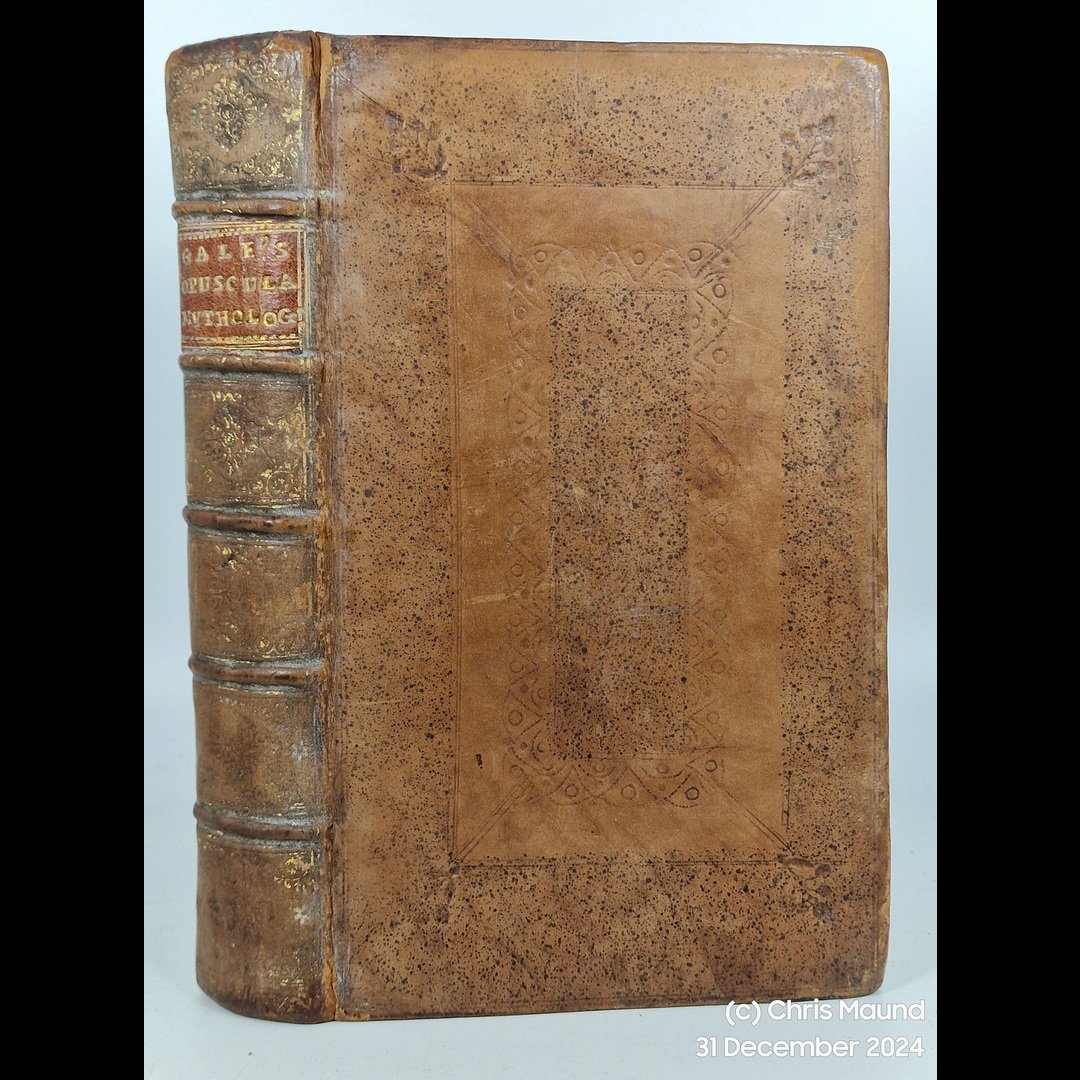
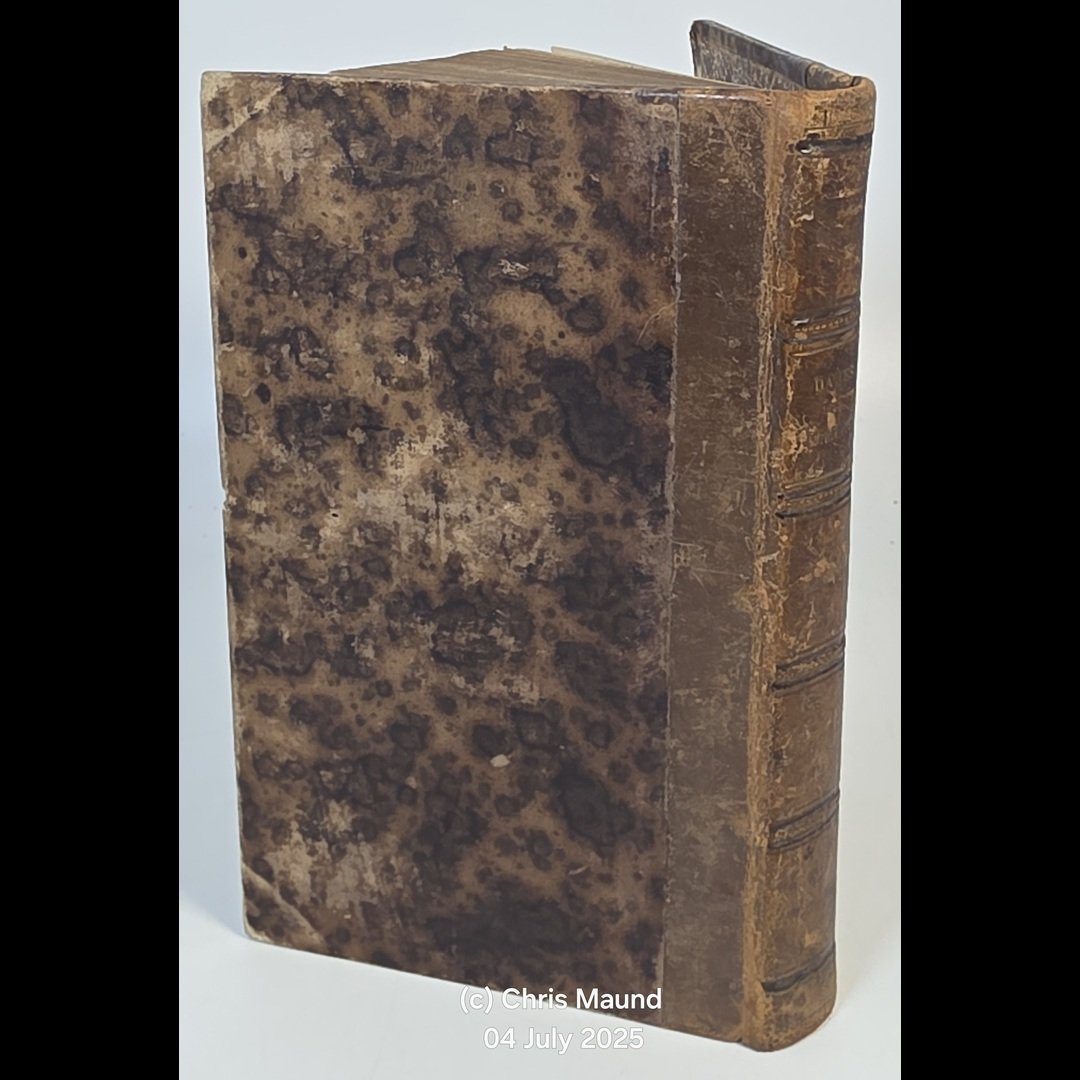
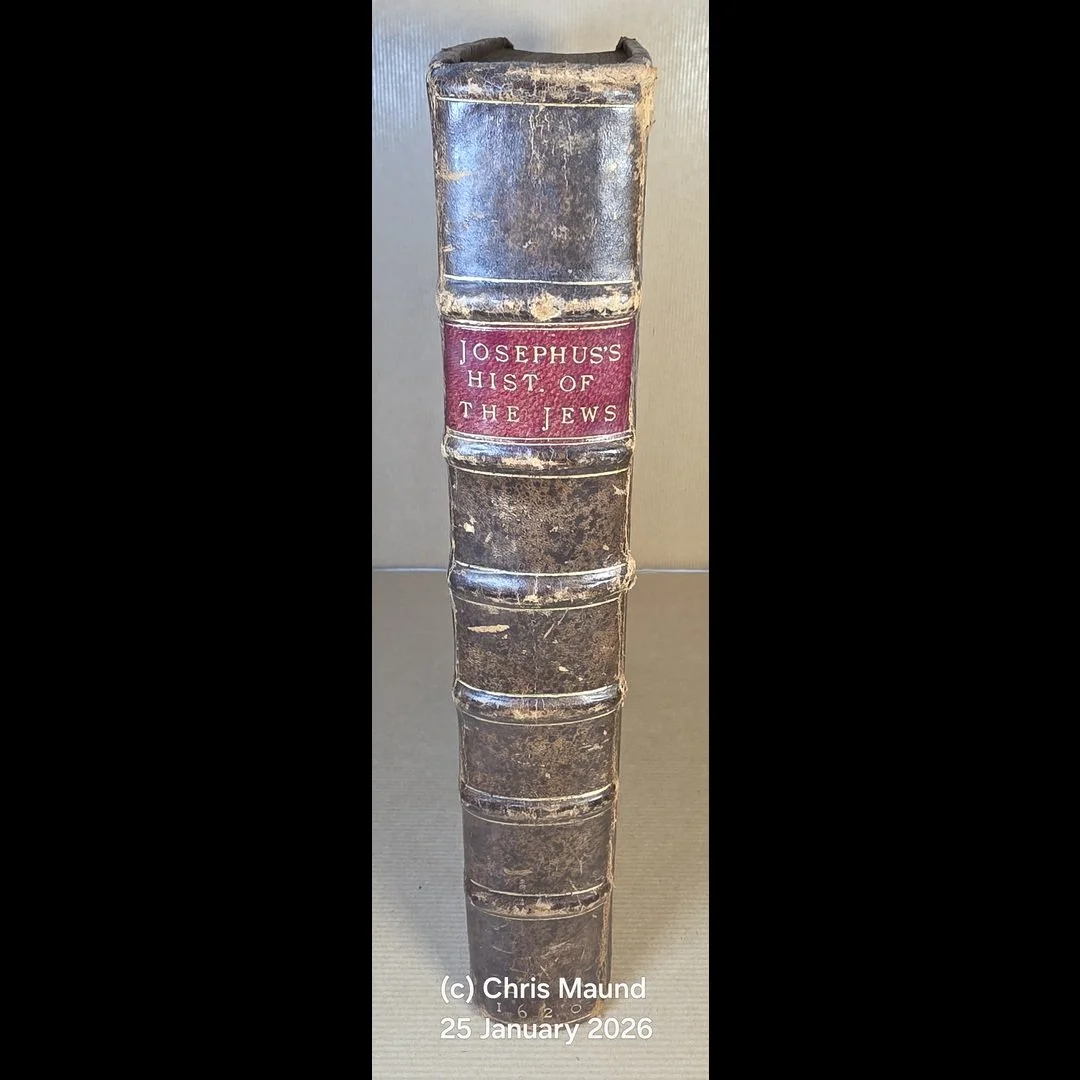
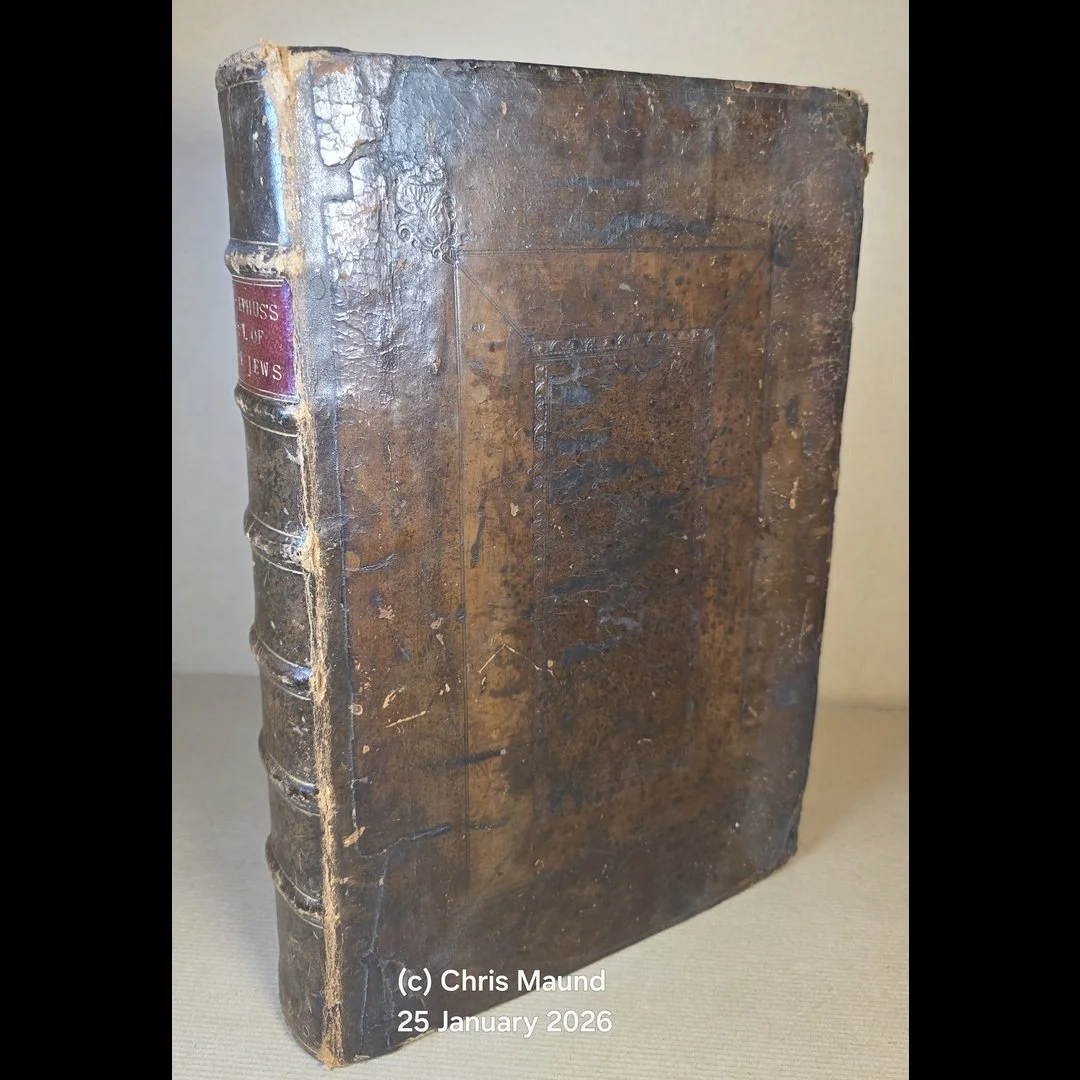
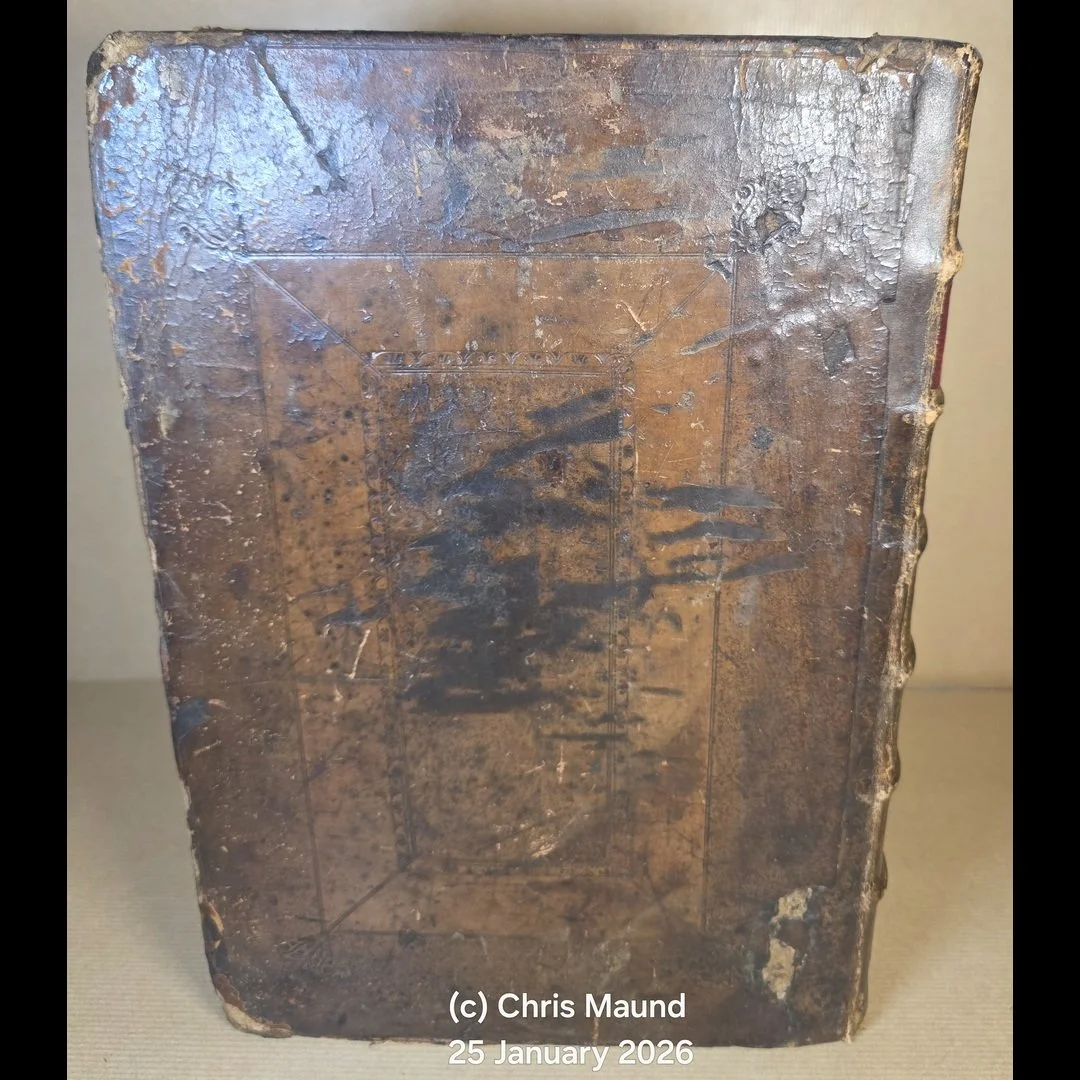
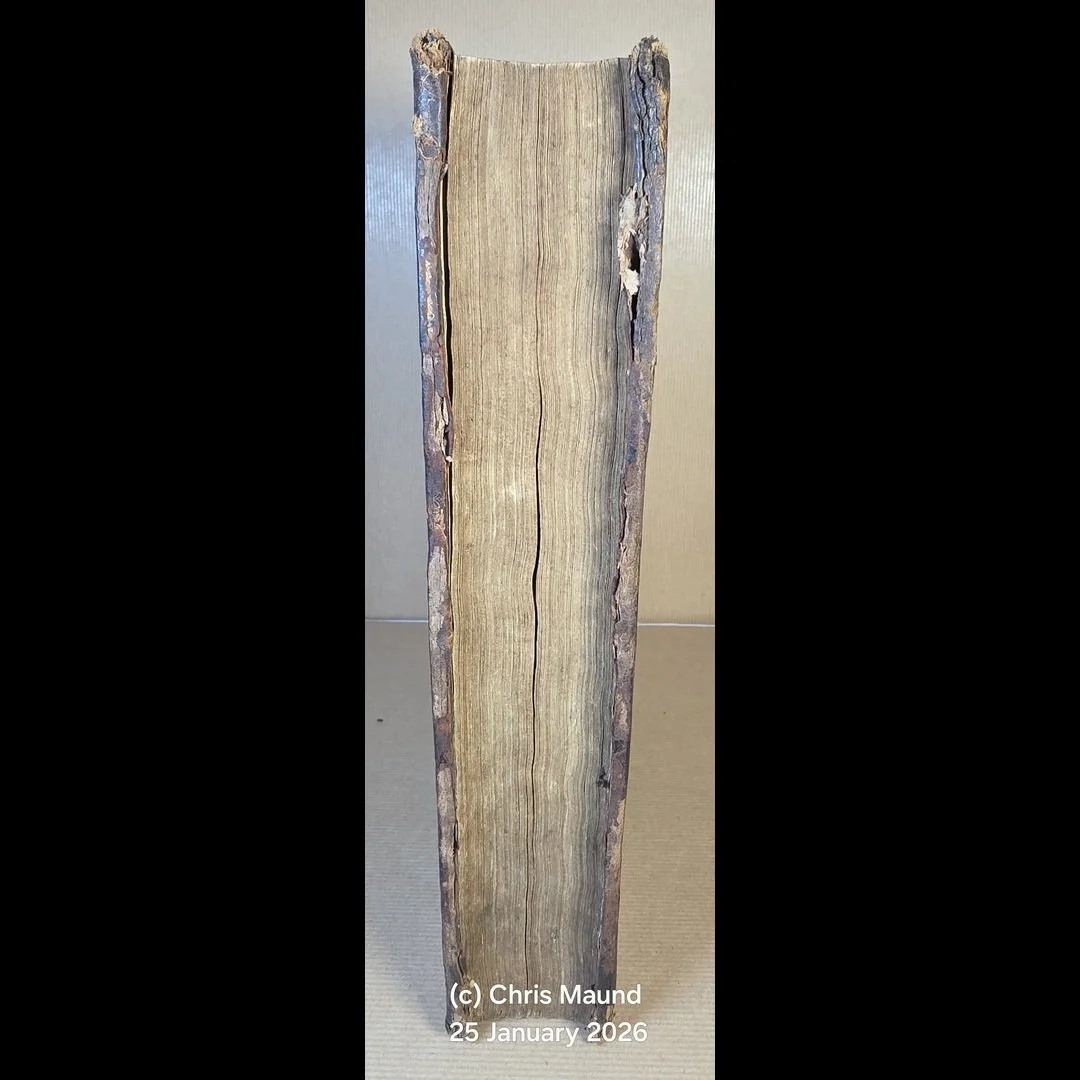
Contemporary panelled mottled calf binding with gilt-decorated spine and red lettering-piece. Leather heavily rubbed, scuffed and marked, with extensive loss of surface finish, wear to the board edges and corners, and rubbing at the spine bands, head and tail. The blind-tooled panel decoration remains visible, and the gilt spine ornament and title are substantially preserved.
The front inner hinge is substantially split for much of its length, although the board remains attached. The rear inner hinge is better preserved but shows local stress and possible old paper reinforcement near the head. The book should be opened carefully and the large charts supported during use.
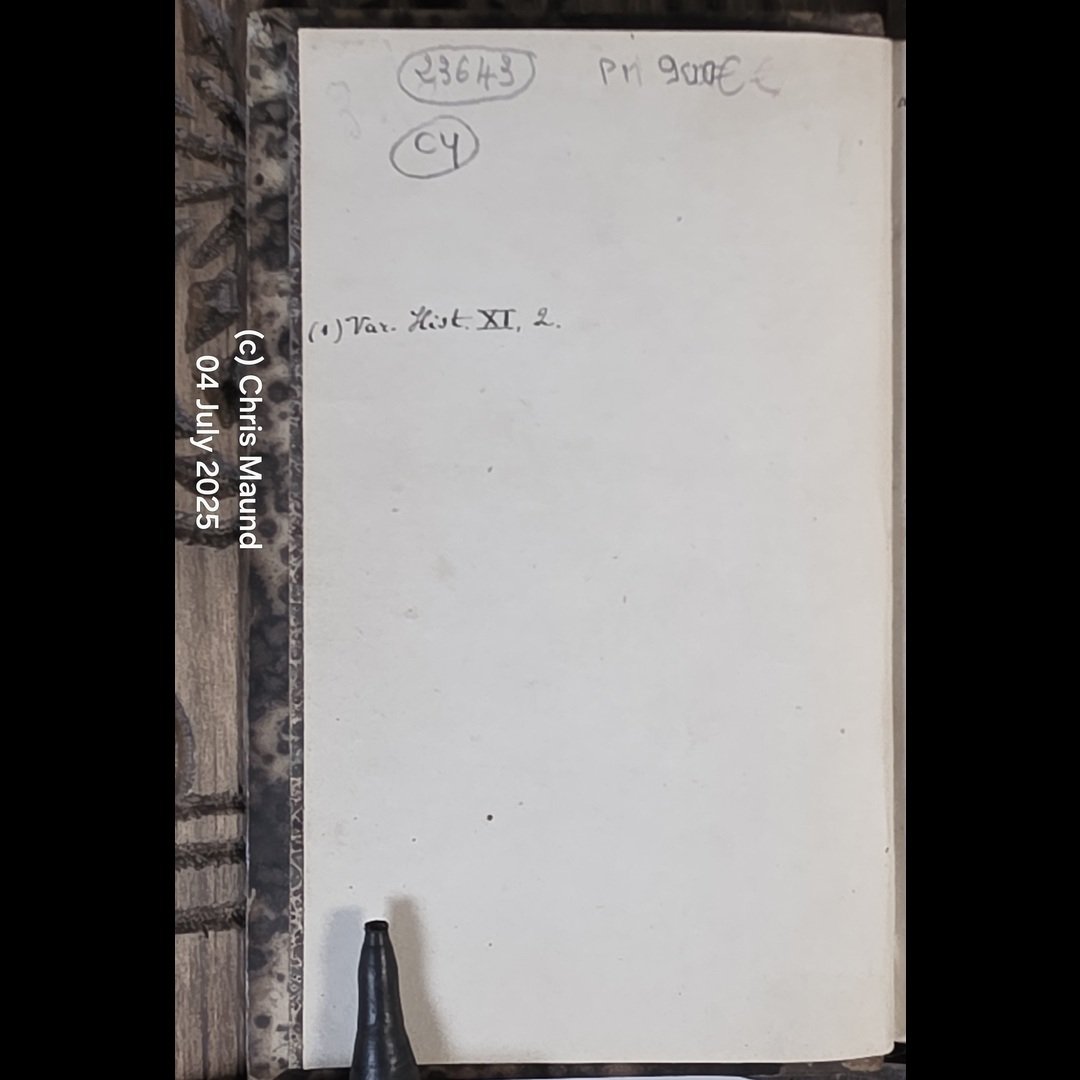
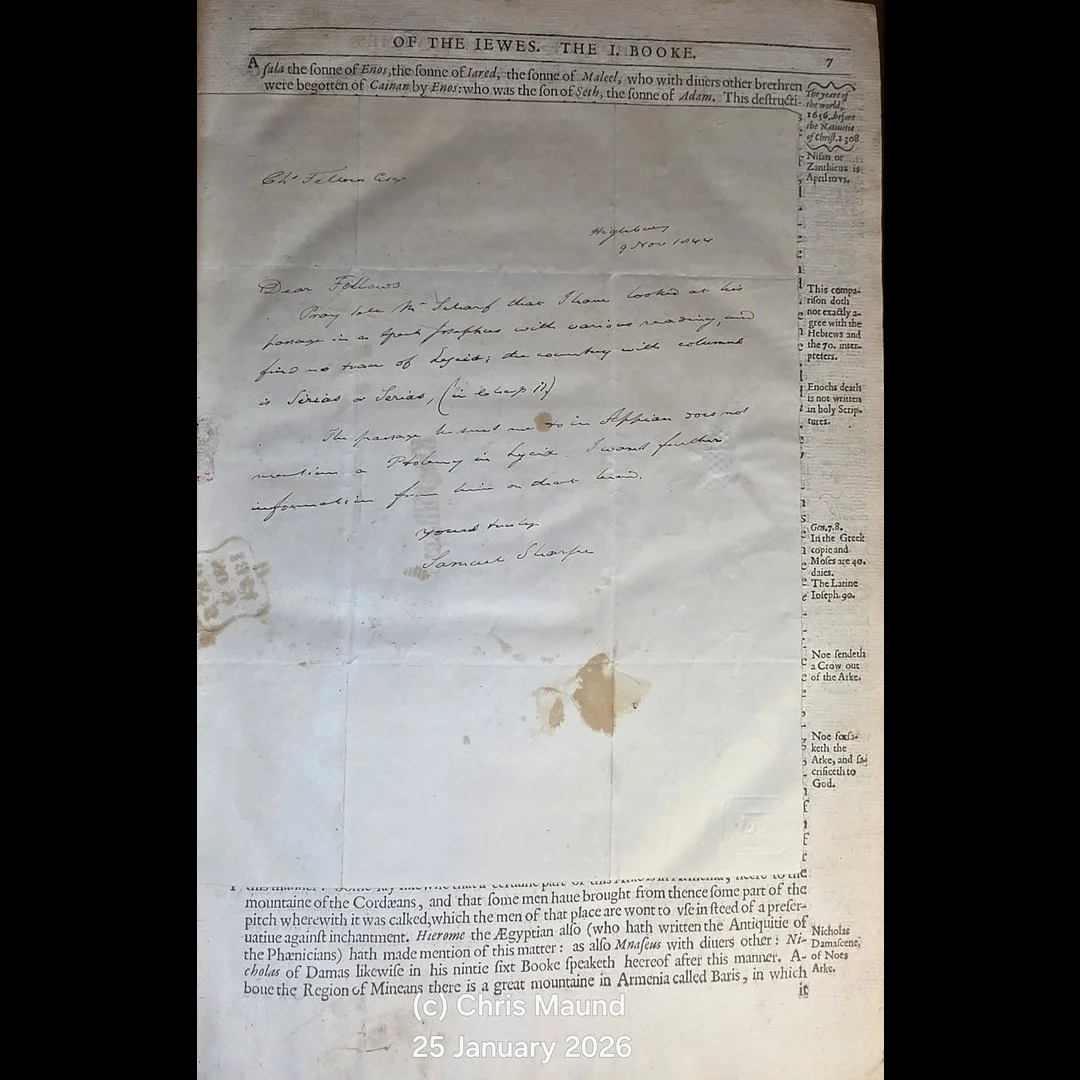
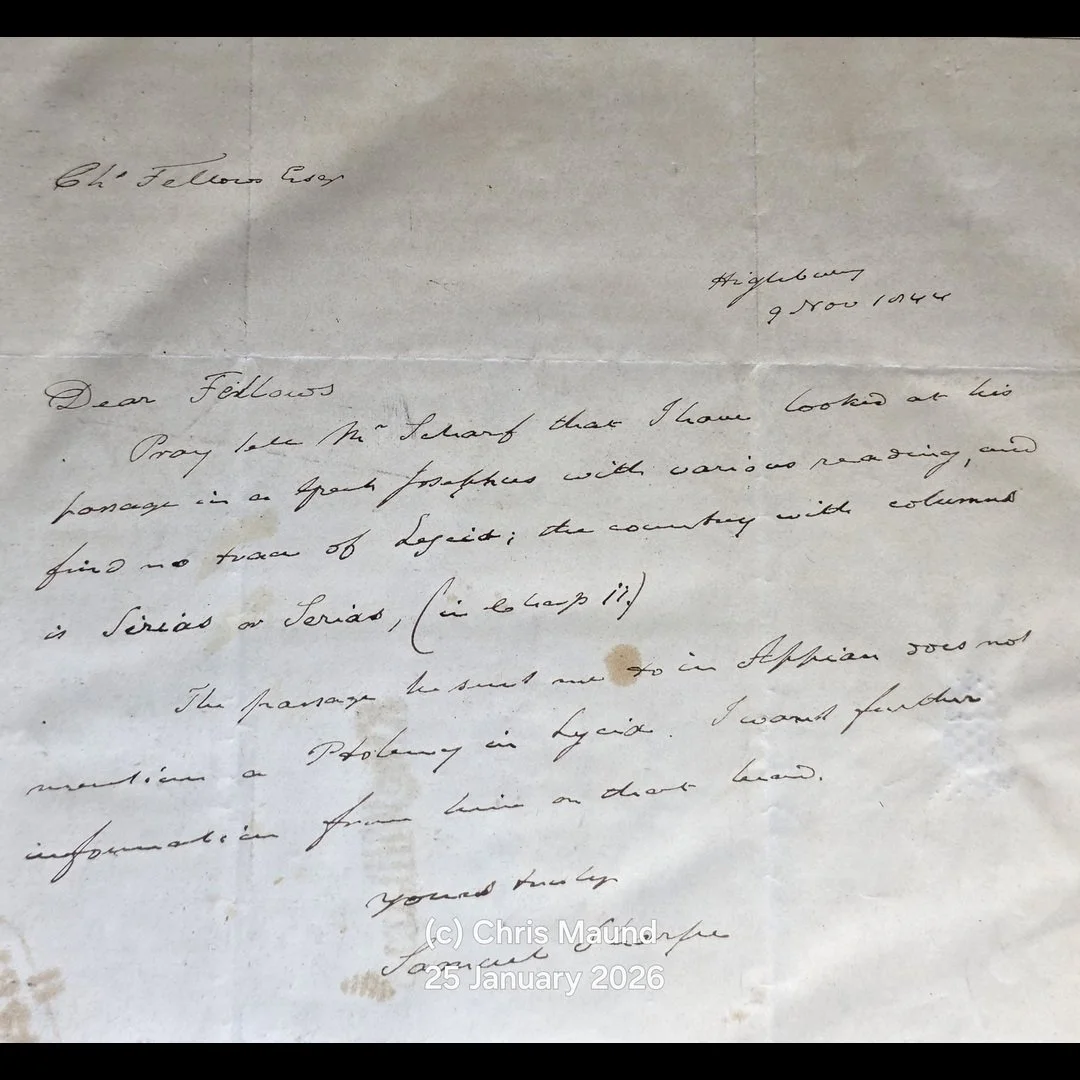
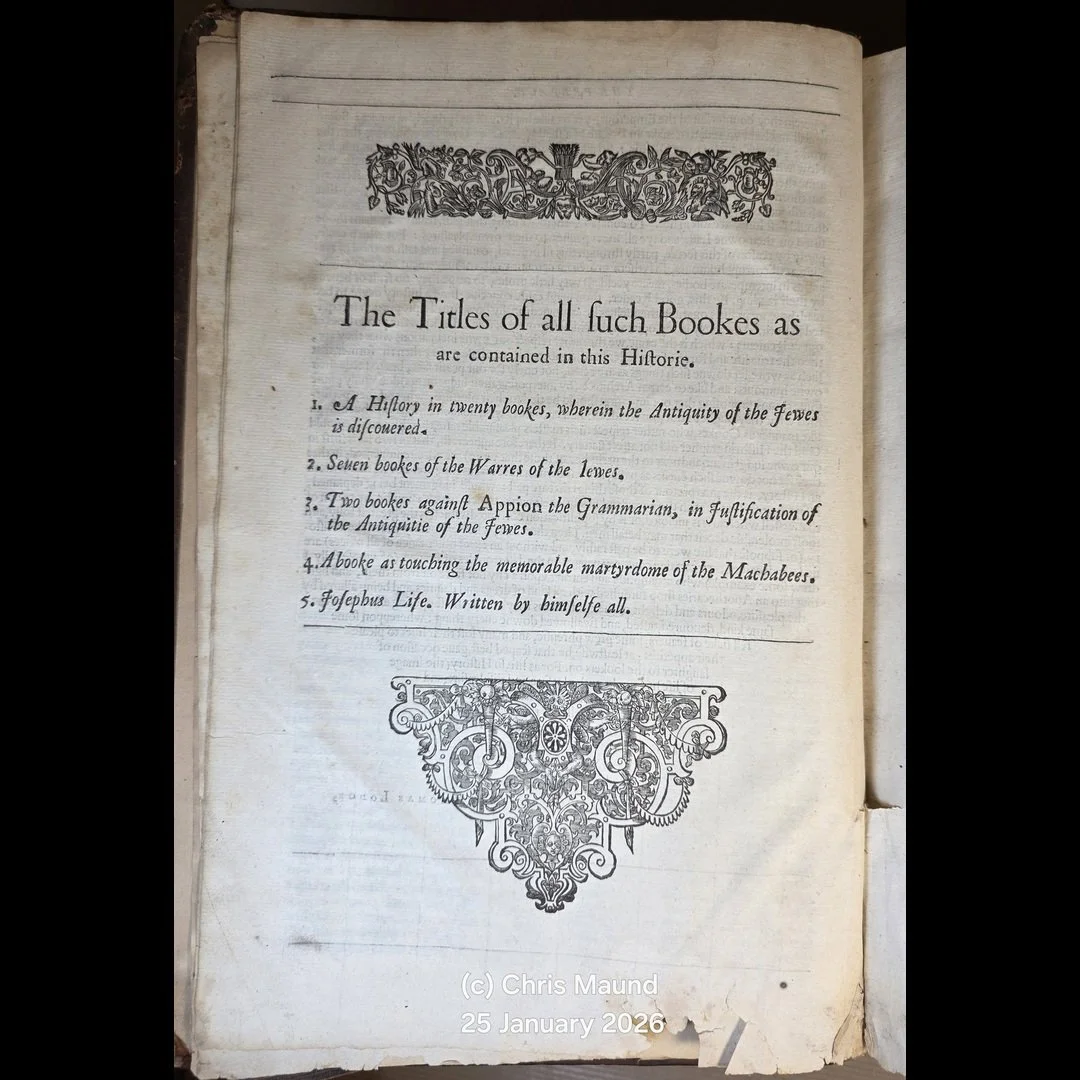
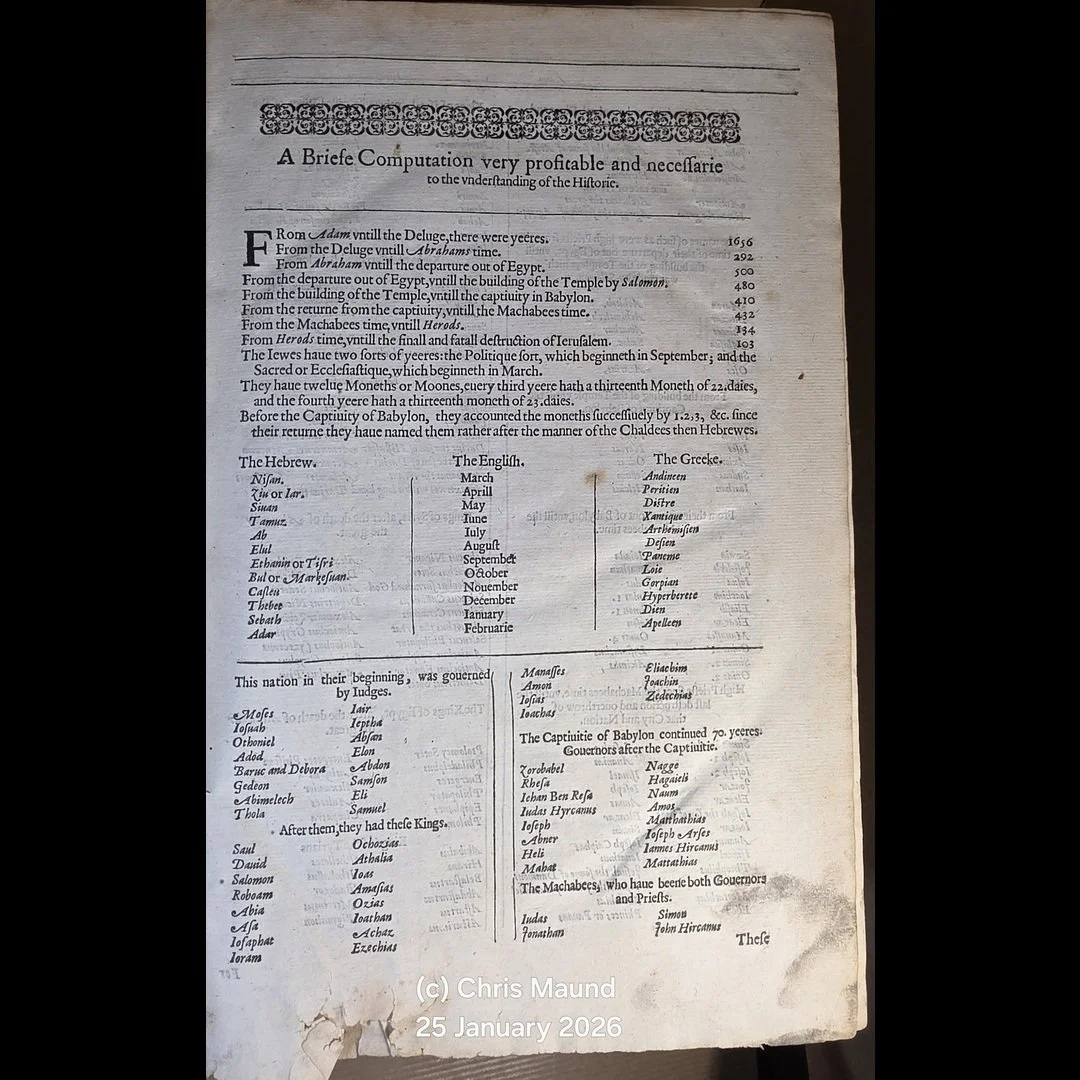
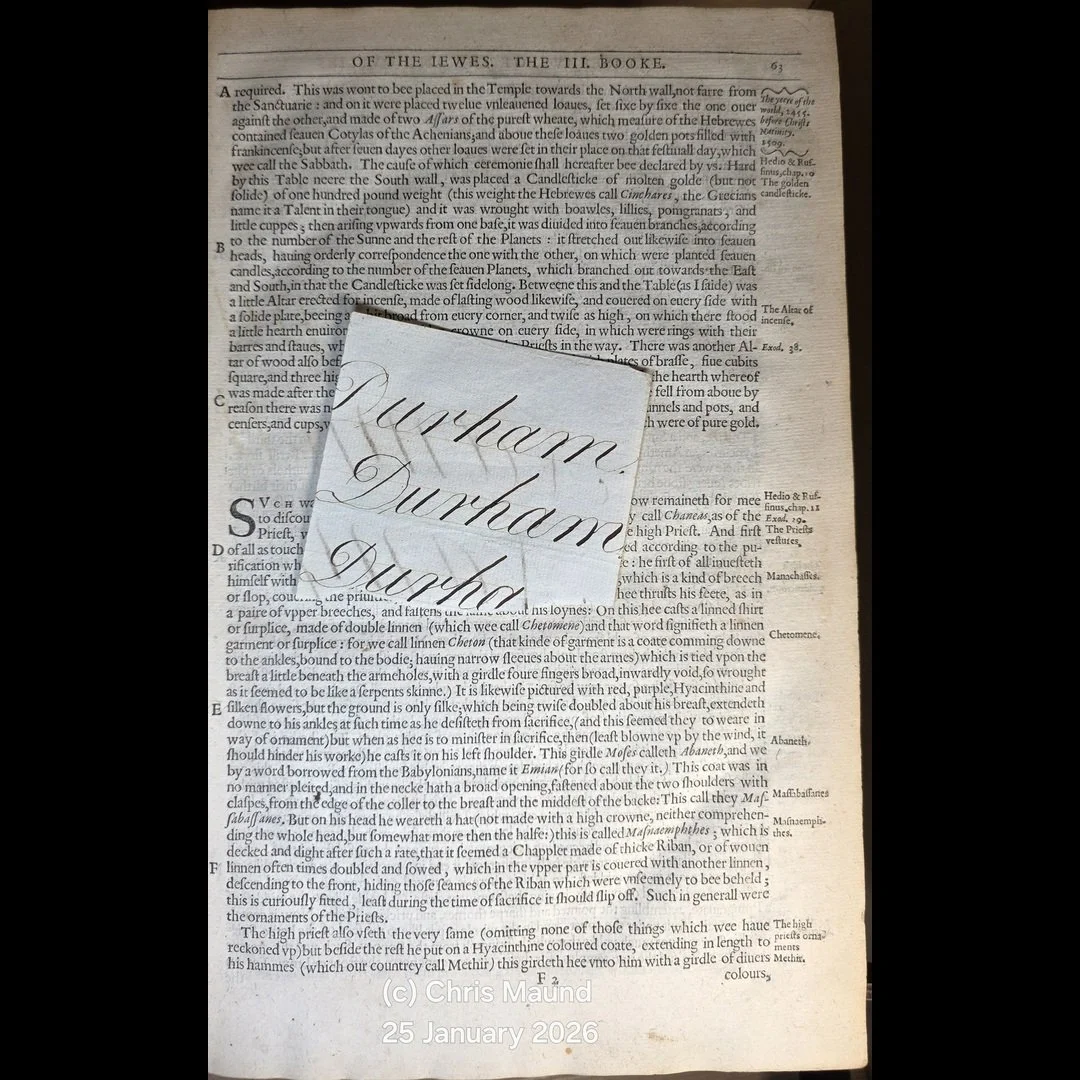
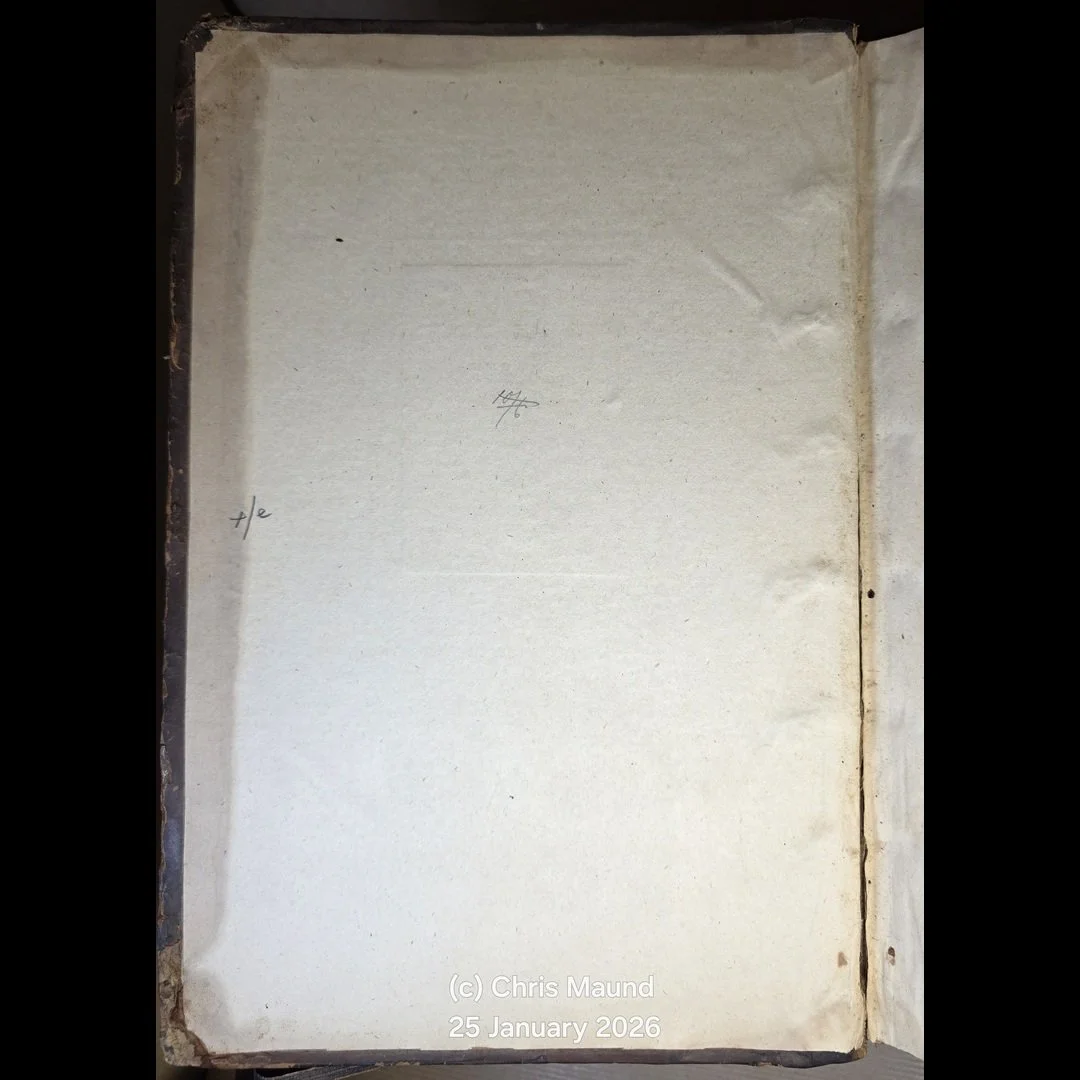
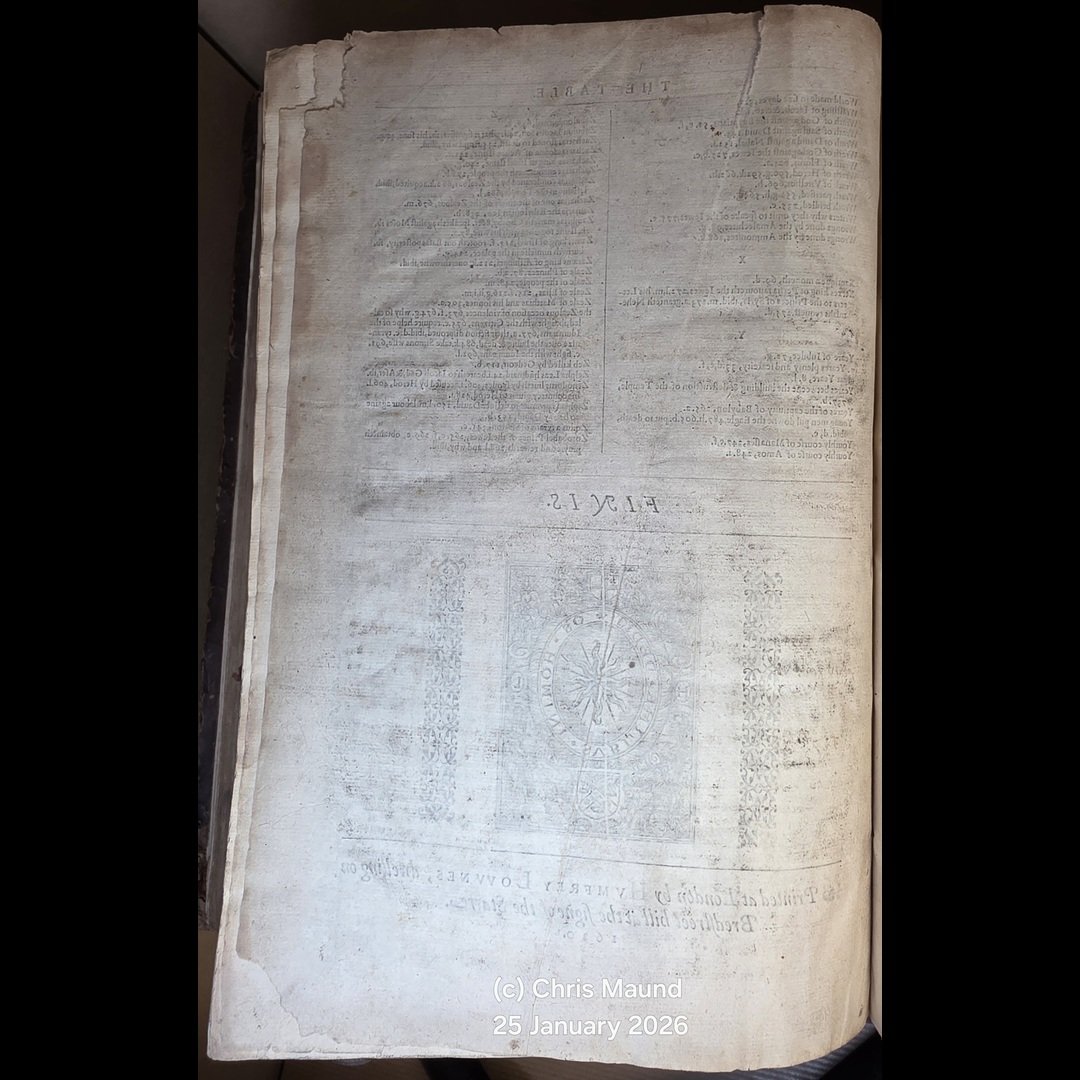
Endpapers with age-toning, light marking and old manuscript shelf or price notations. Some handling wear and soiling around the gutters and exposed edges.
The eight engraved folding charts have strong, dark impressions and are generally clean and legible. Paper with expected age-toning, scattered light spotting and occasional marks. Charts with folding creases, some cockling and handling wear, together with occasional short splits or weakness at fold ends and guards.
The photographs show all eight charts, including the second chronological sequence expressly continued to 1695.
A handsome working and display copy of an uncommon early chronological publication. Its binding wear records prolonged historical use, while the extraordinary engraved timelines retain strong visual presence.
Illustrations: Eight engraved chronological charts, with decorative cartouches and explanatory panels; James Clerk’s engraved signature recorded on the final sheet
Please see Photos as part of condition report.
REFERENCES
Wing T130
USTC 3128484
Early English Books Online, reel 1558:14
SYNOPSIS
A View of Universal History is not a conventional history book but a vast comparative chronology designed to make simultaneous historical developments visible “at one view.”
The first sequence begins with the biblical Creation and continues to the destruction of Jerusalem under the emperor Hadrian in AD 135. It compares biblical and ecclesiastical history with the histories of Egypt, Babylon, Chaldea, Assyria, Persia, Greece, Rome, Italy, Spain, Gaul, Britain and Ireland.
The second sequence begins with the birth of Christ and follows the histories of the Christian Church, martyrs, heresies, popes, Roman emperors, European kingdoms, writers and learned figures. Originally extending to 1680, the sequence in this issue is expressly continued to 1695.
Different nations and subjects occupy parallel vertical columns, while dated horizontal divisions allow the reader to compare events occurring in the same century or year. Decorative “Advertisements” explain Tallents’s sources, abbreviations and historical method.
An important early example of historical visualisation, the work combines chronology, biblical scholarship, political history, genealogy and information design on an unusually ambitious scale. Modern collections classify the charts both as historical timelines and as early data visualisation.
AUTHOR BIO
Francis Tallents (1619–1708) was an English Presbyterian clergyman, scholar and educator. He studied at Peterhouse and Magdalene College, Cambridge, becoming a fellow and tutor at Magdalene before serving as lecturer and curate at St Mary’s, Shrewsbury.
Tallents was ejected from his position following the Act of Uniformity in 1662 but continued his ministry and scholarly work. His interests extended beyond theology to history, chronology, science and education.
His View of Universal History was first published in late 1684 or 1685 and reissued in 1695. Tallents prepared the chronological material over a number of years and employed James Clerk to engrave the sixteen copperplates, reportedly arranging for the work to be undertaken under his close supervision.
ILLUSTRATOR
James Clerk
Engraved By: James Clerk
James Clerk was an engraver active during the later seventeenth century. He engraved Tallents’s extensive chronological tables and signed the final sheet “Ja: Clerk sculp.”
The intricacy of the work is considerable: thousands of names, dates and historical events are organised within ruled columns, cartouches and chronological scales while remaining remarkably legible.
1695 London Issue
A VIEW OF UNIVERSAL HISTORY
By Francis Tallents
KEY DETAILS
Condition: Good
Format: Hardcover, folio (fo 12 × 19 in 305 × 483 mm )
Note: Binding/size selection follows standard bibliographic conventions and is approximate; exact measurements may vary.
Published By: Printed and sold by Awnsham and John Churchill at the Black Swan in Paternoster Row,, London, 1695
Language: English
Illustrated By: James Clerk
Provenance: From a private Scottish Highlands collection.
Collation: [16] engraved sheets, joined in pairs to form eight large double-page folding charts
Dust Jacket: None, as issued, No Jacket
SKU: BTETM0002169
Shipping Info: Approximate Package Dimensions H: 12.5, L: 30, W: 25 (Units: cm), W: 2Kg
Tracked Shipping, Insurance Coverage as per Customer Request
DESCRIPTION
A VIEW OF UNIVERSAL HISTORY
From the Creation to the Destruction of Jerusalem by Adrian, in the Year of the World 4084, and of Christ 135
Together with A View of Universal History, from the Birth of Jesus Christ Our Lord, to the Year 1680, Continued to 1695
A remarkable large-format work of seventeenth-century chronology and early information design, presenting biblical, ecclesiastical, political, dynastic and literary history in a series of exceptionally detailed parallel timelines.
Rather than offering history as a conventional prose narrative, Tallents arranges events, rulers, kingdoms, churches, writers and peoples in synchronised columns. The reader can therefore compare developments in England, Scotland, France, Spain, Italy, Greece, Rome, Egypt, Babylon, Assyria and other regions at a single glance.
The work was first published in late 1684 or 1685 and was reissued in 1695. The present issue contains the later chronological sequence continued to 1695, as stated within the engraved title. It comprises sixteen engraved sheets joined in pairs to form eight extensive double-page folding charts.
A visually impressive survival, retaining strong engraved impressions and considerable decorative and historical appeal. The folding charts include ornamental cartouches, explanatory “Advertisements” and densely arranged comparative chronologies engraved
PROVENANCE
From a private Scottish Highlands collection.
CONDITION, COLLATION & COPY NOTES
A complete and visually impressive copy of this substantial seventeenth-century chronological work, with eight large engraved folding charts. The binding is heavily worn, but the engraved material remains generally clear, attractive and legible.
Contemporary panelled mottled calf binding with gilt-decorated spine and red lettering-piece. Leather heavily rubbed, scuffed and marked, with extensive loss of surface finish, wear to the board edges and corners, and rubbing at the spine bands, head and tail. The blind-tooled panel decoration remains visible, and the gilt spine ornament and title are substantially preserved.
The front inner hinge is substantially split for much of its length, although the board remains attached. The rear inner hinge is better preserved but shows local stress and possible old paper reinforcement near the head. The book should be opened carefully and the large charts supported during use.
Endpapers with age-toning, light marking and old manuscript shelf or price notations. Some handling wear and soiling around the gutters and exposed edges.
The eight engraved folding charts have strong, dark impressions and are generally clean and legible. Paper with expected age-toning, scattered light spotting and occasional marks. Charts with folding creases, some cockling and handling wear, together with occasional short splits or weakness at fold ends and guards.
The photographs show all eight charts, including the second chronological sequence expressly continued to 1695.
A handsome working and display copy of an uncommon early chronological publication. Its binding wear records prolonged historical use, while the extraordinary engraved timelines retain strong visual presence.
Illustrations: Eight engraved chronological charts, with decorative cartouches and explanatory panels; James Clerk’s engraved signature recorded on the final sheet
Please see Photos as part of condition report.
REFERENCES
Wing T130
USTC 3128484
Early English Books Online, reel 1558:14
SYNOPSIS
A View of Universal History is not a conventional history book but a vast comparative chronology designed to make simultaneous historical developments visible “at one view.”
The first sequence begins with the biblical Creation and continues to the destruction of Jerusalem under the emperor Hadrian in AD 135. It compares biblical and ecclesiastical history with the histories of Egypt, Babylon, Chaldea, Assyria, Persia, Greece, Rome, Italy, Spain, Gaul, Britain and Ireland.
The second sequence begins with the birth of Christ and follows the histories of the Christian Church, martyrs, heresies, popes, Roman emperors, European kingdoms, writers and learned figures. Originally extending to 1680, the sequence in this issue is expressly continued to 1695.
Different nations and subjects occupy parallel vertical columns, while dated horizontal divisions allow the reader to compare events occurring in the same century or year. Decorative “Advertisements” explain Tallents’s sources, abbreviations and historical method.
An important early example of historical visualisation, the work combines chronology, biblical scholarship, political history, genealogy and information design on an unusually ambitious scale. Modern collections classify the charts both as historical timelines and as early data visualisation.
AUTHOR BIO
Francis Tallents (1619–1708) was an English Presbyterian clergyman, scholar and educator. He studied at Peterhouse and Magdalene College, Cambridge, becoming a fellow and tutor at Magdalene before serving as lecturer and curate at St Mary’s, Shrewsbury.
Tallents was ejected from his position following the Act of Uniformity in 1662 but continued his ministry and scholarly work. His interests extended beyond theology to history, chronology, science and education.
His View of Universal History was first published in late 1684 or 1685 and reissued in 1695. Tallents prepared the chronological material over a number of years and employed James Clerk to engrave the sixteen copperplates, reportedly arranging for the work to be undertaken under his close supervision.
ILLUSTRATOR
James Clerk
Engraved By: James Clerk
James Clerk was an engraver active during the later seventeenth century. He engraved Tallents’s extensive chronological tables and signed the final sheet “Ja: Clerk sculp.”
The intricacy of the work is considerable: thousands of names, dates and historical events are organised within ruled columns, cartouches and chronological scales while remaining remarkably legible.

 Image 1 of 19
 Image 2 of 19
 Image 3 of 19
 Image 4 of 19
 Image 5 of 19
 Image 6 of 19
 Image 7 of 19
 Image 8 of 19
 Image 9 of 19
 Image 10 of 19
 Image 11 of 19
 Image 12 of 19
 Image 13 of 19
 Image 14 of 19
 Image 15 of 19
 Image 16 of 19
 Image 17 of 19
 Image 18 of 19
 Image 19 of 19
![1688 Enlarged Second Edtn With Lord Sandys Provenance OPUSCULA MYTHOLOGICA, PHYSICA ET ETHICA By Thomas Gales Illus. After Gérard de Lairesse, Gilliam van der Gouwen [Engraved By]](https://images.squarespace-cdn.com/content/v1/634dab4938c13d5c1f88d382/9c7bf4e3-b31a-41d0-9390-4969b1c0938c/20241231_211533-5.jpg)