1743 Amsterdam Edition - Editio Altera
TITI PETRONII ARBITRI SATYRICON QUAE SUPERSUNT
By Petronius Arbiter
KEY DETAILS
Condition: Very Good
Format: Hardcover, quarto (4to 9 1⁄2 × 12 in 241 × 305 mm )
Note: Binding/size selection follows standard bibliographic conventions and is approximate; exact measurements may vary.
Published By: Apud Iansonio-Waesbergios, Amsterdam, 1743
Language: Latin
Illustrated By: Jan Caspar Philips
Collation: Two volumes bound in one. Vol. I: engraved frontispiece; 37 leaves, 886 pp., 1 leaf; Vol. II: 4 leaves, 408 pp., 66 leaves.
Dust Jacket: None, as issued, No Jacket
SKU: BTETM0002183
Shipping Info: Approximate Package Dimensions H: 12.5, L: 30, W: 25 (Units: cm), W: 2Kg
Tracked Shipping, Insurance Coverage as per Customer Request
DESCRIPTION
Titi Petronii Arbitri Satyricon quae Supersunt
Cum integris Doctorum Virorum Commentariis; & Notis Nicolai Heinsii & Guilielmi Goesii
Curante Petro Burmanno. Cujus accedunt curae secundae.
A substantial and appealing eighteenth-century scholarly edition of Petronius’s Satyricon, published at Amsterdam by the Janssonio-Waesberg press in 1743. Described on the title page as Editio altera, this is the enlarged second edition of Pieter Burman’s important variorum recension, first published in 1709.
The edition brings together the surviving text of Petronius with the accumulated scholarship of Nicolaas Heinsius, Willem Goes, Guillaume Dupeyrat, Jean Bourdelot, Thomas Reinesius and others, together with Johan van der Does’s Praecidanea, the extensive commentary of Jusepe Antonio González de Salas, dissertations, prefaces and the substantial Siren Latina lexicon and index. The 1743 edition was re-edited by Johann Jacob Reiske and revised, with a preface, by Caspar Burman. Institutional catalogues describe it as the Editio altera and record it as an illustrated quarto in two volumes.
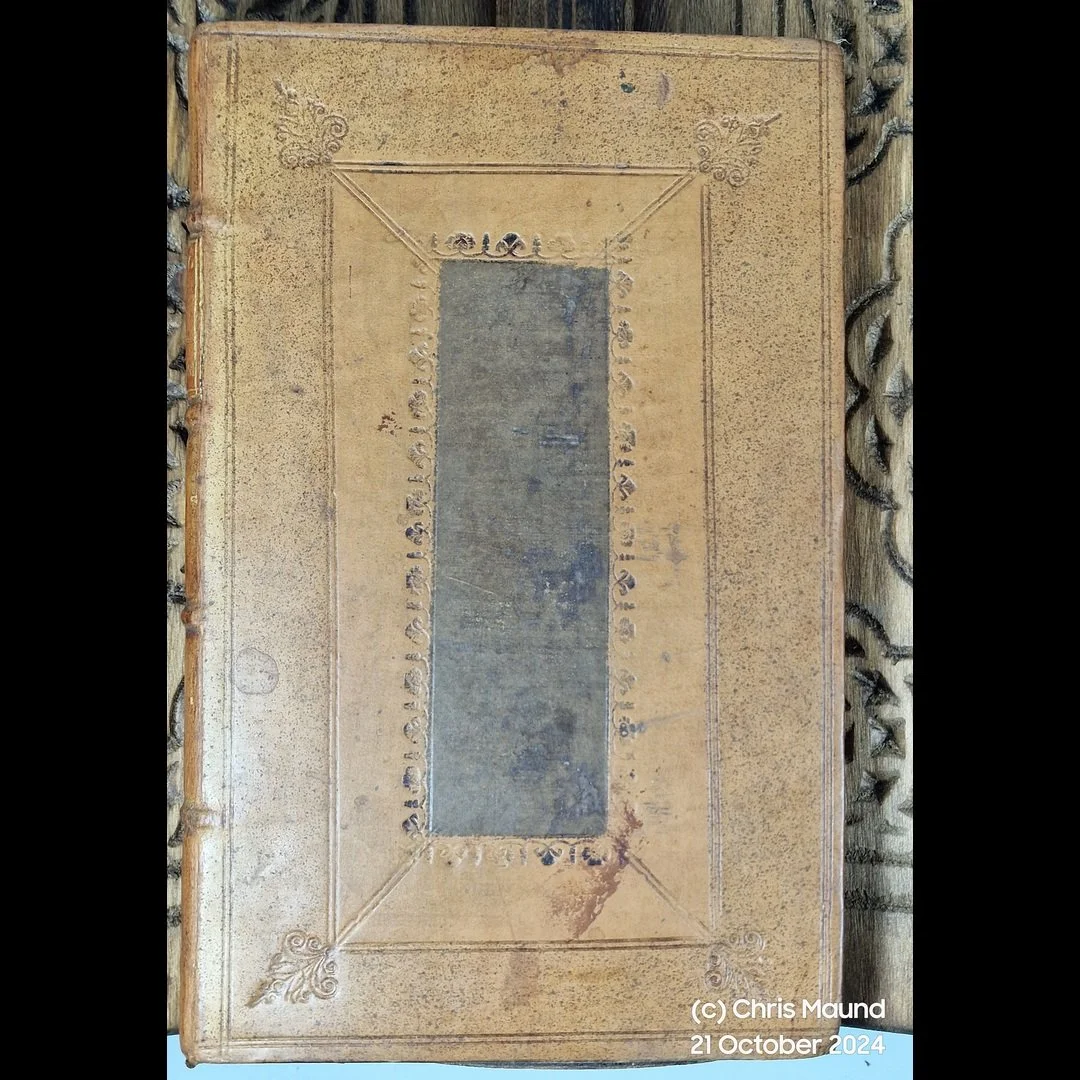
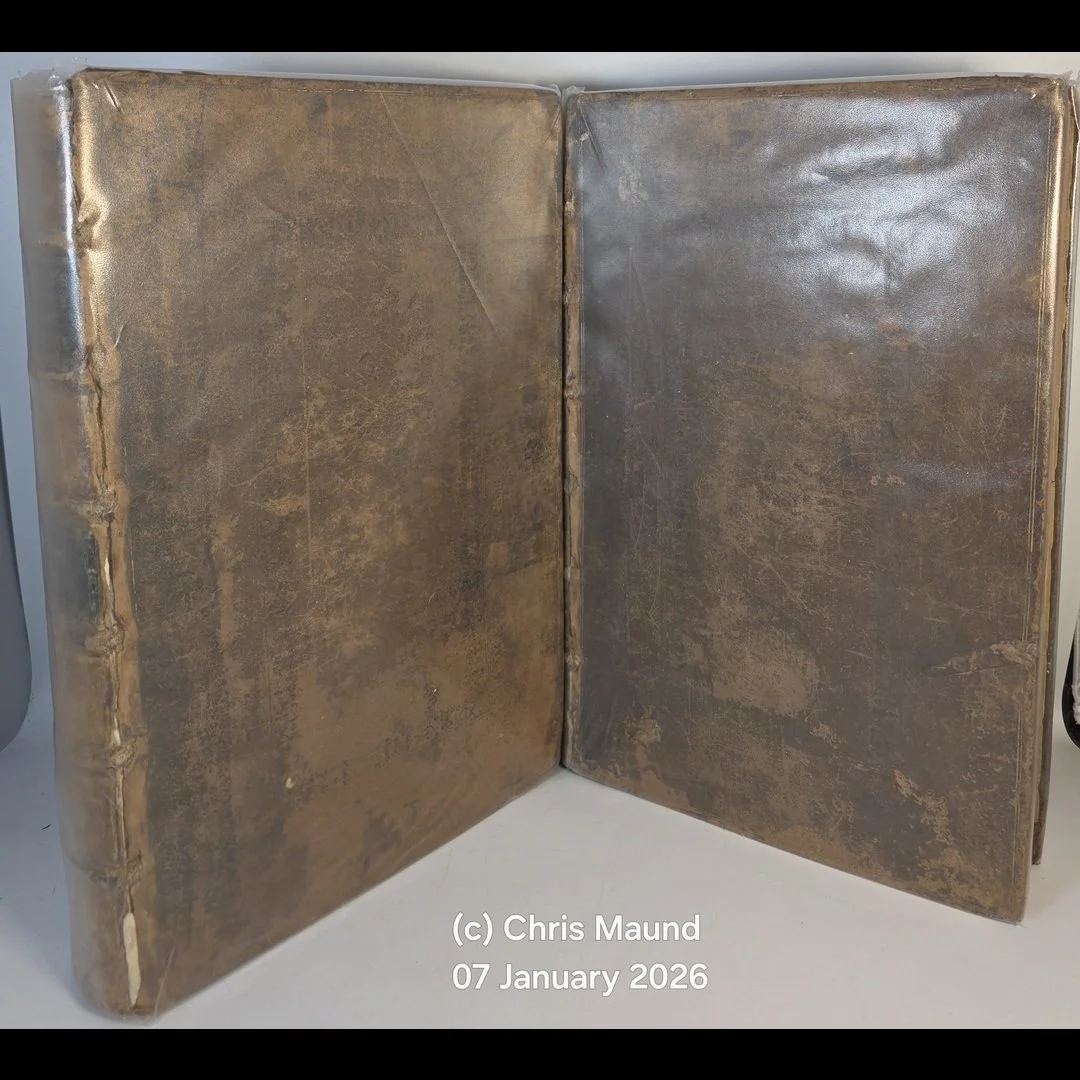
This copy preserves both volumes bound together in one substantial contemporary vellum volume, with raised bands to the spine, blind-ruled borders and attractive large blind-stamped ornamental centrepieces to both boards. The volume retains the engraved allegorical frontispiece and handsome title pages printed in red and black. The frontispiece is associated bibliographically with the Amsterdam engraver Jan Caspar Philips.
CONDITION, COLLATION & COPY NOTES
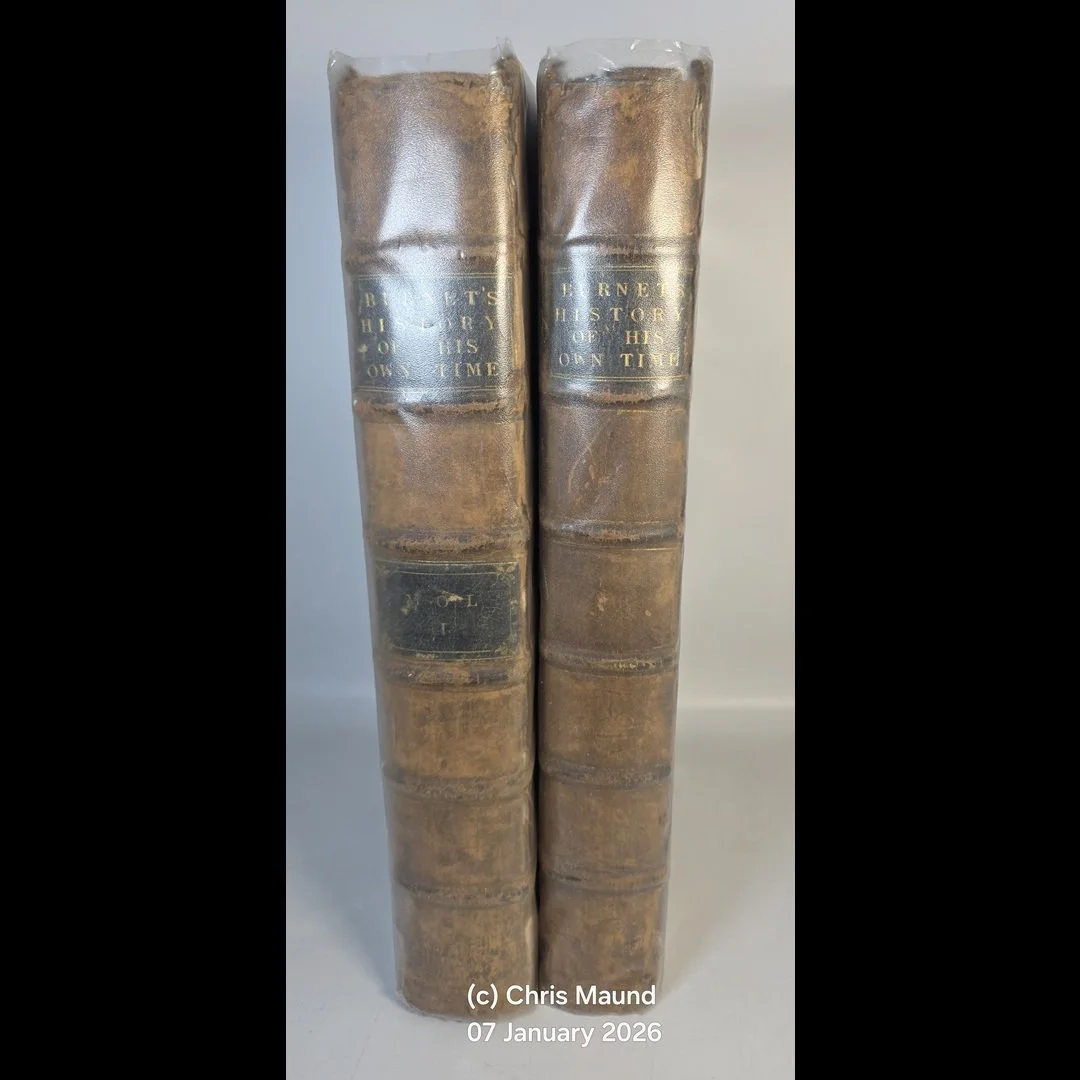
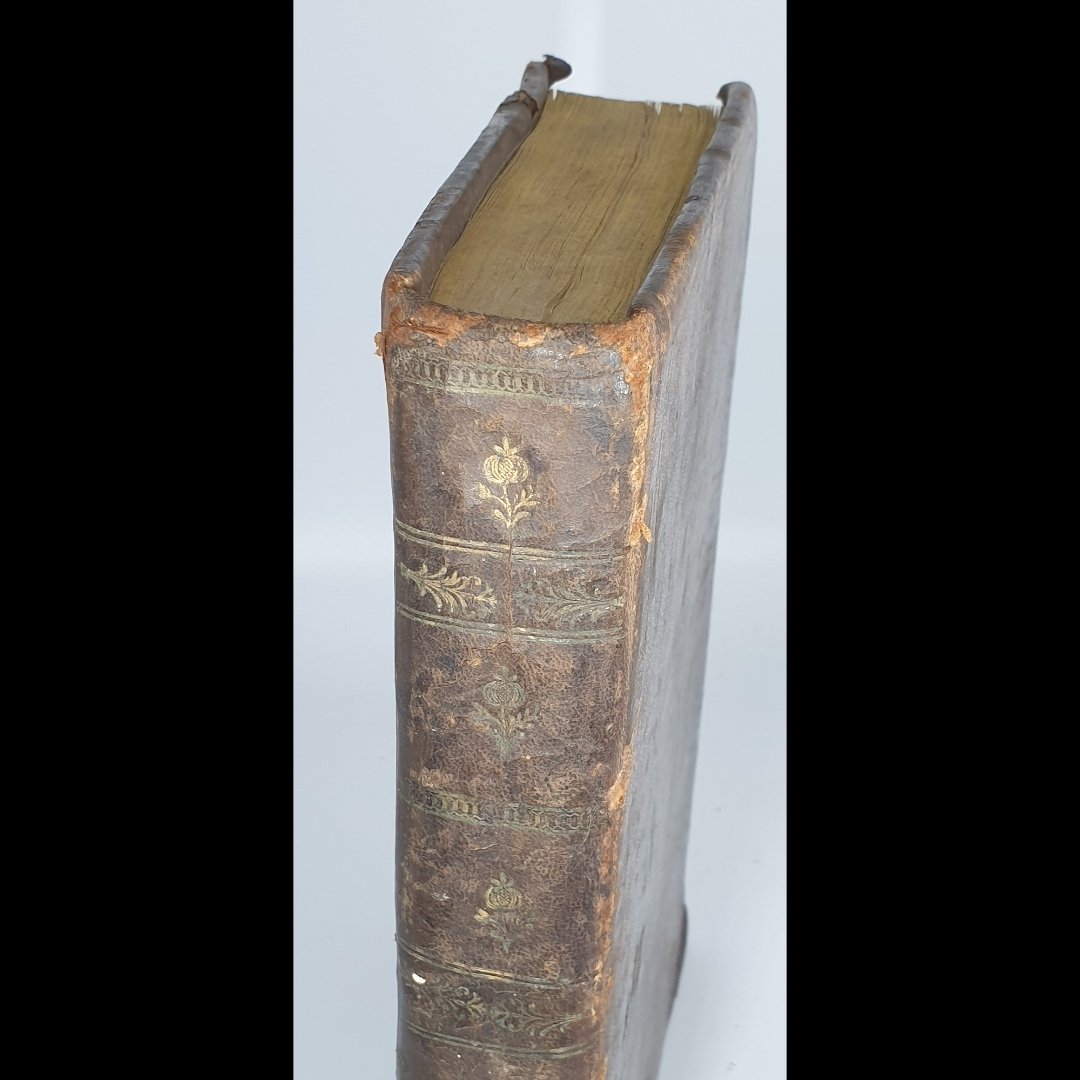
A substantial and attractive contemporary vellum-bound quarto, the two original volumes bound together in one. Binding browned and age-toned overall, with expected rubbing, marking and surface wear. Raised bands remain well defined and the blind-stamped centrepieces and ruled borders to the boards retain considerable decorative character.
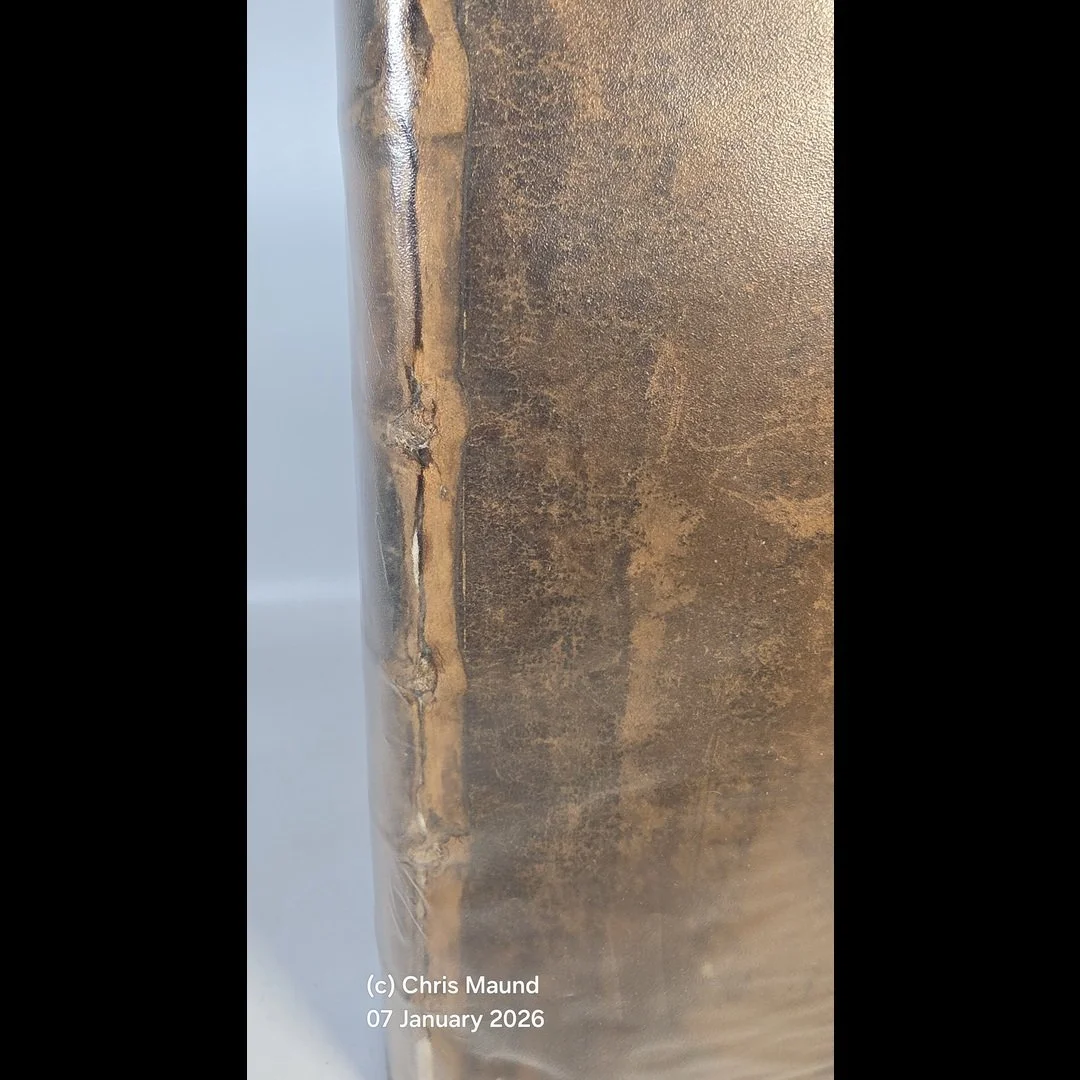
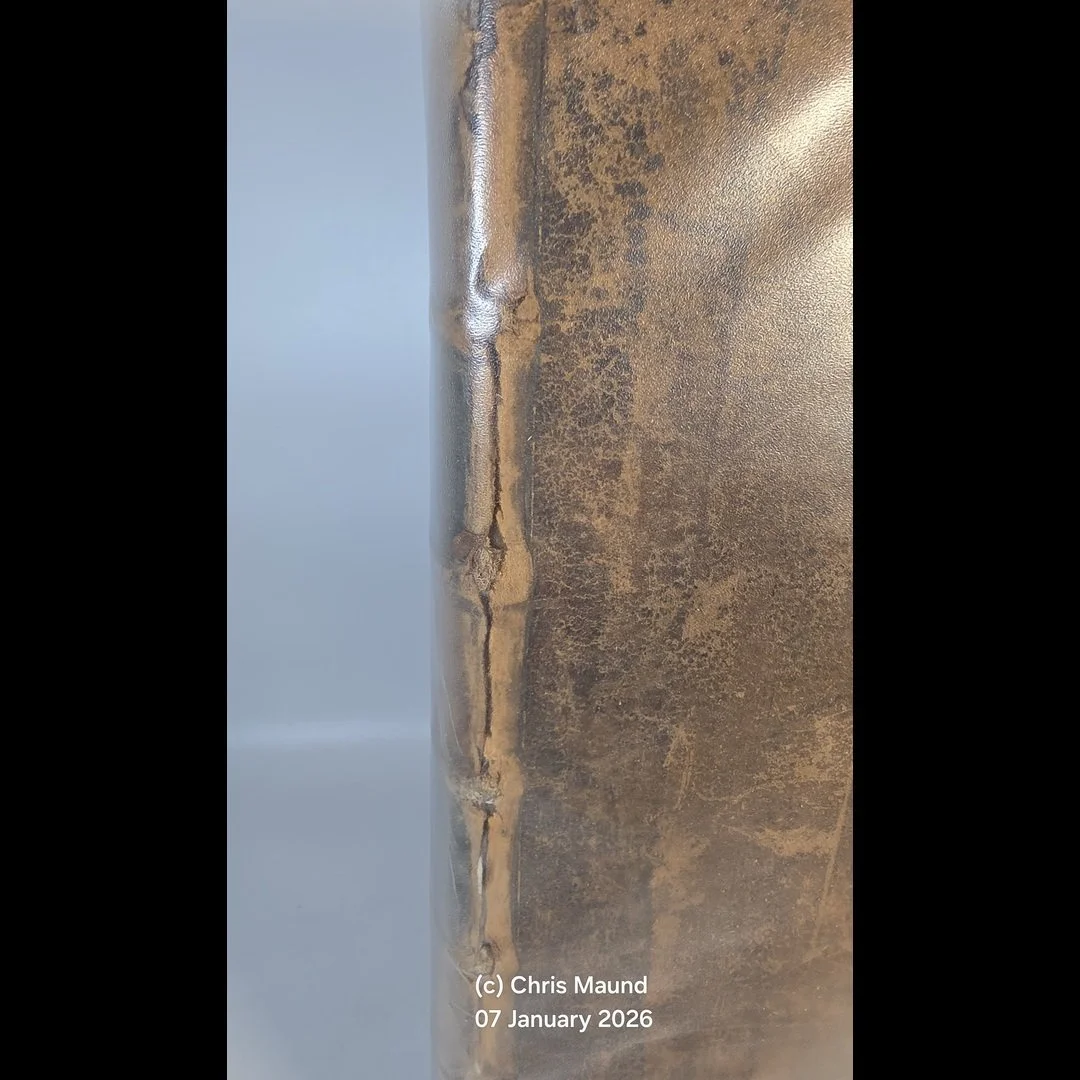
There is wear and opening/splitting at the upper front joint and head of the spine, with a small area of exposed binding structure; the defect is visible in the photographs and has been taken into account in the condition grade. Corners and board edges show the expected wear of an eighteenth-century vellum binding. Faded early manuscript titling remains visible on the spine.
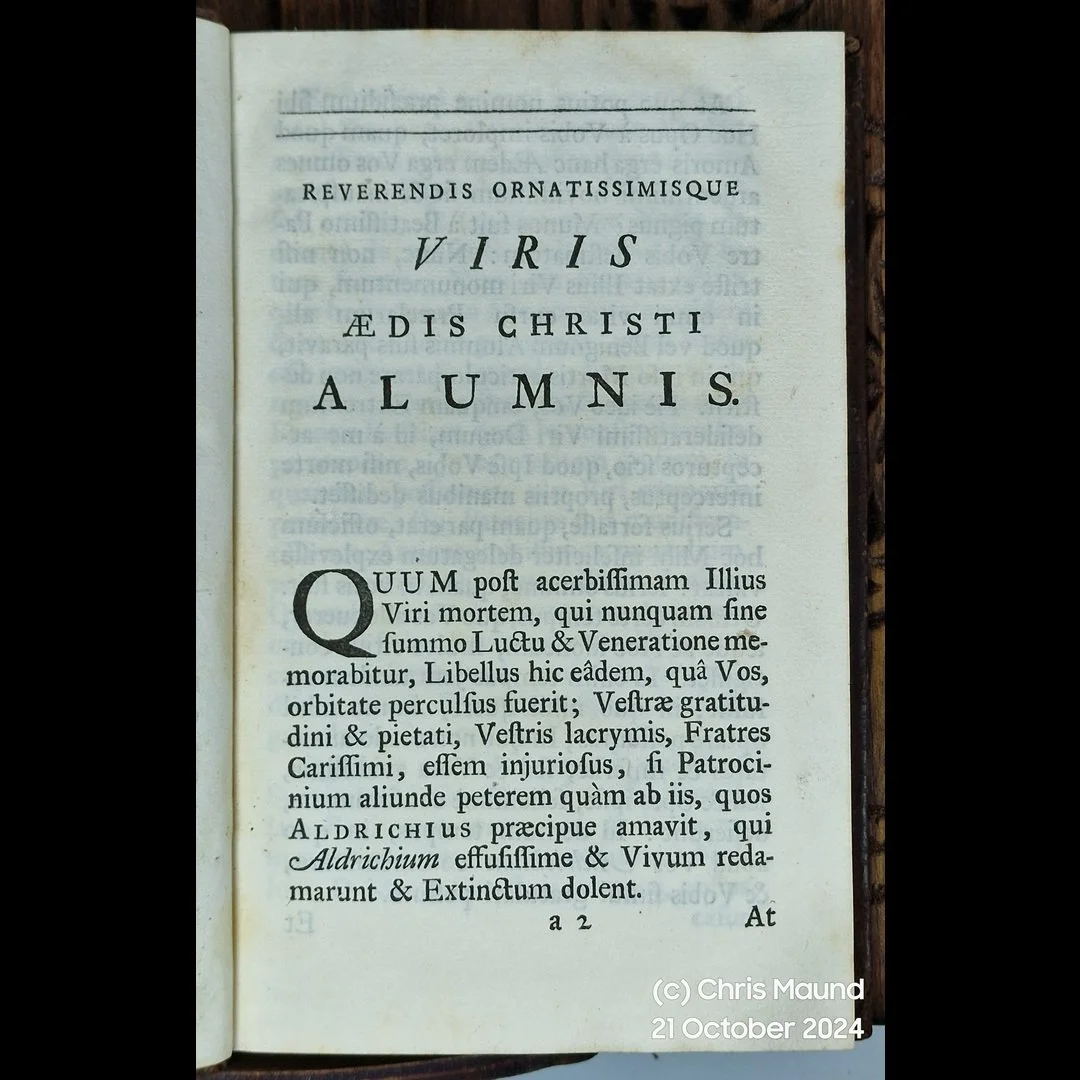
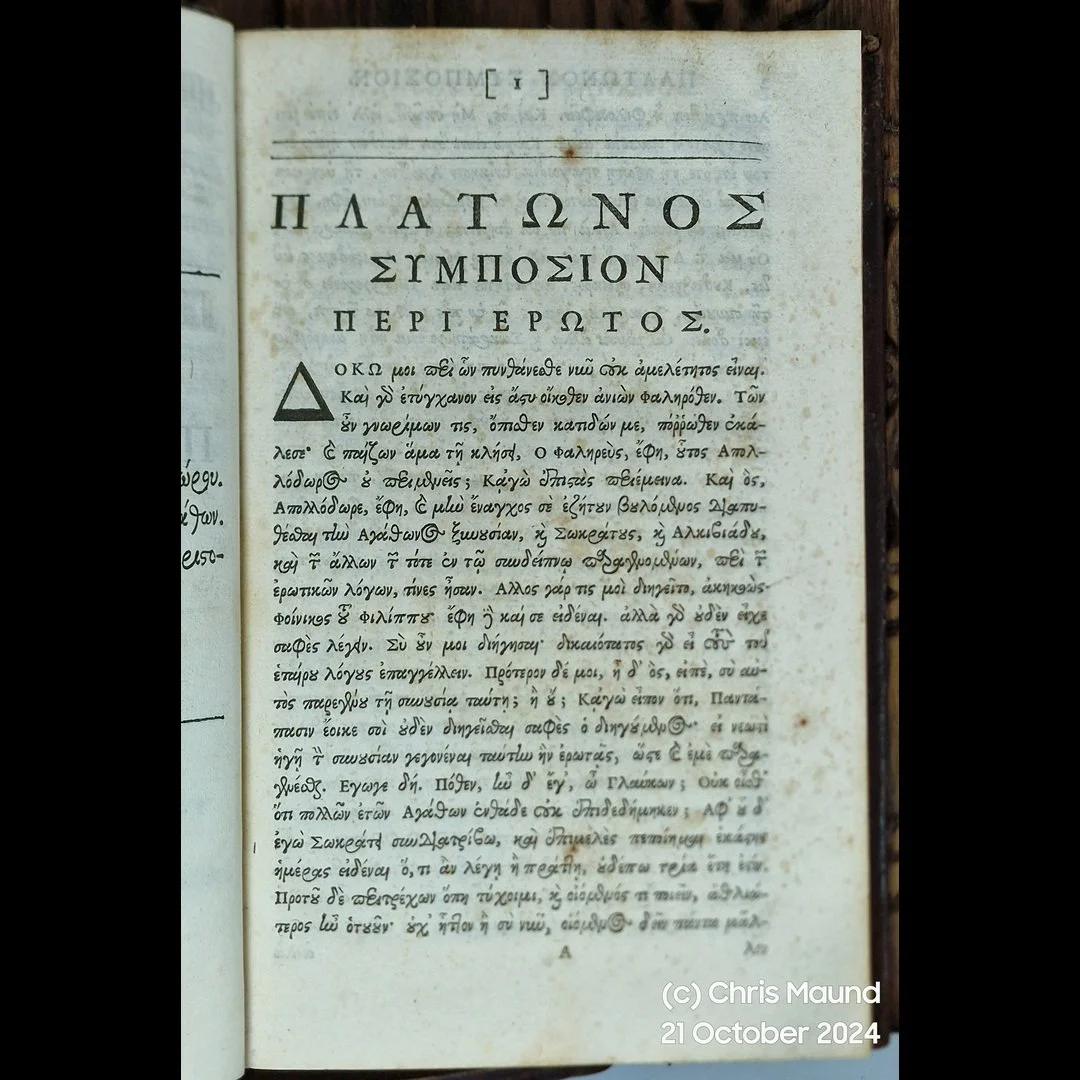
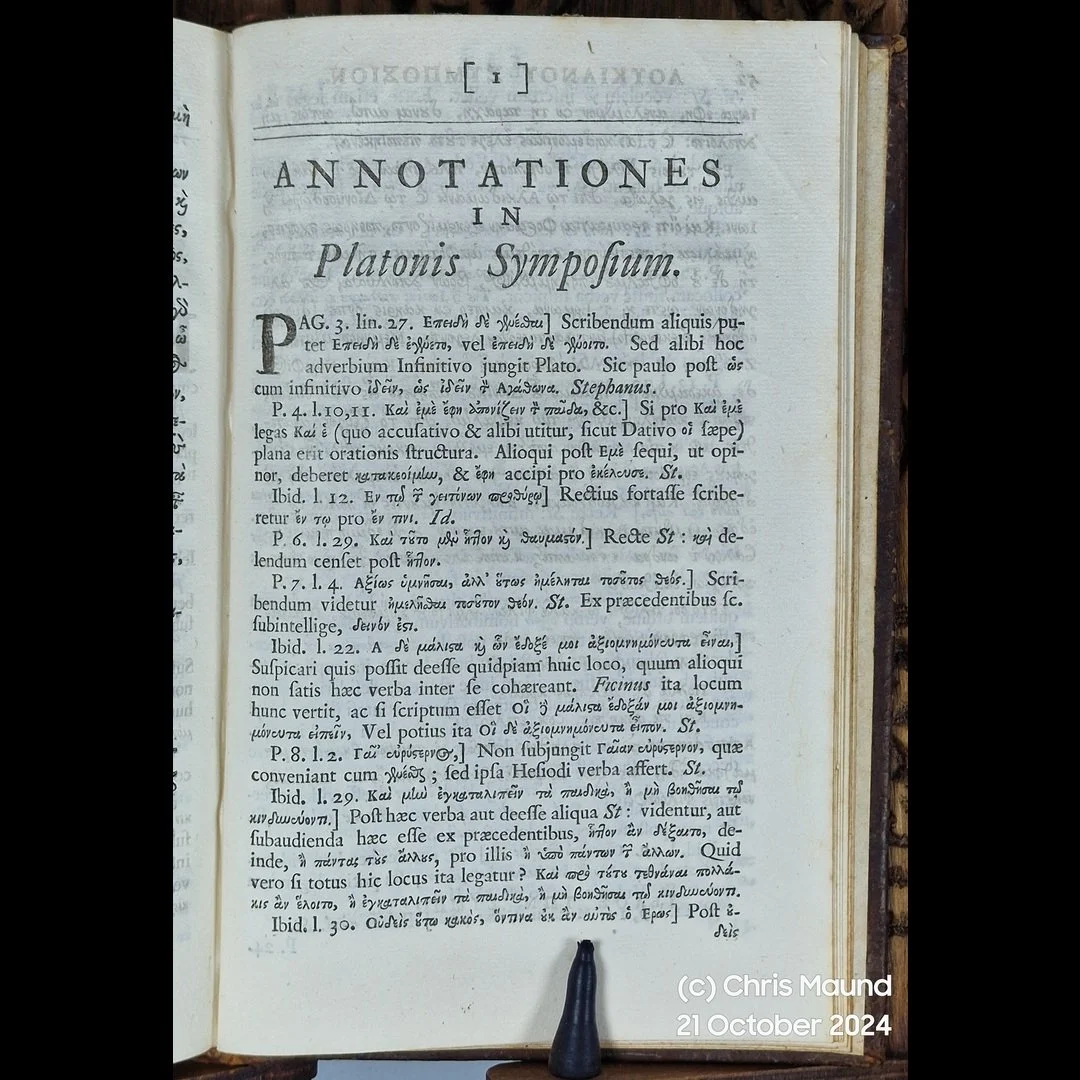
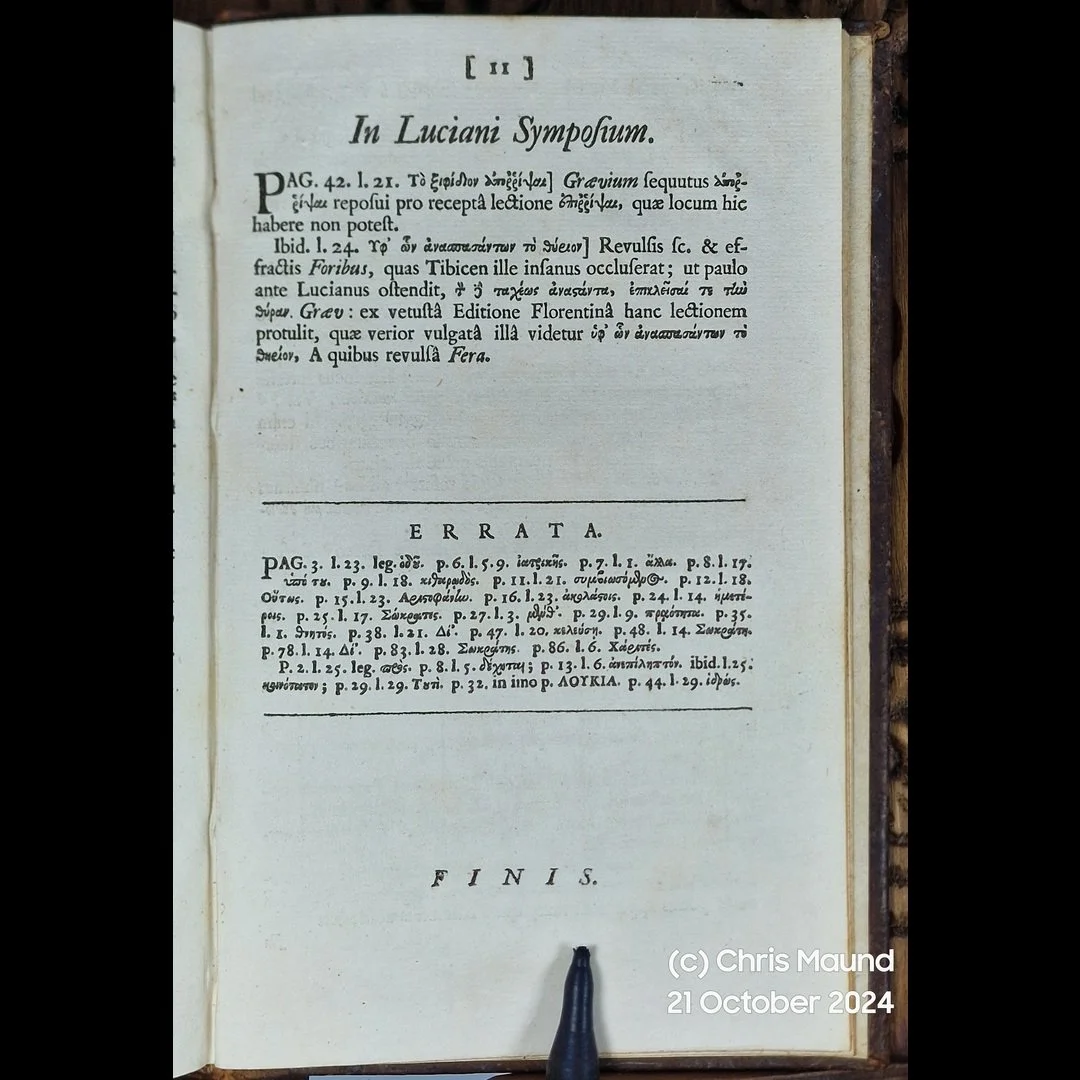
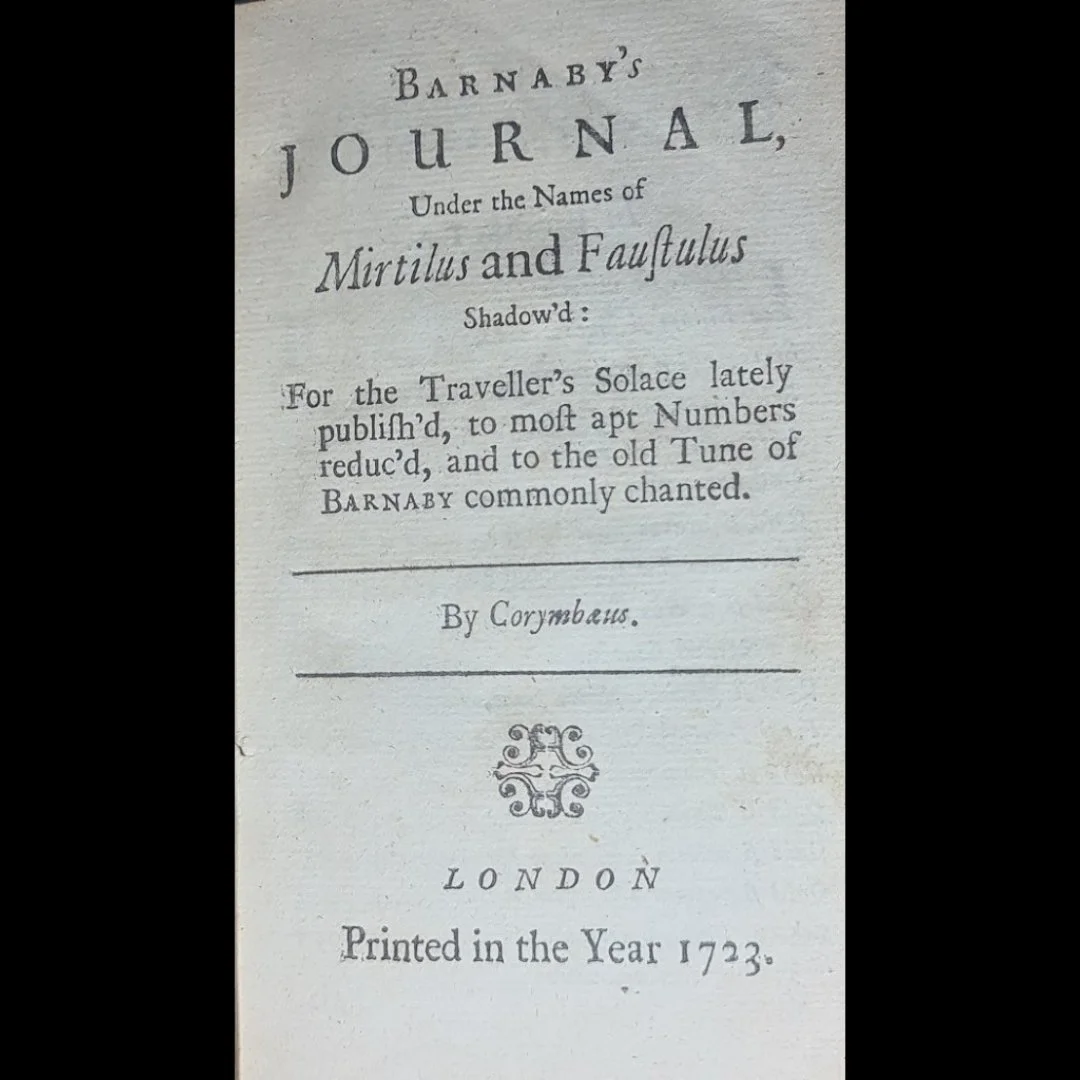
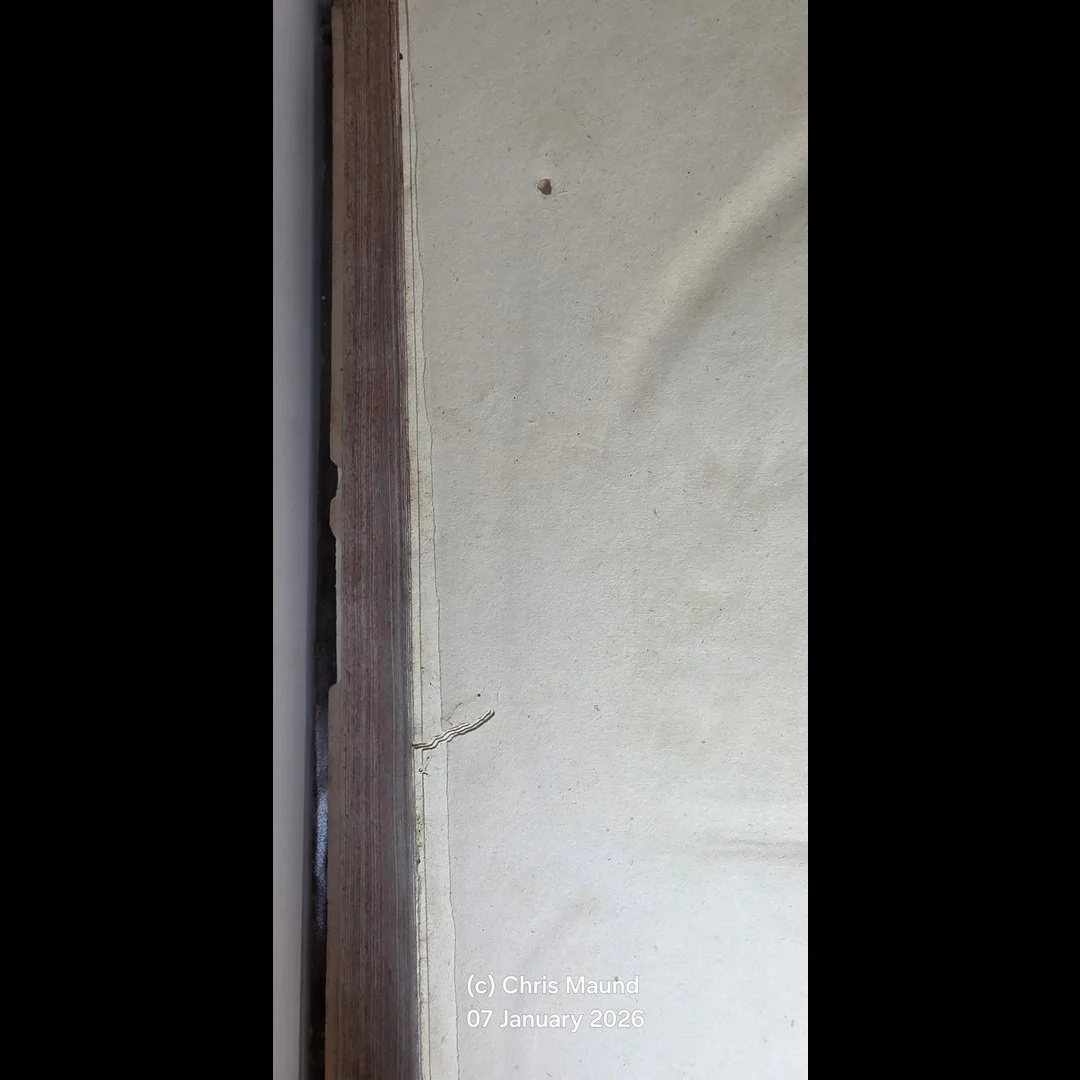
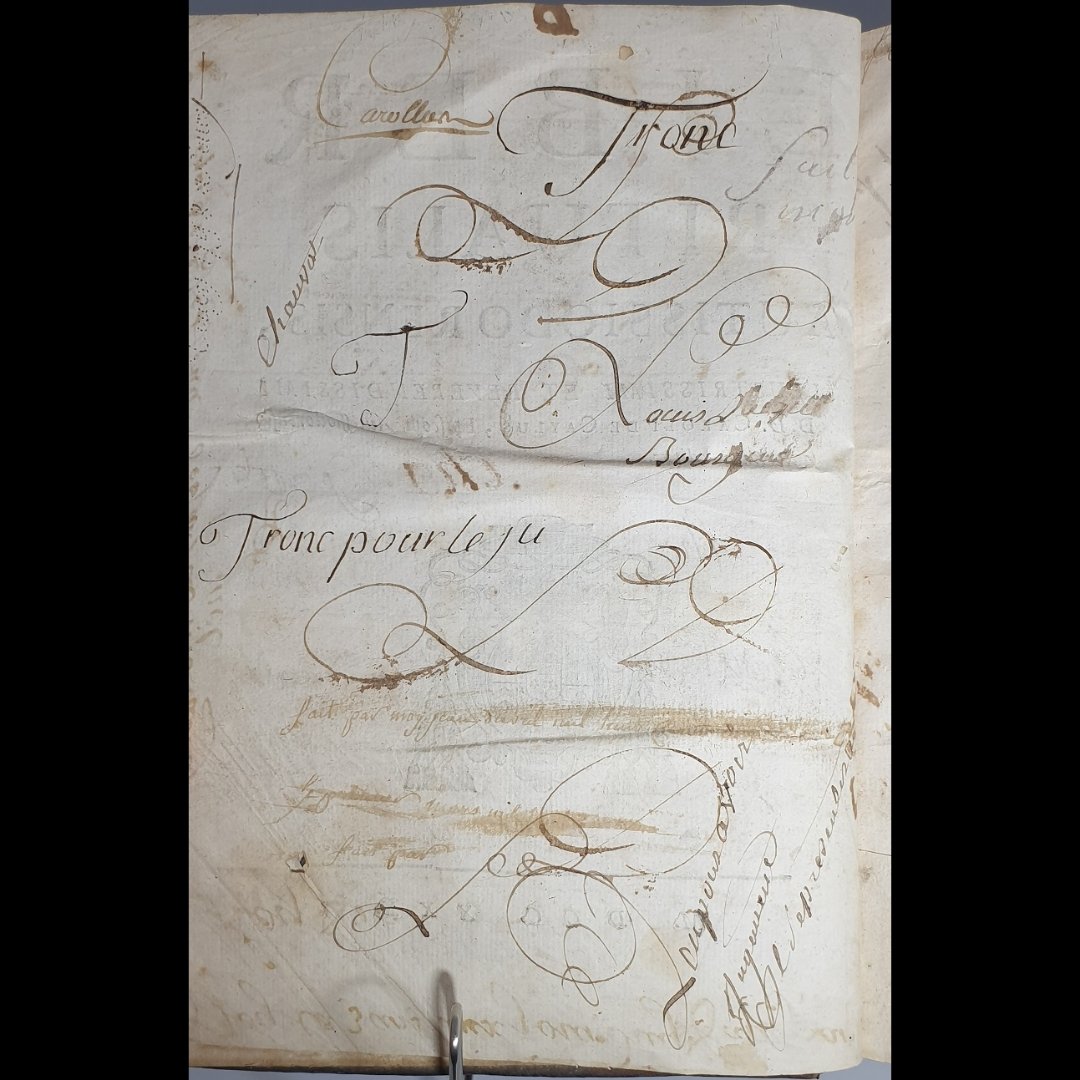
Internally, the book presents well. Engraved frontispiece present. Both principal title pages present and printed in red and black. Paper with general age-toning, scattered foxing and occasional spotting or marks, somewhat heavier to some preliminary leaves, together with minor marginal staining and handling wear. Printing remains generally crisp and strongly impressed, with generous margins.
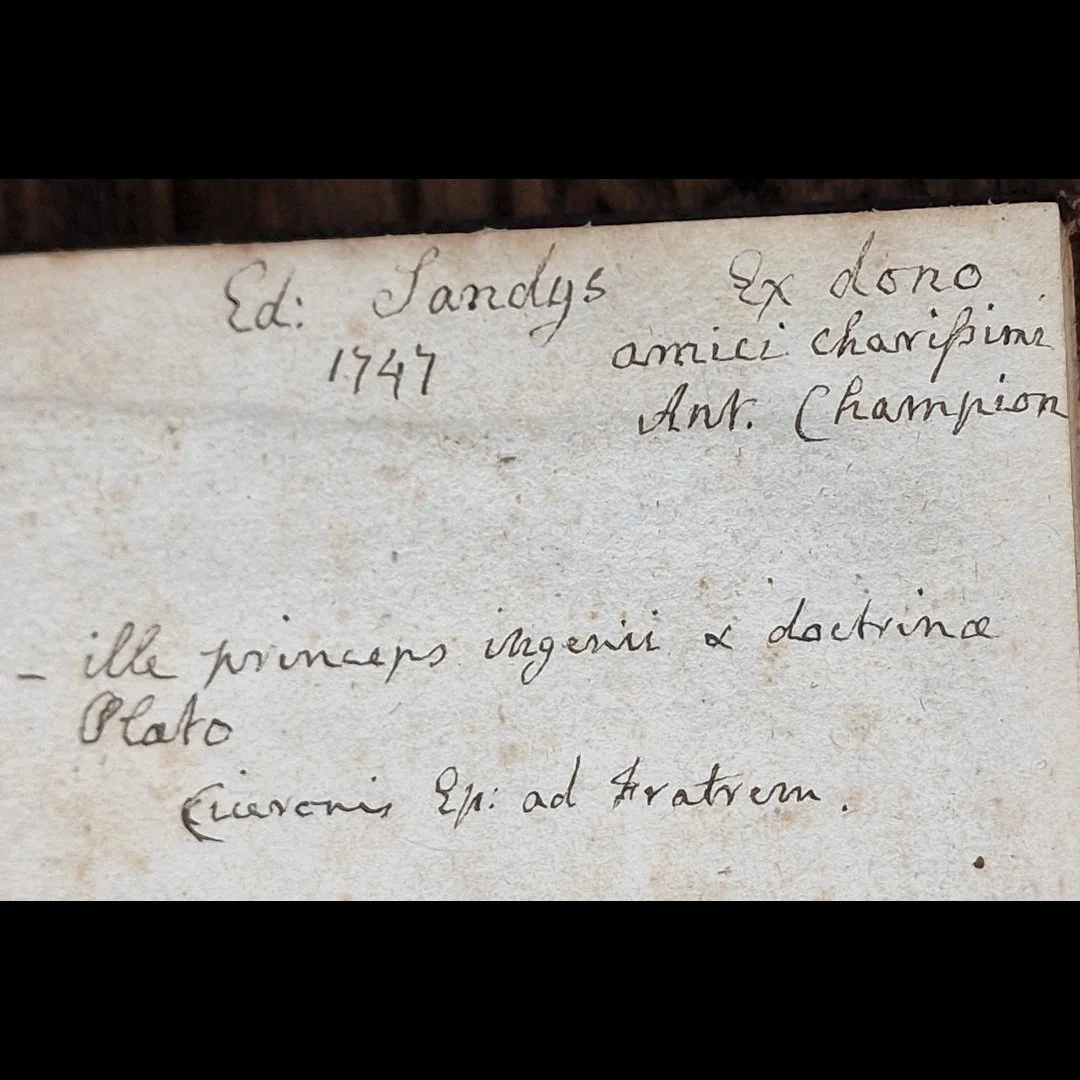
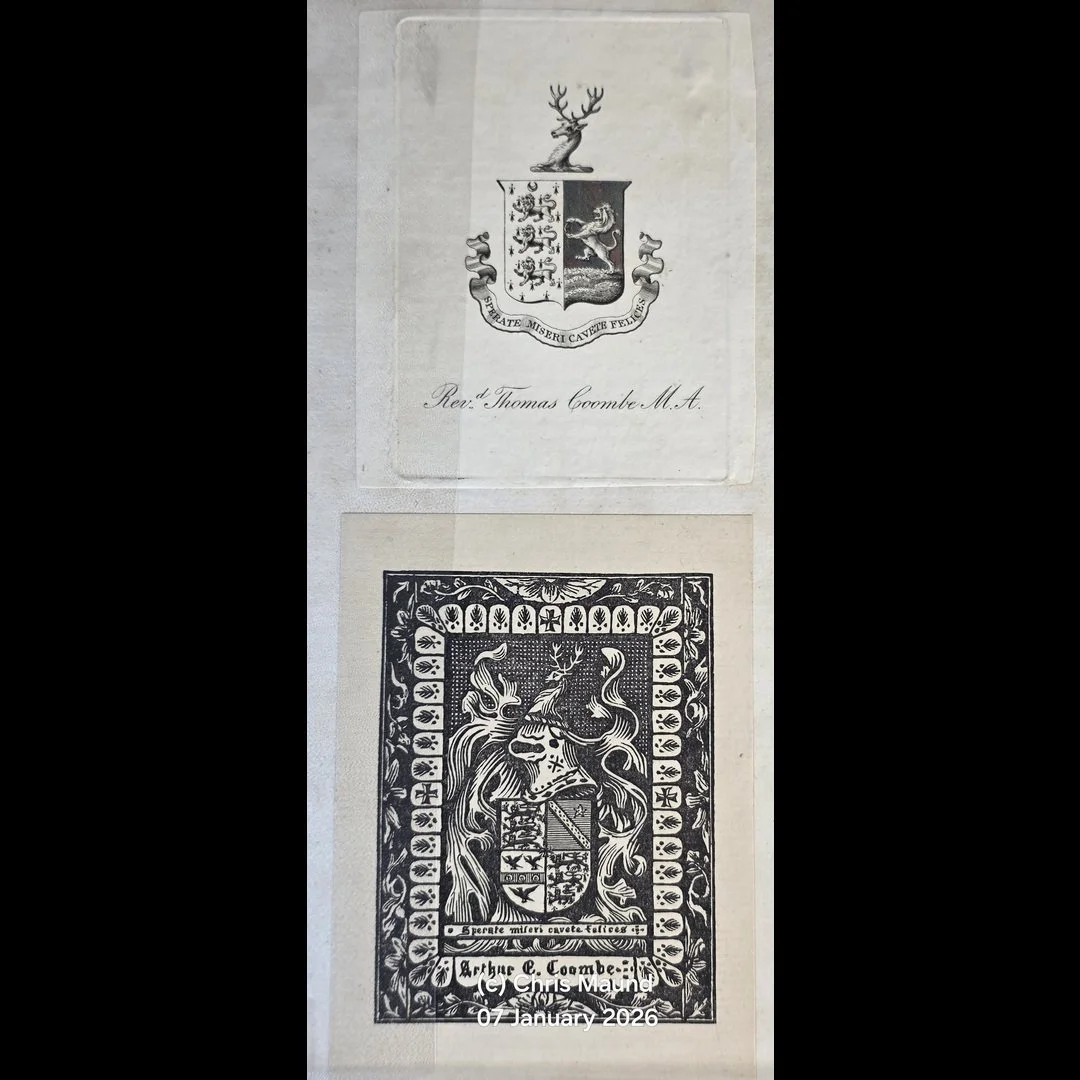
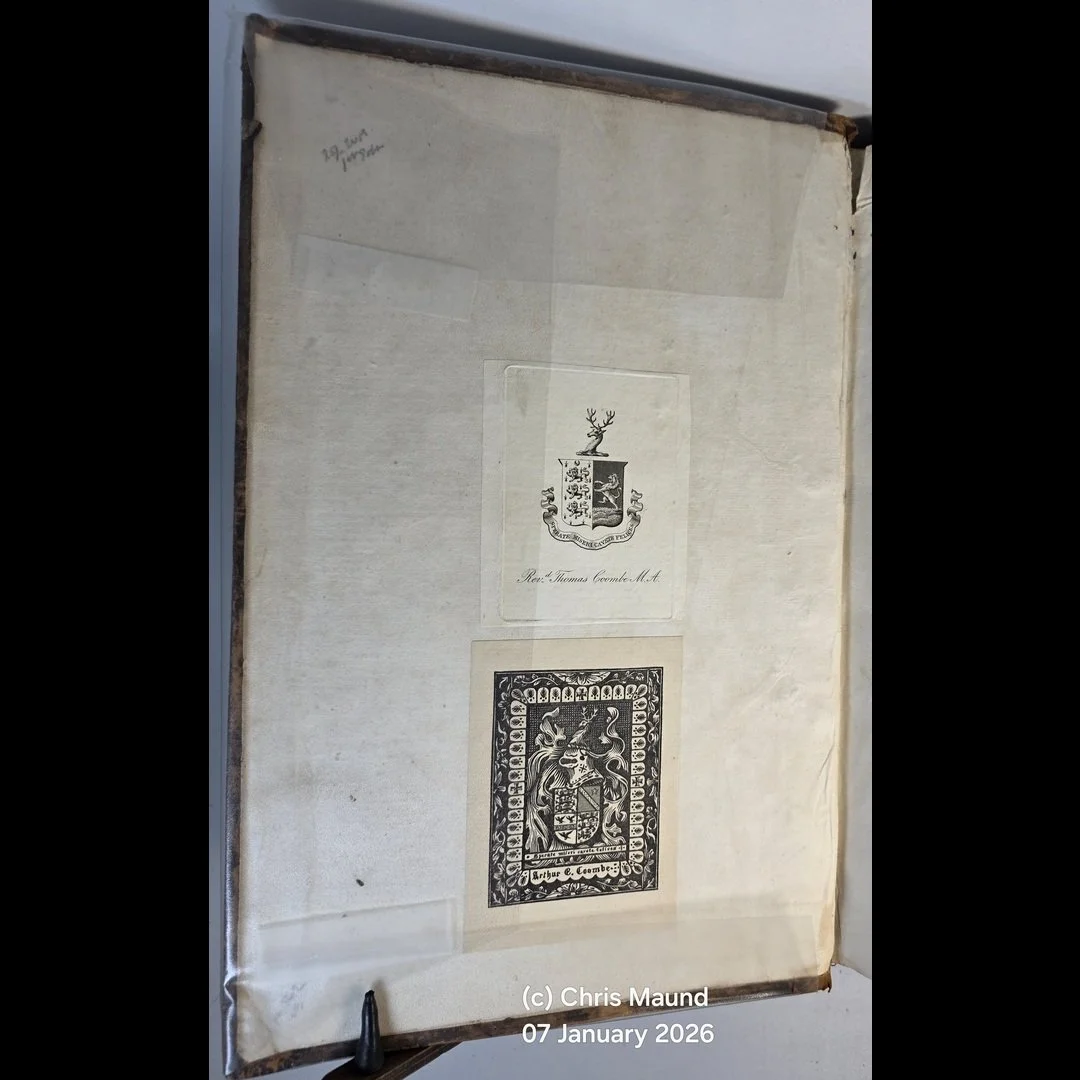
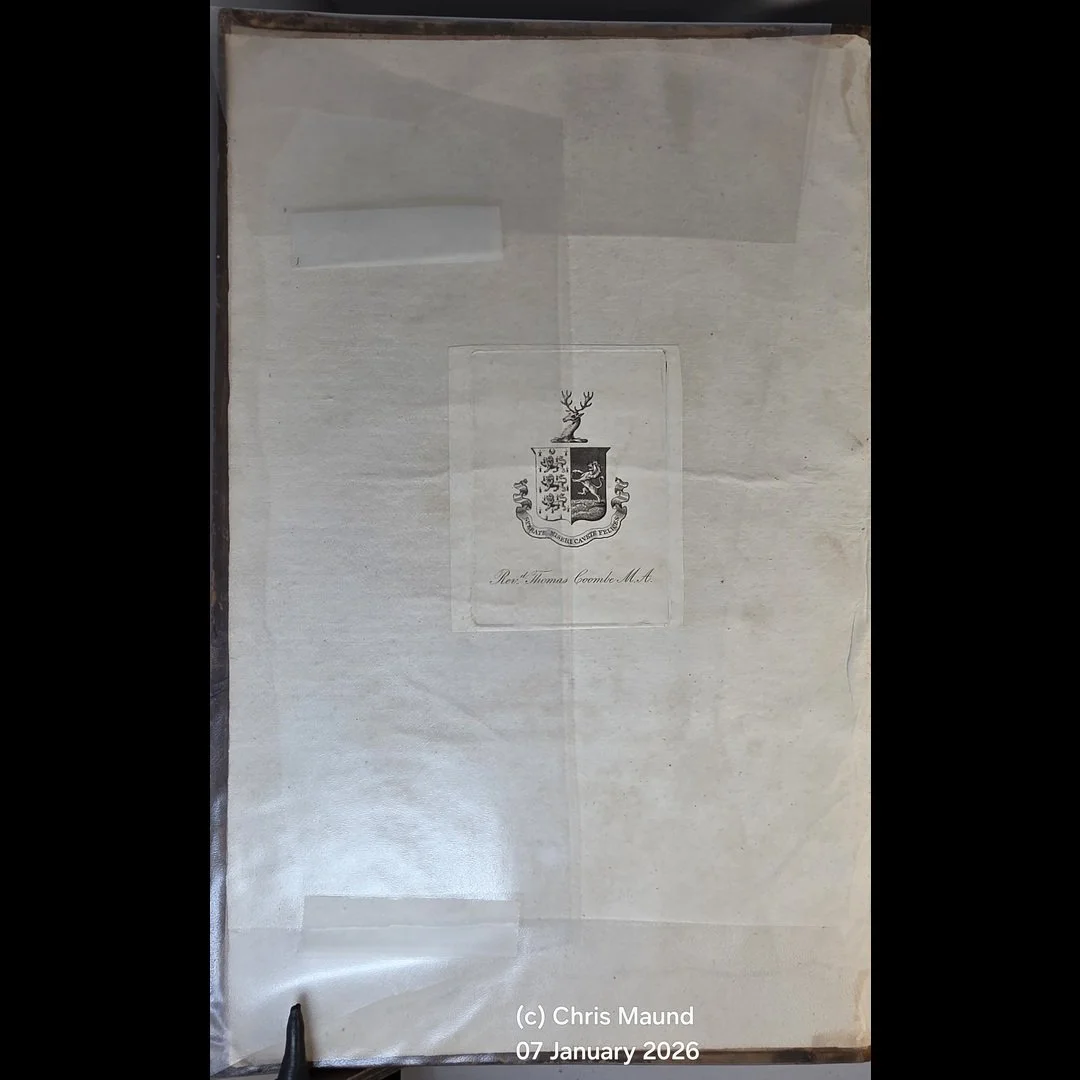
An old bookseller/bibliographical catalogue clipping relating to this edition has been pasted onto a leaf in the Siren Latina section. The clipping refers to a separately described historical copy and is retained as part of this volume's ownership and collecting history; it should not be interpreted as provenance for the present copy.
A handsome and substantial copy of one of the major eighteenth-century scholarly editions of Petronius, particularly appealing for its contemporary blind-tooled vellum binding, engraved frontispiece, red-and-black titles and extensive apparatus of early modern classical scholarship.
Please see Photos as part of condition report.
REFERENCES
Eton College Library, B40583
WorldCat, Titi Petronii Arbitri Satyricôn quae supersunt, 1743
Bayerische Staatsbibliothek / Deutsche Digitale Bibliothek, 1743 Editio altera, Vols. I–II
Schweiger II, 725
Ebert 16524
Graesse V, 239
SYNOPSIS
The Satyricon is a fragmentary Latin prose-and-verse narrative generally attributed to Petronius and probably composed during the reign of Nero. Often described as the most substantial surviving example, alongside Apuleius’s Golden Ass, of what modern scholars call the Roman novel, it combines Menippean satire, prose narrative, verse, erotic comedy, literary parody and social observation.
Its narrator, Encolpius, travels through a chaotic world of rivals, lovers, opportunists, freedmen, scholars and impostors. The surviving narrative moves rapidly between farce, adventure and literary satire, with Petronius repeatedly parodying epic, rhetoric and contemporary intellectual pretension.
The most celebrated episode is the Dinner of Trimalchio, in which an enormously wealthy freedman stages a grotesquely elaborate banquet for his guests. Through Trimalchio and his circle, Petronius produces a vivid and frequently comic portrait of wealth, aspiration, dining, domestic life, slavery, education and social mobility in the early Roman Empire.
Because the surviving text preserves forms of speech and aspects of everyday behaviour rarely represented in elite Latin literature, the Satyricon is important not only as fiction but also as evidence for the social and linguistic world of imperial Rome.
AUTHOR BIO
Petronius Arbiter, traditionally identified with the Petronius described by Tacitus as the arbiter elegantiae at the court of the emperor Nero, died in AD 66. The precise identity of the author cannot be demonstrated beyond doubt, but the Neronian Petronius remains the generally accepted attribution for the Satyricon.
The surviving work is one of the most extraordinary texts of Roman literature: fragmentary, sophisticated and frequently comic, combining prose and verse with satire, adventure, literary parody and observations of Roman social life. Its best-known section, the Cena Trimalchionis, or Dinner of Trimalchio, offers a celebrated portrait of extravagant wealth, social ambition and conspicuous consumption in the Roman world.
Editor Bio
Pieter Burman the Elder (1668–1741) was one of the leading Dutch classical scholars of his generation and held professorships at Utrecht and Leiden. His editions of Latin authors were distinguished by their extensive collation of earlier scholarship, manuscript readings and textual commentary.
Burman’s first major recension of Petronius appeared at Utrecht in 1709. The present 1743 Editio altera represents the enlarged second edition of that work, incorporating additional scholarship and manuscript material. The edition was re-edited by Johann Jacob Reiske (1716–1774) and revised, with a new preface, by Pieter Burman’s son Caspar Burman (1695–1755).
ILLUSTRATOR
Jan Caspar Philips
Jan Caspar Philips (1690–1775) was a German-born engraver and draughtsman who settled in Amsterdam and became an active illustrator of Dutch books during the first half of the eighteenth century. Bibliographical records for this edition credit Philips with its illustration.
1743 Amsterdam Edition - Editio Altera
TITI PETRONII ARBITRI SATYRICON QUAE SUPERSUNT
By Petronius Arbiter
KEY DETAILS
Condition: Very Good
Format: Hardcover, quarto (4to 9 1⁄2 × 12 in 241 × 305 mm )
Note: Binding/size selection follows standard bibliographic conventions and is approximate; exact measurements may vary.
Published By: Apud Iansonio-Waesbergios, Amsterdam, 1743
Language: Latin
Illustrated By: Jan Caspar Philips
Collation: Two volumes bound in one. Vol. I: engraved frontispiece; 37 leaves, 886 pp., 1 leaf; Vol. II: 4 leaves, 408 pp., 66 leaves.
Dust Jacket: None, as issued, No Jacket
SKU: BTETM0002183
Shipping Info: Approximate Package Dimensions H: 12.5, L: 30, W: 25 (Units: cm), W: 2Kg
Tracked Shipping, Insurance Coverage as per Customer Request
DESCRIPTION
Titi Petronii Arbitri Satyricon quae Supersunt
Cum integris Doctorum Virorum Commentariis; & Notis Nicolai Heinsii & Guilielmi Goesii
Curante Petro Burmanno. Cujus accedunt curae secundae.
A substantial and appealing eighteenth-century scholarly edition of Petronius’s Satyricon, published at Amsterdam by the Janssonio-Waesberg press in 1743. Described on the title page as Editio altera, this is the enlarged second edition of Pieter Burman’s important variorum recension, first published in 1709.
The edition brings together the surviving text of Petronius with the accumulated scholarship of Nicolaas Heinsius, Willem Goes, Guillaume Dupeyrat, Jean Bourdelot, Thomas Reinesius and others, together with Johan van der Does’s Praecidanea, the extensive commentary of Jusepe Antonio González de Salas, dissertations, prefaces and the substantial Siren Latina lexicon and index. The 1743 edition was re-edited by Johann Jacob Reiske and revised, with a preface, by Caspar Burman. Institutional catalogues describe it as the Editio altera and record it as an illustrated quarto in two volumes.
This copy preserves both volumes bound together in one substantial contemporary vellum volume, with raised bands to the spine, blind-ruled borders and attractive large blind-stamped ornamental centrepieces to both boards. The volume retains the engraved allegorical frontispiece and handsome title pages printed in red and black. The frontispiece is associated bibliographically with the Amsterdam engraver Jan Caspar Philips.
CONDITION, COLLATION & COPY NOTES
A substantial and attractive contemporary vellum-bound quarto, the two original volumes bound together in one. Binding browned and age-toned overall, with expected rubbing, marking and surface wear. Raised bands remain well defined and the blind-stamped centrepieces and ruled borders to the boards retain considerable decorative character.
There is wear and opening/splitting at the upper front joint and head of the spine, with a small area of exposed binding structure; the defect is visible in the photographs and has been taken into account in the condition grade. Corners and board edges show the expected wear of an eighteenth-century vellum binding. Faded early manuscript titling remains visible on the spine.
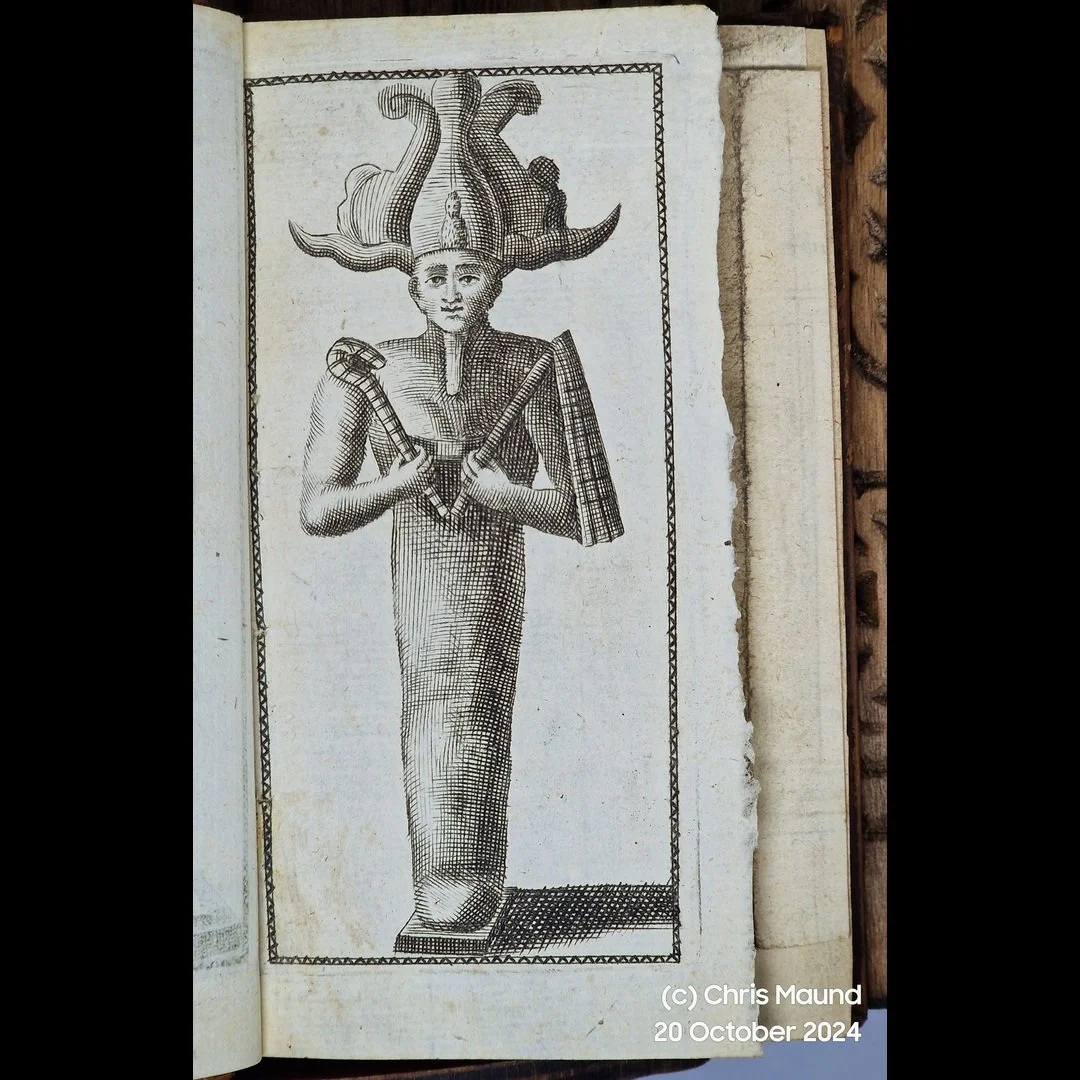
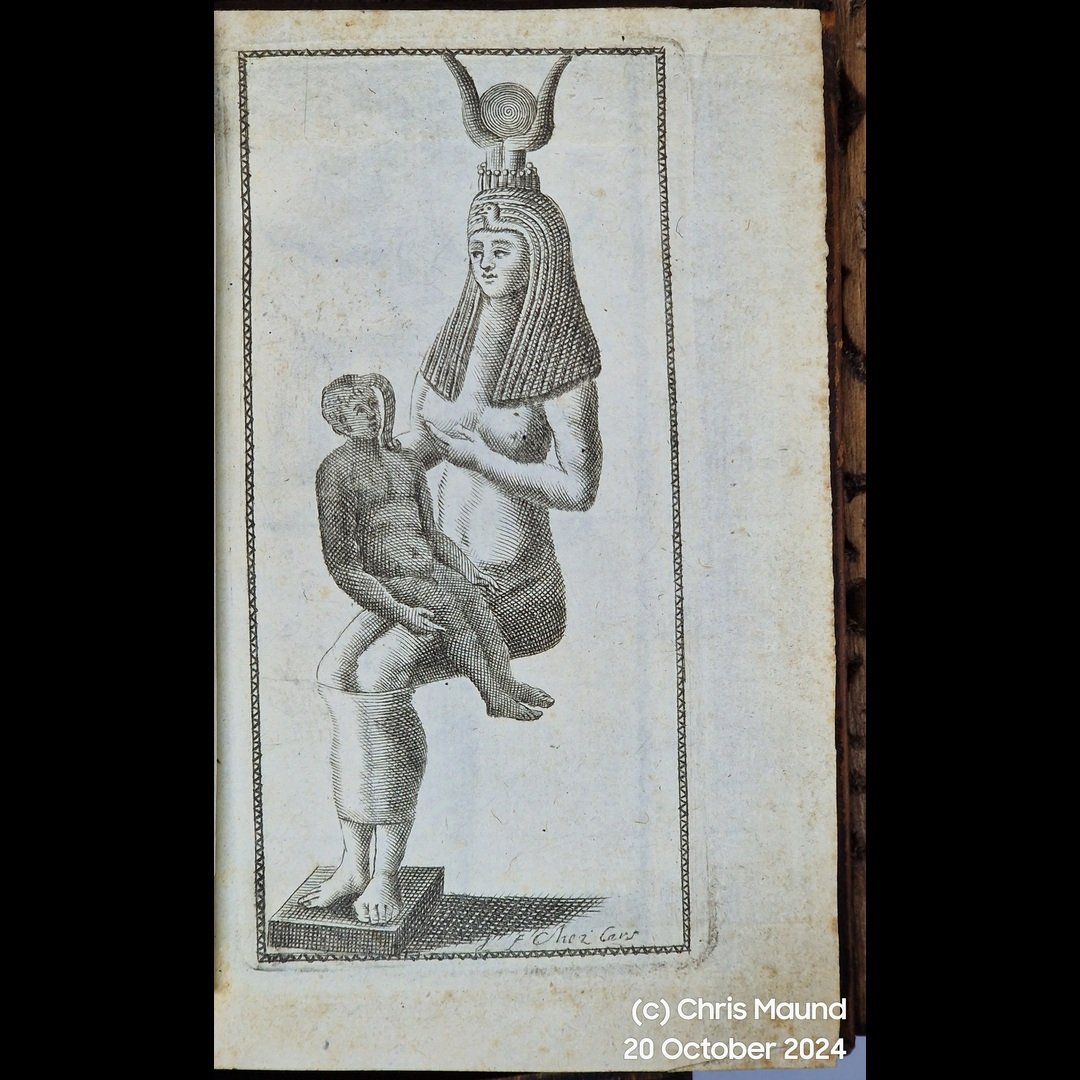
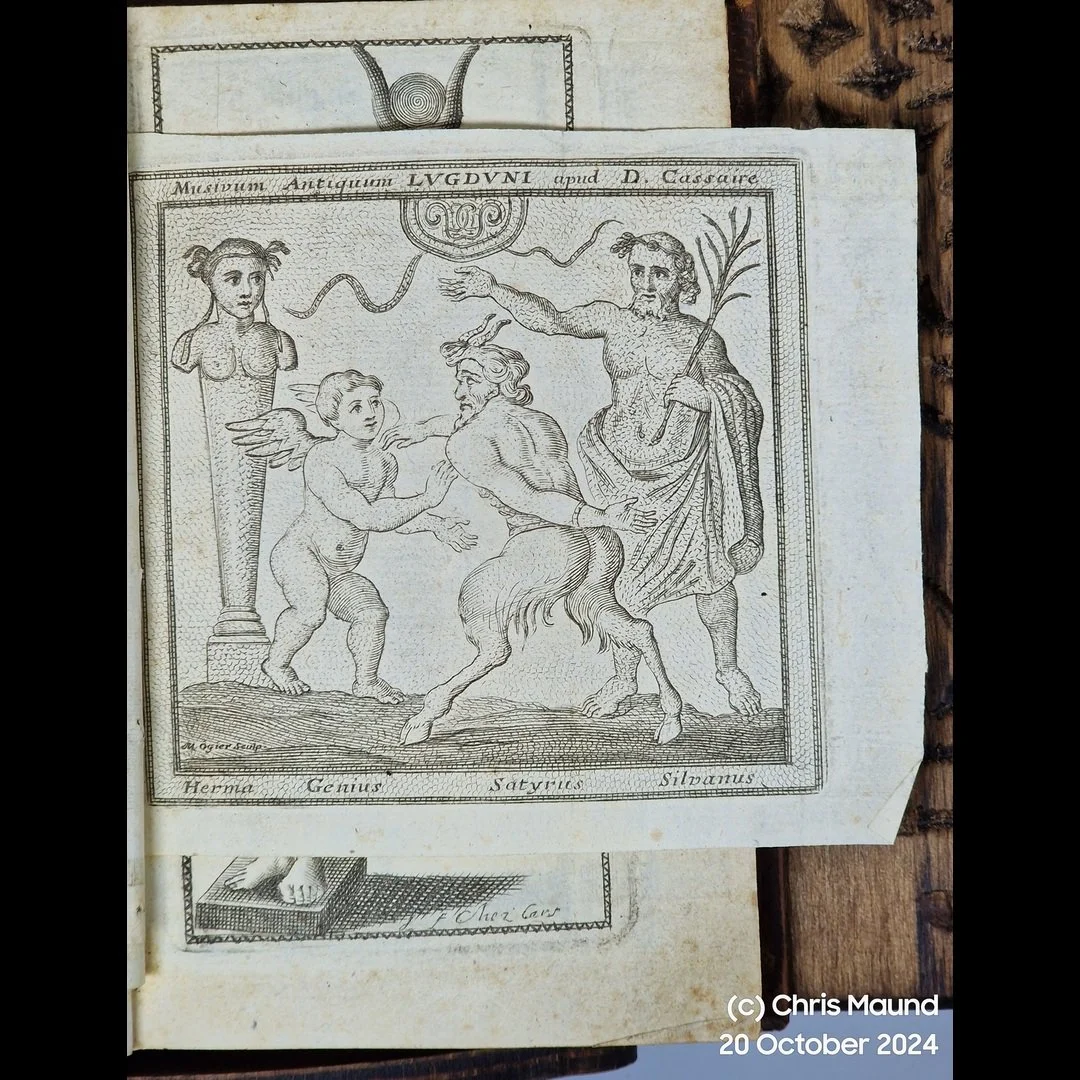
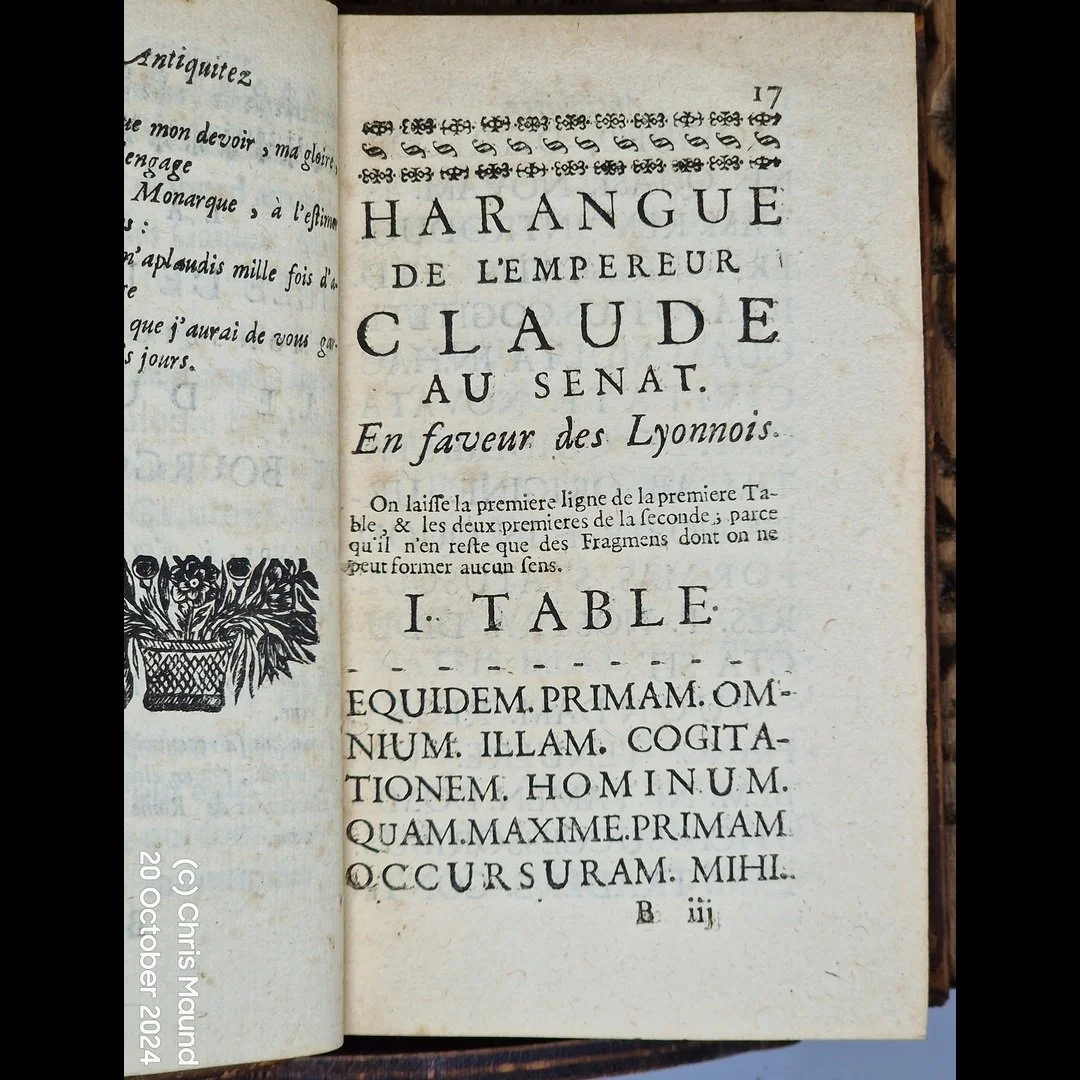
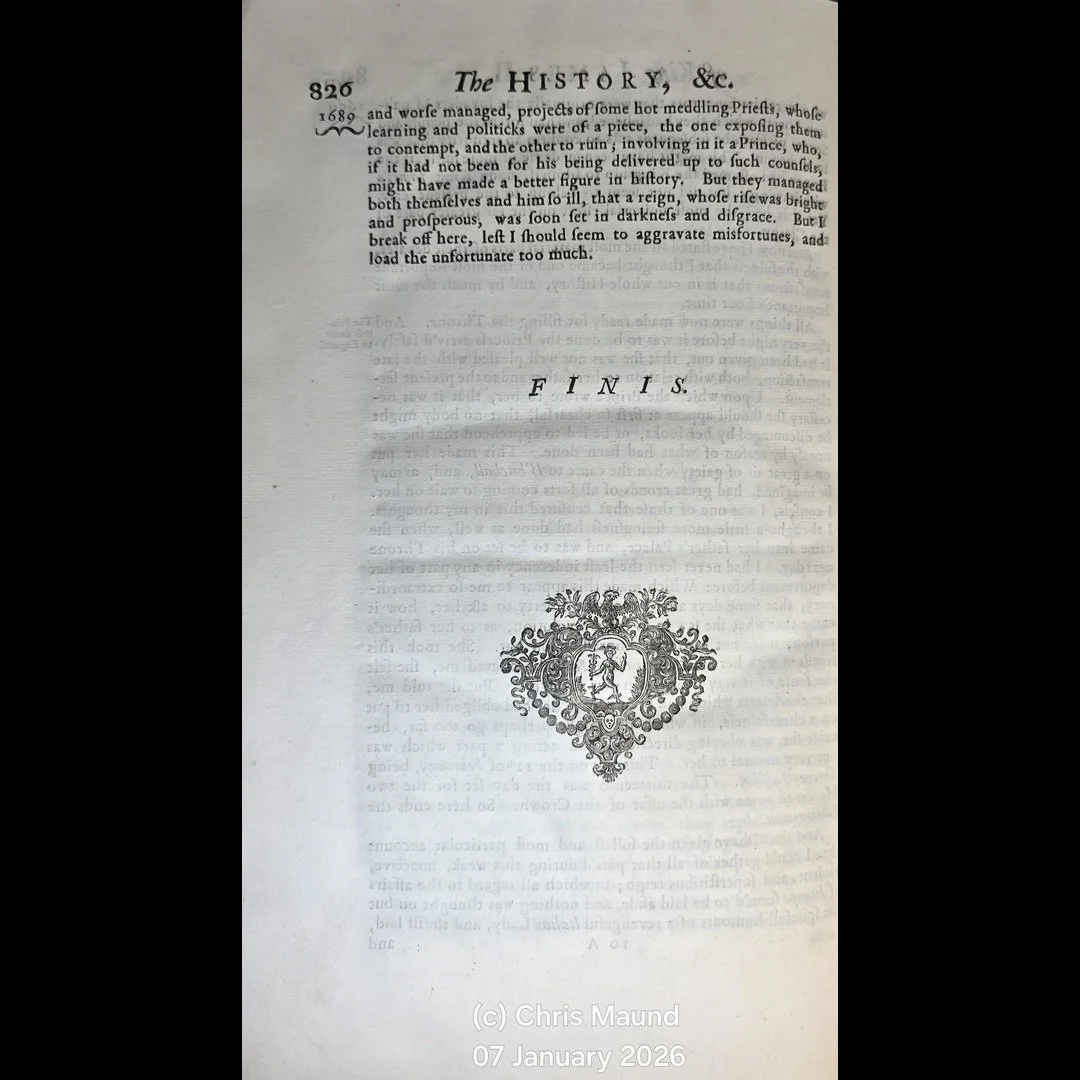
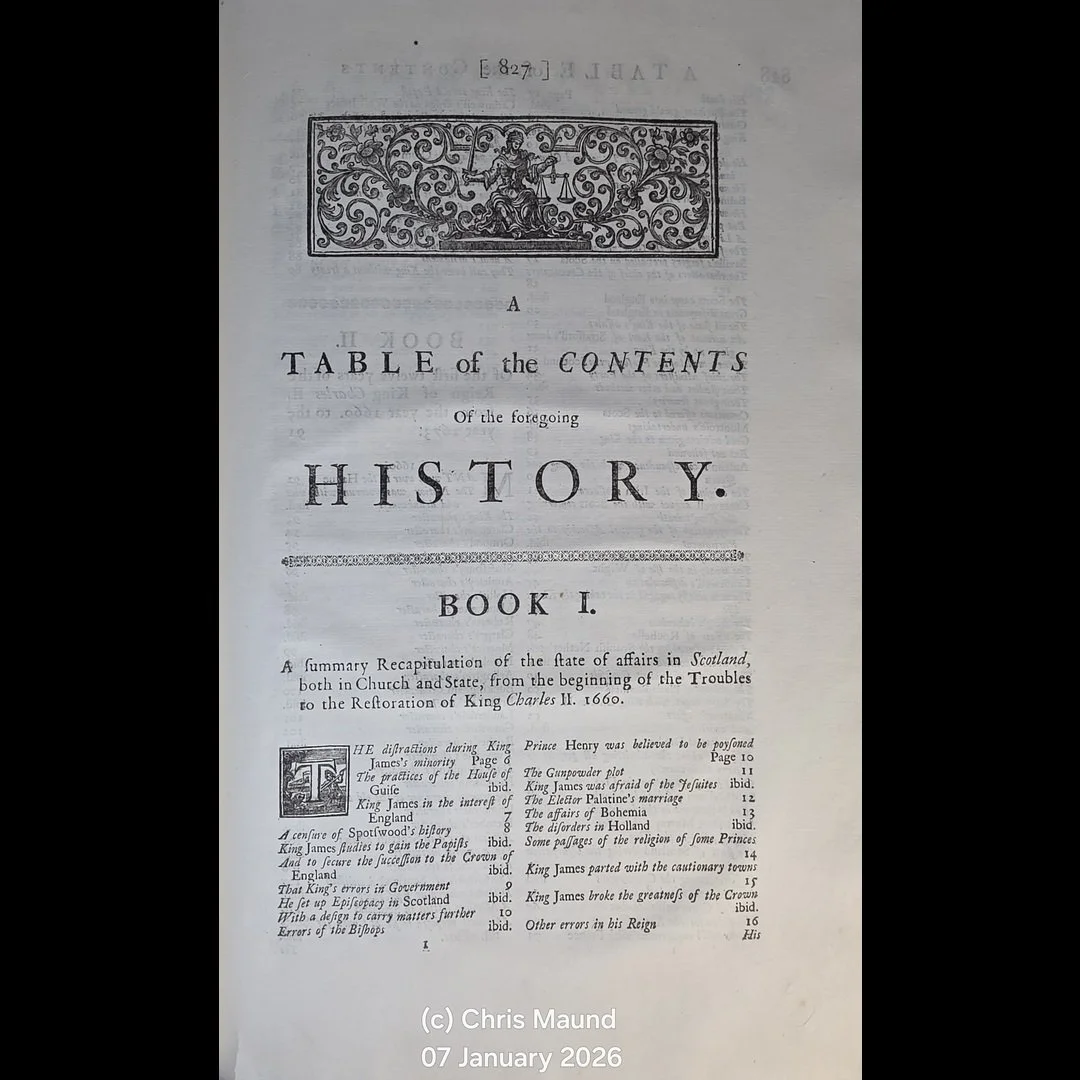
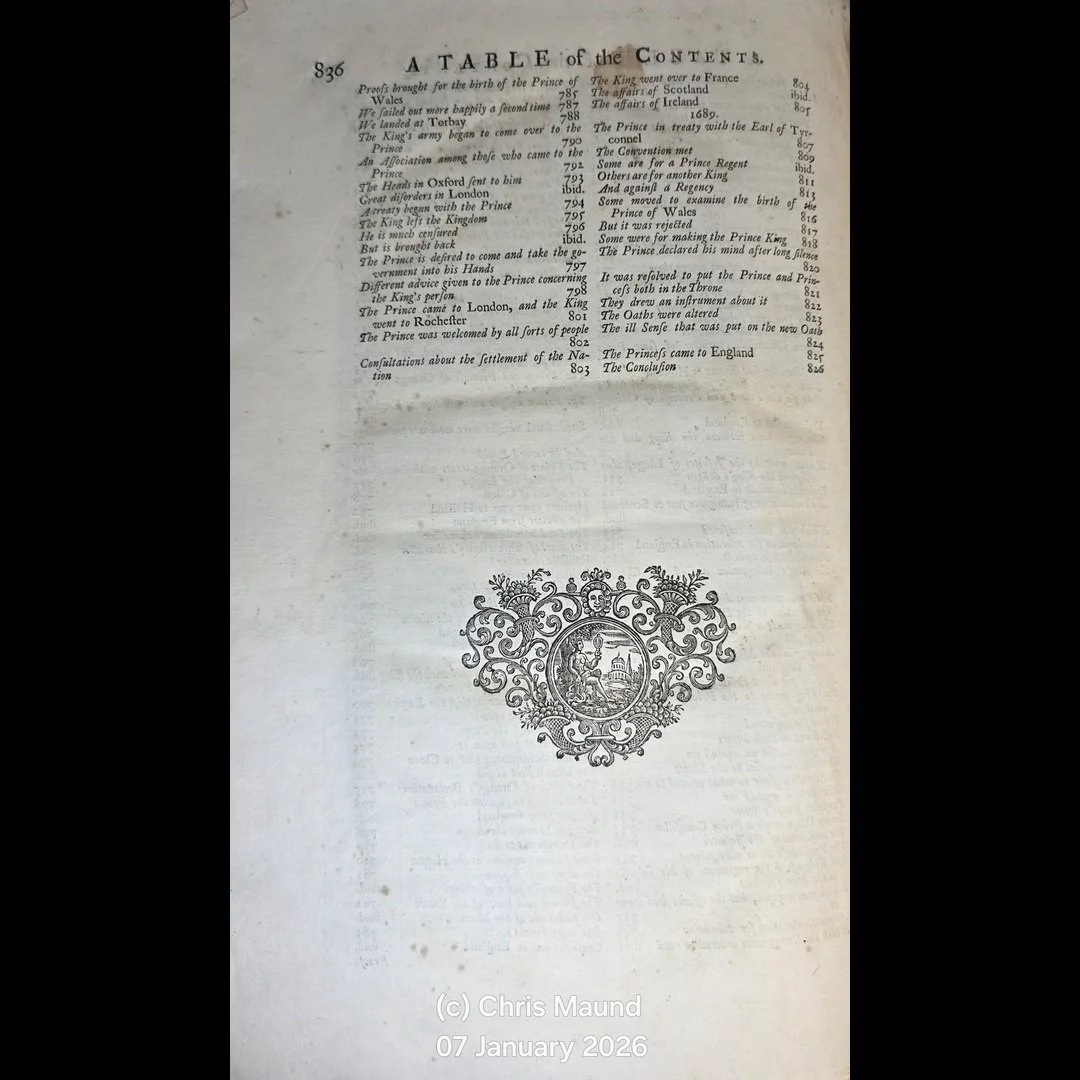
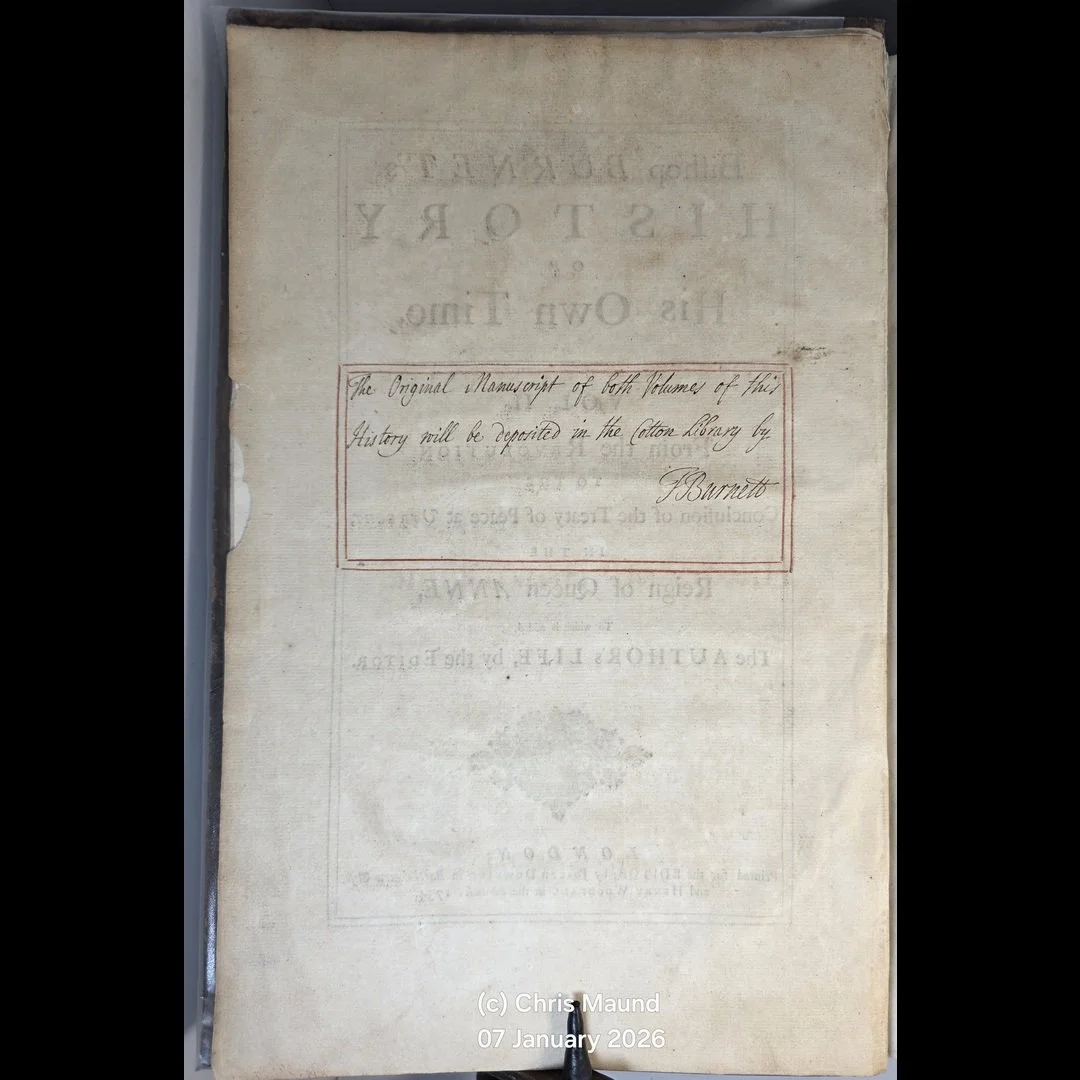
Internally, the book presents well. Engraved frontispiece present. Both principal title pages present and printed in red and black. Paper with general age-toning, scattered foxing and occasional spotting or marks, somewhat heavier to some preliminary leaves, together with minor marginal staining and handling wear. Printing remains generally crisp and strongly impressed, with generous margins.
An old bookseller/bibliographical catalogue clipping relating to this edition has been pasted onto a leaf in the Siren Latina section. The clipping refers to a separately described historical copy and is retained as part of this volume's ownership and collecting history; it should not be interpreted as provenance for the present copy.
A handsome and substantial copy of one of the major eighteenth-century scholarly editions of Petronius, particularly appealing for its contemporary blind-tooled vellum binding, engraved frontispiece, red-and-black titles and extensive apparatus of early modern classical scholarship.
Please see Photos as part of condition report.
REFERENCES
Eton College Library, B40583
WorldCat, Titi Petronii Arbitri Satyricôn quae supersunt, 1743
Bayerische Staatsbibliothek / Deutsche Digitale Bibliothek, 1743 Editio altera, Vols. I–II
Schweiger II, 725
Ebert 16524
Graesse V, 239
SYNOPSIS
The Satyricon is a fragmentary Latin prose-and-verse narrative generally attributed to Petronius and probably composed during the reign of Nero. Often described as the most substantial surviving example, alongside Apuleius’s Golden Ass, of what modern scholars call the Roman novel, it combines Menippean satire, prose narrative, verse, erotic comedy, literary parody and social observation.
Its narrator, Encolpius, travels through a chaotic world of rivals, lovers, opportunists, freedmen, scholars and impostors. The surviving narrative moves rapidly between farce, adventure and literary satire, with Petronius repeatedly parodying epic, rhetoric and contemporary intellectual pretension.
The most celebrated episode is the Dinner of Trimalchio, in which an enormously wealthy freedman stages a grotesquely elaborate banquet for his guests. Through Trimalchio and his circle, Petronius produces a vivid and frequently comic portrait of wealth, aspiration, dining, domestic life, slavery, education and social mobility in the early Roman Empire.
Because the surviving text preserves forms of speech and aspects of everyday behaviour rarely represented in elite Latin literature, the Satyricon is important not only as fiction but also as evidence for the social and linguistic world of imperial Rome.
AUTHOR BIO
Petronius Arbiter, traditionally identified with the Petronius described by Tacitus as the arbiter elegantiae at the court of the emperor Nero, died in AD 66. The precise identity of the author cannot be demonstrated beyond doubt, but the Neronian Petronius remains the generally accepted attribution for the Satyricon.
The surviving work is one of the most extraordinary texts of Roman literature: fragmentary, sophisticated and frequently comic, combining prose and verse with satire, adventure, literary parody and observations of Roman social life. Its best-known section, the Cena Trimalchionis, or Dinner of Trimalchio, offers a celebrated portrait of extravagant wealth, social ambition and conspicuous consumption in the Roman world.
Editor Bio
Pieter Burman the Elder (1668–1741) was one of the leading Dutch classical scholars of his generation and held professorships at Utrecht and Leiden. His editions of Latin authors were distinguished by their extensive collation of earlier scholarship, manuscript readings and textual commentary.
Burman’s first major recension of Petronius appeared at Utrecht in 1709. The present 1743 Editio altera represents the enlarged second edition of that work, incorporating additional scholarship and manuscript material. The edition was re-edited by Johann Jacob Reiske (1716–1774) and revised, with a new preface, by Pieter Burman’s son Caspar Burman (1695–1755).
ILLUSTRATOR
Jan Caspar Philips
Jan Caspar Philips (1690–1775) was a German-born engraver and draughtsman who settled in Amsterdam and became an active illustrator of Dutch books during the first half of the eighteenth century. Bibliographical records for this edition credit Philips with its illustration.

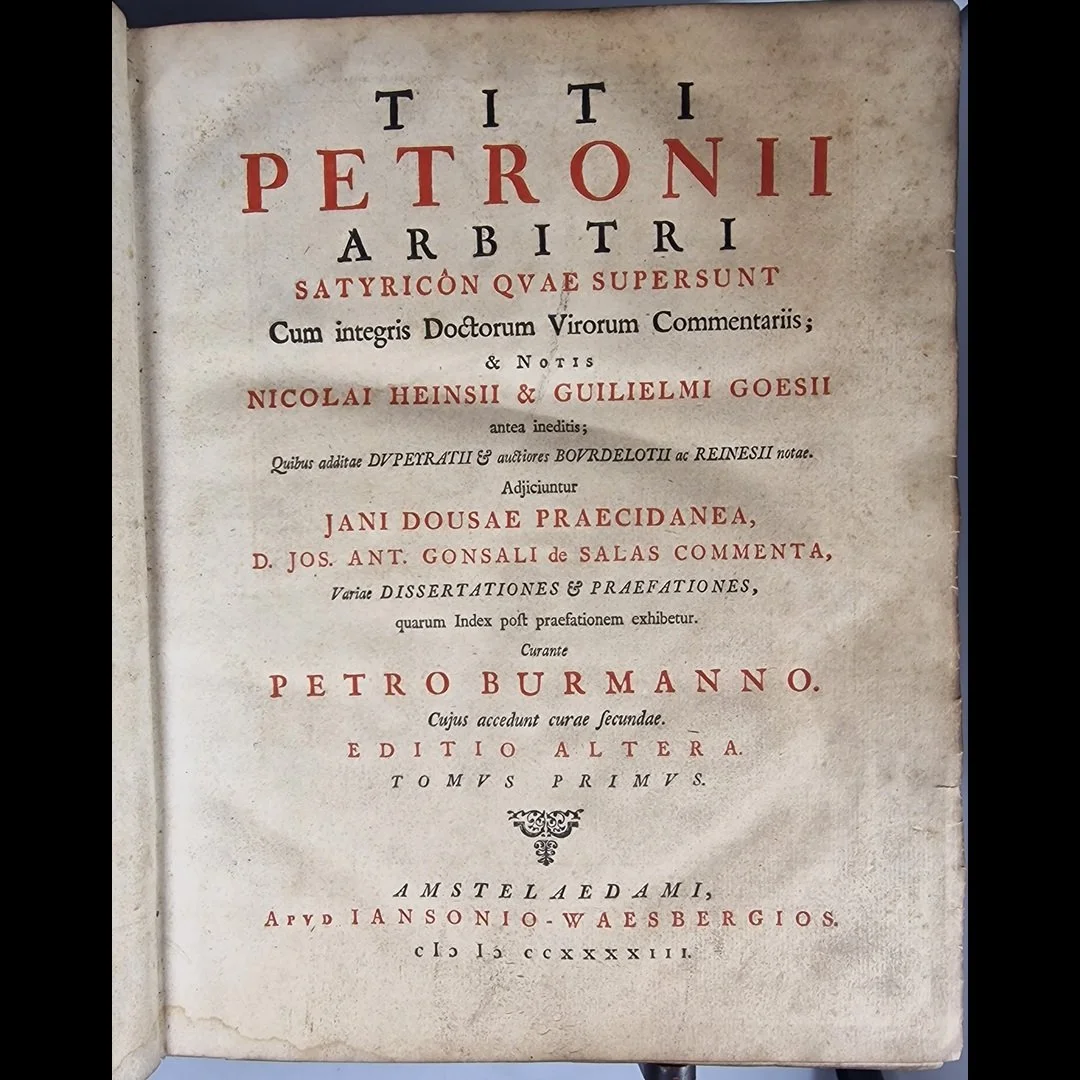 Image 1 of 16
 Image 2 of 16
 Image 3 of 16
 Image 4 of 16
 Image 5 of 16
 Image 6 of 16
 Image 7 of 16
 Image 8 of 16
 Image 9 of 16
 Image 10 of 16
 Image 11 of 16
 Image 12 of 16
 Image 13 of 16
 Image 14 of 16
 Image 15 of 16
 Image 16 of 16