1802 First Edition With Provenance; +Wales Music
THE BARDIC MUSEUM OF PRIMITIVE BRITISH LITERATURE
By Edward Jones
KEY DETAILS
Condition: Very Good
Format: Hardcover, quarto (4to 9 1⁄2 × 12 in 241 × 305 mm )
Note: Binding/size selection follows standard bibliographic conventions and is approximate; exact measurements may vary.
Published By: Printed by A. Strahan, Printer-Street, for the Author, London, 1802
Language: English
Illustrated By: Thomas Rowlandson
Provenance: Rev. Alfred Butler Clough, Fellow of Jesus College, Oxford, 1817–1839, and subsequently Rector of Braunston, Northamptonshire, 1838–1870.
Collation: xx, 112 pp., [1] hand-coloured etched frontispiece.
Dust Jacket: None, as issued, No Jacket
SKU: BTETM0002187
Shipping Info: Approximate Package Dimensions H: 12.5, L: 30, W: 25 (Units: cm), W: 2Kg
Tracked Shipping, Insurance Coverage as per Customer Request
DESCRIPTION
The Bardic Museum of Primitive British Literature
Forming the Second Volume of the Musical, Poetical, and Historical Relicks of the Welsh Bards and Druids
A handsome and culturally important first edition of Edward Jones’s The Bardic Museum (1802), one of the key early printed collections devoted to the preservation of Welsh bardic literature, antiquities and traditional music. Issued separately as the second volume of Jones’s great project on the Welsh Bards and Druids, the work brings together bardic triads, historic odes, songs and elegies, Arthurian material, early Mabinogi narrative, antiquarian observations, Welsh traditions and more than fifty pages of engraved music.
With the striking hand-coloured etched frontispiece by Thomas Rowlandson, after Julius Caesar Ibbetson and John Warwick Smith. The scene depicts the blind Welsh harpist John Smith performing on the shore of Llyn Peris, with Dolbadarn Castle and the mountains of North Wales beyond. The volume concludes with pp. 61–112 entirely devoted to engraved Welsh airs and bardic music, arranged with new basses and variations for harp or harpsichord, violin or flute.
This copy is particularly appealing for its early nineteenth-century dark morocco gilt binding, extensively decorated with a broad neo-classical gilt border, ornamental corner tools and a small central gilt lyre device, together with marbled endpapers. It also has distinguished contemporary provenance: the title bears the ownership inscription “A B Clough Jes. Coll. Oxon 1835”, accompanied by the engraved armorial bookplate of the Rev. Alfred Butler Clough of Jesus College, Oxford.
PROVENANCE
Rev. Alfred Butler Clough, Fellow of Jesus College, Oxford, 1817–1839, and subsequently Rector of Braunston, Northamptonshire, 1838–1870.
Ownership inscription to the head of the title: “A B Clough Jes. Coll. Oxon 1835.”
Engraved armorial bookplate of the Rev. Alfred Butler Clough, Jesus College, Oxford, with the motto Sine Macula Macla, to the front pastedown.
Clough’s dated inscription places the volume in his library while he was a Fellow of Jesus College. His papers and correspondence from this period are represented in the collections of the National Library of Wales.
CONDITION, COLLATION & COPY NOTES
A handsome early nineteenth-century dark morocco gilt binding, richly decorated with a broad neo-classical gilt border, corner ornaments and a small central lyre device to the upper board; spine gilt in compartments. Binding with overall rubbing, scuffing and surface scratching commensurate with age, wear to corners and extremities, and wear and losses at the head and foot of the spine. The gilt decoration nevertheless remains strong and attractive. Marbled endpapers present.
Armorial bookplate of the Rev. Alfred Butler Clough, Jesus College, Oxford, to the front pastedown. The title page additionally bears Clough’s contemporary ownership inscription, “A B Clough Jes. Coll. Oxon 1835.”
Hand-coloured Rowlandson frontispiece present, the impression strong and the colouring remaining attractive. Title page with a substantial irregular tear to the upper right corner, with slight loss and minimal involvement of text. Further tears to the upper corners of the Introduction, again with minimal textual loss. General age-toning, occasional light spotting and marks from use throughout, but the principal text remains substantially clean and clearly legible. The engraved music is generally well preserved, with strong impressions.
The main body of the volume remains sound and attractive, with the condition issues concentrated principally at the binding extremities and the damaged upper corners of the title and preliminary leaves. The period gilt binding, hand-coloured frontispiece and Clough provenance give the copy considerable visual and historical appeal.
Please see Photos as part of condition report.
REFERENCES
RISM J 612
Jackson, p. 260
LCCN 09013469
OCLC 5162553
Yale Center for British Art, Rare Books and Manuscripts, M1742.A2 J77 1802+
SYNOPSIS
The Bardic Museum was published in 1802 as the separately issued second volume of Edward Jones’s ambitious project to record and preserve the literary and musical inheritance of the Welsh Bards and Druids.
The literary portion ranges widely across the bardic triads, historic odes, eulogies, elegies and songs; memorials of warriors and ancient monuments; traditions relating to King Arthur and his knights; Welsh proverbs, customs and antiquities; and selections from early Welsh narrative, including material from the Mabinogi. Welsh and other original texts are accompanied where appropriate by English translations and historical commentary.
The second half of the volume is devoted to music. Pages 61–112 comprise engraved musical notation preserving traditional Welsh melodies and what Jones describes as the ancient war-tunes of the Bards, supplemented by new basses and variations suitable for harp or harpsichord, violin or flute.
Part antiquarian anthology, part literary sourcebook and part musical archive, The Bardic Museum represents an important Romantic-era attempt to rescue Welsh oral and manuscript traditions from disappearance. It remains of considerable interest to collectors of Welsh history, traditional music, harp literature, Arthurian material, early Celtic antiquarianism and Georgian illustrated books.
AUTHOR BIO
Edward Jones (1752–1824), commonly known as Bardd y Brenin, was a Welsh harpist, performer, composer, antiquarian and pioneering collector of traditional Welsh music. Born at Llandderfel near Bala, he became associated with the household of the Prince of Wales and devoted much of his career to recording music, poetry and traditions which might otherwise have disappeared from circulation.
Jones is principally remembered for three major collections: Musical and Poetical Relicks of the Welsh Bards (1784), The Bardic Museum (1802), and Hên Ganiadau Cymru (1820). Together they preserve a substantial body of Welsh melodies, literary traditions and antiquarian material and remain important early sources for the study of Welsh folk music and bardic culture.
ILLUSTRATOR
Thomas Rowlandson
Thomas Rowlandson, after Julius Caesar Ibbetson and John Warwick Smith
Thomas Rowlandson (1757–1827) was one of the most celebrated British draughtsmen, etchers and caricaturists of the Georgian period. Best known for his lively social satire and topographical work, he also produced book illustrations and landscape subjects of considerable delicacy.
For The Bardic Museum, Rowlandson etched the hand-coloured frontispiece from designs by Julius Caesar Ibbetson and John Warwick Smith. The landscape is based on Smith, while the figures derive from Ibbetson. The composition shows the blind harpist John Smith surrounded by listeners beside Llyn Peris, with Dolbadarn Castle in the distance.
1802 First Edition With Provenance; +Wales Music
THE BARDIC MUSEUM OF PRIMITIVE BRITISH LITERATURE
By Edward Jones
KEY DETAILS
Condition: Very Good
Format: Hardcover, quarto (4to 9 1⁄2 × 12 in 241 × 305 mm )
Note: Binding/size selection follows standard bibliographic conventions and is approximate; exact measurements may vary.
Published By: Printed by A. Strahan, Printer-Street, for the Author, London, 1802
Language: English
Illustrated By: Thomas Rowlandson
Provenance: Rev. Alfred Butler Clough, Fellow of Jesus College, Oxford, 1817–1839, and subsequently Rector of Braunston, Northamptonshire, 1838–1870.
Collation: xx, 112 pp., [1] hand-coloured etched frontispiece.
Dust Jacket: None, as issued, No Jacket
SKU: BTETM0002187
Shipping Info: Approximate Package Dimensions H: 12.5, L: 30, W: 25 (Units: cm), W: 2Kg
Tracked Shipping, Insurance Coverage as per Customer Request
DESCRIPTION
The Bardic Museum of Primitive British Literature
Forming the Second Volume of the Musical, Poetical, and Historical Relicks of the Welsh Bards and Druids
A handsome and culturally important first edition of Edward Jones’s The Bardic Museum (1802), one of the key early printed collections devoted to the preservation of Welsh bardic literature, antiquities and traditional music. Issued separately as the second volume of Jones’s great project on the Welsh Bards and Druids, the work brings together bardic triads, historic odes, songs and elegies, Arthurian material, early Mabinogi narrative, antiquarian observations, Welsh traditions and more than fifty pages of engraved music.
With the striking hand-coloured etched frontispiece by Thomas Rowlandson, after Julius Caesar Ibbetson and John Warwick Smith. The scene depicts the blind Welsh harpist John Smith performing on the shore of Llyn Peris, with Dolbadarn Castle and the mountains of North Wales beyond. The volume concludes with pp. 61–112 entirely devoted to engraved Welsh airs and bardic music, arranged with new basses and variations for harp or harpsichord, violin or flute.
This copy is particularly appealing for its early nineteenth-century dark morocco gilt binding, extensively decorated with a broad neo-classical gilt border, ornamental corner tools and a small central gilt lyre device, together with marbled endpapers. It also has distinguished contemporary provenance: the title bears the ownership inscription “A B Clough Jes. Coll. Oxon 1835”, accompanied by the engraved armorial bookplate of the Rev. Alfred Butler Clough of Jesus College, Oxford.
PROVENANCE
Rev. Alfred Butler Clough, Fellow of Jesus College, Oxford, 1817–1839, and subsequently Rector of Braunston, Northamptonshire, 1838–1870.
Ownership inscription to the head of the title: “A B Clough Jes. Coll. Oxon 1835.”
Engraved armorial bookplate of the Rev. Alfred Butler Clough, Jesus College, Oxford, with the motto Sine Macula Macla, to the front pastedown.
Clough’s dated inscription places the volume in his library while he was a Fellow of Jesus College. His papers and correspondence from this period are represented in the collections of the National Library of Wales.
CONDITION, COLLATION & COPY NOTES
A handsome early nineteenth-century dark morocco gilt binding, richly decorated with a broad neo-classical gilt border, corner ornaments and a small central lyre device to the upper board; spine gilt in compartments. Binding with overall rubbing, scuffing and surface scratching commensurate with age, wear to corners and extremities, and wear and losses at the head and foot of the spine. The gilt decoration nevertheless remains strong and attractive. Marbled endpapers present.
Armorial bookplate of the Rev. Alfred Butler Clough, Jesus College, Oxford, to the front pastedown. The title page additionally bears Clough’s contemporary ownership inscription, “A B Clough Jes. Coll. Oxon 1835.”
Hand-coloured Rowlandson frontispiece present, the impression strong and the colouring remaining attractive. Title page with a substantial irregular tear to the upper right corner, with slight loss and minimal involvement of text. Further tears to the upper corners of the Introduction, again with minimal textual loss. General age-toning, occasional light spotting and marks from use throughout, but the principal text remains substantially clean and clearly legible. The engraved music is generally well preserved, with strong impressions.
The main body of the volume remains sound and attractive, with the condition issues concentrated principally at the binding extremities and the damaged upper corners of the title and preliminary leaves. The period gilt binding, hand-coloured frontispiece and Clough provenance give the copy considerable visual and historical appeal.
Please see Photos as part of condition report.
REFERENCES
RISM J 612
Jackson, p. 260
LCCN 09013469
OCLC 5162553
Yale Center for British Art, Rare Books and Manuscripts, M1742.A2 J77 1802+
SYNOPSIS
The Bardic Museum was published in 1802 as the separately issued second volume of Edward Jones’s ambitious project to record and preserve the literary and musical inheritance of the Welsh Bards and Druids.
The literary portion ranges widely across the bardic triads, historic odes, eulogies, elegies and songs; memorials of warriors and ancient monuments; traditions relating to King Arthur and his knights; Welsh proverbs, customs and antiquities; and selections from early Welsh narrative, including material from the Mabinogi. Welsh and other original texts are accompanied where appropriate by English translations and historical commentary.
The second half of the volume is devoted to music. Pages 61–112 comprise engraved musical notation preserving traditional Welsh melodies and what Jones describes as the ancient war-tunes of the Bards, supplemented by new basses and variations suitable for harp or harpsichord, violin or flute.
Part antiquarian anthology, part literary sourcebook and part musical archive, The Bardic Museum represents an important Romantic-era attempt to rescue Welsh oral and manuscript traditions from disappearance. It remains of considerable interest to collectors of Welsh history, traditional music, harp literature, Arthurian material, early Celtic antiquarianism and Georgian illustrated books.
AUTHOR BIO
Edward Jones (1752–1824), commonly known as Bardd y Brenin, was a Welsh harpist, performer, composer, antiquarian and pioneering collector of traditional Welsh music. Born at Llandderfel near Bala, he became associated with the household of the Prince of Wales and devoted much of his career to recording music, poetry and traditions which might otherwise have disappeared from circulation.
Jones is principally remembered for three major collections: Musical and Poetical Relicks of the Welsh Bards (1784), The Bardic Museum (1802), and Hên Ganiadau Cymru (1820). Together they preserve a substantial body of Welsh melodies, literary traditions and antiquarian material and remain important early sources for the study of Welsh folk music and bardic culture.
ILLUSTRATOR
Thomas Rowlandson
Thomas Rowlandson, after Julius Caesar Ibbetson and John Warwick Smith
Thomas Rowlandson (1757–1827) was one of the most celebrated British draughtsmen, etchers and caricaturists of the Georgian period. Best known for his lively social satire and topographical work, he also produced book illustrations and landscape subjects of considerable delicacy.
For The Bardic Museum, Rowlandson etched the hand-coloured frontispiece from designs by Julius Caesar Ibbetson and John Warwick Smith. The landscape is based on Smith, while the figures derive from Ibbetson. The composition shows the blind harpist John Smith surrounded by listeners beside Llyn Peris, with Dolbadarn Castle in the distance.

 Image 1 of 19
 Image 2 of 19
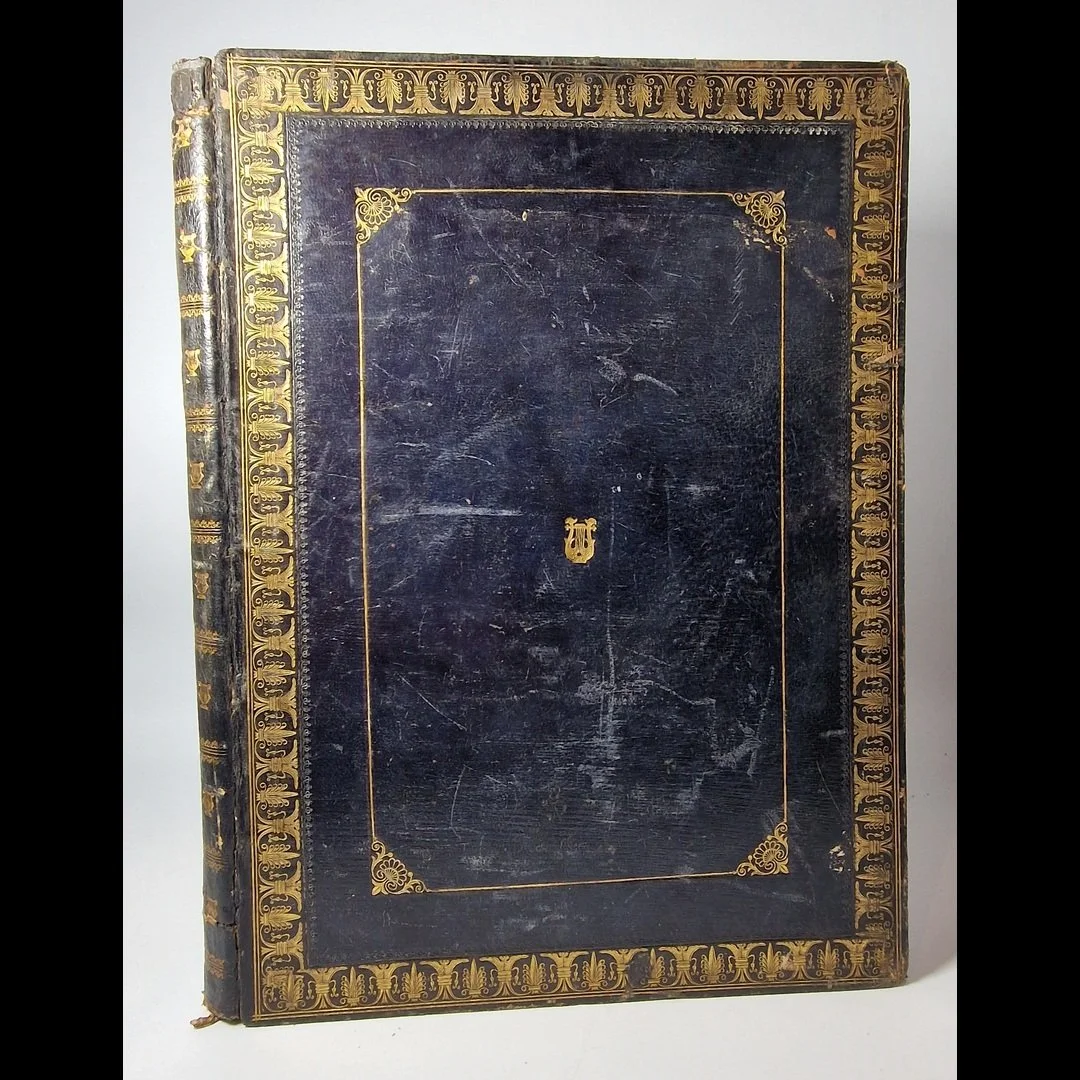 Image 3 of 19
 Image 4 of 19
 Image 5 of 19
 Image 6 of 19
 Image 7 of 19
 Image 8 of 19
 Image 9 of 19
 Image 10 of 19
 Image 11 of 19
 Image 12 of 19
 Image 13 of 19
 Image 14 of 19
 Image 15 of 19
 Image 16 of 19
 Image 17 of 19
 Image 18 of 19
 Image 19 of 19