Sale Price:
£325.00
Original Price:
£410.00
1912 SECOND IMPRESSION OF THE FIRST ILLUSTRATED EDITION 2nd Printing
THE LIFE OF THE BEE
By Maurice Maeterlinck
KEY DETAILS
Condition: Very Good
Format: Hardcover, quarto (4to 9 1⁄2 × 12 in 241 × 305 mm )
Note: Binding/size selection follows standard bibliographic conventions and is approximate; exact measurements may vary.
Published By: George Allen & Co. Ltd., London, 1912
Language: English
Illustrated By: Edward J. Detmold
Provenance: This copy retains an interesting South African provenance: a Cape of Good Hope Department of Public Education prize label to the front free endpaper, awarded to Harry Simpson of S.A.C. High School, Cape Town.
Collation: vii, 235 pp.; 13 mounted colour plates by Edward J. Detmold, all present.
Dust Jacket: None, as issued, No Jacket
SKU: BTETM0002203
Shipping Info: Approximate Package Dimensions H: 12.5, L: 30, W: 25 (Units: cm), W: 3Kg
Tracked Shipping, Insurance Coverage as per Customer Request
DESCRIPTION
The Life of the Bee
Illustrated with 13 mounted colour plates by Edward J. Detmold
Translated by Alfred Sutro
An attractive example of Maurice Maeterlinck's celebrated The Life of the Bee, in the large-format illustrated edition designed around the work of Edward J. Detmold, one of the outstanding British animal and natural-history illustrators of the early twentieth century.
First issued in this illustrated form in October 1911, this copy is from the second impression, June 1912. Bound in the publisher's striking cream pictorial cloth with extensive gilt decoration to the upper board and spine, the volume contains the complete suite of 13 mounted colour plates by Detmold, all present.
Published shortly after Maeterlinck was awarded the 1911 Nobel Prize in Literature, the edition brings together one of his best-known philosophical works with some of Detmold's most imaginative natural-history illustration. The combination of decorative binding, large format and mounted colour plates gives the book considerable visual appeal.
PROVENANCE
This copy retains an interesting South African provenance: a Cape of Good Hope Department of Public Education prize label to the front free endpaper, awarded to Harry Simpson of S.A.C. High School, Cape Town.
CONDITION, COLLATION & COPY NOTES
A sound and visually attractive copy in the publisher's original cream cloth, elaborately decorated and lettered in gilt. The gilt decoration to the upper board remains bright and presents particularly well. Binding with general age-soiling and handling marks to the pale cloth, together with rubbing and bumping to the extremities. The head and tail of the spine show wear and some fraying, with further light rubbing to the corners.
Internally generally clean, with expected age-toning and occasional light spotting or marking, including some spotting to the margins and mounts surrounding the colour illustrations.
Complete with all 13 mounted colour plates by Edward J. Detmold. The mounted plate “The Old Bee-Keeper” has a marginal tear. The remaining plates present attractively, retaining strong colour.
To the front free endpaper is a Department of Public Education, Cape of Good Hope prize label, awarded to Harry Simpson, S.A.C. High School, Cape Town, adding an identifiable early South African provenance to the volume.
Please see Photos as part of condition report.
REFERENCES
British Bee Books: A Bibliography 1500–1976, International Bee Research Association, 1979, no. 422.
OCLC 8666553.
Biodiversity Heritage Library, DOI 10.5962/bhl.title.56556.
SYNOPSIS
Edition Note
Maeterlinck's The Life of the Bee had appeared in English before this edition, but the book was newly reset and issued in a substantial illustrated format by George Allen & Co. in October 1911, with Edward J. Detmold's suite of mounted colour illustrations. This copy belongs to the June 1912 second impression of that illustrated edition.
The Life of the Bee occupies an unusual territory between natural history, philosophical essay and literary meditation.
Drawing upon his observation of bees and beekeeping, Maeterlinck follows the life of the colony through the swarm, the founding of a new hive, the emergence and rivalry of young queens, the nuptial flight, the fate of the drones and the continuing development of the community.
His interest, however, extends far beyond entomology. The extraordinary organisation of the hive becomes a means of considering instinct, intelligence, social order, sacrifice, reproduction, mortality and the relationship between the individual and the collective.
The result is not primarily a practical manual of apiculture, but a poetic study of the bee as both natural organism and philosophical subject. Detmold's illustrations complement that approach particularly well: some record flowers and individual insects with delicacy, while others transform the hidden world of the hive into dramatic and almost architectural scenes.
AUTHOR BIO
Maurice Maeterlinck (1862–1949) was a Belgian playwright, poet and essayist and one of the major figures associated with European Symbolism. Writing principally in French, his work explored mortality, fate, nature, consciousness and the unseen forces shaping human existence.
He was awarded the Nobel Prize in Literature in 1911, recognising the imaginative and philosophical character of his literary work. Alongside his drama and poetry, Maeterlinck produced a series of influential prose works concerned with the natural world, of which The Life of the Bee became the most widely known.
Translator Bio
Alfred Sutro (1863–1933) was an English playwright and translator. He became closely associated with Maeterlinck's work in the English-speaking world through his translations of several of the Belgian writer's books and plays, including The Life of the Bee.
ILLUSTRATOR
Edward J. Detmold
Edward Julius Detmold (1883–1957) was a British illustrator and printmaker celebrated particularly for his depictions of animals, birds, insects and plants.
Edward and his twin brother Charles Maurice Detmold (1883–1908) demonstrated remarkable artistic ability from an early age, mastering etching, watercolour and colour-printing techniques and producing their own proofs. Their early work shows a strong interest in both close natural observation and Japanese-influenced decorative composition.
Following Charles's death, Edward continued independently and became one of the most distinctive illustrators of the early twentieth century. His work combines precise observation with rich colour, stylised composition and elements of fantasy. His illustrations for The Life of the Bee rank among his characteristic achievements, ranging from delicate botanical studies to dramatic and imaginative scenes of life within the hive.
1912 SECOND IMPRESSION OF THE FIRST ILLUSTRATED EDITION 2nd Printing
THE LIFE OF THE BEE
By Maurice Maeterlinck
KEY DETAILS
Condition: Very Good
Format: Hardcover, quarto (4to 9 1⁄2 × 12 in 241 × 305 mm )
Note: Binding/size selection follows standard bibliographic conventions and is approximate; exact measurements may vary.
Published By: George Allen & Co. Ltd., London, 1912
Language: English
Illustrated By: Edward J. Detmold
Provenance: This copy retains an interesting South African provenance: a Cape of Good Hope Department of Public Education prize label to the front free endpaper, awarded to Harry Simpson of S.A.C. High School, Cape Town.
Collation: vii, 235 pp.; 13 mounted colour plates by Edward J. Detmold, all present.
Dust Jacket: None, as issued, No Jacket
SKU: BTETM0002203
Shipping Info: Approximate Package Dimensions H: 12.5, L: 30, W: 25 (Units: cm), W: 3Kg
Tracked Shipping, Insurance Coverage as per Customer Request
DESCRIPTION
The Life of the Bee
Illustrated with 13 mounted colour plates by Edward J. Detmold
Translated by Alfred Sutro
An attractive example of Maurice Maeterlinck's celebrated The Life of the Bee, in the large-format illustrated edition designed around the work of Edward J. Detmold, one of the outstanding British animal and natural-history illustrators of the early twentieth century.
First issued in this illustrated form in October 1911, this copy is from the second impression, June 1912. Bound in the publisher's striking cream pictorial cloth with extensive gilt decoration to the upper board and spine, the volume contains the complete suite of 13 mounted colour plates by Detmold, all present.
Published shortly after Maeterlinck was awarded the 1911 Nobel Prize in Literature, the edition brings together one of his best-known philosophical works with some of Detmold's most imaginative natural-history illustration. The combination of decorative binding, large format and mounted colour plates gives the book considerable visual appeal.
PROVENANCE
This copy retains an interesting South African provenance: a Cape of Good Hope Department of Public Education prize label to the front free endpaper, awarded to Harry Simpson of S.A.C. High School, Cape Town.
CONDITION, COLLATION & COPY NOTES
A sound and visually attractive copy in the publisher's original cream cloth, elaborately decorated and lettered in gilt. The gilt decoration to the upper board remains bright and presents particularly well. Binding with general age-soiling and handling marks to the pale cloth, together with rubbing and bumping to the extremities. The head and tail of the spine show wear and some fraying, with further light rubbing to the corners.
Internally generally clean, with expected age-toning and occasional light spotting or marking, including some spotting to the margins and mounts surrounding the colour illustrations.
Complete with all 13 mounted colour plates by Edward J. Detmold. The mounted plate “The Old Bee-Keeper” has a marginal tear. The remaining plates present attractively, retaining strong colour.
To the front free endpaper is a Department of Public Education, Cape of Good Hope prize label, awarded to Harry Simpson, S.A.C. High School, Cape Town, adding an identifiable early South African provenance to the volume.
Please see Photos as part of condition report.
REFERENCES
British Bee Books: A Bibliography 1500–1976, International Bee Research Association, 1979, no. 422.
OCLC 8666553.
Biodiversity Heritage Library, DOI 10.5962/bhl.title.56556.
SYNOPSIS
Edition Note
Maeterlinck's The Life of the Bee had appeared in English before this edition, but the book was newly reset and issued in a substantial illustrated format by George Allen & Co. in October 1911, with Edward J. Detmold's suite of mounted colour illustrations. This copy belongs to the June 1912 second impression of that illustrated edition.
The Life of the Bee occupies an unusual territory between natural history, philosophical essay and literary meditation.
Drawing upon his observation of bees and beekeeping, Maeterlinck follows the life of the colony through the swarm, the founding of a new hive, the emergence and rivalry of young queens, the nuptial flight, the fate of the drones and the continuing development of the community.
His interest, however, extends far beyond entomology. The extraordinary organisation of the hive becomes a means of considering instinct, intelligence, social order, sacrifice, reproduction, mortality and the relationship between the individual and the collective.
The result is not primarily a practical manual of apiculture, but a poetic study of the bee as both natural organism and philosophical subject. Detmold's illustrations complement that approach particularly well: some record flowers and individual insects with delicacy, while others transform the hidden world of the hive into dramatic and almost architectural scenes.
AUTHOR BIO
Maurice Maeterlinck (1862–1949) was a Belgian playwright, poet and essayist and one of the major figures associated with European Symbolism. Writing principally in French, his work explored mortality, fate, nature, consciousness and the unseen forces shaping human existence.
He was awarded the Nobel Prize in Literature in 1911, recognising the imaginative and philosophical character of his literary work. Alongside his drama and poetry, Maeterlinck produced a series of influential prose works concerned with the natural world, of which The Life of the Bee became the most widely known.
Translator Bio
Alfred Sutro (1863–1933) was an English playwright and translator. He became closely associated with Maeterlinck's work in the English-speaking world through his translations of several of the Belgian writer's books and plays, including The Life of the Bee.
ILLUSTRATOR
Edward J. Detmold
Edward Julius Detmold (1883–1957) was a British illustrator and printmaker celebrated particularly for his depictions of animals, birds, insects and plants.
Edward and his twin brother Charles Maurice Detmold (1883–1908) demonstrated remarkable artistic ability from an early age, mastering etching, watercolour and colour-printing techniques and producing their own proofs. Their early work shows a strong interest in both close natural observation and Japanese-influenced decorative composition.
Following Charles's death, Edward continued independently and became one of the most distinctive illustrators of the early twentieth century. His work combines precise observation with rich colour, stylised composition and elements of fantasy. His illustrations for The Life of the Bee rank among his characteristic achievements, ranging from delicate botanical studies to dramatic and imaginative scenes of life within the hive.

 Image 1 of 19
 Image 2 of 19
 Image 3 of 19
 Image 4 of 19
 Image 5 of 19
 Image 6 of 19
 Image 7 of 19
 Image 8 of 19
 Image 9 of 19
 Image 10 of 19
 Image 11 of 19
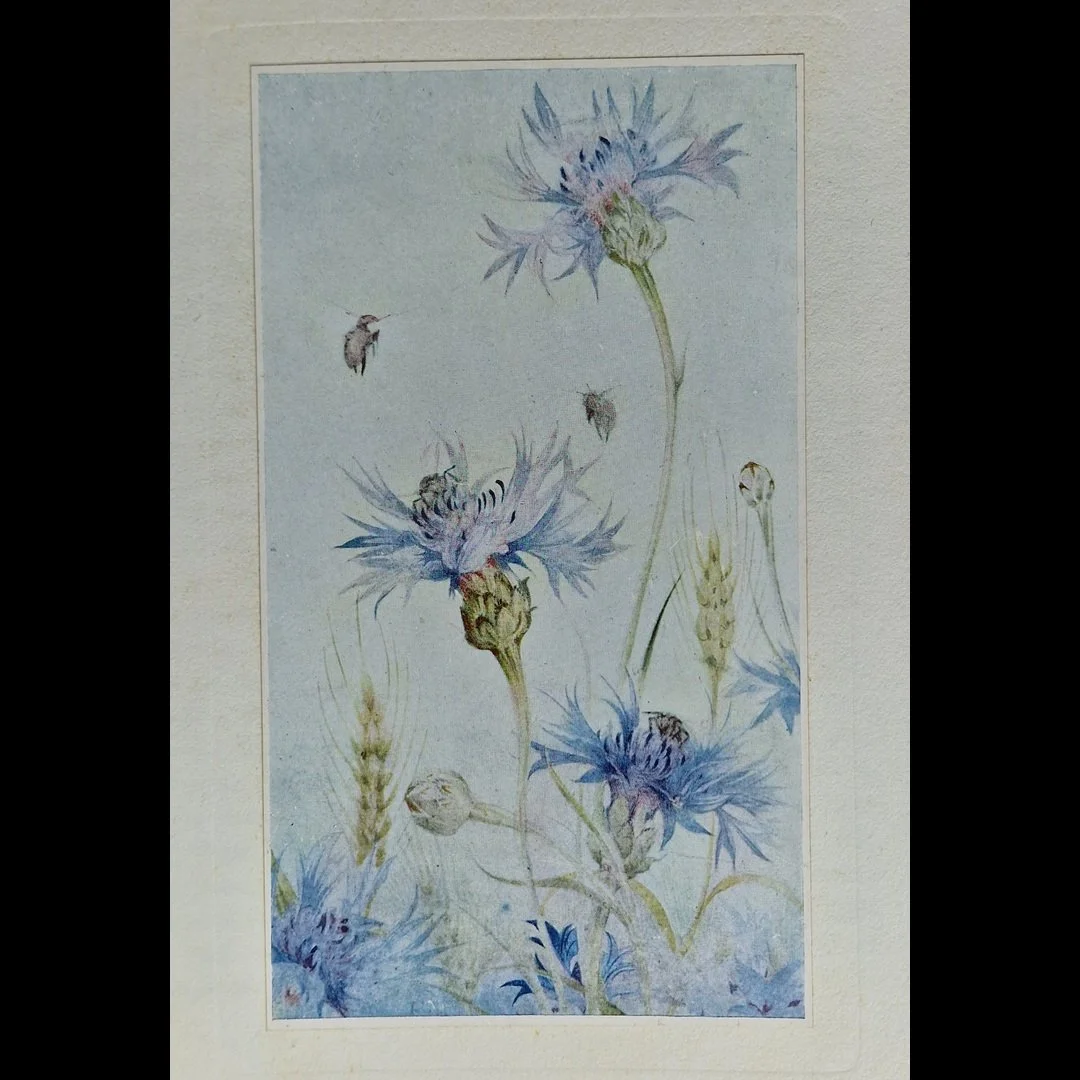 Image 12 of 19
 Image 13 of 19
 Image 14 of 19
 Image 15 of 19
 Image 16 of 19
 Image 17 of 19
 Image 18 of 19
 Image 19 of 19