Sale Price:
£150.00
Original Price:
£180.00
1802 First Edition
PHYSIOGNOMICAL SKETCHES
By Johann Caspar Lavater
KEY DETAILS
Condition: Good
Format: Half Morocco, folio (fo 12 × 19 in 305 × 483 mm )
Note: Binding/size selection follows standard bibliographic conventions and is approximate; exact measurements may vary.
Published By: sold by R.H. Westley, No. 159 Strand; J. Luffman, No. 28 Little Bell Alley, Coleman Street; and Murray & Highley, No. 32 Fleet Street, London, 1802
Language: English
Illustrated By: John Luffman
Collation: [1] engraved title leaf; 4 pp. Biographical Account of Lavater; 50 engraved plates
Dust Jacket: None, as issued, No Jacket
SKU: BTETM0002207
Shipping Info: Approximate Package Dimensions H: 12.5, L: 30, W: 25 (Units: cm), W: 2Kg
Tracked Shipping, Insurance Coverage as per Customer Request
DESCRIPTION
Physiognomical Sketches
Engraved from the Original Drawings by John Luffman
A striking and uncommon large-format collection of Johann Caspar Lavater’s physiognomic studies, engraved from his original drawings by the London engraver and cartographer John Luffman and issued in 1802.
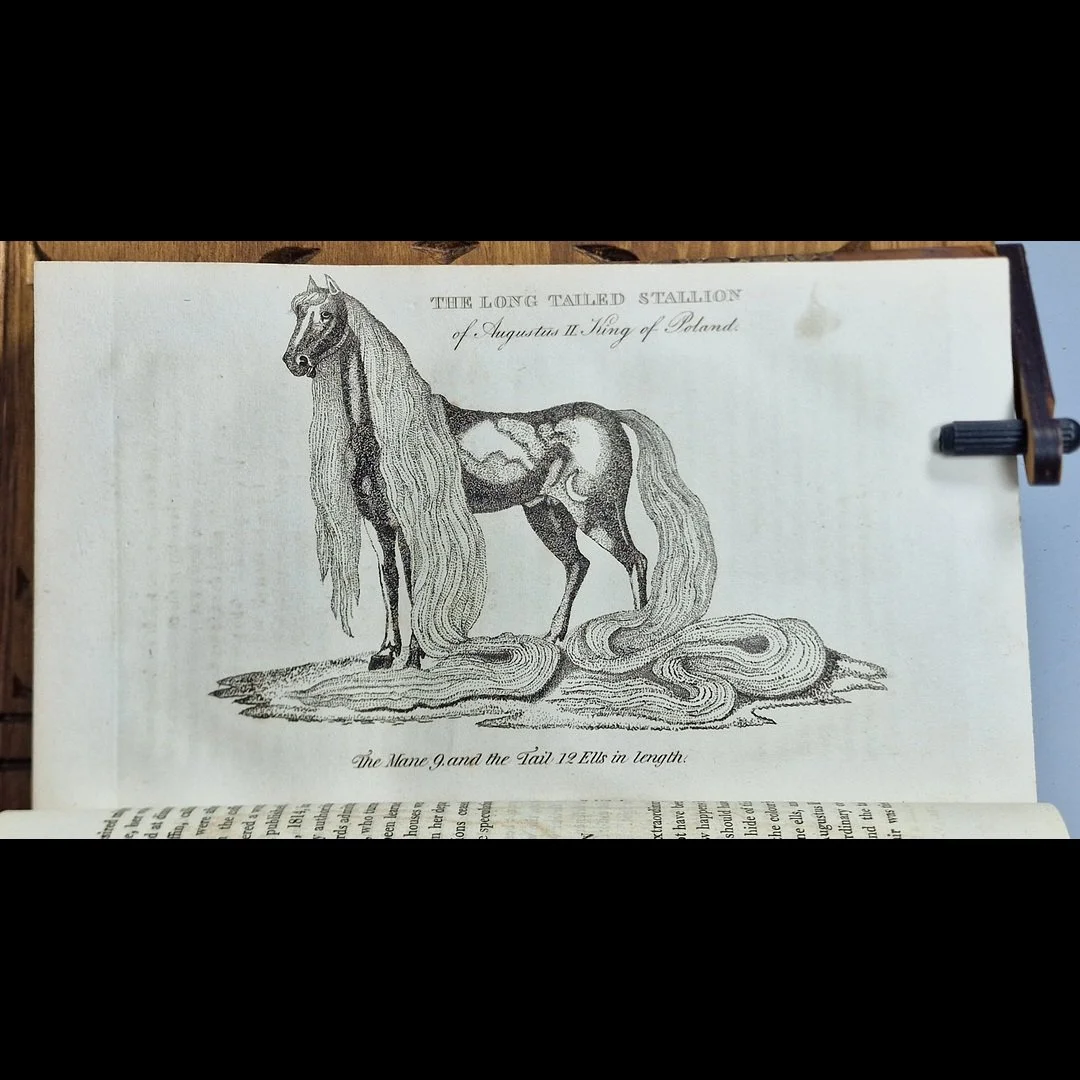
Comprising 50 large engraved plates, the volume presents an extraordinary visual survey of Lavater’s theories of physiognomy: profile studies, expressive heads, full-length figures and character types are accompanied by brief observations, frequently in both French and English, interpreting features, posture and expression as outward signs of temperament and character.
Published shortly after Lavater’s death, Physiognomical Sketches distils into a highly visual form the ideas that made him one of the most influential—and controversial—writers on the human face in eighteenth-century Europe. The work is particularly appealing today as an artefact of the histories of psychology, portraiture, silhouette, caricature and the classification of human character.
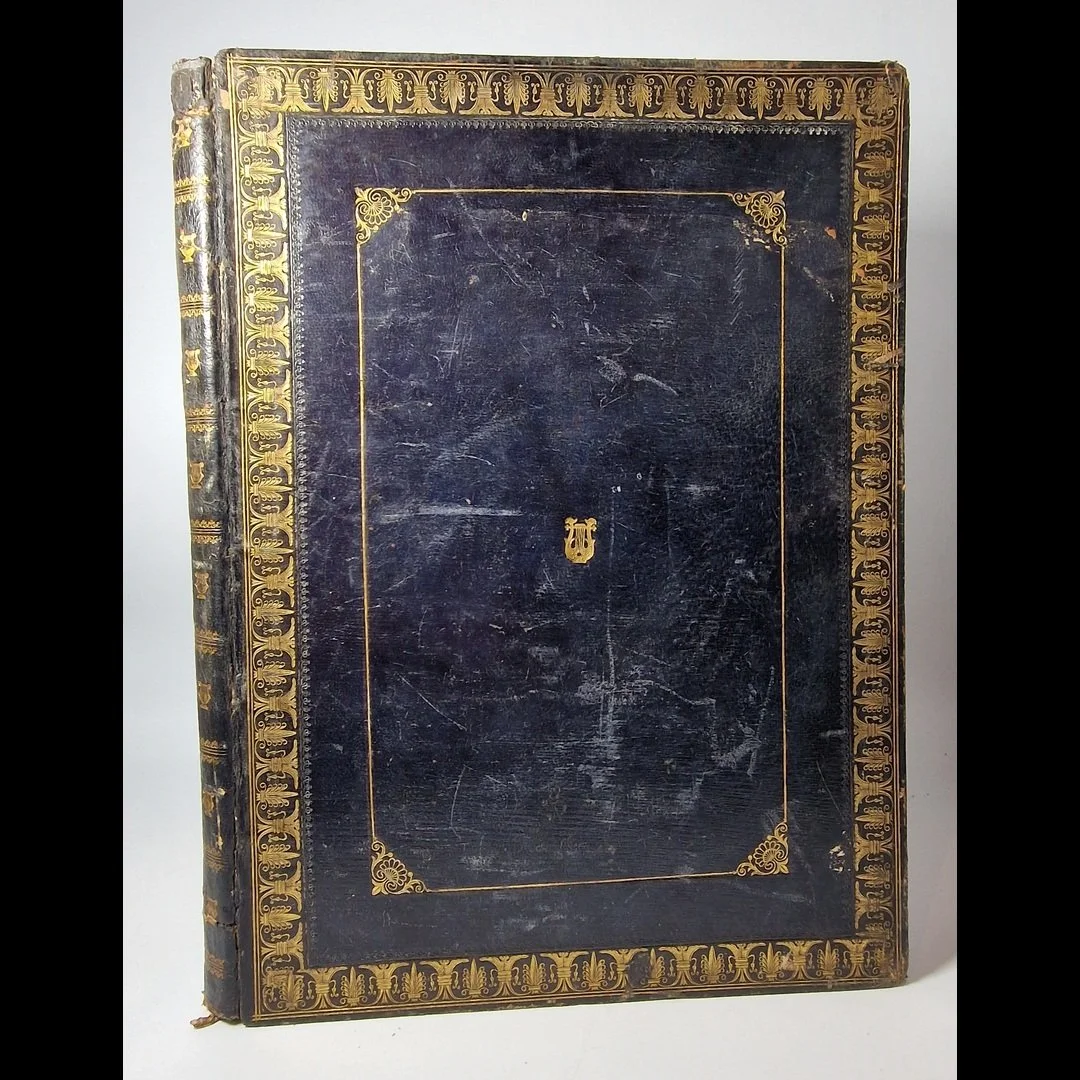
An attractive copy in near-contemporary straight-grain half morocco over marbled paper-covered boards, with gilt spine lettering and decoration. The engravings retain strong impressions and considerable graphic presence despite scattered foxing and historic marginal damp-staining.
CONDITION, COLLATION & COPY NOTES
A sound and visually appealing large folio in near-contemporary straight-grain half morocco over marbled paper-covered boards. Binding with rubbing and surface wear to the leather, particularly at the spine, joints and extremities, with expected edge and corner wear. Gilt spine title and ornamental tooling remain present and attractive.
Engraved title-page present, followed by the four-page Biographical Account of Lavater and the complete suite of 50 engraved plates by John Luffman after Lavater’s original drawings.
Internally with widespread scattered spotting, foxing and areas of browning, together with old marginal damp-staining affecting a number of leaves and plates. The damp-staining is most noticeable at portions of the upper and outer margins and is more pronounced on some plates than others. The engraved subjects themselves generally remain clear, with strong lines and good visual definition.
Old ink ownership inscription to the front pastedown. Paper with expected age-toning and occasional handling marks consistent with a large illustrated volume of the period.
A complete and evocative copy of a scarce early nineteenth-century illustrated work on physiognomy, retaining all 50 plates and an attractive period binding. The foxing and historic damp-staining are clearly visible in the photographs and are reflected in the condition grade.
Please see Photos as part of condition report.
SYNOPSIS
Physiognomical Sketches is a visual compendium of Johann Caspar Lavater’s theories concerning physiognomy—the historical belief that aspects of a person’s temperament, intellect and moral character might be inferred from the appearance of the face and body.
Rather than presenting Lavater’s system as an extended theoretical treatise, this volume communicates his ideas principally through images. Across fifty engraved plates, the reader encounters heads and profiles, seated and standing figures, classical and contemporary subjects, and studies of gesture, bearing and expression. These are accompanied by short assessments of qualities such as wisdom, prudence, energy, sensuality, melancholy, simplicity, strength and weakness.
Lavater placed particular emphasis upon the profile, forehead, eyes, nose, mouth and chin, believing their proportions and relationships could reveal individual character. His fascination with outlines also helped popularise the silhouette as a means of reducing the human profile to what he considered its most essential and legible form.
The resulting plates occupy a fascinating position between portraiture, psychology, aesthetics and pseudoscience. Their subjects are at times idealised, at times sharply observed and occasionally approaching caricature, making the volume visually compelling even apart from Lavater’s theories.
Published in London shortly after Lavater’s death, and engraved from his original drawings by John Luffman, this substantial folio preserves the highly visual character of Lavater’s physiognomic project. It is an evocative document of the Enlightenment-era desire to classify human nature through observation, and of a system of thought that went on to influence portraiture, silhouette, caricature and ideas about character well into the nineteenth century.
AUTHOR BIO
Johann Caspar Lavater (1741–1801) was a Swiss Reformed pastor, theologian, poet, writer and one of the most celebrated proponents of physiognomy in eighteenth-century Europe.
His best-known work, Physiognomische Fragmente zur Beförderung der Menschenkenntnis und Menschenliebe, published between 1775 and 1778, attempted to establish relationships between outward physical appearance and individual temperament or moral character. Lavater’s theories attracted enormous contemporary interest and helped make the profile portrait and silhouette important instruments in the visual culture of physiognomy.
Although physiognomy is now recognised as a pseudoscientific system, Lavater’s writings exerted a substantial influence upon European art, literature, portraiture and early theories of personality. His work remains an important document in the history of attempts to interpret and classify human character through appearance.
ILLUSTRATOR
John Luffman
John Luffman (1751–1821) was a London engraver, cartographer, publisher, bookseller, author and geographer. Active from the 1770s into the early nineteenth century, he produced maps, atlases, plans, topical prints and engraved publications from a succession of London addresses.
Luffman is particularly associated with engraved cartography and is known for his New Pocket Atlas and Geography of England and Wales. In the present volume he translated Lavater’s drawings into a substantial sequence of fifty large engraved plates, many preserving the appearance of Lavater’s handwritten observations alongside their English interpretations.
1802 First Edition
PHYSIOGNOMICAL SKETCHES
By Johann Caspar Lavater
KEY DETAILS
Condition: Good
Format: Half Morocco, folio (fo 12 × 19 in 305 × 483 mm )
Note: Binding/size selection follows standard bibliographic conventions and is approximate; exact measurements may vary.
Published By: sold by R.H. Westley, No. 159 Strand; J. Luffman, No. 28 Little Bell Alley, Coleman Street; and Murray & Highley, No. 32 Fleet Street, London, 1802
Language: English
Illustrated By: John Luffman
Collation: [1] engraved title leaf; 4 pp. Biographical Account of Lavater; 50 engraved plates
Dust Jacket: None, as issued, No Jacket
SKU: BTETM0002207
Shipping Info: Approximate Package Dimensions H: 12.5, L: 30, W: 25 (Units: cm), W: 2Kg
Tracked Shipping, Insurance Coverage as per Customer Request
DESCRIPTION
Physiognomical Sketches
Engraved from the Original Drawings by John Luffman
A striking and uncommon large-format collection of Johann Caspar Lavater’s physiognomic studies, engraved from his original drawings by the London engraver and cartographer John Luffman and issued in 1802.
Comprising 50 large engraved plates, the volume presents an extraordinary visual survey of Lavater’s theories of physiognomy: profile studies, expressive heads, full-length figures and character types are accompanied by brief observations, frequently in both French and English, interpreting features, posture and expression as outward signs of temperament and character.
Published shortly after Lavater’s death, Physiognomical Sketches distils into a highly visual form the ideas that made him one of the most influential—and controversial—writers on the human face in eighteenth-century Europe. The work is particularly appealing today as an artefact of the histories of psychology, portraiture, silhouette, caricature and the classification of human character.
An attractive copy in near-contemporary straight-grain half morocco over marbled paper-covered boards, with gilt spine lettering and decoration. The engravings retain strong impressions and considerable graphic presence despite scattered foxing and historic marginal damp-staining.
CONDITION, COLLATION & COPY NOTES
A sound and visually appealing large folio in near-contemporary straight-grain half morocco over marbled paper-covered boards. Binding with rubbing and surface wear to the leather, particularly at the spine, joints and extremities, with expected edge and corner wear. Gilt spine title and ornamental tooling remain present and attractive.
Engraved title-page present, followed by the four-page Biographical Account of Lavater and the complete suite of 50 engraved plates by John Luffman after Lavater’s original drawings.
Internally with widespread scattered spotting, foxing and areas of browning, together with old marginal damp-staining affecting a number of leaves and plates. The damp-staining is most noticeable at portions of the upper and outer margins and is more pronounced on some plates than others. The engraved subjects themselves generally remain clear, with strong lines and good visual definition.
Old ink ownership inscription to the front pastedown. Paper with expected age-toning and occasional handling marks consistent with a large illustrated volume of the period.
A complete and evocative copy of a scarce early nineteenth-century illustrated work on physiognomy, retaining all 50 plates and an attractive period binding. The foxing and historic damp-staining are clearly visible in the photographs and are reflected in the condition grade.
Please see Photos as part of condition report.
SYNOPSIS
Physiognomical Sketches is a visual compendium of Johann Caspar Lavater’s theories concerning physiognomy—the historical belief that aspects of a person’s temperament, intellect and moral character might be inferred from the appearance of the face and body.
Rather than presenting Lavater’s system as an extended theoretical treatise, this volume communicates his ideas principally through images. Across fifty engraved plates, the reader encounters heads and profiles, seated and standing figures, classical and contemporary subjects, and studies of gesture, bearing and expression. These are accompanied by short assessments of qualities such as wisdom, prudence, energy, sensuality, melancholy, simplicity, strength and weakness.
Lavater placed particular emphasis upon the profile, forehead, eyes, nose, mouth and chin, believing their proportions and relationships could reveal individual character. His fascination with outlines also helped popularise the silhouette as a means of reducing the human profile to what he considered its most essential and legible form.
The resulting plates occupy a fascinating position between portraiture, psychology, aesthetics and pseudoscience. Their subjects are at times idealised, at times sharply observed and occasionally approaching caricature, making the volume visually compelling even apart from Lavater’s theories.
Published in London shortly after Lavater’s death, and engraved from his original drawings by John Luffman, this substantial folio preserves the highly visual character of Lavater’s physiognomic project. It is an evocative document of the Enlightenment-era desire to classify human nature through observation, and of a system of thought that went on to influence portraiture, silhouette, caricature and ideas about character well into the nineteenth century.
AUTHOR BIO
Johann Caspar Lavater (1741–1801) was a Swiss Reformed pastor, theologian, poet, writer and one of the most celebrated proponents of physiognomy in eighteenth-century Europe.
His best-known work, Physiognomische Fragmente zur Beförderung der Menschenkenntnis und Menschenliebe, published between 1775 and 1778, attempted to establish relationships between outward physical appearance and individual temperament or moral character. Lavater’s theories attracted enormous contemporary interest and helped make the profile portrait and silhouette important instruments in the visual culture of physiognomy.
Although physiognomy is now recognised as a pseudoscientific system, Lavater’s writings exerted a substantial influence upon European art, literature, portraiture and early theories of personality. His work remains an important document in the history of attempts to interpret and classify human character through appearance.
ILLUSTRATOR
John Luffman
John Luffman (1751–1821) was a London engraver, cartographer, publisher, bookseller, author and geographer. Active from the 1770s into the early nineteenth century, he produced maps, atlases, plans, topical prints and engraved publications from a succession of London addresses.
Luffman is particularly associated with engraved cartography and is known for his New Pocket Atlas and Geography of England and Wales. In the present volume he translated Lavater’s drawings into a substantial sequence of fifty large engraved plates, many preserving the appearance of Lavater’s handwritten observations alongside their English interpretations.

 Image 1 of 16
 Image 2 of 16
 Image 3 of 16
 Image 4 of 16
 Image 5 of 16
 Image 6 of 16
 Image 7 of 16
 Image 8 of 16
 Image 9 of 16
 Image 10 of 16
 Image 11 of 16
 Image 12 of 16
 Image 13 of 16
 Image 14 of 16
 Image 15 of 16
 Image 16 of 16