Sale Price:
£200.00
Original Price:
£250.00
1972 First Edition 5th Printing 5th Printing
THE HALLUCINOGENS
By A. Hoffer and H. Osmond
KEY DETAILS
Condition: Good
Format: Hardcover, Octavo (Standard) (8vo 6 × 9 in 152 × 229 mm )
Note: Binding/size selection follows standard bibliographic conventions and is approximate; exact measurements may vary.
Published By: Academic Press, New York, 1972
Language: English
Collation: pp. ix, 626; illustrations/figures in text; author index and subject index.
Dust Jacket: Yes, Very Good
ISBN: 9780123518507
SKU: BTETM0002234
Shipping Info: Approximate Package Dimensions H: 12.5, L: 30, W: 25 (Units: cm), W: 2Kg
Tracked Shipping, Insurance Coverage as per Customer Request
DESCRIPTION
The Hallucinogens
With a contribution by T. Weckowicz
An important early scientific survey of psychedelic and hallucinogenic drugs, written by two of the leading figures in twentieth-century psychedelic psychiatry. First published by Academic Press in 1967, The Hallucinogens brought together the rapidly expanding scientific literature on LSD, mescaline, psilocybin, DMT and related compounds at a formative moment in the history of psychopharmacology.
Abram Hoffer and Humphry Osmond were closely associated with pioneering Canadian research into LSD, alcoholism and experimental psychiatry. Osmond is particularly remembered for introducing the term “psychedelic”, and the present work provides a substantial contemporary account of the chemistry, pharmacology, psychological effects and proposed therapeutic applications of substances that would shortly become the subject of intense scientific, cultural and political debate.
This copy is the fifth printing, 1972, of the original first edition, retaining the striking original Academic Press dust jacket. The jacket design, with its green photographic image against a black ground, gives the volume considerable visual appeal and is an important feature of surviving collector copies.
CONDITION, COLLATION & COPY NOTES
A particularly attractive copy retaining the original illustrated dust jacket, now preserved in a protective sleeve.
Dust jacket with general rubbing and edge wear, together with creasing, short tears and areas of chipping and loss, particularly around the head and foot of the spine and along the lower and upper edges of the front panel. Further minor wear and age-toning to the rear panel and flaps. Despite these faults, the principal green-and-black front-panel image remains strong and visually effective, the title and author lettering clear, and the jacket substantially complete.
Book in Very Good condition. Original black cloth boards remain clean and presentable, with bright gilt and green lettering to the spine and the Academic Press device stamped to the upper board. Light shelf wear to the extremities only. Binding appears firm and square.
Internally clean and well preserved throughout the pages inspected, with generally bright paper and only light age-related toning. Title page, copyright page, contents, text and indices present. Copyright page clearly states “Fifth Printing, 1972.”
A sound and attractive jacketed copy of an increasingly sought-after work in the history of psychedelics, psychopharmacology and experimental psychiatry.
Please see Photos as part of condition report.
REFERENCES
OCLC 332437
LCCN 66-30086
Contemporary reviews: J. R. Smythies, Nature 217 (1968), p. 784, recording “pp. ix + 626”; J. L. Gibbons, British Journal of Psychiatry 114 (1968), pp. 1043–1044.
Listed in subsequent psychedelic and ethnobotanical bibliographies, including Jonathan Ott, Pharmacotheon.
SYNOPSIS
The Hallucinogens was conceived as a comprehensive scientific account of a rapidly expanding field. In their preface, Hoffer and Osmond observed that the proliferation of newly identified hallucinogenic substances had become so extensive that it might soon be impossible to describe the entire subject within a single volume.
The work begins with plant β-phenethylamines, including a substantial discussion of mescaline and peyote, together with mescaline analogues, amphetamines, methylenedioxyamphetamines, asarone, kava and related compounds.
A major portion of the book is devoted to d-lysergic acid diethylamide (LSD). The authors examine its origins and chemistry, pharmacology, biochemistry, neurophysiological effects and toxicology before turning to its effects upon normal subjects and psychiatric patients. Further sections discuss the psychedelic experience, LSD psychotherapy, rapid personality change, criticisms of LSD therapy, factors modifying the LSD experience and contemporary theories concerning the drug's mechanism of action.
The volume also considers ololiuqui and the ergot alkaloids of morning glory, followed by an extensive treatment of adrenochrome and its derivatives, reflecting an important strand of Hoffer and Osmond's own biochemical psychiatric research.
A substantial chapter on indole hallucinogens derived from tryptophan encompasses tryptophan and tryptamine compounds, cohoba, dimethyl- and diethyltryptamines including DMT and DET, cross-tolerance phenomena, substituted tryptamines, iboga alkaloids, harmine, psilocybin and yohimbine.
Further chapters examine hallucinogens associated with parasympathetic activity and the historically proposed substance taraxein, before T. Weckowicz's concluding survey of experimental animal studies.
Across more than six hundred pages, the authors bring together chemistry, pharmacology, biochemistry, physiology, psychology and clinical psychiatry in an attempt to establish a unified account of the hallucinogenic drugs then known.
Published at the height of the first modern period of psychedelic research, The Hallucinogens is now valuable not only as a technical monograph but as a primary document of the scientific culture surrounding psychedelics before research in the field was drastically curtailed during the following decade.
AUTHOR BIO
Abram Hoffer (1917–2009) was a Canadian biochemist, physician and psychiatrist whose career encompassed biochemical psychiatry, schizophrenia research and the experimental psychiatric use of psychedelic drugs. Working in Saskatchewan during the 1950s and 1960s, Hoffer participated in some of the earliest systematic clinical investigations of LSD, including research into its possible application in the treatment of alcoholism.
Hoffer also developed and promoted biochemical theories of mental illness, including the controversial adrenochrome hypothesis, and later became a leading advocate of what came to be known as orthomolecular psychiatry. Whatever the subsequent debate surrounding some of his therapeutic ideas, his work forms an important part of the history of post-war biological psychiatry and early psychedelic research.
Humphry Fortescue Osmond (1917–2004) was an English-born psychiatrist who worked extensively in Canada and later in the United States. He became one of the central figures in the first era of modern psychedelic research and is particularly celebrated for introducing the word “psychedelic” to describe the distinctive class of experiences produced by substances such as LSD and mescaline.
Osmond investigated the use of psychedelic substances in psychiatry, including their possible therapeutic application in alcoholism, while also maintaining wider interests in schizophrenia, perception and the influence of social and architectural environments upon psychiatric patients. His work occupies an important position at the intersection of psychiatry, psychopharmacology and the cultural history of psychedelics.
Contributor Bio:
T. Weckowicz, of the Department of Psychiatry, College of Medicine, University of Alberta, contributed the concluding chapter on animal studies of hallucinogenic drugs, examining experimental work across invertebrates and higher vertebrates and the behavioural and electrophysiological effects of hallucinogens.
1972 First Edition 5th Printing 5th Printing
THE HALLUCINOGENS
By A. Hoffer and H. Osmond
KEY DETAILS
Condition: Good
Format: Hardcover, Octavo (Standard) (8vo 6 × 9 in 152 × 229 mm )
Note: Binding/size selection follows standard bibliographic conventions and is approximate; exact measurements may vary.
Published By: Academic Press, New York, 1972
Language: English
Collation: pp. ix, 626; illustrations/figures in text; author index and subject index.
Dust Jacket: Yes, Very Good
ISBN: 9780123518507
SKU: BTETM0002234
Shipping Info: Approximate Package Dimensions H: 12.5, L: 30, W: 25 (Units: cm), W: 2Kg
Tracked Shipping, Insurance Coverage as per Customer Request
DESCRIPTION
The Hallucinogens
With a contribution by T. Weckowicz
An important early scientific survey of psychedelic and hallucinogenic drugs, written by two of the leading figures in twentieth-century psychedelic psychiatry. First published by Academic Press in 1967, The Hallucinogens brought together the rapidly expanding scientific literature on LSD, mescaline, psilocybin, DMT and related compounds at a formative moment in the history of psychopharmacology.
Abram Hoffer and Humphry Osmond were closely associated with pioneering Canadian research into LSD, alcoholism and experimental psychiatry. Osmond is particularly remembered for introducing the term “psychedelic”, and the present work provides a substantial contemporary account of the chemistry, pharmacology, psychological effects and proposed therapeutic applications of substances that would shortly become the subject of intense scientific, cultural and political debate.
This copy is the fifth printing, 1972, of the original first edition, retaining the striking original Academic Press dust jacket. The jacket design, with its green photographic image against a black ground, gives the volume considerable visual appeal and is an important feature of surviving collector copies.
CONDITION, COLLATION & COPY NOTES
A particularly attractive copy retaining the original illustrated dust jacket, now preserved in a protective sleeve.
Dust jacket with general rubbing and edge wear, together with creasing, short tears and areas of chipping and loss, particularly around the head and foot of the spine and along the lower and upper edges of the front panel. Further minor wear and age-toning to the rear panel and flaps. Despite these faults, the principal green-and-black front-panel image remains strong and visually effective, the title and author lettering clear, and the jacket substantially complete.
Book in Very Good condition. Original black cloth boards remain clean and presentable, with bright gilt and green lettering to the spine and the Academic Press device stamped to the upper board. Light shelf wear to the extremities only. Binding appears firm and square.
Internally clean and well preserved throughout the pages inspected, with generally bright paper and only light age-related toning. Title page, copyright page, contents, text and indices present. Copyright page clearly states “Fifth Printing, 1972.”
A sound and attractive jacketed copy of an increasingly sought-after work in the history of psychedelics, psychopharmacology and experimental psychiatry.
Please see Photos as part of condition report.
REFERENCES
OCLC 332437
LCCN 66-30086
Contemporary reviews: J. R. Smythies, Nature 217 (1968), p. 784, recording “pp. ix + 626”; J. L. Gibbons, British Journal of Psychiatry 114 (1968), pp. 1043–1044.
Listed in subsequent psychedelic and ethnobotanical bibliographies, including Jonathan Ott, Pharmacotheon.
SYNOPSIS
The Hallucinogens was conceived as a comprehensive scientific account of a rapidly expanding field. In their preface, Hoffer and Osmond observed that the proliferation of newly identified hallucinogenic substances had become so extensive that it might soon be impossible to describe the entire subject within a single volume.
The work begins with plant β-phenethylamines, including a substantial discussion of mescaline and peyote, together with mescaline analogues, amphetamines, methylenedioxyamphetamines, asarone, kava and related compounds.
A major portion of the book is devoted to d-lysergic acid diethylamide (LSD). The authors examine its origins and chemistry, pharmacology, biochemistry, neurophysiological effects and toxicology before turning to its effects upon normal subjects and psychiatric patients. Further sections discuss the psychedelic experience, LSD psychotherapy, rapid personality change, criticisms of LSD therapy, factors modifying the LSD experience and contemporary theories concerning the drug's mechanism of action.
The volume also considers ololiuqui and the ergot alkaloids of morning glory, followed by an extensive treatment of adrenochrome and its derivatives, reflecting an important strand of Hoffer and Osmond's own biochemical psychiatric research.
A substantial chapter on indole hallucinogens derived from tryptophan encompasses tryptophan and tryptamine compounds, cohoba, dimethyl- and diethyltryptamines including DMT and DET, cross-tolerance phenomena, substituted tryptamines, iboga alkaloids, harmine, psilocybin and yohimbine.
Further chapters examine hallucinogens associated with parasympathetic activity and the historically proposed substance taraxein, before T. Weckowicz's concluding survey of experimental animal studies.
Across more than six hundred pages, the authors bring together chemistry, pharmacology, biochemistry, physiology, psychology and clinical psychiatry in an attempt to establish a unified account of the hallucinogenic drugs then known.
Published at the height of the first modern period of psychedelic research, The Hallucinogens is now valuable not only as a technical monograph but as a primary document of the scientific culture surrounding psychedelics before research in the field was drastically curtailed during the following decade.
AUTHOR BIO
Abram Hoffer (1917–2009) was a Canadian biochemist, physician and psychiatrist whose career encompassed biochemical psychiatry, schizophrenia research and the experimental psychiatric use of psychedelic drugs. Working in Saskatchewan during the 1950s and 1960s, Hoffer participated in some of the earliest systematic clinical investigations of LSD, including research into its possible application in the treatment of alcoholism.
Hoffer also developed and promoted biochemical theories of mental illness, including the controversial adrenochrome hypothesis, and later became a leading advocate of what came to be known as orthomolecular psychiatry. Whatever the subsequent debate surrounding some of his therapeutic ideas, his work forms an important part of the history of post-war biological psychiatry and early psychedelic research.
Humphry Fortescue Osmond (1917–2004) was an English-born psychiatrist who worked extensively in Canada and later in the United States. He became one of the central figures in the first era of modern psychedelic research and is particularly celebrated for introducing the word “psychedelic” to describe the distinctive class of experiences produced by substances such as LSD and mescaline.
Osmond investigated the use of psychedelic substances in psychiatry, including their possible therapeutic application in alcoholism, while also maintaining wider interests in schizophrenia, perception and the influence of social and architectural environments upon psychiatric patients. His work occupies an important position at the intersection of psychiatry, psychopharmacology and the cultural history of psychedelics.
Contributor Bio:
T. Weckowicz, of the Department of Psychiatry, College of Medicine, University of Alberta, contributed the concluding chapter on animal studies of hallucinogenic drugs, examining experimental work across invertebrates and higher vertebrates and the behavioural and electrophysiological effects of hallucinogens.

 Image 1 of 13
 Image 2 of 13
 Image 3 of 13
 Image 4 of 13
 Image 5 of 13
 Image 6 of 13
 Image 7 of 13
 Image 8 of 13
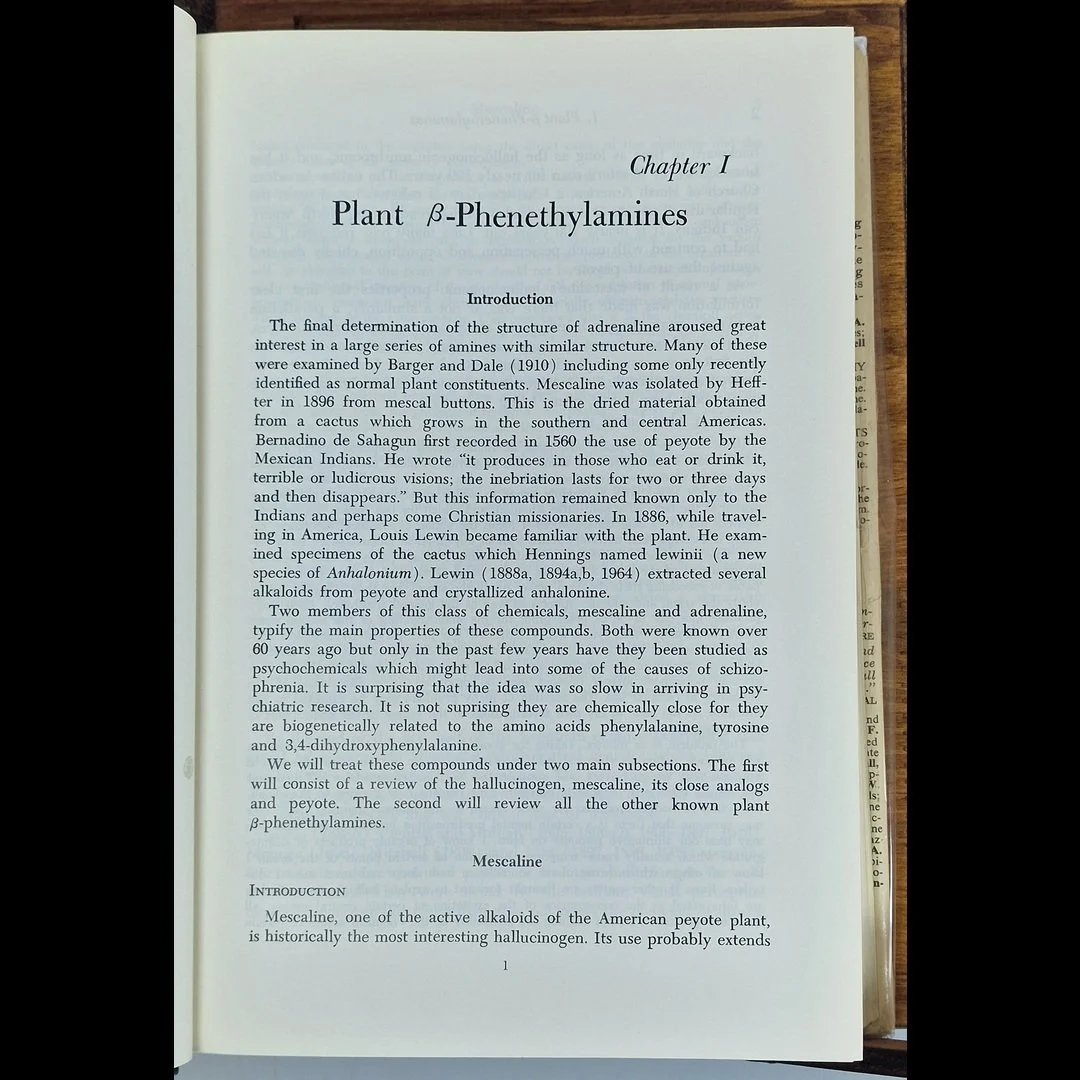 Image 9 of 13
 Image 10 of 13
 Image 11 of 13
 Image 12 of 13
 Image 13 of 13