1892 First Edition 16 Plates
FINGER PRINTS
By Francis Galton
KEY DETAILS
Condition: Good
Format: Hardcover, Octavo (Standard) (8vo 6 × 9 in 152 × 229 mm )
Note: Binding/size selection follows standard bibliographic conventions and is approximate; exact measurements may vary.
Published By: MacMillan & Co, London, 1892
Language: English
Provenance: Early ownership inscription “William Dunn. 1910.” to the blank preceding the half-title. A later pencil note to the upper half-title identifies the volume as a first edition and comments upon Galton’s importance to th...
Collation: xvi, 216 pp.; half-title; illustrated title page; text illustrations; 16 leaves of plates in total, one double-page, comprising the 15 plates enumerated in the printed “Description of the Plates” together with the additional Plate XVI; index; approximately 22.3 cm.
Dust Jacket: None, as issued, No Jacket
SKU: BTETM0002278
Shipping Info: Approximate Package Dimensions H: 12.5, L: 30, W: 25 (Units: cm), W: 2Kg
Tracked Shipping, Insurance Coverage as per Customer Request
DESCRIPTION
Finger Prints
A complete first edition of one of the foundational works in the scientific study of fingerprints and their use for personal identification. Published by Macmillan in 1892, Finger Prints brought together Francis Galton’s investigations into the permanence, individuality, comparison and classification of papillary ridge patterns and helped establish fingerprint identification on a systematic scientific basis.
Galton built upon the earlier work of figures including Sir William James Herschel and Henry Faulds, applying statistical and comparative methods to the subject. He examined the persistence of ridge characteristics throughout life, the significance of minutiae in establishing identity, methods of taking and comparing impressions, and systems by which large collections of fingerprints might be classified and indexed.
An appealing feature of the first edition is its extensive illustrative material. This copy is complete with all 16 physical plates: the 15 plates enumerated in the printed “Description of the Plates”, together with the additional Plate XVI not included in that printed list. The plates include coloured diagrams of fingerprint patterns, comparative impressions and important historical examples of the use of fingerprints for identification.
PROVENANCE
Early ownership inscription “William Dunn. 1910.” to the blank preceding the half-title. A later pencil note to the upper half-title identifies the volume as a first edition and comments upon Galton’s importance to the systematic use of fingerprints for identification. No further attribution of William Dunn has been established.
CONDITION, COLLATION & COPY NOTES
A sound and complete copy in the original publisher’s burgundy/maroon cloth, ruled in blind and lettered in gilt to the spine. Binding with rubbing and bumping to boards and extremities, scattered surface marking and soiling, and pronounced sun-fading to the spine. Spine ends and corners with expected wear. Gilt spine lettering remains clear and legible.
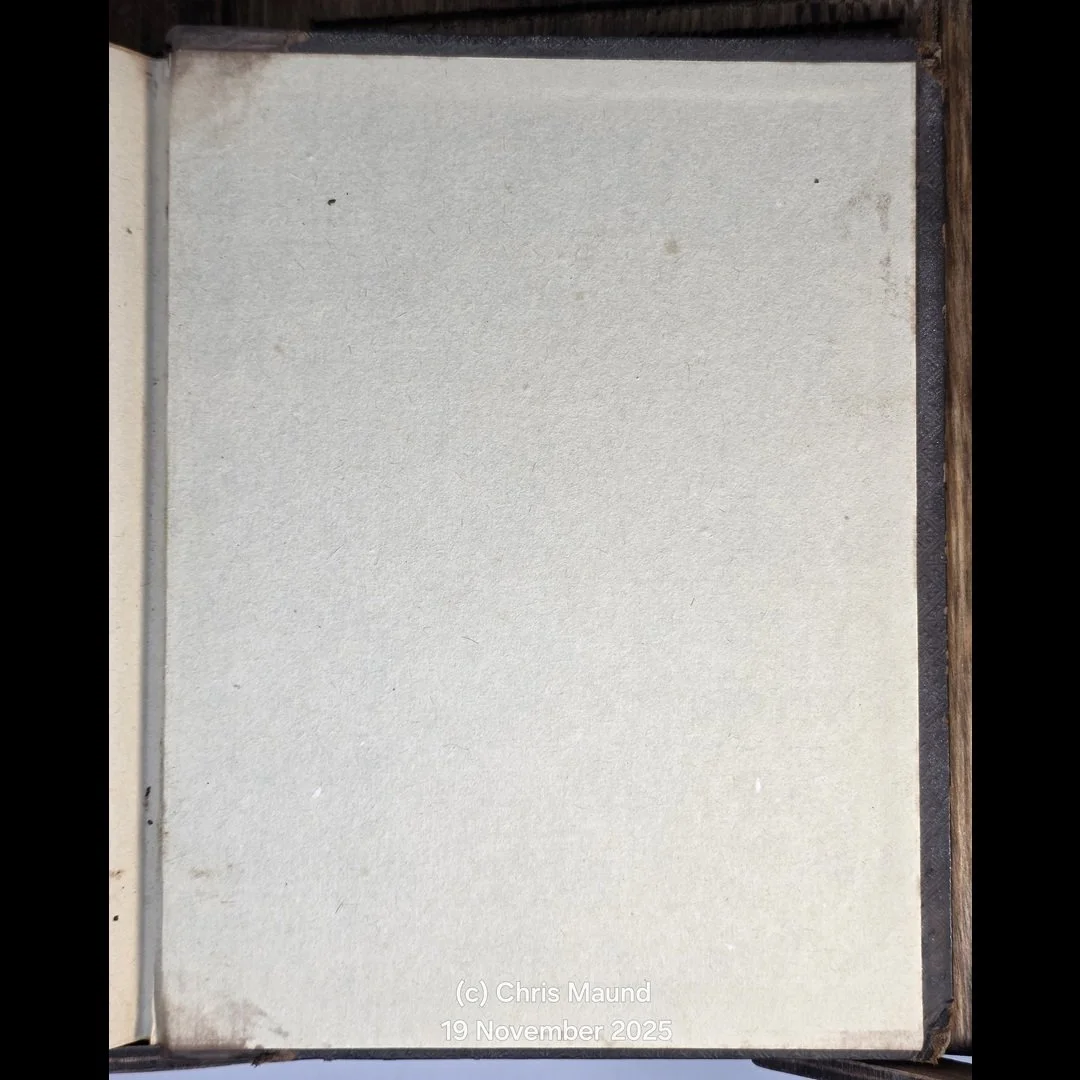
Original dark green coated endpapers present. Binding and text block firm. Internally substantially cleaner than the exterior, with generally clean and well-preserved leaves, light age-toning and occasional minor marks consistent with age. Title page remains crisp and attractive.
Early ink ownership inscription “William Dunn. 1910.” to the blank preceding the half-title. Later pencil bibliographical note to the upper portion of the half-title.
Illustrated material remains particularly attractive, including the coloured fingerprint-pattern plate and comparative fingerprint plates. All 16 physical plates are present, including the additional Plate XVI which is not enumerated in the printed “Description of the Plates”.
A pleasing and substantially original copy of an important nineteenth-century scientific first edition. The principal condition issues are fading and general wear to the publisher’s cloth; the text block and plates remain notably clean and sound.
Please see Photos as part of condition report.
REFERENCES
Garrison-Morton 186
Heirs of Hippocrates 1905
Norman 867
Printing and the Mind of Man (PMM) 376
Cushing G81
Osler 1598
Waller 19650
SYNOPSIS
Finger Prints is Galton’s principal work on the scientific study of the papillary ridges of the fingers and their application to personal identification.
The book begins by distinguishing fingerprint ridges from the ordinary creases of the hand and surveys earlier uses of finger and hand impressions, including historical examples from Asia and the pioneering identification work of Sir William James Herschel in India.
Galton then discusses practical methods for obtaining reliable impressions, including inks, rollers, photographic enlargement and other recording techniques. He analyses the structure of fingerprint patterns and develops a systematic vocabulary for their principal forms, including arches, loops and whorls.
A central section of the book concerns the persistence of fingerprints throughout life. Galton compares impressions of the same individuals taken many years apart, including the celebrated comparison of Sir William Herschel’s forefinger, demonstrating the remarkable stability of ridge characteristics over time.
He also investigates individuality, examining the minute ridge characteristics now commonly termed minutiae and applying probability to the likelihood that two unrelated fingerprints could exhibit accidental correspondence. This was an important step in establishing a scientific and evidential basis for fingerprint comparison.
Further chapters deal with classification and indexing: the practical problem of arranging large numbers of fingerprint records so that an individual impression could be identified or retrieved. Galton’s work in this area helped prepare the ground for the later Henry classification system and the widespread institutional adoption of fingerprint identification.
The final sections apply fingerprint evidence to questions of heredity, familial resemblance, race and social class, reflecting the connection between Galton’s fingerprint research and his wider anthropometric and eugenic interests.
Richly illustrated with fingerprint impressions, comparative examples, diagrams, statistical tables and coloured pattern plates, Finger Prints remains a landmark in the histories of forensic science, biometrics, criminology, statistics and personal identification.
AUTHOR BIO
Sir Francis Galton, FRS FRAI (16 February 1822 – 17 January 1911), was an English Victorian polymath whose work encompassed statistics, anthropology, psychology, geography, meteorology and the study of human heredity.
Galton made important contributions to the development and popularisation of statistical concepts including correlation and regression toward the mean, and was an early advocate of applying quantitative methods to the study of human variation. He also developed questionnaires and survey methods, pursued anthropometric measurement, and made influential contributions to psychometrics and differential psychology.
His work on fingerprints became one of his most enduring practical legacies. Building upon earlier experiments and proposals by Herschel, Faulds and others, Galton investigated the permanence and individuality of fingerprint ridge patterns, devised methods for describing and classifying them, and applied probability and statistical reasoning to the problem of personal identification. His work helped provide the scientific foundation from which later administrative and forensic fingerprint systems developed.
Galton was also the founder and principal early advocate of eugenics, a term he coined in 1883. His theories concerning heredity, race, intelligence and social hierarchy became historically influential but are now recognised as scientifically flawed and ethically deeply problematic. This aspect of his work remains central to the modern historical assessment of his career.
1892 First Edition 16 Plates
FINGER PRINTS
By Francis Galton
KEY DETAILS
Condition: Good
Format: Hardcover, Octavo (Standard) (8vo 6 × 9 in 152 × 229 mm )
Note: Binding/size selection follows standard bibliographic conventions and is approximate; exact measurements may vary.
Published By: MacMillan & Co, London, 1892
Language: English
Provenance: Early ownership inscription “William Dunn. 1910.” to the blank preceding the half-title. A later pencil note to the upper half-title identifies the volume as a first edition and comments upon Galton’s importance to th...
Collation: xvi, 216 pp.; half-title; illustrated title page; text illustrations; 16 leaves of plates in total, one double-page, comprising the 15 plates enumerated in the printed “Description of the Plates” together with the additional Plate XVI; index; approximately 22.3 cm.
Dust Jacket: None, as issued, No Jacket
SKU: BTETM0002278
Shipping Info: Approximate Package Dimensions H: 12.5, L: 30, W: 25 (Units: cm), W: 2Kg
Tracked Shipping, Insurance Coverage as per Customer Request
DESCRIPTION
Finger Prints
A complete first edition of one of the foundational works in the scientific study of fingerprints and their use for personal identification. Published by Macmillan in 1892, Finger Prints brought together Francis Galton’s investigations into the permanence, individuality, comparison and classification of papillary ridge patterns and helped establish fingerprint identification on a systematic scientific basis.
Galton built upon the earlier work of figures including Sir William James Herschel and Henry Faulds, applying statistical and comparative methods to the subject. He examined the persistence of ridge characteristics throughout life, the significance of minutiae in establishing identity, methods of taking and comparing impressions, and systems by which large collections of fingerprints might be classified and indexed.
An appealing feature of the first edition is its extensive illustrative material. This copy is complete with all 16 physical plates: the 15 plates enumerated in the printed “Description of the Plates”, together with the additional Plate XVI not included in that printed list. The plates include coloured diagrams of fingerprint patterns, comparative impressions and important historical examples of the use of fingerprints for identification.
PROVENANCE
Early ownership inscription “William Dunn. 1910.” to the blank preceding the half-title. A later pencil note to the upper half-title identifies the volume as a first edition and comments upon Galton’s importance to the systematic use of fingerprints for identification. No further attribution of William Dunn has been established.
CONDITION, COLLATION & COPY NOTES
A sound and complete copy in the original publisher’s burgundy/maroon cloth, ruled in blind and lettered in gilt to the spine. Binding with rubbing and bumping to boards and extremities, scattered surface marking and soiling, and pronounced sun-fading to the spine. Spine ends and corners with expected wear. Gilt spine lettering remains clear and legible.
Original dark green coated endpapers present. Binding and text block firm. Internally substantially cleaner than the exterior, with generally clean and well-preserved leaves, light age-toning and occasional minor marks consistent with age. Title page remains crisp and attractive.
Early ink ownership inscription “William Dunn. 1910.” to the blank preceding the half-title. Later pencil bibliographical note to the upper portion of the half-title.
Illustrated material remains particularly attractive, including the coloured fingerprint-pattern plate and comparative fingerprint plates. All 16 physical plates are present, including the additional Plate XVI which is not enumerated in the printed “Description of the Plates”.
A pleasing and substantially original copy of an important nineteenth-century scientific first edition. The principal condition issues are fading and general wear to the publisher’s cloth; the text block and plates remain notably clean and sound.
Please see Photos as part of condition report.
REFERENCES
Garrison-Morton 186
Heirs of Hippocrates 1905
Norman 867
Printing and the Mind of Man (PMM) 376
Cushing G81
Osler 1598
Waller 19650
SYNOPSIS
Finger Prints is Galton’s principal work on the scientific study of the papillary ridges of the fingers and their application to personal identification.
The book begins by distinguishing fingerprint ridges from the ordinary creases of the hand and surveys earlier uses of finger and hand impressions, including historical examples from Asia and the pioneering identification work of Sir William James Herschel in India.
Galton then discusses practical methods for obtaining reliable impressions, including inks, rollers, photographic enlargement and other recording techniques. He analyses the structure of fingerprint patterns and develops a systematic vocabulary for their principal forms, including arches, loops and whorls.
A central section of the book concerns the persistence of fingerprints throughout life. Galton compares impressions of the same individuals taken many years apart, including the celebrated comparison of Sir William Herschel’s forefinger, demonstrating the remarkable stability of ridge characteristics over time.
He also investigates individuality, examining the minute ridge characteristics now commonly termed minutiae and applying probability to the likelihood that two unrelated fingerprints could exhibit accidental correspondence. This was an important step in establishing a scientific and evidential basis for fingerprint comparison.
Further chapters deal with classification and indexing: the practical problem of arranging large numbers of fingerprint records so that an individual impression could be identified or retrieved. Galton’s work in this area helped prepare the ground for the later Henry classification system and the widespread institutional adoption of fingerprint identification.
The final sections apply fingerprint evidence to questions of heredity, familial resemblance, race and social class, reflecting the connection between Galton’s fingerprint research and his wider anthropometric and eugenic interests.
Richly illustrated with fingerprint impressions, comparative examples, diagrams, statistical tables and coloured pattern plates, Finger Prints remains a landmark in the histories of forensic science, biometrics, criminology, statistics and personal identification.
AUTHOR BIO
Sir Francis Galton, FRS FRAI (16 February 1822 – 17 January 1911), was an English Victorian polymath whose work encompassed statistics, anthropology, psychology, geography, meteorology and the study of human heredity.
Galton made important contributions to the development and popularisation of statistical concepts including correlation and regression toward the mean, and was an early advocate of applying quantitative methods to the study of human variation. He also developed questionnaires and survey methods, pursued anthropometric measurement, and made influential contributions to psychometrics and differential psychology.
His work on fingerprints became one of his most enduring practical legacies. Building upon earlier experiments and proposals by Herschel, Faulds and others, Galton investigated the permanence and individuality of fingerprint ridge patterns, devised methods for describing and classifying them, and applied probability and statistical reasoning to the problem of personal identification. His work helped provide the scientific foundation from which later administrative and forensic fingerprint systems developed.
Galton was also the founder and principal early advocate of eugenics, a term he coined in 1883. His theories concerning heredity, race, intelligence and social hierarchy became historically influential but are now recognised as scientifically flawed and ethically deeply problematic. This aspect of his work remains central to the modern historical assessment of his career.

 Image 1 of 22
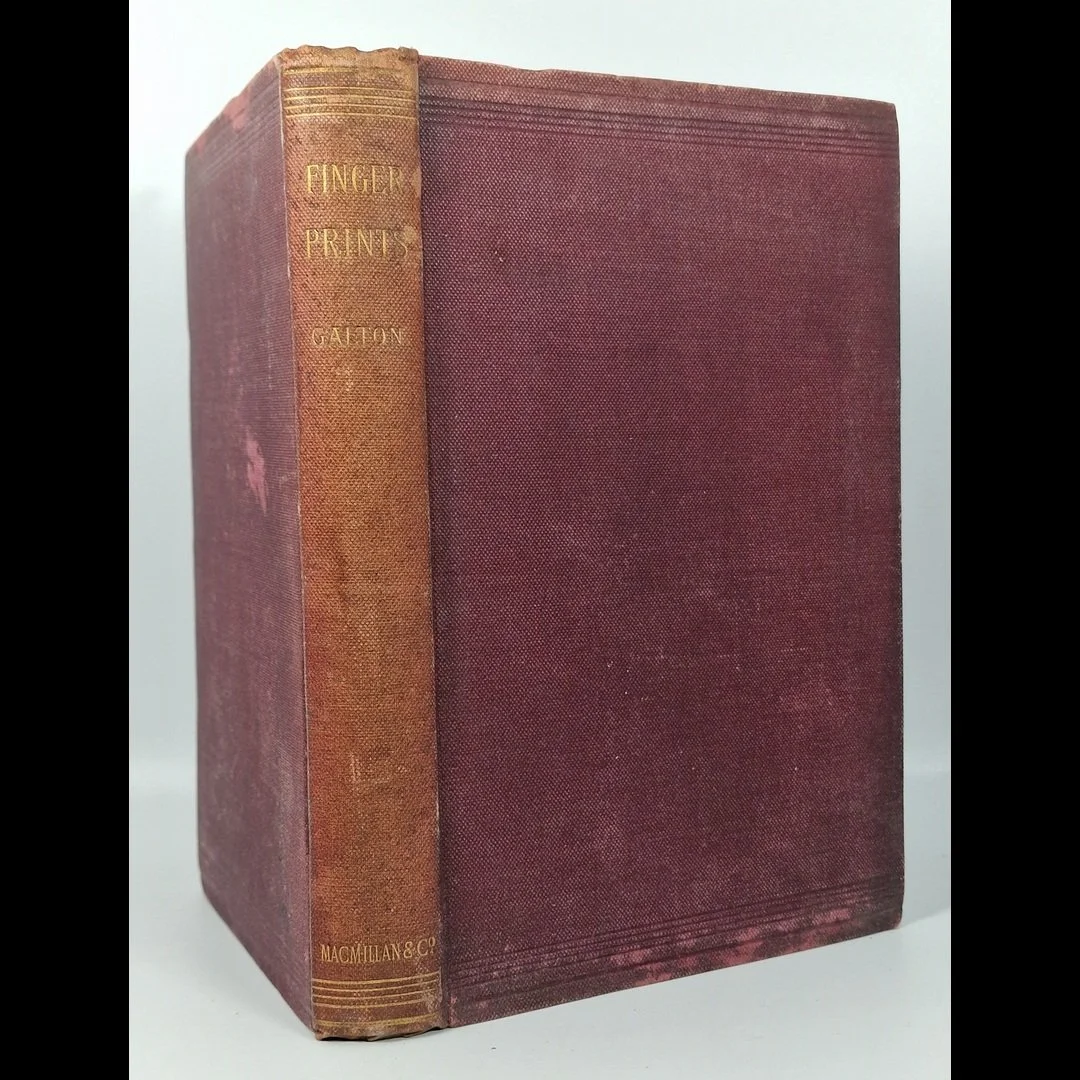 Image 2 of 22
 Image 3 of 22
 Image 4 of 22
 Image 5 of 22
 Image 6 of 22
 Image 7 of 22
 Image 8 of 22
 Image 9 of 22
 Image 10 of 22
 Image 11 of 22
 Image 12 of 22
 Image 13 of 22
 Image 14 of 22
 Image 15 of 22
 Image 16 of 22
 Image 17 of 22
 Image 18 of 22
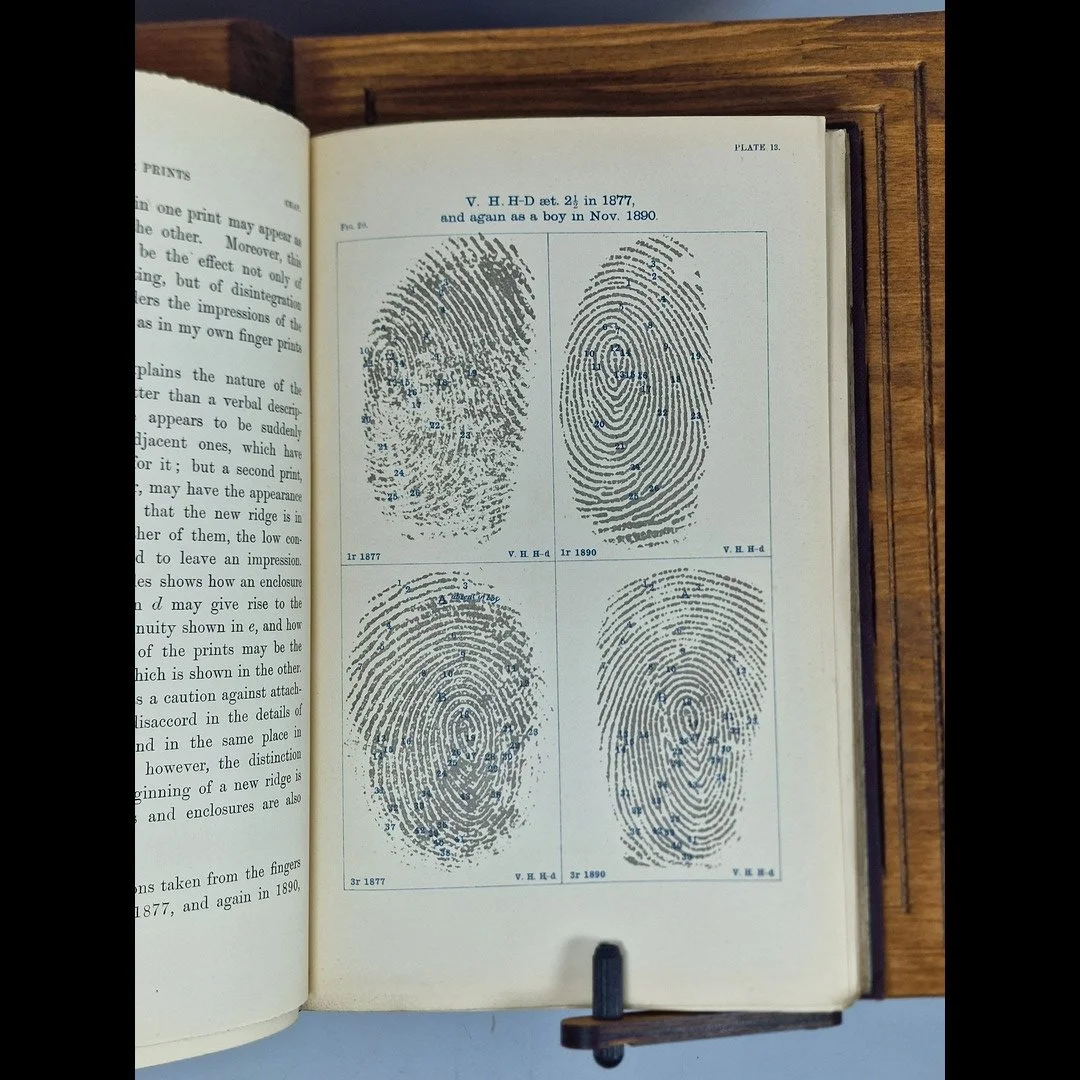 Image 19 of 22
 Image 20 of 22
 Image 21 of 22
 Image 22 of 22