1919 First Trade Edition
CINDERELLA
By C.S. Evans
KEY DETAILS
Condition: Very Good
Format: Hardcover, Royal octavo (8vo 6 1⁄4 × 10 in 159 × 254 mm )
Note: Binding/size selection follows standard bibliographic conventions and is approximate; exact measurements may vary.
Published By: William Heinemann, London, 1919
Language: English
Illustrated By: Arthur Rackham
Collation: 110 pp.; mounted colour frontispiece; three double-page silhouette illustrations printed in colour; thirteen full-page monochrome silhouette illustrations and numerous silhouette drawings within the text; pictorial endpapers.
Dust Jacket: Yes, Good
SKU: BTETM0002302
Shipping Info: Approximate Package Dimensions H: 12.5, L: 30, W: 25 (Units: cm), W: 2Kg
Tracked Shipping, Insurance Coverage as per Customer Request
DESCRIPTION
Cinderella
Retold by C. S. Evans
A particularly appealing first trade edition of C. S. Evans's expanded retelling of Cinderella, published by William Heinemann in 1919 and illustrated throughout by Arthur Rackham.
One of Rackham's most distinctive fairy-tale books, Cinderella marks a departure from the elaborate watercolour work for which he is perhaps best known. Here Rackham makes extensive use of bold black silhouettes, enlivened on several important spreads with restrained colour, producing a highly decorative and immediately recognisable visual treatment. The volume includes a mounted colour frontispiece, three double-page silhouette illustrations printed in colour, numerous full-page black silhouettes and further silhouette drawings throughout the text. Green-and-white pictorial endpapers complete the design. Specialist bibliographies record the first trade edition as distinct from the larger signed Edition de Luxe of 850 copies.
This copy retains the scarce original dust jacket, an important survival on an illustrated children's book of this period. Beneath it, the publisher's original pictorial boards remain attractive, with Rackham's orange, cream and black design showing Cinderella, the Fairy Godmother, pumpkin and mice. The jacket retains its characteristic front-panel silhouette design and the original published price of 7/6 remains visible at the foot of the spine.
CONDITION, COLLATION & COPY NOTES
A sound and attractive copy in the publisher's original orange, cream and black pictorial boards with orange cloth spine. Boards remain bright and visually appealing, with some expected rubbing and bumping to corners and extremities and light general wear consistent with age.
Green-and-white pictorial endpapers present. Contemporary ownership inscription in pencil to the half-title records “Doris Chantry / Christmas Book / 1923 / Cost 4/6”, providing an appealing early ownership association. Further pencilled price notation to the front endpaper.
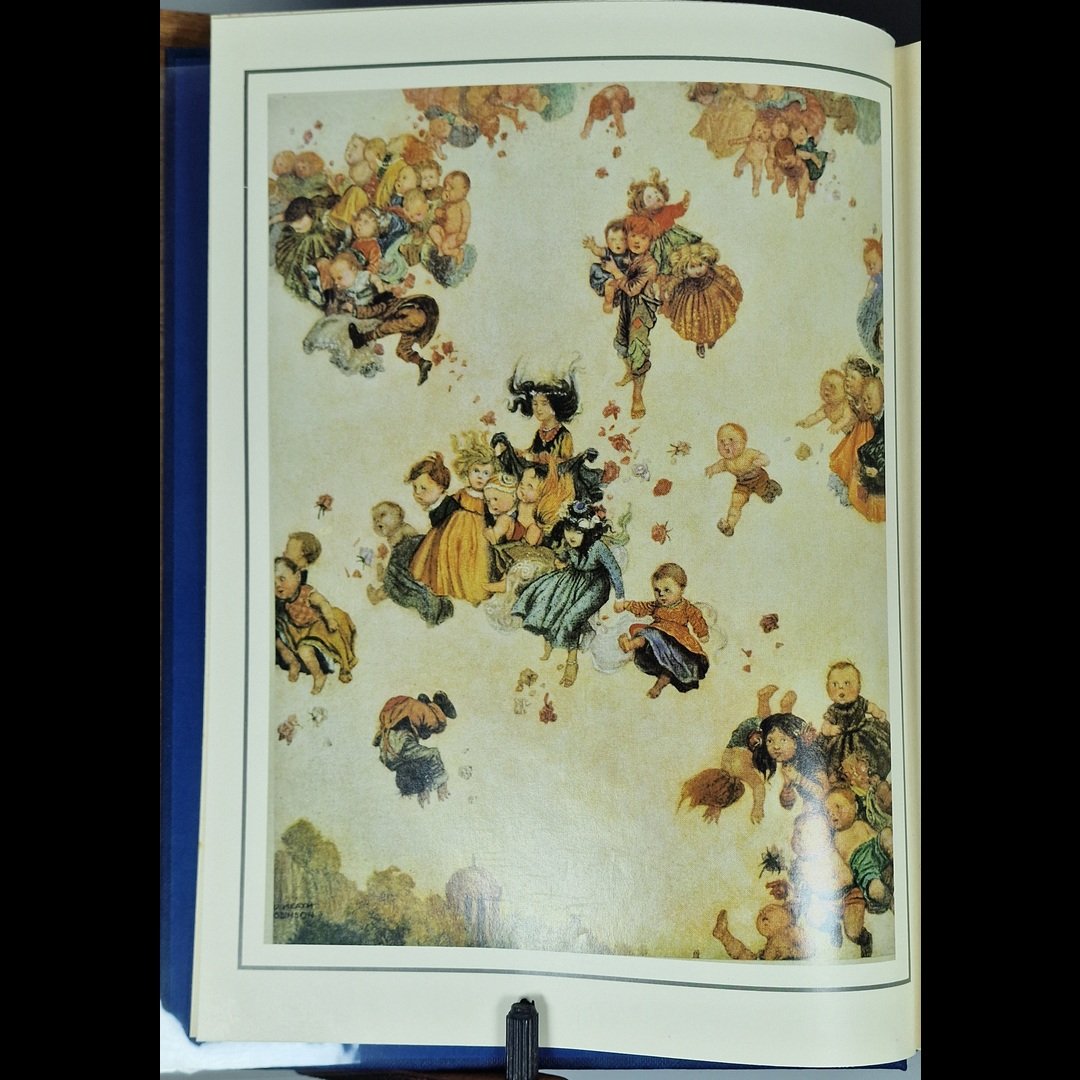
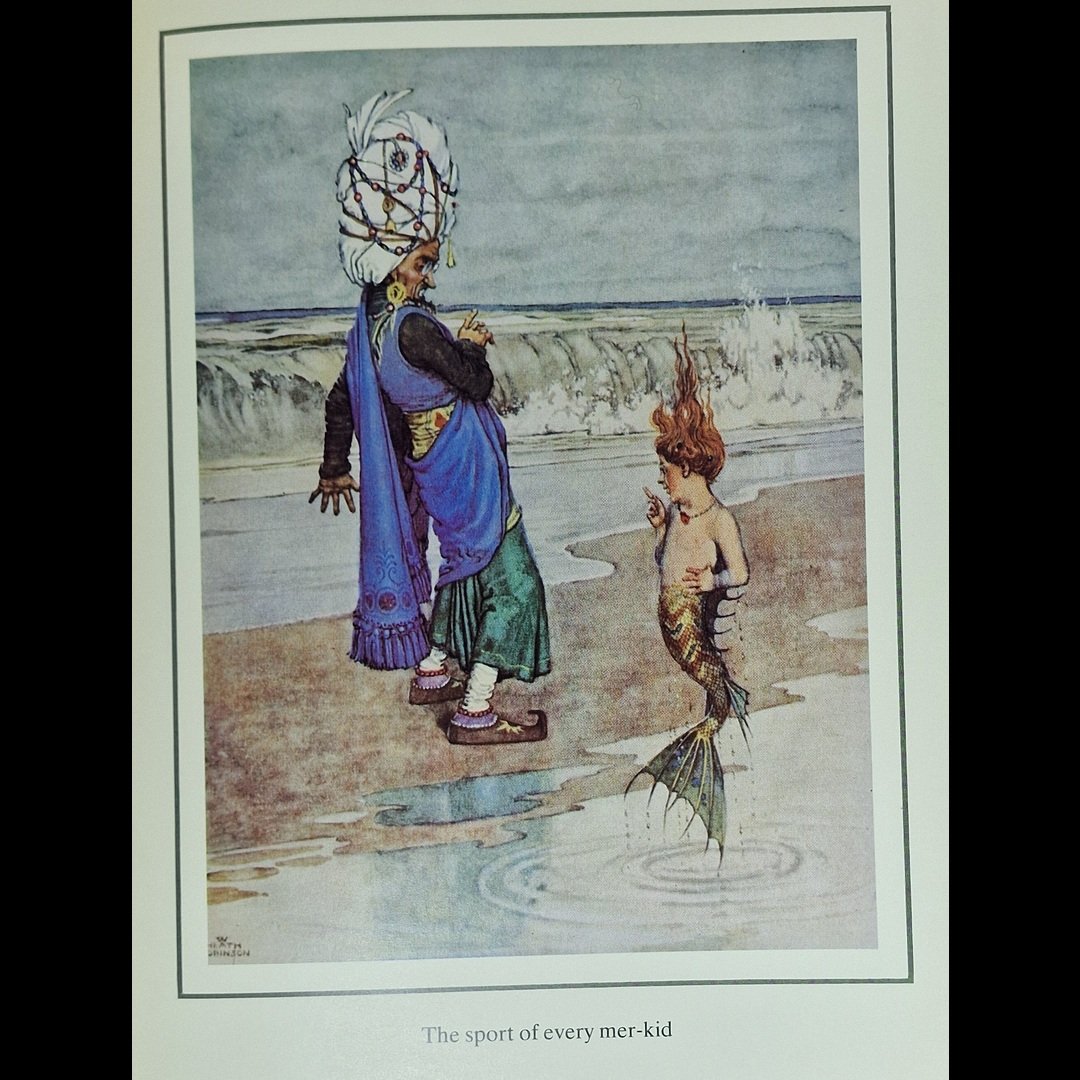
Contents generally sound, with scattered light spotting, foxing and handling marks, more noticeable to some preliminary leaves and margins. The illustrated material remains attractive, with strong colour and impression. Mounted colour frontispiece present, together with the characteristic colour and monochrome silhouette illustrations throughout.
The original dust jacket is substantially complete but fragile, with general age-toning, creasing, edge wear, closed and open tears, chipping and areas of loss, particularly at the spine ends and extremities. The principal front-panel design and lettering remain substantially intact. Jacket now housed in a removable protective Mylar cover.
An attractive example of the first trade edition, considerably enhanced by the survival of its original dust jacket.
Please see Photos as part of condition report.
REFERENCES
Latimore, Sarah Briggs & Grace Clark Haskell, Arthur Rackham: A Bibliography, pp. 49–50.
Riall, Richard, A New Bibliography of Arthur Rackham, pp. 134–135.
SYNOPSIS
C. S. Evans's Cinderella expands the familiar fairy tale into a substantially fuller children's narrative. Rather than moving rapidly between the best-known episodes, Evans gives the story additional dialogue, characterisation and domestic detail, beginning with Cinderella — Ella — as a child and developing her relationship with her father, stepmother and stepsisters before arriving at the transformation, royal ball and lost glass slipper.
The extended treatment gives greater emphasis to Cinderella's thoughts and experiences and provides Rackham with unusually broad scope for illustration. His silhouettes move between theatrical comedy and fairy-tale drama: the ugly stepsisters, servants, courtiers, Fairy Godmother, transformed animals and Cinderella herself are characterised largely through profile, gesture and movement.
The result is one of the most visually distinctive Rackham fairy-tale books of the post-war period, and a natural companion to his similarly conceived The Sleeping Beauty of 1920. Contemporary and later descriptions specifically note the importance of Rackham's silhouette technique in these two books.
AUTHOR BIO
Charles Seddon Evans (1883–1944) was an English publisher and writer. Educated at East London College, he began his career as a schoolmaster before becoming Educational Editor at Edward Arnold in 1909. He subsequently joined William Heinemann, where he spent the remainder of his publishing career and eventually became Chairman and Managing Director.
Alongside his work in publishing, Evans produced expanded literary retellings of traditional fairy tales. His Cinderella was followed by The Sleeping Beauty, also illustrated by Arthur Rackham, making the two books notable companion volumes in Rackham's later fairy-tale work.
ILLUSTRATOR
Arthur Rackham
Arthur Rackham RWS (1867–1939) was one of the leading figures of the Golden Age of British book illustration. Trained at the Lambeth School of Art, he began his professional career as a journalistic illustrator before developing the distinctive pen-and-ink and watercolour style for which he became internationally known.
His major illustrated books include Rip Van Winkle, Peter Pan in Kensington Gardens, Alice's Adventures in Wonderland, A Midsummer Night's Dream and collections of fairy tales by the Brothers Grimm. Rackham became a full member of the Royal Watercolour Society in 1908 and served as Master of the Art Workers' Guild in 1919. Cinderella is particularly notable within his work for its extensive and highly effective use of silhouette rather than his more familiar full-colour fantasy compositions.
1919 First Trade Edition
CINDERELLA
By C.S. Evans
KEY DETAILS
Condition: Very Good
Format: Hardcover, Royal octavo (8vo 6 1⁄4 × 10 in 159 × 254 mm )
Note: Binding/size selection follows standard bibliographic conventions and is approximate; exact measurements may vary.
Published By: William Heinemann, London, 1919
Language: English
Illustrated By: Arthur Rackham
Collation: 110 pp.; mounted colour frontispiece; three double-page silhouette illustrations printed in colour; thirteen full-page monochrome silhouette illustrations and numerous silhouette drawings within the text; pictorial endpapers.
Dust Jacket: Yes, Good
SKU: BTETM0002302
Shipping Info: Approximate Package Dimensions H: 12.5, L: 30, W: 25 (Units: cm), W: 2Kg
Tracked Shipping, Insurance Coverage as per Customer Request
DESCRIPTION
Cinderella
Retold by C. S. Evans
A particularly appealing first trade edition of C. S. Evans's expanded retelling of Cinderella, published by William Heinemann in 1919 and illustrated throughout by Arthur Rackham.
One of Rackham's most distinctive fairy-tale books, Cinderella marks a departure from the elaborate watercolour work for which he is perhaps best known. Here Rackham makes extensive use of bold black silhouettes, enlivened on several important spreads with restrained colour, producing a highly decorative and immediately recognisable visual treatment. The volume includes a mounted colour frontispiece, three double-page silhouette illustrations printed in colour, numerous full-page black silhouettes and further silhouette drawings throughout the text. Green-and-white pictorial endpapers complete the design. Specialist bibliographies record the first trade edition as distinct from the larger signed Edition de Luxe of 850 copies.
This copy retains the scarce original dust jacket, an important survival on an illustrated children's book of this period. Beneath it, the publisher's original pictorial boards remain attractive, with Rackham's orange, cream and black design showing Cinderella, the Fairy Godmother, pumpkin and mice. The jacket retains its characteristic front-panel silhouette design and the original published price of 7/6 remains visible at the foot of the spine.
CONDITION, COLLATION & COPY NOTES
A sound and attractive copy in the publisher's original orange, cream and black pictorial boards with orange cloth spine. Boards remain bright and visually appealing, with some expected rubbing and bumping to corners and extremities and light general wear consistent with age.
Green-and-white pictorial endpapers present. Contemporary ownership inscription in pencil to the half-title records “Doris Chantry / Christmas Book / 1923 / Cost 4/6”, providing an appealing early ownership association. Further pencilled price notation to the front endpaper.
Contents generally sound, with scattered light spotting, foxing and handling marks, more noticeable to some preliminary leaves and margins. The illustrated material remains attractive, with strong colour and impression. Mounted colour frontispiece present, together with the characteristic colour and monochrome silhouette illustrations throughout.
The original dust jacket is substantially complete but fragile, with general age-toning, creasing, edge wear, closed and open tears, chipping and areas of loss, particularly at the spine ends and extremities. The principal front-panel design and lettering remain substantially intact. Jacket now housed in a removable protective Mylar cover.
An attractive example of the first trade edition, considerably enhanced by the survival of its original dust jacket.
Please see Photos as part of condition report.
REFERENCES
Latimore, Sarah Briggs & Grace Clark Haskell, Arthur Rackham: A Bibliography, pp. 49–50.
Riall, Richard, A New Bibliography of Arthur Rackham, pp. 134–135.
SYNOPSIS
C. S. Evans's Cinderella expands the familiar fairy tale into a substantially fuller children's narrative. Rather than moving rapidly between the best-known episodes, Evans gives the story additional dialogue, characterisation and domestic detail, beginning with Cinderella — Ella — as a child and developing her relationship with her father, stepmother and stepsisters before arriving at the transformation, royal ball and lost glass slipper.
The extended treatment gives greater emphasis to Cinderella's thoughts and experiences and provides Rackham with unusually broad scope for illustration. His silhouettes move between theatrical comedy and fairy-tale drama: the ugly stepsisters, servants, courtiers, Fairy Godmother, transformed animals and Cinderella herself are characterised largely through profile, gesture and movement.
The result is one of the most visually distinctive Rackham fairy-tale books of the post-war period, and a natural companion to his similarly conceived The Sleeping Beauty of 1920. Contemporary and later descriptions specifically note the importance of Rackham's silhouette technique in these two books.
AUTHOR BIO
Charles Seddon Evans (1883–1944) was an English publisher and writer. Educated at East London College, he began his career as a schoolmaster before becoming Educational Editor at Edward Arnold in 1909. He subsequently joined William Heinemann, where he spent the remainder of his publishing career and eventually became Chairman and Managing Director.
Alongside his work in publishing, Evans produced expanded literary retellings of traditional fairy tales. His Cinderella was followed by The Sleeping Beauty, also illustrated by Arthur Rackham, making the two books notable companion volumes in Rackham's later fairy-tale work.
ILLUSTRATOR
Arthur Rackham
Arthur Rackham RWS (1867–1939) was one of the leading figures of the Golden Age of British book illustration. Trained at the Lambeth School of Art, he began his professional career as a journalistic illustrator before developing the distinctive pen-and-ink and watercolour style for which he became internationally known.
His major illustrated books include Rip Van Winkle, Peter Pan in Kensington Gardens, Alice's Adventures in Wonderland, A Midsummer Night's Dream and collections of fairy tales by the Brothers Grimm. Rackham became a full member of the Royal Watercolour Society in 1908 and served as Master of the Art Workers' Guild in 1919. Cinderella is particularly notable within his work for its extensive and highly effective use of silhouette rather than his more familiar full-colour fantasy compositions.

 Image 1 of 21
 Image 2 of 21
 Image 3 of 21
 Image 4 of 21
 Image 5 of 21
 Image 6 of 21
 Image 7 of 21
 Image 8 of 21
 Image 9 of 21
 Image 10 of 21
 Image 11 of 21
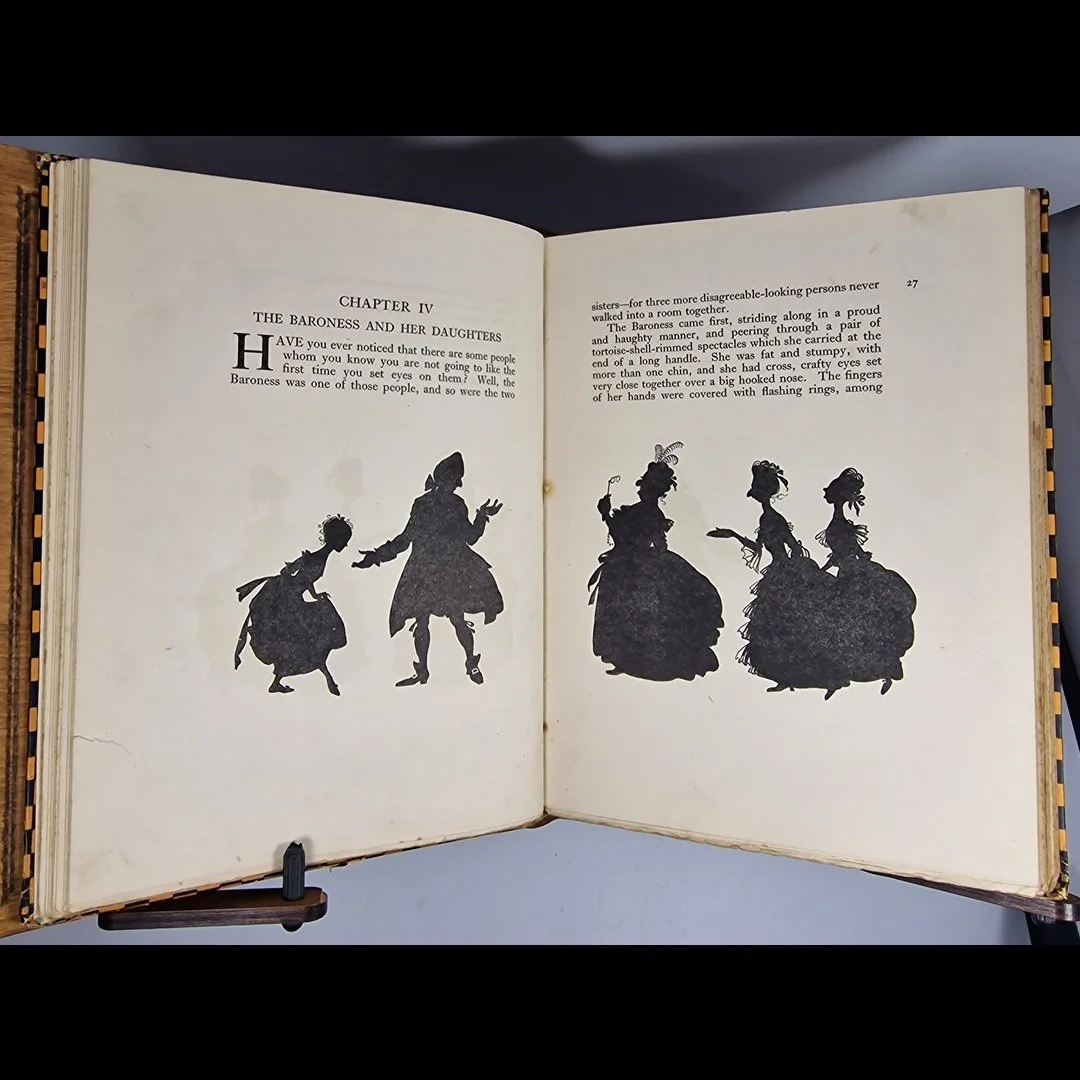 Image 12 of 21
 Image 13 of 21
 Image 14 of 21
 Image 15 of 21
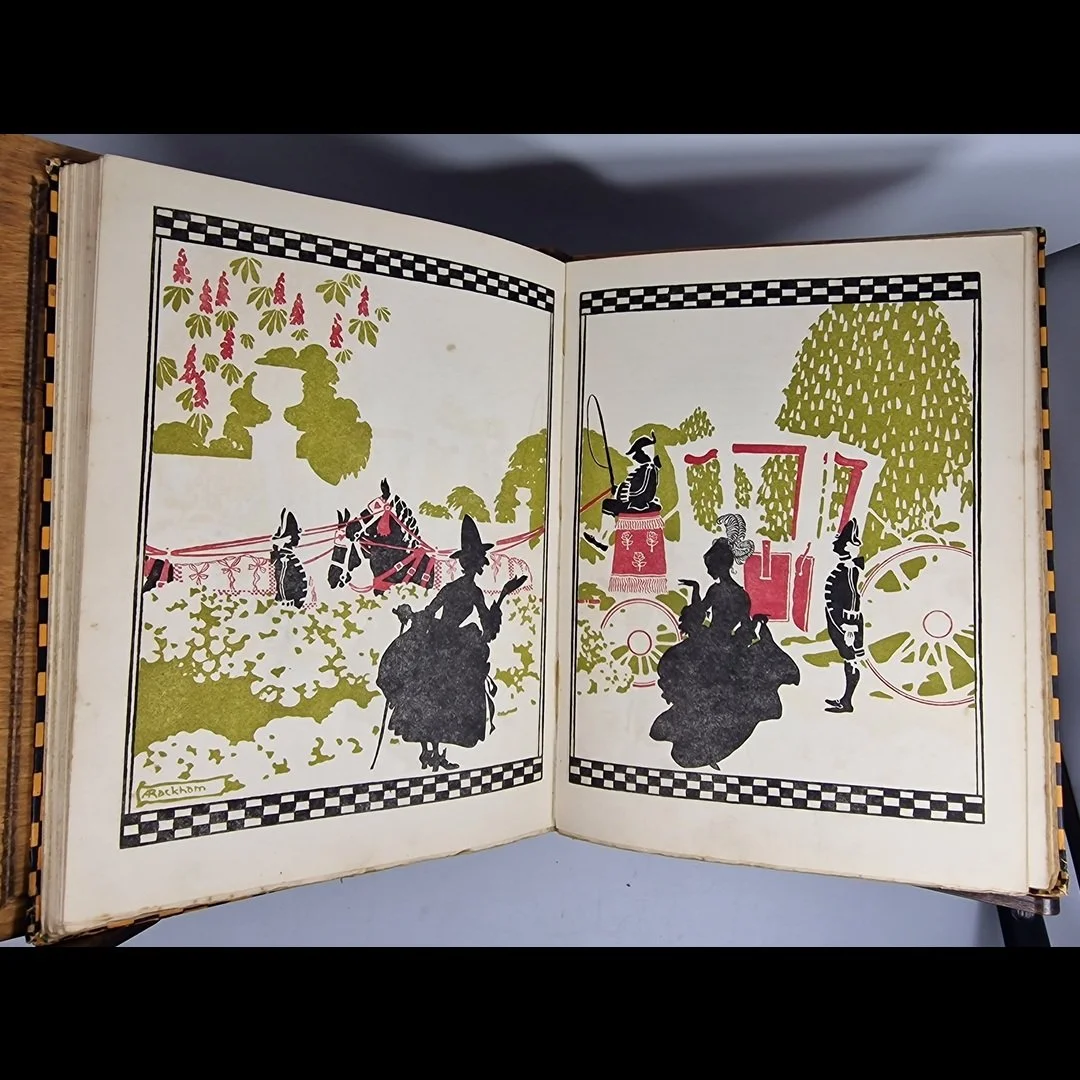 Image 16 of 21
 Image 17 of 21
 Image 18 of 21
 Image 19 of 21
 Image 20 of 21
 Image 21 of 21