1807 Leipzig Edition With Henry Drury Provenance
PLEONASMI GRAECI
By Beniamin Weiske
KEY DETAILS
Condition: Good
Format: Hardcover, Contemporary full calf binding with gilt decoration to the spine and dark morocco lettering-piece titled: “PLEONASMI / GRÆCI / WEISKE”
Published By: Lipsiae [Leipzig]: Impensis Auctoris; Prostat apud Ioh. Ambros. Barth, Leipzig, 1807
Language: Latin, with Greek type throughout.
Provenance: Rev. Henry Joseph Thomas Drury (1778–1841) — classical scholar, Harrow master, noted bibliophile and original member of the Roxburghe Club.
Collation: Pagination complete at 220 pp., followed by the unpaginated Index Pleonasmorum, addenda and corrigenda.; Drury's ink ownership and collation inscription appears on the front blank, together with additional early pencil inscriptions and numerical annotations.
Dust Jacket: None, as issued
SKU: BTETM0002355
Shipping Info: Approximate Package Dimensions H: 12.5, L: 30, W: 25 (Units: cm), W: 2Kg
Tracked Shipping, Insurance Coverage as per Customer Request
DESCRIPTION
Pleonasmi Graeci
SIVE COMMENTARIUS DE VOCIBUS QUAE IN SERMONE GRAECO ABUNDARE DICUNTUR
By Benjamin Weiske
With the ownership and collation inscription of Rev. Henry Joseph Thomas Drury (1778–1841), classical scholar, Harrow master, noted bibliophile and original member of the Roxburghe Club
First edition of Benjamin Weiske's specialised philological study of pleonasm in the Ancient Greek language, published at the author's own expense in Leipzig in 1807.
Pleonasmi Graeci examines words, particles and expressions traditionally regarded by grammarians as redundant or superfluous within Greek syntax. Weiske subjects such constructions to close philological analysis, questioning whether apparently unnecessary words are genuinely redundant or instead fulfil grammatical, idiomatic, rhetorical or emphatic functions.
The work belongs to an important strand of late eighteenth- and early nineteenth-century classical scholarship concerned with the interpretation of Greek syntax, particularly the related phenomena of ellipsis and pleonasm. Weiske's study was sufficiently significant to be cited by later classical grammarians and subsequently associated in collected editions with the work of Lambert Bos and Gottfried Hermann on Greek ellipsis and pleonasm.
Printed throughout in Latin with extensive quotations, examples and individual words in Greek type.
A particularly interesting copy by virtue of its distinguished contemporary provenance: it was owned and apparently personally collated by the classical scholar and bibliophile Henry Joseph Thomas Drury of Harrow.
PROVENANCE
Rev. Henry Joseph Thomas Drury (1778–1841) — classical scholar, Harrow master, noted bibliophile and original member of the Roxburghe Club.
The front blank bears Drury's characteristic manuscript ownership and collation inscription: “Coll: perf: H. Drury / Harrow. C.5.2.”
The formula “Coll: perf: H. Drury. Harrow” is documented in other surviving volumes from Drury's library and reflects his practice of recording that a book had been collated and found complete. The concluding “C.5.2.” is his library shelfmark.
Educated at Harrow and King's College, Cambridge, Drury returned to Harrow as a master and became closely associated with the school's distinguished tradition of classical education. He was also an important bibliophile, particularly interested in classical literature and early printed books, and was one of the original members of the Roxburghe Club, founded in 1812.
Drury's extensive library was notable both for its scholarly character and for the care with which he personally examined and annotated his books. The greater part of the collection was dispersed at auction in 1827 in a sale comprising 4,729 lots, with a further sale following his death.
His ownership of this volume is especially appropriate: a specialist contemporary study of Greek philology falls directly within Drury's own classical and scholarly interests.
Additional early pencil inscriptions and numerical annotations appear on the front blank.
CONDITION, COLLATION & COPY NOTES
Binding rubbed and worn, with considerable surface wear to the boards, worn extremities and corners, wear to the joints, and loss at the foot of the spine. The surviving gilt decoration remains attractive and the binding retains considerable period character.
Internally substantially better preserved than the exterior. Paper generally clean and sound, with expected age toning, occasional spotting and scattered foxing. Text remains clear and legible throughout.
The title page carries the imprint:
IMPENSIS AUCTORIS
PROSTAT LIPSIAE
APUD IOH. AMBROS. BARTH
MDCCCVII
Please see Photos as part of condition report.
REFERENCES
Bibliographical records locate copies of the 1807 first edition in major institutional collections.
The work was subsequently associated with Lambert Bos's writings on Greek ellipsis and Gottfried Hermann's studies of ellipsis and pleonasm, reflecting its continuing place within nineteenth-century scholarship on Greek syntax.
Surviving books from Henry Joseph Thomas Drury's library preserve closely comparable examples of his characteristic “Coll: perf: H. Drury. Harrow” ownership and collation formula.
SYNOPSIS
Pleonasm is the use of more words than appear strictly necessary to convey a meaning. In Ancient Greek, however, determining whether a word is truly superfluous can be considerably more complicated.
In Pleonasmi Graeci, Weiske examines numerous Greek words and constructions that earlier grammarians had regarded as redundant. Through their use in classical authors, he considers whether such expressions should genuinely be dismissed as surplus to grammatical meaning or whether they perform subtler linguistic functions.
The work therefore lies at the intersection of classical philology, historical linguistics and grammatical theory, reflecting the increasingly rigorous study of Greek that developed around the turn of the nineteenth century.
It also contributes to the contemporary scholarly debate surrounding two apparently opposite linguistic phenomena: ellipsis, in which words are understood but omitted, and pleonasm, in which apparently unnecessary words are expressed.
For collectors, the volume is of interest within the history of classical scholarship, Greek linguistics and early nineteenth-century philology, with the Henry Drury provenance adding a particularly appropriate scholarly association.
AUTHOR BIO
Benjamin Weiske (1748–1809) was a German classical philologist and educator whose scholarship concentrated particularly on Greek and Latin language and literature.
He held teaching positions in Saxony and in 1795 became Conrector at Schulpforta, one of Germany's most distinguished classical schools. Poor health forced his retirement in 1804, after which he continued his philological work in Meissen until his death in 1809.
Weiske belonged to a generation of scholars who increasingly subjected the languages of classical authors to close textual and grammatical analysis rather than relying solely upon inherited grammatical rules.
Published only two years before his death, Pleonasmi Graeci represents one of Weiske's principal late works and a specialised contribution to the study of Ancient Greek syntax.
1807 Leipzig Edition With Henry Drury Provenance
PLEONASMI GRAECI
By Beniamin Weiske
KEY DETAILS
Condition: Good
Format: Hardcover, Contemporary full calf binding with gilt decoration to the spine and dark morocco lettering-piece titled: “PLEONASMI / GRÆCI / WEISKE”
Published By: Lipsiae [Leipzig]: Impensis Auctoris; Prostat apud Ioh. Ambros. Barth, Leipzig, 1807
Language: Latin, with Greek type throughout.
Provenance: Rev. Henry Joseph Thomas Drury (1778–1841) — classical scholar, Harrow master, noted bibliophile and original member of the Roxburghe Club.
Collation: Pagination complete at 220 pp., followed by the unpaginated Index Pleonasmorum, addenda and corrigenda.; Drury's ink ownership and collation inscription appears on the front blank, together with additional early pencil inscriptions and numerical annotations.
Dust Jacket: None, as issued
SKU: BTETM0002355
Shipping Info: Approximate Package Dimensions H: 12.5, L: 30, W: 25 (Units: cm), W: 2Kg
Tracked Shipping, Insurance Coverage as per Customer Request
DESCRIPTION
Pleonasmi Graeci
SIVE COMMENTARIUS DE VOCIBUS QUAE IN SERMONE GRAECO ABUNDARE DICUNTUR
By Benjamin Weiske
With the ownership and collation inscription of Rev. Henry Joseph Thomas Drury (1778–1841), classical scholar, Harrow master, noted bibliophile and original member of the Roxburghe Club
First edition of Benjamin Weiske's specialised philological study of pleonasm in the Ancient Greek language, published at the author's own expense in Leipzig in 1807.
Pleonasmi Graeci examines words, particles and expressions traditionally regarded by grammarians as redundant or superfluous within Greek syntax. Weiske subjects such constructions to close philological analysis, questioning whether apparently unnecessary words are genuinely redundant or instead fulfil grammatical, idiomatic, rhetorical or emphatic functions.
The work belongs to an important strand of late eighteenth- and early nineteenth-century classical scholarship concerned with the interpretation of Greek syntax, particularly the related phenomena of ellipsis and pleonasm. Weiske's study was sufficiently significant to be cited by later classical grammarians and subsequently associated in collected editions with the work of Lambert Bos and Gottfried Hermann on Greek ellipsis and pleonasm.
Printed throughout in Latin with extensive quotations, examples and individual words in Greek type.
A particularly interesting copy by virtue of its distinguished contemporary provenance: it was owned and apparently personally collated by the classical scholar and bibliophile Henry Joseph Thomas Drury of Harrow.
PROVENANCE
Rev. Henry Joseph Thomas Drury (1778–1841) — classical scholar, Harrow master, noted bibliophile and original member of the Roxburghe Club.
The front blank bears Drury's characteristic manuscript ownership and collation inscription: “Coll: perf: H. Drury / Harrow. C.5.2.”
The formula “Coll: perf: H. Drury. Harrow” is documented in other surviving volumes from Drury's library and reflects his practice of recording that a book had been collated and found complete. The concluding “C.5.2.” is his library shelfmark.
Educated at Harrow and King's College, Cambridge, Drury returned to Harrow as a master and became closely associated with the school's distinguished tradition of classical education. He was also an important bibliophile, particularly interested in classical literature and early printed books, and was one of the original members of the Roxburghe Club, founded in 1812.
Drury's extensive library was notable both for its scholarly character and for the care with which he personally examined and annotated his books. The greater part of the collection was dispersed at auction in 1827 in a sale comprising 4,729 lots, with a further sale following his death.
His ownership of this volume is especially appropriate: a specialist contemporary study of Greek philology falls directly within Drury's own classical and scholarly interests.
Additional early pencil inscriptions and numerical annotations appear on the front blank.
CONDITION, COLLATION & COPY NOTES
Binding rubbed and worn, with considerable surface wear to the boards, worn extremities and corners, wear to the joints, and loss at the foot of the spine. The surviving gilt decoration remains attractive and the binding retains considerable period character.
Internally substantially better preserved than the exterior. Paper generally clean and sound, with expected age toning, occasional spotting and scattered foxing. Text remains clear and legible throughout.
The title page carries the imprint:
IMPENSIS AUCTORIS
PROSTAT LIPSIAE
APUD IOH. AMBROS. BARTH
MDCCCVII
Please see Photos as part of condition report.
REFERENCES
Bibliographical records locate copies of the 1807 first edition in major institutional collections.
The work was subsequently associated with Lambert Bos's writings on Greek ellipsis and Gottfried Hermann's studies of ellipsis and pleonasm, reflecting its continuing place within nineteenth-century scholarship on Greek syntax.
Surviving books from Henry Joseph Thomas Drury's library preserve closely comparable examples of his characteristic “Coll: perf: H. Drury. Harrow” ownership and collation formula.
SYNOPSIS
Pleonasm is the use of more words than appear strictly necessary to convey a meaning. In Ancient Greek, however, determining whether a word is truly superfluous can be considerably more complicated.
In Pleonasmi Graeci, Weiske examines numerous Greek words and constructions that earlier grammarians had regarded as redundant. Through their use in classical authors, he considers whether such expressions should genuinely be dismissed as surplus to grammatical meaning or whether they perform subtler linguistic functions.
The work therefore lies at the intersection of classical philology, historical linguistics and grammatical theory, reflecting the increasingly rigorous study of Greek that developed around the turn of the nineteenth century.
It also contributes to the contemporary scholarly debate surrounding two apparently opposite linguistic phenomena: ellipsis, in which words are understood but omitted, and pleonasm, in which apparently unnecessary words are expressed.
For collectors, the volume is of interest within the history of classical scholarship, Greek linguistics and early nineteenth-century philology, with the Henry Drury provenance adding a particularly appropriate scholarly association.
AUTHOR BIO
Benjamin Weiske (1748–1809) was a German classical philologist and educator whose scholarship concentrated particularly on Greek and Latin language and literature.
He held teaching positions in Saxony and in 1795 became Conrector at Schulpforta, one of Germany's most distinguished classical schools. Poor health forced his retirement in 1804, after which he continued his philological work in Meissen until his death in 1809.
Weiske belonged to a generation of scholars who increasingly subjected the languages of classical authors to close textual and grammatical analysis rather than relying solely upon inherited grammatical rules.
Published only two years before his death, Pleonasmi Graeci represents one of Weiske's principal late works and a specialised contribution to the study of Ancient Greek syntax.

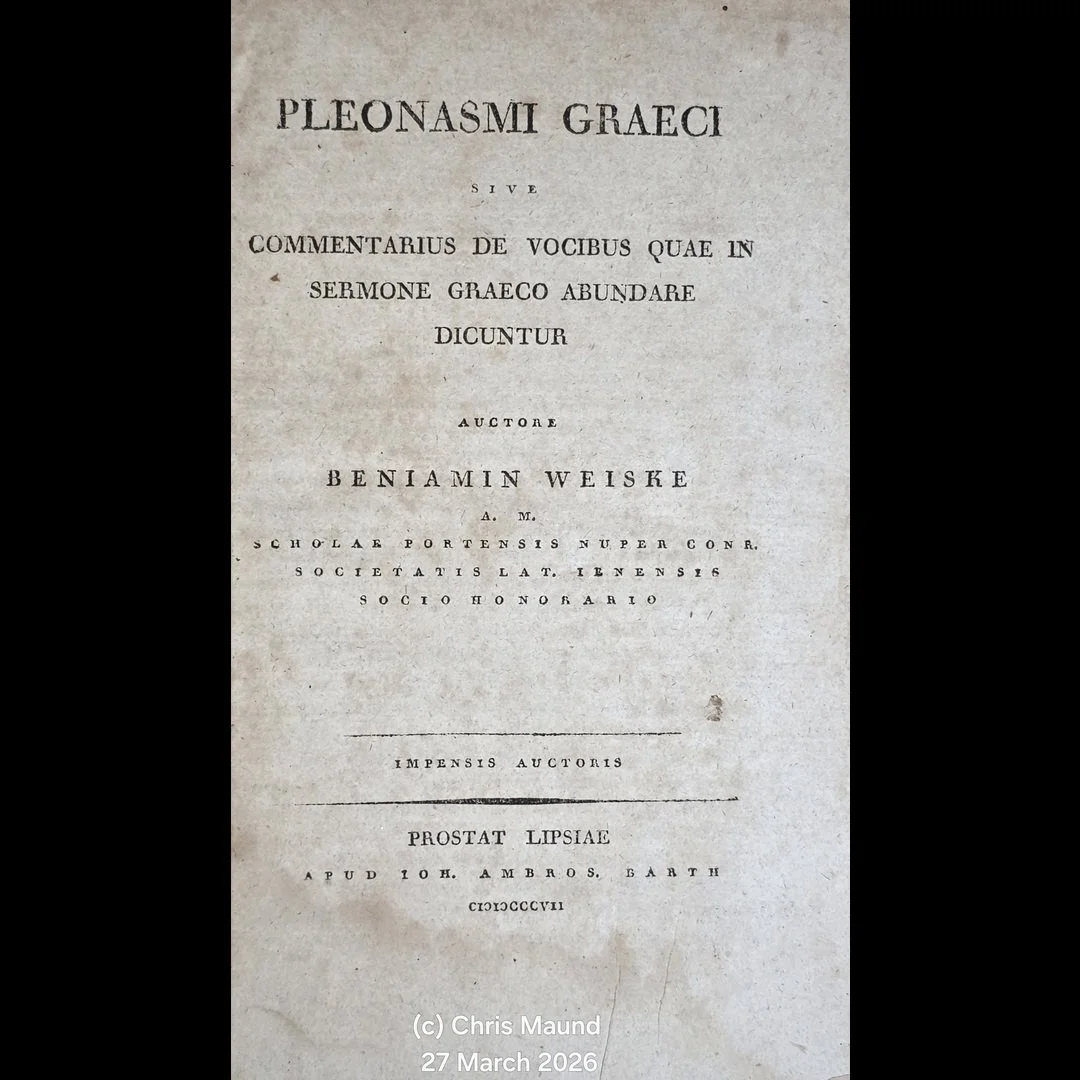 Image 1 of 20
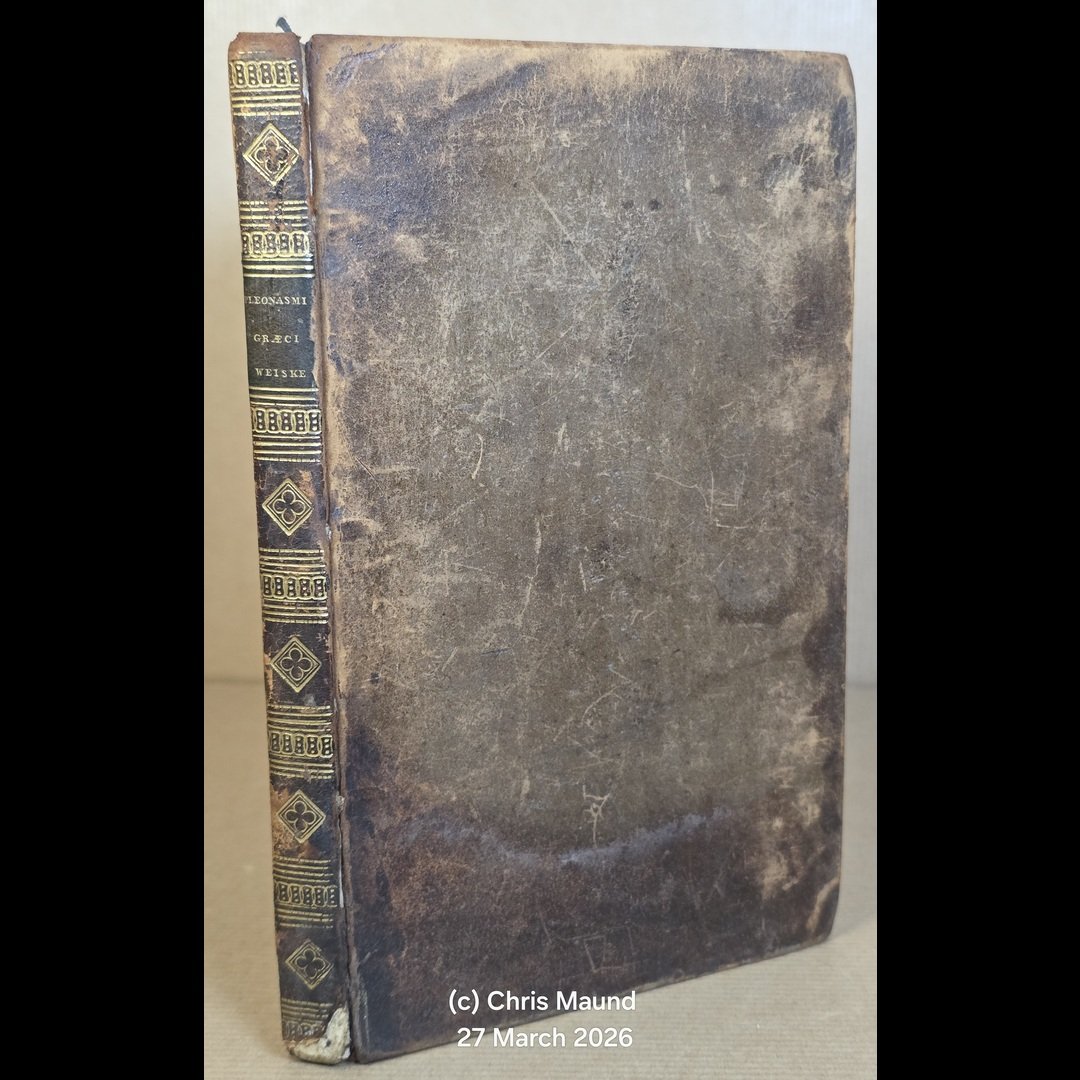 Image 2 of 20
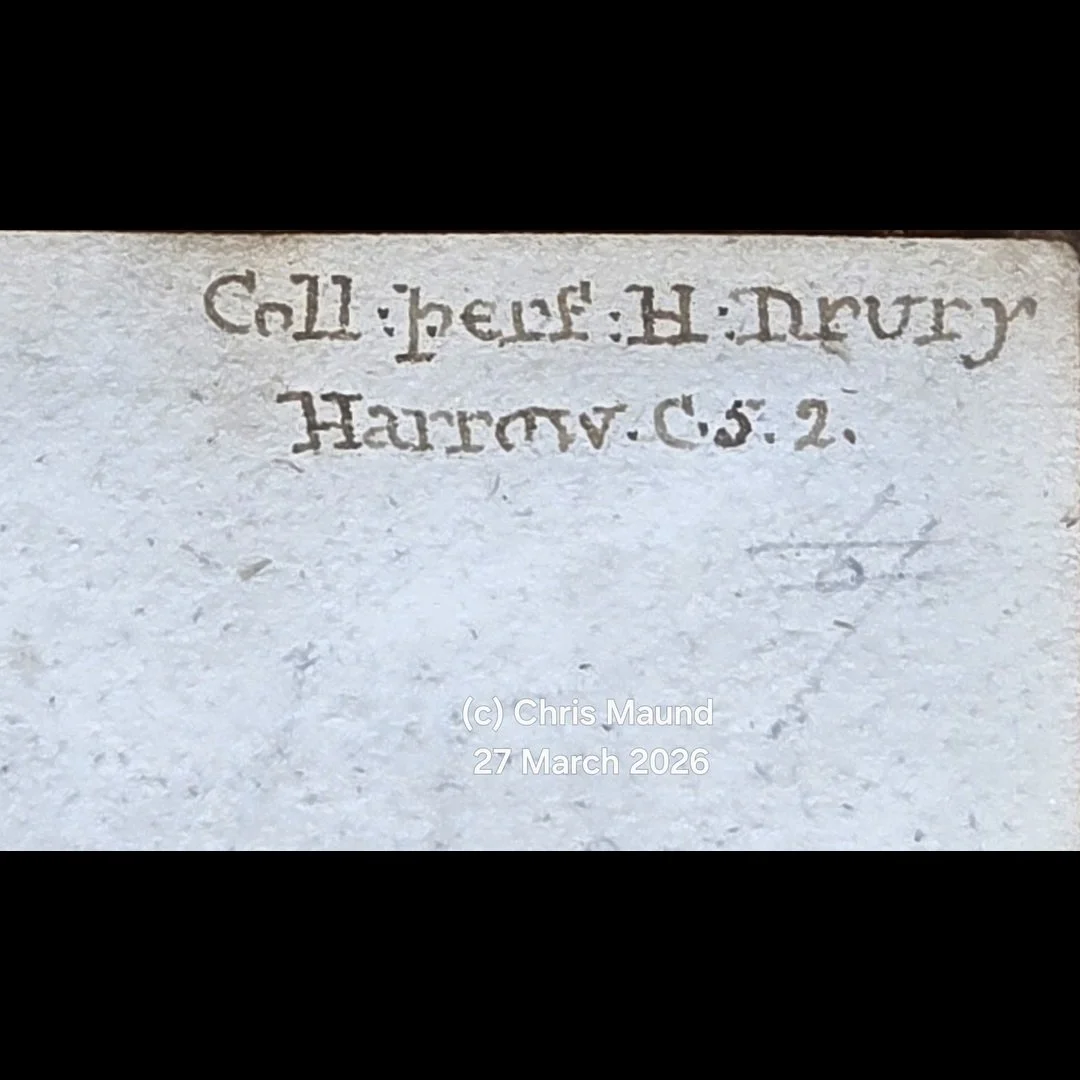 Image 3 of 20
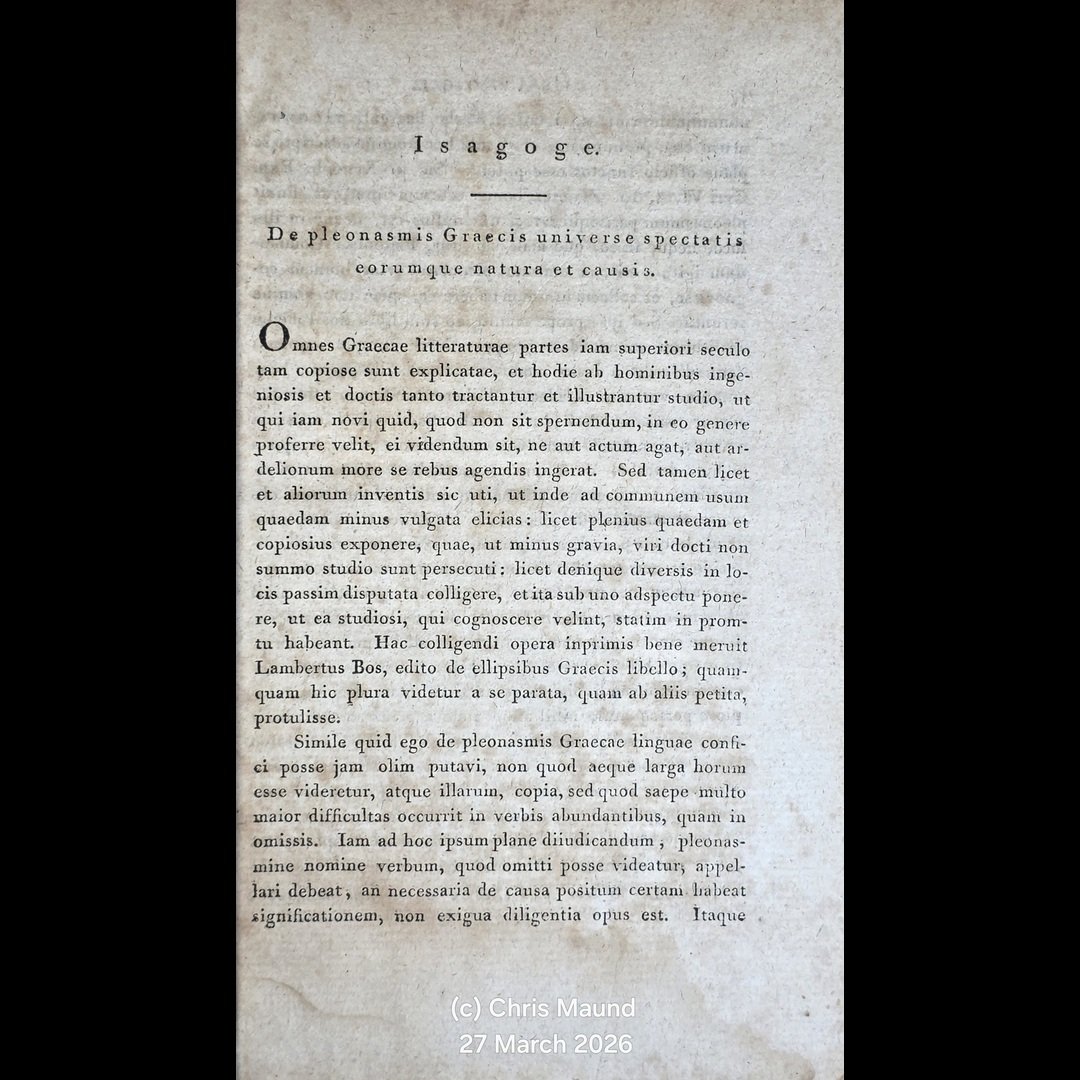 Image 4 of 20
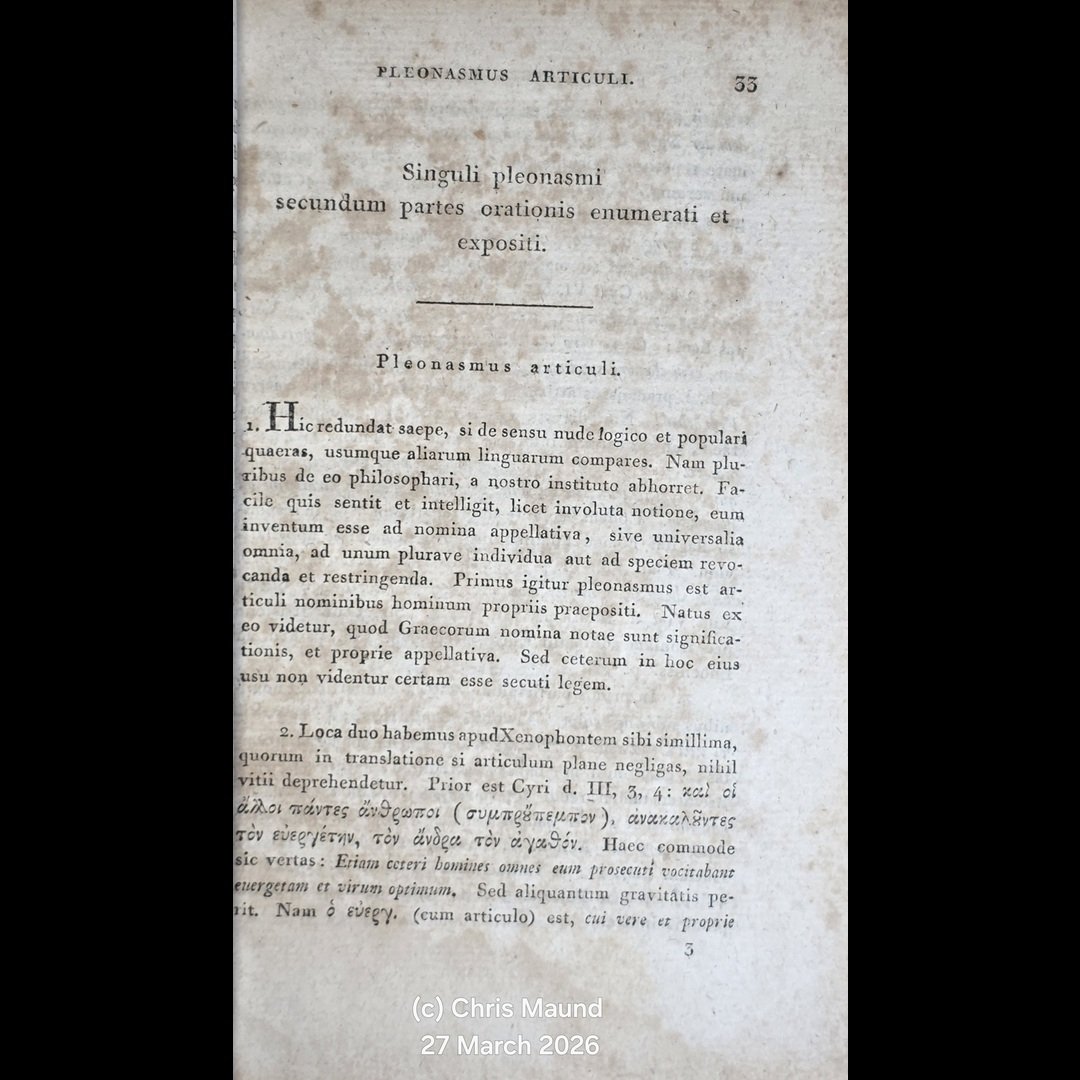 Image 5 of 20
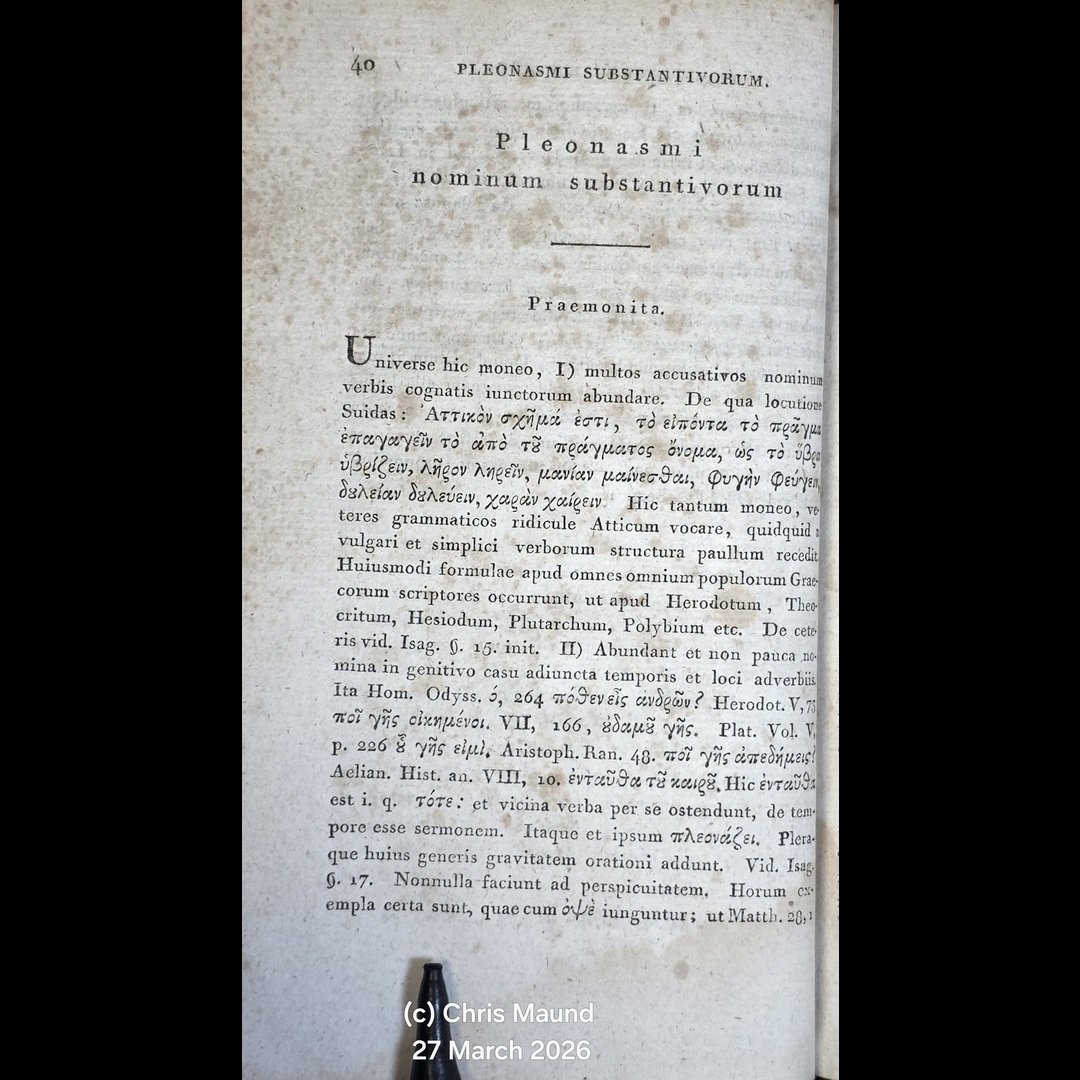 Image 6 of 20
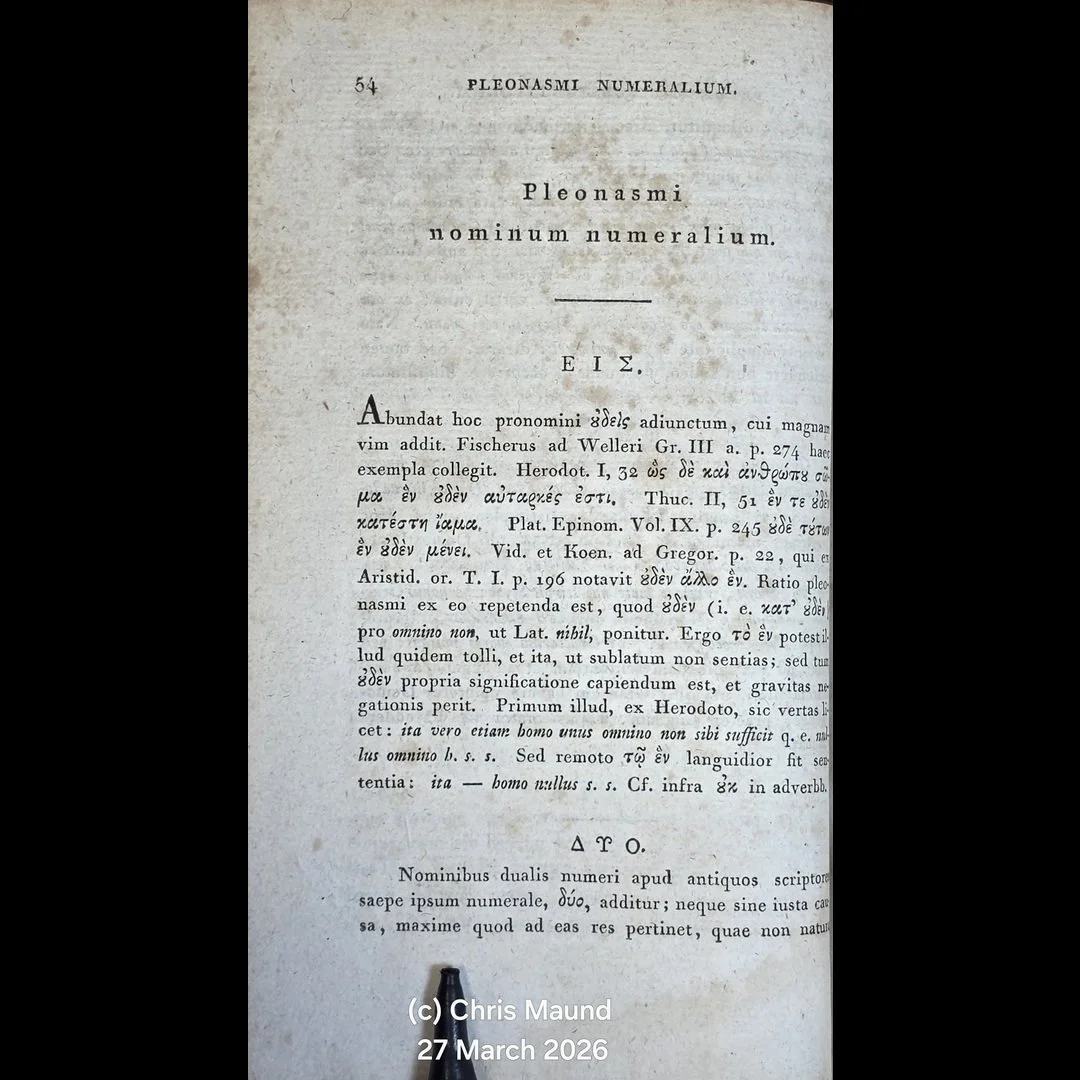 Image 7 of 20
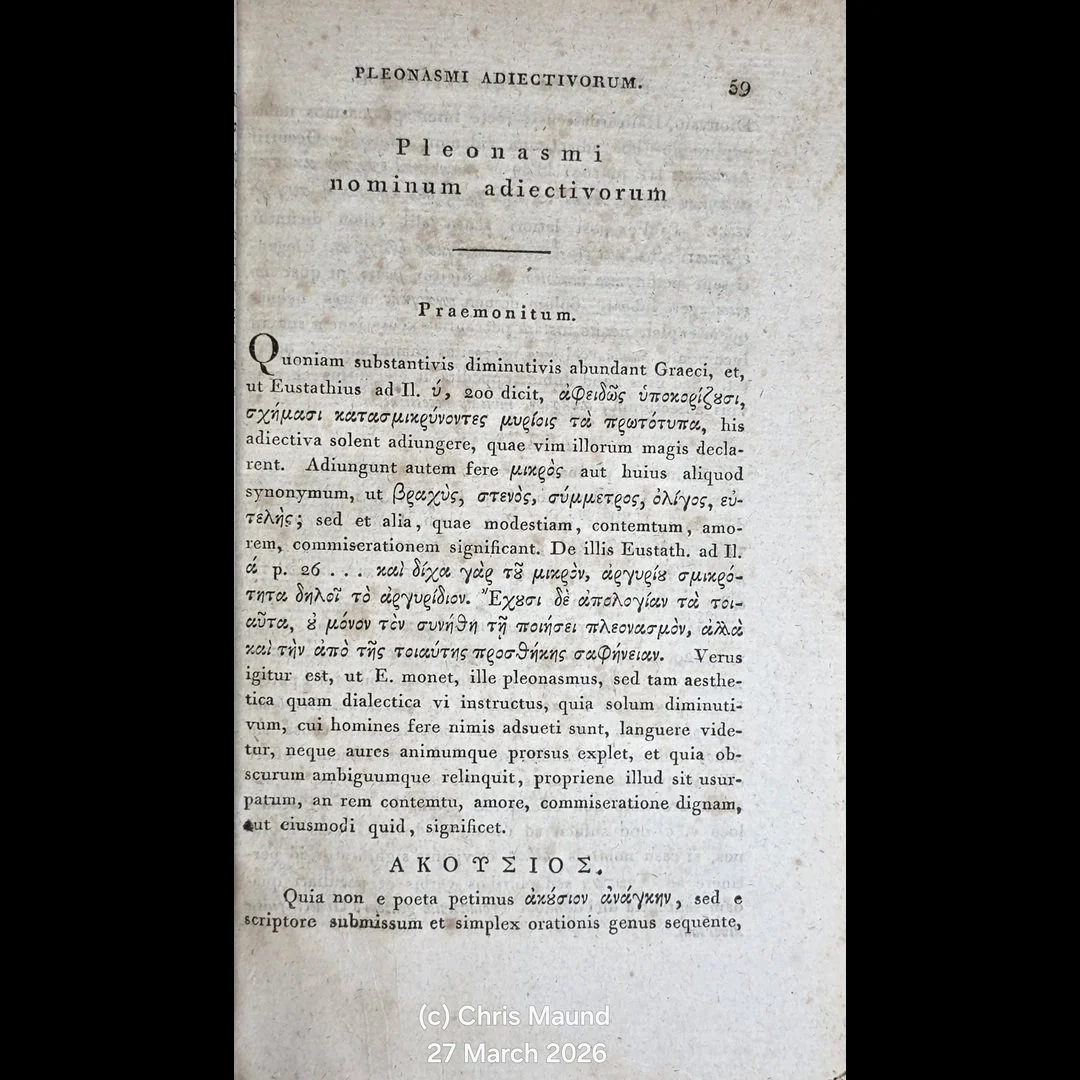 Image 8 of 20
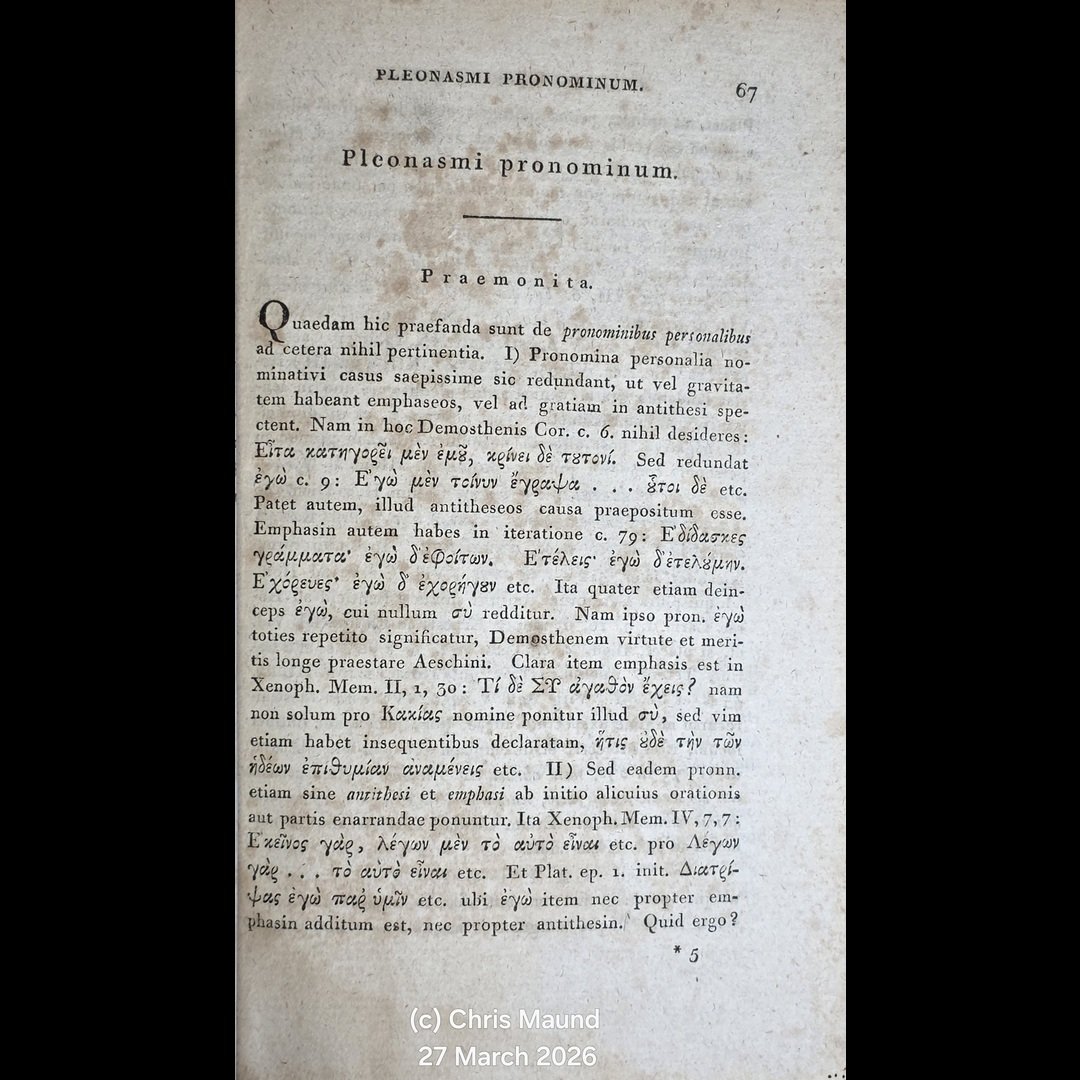 Image 9 of 20
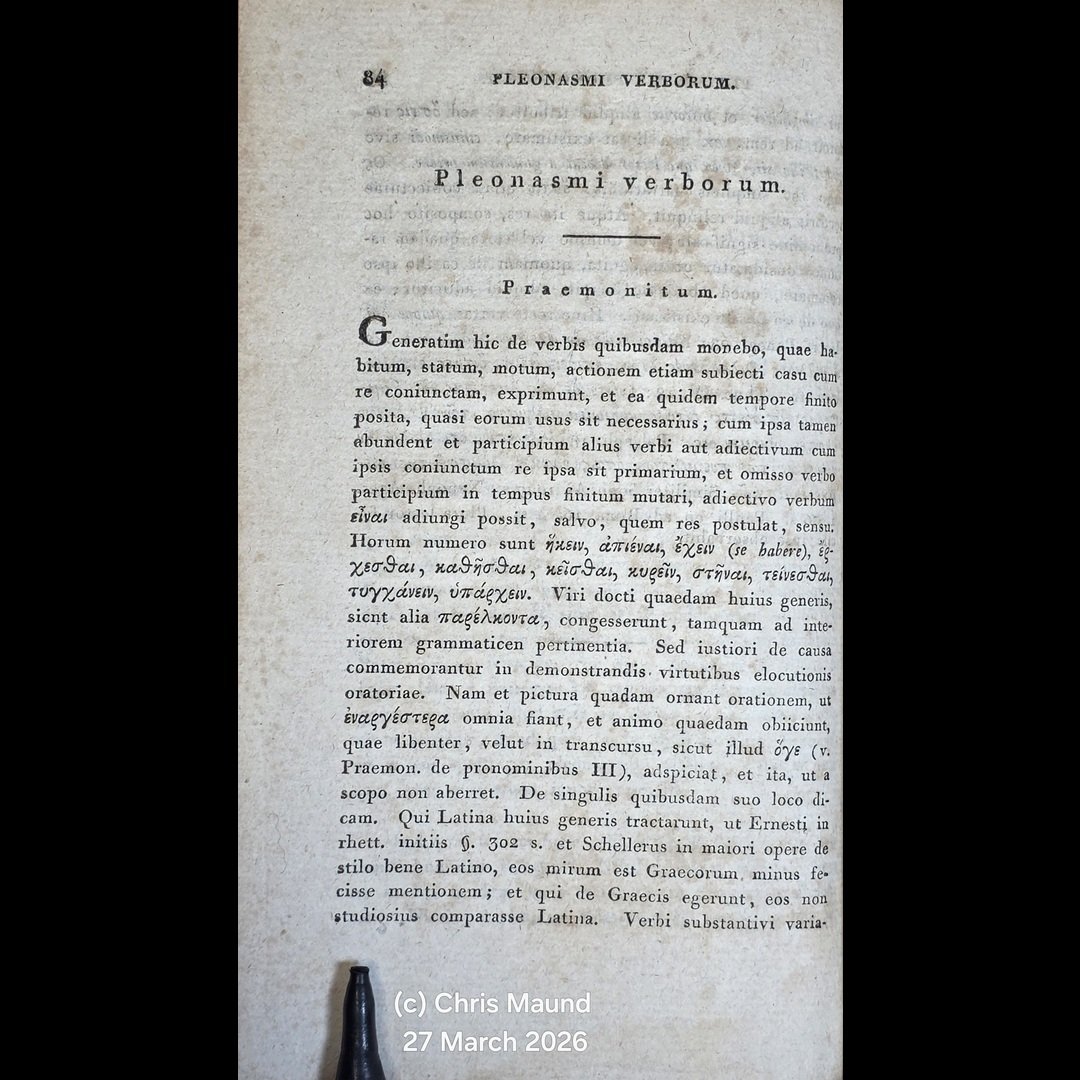 Image 10 of 20
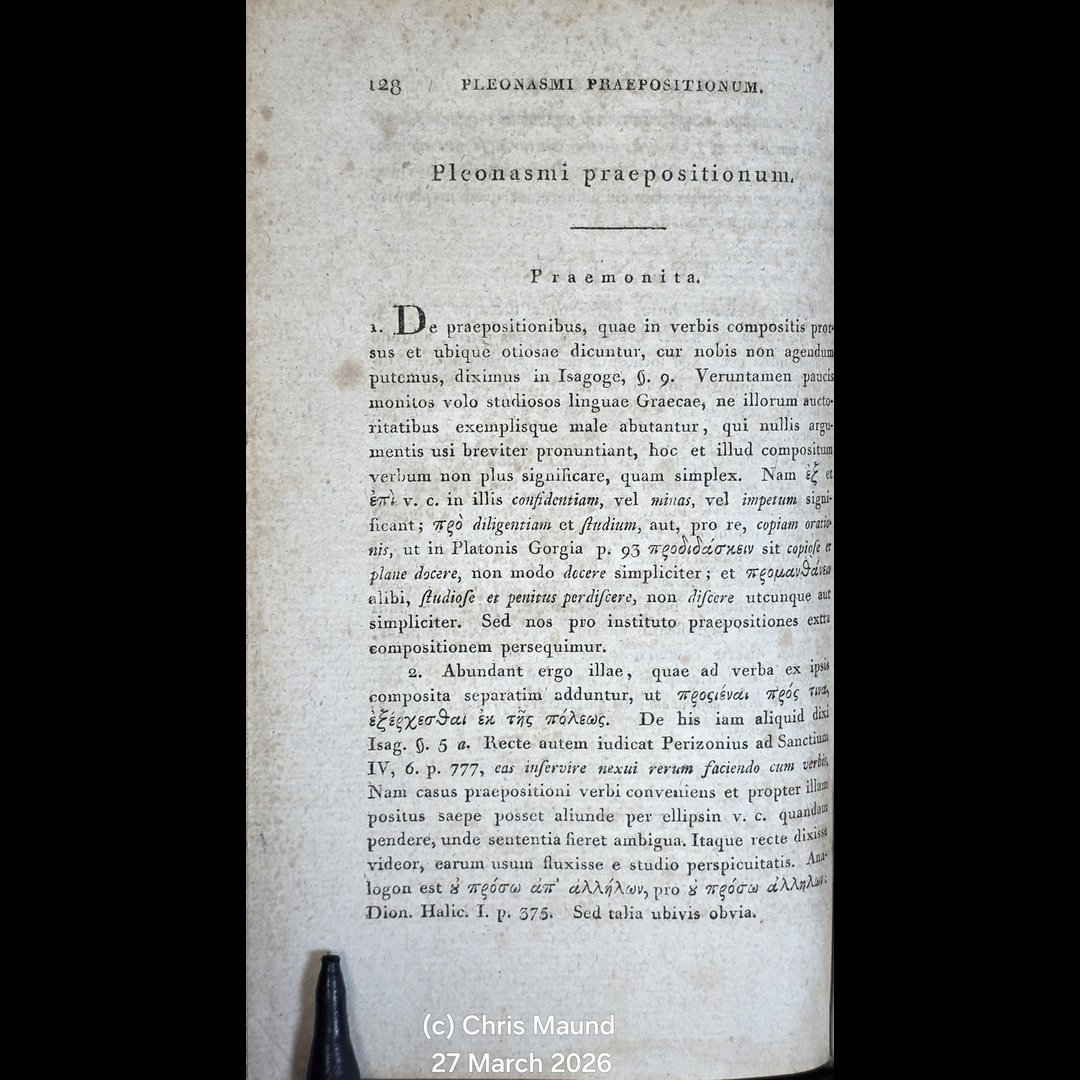 Image 11 of 20
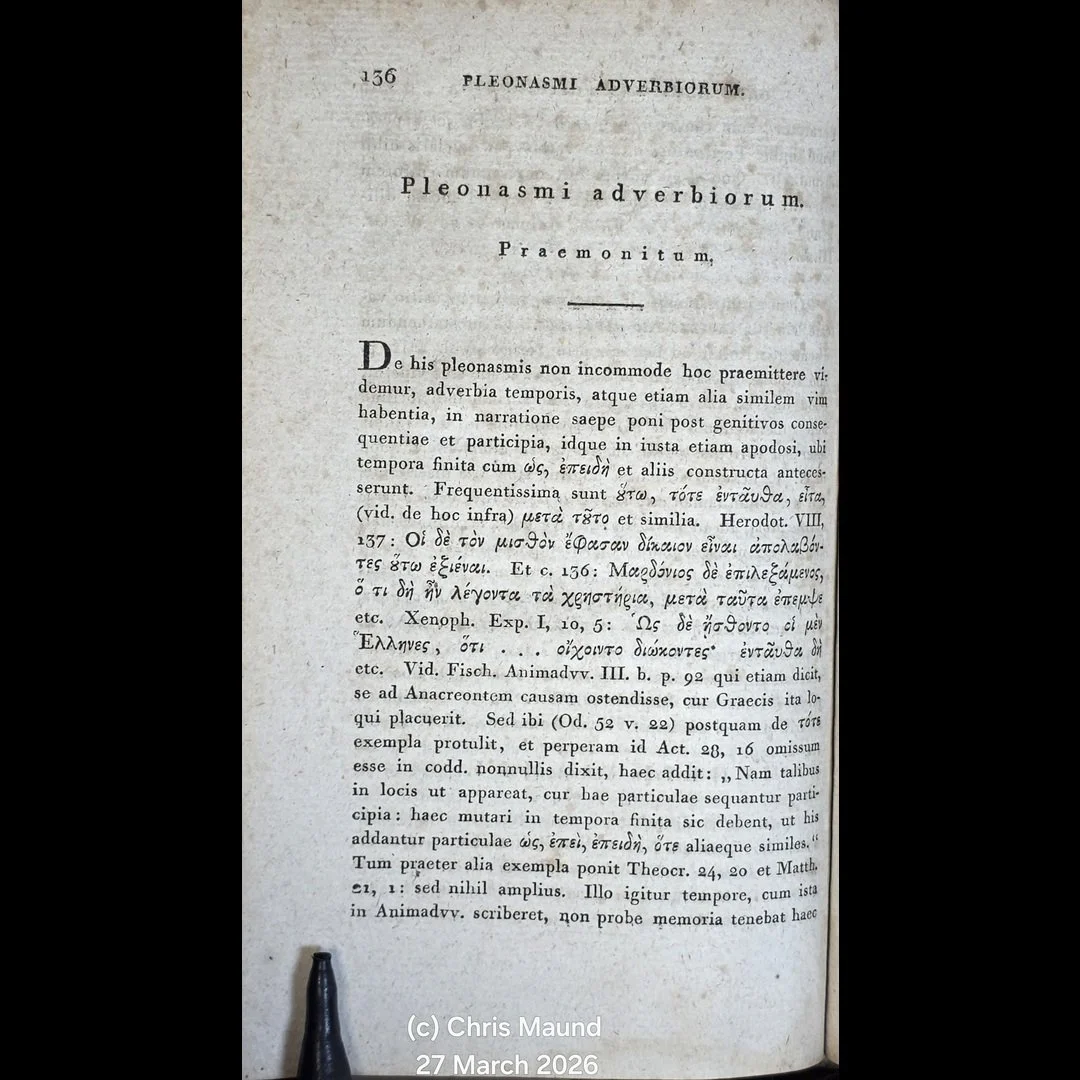 Image 12 of 20
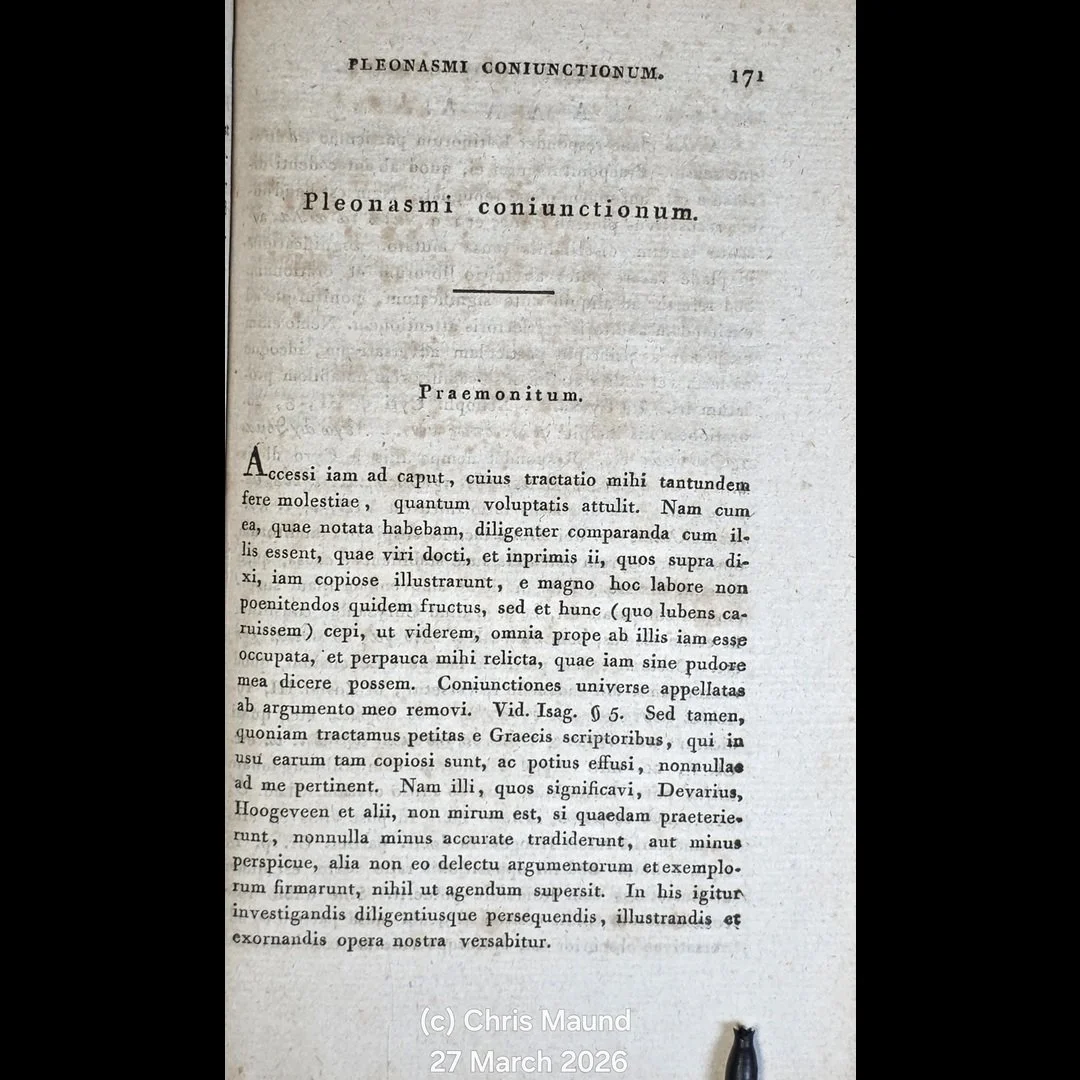 Image 13 of 20
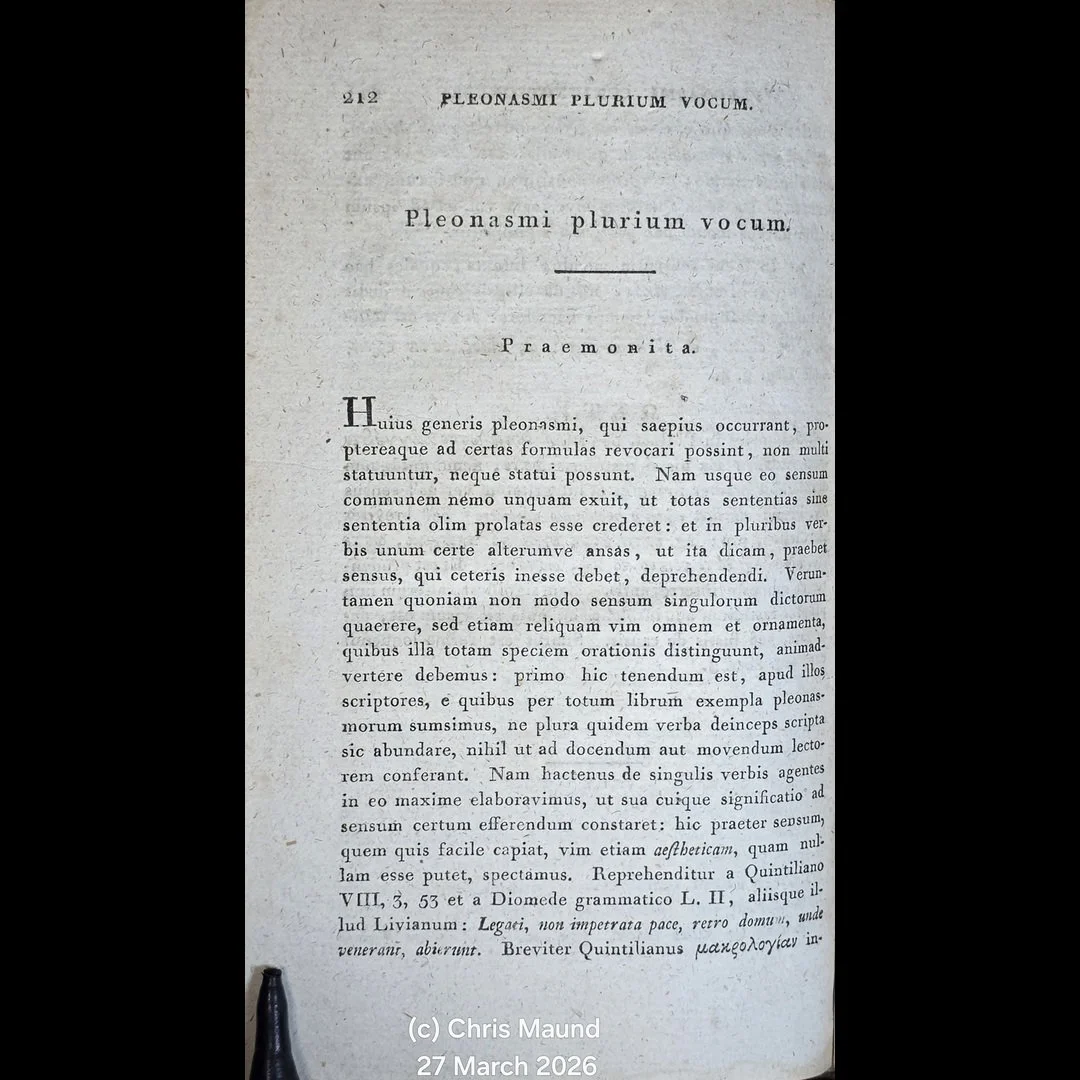 Image 14 of 20
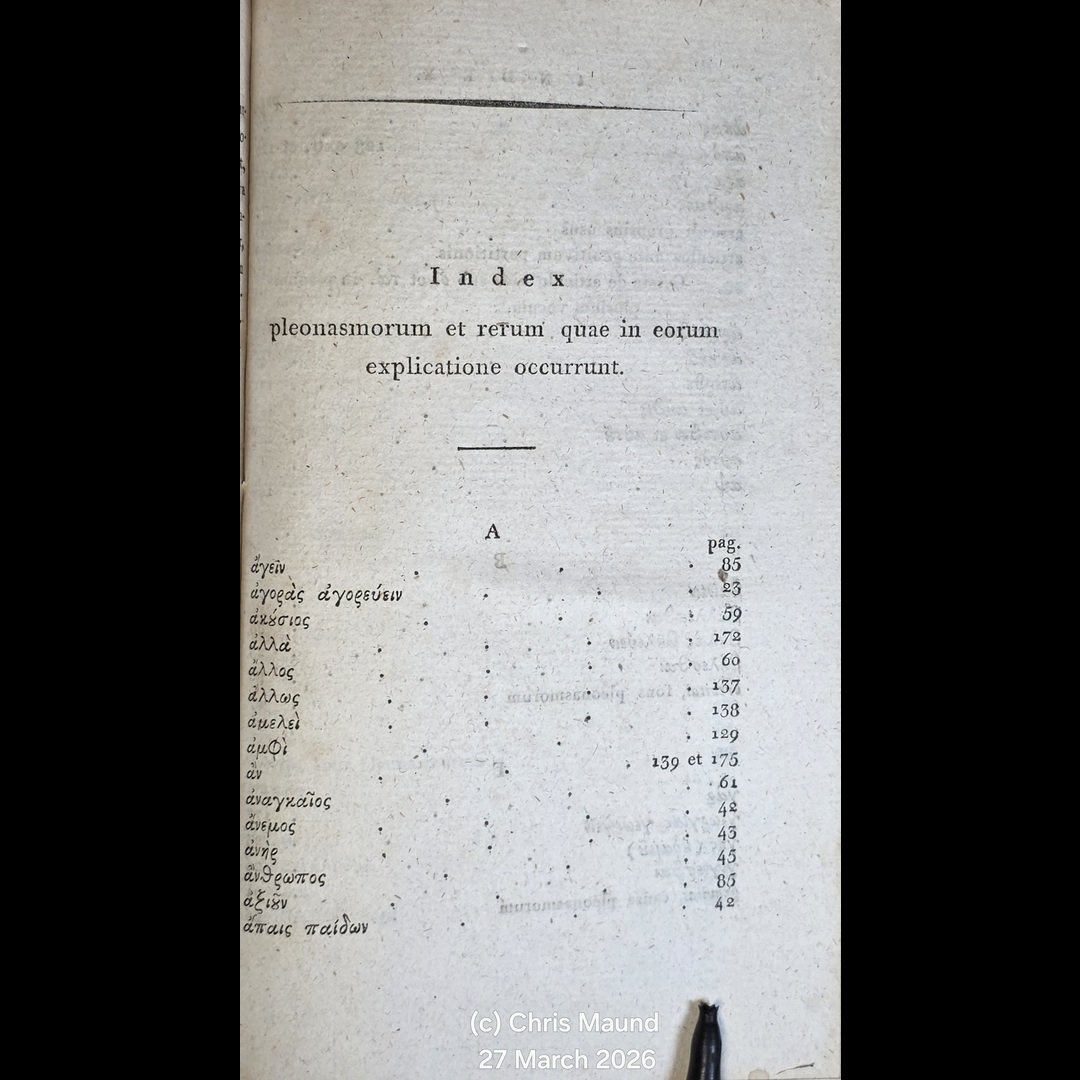 Image 15 of 20
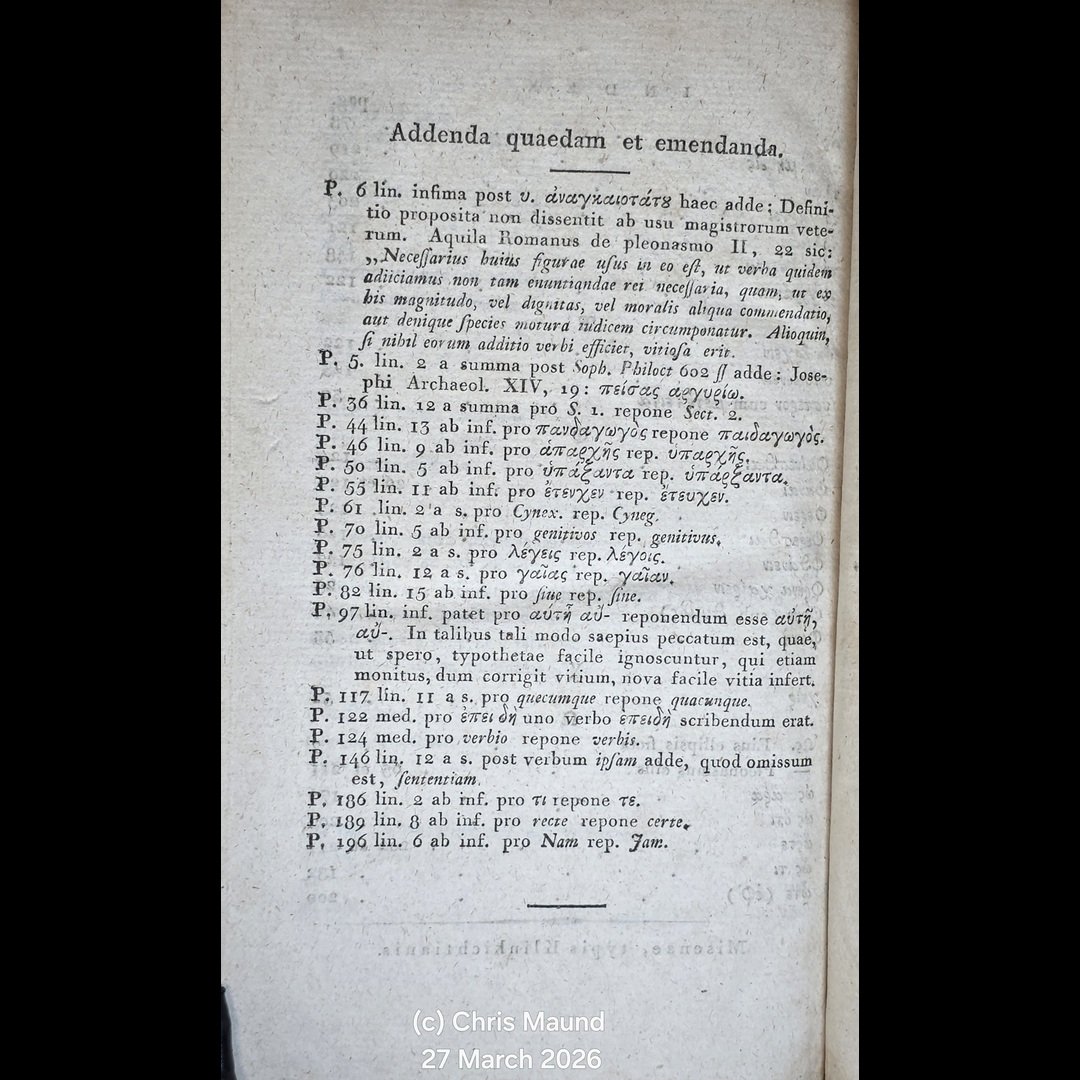 Image 16 of 20
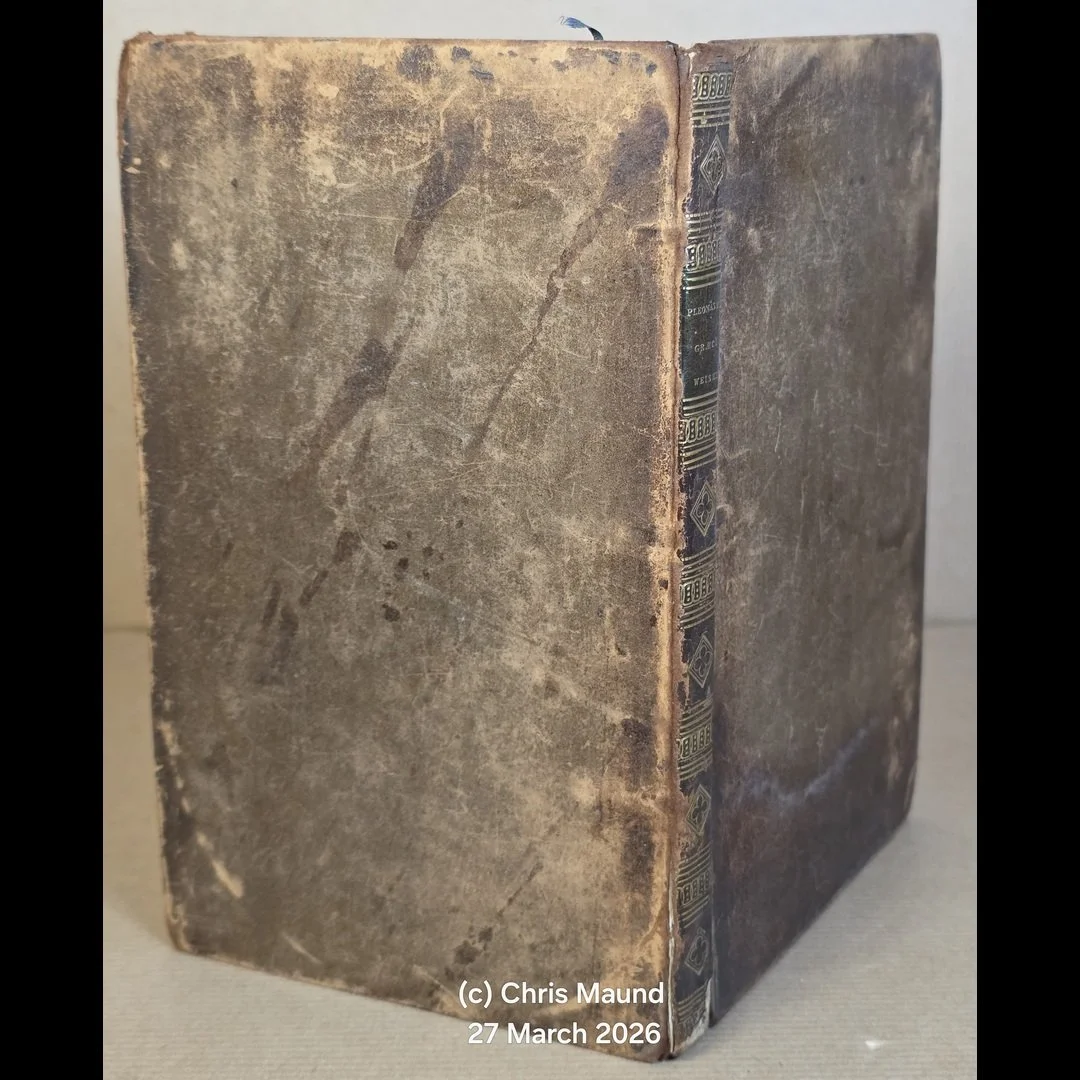 Image 17 of 20
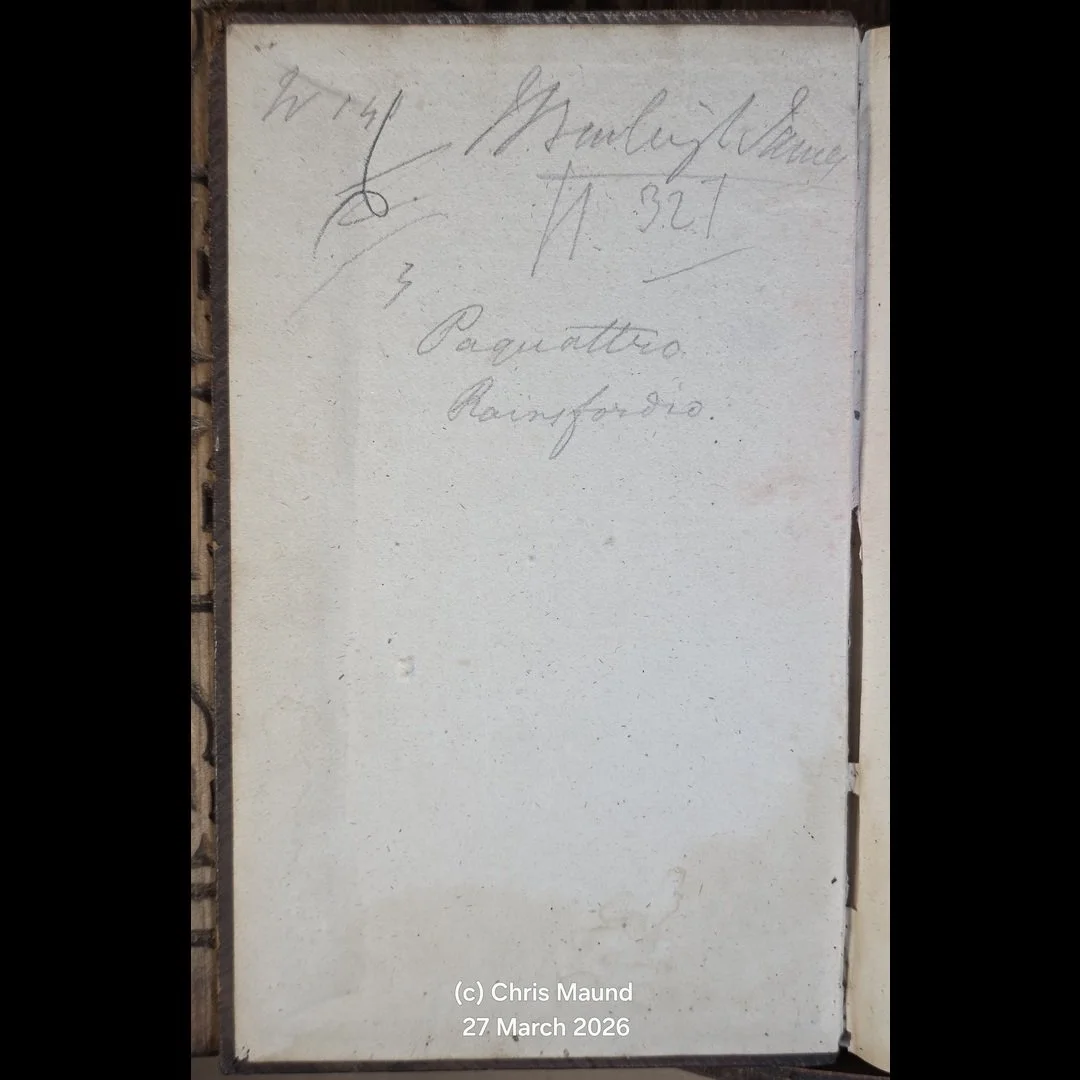 Image 18 of 20
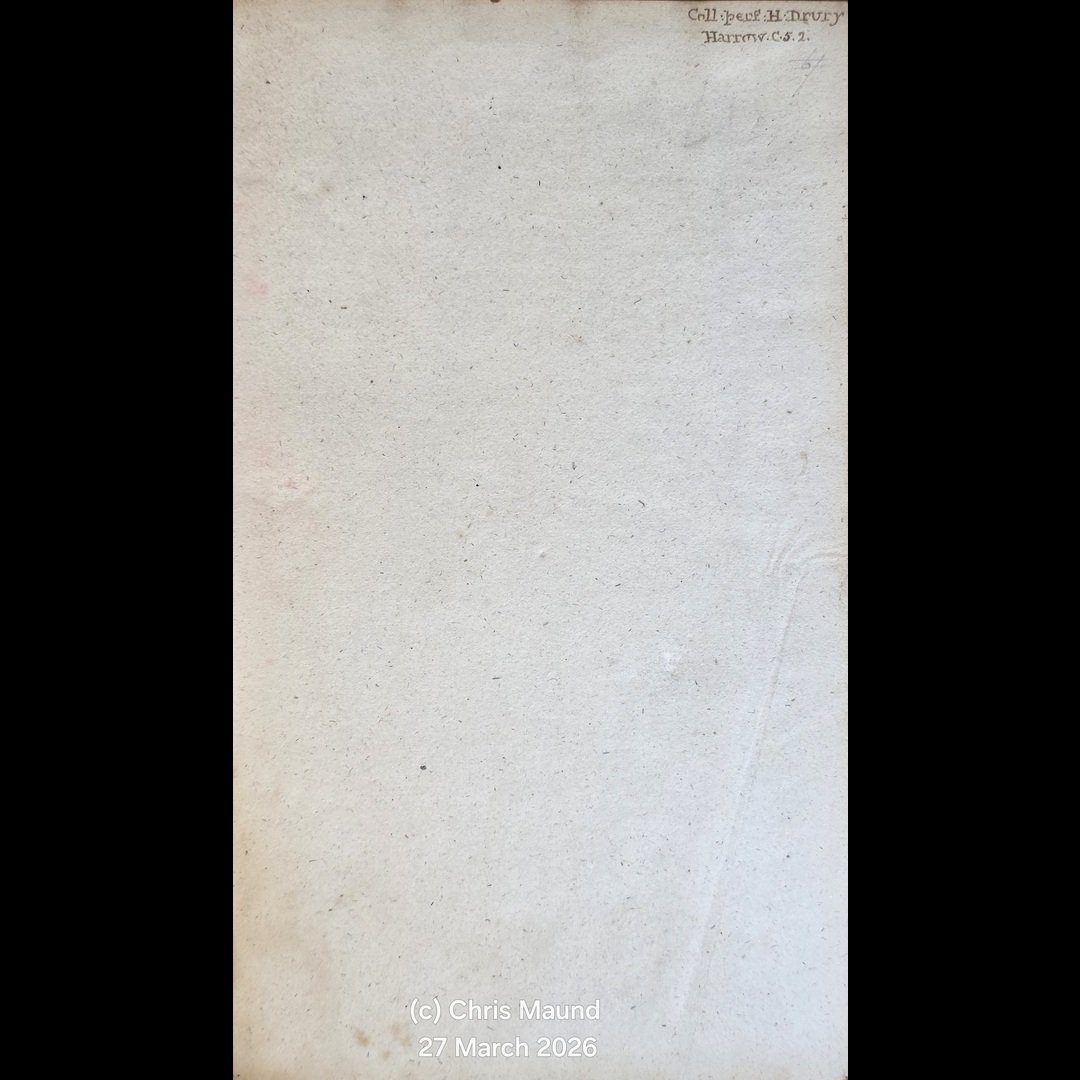 Image 19 of 20
 Image 20 of 20