Sale Price:
£475.00
Original Price:
£540.00
1831 Second Edition
LETTERS ON DEMONOLOGY AND WITCHCRAFT
By Sir Walter Scott, Bart.
KEY DETAILS
Condition: Very Good
Format: Hardcover, sextodecimo or sixteenmo (16mo 4 × 6 3⁄4 in 102 × 171 mm )
Note: Binding/size selection follows standard bibliographic conventions and is approximate; exact measurements may vary.
Published By: John Murray, Albemarle Street, London, 1831
Language: English
Illustrated By: W. H. Lizar
Collation: 2 unnumbered leaves, ix, 396 pp., 1 unnumbered terminal leaf; engraved frontispiece.
SKU: BTETM0002357
Shipping Info: Approximate Package Dimensions H: 12.5, L: 30, W: 25 (Units: cm), W: 2Kg
Tracked Shipping, Insurance Coverage as per Customer Request
DESCRIPTION
Letters on Demonology and Witchcraft
Addressed to J. G. Lockhart, Esq.
An attractive early edition of Sir Walter Scott's celebrated study of witchcraft, demonology, apparitions, second sight, fairy belief and supernatural folklore, published by John Murray only a year after the first edition of 1830.
Written in the form of ten letters addressed to Scott's son-in-law and future biographer, J. G. Lockhart, Letters on Demonology and Witchcraft draws upon Scott's extensive knowledge of Scottish folklore, historical witch trials, antiquarian literature and popular supernatural belief. The work ranges from Biblical and classical demonology through medieval superstition and fairy traditions to the witch persecutions of Britain and continental Europe.
This copy is the Second Edition, London, John Murray, 1831, issued in the celebrated Family Library series. It retains the engraved frontispiece, “The Bow, Edinburgh. House of Major Weir,” drawn by J. Skene and engraved by W. H. Lizars, and is preserved in an appealing early half-calf binding over marbled boards, with gilt-decorated spine and green leather title label.
A handsome and highly evocative nineteenth-century copy of one of Scott's most enduring works outside his fiction, of particular interest to collectors of witchcraft, demonology, folklore, Gothic literature and Scottish history.
CONDITION, COLLATION & COPY NOTES
An attractive early nineteenth-century copy in half calf over marbled boards, the spine with raised bands, gilt decoration and green leather lettering piece titled Scott's Demonology. Binding firm and structurally sound.
Leather rubbed and scuffed with age, with wear to the spine extremities, raised bands and corners. Marbled boards show general rubbing and surface abrasion, more pronounced in places, consistent with age and use. Gilt decoration remains attractive and the spine retains strong shelf presence.
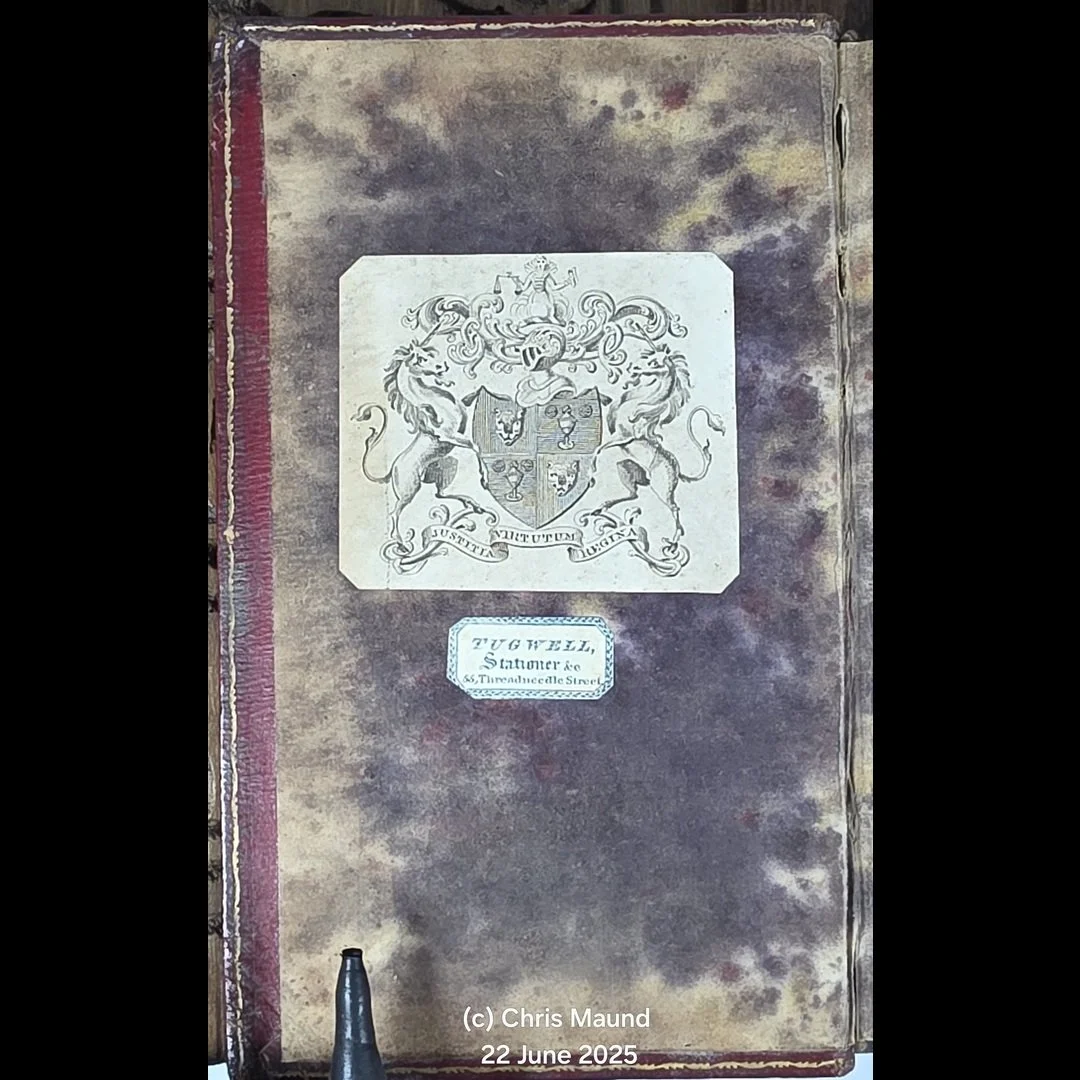
Engraved frontispiece present, drawn by J. Skene and engraved by W. H. Lizars, depicting The Bow, Edinburgh. House of Major Weir. Title page present. Text block firm and strong. Contents generally clean and well preserved, with light age-toning and scattered mild foxing, somewhat more noticeable to the title page and occasional leaves. No significant staining or substantial textual loss apparent from examination.
Terminal “Note on a Passage in Sir Walter Scott's Demonology” present.
A pleasing, substantially well-preserved copy in an attractive period-style binding, with the wear lending an appropriately antiquarian character without detracting materially from readability or presentation.
Frontispiece:
Drawn By: J. Skene, Esq. of Rubislaw
Engraved By: W. H. Lizars
William Home Lizars (1788–1859) was a Scottish painter, engraver and publisher based in Edinburgh. He became particularly noted for book illustration and natural-history engraving and worked for many of the leading publishers and authors of the early nineteenth century. The frontispiece to this volume, The Bow, Edinburgh. House of Major Weir, was drawn by James Skene of Rubislaw and engraved by Lizars.
Please see Photos as part of condition report.
REFERENCES
Wellcome Collection, Letters on Demonology and Witchcraft, London: John Murray, 1831, Second Edition.
National Library of Ireland catalogue, Family Library, no. 16.
SYNOPSIS
Letters on Demonology and Witchcraft is Sir Walter Scott's wide-ranging examination of supernatural belief, written as a series of ten letters addressed to J. G. Lockhart.
Beginning with ancient and Biblical ideas concerning spirits, divination and witchcraft, Scott traces the development of supernatural belief through classical, medieval and early-modern Europe. He examines apparitions, demonology, fairies and elves, second sight, magical traditions and alleged possession, before turning in detail to the history of witchcraft prosecutions.
Particular attention is given to British and Scottish cases, including the witches associated with Macbeth, the Lancashire witches, Matthew Hopkins and the seventeenth-century witch persecutions, as well as the changing legal and theological attitudes that eventually brought organised witch trials to an end.
Scott approaches these subjects as both an antiquary and a sceptical historian. Rather than accepting supernatural claims at face value, he considers the cultural, psychological, religious and political circumstances which allowed such beliefs to flourish. At the same time, his gift as a storyteller makes the work a rich collection of legends, historical cases and supernatural anecdotes.
First published in 1830, the work proved sufficiently popular for this Second Edition to appear in 1831, and it became one of the most influential nineteenth-century literary surveys of demonology, witchcraft and traditional supernatural belief.
AUTHOR BIO
Sir Walter Scott, 1st Baronet, FRSE, FSAScot (1771–1832) was a Scottish novelist, poet, historian, antiquary and collector whose writings played a central role in the development of historical fiction and in the nineteenth-century revival of interest in Scottish history and folklore.
His best-known works include Waverley (1814), Rob Roy (1817), The Heart of Mid-Lothian (1818), Ivanhoe (1819), The Bride of Lammermoor (1819), and the narrative poems Marmion (1808) and The Lady of the Lake (1810).
Scott was also a lifelong student and collector of folklore, popular belief, balladry and antiquarian literature. His extensive library at Abbotsford contained numerous works relating to magic, witchcraft and supernatural belief, knowledge which informed Letters on Demonology and Witchcraft.
ILLUSTRATOR
W. H. Lizar
William Home Lizars (1788–1859) was a Scottish painter, engraver and publisher based in Edinburgh. He became particularly noted for book illustration and natural-history engraving and worked for many of the leading publishers and authors of the early nineteenth century.
The frontispiece to this volume, The Bow, Edinburgh. House of Major Weir, was drawn by James Skene of Rubislaw and engraved by Lizars.
1831 Second Edition
LETTERS ON DEMONOLOGY AND WITCHCRAFT
By Sir Walter Scott, Bart.
KEY DETAILS
Condition: Very Good
Format: Hardcover, sextodecimo or sixteenmo (16mo 4 × 6 3⁄4 in 102 × 171 mm )
Note: Binding/size selection follows standard bibliographic conventions and is approximate; exact measurements may vary.
Published By: John Murray, Albemarle Street, London, 1831
Language: English
Illustrated By: W. H. Lizar
Collation: 2 unnumbered leaves, ix, 396 pp., 1 unnumbered terminal leaf; engraved frontispiece.
SKU: BTETM0002357
Shipping Info: Approximate Package Dimensions H: 12.5, L: 30, W: 25 (Units: cm), W: 2Kg
Tracked Shipping, Insurance Coverage as per Customer Request
DESCRIPTION
Letters on Demonology and Witchcraft
Addressed to J. G. Lockhart, Esq.
An attractive early edition of Sir Walter Scott's celebrated study of witchcraft, demonology, apparitions, second sight, fairy belief and supernatural folklore, published by John Murray only a year after the first edition of 1830.
Written in the form of ten letters addressed to Scott's son-in-law and future biographer, J. G. Lockhart, Letters on Demonology and Witchcraft draws upon Scott's extensive knowledge of Scottish folklore, historical witch trials, antiquarian literature and popular supernatural belief. The work ranges from Biblical and classical demonology through medieval superstition and fairy traditions to the witch persecutions of Britain and continental Europe.
This copy is the Second Edition, London, John Murray, 1831, issued in the celebrated Family Library series. It retains the engraved frontispiece, “The Bow, Edinburgh. House of Major Weir,” drawn by J. Skene and engraved by W. H. Lizars, and is preserved in an appealing early half-calf binding over marbled boards, with gilt-decorated spine and green leather title label.
A handsome and highly evocative nineteenth-century copy of one of Scott's most enduring works outside his fiction, of particular interest to collectors of witchcraft, demonology, folklore, Gothic literature and Scottish history.
CONDITION, COLLATION & COPY NOTES
An attractive early nineteenth-century copy in half calf over marbled boards, the spine with raised bands, gilt decoration and green leather lettering piece titled Scott's Demonology. Binding firm and structurally sound.
Leather rubbed and scuffed with age, with wear to the spine extremities, raised bands and corners. Marbled boards show general rubbing and surface abrasion, more pronounced in places, consistent with age and use. Gilt decoration remains attractive and the spine retains strong shelf presence.
Engraved frontispiece present, drawn by J. Skene and engraved by W. H. Lizars, depicting The Bow, Edinburgh. House of Major Weir. Title page present. Text block firm and strong. Contents generally clean and well preserved, with light age-toning and scattered mild foxing, somewhat more noticeable to the title page and occasional leaves. No significant staining or substantial textual loss apparent from examination.
Terminal “Note on a Passage in Sir Walter Scott's Demonology” present.
A pleasing, substantially well-preserved copy in an attractive period-style binding, with the wear lending an appropriately antiquarian character without detracting materially from readability or presentation.
Frontispiece:
Drawn By: J. Skene, Esq. of Rubislaw
Engraved By: W. H. Lizars
William Home Lizars (1788–1859) was a Scottish painter, engraver and publisher based in Edinburgh. He became particularly noted for book illustration and natural-history engraving and worked for many of the leading publishers and authors of the early nineteenth century. The frontispiece to this volume, The Bow, Edinburgh. House of Major Weir, was drawn by James Skene of Rubislaw and engraved by Lizars.
Please see Photos as part of condition report.
REFERENCES
Wellcome Collection, Letters on Demonology and Witchcraft, London: John Murray, 1831, Second Edition.
National Library of Ireland catalogue, Family Library, no. 16.
SYNOPSIS
Letters on Demonology and Witchcraft is Sir Walter Scott's wide-ranging examination of supernatural belief, written as a series of ten letters addressed to J. G. Lockhart.
Beginning with ancient and Biblical ideas concerning spirits, divination and witchcraft, Scott traces the development of supernatural belief through classical, medieval and early-modern Europe. He examines apparitions, demonology, fairies and elves, second sight, magical traditions and alleged possession, before turning in detail to the history of witchcraft prosecutions.
Particular attention is given to British and Scottish cases, including the witches associated with Macbeth, the Lancashire witches, Matthew Hopkins and the seventeenth-century witch persecutions, as well as the changing legal and theological attitudes that eventually brought organised witch trials to an end.
Scott approaches these subjects as both an antiquary and a sceptical historian. Rather than accepting supernatural claims at face value, he considers the cultural, psychological, religious and political circumstances which allowed such beliefs to flourish. At the same time, his gift as a storyteller makes the work a rich collection of legends, historical cases and supernatural anecdotes.
First published in 1830, the work proved sufficiently popular for this Second Edition to appear in 1831, and it became one of the most influential nineteenth-century literary surveys of demonology, witchcraft and traditional supernatural belief.
AUTHOR BIO
Sir Walter Scott, 1st Baronet, FRSE, FSAScot (1771–1832) was a Scottish novelist, poet, historian, antiquary and collector whose writings played a central role in the development of historical fiction and in the nineteenth-century revival of interest in Scottish history and folklore.
His best-known works include Waverley (1814), Rob Roy (1817), The Heart of Mid-Lothian (1818), Ivanhoe (1819), The Bride of Lammermoor (1819), and the narrative poems Marmion (1808) and The Lady of the Lake (1810).
Scott was also a lifelong student and collector of folklore, popular belief, balladry and antiquarian literature. His extensive library at Abbotsford contained numerous works relating to magic, witchcraft and supernatural belief, knowledge which informed Letters on Demonology and Witchcraft.
ILLUSTRATOR
W. H. Lizar
William Home Lizars (1788–1859) was a Scottish painter, engraver and publisher based in Edinburgh. He became particularly noted for book illustration and natural-history engraving and worked for many of the leading publishers and authors of the early nineteenth century.
The frontispiece to this volume, The Bow, Edinburgh. House of Major Weir, was drawn by James Skene of Rubislaw and engraved by Lizars.

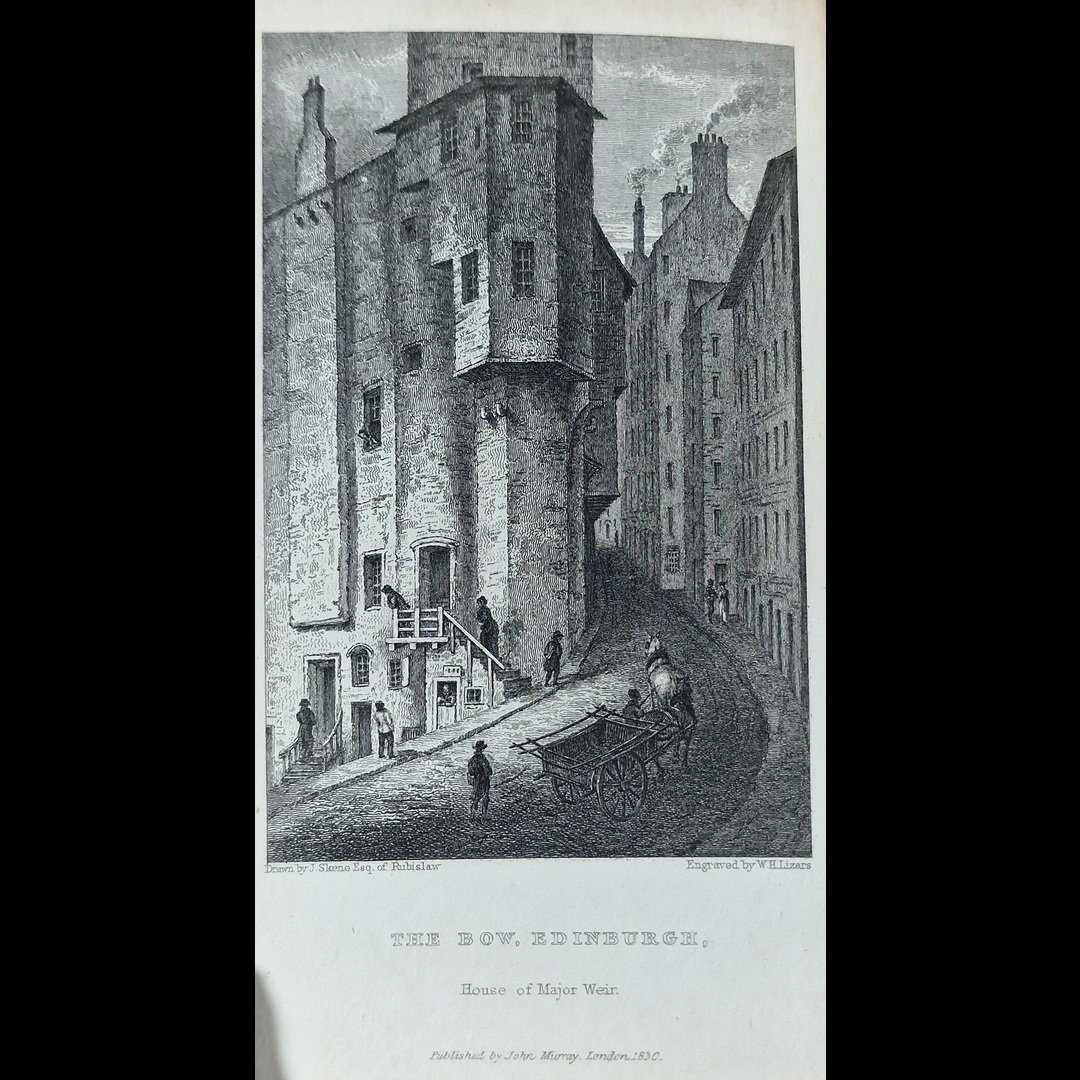 Image 1 of 17
 Image 2 of 17
 Image 3 of 17
 Image 4 of 17
 Image 5 of 17
 Image 6 of 17
 Image 7 of 17
 Image 8 of 17
 Image 9 of 17
 Image 10 of 17
 Image 11 of 17
 Image 12 of 17
 Image 13 of 17
 Image 14 of 17
 Image 15 of 17
 Image 16 of 17
 Image 17 of 17