1742 First Edition
PHYTANTHOZA ICONOGRAPHIA, SIVE CONSPECTUS VOL III PART 1
By Johann Wilhelm Weinmann
KEY DETAILS
Condition: Very Good
Format: Hardcover, Folio; approx. 12 × 19 in / 305 × 483 mm
Published By: Ratisbonae [Regensburg], per Hieronymum Lenzium, Germany, 1742
Language: Latin/German
Provenance: Clamor Werner Otto von dem Bussche, aus dem Hause Ippenburg — armorial engraved ex libris to the front pastedown.
Collation: Blue-printed portrait frontispiece; Latin title; German title; [2] leaves, 488 numbered pages. Complete text component of Volume III, Part I.
Dust Jacket: None, as issued
SKU: BTETM0002366
Shipping Info: Approximate Package Dimensions H: 20, L: 60, W: 30 (Units: cm), W: 4Kg
Tracked Shipping, Insurance Coverage as per Customer Request
DESCRIPTION
Phytanthoza Iconographia, sive Conspectus Vol III Part 1
Complete Text Volume G–O
With Blue-Printed Portrait of Ambrosius Carl Bieler and von dem Bussche of Ippenburg Provenance
A substantial and attractive first-edition text volume from Johann Wilhelm Weinmann’s celebrated Phytanthoza Iconographia, one of the most ambitious botanical publications of the eighteenth century.
Printed at Regensburg by Hieronymus Lentz in 1742, the present volume is Volume III, Part I, containing the complete Latin and German descriptive text for the botanical sequence G–O, from Galanga through the plants beginning with O. The contemporary-style spine designation “T. III. P. I.” confirms its status as the text component of the third volume.
The volume is bibliographically complete as the text part: institutional cataloguing records Volume III as [2] leaves, 488 pages, folio, covering G, H, I/J, K, L, M, N and O. The University of Regensburg similarly distinguishes the textual descriptions as Bd. 3,1 from the corresponding illustrated plate component, Bd. 3,2.
Retained at the front is the striking blue-printed mezzotint portrait of Ambrosius Carl Bieler, the Regensburg physician responsible for continuing and completing the later text following Weinmann’s death. The portrait is signed M. C. Hirschmann pinxit and J. Jacob Haid sculps., and is followed by handsome Latin and German title pages printed in red and black.
The complete Phytanthoza Iconographia ultimately comprised an eight-part publication with 1,025 numbered botanical plates, combining engraving and mezzotint and representing several thousand indigenous and exotic plants. It is especially important in the history of botanical illustration for its innovative use of colour printing and for the involvement of artists and engravers including Georg Dionysius Ehret, Bartholomäus Seutter, Johann Elias Ridinger and Johann Jakob Haid.
PROVENANCE
Clamor Werner Otto von dem Bussche, aus dem Hause Ippenburg — armorial engraved ex libris to the front pastedown.
Clamor Werner Otto von dem Bussche (1755–1793) belonged to the Ippenburg branch of the old German noble family von dem Bussche. Contemporary archival records identify him specifically as “Clamor Werner Otto von dem Bussche aus dem Hause Ippenburg” and record him as a canon of Osnabrück Cathedral from 1783 until his death in 1793.
The bookplate therefore provides identifiable eighteenth-century German aristocratic provenance, particularly appropriate to a major Regensburg botanical work published only thirteen years before his birth.
The front pastedown additionally bears the restoration stamp: “Restauriert 1956 PETERS HAHNE HAMBURG.”
CONDITION, COLLATION & COPY NOTES
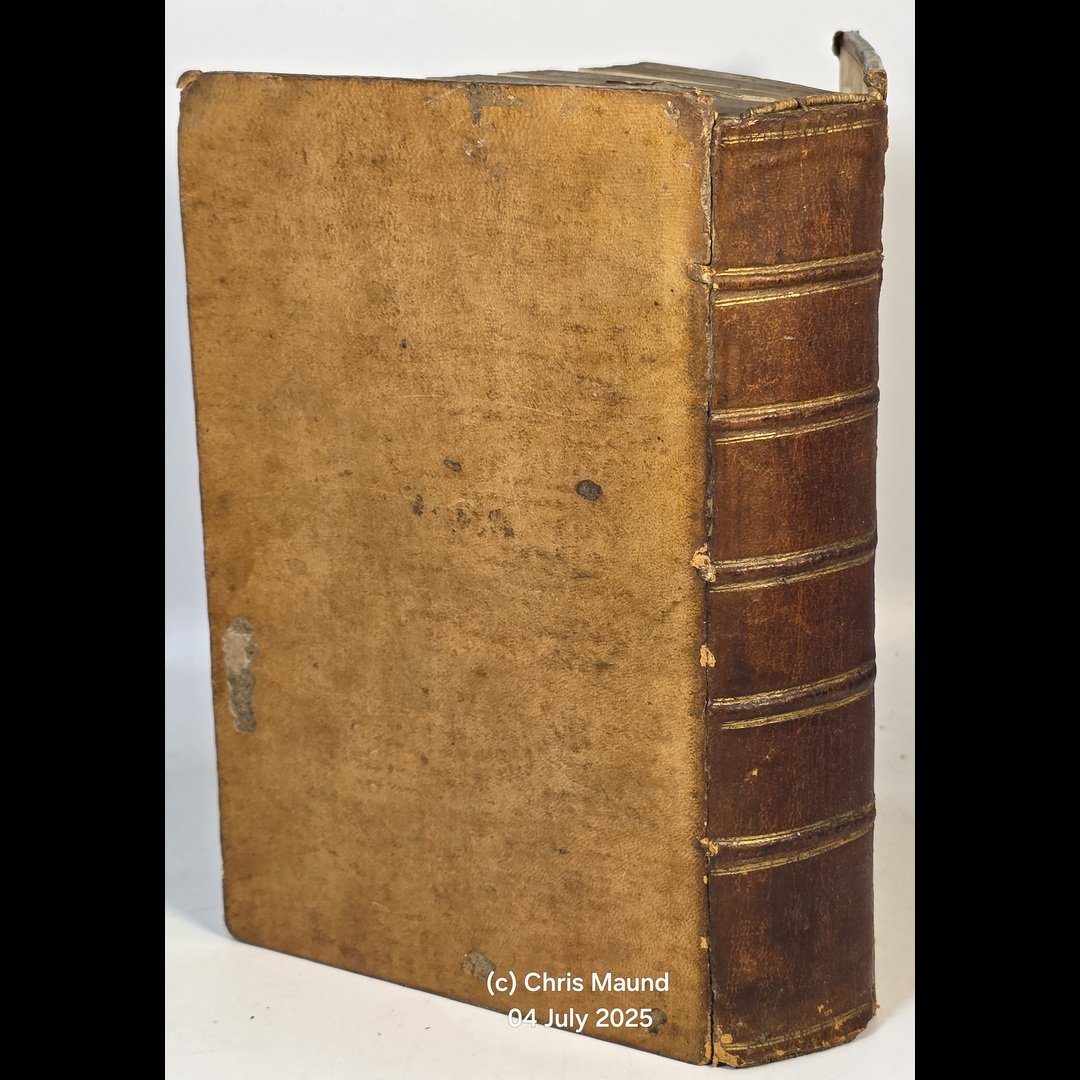
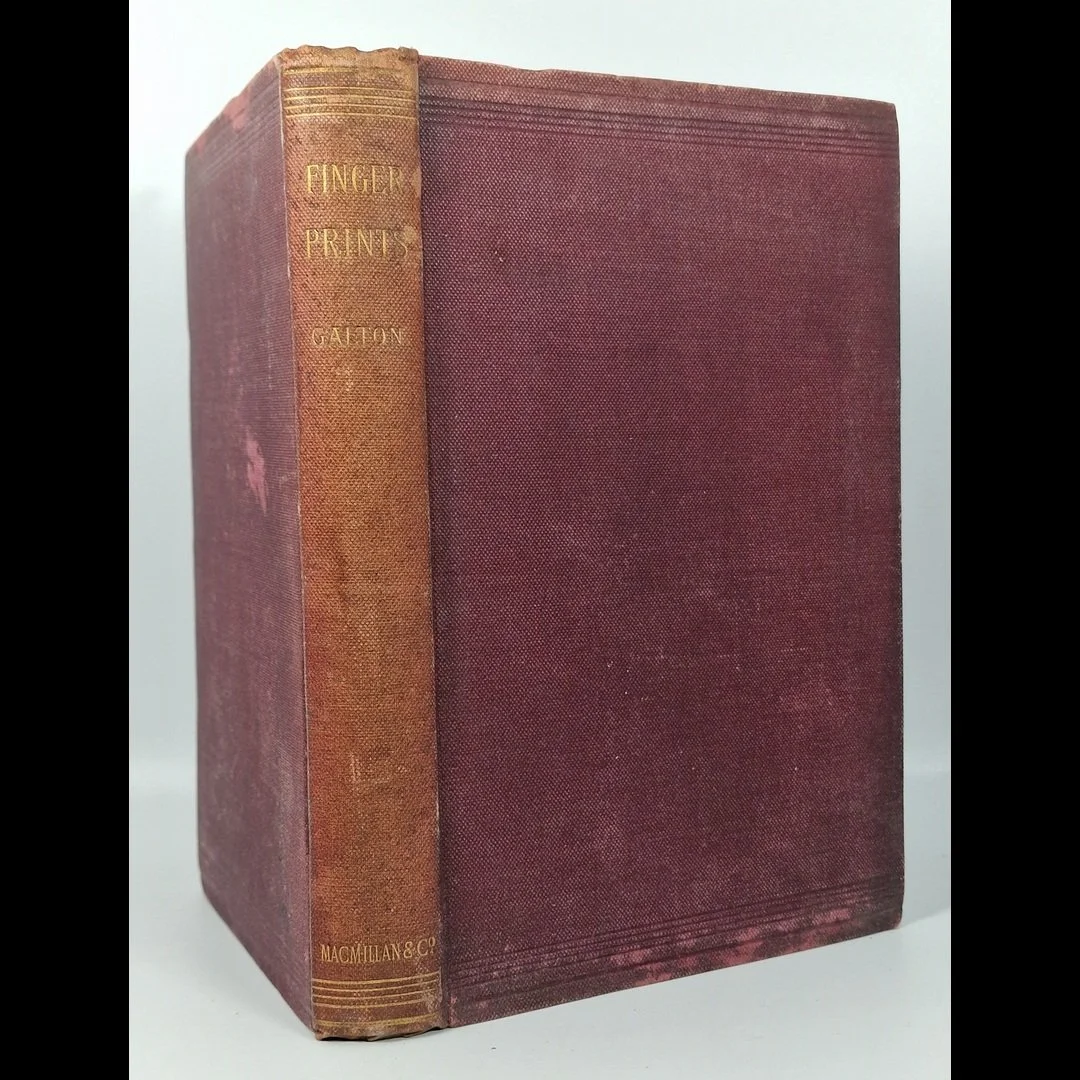
Large folio in full brown calf, sympathetically rebacked/restored, retaining handsome gilt decoration to the raised-band spine. Compartments are gilt tooled with floral ornaments, with gilt-lettered title and volume labels; the latter reads “T. III. P. I.”
Boards show expected eighteenth-century wear including rubbing, scratches, marks and scattered surface abrasions, with a larger darkened abrasion to the lower portion of the front board. Corners and edges rubbed. Restoration is particularly evident at the head and foot of the spine and is documented internally by the 1956 Peters Hahne, Hamburg stamp.
Internally considerably better preserved than the exterior. Paper generally clean, strong and supple with broad margins; occasional light spotting, minor toning, small marks and handling wear consistent with age. Text remains crisp and strongly printed.
Retains the handsome blue-printed mezzotint portrait of Ambrosius Carl Bieler, engraved by Johann Jakob Haid after M. C. Hirschmann. Both Latin and German title pages are present and printed strikingly in red and black.
Please see Photos as part of condition report.
REFERENCES
Nissen, BBI 2126
Pritzel 10140
Dunthorne 327
Stafleu & Cowan, TL2 17050
Great Flower Books, p.151
These standard bibliographical references are also cited in major institutional and auction records for the first edition.
VD18 15484688
SWB PPN 1119850975
SYNOPSIS
Phytanthoza Iconographia was conceived as an encyclopaedic survey of the plant world as it was understood immediately before the widespread adoption of Linnaean taxonomy.
Plants are arranged alphabetically rather than according to the later Linnaean system, with entries combining Latin and German nomenclature, synonyms drawn from earlier botanical authorities, morphological descriptions, distinctions between species and varieties, and discussions of medicinal, pharmaceutical, surgical, culinary and economic uses.
Volume III covers G–O and contains particularly rich material relating to eighteenth-century pharmacy and materia medica. The photographed entries include Galanga, Helenium, Hyacinthus, Jasminum, Ipecacuanha, Iris, Kali and Lotus. Weinmann’s treatment of plants such as Helenium was still being cited in later pharmaceutical literature for the medicinal uses attributed to them in the eighteenth century.
The complete work combined these extensive descriptions with 1,025 botanical illustrations. Its production employed engraving, mezzotint and colour-printing processes of unusual sophistication for the period. The University of Regensburg describes the printed Phytanthoza as an eight-part work and notes its importance both to botanical study and to the development of colour botanical illustration.
AUTHOR BIO
Johann Wilhelm Weinmann (1683–1741) was a German apothecary, botanist and botanical collector. Born at Gardelegen, he settled in Regensburg in 1710 and established himself as an apothecary, eventually becoming one of the city’s senior pharmacists.
His commercial success enabled him to develop an extensive botanical collection and garden and to pursue what became the monumental Phytanthoza Iconographia. Weinmann commissioned botanical drawings from several artists, most notably the young Georg Dionysius Ehret, whose work for the project constituted his first major published botanical commission. The University of Regensburg records that Weinmann had begun commissioning plant watercolours by around 1729–30 as models for his printed herbarium.
Published over a number of years, Phytanthoza Iconographia became one of the defining botanical publications of the eighteenth century.
CONTRIBUTOR BIO
Ambrosius Carl Bieler (1693–1747) was a physician of Regensburg and an important contributor to the later volumes of Phytanthoza Iconographia. Following the deaths of Weinmann and earlier textual contributors, Bieler continued and completed the descriptive portion of the work.
The Latin and German title pages of the present Volume III explicitly credit D. Ambrosio Carolo Bielero, and bibliographical records identify Bieler as the editor/contributor responsible for Volumes III and IV.
His impressive blue-printed portrait at the front of this copy was engraved by Johann Jakob Haid after M. C. Hirschmann.
1742 First Edition
PHYTANTHOZA ICONOGRAPHIA, SIVE CONSPECTUS VOL III PART 1
By Johann Wilhelm Weinmann
KEY DETAILS
Condition: Very Good
Format: Hardcover, Folio; approx. 12 × 19 in / 305 × 483 mm
Published By: Ratisbonae [Regensburg], per Hieronymum Lenzium, Germany, 1742
Language: Latin/German
Provenance: Clamor Werner Otto von dem Bussche, aus dem Hause Ippenburg — armorial engraved ex libris to the front pastedown.
Collation: Blue-printed portrait frontispiece; Latin title; German title; [2] leaves, 488 numbered pages. Complete text component of Volume III, Part I.
Dust Jacket: None, as issued
SKU: BTETM0002366
Shipping Info: Approximate Package Dimensions H: 20, L: 60, W: 30 (Units: cm), W: 4Kg
Tracked Shipping, Insurance Coverage as per Customer Request
DESCRIPTION
Phytanthoza Iconographia, sive Conspectus Vol III Part 1
Complete Text Volume G–O
With Blue-Printed Portrait of Ambrosius Carl Bieler and von dem Bussche of Ippenburg Provenance
A substantial and attractive first-edition text volume from Johann Wilhelm Weinmann’s celebrated Phytanthoza Iconographia, one of the most ambitious botanical publications of the eighteenth century.
Printed at Regensburg by Hieronymus Lentz in 1742, the present volume is Volume III, Part I, containing the complete Latin and German descriptive text for the botanical sequence G–O, from Galanga through the plants beginning with O. The contemporary-style spine designation “T. III. P. I.” confirms its status as the text component of the third volume.
The volume is bibliographically complete as the text part: institutional cataloguing records Volume III as [2] leaves, 488 pages, folio, covering G, H, I/J, K, L, M, N and O. The University of Regensburg similarly distinguishes the textual descriptions as Bd. 3,1 from the corresponding illustrated plate component, Bd. 3,2.
Retained at the front is the striking blue-printed mezzotint portrait of Ambrosius Carl Bieler, the Regensburg physician responsible for continuing and completing the later text following Weinmann’s death. The portrait is signed M. C. Hirschmann pinxit and J. Jacob Haid sculps., and is followed by handsome Latin and German title pages printed in red and black.
The complete Phytanthoza Iconographia ultimately comprised an eight-part publication with 1,025 numbered botanical plates, combining engraving and mezzotint and representing several thousand indigenous and exotic plants. It is especially important in the history of botanical illustration for its innovative use of colour printing and for the involvement of artists and engravers including Georg Dionysius Ehret, Bartholomäus Seutter, Johann Elias Ridinger and Johann Jakob Haid.
PROVENANCE
Clamor Werner Otto von dem Bussche, aus dem Hause Ippenburg — armorial engraved ex libris to the front pastedown.
Clamor Werner Otto von dem Bussche (1755–1793) belonged to the Ippenburg branch of the old German noble family von dem Bussche. Contemporary archival records identify him specifically as “Clamor Werner Otto von dem Bussche aus dem Hause Ippenburg” and record him as a canon of Osnabrück Cathedral from 1783 until his death in 1793.
The bookplate therefore provides identifiable eighteenth-century German aristocratic provenance, particularly appropriate to a major Regensburg botanical work published only thirteen years before his birth.
The front pastedown additionally bears the restoration stamp: “Restauriert 1956 PETERS HAHNE HAMBURG.”
CONDITION, COLLATION & COPY NOTES
Large folio in full brown calf, sympathetically rebacked/restored, retaining handsome gilt decoration to the raised-band spine. Compartments are gilt tooled with floral ornaments, with gilt-lettered title and volume labels; the latter reads “T. III. P. I.”
Boards show expected eighteenth-century wear including rubbing, scratches, marks and scattered surface abrasions, with a larger darkened abrasion to the lower portion of the front board. Corners and edges rubbed. Restoration is particularly evident at the head and foot of the spine and is documented internally by the 1956 Peters Hahne, Hamburg stamp.
Internally considerably better preserved than the exterior. Paper generally clean, strong and supple with broad margins; occasional light spotting, minor toning, small marks and handling wear consistent with age. Text remains crisp and strongly printed.
Retains the handsome blue-printed mezzotint portrait of Ambrosius Carl Bieler, engraved by Johann Jakob Haid after M. C. Hirschmann. Both Latin and German title pages are present and printed strikingly in red and black.
Please see Photos as part of condition report.
REFERENCES
Nissen, BBI 2126
Pritzel 10140
Dunthorne 327
Stafleu & Cowan, TL2 17050
Great Flower Books, p.151
These standard bibliographical references are also cited in major institutional and auction records for the first edition.
VD18 15484688
SWB PPN 1119850975
SYNOPSIS
Phytanthoza Iconographia was conceived as an encyclopaedic survey of the plant world as it was understood immediately before the widespread adoption of Linnaean taxonomy.
Plants are arranged alphabetically rather than according to the later Linnaean system, with entries combining Latin and German nomenclature, synonyms drawn from earlier botanical authorities, morphological descriptions, distinctions between species and varieties, and discussions of medicinal, pharmaceutical, surgical, culinary and economic uses.
Volume III covers G–O and contains particularly rich material relating to eighteenth-century pharmacy and materia medica. The photographed entries include Galanga, Helenium, Hyacinthus, Jasminum, Ipecacuanha, Iris, Kali and Lotus. Weinmann’s treatment of plants such as Helenium was still being cited in later pharmaceutical literature for the medicinal uses attributed to them in the eighteenth century.
The complete work combined these extensive descriptions with 1,025 botanical illustrations. Its production employed engraving, mezzotint and colour-printing processes of unusual sophistication for the period. The University of Regensburg describes the printed Phytanthoza as an eight-part work and notes its importance both to botanical study and to the development of colour botanical illustration.
AUTHOR BIO
Johann Wilhelm Weinmann (1683–1741) was a German apothecary, botanist and botanical collector. Born at Gardelegen, he settled in Regensburg in 1710 and established himself as an apothecary, eventually becoming one of the city’s senior pharmacists.
His commercial success enabled him to develop an extensive botanical collection and garden and to pursue what became the monumental Phytanthoza Iconographia. Weinmann commissioned botanical drawings from several artists, most notably the young Georg Dionysius Ehret, whose work for the project constituted his first major published botanical commission. The University of Regensburg records that Weinmann had begun commissioning plant watercolours by around 1729–30 as models for his printed herbarium.
Published over a number of years, Phytanthoza Iconographia became one of the defining botanical publications of the eighteenth century.
CONTRIBUTOR BIO
Ambrosius Carl Bieler (1693–1747) was a physician of Regensburg and an important contributor to the later volumes of Phytanthoza Iconographia. Following the deaths of Weinmann and earlier textual contributors, Bieler continued and completed the descriptive portion of the work.
The Latin and German title pages of the present Volume III explicitly credit D. Ambrosio Carolo Bielero, and bibliographical records identify Bieler as the editor/contributor responsible for Volumes III and IV.
His impressive blue-printed portrait at the front of this copy was engraved by Johann Jakob Haid after M. C. Hirschmann.

 Image 1 of 15
 Image 2 of 15
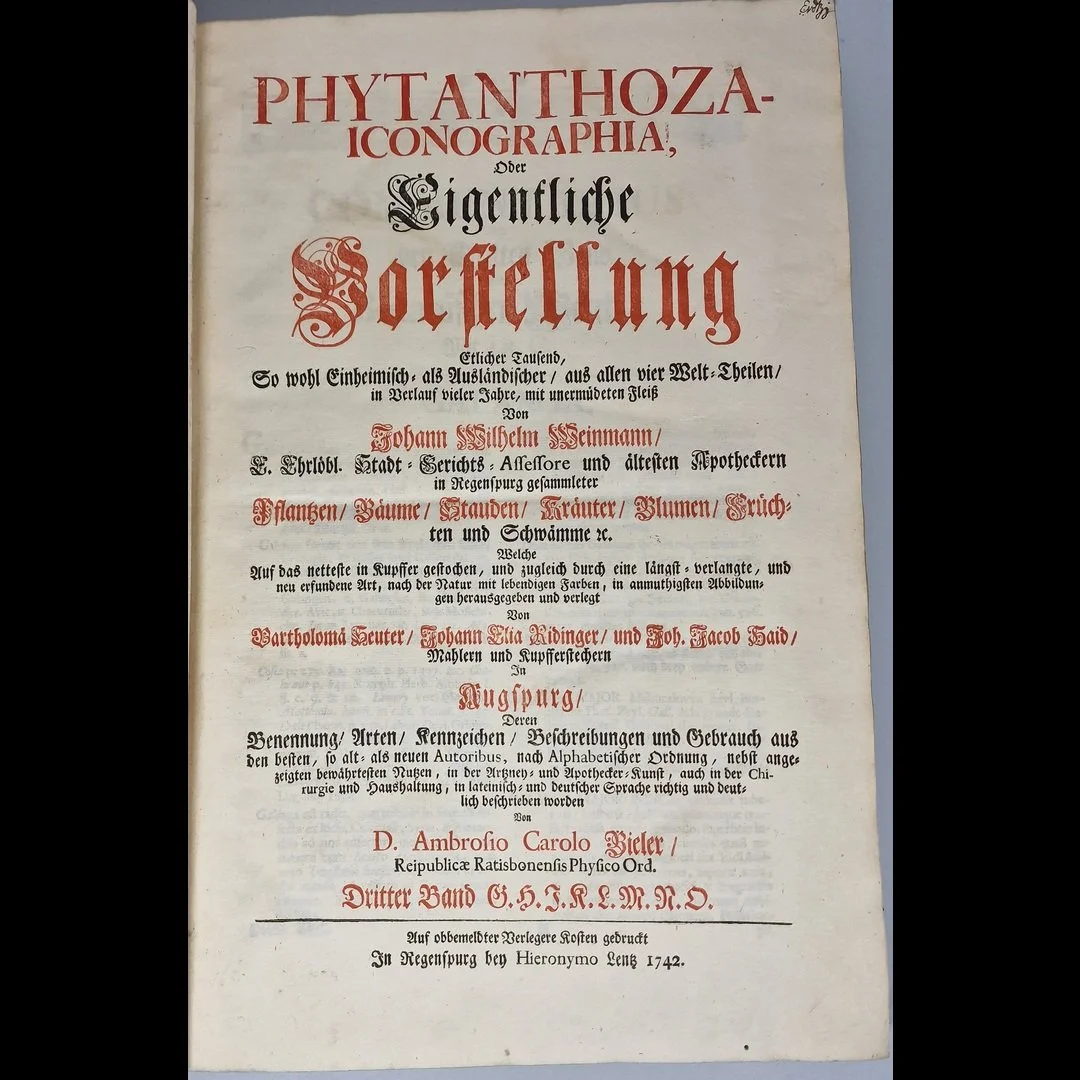 Image 3 of 15
 Image 4 of 15
 Image 5 of 15
 Image 6 of 15
 Image 7 of 15
 Image 8 of 15
 Image 9 of 15
 Image 10 of 15
 Image 11 of 15
 Image 12 of 15
 Image 13 of 15
 Image 14 of 15
 Image 15 of 15