1554 Venice Edition
COSMOGRAPHIAE INTRODUCTIO
By Petrus Apianus
KEY DETAILS
Condition: Very Good
Format: Hardcover, Octavo (Standard) (8vo 6 × 9 in 152 × 229 mm )
Note: Binding/size selection follows standard bibliographic conventions and is approximate; exact measurements may vary.
Published By: Venetiis (Venice), per Francisci Bindonis, ad signum Archangeli Raphaaelis, mense Octobris 1554, Italy, 1554
Language: Latin
Illustrated By: Anon
Collation: A–D⁸.; 32 leaves total: 31 numbered leaves and 1 final unnumbered leaf.; With woodcut title vignette, 25 text woodcuts, repeated map of Greece, and printer’s device.
Dust Jacket: None, as issued, No Jacket
SKU: BTETM0002377
Shipping Info: Approximate Package Dimensions H: 12.5, L: 30, W: 25 (Units: cm), W: 2Kg
Tracked Shipping, Insurance Coverage as per Customer Request
DESCRIPTION
cum quibusdam Geometriae ac Astronomiae principiis ad eam rem necessariis
A scarce and highly appealing Renaissance scientific manual by Petrus Apianus, printed at Venice by Francesco Bindoni in October 1554. This is the final edition of the abridged Cosmographiae Introductio, a compact form of Apian’s celebrated cosmographical teaching, bringing together astronomy, mathematical geography, cartography and practical methods of determining position on the terrestrial globe.
The volume is extensively illustrated for its small format, with a striking woodcut cosmographical sphere to the title, 25 text woodcuts showing armillary spheres, astronomical and geometrical diagrams, planetary symbols, terrestrial zones and projections, together with the small map of Greece printed twice. The final leaf bears the handsome printer’s device associated with Bindoni’s Venetian shop at the sign of the Archangel Raphael, depicting Raphael and Tobias.
Of particular early-Americana interest is the celebrated passage at C6v–C7r (ff. 22v–23r). In his discussion of the divisions of the known world, Apian refers explicitly to Amerigo Vespucci, describes the newly recognised fourth part of the world, and records the name America. The passage is complete and clearly legible in the present copy and provides an important collecting connection between Renaissance cosmography and the developing European conception of the New World. The edition is cited by Alden-Landis in European Americana.
CONDITION, COLLATION & COPY NOTES
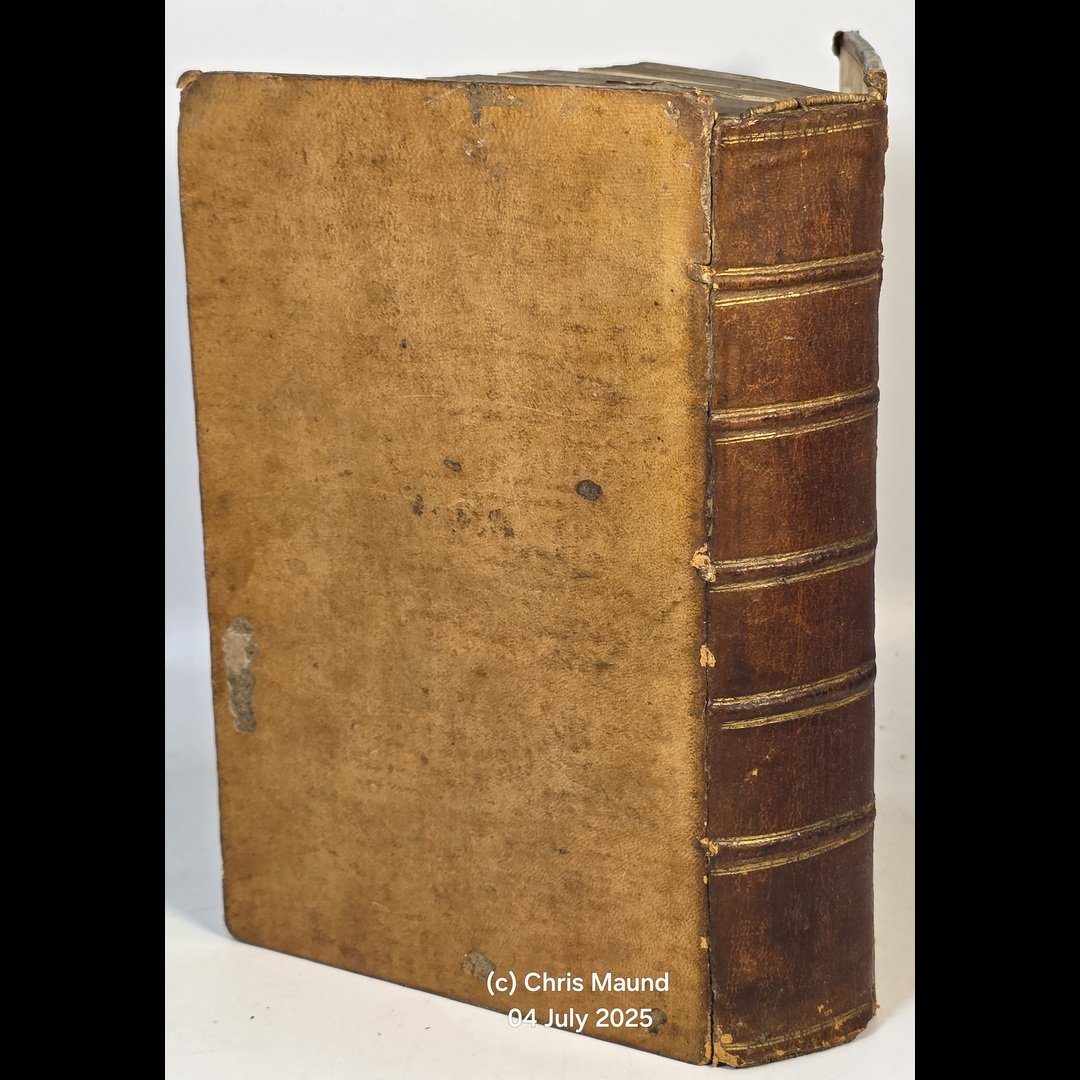
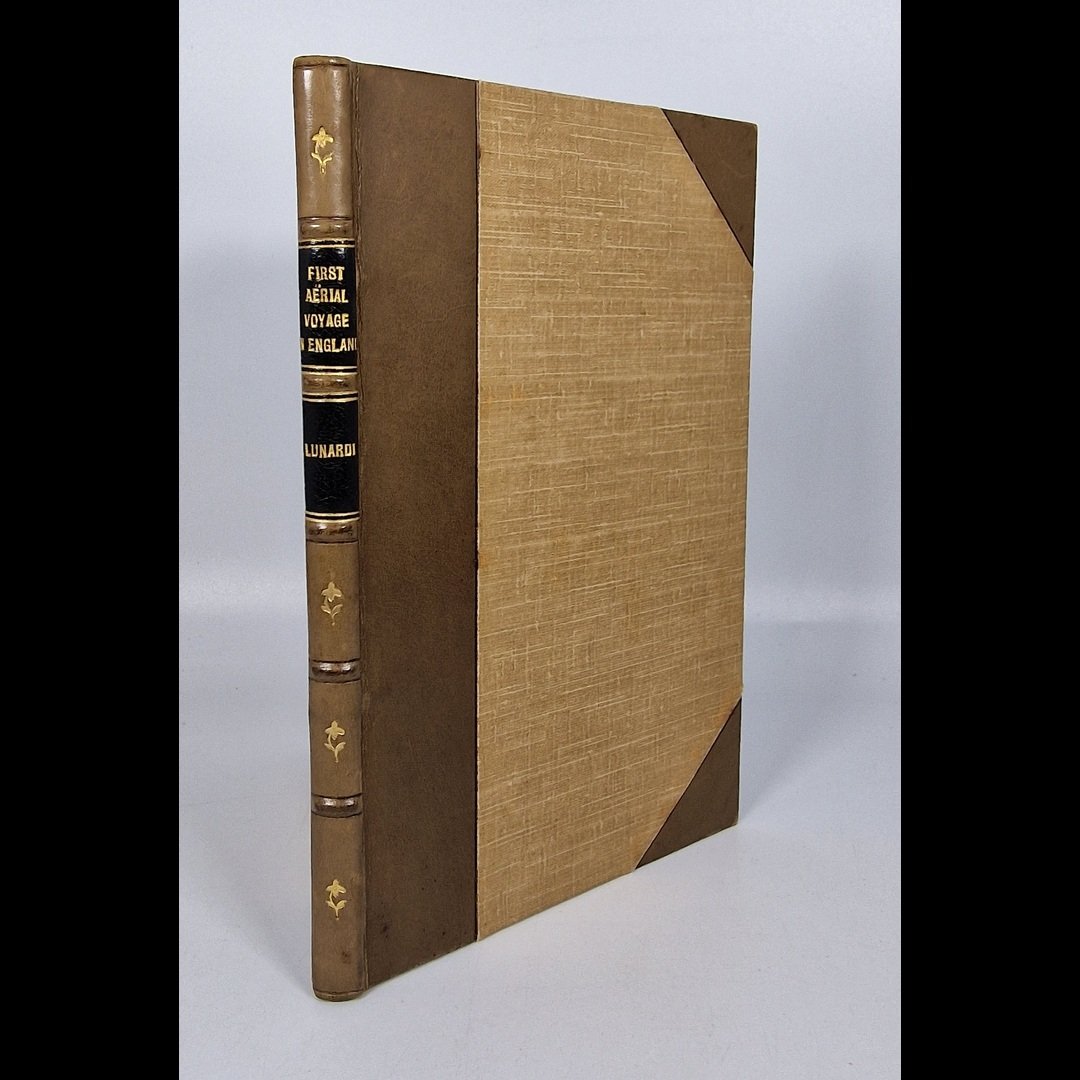
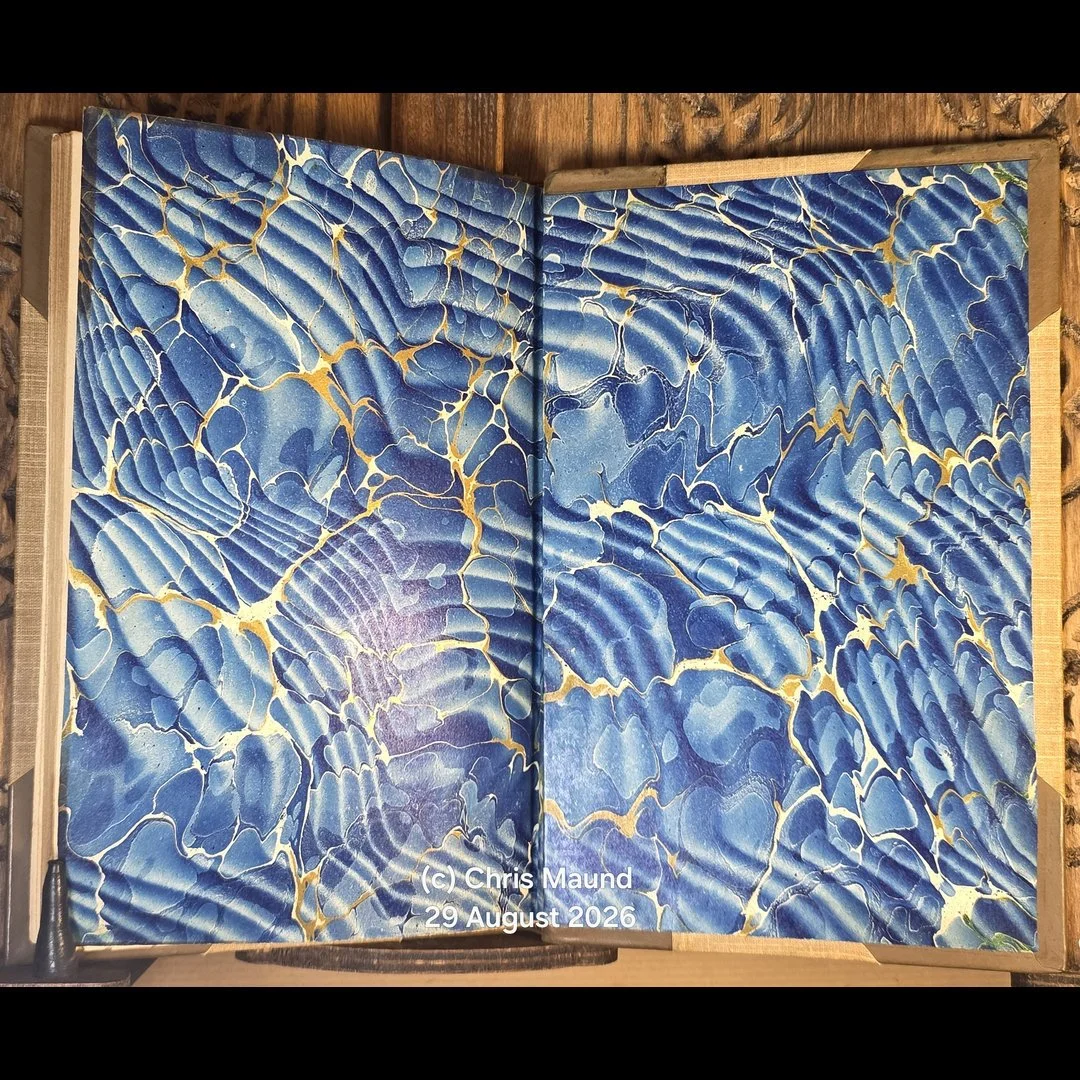
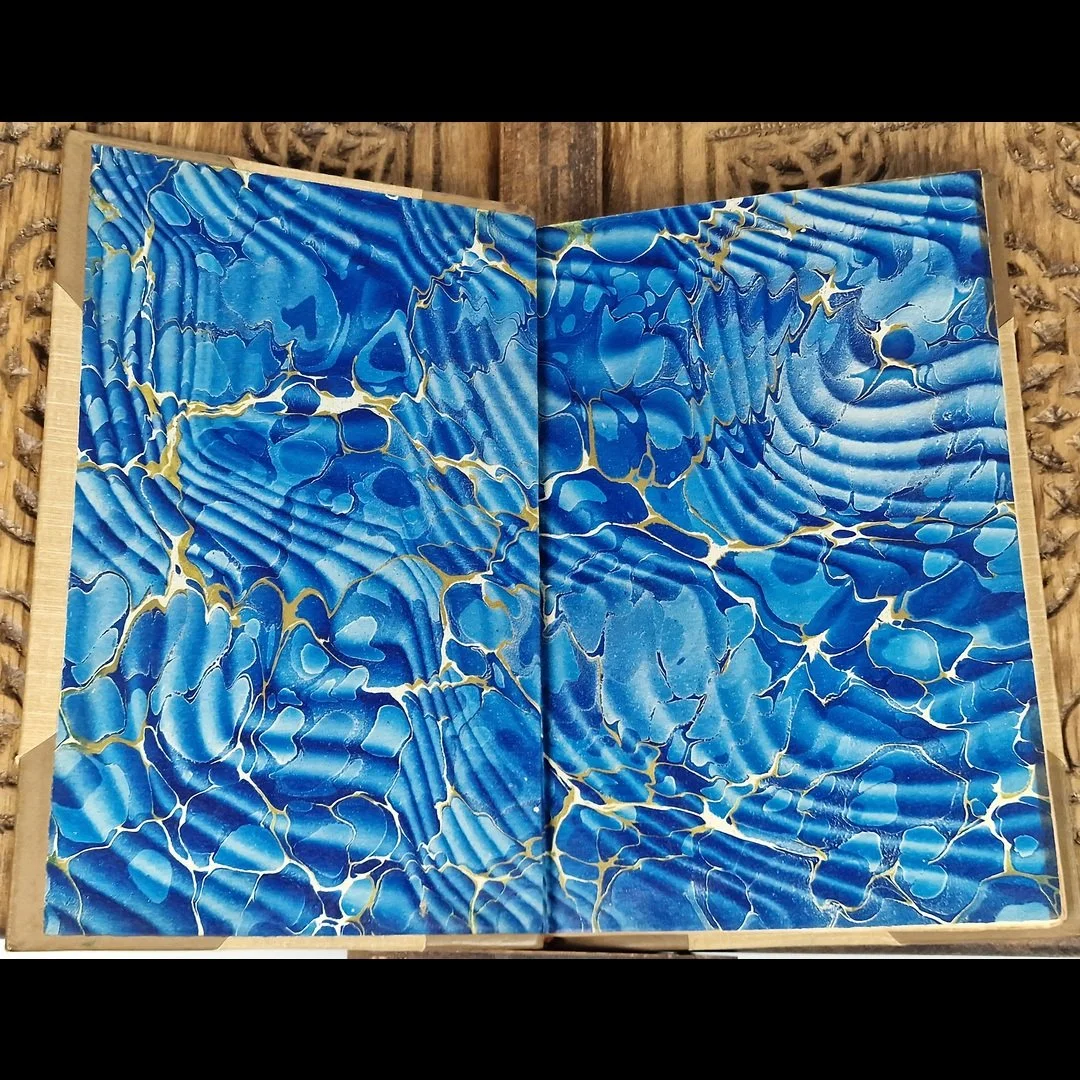
A sound and attractive copy in a handsome 20th-century brown panelled leather binding in period style, gilt-tooled to the covers and spine, the spine with raised bands and compartments, with decorative marbled endpapers. Endpapers and blanks renewed. Binding remains firm and presents very well, with light external wear and marking consistent with handling.
Text generally clean, bright and well preserved, with strong impressions of the typography and woodcut illustrations. Occasional light age-toning, minor spotting and marks from use. A single very small wormhole passes through much of the textblock, becoming two small holes towards the end; these cause no serious interference with the text or principal diagrams.
The woodcut on C2 has old brown-ink additions/sketching, evidence of an earlier reader’s interaction with the cosmographical diagram. Early brown-ink notations are also present on the verso of the final leaf. These historical annotations have been previously recorded in auction cataloguing.
The important America / Amerigo Vespucci passage at ff. 22v–23r is complete, clean and clearly legible, without material loss to the relevant text.
Title page present with large woodcut cosmographical sphere; numerous astronomical and geographical woodcuts throughout; repeated woodcut map of Greece; terminal printer’s device present.
Complete.
Please see Photos as part of condition report.
REFERENCES
EDIT16 CNCE 13624
IA 106.454
Alden-Landis 554/5
van Ortroy 94
Houzeau-Lancaster 2393
SYNOPSIS
The Cosmographiae Introductio is an abridged and highly portable presentation of the cosmographical material associated with Apian’s larger Cosmographicus liber. It provides the reader with the elementary geometrical and astronomical principles required to understand the structure and measurement of the world.
The text treats the axis and poles of the world, the principal celestial circles, the zodiac and planets, the climatic zones, latitude and longitude, the use of astronomical observation in geographical measurement, terrestrial distances and projections, and the traditional Ptolemaic division of the inhabited world. Woodcut diagrams are integrated closely with the text, giving the book the character of a practical illustrated textbook rather than a purely theoretical astronomical treatise.
Particularly significant is the discussion of the newly enlarged geography of the world at ff. 22v–23r. Moving beyond the three traditional continents of Europe, Asia and Africa, Apian refers to the additional lands associated with Amerigo Vespucci and reproduces the naming tradition by which the fourth part came to be called America. This passage has long given the Introductio a place in bibliographies of early Americana as well as in collections devoted to astronomy, navigation, geography and the history of cartography.
The present 1554 Venetian printing is especially notable as the last edition of this abridged form of Apian’s work, bringing to a close a publishing history that had seen the Introductio issued from presses in Ingolstadt, Venice, Cologne and Paris.
AUTHOR BIO
Petrus Apianus (Peter Apian; 1495–1552) was a German mathematician, astronomer, cartographer and scientific instrument maker, and one of the most influential popularisers of mathematical cosmography in sixteenth-century Europe.
His works brought together astronomy, geography, geometry, map-making and practical observation in an accessible visual form. The enormously successful Cosmographicus liber, first published in 1524, and the related abridged Cosmographiae Introductio helped establish a practical Renaissance tradition in which understanding the Earth required understanding its mathematical relationship to the heavens.
ILLUSTRATOR
Anon
No individual woodcut artist is identified for this edition. The illustrations belong to the visual vocabulary of sixteenth-century mathematical and cosmographical printing and include representations of the terrestrial and celestial spheres, armillary instruments, planetary symbols, climatic zones, geographical projections and other diagrams designed to make complex astronomical and geographical concepts intelligible at a glance.
The terminal printer’s device depicts the Archangel Raphael with Tobias, the emblem associated with Bindoni’s Venetian printing house.
1554 Venice Edition
COSMOGRAPHIAE INTRODUCTIO
By Petrus Apianus
KEY DETAILS
Condition: Very Good
Format: Hardcover, Octavo (Standard) (8vo 6 × 9 in 152 × 229 mm )
Note: Binding/size selection follows standard bibliographic conventions and is approximate; exact measurements may vary.
Published By: Venetiis (Venice), per Francisci Bindonis, ad signum Archangeli Raphaaelis, mense Octobris 1554, Italy, 1554
Language: Latin
Illustrated By: Anon
Collation: A–D⁸.; 32 leaves total: 31 numbered leaves and 1 final unnumbered leaf.; With woodcut title vignette, 25 text woodcuts, repeated map of Greece, and printer’s device.
Dust Jacket: None, as issued, No Jacket
SKU: BTETM0002377
Shipping Info: Approximate Package Dimensions H: 12.5, L: 30, W: 25 (Units: cm), W: 2Kg
Tracked Shipping, Insurance Coverage as per Customer Request
DESCRIPTION
cum quibusdam Geometriae ac Astronomiae principiis ad eam rem necessariis
A scarce and highly appealing Renaissance scientific manual by Petrus Apianus, printed at Venice by Francesco Bindoni in October 1554. This is the final edition of the abridged Cosmographiae Introductio, a compact form of Apian’s celebrated cosmographical teaching, bringing together astronomy, mathematical geography, cartography and practical methods of determining position on the terrestrial globe.
The volume is extensively illustrated for its small format, with a striking woodcut cosmographical sphere to the title, 25 text woodcuts showing armillary spheres, astronomical and geometrical diagrams, planetary symbols, terrestrial zones and projections, together with the small map of Greece printed twice. The final leaf bears the handsome printer’s device associated with Bindoni’s Venetian shop at the sign of the Archangel Raphael, depicting Raphael and Tobias.
Of particular early-Americana interest is the celebrated passage at C6v–C7r (ff. 22v–23r). In his discussion of the divisions of the known world, Apian refers explicitly to Amerigo Vespucci, describes the newly recognised fourth part of the world, and records the name America. The passage is complete and clearly legible in the present copy and provides an important collecting connection between Renaissance cosmography and the developing European conception of the New World. The edition is cited by Alden-Landis in European Americana.
CONDITION, COLLATION & COPY NOTES
A sound and attractive copy in a handsome 20th-century brown panelled leather binding in period style, gilt-tooled to the covers and spine, the spine with raised bands and compartments, with decorative marbled endpapers. Endpapers and blanks renewed. Binding remains firm and presents very well, with light external wear and marking consistent with handling.
Text generally clean, bright and well preserved, with strong impressions of the typography and woodcut illustrations. Occasional light age-toning, minor spotting and marks from use. A single very small wormhole passes through much of the textblock, becoming two small holes towards the end; these cause no serious interference with the text or principal diagrams.
The woodcut on C2 has old brown-ink additions/sketching, evidence of an earlier reader’s interaction with the cosmographical diagram. Early brown-ink notations are also present on the verso of the final leaf. These historical annotations have been previously recorded in auction cataloguing.
The important America / Amerigo Vespucci passage at ff. 22v–23r is complete, clean and clearly legible, without material loss to the relevant text.
Title page present with large woodcut cosmographical sphere; numerous astronomical and geographical woodcuts throughout; repeated woodcut map of Greece; terminal printer’s device present.
Complete.
Please see Photos as part of condition report.
REFERENCES
EDIT16 CNCE 13624
IA 106.454
Alden-Landis 554/5
van Ortroy 94
Houzeau-Lancaster 2393
SYNOPSIS
The Cosmographiae Introductio is an abridged and highly portable presentation of the cosmographical material associated with Apian’s larger Cosmographicus liber. It provides the reader with the elementary geometrical and astronomical principles required to understand the structure and measurement of the world.
The text treats the axis and poles of the world, the principal celestial circles, the zodiac and planets, the climatic zones, latitude and longitude, the use of astronomical observation in geographical measurement, terrestrial distances and projections, and the traditional Ptolemaic division of the inhabited world. Woodcut diagrams are integrated closely with the text, giving the book the character of a practical illustrated textbook rather than a purely theoretical astronomical treatise.
Particularly significant is the discussion of the newly enlarged geography of the world at ff. 22v–23r. Moving beyond the three traditional continents of Europe, Asia and Africa, Apian refers to the additional lands associated with Amerigo Vespucci and reproduces the naming tradition by which the fourth part came to be called America. This passage has long given the Introductio a place in bibliographies of early Americana as well as in collections devoted to astronomy, navigation, geography and the history of cartography.
The present 1554 Venetian printing is especially notable as the last edition of this abridged form of Apian’s work, bringing to a close a publishing history that had seen the Introductio issued from presses in Ingolstadt, Venice, Cologne and Paris.
AUTHOR BIO
Petrus Apianus (Peter Apian; 1495–1552) was a German mathematician, astronomer, cartographer and scientific instrument maker, and one of the most influential popularisers of mathematical cosmography in sixteenth-century Europe.
His works brought together astronomy, geography, geometry, map-making and practical observation in an accessible visual form. The enormously successful Cosmographicus liber, first published in 1524, and the related abridged Cosmographiae Introductio helped establish a practical Renaissance tradition in which understanding the Earth required understanding its mathematical relationship to the heavens.
ILLUSTRATOR
Anon
No individual woodcut artist is identified for this edition. The illustrations belong to the visual vocabulary of sixteenth-century mathematical and cosmographical printing and include representations of the terrestrial and celestial spheres, armillary instruments, planetary symbols, climatic zones, geographical projections and other diagrams designed to make complex astronomical and geographical concepts intelligible at a glance.
The terminal printer’s device depicts the Archangel Raphael with Tobias, the emblem associated with Bindoni’s Venetian printing house.

 Image 1 of 21
 Image 2 of 21
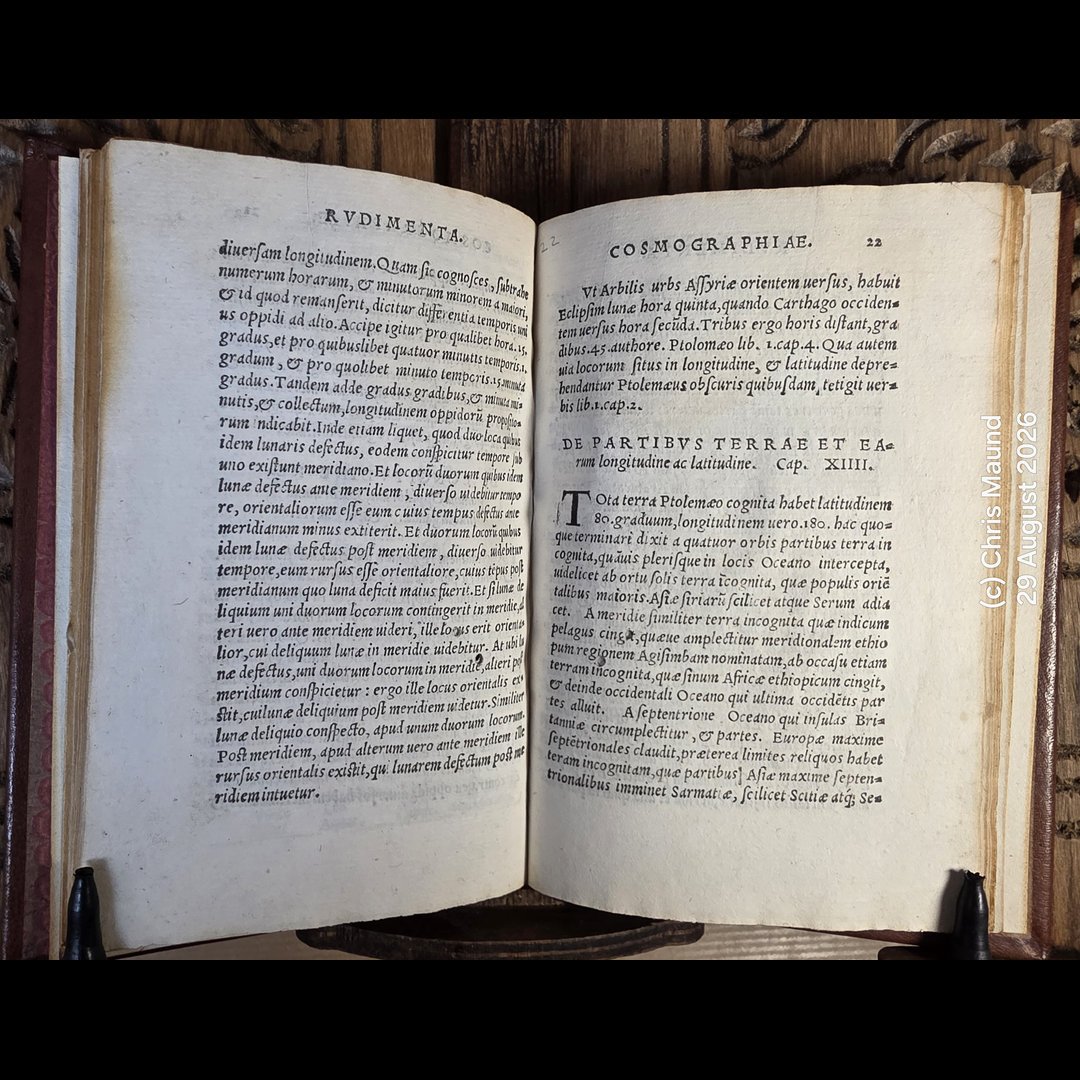 Image 3 of 21
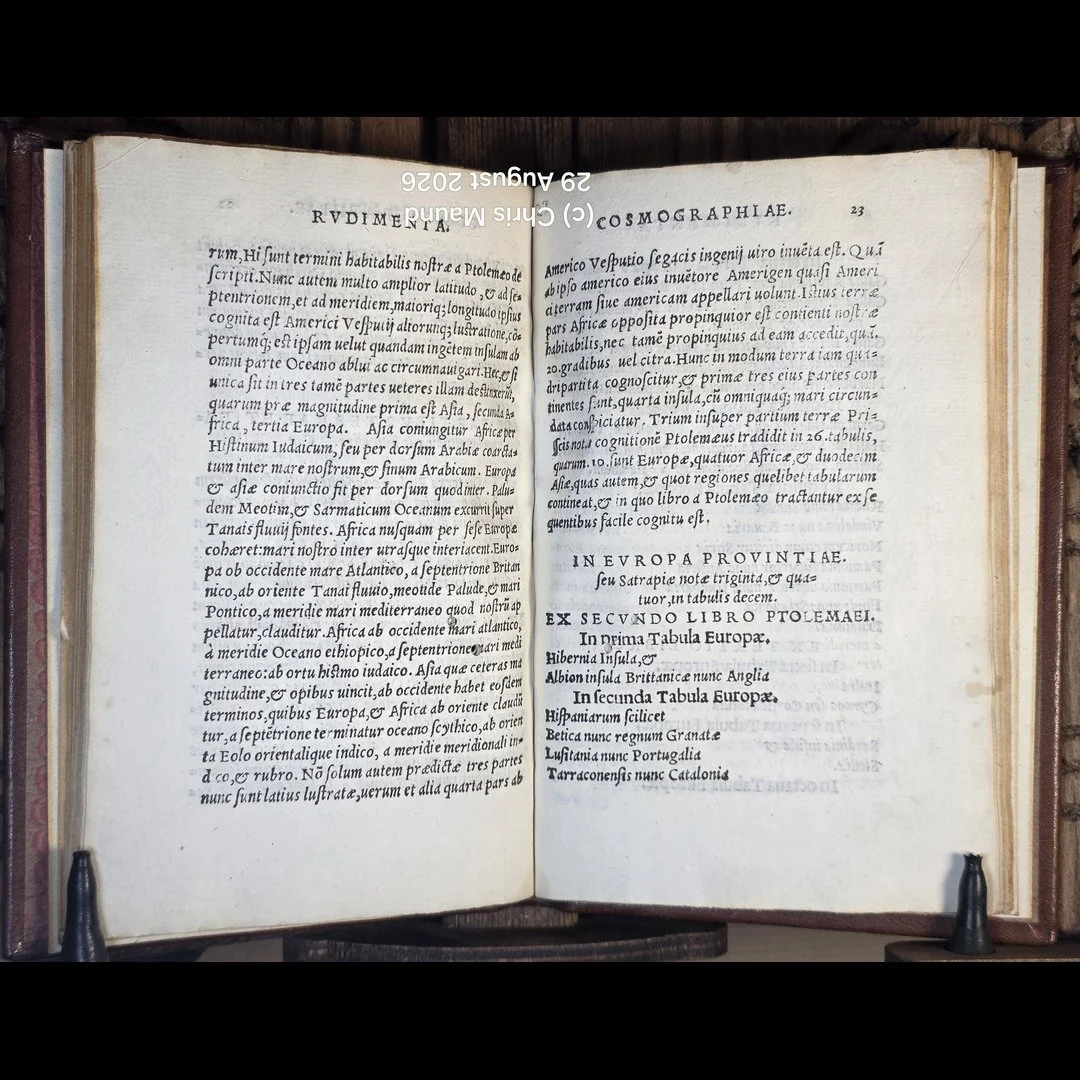 Image 4 of 21
 Image 5 of 21
 Image 6 of 21
 Image 7 of 21
 Image 8 of 21
 Image 9 of 21
 Image 10 of 21
 Image 11 of 21
 Image 12 of 21
 Image 13 of 21
 Image 14 of 21
 Image 15 of 21
 Image 16 of 21
 Image 17 of 21
 Image 18 of 21
 Image 19 of 21
 Image 20 of 21
 Image 21 of 21