Sale Price:
£300.00
Original Price:
£320.00
1782 Fourth Edition With Provenance, Annotated Surgeon’s Copy
TRAITE DES MALADIES VENERIENNES
By Pierre Fabre
KEY DETAILS
Condition: Good
Format: Hardcover, Octavo (Standard) (8vo 6 × 9 in 152 × 229 mm )
Note: Binding/size selection follows standard bibliographic conventions and is approximate; exact measurements may vary.
Published By: Chez P. Fr. Didot le jeune, Paris, 1782
Language: French
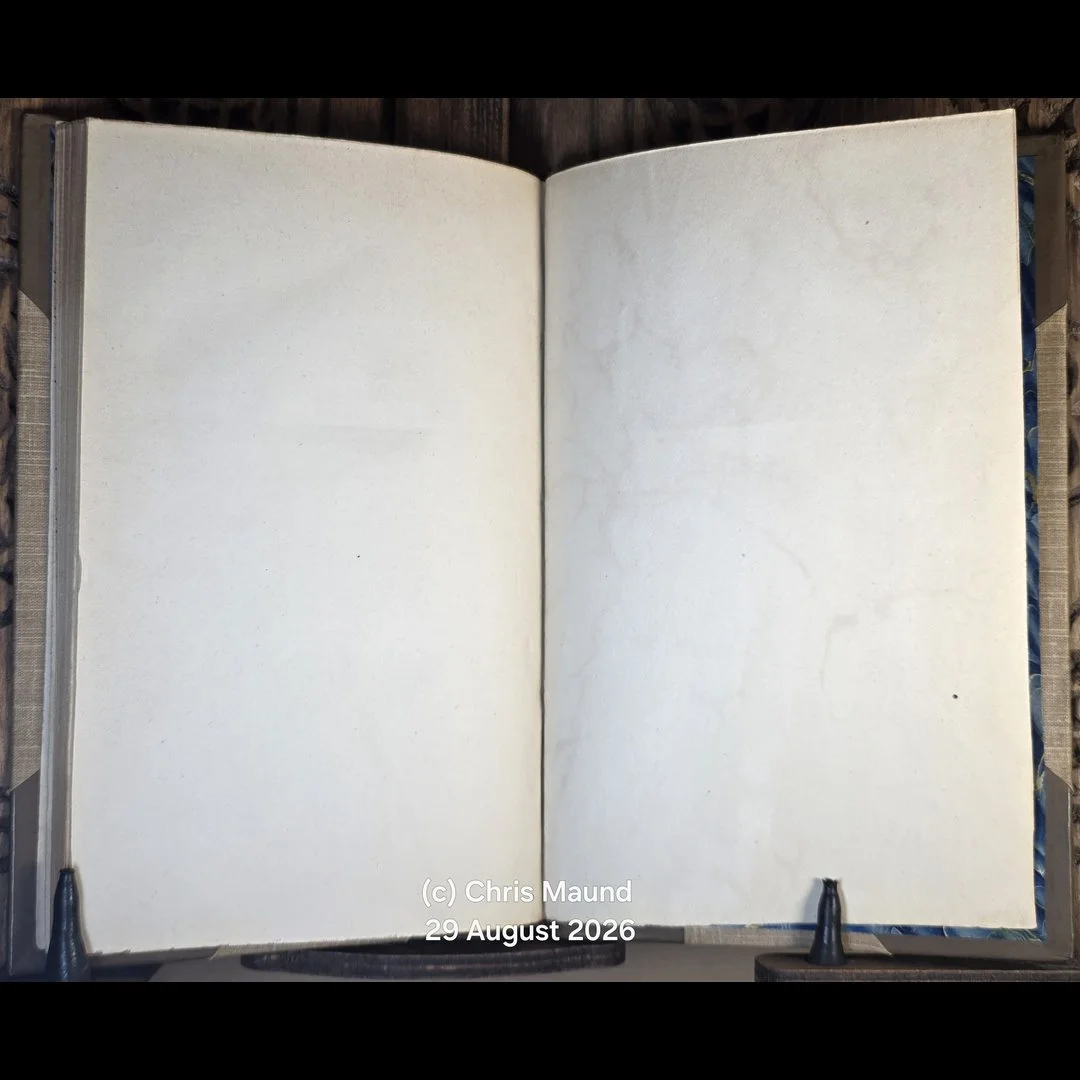
Provenance: Contemporary manuscript ownership inscription to front blank: “Ex Libris Joannis Francisci Brochard … Chirurgiae Magistri”, identifying Jean-François Brochard as a master surgeon.
Collation: XVI, 526 pp. Bibliographical records for the 1782 edition give XVI, 526 pages. The separately issued 1786 Lettres à M. D***, étudiant en chirurgie*, 130 pp., was published subsequently as a supplement and is not present in this volume nor required for the completeness of the 1782 publication.
Dust Jacket: None, as issued, No Jacket
SKU: BTETM0002383
Shipping Info: Approximate Package Dimensions H: 12.5, L: 30, W: 25 (Units: cm), W: 2Kg
Tracked Shipping, Insurance Coverage as per Customer Request
DESCRIPTION
Traite des Maladies Veneriennes
Extensively Annotated Association Copy
A particularly evocative working copy of Pierre Fabre’s important eighteenth-century treatise on venereal disease, published at Paris by P. Fr. Didot le jeune in 1782 in its fourth, author-revised and enlarged edition.
Of particular interest is the extensive early manuscript marginalia appearing at numerous points throughout the text. These are not simply ownership marks, indexing notes or underlining: several comprise sustained critical responses to Fabre’s medical arguments, questioning his conclusions concerning the persistence and transmission of the venereal “virus”, gonorrhoea, natural cure and related therapeutic questions. At several points the reader directly disputes Fabre and appeals to practical experience, giving the volume the character of a physician or surgeon’s actively used professional copy.
The front blank bears a contemporary Latin ownership inscription, approximately reading “Ex Libris Joannis Francisci Brochard … Chirurgiae Magistri”, identifying the owner as Jean-François Brochard, Master of Surgery. Subsequent research provides a strong, although not yet conclusive, case for identifying him with the Vendée-born Jean-François Brochard later documented as an officier de santé at Port-au-Prince in 1792, who returned to France as a refugee from Saint-Domingue in 1795. A 1777 marriage record at Vallet independently records a Jean-François Brochard, born in the diocese of Luçon, marrying Marguerite Fabré, daughter of the surgeon Adrien Fabré. The identification is therefore highly suggestive, but is conservatively presented here as probable pending comparison with an independently authenticated example of Brochard’s handwriting or signature.
PROVENANCE
Contemporary manuscript ownership inscription to front blank: “Ex Libris Joannis Francisci Brochard … Chirurgiae Magistri”, identifying Jean-François Brochard as a master surgeon.
The volume contains extensive early medical annotations in French, apparently contemporary or near-contemporary, including lengthy comments in the lower and outer margins. The annotator repeatedly engages critically with Fabre’s theories rather than merely summarising them, making this a notably attractive example of an eighteenth-century medical text preserved in active professional use.
Research suggests that the owner is very probably the Jean-François Brochard, born in Vendée and recorded as officier de santé at Port-au-Prince in 1792. He is documented as having returned from Saint-Domingue, landing at Rochefort on 29 July 1795 before travelling to Nantes. The published archival record cites both a 1795 passport and an administrative form of 29 October 1799.
A Vallet marriage transcription for 27 October 1777 records Jean-François Brochard, son of Jacques-Joseph Brochard and Marie Arnaud, born at Basoge in the diocese of Luçon and resident at La Châtaigneraie, marrying Marguerite Fabré, daughter of Adrien Fabré, surgeon. The name, date, geographical origin and professional milieu correspond closely with the later Saint-Domingue record.
Attribution Note: The documentary evidence makes this identification persuasive, but the Brochard association with Port-au-Prince has not yet been confirmed by direct handwriting comparison. No claim is made that this volume itself travelled to Saint-Domingue.
CONDITION, COLLATION & COPY NOTES
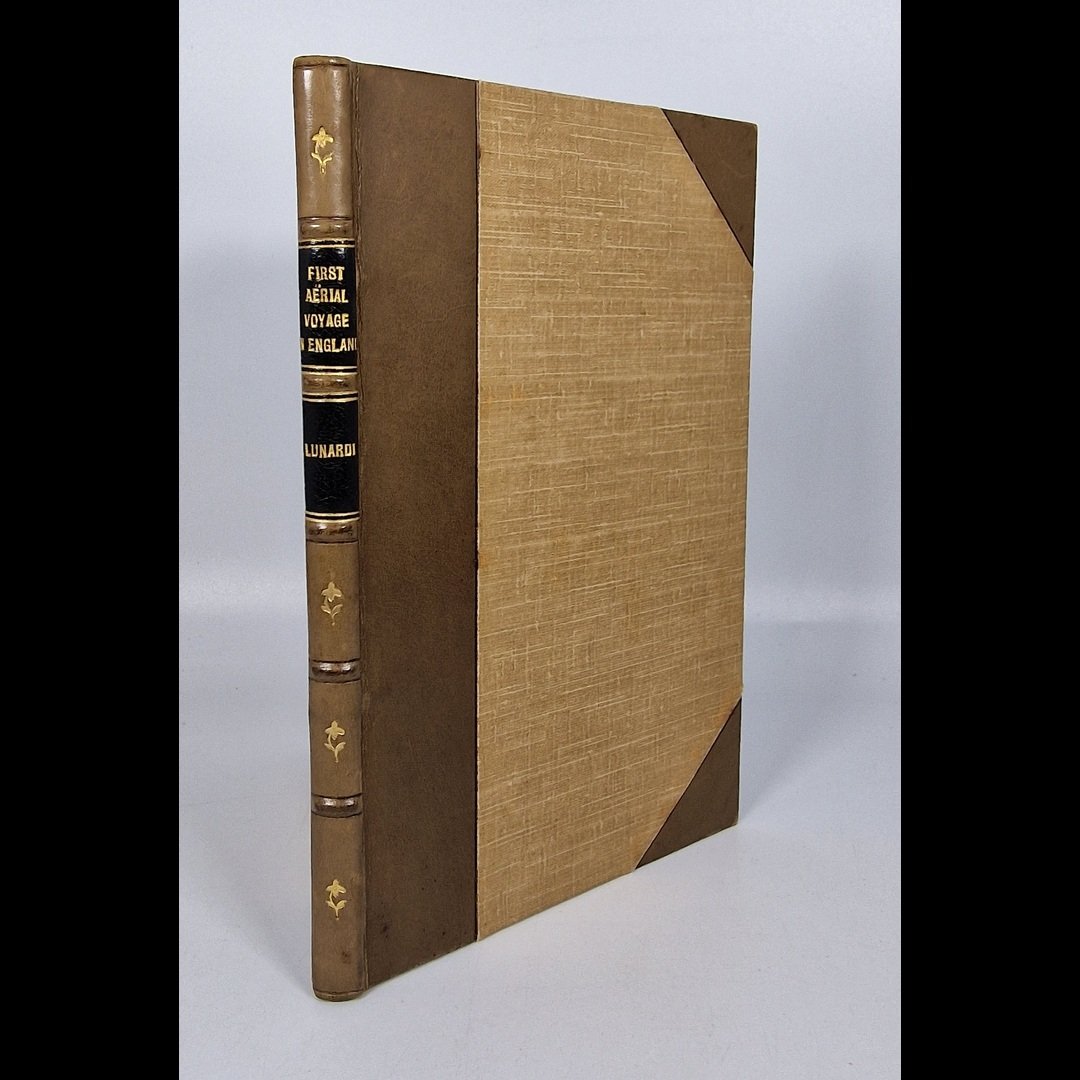
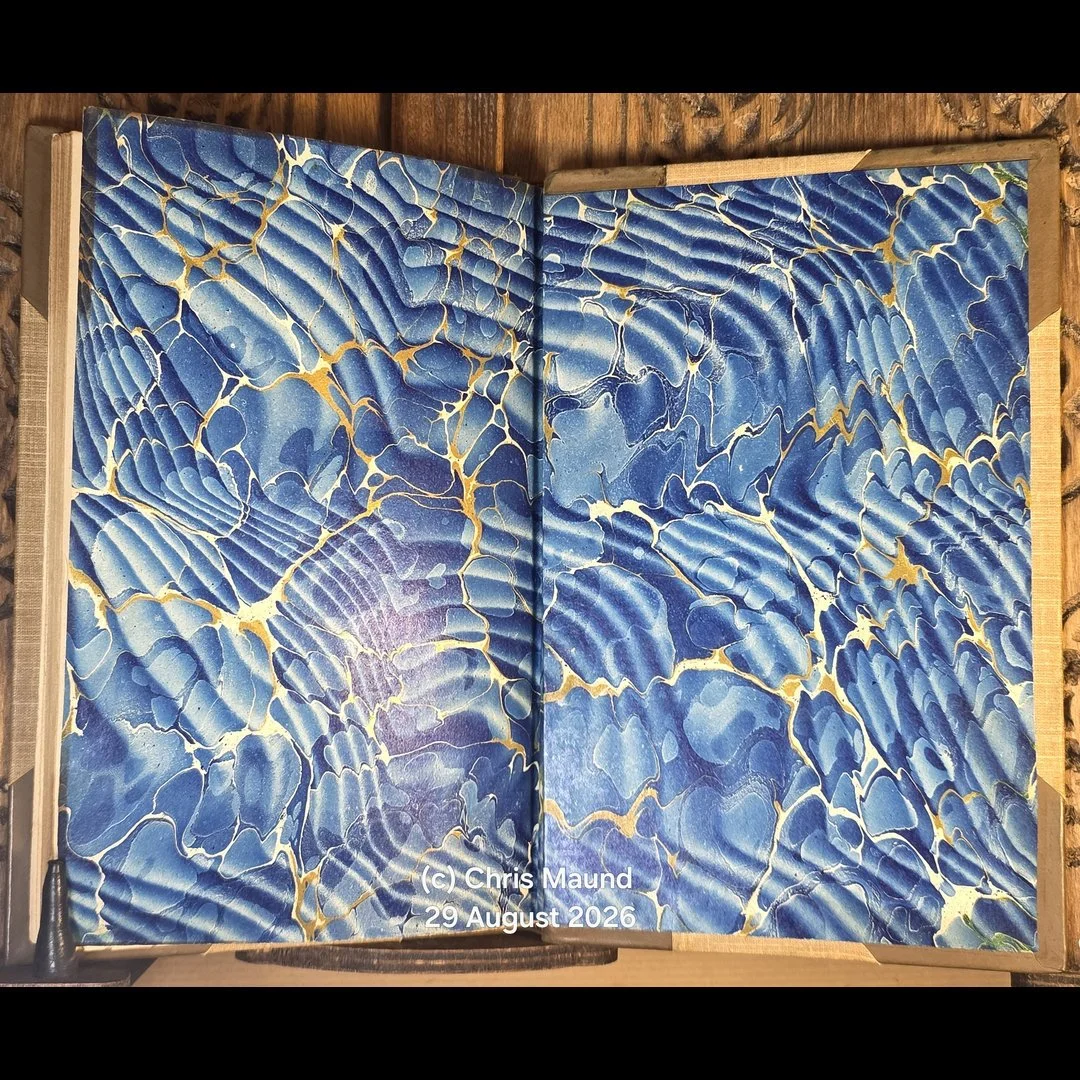
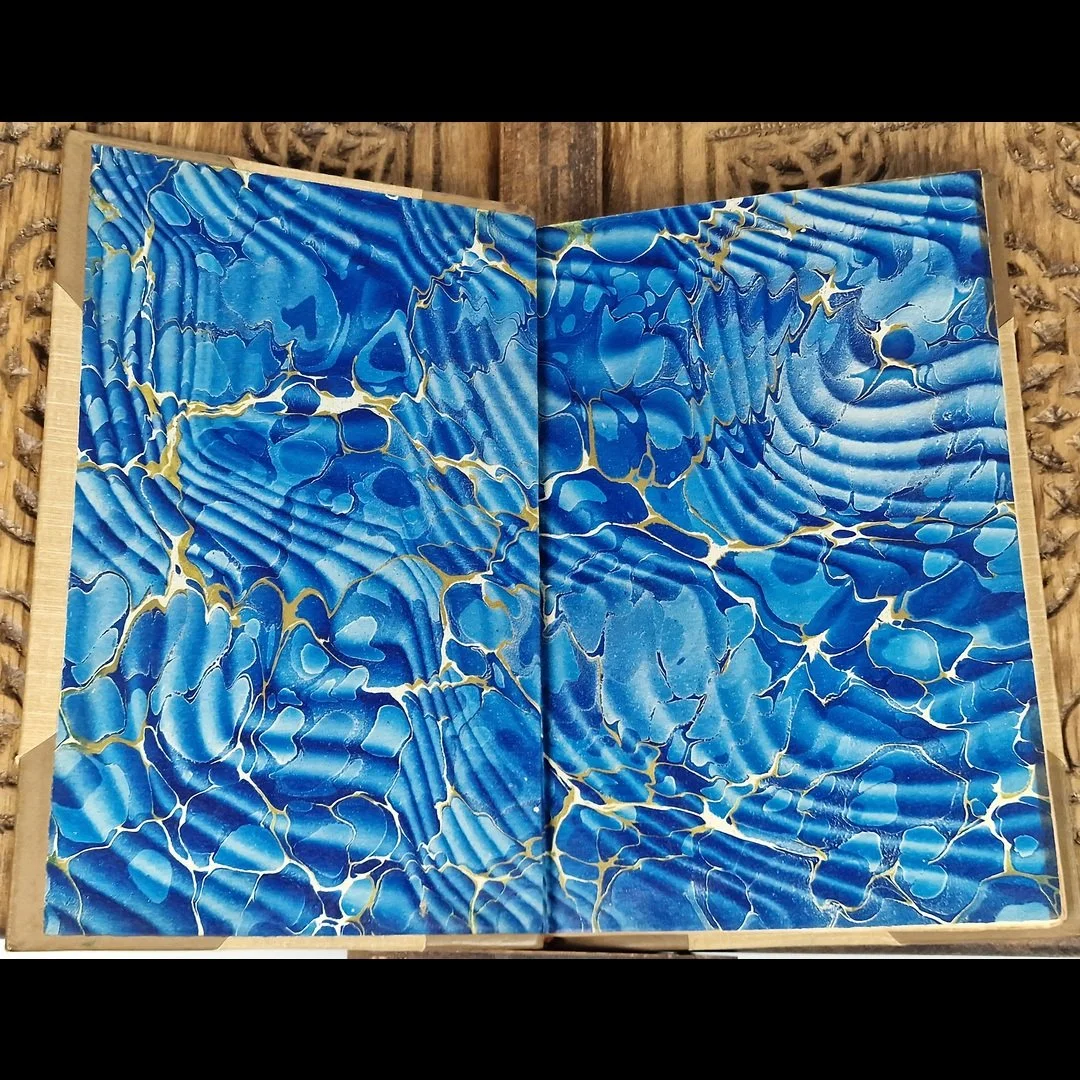
An appealing and historically interesting working copy in contemporary sheep. Five raised bands to spine with gilt floral decoration to compartments and dark morocco title label lettered in gilt. Attractive contemporary marbled endpapers.
Binding heavily rubbed and worn from use, with scuffing and surface abrasion to boards, wear through at corners and board edges, and notable losses of leather around the spine, particularly towards the head and upper joint. Upper joint substantially worn/cracked with areas of exposed underlying structure; spine ends defective. The binding nevertheless remains evocative of prolonged eighteenth-century professional use and retains its original boards, gilt tooling and title label.
Half-title present. Title page with engraved printer’s device. Internally generally sound and legible, with expected age-toning, scattered spotting and occasional marks. The text remains substantially clean overall.
Of particular note are substantial early manuscript annotations at numerous points throughout the volume, including multi-line comments in the margins. The annotations engage directly with questions of venereal contagion, latent infection, gonorrhoea and Fabre’s theories of natural expulsion or persistence of the venereal “virus”. Their argumentative and clinically informed character is of considerably greater interest than routine reader’s marks.
Contemporary ownership inscription to the front blank of Joannis Francisci / Jean-François Brochard, styled a master of surgery.
A compelling working copy in unrestored historical condition, whose binding wear reflects considerable contemporary use but whose association and manuscript medical commentary give the volume substantially greater historical interest than an ordinary copy of the edition.
Please see Photos as part of condition report.
REFERENCES
Bibliothèque nationale de France – authority record for Pierre Fabre (1716–1791).
Conservatoire du Patrimoine Hospitalier Régional – Traité des maladies vénériennes: Fabre’s surgical career, Prévôtship and service as Commissaire aux Extraits, 1775–1782.
Odile Halbert, Tables des mariages de Vallet 1770–1779 – Jean-François Brochard × Marguerite Fabré, 27 October 1777.
Les réfugiés et les déportés des Antilles à Nantes sous la Révolution – Jean-François Brochard, Vendée-born officier de santé at Port-au-Prince in 1792; refugee landed at Rochefort in July 1795.
SYNOPSIS
First issued in 1758 under the title Essai sur les maladies vénériennes, Fabre’s work was repeatedly revised as medical understanding and his own clinical experience developed. The present fourth edition of 1782 is explicitly described on the title page as revised, corrected and enlarged by the author.
The treatise examines the causes, transmission, symptoms and treatment of what eighteenth-century medicine grouped under the heading of venereal disease, including gonorrhoea, chancres, syphilitic manifestations and their complications. Fabre considers theories of contagion and the movement of the venereal “virus” through the body, alongside numerous individual clinical observations and therapeutic approaches.
Particular attention is given to the contemporary use of mercurial treatment, as well as purging, local remedies, diet and other therapeutic methods. A specialist description of the edition characterises Fabre’s work as notable for being that of an experienced practitioner rather than a purely theoretical writer.
This copy is especially revealing because its early annotator repeatedly challenges Fabre’s conclusions, particularly where Fabre argues that natural suppuration or discharge may remove the venereal agent. The manuscript responses instead argue for the persistence of infection despite the disappearance or absence of visible symptoms and repeatedly invoke practical experience. As such, the volume preserves not simply Fabre’s published medical theory but evidence of how an informed contemporary reader tested, disputed and used that theory in practice.
AUTHOR BIO
Pierre Fabre (1716–1791) was a French surgeon and surgical teacher associated with the Parisian surgical establishment of the eighteenth century. A master surgeon, he served as Prévôt, a position involving responsibility for surgical training and examination, and in 1751 became a counsellor/member of the academic surgical body at Paris. From 1775 to 1782 he served as Commissaire aux Extraits.
Fabre was above all a practitioner, and his writings combine contemporary theory with observations derived from clinical experience. His Traité des maladies vénériennes became one of his best-known works and passed through several substantially revised editions during his lifetime.
1782 Fourth Edition With Provenance, Annotated Surgeon’s Copy
TRAITE DES MALADIES VENERIENNES
By Pierre Fabre
KEY DETAILS
Condition: Good
Format: Hardcover, Octavo (Standard) (8vo 6 × 9 in 152 × 229 mm )
Note: Binding/size selection follows standard bibliographic conventions and is approximate; exact measurements may vary.
Published By: Chez P. Fr. Didot le jeune, Paris, 1782
Language: French
Provenance: Contemporary manuscript ownership inscription to front blank: “Ex Libris Joannis Francisci Brochard … Chirurgiae Magistri”, identifying Jean-François Brochard as a master surgeon.
Collation: XVI, 526 pp. Bibliographical records for the 1782 edition give XVI, 526 pages. The separately issued 1786 Lettres à M. D***, étudiant en chirurgie*, 130 pp., was published subsequently as a supplement and is not present in this volume nor required for the completeness of the 1782 publication.
Dust Jacket: None, as issued, No Jacket
SKU: BTETM0002383
Shipping Info: Approximate Package Dimensions H: 12.5, L: 30, W: 25 (Units: cm), W: 2Kg
Tracked Shipping, Insurance Coverage as per Customer Request
DESCRIPTION
Traite des Maladies Veneriennes
Extensively Annotated Association Copy
A particularly evocative working copy of Pierre Fabre’s important eighteenth-century treatise on venereal disease, published at Paris by P. Fr. Didot le jeune in 1782 in its fourth, author-revised and enlarged edition.
Of particular interest is the extensive early manuscript marginalia appearing at numerous points throughout the text. These are not simply ownership marks, indexing notes or underlining: several comprise sustained critical responses to Fabre’s medical arguments, questioning his conclusions concerning the persistence and transmission of the venereal “virus”, gonorrhoea, natural cure and related therapeutic questions. At several points the reader directly disputes Fabre and appeals to practical experience, giving the volume the character of a physician or surgeon’s actively used professional copy.
The front blank bears a contemporary Latin ownership inscription, approximately reading “Ex Libris Joannis Francisci Brochard … Chirurgiae Magistri”, identifying the owner as Jean-François Brochard, Master of Surgery. Subsequent research provides a strong, although not yet conclusive, case for identifying him with the Vendée-born Jean-François Brochard later documented as an officier de santé at Port-au-Prince in 1792, who returned to France as a refugee from Saint-Domingue in 1795. A 1777 marriage record at Vallet independently records a Jean-François Brochard, born in the diocese of Luçon, marrying Marguerite Fabré, daughter of the surgeon Adrien Fabré. The identification is therefore highly suggestive, but is conservatively presented here as probable pending comparison with an independently authenticated example of Brochard’s handwriting or signature.
PROVENANCE
Contemporary manuscript ownership inscription to front blank: “Ex Libris Joannis Francisci Brochard … Chirurgiae Magistri”, identifying Jean-François Brochard as a master surgeon.
The volume contains extensive early medical annotations in French, apparently contemporary or near-contemporary, including lengthy comments in the lower and outer margins. The annotator repeatedly engages critically with Fabre’s theories rather than merely summarising them, making this a notably attractive example of an eighteenth-century medical text preserved in active professional use.
Research suggests that the owner is very probably the Jean-François Brochard, born in Vendée and recorded as officier de santé at Port-au-Prince in 1792. He is documented as having returned from Saint-Domingue, landing at Rochefort on 29 July 1795 before travelling to Nantes. The published archival record cites both a 1795 passport and an administrative form of 29 October 1799.
A Vallet marriage transcription for 27 October 1777 records Jean-François Brochard, son of Jacques-Joseph Brochard and Marie Arnaud, born at Basoge in the diocese of Luçon and resident at La Châtaigneraie, marrying Marguerite Fabré, daughter of Adrien Fabré, surgeon. The name, date, geographical origin and professional milieu correspond closely with the later Saint-Domingue record.
Attribution Note: The documentary evidence makes this identification persuasive, but the Brochard association with Port-au-Prince has not yet been confirmed by direct handwriting comparison. No claim is made that this volume itself travelled to Saint-Domingue.
CONDITION, COLLATION & COPY NOTES
An appealing and historically interesting working copy in contemporary sheep. Five raised bands to spine with gilt floral decoration to compartments and dark morocco title label lettered in gilt. Attractive contemporary marbled endpapers.
Binding heavily rubbed and worn from use, with scuffing and surface abrasion to boards, wear through at corners and board edges, and notable losses of leather around the spine, particularly towards the head and upper joint. Upper joint substantially worn/cracked with areas of exposed underlying structure; spine ends defective. The binding nevertheless remains evocative of prolonged eighteenth-century professional use and retains its original boards, gilt tooling and title label.
Half-title present. Title page with engraved printer’s device. Internally generally sound and legible, with expected age-toning, scattered spotting and occasional marks. The text remains substantially clean overall.
Of particular note are substantial early manuscript annotations at numerous points throughout the volume, including multi-line comments in the margins. The annotations engage directly with questions of venereal contagion, latent infection, gonorrhoea and Fabre’s theories of natural expulsion or persistence of the venereal “virus”. Their argumentative and clinically informed character is of considerably greater interest than routine reader’s marks.
Contemporary ownership inscription to the front blank of Joannis Francisci / Jean-François Brochard, styled a master of surgery.
A compelling working copy in unrestored historical condition, whose binding wear reflects considerable contemporary use but whose association and manuscript medical commentary give the volume substantially greater historical interest than an ordinary copy of the edition.
Please see Photos as part of condition report.
REFERENCES
Bibliothèque nationale de France – authority record for Pierre Fabre (1716–1791).
Conservatoire du Patrimoine Hospitalier Régional – Traité des maladies vénériennes: Fabre’s surgical career, Prévôtship and service as Commissaire aux Extraits, 1775–1782.
Odile Halbert, Tables des mariages de Vallet 1770–1779 – Jean-François Brochard × Marguerite Fabré, 27 October 1777.
Les réfugiés et les déportés des Antilles à Nantes sous la Révolution – Jean-François Brochard, Vendée-born officier de santé at Port-au-Prince in 1792; refugee landed at Rochefort in July 1795.
SYNOPSIS
First issued in 1758 under the title Essai sur les maladies vénériennes, Fabre’s work was repeatedly revised as medical understanding and his own clinical experience developed. The present fourth edition of 1782 is explicitly described on the title page as revised, corrected and enlarged by the author.
The treatise examines the causes, transmission, symptoms and treatment of what eighteenth-century medicine grouped under the heading of venereal disease, including gonorrhoea, chancres, syphilitic manifestations and their complications. Fabre considers theories of contagion and the movement of the venereal “virus” through the body, alongside numerous individual clinical observations and therapeutic approaches.
Particular attention is given to the contemporary use of mercurial treatment, as well as purging, local remedies, diet and other therapeutic methods. A specialist description of the edition characterises Fabre’s work as notable for being that of an experienced practitioner rather than a purely theoretical writer.
This copy is especially revealing because its early annotator repeatedly challenges Fabre’s conclusions, particularly where Fabre argues that natural suppuration or discharge may remove the venereal agent. The manuscript responses instead argue for the persistence of infection despite the disappearance or absence of visible symptoms and repeatedly invoke practical experience. As such, the volume preserves not simply Fabre’s published medical theory but evidence of how an informed contemporary reader tested, disputed and used that theory in practice.
AUTHOR BIO
Pierre Fabre (1716–1791) was a French surgeon and surgical teacher associated with the Parisian surgical establishment of the eighteenth century. A master surgeon, he served as Prévôt, a position involving responsibility for surgical training and examination, and in 1751 became a counsellor/member of the academic surgical body at Paris. From 1775 to 1782 he served as Commissaire aux Extraits.
Fabre was above all a practitioner, and his writings combine contemporary theory with observations derived from clinical experience. His Traité des maladies vénériennes became one of his best-known works and passed through several substantially revised editions during his lifetime.

 Image 1 of 25
 Image 2 of 25
 Image 3 of 25
 Image 4 of 25
 Image 5 of 25
 Image 6 of 25
 Image 7 of 25
 Image 8 of 25
 Image 9 of 25
 Image 10 of 25
 Image 11 of 25
 Image 12 of 25
 Image 13 of 25
 Image 14 of 25
 Image 15 of 25
 Image 16 of 25
 Image 17 of 25
 Image 18 of 25
 Image 19 of 25
 Image 20 of 25
 Image 21 of 25
 Image 22 of 25
 Image 23 of 25
 Image 24 of 25
 Image 25 of 25