2021 Second Edition Inscribed
DE OCCULTA PHILOSOPHIA VOL 4
By Heinrich Cornelius Agrippa von Nettesheim & Pseudo-Agrippa; Paul Summers Young
KEY DETAILS
Condition: Fine
Format: Hardcover, duodecimo or twelvemo (12mo 5 × 7 3⁄8 in 127 × 187 mm )
Note: Binding/size selection follows standard bibliographic conventions and is approximate; exact measurements may vary.
Published By: Black Letter Press, Obernkirchen, Germany, 2021
Language: English
Signed By: Signed by Author(s)
Provenance: Signed and inscribed by Paul Summers Young.
Collation: pp. 279
Dust Jacket: None, as issued, No Jacket
SKU: BTETM0002390
Shipping Info: Approximate Package Dimensions H: 12.5, L: 30, W: 25 (Units: cm), W: 2Kg
Tracked Shipping, Insurance Coverage as per Customer Request
DESCRIPTION
De Occulta Philosophia Vol 4
Full Title: De Occulta Philosophia. Volume IV: The Fourth Book & Selected Writings
By Heinrich Cornelius Agrippa von Nettesheim & Pseudo-Agrippa
Edited, Translated & Introduced by Paul Summers Young
A particularly attractive signed and inscribed second edition of the fourth volume in Black Letter Press’s modern English De Occulta Philosophia. This copy was obtained directly from translator and editor Paul Summers Young by Books That Expand The Mind, with the signing personally witnessed by the proprietor, and is one of only four signed copies of Volume IV supplied to BTETM.
The Liber Quartus de Occulta Philosophia occupies an unusual and highly influential position in the history of Western magic. First printed at Marburg in 1559, more than two decades after Agrippa’s death, it presented itself as the practical “key” or complement to his celebrated Three Books of Occult Philosophy. Agrippa’s former pupil Johann Weyer rejected the attribution, and modern scholarship likewise regards the work as pseudo-Agrippan; nevertheless, its influence upon the subsequent ritual and grimoire tradition was considerable. The first edition is recorded as VD16 A 1185.
Paul Summers Young’s translation is based upon the 1565 printing of the Liber Quartus, rather than claiming 1565 as the work’s first publication. The volume places this practical magical text alongside an expanded selection from Agrippa’s De Incertitudine et Vanitate Scientiarum, first published at Antwerp by Johannes Grapheus in 1530. The juxtaposition is particularly revealing: ritual magic attributed to Agrippa is set against Agrippa’s own witty, sceptical and frequently satirical discussion of magic, astrology, knowledge and human pretension.
This copy is signed by Paul Summers Young on the title page and dated “X. MMXXII” [October 2022]. On the facing leaf Young has additionally written:
“NON TIMEBIS A TIMORE NOCTURNO” — “Thou shalt not be afraid for the terror by night,” from Psalm 90:5 in the Vulgate tradition.
The inscription is characteristic of Young’s signed esoteric books and is especially appropriate to a work concerned with ceremonial magic, spirits, ritual protection and conjuration.
A handsome Black Letter Press production in pale Italian Fedrigoni Imitlin, elaborately decorated in black and gilt, with black endpapers, cream age-resistant paper, sewn book block, black ribbon marker and headbands. The compact format and strong graphic treatment give the volume considerable shelf presence. Black Letter Press describes the series as its new translation of Agrippa’s occult writings, with Volume IV containing the apocryphal Fourth Book together with selected magical writings by, or historically attributed to, Agrippa.
PROVENANCE
Signed and inscribed by Paul Summers Young.
This copy was obtained directly from Young by Books That Expand The Mind, with the signing personally witnessed by the proprietor.
It is one of four signed copies of De Occulta Philosophia, Volume IV supplied to Books That Expand The Mind. Of those four copies, one has previously been sold individually and one was sold as part of a complete four-volume De Occulta Philosophia set.
Young’s signed books were not issued as a general signed edition and have been supplied only in small numbers through specialist booksellers, making signed examples considerably less common than the standard unsigned issue.
The present copy is additionally inscribed: “Non timebis a timore nocturno” and dated “X. MMXXII” [October 2022].
CONDITION, COLLATION & COPY NOTES
A very well-preserved copy presenting extremely well.
The pale cloth binding remains clean and attractive, with the black and gilt decoration to the upper board sharp and bright. Binding firm, extremities well preserved and no significant wear.
Internally clean and bright. Paper fresh and text crisp.
Signed by Paul Summers Young on the title page and dated “X. MMXXII” [October 2022]. On the facing leaf is Young’s additional manuscript inscription “Non timebis a timore nocturno.”
A handsome signed and inscribed example of Black Letter Press’s modern edition of one of the most influential texts associated with Renaissance ceremonial magic.
Please see Photos as part of condition report.
REFERENCES
VD16 A 1185 — Liber Quartus de Occulta Philosophia, Marburg, 1559.
WorldCat OCLC 159902392 — De occulta philosophia. Liber quartus, 1559.
Bibliothèque nationale de France, FRBNF39310206 — Agrippa, De incertitudine et vanitate scientiarum, Antwerp, Johannes Grapheus, 1530.
Black Letter Press — De Occulta Philosophia, Vol. IV: The Fourth Book & Selected Writings.
Van der Poel, Marc. Cornelius Agrippa, the Humanist Theologian and His Declamations. Brill, 1997.
Nauert, Charles G. Agrippa and the Crisis of Renaissance Thought. University of Illinois Press, 1965.
SYNOPSIS
Volume IV occupies a deliberately ambiguous position beside Agrippa’s celebrated Three Books of Occult Philosophy.
The Fourth Book of Occult Philosophy claims to supply what the genuine Three Books supposedly leave concealed: the practical application of ceremonial magic. It deals with divine and planetary names, magical characters, seals and pentacles, the consecration of ritual instruments, the preparation of the magician, methods of invocation and the appearance and government of spirits.
Although published under Agrippa’s name, the work appeared only in 1559, long after his death, and was already denounced as spurious by his former pupil Johann Weyer. Yet its questionable authorship did little to diminish its influence. Instead, the Liber Quartus became one of the principal bridges between Renaissance occult philosophy and the practical grimoire tradition of succeeding centuries.
Historically the work circulated with the Heptameron, attributed to Pietro d’Abano, a concise system of planetary and angelic ritual magic prescribing circles, prayers, conjurations and operations according to the days and hours of the week.
The second component of the present volume draws upon Agrippa’s authentic De Incertitudine et Vanitate Scientiarum et Artium of 1530. Here Agrippa turns his formidable learning towards a satirical examination of the sciences, professions and occult arts themselves. Rather than presenting a simple repudiation of the Three Books, these passages reveal the tension between magical philosophy, scepticism, revelation and intellectual uncertainty that lies at the centre of Agrippa’s thought.
Together, the two texts make this perhaps the most provocative volume in the Black Letter Press Agrippa series: a practical magical handbook attributed to Agrippa placed beside Agrippa’s own critical reflections upon magic and human knowledge.
An attractive modern edition for collectors and readers interested in Agrippa, Renaissance magic, ceremonial magic, grimoires, demonology, angelology, occult philosophy and the history of Western esotericism.
AUTHOR BIO
Heinrich Cornelius Agrippa von Nettesheim (1486–1535) was a German humanist, theologian, physician, lawyer and one of the most influential writers on magic of the European Renaissance.
His De Occulta Philosophia libri tres, developed over several decades and issued in its completed form in 1533, attempted an extraordinarily ambitious synthesis of natural philosophy, astrology, mathematics, Cabala, angelology, theology and ceremonial practice. It became one of the foundational texts of the Western esoteric tradition and exercised a profound influence upon later occult philosophy and ritual magic.
Agrippa was, however, a considerably more complicated thinker than his later reputation as a magician suggests. His De Incertitudine et Vanitate Scientiarum, first published in 1530, subjected virtually every field of human learning—including magical arts—to an often humorous and sceptical critique, making the relationship between the two works one of the most fascinating questions in Agrippan scholarship.
Translator Bio
Paul Summers Young is a translator, editor and writer specialising particularly in the magical, philosophical and esoteric literature of Europe.
His work with Black Letter Press includes the four-volume English edition of Agrippa’s De Occulta Philosophia, as well as editions and translations of works including Giambattista della Porta’s Natural Magick, Pseudomonarchia Daemonum, The Black Pullet, The Red Dragon and other important texts within the Western magical tradition.
In this fourth Agrippa volume, Young combines a fresh translation of the pseudo-Agrippan Liber Quartus, based upon the 1565 printing, with an expanded selection from Agrippa’s authentic De Incertitudine et Vanitate Scientiarum.
2021 Second Edition Inscribed
DE OCCULTA PHILOSOPHIA VOL 4
By Heinrich Cornelius Agrippa von Nettesheim & Pseudo-Agrippa; Paul Summers Young
KEY DETAILS
Condition: Fine
Format: Hardcover, duodecimo or twelvemo (12mo 5 × 7 3⁄8 in 127 × 187 mm )
Note: Binding/size selection follows standard bibliographic conventions and is approximate; exact measurements may vary.
Published By: Black Letter Press, Obernkirchen, Germany, 2021
Language: English
Signed By: Signed by Author(s)
Provenance: Signed and inscribed by Paul Summers Young.
Collation: pp. 279
Dust Jacket: None, as issued, No Jacket
SKU: BTETM0002390
Shipping Info: Approximate Package Dimensions H: 12.5, L: 30, W: 25 (Units: cm), W: 2Kg
Tracked Shipping, Insurance Coverage as per Customer Request
DESCRIPTION
De Occulta Philosophia Vol 4
Full Title: De Occulta Philosophia. Volume IV: The Fourth Book & Selected Writings
By Heinrich Cornelius Agrippa von Nettesheim & Pseudo-Agrippa
Edited, Translated & Introduced by Paul Summers Young
A particularly attractive signed and inscribed second edition of the fourth volume in Black Letter Press’s modern English De Occulta Philosophia. This copy was obtained directly from translator and editor Paul Summers Young by Books That Expand The Mind, with the signing personally witnessed by the proprietor, and is one of only four signed copies of Volume IV supplied to BTETM.
The Liber Quartus de Occulta Philosophia occupies an unusual and highly influential position in the history of Western magic. First printed at Marburg in 1559, more than two decades after Agrippa’s death, it presented itself as the practical “key” or complement to his celebrated Three Books of Occult Philosophy. Agrippa’s former pupil Johann Weyer rejected the attribution, and modern scholarship likewise regards the work as pseudo-Agrippan; nevertheless, its influence upon the subsequent ritual and grimoire tradition was considerable. The first edition is recorded as VD16 A 1185.
Paul Summers Young’s translation is based upon the 1565 printing of the Liber Quartus, rather than claiming 1565 as the work’s first publication. The volume places this practical magical text alongside an expanded selection from Agrippa’s De Incertitudine et Vanitate Scientiarum, first published at Antwerp by Johannes Grapheus in 1530. The juxtaposition is particularly revealing: ritual magic attributed to Agrippa is set against Agrippa’s own witty, sceptical and frequently satirical discussion of magic, astrology, knowledge and human pretension.
This copy is signed by Paul Summers Young on the title page and dated “X. MMXXII” [October 2022]. On the facing leaf Young has additionally written:
“NON TIMEBIS A TIMORE NOCTURNO” — “Thou shalt not be afraid for the terror by night,” from Psalm 90:5 in the Vulgate tradition.
The inscription is characteristic of Young’s signed esoteric books and is especially appropriate to a work concerned with ceremonial magic, spirits, ritual protection and conjuration.
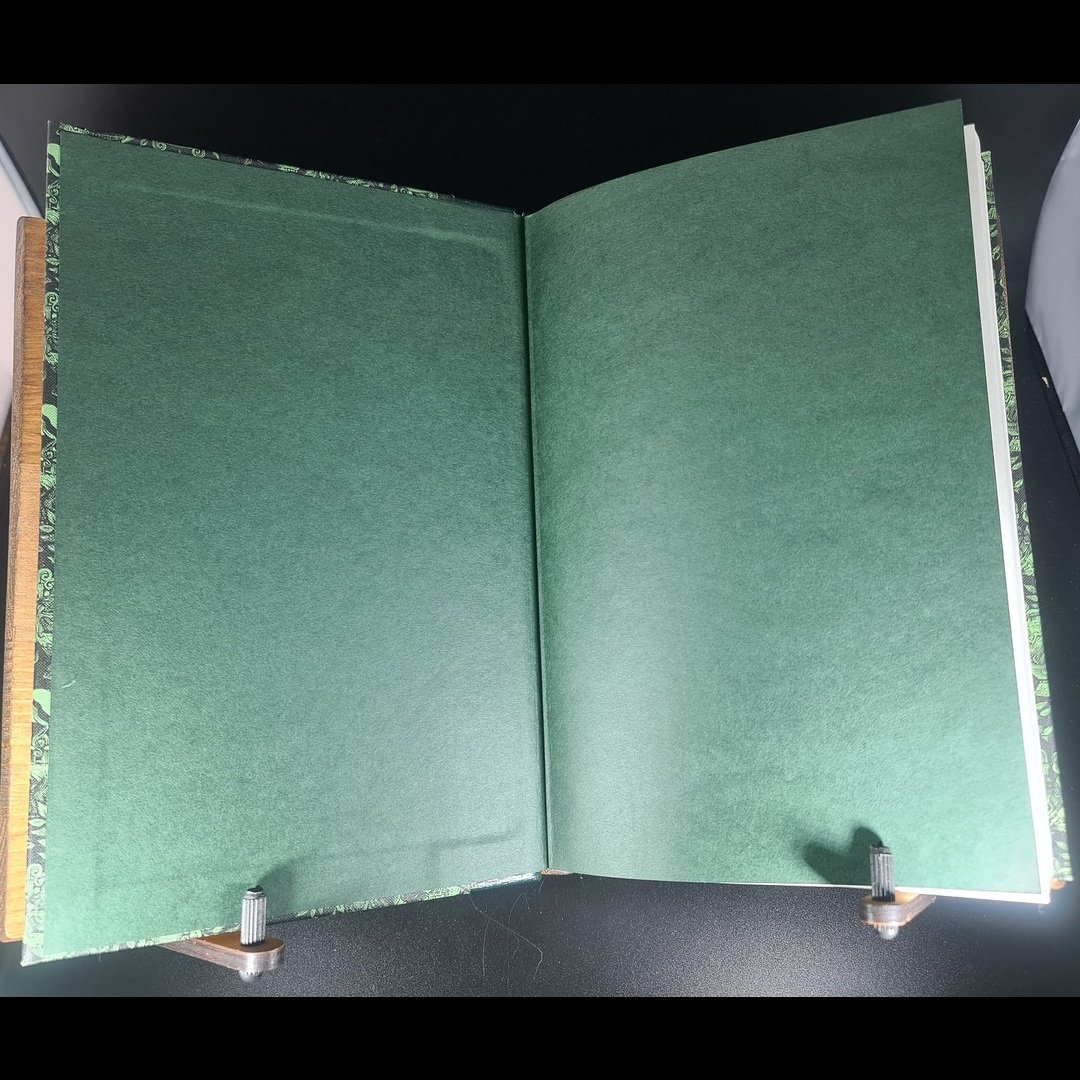
A handsome Black Letter Press production in pale Italian Fedrigoni Imitlin, elaborately decorated in black and gilt, with black endpapers, cream age-resistant paper, sewn book block, black ribbon marker and headbands. The compact format and strong graphic treatment give the volume considerable shelf presence. Black Letter Press describes the series as its new translation of Agrippa’s occult writings, with Volume IV containing the apocryphal Fourth Book together with selected magical writings by, or historically attributed to, Agrippa.
PROVENANCE
Signed and inscribed by Paul Summers Young.
This copy was obtained directly from Young by Books That Expand The Mind, with the signing personally witnessed by the proprietor.
It is one of four signed copies of De Occulta Philosophia, Volume IV supplied to Books That Expand The Mind. Of those four copies, one has previously been sold individually and one was sold as part of a complete four-volume De Occulta Philosophia set.
Young’s signed books were not issued as a general signed edition and have been supplied only in small numbers through specialist booksellers, making signed examples considerably less common than the standard unsigned issue.
The present copy is additionally inscribed: “Non timebis a timore nocturno” and dated “X. MMXXII” [October 2022].
CONDITION, COLLATION & COPY NOTES
A very well-preserved copy presenting extremely well.
The pale cloth binding remains clean and attractive, with the black and gilt decoration to the upper board sharp and bright. Binding firm, extremities well preserved and no significant wear.
Internally clean and bright. Paper fresh and text crisp.
Signed by Paul Summers Young on the title page and dated “X. MMXXII” [October 2022]. On the facing leaf is Young’s additional manuscript inscription “Non timebis a timore nocturno.”
A handsome signed and inscribed example of Black Letter Press’s modern edition of one of the most influential texts associated with Renaissance ceremonial magic.
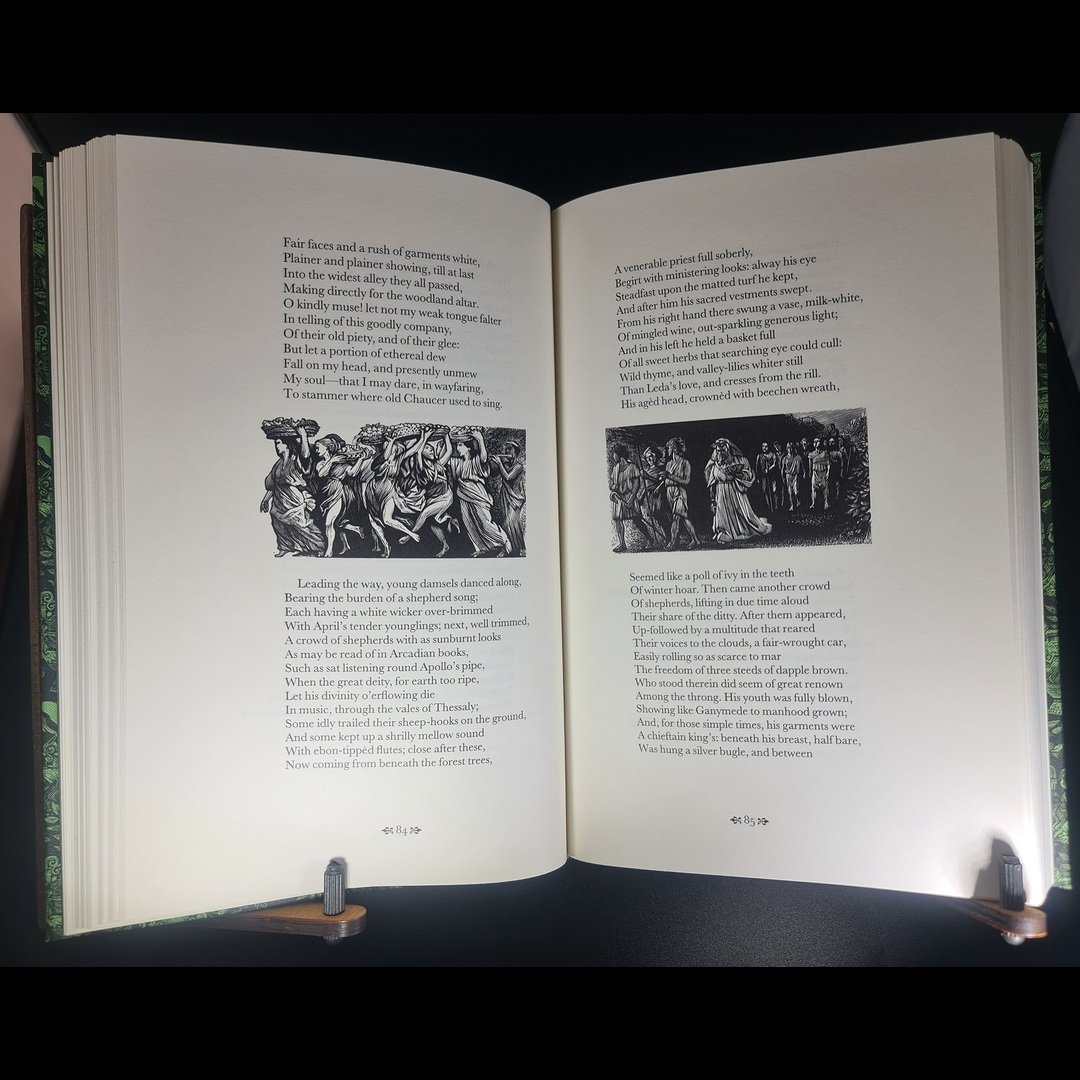
Please see Photos as part of condition report.
REFERENCES
VD16 A 1185 — Liber Quartus de Occulta Philosophia, Marburg, 1559.
WorldCat OCLC 159902392 — De occulta philosophia. Liber quartus, 1559.
Bibliothèque nationale de France, FRBNF39310206 — Agrippa, De incertitudine et vanitate scientiarum, Antwerp, Johannes Grapheus, 1530.
Black Letter Press — De Occulta Philosophia, Vol. IV: The Fourth Book & Selected Writings.
Van der Poel, Marc. Cornelius Agrippa, the Humanist Theologian and His Declamations. Brill, 1997.
Nauert, Charles G. Agrippa and the Crisis of Renaissance Thought. University of Illinois Press, 1965.
SYNOPSIS
Volume IV occupies a deliberately ambiguous position beside Agrippa’s celebrated Three Books of Occult Philosophy.
The Fourth Book of Occult Philosophy claims to supply what the genuine Three Books supposedly leave concealed: the practical application of ceremonial magic. It deals with divine and planetary names, magical characters, seals and pentacles, the consecration of ritual instruments, the preparation of the magician, methods of invocation and the appearance and government of spirits.
Although published under Agrippa’s name, the work appeared only in 1559, long after his death, and was already denounced as spurious by his former pupil Johann Weyer. Yet its questionable authorship did little to diminish its influence. Instead, the Liber Quartus became one of the principal bridges between Renaissance occult philosophy and the practical grimoire tradition of succeeding centuries.
Historically the work circulated with the Heptameron, attributed to Pietro d’Abano, a concise system of planetary and angelic ritual magic prescribing circles, prayers, conjurations and operations according to the days and hours of the week.
The second component of the present volume draws upon Agrippa’s authentic De Incertitudine et Vanitate Scientiarum et Artium of 1530. Here Agrippa turns his formidable learning towards a satirical examination of the sciences, professions and occult arts themselves. Rather than presenting a simple repudiation of the Three Books, these passages reveal the tension between magical philosophy, scepticism, revelation and intellectual uncertainty that lies at the centre of Agrippa’s thought.
Together, the two texts make this perhaps the most provocative volume in the Black Letter Press Agrippa series: a practical magical handbook attributed to Agrippa placed beside Agrippa’s own critical reflections upon magic and human knowledge.
An attractive modern edition for collectors and readers interested in Agrippa, Renaissance magic, ceremonial magic, grimoires, demonology, angelology, occult philosophy and the history of Western esotericism.
AUTHOR BIO
Heinrich Cornelius Agrippa von Nettesheim (1486–1535) was a German humanist, theologian, physician, lawyer and one of the most influential writers on magic of the European Renaissance.
His De Occulta Philosophia libri tres, developed over several decades and issued in its completed form in 1533, attempted an extraordinarily ambitious synthesis of natural philosophy, astrology, mathematics, Cabala, angelology, theology and ceremonial practice. It became one of the foundational texts of the Western esoteric tradition and exercised a profound influence upon later occult philosophy and ritual magic.
Agrippa was, however, a considerably more complicated thinker than his later reputation as a magician suggests. His De Incertitudine et Vanitate Scientiarum, first published in 1530, subjected virtually every field of human learning—including magical arts—to an often humorous and sceptical critique, making the relationship between the two works one of the most fascinating questions in Agrippan scholarship.
Translator Bio
Paul Summers Young is a translator, editor and writer specialising particularly in the magical, philosophical and esoteric literature of Europe.
His work with Black Letter Press includes the four-volume English edition of Agrippa’s De Occulta Philosophia, as well as editions and translations of works including Giambattista della Porta’s Natural Magick, Pseudomonarchia Daemonum, The Black Pullet, The Red Dragon and other important texts within the Western magical tradition.
In this fourth Agrippa volume, Young combines a fresh translation of the pseudo-Agrippan Liber Quartus, based upon the 1565 printing, with an expanded selection from Agrippa’s authentic De Incertitudine et Vanitate Scientiarum.

 Image 1 of 8
 Image 2 of 8
 Image 3 of 8
 Image 4 of 8
 Image 5 of 8
 Image 6 of 8
 Image 7 of 8
 Image 8 of 8