1538 Lyon Edition With Provenance
MORALE REDUCTORIUM IN OMNEIS UTRIUSQUE TESTAMENTI LIBROS
By Petrus Berthorius / Pierre Bersuire
KEY DETAILS
Condition: Good
Format: Vellum, quarto (4to 9 1⁄2 × 12 in 241 × 305 mm )
Note: Binding/size selection follows standard bibliographic conventions and is approximate; exact measurements may vary.
Published By: Macé (Mathieu) Bonhomme, 11 January 1538; bibliographically associated with Antoine Vincent, Lyon, 1538
Language: Latin
Provenance: Early ownership inscription at foot of title, subsequently cancelled and presently unidentified.
Collation: [10], 170 leaves; 180 leaves total / 360 pages, signatures a¹⁰ A–U⁸ X¹⁰. Text printed in two columns.; Title printed in red and black within a historiated woodcut border; decorative and figural woodcut initials throughout.
Dust Jacket: None, as issued
SKU: BTETM0002404
Shipping Info: Approximate Package Dimensions H: 12.5, L: 30, W: 25 (Units: cm), W: 2Kg
Tracked Shipping, Insurance Coverage as per Customer Request
DESCRIPTION
MORALE REDUCTORIUM IN OMNEIS UTRIUSQUE TESTAMENTI LIBROS
Woodcut title border · Red-and-black printing · Early Latin & Spanish manuscript annotations · Restored contemporary vellum
A substantial and visually striking Renaissance edition of Pierre Bersuire's great medieval moralisation of the Bible, printed at Lyon by Macé (Mathieu) Bonhomme in 1538.
The Morale Reductorium in omneis utriusque testamenti libros represents the biblical portion of Bersuire's immense Reductorium morale. Known in manuscript and early print traditions as the Liber Bibliae moralis or Reductorium morale super totam Bibliam, it corresponds to Book XVI of the larger work and circulated independently as one of Bersuire's most influential aids to biblical interpretation, moral theology and preaching.
Arranged in thirty-four books and proceeding through the Old and New Testaments, Bersuire transforms Biblical history into a repertory of moral and spiritual meanings. Scriptural persons, events, objects and images are interpreted tropologically or allegorically and, where appropriate, anagogically, with Biblical concordances supplied throughout. The result is at once a commentary, moral encyclopaedia, concordance and practical preaching aid.
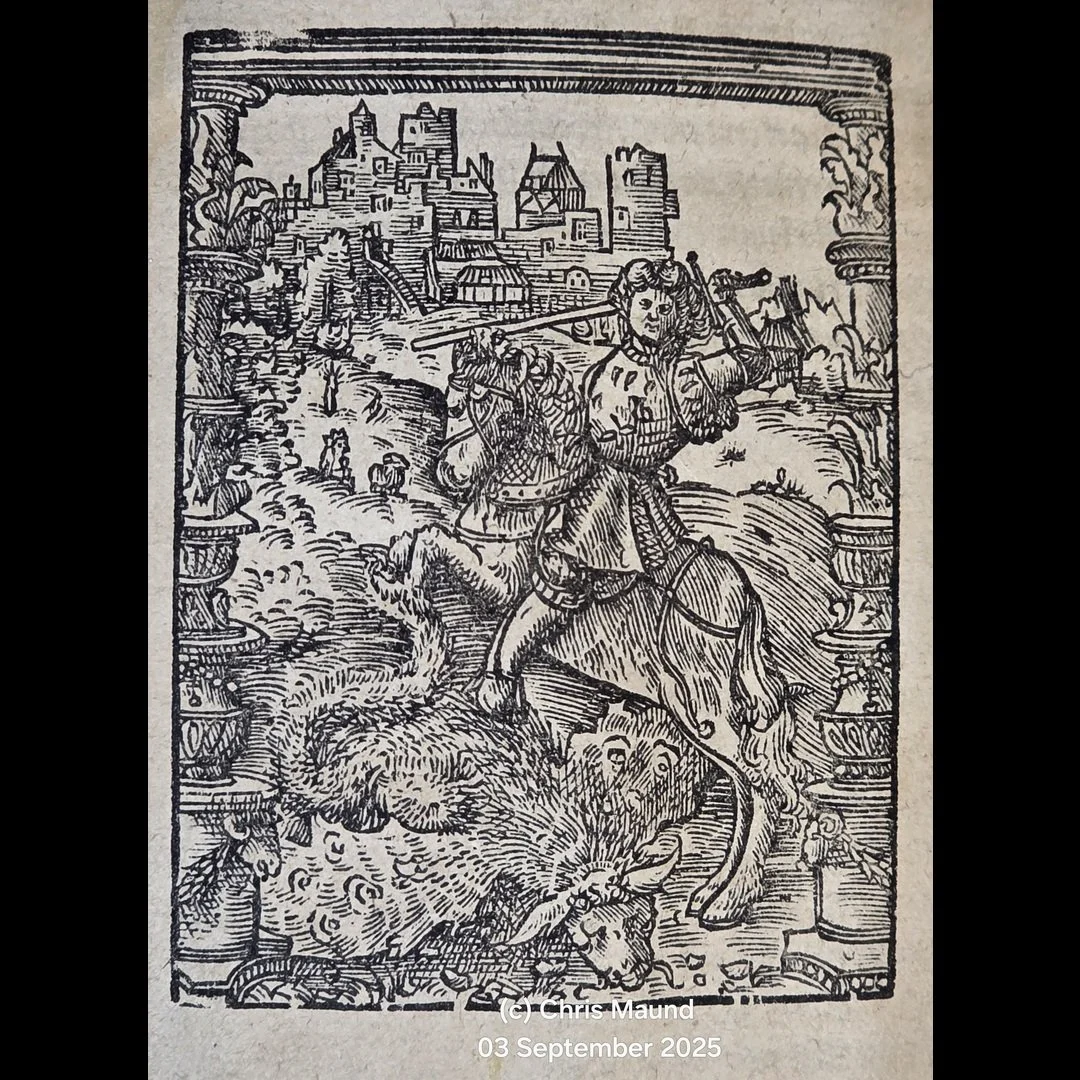
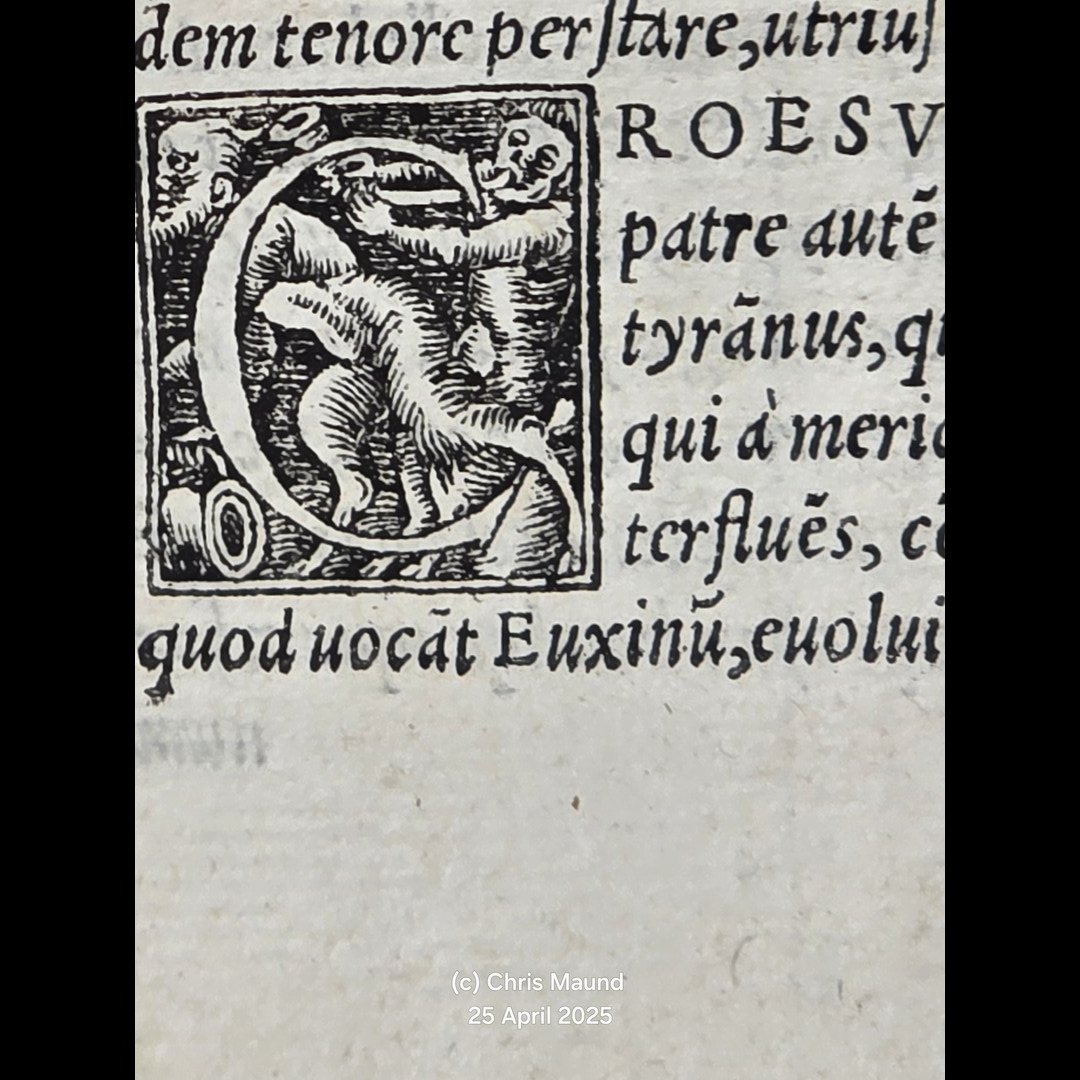
This Lyon edition is particularly attractive typographically. The title is printed in red and black within an elaborate historiated architectural woodcut border, while the main text is set in two columns in Gothic type and enlivened by numerous decorative and figural woodcut initials. The terminal colophon records completion at Lyon by Mathieu/Macé Bonhomme on 11 January 1538. Bibliographical authorities additionally associate the edition with the Lyon publisher-bookseller Antoine Vincent. ARLIMA records the edition as EA2684 under USTC 157257 and 200272.
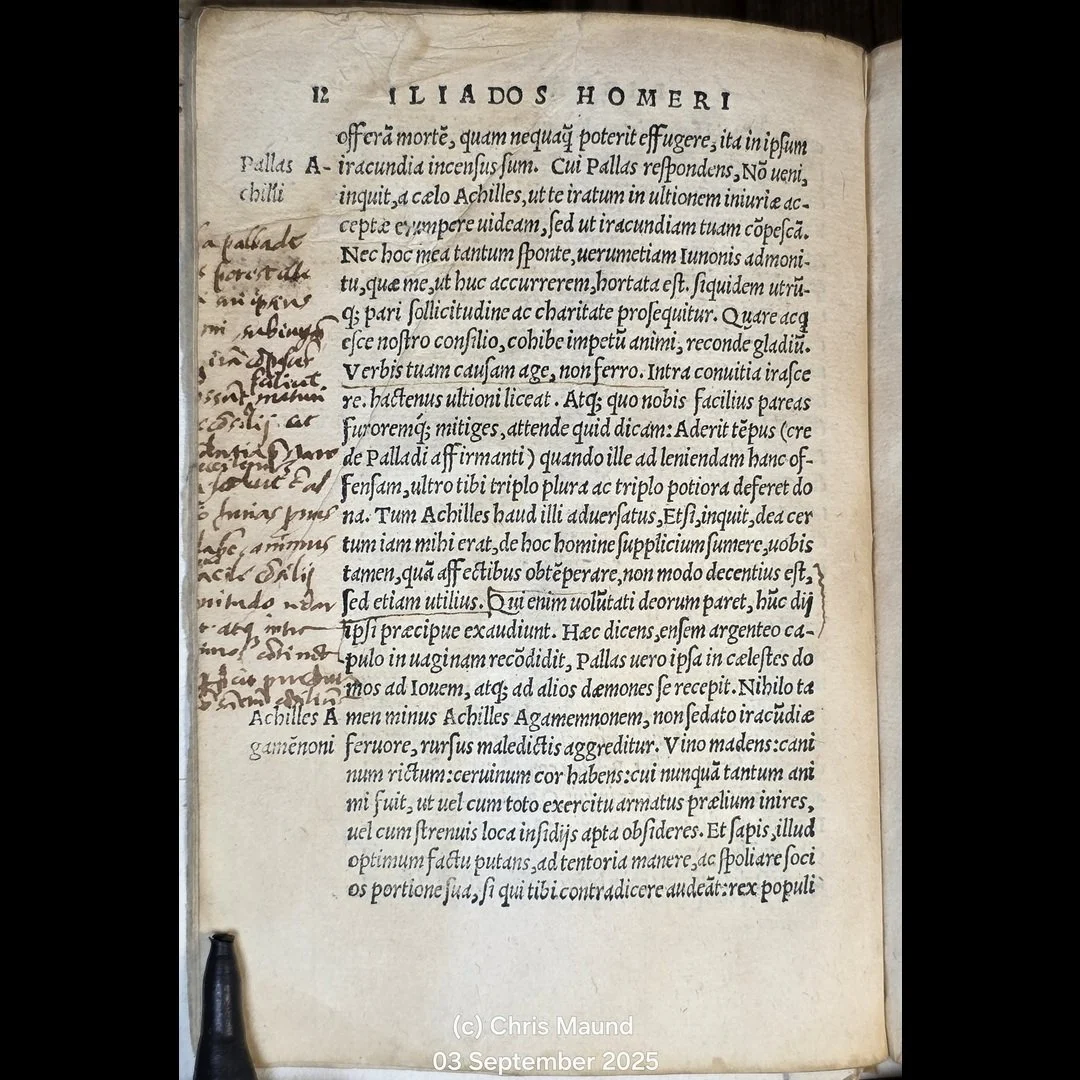
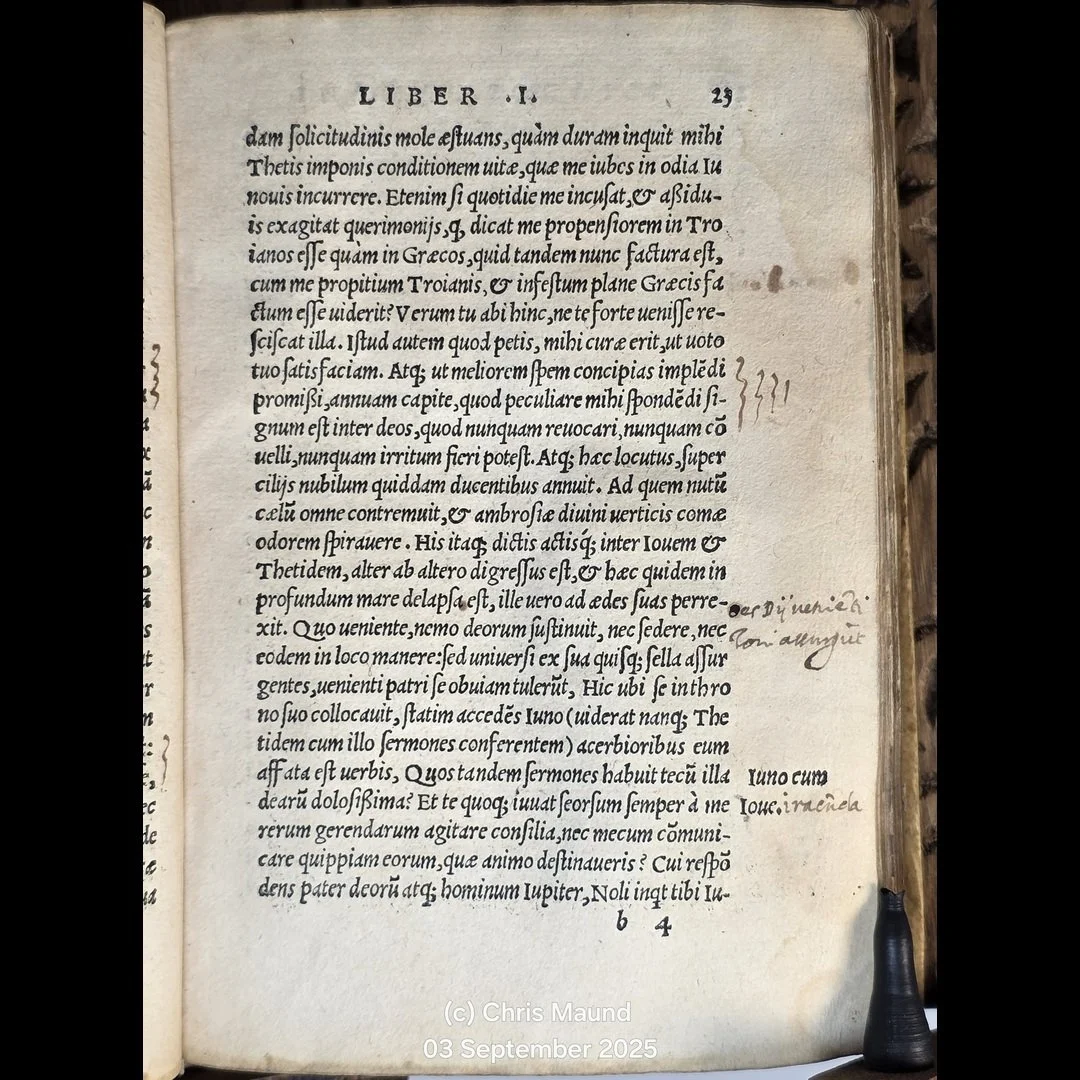
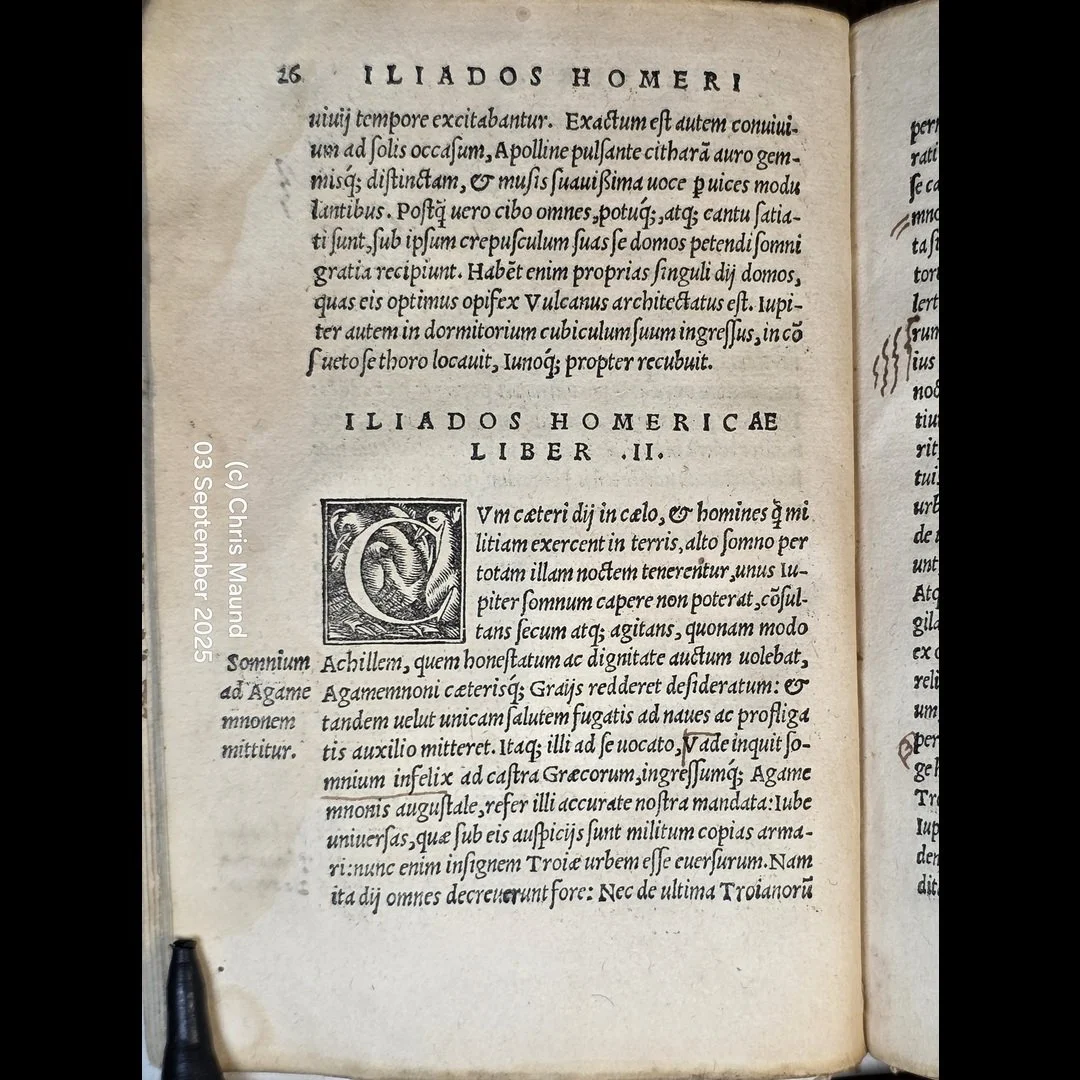
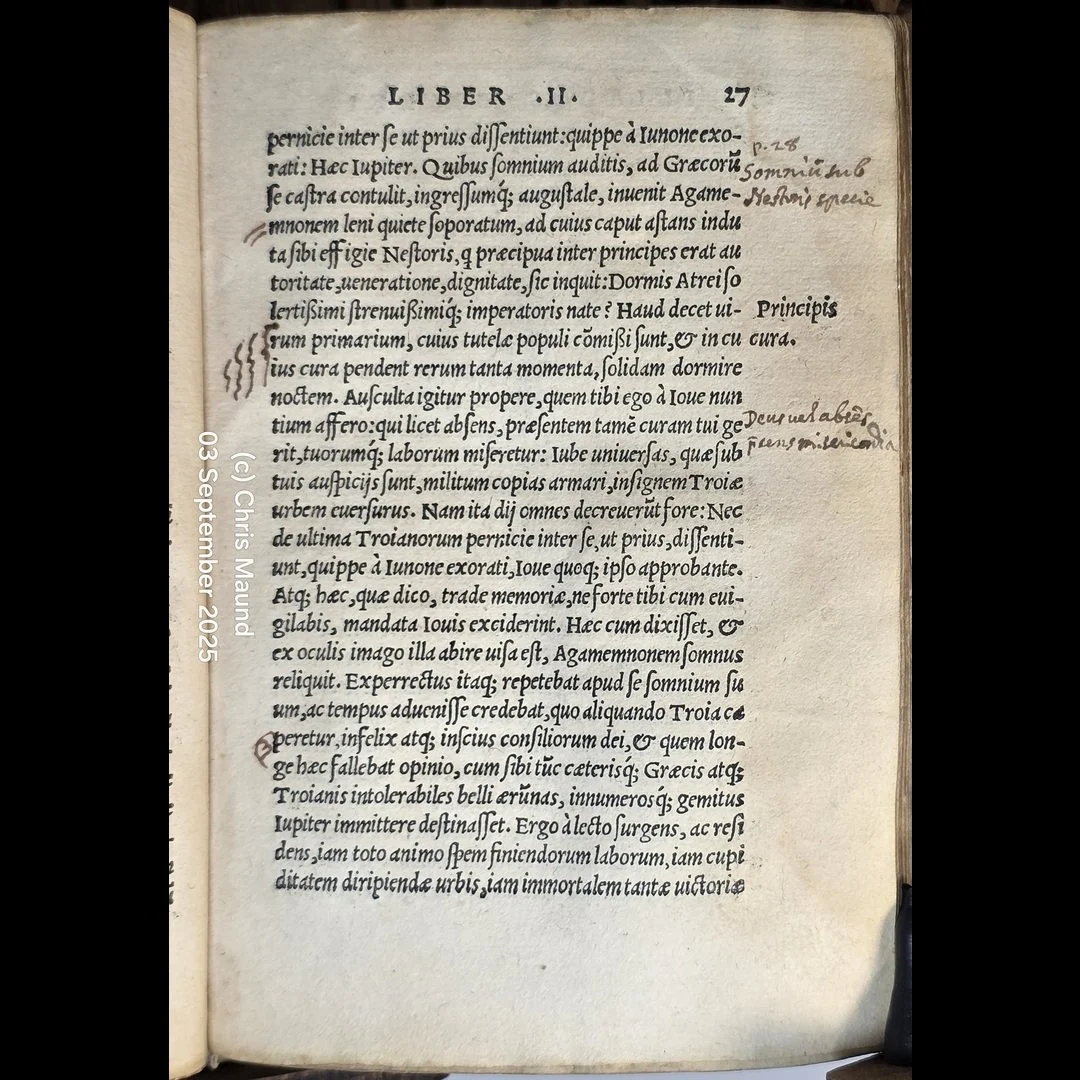
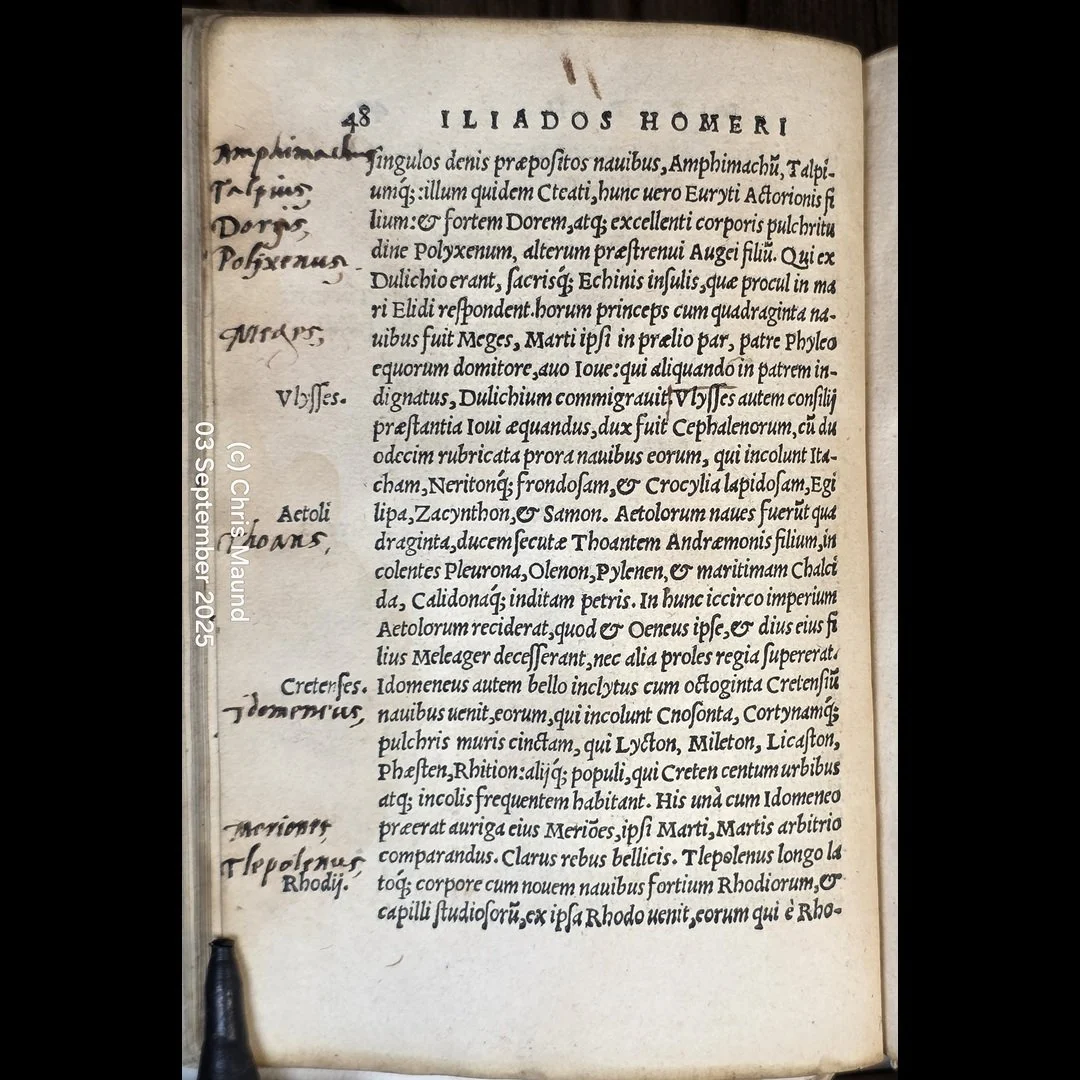
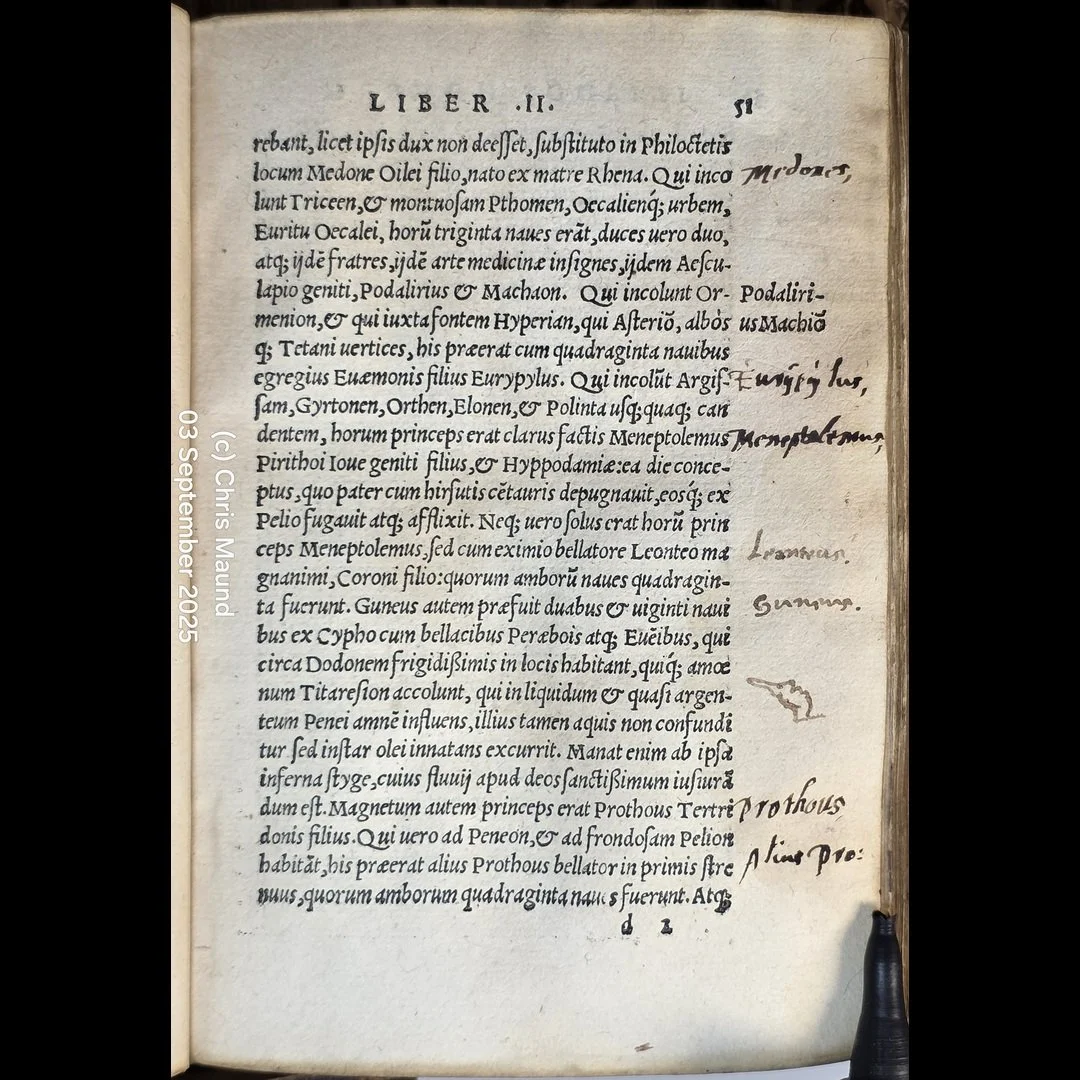
Of particular interest in this copy is its evidence of early active use by a clerical or religious reader. Numerous manuscript annotations, principally in Latin but including several vernacular Castilian/Spanish glosses, turn the printed book into a personalised theological and homiletic reference system. A manuscript contents list supplies the Biblical books with corresponding folio numbers, while marginal notes identify passages suitable for particular subjects, feasts and preaching occasions.
Among the clearly legible manuscript cues are “Pro Conversione Apostoli Pauli” (for the Conversion of St Paul), “Pro Beato Augustino” (for St Augustine), “Pro Incarnatione”, “Pro Religiosis”, “B. Virgo Maria”, “Eucharistia”, and “Praedicatio Apostoli Pauli efficax”. Other notes refer to prelates, priests, charity, religious profession and entry into the religious life. Several annotations are in Spanish, including references to “Los Reyes”, “los ministros de justicia” and “quitar los bienes…”. Taken together, the annotations strongly suggest use by a Spanish-speaking early-modern clerical or religious reader for sermon preparation and spiritual instruction.
PROVENANCE
Early ownership inscription at foot of title, subsequently cancelled and presently unidentified.
Early manuscript index and numerous Latin and Spanish/Castilian marginal annotations, apparently associated with practical clerical, theological and homiletic use.
Jeschke Jádi Auctions, Berlin, Rare Books, Prints, Historical Photography, 20 January 2024, lot 5 — this copy.
CONDITION, COLLATION & COPY NOTES
COLLATION
[10], 170 leaves; 180 leaves total / 360 pages, signatures a¹⁰ A–U⁸ X¹⁰. Text printed in two columns.
Title printed in red and black within a historiated woodcut border; decorative and figural woodcut initials throughout.
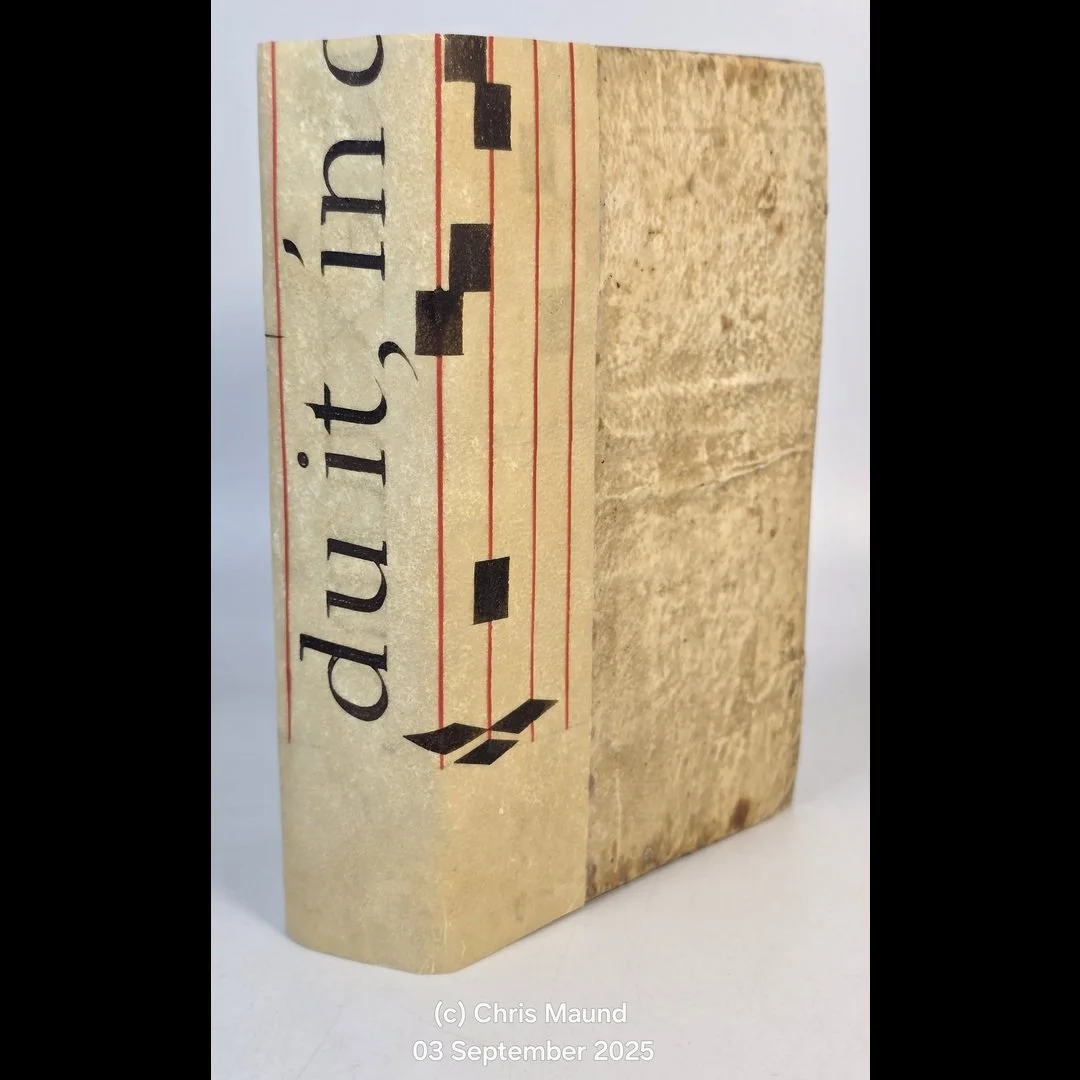
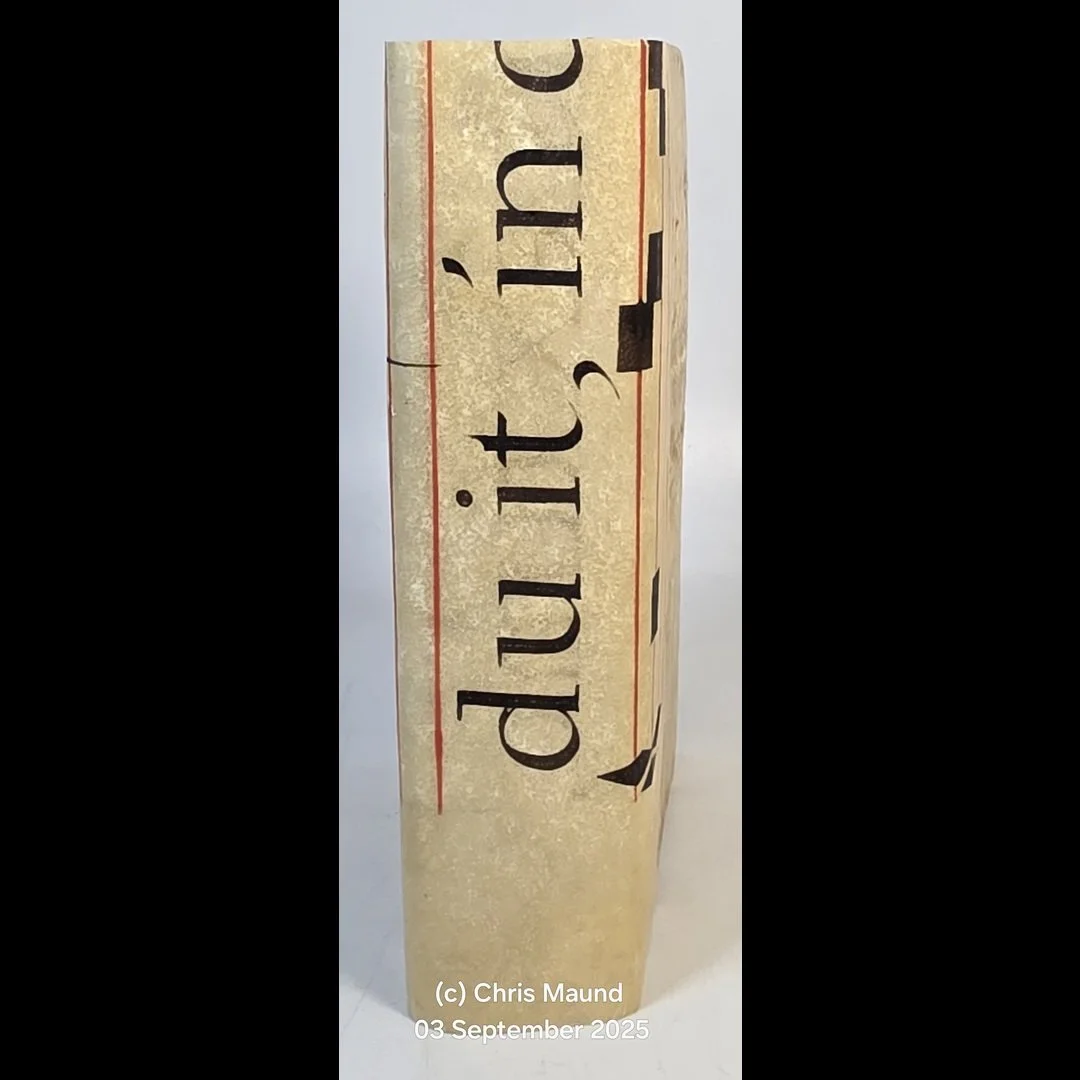
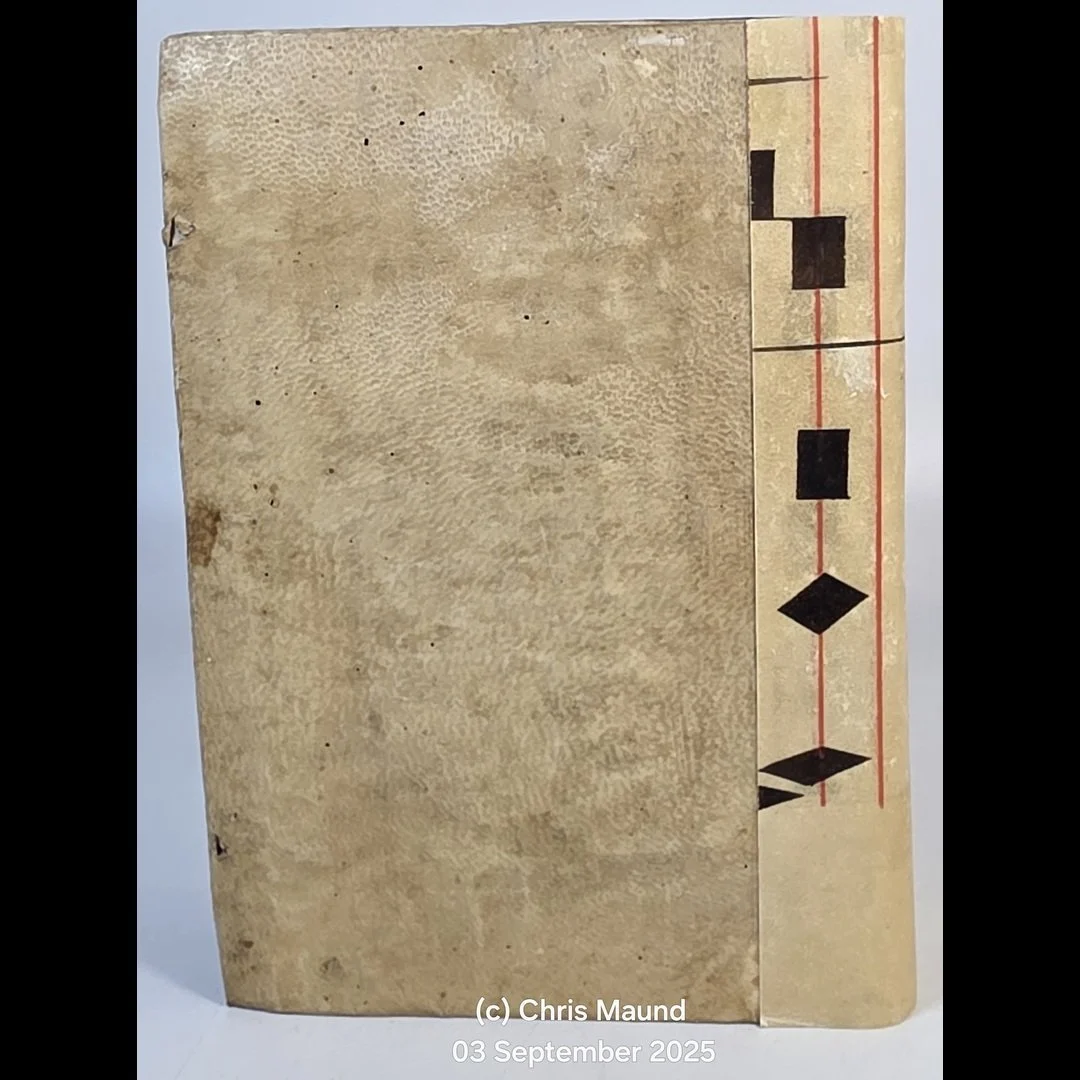
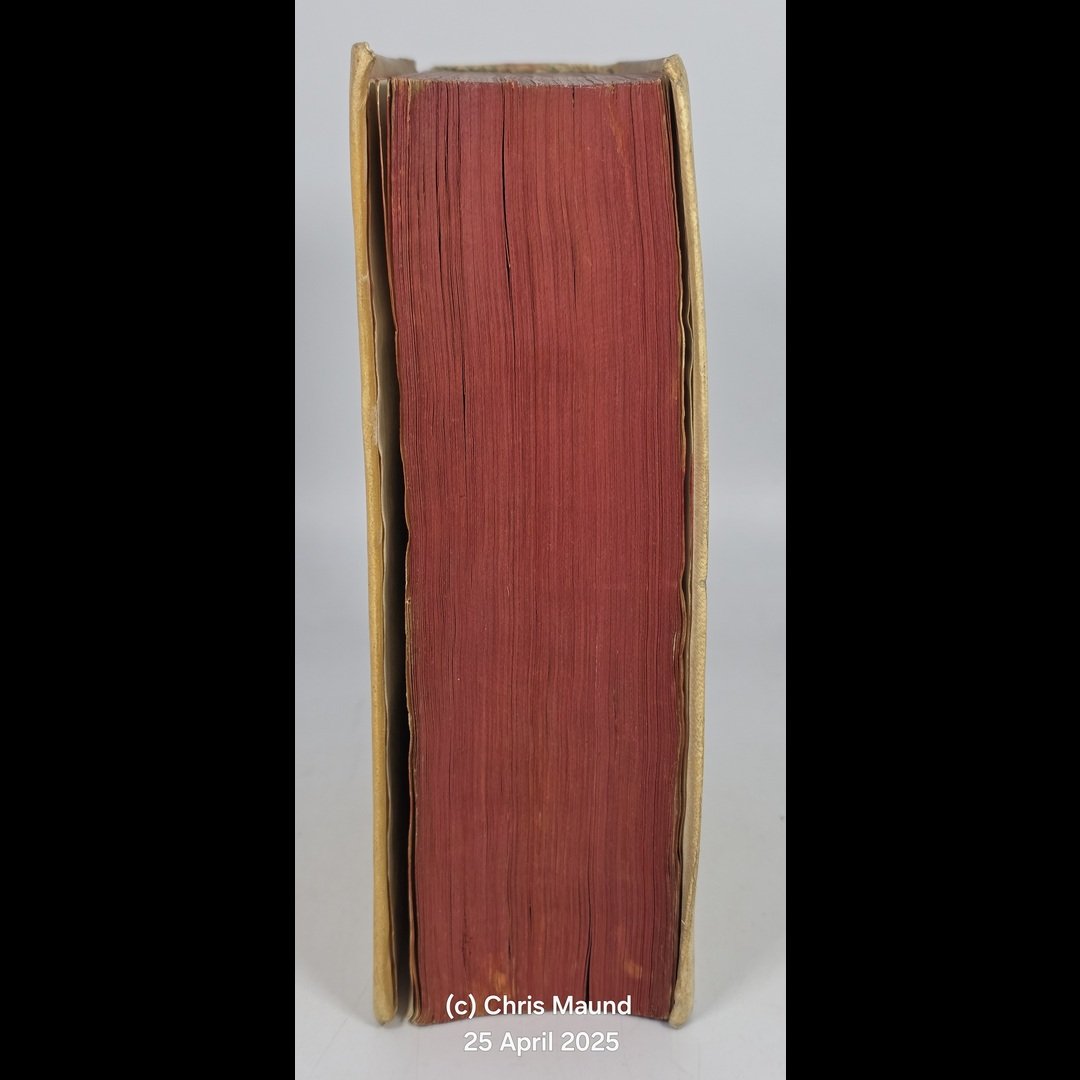
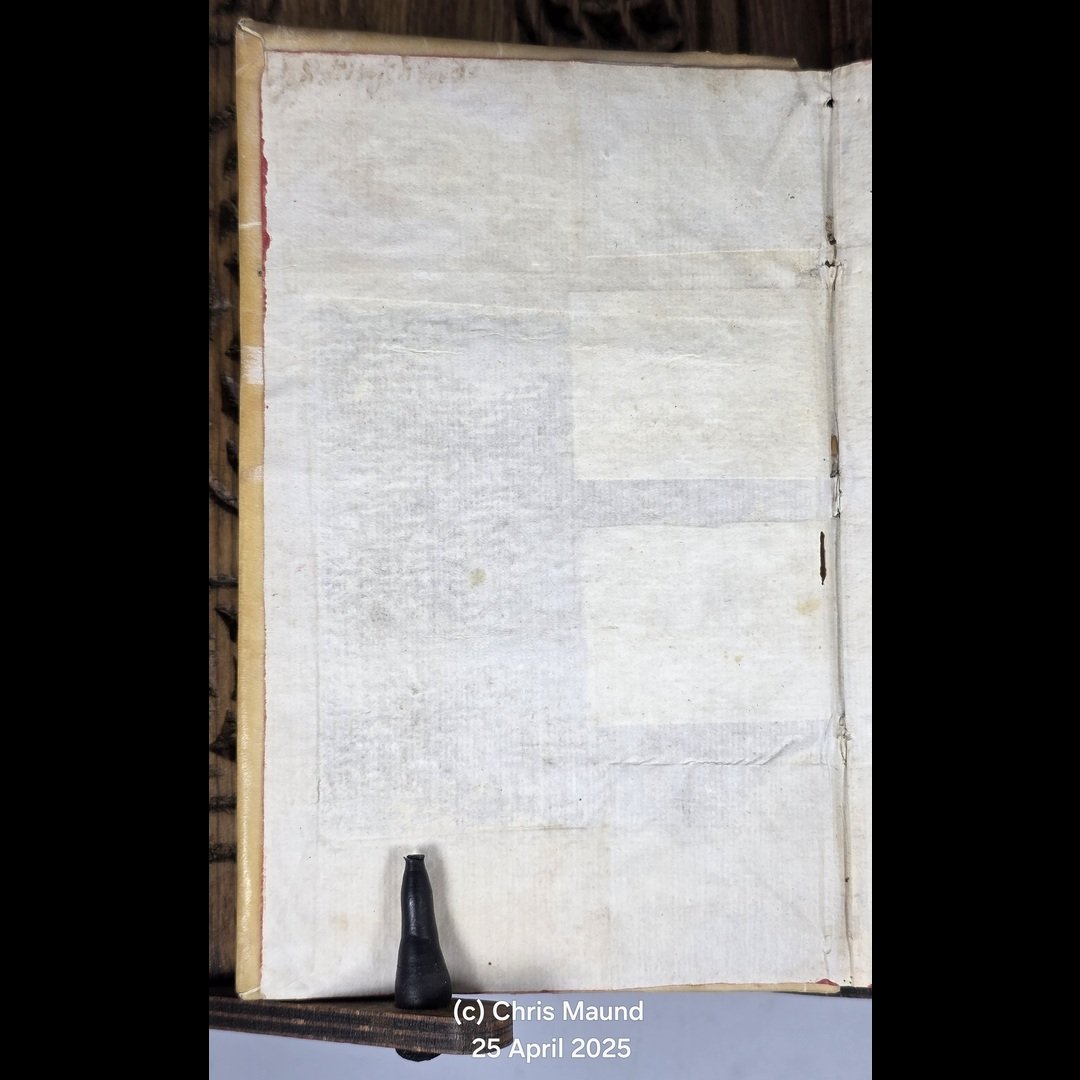
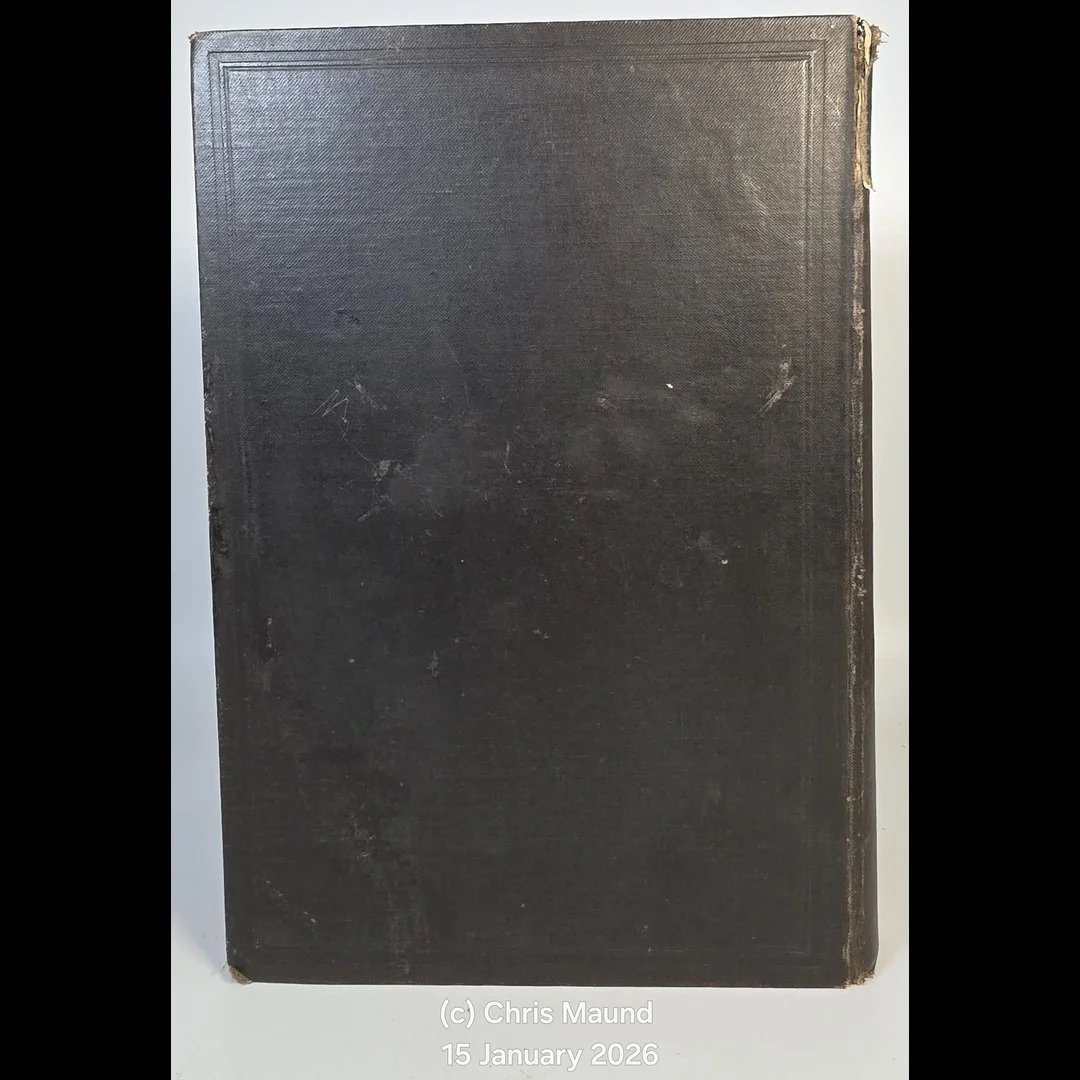
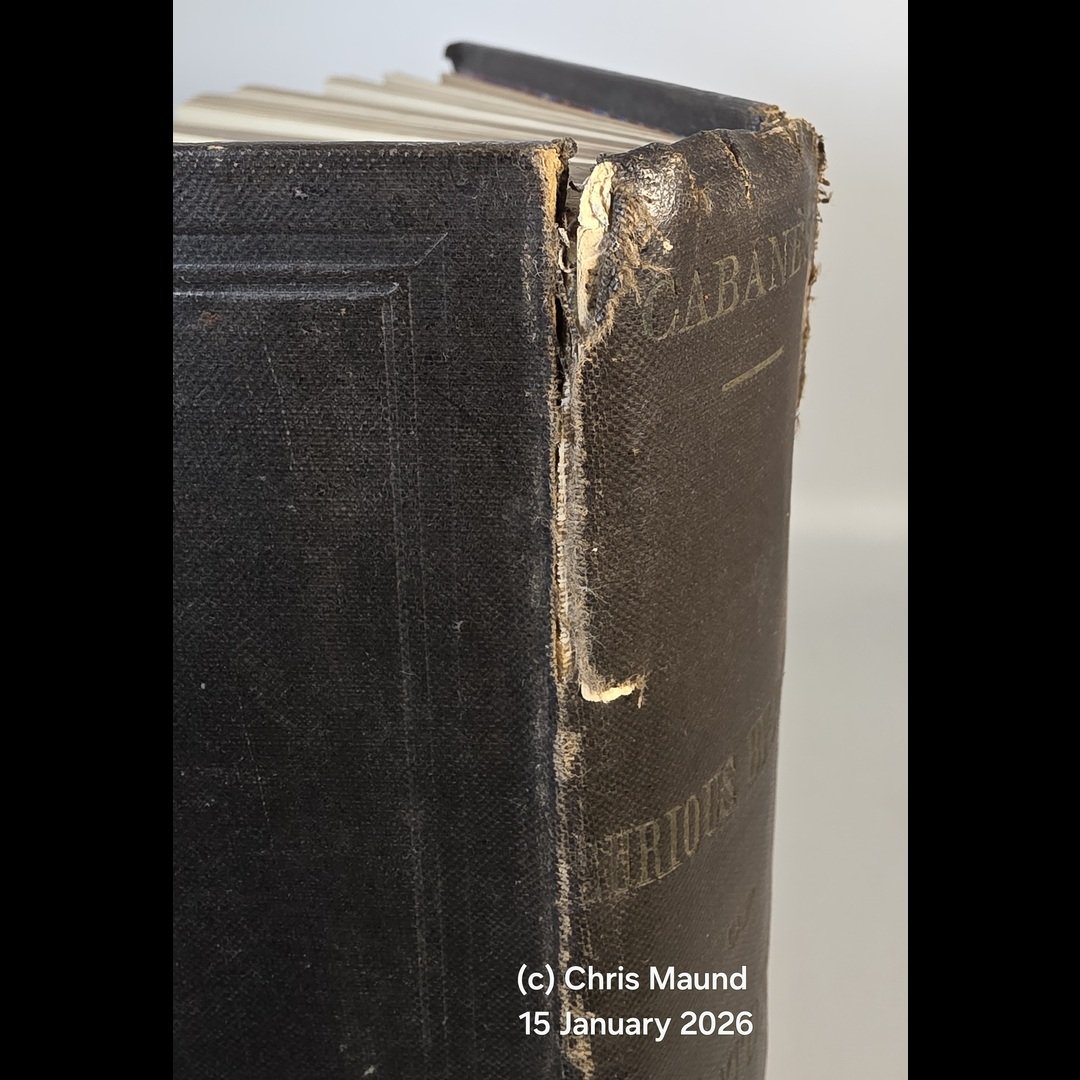
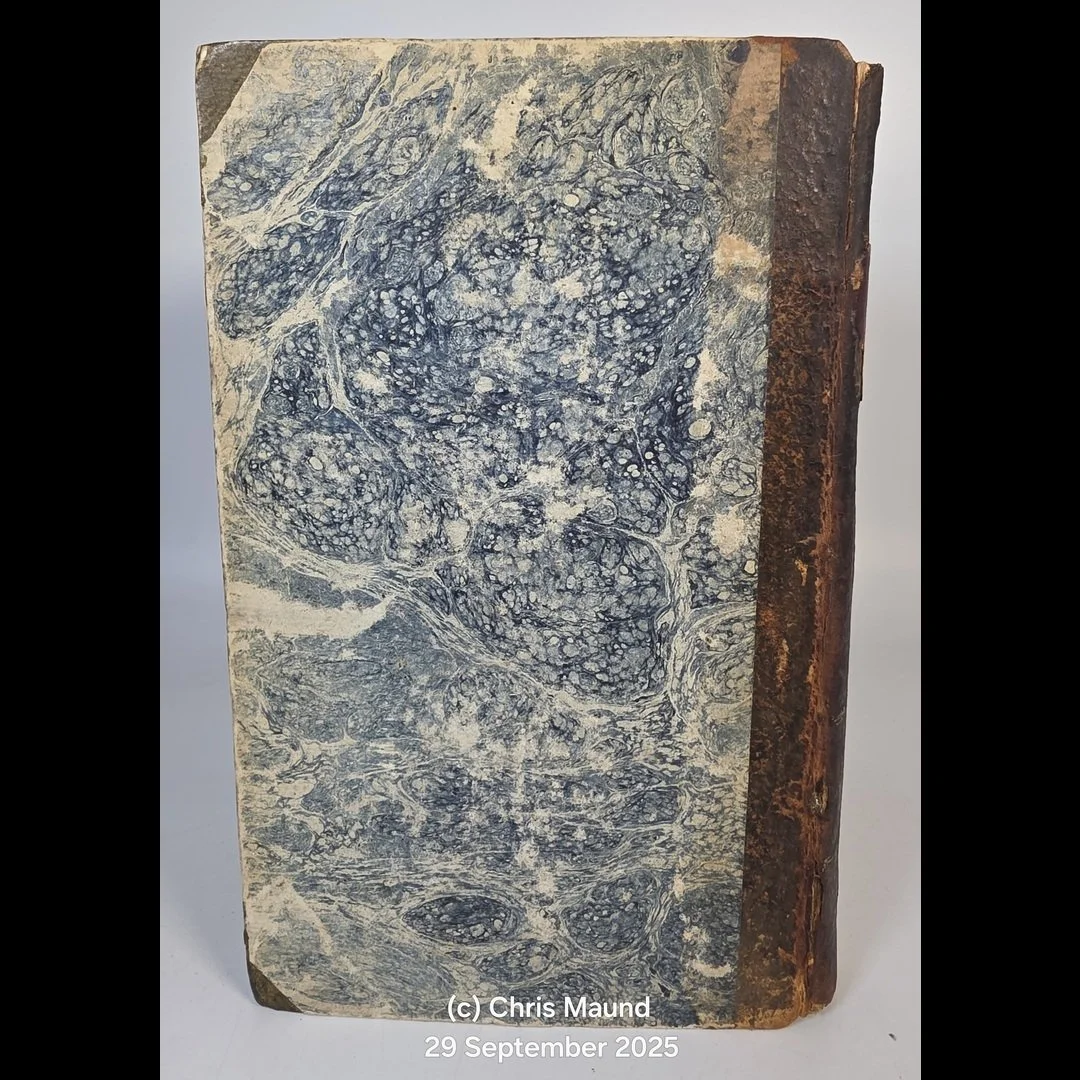
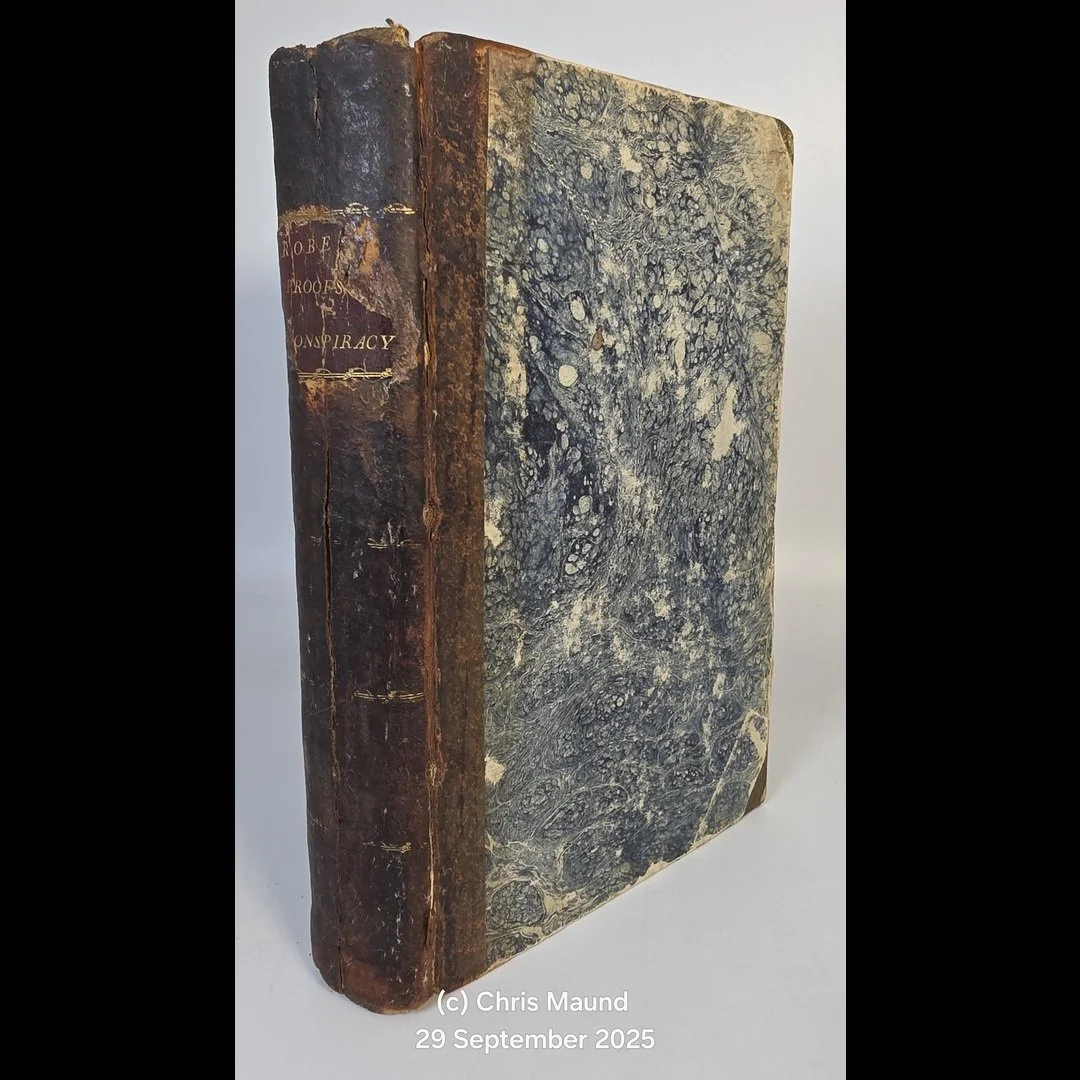
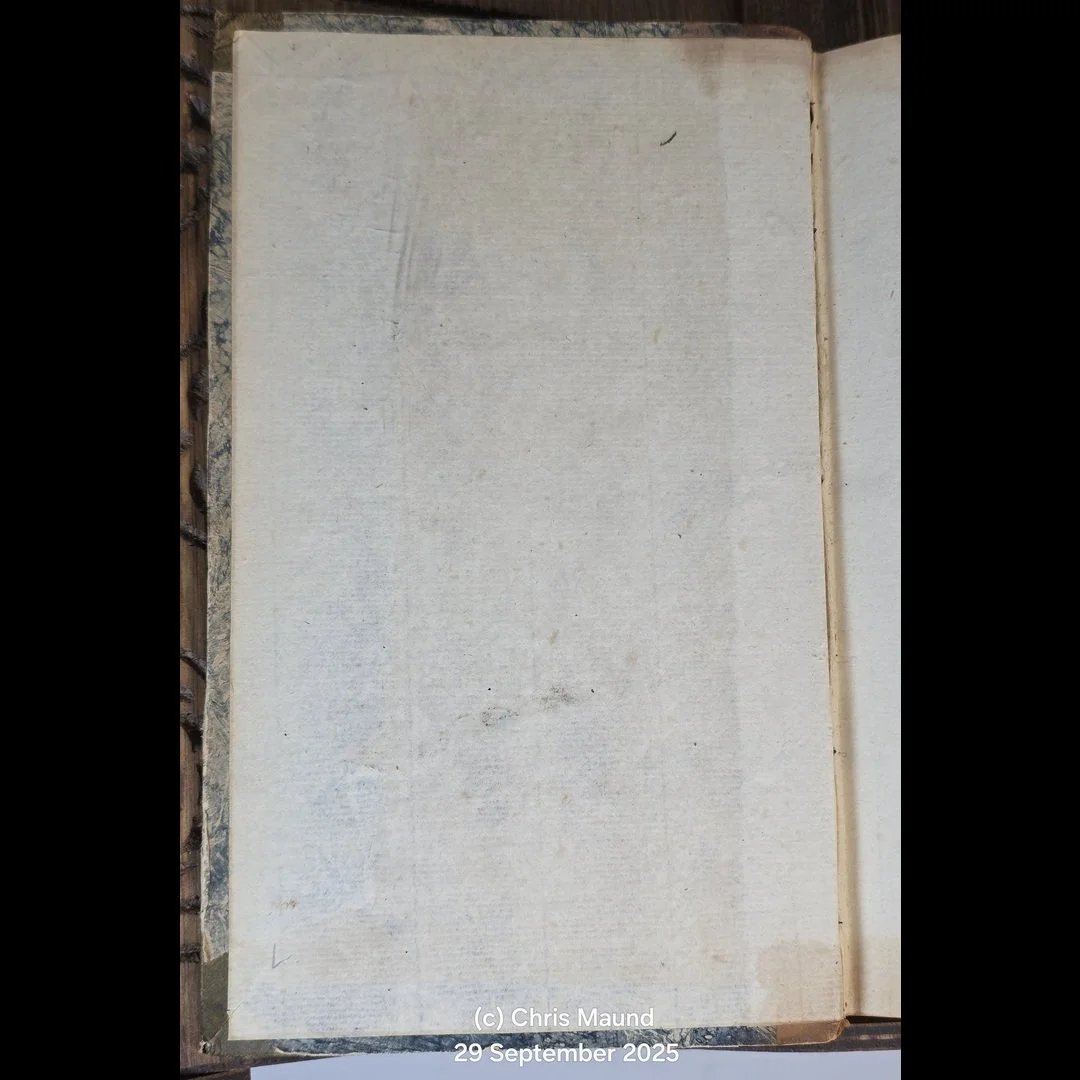
A sound and characterful copy in restored contemporary vellum. Binding with general age-soiling, marking, rubbing and wear, with evident historical restoration or reworking at the spine; endpapers renewed. The vellum retains considerable period appearance and gives the volume strong shelf presence.
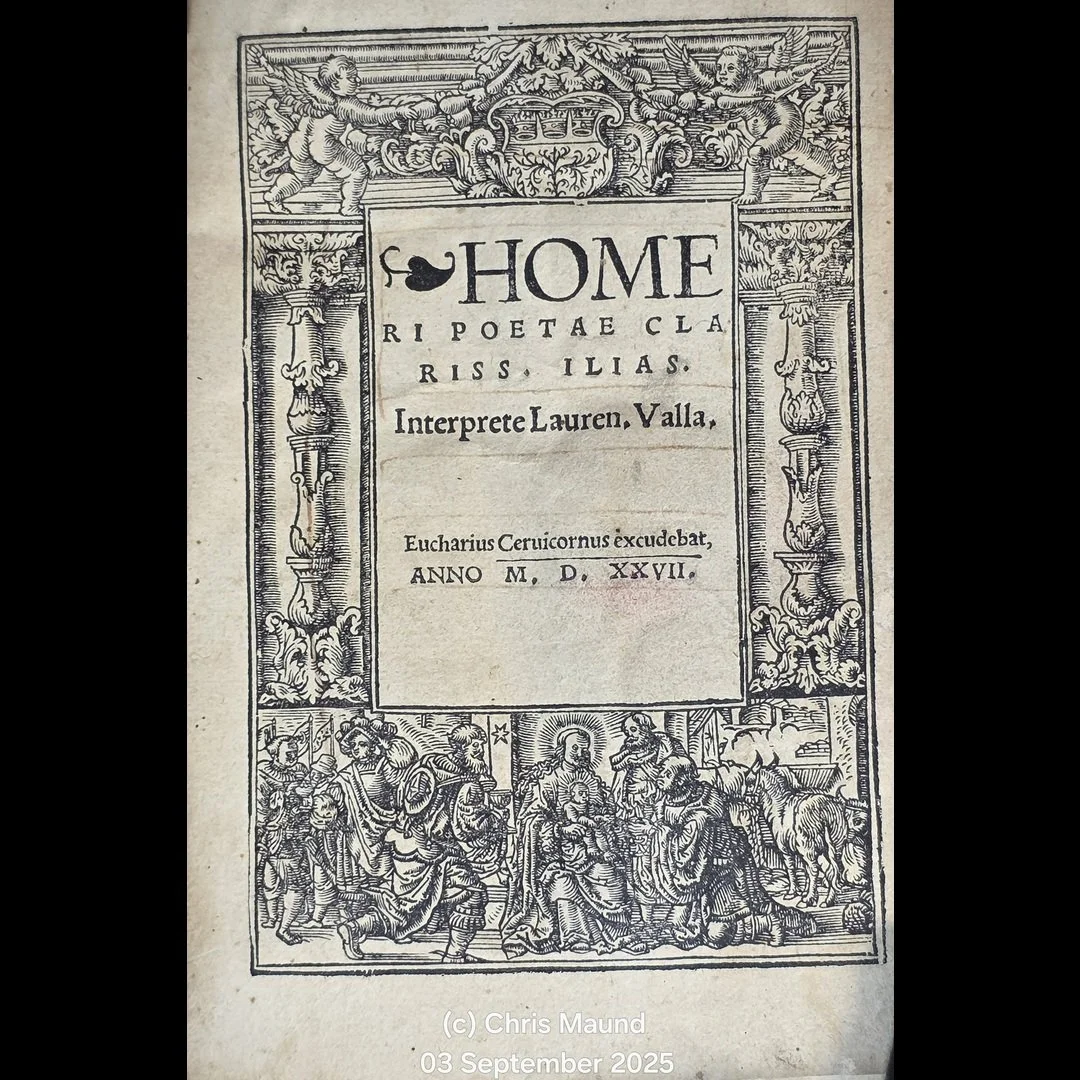
Title page present, printed in red and black within the large historiated woodcut border. The title leaf shows staining, handling wear and repaired marginal losses, including a repair affecting a portion of the left-hand woodcut border. An early ownership inscription at the foot of the title has been deliberately cancelled in ink, with further faint unidentified manuscript initials or marks beneath. First leaves more noticeably stained and with areas of marginal loss.
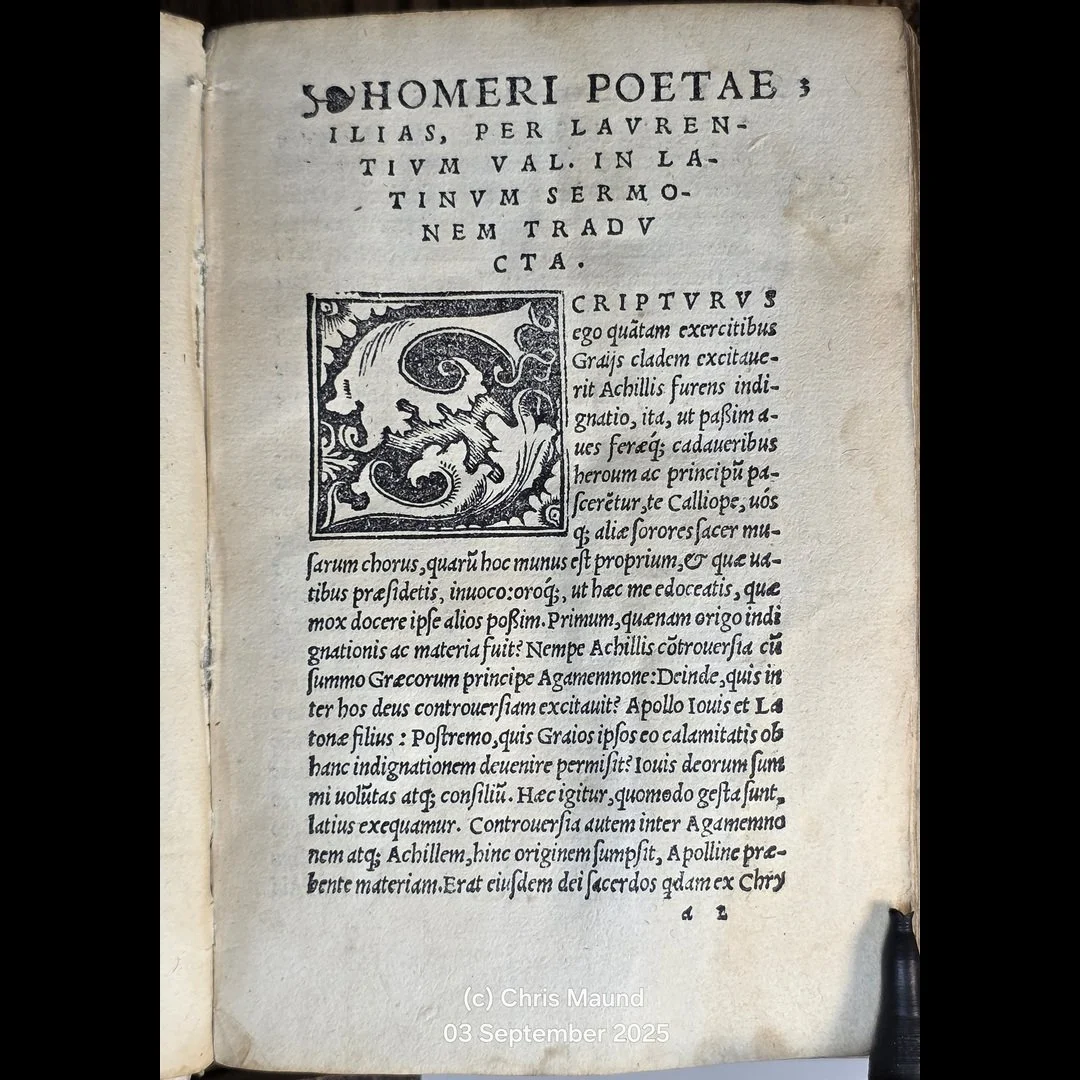
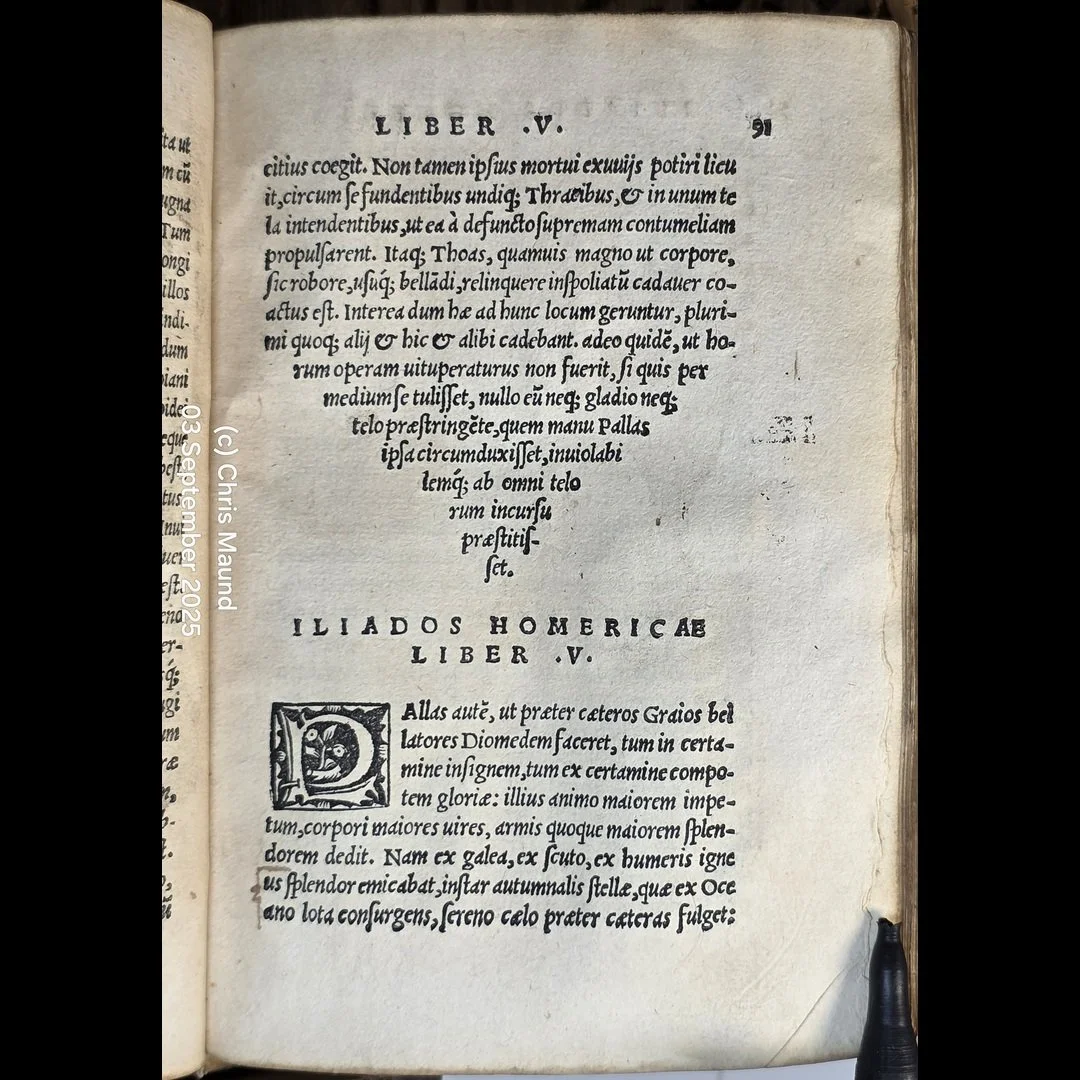
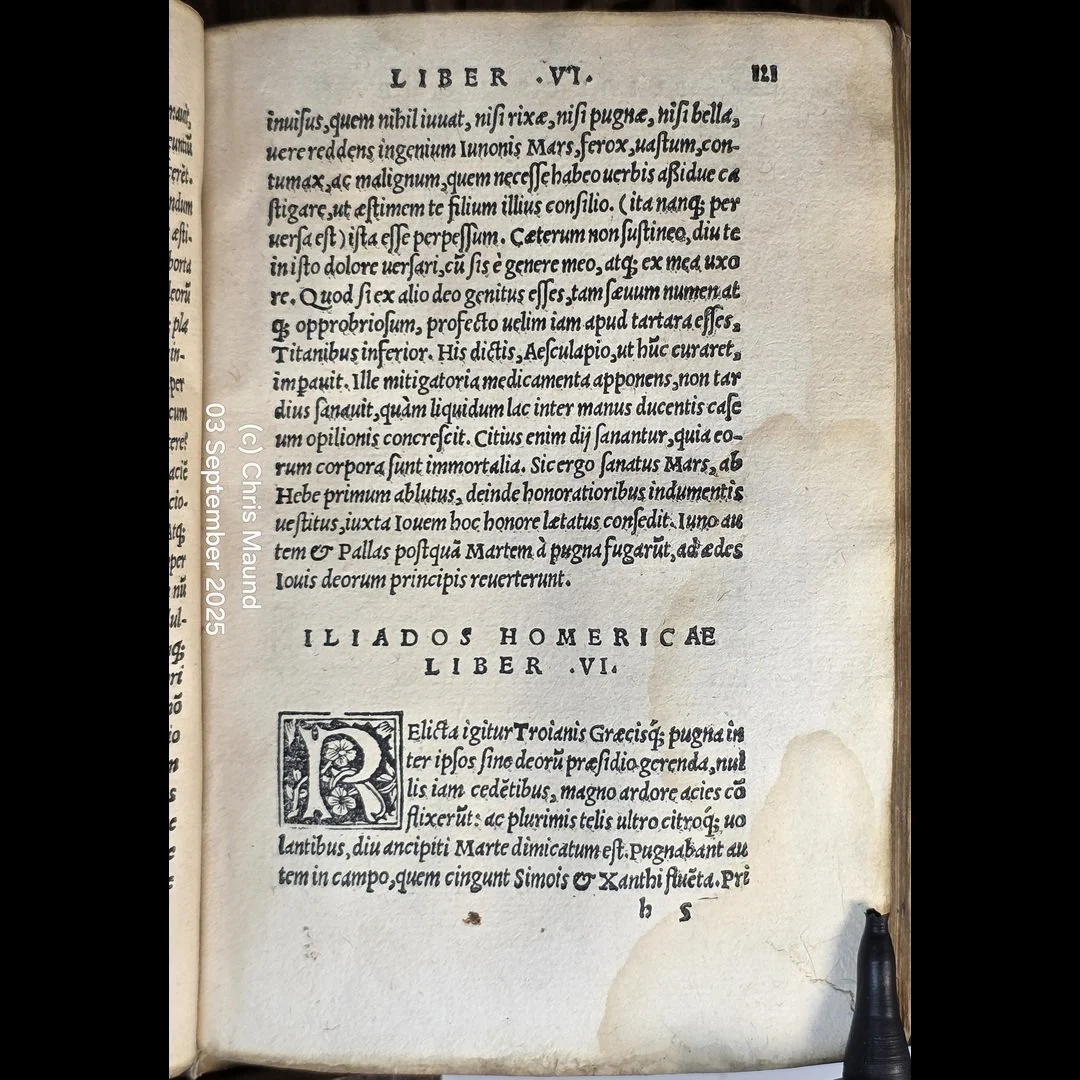
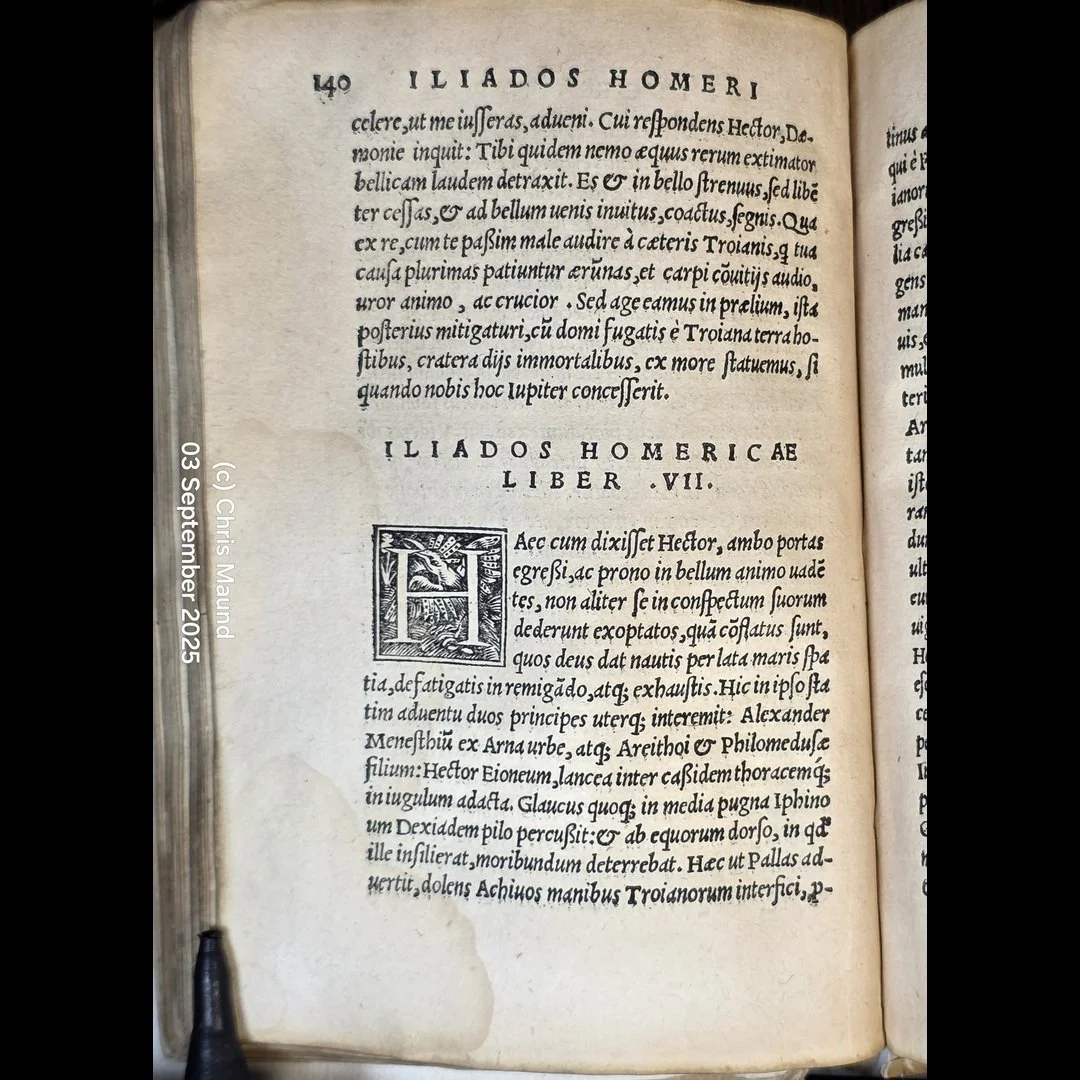
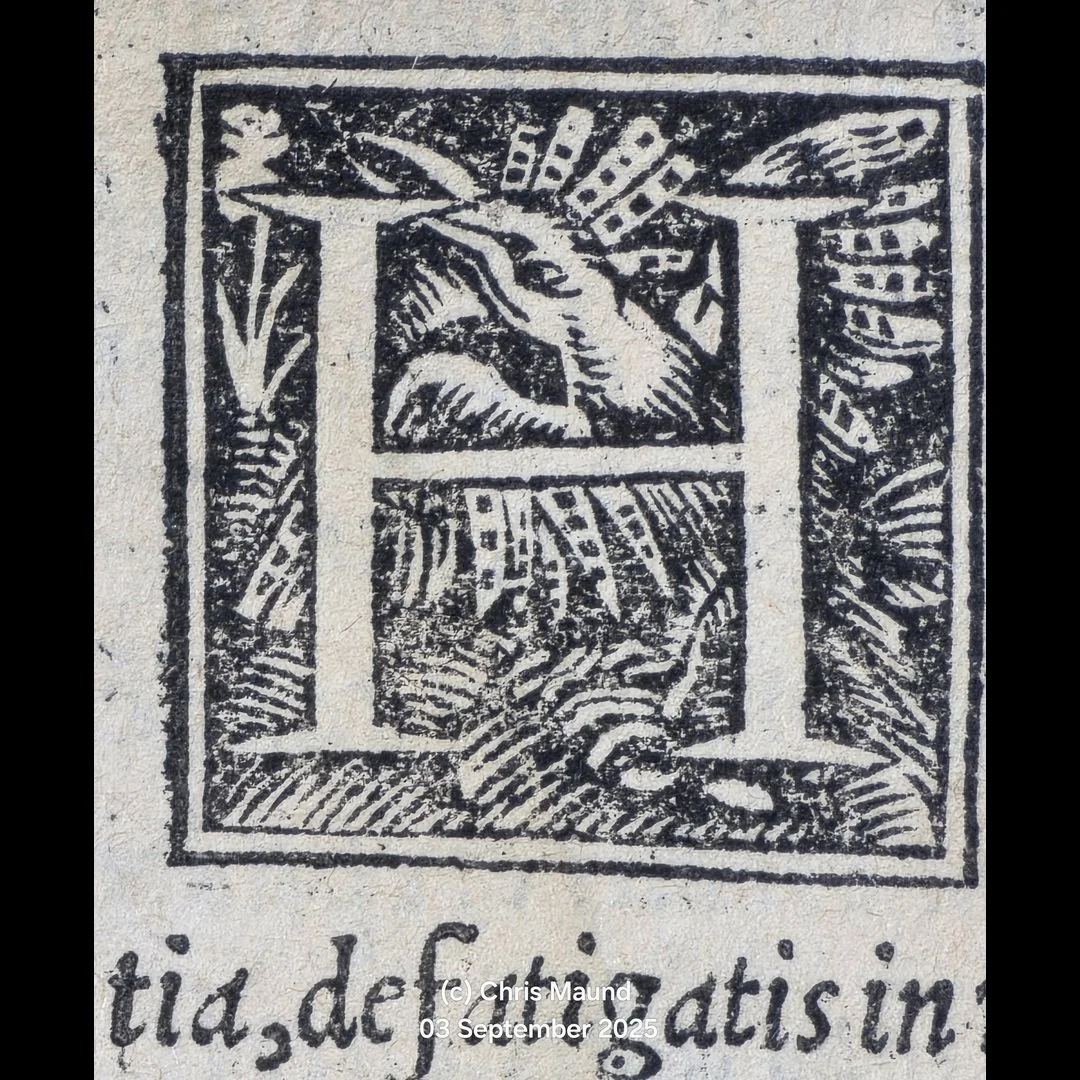
Text generally browned and lightly to moderately stained, with intermittent waterstaining. Some worming occurs along the inner gutter, occasionally touching or causing slight loss to individual letters; the text nevertheless remains overwhelmingly legible. Printed impression generally strong, with attractive Gothic type and crisp decorative and figural woodcut initials.
Of particular historical interest are numerous early-modern manuscript annotations and topical reading cues, principally in Latin with several vernacular Spanish/Castilian glosses, apparently in one or more late-sixteenth- or early-seventeenth-century hands. These include sermon and devotional headings relating to the Conversion of St Paul, St Augustine, the Incarnation, the Virgin Mary, Eucharist, religious life, clergy and other moral subjects.
A manuscript index to the Biblical books and corresponding folio numbers provides a further contemporary or early working navigation system. Together, these annotations offer unusually direct evidence of the volume's practical use as a working preaching, theological and scriptural reference book.
Please see Photos as part of condition report.
REFERENCES
Baudrier, Bibliographie lyonnaise, X, p. 206.
USTC 157257 / 200272.
ARLIMA EA2684.
Biblioteca della Pontificia Università Lateranense, record 30723.
WorldCat/OCLC records for the 1538 Lyon edition.
Jeschke Jádi Auctions, Berlin, Rare Books, Prints, Historical Photography, 20 January 2024, lot 5 — this copy.
ARLIMA identifies the edition as Lyon, Macé Bonhomme and Antoine Vincent, 1538. A separately catalogued copy gives the physical make-up as [10] + 170 folios, signatures a¹⁰ A–U⁸ X¹⁰, with two-column Gothic text, historiated title border and ornamental initials.
SYNOPSIS
The Morale Reductorium in omneis utriusque testamenti libros is not a conventional Biblical commentary. Bersuire's purpose is to transform Scripture into a structured repertory of moral, allegorical and spiritual meanings that could be consulted by preachers, theologians and students.
Proceeding from Genesis through the books of the Old Testament and into the Gospels, Acts and Apocalypse, Bersuire first evokes or summarises the Biblical material and then interprets its persons, actions, objects and images according to the multiple senses of Scripture characteristic of medieval exegesis.
A Biblical object or episode might therefore operate simultaneously as historical narrative, a figure of Christian doctrine, a lesson concerning human conduct and, at times, a sign directed towards heavenly or ultimate realities. Bersuire's achievement was to organise this immense interpretative tradition into a practical reference work from which suitable authorities, images and moral lessons could readily be extracted.
The present copy offers particularly vivid evidence of this intended use. Its early reader repeatedly marked passages according to subjects and occasions — St Paul's Conversion, St Augustine, the Incarnation, the Virgin Mary, Eucharist, religious vocation, priests and prelates — effectively constructing a personal sermon-finding system within Bersuire's printed repertory.
The Biblical portion circulated separately from the rest of the Reductorium morale from an early date. Its printing history reaches back into the incunable period, with editions appearing in the 1470s; the present Lyon printing therefore stands within a transmission extending directly from the medieval manuscript world into the mature Renaissance book trade.
AUTHOR BIO
Pierre Bersuire (c. 1290–1362), variously Latinised as Petrus Berchorius, Berthorius or Bercorius, was a French Benedictine monk, theologian, encyclopaedist and translator, and one of the most learned literary figures of fourteenth-century France.
Associated with the papal court at Avignon and later with intellectual and royal circles in Paris, Bersuire devoted much of his scholarship to organising the immense body of Biblical, natural-historical and classical knowledge available to the medieval preacher and scholar.
His vast Reductorium morale sought to uncover moral significance throughout creation, history and literature. Its celebrated fifteenth book, the Ovidius moralizatus, subjected classical mythology to Christian moral interpretation, while Book XVI moralised the whole Bible and enjoyed a substantial independent manuscript and printed transmission.
Bersuire was also responsible for an important French translation of Livy. The Gesta Romanorum has historically sometimes been attributed to him, although that attribution remains uncertain.
1538 Lyon Edition With Provenance
MORALE REDUCTORIUM IN OMNEIS UTRIUSQUE TESTAMENTI LIBROS
By Petrus Berthorius / Pierre Bersuire
KEY DETAILS
Condition: Good
Format: Vellum, quarto (4to 9 1⁄2 × 12 in 241 × 305 mm )
Note: Binding/size selection follows standard bibliographic conventions and is approximate; exact measurements may vary.
Published By: Macé (Mathieu) Bonhomme, 11 January 1538; bibliographically associated with Antoine Vincent, Lyon, 1538
Language: Latin
Provenance: Early ownership inscription at foot of title, subsequently cancelled and presently unidentified.
Collation: [10], 170 leaves; 180 leaves total / 360 pages, signatures a¹⁰ A–U⁸ X¹⁰. Text printed in two columns.; Title printed in red and black within a historiated woodcut border; decorative and figural woodcut initials throughout.
Dust Jacket: None, as issued
SKU: BTETM0002404
Shipping Info: Approximate Package Dimensions H: 12.5, L: 30, W: 25 (Units: cm), W: 2Kg
Tracked Shipping, Insurance Coverage as per Customer Request
DESCRIPTION
MORALE REDUCTORIUM IN OMNEIS UTRIUSQUE TESTAMENTI LIBROS
Woodcut title border · Red-and-black printing · Early Latin & Spanish manuscript annotations · Restored contemporary vellum
A substantial and visually striking Renaissance edition of Pierre Bersuire's great medieval moralisation of the Bible, printed at Lyon by Macé (Mathieu) Bonhomme in 1538.
The Morale Reductorium in omneis utriusque testamenti libros represents the biblical portion of Bersuire's immense Reductorium morale. Known in manuscript and early print traditions as the Liber Bibliae moralis or Reductorium morale super totam Bibliam, it corresponds to Book XVI of the larger work and circulated independently as one of Bersuire's most influential aids to biblical interpretation, moral theology and preaching.
Arranged in thirty-four books and proceeding through the Old and New Testaments, Bersuire transforms Biblical history into a repertory of moral and spiritual meanings. Scriptural persons, events, objects and images are interpreted tropologically or allegorically and, where appropriate, anagogically, with Biblical concordances supplied throughout. The result is at once a commentary, moral encyclopaedia, concordance and practical preaching aid.
This Lyon edition is particularly attractive typographically. The title is printed in red and black within an elaborate historiated architectural woodcut border, while the main text is set in two columns in Gothic type and enlivened by numerous decorative and figural woodcut initials. The terminal colophon records completion at Lyon by Mathieu/Macé Bonhomme on 11 January 1538. Bibliographical authorities additionally associate the edition with the Lyon publisher-bookseller Antoine Vincent. ARLIMA records the edition as EA2684 under USTC 157257 and 200272.
Of particular interest in this copy is its evidence of early active use by a clerical or religious reader. Numerous manuscript annotations, principally in Latin but including several vernacular Castilian/Spanish glosses, turn the printed book into a personalised theological and homiletic reference system. A manuscript contents list supplies the Biblical books with corresponding folio numbers, while marginal notes identify passages suitable for particular subjects, feasts and preaching occasions.
Among the clearly legible manuscript cues are “Pro Conversione Apostoli Pauli” (for the Conversion of St Paul), “Pro Beato Augustino” (for St Augustine), “Pro Incarnatione”, “Pro Religiosis”, “B. Virgo Maria”, “Eucharistia”, and “Praedicatio Apostoli Pauli efficax”. Other notes refer to prelates, priests, charity, religious profession and entry into the religious life. Several annotations are in Spanish, including references to “Los Reyes”, “los ministros de justicia” and “quitar los bienes…”. Taken together, the annotations strongly suggest use by a Spanish-speaking early-modern clerical or religious reader for sermon preparation and spiritual instruction.
PROVENANCE
Early ownership inscription at foot of title, subsequently cancelled and presently unidentified.
Early manuscript index and numerous Latin and Spanish/Castilian marginal annotations, apparently associated with practical clerical, theological and homiletic use.
Jeschke Jádi Auctions, Berlin, Rare Books, Prints, Historical Photography, 20 January 2024, lot 5 — this copy.
CONDITION, COLLATION & COPY NOTES
COLLATION
[10], 170 leaves; 180 leaves total / 360 pages, signatures a¹⁰ A–U⁸ X¹⁰. Text printed in two columns.
Title printed in red and black within a historiated woodcut border; decorative and figural woodcut initials throughout.
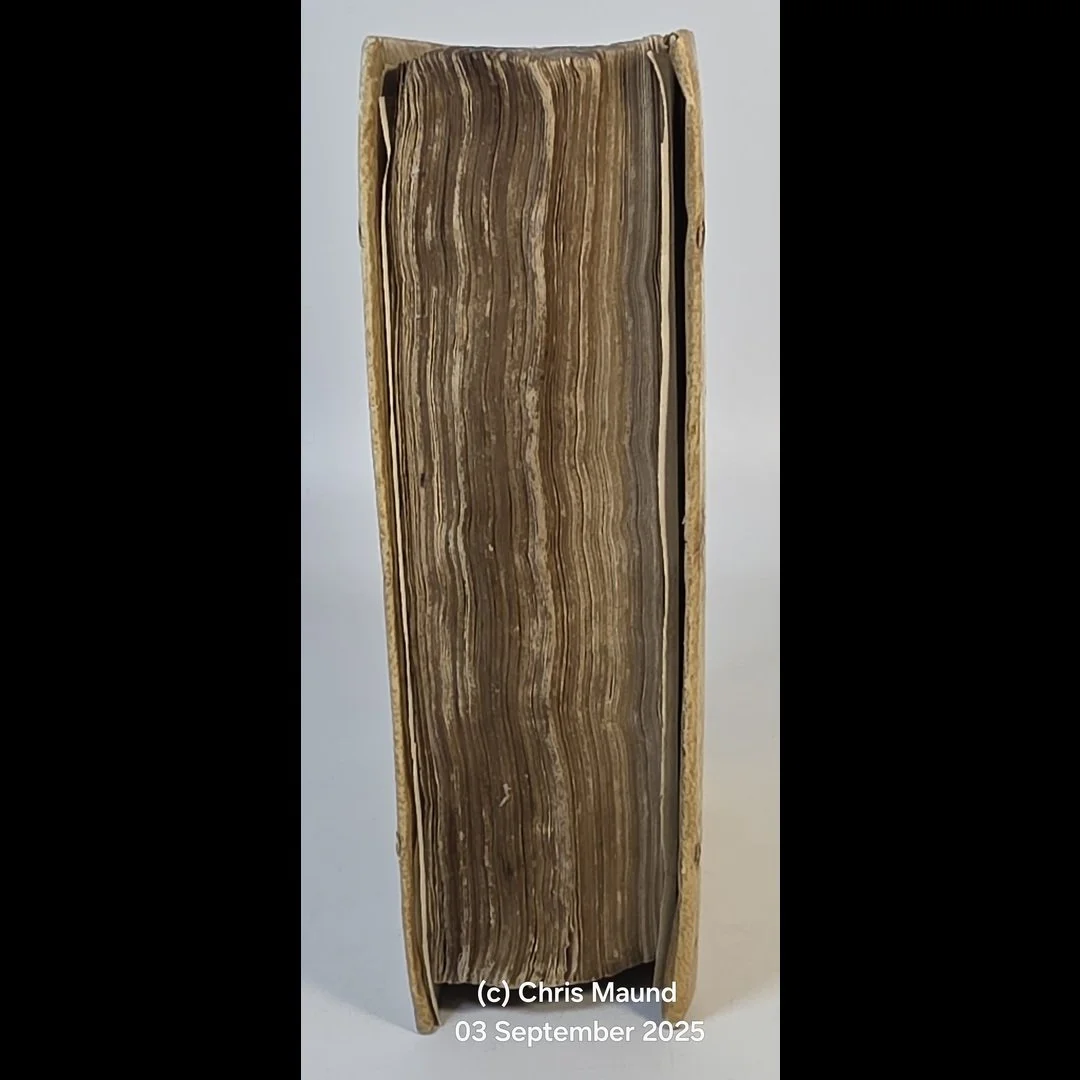
A sound and characterful copy in restored contemporary vellum. Binding with general age-soiling, marking, rubbing and wear, with evident historical restoration or reworking at the spine; endpapers renewed. The vellum retains considerable period appearance and gives the volume strong shelf presence.
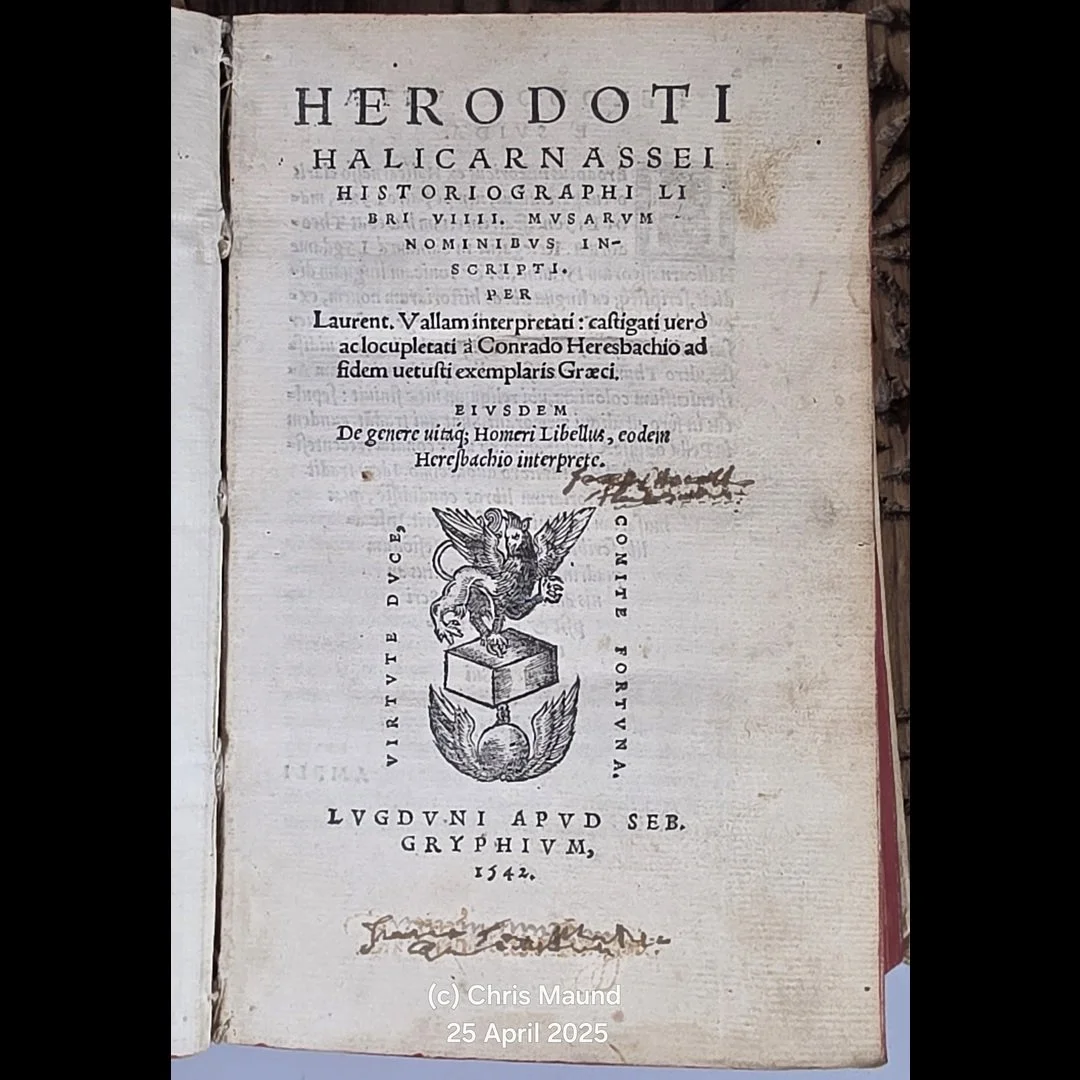
Title page present, printed in red and black within the large historiated woodcut border. The title leaf shows staining, handling wear and repaired marginal losses, including a repair affecting a portion of the left-hand woodcut border. An early ownership inscription at the foot of the title has been deliberately cancelled in ink, with further faint unidentified manuscript initials or marks beneath. First leaves more noticeably stained and with areas of marginal loss.
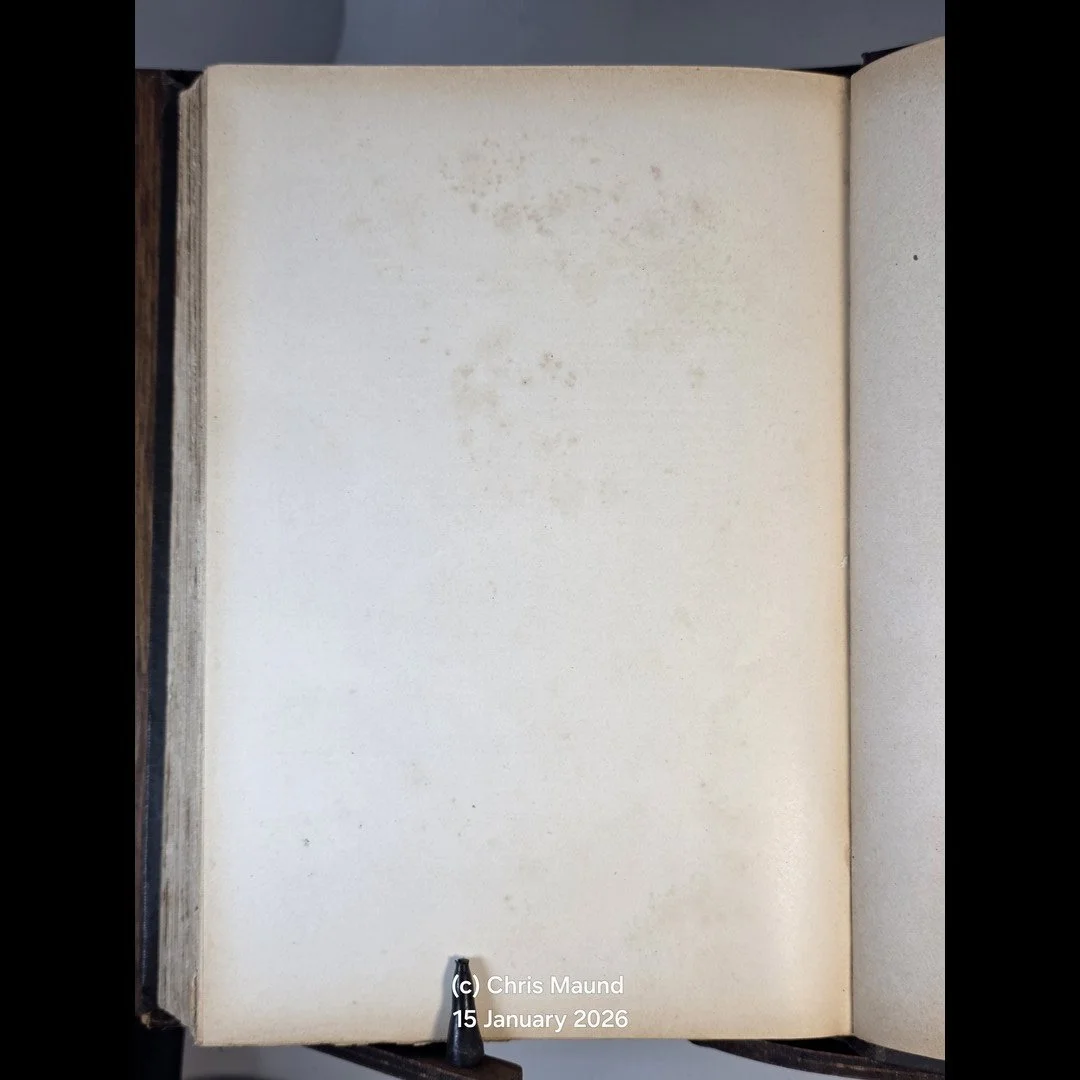
Text generally browned and lightly to moderately stained, with intermittent waterstaining. Some worming occurs along the inner gutter, occasionally touching or causing slight loss to individual letters; the text nevertheless remains overwhelmingly legible. Printed impression generally strong, with attractive Gothic type and crisp decorative and figural woodcut initials.
Of particular historical interest are numerous early-modern manuscript annotations and topical reading cues, principally in Latin with several vernacular Spanish/Castilian glosses, apparently in one or more late-sixteenth- or early-seventeenth-century hands. These include sermon and devotional headings relating to the Conversion of St Paul, St Augustine, the Incarnation, the Virgin Mary, Eucharist, religious life, clergy and other moral subjects.
A manuscript index to the Biblical books and corresponding folio numbers provides a further contemporary or early working navigation system. Together, these annotations offer unusually direct evidence of the volume's practical use as a working preaching, theological and scriptural reference book.
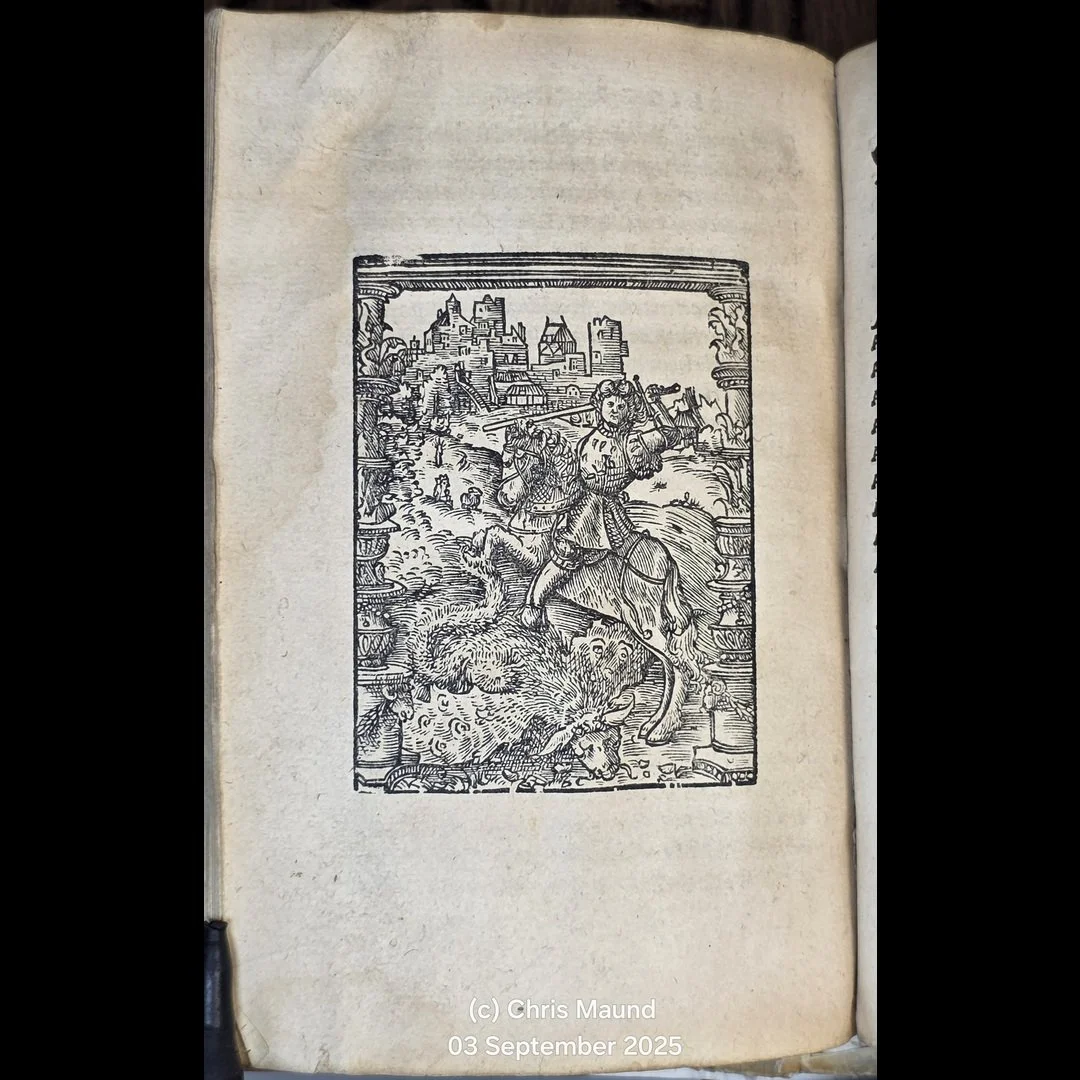
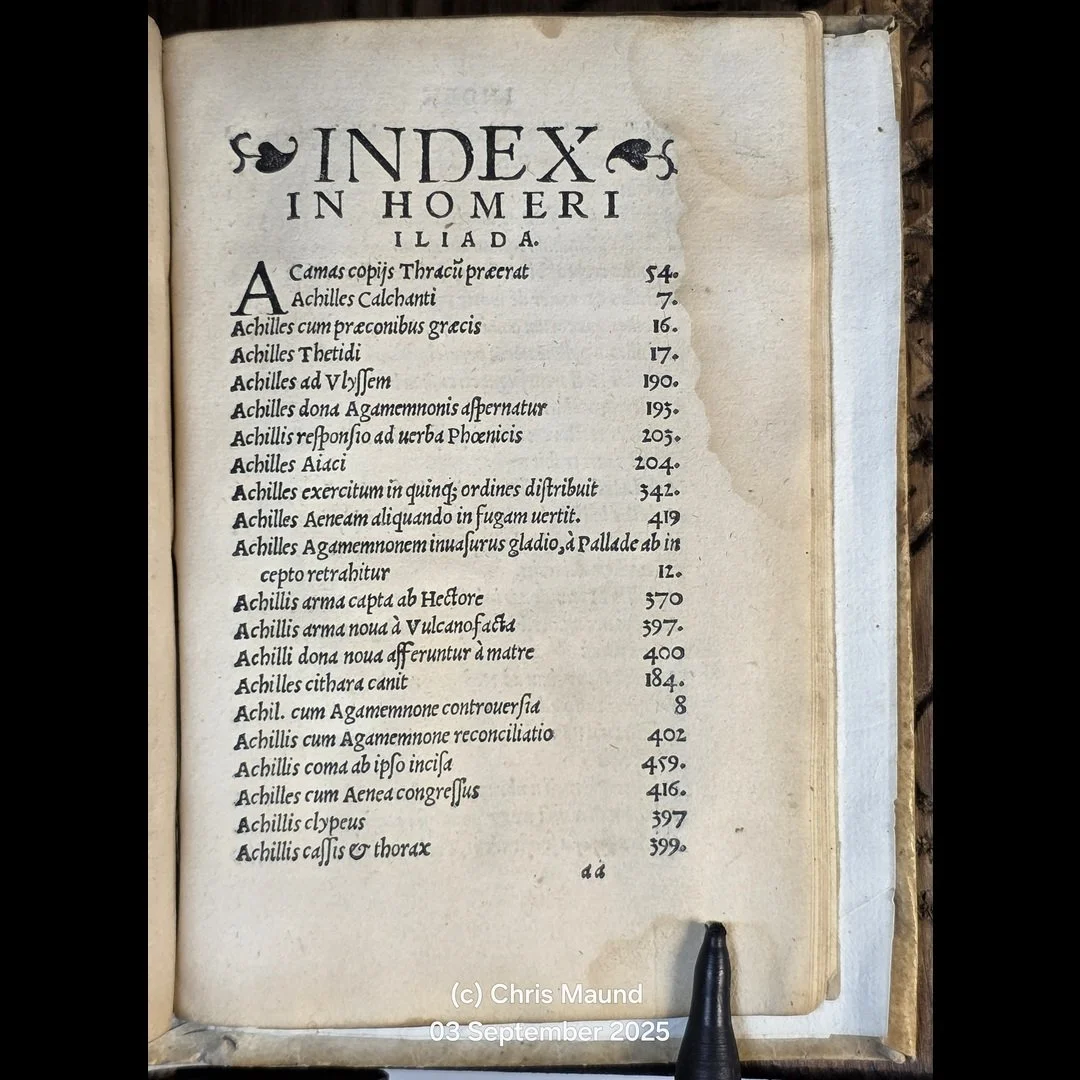
Please see Photos as part of condition report.
REFERENCES
Baudrier, Bibliographie lyonnaise, X, p. 206.
USTC 157257 / 200272.
ARLIMA EA2684.
Biblioteca della Pontificia Università Lateranense, record 30723.
WorldCat/OCLC records for the 1538 Lyon edition.
Jeschke Jádi Auctions, Berlin, Rare Books, Prints, Historical Photography, 20 January 2024, lot 5 — this copy.
ARLIMA identifies the edition as Lyon, Macé Bonhomme and Antoine Vincent, 1538. A separately catalogued copy gives the physical make-up as [10] + 170 folios, signatures a¹⁰ A–U⁸ X¹⁰, with two-column Gothic text, historiated title border and ornamental initials.
SYNOPSIS
The Morale Reductorium in omneis utriusque testamenti libros is not a conventional Biblical commentary. Bersuire's purpose is to transform Scripture into a structured repertory of moral, allegorical and spiritual meanings that could be consulted by preachers, theologians and students.
Proceeding from Genesis through the books of the Old Testament and into the Gospels, Acts and Apocalypse, Bersuire first evokes or summarises the Biblical material and then interprets its persons, actions, objects and images according to the multiple senses of Scripture characteristic of medieval exegesis.
A Biblical object or episode might therefore operate simultaneously as historical narrative, a figure of Christian doctrine, a lesson concerning human conduct and, at times, a sign directed towards heavenly or ultimate realities. Bersuire's achievement was to organise this immense interpretative tradition into a practical reference work from which suitable authorities, images and moral lessons could readily be extracted.
The present copy offers particularly vivid evidence of this intended use. Its early reader repeatedly marked passages according to subjects and occasions — St Paul's Conversion, St Augustine, the Incarnation, the Virgin Mary, Eucharist, religious vocation, priests and prelates — effectively constructing a personal sermon-finding system within Bersuire's printed repertory.
The Biblical portion circulated separately from the rest of the Reductorium morale from an early date. Its printing history reaches back into the incunable period, with editions appearing in the 1470s; the present Lyon printing therefore stands within a transmission extending directly from the medieval manuscript world into the mature Renaissance book trade.
AUTHOR BIO
Pierre Bersuire (c. 1290–1362), variously Latinised as Petrus Berchorius, Berthorius or Bercorius, was a French Benedictine monk, theologian, encyclopaedist and translator, and one of the most learned literary figures of fourteenth-century France.
Associated with the papal court at Avignon and later with intellectual and royal circles in Paris, Bersuire devoted much of his scholarship to organising the immense body of Biblical, natural-historical and classical knowledge available to the medieval preacher and scholar.
His vast Reductorium morale sought to uncover moral significance throughout creation, history and literature. Its celebrated fifteenth book, the Ovidius moralizatus, subjected classical mythology to Christian moral interpretation, while Book XVI moralised the whole Bible and enjoyed a substantial independent manuscript and printed transmission.
Bersuire was also responsible for an important French translation of Livy. The Gesta Romanorum has historically sometimes been attributed to him, although that attribution remains uncertain.

 Image 1 of 28
 Image 2 of 28
 Image 3 of 28
 Image 4 of 28
 Image 5 of 28
 Image 6 of 28
 Image 7 of 28
 Image 8 of 28
 Image 9 of 28
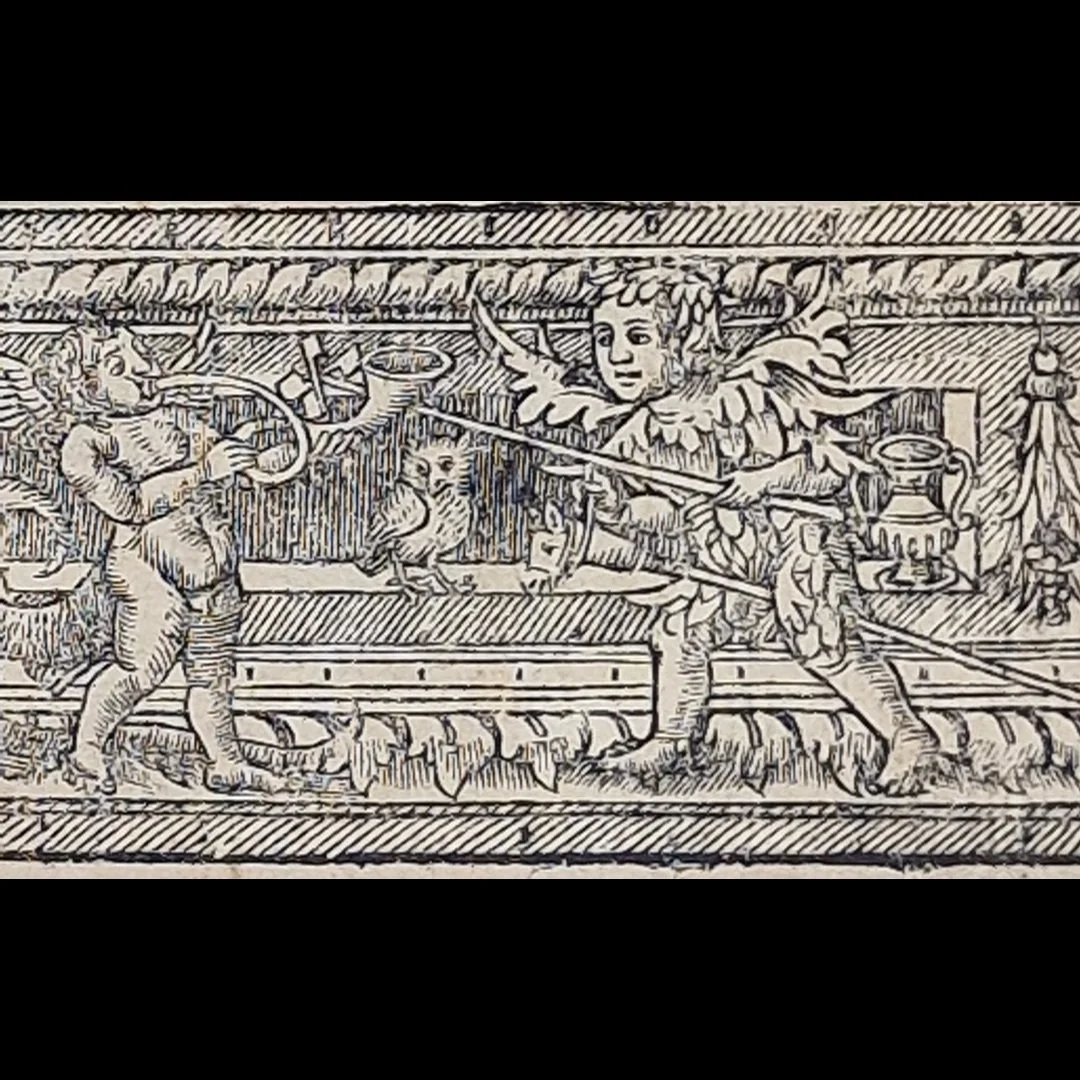 Image 10 of 28
 Image 11 of 28
 Image 12 of 28
 Image 13 of 28
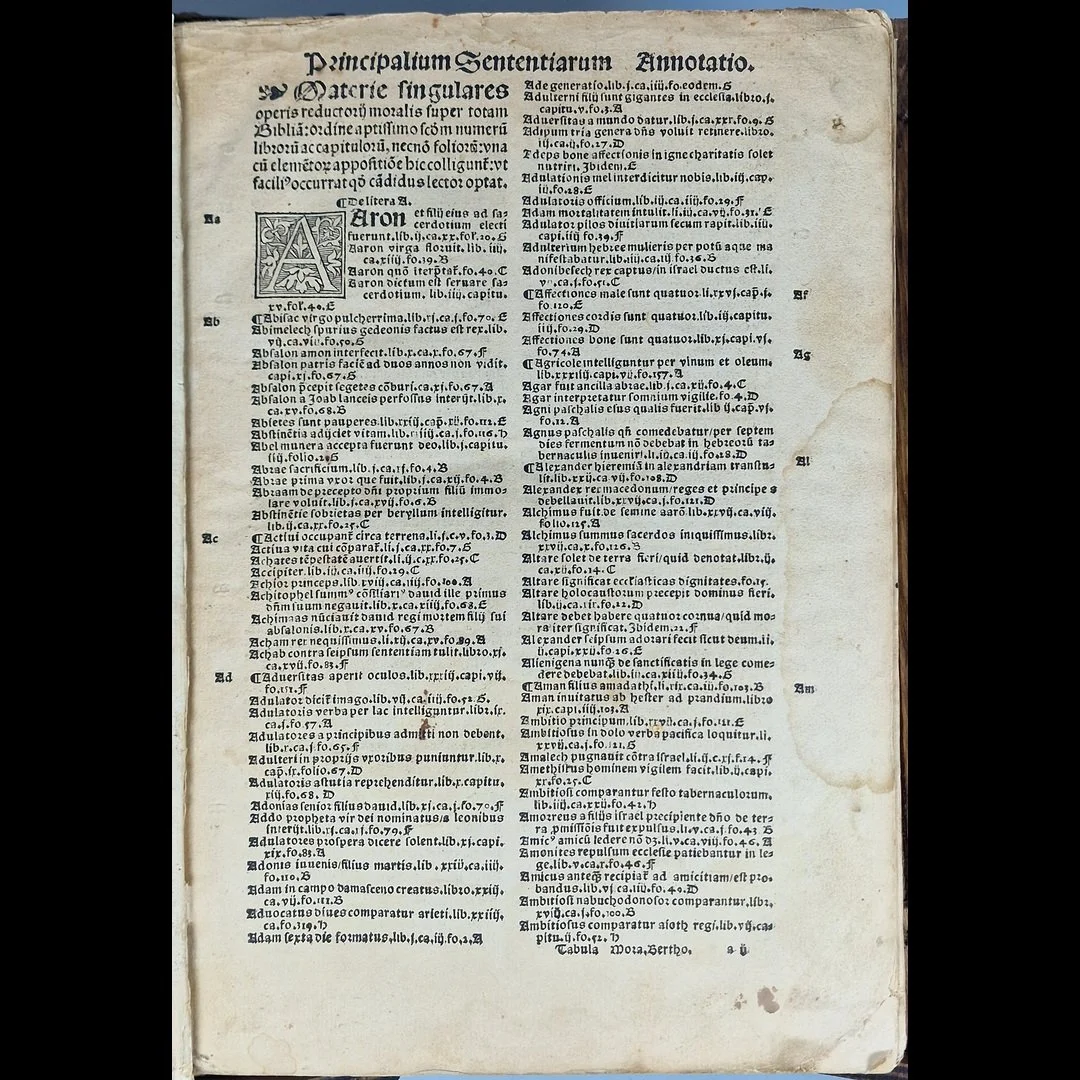 Image 14 of 28
 Image 15 of 28
 Image 16 of 28
 Image 17 of 28
 Image 18 of 28
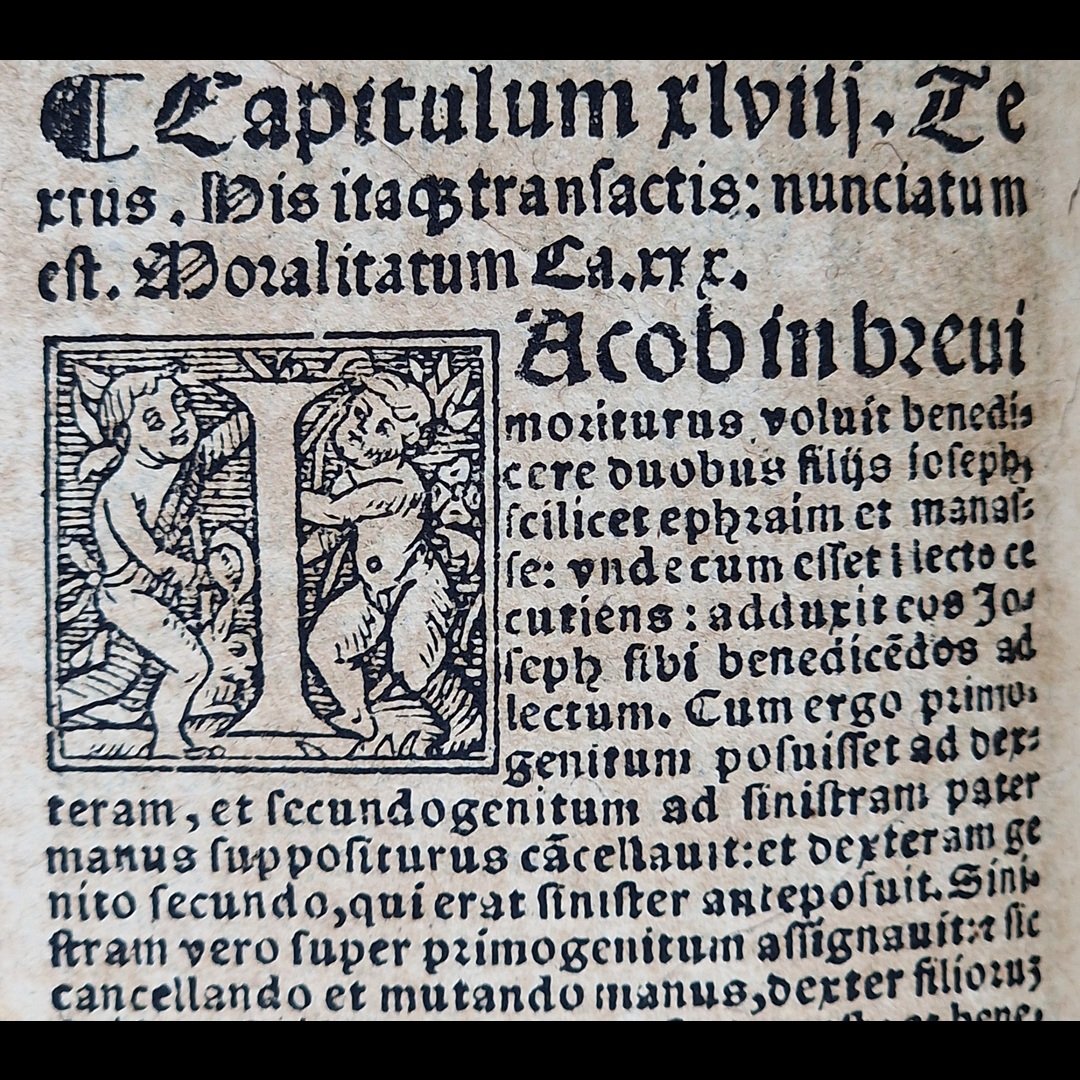 Image 19 of 28
 Image 20 of 28
 Image 21 of 28
 Image 22 of 28
 Image 23 of 28
 Image 24 of 28
 Image 25 of 28
 Image 26 of 28
 Image 27 of 28
 Image 28 of 28