1573 Lyon Edition
C. IULII CAESARIS RERUM AB SE GESTARUM COMMENTARII
By Gaius Julius Caesar
KEY DETAILS
Condition: Good
Format: Hardcover, duodecimo or twelvemo (12mo 5 × 7 3⁄8 in 127 × 187 mm )
Note: Binding/size selection follows standard bibliographic conventions and is approximate; exact measurements may vary.
Published By: Jean Marcorelle for Antoine de Harsy, Lyon, 1573
Language: Latin
Provenance: Contemporary binding initialled “IMD” and dated 1579, almost certainly representing an early owner’s supralibros; the identity of IMD is currently under research.
Collation: 65 unnumbered pages, 507 numbered pages, 2 blank leaves and 55 unnumbered leaves
Dust Jacket: None, as issued, No Jacket
SKU: BTETM0002406
Shipping Info: Approximate Package Dimensions H: 12.5, L: 30, W: 25 (Units: cm), W: 2Kg
Tracked Shipping, Insurance Coverage as per Customer Request
DESCRIPTION
C. IULII CAESARIS RERUM AB SE GESTARUM COMMENTARII
Quos ad veterum tam manuscriptorum quam impressorum exemplarium fidem accuratissime contulimus. Reliqua sequens docebit pagella.
[The Commentaries of Gaius Julius Caesar on his own achievements. Most carefully collated according to the authority of old exemplars, both manuscript and printed. The following page sets out the remaining contents.]
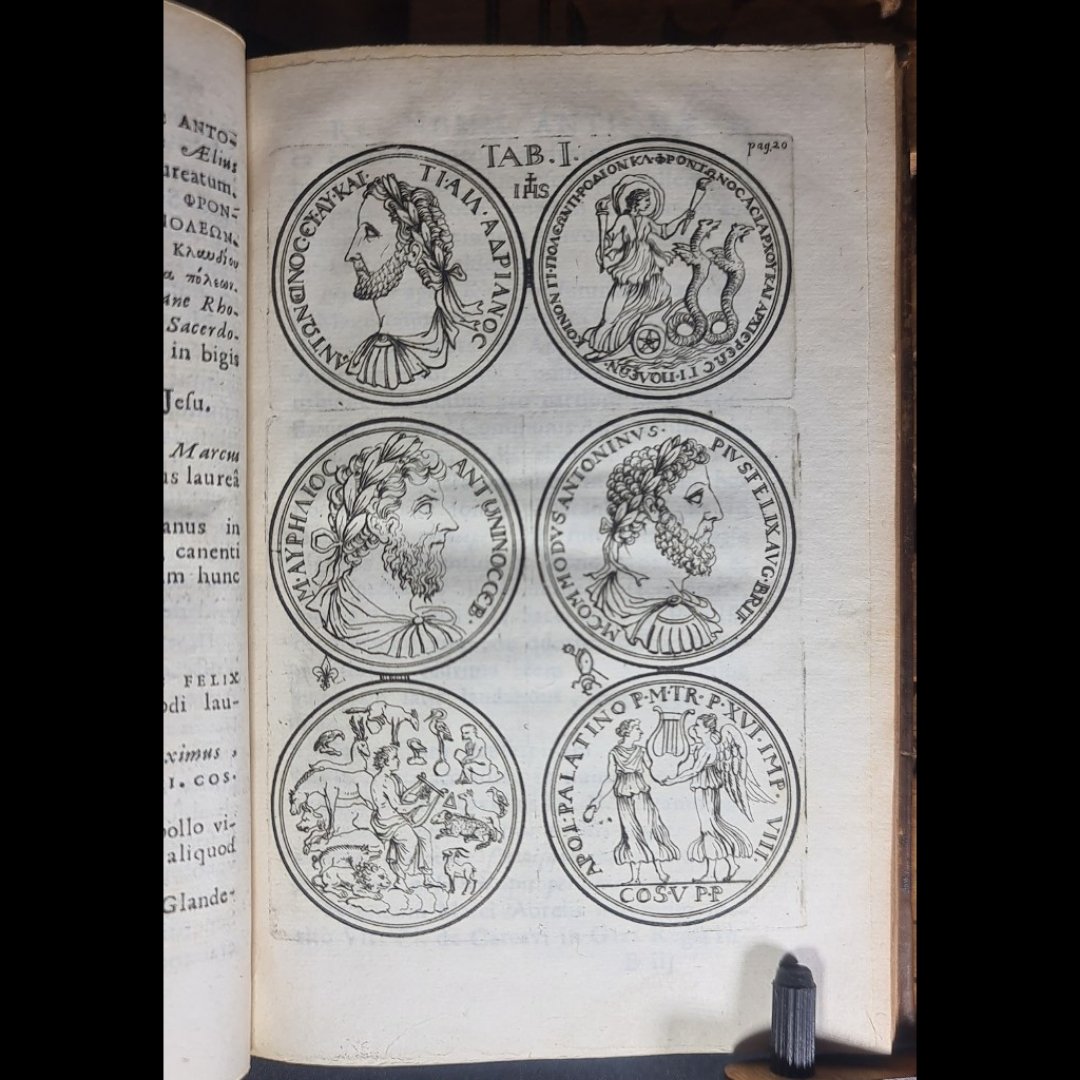
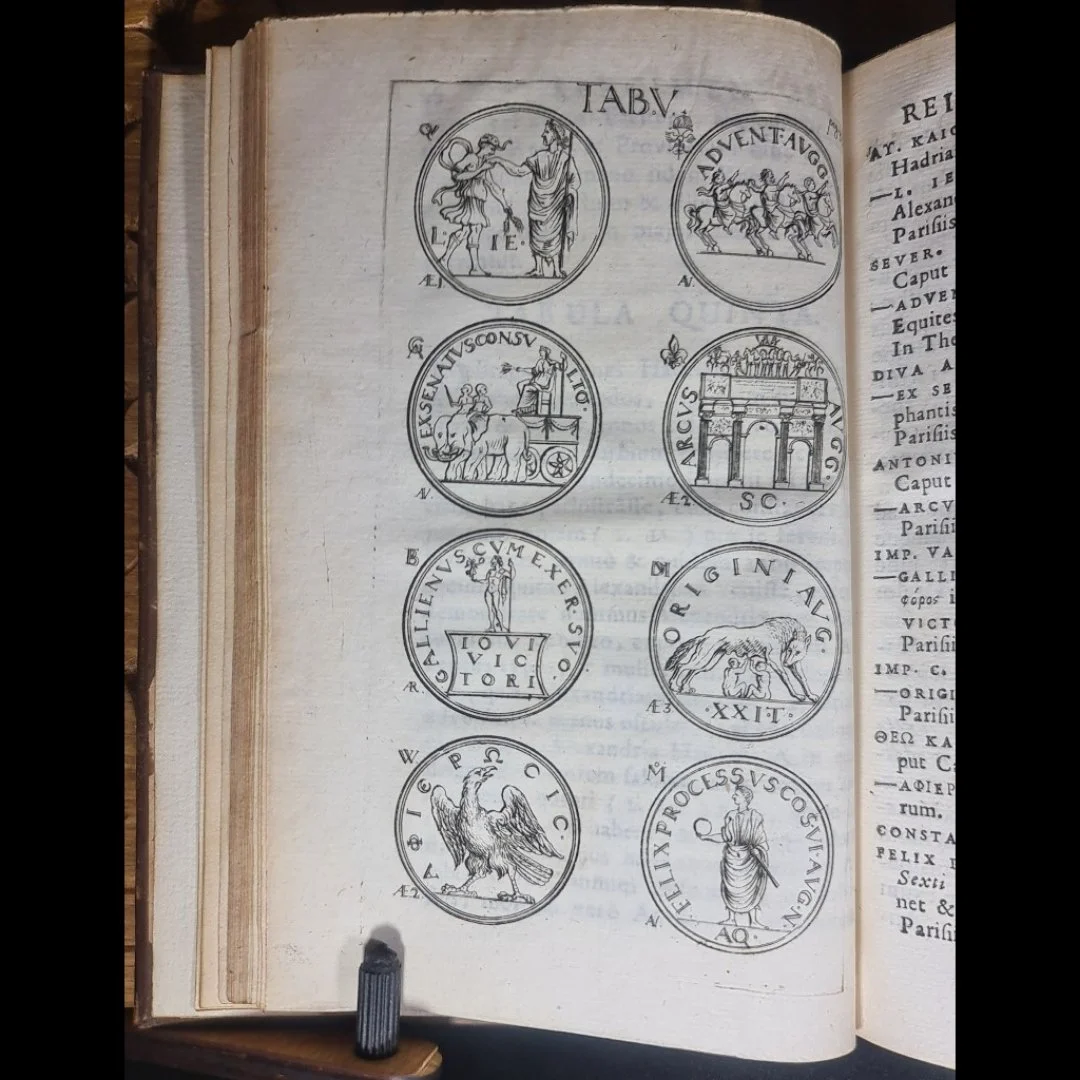
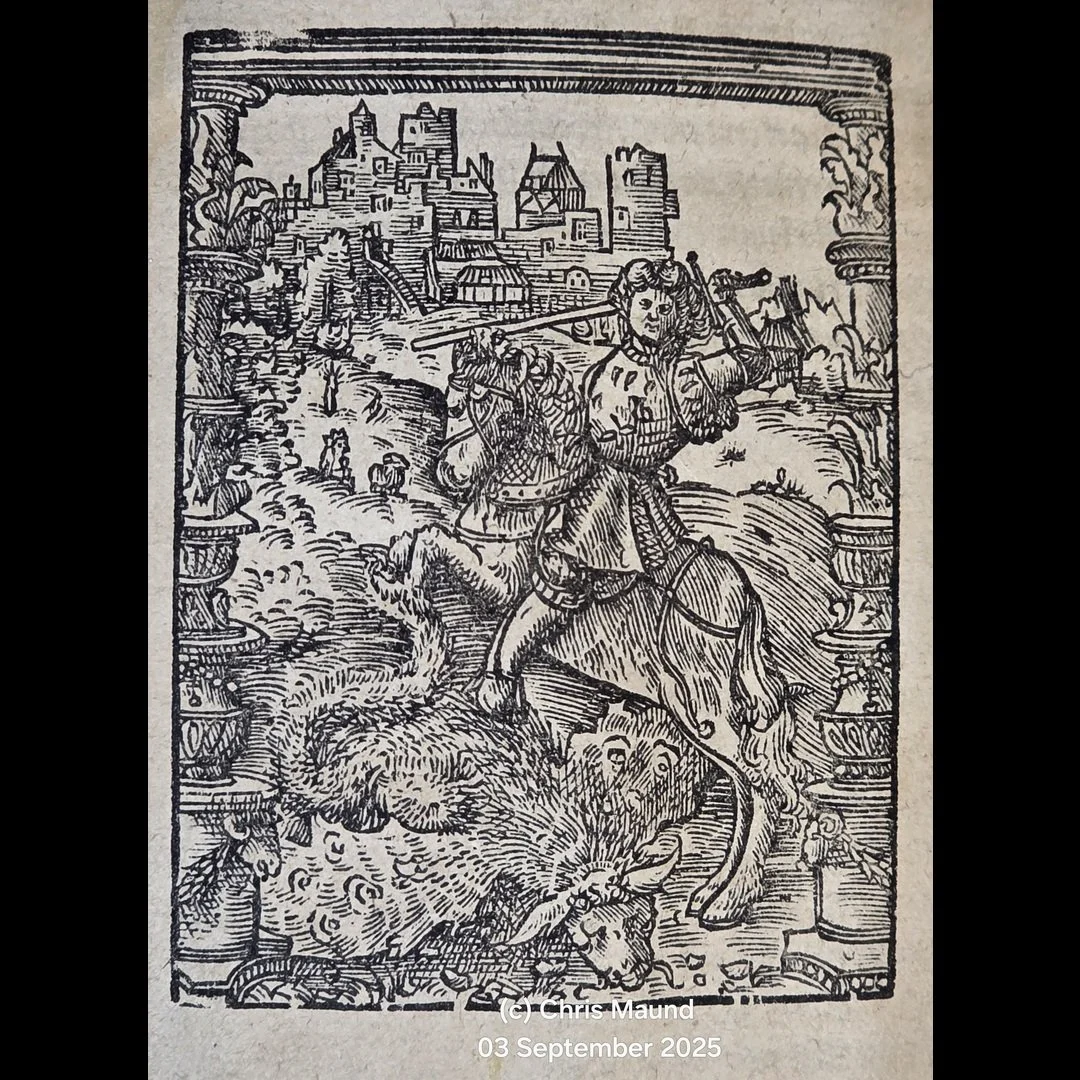
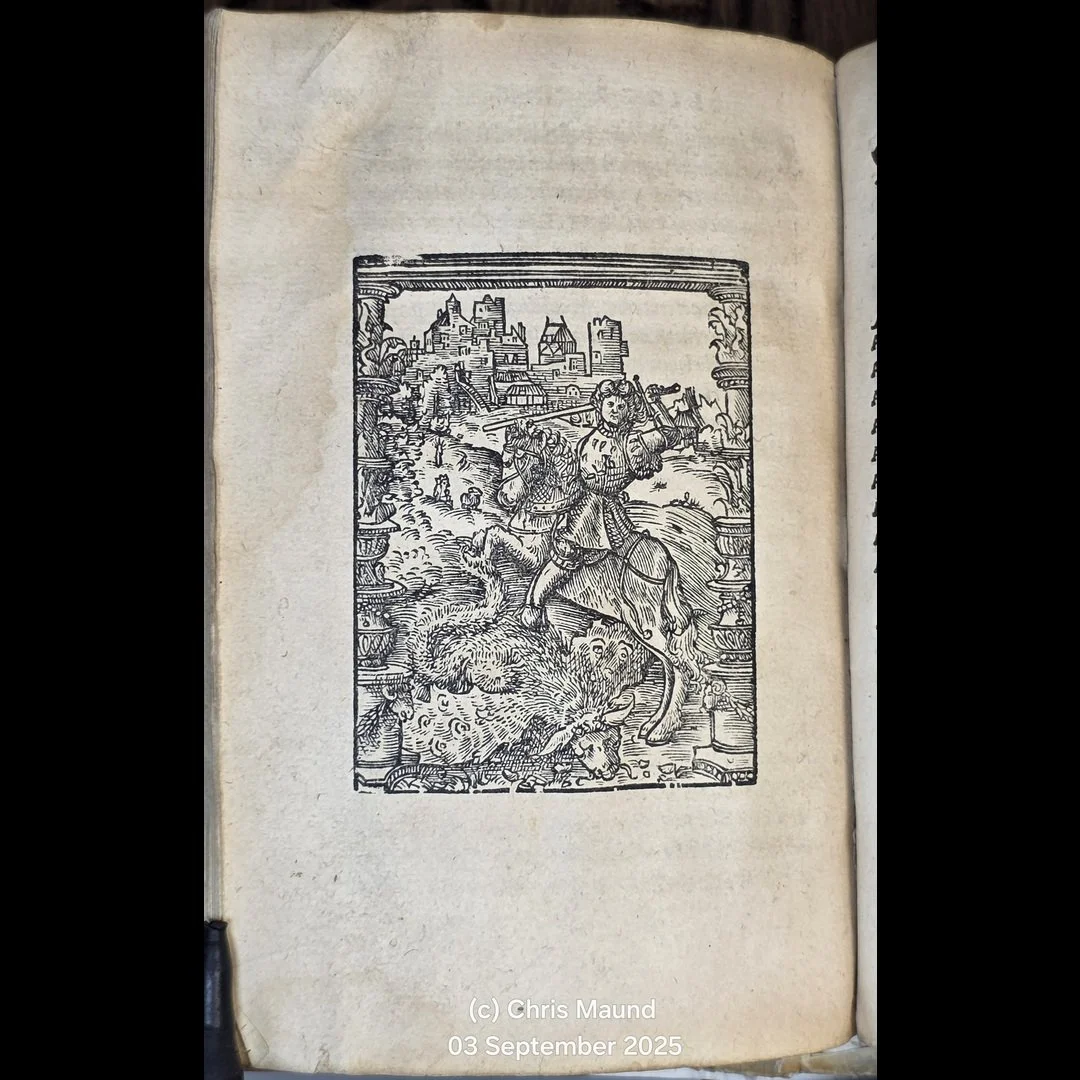
A highly evocative Renaissance edition of Julius Caesar’s Commentaries, printed at Lyon in 1573 by Jean Marcorelle for Antoine de Harsy, retaining its two folding woodcut maps and five full-page woodcut illustrations and preserved in a richly blind-tooled contemporary pigskin binding dated 1579.
The volume brings together Caesar’s De Bello Gallico and De Bello Civili, together with the traditional continuations of the Alexandrian, African and Spanish wars and related geographical and antiquarian material. The military and topographical woodcuts give unusual visual immediacy to Caesar’s campaigns, including maps of Gaul and Hispania and representations of Roman engineering and siege works.
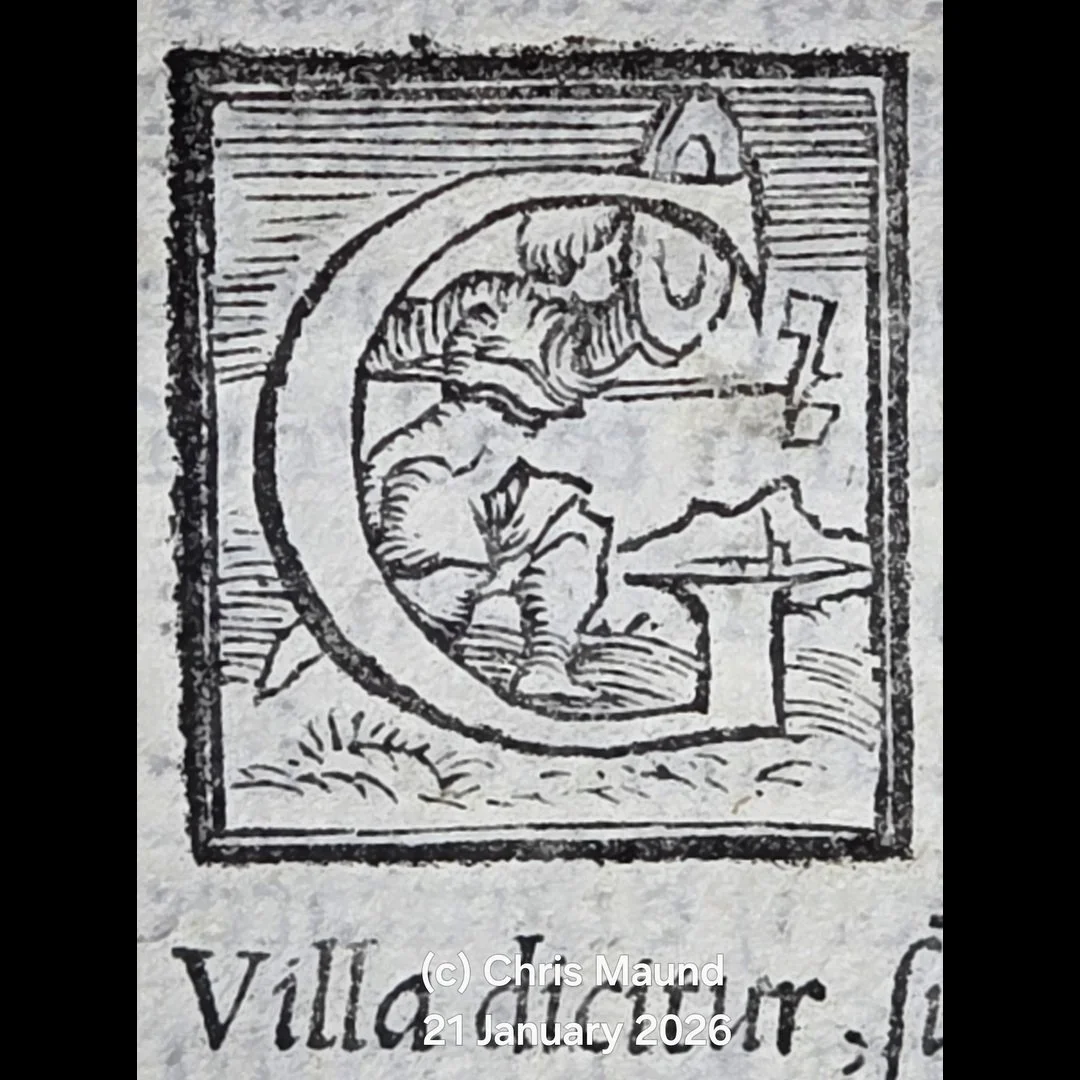
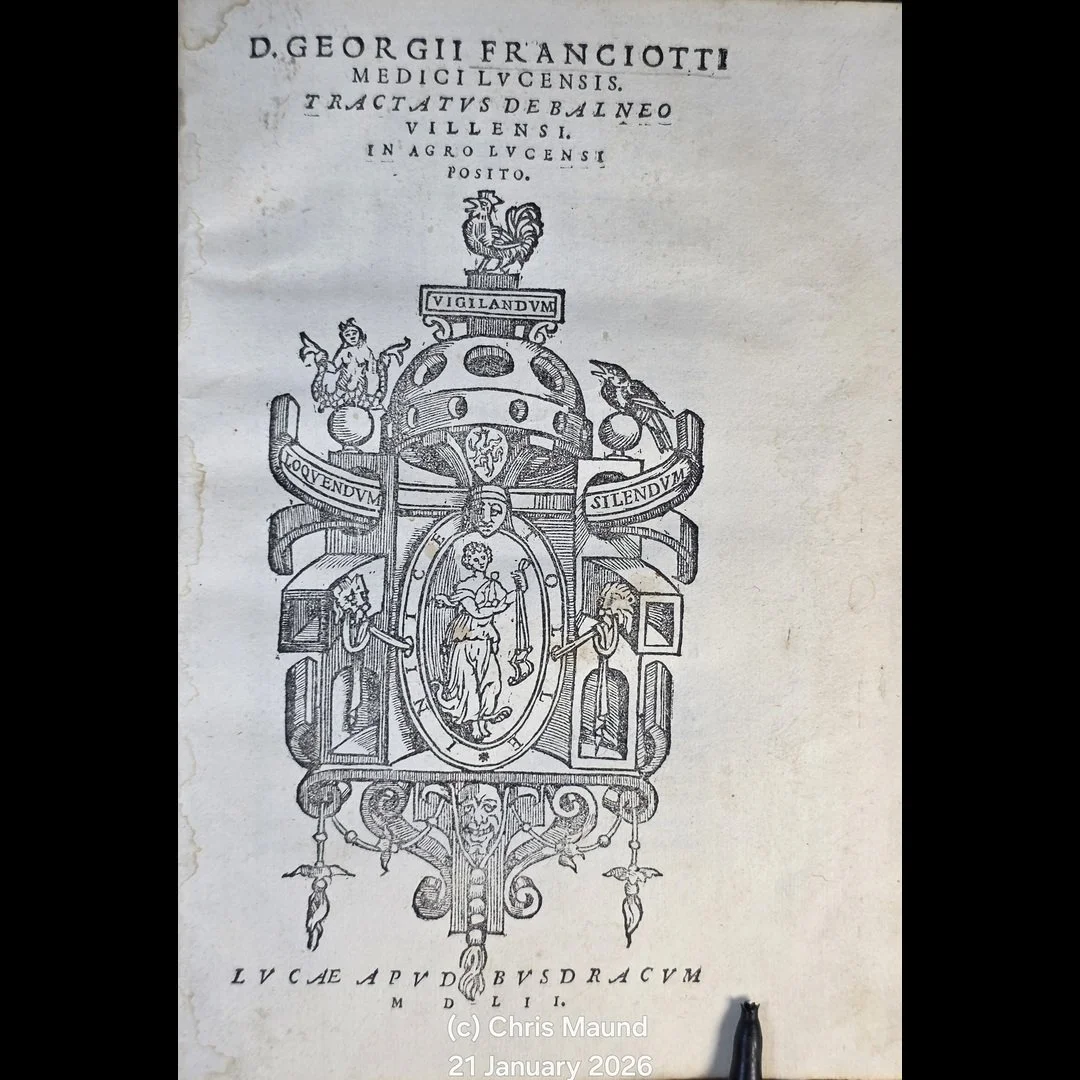
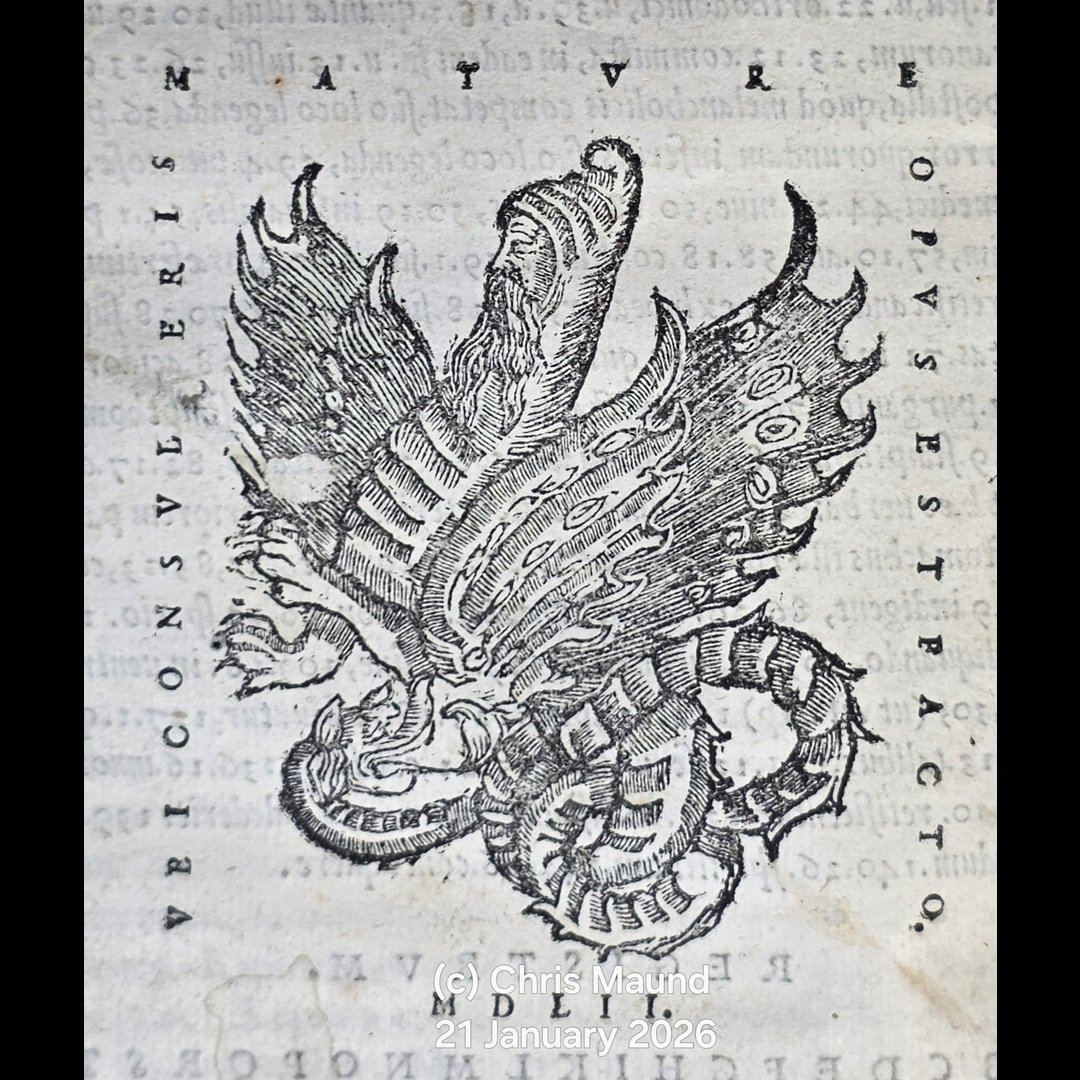
An uncommon Lyon issue with interesting bibliographical variation. The Bibliothèque nationale de France records the de Harsy edition under 1572–1573, its copy bearing 1572 on the title and 1573 at the end; the present copy is dated 1573 on both the title page and final leaf. The title bears the distinctive woodcut device associated with Jean II and François Frellon, recorded by Baudrier.
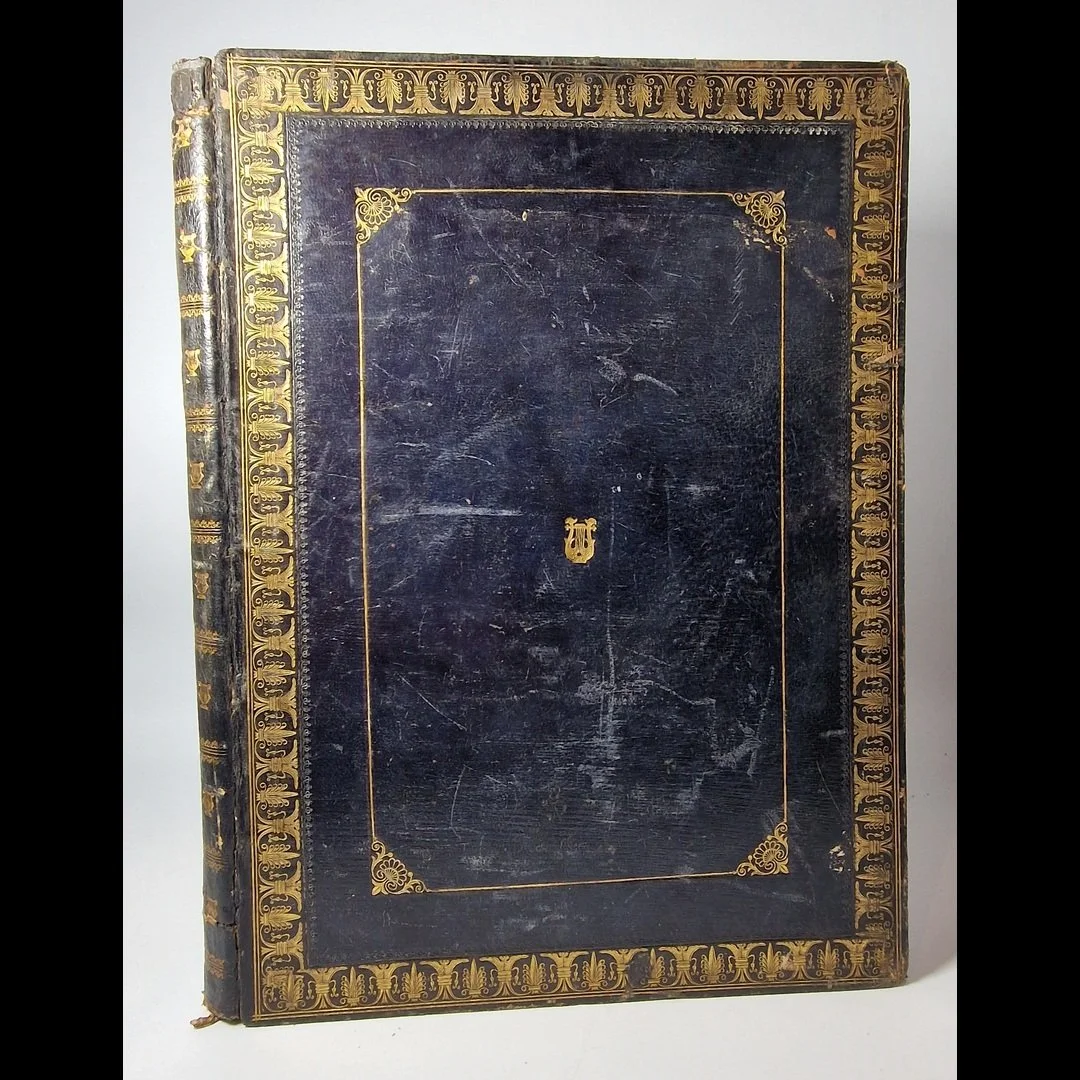
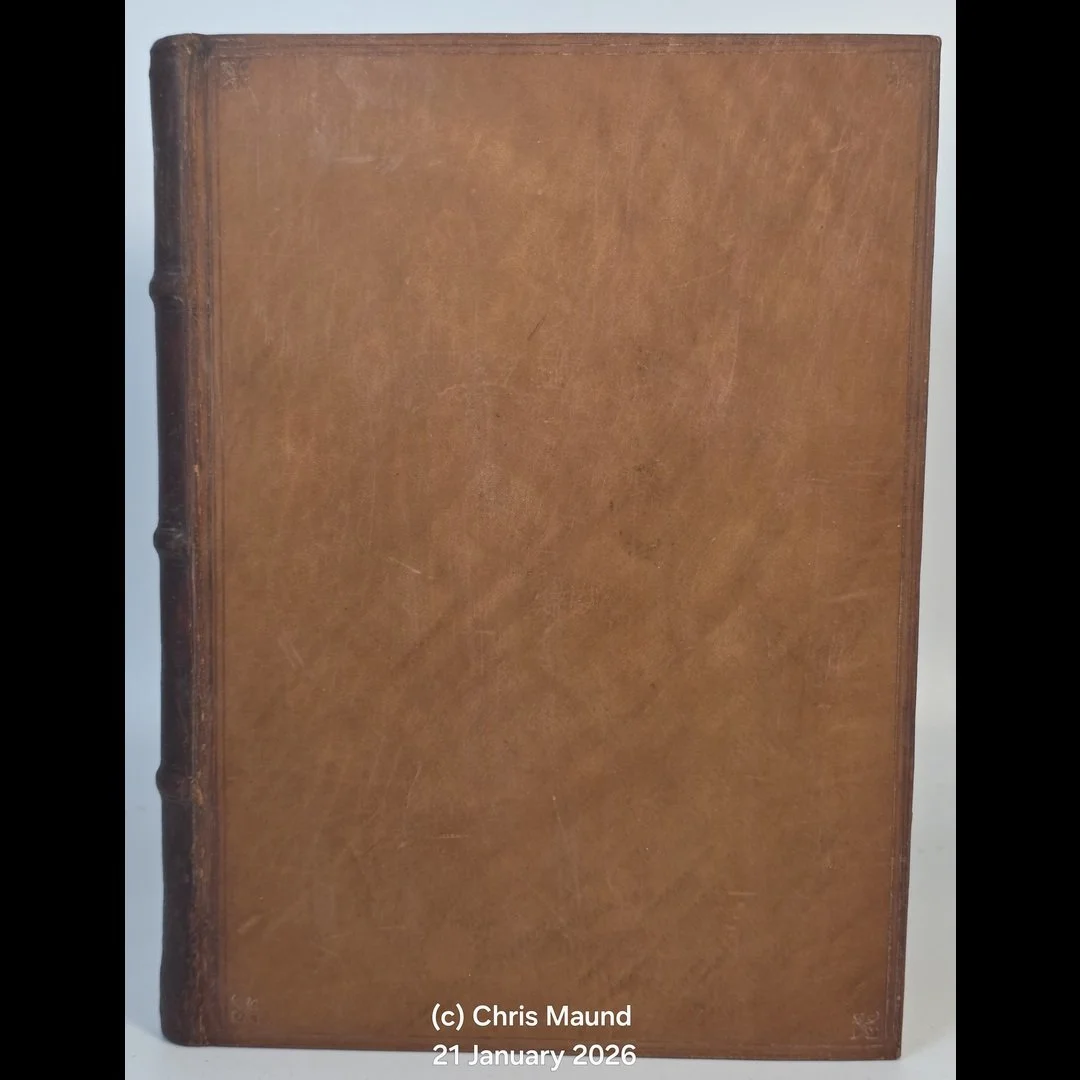
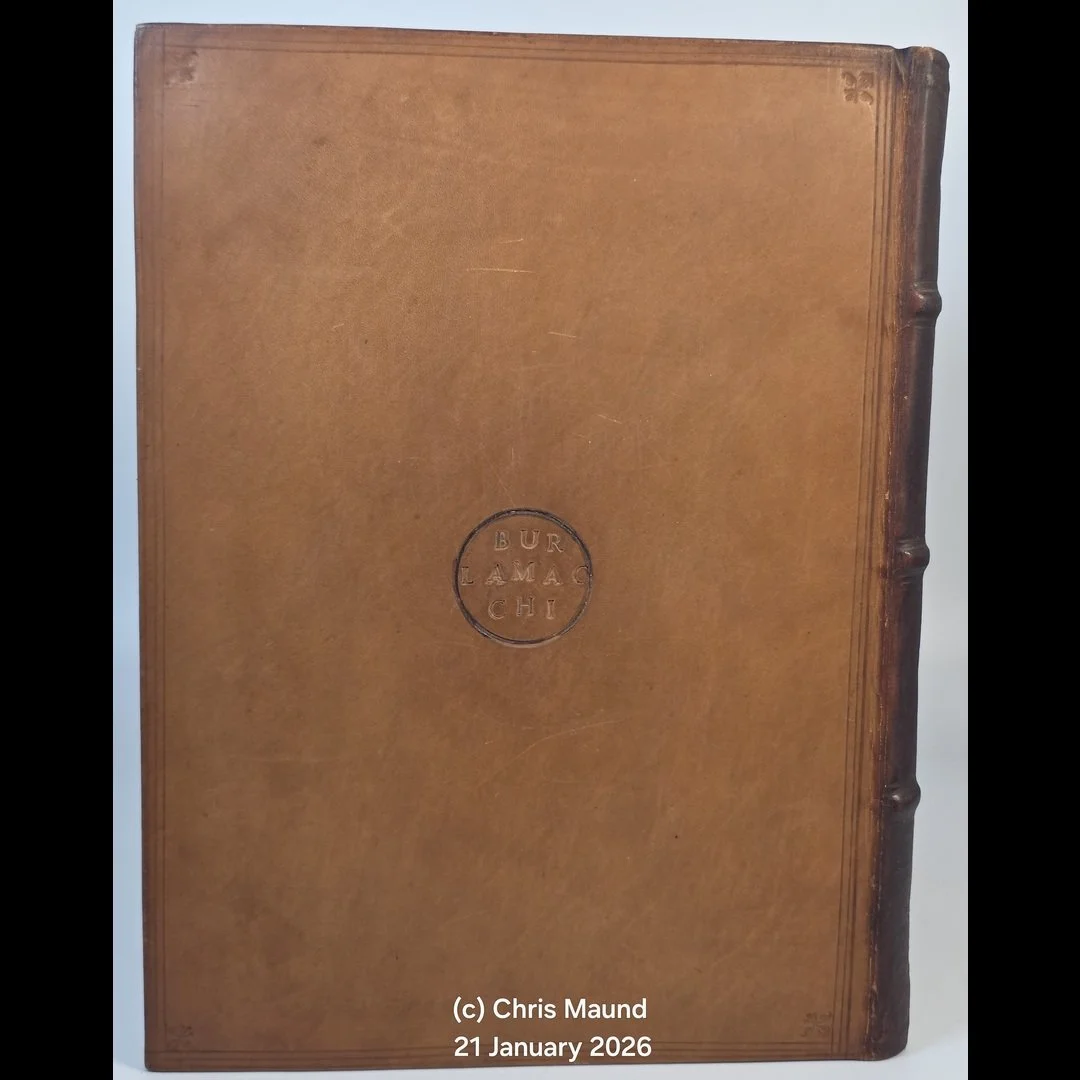
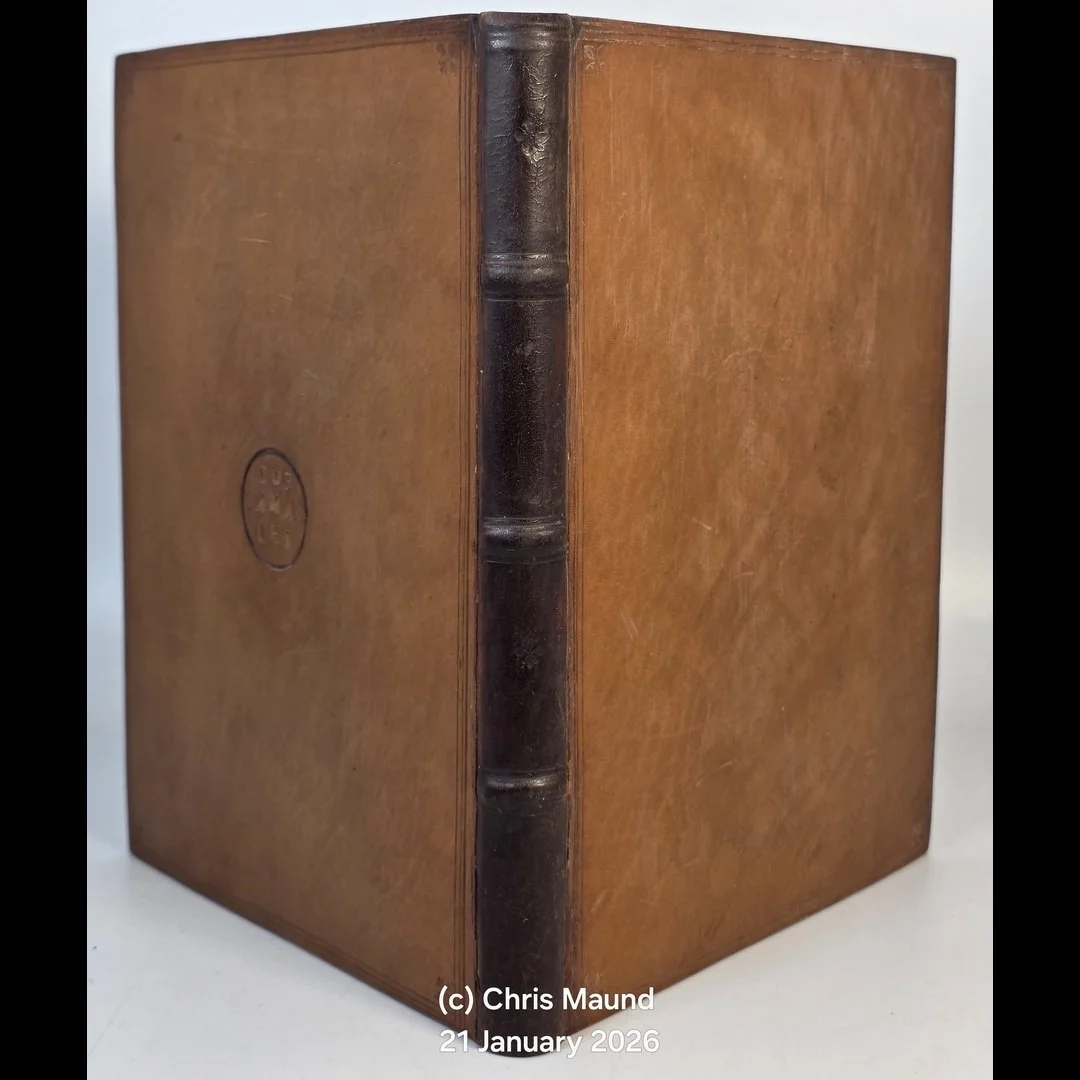
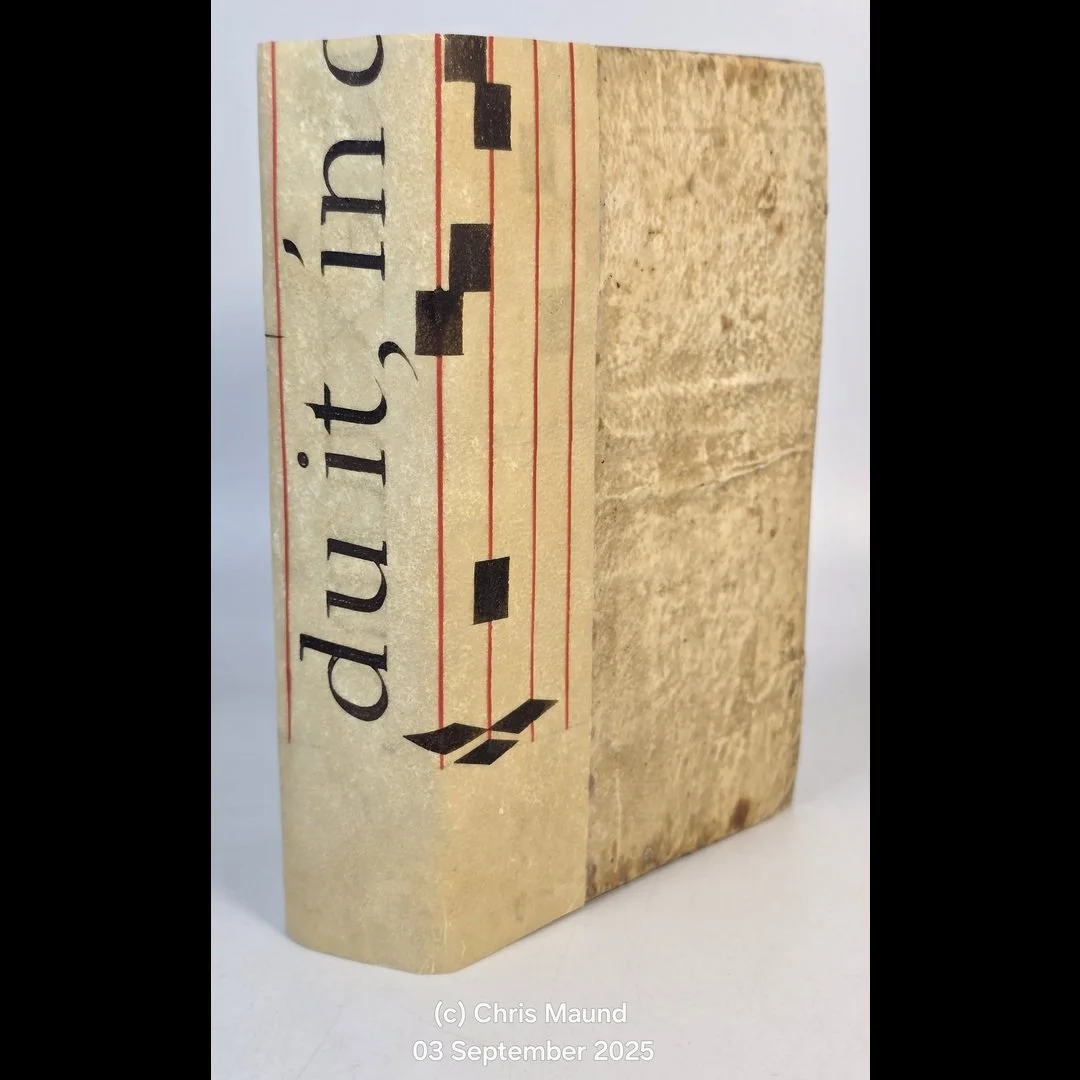
Of particular interest is the substantial contemporary German pigskin binding, richly decorated in blind with ornamental rolls and large figural centre panels, initialled “IMD” and dated 1579. The centrepieces appear to correspond closely to documented Justitia and Lucretia plates used in the Jena workshop of Valentin Geyer; this attribution remains provisional pending direct comparison.
PROVENANCE
Contemporary binding initialled “IMD” and dated 1579, almost certainly representing an early owner’s supralibros; the identity of IMD is currently under research.
Title page with oval stamp apparently reading “C. A. TOBIAS / DR. PHILOS.”, provisionally identified as Karl Anton Tobias (1828–1872), Saxon historian, collector and librarian at Zittau. Tobias studied philosophy and mathematics at Leipzig, received his doctorate in 1853, became librarian of the historic Zittau city and grammar-school library in 1857, and assembled a substantial private collection of books and antiquities. Identification currently being investigated with the Christian-Weise-Bibliothek, Zittau.
Jeschke Jádi Auctions, Berlin, 20 January 2024, lot 11.
CONDITION, COLLATION & COPY NOTES
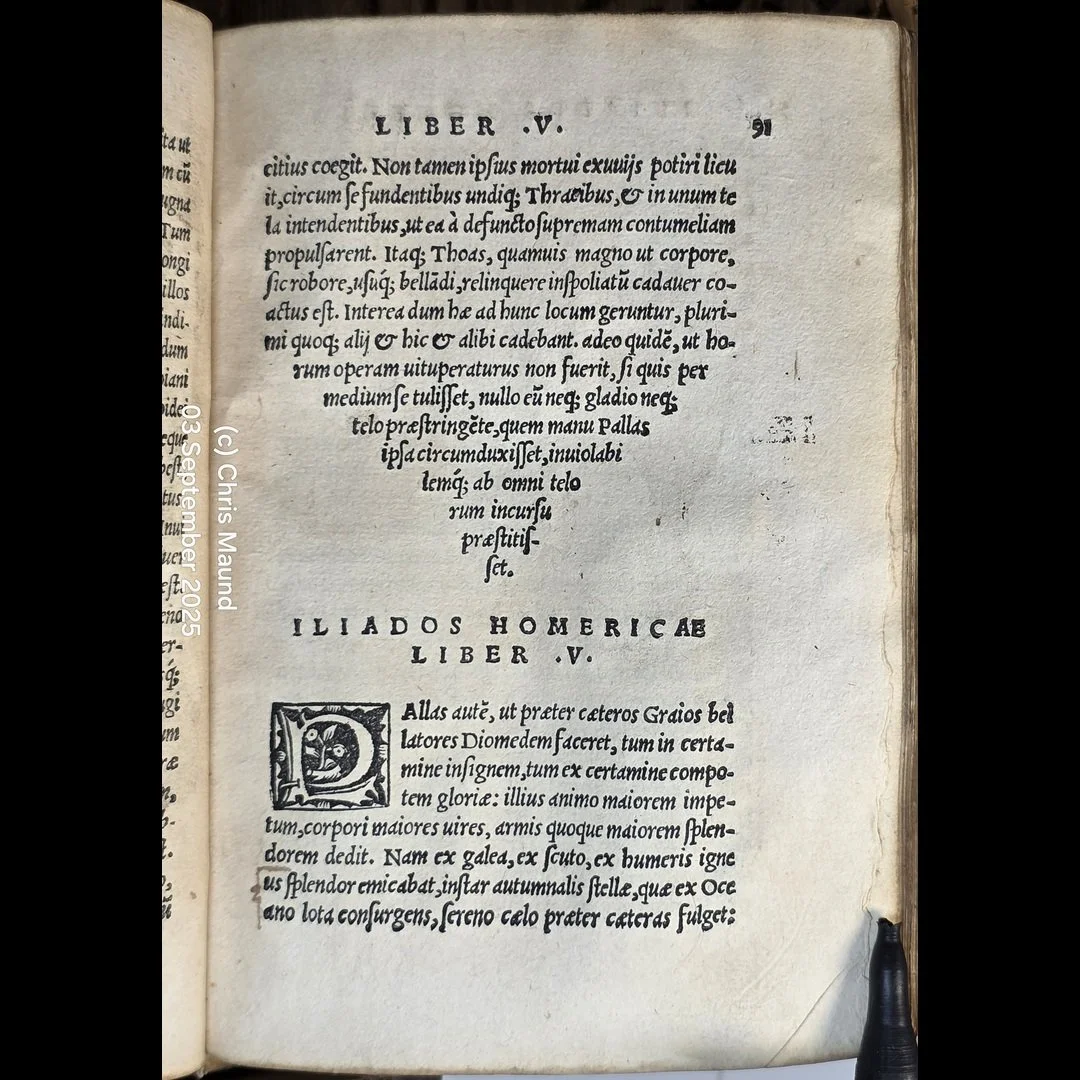
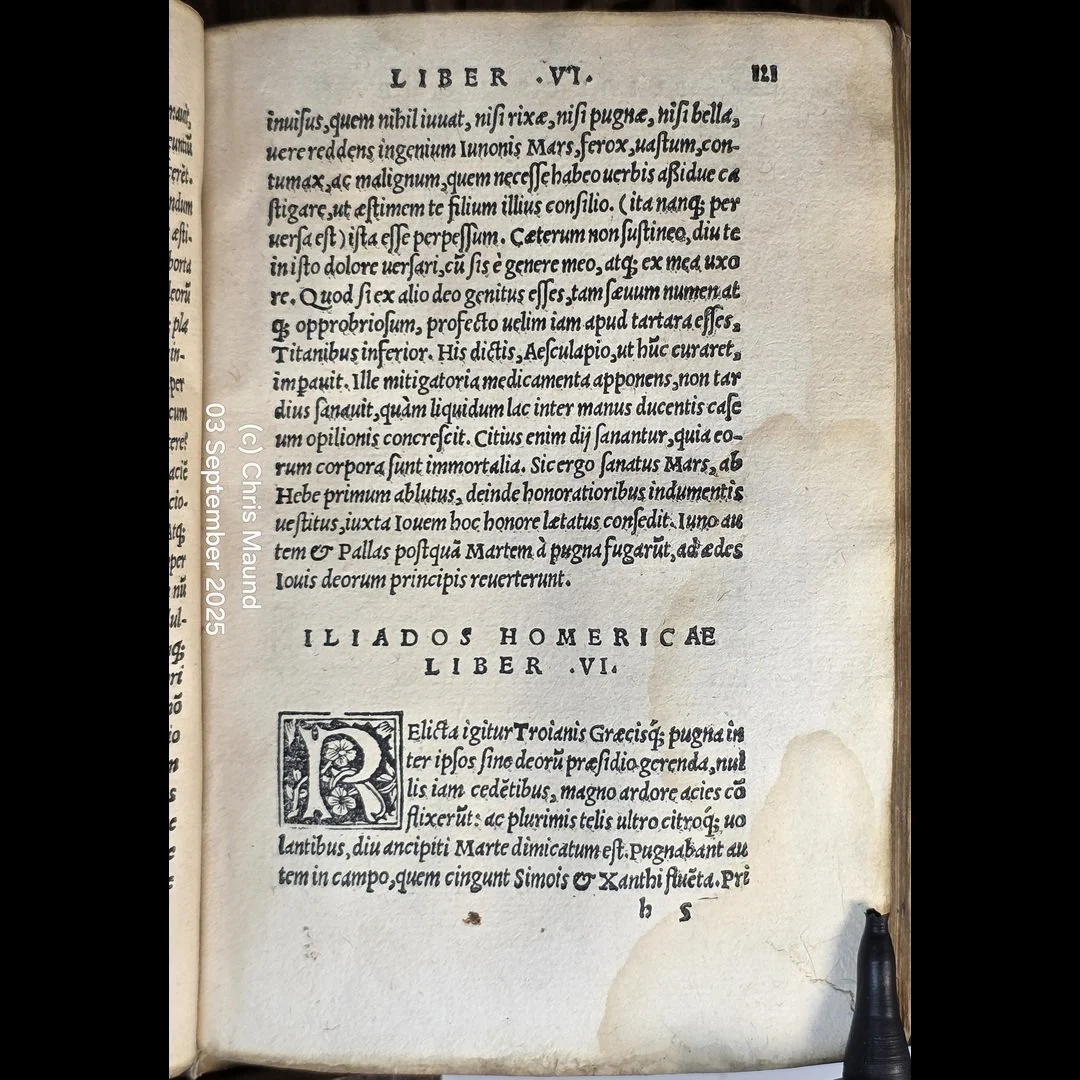
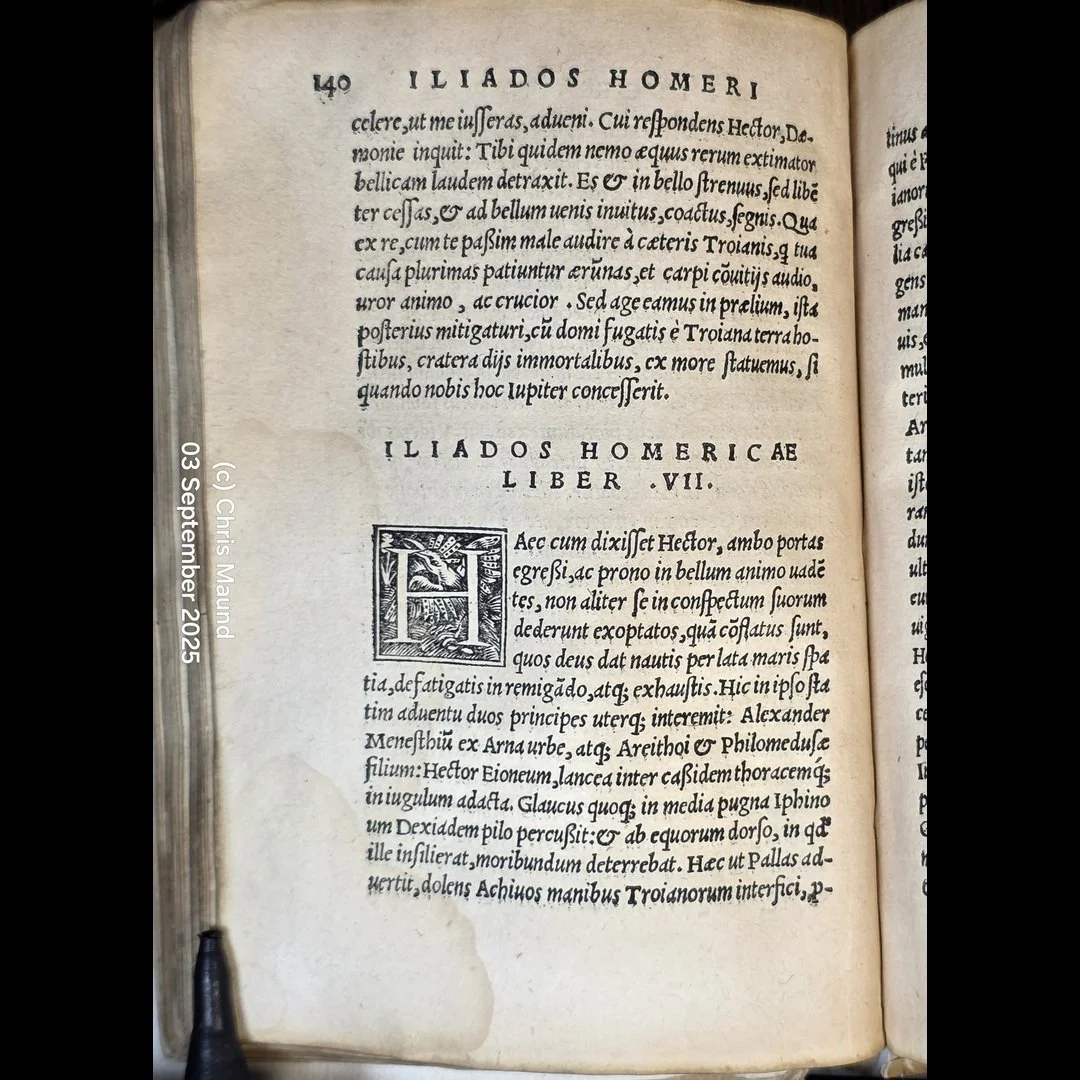
An attractive and historically compelling Renaissance Caesar, retaining both folding woodcut maps and all five full-page woodcut illustrations, in its dated contemporary pigskin binding.
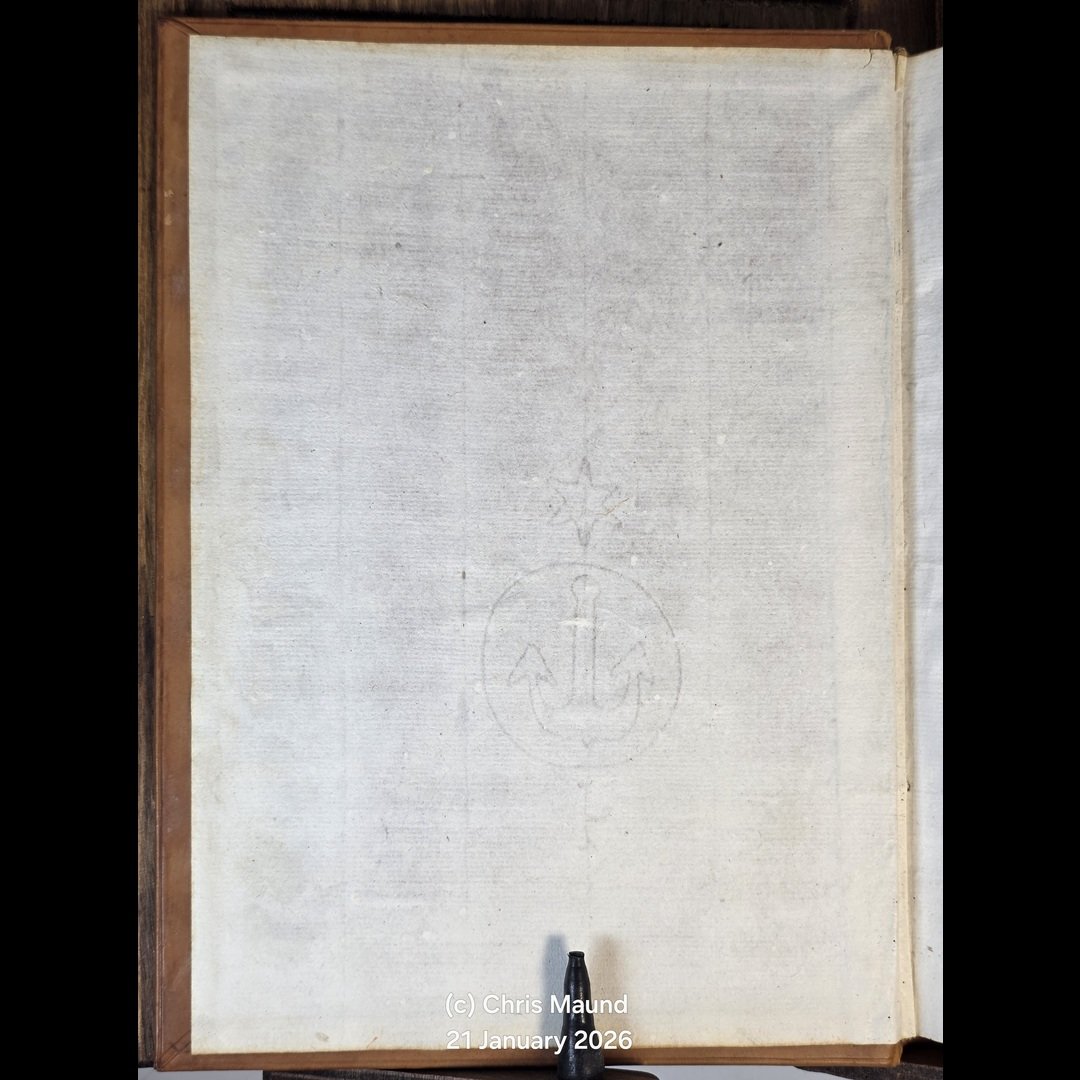
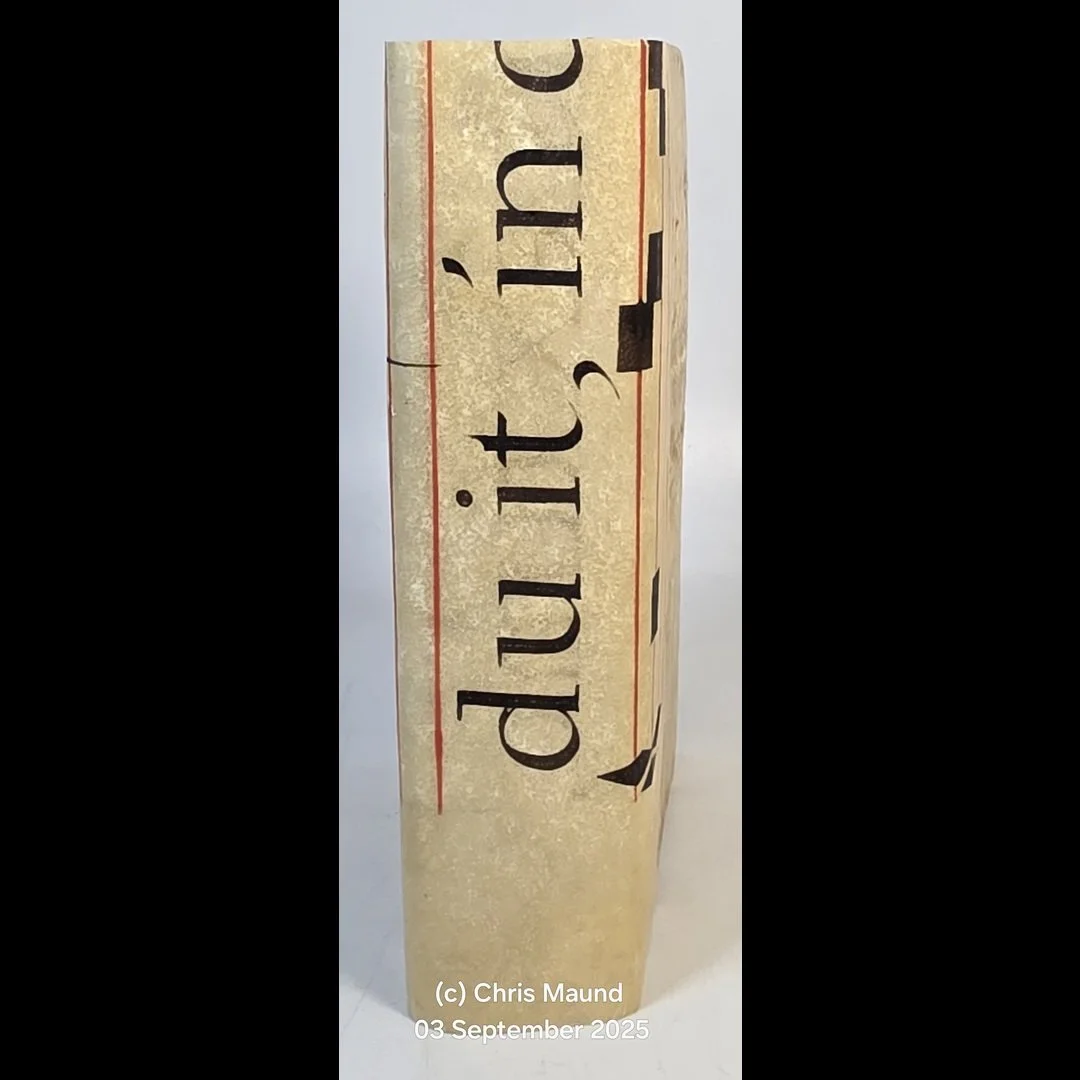
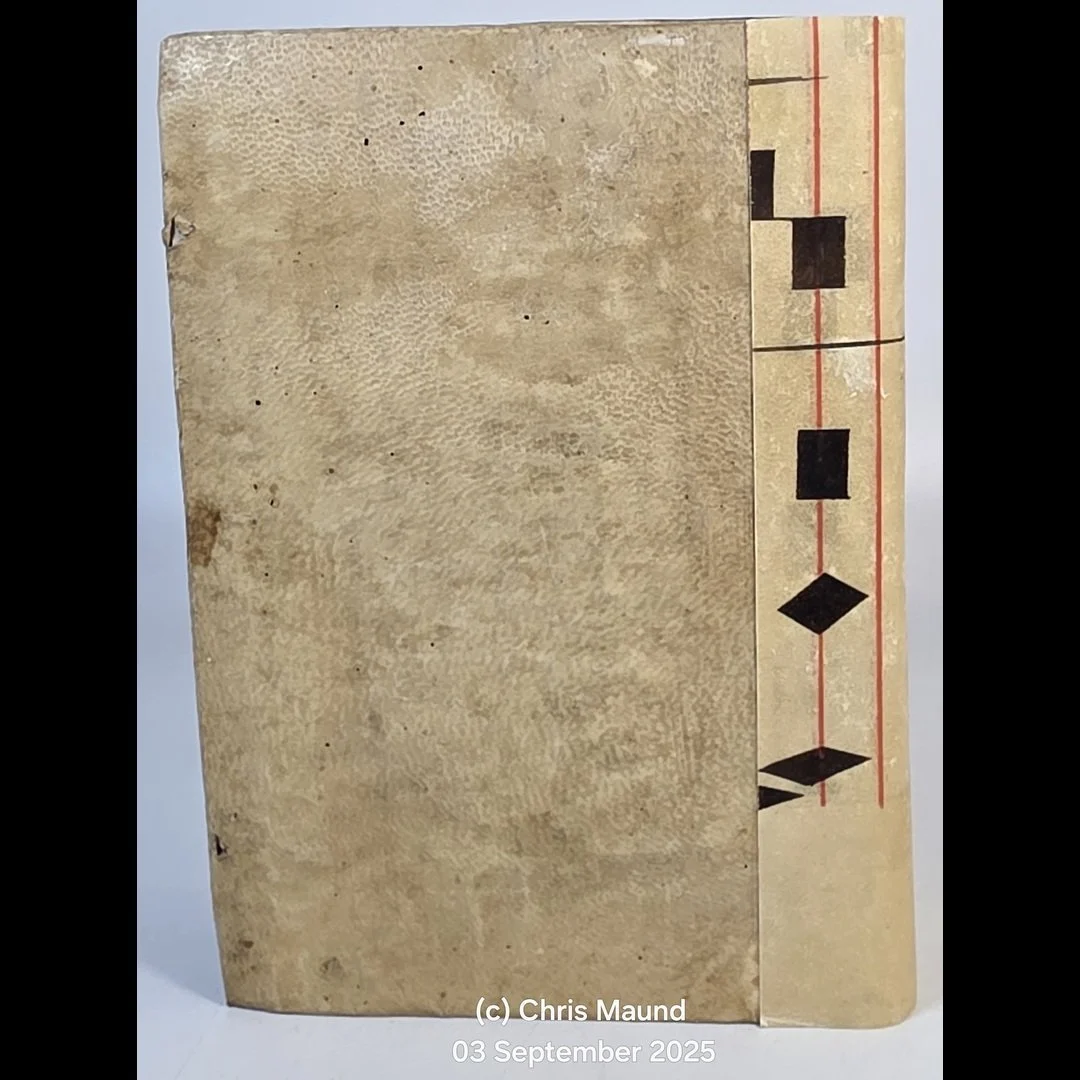
Binding restored, heavily rubbed and age-soiled, with wear to spine and extremities consistent with prolonged use. The blind-tooled decoration nevertheless remains substantially visible, including the ornamental rolls, figural centrepieces, initials IMD, and date 1579. Endpapers renewed, with earlier pastedowns retained and remounted; the front pastedown has an area of loss at the lower edge.
Title page present and clearly dated M.D.LXXIII (1573), with woodcut device and old oval collector’s stamp. The first two leaves, including the title, have been reinforced along the right margin with old transparent pressure-sensitive tape, now discoloured.
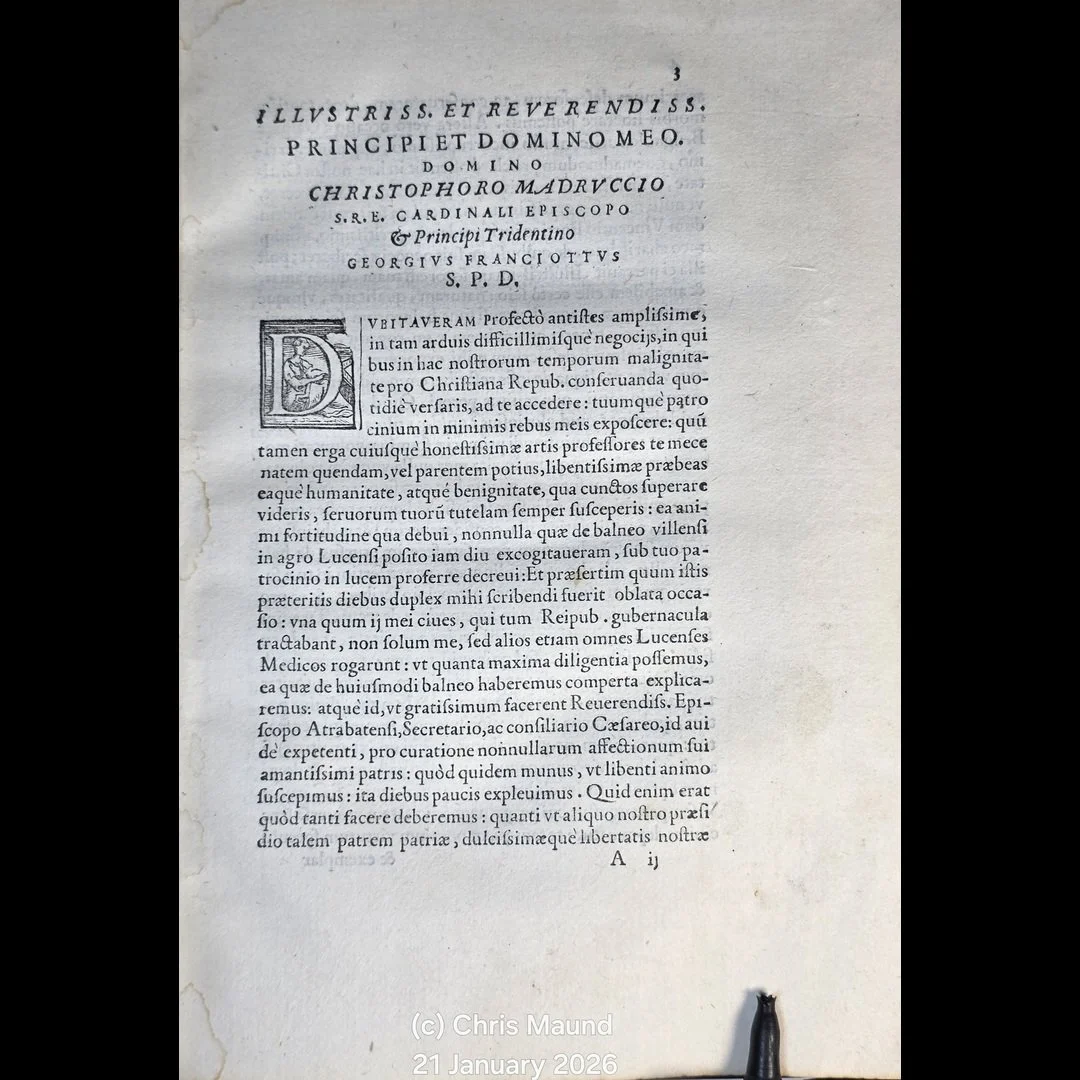
The original printed pp. 1–4 are lacking and have been carefully supplied in manuscript in a later hand, apparently nineteenth century. The manuscript restoration reproduces the opening text of De Bello Gallico, after which the original printed text resumes. Old manuscript marginalia and annotations occur elsewhere.
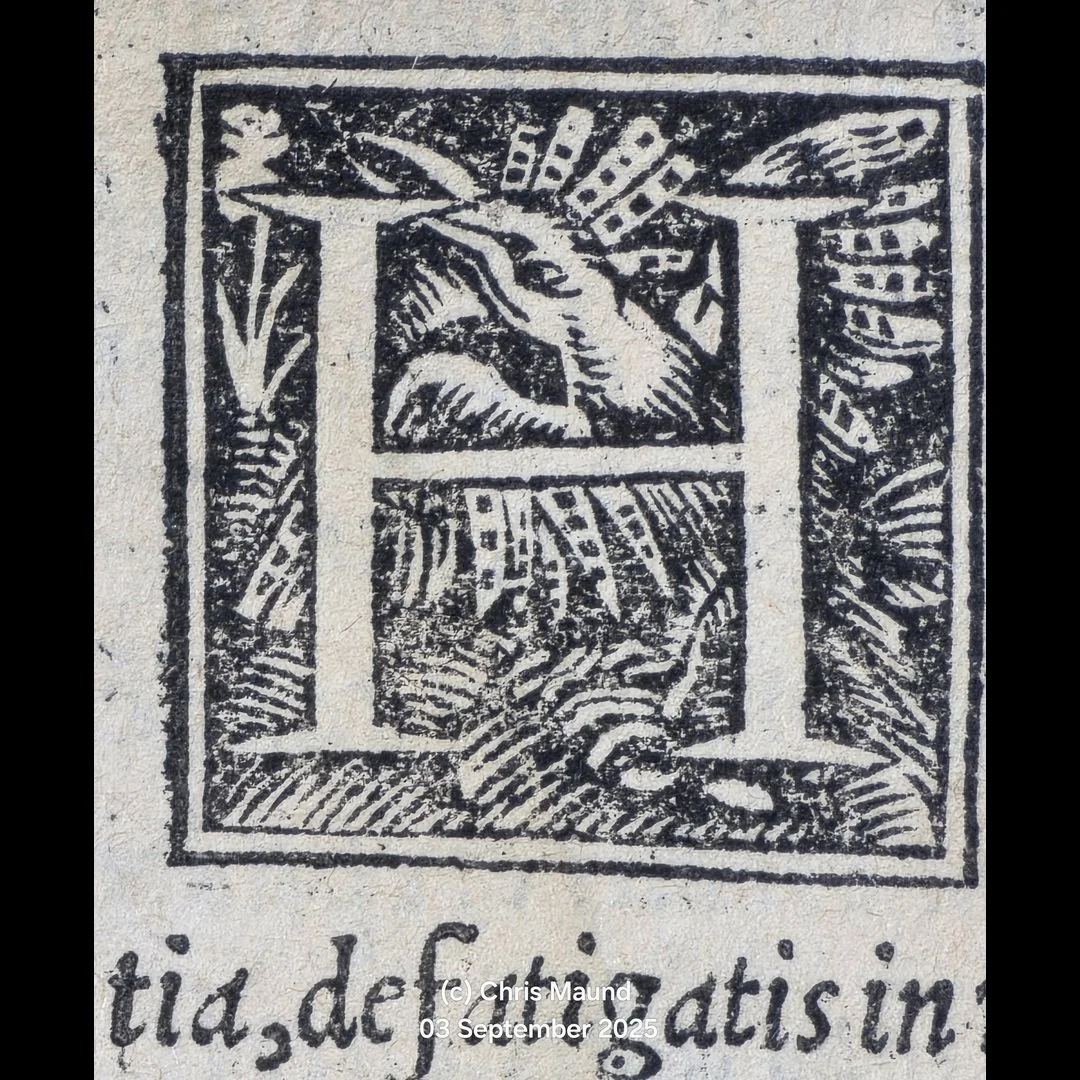
Paper with general age-toning, scattered browning, occasional staining and marks from historical use. The folding maps and woodcut illustrations remain present and visually strong, with the surviving impressions generally crisp and well defined.
Despite the loss of four printed pages and the old tape reinforcement, this is an appealing copy whose chief strengths are its complete suite of maps and woodcuts, its unusually decorative dated Renaissance binding and its developing provenance history.
Please see Photos as part of condition report.
REFERENCES
Baudrier, Bibliographie lyonnaise, V, p. 155
Baudrier, Bibliographie lyonnaise, X, p. 376
Bibliothèque nationale de France, C. Julii Caesaris Rerum ab se gestarum commentarii, Lyon, apud A. de Harsy, 1572–1573
Jeschke Jádi Auctions, Berlin, Lot 11, January 2024
Kalliope / Einbanddatenbank: Justitia plate p000078; Lucretia plate p000080; Valentin Geyer workshop, Jena w000418 – comparative binding references
SYNOPSIS
Rerum ab se gestarum commentarii gathers the narratives through which Caesar shaped the enduring literary image of his own military and political career.
The Gallic War follows the Roman conquest of much of present-day France and Belgium, encounters with Germanic peoples, the expeditions to Britain, and the climactic Gallic uprising under Vercingetorix. Book VIII, completing the narrative after Caesar’s own seven books, is traditionally attributed to Aulus Hirtius.
The Civil War recounts Caesar’s struggle with Pompey and the senatorial establishment, from the breakdown of political compromise to military operations in Italy, Spain and Greece. The volume continues with accounts of the Alexandrian, African and Spanish wars, traditionally transmitted with Caesar’s works although their precise authorship remains debated.
Particularly attractive in this Renaissance edition is the visual apparatus: two folding woodcut maps and five full-page woodcuts illustrating geography, fortifications and military engineering. The edition belongs to the long sixteenth-century tradition of presenting Caesar not simply as a literary classic but as a practical source for ancient geography, strategy and the art of war.
Illustrations: Two folding woodcut maps; five full-page woodcut plates; title-page woodcut device.
Illustrative Apparatus: Anonymous woodcut cutters; the geographical and military schemes belong to the Renaissance illustrative tradition associated in bibliographical descriptions of Caesar with Jucundus Veronensis (Fra Giocondo).
AUTHOR BIO
Gaius Julius Caesar (100–44 BC) was a Roman general, statesman and author whose military commentaries rank among the foundational works of Latin prose. Written with celebrated economy and apparent objectivity, his accounts of the conquest of Gaul and the Roman Civil War combine military narrative, geography, ethnography and political self-presentation.
The Commentarii de Bello Gallico describe Caesar’s campaigns in Gaul from 58 to 50 BC, including expeditions across the Rhine and to Britain, the revolt of Vercingetorix and the siege of Alesia. The Commentarii de Bello Civili recount the conflict with Pompey and the senatorial faction following Caesar’s crossing of the Rubicon.
Printer Bio:
Jean Marcorelle was a Lyon printer and bookseller active during the later sixteenth century. His recorded output is comparatively small. Baudrier remarked upon the rarity of works associated with him, and surviving Marcorelle imprints are considerably less frequently encountered than the prolific Lyon editions of houses such as Gryphius.
This edition was produced for the Lyon bookseller Antoine de Harsy, whose name appears prominently in the imprint.
1573 Lyon Edition
C. IULII CAESARIS RERUM AB SE GESTARUM COMMENTARII
By Gaius Julius Caesar
KEY DETAILS
Condition: Good
Format: Hardcover, duodecimo or twelvemo (12mo 5 × 7 3⁄8 in 127 × 187 mm )
Note: Binding/size selection follows standard bibliographic conventions and is approximate; exact measurements may vary.
Published By: Jean Marcorelle for Antoine de Harsy, Lyon, 1573
Language: Latin
Provenance: Contemporary binding initialled “IMD” and dated 1579, almost certainly representing an early owner’s supralibros; the identity of IMD is currently under research.
Collation: 65 unnumbered pages, 507 numbered pages, 2 blank leaves and 55 unnumbered leaves
Dust Jacket: None, as issued, No Jacket
SKU: BTETM0002406
Shipping Info: Approximate Package Dimensions H: 12.5, L: 30, W: 25 (Units: cm), W: 2Kg
Tracked Shipping, Insurance Coverage as per Customer Request
DESCRIPTION
C. IULII CAESARIS RERUM AB SE GESTARUM COMMENTARII
Quos ad veterum tam manuscriptorum quam impressorum exemplarium fidem accuratissime contulimus. Reliqua sequens docebit pagella.
[The Commentaries of Gaius Julius Caesar on his own achievements. Most carefully collated according to the authority of old exemplars, both manuscript and printed. The following page sets out the remaining contents.]
A highly evocative Renaissance edition of Julius Caesar’s Commentaries, printed at Lyon in 1573 by Jean Marcorelle for Antoine de Harsy, retaining its two folding woodcut maps and five full-page woodcut illustrations and preserved in a richly blind-tooled contemporary pigskin binding dated 1579.
The volume brings together Caesar’s De Bello Gallico and De Bello Civili, together with the traditional continuations of the Alexandrian, African and Spanish wars and related geographical and antiquarian material. The military and topographical woodcuts give unusual visual immediacy to Caesar’s campaigns, including maps of Gaul and Hispania and representations of Roman engineering and siege works.
An uncommon Lyon issue with interesting bibliographical variation. The Bibliothèque nationale de France records the de Harsy edition under 1572–1573, its copy bearing 1572 on the title and 1573 at the end; the present copy is dated 1573 on both the title page and final leaf. The title bears the distinctive woodcut device associated with Jean II and François Frellon, recorded by Baudrier.
Of particular interest is the substantial contemporary German pigskin binding, richly decorated in blind with ornamental rolls and large figural centre panels, initialled “IMD” and dated 1579. The centrepieces appear to correspond closely to documented Justitia and Lucretia plates used in the Jena workshop of Valentin Geyer; this attribution remains provisional pending direct comparison.
PROVENANCE
Contemporary binding initialled “IMD” and dated 1579, almost certainly representing an early owner’s supralibros; the identity of IMD is currently under research.
Title page with oval stamp apparently reading “C. A. TOBIAS / DR. PHILOS.”, provisionally identified as Karl Anton Tobias (1828–1872), Saxon historian, collector and librarian at Zittau. Tobias studied philosophy and mathematics at Leipzig, received his doctorate in 1853, became librarian of the historic Zittau city and grammar-school library in 1857, and assembled a substantial private collection of books and antiquities. Identification currently being investigated with the Christian-Weise-Bibliothek, Zittau.
Jeschke Jádi Auctions, Berlin, 20 January 2024, lot 11.
CONDITION, COLLATION & COPY NOTES
An attractive and historically compelling Renaissance Caesar, retaining both folding woodcut maps and all five full-page woodcut illustrations, in its dated contemporary pigskin binding.
Binding restored, heavily rubbed and age-soiled, with wear to spine and extremities consistent with prolonged use. The blind-tooled decoration nevertheless remains substantially visible, including the ornamental rolls, figural centrepieces, initials IMD, and date 1579. Endpapers renewed, with earlier pastedowns retained and remounted; the front pastedown has an area of loss at the lower edge.
Title page present and clearly dated M.D.LXXIII (1573), with woodcut device and old oval collector’s stamp. The first two leaves, including the title, have been reinforced along the right margin with old transparent pressure-sensitive tape, now discoloured.
The original printed pp. 1–4 are lacking and have been carefully supplied in manuscript in a later hand, apparently nineteenth century. The manuscript restoration reproduces the opening text of De Bello Gallico, after which the original printed text resumes. Old manuscript marginalia and annotations occur elsewhere.
Paper with general age-toning, scattered browning, occasional staining and marks from historical use. The folding maps and woodcut illustrations remain present and visually strong, with the surviving impressions generally crisp and well defined.
Despite the loss of four printed pages and the old tape reinforcement, this is an appealing copy whose chief strengths are its complete suite of maps and woodcuts, its unusually decorative dated Renaissance binding and its developing provenance history.
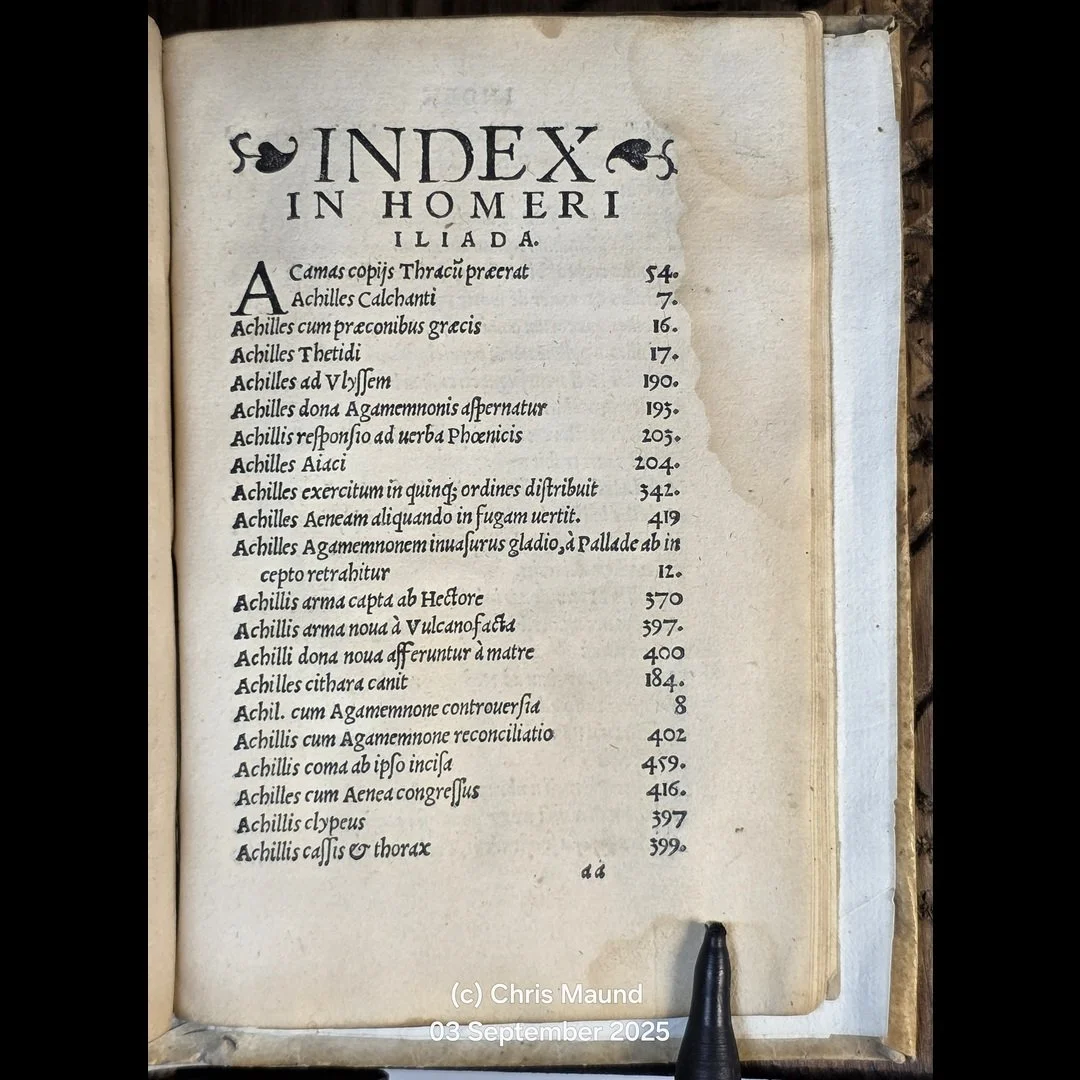
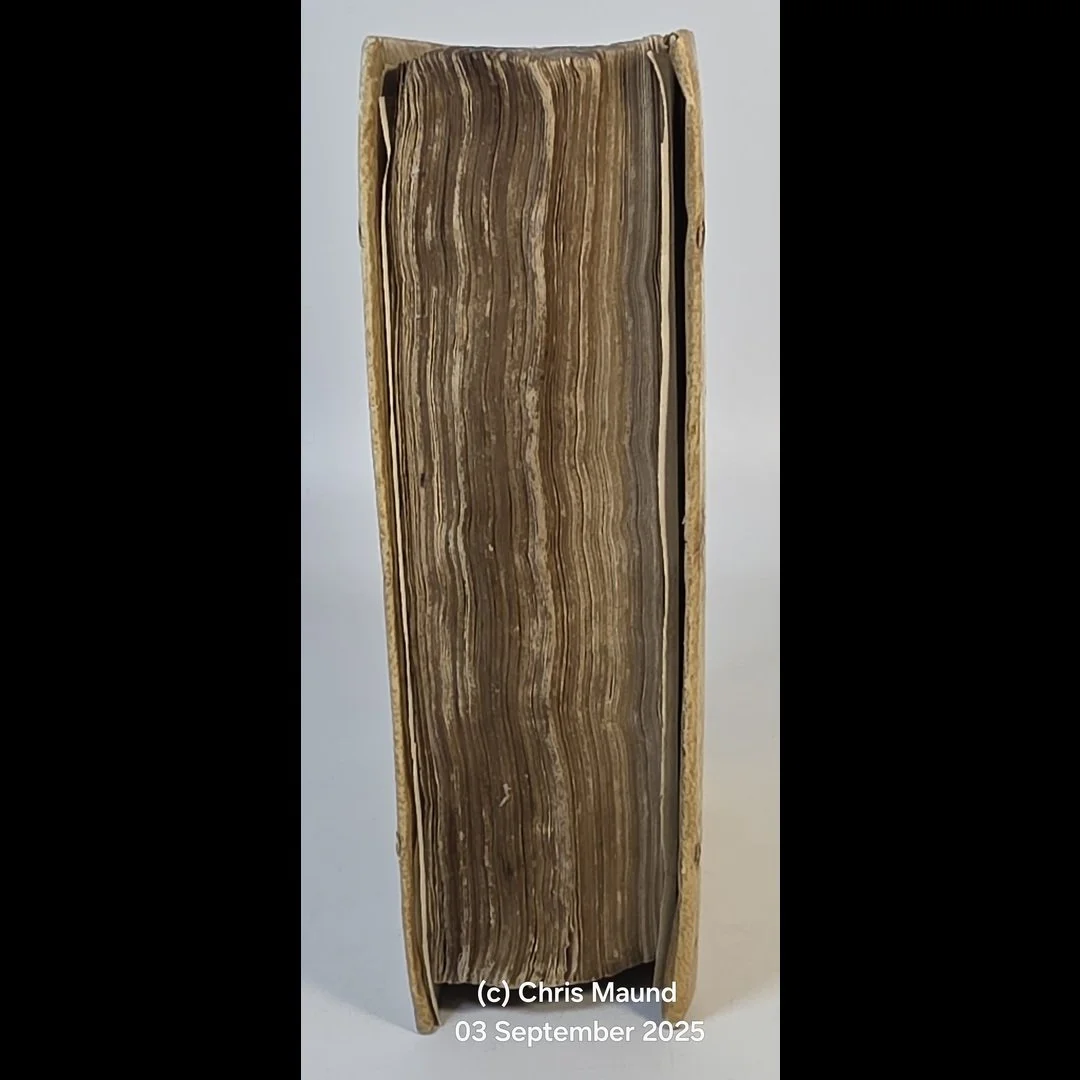
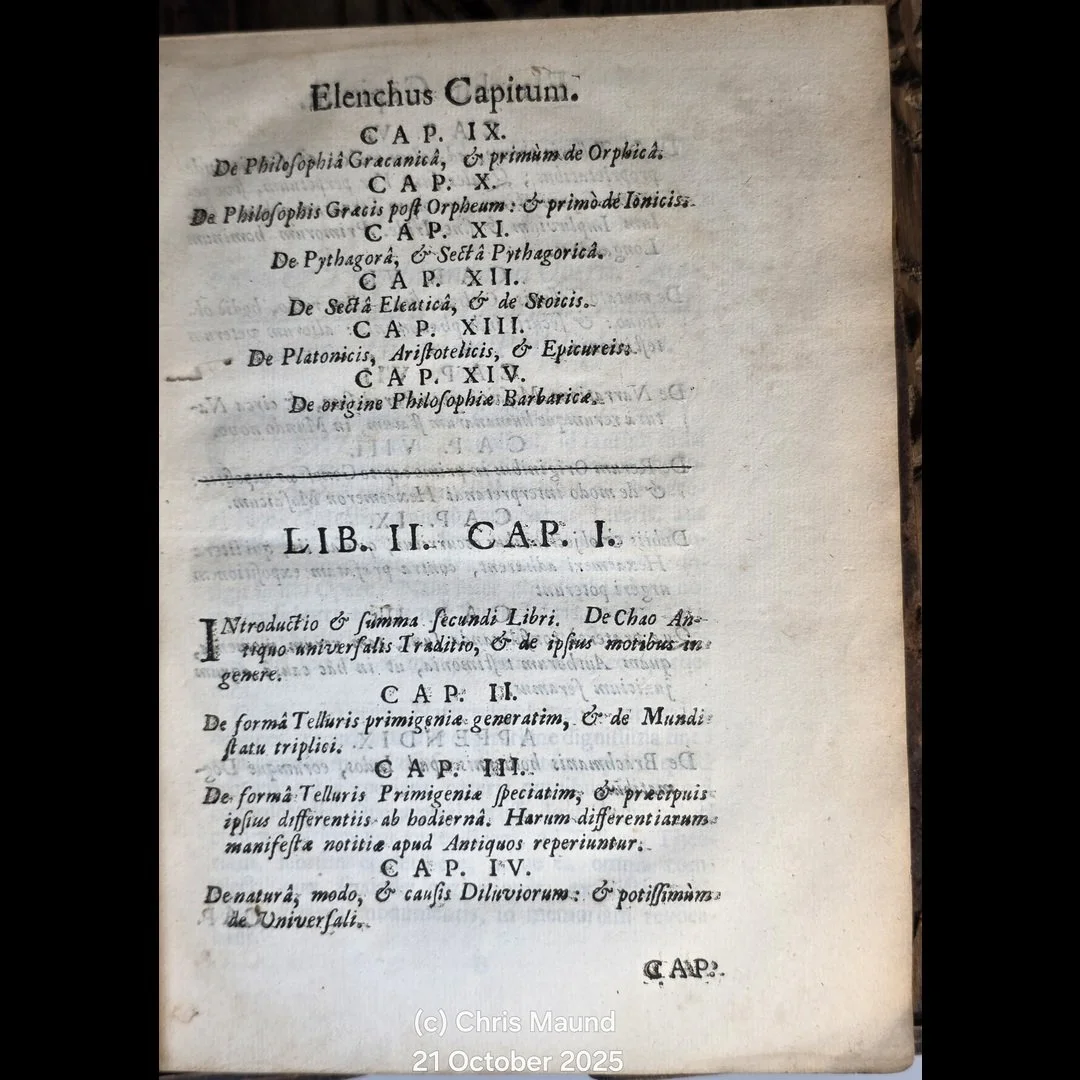
Please see Photos as part of condition report.
REFERENCES
Baudrier, Bibliographie lyonnaise, V, p. 155
Baudrier, Bibliographie lyonnaise, X, p. 376
Bibliothèque nationale de France, C. Julii Caesaris Rerum ab se gestarum commentarii, Lyon, apud A. de Harsy, 1572–1573
Jeschke Jádi Auctions, Berlin, Lot 11, January 2024
Kalliope / Einbanddatenbank: Justitia plate p000078; Lucretia plate p000080; Valentin Geyer workshop, Jena w000418 – comparative binding references
SYNOPSIS
Rerum ab se gestarum commentarii gathers the narratives through which Caesar shaped the enduring literary image of his own military and political career.
The Gallic War follows the Roman conquest of much of present-day France and Belgium, encounters with Germanic peoples, the expeditions to Britain, and the climactic Gallic uprising under Vercingetorix. Book VIII, completing the narrative after Caesar’s own seven books, is traditionally attributed to Aulus Hirtius.
The Civil War recounts Caesar’s struggle with Pompey and the senatorial establishment, from the breakdown of political compromise to military operations in Italy, Spain and Greece. The volume continues with accounts of the Alexandrian, African and Spanish wars, traditionally transmitted with Caesar’s works although their precise authorship remains debated.
Particularly attractive in this Renaissance edition is the visual apparatus: two folding woodcut maps and five full-page woodcuts illustrating geography, fortifications and military engineering. The edition belongs to the long sixteenth-century tradition of presenting Caesar not simply as a literary classic but as a practical source for ancient geography, strategy and the art of war.
Illustrations: Two folding woodcut maps; five full-page woodcut plates; title-page woodcut device.
Illustrative Apparatus: Anonymous woodcut cutters; the geographical and military schemes belong to the Renaissance illustrative tradition associated in bibliographical descriptions of Caesar with Jucundus Veronensis (Fra Giocondo).
AUTHOR BIO
Gaius Julius Caesar (100–44 BC) was a Roman general, statesman and author whose military commentaries rank among the foundational works of Latin prose. Written with celebrated economy and apparent objectivity, his accounts of the conquest of Gaul and the Roman Civil War combine military narrative, geography, ethnography and political self-presentation.
The Commentarii de Bello Gallico describe Caesar’s campaigns in Gaul from 58 to 50 BC, including expeditions across the Rhine and to Britain, the revolt of Vercingetorix and the siege of Alesia. The Commentarii de Bello Civili recount the conflict with Pompey and the senatorial faction following Caesar’s crossing of the Rubicon.
Printer Bio:
Jean Marcorelle was a Lyon printer and bookseller active during the later sixteenth century. His recorded output is comparatively small. Baudrier remarked upon the rarity of works associated with him, and surviving Marcorelle imprints are considerably less frequently encountered than the prolific Lyon editions of houses such as Gryphius.
This edition was produced for the Lyon bookseller Antoine de Harsy, whose name appears prominently in the imprint.

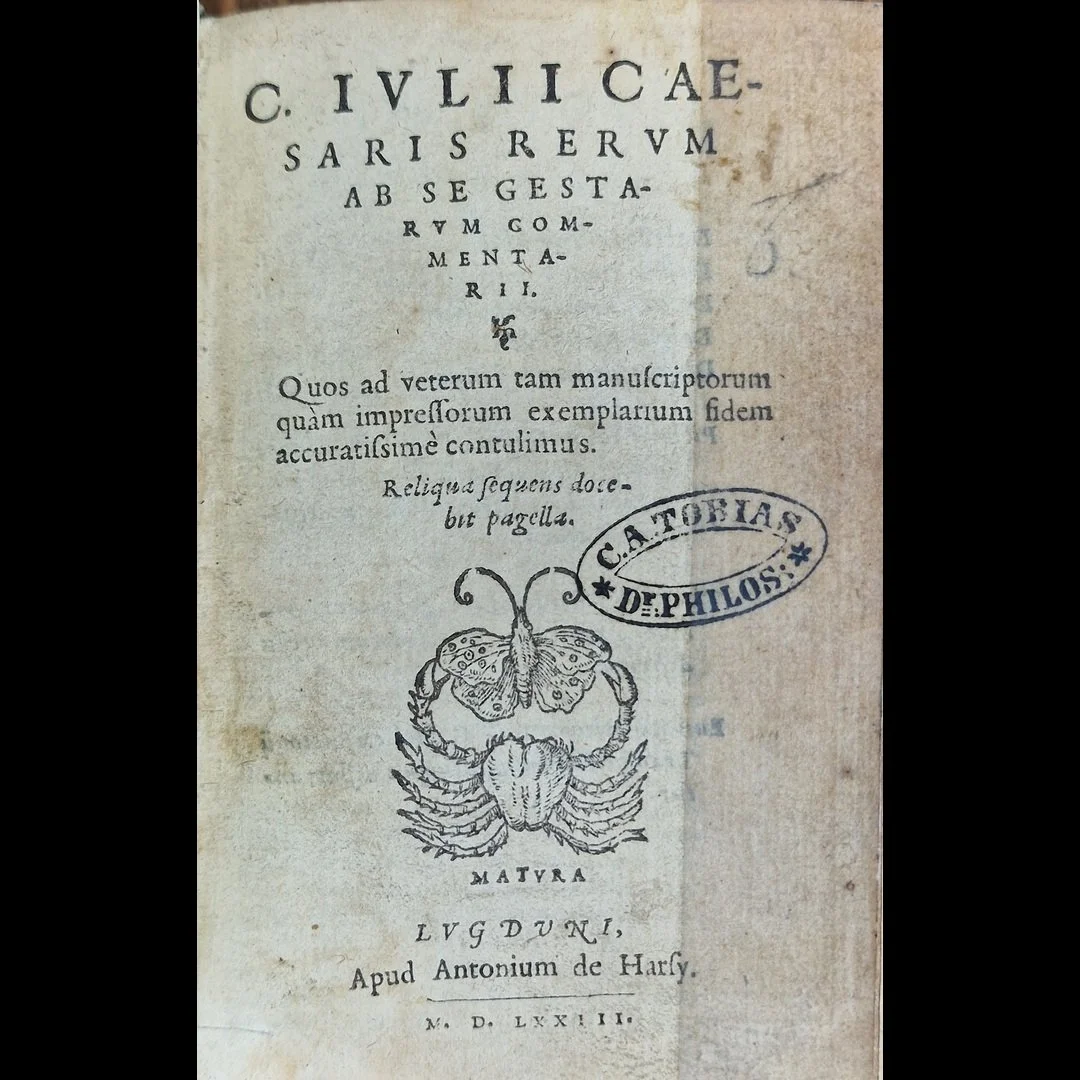 Image 1 of 19
 Image 2 of 19
 Image 3 of 19
 Image 4 of 19
 Image 5 of 19
 Image 6 of 19
 Image 7 of 19
 Image 8 of 19
 Image 9 of 19
 Image 10 of 19
 Image 11 of 19
 Image 12 of 19
 Image 13 of 19
 Image 14 of 19
 Image 15 of 19
 Image 16 of 19
 Image 17 of 19
 Image 18 of 19
 Image 19 of 19