1562 First Canisius Edition
EPISTOLAE B. HIERONYMI STRIDONENSIS
By Saint Jerome (Eusebius Sophronius Hieronymus)
KEY DETAILS
Condition: Good
Format: Hardcover, Octavo (Standard) (8vo 6 × 9 in 152 × 229 mm )
Note: Binding/size selection follows standard bibliographic conventions and is approximate; exact measurements may vary.
Published By: Dilingae [Dillingen], apud Sebaldum Mayer [Sebald Mayer], Germany, 1562
Language: Latin
Collation: [48], 787 [i.e. 799], [2] pp.
Dust Jacket: None, as issued
SKU: BTETM0002410
Shipping Info: Approximate Package Dimensions H: 12.5, L: 30, W: 25 (Units: cm), W: 2Kg
Tracked Shipping, Insurance Coverage as per Customer Request
DESCRIPTION
Epistolae B. Hieronymi Stridonensis
eloquentissimi & praestantissimi Ecclesiae Doctoris, in libros treis distributae
[The Epistles of Jerome of Stridon, the most eloquent and eminent Doctor of the Church, divided into three books]
Nunc primùm opera D. Petri Canisij selectae, magnoque studio in ordinem redactae...
By Saint Jerome (Eusebius Sophronius Hieronymus)
Selected and arranged by Peter Canisius
An appealing and historically significant first edition of Peter Canisius’s selection and arrangement of the letters of Saint Jerome, printed at Dillingen by Sebald Mayer in 1562. Conceived as a portable and practical anthology of one of the great Latin Fathers of the Church, the title explicitly states that Canisius selected and ordered the letters so that they might be conveniently carried and usefully adapted to the common use of schools.
The edition belongs directly to the intellectual and educational world of the Catholic Reformation. Peter Canisius, one of the foremost Jesuit theologians and educators of the sixteenth century, sought to place Jerome’s theological, moral and rhetorical writings into a form suitable for students and readers who might not have access to the much larger collected editions of Jerome then in circulation.
A particularly evocative copy, retaining its contemporary blind-tooled pigskin binding over boards, with two impressions of a woodcut depicting Saint Jerome as the penitent scholar in the wilderness, accompanied by the lion, crucifix and books. Decorative woodcut initials appear in the text. The volume also preserves old Latin manuscript annotations, providing tangible evidence of early scholarly use, including a substantive cross-reference to Jerome’s consolatory letter to Heliodorus concerning the death of Nepotian. A further theological manuscript note survives on the rear pastedown.
The preliminaries include the panegyric on Saint Jerome by Matthaeus Galenus Vestcappellius, delivered at Dillingen in 1559 and incorporated into Canisius’s edition.
CONDITION, COLLATION & COPY NOTES
COLLATION
[48], 787 [i.e. 799], [2] pp.
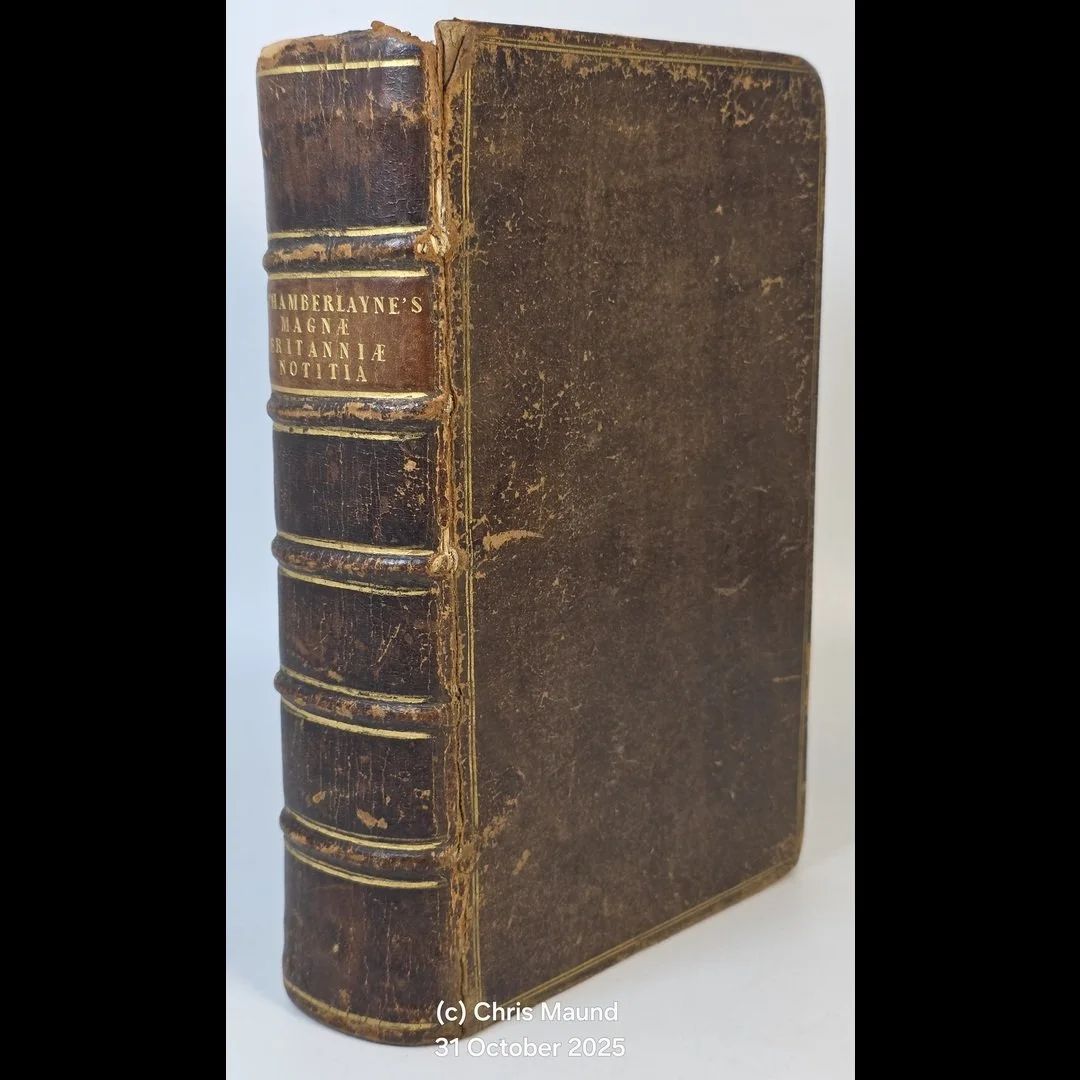
An attractive sixteenth-century copy in contemporary blind-tooled pigskin over boards. Binding rubbed, age-soiled and stained in places, with expected wear from prolonged historical use and small losses to the covering restored. Old paper spine label survives in fragmentary form together with an old manuscript shelf number. The binding retains considerable period character and shelf presence.
Title leaf and terminal leaf, each associated with an impression of the Saint Jerome woodcut, have been conservationally backed on recto and verso with Japanese paper. Endpapers restored, with one flyleaf renewed. One further leaf with a supported tear. Some intermittent marginal waterstaining and light scattered foxing or spotting.
The text remains generally clean, strongly printed and readily legible. The woodcuts retain good detail and impression.
Of particular interest are old Latin manuscript annotations on the rear pastedown and within the text, apparently reflecting scholarly or theological use of the volume. One substantial note cross-references Jerome’s letter to Bishop Heliodorus concerning the death of the priest Nepotian; other marginal annotations occur elsewhere in the text. No named early owner has presently been identified.
A handsome and characterful working copy of the first Canisius edition, combining a contemporary German pigskin binding, Renaissance woodcut illustration and surviving evidence of early readership.
Illustrations: Two impressions of a woodcut depicting Saint Jerome; woodcut initials.
Please see Photos as part of condition report.
REFERENCES
VD16 H 3555
USTC 651619
OCLC 220801661
Bayerische Staatsbibliothek, Res/P.lat. 781 — digitised reference copy
SYNOPSIS
This volume presents a selected body of the letters of Saint Jerome arranged by Peter Canisius into three books. Rather than functioning simply as personal correspondence, Jerome’s letters combine biblical interpretation, theological argument, moral instruction, rhetorical display, spiritual counsel and intimate responses to the lives and deaths of friends and fellow Christians.
Canisius’s edition recasts this extensive correspondence as a practical Renaissance teaching collection. The anthology places one of Christianity’s greatest Latin prose stylists within the educational programme of the sixteenth century, making the volume significant both as a patristic text and as an artefact of Jesuit and Catholic-Reformation learning.
The surviving manuscript annotations in this copy add a further dimension: they show that an early reader did not merely own the volume but actively navigated and cross-referenced Jerome’s writings, leaving evidence of the kind of scholarly engagement for which the edition was expressly produced.
AUTHOR BIO
Edited / Selected By: Peter Canisius
Additional Text By: Matthaeus Galenus Vestcappellius
Saint Jerome (Eusebius Sophronius Hieronymus; c. 342–347–420) was one of the great scholars, theologians and writers of the early Christian Church. A priest, biblical translator, exegete and controversialist, he is particularly associated with the Latin translation and revision of the Bible that became central to the later Vulgate tradition.
Jerome’s extensive correspondence is among the richest surviving bodies of personal and theological writing from late antiquity. His letters address scripture, scholarship, Christian conduct, ascetic life, education, friendship, controversy and consolation, while also preserving vivid evidence of the intellectual and religious world of the fourth and early fifth centuries.
Editor Bio
Peter Canisius (1521–1597) was a Dutch-born Jesuit theologian, preacher, writer and educator and one of the most important Catholic intellectual figures in the German-speaking lands during the Reformation. His catechetical and educational work had a major influence on Catholic teaching and schooling in sixteenth-century Europe.
For this 1562 edition Canisius selected and rearranged Jerome’s letters with an expressly practical purpose: to create a more portable collection suited to students and the common use of schools. The wording of the title itself emphasises this educational intention.

 Image 1 of 15
 Image 2 of 15
 Image 3 of 15
 Image 4 of 15
 Image 5 of 15
 Image 6 of 15
 Image 7 of 15
 Image 8 of 15
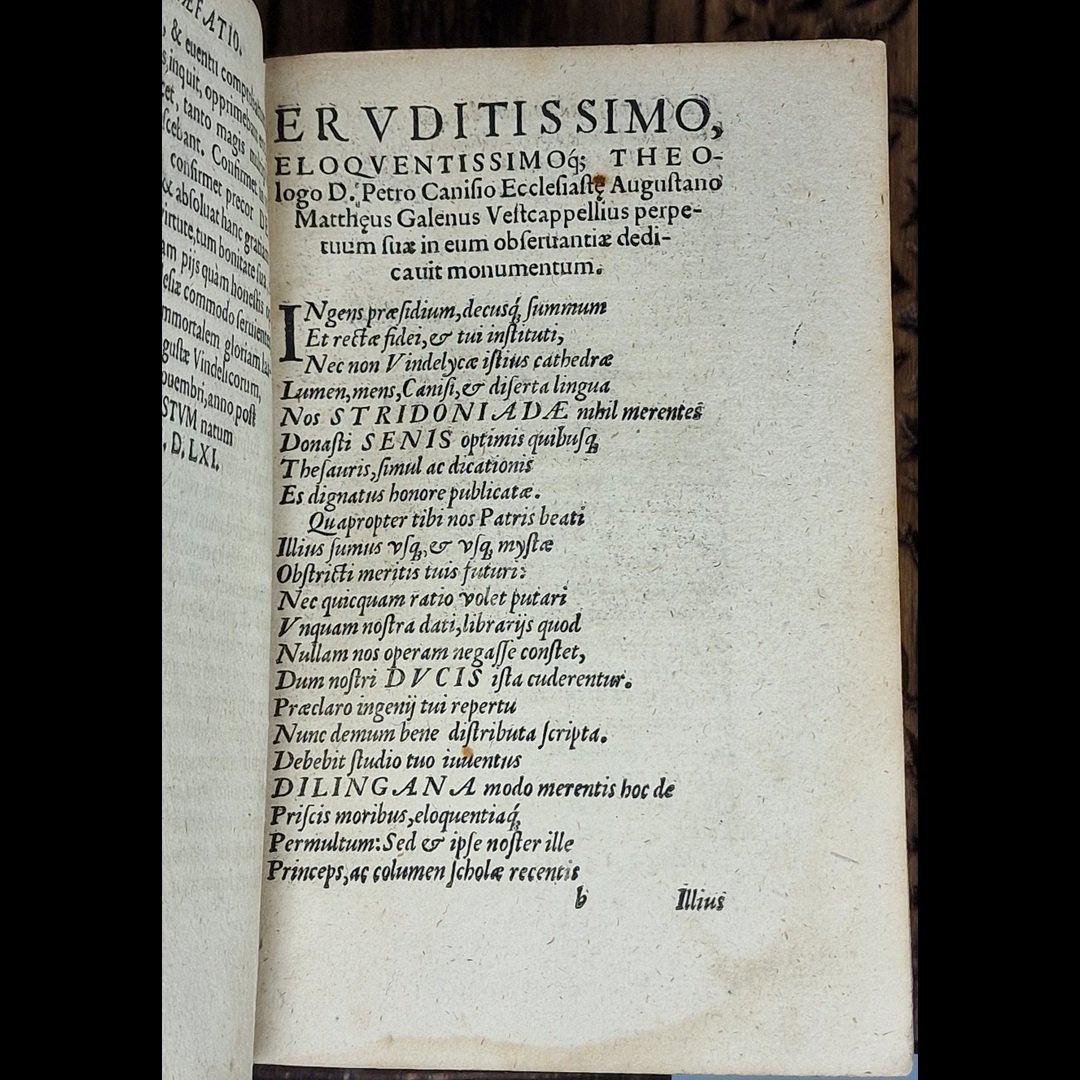 Image 9 of 15
 Image 10 of 15
 Image 11 of 15
 Image 12 of 15
 Image 13 of 15
 Image 14 of 15
 Image 15 of 15