1559 Venice Edition Early Manuscript Marginalia
IUSTINI EX TROGI POMPEII HISTORIIS EXTERNIS LIBRI XXXXIIII
By Marcus Junianus Justinus
KEY DETAILS
Condition: Good
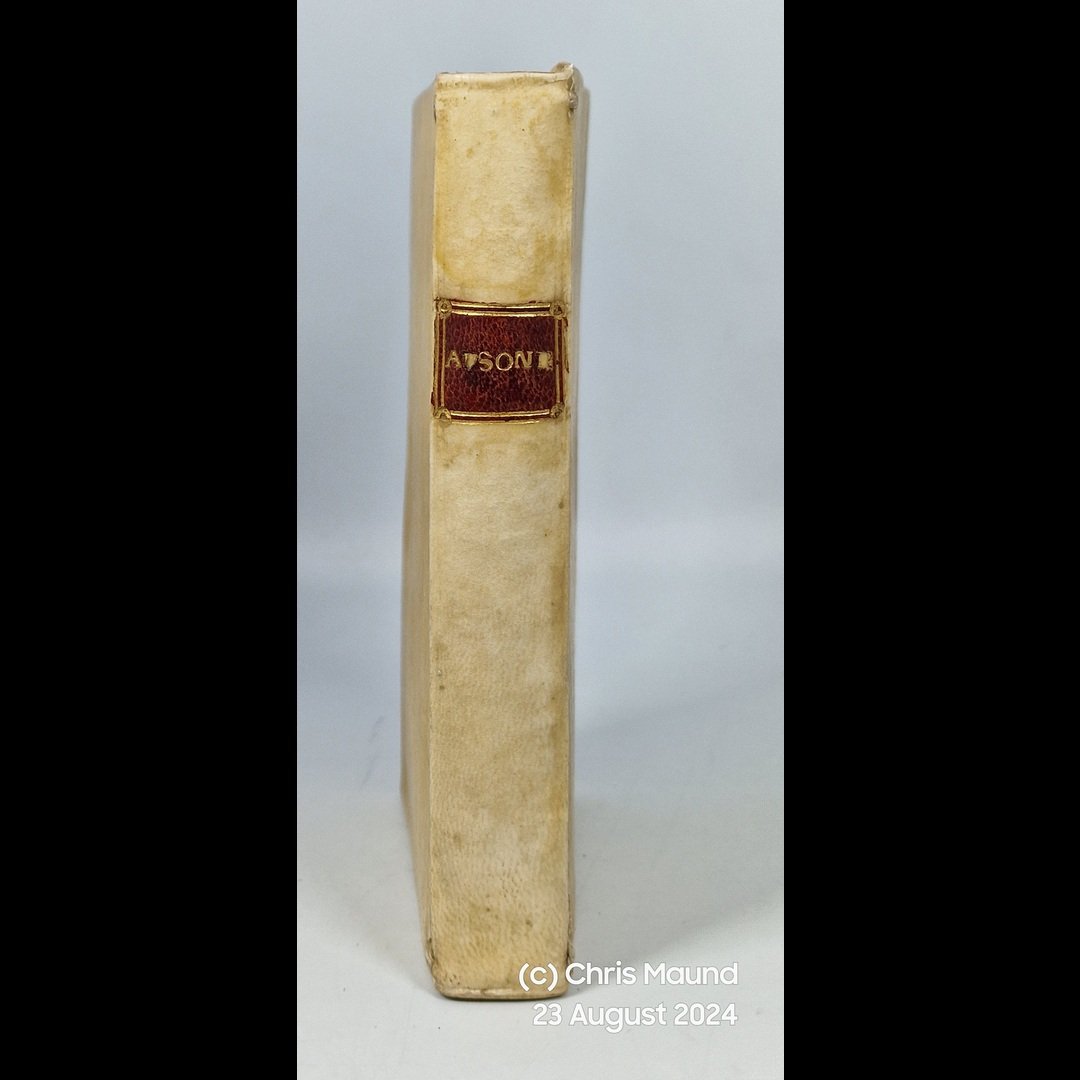
Format: Vellum, Octavo (Standard) (8vo 6 × 9 in 152 × 229 mm )
Note: Binding/size selection follows standard bibliographic conventions and is approximate; exact measurements may vary.
Published By: Ioannes Gryphius [Giovanni Griffio], Italy, 1559
Language: Latin
Illustrated By: Anonymous
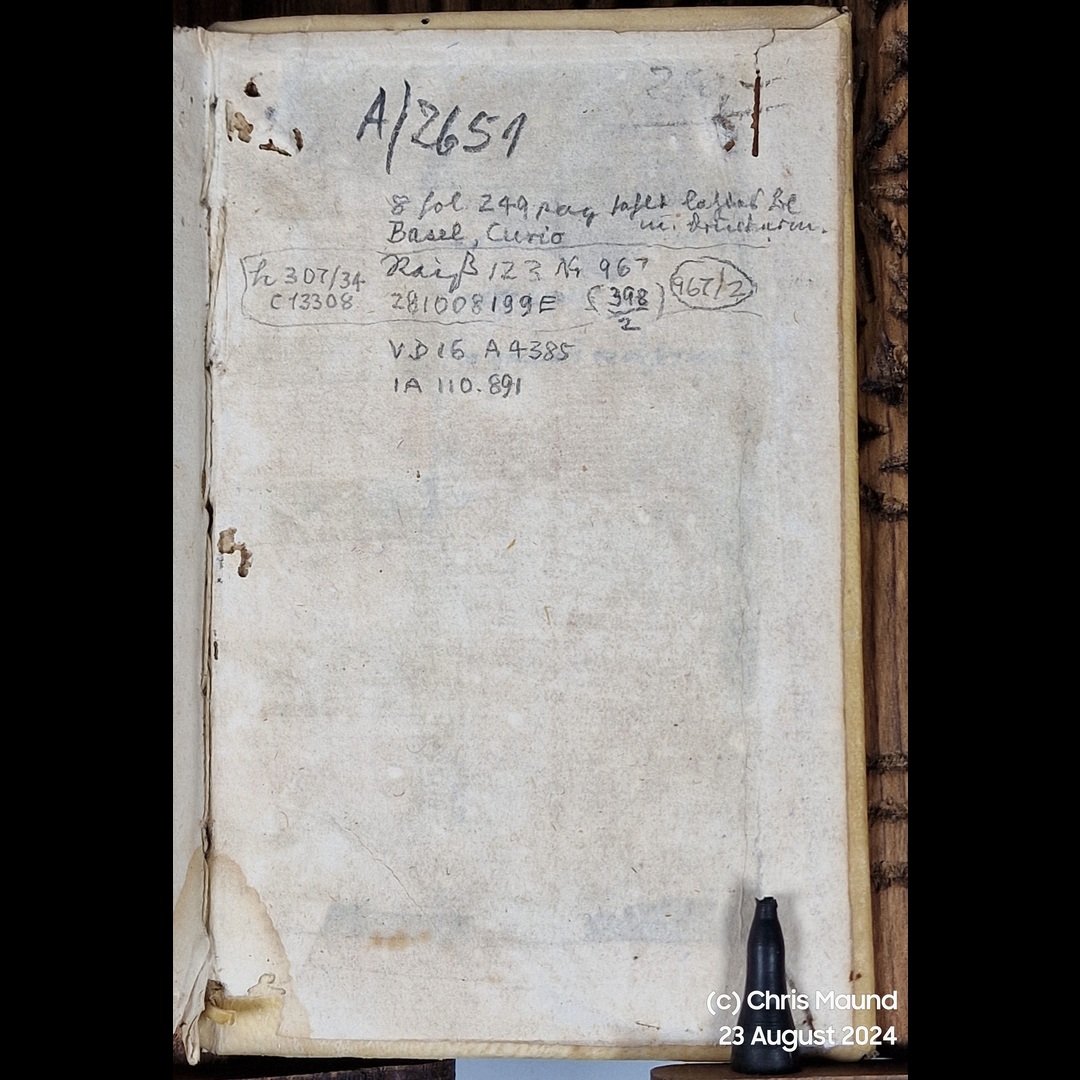
Provenance: Paul V. Rubow (1896–1972), distinguished Danish literary historian, philologist, professor and noted bibliophile, with his ownership signature to the front free endpaper. Rubow was a prominent scholar of literature an...
Collation: 338, [30] pp.; Signatures: A–Z⁸
Dust Jacket: None, as issued, No Jacket
SKU: BTETM0002429
Shipping Info: Approximate Package Dimensions H: 12.5, L: 30, W: 25 (Units: cm), W: 2Kg
Tracked Shipping, Insurance Coverage as per Customer Request
DESCRIPTION
IUSTINI EX TROGI POMPEII HISTORIIS EXTERNIS LIBRI XXXXIIII
With the Epitome of the Roman Emperors attributed to Sextus Aurelius Victor
A highly evocative Renaissance edition of Justin's epitome of the lost Historiae Philippicae of Pompeius Trogus, printed at Venice by Giovanni Griffio (Ioannes Gryphius) in 1559, preserved in contemporary limp vellum and extensively annotated by an early reader.
Trogus's original history, composed during the Augustan age, extended across forty-four books and offered an unusually broad account of the ancient world, moving through Assyria, Persia and Greece before concentrating upon Macedonia, Philip II, Alexander the Great and the Hellenistic successor kingdoms. The original Historiae Philippicae is lost, and Justin's later epitome remains its principal surviving witness. This edition supplements Justin with the De vita et moribus Romanorum Imperatorum Epitome, transmitted here under the name of Sextus Aurelius Victor, and opens with Simon Grynaeus's humanist essay De utilitate legendae historiae, on the value and usefulness of reading history.
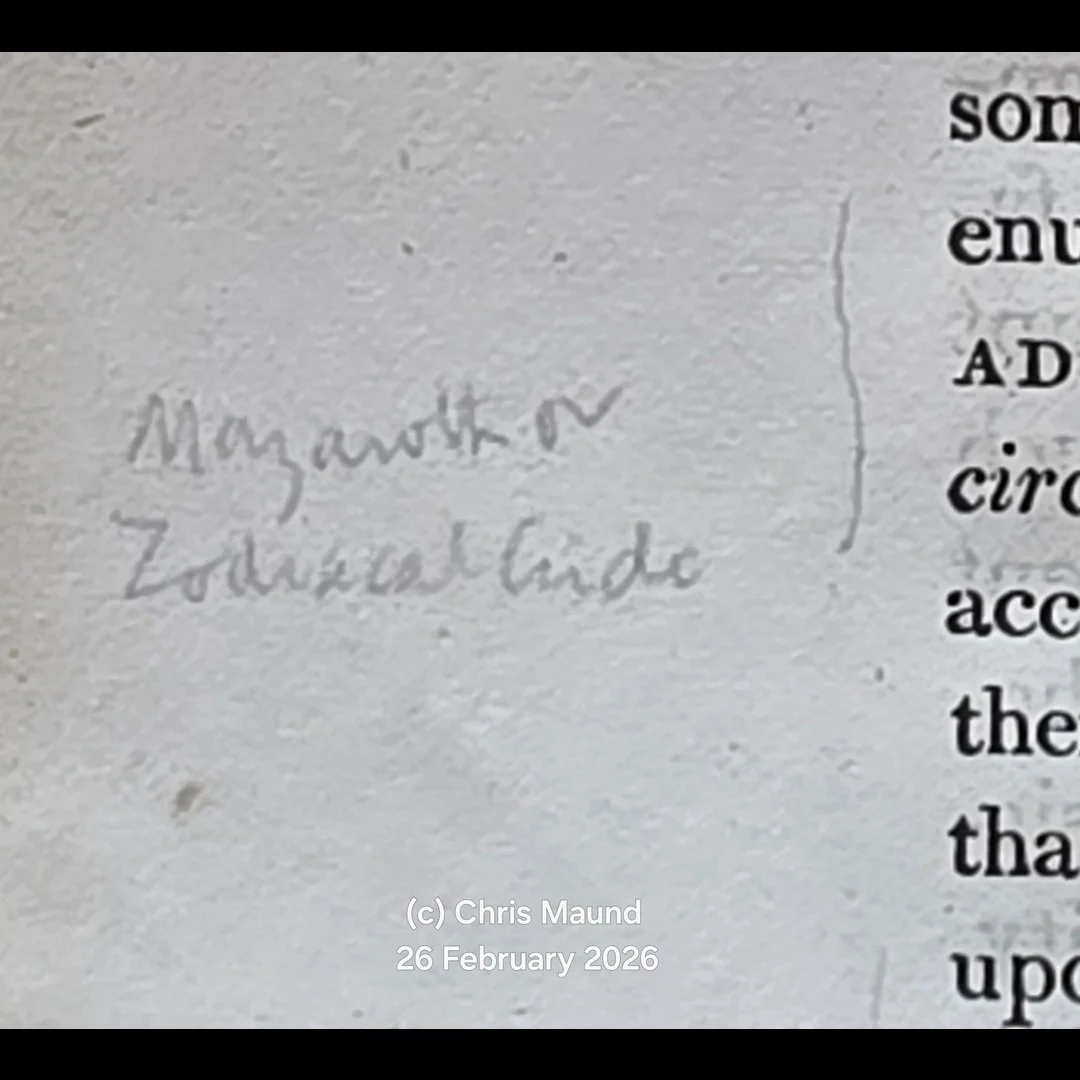
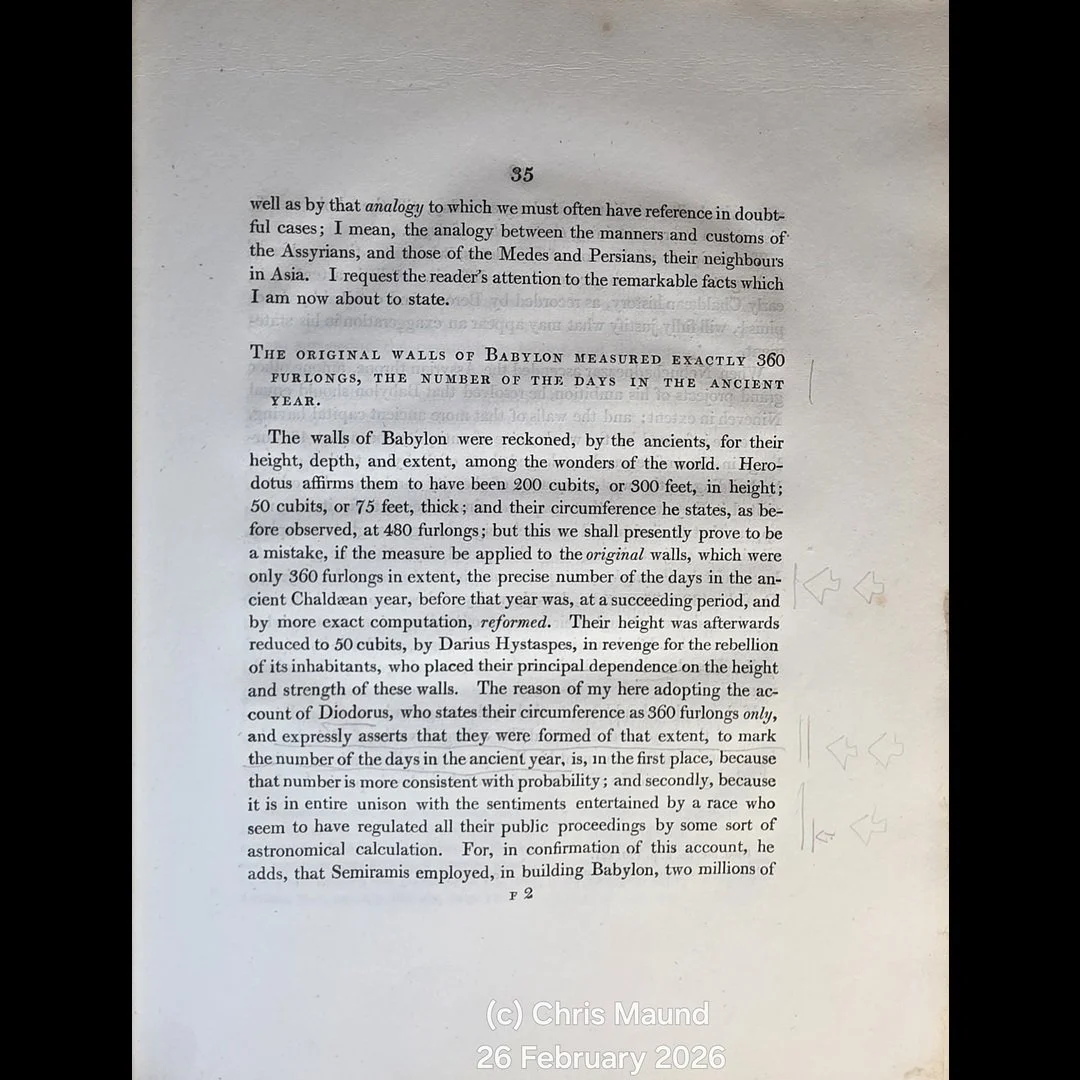
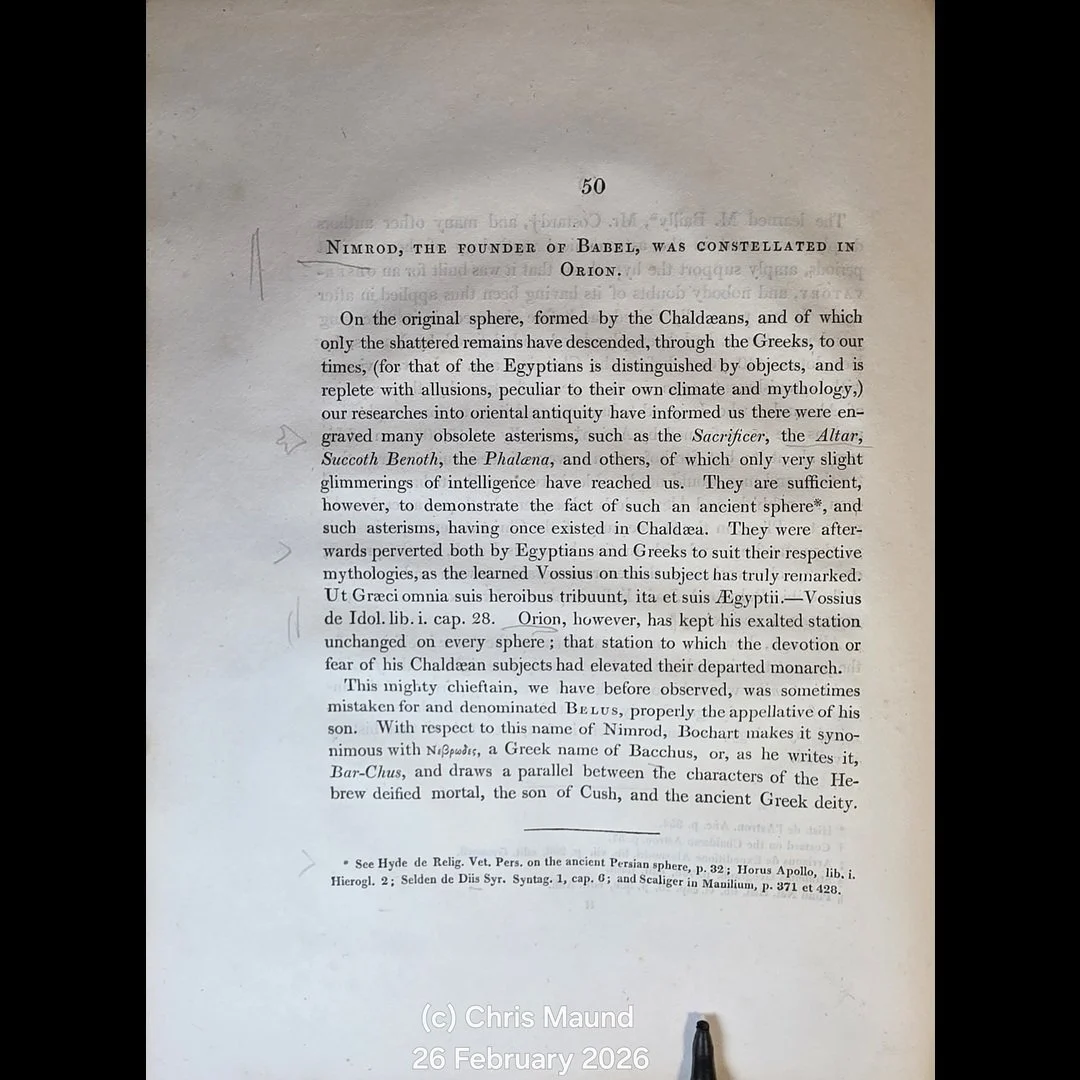
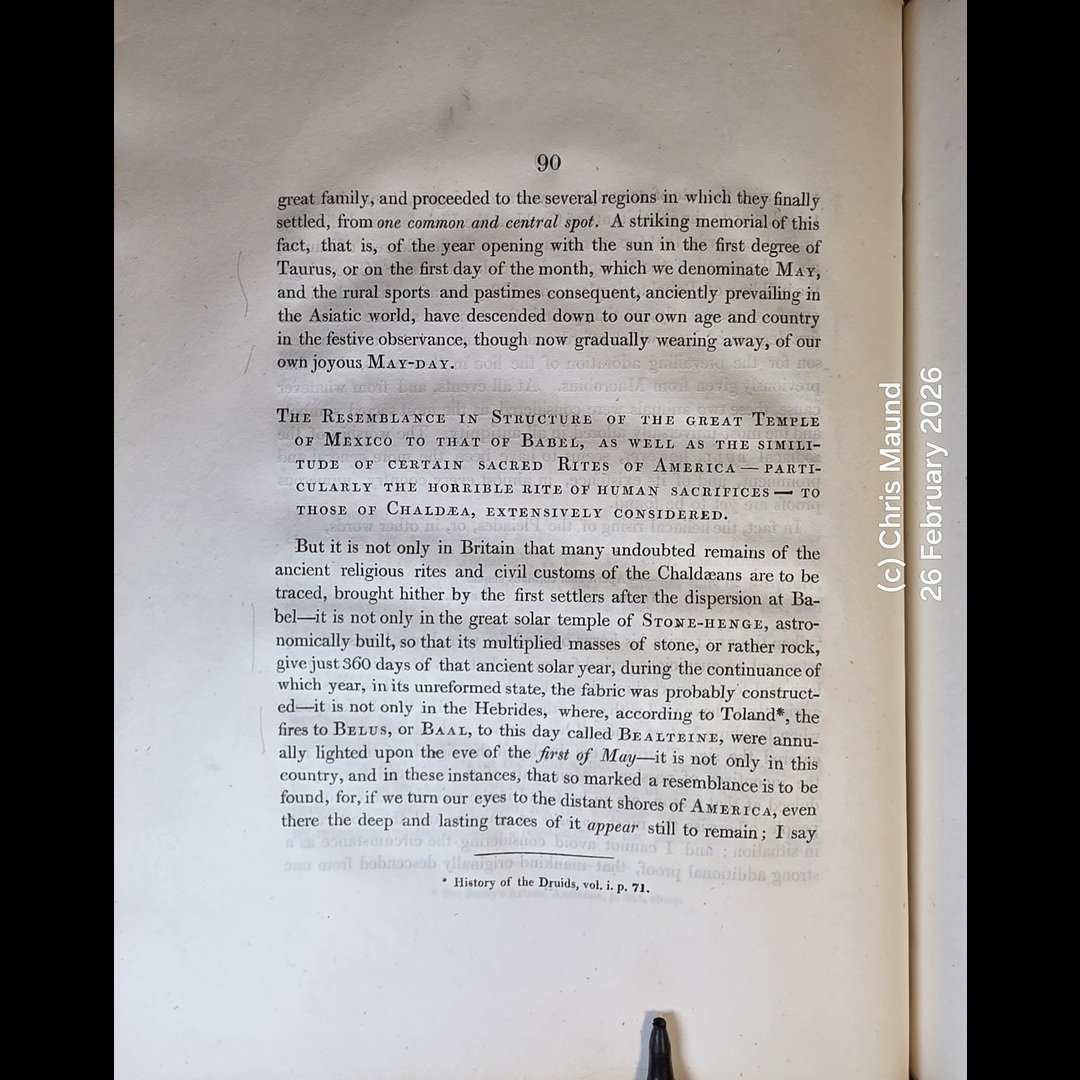
An especially appealing copy for its evidence of historical readership. Numerous passages, particularly in the earlier books, are underscored and supplied with Latin marginal annotations in an early hand. These are not simply ownership marks, but active reading notes responding to political, moral and historical themes within the text — kingship, conquest, warfare, courage, clemency, ambition and the instability of fortune. Together with the contemporary vellum binding and the later ownership of the distinguished Danish scholar Paul V. Rubow, they give the volume a particularly tangible history of intellectual use extending across several centuries.
PROVENANCE
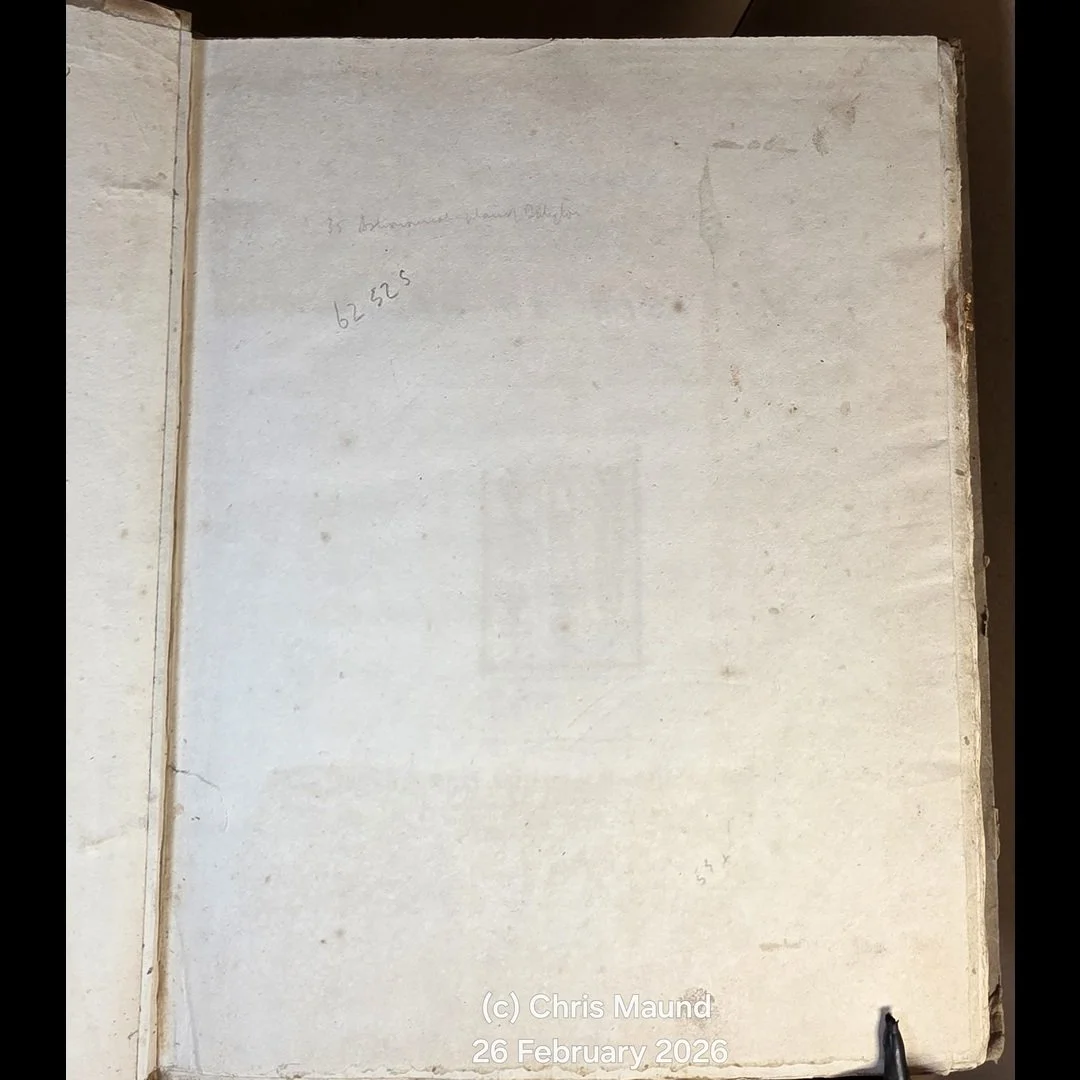
Paul V. Rubow (1896–1972), distinguished Danish literary historian, philologist, professor and noted bibliophile, with his ownership signature to the front free endpaper. Rubow was a prominent scholar of literature and professor at the University of Copenhagen, publishing extensively on Danish and European literary history. Rubow's celebrated private library numbered approximately 40,000 volumes and was particularly strong in older French, German, English and Latin literature. His collection was dispersed following his death in 1972.
CONDITION, COLLATION & COPY NOTES
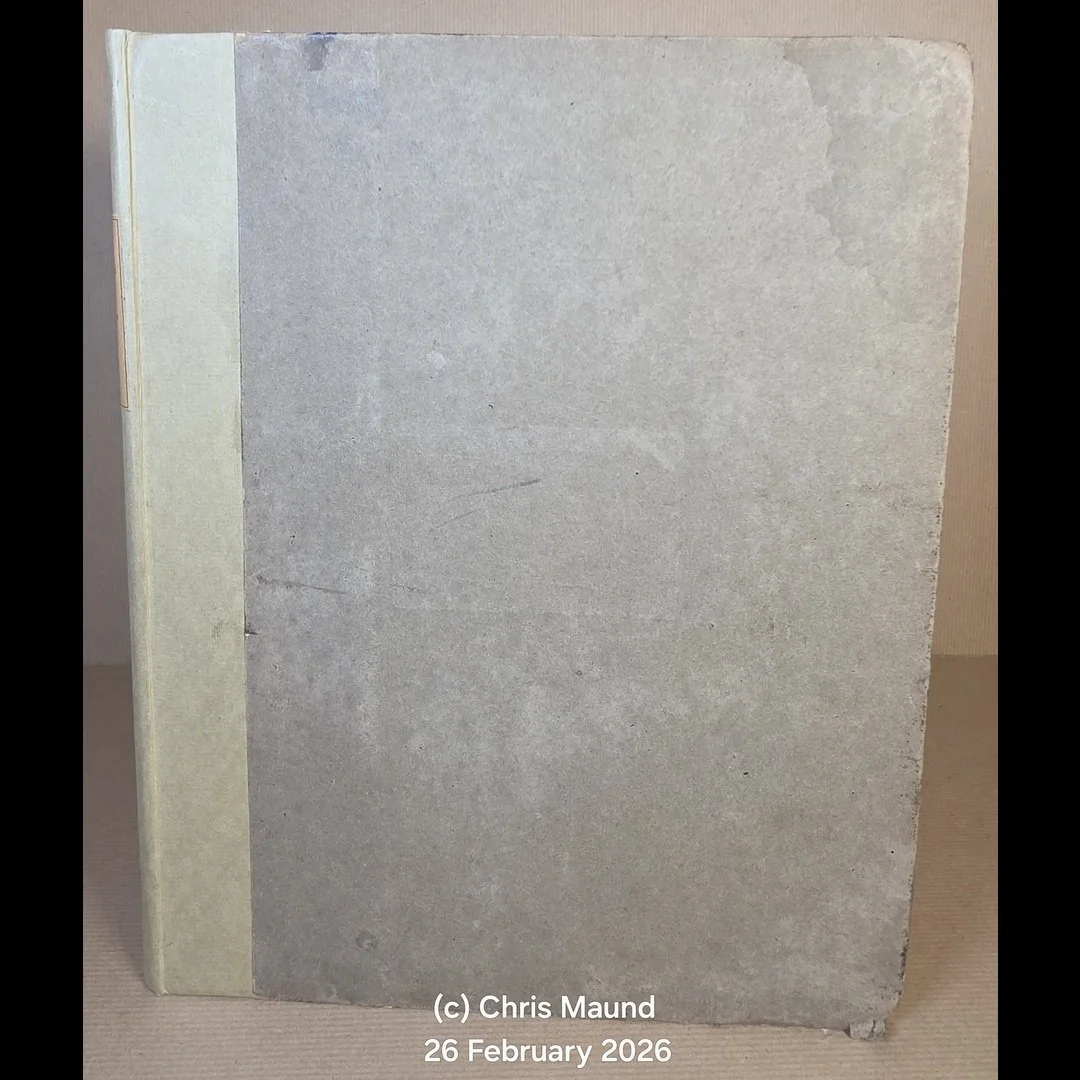
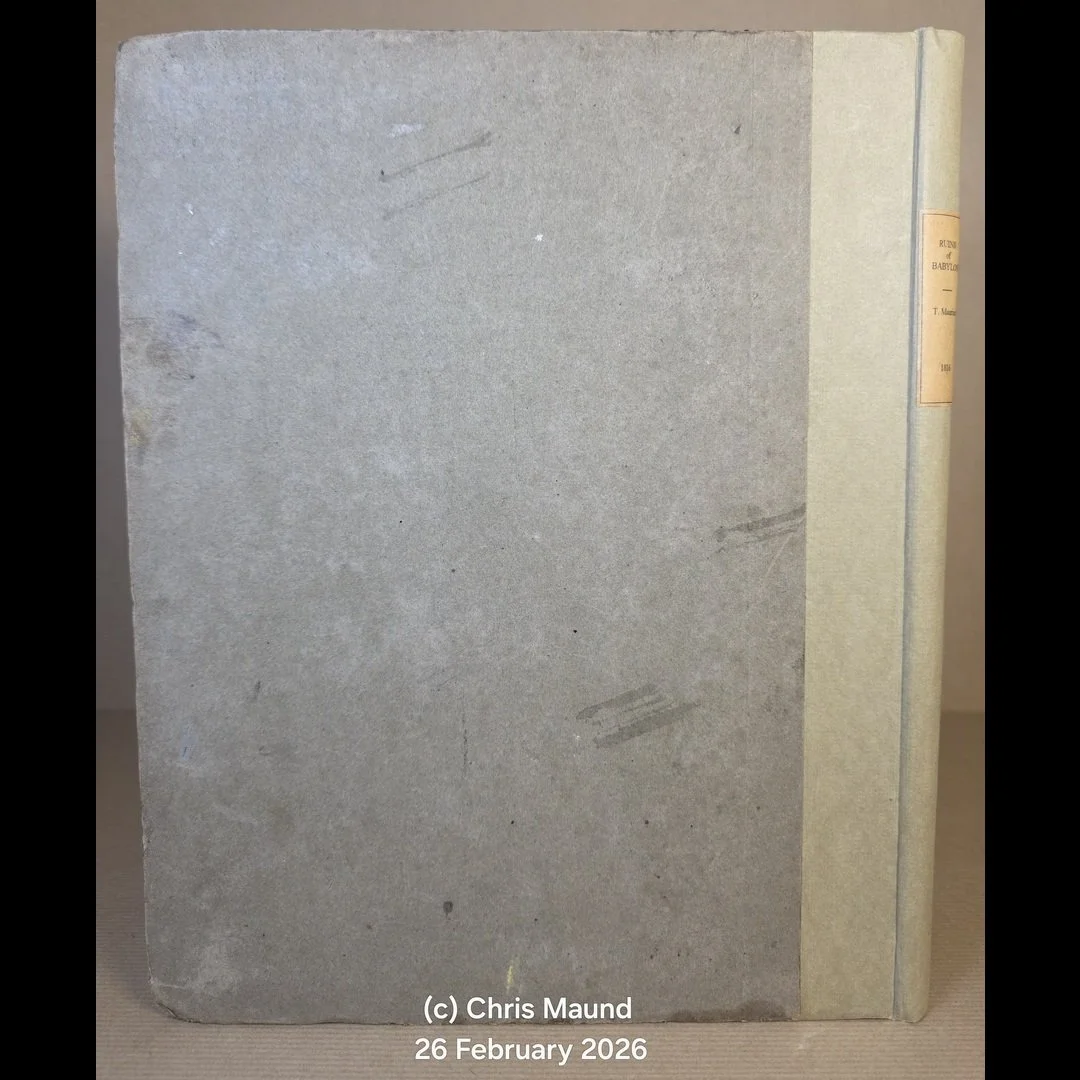
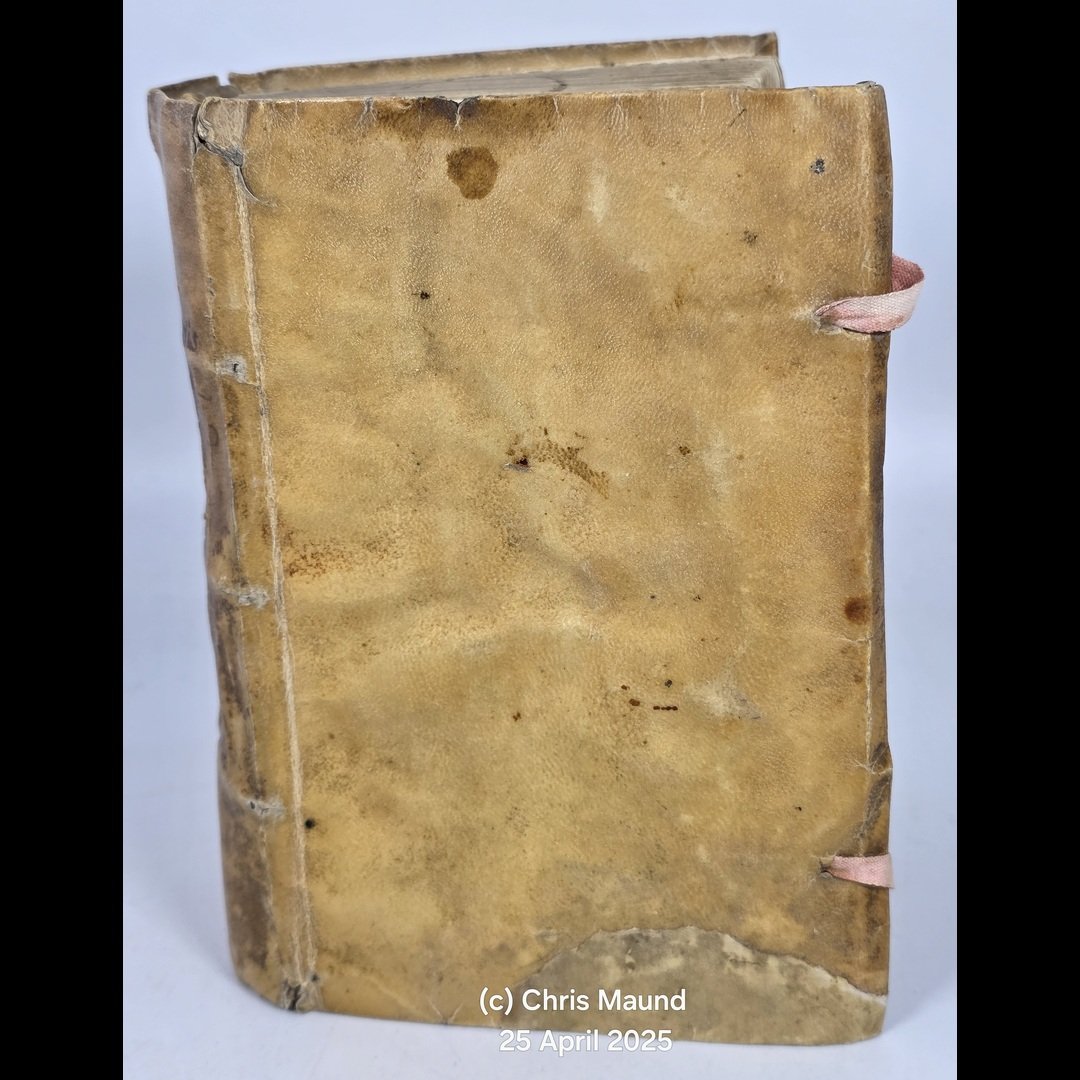
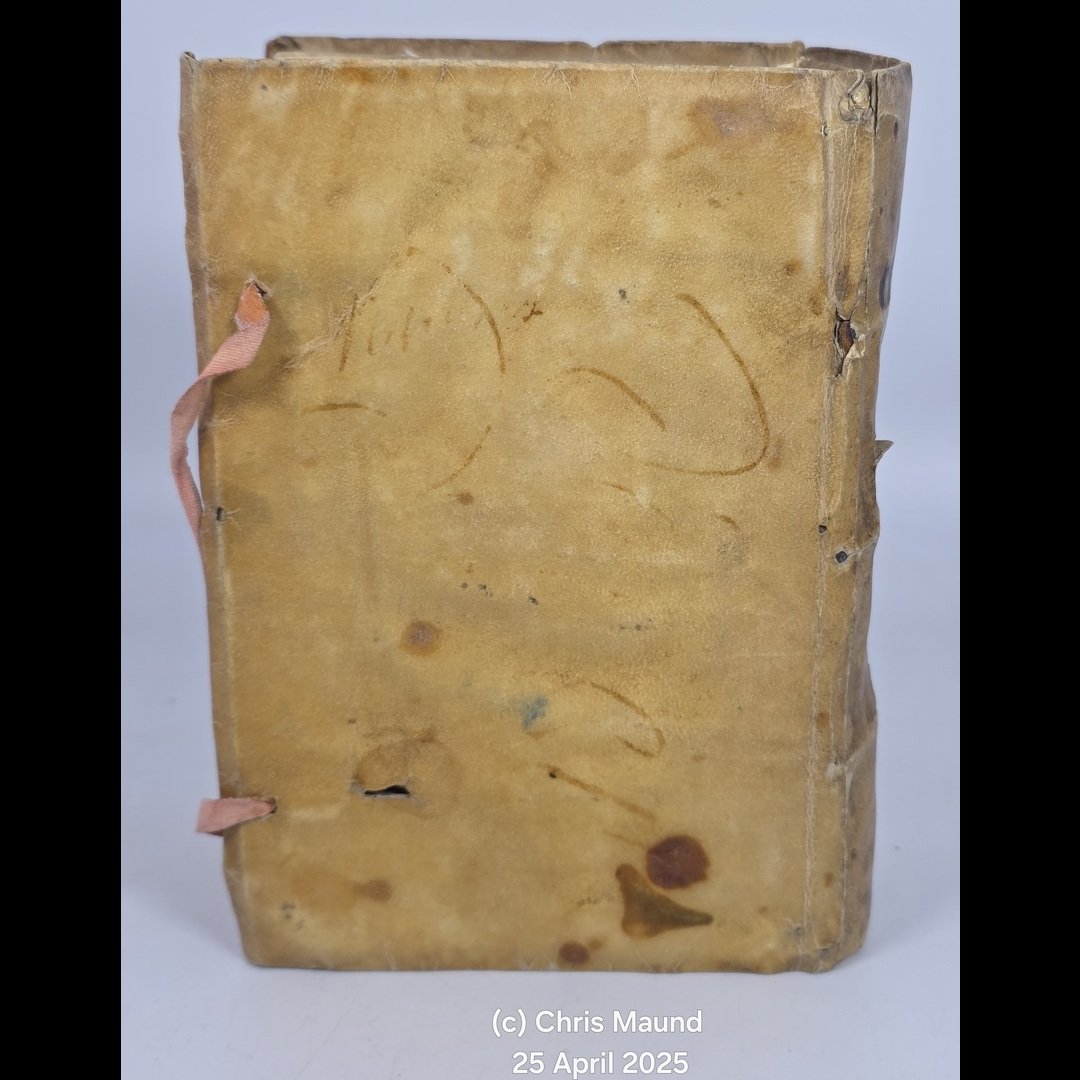
A characterful and substantially intact sixteenth-century copy in contemporary limp vellum. Binding rubbed, soiled and age-darkened, with the original ties wanting. Vellum somewhat cockled and worn, with expected handling marks and surface wear, together with rodent loss to the upper edge of the upper cover. Early manuscript titling to spine.
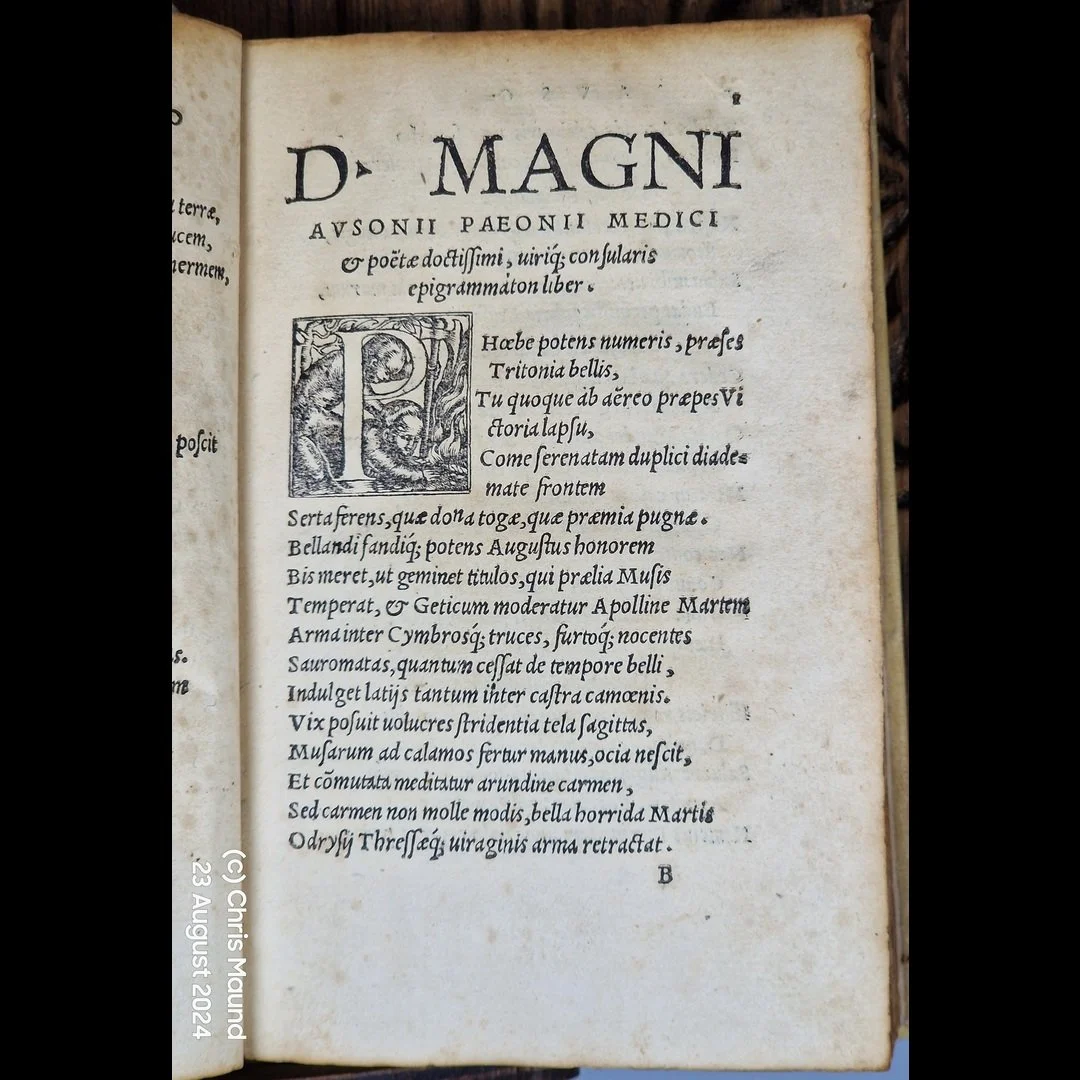
Title page present with attractive woodcut Gryphius printer's device and the motto “Virtute duce, comite Fortuna”. A further, larger Gryphius device appears on the final leaf verso. Decorative woodcut initials throughout.
Text with general age-toning, scattered spotting, occasional marks from use and areas of old light damp staining. Numerous early ink marginal annotations, manuscript notes and underscoring, particularly in the earlier portion of the volume. The annotations appear to be in an early-modern hand and repeatedly engage with the historical and moral content of Justin's narrative.
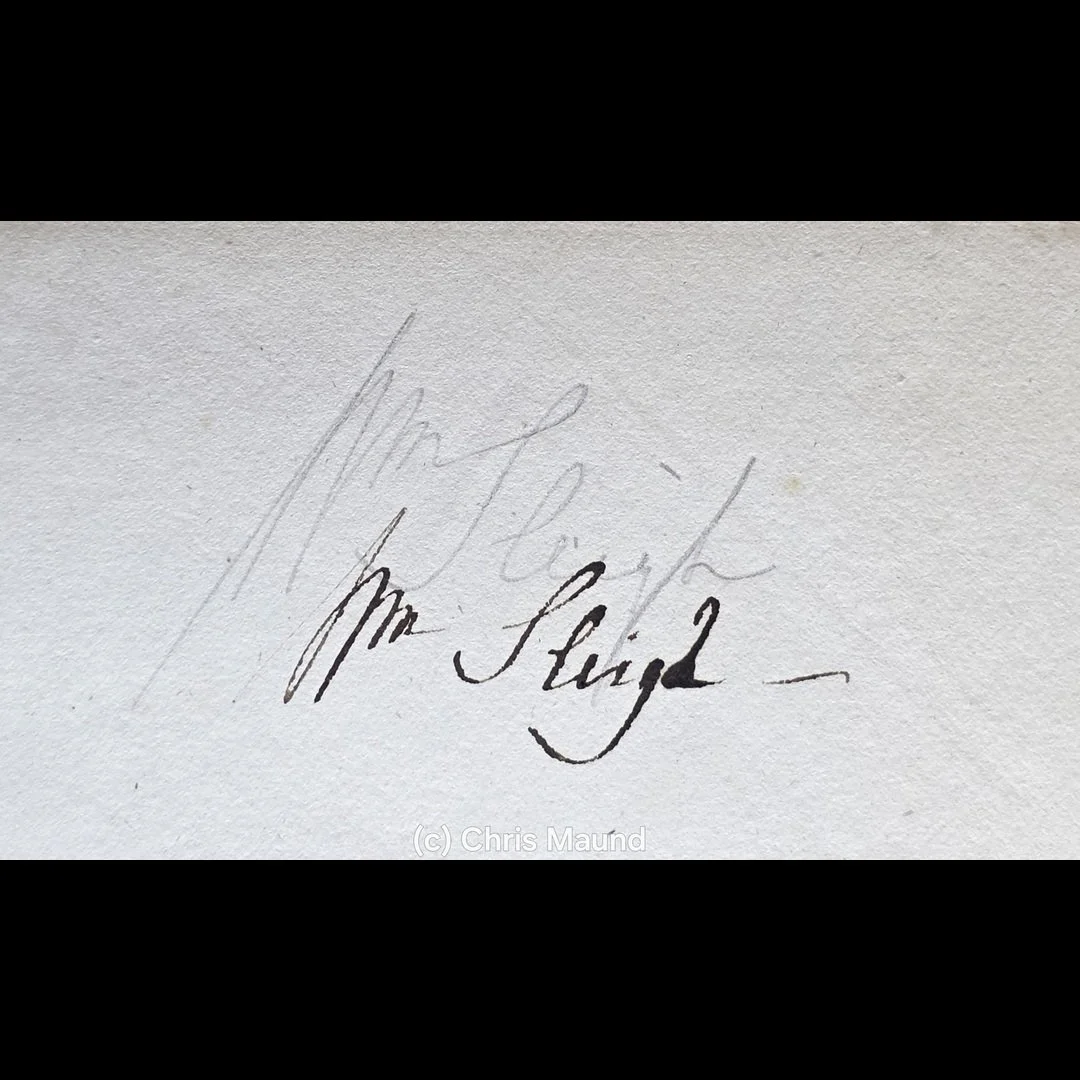
Later ownership signature of Paul V. Rubow to the front free endpaper.
The printing remains generally strong and legible, and the text retains generous margins for an octavo of the period. The early annotations should be regarded as an important feature of the copy rather than merely as condition defects, preserving evidence of the manner in which a Renaissance or early-modern reader actively studied the text.
Title page, main text, appended imperial epitome, index and terminal printer's-device leaf present. Complete.
Please see Photos as part of condition report.
REFERENCES
Ateneo di Salò, Catalogo delle Cinquecentine, no. 609
Biblioteca Digital de la Comunidad de Madrid, Biblioteca Histórica Marqués de Valdecilla copy
Dominic Winter Auctioneers, 15 May 2024, lot 271
Paul V. Rubow, Dansk Biografisk Leksikon
SYNOPSIS
Justin's Epitome preserves the substance of Pompeius Trogus's lost Historiae Philippicae, a forty-four-book universal history composed during the age of Augustus.
The narrative begins not with Rome but with the succession of earlier kingdoms and empires. Assyria, Media and Persia give way to the Greek world, after which Macedonia assumes central importance through the rise of Philip II and the extraordinary conquests of Alexander the Great.
Alexander's campaigns and character occupy a major place in the work, but the story does not end with his death. Justin follows the violent fragmentation of his empire among his generals and successors, recording the struggles which produced the Ptolemaic, Seleucid and other Hellenistic kingdoms.
The work consequently preserves important traditions concerning Alexander and the Successors, alongside histories of Persia, Parthia, Carthage and numerous peoples and rulers whose stories are much less fully represented in surviving Roman historical literature.
Justin was interested not only in events but in their exemplary possibilities. His pages repeatedly explore the character of rulers, ambition and restraint, loyalty and treachery, courage, cruelty, clemency, military success and sudden reversals of fortune.
These qualities helped make the work particularly attractive to Renaissance humanists, who approached ancient history not merely as a chronological record of the past but as a storehouse of political, ethical and rhetorical examples.
That intellectual culture survives physically in this copy. Its early reader underscored passages and supplied manuscript observations alongside the printed text, leaving a visible record of the process by which ancient history was read, interpreted and turned into moral and political instruction.
A characterful and appealing survival: a 1559 Venetian printing of one of the principal surviving sources for the lost history of Pompeius Trogus, retaining its contemporary vellum binding, two Gryphius printer's devices, substantial early manuscript engagement with the text, and later provenance from the library of the Danish scholar Paul V. Rubow.
AUTHOR BIO
Marcus Junianus Justinus was a Roman historian whose precise dates remain uncertain, although he is generally placed somewhere within the Roman imperial period. Almost nothing is securely known of his life. His enduring importance rests upon his Epitome of the much larger Historiae Philippicae of Pompeius Trogus.
Justin did not simply produce a mechanical abridgement. In his preface he explains that he selected those passages he considered particularly worthy of remembrance, omitting material which was neither pleasurable to read nor useful as an example. His work therefore functions simultaneously as history, anthology and collection of moral and political exempla.
Because Trogus's original forty-four-book history has otherwise disappeared, Justin preserves substantial historical material which would have been lost entirely, particularly concerning Macedonia, Alexander the Great, Persia and the kingdoms created following Alexander's death.
Additional Author:
Pompeius Trogus was a Gallo-Roman historian active during the reign of Augustus. His monumental Historiae Philippicae differed markedly from the Roman-centred historical tradition represented by authors such as Livy.
Instead, Trogus presented the rise and fall of successive world powers, devoting particular attention to the eastern Mediterranean, Persia, Macedonia and the Hellenistic kingdoms. Rome consequently emerges relatively late in his universal history rather than forming its starting point.
The complete work is lost. Its contents survive principally through Justin's epitome and through the surviving ancient summaries, or prologi, of the individual books.
Additional Text:
The volume also contains the De vita et moribus Romanorum Imperatorum Epitome, beginning at p.299 and presenting concise accounts of the Roman emperors from Augustus through the later empire.
The work is attributed in this sixteenth-century edition to Sextus Aurelius Victor, in accordance with the traditional attribution. Modern scholarship generally treats the text as anonymous and distinguishes it from Victor's securely attributed works, referring to its author as Pseudo-Aurelius Victor and to the work as the Epitome de Caesaribus.
Its inclusion makes the volume particularly effective as a Renaissance compendium of ancient history: Justin and Trogus trace the kingdoms and empires of the wider ancient world, while the appended Epitome continues the historical sequence through imperial Rome.
Introductory Author:
Simon Grynaeus (1493–1541) was a German-Swiss humanist, classical scholar and theologian associated with the intellectual culture of the Reformation and with many of the leading humanists of his generation.
His De utilitate legendae historiae — “On the usefulness of reading history” — precedes Justin's text in this edition. The essay advocates history as a source of practical, political and moral instruction, providing an illuminating context for the way Renaissance readers approached ancient historical writing.
The extensive annotations in this particular copy are especially interesting in that respect: its early reader repeatedly marks precisely the sort of political and ethical examples which Grynaeus argues should be extracted from historical study.
ILLUSTRATOR
Anonymous
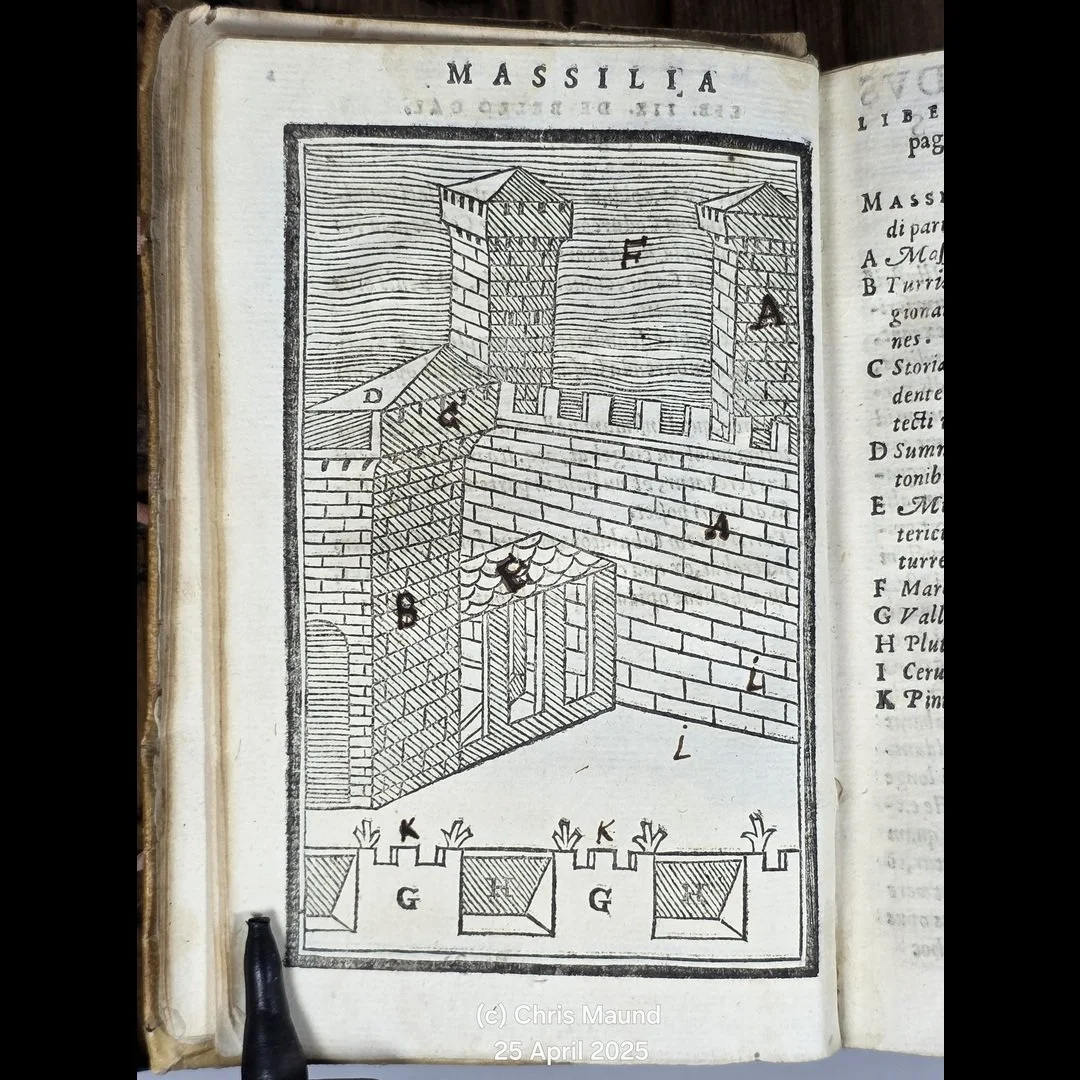
No individual woodcut artist is identified for the decorative material in this edition. The title-page and terminal printer's devices belong to the visual identity of Giovanni Griffio's Venetian press, while decorative woodcut initials punctuate the text.
The two griffin devices are particularly attractive examples of sixteenth-century printer's marks and provide a strong visual connection between the physical book and the workshop in which it was produced.
Printer Bio:
Giovanni Griffio, Latinised as Ioannes Gryphius, was a sixteenth-century Venetian printer and bookseller associated with the wider Gryphius printing family. Active in Venice during the flourishing period of Renaissance humanist publishing, he issued classical, theological and scholarly texts in portable formats intended for the educated European book market.
His characteristic printer's emblem was the griffin, appearing in two forms in this volume. The title-page device is accompanied by the motto:
VIRTUTE DUCE, COMITE FORTUNA - “With virtue as guide, fortune as companion.”
A second and larger griffin device appears at the conclusion of the volume.
1559 Venice Edition Early Manuscript Marginalia
IUSTINI EX TROGI POMPEII HISTORIIS EXTERNIS LIBRI XXXXIIII
By Marcus Junianus Justinus
KEY DETAILS
Condition: Good
Format: Vellum, Octavo (Standard) (8vo 6 × 9 in 152 × 229 mm )
Note: Binding/size selection follows standard bibliographic conventions and is approximate; exact measurements may vary.
Published By: Ioannes Gryphius [Giovanni Griffio], Italy, 1559
Language: Latin
Illustrated By: Anonymous
Provenance: Paul V. Rubow (1896–1972), distinguished Danish literary historian, philologist, professor and noted bibliophile, with his ownership signature to the front free endpaper. Rubow was a prominent scholar of literature an...
Collation: 338, [30] pp.; Signatures: A–Z⁸
Dust Jacket: None, as issued, No Jacket
SKU: BTETM0002429
Shipping Info: Approximate Package Dimensions H: 12.5, L: 30, W: 25 (Units: cm), W: 2Kg
Tracked Shipping, Insurance Coverage as per Customer Request
DESCRIPTION
IUSTINI EX TROGI POMPEII HISTORIIS EXTERNIS LIBRI XXXXIIII
With the Epitome of the Roman Emperors attributed to Sextus Aurelius Victor
A highly evocative Renaissance edition of Justin's epitome of the lost Historiae Philippicae of Pompeius Trogus, printed at Venice by Giovanni Griffio (Ioannes Gryphius) in 1559, preserved in contemporary limp vellum and extensively annotated by an early reader.
Trogus's original history, composed during the Augustan age, extended across forty-four books and offered an unusually broad account of the ancient world, moving through Assyria, Persia and Greece before concentrating upon Macedonia, Philip II, Alexander the Great and the Hellenistic successor kingdoms. The original Historiae Philippicae is lost, and Justin's later epitome remains its principal surviving witness. This edition supplements Justin with the De vita et moribus Romanorum Imperatorum Epitome, transmitted here under the name of Sextus Aurelius Victor, and opens with Simon Grynaeus's humanist essay De utilitate legendae historiae, on the value and usefulness of reading history.
An especially appealing copy for its evidence of historical readership. Numerous passages, particularly in the earlier books, are underscored and supplied with Latin marginal annotations in an early hand. These are not simply ownership marks, but active reading notes responding to political, moral and historical themes within the text — kingship, conquest, warfare, courage, clemency, ambition and the instability of fortune. Together with the contemporary vellum binding and the later ownership of the distinguished Danish scholar Paul V. Rubow, they give the volume a particularly tangible history of intellectual use extending across several centuries.
PROVENANCE
Paul V. Rubow (1896–1972), distinguished Danish literary historian, philologist, professor and noted bibliophile, with his ownership signature to the front free endpaper. Rubow was a prominent scholar of literature and professor at the University of Copenhagen, publishing extensively on Danish and European literary history. Rubow's celebrated private library numbered approximately 40,000 volumes and was particularly strong in older French, German, English and Latin literature. His collection was dispersed following his death in 1972.
CONDITION, COLLATION & COPY NOTES
A characterful and substantially intact sixteenth-century copy in contemporary limp vellum. Binding rubbed, soiled and age-darkened, with the original ties wanting. Vellum somewhat cockled and worn, with expected handling marks and surface wear, together with rodent loss to the upper edge of the upper cover. Early manuscript titling to spine.
Title page present with attractive woodcut Gryphius printer's device and the motto “Virtute duce, comite Fortuna”. A further, larger Gryphius device appears on the final leaf verso. Decorative woodcut initials throughout.
Text with general age-toning, scattered spotting, occasional marks from use and areas of old light damp staining. Numerous early ink marginal annotations, manuscript notes and underscoring, particularly in the earlier portion of the volume. The annotations appear to be in an early-modern hand and repeatedly engage with the historical and moral content of Justin's narrative.
Later ownership signature of Paul V. Rubow to the front free endpaper.
The printing remains generally strong and legible, and the text retains generous margins for an octavo of the period. The early annotations should be regarded as an important feature of the copy rather than merely as condition defects, preserving evidence of the manner in which a Renaissance or early-modern reader actively studied the text.
Title page, main text, appended imperial epitome, index and terminal printer's-device leaf present. Complete.
Please see Photos as part of condition report.
REFERENCES
Ateneo di Salò, Catalogo delle Cinquecentine, no. 609
Biblioteca Digital de la Comunidad de Madrid, Biblioteca Histórica Marqués de Valdecilla copy
Dominic Winter Auctioneers, 15 May 2024, lot 271
Paul V. Rubow, Dansk Biografisk Leksikon
SYNOPSIS
Justin's Epitome preserves the substance of Pompeius Trogus's lost Historiae Philippicae, a forty-four-book universal history composed during the age of Augustus.
The narrative begins not with Rome but with the succession of earlier kingdoms and empires. Assyria, Media and Persia give way to the Greek world, after which Macedonia assumes central importance through the rise of Philip II and the extraordinary conquests of Alexander the Great.
Alexander's campaigns and character occupy a major place in the work, but the story does not end with his death. Justin follows the violent fragmentation of his empire among his generals and successors, recording the struggles which produced the Ptolemaic, Seleucid and other Hellenistic kingdoms.
The work consequently preserves important traditions concerning Alexander and the Successors, alongside histories of Persia, Parthia, Carthage and numerous peoples and rulers whose stories are much less fully represented in surviving Roman historical literature.
Justin was interested not only in events but in their exemplary possibilities. His pages repeatedly explore the character of rulers, ambition and restraint, loyalty and treachery, courage, cruelty, clemency, military success and sudden reversals of fortune.
These qualities helped make the work particularly attractive to Renaissance humanists, who approached ancient history not merely as a chronological record of the past but as a storehouse of political, ethical and rhetorical examples.
That intellectual culture survives physically in this copy. Its early reader underscored passages and supplied manuscript observations alongside the printed text, leaving a visible record of the process by which ancient history was read, interpreted and turned into moral and political instruction.
A characterful and appealing survival: a 1559 Venetian printing of one of the principal surviving sources for the lost history of Pompeius Trogus, retaining its contemporary vellum binding, two Gryphius printer's devices, substantial early manuscript engagement with the text, and later provenance from the library of the Danish scholar Paul V. Rubow.
AUTHOR BIO
Marcus Junianus Justinus was a Roman historian whose precise dates remain uncertain, although he is generally placed somewhere within the Roman imperial period. Almost nothing is securely known of his life. His enduring importance rests upon his Epitome of the much larger Historiae Philippicae of Pompeius Trogus.
Justin did not simply produce a mechanical abridgement. In his preface he explains that he selected those passages he considered particularly worthy of remembrance, omitting material which was neither pleasurable to read nor useful as an example. His work therefore functions simultaneously as history, anthology and collection of moral and political exempla.
Because Trogus's original forty-four-book history has otherwise disappeared, Justin preserves substantial historical material which would have been lost entirely, particularly concerning Macedonia, Alexander the Great, Persia and the kingdoms created following Alexander's death.
Additional Author:
Pompeius Trogus was a Gallo-Roman historian active during the reign of Augustus. His monumental Historiae Philippicae differed markedly from the Roman-centred historical tradition represented by authors such as Livy.
Instead, Trogus presented the rise and fall of successive world powers, devoting particular attention to the eastern Mediterranean, Persia, Macedonia and the Hellenistic kingdoms. Rome consequently emerges relatively late in his universal history rather than forming its starting point.
The complete work is lost. Its contents survive principally through Justin's epitome and through the surviving ancient summaries, or prologi, of the individual books.
Additional Text:
The volume also contains the De vita et moribus Romanorum Imperatorum Epitome, beginning at p.299 and presenting concise accounts of the Roman emperors from Augustus through the later empire.
The work is attributed in this sixteenth-century edition to Sextus Aurelius Victor, in accordance with the traditional attribution. Modern scholarship generally treats the text as anonymous and distinguishes it from Victor's securely attributed works, referring to its author as Pseudo-Aurelius Victor and to the work as the Epitome de Caesaribus.
Its inclusion makes the volume particularly effective as a Renaissance compendium of ancient history: Justin and Trogus trace the kingdoms and empires of the wider ancient world, while the appended Epitome continues the historical sequence through imperial Rome.
Introductory Author:
Simon Grynaeus (1493–1541) was a German-Swiss humanist, classical scholar and theologian associated with the intellectual culture of the Reformation and with many of the leading humanists of his generation.
His De utilitate legendae historiae — “On the usefulness of reading history” — precedes Justin's text in this edition. The essay advocates history as a source of practical, political and moral instruction, providing an illuminating context for the way Renaissance readers approached ancient historical writing.
The extensive annotations in this particular copy are especially interesting in that respect: its early reader repeatedly marks precisely the sort of political and ethical examples which Grynaeus argues should be extracted from historical study.
ILLUSTRATOR
Anonymous
No individual woodcut artist is identified for the decorative material in this edition. The title-page and terminal printer's devices belong to the visual identity of Giovanni Griffio's Venetian press, while decorative woodcut initials punctuate the text.
The two griffin devices are particularly attractive examples of sixteenth-century printer's marks and provide a strong visual connection between the physical book and the workshop in which it was produced.
Printer Bio:
Giovanni Griffio, Latinised as Ioannes Gryphius, was a sixteenth-century Venetian printer and bookseller associated with the wider Gryphius printing family. Active in Venice during the flourishing period of Renaissance humanist publishing, he issued classical, theological and scholarly texts in portable formats intended for the educated European book market.
His characteristic printer's emblem was the griffin, appearing in two forms in this volume. The title-page device is accompanied by the motto:
VIRTUTE DUCE, COMITE FORTUNA - “With virtue as guide, fortune as companion.”
A second and larger griffin device appears at the conclusion of the volume.

 Image 1 of 18
 Image 2 of 18
 Image 3 of 18
 Image 4 of 18
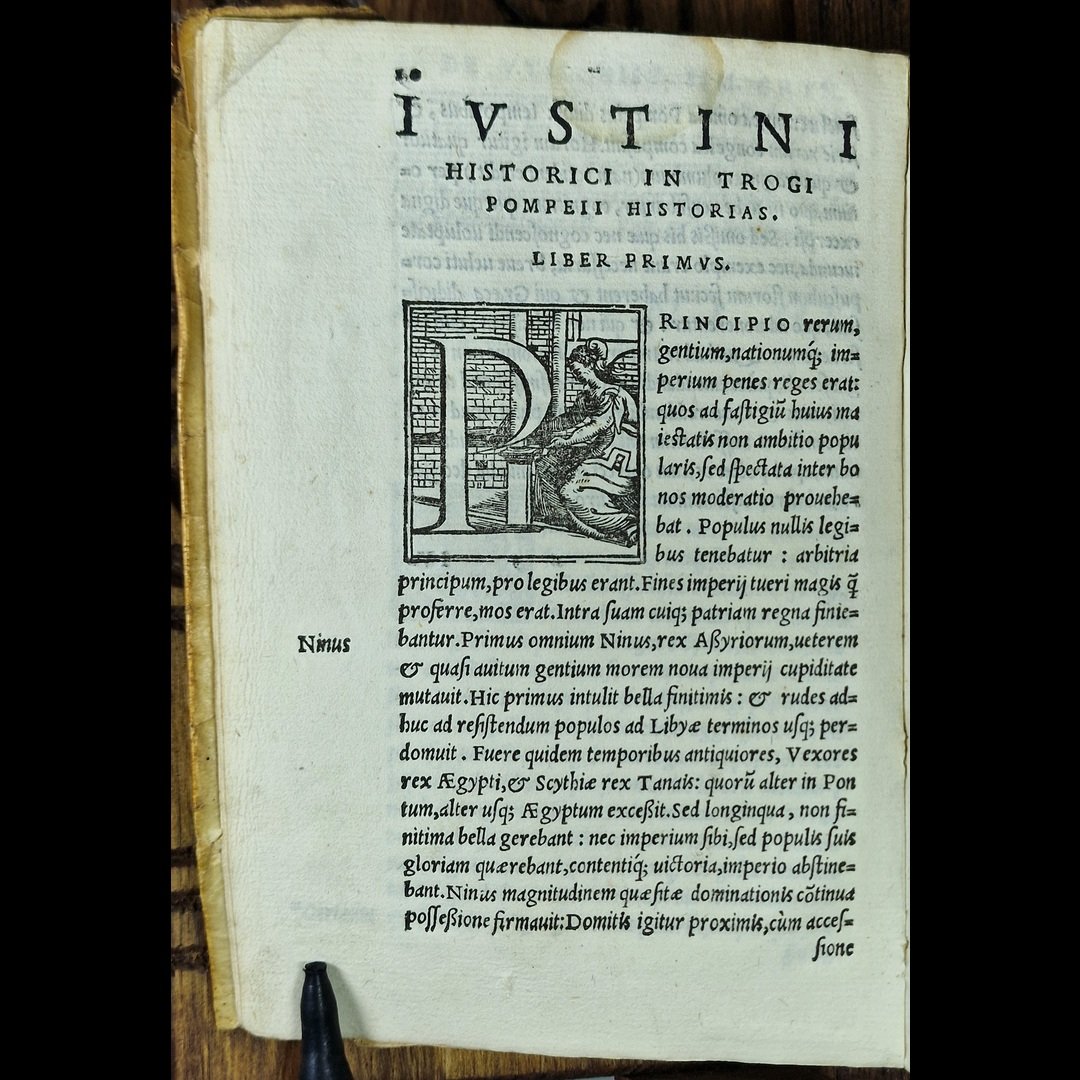 Image 5 of 18
 Image 6 of 18
 Image 7 of 18
 Image 8 of 18
 Image 9 of 18
 Image 10 of 18
 Image 11 of 18
 Image 12 of 18
 Image 13 of 18
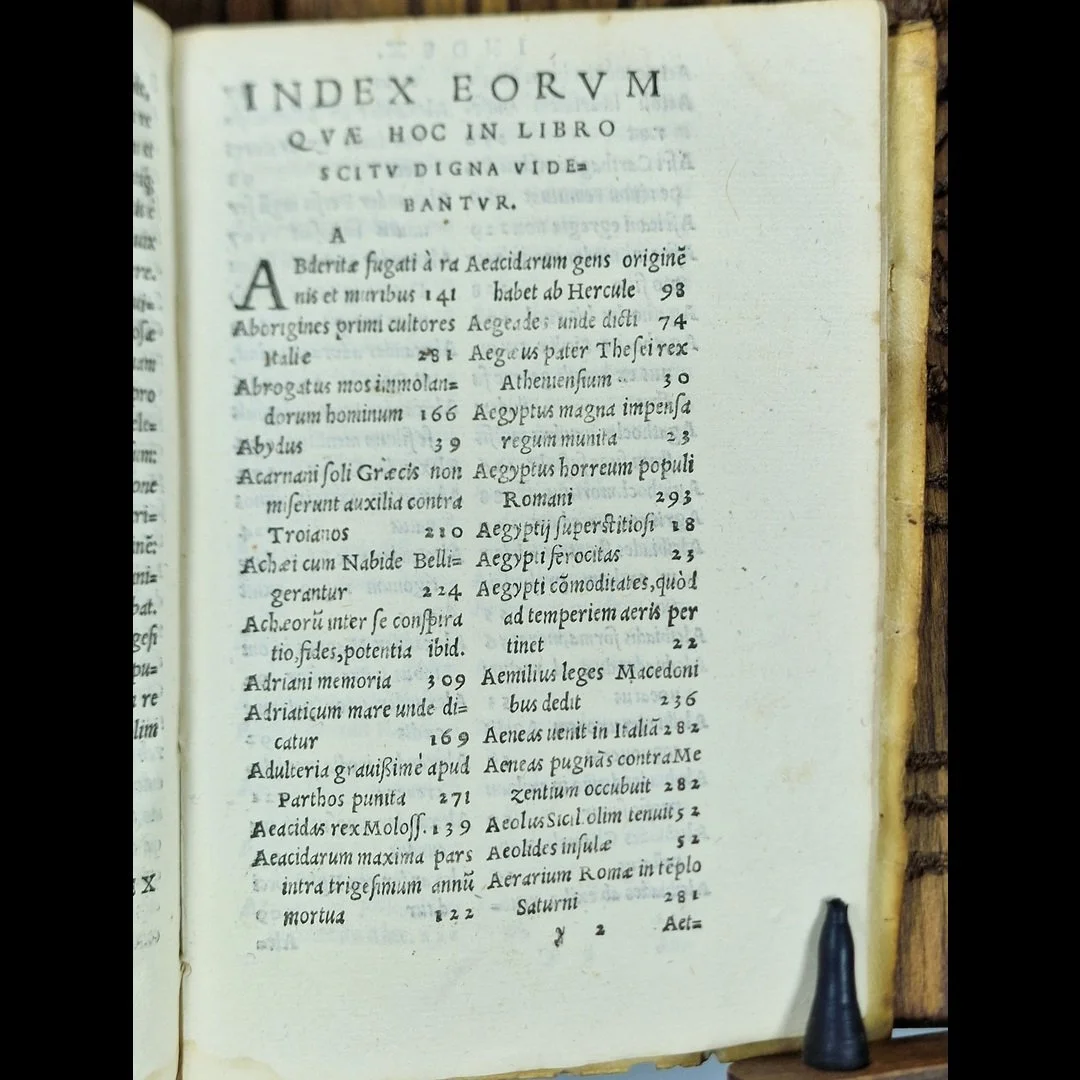 Image 14 of 18
 Image 15 of 18
 Image 16 of 18
 Image 17 of 18
 Image 18 of 18