1777 First English Edition
THE HISTORY OF THE FLAGELLANTS
By Somebody Who is Not Doctor of the Sorbonne [Jean-Louis De Lolme]
KEY DETAILS
Condition: Good
Format: Hardcover, quarto (4to 9 1⁄2 × 12 in 241 × 305 mm )
Note: Binding/size selection follows standard bibliographic conventions and is approximate; exact measurements may vary.
Published By: Printed for Fielding and Walker, No. 20, Paternoster Row, London, 1777
Language: English
Illustrated By: Anonymous
Collation: [6], 3, 2–5, 4–7, 6–340 pp., plates; 4to. The apparently irregular pagination is called for and the text is continuous.
Dust Jacket: None, as issued
SKU: BTETM0002432
Shipping Info: Approximate Package Dimensions H: 12.5, L: 30, W: 25 (Units: cm), W: 2Kg
Tracked Shipping, Insurance Coverage as per Customer Request
DESCRIPTION
THE HISTORY OF THE FLAGELLANTS
or, The Advantages of Discipline; Being a Paraphrase and Commentary on the Historia Flagellantium of the Abbé Boileau, Doctor of the Sorbonne, Canon of the Holy Chapel, &c.
By Somebody Who is Not Doctor of the Sorbonne [Jean-Louis de Lolme]
An unusually provocative eighteenth-century study of religious flagellation, punishment and bodily discipline, combining historical enquiry, Enlightenment criticism, satire and an unmistakable undercurrent of erotic curiosity.
Jean-Louis de Lolme's History of the Flagellants adapts and substantially comments upon Jacques Boileau's Historia Flagellantium, first published in Latin at Paris in 1700. Moving through classical, biblical, medieval and early-modern examples, de Lolme examines the extraordinary history of whipping and self-mortification as religious penance, ecclesiastical punishment, public spectacle and private discipline.
The result is considerably more than a translation. De Lolme subjects the traditions he describes to the sceptical scrutiny of the Enlightenment, repeatedly questioning the reasoning by which physical suffering could become associated with spiritual virtue. Yet the work's appeal has always extended beyond theology: its combination of religious controversy, unusual historical anecdote, corporal punishment and occasionally eroticised imagery places it firmly within the tradition of eighteenth-century curiosa.
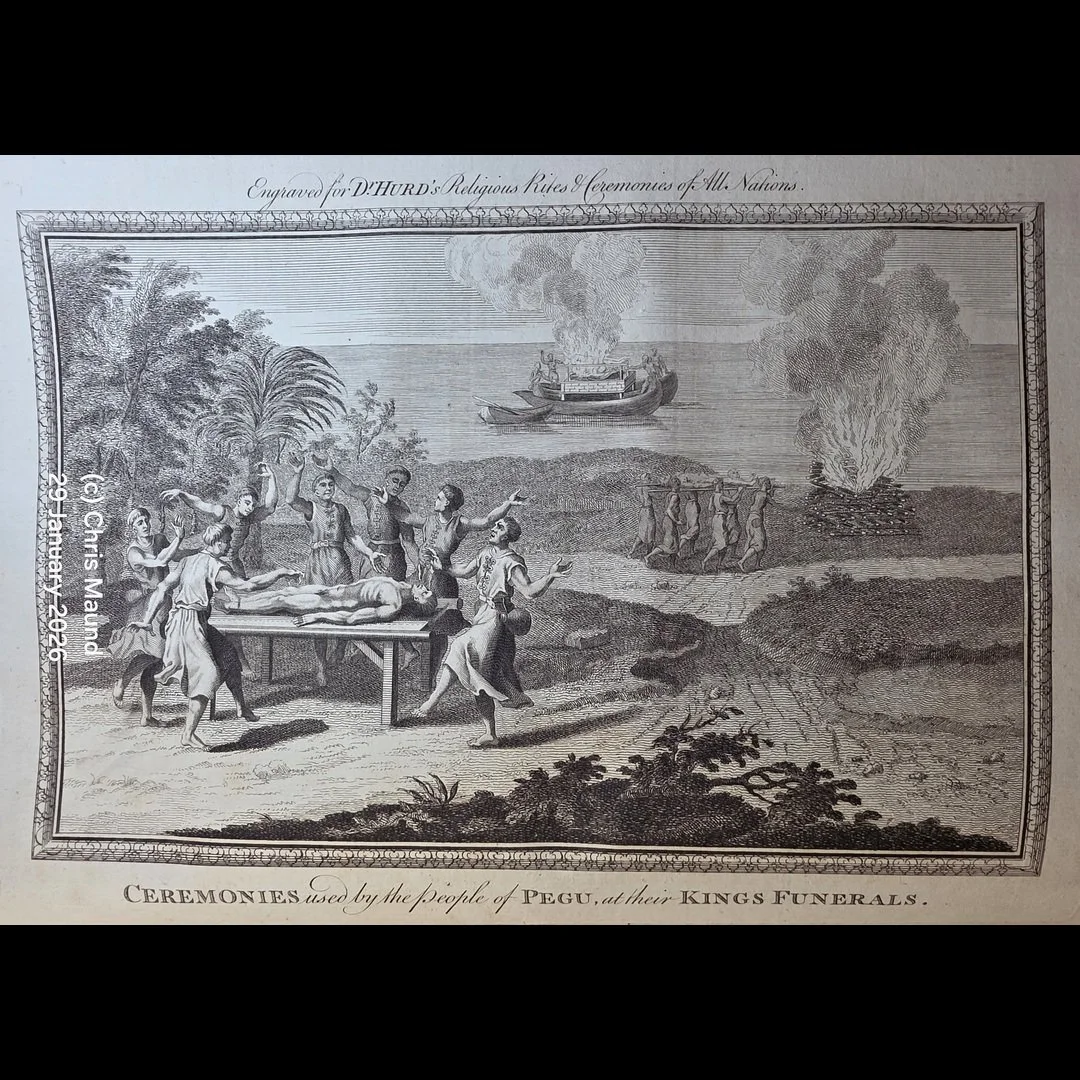
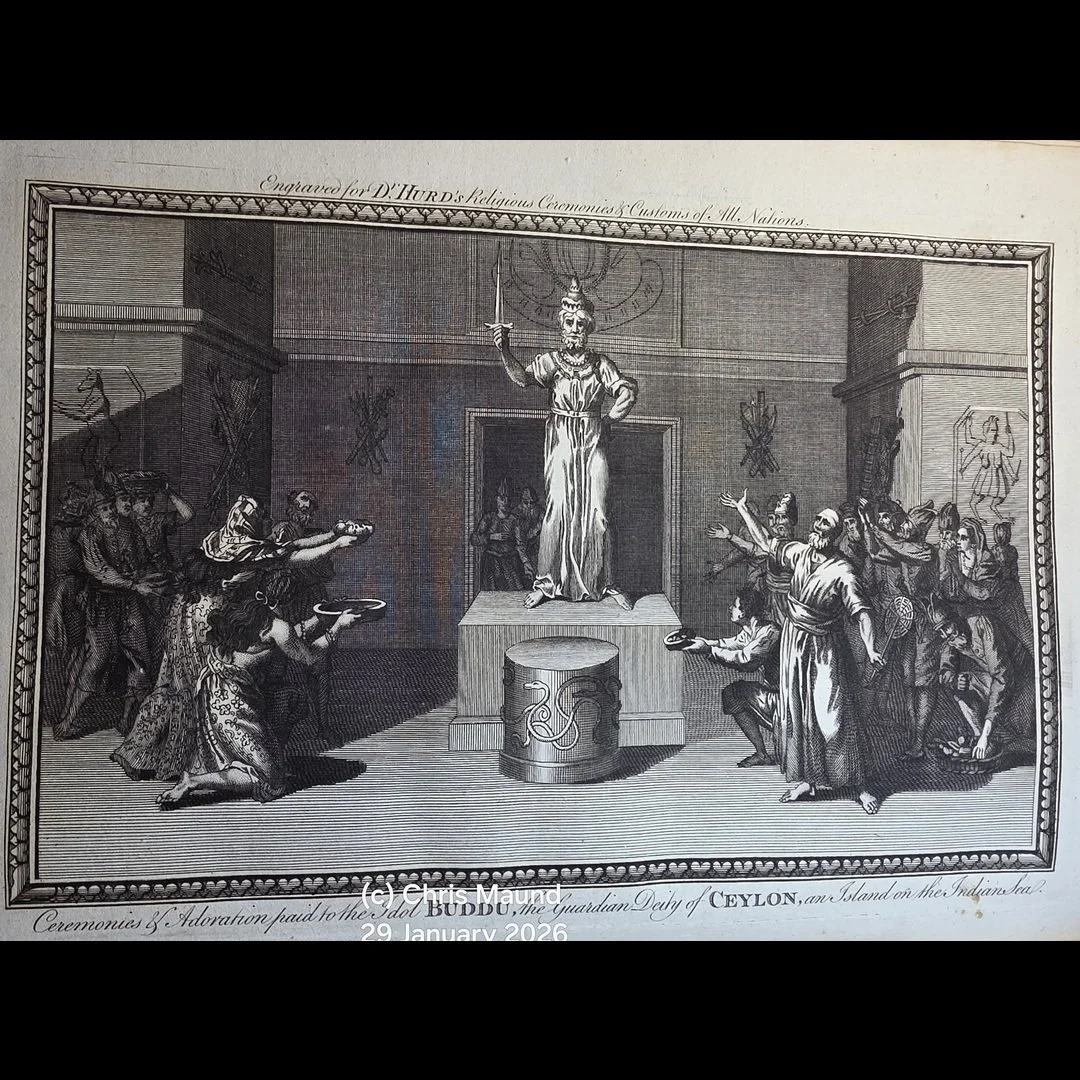
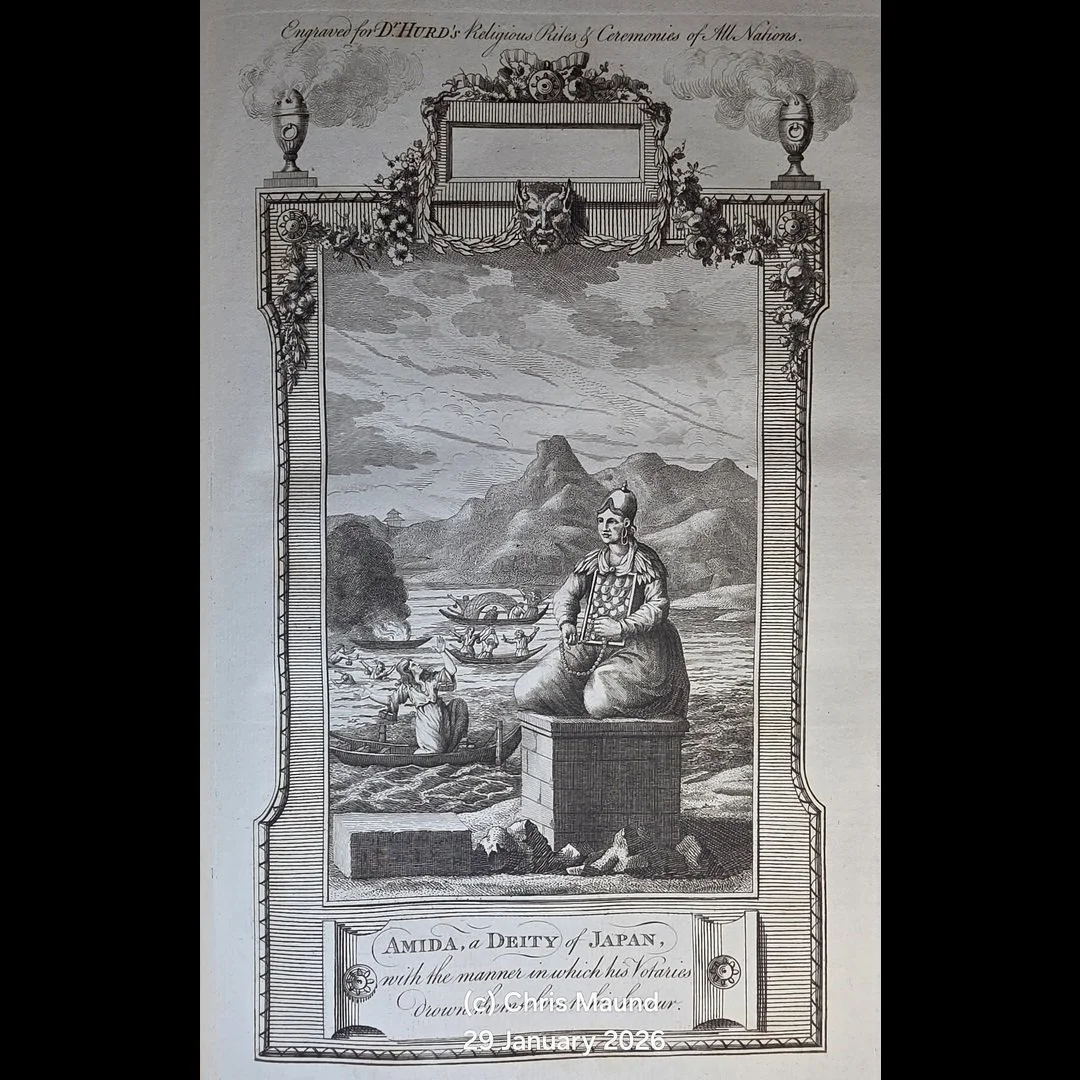
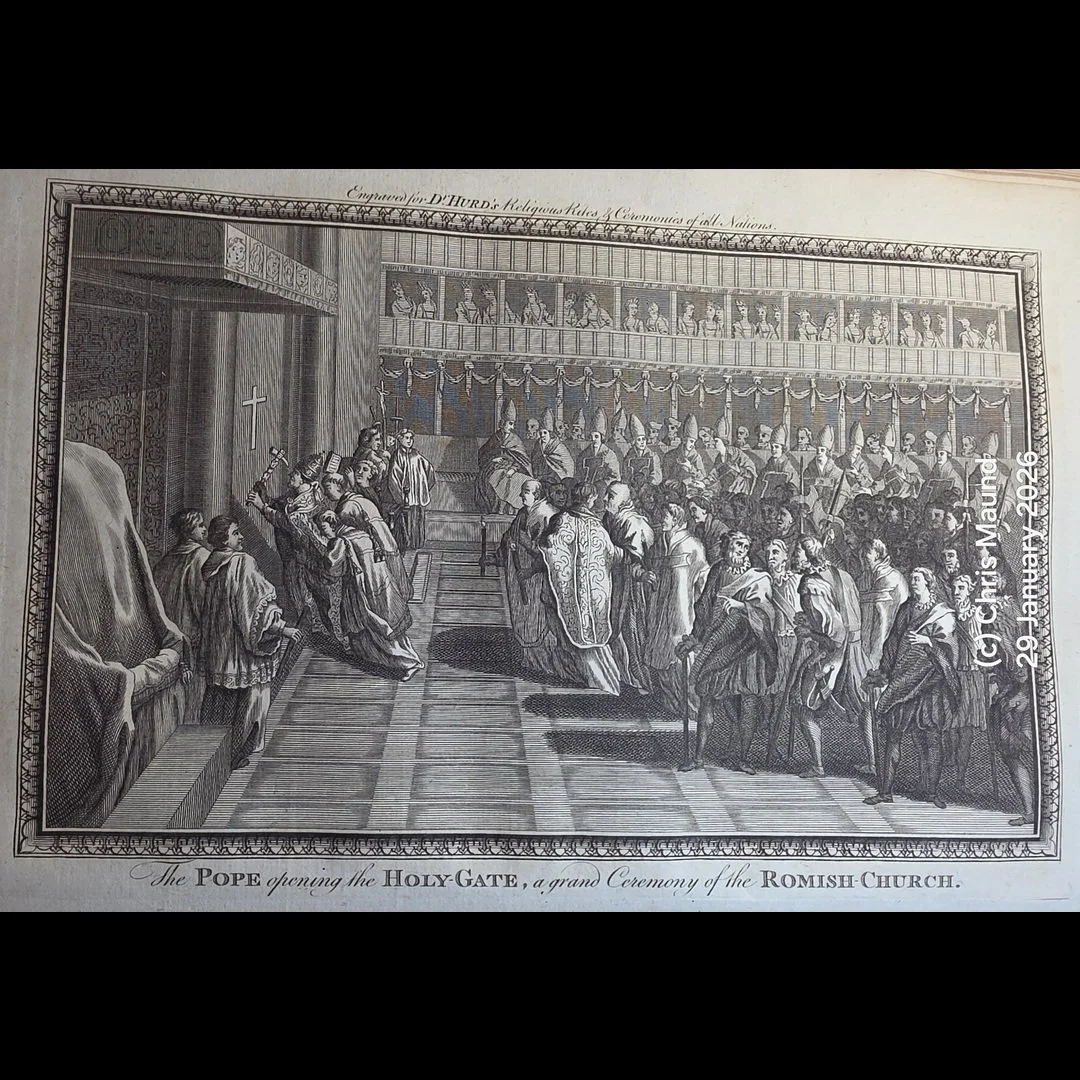
The volume is illustrated with four full-page engraved plates, together with engraved head- and tailpieces and a title-page vignette. The plates include striking scenes of demonic flagellation, the penance of Henry II following the murder of Thomas Becket, and Bernardino of Siena administering discipline to a partially unclothed woman, imagery which has ensured the book's enduring interest to collectors of religious history, punishment, sexuality and illustrated curiosa.
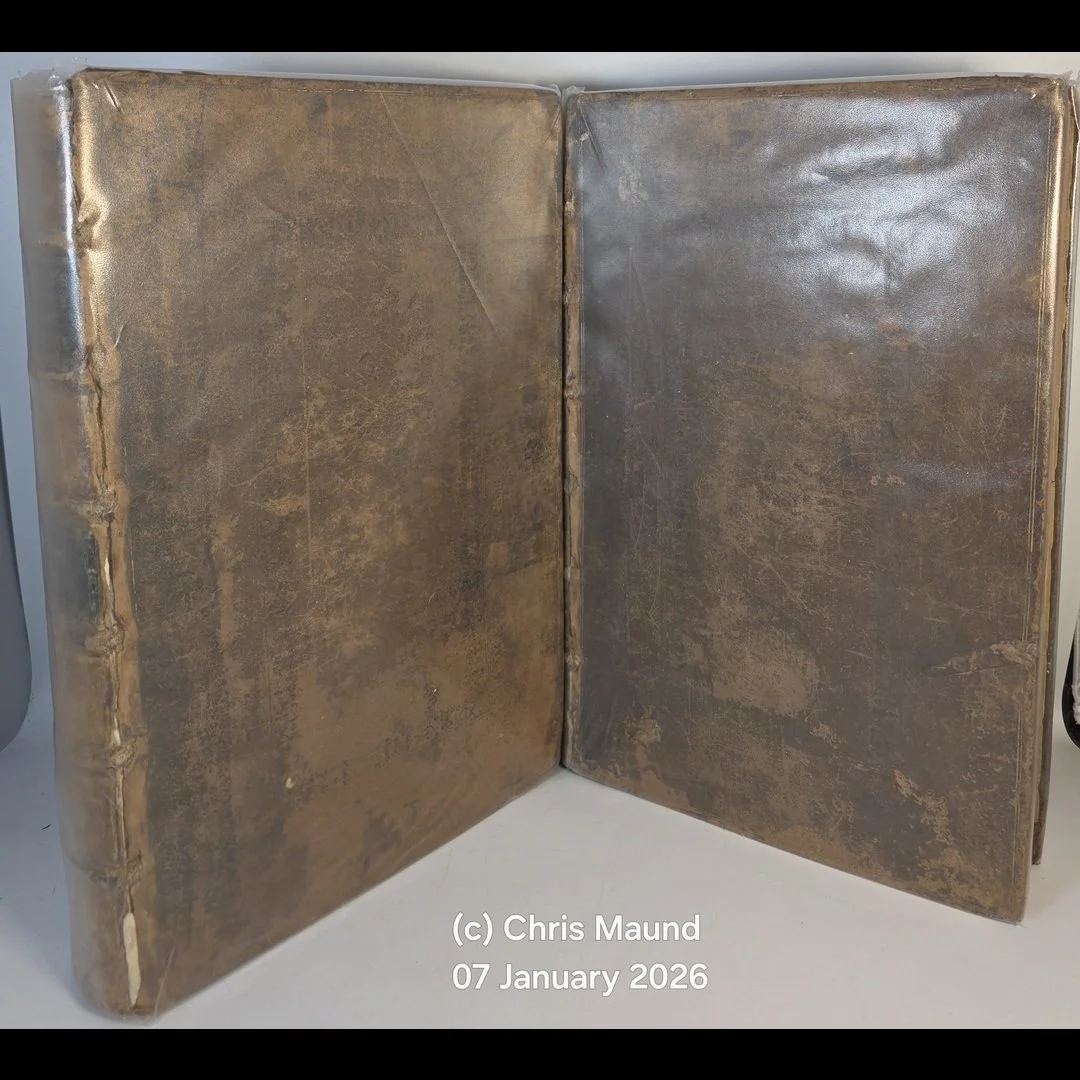
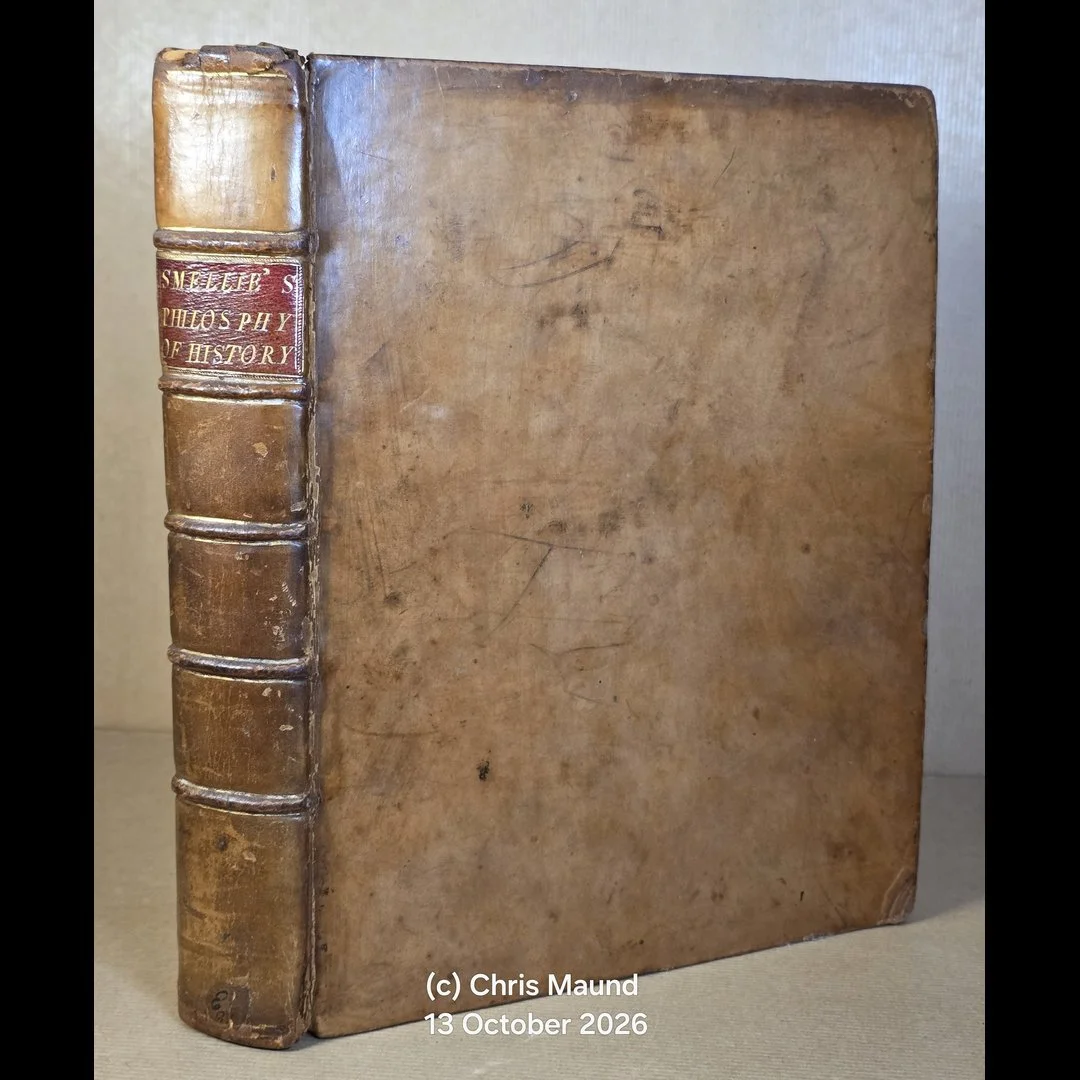
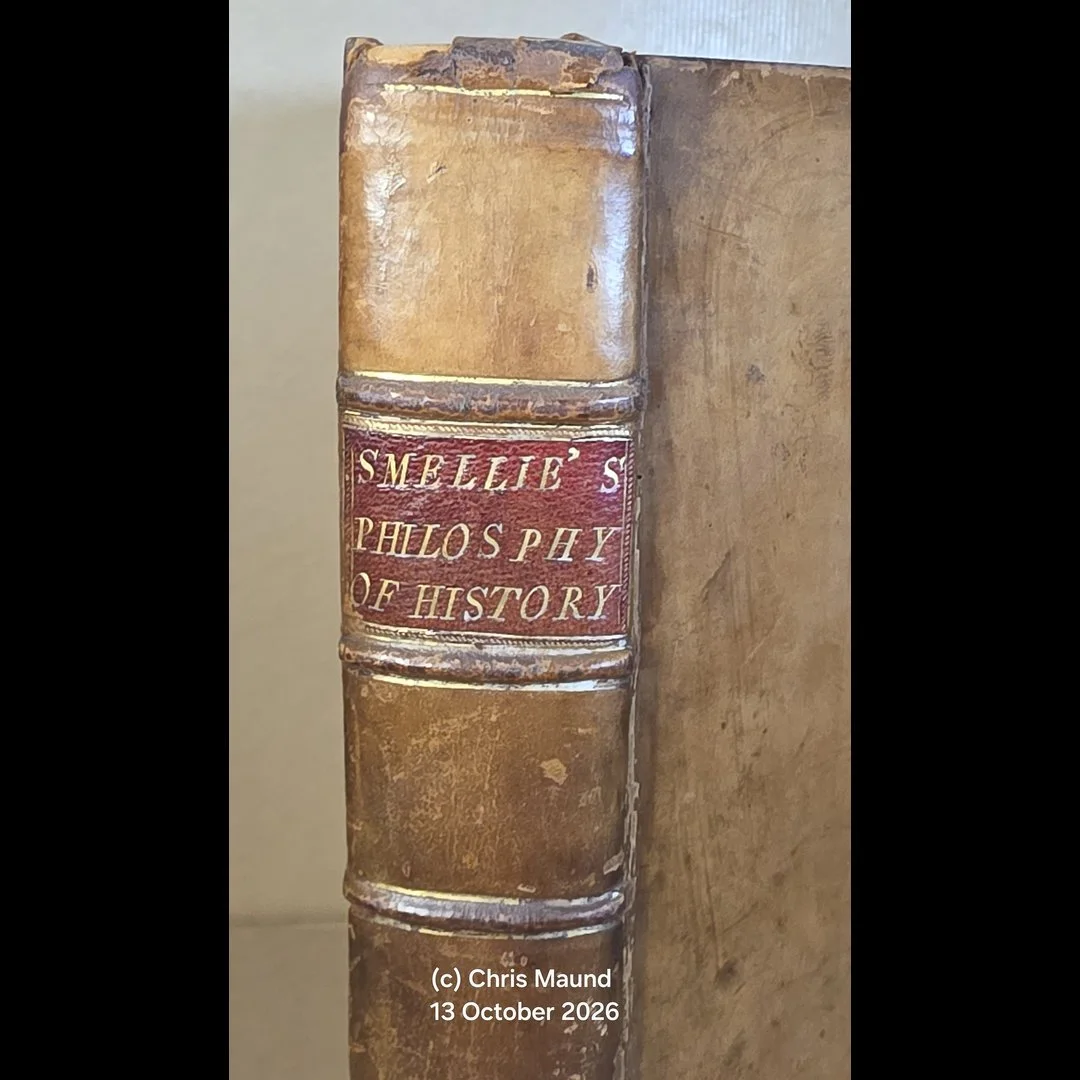
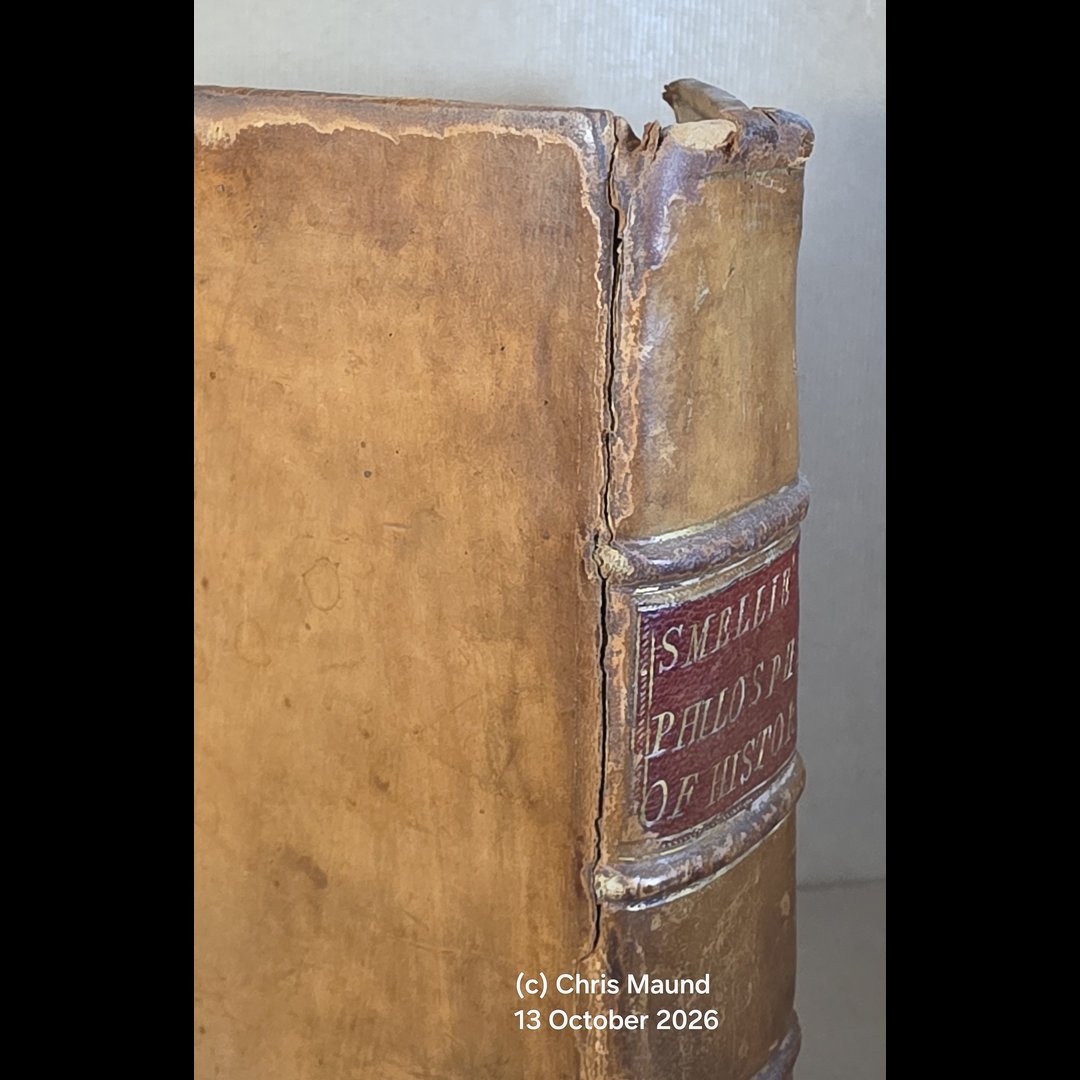
This copy retains the half-title, all four engraved plates and the complete text, and remains in its attractive contemporary speckled calf binding with red morocco spine label and marbled endpapers.
The edition has an interesting bibliographical history. The English Short Title Catalogue records this 1777 “printed for Fielding and Walker” issue as ESTC T143818, a reissue of the probable [1776?] setting with a cancel title-page, first preface leaf, pp. [9]–10 and pp. 331–[332]. The occasionally irregular pagination is therefore an original feature of the edition and the text remains continuous.
CONDITION, COLLATION & COPY NOTES
COLLATION
[6], 3, 2–5, 4–7, 6–340 pp., plates; 4to. The apparently irregular pagination is called for and the text is continuous.
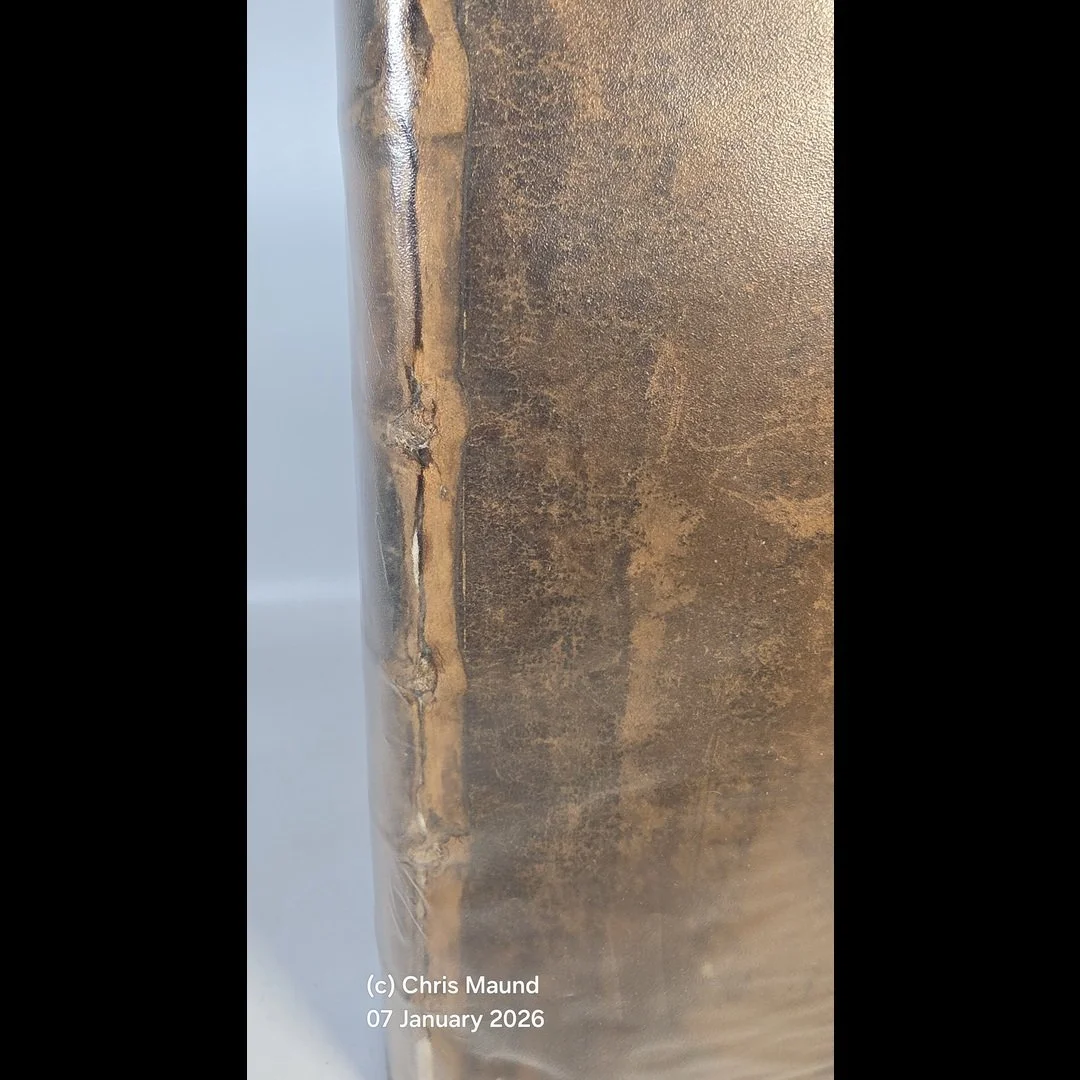
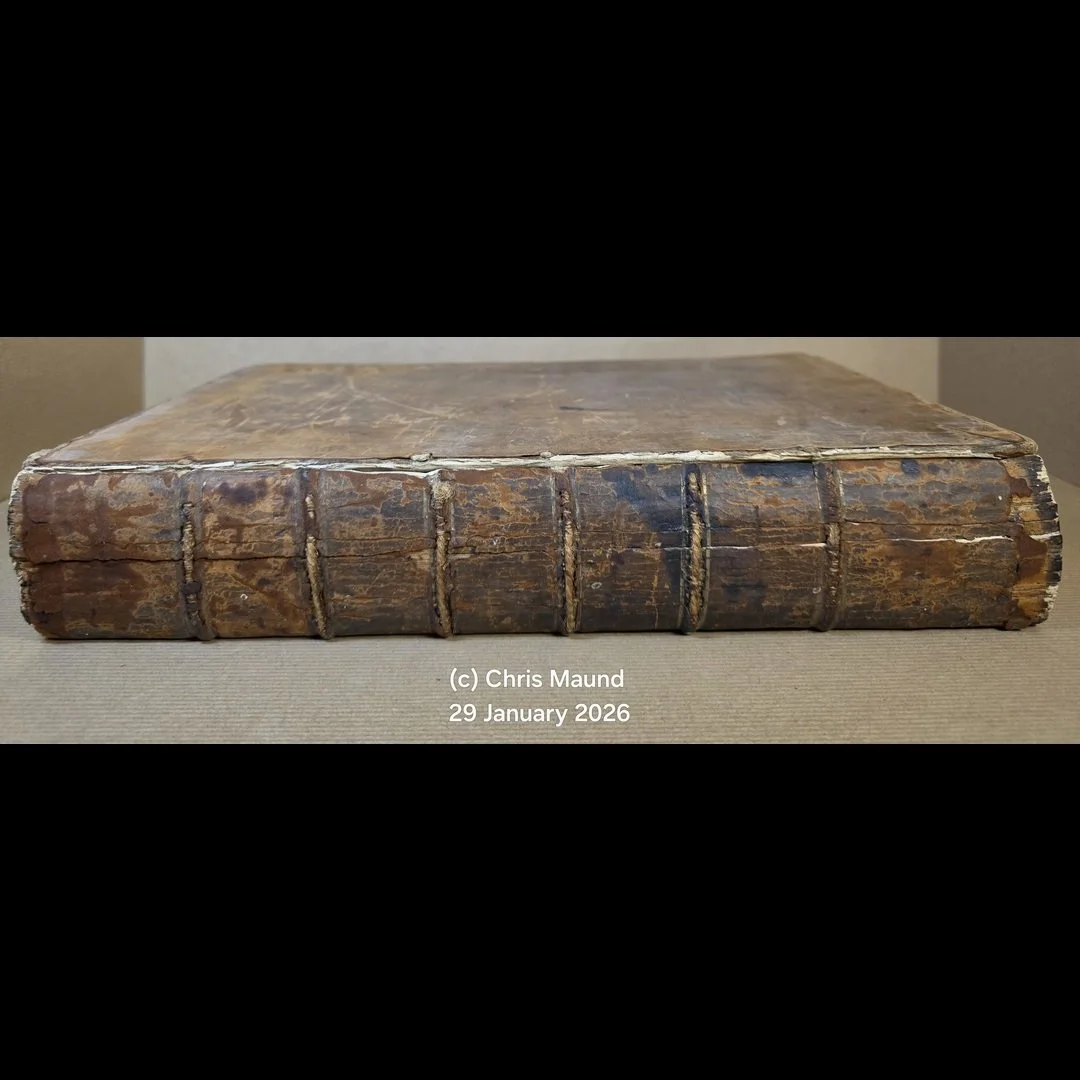
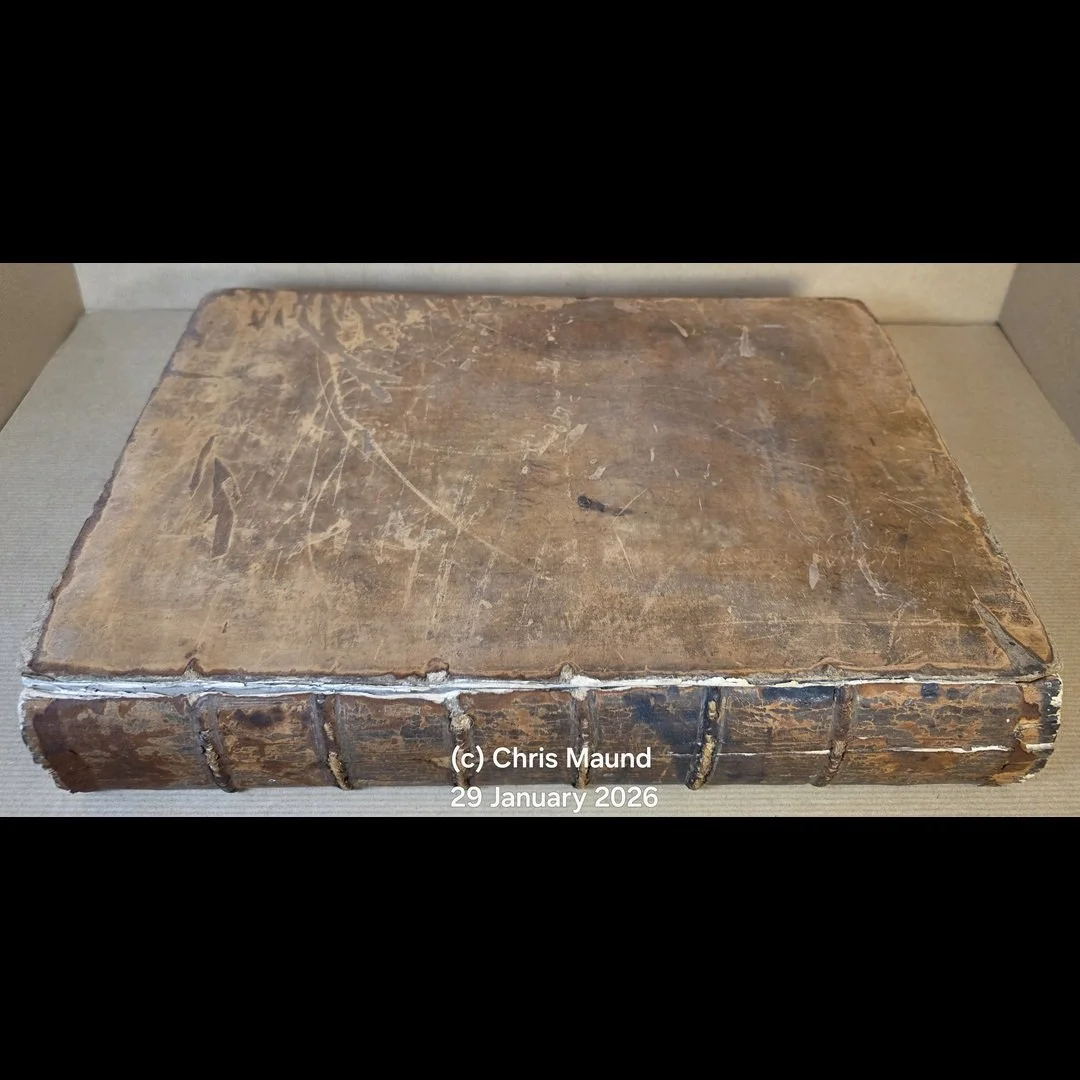
A handsome, complete and highly characteristic eighteenth-century copy whose principal defect is the detached upper board; internally sound and retaining all of the important illustrative and bibliographical material.
A complete and bibliographically attractive copy, internally very well preserved overall, in contemporary or early calf boards which have been sympathetically rebacked in later calf.
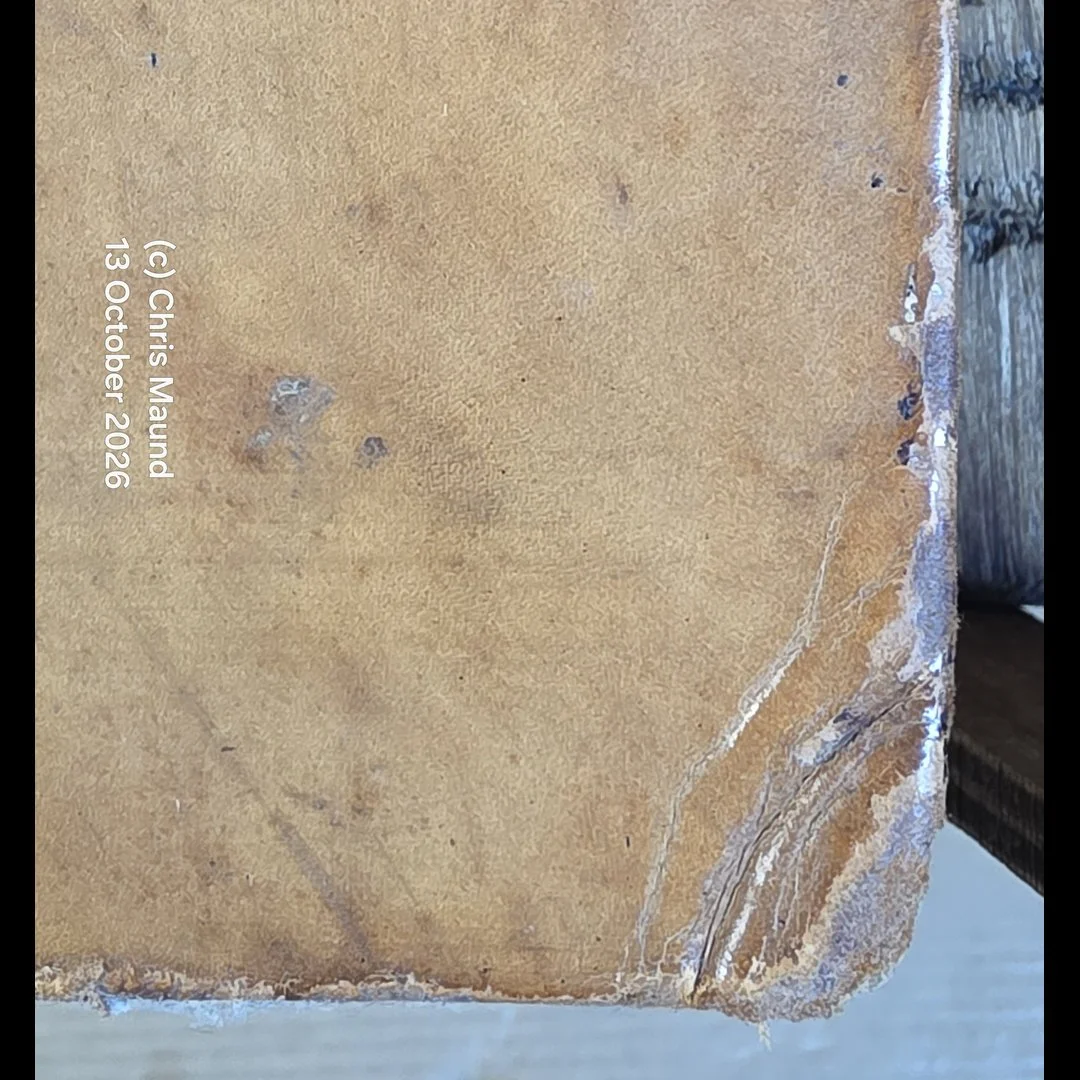
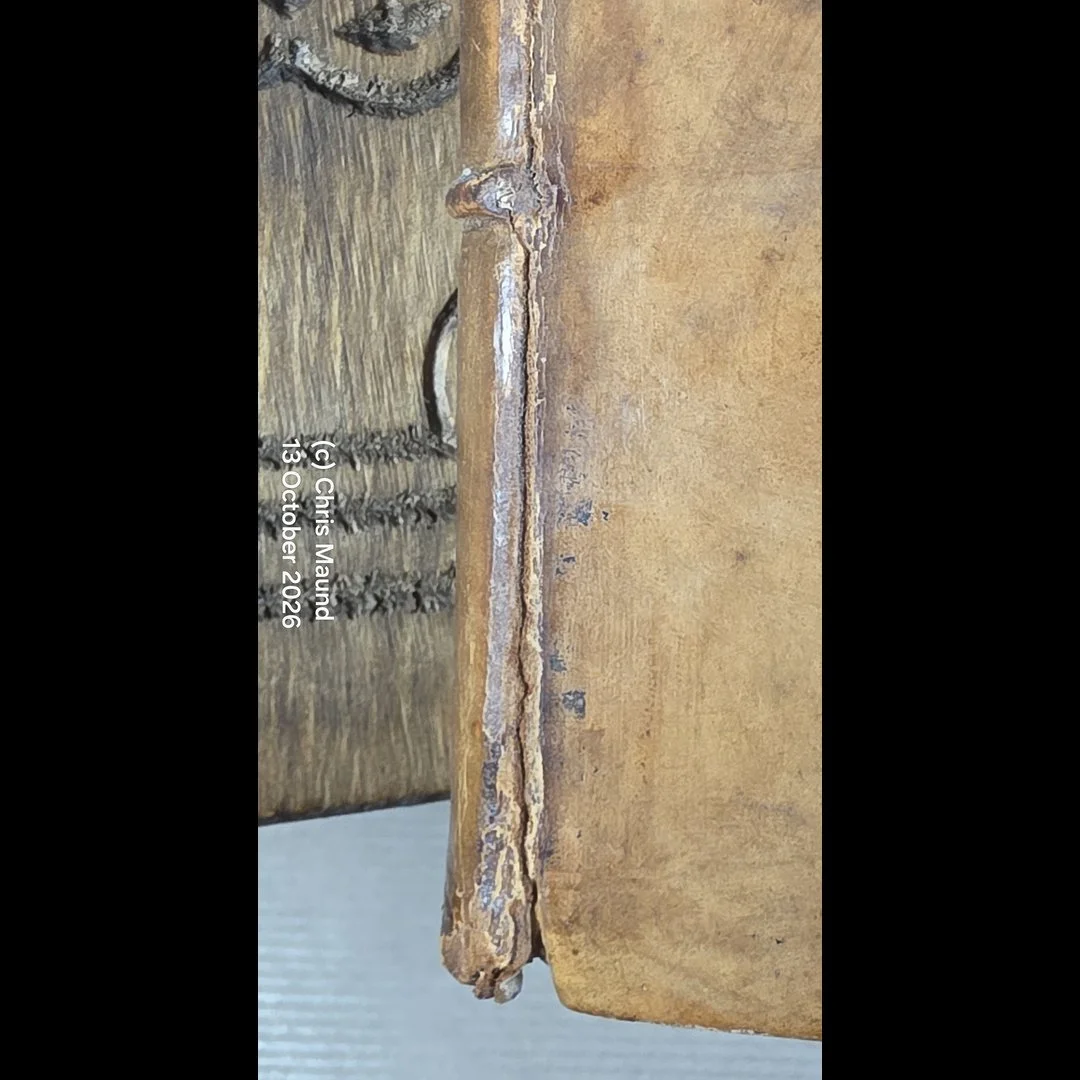
The retained original boards show substantial age-related rubbing, staining, abrasion and areas of surface loss, particularly towards the spine edges and extremities. The later reback is executed in brown calf with raised bands, gilt rules and black gilt-lettered labels, retaining the historical character of the original boards while presenting attractively on the shelf.
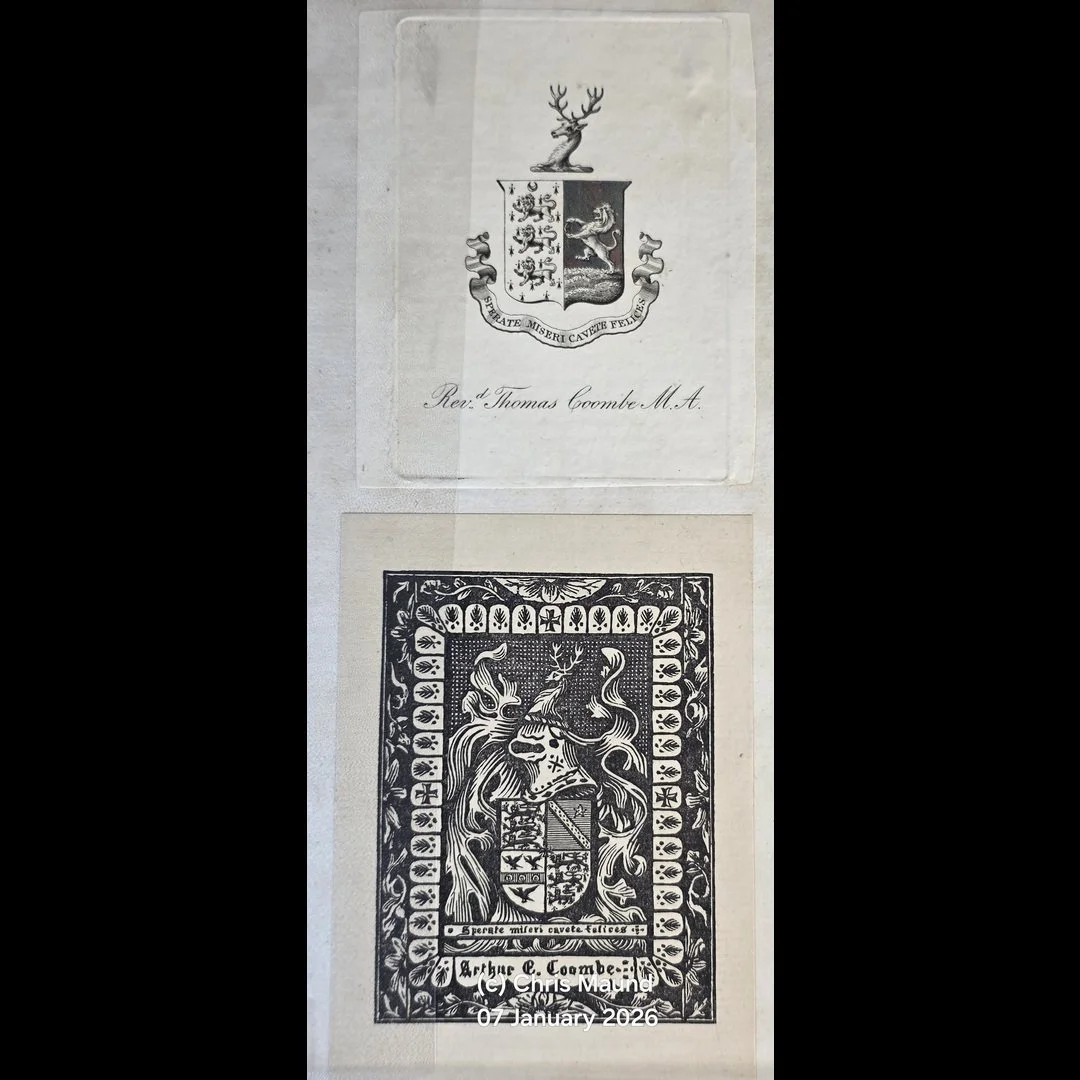
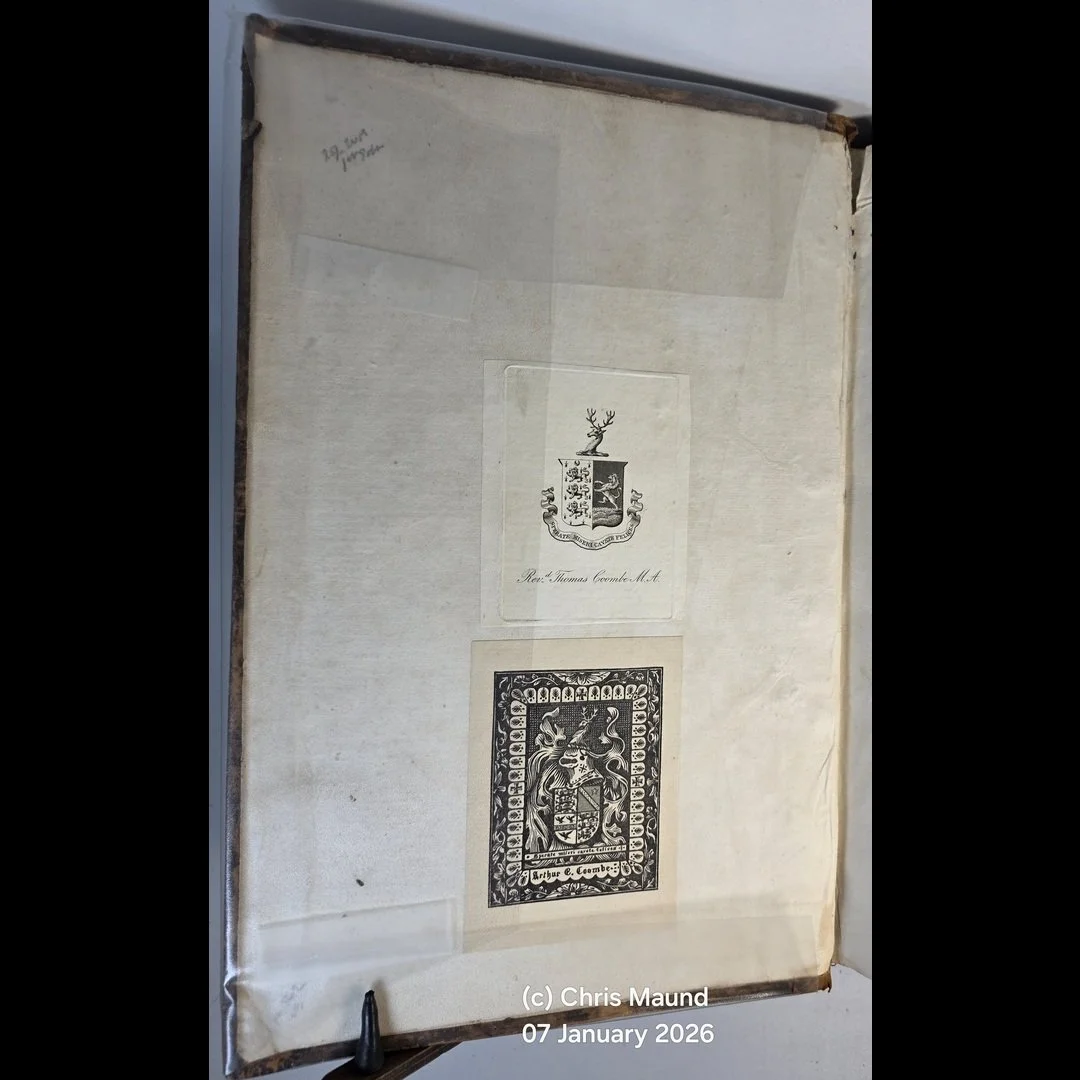
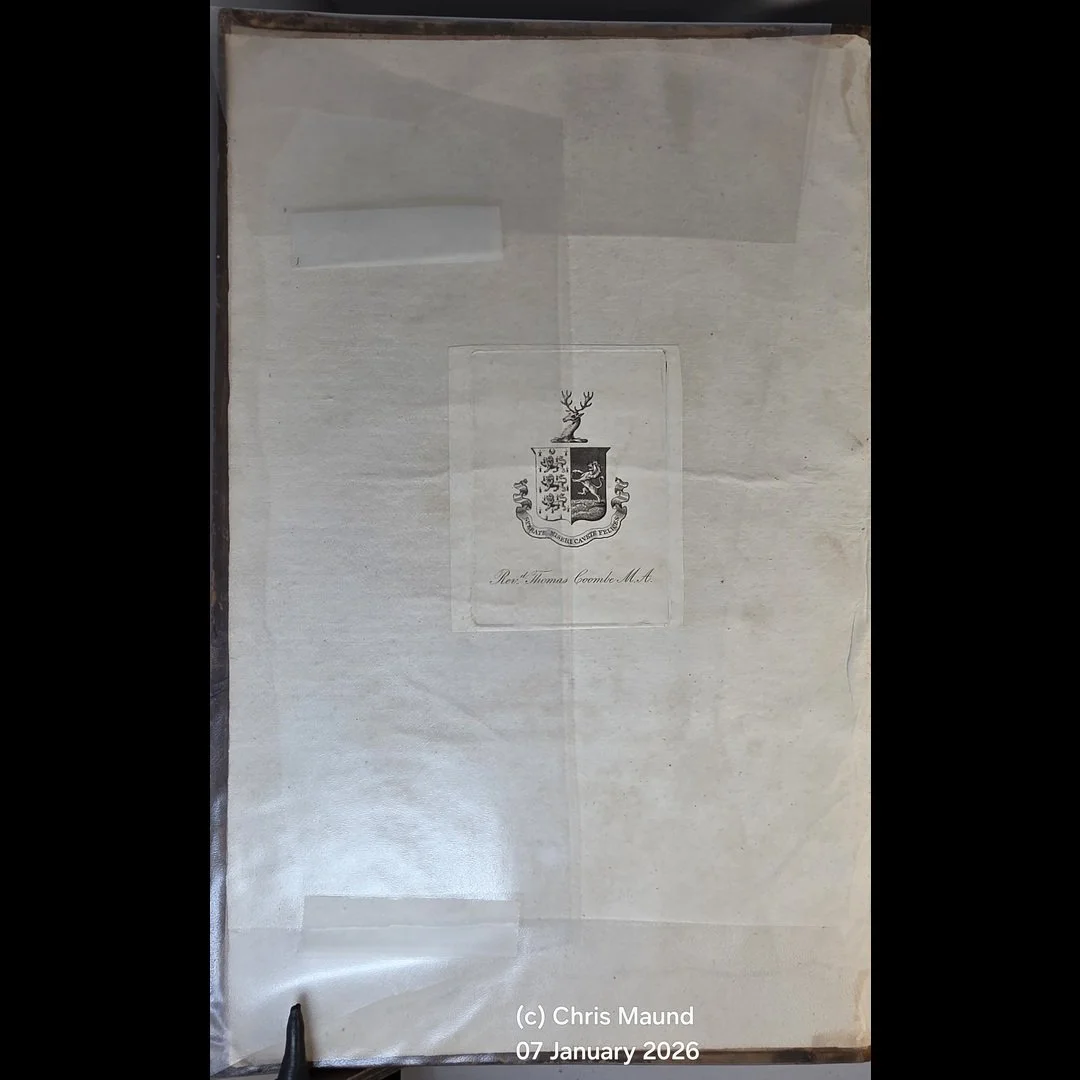
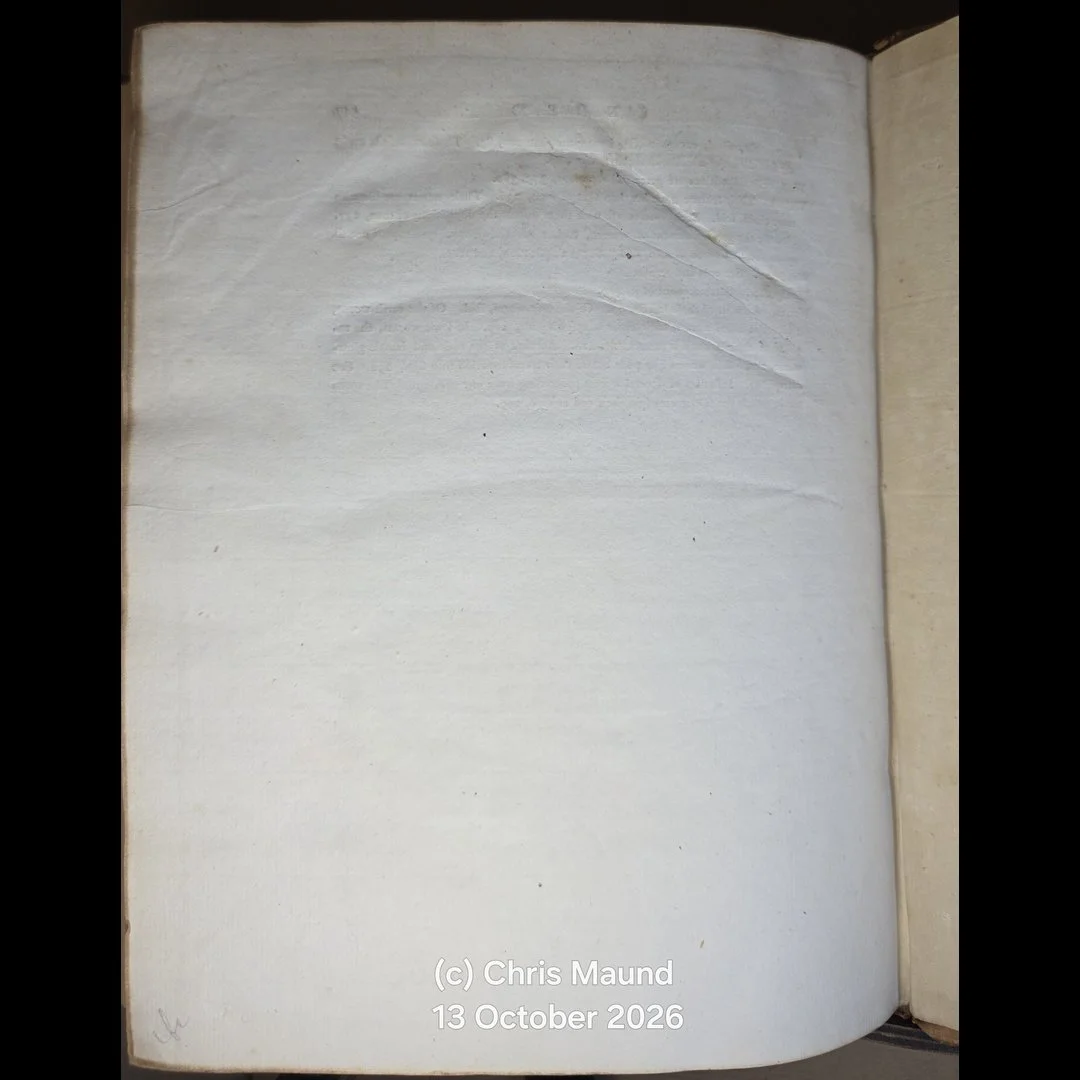
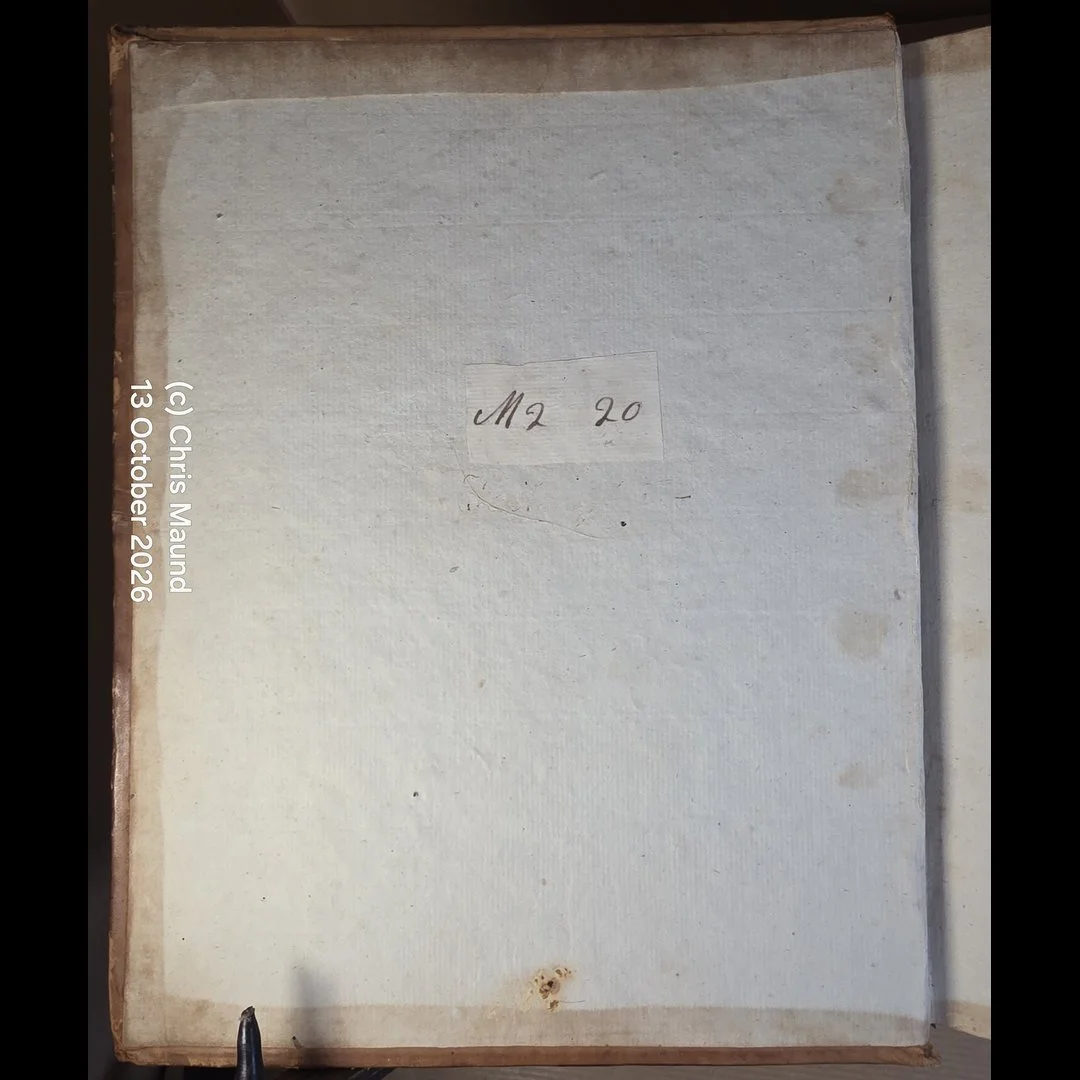
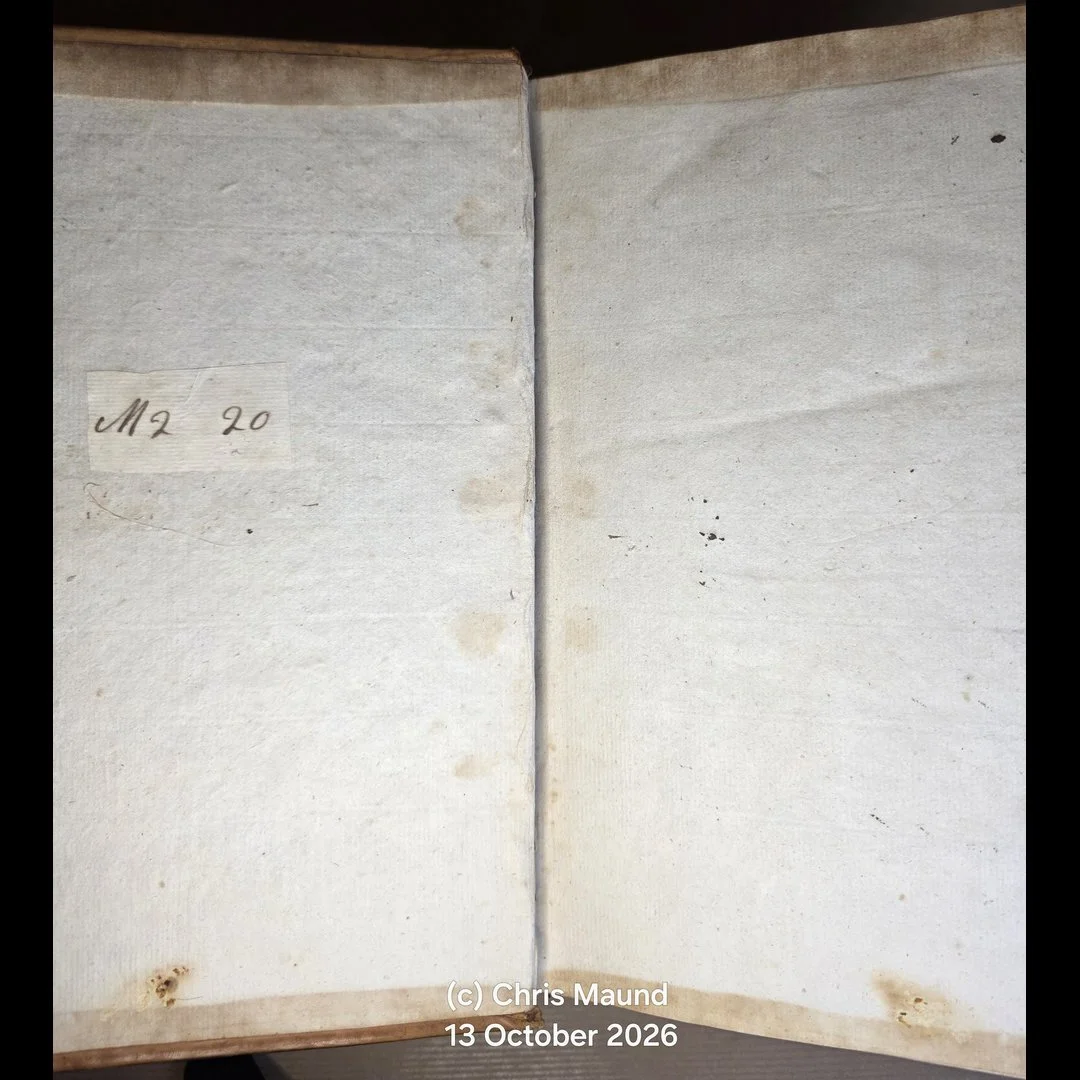
Armorial bookplate of Charles Grave Hudson, Esq., later Sir Charles Grave Hudson, 1st Baronet, to the front pastedown. Front and rear endpapers with age-related staining and marking.
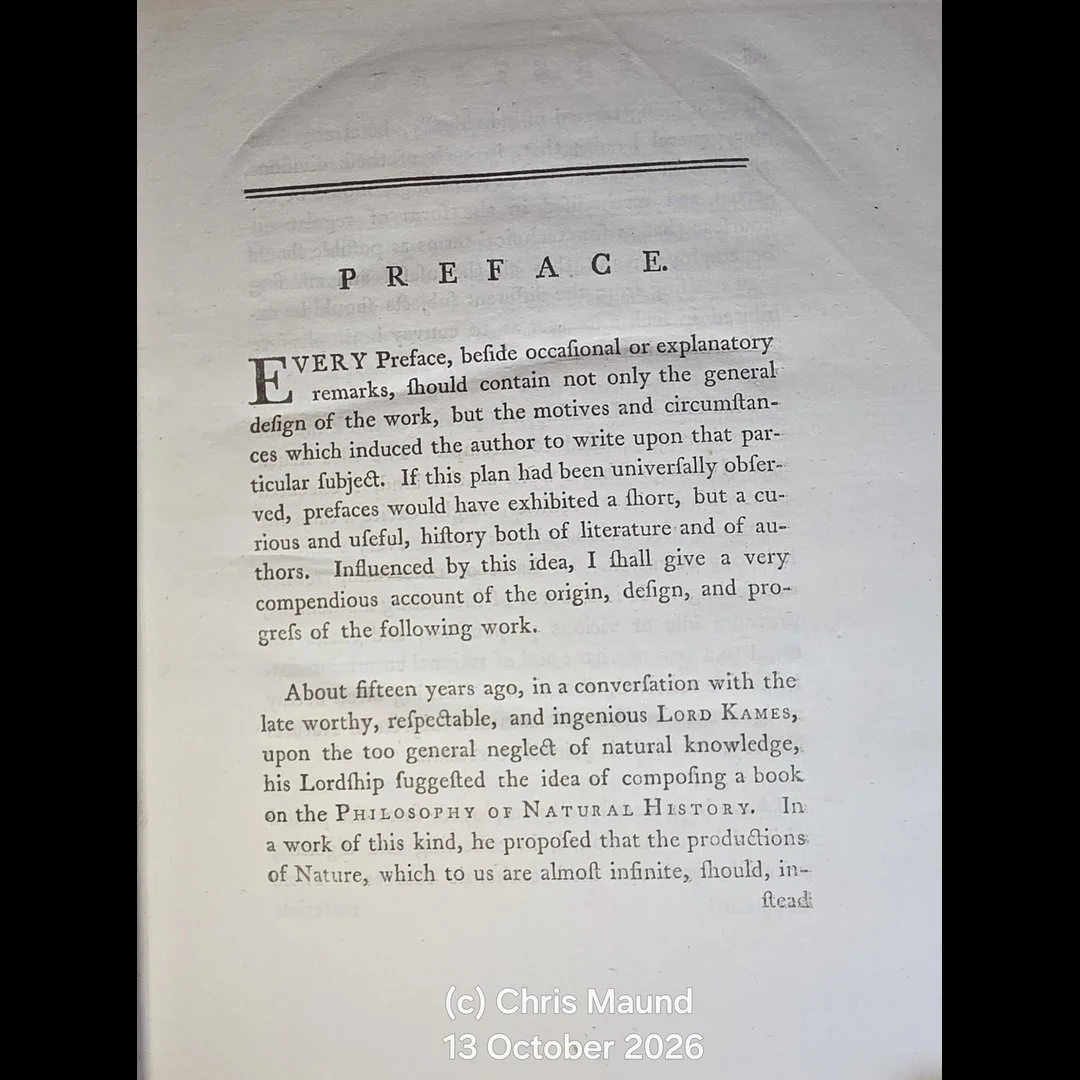
Internally substantially cleaner and better preserved than the exterior. Engraved frontispiece present. Title page printed in red and black and remaining crisp and attractive. Greek text generally clean and strongly printed, with good margins and comparatively modest age-toning and spotting for a volume of this date.
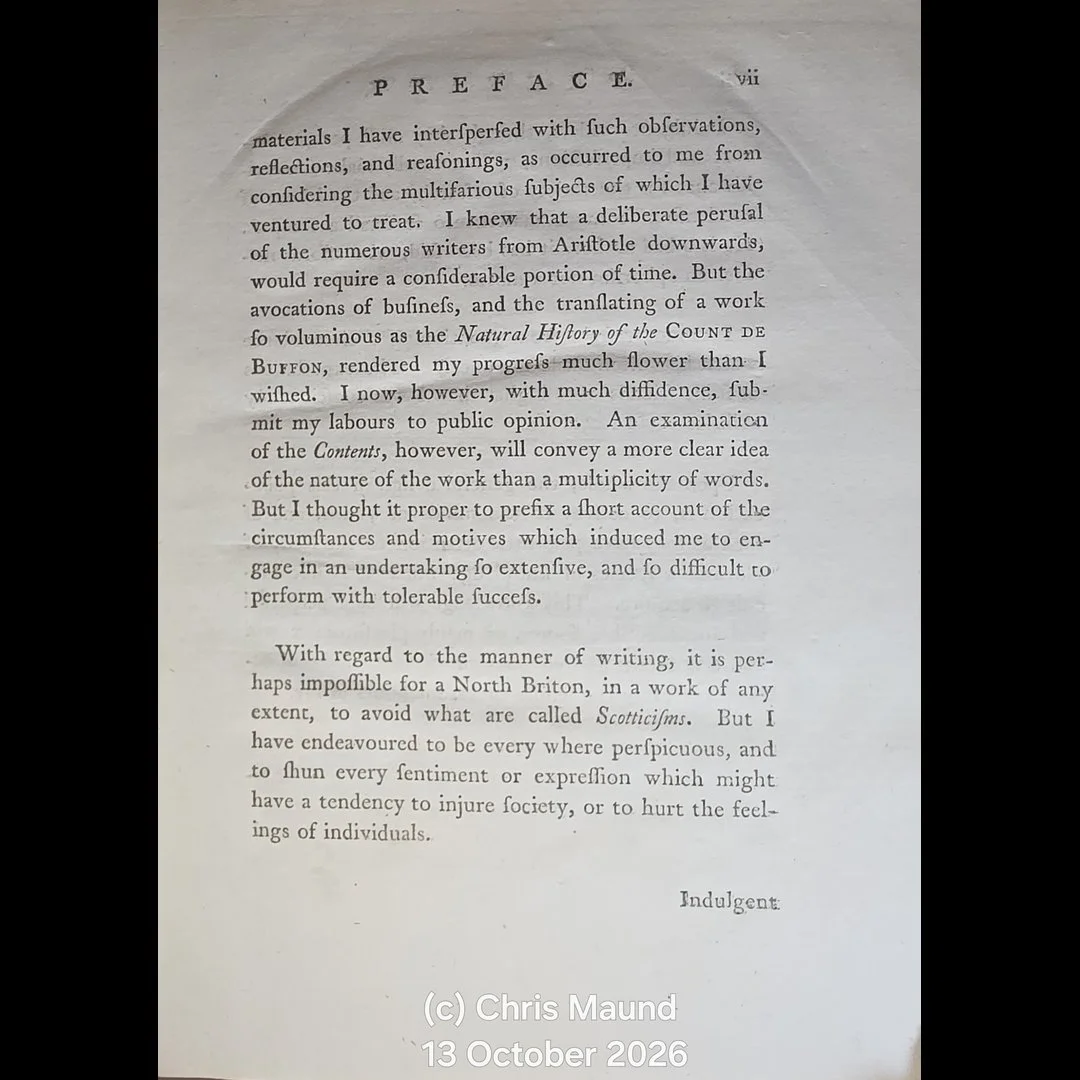
Some small marginal pinholes/old worming are visible through portions of the preliminary matter, without significant loss of text. Occasional minor handling marks and age-toning, with some staining towards the inner margin at the rear and expected darkening/soiling to the exposed text-block edges.
Complete with the engraved frontispiece and all four engraved folding maps and plans, including the plan of Jerusalem, plan of the Temple, map of the Holy Land and Mediterranean map. The folding material remains an especially attractive feature of the volume.
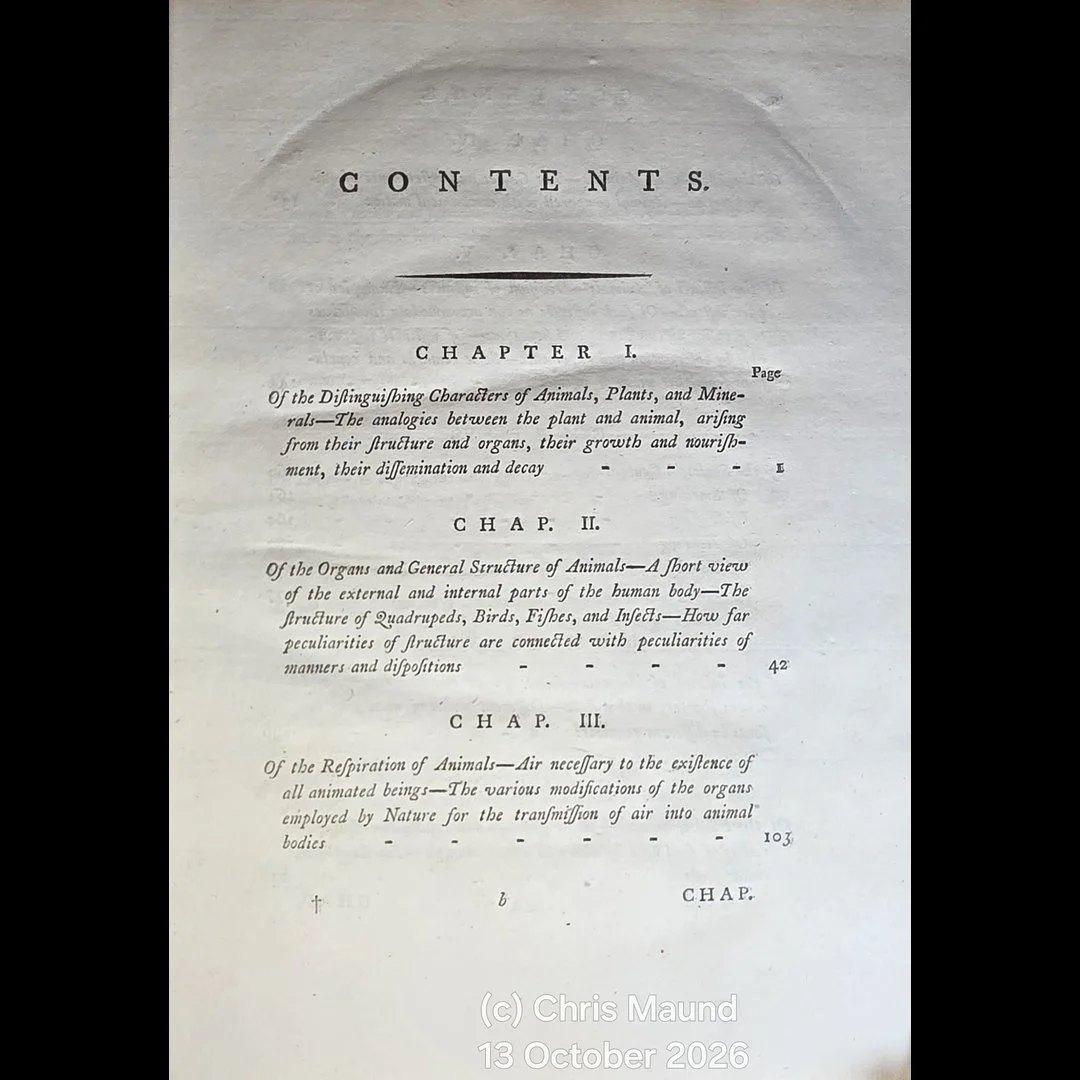
The preliminary scholarly material includes manuscript sigla and Mastricht’s XLIII Canones Critici. The main Greek text is printed in two columns, with parallel references and critical material at the foot of the page. The terminal Latin section, Notae Criticae, is separately paginated.
Please see Photos as part of condition report.
REFERENCES
ESTC T143818
Lowndes, Bibliographer's Manual, II, p. 625
Dominic Winter Auctioneers, Printed Books & Maps, Manuscripts, Incunabula, English & Continental Literature, 15 May 2024, lot 361
SYNOPSIS
The History of the Flagellants is Jean-Louis de Lolme's English paraphrase, expansion and commentary upon Jacques Boileau's Historia Flagellantium, the celebrated 1700 study of flagellation within Christian religious history.
Beginning with the practice of bodily chastisement as penance and spiritual discipline, de Lolme surveys examples drawn from scripture, ecclesiastical history, saints' lives, monastic traditions and European custom. He considers voluntary self-flagellation, punishment imposed by religious authorities, public penitential ceremonies and the extraordinary lengths to which physical mortification could be carried in pursuit of supposed spiritual purification.
Running beneath the historical narrative is a sustained critique of religious excess. De Lolme repeatedly questions whether deliberately inflicting pain upon the body can genuinely be reconciled with Christian teaching, turning Boileau's material into a characteristically Enlightenment examination of superstition, authority and human credulity.
The book also explores the uneasy boundary between religious discipline and sensual gratification. Several anecdotes and illustrations expose circumstances in which supposedly pious chastisement could acquire voyeuristic, erotic or overtly sexual dimensions. This element, combined with its illustrations, helped give the work a lasting reputation well beyond the narrower field of ecclesiastical history.
Part theological controversy, part social history and part eighteenth-century curiosa, The History of the Flagellants today has crossover appeal to collectors of religious history, the occult and esoteric, corporal punishment, sexuality and erotic history, Enlightenment literature, social history and illustrated eighteenth-century books.
The survival of the original quarto issues is relatively limited, and examples retaining the half-title, all four engravings and contemporary binding, as here, are particularly desirable despite the present binding defect.
AUTHOR BIO
Jean-Louis de Lolme (1740–1806) was a Genevan lawyer, political theorist and writer who spent an important part of his career in England.
He is best remembered for Constitution de l'Angleterre, first published in French in 1771 and subsequently expanded and translated as The Constitution of England. His detailed examination of the British constitutional system became influential in both Europe and America and established de Lolme as an important eighteenth-century commentator upon political institutions, representation and the balance of governmental power.
The History of the Flagellants reveals a very different aspect of his writing. Published anonymously under the deliberately irreverent attribution “By Somebody Who is Not Doctor of the Sorbonne”, it applies de Lolme's characteristic scepticism and analytical temperament to religious custom, ecclesiastical authority and the history of bodily punishment.
ILLUSTRATOR
Anonymous
No engraver is named on the title page or in the standard bibliographical records consulted.
The volume contains four full-page engraved plates, an engraved title-page vignette and engraved decorative head- and tailpieces. Their mixture of religious, historical and provocative imagery forms an important part of the book's appeal and places the work within the broader eighteenth-century tradition of illustrated religious and social curiosa.
1777 First English Edition
THE HISTORY OF THE FLAGELLANTS
By Somebody Who is Not Doctor of the Sorbonne [Jean-Louis De Lolme]
KEY DETAILS
Condition: Good
Format: Hardcover, quarto (4to 9 1⁄2 × 12 in 241 × 305 mm )
Note: Binding/size selection follows standard bibliographic conventions and is approximate; exact measurements may vary.
Published By: Printed for Fielding and Walker, No. 20, Paternoster Row, London, 1777
Language: English
Illustrated By: Anonymous
Collation: [6], 3, 2–5, 4–7, 6–340 pp., plates; 4to. The apparently irregular pagination is called for and the text is continuous.
Dust Jacket: None, as issued
SKU: BTETM0002432
Shipping Info: Approximate Package Dimensions H: 12.5, L: 30, W: 25 (Units: cm), W: 2Kg
Tracked Shipping, Insurance Coverage as per Customer Request
DESCRIPTION
THE HISTORY OF THE FLAGELLANTS
or, The Advantages of Discipline; Being a Paraphrase and Commentary on the Historia Flagellantium of the Abbé Boileau, Doctor of the Sorbonne, Canon of the Holy Chapel, &c.
By Somebody Who is Not Doctor of the Sorbonne [Jean-Louis de Lolme]
An unusually provocative eighteenth-century study of religious flagellation, punishment and bodily discipline, combining historical enquiry, Enlightenment criticism, satire and an unmistakable undercurrent of erotic curiosity.
Jean-Louis de Lolme's History of the Flagellants adapts and substantially comments upon Jacques Boileau's Historia Flagellantium, first published in Latin at Paris in 1700. Moving through classical, biblical, medieval and early-modern examples, de Lolme examines the extraordinary history of whipping and self-mortification as religious penance, ecclesiastical punishment, public spectacle and private discipline.
The result is considerably more than a translation. De Lolme subjects the traditions he describes to the sceptical scrutiny of the Enlightenment, repeatedly questioning the reasoning by which physical suffering could become associated with spiritual virtue. Yet the work's appeal has always extended beyond theology: its combination of religious controversy, unusual historical anecdote, corporal punishment and occasionally eroticised imagery places it firmly within the tradition of eighteenth-century curiosa.
The volume is illustrated with four full-page engraved plates, together with engraved head- and tailpieces and a title-page vignette. The plates include striking scenes of demonic flagellation, the penance of Henry II following the murder of Thomas Becket, and Bernardino of Siena administering discipline to a partially unclothed woman, imagery which has ensured the book's enduring interest to collectors of religious history, punishment, sexuality and illustrated curiosa.
This copy retains the half-title, all four engraved plates and the complete text, and remains in its attractive contemporary speckled calf binding with red morocco spine label and marbled endpapers.
The edition has an interesting bibliographical history. The English Short Title Catalogue records this 1777 “printed for Fielding and Walker” issue as ESTC T143818, a reissue of the probable [1776?] setting with a cancel title-page, first preface leaf, pp. [9]–10 and pp. 331–[332]. The occasionally irregular pagination is therefore an original feature of the edition and the text remains continuous.
CONDITION, COLLATION & COPY NOTES
COLLATION
[6], 3, 2–5, 4–7, 6–340 pp., plates; 4to. The apparently irregular pagination is called for and the text is continuous.
A handsome, complete and highly characteristic eighteenth-century copy whose principal defect is the detached upper board; internally sound and retaining all of the important illustrative and bibliographical material.
A complete and bibliographically attractive copy, internally very well preserved overall, in contemporary or early calf boards which have been sympathetically rebacked in later calf.
The retained original boards show substantial age-related rubbing, staining, abrasion and areas of surface loss, particularly towards the spine edges and extremities. The later reback is executed in brown calf with raised bands, gilt rules and black gilt-lettered labels, retaining the historical character of the original boards while presenting attractively on the shelf.
Armorial bookplate of Charles Grave Hudson, Esq., later Sir Charles Grave Hudson, 1st Baronet, to the front pastedown. Front and rear endpapers with age-related staining and marking.
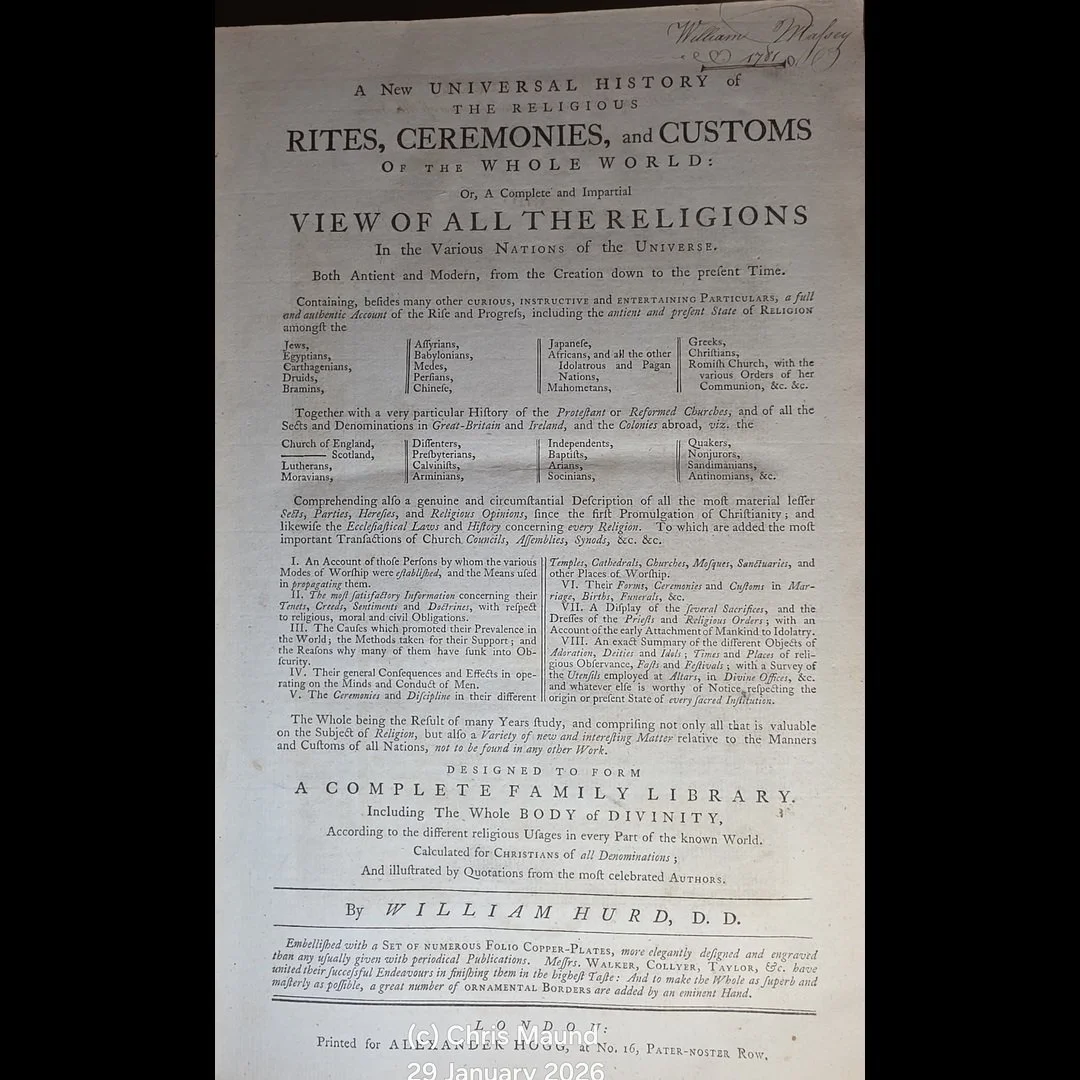
Internally substantially cleaner and better preserved than the exterior. Engraved frontispiece present. Title page printed in red and black and remaining crisp and attractive. Greek text generally clean and strongly printed, with good margins and comparatively modest age-toning and spotting for a volume of this date.
Some small marginal pinholes/old worming are visible through portions of the preliminary matter, without significant loss of text. Occasional minor handling marks and age-toning, with some staining towards the inner margin at the rear and expected darkening/soiling to the exposed text-block edges.
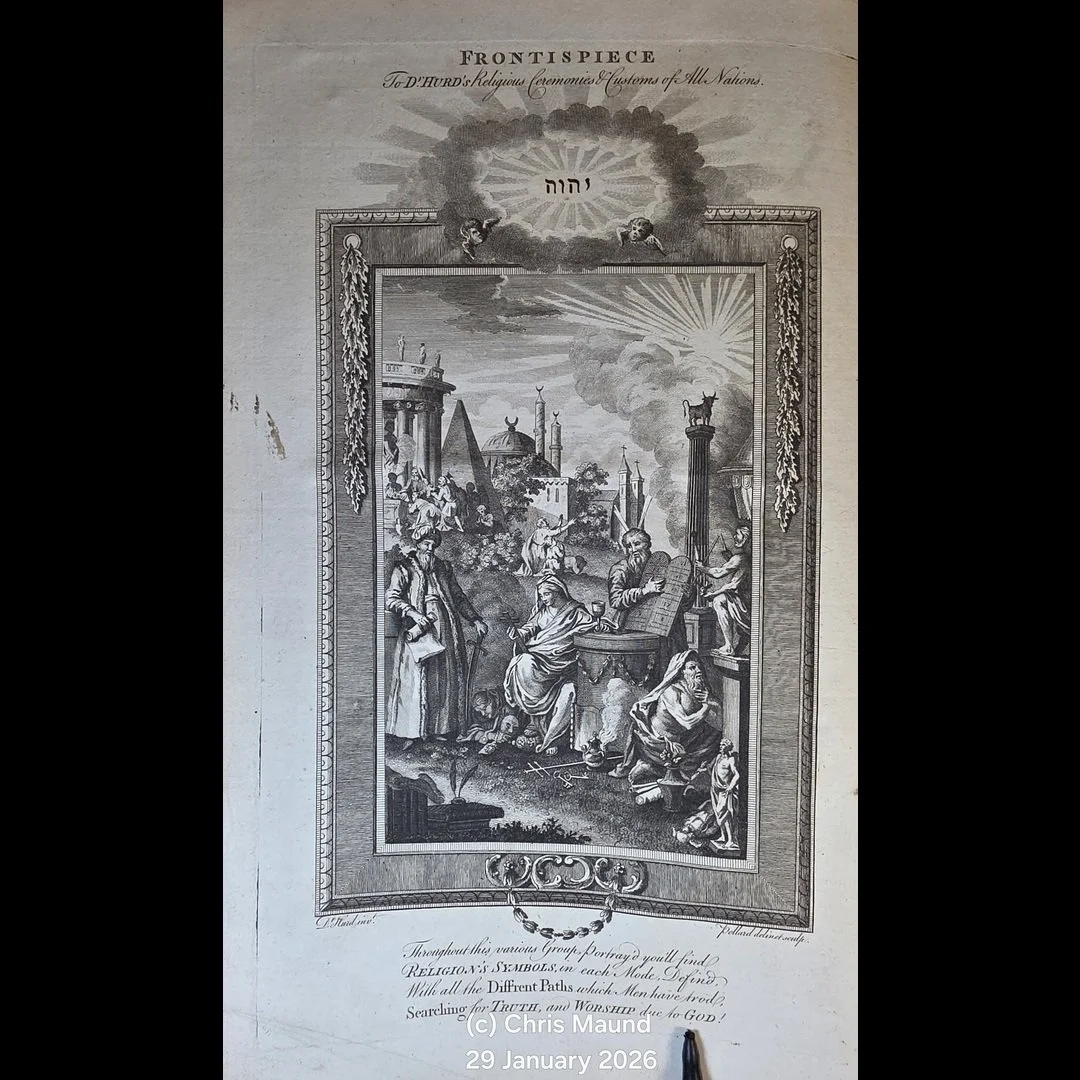
Complete with the engraved frontispiece and all four engraved folding maps and plans, including the plan of Jerusalem, plan of the Temple, map of the Holy Land and Mediterranean map. The folding material remains an especially attractive feature of the volume.
The preliminary scholarly material includes manuscript sigla and Mastricht’s XLIII Canones Critici. The main Greek text is printed in two columns, with parallel references and critical material at the foot of the page. The terminal Latin section, Notae Criticae, is separately paginated.
Please see Photos as part of condition report.
REFERENCES
ESTC T143818
Lowndes, Bibliographer's Manual, II, p. 625
Dominic Winter Auctioneers, Printed Books & Maps, Manuscripts, Incunabula, English & Continental Literature, 15 May 2024, lot 361
SYNOPSIS
The History of the Flagellants is Jean-Louis de Lolme's English paraphrase, expansion and commentary upon Jacques Boileau's Historia Flagellantium, the celebrated 1700 study of flagellation within Christian religious history.
Beginning with the practice of bodily chastisement as penance and spiritual discipline, de Lolme surveys examples drawn from scripture, ecclesiastical history, saints' lives, monastic traditions and European custom. He considers voluntary self-flagellation, punishment imposed by religious authorities, public penitential ceremonies and the extraordinary lengths to which physical mortification could be carried in pursuit of supposed spiritual purification.
Running beneath the historical narrative is a sustained critique of religious excess. De Lolme repeatedly questions whether deliberately inflicting pain upon the body can genuinely be reconciled with Christian teaching, turning Boileau's material into a characteristically Enlightenment examination of superstition, authority and human credulity.
The book also explores the uneasy boundary between religious discipline and sensual gratification. Several anecdotes and illustrations expose circumstances in which supposedly pious chastisement could acquire voyeuristic, erotic or overtly sexual dimensions. This element, combined with its illustrations, helped give the work a lasting reputation well beyond the narrower field of ecclesiastical history.
Part theological controversy, part social history and part eighteenth-century curiosa, The History of the Flagellants today has crossover appeal to collectors of religious history, the occult and esoteric, corporal punishment, sexuality and erotic history, Enlightenment literature, social history and illustrated eighteenth-century books.
The survival of the original quarto issues is relatively limited, and examples retaining the half-title, all four engravings and contemporary binding, as here, are particularly desirable despite the present binding defect.
AUTHOR BIO
Jean-Louis de Lolme (1740–1806) was a Genevan lawyer, political theorist and writer who spent an important part of his career in England.
He is best remembered for Constitution de l'Angleterre, first published in French in 1771 and subsequently expanded and translated as The Constitution of England. His detailed examination of the British constitutional system became influential in both Europe and America and established de Lolme as an important eighteenth-century commentator upon political institutions, representation and the balance of governmental power.
The History of the Flagellants reveals a very different aspect of his writing. Published anonymously under the deliberately irreverent attribution “By Somebody Who is Not Doctor of the Sorbonne”, it applies de Lolme's characteristic scepticism and analytical temperament to religious custom, ecclesiastical authority and the history of bodily punishment.
ILLUSTRATOR
Anonymous
No engraver is named on the title page or in the standard bibliographical records consulted.
The volume contains four full-page engraved plates, an engraved title-page vignette and engraved decorative head- and tailpieces. Their mixture of religious, historical and provocative imagery forms an important part of the book's appeal and places the work within the broader eighteenth-century tradition of illustrated religious and social curiosa.

 Image 1 of 16
 Image 2 of 16
 Image 3 of 16
 Image 4 of 16
 Image 5 of 16
 Image 6 of 16
 Image 7 of 16
 Image 8 of 16
 Image 9 of 16
 Image 10 of 16
 Image 11 of 16
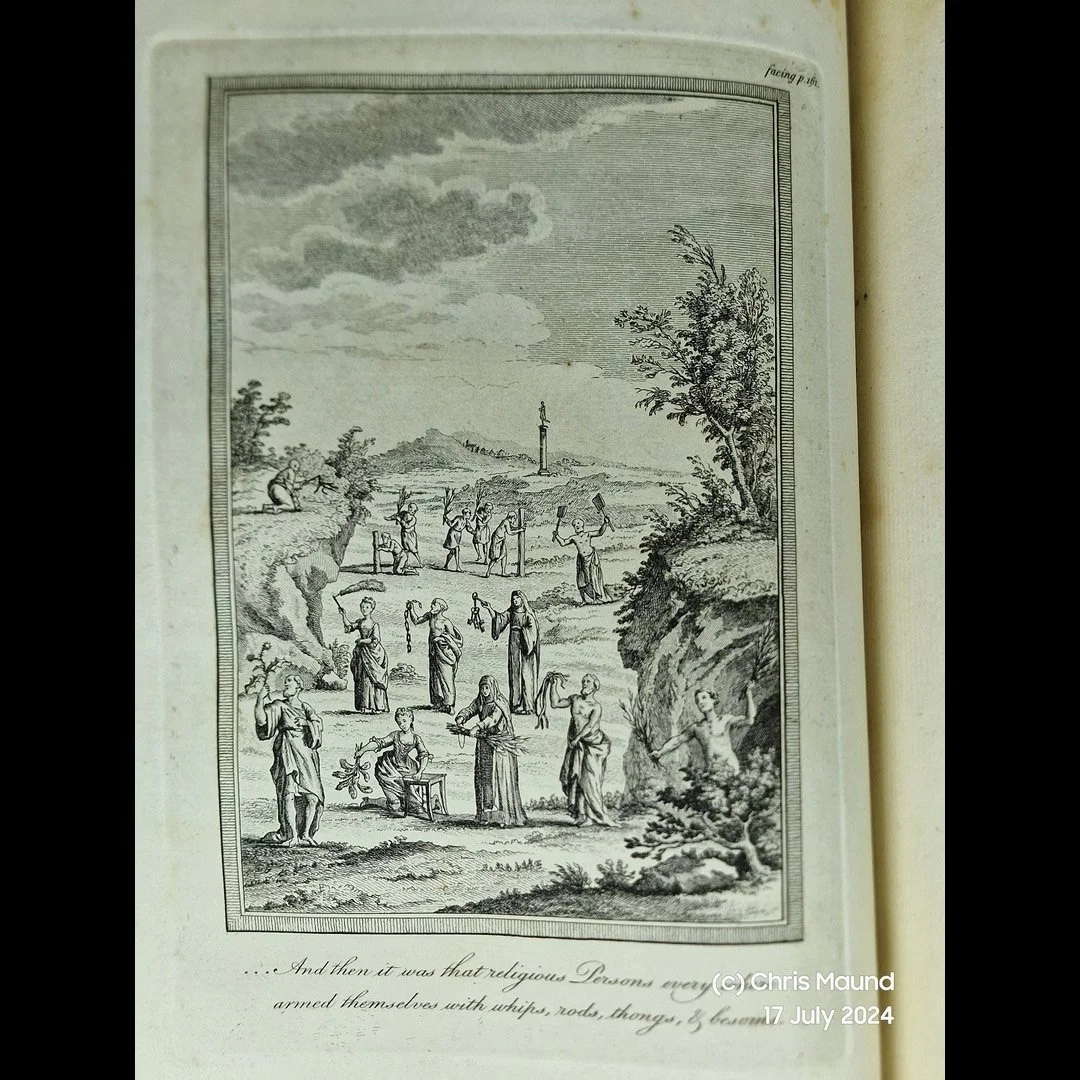 Image 12 of 16
 Image 13 of 16
 Image 14 of 16
 Image 15 of 16
 Image 16 of 16