1688 Early Illustrated Low Countries Composite Set
FABLES CHOISIES
By Jean de la Fontaine
KEY DETAILS
Condition: Very Good
Format: Hardcover, Small/Crown octavo (8vo 5 3⁄8 × 8 in 137 × 203 mm )
Note: Binding/size selection follows standard bibliographic conventions and is approximate; exact measurements may vary.
Published By: Henry van Bulderen, The Hague; Henry van Dunewalt, Antwerp; Daniel de La Feuille, Amsterdam, 1688
Language: French
Illustrated By: Romeyn de Hooghe
Collation: Part I: Books I–III, pp. 1–123 and table; 58 half-page engravings.; Part II: Books IV–VI, pp. 141–268 and table; 60 half-page engravings.; Part III: Books VII–VIII, pp. 3–117 and table; 43 half-page engravings.; Part IV: Books IX–XI, pp. 119–233 and table; 43 half-page engravings.
Dust Jacket: None, as issued, No Jacket
SKU: BTETM0002434
Shipping Info: Approximate Package Dimensions H: 12.5, L: 30, W: 25 (Units: cm), W: 2Kg
Tracked Shipping, Insurance Coverage as per Customer Request
DESCRIPTION
Fables Choisies
1698-1696
Mises en vers par Monsieur de La Fontaine, et par luy reveuës, corrigées & augmentées de nouveau
With Romeyn de Hooghe Frontispiece & 307 Half-Page Engravings
By Jean de La Fontaine, with later fables by contemporary French authors
An unusually substantial and attractive seventeenth-century illustrated collection of La Fontaine’s Fables, bringing together related Low Countries printings and continuations issued at The Hague, Antwerp and Amsterdam between 1688 and 1696.
The first four parts belong to the important early illustrated Dutch tradition of La Fontaine, with the opening title dated The Hague, Henry van Bulderen, 1688, and the fourth part Antwerp, Henry van Dunewalt, 1688. They are accompanied by a striking allegorical engraved frontispiece signed Romeyn de Hooghe and dated 1687, together with the celebrated half-page fable engravings principally by Henri Cause after François Chauveau.
The Antwerp 1688 issue represented by this sequence is bibliographically important as the first illustrated edition of La Fontaine’s Fables published outside France. These parts were also printed during La Fontaine’s lifetime, seven years before his death in 1695.
The collection is extended by four later parts belonging to the remarkable Daniel de La Feuille continuation tradition, issued at Amsterdam during the 1690s. These supplementary fables have a particularly interesting publishing history: although marketed under or alongside La Fontaine’s name, only a small proportion are actually his work, the remainder being compositions or imitations by contemporary French fabulists including Valincour, Regnier, Lejay, Saint-Ussans, Furetière and Fraguier.
The result is considerably more interesting than a straightforward later reprint: a two-volume collection charting the evolution, illustration and commercial afterlife of La Fontaine’s Fables in the Low Countries from 1688 to 1696.
CONDITION, COLLATION & COPY NOTES
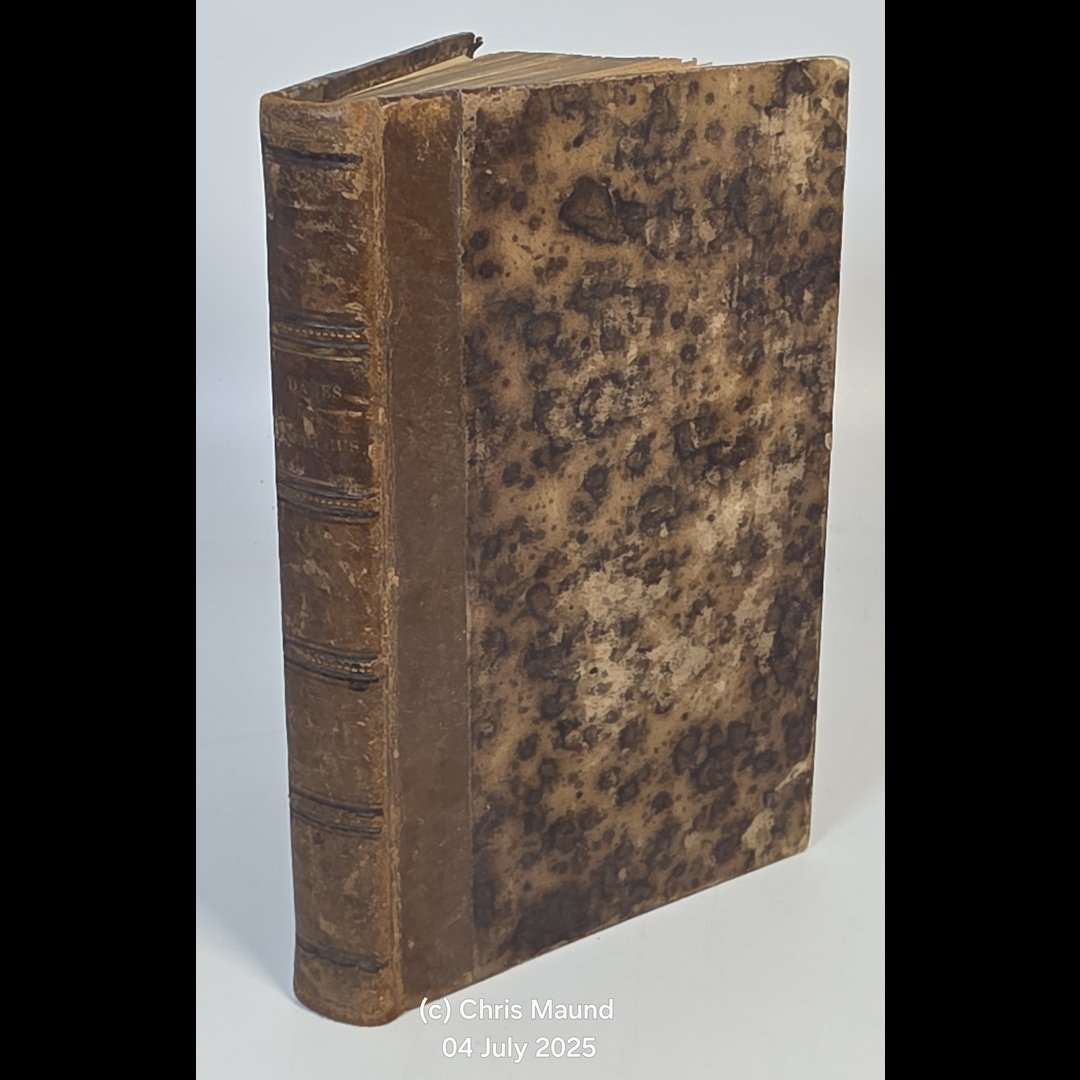
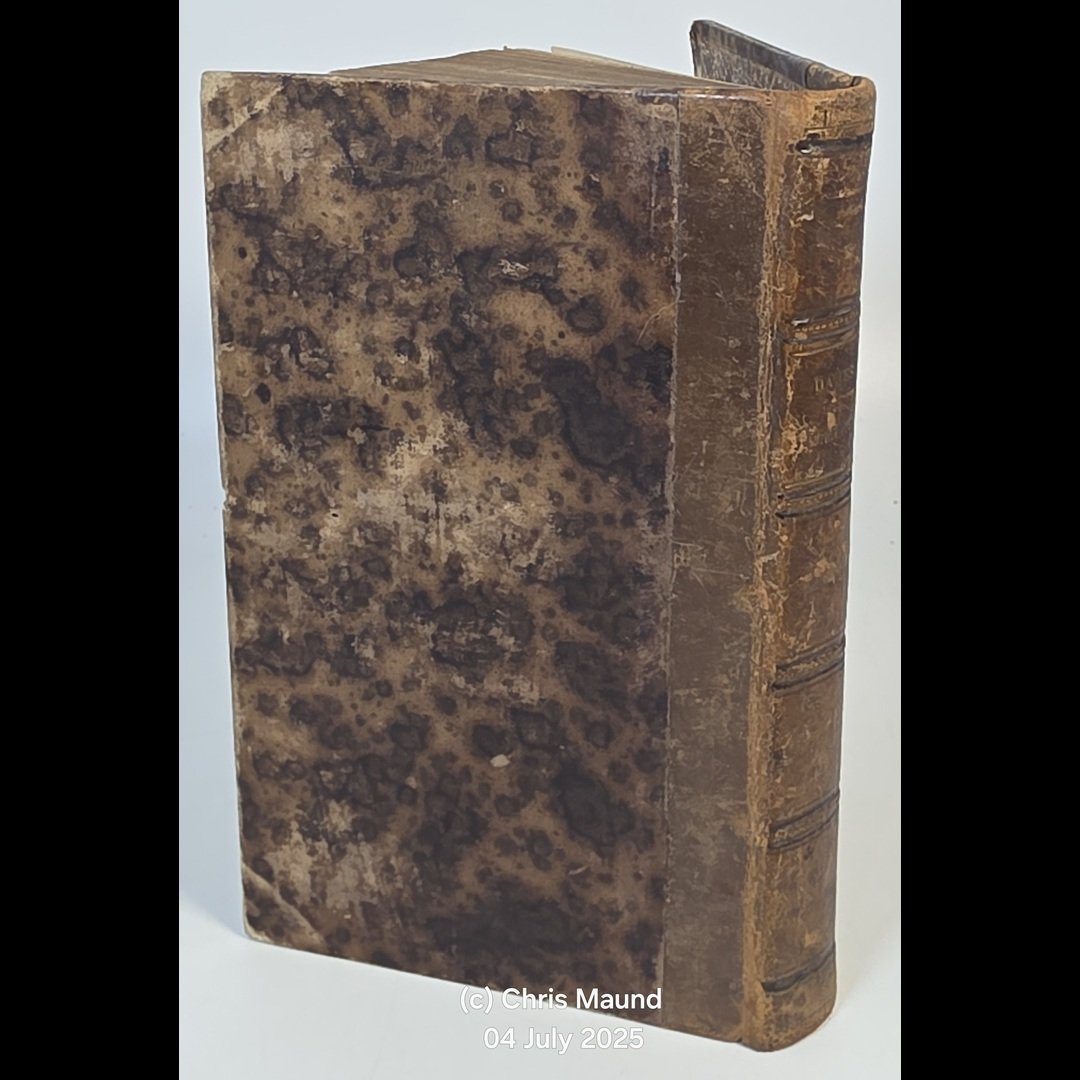
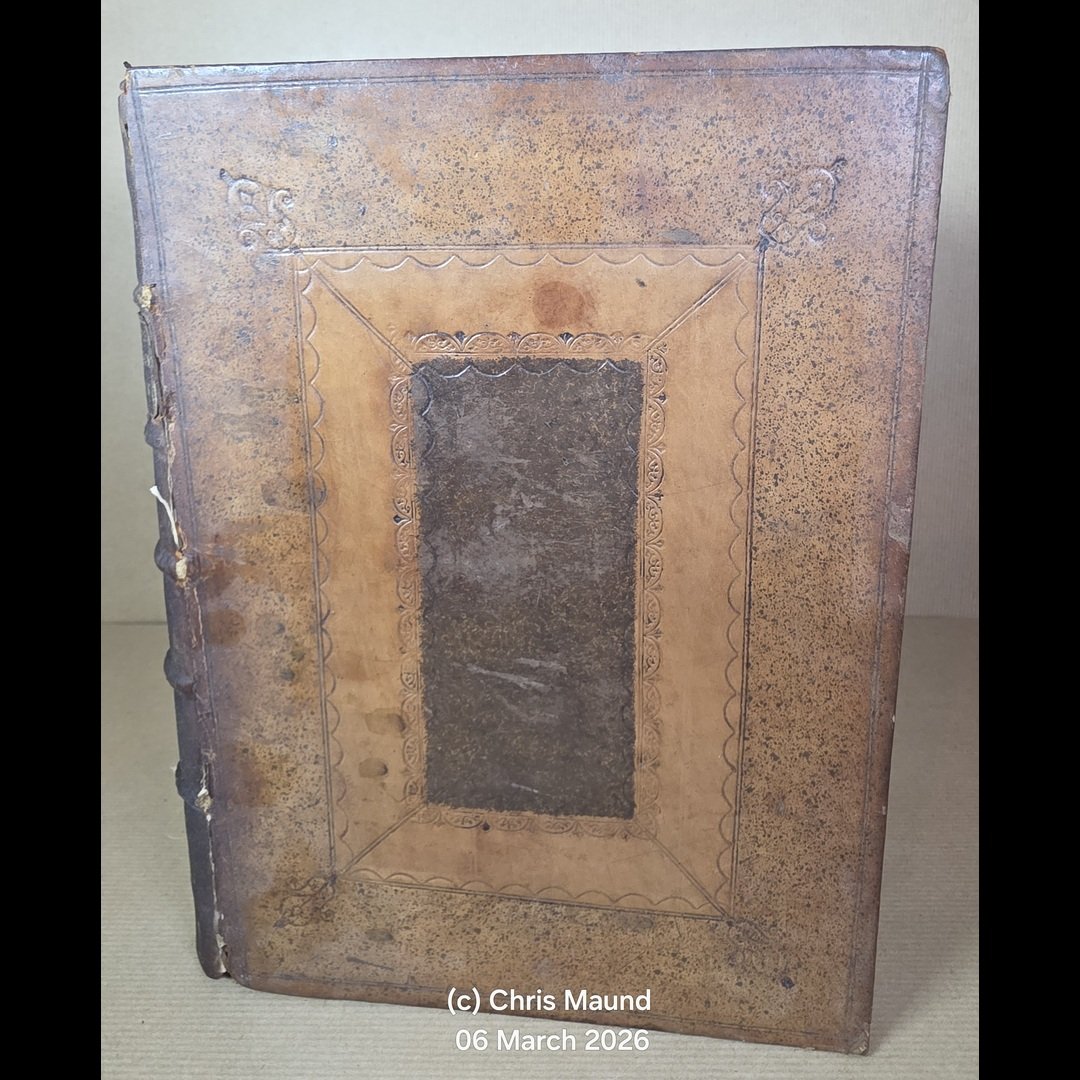
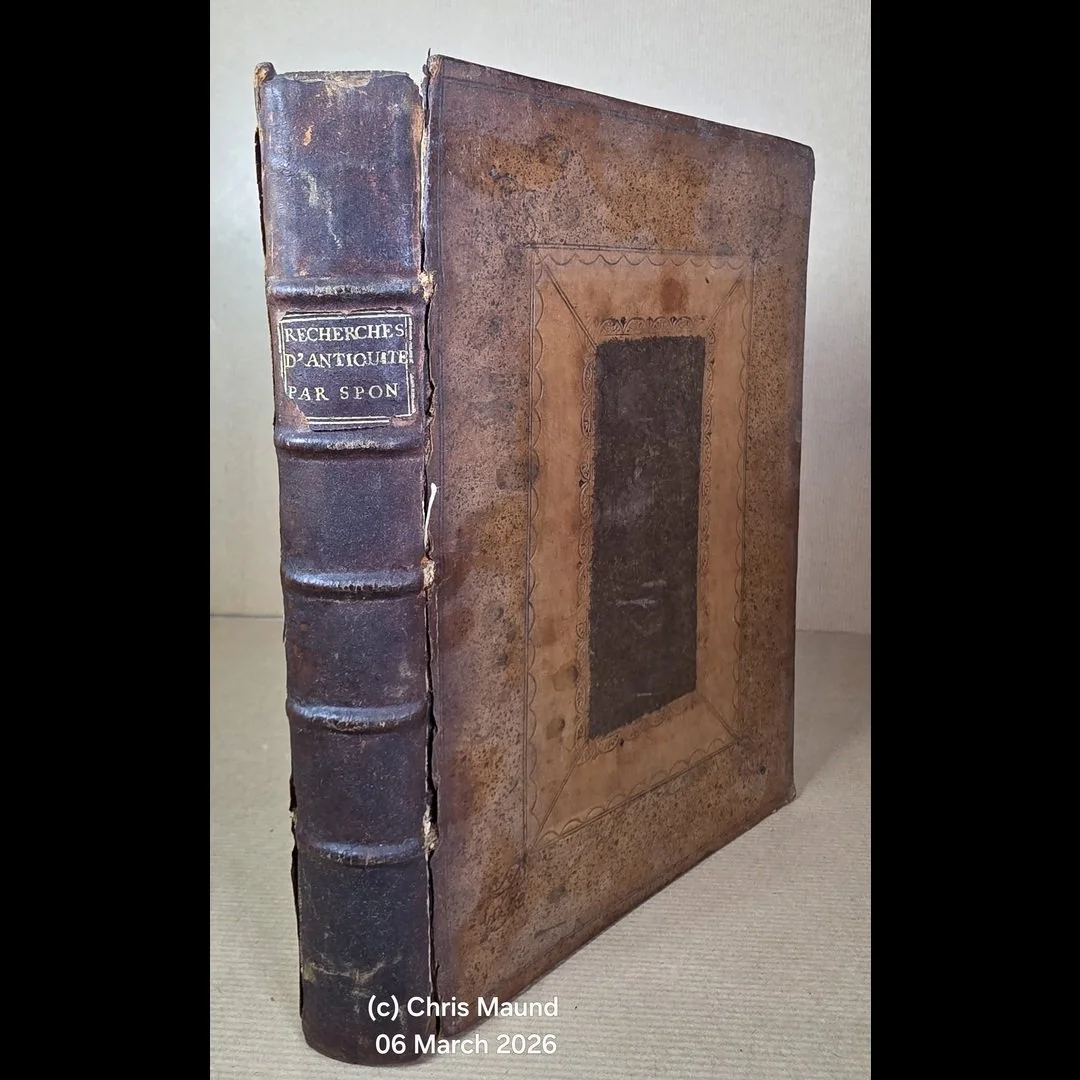
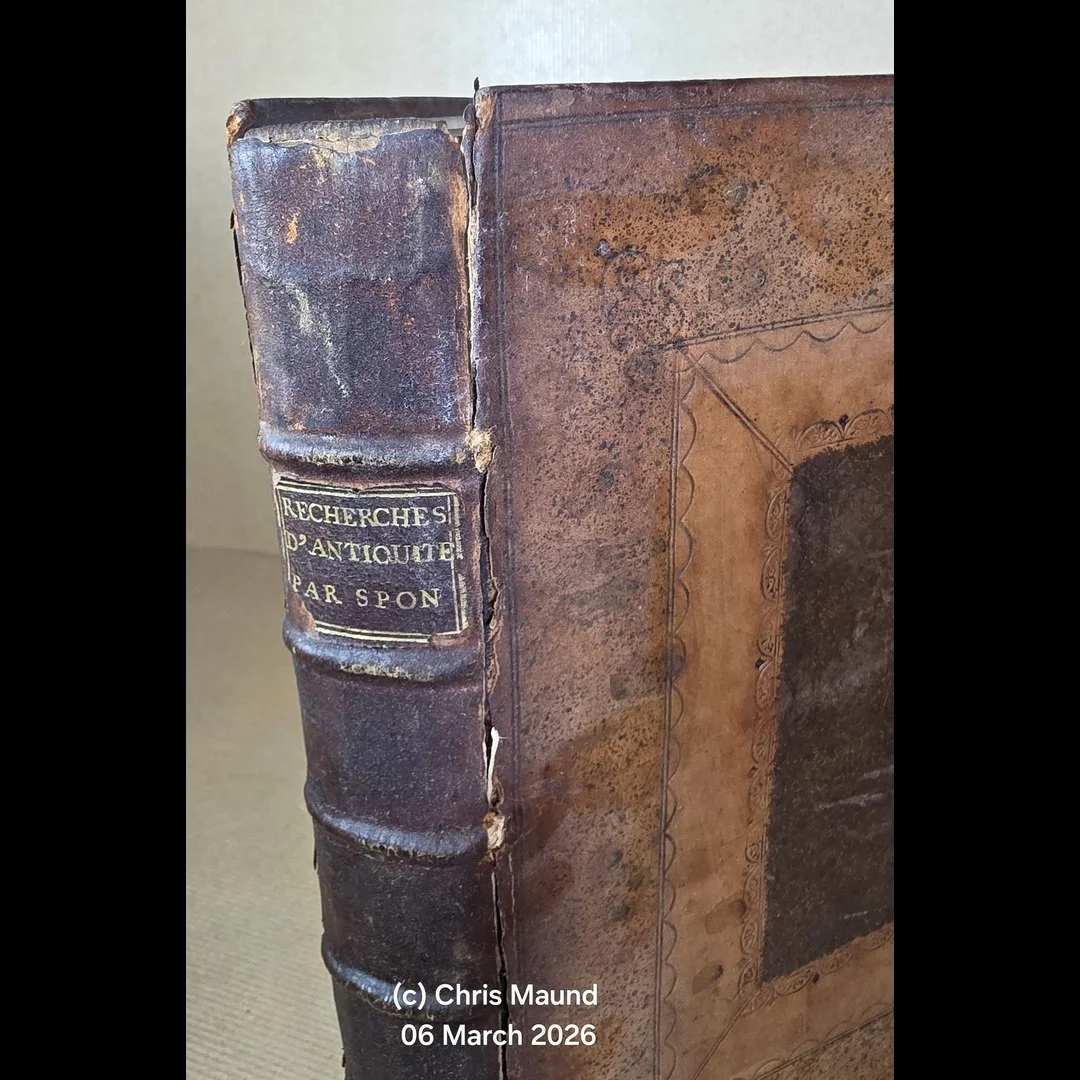
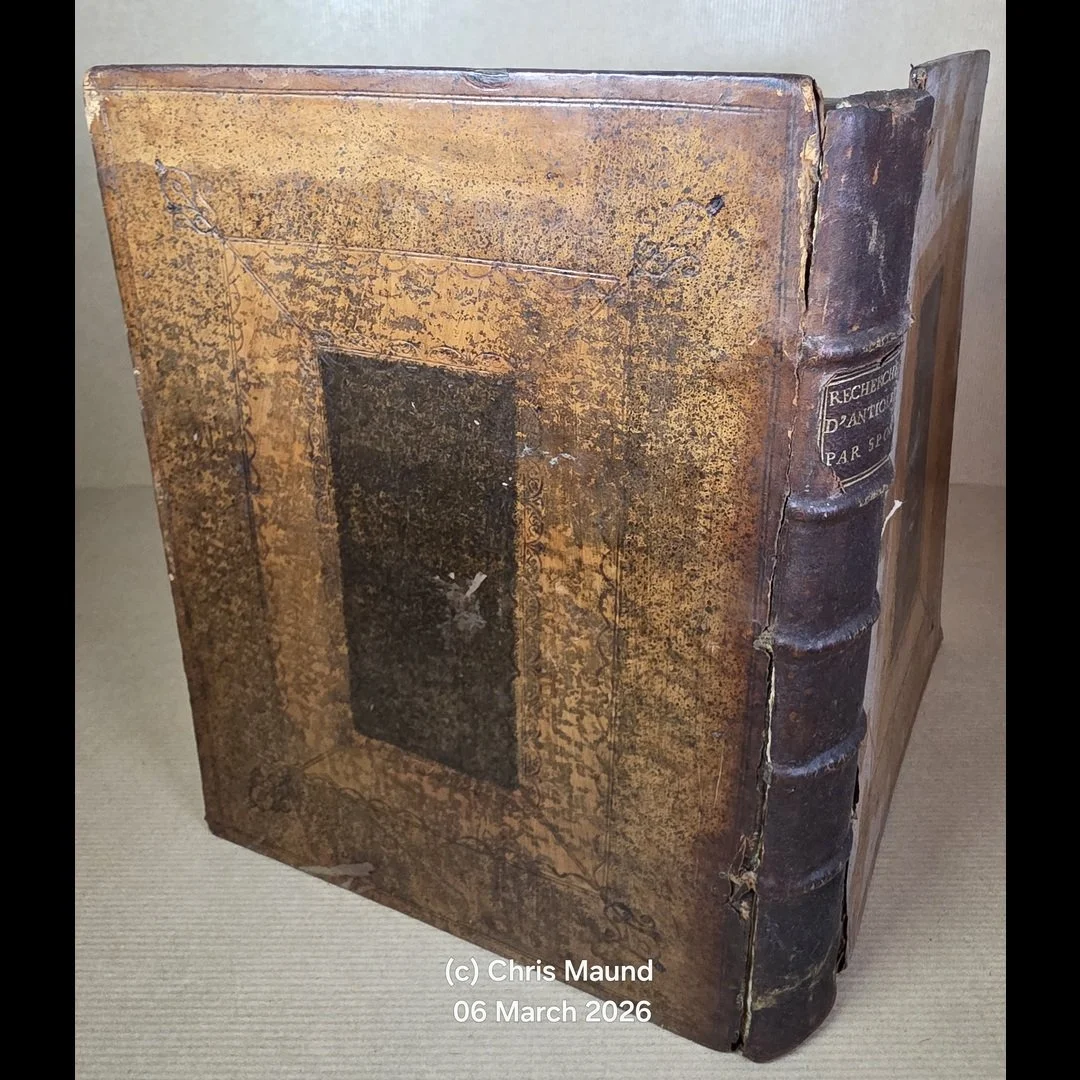
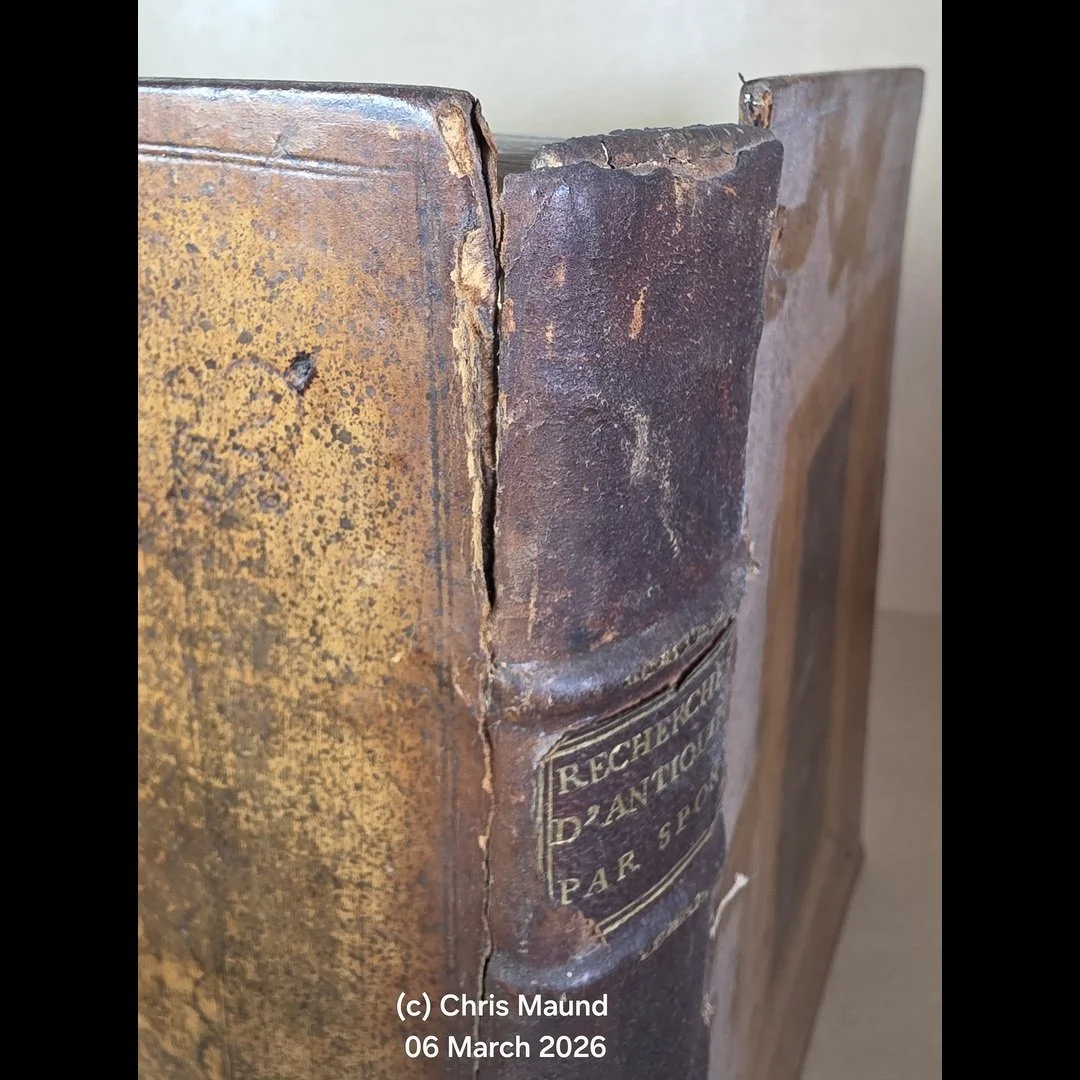
An attractive and unusually clean two-volume seventeenth-century illustrated set in eighteenth-century mottled calf, sympathetically rebacked and recornered in lighter calf while preserving the earlier boards. Gilt rules to boards and gilt-lettered spine labels.
Bindings with expected rubbing, scratches, surface marking and abrasion from age and use, together with wear to board edges and extremities. The later spine and corner work is readily distinguishable from the older calf but is sympathetic and serviceable. Both volumes remain firm and present well on the shelf.
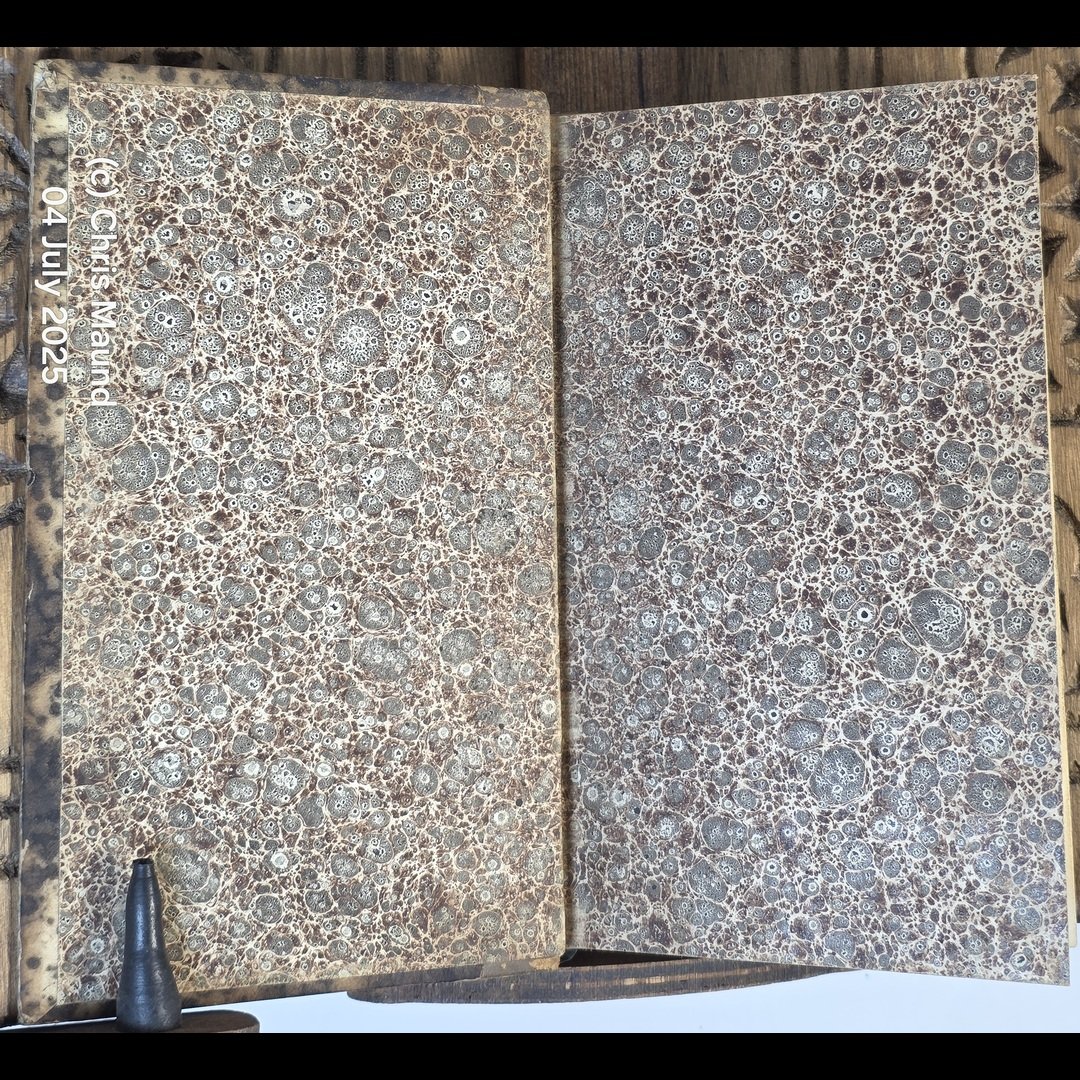
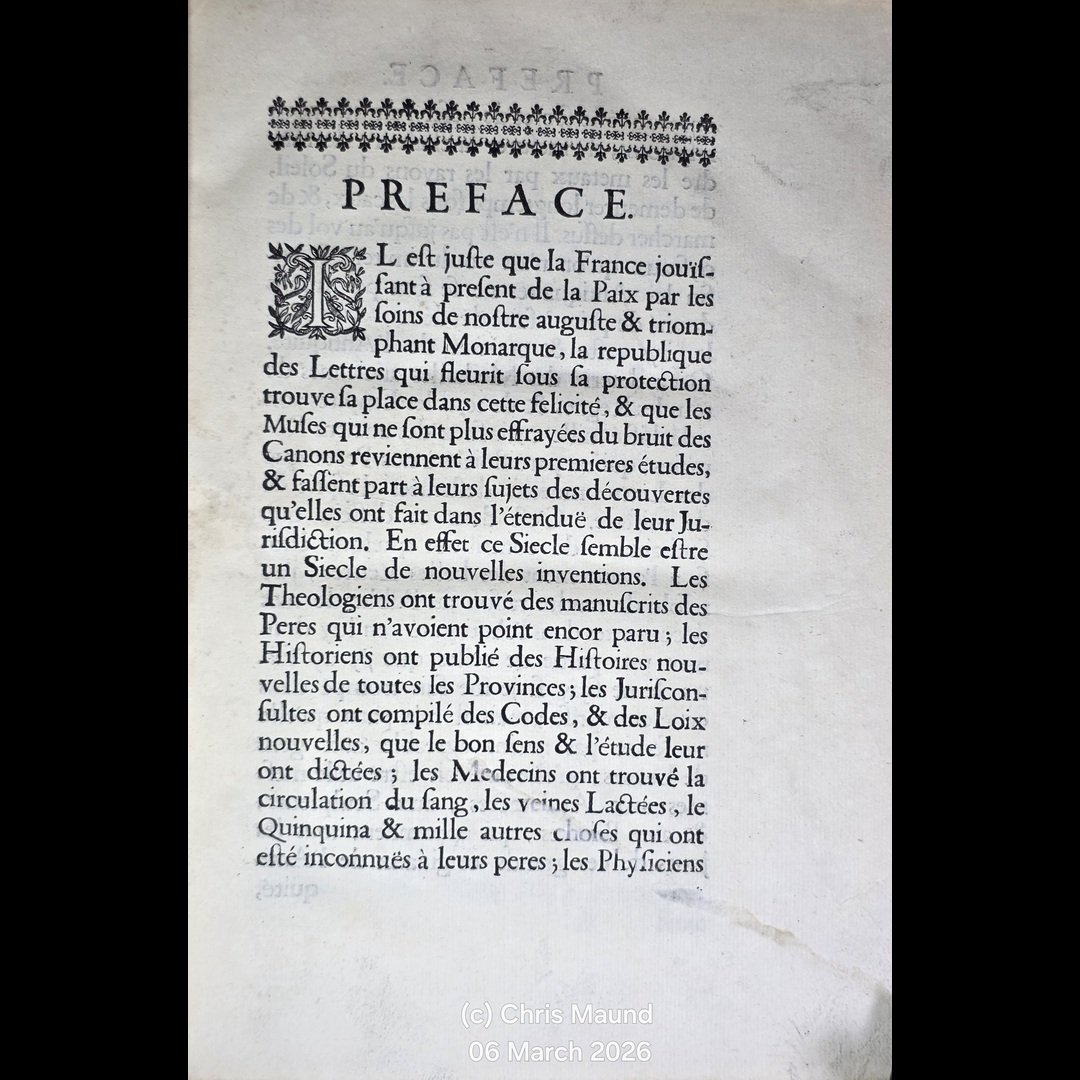
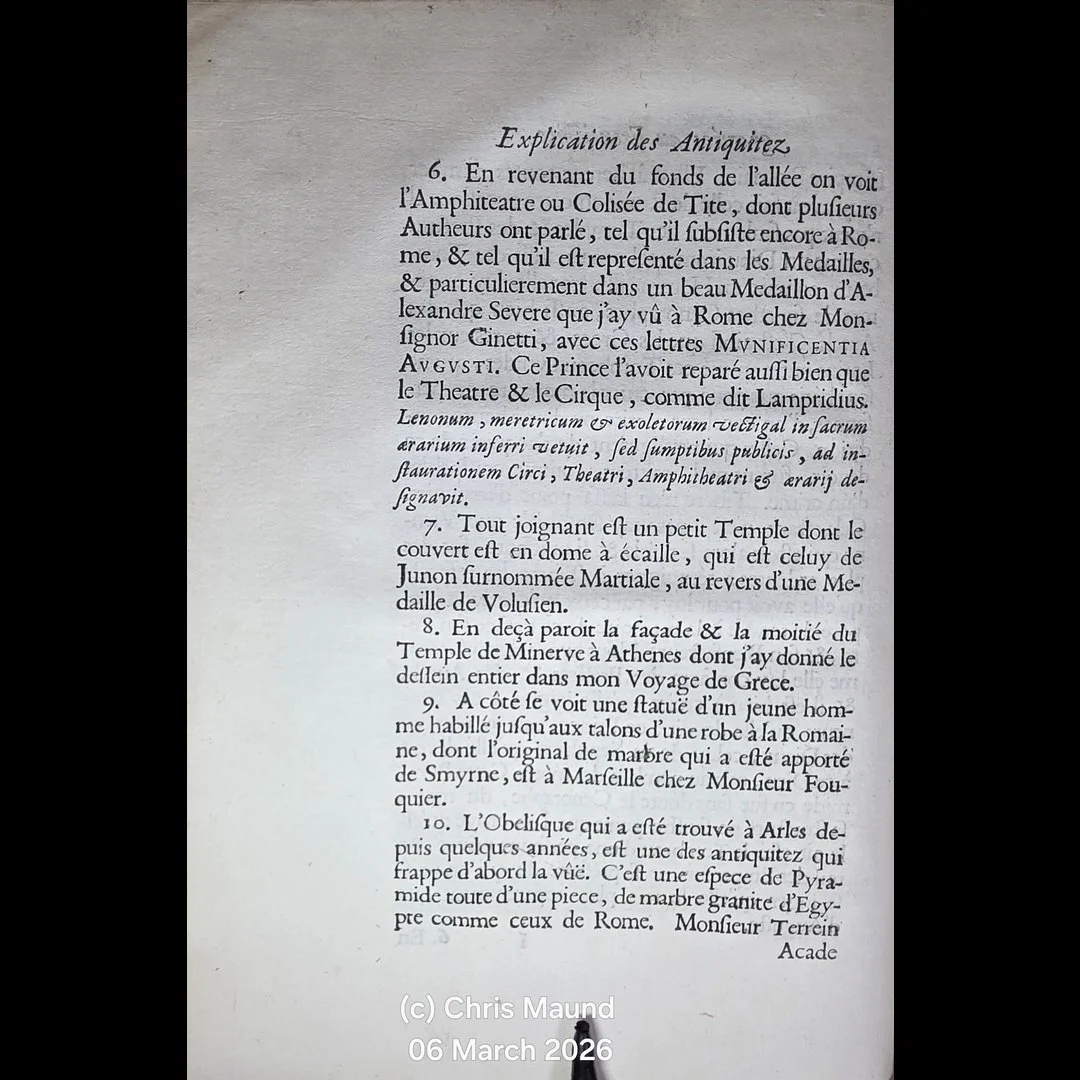
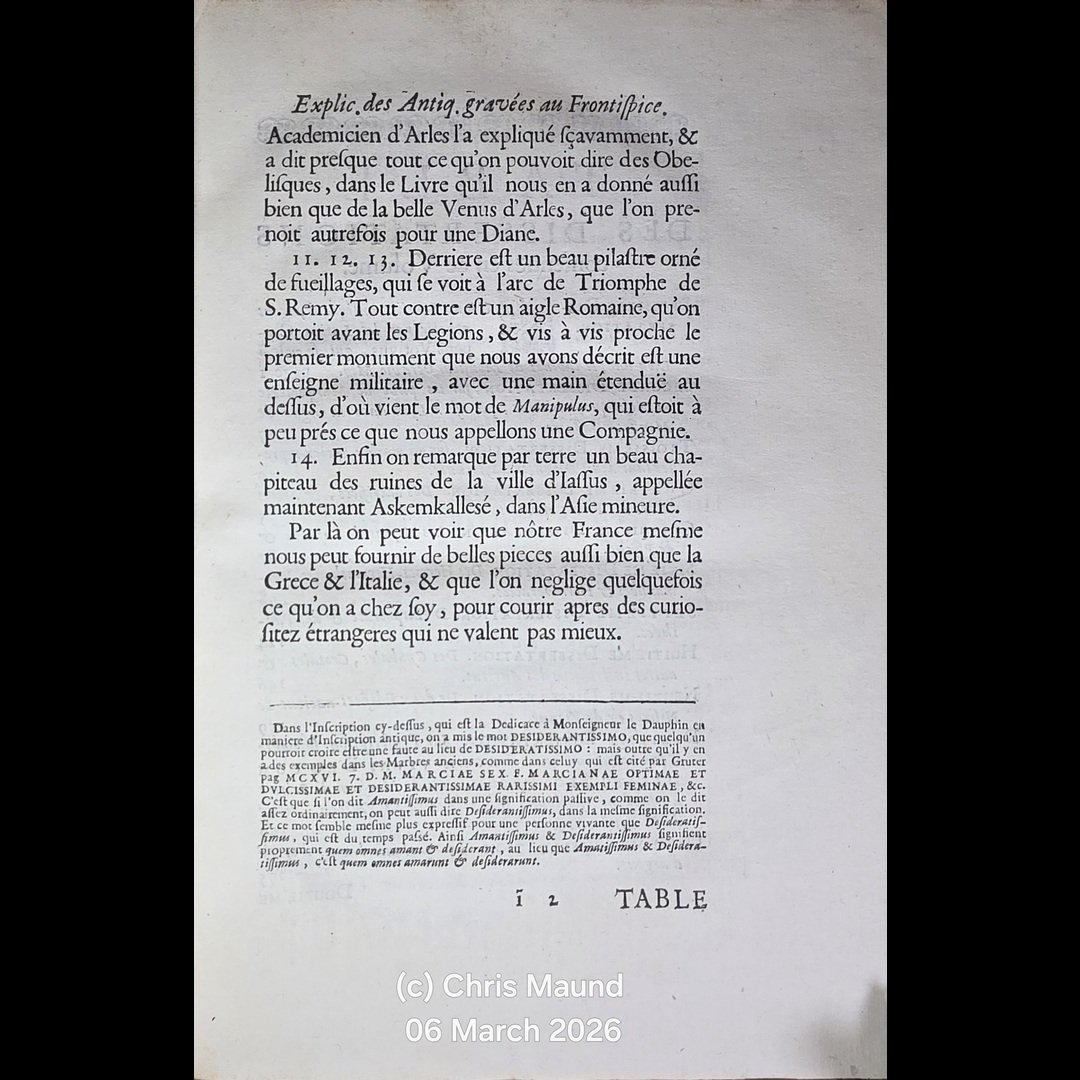
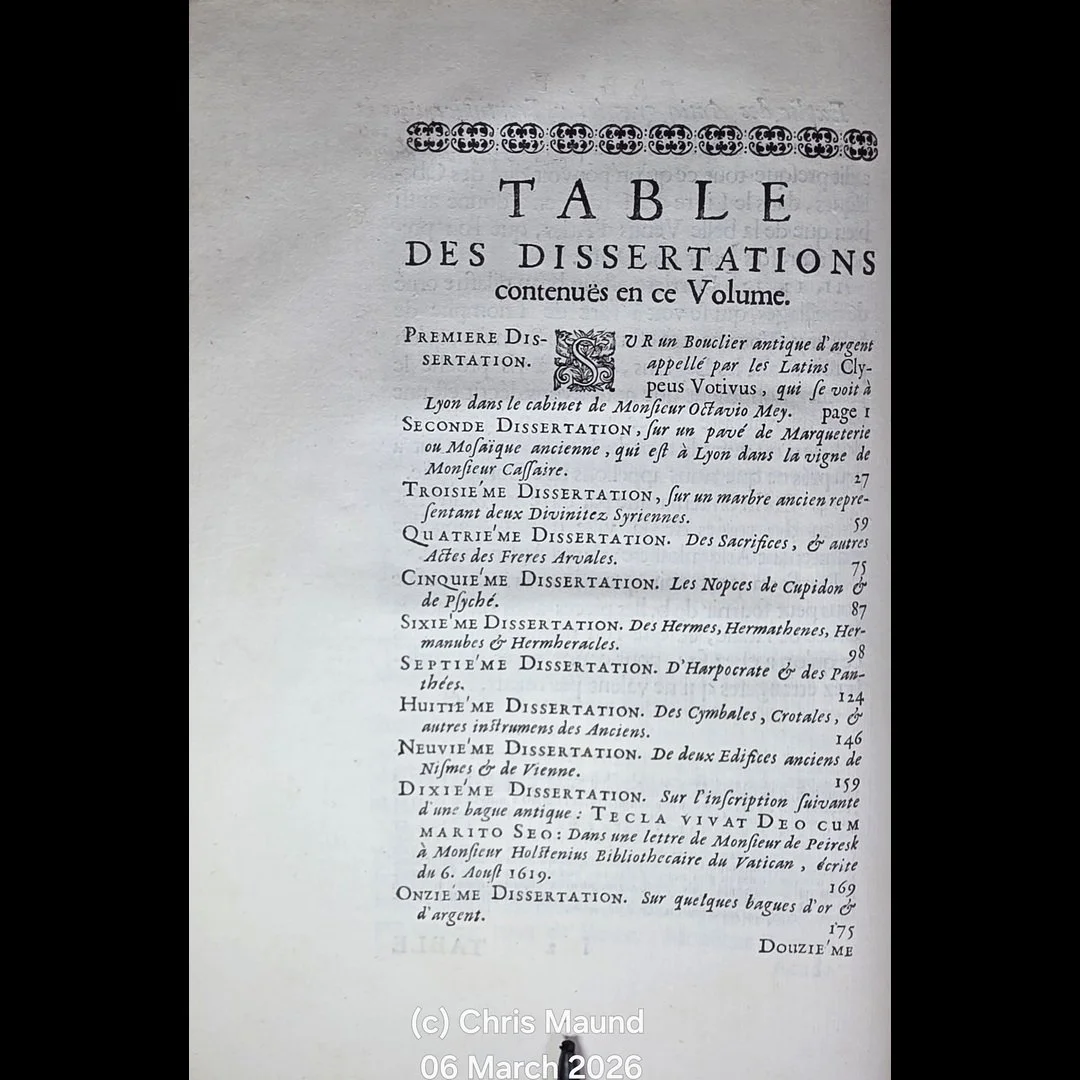
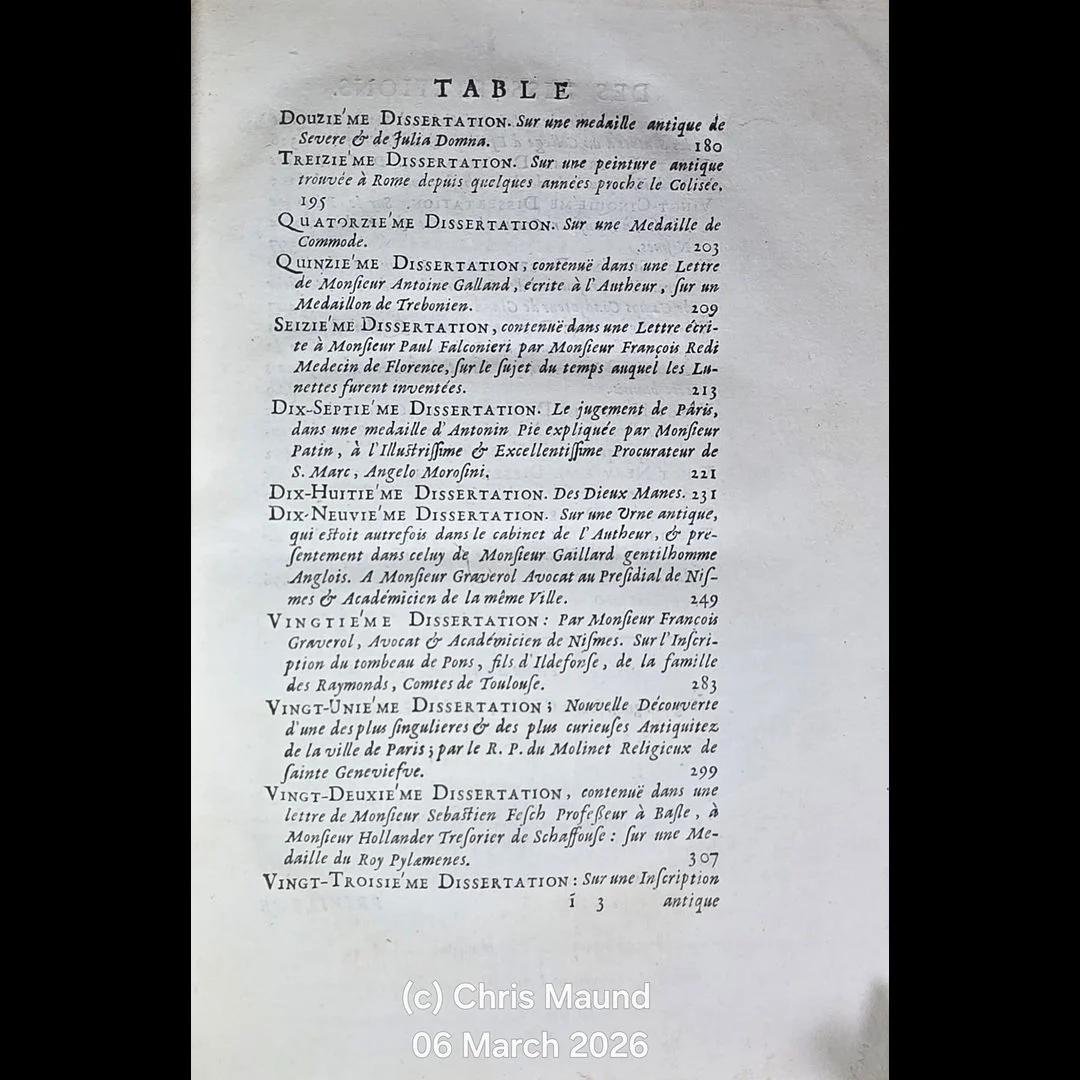
Internally particularly appealing. Paper generally clean and fresh for books of this age, with strong impressions of the numerous engravings. Occasional light age-toning, spotting, marks and handling wear, but the text remains clear and the engraved material notably well preserved.
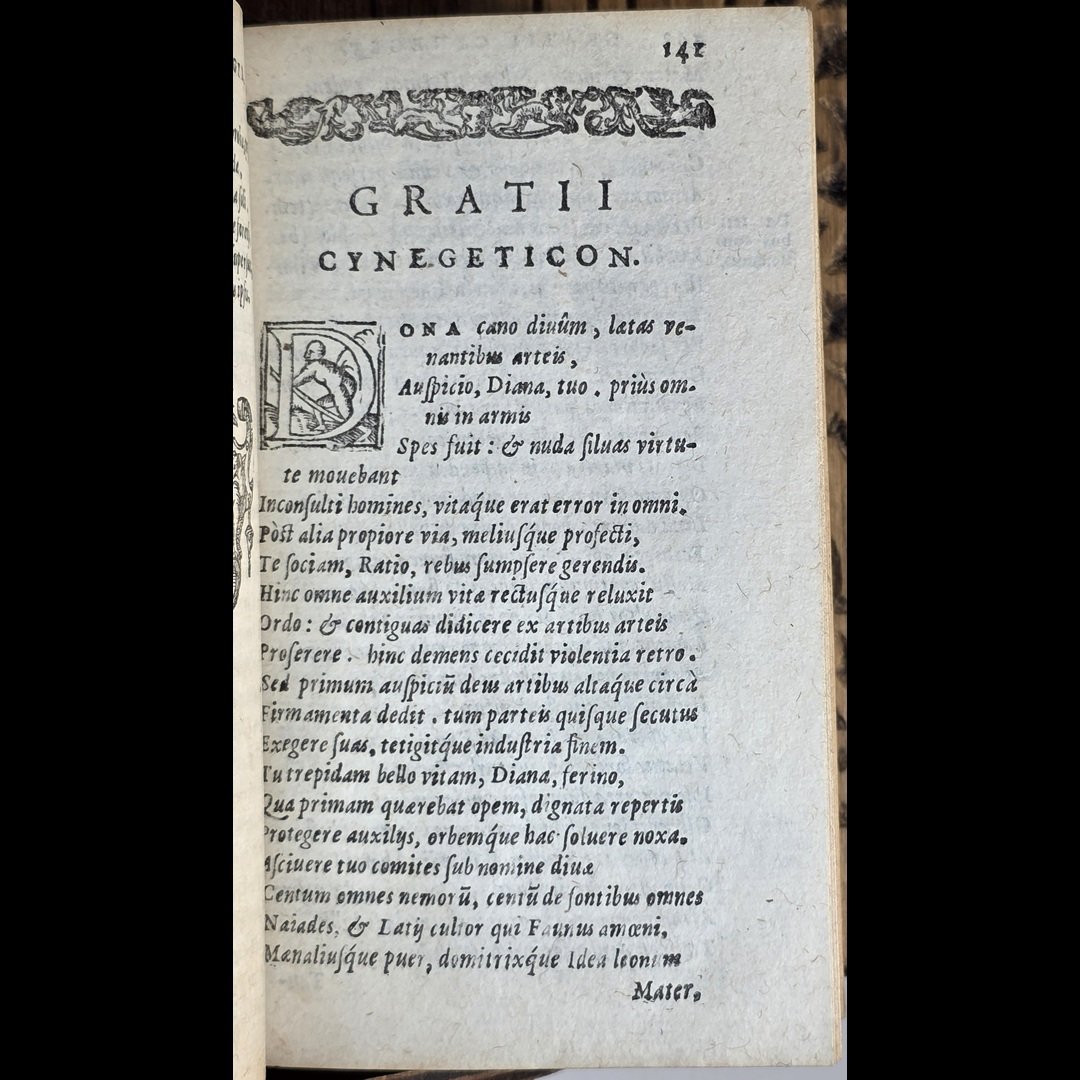
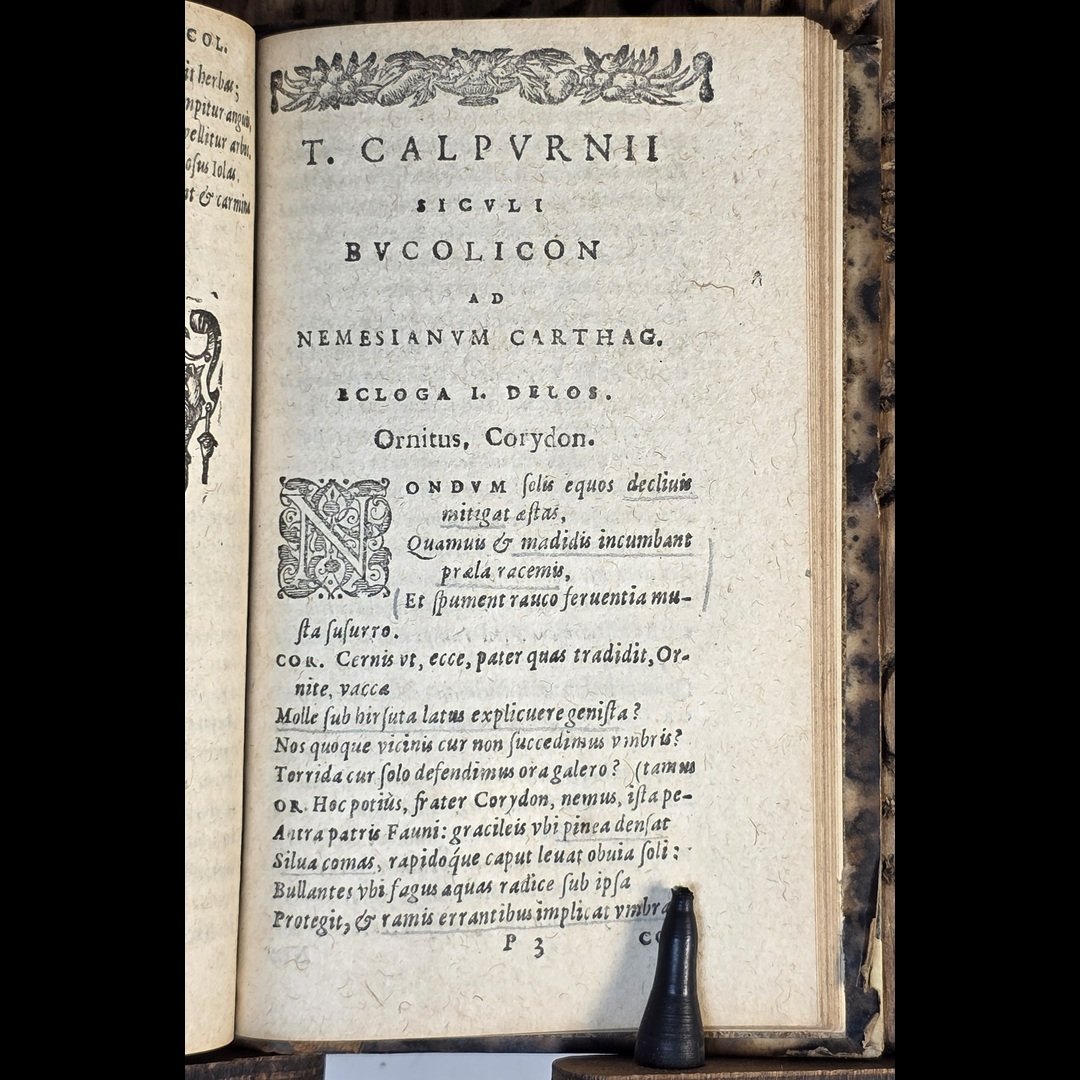
The set has been collated page by page across both volumes. Eight parts are present and the text is complete according to the recorded pagination and tables. Several contemporary printer’s pagination errors occur but the text continues correctly and no textual loss is indicated.
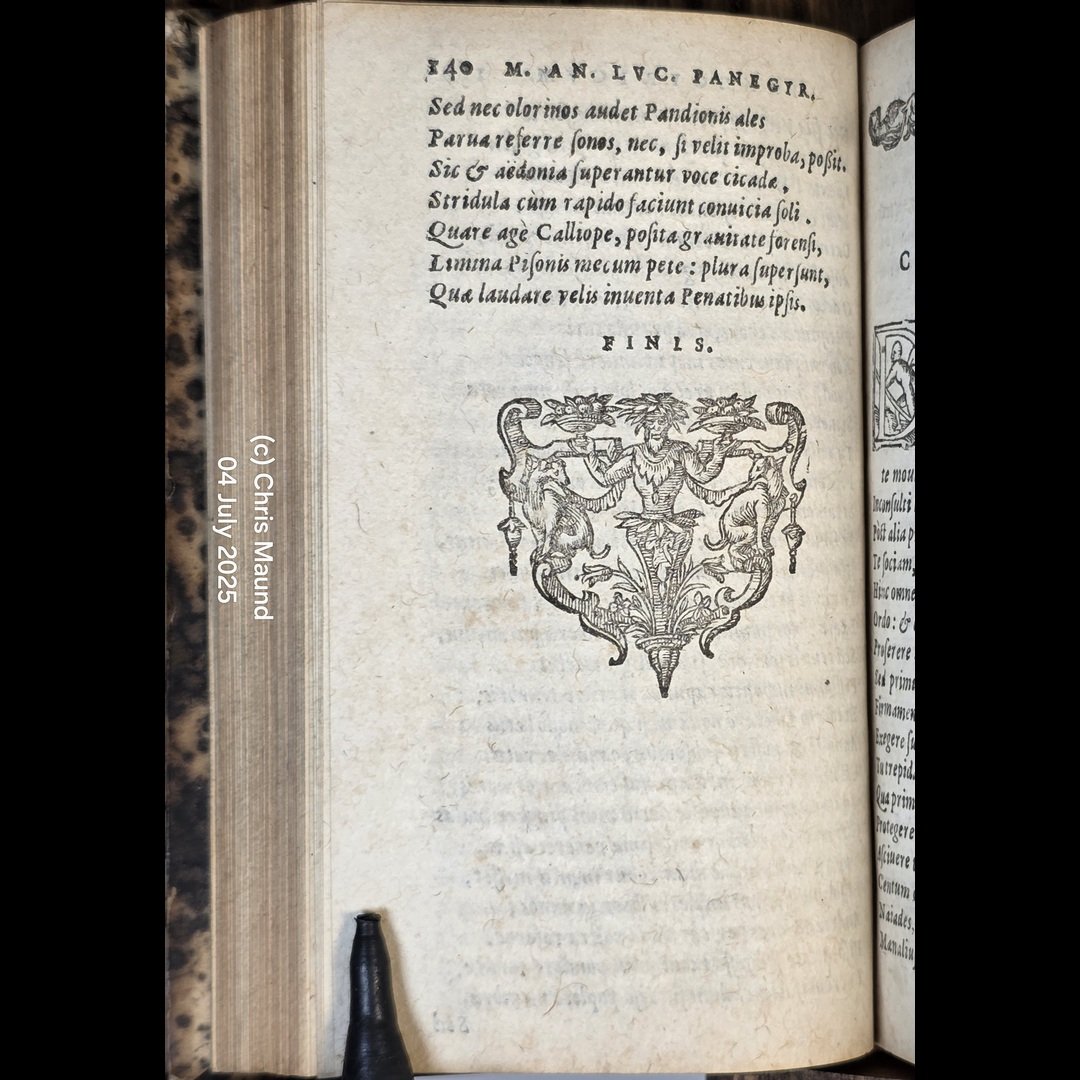
The two volumes contain 307 recorded half-page engraved fable illustrations, together with the separately engraved allegorical frontispiece by Romeyn de Hooghe, signed in the plate and dated 1687, and approximately 238 decorative woodcut ornaments and tailpieces.
The first four 1688 parts contain 204 recorded half-page engravings from the Chauveau-derived illustration cycle, principally engraved by Henri Cause. Bibliographical descriptions of the related Bulderen and Dunewalt issues vary in their totals according to issue, state and the treatment of supplementary engraved elements; the present copy has therefore been described by its physically verified illustration count rather than by imposing a generic catalogue total.
No evidence was found during the page-by-page collation of removed leaves or illustrations.
Please see Photos as part of condition report.
REFERENCES
Bibliothèque nationale de France, Catalogue général – La Fontaine, Fables choisies, Henry van Bulderen, The Hague, 1688.
Bibliothèque nationale de France, Catalogue général – La Fontaine, Fables choisies, Henry van Dunewalt, Antwerp, 1688.
Bibliothèque nationale de France, Catalogue général – Nouvelles fables choisies, Daniel de La Feuille / Meyndert Uytwerf, 1694–1695.
Bibliothèque nationale de France, Catalogue général – La Fontaine, Fables choisies, sixième partie, Daniel de La Feuille, 1696.
Landwehr, Romeyn de Hooghe as Book Illustrator, no. 73.
Rochambeau, Bibliographie des œuvres de La Fontaine, no. 20.
Henri Régnier, Œuvres de J. de La Fontaine – Notice bibliographique.
SYNOPSIS
La Fontaine’s Fables take brief narratives inherited from Aesop, Phaedrus and other classical and later traditions and transform them into polished French verse. Animals talk, scheme, flatter, deceive, compete and suffer, but their behaviour is recognisably human.
Among the best-known are The Grasshopper and the Ant, The Crow and the Fox, The Wolf and the Lamb, The Hare and the Tortoise, and many others that became part of the common literary inheritance of Europe.
Behind their apparent simplicity lies a highly sophisticated treatment of human behaviour. Kings appear as lions; courtiers and flatterers as foxes; the powerful consume the weak while invoking justice; pride is repeatedly punished; intelligence can triumph over strength; and apparently innocent moral lessons frequently contain a second, more ambiguous political or social meaning.
La Fontaine was writing within the highly controlled court culture of Louis XIV, and the animal fable provided an ideal literary form through which the structures of power, patronage, ambition and hypocrisy could be examined without direct political statement.
The present set also illustrates what happened to La Fontaine’s extraordinary literary reputation almost immediately after publication. Dutch publishers rapidly reproduced, illustrated and expanded the Fables for an international Francophone audience.
The four later continuation parts are especially revealing. Published within the De La Feuille tradition, they were associated commercially with La Fontaine despite containing predominantly work by other contemporary French fabulists. Bibliographical research identifies only four genuine La Fontaine pieces within the corresponding Nouvelles fables choisies sequence: Le Juge arbitre, Les Compagnons d’Ulysse, Le Soleil et les Grenouilles, and the piece published as Fable d’un avocat et de la servante. The remainder derives from writers including Valincour, Regnier, Lejay, Saint-Ussans, Furetière and Fraguier.
Consequently, these two volumes document not merely the text of La Fontaine’s Fables, but their extraordinarily rapid transformation into a European publishing phenomenon.
With its 1688 lifetime material, Romeyn de Hooghe frontispiece, extensive Cause illustration cycle, 307 verified half-page engravings, and later De La Feuille continuation, this is an unusually rich example of the seventeenth-century reception and visual interpretation of one of the great classics of French literature.
AUTHOR BIO
Jean de La Fontaine (1621–1695) was one of the greatest French poets of the seventeenth century and remains above all associated with his Fables, among the most enduring works of French literature.
Born at Château-Thierry, La Fontaine drew upon Aesop, Phaedrus, classical literature and a wide variety of European and Eastern narrative traditions, transforming short moral tales into sophisticated French verse. His apparently simple stories of foxes, wolves, lions, crows, ants, hares and other animals conceal acute observations on vanity, ambition, inequality, self-interest, credulity, justice and the exercise of power.
The first collection of Fables choisies appeared in 1668 and was followed by further books and revisions over the remainder of La Fontaine’s life. Their wit, economy and ambiguity allowed them simultaneously to function as moral tales, social satire and sophisticated literature for an adult readership.
Although subsequently adopted into children’s education and memorised by generations of French schoolchildren, the Fables were originally much more than juvenile literature and remain among the defining literary achievements of the age of Louis XIV.
ILLUSTRATOR
Romeyn de Hooghe
Romeyn de Hooghe; Henri Cause after François Chauveau; with later engravings associated with the De La Feuille continuation tradition
Romeyn de Hooghe (1645–1708) was one of the most prolific and inventive Dutch engravers of the seventeenth century. Celebrated for elaborate allegorical compositions, political satires, book illustrations and historical prints, his work combined exceptional technical facility with a highly distinctive Baroque visual imagination.
The allegorical frontispiece in the present set is signed R. Hooghe and dated 1687, providing an important visual introduction to the 1688 edition.
Henri Cause, an engraver active in the Low Countries during the later seventeenth century, produced the principal series of half-page engravings used in the 1688 Bulderen/Dunewalt editions. His compositions derive from the celebrated illustrations designed by François Chauveau for the earlier Paris editions of La Fontaine.
The Cause engravings form an exceptionally extensive visual commentary on the text, usually placing each fable within a compact theatrical landscape or domestic setting. Examples in the present volumes retain strong impressions and considerable detail, and several bear Cause’s engraved signature.
The later continuation employs the associated Dutch illustration tradition of the De La Feuille editions and demonstrates the extraordinary popularity and continued commercial development of illustrated La Fontaine editions in the Netherlands at the close of the seventeenth century.
1688 Early Illustrated Low Countries Composite Set
FABLES CHOISIES
By Jean de la Fontaine
KEY DETAILS
Condition: Very Good
Format: Hardcover, Small/Crown octavo (8vo 5 3⁄8 × 8 in 137 × 203 mm )
Note: Binding/size selection follows standard bibliographic conventions and is approximate; exact measurements may vary.
Published By: Henry van Bulderen, The Hague; Henry van Dunewalt, Antwerp; Daniel de La Feuille, Amsterdam, 1688
Language: French
Illustrated By: Romeyn de Hooghe
Collation: Part I: Books I–III, pp. 1–123 and table; 58 half-page engravings.; Part II: Books IV–VI, pp. 141–268 and table; 60 half-page engravings.; Part III: Books VII–VIII, pp. 3–117 and table; 43 half-page engravings.; Part IV: Books IX–XI, pp. 119–233 and table; 43 half-page engravings.
Dust Jacket: None, as issued, No Jacket
SKU: BTETM0002434
Shipping Info: Approximate Package Dimensions H: 12.5, L: 30, W: 25 (Units: cm), W: 2Kg
Tracked Shipping, Insurance Coverage as per Customer Request
DESCRIPTION
Fables Choisies
1698-1696
Mises en vers par Monsieur de La Fontaine, et par luy reveuës, corrigées & augmentées de nouveau
With Romeyn de Hooghe Frontispiece & 307 Half-Page Engravings
By Jean de La Fontaine, with later fables by contemporary French authors
An unusually substantial and attractive seventeenth-century illustrated collection of La Fontaine’s Fables, bringing together related Low Countries printings and continuations issued at The Hague, Antwerp and Amsterdam between 1688 and 1696.
The first four parts belong to the important early illustrated Dutch tradition of La Fontaine, with the opening title dated The Hague, Henry van Bulderen, 1688, and the fourth part Antwerp, Henry van Dunewalt, 1688. They are accompanied by a striking allegorical engraved frontispiece signed Romeyn de Hooghe and dated 1687, together with the celebrated half-page fable engravings principally by Henri Cause after François Chauveau.
The Antwerp 1688 issue represented by this sequence is bibliographically important as the first illustrated edition of La Fontaine’s Fables published outside France. These parts were also printed during La Fontaine’s lifetime, seven years before his death in 1695.
The collection is extended by four later parts belonging to the remarkable Daniel de La Feuille continuation tradition, issued at Amsterdam during the 1690s. These supplementary fables have a particularly interesting publishing history: although marketed under or alongside La Fontaine’s name, only a small proportion are actually his work, the remainder being compositions or imitations by contemporary French fabulists including Valincour, Regnier, Lejay, Saint-Ussans, Furetière and Fraguier.
The result is considerably more interesting than a straightforward later reprint: a two-volume collection charting the evolution, illustration and commercial afterlife of La Fontaine’s Fables in the Low Countries from 1688 to 1696.
CONDITION, COLLATION & COPY NOTES
An attractive and unusually clean two-volume seventeenth-century illustrated set in eighteenth-century mottled calf, sympathetically rebacked and recornered in lighter calf while preserving the earlier boards. Gilt rules to boards and gilt-lettered spine labels.
Bindings with expected rubbing, scratches, surface marking and abrasion from age and use, together with wear to board edges and extremities. The later spine and corner work is readily distinguishable from the older calf but is sympathetic and serviceable. Both volumes remain firm and present well on the shelf.
Internally particularly appealing. Paper generally clean and fresh for books of this age, with strong impressions of the numerous engravings. Occasional light age-toning, spotting, marks and handling wear, but the text remains clear and the engraved material notably well preserved.
The set has been collated page by page across both volumes. Eight parts are present and the text is complete according to the recorded pagination and tables. Several contemporary printer’s pagination errors occur but the text continues correctly and no textual loss is indicated.
The two volumes contain 307 recorded half-page engraved fable illustrations, together with the separately engraved allegorical frontispiece by Romeyn de Hooghe, signed in the plate and dated 1687, and approximately 238 decorative woodcut ornaments and tailpieces.
The first four 1688 parts contain 204 recorded half-page engravings from the Chauveau-derived illustration cycle, principally engraved by Henri Cause. Bibliographical descriptions of the related Bulderen and Dunewalt issues vary in their totals according to issue, state and the treatment of supplementary engraved elements; the present copy has therefore been described by its physically verified illustration count rather than by imposing a generic catalogue total.
No evidence was found during the page-by-page collation of removed leaves or illustrations.
Please see Photos as part of condition report.
REFERENCES
Bibliothèque nationale de France, Catalogue général – La Fontaine, Fables choisies, Henry van Bulderen, The Hague, 1688.
Bibliothèque nationale de France, Catalogue général – La Fontaine, Fables choisies, Henry van Dunewalt, Antwerp, 1688.
Bibliothèque nationale de France, Catalogue général – Nouvelles fables choisies, Daniel de La Feuille / Meyndert Uytwerf, 1694–1695.
Bibliothèque nationale de France, Catalogue général – La Fontaine, Fables choisies, sixième partie, Daniel de La Feuille, 1696.
Landwehr, Romeyn de Hooghe as Book Illustrator, no. 73.
Rochambeau, Bibliographie des œuvres de La Fontaine, no. 20.
Henri Régnier, Œuvres de J. de La Fontaine – Notice bibliographique.
SYNOPSIS
La Fontaine’s Fables take brief narratives inherited from Aesop, Phaedrus and other classical and later traditions and transform them into polished French verse. Animals talk, scheme, flatter, deceive, compete and suffer, but their behaviour is recognisably human.
Among the best-known are The Grasshopper and the Ant, The Crow and the Fox, The Wolf and the Lamb, The Hare and the Tortoise, and many others that became part of the common literary inheritance of Europe.
Behind their apparent simplicity lies a highly sophisticated treatment of human behaviour. Kings appear as lions; courtiers and flatterers as foxes; the powerful consume the weak while invoking justice; pride is repeatedly punished; intelligence can triumph over strength; and apparently innocent moral lessons frequently contain a second, more ambiguous political or social meaning.
La Fontaine was writing within the highly controlled court culture of Louis XIV, and the animal fable provided an ideal literary form through which the structures of power, patronage, ambition and hypocrisy could be examined without direct political statement.
The present set also illustrates what happened to La Fontaine’s extraordinary literary reputation almost immediately after publication. Dutch publishers rapidly reproduced, illustrated and expanded the Fables for an international Francophone audience.
The four later continuation parts are especially revealing. Published within the De La Feuille tradition, they were associated commercially with La Fontaine despite containing predominantly work by other contemporary French fabulists. Bibliographical research identifies only four genuine La Fontaine pieces within the corresponding Nouvelles fables choisies sequence: Le Juge arbitre, Les Compagnons d’Ulysse, Le Soleil et les Grenouilles, and the piece published as Fable d’un avocat et de la servante. The remainder derives from writers including Valincour, Regnier, Lejay, Saint-Ussans, Furetière and Fraguier.
Consequently, these two volumes document not merely the text of La Fontaine’s Fables, but their extraordinarily rapid transformation into a European publishing phenomenon.
With its 1688 lifetime material, Romeyn de Hooghe frontispiece, extensive Cause illustration cycle, 307 verified half-page engravings, and later De La Feuille continuation, this is an unusually rich example of the seventeenth-century reception and visual interpretation of one of the great classics of French literature.
AUTHOR BIO
Jean de La Fontaine (1621–1695) was one of the greatest French poets of the seventeenth century and remains above all associated with his Fables, among the most enduring works of French literature.
Born at Château-Thierry, La Fontaine drew upon Aesop, Phaedrus, classical literature and a wide variety of European and Eastern narrative traditions, transforming short moral tales into sophisticated French verse. His apparently simple stories of foxes, wolves, lions, crows, ants, hares and other animals conceal acute observations on vanity, ambition, inequality, self-interest, credulity, justice and the exercise of power.
The first collection of Fables choisies appeared in 1668 and was followed by further books and revisions over the remainder of La Fontaine’s life. Their wit, economy and ambiguity allowed them simultaneously to function as moral tales, social satire and sophisticated literature for an adult readership.
Although subsequently adopted into children’s education and memorised by generations of French schoolchildren, the Fables were originally much more than juvenile literature and remain among the defining literary achievements of the age of Louis XIV.
ILLUSTRATOR
Romeyn de Hooghe
Romeyn de Hooghe; Henri Cause after François Chauveau; with later engravings associated with the De La Feuille continuation tradition
Romeyn de Hooghe (1645–1708) was one of the most prolific and inventive Dutch engravers of the seventeenth century. Celebrated for elaborate allegorical compositions, political satires, book illustrations and historical prints, his work combined exceptional technical facility with a highly distinctive Baroque visual imagination.
The allegorical frontispiece in the present set is signed R. Hooghe and dated 1687, providing an important visual introduction to the 1688 edition.
Henri Cause, an engraver active in the Low Countries during the later seventeenth century, produced the principal series of half-page engravings used in the 1688 Bulderen/Dunewalt editions. His compositions derive from the celebrated illustrations designed by François Chauveau for the earlier Paris editions of La Fontaine.
The Cause engravings form an exceptionally extensive visual commentary on the text, usually placing each fable within a compact theatrical landscape or domestic setting. Examples in the present volumes retain strong impressions and considerable detail, and several bear Cause’s engraved signature.
The later continuation employs the associated Dutch illustration tradition of the De La Feuille editions and demonstrates the extraordinary popularity and continued commercial development of illustrated La Fontaine editions in the Netherlands at the close of the seventeenth century.

 Image 1 of 20
 Image 2 of 20
 Image 3 of 20
 Image 4 of 20
 Image 5 of 20
 Image 6 of 20
 Image 7 of 20
 Image 8 of 20
 Image 9 of 20
 Image 10 of 20
 Image 11 of 20
 Image 12 of 20
 Image 13 of 20
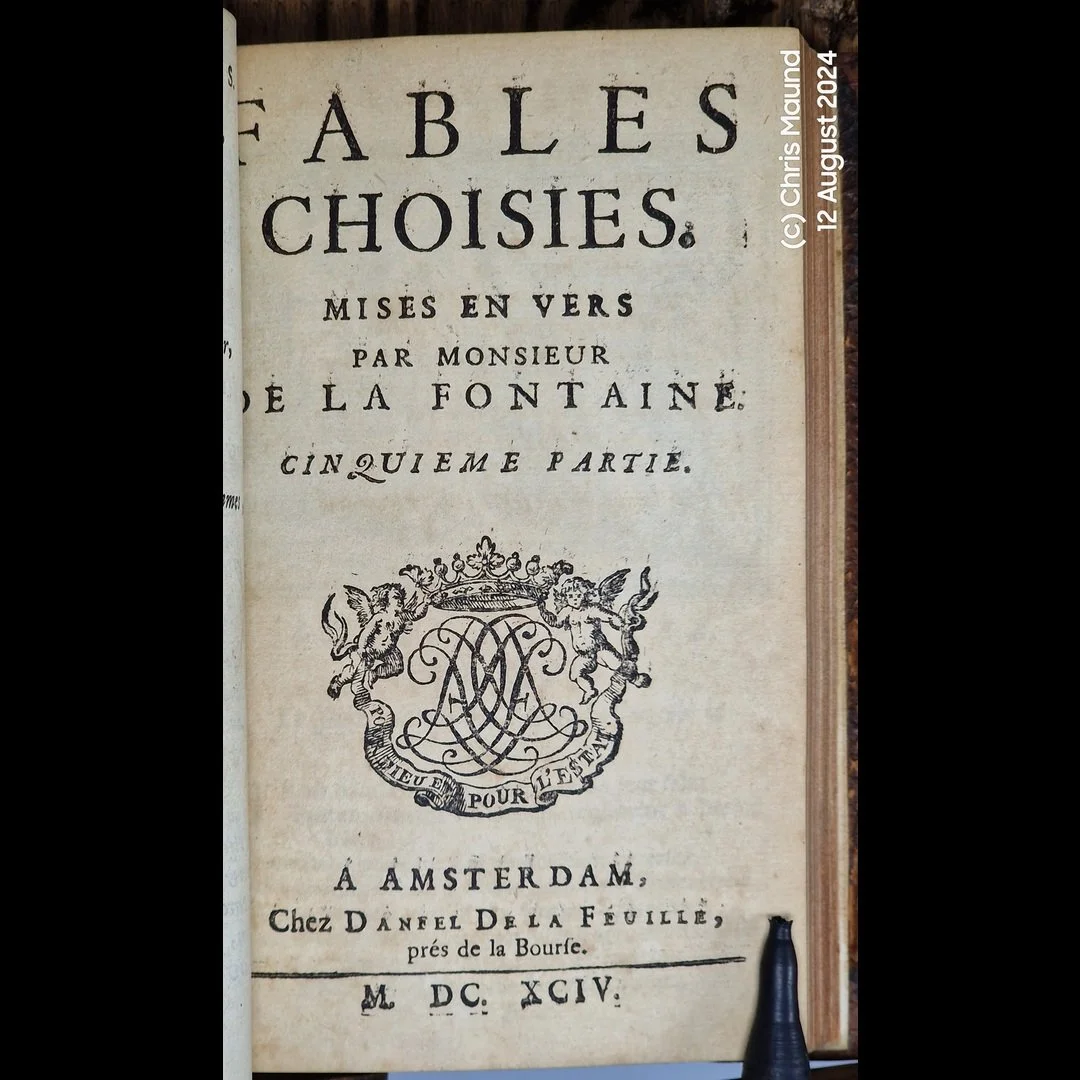 Image 14 of 20
 Image 15 of 20
 Image 16 of 20
 Image 17 of 20
 Image 18 of 20
 Image 19 of 20
 Image 20 of 20