Sale Price:
£1,300.00
Original Price:
£1,495.00
1870 London Issue With Provenance
THE GRAVE, A POEM
By Robert Blair
KEY DETAILS
Condition: Good
Format: Hardcover, folio (fo 12 × 19 in 305 × 483 mm )
Note: Binding/size selection follows standard bibliographic conventions and is approximate; exact measurements may vary.
Published By: R. Ackermann [1813 imprint retained], London; this plates-only issue c.1870, generally associated with John Camden Hotten., London, 1870
Language: English
Illustrated By: William Blake
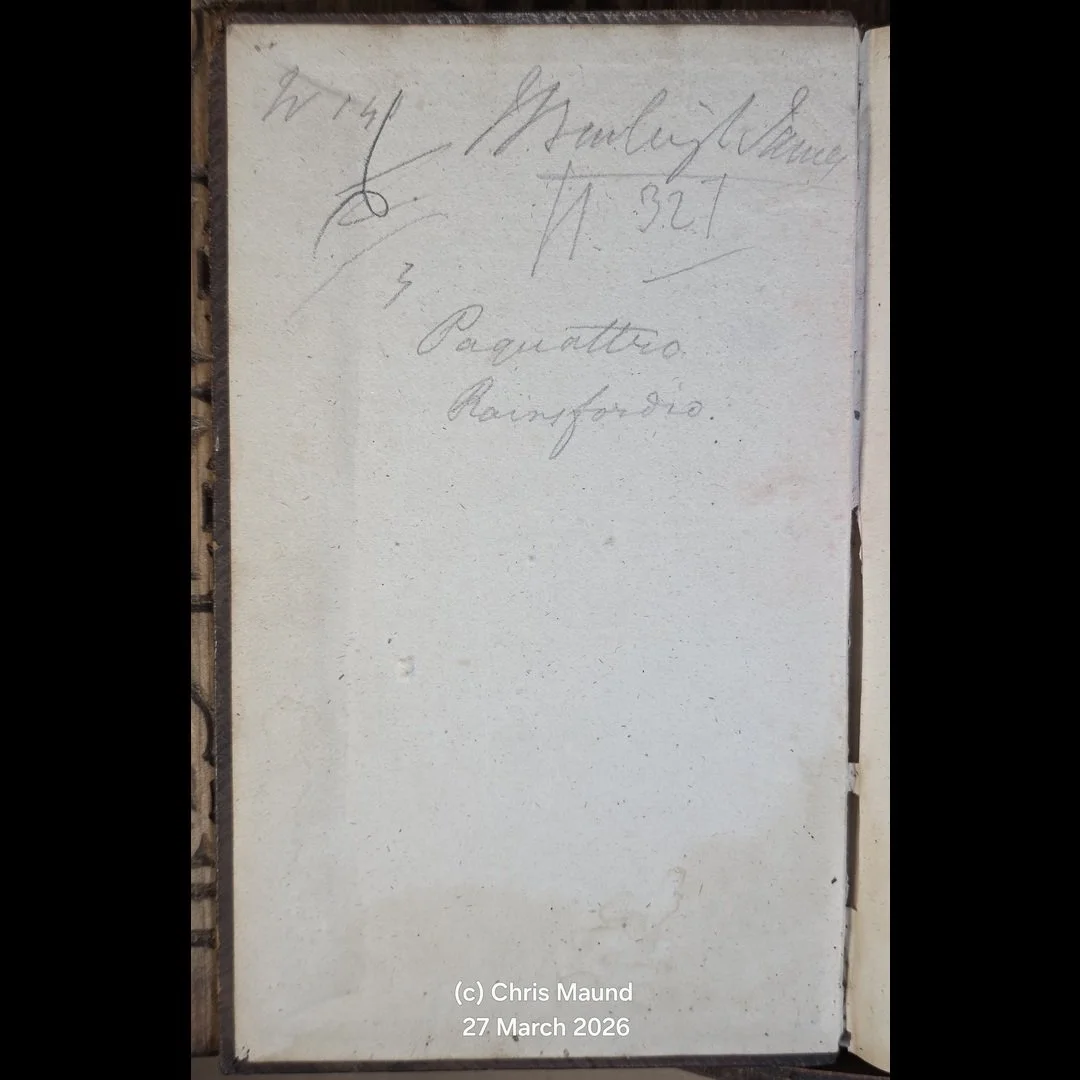
Provenance: Robert Oscar Lenkiewicz (1941–2002); subsequently the Lenkiewicz Foundation, with printed Foundation “On loan from” / Ex-Libris label to the inner board. A British painter noted for his large-scale figurative projects...
Collation: 13 loose engraved plates: engraved portrait of William Blake + engraved pictorial title + 11 further plates after Blake. Complete in the issued plates-only form.
SKU: BTETM0002436
Shipping Info: Approximate Package Dimensions H: 12.5, L: 50, W: 35 (Units: cm), W: 2Kg
Tracked Shipping, Insurance Coverage as per Customer Request
DESCRIPTION
The Grave, a Poem
Illustrated by Twelve Etchings Executed by Louis Schiavonetti from the Original Inventions of William Blake
A scarce and visually striking plates-only issue of William Blake's celebrated designs for Robert Blair's The Grave, comprising the complete suite of thirteen loose engraved sheets: the portrait of William Blake by Luigi Schiavonetti after Thomas Phillips, the engraved pictorial title, and eleven further engravings by Schiavonetti after Blake.
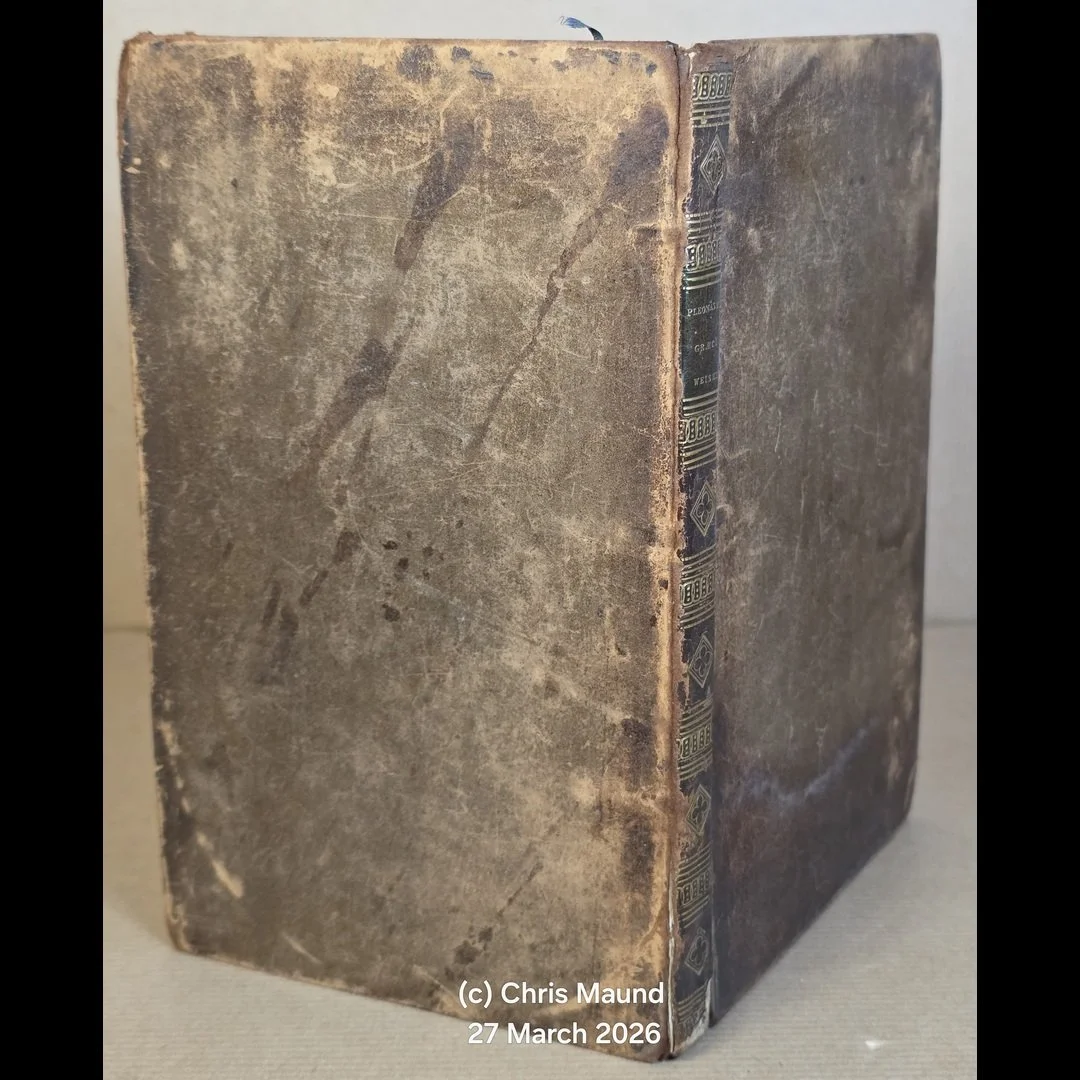
Issued in its elaborate original brown pebbled-cloth portfolio, richly decorated in blind and lettered in gilt “BLAIR'S GRAVE / ILLUSTRATED / IN TWELVE PLATES BY / BLAKE”, this belongs to the c.1870 revival of the celebrated Blake-Schiavonetti illustrations. The engravings were printed from the original copperplates used for the earlier editions and retain the Ackermann 1813 imprint, but the characteristic mid-Victorian portfolio identifies the issue with the later revival generally associated with the publisher John Camden Hotten.
An especially appealing copy through its provenance from the remarkable library of the painter Robert Lenkiewicz (1941–2002), with the printed Lenkiewicz Foundation “On loan from” / Ex-Libris Robert Lenkiewicz label preserved inside the portfolio. Lenkiewicz assembled a library of approximately 25,000 volumes encompassing art, philosophy, theology, psychology, literature, death, witchcraft, magic and the occult. The visionary treatment of mortality and resurrection in Blake's designs makes this a particularly sympathetic association.
Edition Note:
The engraved title and plates retain the Ackermann dating and lettering of the 1813 edition, but bibliographical scholarship identifies this portfolio issue as belonging to the c.1870 revival of Blake's Grave illustrations. The original Schiavonetti copperplates had survived and were brought back into use during the Victorian revival of interest in Blake following Alexander Gilchrist's Life of William Blake of 1863. The mid-Victorian blind-stamped portfolio is characteristic of this later issue.
Some discussion remains as to whether individual c.1870 portfolios could incorporate earlier remainder impressions alongside newly printed sheets. In the absence of detailed paper or plate-state analysis, the present example is conservatively catalogued as the c.1870 plates-only issue, rather than as an 1813 publication.
PROVENANCE
Robert Oscar Lenkiewicz (1941–2002); subsequently the Lenkiewicz Foundation, with printed Foundation “On loan from” / Ex-Libris label to the inner board. A British painter noted for his large-scale figurative projects exploring recurrent themes including death, sexuality, mental illness, relationships, obsession and social exclusion.
Alongside his painting, Lenkiewicz was an exceptional bibliophile. His private library grew to approximately 25,000 volumes and ranged across art history, philosophy, theology, psychology, sociology and literary criticism, together with substantial specialist holdings devoted to witchcraft and the occult, sexuality, gerontology and death. The antiquarian element included books, manuscripts and other intellectual and historical material.
Following his death, significant portions of the library were dispersed, while other sections were retained or placed by the Lenkiewicz Foundation. The Foundation label preserved with this portfolio provides a direct material association with that remarkable collection.
CONDITION, COLLATION & COPY NOTES
Portfolio of 13 loose plates, no text, as issued. Engraved portrait frontispiece of William Blake by Louis Schiavonetti after T. Phillips, engraved additional pictorial title and 11 plates by Schiavonetti after Blake, portrait frontispiece lightly browned, light spotting throughout affecting one or two plates, within original blind-stamped cloth portfolio, spine a little rubbed and scuffed at ends, lacking ties, [Bentley 435E], folio, R. Ackermann, 1813 [?1870]. Overall a very good example of this rare edition.
*** "When Gilchrist's Life of William Blake (1863) made the artist's name familiar again, a deposit of prints left over from 1813 came to light, probably in Ackerman's storehouse. Somebody (possibly John Camden Hotten) reissued the books [...] no new title pages, no dates or places indicated; but the bindings are in mid-Victorian style, and could not have been made in the first half-century" A Blake Dictionary: The Ideas and Symbols of William Blake By Samuel Foster Damon.
Please see Photos as part of condition report.
SYNOPSIS
First published in 1743, Robert Blair's The Grave is a sustained poetic meditation upon death and the grave, and one of the characteristic works of the eighteenth-century Graveyard School.
Blair confronts the apparent finality of death through images of tombs, physical decay, mourning and the destruction of worldly rank and ambition. Yet the poem is ultimately Christian rather than nihilistic. The grave acts as a threshold: human mortality leads towards judgment, resurrection and the possibility of eternal life.
William Blake's designs amplify this spiritual dimension dramatically. Rather than treating death as mere bodily dissolution, Blake visualises the separation of soul and body, the death of the young and old, the descent into the grave, the Last Judgment and the final resurrection of humanity.
Among the most memorable compositions are the deathbed scenes, the reunion of soul and body and the vast apocalyptic imagery of judgment and resurrection. Blake turns Blair's sombre Graveyard poem into a visionary sequence concerned with the transformation rather than simply the extinction of human existence.
The images occupy an important place in the history of Blake's reception. Although Blake himself was disappointed that Cromek entrusted their engraving to Schiavonetti, the published suite became one of the principal vehicles through which Blake's art reached a broad contemporary audience and subsequently played an important part in his nineteenth-century revival.
This complete c.1870 plates-only portfolio therefore combines the enduring appeal of Blair's great meditation on mortality with one of William Blake's most celebrated sequences of visionary designs, preserved in its distinctive Victorian portfolio and with notable provenance from the library of Robert Lenkiewicz.
AUTHOR BIO
Rev Robert Blair (17 April 1699 – 4 February 1746) was a Scottish poet. His fame rests upon his poem The Grave. The poem is now best known for the illustrations created by William Blake following a commission from Robert Cromek. Blake's designs were engraved by Luigi Schiavonetti, and published in 1808.
ILLUSTRATOR
William Blake
William Blake (1757–1827) was an English poet, painter, engraver and visionary artist, now recognised as one of the defining figures of British Romanticism. Trained professionally as an engraver, Blake developed an intensely personal visual and literary language combining biblical imagery, mythology, prophecy and radical ideas concerning imagination, mortality and spiritual liberation.
Robert Hartley Cromek commissioned Blake to produce designs for a new illustrated edition of Blair's The Grave. Blake expected to engrave the designs himself, but Cromek instead employed the fashionable Italian-born engraver Luigi Schiavonetti. Although this decision caused a lasting rupture between Blake and Cromek, Schiavonetti's accomplished interpretations brought Blake's designs before a far wider contemporary audience.
The resulting images rank among Blake's most immediately accessible and dramatic inventions, depicting death not simply as extinction but as part of an immense visionary cycle of separation, judgment, resurrection and reunion.
Engraved By: Luigi Schiavonetti
Engraver Bio:
Luigi Schiavonetti (1765–1810) was an Italian-born engraver who established a successful career in London and became highly regarded for his refined stipple and line engraving.
Commissioned by Robert Hartley Cromek to translate Blake's designs for The Grave into print, Schiavonetti produced the engraved title and twelve associated images, including the portrait of Blake after Thomas Phillips. His technically polished interpretation differed markedly from Blake's own forceful engraving style, but the resulting suite became one of the principal means by which Blake's visual imagination reached an early nineteenth-century public.
1870 London Issue With Provenance
THE GRAVE, A POEM
By Robert Blair
KEY DETAILS
Condition: Good
Format: Hardcover, folio (fo 12 × 19 in 305 × 483 mm )
Note: Binding/size selection follows standard bibliographic conventions and is approximate; exact measurements may vary.
Published By: R. Ackermann [1813 imprint retained], London; this plates-only issue c.1870, generally associated with John Camden Hotten., London, 1870
Language: English
Illustrated By: William Blake
Provenance: Robert Oscar Lenkiewicz (1941–2002); subsequently the Lenkiewicz Foundation, with printed Foundation “On loan from” / Ex-Libris label to the inner board. A British painter noted for his large-scale figurative projects...
Collation: 13 loose engraved plates: engraved portrait of William Blake + engraved pictorial title + 11 further plates after Blake. Complete in the issued plates-only form.
SKU: BTETM0002436
Shipping Info: Approximate Package Dimensions H: 12.5, L: 50, W: 35 (Units: cm), W: 2Kg
Tracked Shipping, Insurance Coverage as per Customer Request
DESCRIPTION
The Grave, a Poem
Illustrated by Twelve Etchings Executed by Louis Schiavonetti from the Original Inventions of William Blake
A scarce and visually striking plates-only issue of William Blake's celebrated designs for Robert Blair's The Grave, comprising the complete suite of thirteen loose engraved sheets: the portrait of William Blake by Luigi Schiavonetti after Thomas Phillips, the engraved pictorial title, and eleven further engravings by Schiavonetti after Blake.
Issued in its elaborate original brown pebbled-cloth portfolio, richly decorated in blind and lettered in gilt “BLAIR'S GRAVE / ILLUSTRATED / IN TWELVE PLATES BY / BLAKE”, this belongs to the c.1870 revival of the celebrated Blake-Schiavonetti illustrations. The engravings were printed from the original copperplates used for the earlier editions and retain the Ackermann 1813 imprint, but the characteristic mid-Victorian portfolio identifies the issue with the later revival generally associated with the publisher John Camden Hotten.
An especially appealing copy through its provenance from the remarkable library of the painter Robert Lenkiewicz (1941–2002), with the printed Lenkiewicz Foundation “On loan from” / Ex-Libris Robert Lenkiewicz label preserved inside the portfolio. Lenkiewicz assembled a library of approximately 25,000 volumes encompassing art, philosophy, theology, psychology, literature, death, witchcraft, magic and the occult. The visionary treatment of mortality and resurrection in Blake's designs makes this a particularly sympathetic association.
Edition Note:
The engraved title and plates retain the Ackermann dating and lettering of the 1813 edition, but bibliographical scholarship identifies this portfolio issue as belonging to the c.1870 revival of Blake's Grave illustrations. The original Schiavonetti copperplates had survived and were brought back into use during the Victorian revival of interest in Blake following Alexander Gilchrist's Life of William Blake of 1863. The mid-Victorian blind-stamped portfolio is characteristic of this later issue.
Some discussion remains as to whether individual c.1870 portfolios could incorporate earlier remainder impressions alongside newly printed sheets. In the absence of detailed paper or plate-state analysis, the present example is conservatively catalogued as the c.1870 plates-only issue, rather than as an 1813 publication.
PROVENANCE
Robert Oscar Lenkiewicz (1941–2002); subsequently the Lenkiewicz Foundation, with printed Foundation “On loan from” / Ex-Libris label to the inner board. A British painter noted for his large-scale figurative projects exploring recurrent themes including death, sexuality, mental illness, relationships, obsession and social exclusion.
Alongside his painting, Lenkiewicz was an exceptional bibliophile. His private library grew to approximately 25,000 volumes and ranged across art history, philosophy, theology, psychology, sociology and literary criticism, together with substantial specialist holdings devoted to witchcraft and the occult, sexuality, gerontology and death. The antiquarian element included books, manuscripts and other intellectual and historical material.
Following his death, significant portions of the library were dispersed, while other sections were retained or placed by the Lenkiewicz Foundation. The Foundation label preserved with this portfolio provides a direct material association with that remarkable collection.
CONDITION, COLLATION & COPY NOTES
Portfolio of 13 loose plates, no text, as issued. Engraved portrait frontispiece of William Blake by Louis Schiavonetti after T. Phillips, engraved additional pictorial title and 11 plates by Schiavonetti after Blake, portrait frontispiece lightly browned, light spotting throughout affecting one or two plates, within original blind-stamped cloth portfolio, spine a little rubbed and scuffed at ends, lacking ties, [Bentley 435E], folio, R. Ackermann, 1813 [?1870]. Overall a very good example of this rare edition.
*** "When Gilchrist's Life of William Blake (1863) made the artist's name familiar again, a deposit of prints left over from 1813 came to light, probably in Ackerman's storehouse. Somebody (possibly John Camden Hotten) reissued the books [...] no new title pages, no dates or places indicated; but the bindings are in mid-Victorian style, and could not have been made in the first half-century" A Blake Dictionary: The Ideas and Symbols of William Blake By Samuel Foster Damon.
Please see Photos as part of condition report.
SYNOPSIS
First published in 1743, Robert Blair's The Grave is a sustained poetic meditation upon death and the grave, and one of the characteristic works of the eighteenth-century Graveyard School.
Blair confronts the apparent finality of death through images of tombs, physical decay, mourning and the destruction of worldly rank and ambition. Yet the poem is ultimately Christian rather than nihilistic. The grave acts as a threshold: human mortality leads towards judgment, resurrection and the possibility of eternal life.
William Blake's designs amplify this spiritual dimension dramatically. Rather than treating death as mere bodily dissolution, Blake visualises the separation of soul and body, the death of the young and old, the descent into the grave, the Last Judgment and the final resurrection of humanity.
Among the most memorable compositions are the deathbed scenes, the reunion of soul and body and the vast apocalyptic imagery of judgment and resurrection. Blake turns Blair's sombre Graveyard poem into a visionary sequence concerned with the transformation rather than simply the extinction of human existence.
The images occupy an important place in the history of Blake's reception. Although Blake himself was disappointed that Cromek entrusted their engraving to Schiavonetti, the published suite became one of the principal vehicles through which Blake's art reached a broad contemporary audience and subsequently played an important part in his nineteenth-century revival.
This complete c.1870 plates-only portfolio therefore combines the enduring appeal of Blair's great meditation on mortality with one of William Blake's most celebrated sequences of visionary designs, preserved in its distinctive Victorian portfolio and with notable provenance from the library of Robert Lenkiewicz.
AUTHOR BIO
Rev Robert Blair (17 April 1699 – 4 February 1746) was a Scottish poet. His fame rests upon his poem The Grave. The poem is now best known for the illustrations created by William Blake following a commission from Robert Cromek. Blake's designs were engraved by Luigi Schiavonetti, and published in 1808.
ILLUSTRATOR
William Blake
William Blake (1757–1827) was an English poet, painter, engraver and visionary artist, now recognised as one of the defining figures of British Romanticism. Trained professionally as an engraver, Blake developed an intensely personal visual and literary language combining biblical imagery, mythology, prophecy and radical ideas concerning imagination, mortality and spiritual liberation.
Robert Hartley Cromek commissioned Blake to produce designs for a new illustrated edition of Blair's The Grave. Blake expected to engrave the designs himself, but Cromek instead employed the fashionable Italian-born engraver Luigi Schiavonetti. Although this decision caused a lasting rupture between Blake and Cromek, Schiavonetti's accomplished interpretations brought Blake's designs before a far wider contemporary audience.
The resulting images rank among Blake's most immediately accessible and dramatic inventions, depicting death not simply as extinction but as part of an immense visionary cycle of separation, judgment, resurrection and reunion.
Engraved By: Luigi Schiavonetti
Engraver Bio:
Luigi Schiavonetti (1765–1810) was an Italian-born engraver who established a successful career in London and became highly regarded for his refined stipple and line engraving.
Commissioned by Robert Hartley Cromek to translate Blake's designs for The Grave into print, Schiavonetti produced the engraved title and twelve associated images, including the portrait of Blake after Thomas Phillips. His technically polished interpretation differed markedly from Blake's own forceful engraving style, but the resulting suite became one of the principal means by which Blake's visual imagination reached an early nineteenth-century public.

 Image 1 of 18
 Image 2 of 18
 Image 3 of 18
 Image 4 of 18
 Image 5 of 18
 Image 6 of 18
 Image 7 of 18
 Image 8 of 18
 Image 9 of 18
 Image 10 of 18
 Image 11 of 18
 Image 12 of 18
 Image 13 of 18
 Image 14 of 18
 Image 15 of 18
 Image 16 of 18
 Image 17 of 18
 Image 18 of 18