1523 First Basel Edition With Detlef Mauss Provenance
DECII AUSONII BURDIGALENSIS VIRI CONSULARIS VARIA OPUSCULA
By Decimus Magnus Ausonius
KEY DETAILS
Condition: Very Good
Format: Vellum, Vellum, octavo (8vo), approx. 15.5 × 10.5 cm
Published By: Basileae [Basel], apud Valentinum Curionem; colophon dated January 1523, Switzerland, 1523
Language: Latin, with Greek
Illustrated By: Anonymous Basel woodcut artist
Provenance: Dr Detlef Mauss (1943–2009) — German lawyer, bibliophile and collector of early printed books; characteristic embossed ownership stamp.
Collation: a–q⁸ r⁶ = 134 leaves
Dust Jacket: None, as issued, No Jacket
SKU: BTETM0002441
Shipping Info: Approximate Package Dimensions H: 12.5, L: 30, W: 25 (Units: cm), W: 2Kg
Tracked Shipping, Insurance Coverage as per Customer Request
DESCRIPTION
Decii Ausonii Burdigalensis viri consularis varia opuscula
Full Title: DECII AUSONII BURDIGALENSIS VIRI CONSULARIS VARIA OPUSCULA DILIGENTER RECOGNITA
A particularly interesting copy of the 1523 Basel edition of the collected shorter works of Decimus Magnus Ausonius, one of the most engaging literary witnesses to the culture of the later Roman Empire, printed by Valentin Curio at Basel in January 1523.
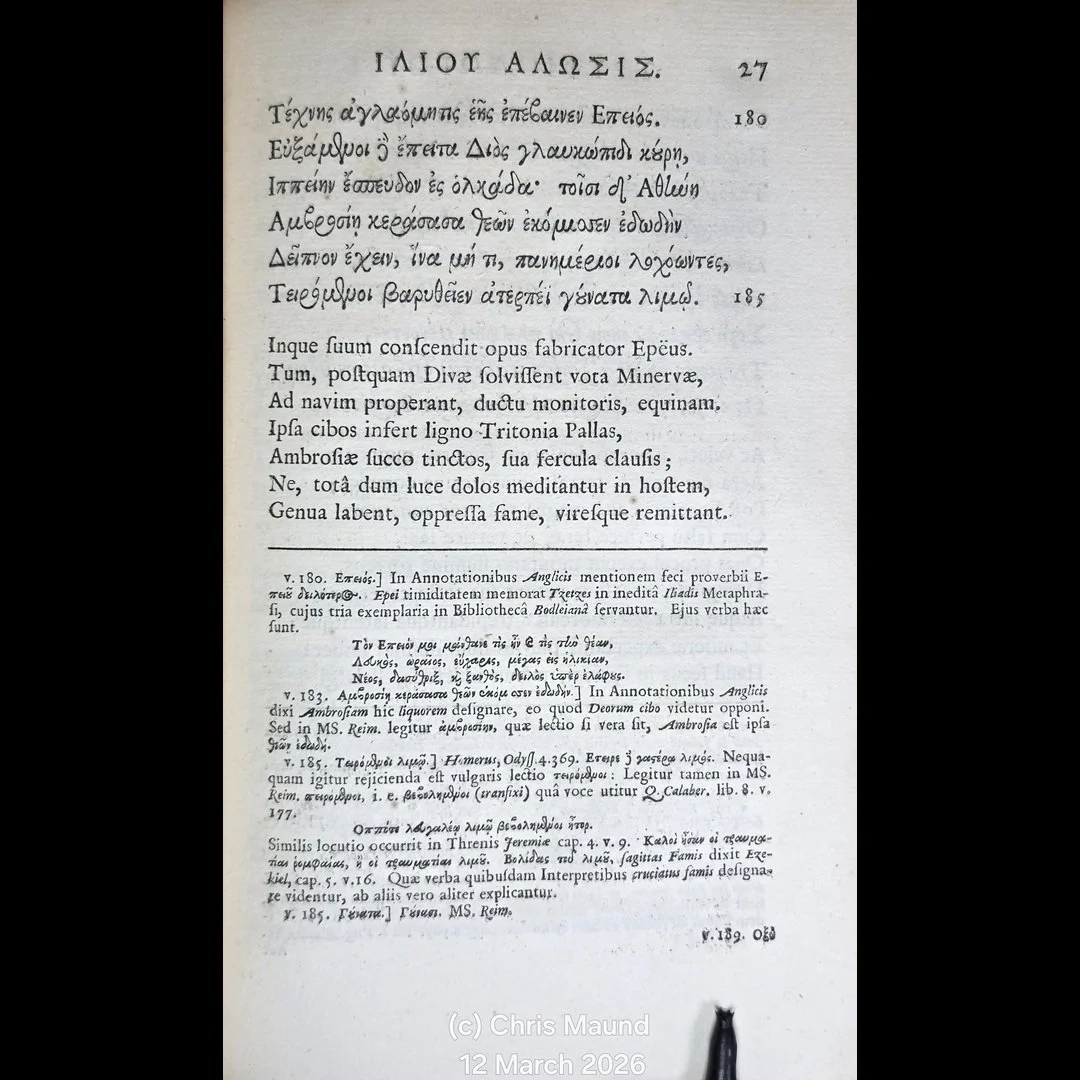
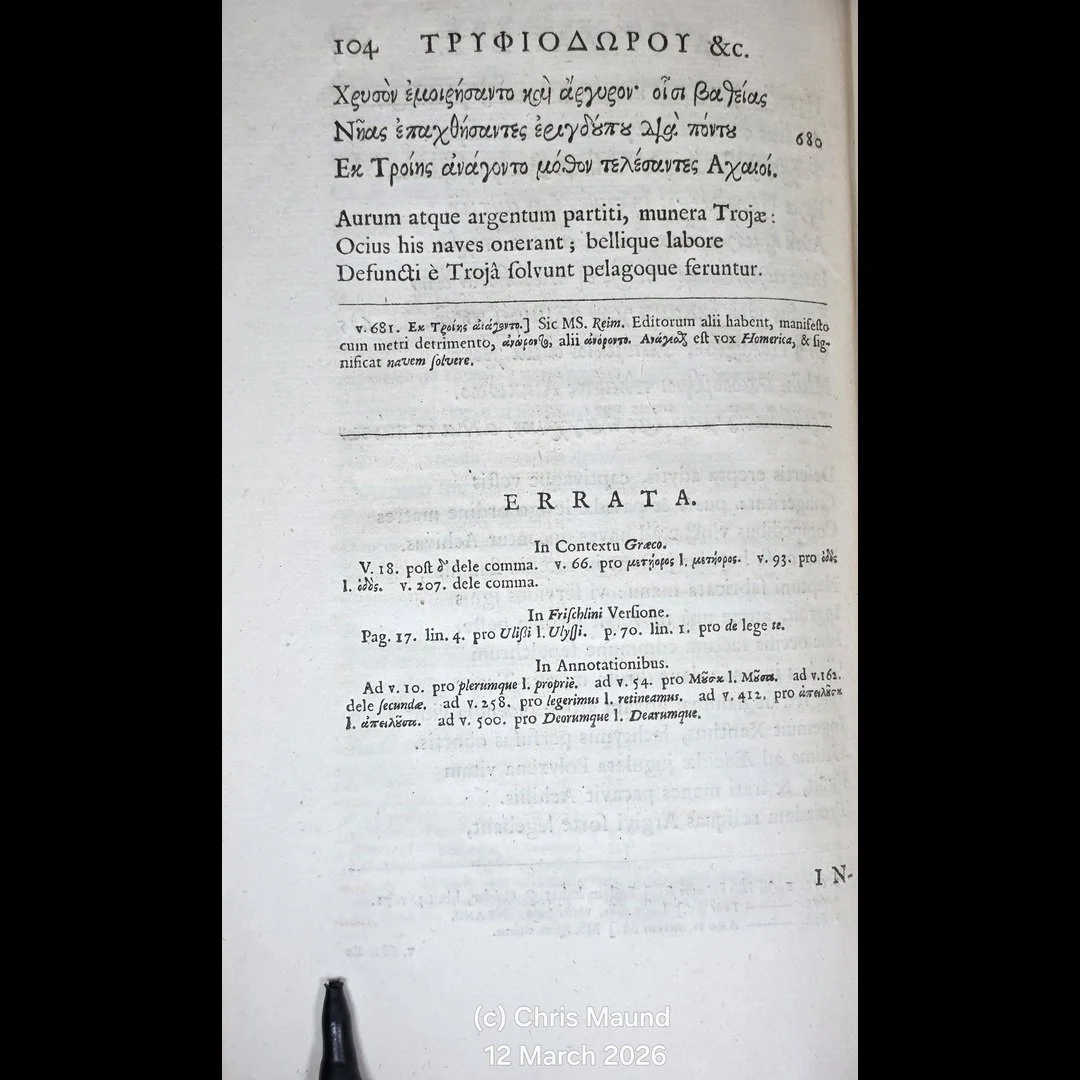
The volume opens with the humanist Pietro Crinito’s life of Ausonius and a catalogue of the Ausonian writings before proceeding through the poet’s epigrams, idylls, letters and other shorter works, including the celebrated Mosella, Ausonius’s extraordinary poetic evocation of the Moselle landscape, its vineyards, villas, river traffic and natural life. The collection concludes with the Periochae in omnes Homeri Rhapsodias.
An appealing example of early-sixteenth-century Basel humanist printing, with an elaborate Renaissance woodcut title border, decorative initials and passages in Greek. This particular copy is distinguished by unusually elaborate gilt and gauffered edges, worked with a large interlacing foliate and knotwork design. The decoration appears considerably earlier than the present vellum binding and is stylistically consistent with Continental Renaissance work, with particularly close parallels among Italian bindings of the first half of the sixteenth century.
The copy also carries the embossed ownership stamp of Dr Detlef Mauss (1943–2009), German lawyer, bibliophile and noted collector of early printed books. Mauss’s characteristic embossed ownership mark is documented in other books from his collection, including examples described as incorporating a replica of the Fust & Schoeffer device.
Of particular historical interest, the name of the Basel printer Valentin Curio has been deliberately abraded in both places where it appears: first in the title-page imprint and again in the terminal colophon. The repeated and selective nature of the cancellation makes accidental damage unlikely. Curio was active within Basel’s intense humanist and early-Reformation printing culture and printed works by Martin Luther in 1522; a confessional motive for the cancellation is therefore possible, although it cannot presently be demonstrated.
PROVENANCE
Dr Detlef Mauss (1943–2009) — German lawyer, bibliophile and collector of early printed books; characteristic embossed ownership stamp.
Reiss & Sohn, Königstein im Taunus — Auction 219, 23 April 2024, lot 83.
Later private ownership.
CONDITION, COLLATION & COPY NOTES
An attractive and substantially sound early-sixteenth-century volume in an old stiff vellum binding over boards, with later red morocco spine label lettered AVSONIO. Vellum with expected age-toning, marking, light soiling and minor bowing. The rear inner hinge is opened/strained with sewing exposed, but the text block remains together with no loose gatherings observed.
The text block preserves striking all-edges gilt and elaborately gauffered decoration, comprising large repeating interlaced foliate/knotwork ornament across fore-edge, head and tail. The edge treatment appears earlier than the present vellum binding and is stylistically compatible with Renaissance work of the first half of the sixteenth century; comparable interlaced and knotwork-gauffered edges are particularly associated with Italian bindings of this period. The present vellum binding may therefore represent a later rebinding which retained an earlier decorated text block.
Title page present within an elaborate architectural and ornamental woodcut border, the outer portion slightly shaved. The border has historically been described as Holbeinesque, although no secure attribution to Hans Holbein the Younger is claimed here. Decorative woodcut initials occur throughout.
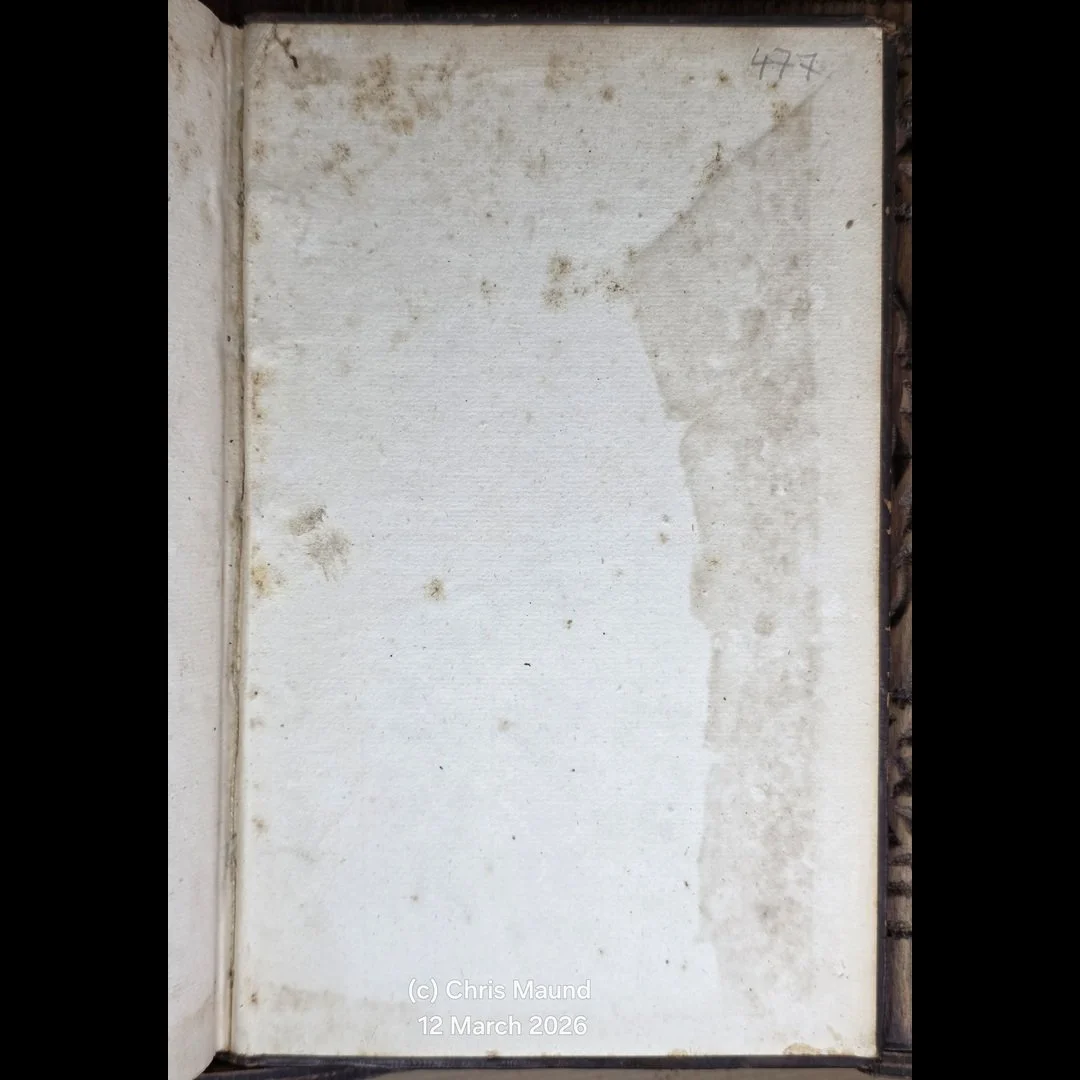
Internally with general age-toning, occasional browning and spotting, light damp traces and minor handling marks. Small marginal defects and occasional age-related wear, substantially clear of the text. Printing generally strong and crisp.
The name Valentin Curio has been deliberately erased or abraded from the title-page imprint and again from the colophon. This deliberate double cancellation is a notable copy-specific feature; its date and motivation remain unidentified.
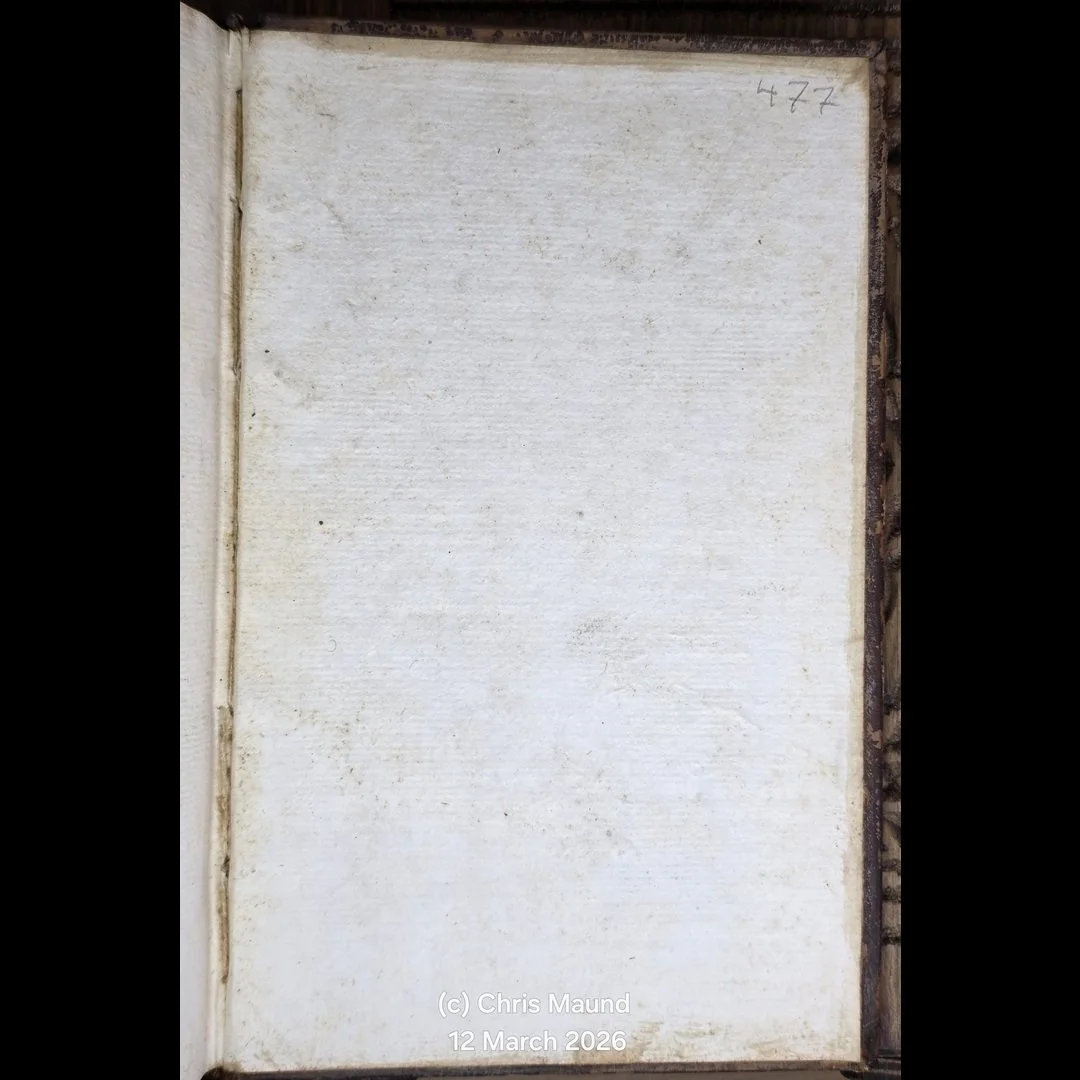
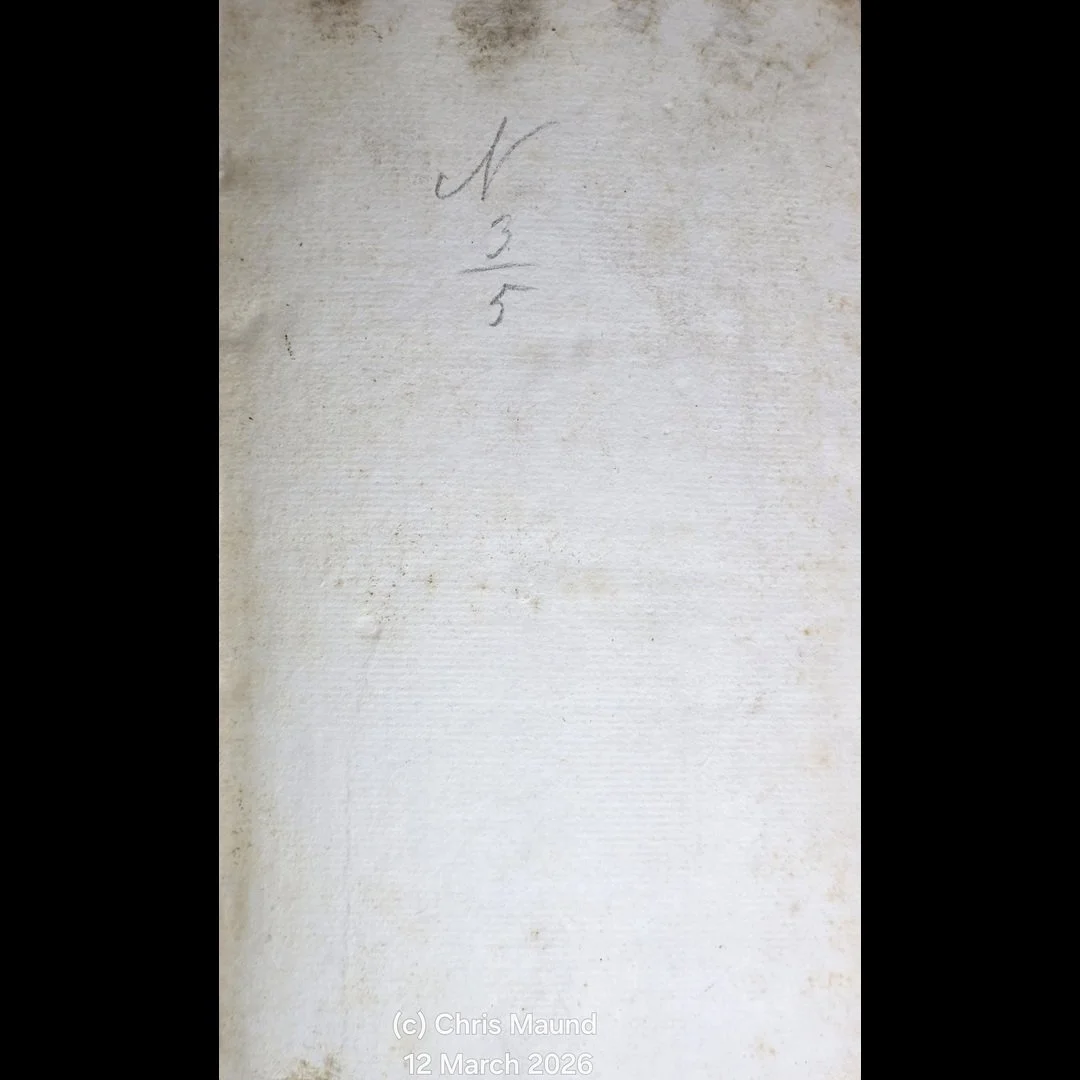
Embossed ownership stamp of Dr Detlef Mauss (1943–2009) to the front endpaper. Rear endpaper with earlier bibliographical pencil notes, including references to VD16 A 4385 and IA 110.891; these have been retained as part of the copy’s bibliographical history.
Please see Photos as part of condition report.
REFERENCES
VD16 A 4385
Index Aureliensis 110.891
Zentralbibliothek Zürich, shelfmark 25.18,2 — copy recorded as [8] leaves, 249, [1] p., [1] leaf, last leaf unprinted.
Universitätsbibliothek Basel, UBH CC X 2:2
Reiss & Sohn, Auction 219, lot 83, 23 April 2024
J. & J. Leighton, early printed books catalogue — another example recorded with terminal Curio device
Heitz & Bernoulli, Basler Büchermarken — Valentin Curio printer’s device; the Curio mark is recorded in use by 1522.
SYNOPSIS
Ausonius occupies a fascinating position at the meeting-point of classical literary culture and the changing religious and political world of the later Roman Empire. His poetry combines intense classical learning with subjects of an unexpectedly personal and immediate character: teachers, relatives, journeys, dinners, villas, rivers, fish, wine, friendship and the routines of educated provincial life.
The Varia opuscula brings together this remarkably broad literary personality. The shorter epigrams demonstrate Ausonius’s command of learned wit and classical allusion; the idylls range from literary exercises to sustained descriptive poetry; the letters illuminate his intellectual and personal relationships; while the Mosella transforms the landscape of Roman Gaul into one of antiquity’s most memorable river poems.
Written after a journey through the Rhine and Moselle regions, the Mosella celebrates the river, its vineyards, settlements, villas and aquatic life while simultaneously presenting an image of cultivated Roman civilisation flourishing far from the Mediterranean centre. It has consequently attracted not only literary scholars but historians of Roman Gaul, landscape, travel, viticulture and provincial culture.
The collection’s correspondence and other poems also reveal a world in transition. Ausonius remained deeply rooted in the classical rhetorical tradition while living through an age in which Christianity was rapidly reshaping Roman public and private life. His relationship with Paulinus of Nola provides one of the most striking personal examples of that transformation.
Printed at Basel in 1523, this compact humanist edition represents the Renaissance recovery and circulation of late-antique Latin literature in a portable scholarly format. In the present copy, the Renaissance gauffered edges, Mauss provenance, deliberate double cancellation of Valentin Curio’s name and unusual blank-terminal-leaf configuration add a substantial material and bibliographical history to the text itself.
AUTHOR BIO
Decimus Magnus Ausonius (c.310–c.395) was a Roman poet, rhetorician, teacher and statesman born at Burdigala, modern Bordeaux. Educated in the classical rhetorical tradition, he became one of the most prominent literary figures of fourth-century Gaul and was summoned to the imperial court to tutor the future emperor Gratian.
Ausonius subsequently held high imperial office, including the consulship in AD 379, but his enduring importance lies in his poetry. His surviving writings range from epigrams, occasional verse and literary exercises to intimate poems on family, education and friendship. Together they preserve an unusually vivid picture of the educated provincial aristocracy of the later Roman Empire.
His best-known work, the Mosella, describes a journey along the Moselle in 483 hexameter lines. Combining landscape poetry, natural observation, topography and celebration of Romanised provincial life, it remains both a literary achievement and an important cultural document of late antiquity.
Ausonius also maintained a celebrated correspondence with Paulinus of Nola, whose eventual withdrawal from secular aristocratic life into Christian asceticism gives their exchanges particular importance for understanding the cultural transformation of the late Roman world.
ILLUSTRATOR
Anonymous Basel woodcut artist
The elaborate Renaissance title-page border is an anonymous Basel woodcut design. Earlier booksellers have described the border as “Holbeinesque”, reflecting the visual culture of Basel printing during the period when Hans Holbein the Younger was supplying designs to local presses; however, the border itself should not presently be attributed directly to Holbein.
Some copies of this edition carry Valentin Curio’s large terminal printer’s device, a design associated in the specialist literature with the Basel Holbein circle. In the present copy the corresponding terminal leaf is unprinted.
Printer Bio:
Valentin Curio was a Basel printer active during one of the most intellectually productive periods in the city’s printing history. His press produced classical, grammatical, humanist and religious texts and operated within the same environment that made Basel a major centre of Renaissance scholarship and Reformation publishing.
Curio was also involved in the dissemination of early Reformation literature. In 1522 his press produced, among other works, Martin Luther’s De abroganda missa privata and other Luther material, sometimes without a printer’s name because of the increasing political sensitivity surrounding such publications.
This background lends particular interest to the deliberate suppression of Curio’s name in the present copy, although the cancellation cannot at present be securely dated or assigned a specific religious motivation.
1523 First Basel Edition With Detlef Mauss Provenance
DECII AUSONII BURDIGALENSIS VIRI CONSULARIS VARIA OPUSCULA
By Decimus Magnus Ausonius
KEY DETAILS
Condition: Very Good
Format: Vellum, Vellum, octavo (8vo), approx. 15.5 × 10.5 cm
Published By: Basileae [Basel], apud Valentinum Curionem; colophon dated January 1523, Switzerland, 1523
Language: Latin, with Greek
Illustrated By: Anonymous Basel woodcut artist
Provenance: Dr Detlef Mauss (1943–2009) — German lawyer, bibliophile and collector of early printed books; characteristic embossed ownership stamp.
Collation: a–q⁸ r⁶ = 134 leaves
Dust Jacket: None, as issued, No Jacket
SKU: BTETM0002441
Shipping Info: Approximate Package Dimensions H: 12.5, L: 30, W: 25 (Units: cm), W: 2Kg
Tracked Shipping, Insurance Coverage as per Customer Request
DESCRIPTION
Decii Ausonii Burdigalensis viri consularis varia opuscula
Full Title: DECII AUSONII BURDIGALENSIS VIRI CONSULARIS VARIA OPUSCULA DILIGENTER RECOGNITA
A particularly interesting copy of the 1523 Basel edition of the collected shorter works of Decimus Magnus Ausonius, one of the most engaging literary witnesses to the culture of the later Roman Empire, printed by Valentin Curio at Basel in January 1523.
The volume opens with the humanist Pietro Crinito’s life of Ausonius and a catalogue of the Ausonian writings before proceeding through the poet’s epigrams, idylls, letters and other shorter works, including the celebrated Mosella, Ausonius’s extraordinary poetic evocation of the Moselle landscape, its vineyards, villas, river traffic and natural life. The collection concludes with the Periochae in omnes Homeri Rhapsodias.
An appealing example of early-sixteenth-century Basel humanist printing, with an elaborate Renaissance woodcut title border, decorative initials and passages in Greek. This particular copy is distinguished by unusually elaborate gilt and gauffered edges, worked with a large interlacing foliate and knotwork design. The decoration appears considerably earlier than the present vellum binding and is stylistically consistent with Continental Renaissance work, with particularly close parallels among Italian bindings of the first half of the sixteenth century.
The copy also carries the embossed ownership stamp of Dr Detlef Mauss (1943–2009), German lawyer, bibliophile and noted collector of early printed books. Mauss’s characteristic embossed ownership mark is documented in other books from his collection, including examples described as incorporating a replica of the Fust & Schoeffer device.
Of particular historical interest, the name of the Basel printer Valentin Curio has been deliberately abraded in both places where it appears: first in the title-page imprint and again in the terminal colophon. The repeated and selective nature of the cancellation makes accidental damage unlikely. Curio was active within Basel’s intense humanist and early-Reformation printing culture and printed works by Martin Luther in 1522; a confessional motive for the cancellation is therefore possible, although it cannot presently be demonstrated.
PROVENANCE
Dr Detlef Mauss (1943–2009) — German lawyer, bibliophile and collector of early printed books; characteristic embossed ownership stamp.
Reiss & Sohn, Königstein im Taunus — Auction 219, 23 April 2024, lot 83.
Later private ownership.
CONDITION, COLLATION & COPY NOTES
An attractive and substantially sound early-sixteenth-century volume in an old stiff vellum binding over boards, with later red morocco spine label lettered AVSONIO. Vellum with expected age-toning, marking, light soiling and minor bowing. The rear inner hinge is opened/strained with sewing exposed, but the text block remains together with no loose gatherings observed.
The text block preserves striking all-edges gilt and elaborately gauffered decoration, comprising large repeating interlaced foliate/knotwork ornament across fore-edge, head and tail. The edge treatment appears earlier than the present vellum binding and is stylistically compatible with Renaissance work of the first half of the sixteenth century; comparable interlaced and knotwork-gauffered edges are particularly associated with Italian bindings of this period. The present vellum binding may therefore represent a later rebinding which retained an earlier decorated text block.
Title page present within an elaborate architectural and ornamental woodcut border, the outer portion slightly shaved. The border has historically been described as Holbeinesque, although no secure attribution to Hans Holbein the Younger is claimed here. Decorative woodcut initials occur throughout.
Internally with general age-toning, occasional browning and spotting, light damp traces and minor handling marks. Small marginal defects and occasional age-related wear, substantially clear of the text. Printing generally strong and crisp.
The name Valentin Curio has been deliberately erased or abraded from the title-page imprint and again from the colophon. This deliberate double cancellation is a notable copy-specific feature; its date and motivation remain unidentified.
Embossed ownership stamp of Dr Detlef Mauss (1943–2009) to the front endpaper. Rear endpaper with earlier bibliographical pencil notes, including references to VD16 A 4385 and IA 110.891; these have been retained as part of the copy’s bibliographical history.
Please see Photos as part of condition report.
REFERENCES
VD16 A 4385
Index Aureliensis 110.891
Zentralbibliothek Zürich, shelfmark 25.18,2 — copy recorded as [8] leaves, 249, [1] p., [1] leaf, last leaf unprinted.
Universitätsbibliothek Basel, UBH CC X 2:2
Reiss & Sohn, Auction 219, lot 83, 23 April 2024
J. & J. Leighton, early printed books catalogue — another example recorded with terminal Curio device
Heitz & Bernoulli, Basler Büchermarken — Valentin Curio printer’s device; the Curio mark is recorded in use by 1522.
SYNOPSIS
Ausonius occupies a fascinating position at the meeting-point of classical literary culture and the changing religious and political world of the later Roman Empire. His poetry combines intense classical learning with subjects of an unexpectedly personal and immediate character: teachers, relatives, journeys, dinners, villas, rivers, fish, wine, friendship and the routines of educated provincial life.
The Varia opuscula brings together this remarkably broad literary personality. The shorter epigrams demonstrate Ausonius’s command of learned wit and classical allusion; the idylls range from literary exercises to sustained descriptive poetry; the letters illuminate his intellectual and personal relationships; while the Mosella transforms the landscape of Roman Gaul into one of antiquity’s most memorable river poems.
Written after a journey through the Rhine and Moselle regions, the Mosella celebrates the river, its vineyards, settlements, villas and aquatic life while simultaneously presenting an image of cultivated Roman civilisation flourishing far from the Mediterranean centre. It has consequently attracted not only literary scholars but historians of Roman Gaul, landscape, travel, viticulture and provincial culture.
The collection’s correspondence and other poems also reveal a world in transition. Ausonius remained deeply rooted in the classical rhetorical tradition while living through an age in which Christianity was rapidly reshaping Roman public and private life. His relationship with Paulinus of Nola provides one of the most striking personal examples of that transformation.
Printed at Basel in 1523, this compact humanist edition represents the Renaissance recovery and circulation of late-antique Latin literature in a portable scholarly format. In the present copy, the Renaissance gauffered edges, Mauss provenance, deliberate double cancellation of Valentin Curio’s name and unusual blank-terminal-leaf configuration add a substantial material and bibliographical history to the text itself.
AUTHOR BIO
Decimus Magnus Ausonius (c.310–c.395) was a Roman poet, rhetorician, teacher and statesman born at Burdigala, modern Bordeaux. Educated in the classical rhetorical tradition, he became one of the most prominent literary figures of fourth-century Gaul and was summoned to the imperial court to tutor the future emperor Gratian.
Ausonius subsequently held high imperial office, including the consulship in AD 379, but his enduring importance lies in his poetry. His surviving writings range from epigrams, occasional verse and literary exercises to intimate poems on family, education and friendship. Together they preserve an unusually vivid picture of the educated provincial aristocracy of the later Roman Empire.
His best-known work, the Mosella, describes a journey along the Moselle in 483 hexameter lines. Combining landscape poetry, natural observation, topography and celebration of Romanised provincial life, it remains both a literary achievement and an important cultural document of late antiquity.
Ausonius also maintained a celebrated correspondence with Paulinus of Nola, whose eventual withdrawal from secular aristocratic life into Christian asceticism gives their exchanges particular importance for understanding the cultural transformation of the late Roman world.
ILLUSTRATOR
Anonymous Basel woodcut artist
The elaborate Renaissance title-page border is an anonymous Basel woodcut design. Earlier booksellers have described the border as “Holbeinesque”, reflecting the visual culture of Basel printing during the period when Hans Holbein the Younger was supplying designs to local presses; however, the border itself should not presently be attributed directly to Holbein.
Some copies of this edition carry Valentin Curio’s large terminal printer’s device, a design associated in the specialist literature with the Basel Holbein circle. In the present copy the corresponding terminal leaf is unprinted.
Printer Bio:
Valentin Curio was a Basel printer active during one of the most intellectually productive periods in the city’s printing history. His press produced classical, grammatical, humanist and religious texts and operated within the same environment that made Basel a major centre of Renaissance scholarship and Reformation publishing.
Curio was also involved in the dissemination of early Reformation literature. In 1522 his press produced, among other works, Martin Luther’s De abroganda missa privata and other Luther material, sometimes without a printer’s name because of the increasing political sensitivity surrounding such publications.
This background lends particular interest to the deliberate suppression of Curio’s name in the present copy, although the cancellation cannot at present be securely dated or assigned a specific religious motivation.

 Image 1 of 22
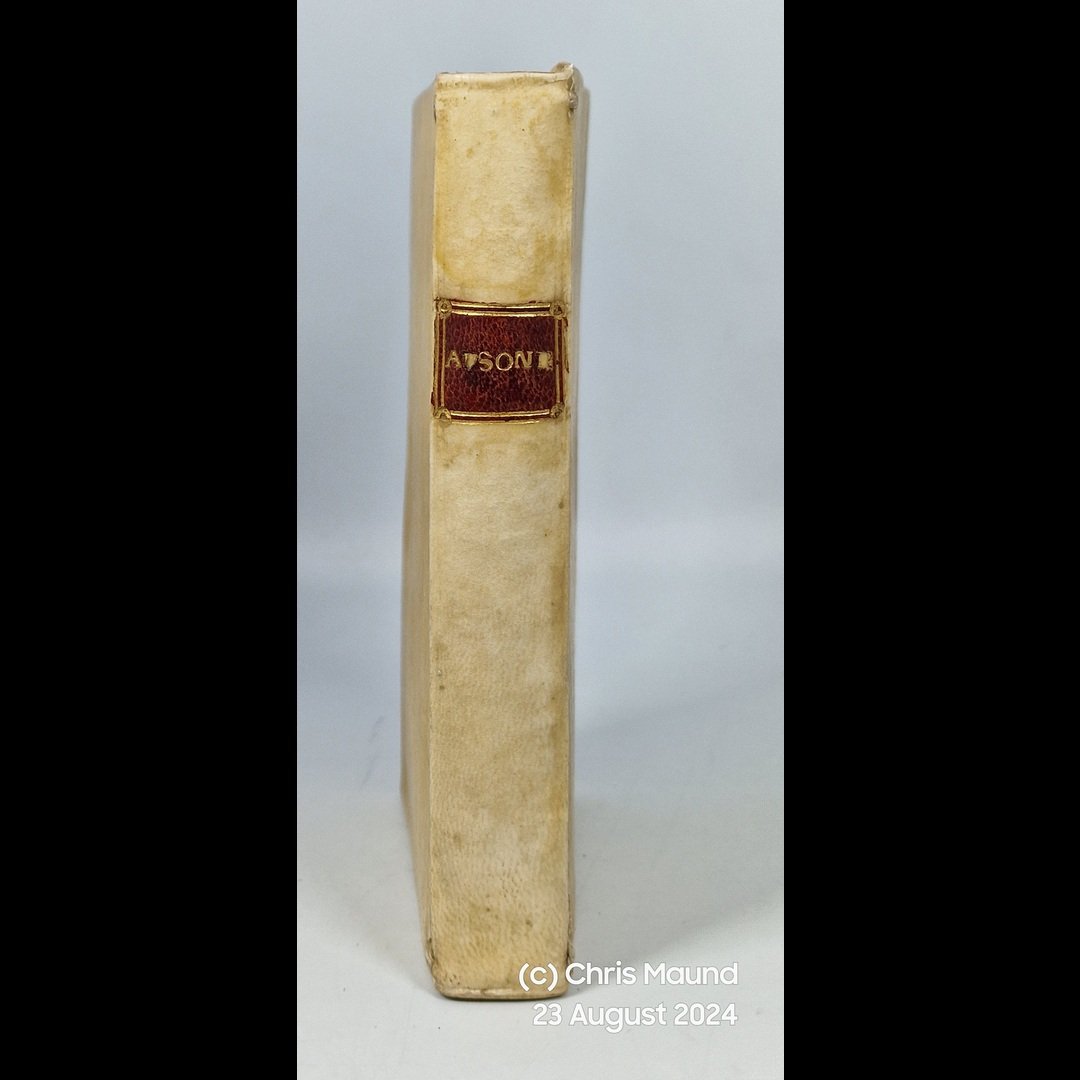 Image 2 of 22
 Image 3 of 22
 Image 4 of 22
 Image 5 of 22
 Image 6 of 22
 Image 7 of 22
 Image 8 of 22
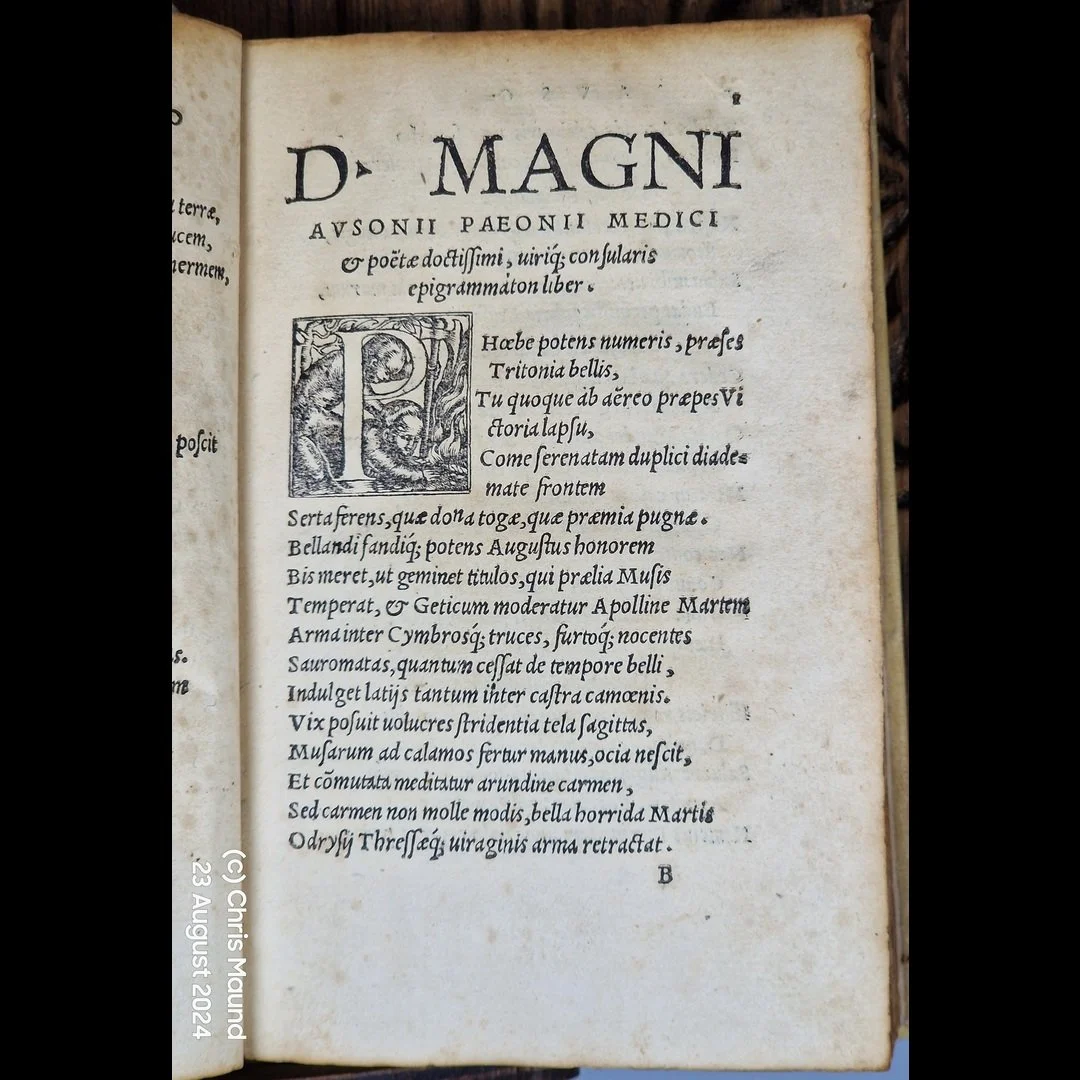 Image 9 of 22
 Image 11 of 22
 Image 12 of 22
 Image 13 of 22
 Image 14 of 22
 Image 15 of 22
 Image 16 of 22
 Image 17 of 22
 Image 18 of 22
 Image 19 of 22
 Image 20 of 22
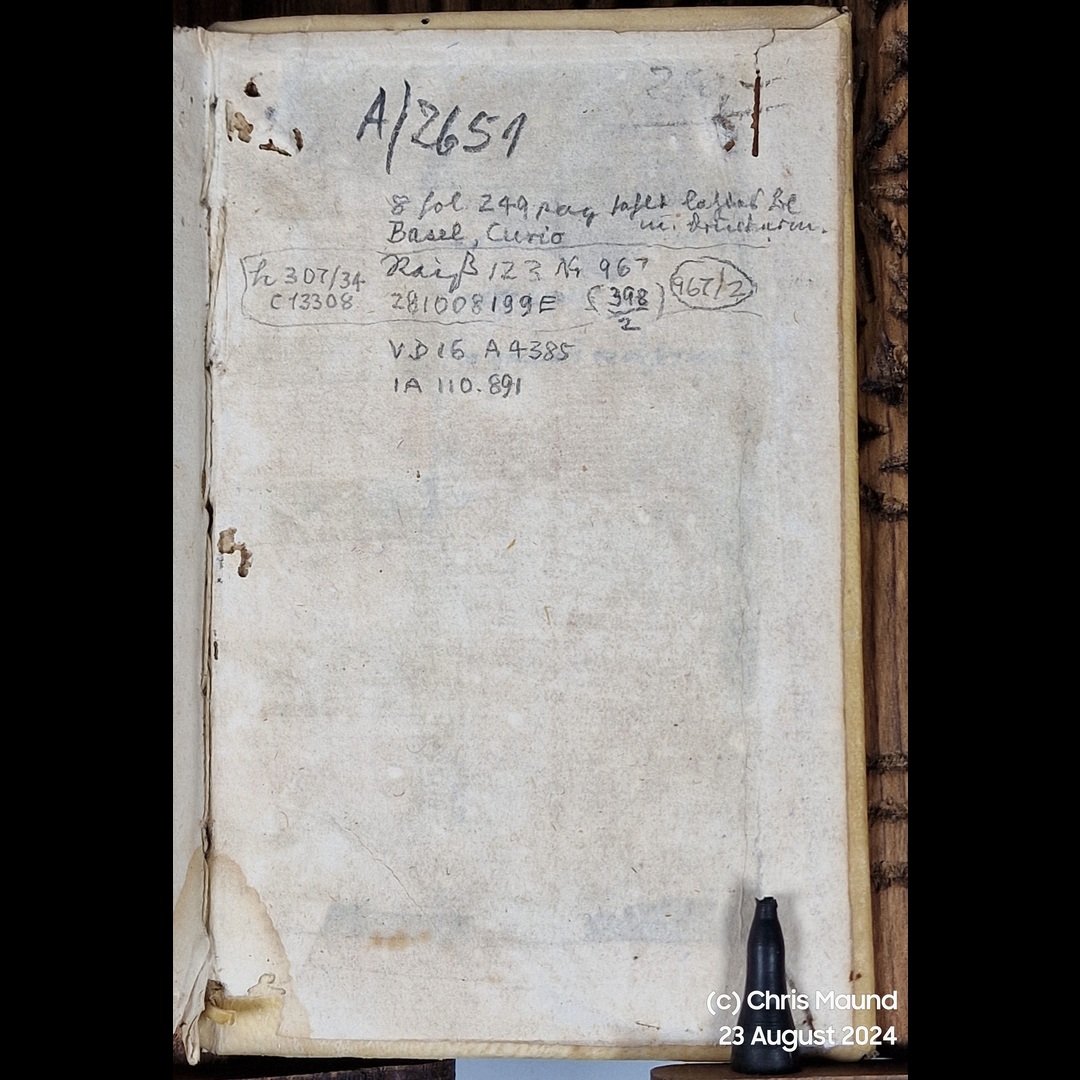 Image 21 of 22
 Image 22 of 22
![1707 With Provenance THE HISTORY OF THE REBELLION AND CIVIL WARS IN ENGLAND [THREE VOLS] By Edward, Earl of Clarendon](https://images.squarespace-cdn.com/content/v1/634dab4938c13d5c1f88d382/c9f91097-854c-46d0-afcd-4601b9eff8aa/20241014_224316-10.jpg)