1875 First Edition With Occult Commentary; Original Wrappers
DE LA DEMONIALITE ET DES ANIMAUX INCUBES ET SUCCUBES
By Louis-Marie Sinistrari d’Ameno
KEY DETAILS
Condition: Very Good
Format: Softcover, Octavo (Standard) (8vo 6 × 9 in 152 × 229 mm )
Note: Binding/size selection follows standard bibliographic conventions and is approximate; exact measurements may vary.
Published By: Isidore Liseux, 5 Rue Scribe, Paris, 1875
Language: Latin/French
Limited Edition: 416 of 598 Copies Copies
Provenance: Front endpaper bearing an unidentified pictorial ownership stamp comprising an upright five-pointed star, a sheaf of descending rays and two clasped hands within a double rectangular border. The imagery is strongly Ma...
Collation: xvi, 224 pp.
Dust Jacket: None, as issued, No Jacket
SKU: BTETM0002443
Shipping Info: Approximate Package Dimensions H: 12.5, L: 30, W: 25 (Units: cm), W: 2Kg
Tracked Shipping, Insurance Coverage as per Customer Request
DESCRIPTION
De la Demonialite et des animaux incubes et succubes
Où l’on prouve qu’il existe sur terre des créatures raisonnables autres que l’homme, ayant comme lui un corps et une âme, naissant et mourant comme lui, rachetées par N.-S. Jésus-Christ et capables de salut ou de damnation
By Louis-Marie (Lodovico Maria) Sinistrari d’Ameno
Published from the original manuscript and translated and edited from the Latin by Isidore Liseux
A scarce and highly unusual first edition of one of the most remarkable works of post-medieval demonology: Louis-Marie Sinistrari d’Ameno’s theological and juridical examination of incubi, succubi and the offence he terms “demoniality”.
Published at Paris by Isidore Liseux in 1875 in an edition limited to just 598 numbered copies, this is copy No. 416. The Latin original and Liseux’s French translation are printed on facing pages throughout. This was the first complete and separate publication of Sinistrari’s treatise from the manuscript; only brief portions of the argument had previously appeared within his much larger De Delictis et Poenis.
The publication has an extraordinary bibliographical history. According to Liseux’s own account, he discovered the seventeenth-century manuscript in London in 1872 in the Euston Road shop of the bookseller Mr Allen and purchased it for sixpence. Allen had recently acquired it following the Sotheby sale of the library of the antiquary Seymour Kirkup, where the manuscript had appeared as lot 145. Liseux considered the manuscript, partly autograph and containing authorial additions and corrections, to be Sinistrari’s original working text.
The edition found an audience almost immediately: when Liseux issued the second edition in 1876 he stated that the 1875 first edition, published only a few months previously, was already exhausted.
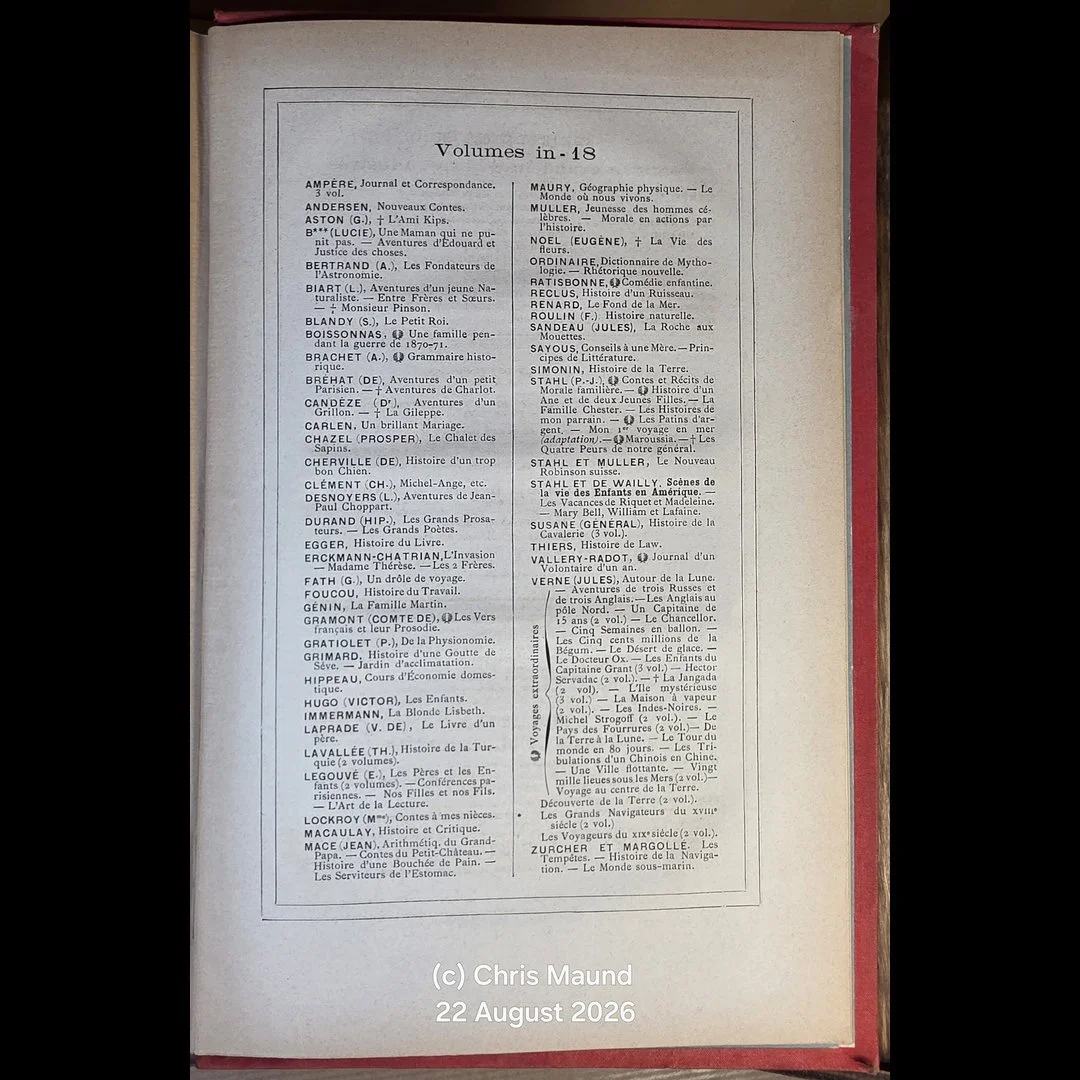
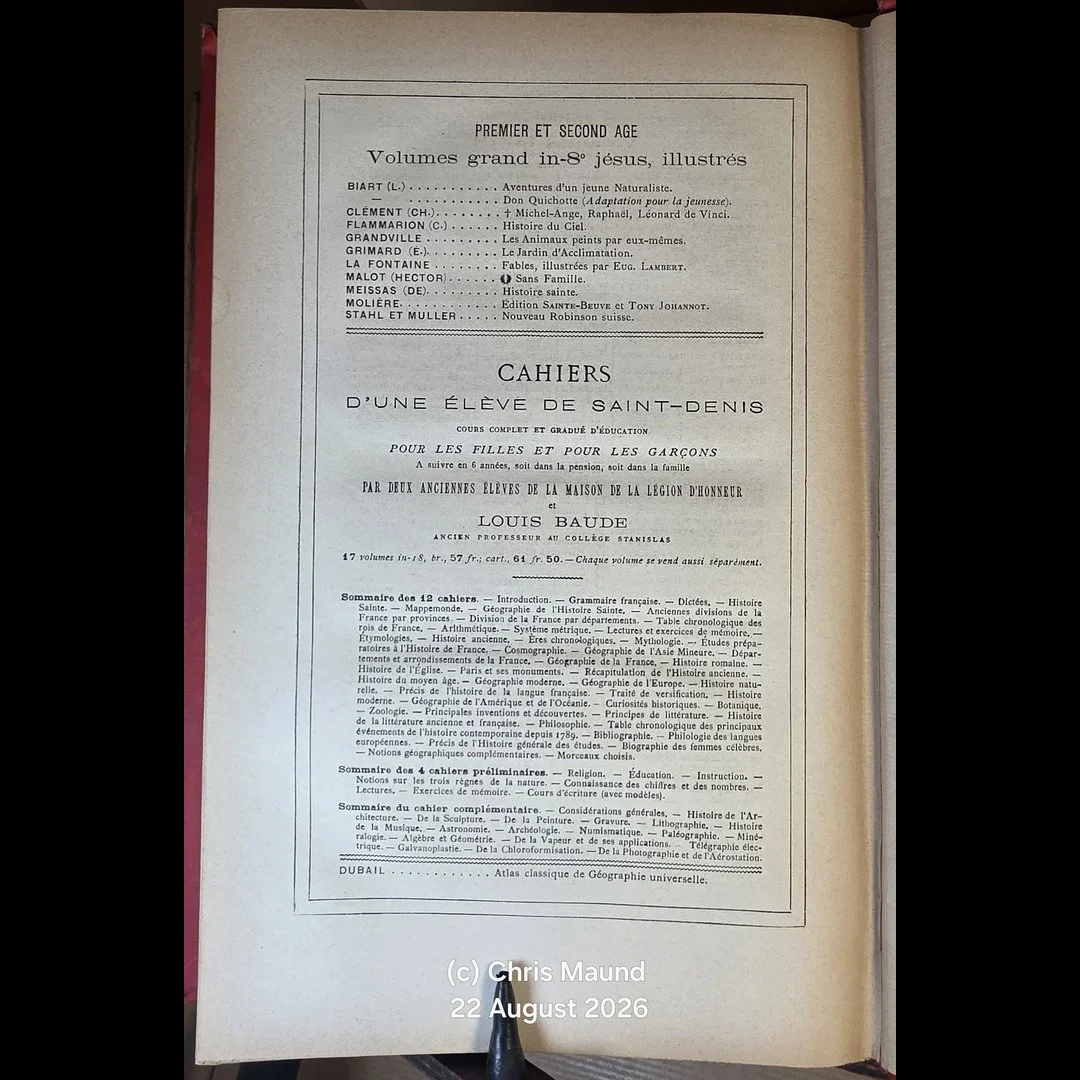
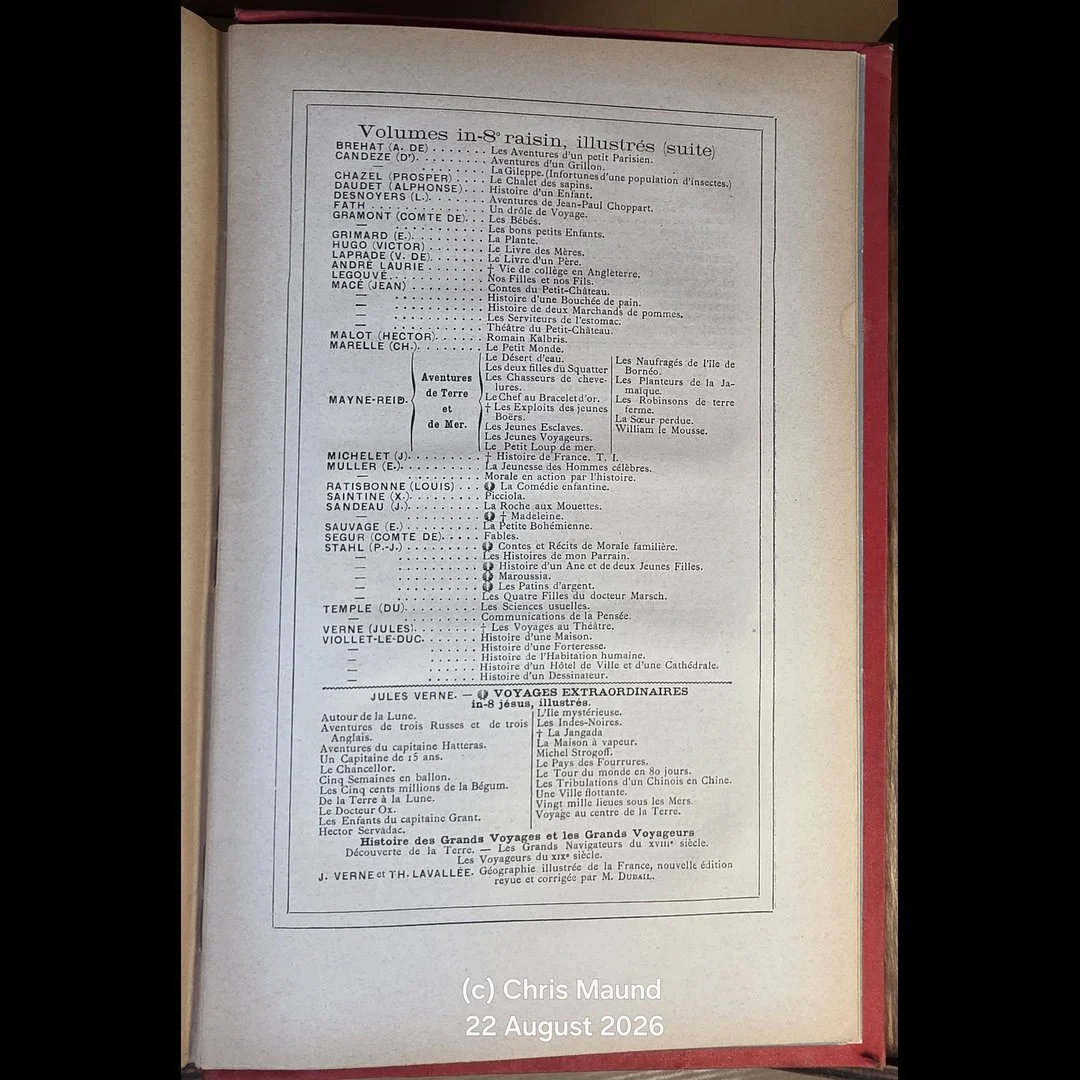
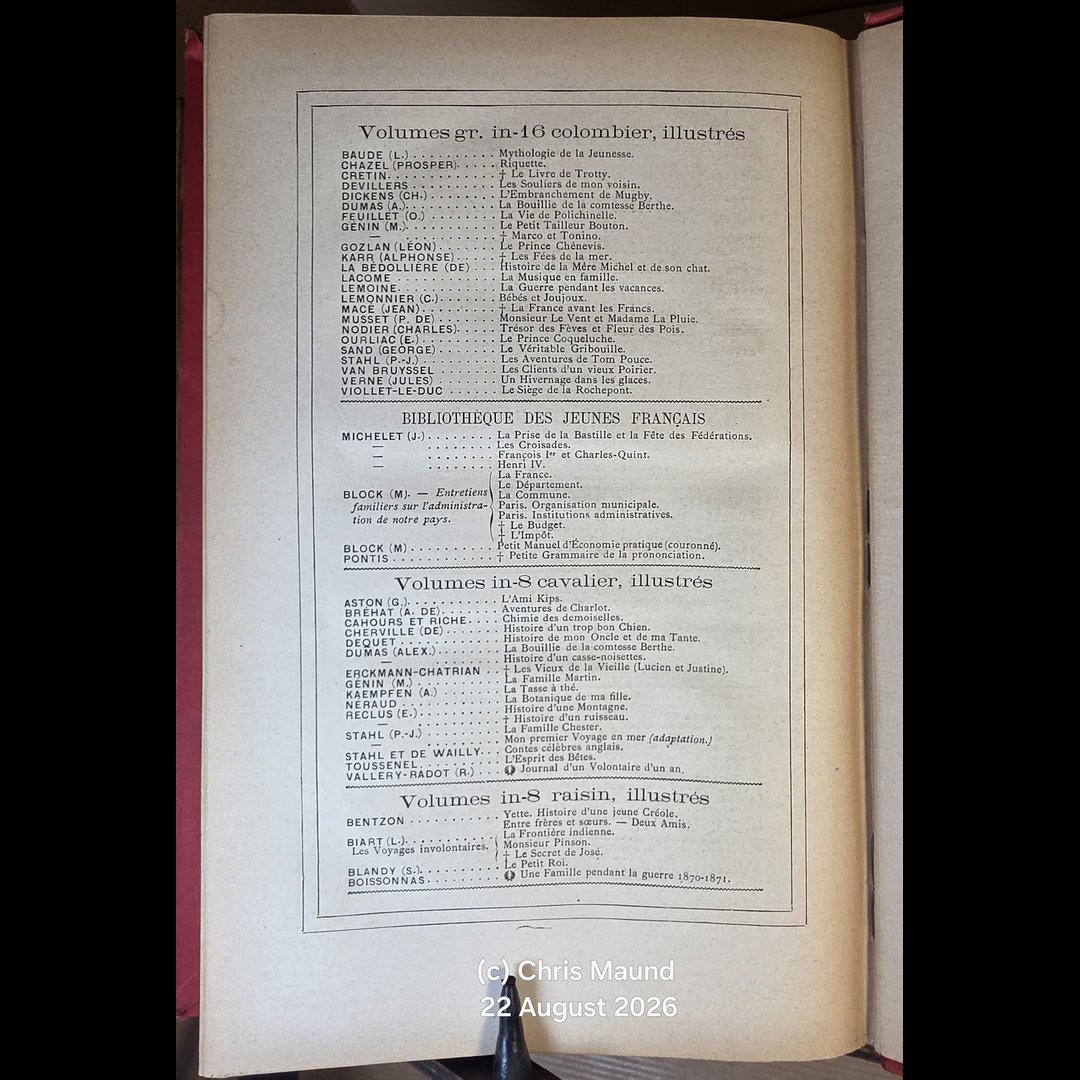
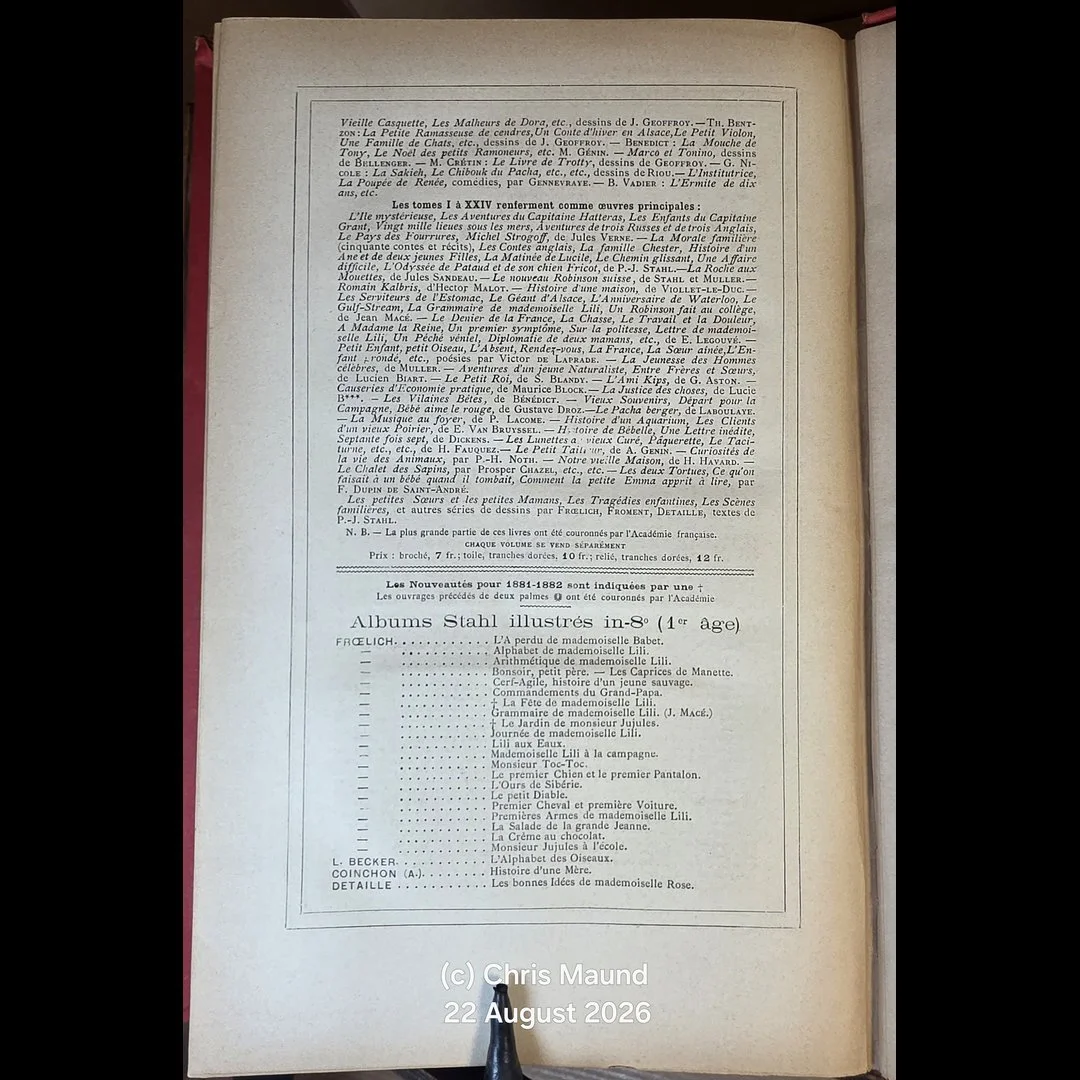
Particularly desirable in retaining the original red-and-black printed wrappers, including the publisher’s advertisements to the rear, here preserved within later cloth-backed boards. The text remains substantially untrimmed, with broad deckled margins and some leaves unopened.
This copy additionally contains a tipped-in typed French sheet headed “Commentaires sur la ‘Démonialité’”, in which an unidentified later reader interprets Sinistrari through an explicitly occult framework, discussing the astral plane, the “double éthérique”, goetic entities, collective animal souls, astral bodies and vampires. Together with an unidentified ownership stamp depicting a radiating five-pointed star above clasped hands, it provides intriguing evidence of the book’s later reception within an occult or esoteric milieu, although no specific owner or organisation has presently been identified.
PROVENANCE
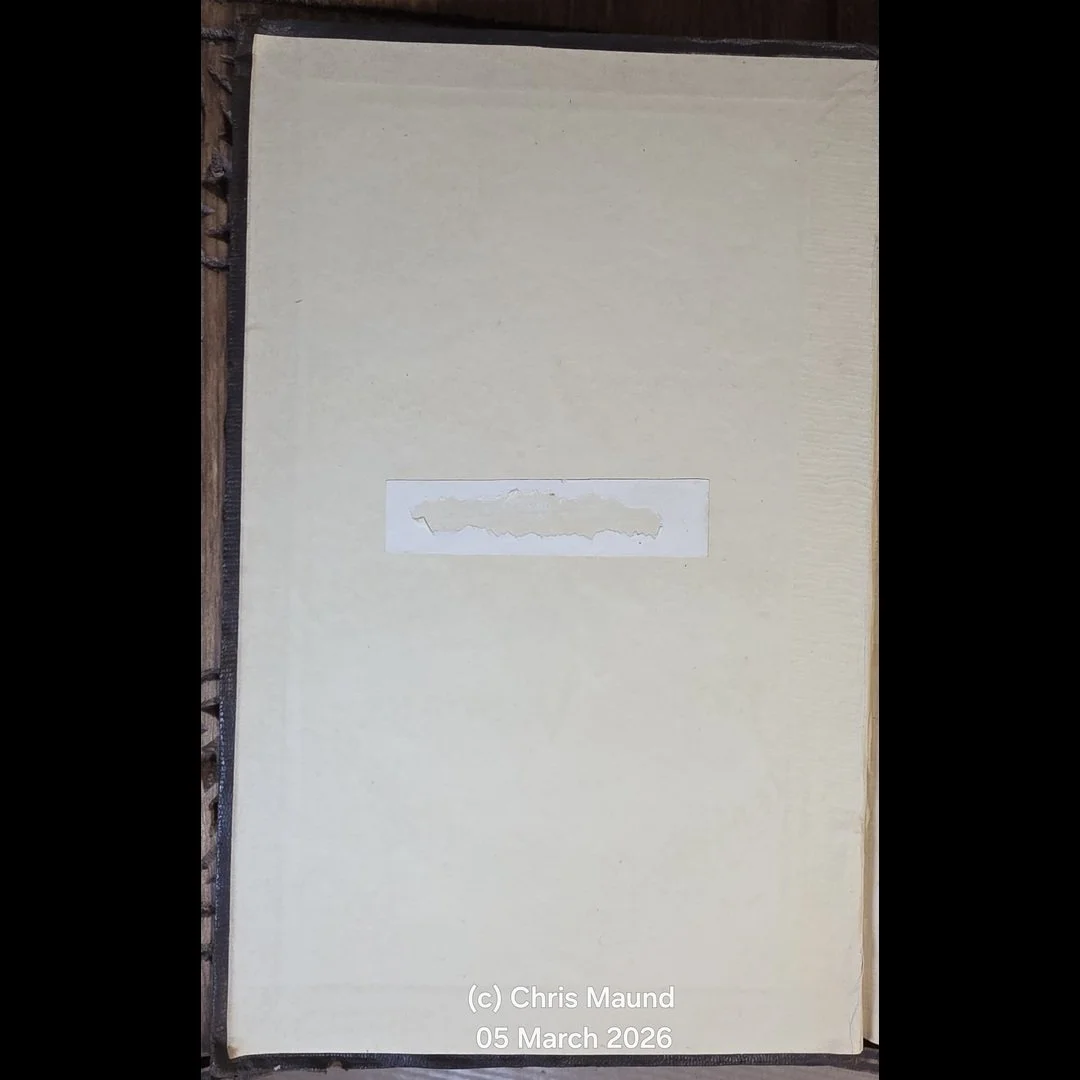
Front endpaper bearing an unidentified pictorial ownership stamp comprising an upright five-pointed star, a sheaf of descending rays and two clasped hands within a double rectangular border. The imagery is strongly Masonic or Masonic-derived: the five-pointed star became associated in Masonic symbolism with the Five Points of Fellowship, while the clasped hands signify fidelity, fraternity and mutual assistance. Closely related combinations occur in nineteenth- and early-twentieth-century Masonic imagery and private ex-libris, although no exact match to the present stamp has yet been traced and it cannot presently be assigned to a particular Mason, lodge or obedience. The device does not correspond to the documented historical insignia of Le Droit Humain.
A later tipped-in French commentary employs terminology closely related to the Theosophical writings of C. W. Leadbeater concerning the astral plane, astral shells, the etheric double, vampires and artificial entities. Taken together, these additions provide intriguing evidence for the copy's later circulation within a Masonic or Masonic-adjacent occult milieu, although it cannot be demonstrated that the stamp and commentary derive from the same owner.
CONDITION, COLLATION & COPY NOTES
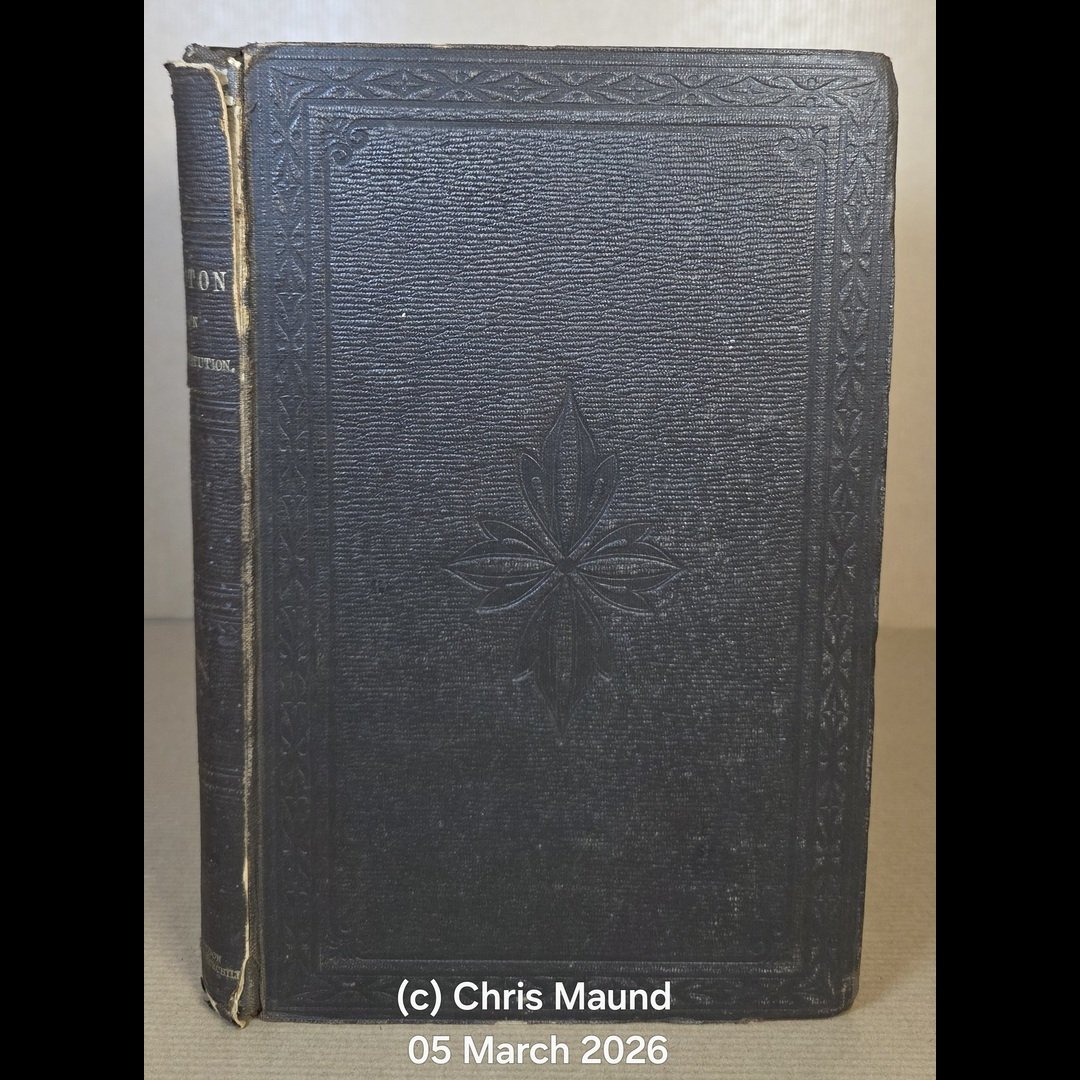
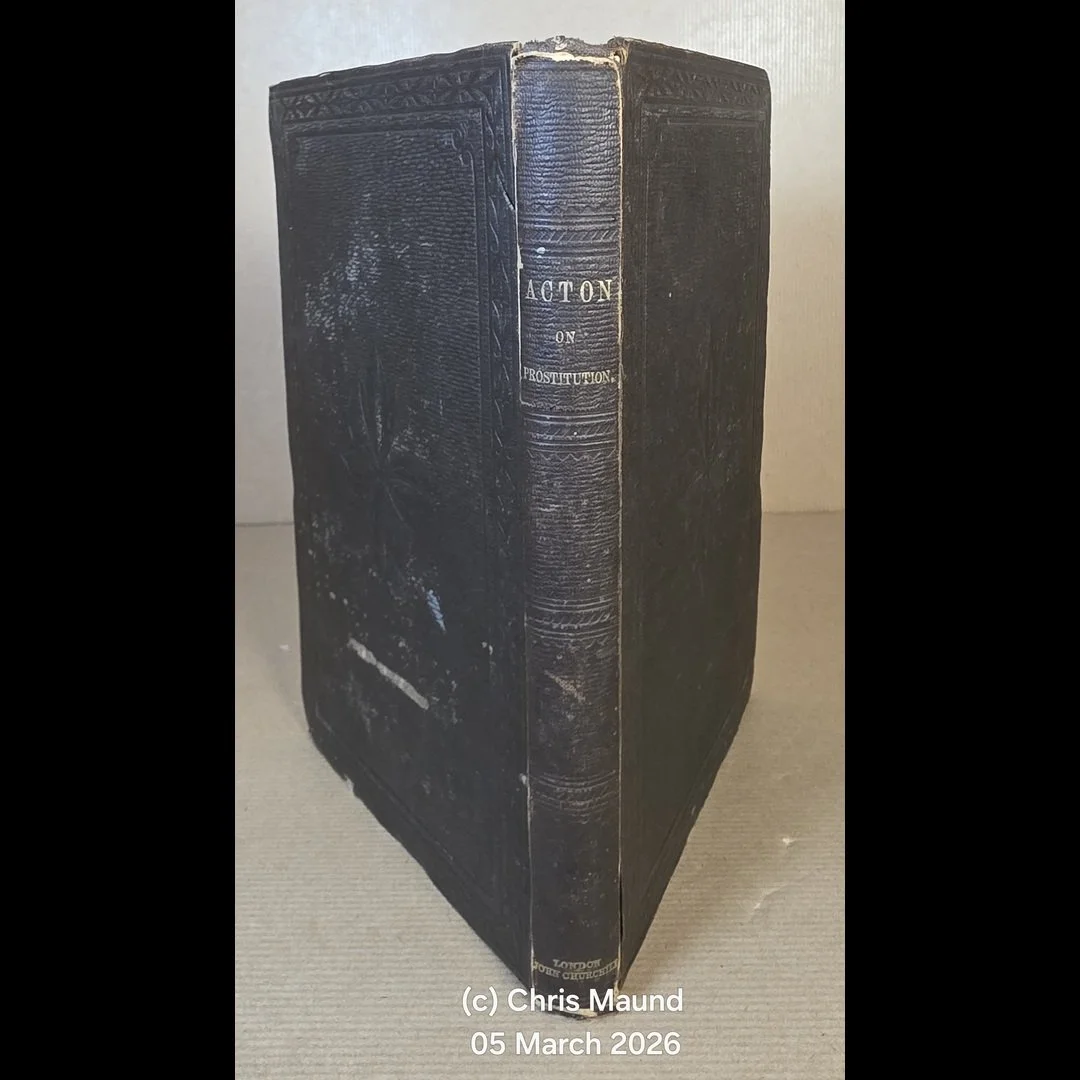
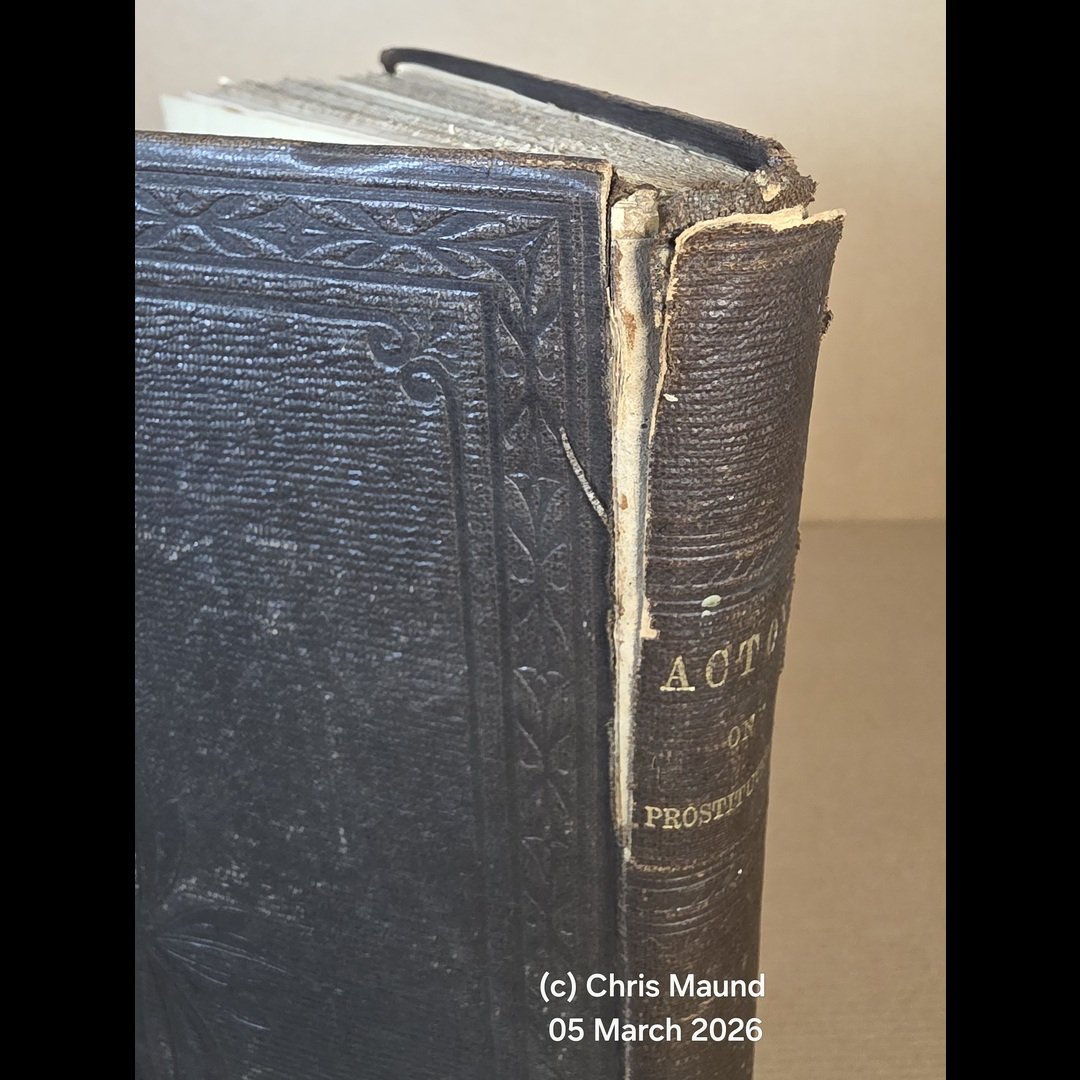
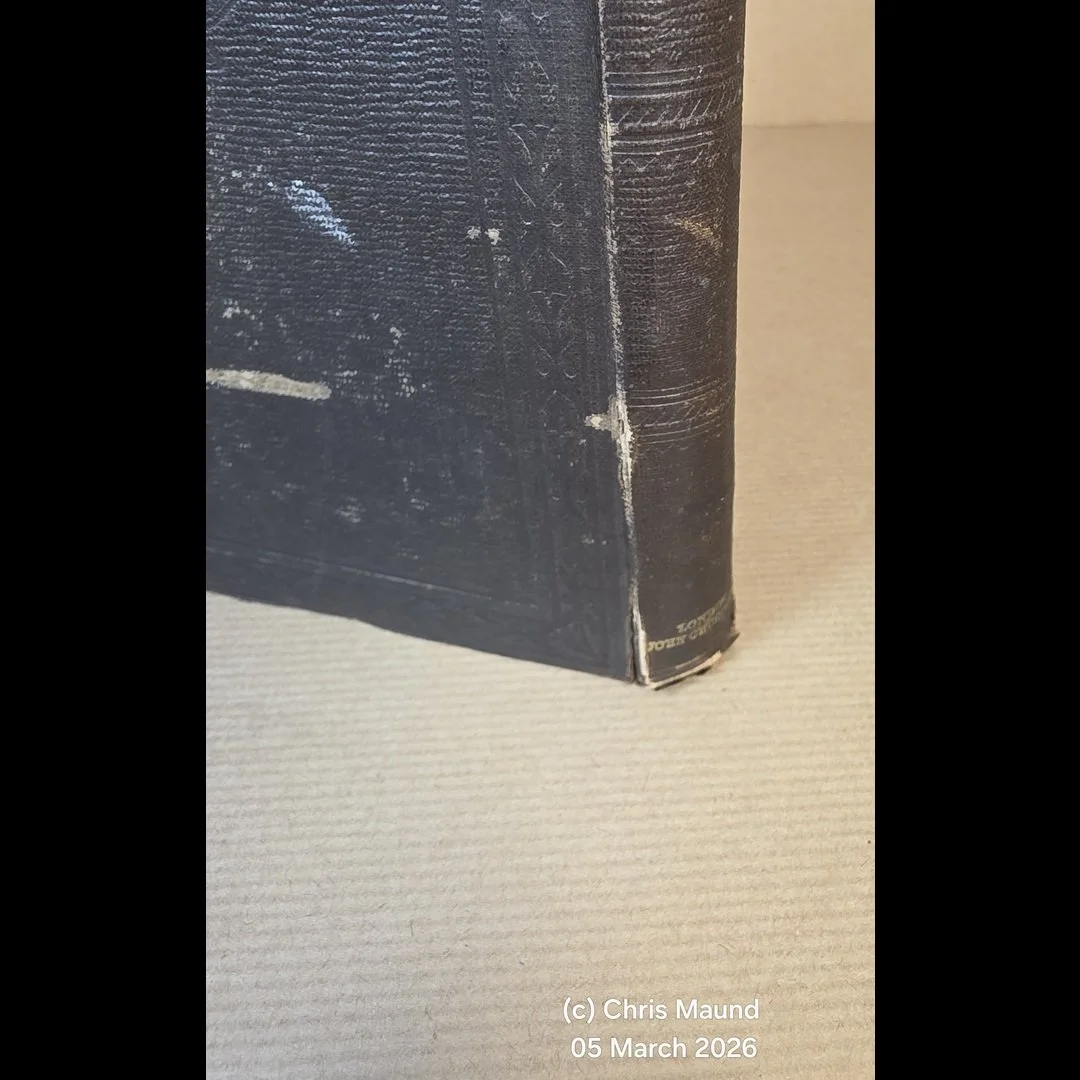
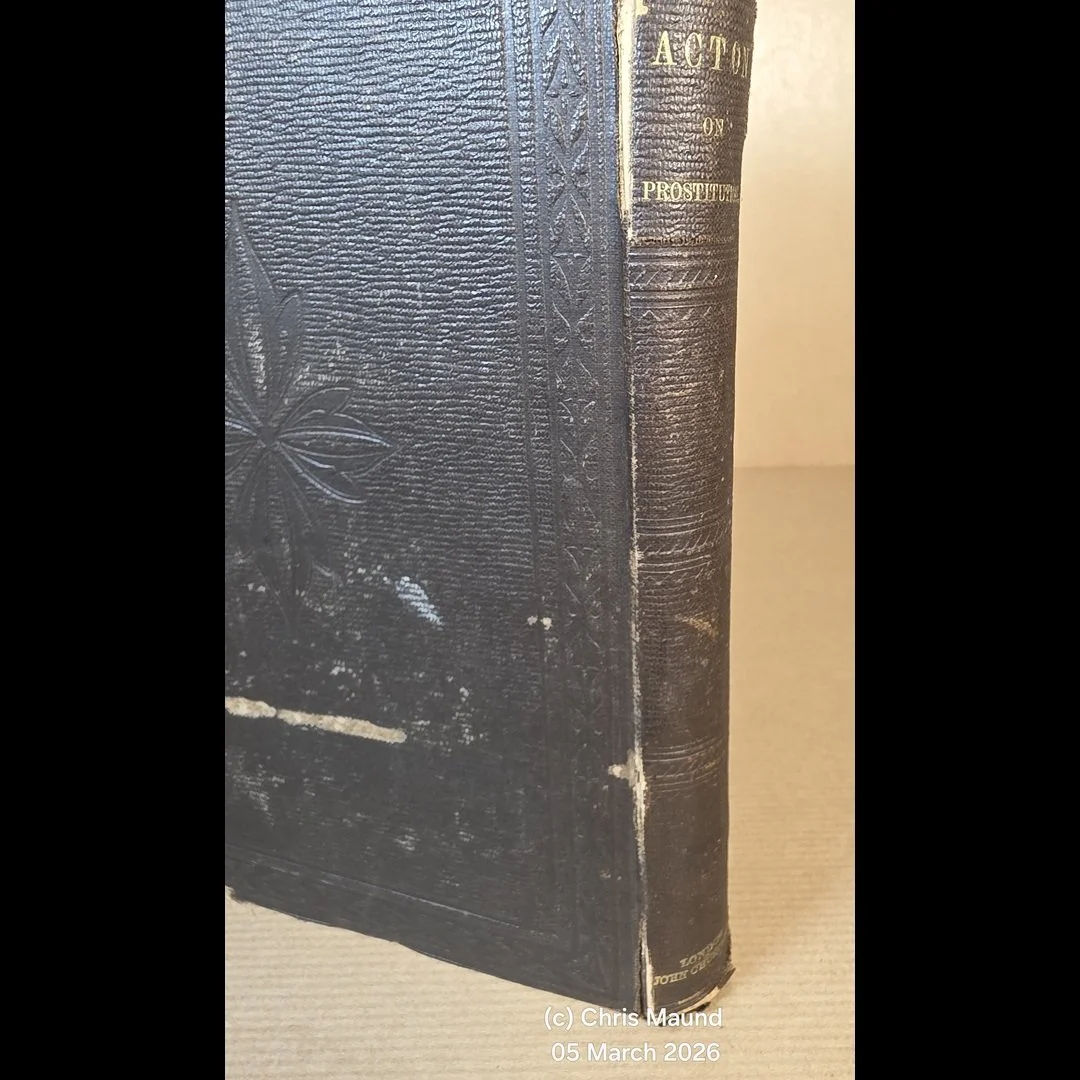
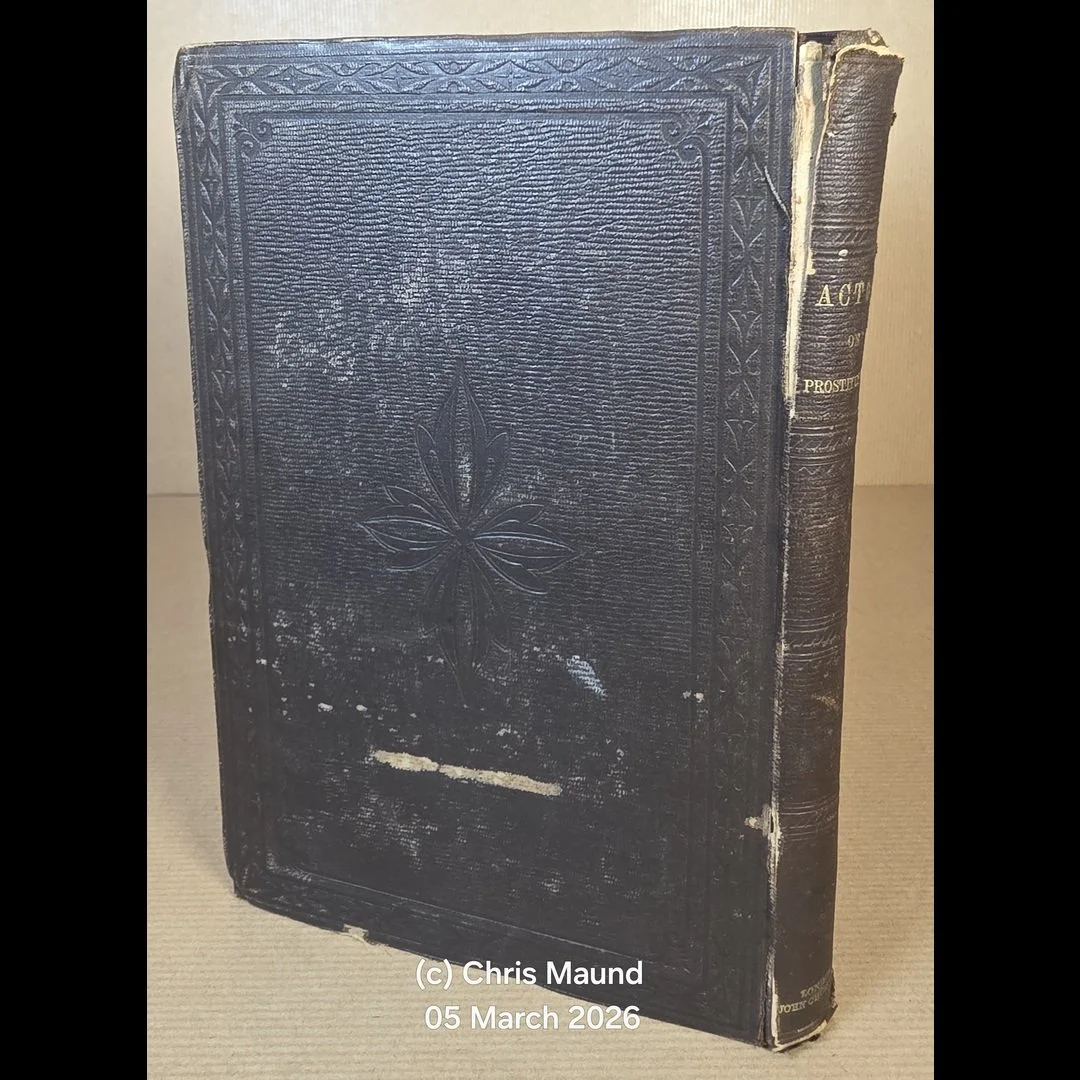
An attractive and unusually evocative copy retaining the original red-and-black printed front and rear wrappers, subsequently preserved within later stiff boards and rebacked in beige cloth. Binding with general age-related rubbing, marking and wear; original wrappers with expected toning, scattered spotting, creasing and minor edge wear.
Text block sound. Pages remain substantially untrimmed, retaining broad deckled margins, with some leaves apparently unopened. Internally generally clean and well preserved, with light age-toning, scattered foxing and occasional spotting. A pale old tide mark affects portions of some lower and outer margins but generally remains clear of the printed text.
Red-and-black title page present. Limitation leaf present and numbered 416 by hand from an edition of 598 copies. Latin original and French translation printed en regard throughout.
A later typed French commentary sheet headed “Commentaires sur la ‘Démonialité’” is tipped in. The anonymous commentary discusses Sinistrari’s ideas through later occult concepts including astral beings, the etheric double, goetic entities and vampirism. An unidentified rectangular ownership stamp to the front endpaper depicts a radiating five-pointed star above clasped hands. Its association has not been established and no specific fraternal or esoteric organisation is attributed.
Complete with preliminaries, principal treatise, editorial material and table.
Please see Photos as part of condition report.
REFERENCES
Henry Spencer Ashbee, Centuria Librorum Absconditorum / Index Librorum Prohibitorum, entry for De la Démonialité
WorldCat OCLC 6624999
Isidore Liseux, second edition of De la Démonialité, Paris, 1876, incorporating the preface to the first edition and account of the manuscript’s discovery
Sotheby, Seymour Kirkup Library sale, London, 6–16 December 1871, manuscript recorded by Liseux as lot 145
SYNOPSIS
De la Démonialité et des Animaux Incubes et Succubes is an extraordinary attempt to reconcile traditional accounts of incubi and succubi with Catholic theology, scholastic philosophy and canon law.
Sinistrari begins by distinguishing “demoniality” — sexual commerce with an incubus or succubus — from the offences conventionally classified as sodomy or bestiality. From this juridical problem he develops a much more radical argument concerning the actual nature of the beings involved.
Against the conventional belief that an incubus or succubus must necessarily be a Devil or incorporeal demon temporarily assuming physical form, Sinistrari proposes that some may constitute a separate order of rational, corporeal creatures. They possess bodies as well as rational souls, live and die, and are, in his scheme, potentially capable of salvation or damnation.
He associates these beings with the fauns, satyrs and sylvans of Classical antiquity and with the sylphs, elves and analogous beings of later European tradition, attempting to integrate apparently pagan and folkloric creatures into a Christian cosmology.
The treatise ranges widely through theology, classical literature, folklore and reported supernatural encounters. Sinistrari considers the corporeality of incubi and succubi, their supposed ability to reproduce, traditions concerning giants and extraordinary births, accounts of witches and their relations with spirits, and historical or legendary figures alleged to have supernatural parentage.
Among the book’s strangest discussions is Sinistrari’s consideration of the relative gravity of demoniality and bestiality. If the incubus is a rational creature possessing a nature equal or in some respects superior to humanity, he argues, sexual union with such a being cannot be assessed in precisely the same fashion as union with an animal. The theological offence becomes more complex where the participant believes the being to be a Devil, since the act may then acquire an additional element of offence against religion.
Written in the cool analytical language of scholastic theology rather than as sensational occult literature, De la Démonialité is consequently one of the most intellectually peculiar works in the literature of demonology. Its combination of Catholic theology, sexual casuistry, supernatural folklore and an almost zoological theory of incubi and succubi made it particularly attractive to the occult revival of the nineteenth and twentieth centuries.
The 1875 Liseux edition is the first complete publication of this extraordinary text and, issued in only 598 numbered copies with the Latin original and French translation facing one another, remains the key collectible edition.
AUTHOR BIO
Louis-Marie, or Lodovico Maria, Sinistrari d’Ameno (1622–1701) was an Italian Franciscan theologian, canonist and writer on moral theology and criminal jurisprudence. Born at Ameno in Piedmont, he entered the Franciscan Order and became known as a teacher of philosophy and theology.
His writings approach crime, sin, ecclesiastical discipline and supernatural phenomena through the highly structured methods of scholastic theology and canon law. Rather than treating demonological subjects simply as folklore, Sinistrari attempts to classify them juridically and theologically, asking what such acts are, how they differ from other offences and what degree of culpability should attach to them.
De Dæmonialitate et Incubis et Succubis is by far his most celebrated and unusual work. Its enduring fascination lies in Sinistrari’s extraordinary proposition that at least some beings traditionally identified as incubi and succubi may not be demons in the conventional sense at all, but rational corporeal creatures occupying a place in creation distinct from both humanity and purely spiritual beings.
Translator / Editor Bio:
Isidore Liseux was a Parisian publisher, bibliophile, editor and translator particularly associated with scholarly editions of rare, curious, erotic, heterodox and otherwise difficult-to-obtain texts.
Liseux combined antiquarian scholarship with an evident taste for bibliographical curiosities. His edition of Sinistrari is particularly important because he not only translated the manuscript but documented at length the circumstances of its discovery and his subsequent investigation into its authorship.
1875 First Edition With Occult Commentary; Original Wrappers
DE LA DEMONIALITE ET DES ANIMAUX INCUBES ET SUCCUBES
By Louis-Marie Sinistrari d’Ameno
KEY DETAILS
Condition: Very Good
Format: Softcover, Octavo (Standard) (8vo 6 × 9 in 152 × 229 mm )
Note: Binding/size selection follows standard bibliographic conventions and is approximate; exact measurements may vary.
Published By: Isidore Liseux, 5 Rue Scribe, Paris, 1875
Language: Latin/French
Limited Edition: 416 of 598 Copies Copies
Provenance: Front endpaper bearing an unidentified pictorial ownership stamp comprising an upright five-pointed star, a sheaf of descending rays and two clasped hands within a double rectangular border. The imagery is strongly Ma...
Collation: xvi, 224 pp.
Dust Jacket: None, as issued, No Jacket
SKU: BTETM0002443
Shipping Info: Approximate Package Dimensions H: 12.5, L: 30, W: 25 (Units: cm), W: 2Kg
Tracked Shipping, Insurance Coverage as per Customer Request
DESCRIPTION
De la Demonialite et des animaux incubes et succubes
Où l’on prouve qu’il existe sur terre des créatures raisonnables autres que l’homme, ayant comme lui un corps et une âme, naissant et mourant comme lui, rachetées par N.-S. Jésus-Christ et capables de salut ou de damnation
By Louis-Marie (Lodovico Maria) Sinistrari d’Ameno
Published from the original manuscript and translated and edited from the Latin by Isidore Liseux
A scarce and highly unusual first edition of one of the most remarkable works of post-medieval demonology: Louis-Marie Sinistrari d’Ameno’s theological and juridical examination of incubi, succubi and the offence he terms “demoniality”.
Published at Paris by Isidore Liseux in 1875 in an edition limited to just 598 numbered copies, this is copy No. 416. The Latin original and Liseux’s French translation are printed on facing pages throughout. This was the first complete and separate publication of Sinistrari’s treatise from the manuscript; only brief portions of the argument had previously appeared within his much larger De Delictis et Poenis.
The publication has an extraordinary bibliographical history. According to Liseux’s own account, he discovered the seventeenth-century manuscript in London in 1872 in the Euston Road shop of the bookseller Mr Allen and purchased it for sixpence. Allen had recently acquired it following the Sotheby sale of the library of the antiquary Seymour Kirkup, where the manuscript had appeared as lot 145. Liseux considered the manuscript, partly autograph and containing authorial additions and corrections, to be Sinistrari’s original working text.
The edition found an audience almost immediately: when Liseux issued the second edition in 1876 he stated that the 1875 first edition, published only a few months previously, was already exhausted.
Particularly desirable in retaining the original red-and-black printed wrappers, including the publisher’s advertisements to the rear, here preserved within later cloth-backed boards. The text remains substantially untrimmed, with broad deckled margins and some leaves unopened.
This copy additionally contains a tipped-in typed French sheet headed “Commentaires sur la ‘Démonialité’”, in which an unidentified later reader interprets Sinistrari through an explicitly occult framework, discussing the astral plane, the “double éthérique”, goetic entities, collective animal souls, astral bodies and vampires. Together with an unidentified ownership stamp depicting a radiating five-pointed star above clasped hands, it provides intriguing evidence of the book’s later reception within an occult or esoteric milieu, although no specific owner or organisation has presently been identified.
PROVENANCE
Front endpaper bearing an unidentified pictorial ownership stamp comprising an upright five-pointed star, a sheaf of descending rays and two clasped hands within a double rectangular border. The imagery is strongly Masonic or Masonic-derived: the five-pointed star became associated in Masonic symbolism with the Five Points of Fellowship, while the clasped hands signify fidelity, fraternity and mutual assistance. Closely related combinations occur in nineteenth- and early-twentieth-century Masonic imagery and private ex-libris, although no exact match to the present stamp has yet been traced and it cannot presently be assigned to a particular Mason, lodge or obedience. The device does not correspond to the documented historical insignia of Le Droit Humain.
A later tipped-in French commentary employs terminology closely related to the Theosophical writings of C. W. Leadbeater concerning the astral plane, astral shells, the etheric double, vampires and artificial entities. Taken together, these additions provide intriguing evidence for the copy's later circulation within a Masonic or Masonic-adjacent occult milieu, although it cannot be demonstrated that the stamp and commentary derive from the same owner.
CONDITION, COLLATION & COPY NOTES
An attractive and unusually evocative copy retaining the original red-and-black printed front and rear wrappers, subsequently preserved within later stiff boards and rebacked in beige cloth. Binding with general age-related rubbing, marking and wear; original wrappers with expected toning, scattered spotting, creasing and minor edge wear.
Text block sound. Pages remain substantially untrimmed, retaining broad deckled margins, with some leaves apparently unopened. Internally generally clean and well preserved, with light age-toning, scattered foxing and occasional spotting. A pale old tide mark affects portions of some lower and outer margins but generally remains clear of the printed text.
Red-and-black title page present. Limitation leaf present and numbered 416 by hand from an edition of 598 copies. Latin original and French translation printed en regard throughout.
A later typed French commentary sheet headed “Commentaires sur la ‘Démonialité’” is tipped in. The anonymous commentary discusses Sinistrari’s ideas through later occult concepts including astral beings, the etheric double, goetic entities and vampirism. An unidentified rectangular ownership stamp to the front endpaper depicts a radiating five-pointed star above clasped hands. Its association has not been established and no specific fraternal or esoteric organisation is attributed.
Complete with preliminaries, principal treatise, editorial material and table.
Please see Photos as part of condition report.
REFERENCES
Henry Spencer Ashbee, Centuria Librorum Absconditorum / Index Librorum Prohibitorum, entry for De la Démonialité
WorldCat OCLC 6624999
Isidore Liseux, second edition of De la Démonialité, Paris, 1876, incorporating the preface to the first edition and account of the manuscript’s discovery
Sotheby, Seymour Kirkup Library sale, London, 6–16 December 1871, manuscript recorded by Liseux as lot 145
SYNOPSIS
De la Démonialité et des Animaux Incubes et Succubes is an extraordinary attempt to reconcile traditional accounts of incubi and succubi with Catholic theology, scholastic philosophy and canon law.
Sinistrari begins by distinguishing “demoniality” — sexual commerce with an incubus or succubus — from the offences conventionally classified as sodomy or bestiality. From this juridical problem he develops a much more radical argument concerning the actual nature of the beings involved.
Against the conventional belief that an incubus or succubus must necessarily be a Devil or incorporeal demon temporarily assuming physical form, Sinistrari proposes that some may constitute a separate order of rational, corporeal creatures. They possess bodies as well as rational souls, live and die, and are, in his scheme, potentially capable of salvation or damnation.
He associates these beings with the fauns, satyrs and sylvans of Classical antiquity and with the sylphs, elves and analogous beings of later European tradition, attempting to integrate apparently pagan and folkloric creatures into a Christian cosmology.
The treatise ranges widely through theology, classical literature, folklore and reported supernatural encounters. Sinistrari considers the corporeality of incubi and succubi, their supposed ability to reproduce, traditions concerning giants and extraordinary births, accounts of witches and their relations with spirits, and historical or legendary figures alleged to have supernatural parentage.
Among the book’s strangest discussions is Sinistrari’s consideration of the relative gravity of demoniality and bestiality. If the incubus is a rational creature possessing a nature equal or in some respects superior to humanity, he argues, sexual union with such a being cannot be assessed in precisely the same fashion as union with an animal. The theological offence becomes more complex where the participant believes the being to be a Devil, since the act may then acquire an additional element of offence against religion.
Written in the cool analytical language of scholastic theology rather than as sensational occult literature, De la Démonialité is consequently one of the most intellectually peculiar works in the literature of demonology. Its combination of Catholic theology, sexual casuistry, supernatural folklore and an almost zoological theory of incubi and succubi made it particularly attractive to the occult revival of the nineteenth and twentieth centuries.
The 1875 Liseux edition is the first complete publication of this extraordinary text and, issued in only 598 numbered copies with the Latin original and French translation facing one another, remains the key collectible edition.
AUTHOR BIO
Louis-Marie, or Lodovico Maria, Sinistrari d’Ameno (1622–1701) was an Italian Franciscan theologian, canonist and writer on moral theology and criminal jurisprudence. Born at Ameno in Piedmont, he entered the Franciscan Order and became known as a teacher of philosophy and theology.
His writings approach crime, sin, ecclesiastical discipline and supernatural phenomena through the highly structured methods of scholastic theology and canon law. Rather than treating demonological subjects simply as folklore, Sinistrari attempts to classify them juridically and theologically, asking what such acts are, how they differ from other offences and what degree of culpability should attach to them.
De Dæmonialitate et Incubis et Succubis is by far his most celebrated and unusual work. Its enduring fascination lies in Sinistrari’s extraordinary proposition that at least some beings traditionally identified as incubi and succubi may not be demons in the conventional sense at all, but rational corporeal creatures occupying a place in creation distinct from both humanity and purely spiritual beings.
Translator / Editor Bio:
Isidore Liseux was a Parisian publisher, bibliophile, editor and translator particularly associated with scholarly editions of rare, curious, erotic, heterodox and otherwise difficult-to-obtain texts.
Liseux combined antiquarian scholarship with an evident taste for bibliographical curiosities. His edition of Sinistrari is particularly important because he not only translated the manuscript but documented at length the circumstances of its discovery and his subsequent investigation into its authorship.

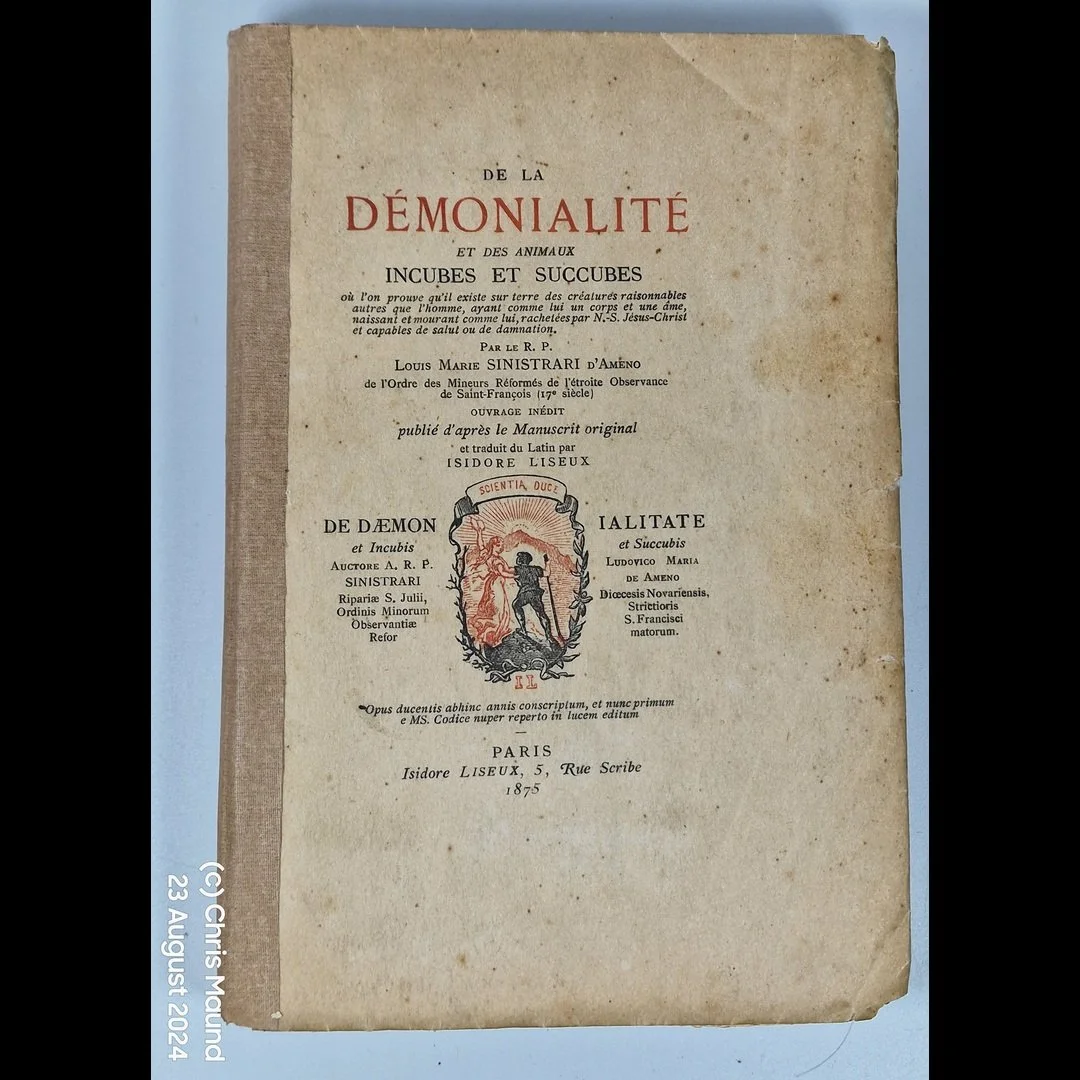 Image 1 of 28
 Image 2 of 28
 Image 3 of 28
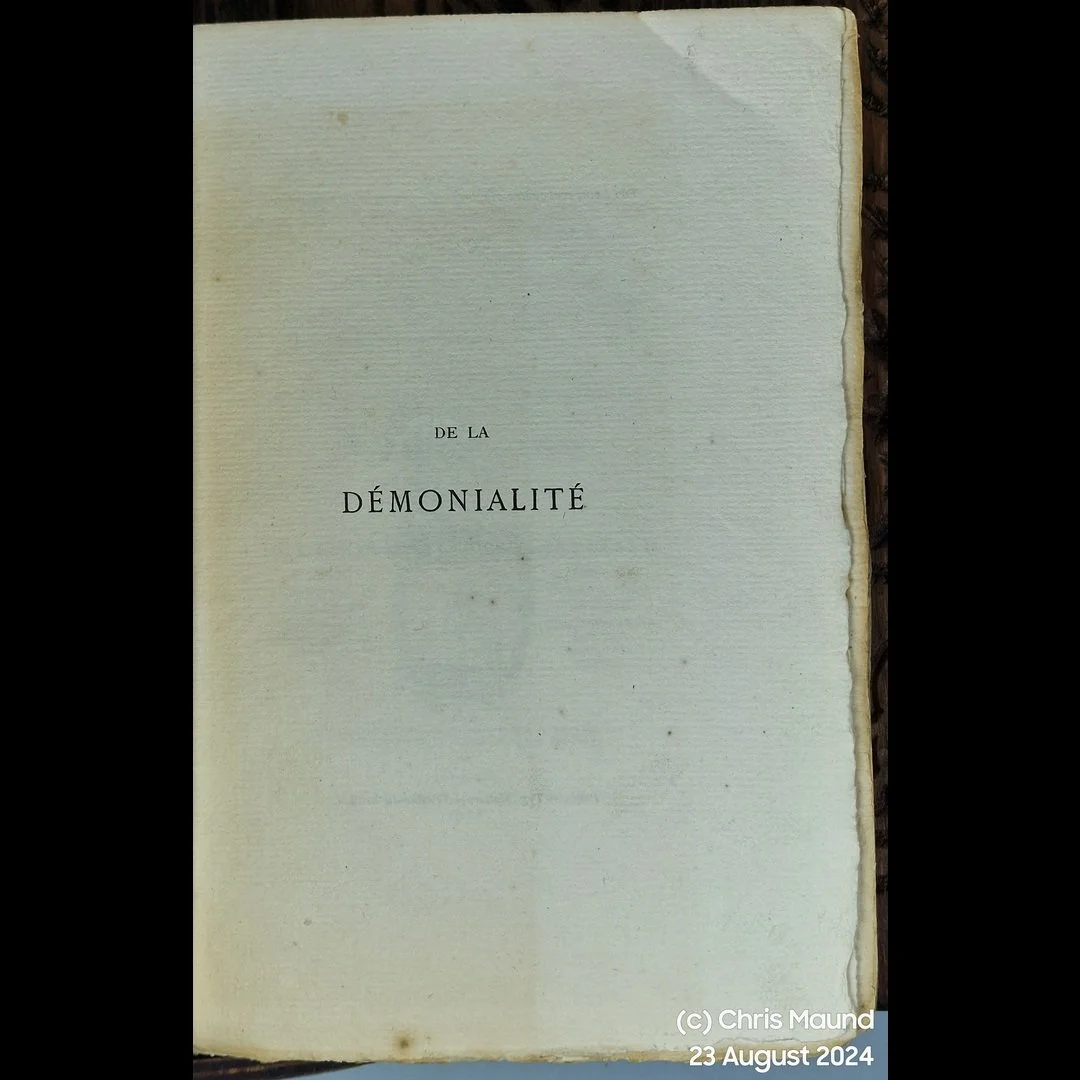 Image 4 of 28
 Image 5 of 28
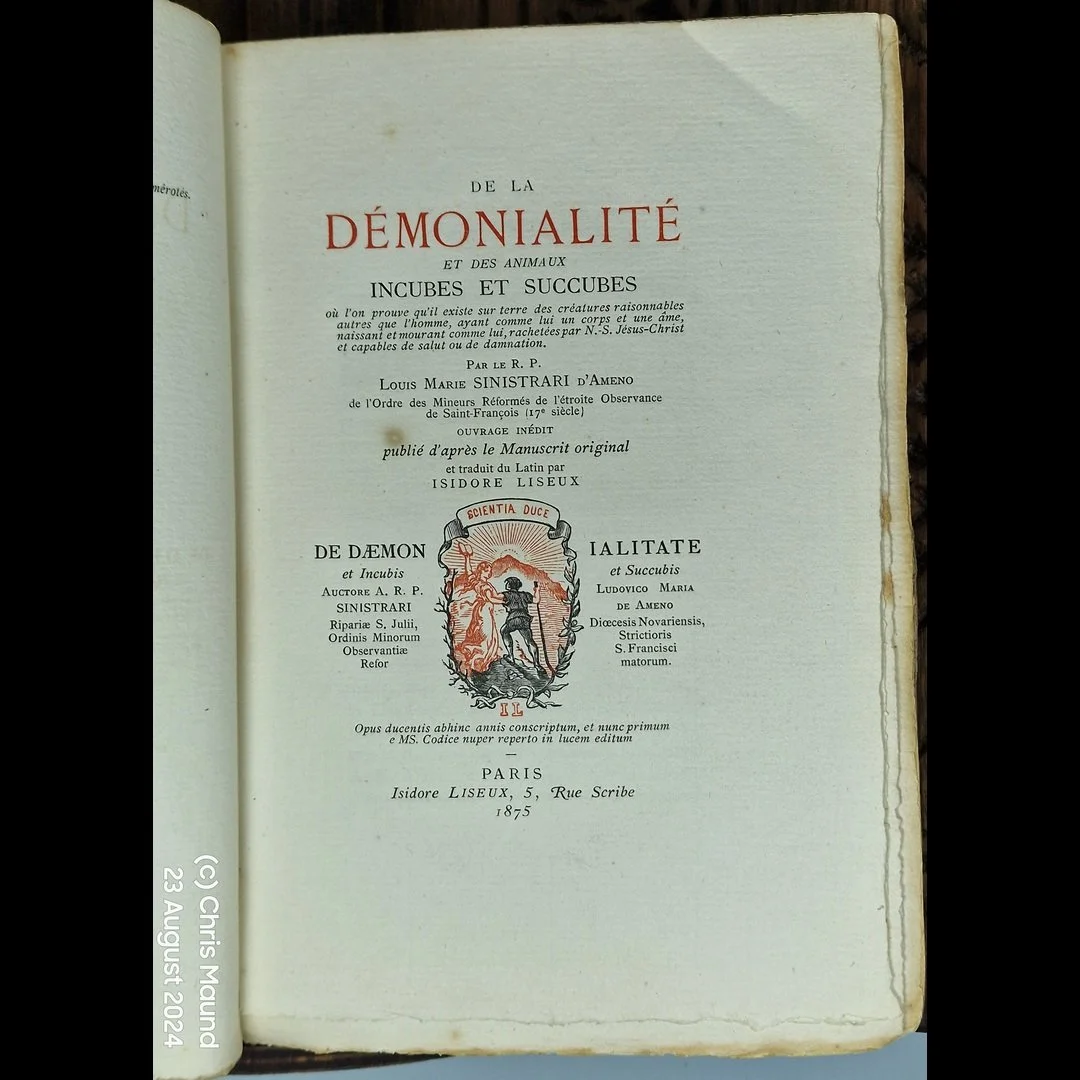 Image 6 of 28
 Image 7 of 28
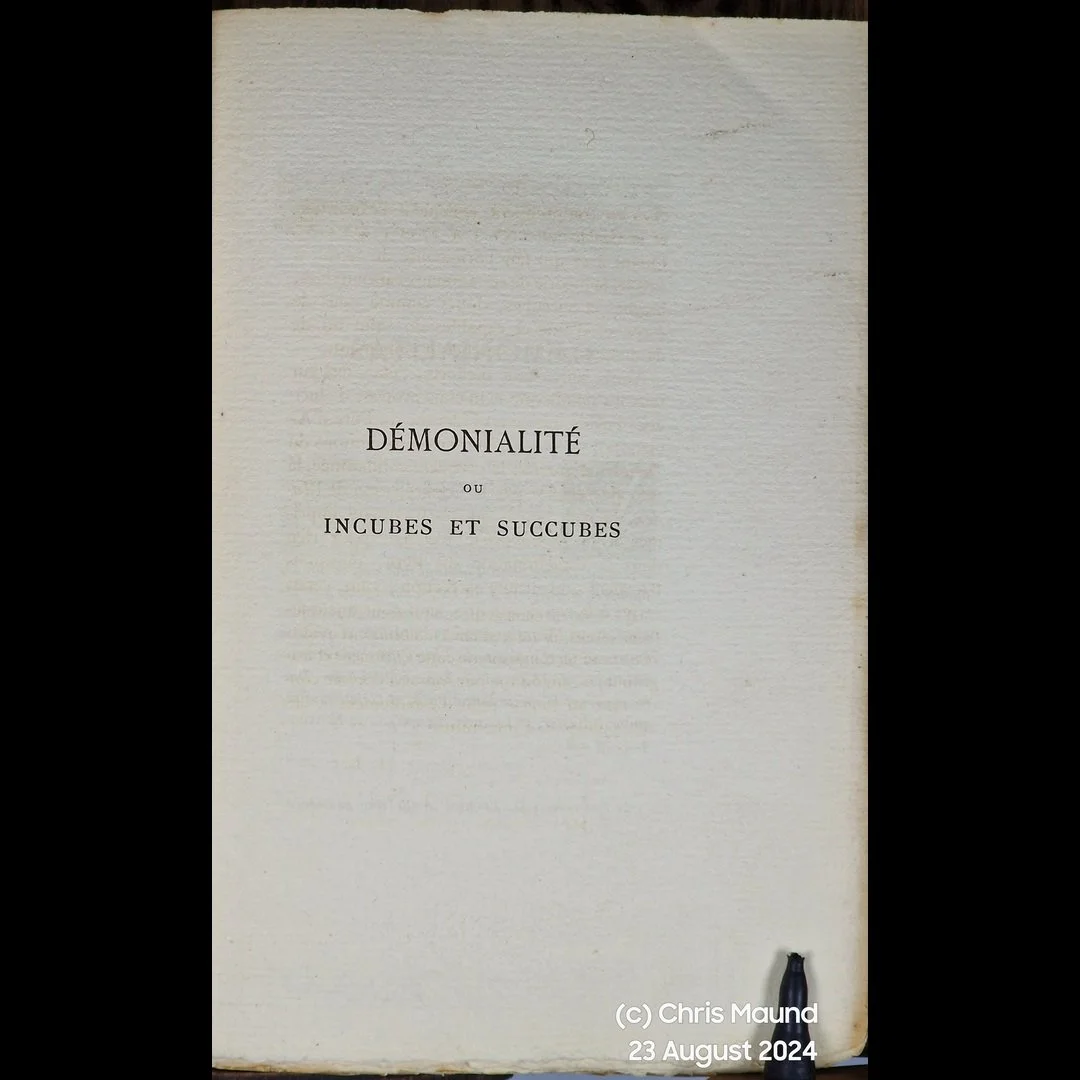 Image 8 of 28
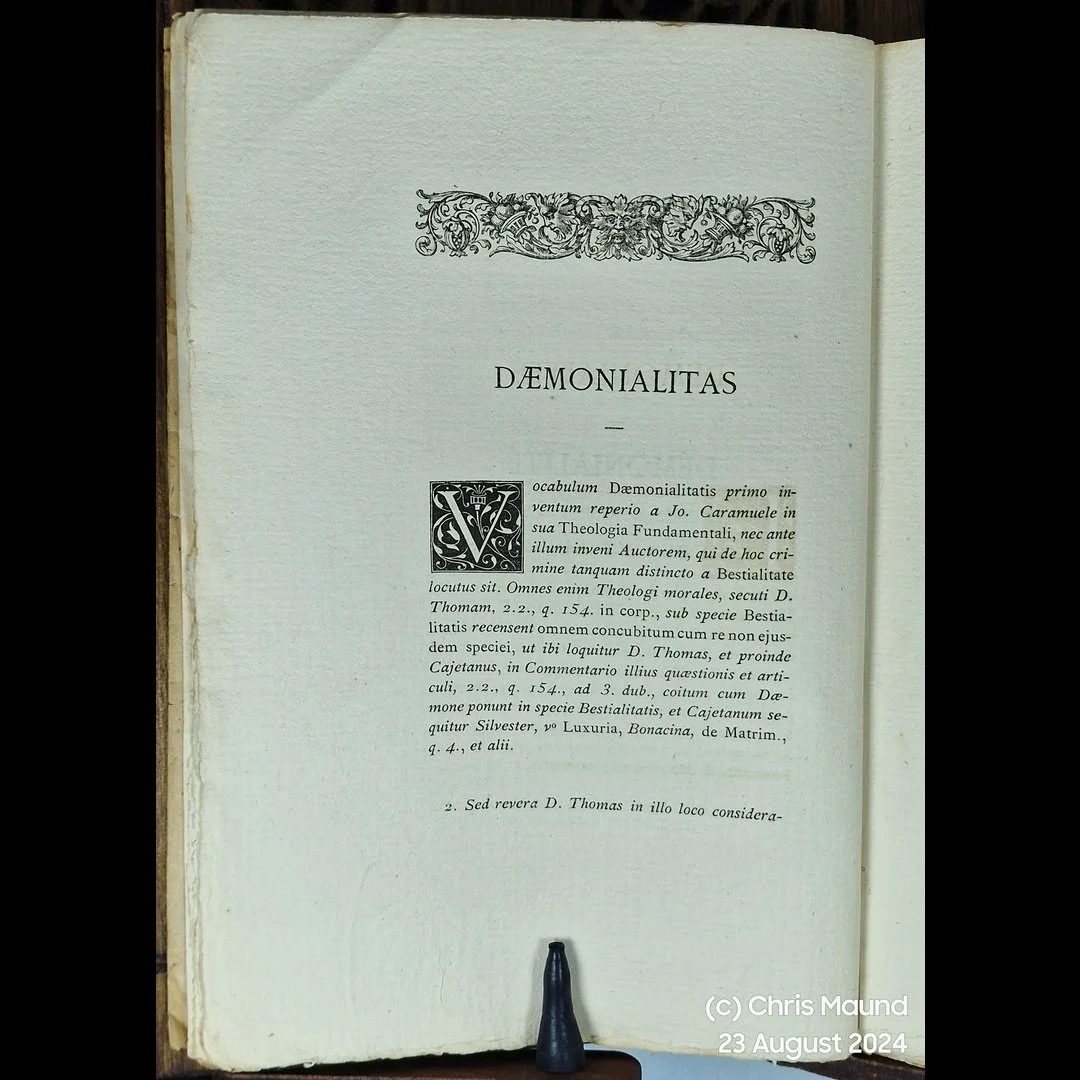 Image 9 of 28
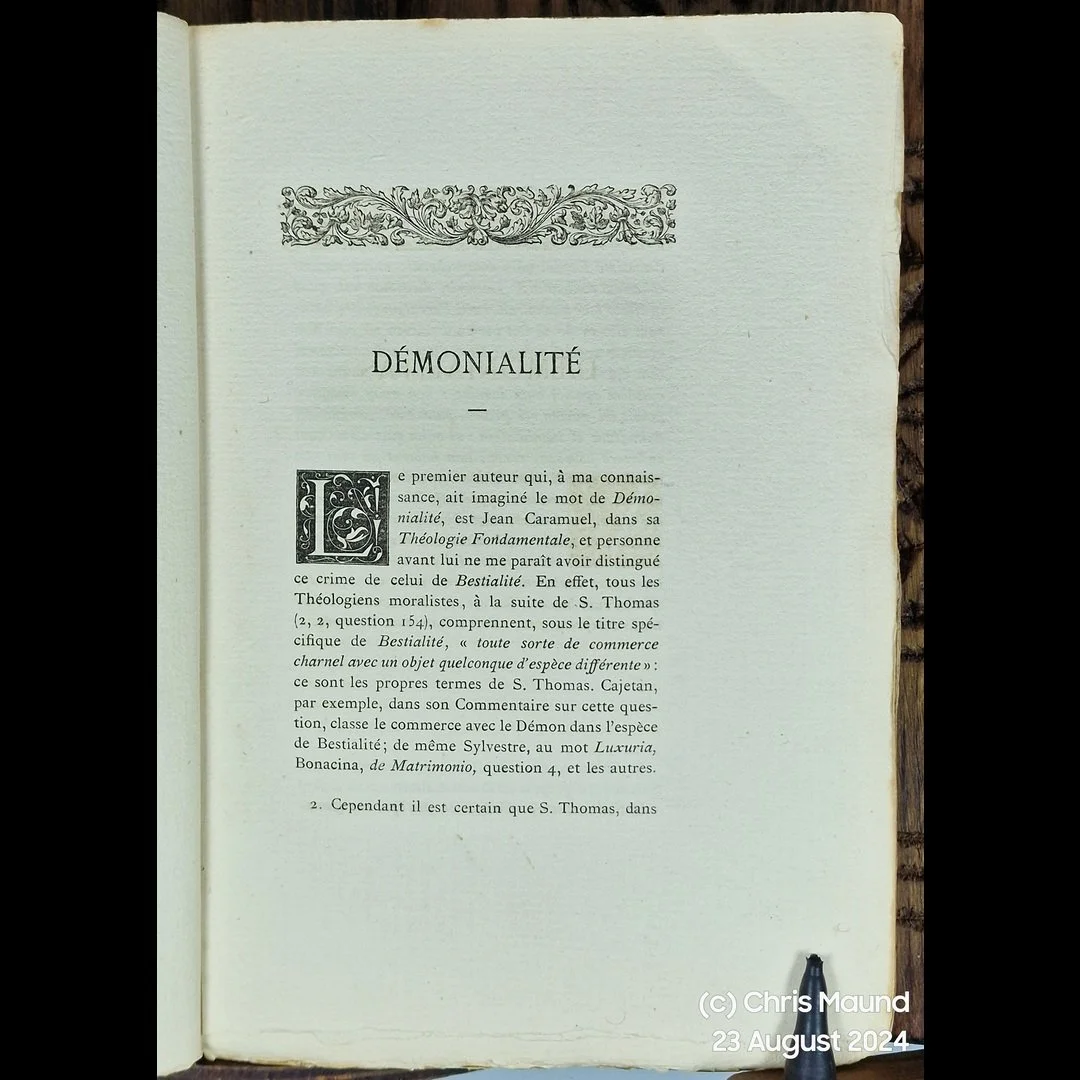 Image 10 of 28
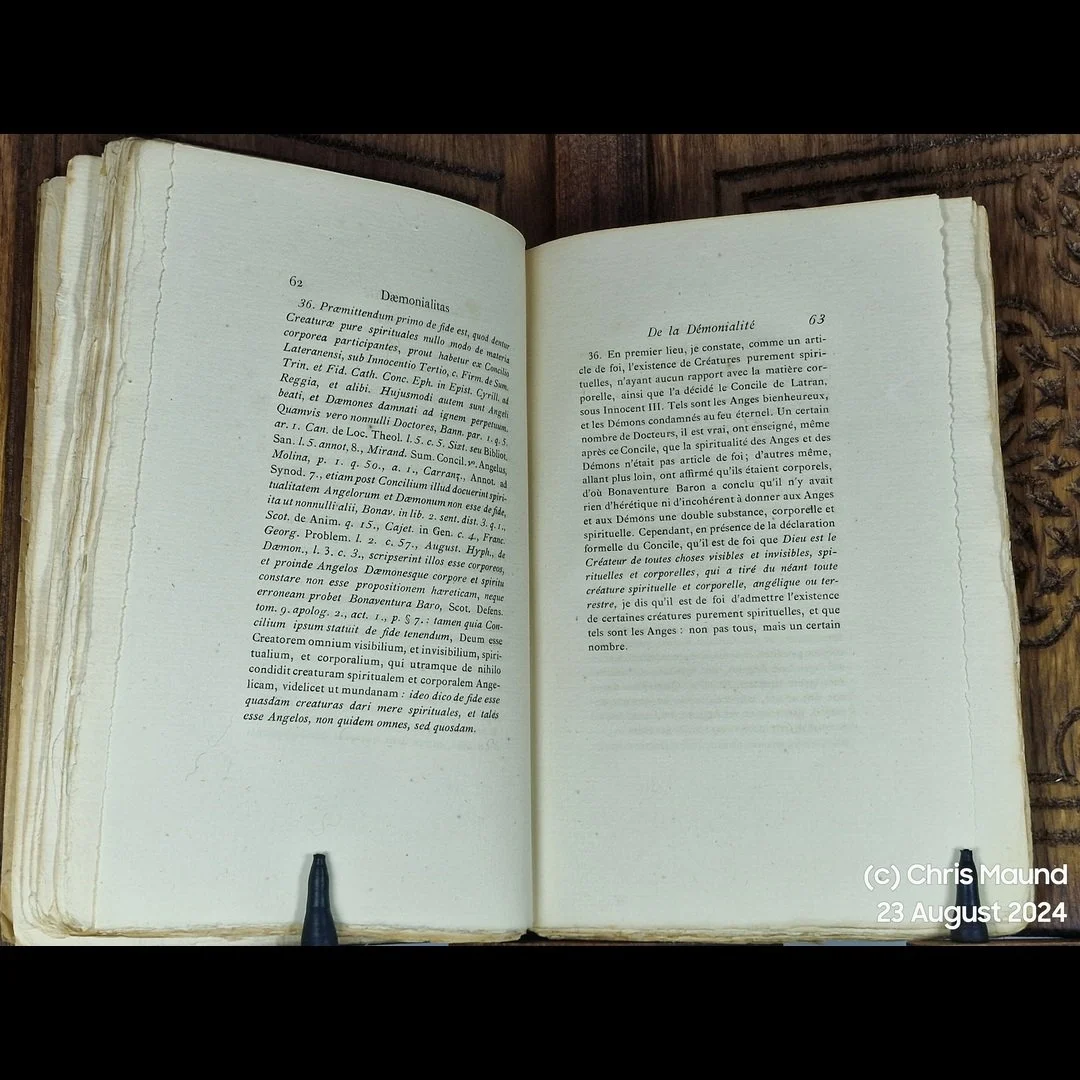 Image 11 of 28
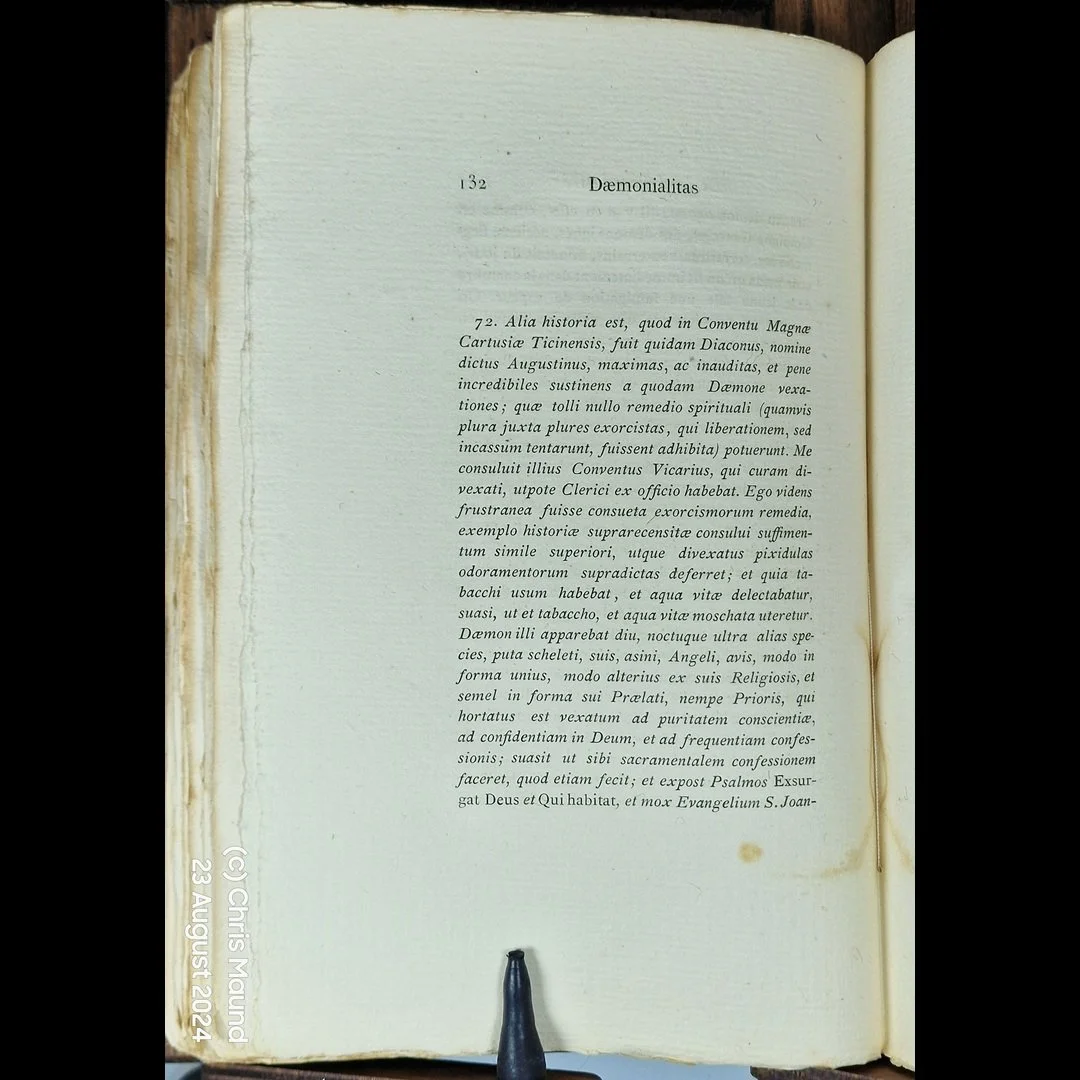 Image 12 of 28
 Image 13 of 28
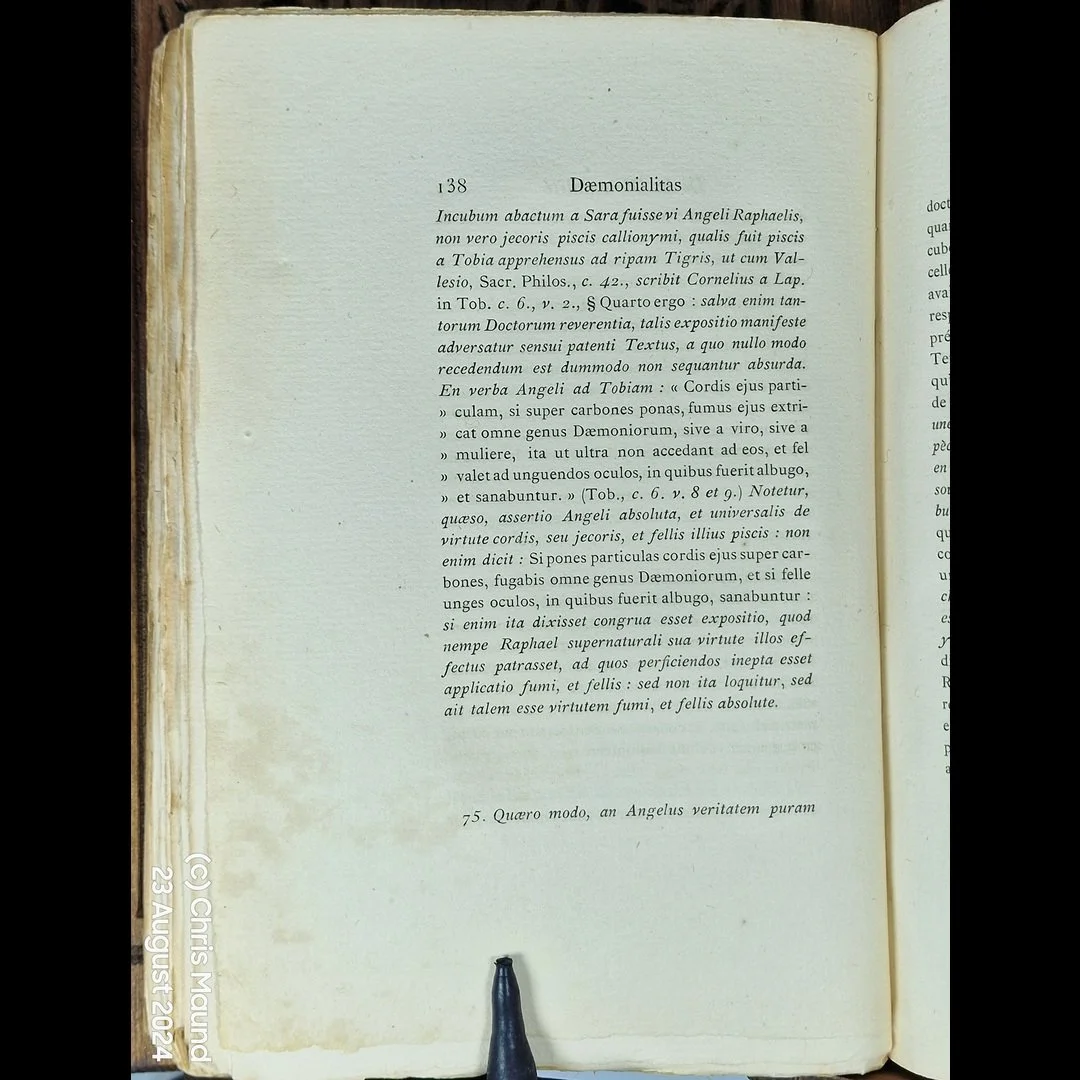 Image 14 of 28
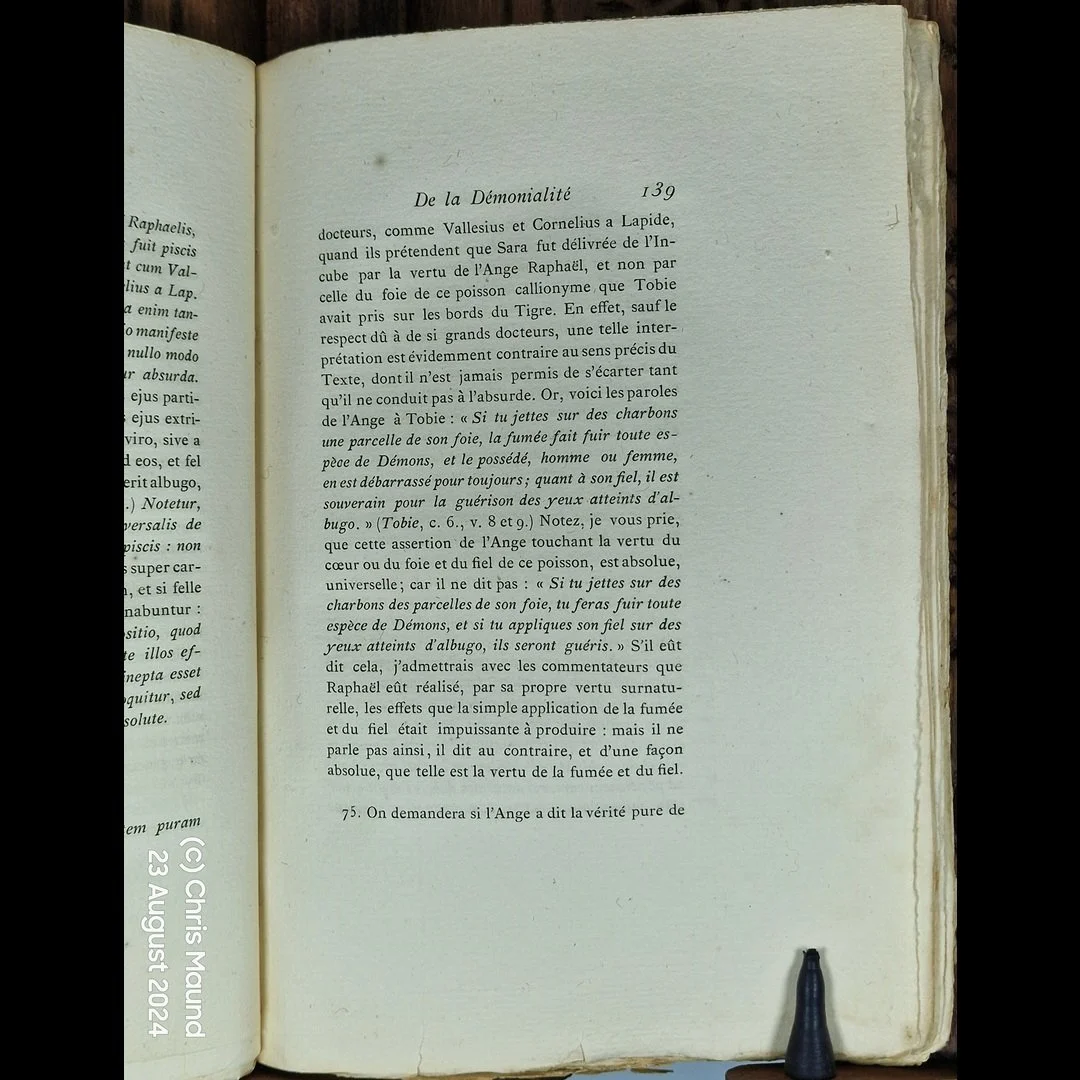 Image 15 of 28
 Image 16 of 28
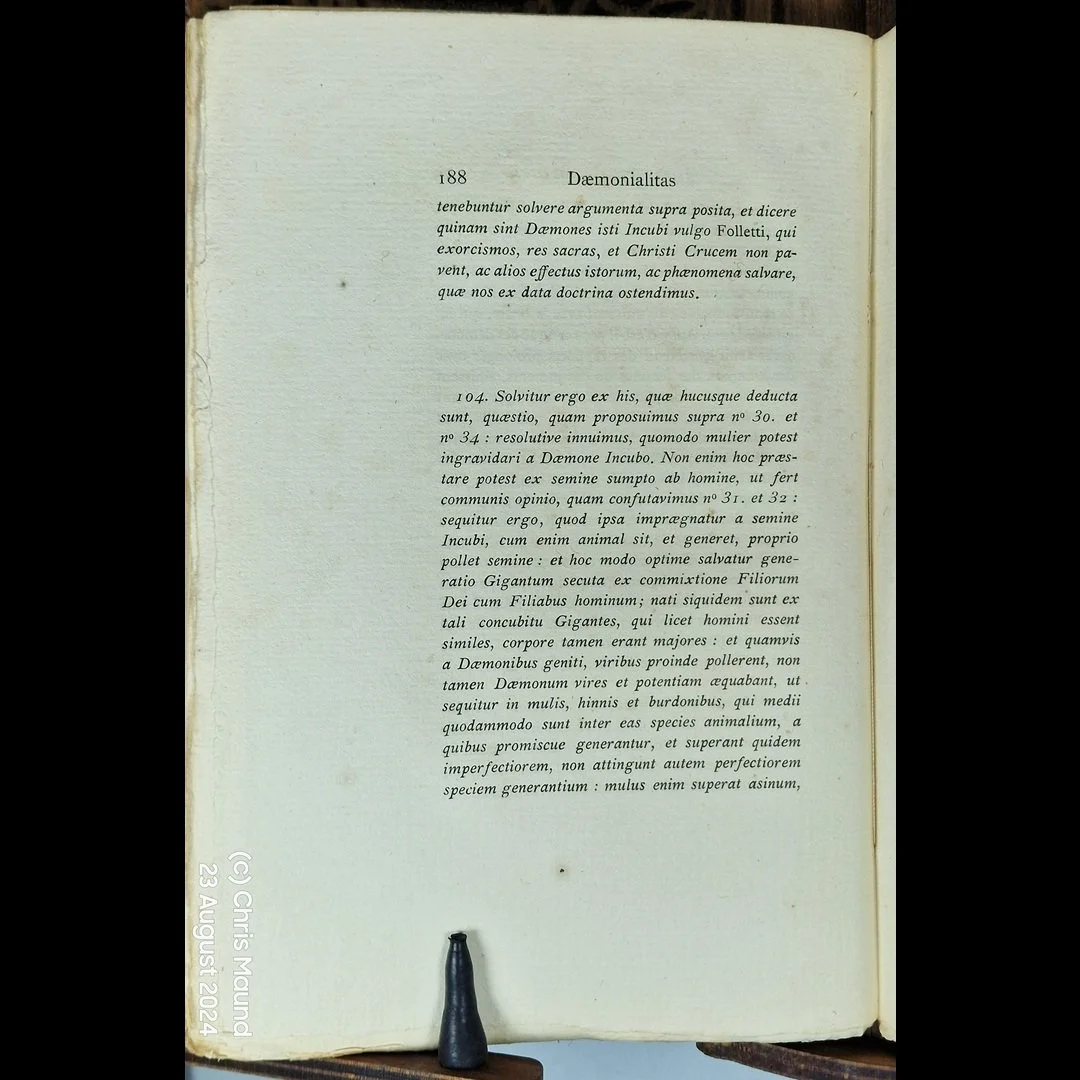 Image 17 of 28
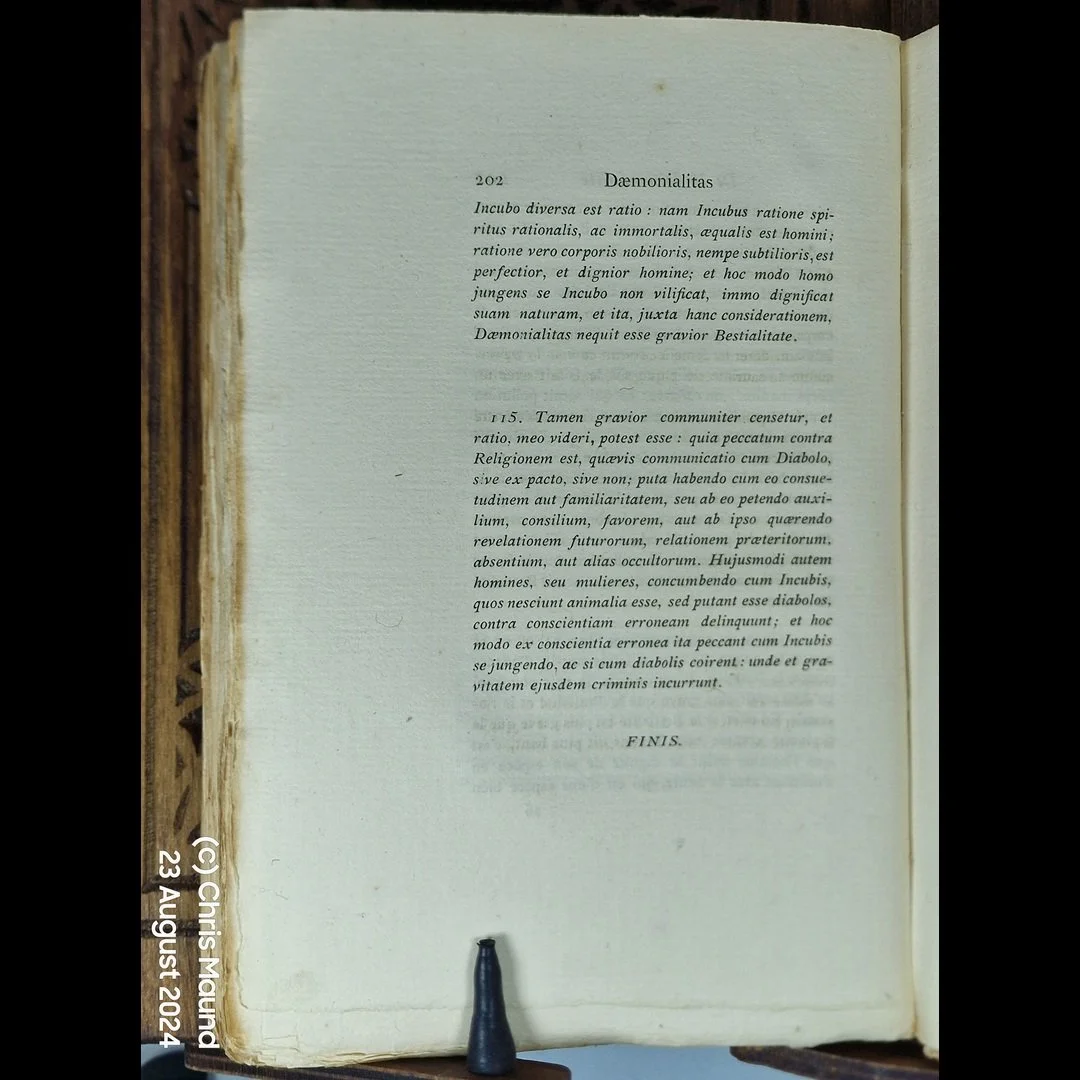 Image 18 of 28
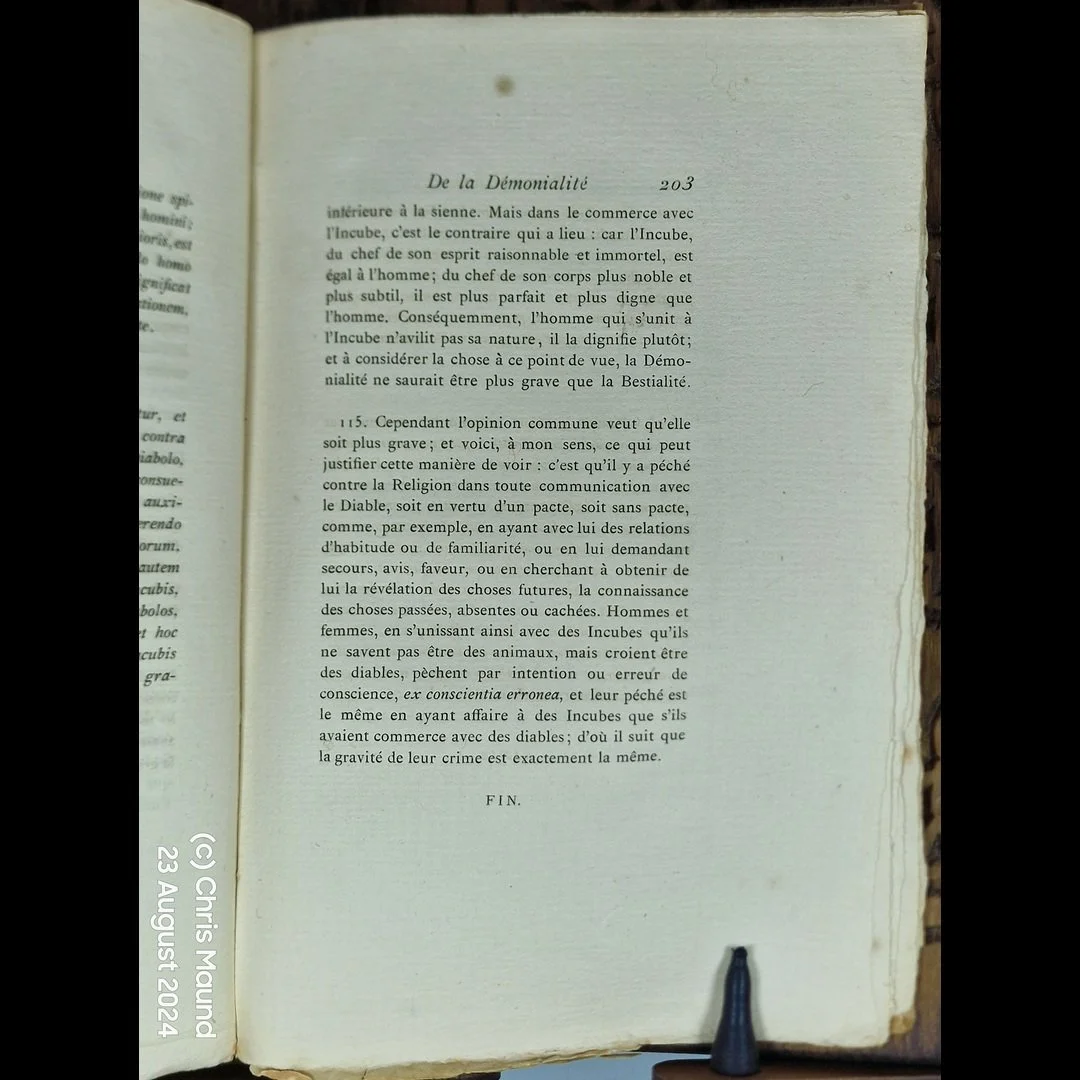 Image 19 of 28
 Image 20 of 28
 Image 21 of 28
 Image 22 of 28
 Image 23 of 28
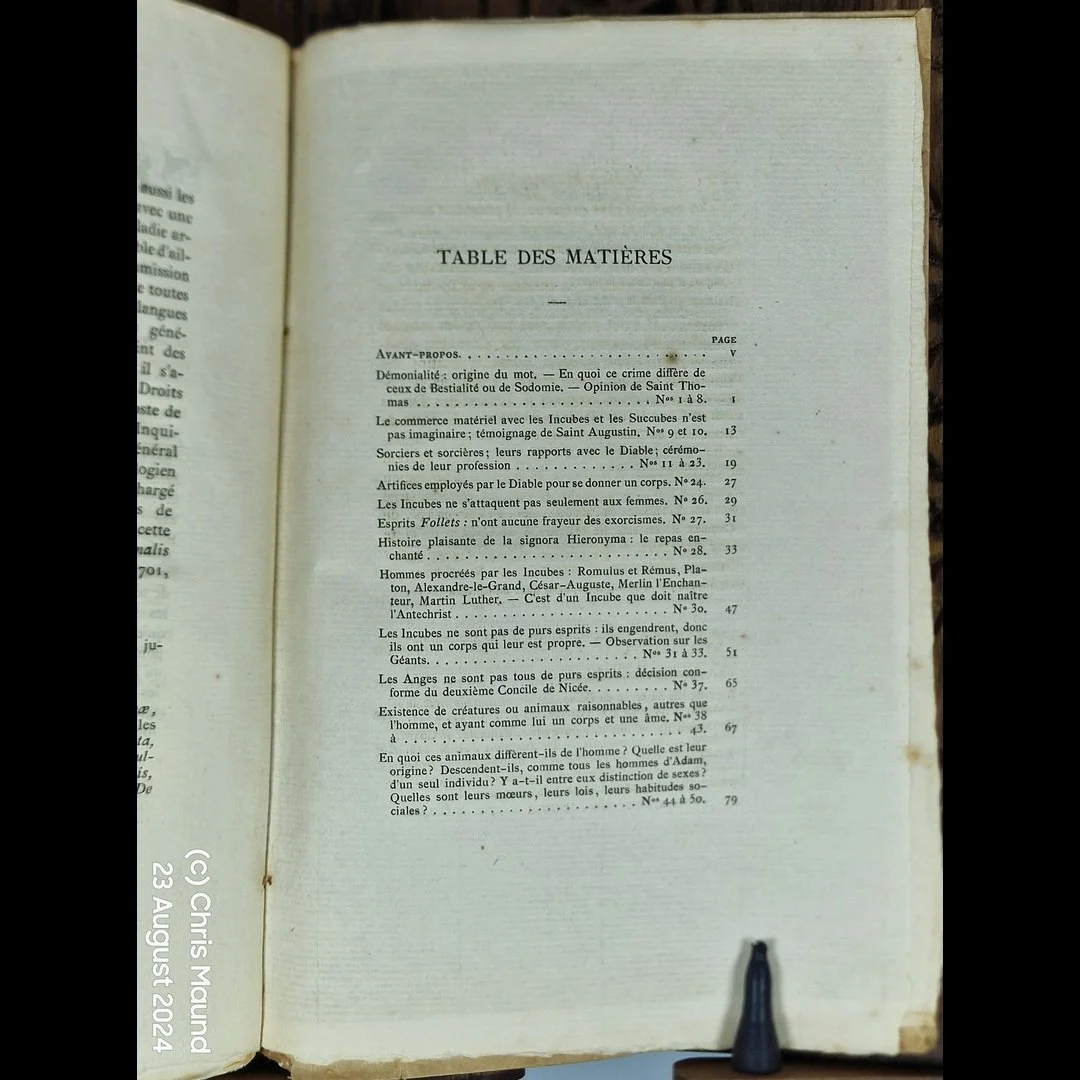 Image 24 of 28
 Image 25 of 28
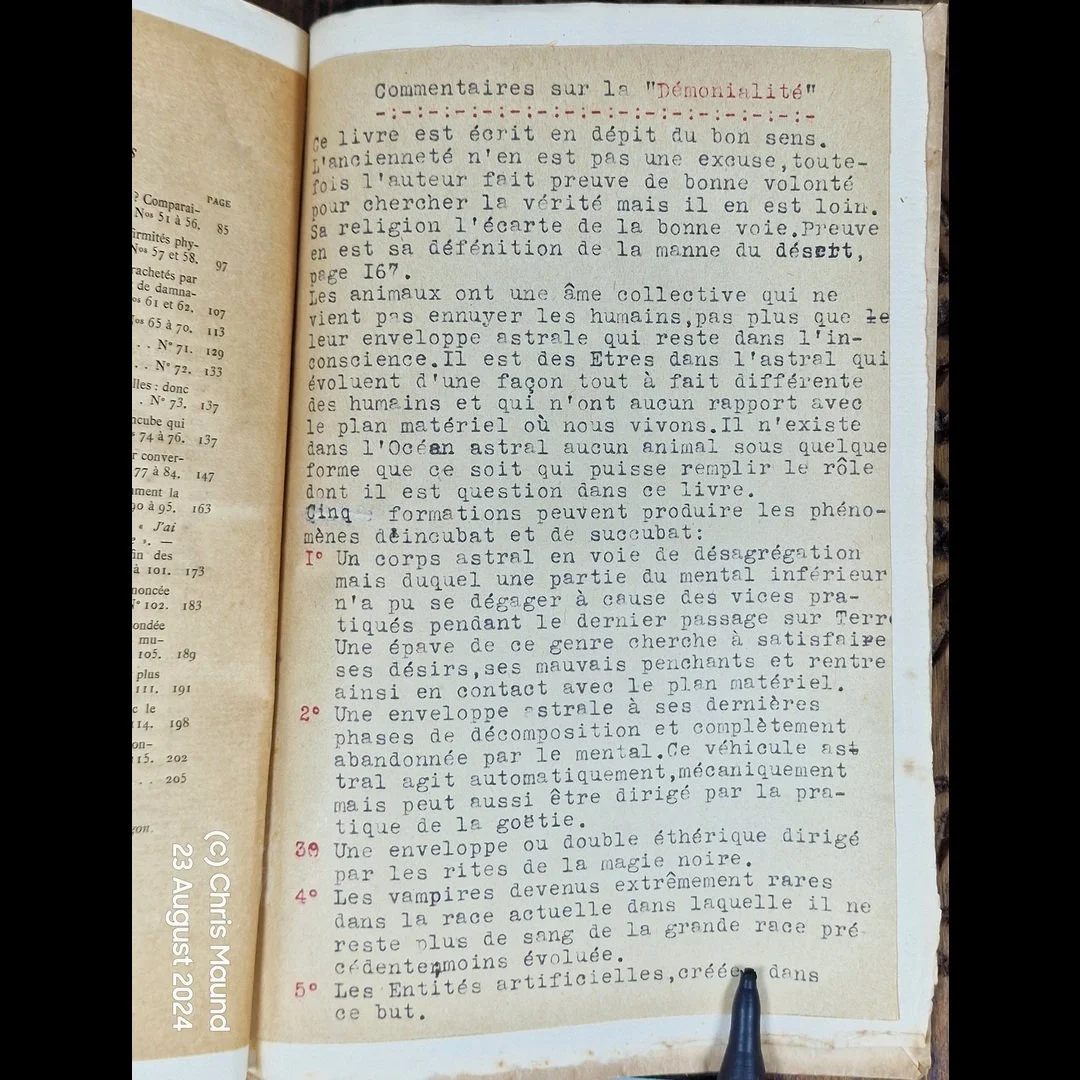 Image 26 of 28
 Image 27 of 28
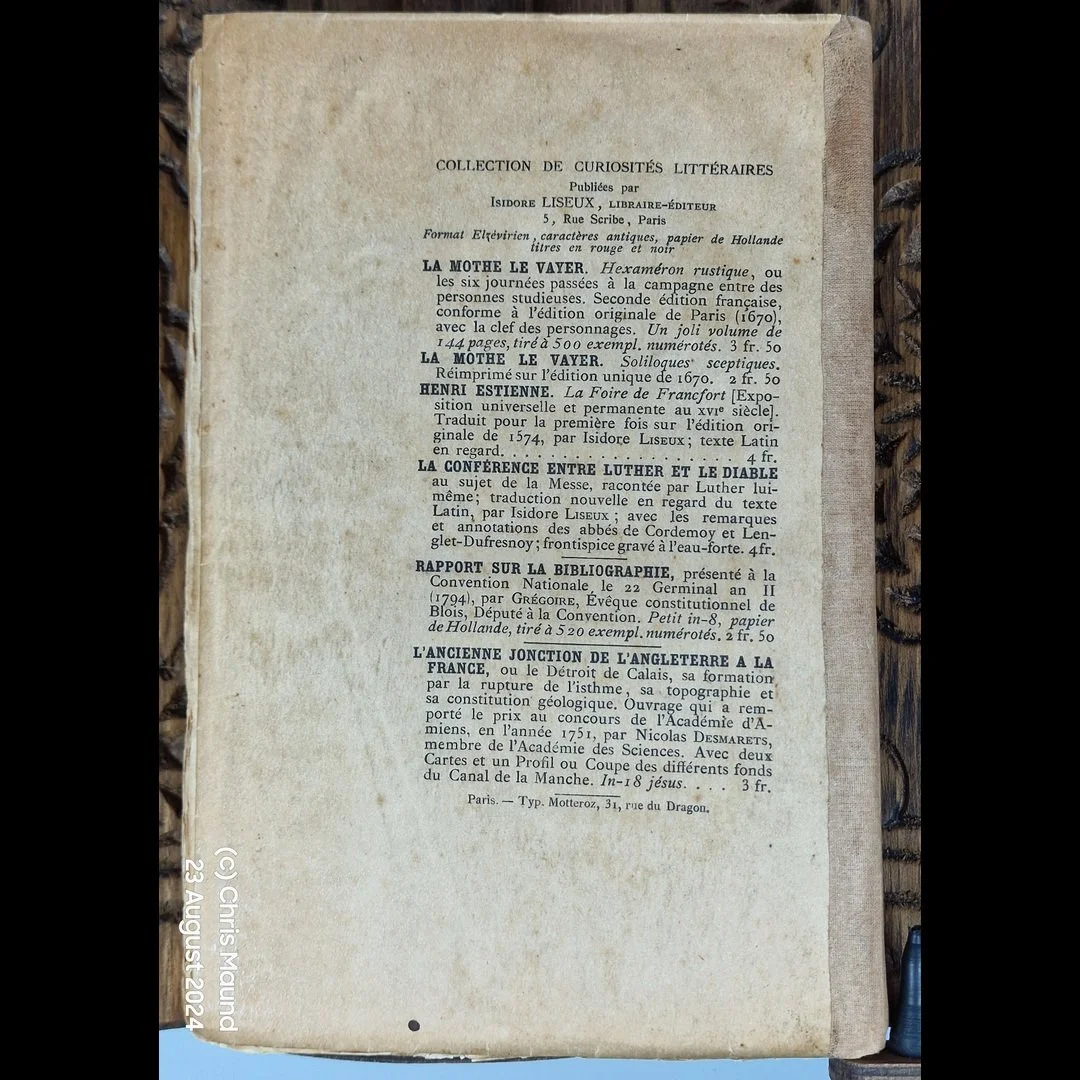 Image 28 of 28