1610 Geneva Edition
NATALIS COMITIS MYTHOLOGIAE & DE VENATIONE
By Natale Conti [Natalis Comes]
KEY DETAILS
Condition: Good
Format: Vellum, Octavo (Standard) (8vo 6 × 9 in 152 × 229 mm )
Note: Binding/size selection follows standard bibliographic conventions and is approximate; exact measurements may vary.
Published By: Coloniae Allobrogum [Geneva]: Samuel Crispinus, Geneva, 1610
Language: Latin, with Greek quotations and terminology
Collation: [15, 1 blank], 1123, [162, 1 blank] pp.; 8vo. Complete. The numbered sequence contains bibliographical pagination errors; the Folger Shakespeare Library records the extent as [16], 1123 [i.e. 1125], [163] pp.; Signatures: preliminary quire of 8 leaves; a–z⁸ A–Z⁸ Aa–Zz⁸ Aaa–Lll⁸ Mmm⁴, using the conventional 23-letter signature alphabet.
Dust Jacket: None, as issued, No Jacket
SKU: BTETM0002444
Shipping Info: Approximate Package Dimensions H: 12.5, L: 30, W: 25 (Units: cm), W: 2Kg
Tracked Shipping, Insurance Coverage as per Customer Request
DESCRIPTION
NATALIS COMITIS MYTHOLOGIAE & DE VENATIONE
NATALIS COMITIS MYTHOLOGIAE, SIVE EXPLICATIONIS FABULARUM, LIBRI DECEM
Eiusdem Libri IIII de Venatione
By Natale Conti [Natalis Comes]
A substantial early-seventeenth-century edition of one of the most influential mythographical works of the Renaissance: Natale Conti’s Mythologiae, an encyclopaedic examination of the gods, heroes, legends and religious traditions of classical antiquity, interpreted through the moral and natural philosophy which Conti believed to be concealed within ancient fable.
Printed at Geneva by Samuel Crispinus in 1610, this edition combines the ten books of the Mythologiae with Conti’s four books De Venatione, his Latin verse treatment of hunting; extensive triple indices; Friedrich Sylburg’s notes; Geoffroy Linocier’s Mythologia Musarum; additional material concerning the opinions of ancient philosophers on the gods; and the concluding Observationum in totam de diis gentium narrationem libellus.
An appealing and extensively collated copy surviving in an early, apparently contemporary or near-contemporary vellum binding with manuscript spine title. The complete volume has been physically checked through the concluding Mmm gathering and reconciled with institutional descriptions of the 1610 Crispinus edition.
CONDITION, COLLATION & COPY NOTES
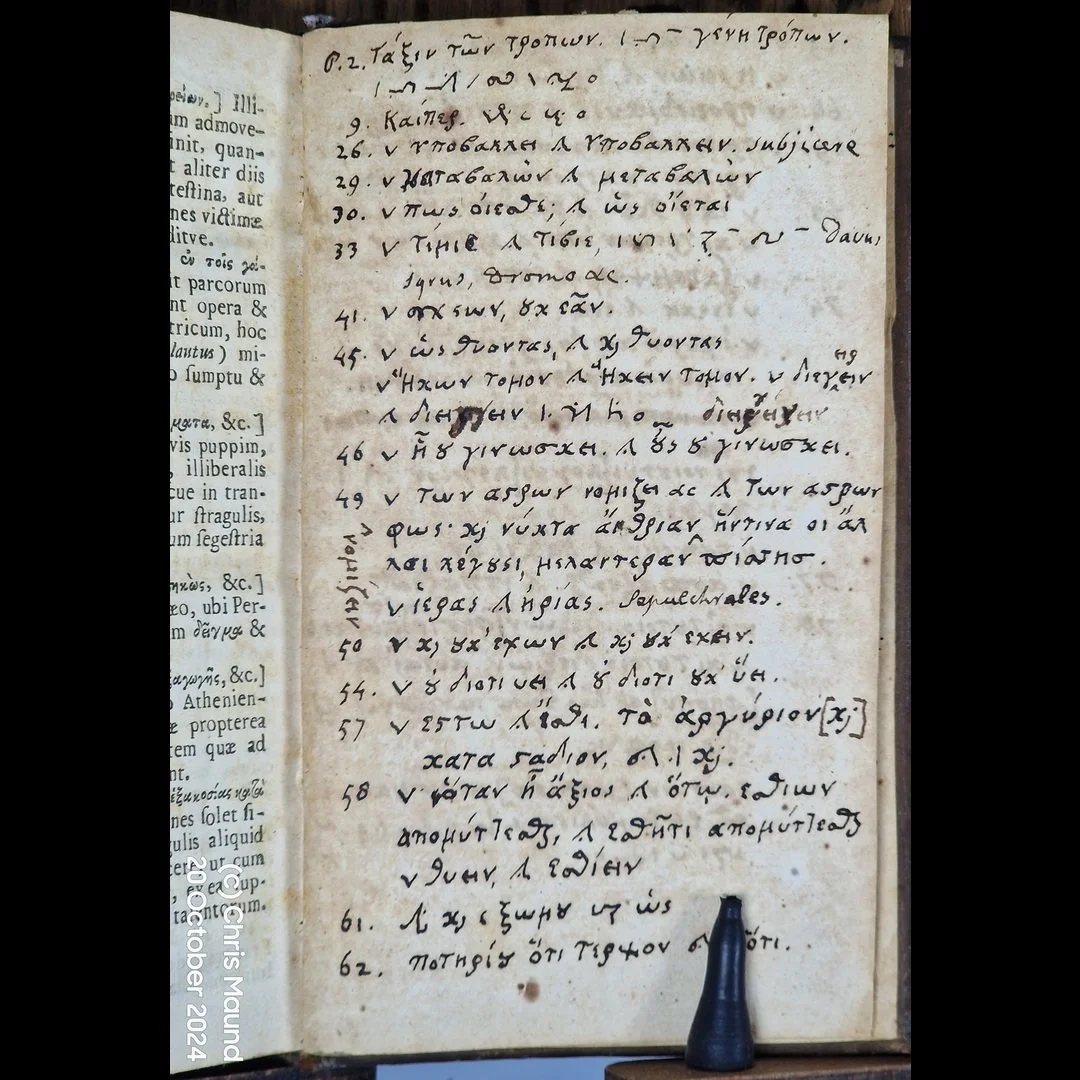
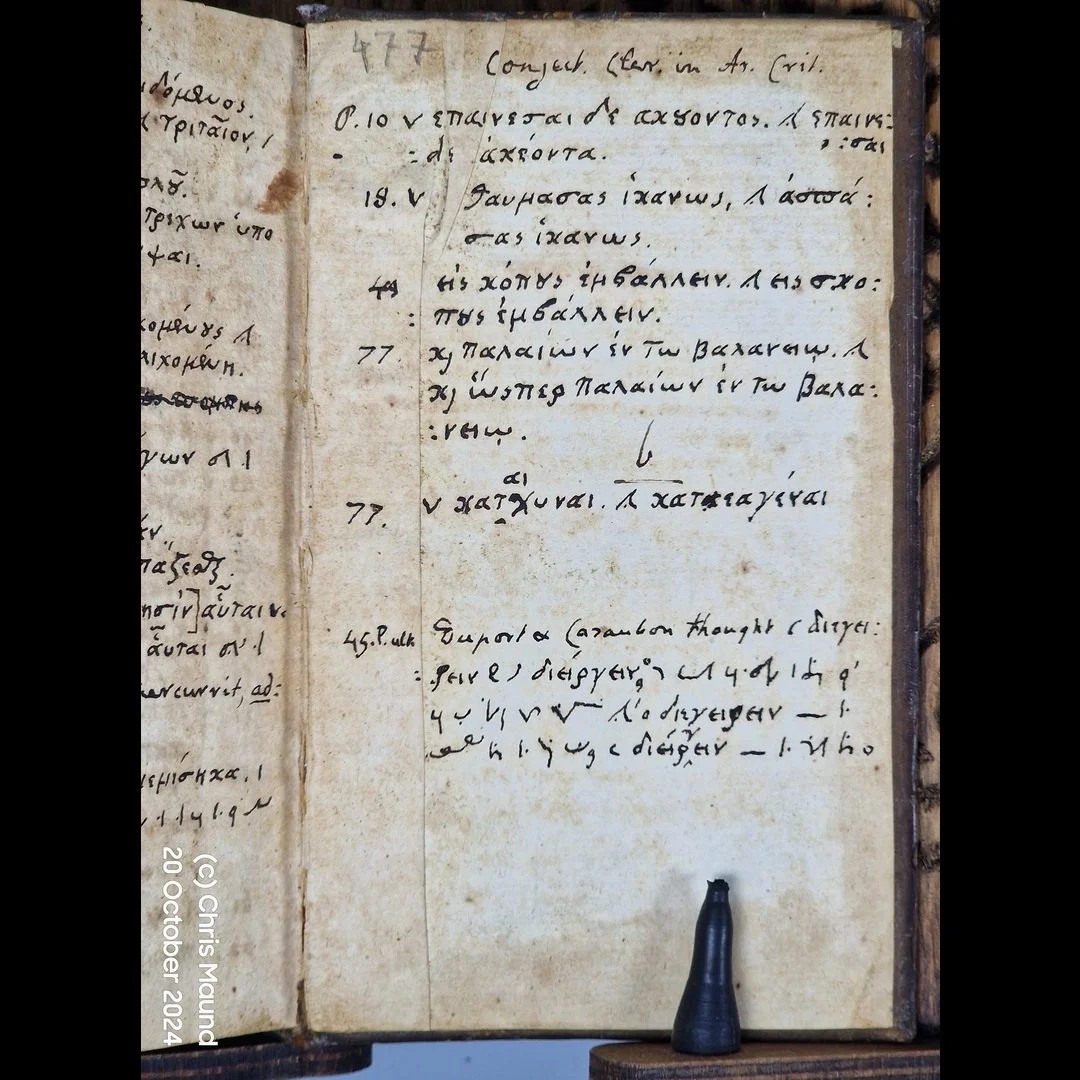
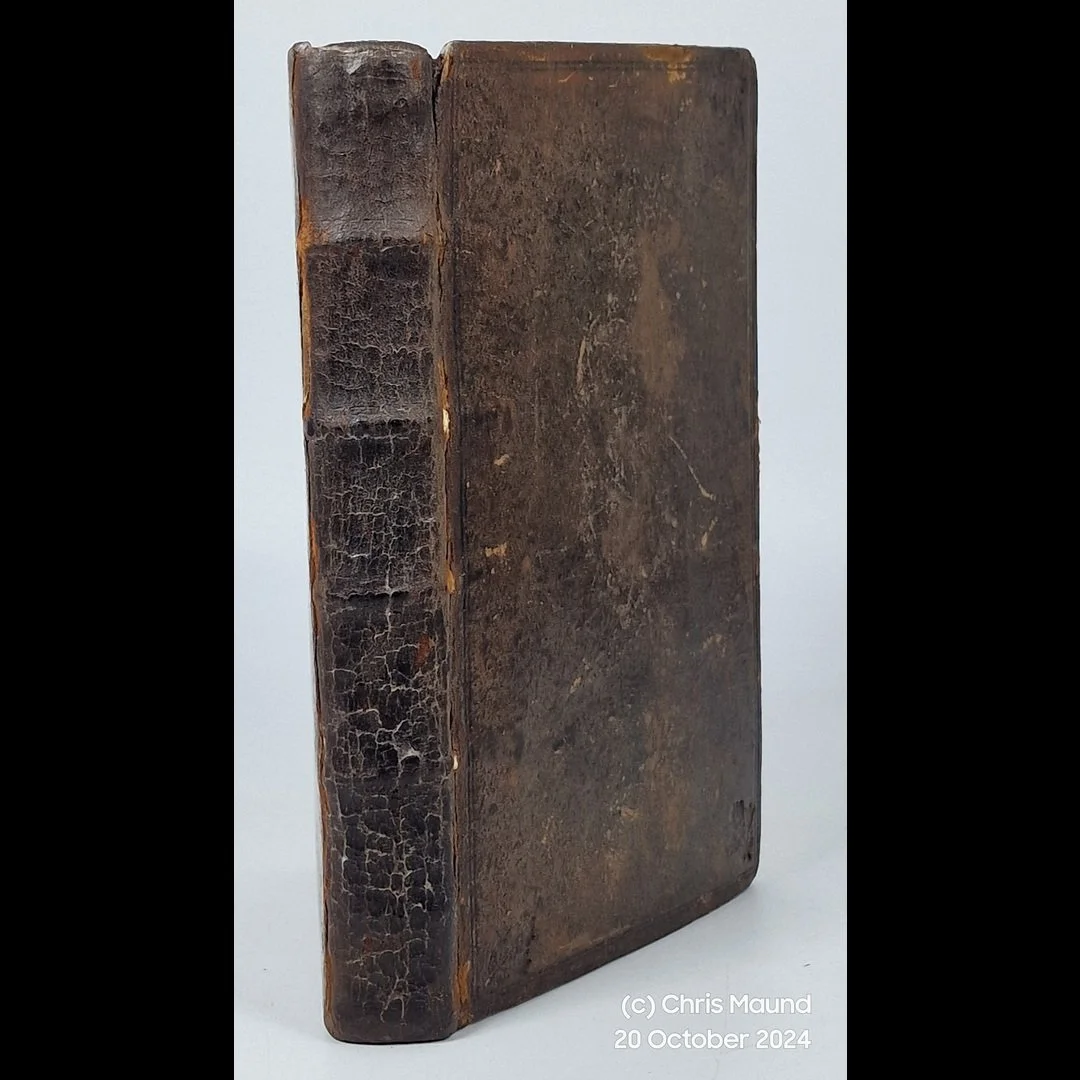
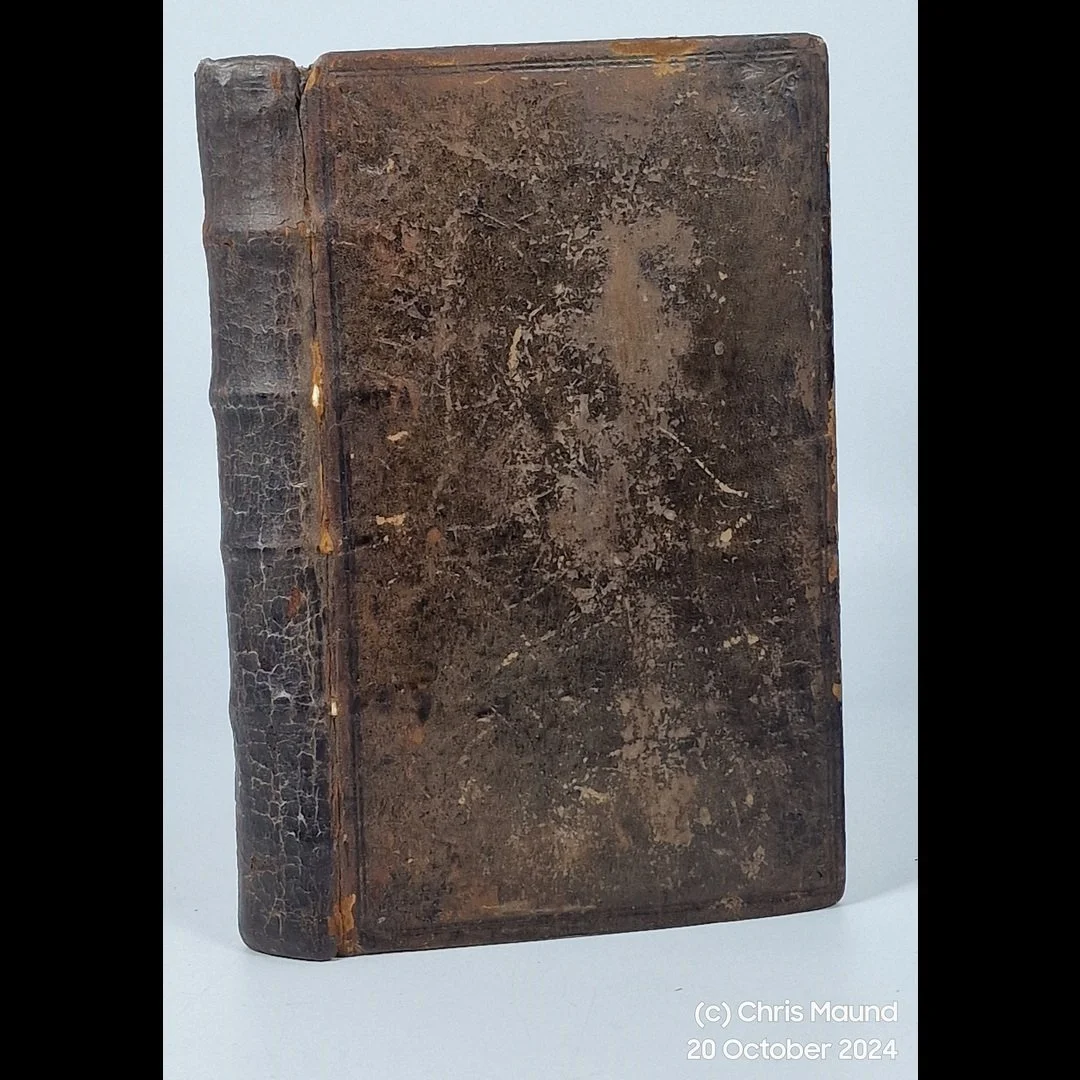
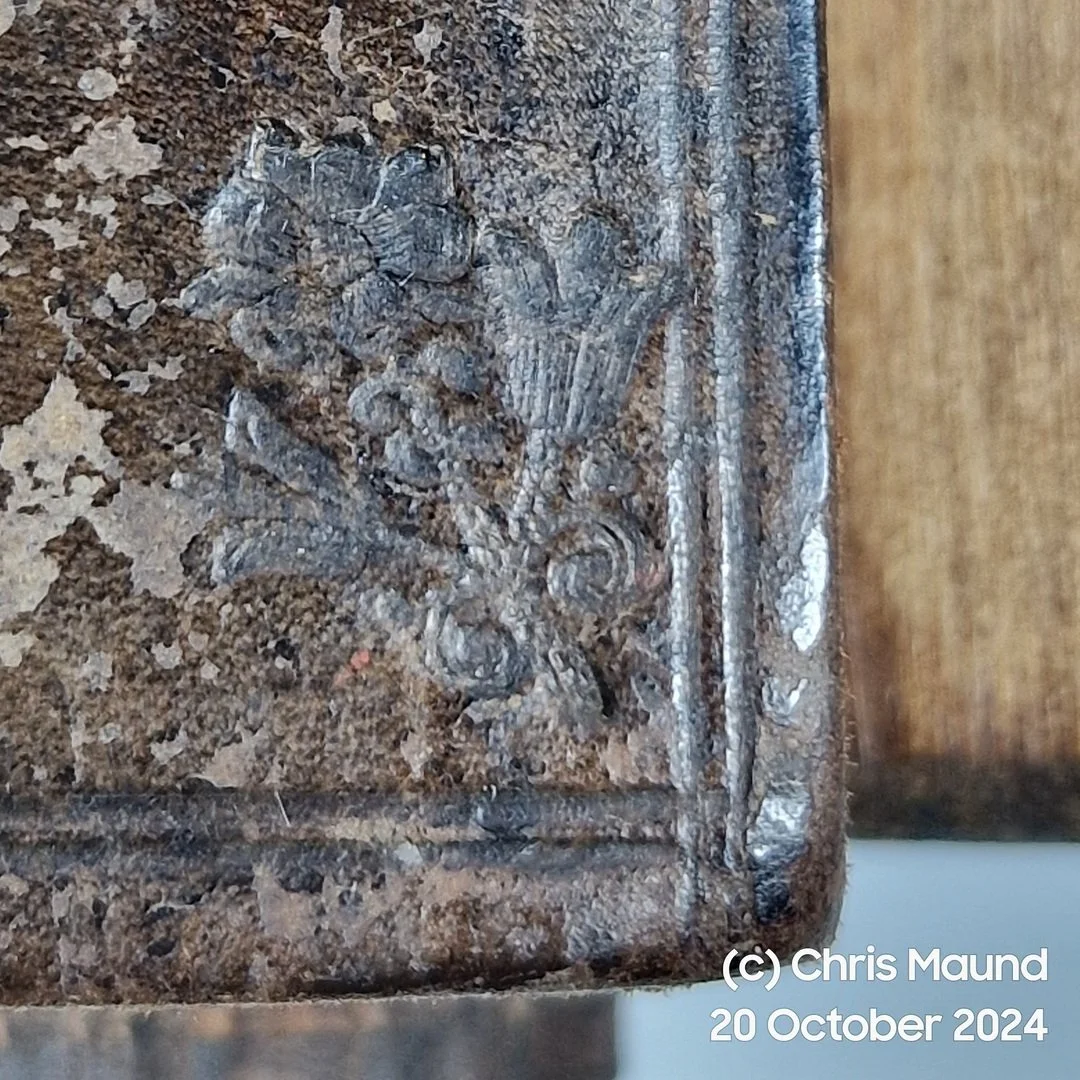
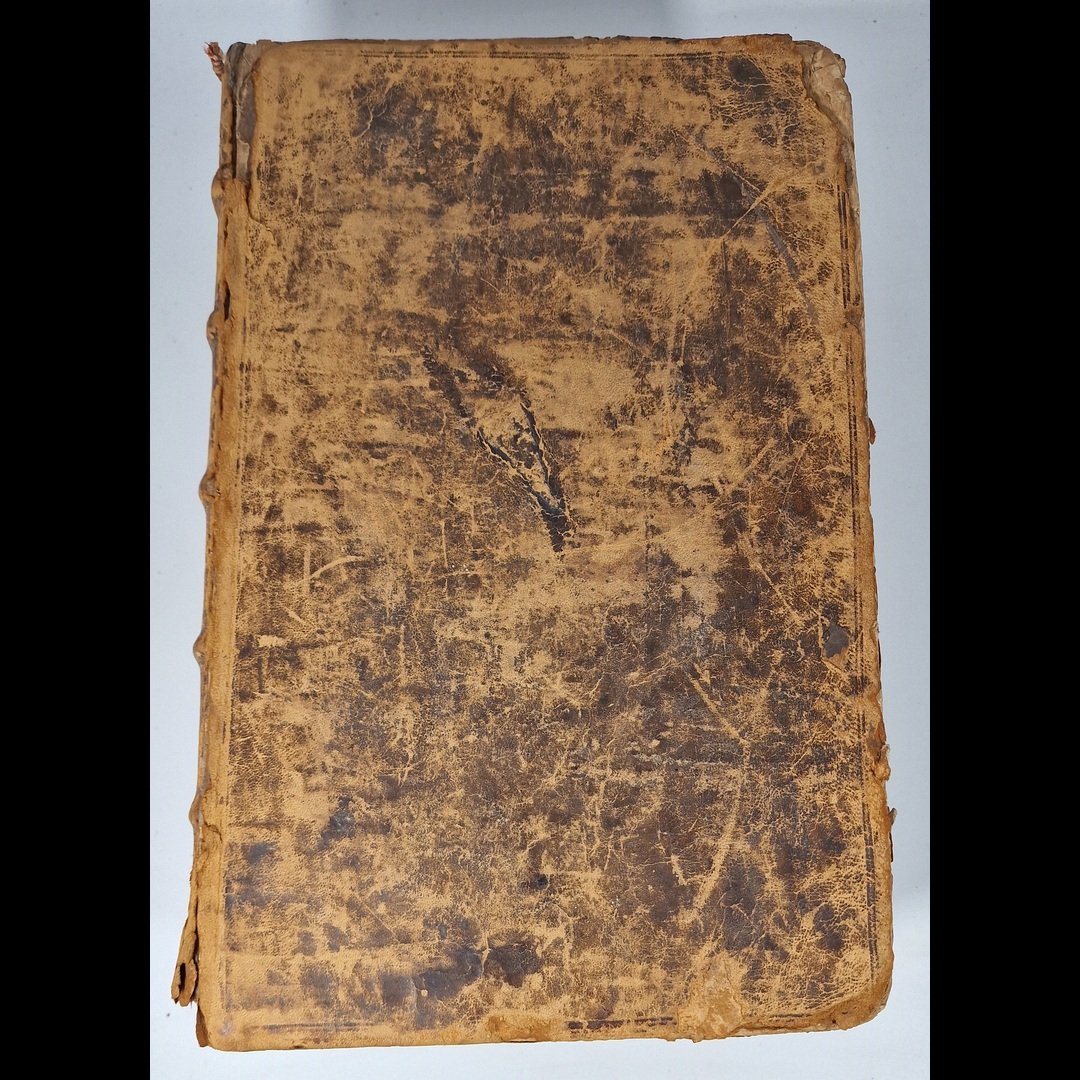
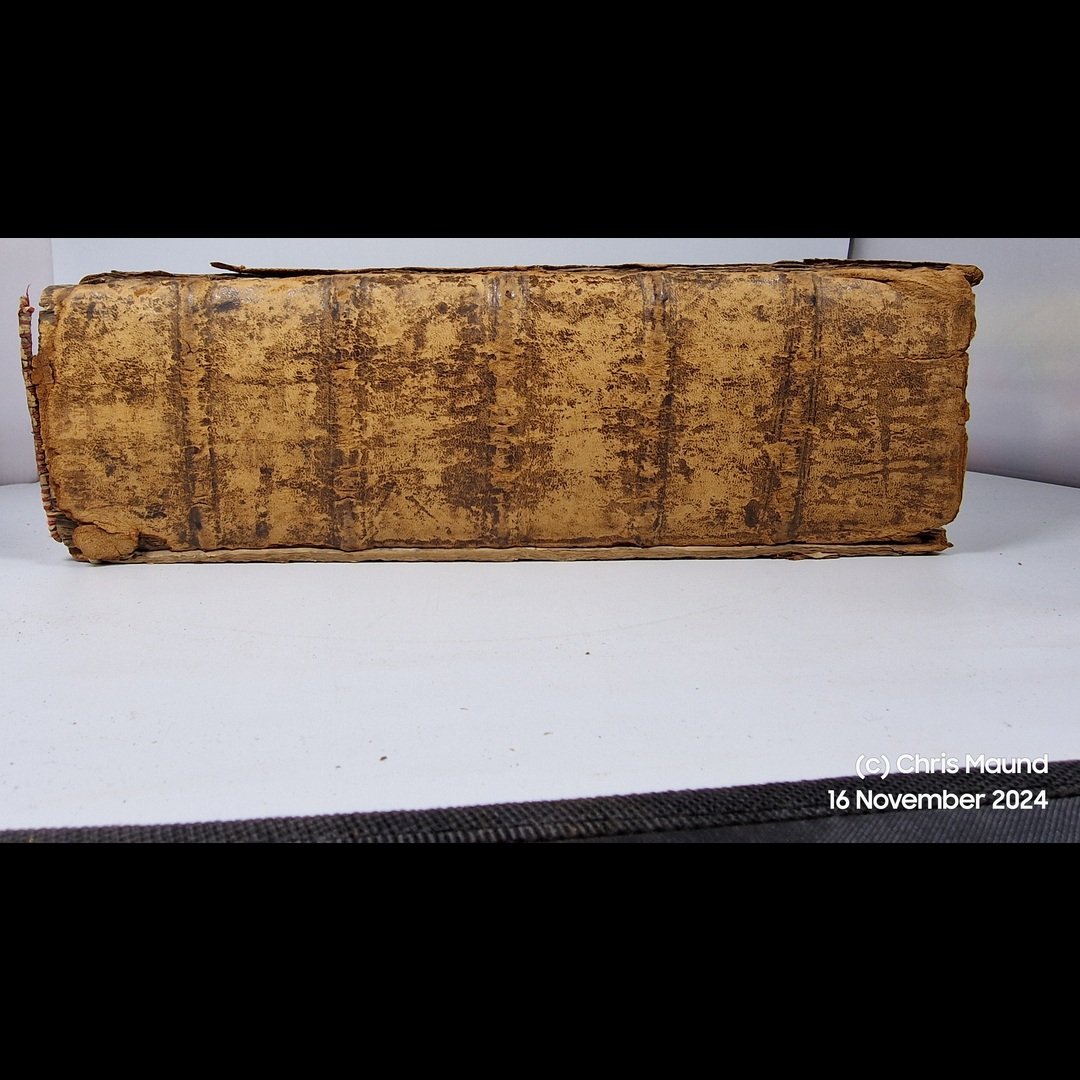
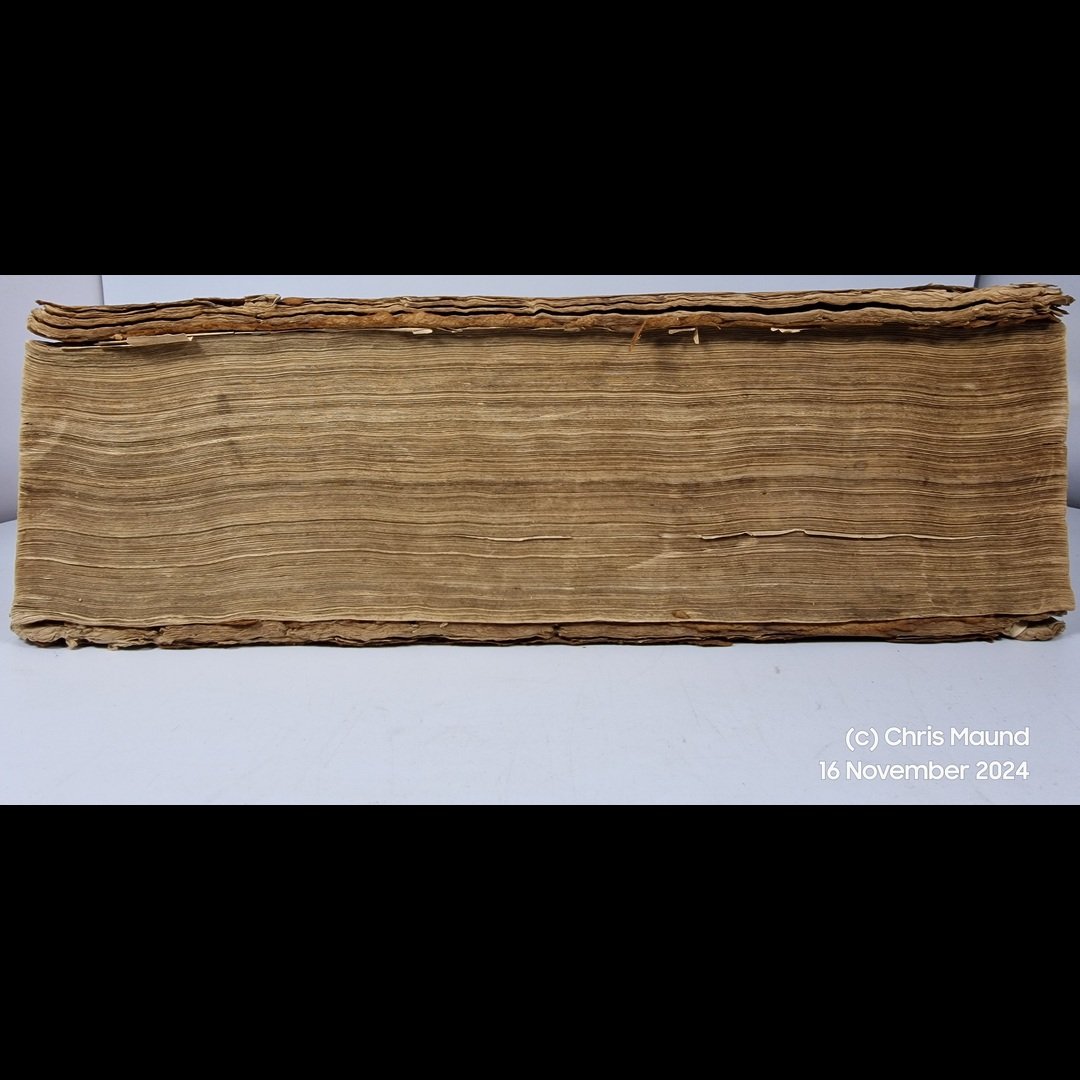
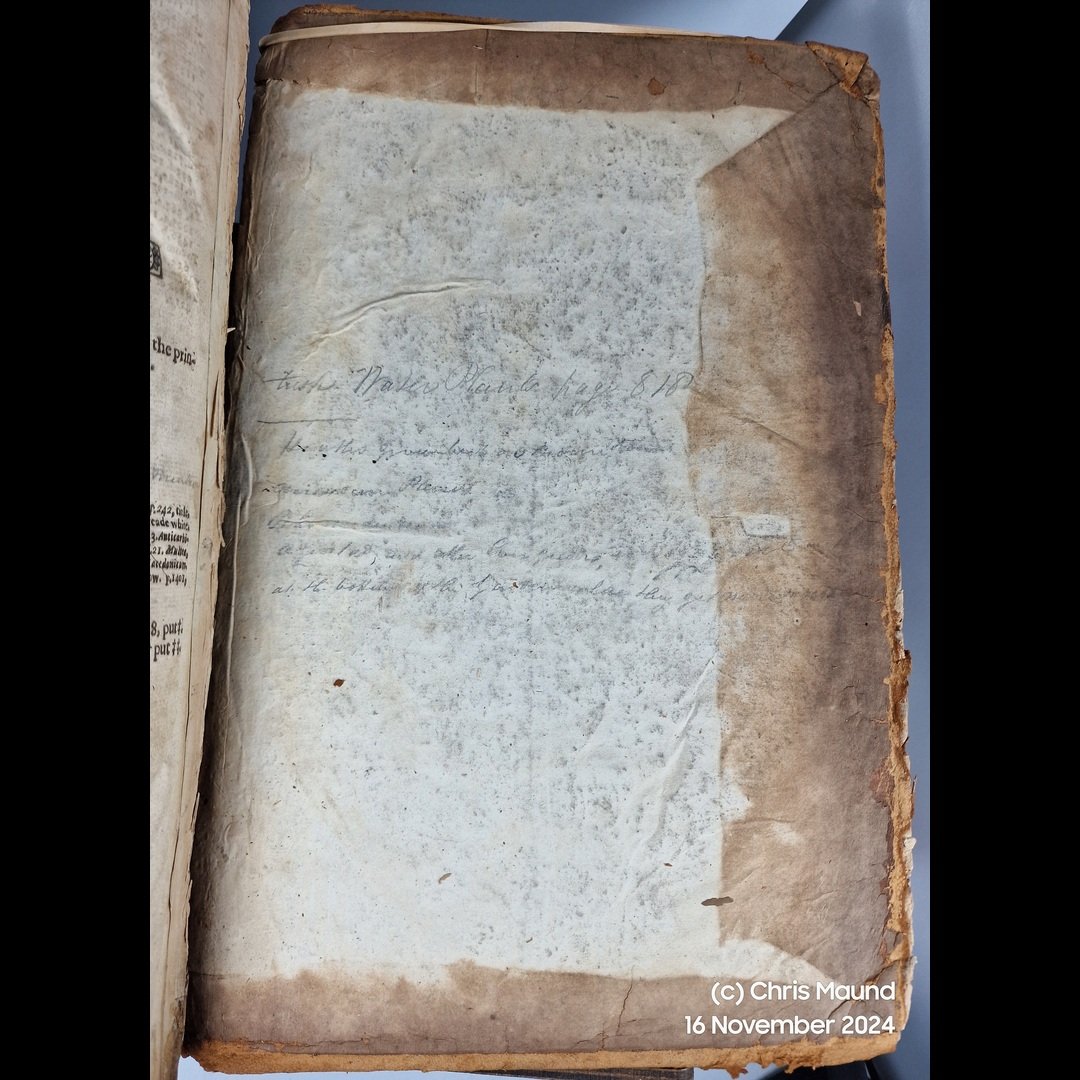
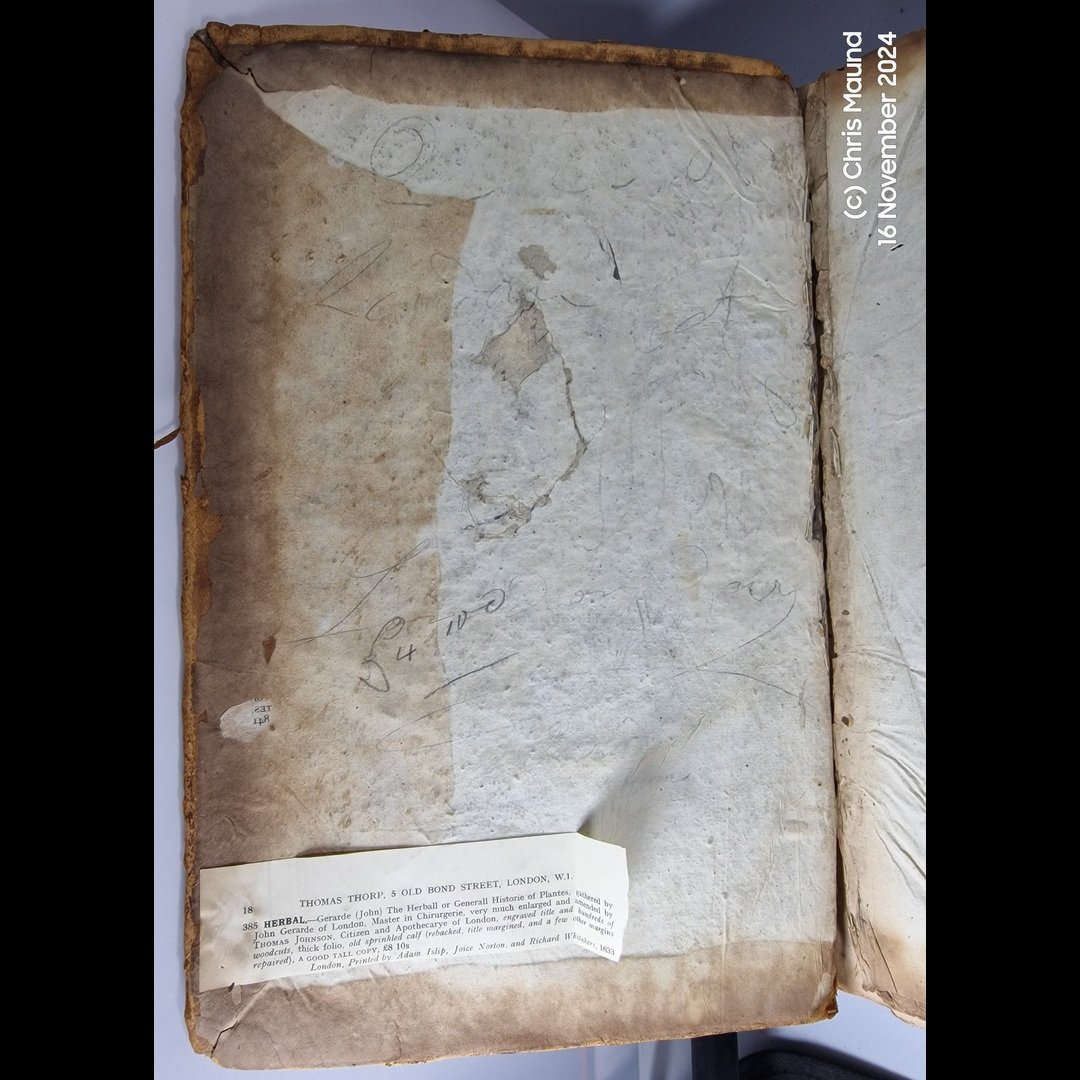
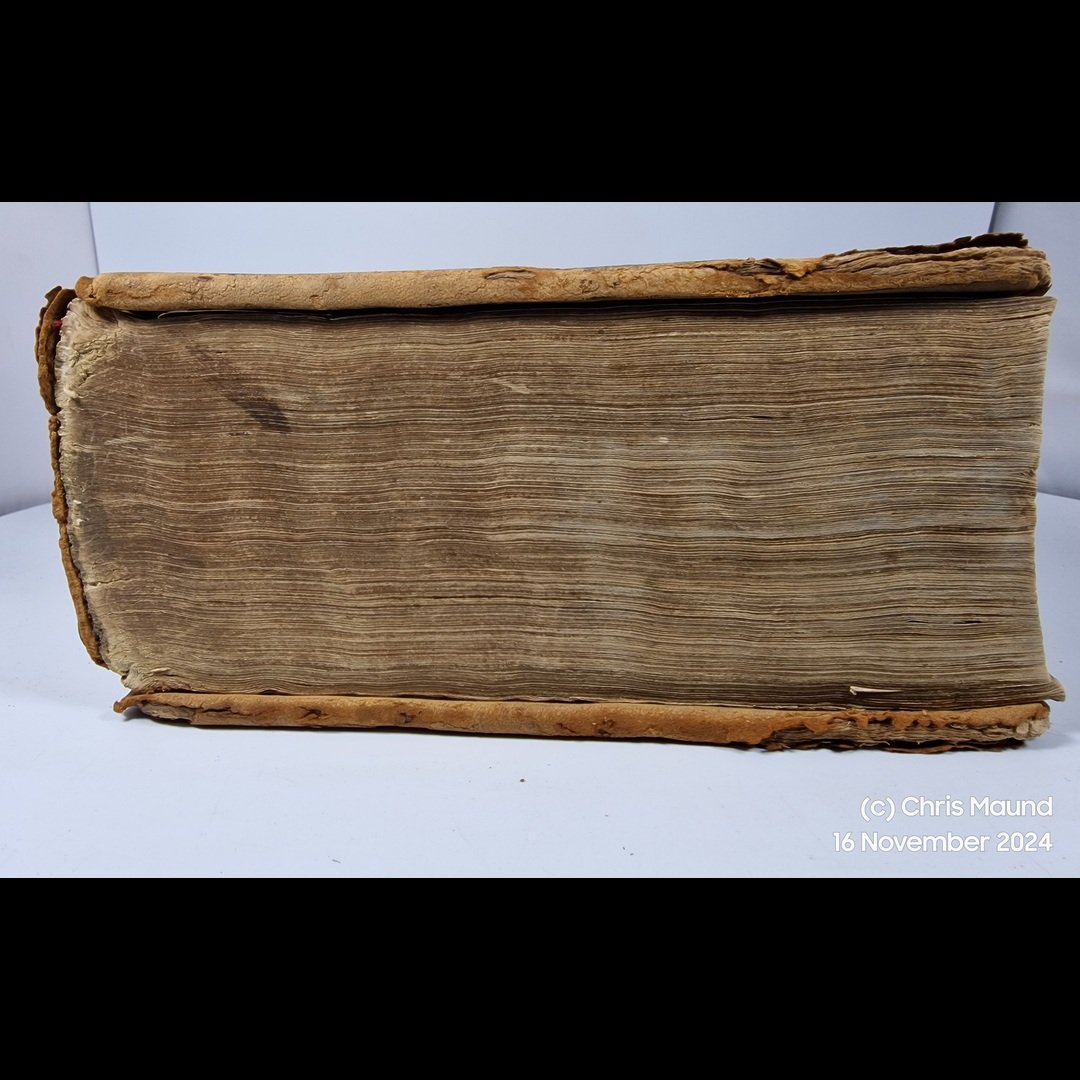
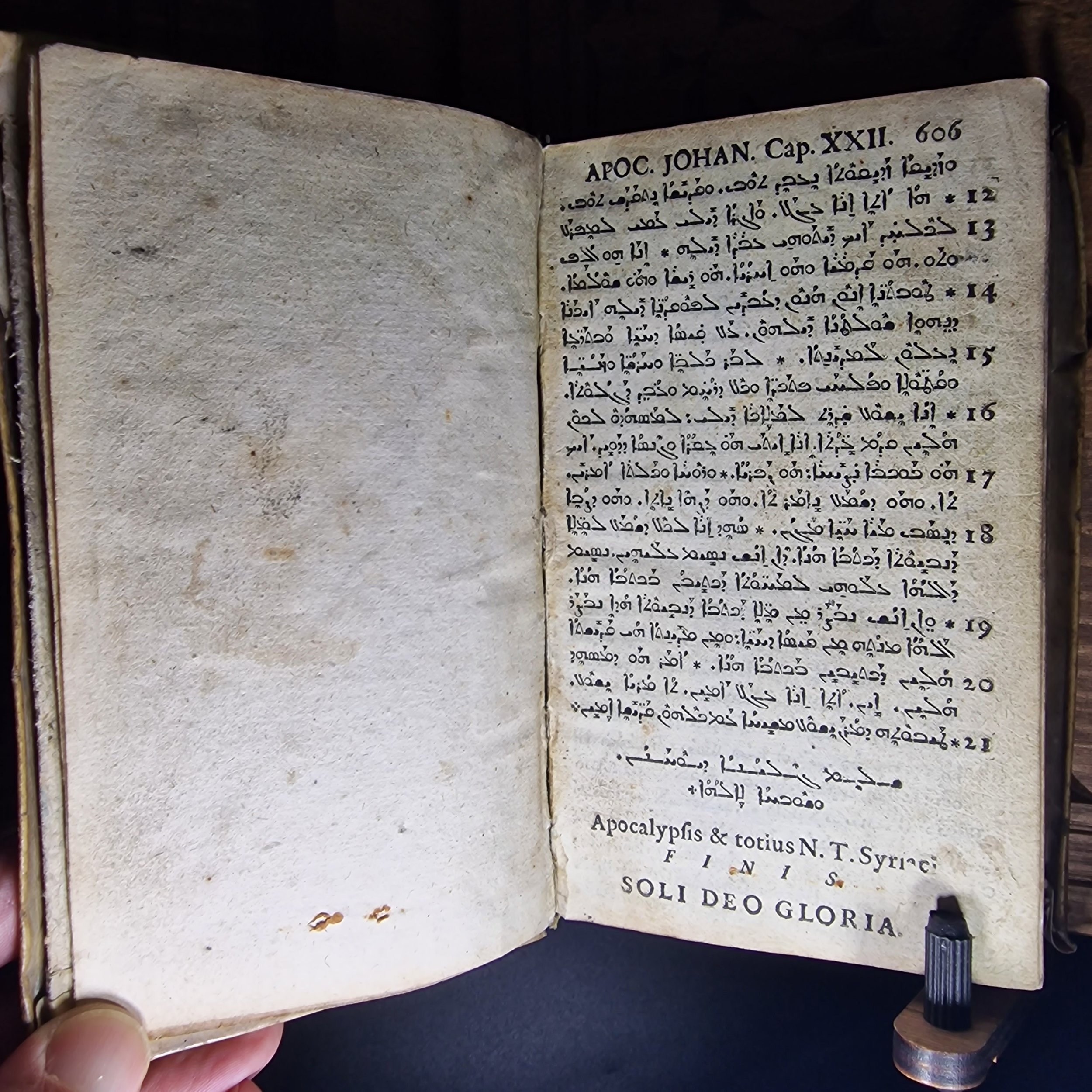
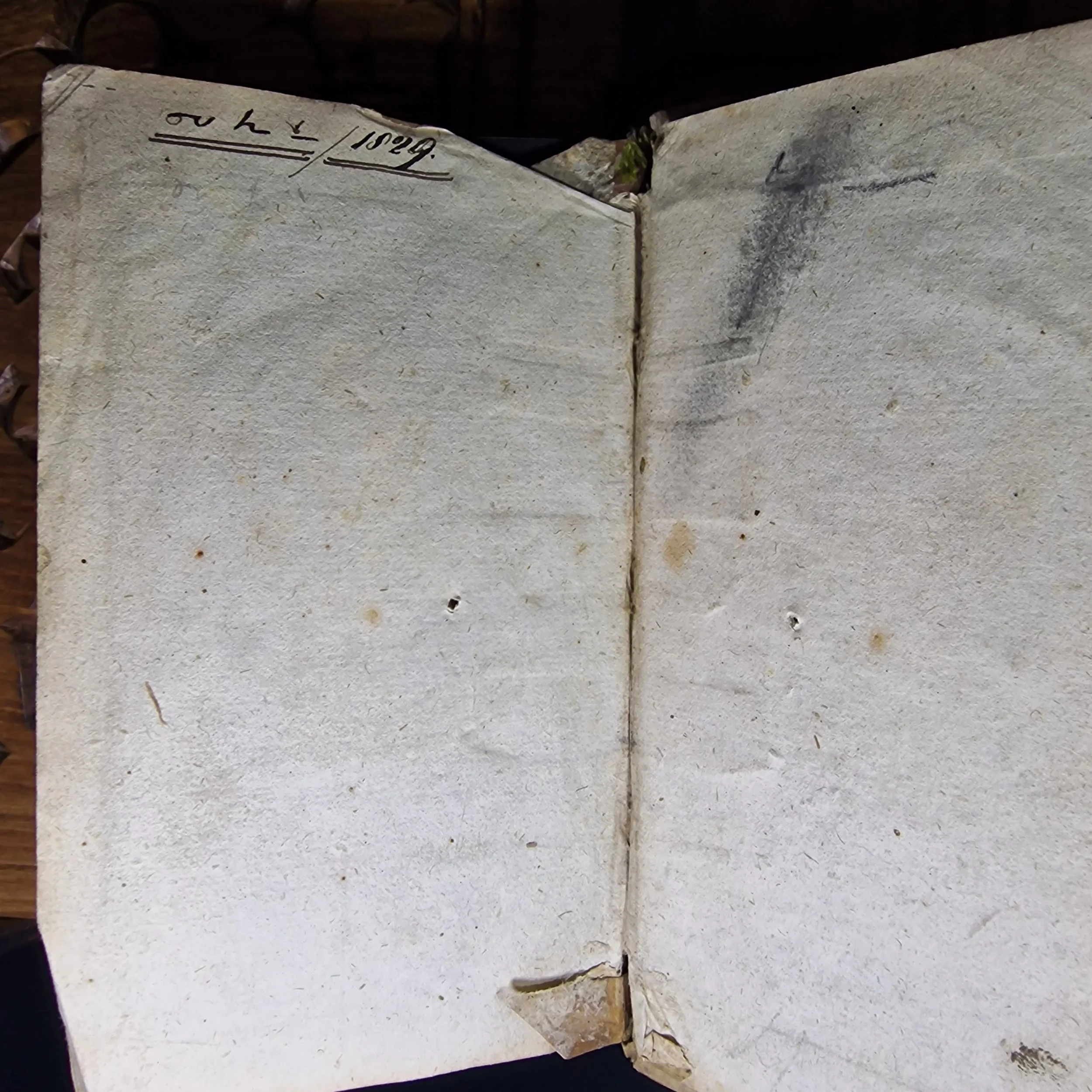
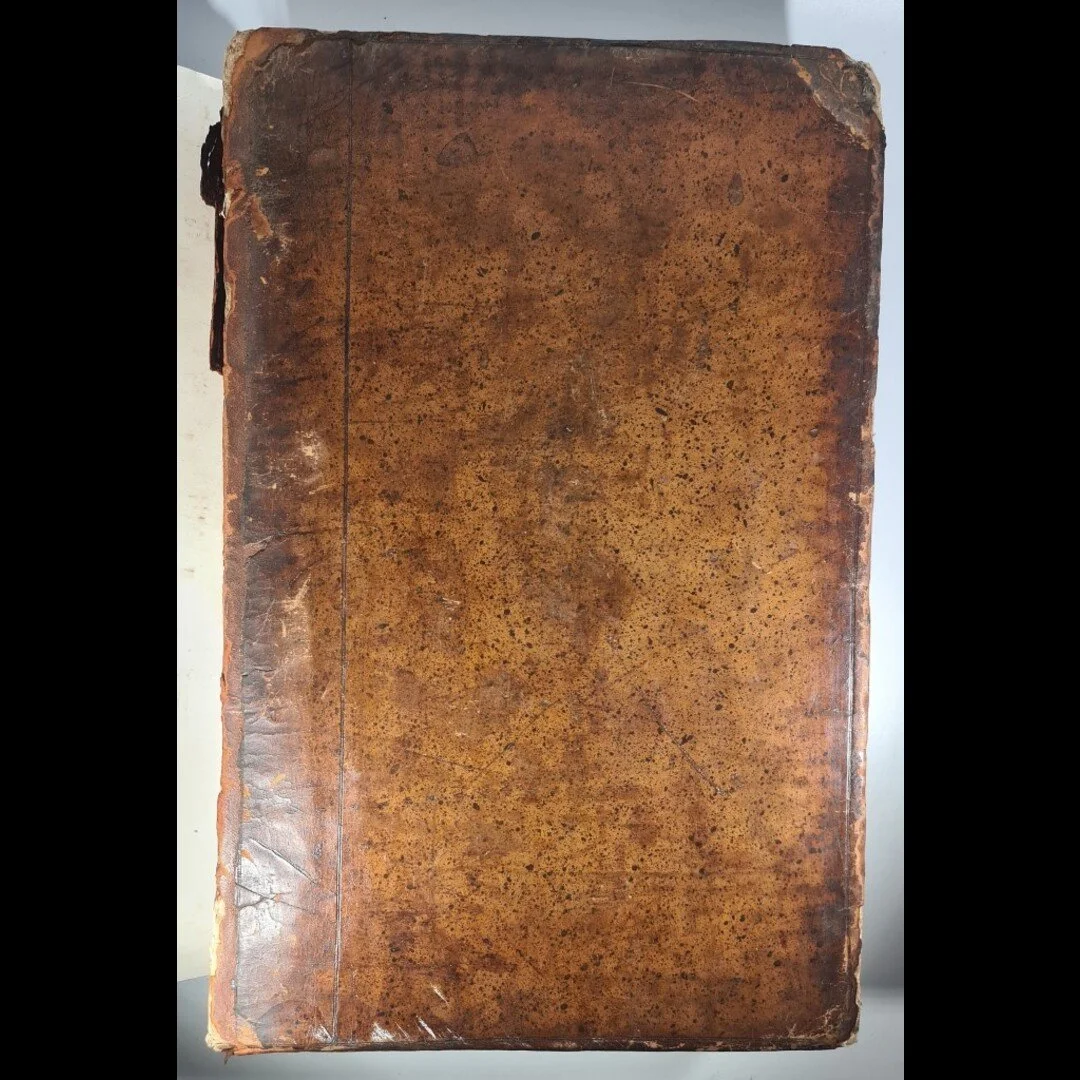
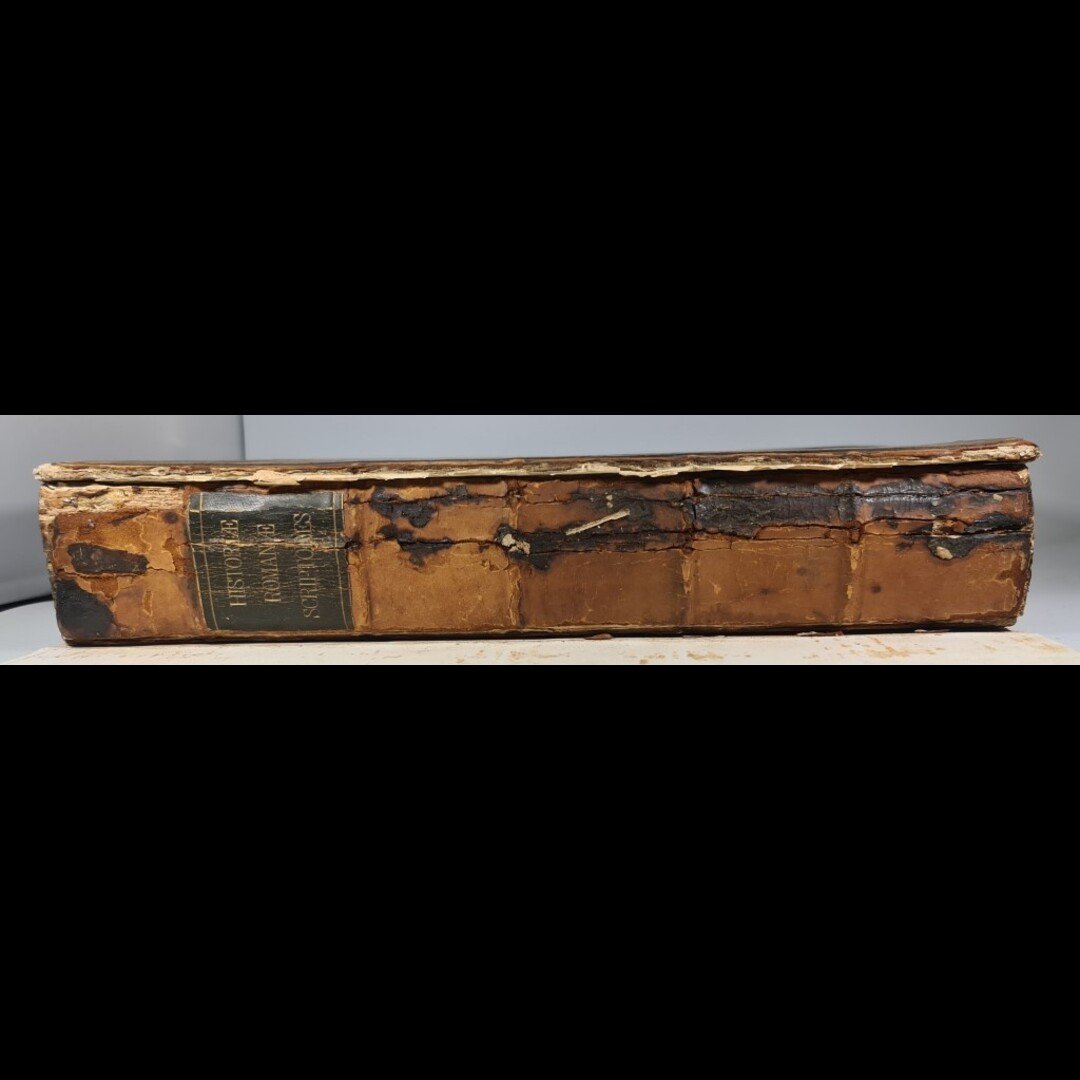
A complete and characterful copy in early, apparently contemporary or near-contemporary vellum, with manuscript title to the spine. The vellum is substantially age-soiled and marked, with browning, staining, cockling and creasing, together with rubbing and wear to the extremities, small tears and minor losses around the spine ends and corners, and other evidence of prolonged historical use. Faded manuscript markings and annotations are present to the binding.
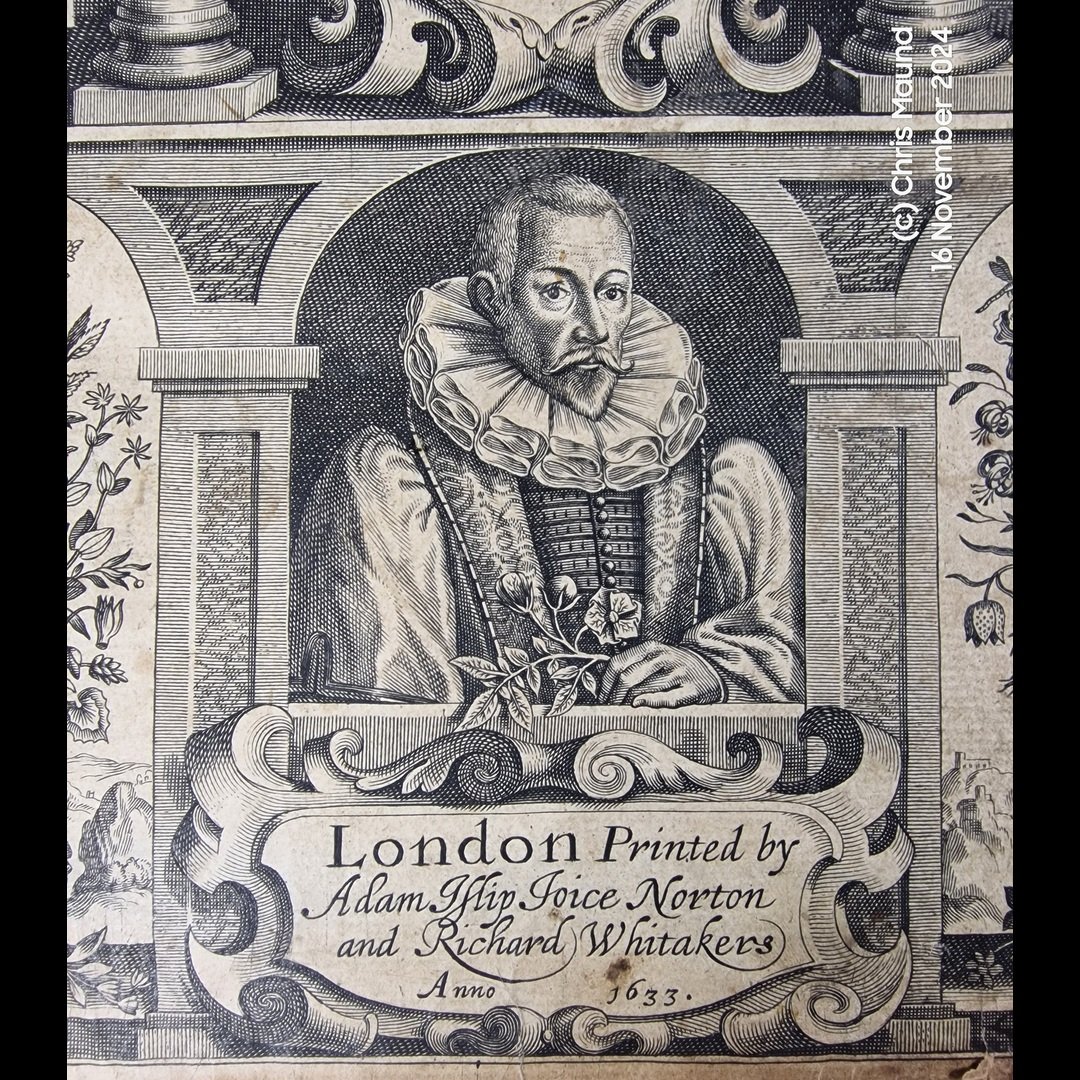
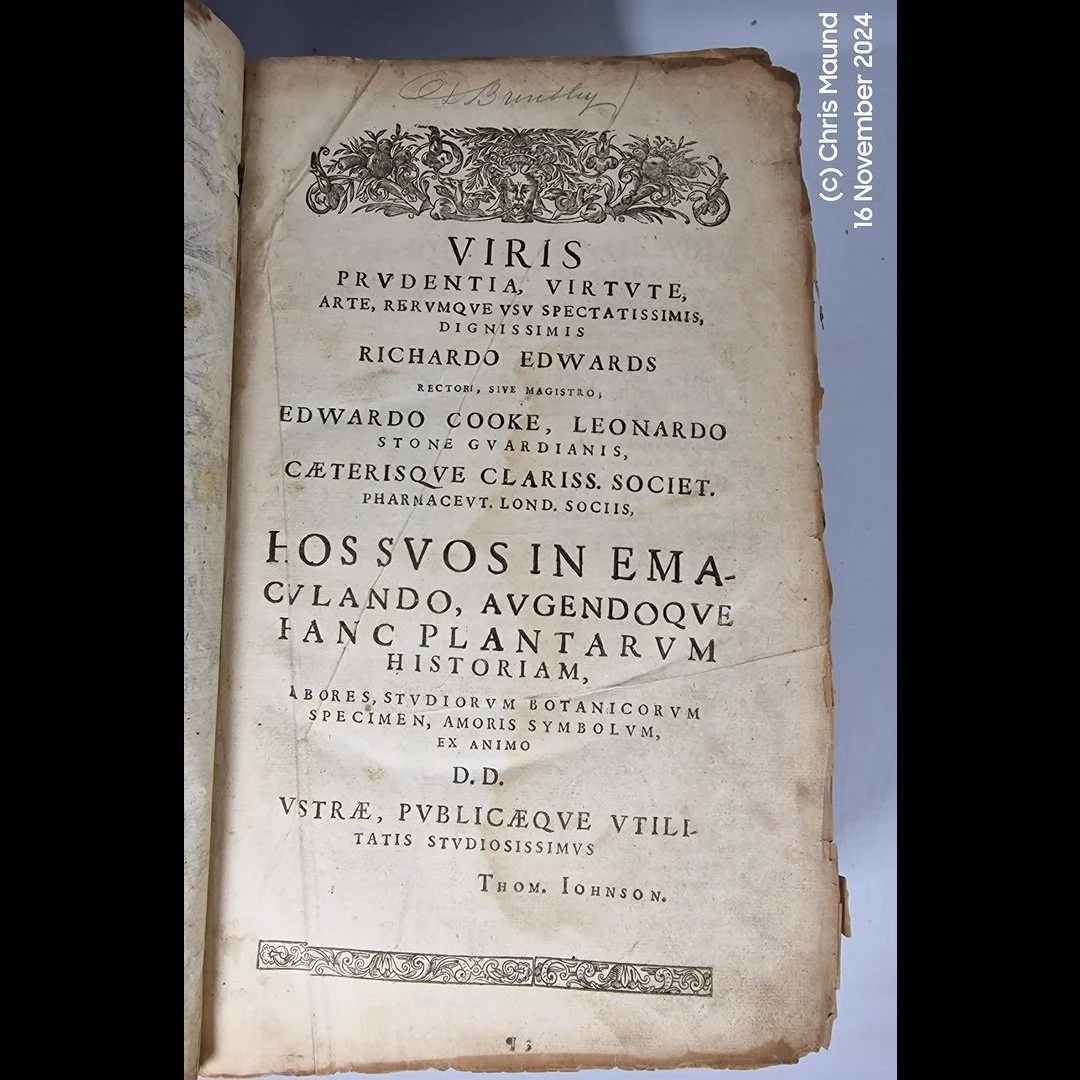
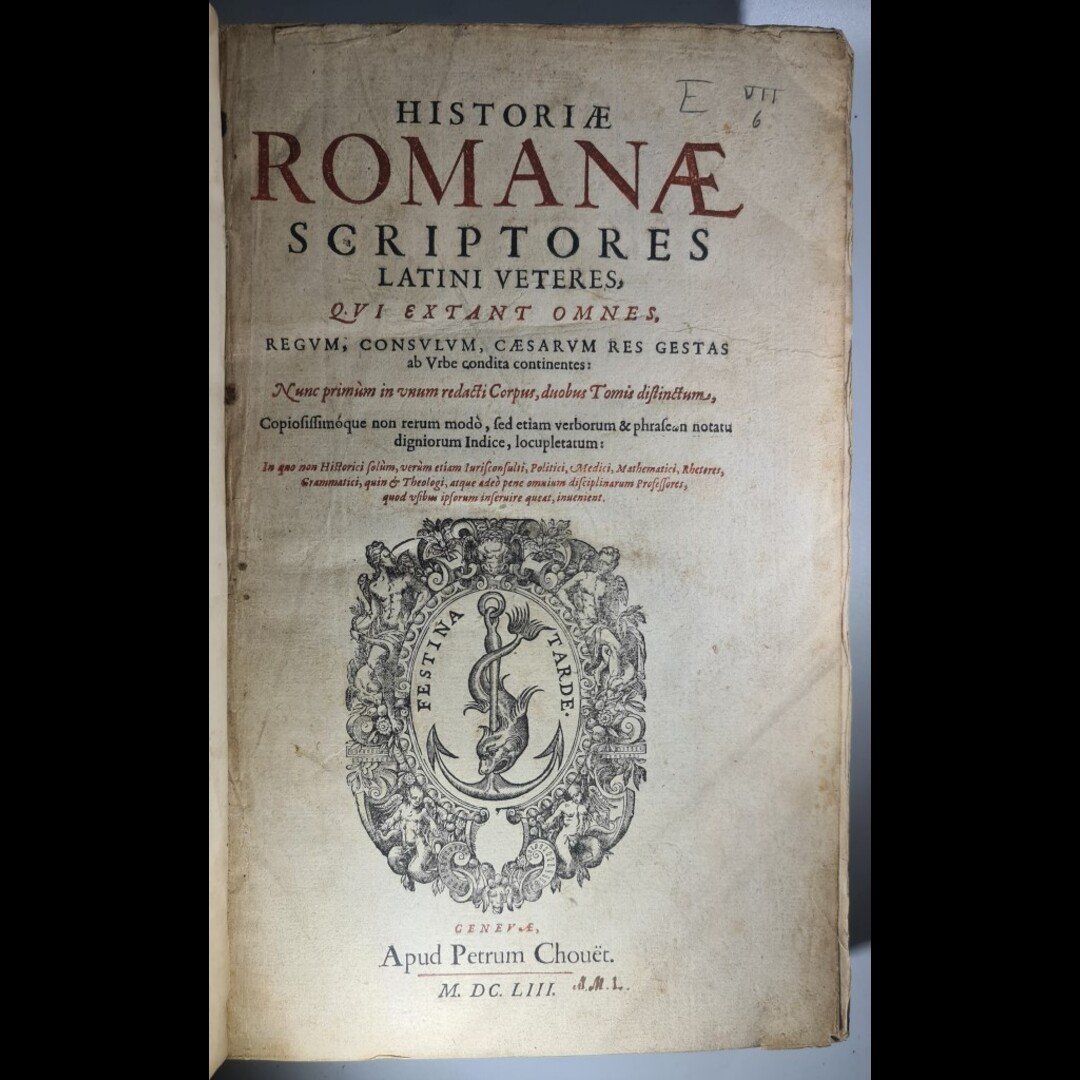
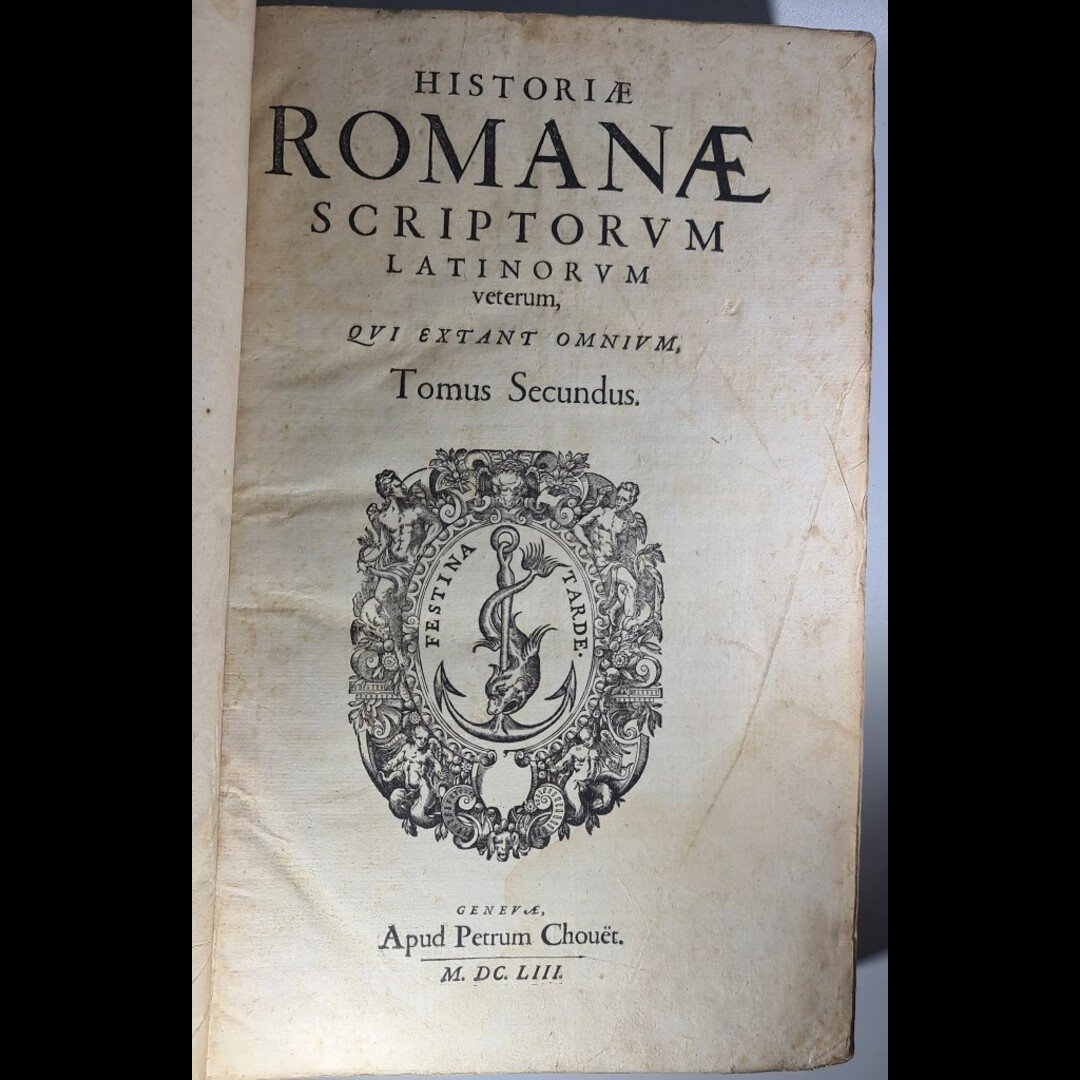
Title page present with Crispinus’s woodcut printer’s device. The title is age-toned and spotted, with an old manuscript annotation beside the device and rubbing or abrasion affecting the lower portion of the imprint and printed date. The edition is nevertheless securely identifiable as the Samuel Crispinus 1610 printing from the surviving imprint, typography, contents and bibliographical collation.
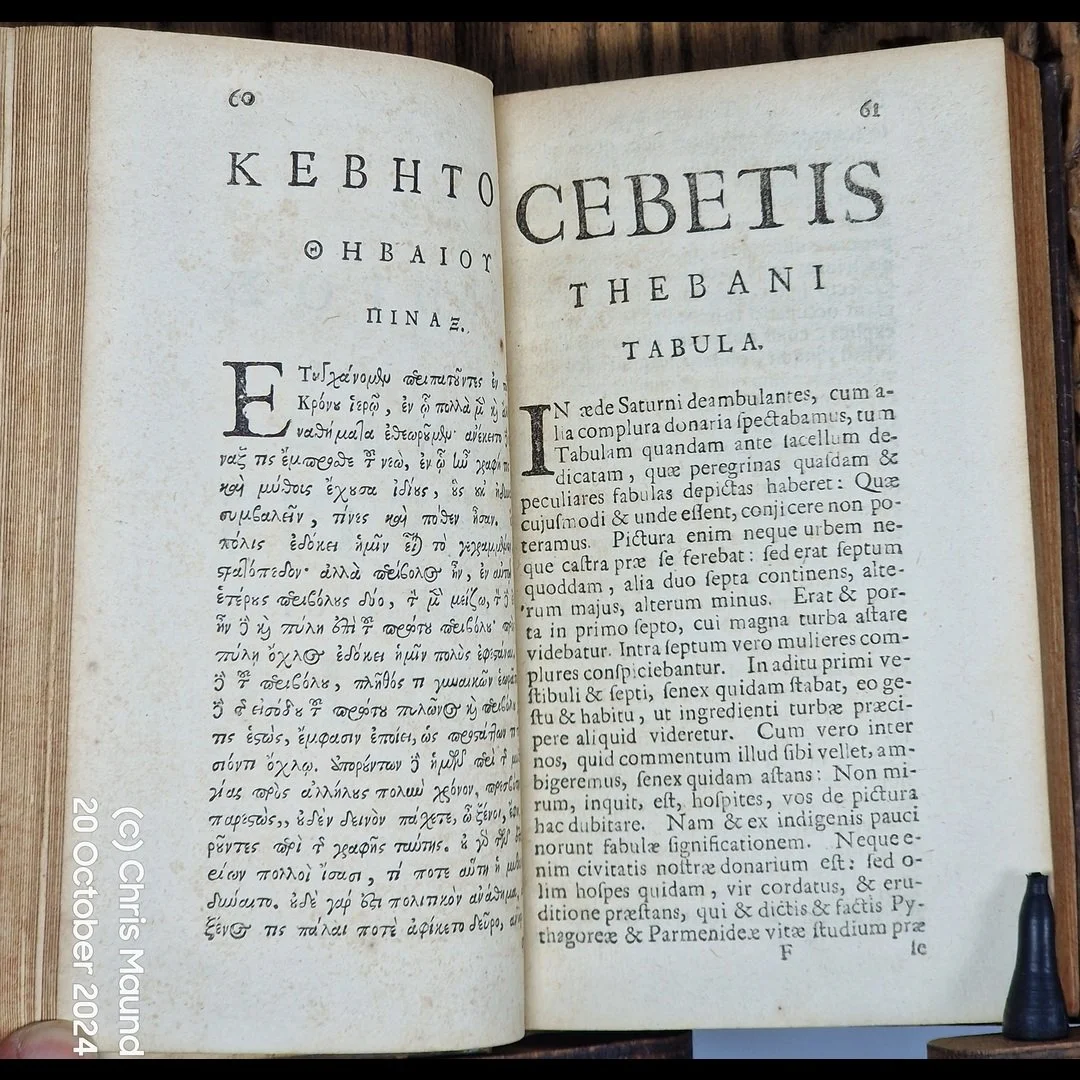
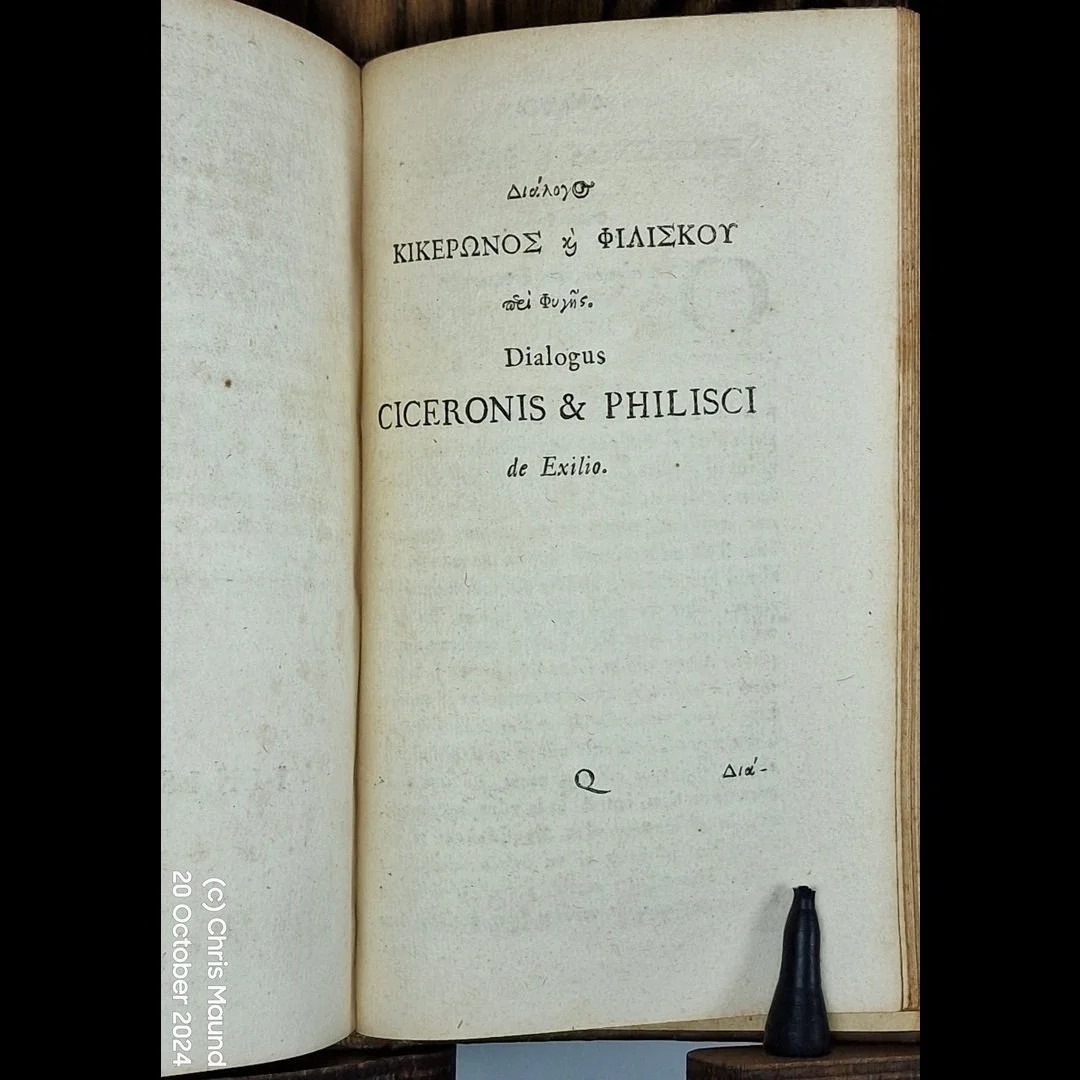
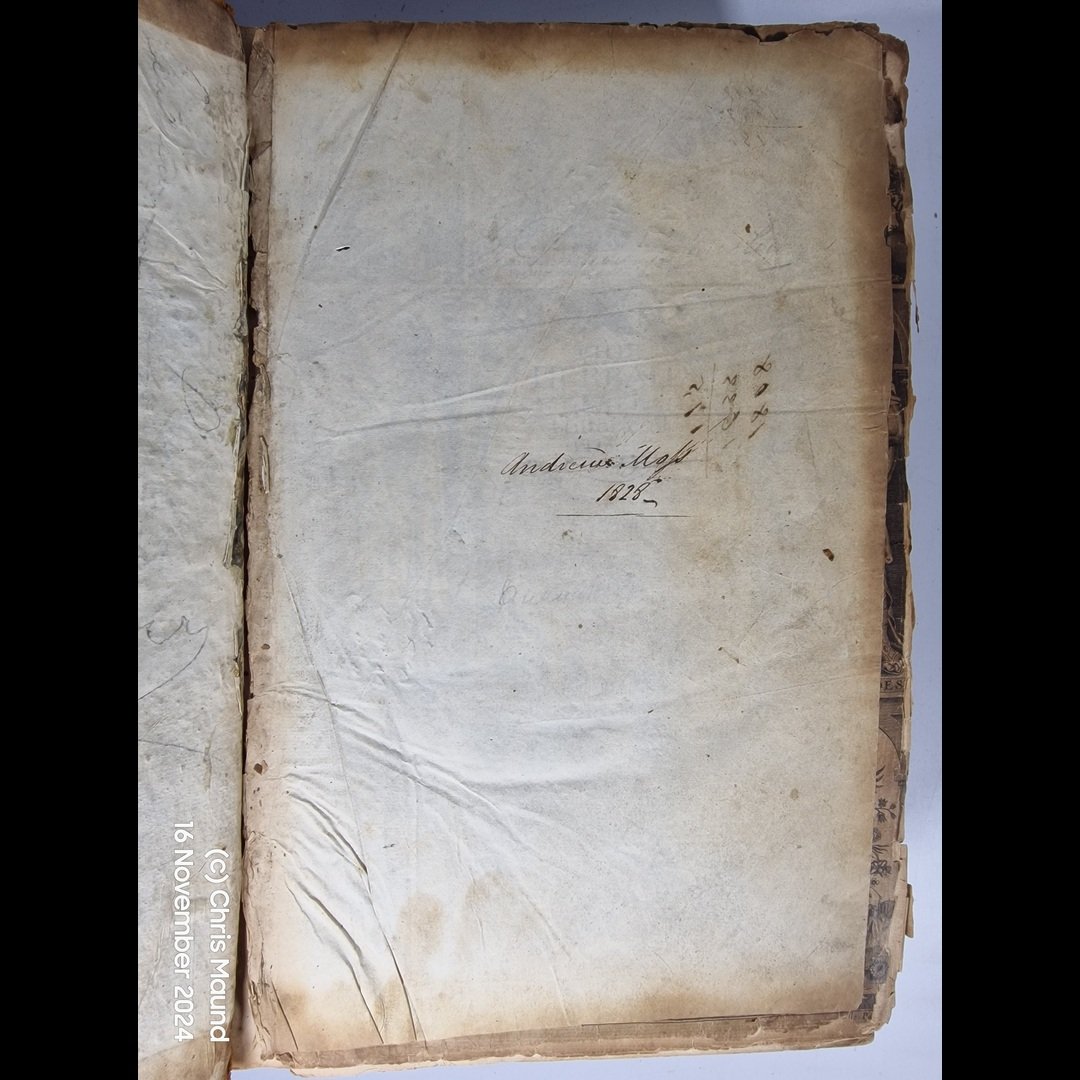
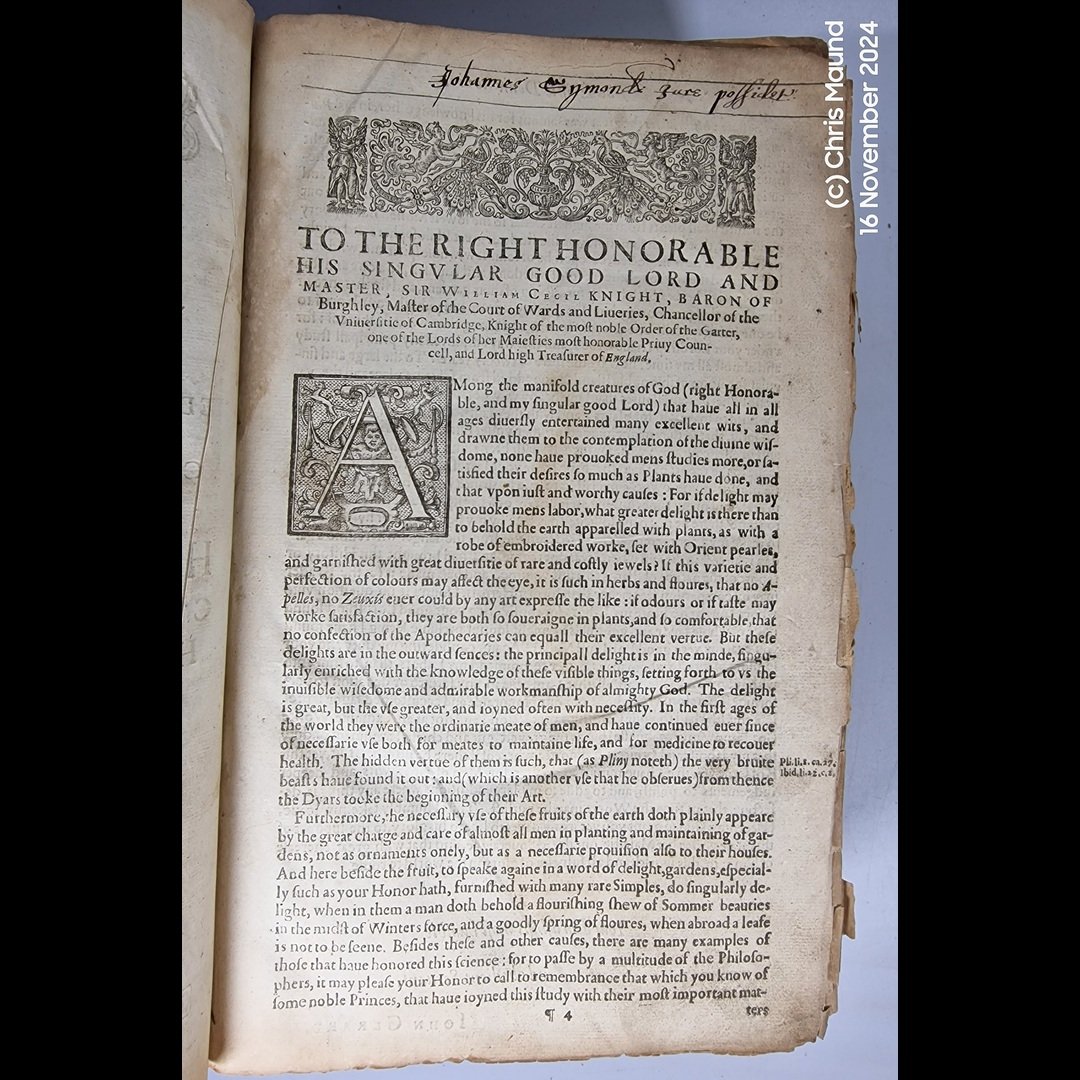
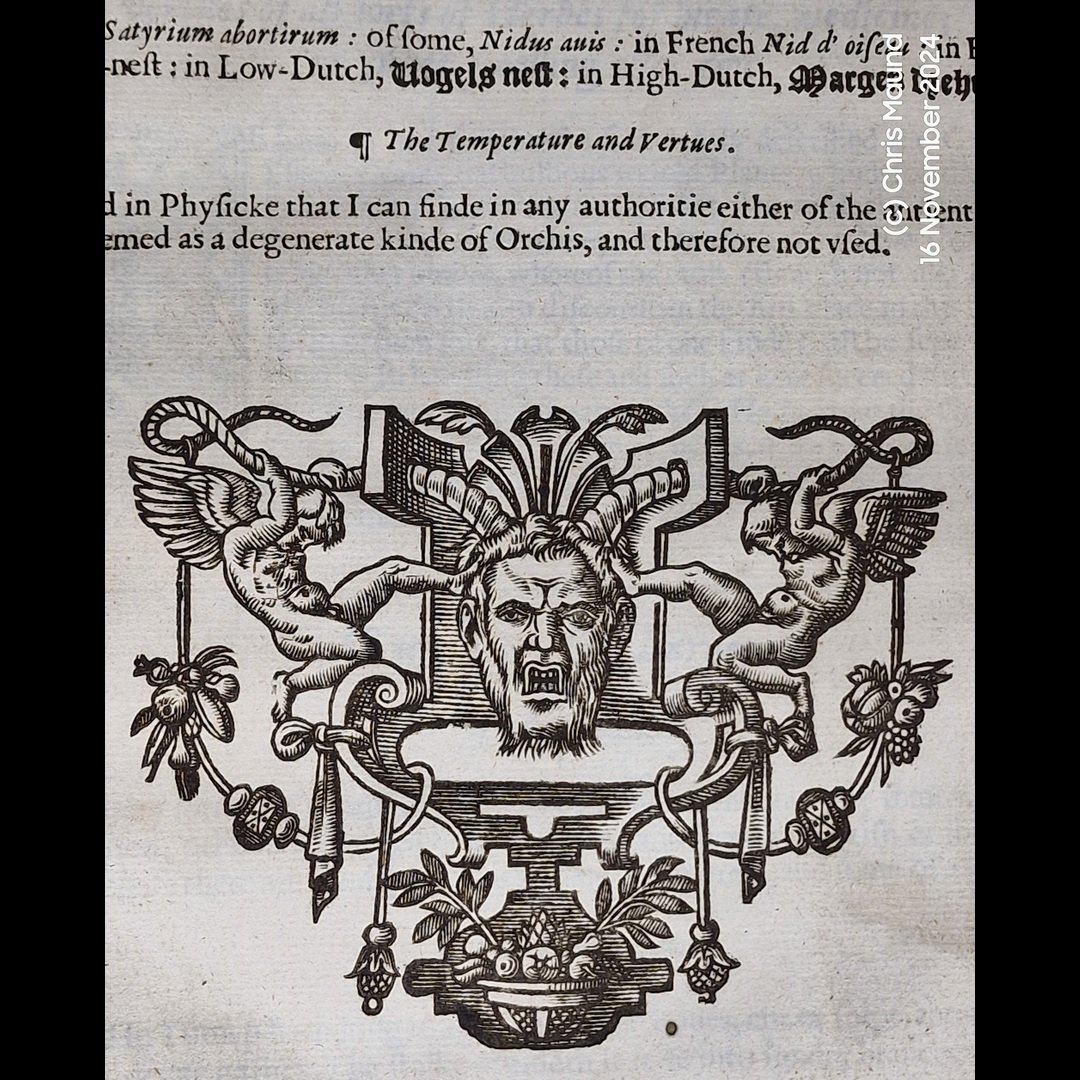
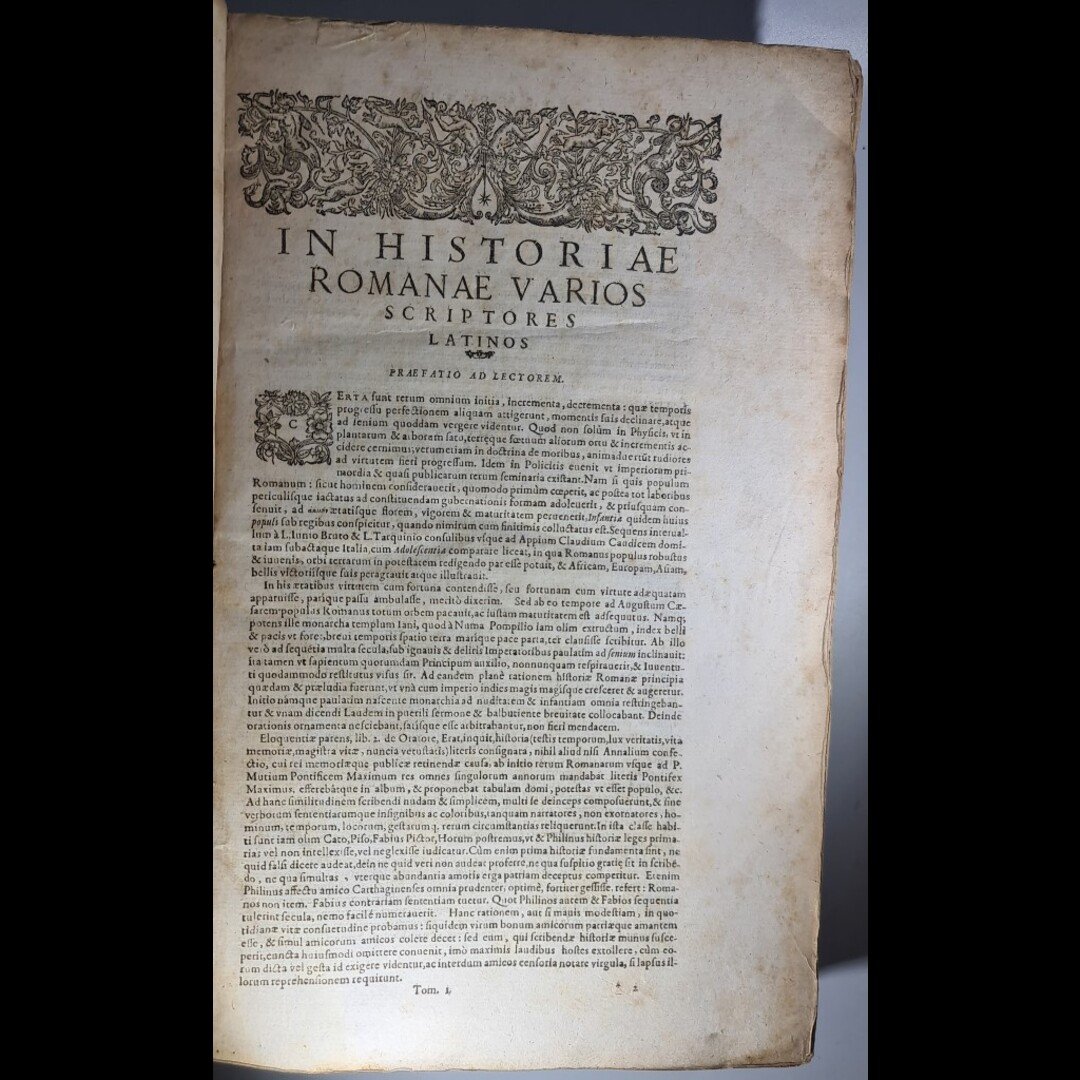
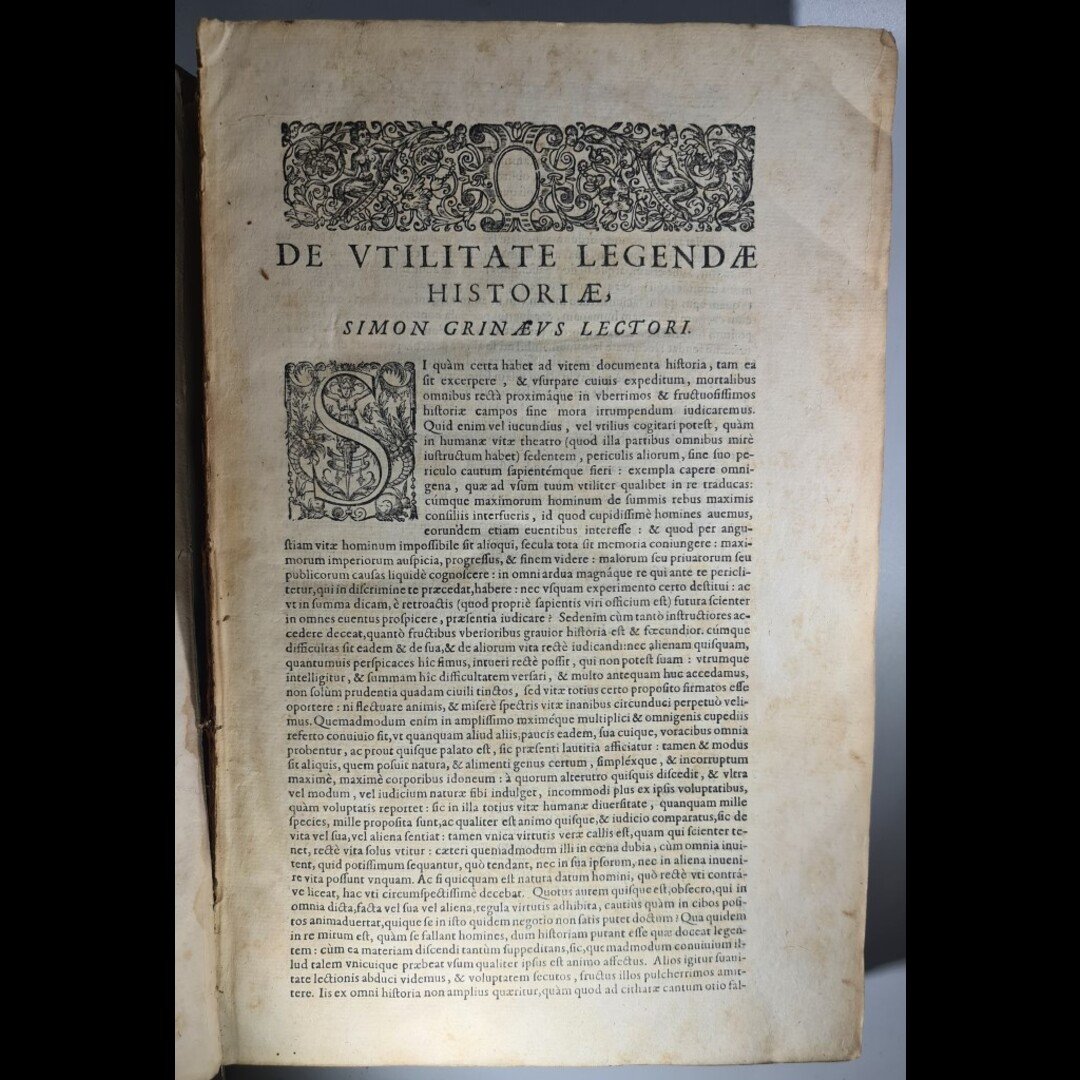
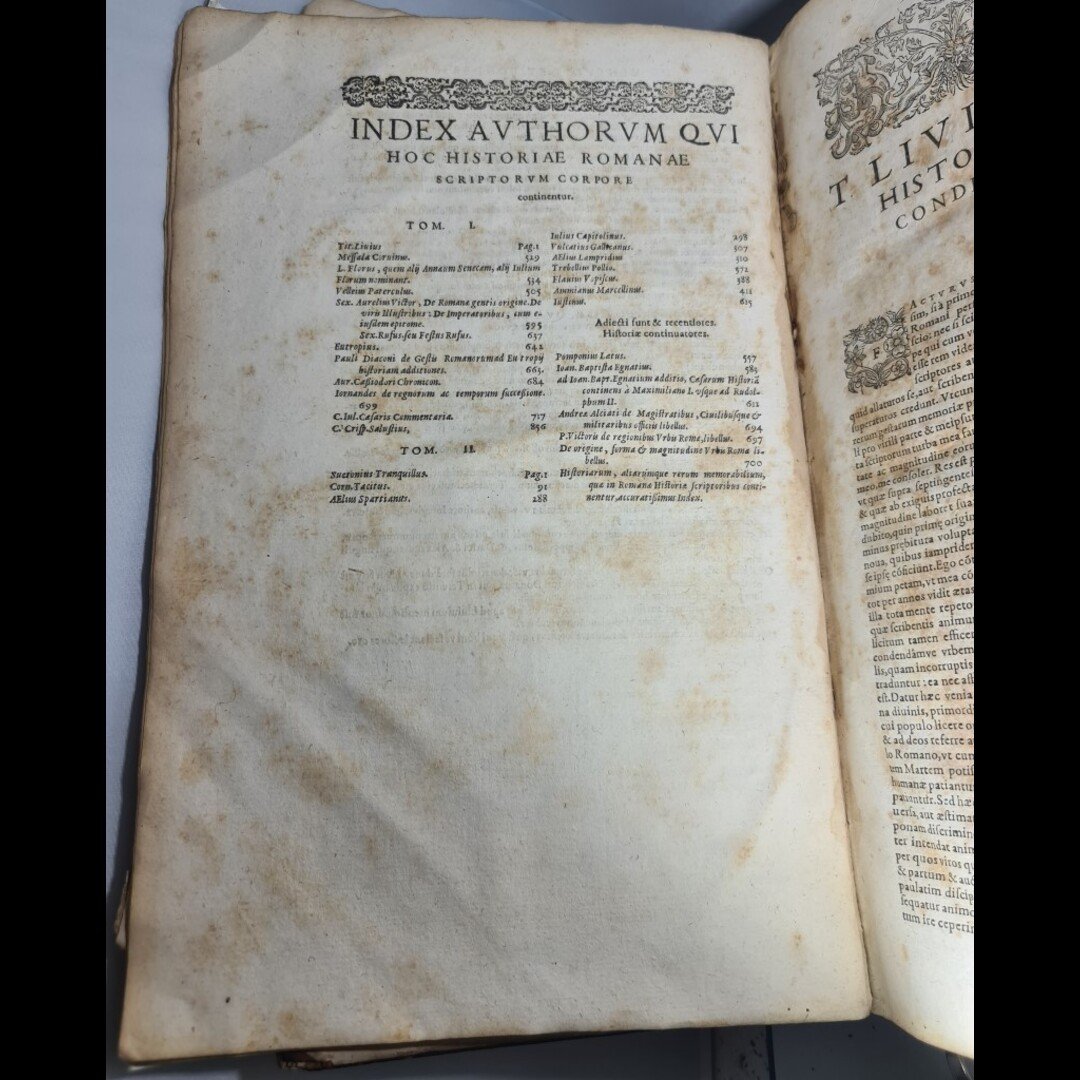
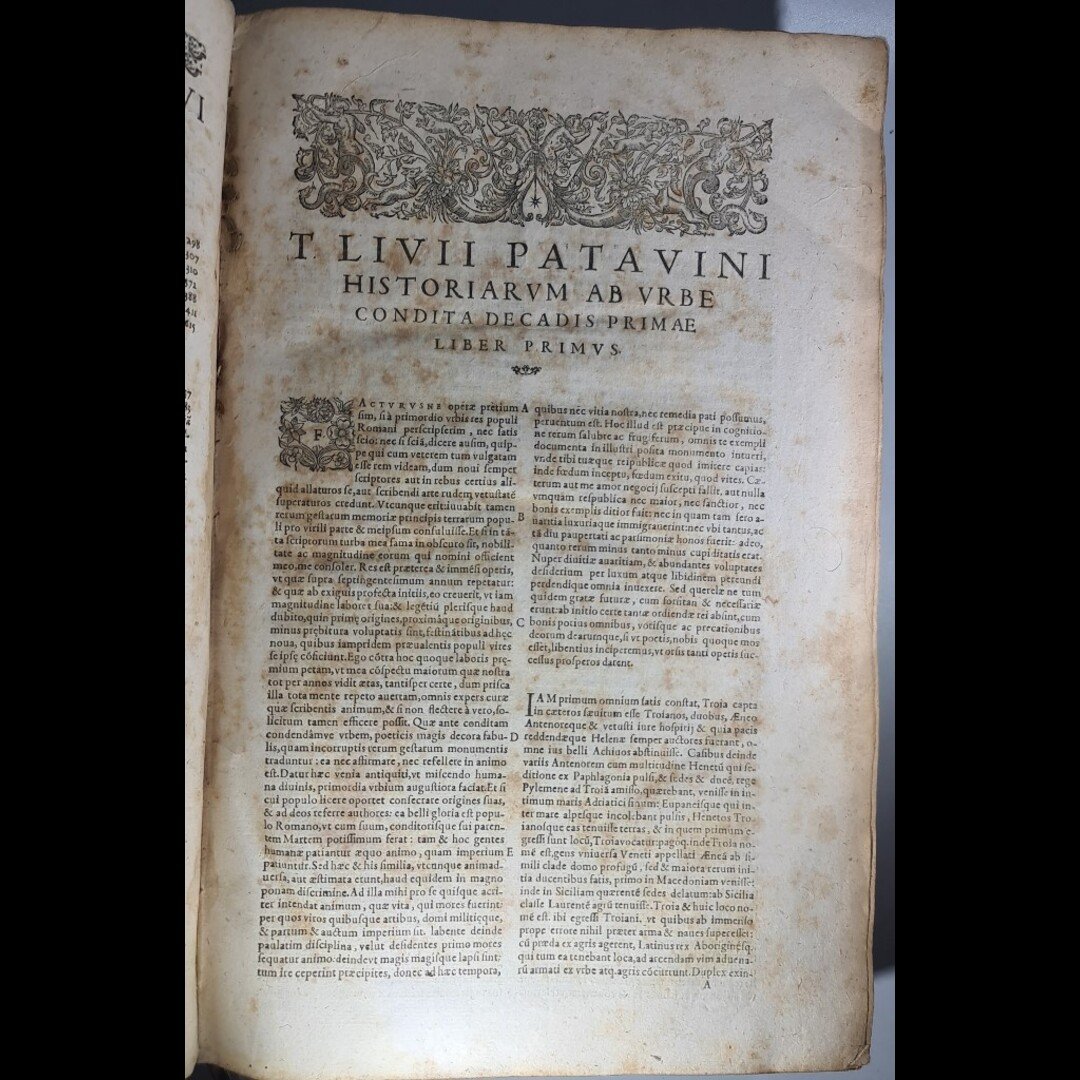
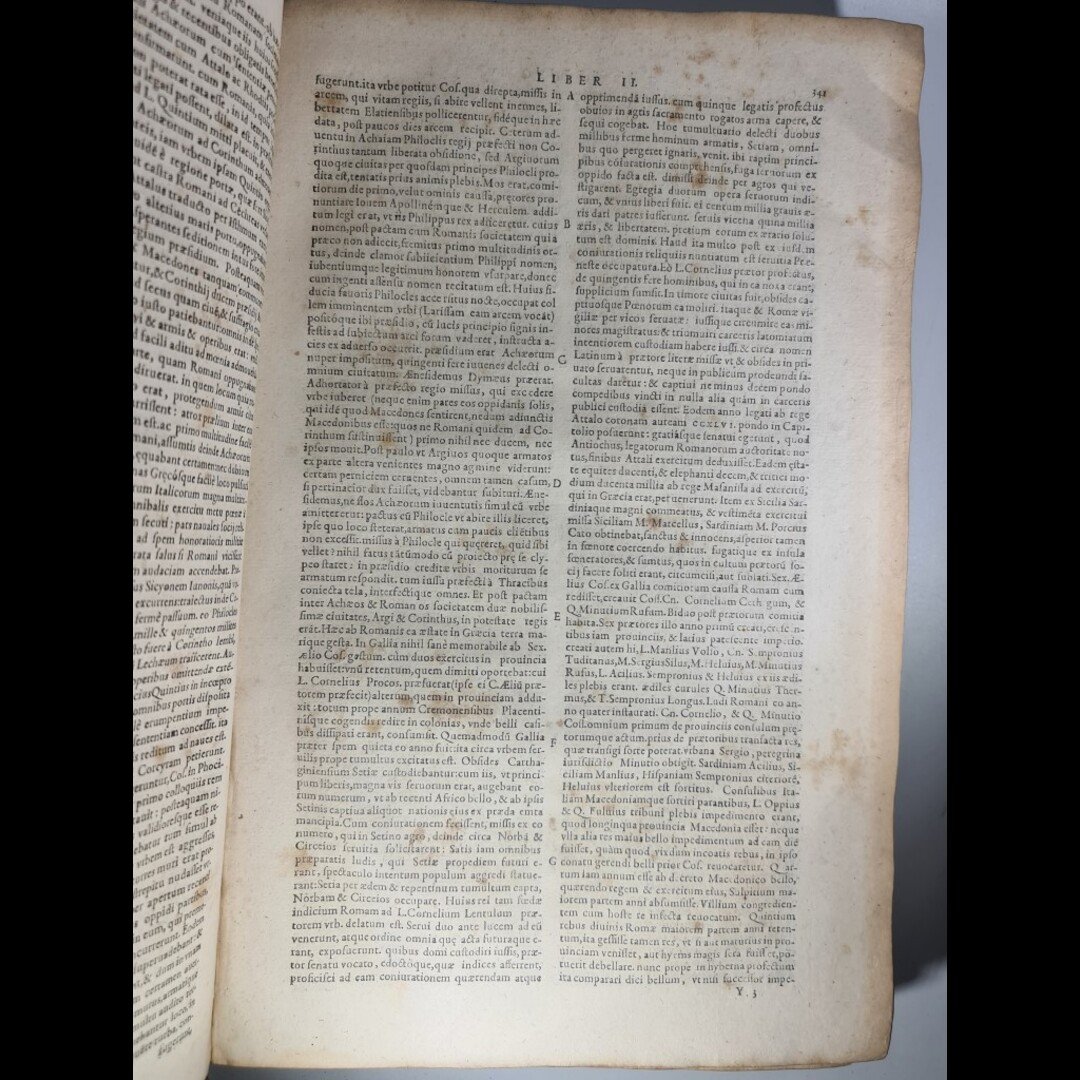
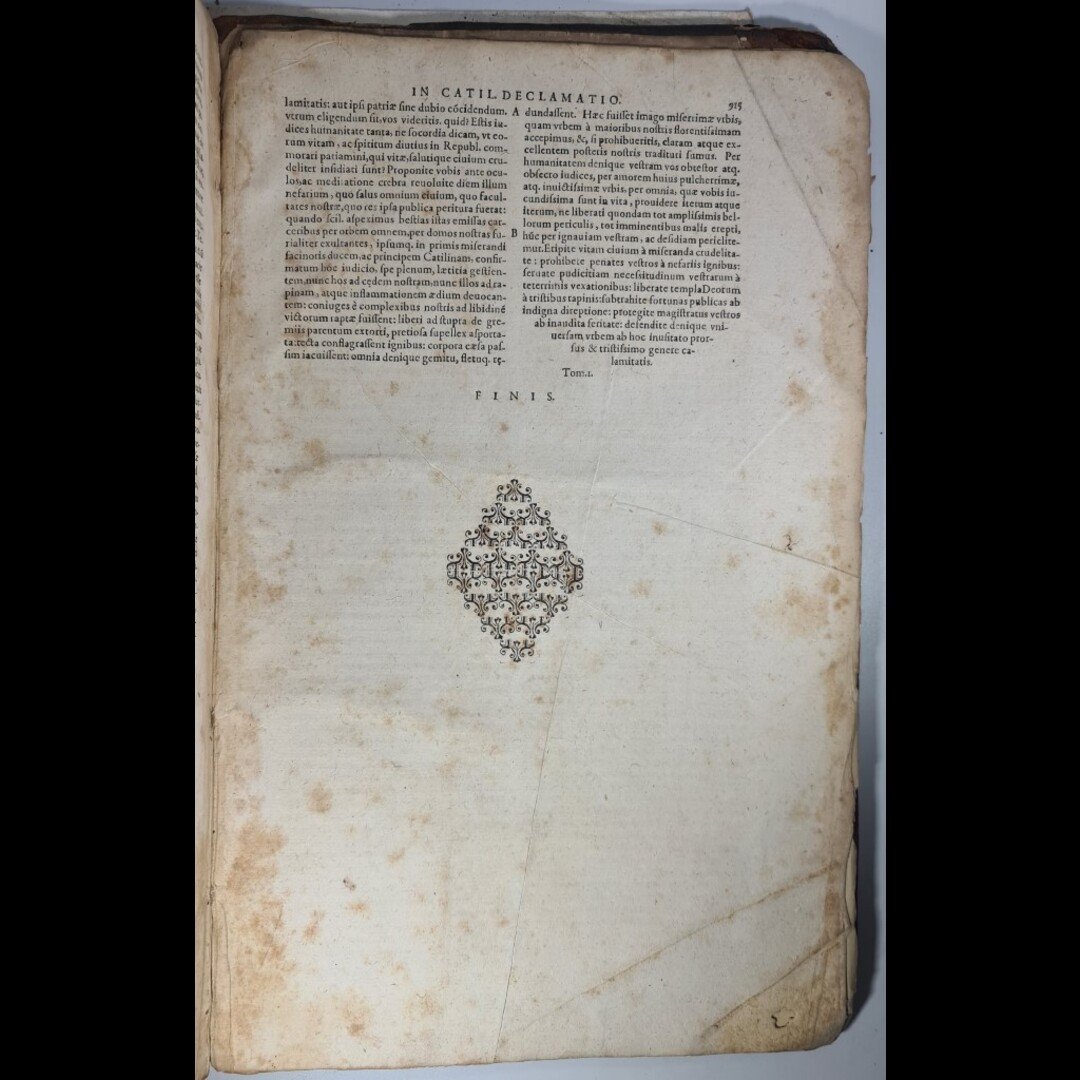
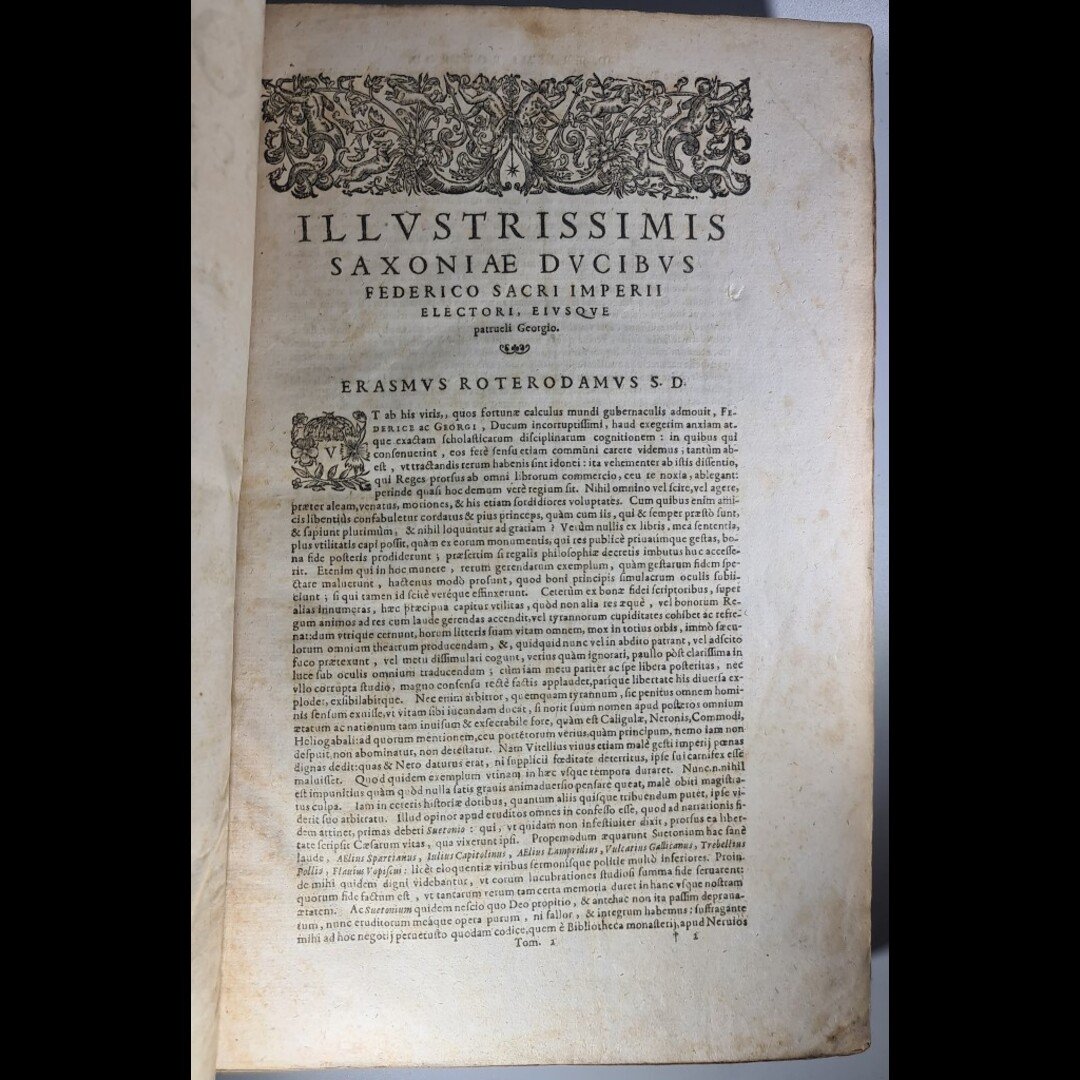
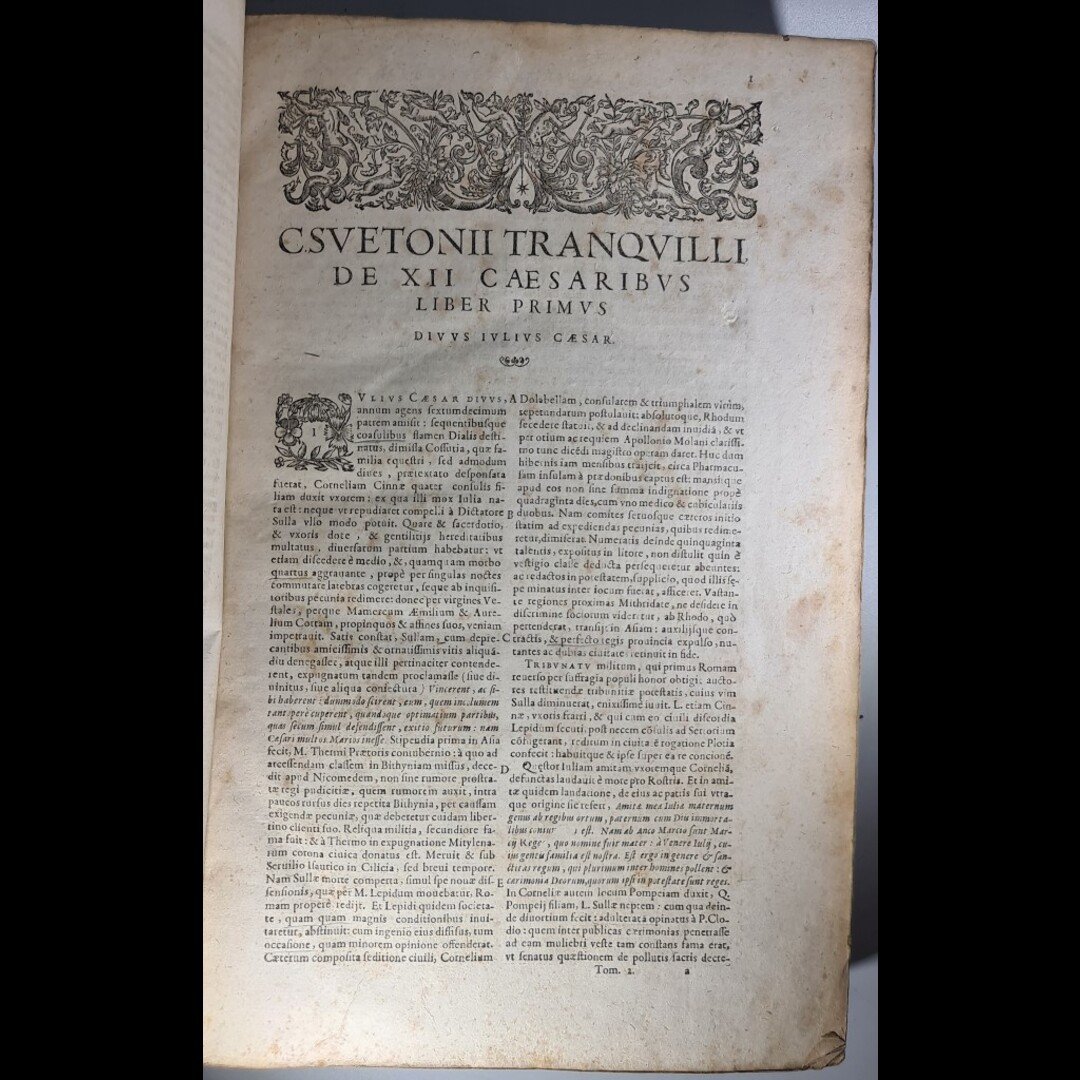
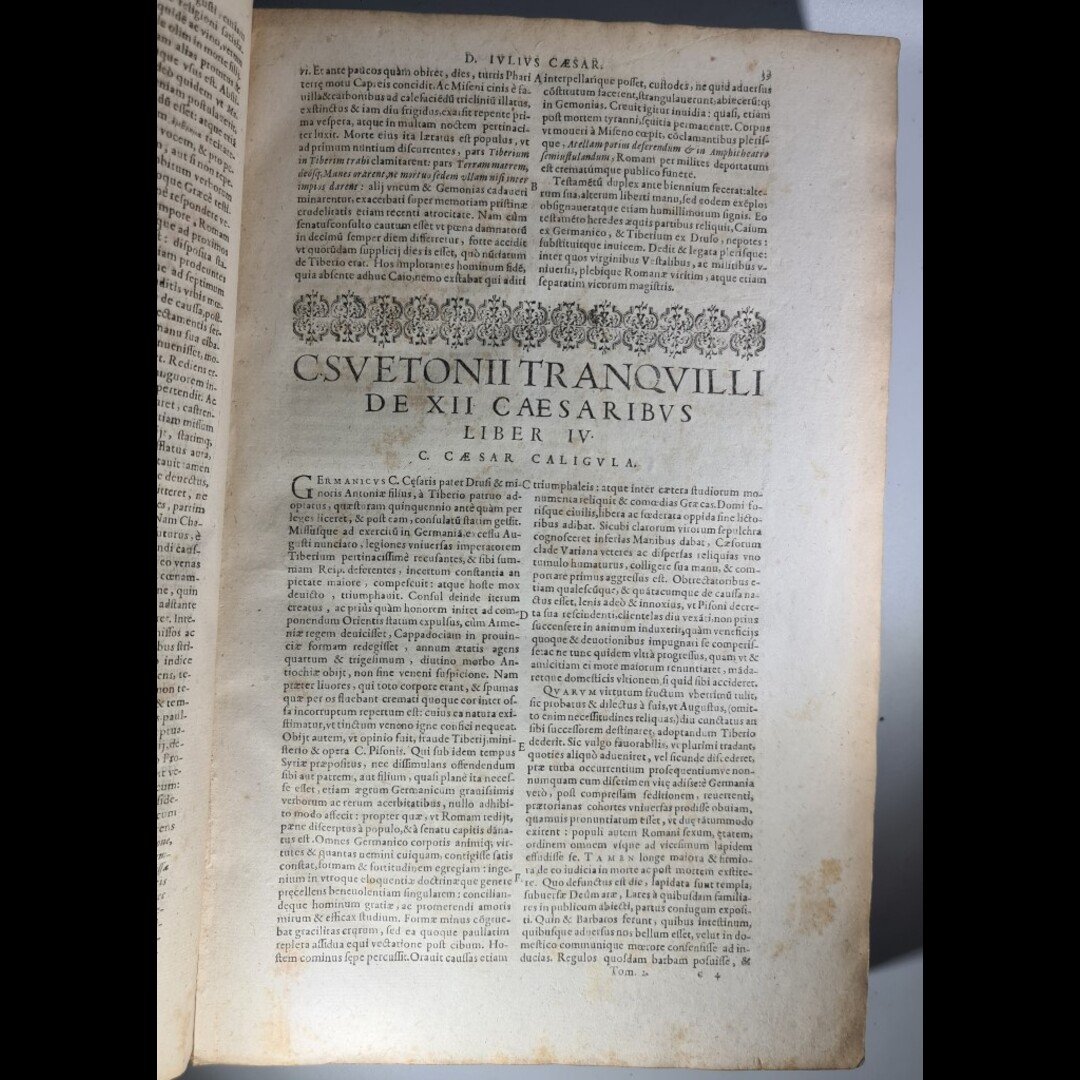
Internally generally sound, with age-toning, scattered spotting, occasional staining and marks from use. The text remains strong and legible throughout. Woodcut printer’s devices and typographical ornaments are present at several points within the volume.
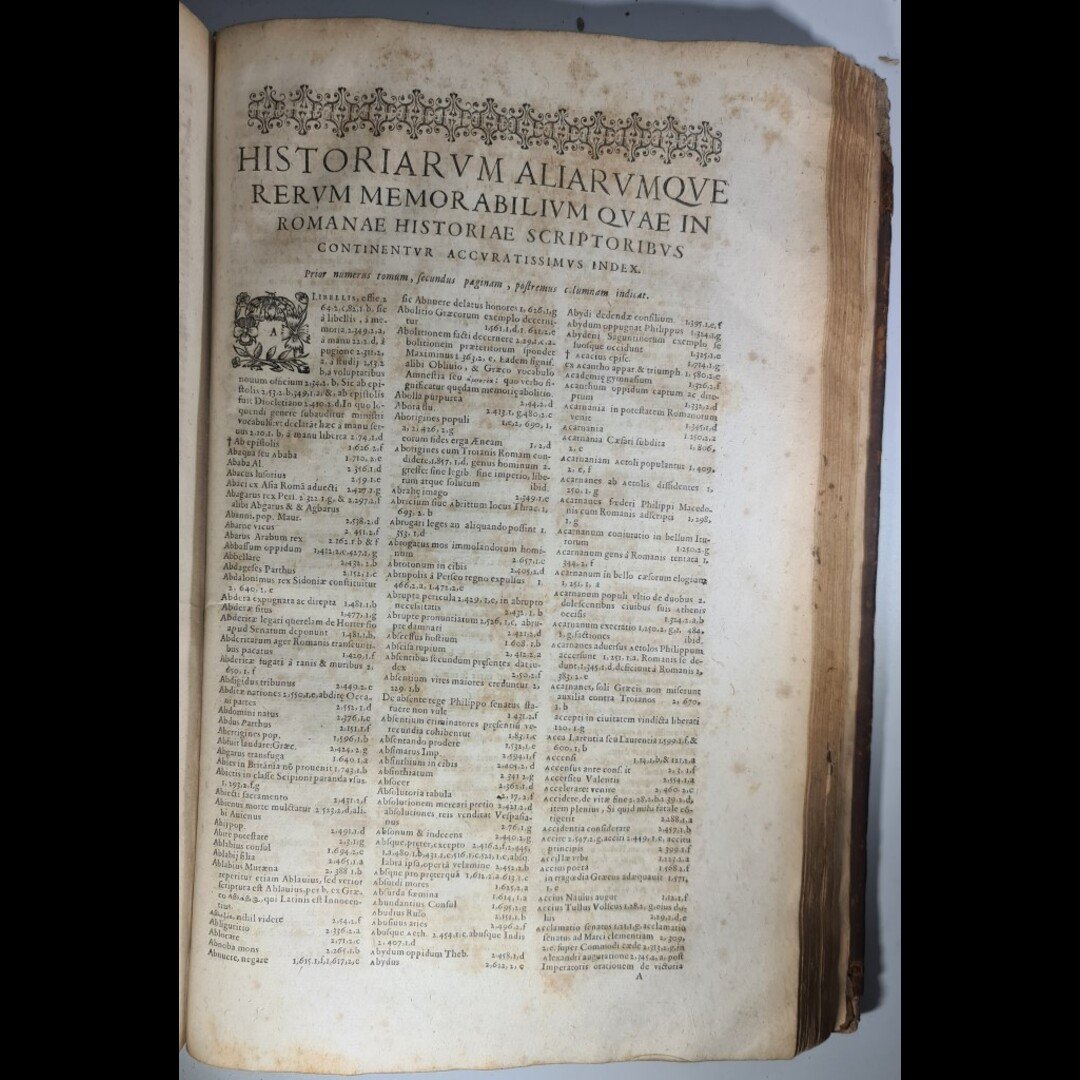
The ten books of the Mythologiae run to p.1062, followed by all four books of Conti’s De Venatione to the conclusion of the numbered sequence at p.1123. These are followed by the complete unpaginated triple indices and supplementary texts, including Friedrich Sylburg’s notes, Geoffroy Linocier’s Mythologia Musarum, Veterum Philosophorum Ethnicorum de Diis, and the concluding Observationum in Mythologiam Natalis Comitis material. The terminal gathering has been verified through signature Mmm3.
An evocative working copy of one of the principal mythographical handbooks of Renaissance Europe, retaining its early vellum binding and the complete sequence of texts associated with this expanded recension.
Title page with woodcut printer’s device; further printer’s devices and typographical ornaments within the text.
Please see Photos as part of condition report.
REFERENCES
Folger Shakespeare Library, Call No. 270885
Bibliothèque de Genève, BGE Cti 5268 / BGE To 2225
Biblioteca de la Universidad de Salamanca, Fondo Antiguo, digitised copy
Barbara Carman Garner, “Francis Bacon, Natalis Comes and the Mythological Tradition”, Journal of the Warburg and Courtauld Institutes, Vol. 33 (1970)
SYNOPSIS
The ten books of the Mythologiae constitute an immense Renaissance synthesis of classical mythology. Conti draws upon Greek and Latin literary traditions to recount the origins, relationships and adventures of the gods and heroes, while simultaneously attempting to recover the philosophical meanings which he believed the ancient poets deliberately concealed within their fables.
The work ranges through the major divine figures of the Greek and Roman pantheons, the origins and genealogies of the gods, mythic heroes, monsters, transformations, sacred rites, sacrifices, local cults and geographical traditions. Individual myths are repeatedly followed by allegorical interpretations connecting their narratives with ethical behaviour, human psychology, natural phenomena or philosophical doctrine.
Conti’s method is characteristic of Renaissance mythography. Classical fable was not regarded simply as imaginative literature: beneath the narrative surface could lie ancient knowledge expressed symbolically. The Mythologiae therefore became useful not only to classical scholars but to poets, artists, philosophers and writers seeking an authoritative repertory of mythological narratives and their possible meanings.
Following the ten books is Conti’s De Venatione, four books of Latin verse devoted to hunting. Drawing on both ancient literary traditions and the culture of the hunt, it gives this copy an additional connection with early sporting and hunting literature.
The extensive indices are followed by supplementary mythographical material, most importantly Friedrich Sylburg’s scholarly notes and Geoffroy Linocier’s Mythologia Musarum, together with material concerning ancient philosophical conceptions of the gods and the concluding Observationum.
The result is considerably more than a mythology dictionary. It is a substantial compendium of the way classical religion and myth were recovered, reorganised and interpreted by Renaissance humanism, and an important witness to the early-modern conviction that ancient fable could preserve philosophical truths beneath its allegorical surface.
AUTHOR BIO
Natale Conti, Latinised as Natalis Comes or Natalis de Comitibus (1520–1582), was an Italian humanist, poet, historian and mythographer whose Mythologiae sive Explicationis Fabularum Libri Decem became one of the principal Renaissance reference works on classical mythology.
First published at Venice in 1567, the Mythologiae was repeatedly enlarged and reprinted throughout Europe. Conti assembled an enormous body of material drawn from Greek and Roman literature concerning the gods, heroes, genealogies, cults, sacrifices and mythological narratives of antiquity.
His purpose, however, went considerably beyond compilation. Conti belonged to the Renaissance allegorical tradition which regarded ancient mythology as a repository of concealed philosophical knowledge. Myths could therefore be read at several levels: historically, morally and through the principles of natural philosophy. Gods and heroes were not merely characters in fabulous narratives but vehicles through which ancient peoples had encoded observations about nature, human conduct, psychology and the structure of the world.
The work consequently occupies an important position at the intersection of classical scholarship, Renaissance humanism, allegory and the early-modern tradition of prisca sapientia or ancient wisdom. Earlier editions of Conti’s work have also been identified by scholarship as an important source for Francis Bacon’s own allegorical treatment of classical mythology in De Sapientia Veterum (The Wisdom of the Ancients, 1609).
Contrary to an older bibliographical tradition which sometimes assigned the first edition to 1551, modern scholarship has established the first surviving edition as Venice, 1567.
Contributor Bio:
Friedrich Sylburg (1536–1596) was a German classical scholar and one of the important Greek textual editors of the later sixteenth century. His notes accompanying the Mythologiae reflect the increasingly scholarly apparatus added to later recensions of Conti’s work.
Geoffroy Linocier was a sixteenth-century French physician and writer whose Mythologia Musarum, devoted particularly to the mythology and attributes of the Muses, was incorporated into later editions of Conti and became part of the expanded reference apparatus surrounding the Mythologiae.
1610 Geneva Edition
NATALIS COMITIS MYTHOLOGIAE & DE VENATIONE
By Natale Conti [Natalis Comes]
KEY DETAILS
Condition: Good
Format: Vellum, Octavo (Standard) (8vo 6 × 9 in 152 × 229 mm )
Note: Binding/size selection follows standard bibliographic conventions and is approximate; exact measurements may vary.
Published By: Coloniae Allobrogum [Geneva]: Samuel Crispinus, Geneva, 1610
Language: Latin, with Greek quotations and terminology
Collation: [15, 1 blank], 1123, [162, 1 blank] pp.; 8vo. Complete. The numbered sequence contains bibliographical pagination errors; the Folger Shakespeare Library records the extent as [16], 1123 [i.e. 1125], [163] pp.; Signatures: preliminary quire of 8 leaves; a–z⁸ A–Z⁸ Aa–Zz⁸ Aaa–Lll⁸ Mmm⁴, using the conventional 23-letter signature alphabet.
Dust Jacket: None, as issued, No Jacket
SKU: BTETM0002444
Shipping Info: Approximate Package Dimensions H: 12.5, L: 30, W: 25 (Units: cm), W: 2Kg
Tracked Shipping, Insurance Coverage as per Customer Request
DESCRIPTION
NATALIS COMITIS MYTHOLOGIAE & DE VENATIONE
NATALIS COMITIS MYTHOLOGIAE, SIVE EXPLICATIONIS FABULARUM, LIBRI DECEM
Eiusdem Libri IIII de Venatione
By Natale Conti [Natalis Comes]
A substantial early-seventeenth-century edition of one of the most influential mythographical works of the Renaissance: Natale Conti’s Mythologiae, an encyclopaedic examination of the gods, heroes, legends and religious traditions of classical antiquity, interpreted through the moral and natural philosophy which Conti believed to be concealed within ancient fable.
Printed at Geneva by Samuel Crispinus in 1610, this edition combines the ten books of the Mythologiae with Conti’s four books De Venatione, his Latin verse treatment of hunting; extensive triple indices; Friedrich Sylburg’s notes; Geoffroy Linocier’s Mythologia Musarum; additional material concerning the opinions of ancient philosophers on the gods; and the concluding Observationum in totam de diis gentium narrationem libellus.
An appealing and extensively collated copy surviving in an early, apparently contemporary or near-contemporary vellum binding with manuscript spine title. The complete volume has been physically checked through the concluding Mmm gathering and reconciled with institutional descriptions of the 1610 Crispinus edition.
CONDITION, COLLATION & COPY NOTES
A complete and characterful copy in early, apparently contemporary or near-contemporary vellum, with manuscript title to the spine. The vellum is substantially age-soiled and marked, with browning, staining, cockling and creasing, together with rubbing and wear to the extremities, small tears and minor losses around the spine ends and corners, and other evidence of prolonged historical use. Faded manuscript markings and annotations are present to the binding.
Title page present with Crispinus’s woodcut printer’s device. The title is age-toned and spotted, with an old manuscript annotation beside the device and rubbing or abrasion affecting the lower portion of the imprint and printed date. The edition is nevertheless securely identifiable as the Samuel Crispinus 1610 printing from the surviving imprint, typography, contents and bibliographical collation.
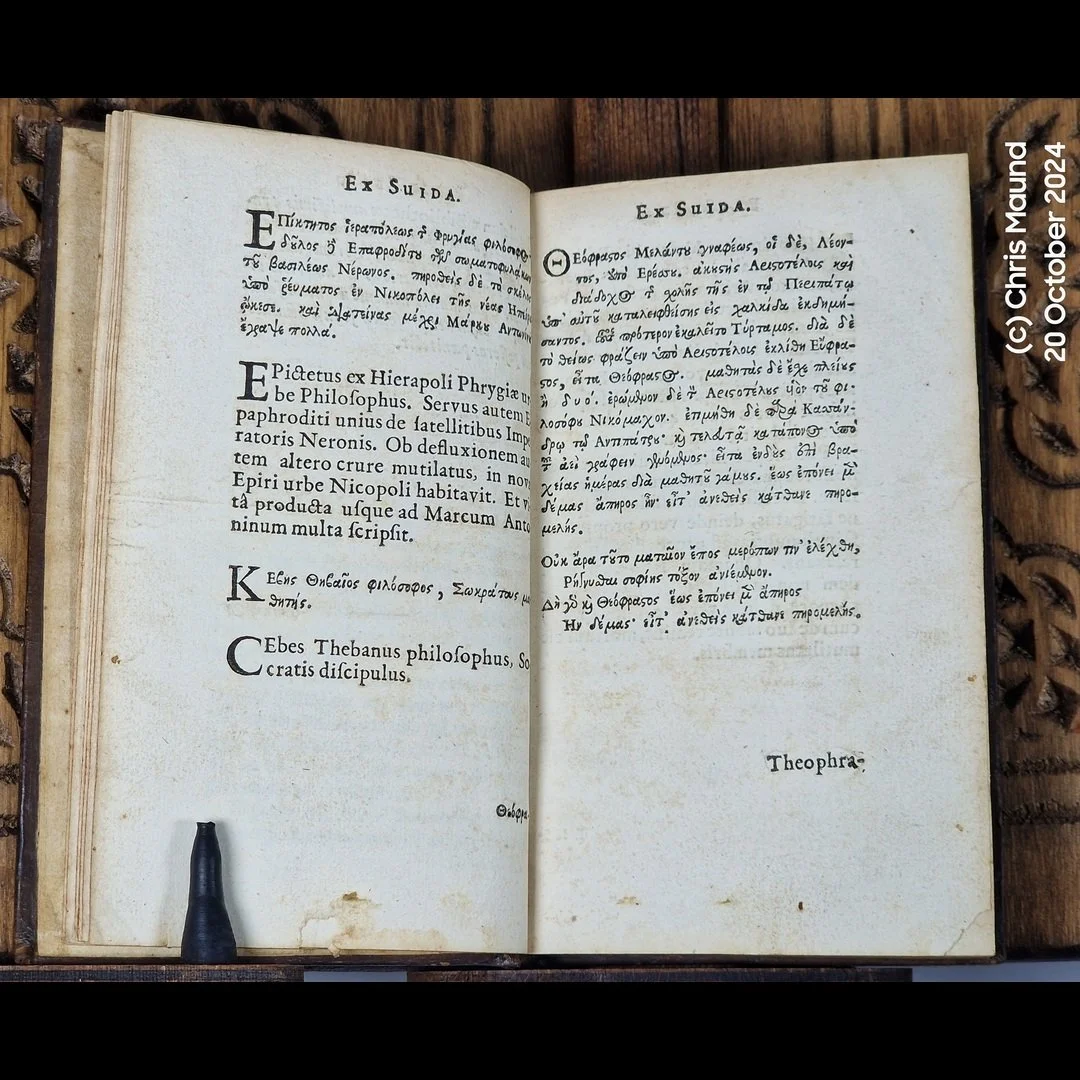
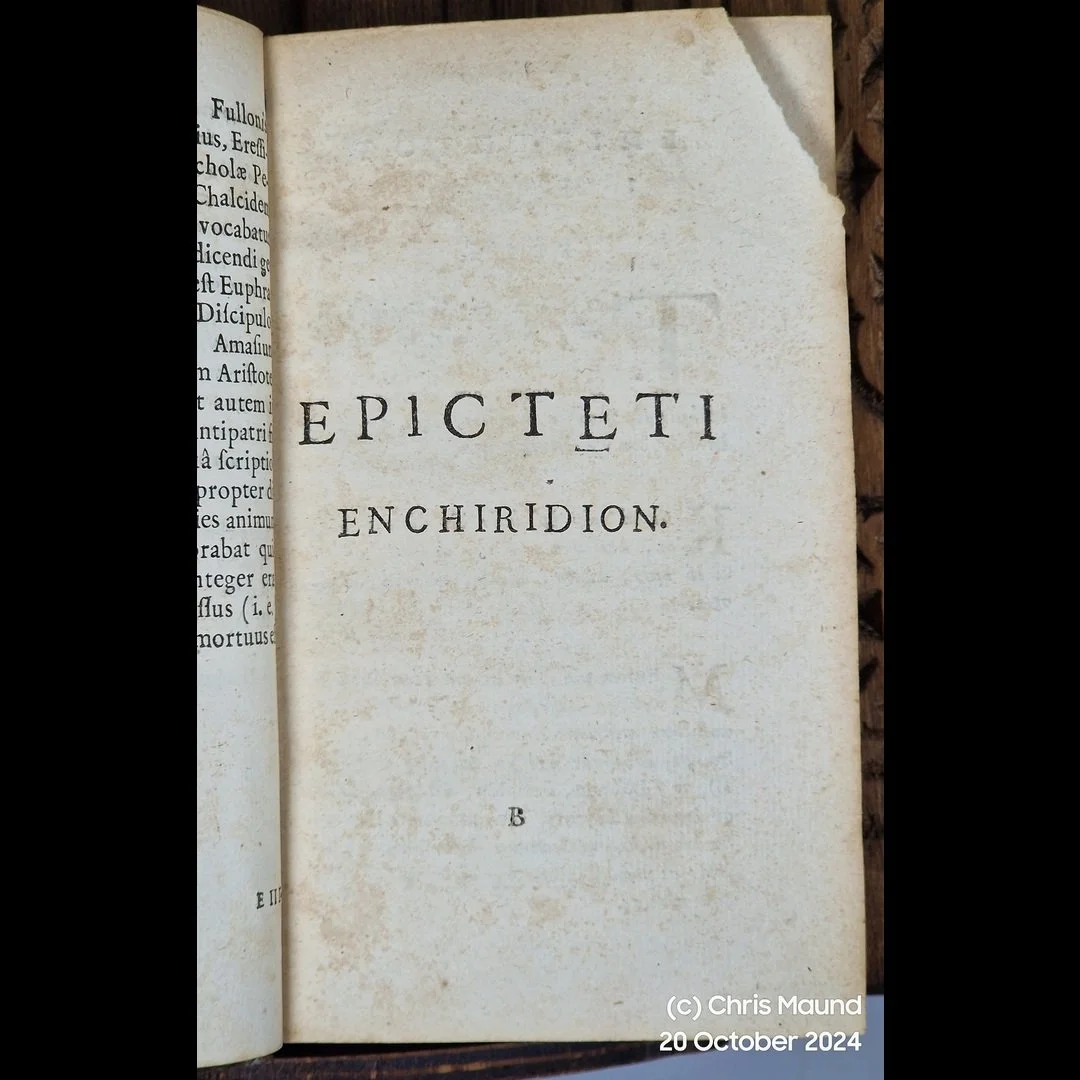
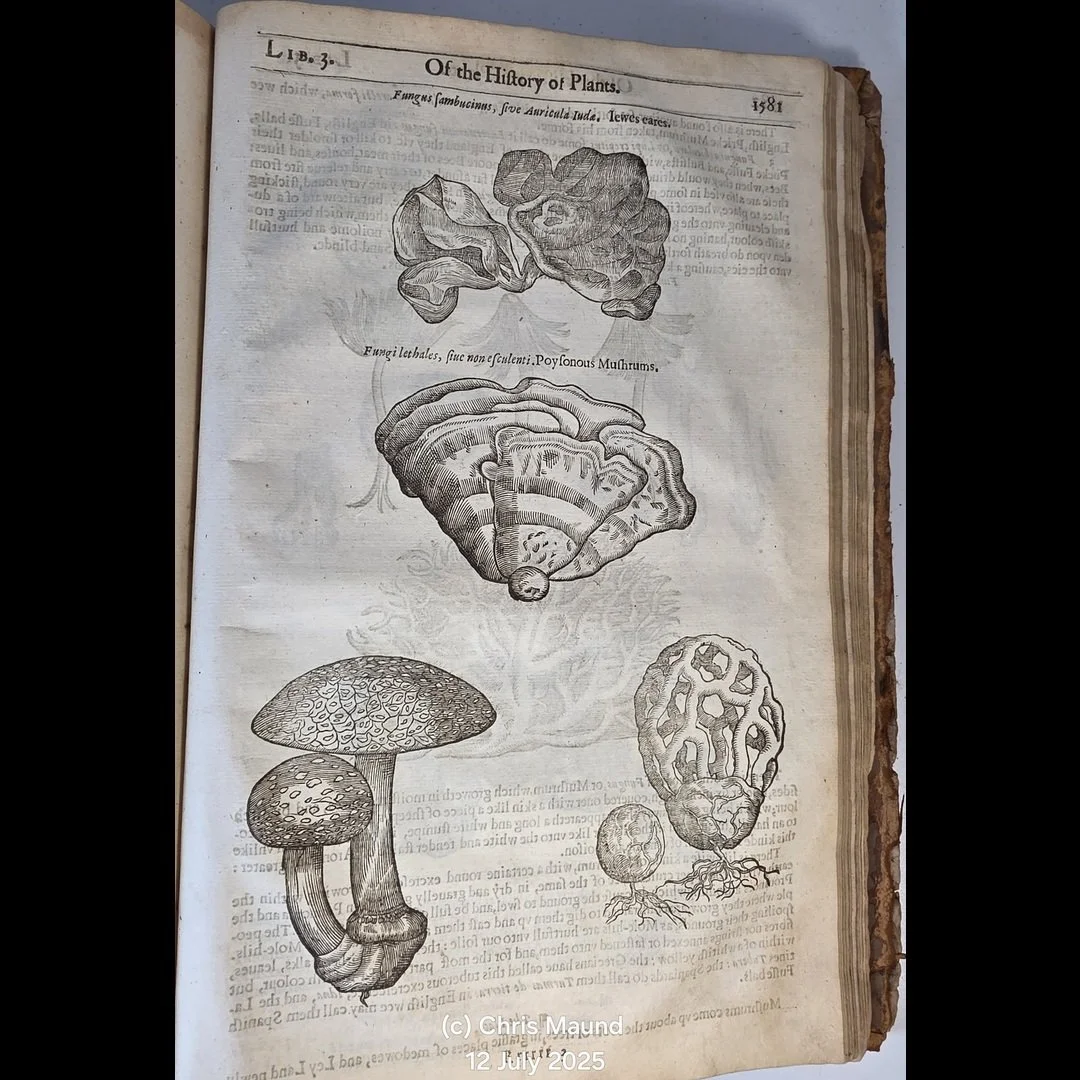
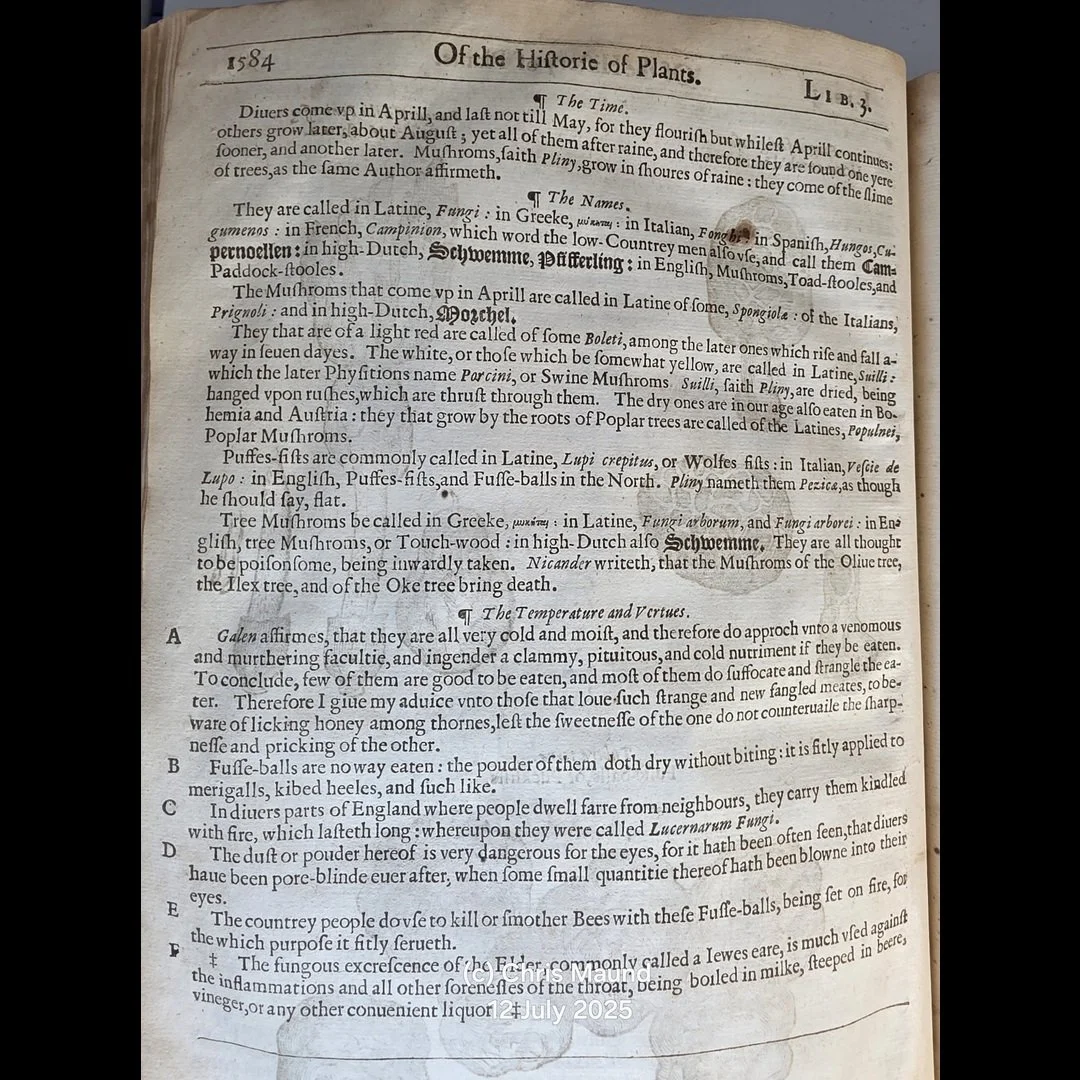
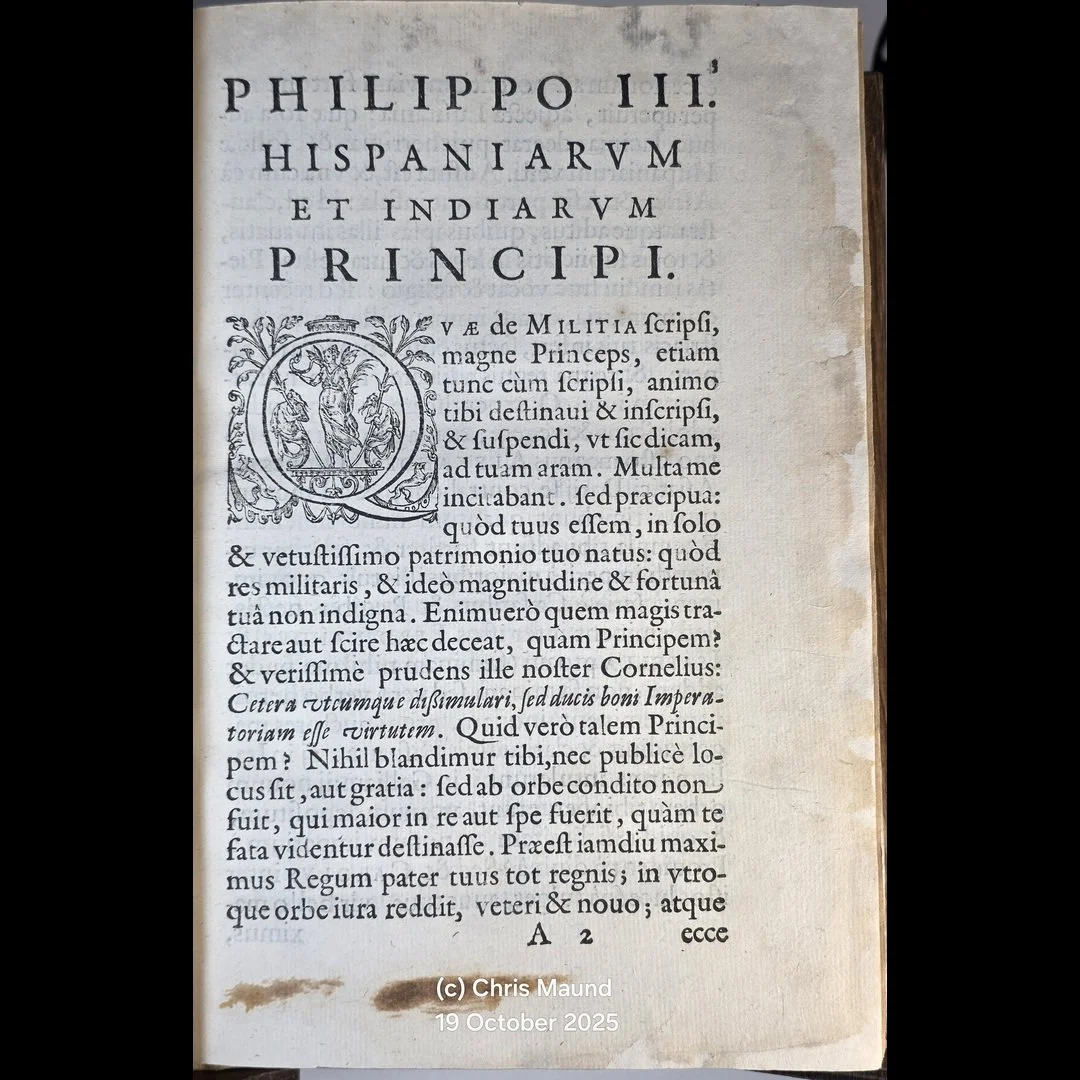
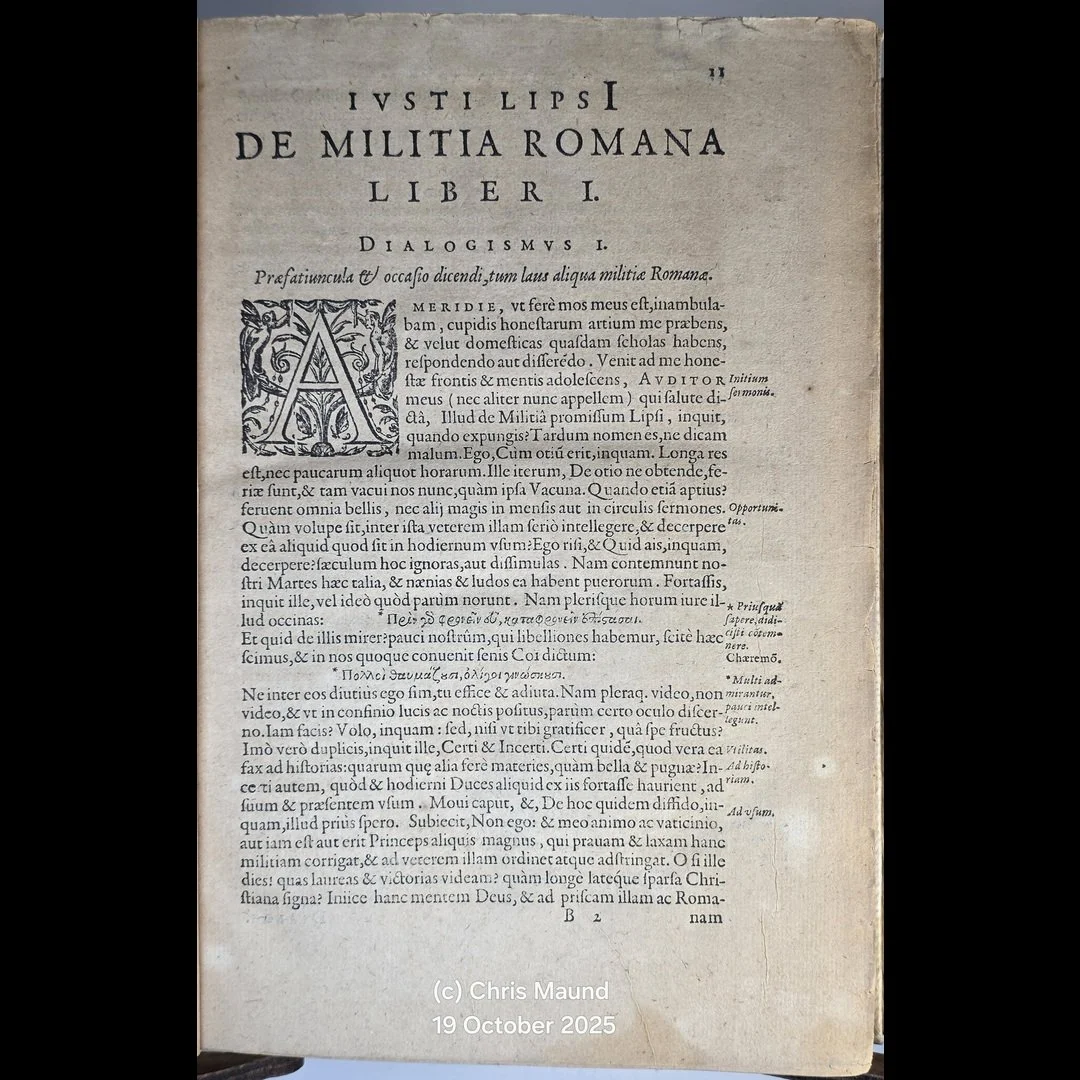
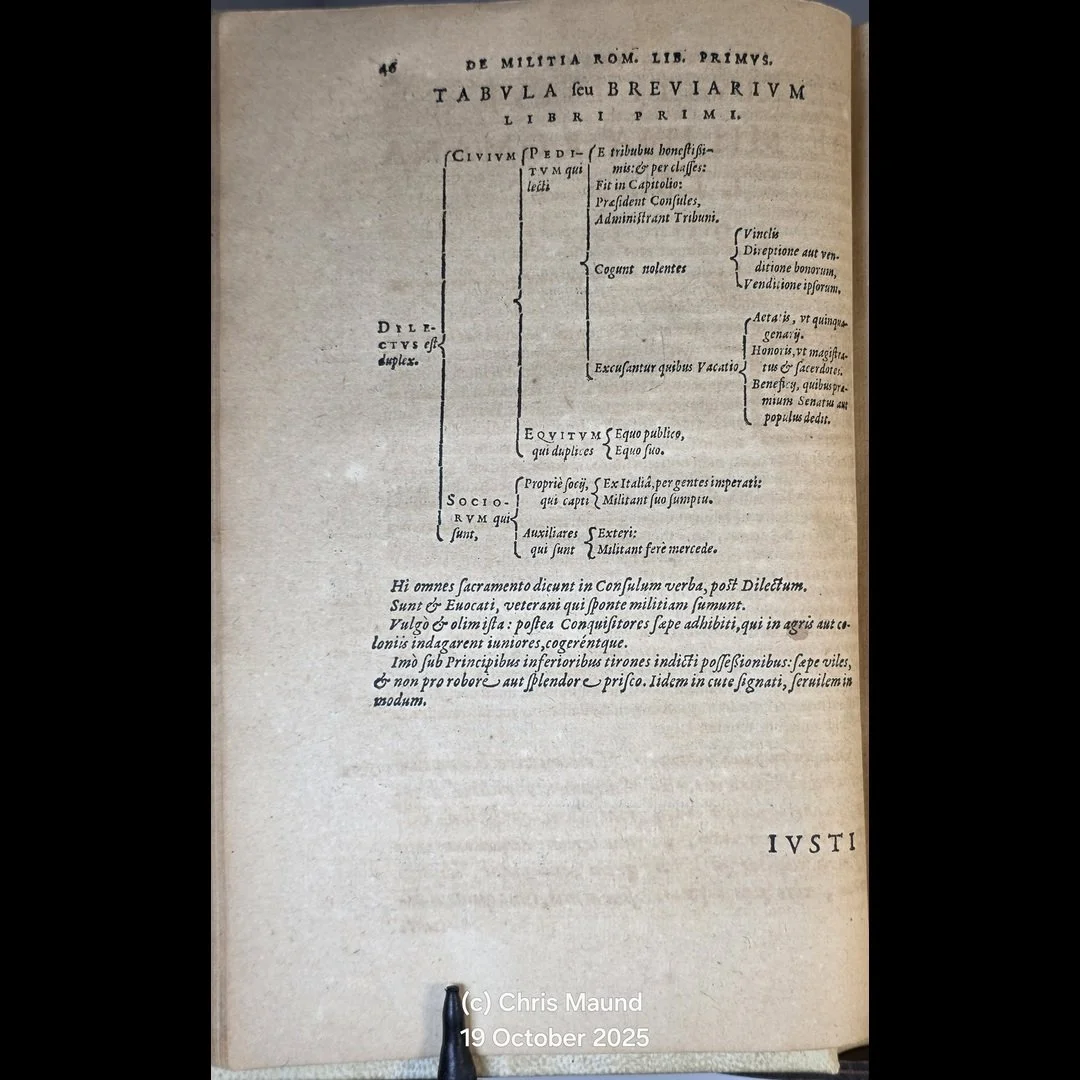
Internally generally sound, with age-toning, scattered spotting, occasional staining and marks from use. The text remains strong and legible throughout. Woodcut printer’s devices and typographical ornaments are present at several points within the volume.
The ten books of the Mythologiae run to p.1062, followed by all four books of Conti’s De Venatione to the conclusion of the numbered sequence at p.1123. These are followed by the complete unpaginated triple indices and supplementary texts, including Friedrich Sylburg’s notes, Geoffroy Linocier’s Mythologia Musarum, Veterum Philosophorum Ethnicorum de Diis, and the concluding Observationum in Mythologiam Natalis Comitis material. The terminal gathering has been verified through signature Mmm3.
An evocative working copy of one of the principal mythographical handbooks of Renaissance Europe, retaining its early vellum binding and the complete sequence of texts associated with this expanded recension.
Title page with woodcut printer’s device; further printer’s devices and typographical ornaments within the text.
Please see Photos as part of condition report.
REFERENCES
Folger Shakespeare Library, Call No. 270885
Bibliothèque de Genève, BGE Cti 5268 / BGE To 2225
Biblioteca de la Universidad de Salamanca, Fondo Antiguo, digitised copy
Barbara Carman Garner, “Francis Bacon, Natalis Comes and the Mythological Tradition”, Journal of the Warburg and Courtauld Institutes, Vol. 33 (1970)
SYNOPSIS
The ten books of the Mythologiae constitute an immense Renaissance synthesis of classical mythology. Conti draws upon Greek and Latin literary traditions to recount the origins, relationships and adventures of the gods and heroes, while simultaneously attempting to recover the philosophical meanings which he believed the ancient poets deliberately concealed within their fables.
The work ranges through the major divine figures of the Greek and Roman pantheons, the origins and genealogies of the gods, mythic heroes, monsters, transformations, sacred rites, sacrifices, local cults and geographical traditions. Individual myths are repeatedly followed by allegorical interpretations connecting their narratives with ethical behaviour, human psychology, natural phenomena or philosophical doctrine.
Conti’s method is characteristic of Renaissance mythography. Classical fable was not regarded simply as imaginative literature: beneath the narrative surface could lie ancient knowledge expressed symbolically. The Mythologiae therefore became useful not only to classical scholars but to poets, artists, philosophers and writers seeking an authoritative repertory of mythological narratives and their possible meanings.
Following the ten books is Conti’s De Venatione, four books of Latin verse devoted to hunting. Drawing on both ancient literary traditions and the culture of the hunt, it gives this copy an additional connection with early sporting and hunting literature.
The extensive indices are followed by supplementary mythographical material, most importantly Friedrich Sylburg’s scholarly notes and Geoffroy Linocier’s Mythologia Musarum, together with material concerning ancient philosophical conceptions of the gods and the concluding Observationum.
The result is considerably more than a mythology dictionary. It is a substantial compendium of the way classical religion and myth were recovered, reorganised and interpreted by Renaissance humanism, and an important witness to the early-modern conviction that ancient fable could preserve philosophical truths beneath its allegorical surface.
AUTHOR BIO
Natale Conti, Latinised as Natalis Comes or Natalis de Comitibus (1520–1582), was an Italian humanist, poet, historian and mythographer whose Mythologiae sive Explicationis Fabularum Libri Decem became one of the principal Renaissance reference works on classical mythology.
First published at Venice in 1567, the Mythologiae was repeatedly enlarged and reprinted throughout Europe. Conti assembled an enormous body of material drawn from Greek and Roman literature concerning the gods, heroes, genealogies, cults, sacrifices and mythological narratives of antiquity.
His purpose, however, went considerably beyond compilation. Conti belonged to the Renaissance allegorical tradition which regarded ancient mythology as a repository of concealed philosophical knowledge. Myths could therefore be read at several levels: historically, morally and through the principles of natural philosophy. Gods and heroes were not merely characters in fabulous narratives but vehicles through which ancient peoples had encoded observations about nature, human conduct, psychology and the structure of the world.
The work consequently occupies an important position at the intersection of classical scholarship, Renaissance humanism, allegory and the early-modern tradition of prisca sapientia or ancient wisdom. Earlier editions of Conti’s work have also been identified by scholarship as an important source for Francis Bacon’s own allegorical treatment of classical mythology in De Sapientia Veterum (The Wisdom of the Ancients, 1609).
Contrary to an older bibliographical tradition which sometimes assigned the first edition to 1551, modern scholarship has established the first surviving edition as Venice, 1567.
Contributor Bio:
Friedrich Sylburg (1536–1596) was a German classical scholar and one of the important Greek textual editors of the later sixteenth century. His notes accompanying the Mythologiae reflect the increasingly scholarly apparatus added to later recensions of Conti’s work.
Geoffroy Linocier was a sixteenth-century French physician and writer whose Mythologia Musarum, devoted particularly to the mythology and attributes of the Muses, was incorporated into later editions of Conti and became part of the expanded reference apparatus surrounding the Mythologiae.

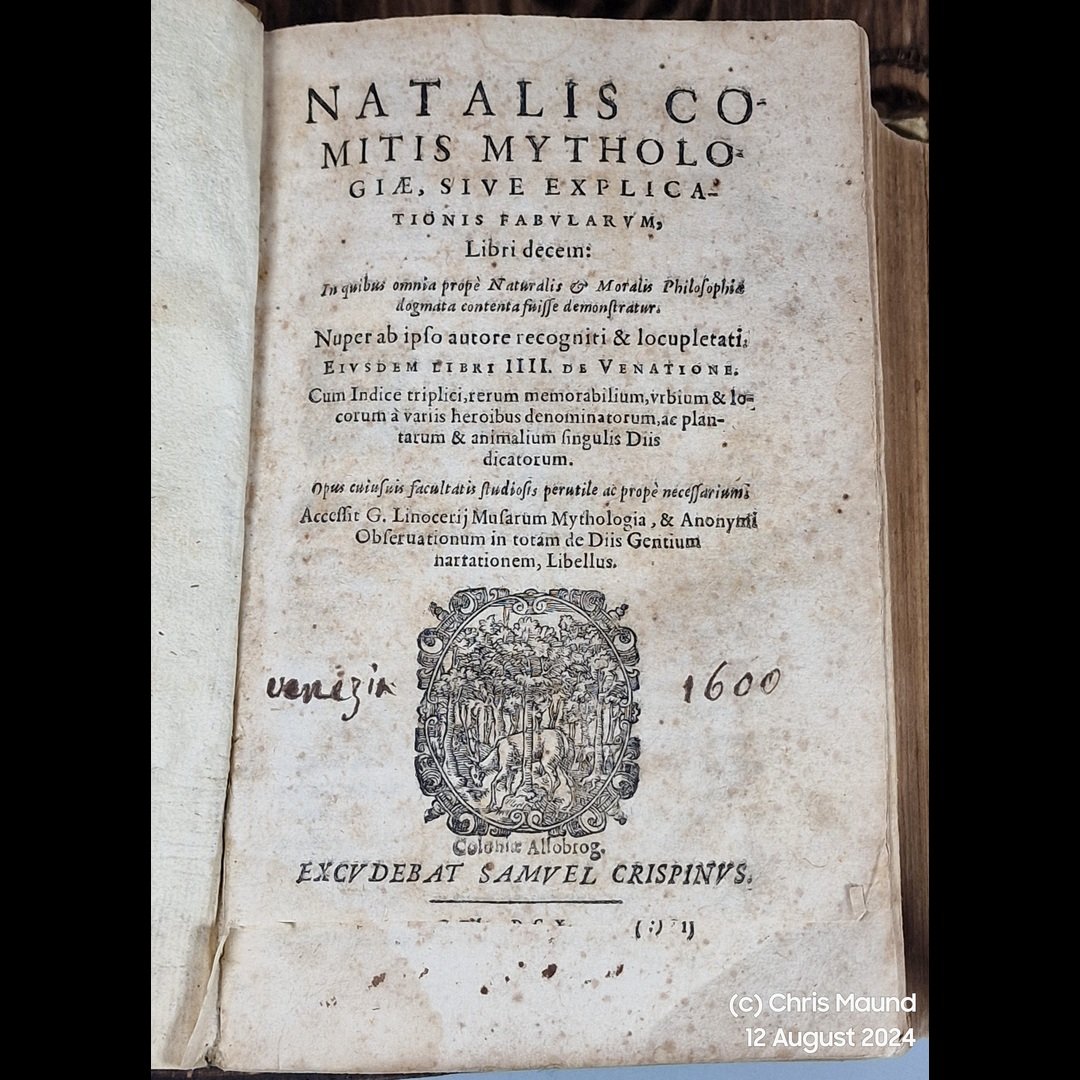 Image 1 of 29
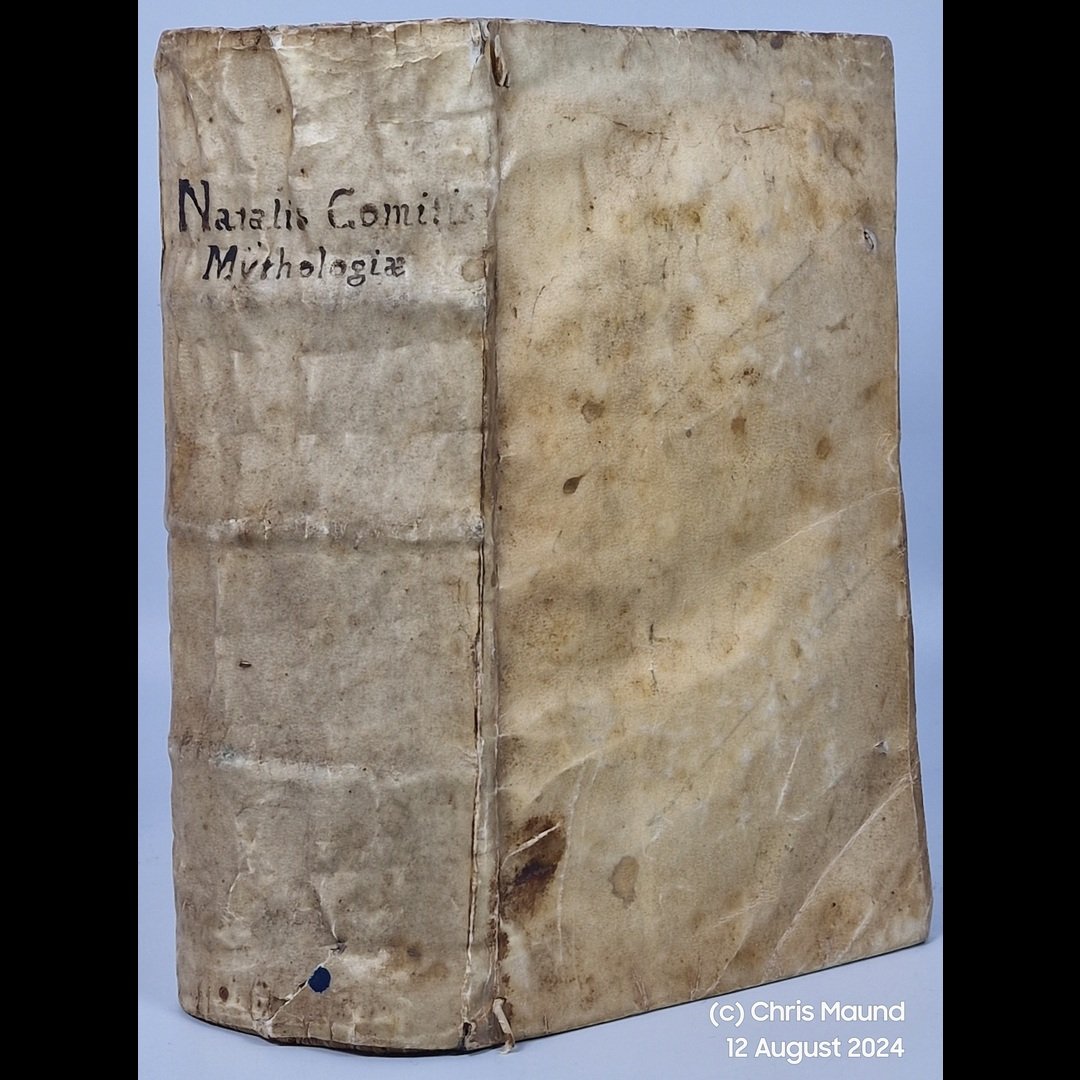 Image 2 of 29
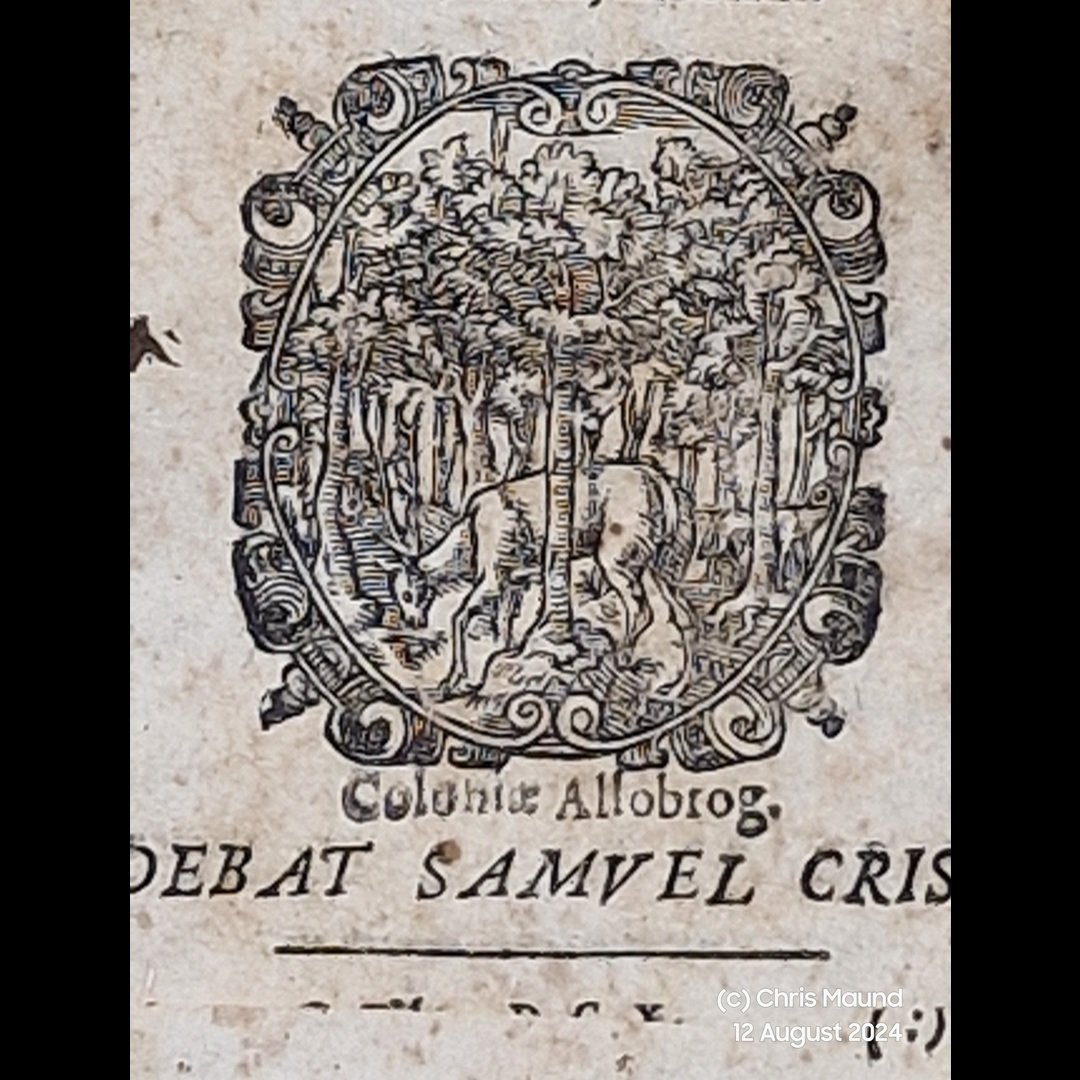 Image 3 of 29
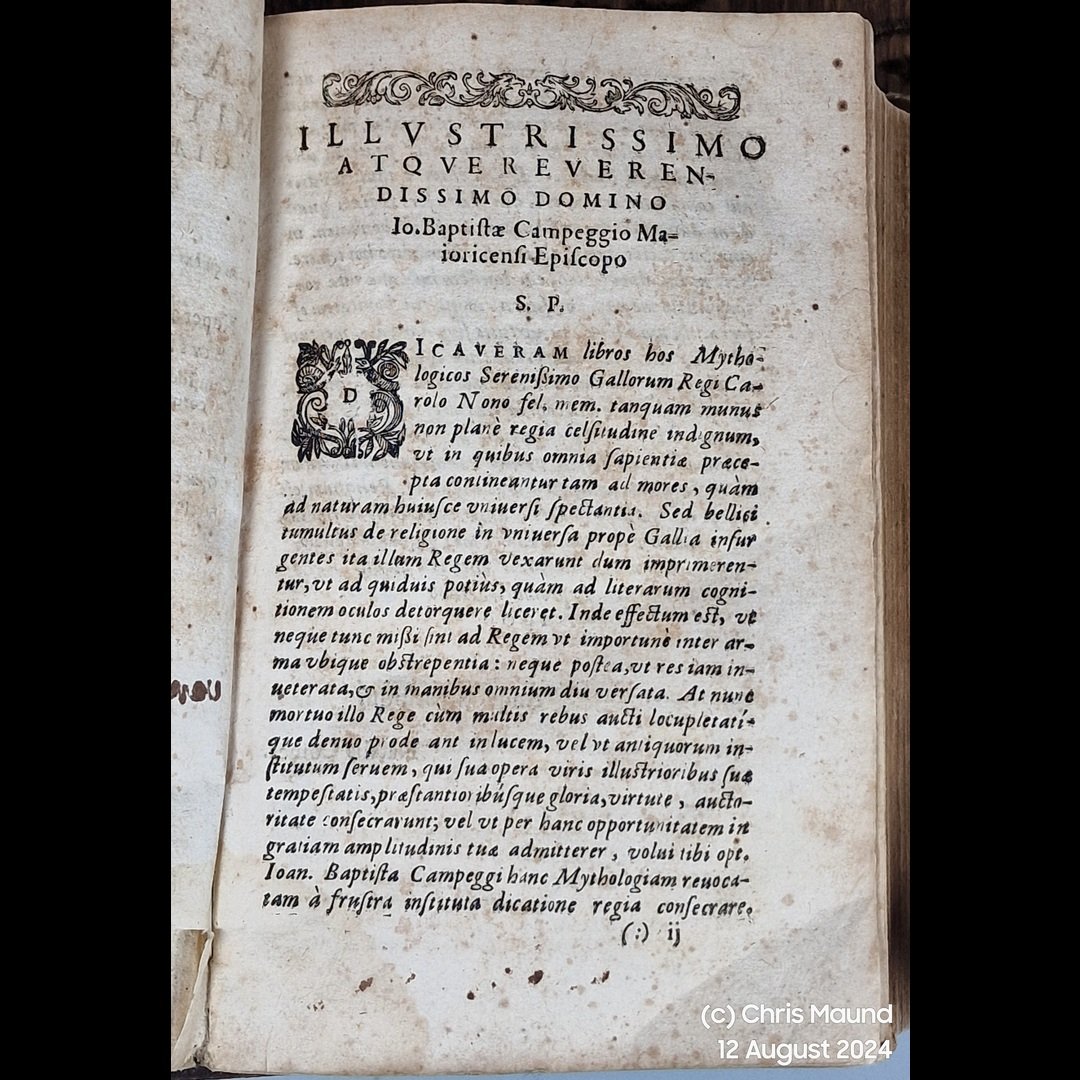 Image 4 of 29
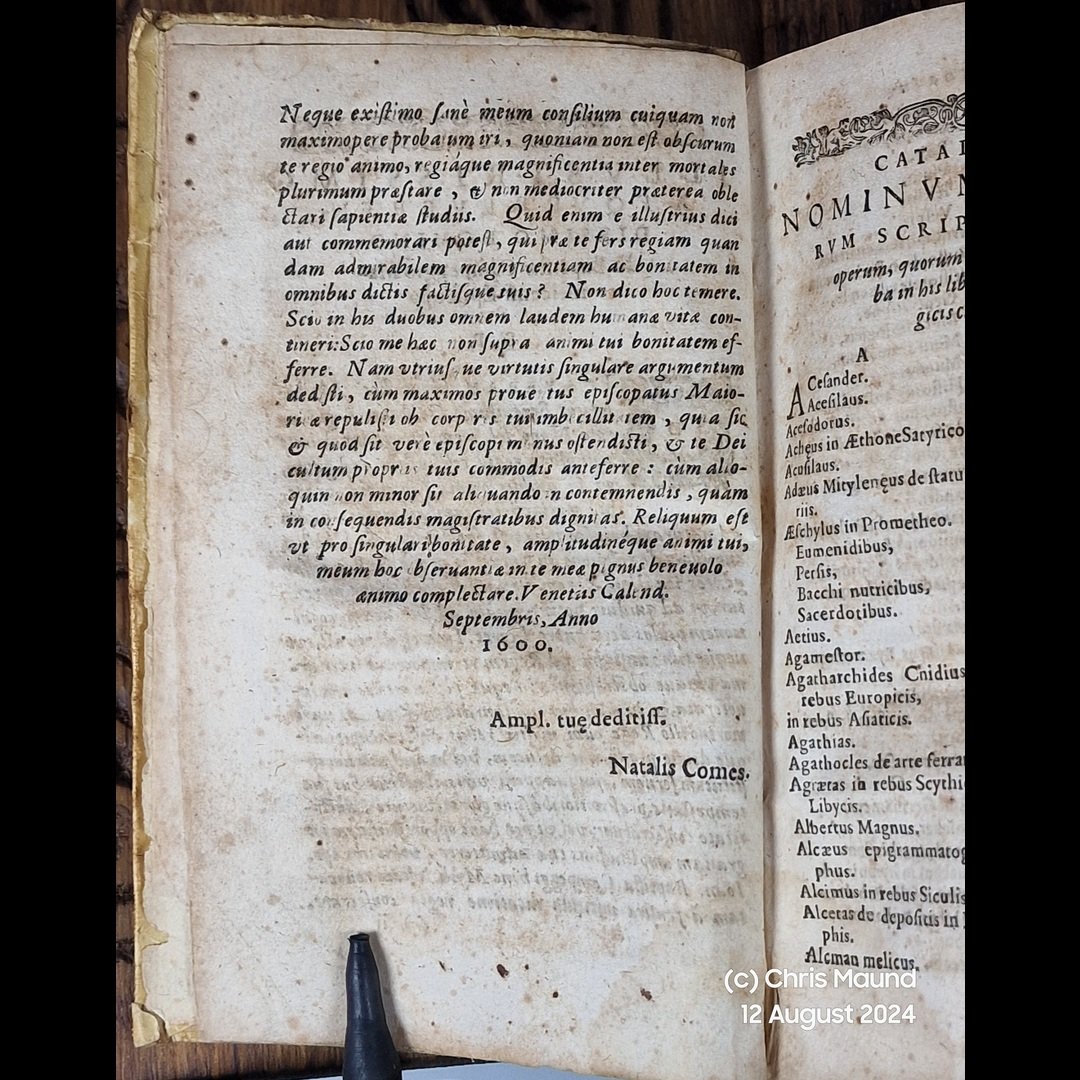 Image 5 of 29
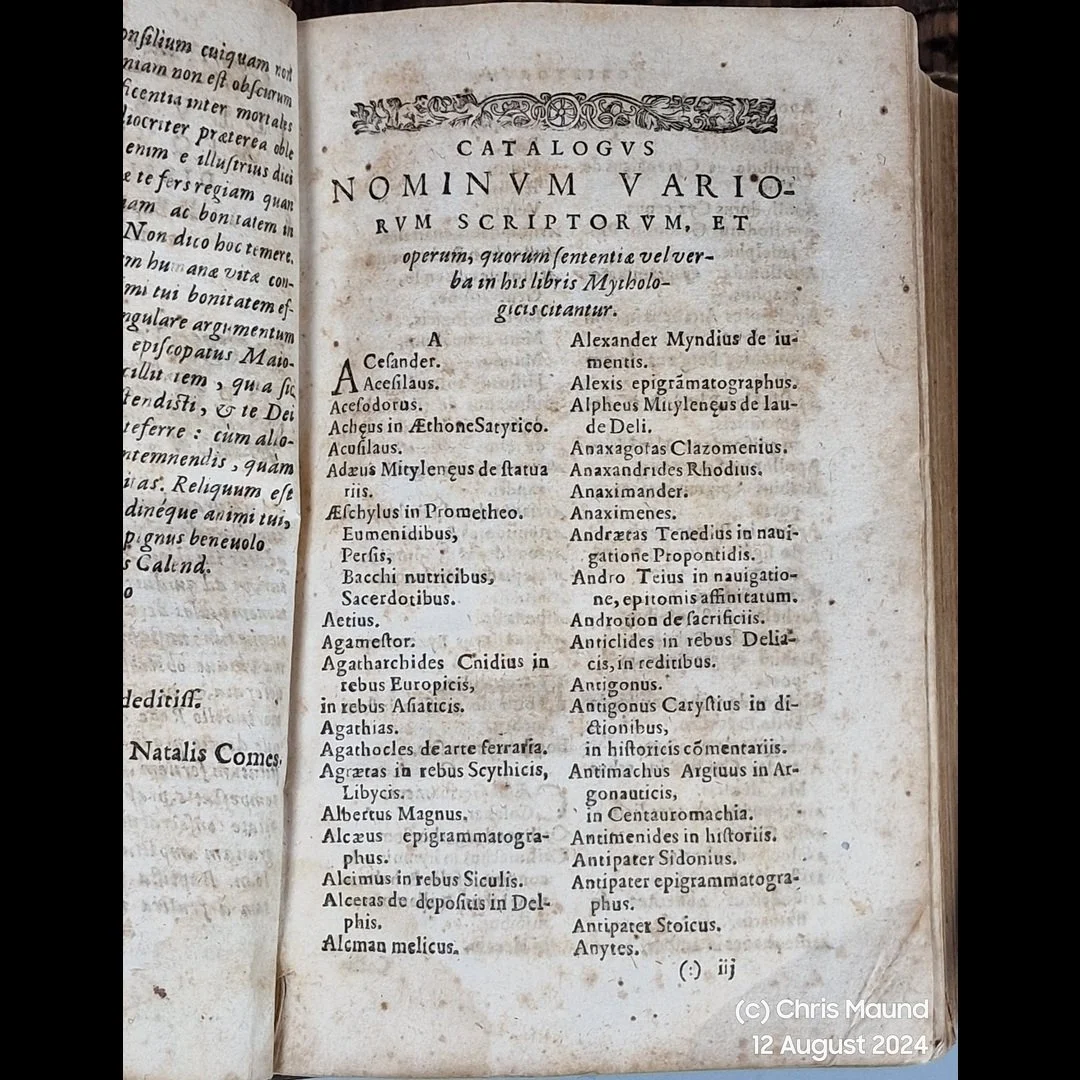 Image 6 of 29
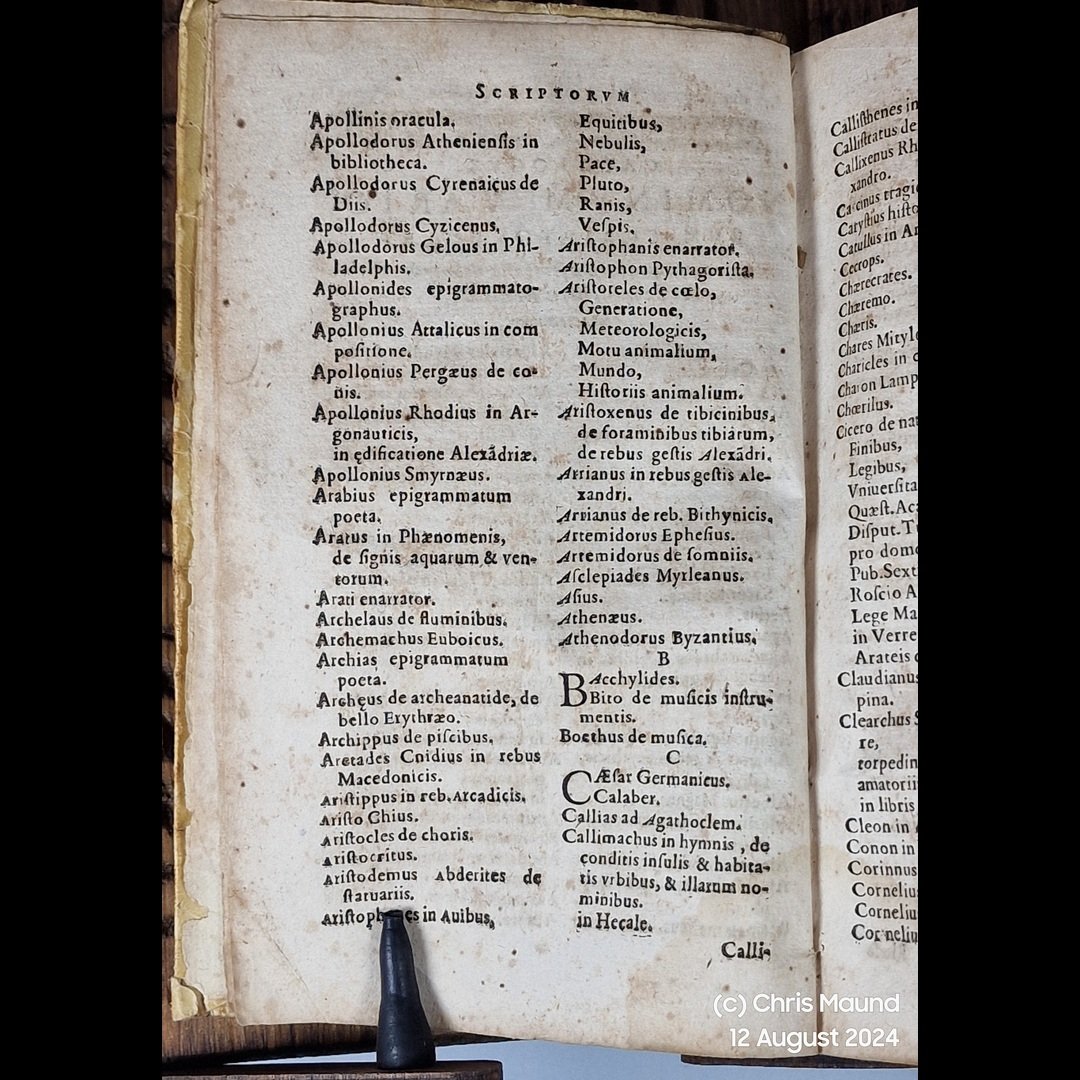 Image 7 of 29
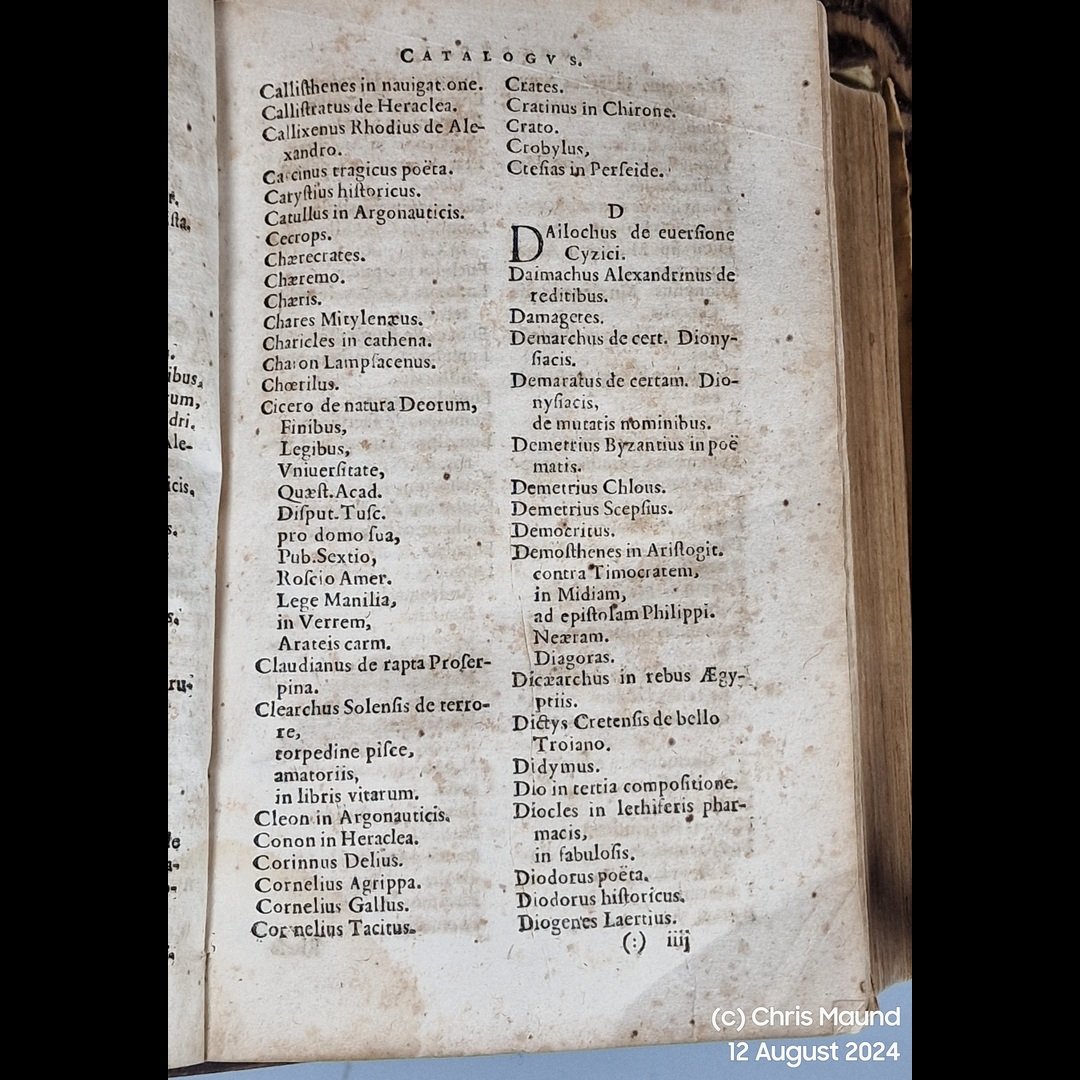 Image 8 of 29
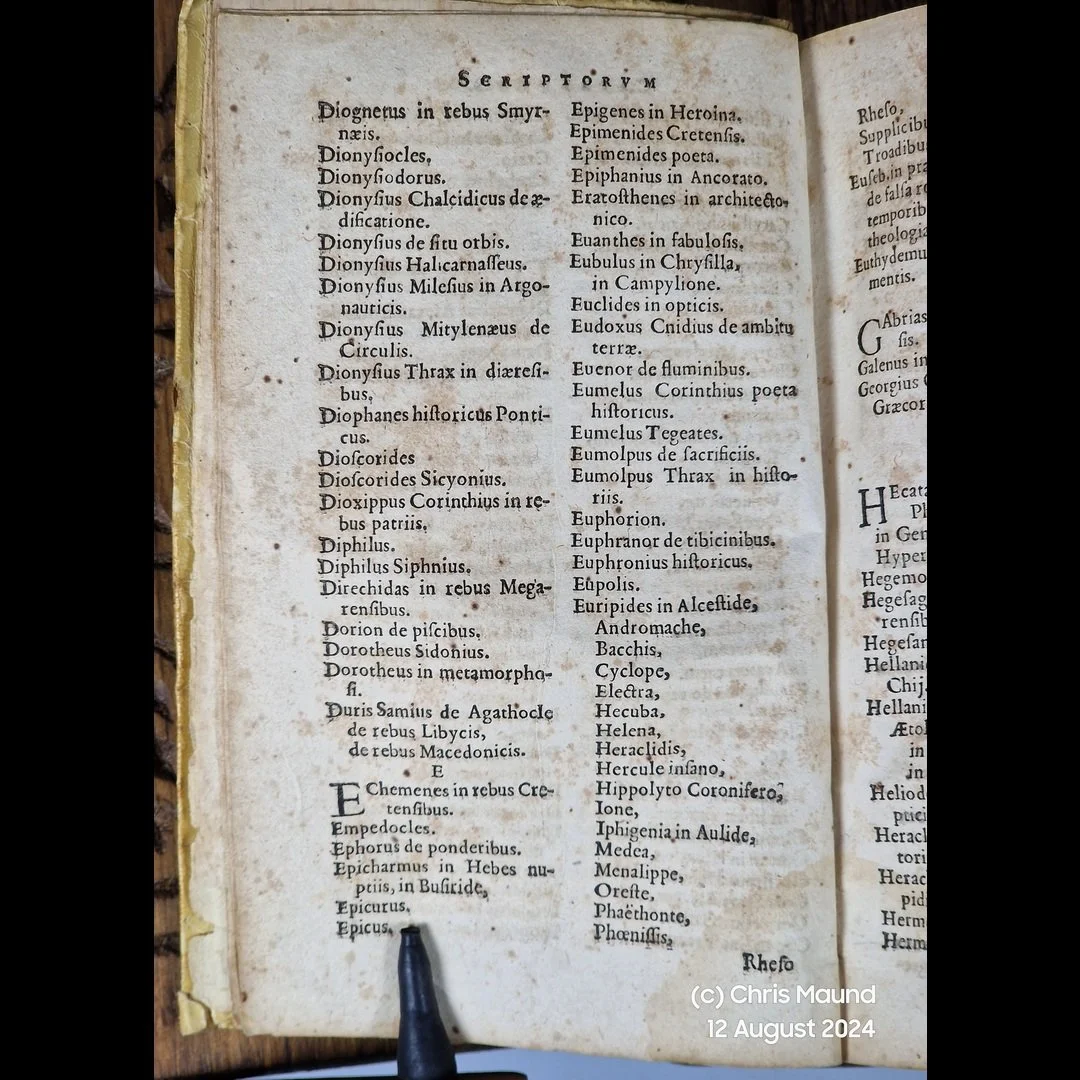 Image 9 of 29
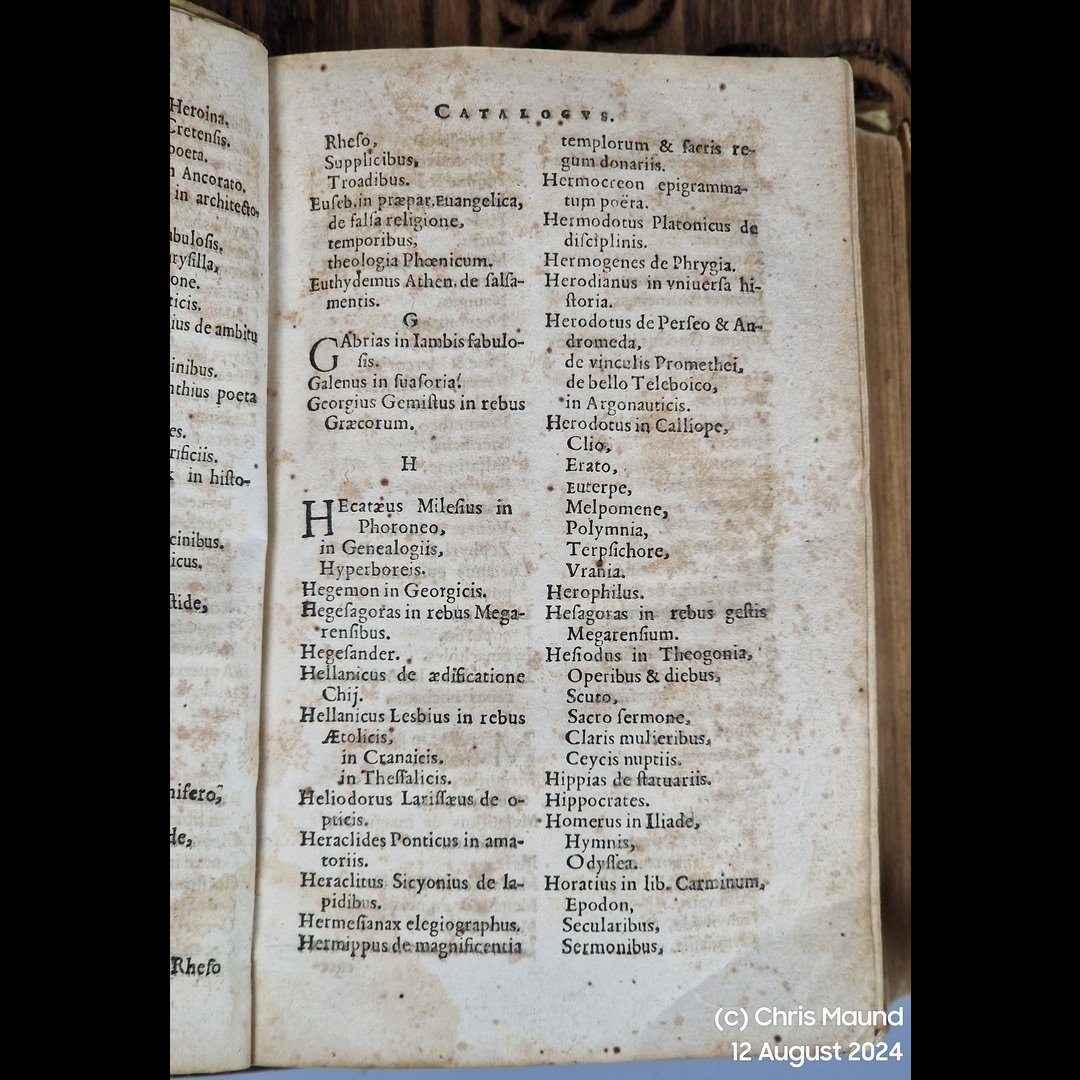 Image 10 of 29
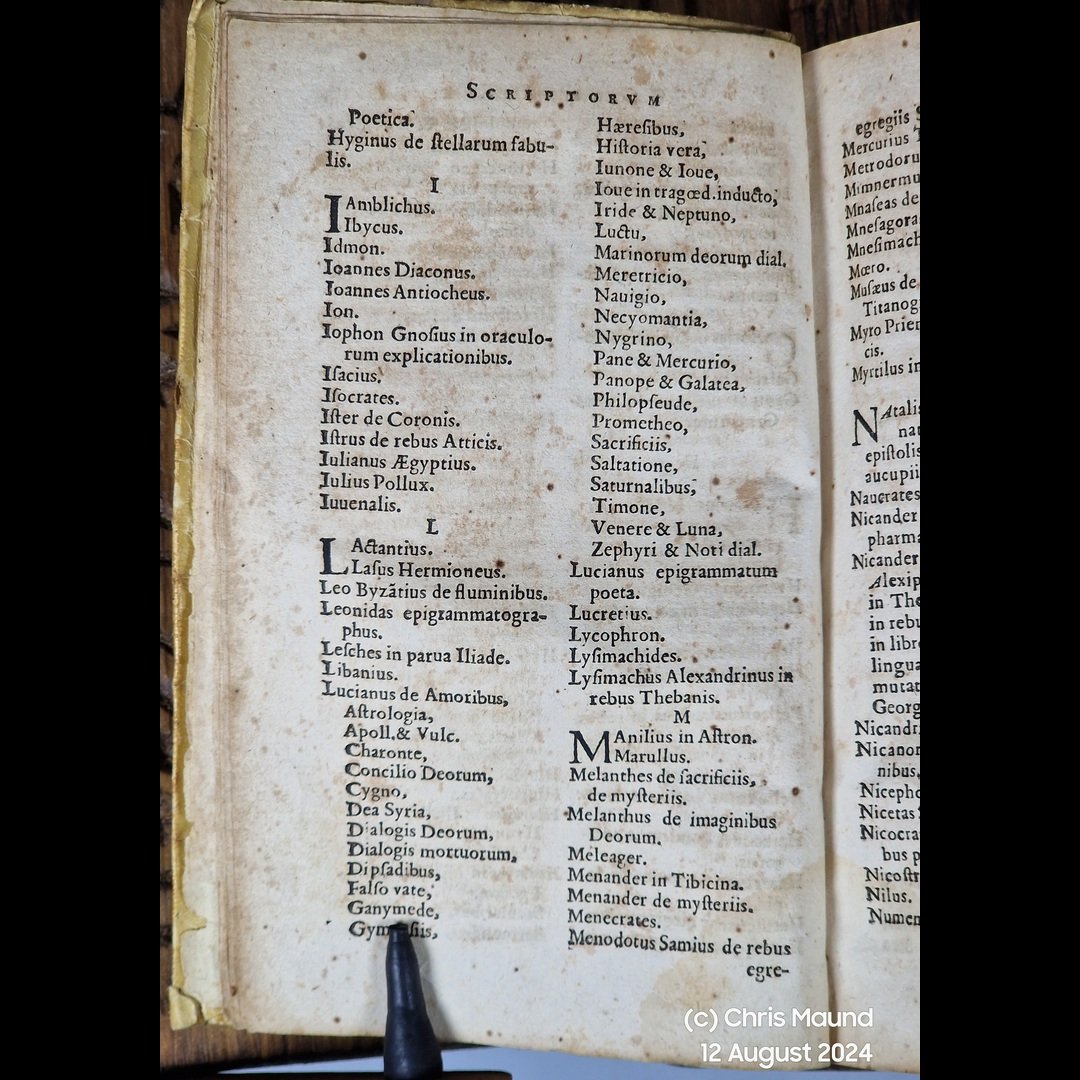 Image 11 of 29
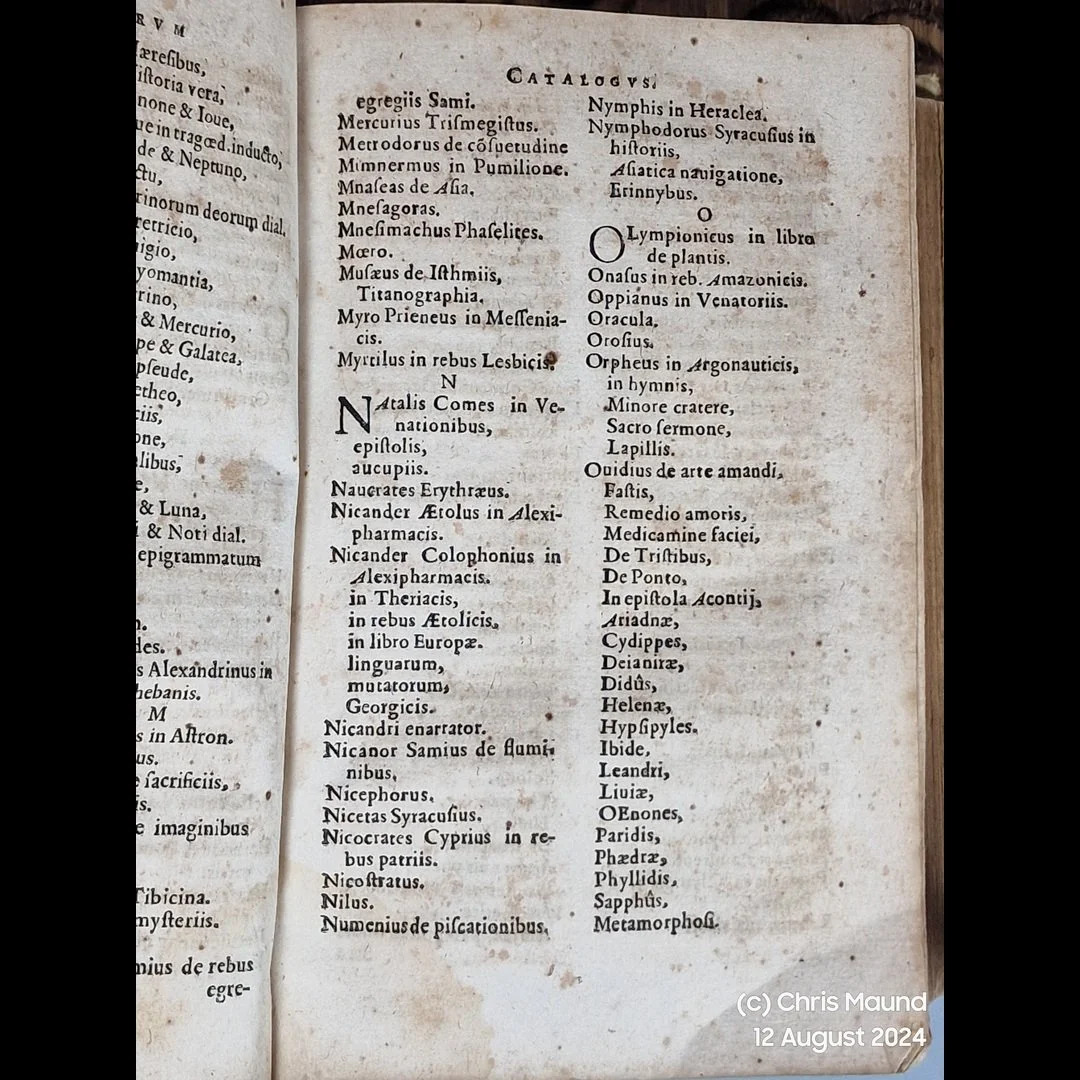 Image 12 of 29
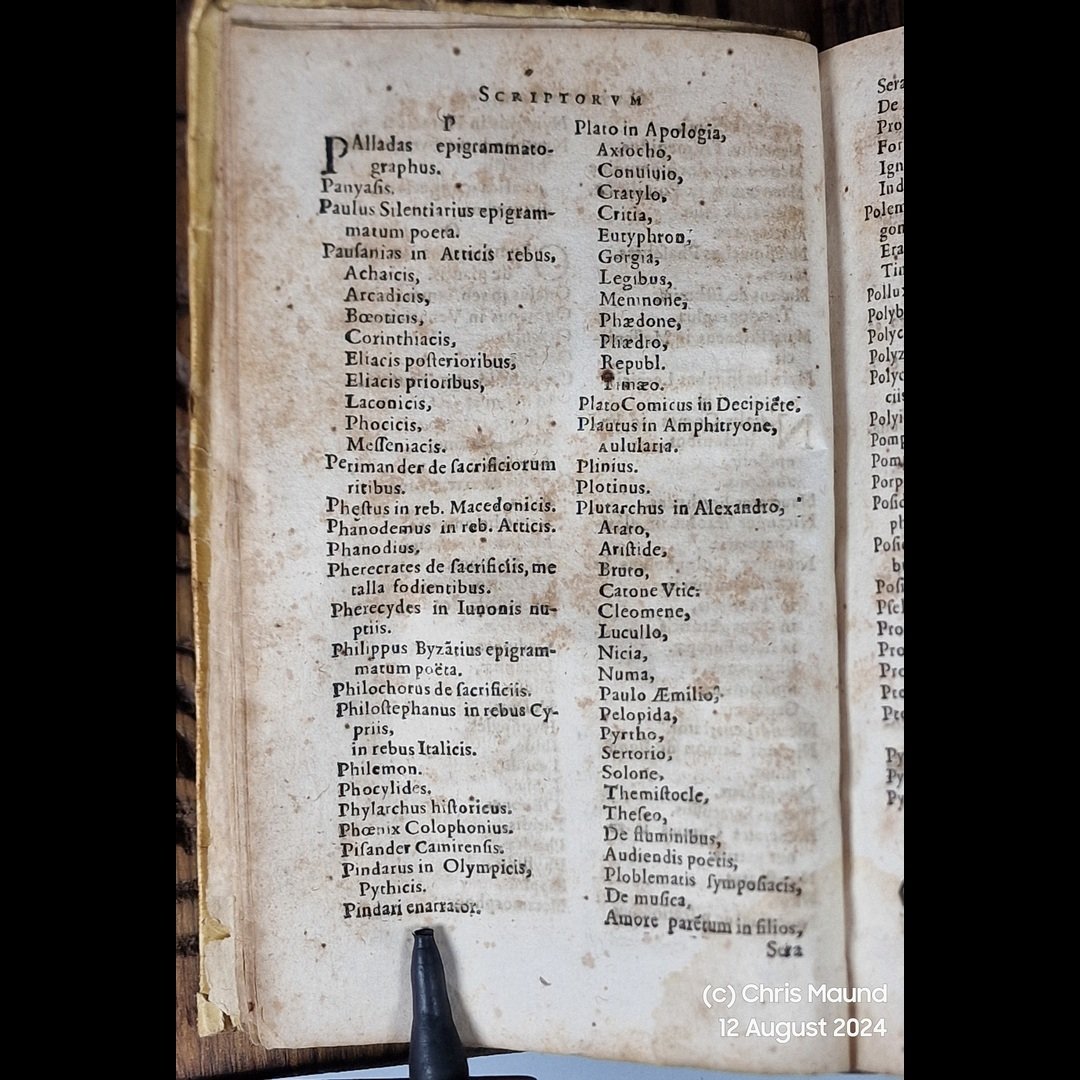 Image 13 of 29
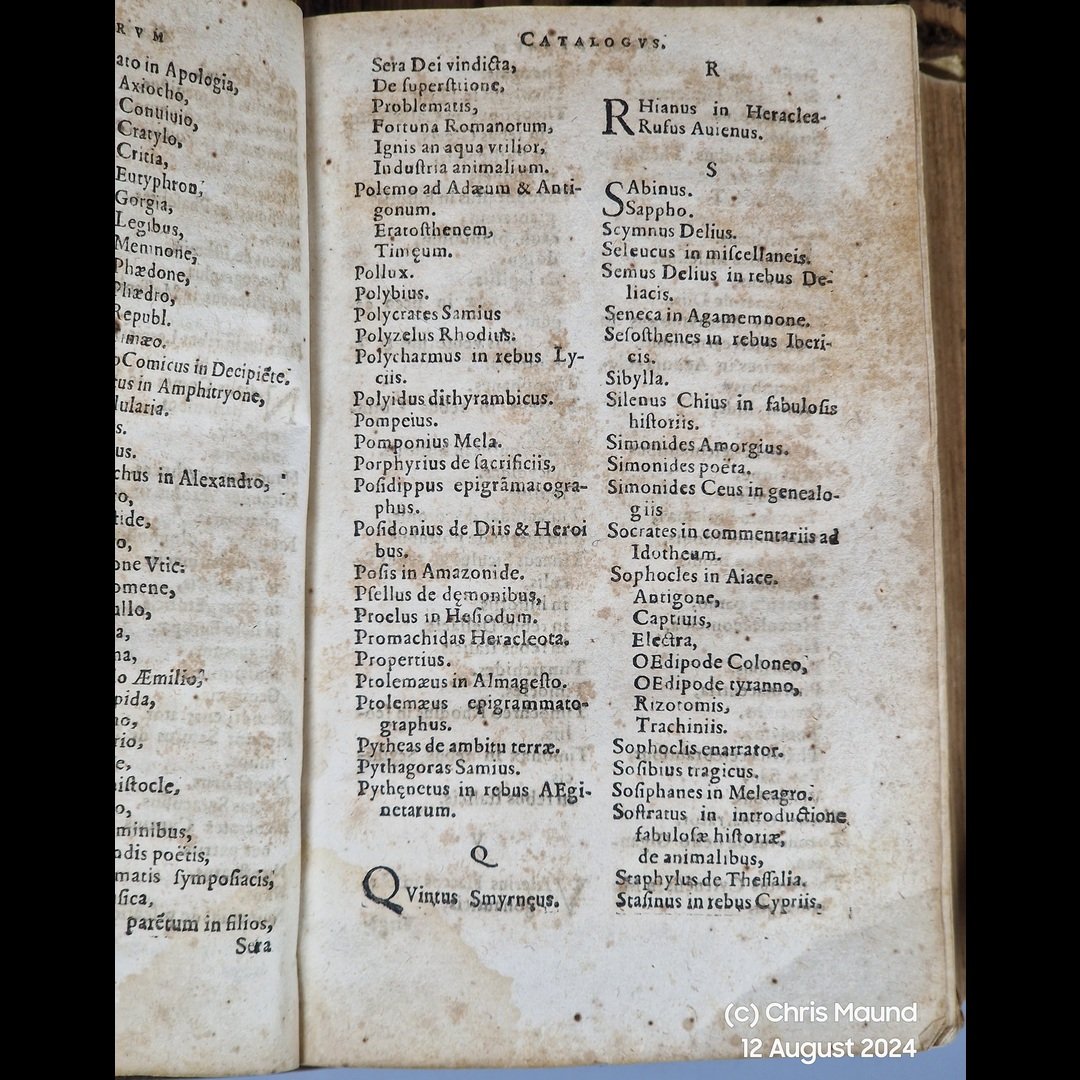 Image 14 of 29
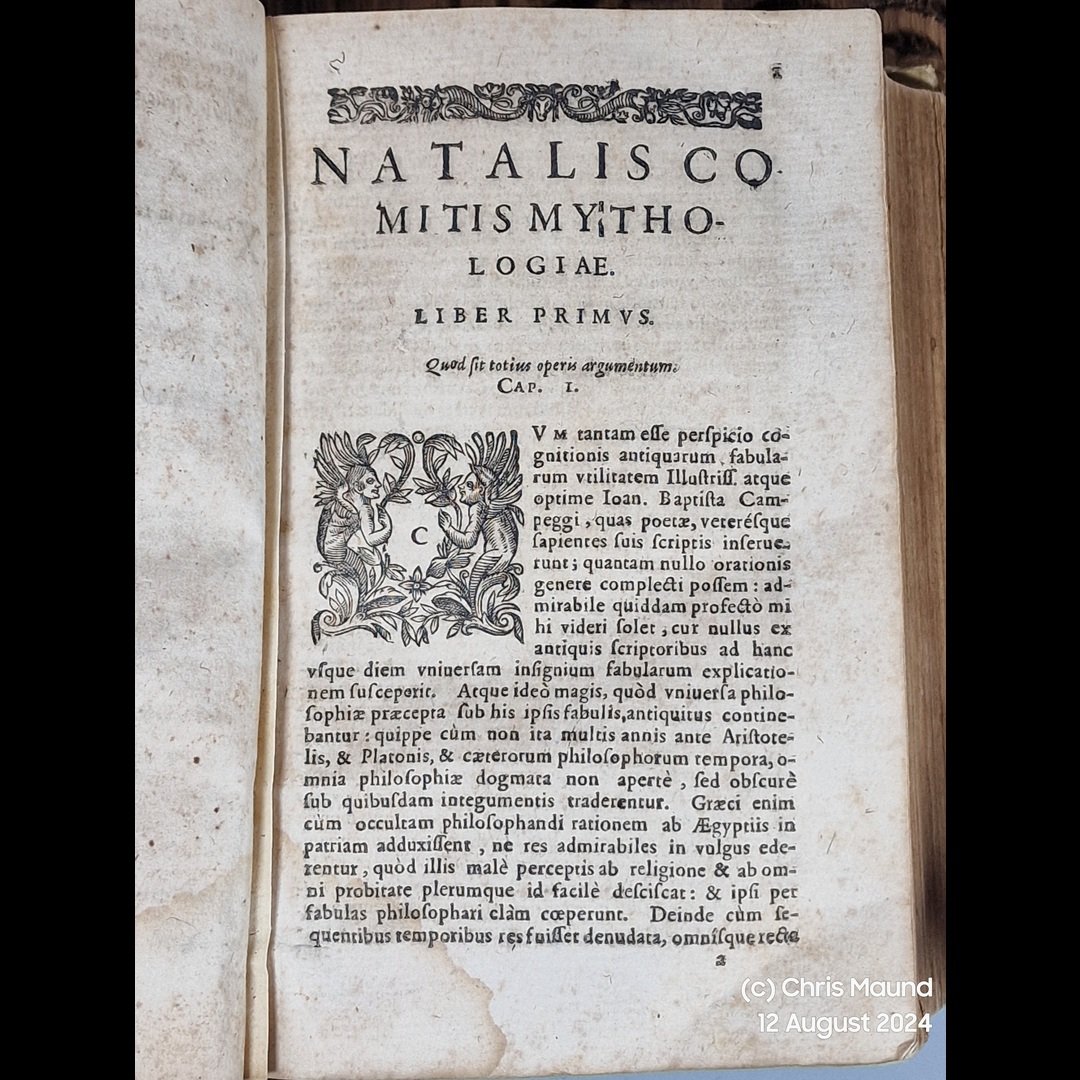 Image 15 of 29
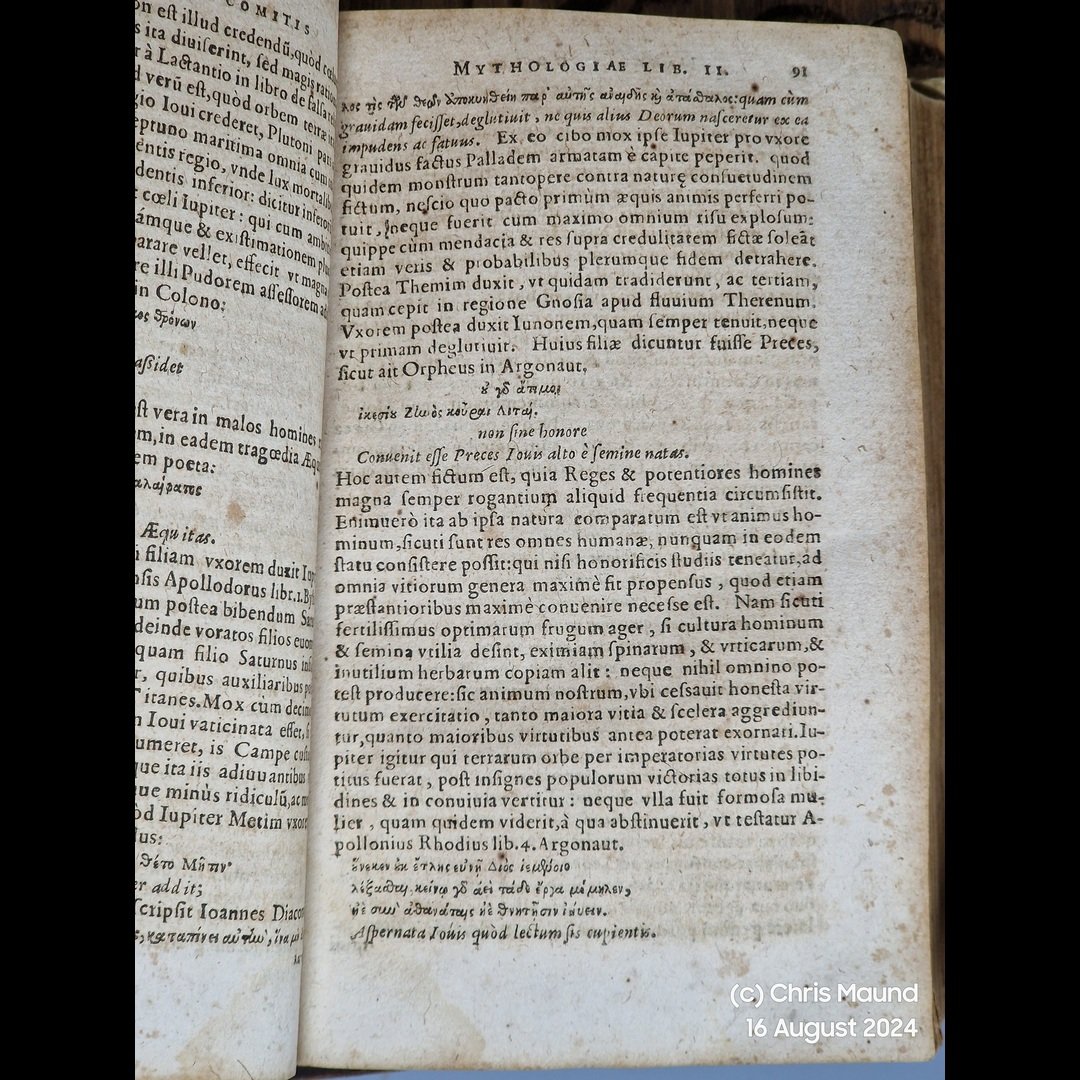 Image 16 of 29
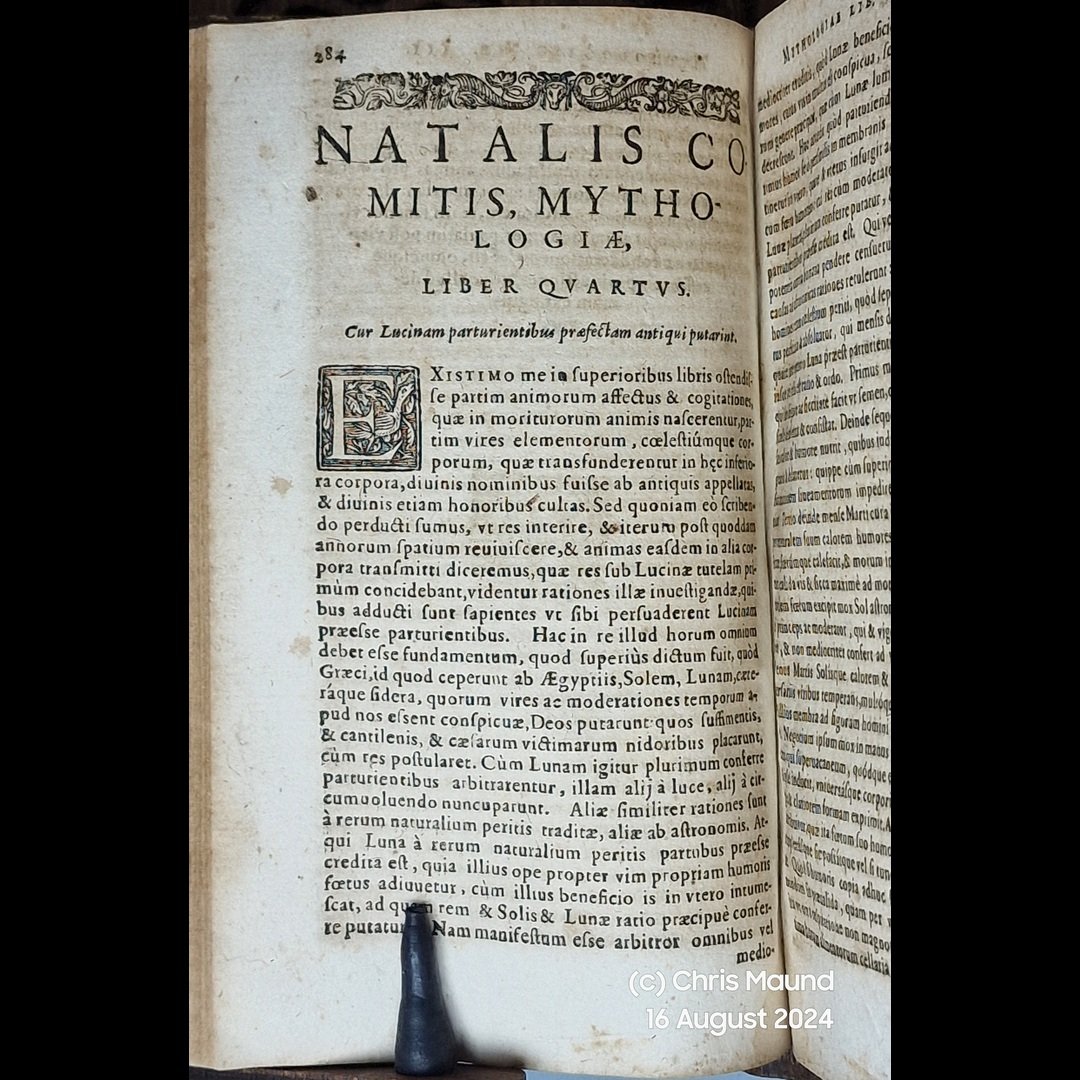 Image 17 of 29
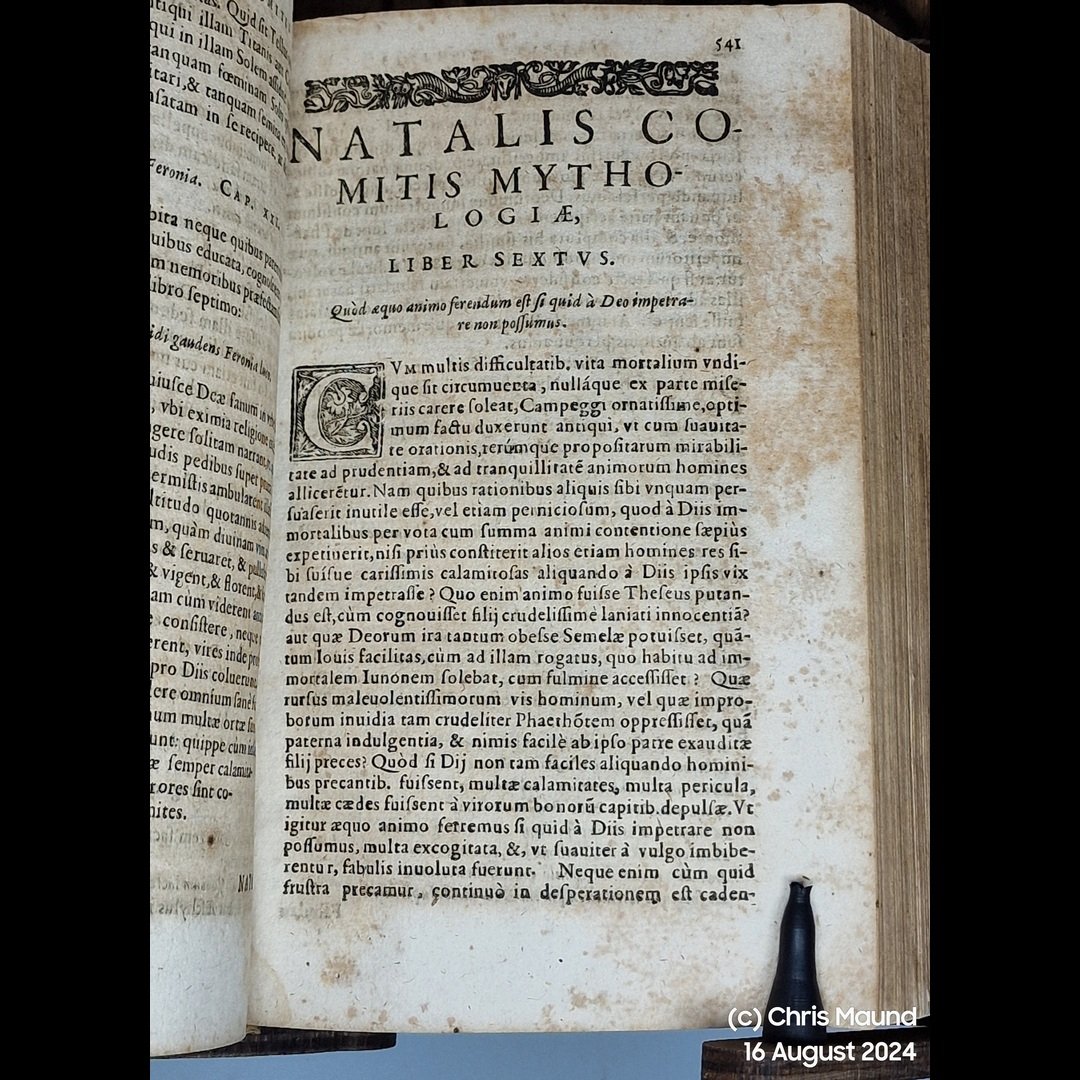 Image 18 of 29
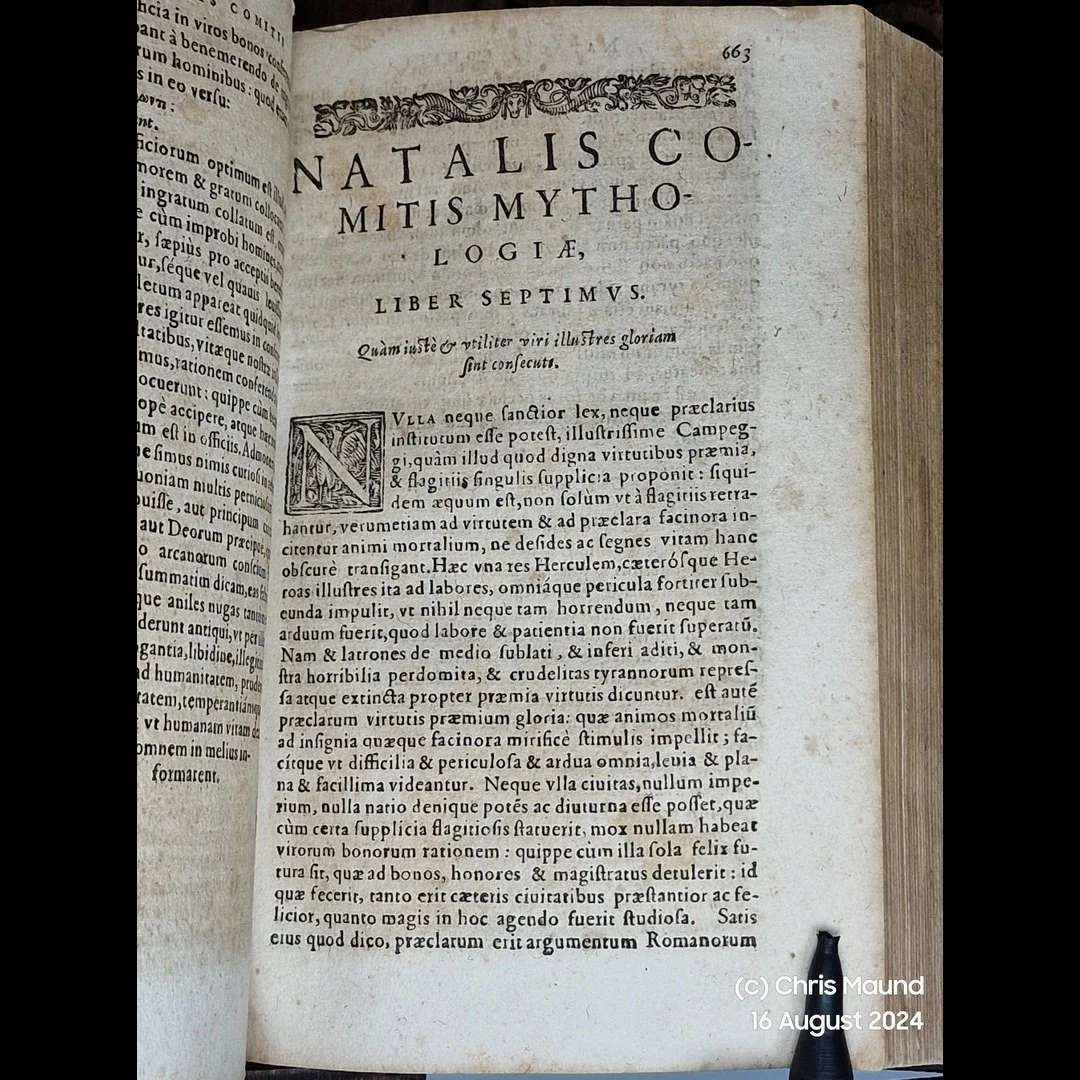 Image 19 of 29
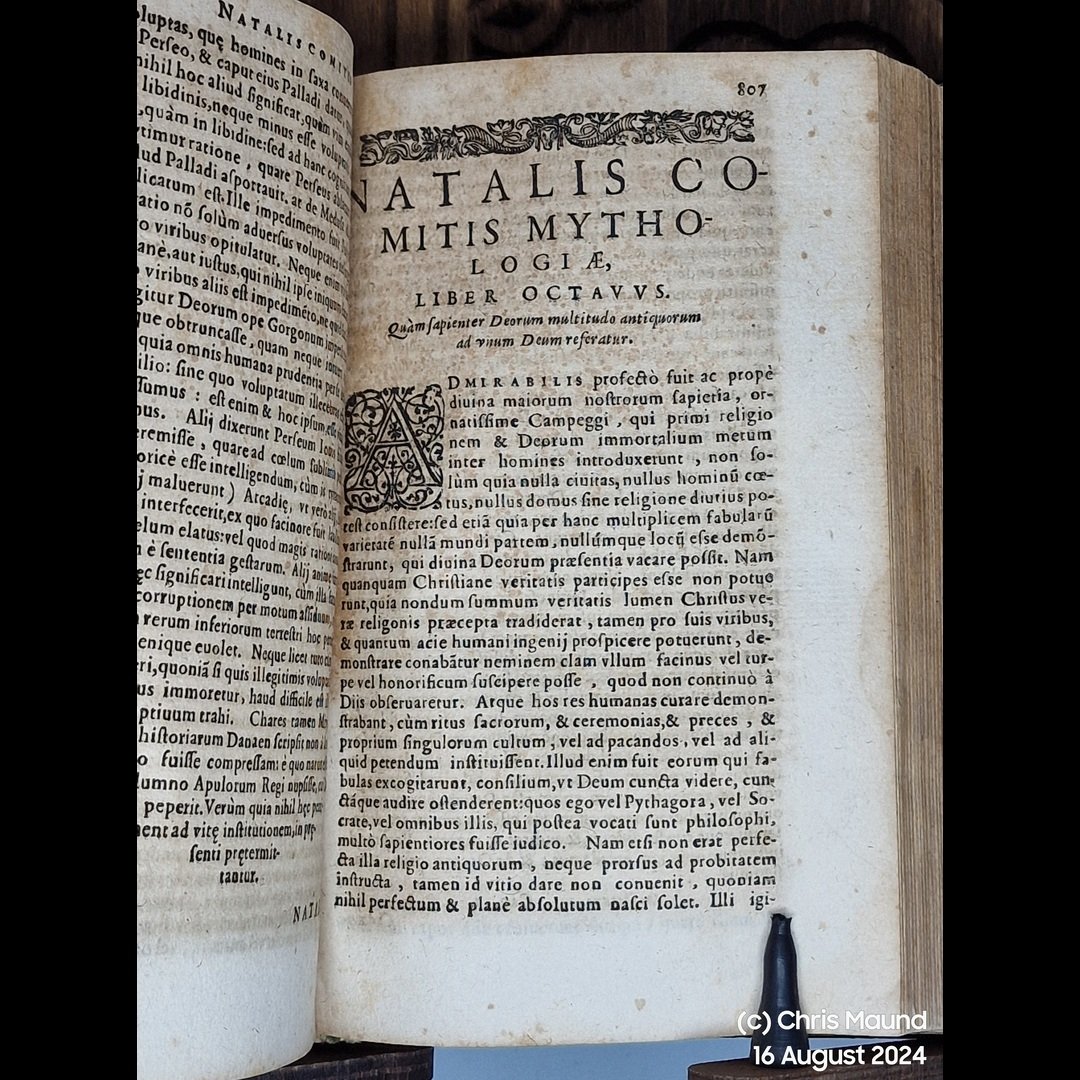 Image 20 of 29
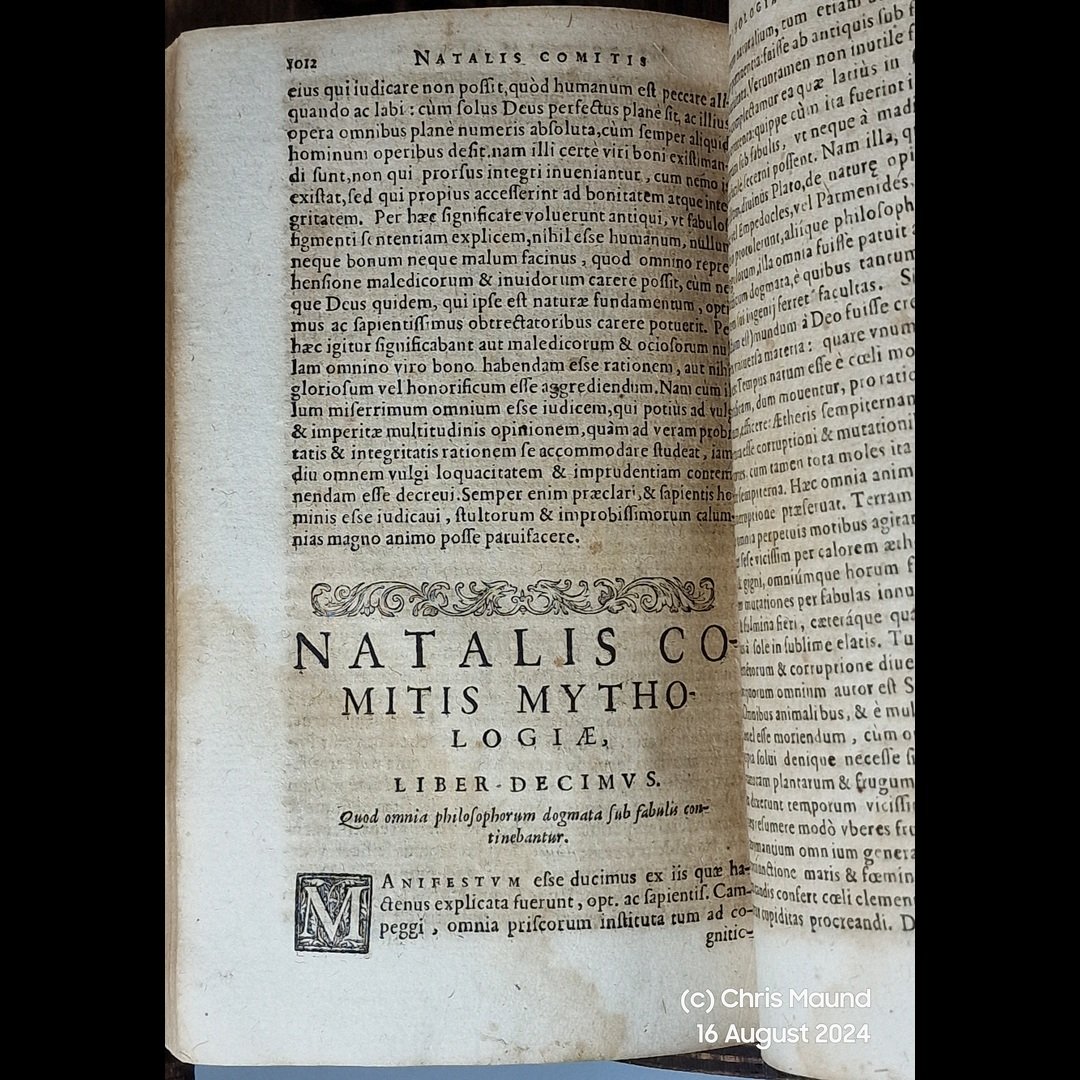 Image 21 of 29
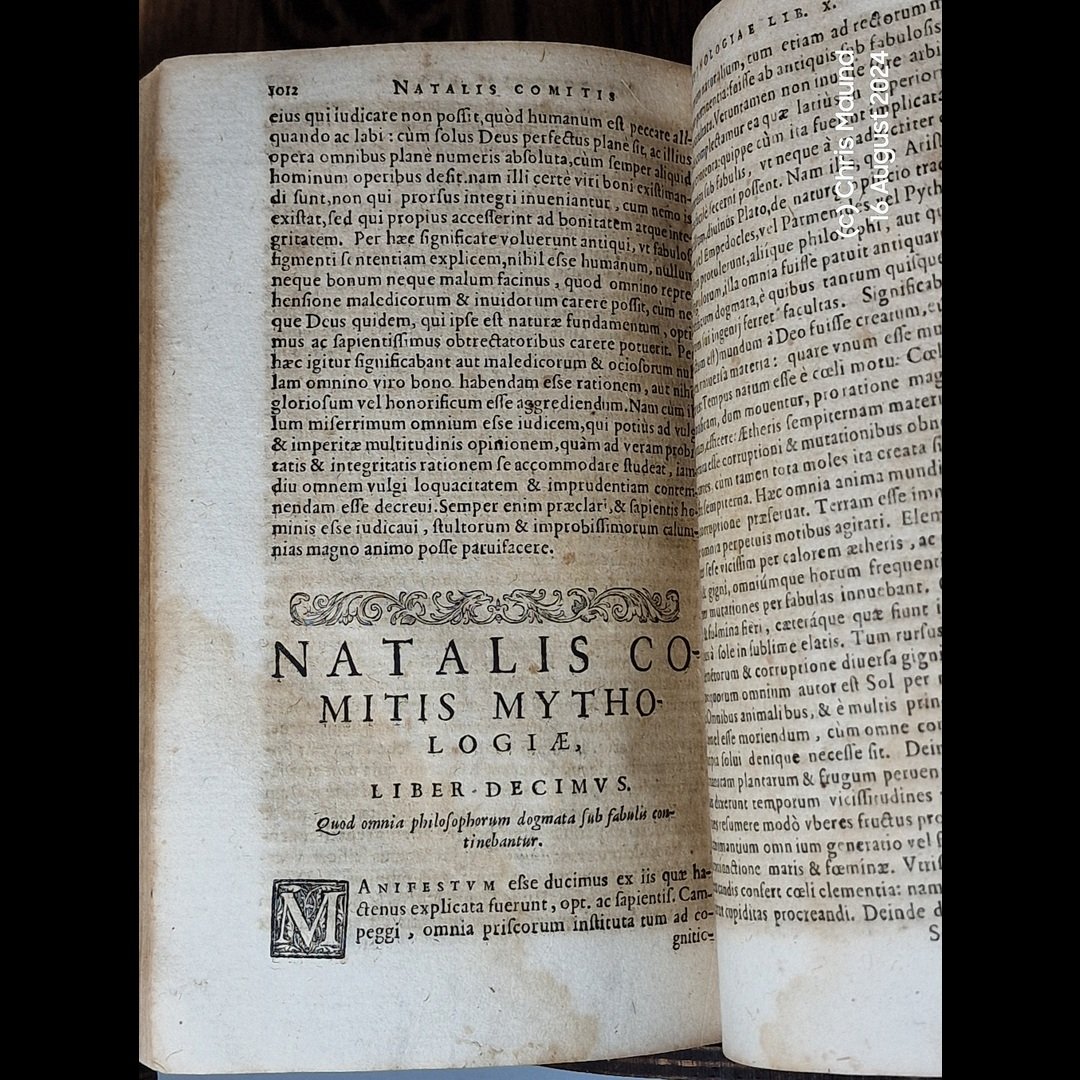 Image 22 of 29
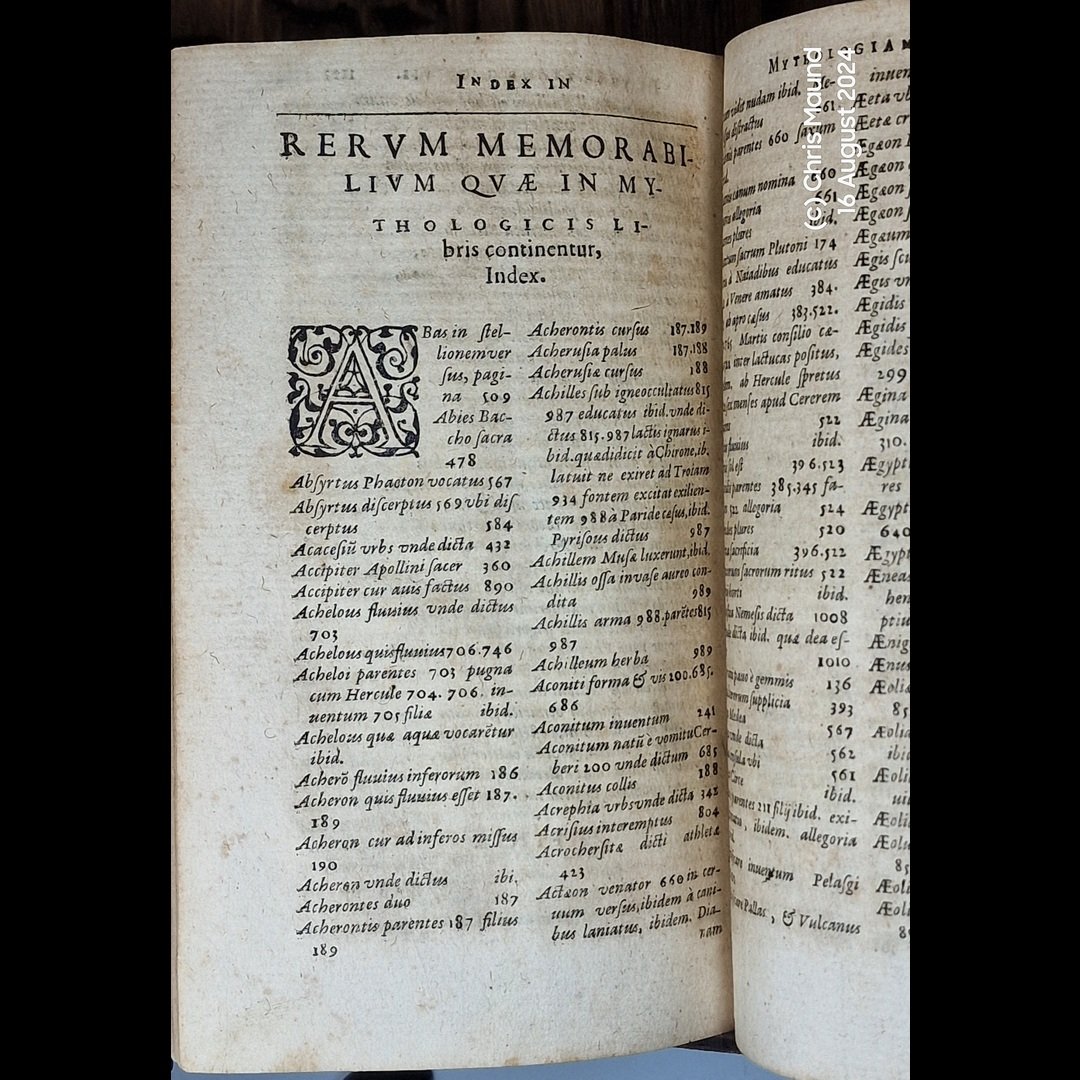 Image 23 of 29
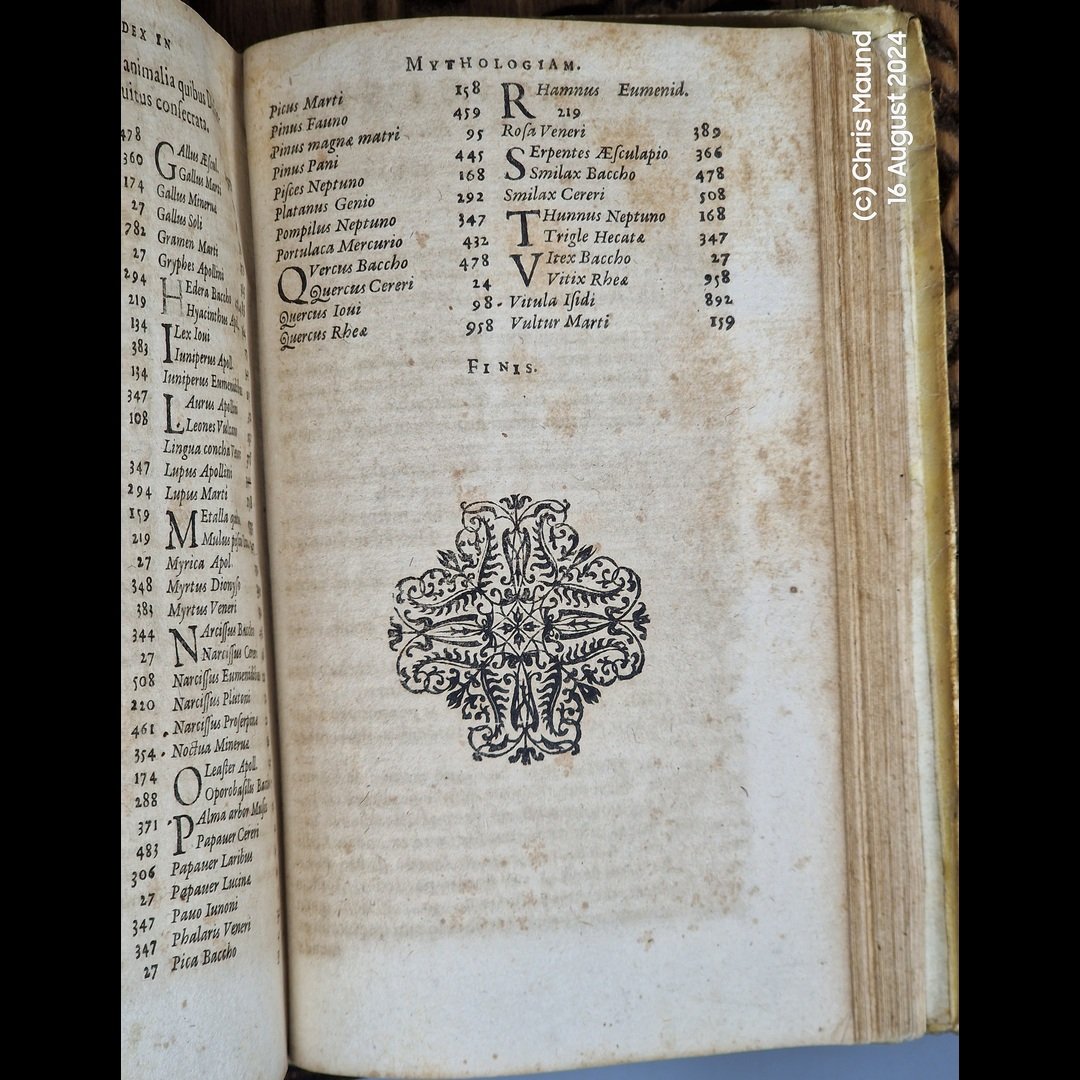 Image 24 of 29
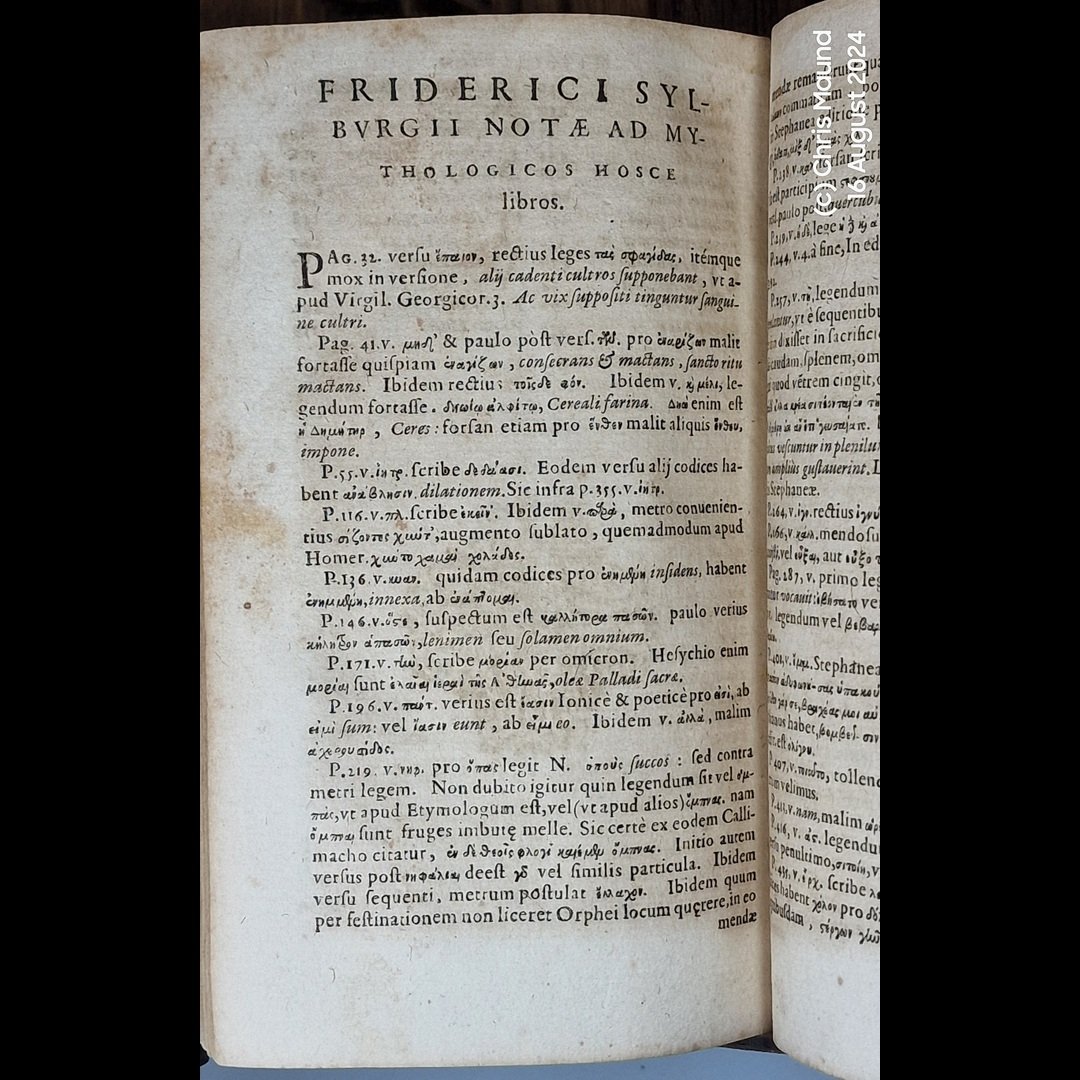 Image 25 of 29
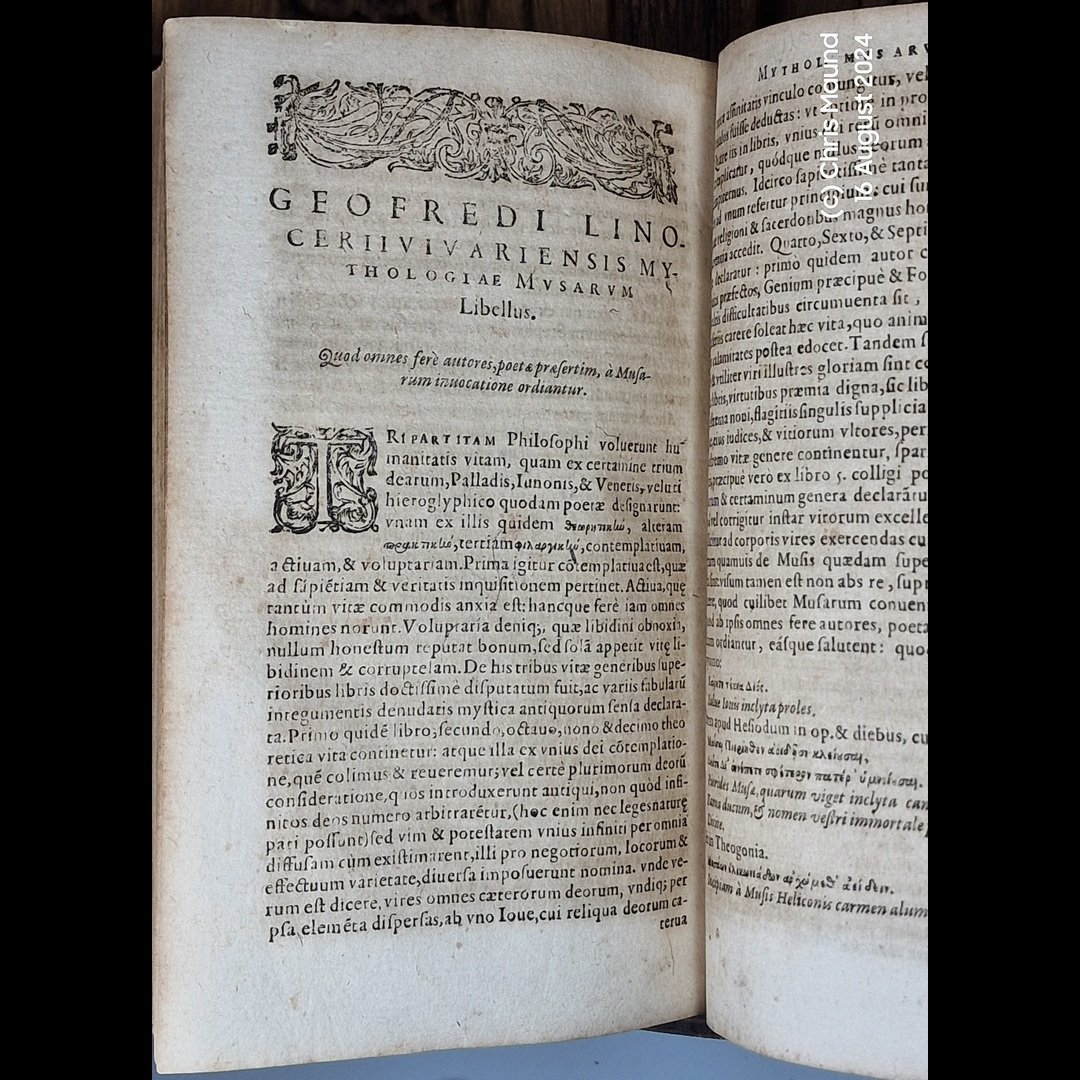 Image 26 of 29
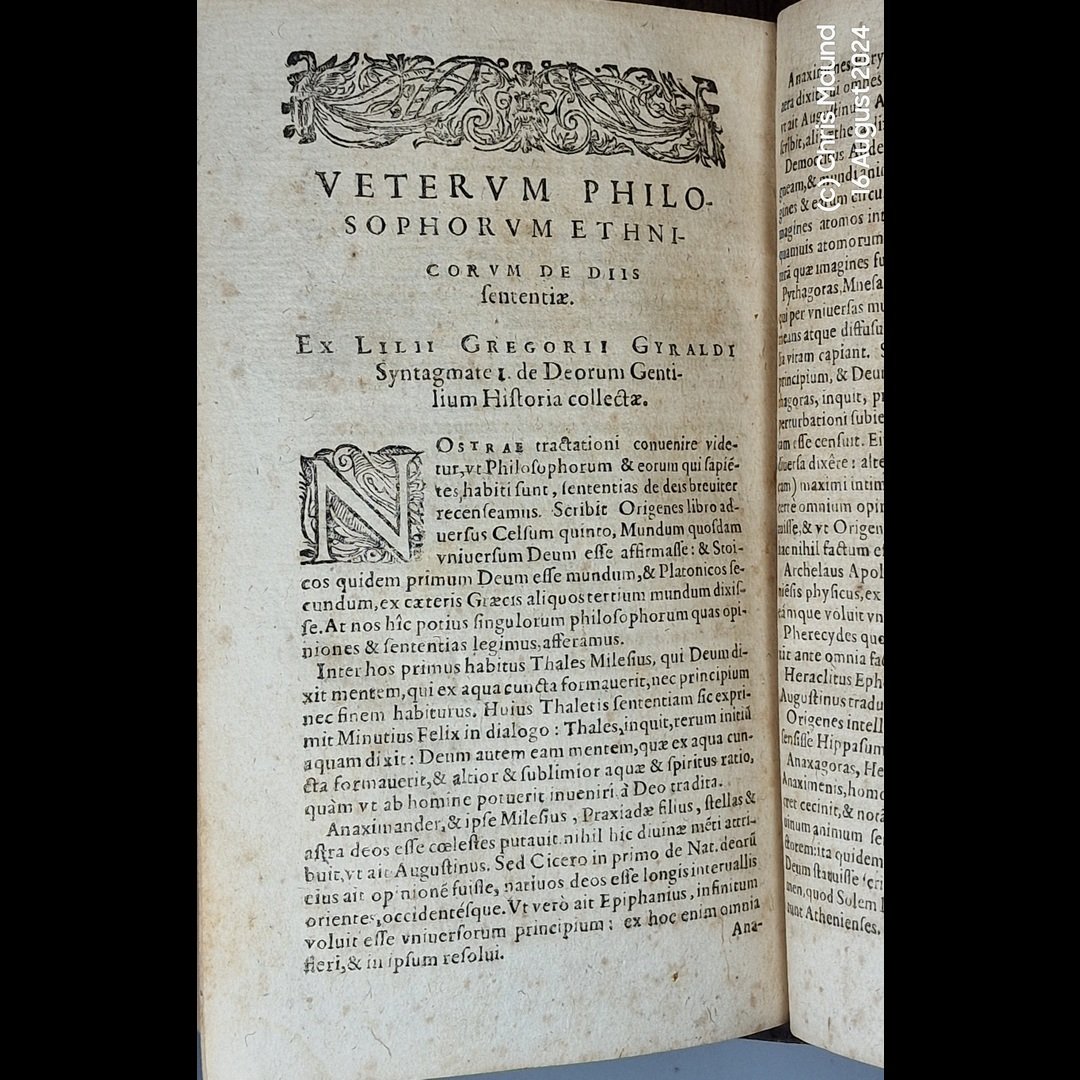 Image 27 of 29
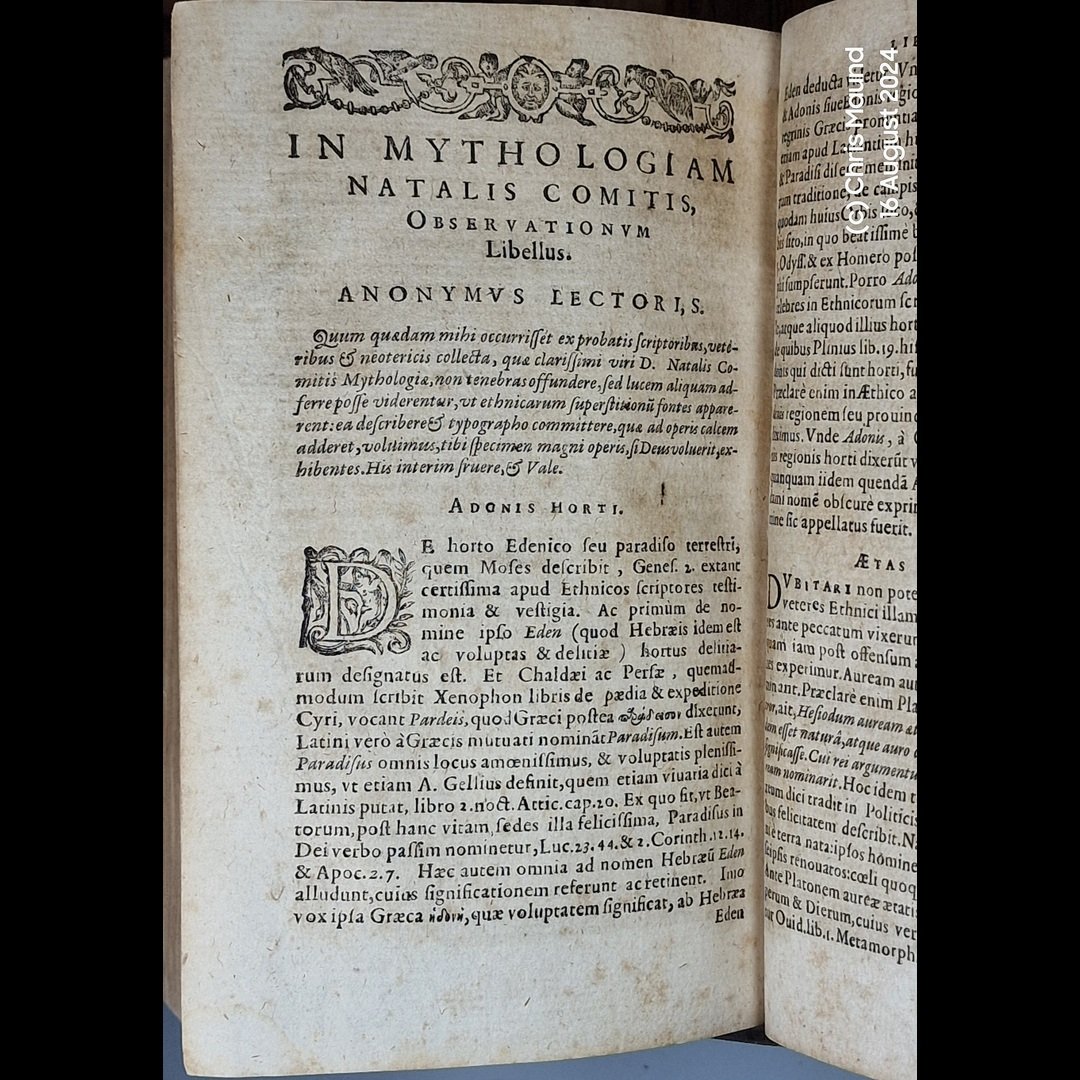 Image 28 of 29
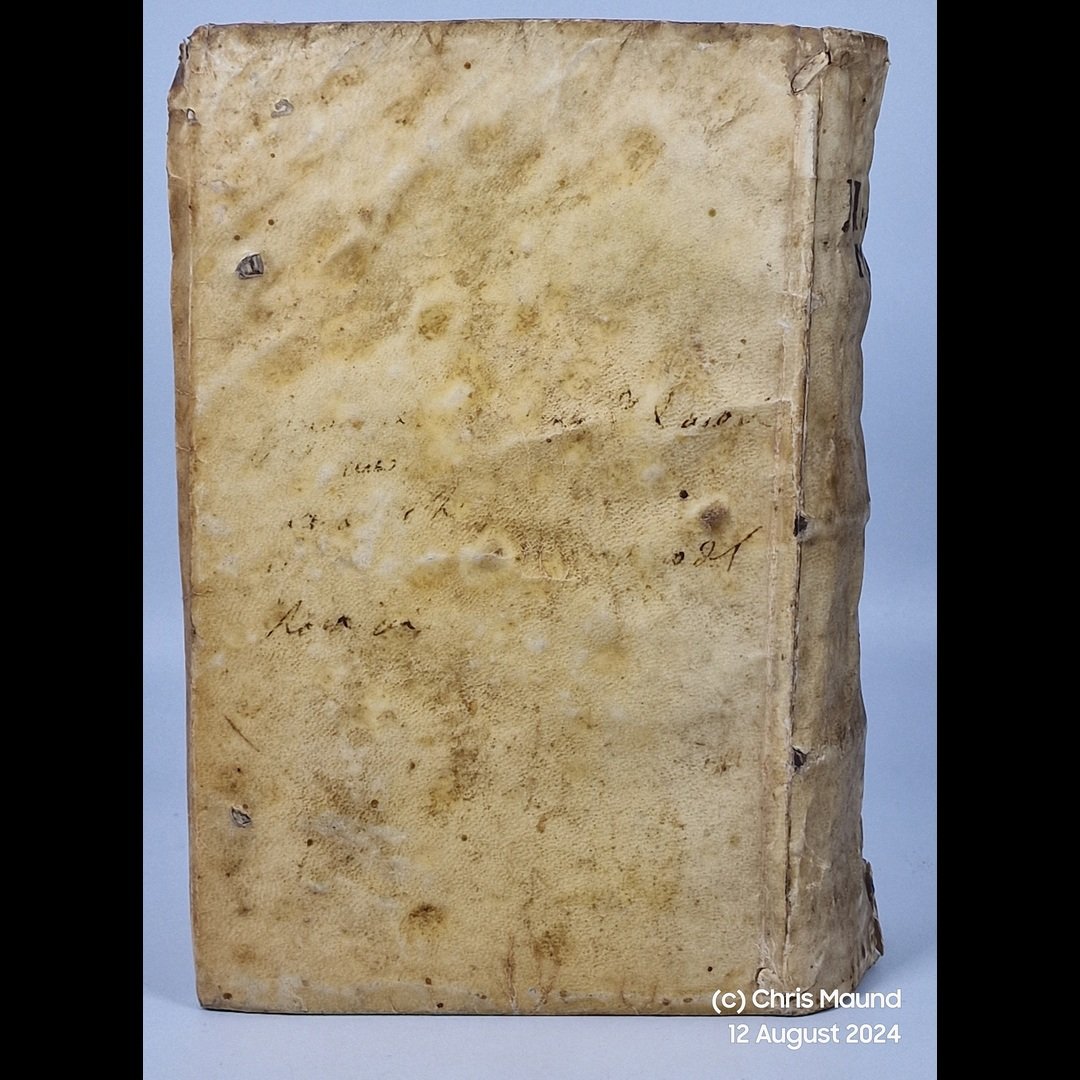 Image 29 of 29