1597 Greek–Latin Edition With Provenance
OPERUM ARISTOTELIS
By Aristotle
Edited by Julius Pacius / Giulio Pace
KEY DETAILS
Condition: Very Good
Format: Contemporary blind-tooled pigskin over boards, Octavo (Standard) (8vo 6 × 9 in 152 × 229 mm )
Note: Binding/size selection follows standard bibliographic conventions and is approximate; exact measurements may vary.
Published By: Guillelmus Laemarius, Geneva/Lyon
Bibliographical authorities differ over the place of printing. The Bibliothèque de Genève records the edition as Geneva, while a number of Italian and Anglo-American catalogues assign it to Lyon., 1597
Language: Anceint Greel/Latin
Provenance: 1. Early owner or commissioner, unidentified — “C [?] P”, 1601
Collation: Volume I:
Dust Jacket: None, as issued, No Jacket
SKU: BTETM0002446
Shipping Info: Approximate Package Dimensions H: 12.5, L: 30, W: 25 (Units: cm), W: 2Kg
Tracked Shipping, Insurance Coverage as per Customer Request
DESCRIPTION
OPERUM ARISTOTELIS STAGIRITAE PHILOSOPHORUM OMNIUM LONGÈ PRINCIPIS
Two Volumes
Edited by Julius Pacius / Giulio Pace
A handsome and scholarly late-Renaissance edition of the surviving works of Aristotle, printed in parallel Greek and Latin and edited by the distinguished jurist and humanist Julius Pacius, or Giulio Pace.
Published in 1597 by Guillelmus Laemarius, this substantial two-volume octavo presents Aristotle’s works in Greek with facing Latin translation, accompanied by extensive indices and reference material. The edition belongs to the great sixteenth-century humanist programme of recovering, correcting and disseminating the Greek philosophical canon through comparison of Greek texts, earlier printed editions and Latin translations.
Particularly notable in the present copy are its matching contemporary German blind-tooled pigskin bindings, both dated 1601, richly decorated with large Renaissance arabesque panels and portrait-medallion rolls. The latter closely correspond to a documented binding roll associated by the Einbanddatenbank with the Halle workshop of Joachim Linck, depicting classical authors including Julius Caesar, Cicero, Ovid and Virgil together with intervening heraldic devices. As the present bindings are dated 1601, after Joachim Linck's lifetime, the use of the roll points to a later workshop within the same Central German binding tradition, possibly connected with the later Linck family of Halle; a specific attribution to Martin Linck remains unproven and is not asserted here.
The set also has distinguished later provenance from the library of the Lords Sandys at Ombersley Court, Worcestershire, with Lord Sandys armorial bookplates in both volumes, together with earlier ownership inscriptions of “Joh. Goodall” on the title pages. The exact set was subsequently dispersed from the Ombersley Court library.
PROVENANCE
1. Early owner or commissioner, unidentified — “C [?] P”, 1601
Both volumes are stamped with an unidentified ownership cipher incorporating the letters C and P, separated by an ornamental or uncertain character, together with the date 1601.
The placement and form are consistent with contemporary German practice of stamping an owner's initials and binding date on the upper board.
The initials have not been securely identified.
2. Joh. Goodall
Both title pages bear the early ink ownership inscription:
“Joh. Goodall”
The owner has not yet been securely identified. The hand appears earlier than the later Sandys bookplates and is consistent with seventeenth-century ownership.
3. Lords Sandys, Ombersley Court, Worcestershire
Each volume bears the engraved armorial bookplate of Lord Sandys.
The set formed part of the historic library at Ombersley Court, the Worcestershire seat of the Sandys family, whose library was assembled over successive generations.
The exact copy was later catalogued in the dispersal of material from Ombersley Court, where its 1601 blind-stamped pigskin bindings, Goodall inscriptions and Lord Sandys bookplates were specifically recorded.
An unusually attractive provenance chain for a scholarly Renaissance Aristotle.
Acquired directly by Books That Expand The Mind from the dispersal of the Ombersley Court Library, Chorley’s, The September Auctions 2024, 17 September 2024, Lot 125. Purchaser’s invoice retained with the acquisition records.
CONDITION, COLLATION & COPY NOTES
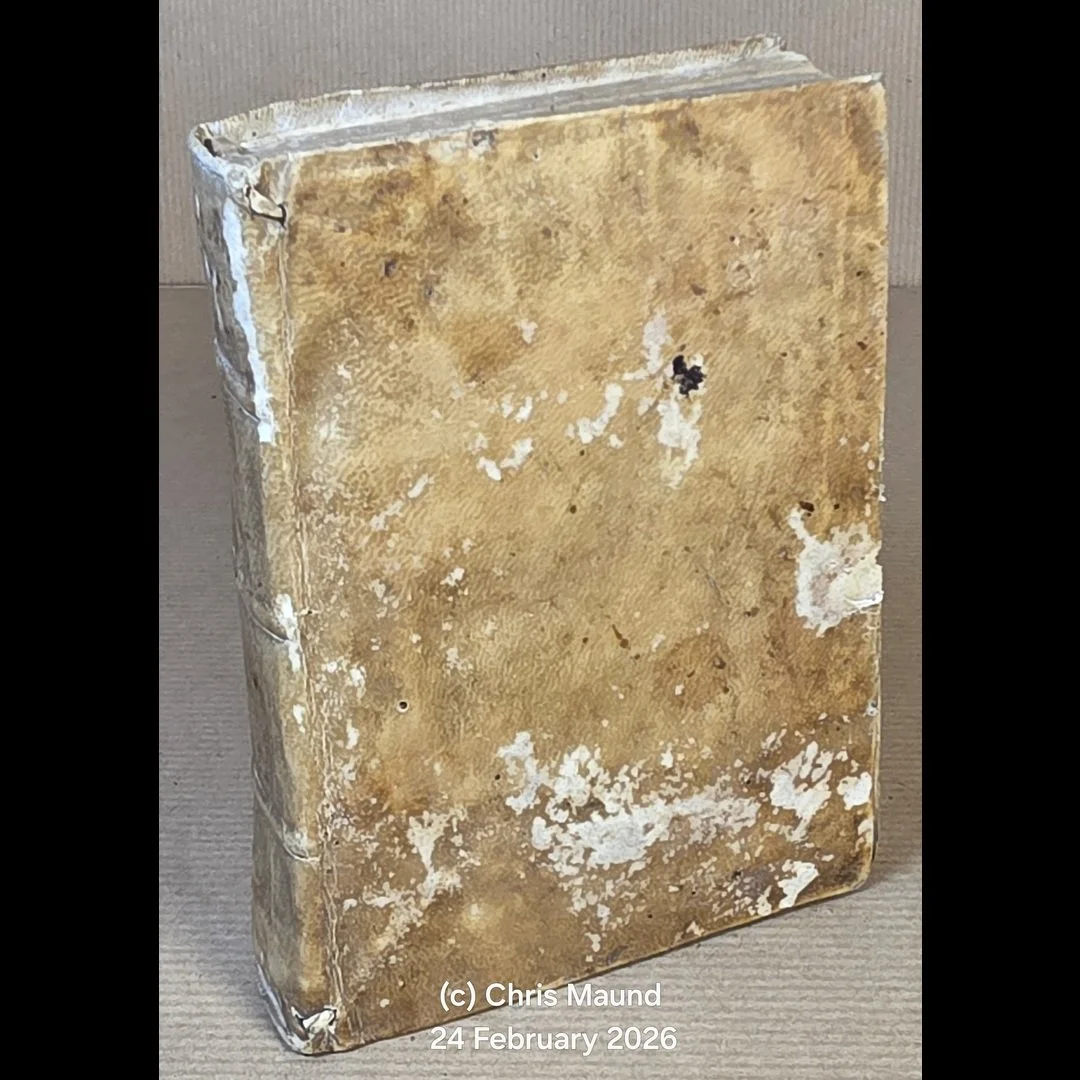
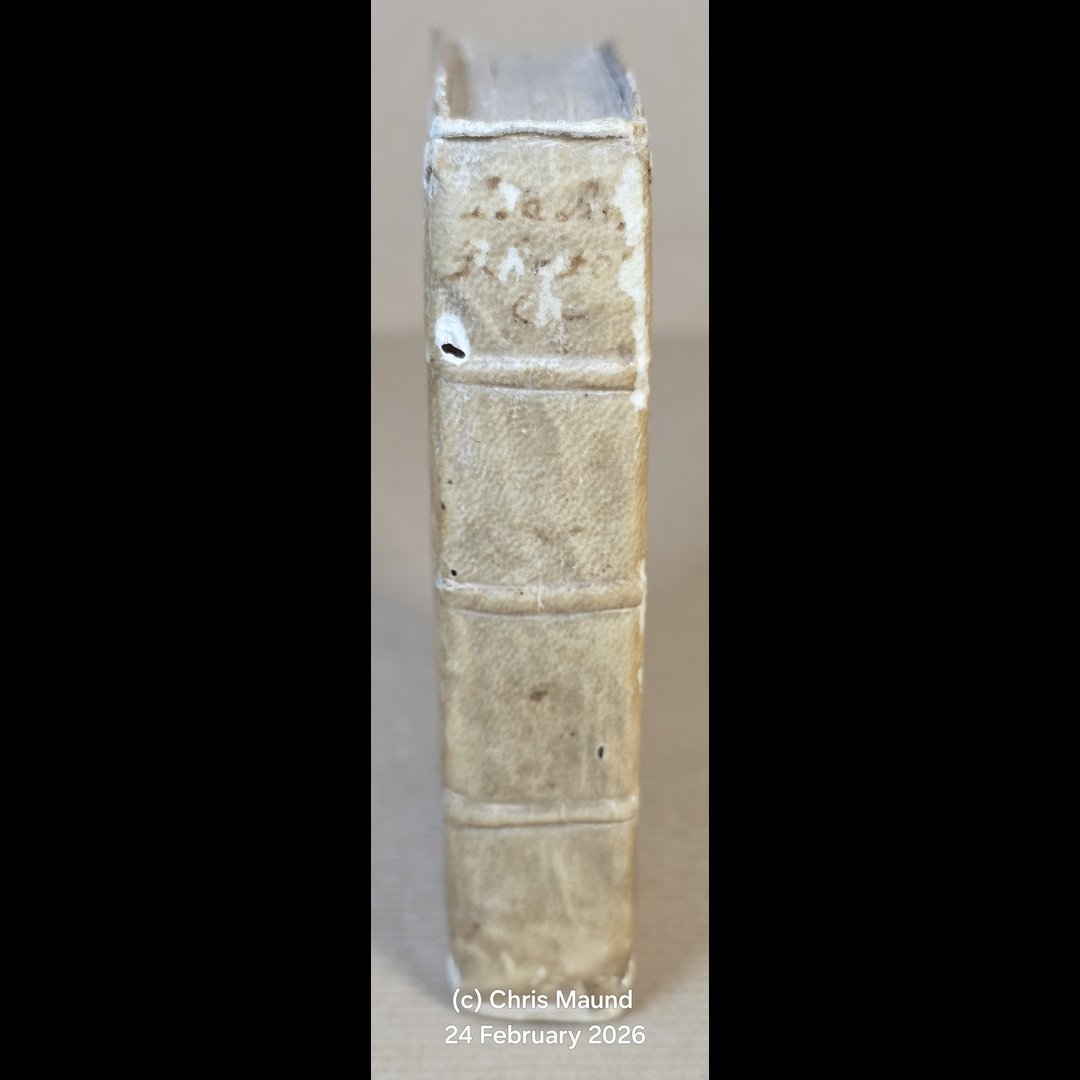
A substantial and attractive matched two-volume set in contemporary blind-tooled pigskin over boards, both bindings dated 1601. Four raised bands to each spine, with early manuscript titling. Boards firmly attached and bindings structurally sound.
The covers are extensively decorated in blind with multiple ornamental rolls surrounding a large central Renaissance arabesque or mauresque panel. The outer portrait-medallion roll incorporates classical heads with identifying legends and heraldic devices and closely corresponds to a tool associated in the Einbanddatenbank with the Halle workshop of Joachim Linck.
Both bindings bear an unidentified early ownership cipher consisting of the letters C [ornamental or uncertain central character] P, together with the date 1601, probably representing the initials or ownership mark of the original commissioner of the bindings rather than a binder's signature.
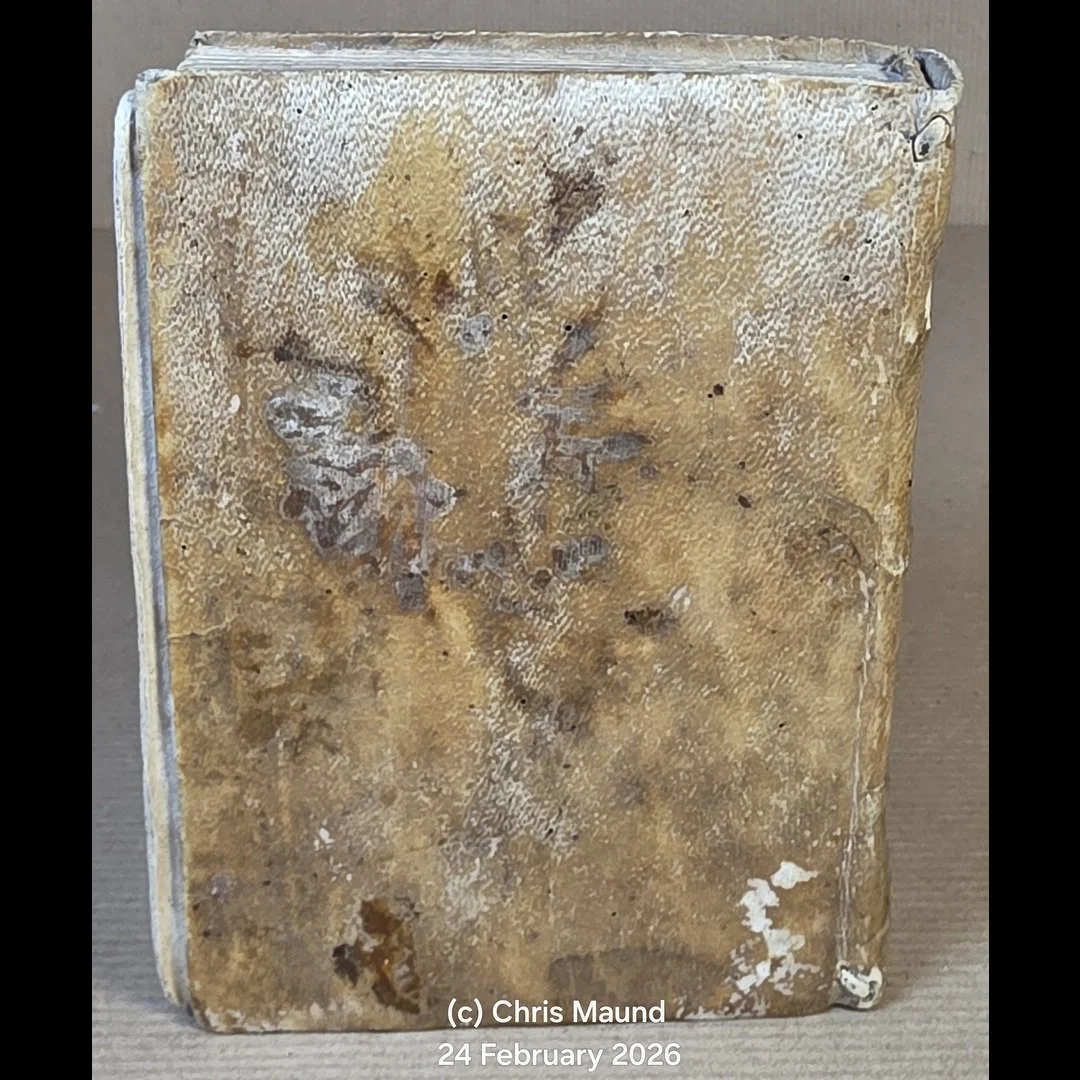
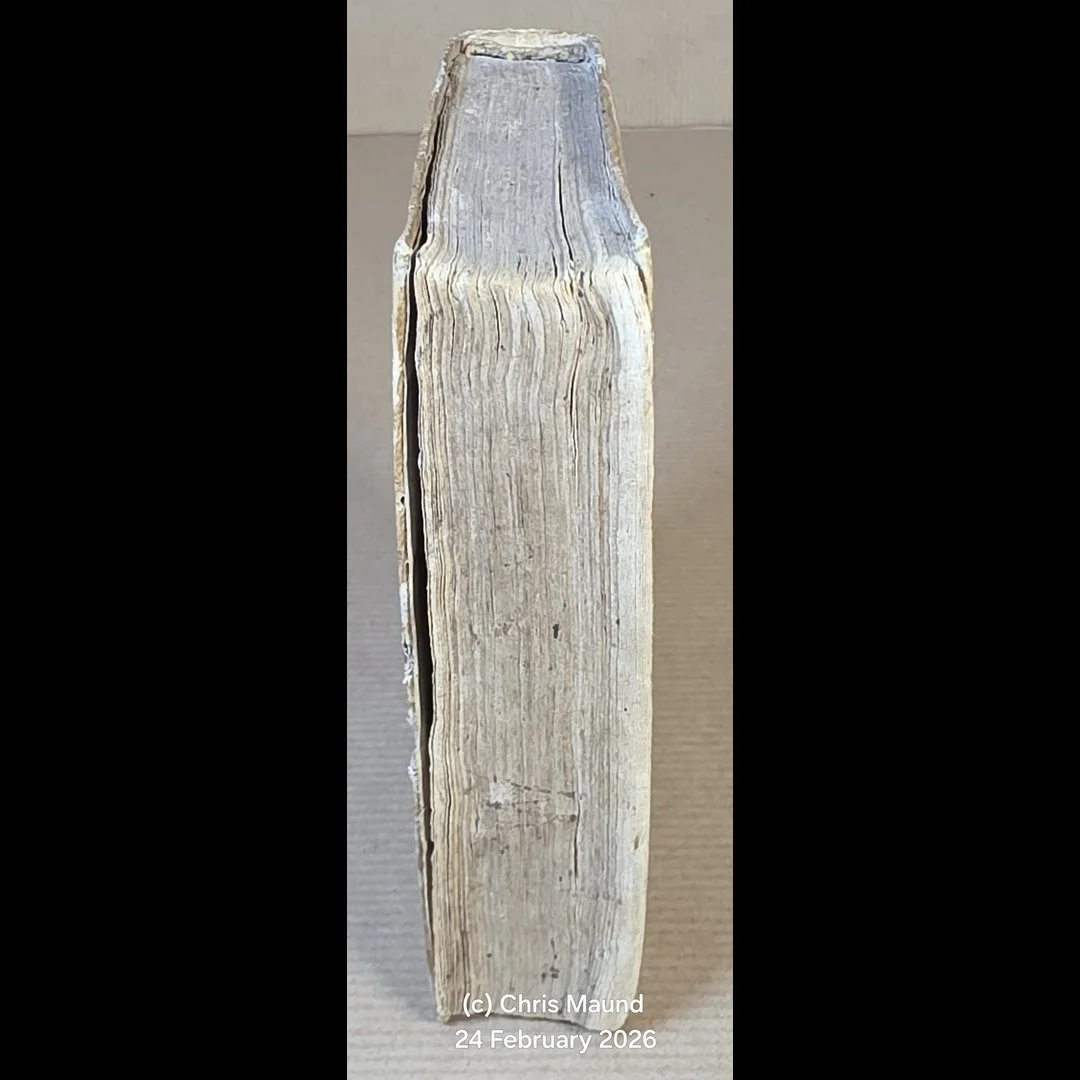
Pigskin with expected age-darkening, marking, rubbing and wear to extremities, together with some longitudinal surface cracking or splitting. The blind tooling nevertheless remains unusually clear in many areas, with the principal panels, rolls and dated ownership fields still distinctly legible.
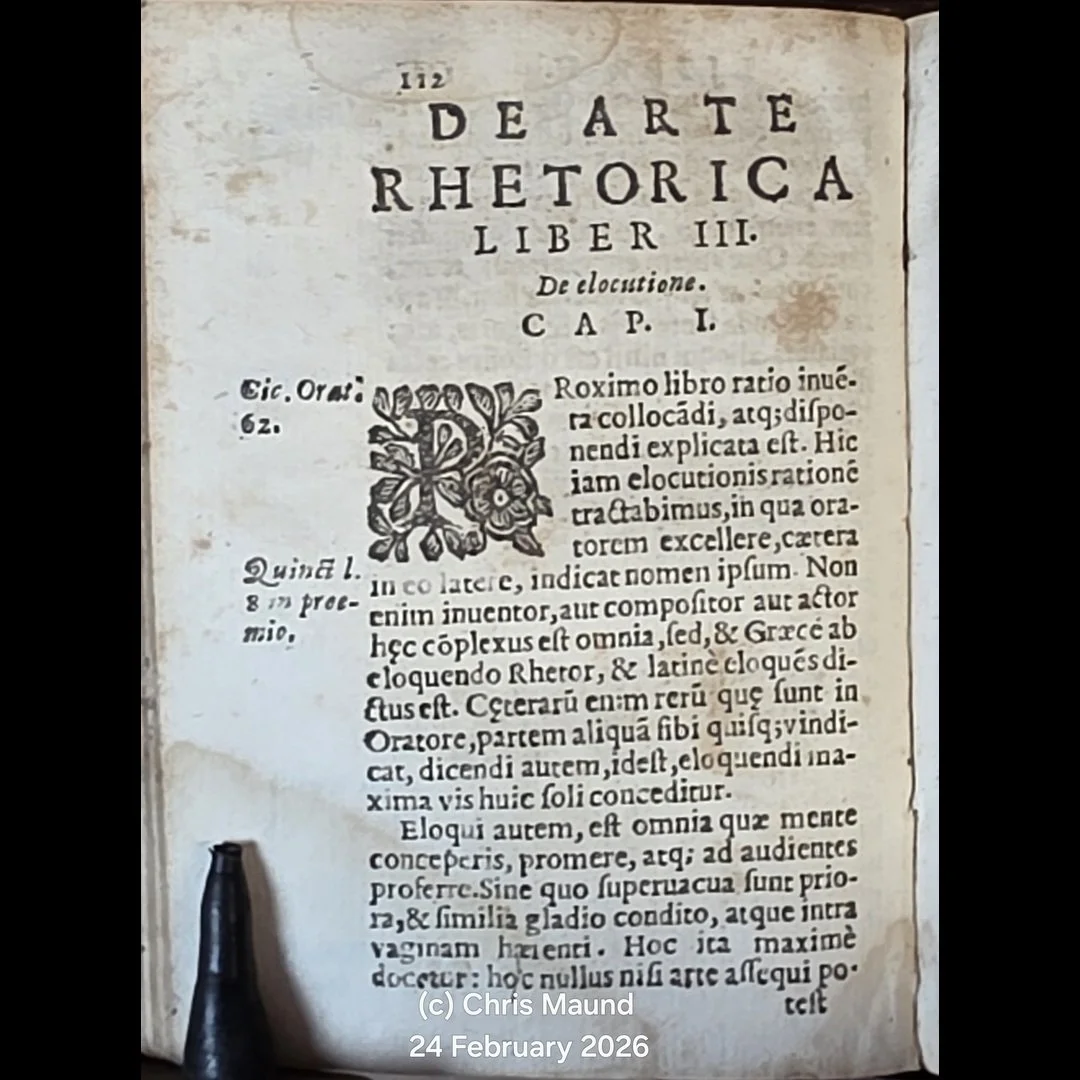
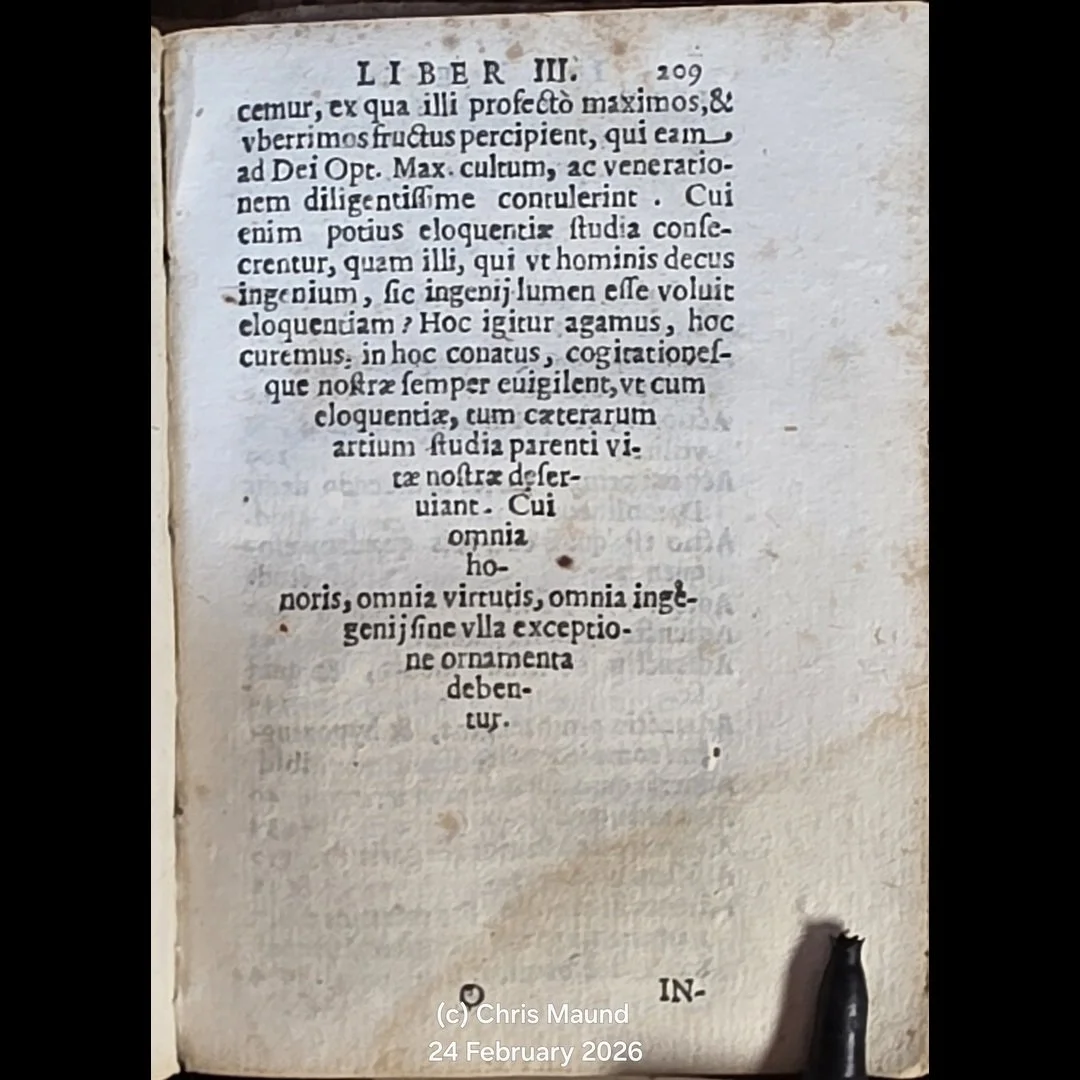
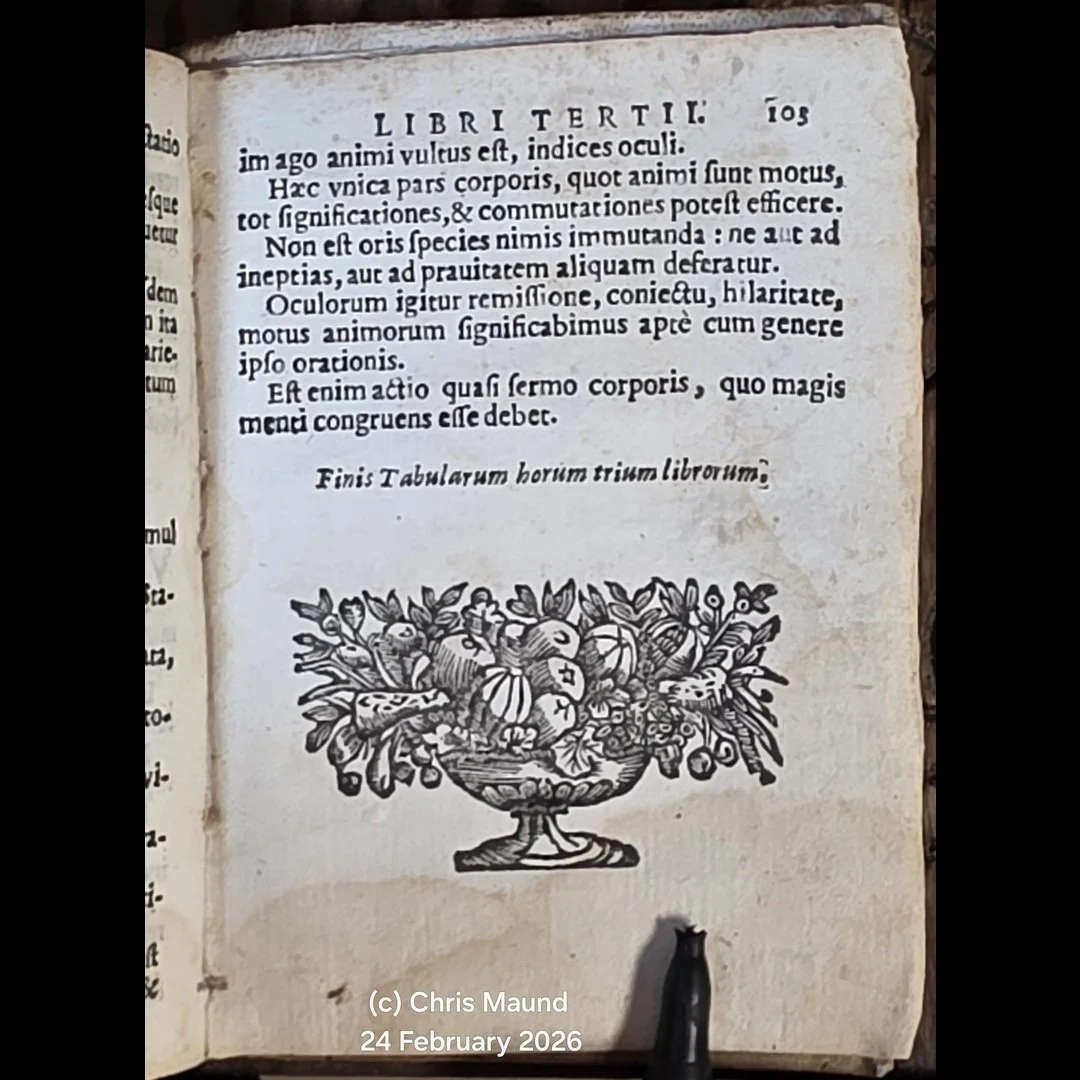
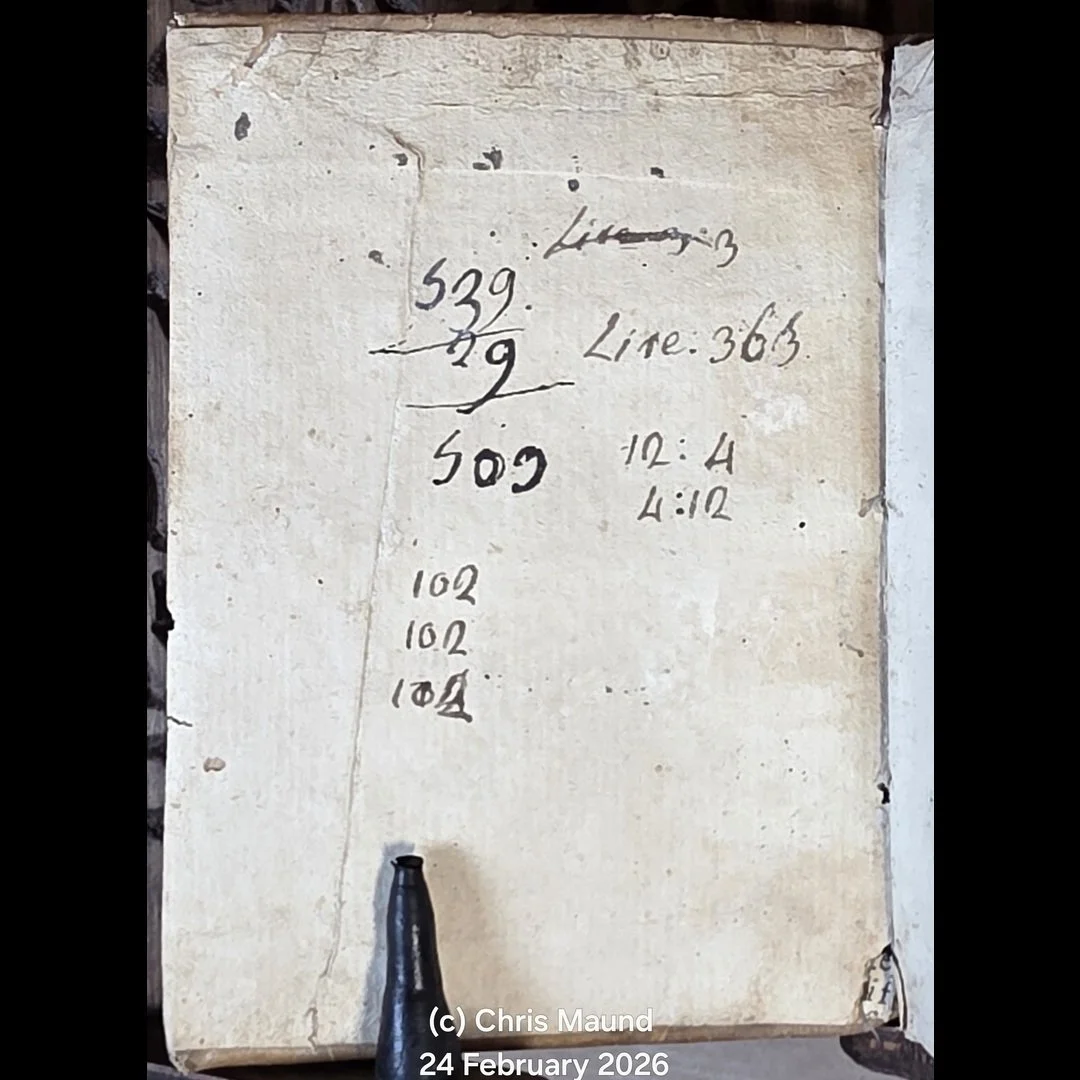
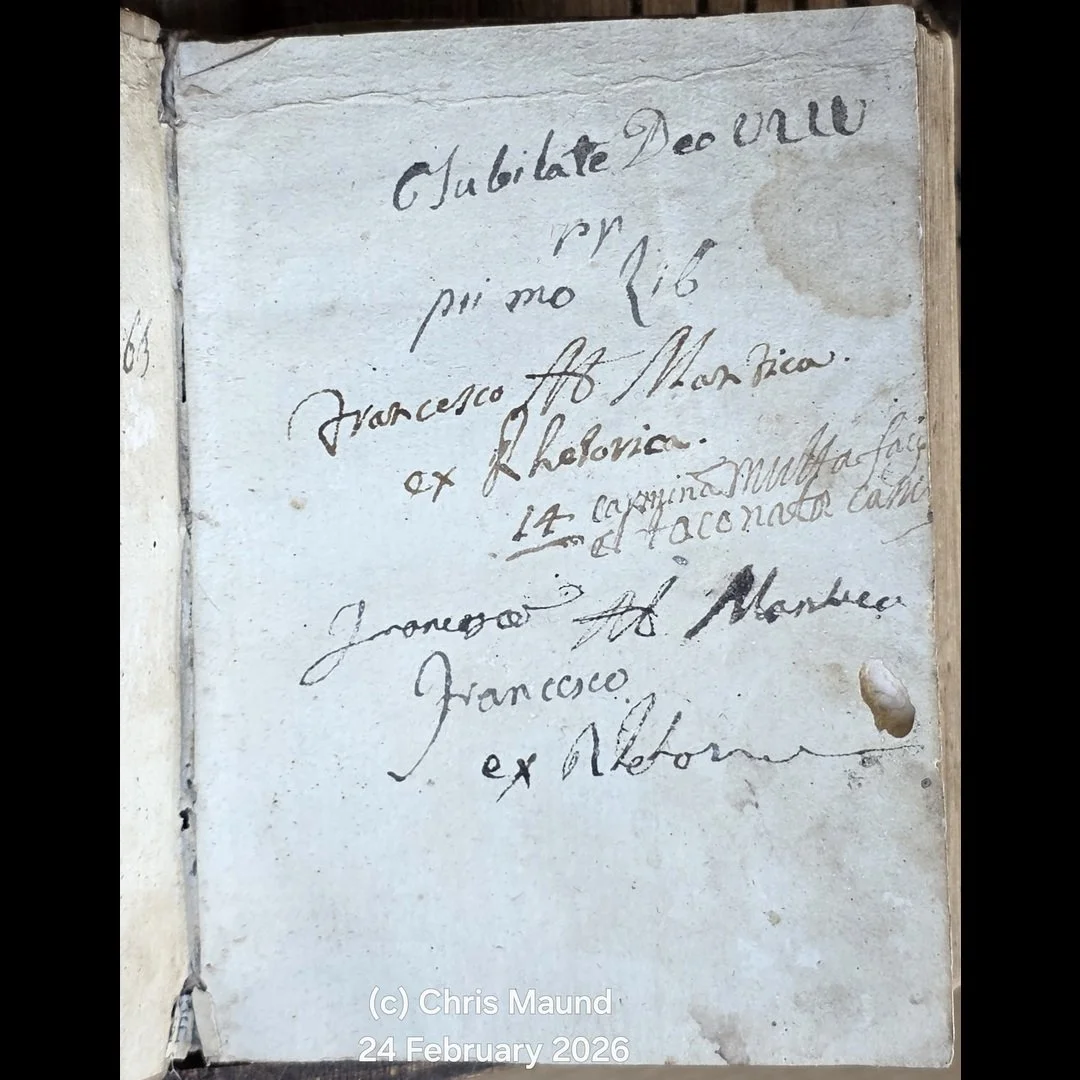
Internally, both volumes remain generally clean and crisp for books of this age, with expected age-toning, scattered spotting and occasional staining. There are scattered early ink marks and marginal annotations consistent with scholarly use.
Some worming is present, particularly towards the final leaves and endmatter of Volume II, largely confined to margins and without significant loss of text observed in the pages examined.
Both title pages are present and retain their elaborate woodcut architectural borders.
A handsome and historically interesting working set, retaining its early bindings and a layered provenance extending from an unidentified early seventeenth-century owner through “Joh. Goodall” to the Lords Sandys at Ombersley Court.
Binding:
The present set is particularly notable for its matching contemporary German blind-tooled pigskin bindings dated 1601.
The central panels comprise an elaborate Renaissance geometric and arabesque design formed around a pointed lozenge and circular interlaced centre, surrounded by foliate and strapwork ornament.
The principal portrait roll incorporates classical heads in medallions. Surviving legends visible on the present bindings are consistent with a sequence including:
Julius Caesar
Marcus Tullius Cicero
Ovidius Naso
Virgilius Maro
interspersed with heraldic devices and ornamental elements.
The roll closely corresponds to Einbanddatenbank r000319, associated with the Halle workshop of Joachim Linck.
Since Joachim Linck died before the 1601 binding date, the tool must have passed into the hands of a later binder or successor workshop. Halle remained an important centre of binding production, and the Linck family continued in the trade into the early seventeenth century. A possible connection with the later Linck-family workshop, including Martin Linck, is under investigation, but the present evidence does not justify a firm named-binder attribution.
The large central arabesque panel also corresponds closely with a recorded Renaissance panel type in the Einbanddatenbank characterised by interlace, strapwork, mauresques and stylised dolphins.
Together, the tooling places the bindings securely within the late-sixteenth-/early-seventeenth-century Central German Renaissance binding tradition.
Please see Photos as part of condition report.
REFERENCES
GLN15-16 3909
WorldCat OCLC 31995827
Index Aureliensis 108.755
Adams A1739
Dibdin I, 315
Schweiger, Handbuch der classischen Bibliographie, p. 51
Bibliothèque de Genève / e-rara — 1597 edition
Biblioteca Universitaria di Pisa / Biblioteca Nazionale Braidense — PUVE009378
Einbanddatenbank — portrait roll r000319
Chorley's — Ombersley Court Library dispersal
Fritz Juntke, “Die hallische Buchbinderfamilie Linck,” Gutenberg-Jahrbuch 1963, pp. 301–308 — consultation pending
SYNOPSIS
The two volumes gather the surviving corpus traditionally attributed to Aristotle and present the Greek text alongside Latin translation.
The collection spans the principal areas of Aristotelian philosophy:
Logic, including the works traditionally grouped as the Organon;
Natural Philosophy, including the Physics, On the Heavens, Generation and Corruption and related works;
Psychology and Biology, including De Anima and the zoological writings;
Metaphysics, Aristotle's investigation into being, causation, substance and first principles;
Ethics and Politics, including the Nicomachean Ethics and Politics;
Rhetoric and Poetics, addressing persuasion, literary form and dramatic theory.
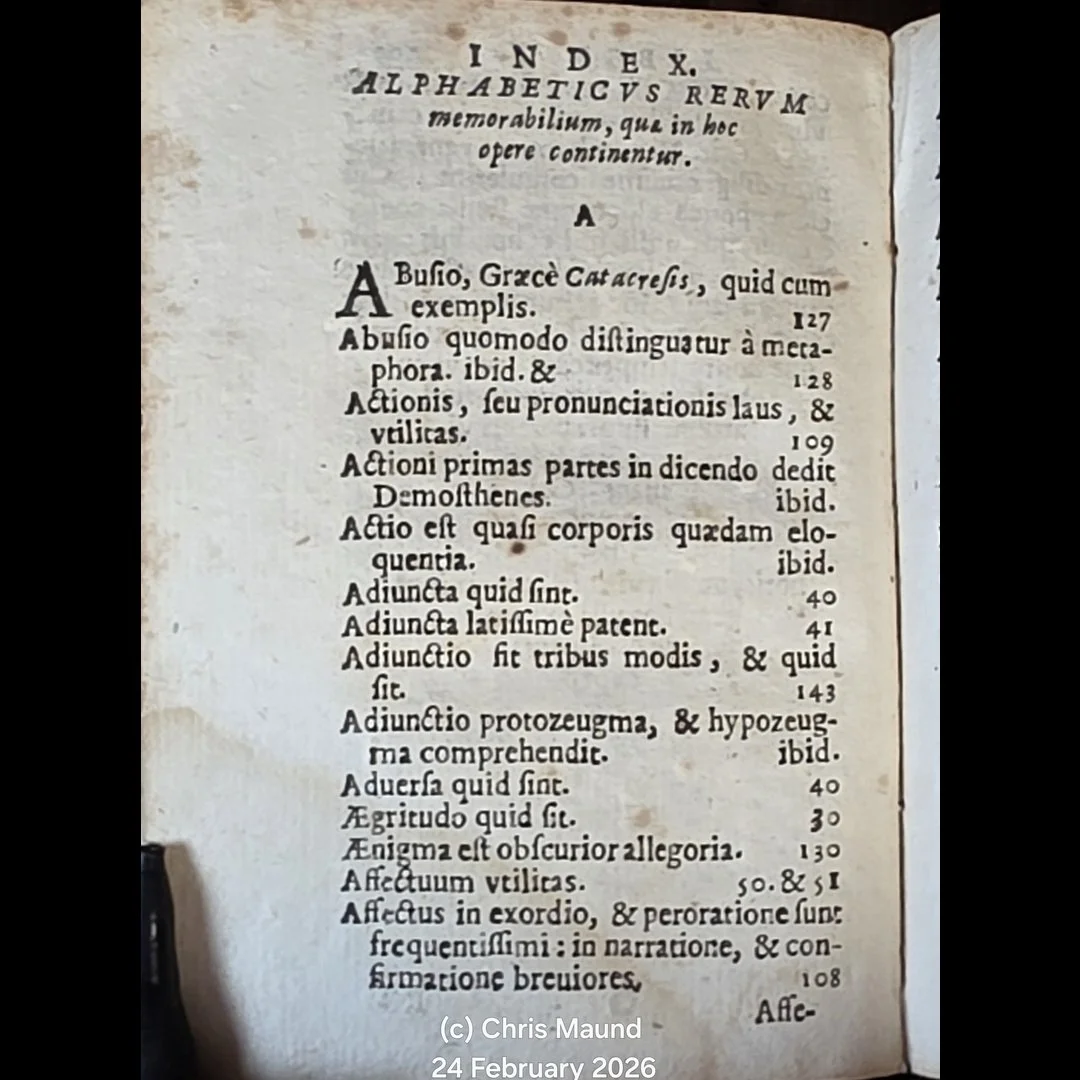
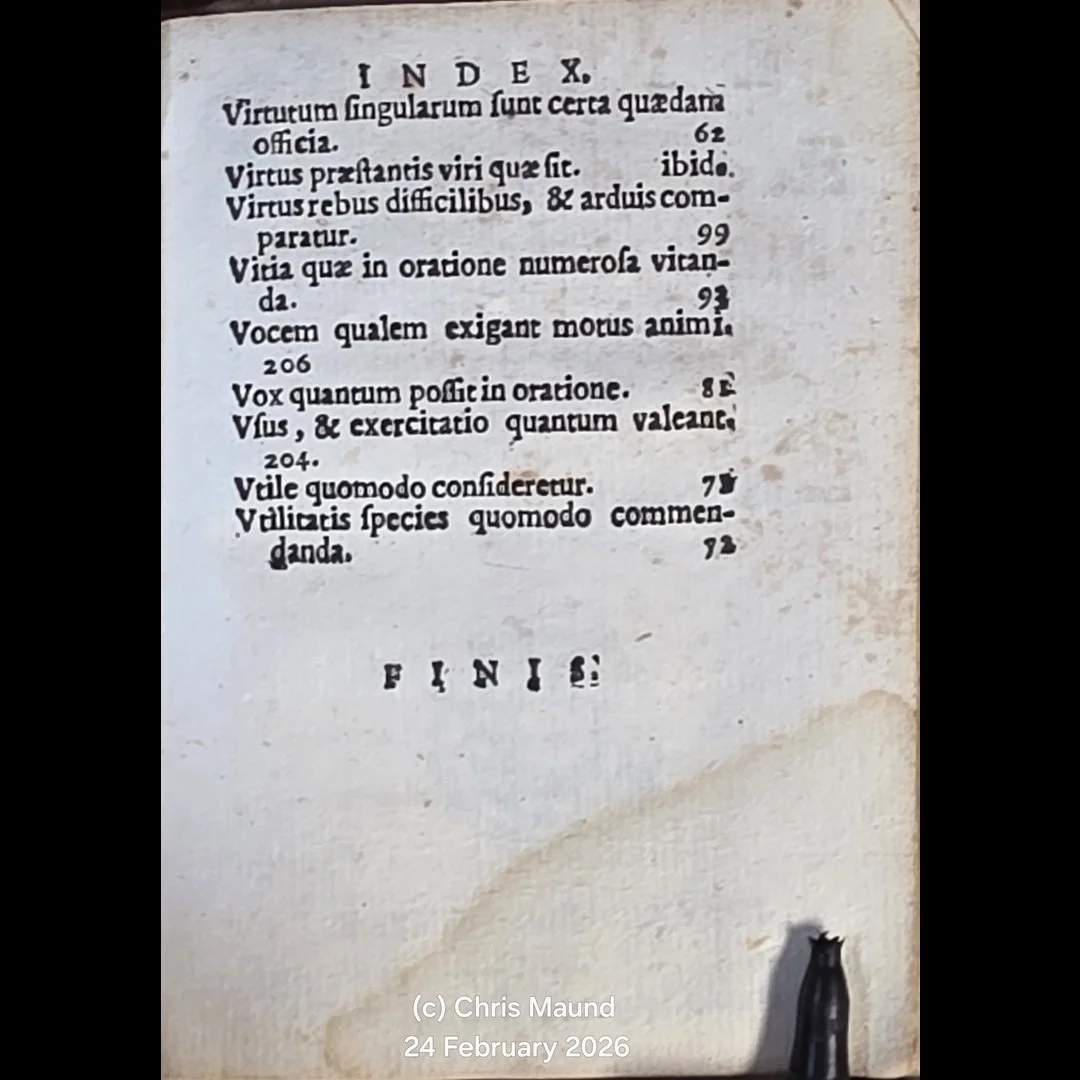
The edition also contains substantial scholarly apparatus and indices, including references to authors who had written on Aristotle, their works and a detailed subject index.
It therefore functioned not merely as a reading text but as a practical scholarly reference edition for the late-Renaissance university and learned library.
AUTHOR BIO
Aristotle (384–322 BC) was one of the most influential philosophers of the ancient world and a foundational figure in Western intellectual history.
A pupil of Plato and later tutor to Alexander the Great, Aristotle wrote across an extraordinary range of subjects including logic, metaphysics, ethics, politics, rhetoric, poetics, natural philosophy, zoology, psychology and epistemology.
His surviving works formed the core of philosophical and scientific study throughout the medieval and Renaissance periods, shaping Islamic, Jewish and Christian scholastic traditions as well as the development of early modern science and humanism.
The sixteenth-century recovery and printing of Aristotle in Greek formed a central part of Renaissance scholarship, as editors sought to move beyond medieval Latin translations and return directly to the Greek text.
Editor Bio:
Julius Pacius, also known as Giulio Pace or Julius Pacius a Beriga (1550–1635), was an Italian jurist, philosopher and humanist scholar.
Born in Vicenza, he became one of the leading Protestant Italian scholars of his generation and taught law and philosophy at several European universities.
Pacius produced important editions and commentaries on Aristotle and worked extensively with the Greek philosophical text. His editorial activity formed part of the late-sixteenth-century effort to establish more accurate Greek texts alongside revised Latin translations.
His Aristotle editions were influential in the scholarly and university world of the later Renaissance.
1597 Greek–Latin Edition With Provenance
OPERUM ARISTOTELIS
By Aristotle
Edited by Julius Pacius / Giulio Pace
KEY DETAILS
Condition: Very Good
Format: Contemporary blind-tooled pigskin over boards, Octavo (Standard) (8vo 6 × 9 in 152 × 229 mm )
Note: Binding/size selection follows standard bibliographic conventions and is approximate; exact measurements may vary.
Published By: Guillelmus Laemarius, Geneva/Lyon
Bibliographical authorities differ over the place of printing. The Bibliothèque de Genève records the edition as Geneva, while a number of Italian and Anglo-American catalogues assign it to Lyon., 1597
Language: Anceint Greel/Latin
Provenance: 1. Early owner or commissioner, unidentified — “C [?] P”, 1601
Collation: Volume I:
Dust Jacket: None, as issued, No Jacket
SKU: BTETM0002446
Shipping Info: Approximate Package Dimensions H: 12.5, L: 30, W: 25 (Units: cm), W: 2Kg
Tracked Shipping, Insurance Coverage as per Customer Request
DESCRIPTION
OPERUM ARISTOTELIS STAGIRITAE PHILOSOPHORUM OMNIUM LONGÈ PRINCIPIS
Two Volumes
Edited by Julius Pacius / Giulio Pace
A handsome and scholarly late-Renaissance edition of the surviving works of Aristotle, printed in parallel Greek and Latin and edited by the distinguished jurist and humanist Julius Pacius, or Giulio Pace.
Published in 1597 by Guillelmus Laemarius, this substantial two-volume octavo presents Aristotle’s works in Greek with facing Latin translation, accompanied by extensive indices and reference material. The edition belongs to the great sixteenth-century humanist programme of recovering, correcting and disseminating the Greek philosophical canon through comparison of Greek texts, earlier printed editions and Latin translations.
Particularly notable in the present copy are its matching contemporary German blind-tooled pigskin bindings, both dated 1601, richly decorated with large Renaissance arabesque panels and portrait-medallion rolls. The latter closely correspond to a documented binding roll associated by the Einbanddatenbank with the Halle workshop of Joachim Linck, depicting classical authors including Julius Caesar, Cicero, Ovid and Virgil together with intervening heraldic devices. As the present bindings are dated 1601, after Joachim Linck's lifetime, the use of the roll points to a later workshop within the same Central German binding tradition, possibly connected with the later Linck family of Halle; a specific attribution to Martin Linck remains unproven and is not asserted here.
The set also has distinguished later provenance from the library of the Lords Sandys at Ombersley Court, Worcestershire, with Lord Sandys armorial bookplates in both volumes, together with earlier ownership inscriptions of “Joh. Goodall” on the title pages. The exact set was subsequently dispersed from the Ombersley Court library.
PROVENANCE
1. Early owner or commissioner, unidentified — “C [?] P”, 1601
Both volumes are stamped with an unidentified ownership cipher incorporating the letters C and P, separated by an ornamental or uncertain character, together with the date 1601.
The placement and form are consistent with contemporary German practice of stamping an owner's initials and binding date on the upper board.
The initials have not been securely identified.
2. Joh. Goodall
Both title pages bear the early ink ownership inscription:
“Joh. Goodall”
The owner has not yet been securely identified. The hand appears earlier than the later Sandys bookplates and is consistent with seventeenth-century ownership.
3. Lords Sandys, Ombersley Court, Worcestershire
Each volume bears the engraved armorial bookplate of Lord Sandys.
The set formed part of the historic library at Ombersley Court, the Worcestershire seat of the Sandys family, whose library was assembled over successive generations.
The exact copy was later catalogued in the dispersal of material from Ombersley Court, where its 1601 blind-stamped pigskin bindings, Goodall inscriptions and Lord Sandys bookplates were specifically recorded.
An unusually attractive provenance chain for a scholarly Renaissance Aristotle.
Acquired directly by Books That Expand The Mind from the dispersal of the Ombersley Court Library, Chorley’s, The September Auctions 2024, 17 September 2024, Lot 125. Purchaser’s invoice retained with the acquisition records.
CONDITION, COLLATION & COPY NOTES
A substantial and attractive matched two-volume set in contemporary blind-tooled pigskin over boards, both bindings dated 1601. Four raised bands to each spine, with early manuscript titling. Boards firmly attached and bindings structurally sound.
The covers are extensively decorated in blind with multiple ornamental rolls surrounding a large central Renaissance arabesque or mauresque panel. The outer portrait-medallion roll incorporates classical heads with identifying legends and heraldic devices and closely corresponds to a tool associated in the Einbanddatenbank with the Halle workshop of Joachim Linck.
Both bindings bear an unidentified early ownership cipher consisting of the letters C [ornamental or uncertain central character] P, together with the date 1601, probably representing the initials or ownership mark of the original commissioner of the bindings rather than a binder's signature.
Pigskin with expected age-darkening, marking, rubbing and wear to extremities, together with some longitudinal surface cracking or splitting. The blind tooling nevertheless remains unusually clear in many areas, with the principal panels, rolls and dated ownership fields still distinctly legible.
Internally, both volumes remain generally clean and crisp for books of this age, with expected age-toning, scattered spotting and occasional staining. There are scattered early ink marks and marginal annotations consistent with scholarly use.
Some worming is present, particularly towards the final leaves and endmatter of Volume II, largely confined to margins and without significant loss of text observed in the pages examined.
Both title pages are present and retain their elaborate woodcut architectural borders.
A handsome and historically interesting working set, retaining its early bindings and a layered provenance extending from an unidentified early seventeenth-century owner through “Joh. Goodall” to the Lords Sandys at Ombersley Court.
Binding:
The present set is particularly notable for its matching contemporary German blind-tooled pigskin bindings dated 1601.
The central panels comprise an elaborate Renaissance geometric and arabesque design formed around a pointed lozenge and circular interlaced centre, surrounded by foliate and strapwork ornament.
The principal portrait roll incorporates classical heads in medallions. Surviving legends visible on the present bindings are consistent with a sequence including:
Julius Caesar
Marcus Tullius Cicero
Ovidius Naso
Virgilius Maro
interspersed with heraldic devices and ornamental elements.
The roll closely corresponds to Einbanddatenbank r000319, associated with the Halle workshop of Joachim Linck.
Since Joachim Linck died before the 1601 binding date, the tool must have passed into the hands of a later binder or successor workshop. Halle remained an important centre of binding production, and the Linck family continued in the trade into the early seventeenth century. A possible connection with the later Linck-family workshop, including Martin Linck, is under investigation, but the present evidence does not justify a firm named-binder attribution.
The large central arabesque panel also corresponds closely with a recorded Renaissance panel type in the Einbanddatenbank characterised by interlace, strapwork, mauresques and stylised dolphins.
Together, the tooling places the bindings securely within the late-sixteenth-/early-seventeenth-century Central German Renaissance binding tradition.
Please see Photos as part of condition report.
REFERENCES
GLN15-16 3909
WorldCat OCLC 31995827
Index Aureliensis 108.755
Adams A1739
Dibdin I, 315
Schweiger, Handbuch der classischen Bibliographie, p. 51
Bibliothèque de Genève / e-rara — 1597 edition
Biblioteca Universitaria di Pisa / Biblioteca Nazionale Braidense — PUVE009378
Einbanddatenbank — portrait roll r000319
Chorley's — Ombersley Court Library dispersal
Fritz Juntke, “Die hallische Buchbinderfamilie Linck,” Gutenberg-Jahrbuch 1963, pp. 301–308 — consultation pending
SYNOPSIS
The two volumes gather the surviving corpus traditionally attributed to Aristotle and present the Greek text alongside Latin translation.
The collection spans the principal areas of Aristotelian philosophy:
Logic, including the works traditionally grouped as the Organon;
Natural Philosophy, including the Physics, On the Heavens, Generation and Corruption and related works;
Psychology and Biology, including De Anima and the zoological writings;
Metaphysics, Aristotle's investigation into being, causation, substance and first principles;
Ethics and Politics, including the Nicomachean Ethics and Politics;
Rhetoric and Poetics, addressing persuasion, literary form and dramatic theory.
The edition also contains substantial scholarly apparatus and indices, including references to authors who had written on Aristotle, their works and a detailed subject index.
It therefore functioned not merely as a reading text but as a practical scholarly reference edition for the late-Renaissance university and learned library.
AUTHOR BIO
Aristotle (384–322 BC) was one of the most influential philosophers of the ancient world and a foundational figure in Western intellectual history.
A pupil of Plato and later tutor to Alexander the Great, Aristotle wrote across an extraordinary range of subjects including logic, metaphysics, ethics, politics, rhetoric, poetics, natural philosophy, zoology, psychology and epistemology.
His surviving works formed the core of philosophical and scientific study throughout the medieval and Renaissance periods, shaping Islamic, Jewish and Christian scholastic traditions as well as the development of early modern science and humanism.
The sixteenth-century recovery and printing of Aristotle in Greek formed a central part of Renaissance scholarship, as editors sought to move beyond medieval Latin translations and return directly to the Greek text.
Editor Bio:
Julius Pacius, also known as Giulio Pace or Julius Pacius a Beriga (1550–1635), was an Italian jurist, philosopher and humanist scholar.
Born in Vicenza, he became one of the leading Protestant Italian scholars of his generation and taught law and philosophy at several European universities.
Pacius produced important editions and commentaries on Aristotle and worked extensively with the Greek philosophical text. His editorial activity formed part of the late-sixteenth-century effort to establish more accurate Greek texts alongside revised Latin translations.
His Aristotle editions were influential in the scholarly and university world of the later Renaissance.

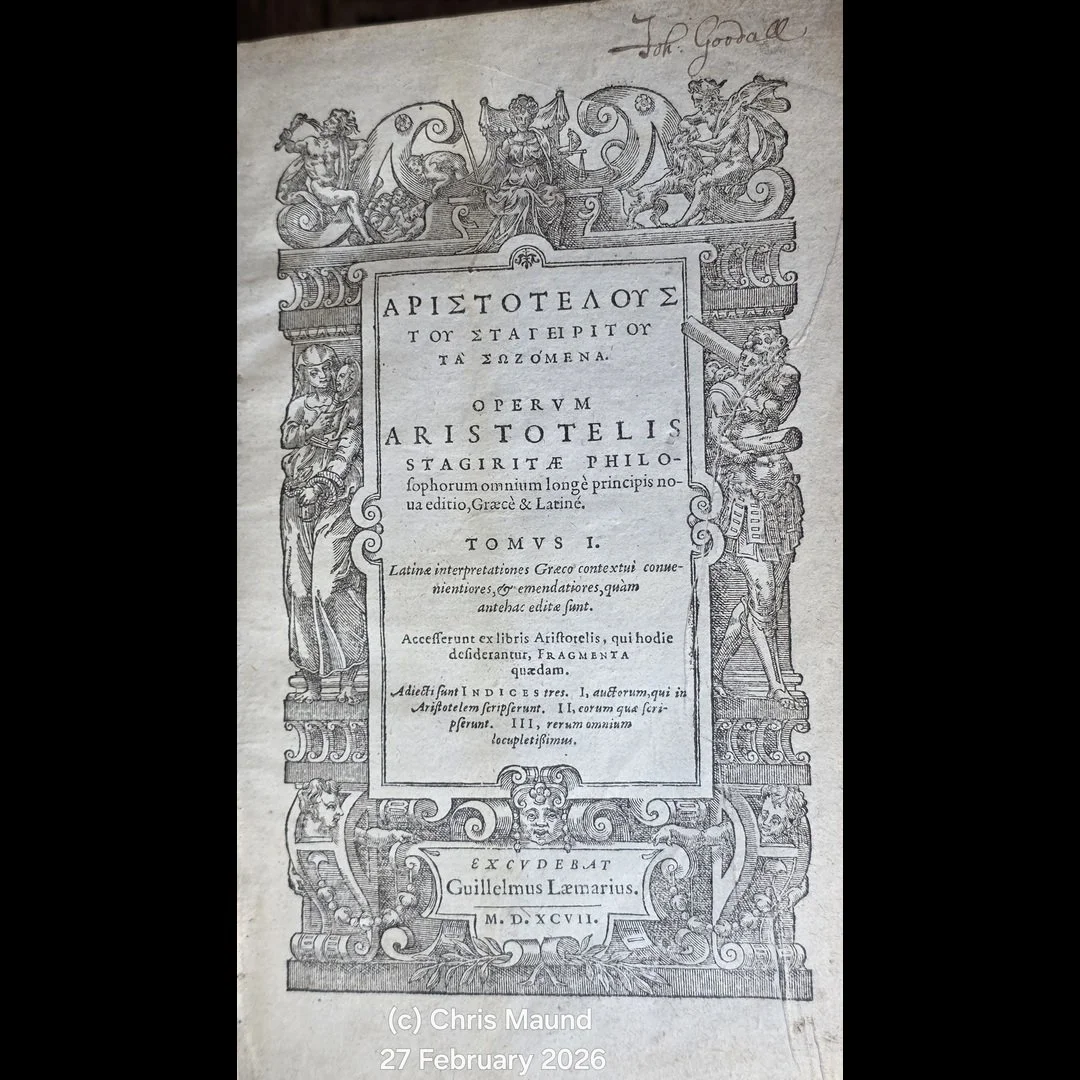 Image 1 of 37
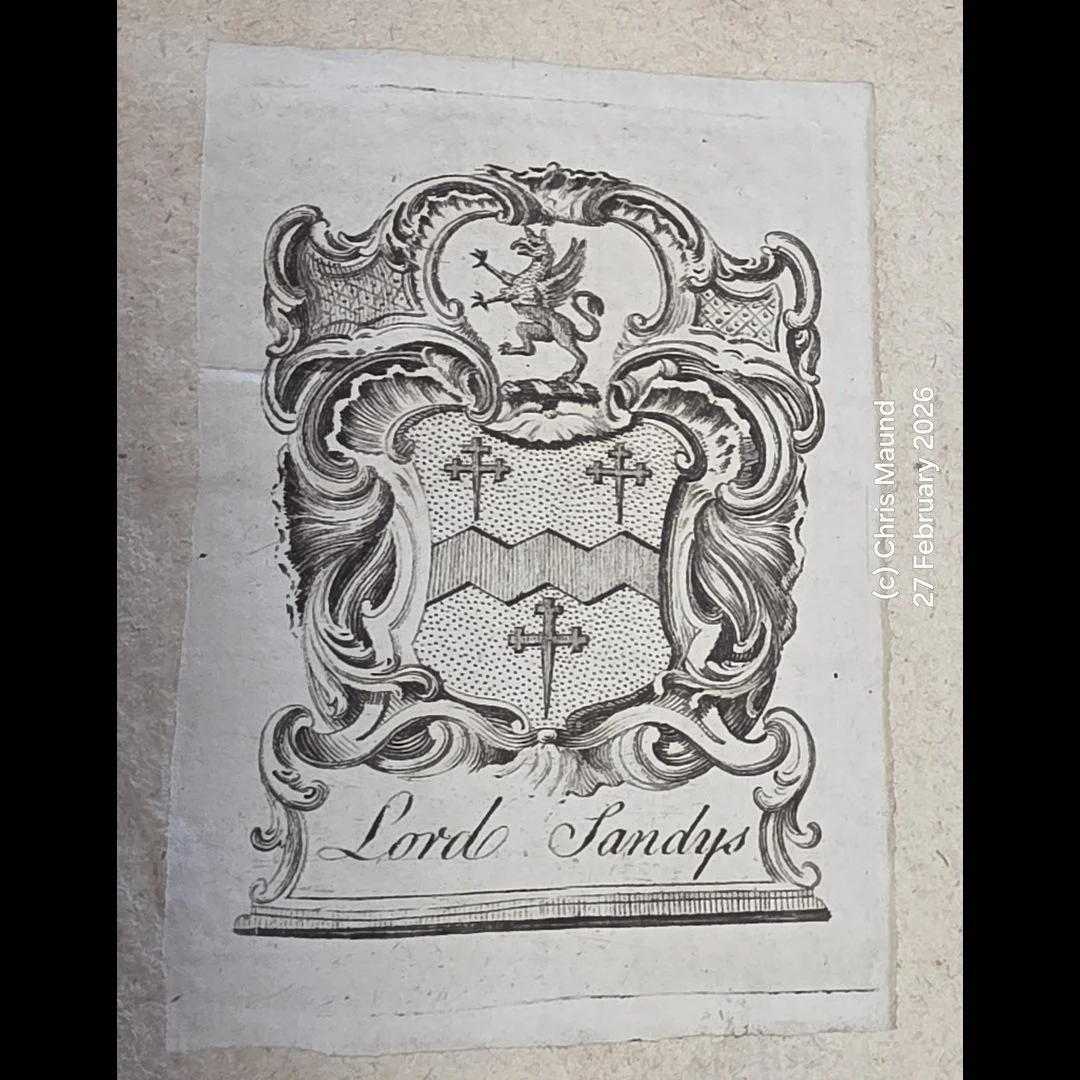 Image 2 of 37
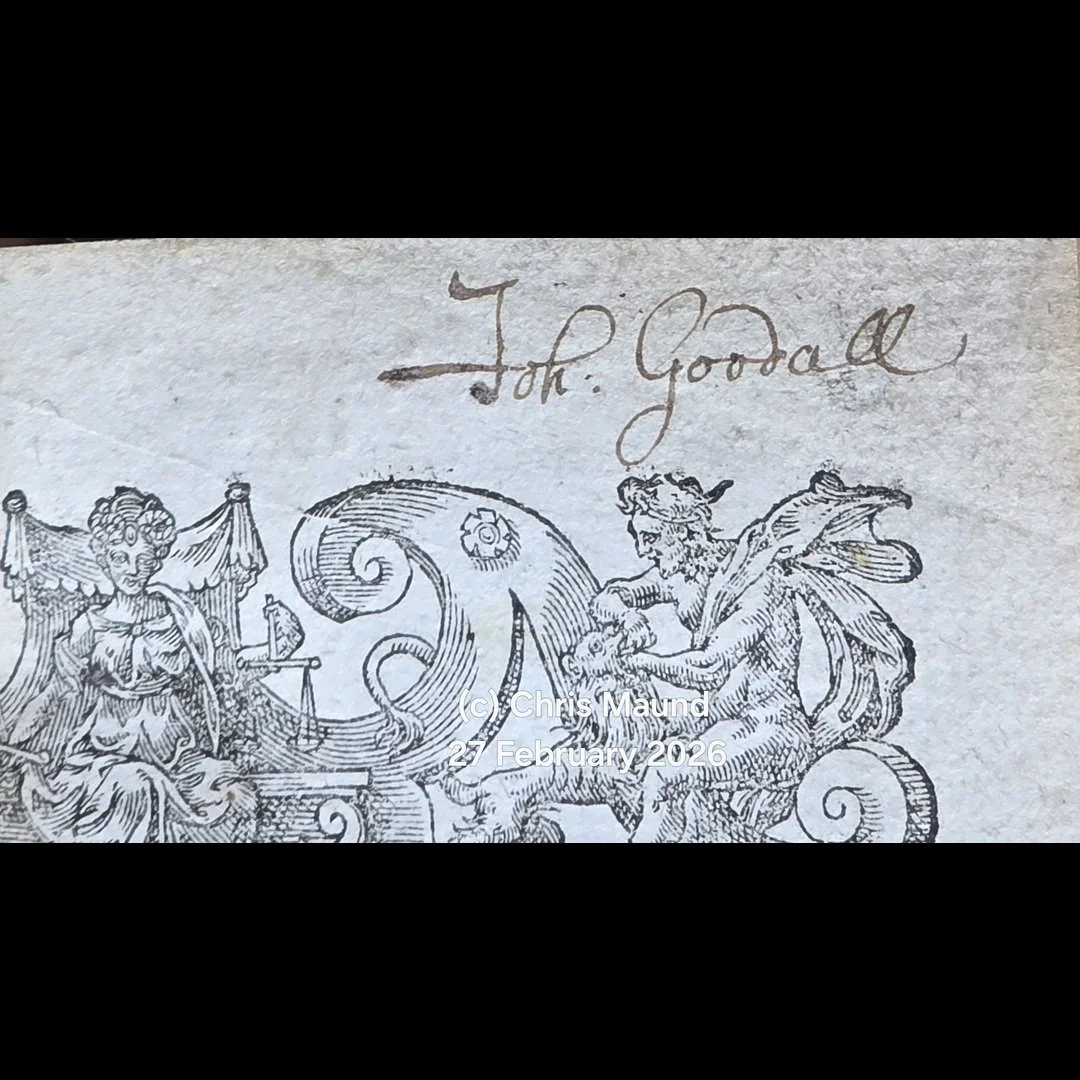 Image 3 of 37
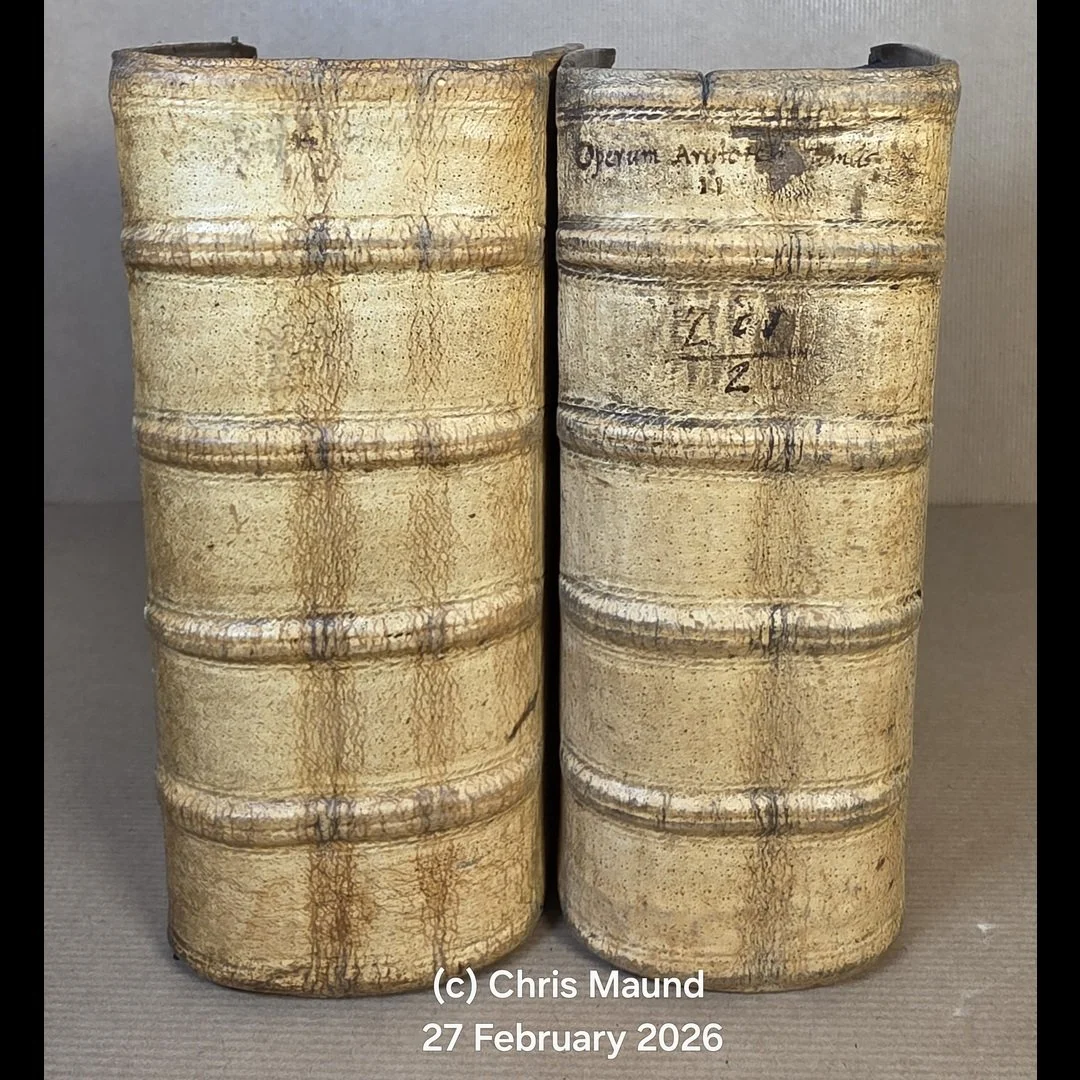 Image 4 of 37
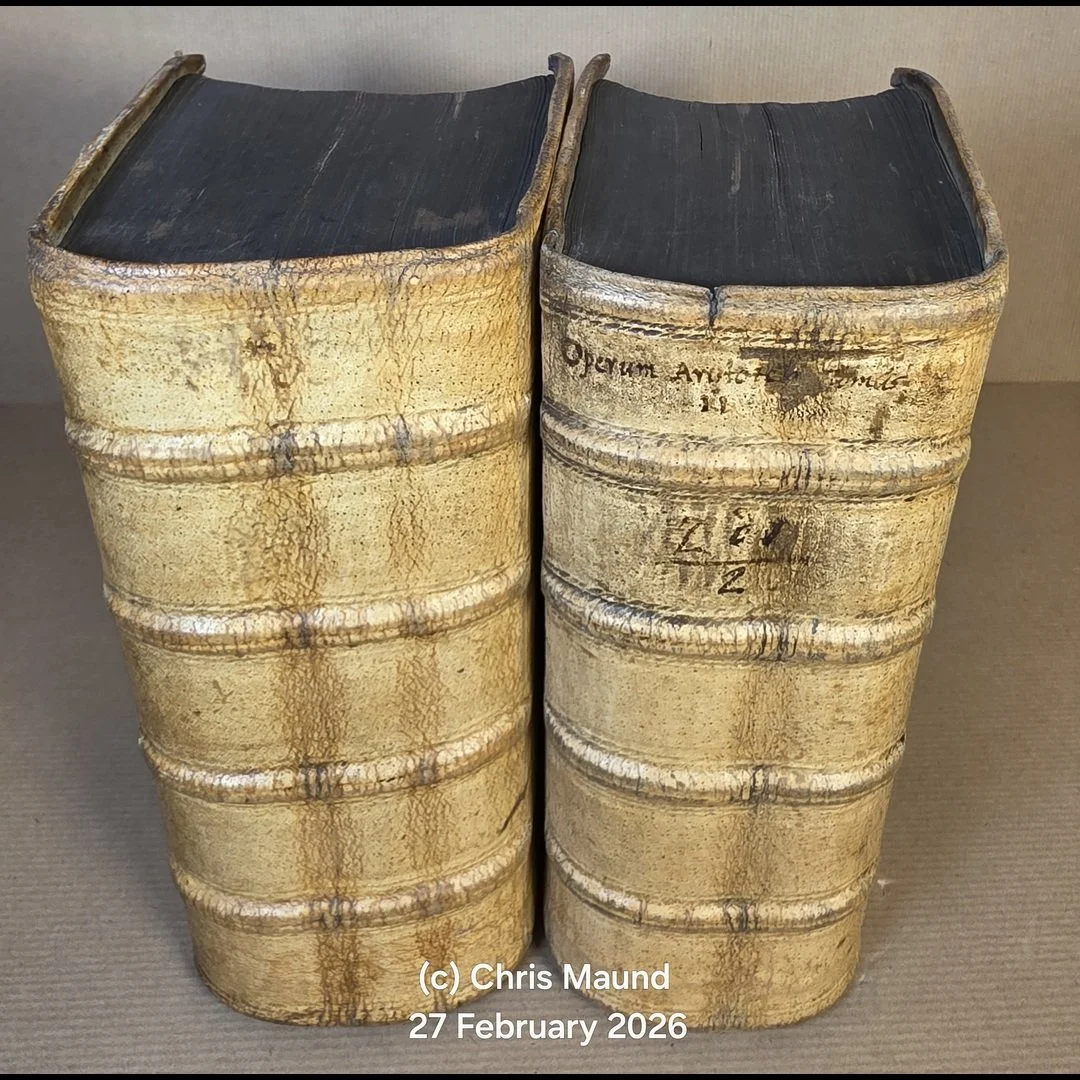 Image 5 of 37
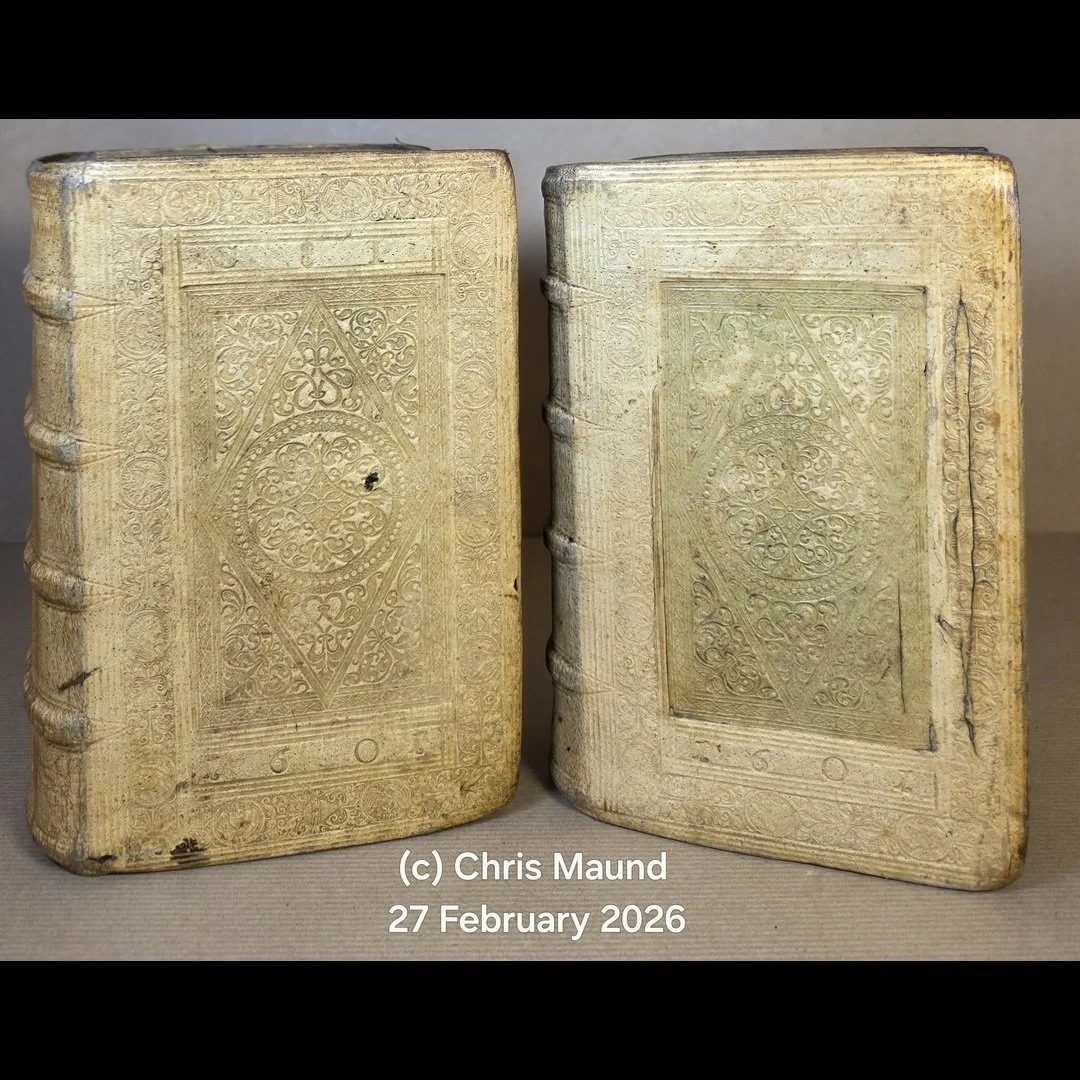 Image 6 of 37
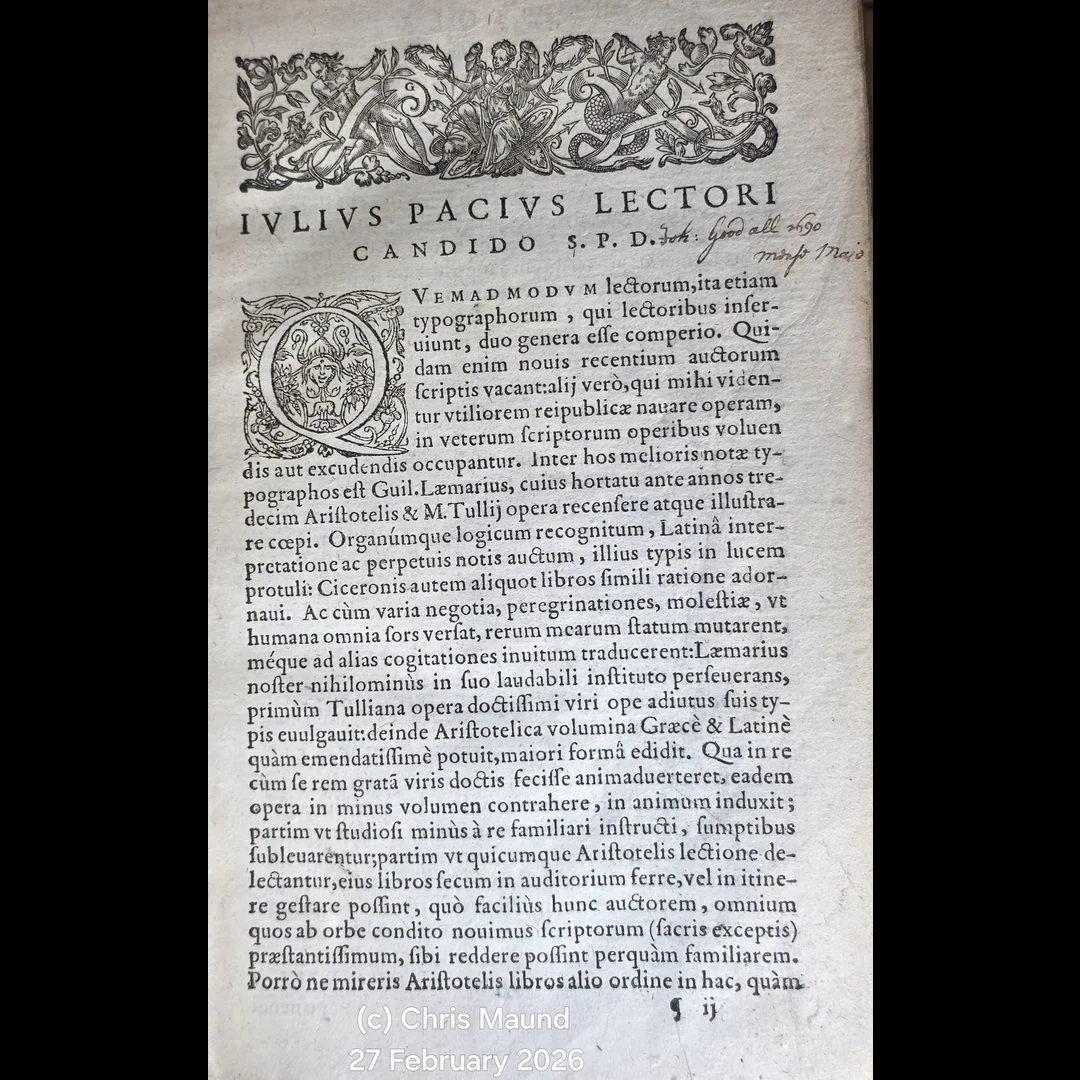 Image 7 of 37
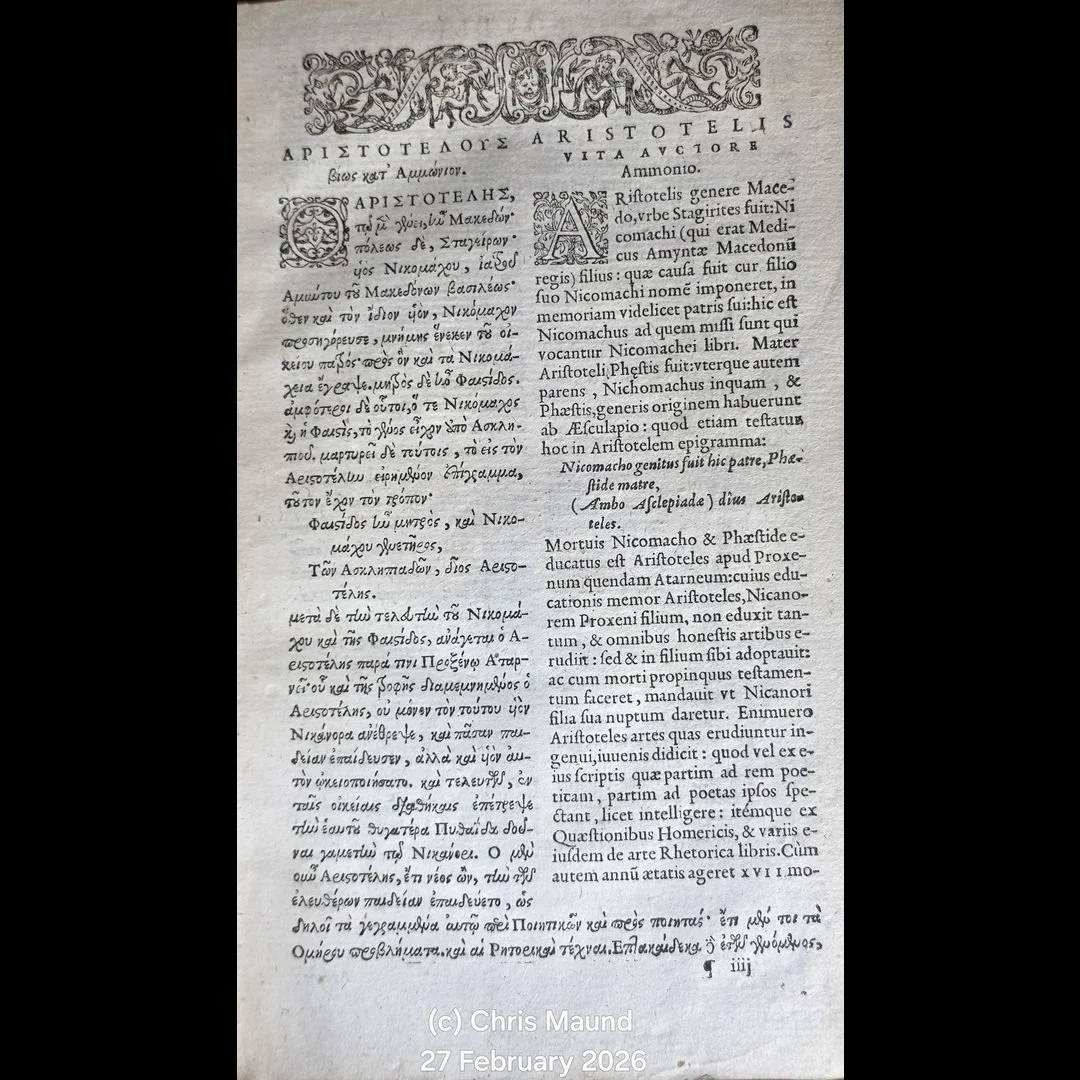 Image 8 of 37
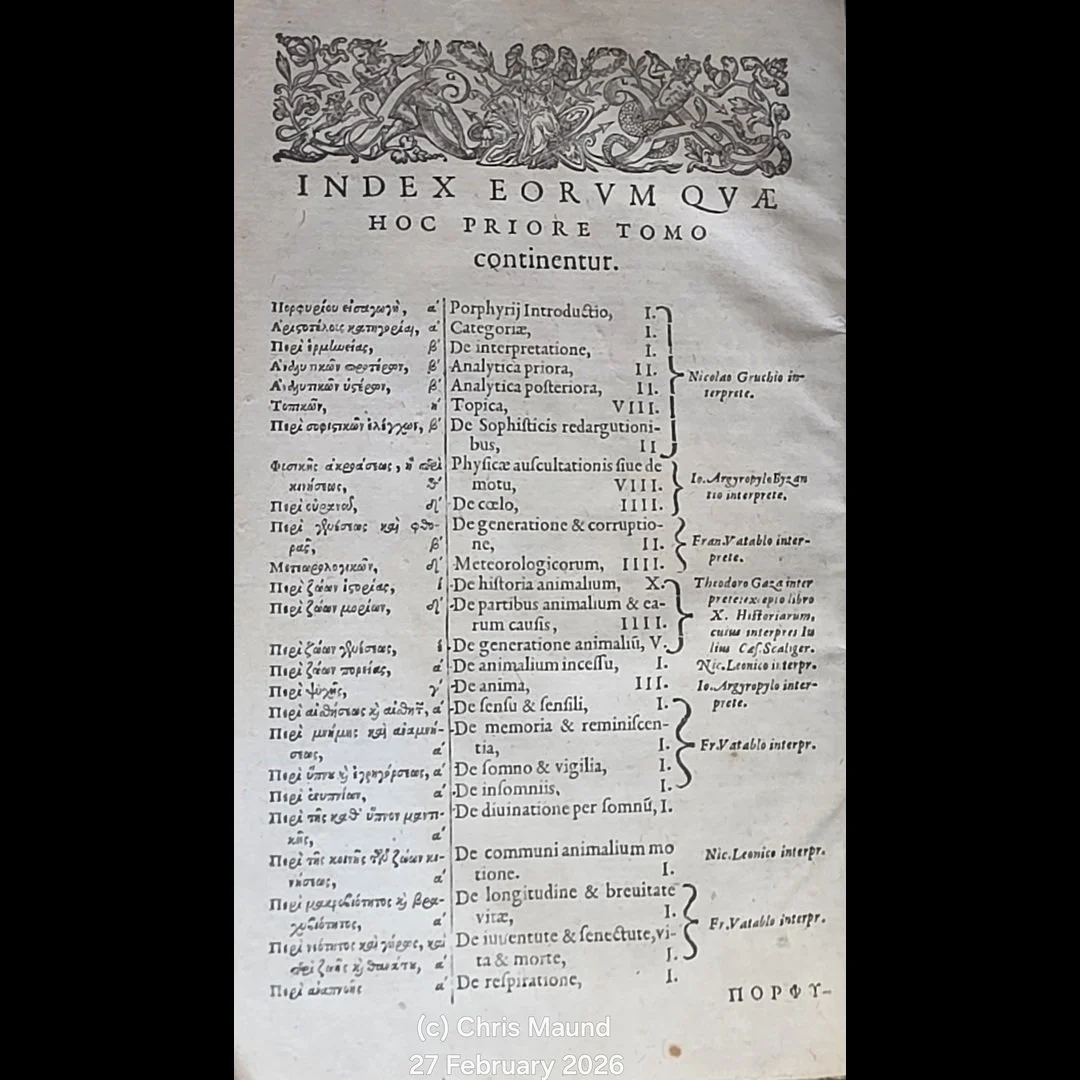 Image 9 of 37
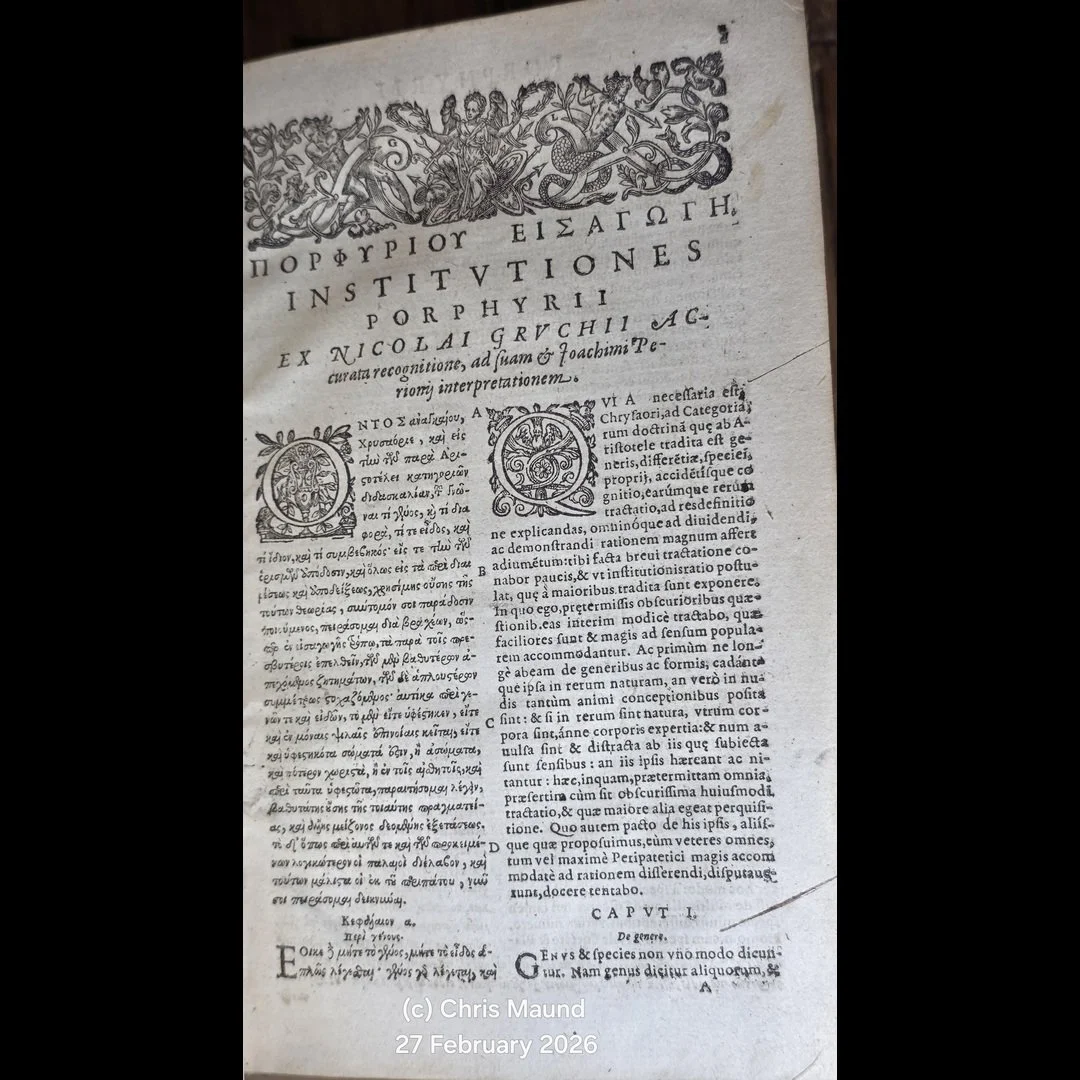 Image 10 of 37
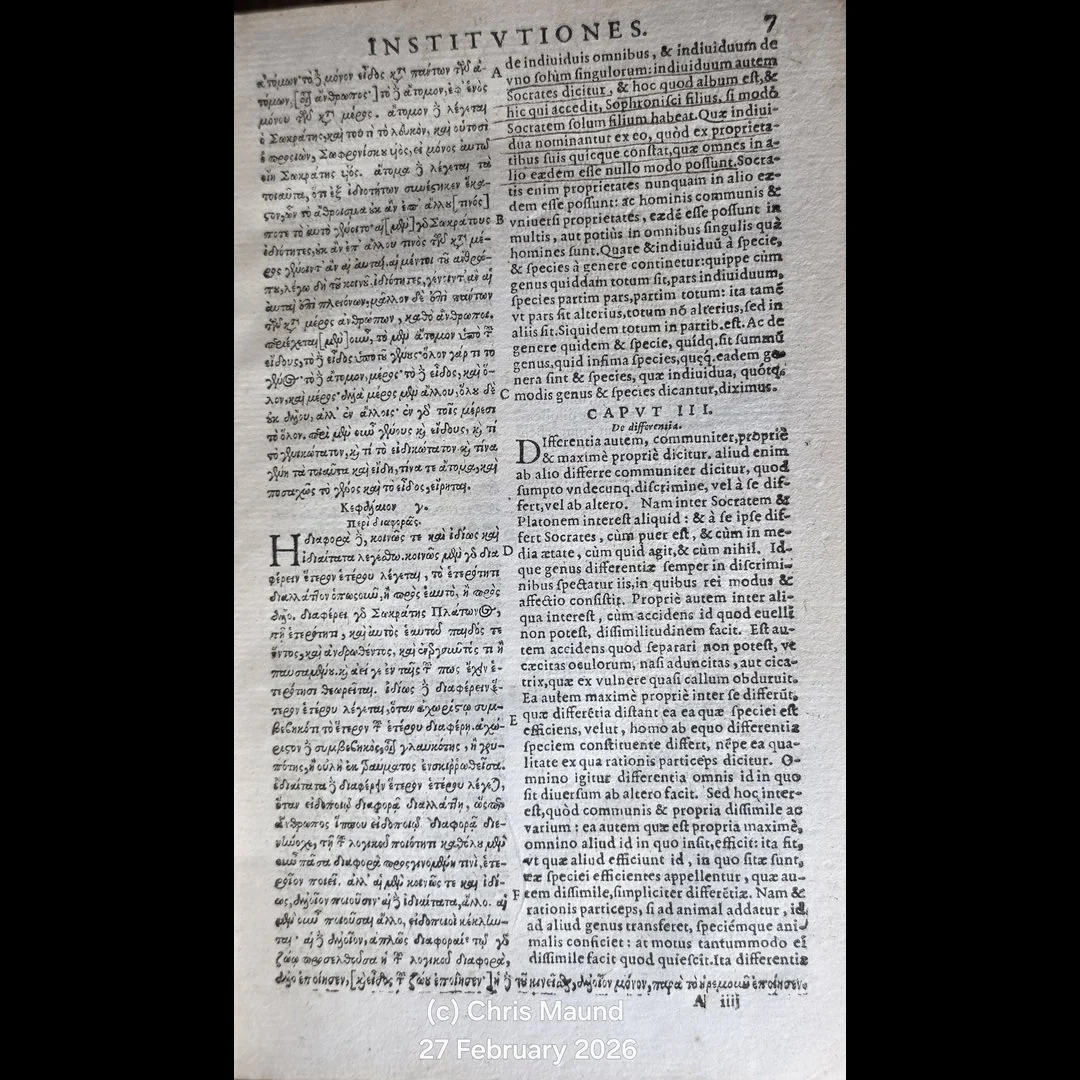 Image 11 of 37
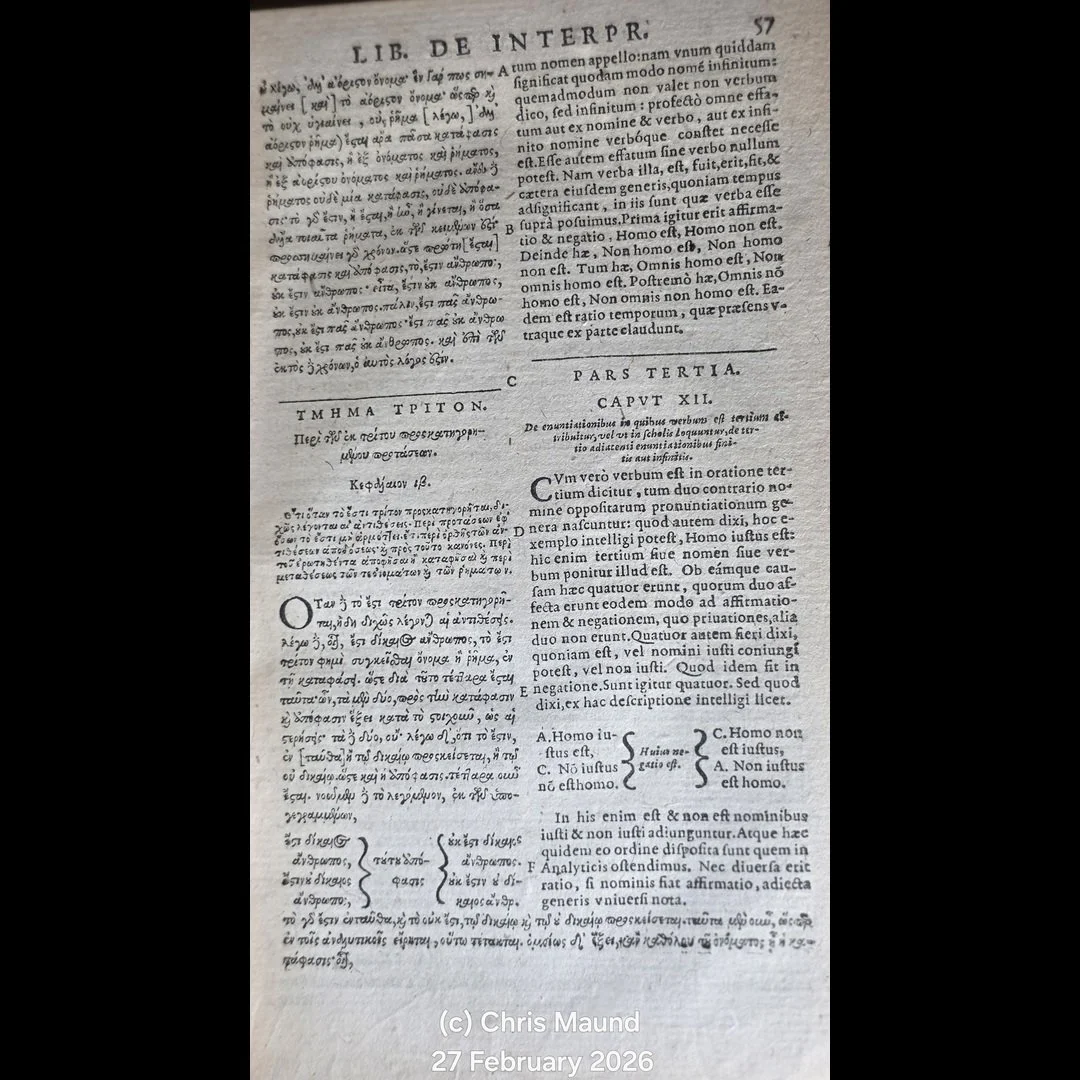 Image 12 of 37
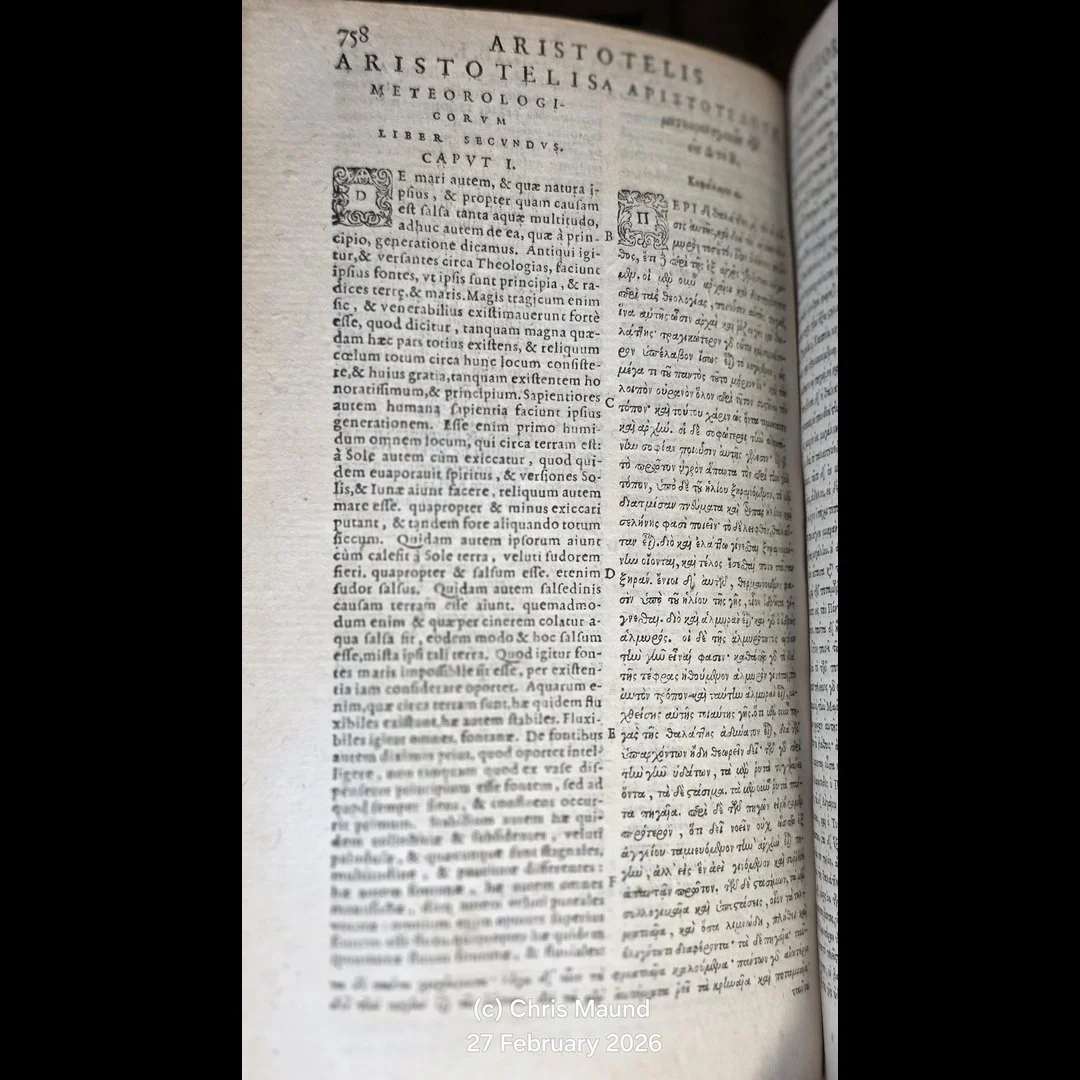 Image 13 of 37
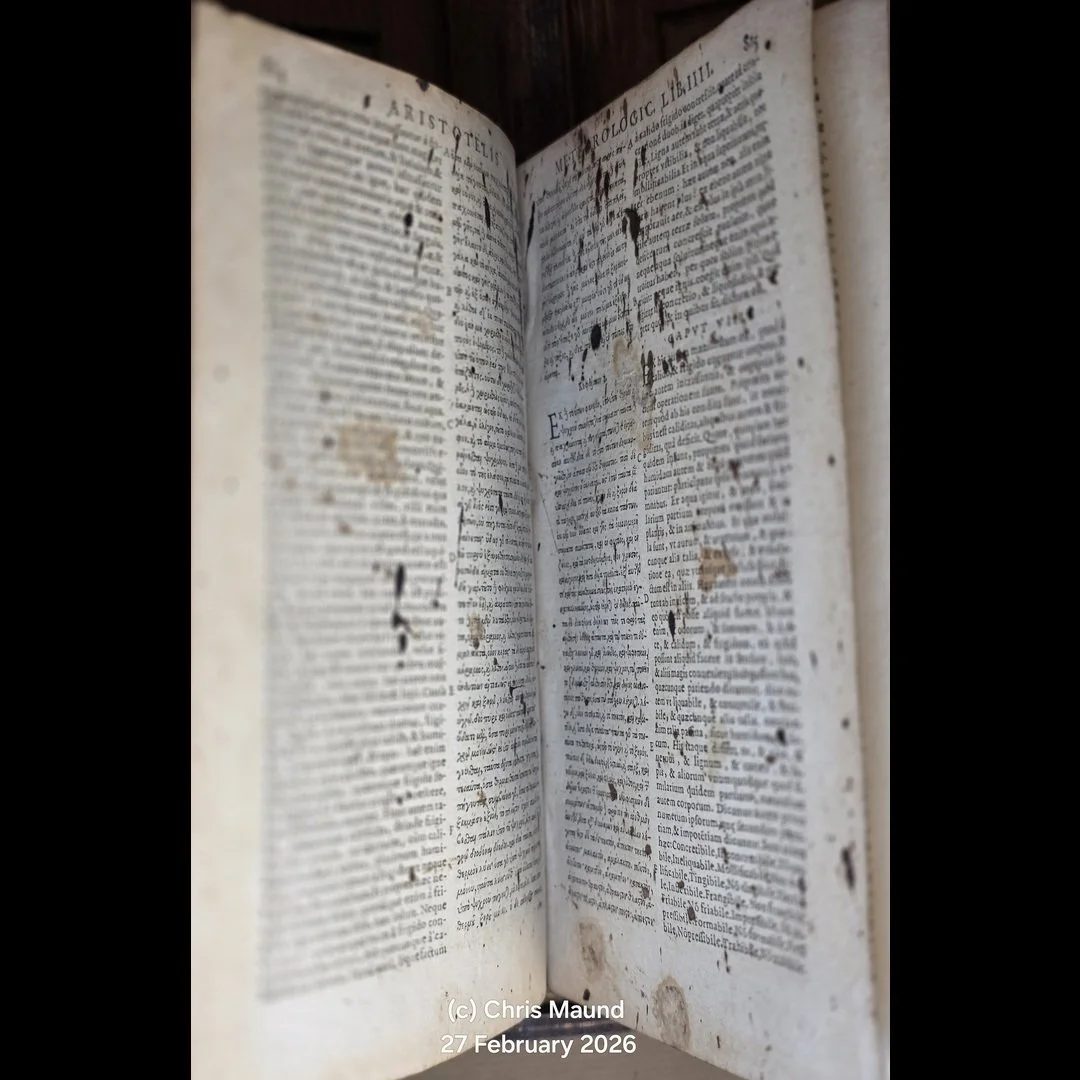 Image 14 of 37
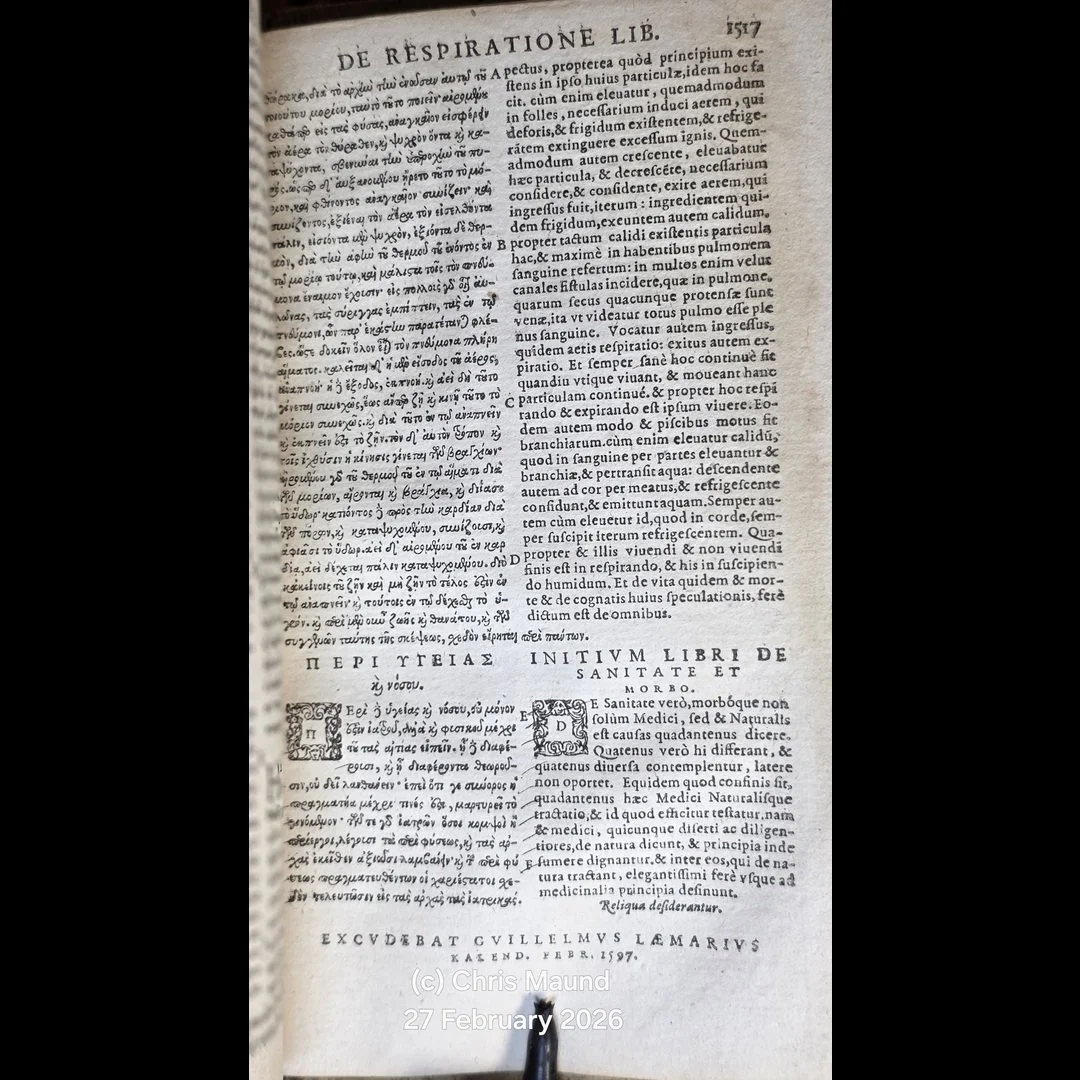 Image 15 of 37
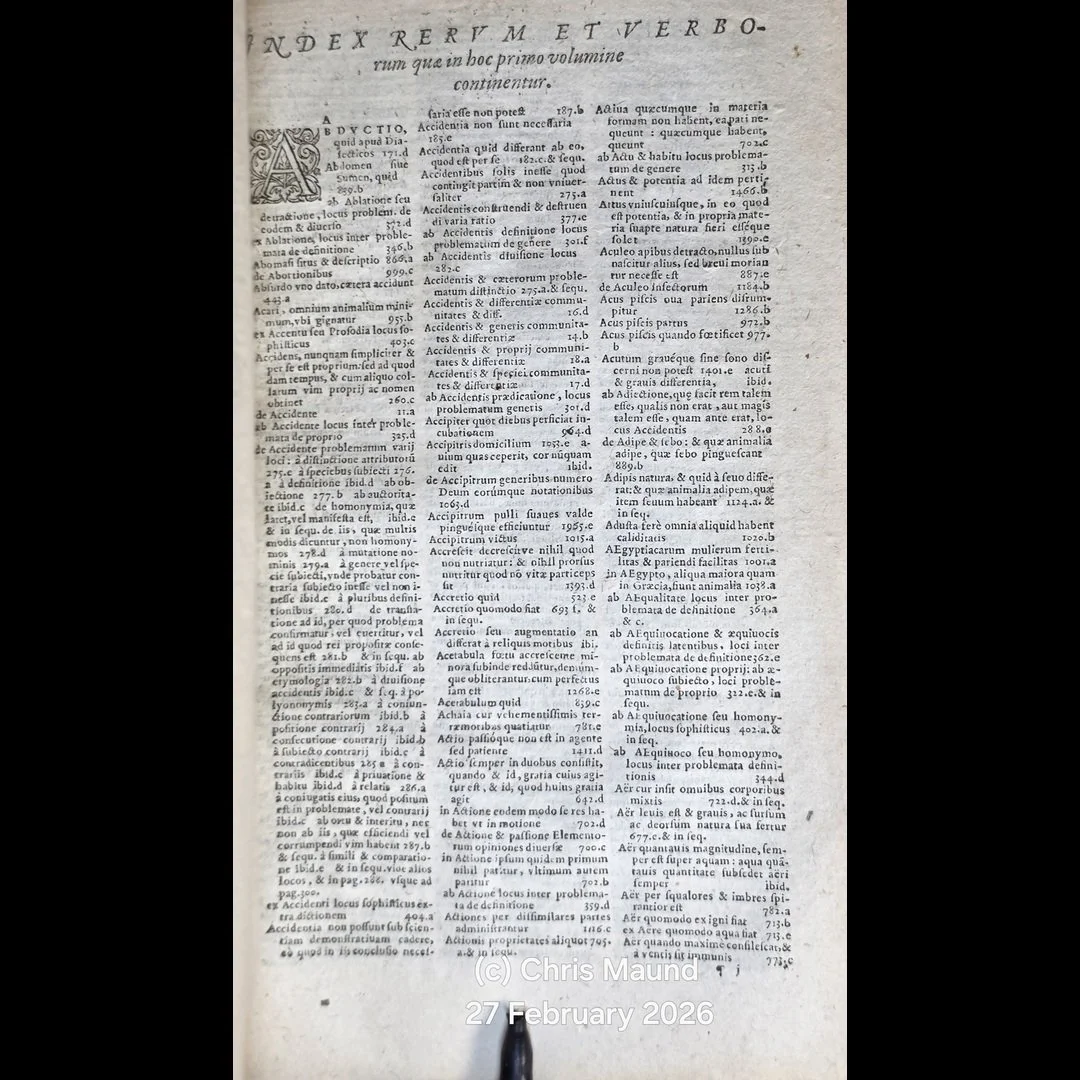 Image 16 of 37
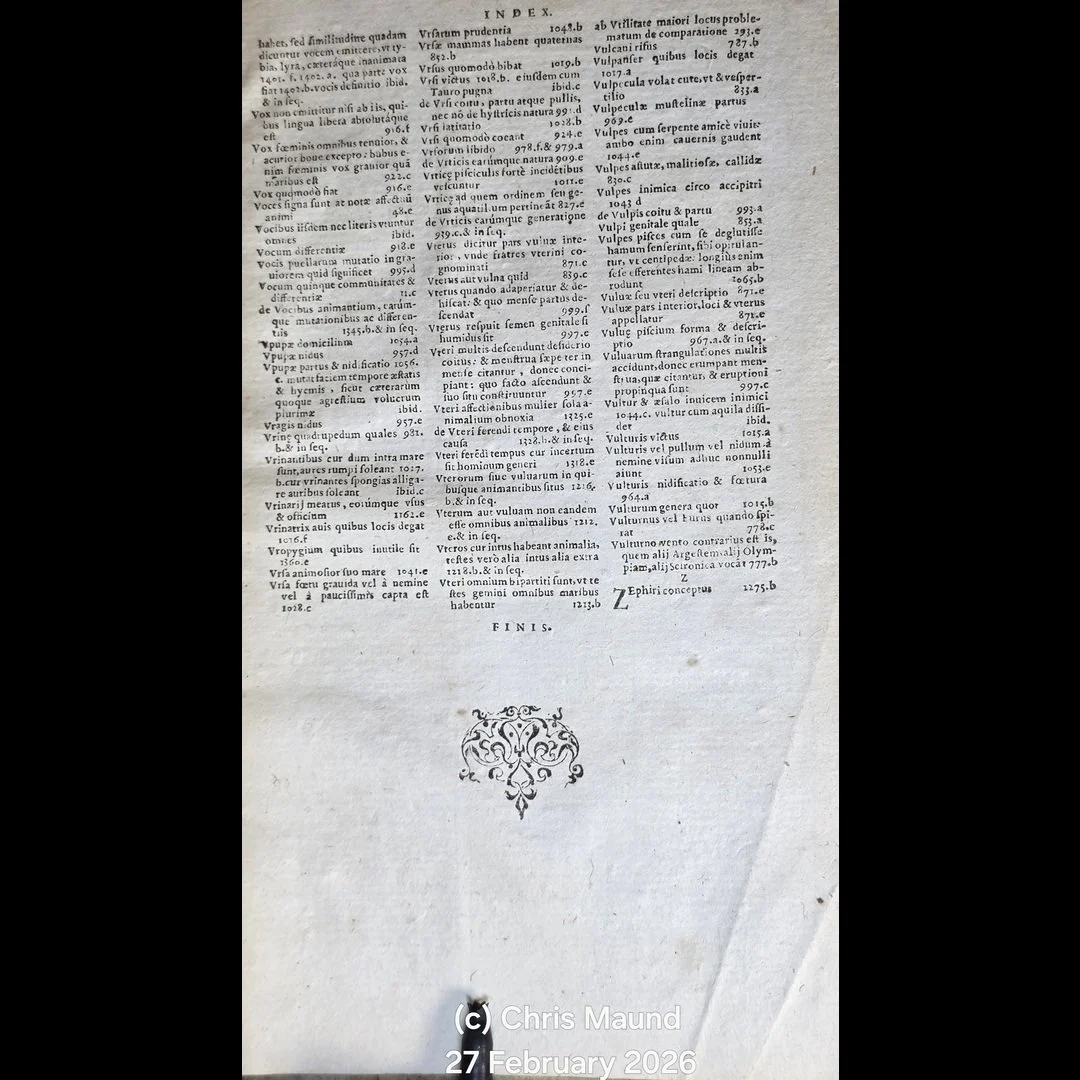 Image 17 of 37
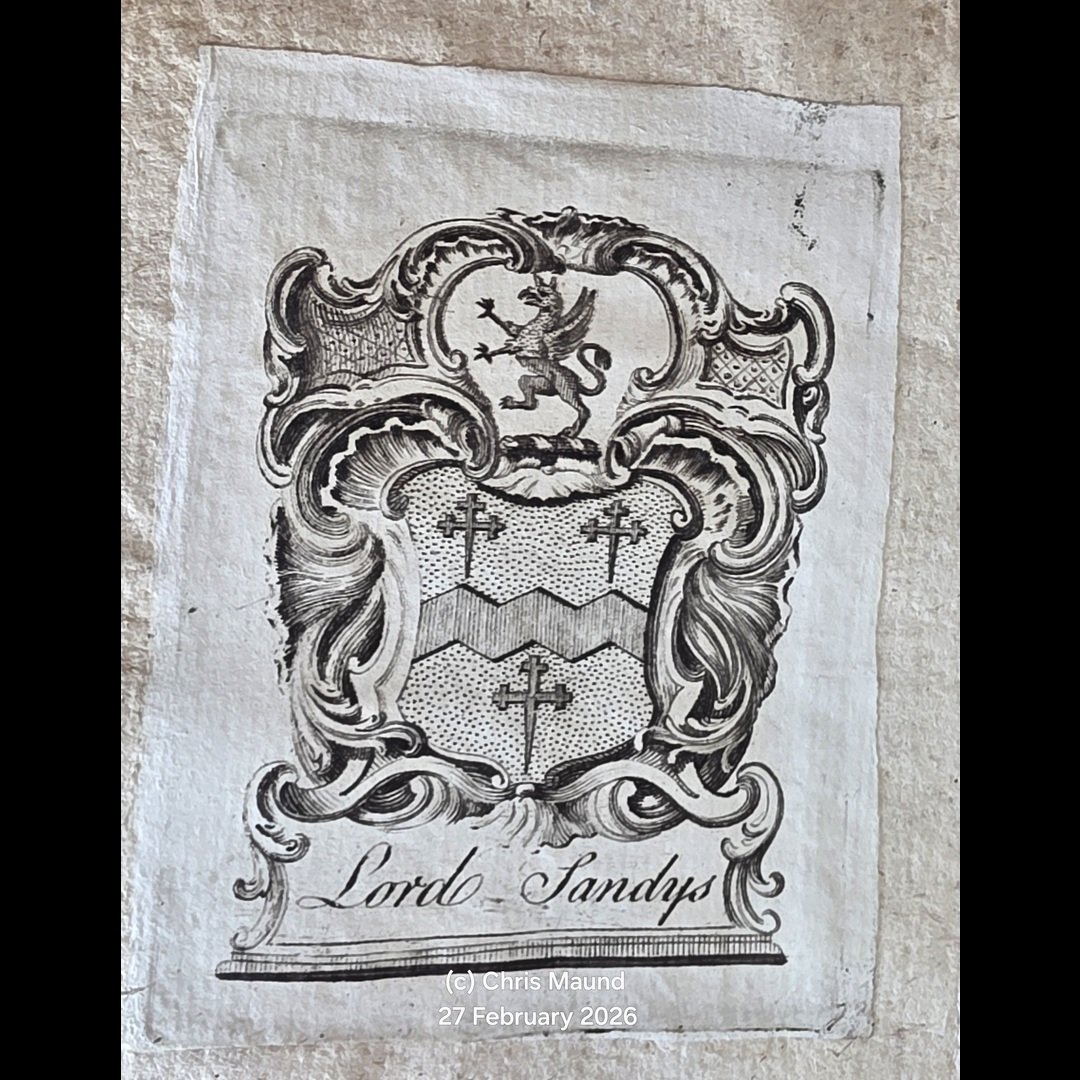 Image 18 of 37
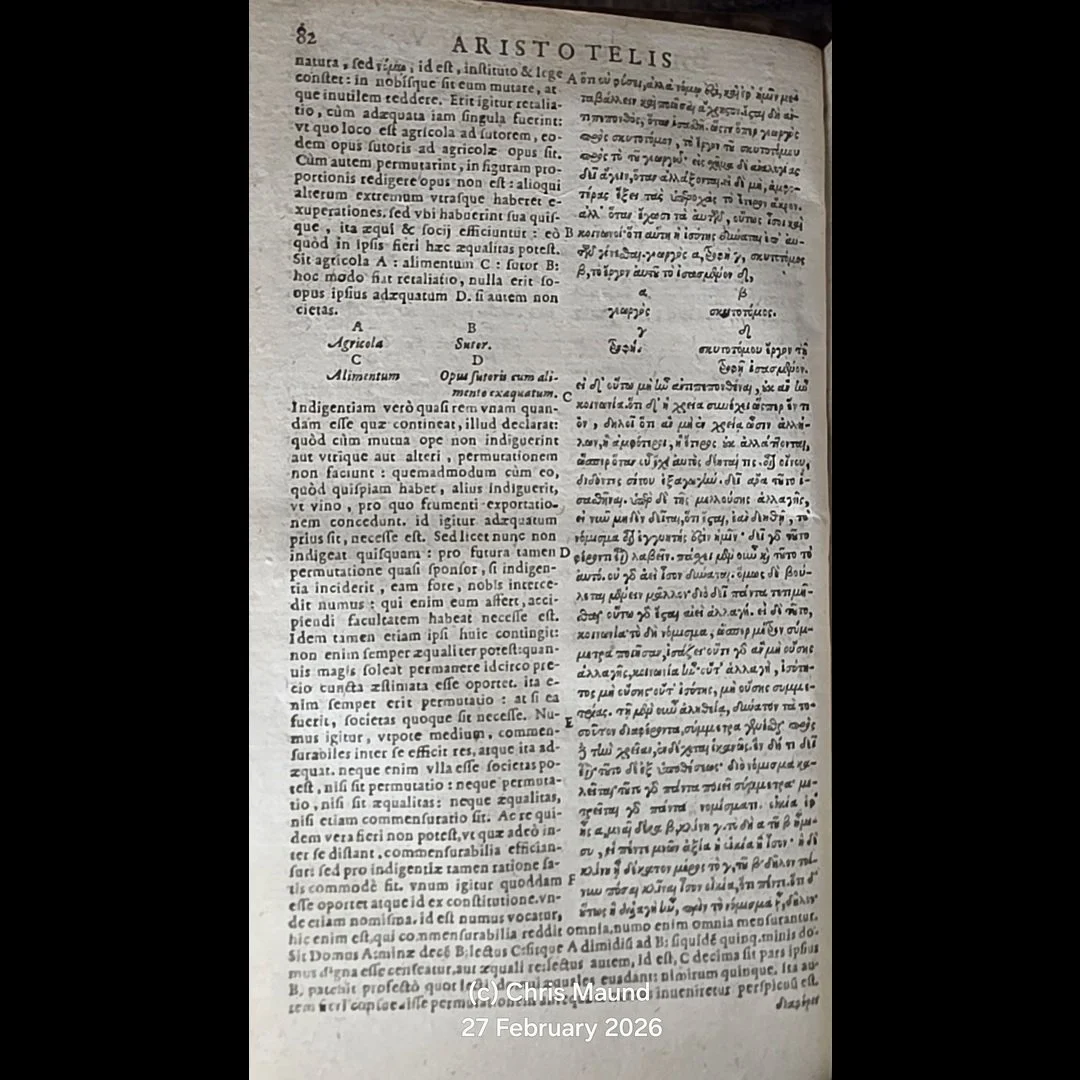 Image 19 of 37
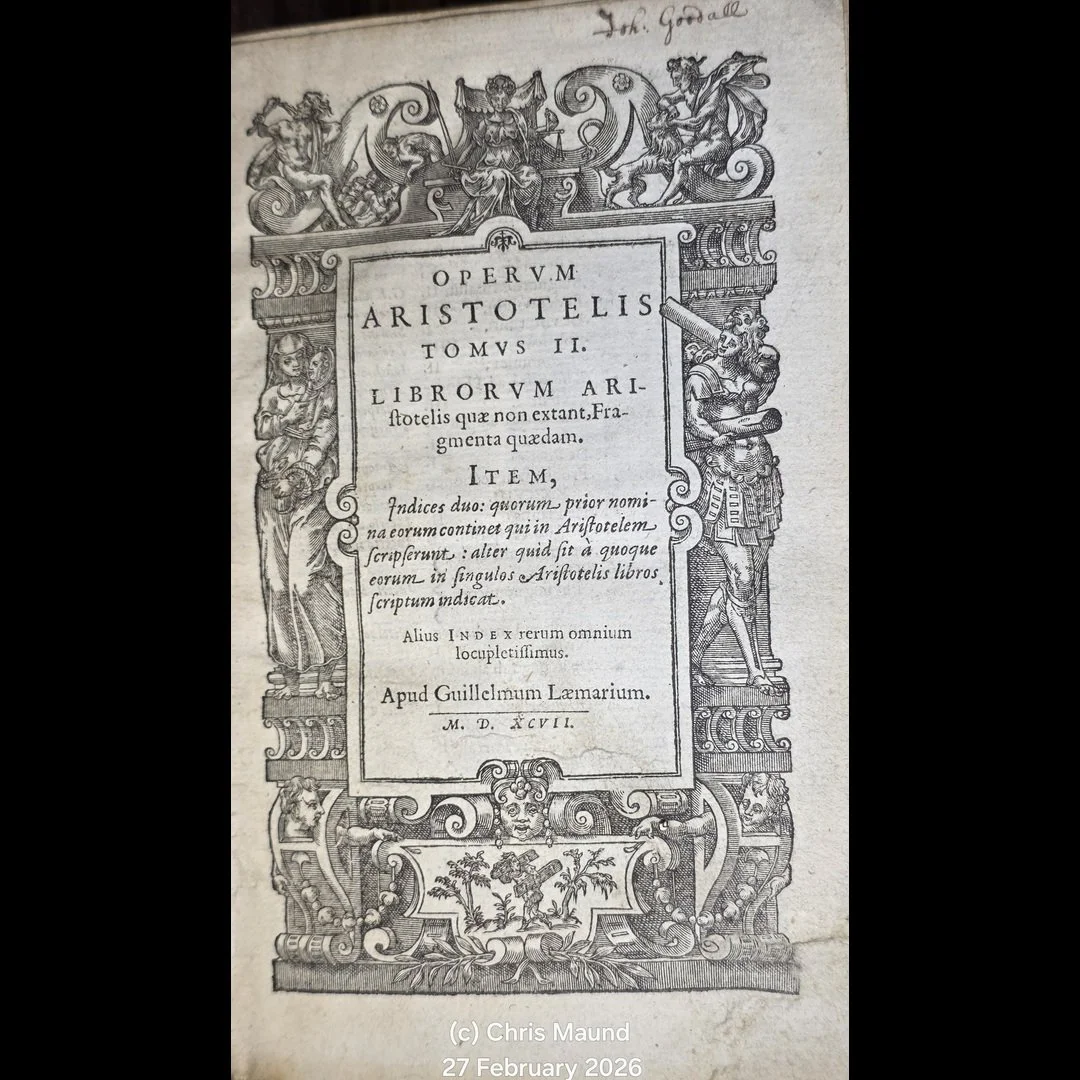 Image 20 of 37
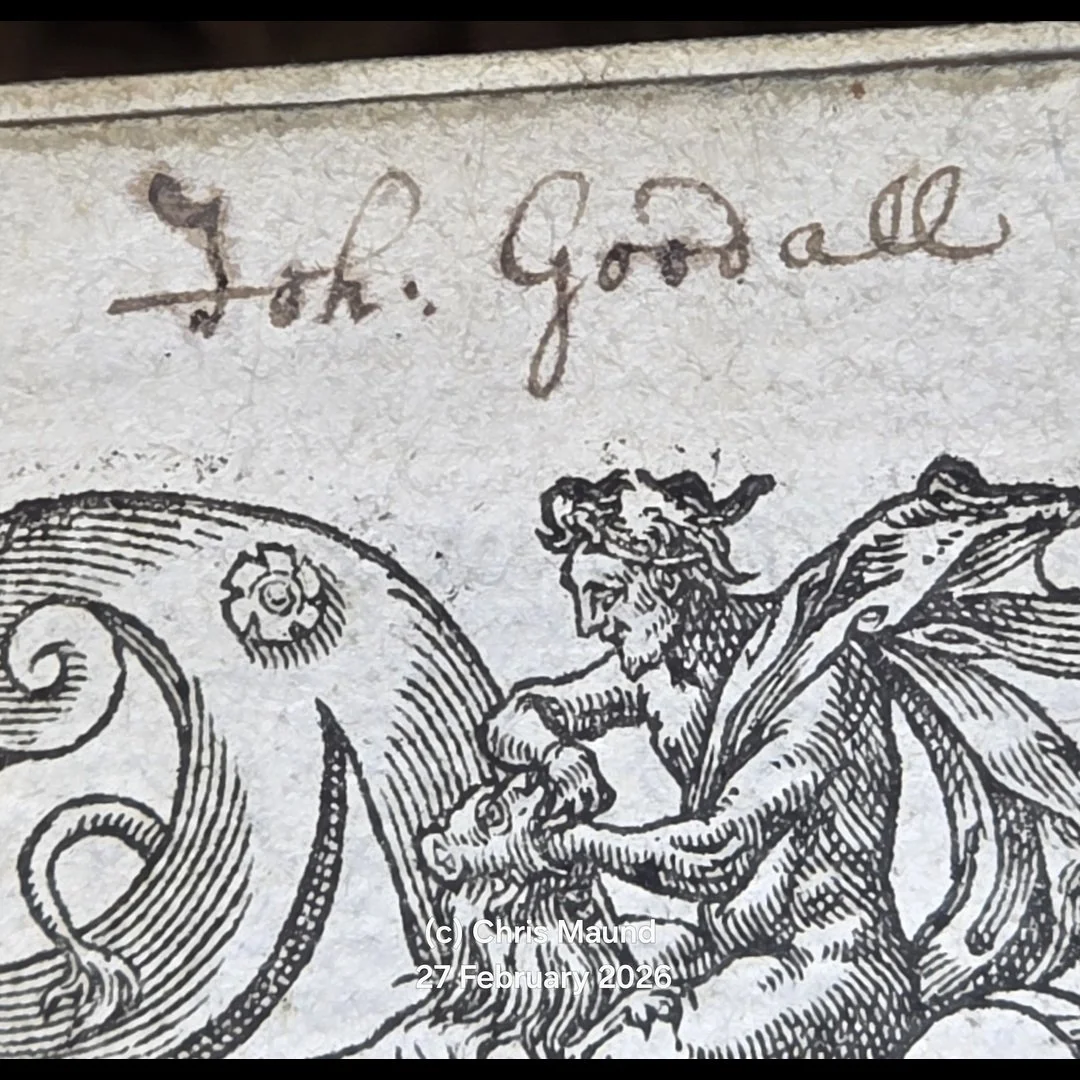 Image 21 of 37
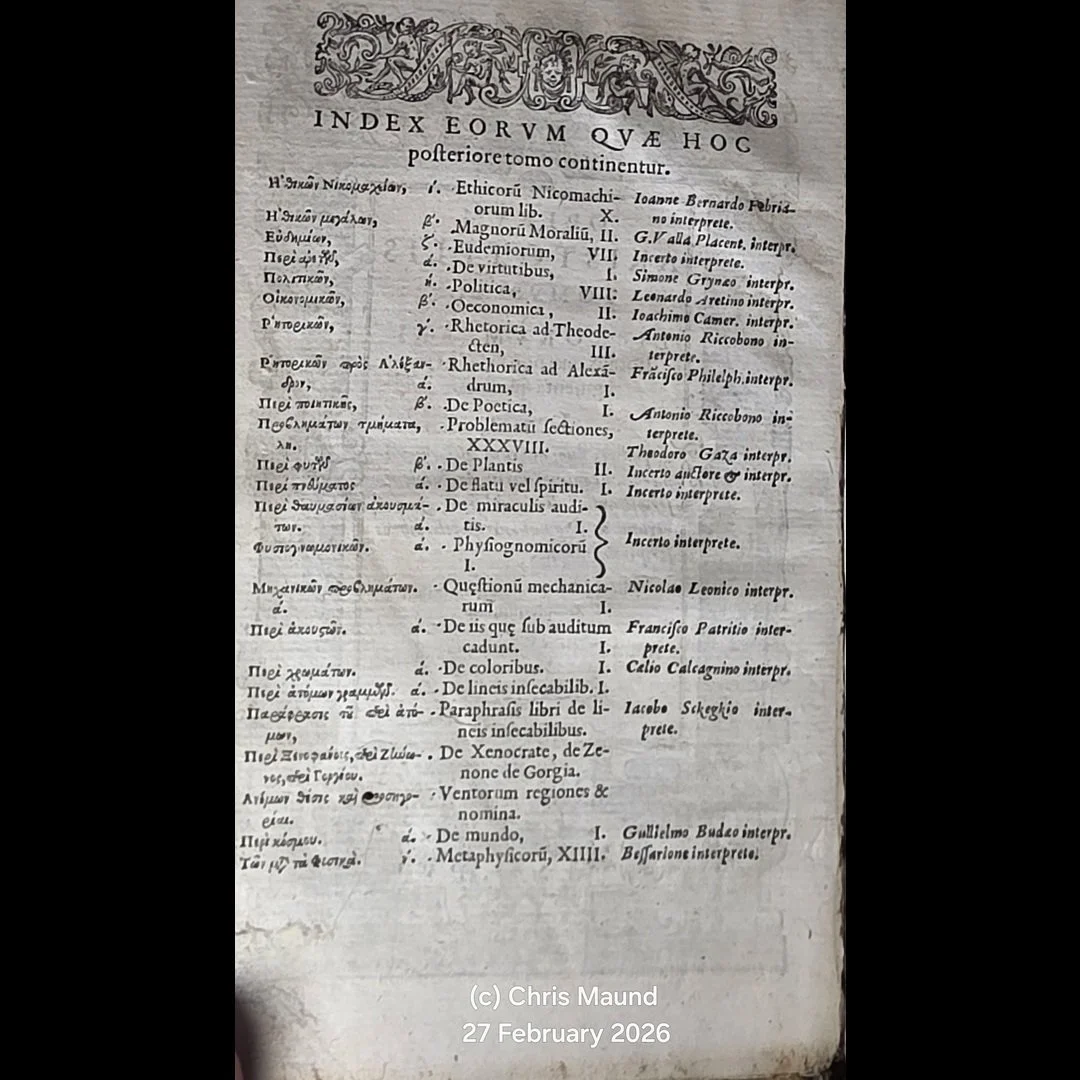 Image 22 of 37
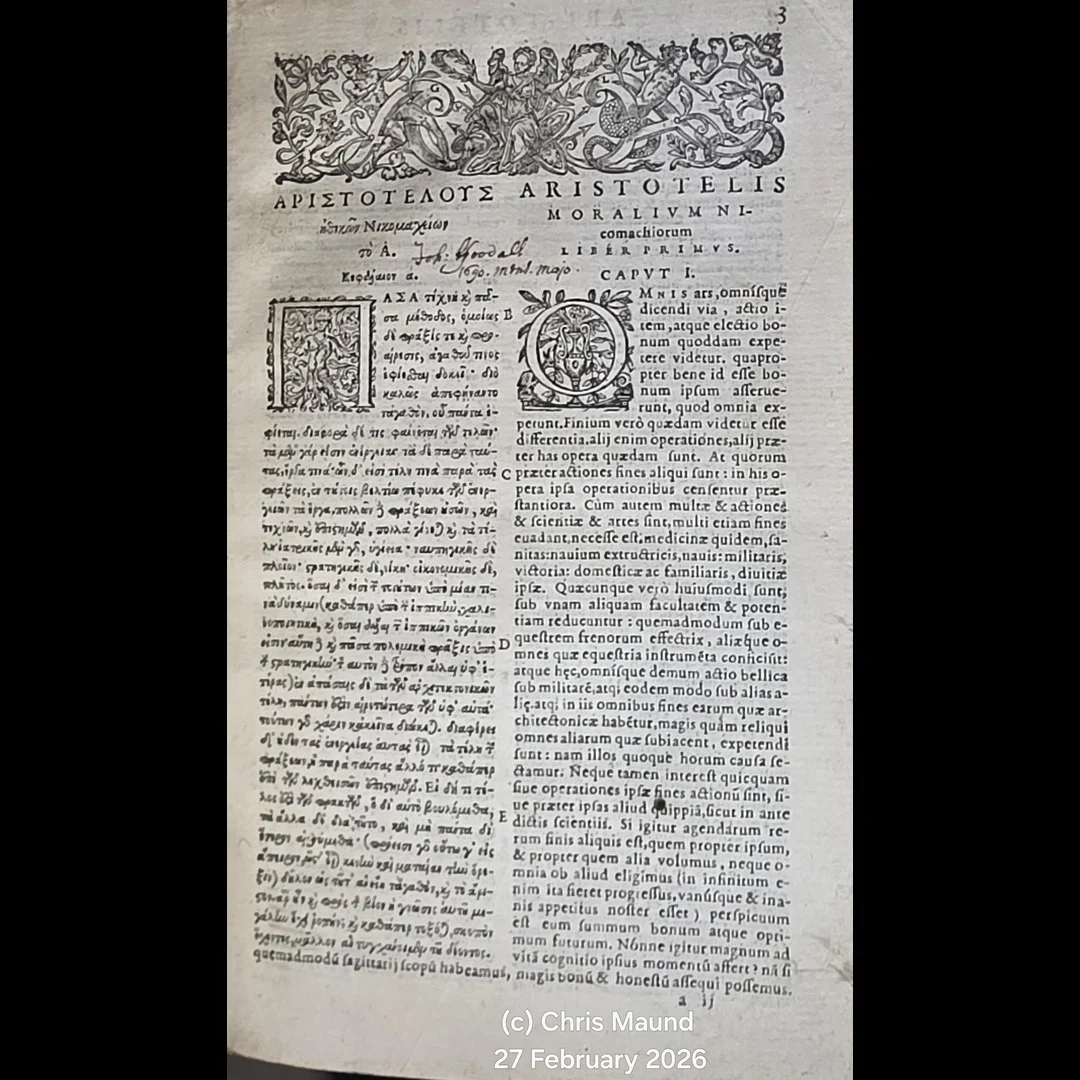 Image 23 of 37
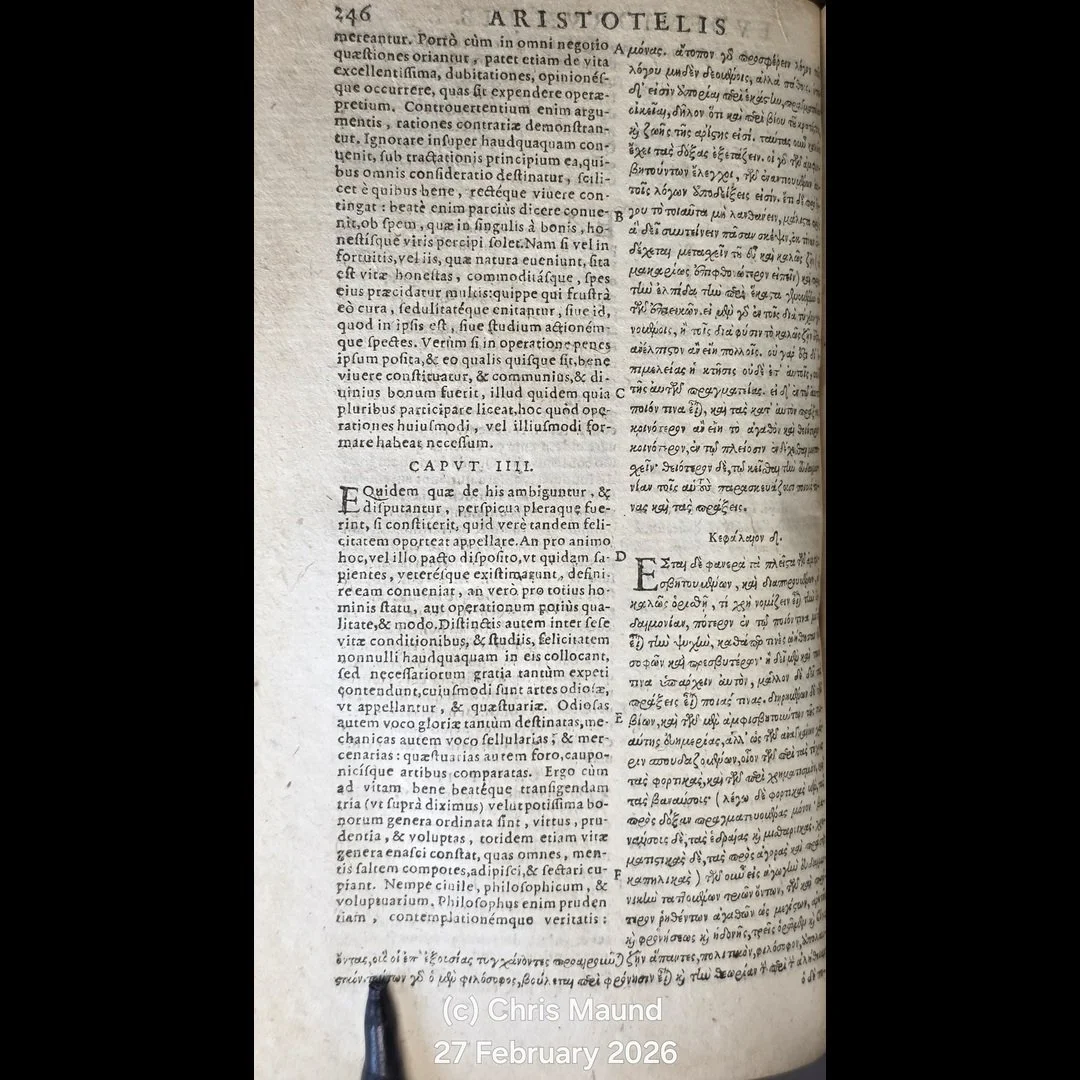 Image 24 of 37
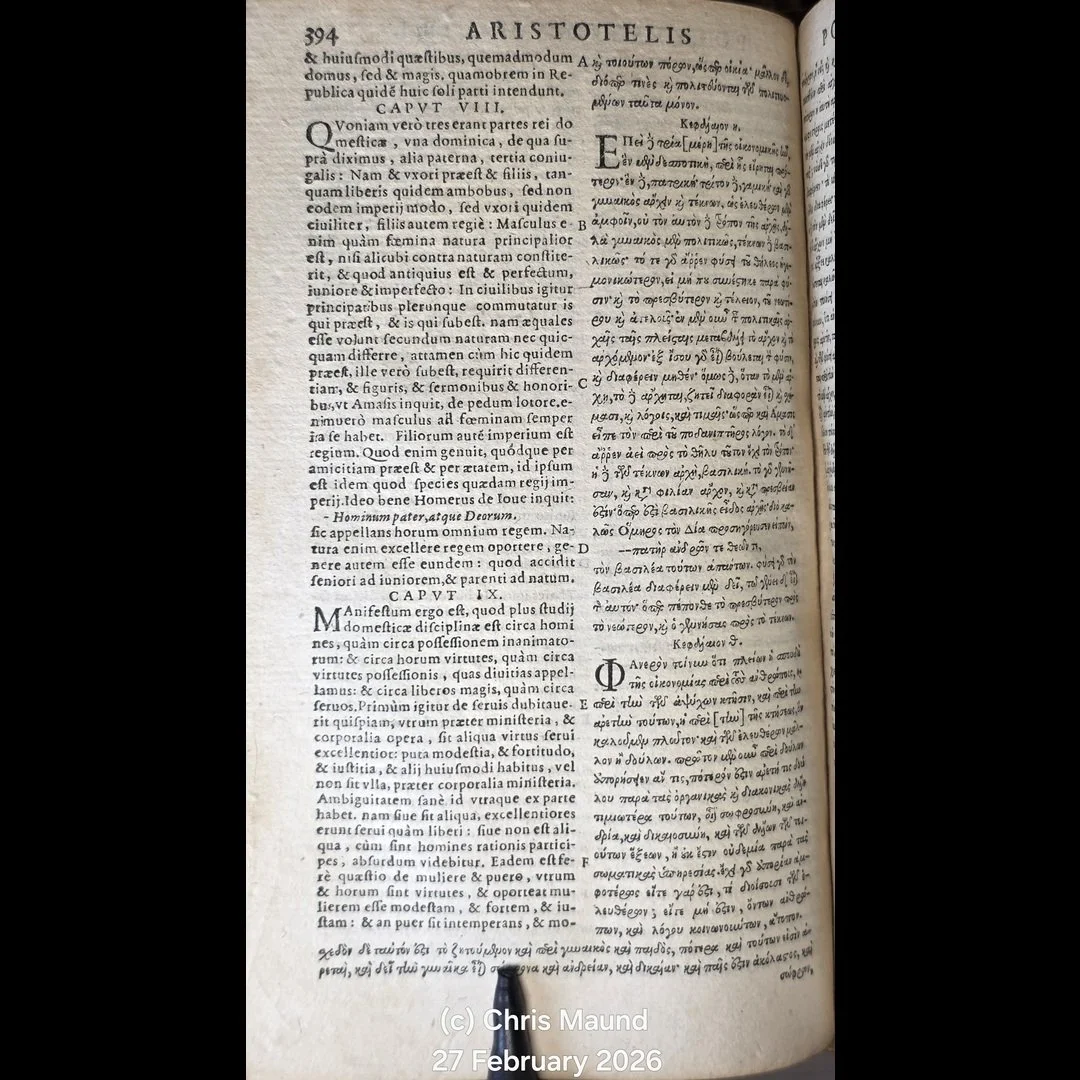 Image 25 of 37
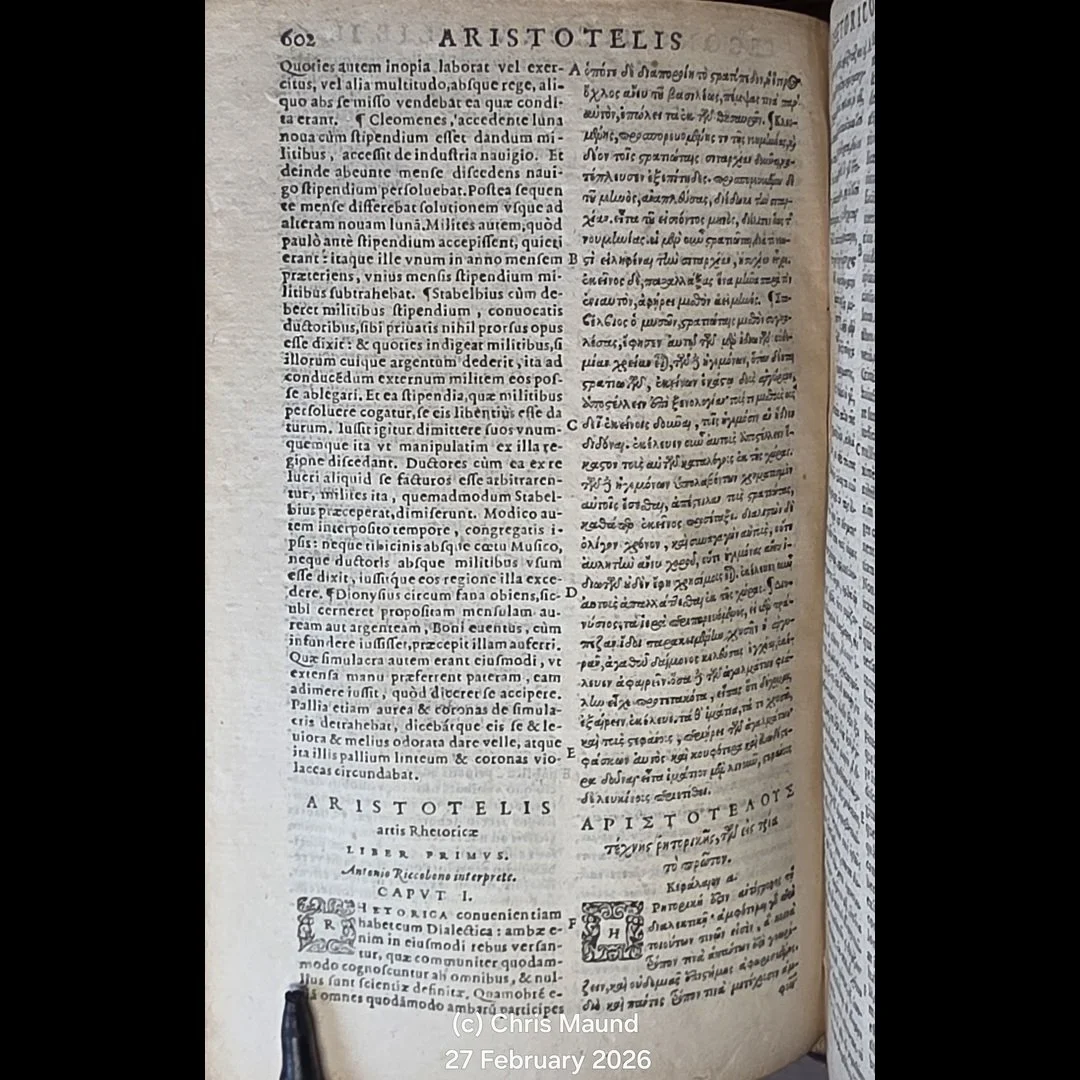 Image 26 of 37
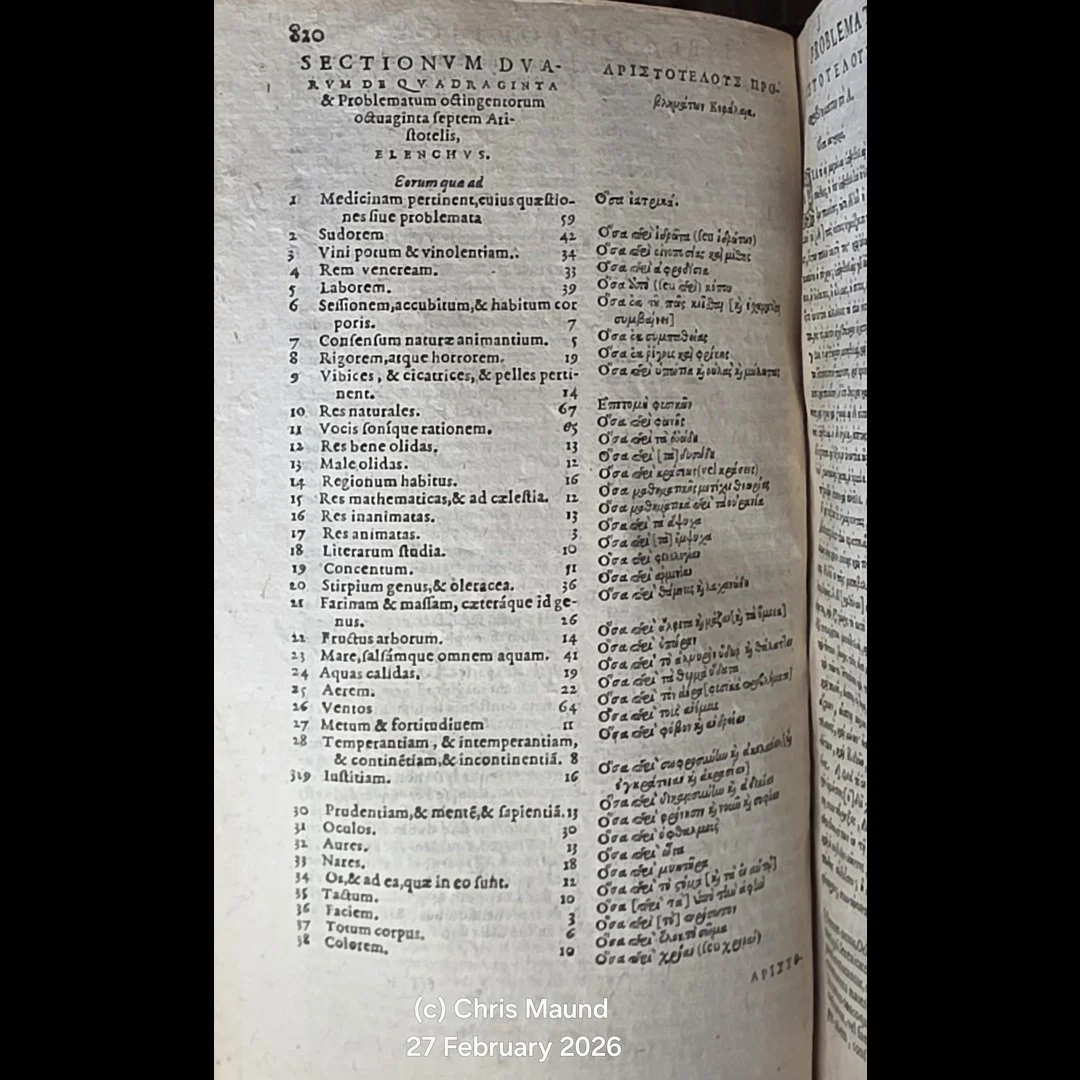 Image 27 of 37
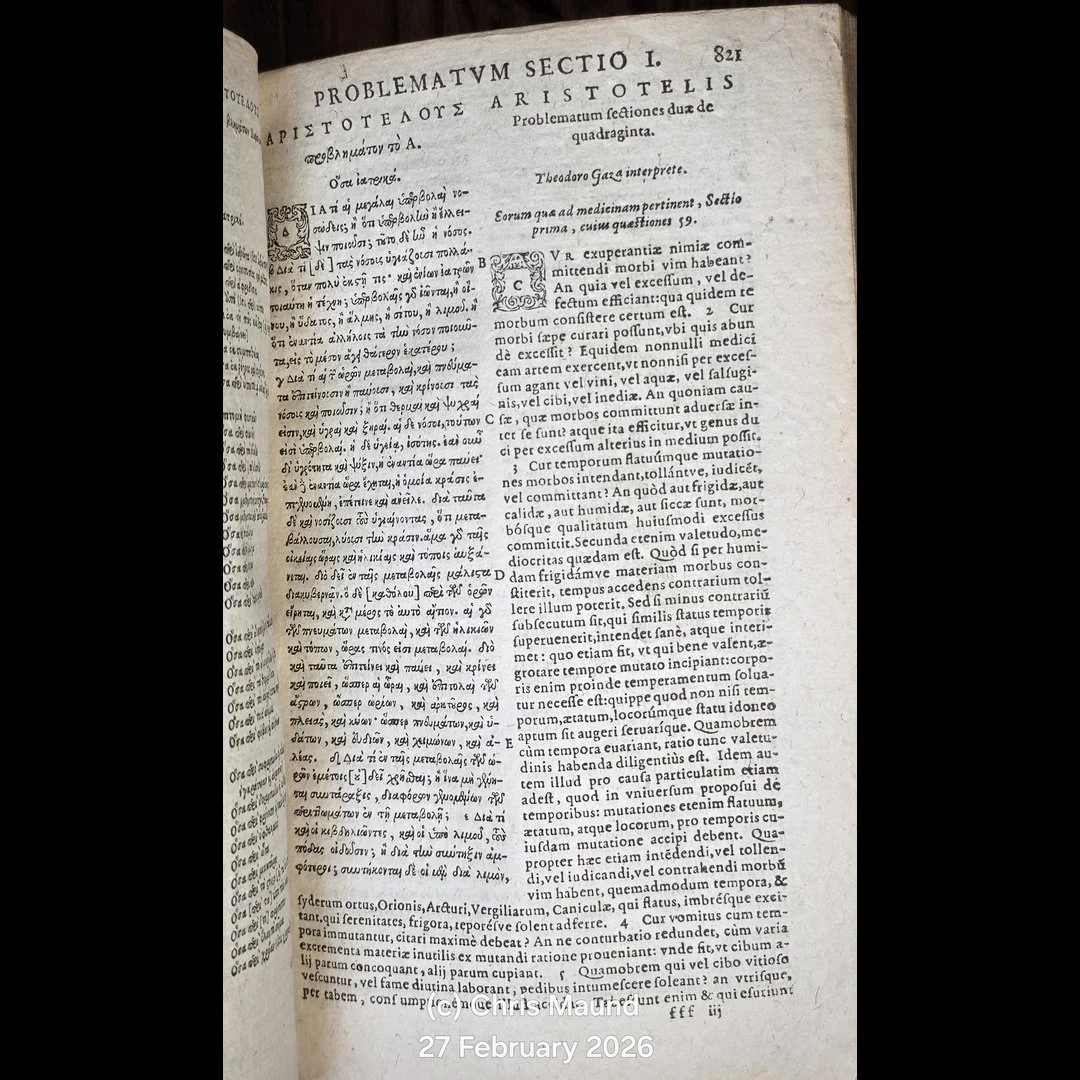 Image 28 of 37
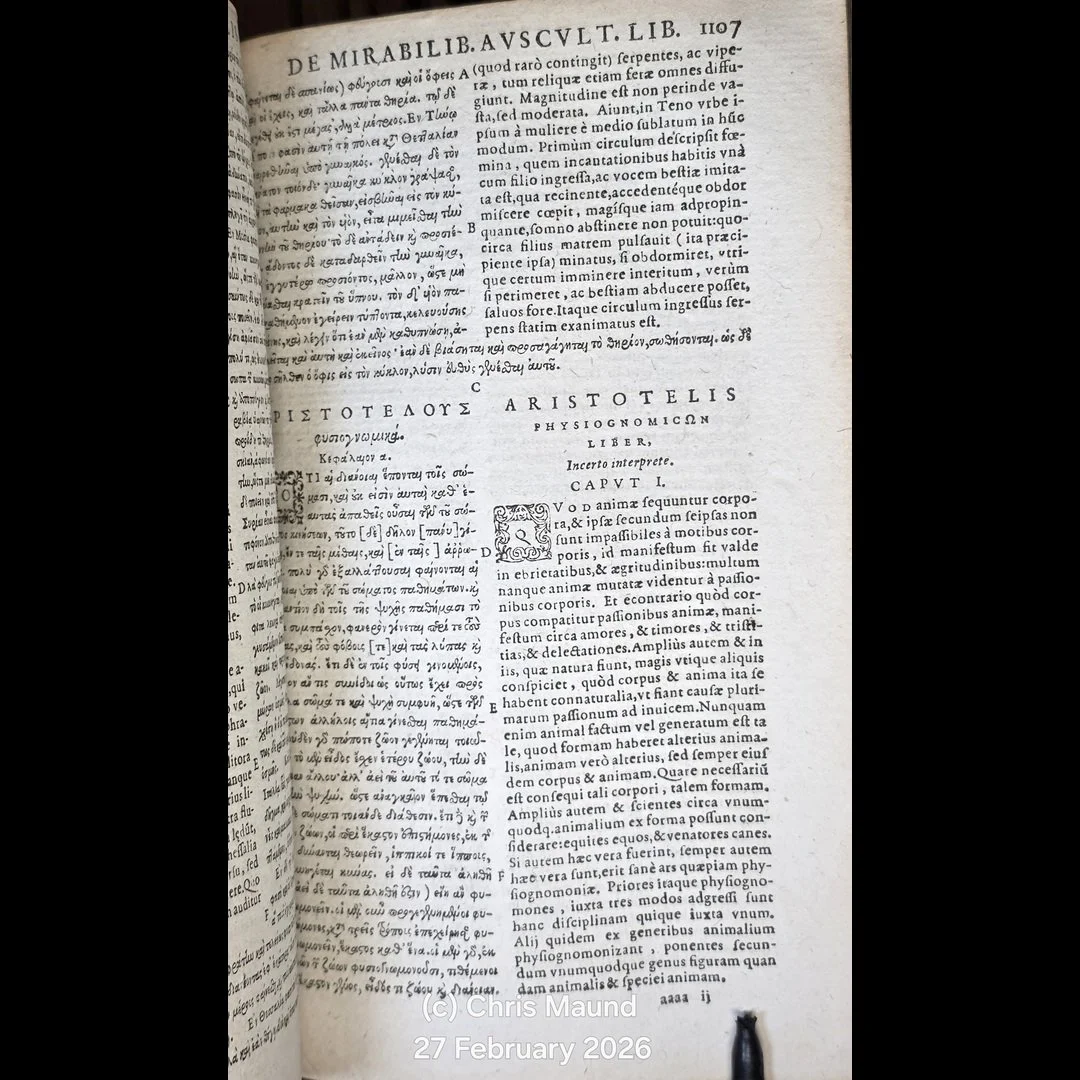 Image 29 of 37
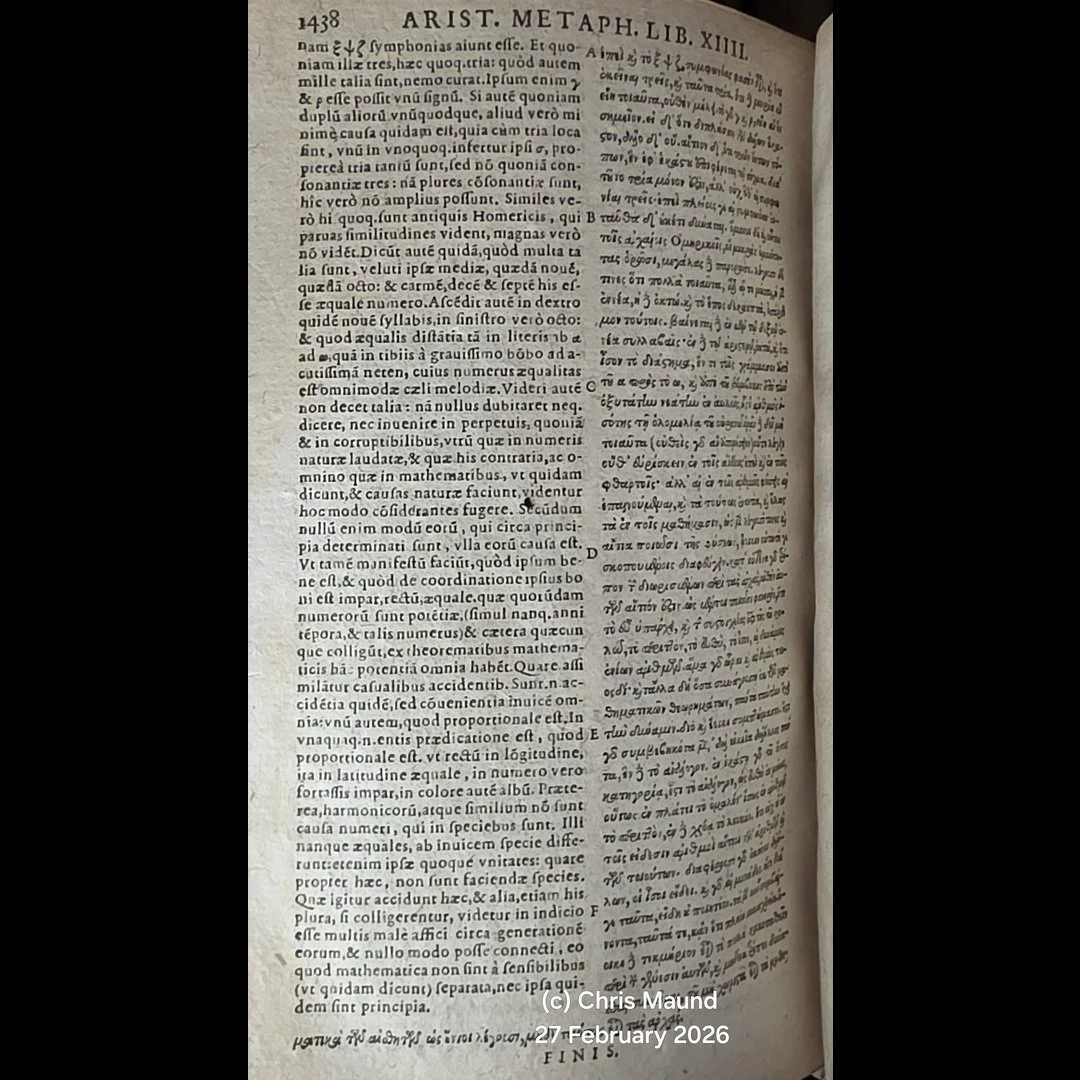 Image 30 of 37
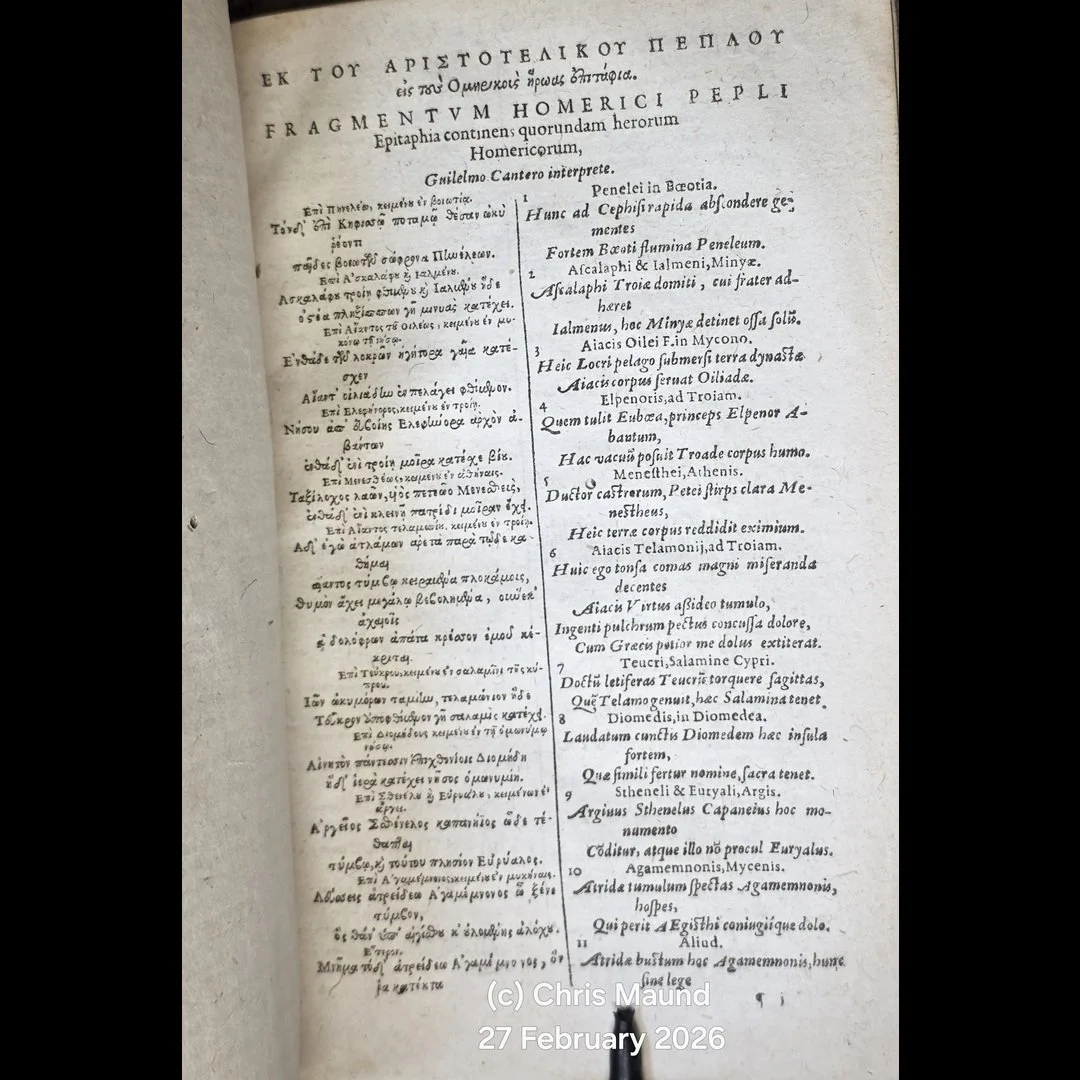 Image 31 of 37
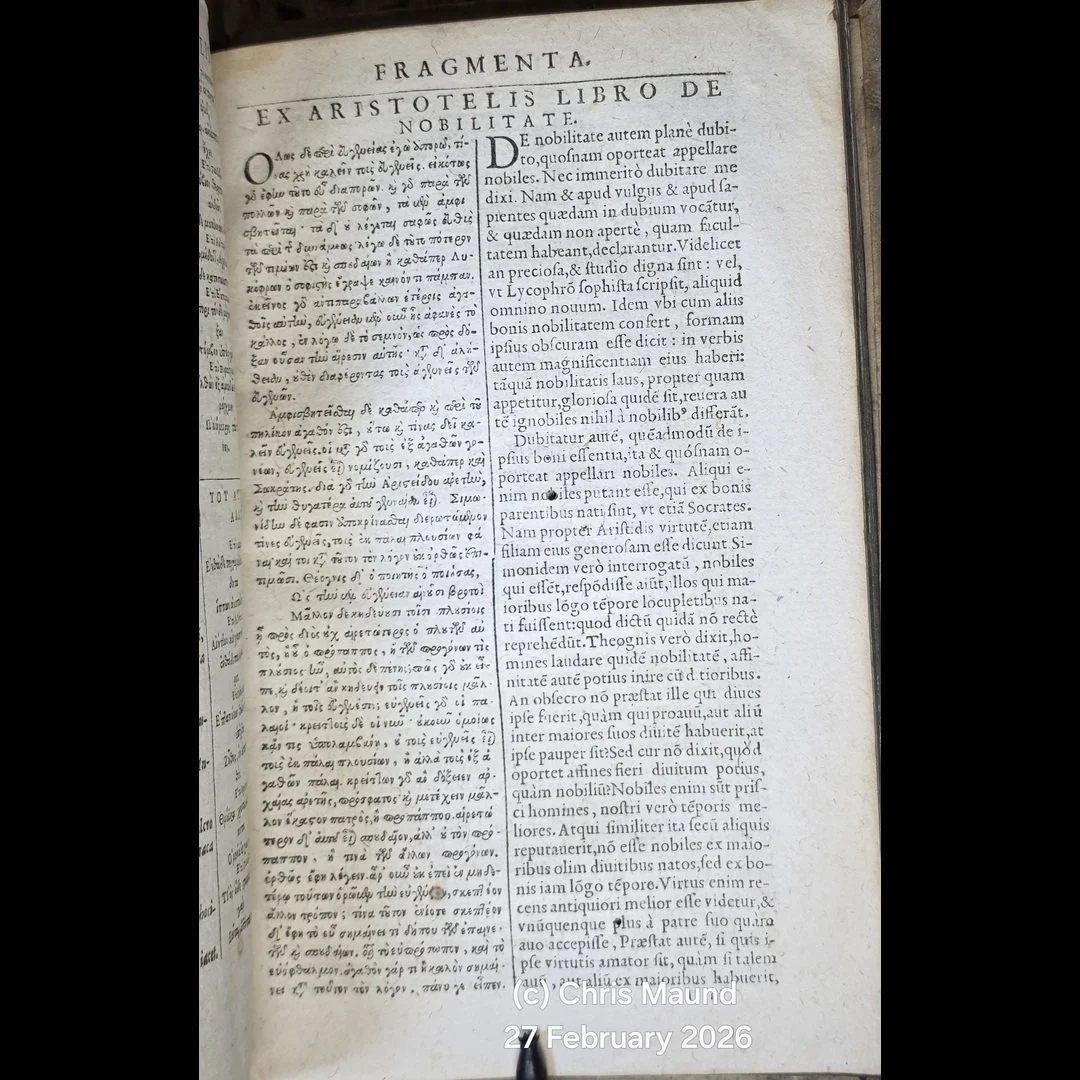 Image 32 of 37
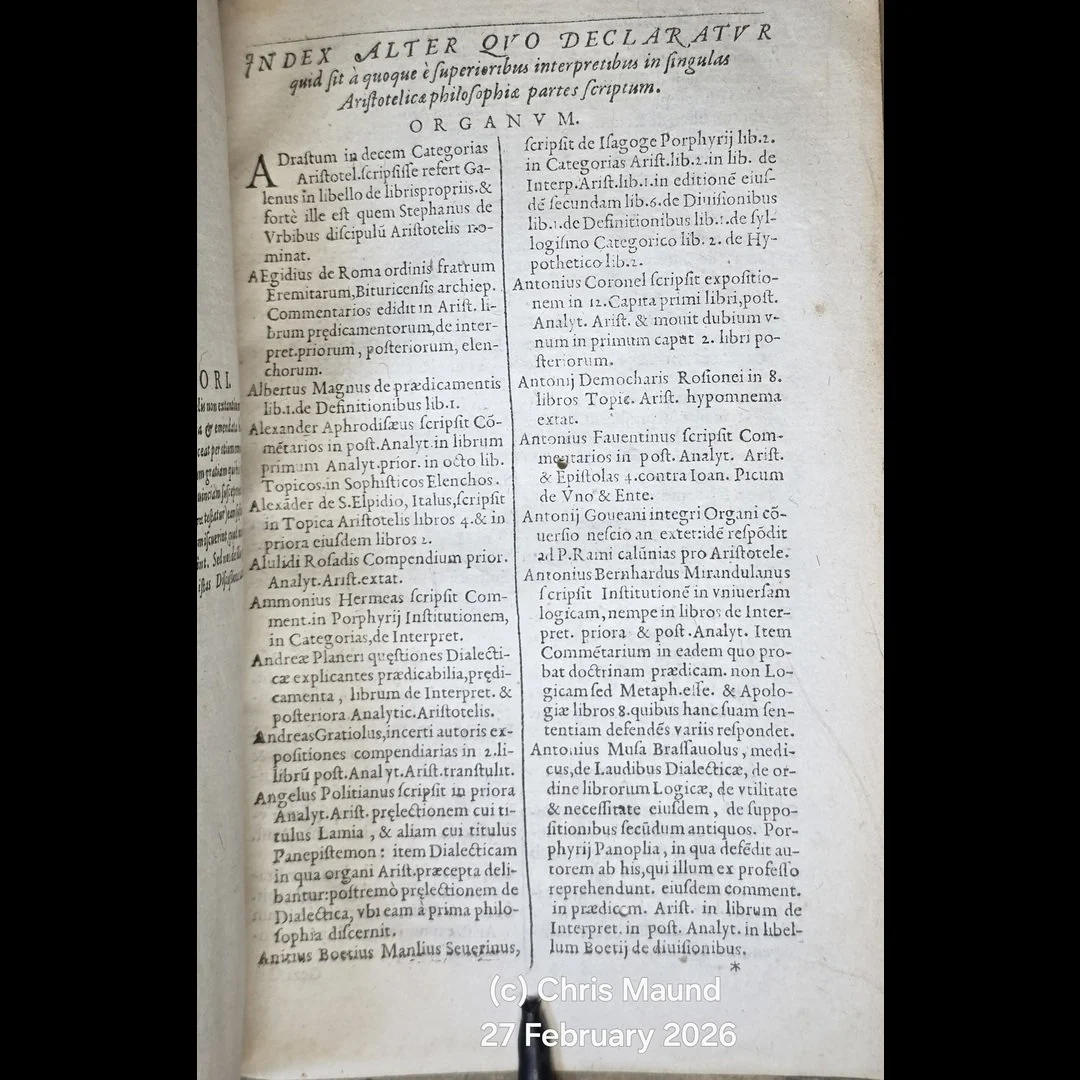 Image 33 of 37
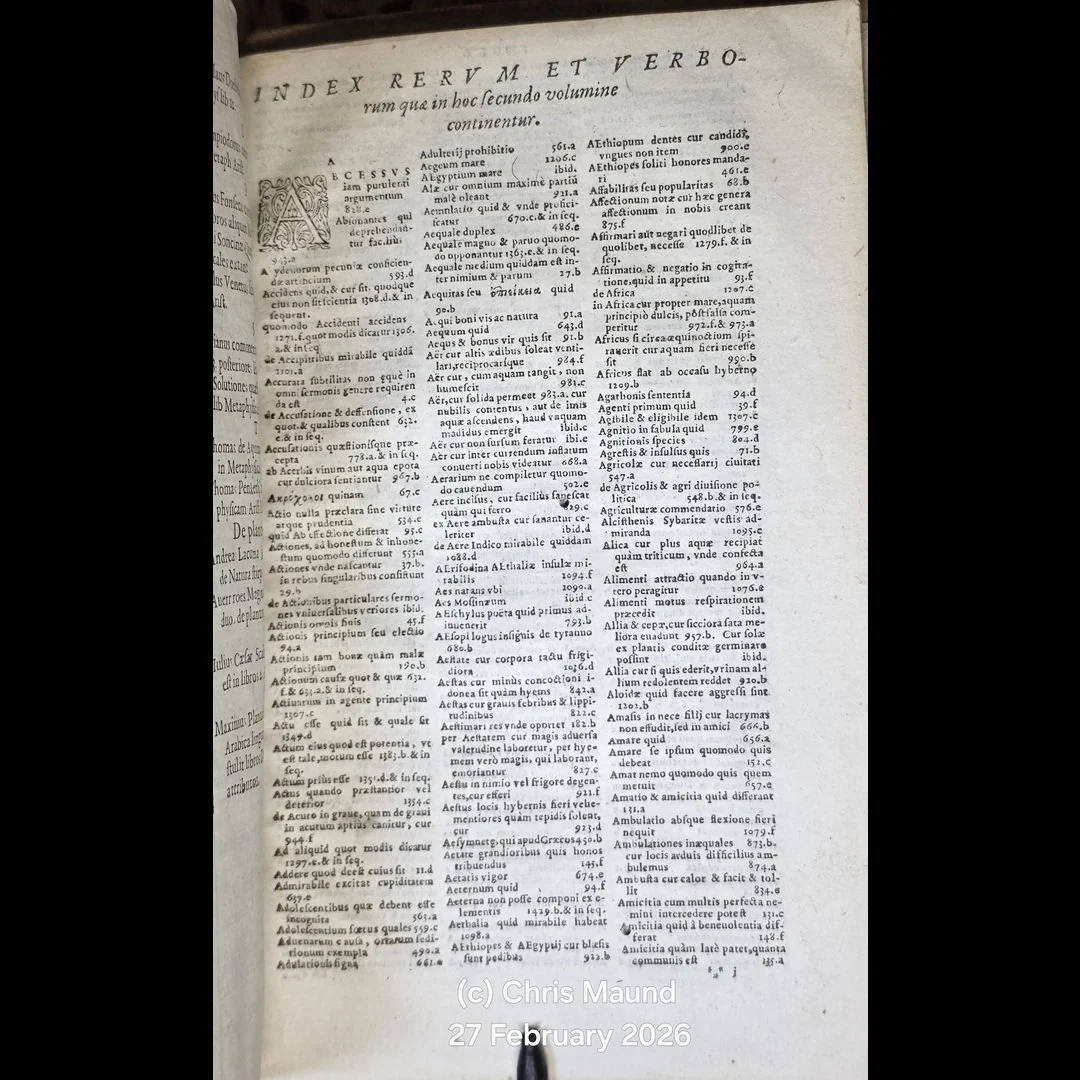 Image 34 of 37
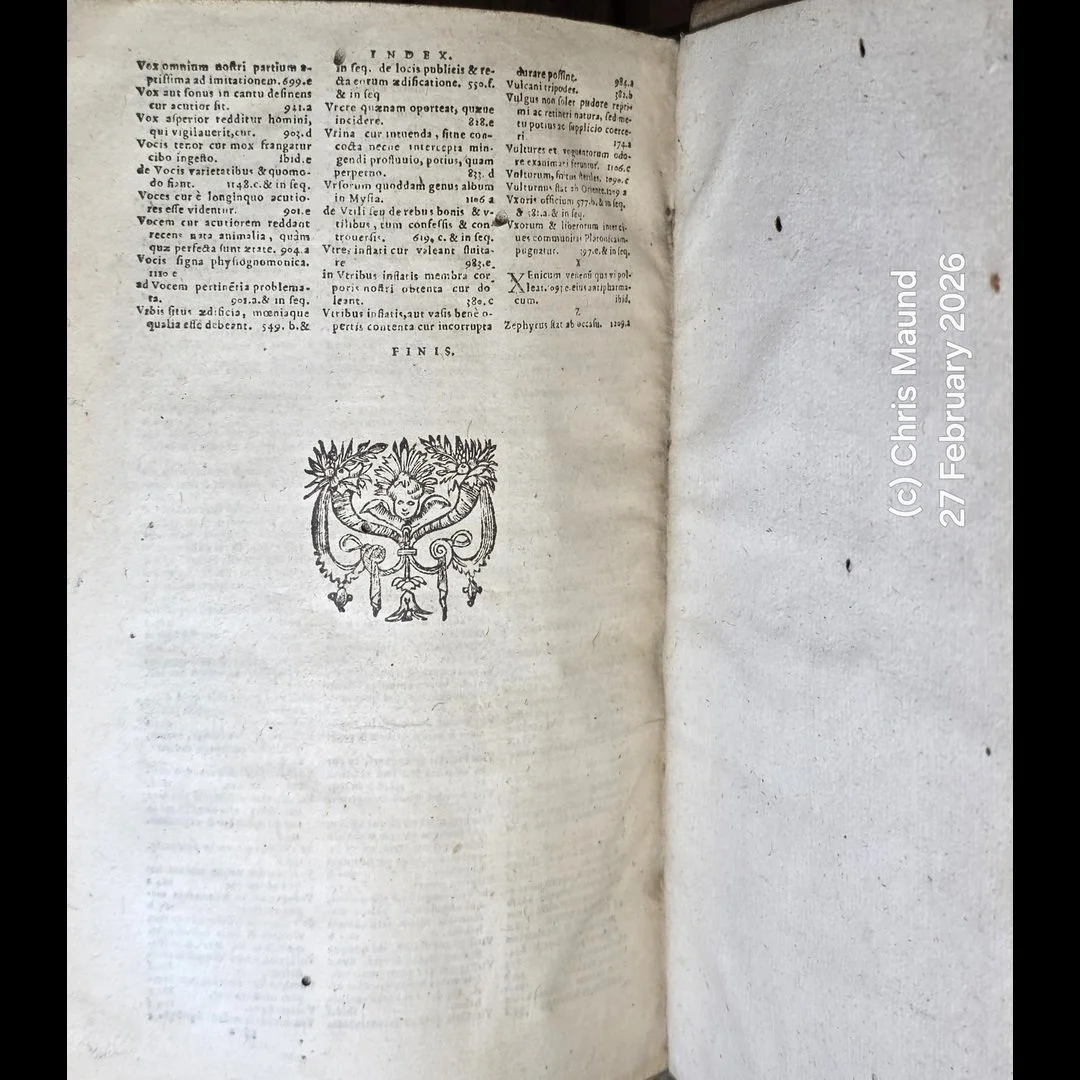 Image 35 of 37
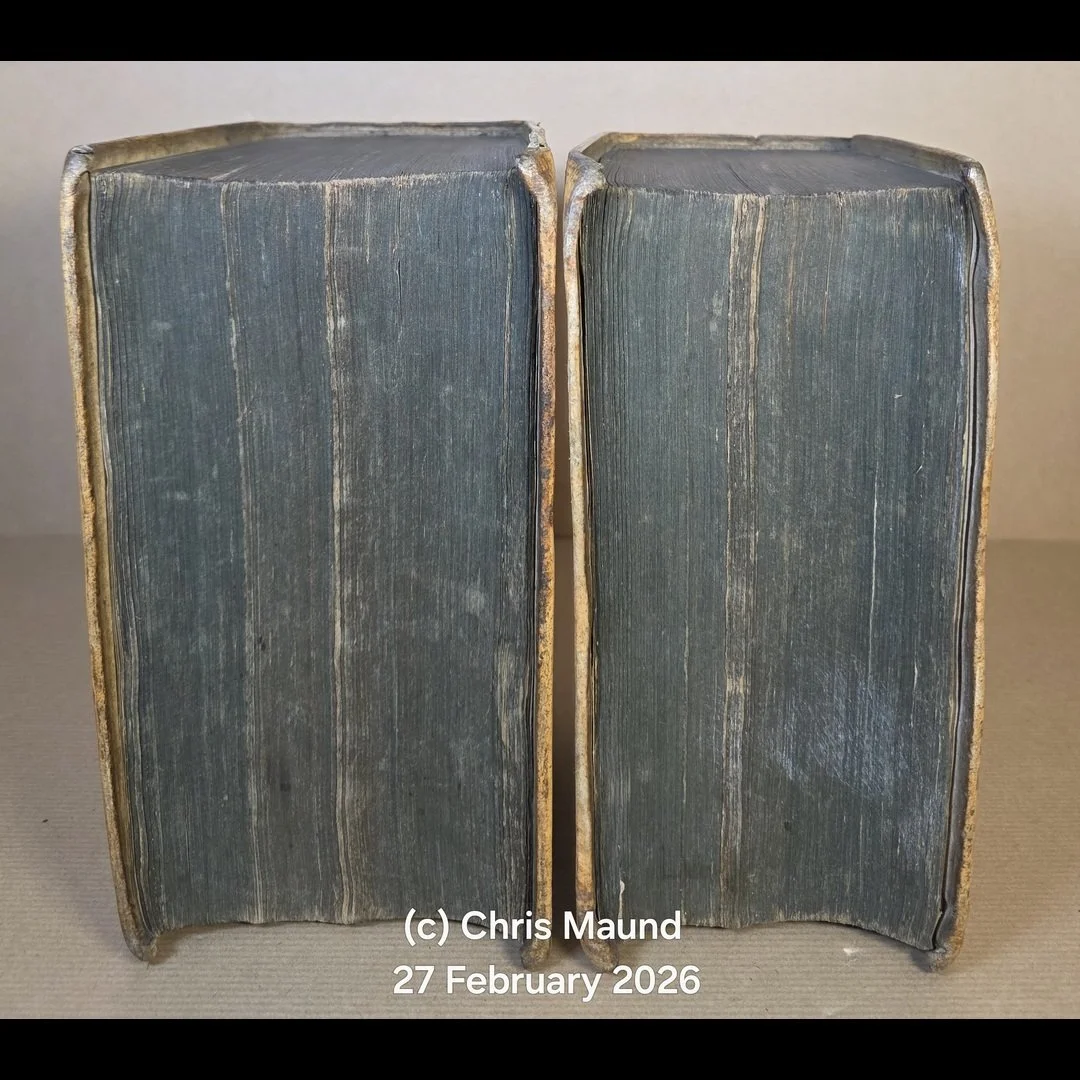 Image 36 of 37
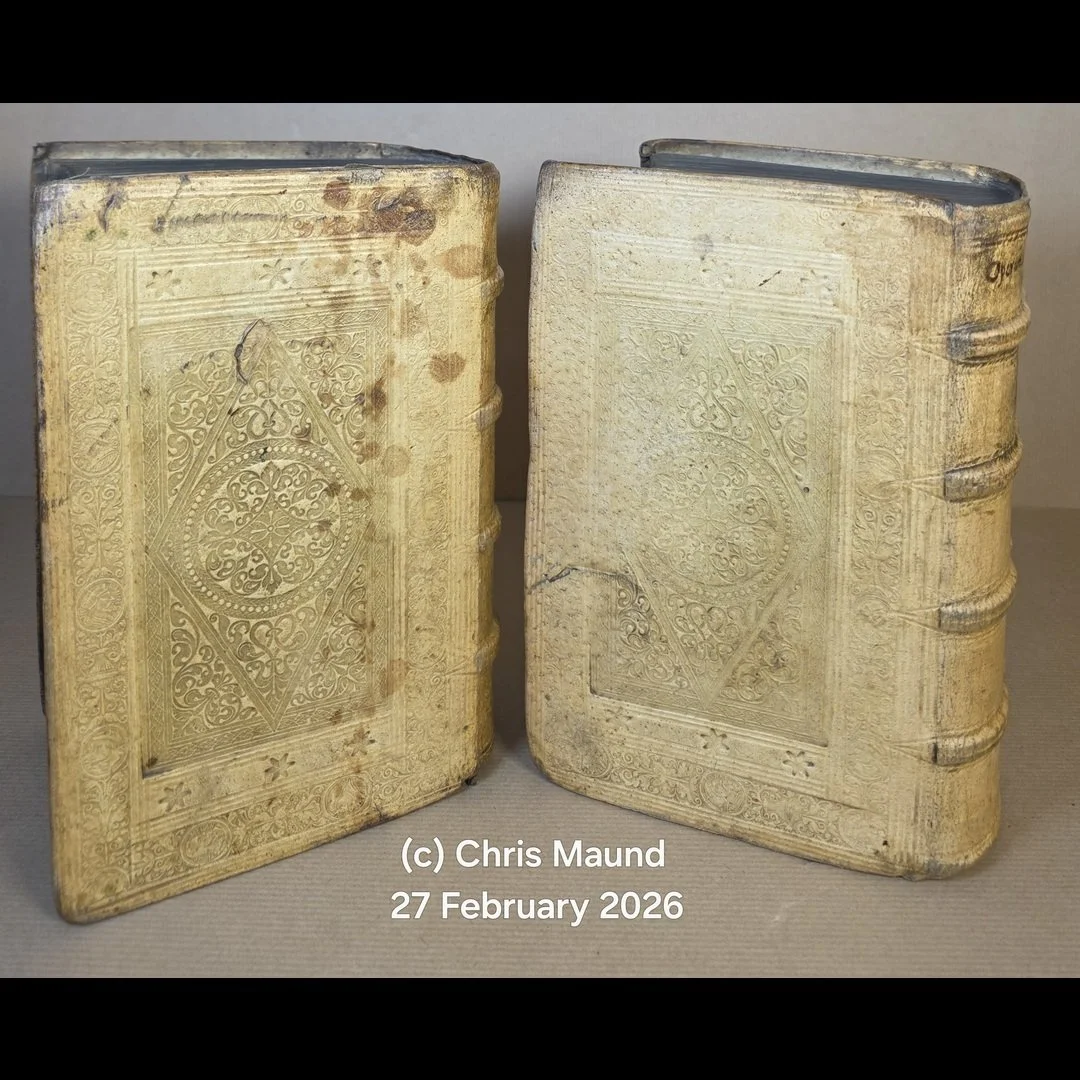 Image 37 of 37