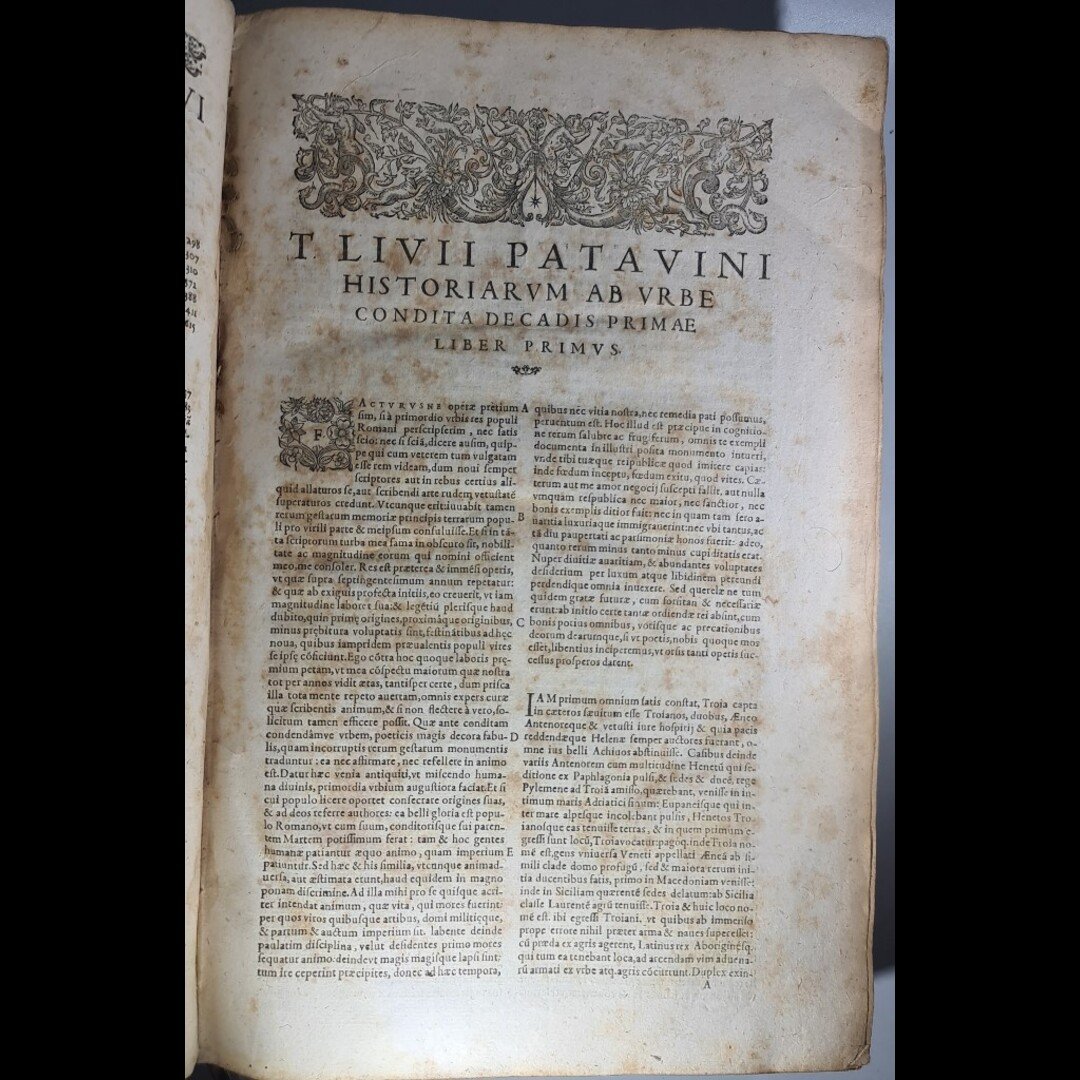
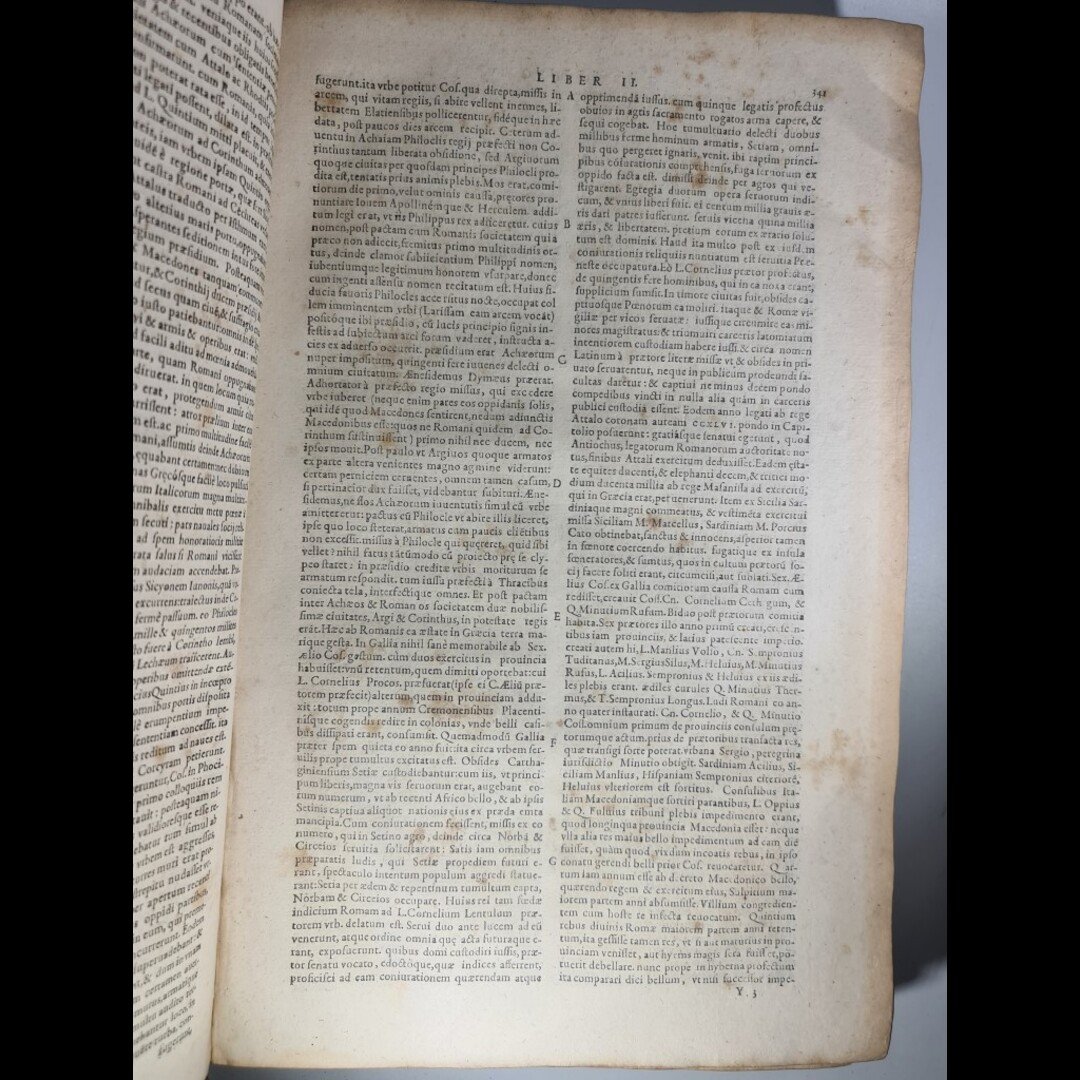
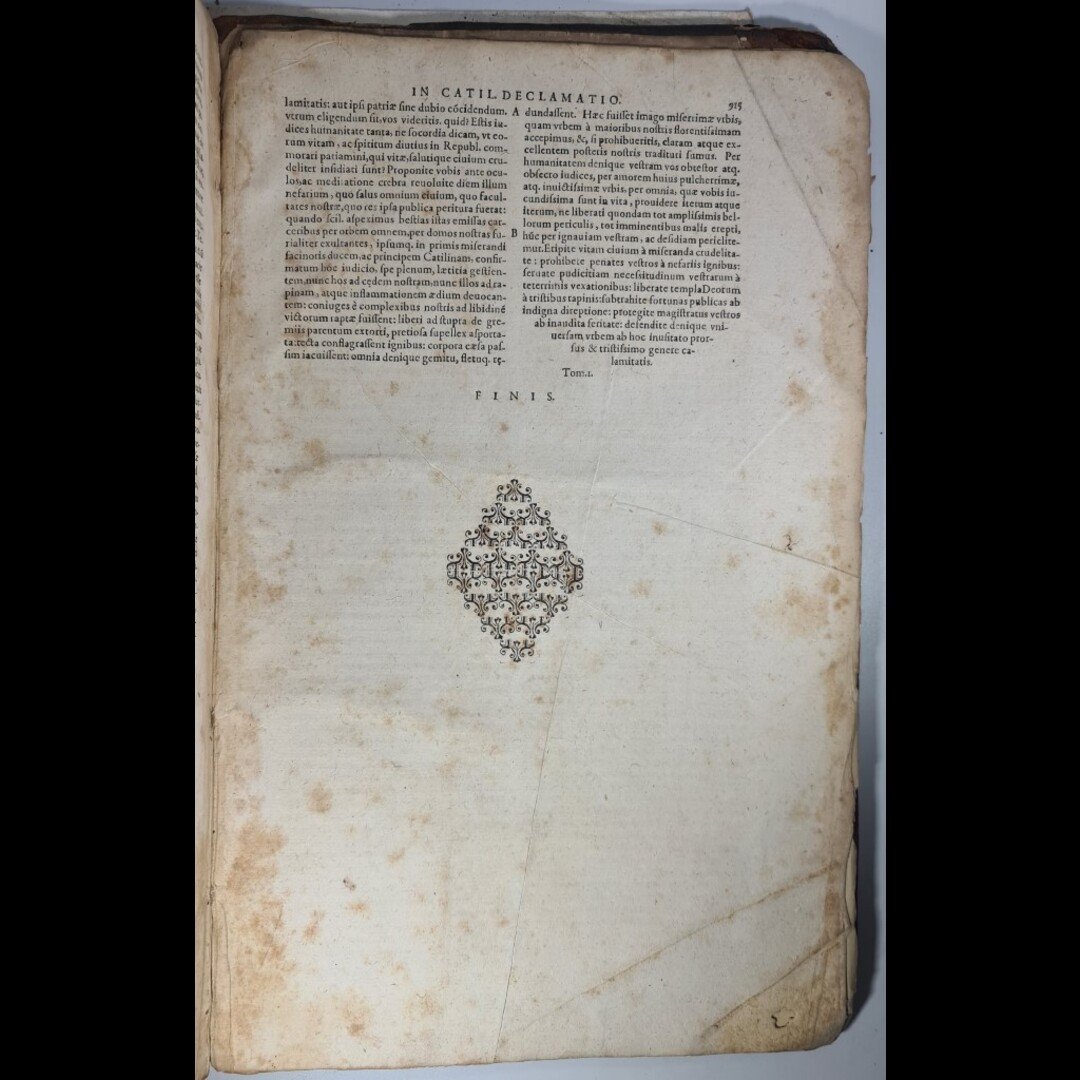
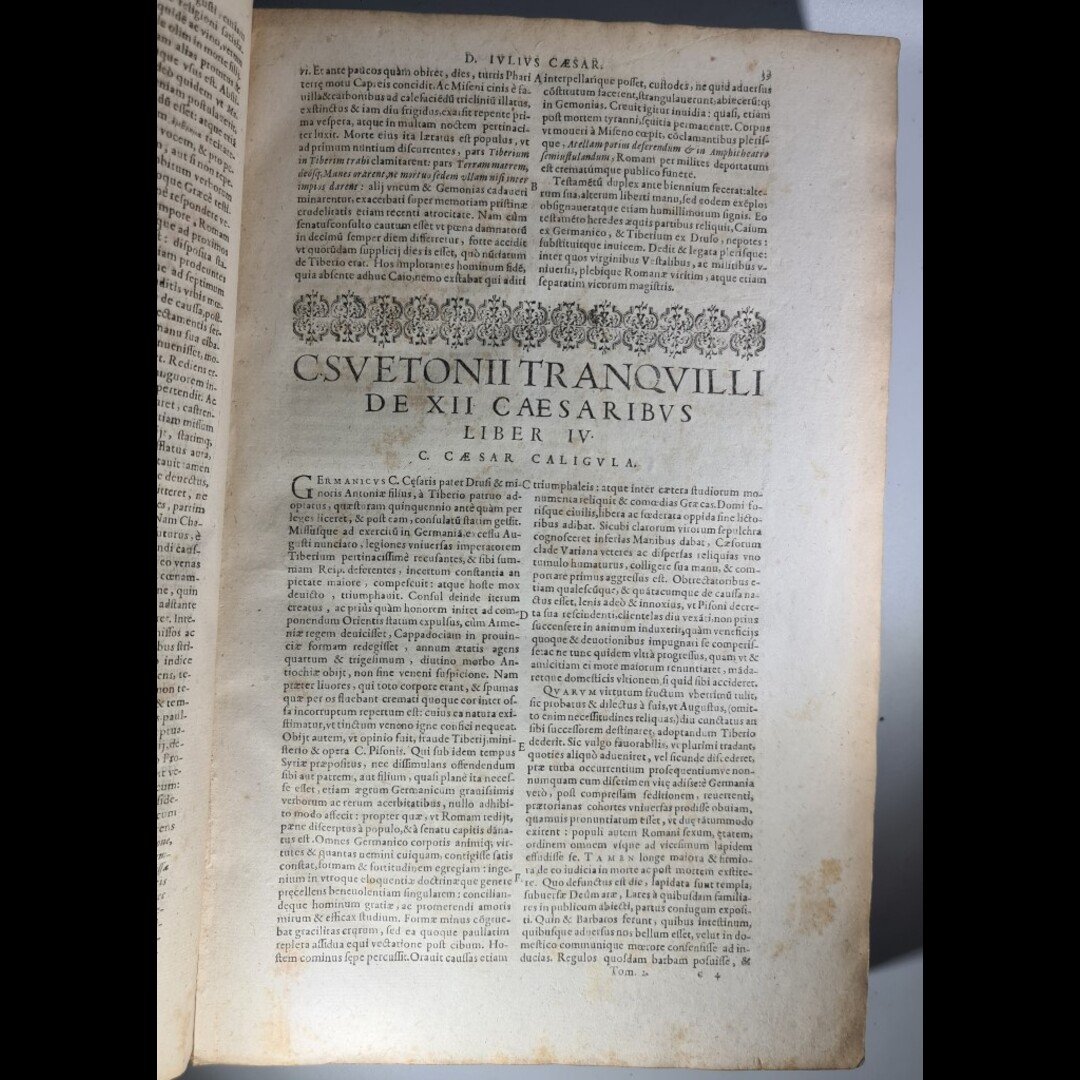
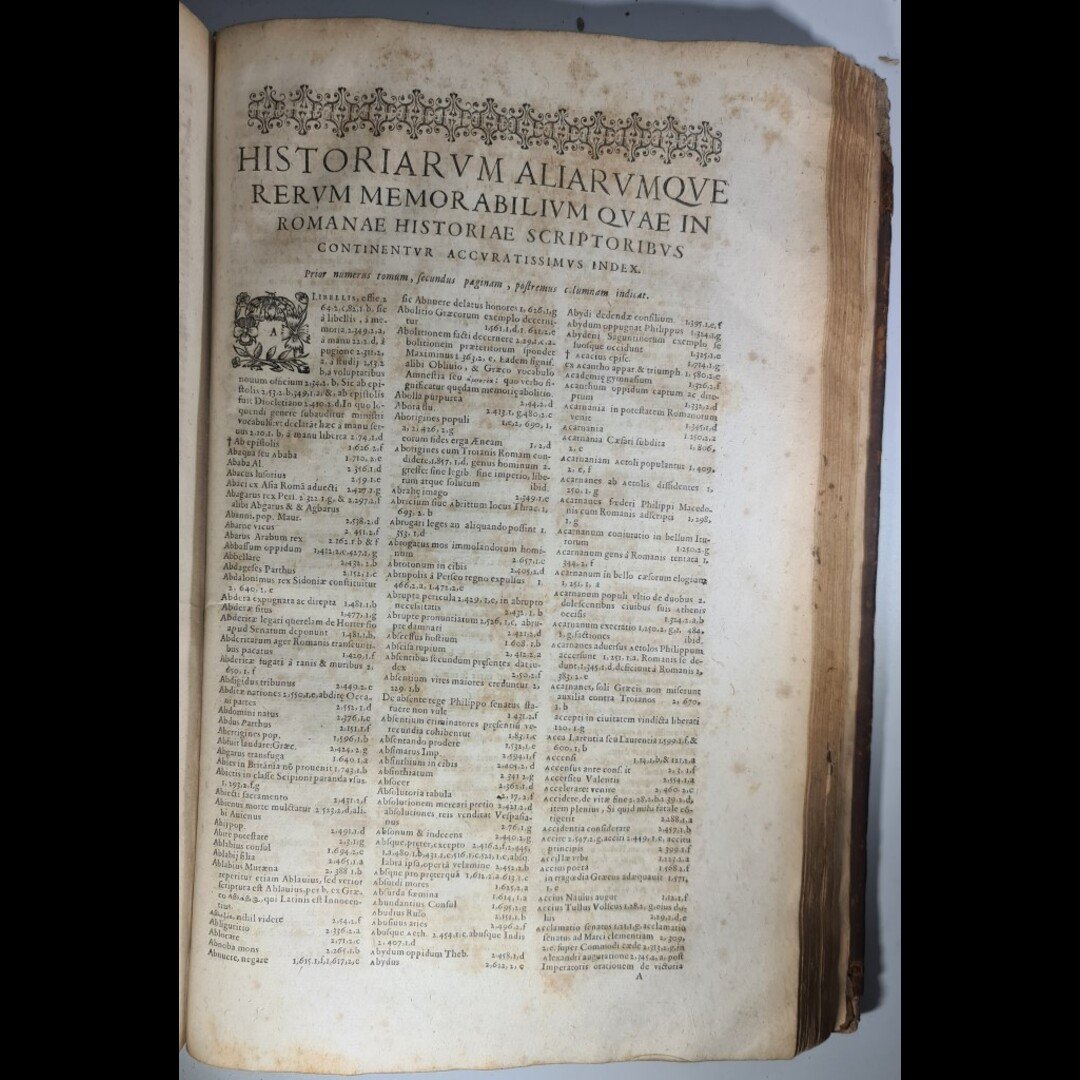
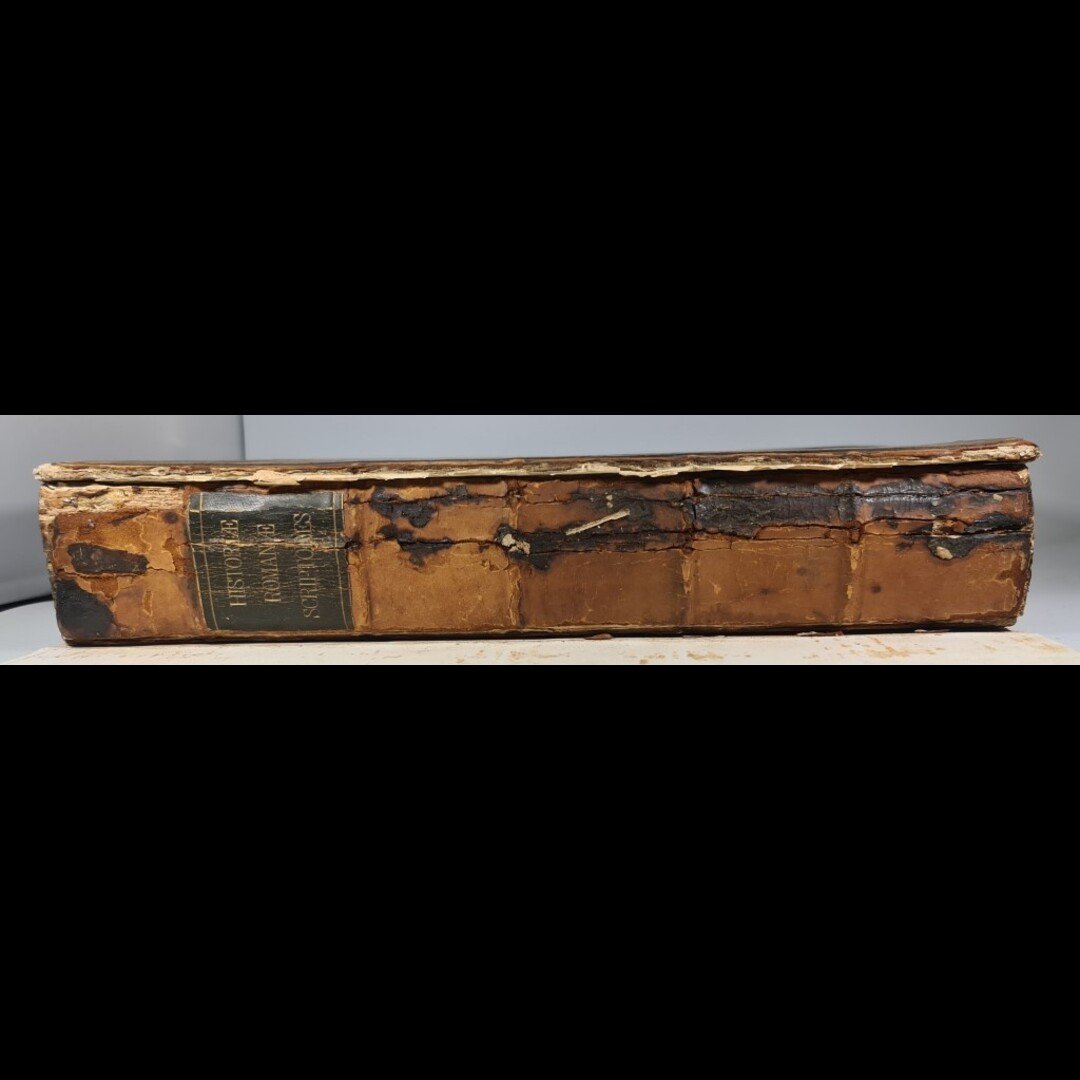
1680 Oxford Sheldonian Expanded Edition Enlarged Issue 17 Line Title Issue; Sandys/Ombersley Court Provenance
ENCHIRIDION
By Epictetus et al.
KEY DETAILS
Condition: Good
Format: Contemporary full calf, Approximately 155 × 90 mm
Published By: e Theatro Sheldoniano (Sheldonian), Oxford, 1680
Language: Greek/Latin
Provenance: From the Sandys family library at Ombersley Court, Worcestershire, with the armorial bookplate “Lord Sandys” to the front pastedown. The library remained at Ombersley through successive generations of the Sandys famil...
Collation: [12], 99, [1], 79, [1], 25, [2], 12, 9 pp.; 12mo.; Complete according to the bibliographical collation consulted.
Dust Jacket: None, as issued, No Jacket
SKU: BTETM0002457
Shipping Info: Approximate Package Dimensions H: 12.5, L: 30, W: 25 (Units: cm), W: 2Kg
Tracked Shipping, Insurance Coverage as per Customer Request
DESCRIPTION
Enchiridion
An appealing and intellectually rich seventeenth-century Oxford anthology of ancient moral philosophy, bringing together Epictetus’s celebrated Stoic Enchiridion with the Tablet traditionally attributed to Cebes, Theophrastus’s Characters, the Choice of Hercules associated with Prodicus, and a dialogue on exile printed under the name of Cicero but now identified as an extract from Cassius Dio.
Printed at Oxford in 1680 “e Theatro Sheldoniano”, the volume presents the Greek and Latin texts on facing pages and belongs to the important early period of scholarly printing associated with the Sheldonian Theatre. This 1680 edition expands the earlier Oxford collection of 1670 through the addition of the Prodicus and De Exilio material, creating a compact anthology centred upon virtue, self-command, moral character, philosophical education and endurance in adversity.
This copy is the 17-line title-page setting recorded as ESTC R234821, as distinct from the separately catalogued 18-line setting of the same year.
The editorial recension is anonymous. Older bibliographical authorities ascribed the edition to Charles Aldrich, an attribution which is chronologically problematic if intended to refer to Charles Aldrich (1681–1737), the named editor of the later 1707 Oxford edition. The 1680 edition nevertheless belongs firmly within the scholarly printing programme of the Sheldonian press during the period dominated by John Fell.
Of particular interest is the copy itself. Retaining its contemporary calf binding and the armorial bookplate of Lord Sandys, it comes from the long-established library at Ombersley Court and contains extensive eighteenth-century scholarly annotations and textual emendations in Greek and English. These transform the volume from a simple surviving school or university edition into an attractive witness to the continuing study and correction of Epictetus during the Enlightenment.
PROVENANCE
From the Sandys family library at Ombersley Court, Worcestershire, with the armorial bookplate “Lord Sandys” to the front pastedown. The library remained at Ombersley through successive generations of the Sandys family before its modern dispersal. This volume was acquired following the Ombersley Court Library sale at Chorley’s on 17 September 2024.
The eighteenth-century provenance is particularly interesting in relation to Edwin Sandys, 2nd Baron Sandys of Ombersley (1726–1797), a noted classical and Greek scholar who studied at Oxford and was elected a trustee of the British Museum in 1769. His intellectual interests, extensive library and engagement with Greek scholarship provide a compelling context for the manuscript material preserved in this volume.
The front blank and other leaves contain substantial scholarly annotations, corrections and textual variants in Greek and English. These are not casual ownership notes but evidence of close philological engagement with the text.
Several of the manuscript emendations correspond closely with readings and explanatory notes found in Elizabeth Carter’s landmark 1758 English edition of Epictetus, All the Works of Epictetus, Which Are Now Extant. This provides a terminus post quem of 1758 for at least part of the annotation programme and places the scholarly activity firmly within Edwin Sandys’s mature lifetime.
Research into the handwriting is ongoing. Comparison with authenticated examples of Edwin Sandys’s hand shows compatible characteristics, while surviving evidence independently documents Sandys as an active Greek scholar. The annotation hand may therefore plausibly be that of Edwin Sandys himself, although this attribution has not yet been established with sufficient certainty to state as fact.
The annotations are consequently catalogued here conservatively as eighteenth-century scholarly manuscript additions from within the Sandys/Ombersley context.
CONDITION, COLLATION & COPY NOTES
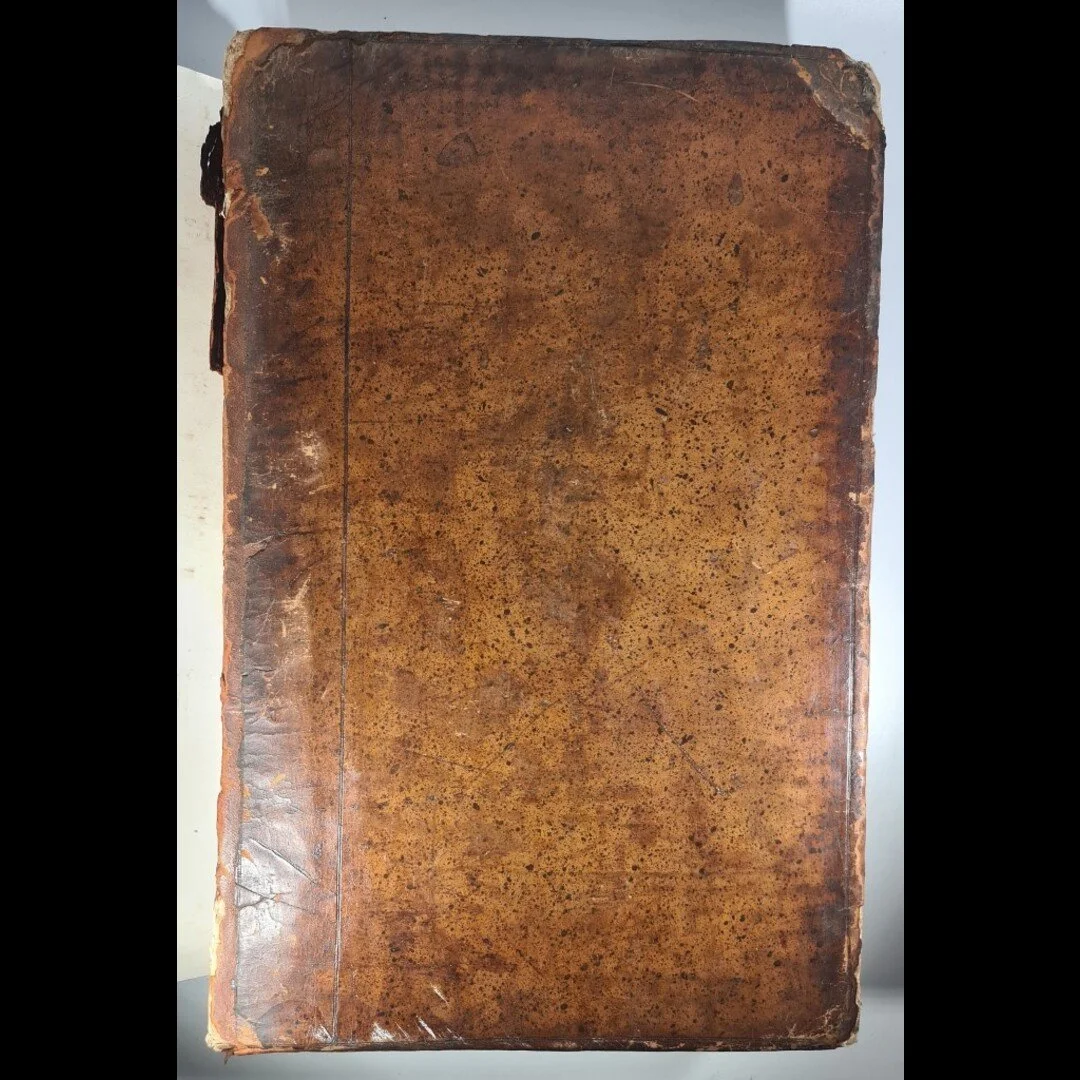
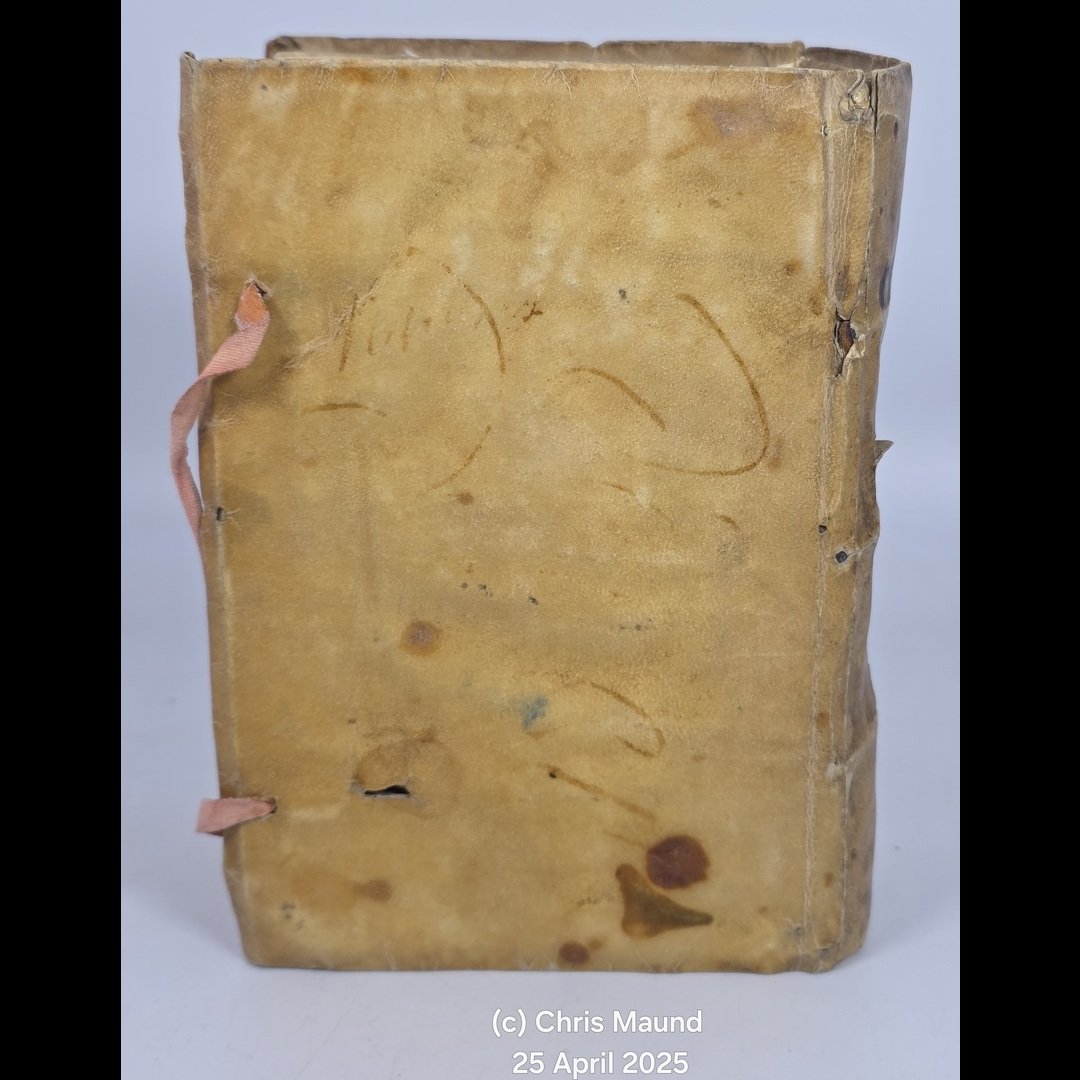
Contemporary full calf, the boards decorated in blind with floral corner ornaments. Binding worn and rubbed with general scuffing and surface marking consistent with age and use. Joints with short cracks but remaining firm and attached. Corners bumped and worn.
Armorial “Lord Sandys” bookplate to the front pastedown.
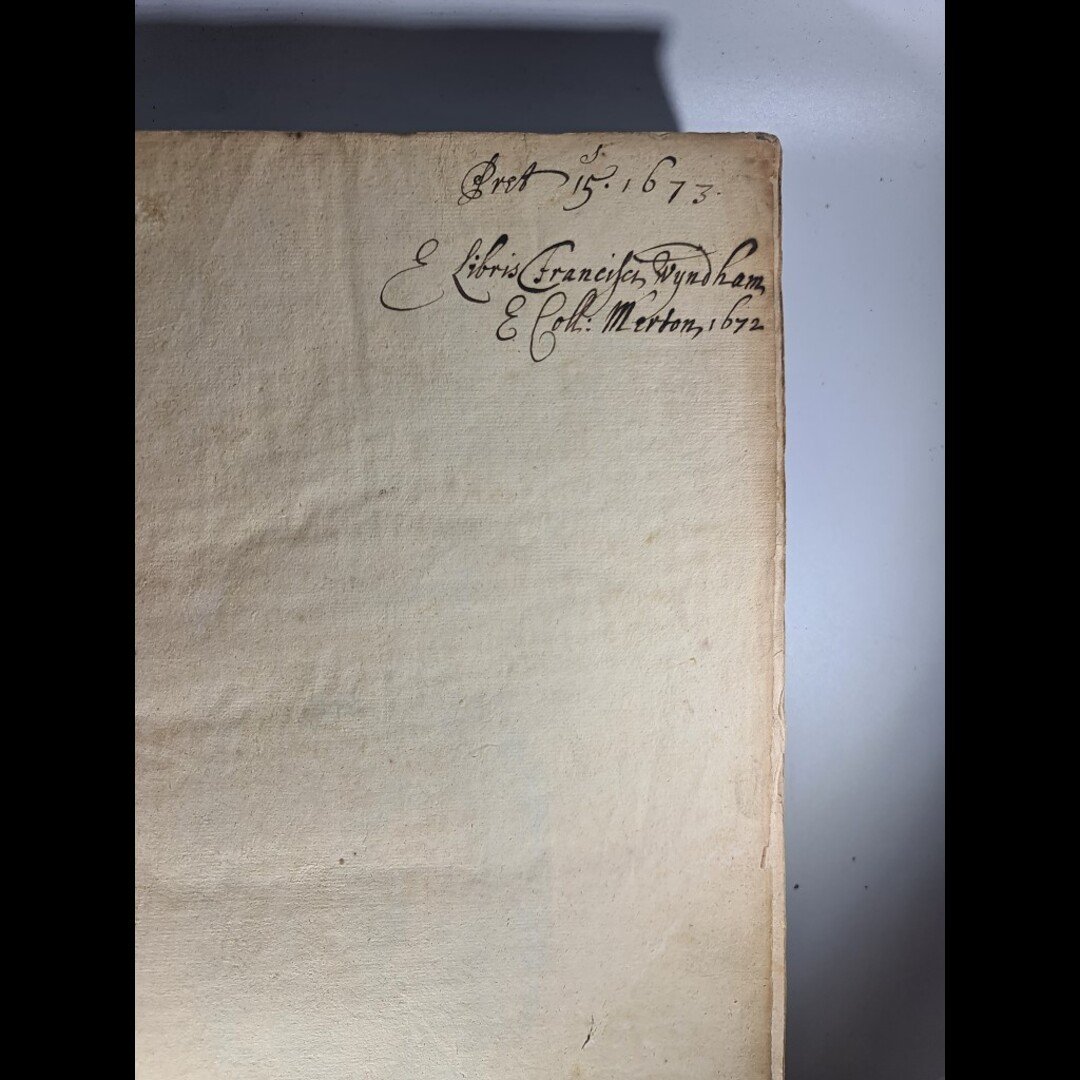
Front blank extensively annotated in an accomplished early scholarly hand, principally in Greek with English explanatory material and textual emendations. Further manuscript corrections and marginalia occur within the text. Early graphite price notation also present.
Text leaves generally toned with scattered spotting and foxing. Some faint damp-mottling, principally affecting the preliminary leaves. One leaf with a small corner chip, not affecting the printed text.
Greek and Latin printed on facing pages. Individual works have divisional titles and the register continues through the separately paginated sections.
Please see Photos as part of condition report.
REFERENCES
ESTC R234821 — the 17-line title-page setting of the 1680 edition.
Wing E3148.
Cf. ESTC R2731 — the separately recorded 18-line title-page setting of the same 1680 edition.
Elizabeth Carter, All the Works of Epictetus, Which Are Now Extant, London: Samuel Richardson, 1758 — relevant to several manuscript corrections and readings entered in this copy.
SYNOPSIS
This compact anthology brings together a remarkable sequence of classical moral texts concerned with the conduct of life, the nature of virtue and vice, individual character and the philosophical response to fortune.
Epictetus — Enchiridion
The Enchiridion, or “Handbook”, is one of the most influential surviving texts of Stoic philosophy. Compiled from the teachings of Epictetus by his pupil Arrian, it distils Stoic ethics into a practical manual for life.
At its heart is the distinction between those things that are within our control — our judgements, intentions, desires and responses — and those that are not, including reputation, wealth, external events and ultimately the actions of others. Freedom and tranquillity arise from concentrating upon the former and refusing to make our happiness dependent upon the latter.
Short, direct and intensely practical, the Enchiridion became one of the principal vehicles through which Stoic thought passed into Renaissance and early-modern European intellectual culture.
Pseudo-Cebes — Tabula
The Tabula or Tablet was traditionally attributed to Cebes of Thebes, the pupil of Socrates mentioned by Plato, although modern scholarship generally treats the author as Pseudo-Cebes.
The work describes an allegorical picture representing the course of human life. Figures personifying deception, fortune, pleasure, false education and virtue populate a symbolic journey in which the individual must learn to distinguish genuine philosophical education from superficial knowledge and worldly distraction.
Its vivid allegorical structure made the work exceptionally attractive to Renaissance and early-modern readers and educators.
Theophrastus — Characteres Ethici
The Characters of Theophrastus consists of a celebrated sequence of sharply observed sketches of human behaviour and moral failings.
Rather than constructing abstract ethical arguments, Theophrastus depicts recognisable types — the flatterer, miser, boor, tactless man, coward and others — through characteristic actions and social habits.
The work became enormously influential upon later European character writing, comedy, satire and moral observation and remains one of antiquity’s most immediately recognisable studies of human personality.
Prodicus — Hercules
The Choice of Hercules, associated with the fifth-century BC sophist Prodicus of Ceos, survives principally through Xenophon’s Memorabilia.
The young Heracles encounters two female figures representing Virtue and Vice. Vice offers an easy life of pleasure without labour, while Virtue promises honour and lasting achievement through discipline and effort.
Heracles chooses the difficult path of Virtue, producing one of the most enduring moral allegories of classical antiquity.
Cassius Dio — Dialogus Ciceronis & Philisci de Exilio
Printed in this edition under Cicero’s name as De Exilio, the final substantial text is not an authentic Ciceronian dialogue.
It is an extract from Book XXXVIII of Cassius Dio’s Roman History and presents a dialogue between Cicero and Philiscus concerning Cicero’s exile.
Philiscus attempts to console Cicero by placing political misfortune, reputation and displacement within a philosophical framework, making the dialogue thematically well suited to accompany Epictetus. Its concern with endurance under adverse fortune completes the anthology’s broader exploration of self-command and moral constancy.
Taken together, the texts form an unusually coherent early-modern philosophical reader: Epictetus teaches control of the self; Pseudo-Cebes presents life as a moral journey; Theophrastus anatomises character; Prodicus dramatises the choice of virtue over pleasure; and Cassius Dio explores philosophical endurance in exile.
AUTHOR BIO
Epictetus
Epictetus was a Greek-speaking Stoic philosopher active during the first and early second centuries AD. Born into slavery at Hierapolis in Phrygia, he later gained his freedom and taught philosophy, ultimately establishing a school at Nicopolis in north-western Greece.
Epictetus himself wrote nothing for publication. His teachings survive principally through the Discourses recorded by his pupil Arrian and through the shorter Enchiridion distilled from them.
His insistence upon distinguishing what lies within human control from what does not has made his philosophy one of the most enduringly practical expressions of Stoicism.
Pseudo-Cebes
The Tablet was historically attributed to Cebes of Thebes, a disciple of Socrates known from Plato’s Phaedo. Linguistic and philosophical considerations have led modern scholarship to regard the surviving work as the production of a later anonymous author conventionally called Pseudo-Cebes.
Whatever its authorship, the Tabula became one of the most widely read moral allegories inherited from antiquity.
Theophrastus
Theophrastus (c.371–c.287 BC) was a Greek philosopher and scholar, pupil and successor of Aristotle as head of the Lyceum.
A prolific writer across philosophy and natural science, he is especially remembered today for his botanical works and for the Characters, whose concise portraits of social and moral types exercised a lasting influence upon European literature.
Prodicus of Ceos
Prodicus was a fifth-century BC Greek sophist and teacher renowned in antiquity for his attention to language and distinctions in meaning.
His writings do not survive independently. The celebrated Choice of Hercules is preserved through Xenophon, who presents Socrates recounting Prodicus’s allegory of the young hero choosing between Virtue and Vice.
Cassius Dio
Cassius Dio (c.155–c.235 AD) was a Roman senator, statesman and historian writing in Greek. His monumental Roman History originally extended across eighty books and traced Rome from its legendary beginnings to Dio’s own lifetime.
The dialogue between Cicero and Philiscus printed in this volume derives from Book XXXVIII and concerns Cicero’s response to exile and political misfortune.
1680 Oxford Sheldonian Expanded Edition Enlarged Issue 17 Line Title Issue; Sandys/Ombersley Court Provenance
ENCHIRIDION
By Epictetus et al.
KEY DETAILS
Condition: Good
Format: Contemporary full calf, Approximately 155 × 90 mm
Published By: e Theatro Sheldoniano (Sheldonian), Oxford, 1680
Language: Greek/Latin
Provenance: From the Sandys family library at Ombersley Court, Worcestershire, with the armorial bookplate “Lord Sandys” to the front pastedown. The library remained at Ombersley through successive generations of the Sandys famil...
Collation: [12], 99, [1], 79, [1], 25, [2], 12, 9 pp.; 12mo.; Complete according to the bibliographical collation consulted.
Dust Jacket: None, as issued, No Jacket
SKU: BTETM0002457
Shipping Info: Approximate Package Dimensions H: 12.5, L: 30, W: 25 (Units: cm), W: 2Kg
Tracked Shipping, Insurance Coverage as per Customer Request
DESCRIPTION
Enchiridion
An appealing and intellectually rich seventeenth-century Oxford anthology of ancient moral philosophy, bringing together Epictetus’s celebrated Stoic Enchiridion with the Tablet traditionally attributed to Cebes, Theophrastus’s Characters, the Choice of Hercules associated with Prodicus, and a dialogue on exile printed under the name of Cicero but now identified as an extract from Cassius Dio.
Printed at Oxford in 1680 “e Theatro Sheldoniano”, the volume presents the Greek and Latin texts on facing pages and belongs to the important early period of scholarly printing associated with the Sheldonian Theatre. This 1680 edition expands the earlier Oxford collection of 1670 through the addition of the Prodicus and De Exilio material, creating a compact anthology centred upon virtue, self-command, moral character, philosophical education and endurance in adversity.
This copy is the 17-line title-page setting recorded as ESTC R234821, as distinct from the separately catalogued 18-line setting of the same year.
The editorial recension is anonymous. Older bibliographical authorities ascribed the edition to Charles Aldrich, an attribution which is chronologically problematic if intended to refer to Charles Aldrich (1681–1737), the named editor of the later 1707 Oxford edition. The 1680 edition nevertheless belongs firmly within the scholarly printing programme of the Sheldonian press during the period dominated by John Fell.
Of particular interest is the copy itself. Retaining its contemporary calf binding and the armorial bookplate of Lord Sandys, it comes from the long-established library at Ombersley Court and contains extensive eighteenth-century scholarly annotations and textual emendations in Greek and English. These transform the volume from a simple surviving school or university edition into an attractive witness to the continuing study and correction of Epictetus during the Enlightenment.
PROVENANCE
From the Sandys family library at Ombersley Court, Worcestershire, with the armorial bookplate “Lord Sandys” to the front pastedown. The library remained at Ombersley through successive generations of the Sandys family before its modern dispersal. This volume was acquired following the Ombersley Court Library sale at Chorley’s on 17 September 2024.
The eighteenth-century provenance is particularly interesting in relation to Edwin Sandys, 2nd Baron Sandys of Ombersley (1726–1797), a noted classical and Greek scholar who studied at Oxford and was elected a trustee of the British Museum in 1769. His intellectual interests, extensive library and engagement with Greek scholarship provide a compelling context for the manuscript material preserved in this volume.
The front blank and other leaves contain substantial scholarly annotations, corrections and textual variants in Greek and English. These are not casual ownership notes but evidence of close philological engagement with the text.
Several of the manuscript emendations correspond closely with readings and explanatory notes found in Elizabeth Carter’s landmark 1758 English edition of Epictetus, All the Works of Epictetus, Which Are Now Extant. This provides a terminus post quem of 1758 for at least part of the annotation programme and places the scholarly activity firmly within Edwin Sandys’s mature lifetime.
Research into the handwriting is ongoing. Comparison with authenticated examples of Edwin Sandys’s hand shows compatible characteristics, while surviving evidence independently documents Sandys as an active Greek scholar. The annotation hand may therefore plausibly be that of Edwin Sandys himself, although this attribution has not yet been established with sufficient certainty to state as fact.
The annotations are consequently catalogued here conservatively as eighteenth-century scholarly manuscript additions from within the Sandys/Ombersley context.
CONDITION, COLLATION & COPY NOTES
Contemporary full calf, the boards decorated in blind with floral corner ornaments. Binding worn and rubbed with general scuffing and surface marking consistent with age and use. Joints with short cracks but remaining firm and attached. Corners bumped and worn.
Armorial “Lord Sandys” bookplate to the front pastedown.
Front blank extensively annotated in an accomplished early scholarly hand, principally in Greek with English explanatory material and textual emendations. Further manuscript corrections and marginalia occur within the text. Early graphite price notation also present.
Text leaves generally toned with scattered spotting and foxing. Some faint damp-mottling, principally affecting the preliminary leaves. One leaf with a small corner chip, not affecting the printed text.
Greek and Latin printed on facing pages. Individual works have divisional titles and the register continues through the separately paginated sections.
Please see Photos as part of condition report.
REFERENCES
ESTC R234821 — the 17-line title-page setting of the 1680 edition.
Wing E3148.
Cf. ESTC R2731 — the separately recorded 18-line title-page setting of the same 1680 edition.
Elizabeth Carter, All the Works of Epictetus, Which Are Now Extant, London: Samuel Richardson, 1758 — relevant to several manuscript corrections and readings entered in this copy.
SYNOPSIS
This compact anthology brings together a remarkable sequence of classical moral texts concerned with the conduct of life, the nature of virtue and vice, individual character and the philosophical response to fortune.
Epictetus — Enchiridion
The Enchiridion, or “Handbook”, is one of the most influential surviving texts of Stoic philosophy. Compiled from the teachings of Epictetus by his pupil Arrian, it distils Stoic ethics into a practical manual for life.
At its heart is the distinction between those things that are within our control — our judgements, intentions, desires and responses — and those that are not, including reputation, wealth, external events and ultimately the actions of others. Freedom and tranquillity arise from concentrating upon the former and refusing to make our happiness dependent upon the latter.
Short, direct and intensely practical, the Enchiridion became one of the principal vehicles through which Stoic thought passed into Renaissance and early-modern European intellectual culture.
Pseudo-Cebes — Tabula
The Tabula or Tablet was traditionally attributed to Cebes of Thebes, the pupil of Socrates mentioned by Plato, although modern scholarship generally treats the author as Pseudo-Cebes.
The work describes an allegorical picture representing the course of human life. Figures personifying deception, fortune, pleasure, false education and virtue populate a symbolic journey in which the individual must learn to distinguish genuine philosophical education from superficial knowledge and worldly distraction.
Its vivid allegorical structure made the work exceptionally attractive to Renaissance and early-modern readers and educators.
Theophrastus — Characteres Ethici
The Characters of Theophrastus consists of a celebrated sequence of sharply observed sketches of human behaviour and moral failings.
Rather than constructing abstract ethical arguments, Theophrastus depicts recognisable types — the flatterer, miser, boor, tactless man, coward and others — through characteristic actions and social habits.
The work became enormously influential upon later European character writing, comedy, satire and moral observation and remains one of antiquity’s most immediately recognisable studies of human personality.
Prodicus — Hercules
The Choice of Hercules, associated with the fifth-century BC sophist Prodicus of Ceos, survives principally through Xenophon’s Memorabilia.
The young Heracles encounters two female figures representing Virtue and Vice. Vice offers an easy life of pleasure without labour, while Virtue promises honour and lasting achievement through discipline and effort.
Heracles chooses the difficult path of Virtue, producing one of the most enduring moral allegories of classical antiquity.
Cassius Dio — Dialogus Ciceronis & Philisci de Exilio
Printed in this edition under Cicero’s name as De Exilio, the final substantial text is not an authentic Ciceronian dialogue.
It is an extract from Book XXXVIII of Cassius Dio’s Roman History and presents a dialogue between Cicero and Philiscus concerning Cicero’s exile.
Philiscus attempts to console Cicero by placing political misfortune, reputation and displacement within a philosophical framework, making the dialogue thematically well suited to accompany Epictetus. Its concern with endurance under adverse fortune completes the anthology’s broader exploration of self-command and moral constancy.
Taken together, the texts form an unusually coherent early-modern philosophical reader: Epictetus teaches control of the self; Pseudo-Cebes presents life as a moral journey; Theophrastus anatomises character; Prodicus dramatises the choice of virtue over pleasure; and Cassius Dio explores philosophical endurance in exile.
AUTHOR BIO
Epictetus
Epictetus was a Greek-speaking Stoic philosopher active during the first and early second centuries AD. Born into slavery at Hierapolis in Phrygia, he later gained his freedom and taught philosophy, ultimately establishing a school at Nicopolis in north-western Greece.
Epictetus himself wrote nothing for publication. His teachings survive principally through the Discourses recorded by his pupil Arrian and through the shorter Enchiridion distilled from them.
His insistence upon distinguishing what lies within human control from what does not has made his philosophy one of the most enduringly practical expressions of Stoicism.
Pseudo-Cebes
The Tablet was historically attributed to Cebes of Thebes, a disciple of Socrates known from Plato’s Phaedo. Linguistic and philosophical considerations have led modern scholarship to regard the surviving work as the production of a later anonymous author conventionally called Pseudo-Cebes.
Whatever its authorship, the Tabula became one of the most widely read moral allegories inherited from antiquity.
Theophrastus
Theophrastus (c.371–c.287 BC) was a Greek philosopher and scholar, pupil and successor of Aristotle as head of the Lyceum.
A prolific writer across philosophy and natural science, he is especially remembered today for his botanical works and for the Characters, whose concise portraits of social and moral types exercised a lasting influence upon European literature.
Prodicus of Ceos
Prodicus was a fifth-century BC Greek sophist and teacher renowned in antiquity for his attention to language and distinctions in meaning.
His writings do not survive independently. The celebrated Choice of Hercules is preserved through Xenophon, who presents Socrates recounting Prodicus’s allegory of the young hero choosing between Virtue and Vice.
Cassius Dio
Cassius Dio (c.155–c.235 AD) was a Roman senator, statesman and historian writing in Greek. His monumental Roman History originally extended across eighty books and traced Rome from its legendary beginnings to Dio’s own lifetime.
The dialogue between Cicero and Philiscus printed in this volume derives from Book XXXVIII and concerns Cicero’s response to exile and political misfortune.

 Image 1 of 19
 Image 2 of 19
 Image 3 of 19
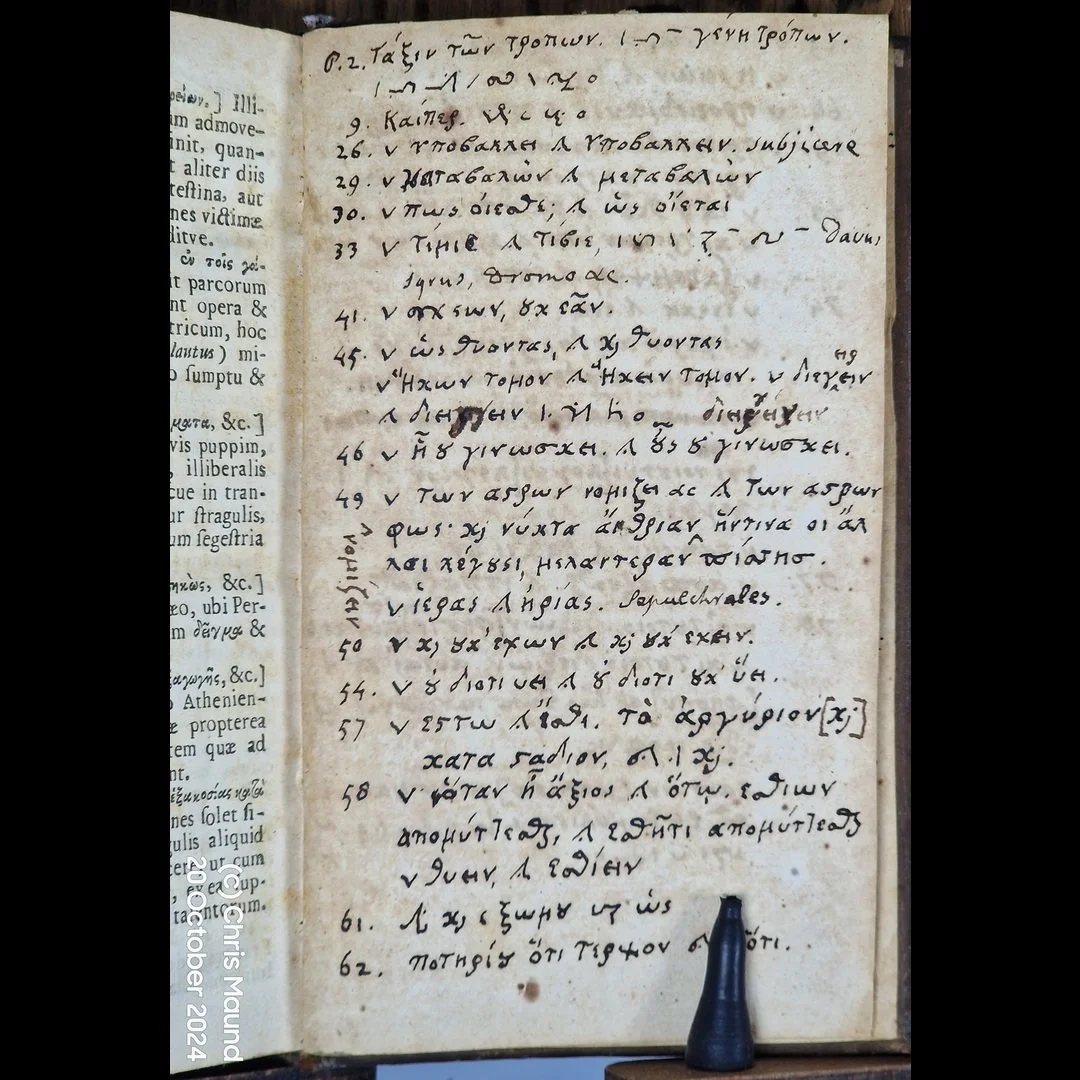 Image 4 of 19
 Image 5 of 19
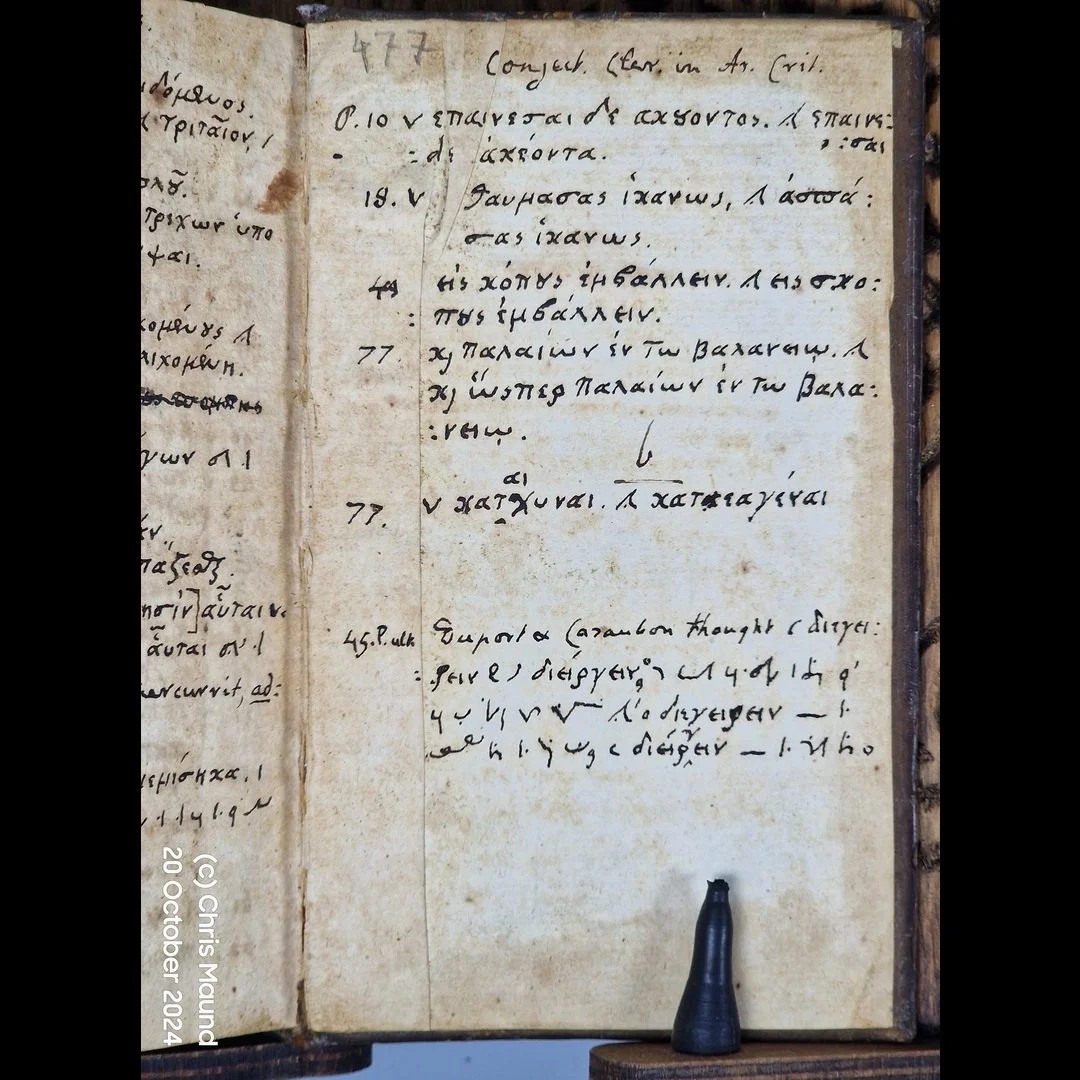 Image 6 of 19
 Image 7 of 19
 Image 8 of 19
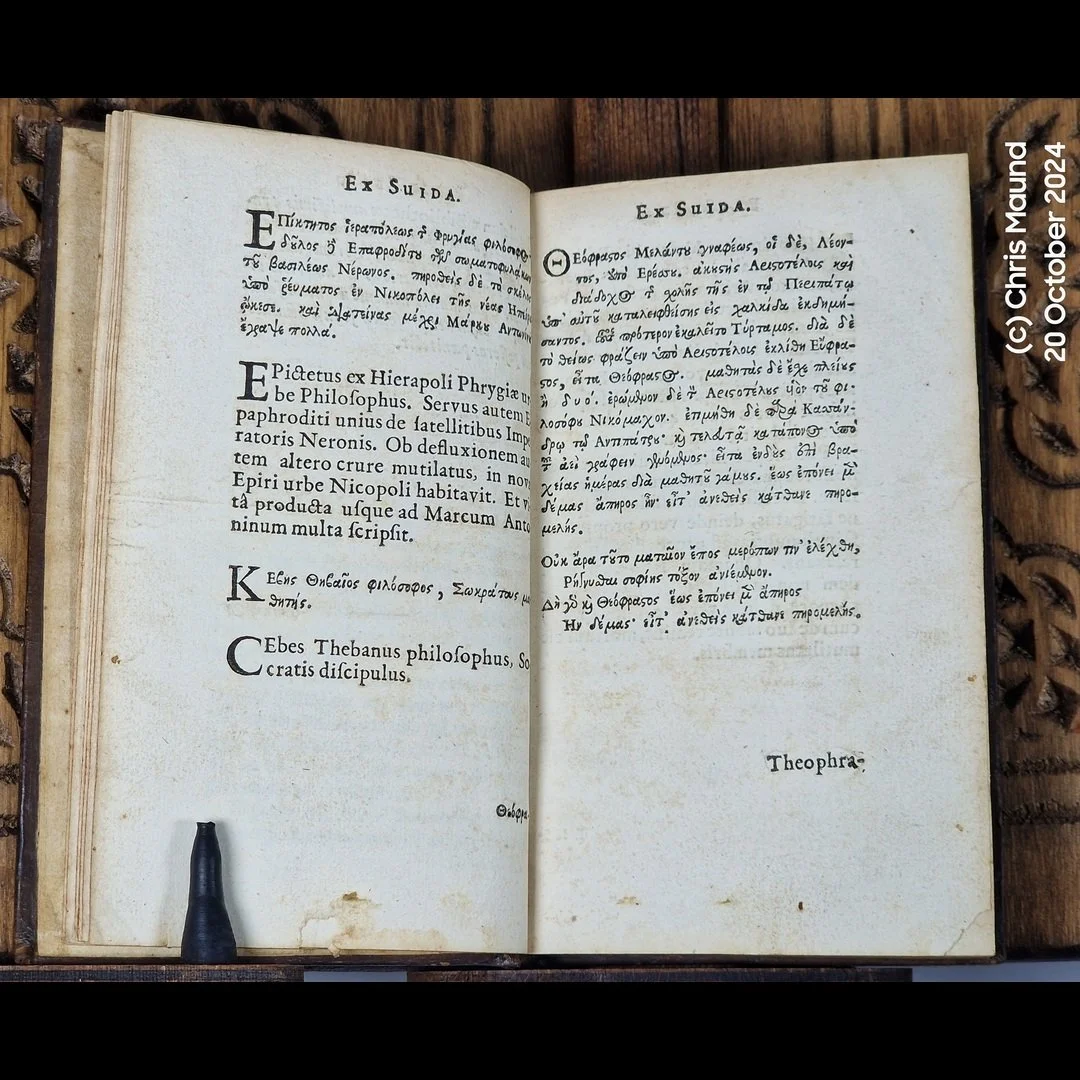 Image 9 of 19
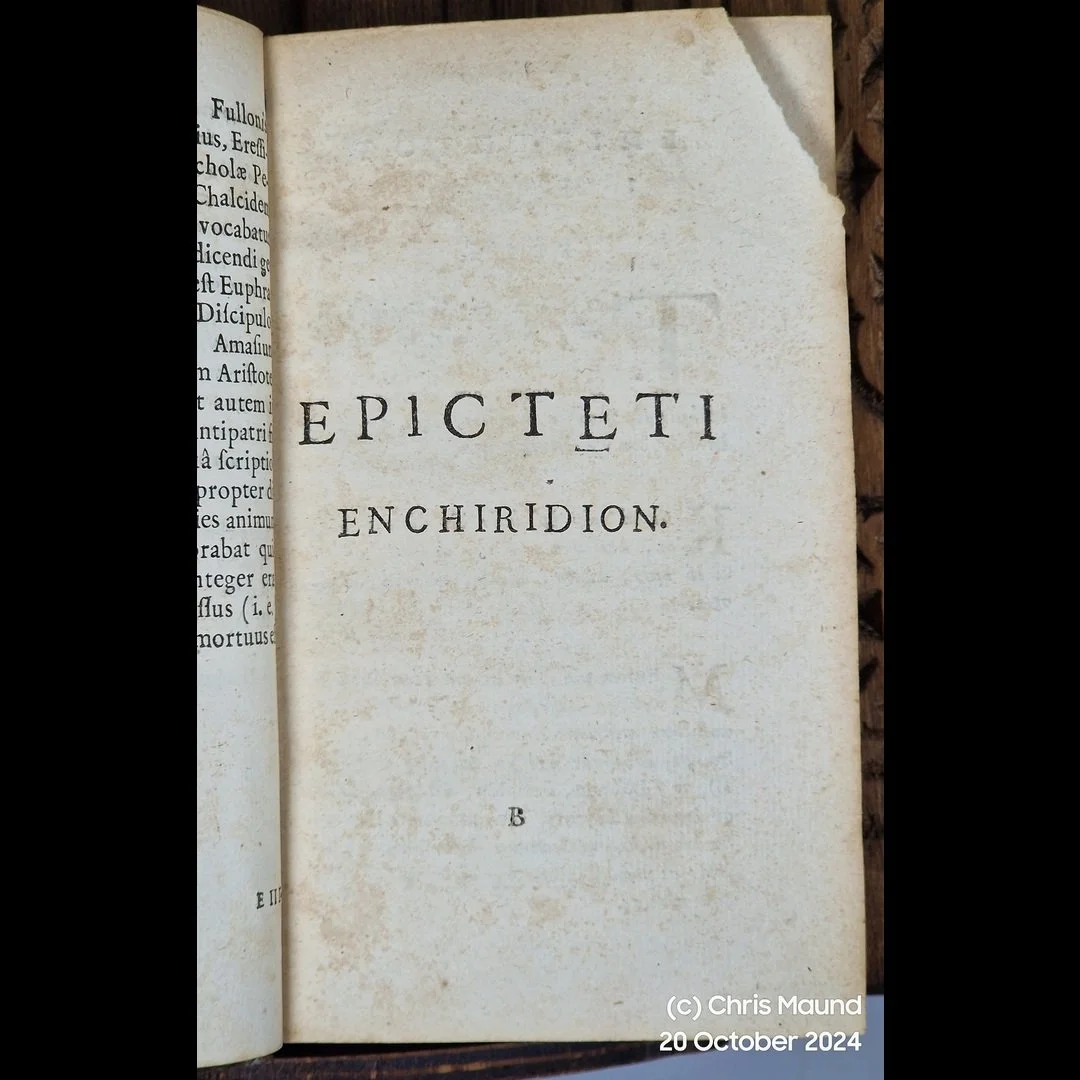 Image 10 of 19
 Image 11 of 19
 Image 12 of 19
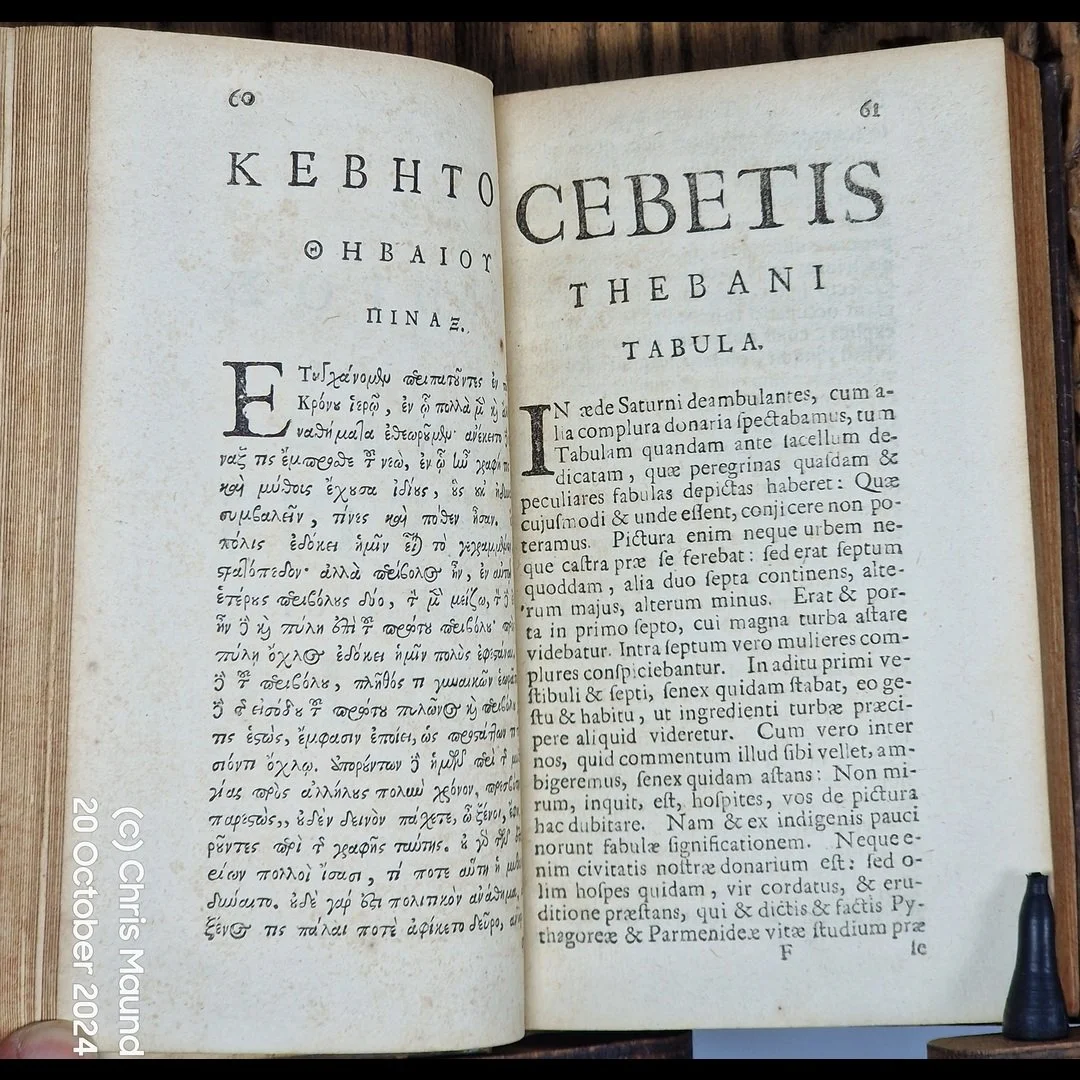 Image 13 of 19
 Image 14 of 19
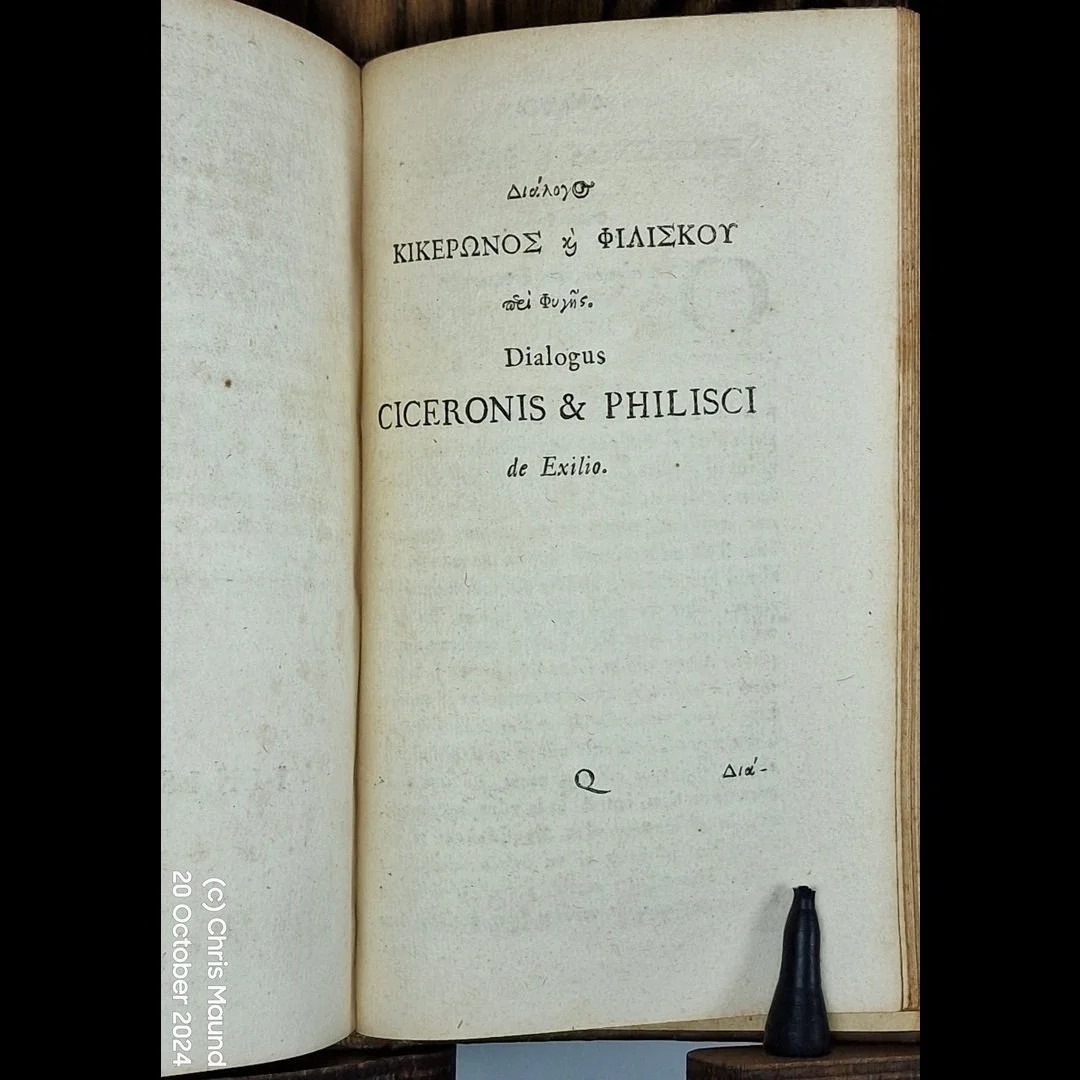 Image 15 of 19
 Image 16 of 19
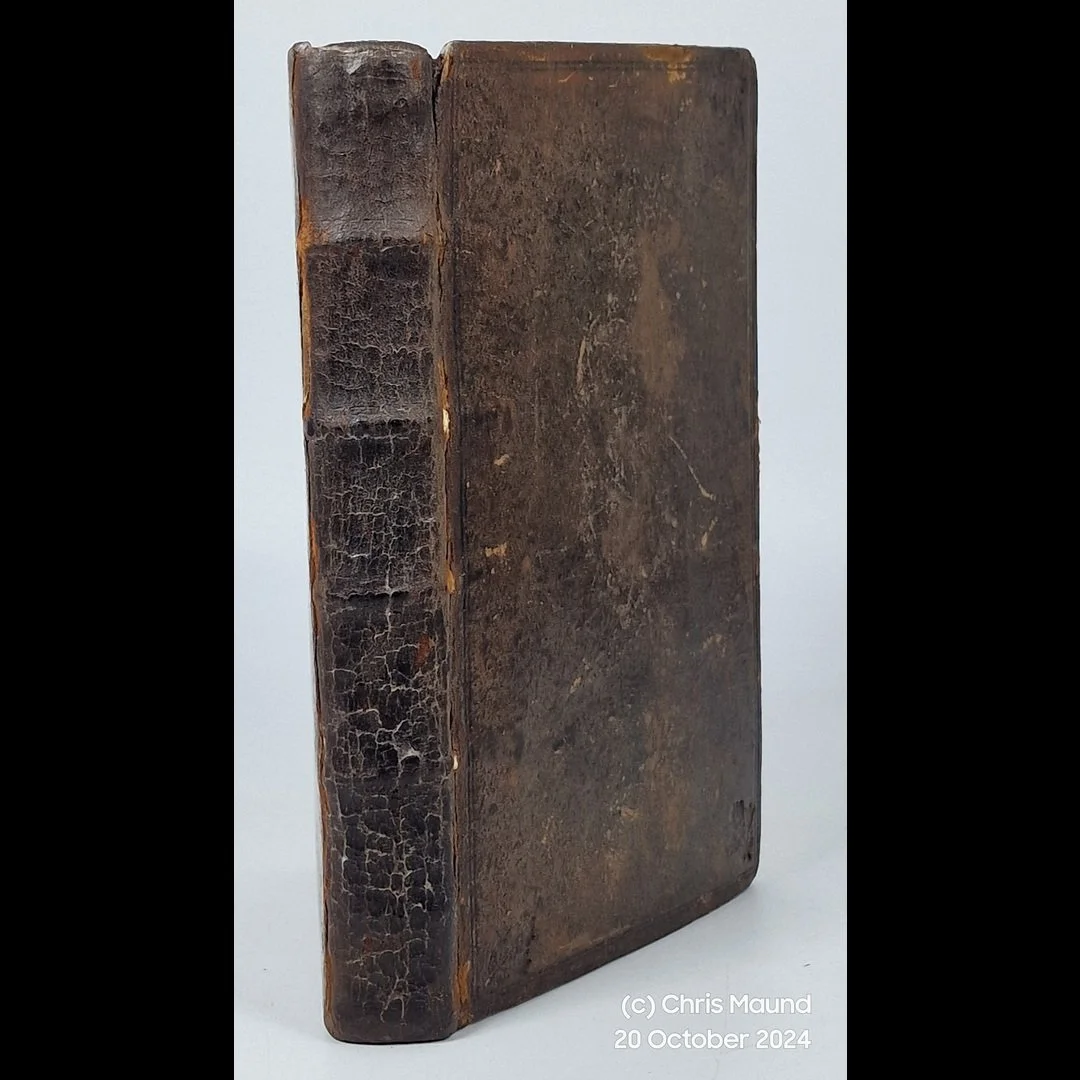 Image 17 of 19
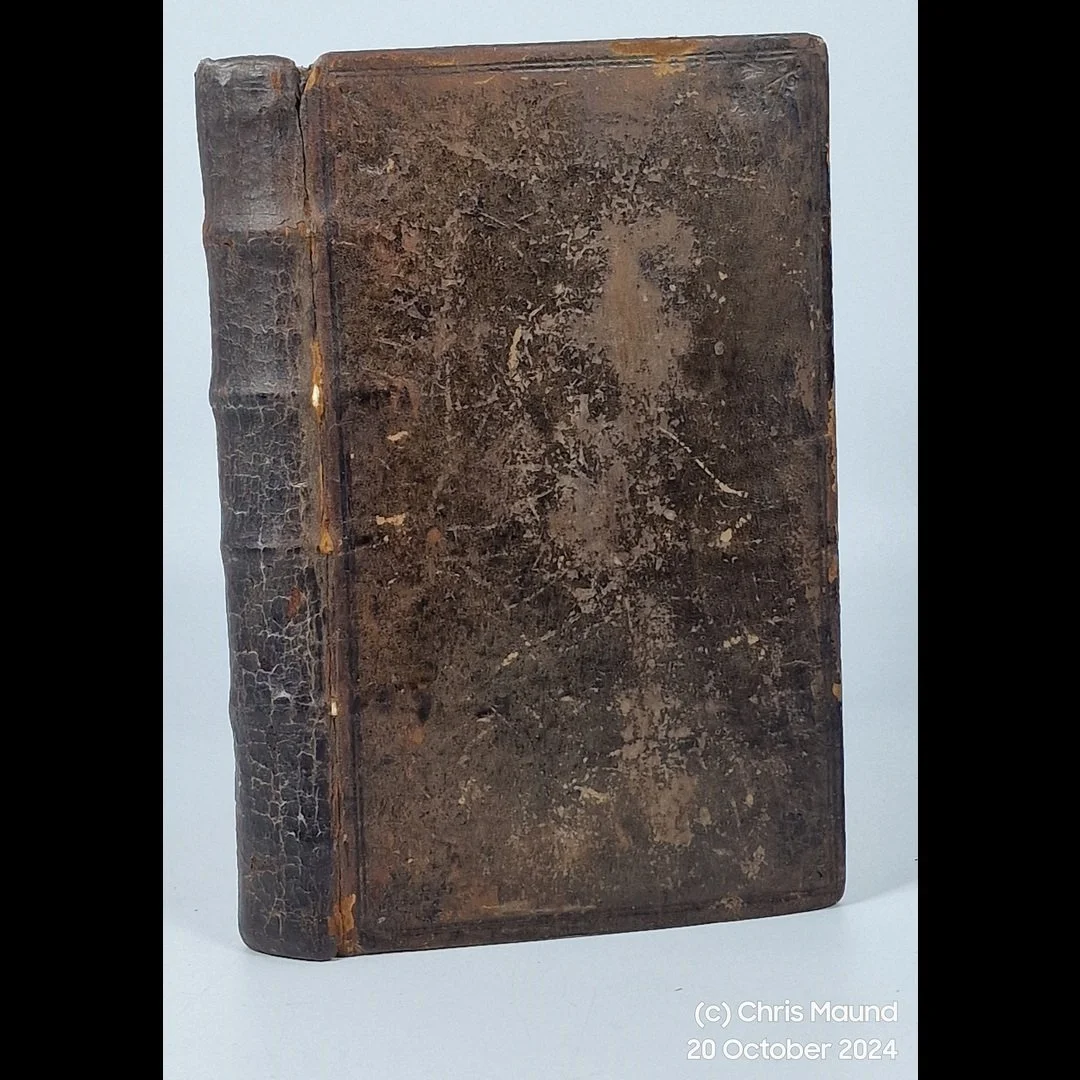 Image 18 of 19
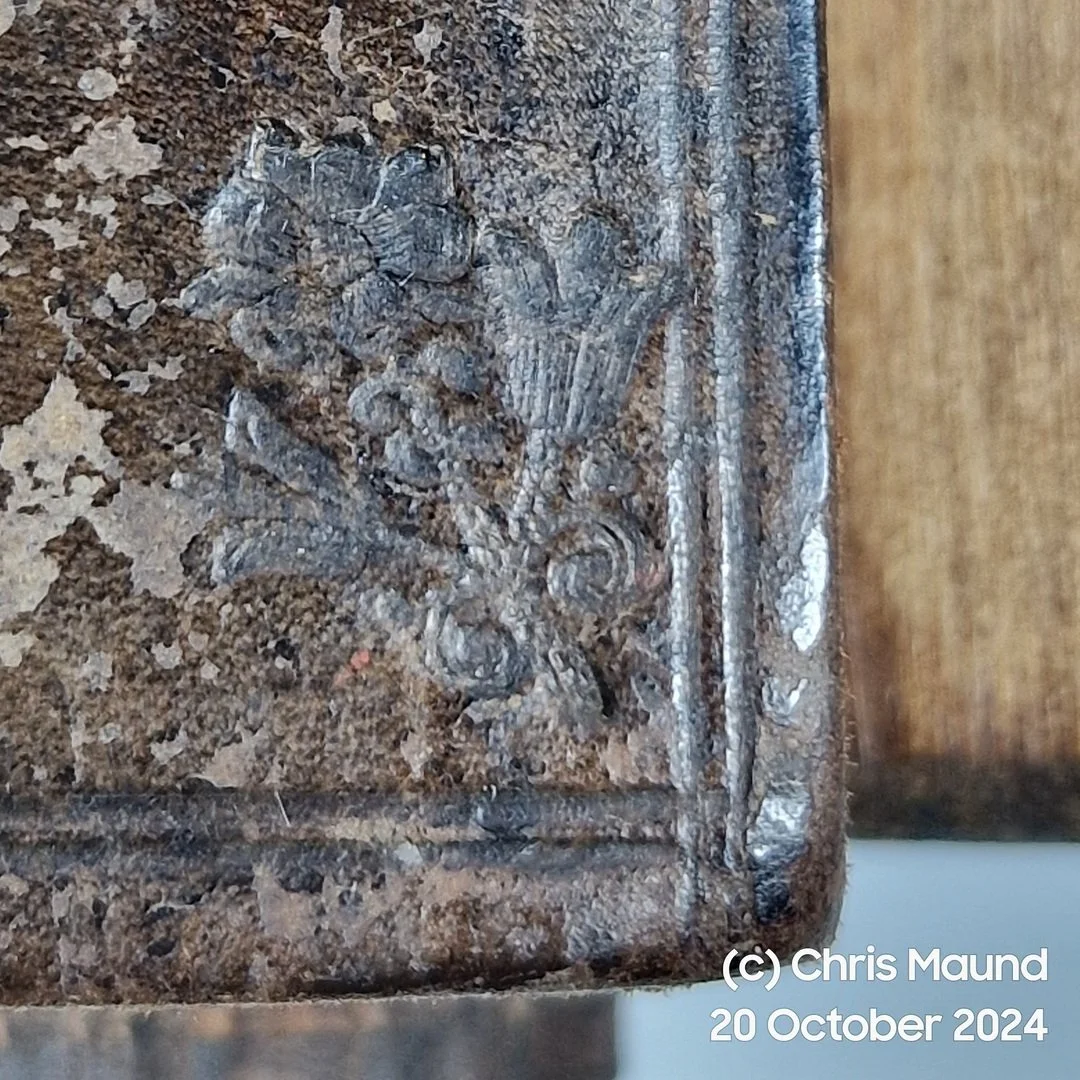 Image 19 of 19
![1688 Enlarged Second Edtn With Lord Sandys Provenance OPUSCULA MYTHOLOGICA, PHYSICA ET ETHICA By Thomas Gales Illus. After Gérard de Lairesse, Gilliam van der Gouwen [Engraved By]](https://images.squarespace-cdn.com/content/v1/634dab4938c13d5c1f88d382/9c7bf4e3-b31a-41d0-9390-4969b1c0938c/20241231_211533-5.jpg)










![1610 Geneva Edtn NATALIS COMITIS MYTHOLOGIAE & DE VENATIONE By Natale Conti [Natalis Comes]](https://images.squarespace-cdn.com/content/v1/634dab4938c13d5c1f88d382/352f5479-6802-481e-9fc0-df5e6992e920/20240816_115507-2.jpg)