1633 First Thomas Johnson Edition
THE HERBALL OR GENERALL HISTORIE OF PLANTES
By John Gerard
KEY DETAILS
Condition: Good
Format: Hardcover, folio (2°), approximately 335 × 215 × 110 mm.
Published By: Adam Islip, Joice Norton and Richard Whitakers, London, 1633
Language: English
Illustrated By: John Gerard / John Payne [Engraver]
Provenance: John Symonds — Early Ownership Inscriptions
Collation: ¶⁸ 2¶–3¶⁶ A–B⁸ C–6V⁶ 6X⁴ 6Y–7B5 [terminal blank missing] - Complete.; Pagination: [40], 1630 [i.e. 1634], [50] pages.
Dust Jacket: None, as issued
SKU: BTETM0002473
Shipping Info: Approximate Package Dimensions H: 25, L: 45, W: 40 (Units: cm), W: 5Kg
Tracked Shipping, Insurance Coverage as per Customer Request
DESCRIPTION
The Herball or Generall Historie of Plantes
Very Much Enlarged and Amended by Thomas Johnson (d. 1644)
Edition: Second edition of Gerard's Herball; first edition extensively revised and enlarged by Thomas Johnson.
The Herball or Generall Historie of Plantes, gathered by John Gerard of London and very much enlarged and amended by Thomas Johnson, published in London in 1633, is one of the most celebrated botanical works of seventeenth-century England. This monumental folio represents the first appearance of Johnson's extensively revised edition of Gerard's original Herball of 1597, transforming an already influential work into a considerably expanded and more authoritative botanical reference.
Gerard's Herball occupies a significant position in the development of English botany, horticulture and medicine. Drawing upon the botanical scholarship of continental Europe, particularly the writings of Rembert Dodoens, Matthias de l'Obel and Carolus Clusius, the work brought together descriptions of plants, their characteristics, habitats, cultivation and medicinal properties for an English readership.
By 1633, however, Gerard's original edition had become increasingly outdated. Thomas Johnson, a London apothecary and accomplished botanist, undertook an extensive revision, correcting numerous errors, incorporating new observations and adding substantial botanical material. The resulting edition is generally regarded as a major improvement upon the original.
Johnson's contributions included descriptions of plants newly encountered or more recently introduced into cultivation, alongside additional information on native British species. His editorial work strengthened the botanical accuracy of the text and extended its usefulness to physicians, apothecaries, gardeners and natural historians.
The volume is divided into three principal books, followed by supplementary material and extensive indexes. Plants are discussed according to the classificatory conventions of the period, with chapters commonly addressing their names, descriptions, places of growth, flowering times, nature and medicinal virtues.
Among its most striking features is the extraordinary profusion of botanical woodcuts, numbering approximately 2,800. These illustrations depict trees, shrubs, herbs, flowers, fruits, roots and numerous plants employed in early modern medicine. Many derive from woodblocks associated with the great continental botanical publishing tradition, including material previously used by the Plantin press at Antwerp.
The elaborate engraved architectural title page, signed by John Payne, incorporates figures representing classical botanical and agricultural learning, including Theophrastus, Dioscorides, Ceres and Pomona. It provides an impressive visual introduction to one of the most substantial English botanical publications of its century.
The present copy is particularly interesting for its early ownership inscriptions, historical manuscript markings and material preserved between its leaves, including two pressed botanical specimens, an early printed Latin fragment and a loose eighteenth-century apothecary's bookplate. Although these additions cannot all be dated or connected to identified owners, they offer an evocative record of the book's subsequent history.
Despite considerable wear, detached boards and damage to the terminal index leaves, the copy retains the complete sequence of printed leaves established by the owner's detailed collation, including the concluding errata.
PROVENANCE
John Symonds — Early Ownership Inscriptions
The volume contains early manuscript inscriptions identifying John Symonds, including: “John Symonds Booke Price 44s. 1632.” and “Johannes Symonds jure possidet.”
The latter may be translated as “John Symonds possesses [this] by right.”
The recorded purchase price of 44 shillings is a particularly interesting feature, providing contemporary evidence of the value attributed to this substantial botanical work.
The date 1632 is anomalous, as the present edition bears the publication date 1633. Although the inscription raises the possibility of an early transaction or an incorrectly recorded date, it cannot presently be reconciled with the edition's publication history. It should not be interpreted as evidence of a pre-publication copy without further documentation.
Research has identified possible historical individuals named John Symonds, but no identification has been established with sufficient confidence to attribute the inscriptions to a particular person.
Subsequent Ownership
Further manuscript inscriptions include a possible reference to Andrew Moss, dated 1828, together with other partially legible names or annotations. These provide additional evidence of the volume's passage through later hands, although a continuous chain of ownership has not been established.
Associated John Lisle Apothecary Bookplate
Preserved loosely within the volume is an engraved armorial bookplate inscribed: “John Lisle Apothecary” and signed: “B. Cole sculp.”
The plate is probably eighteenth-century and is associated with the London engraving tradition of Benjamin Cole. Its decorative armorial design and explicit identification of an apothecary are especially appropriate to a work concerned with medicinal plants.
The bookplate is loose, not pasted into the volume, and its verso is unmarked. It may have belonged to an earlier owner, perhaps having been retained following rebinding, but its original association with this copy remains unproven. It is therefore described as associated material rather than confirmed provenance.
CONDITION, COLLATION & COPY NOTES
COLLATION
¶⁸ 2¶–3¶⁶ A–B⁸ C–6V⁶ 6X⁴ 6Y–7B5 [terminal blank missing] - Complete.
Pagination: [40], 1630 [i.e. 1634], [50] pages.
The final printed leaf contains the conclusion of the index on its recto and the printed Errata on its verso.
Recorded Pagination Irregularities
The following pagination anomalies were recorded during physical examination:
Actual printed sequence / Explanation
29, 30, 29, 30, 29, 30, 31 / Repeated numbering in the opening text
240, 141, 242 141 / misprinted for 241
369, 400, 401, 372 400–401 / misprinted for 370–371
619, 626, 621 626 / misprinted for 620
794, 797, 796, 797 797 / misprinted for 795
1239, 1204, 1241 1204 / misprinted for 1240
1355, 1356, 1355, 1356, 1359 / repeated pagination within a documented irregular sequence
1456, 1459, 1458, 1459, 1460 1459 / misprinted for 1457
1479, 1478, 1481 1478 / misprinted for 1480
These errors are consistent with the extensive mispagination characteristic of the edition and do not indicate missing leaves.
Botanical Specimens and Inserted Material
Two pressed botanical specimens have been discovered between the leaves, including one near the discussion of hemp agrimony and another near the section on German marigolds.
Their exact botanical identities and dates of insertion have not been established. Their presence is nevertheless of interest in a volume intended for the observation, identification and study of plants.
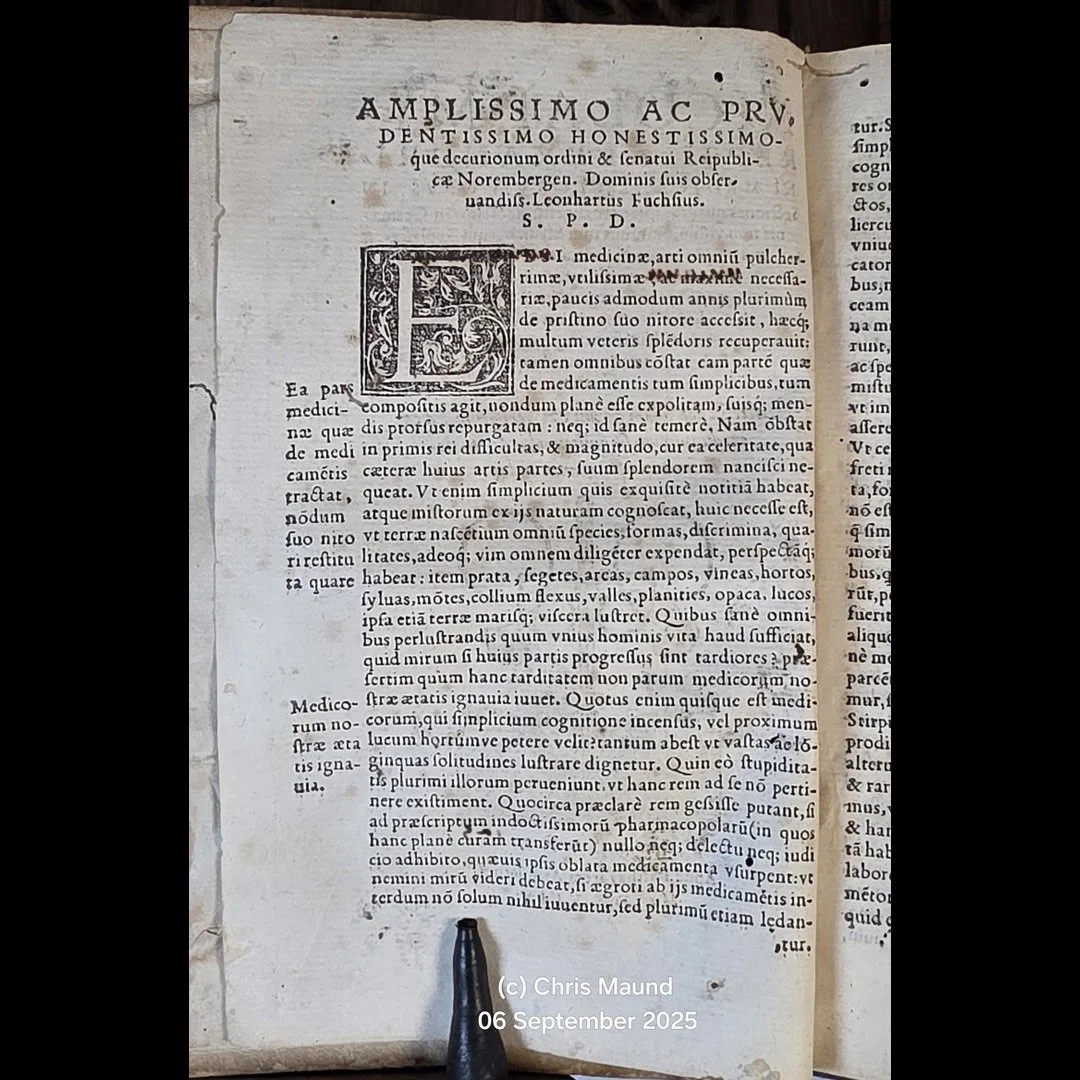
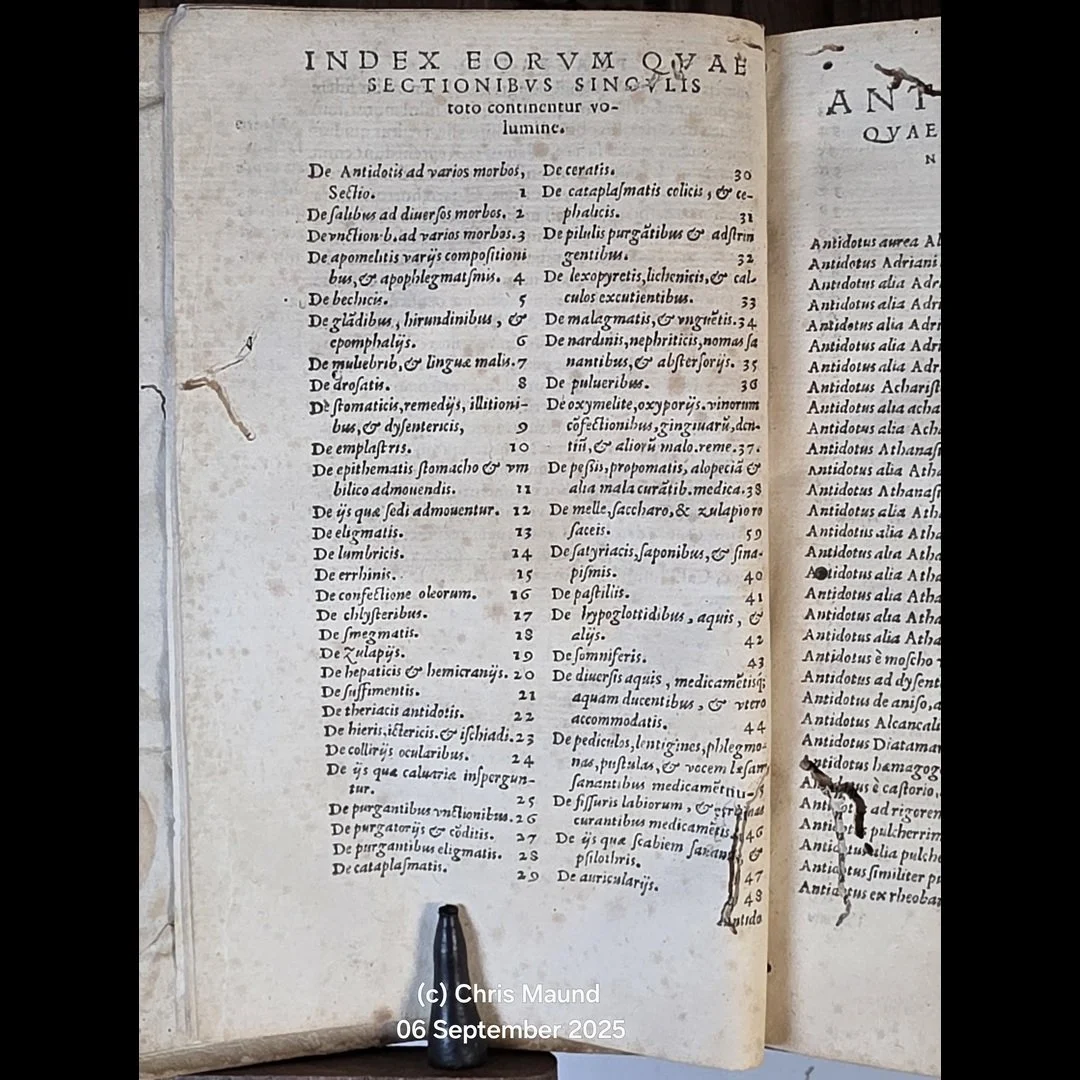
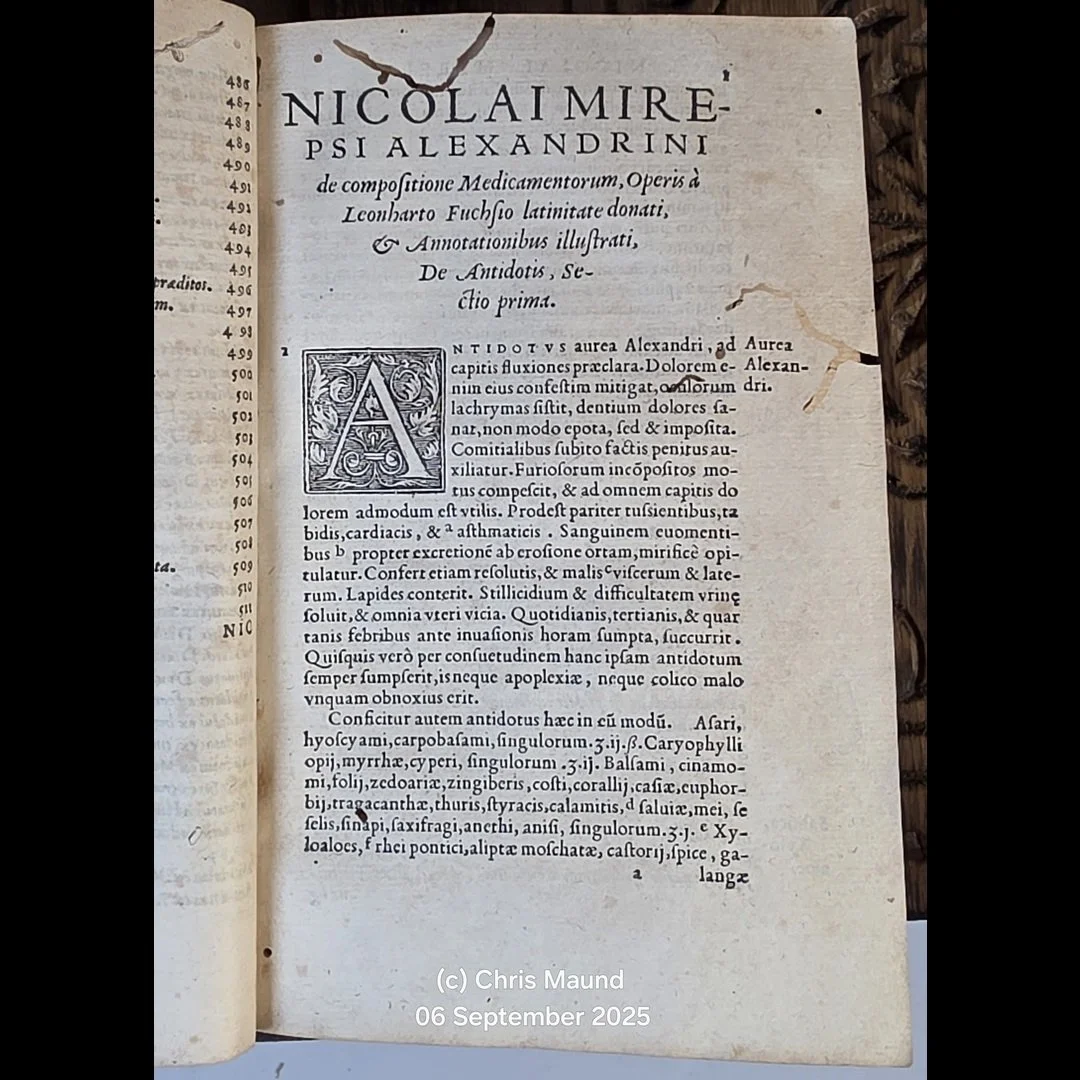
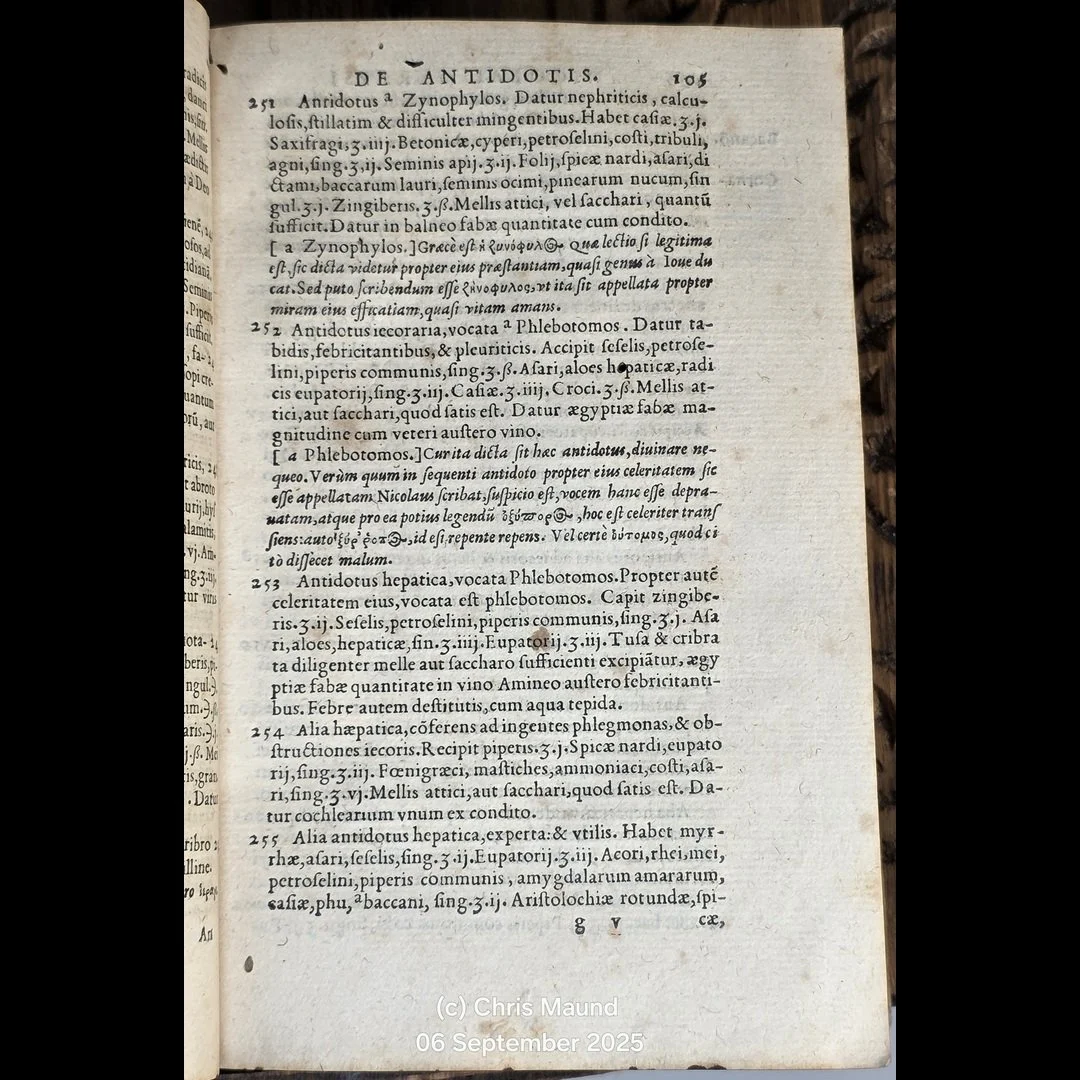
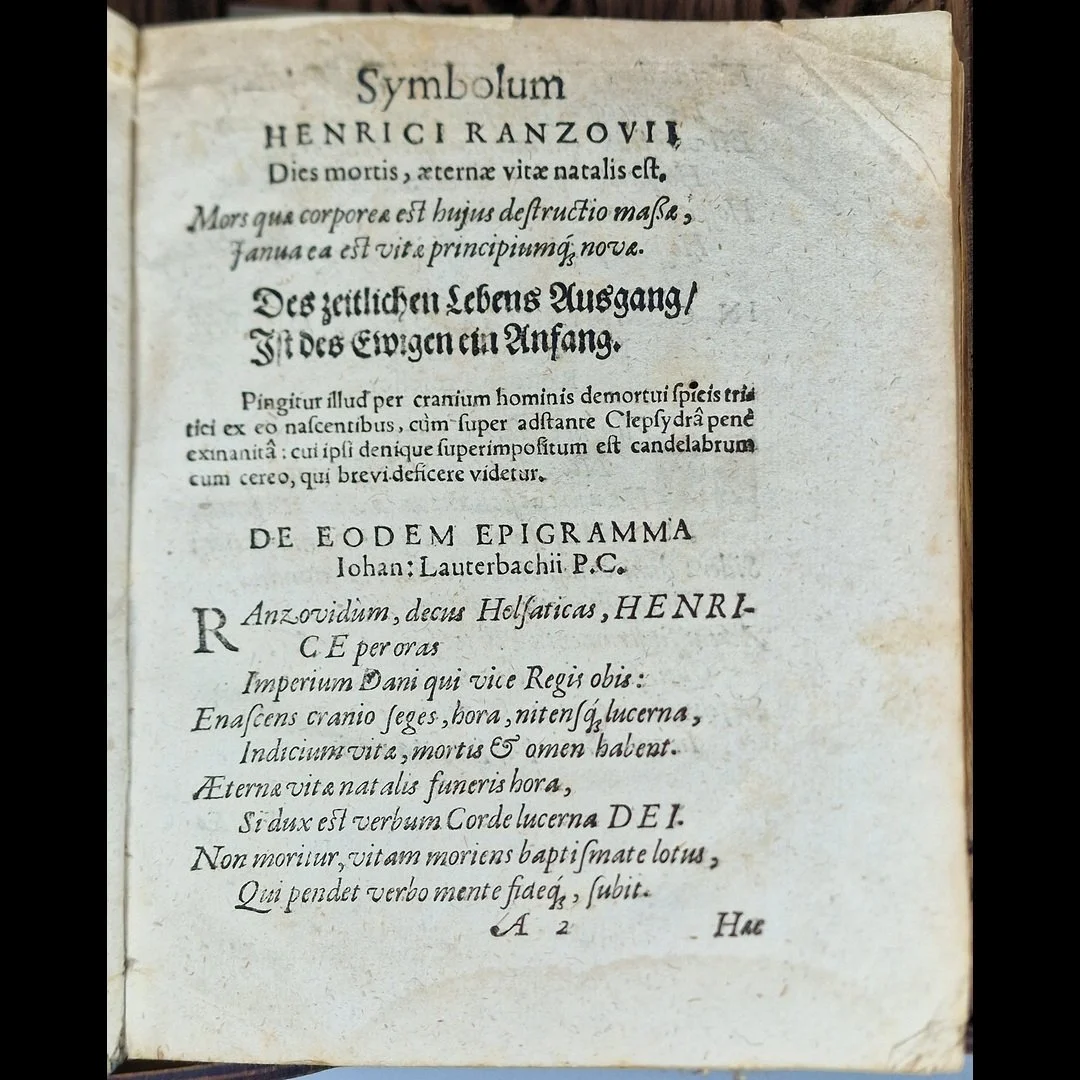
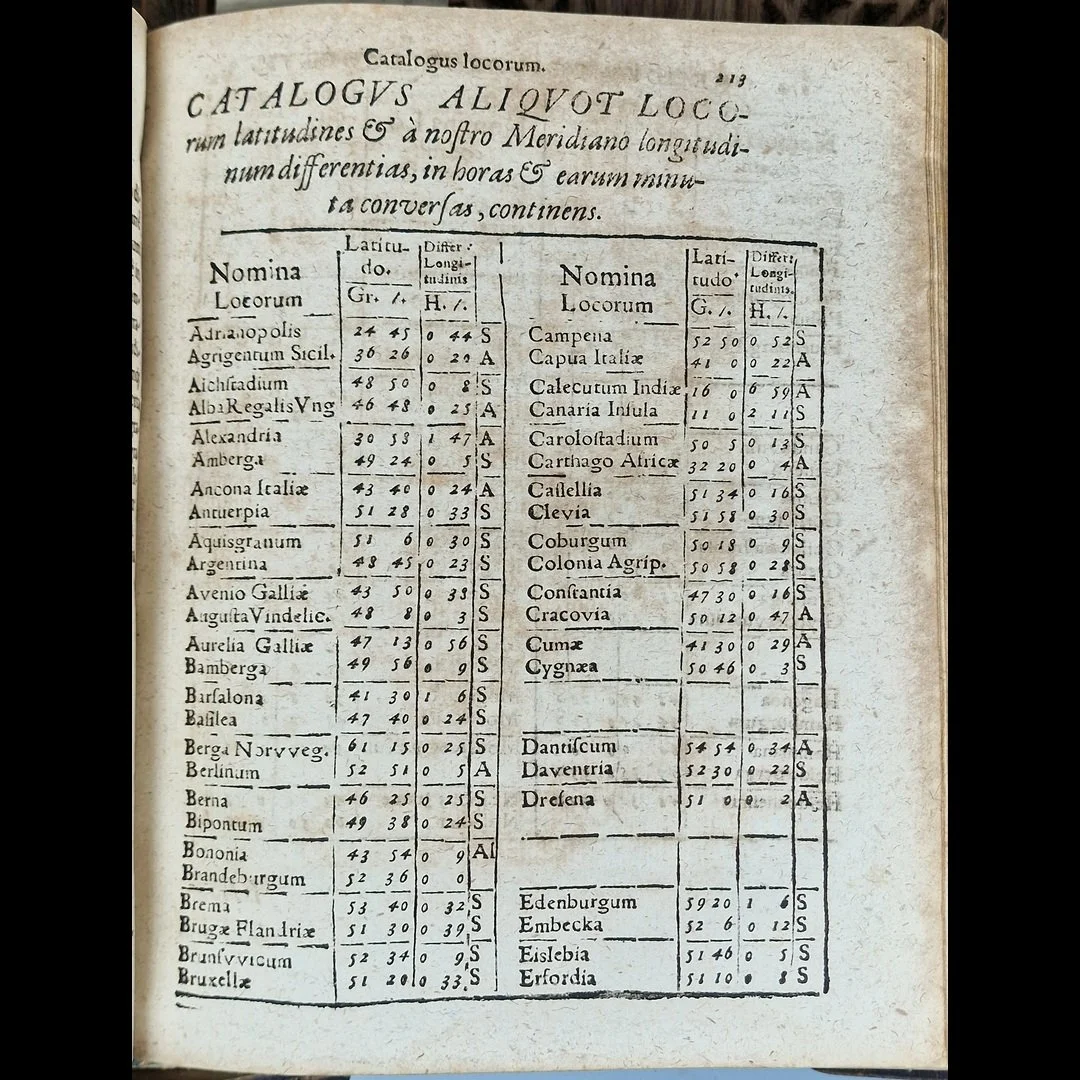
Also loosely inserted is a fragment of early printed Latin text discussing simple and compound natural substances, including plants, minerals and medicinal preparations. The fragment's original printed source remains unidentified.
These items are retained with the volume as associated historical material.
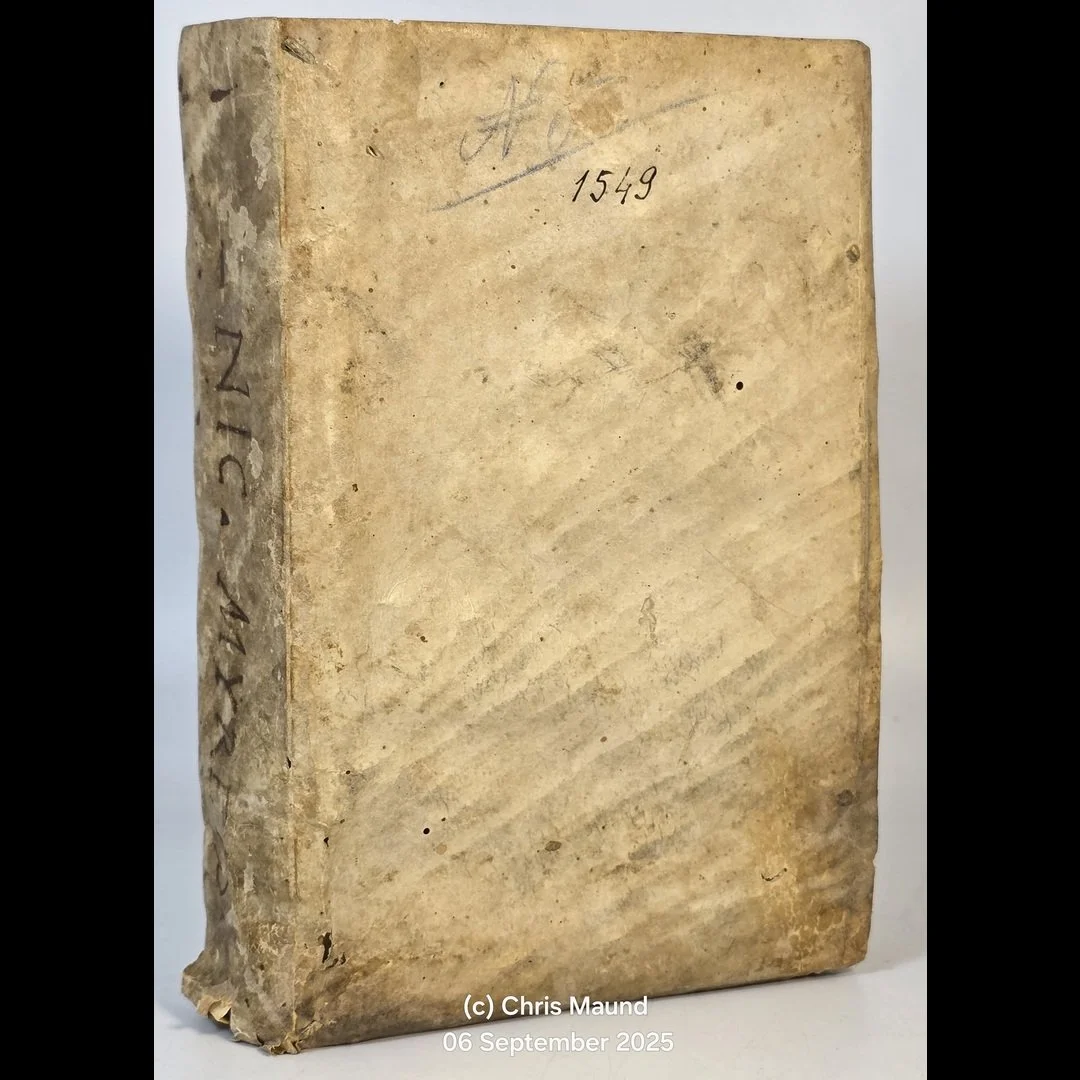
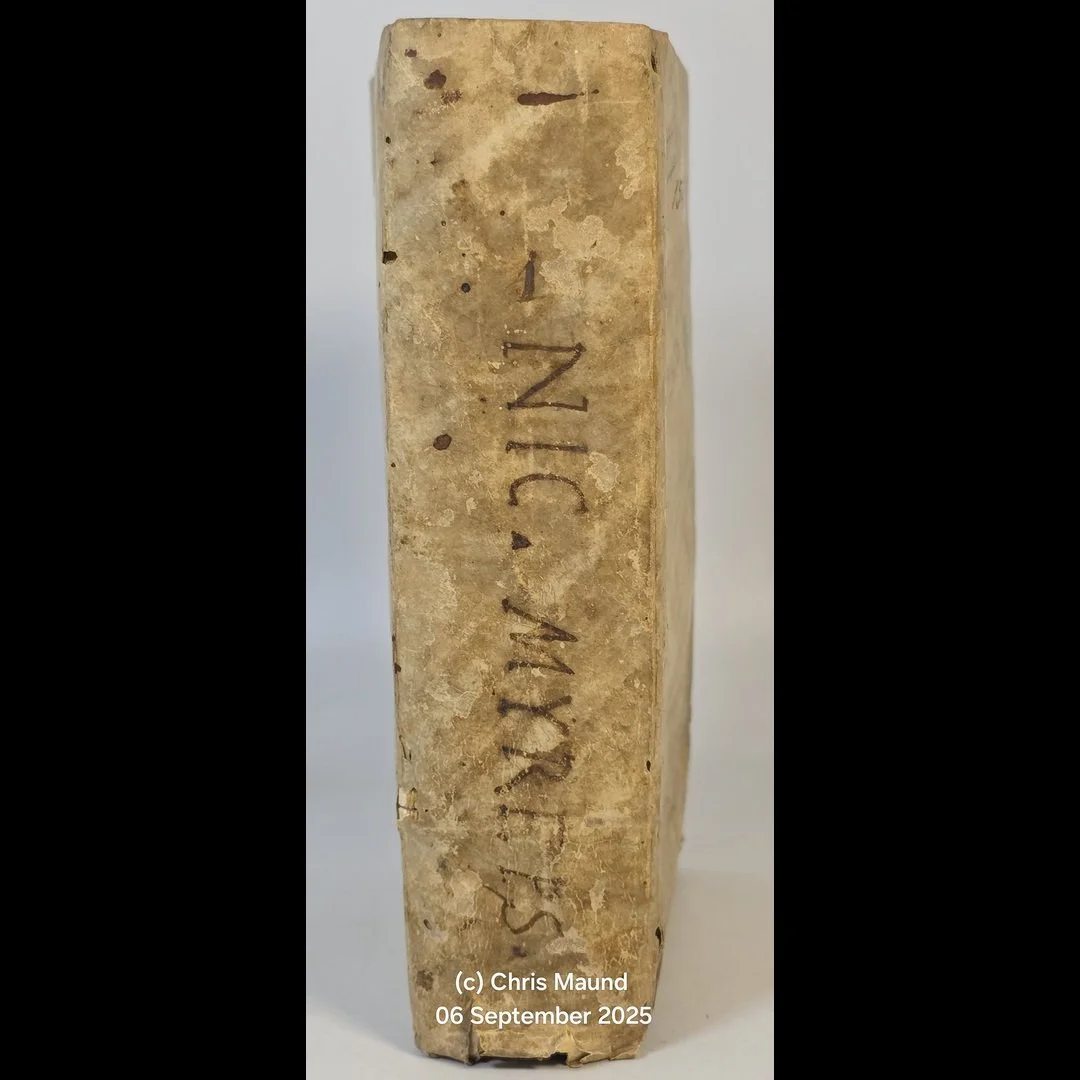
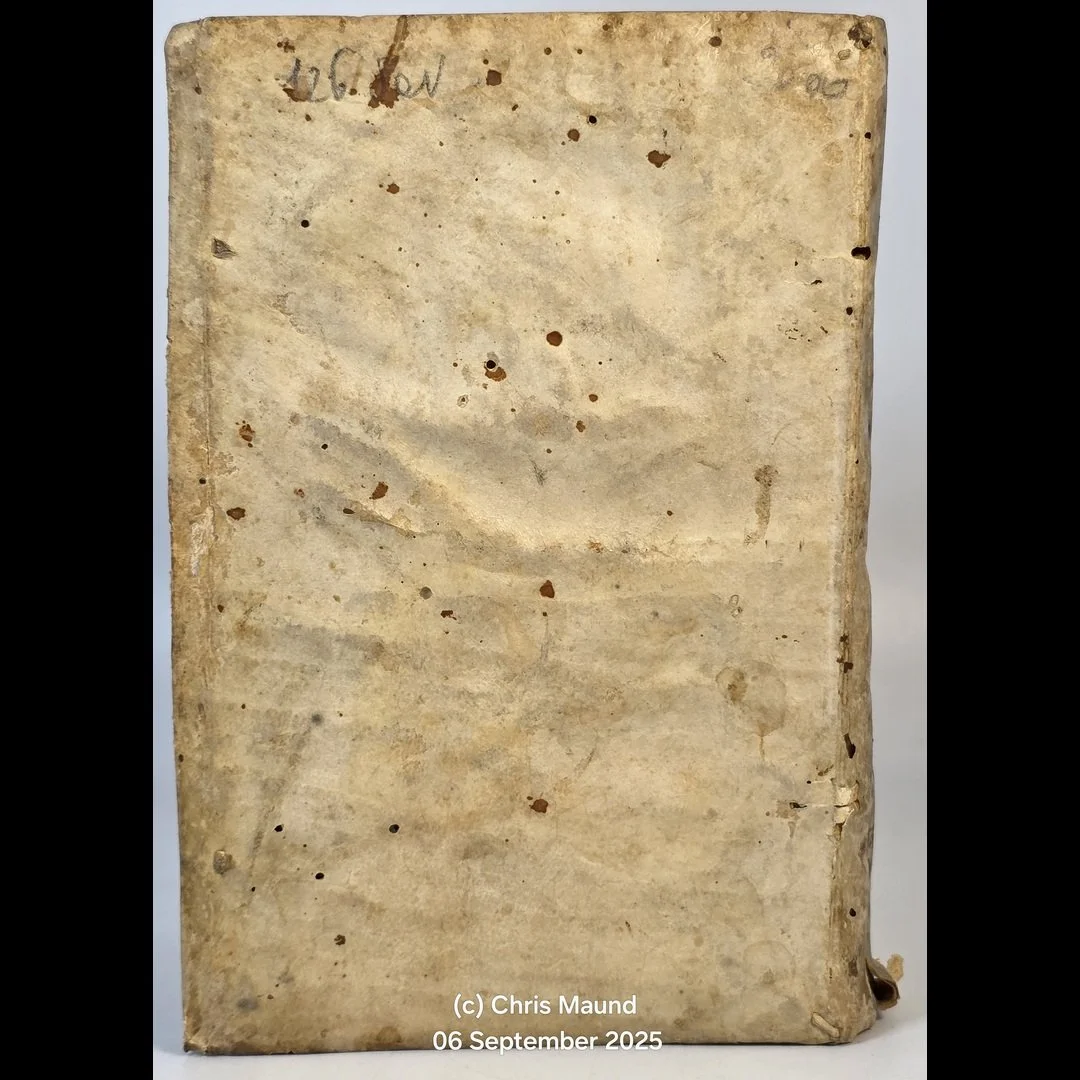
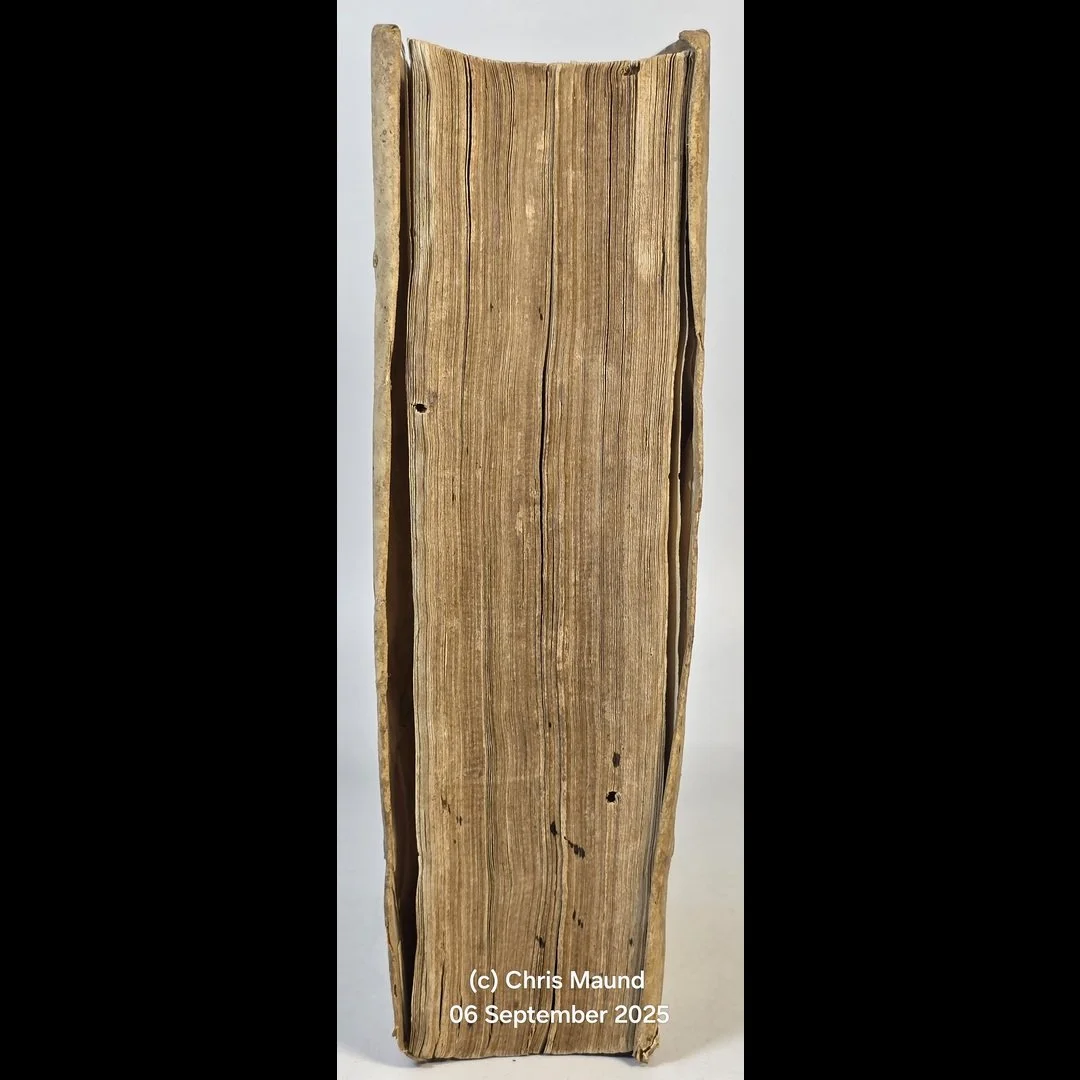
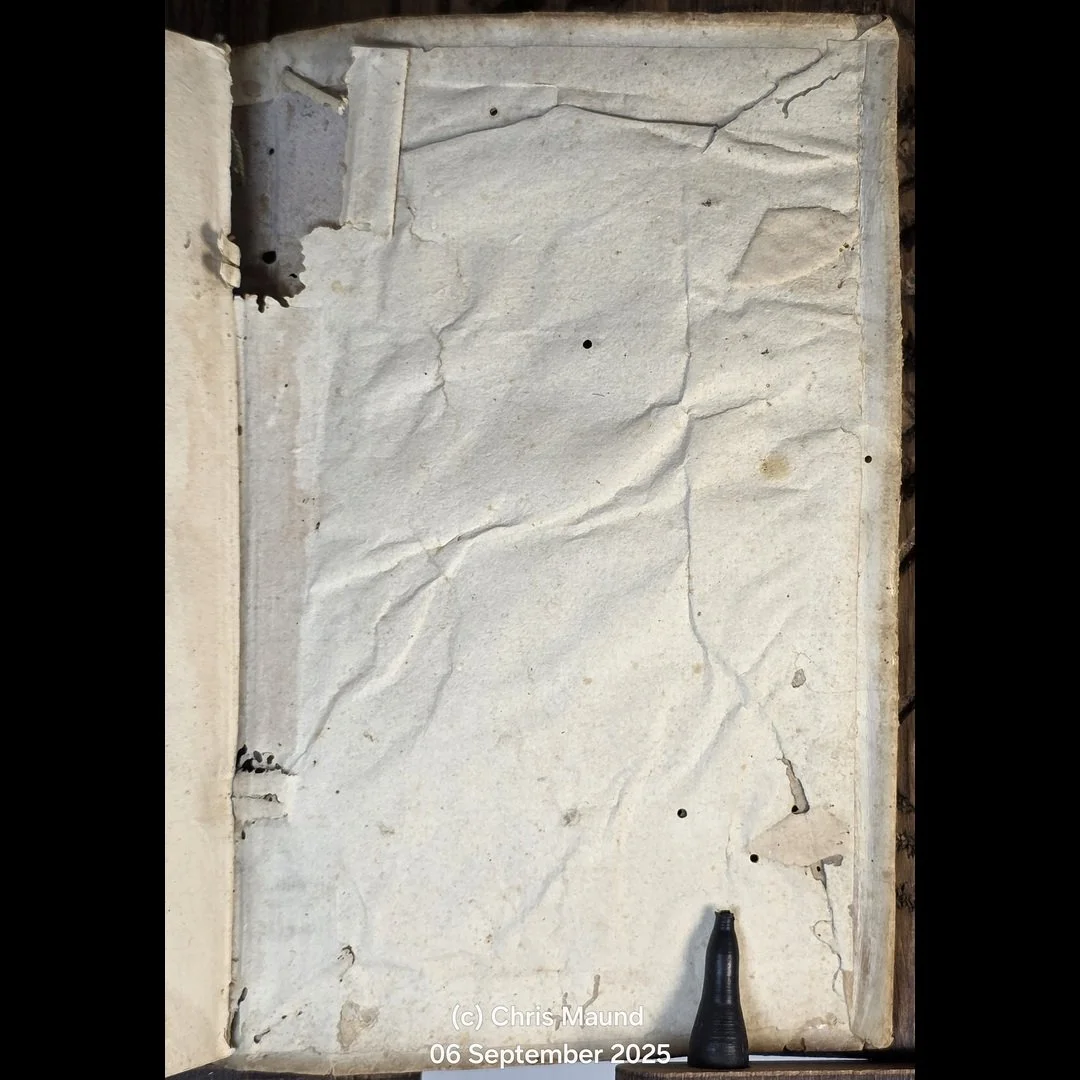
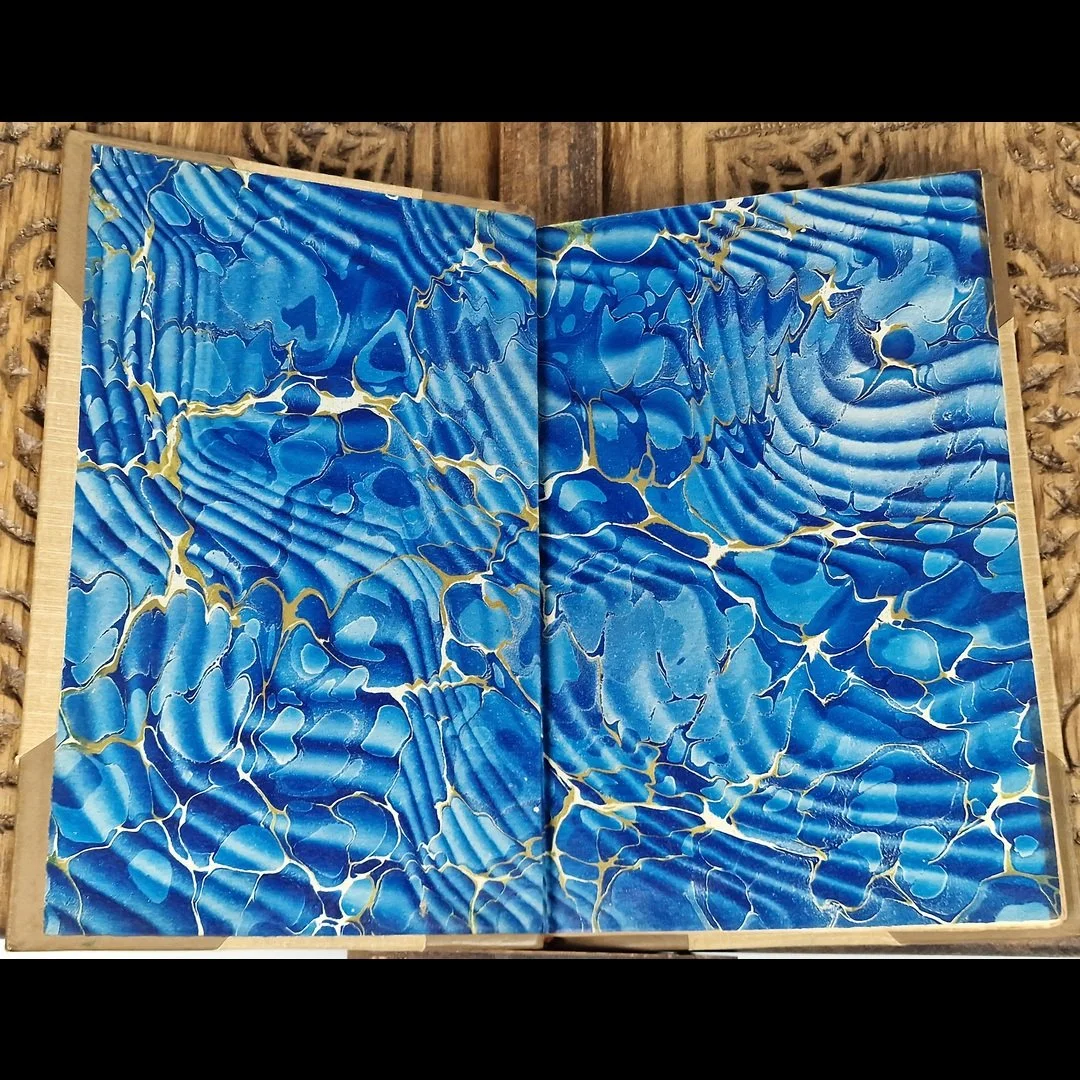
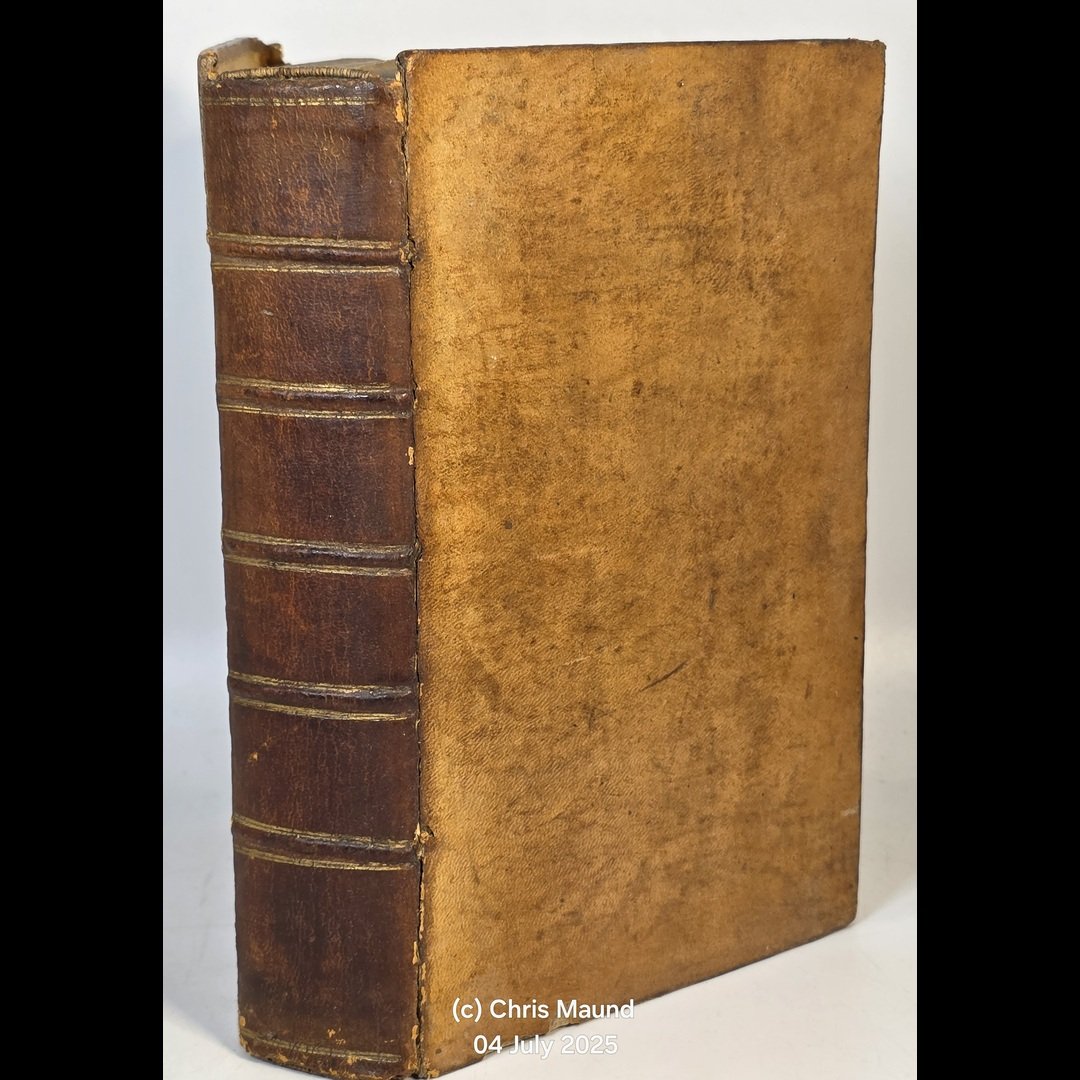
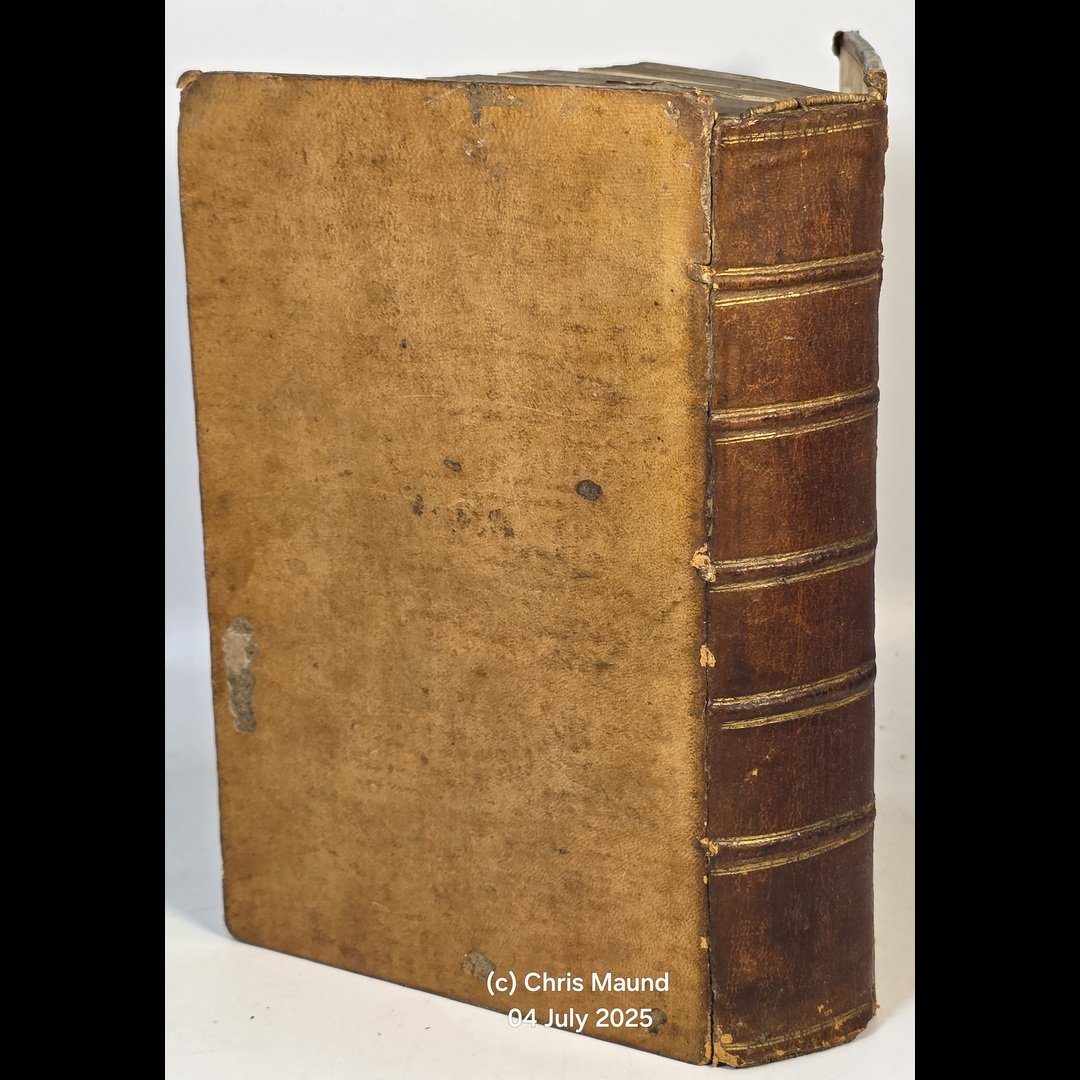
The binding is heavily worn, with both front and rear boards detached. The binding requires conservation attention and should be handled with appropriate support. Its precise date has not been established. First few leaves are loose.
The text block exhibits age-related wear and handling consistent with a heavily used seventeenth-century botanical reference work.
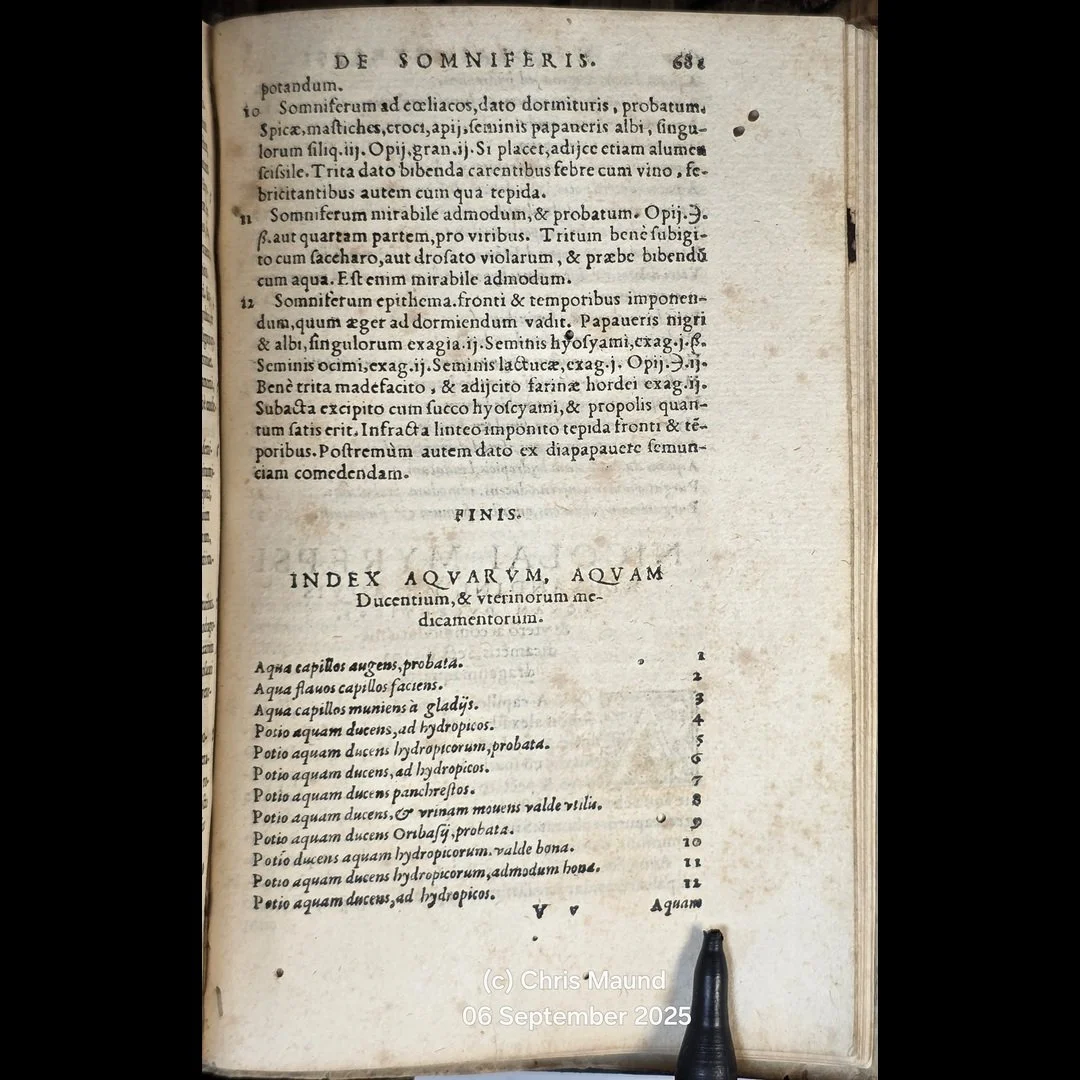
The terminal index leaves are particularly affected by creasing, old repairs, marginal tears and paper losses. In places these losses extend into the printed area, resulting in localised loss of text.
The defects should be considered carefully by prospective purchasers. This is not a fine-condition copy, but an extensively examined example retaining its printed-leaf sequence and possessing several historically interesting features.
Please see Photos as part of condition report.
REFERENCES
STC (2nd ed.) 11751 — Pollard and Redgrave, A Short-Title Catalogue of Books Printed in England, Scotland, and Ireland and of English Books Printed Abroad, 1475–1640.
ESTC S122165 — English Short Title Catalogue.
Hunt 223 — Rachel McMasters Miller Hunt, Catalogue of Botanical Books.
Nissen BBI 698 — Claus Nissen, Die botanische Buchillustration.
Henrey 155 — Blanche Henrey, British Botanical and Horticultural Literature before 1800.
Institutional comparison copies and bibliographical records include the Morgan Library & Museum, Wellcome Collection, Folger Shakespeare Library, Biodiversity Heritage Library and the University of Toronto's Centre for Renaissance and Reformation Studies.
SYNOPSIS
John Gerard's Herball is among the foundational works of English botanical literature, combining plant description, horticultural observation, traditional medicine and natural history in an extensively illustrated encyclopaedic reference.
First published in 1597, the work became one of the most influential English herbals of the early modern period. Its importance lies not only in its descriptions of plants but also in its representation of how botanical knowledge was collected, transmitted and applied before the development of modern botanical classification.
Thomas Johnson's enlarged edition of 1633 substantially revised the original, incorporating improved descriptions, additional species and numerous corrections. Its approximately 2,800 botanical illustrations made it an indispensable visual reference for generations of readers.
The Herball remains highly sought after by collectors of early printed botanical books, the history of medicine, natural history, horticulture and illustrated scientific literature.
The present example is distinguished by its early John Symonds inscriptions, recorded purchase price, pressed botanical specimens and associated apothecary's bookplate. Although its binding and terminal leaves have suffered significant damage, the survival of the complete collated printed-leaf sequence, including the concluding errata, makes it a historically interesting copy of this important edition.
Includes the early English chapter ‘Of Mushrumes, or Toadstooles’ (Chap. 167, p. 1578), giving one of the more detailed 17th-century vernacular discussions of mushrooms and toadstools, their kinds, habitats, dangers and uses.
AUTHOR BIO
John Gerard was an English herbalist, gardener and surgeon, best remembered for his monumental Herball of 1597.
Born in Cheshire, he established himself in London and became associated with the Barber-Surgeons' Company. He developed a substantial knowledge of cultivated and medicinal plants and maintained gardens containing a wide variety of native and introduced species.
His Herball drew heavily upon earlier continental botanical scholarship, particularly the work of Rembert Dodoens, but also incorporated observations and information relevant to English gardening and plant use.
Despite longstanding questions concerning the originality and accuracy of parts of the text, Gerard's work became one of the most influential botanical publications in the English language.
ABOUT THE EDITOR — THOMAS JOHNSON (d. 1644)
Thomas Johnson was an English apothecary, botanist and editor whose revision of Gerard's Herball represents a major contribution to seventeenth-century botanical literature.
An active field botanist, Johnson was noted for his observations of British plants and his interest in accurate identification and description.
His 1633 edition corrected numerous shortcomings in Gerard's original text, introduced additional botanical material and greatly improved the work's scientific usefulness.
Johnson subsequently served as a military surgeon during the English Civil War and died in 1644.
His editorial work helped preserve Gerard's Herball as a leading botanical reference long after its original publication.
ILLUSTRATOR
John Gerard / John Payne [Engraver]
John Payne was an English engraver particularly associated with elaborate engraved title pages and portraits.
His architectural title page for the 1633 Herball combines classical botanical symbolism with decorative architectural elements, reflecting the scholarly ambition and prestige of the publication.
The engraving is signed Io: Payne sculps. and is among the most recognisable features of the Thomas Johnson edition.
1633 First Thomas Johnson Edition
THE HERBALL OR GENERALL HISTORIE OF PLANTES
By John Gerard
KEY DETAILS
Condition: Good
Format: Hardcover, folio (2°), approximately 335 × 215 × 110 mm.
Published By: Adam Islip, Joice Norton and Richard Whitakers, London, 1633
Language: English
Illustrated By: John Gerard / John Payne [Engraver]
Provenance: John Symonds — Early Ownership Inscriptions
Collation: ¶⁸ 2¶–3¶⁶ A–B⁸ C–6V⁶ 6X⁴ 6Y–7B5 [terminal blank missing] - Complete.; Pagination: [40], 1630 [i.e. 1634], [50] pages.
Dust Jacket: None, as issued
SKU: BTETM0002473
Shipping Info: Approximate Package Dimensions H: 25, L: 45, W: 40 (Units: cm), W: 5Kg
Tracked Shipping, Insurance Coverage as per Customer Request
DESCRIPTION
The Herball or Generall Historie of Plantes
Very Much Enlarged and Amended by Thomas Johnson (d. 1644)
Edition: Second edition of Gerard's Herball; first edition extensively revised and enlarged by Thomas Johnson.
The Herball or Generall Historie of Plantes, gathered by John Gerard of London and very much enlarged and amended by Thomas Johnson, published in London in 1633, is one of the most celebrated botanical works of seventeenth-century England. This monumental folio represents the first appearance of Johnson's extensively revised edition of Gerard's original Herball of 1597, transforming an already influential work into a considerably expanded and more authoritative botanical reference.
Gerard's Herball occupies a significant position in the development of English botany, horticulture and medicine. Drawing upon the botanical scholarship of continental Europe, particularly the writings of Rembert Dodoens, Matthias de l'Obel and Carolus Clusius, the work brought together descriptions of plants, their characteristics, habitats, cultivation and medicinal properties for an English readership.
By 1633, however, Gerard's original edition had become increasingly outdated. Thomas Johnson, a London apothecary and accomplished botanist, undertook an extensive revision, correcting numerous errors, incorporating new observations and adding substantial botanical material. The resulting edition is generally regarded as a major improvement upon the original.
Johnson's contributions included descriptions of plants newly encountered or more recently introduced into cultivation, alongside additional information on native British species. His editorial work strengthened the botanical accuracy of the text and extended its usefulness to physicians, apothecaries, gardeners and natural historians.
The volume is divided into three principal books, followed by supplementary material and extensive indexes. Plants are discussed according to the classificatory conventions of the period, with chapters commonly addressing their names, descriptions, places of growth, flowering times, nature and medicinal virtues.
Among its most striking features is the extraordinary profusion of botanical woodcuts, numbering approximately 2,800. These illustrations depict trees, shrubs, herbs, flowers, fruits, roots and numerous plants employed in early modern medicine. Many derive from woodblocks associated with the great continental botanical publishing tradition, including material previously used by the Plantin press at Antwerp.
The elaborate engraved architectural title page, signed by John Payne, incorporates figures representing classical botanical and agricultural learning, including Theophrastus, Dioscorides, Ceres and Pomona. It provides an impressive visual introduction to one of the most substantial English botanical publications of its century.
The present copy is particularly interesting for its early ownership inscriptions, historical manuscript markings and material preserved between its leaves, including two pressed botanical specimens, an early printed Latin fragment and a loose eighteenth-century apothecary's bookplate. Although these additions cannot all be dated or connected to identified owners, they offer an evocative record of the book's subsequent history.
Despite considerable wear, detached boards and damage to the terminal index leaves, the copy retains the complete sequence of printed leaves established by the owner's detailed collation, including the concluding errata.
PROVENANCE
John Symonds — Early Ownership Inscriptions
The volume contains early manuscript inscriptions identifying John Symonds, including: “John Symonds Booke Price 44s. 1632.” and “Johannes Symonds jure possidet.”
The latter may be translated as “John Symonds possesses [this] by right.”
The recorded purchase price of 44 shillings is a particularly interesting feature, providing contemporary evidence of the value attributed to this substantial botanical work.
The date 1632 is anomalous, as the present edition bears the publication date 1633. Although the inscription raises the possibility of an early transaction or an incorrectly recorded date, it cannot presently be reconciled with the edition's publication history. It should not be interpreted as evidence of a pre-publication copy without further documentation.
Research has identified possible historical individuals named John Symonds, but no identification has been established with sufficient confidence to attribute the inscriptions to a particular person.
Subsequent Ownership
Further manuscript inscriptions include a possible reference to Andrew Moss, dated 1828, together with other partially legible names or annotations. These provide additional evidence of the volume's passage through later hands, although a continuous chain of ownership has not been established.
Associated John Lisle Apothecary Bookplate
Preserved loosely within the volume is an engraved armorial bookplate inscribed: “John Lisle Apothecary” and signed: “B. Cole sculp.”
The plate is probably eighteenth-century and is associated with the London engraving tradition of Benjamin Cole. Its decorative armorial design and explicit identification of an apothecary are especially appropriate to a work concerned with medicinal plants.
The bookplate is loose, not pasted into the volume, and its verso is unmarked. It may have belonged to an earlier owner, perhaps having been retained following rebinding, but its original association with this copy remains unproven. It is therefore described as associated material rather than confirmed provenance.
CONDITION, COLLATION & COPY NOTES
COLLATION
¶⁸ 2¶–3¶⁶ A–B⁸ C–6V⁶ 6X⁴ 6Y–7B5 [terminal blank missing] - Complete.
Pagination: [40], 1630 [i.e. 1634], [50] pages.
The final printed leaf contains the conclusion of the index on its recto and the printed Errata on its verso.
Recorded Pagination Irregularities
The following pagination anomalies were recorded during physical examination:
Actual printed sequence / Explanation
29, 30, 29, 30, 29, 30, 31 / Repeated numbering in the opening text
240, 141, 242 141 / misprinted for 241
369, 400, 401, 372 400–401 / misprinted for 370–371
619, 626, 621 626 / misprinted for 620
794, 797, 796, 797 797 / misprinted for 795
1239, 1204, 1241 1204 / misprinted for 1240
1355, 1356, 1355, 1356, 1359 / repeated pagination within a documented irregular sequence
1456, 1459, 1458, 1459, 1460 1459 / misprinted for 1457
1479, 1478, 1481 1478 / misprinted for 1480
These errors are consistent with the extensive mispagination characteristic of the edition and do not indicate missing leaves.
Botanical Specimens and Inserted Material
Two pressed botanical specimens have been discovered between the leaves, including one near the discussion of hemp agrimony and another near the section on German marigolds.
Their exact botanical identities and dates of insertion have not been established. Their presence is nevertheless of interest in a volume intended for the observation, identification and study of plants.
Also loosely inserted is a fragment of early printed Latin text discussing simple and compound natural substances, including plants, minerals and medicinal preparations. The fragment's original printed source remains unidentified.
These items are retained with the volume as associated historical material.
The binding is heavily worn, with both front and rear boards detached. The binding requires conservation attention and should be handled with appropriate support. Its precise date has not been established. First few leaves are loose.
The text block exhibits age-related wear and handling consistent with a heavily used seventeenth-century botanical reference work.
The terminal index leaves are particularly affected by creasing, old repairs, marginal tears and paper losses. In places these losses extend into the printed area, resulting in localised loss of text.
The defects should be considered carefully by prospective purchasers. This is not a fine-condition copy, but an extensively examined example retaining its printed-leaf sequence and possessing several historically interesting features.
Please see Photos as part of condition report.
REFERENCES
STC (2nd ed.) 11751 — Pollard and Redgrave, A Short-Title Catalogue of Books Printed in England, Scotland, and Ireland and of English Books Printed Abroad, 1475–1640.
ESTC S122165 — English Short Title Catalogue.
Hunt 223 — Rachel McMasters Miller Hunt, Catalogue of Botanical Books.
Nissen BBI 698 — Claus Nissen, Die botanische Buchillustration.
Henrey 155 — Blanche Henrey, British Botanical and Horticultural Literature before 1800.
Institutional comparison copies and bibliographical records include the Morgan Library & Museum, Wellcome Collection, Folger Shakespeare Library, Biodiversity Heritage Library and the University of Toronto's Centre for Renaissance and Reformation Studies.
SYNOPSIS
John Gerard's Herball is among the foundational works of English botanical literature, combining plant description, horticultural observation, traditional medicine and natural history in an extensively illustrated encyclopaedic reference.
First published in 1597, the work became one of the most influential English herbals of the early modern period. Its importance lies not only in its descriptions of plants but also in its representation of how botanical knowledge was collected, transmitted and applied before the development of modern botanical classification.
Thomas Johnson's enlarged edition of 1633 substantially revised the original, incorporating improved descriptions, additional species and numerous corrections. Its approximately 2,800 botanical illustrations made it an indispensable visual reference for generations of readers.
The Herball remains highly sought after by collectors of early printed botanical books, the history of medicine, natural history, horticulture and illustrated scientific literature.
The present example is distinguished by its early John Symonds inscriptions, recorded purchase price, pressed botanical specimens and associated apothecary's bookplate. Although its binding and terminal leaves have suffered significant damage, the survival of the complete collated printed-leaf sequence, including the concluding errata, makes it a historically interesting copy of this important edition.
Includes the early English chapter ‘Of Mushrumes, or Toadstooles’ (Chap. 167, p. 1578), giving one of the more detailed 17th-century vernacular discussions of mushrooms and toadstools, their kinds, habitats, dangers and uses.
AUTHOR BIO
John Gerard was an English herbalist, gardener and surgeon, best remembered for his monumental Herball of 1597.
Born in Cheshire, he established himself in London and became associated with the Barber-Surgeons' Company. He developed a substantial knowledge of cultivated and medicinal plants and maintained gardens containing a wide variety of native and introduced species.
His Herball drew heavily upon earlier continental botanical scholarship, particularly the work of Rembert Dodoens, but also incorporated observations and information relevant to English gardening and plant use.
Despite longstanding questions concerning the originality and accuracy of parts of the text, Gerard's work became one of the most influential botanical publications in the English language.
ABOUT THE EDITOR — THOMAS JOHNSON (d. 1644)
Thomas Johnson was an English apothecary, botanist and editor whose revision of Gerard's Herball represents a major contribution to seventeenth-century botanical literature.
An active field botanist, Johnson was noted for his observations of British plants and his interest in accurate identification and description.
His 1633 edition corrected numerous shortcomings in Gerard's original text, introduced additional botanical material and greatly improved the work's scientific usefulness.
Johnson subsequently served as a military surgeon during the English Civil War and died in 1644.
His editorial work helped preserve Gerard's Herball as a leading botanical reference long after its original publication.
ILLUSTRATOR
John Gerard / John Payne [Engraver]
John Payne was an English engraver particularly associated with elaborate engraved title pages and portraits.
His architectural title page for the 1633 Herball combines classical botanical symbolism with decorative architectural elements, reflecting the scholarly ambition and prestige of the publication.
The engraving is signed Io: Payne sculps. and is among the most recognisable features of the Thomas Johnson edition.

 Image 1 of 27
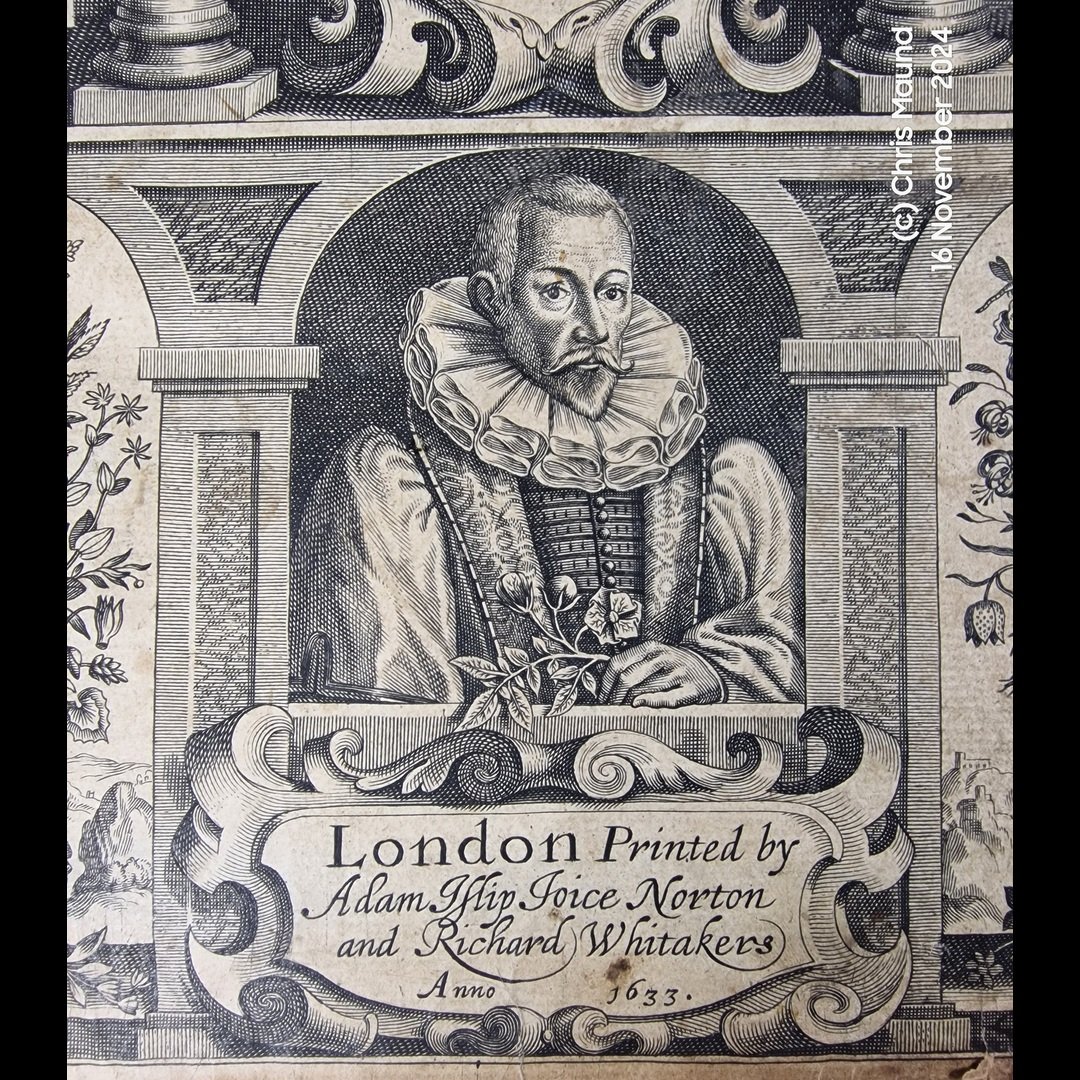 Image 2 of 27
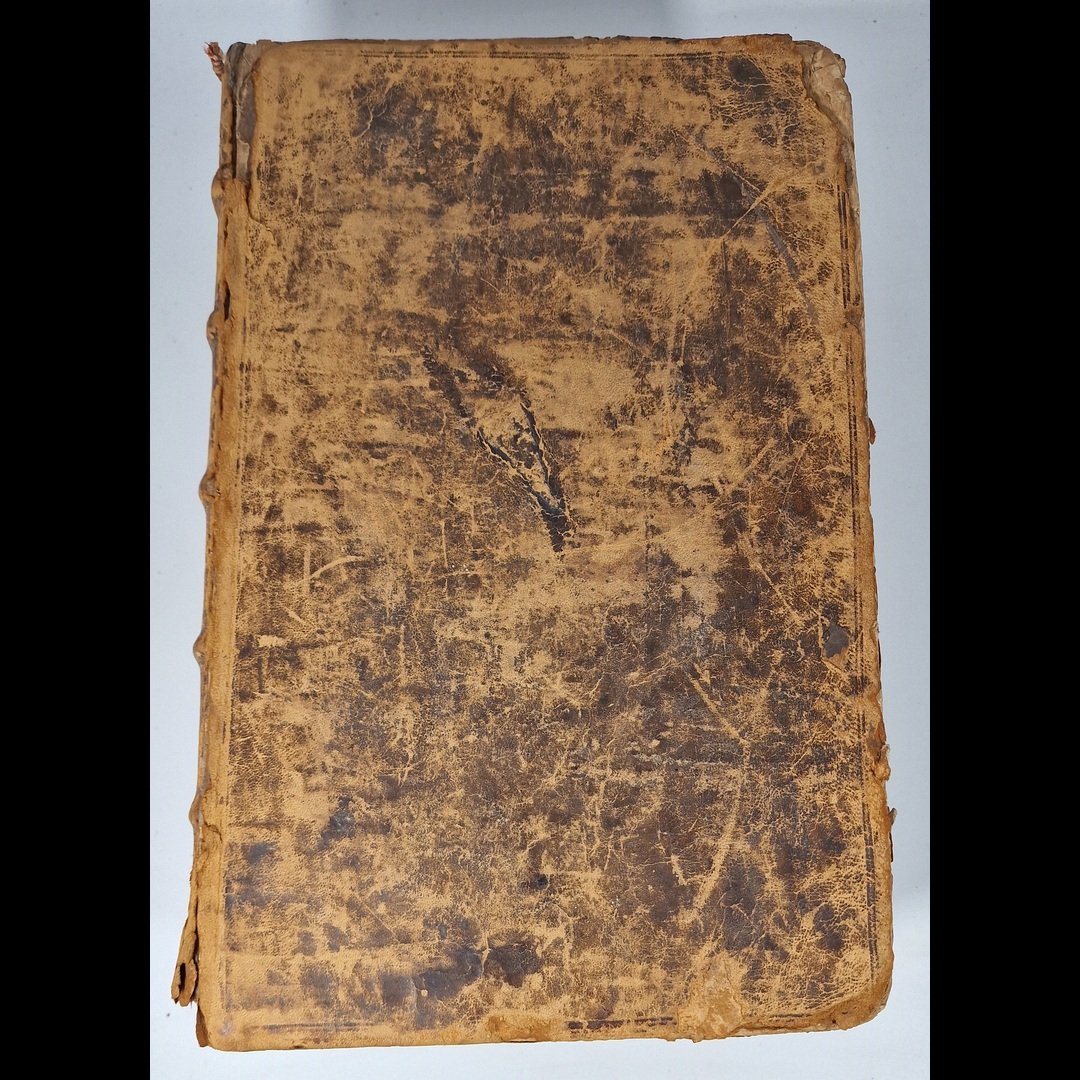 Image 3 of 27
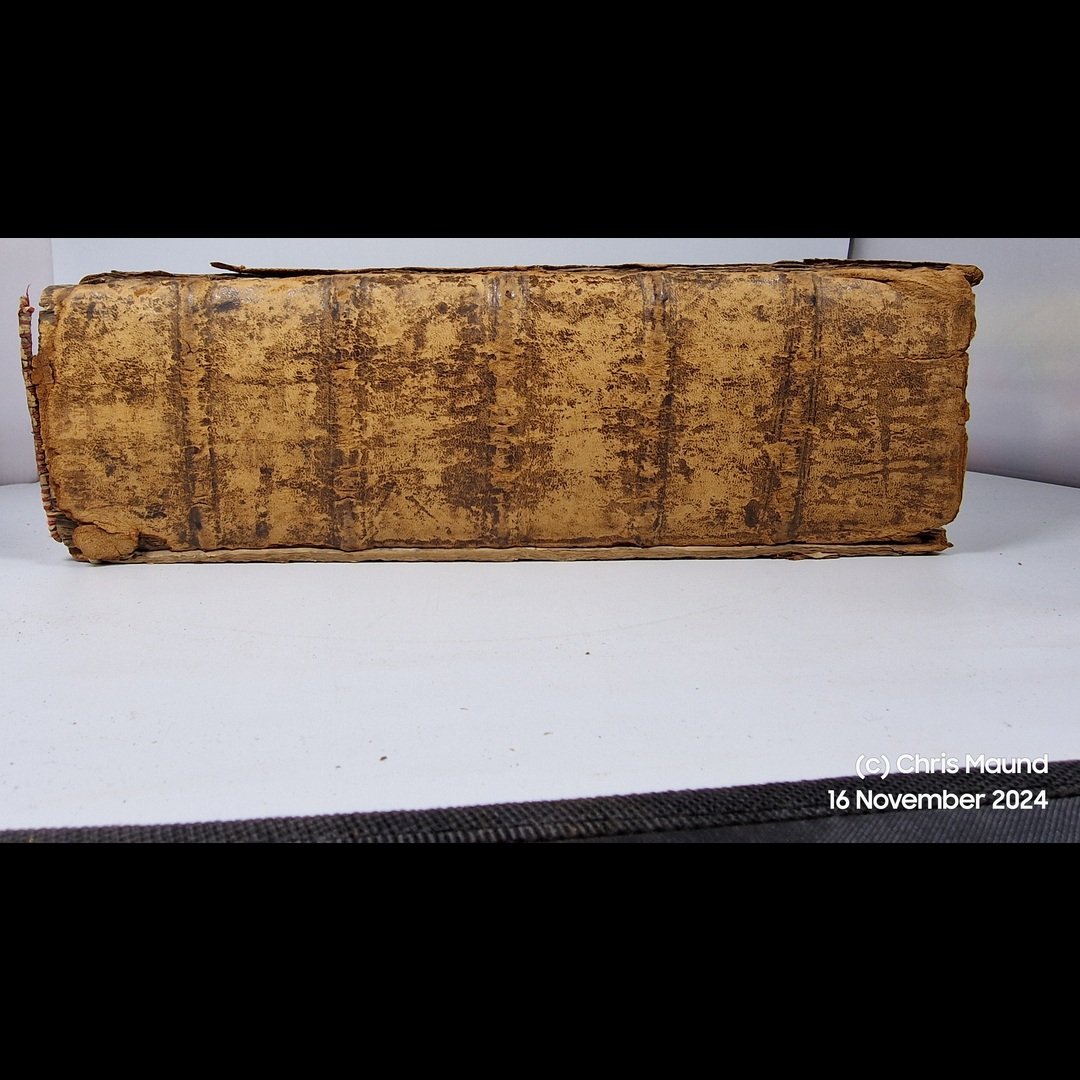 Image 4 of 27
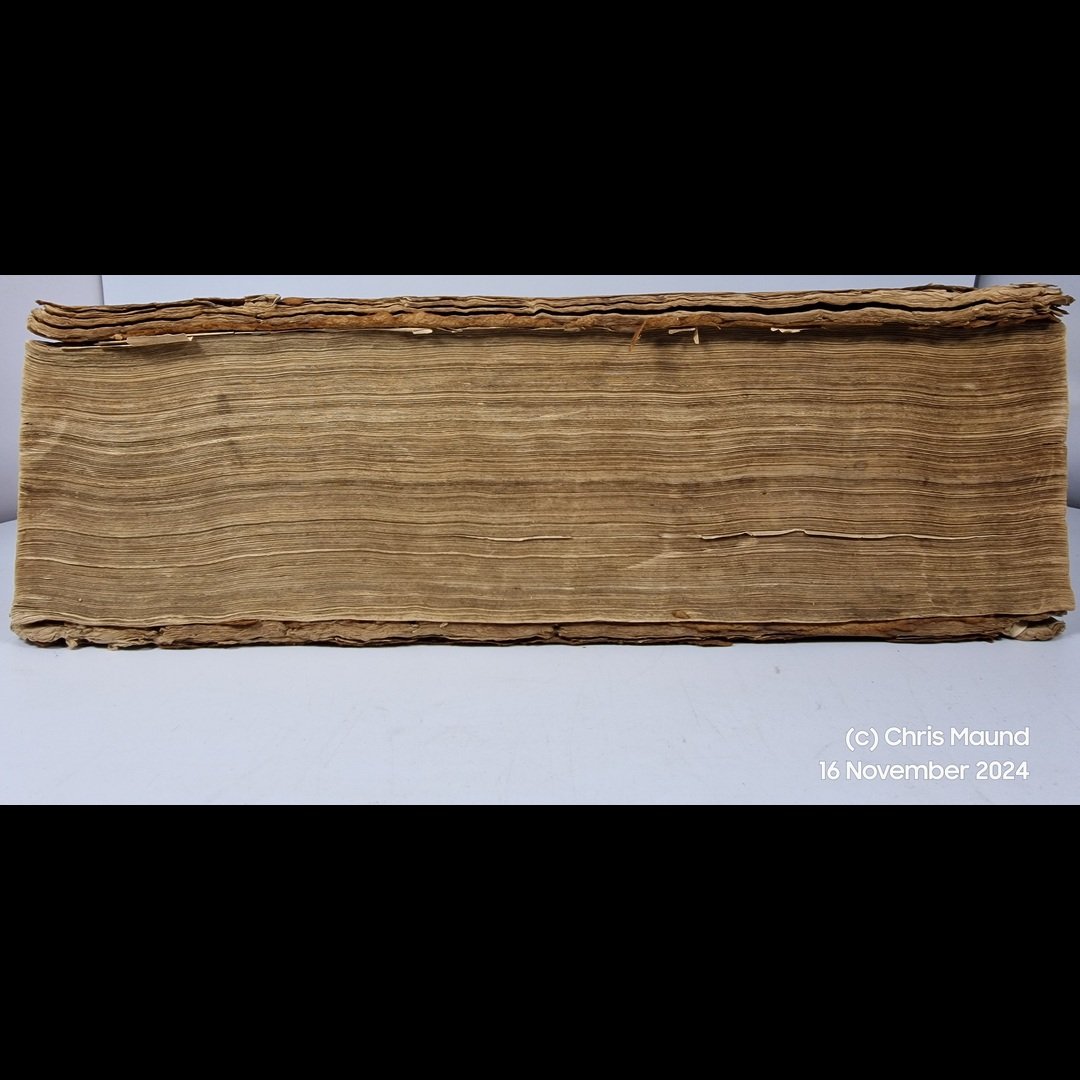 Image 5 of 27
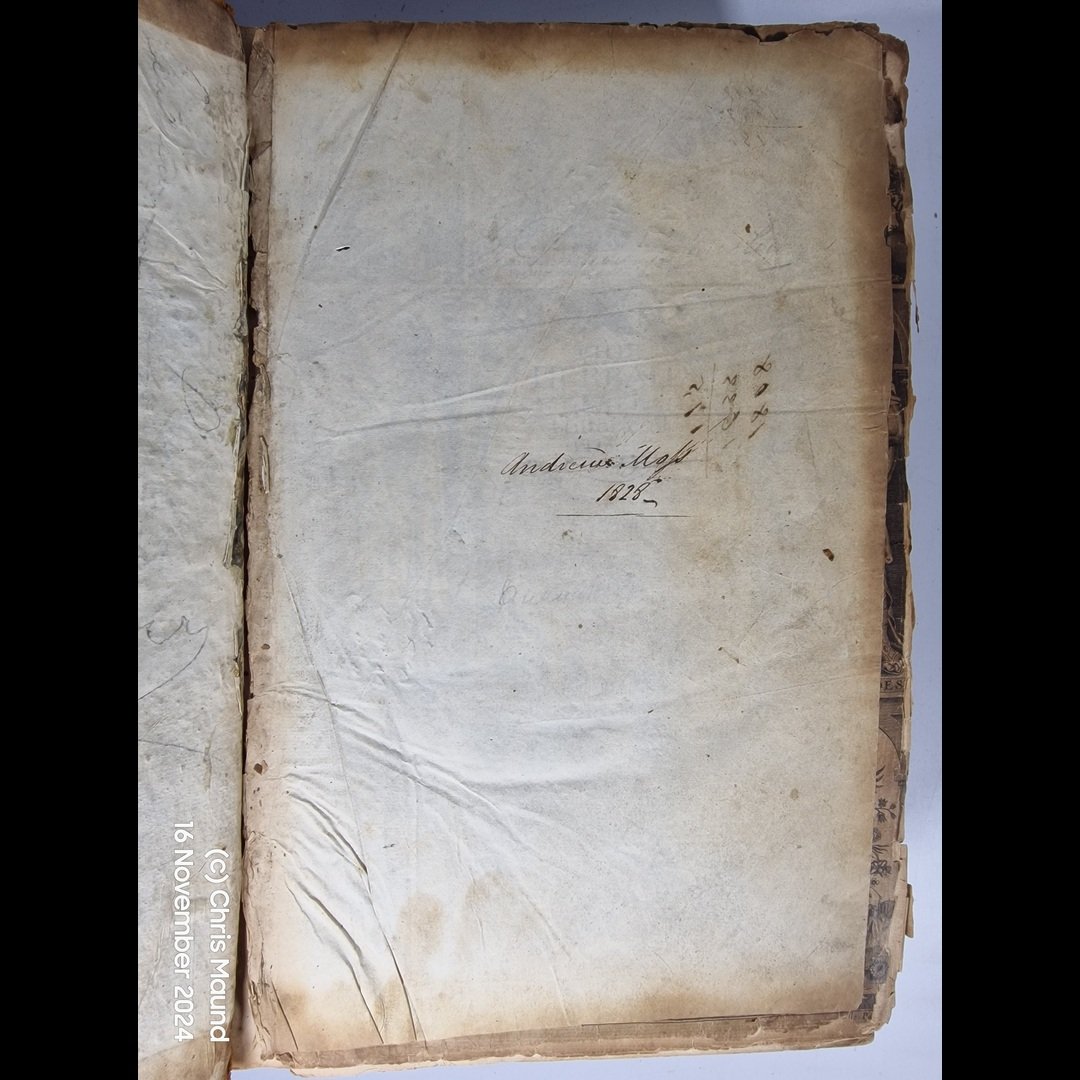 Image 6 of 27
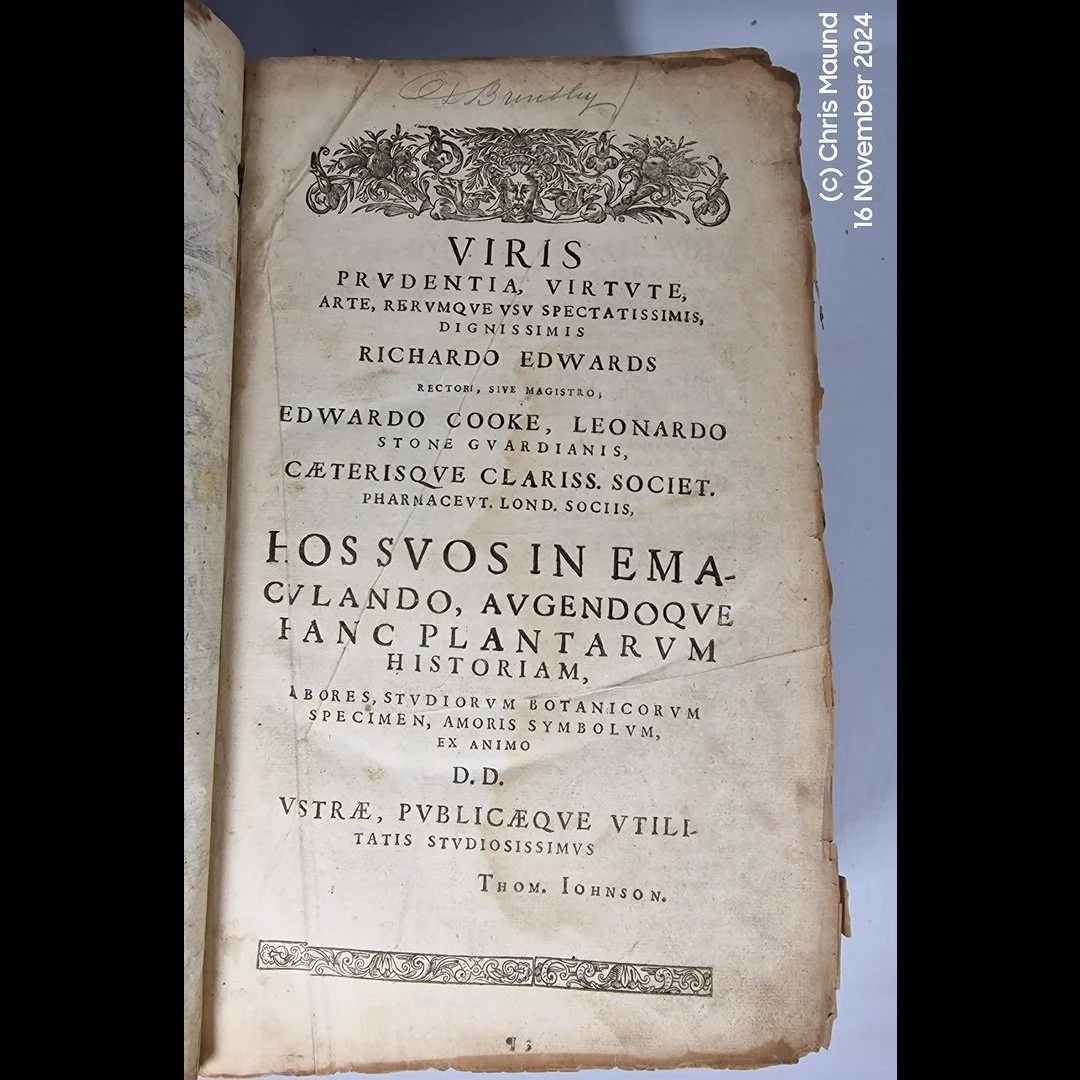 Image 7 of 27
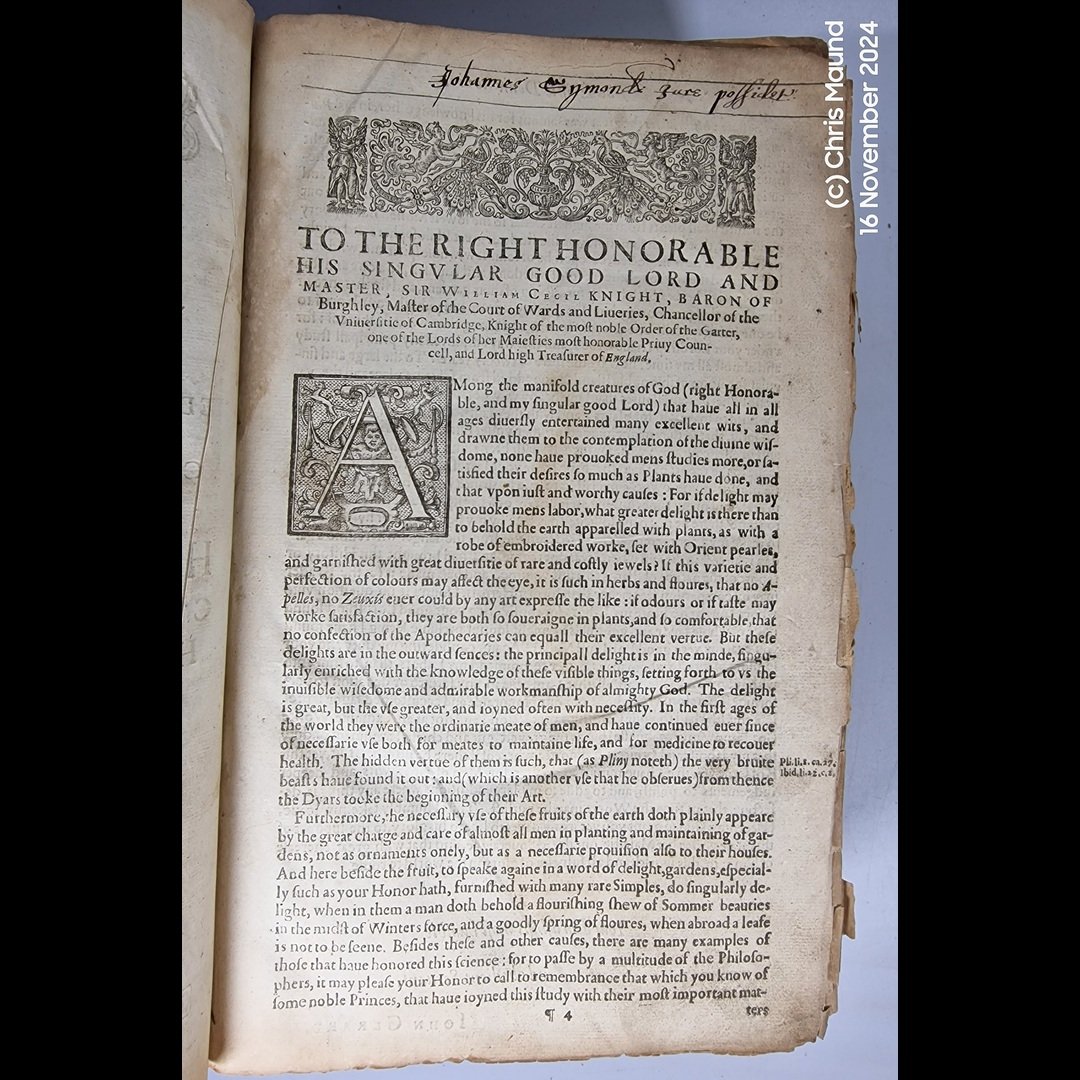 Image 8 of 27
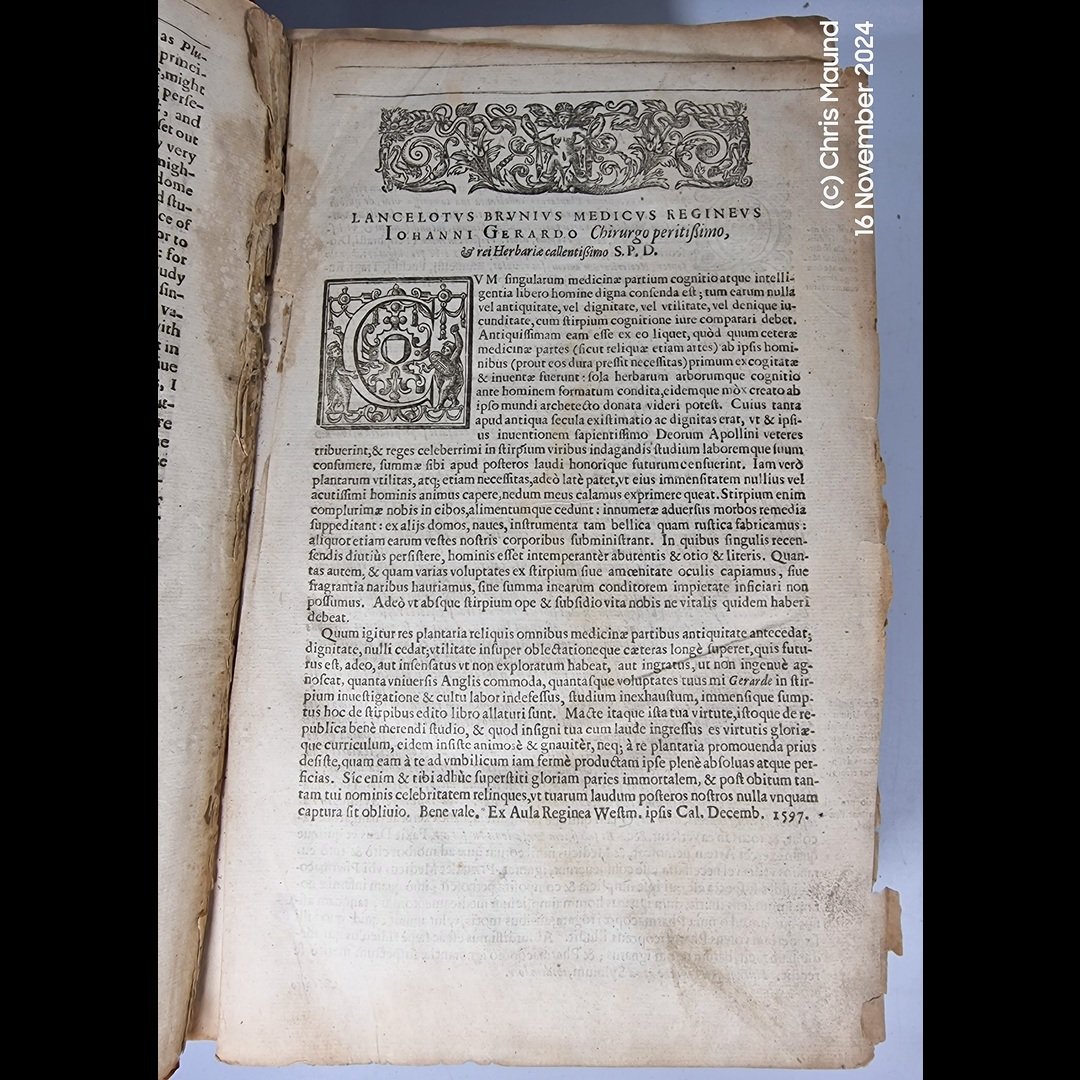 Image 9 of 27
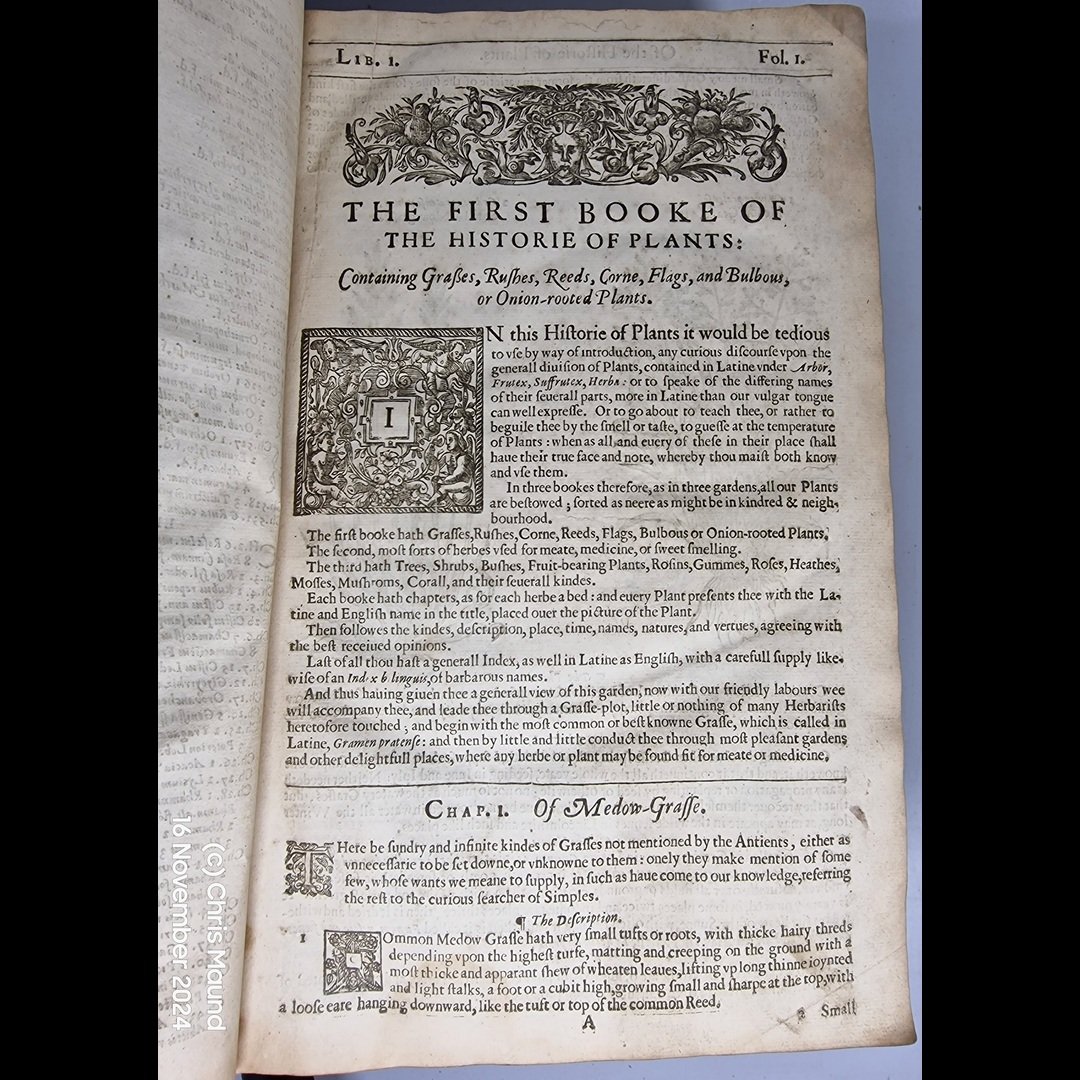 Image 10 of 27
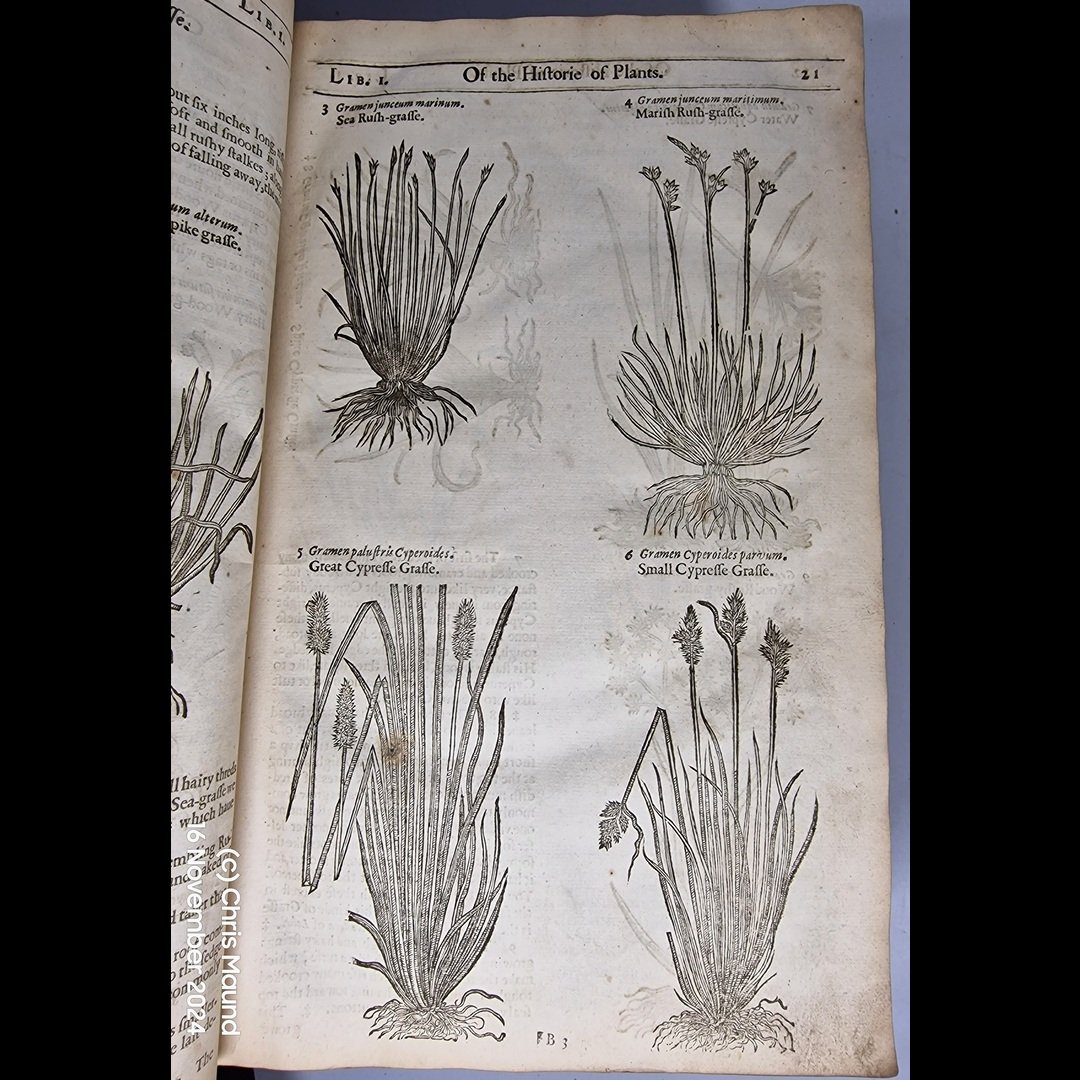 Image 11 of 27
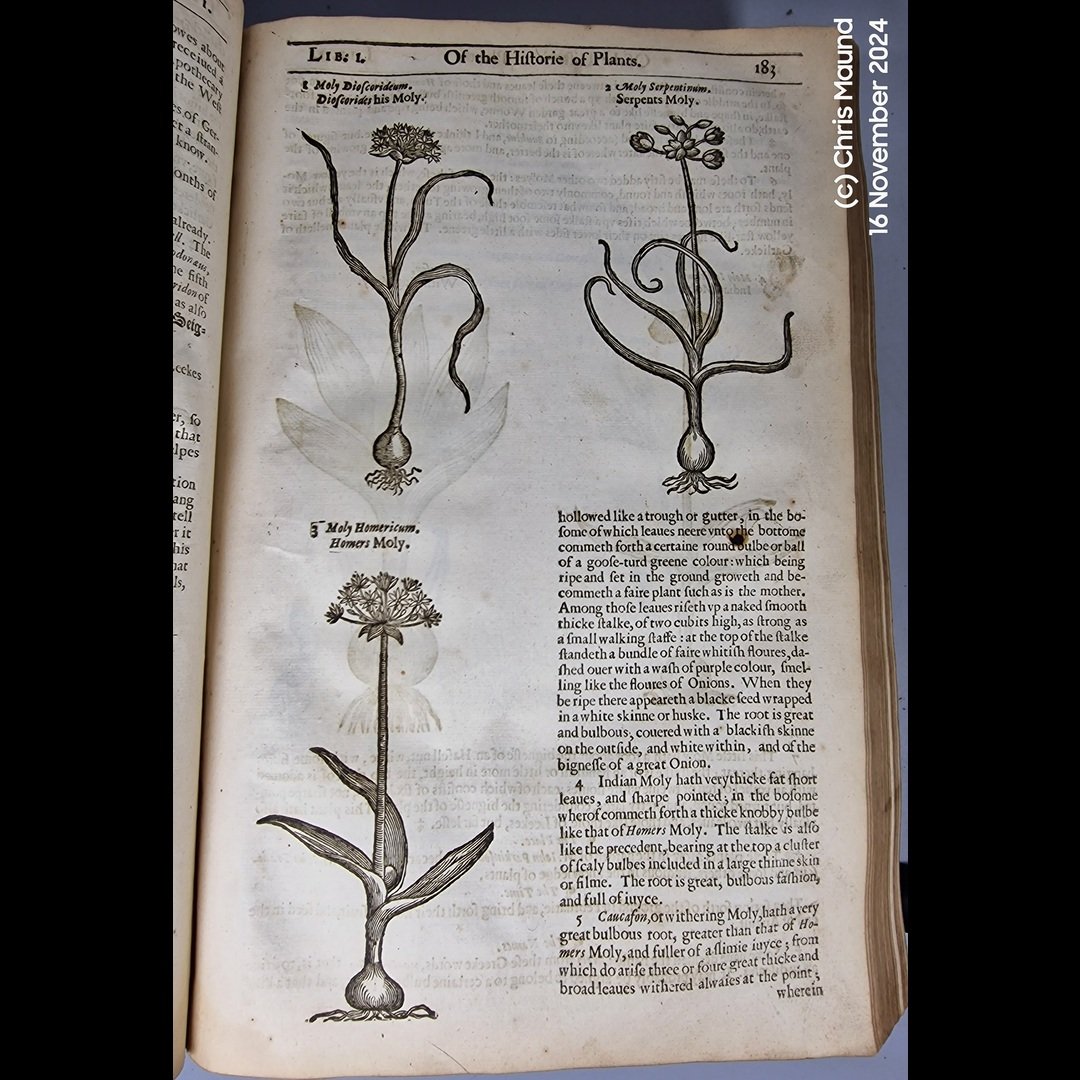 Image 12 of 27
 Image 13 of 27
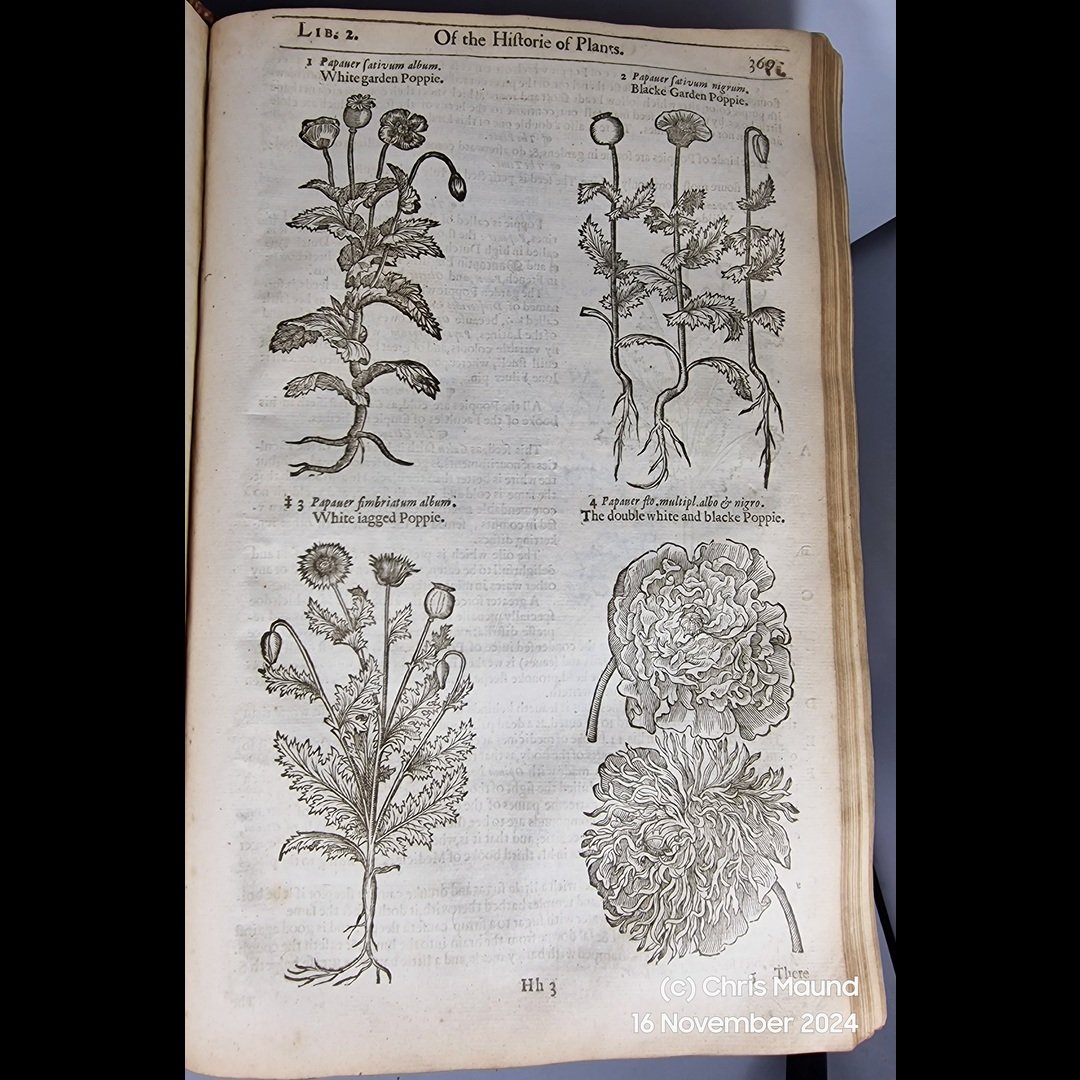 Image 14 of 27
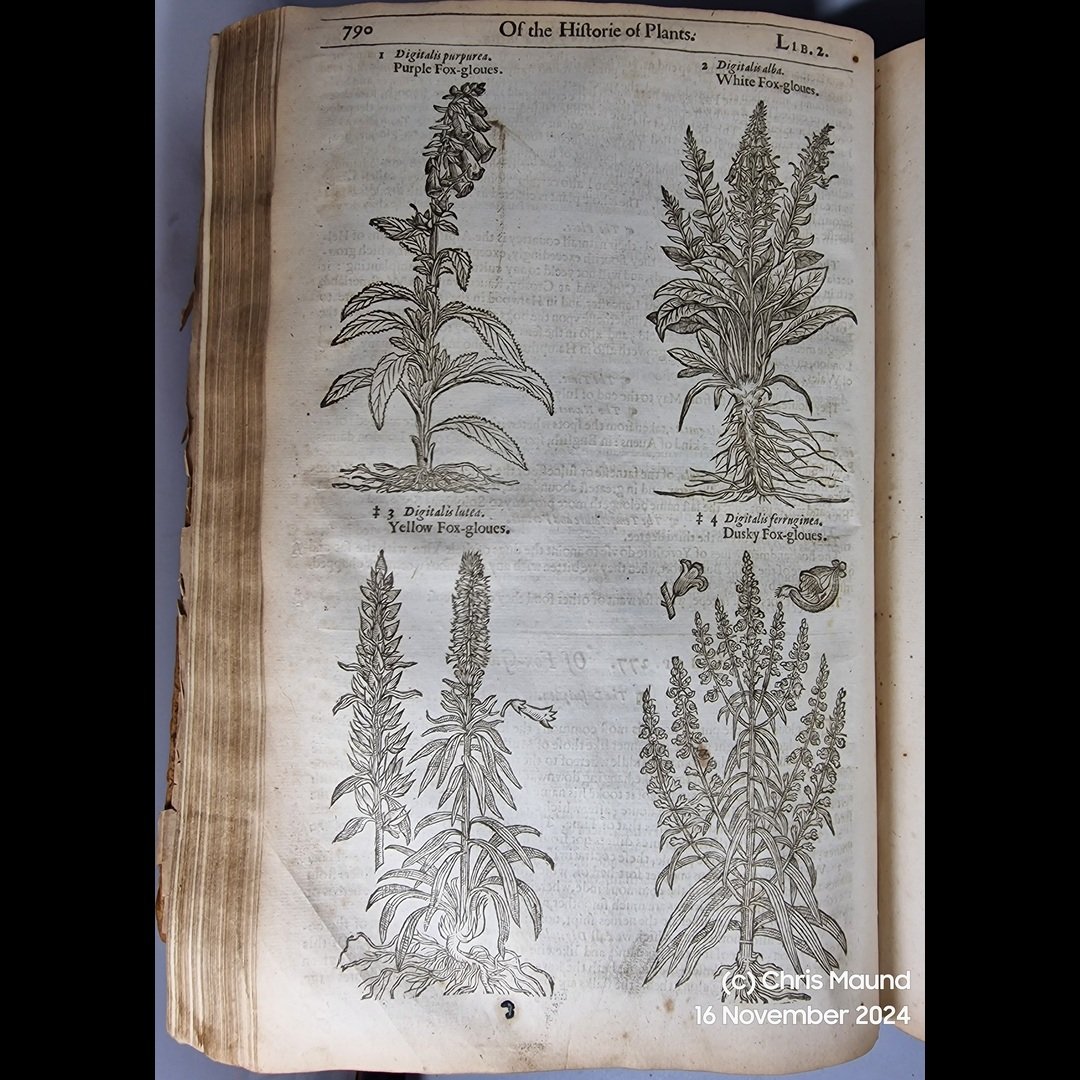 Image 15 of 27
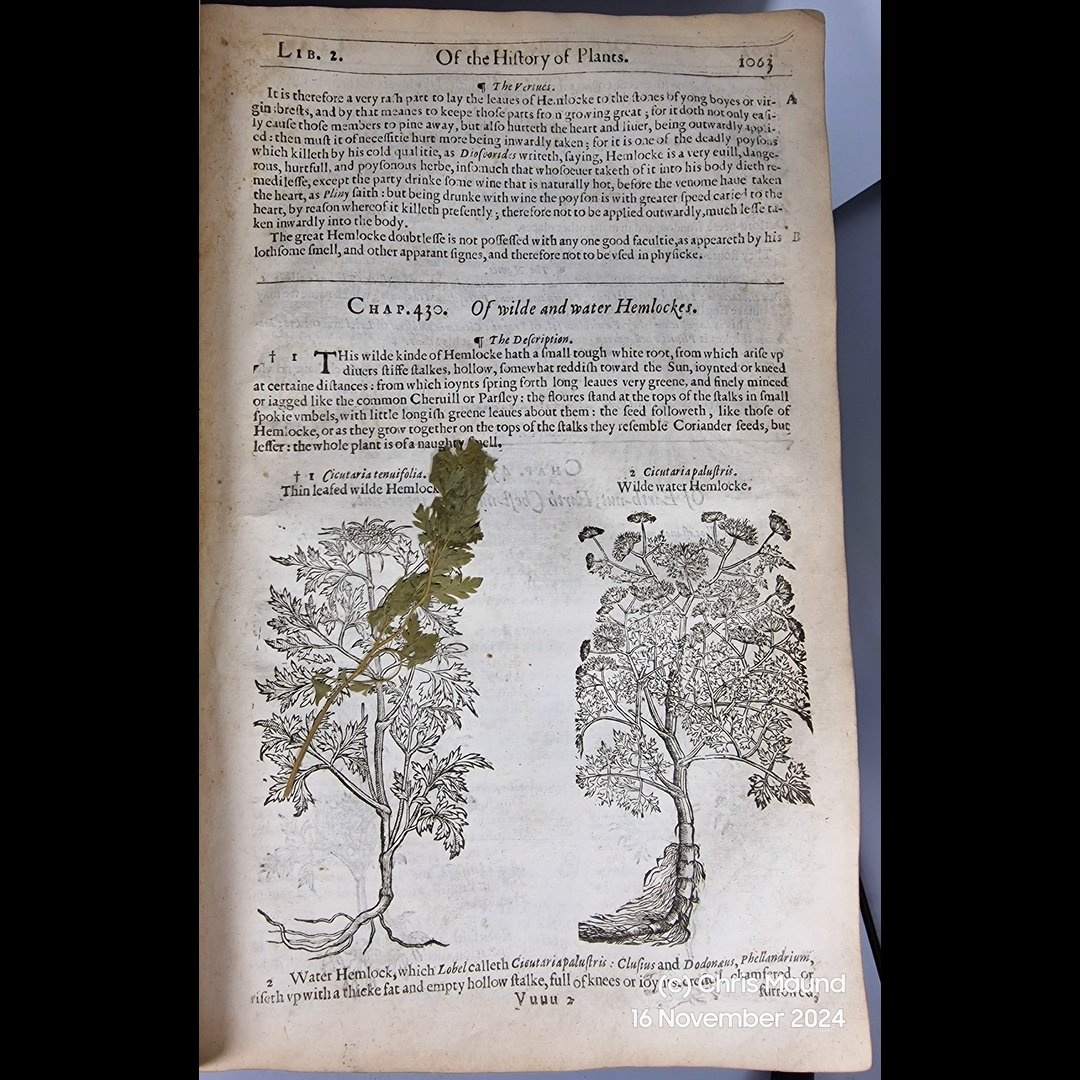 Image 16 of 27
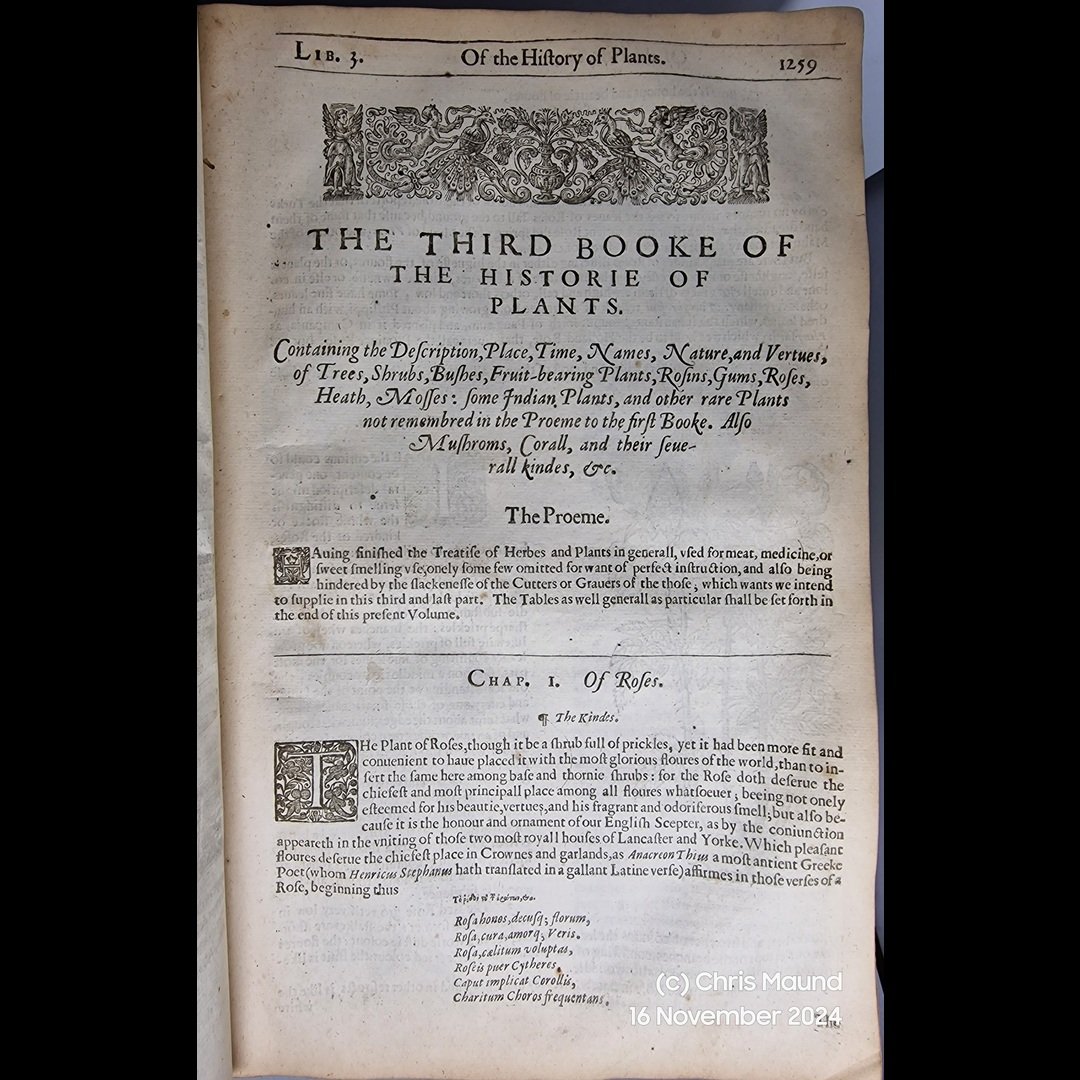 Image 17 of 27
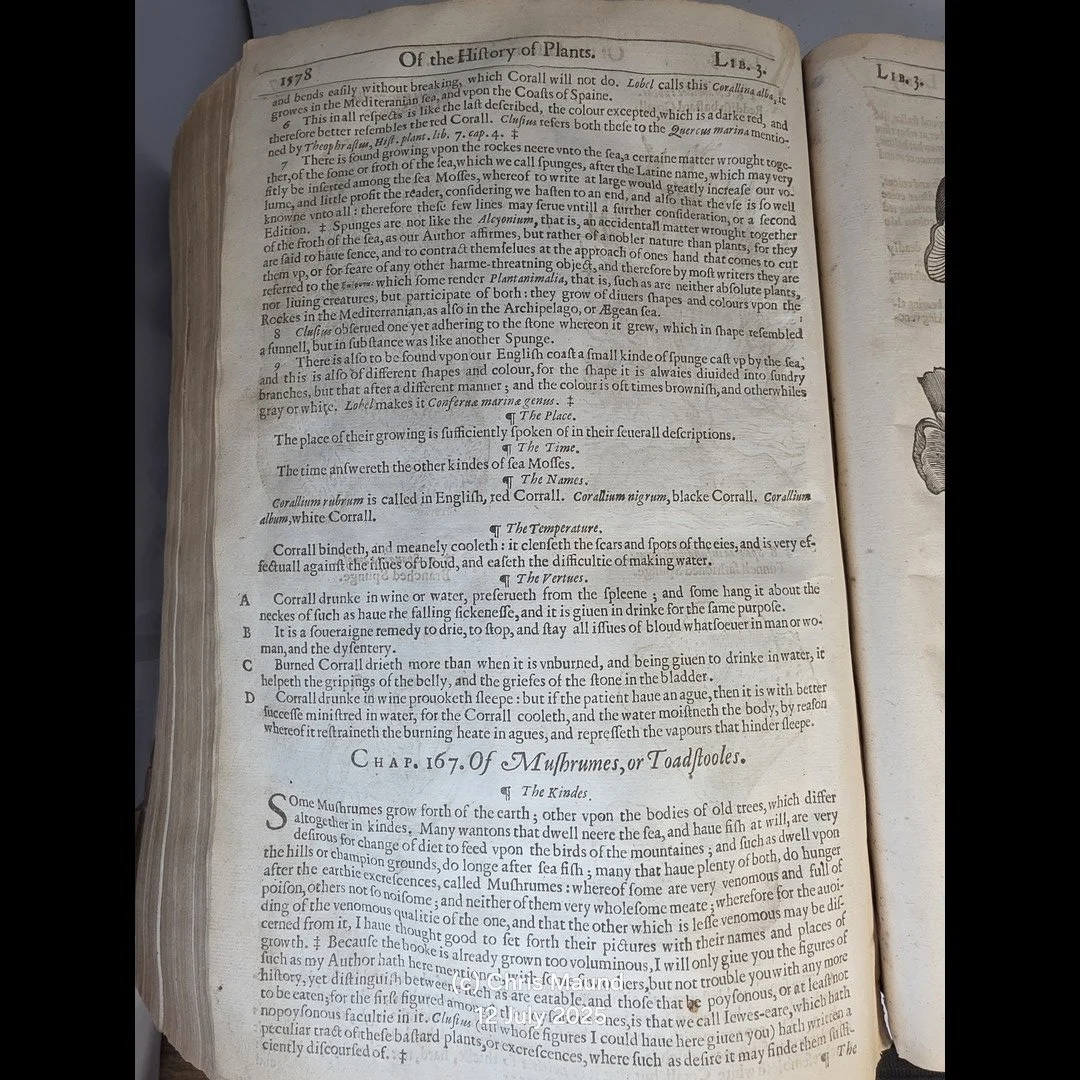 Image 18 of 27
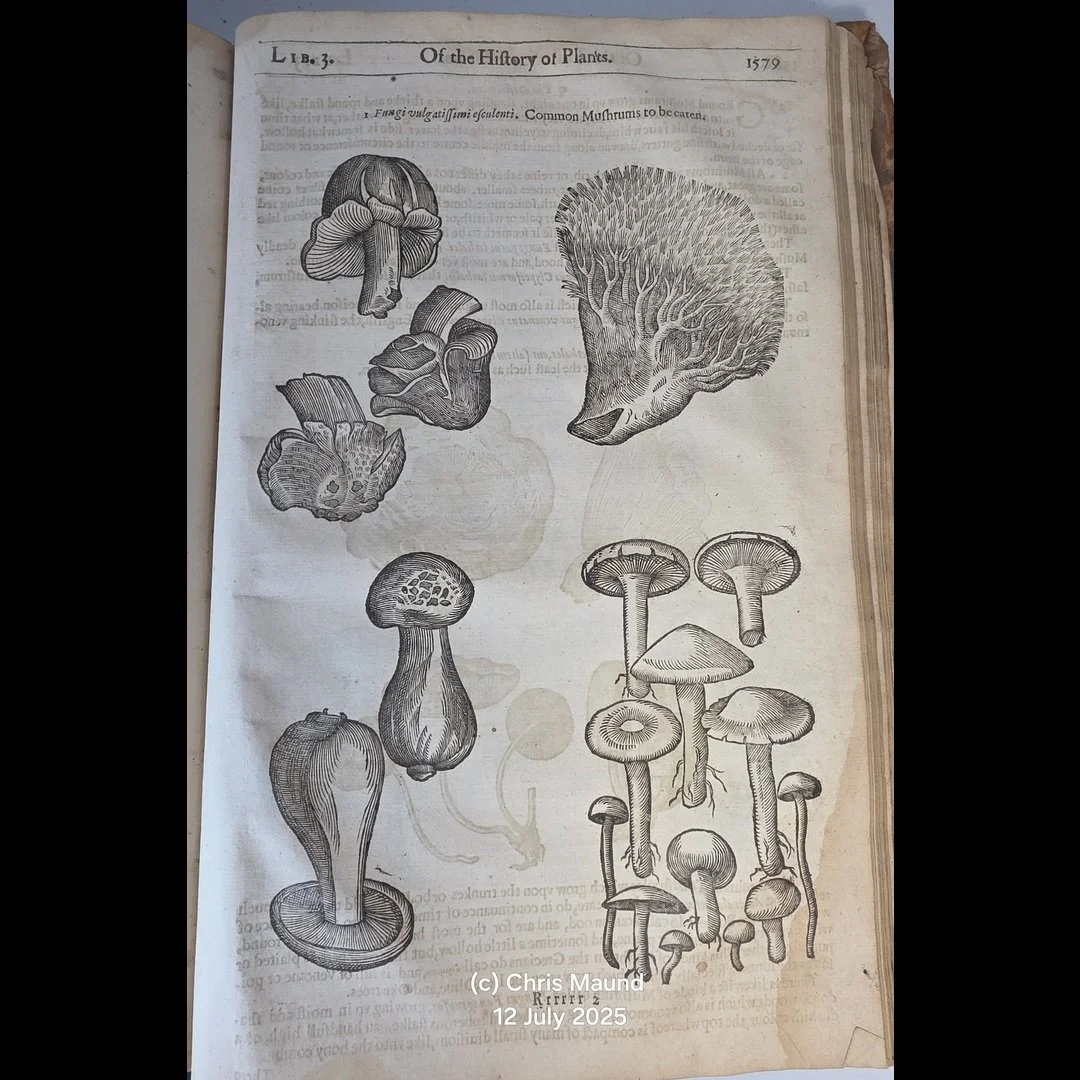 Image 19 of 27
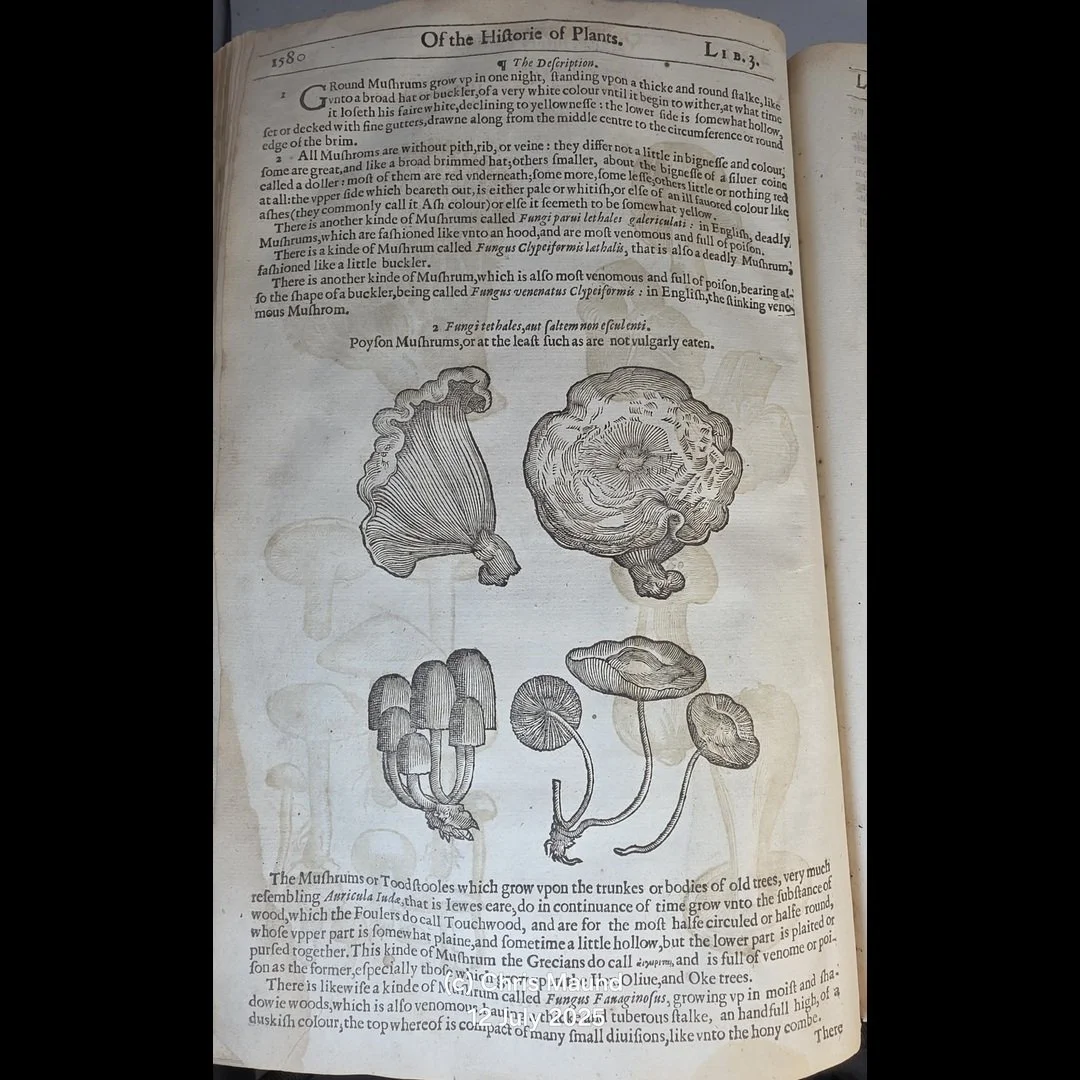 Image 20 of 27
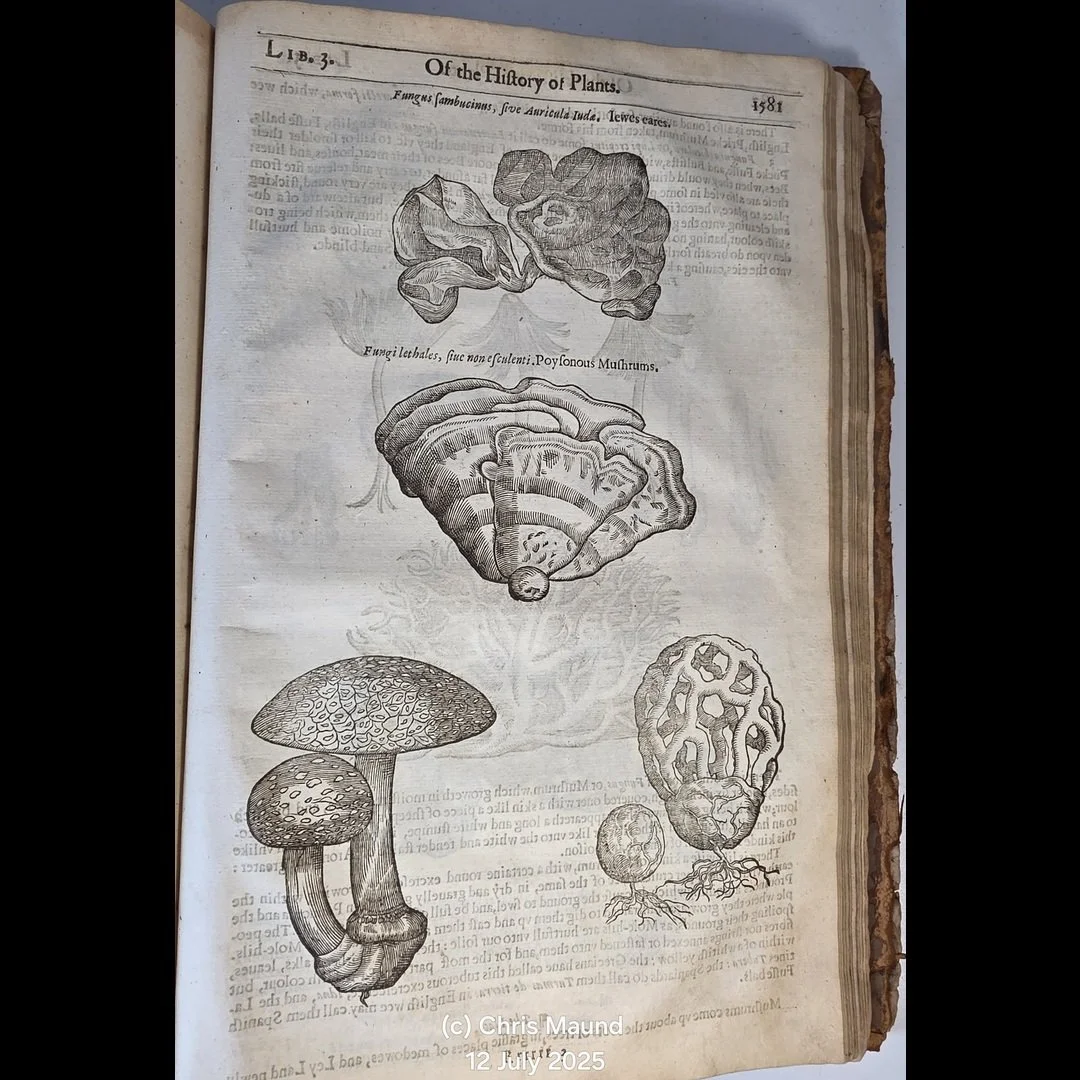 Image 21 of 27
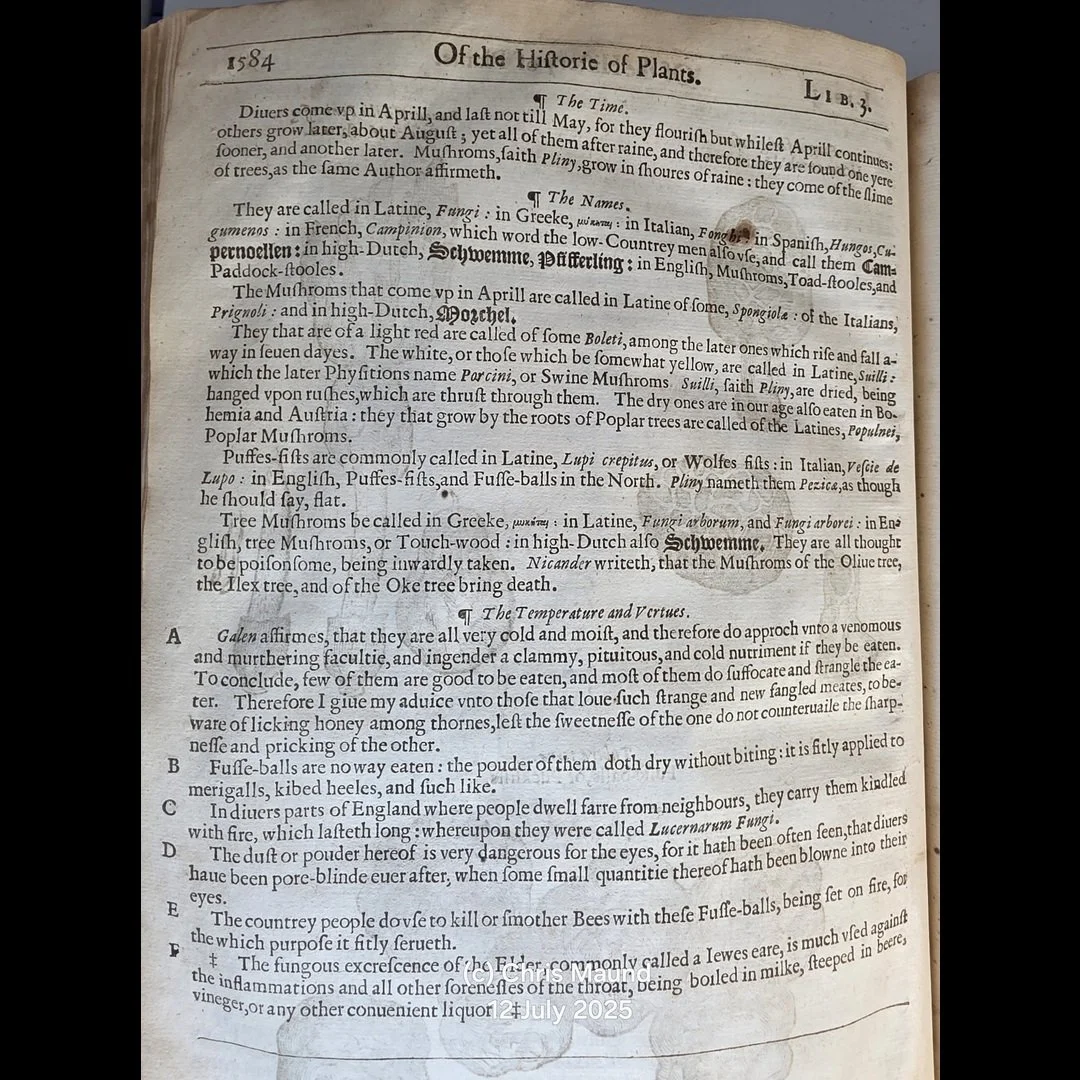 Image 22 of 27
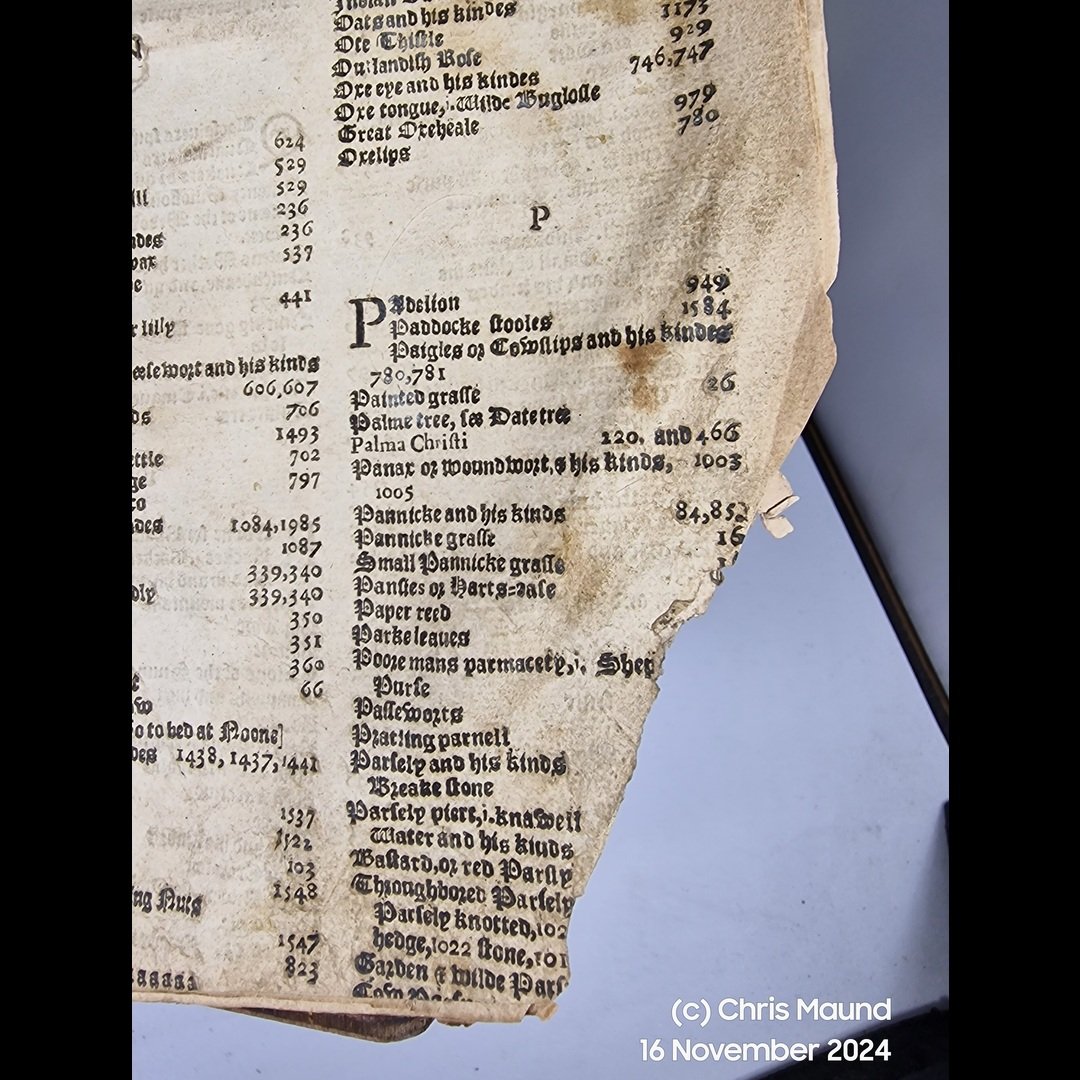 Image 23 of 27
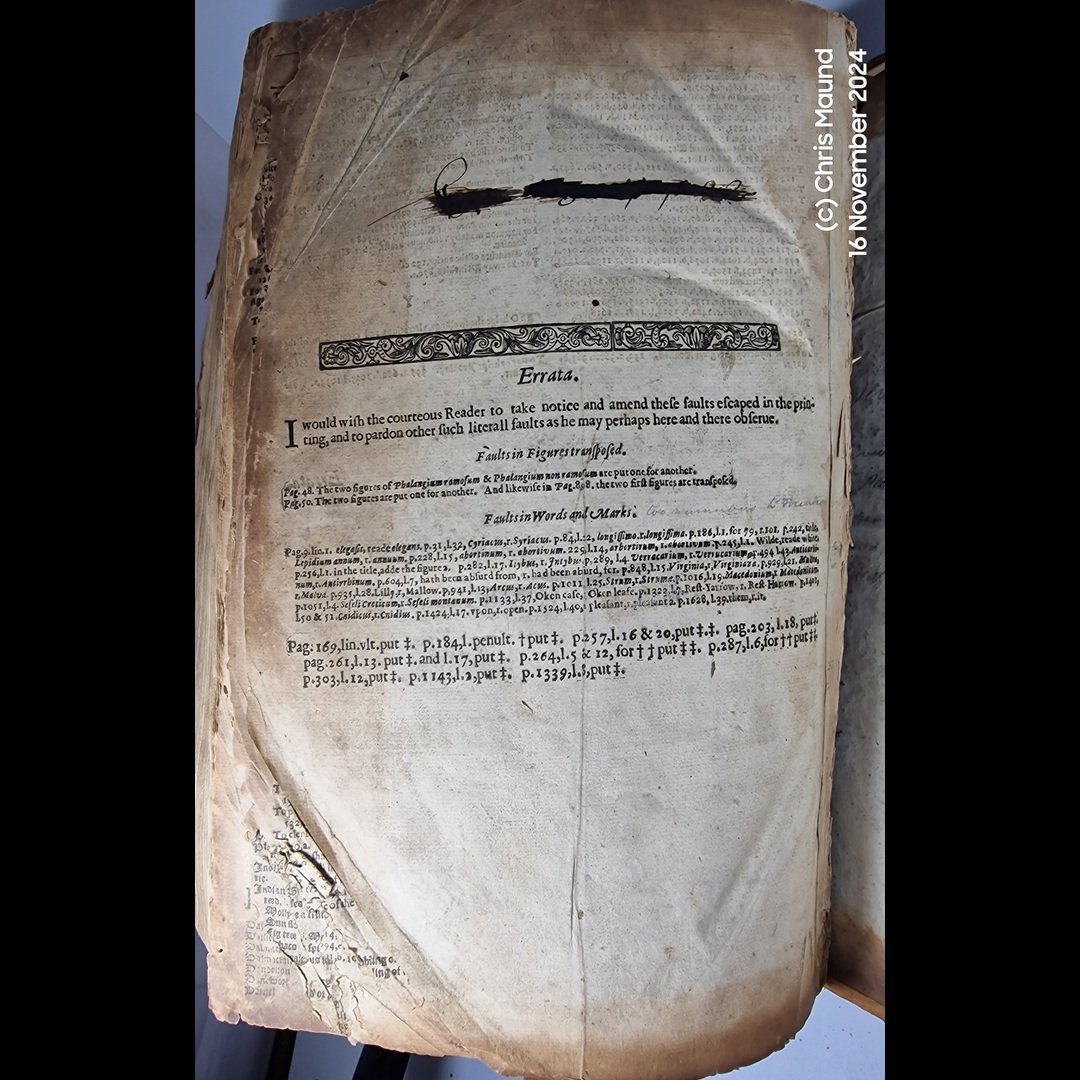 Image 24 of 27
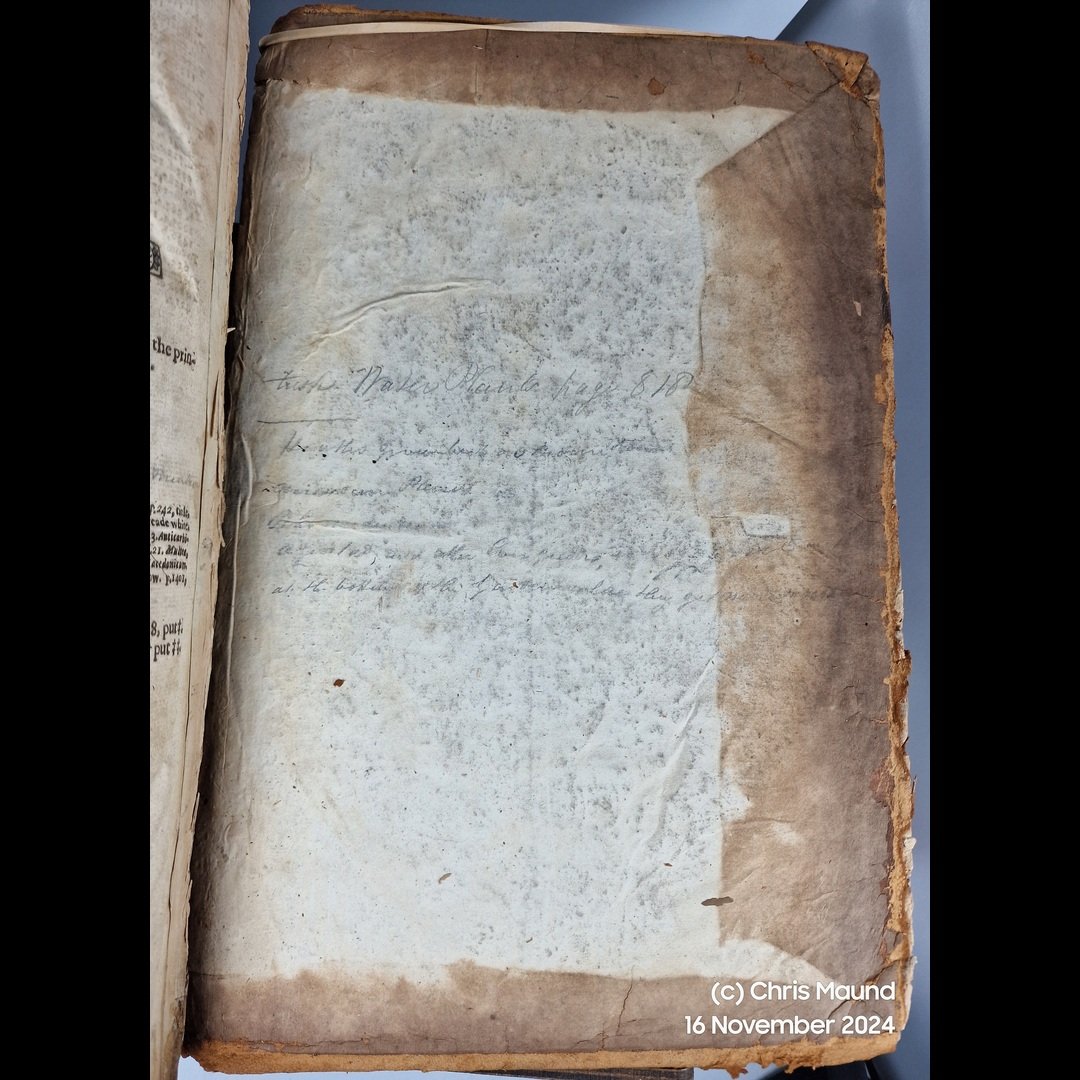 Image 25 of 27
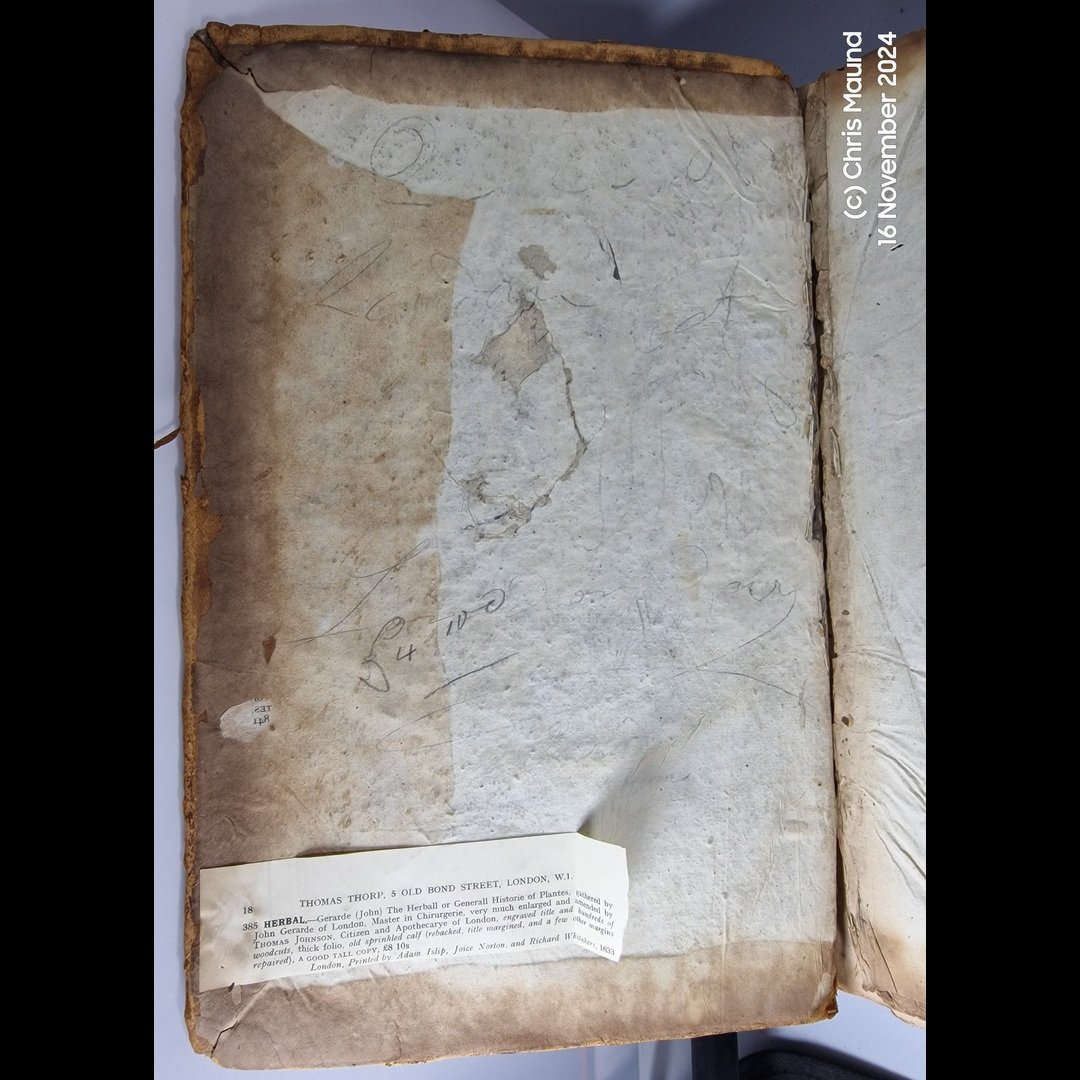 Image 26 of 27
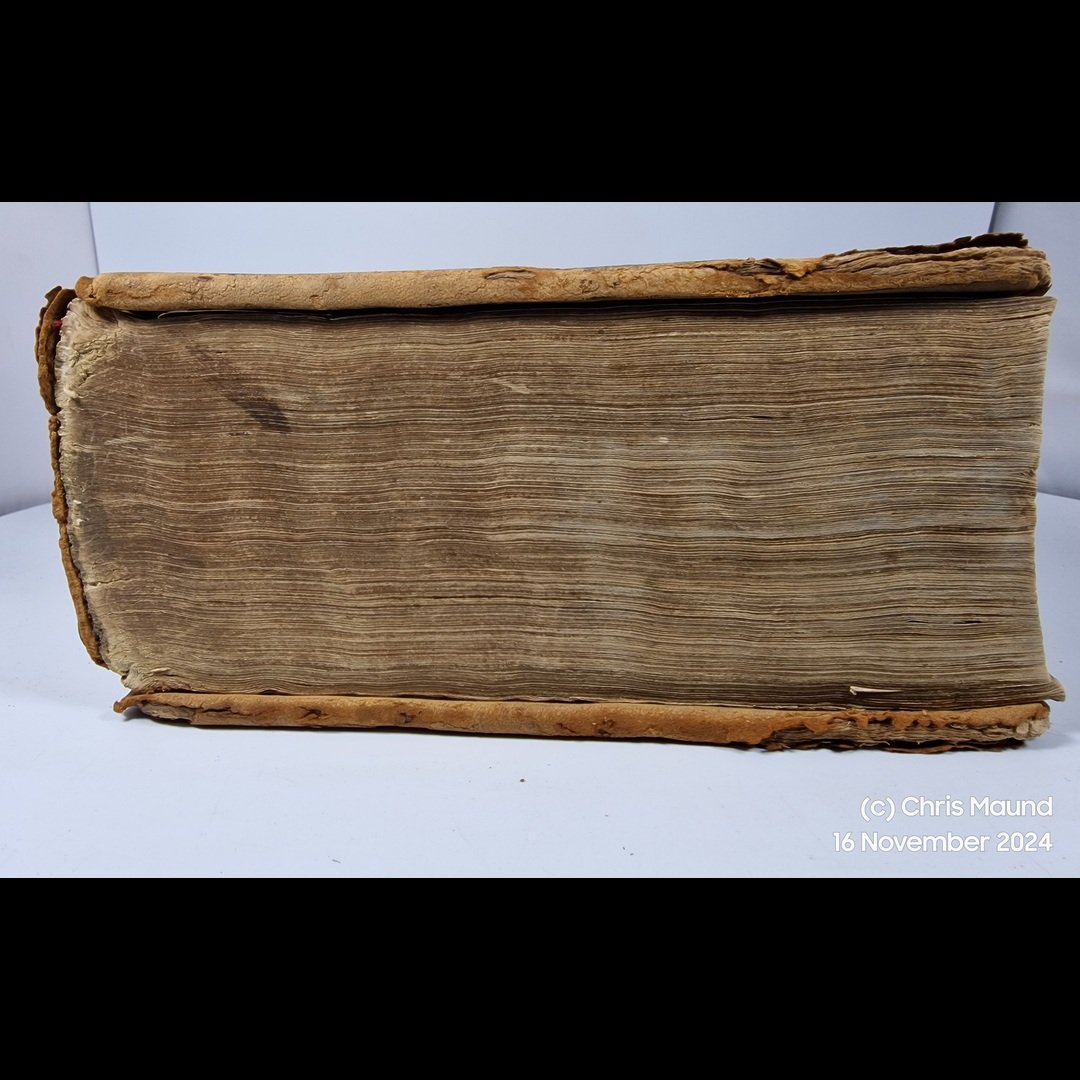 Image 27 of 27