1892 First English Edition, Second Impression
THE STORY OF A PUPPET
By Carlo Collodi [Carlo Lorenzini]
KEY DETAILS
Condition: Good
Format: Hardcover, Octavo (Standard) (8vo 6 × 9 in 152 × 229 mm )
Note: Binding/size selection follows standard bibliographic conventions and is approximate; exact measurements may vary.
Published By: T. Fisher Unwin, London, 1892
Language: English
Illustrated By: Enrico Mazzanti
Provenance: Presented on 31 May 1930:
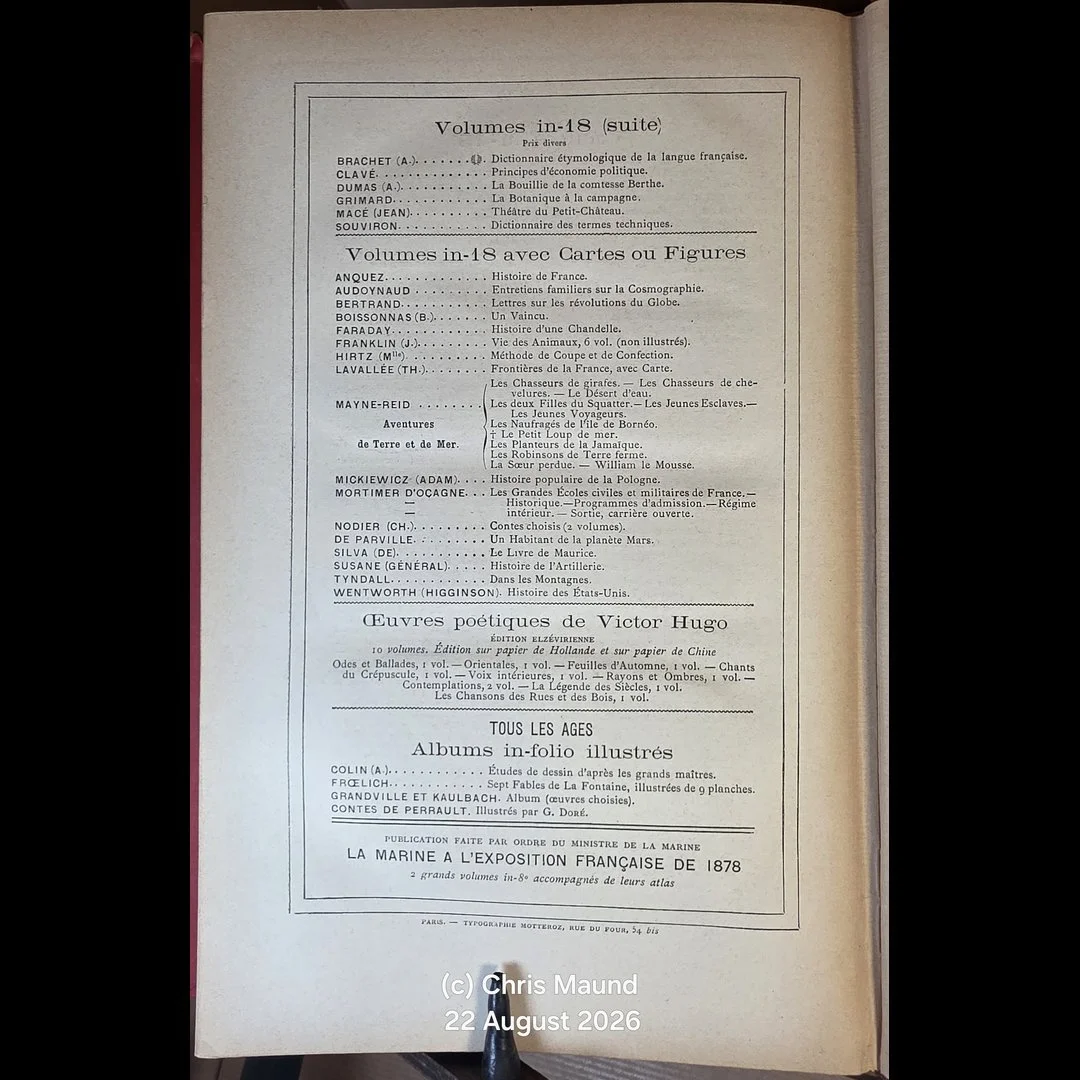
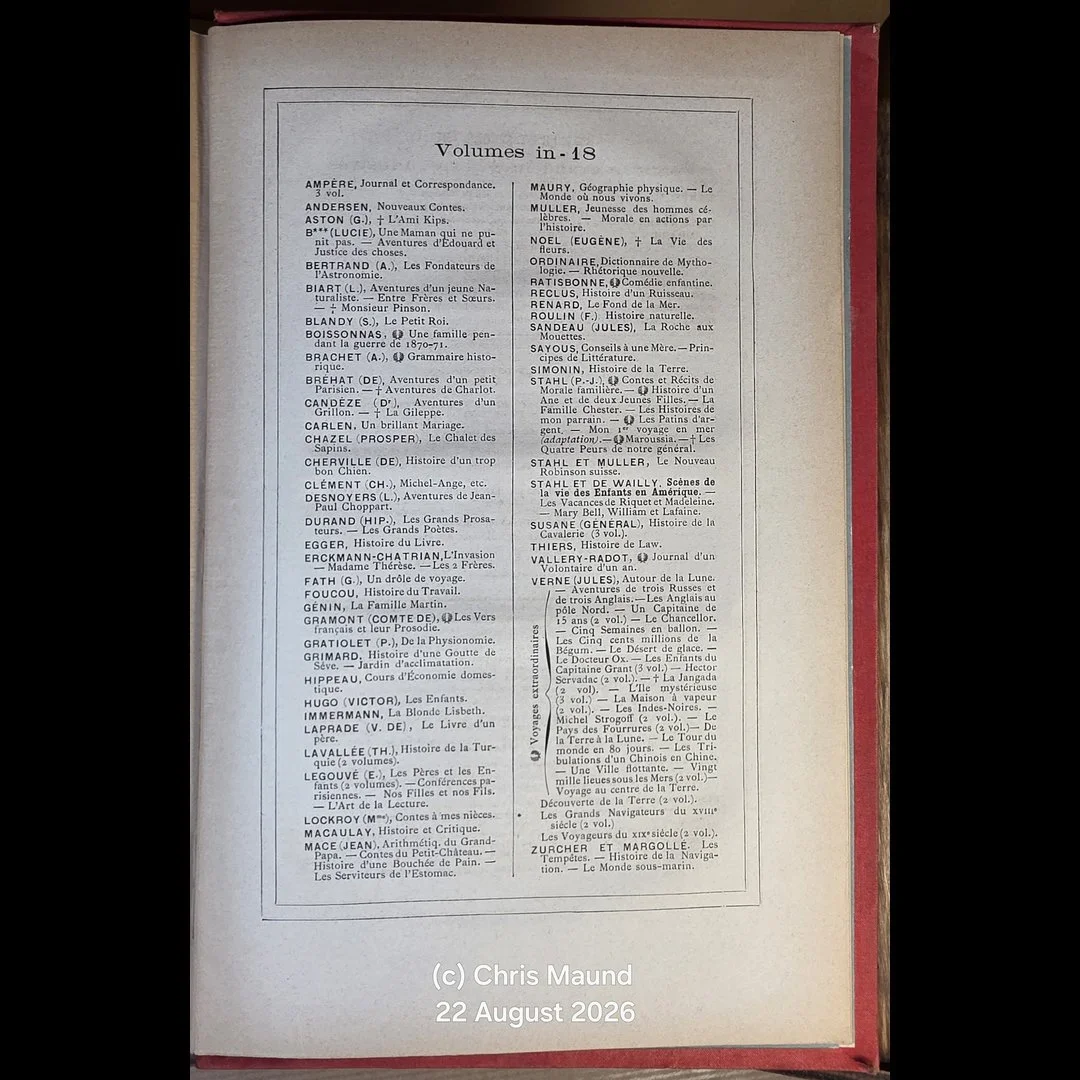
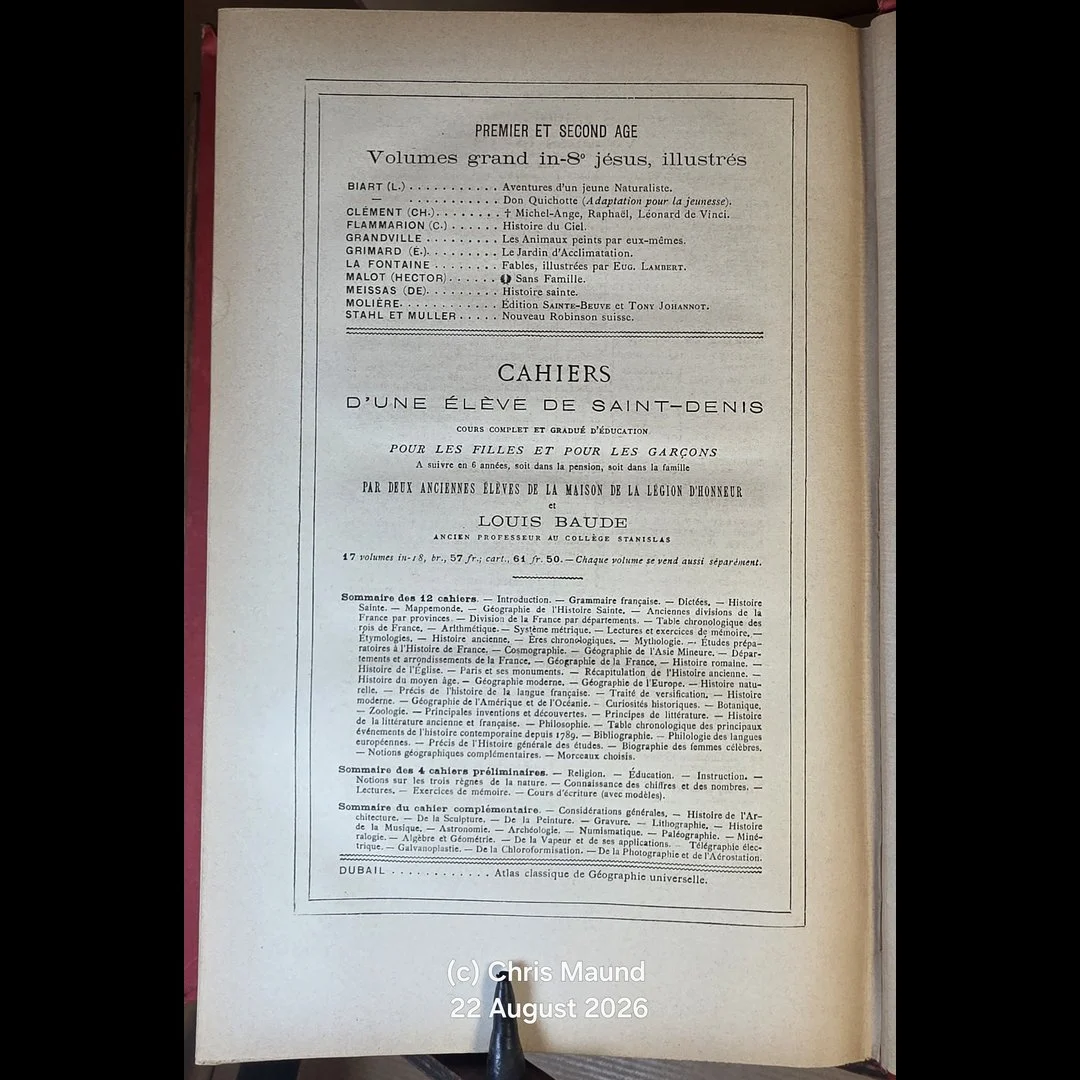
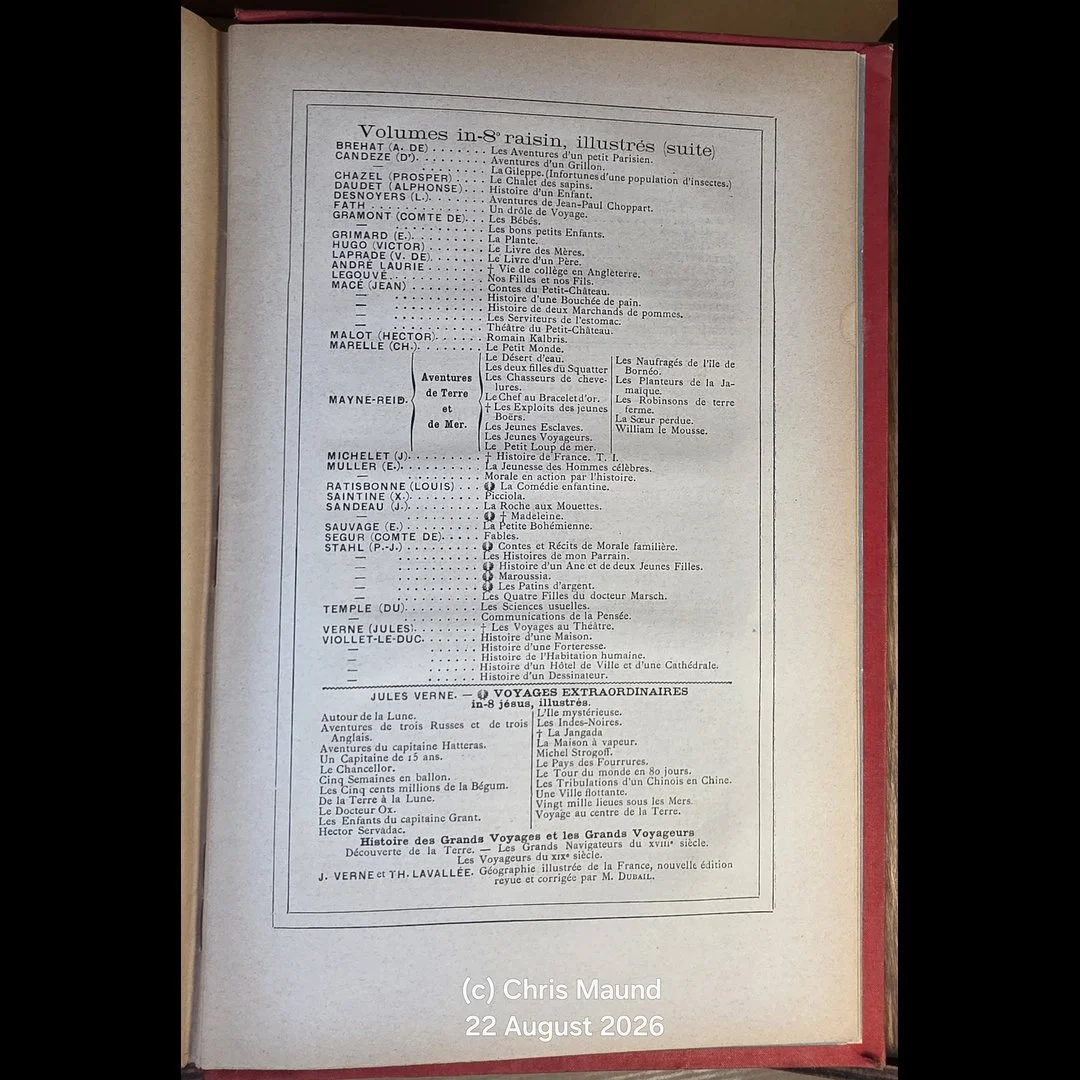
Collation: 232 pages. Retains the illustrated Children’s Library preliminary material and Mazzanti illustrations throughout. Final page followed by the imprint R. & R. Clark, Edinburgh.
Dust Jacket: None, as issued
SKU: BTETM0002483
Shipping Info: Approximate Package Dimensions H: 12.5, L: 30, W: 25 (Units: cm), W: 2Kg
Tracked Shipping, Insurance Coverage as per Customer Request
DESCRIPTION
The Story of a Puppet
THE STORY OF A PUPPET; OR, THE ADVENTURES OF PINOCCHIO
By Carlo Collodi [Carlo Lorenzini]
Translated from the Italian by M. A. Murray
Illustrated by Enrico Mazzanti
An exceptionally early English-language edition of one of the foundational works of children’s literature: the 1892 second impression of the first English edition of Pinocchio, translated by M. A. Murray and retaining the celebrated illustrations of Enrico Mazzanti, illustrator of the original Italian book edition.
Of particular interest is the present copy’s apparently unrecorded contemporary variant binding of T. Fisher Unwin’s Children’s Library. Rather than the familiar blue-on-cream floral “pinafore cloth” associated with the standard first impression, this copy is bound in grey-blue cloth, the upper board blocked in black with a witch flying on a broomstick before the moon within an ornamental border. The spine is specifically blocked “The Adventures of Pinocchio” and “The Children’s Library.”
Close examination of the binding shows title- and series-specific spine blocking, contemporary construction, apparently integral plain endpapers and unpatterned page edges, with no obvious evidence of later recasing. These features strongly support an early publisher or publisher-commissioned binding state, rather than a later private rebinding. The precise witch-and-moon casing has not, however, been traced in the institutional, auction or bookseller records consulted and is therefore cautiously described as an apparently unrecorded contemporary Children’s Library binding variant.
The title page explicitly states “SECOND IMPRESSION.” Issued in the same year as the first English impression, it belongs to the earliest generation of English-language Pinocchio and retains the illustrations through which Mazzanti had helped establish the original visual identity of Collodi’s puppet.
BINDING NOTE
The standard first-impression binding of The Story of a Puppet is the distinctive cream or white “pinafore cloth”, printed overall in blue floral decoration and accompanied by patterned endpapers and decorated edges.
The present copy is markedly different. Research has established that the 1892 second impression survives in several publisher’s bindings, including red-and-cream decorative cloth, yellow cloth with orange decoration and tan cloth decorated and lettered in orange. Variation in the casing of the second impression is therefore demonstrable.
The precise witch-and-moon binding of this copy has not yet been located in another surviving example. Its purpose-designed Children’s Library spine, contemporary materials, apparently integral plain endpapers, unpatterned edges and lack of evidence for an earlier floral casing make a later private rebinding unlikely. The evidence instead points towards an early alternative Children’s Library casing, probably publisher or publisher-commissioned, although this remains cautiously stated pending discovery of another identical copy or contemporary publisher documentation.
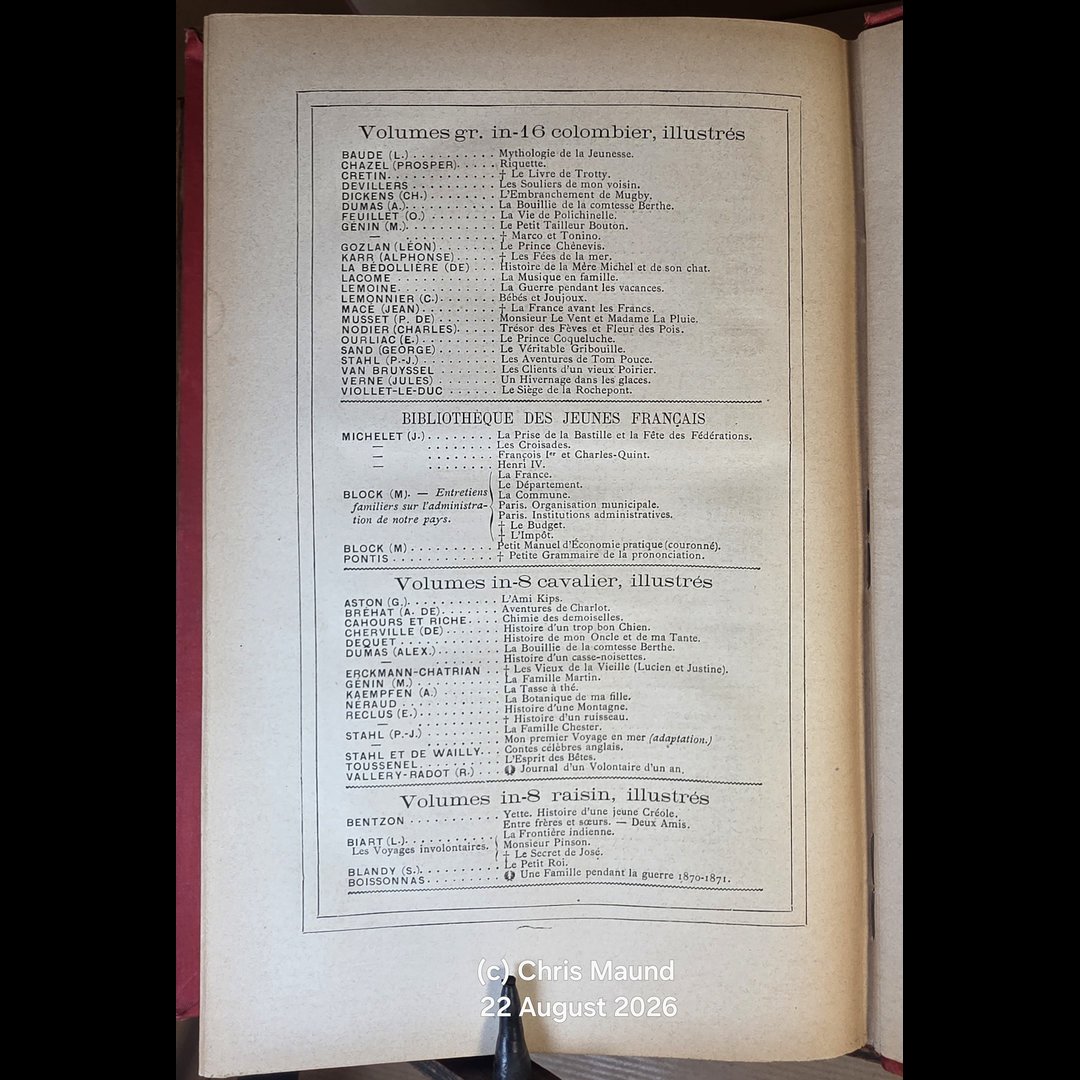
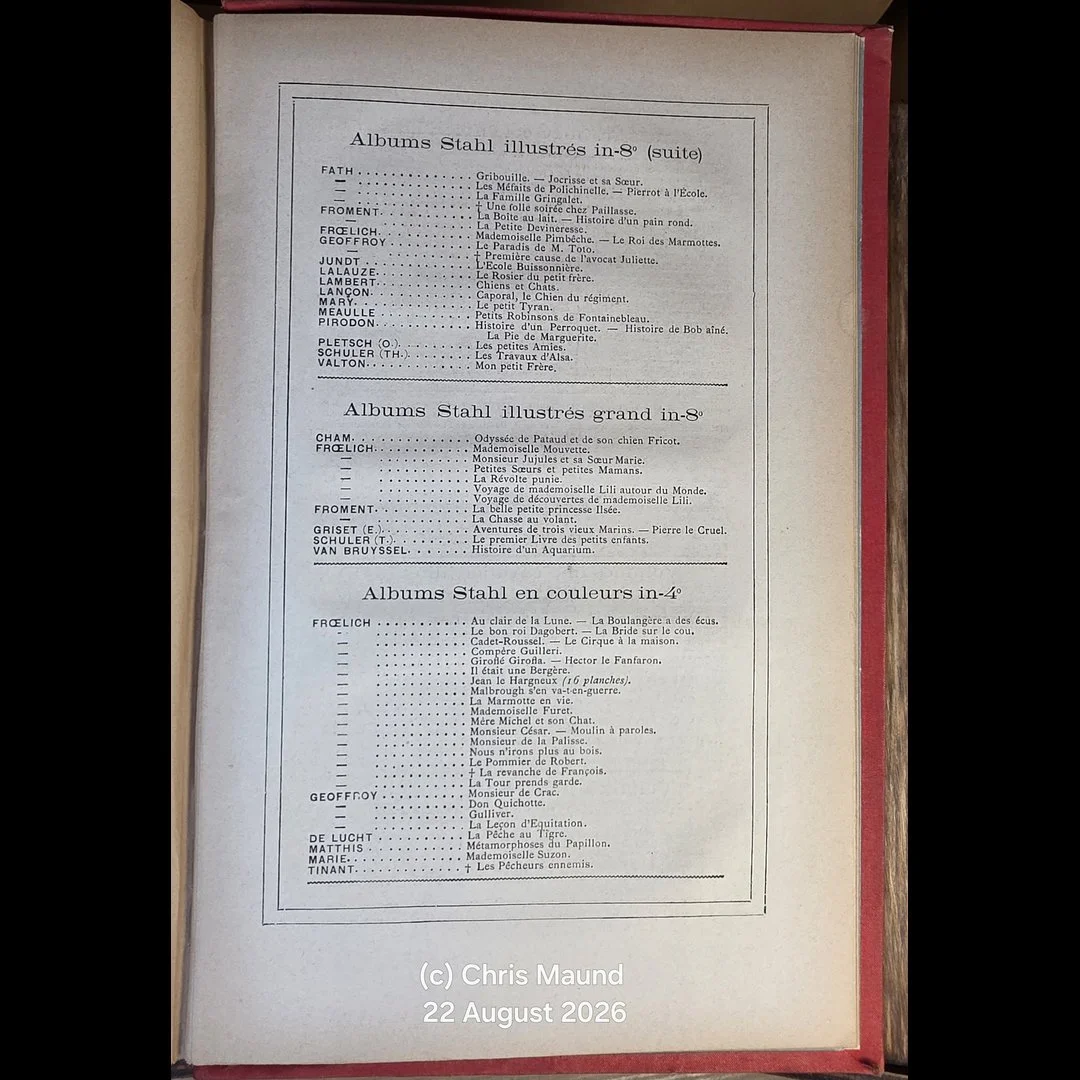
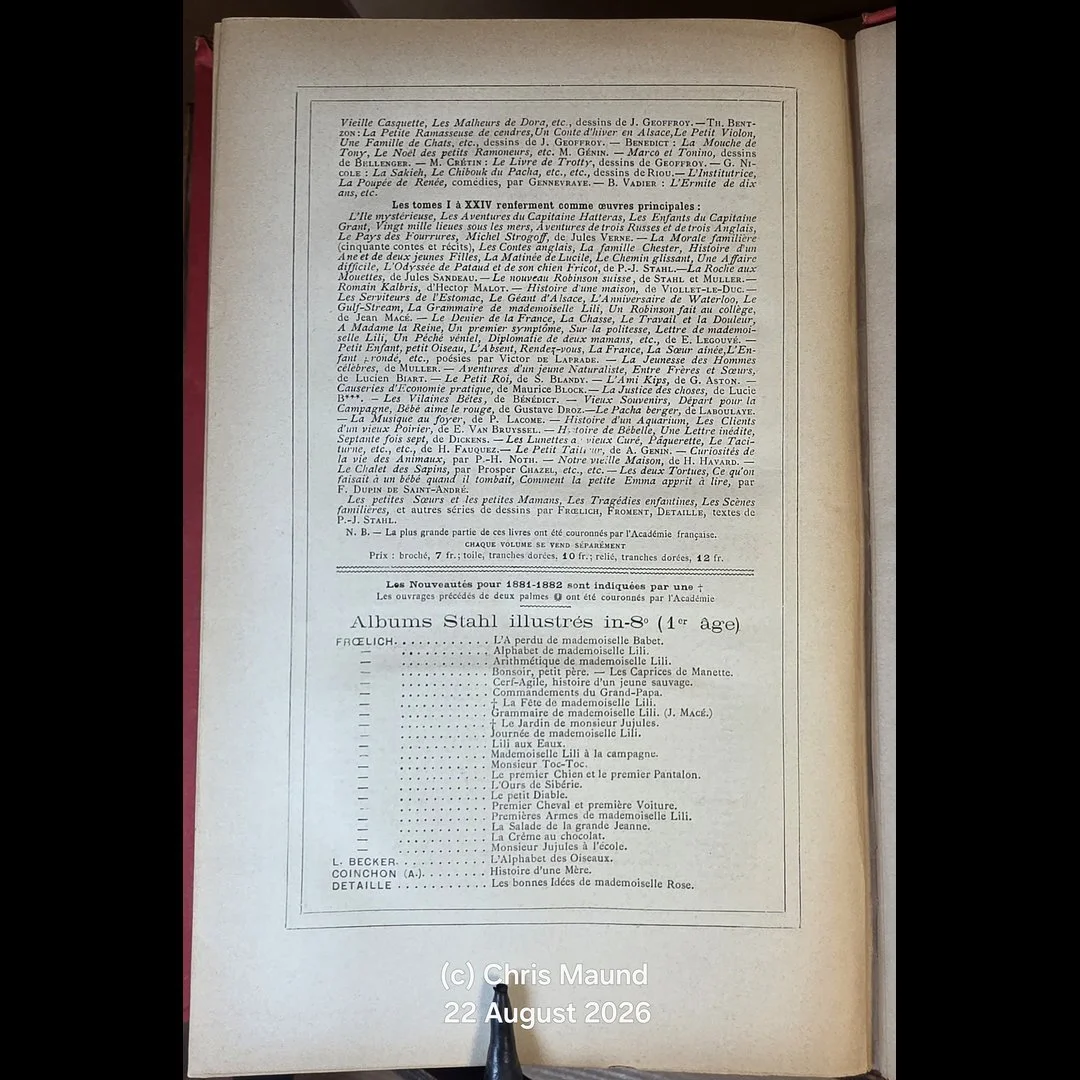
The witch-and-moon imagery is also consistent with the decorative vocabulary used for Fisher Unwin’s Children’s Library, whose series devices included the witch and moon, snail and butterfly visible in the preliminary material.
FIRST ENGLISH EDITION
Collodi’s Pinocchio developed from the serial La storia di un burattino before appearing in book form in Italy. T. Fisher Unwin’s 1892 edition, translated by M. A. Murray, was the story’s first appearance in English.
Although explicitly a second impression, the present copy was published in the same year and remains very early in the English publication history of the work. Particularly important is the retention of Mazzanti’s original illustrations, giving the English edition a direct visual connection with the earliest Italian book publication.
PROVENANCE
Presented on 31 May 1930:
“To dear Doreen from her Dad & Mum for passing her second examination for a scholarship.”
A pleasing piece of family provenance showing the book continuing to serve as a reward for educational achievement nearly four decades after publication.
CONDITION, COLLATION & COPY NOTES
COLLATION
232 pages. Retains the illustrated Children’s Library preliminary material and Mazzanti illustrations throughout. Final page followed by the imprint R. & R. Clark, Edinburgh.
Complete. Unrestored.
An unrestored and bibliographically interesting copy, with significant wear to the binding but a substantially better-preserved text block.
Contemporary grey-blue cloth soiled and faded in places, with rubbing and general handling wear. Upper board retains the unusual witch-on-broomstick-and-moon design clearly blocked in black within its ornamental border.
Spine browned, with wear and pronounced fraying to head and tail. Cloth split for a substantial portion of the rear outer joint, with loose threads and partial separation. Rear inner hinge open with mull exposed, although the text block remains together. Corners and board edges worn and frayed.
Plain pastedowns and free endpapers age-toned and browned. Their construction and relationship to the cloth turn-ins appear consistent with the present casing. No obvious bookseller’s blindstamp, binder’s ticket, modern joint repair or evidence of replaced pastedowns has been identified.
Fore-edge, head and tail plain and naturally aged, with no visible surviving floral decoration or obvious evidence that an earlier patterned edge treatment has been removed.
Internally generally clean for its age, with occasional toning, handling marks and light spotting. Illustrations remain well defined.
Please see Photos as part of condition report.
REFERENCES
Morgan Library & Museum — The Story of a Puppet; or, The Adventures of Pinocchio, London: T. Fisher Unwin, 1892.
Contemporary T. Fisher Unwin advertisements for The Children’s Library, describing the standard series binding as “Pinafore Cloth Binding, floral edges.”
Surviving 1892 second-impression copies in alternative decorative publisher’s bindings confirm that more than one casing was employed for the impression.
Historic first-English-edition auction records include examples handled by Chorley’s and Dominic Winter.
SYNOPSIS
The carpenter Master Antonio discovers that an apparently ordinary piece of wood can speak, laugh and complain. Passed to the impoverished Geppetto, the wood becomes Pinocchio: a wilful and impulsive puppet who almost immediately runs away and repeatedly rejects education, responsibility and good advice.
His adventures bring him into contact with the Talking Cricket, Fire-Eater’s puppet theatre, the deceitful Fox and Cat, the mysterious blue-haired Fairy and a succession of extraordinary human and animal characters. He is cheated, imprisoned, nearly hanged, transformed into a donkey and eventually swallowed by a gigantic sea creature.
Behind the comedy and fantasy lies a darker world of hunger, poverty, exploitation and consequence. At its centre is Pinocchio’s relationship with Geppetto. Only when he begins to recognise sacrifice, work for others and accept responsibility for his actions does transformation become possible.
Far removed from many later softened adaptations, Collodi’s original remains an extraordinary mixture of fairy tale, social satire, moral fable and dark comedy.
AUTHOR BIO
Translated By: M. A. Murray
Carlo Collodi was the pen name of Carlo Lorenzini (1826–1890), the Florentine journalist, satirist and author whose reputation ultimately came to rest upon one of the most enduring characters in world literature.
Lorenzini adopted the name Collodi from the Tuscan village associated with his mother’s family. After a career in journalism, satire and theatrical criticism, he increasingly turned towards literature for younger readers.
Pinocchio began as the serial La storia di un burattino — The Story of a Puppet. Its unruly wooden hero became an extraordinary success and ultimately a cultural archetype recognised throughout the world.
TRANSLATOR
M. A. Murray produced the first English translation of Collodi’s Pinocchio, published by T. Fisher Unwin in 1892 as The Story of a Puppet; or, The Adventures of Pinocchio.
Murray’s translation introduced the work to an English-speaking readership and therefore occupies an important place in the international publication history of the book.
ILLUSTRATOR
Enrico Mazzanti
Erroneously credited as “C. Mazzanti” on the title page.
Mazzanti illustrated the first Italian book edition of Collodi’s story and established much of the early visual identity of Pinocchio and his world. His illustrations were retained for the first English translation, giving the 1892 edition a particularly close connection with the work’s original publication history.
The erroneous “C. Mazzanti” attribution also occurs in this second impression and should therefore not be regarded as a point exclusive to the first impression.

 Image 1 of 19
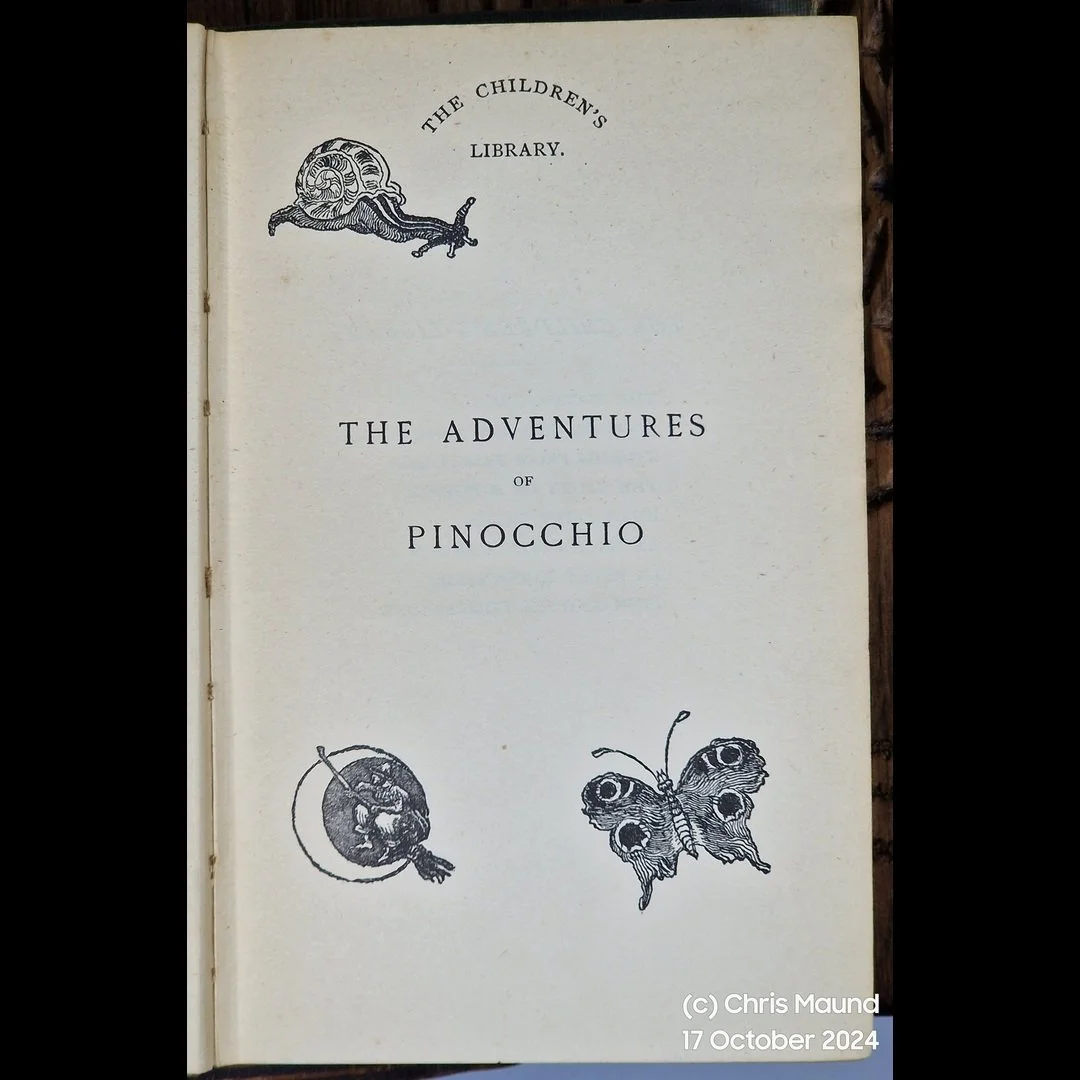 Image 2 of 19
 Image 3 of 19
 Image 4 of 19
 Image 5 of 19
 Image 6 of 19
 Image 7 of 19
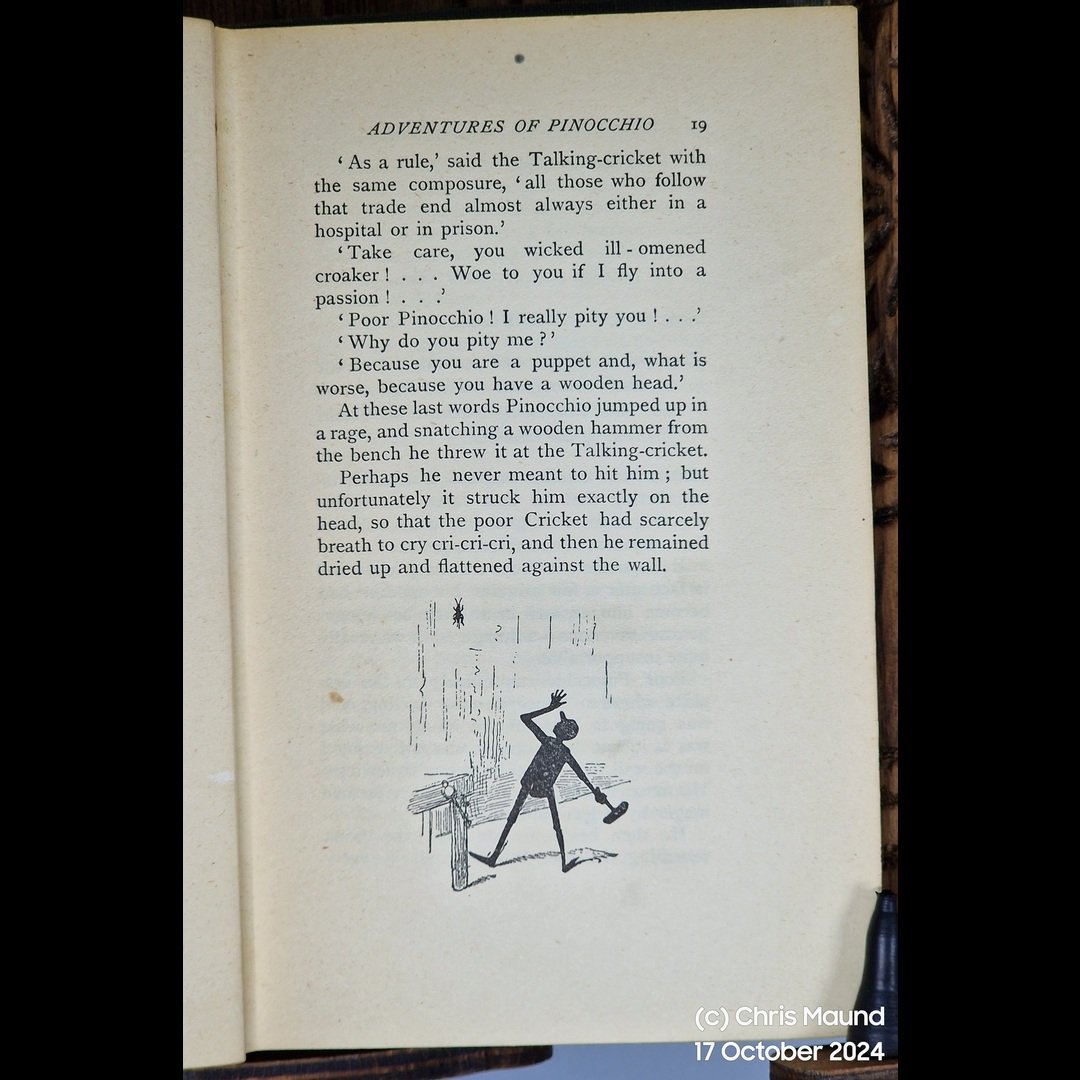 Image 8 of 19
 Image 9 of 19
 Image 10 of 19
 Image 11 of 19
 Image 12 of 19
 Image 13 of 19
 Image 14 of 19
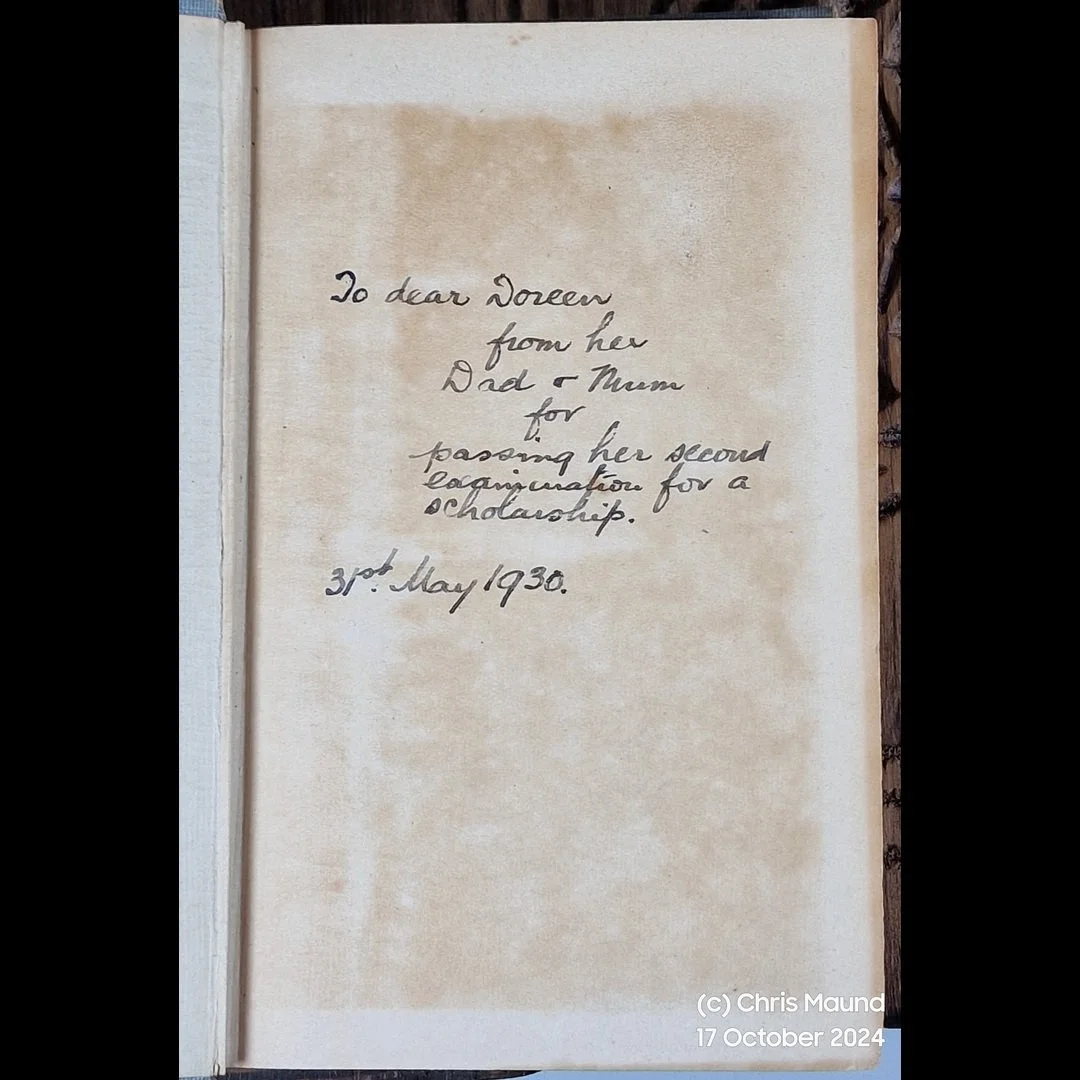 Image 15 of 19
 Image 16 of 19
 Image 17 of 19
 Image 18 of 19
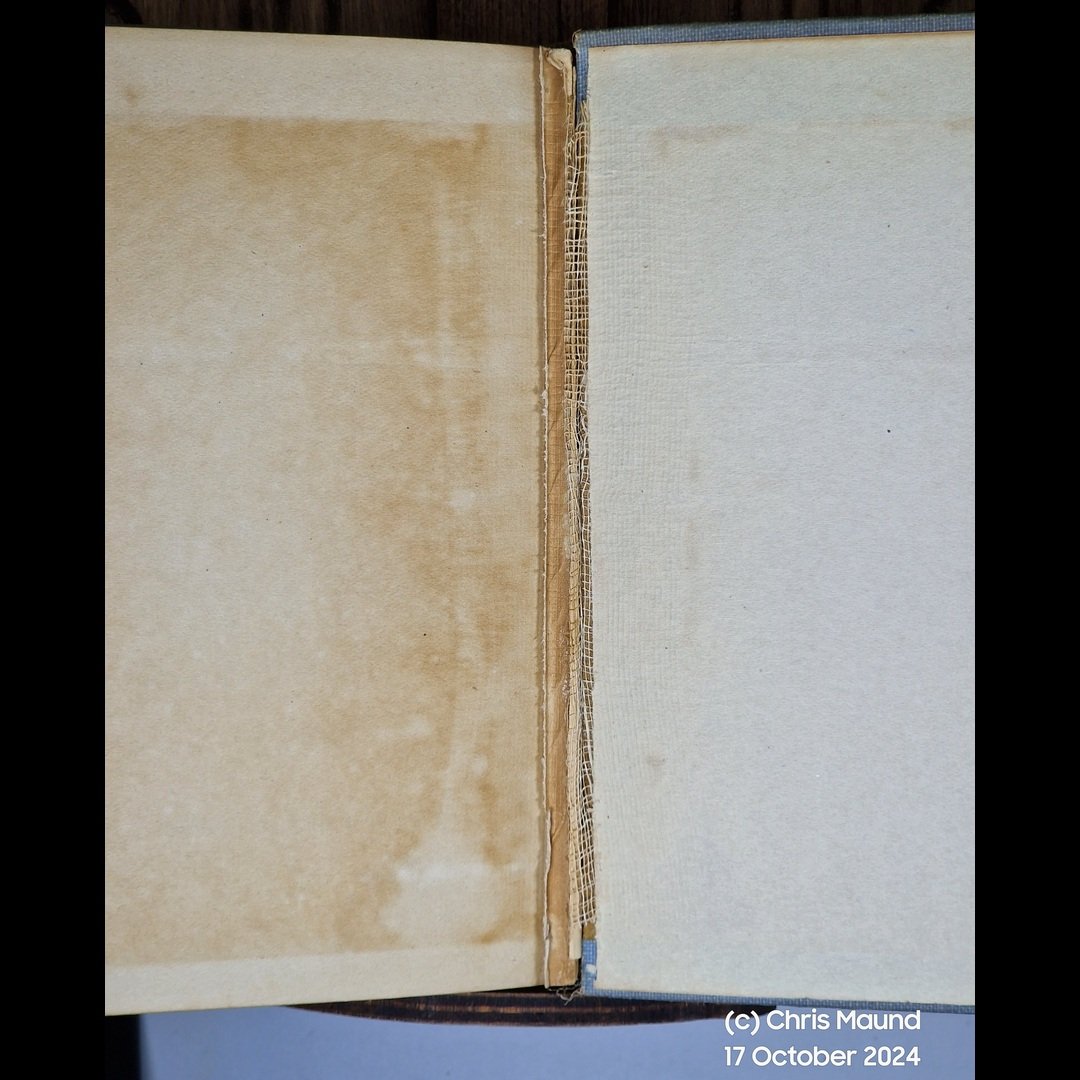 Image 19 of 19