1896 London First Edition
DEVIL-WORSHIP IN FRANCE
By Arthur Edward Waite
KEY DETAILS
Condition: Good
Format: Hardcover, Octavo (Standard) (8vo 6 × 9 in 152 × 229 mm )
Note: Binding/size selection follows standard bibliographic conventions and is approximate; exact measurements may vary.
Published By: George Redway, London, 1896
Language: English
Provenance: Early ownership inscription of May U. Green to the half-title.
Collation: Publisher’s advertisement leaf; xii, 325 pp.
Dust Jacket: None, as issued, No Jacket
SKU: BTETM0002533
Shipping Info: Approximate Package Dimensions H: 12.5, L: 30, W: 25 (Units: cm), W: 2Kg
Tracked Shipping, Insurance Coverage as per Customer Request
DESCRIPTION
Devil-Worship in France
Or, The Question of Lucifer
A Record of Things Seen and Heard in the Secret Societies According to the Evidence of Initiates
By Arthur Edward Waite
An important first edition of Arthur Edward Waite’s investigation into one of the most extraordinary occult controversies of the fin-de-siècle: the alleged existence of an international Luciferian conspiracy concealed within Freemasonry.
Published in London by George Redway in 1896, Devil-Worship in France examines the sensational claims advanced by Léo Taxil, “Dr Bataille”, Diana Vaughan, Domenico Margiotta and others concerning the supposed Palladian Order — an inner, Satanic or Luciferian organisation alleged to operate behind international Freemasonry. Rather than accepting these revelations at face value, Waite subjects their witnesses, rituals, documents and supernatural claims to sustained critical examination, exposing contradictions, implausibilities and unreliable testimony.
The timing of the book is particularly significant. Waite published his critique before Léo Taxil — Gabriel Jogand-Pagès — publicly acknowledged in 1897 that the elaborate anti-Masonic revelations with which he had deceived clergy, journalists and readers across Europe were a hoax. The book therefore occupies an unusual place at the intersection of occultism, Freemasonry, conspiracy literature, anti-Masonry and the history of the celebrated Taxil affair.
This copy is in a later quarter-leather binding over red cloth boards rather than the publisher’s original black cloth. It retains an interesting single post-1901 reader’s marginalium linking Waite’s discussion of J.-K. Huysmans’ Canon Docre with Abbé Guibourg and Madame de Montespan in Frantz Funck-Brentano’s Princes and Poisoners, together with an early ownership inscription of May U. Green and an old bookseller’s catalogue slip pricing the first edition at £27.50.
Historical Context:
The so-called Taxil hoax originated with Gabriel Jogand-Pagès, better known as Léo Taxil, an anti-clerical French writer who publicly announced his conversion to Catholicism and subsequently produced a stream of sensational exposures purporting to reveal Satanism within Freemasonry.
The allegations became increasingly elaborate. International Freemasonry was said to conceal a Luciferian inner order; Albert Pike was represented as one of its great authorities; supernatural manifestations and diabolical rituals were reported; and “Diana Vaughan” emerged as a supposed former Palladian high priestess who had converted to Catholicism.
The stories attracted considerable attention and were accepted by some influential anti-Masonic and Catholic commentators. Yet inconsistencies multiplied.
Waite approached the controversy from the unusual position of a serious student of occultism who nevertheless demanded evidence. His familiarity with ritual magic, French occult literature and Masonic traditions enabled him to distinguish the genuine history of esoteric movements from the extravagant claims being advanced in the Palladian literature.
In April 1897 Taxil publicly admitted that the elaborate affair had been a deception. Waite’s 1896 book therefore stands as an important contemporary critique produced before the final exposure of one of the nineteenth century’s most notorious occult hoaxes.
A significant first edition by one of the defining figures of modern Western esotericism: a critical examination of Luciferianism, Freemasonry and the Taxil conspiracy published while the affair was still unfolding. This copy, although compromised by its later binding and structural wear, retains considerable historical and bibliographical interest, enhanced by its identifiable post-1901 Black-Mass cross-reference and surviving antiquarian bookseller’s slip.
PROVENANCE
Early ownership inscription of May U. Green to the half-title.
A single pencil marginalium at p.16, beside Waite’s discussion of J.-K. Huysmans and Canon Docre in Là-bas, cross-references Abbé Étienne Guibourg and Madame de Montespan in Frantz Funck-Brentano’s Princes and Poisoners. The reference is particularly appropriate: Guibourg was the priest notoriously associated with the alleged Black Masses surrounding Montespan during the seventeenth-century Affair of the Poisons.
The annotation provides an interesting example of an earlier reader relating Waite’s fin-de-siècle discussion of alleged Satanism to historical literature concerning the Black Mass. As the English edition of Princes and Poisoners appeared in 1901, the note necessarily post-dates that publication. No other reader annotations have been found in the volume.
An old bookseller’s catalogue slip retained at the rear describes: “WAITE, Arthur E. – Devil-worship in France/or/The question of Lucifer/... London, George Redway, 1896. 1st ed. good secondhand copy” and records a price of £27.50. Adjacent manuscript notes appear to include “Jan ’77”, suggesting that the copy was in the antiquarian book trade by January 1977, although the bookseller responsible has not presently been identified.
CONDITION, COLLATION & COPY NOTES
A complete and internally generally well-preserved copy in a later binding, with significant external and structural wear.
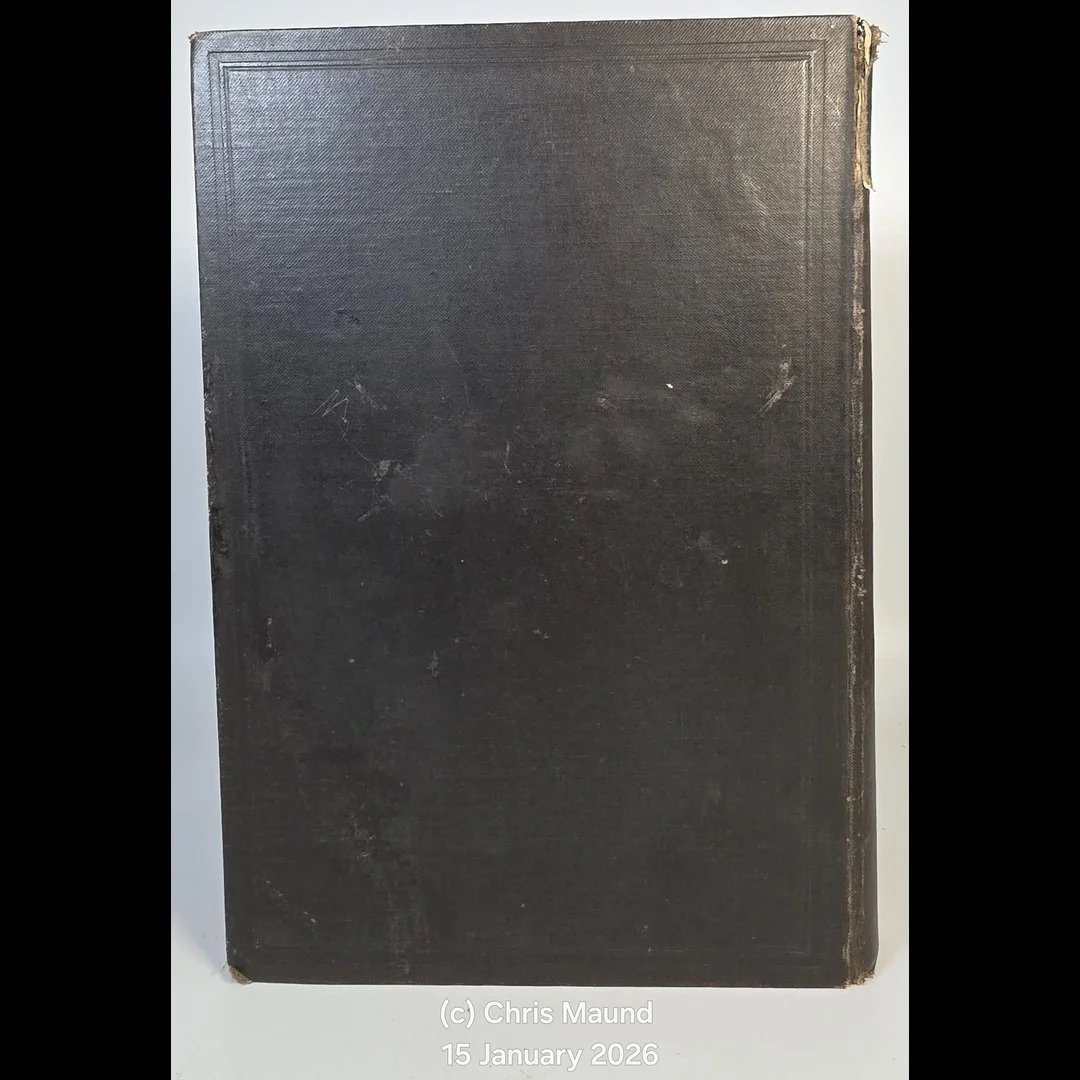
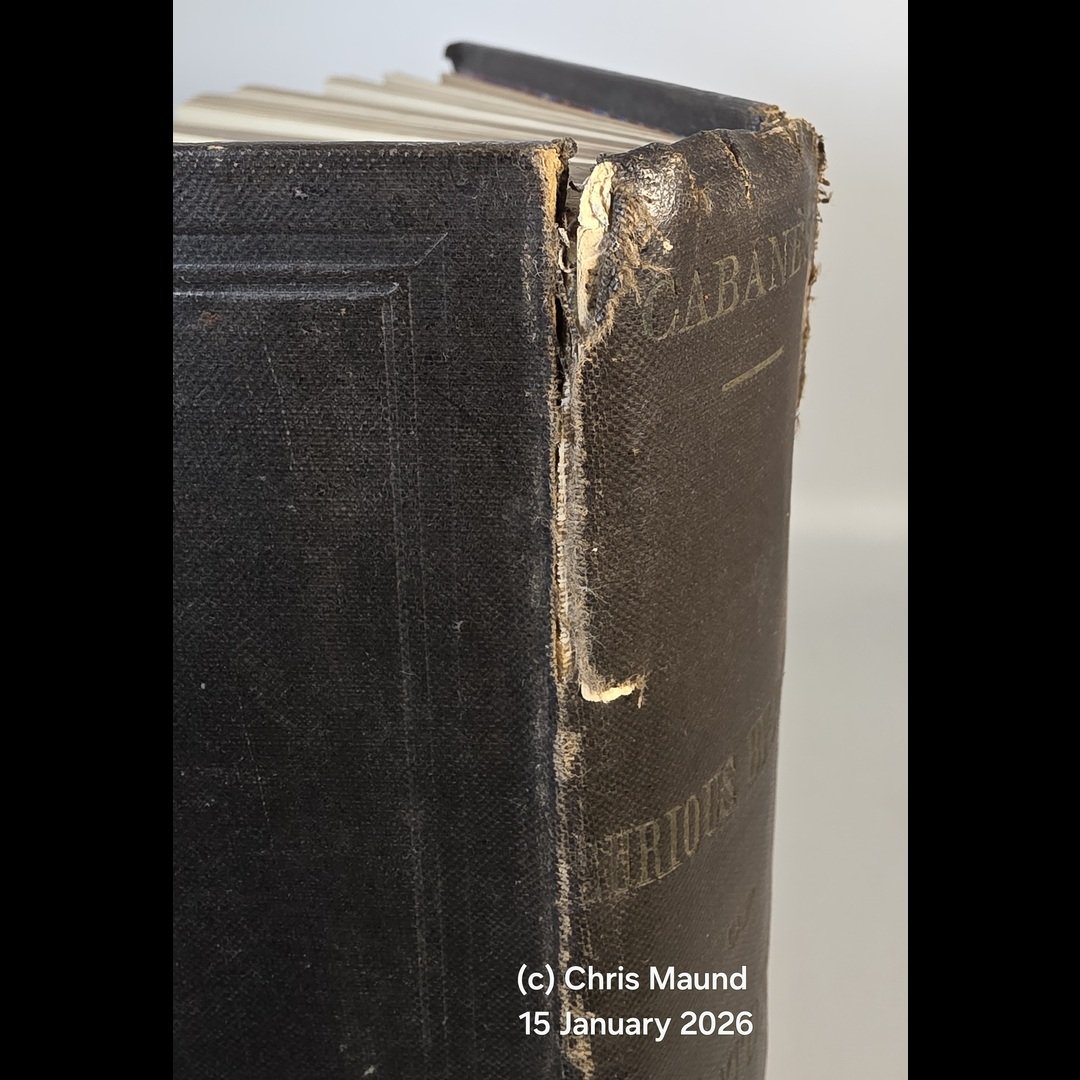
Later quarter leather over red cloth-covered boards, apparently subsequently rebacked or reinforced at the joints and retaining the earlier gilt-lettered leather spine. Not in the publisher’s original black cloth binding. Leather heavily rubbed, abraded and dry, with areas of surface loss and wear and chipping at the head and tail of the spine. Cloth boards with rubbing and general signs of handling and age.
The text block remains attached but is structurally weakened in places. Several gatherings open deeply into the binding with sewing exposed, particularly around pp. 174–175 and pp. 224–225. These openings should be handled with care, although no loose gatherings have been identified from examination of the volume.
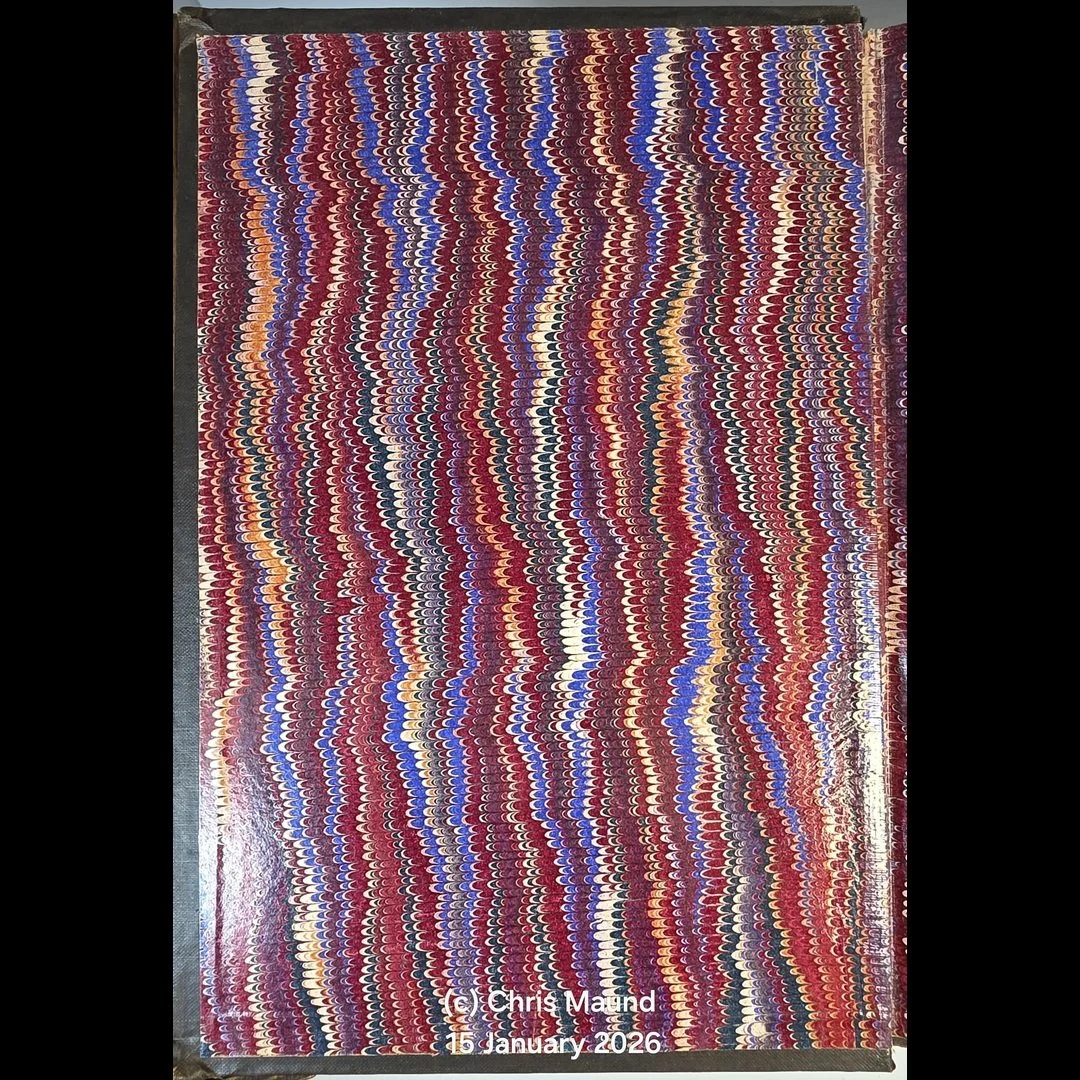
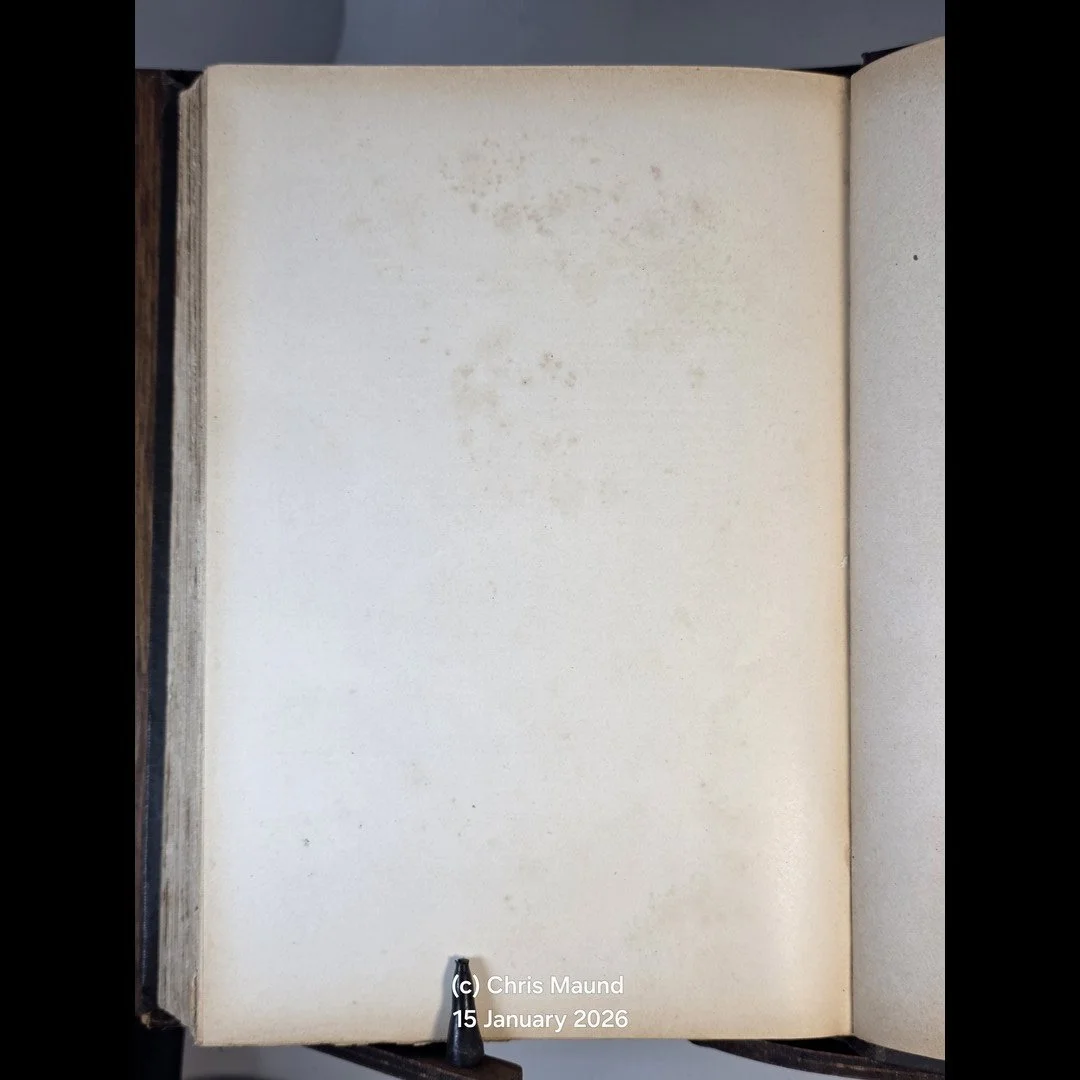
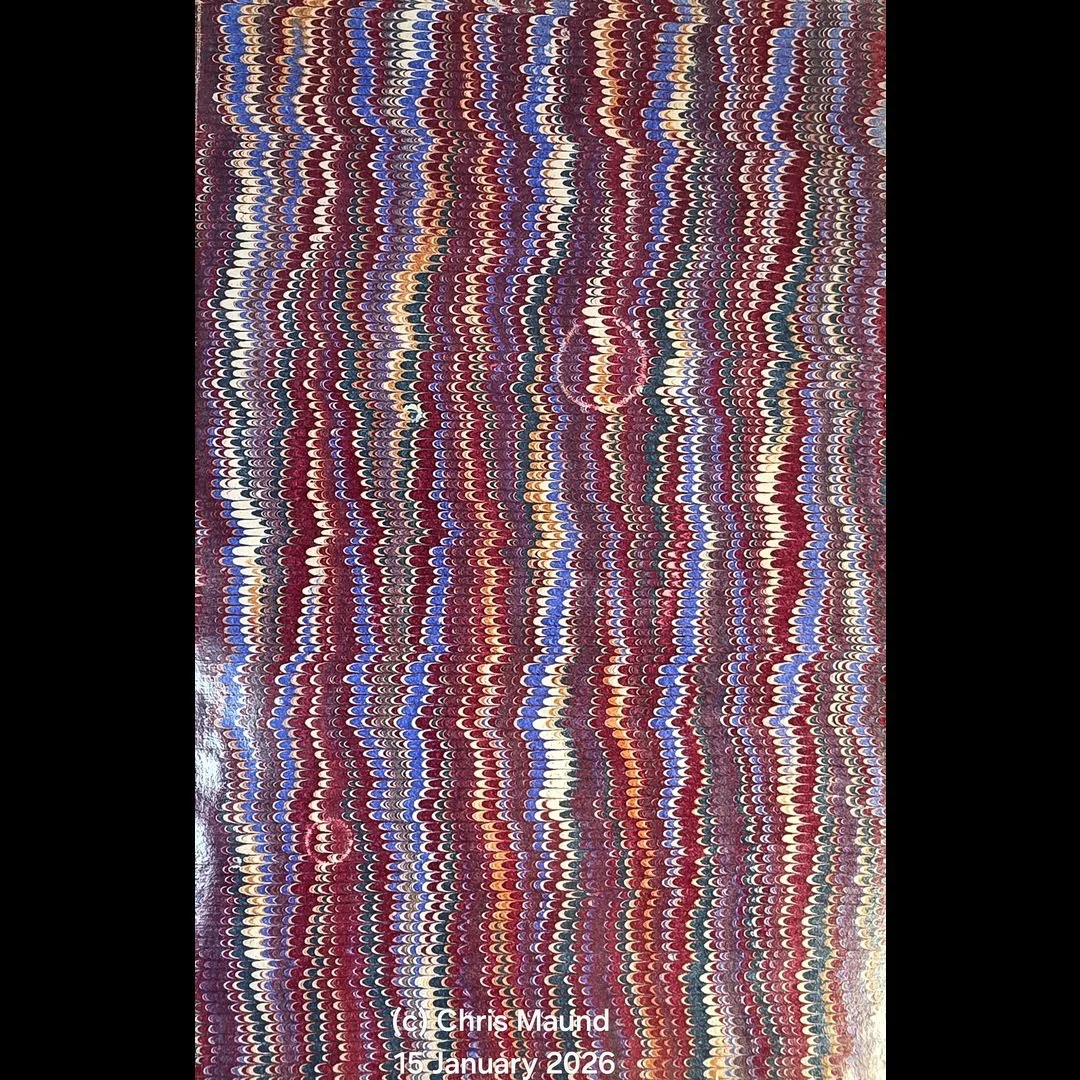
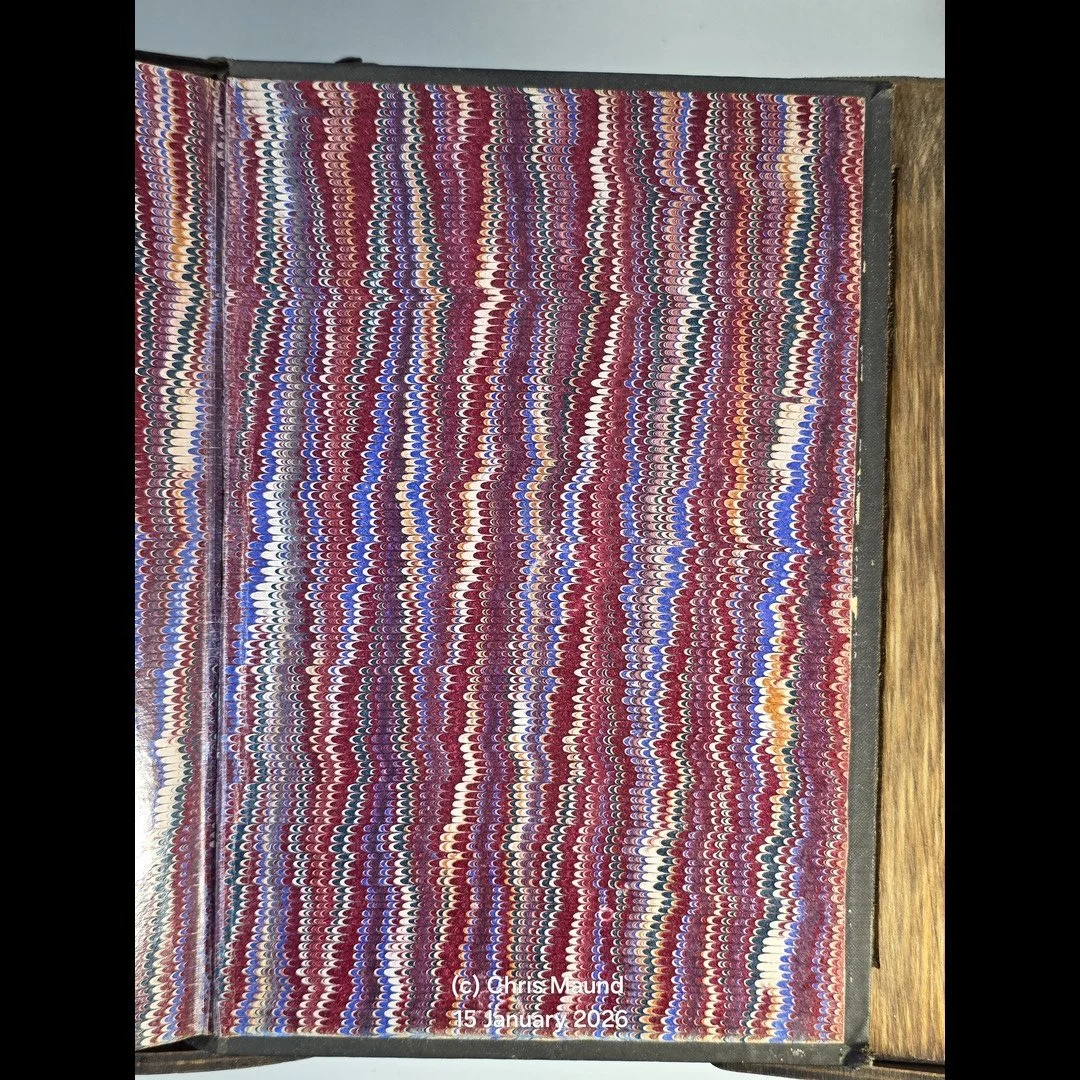
Half-title and title page present. Early ownership inscription “May U. Green” to the half-title. Endpapers browned, stained and marked. Internally the printed text remains generally clean, bright and readily legible, with occasional age-toning, spotting and handling marks.
A single pencil marginalium appears at p.16; no other annotations have been found in the volume. Beside Waite’s discussion of J.-K. Huysmans and the supposedly Satanic Canon Docre of Là-bas, an earlier reader cross-references Abbé Guibourg and Madame de Montespan in Frantz Funck-Brentano’s Princes and Poisoners. Since the English edition of Princes and Poisoners appeared in 1901, the annotation can be dated to after that publication.
An old bookseller’s catalogue slip is retained at the rear, describing the volume as the 1896 first edition and pricing it at £27.50. A manuscript notation beside the slip appears to include a date of January 1977.
Publisher’s preliminary advertisement for Waite’s translation of Éliphas Lévi’s The Doctrine and Ritual of Transcendent Magic present.
Please see Photos as part of condition report.
REFERENCES
Gilbert, R. A., A. E. Waite: A Bibliography, A13
First Edition: London, George Redway, 1896
Digitised first-edition copy, University of Michigan
PBA Galleries, Sale 692, Lot 322 — Devil-Worship in France, First Edition, 1896
SYNOPSIS
Devil-Worship in France arose from a remarkable late nineteenth-century controversy surrounding claims that organised Luciferianism had penetrated international Freemasonry.
Waite begins by considering what was then being called “Modern Satanism” and distinguishes between genuine questions concerning occult belief and the much more sensational allegations circulating in Catholic and anti-Masonic literature. He then turns to the proposition that ordinary Freemasonry concealed a higher and secret organisation devoted to Lucifer, variously described as Palladism or the Reformed Palladium.
Central to the investigation is Léo Taxil — the pseudonym of Gabriel Jogand-Pagès — whose writings claimed that senior Freemasons participated in Luciferian rites and that a worldwide occult hierarchy existed behind the visible structures of Masonry. Closely associated with these allegations were the supposed revelations of “Dr Bataille”, the mysterious Diana Vaughan, Domenico Margiotta and a cast of alleged initiates, occult adepts and Masonic conspirators.
Waite methodically tests these claims against one another. He examines supposed secret rituals, Masonic organisations and grades, accounts of supernatural manifestations, allegations concerning Albert Pike, stories of female Freemasonry, descriptions of Luciferian temples and the extraordinary narratives attributed to Dr Bataille.
His approach is frequently sceptical and forensic. Instead of treating spectacular accounts of demons, supernatural apparitions and impossible occult phenomena as evidence, Waite repeatedly draws attention to contradictions, improbable testimony, defective sourcing and the literary character of many of the alleged revelations.
Among the figures and traditions discussed are Léo Taxil, Diana Vaughan, Albert Pike, Éliphas Lévi, J.-K. Huysmans, Palladian Freemasonry, Rosicrucianism, ceremonial magic and nineteenth-century anti-Masonic polemic.
The historical importance of the book lies partly in its date. Published in 1896, Waite’s investigation appeared before Taxil’s public confession in Paris in 1897, when the latter finally admitted that the elaborate Luciferian conspiracy he had helped construct had been fraudulent.
Devil-Worship in France is consequently much more than a Victorian book about Satanism. It is an early critical study of manufactured occult evidence, conspiracy theory and religious sensationalism, written by one of the major figures of the modern Western esoteric revival while the controversy itself was still unfolding.
AUTHOR BIO
Arthur Edward Waite (1857–1942) was a British writer, poet, mystic and historian of Western esotericism whose work encompassed ceremonial magic, alchemy, Rosicrucianism, Freemasonry, Christian mysticism and the history of occult traditions.
Associated with the Hermetic Order of the Golden Dawn and later the founder of his own mystical organisations, Waite differed from many contemporary occult writers in his attempt to approach esoteric traditions historically and critically as well as spiritually. He translated and edited major works by Éliphas Lévi and other continental occultists and produced studies of alchemy, ritual magic, the Holy Grail, Rosicrucianism and Freemasonry.
Today his name is perhaps most widely recognised through the Tarot deck conceived by Waite and illustrated by Pamela Colman Smith, first published in 1909 and now generally known as the Rider–Waite–Smith Tarot. His substantial body of scholarship, however, extends far beyond Tarot and helped shape the modern study of Western esoteric traditions.
1896 London First Edition
DEVIL-WORSHIP IN FRANCE
By Arthur Edward Waite
KEY DETAILS
Condition: Good
Format: Hardcover, Octavo (Standard) (8vo 6 × 9 in 152 × 229 mm )
Note: Binding/size selection follows standard bibliographic conventions and is approximate; exact measurements may vary.
Published By: George Redway, London, 1896
Language: English
Provenance: Early ownership inscription of May U. Green to the half-title.
Collation: Publisher’s advertisement leaf; xii, 325 pp.
Dust Jacket: None, as issued, No Jacket
SKU: BTETM0002533
Shipping Info: Approximate Package Dimensions H: 12.5, L: 30, W: 25 (Units: cm), W: 2Kg
Tracked Shipping, Insurance Coverage as per Customer Request
DESCRIPTION
Devil-Worship in France
Or, The Question of Lucifer
A Record of Things Seen and Heard in the Secret Societies According to the Evidence of Initiates
By Arthur Edward Waite
An important first edition of Arthur Edward Waite’s investigation into one of the most extraordinary occult controversies of the fin-de-siècle: the alleged existence of an international Luciferian conspiracy concealed within Freemasonry.
Published in London by George Redway in 1896, Devil-Worship in France examines the sensational claims advanced by Léo Taxil, “Dr Bataille”, Diana Vaughan, Domenico Margiotta and others concerning the supposed Palladian Order — an inner, Satanic or Luciferian organisation alleged to operate behind international Freemasonry. Rather than accepting these revelations at face value, Waite subjects their witnesses, rituals, documents and supernatural claims to sustained critical examination, exposing contradictions, implausibilities and unreliable testimony.
The timing of the book is particularly significant. Waite published his critique before Léo Taxil — Gabriel Jogand-Pagès — publicly acknowledged in 1897 that the elaborate anti-Masonic revelations with which he had deceived clergy, journalists and readers across Europe were a hoax. The book therefore occupies an unusual place at the intersection of occultism, Freemasonry, conspiracy literature, anti-Masonry and the history of the celebrated Taxil affair.
This copy is in a later quarter-leather binding over red cloth boards rather than the publisher’s original black cloth. It retains an interesting single post-1901 reader’s marginalium linking Waite’s discussion of J.-K. Huysmans’ Canon Docre with Abbé Guibourg and Madame de Montespan in Frantz Funck-Brentano’s Princes and Poisoners, together with an early ownership inscription of May U. Green and an old bookseller’s catalogue slip pricing the first edition at £27.50.
Historical Context:
The so-called Taxil hoax originated with Gabriel Jogand-Pagès, better known as Léo Taxil, an anti-clerical French writer who publicly announced his conversion to Catholicism and subsequently produced a stream of sensational exposures purporting to reveal Satanism within Freemasonry.
The allegations became increasingly elaborate. International Freemasonry was said to conceal a Luciferian inner order; Albert Pike was represented as one of its great authorities; supernatural manifestations and diabolical rituals were reported; and “Diana Vaughan” emerged as a supposed former Palladian high priestess who had converted to Catholicism.
The stories attracted considerable attention and were accepted by some influential anti-Masonic and Catholic commentators. Yet inconsistencies multiplied.
Waite approached the controversy from the unusual position of a serious student of occultism who nevertheless demanded evidence. His familiarity with ritual magic, French occult literature and Masonic traditions enabled him to distinguish the genuine history of esoteric movements from the extravagant claims being advanced in the Palladian literature.
In April 1897 Taxil publicly admitted that the elaborate affair had been a deception. Waite’s 1896 book therefore stands as an important contemporary critique produced before the final exposure of one of the nineteenth century’s most notorious occult hoaxes.
A significant first edition by one of the defining figures of modern Western esotericism: a critical examination of Luciferianism, Freemasonry and the Taxil conspiracy published while the affair was still unfolding. This copy, although compromised by its later binding and structural wear, retains considerable historical and bibliographical interest, enhanced by its identifiable post-1901 Black-Mass cross-reference and surviving antiquarian bookseller’s slip.
PROVENANCE
Early ownership inscription of May U. Green to the half-title.
A single pencil marginalium at p.16, beside Waite’s discussion of J.-K. Huysmans and Canon Docre in Là-bas, cross-references Abbé Étienne Guibourg and Madame de Montespan in Frantz Funck-Brentano’s Princes and Poisoners. The reference is particularly appropriate: Guibourg was the priest notoriously associated with the alleged Black Masses surrounding Montespan during the seventeenth-century Affair of the Poisons.
The annotation provides an interesting example of an earlier reader relating Waite’s fin-de-siècle discussion of alleged Satanism to historical literature concerning the Black Mass. As the English edition of Princes and Poisoners appeared in 1901, the note necessarily post-dates that publication. No other reader annotations have been found in the volume.
An old bookseller’s catalogue slip retained at the rear describes: “WAITE, Arthur E. – Devil-worship in France/or/The question of Lucifer/... London, George Redway, 1896. 1st ed. good secondhand copy” and records a price of £27.50. Adjacent manuscript notes appear to include “Jan ’77”, suggesting that the copy was in the antiquarian book trade by January 1977, although the bookseller responsible has not presently been identified.
CONDITION, COLLATION & COPY NOTES
A complete and internally generally well-preserved copy in a later binding, with significant external and structural wear.
Later quarter leather over red cloth-covered boards, apparently subsequently rebacked or reinforced at the joints and retaining the earlier gilt-lettered leather spine. Not in the publisher’s original black cloth binding. Leather heavily rubbed, abraded and dry, with areas of surface loss and wear and chipping at the head and tail of the spine. Cloth boards with rubbing and general signs of handling and age.
The text block remains attached but is structurally weakened in places. Several gatherings open deeply into the binding with sewing exposed, particularly around pp. 174–175 and pp. 224–225. These openings should be handled with care, although no loose gatherings have been identified from examination of the volume.
Half-title and title page present. Early ownership inscription “May U. Green” to the half-title. Endpapers browned, stained and marked. Internally the printed text remains generally clean, bright and readily legible, with occasional age-toning, spotting and handling marks.
A single pencil marginalium appears at p.16; no other annotations have been found in the volume. Beside Waite’s discussion of J.-K. Huysmans and the supposedly Satanic Canon Docre of Là-bas, an earlier reader cross-references Abbé Guibourg and Madame de Montespan in Frantz Funck-Brentano’s Princes and Poisoners. Since the English edition of Princes and Poisoners appeared in 1901, the annotation can be dated to after that publication.
An old bookseller’s catalogue slip is retained at the rear, describing the volume as the 1896 first edition and pricing it at £27.50. A manuscript notation beside the slip appears to include a date of January 1977.
Publisher’s preliminary advertisement for Waite’s translation of Éliphas Lévi’s The Doctrine and Ritual of Transcendent Magic present.
Please see Photos as part of condition report.
REFERENCES
Gilbert, R. A., A. E. Waite: A Bibliography, A13
First Edition: London, George Redway, 1896
Digitised first-edition copy, University of Michigan
PBA Galleries, Sale 692, Lot 322 — Devil-Worship in France, First Edition, 1896
SYNOPSIS
Devil-Worship in France arose from a remarkable late nineteenth-century controversy surrounding claims that organised Luciferianism had penetrated international Freemasonry.
Waite begins by considering what was then being called “Modern Satanism” and distinguishes between genuine questions concerning occult belief and the much more sensational allegations circulating in Catholic and anti-Masonic literature. He then turns to the proposition that ordinary Freemasonry concealed a higher and secret organisation devoted to Lucifer, variously described as Palladism or the Reformed Palladium.
Central to the investigation is Léo Taxil — the pseudonym of Gabriel Jogand-Pagès — whose writings claimed that senior Freemasons participated in Luciferian rites and that a worldwide occult hierarchy existed behind the visible structures of Masonry. Closely associated with these allegations were the supposed revelations of “Dr Bataille”, the mysterious Diana Vaughan, Domenico Margiotta and a cast of alleged initiates, occult adepts and Masonic conspirators.
Waite methodically tests these claims against one another. He examines supposed secret rituals, Masonic organisations and grades, accounts of supernatural manifestations, allegations concerning Albert Pike, stories of female Freemasonry, descriptions of Luciferian temples and the extraordinary narratives attributed to Dr Bataille.
His approach is frequently sceptical and forensic. Instead of treating spectacular accounts of demons, supernatural apparitions and impossible occult phenomena as evidence, Waite repeatedly draws attention to contradictions, improbable testimony, defective sourcing and the literary character of many of the alleged revelations.
Among the figures and traditions discussed are Léo Taxil, Diana Vaughan, Albert Pike, Éliphas Lévi, J.-K. Huysmans, Palladian Freemasonry, Rosicrucianism, ceremonial magic and nineteenth-century anti-Masonic polemic.
The historical importance of the book lies partly in its date. Published in 1896, Waite’s investigation appeared before Taxil’s public confession in Paris in 1897, when the latter finally admitted that the elaborate Luciferian conspiracy he had helped construct had been fraudulent.
Devil-Worship in France is consequently much more than a Victorian book about Satanism. It is an early critical study of manufactured occult evidence, conspiracy theory and religious sensationalism, written by one of the major figures of the modern Western esoteric revival while the controversy itself was still unfolding.
AUTHOR BIO
Arthur Edward Waite (1857–1942) was a British writer, poet, mystic and historian of Western esotericism whose work encompassed ceremonial magic, alchemy, Rosicrucianism, Freemasonry, Christian mysticism and the history of occult traditions.
Associated with the Hermetic Order of the Golden Dawn and later the founder of his own mystical organisations, Waite differed from many contemporary occult writers in his attempt to approach esoteric traditions historically and critically as well as spiritually. He translated and edited major works by Éliphas Lévi and other continental occultists and produced studies of alchemy, ritual magic, the Holy Grail, Rosicrucianism and Freemasonry.
Today his name is perhaps most widely recognised through the Tarot deck conceived by Waite and illustrated by Pamela Colman Smith, first published in 1909 and now generally known as the Rider–Waite–Smith Tarot. His substantial body of scholarship, however, extends far beyond Tarot and helped shape the modern study of Western esoteric traditions.

 Image 1 of 22
 Image 2 of 22
 Image 3 of 22
 Image 4 of 22
 Image 5 of 22
 Image 6 of 22
 Image 7 of 22
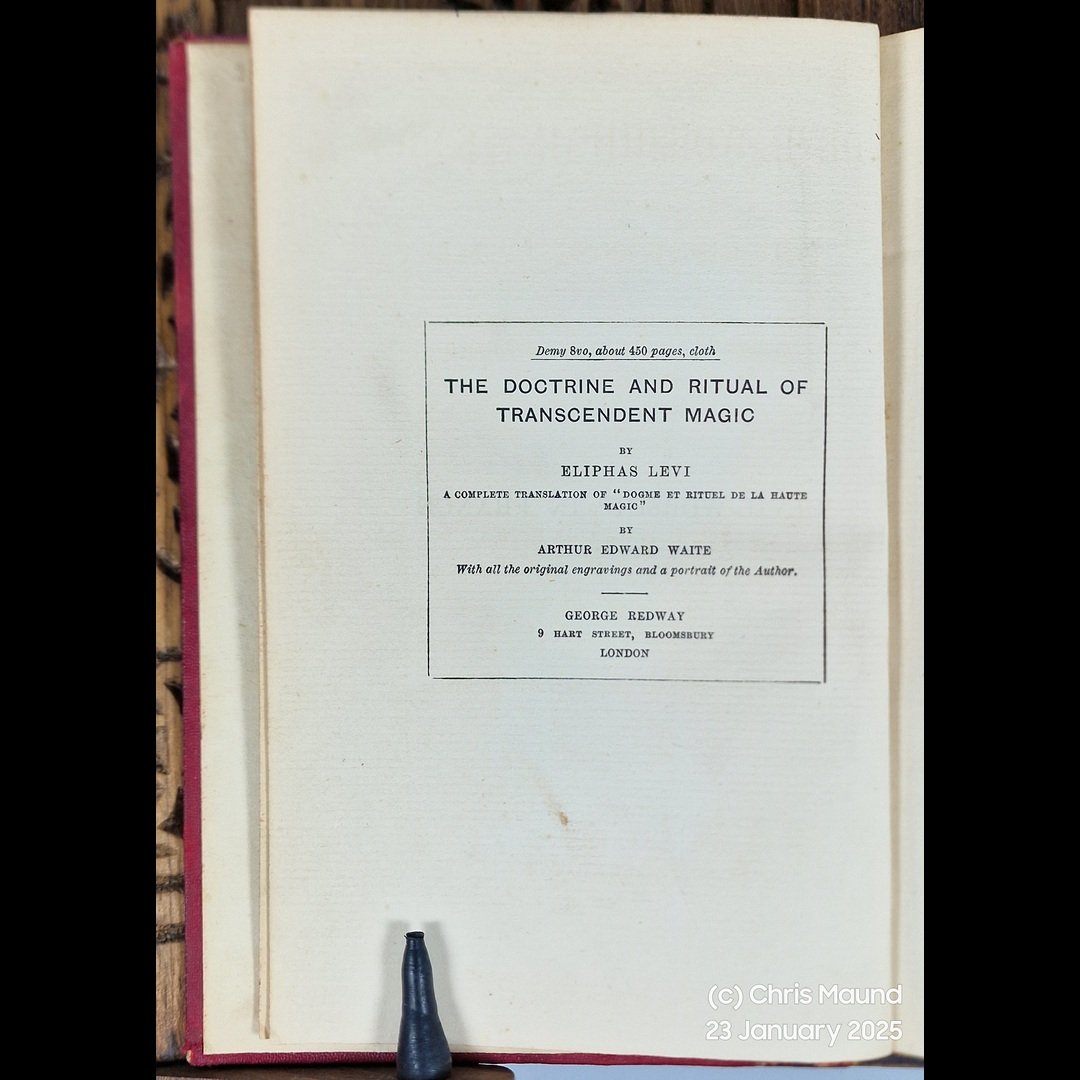 Image 8 of 22
 Image 9 of 22
 Image 10 of 22
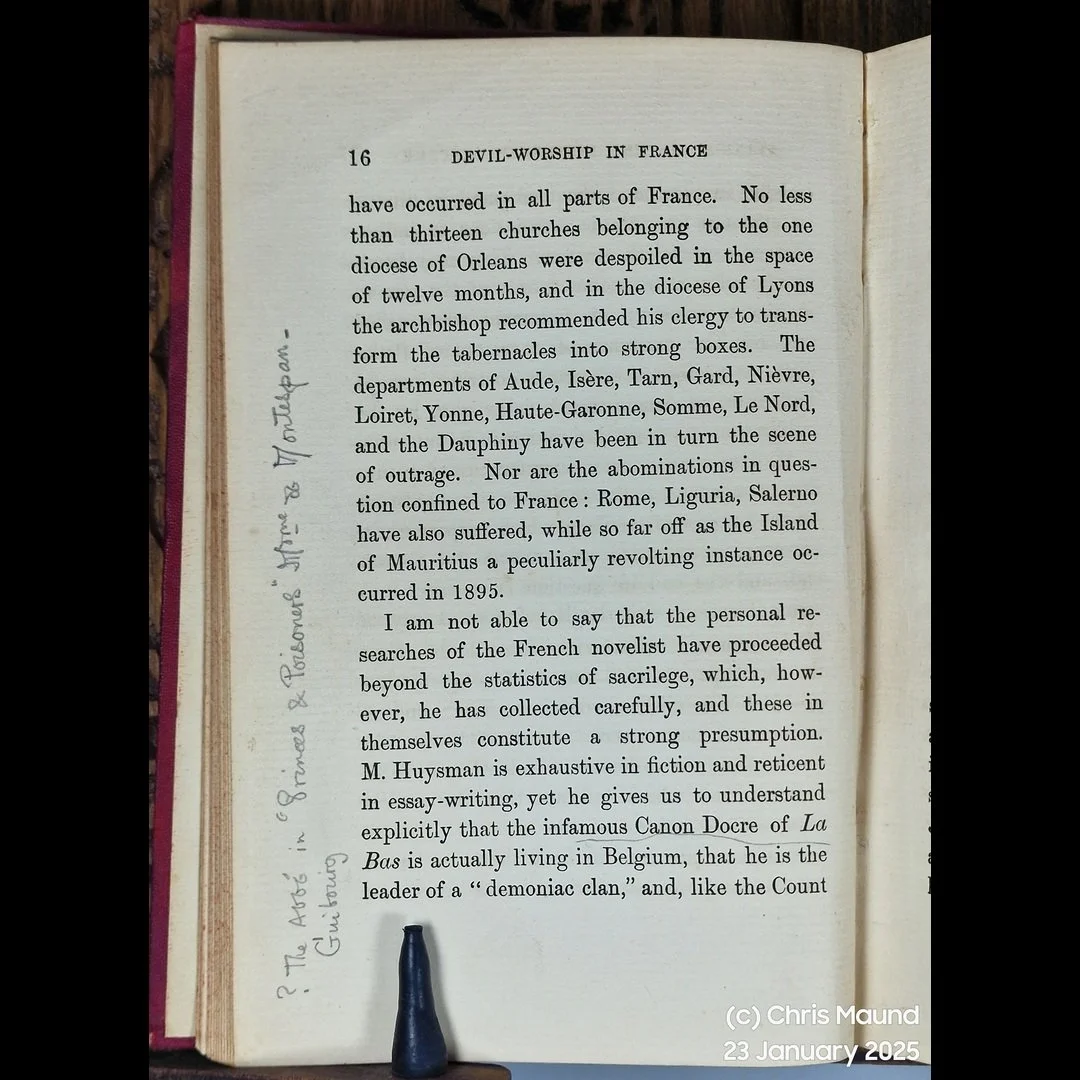 Image 11 of 22
 Image 12 of 22
 Image 13 of 22
 Image 14 of 22
 Image 15 of 22
 Image 16 of 22
 Image 17 of 22
 Image 18 of 22
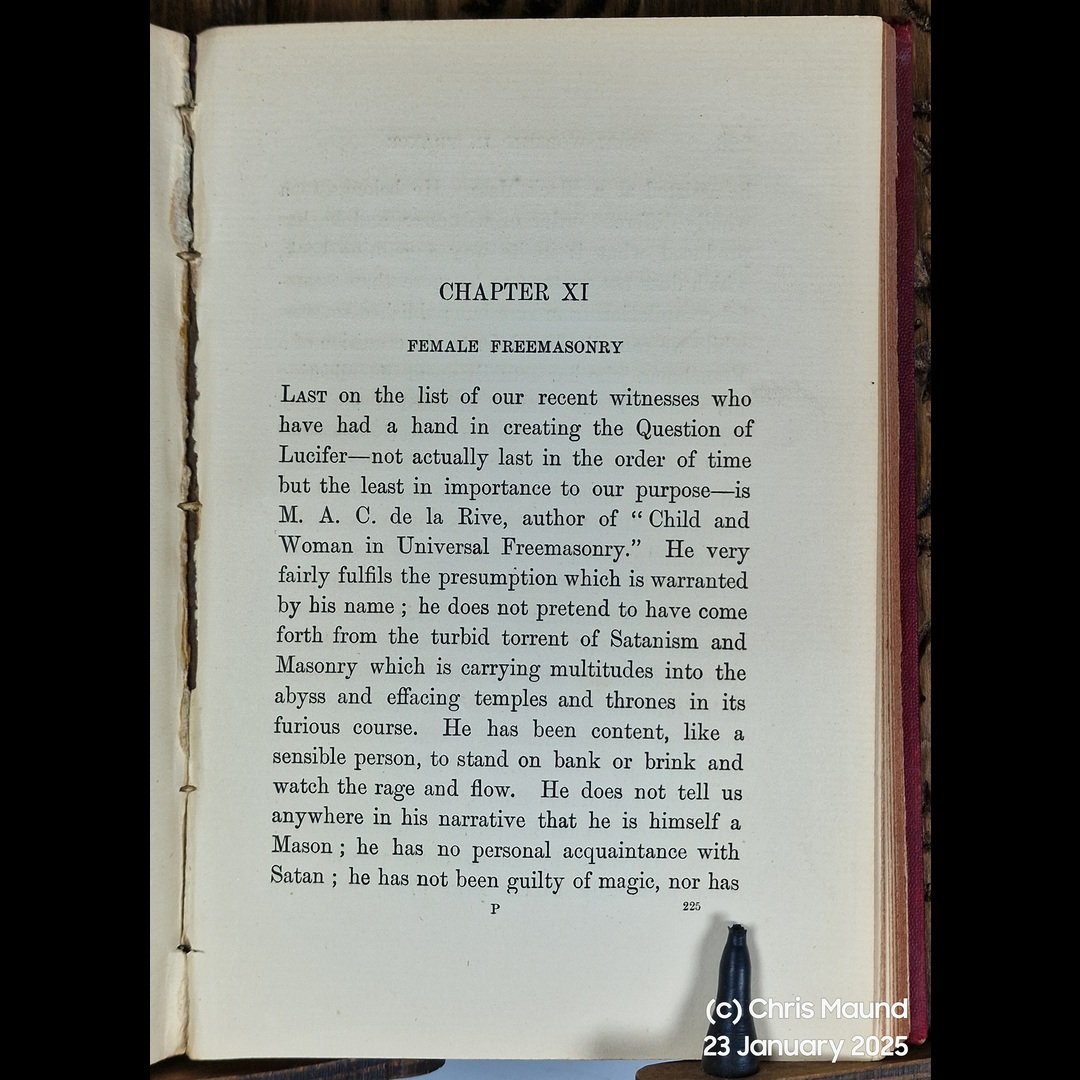 Image 19 of 22
 Image 20 of 22
 Image 21 of 22
 Image 22 of 22