1579 Second Edition Manuscript-Emended Cujas Text
DIVINARUM INSTITUTIONUM LIBRI SEPTEM PROXIME CASTIGATI, ET AUCTI
By Lucius Caecilius Firmianus Lactantius
KEY DETAILS
Condition: Very Good
Format: Hardcover, 16mo: approx 117mm x 70mm
Published By: Apud Ioannem Tornaesium, Typog. Regium, Lyon, 1579
Language: Latin
Collation: 16mo. a–z⁸ A–Z⁸ 2a–2f⁸; 785, [45] pp., with terminal blank leaf.
Dust Jacket: None, as issued, No Jacket
SKU: BTETM0002550
Shipping Info: Approximate Package Dimensions H: 12.5, L: 30, W: 25 (Units: cm), W: 2Kg
Tracked Shipping, Insurance Coverage as per Customer Request
DESCRIPTION
Divinarum institutionum libri septem proxime castigati, et aucti
Lucius Caecilius Firmianus Lactantius. L. Coelii Lactantii Firmiani Divinarum Institutionum lib. VII. De Ira Dei lib. I. De Opificio Dei lib. I. Epitome in libros suos, liber acephalos. Carmen de Phoenice. Resurrectione dominica. Passione Domini. Omnia ex fide & autoritate librorum manuscriptorum emendata. Lugduni [Lyon]: Apud Ioannem Tornaesium [Jean de Tournes II], Typographum Regium, 1579.
A handsome and textually significant 1579 Lyon 16mo edition, measuring approximately 117 × 70 mm, of the principal works of Lactantius, printed by Jean de Tournes II, Royal Printer, and incorporating manuscript readings supplied by the celebrated French humanist jurist and textual scholar Jacques Cujas (Jacobus Cujacius, 1522–1590).
The volume contains Lactantius’s seven books of the Divinae Institutiones, followed by De Ira Dei, De Opificio Dei, the Epitome of the Institutes, and poems traditionally transmitted with Lactantius including De Phoenice, De Resurrectione Dominica and De Passione Domini. It concludes with supplementary material including the Interpretatio dictionum Graecarum and a substantial alphabetical index.
The title page is enclosed within an attractive ornamental woodcut border, with woodcut initials throughout.
Particularly important is the edition statement: “Omnia ex fide & autoritate librorum manuscriptorum emendata” — “All corrected on the faith and authority of manuscript books.”
This was no routine advertising formula. The Bibliothèque nationale de France catalogues the 1579 edition specifically as emended by Jacques Cujas, while the early critical apparatus later incorporated into Migne’s Patrologia Latina records that Cujas sent Jean de Tournes variant readings taken from two manuscript codices, which de Tournes used for this edition.
The edition therefore belongs to the Renaissance humanist tradition of returning behind accumulated printed texts to manuscript witnesses in an attempt to establish a more accurate reading of an ancient author. Cujas is best remembered as one of the outstanding Roman-law scholars of the sixteenth century, but his textual scholarship extended beyond legal literature; his involvement gives this small de Tournes Lactantius considerably more bibliographical interest than an ordinary late-sixteenth-century patristic printing.
The Russian State Library records the exact 1579 edition as 785, [45] pages, 16mo, approximately 13 cm, and identifies the printer as Jean de Tournes II. The Piarist Central Library independently records the same edition as a 16mo and cites Girard–Le Bouteiller 595.
CONDITION, COLLATION & COPY NOTES
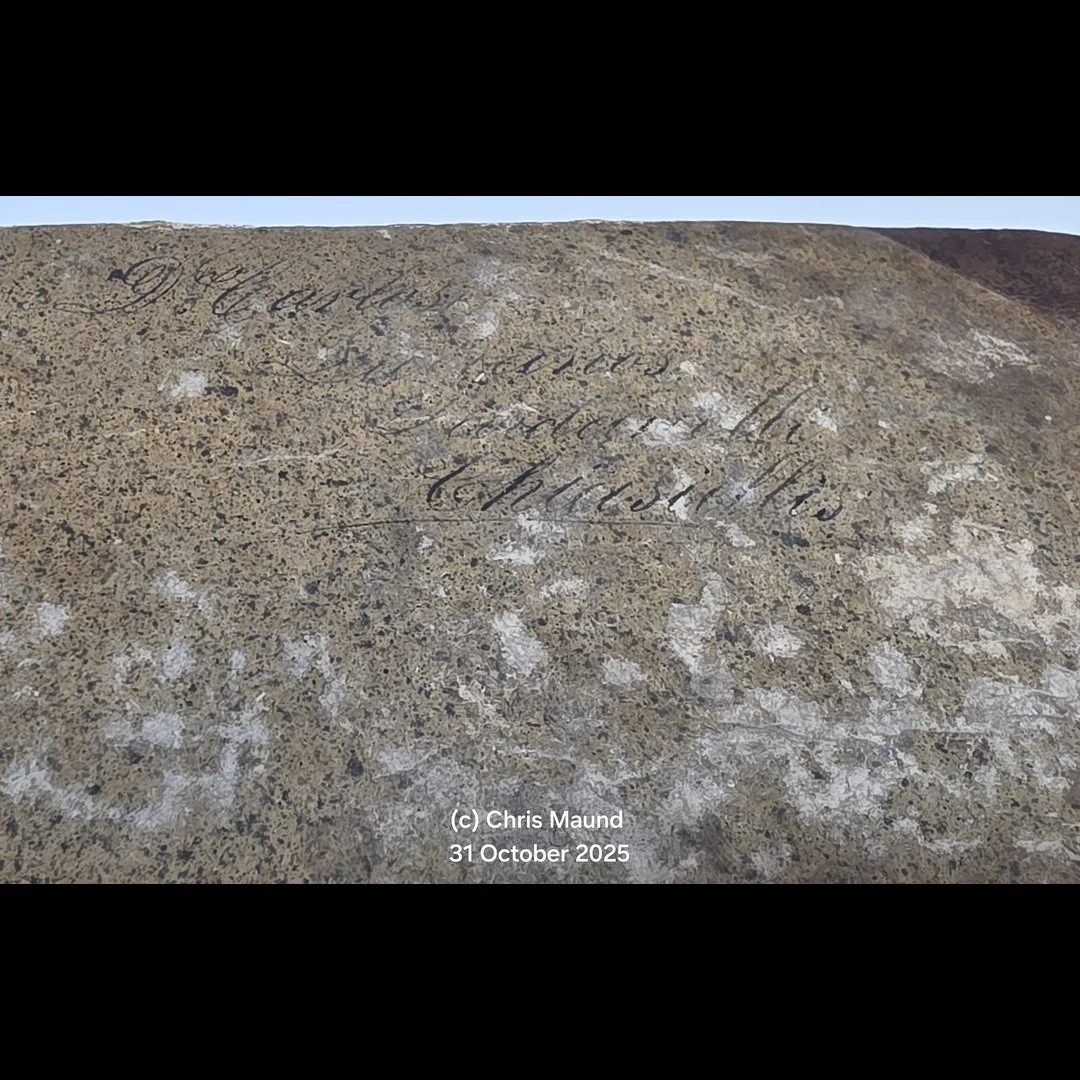
Bound in later full mottled calf, probably late seventeenth or early eighteenth century, the spine divided by raised bands into gilt-decorated compartments with floral tools and a red morocco lettering piece. Red-stained page edges and attractive multicoloured marbled endpapers.
Binding rubbed and scuffed, with wear to the extremities and joints, some crazing and surface wear to the spine leather, rubbing and partial loss to the gilt decoration, and worn corners. The binding nevertheless remains firm and attractive and retains considerable period character.
Internally the copy is notably clean, crisp and well preserved for a sixteenth-century theological text, with occasional light toning, spotting, handling marks and minor soiling. Some old ink/soiling to a rear binder’s blank. No significant damp staining or worming observed in our examination.
The title page and text remain attractive, with generous margins for the small format.
Please see Photos as part of condition report.
REFERENCES
BnF, Catalogue général: Divinarum institutionum libri VII…, Lyon, Jean de Tournes, 1579; catalogued as “Omnia emendata [per Jacobum Cujacium]”.
Russian State Library: record 01006600127; 785, [45] pp.; 16mo; Lyon, Jean de Tournes II, 1579.
Girard & Le Bouteiller: Catalogue collectif des livres imprimés à Lyon de 1478 à 1600, no. 595, as independently cited for this edition by the Piarist Central Library.
Migne, Patrologia Latina, vol. VI: bibliographical apparatus recording that Jacques Cujas supplied Jean de Tournes with variants from two manuscript codices which were used in the edition of 1579.
Bibale / Bibliothèque municipale de Lyon: Lactance, Institutions divines, Lyon, Jean de Tournes, 1579; Bibliothèque municipale de Lyon copy Rés 811239.
For the possible provenance: Nicolas de Blégny, Le Livre commode des adresses de Paris pour 1692, recording “Verrier père et fils” under the officers Aux Consuls, Cloître Saint-Médéric.
SYNOPSIS
The Divinae Institutiones — the Divine Institutes — is Lactantius’s largest and most important surviving work and one of the earliest sustained attempts to present Christianity systematically to an educated audience formed by classical Roman literature and philosophy.
Across seven books Lactantius first dismantles what he regards as the errors of traditional pagan religion and philosophy before constructing a positive exposition of Christian belief. He treats the nature of true religion and wisdom, divine providence, justice, worship and morality, and finally the destiny of humanity and the world.
What distinguishes Lactantius among the early Latin Christian writers is the consciously classical character of his prose. Rather than abandoning the intellectual language of Rome, he appropriates it. Cicero in particular provided an important rhetorical and stylistic model, and Lactantius’s polished Latin later earned him the celebrated description “the Christian Cicero.”
The accompanying De Ira Dei addresses the philosophical question of divine anger, arguing that providential government requires justice and therefore the possibility of divine judgement.
De Opificio Dei — On the Workmanship of God — considers the construction of the human body and the nature of humankind as evidence of divine design and providence.
The Epitome supplies a condensed presentation of arguments developed in the Institutes.
Also included are poems transmitted under Lactantius’s name, most notably De Phoenice, the influential poem on the phoenix. Modern scholarship does not accept all of the poems historically attributed to Lactantius as authentic, so they are best described as works traditionally transmitted with Lactantius rather than simply as his compositions.
The volume concludes with aids intended for the scholarly reader, including an interpretation of Greek expressions occurring in the text and an extensive alphabetical index.
AUTHOR BIO
Lucius Caecilius Firmianus Lactantius (c. third–early fourth century AD) was a Latin rhetorician, Christian apologist and one of the most accomplished prose stylists of the early Church.
Probably born in Roman North Africa, Lactantius established a reputation as a teacher of rhetoric and was summoned during the reign of Diocletian to teach at Nicomedia, one of the principal imperial residences. His conversion to Christianity and the persecutions of Christians under the Tetrarchy profoundly shaped his writings.
Following Constantine’s rise to power, Lactantius became associated with the new Christian imperial order and was traditionally said to have served as tutor to Constantine’s son Crispus.
His particular significance lies in the fusion of classical literary culture with early Christian apologetics. Lactantius addressed educated Roman readers in the rhetorical and philosophical idiom familiar to them, engaging extensively with classical authors while arguing for Christianity as the true fulfilment of wisdom and religion.
The history of the present edition demonstrates his continuing importance to Renaissance humanists. More than twelve centuries after Lactantius wrote, Jacques Cujas and Jean de Tournes were still returning to manuscript witnesses in order to recover a more accurate text, making the 1579 edition an interesting artefact both of early Christianity and of sixteenth-century textual scholarship.
1579 Second Edition Manuscript-Emended Cujas Text
DIVINARUM INSTITUTIONUM LIBRI SEPTEM PROXIME CASTIGATI, ET AUCTI
By Lucius Caecilius Firmianus Lactantius
KEY DETAILS
Condition: Very Good
Format: Hardcover, 16mo: approx 117mm x 70mm
Published By: Apud Ioannem Tornaesium, Typog. Regium, Lyon, 1579
Language: Latin
Collation: 16mo. a–z⁸ A–Z⁸ 2a–2f⁸; 785, [45] pp., with terminal blank leaf.
Dust Jacket: None, as issued, No Jacket
SKU: BTETM0002550
Shipping Info: Approximate Package Dimensions H: 12.5, L: 30, W: 25 (Units: cm), W: 2Kg
Tracked Shipping, Insurance Coverage as per Customer Request
DESCRIPTION
Divinarum institutionum libri septem proxime castigati, et aucti
Lucius Caecilius Firmianus Lactantius. L. Coelii Lactantii Firmiani Divinarum Institutionum lib. VII. De Ira Dei lib. I. De Opificio Dei lib. I. Epitome in libros suos, liber acephalos. Carmen de Phoenice. Resurrectione dominica. Passione Domini. Omnia ex fide & autoritate librorum manuscriptorum emendata. Lugduni [Lyon]: Apud Ioannem Tornaesium [Jean de Tournes II], Typographum Regium, 1579.
A handsome and textually significant 1579 Lyon 16mo edition, measuring approximately 117 × 70 mm, of the principal works of Lactantius, printed by Jean de Tournes II, Royal Printer, and incorporating manuscript readings supplied by the celebrated French humanist jurist and textual scholar Jacques Cujas (Jacobus Cujacius, 1522–1590).
The volume contains Lactantius’s seven books of the Divinae Institutiones, followed by De Ira Dei, De Opificio Dei, the Epitome of the Institutes, and poems traditionally transmitted with Lactantius including De Phoenice, De Resurrectione Dominica and De Passione Domini. It concludes with supplementary material including the Interpretatio dictionum Graecarum and a substantial alphabetical index.
The title page is enclosed within an attractive ornamental woodcut border, with woodcut initials throughout.
Particularly important is the edition statement: “Omnia ex fide & autoritate librorum manuscriptorum emendata” — “All corrected on the faith and authority of manuscript books.”
This was no routine advertising formula. The Bibliothèque nationale de France catalogues the 1579 edition specifically as emended by Jacques Cujas, while the early critical apparatus later incorporated into Migne’s Patrologia Latina records that Cujas sent Jean de Tournes variant readings taken from two manuscript codices, which de Tournes used for this edition.
The edition therefore belongs to the Renaissance humanist tradition of returning behind accumulated printed texts to manuscript witnesses in an attempt to establish a more accurate reading of an ancient author. Cujas is best remembered as one of the outstanding Roman-law scholars of the sixteenth century, but his textual scholarship extended beyond legal literature; his involvement gives this small de Tournes Lactantius considerably more bibliographical interest than an ordinary late-sixteenth-century patristic printing.
The Russian State Library records the exact 1579 edition as 785, [45] pages, 16mo, approximately 13 cm, and identifies the printer as Jean de Tournes II. The Piarist Central Library independently records the same edition as a 16mo and cites Girard–Le Bouteiller 595.
CONDITION, COLLATION & COPY NOTES
Bound in later full mottled calf, probably late seventeenth or early eighteenth century, the spine divided by raised bands into gilt-decorated compartments with floral tools and a red morocco lettering piece. Red-stained page edges and attractive multicoloured marbled endpapers.
Binding rubbed and scuffed, with wear to the extremities and joints, some crazing and surface wear to the spine leather, rubbing and partial loss to the gilt decoration, and worn corners. The binding nevertheless remains firm and attractive and retains considerable period character.
Internally the copy is notably clean, crisp and well preserved for a sixteenth-century theological text, with occasional light toning, spotting, handling marks and minor soiling. Some old ink/soiling to a rear binder’s blank. No significant damp staining or worming observed in our examination.
The title page and text remain attractive, with generous margins for the small format.
Please see Photos as part of condition report.
REFERENCES
BnF, Catalogue général: Divinarum institutionum libri VII…, Lyon, Jean de Tournes, 1579; catalogued as “Omnia emendata [per Jacobum Cujacium]”.
Russian State Library: record 01006600127; 785, [45] pp.; 16mo; Lyon, Jean de Tournes II, 1579.
Girard & Le Bouteiller: Catalogue collectif des livres imprimés à Lyon de 1478 à 1600, no. 595, as independently cited for this edition by the Piarist Central Library.
Migne, Patrologia Latina, vol. VI: bibliographical apparatus recording that Jacques Cujas supplied Jean de Tournes with variants from two manuscript codices which were used in the edition of 1579.
Bibale / Bibliothèque municipale de Lyon: Lactance, Institutions divines, Lyon, Jean de Tournes, 1579; Bibliothèque municipale de Lyon copy Rés 811239.
For the possible provenance: Nicolas de Blégny, Le Livre commode des adresses de Paris pour 1692, recording “Verrier père et fils” under the officers Aux Consuls, Cloître Saint-Médéric.
SYNOPSIS
The Divinae Institutiones — the Divine Institutes — is Lactantius’s largest and most important surviving work and one of the earliest sustained attempts to present Christianity systematically to an educated audience formed by classical Roman literature and philosophy.
Across seven books Lactantius first dismantles what he regards as the errors of traditional pagan religion and philosophy before constructing a positive exposition of Christian belief. He treats the nature of true religion and wisdom, divine providence, justice, worship and morality, and finally the destiny of humanity and the world.
What distinguishes Lactantius among the early Latin Christian writers is the consciously classical character of his prose. Rather than abandoning the intellectual language of Rome, he appropriates it. Cicero in particular provided an important rhetorical and stylistic model, and Lactantius’s polished Latin later earned him the celebrated description “the Christian Cicero.”
The accompanying De Ira Dei addresses the philosophical question of divine anger, arguing that providential government requires justice and therefore the possibility of divine judgement.
De Opificio Dei — On the Workmanship of God — considers the construction of the human body and the nature of humankind as evidence of divine design and providence.
The Epitome supplies a condensed presentation of arguments developed in the Institutes.
Also included are poems transmitted under Lactantius’s name, most notably De Phoenice, the influential poem on the phoenix. Modern scholarship does not accept all of the poems historically attributed to Lactantius as authentic, so they are best described as works traditionally transmitted with Lactantius rather than simply as his compositions.
The volume concludes with aids intended for the scholarly reader, including an interpretation of Greek expressions occurring in the text and an extensive alphabetical index.
AUTHOR BIO
Lucius Caecilius Firmianus Lactantius (c. third–early fourth century AD) was a Latin rhetorician, Christian apologist and one of the most accomplished prose stylists of the early Church.
Probably born in Roman North Africa, Lactantius established a reputation as a teacher of rhetoric and was summoned during the reign of Diocletian to teach at Nicomedia, one of the principal imperial residences. His conversion to Christianity and the persecutions of Christians under the Tetrarchy profoundly shaped his writings.
Following Constantine’s rise to power, Lactantius became associated with the new Christian imperial order and was traditionally said to have served as tutor to Constantine’s son Crispus.
His particular significance lies in the fusion of classical literary culture with early Christian apologetics. Lactantius addressed educated Roman readers in the rhetorical and philosophical idiom familiar to them, engaging extensively with classical authors while arguing for Christianity as the true fulfilment of wisdom and religion.
The history of the present edition demonstrates his continuing importance to Renaissance humanists. More than twelve centuries after Lactantius wrote, Jacques Cujas and Jean de Tournes were still returning to manuscript witnesses in order to recover a more accurate text, making the 1579 edition an interesting artefact both of early Christianity and of sixteenth-century textual scholarship.

 Image 1 of 17
 Image 2 of 17
 Image 3 of 17
 Image 4 of 17
 Image 5 of 17
 Image 6 of 17
 Image 7 of 17
 Image 8 of 17
 Image 9 of 17
 Image 10 of 17
 Image 11 of 17
 Image 12 of 17
 Image 13 of 17
 Image 14 of 17
 Image 15 of 17
 Image 16 of 17
 Image 17 of 17






![1777 First English Edtn THE HISTORY OF THE FLAGELLANTS By Somebody Who is Not Doctor of the Sorbonne [Jean-Louis De Lolme] Illus. Anonymous](https://images.squarespace-cdn.com/content/v1/634dab4938c13d5c1f88d382/1721240505822-Q6UDIHPOLJTYYQ2C7ONA/20240717_154202-12.jpg)