1700 Ausburg Edition
THEATRUM MUNDI. ODER DER WELT SCHAU-PLATZ
By Anonymous
KEY DETAILS
Condition: Good
Format: Quarter vellum over patterned paper-covered boards, folio (fo 12 × 19 in 305 × 483 mm )
Note: Binding/size selection follows standard bibliographic conventions and is approximate; exact measurements may vary.
Published By: Printed by Jacob Koppmayer, Stadt-Buchdrucker, Germany, 1700
Language: German
Illustrated By: Anonymous
Collation: Incomplete. General title and surviving preliminary matter; complete 31-page chronological section; 26 engraved leaves, many containing two separate copper-engraved subjects. Substantial textual and engraved loss relative to the reference copy.
Dust Jacket: None, as issued, No Jacket
SKU: BTETM0002552
Shipping Info: Approximate Package Dimensions H: 12.5, L: 30, W: 25 (Units: cm), W: 2Kg
Tracked Shipping, Insurance Coverage as per Customer Request
DESCRIPTION
Theatrum Mundi. Oder Der Welt Schau-Platz
Vorstellend Verschiedene sonderbahre Begebenheiten / Heiliger berühmter Leute / wie auch vornehmer Gebürgen / Meeren / Flüssen / Insulen / Städten / Vestungen / Thieren / Vögeln / Fischen / Gewächsen und Raritäten / etc.
A rare and visually compelling Augsburg Welt-Schau-Platz of 1700: an illustrated Baroque theatre of history, geography, natural history and marvels, presenting the world as a succession of sacred, historical and extraordinary phenomena for the contemplation of the “God-loving, curious spectator.”
Printed at Augsburg by Jacob Koppmayer, the work brings together Biblical and universal chronology with geography, cities and fortifications, the Ottoman and Eastern Mediterranean worlds, animals, plants, sea creatures and wonders. Its strongest feature is the extensive surviving suite of 26 separate engraved leaves, many carrying two subjects, including maps, topographical views, historical scenes and natural-history curiosities.
The 1700 Theatrum Mundi is closely connected with the remarkable group of Augsburg publications issued in 1693 under the unresolved pseudonyms Philo Chronographus and Philo Cosmographus. Material within the present copy itself retains the date 1693, while numerous engraved subjects correspond with the earlier Arca Temporum Reserata, Trinum Marinum and Arca Temporum Mundi Reserata. The precise 1700 edition is independently recorded in the THEATRA repertory and survives in the Bayerische Staatsbibliothek.
CONDITION, COLLATION & COPY NOTES
An attractive and highly individual surviving copy in old quarter vellum over patterned paper-covered boards. Vellum with general age-soiling, marking and handling wear; decorative paper to boards considerably rubbed, scuffed and abraded, with wear to edges and corners consistent with age and use. Binding remains serviceable and visually appealing.
Title page present and clearly printed, with large ornamental woodcut initials incorporated into the title design. Text predominantly in German blackletter, with decorative woodcut initials and typographical ornament.
Internally with general age-toning, occasional spotting, handling marks and minor staining. Engraved leaves generally well preserved, with impressions remaining clear and strongly legible. The illustrations are uncoloured.
Incomplete. The volume retains the 1700 general title and introductory material, together with the complete surviving 31-page chronological section ending ENDE, and a substantial suite of 26 engraved leaves. Comparison with the Bayerische Staatsbibliothek copy of the 1700 edition and with complete examples of the related 1693 three-part issue shows that a substantial quantity of text and a number of engraved leaves are no longer present.
The surviving illustration suite nevertheless preserves many of the most engaging subjects associated with the work: maps of the Aegean and Black Sea regions, Ottoman and Eastern Mediterranean geography, cities and fortifications, Moscow and the Kremlin, Constantinople and neighbouring regions, Crete/Candia, natural-history subjects, marine creatures and fabulous animals including the celebrated flying dragon or serpent of Candia.
A visually rich surviving fragment of an exceptionally scarce late-seventeenth-century Augsburg geographical, historical and curiosity-book, whose extensive engraving suite retains considerable interest despite its incompleteness.
Please see Photos as part of condition report.
REFERENCES
THEATRA – Theatrum-Literatur der frühen Neuzeit: Anonym, Theatrum Mundi. Oder Der Welt Schau-Platz, Augsburg 1700, with Bayerische Staatsbibliothek digital copy.
Ketterer Kunst, Auction 521, Lot 25: Philo Chronographus, Arca temporum resserata with Trinum Marinum and Arca temporum mundi resserata, Augsburg 1693. Complete example described with 68 copper engravings on 34 leaves; sold for €4,250.
McKittrick Rare Books, Catalogue 71, item 42: complete 1693 three-part issue, folio, 308 × 196 mm, with sixty-eight engravings on thirty-four leaves.
Comparative 1693 Trinum Marinum / Arca Temporum Mundi Reserata copy: large quarto/folio format, with Eastern Mediterranean maps, city views and natural-history engravings including Pontus Euxinus, the Kremlin, Dardanelles, Archipelago, Constantinople, Candia, Rhodes, Famagusta and Bursa.
SYNOPSIS
Theatrum Mundi — literally the “Theatre of the World” — presents the created and historical world as something to be surveyed, ordered and contemplated.
Rather than being primarily a philosophical discussion of the classical theatrum mundi metaphor, this book is a wide-ranging illustrated compendium. Its title itself promises accounts of extraordinary occurrences involving holy and famous persons, mountains, seas, rivers, islands, cities, fortresses, animals, birds, fishes, plants and rarities.
The chronological material places human history within a Christian universal framework. One striking surviving section divides world history into the twenty-four hours of a great “World Day”, arranging Biblical and historical chronology within an overarching providential scheme.
From sacred history the work expands outward into geography and contemporary history. The Eastern Mediterranean and Ottoman world are especially prominent: the Aegean and Black Sea, Constantinople, Crete, islands, ports, fortresses and cities appear alongside material relating to Muscovy and the Kremlin.
The engravings transform the book from a simple chronicle into a visual cabinet of the world. Maps and city views sit beside animals, plants, fishes, whales and exotic or fabulous creatures. This fusion of geography, news, history and wonder is characteristic of late-seventeenth-century Augsburg publishing and of a period in which curiosity about distant places was inseparable from inherited traditions of prodigy, marvel and divine history.
The present copy is materially incomplete, but its survival with 26 engraved leaves preserves much of what makes the work compelling: an extraordinary Baroque panorama of maps, cities, wars, animals and wonders, produced at the threshold of the eighteenth century.
AUTHOR BIO
The compiler of the 1700 Theatrum Mundi is unidentified.
The work belongs to the extraordinarily fertile Augsburg tradition of illustrated historical and geographical compilations produced around the publisher Jacob Enderlin and the printers Jacob Koppmayer and Anton Nepperschmid during the later seventeenth century. Closely related works appeared under the pseudonyms Philo Chronographus and Philo Cosmographus, identities which have never been convincingly resolved.
These publications combined chronology, history, contemporary warfare, geography, topography, ethnography and natural history, particularly in relation to the Ottoman Empire and Eastern Mediterranean during the period of the Great Turkish War. Ketterer notes that the three 1693 works were conceived as an interconnected whole and that some of their unusual maps and engravings reused material from earlier Augsburg publications associated with Enderlin.
ILLUSTRATOR
Anonymous
No individual engraver has been securely identified for the copperplates in the present copy.
The surviving engravings form part of the remarkable Augsburg visual tradition surrounding Enderlin's geographical and historical publications. They combine cartography, city and fortress views, historical scenes, local costume and natural-history subjects, often placing two distinct images upon a single engraved leaf.
The imagery is particularly notable for its mixture of observed geography and early-modern wonder: accurate maps and recognisable cities coexist with exotic fauna, sea creatures and fabulous beings. Among the most memorable surviving subjects in this copy is the winged serpent or dragon of Candia, an excellent example of the way seventeenth-century geographical literature could combine reportage, natural history and marvel.
1700 Ausburg Edition
THEATRUM MUNDI. ODER DER WELT SCHAU-PLATZ
By Anonymous
KEY DETAILS
Condition: Good
Format: Quarter vellum over patterned paper-covered boards, folio (fo 12 × 19 in 305 × 483 mm )
Note: Binding/size selection follows standard bibliographic conventions and is approximate; exact measurements may vary.
Published By: Printed by Jacob Koppmayer, Stadt-Buchdrucker, Germany, 1700
Language: German
Illustrated By: Anonymous
Collation: Incomplete. General title and surviving preliminary matter; complete 31-page chronological section; 26 engraved leaves, many containing two separate copper-engraved subjects. Substantial textual and engraved loss relative to the reference copy.
Dust Jacket: None, as issued, No Jacket
SKU: BTETM0002552
Shipping Info: Approximate Package Dimensions H: 12.5, L: 30, W: 25 (Units: cm), W: 2Kg
Tracked Shipping, Insurance Coverage as per Customer Request
DESCRIPTION
Theatrum Mundi. Oder Der Welt Schau-Platz
Vorstellend Verschiedene sonderbahre Begebenheiten / Heiliger berühmter Leute / wie auch vornehmer Gebürgen / Meeren / Flüssen / Insulen / Städten / Vestungen / Thieren / Vögeln / Fischen / Gewächsen und Raritäten / etc.
A rare and visually compelling Augsburg Welt-Schau-Platz of 1700: an illustrated Baroque theatre of history, geography, natural history and marvels, presenting the world as a succession of sacred, historical and extraordinary phenomena for the contemplation of the “God-loving, curious spectator.”
Printed at Augsburg by Jacob Koppmayer, the work brings together Biblical and universal chronology with geography, cities and fortifications, the Ottoman and Eastern Mediterranean worlds, animals, plants, sea creatures and wonders. Its strongest feature is the extensive surviving suite of 26 separate engraved leaves, many carrying two subjects, including maps, topographical views, historical scenes and natural-history curiosities.
The 1700 Theatrum Mundi is closely connected with the remarkable group of Augsburg publications issued in 1693 under the unresolved pseudonyms Philo Chronographus and Philo Cosmographus. Material within the present copy itself retains the date 1693, while numerous engraved subjects correspond with the earlier Arca Temporum Reserata, Trinum Marinum and Arca Temporum Mundi Reserata. The precise 1700 edition is independently recorded in the THEATRA repertory and survives in the Bayerische Staatsbibliothek.
CONDITION, COLLATION & COPY NOTES
An attractive and highly individual surviving copy in old quarter vellum over patterned paper-covered boards. Vellum with general age-soiling, marking and handling wear; decorative paper to boards considerably rubbed, scuffed and abraded, with wear to edges and corners consistent with age and use. Binding remains serviceable and visually appealing.
Title page present and clearly printed, with large ornamental woodcut initials incorporated into the title design. Text predominantly in German blackletter, with decorative woodcut initials and typographical ornament.
Internally with general age-toning, occasional spotting, handling marks and minor staining. Engraved leaves generally well preserved, with impressions remaining clear and strongly legible. The illustrations are uncoloured.
Incomplete. The volume retains the 1700 general title and introductory material, together with the complete surviving 31-page chronological section ending ENDE, and a substantial suite of 26 engraved leaves. Comparison with the Bayerische Staatsbibliothek copy of the 1700 edition and with complete examples of the related 1693 three-part issue shows that a substantial quantity of text and a number of engraved leaves are no longer present.
The surviving illustration suite nevertheless preserves many of the most engaging subjects associated with the work: maps of the Aegean and Black Sea regions, Ottoman and Eastern Mediterranean geography, cities and fortifications, Moscow and the Kremlin, Constantinople and neighbouring regions, Crete/Candia, natural-history subjects, marine creatures and fabulous animals including the celebrated flying dragon or serpent of Candia.
A visually rich surviving fragment of an exceptionally scarce late-seventeenth-century Augsburg geographical, historical and curiosity-book, whose extensive engraving suite retains considerable interest despite its incompleteness.
Please see Photos as part of condition report.
REFERENCES
THEATRA – Theatrum-Literatur der frühen Neuzeit: Anonym, Theatrum Mundi. Oder Der Welt Schau-Platz, Augsburg 1700, with Bayerische Staatsbibliothek digital copy.
Ketterer Kunst, Auction 521, Lot 25: Philo Chronographus, Arca temporum resserata with Trinum Marinum and Arca temporum mundi resserata, Augsburg 1693. Complete example described with 68 copper engravings on 34 leaves; sold for €4,250.
McKittrick Rare Books, Catalogue 71, item 42: complete 1693 three-part issue, folio, 308 × 196 mm, with sixty-eight engravings on thirty-four leaves.
Comparative 1693 Trinum Marinum / Arca Temporum Mundi Reserata copy: large quarto/folio format, with Eastern Mediterranean maps, city views and natural-history engravings including Pontus Euxinus, the Kremlin, Dardanelles, Archipelago, Constantinople, Candia, Rhodes, Famagusta and Bursa.
SYNOPSIS
Theatrum Mundi — literally the “Theatre of the World” — presents the created and historical world as something to be surveyed, ordered and contemplated.
Rather than being primarily a philosophical discussion of the classical theatrum mundi metaphor, this book is a wide-ranging illustrated compendium. Its title itself promises accounts of extraordinary occurrences involving holy and famous persons, mountains, seas, rivers, islands, cities, fortresses, animals, birds, fishes, plants and rarities.
The chronological material places human history within a Christian universal framework. One striking surviving section divides world history into the twenty-four hours of a great “World Day”, arranging Biblical and historical chronology within an overarching providential scheme.
From sacred history the work expands outward into geography and contemporary history. The Eastern Mediterranean and Ottoman world are especially prominent: the Aegean and Black Sea, Constantinople, Crete, islands, ports, fortresses and cities appear alongside material relating to Muscovy and the Kremlin.
The engravings transform the book from a simple chronicle into a visual cabinet of the world. Maps and city views sit beside animals, plants, fishes, whales and exotic or fabulous creatures. This fusion of geography, news, history and wonder is characteristic of late-seventeenth-century Augsburg publishing and of a period in which curiosity about distant places was inseparable from inherited traditions of prodigy, marvel and divine history.
The present copy is materially incomplete, but its survival with 26 engraved leaves preserves much of what makes the work compelling: an extraordinary Baroque panorama of maps, cities, wars, animals and wonders, produced at the threshold of the eighteenth century.
AUTHOR BIO
The compiler of the 1700 Theatrum Mundi is unidentified.
The work belongs to the extraordinarily fertile Augsburg tradition of illustrated historical and geographical compilations produced around the publisher Jacob Enderlin and the printers Jacob Koppmayer and Anton Nepperschmid during the later seventeenth century. Closely related works appeared under the pseudonyms Philo Chronographus and Philo Cosmographus, identities which have never been convincingly resolved.
These publications combined chronology, history, contemporary warfare, geography, topography, ethnography and natural history, particularly in relation to the Ottoman Empire and Eastern Mediterranean during the period of the Great Turkish War. Ketterer notes that the three 1693 works were conceived as an interconnected whole and that some of their unusual maps and engravings reused material from earlier Augsburg publications associated with Enderlin.
ILLUSTRATOR
Anonymous
No individual engraver has been securely identified for the copperplates in the present copy.
The surviving engravings form part of the remarkable Augsburg visual tradition surrounding Enderlin's geographical and historical publications. They combine cartography, city and fortress views, historical scenes, local costume and natural-history subjects, often placing two distinct images upon a single engraved leaf.
The imagery is particularly notable for its mixture of observed geography and early-modern wonder: accurate maps and recognisable cities coexist with exotic fauna, sea creatures and fabulous beings. Among the most memorable surviving subjects in this copy is the winged serpent or dragon of Candia, an excellent example of the way seventeenth-century geographical literature could combine reportage, natural history and marvel.

 Image 1 of 24
 Image 2 of 24
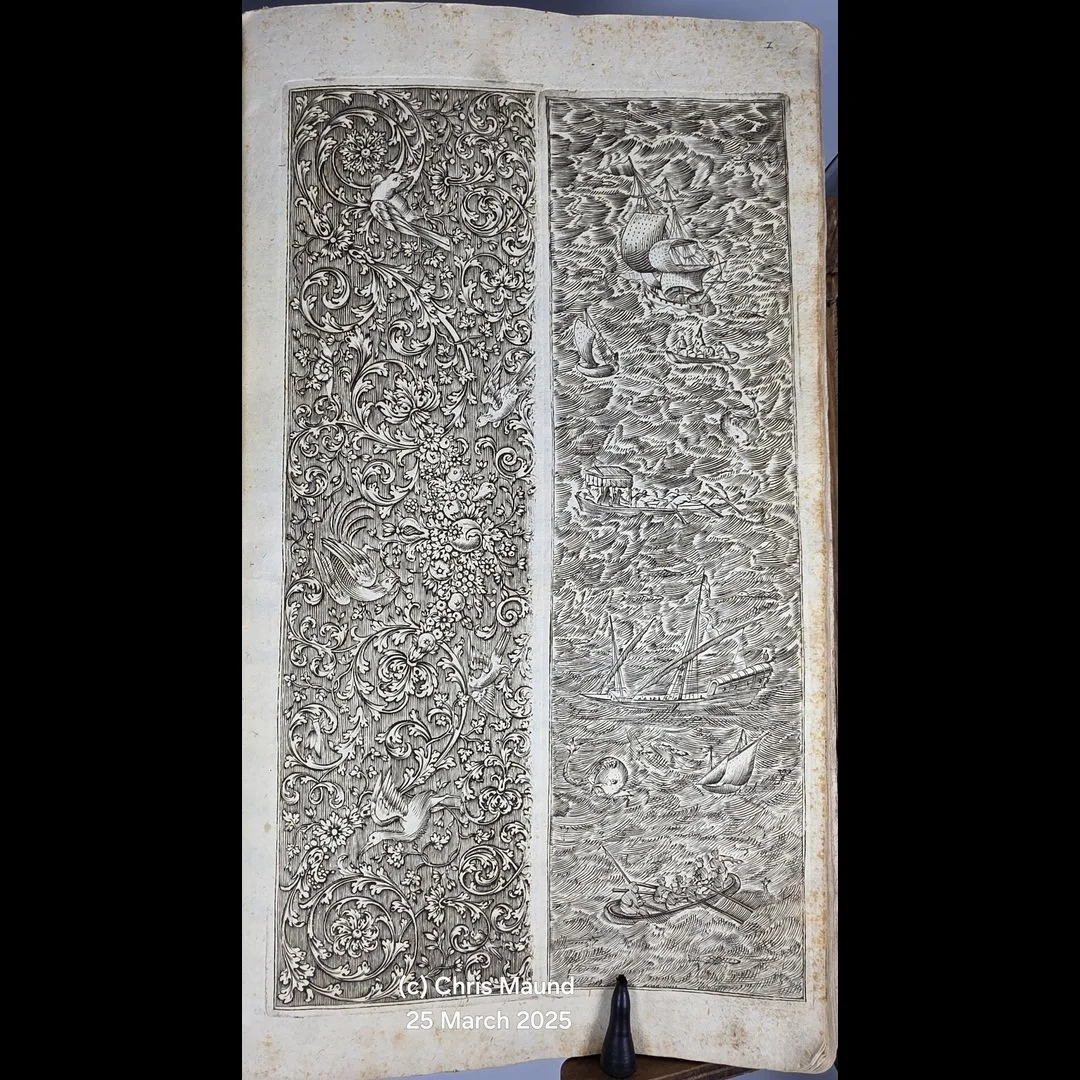 Image 3 of 24
 Image 4 of 24
 Image 5 of 24
 Image 6 of 24
 Image 7 of 24
 Image 8 of 24
 Image 9 of 24
 Image 10 of 24
 Image 11 of 24
 Image 12 of 24
 Image 13 of 24
 Image 14 of 24
 Image 15 of 24
 Image 16 of 24
 Image 17 of 24
 Image 18 of 24
 Image 19 of 24
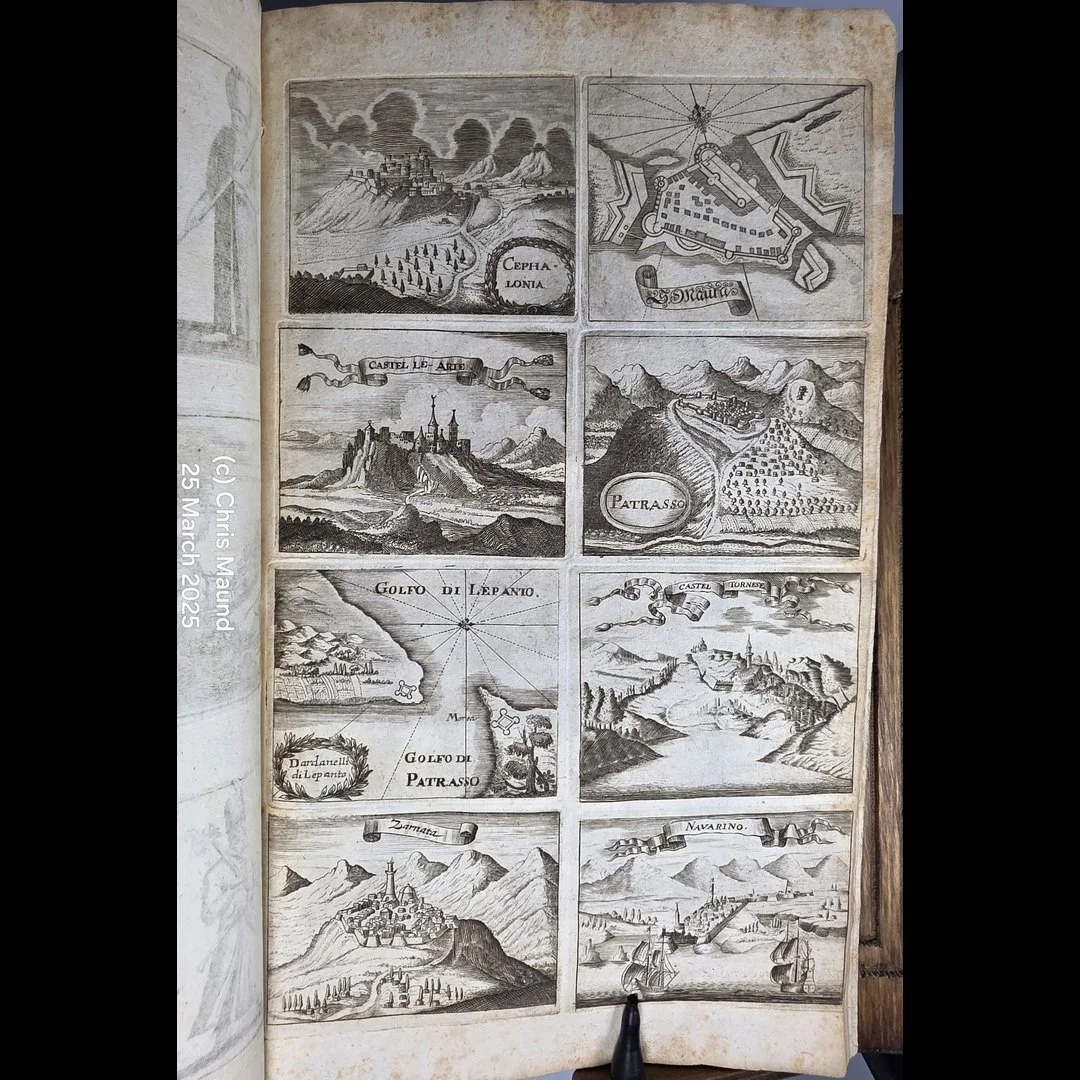 Image 20 of 24
 Image 21 of 24
 Image 22 of 24
 Image 23 of 24
 Image 24 of 24














![1777 First English Edtn THE HISTORY OF THE FLAGELLANTS By Somebody Who is Not Doctor of the Sorbonne [Jean-Louis De Lolme] Illus. Anonymous](https://images.squarespace-cdn.com/content/v1/634dab4938c13d5c1f88d382/1721240505822-Q6UDIHPOLJTYYQ2C7ONA/20240717_154202-12.jpg)