1518 Venice Edition
SANCTUS THOMAS SUPER ANIMA
By Thomas Aquinas
KEY DETAILS
Condition: Good
Format: Vellum, folio (fo 12 × 19 in 305 × 483 mm )
Note: Binding/size selection follows standard bibliographic conventions and is approximate; exact measurements may vary.
Published By: Venetiis, Lucantonium de Giunta Florentini, Italy, 1518
Language: Latin
Illustrated By: Anonymous
Provenance: This individual copy has a documented recent auction history.
Collation: A–N⁶ O–P⁴ = 86 leaves.
Dust Jacket: None, as issued, No Jacket
SKU: BTETM0002558
Shipping Info: Approximate Package Dimensions H: 12.5, L: 30, W: 25 (Units: cm), W: 2Kg
Tracked Shipping, Insurance Coverage as per Customer Request
DESCRIPTION
Sanctus Thomas Super Anima
Sancti doctoris Thome de Aquino in tres libros Aristotelis De anima profundissima commentaria cum duplici textu
A handsome and complete Venetian post-incunable edition of Thomas Aquinas's celebrated commentary on Aristotle's De Anima, one of the central works in the medieval and Renaissance study of the soul, perception, cognition and intellect. Printed at Venice by Lucantonio Giunta on 24 July 1518, the volume brings together Aquinas's Scholastic interpretation of Aristotle with the changing textual culture of Renaissance humanism.
Of particular interest is the edition's “duplici textu”: Aristotle's De Anima is presented through both the traditional Latin text and the Renaissance translation of the Byzantine humanist Johannes Argyropoulos. The volume further incorporates the questions and annotations of the Dominican philosopher Dominicus de Flandria, creating a layered presentation of Aristotle in which ancient philosophy, medieval Thomism and Renaissance textual scholarship meet on the printed page.
An attractive copy in later stiff vellum, printed in strong double-column Gothic type and enlivened by numerous woodcut initials and philosophical diagrams. Several initials are heightened by hand in red, including the particularly striking large historiated initial opening the commentary, while the terminal Giunta fleur-de-lis printer's device is likewise rubricated. Occasional early marginal annotations in brown ink provide evidence of the book's use as a working philosophical text.
PROVENANCE
This individual copy has a documented recent auction history.
Finarte, Rome, Libri, Autografi e Stampe, 4–5 July 2024, lot 201, where it was catalogued with the same later stiff vellum binding, red edges, water staining and opening-gathering defect.
Subsequently offered by LuxuryBooks through Catawiki, where it sold on 23 March 2025.
The copy can be securely matched across the sales through its binding, rubrication, condition characteristics and distinctive early marginal annotations.
CONDITION, COLLATION & COPY NOTES
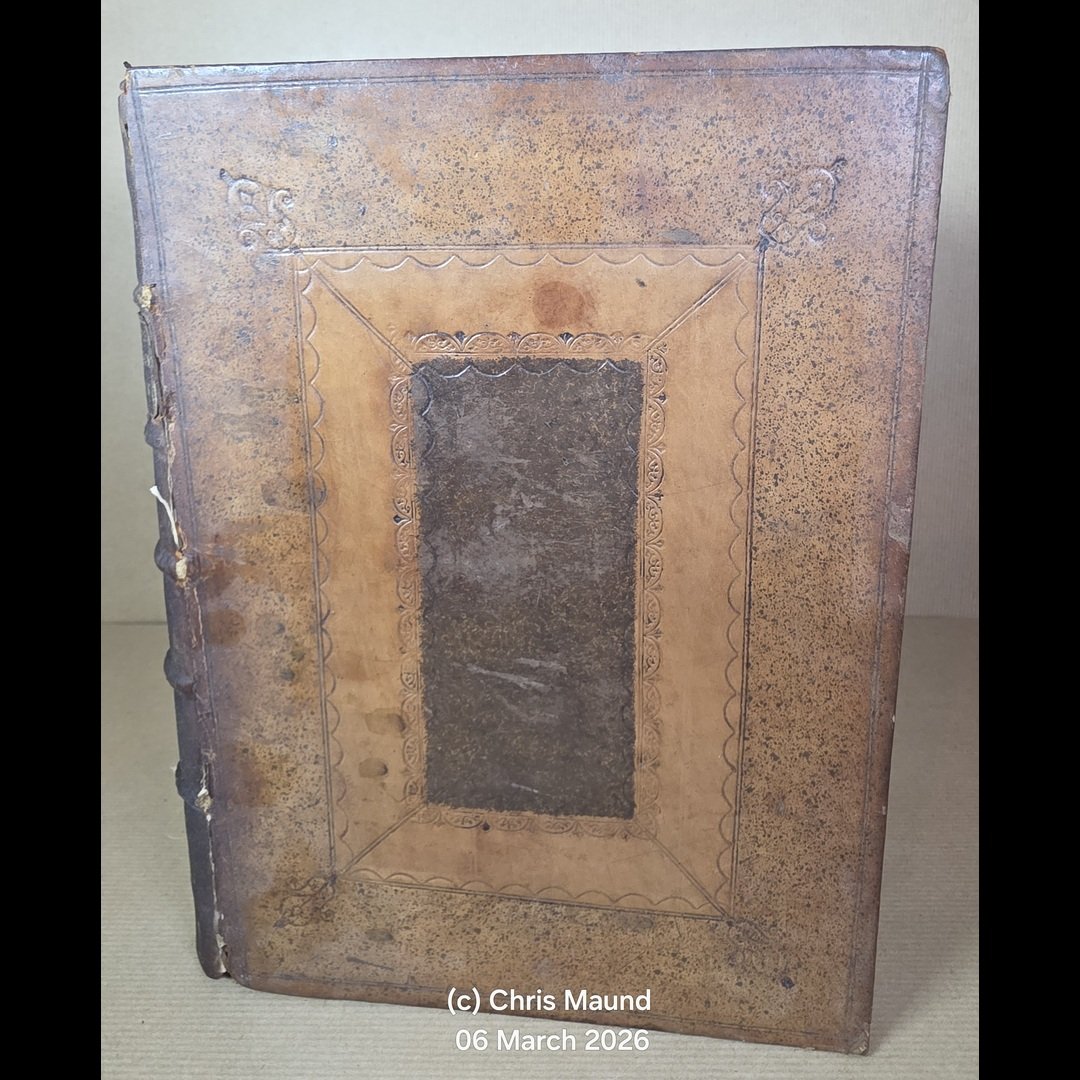
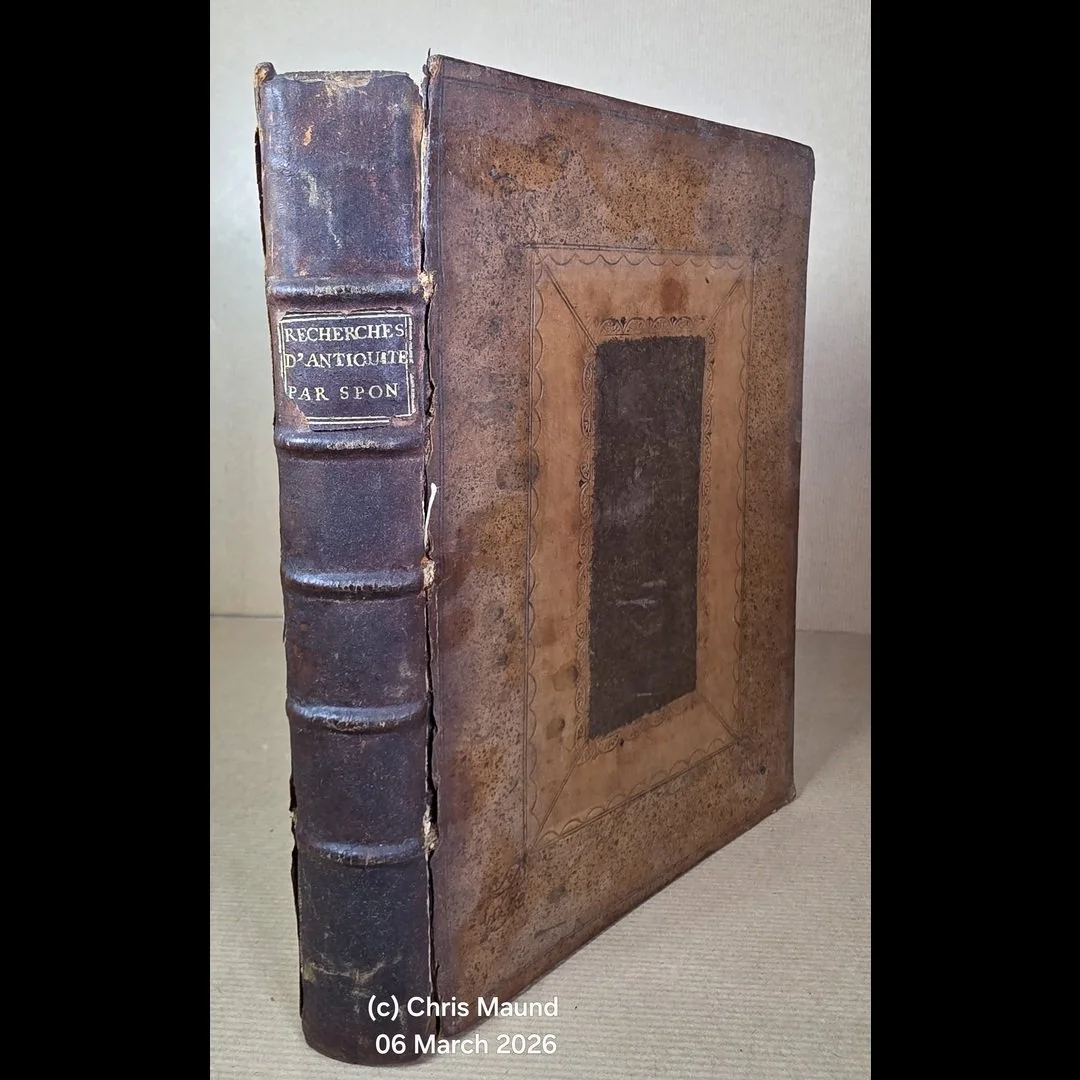
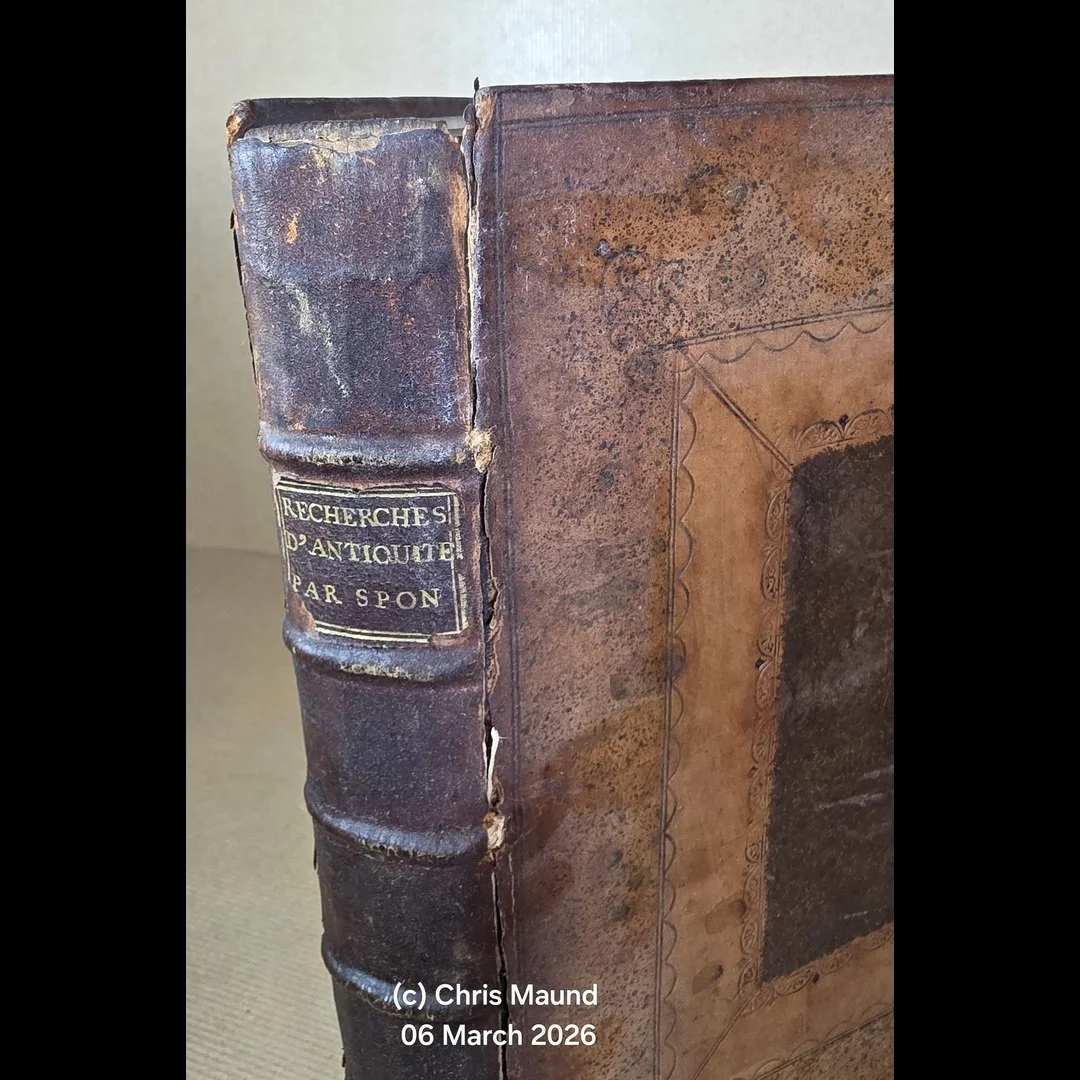
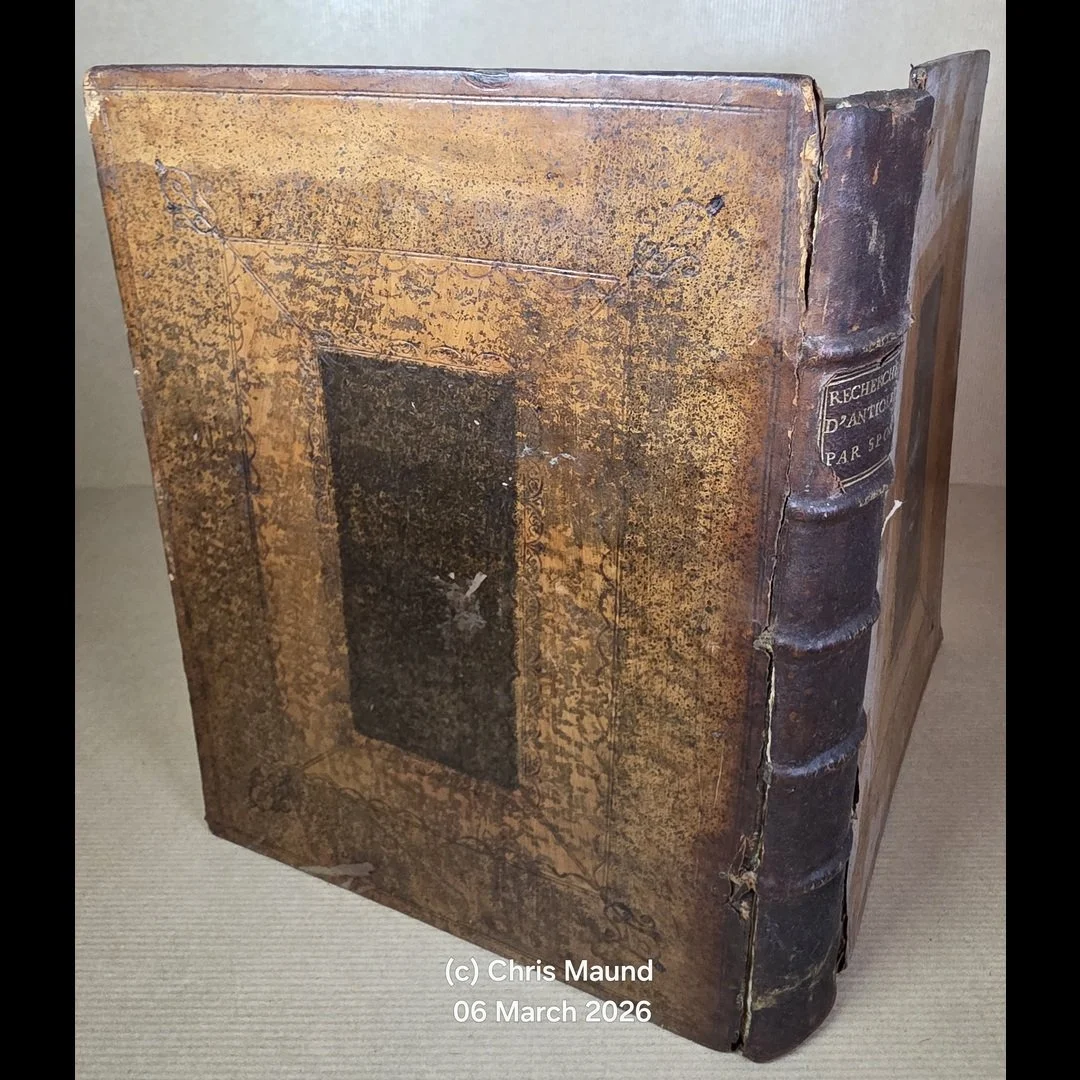
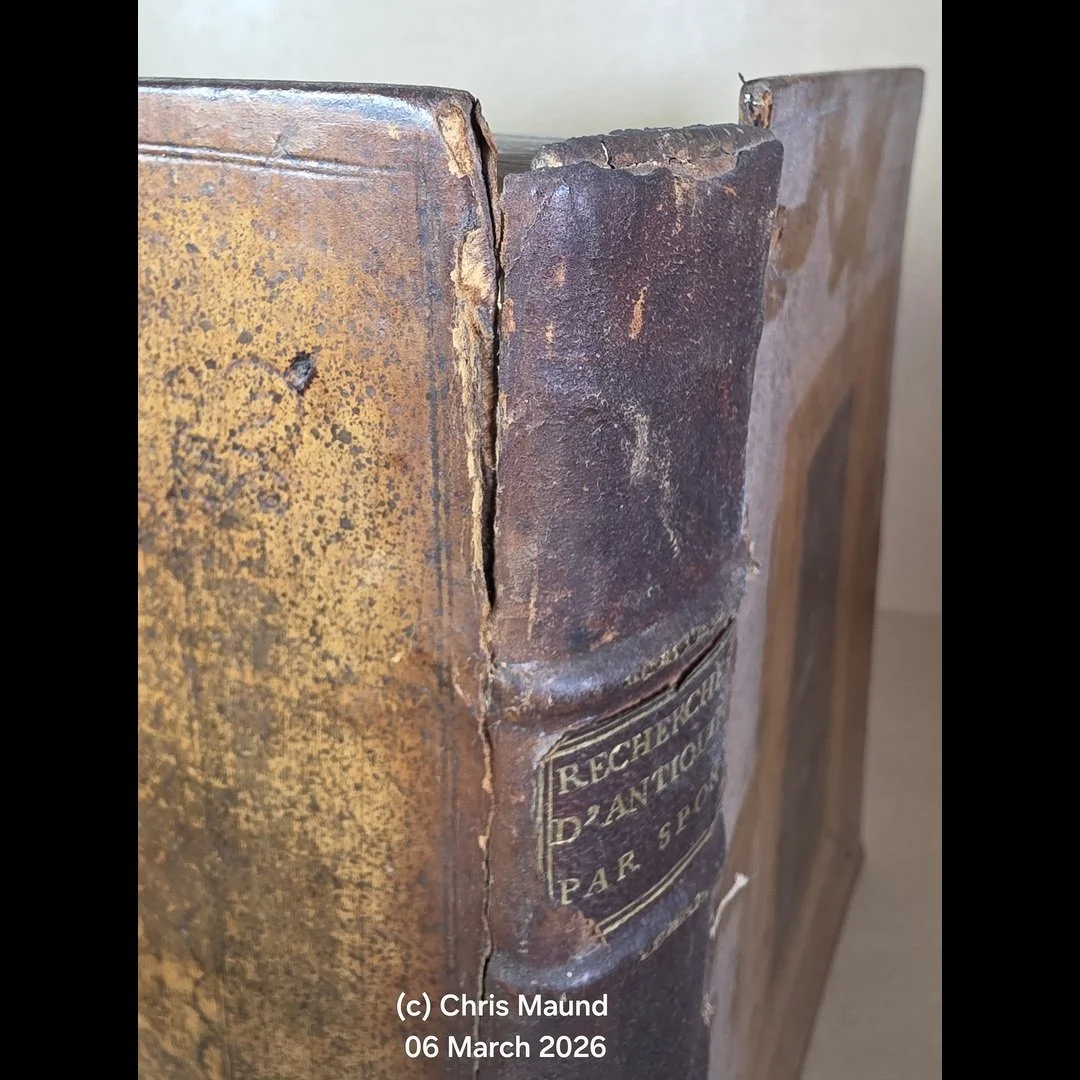
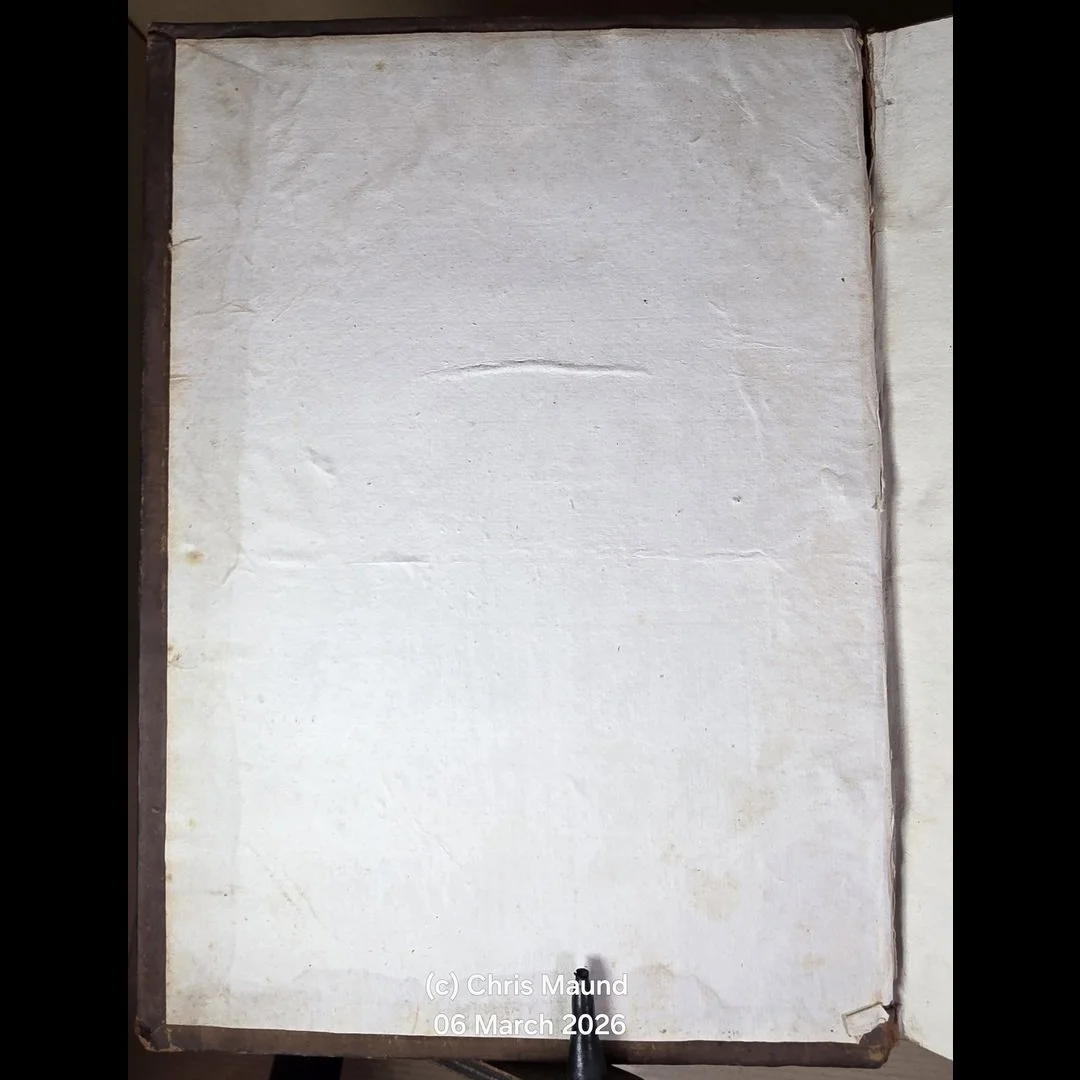
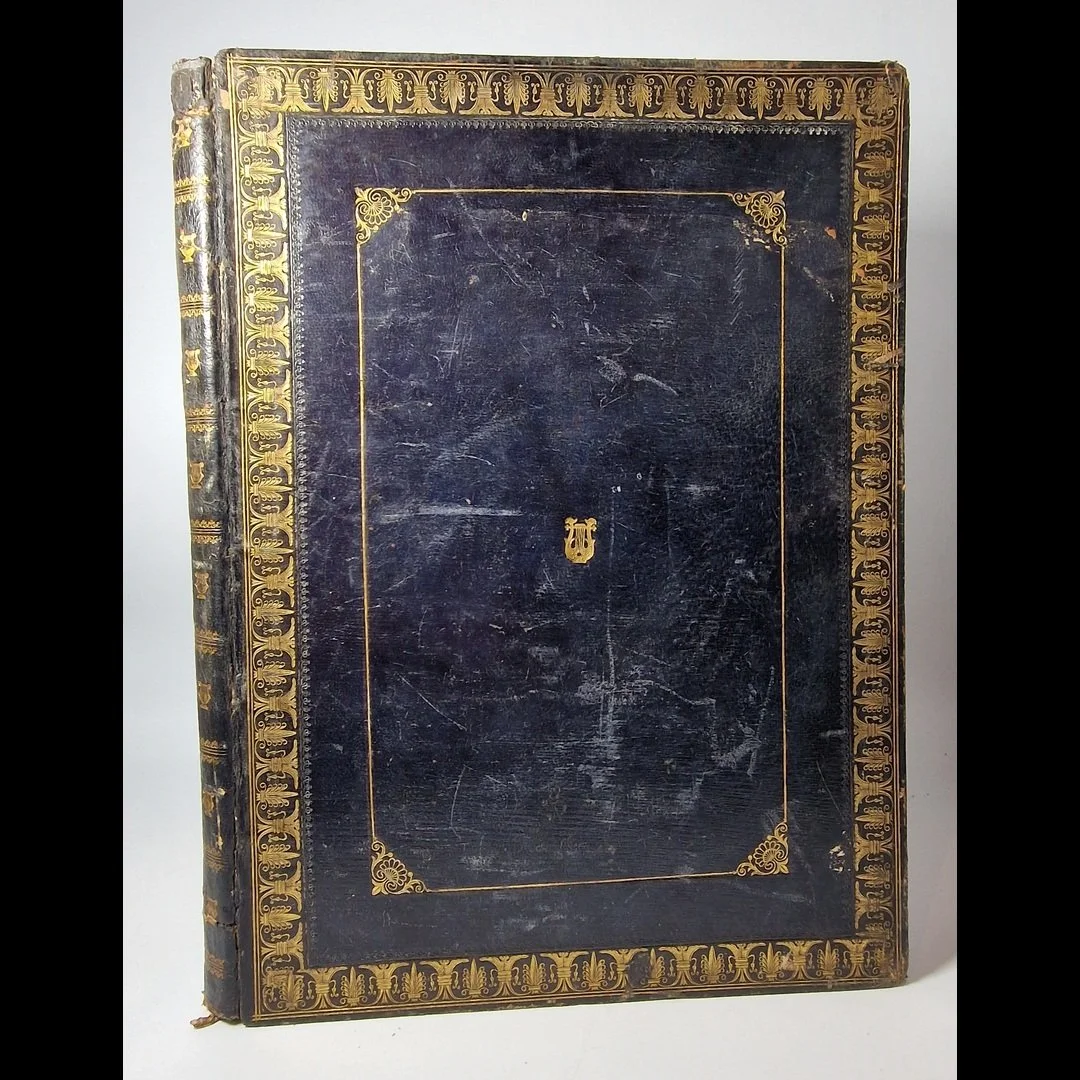
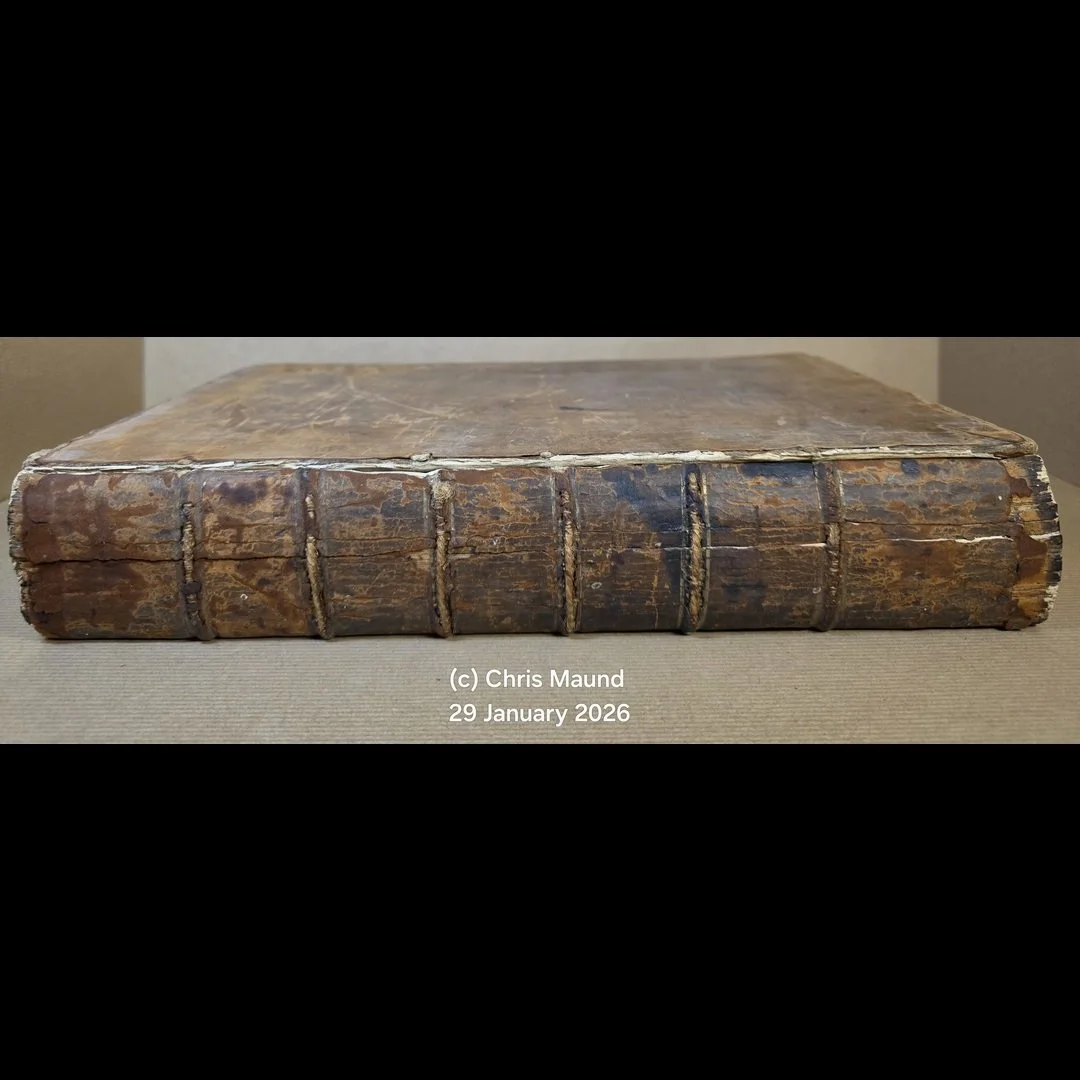
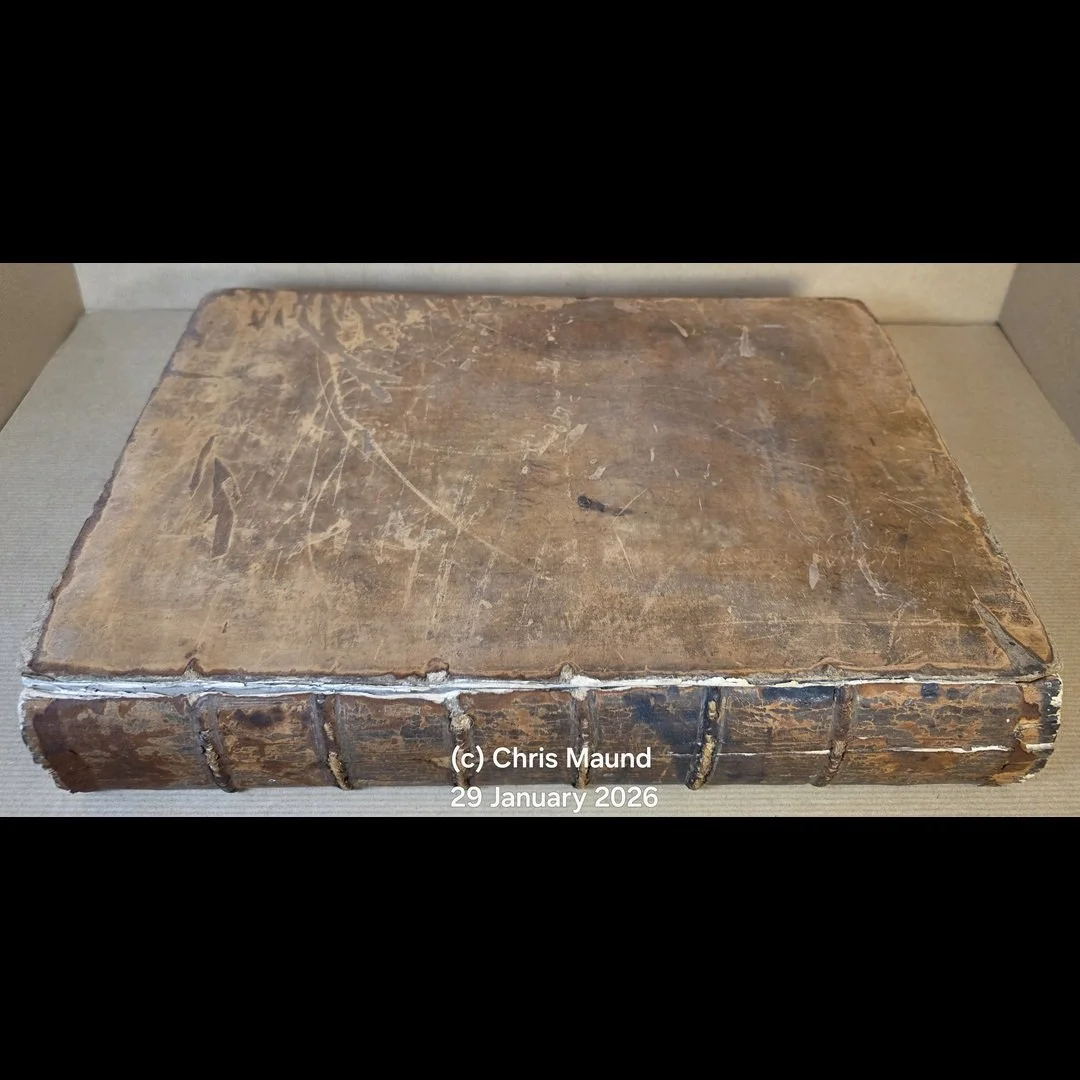
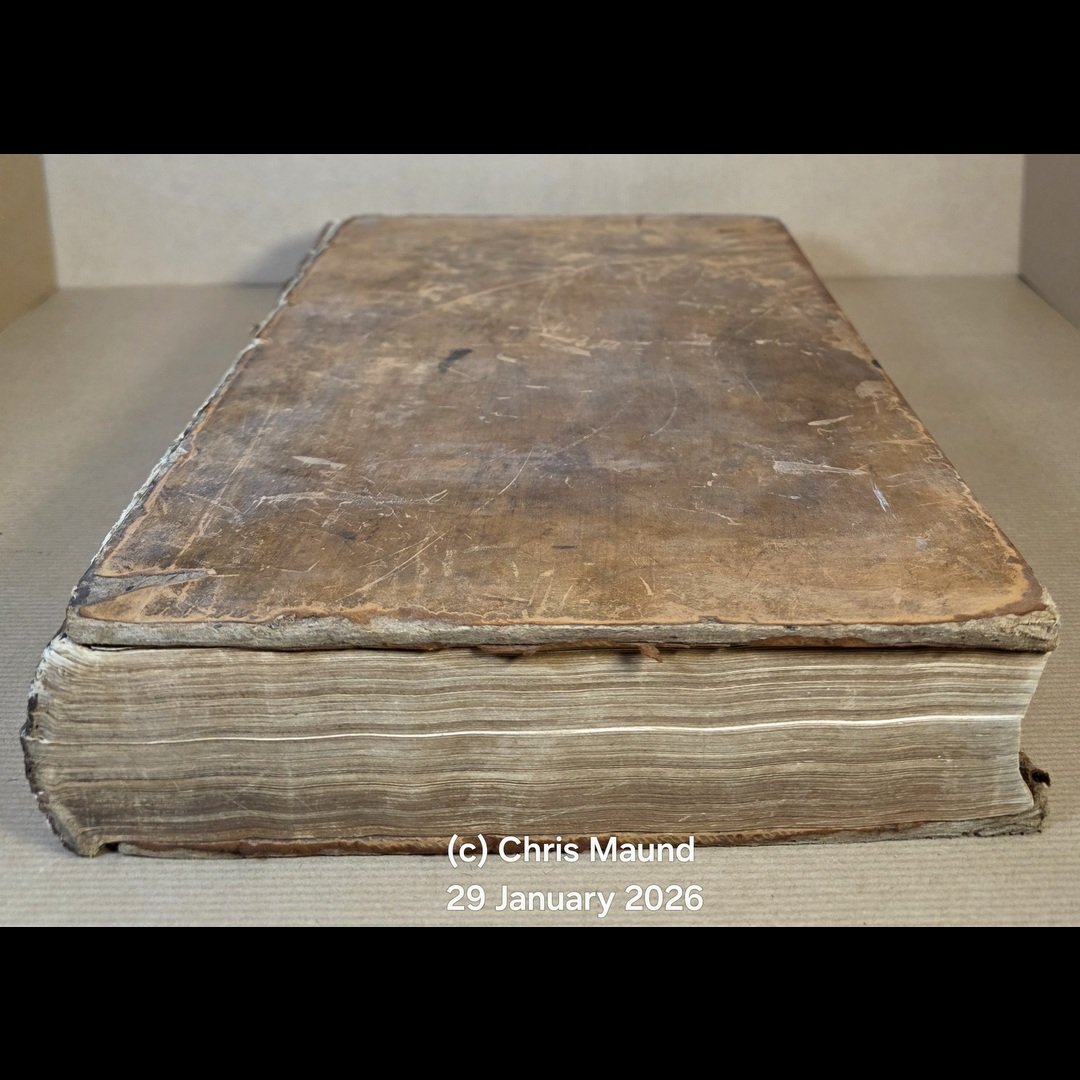
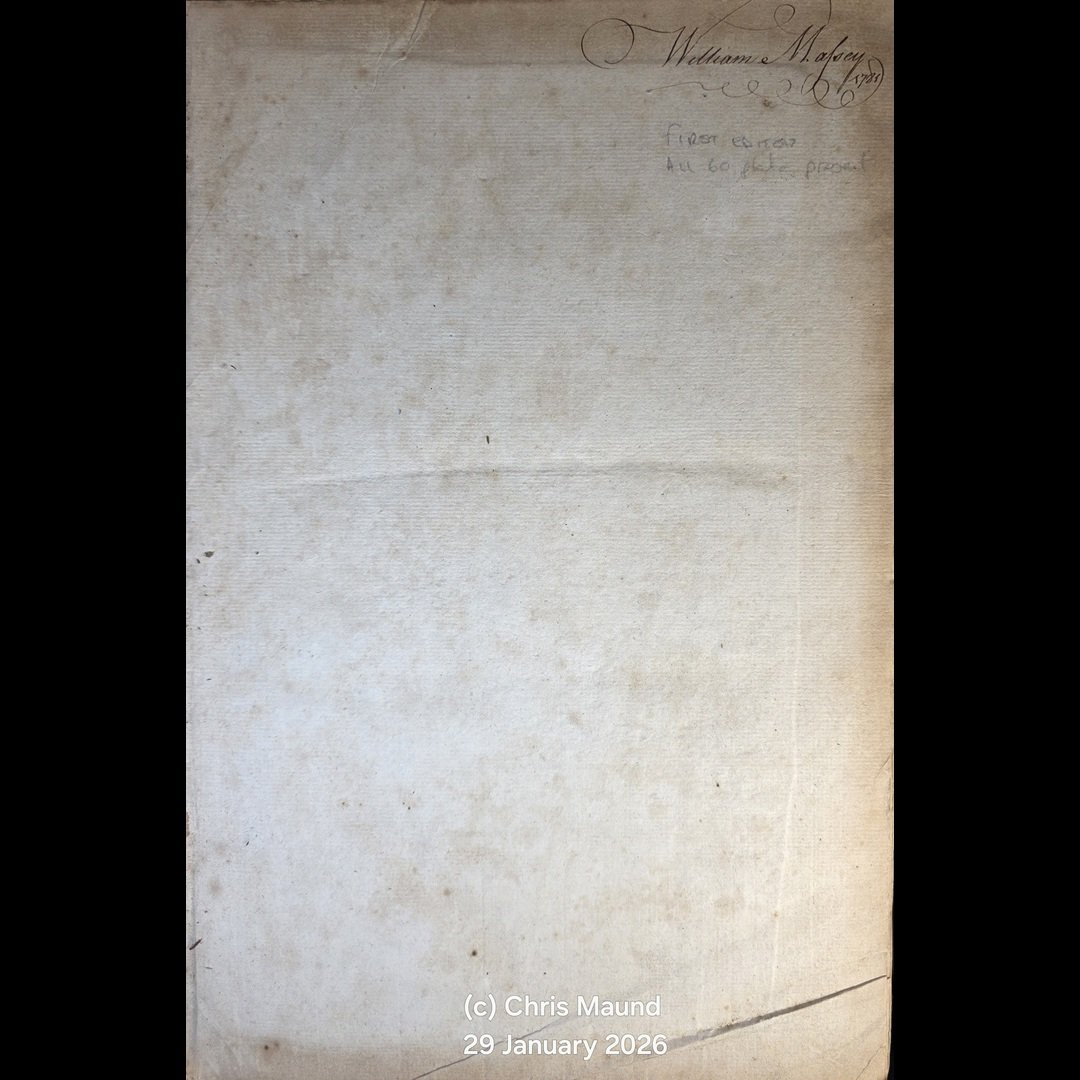
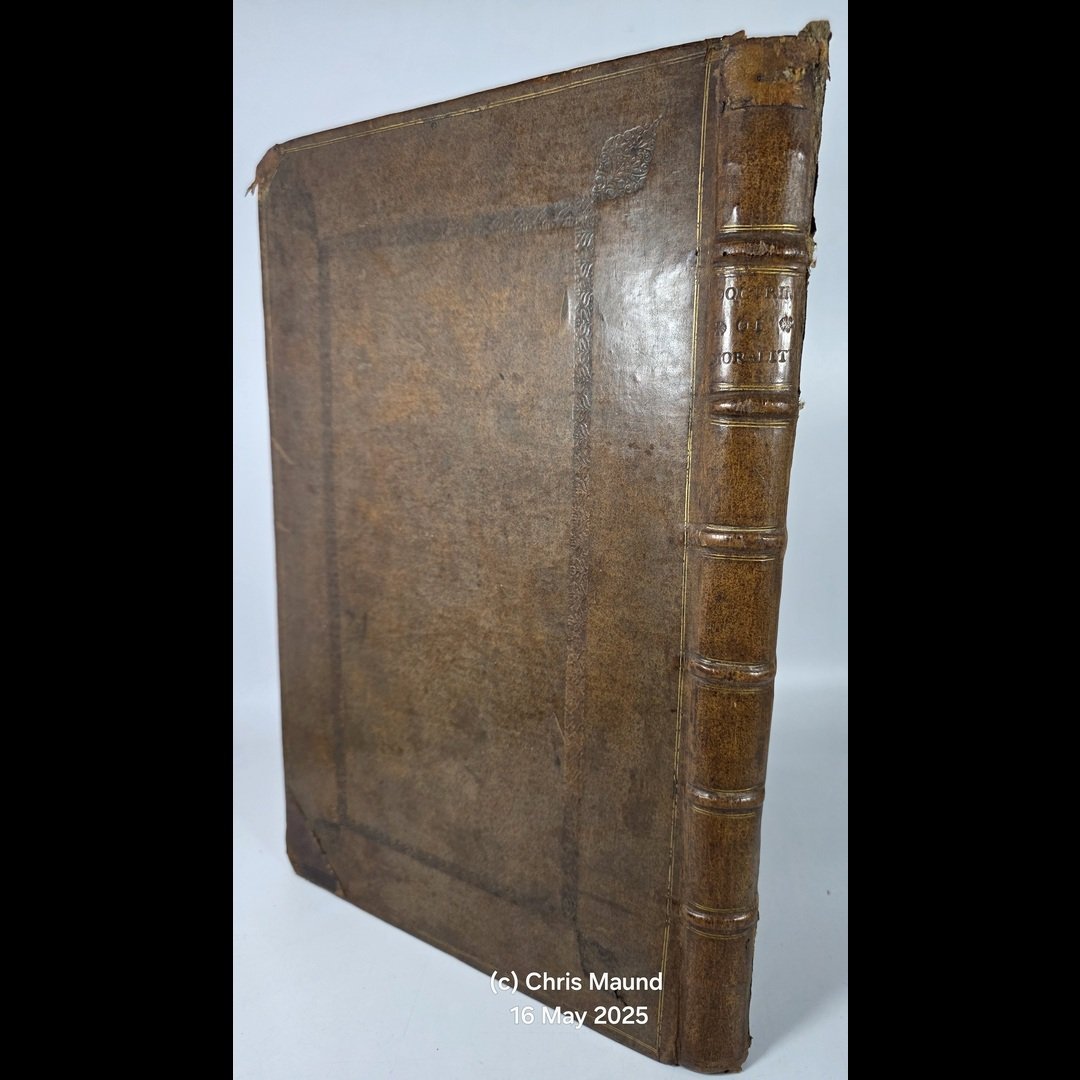
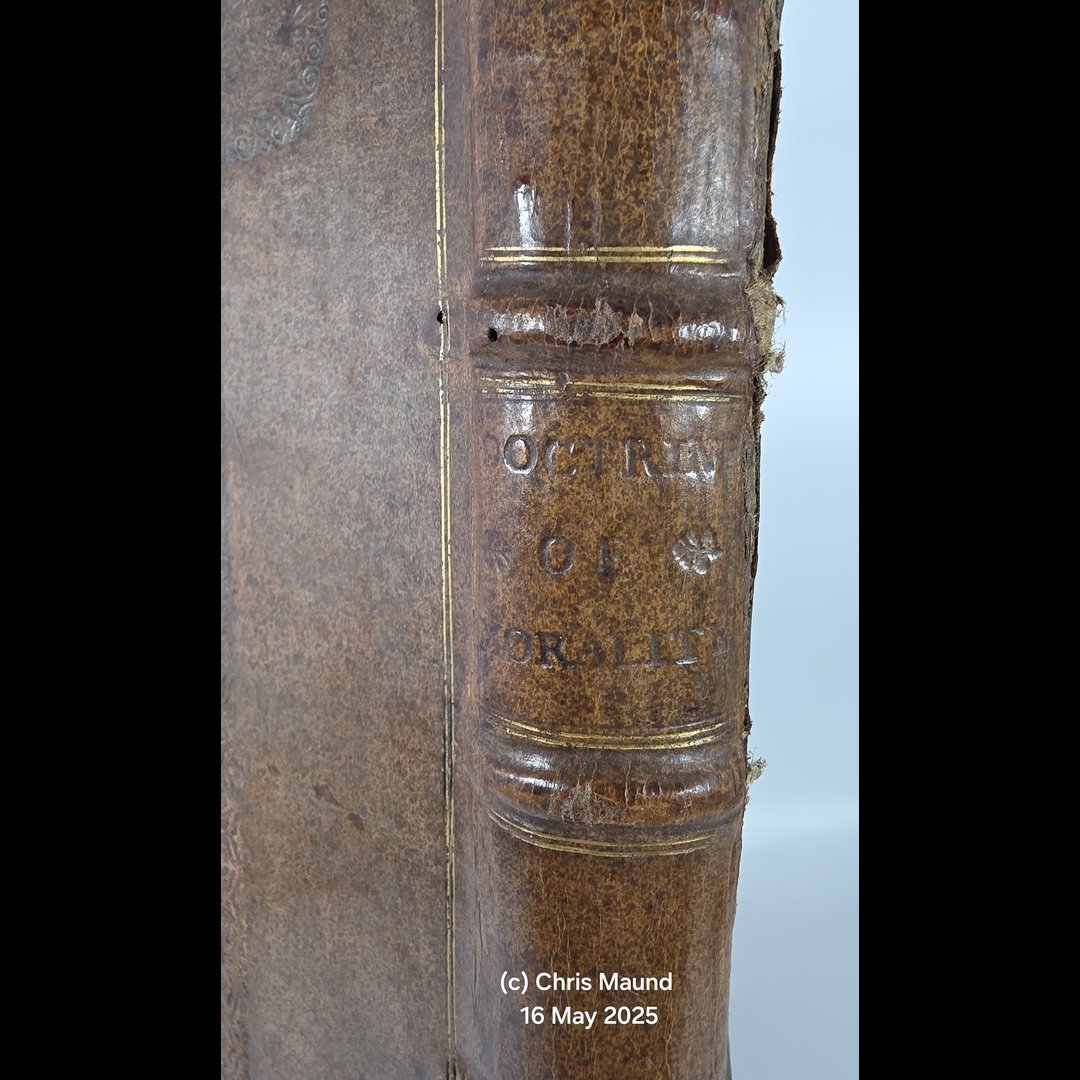
A complete and attractive early-sixteenth-century folio in later stiff vellum over boards, the binding age-toned and somewhat soiled, with red-stained page edges. Vellum split at the head of the spine and extending towards the upper joint, with further wear and splitting towards the foot and rear board; boards remain attached and the text block is firm.
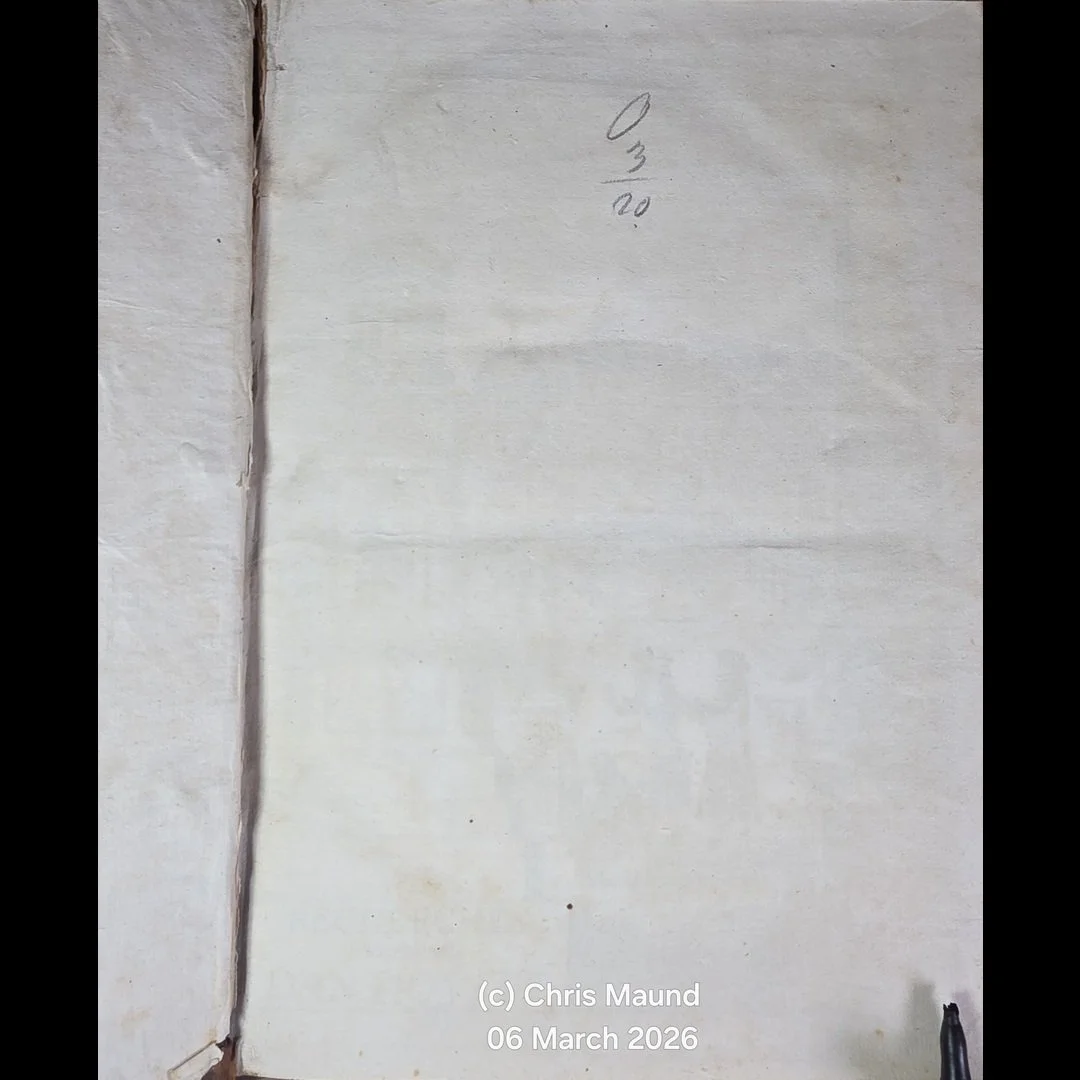
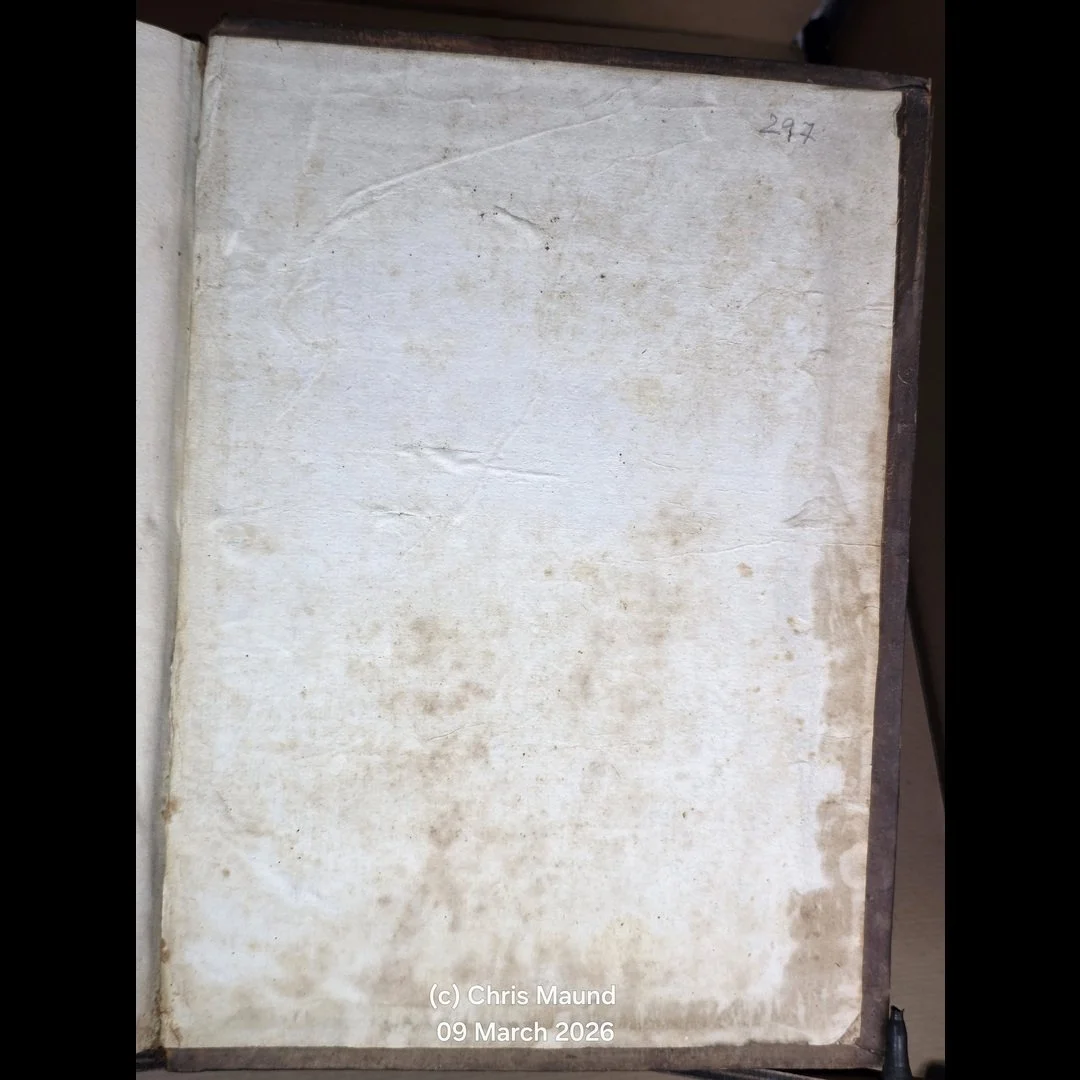
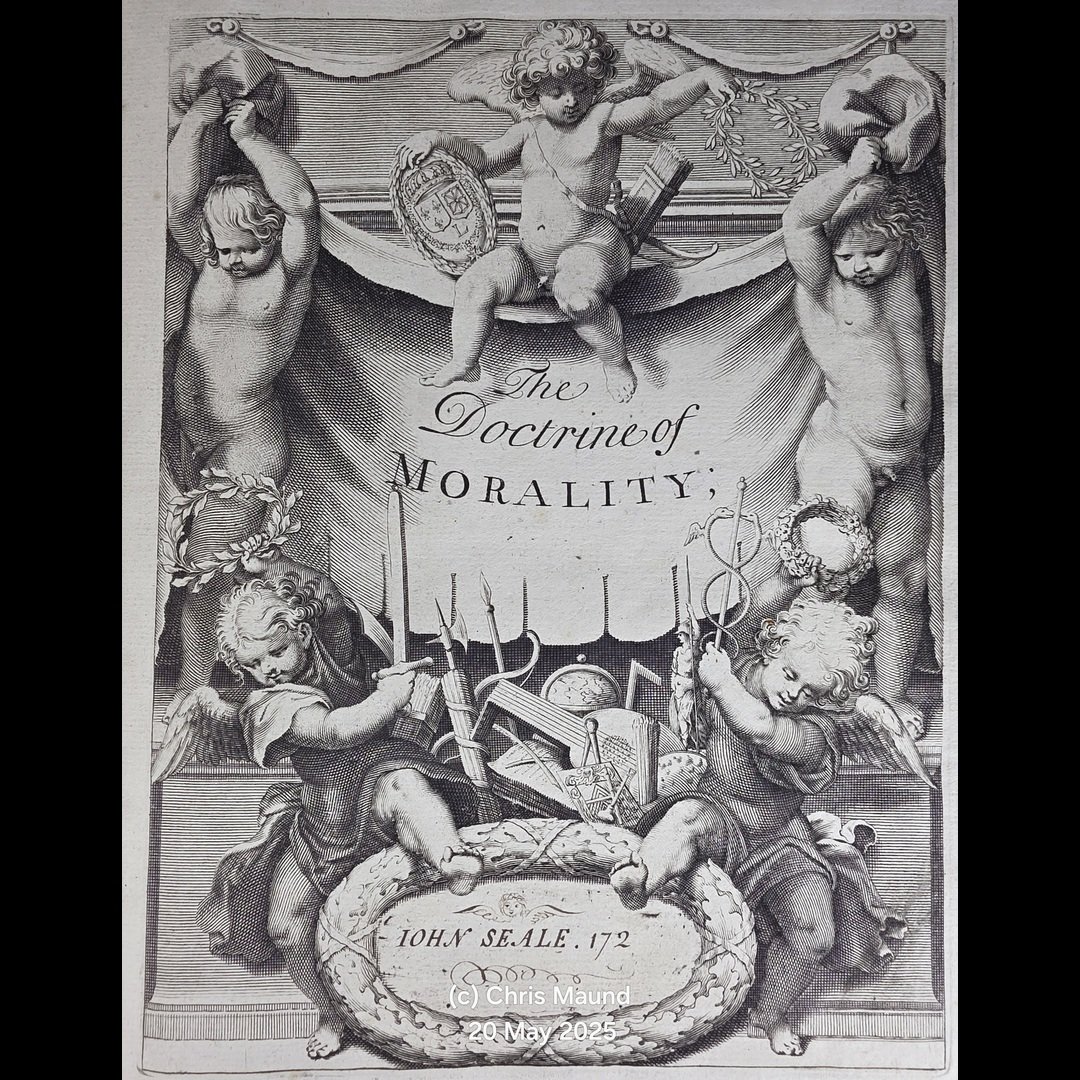
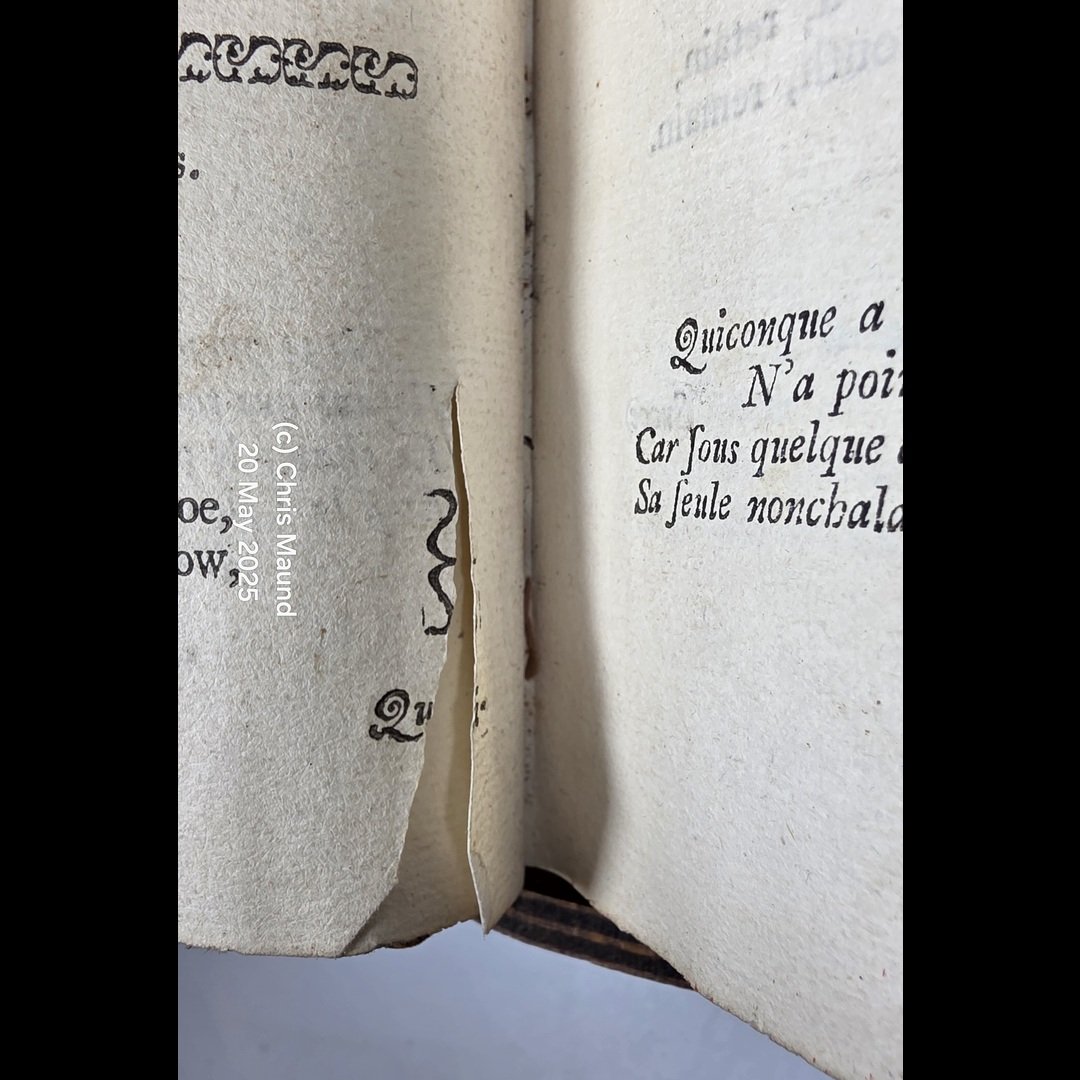
Internally, the paper is generally strong and the impression crisp, with generous margins. Water staining is present, most noticeable towards the opening of the volume and on the title leaf, with lighter staining elsewhere. Slight defect to the inner margin of the opening gatherings, together with occasional spotting, handling marks and age-toning consistent with use over more than five centuries.
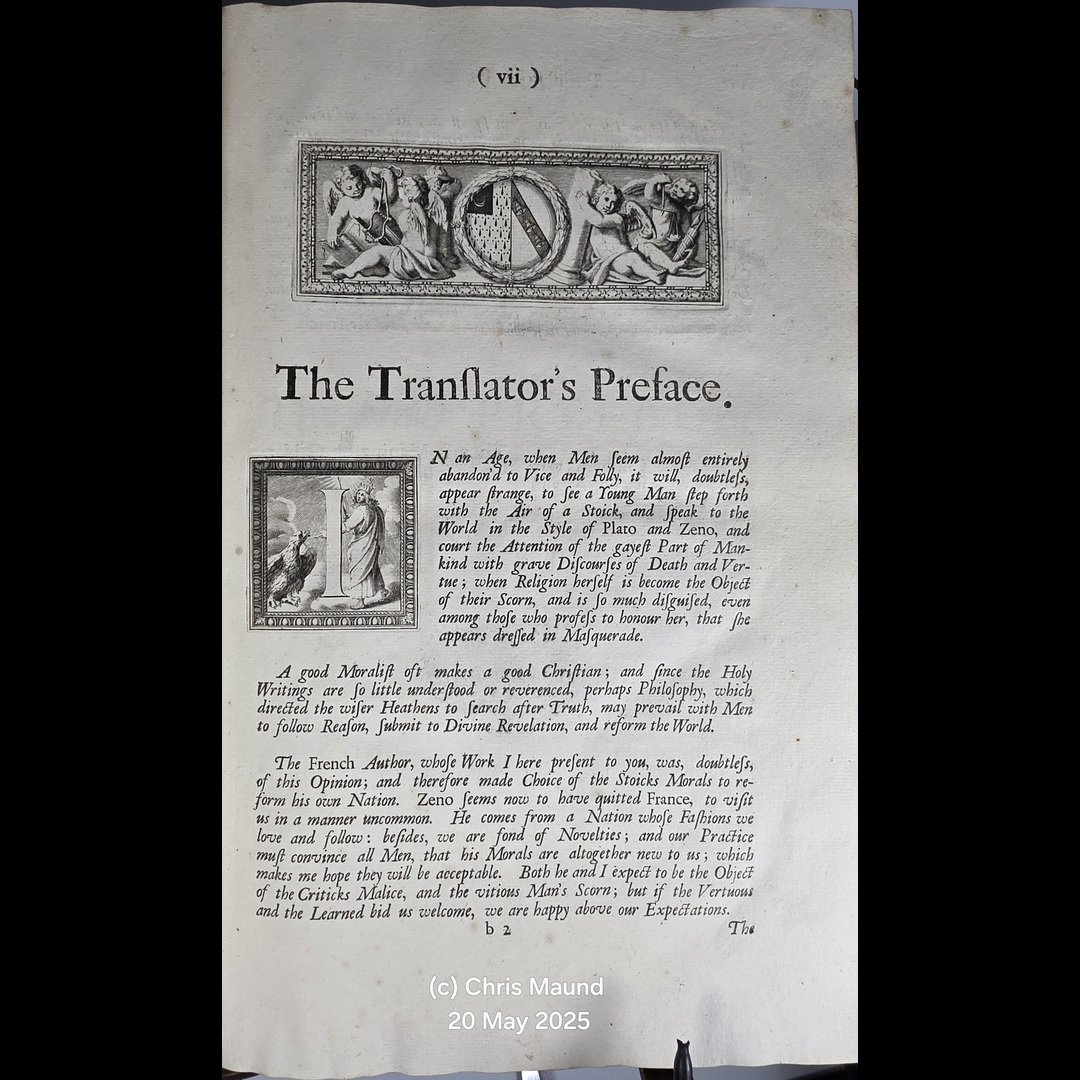
Printed throughout in double-column Gothic type, with numerous ornamental woodcut initials and several small philosophical or geometrical diagrams within the text. Several initials have been heightened by hand in red, most notably the large historiated initial opening the commentary. The terminal colophon leaf is present and bears the large Giunta lily printer's device, also rubricated in red.
Occasional early marginal annotations in brown ink, apparently contemporary or near-contemporary scholarly reading notes, together with occasional underlining. No definite early ownership inscription has presently been identified.
Please see Photos as part of condition report.
REFERENCES
P. Camerini, Annali dei Giunti, I.1, p. 178
Sancti Thomae de Aquino, Opera Omnia — modern bibliographical discussion of the De Anima textual tradition and early printed editions
Finarte, Rome, Libri, Autografi e Stampe, 4–5 July 2024, lot 201
Catawiki, Tommaso D'Aquino – [Post Incunable] Super Anima – 1518, sold 23 March 2025
SYNOPSIS
Aristotle's De Anima — On the Soul — is one of the foundational works in the history of philosophical psychology. Rather than understanding “soul” simply in the later religious sense, Aristotle investigates the principle that makes a living thing alive and the faculties through which different kinds of living beings act.
The work progresses from the most basic functions of nutrition and growth through sensation, desire and movement to imagination, memory and intellect. Aristotle's conception of the soul as the form of the living body became fundamental to medieval discussions of the relationship between body and mind.
Aquinas's commentary subjects Aristotle's arguments to close philosophical analysis. He explores the hierarchy of vegetative, sensitive and intellectual powers; the mechanics of sensation; the relationship between imagination and thought; and, above all, the nature and activity of the human intellect. These questions placed De Anima at the centre of medieval debates concerning knowledge, personal identity, immortality and the nature of rational life.
The 1518 Giunta edition is particularly notable for presenting Aquinas within a Renaissance textual framework. The title explicitly announces a duplici textu, placing the traditional Latin Aristotle alongside the newer translation of Johannes Argyropoulos. The medieval commentary can consequently be read against both an inherited Scholastic text and a translation produced through renewed humanist engagement with the Greek original.
The addition of the questions and annotations of Dominicus de Flandria further expands the intellectual framework of the book. Rather than representing a single moment in the history of Aristotelian philosophy, the volume preserves several generations of interpretation: Aristotle's ancient text, its medieval Latin reception, Aquinas's thirteenth-century commentary, the fifteenth-century Thomism of Dominicus, and the Renaissance translation of Argyropoulos.
Printed by Lucantonio Giunta, a member of one of the great printing dynasties of Renaissance Venice, the edition appeared during a period of intense commercial and scholarly interest in authoritative Thomist texts. A closely related edition had been produced for the Scotto press only months earlier in March 1518, demonstrating the active Venetian market for Aquinas's Aristotelian commentaries at the beginning of the sixteenth century. The Giunta edition itself is dated 24 July 1518 and comprises 86 leaves in fifteen gatherings.
AUTHOR BIO
Thomas Aquinas (c.1225–1274) was a Dominican friar, theologian and philosopher whose synthesis of Aristotelian philosophy and Christian theology became one of the defining achievements of medieval Scholasticism. Known traditionally as the Doctor Angelicus, Aquinas wrote across theology, metaphysics, ethics, natural philosophy and biblical interpretation, and his influence has extended far beyond the medieval Church into the broader history of Western philosophy.
Aristotle occupied a central place in Aquinas's intellectual project. Rather than merely adopting classical philosophy, Aquinas subjected Aristotle's works to sustained critical commentary, employing them to investigate questions of causation, knowledge, nature, being and the relationship between body and soul. His commentaries therefore form an important bridge between ancient Greek philosophy, Arabic and medieval interpretation, and the intellectual culture of the Latin West.
Translator Bio:
Johannes Argyropoulos (c.1415–1487) was a Byzantine Greek scholar and humanist who became one of the important transmitters of Greek philosophy to Renaissance Italy. After the fall of Constantinople he taught Greek and philosophy in Italy, particularly at Florence and Rome, and produced Latin translations of several works of Aristotle.
His version of De Anima belongs to the humanist movement to return to Greek sources and improve upon inherited medieval Latin translations. Its appearance here alongside the older Latin text allows this 1518 edition to preserve, on the same page, two important stages in the Western transmission of Aristotle.
Contributor Bio:
Dominicus de Flandria, or Dominic of Flanders (c.1425–1479), was a Dominican philosopher and theologian associated with the Thomist interpretation of Aristotle. Educated within the late-medieval Scholastic tradition, he became particularly known for his work on Aristotelian metaphysics and for his defence and exposition of Thomistic philosophy.
His questions and annotations accompanying De Anima extend the usefulness of the present edition beyond a straightforward printing of Aquinas's commentary, giving the reader access to a further layer of fifteenth-century Dominican engagement with Aristotle and Aquinas.
ILLUSTRATOR
Anonymous
No individual woodcut cutter is identified for the edition in the bibliographical sources consulted. The volume is nevertheless visually distinctive, with numerous decorative and historiated woodcut initials and a series of small diagrams incorporated into the philosophical text.
The hand-applied red rubrication in this copy gives several of the printed initials additional visual impact, while the large Giunta fleur-de-lis device on the terminal leaf provides a particularly attractive conclusion to the volume.
1518 Venice Edition
SANCTUS THOMAS SUPER ANIMA
By Thomas Aquinas
KEY DETAILS
Condition: Good
Format: Vellum, folio (fo 12 × 19 in 305 × 483 mm )
Note: Binding/size selection follows standard bibliographic conventions and is approximate; exact measurements may vary.
Published By: Venetiis, Lucantonium de Giunta Florentini, Italy, 1518
Language: Latin
Illustrated By: Anonymous
Provenance: This individual copy has a documented recent auction history.
Collation: A–N⁶ O–P⁴ = 86 leaves.
Dust Jacket: None, as issued, No Jacket
SKU: BTETM0002558
Shipping Info: Approximate Package Dimensions H: 12.5, L: 30, W: 25 (Units: cm), W: 2Kg
Tracked Shipping, Insurance Coverage as per Customer Request
DESCRIPTION
Sanctus Thomas Super Anima
Sancti doctoris Thome de Aquino in tres libros Aristotelis De anima profundissima commentaria cum duplici textu
A handsome and complete Venetian post-incunable edition of Thomas Aquinas's celebrated commentary on Aristotle's De Anima, one of the central works in the medieval and Renaissance study of the soul, perception, cognition and intellect. Printed at Venice by Lucantonio Giunta on 24 July 1518, the volume brings together Aquinas's Scholastic interpretation of Aristotle with the changing textual culture of Renaissance humanism.
Of particular interest is the edition's “duplici textu”: Aristotle's De Anima is presented through both the traditional Latin text and the Renaissance translation of the Byzantine humanist Johannes Argyropoulos. The volume further incorporates the questions and annotations of the Dominican philosopher Dominicus de Flandria, creating a layered presentation of Aristotle in which ancient philosophy, medieval Thomism and Renaissance textual scholarship meet on the printed page.
An attractive copy in later stiff vellum, printed in strong double-column Gothic type and enlivened by numerous woodcut initials and philosophical diagrams. Several initials are heightened by hand in red, including the particularly striking large historiated initial opening the commentary, while the terminal Giunta fleur-de-lis printer's device is likewise rubricated. Occasional early marginal annotations in brown ink provide evidence of the book's use as a working philosophical text.
PROVENANCE
This individual copy has a documented recent auction history.
Finarte, Rome, Libri, Autografi e Stampe, 4–5 July 2024, lot 201, where it was catalogued with the same later stiff vellum binding, red edges, water staining and opening-gathering defect.
Subsequently offered by LuxuryBooks through Catawiki, where it sold on 23 March 2025.
The copy can be securely matched across the sales through its binding, rubrication, condition characteristics and distinctive early marginal annotations.
CONDITION, COLLATION & COPY NOTES
A complete and attractive early-sixteenth-century folio in later stiff vellum over boards, the binding age-toned and somewhat soiled, with red-stained page edges. Vellum split at the head of the spine and extending towards the upper joint, with further wear and splitting towards the foot and rear board; boards remain attached and the text block is firm.
Internally, the paper is generally strong and the impression crisp, with generous margins. Water staining is present, most noticeable towards the opening of the volume and on the title leaf, with lighter staining elsewhere. Slight defect to the inner margin of the opening gatherings, together with occasional spotting, handling marks and age-toning consistent with use over more than five centuries.
Printed throughout in double-column Gothic type, with numerous ornamental woodcut initials and several small philosophical or geometrical diagrams within the text. Several initials have been heightened by hand in red, most notably the large historiated initial opening the commentary. The terminal colophon leaf is present and bears the large Giunta lily printer's device, also rubricated in red.
Occasional early marginal annotations in brown ink, apparently contemporary or near-contemporary scholarly reading notes, together with occasional underlining. No definite early ownership inscription has presently been identified.
Please see Photos as part of condition report.
REFERENCES
P. Camerini, Annali dei Giunti, I.1, p. 178
Sancti Thomae de Aquino, Opera Omnia — modern bibliographical discussion of the De Anima textual tradition and early printed editions
Finarte, Rome, Libri, Autografi e Stampe, 4–5 July 2024, lot 201
Catawiki, Tommaso D'Aquino – [Post Incunable] Super Anima – 1518, sold 23 March 2025
SYNOPSIS
Aristotle's De Anima — On the Soul — is one of the foundational works in the history of philosophical psychology. Rather than understanding “soul” simply in the later religious sense, Aristotle investigates the principle that makes a living thing alive and the faculties through which different kinds of living beings act.
The work progresses from the most basic functions of nutrition and growth through sensation, desire and movement to imagination, memory and intellect. Aristotle's conception of the soul as the form of the living body became fundamental to medieval discussions of the relationship between body and mind.
Aquinas's commentary subjects Aristotle's arguments to close philosophical analysis. He explores the hierarchy of vegetative, sensitive and intellectual powers; the mechanics of sensation; the relationship between imagination and thought; and, above all, the nature and activity of the human intellect. These questions placed De Anima at the centre of medieval debates concerning knowledge, personal identity, immortality and the nature of rational life.
The 1518 Giunta edition is particularly notable for presenting Aquinas within a Renaissance textual framework. The title explicitly announces a duplici textu, placing the traditional Latin Aristotle alongside the newer translation of Johannes Argyropoulos. The medieval commentary can consequently be read against both an inherited Scholastic text and a translation produced through renewed humanist engagement with the Greek original.
The addition of the questions and annotations of Dominicus de Flandria further expands the intellectual framework of the book. Rather than representing a single moment in the history of Aristotelian philosophy, the volume preserves several generations of interpretation: Aristotle's ancient text, its medieval Latin reception, Aquinas's thirteenth-century commentary, the fifteenth-century Thomism of Dominicus, and the Renaissance translation of Argyropoulos.
Printed by Lucantonio Giunta, a member of one of the great printing dynasties of Renaissance Venice, the edition appeared during a period of intense commercial and scholarly interest in authoritative Thomist texts. A closely related edition had been produced for the Scotto press only months earlier in March 1518, demonstrating the active Venetian market for Aquinas's Aristotelian commentaries at the beginning of the sixteenth century. The Giunta edition itself is dated 24 July 1518 and comprises 86 leaves in fifteen gatherings.
AUTHOR BIO
Thomas Aquinas (c.1225–1274) was a Dominican friar, theologian and philosopher whose synthesis of Aristotelian philosophy and Christian theology became one of the defining achievements of medieval Scholasticism. Known traditionally as the Doctor Angelicus, Aquinas wrote across theology, metaphysics, ethics, natural philosophy and biblical interpretation, and his influence has extended far beyond the medieval Church into the broader history of Western philosophy.
Aristotle occupied a central place in Aquinas's intellectual project. Rather than merely adopting classical philosophy, Aquinas subjected Aristotle's works to sustained critical commentary, employing them to investigate questions of causation, knowledge, nature, being and the relationship between body and soul. His commentaries therefore form an important bridge between ancient Greek philosophy, Arabic and medieval interpretation, and the intellectual culture of the Latin West.
Translator Bio:
Johannes Argyropoulos (c.1415–1487) was a Byzantine Greek scholar and humanist who became one of the important transmitters of Greek philosophy to Renaissance Italy. After the fall of Constantinople he taught Greek and philosophy in Italy, particularly at Florence and Rome, and produced Latin translations of several works of Aristotle.
His version of De Anima belongs to the humanist movement to return to Greek sources and improve upon inherited medieval Latin translations. Its appearance here alongside the older Latin text allows this 1518 edition to preserve, on the same page, two important stages in the Western transmission of Aristotle.
Contributor Bio:
Dominicus de Flandria, or Dominic of Flanders (c.1425–1479), was a Dominican philosopher and theologian associated with the Thomist interpretation of Aristotle. Educated within the late-medieval Scholastic tradition, he became particularly known for his work on Aristotelian metaphysics and for his defence and exposition of Thomistic philosophy.
His questions and annotations accompanying De Anima extend the usefulness of the present edition beyond a straightforward printing of Aquinas's commentary, giving the reader access to a further layer of fifteenth-century Dominican engagement with Aristotle and Aquinas.
ILLUSTRATOR
Anonymous
No individual woodcut cutter is identified for the edition in the bibliographical sources consulted. The volume is nevertheless visually distinctive, with numerous decorative and historiated woodcut initials and a series of small diagrams incorporated into the philosophical text.
The hand-applied red rubrication in this copy gives several of the printed initials additional visual impact, while the large Giunta fleur-de-lis device on the terminal leaf provides a particularly attractive conclusion to the volume.

 Image 1 of 26
 Image 2 of 26
 Image 3 of 26
 Image 4 of 26
 Image 5 of 26
 Image 6 of 26
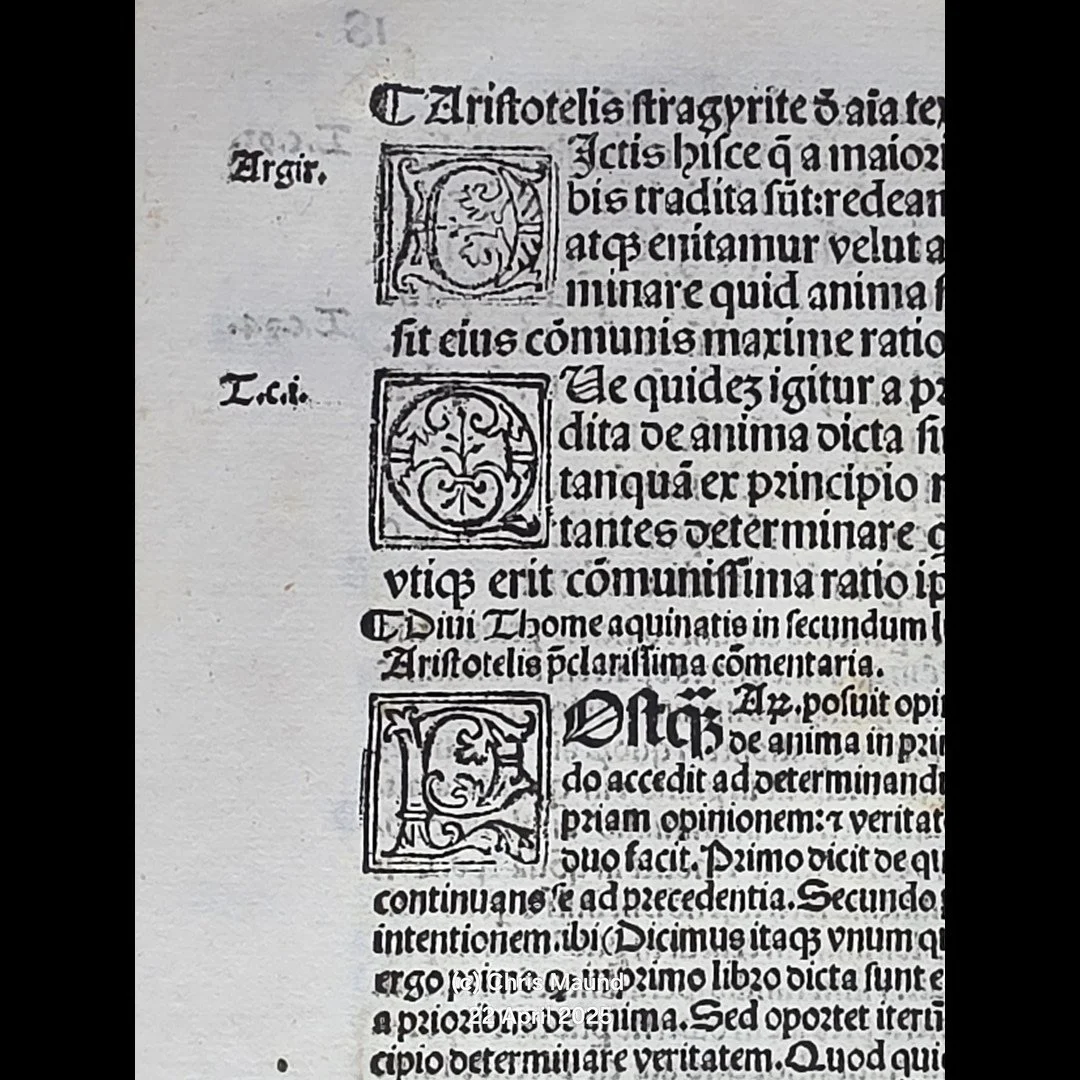 Image 7 of 26
 Image 8 of 26
 Image 9 of 26
 Image 10 of 26
 Image 11 of 26
 Image 12 of 26
 Image 13 of 26
 Image 14 of 26
 Image 15 of 26
 Image 16 of 26
 Image 17 of 26
 Image 18 of 26
 Image 19 of 26
 Image 20 of 26
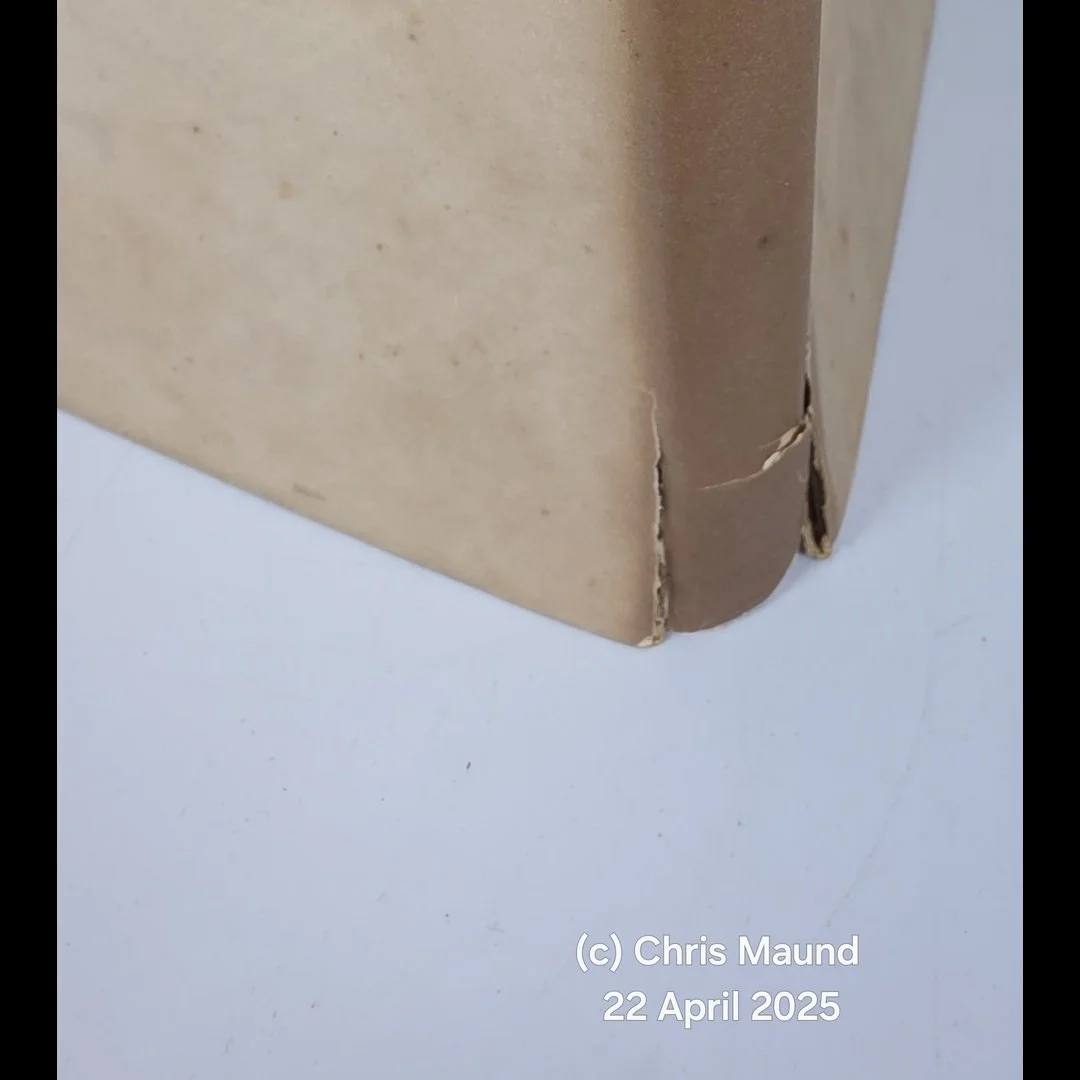 Image 21 of 26
 Image 22 of 26
 Image 23 of 26
 Image 24 of 26
 Image 25 of 26
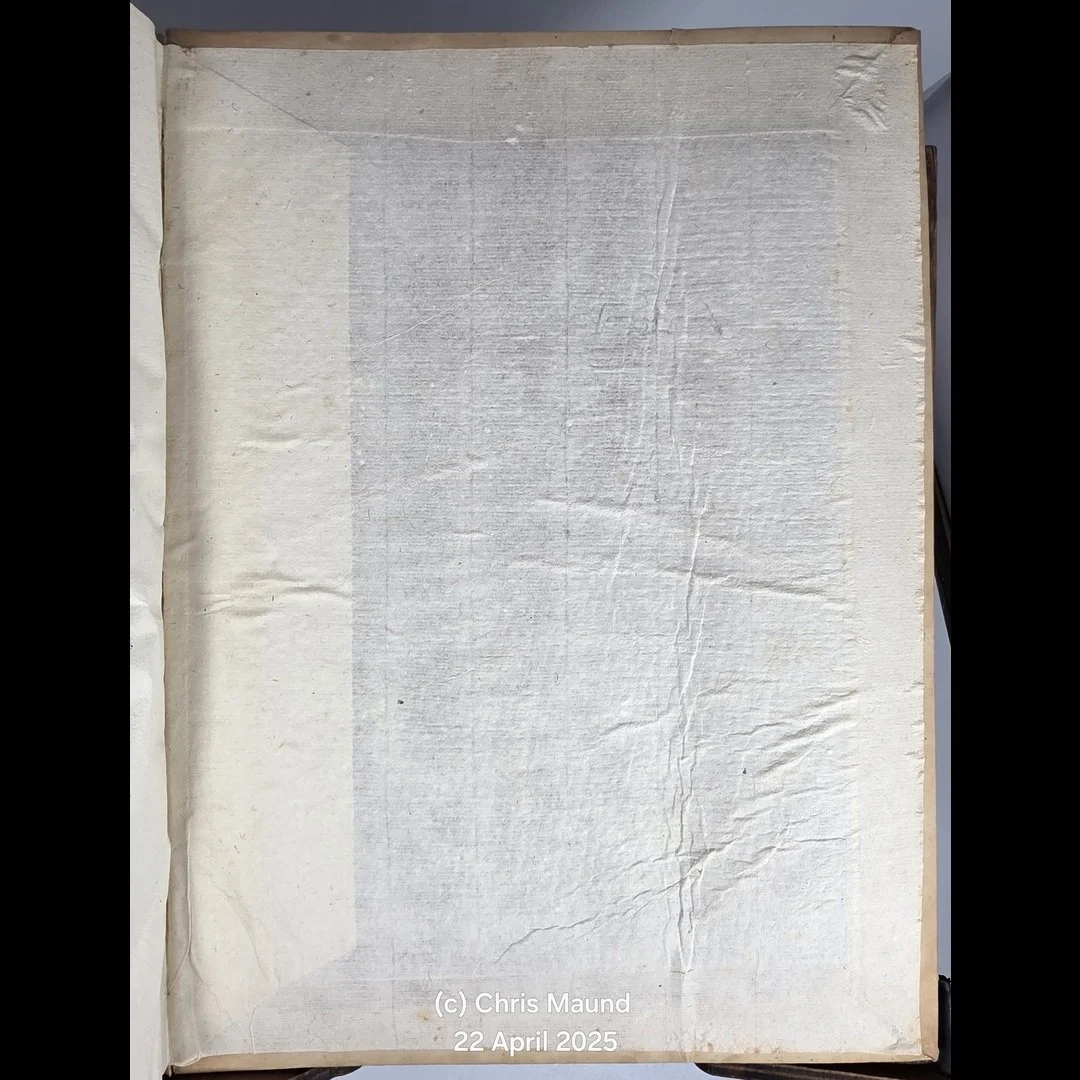 Image 26 of 26