1690 Fifth Edition With Provenance
COMMENTARIUS IN ARISTOTELIS PHYSICAM
By Pierre Barbay
KEY DETAILS
Condition: Good
Format: Full Calf, 12mo.; [12], 513, [3] pp.
Volume: Tomus Primus — Volume I of II
Published By: Parisiis, apud Georgium & Ludovicum Josse, via Jacobaea, sub signo Coronae Spineae, Paris, 1690
Language: Latin
Provenance: With oval institutional ink stamp to the front free endpaper:
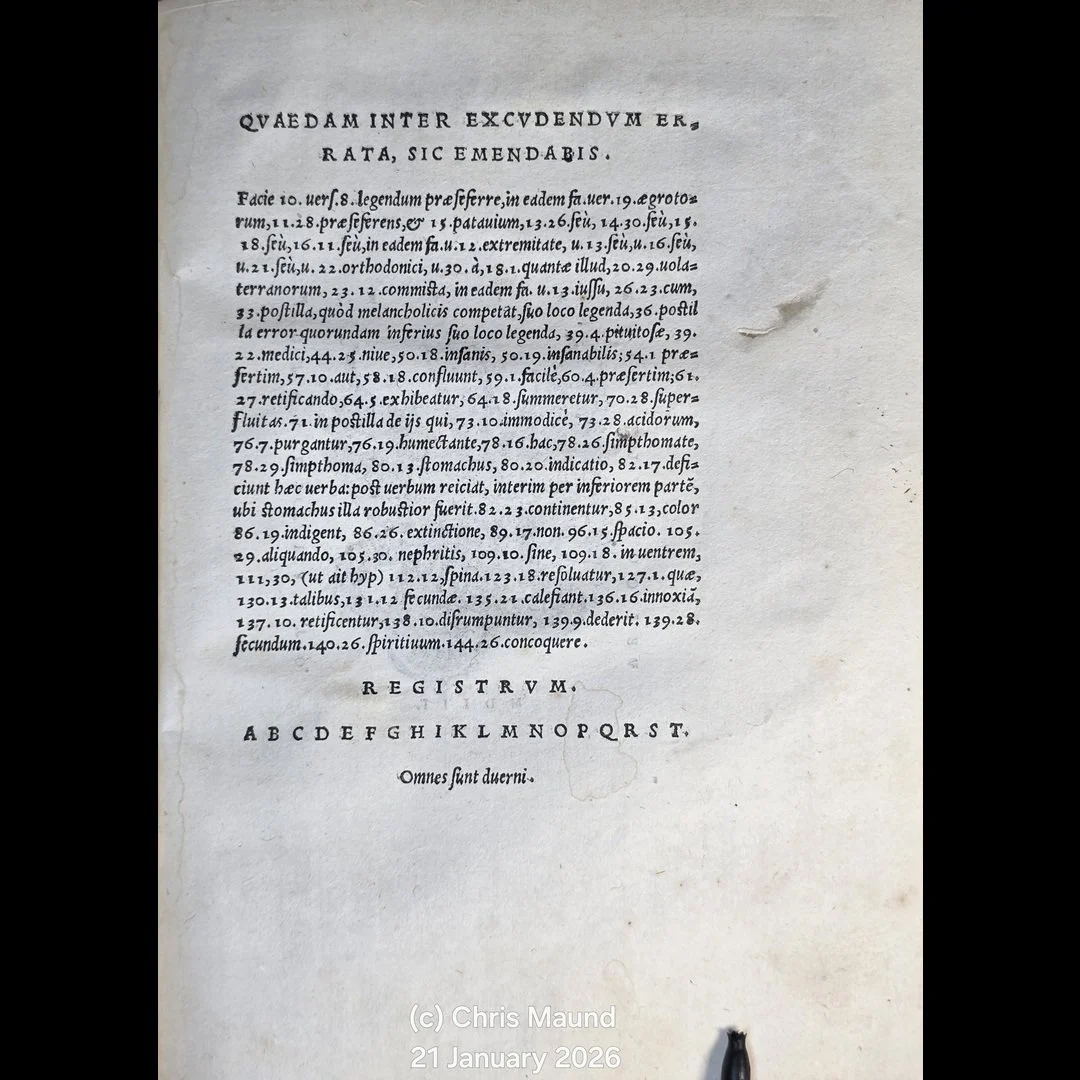
Collation: [12], 513, [3] pp.
Dust Jacket: None, as issued, No Jacket
SKU: BTETM0002559
Shipping Info: Approximate Package Dimensions H: 12.5, L: 30, W: 25 (Units: cm), W: 2Kg
Tracked Shipping, Insurance Coverage as per Customer Request
DESCRIPTION
Commentarius in Aristotelis Physicam
Tomus Primus — Volume I of II
A scarce and appealing fifth edition of Pierre Barbay’s Commentarius in Aristotelis Physicam, a substantial late-seventeenth-century exposition of Aristotelian natural philosophy, here preserved as Tomus Primus, the first of two volumes.
Published at Paris by George and Louis Josse in 1690, the work belongs to Barbay’s influential course of Aristotelian philosophy used in French academic teaching during the later seventeenth century. This first volume treats the principles of the physical world, including matter and form, causation, motion and change, continuity, infinity, place and time.
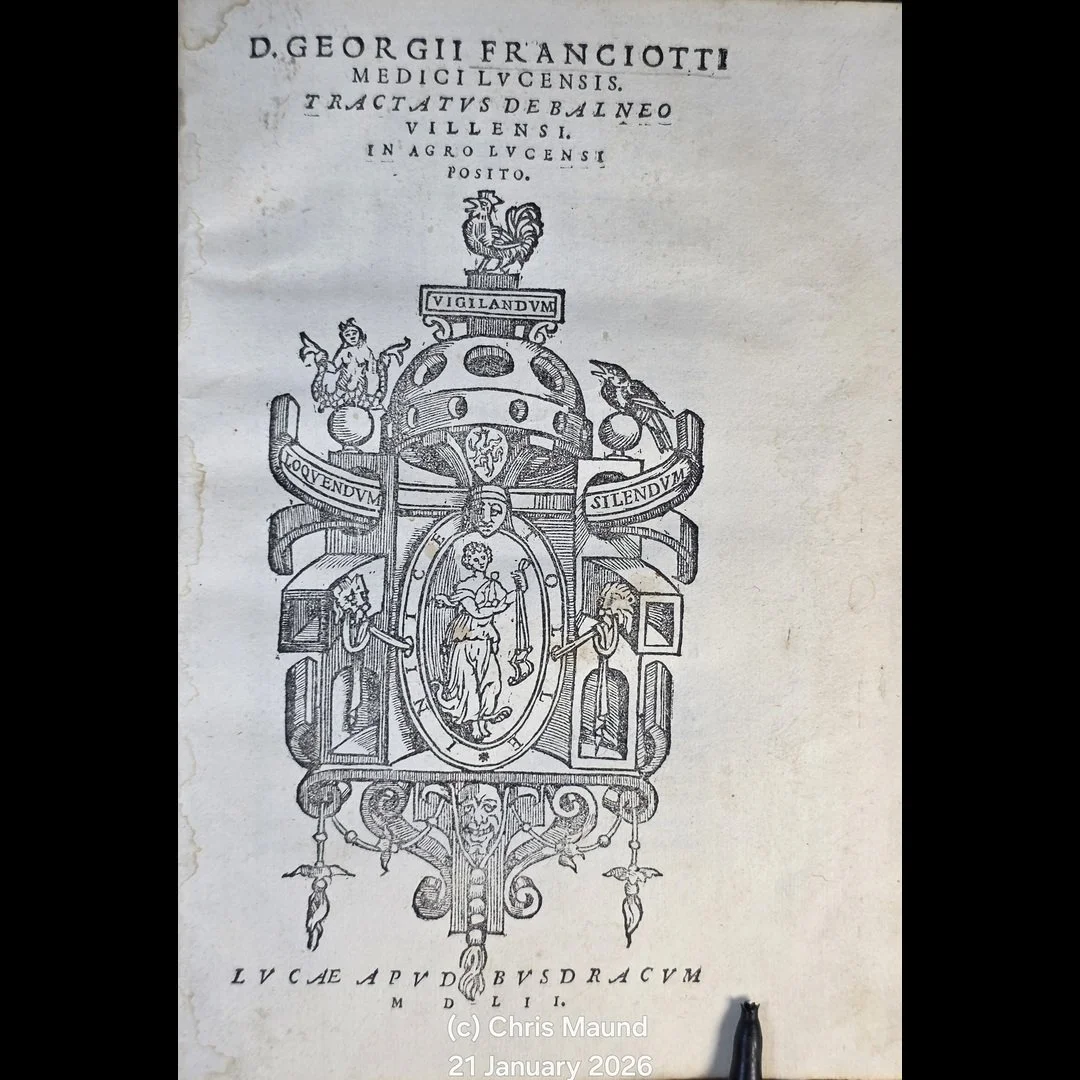
The title page specifically advertises this fifth edition as:
Editio Quinta, emendatior multò, Schematibus Philosophicis adornata, & figuris ad Sphaeram spectantibus aucta.
— substantially corrected, furnished with philosophical diagrams, and augmented with figures relating to the sphere.
These additions are particularly important. From p.402 the volume concludes with the separately headed Tractatus de Sphaera Caelesti, an extensive illustrated treatment of astronomy and cosmology occupying more than one fifth of the principal text.
Barbay discusses the celestial sphere, geographical and celestial circles, planetary motions, eccentrics and epicycles, eclipses and competing models of the cosmos. The section compares the Ptolemaic, Copernican and Tychonic systems, providing a fascinating example of traditional Aristotelian natural philosophy engaging directly with the astronomical developments of the Scientific Revolution.
The astronomical material also reflects the impact of telescopic discovery. Barbay refers to the Medicean stars, the four satellites of Jupiter first observed by Galileo, alongside the so-called Borbonian bodies associated with the Sun, derived from Jean Tarde’s interpretation of sunspots as small circumsolar planets.
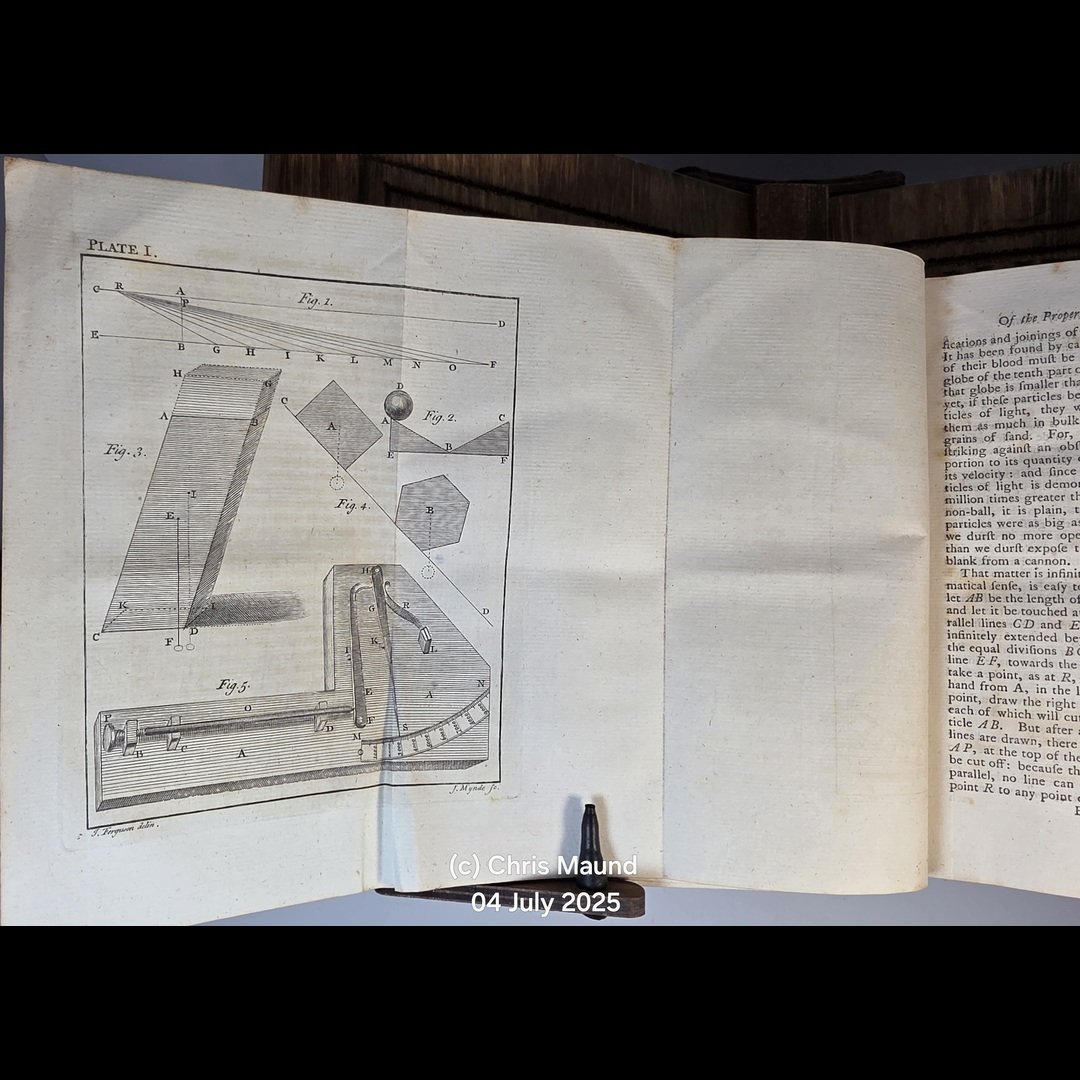
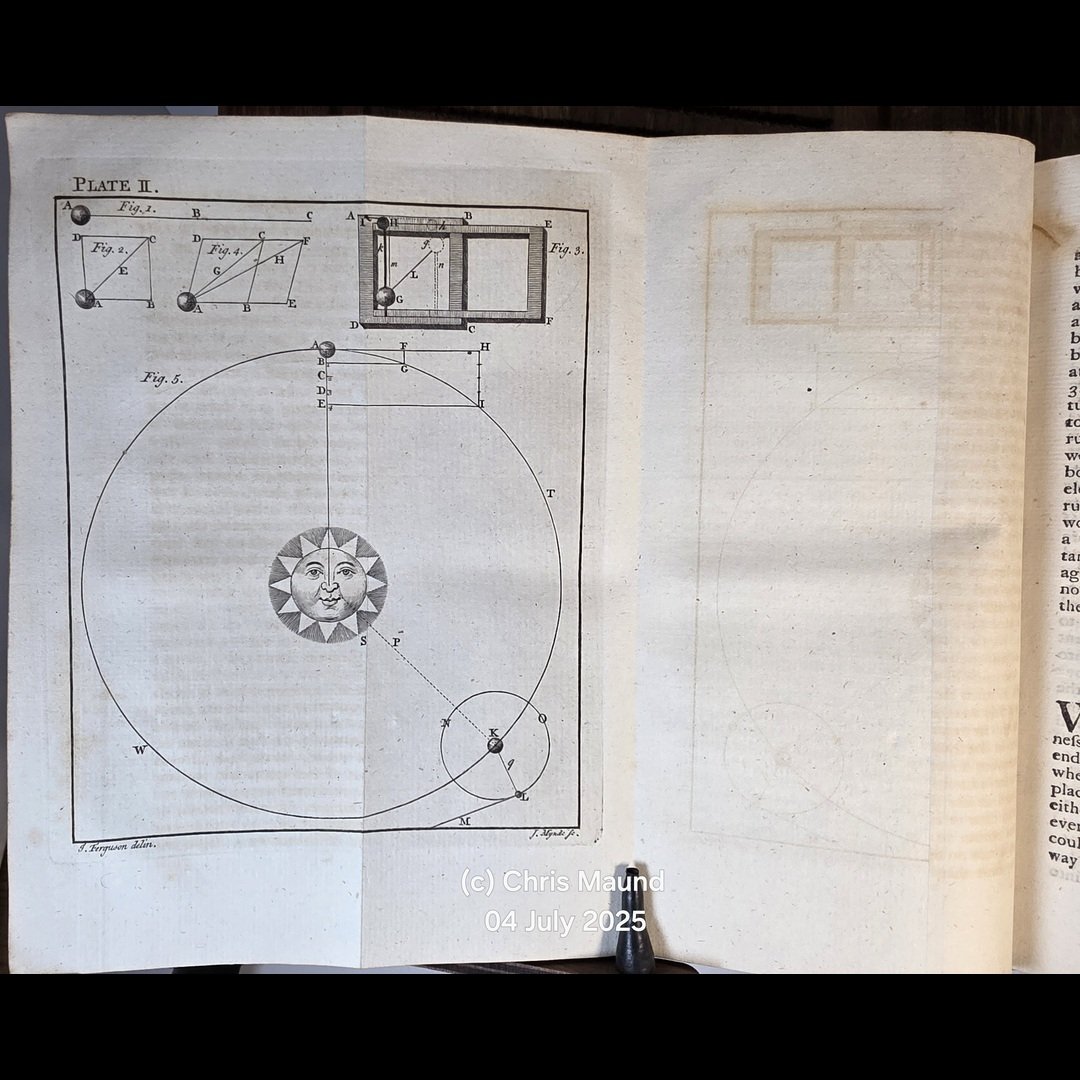
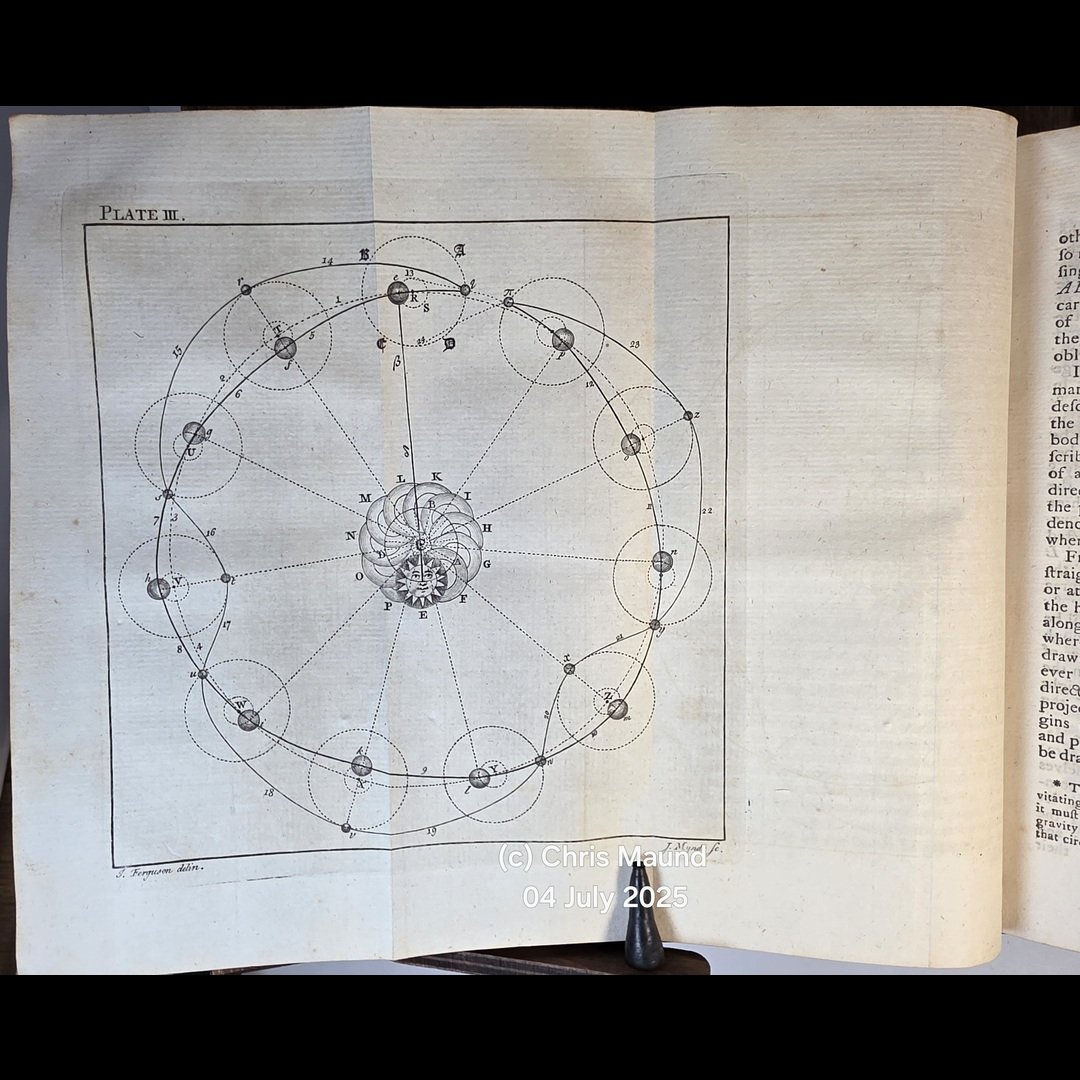
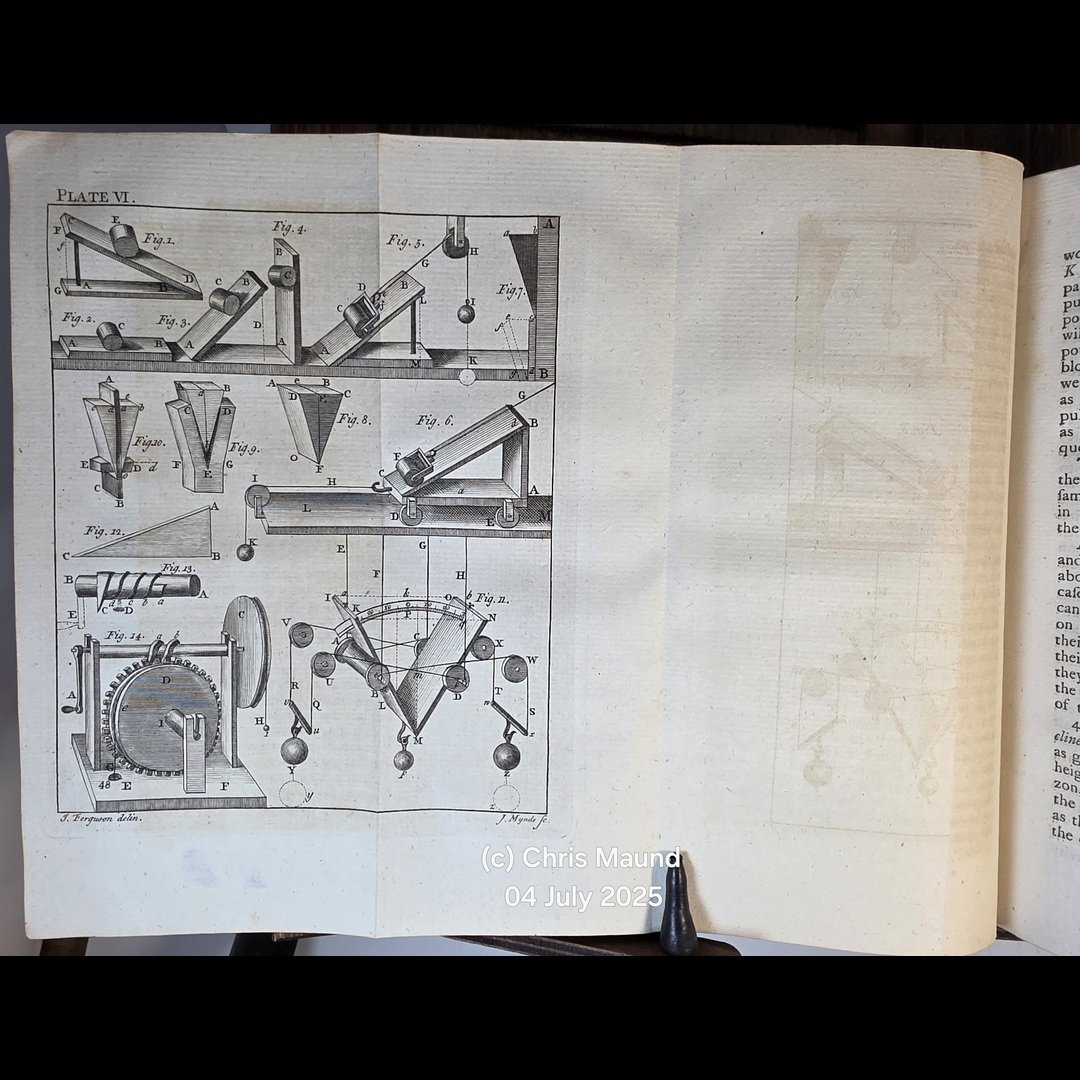
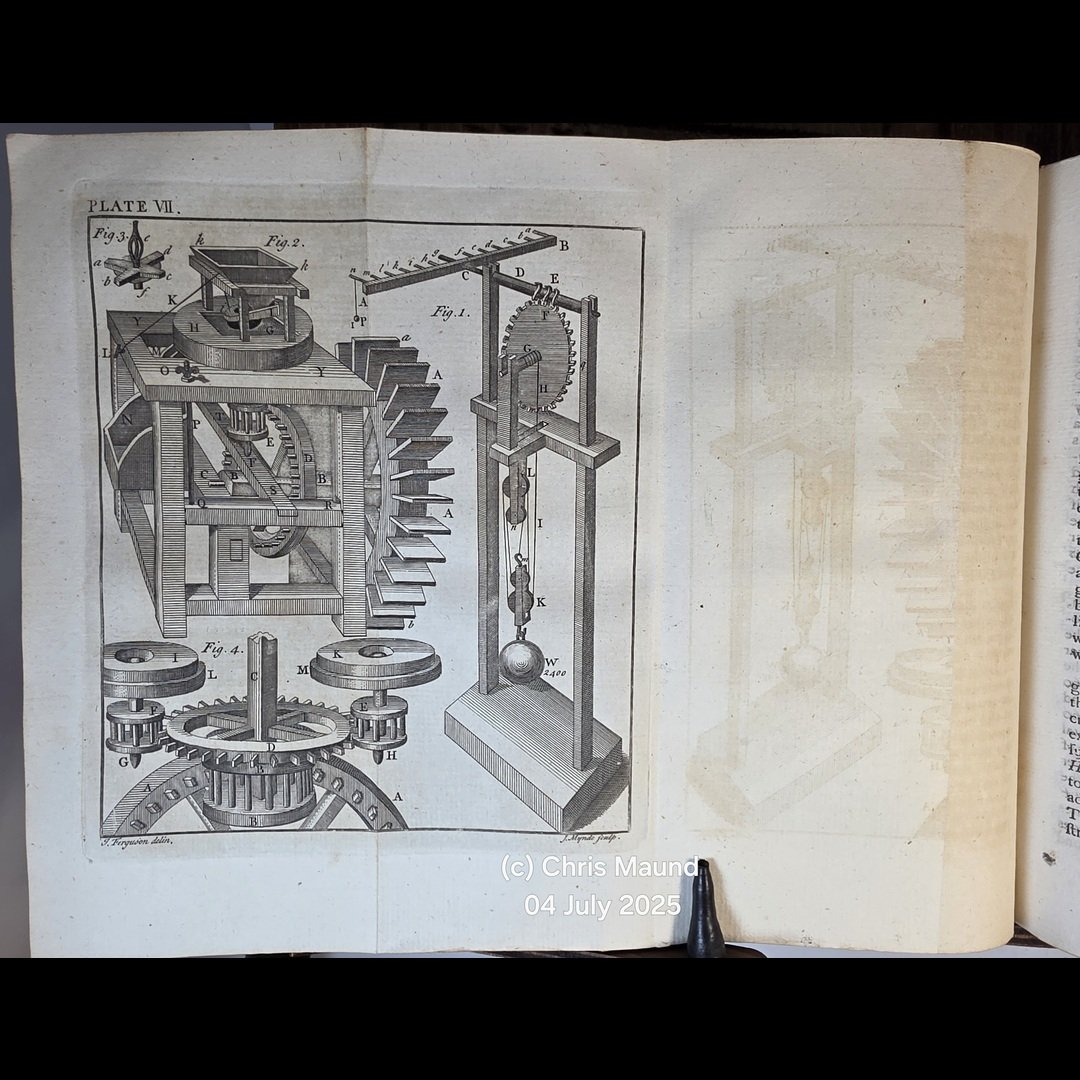
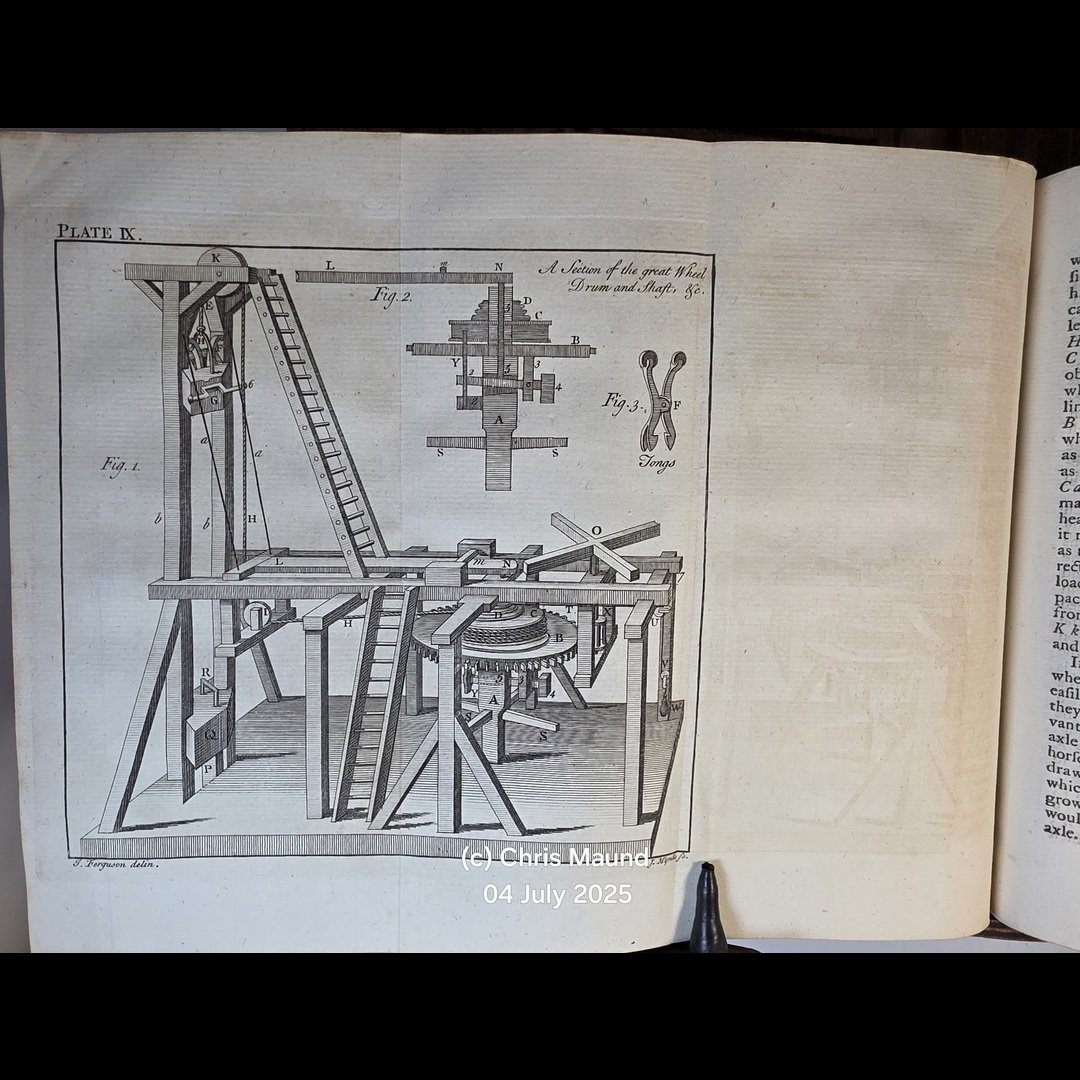
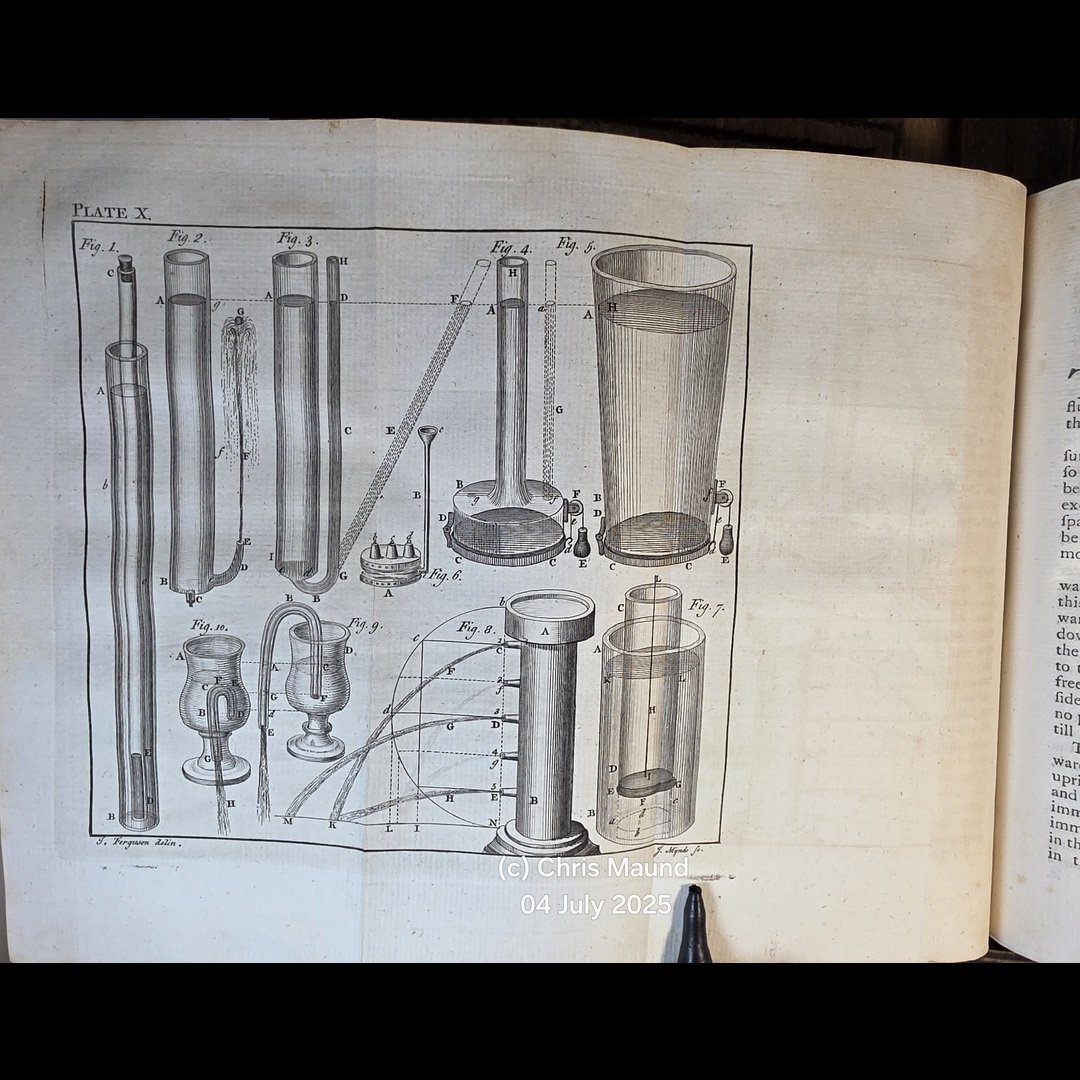
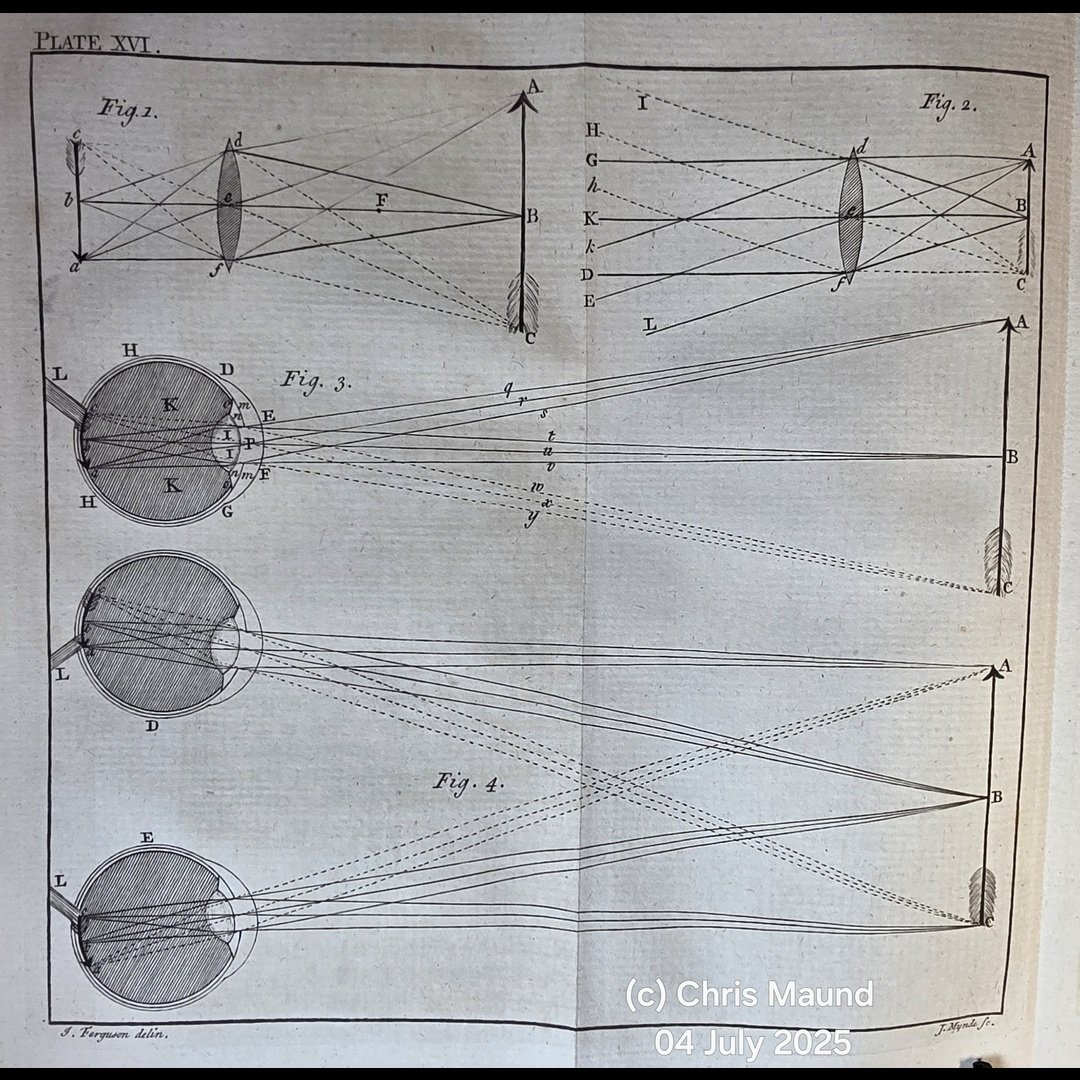
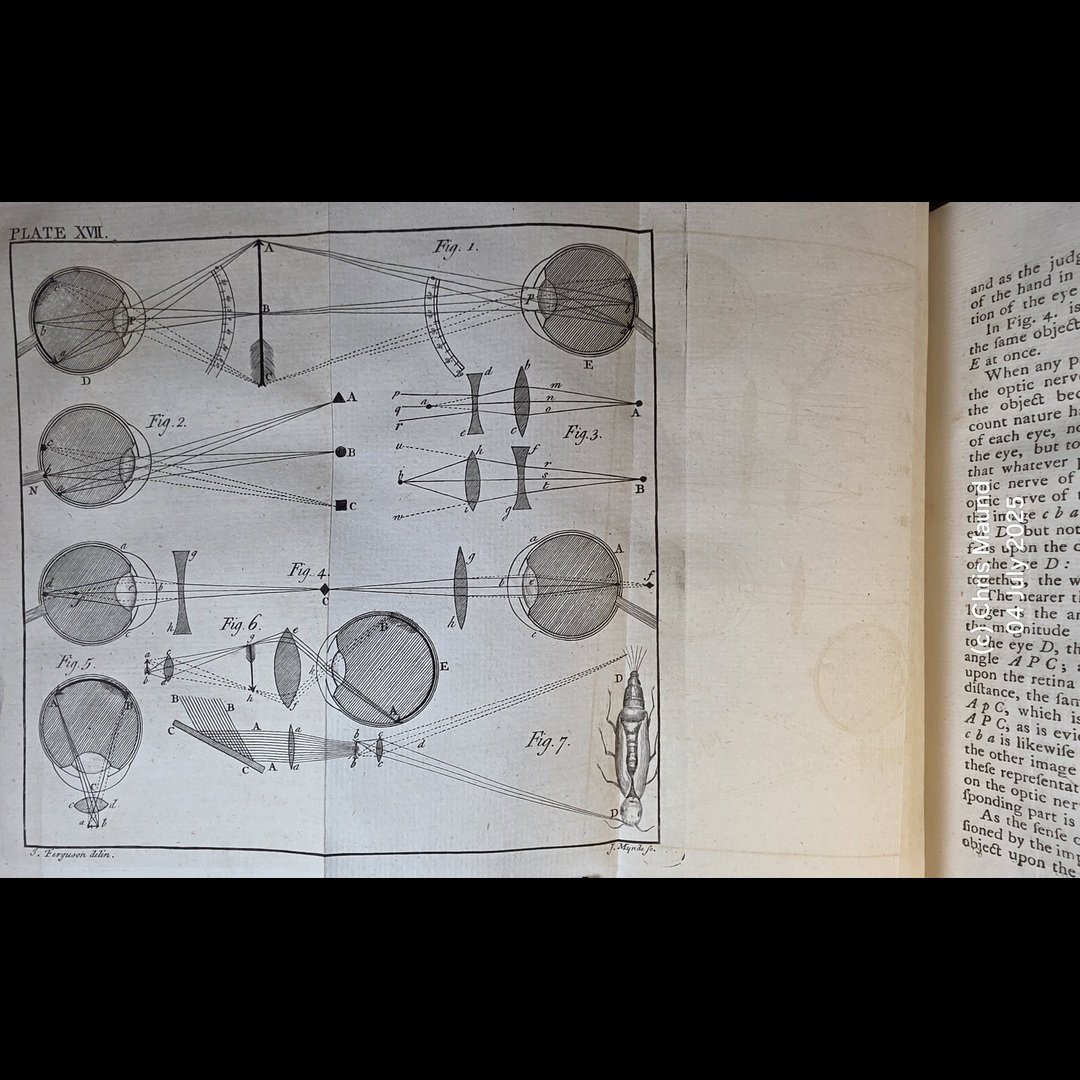
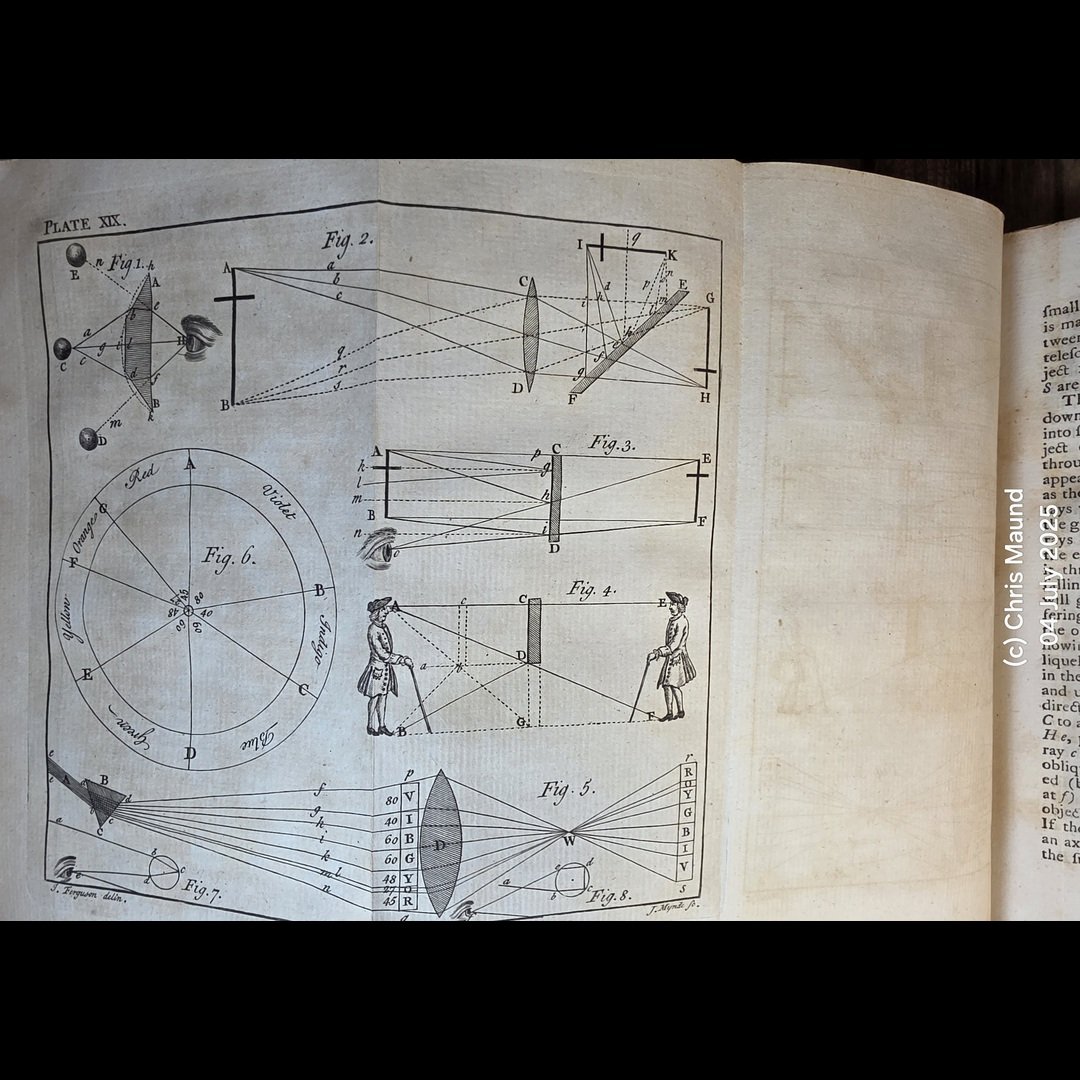
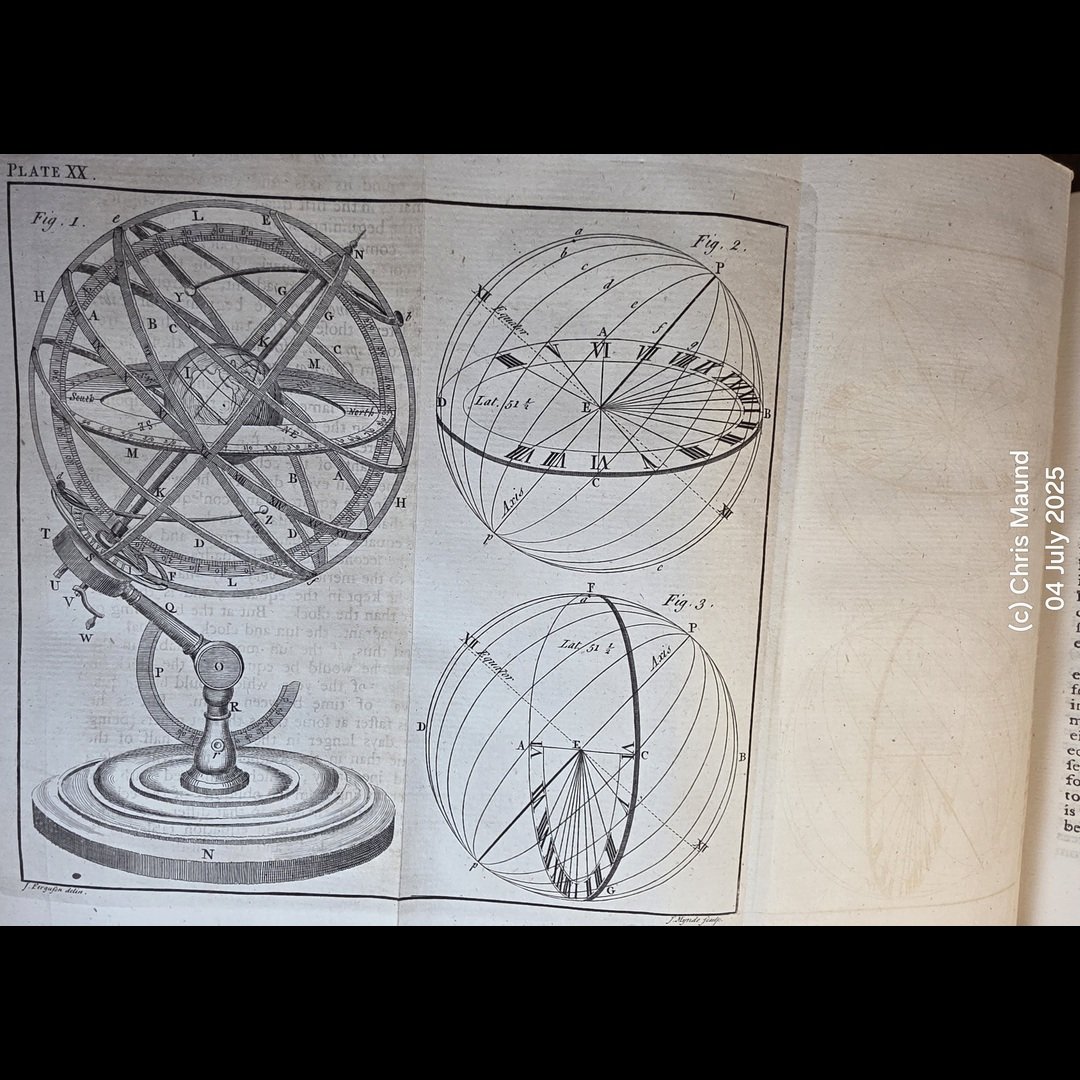
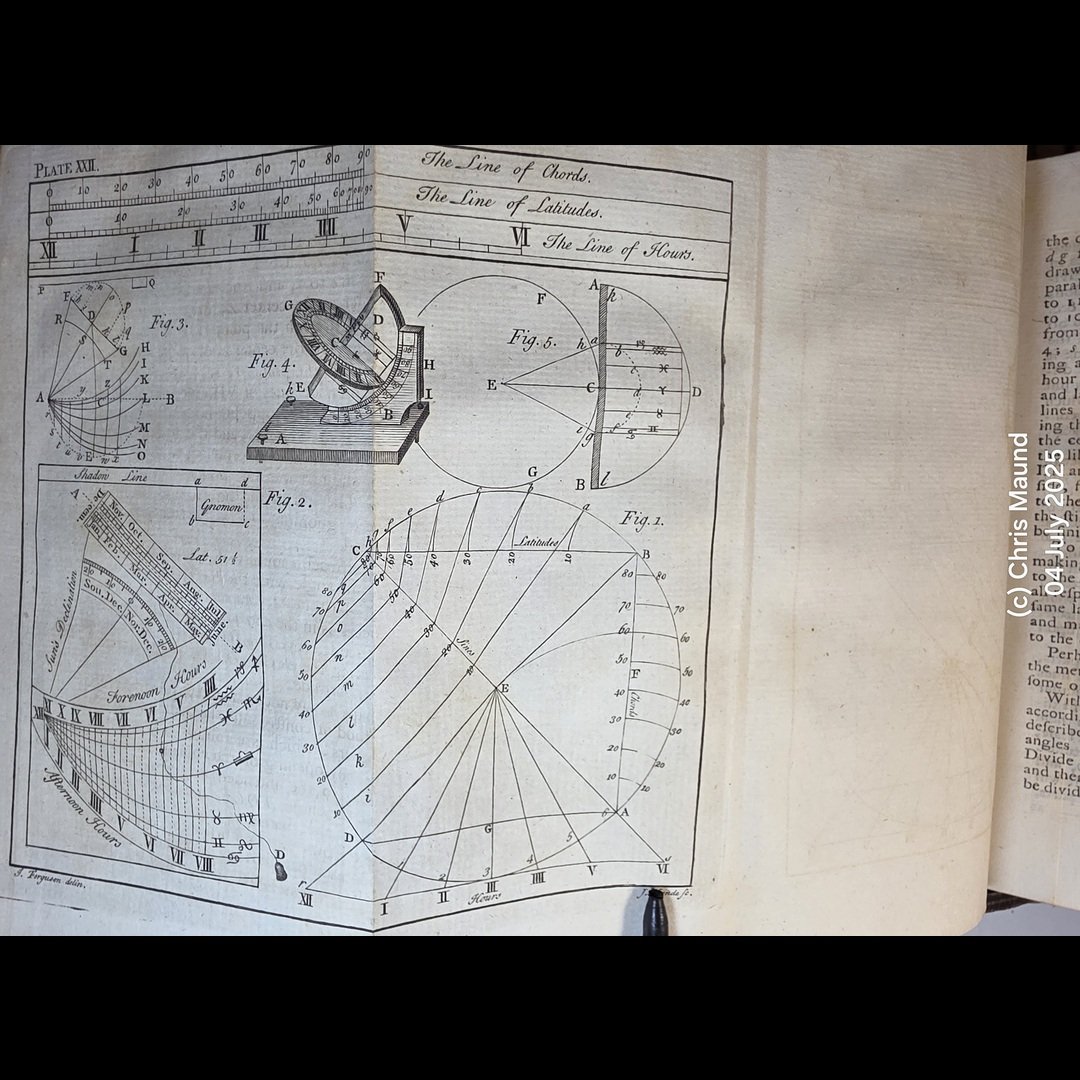
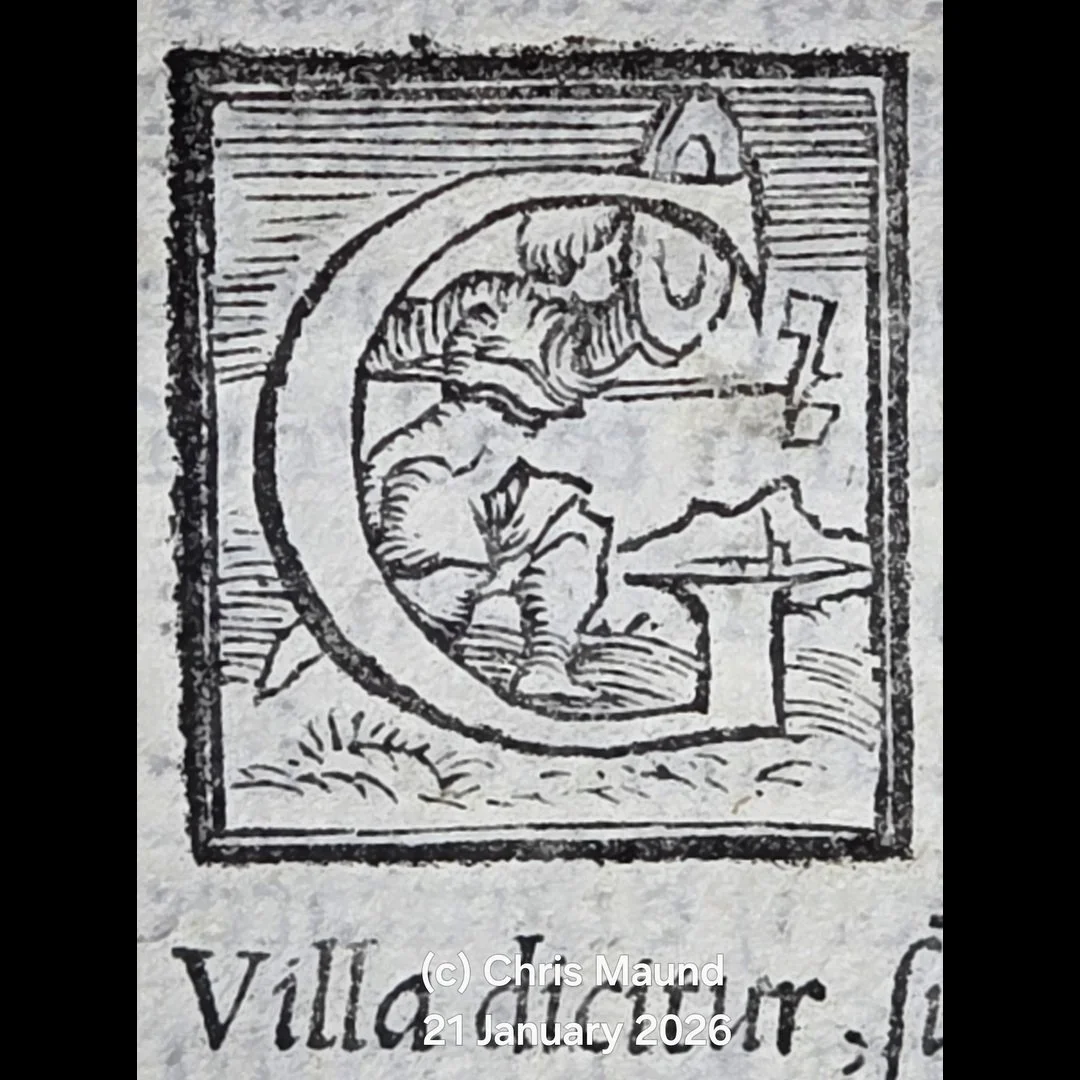
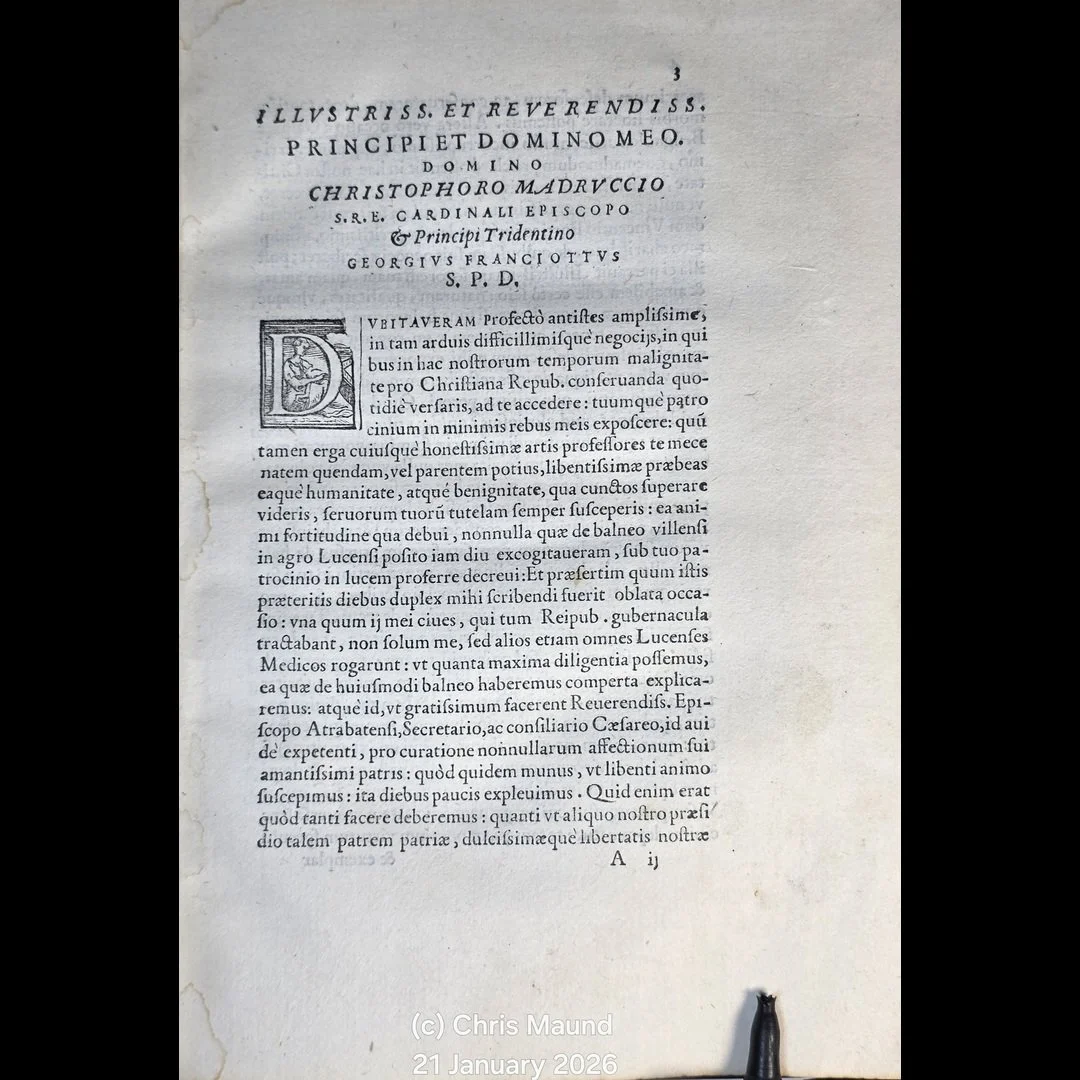
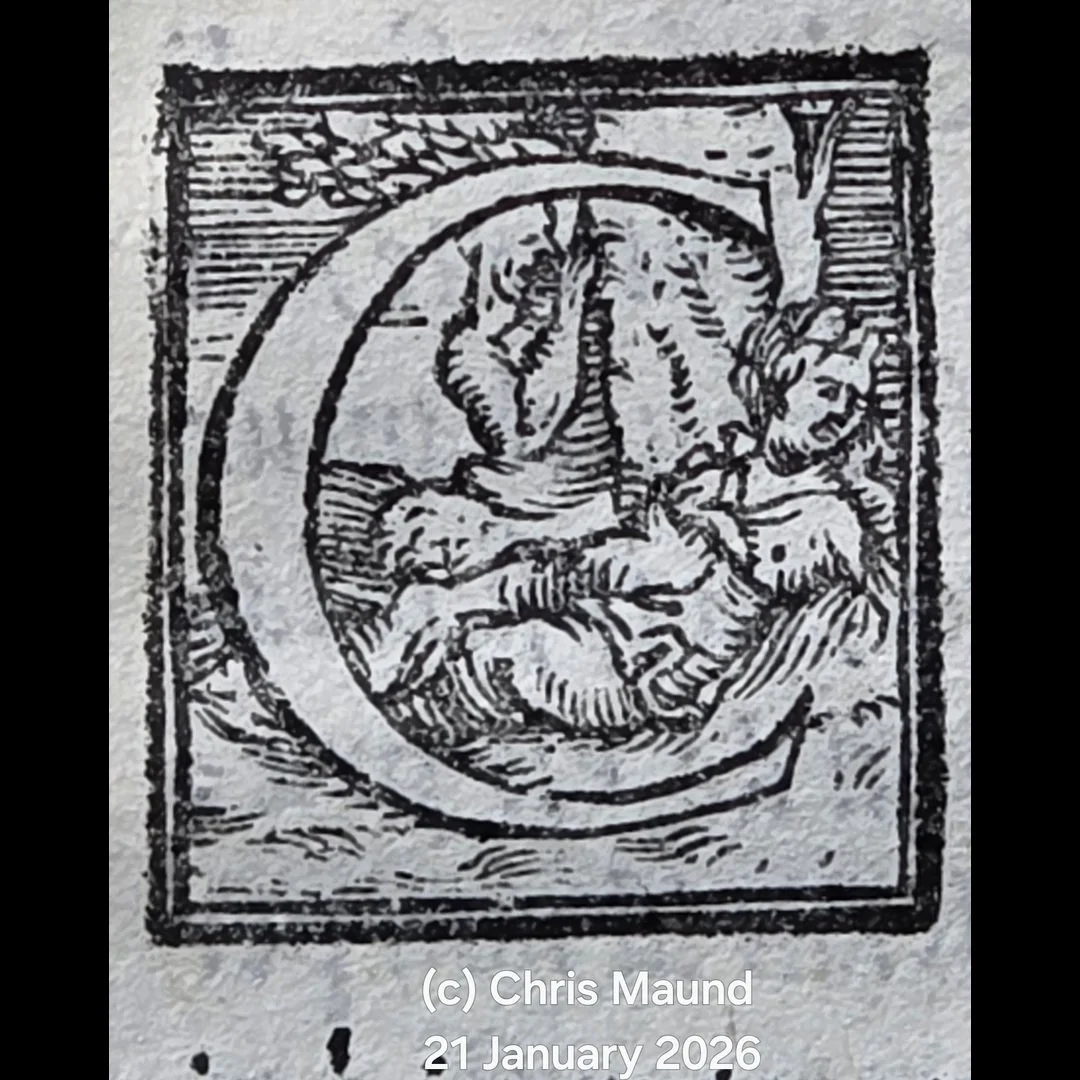
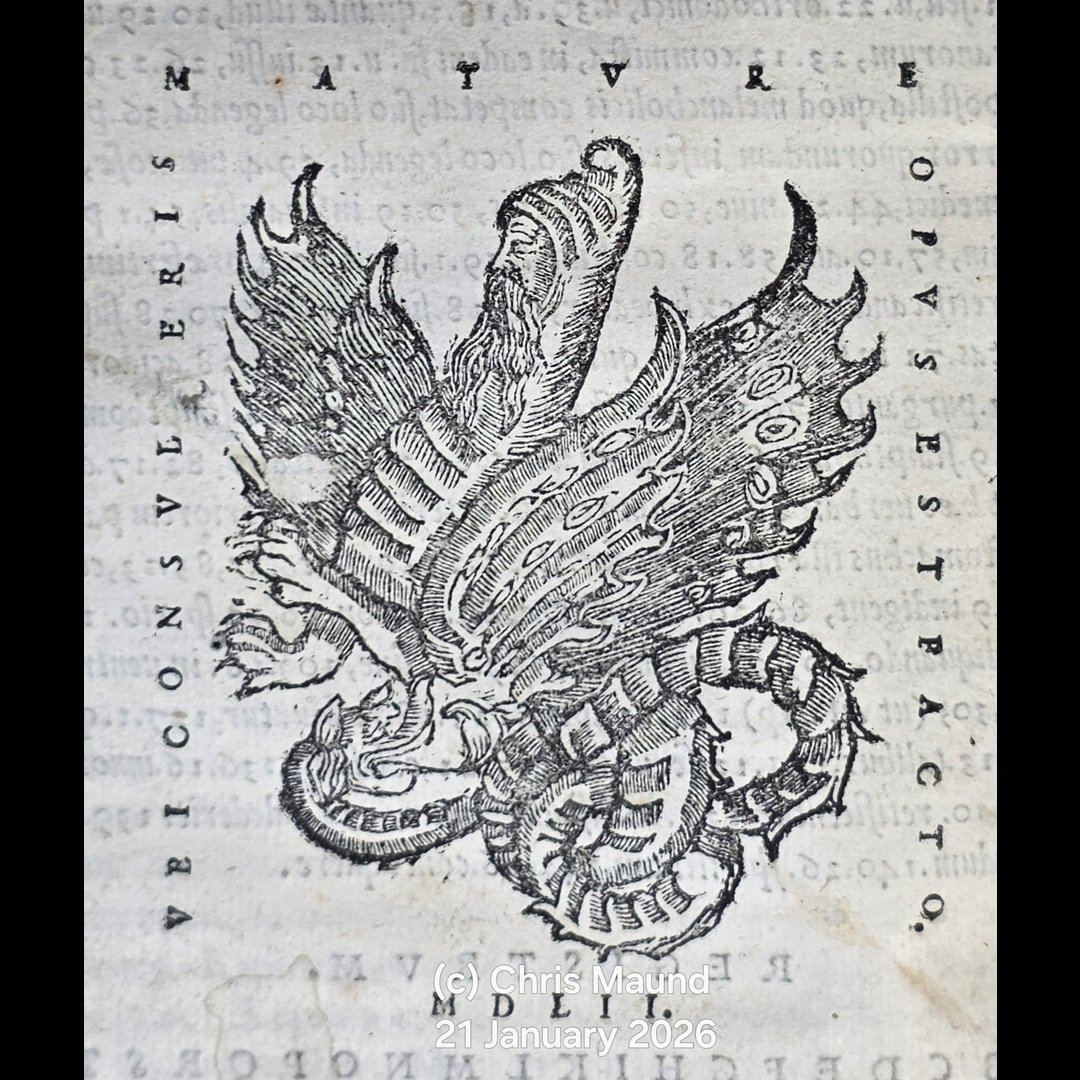
Numerous in-text philosophical, geometrical, astronomical and cosmological diagrams appear throughout, together with decorative initials, headpieces and ornaments.
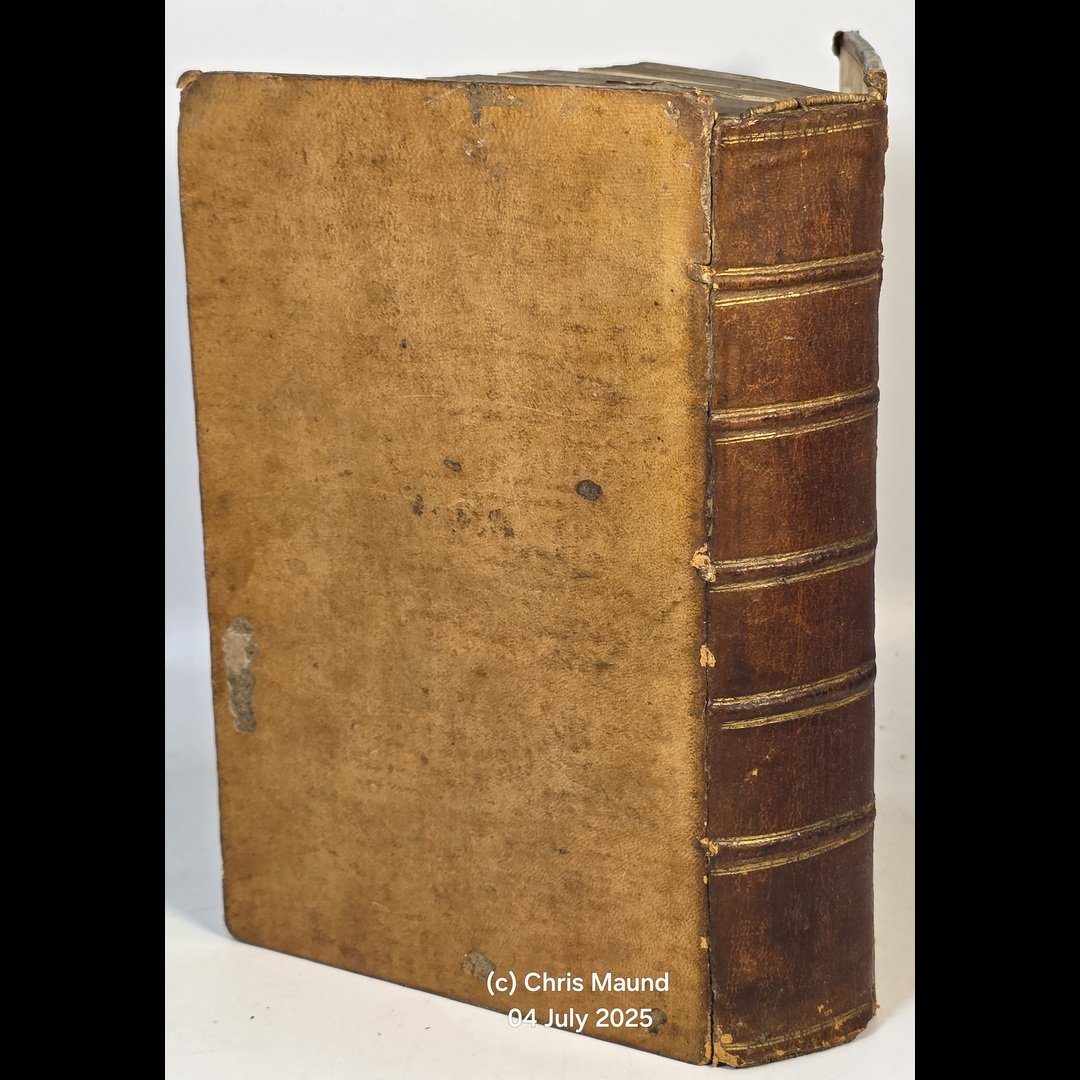
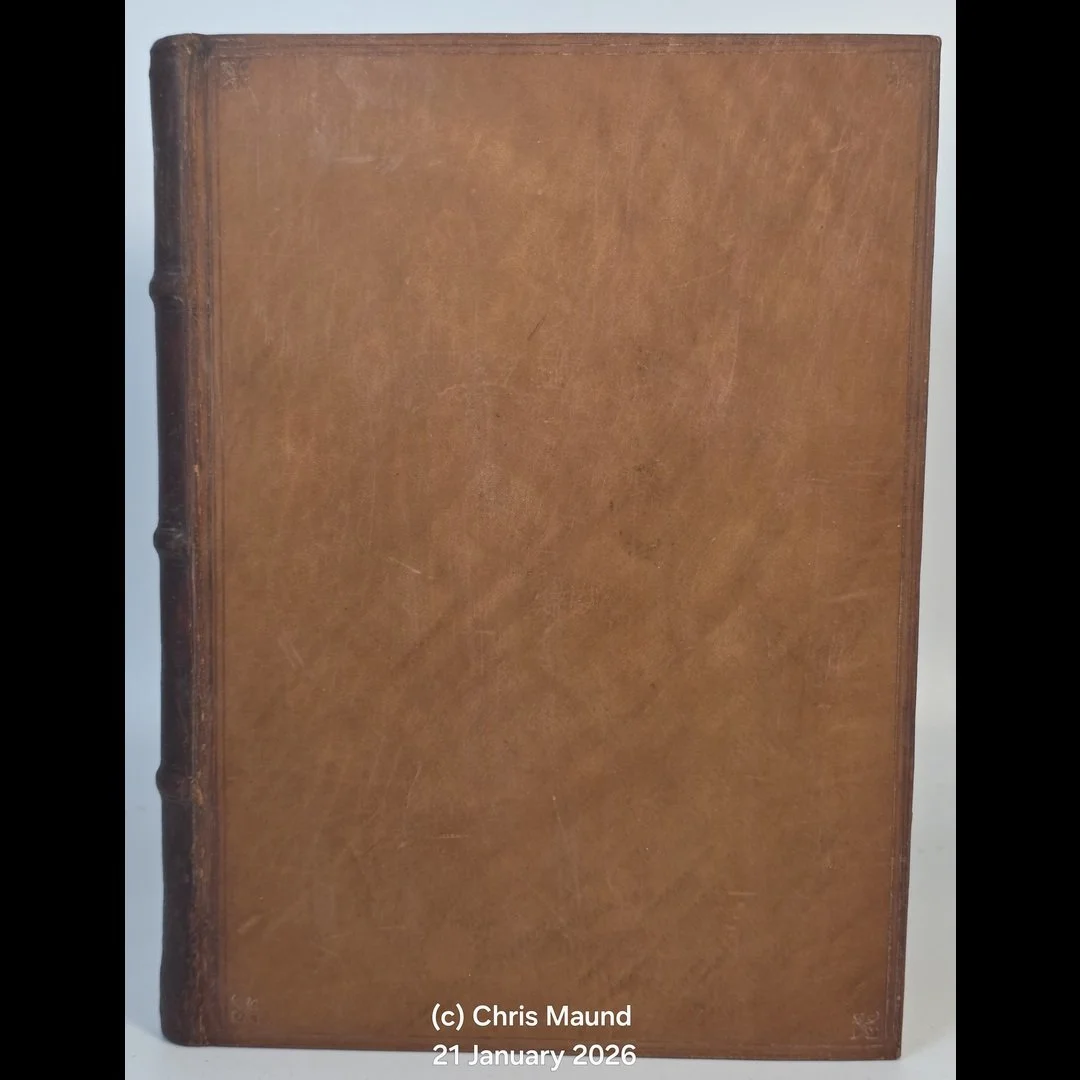
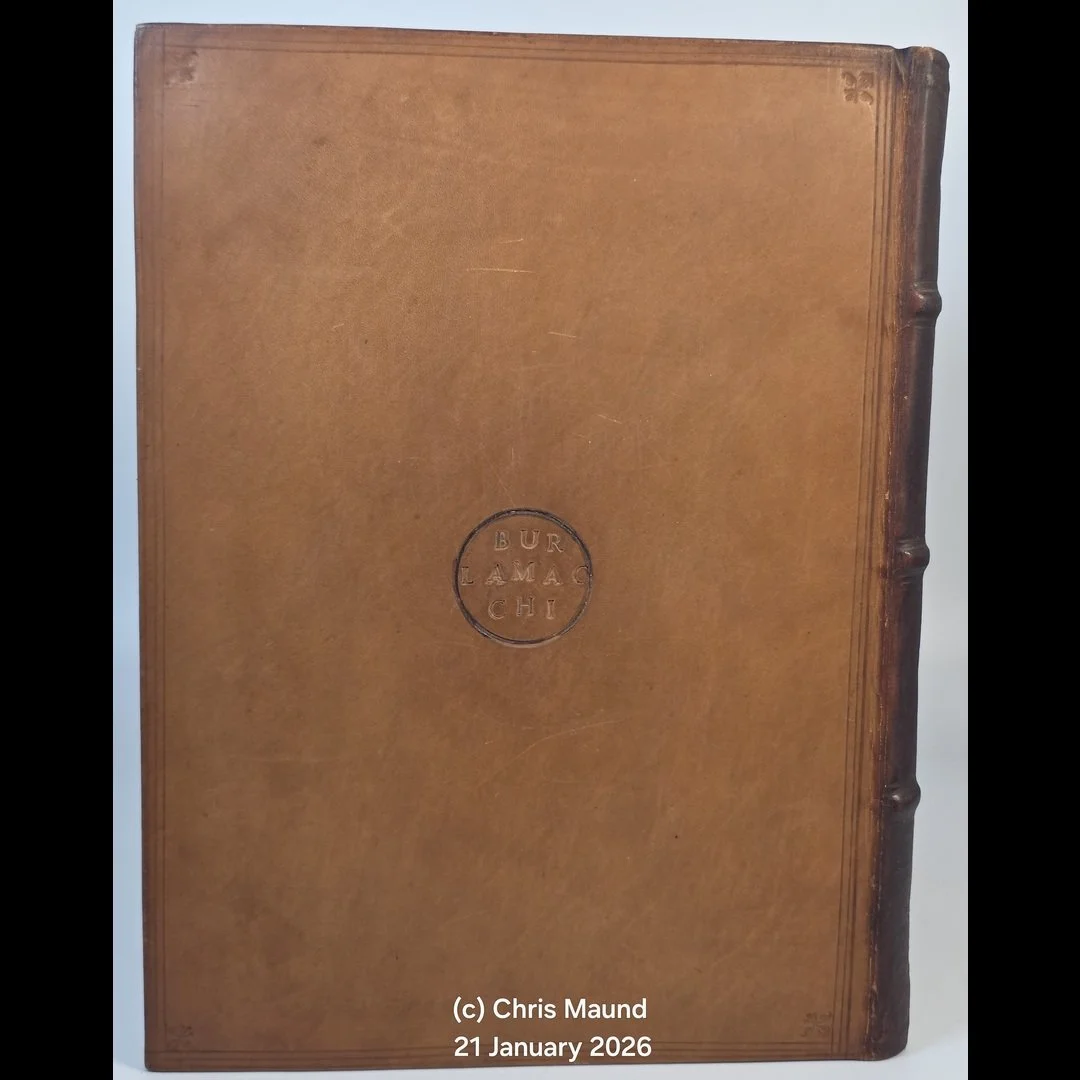
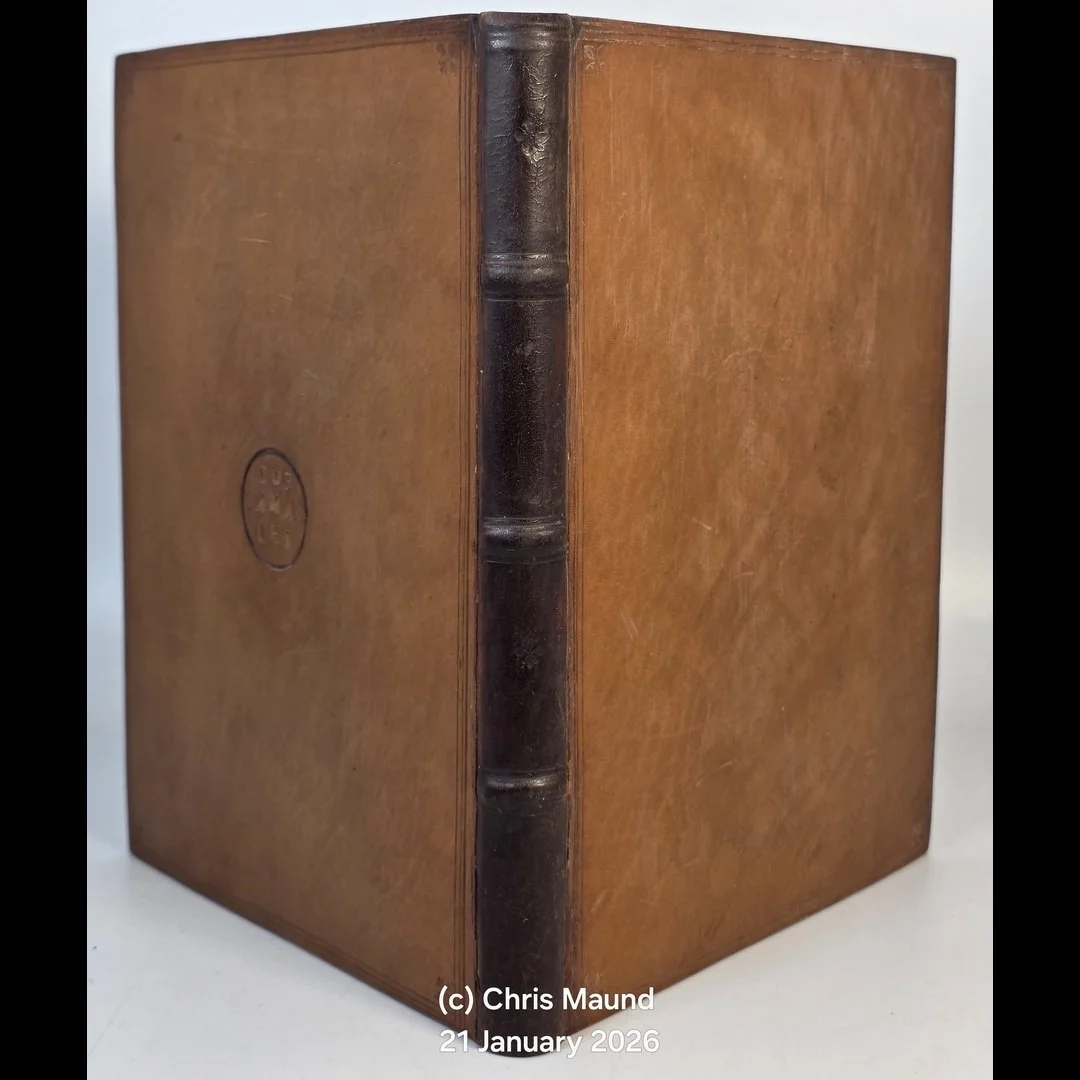
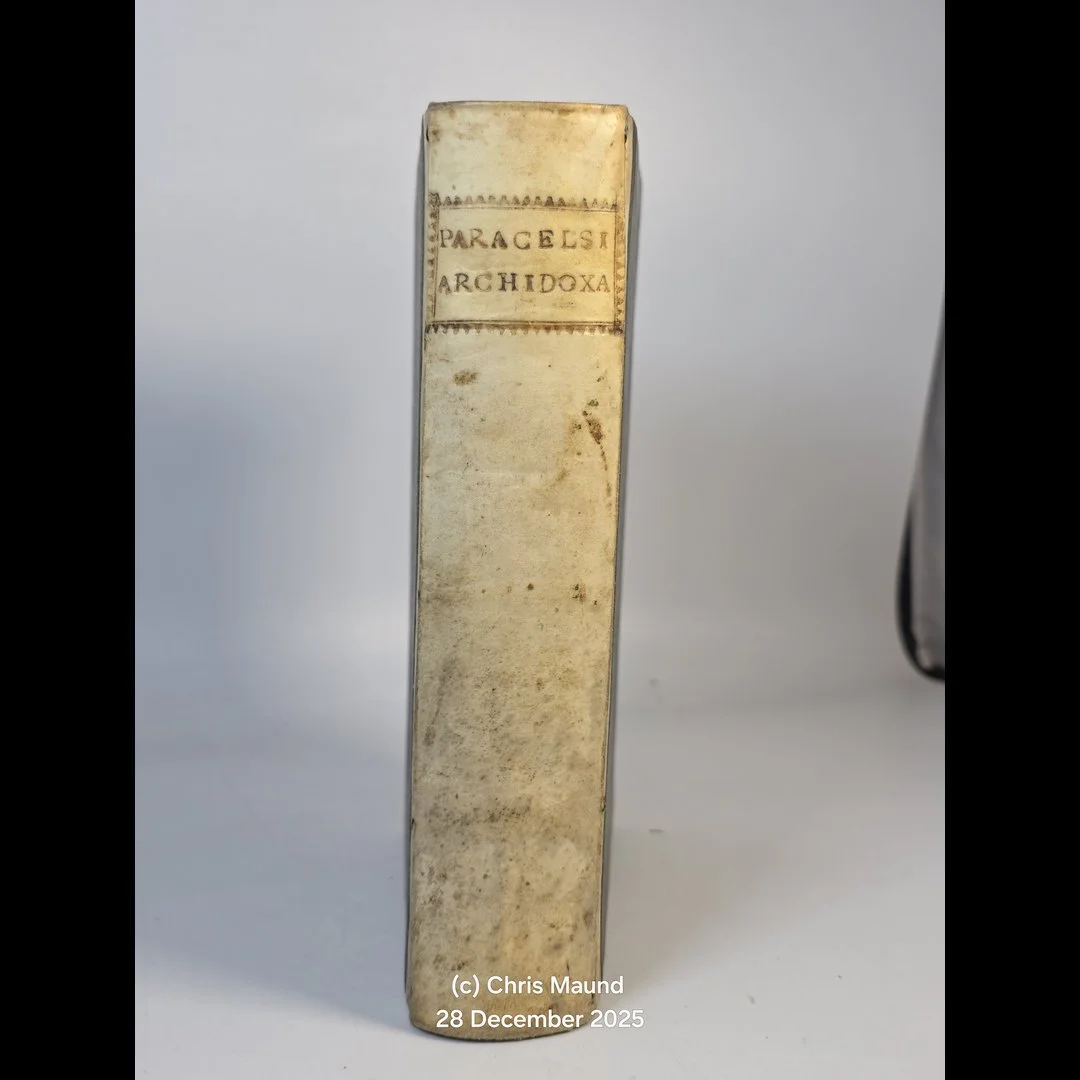
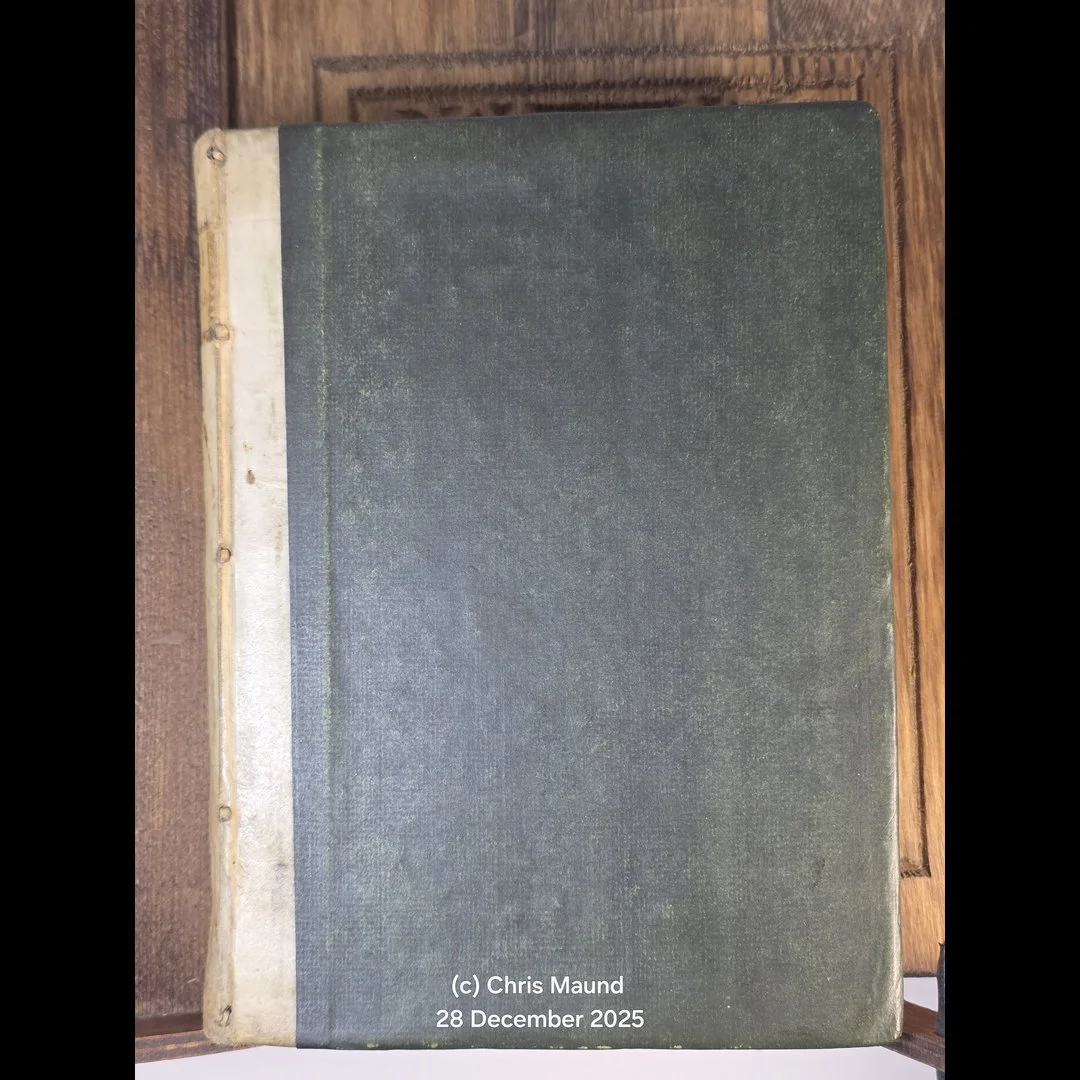
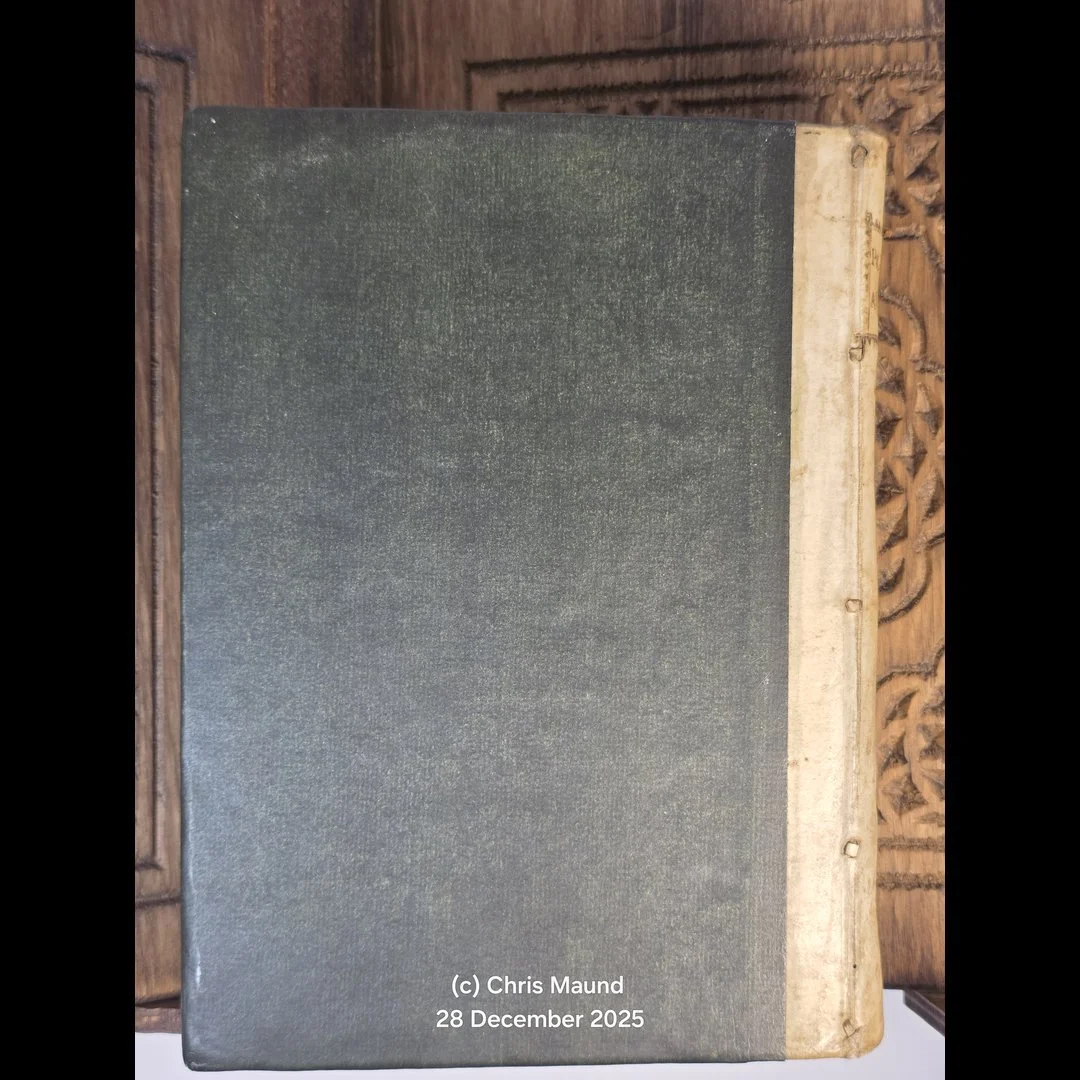
Bound in attractive contemporary full calf, the spine with raised bands, gilt floral decoration, gilt title BARBAEI PHYSICA, and volume designation TO. I; red-speckled edges.
PROVENANCE
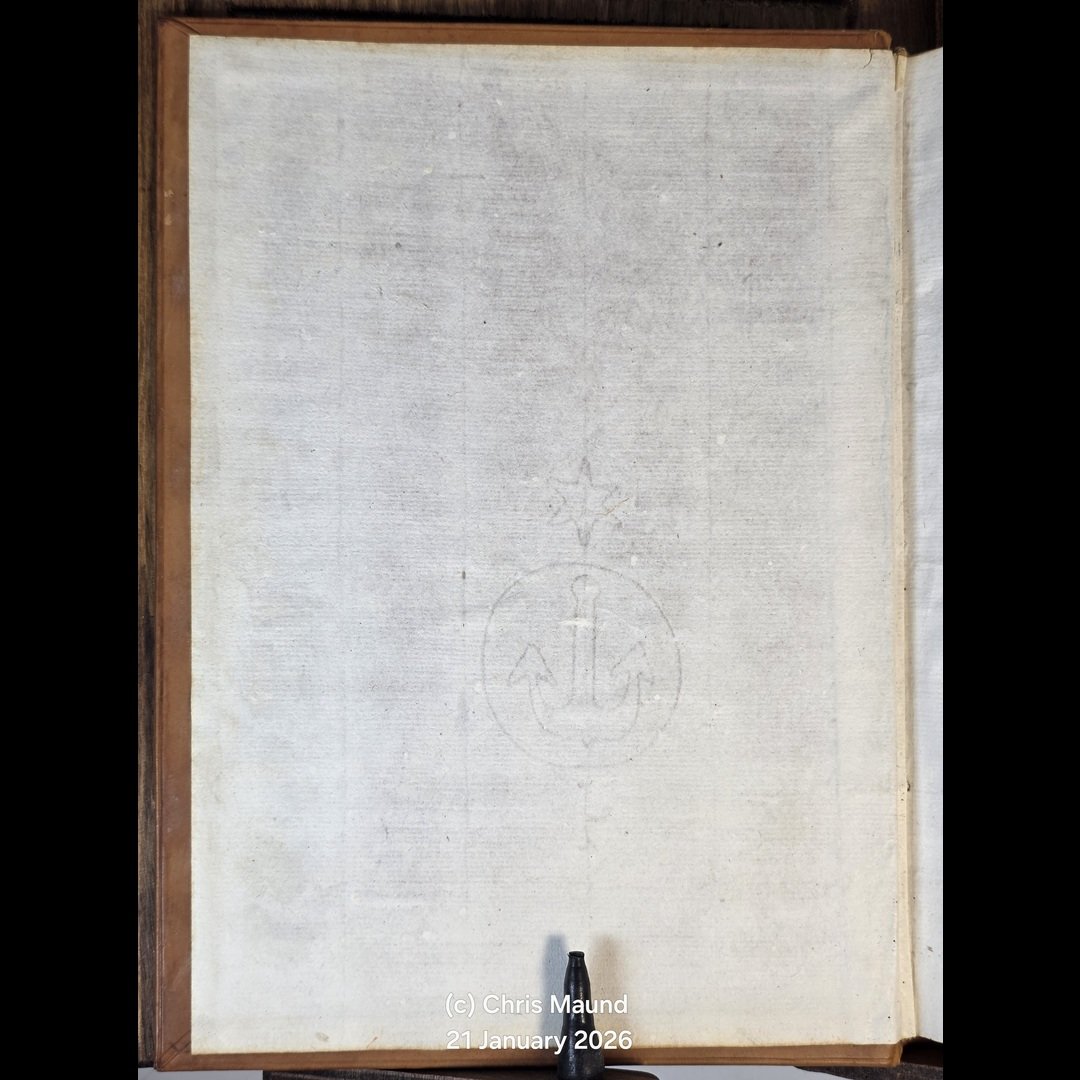
With oval institutional ink stamp to the front free endpaper:
BIBLIOTH. GD SÉMINAIRE
MONTAUBAN
for the Bibliothèque du Grand Séminaire de Montauban.
An appropriate provenance for a work conceived for philosophical education, the volume having subsequently formed part of the library of the Grand Seminary at Montauban.
CONDITION, COLLATION & COPY NOTES
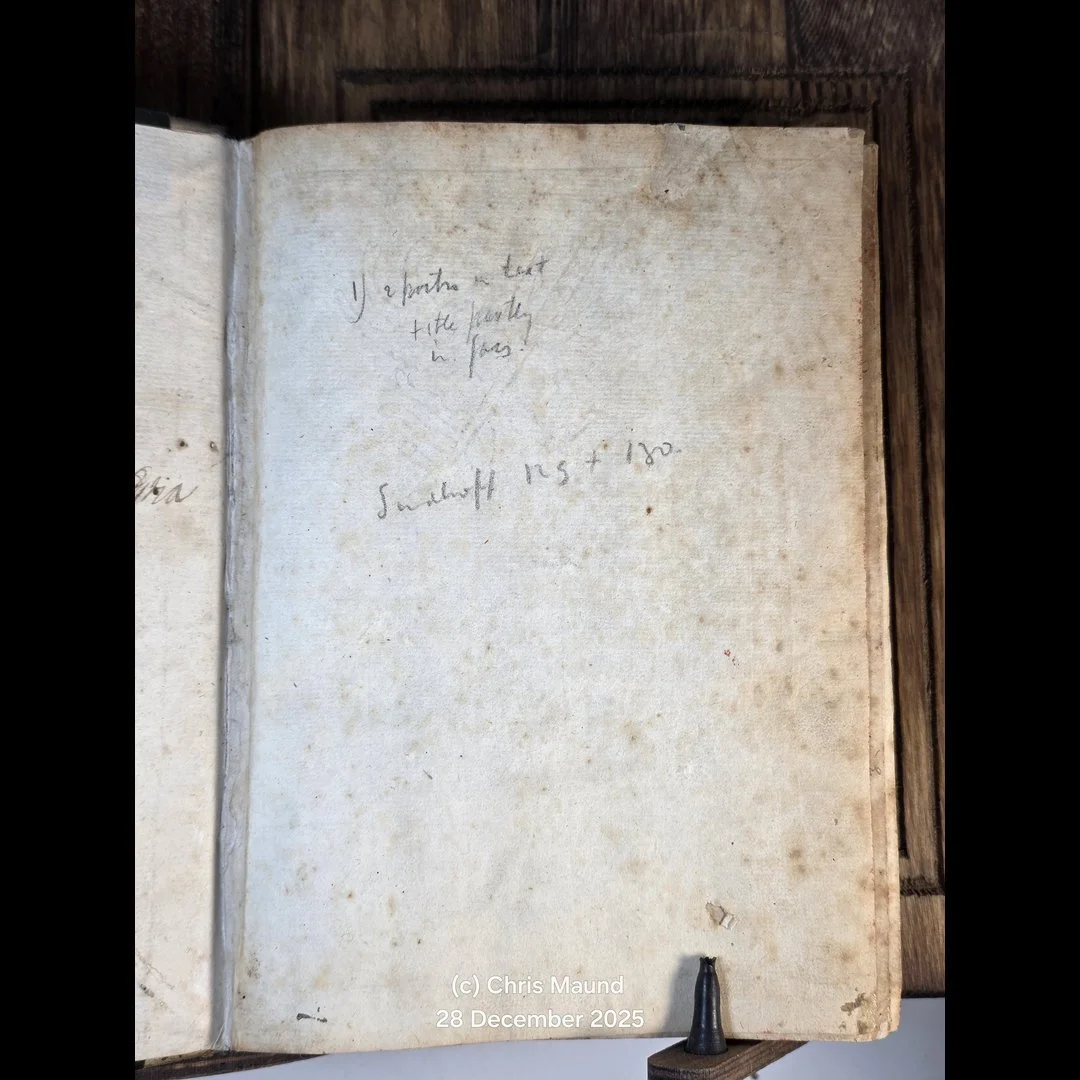
A sound copy in contemporary full calf, the boards with general rubbing, scuffing and surface wear consistent with age and use. Corners worn. Joints rubbed, cracked and partly split towards the extremities, but the boards remain attached. Head and tail of spine worn with some loss; spine leather with surface cracking.
Raised bands and much of the original gilt decoration remain present and attractive, with the gilt-lettered BARBAEI PHYSICA title and TO. I volume designation clearly legible. Red-speckled text-block edges.
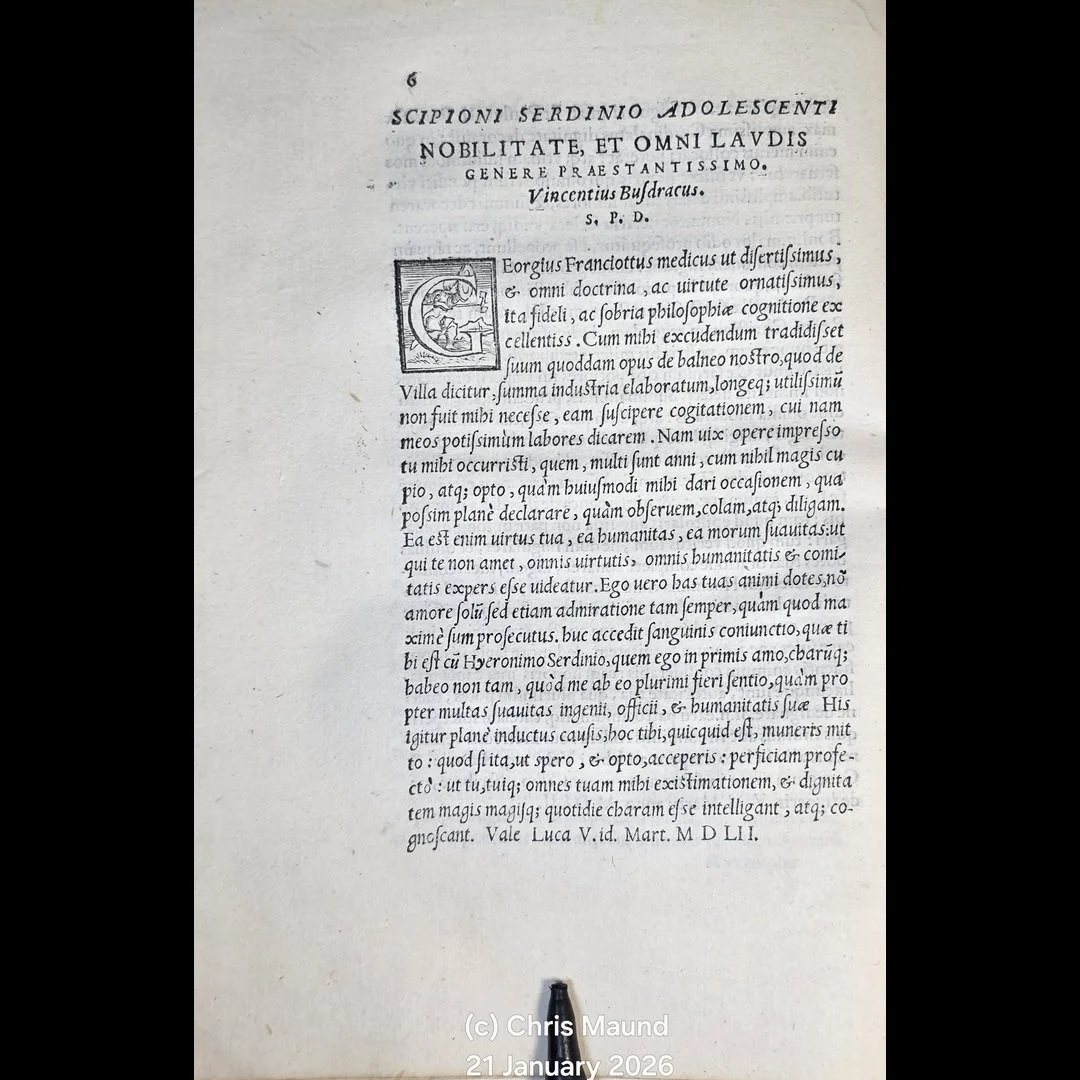
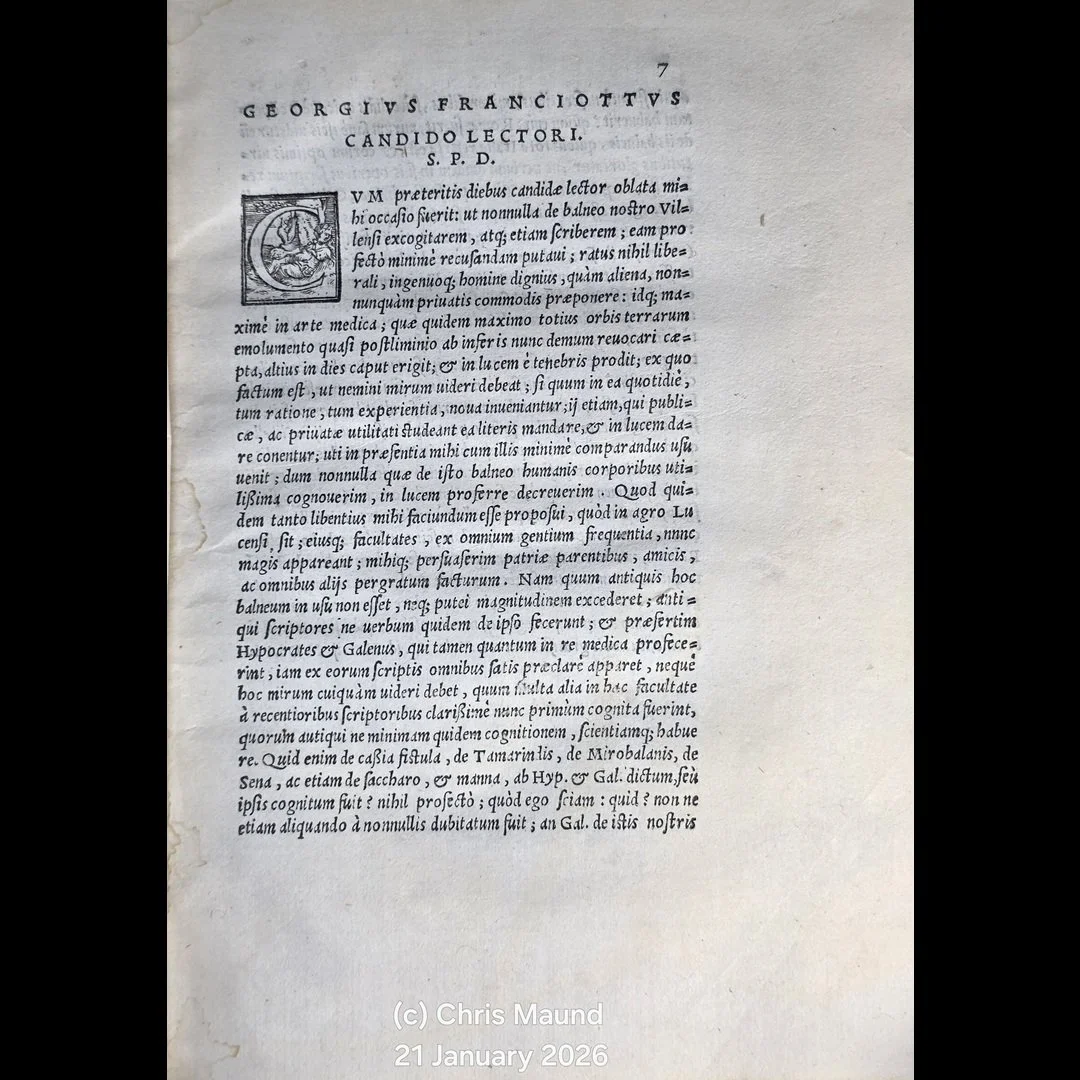
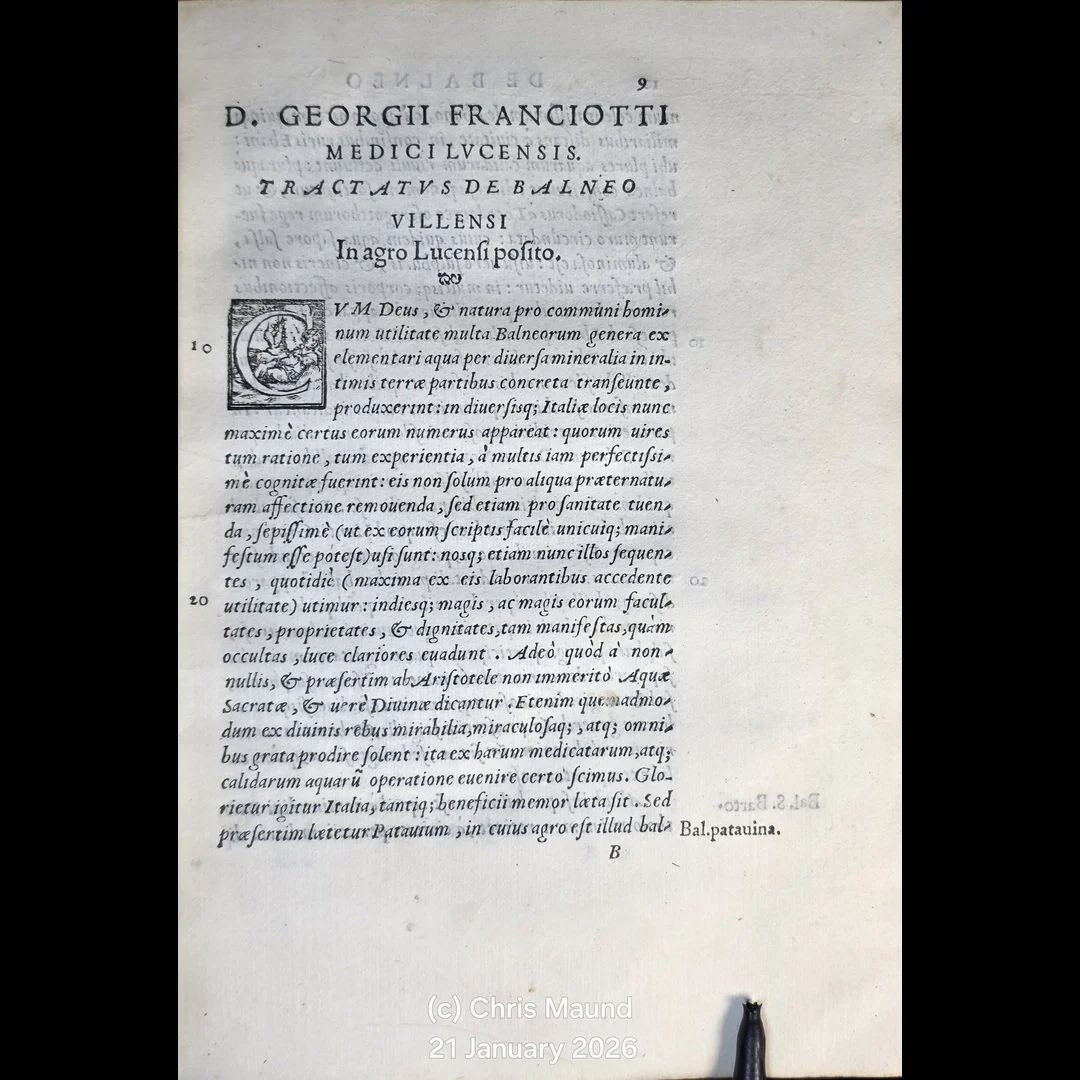
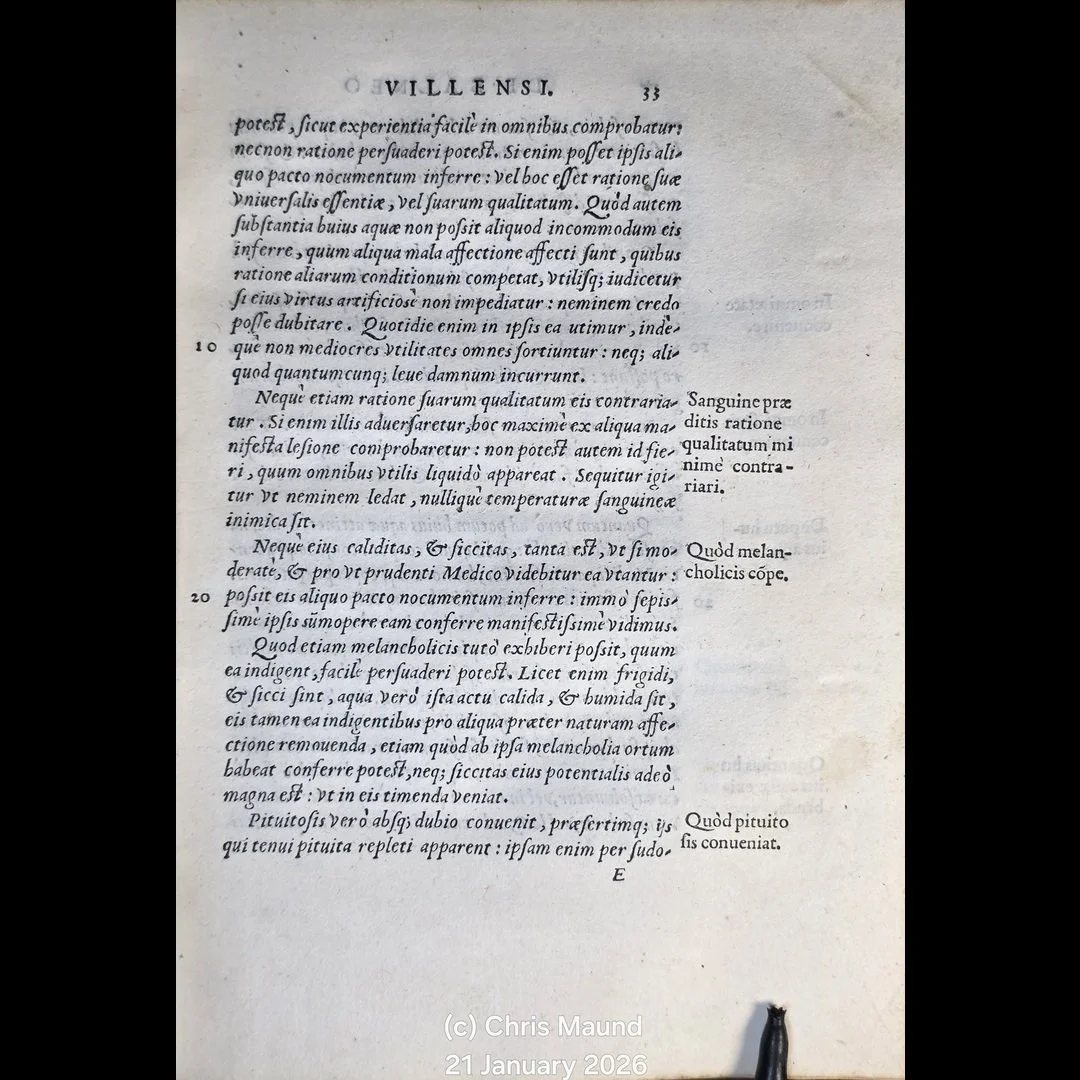
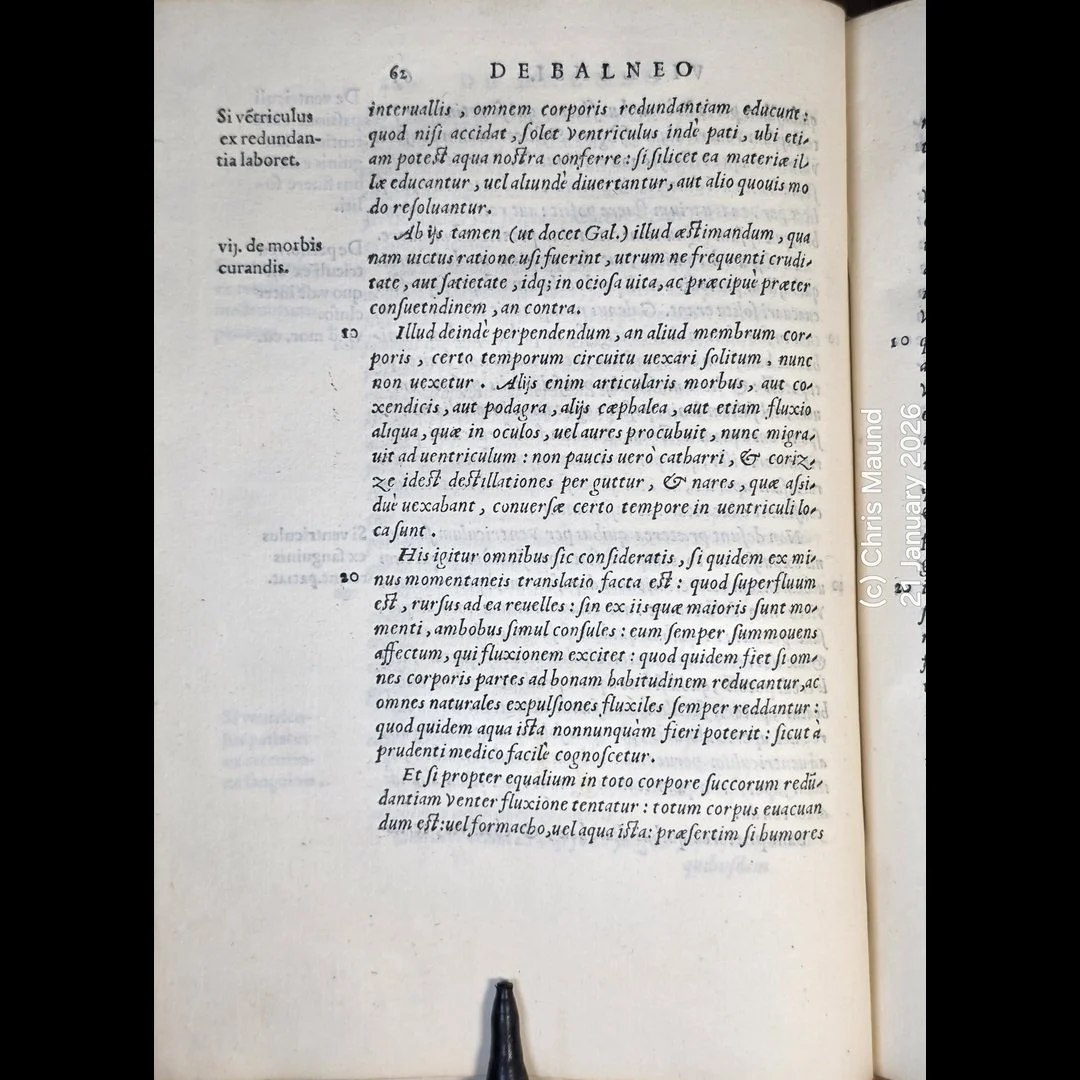
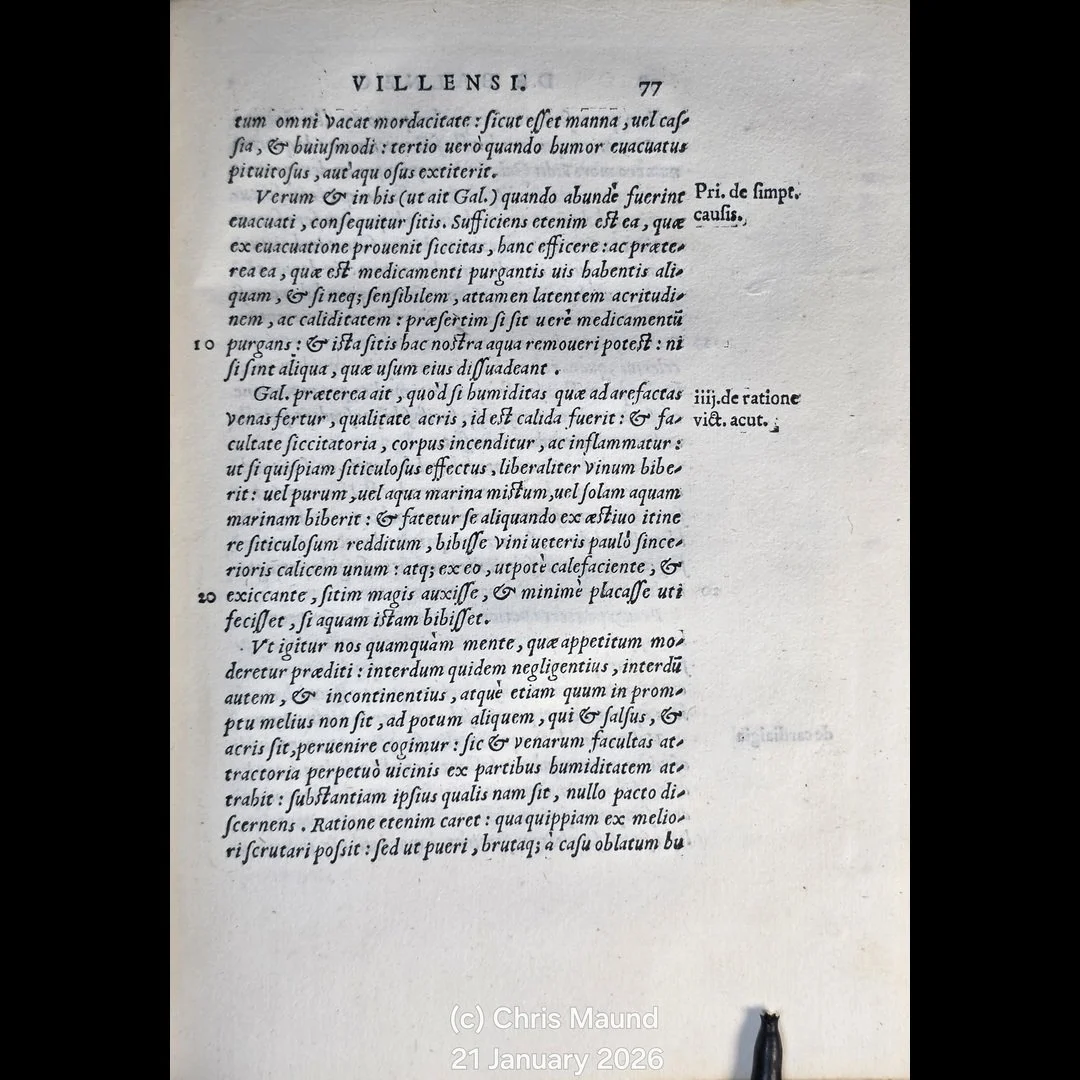
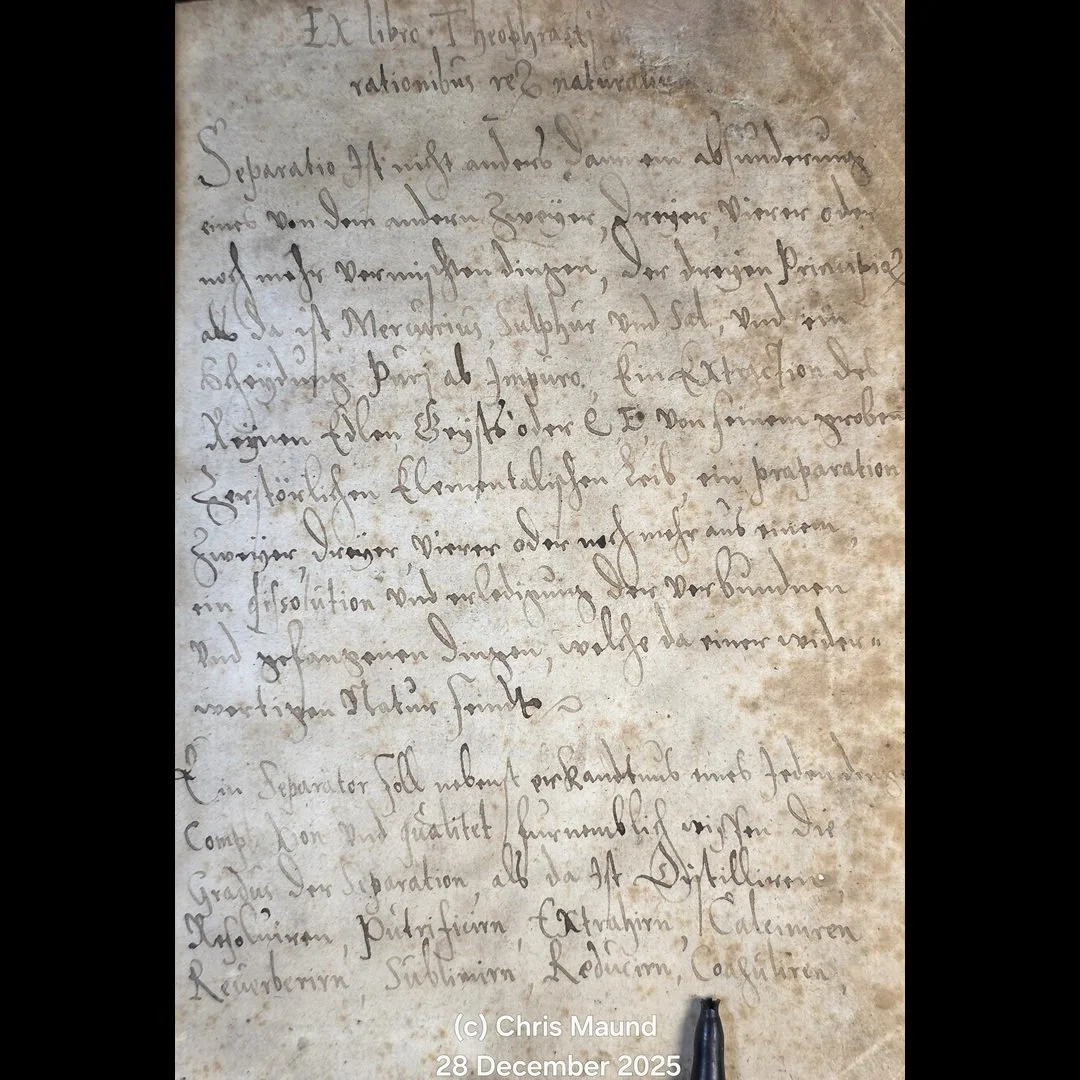
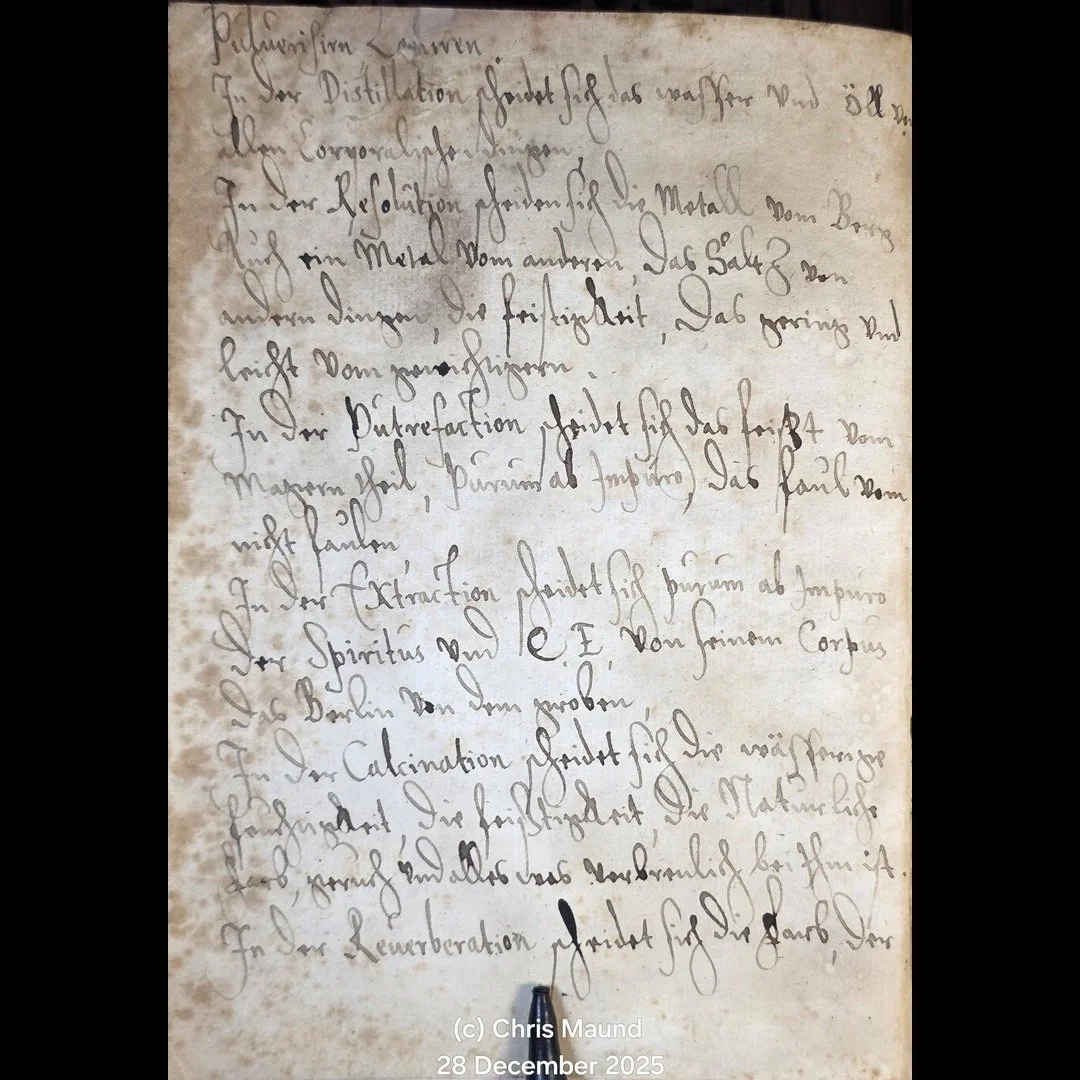
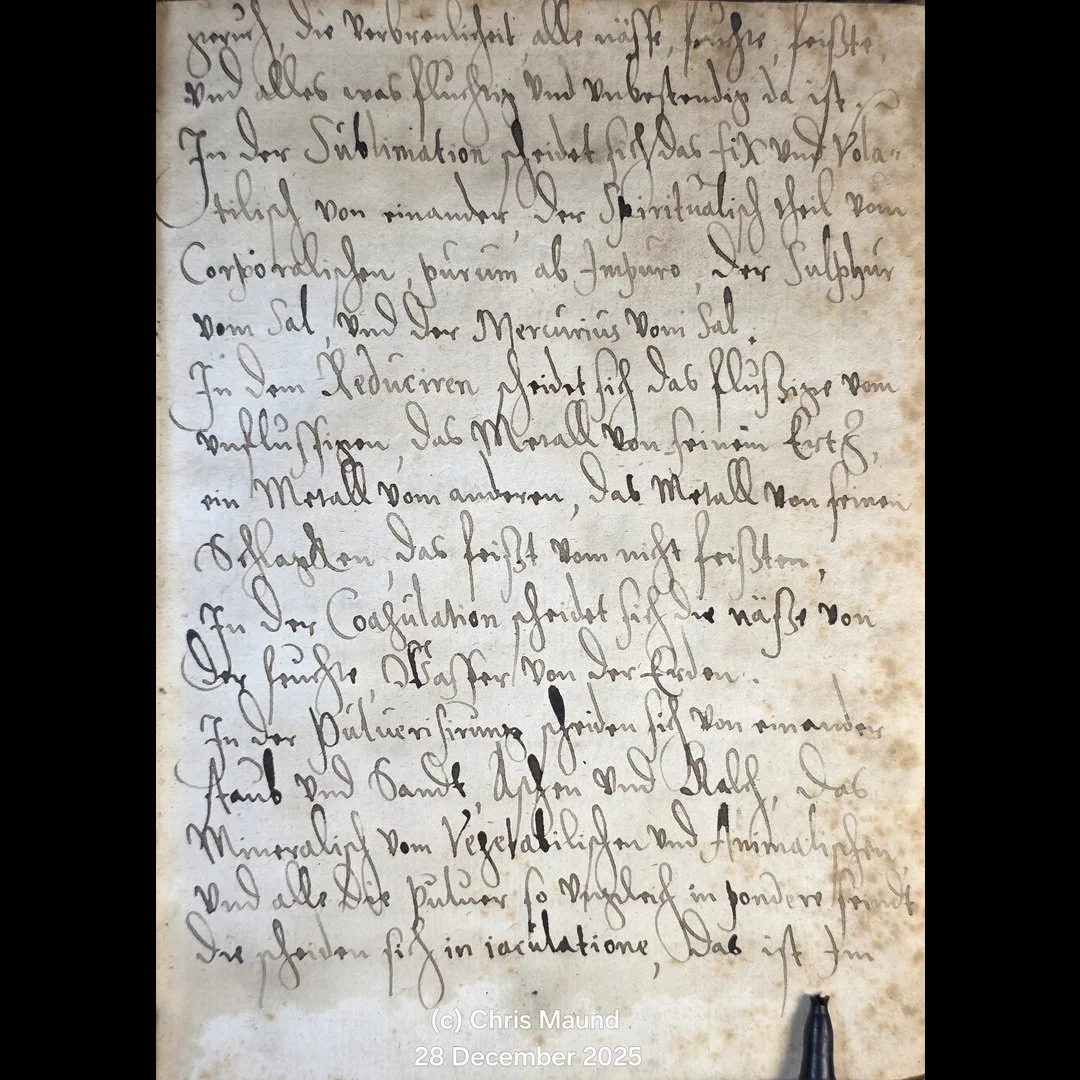
Internally generally well preserved. Leaves with expected age-toning, occasional light spotting, handling marks and minor localised soiling, but the text remains clean and strongly printed overall. The numerous philosophical and astronomical diagrams are clear and well preserved.
Institutional ink stamp of the Bibliothèque du Grand Séminaire de Montauban to front free endpaper.
Please see Photos as part of condition report.
REFERENCES
WorldCat, OCLC 11054856 — Commentarius in Aristotelis physicam, 5th edition, Paris, George & Louis Josse, 1690.
Kórnik Library, Old Prints Collection, ID 127249 — 1690 Paris fifth edition, Tomus I; [12], 513, [3] pp., illustrated, 12mo.
Bibliothèque nationale de France — Pierre Barbay authority record, cb12190290t.
Gary Hatfield, “Was the Scientific Revolution Really a Revolution in Science?”, in F. Jamil Ragep & Sally P. Ragep (eds.), Tradition, Transmission, Transformation, Brill, 1996, pp.489–525. Hatfield specifically discusses Barbay’s fifth edition and its Tractatus de Sphaera Caelesti, noting its treatment of eccentric circles and epicycles and comparison of Ptolemaic, Copernican and Tychonic systems.
Roger Ariew, “Aristotelianism in the 17th Century”, Routledge Encyclopedia of Philosophy — Barbay’s works recorded as components of his University of Paris philosophy course and as texts recommended in contemporary Jesuit and Oratorian teaching.
SYNOPSIS
Pierre Barbay’s Commentarius in Aristotelis Physicam presents Aristotle’s natural philosophy through the structured disputational method of the seventeenth-century scholastic classroom.
The work examines the fundamental principles by which physical nature was understood within the Aristotelian tradition: matter and form, causation, motion, change, continuity, infinity, place and time. Yet this fifth edition is particularly interesting because its intellectual world extends well beyond a straightforward commentary upon Aristotle.
The concluding Tractatus de Sphaera Caelesti places traditional natural philosophy alongside the rapidly changing astronomy of the seventeenth century. Its numerous diagrams and discussion of Ptolemaic, Copernican and Tychonic cosmology demonstrate how discoveries and theories associated with the Scientific Revolution were being absorbed, debated and taught within an essentially Aristotelian framework.
References to Galileo’s Medicean satellites and to Jean Tarde’s now-discredited interpretation of sunspots further capture a period during which telescopic discoveries were established facts while their physical meaning remained open to dispute.
An attractive and revealing survival from the meeting point of Aristotelian natural philosophy, scholastic education and seventeenth-century astronomy.
AUTHOR BIO
Pierre Barbay (d. 1664) was a French philosopher and teacher associated with the University of Paris and one of the more widely used authors of Aristotelian teaching texts in seventeenth-century France.
His posthumously published works formed a broad philosophical course embracing logic, physics, metaphysics and moral philosophy. Intended for academic instruction, they presented Aristotle through the systematic methods of later scholastic philosophy while also engaging with questions raised by contemporary natural philosophy.
Barbay’s Physicam is particularly revealing of the intellectual position occupied by Aristotelianism during the Scientific Revolution: still central to formal philosophical education, yet increasingly required to accommodate and respond to new astronomical observations and competing models of the physical universe.
1690 Fifth Edition With Provenance
COMMENTARIUS IN ARISTOTELIS PHYSICAM
By Pierre Barbay
KEY DETAILS
Condition: Good
Format: Full Calf, 12mo.; [12], 513, [3] pp.
Volume: Tomus Primus — Volume I of II
Published By: Parisiis, apud Georgium & Ludovicum Josse, via Jacobaea, sub signo Coronae Spineae, Paris, 1690
Language: Latin
Provenance: With oval institutional ink stamp to the front free endpaper:
Collation: [12], 513, [3] pp.
Dust Jacket: None, as issued, No Jacket
SKU: BTETM0002559
Shipping Info: Approximate Package Dimensions H: 12.5, L: 30, W: 25 (Units: cm), W: 2Kg
Tracked Shipping, Insurance Coverage as per Customer Request
DESCRIPTION
Commentarius in Aristotelis Physicam
Tomus Primus — Volume I of II
A scarce and appealing fifth edition of Pierre Barbay’s Commentarius in Aristotelis Physicam, a substantial late-seventeenth-century exposition of Aristotelian natural philosophy, here preserved as Tomus Primus, the first of two volumes.
Published at Paris by George and Louis Josse in 1690, the work belongs to Barbay’s influential course of Aristotelian philosophy used in French academic teaching during the later seventeenth century. This first volume treats the principles of the physical world, including matter and form, causation, motion and change, continuity, infinity, place and time.
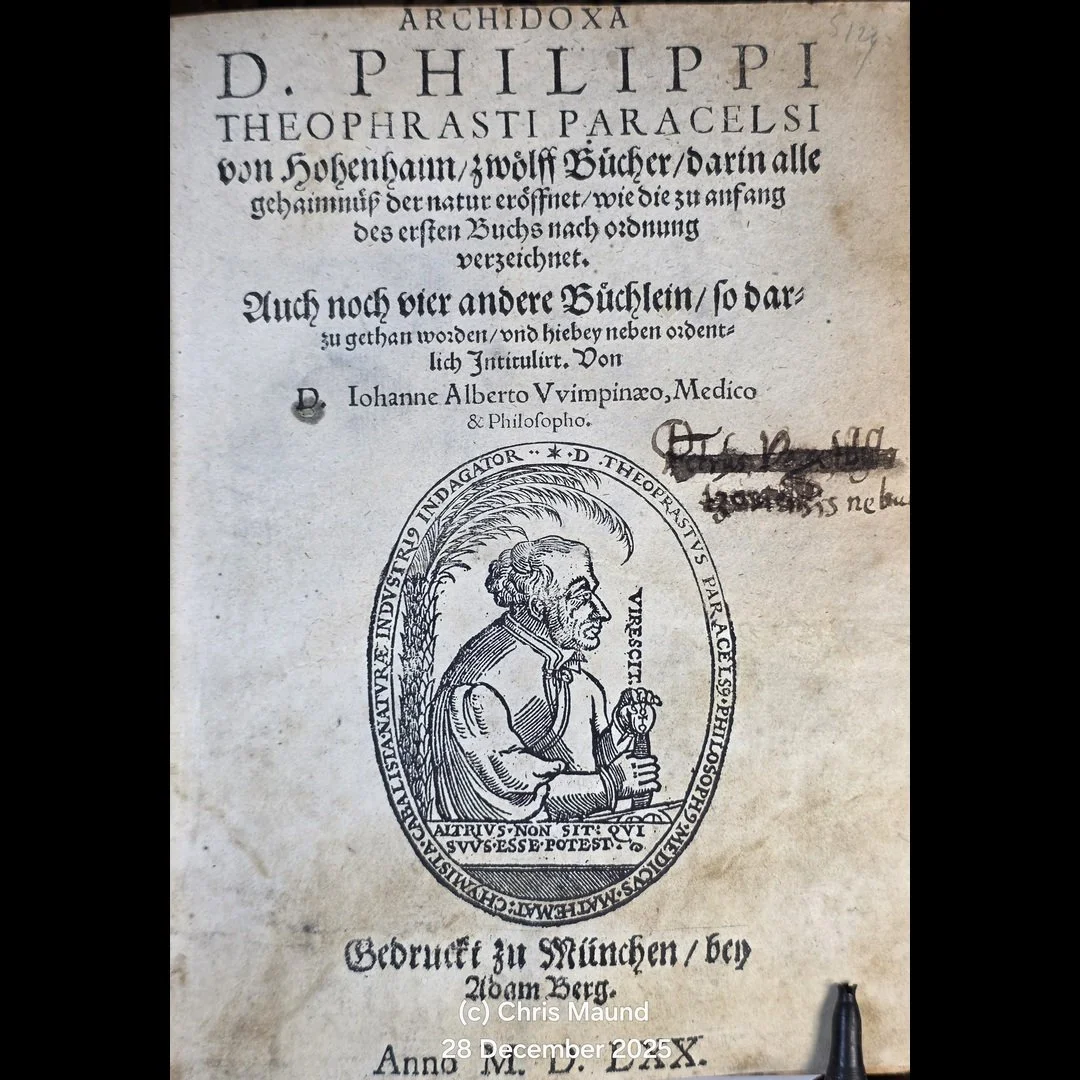
The title page specifically advertises this fifth edition as:
Editio Quinta, emendatior multò, Schematibus Philosophicis adornata, & figuris ad Sphaeram spectantibus aucta.
— substantially corrected, furnished with philosophical diagrams, and augmented with figures relating to the sphere.
These additions are particularly important. From p.402 the volume concludes with the separately headed Tractatus de Sphaera Caelesti, an extensive illustrated treatment of astronomy and cosmology occupying more than one fifth of the principal text.
Barbay discusses the celestial sphere, geographical and celestial circles, planetary motions, eccentrics and epicycles, eclipses and competing models of the cosmos. The section compares the Ptolemaic, Copernican and Tychonic systems, providing a fascinating example of traditional Aristotelian natural philosophy engaging directly with the astronomical developments of the Scientific Revolution.
The astronomical material also reflects the impact of telescopic discovery. Barbay refers to the Medicean stars, the four satellites of Jupiter first observed by Galileo, alongside the so-called Borbonian bodies associated with the Sun, derived from Jean Tarde’s interpretation of sunspots as small circumsolar planets.
Numerous in-text philosophical, geometrical, astronomical and cosmological diagrams appear throughout, together with decorative initials, headpieces and ornaments.
Bound in attractive contemporary full calf, the spine with raised bands, gilt floral decoration, gilt title BARBAEI PHYSICA, and volume designation TO. I; red-speckled edges.
PROVENANCE
With oval institutional ink stamp to the front free endpaper:
BIBLIOTH. GD SÉMINAIRE
MONTAUBAN
for the Bibliothèque du Grand Séminaire de Montauban.
An appropriate provenance for a work conceived for philosophical education, the volume having subsequently formed part of the library of the Grand Seminary at Montauban.
CONDITION, COLLATION & COPY NOTES
A sound copy in contemporary full calf, the boards with general rubbing, scuffing and surface wear consistent with age and use. Corners worn. Joints rubbed, cracked and partly split towards the extremities, but the boards remain attached. Head and tail of spine worn with some loss; spine leather with surface cracking.
Raised bands and much of the original gilt decoration remain present and attractive, with the gilt-lettered BARBAEI PHYSICA title and TO. I volume designation clearly legible. Red-speckled text-block edges.
Internally generally well preserved. Leaves with expected age-toning, occasional light spotting, handling marks and minor localised soiling, but the text remains clean and strongly printed overall. The numerous philosophical and astronomical diagrams are clear and well preserved.
Institutional ink stamp of the Bibliothèque du Grand Séminaire de Montauban to front free endpaper.
Please see Photos as part of condition report.
REFERENCES
WorldCat, OCLC 11054856 — Commentarius in Aristotelis physicam, 5th edition, Paris, George & Louis Josse, 1690.
Kórnik Library, Old Prints Collection, ID 127249 — 1690 Paris fifth edition, Tomus I; [12], 513, [3] pp., illustrated, 12mo.
Bibliothèque nationale de France — Pierre Barbay authority record, cb12190290t.
Gary Hatfield, “Was the Scientific Revolution Really a Revolution in Science?”, in F. Jamil Ragep & Sally P. Ragep (eds.), Tradition, Transmission, Transformation, Brill, 1996, pp.489–525. Hatfield specifically discusses Barbay’s fifth edition and its Tractatus de Sphaera Caelesti, noting its treatment of eccentric circles and epicycles and comparison of Ptolemaic, Copernican and Tychonic systems.
Roger Ariew, “Aristotelianism in the 17th Century”, Routledge Encyclopedia of Philosophy — Barbay’s works recorded as components of his University of Paris philosophy course and as texts recommended in contemporary Jesuit and Oratorian teaching.
SYNOPSIS
Pierre Barbay’s Commentarius in Aristotelis Physicam presents Aristotle’s natural philosophy through the structured disputational method of the seventeenth-century scholastic classroom.
The work examines the fundamental principles by which physical nature was understood within the Aristotelian tradition: matter and form, causation, motion, change, continuity, infinity, place and time. Yet this fifth edition is particularly interesting because its intellectual world extends well beyond a straightforward commentary upon Aristotle.
The concluding Tractatus de Sphaera Caelesti places traditional natural philosophy alongside the rapidly changing astronomy of the seventeenth century. Its numerous diagrams and discussion of Ptolemaic, Copernican and Tychonic cosmology demonstrate how discoveries and theories associated with the Scientific Revolution were being absorbed, debated and taught within an essentially Aristotelian framework.
References to Galileo’s Medicean satellites and to Jean Tarde’s now-discredited interpretation of sunspots further capture a period during which telescopic discoveries were established facts while their physical meaning remained open to dispute.
An attractive and revealing survival from the meeting point of Aristotelian natural philosophy, scholastic education and seventeenth-century astronomy.
AUTHOR BIO
Pierre Barbay (d. 1664) was a French philosopher and teacher associated with the University of Paris and one of the more widely used authors of Aristotelian teaching texts in seventeenth-century France.
His posthumously published works formed a broad philosophical course embracing logic, physics, metaphysics and moral philosophy. Intended for academic instruction, they presented Aristotle through the systematic methods of later scholastic philosophy while also engaging with questions raised by contemporary natural philosophy.
Barbay’s Physicam is particularly revealing of the intellectual position occupied by Aristotelianism during the Scientific Revolution: still central to formal philosophical education, yet increasingly required to accommodate and respond to new astronomical observations and competing models of the physical universe.

 Image 1 of 42
 Image 2 of 42
 Image 3 of 42
 Image 4 of 42
 Image 5 of 42
 Image 6 of 42
 Image 7 of 42
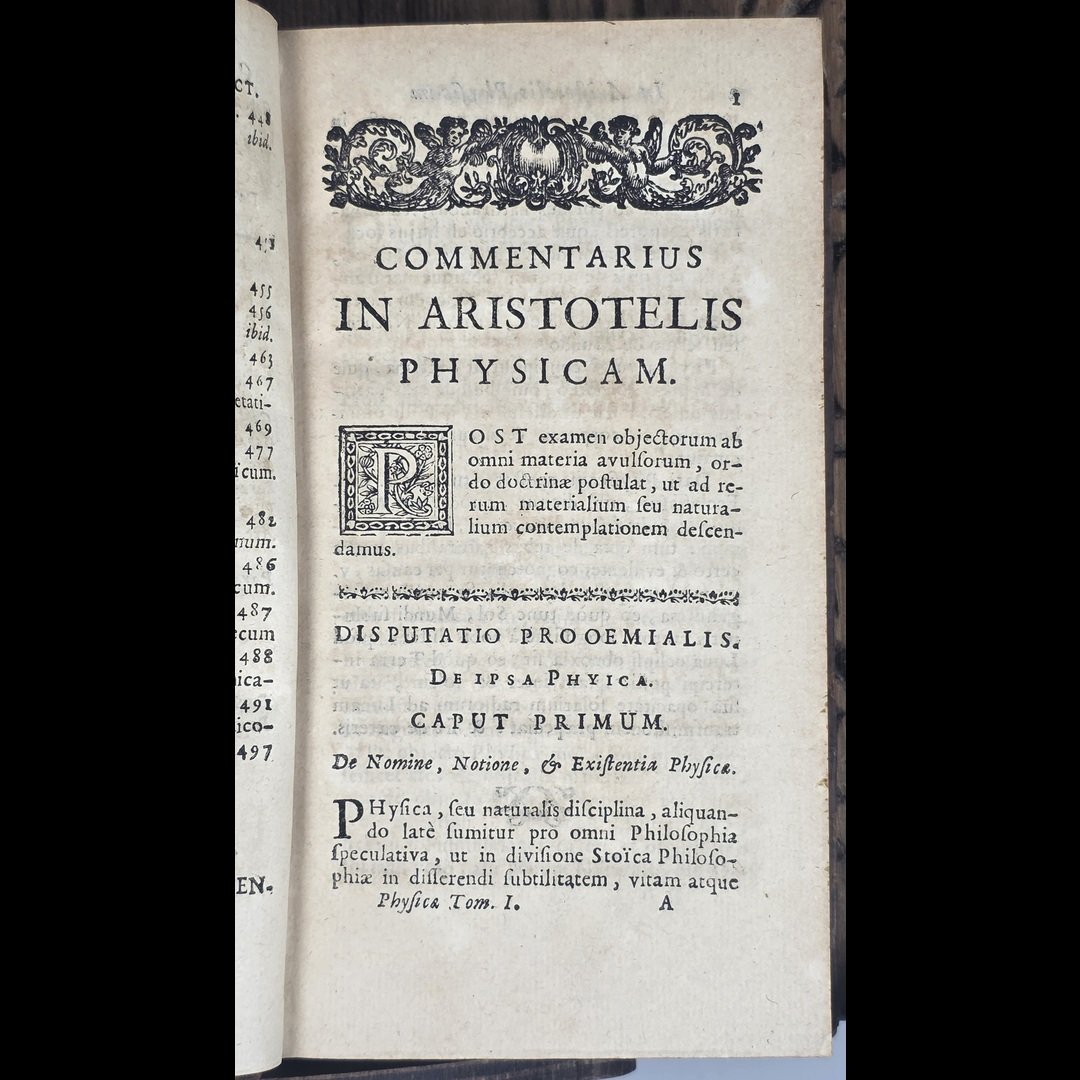 Image 8 of 42
 Image 9 of 42
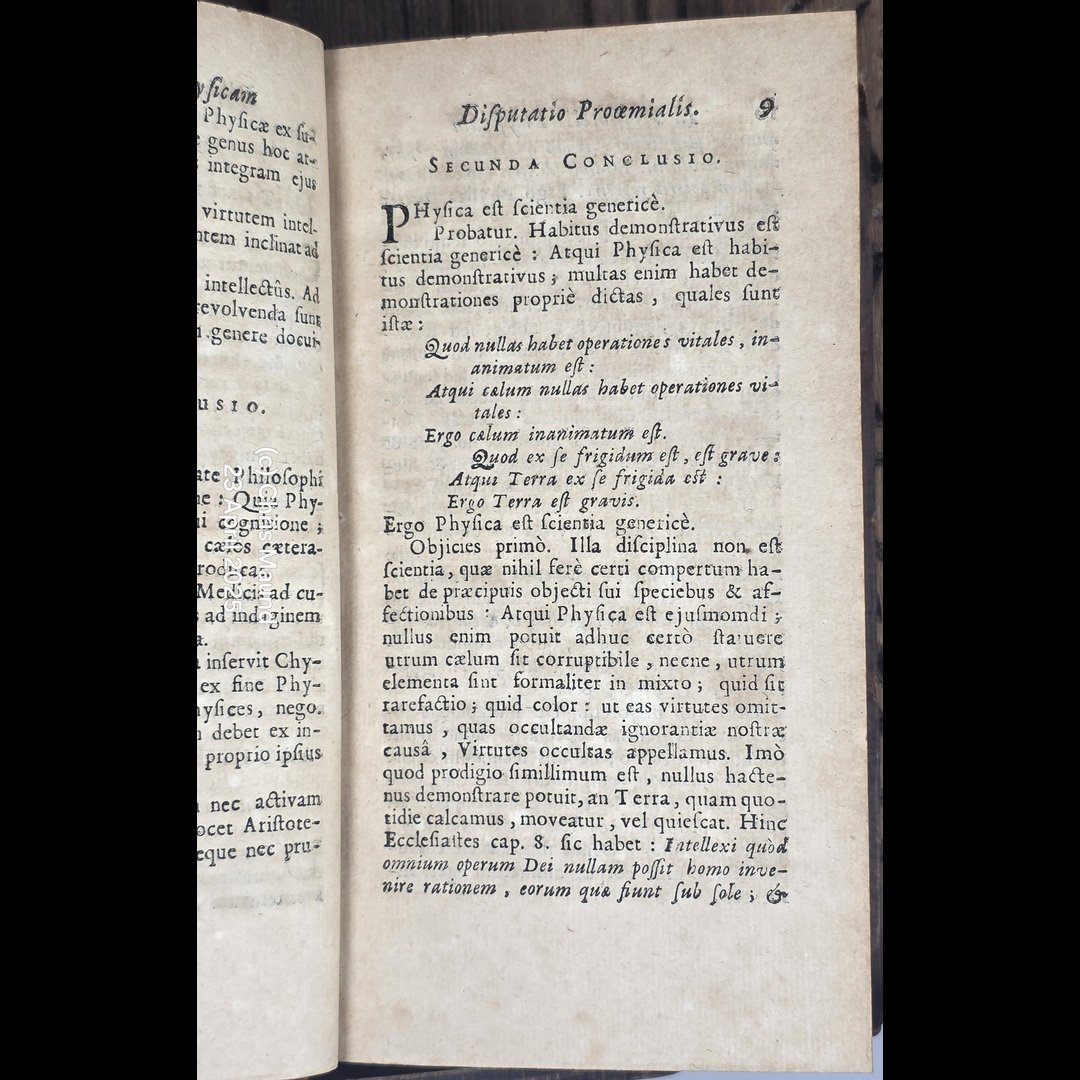 Image 10 of 42
 Image 11 of 42
 Image 12 of 42
 Image 13 of 42
 Image 14 of 42
 Image 15 of 42
 Image 16 of 42
 Image 17 of 42
 Image 18 of 42
 Image 19 of 42
 Image 20 of 42
 Image 21 of 42
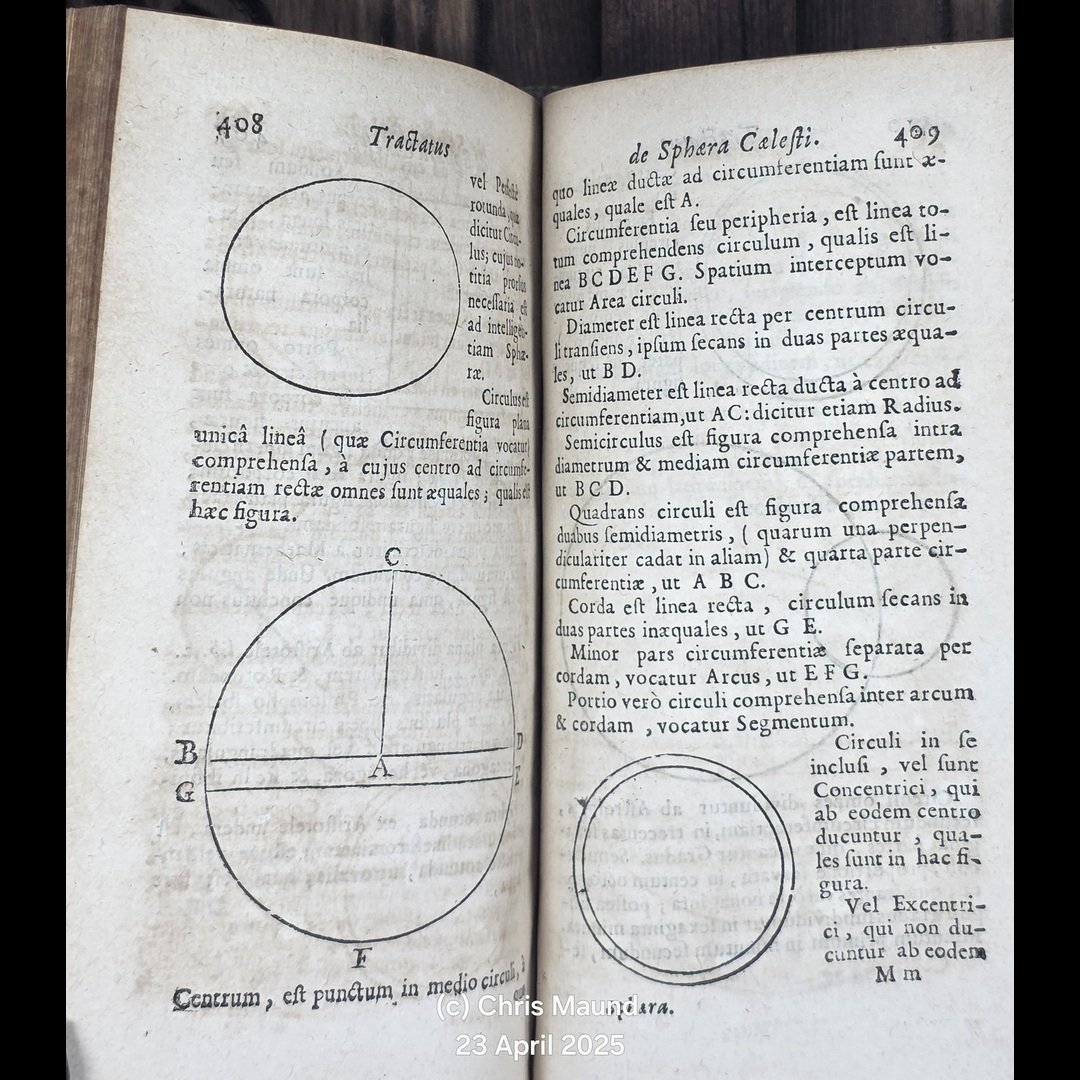 Image 22 of 42
 Image 23 of 42
 Image 24 of 42
 Image 25 of 42
 Image 26 of 42
 Image 27 of 42
 Image 28 of 42
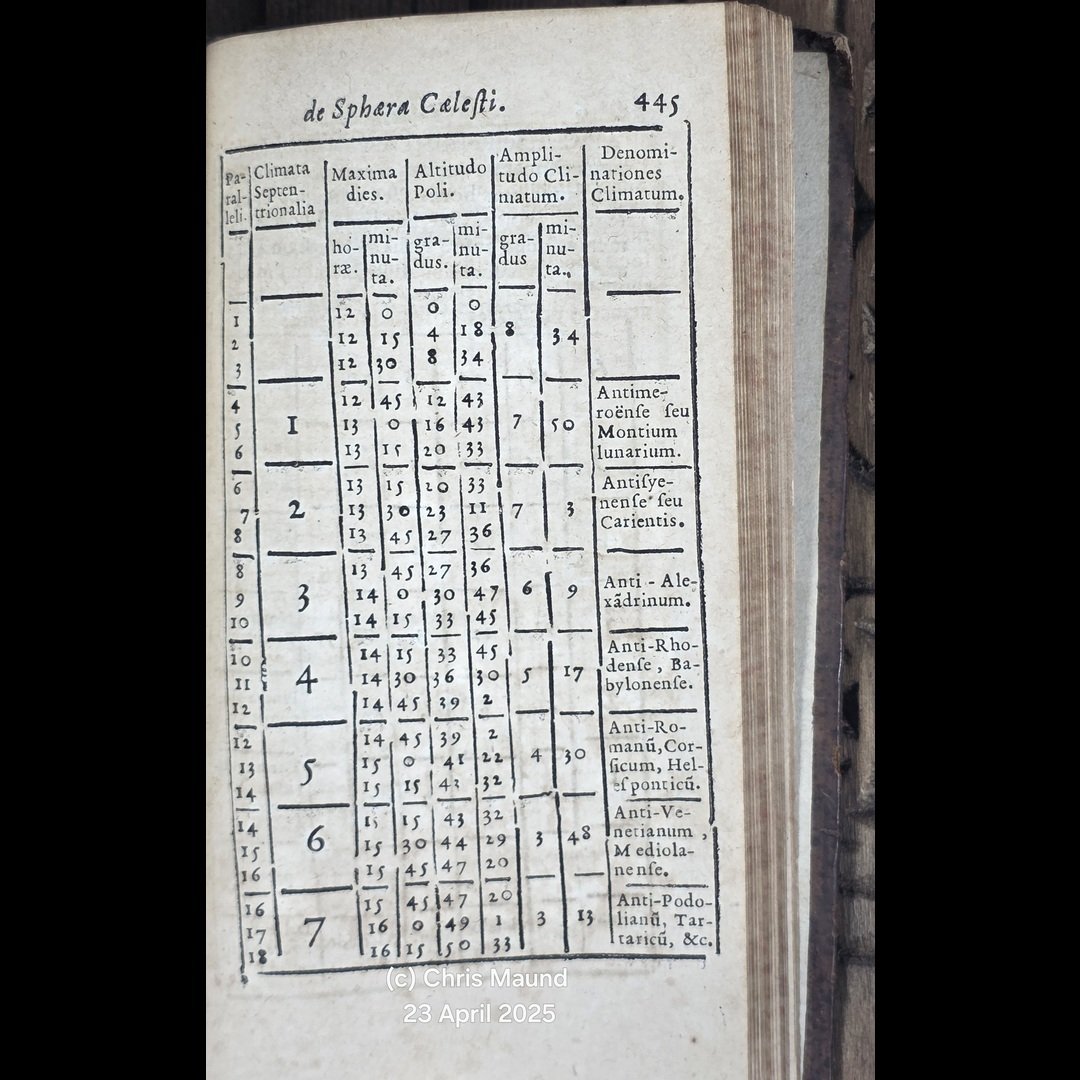 Image 29 of 42
 Image 30 of 42
 Image 31 of 42
 Image 32 of 42
 Image 33 of 42
 Image 34 of 42
 Image 35 of 42
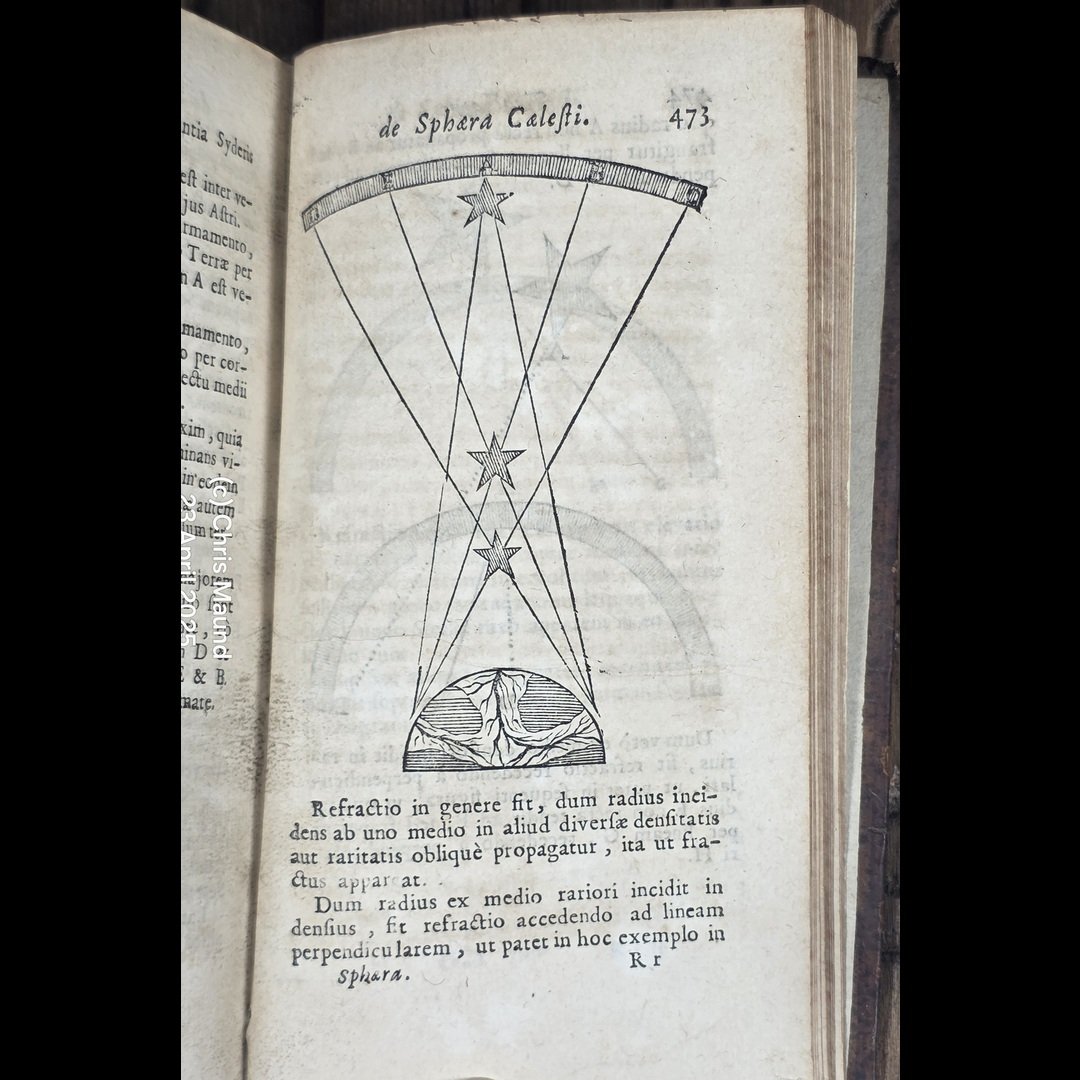 Image 36 of 42
 Image 37 of 42
 Image 38 of 42
 Image 39 of 42
 Image 40 of 42
 Image 41 of 42
 Image 42 of 42