1973 First UK Edition 3rd Printing Third Impression
A SEPARATE REALITY
By Carlos Castaneda
KEY DETAILS
Condition: Very Good
Format: Hardcover, Octavo (Standard) (8vo 6 × 9 in 152 × 229 mm )
Note: Binding/size selection follows standard bibliographic conventions and is approximate; exact measurements may vary.
Published By: The Bodley Head, London, 1973
Language: English
Collation: pp. 317
Dust Jacket: Yes, Very Good
ISBN: 9780370013657
SKU: BTETM0002569
Shipping Info: Approximate Package Dimensions H: 12.5, L: 30, W: 25 (Units: cm), W: 2Kg
Tracked Shipping, Insurance Coverage as per Customer Request
DESCRIPTION
A Separate Reality
Dust Jacket: Original illustrated dust jacket, unclipped at £2.25 net and explicitly stating “Third Impression”
An attractive early British hardcover of Carlos Castaneda’s A Separate Reality: Further Conversations with Don Juan, the second volume in the extraordinary series of books which made Castaneda one of the most widely read and controversial figures to emerge from the late twentieth-century encounter between anthropology, psychedelic culture, mysticism and alternative spirituality.
First published in Great Britain by The Bodley Head in 1971, this copy is the third impression of 1973, as stated both on the copyright page and on the original dust-jacket flap. It therefore belongs to the early period in which Castaneda’s accounts of his apprenticeship to the purported Yaqui sorcerer Don Juan Matus were reaching an international readership and exerting a considerable influence upon countercultural and spiritual thought.
Bound in purple cloth with gilt lettering to the spine and retaining its striking original illustrated dust jacket. Particularly desirable in the surviving unclipped £2.25 net jacket, which itself identifies the book as the third impression.
Published three years after The Teachings of Don Juan, A Separate Reality develops Castaneda’s account beyond his earlier emphasis upon hallucinogenic plants and towards Don Juan’s concept of “seeing”: the cultivation of a radically altered mode of perception in which the habitual interpretation of ordinary reality is suspended.
Whatever judgment is made regarding the factual status of Castaneda’s ethnographic claims, the Don Juan books became a major cultural phenomenon. They reached far beyond academic anthropology into the psychedelic counterculture, Western occultism, consciousness studies, New Age spirituality and what would later be termed neo-shamanism. Scholarship on Castaneda has consequently continued even after the anthropological authenticity of his accounts became the subject of sustained criticism.
CASTANEDA, DON JUAN & THE QUESTION OF AUTHENTICITY
Castaneda's books initially appeared within an anthropological context and were read by many contemporary readers as records of genuine fieldwork. Their status subsequently became one of the most famous controversies in modern anthropology.
Anthropologists and other researchers questioned whether Don Juan Matus existed as described, whether the practices attributed to him could properly be regarded as Yaqui traditions, and whether the chronology and ethnographic detail of Castaneda's accounts were reliable.
Early scepticism was followed by extensive criticism, particularly through Richard de Mille's investigations during the 1970s and 1980s. Later scholarship has generally treated the ethnographic authenticity of the Don Juan narratives with considerable reservation, while continuing to examine their importance as literary, philosophical and cultural texts. A modern review of Castaneda's anthropological reception notes that his work ultimately lost most of its credibility within professional anthropology.
The controversy did comparatively little to diminish the wider cultural influence of the books.
Castaneda's particular synthesis of shamanism, altered consciousness, personal transformation and the possibility of alternative realities became exceptionally influential in the emerging Western interest in shamanism during the 1970s. Cambridge scholarship on the development of modern sacred traditions identifies his work as an important contributor to what became Western or neo-shamanism.
That dual character—a disputed work of anthropology but an enduring document of countercultural spirituality—is now an important part of A Separate Reality's historical interest.
CONDITION, COLLATION & COPY NOTES
An attractive and well-preserved example of the 1973 third impression of the first UK edition, retaining its original illustrated dust jacket.
Publisher's purple cloth, with gilt title, author and publisher lettering to the spine. Binding clean, square and firm, with only minor evidence of handling. Boards remain bright and present very well.
Contents generally clean and unmarked, with mild uniform age-toning consistent with the paper stock. Small brown mark to the front free endpaper. No ownership inscription or substantive annotation apparent from inspection.
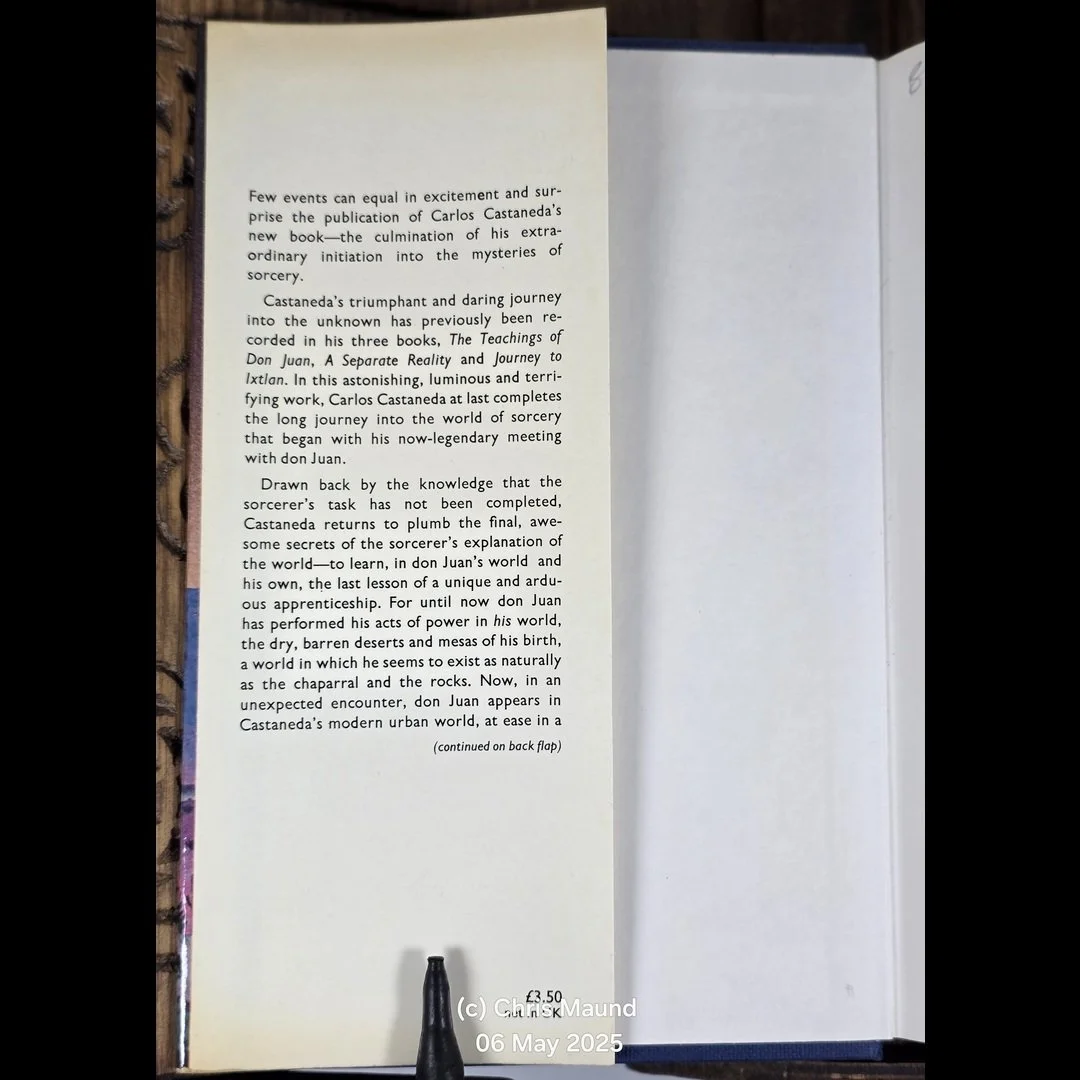
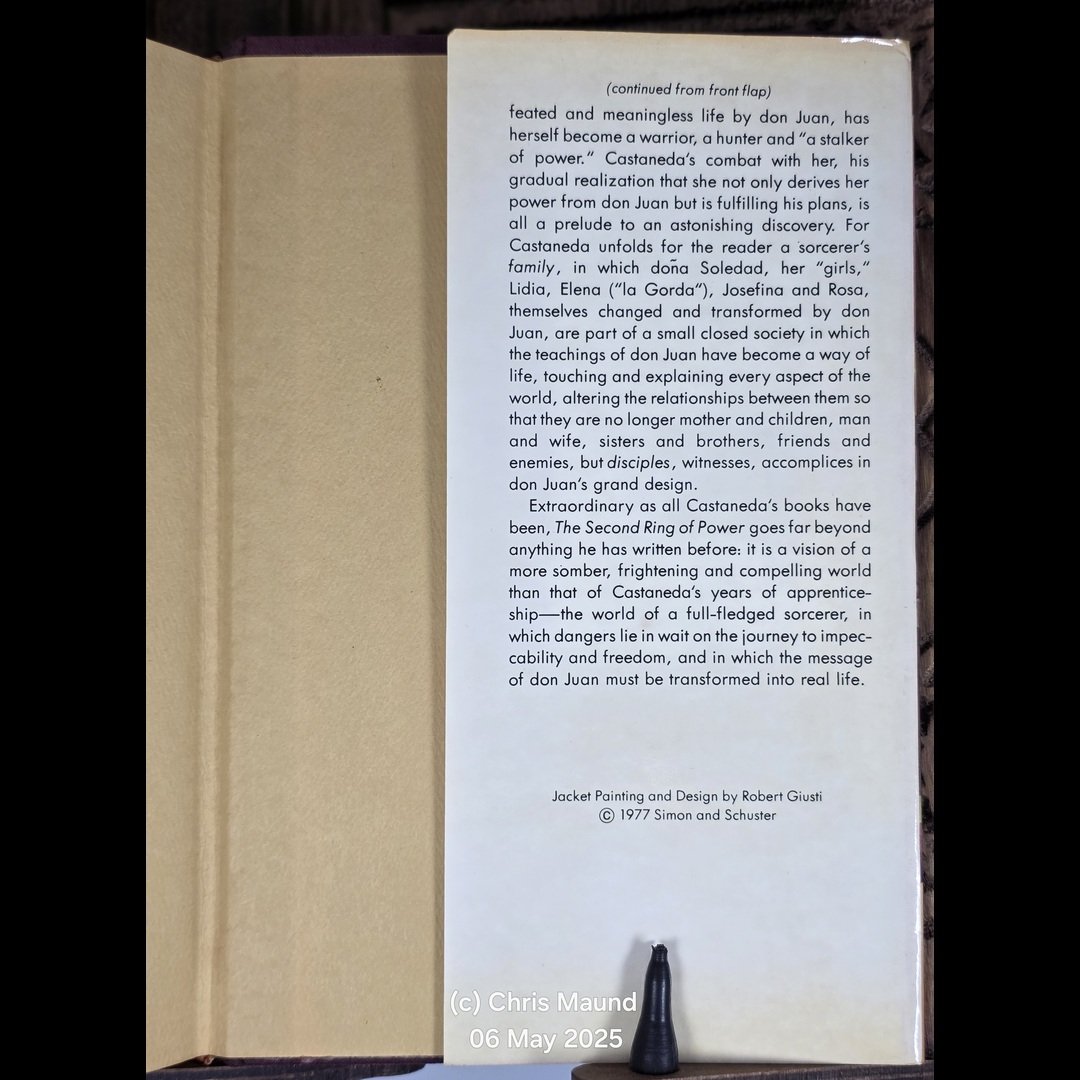
Original illustrated dust jacket present and unclipped at £2.25 net. Jacket with light general age-toning and surface handling, minor rubbing and wear at edges and extremities, and some scattered foxing/spotting, principally to the inner flaps. Rear purple panel with minor superficial marking and rubbing. Jacket remains complete, bright and visually attractive overall.
The front flap itself states “THIRD IMPRESSION”, independently confirming the impression statement printed on the copyright page.
Copyright page:
Copyright © 1971 by Carlos Castaneda
First published in Great Britain 1971
Third impression 1973
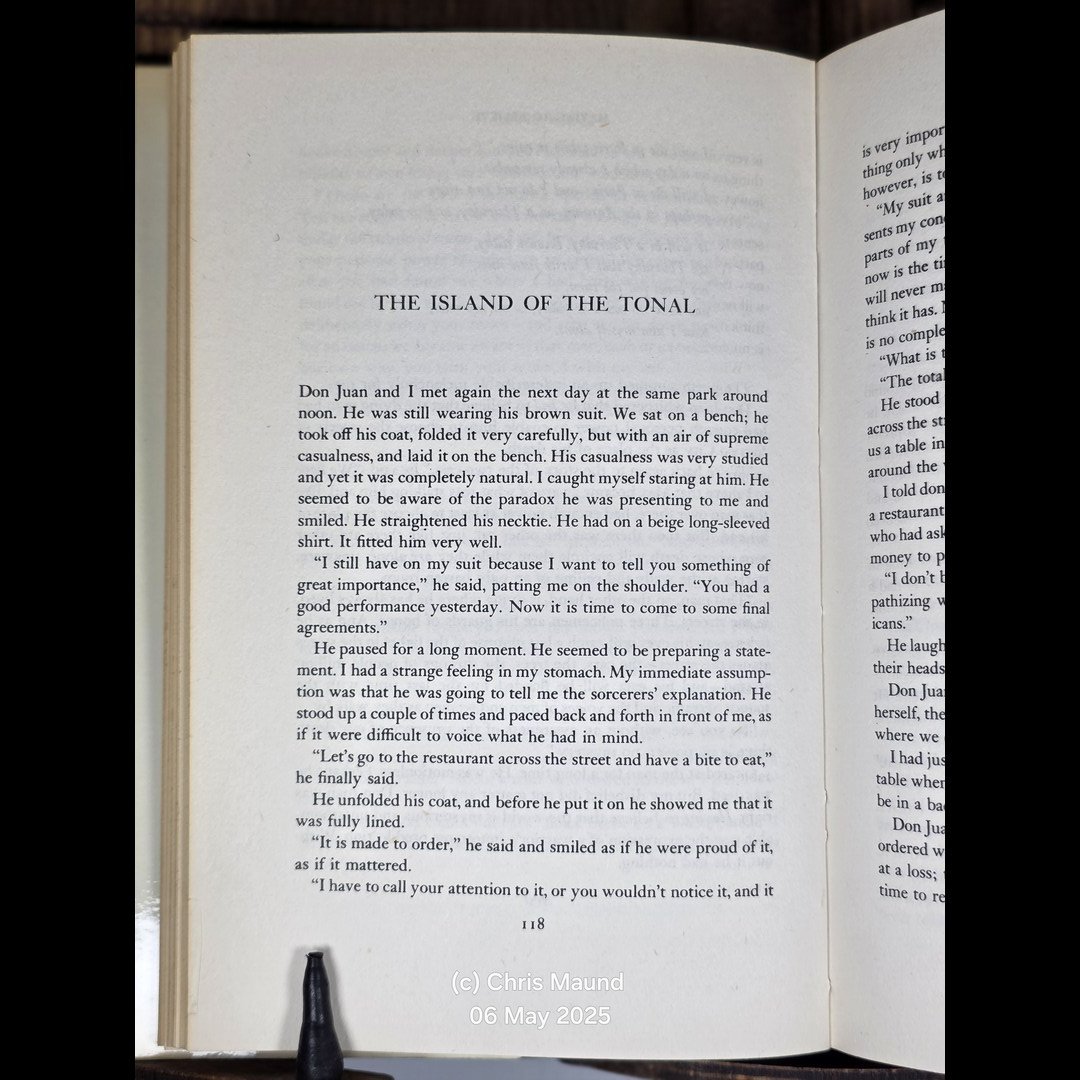
Title page, copyright page, contents leaf, introduction, both principal part-titles and representative text leaves examined. Pagination: 317 pp.
The contents are arranged principally as:
Introduction
Part One – The Preliminaries of “Seeing”
Part Two – The Task of “Seeing”
Epilogue
A particularly appealing early British hardcover of one of the defining texts of Castaneda's Don Juan sequence, retaining the increasingly important original priced dust jacket.
Please see Photos as part of condition report.
REFERENCES
The Bodley Head, London — title page, copyright statement and original dust jacket of the present copy.
British National Bibliography — A Separate Reality: Further Conversations with Don Juan, first British publication, 1971.
Hardman, Charlotte E., “‘He may be lying but what he says is true’: the sacred tradition of don Juan as reported by Carlos Castaneda,” in The Invention of Sacred Tradition, Cambridge University Press.
HAU: Journal of Ethnographic Theory, “Two forms of the outside: Castaneda, Blanchot, ontology,” discussion of Castaneda's anthropological reception and the authenticity controversy.
de Mille, Richard, ed., The Don Juan Papers: Further Castaneda Controversies, 1980.
Los Angeles Times, contemporary and retrospective biographical reporting on Carlos Castaneda.
SYNOPSIS
A Separate Reality resumes Castaneda’s account of his association with Don Juan Matus, whom he presents as a Yaqui Indian brujo or “man of knowledge” living in the American Southwest and north-western Mexico.
Castaneda begins by reconsidering the experiences described in The Teachings of Don Juan. Initially he had understood Don Juan’s instruction principally through encounters with peyote, datura and psychoactive mushrooms and the altered states they produced. In the second book, however, Don Juan insists that these experiences were merely introductory and that the more important objective is the acquisition of “seeing.”
The book is divided into two principal parts: “The Preliminaries of ‘Seeing’” and “The Task of ‘Seeing’.” The distinction between ordinary looking and “seeing” becomes central to Don Juan’s instruction. Ordinary perception, in Castaneda’s account, is conditioned by language, expectation and an habitual description of the world; “seeing” involves breaking through those conventions in order to perceive reality in another manner.
Through a sequence of conversations, exercises and increasingly extraordinary experiences, Don Juan attempts to destabilise Castaneda’s assumptions about identity, rationality, fear, death and the nature of the world itself.
The relationship between teacher and pupil is consequently as important as the supernatural material. Castaneda repeatedly approaches events as a sceptical university-trained observer seeking explanation and consistency, while Don Juan frustrates that approach through jokes, paradoxes and apparently impossible experiences designed to undermine the student's reliance upon ordinary reason.
Drugs remain present in the narrative, but they are increasingly presented as instruments rather than the object of the teaching. The emphasis instead moves toward attention, discipline, personal power and the possibility of perceiving a world beyond the culturally constructed reality Castaneda has previously taken for granted.
The result occupies an unusual territory between ethnographic narrative, spiritual autobiography, philosophy, psychedelic literature and literary fiction—a combination that was central both to the enormous success of Castaneda's books and to the controversy that subsequently surrounded them.
AUTHOR BIO
Carlos Castaneda (1925–1998) was a writer trained in anthropology at the University of California, Los Angeles. UCLA records cited by the Los Angeles Times record a bachelor's degree in anthropology in 1962 and a doctorate in 1973. His personal history was famously difficult to establish, with Castaneda himself giving conflicting accounts of such basic matters as his birthplace, age and early life.
His first book, The Teachings of Don Juan: A Yaqui Way of Knowledge, appeared in 1968 while he was studying anthropology at UCLA. Presented as the record of field encounters with an elderly Yaqui Indian whom Castaneda called Don Juan Matus, it combined anthropology with psychoactive experience, mysticism and a narrative of spiritual apprenticeship.
Its success was remarkable. Castaneda followed it with A Separate Reality in 1971 and Journey to Ixtlan in 1972, the latter being closely associated with the work through which he obtained his doctorate. The books transformed the elusive graduate student into an international bestselling author and an important figure within the spiritual and countercultural currents of the 1970s.
Castaneda became increasingly reclusive, rarely allowing himself to be photographed or recorded and deliberately cultivating uncertainty about his personal history. He continued writing about Don Juan's system of knowledge, perception and sorcery until late in his life.
He died in Los Angeles in April 1998.
1973 First UK Edition 3rd Printing Third Impression
A SEPARATE REALITY
By Carlos Castaneda
KEY DETAILS
Condition: Very Good
Format: Hardcover, Octavo (Standard) (8vo 6 × 9 in 152 × 229 mm )
Note: Binding/size selection follows standard bibliographic conventions and is approximate; exact measurements may vary.
Published By: The Bodley Head, London, 1973
Language: English
Collation: pp. 317
Dust Jacket: Yes, Very Good
ISBN: 9780370013657
SKU: BTETM0002569
Shipping Info: Approximate Package Dimensions H: 12.5, L: 30, W: 25 (Units: cm), W: 2Kg
Tracked Shipping, Insurance Coverage as per Customer Request
DESCRIPTION
A Separate Reality
Dust Jacket: Original illustrated dust jacket, unclipped at £2.25 net and explicitly stating “Third Impression”
An attractive early British hardcover of Carlos Castaneda’s A Separate Reality: Further Conversations with Don Juan, the second volume in the extraordinary series of books which made Castaneda one of the most widely read and controversial figures to emerge from the late twentieth-century encounter between anthropology, psychedelic culture, mysticism and alternative spirituality.
First published in Great Britain by The Bodley Head in 1971, this copy is the third impression of 1973, as stated both on the copyright page and on the original dust-jacket flap. It therefore belongs to the early period in which Castaneda’s accounts of his apprenticeship to the purported Yaqui sorcerer Don Juan Matus were reaching an international readership and exerting a considerable influence upon countercultural and spiritual thought.
Bound in purple cloth with gilt lettering to the spine and retaining its striking original illustrated dust jacket. Particularly desirable in the surviving unclipped £2.25 net jacket, which itself identifies the book as the third impression.
Published three years after The Teachings of Don Juan, A Separate Reality develops Castaneda’s account beyond his earlier emphasis upon hallucinogenic plants and towards Don Juan’s concept of “seeing”: the cultivation of a radically altered mode of perception in which the habitual interpretation of ordinary reality is suspended.
Whatever judgment is made regarding the factual status of Castaneda’s ethnographic claims, the Don Juan books became a major cultural phenomenon. They reached far beyond academic anthropology into the psychedelic counterculture, Western occultism, consciousness studies, New Age spirituality and what would later be termed neo-shamanism. Scholarship on Castaneda has consequently continued even after the anthropological authenticity of his accounts became the subject of sustained criticism.
CASTANEDA, DON JUAN & THE QUESTION OF AUTHENTICITY
Castaneda's books initially appeared within an anthropological context and were read by many contemporary readers as records of genuine fieldwork. Their status subsequently became one of the most famous controversies in modern anthropology.
Anthropologists and other researchers questioned whether Don Juan Matus existed as described, whether the practices attributed to him could properly be regarded as Yaqui traditions, and whether the chronology and ethnographic detail of Castaneda's accounts were reliable.
Early scepticism was followed by extensive criticism, particularly through Richard de Mille's investigations during the 1970s and 1980s. Later scholarship has generally treated the ethnographic authenticity of the Don Juan narratives with considerable reservation, while continuing to examine their importance as literary, philosophical and cultural texts. A modern review of Castaneda's anthropological reception notes that his work ultimately lost most of its credibility within professional anthropology.
The controversy did comparatively little to diminish the wider cultural influence of the books.
Castaneda's particular synthesis of shamanism, altered consciousness, personal transformation and the possibility of alternative realities became exceptionally influential in the emerging Western interest in shamanism during the 1970s. Cambridge scholarship on the development of modern sacred traditions identifies his work as an important contributor to what became Western or neo-shamanism.
That dual character—a disputed work of anthropology but an enduring document of countercultural spirituality—is now an important part of A Separate Reality's historical interest.
CONDITION, COLLATION & COPY NOTES
An attractive and well-preserved example of the 1973 third impression of the first UK edition, retaining its original illustrated dust jacket.
Publisher's purple cloth, with gilt title, author and publisher lettering to the spine. Binding clean, square and firm, with only minor evidence of handling. Boards remain bright and present very well.
Contents generally clean and unmarked, with mild uniform age-toning consistent with the paper stock. Small brown mark to the front free endpaper. No ownership inscription or substantive annotation apparent from inspection.
Original illustrated dust jacket present and unclipped at £2.25 net. Jacket with light general age-toning and surface handling, minor rubbing and wear at edges and extremities, and some scattered foxing/spotting, principally to the inner flaps. Rear purple panel with minor superficial marking and rubbing. Jacket remains complete, bright and visually attractive overall.
The front flap itself states “THIRD IMPRESSION”, independently confirming the impression statement printed on the copyright page.
Copyright page:
Copyright © 1971 by Carlos Castaneda
First published in Great Britain 1971
Third impression 1973
Title page, copyright page, contents leaf, introduction, both principal part-titles and representative text leaves examined. Pagination: 317 pp.
The contents are arranged principally as:
Introduction
Part One – The Preliminaries of “Seeing”
Part Two – The Task of “Seeing”
Epilogue
A particularly appealing early British hardcover of one of the defining texts of Castaneda's Don Juan sequence, retaining the increasingly important original priced dust jacket.
Please see Photos as part of condition report.
REFERENCES
The Bodley Head, London — title page, copyright statement and original dust jacket of the present copy.
British National Bibliography — A Separate Reality: Further Conversations with Don Juan, first British publication, 1971.
Hardman, Charlotte E., “‘He may be lying but what he says is true’: the sacred tradition of don Juan as reported by Carlos Castaneda,” in The Invention of Sacred Tradition, Cambridge University Press.
HAU: Journal of Ethnographic Theory, “Two forms of the outside: Castaneda, Blanchot, ontology,” discussion of Castaneda's anthropological reception and the authenticity controversy.
de Mille, Richard, ed., The Don Juan Papers: Further Castaneda Controversies, 1980.
Los Angeles Times, contemporary and retrospective biographical reporting on Carlos Castaneda.
SYNOPSIS
A Separate Reality resumes Castaneda’s account of his association with Don Juan Matus, whom he presents as a Yaqui Indian brujo or “man of knowledge” living in the American Southwest and north-western Mexico.
Castaneda begins by reconsidering the experiences described in The Teachings of Don Juan. Initially he had understood Don Juan’s instruction principally through encounters with peyote, datura and psychoactive mushrooms and the altered states they produced. In the second book, however, Don Juan insists that these experiences were merely introductory and that the more important objective is the acquisition of “seeing.”
The book is divided into two principal parts: “The Preliminaries of ‘Seeing’” and “The Task of ‘Seeing’.” The distinction between ordinary looking and “seeing” becomes central to Don Juan’s instruction. Ordinary perception, in Castaneda’s account, is conditioned by language, expectation and an habitual description of the world; “seeing” involves breaking through those conventions in order to perceive reality in another manner.
Through a sequence of conversations, exercises and increasingly extraordinary experiences, Don Juan attempts to destabilise Castaneda’s assumptions about identity, rationality, fear, death and the nature of the world itself.
The relationship between teacher and pupil is consequently as important as the supernatural material. Castaneda repeatedly approaches events as a sceptical university-trained observer seeking explanation and consistency, while Don Juan frustrates that approach through jokes, paradoxes and apparently impossible experiences designed to undermine the student's reliance upon ordinary reason.
Drugs remain present in the narrative, but they are increasingly presented as instruments rather than the object of the teaching. The emphasis instead moves toward attention, discipline, personal power and the possibility of perceiving a world beyond the culturally constructed reality Castaneda has previously taken for granted.
The result occupies an unusual territory between ethnographic narrative, spiritual autobiography, philosophy, psychedelic literature and literary fiction—a combination that was central both to the enormous success of Castaneda's books and to the controversy that subsequently surrounded them.
AUTHOR BIO
Carlos Castaneda (1925–1998) was a writer trained in anthropology at the University of California, Los Angeles. UCLA records cited by the Los Angeles Times record a bachelor's degree in anthropology in 1962 and a doctorate in 1973. His personal history was famously difficult to establish, with Castaneda himself giving conflicting accounts of such basic matters as his birthplace, age and early life.
His first book, The Teachings of Don Juan: A Yaqui Way of Knowledge, appeared in 1968 while he was studying anthropology at UCLA. Presented as the record of field encounters with an elderly Yaqui Indian whom Castaneda called Don Juan Matus, it combined anthropology with psychoactive experience, mysticism and a narrative of spiritual apprenticeship.
Its success was remarkable. Castaneda followed it with A Separate Reality in 1971 and Journey to Ixtlan in 1972, the latter being closely associated with the work through which he obtained his doctorate. The books transformed the elusive graduate student into an international bestselling author and an important figure within the spiritual and countercultural currents of the 1970s.
Castaneda became increasingly reclusive, rarely allowing himself to be photographed or recorded and deliberately cultivating uncertainty about his personal history. He continued writing about Don Juan's system of knowledge, perception and sorcery until late in his life.
He died in Los Angeles in April 1998.

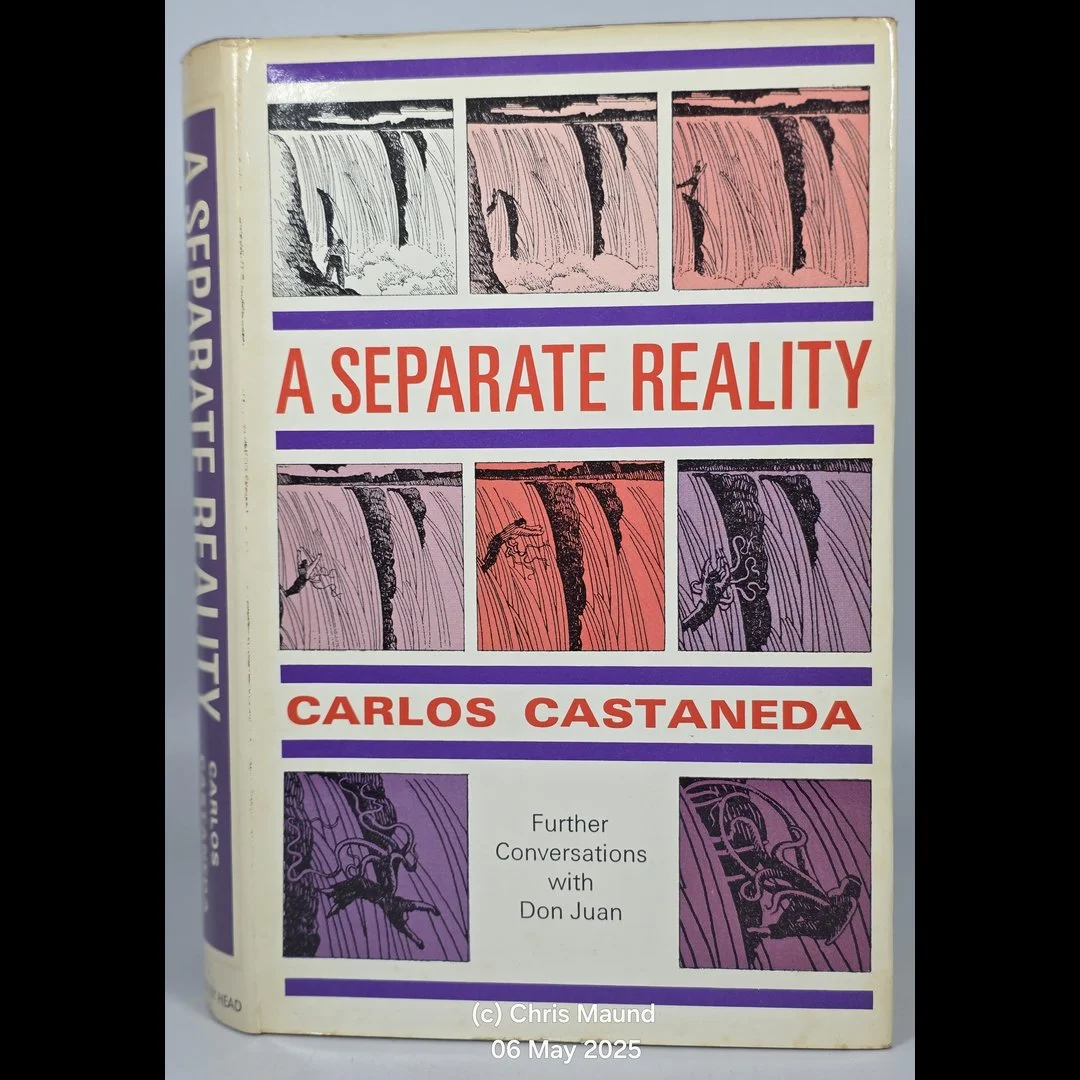 Image 1 of 11
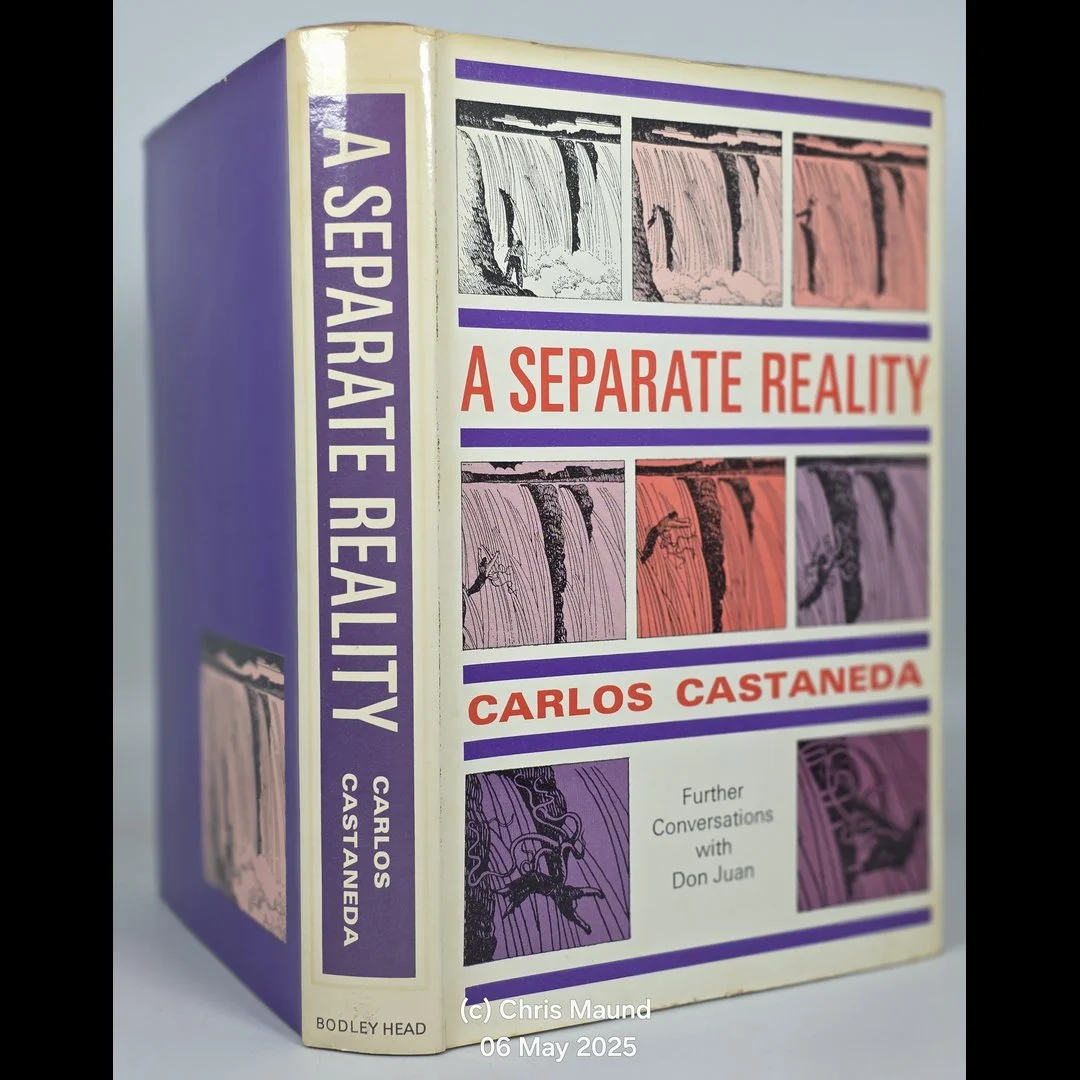 Image 2 of 11
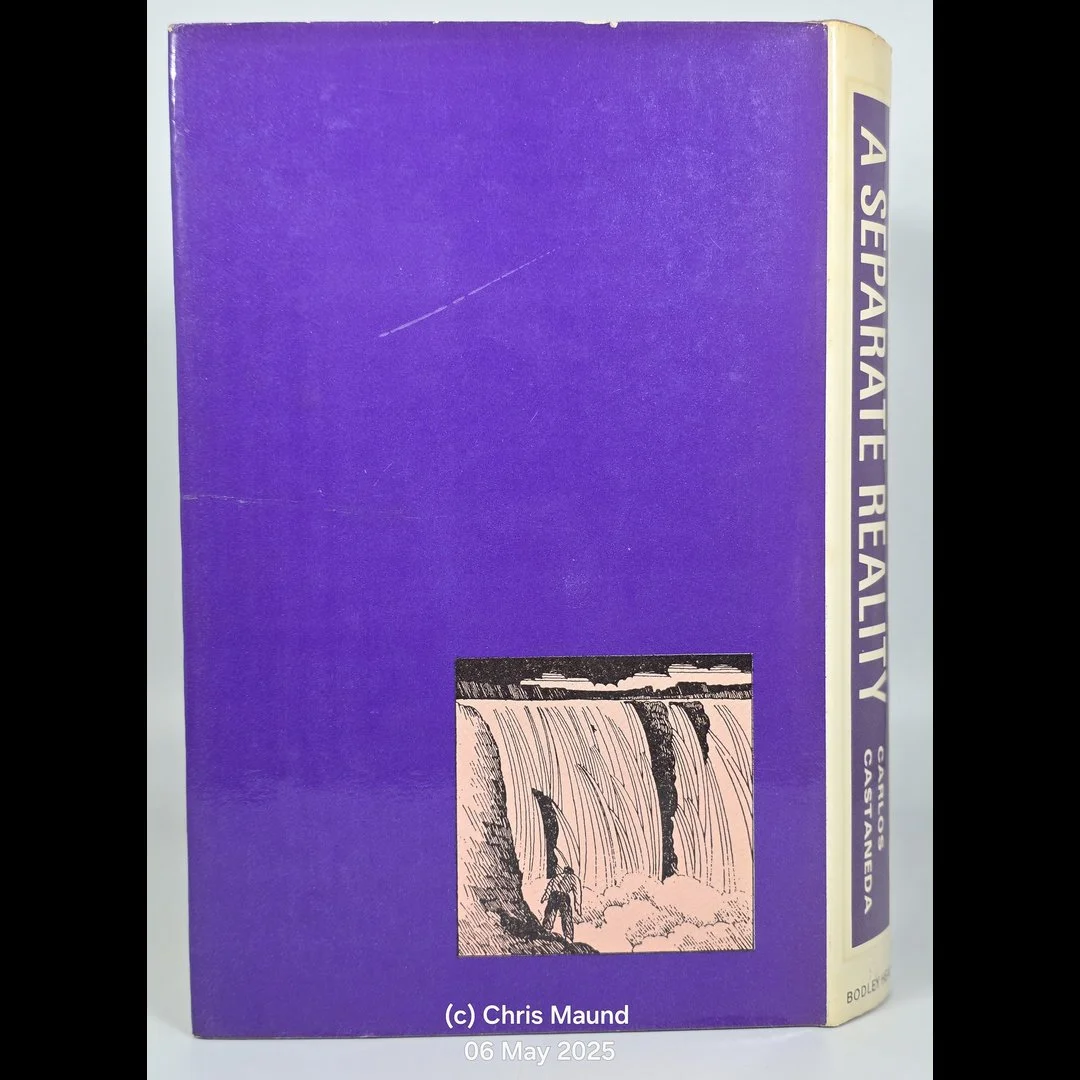 Image 3 of 11
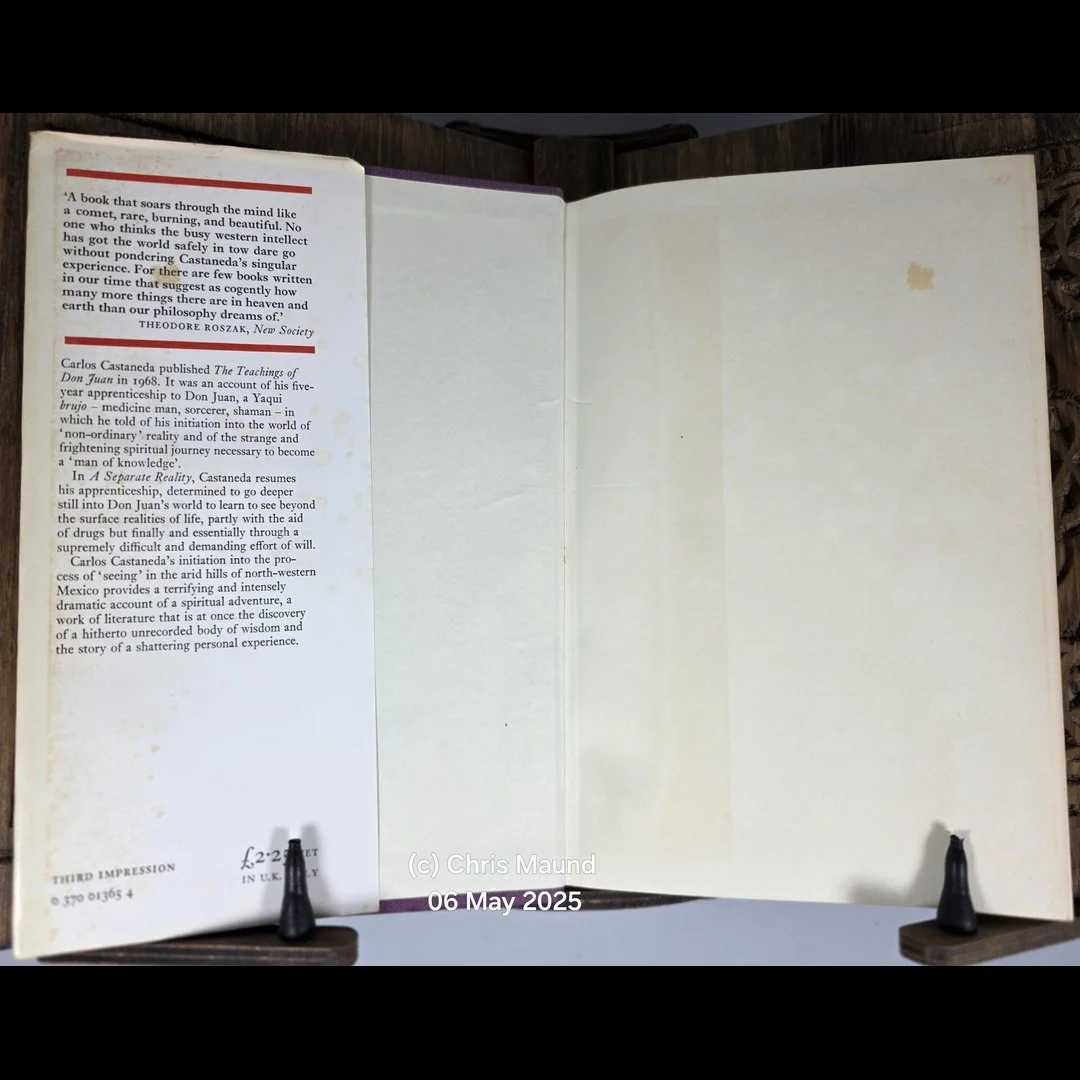 Image 4 of 11
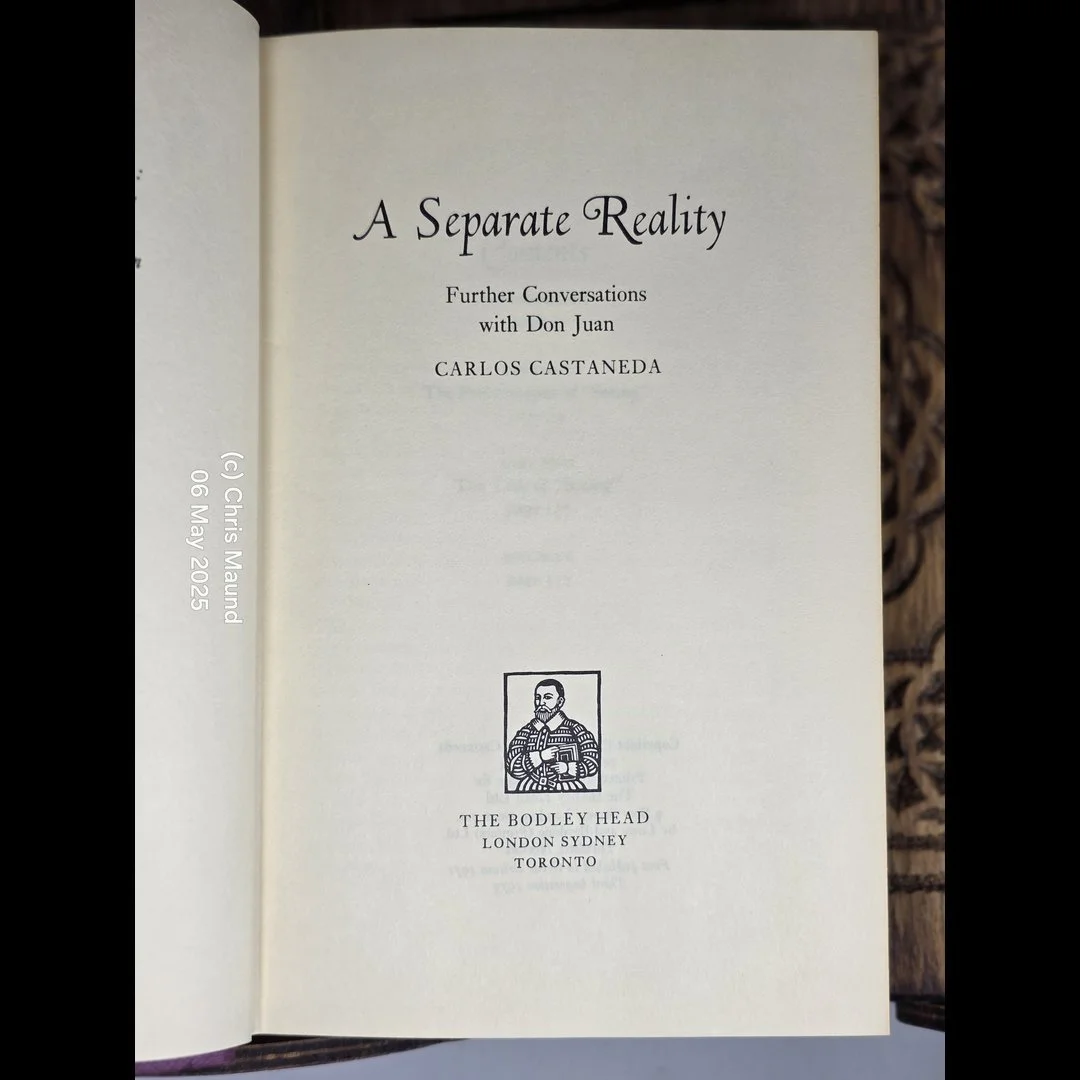 Image 5 of 11
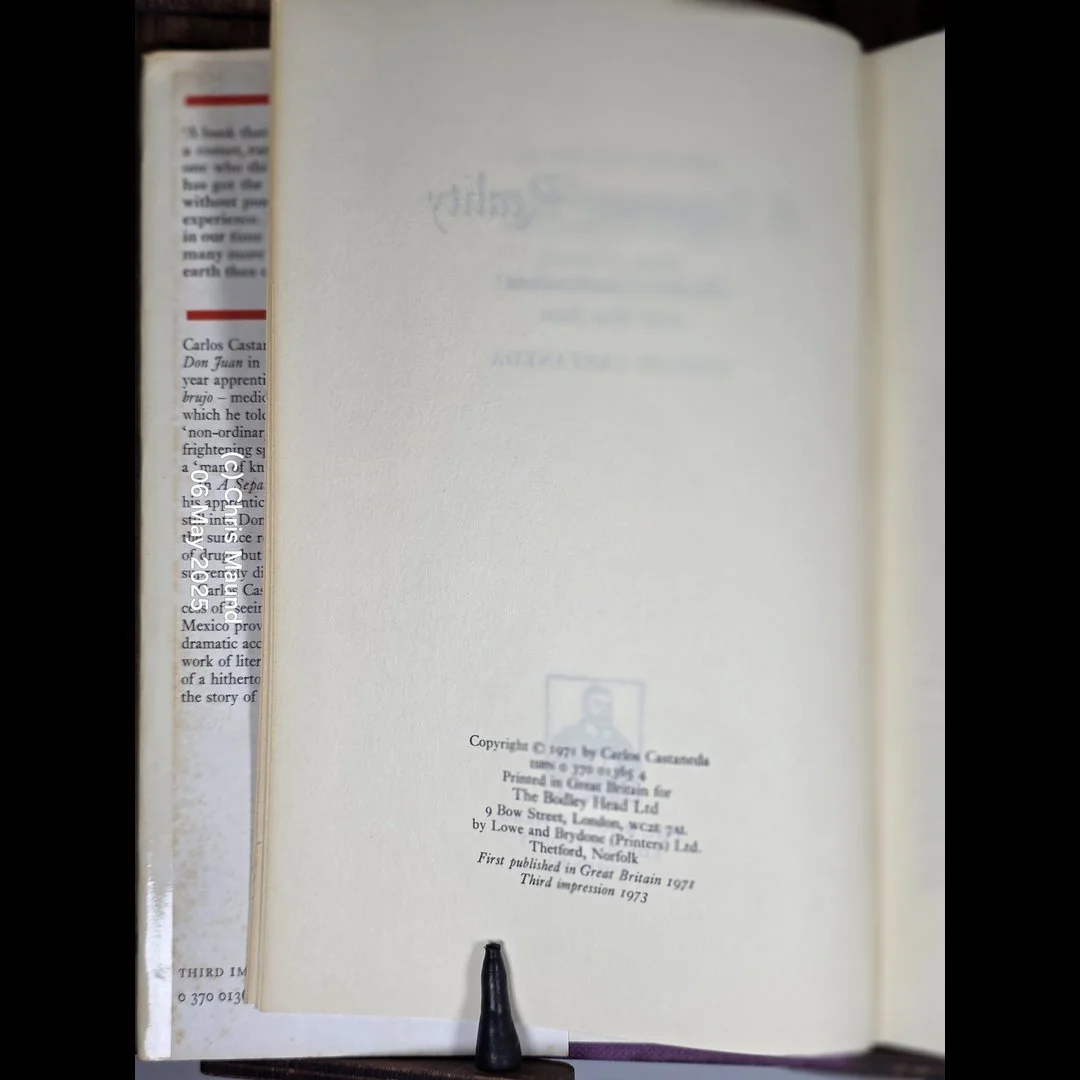 Image 6 of 11
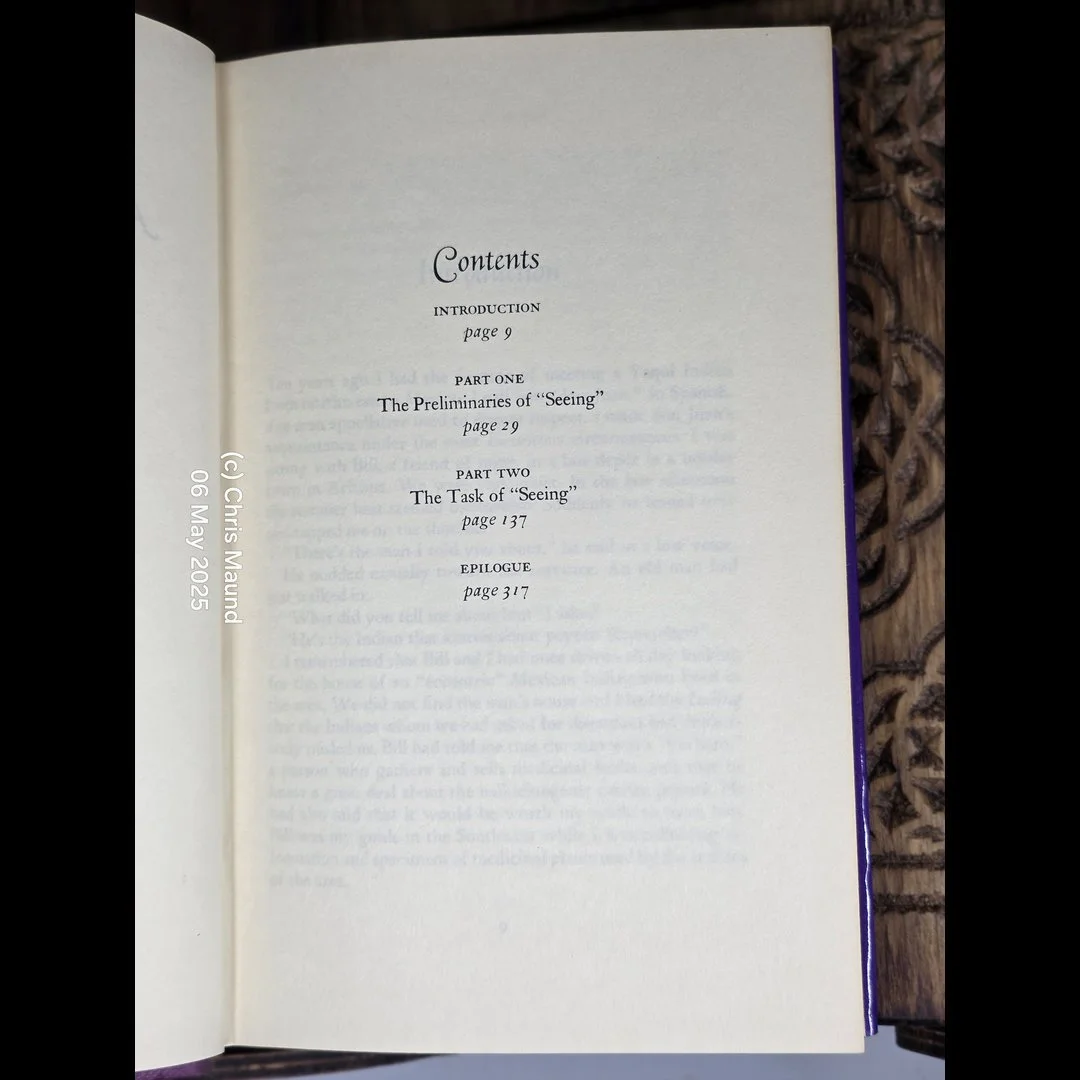 Image 7 of 11
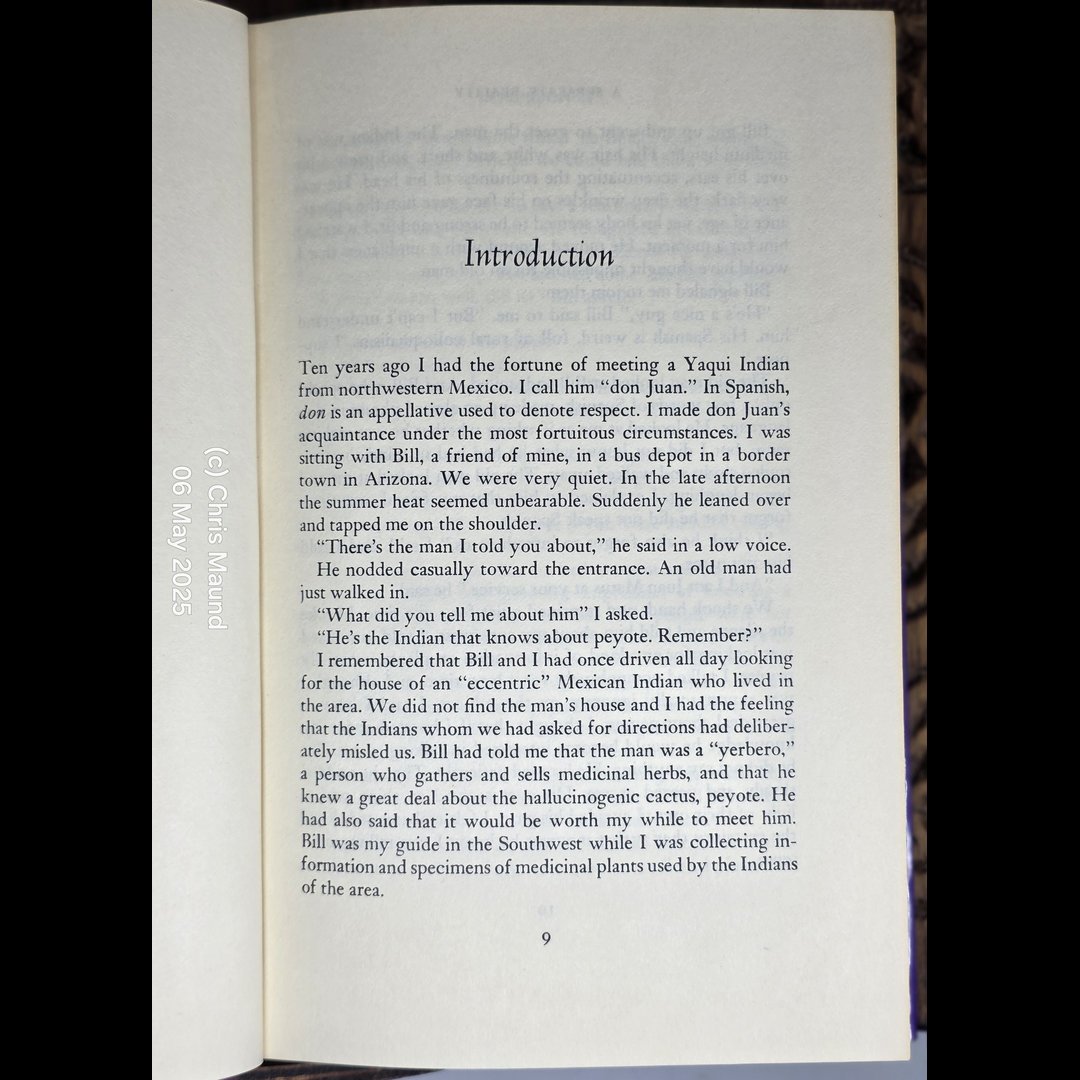 Image 8 of 11
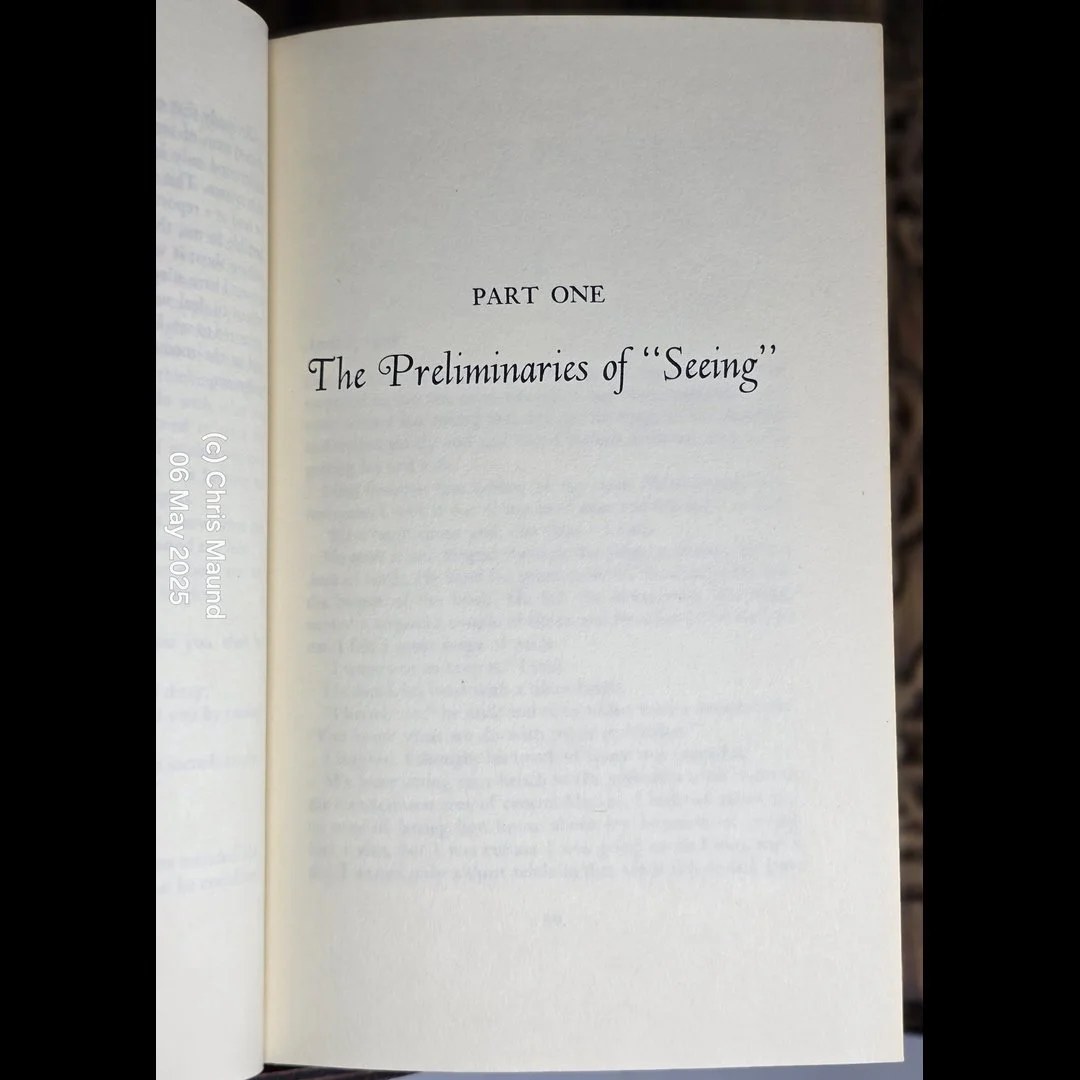 Image 9 of 11
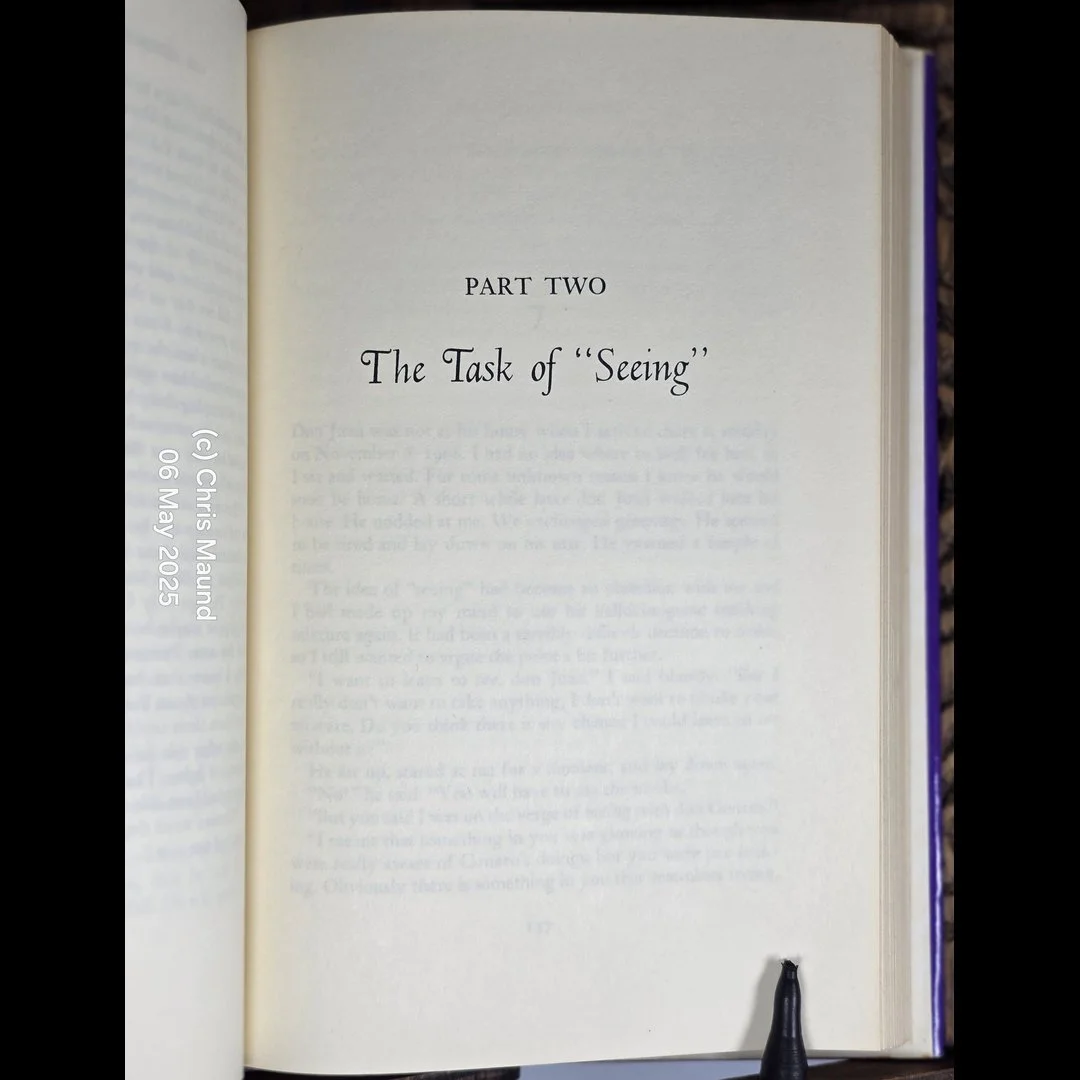 Image 10 of 11
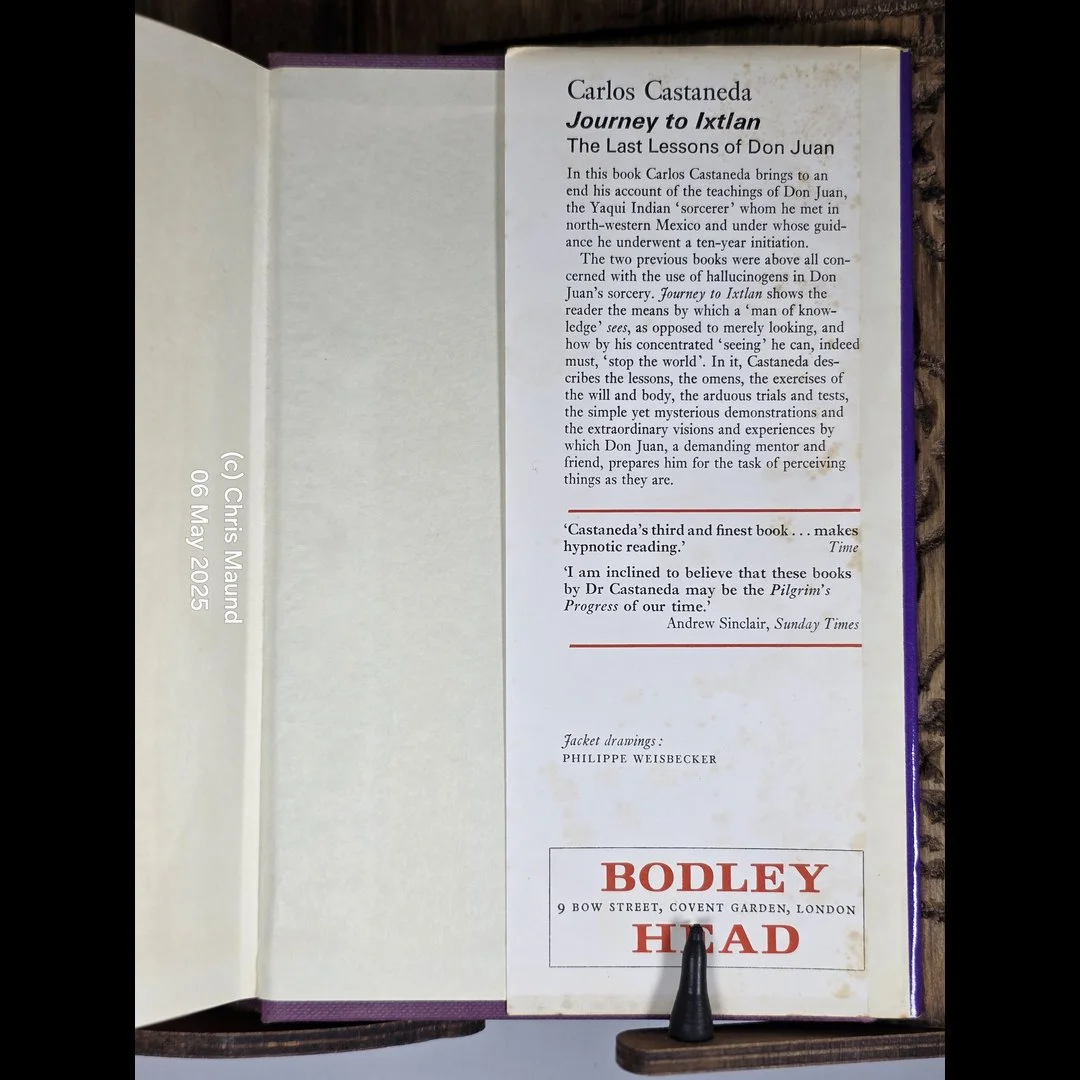 Image 11 of 11