1721 First English Edition
THE DOCTRINE OF MORALITY
By Marin Le Roy de Gomberville
KEY DETAILS
Condition: Good
Format: Hardcover, folio (fo 12 × 19 in 305 × 483 mm )
Note: Binding/size selection follows standard bibliographic conventions and is approximate; exact measurements may vary.
Published By: E. Bell, J. Darby, A. Bettesworth, F. Fayram, J. Pemberton, J. Hooke, C. Rivington, F. Clay, J. Batley, and E. Symon, London, 1721
Language: French and English, parallel text
Illustrated By: Pierre Daret
Provenance: Early ink ownership inscription “IOHN SEALE. 172” to the cartouche of the first engraved title.
Collation: [4], xi, [1], 211, [1] pp.; 2 parts in 1, continuously paginated, additional engraved title, title vignette, 103 copper-engraved plates, engraved initials, and headpieces. Complete.
Dust Jacket: None, as issued
SKU: BTETM0002582
Shipping Info: Approximate Package Dimensions H: 12.5, L: 30, W: 25 (Units: cm), W: 3Kg
Tracked Shipping, Insurance Coverage as per Customer Request
DESCRIPTION
The Doctrine of Morality
or, A View of Human Life, According to the Stoick Philosophy
Translated into English by T. M. Gibbs, late of Hart-Hall, Oxford.
A substantial and visually striking first English edition of Marin Le Roy de Gomberville's celebrated moral emblem book: a remarkable union of Stoic philosophy, allegorical art and early-modern moral instruction, presented in parallel French and English and illustrated with an extensive suite of copper engravings.
First published in Paris in 1646 as La Doctrine des mœurs, the work was conceived as a visual education in virtue for the young Louis XIV. Gomberville's moral discourses accompany a sequence of emblematic scenes concerned with prudence, ambition, fortune, self-command, vice, virtue, mortality and the proper conduct of human life. The visual programme ultimately derives substantially from Otto van Veen's celebrated Quinti Horatii Flacci Emblemata of 1607, reworked and expanded through the publishing and engraving enterprise of Pierre Daret.
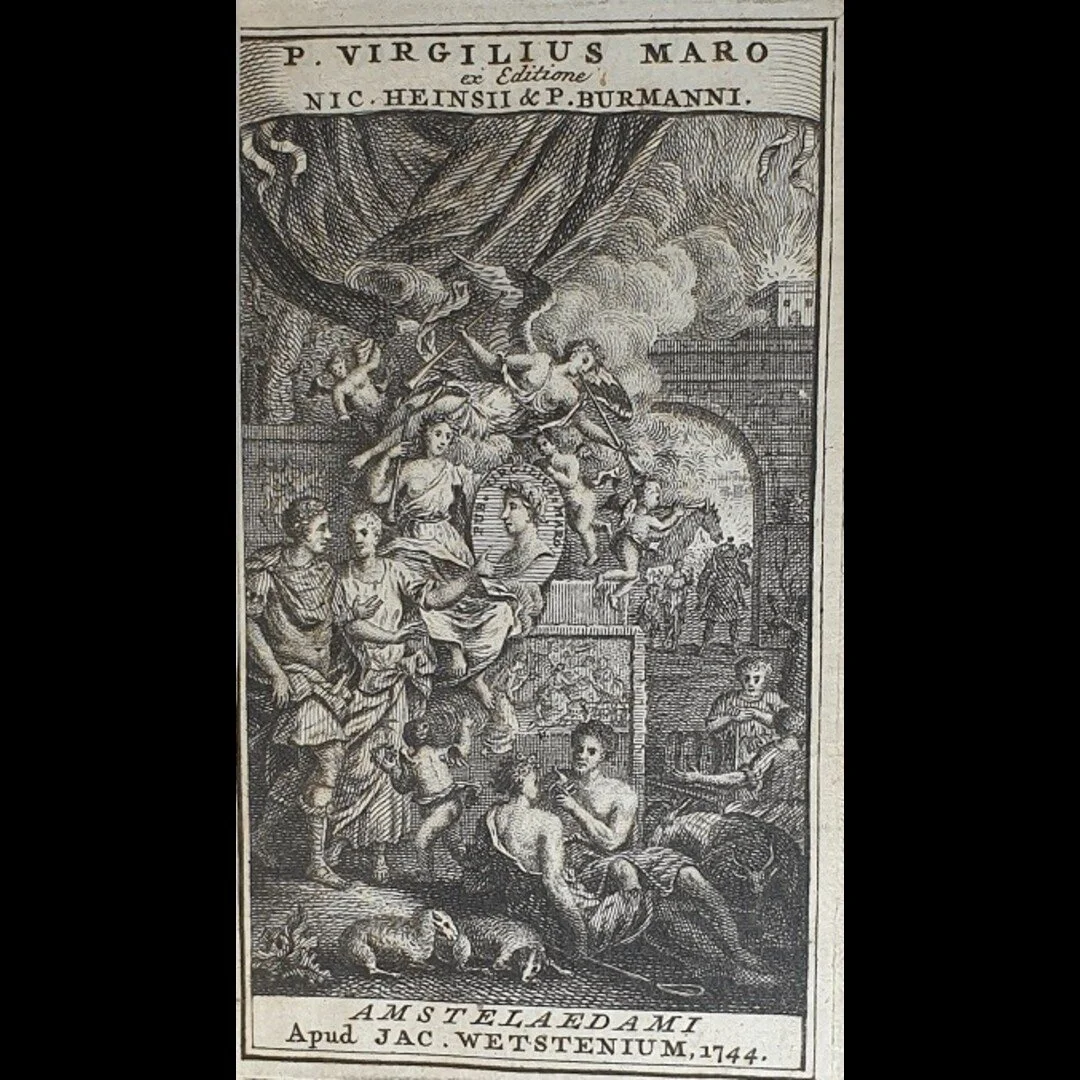
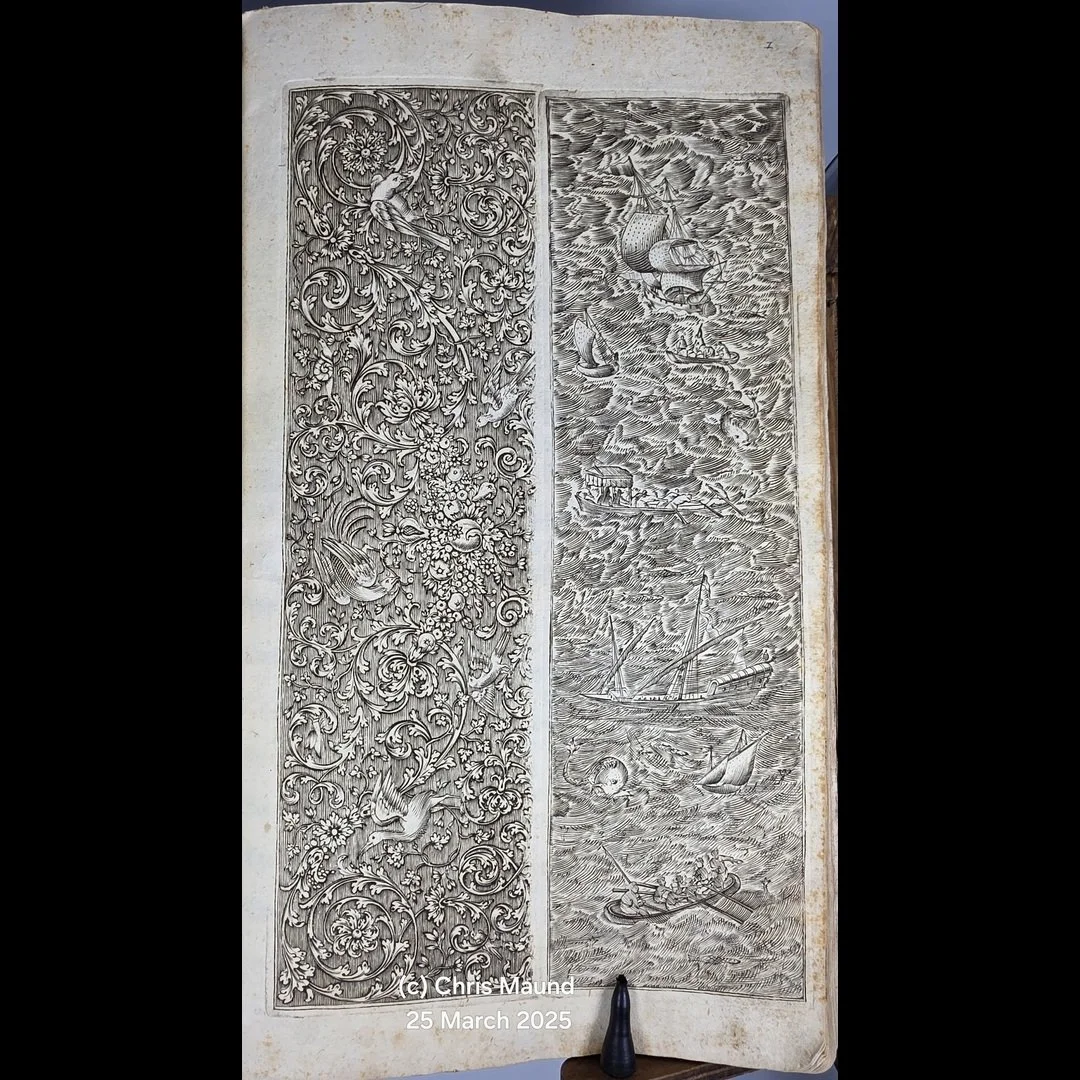
This imposing 1721 London edition brought the work to an English readership through the translation of Thomas Manington Gibbs. In two parts bound as one folio, it retains the spectacular emblematic apparatus: an engraved frontispiece, additional engraved title to each part, title vignette, engraved portrait of Gomberville, decorative initials and headpieces, and 103 engraved illustrations, including the portrait. The text is printed in parallel French and English.
An especially attractive feature of the present copy is an early manuscript ownership inscription, “IOHN SEALE. 172”, written within the otherwise blank cartouche of the first engraved title. A possible association with John Seale (1705–1777), later of Mount Boone, Dartmouth, remains under investigation and is not asserted here as established provenance.
PROVENANCE
Early ink ownership inscription “IOHN SEALE. 172” to the cartouche of the first engraved title.
A possible identification with John Seale (1705–1777), later of Mount Boone, Dartmouth, is currently under investigation. The association is plausible but presently unproven and is therefore not asserted as definitive provenance.
Later sold through Forum Auctions, April 2025.
CONDITION, COLLATION & COPY NOTES
COLLATION
[4], xi, [1], 211, [1] pp.; 2 parts in 1, continuously paginated, additional engraved title, title vignette, 103 copper-engraved plates, engraved initials, and headpieces. Complete.
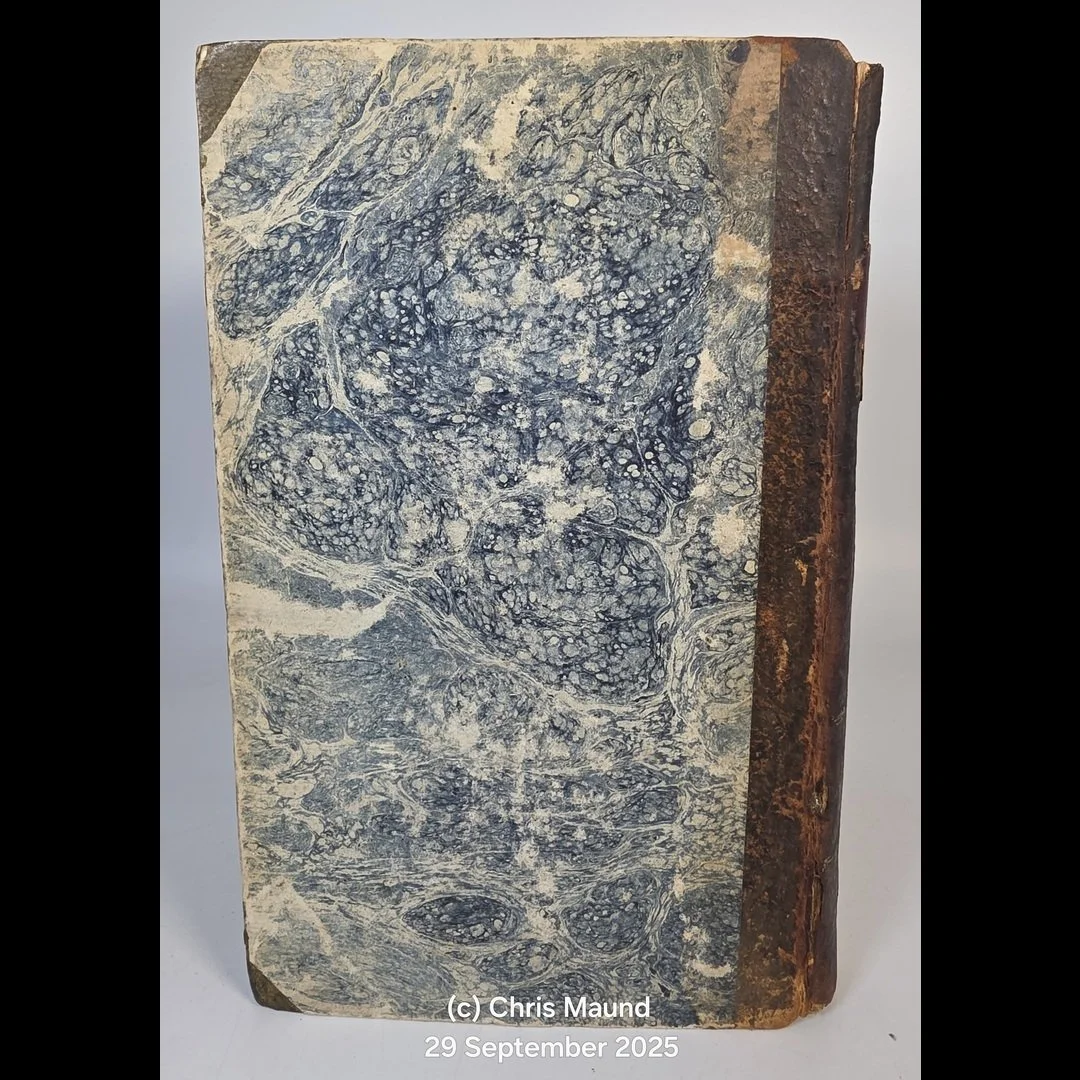
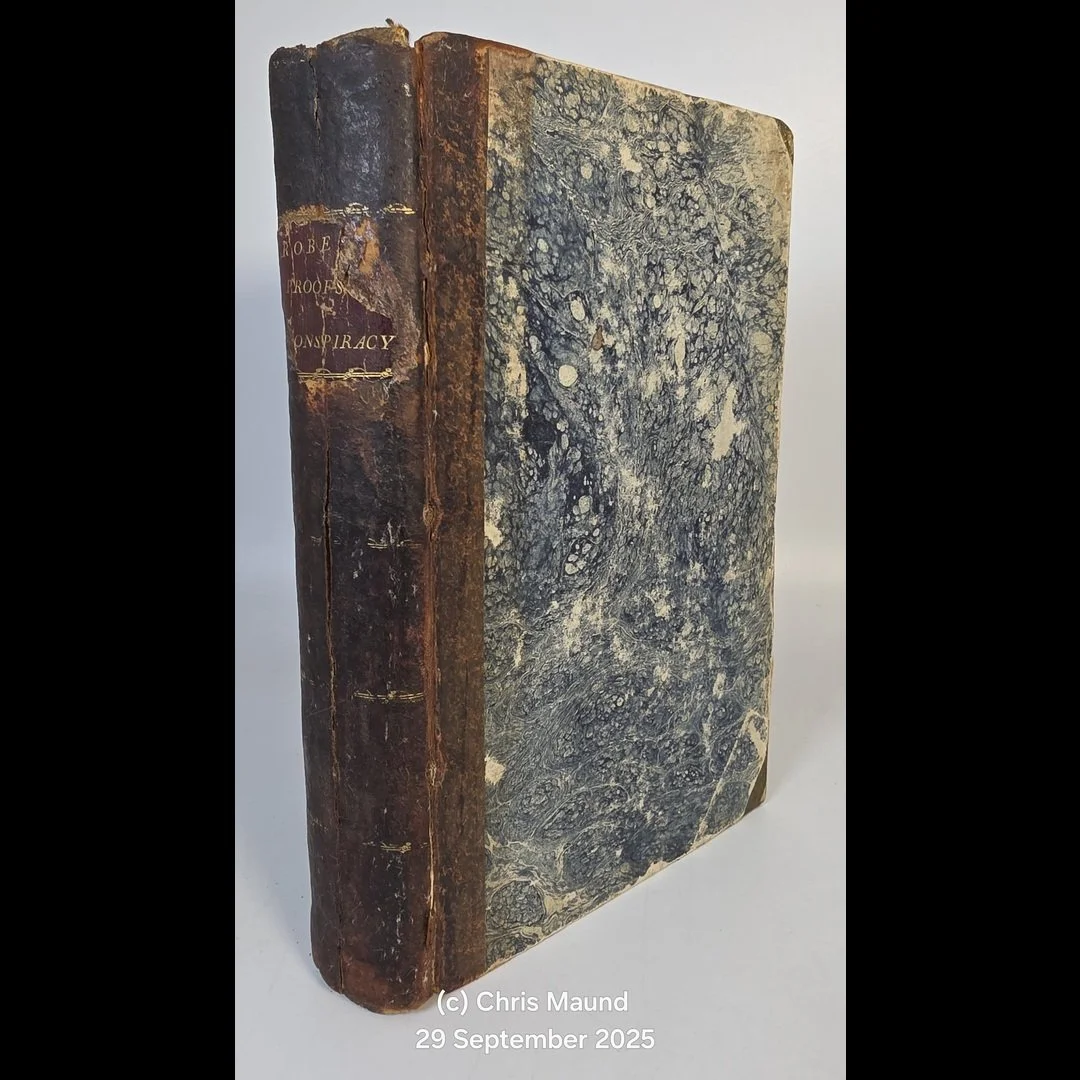
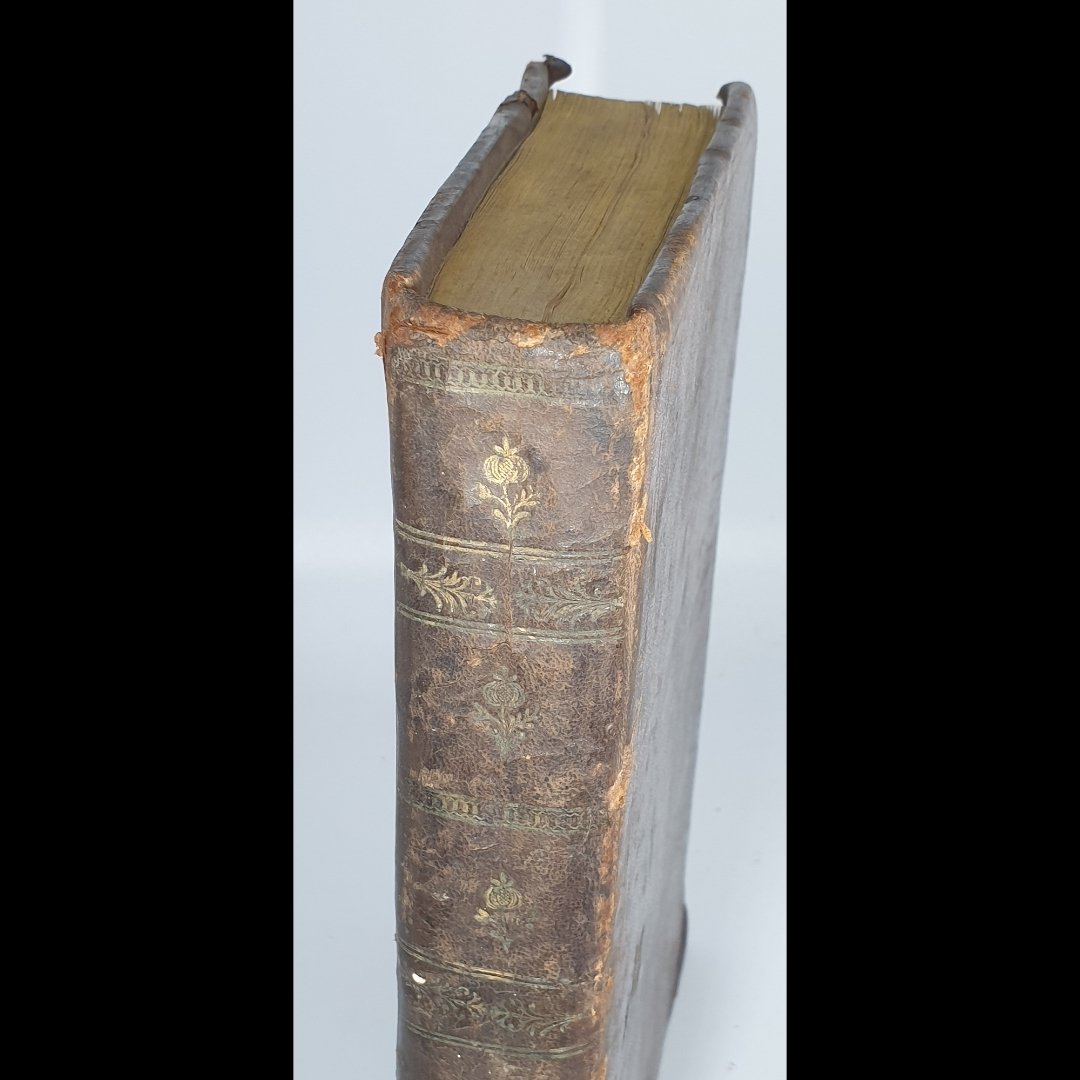
An imposing and internally attractive copy in contemporary panelled calf, the boards decorated with blind tooling and ruled borders, spine with raised bands and gilt lettering. Binding rubbed, scuffed and marked from use, with wear to board edges and corners, losses and wear at the spine ends, and cracking/local splitting to the joints; the boards nevertheless remain attached.
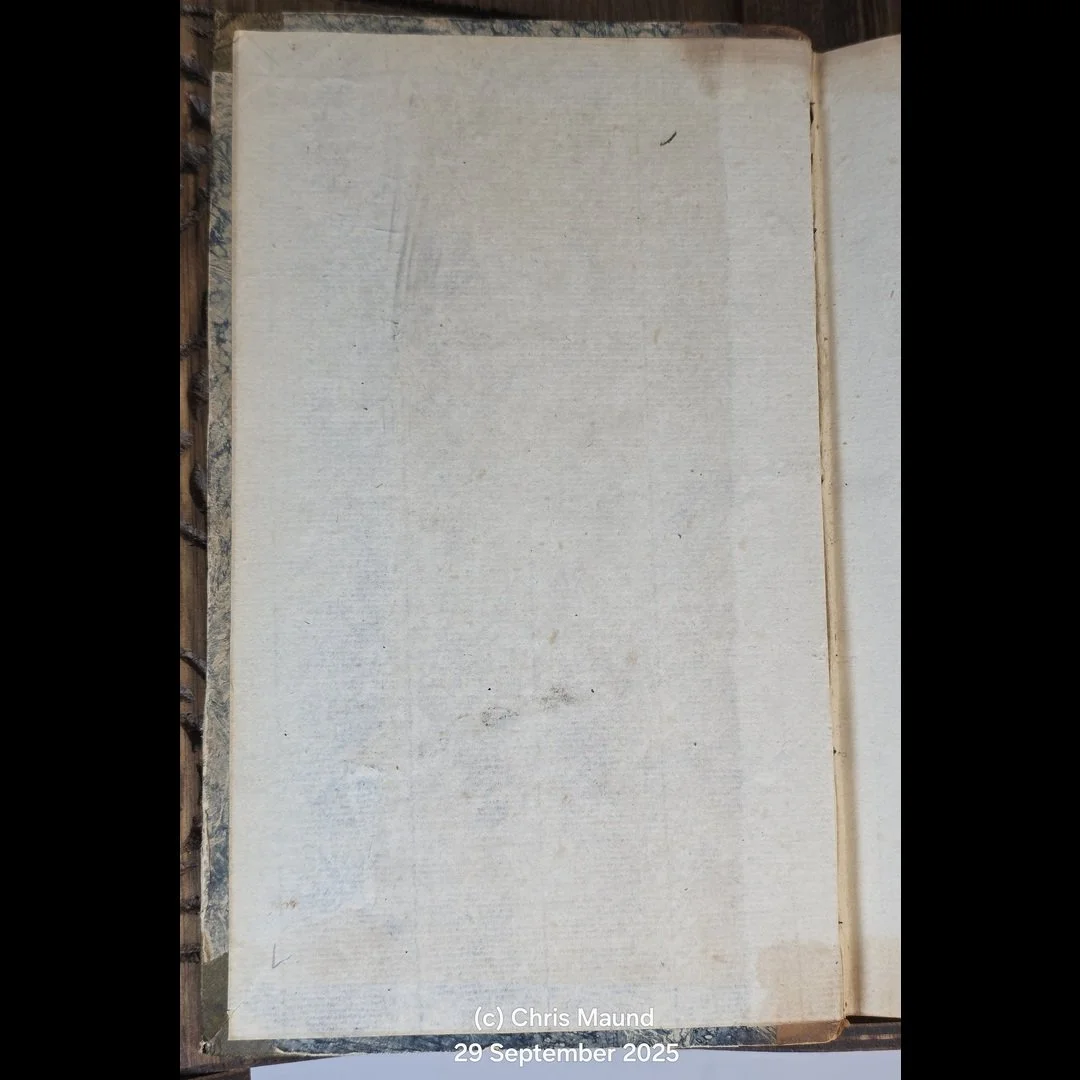
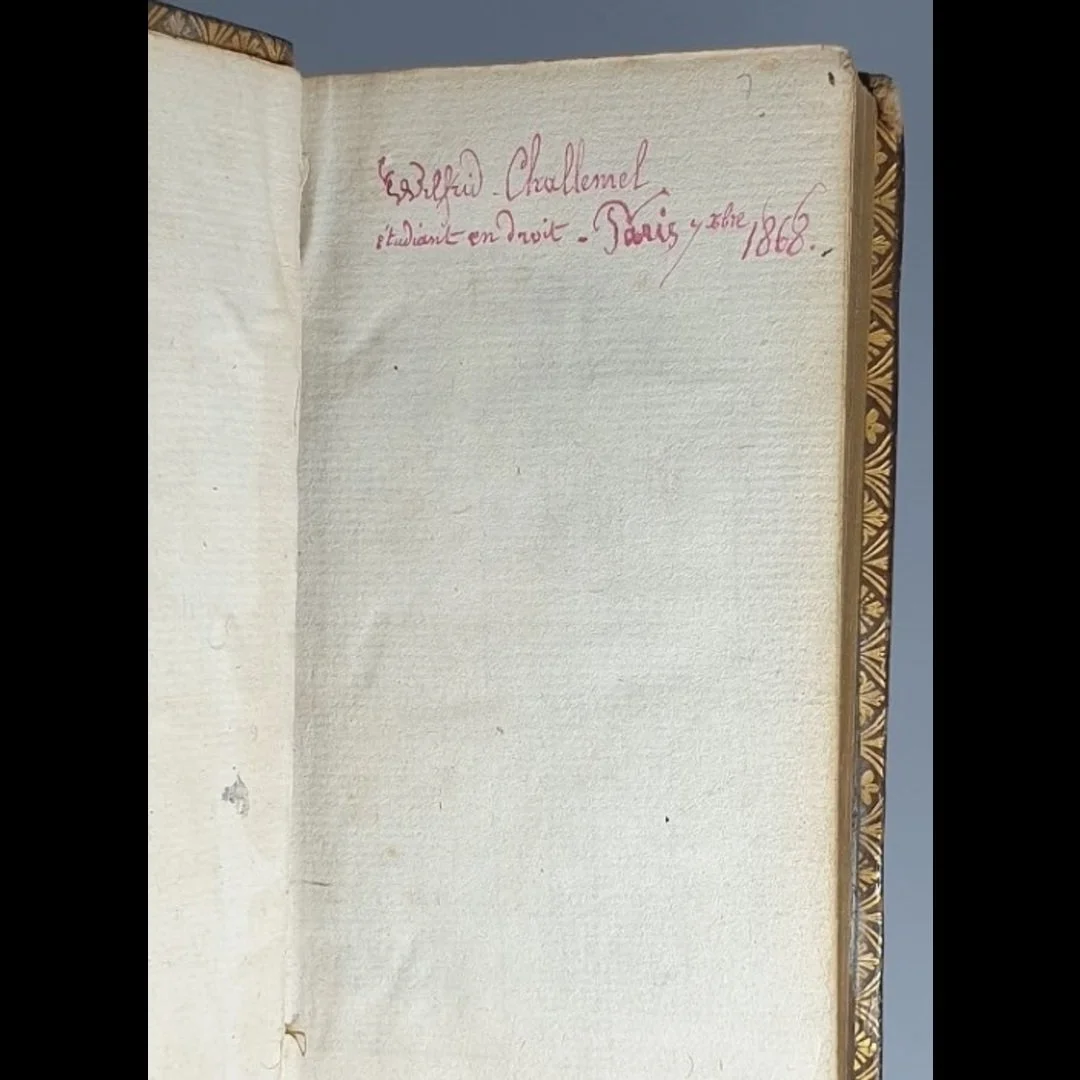
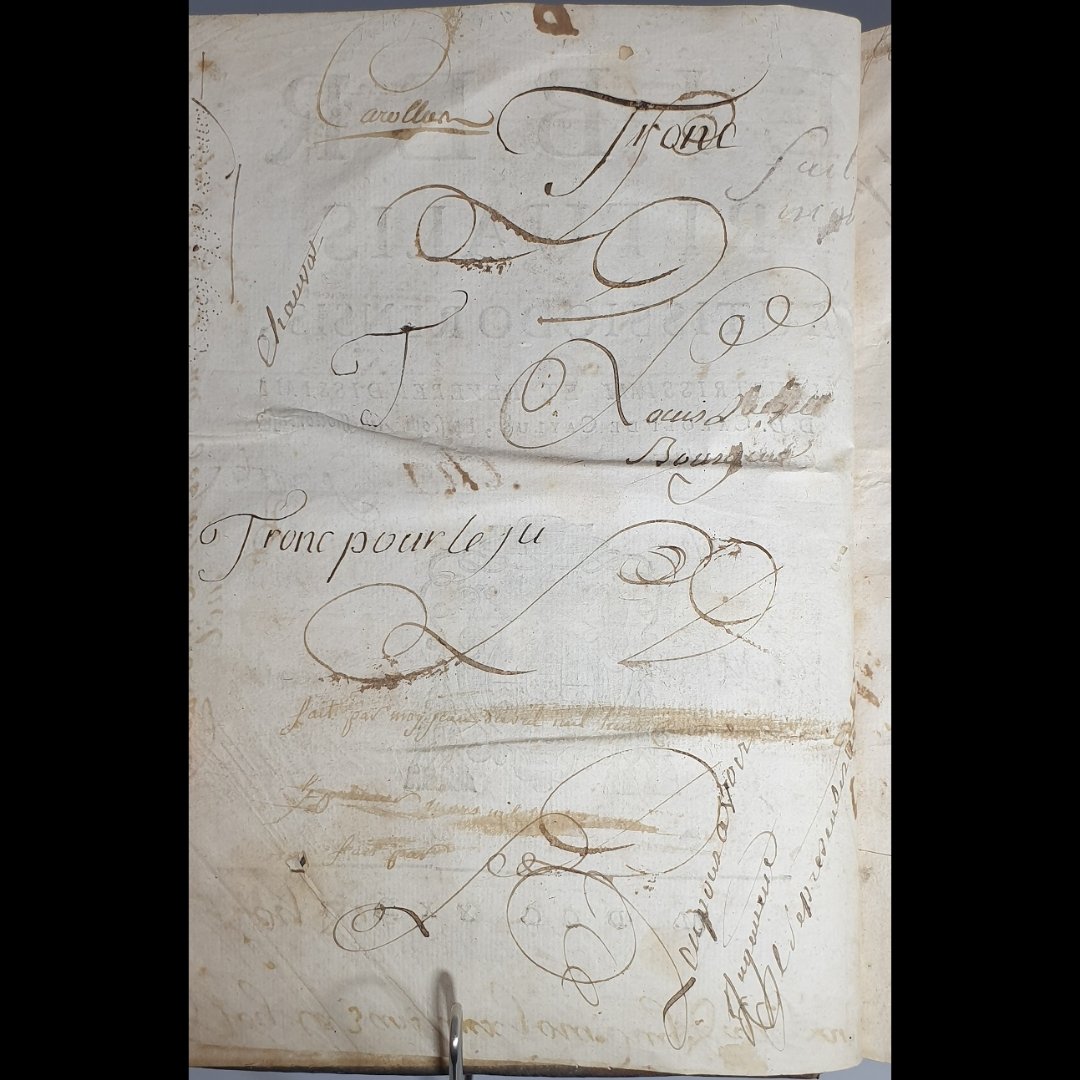
Front free endpaper with a substantial horizontal tear/loss and an old pencil bibliographical note identifying the edition and its engraved contents. Internally considerably better preserved than the exterior might suggest: leaves generally clean and fresh for a large illustrated volume of this age, with occasional light spotting, toning, handling marks and other signs of use. The copper engravings retain strong impressions and form the principal visual feature of the book.
First engraved title with early ink ownership inscription “IOHN SEALE. 172” within the lower cartouche. The corresponding cartouche to the second engraved title remains blank. The inscription may possibly relate to John Seale (1705–1777), merchant and later owner of Mount Boone, Dartmouth, whose family possessed a documented library; the identification remains unconfirmed and further provenance research is continuing.
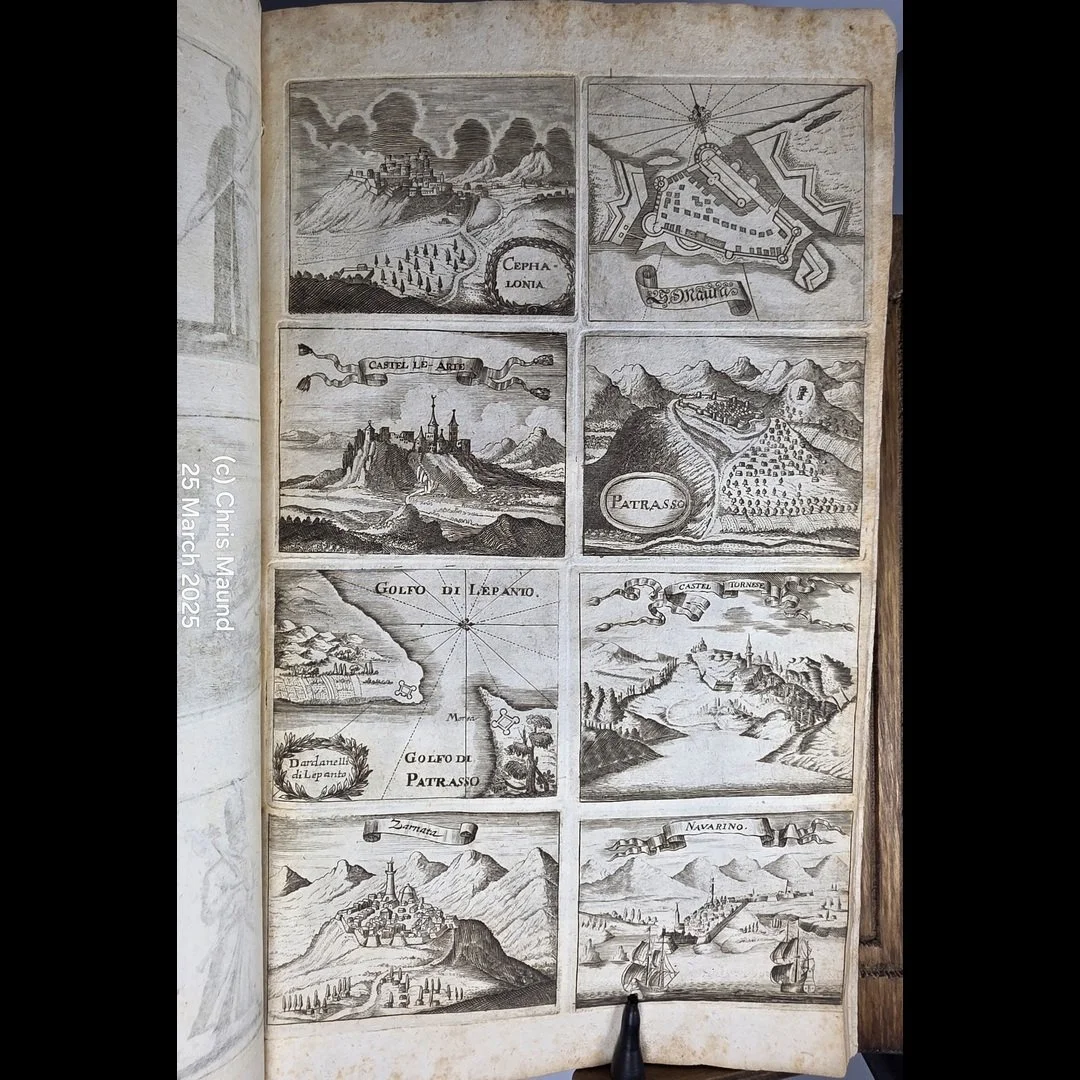
Two parts in one, with continuous pagination. Engraved frontispiece, additional engraved title to each part, engraved portrait of Gomberville, title vignette, 103 engraved illustrations including the portrait, engraved initials, headpieces and terminal engraved ornament. The principal called-for engraved material is present and the volume is complete as catalogued. Comparable bibliographical descriptions of the 1721 edition give the same suite of 103 illustrations.
A handsome and characterful copy of an important English emblem book, combining substantial shelf presence with a remarkably rich sequence of Baroque moral imagery. The external wear reflects three centuries of use, while the illustrated interior remains notably appealing.
Please see Photos as part of condition report.
REFERENCES
ESTC N8945 [also rendered N008945 in some databases]
Folger Shakespeare Library, The Doctrine of Morality, 1721
Library of Congress, Lessing J. Rosenwald Collection, The Doctrine of Morality, 1721
Dominic Winter, Printed Books, Maps & Decorative Prints, 8 April 2026, lot 285
Original French work: La Doctrine des mœurs, Paris, Pierre Daret / Louis Sevestre, 1646
SYNOPSIS
The Doctrine of Morality belongs to the great European tradition of the emblem book, in which an image, motto and explanatory discourse combine to communicate a philosophical or moral lesson. Rather than presenting Stoicism as abstract philosophical theory, Gomberville turns ethics into a sequence of memorable visual situations.
Across its two parts the reader encounters reflections on education and natural character, prudence, courage, ambition, wealth, adversity, reputation, love, anger, vice, virtue, self-mastery, the instability of fortune and the inevitability of death. Classical history, mythology and moral exempla are made visible through elaborate allegorical engravings and then interpreted in accompanying French and English prose.
The work therefore sits at the intersection of Stoic philosophy, emblem literature, Baroque engraving and courtly education. Its imagery reaches back through Daret to Otto van Veen's celebrated Horatian emblems, while Gomberville reshapes that visual vocabulary into a sustained programme of moral formation.
Originally conceived in the world of the young Louis XIV, the book offered virtue not simply as something to be read about, but something to be seen, interpreted and remembered. In the 1721 first English edition that programme acquired a new audience, preserving the French text while setting beside it Gibbs's English translation.
More than three centuries later, the book remains immediately engaging: an unusually ambitious attempt to turn the conduct of human life into a gallery of images.
AUTHOR BIO
Marin Le Roy de Gomberville (1600–1674) was a French novelist, moral writer and man of letters, and one of the early members of the Académie française, elected in 1634 to fauteuil 21. He participated in the early work of the Academy, including the development of its statutes and dictionary.
Alongside his prose romances, Gomberville produced works concerned with history, morality and religious reflection. La Doctrine des mœurs, first published in 1646, represents one of the most ambitious expressions of his moral thought: a deliberate fusion of image and discourse in which classical and Stoic ideas are transformed into an educational programme for seventeenth-century courtly society.
Translator Bio
Thomas Manington Gibbs, described on the title page as “late of Hart-Hall, Oxon,” prepared the English translation of Gomberville's work. Contemporary and later bibliographical records identify him by his full name, Thomas Manington Gibbs; the translation was published in London in 1721.
The bilingual arrangement preserves the French text alongside Gibbs's English rendering, making the edition both a translation and a direct witness to the reception of French moral and emblem literature in early eighteenth-century Britain.
ILLUSTRATOR
Pierre Daret
Pierre Daret de Cazeneuve (c.1604–1678) was a French engraver, painter, print publisher and dealer, active principally in Paris and particularly associated with portraiture and illustrated books. The Musée Carnavalet records him as a Parisian engraver working in both burin and etching; his engraved portrait of Gomberville itself dates from 1643.
For La Doctrine des mœurs, Daret drew extensively upon the imagery of the Flemish painter Otto van Veen (Otto Vaenius) and his Quinti Horatii Flacci Emblemata of 1607. Modern scholarship describes the 1646 project as both a re-use and expansion of Van Veen's famous iconographic programme, supplemented with additional designs associated with Eustache Le Sueur and Charles Errard. The 1721 English edition preserves this remarkable visual tradition through 103 engraved illustrations.

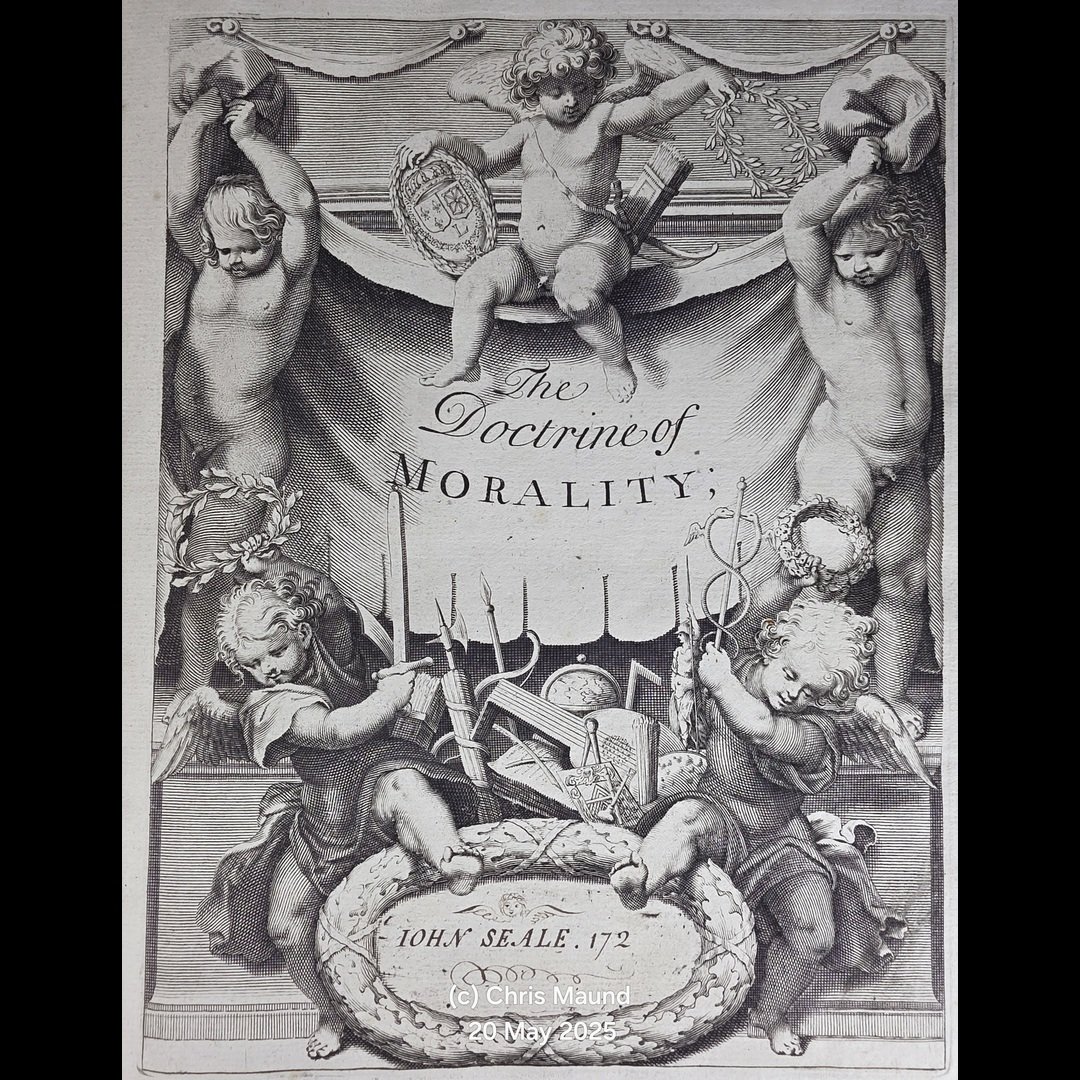 Image 1 of 35
 Image 2 of 35
 Image 3 of 35
 Image 4 of 35
 Image 5 of 35
 Image 6 of 35
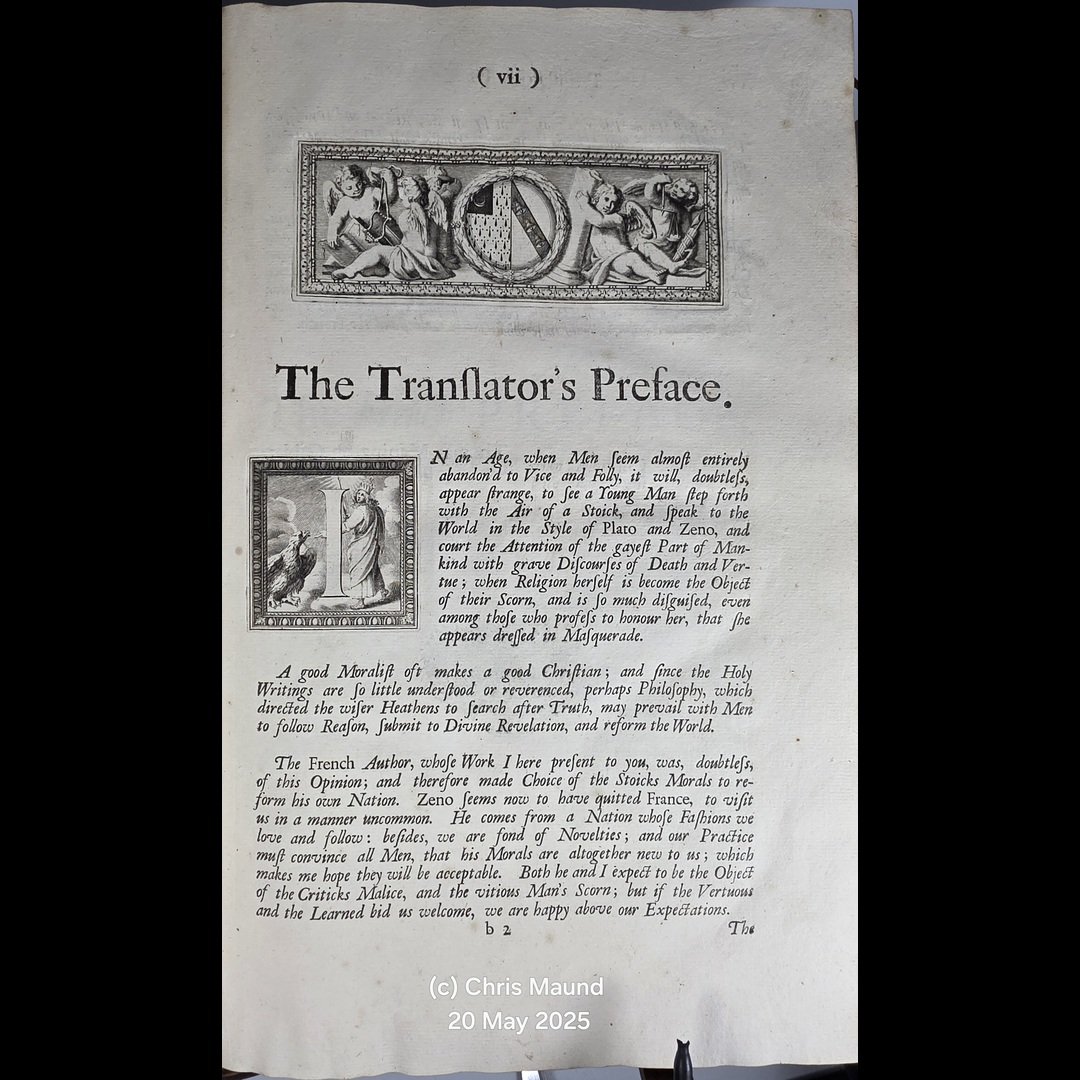 Image 7 of 35
 Image 8 of 35
 Image 9 of 35
 Image 10 of 35
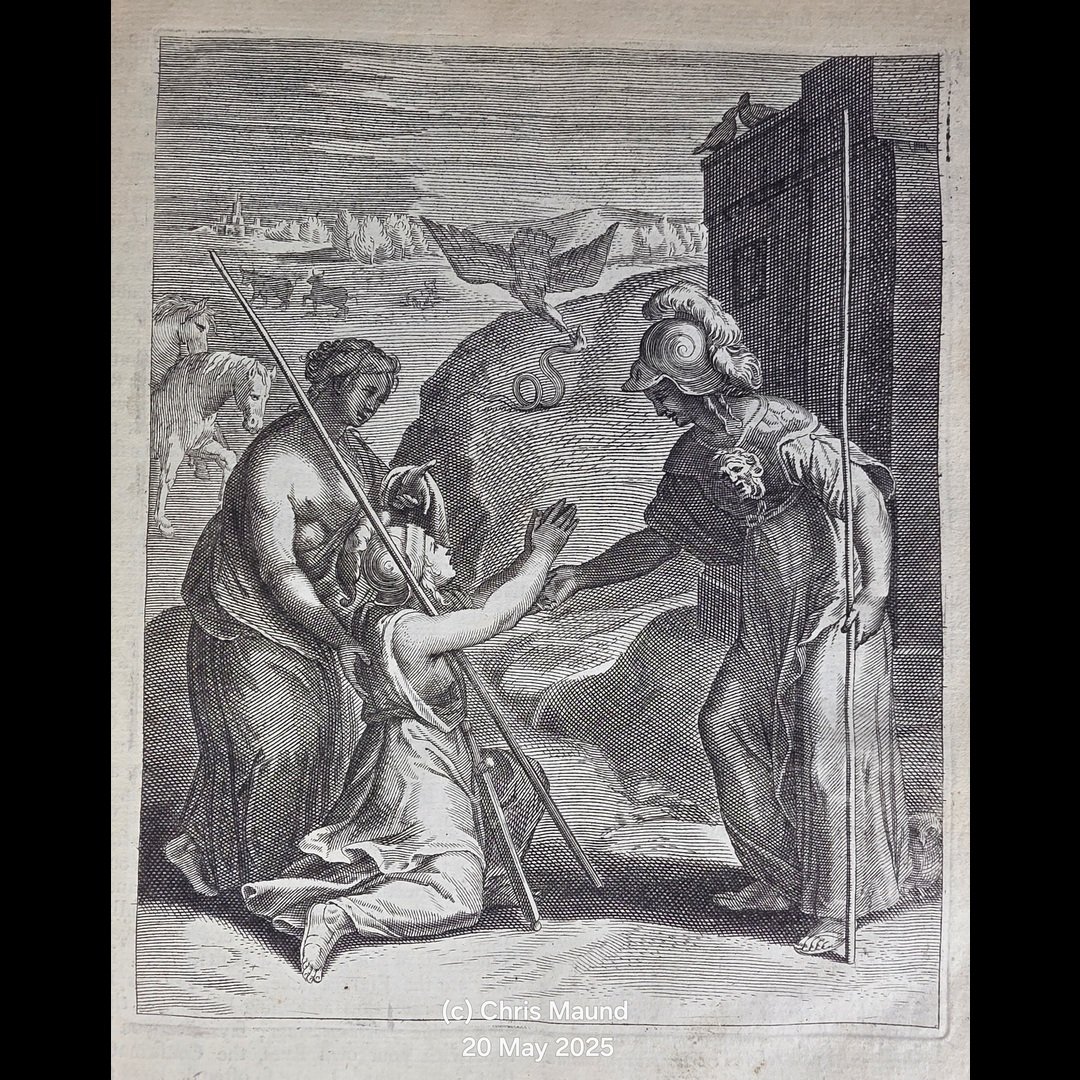 Image 11 of 35
 Image 12 of 35
 Image 13 of 35
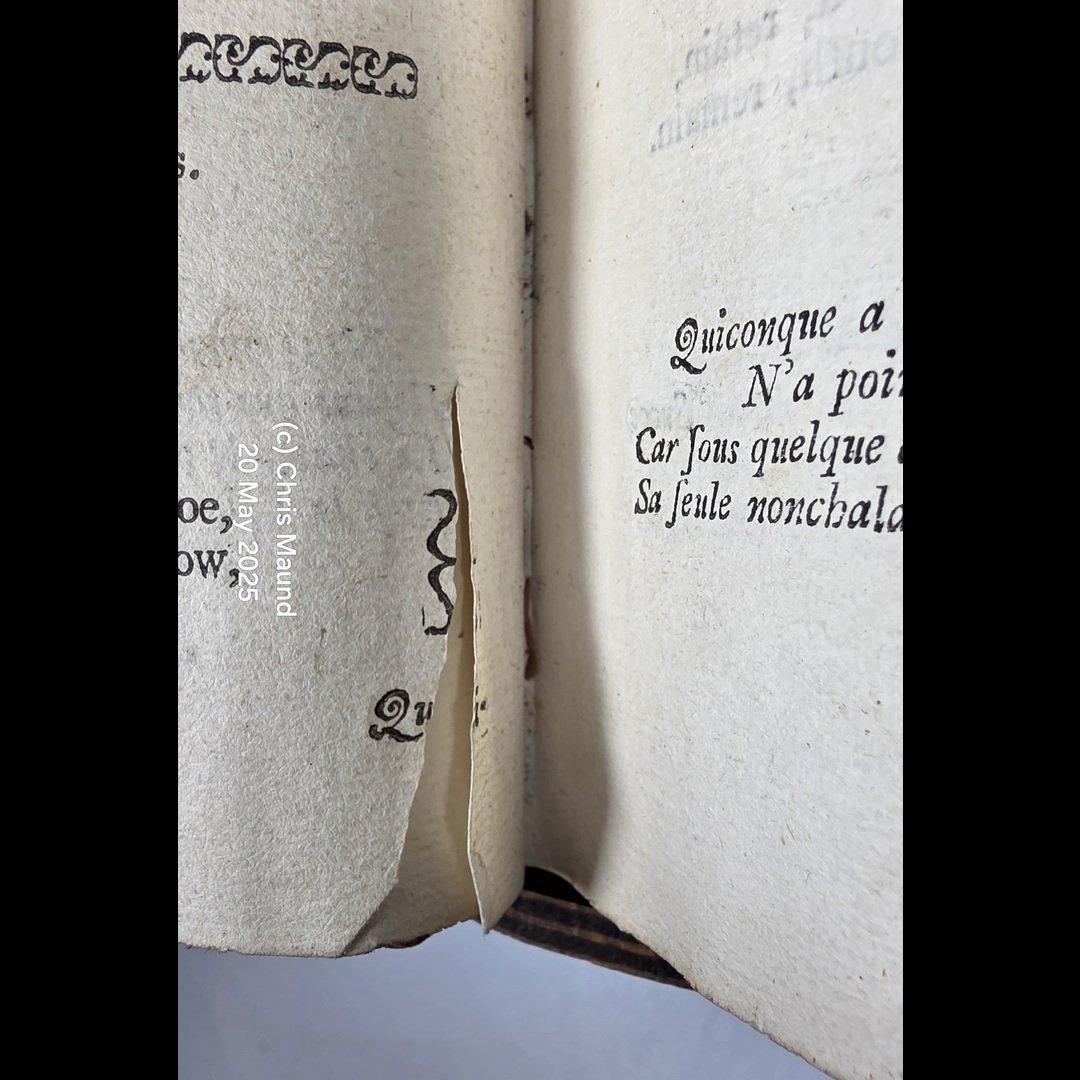 Image 14 of 35
 Image 15 of 35
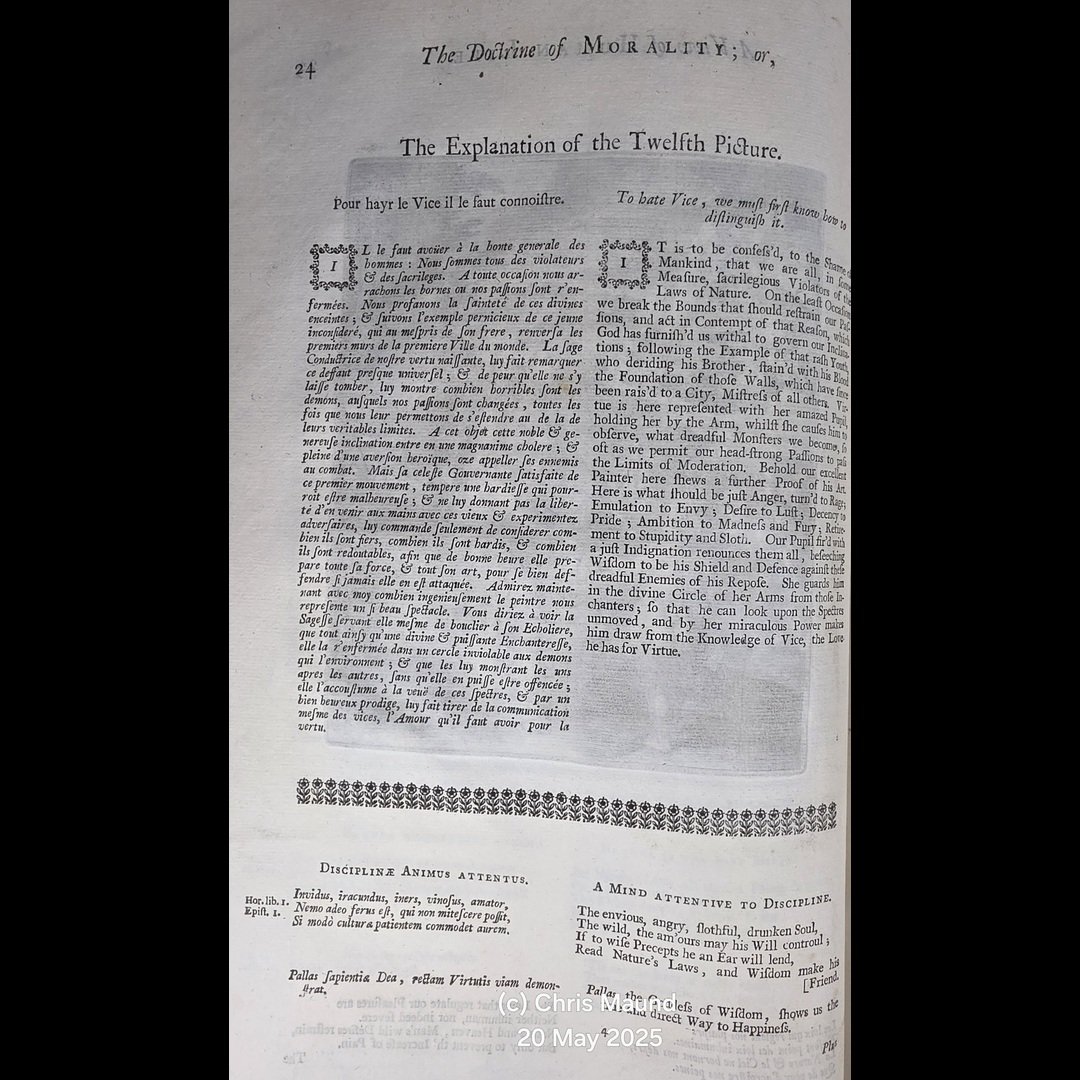 Image 16 of 35
 Image 17 of 35
 Image 18 of 35
 Image 19 of 35
 Image 20 of 35
 Image 21 of 35
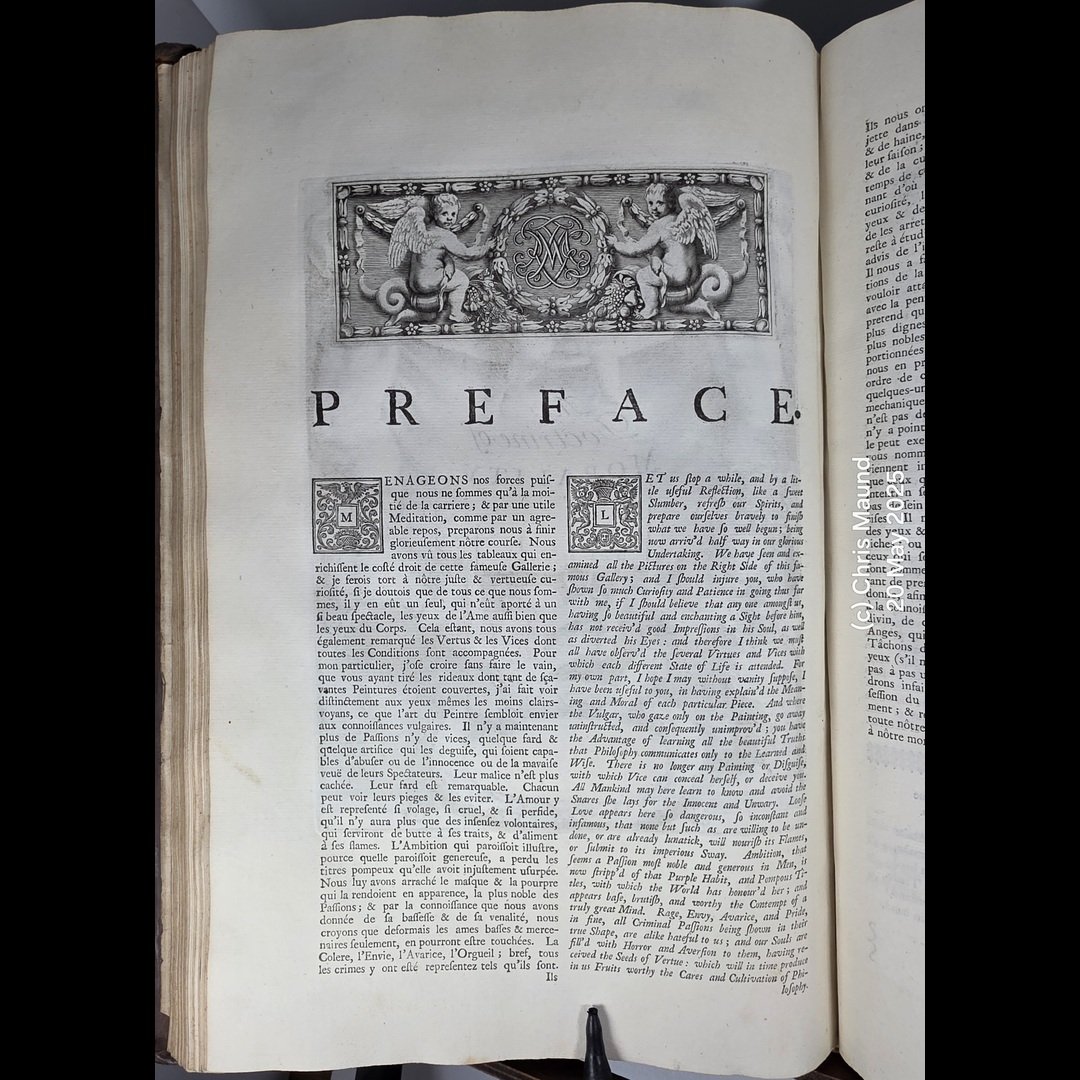 Image 22 of 35
 Image 23 of 35
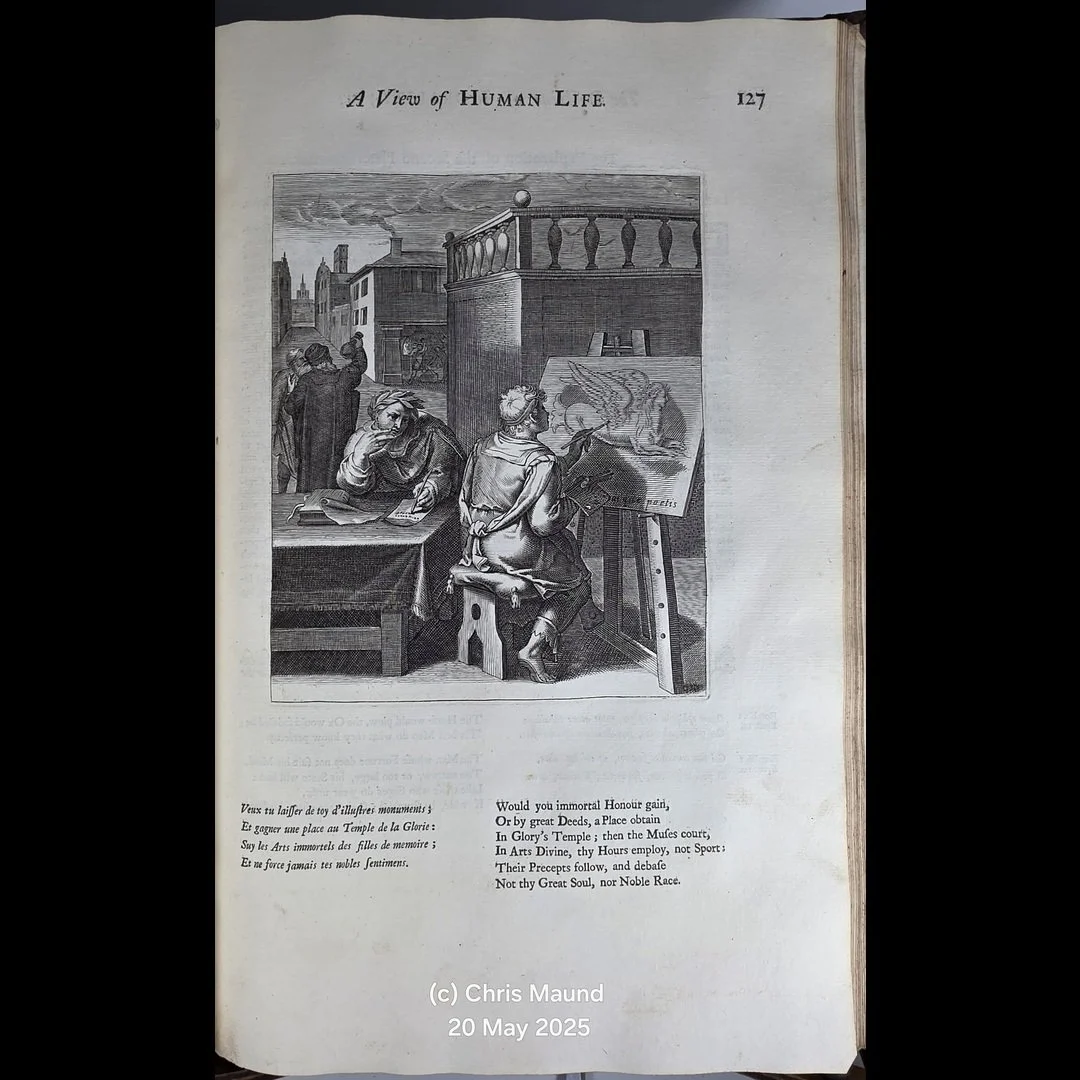 Image 24 of 35
 Image 25 of 35
 Image 26 of 35
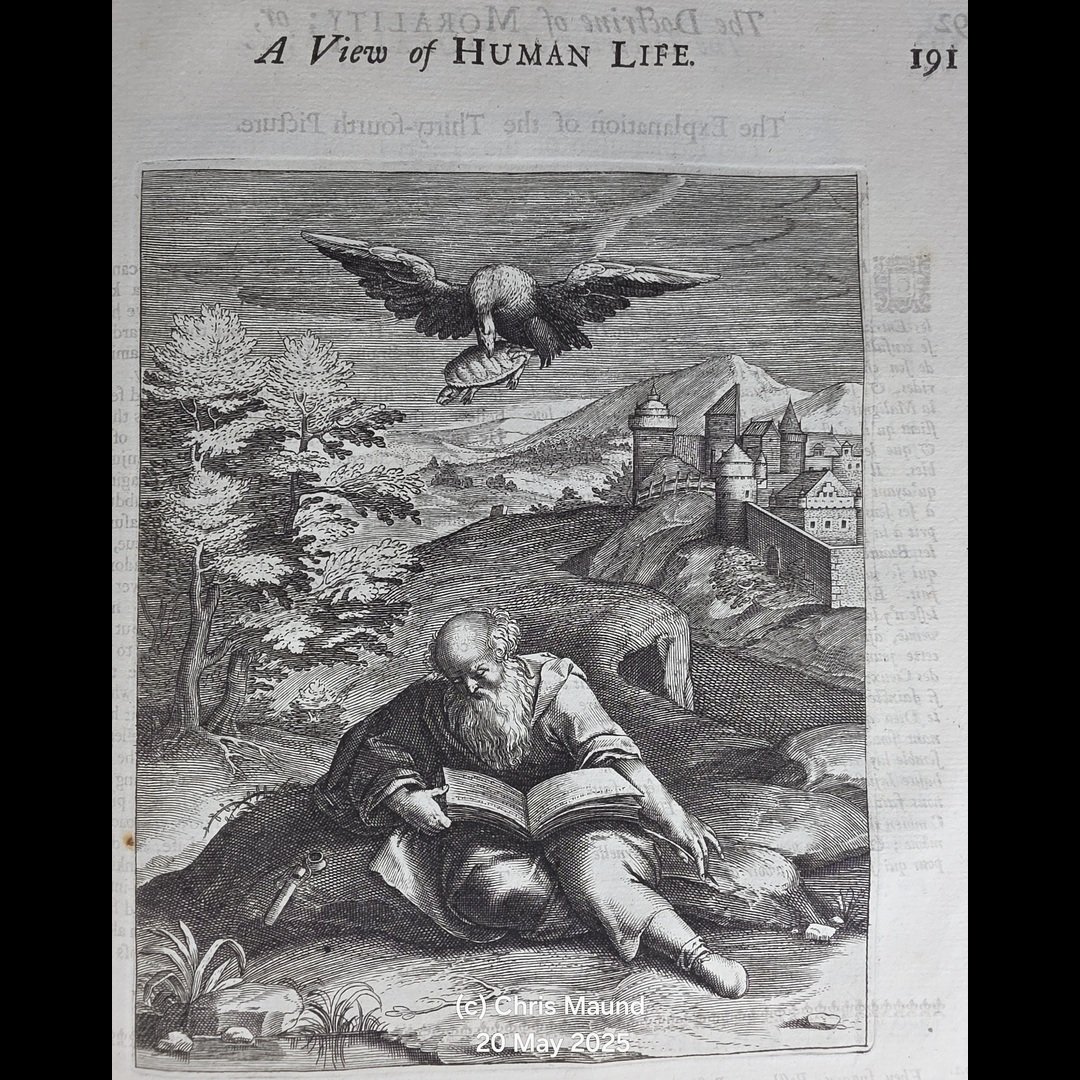 Image 27 of 35
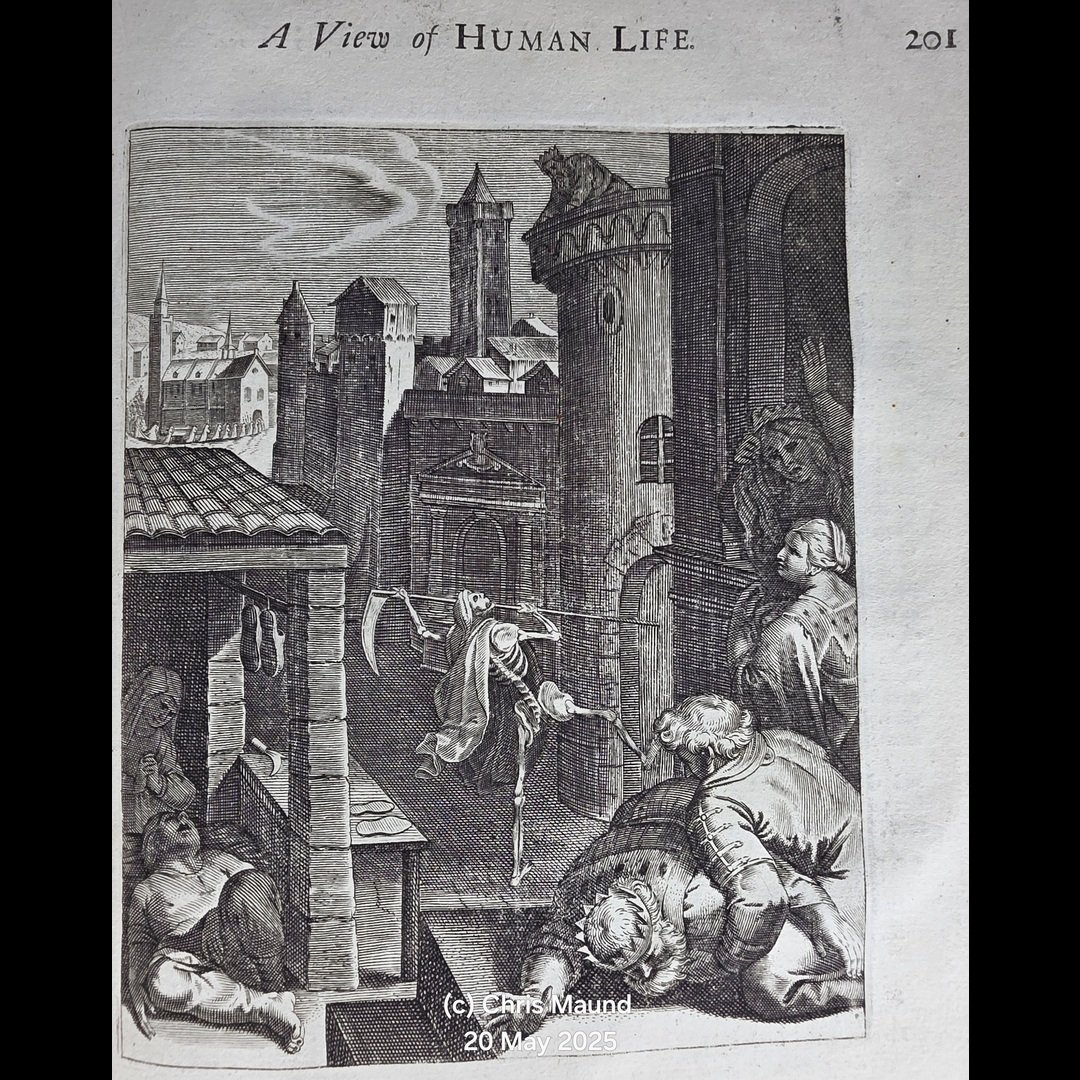 Image 28 of 35
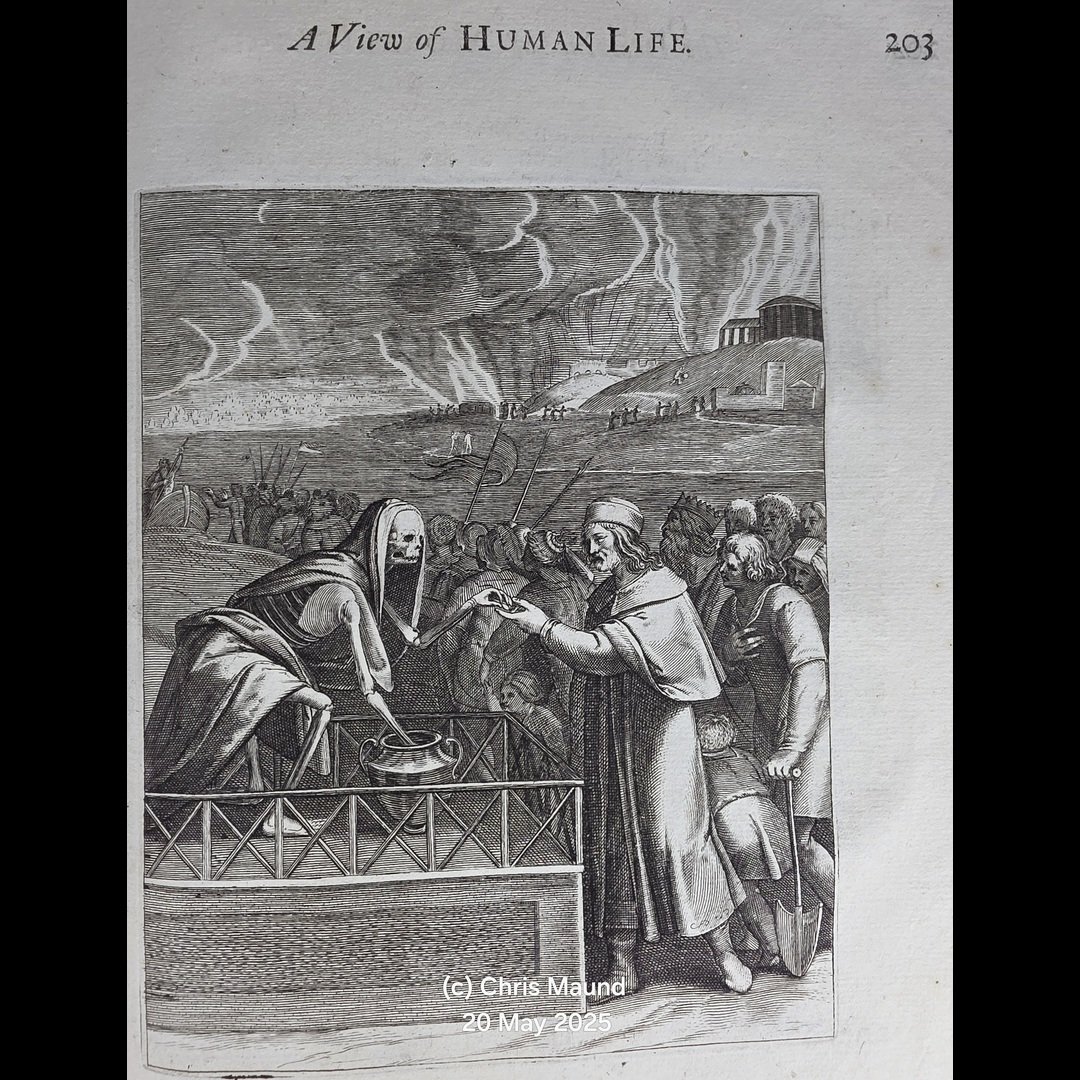 Image 29 of 35
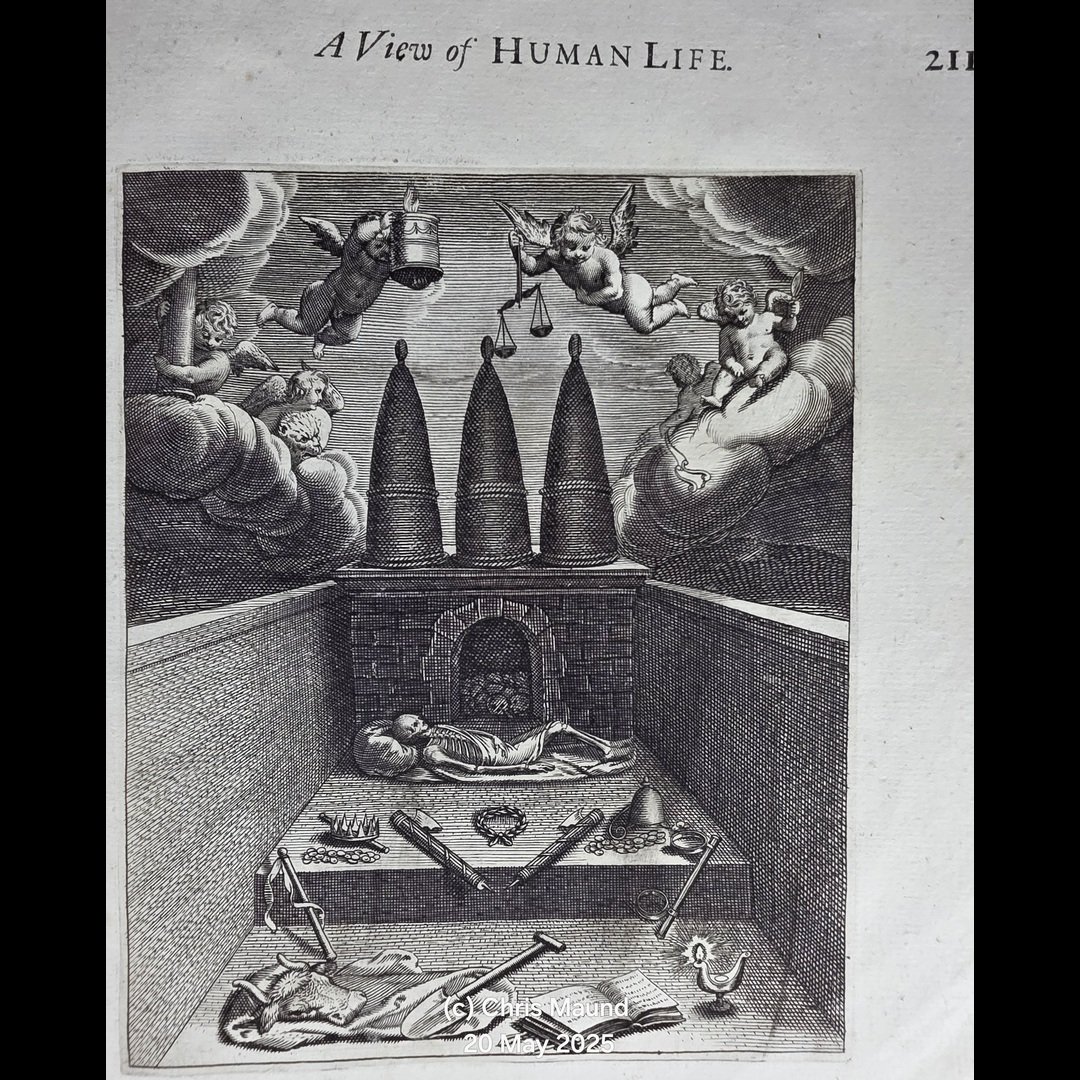 Image 30 of 35
 Image 31 of 35
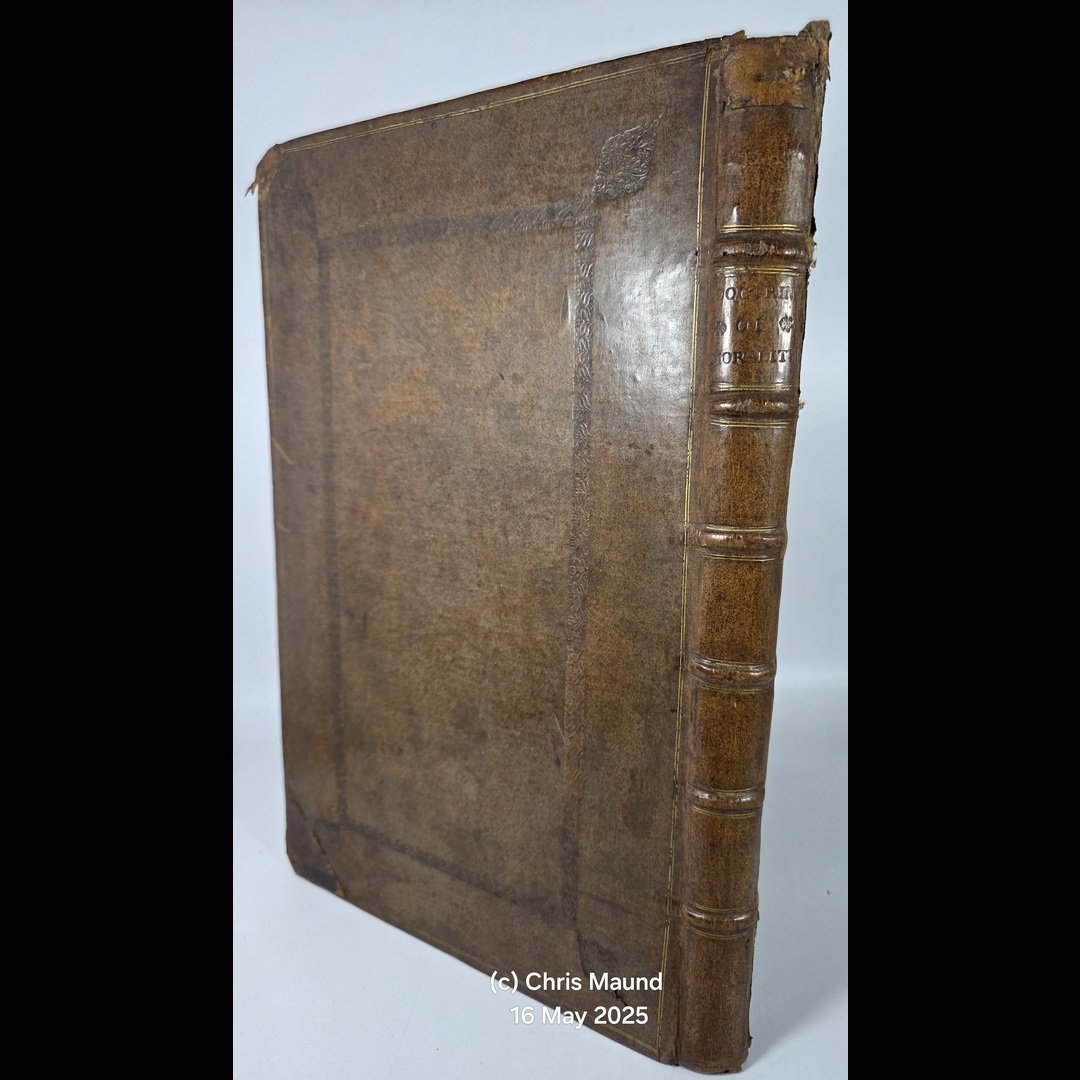 Image 32 of 35
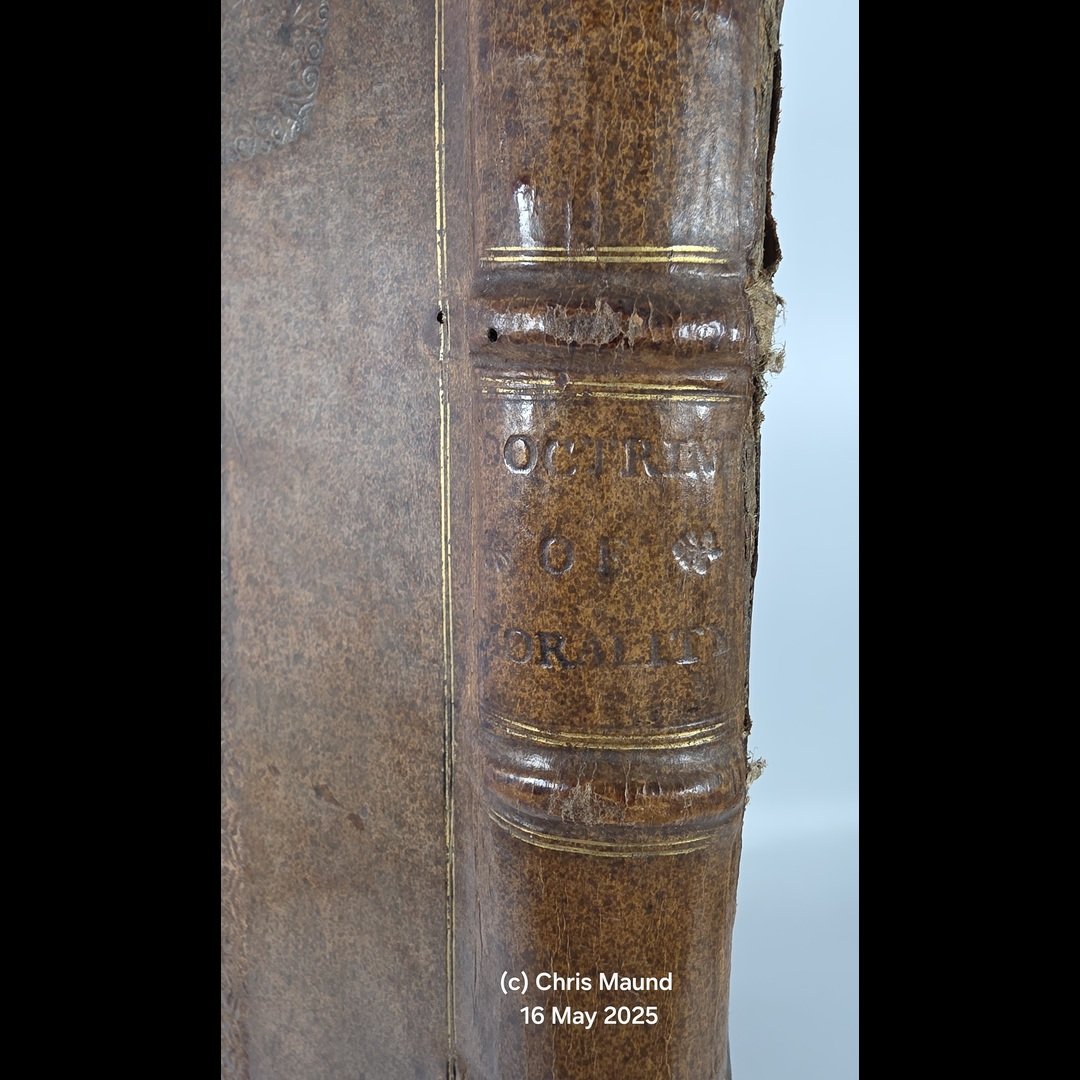 Image 33 of 35
 Image 34 of 35
 Image 35 of 35