1692 First Edition With Provenance
ARCHAEOLOGIAE PHILOSOPHICAE SIVE DOCTRINA
By Thomas Burnet
KEY DETAILS
Condition: Good
Format: Hardcover, quarto (4to 9 1⁄2 × 12 in 241 × 305 mm )
Note: Binding/size selection follows standard bibliographic conventions and is approximate; exact measurements may vary.
Published By: Typis R. N., Impensis Gualt. Kettilby, ad Insigne Capitis Episcopi in Coemeterio Paulino, London, 1692
Language: Latin
Provenance: General Theological Seminary Library, New York.
Collation: [16], 358 pp.; followed in this copy by two terminal blank leaves [4 pp.]. Two books in one volume, continuously paginated, with separate title-page to Liber Secundus. Engraved cosmological diagram at p.181.
Dust Jacket: None, as issued
SKU: BTETM0002584
Shipping Info: Approximate Package Dimensions H: 12.5, L: 30, W: 25 (Units: cm), W: 2Kg
Tracked Shipping, Insurance Coverage as per Customer Request
DESCRIPTION
ARCHAEOLOGIAE PHILOSOPHICAE SIVE DOCTRINA
Full Title: Archæologiæ Philosophicæ, sive Doctrina Antiqua de Rerum Originibus
First edition of Thomas Burnet’s controversial Archæologiæ Philosophicæ, sive Doctrina Antiqua de Rerum Originibus — “Philosophical Archaeology, or the Ancient Doctrine concerning the Origins of Things” — an important late-seventeenth-century work of cosmology, natural theology and biblical interpretation.
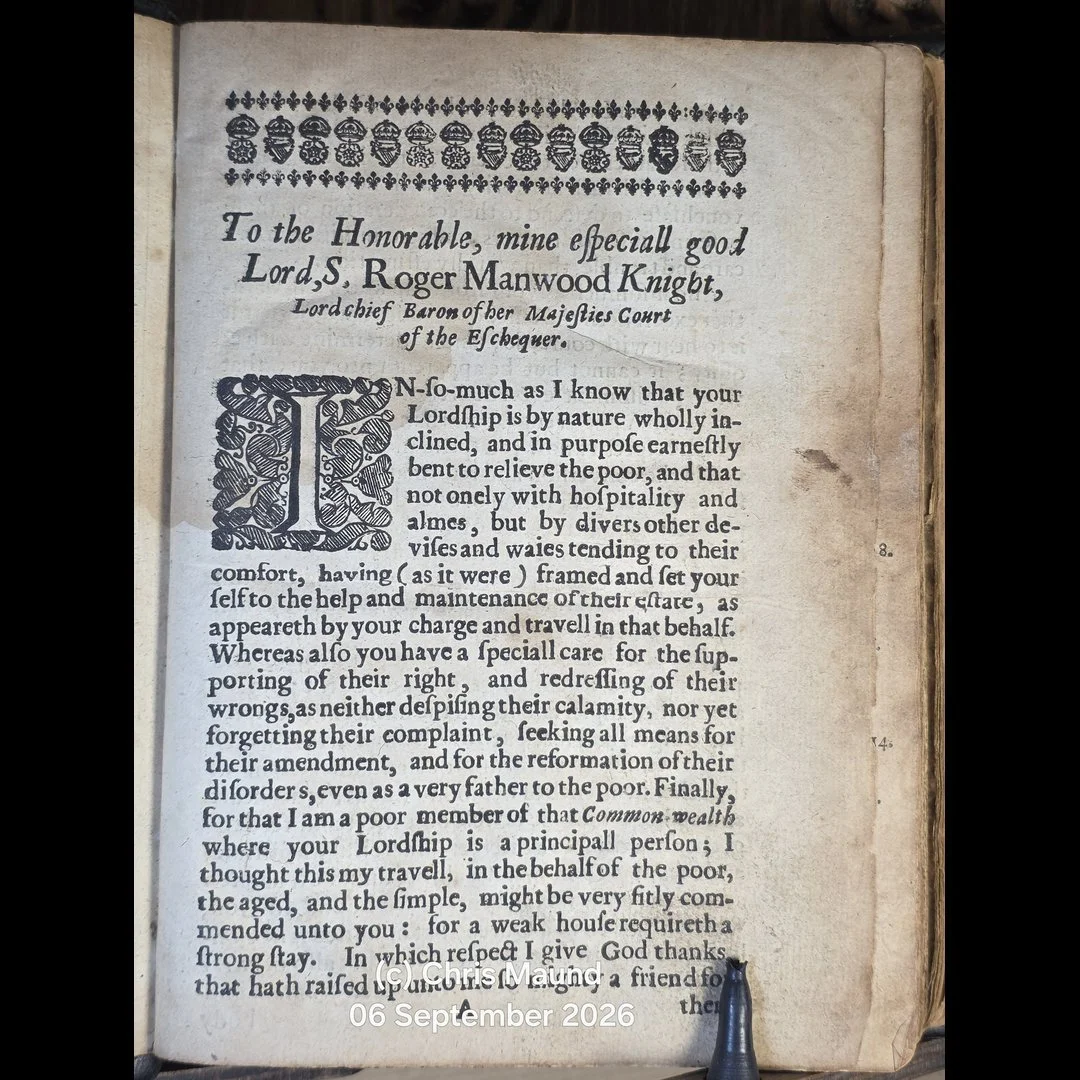
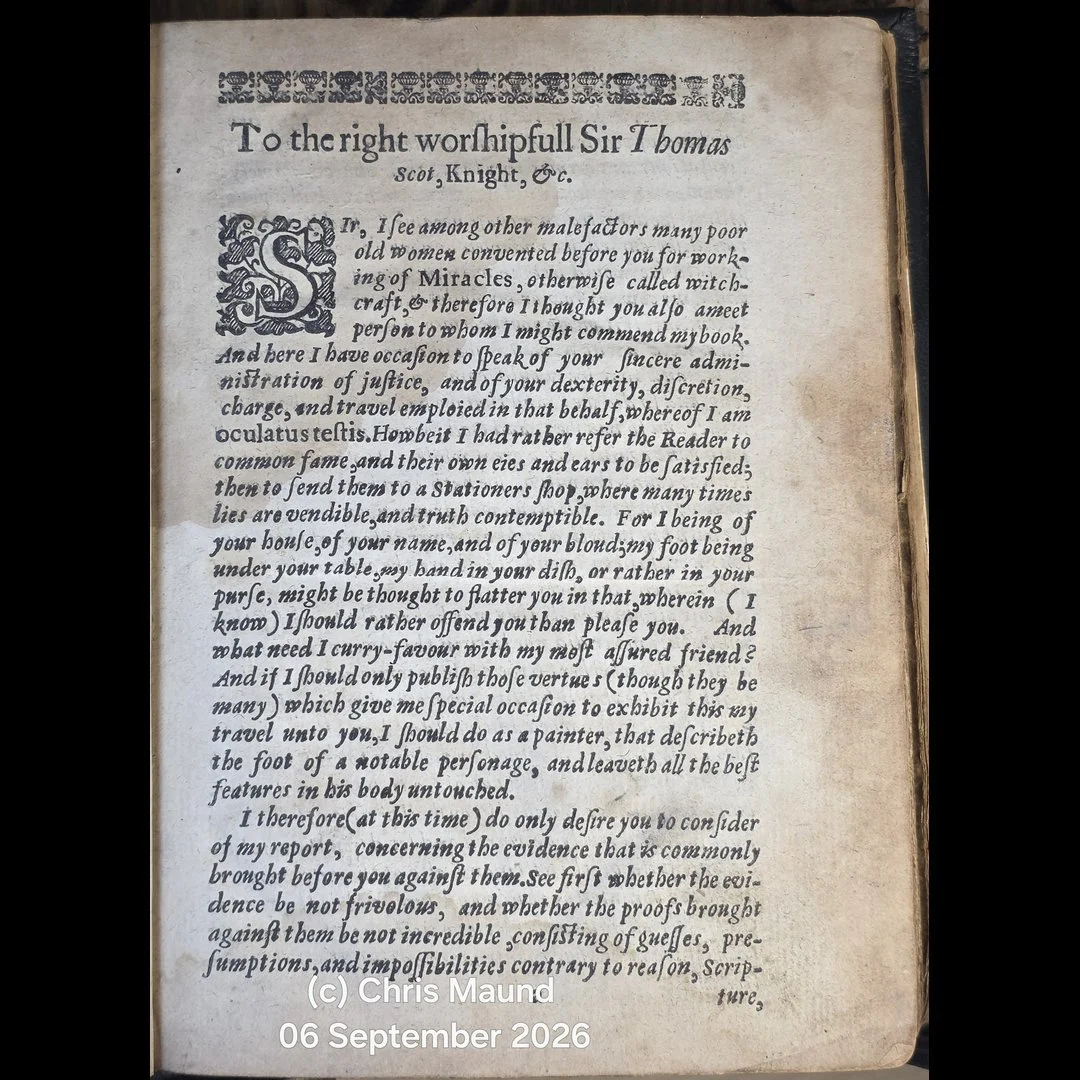
Published in London in 1692, the work is divided into two books, the second retaining its own separate title-page, with continuous pagination throughout. Printed in Latin with typographical headpieces and decorated initials, and with the engraved cosmological diagram in the text at p.181.
Burnet ranges across Hebrew, Chaldean, Egyptian, Persian and Greek traditions in an attempt to recover ancient ideas concerning the origin and structure of the world. From this comparative investigation he turns to the Mosaic account of Creation, Paradise and the Fall, arguing that Genesis was not intended as a technically exact exposition of natural philosophy but as an account adapted to the understanding and religious needs of its original audience.
That approach was highly contentious. Burnet had already achieved considerable fame through his Telluris Theoria Sacra (Sacred Theory of the Earth), in which he attempted to explain biblical history through natural causes. In the Archæologiæ Philosophicæ he went further, applying historical and philosophical criticism directly to the opening chapters of Genesis. The resulting controversy damaged his position at court and placed the work among the more daring English contributions to the late-seventeenth-century debate over Scripture, reason and the natural world.
The book also possesses a notable literary afterlife. In 1817 Samuel Taylor Coleridge selected a passage from Burnet’s Archæologiæ Philosophicæ as the Latin epigraph to the revised version of The Rime of the Ancient Mariner. Burnet’s meditation upon the possibility of innumerable invisible beings inhabiting the universe proved particularly apt for Coleridge’s supernatural poem and has remained attached to later texts of the Ancient Mariner.
An appealing association between Restoration natural philosophy, biblical criticism and Romantic literature.
PROVENANCE
General Theological Seminary Library, New York.
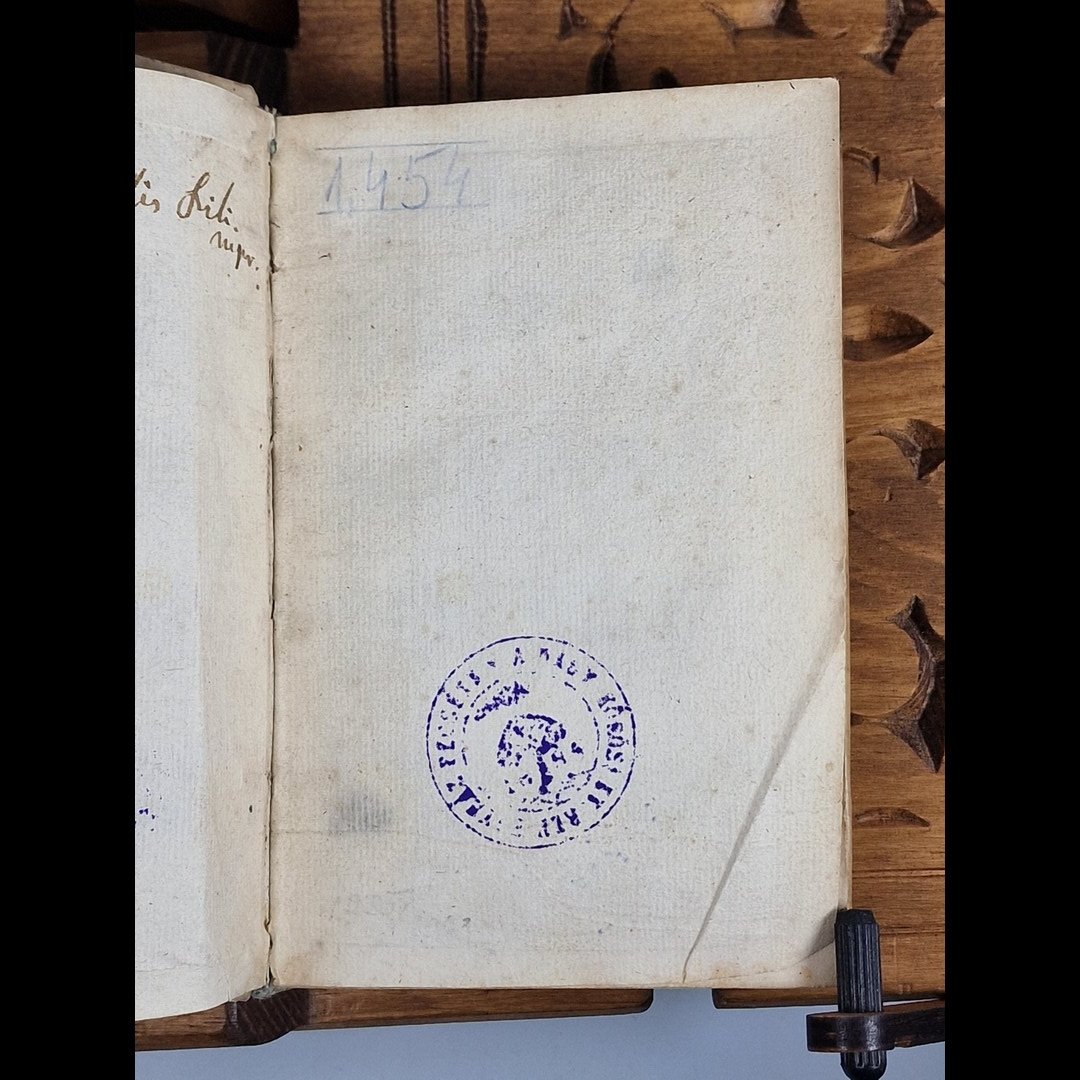
With the Seminary’s printed library bookplate to the front pastedown, manuscript and institutional shelf or accession markings, and ink and embossed library stamps including those to the title-page.
The copy was subsequently designated for the Seminary’s Rare Book Room, with associated printed label, together with a further institutional label stating that the volume was not to be removed from the Library. Accession number 16439 is present.
The General Theological Seminary was founded in New York in 1817 and developed an important theological and ecclesiastical library. The surviving institutional markings provide a coherent record of this volume’s long library history.
CONDITION, COLLATION & COPY NOTES
COLLATION
[16], 358 pp.; followed in this copy by two terminal blank leaves [4 pp.]. Two books in one volume, continuously paginated, with separate title-page to Liber Secundus. Engraved cosmological diagram at p.181.
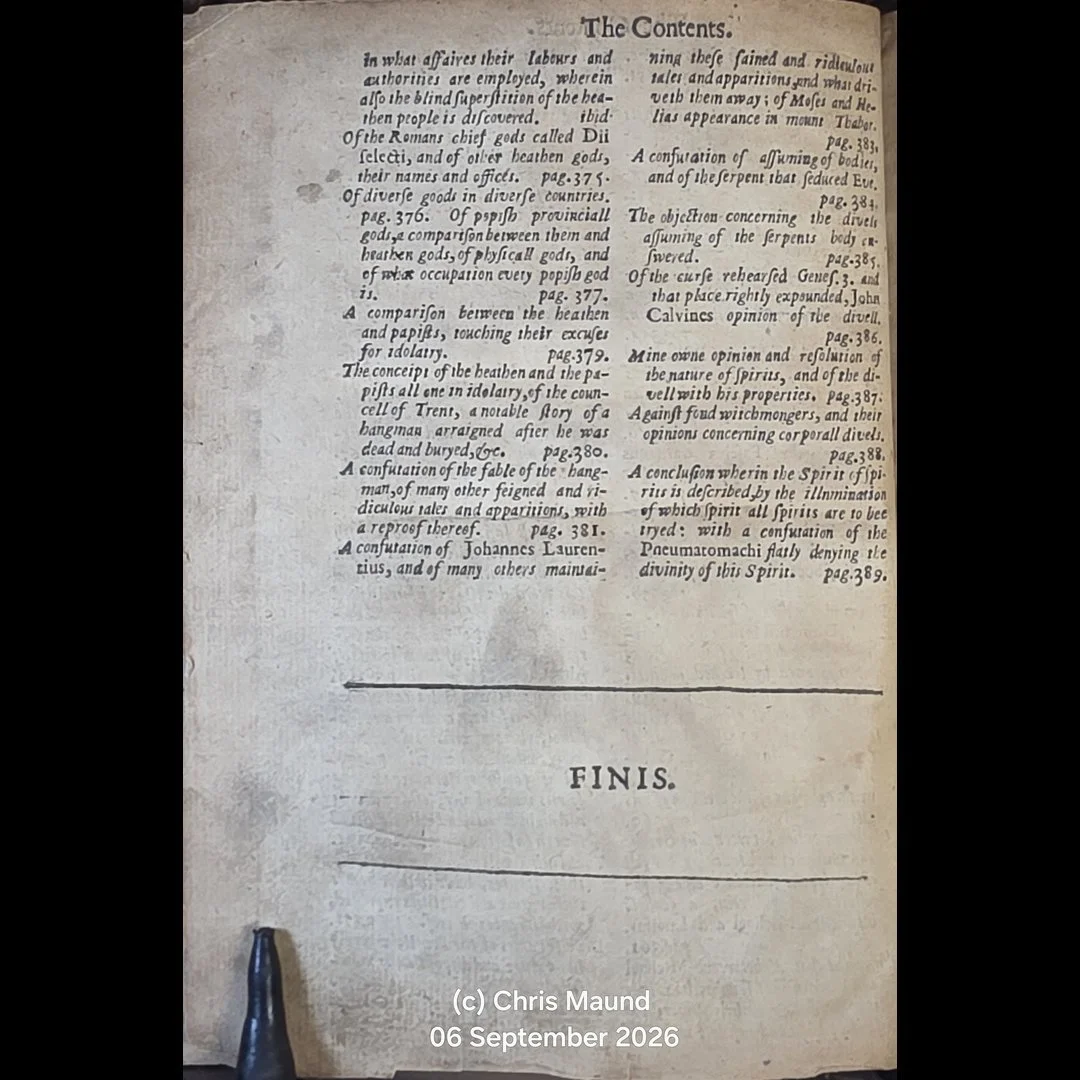
The printed text concludes with FINIS on p.358.
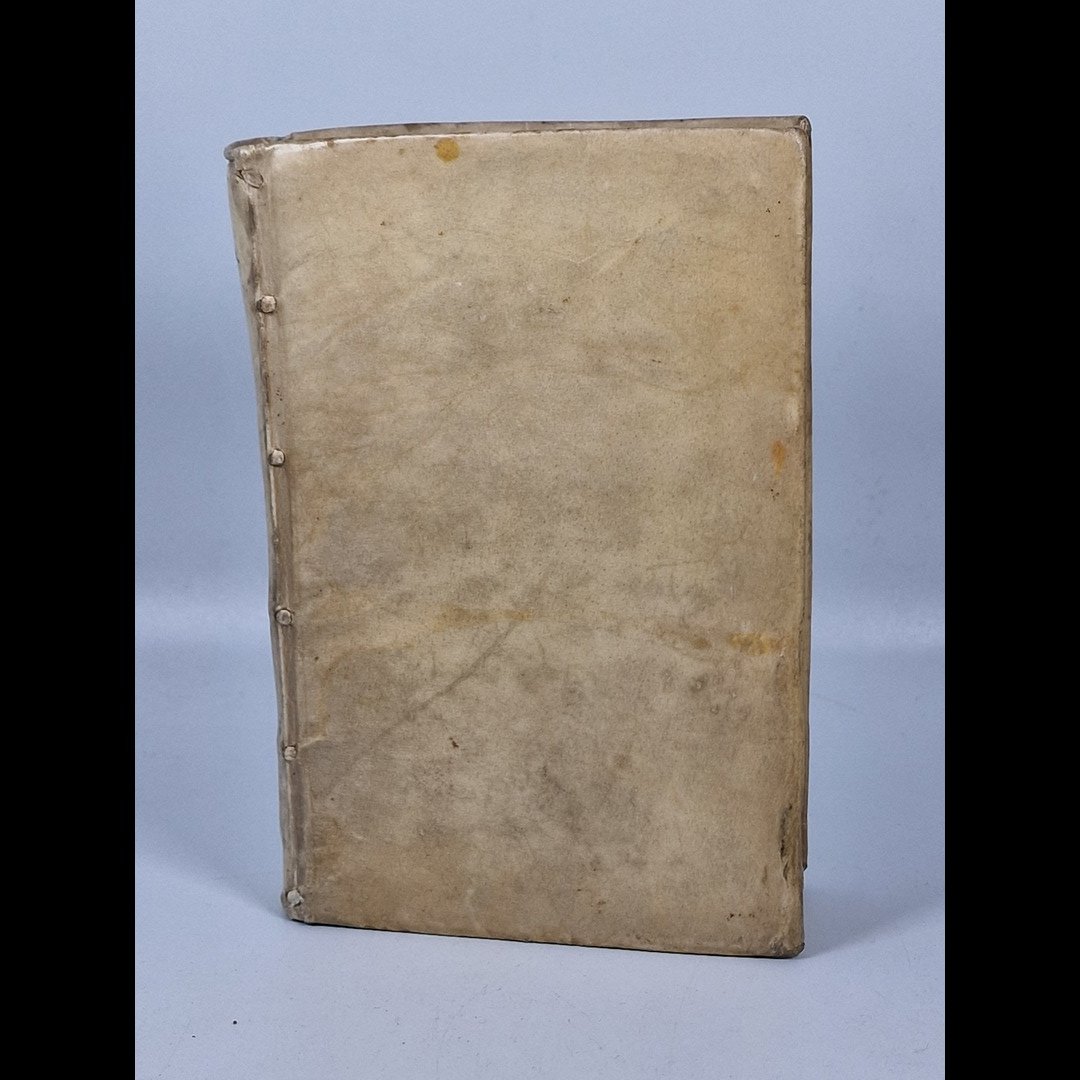
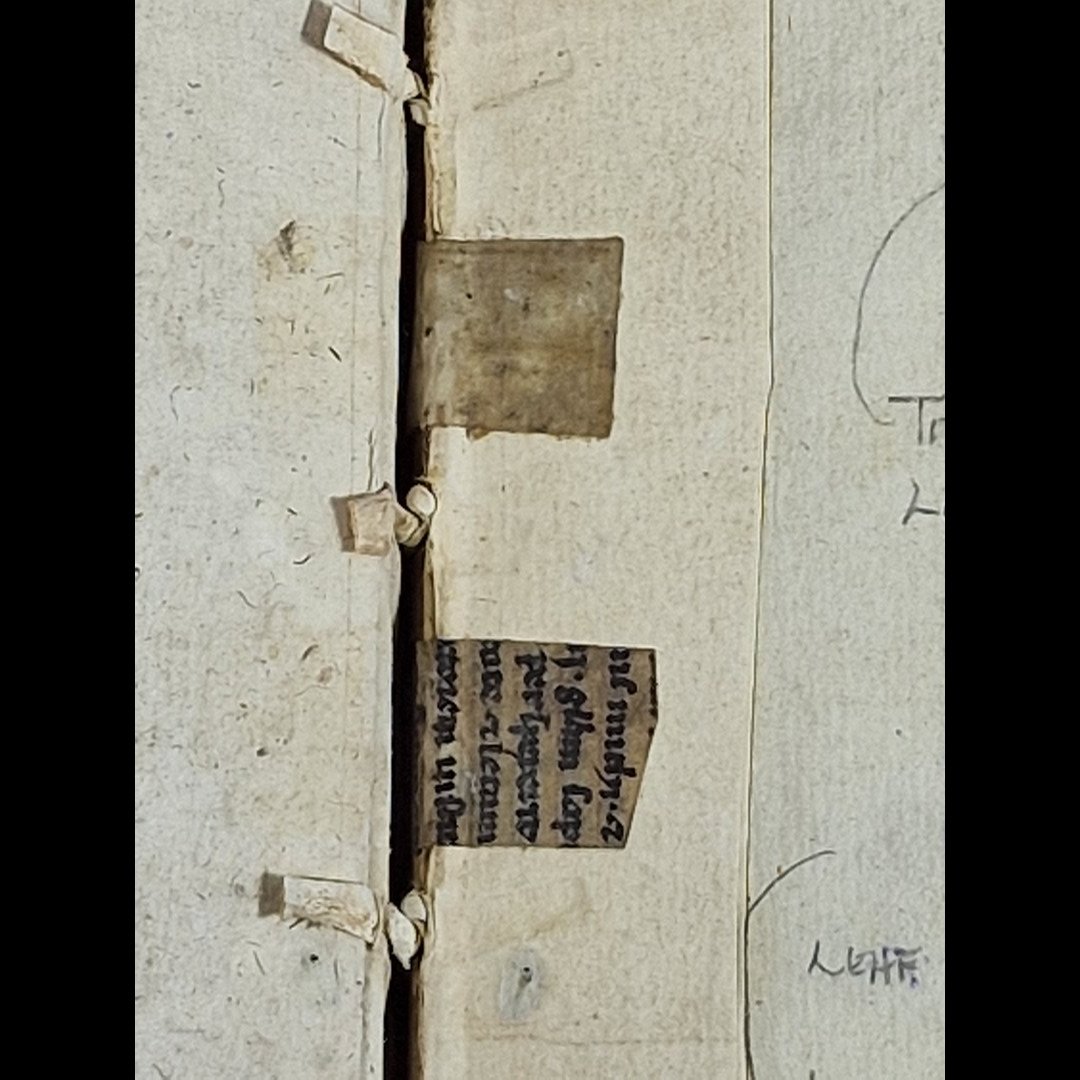
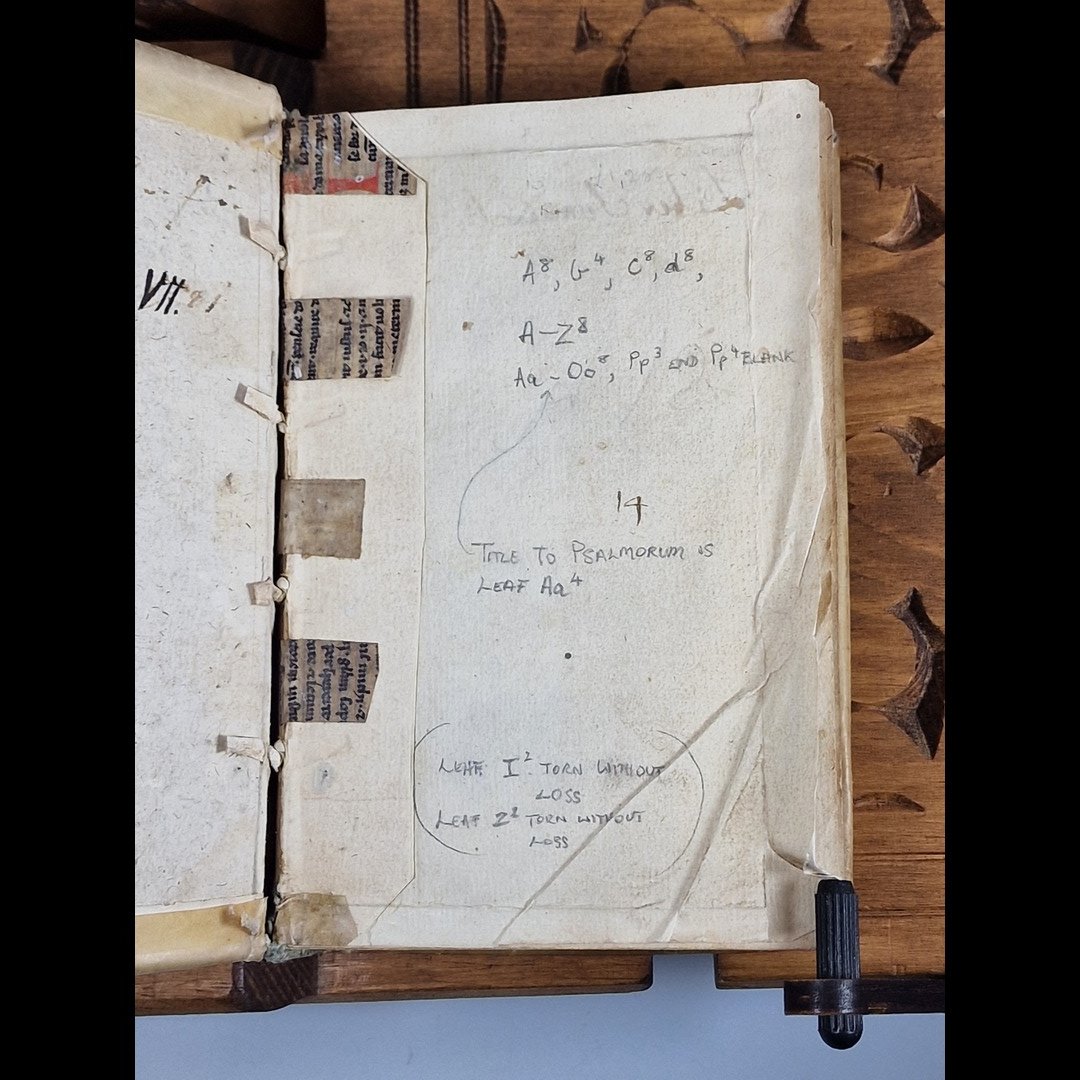
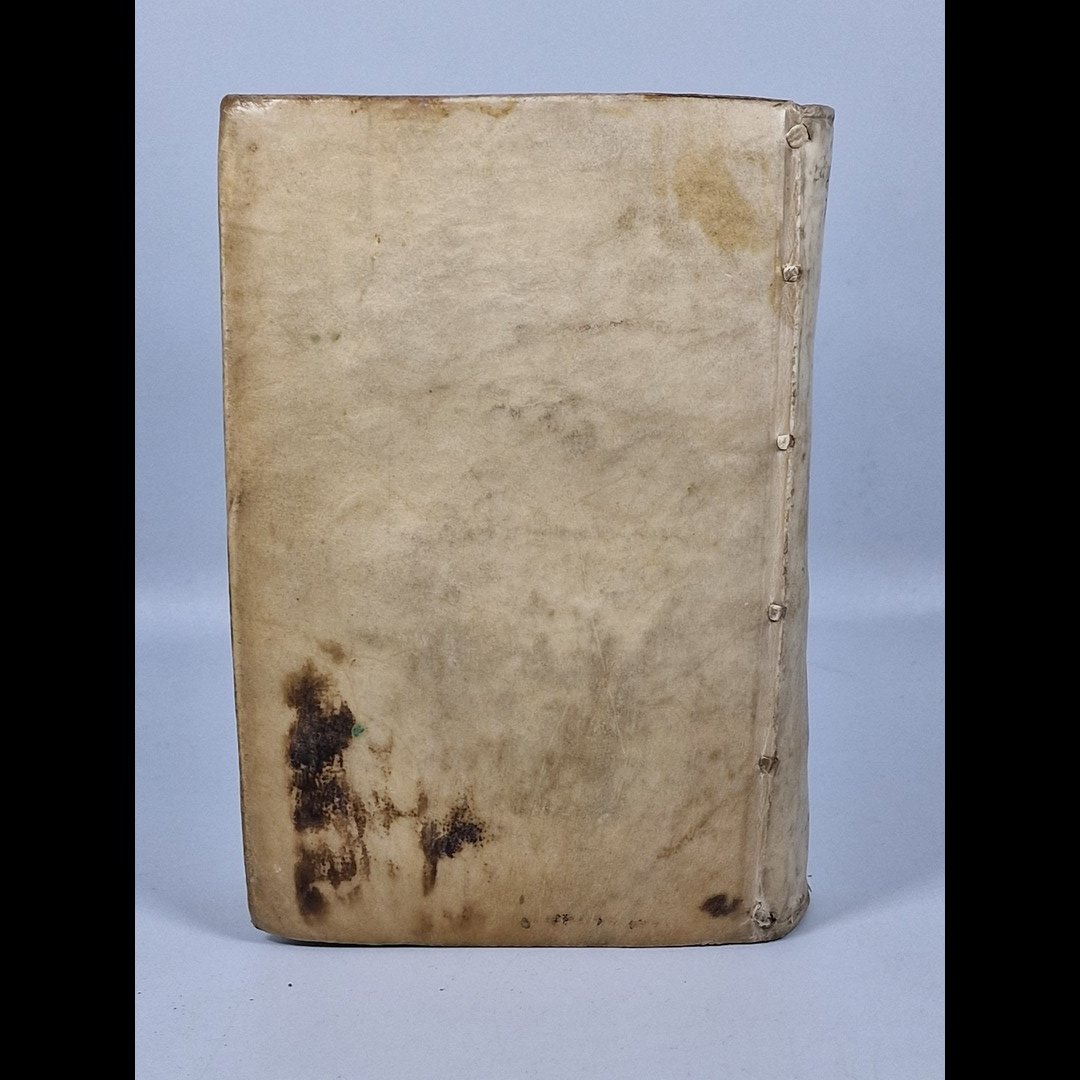
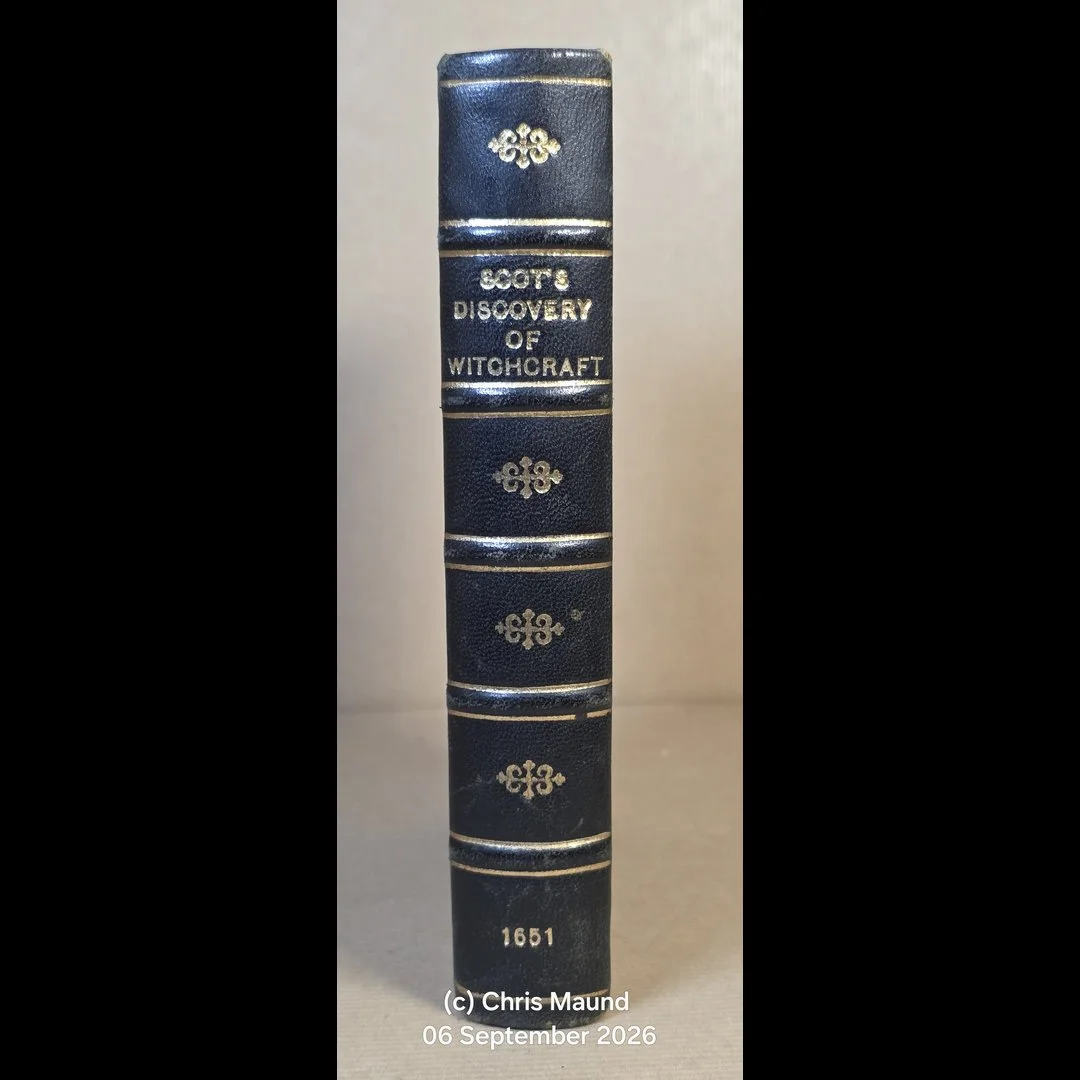
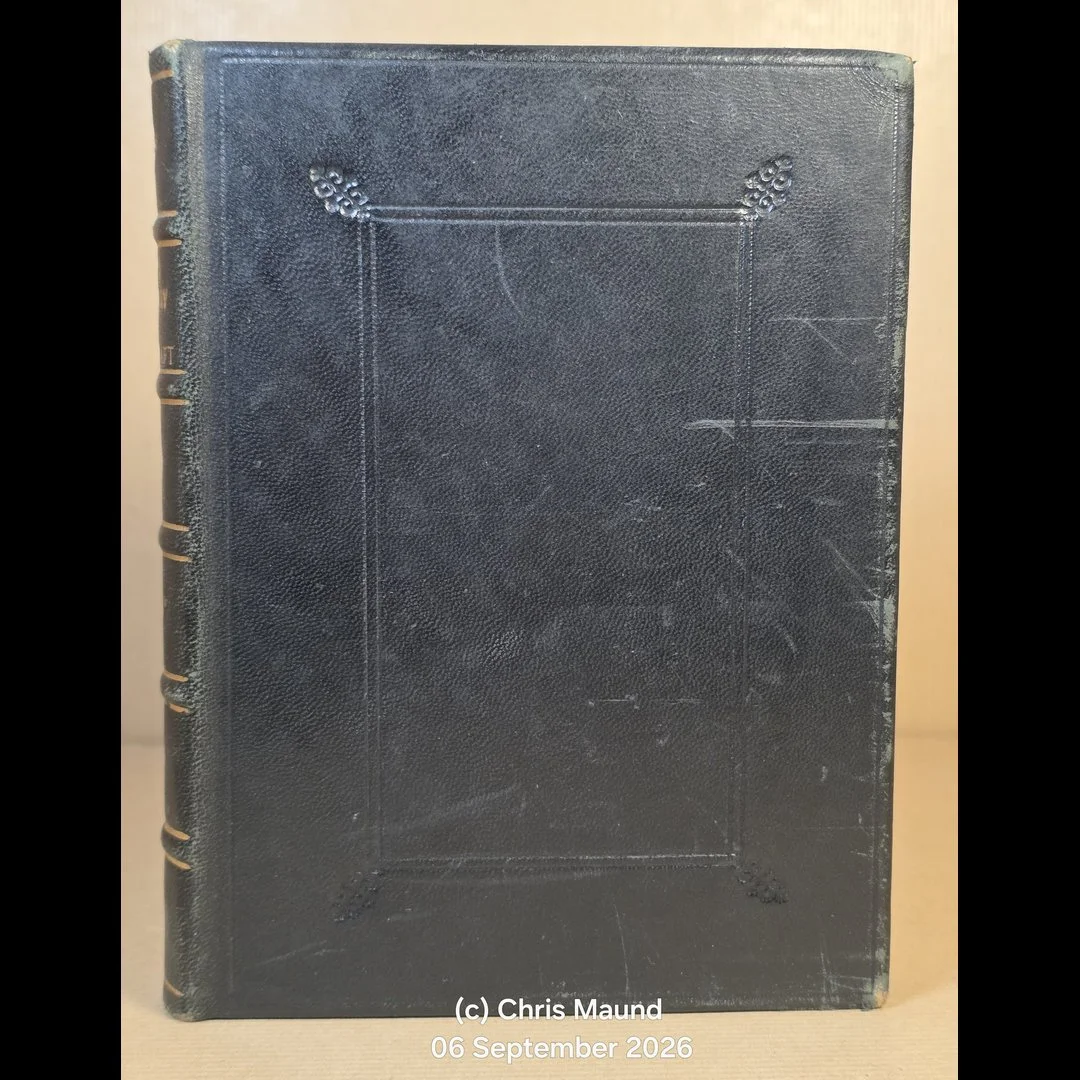
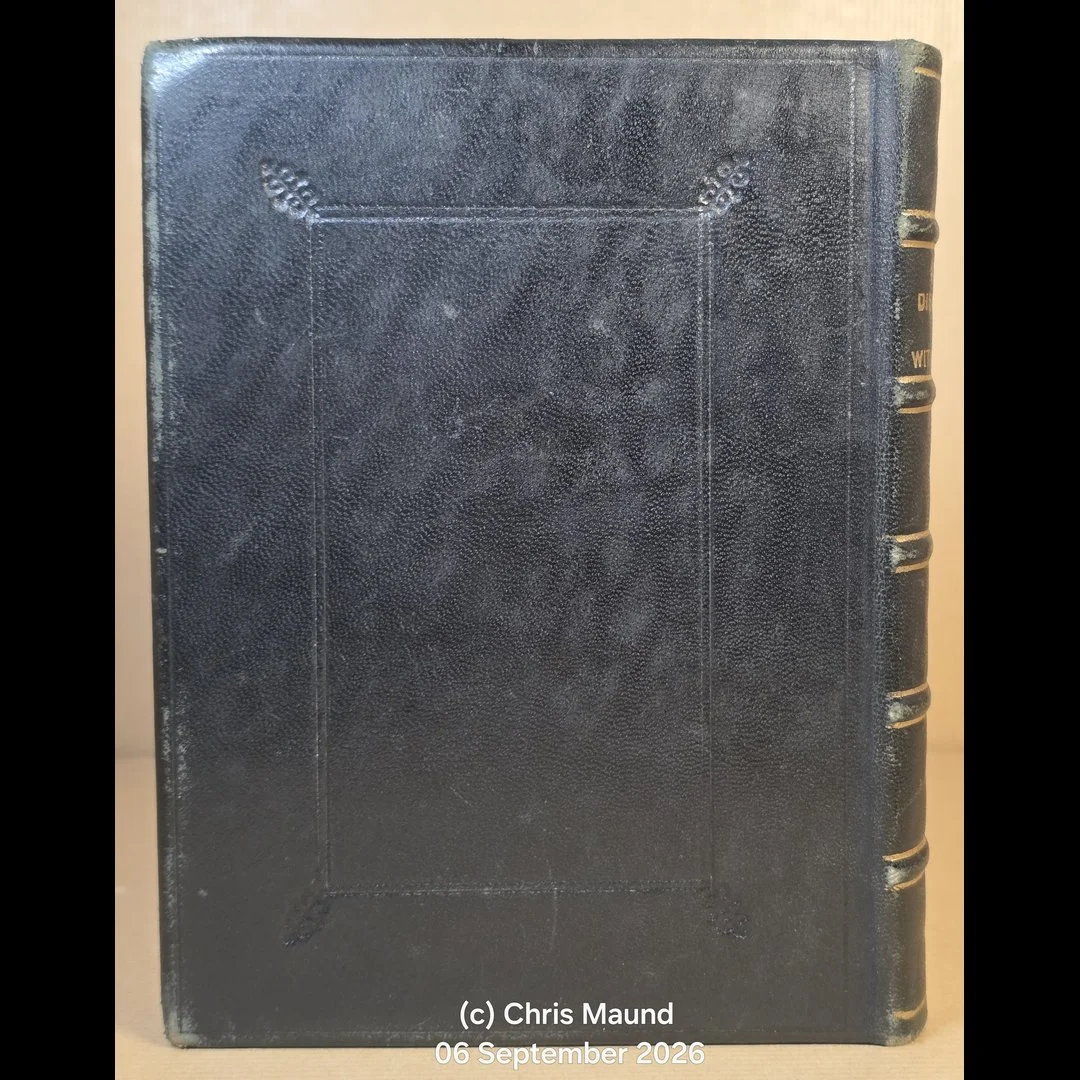
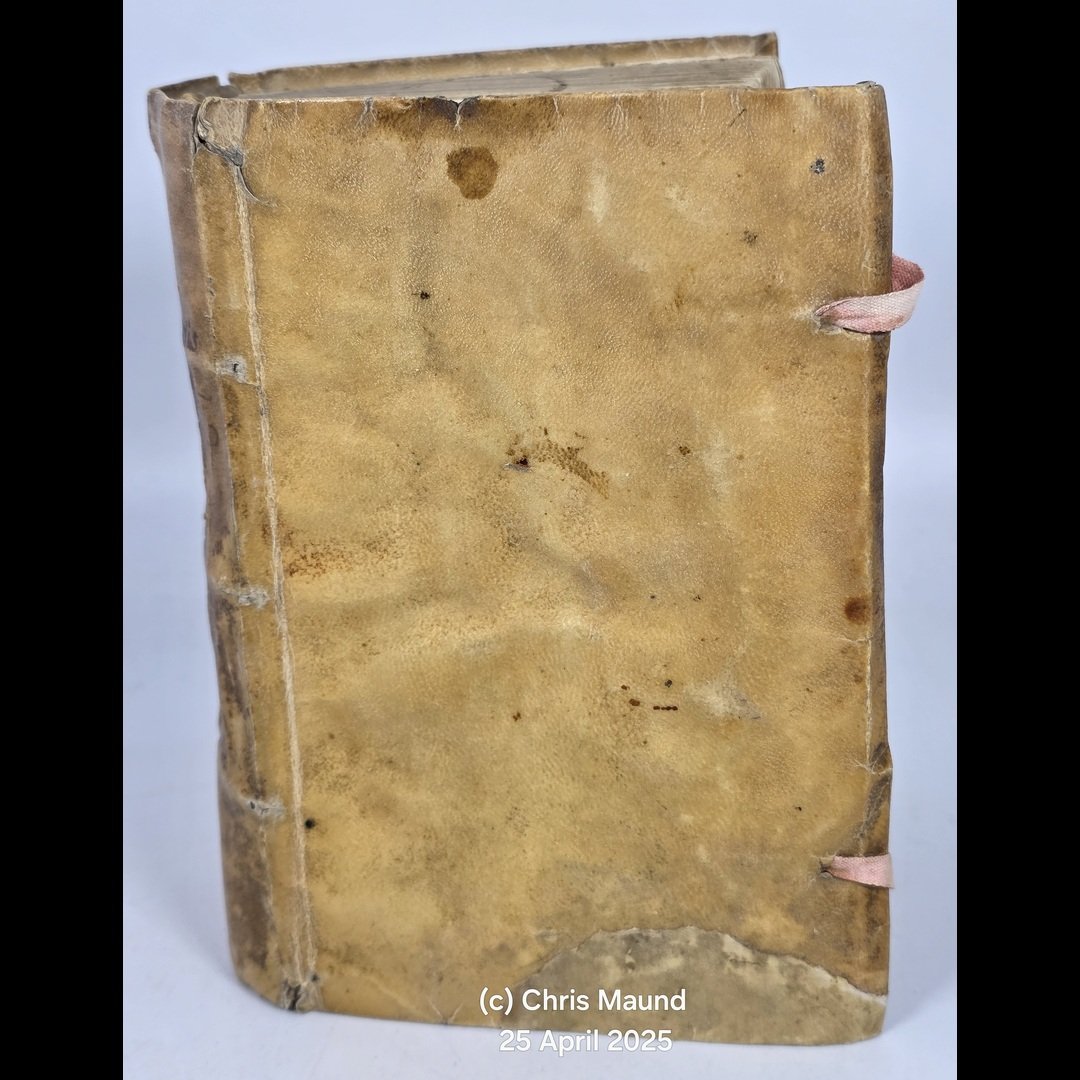
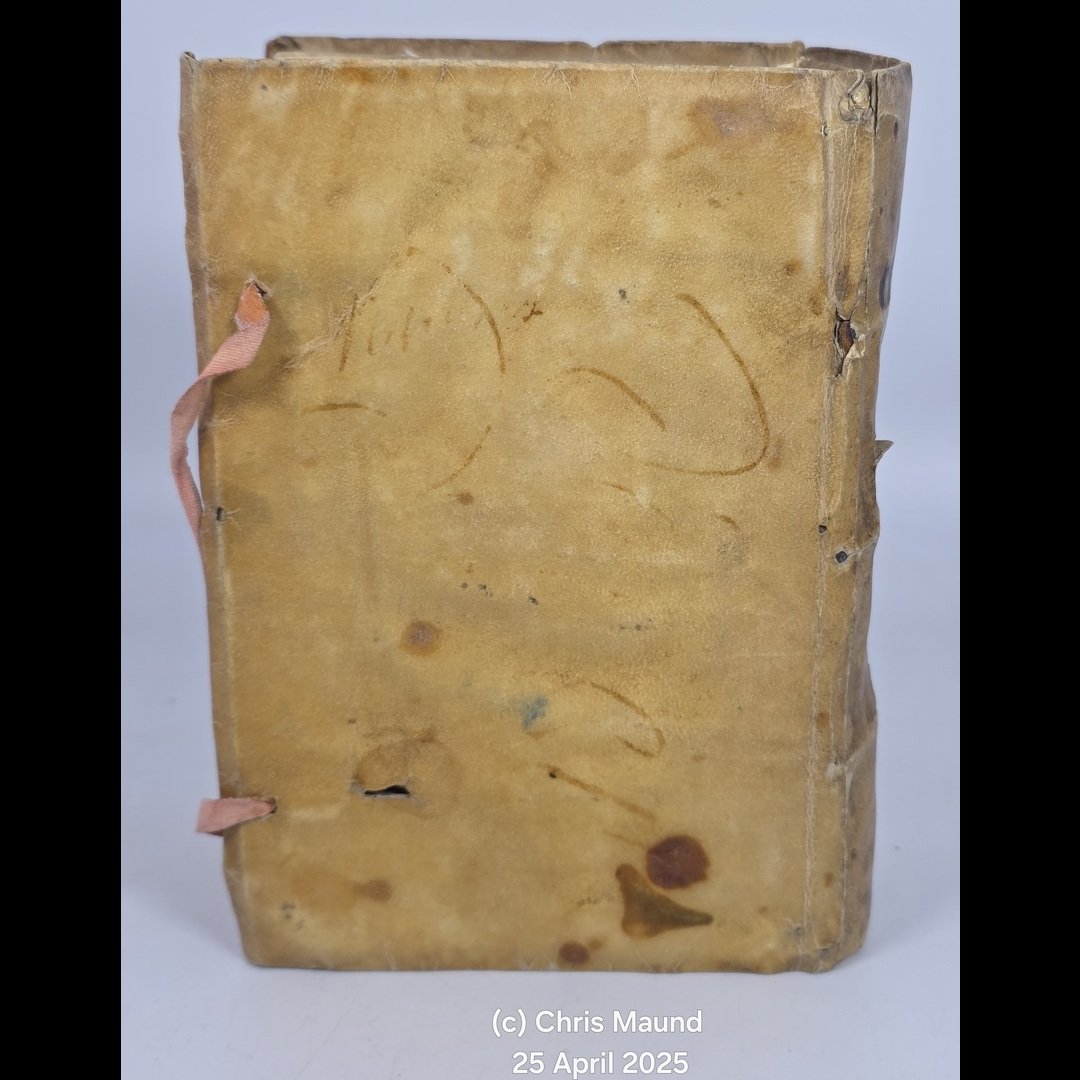
Contemporary blind-ruled panelled calf boards, later rebacked in twentieth-century tan library buckram. Original boards heavily rubbed and worn, with areas of surface loss; corners worn. The later buckram spine is utilitarian rather than sympathetic to the original binding but remains firm and functional.
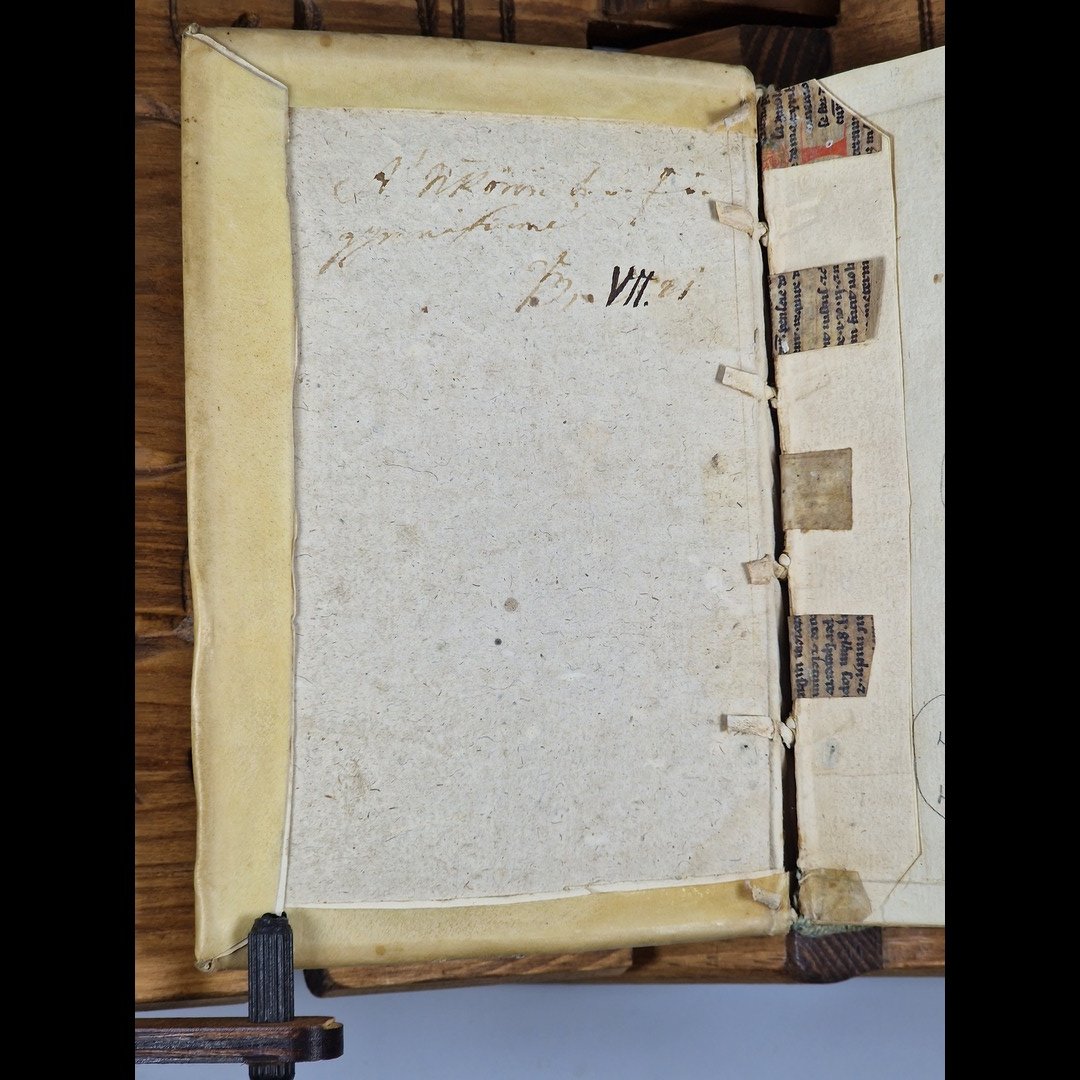
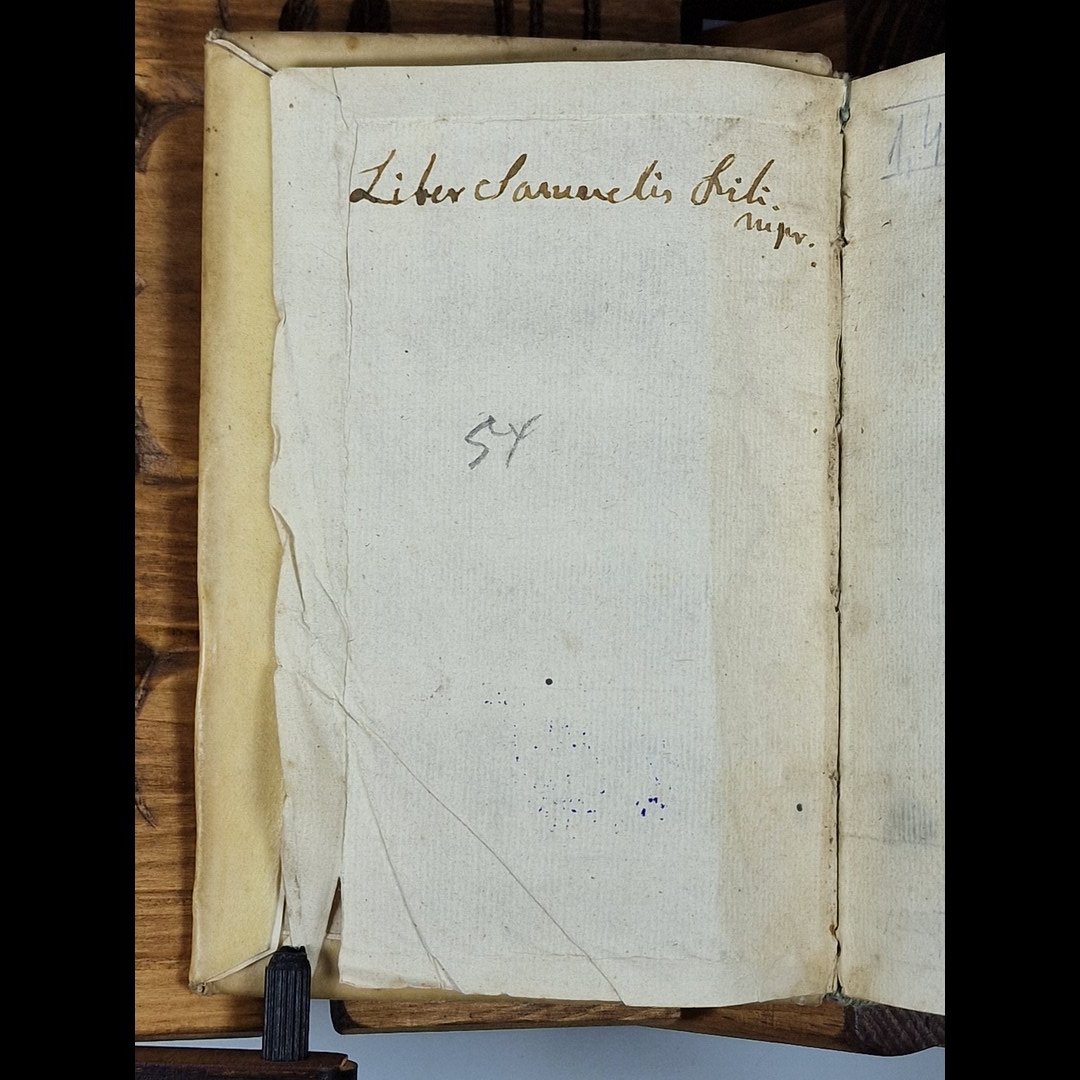
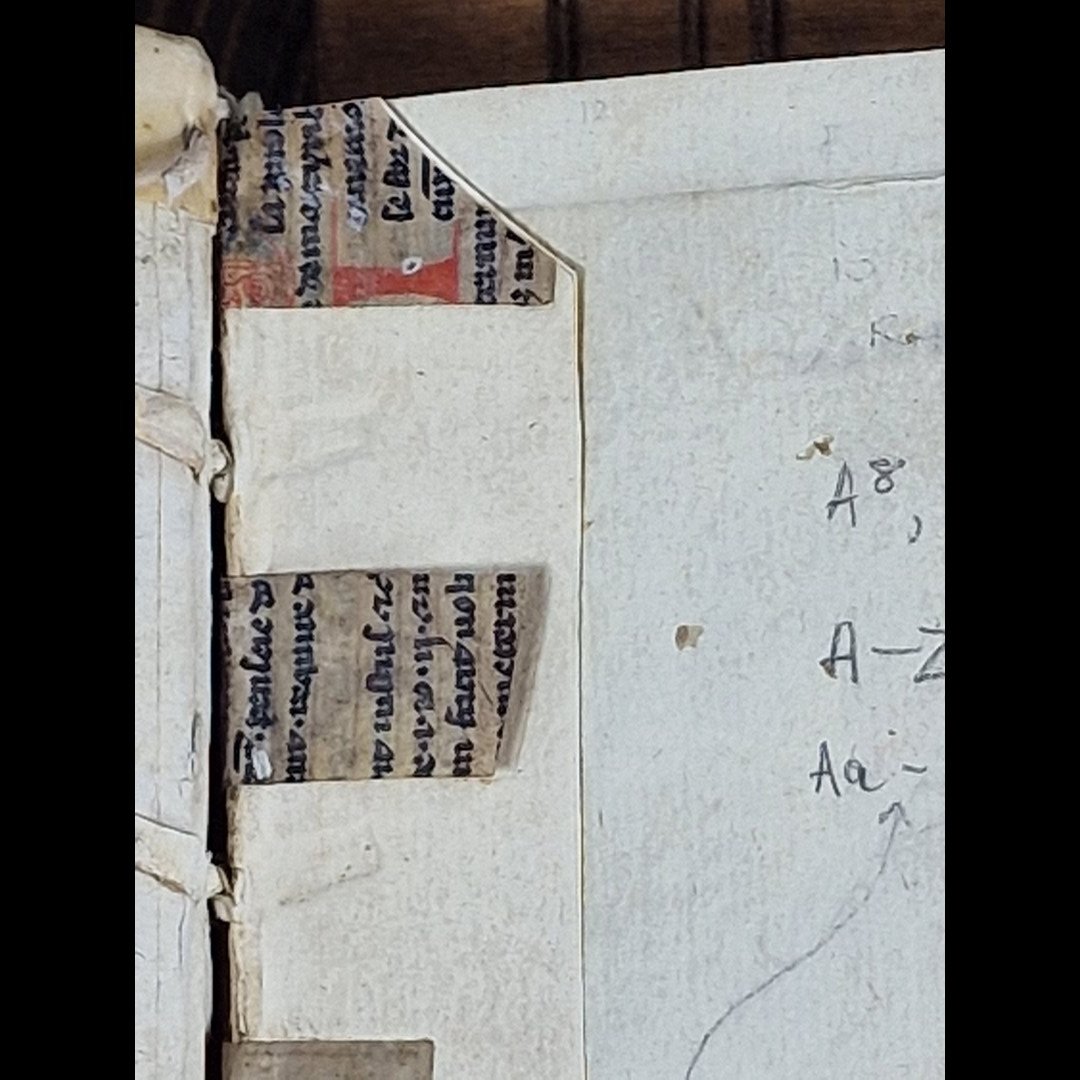
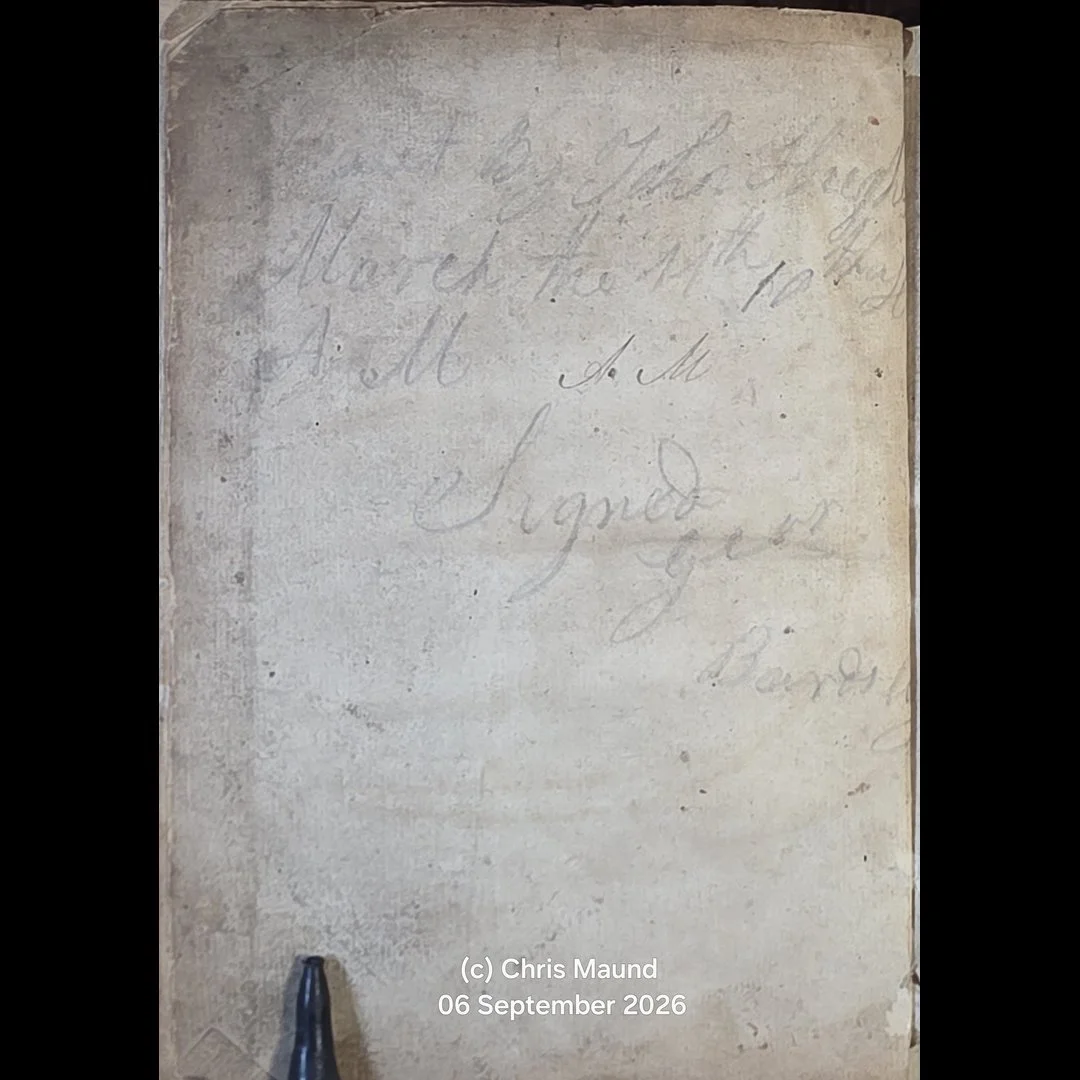
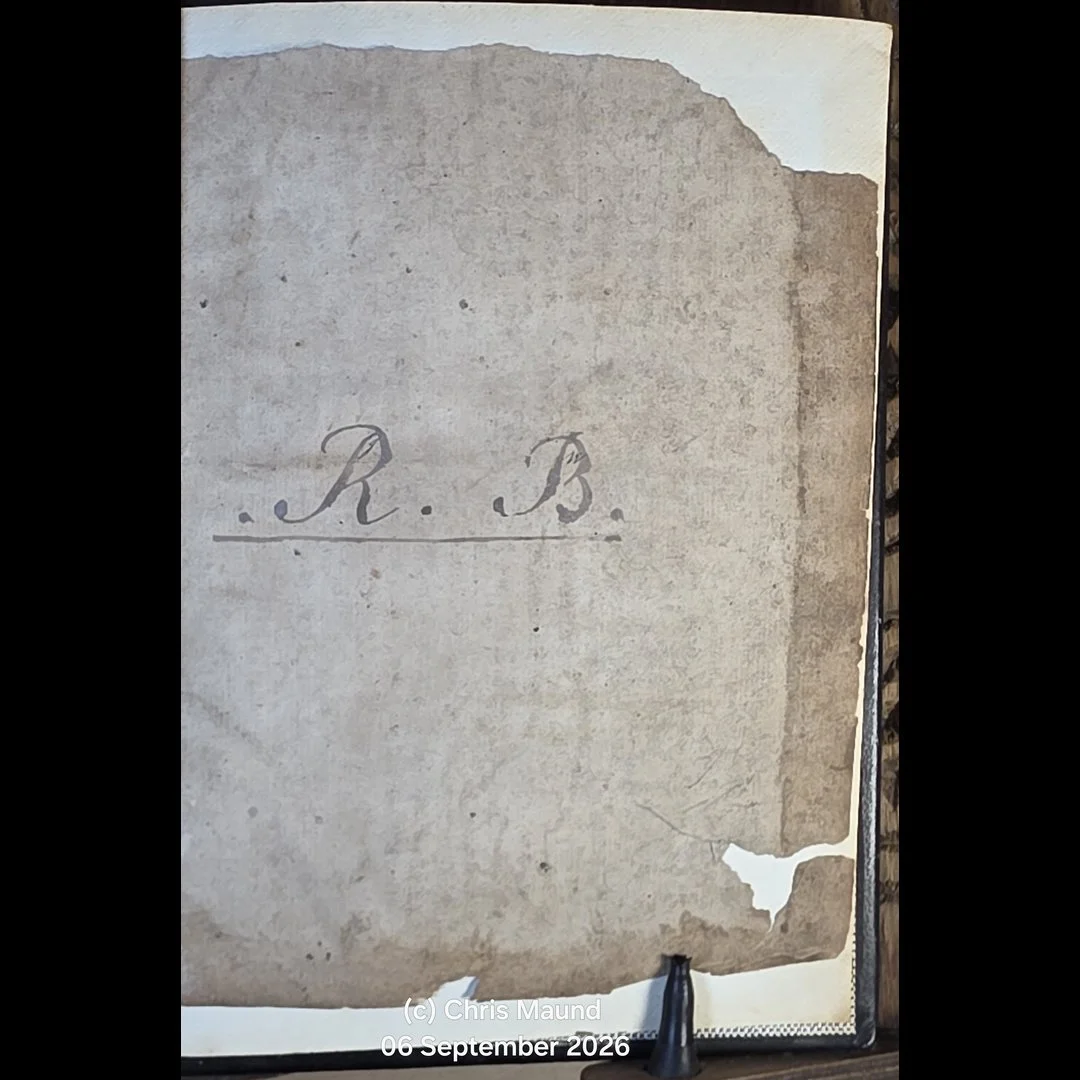
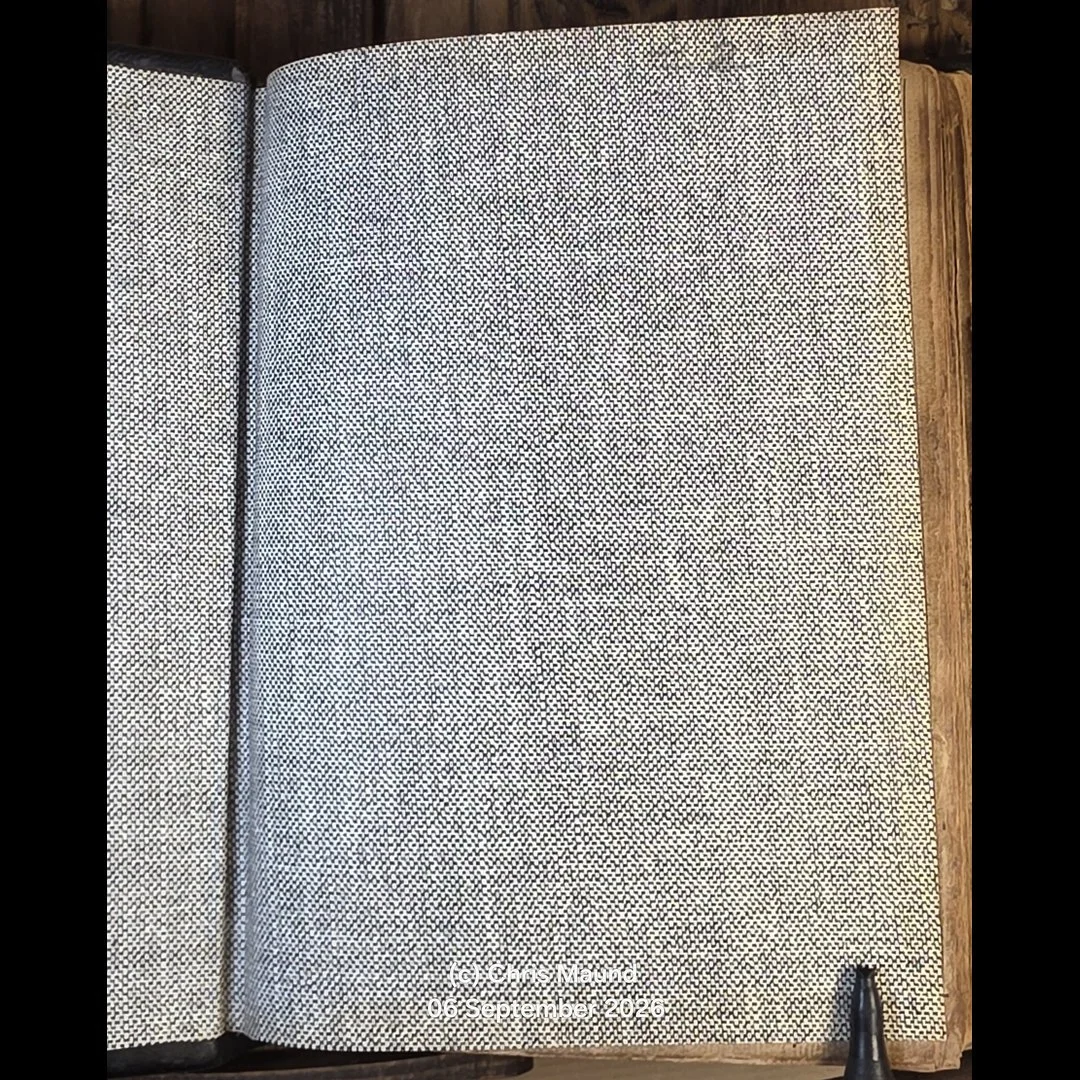
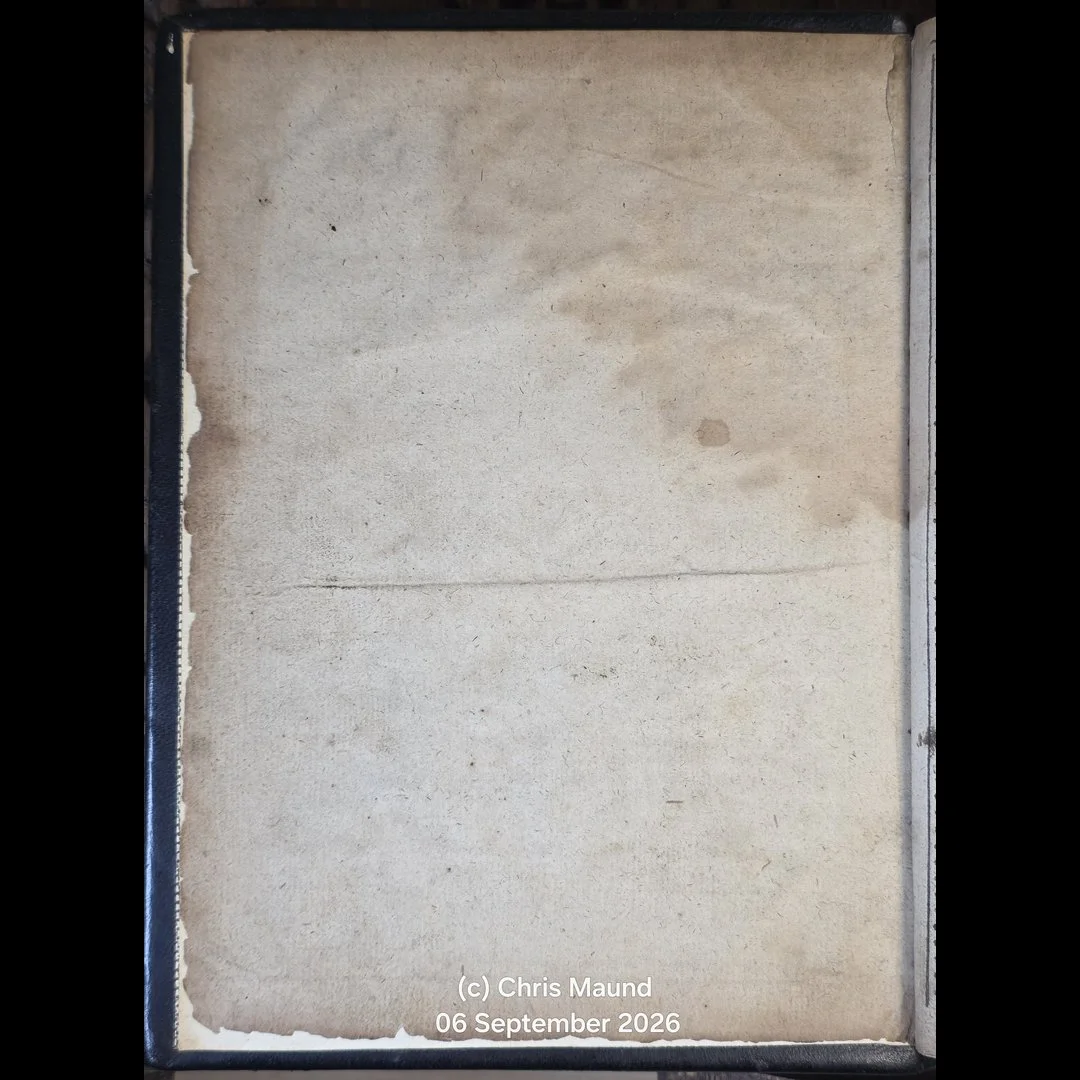
Endpapers replaced during the library rebinding, with strengthened cloth inner hinges. Various institutional labels and manuscript library markings to pastedowns and endpapers.
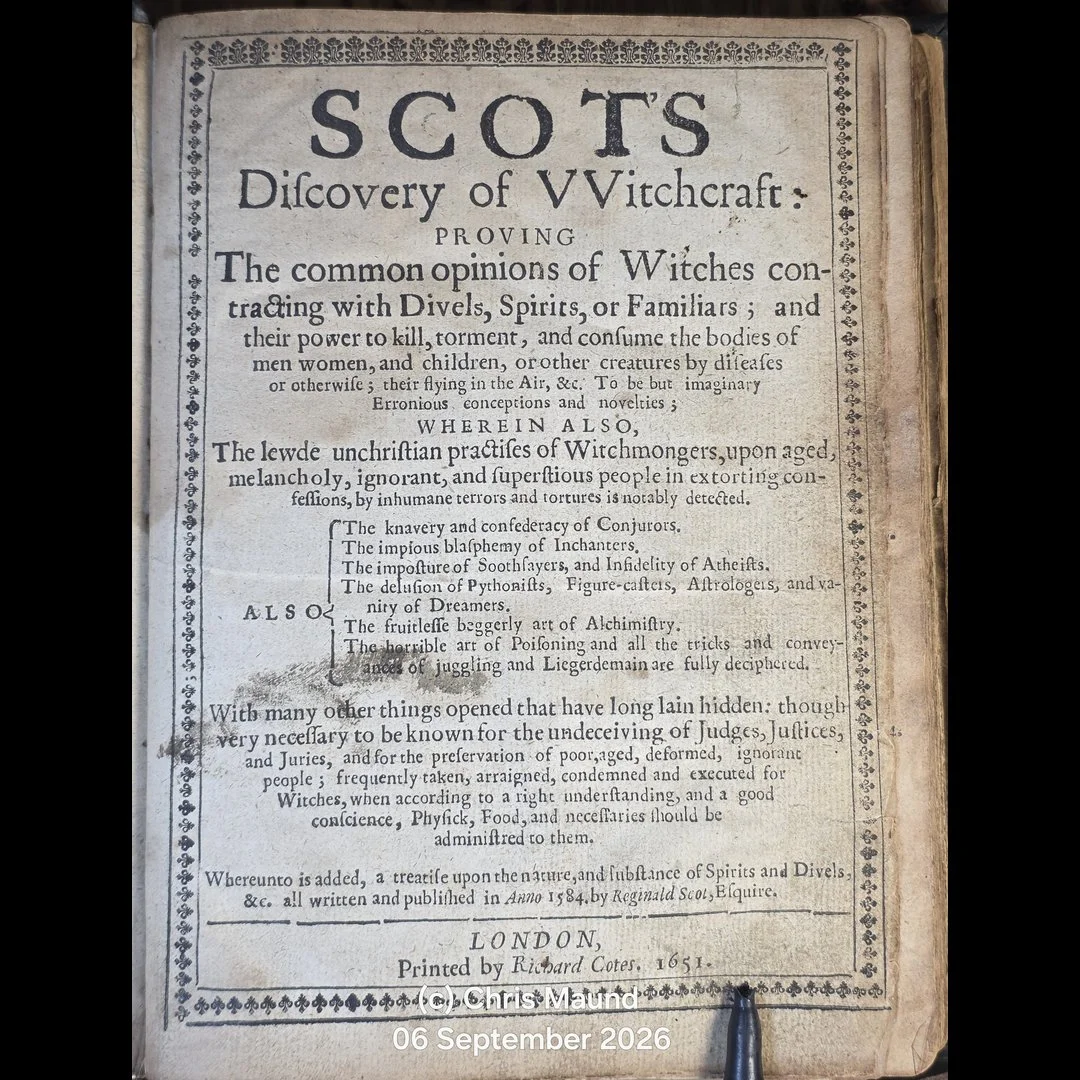
Title-page with General Theological Seminary ink stamp and embossed institutional stamp, together with further library markings. Additional institutional stamps occur within the volume, including at the conclusion of the text.
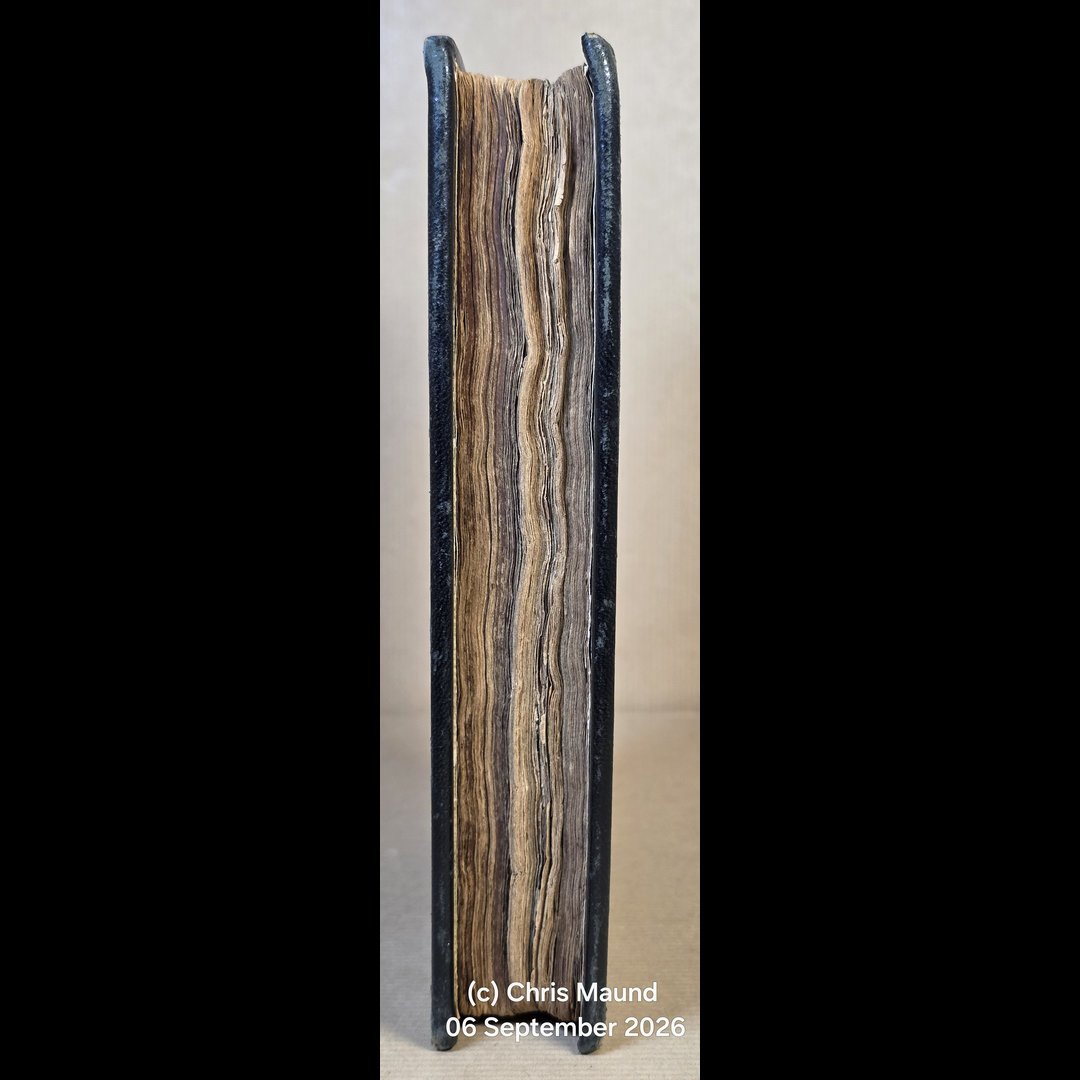
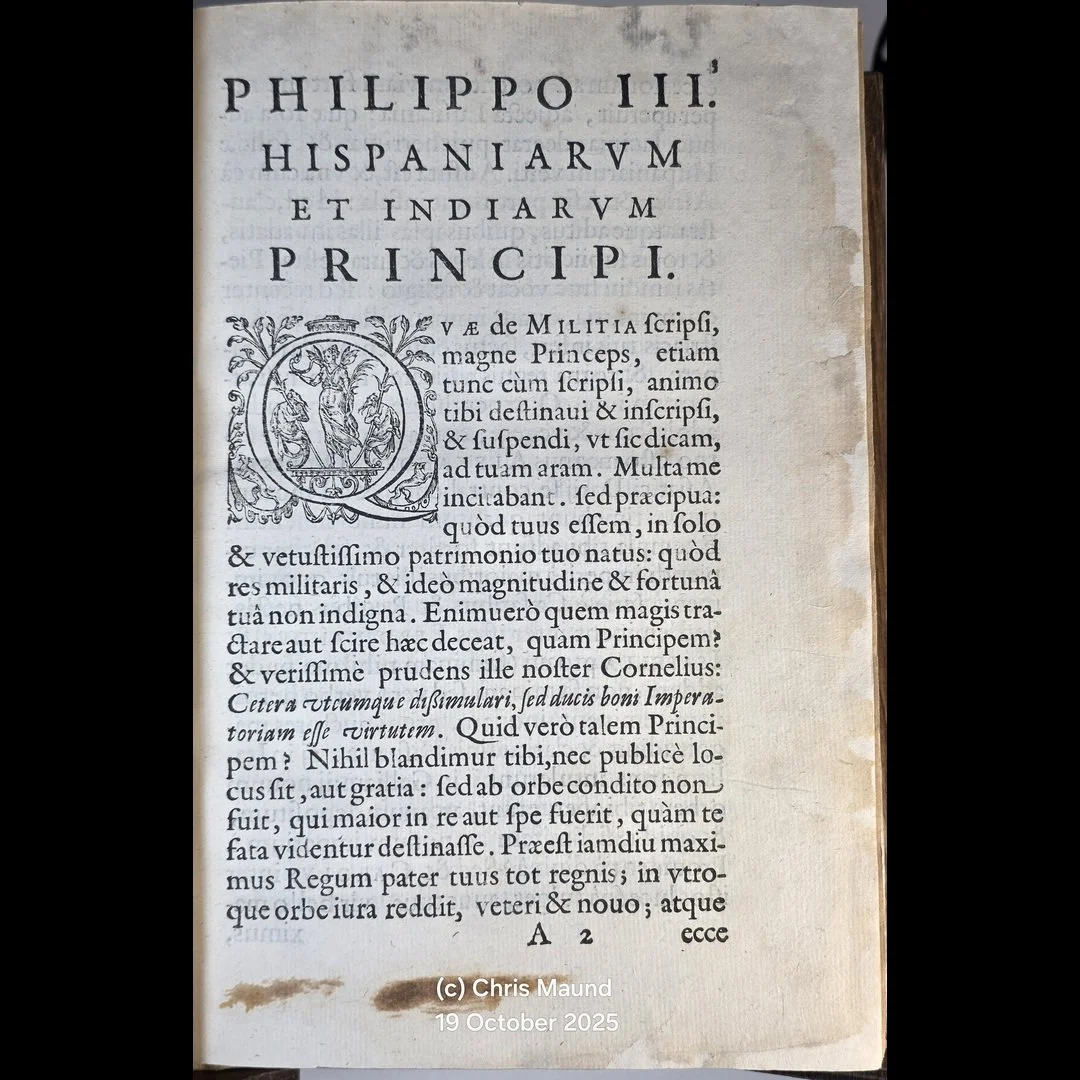
Text generally sound and well preserved for a working institutional copy. Paper lightly toned with occasional foxing and spotting. A tide-mark or old damp-stain affects the upper margins of the earlier gatherings, becoming progressively lighter; this does not materially obscure the printed text. Occasional minor handling marks and age-related blemishes.
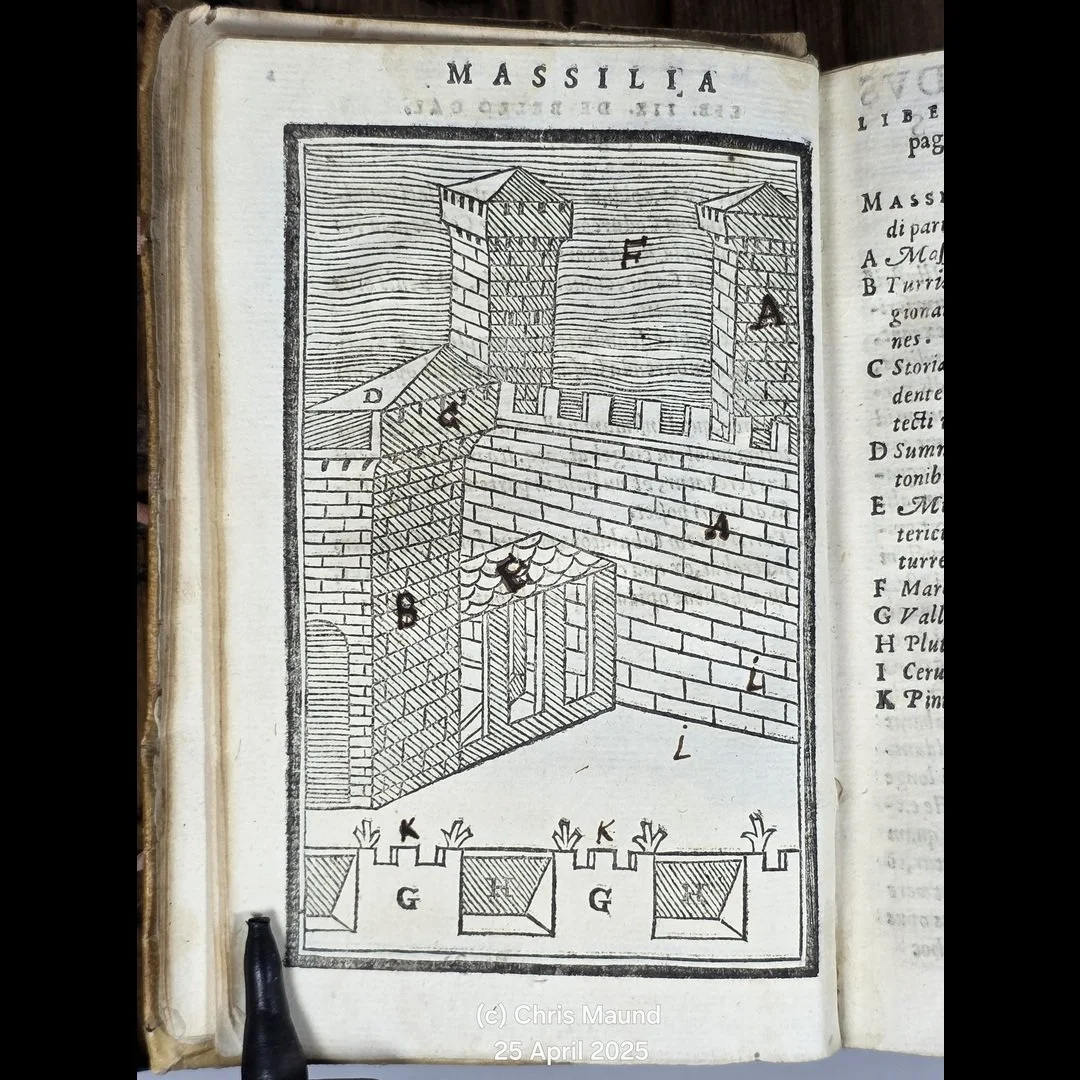
The engraved cosmological diagram at p.181 is present, well printed and clearly preserved.
Please see Photos as part of condition report.
REFERENCES
Wing B5943.
ESTC R4159.
SYNOPSIS
Thomas Burnet’s Archæologiæ Philosophicæ asks one of the great intellectual questions of the seventeenth century: how should inherited accounts of Creation be understood in an age increasingly concerned with natural causes, historical evidence and philosophical reason?
Burnet begins by examining the cosmogonies and creation traditions attributed to ancient peoples. Rather than treating Hebrew Scripture in isolation, he places it within a much broader intellectual landscape encompassing traditions associated with the Egyptians, Chaldeans, Persians, Greeks and other ancient cultures.
The second book increasingly concentrates upon Genesis: the six days of Creation, the original condition of the earth, Paradise, Adam and Eve, and the Fall. Burnet distinguishes between theological truth and literal physical description. Moses, in Burnet’s interpretation, was communicating divine and moral truths in a form appropriate to the comprehension of an ancient people rather than supplying a scientific account of the mechanics of Creation.
This distinction was potentially explosive. If the physical language of Genesis could be understood as accommodated, figurative or pedagogical rather than scientifically literal, then natural philosophy possessed considerably greater freedom to investigate the history of the earth independently.
The Archæologiæ Philosophicæ therefore occupies an important position in the developing relationship between science, biblical criticism and natural theology at the end of the seventeenth century. It belongs to the same intellectual project as Burnet’s better-known Sacred Theory of the Earth, but addresses more directly the authority and interpretation of the Mosaic creation narrative.
Its later influence extended beyond theology and natural philosophy. Coleridge’s decision to place a passage from Burnet at the head of the 1817 version of The Rime of the Ancient Mariner gave the work an unexpected place in the history of English Romanticism, connecting Burnet’s speculative universe of visible and invisible beings with one of the defining supernatural poems of the period.
AUTHOR BIO
Thomas Burnet (c.1635–1715) was an English clergyman, theologian and natural philosopher, best remembered for his ambitious attempt to construct a rational history of the earth compatible with divine providence.
Educated at Cambridge, Burnet later became Master of the Charterhouse in London. His reputation rests principally upon Telluris Theoria Sacra, first published in Latin from 1681 and subsequently in English as The Sacred Theory of the Earth. In it he proposed a complete physical history of the world, from its primordial formation through the Biblical Flood to its eventual destruction and renewal.
Rather than explaining major biblical events solely through miraculous intervention, Burnet sought natural mechanisms through which providence might operate. His earth was originally smooth and regular; the Deluge resulted from the collapse of its crust into subterranean waters, producing the broken mountains and oceans of the modern world. A future conflagration would eventually transform the earth again.
Burnet’s willingness to subject biblical history to philosophical explanation made him both influential and controversial.
With the Archæologiæ Philosophicæ of 1692 he ventured still further, examining ancient cosmogonies and questioning whether the opening chapters of Genesis were intended to provide a literal physical history of Creation. The controversy surrounding the work affected his standing at court, and he subsequently returned to the Charterhouse, where he remained until his death in 1715.
Burnet nevertheless became an important figure in the intellectual transition between seventeenth-century natural theology and the emerging Enlightenment. His imaginative visions of geological catastrophe, vast natural processes and transformed worlds also contributed to a tradition of sublime speculation that would resonate with later writers — most conspicuously Samuel Taylor Coleridge.
1692 First Edition With Provenance
ARCHAEOLOGIAE PHILOSOPHICAE SIVE DOCTRINA
By Thomas Burnet
KEY DETAILS
Condition: Good
Format: Hardcover, quarto (4to 9 1⁄2 × 12 in 241 × 305 mm )
Note: Binding/size selection follows standard bibliographic conventions and is approximate; exact measurements may vary.
Published By: Typis R. N., Impensis Gualt. Kettilby, ad Insigne Capitis Episcopi in Coemeterio Paulino, London, 1692
Language: Latin
Provenance: General Theological Seminary Library, New York.
Collation: [16], 358 pp.; followed in this copy by two terminal blank leaves [4 pp.]. Two books in one volume, continuously paginated, with separate title-page to Liber Secundus. Engraved cosmological diagram at p.181.
Dust Jacket: None, as issued
SKU: BTETM0002584
Shipping Info: Approximate Package Dimensions H: 12.5, L: 30, W: 25 (Units: cm), W: 2Kg
Tracked Shipping, Insurance Coverage as per Customer Request
DESCRIPTION
ARCHAEOLOGIAE PHILOSOPHICAE SIVE DOCTRINA
Full Title: Archæologiæ Philosophicæ, sive Doctrina Antiqua de Rerum Originibus
First edition of Thomas Burnet’s controversial Archæologiæ Philosophicæ, sive Doctrina Antiqua de Rerum Originibus — “Philosophical Archaeology, or the Ancient Doctrine concerning the Origins of Things” — an important late-seventeenth-century work of cosmology, natural theology and biblical interpretation.
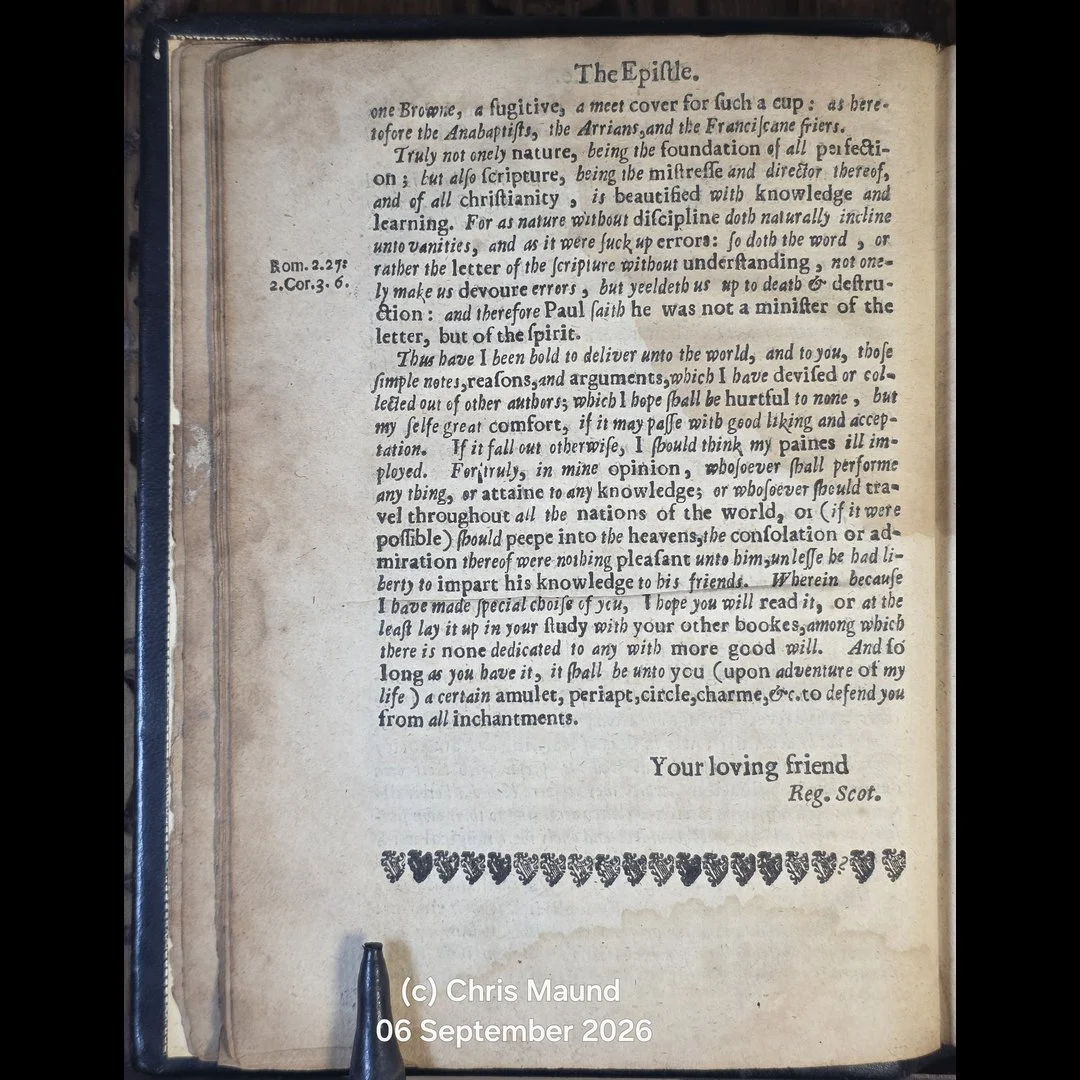
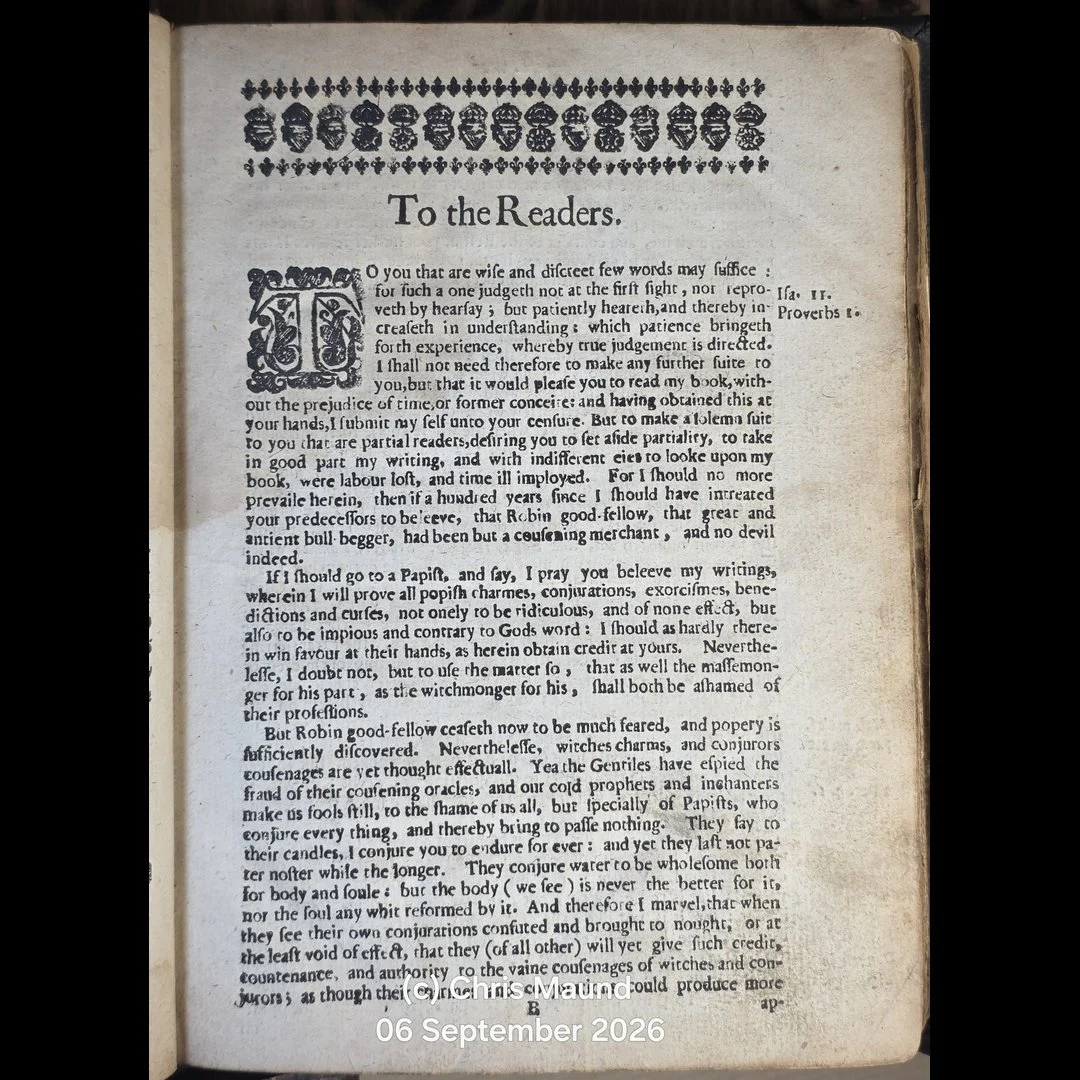
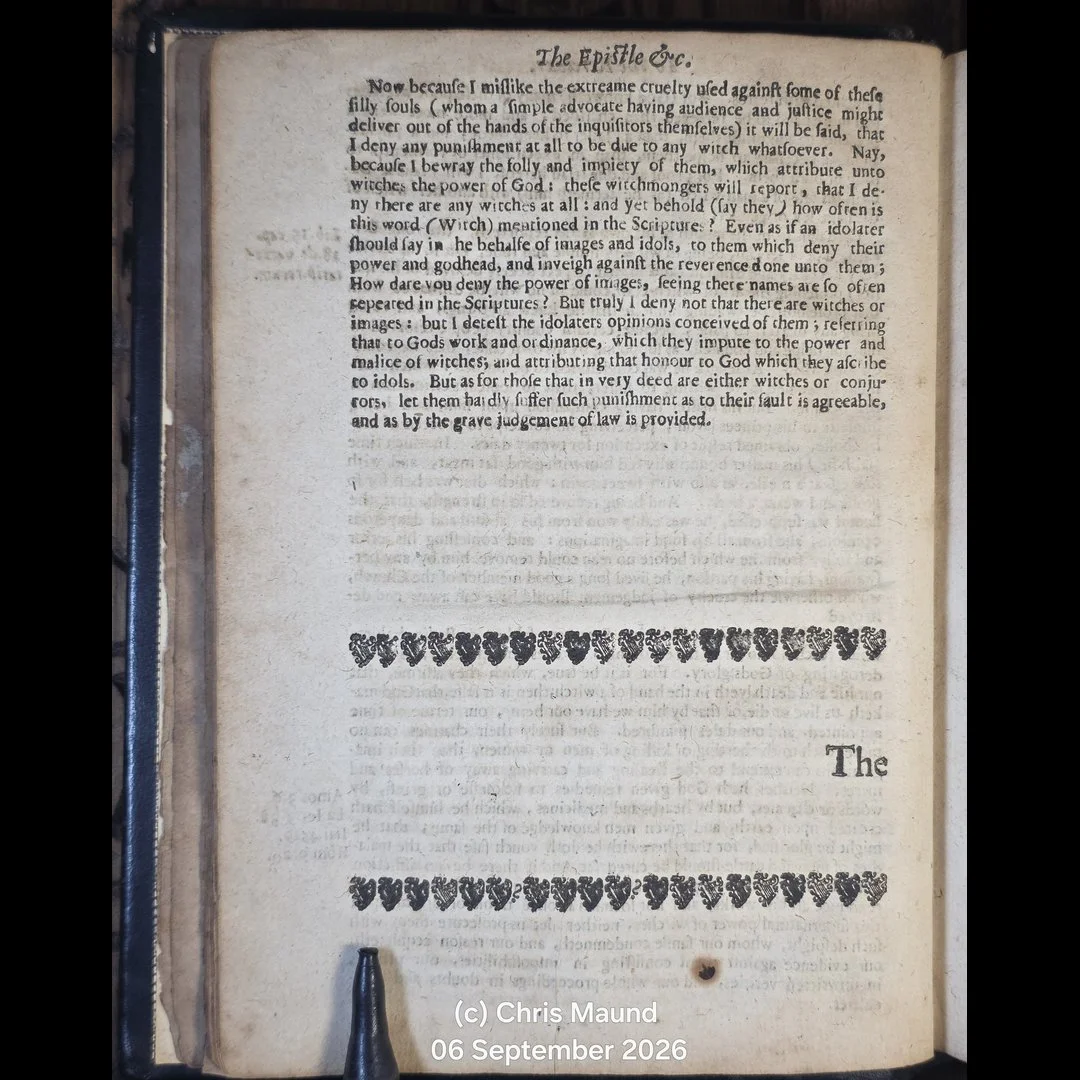
Published in London in 1692, the work is divided into two books, the second retaining its own separate title-page, with continuous pagination throughout. Printed in Latin with typographical headpieces and decorated initials, and with the engraved cosmological diagram in the text at p.181.
Burnet ranges across Hebrew, Chaldean, Egyptian, Persian and Greek traditions in an attempt to recover ancient ideas concerning the origin and structure of the world. From this comparative investigation he turns to the Mosaic account of Creation, Paradise and the Fall, arguing that Genesis was not intended as a technically exact exposition of natural philosophy but as an account adapted to the understanding and religious needs of its original audience.
That approach was highly contentious. Burnet had already achieved considerable fame through his Telluris Theoria Sacra (Sacred Theory of the Earth), in which he attempted to explain biblical history through natural causes. In the Archæologiæ Philosophicæ he went further, applying historical and philosophical criticism directly to the opening chapters of Genesis. The resulting controversy damaged his position at court and placed the work among the more daring English contributions to the late-seventeenth-century debate over Scripture, reason and the natural world.
The book also possesses a notable literary afterlife. In 1817 Samuel Taylor Coleridge selected a passage from Burnet’s Archæologiæ Philosophicæ as the Latin epigraph to the revised version of The Rime of the Ancient Mariner. Burnet’s meditation upon the possibility of innumerable invisible beings inhabiting the universe proved particularly apt for Coleridge’s supernatural poem and has remained attached to later texts of the Ancient Mariner.
An appealing association between Restoration natural philosophy, biblical criticism and Romantic literature.
PROVENANCE
General Theological Seminary Library, New York.
With the Seminary’s printed library bookplate to the front pastedown, manuscript and institutional shelf or accession markings, and ink and embossed library stamps including those to the title-page.
The copy was subsequently designated for the Seminary’s Rare Book Room, with associated printed label, together with a further institutional label stating that the volume was not to be removed from the Library. Accession number 16439 is present.
The General Theological Seminary was founded in New York in 1817 and developed an important theological and ecclesiastical library. The surviving institutional markings provide a coherent record of this volume’s long library history.
CONDITION, COLLATION & COPY NOTES
COLLATION
[16], 358 pp.; followed in this copy by two terminal blank leaves [4 pp.]. Two books in one volume, continuously paginated, with separate title-page to Liber Secundus. Engraved cosmological diagram at p.181.
The printed text concludes with FINIS on p.358.
Contemporary blind-ruled panelled calf boards, later rebacked in twentieth-century tan library buckram. Original boards heavily rubbed and worn, with areas of surface loss; corners worn. The later buckram spine is utilitarian rather than sympathetic to the original binding but remains firm and functional.
Endpapers replaced during the library rebinding, with strengthened cloth inner hinges. Various institutional labels and manuscript library markings to pastedowns and endpapers.
Title-page with General Theological Seminary ink stamp and embossed institutional stamp, together with further library markings. Additional institutional stamps occur within the volume, including at the conclusion of the text.
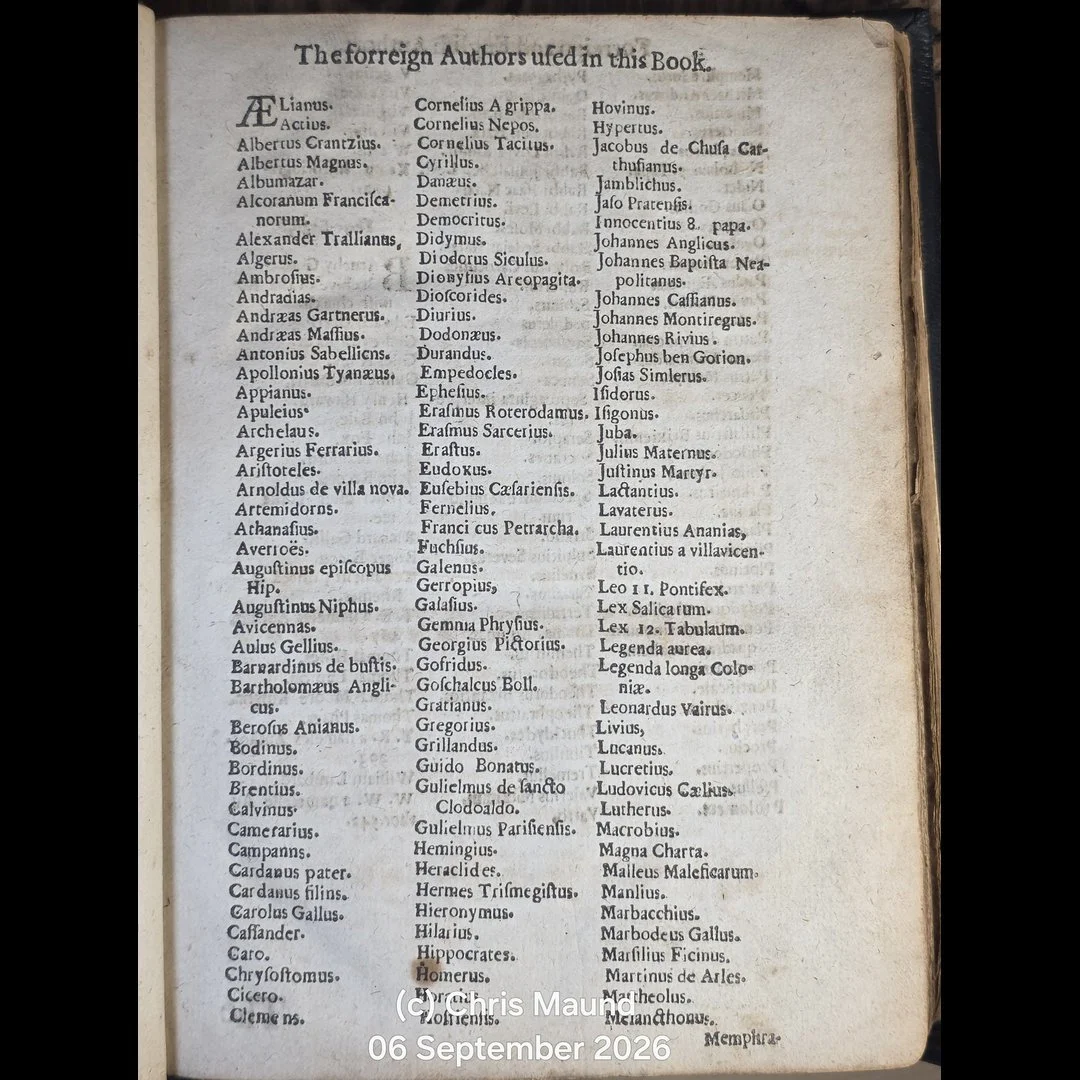
Text generally sound and well preserved for a working institutional copy. Paper lightly toned with occasional foxing and spotting. A tide-mark or old damp-stain affects the upper margins of the earlier gatherings, becoming progressively lighter; this does not materially obscure the printed text. Occasional minor handling marks and age-related blemishes.
The engraved cosmological diagram at p.181 is present, well printed and clearly preserved.
Please see Photos as part of condition report.
REFERENCES
Wing B5943.
ESTC R4159.
SYNOPSIS
Thomas Burnet’s Archæologiæ Philosophicæ asks one of the great intellectual questions of the seventeenth century: how should inherited accounts of Creation be understood in an age increasingly concerned with natural causes, historical evidence and philosophical reason?
Burnet begins by examining the cosmogonies and creation traditions attributed to ancient peoples. Rather than treating Hebrew Scripture in isolation, he places it within a much broader intellectual landscape encompassing traditions associated with the Egyptians, Chaldeans, Persians, Greeks and other ancient cultures.
The second book increasingly concentrates upon Genesis: the six days of Creation, the original condition of the earth, Paradise, Adam and Eve, and the Fall. Burnet distinguishes between theological truth and literal physical description. Moses, in Burnet’s interpretation, was communicating divine and moral truths in a form appropriate to the comprehension of an ancient people rather than supplying a scientific account of the mechanics of Creation.
This distinction was potentially explosive. If the physical language of Genesis could be understood as accommodated, figurative or pedagogical rather than scientifically literal, then natural philosophy possessed considerably greater freedom to investigate the history of the earth independently.
The Archæologiæ Philosophicæ therefore occupies an important position in the developing relationship between science, biblical criticism and natural theology at the end of the seventeenth century. It belongs to the same intellectual project as Burnet’s better-known Sacred Theory of the Earth, but addresses more directly the authority and interpretation of the Mosaic creation narrative.
Its later influence extended beyond theology and natural philosophy. Coleridge’s decision to place a passage from Burnet at the head of the 1817 version of The Rime of the Ancient Mariner gave the work an unexpected place in the history of English Romanticism, connecting Burnet’s speculative universe of visible and invisible beings with one of the defining supernatural poems of the period.
AUTHOR BIO
Thomas Burnet (c.1635–1715) was an English clergyman, theologian and natural philosopher, best remembered for his ambitious attempt to construct a rational history of the earth compatible with divine providence.
Educated at Cambridge, Burnet later became Master of the Charterhouse in London. His reputation rests principally upon Telluris Theoria Sacra, first published in Latin from 1681 and subsequently in English as The Sacred Theory of the Earth. In it he proposed a complete physical history of the world, from its primordial formation through the Biblical Flood to its eventual destruction and renewal.
Rather than explaining major biblical events solely through miraculous intervention, Burnet sought natural mechanisms through which providence might operate. His earth was originally smooth and regular; the Deluge resulted from the collapse of its crust into subterranean waters, producing the broken mountains and oceans of the modern world. A future conflagration would eventually transform the earth again.
Burnet’s willingness to subject biblical history to philosophical explanation made him both influential and controversial.
With the Archæologiæ Philosophicæ of 1692 he ventured still further, examining ancient cosmogonies and questioning whether the opening chapters of Genesis were intended to provide a literal physical history of Creation. The controversy surrounding the work affected his standing at court, and he subsequently returned to the Charterhouse, where he remained until his death in 1715.
Burnet nevertheless became an important figure in the intellectual transition between seventeenth-century natural theology and the emerging Enlightenment. His imaginative visions of geological catastrophe, vast natural processes and transformed worlds also contributed to a tradition of sublime speculation that would resonate with later writers — most conspicuously Samuel Taylor Coleridge.

 Image 1 of 31
 Image 2 of 31
 Image 3 of 31
 Image 4 of 31
 Image 5 of 31
 Image 6 of 31
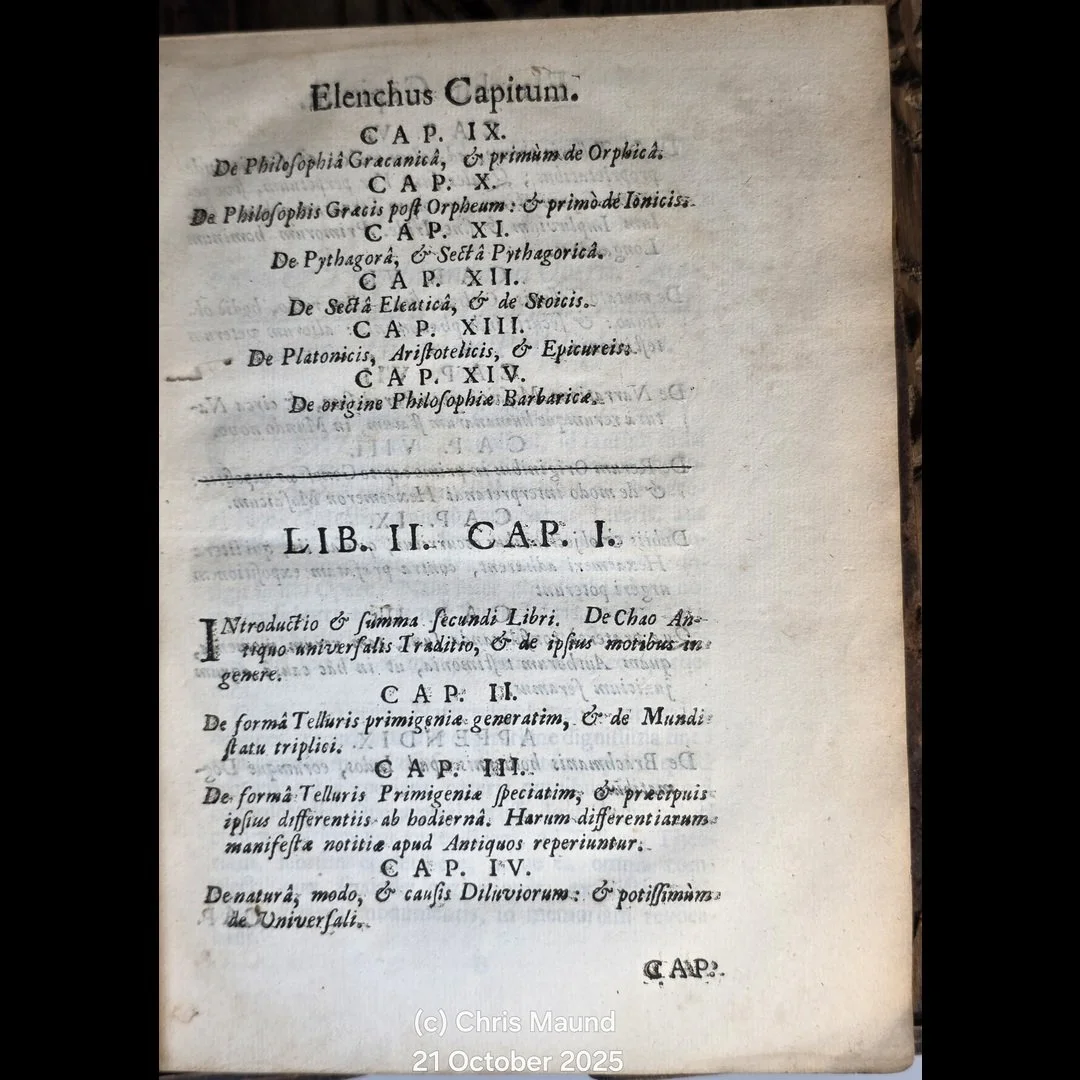 Image 7 of 31
 Image 8 of 31
 Image 9 of 31
 Image 10 of 31
 Image 11 of 31
 Image 12 of 31
 Image 13 of 31
 Image 14 of 31
 Image 15 of 31
 Image 16 of 31
 Image 17 of 31
 Image 18 of 31
 Image 19 of 31
 Image 20 of 31
 Image 21 of 31
 Image 22 of 31
 Image 23 of 31
 Image 24 of 31
 Image 25 of 31
 Image 26 of 31
 Image 27 of 31
 Image 28 of 31
 Image 29 of 31
 Image 30 of 31
 Image 31 of 31