1516 Lyon Collected Edition With Provenance
ULTIMA PARS OPERIS, PROBAE CENTONAE & CONTRA DETRACTORES
By Baptista Mantuanus [Battista Spagnoli, Battista Mantovano]
KEY DETAILS
Condition: Good
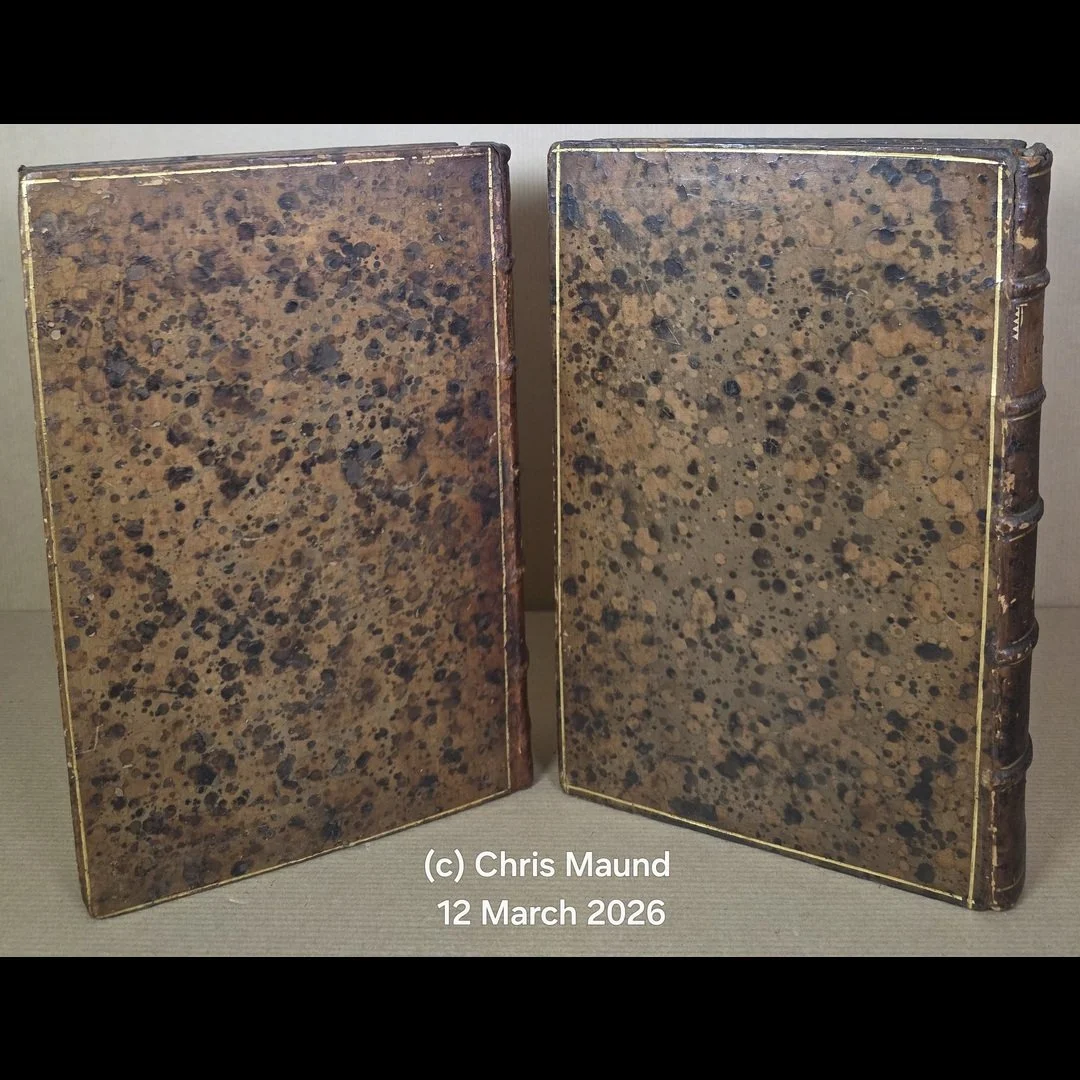
Format: Vellum, Octavo (Standard) (8vo 6 × 9 in 152 × 229 mm )
Note: Binding/size selection follows standard bibliographic conventions and is approximate; exact measurements may vary.
Published By: Étienne [Stephanus] de Basignana, in the workshop of Bernard Lescuyer, Lyon, 1516
Language: Latin
Illustrated By: Anonymous
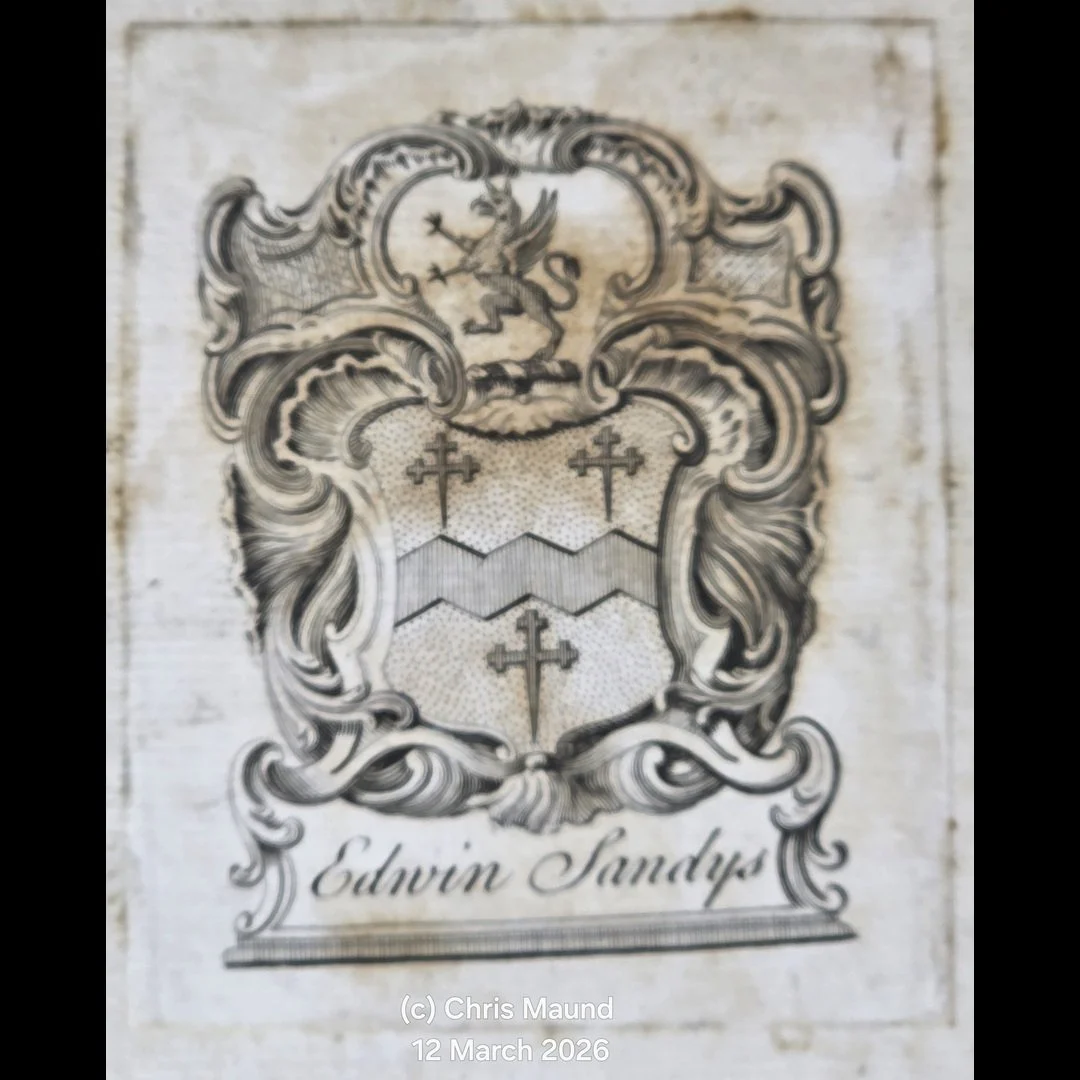
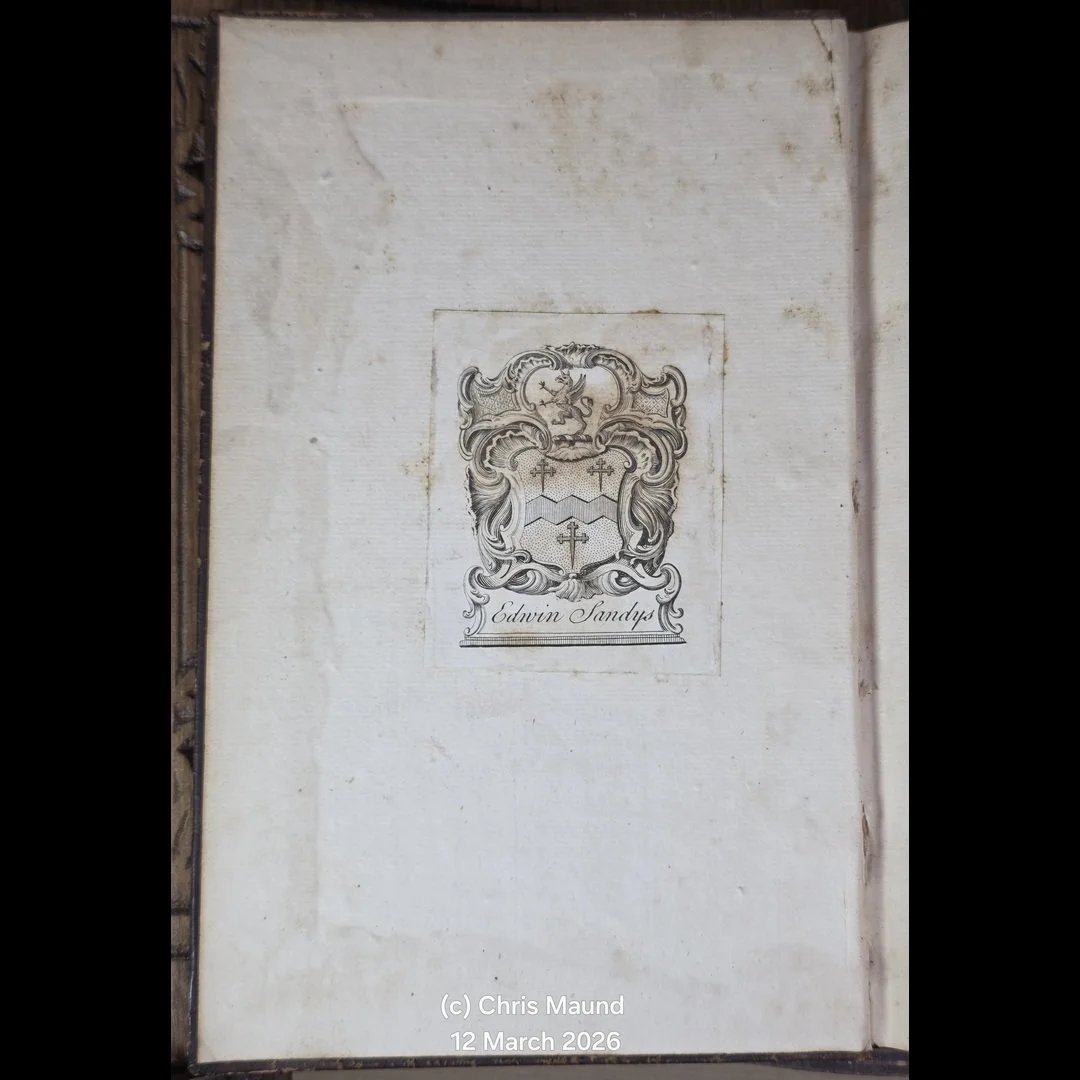
Provenance: Franz Pollack von Parnau — engraved bookplate to the front pastedown.
Collation: The volume has been physically checked by signatures and against the published bibliographical collations.
Dust Jacket: None, as issued
SKU: BTETM0002624
Shipping Info: Approximate Package Dimensions H: 12.5, L: 30, W: 25 (Units: cm), W: 2Kg
Tracked Shipping, Insurance Coverage as per Customer Request
DESCRIPTION
ULTIMA PARS OPERIS, PROBAE CENTONAE & CONTRA DETRACTORES
Ultima pars operis, with Probae Centonae and Contra detractores dialogus, including Epistola contra calumniatores and associated texts
Date: 1516 — principal collection dated 23 June 1516; Contra detractores dated 21 July 1516
First Edition of De Sacris Diebus (Fasti)
A substantial and fully collated, complete example of the enlarged 1516 Lyon collection of the works of Baptista Mantuanus, printed in the year of the author's death by the Carmelite printer Étienne de Basignana in the workshop of Bernard Lescuyer.
The words by which this edition is sometimes catalogued — “Ad mortalium oblectationem auctoris effigiem…” — are properly associated with the striking woodcut portrait of Mantuanus on the opening title rather than constituting the title of a single work. The principal bibliographical title is ** Ultima pars operis **. The complete enlarged Lyon collection is recorded as Adams M389.
This is a complex publication composed of separately signed sections containing an extensive gathering of Mantuanus's later religious, historical, political, occasional and pastoral writings. The works include De Sacris Diebus, lives of Saints Blaise and Nicholas of Tolentino, De bello Veneto, political and occasional verse, Mantuanus's autobiographical Vitae suae epitome, the six books of the Agellariorum, and the Christian Virgilian cento of Faltonia Betitia Proba. The Granada copy gives the individual sections and their signature ranges in detail.
Of particular bibliographical importance is ** De Sacris Diebus, also known as the Fasti, here in its FIRST EDITION**. Written in twelve books corresponding to the months of the year, it deliberately adapts the structure of Ovid's Fasti to a Christian calendar, replacing pagan festivals and mythology with Christian feast days, saints, biblical history and ecclesiastical tradition. The 1516 Lyon printing is independently identified as the first edition of the work; later Strasbourg printings followed from 1518.
Also present is Faltonia Betitia Proba's Centones, a remarkable fourth-century Christian cento constructed almost entirely from lines of Virgil rearranged to narrate episodes of the Old and New Testaments. It forms a particularly appropriate companion to Mantuanus's own project of reshaping classical Latin poetic forms for Christian purposes.
The principal Mantuanus collection bears the Lyon colophon of 23 June 1516. Bound with it is the separately printed ** Contra detractores dialogus**, completed in the same workshop on 21 July 1516 and independently catalogued as Adams M399. It includes the separately titled Epistola contra calumniatores together with Mantuanus's polemical, theological and literary defences of himself, his writings and the Carmelite Order. The Complutense University copy confirms its signature sequence, red-and-black portrait titles, Basignana devices and Gonzaga heraldry.
The visual programme is unusually rich for a small-format humanist publication. The volume contains three large woodcut portrait titles of Mantuanus, printing in red and black, repeated examples of Basignana's distinctive FATORUM IMPERIO / GORGONIUS HEROS device, and woodcut arms of Cardinal Sigismondo Gonzaga, Mantuanus's former pupil and a significant patron of the Carmelite Order. French Post-Incunables specifically records both Basignana's device and the Gonzaga arms in the edition.
A highly appealing early-sixteenth-century Lyon volume combining Renaissance humanism, Neo-Latin poetry, Christian reception of the classics, Carmelite scholarship and striking early book illustration.
PROVENANCE
Franz Pollack von Parnau — engraved bookplate to the front pastedown.
Pollack von Parnau was a prominent Viennese bibliophile whose important library was assembled in the family palais on Schwarzenbergplatz. Books carrying his distinctive ex libris continue to appear in the international antiquarian trade, often among significant early printed material.
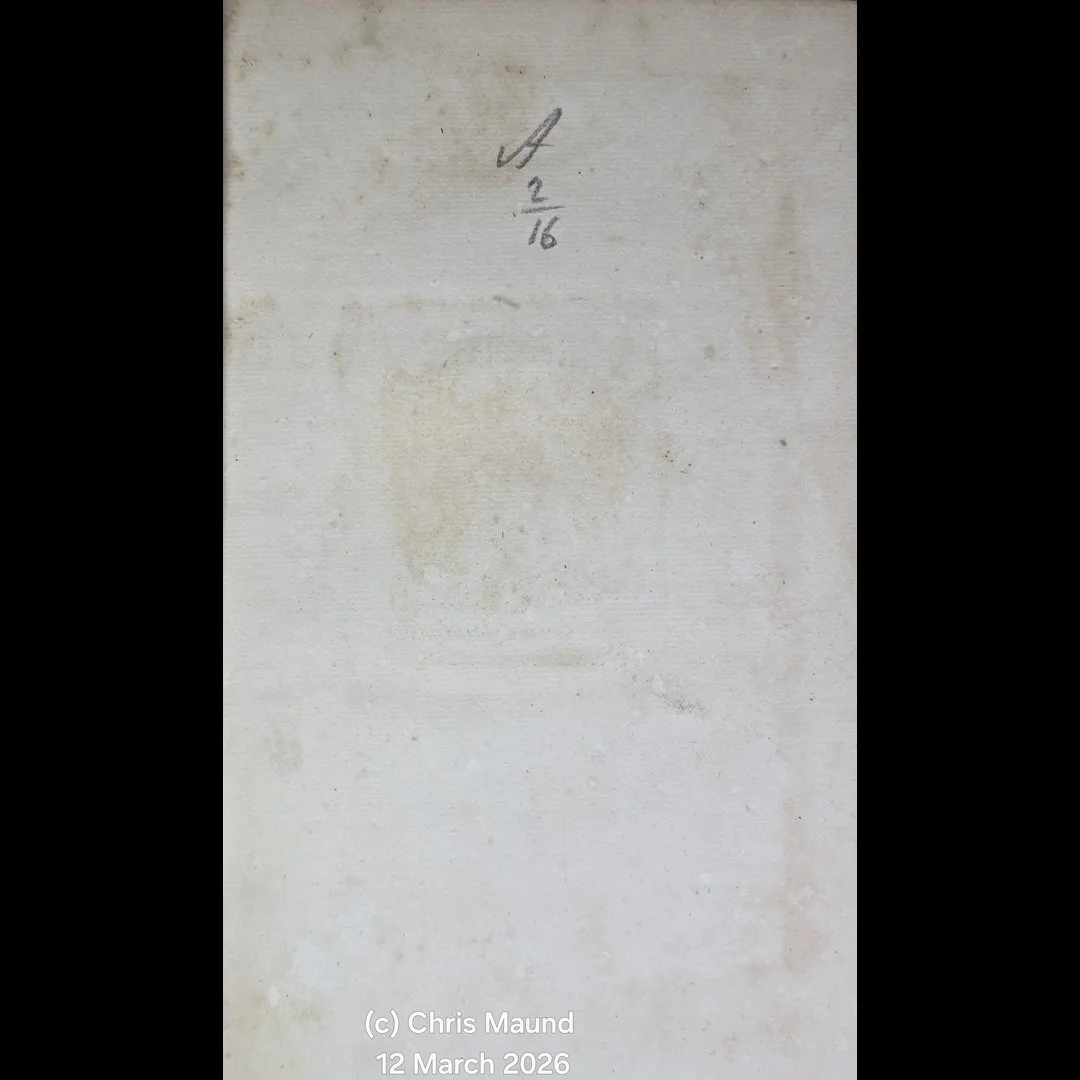
Nathan Gedye — modern bookplate to the rear pastedown.
Gedye was evidently a substantial modern collector of early printed books. Numerous volumes bearing the same Nathan Gedye bookplate have appeared in the British antiquarian and auction trade from 2024 onwards, encompassing sixteenth- and seventeenth-century theology, humanism, law, history and literature, frequently in copies already possessing distinguished earlier provenance.
The collector is plausibly, but not yet conclusively, identifiable with Nathan Stanley Gedye KC, the New Zealand commercial barrister and former Bell Gully partner. Until documentary confirmation of that identification is obtained, the present catalogue deliberately records the provenance simply as Nathan Gedye.
Dominic Winter Auctioneers, 18 June 2025, Lot 214; The auction description did not record either the Pollack-Parnau or Gedye bookplates.
CONDITION, COLLATION & COPY NOTES
COLLATION
The volume has been physically checked by signatures and against the published bibliographical collations.
1516 Lyon Ultima pars operis / enlarged collection:
Published bibliographical formula:
a–q⁸, aa–cc⁸, A–K⁸, AA–KK⁸ LL⁴, ²a–b⁸
In the present copy the separately signed Proba section (²a–b⁸) is bound immediately after q rather than at the end of the other Mantuanus sections, giving the observed physical order:
a–q⁸, ²a–b⁸, aa–cc⁸, A–K⁸, AA–KK⁸ LL⁴
Such sectional variation is consistent with the composite nature of the publication: contemporary bibliographical descriptions note that its component sections could be sold separately, and surviving examples occur in differing assemblies.
1516 Lyon Contra detractores: a–g⁸, Aa–Ii⁸, Kk⁴ matching the authoritative recorded collation.
Total: [464] leaves. COMPLETE AS COLLATED.
Several critical junctions have been physically verified in this copy rather than completeness being inferred merely from an external catalogue.
At the end of the first a–q sequence, the required blank q7 survives; q8 bears the Gonzaga arms, followed in this copy by the separately signed Proba section. Christie's independently records the a–q⁸ section with blank q7 and the Gonzaga arms on q8.
The A–K sequence concludes correctly with the Basignana device before the opening of AA and Agellariorum Liber I. The Granada copy likewise records the printer's device at K8.
The AA–LL sequence concludes with the dated Lyon colophon and printer's device at LL4, followed in this copy by the fresh portrait title of Contra detractores. The concluding Kk gathering of the latter is also present through its final colophon, heraldry and terminal printer's device.
The survival of intentional blank leaves is particularly desirable, such leaves being especially liable to removal in subsequent rebinding.
Complete.
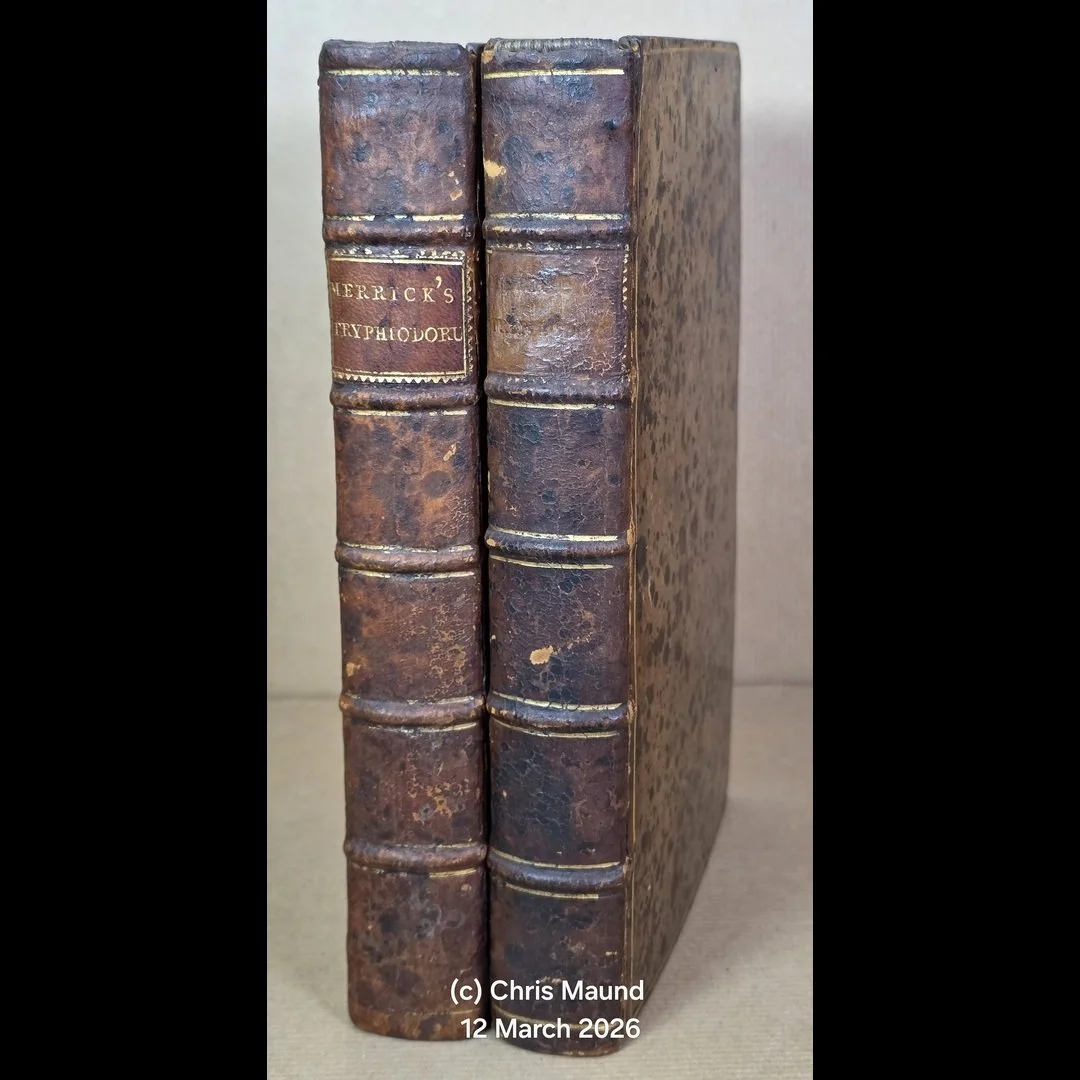
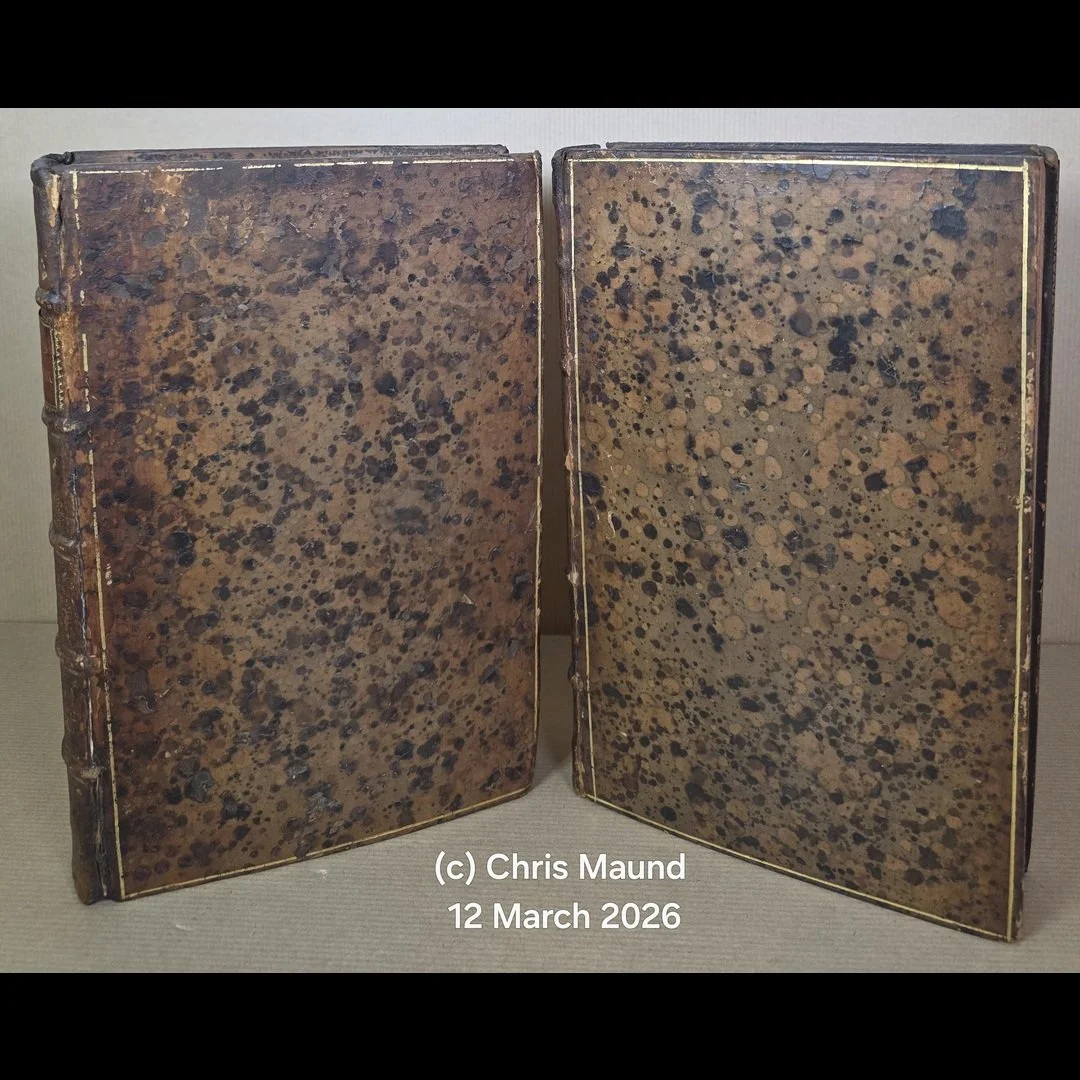
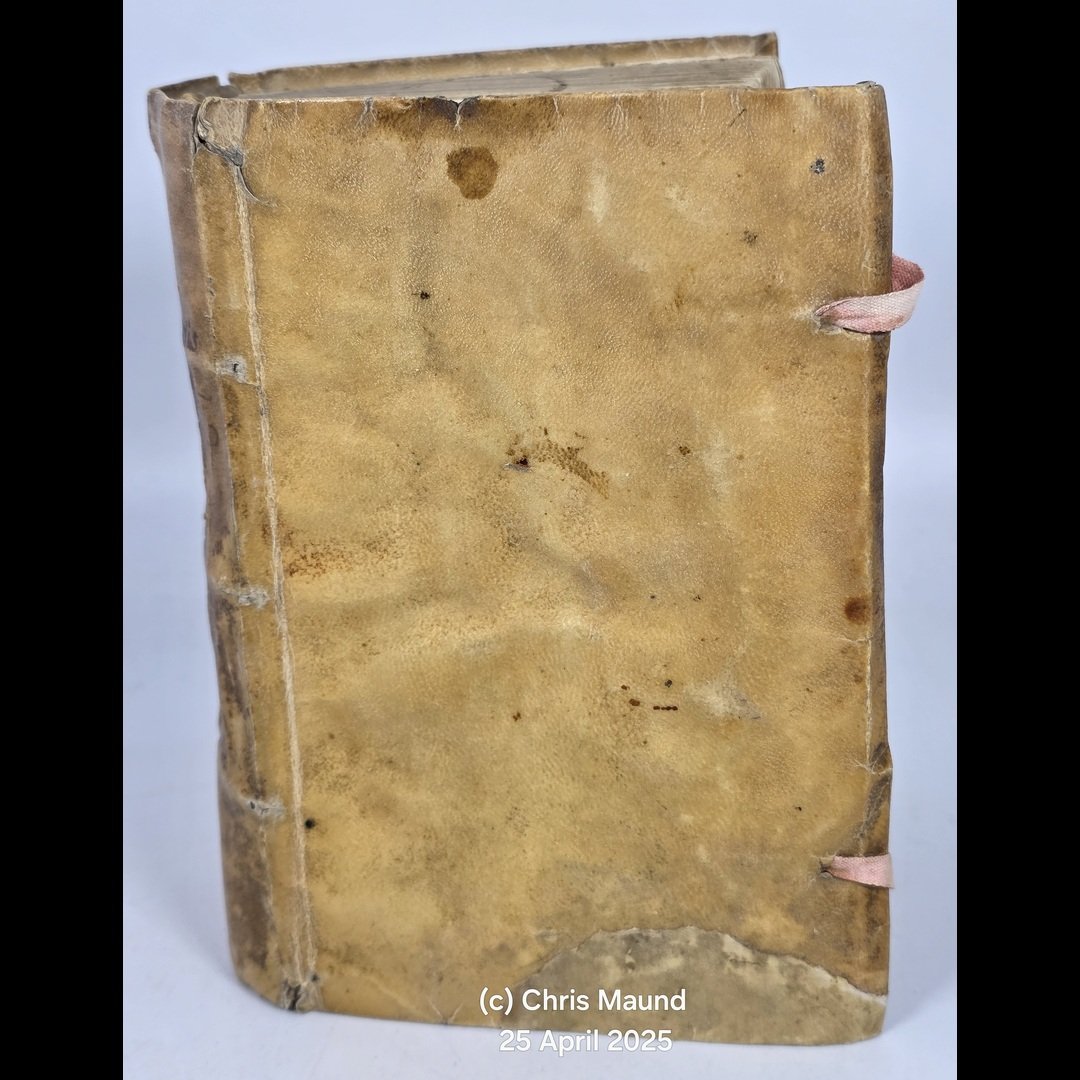
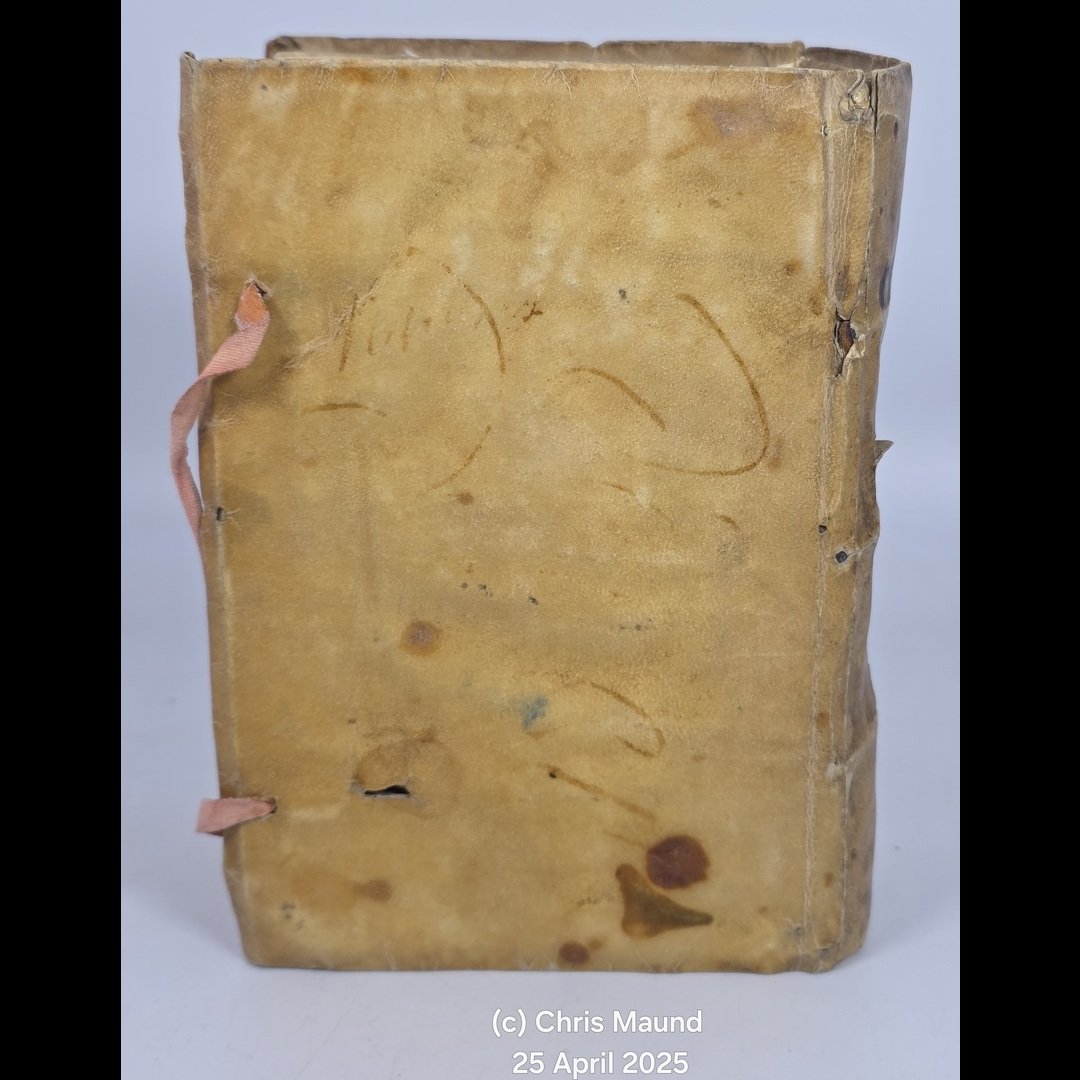
Bound in modern vellum, sound and attractive, with light age and handling marks.
The principal opening title is the major condition issue: cropped at the foot, extensively repaired and backed/restored, with old ink-stamped initials and associated marking. The large woodcut portrait and principal printed matter nevertheless remain substantially intact.
Internally the book is generally well preserved for a heavily used early-sixteenth-century octavo. Variable toning and browning throughout, with occasional spotting and damp-staining, handling marks and scattered paper repairs. Several leaves towards the end show marginal repairs and staining.
There are early manuscript annotations, marginal notes and cross-references in a number of places, providing attractive evidence of historical reading and use. These appear early but have not been attributed to a particular owner or hand.
Three woodcut portrait title-pages are present, together with the Gonzaga heraldic blocks and repeated Basignana/Gorgonius devices.
Please see Photos as part of condition report.
REFERENCES
Adams M389 — enlarged 1516 Lyon Works / Ultima pars operis
Adams M399 — Contra detractores, Lyon, 21 July 1516
USTC 155285
French Post-Incunables IS001645 & IS001646
Baudrier, Bibliographie lyonnaise, II, pp. 6–9, 154
Brunet, III, 1375
von Gültlingen, III, Lescuyer nos. 8–9
David J. Shaw, “The Lyons counterfeit of Aldus's italic type: a new chronology”, nos. 65–66.
SYNOPSIS
Baptista Mantuanus's writing stands at the meeting point of Renaissance humanism and Christian reform. Deeply learned in the classical Latin tradition, he repeatedly adopted the forms and vocabulary of Virgil, Ovid and other ancient poets but redirected them towards Christian doctrine, moral instruction, sacred history and contemporary politics.
The centrepiece of this collection is the first edition of the twelve-book De Sacris Diebus or Fasti. Its debt to Ovid is deliberate: the ancient Roman calendar poem is effectively reconstructed as a Christian calendar. Pagan divinities and foundation myths are displaced by saints, martyrs, biblical episodes, ecclesiastical festivals and Christian sacred history.
The Agellariorum libri sex adopts another classical tradition, that of pastoral and georgic writing, while the historical and political poems engage directly with the wars, rulers and upheavals of contemporary Italy.
The presence of Proba's Virgilian Christian cento reinforces one of the collection's most compelling themes: the ability of Christian humanists to appropriate the literary inheritance of pagan Rome while transforming its meaning.
The separately printed Contra detractores reveals Mantuanus in another guise — as theologian, polemicist and defender of his writings and religious order. Its essays and letters address criticism of Mantuanus, questions of literary propriety, scriptural interpretation and Carmelite identity.
Together the two Lyon printings provide an unusually broad survey of Mantuanus's mature intellectual world.
AUTHOR BIO
Baptista Mantuanus — Battista Spagnoli (1447/48–1516)
Battista Spagnoli, universally known in the learned world as Baptista Mantuanus, was an Italian Carmelite friar, reformer, theologian and one of the most widely read Neo-Latin poets of the Renaissance.
Educated within the Italian humanist tradition, Mantuanus produced an enormous body of Latin poetry spanning pastoral, devotional, historical, satirical and occasional subjects. Virgil was his principal classical model, although Ovid is particularly important to the Fasti.
Mantuanus was elected Prior General of the Carmelite Order in 1513, a position he retained until his death at Mantua on 20 March 1516. His former pupil Cardinal Sigismondo Gonzaga played an important role in that election and appears repeatedly in the visual and textual programme of the present edition.
His poems circulated widely in sixteenth-century European education. Erasmus famously praised Mantuanus as a “Christian Virgil”, while John Colet proposed his writings for use at St Paul's School in London.
The present Lyon edition, appearing only months after his death, therefore represents both a memorial gathering of his work and an important witness to his immediate Renaissance reputation.
ILLUSTRATOR
Anonymous
The book was printed by Étienne de Basignana, apparently working in Bernard Lescuyer's Lyon workshop. French Post-Incunables attributes both the June and July 1516 productions to this partnership and records Basignana's device, the Gonzaga arms and the distinctive italic type used in the edition.
The repeated circular woodcut portraits of Mantuanus give the volume a particularly strong visual identity, complemented by the heraldic blocks of Cardinal Gonzaga and Basignana's memorable FATORUM IMPERIO / GORGONIUS HEROS device.
No individual artist responsible for the portrait or other woodcuts has been securely identified in the bibliographical sources consulted.
1516 Lyon Collected Edition With Provenance
ULTIMA PARS OPERIS, PROBAE CENTONAE & CONTRA DETRACTORES
By Baptista Mantuanus [Battista Spagnoli, Battista Mantovano]
KEY DETAILS
Condition: Good
Format: Vellum, Octavo (Standard) (8vo 6 × 9 in 152 × 229 mm )
Note: Binding/size selection follows standard bibliographic conventions and is approximate; exact measurements may vary.
Published By: Étienne [Stephanus] de Basignana, in the workshop of Bernard Lescuyer, Lyon, 1516
Language: Latin
Illustrated By: Anonymous
Provenance: Franz Pollack von Parnau — engraved bookplate to the front pastedown.
Collation: The volume has been physically checked by signatures and against the published bibliographical collations.
Dust Jacket: None, as issued
SKU: BTETM0002624
Shipping Info: Approximate Package Dimensions H: 12.5, L: 30, W: 25 (Units: cm), W: 2Kg
Tracked Shipping, Insurance Coverage as per Customer Request
DESCRIPTION
ULTIMA PARS OPERIS, PROBAE CENTONAE & CONTRA DETRACTORES
Ultima pars operis, with Probae Centonae and Contra detractores dialogus, including Epistola contra calumniatores and associated texts
Date: 1516 — principal collection dated 23 June 1516; Contra detractores dated 21 July 1516
First Edition of De Sacris Diebus (Fasti)
A substantial and fully collated, complete example of the enlarged 1516 Lyon collection of the works of Baptista Mantuanus, printed in the year of the author's death by the Carmelite printer Étienne de Basignana in the workshop of Bernard Lescuyer.
The words by which this edition is sometimes catalogued — “Ad mortalium oblectationem auctoris effigiem…” — are properly associated with the striking woodcut portrait of Mantuanus on the opening title rather than constituting the title of a single work. The principal bibliographical title is ** Ultima pars operis **. The complete enlarged Lyon collection is recorded as Adams M389.
This is a complex publication composed of separately signed sections containing an extensive gathering of Mantuanus's later religious, historical, political, occasional and pastoral writings. The works include De Sacris Diebus, lives of Saints Blaise and Nicholas of Tolentino, De bello Veneto, political and occasional verse, Mantuanus's autobiographical Vitae suae epitome, the six books of the Agellariorum, and the Christian Virgilian cento of Faltonia Betitia Proba. The Granada copy gives the individual sections and their signature ranges in detail.
Of particular bibliographical importance is ** De Sacris Diebus, also known as the Fasti, here in its FIRST EDITION**. Written in twelve books corresponding to the months of the year, it deliberately adapts the structure of Ovid's Fasti to a Christian calendar, replacing pagan festivals and mythology with Christian feast days, saints, biblical history and ecclesiastical tradition. The 1516 Lyon printing is independently identified as the first edition of the work; later Strasbourg printings followed from 1518.
Also present is Faltonia Betitia Proba's Centones, a remarkable fourth-century Christian cento constructed almost entirely from lines of Virgil rearranged to narrate episodes of the Old and New Testaments. It forms a particularly appropriate companion to Mantuanus's own project of reshaping classical Latin poetic forms for Christian purposes.
The principal Mantuanus collection bears the Lyon colophon of 23 June 1516. Bound with it is the separately printed ** Contra detractores dialogus**, completed in the same workshop on 21 July 1516 and independently catalogued as Adams M399. It includes the separately titled Epistola contra calumniatores together with Mantuanus's polemical, theological and literary defences of himself, his writings and the Carmelite Order. The Complutense University copy confirms its signature sequence, red-and-black portrait titles, Basignana devices and Gonzaga heraldry.
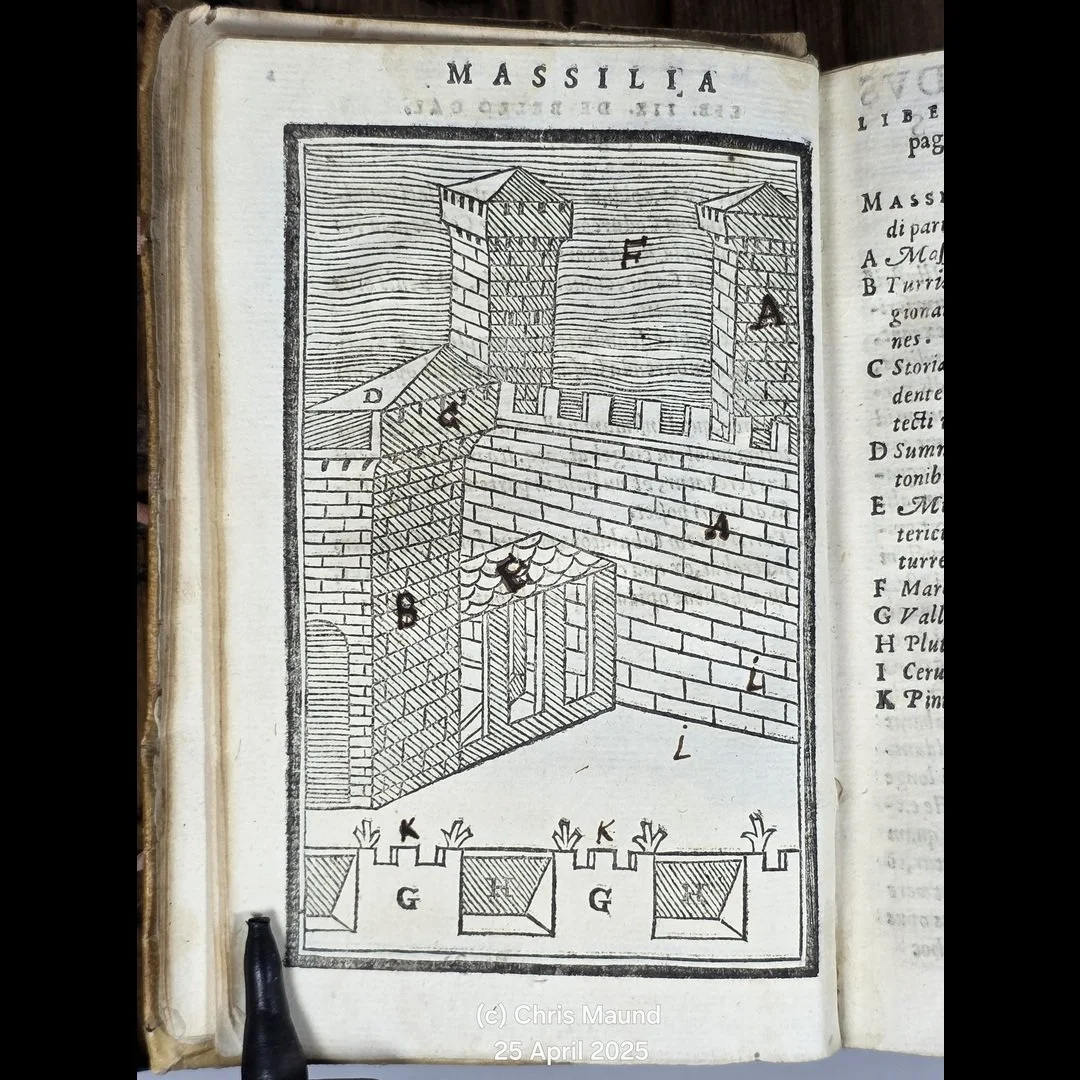
The visual programme is unusually rich for a small-format humanist publication. The volume contains three large woodcut portrait titles of Mantuanus, printing in red and black, repeated examples of Basignana's distinctive FATORUM IMPERIO / GORGONIUS HEROS device, and woodcut arms of Cardinal Sigismondo Gonzaga, Mantuanus's former pupil and a significant patron of the Carmelite Order. French Post-Incunables specifically records both Basignana's device and the Gonzaga arms in the edition.
A highly appealing early-sixteenth-century Lyon volume combining Renaissance humanism, Neo-Latin poetry, Christian reception of the classics, Carmelite scholarship and striking early book illustration.
PROVENANCE
Franz Pollack von Parnau — engraved bookplate to the front pastedown.
Pollack von Parnau was a prominent Viennese bibliophile whose important library was assembled in the family palais on Schwarzenbergplatz. Books carrying his distinctive ex libris continue to appear in the international antiquarian trade, often among significant early printed material.
Nathan Gedye — modern bookplate to the rear pastedown.
Gedye was evidently a substantial modern collector of early printed books. Numerous volumes bearing the same Nathan Gedye bookplate have appeared in the British antiquarian and auction trade from 2024 onwards, encompassing sixteenth- and seventeenth-century theology, humanism, law, history and literature, frequently in copies already possessing distinguished earlier provenance.
The collector is plausibly, but not yet conclusively, identifiable with Nathan Stanley Gedye KC, the New Zealand commercial barrister and former Bell Gully partner. Until documentary confirmation of that identification is obtained, the present catalogue deliberately records the provenance simply as Nathan Gedye.
Dominic Winter Auctioneers, 18 June 2025, Lot 214; The auction description did not record either the Pollack-Parnau or Gedye bookplates.
CONDITION, COLLATION & COPY NOTES
COLLATION
The volume has been physically checked by signatures and against the published bibliographical collations.
1516 Lyon Ultima pars operis / enlarged collection:
Published bibliographical formula:
a–q⁸, aa–cc⁸, A–K⁸, AA–KK⁸ LL⁴, ²a–b⁸
In the present copy the separately signed Proba section (²a–b⁸) is bound immediately after q rather than at the end of the other Mantuanus sections, giving the observed physical order:
a–q⁸, ²a–b⁸, aa–cc⁸, A–K⁸, AA–KK⁸ LL⁴
Such sectional variation is consistent with the composite nature of the publication: contemporary bibliographical descriptions note that its component sections could be sold separately, and surviving examples occur in differing assemblies.
1516 Lyon Contra detractores: a–g⁸, Aa–Ii⁸, Kk⁴ matching the authoritative recorded collation.
Total: [464] leaves. COMPLETE AS COLLATED.
Several critical junctions have been physically verified in this copy rather than completeness being inferred merely from an external catalogue.
At the end of the first a–q sequence, the required blank q7 survives; q8 bears the Gonzaga arms, followed in this copy by the separately signed Proba section. Christie's independently records the a–q⁸ section with blank q7 and the Gonzaga arms on q8.
The A–K sequence concludes correctly with the Basignana device before the opening of AA and Agellariorum Liber I. The Granada copy likewise records the printer's device at K8.
The AA–LL sequence concludes with the dated Lyon colophon and printer's device at LL4, followed in this copy by the fresh portrait title of Contra detractores. The concluding Kk gathering of the latter is also present through its final colophon, heraldry and terminal printer's device.
The survival of intentional blank leaves is particularly desirable, such leaves being especially liable to removal in subsequent rebinding.
Complete.
Bound in modern vellum, sound and attractive, with light age and handling marks.
The principal opening title is the major condition issue: cropped at the foot, extensively repaired and backed/restored, with old ink-stamped initials and associated marking. The large woodcut portrait and principal printed matter nevertheless remain substantially intact.
Internally the book is generally well preserved for a heavily used early-sixteenth-century octavo. Variable toning and browning throughout, with occasional spotting and damp-staining, handling marks and scattered paper repairs. Several leaves towards the end show marginal repairs and staining.
There are early manuscript annotations, marginal notes and cross-references in a number of places, providing attractive evidence of historical reading and use. These appear early but have not been attributed to a particular owner or hand.
Three woodcut portrait title-pages are present, together with the Gonzaga heraldic blocks and repeated Basignana/Gorgonius devices.
Please see Photos as part of condition report.
REFERENCES
Adams M389 — enlarged 1516 Lyon Works / Ultima pars operis
Adams M399 — Contra detractores, Lyon, 21 July 1516
USTC 155285
French Post-Incunables IS001645 & IS001646
Baudrier, Bibliographie lyonnaise, II, pp. 6–9, 154
Brunet, III, 1375
von Gültlingen, III, Lescuyer nos. 8–9
David J. Shaw, “The Lyons counterfeit of Aldus's italic type: a new chronology”, nos. 65–66.
SYNOPSIS
Baptista Mantuanus's writing stands at the meeting point of Renaissance humanism and Christian reform. Deeply learned in the classical Latin tradition, he repeatedly adopted the forms and vocabulary of Virgil, Ovid and other ancient poets but redirected them towards Christian doctrine, moral instruction, sacred history and contemporary politics.
The centrepiece of this collection is the first edition of the twelve-book De Sacris Diebus or Fasti. Its debt to Ovid is deliberate: the ancient Roman calendar poem is effectively reconstructed as a Christian calendar. Pagan divinities and foundation myths are displaced by saints, martyrs, biblical episodes, ecclesiastical festivals and Christian sacred history.
The Agellariorum libri sex adopts another classical tradition, that of pastoral and georgic writing, while the historical and political poems engage directly with the wars, rulers and upheavals of contemporary Italy.
The presence of Proba's Virgilian Christian cento reinforces one of the collection's most compelling themes: the ability of Christian humanists to appropriate the literary inheritance of pagan Rome while transforming its meaning.
The separately printed Contra detractores reveals Mantuanus in another guise — as theologian, polemicist and defender of his writings and religious order. Its essays and letters address criticism of Mantuanus, questions of literary propriety, scriptural interpretation and Carmelite identity.
Together the two Lyon printings provide an unusually broad survey of Mantuanus's mature intellectual world.
AUTHOR BIO
Baptista Mantuanus — Battista Spagnoli (1447/48–1516)
Battista Spagnoli, universally known in the learned world as Baptista Mantuanus, was an Italian Carmelite friar, reformer, theologian and one of the most widely read Neo-Latin poets of the Renaissance.
Educated within the Italian humanist tradition, Mantuanus produced an enormous body of Latin poetry spanning pastoral, devotional, historical, satirical and occasional subjects. Virgil was his principal classical model, although Ovid is particularly important to the Fasti.
Mantuanus was elected Prior General of the Carmelite Order in 1513, a position he retained until his death at Mantua on 20 March 1516. His former pupil Cardinal Sigismondo Gonzaga played an important role in that election and appears repeatedly in the visual and textual programme of the present edition.
His poems circulated widely in sixteenth-century European education. Erasmus famously praised Mantuanus as a “Christian Virgil”, while John Colet proposed his writings for use at St Paul's School in London.
The present Lyon edition, appearing only months after his death, therefore represents both a memorial gathering of his work and an important witness to his immediate Renaissance reputation.
ILLUSTRATOR
Anonymous
The book was printed by Étienne de Basignana, apparently working in Bernard Lescuyer's Lyon workshop. French Post-Incunables attributes both the June and July 1516 productions to this partnership and records Basignana's device, the Gonzaga arms and the distinctive italic type used in the edition.
The repeated circular woodcut portraits of Mantuanus give the volume a particularly strong visual identity, complemented by the heraldic blocks of Cardinal Gonzaga and Basignana's memorable FATORUM IMPERIO / GORGONIUS HEROS device.
No individual artist responsible for the portrait or other woodcuts has been securely identified in the bibliographical sources consulted.

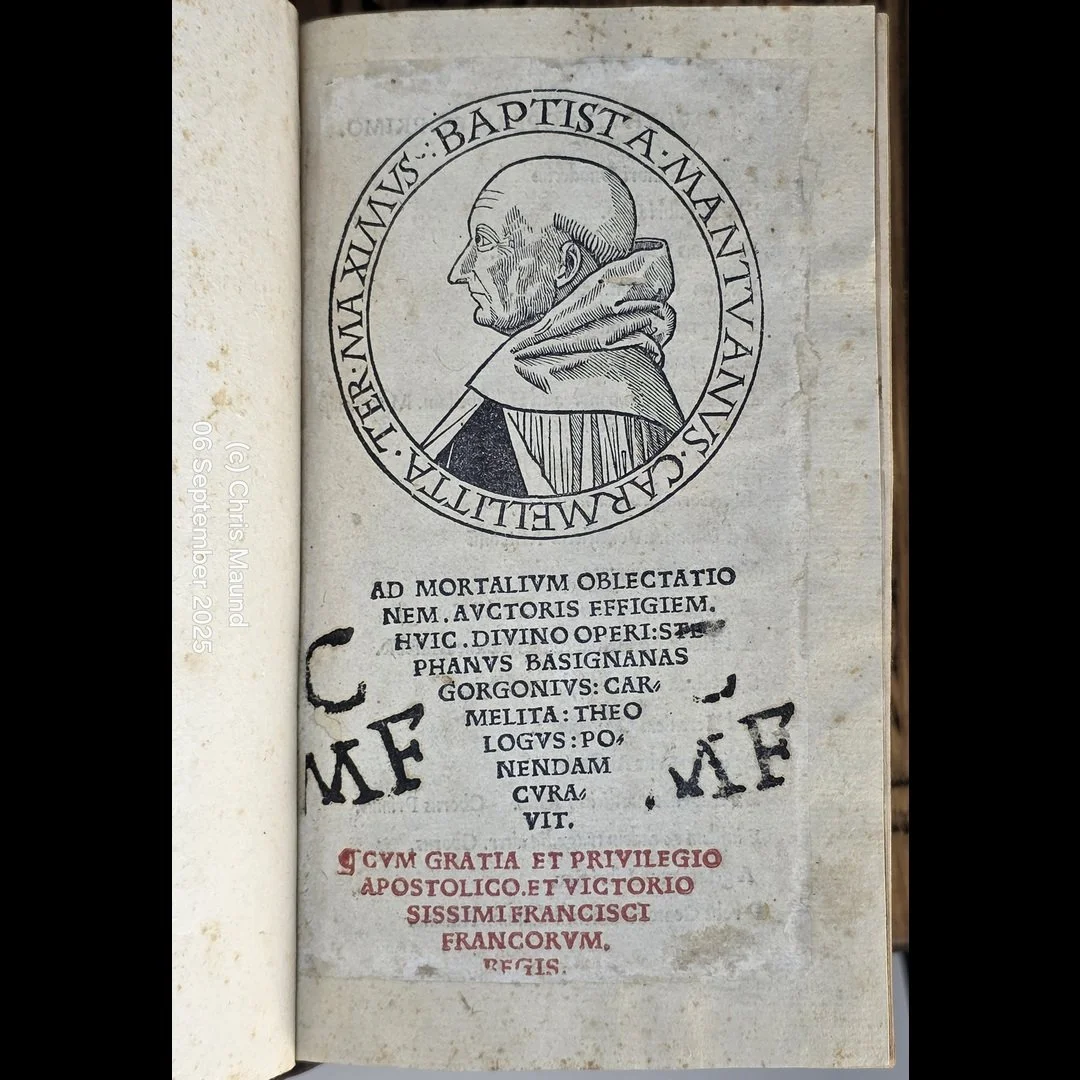 Image 1 of 34
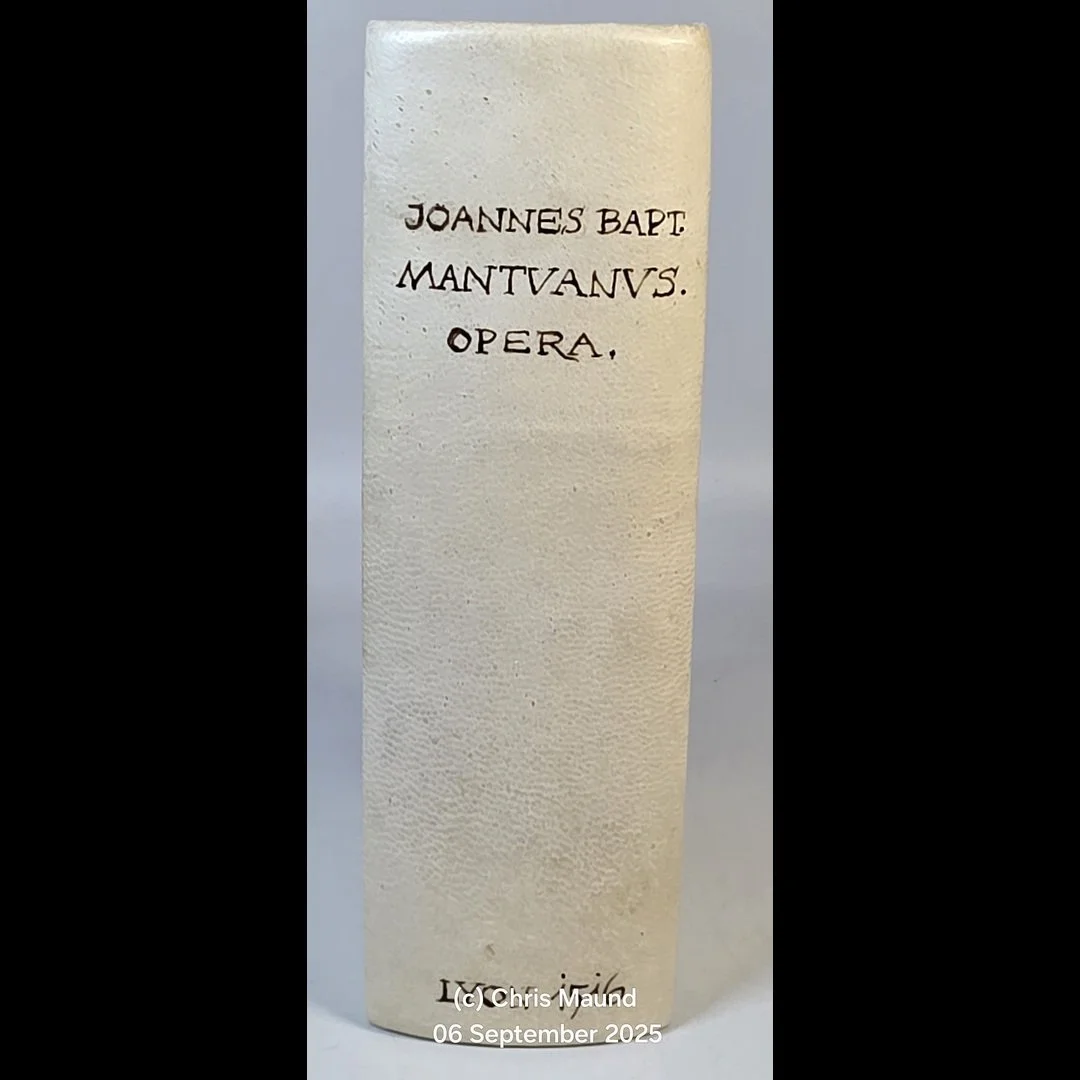 Image 2 of 34
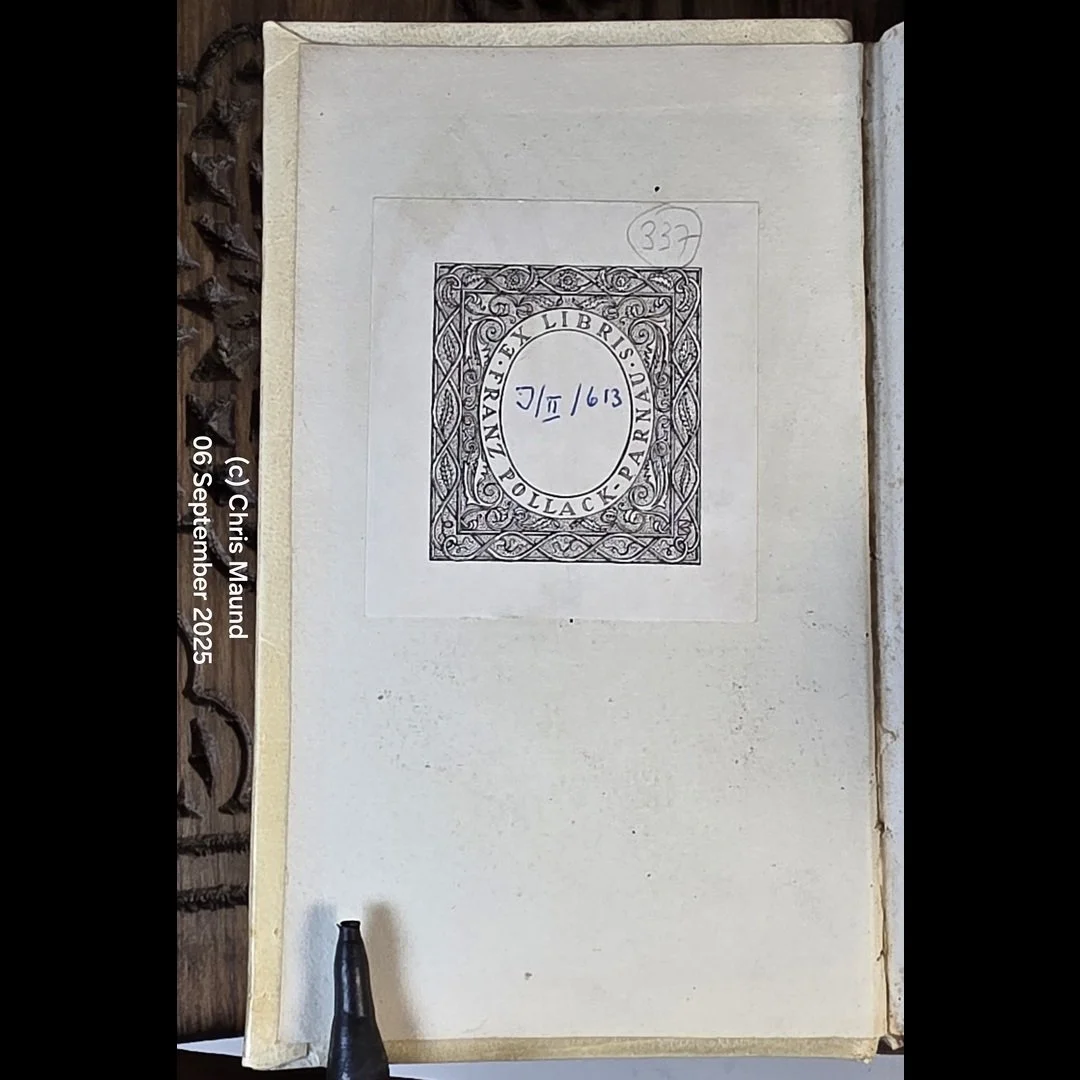 Image 3 of 34
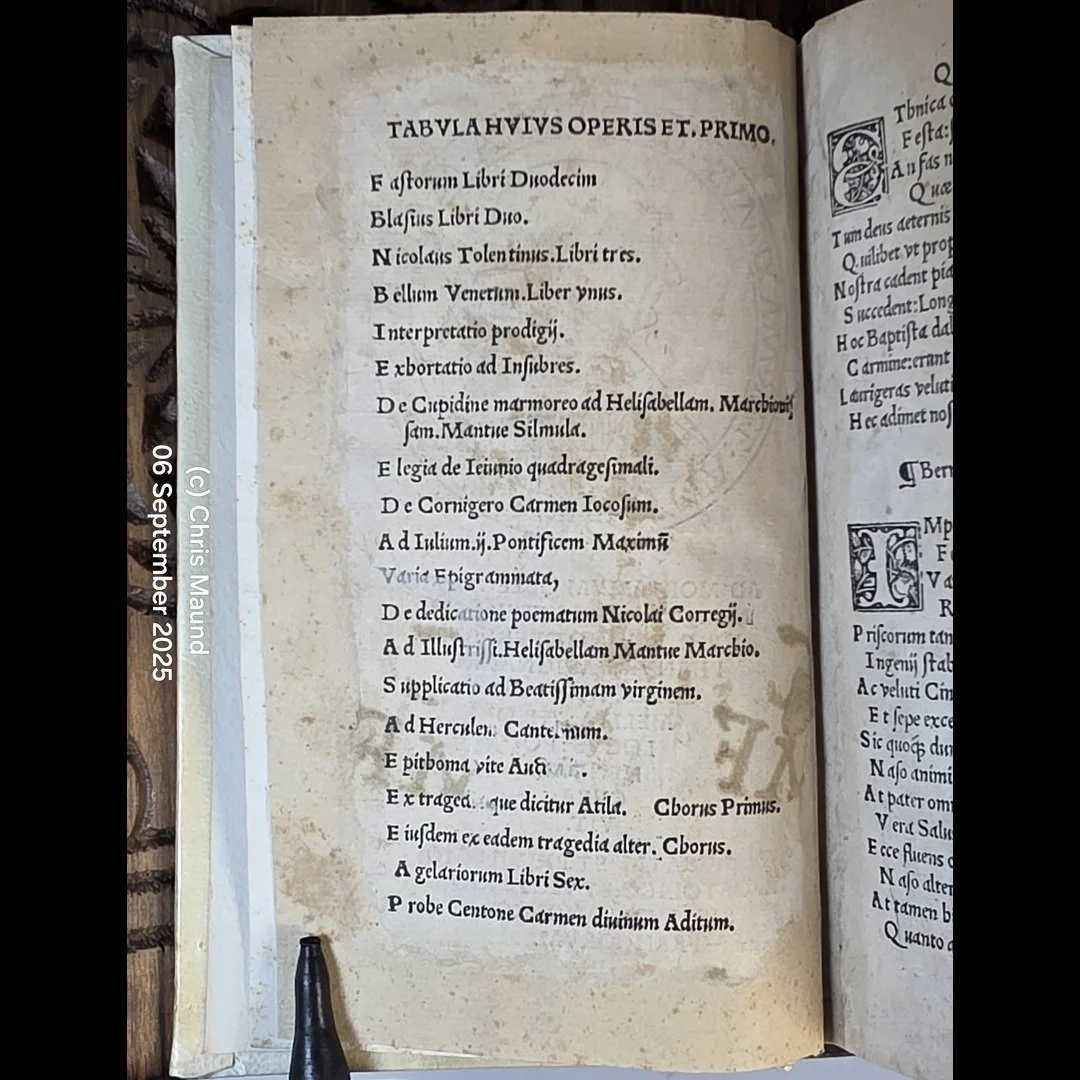 Image 4 of 34
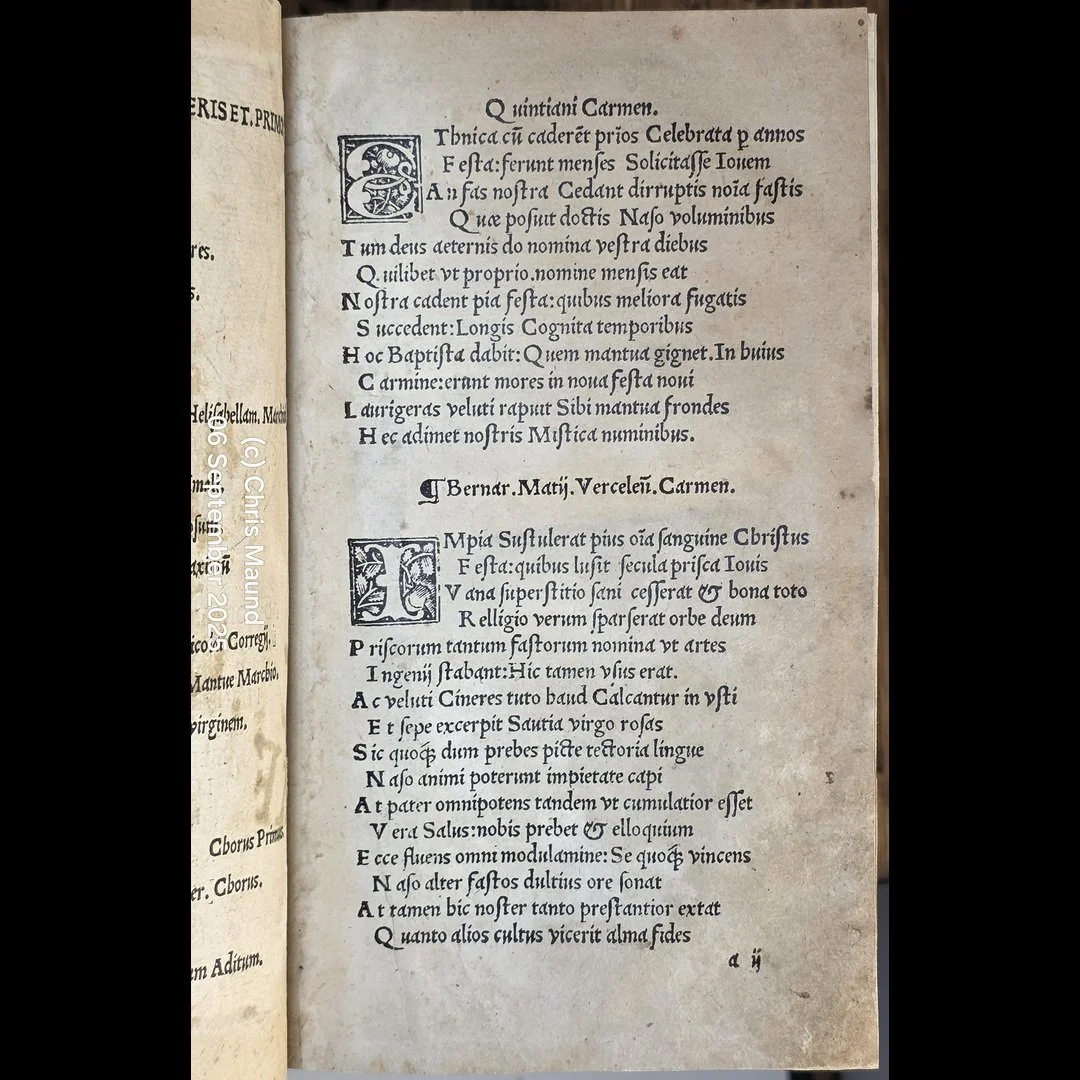 Image 5 of 34
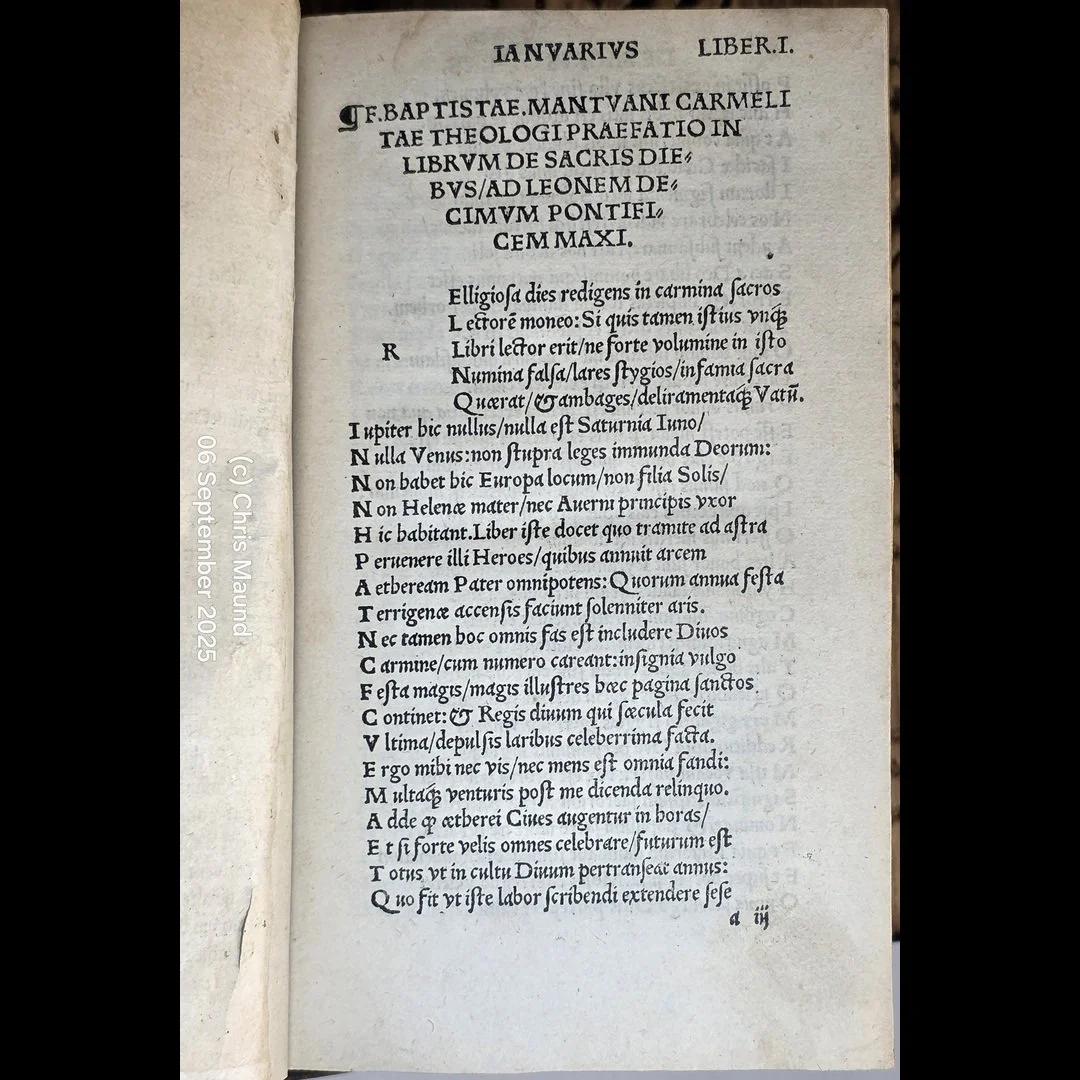 Image 6 of 34
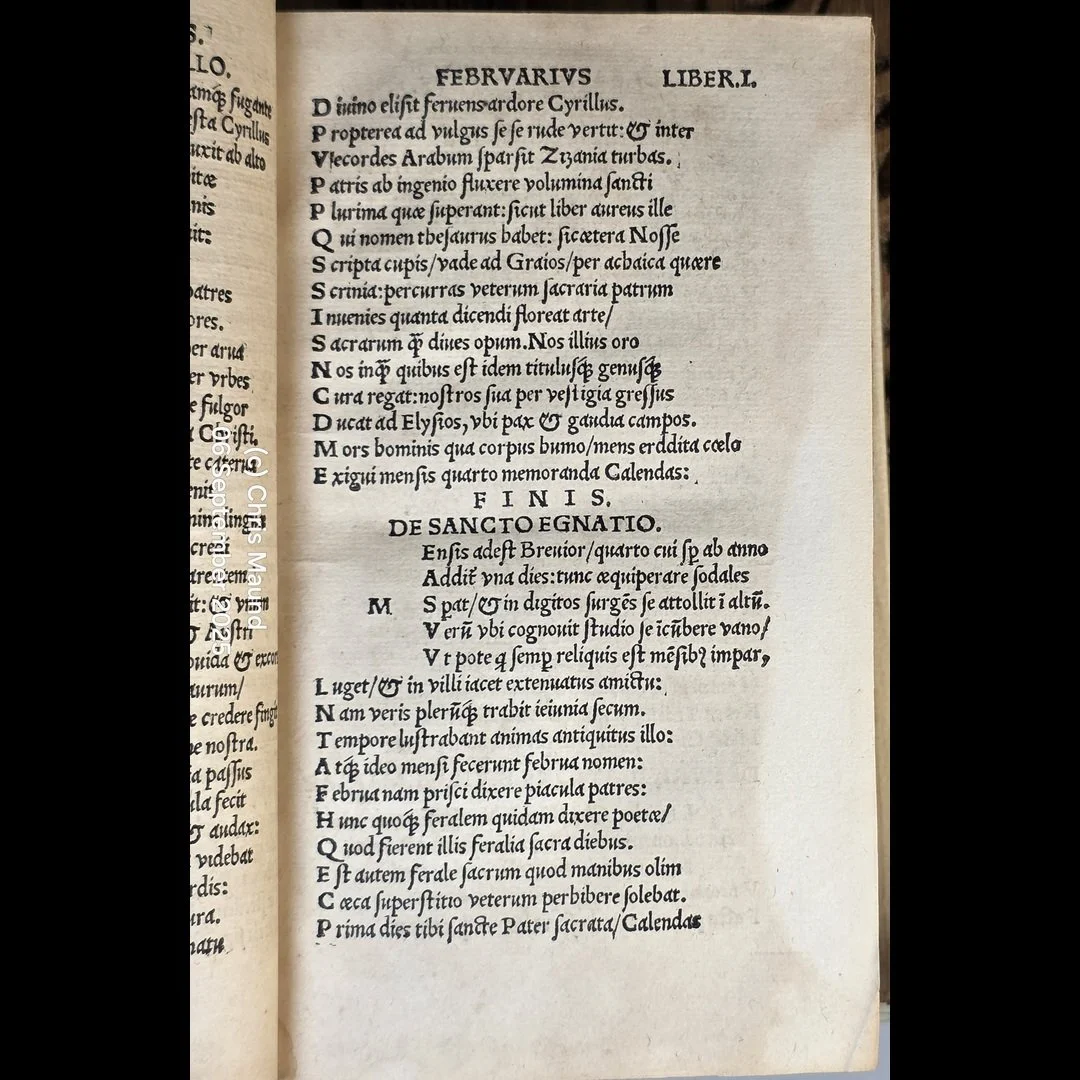 Image 7 of 34
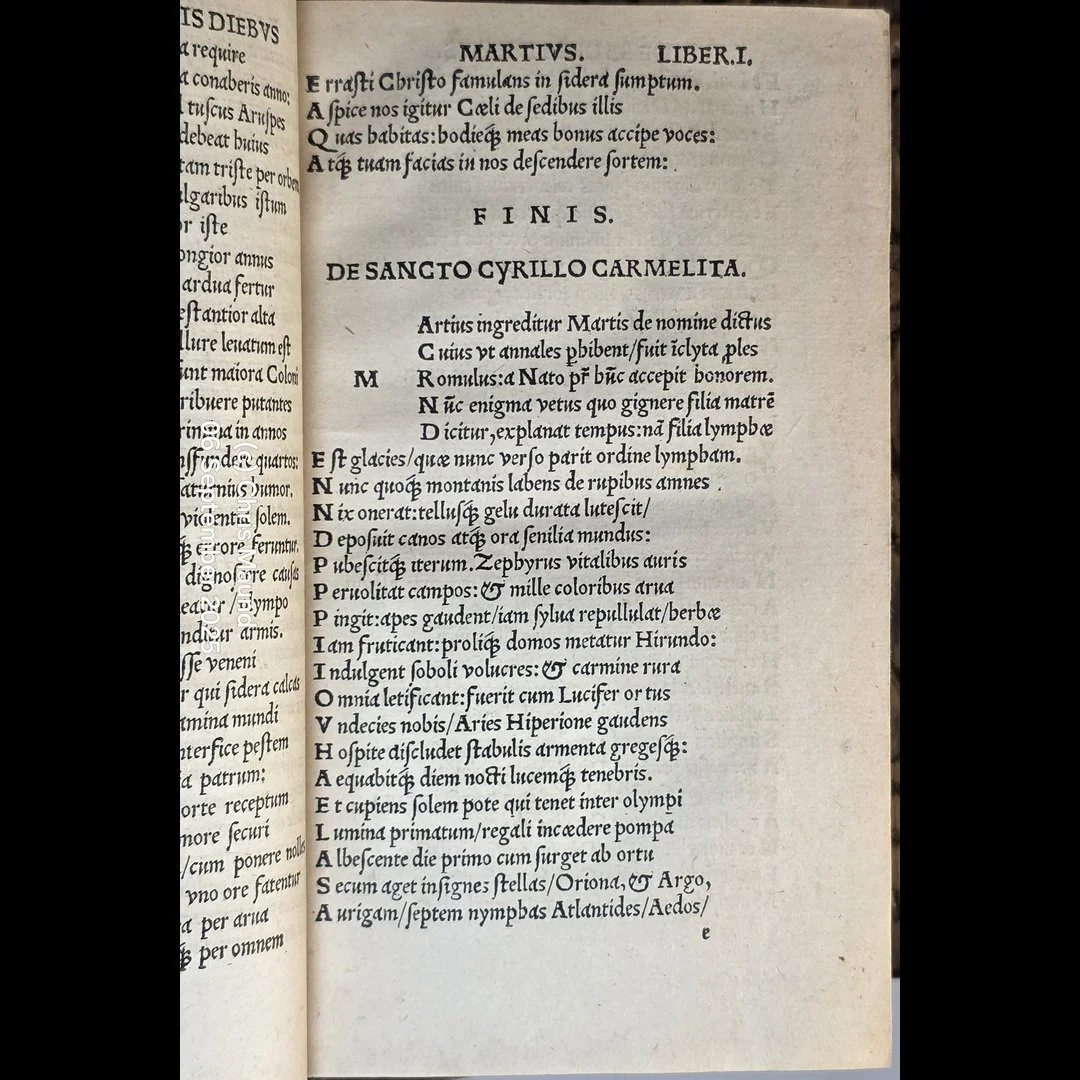 Image 8 of 34
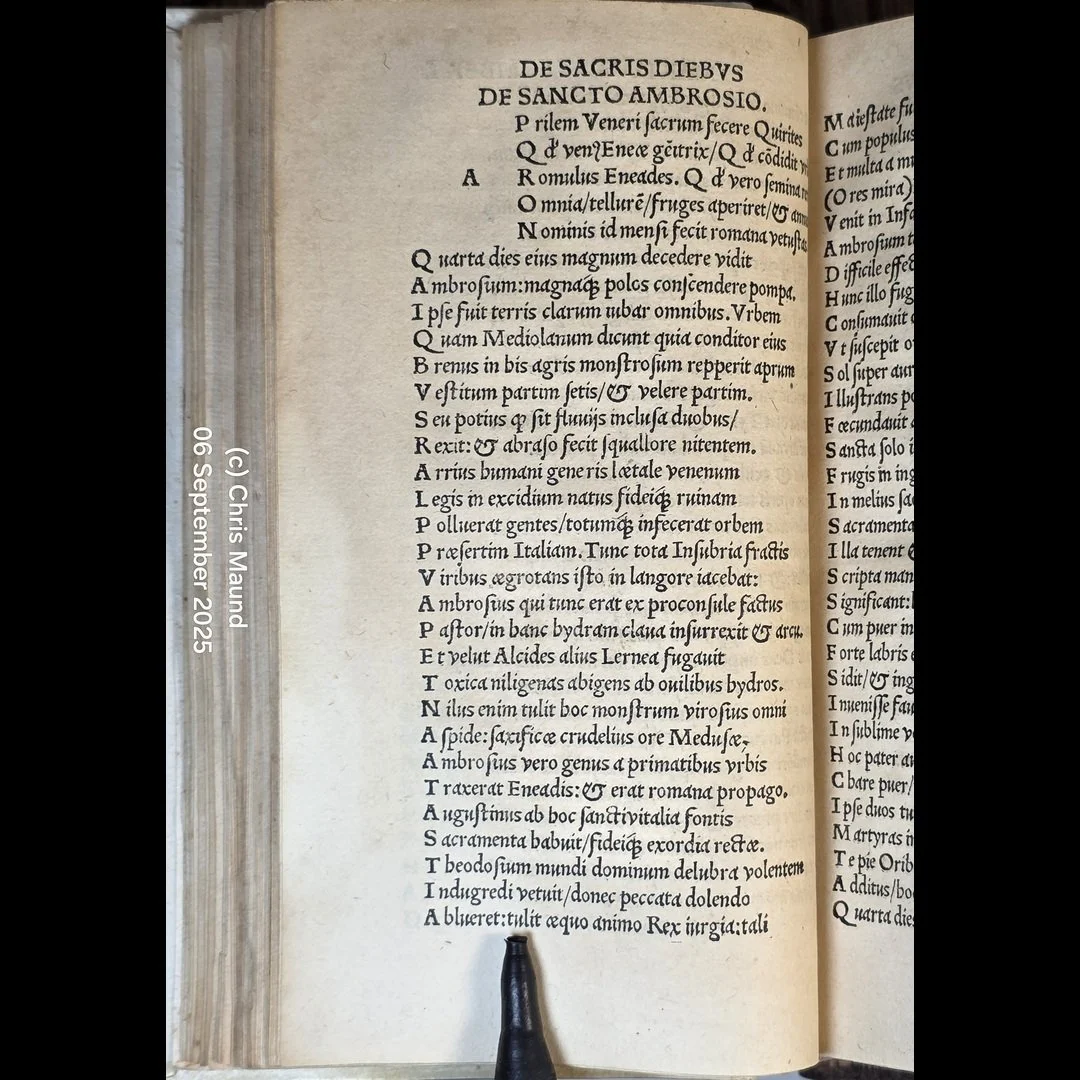 Image 9 of 34
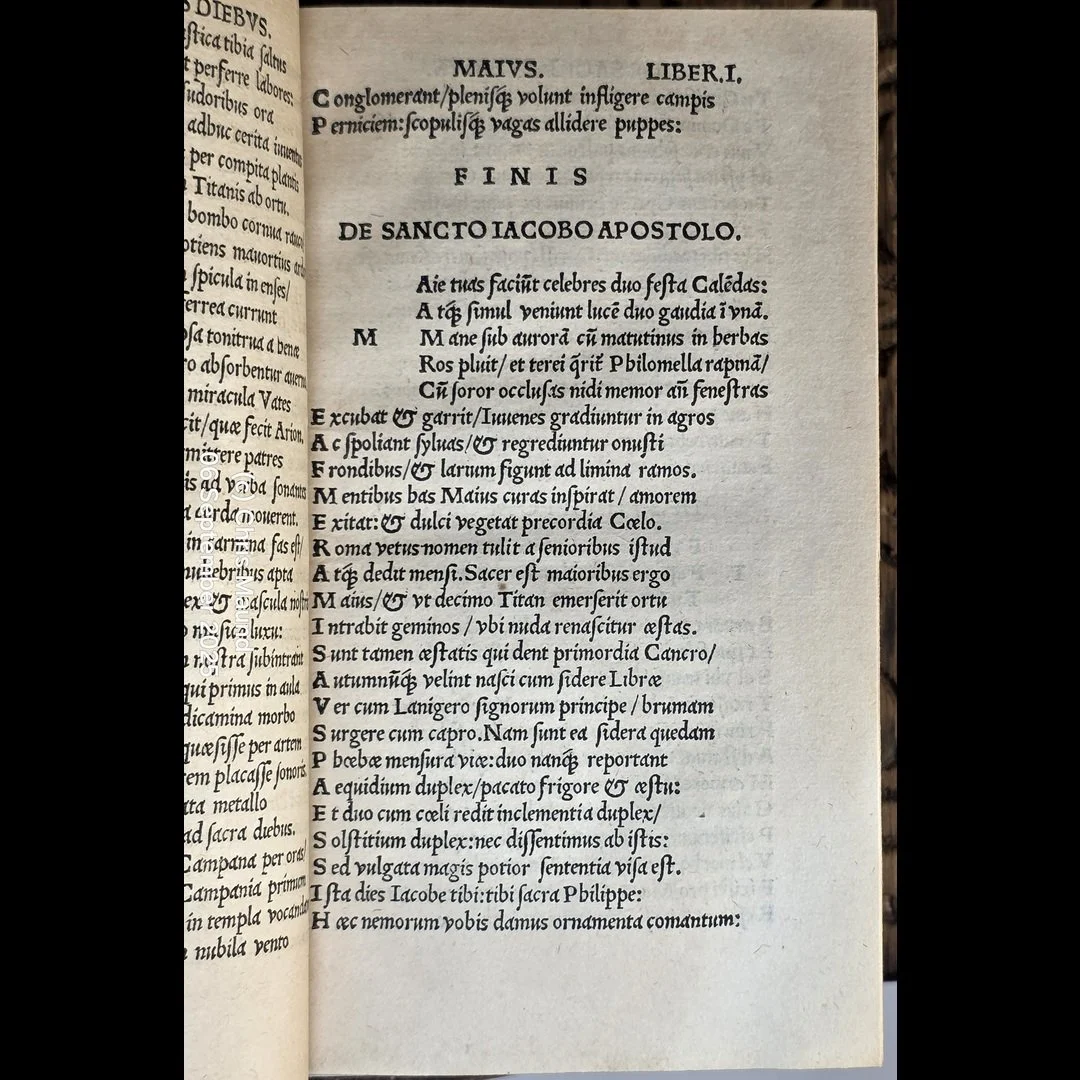 Image 10 of 34
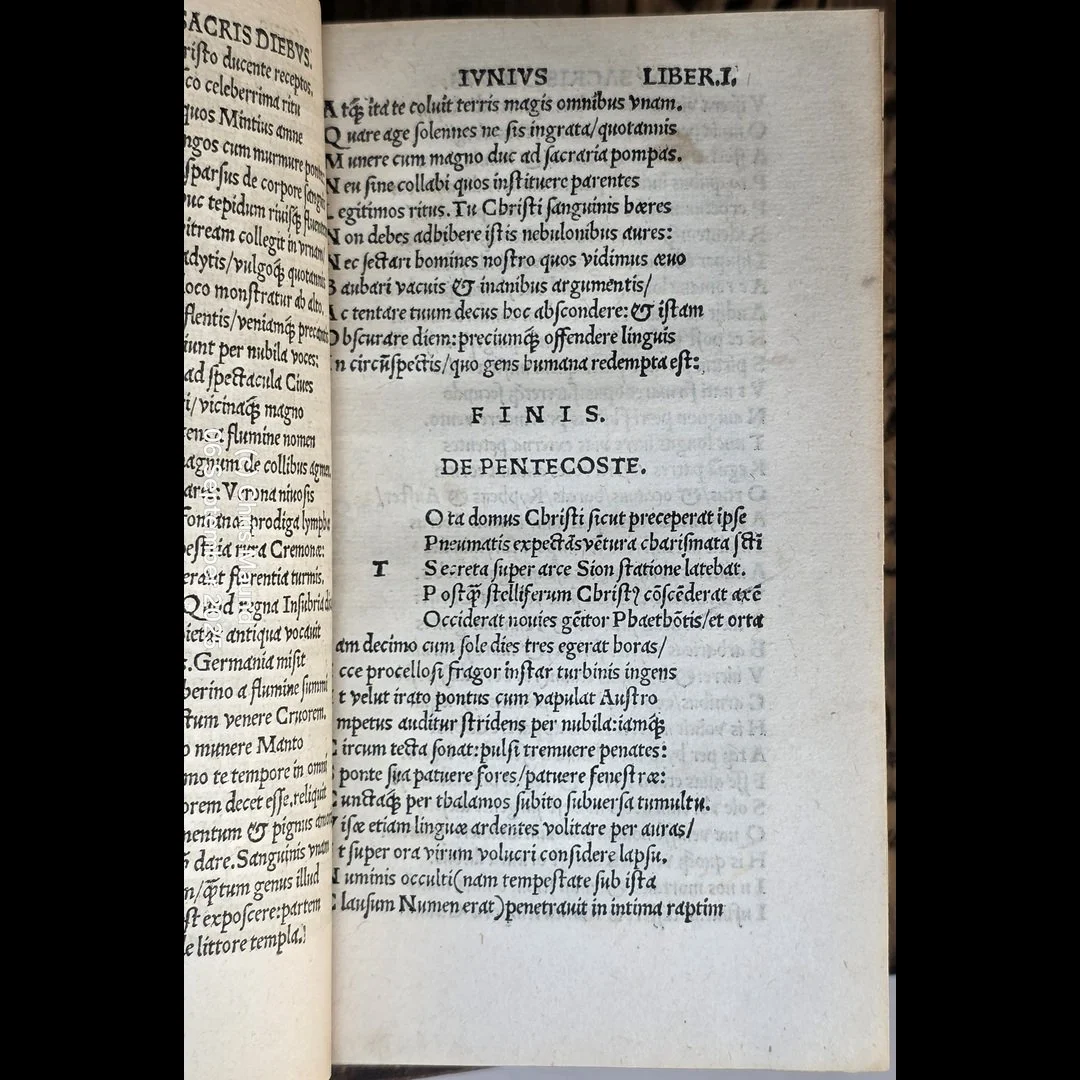 Image 11 of 34
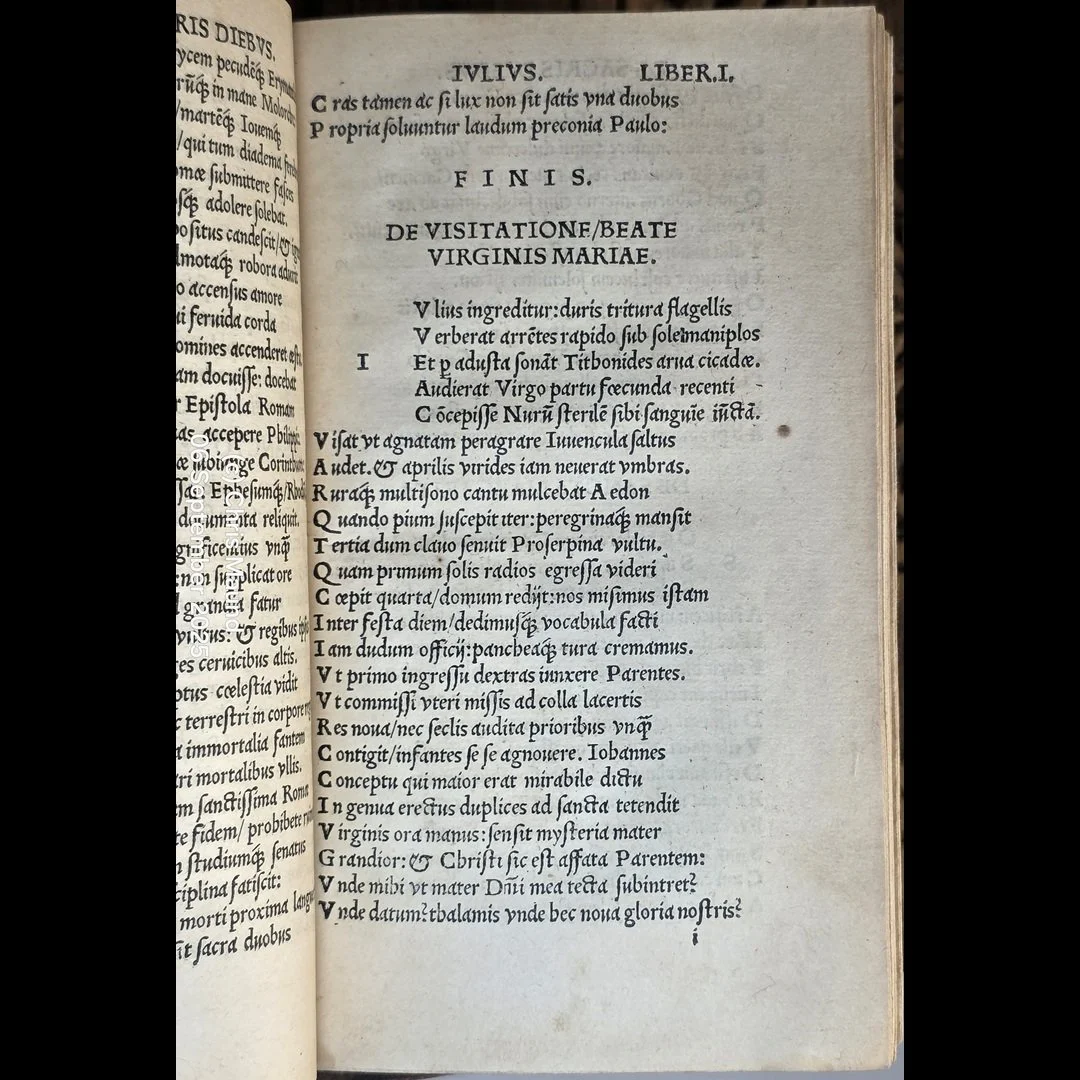 Image 12 of 34
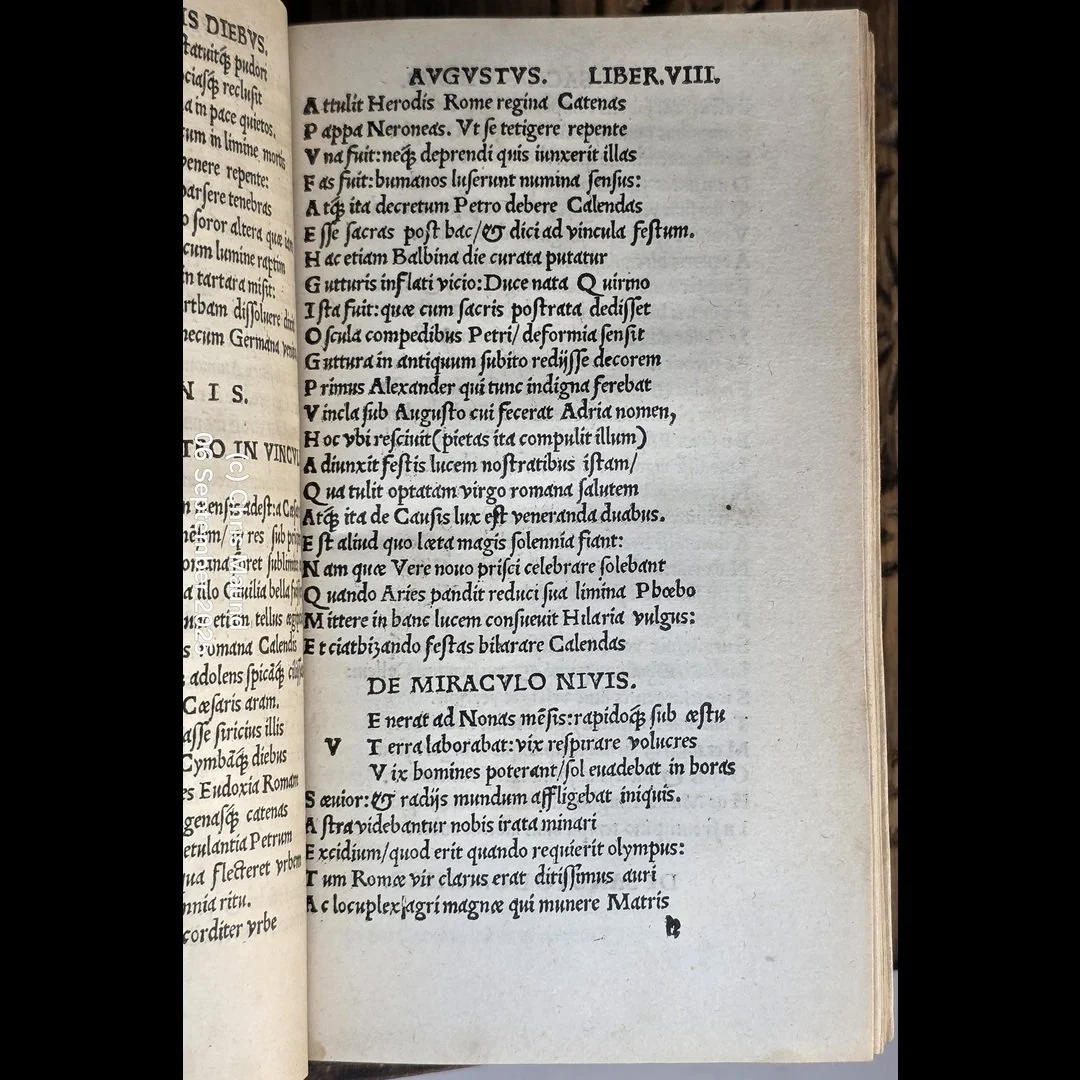 Image 13 of 34
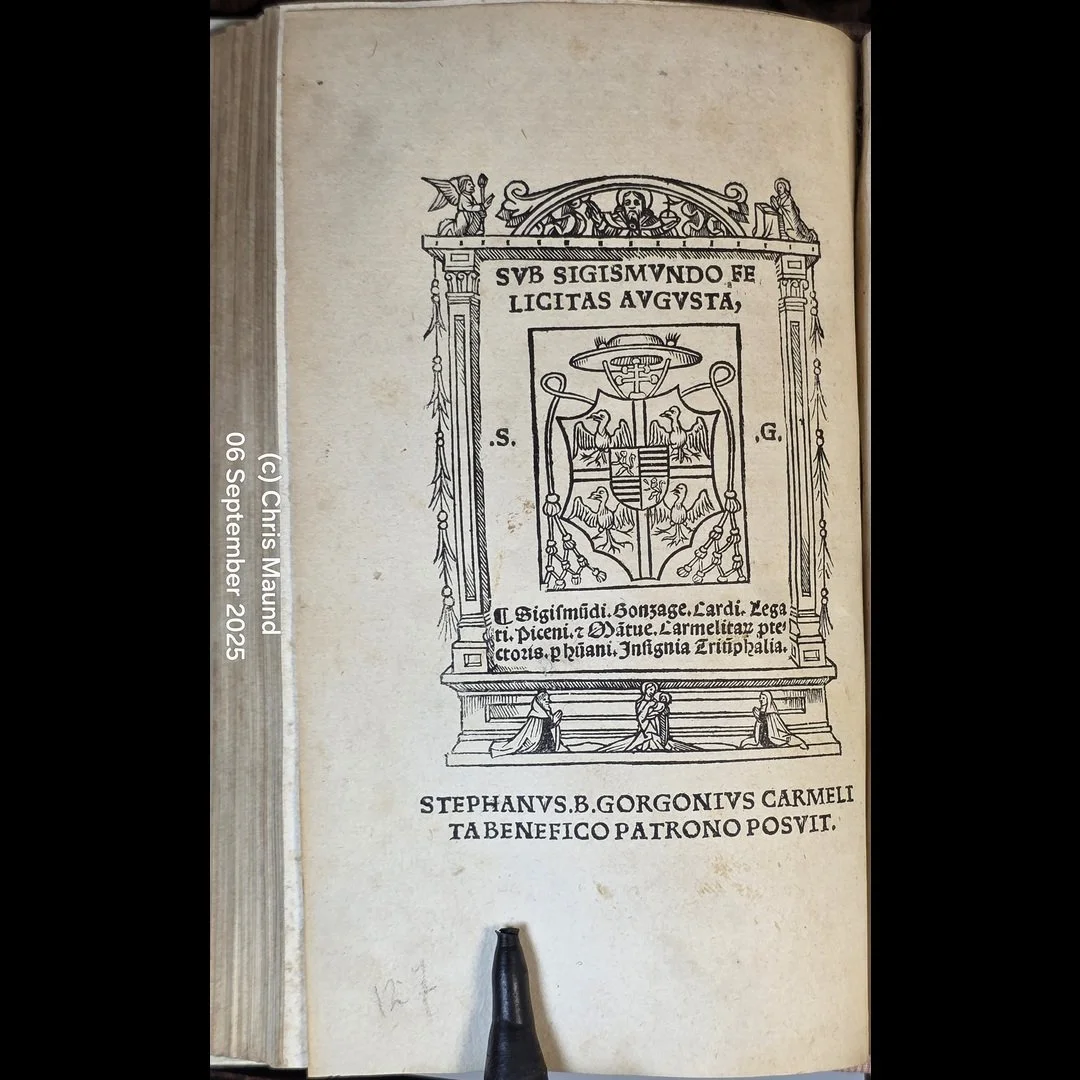 Image 14 of 34
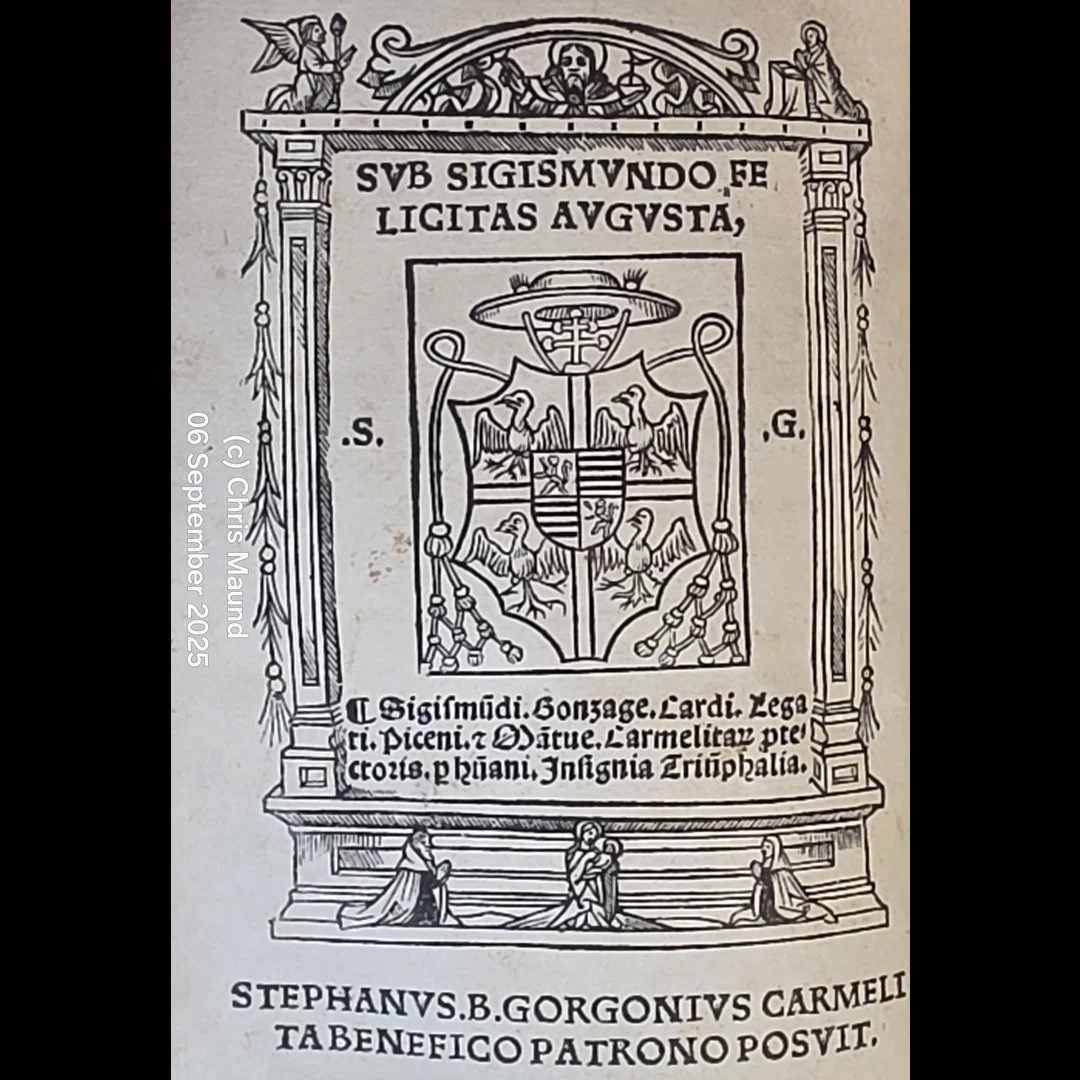 Image 15 of 34
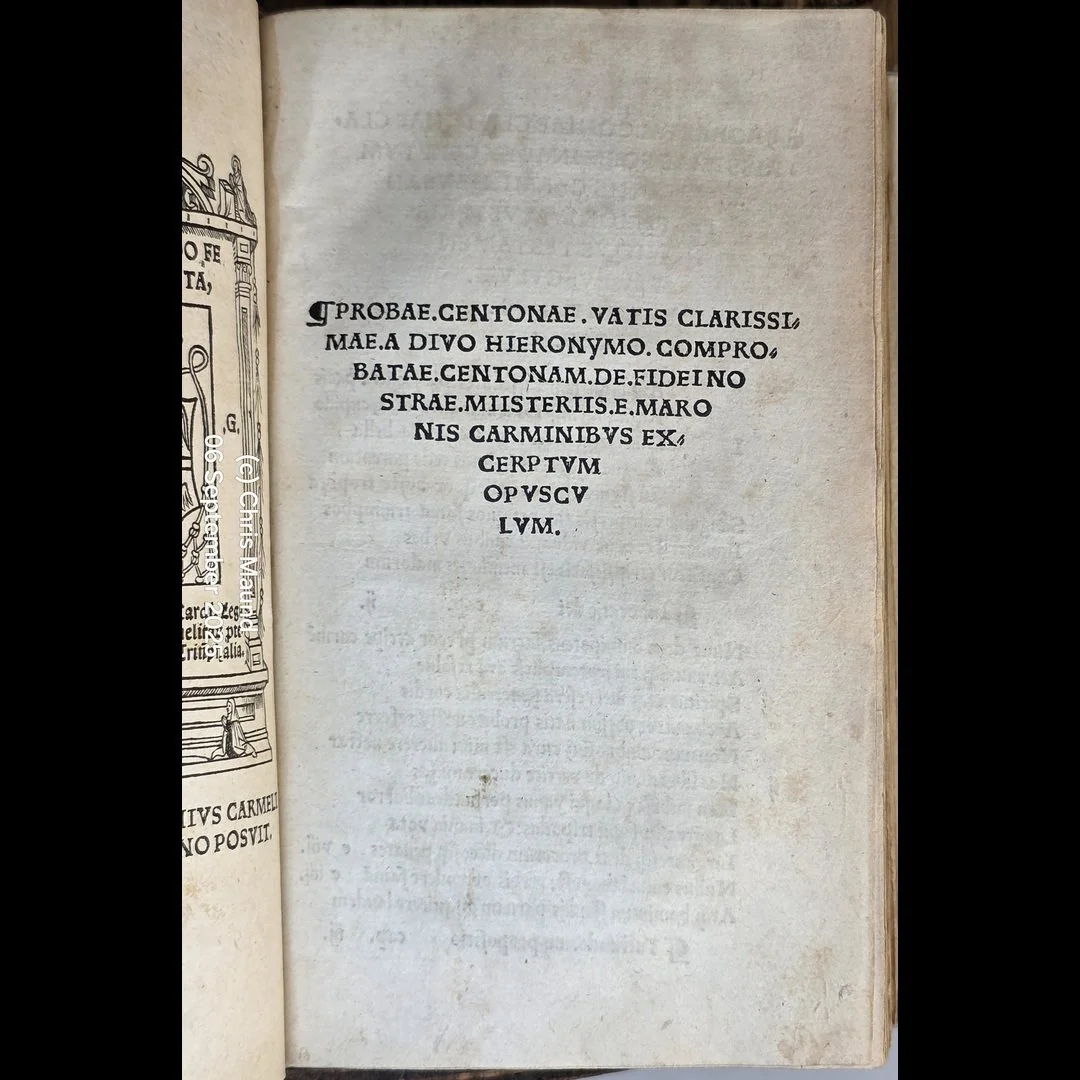 Image 16 of 34
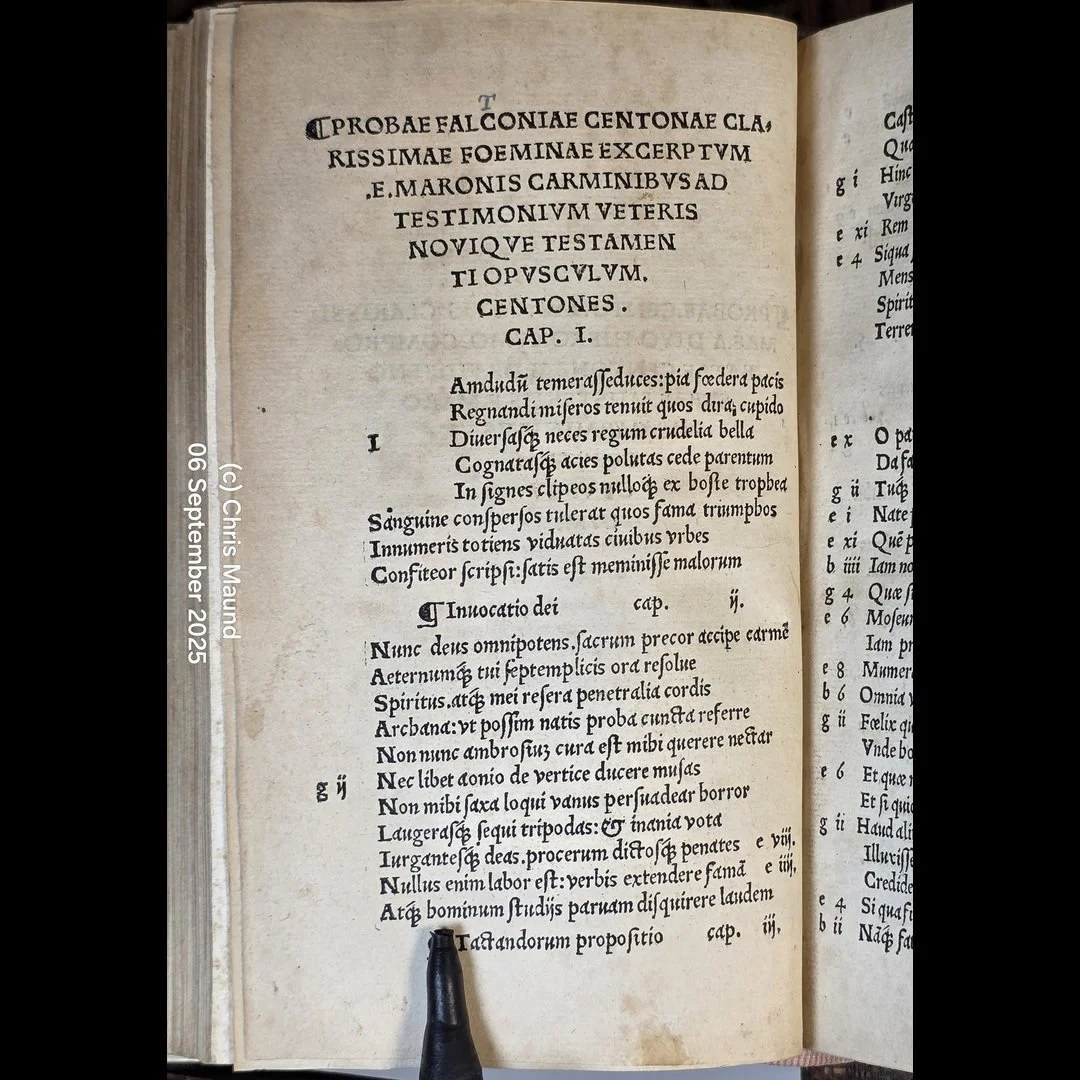 Image 17 of 34
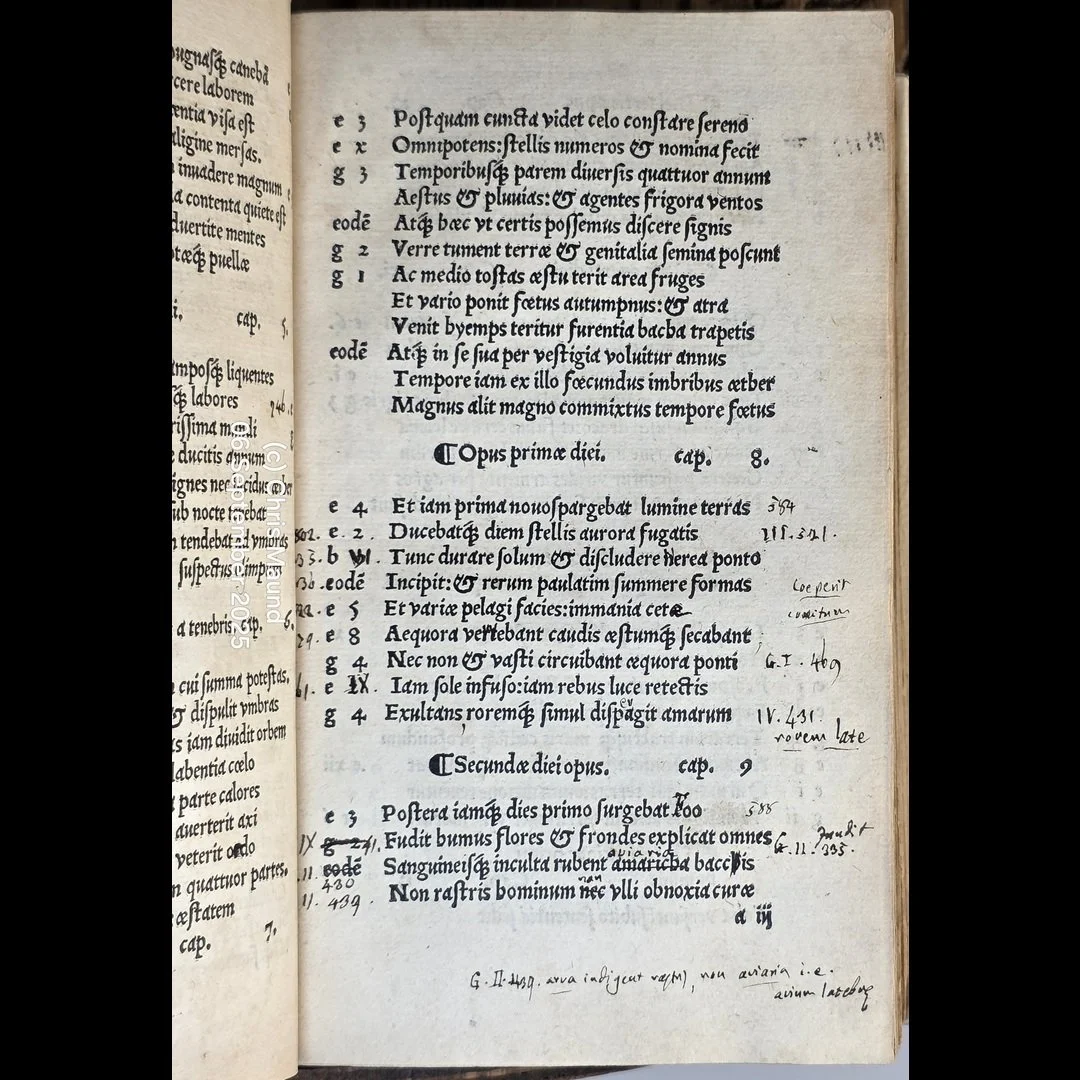 Image 18 of 34
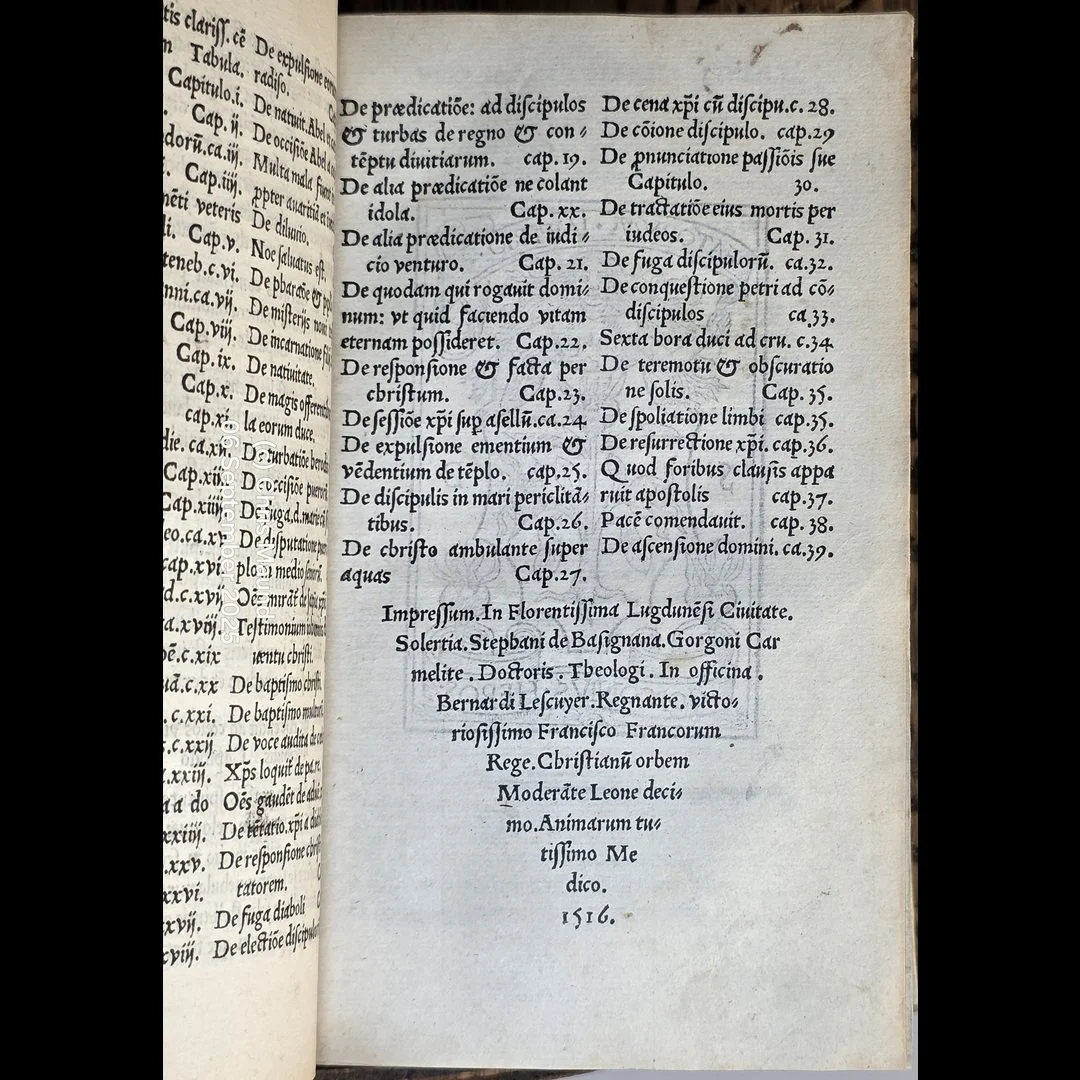 Image 19 of 34
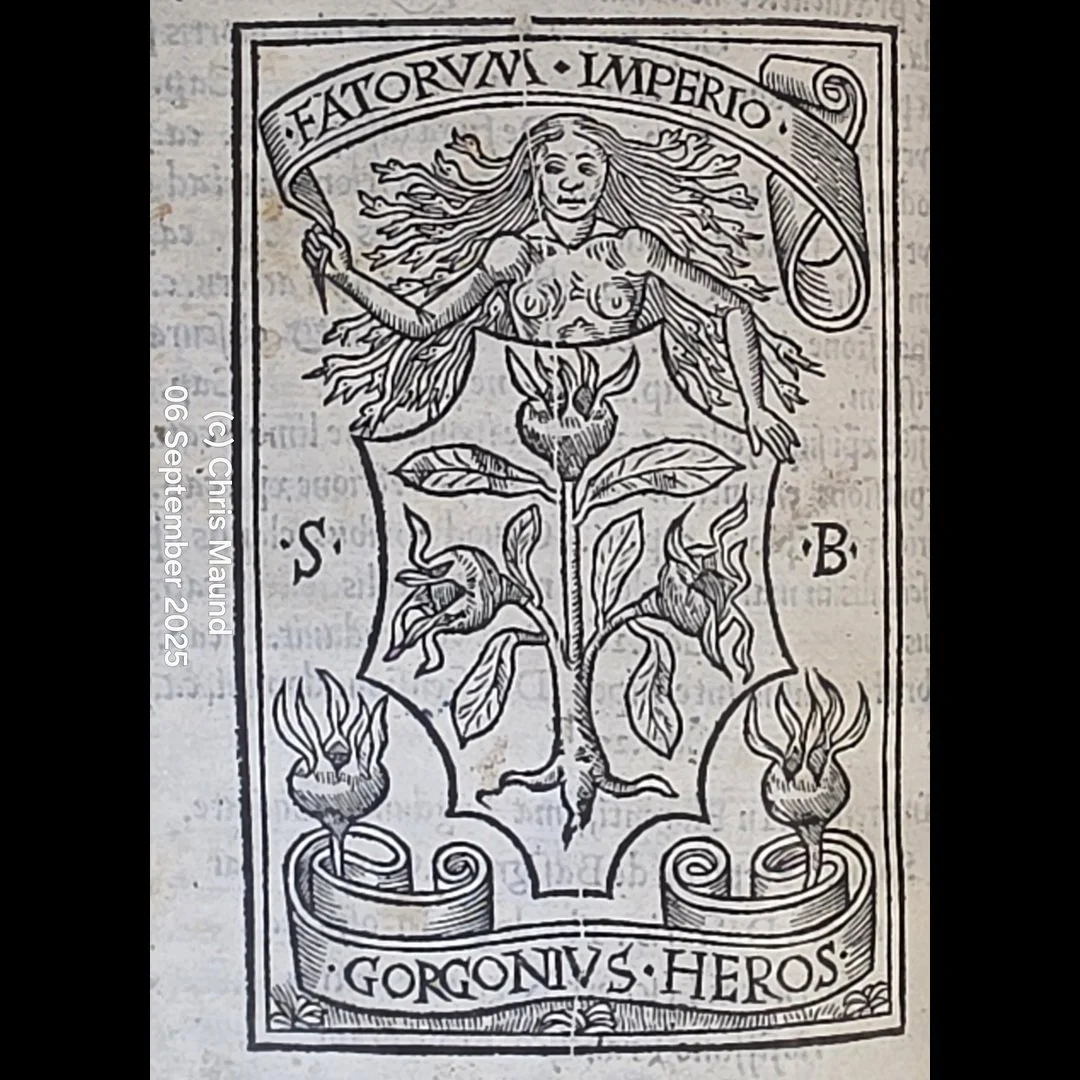 Image 20 of 34
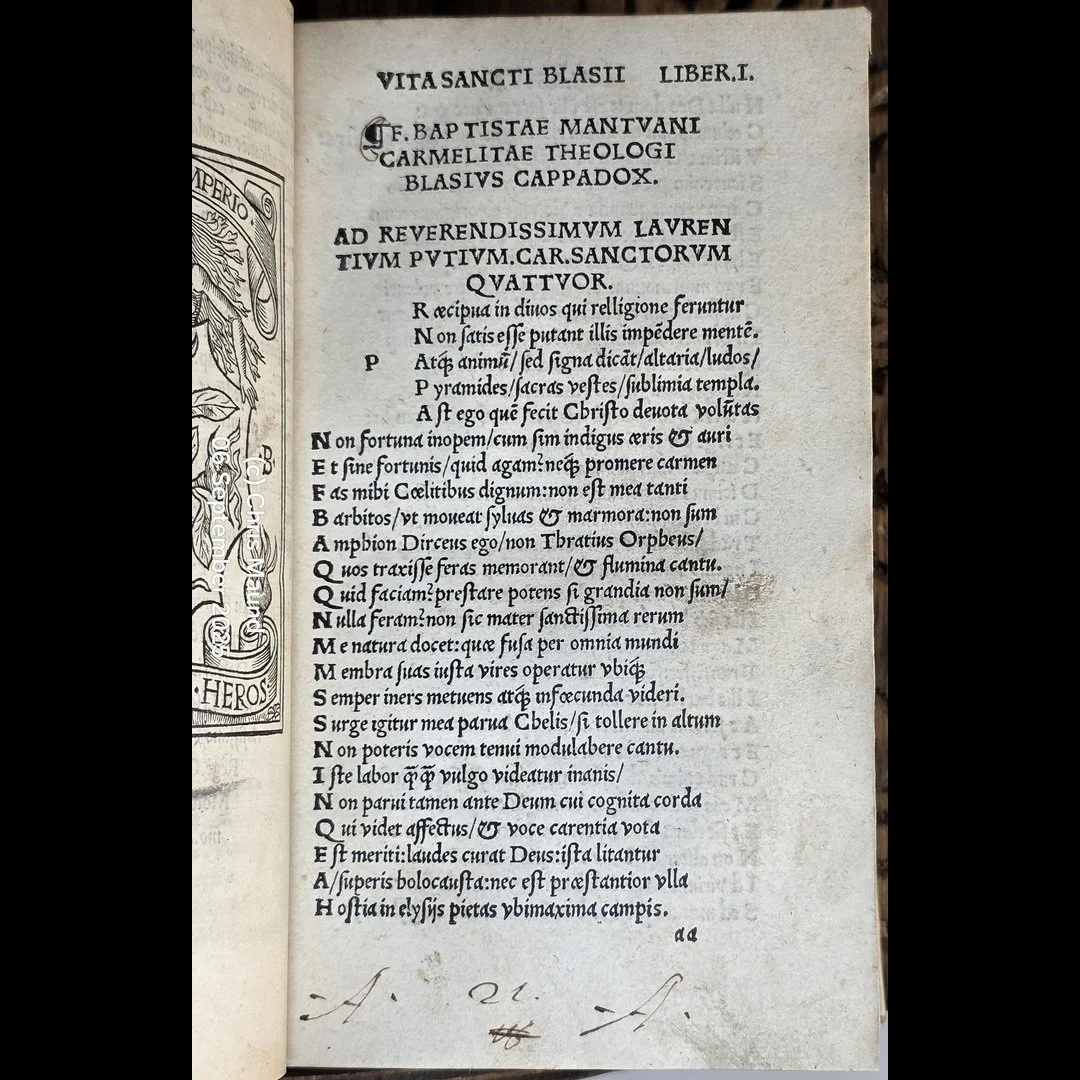 Image 21 of 34
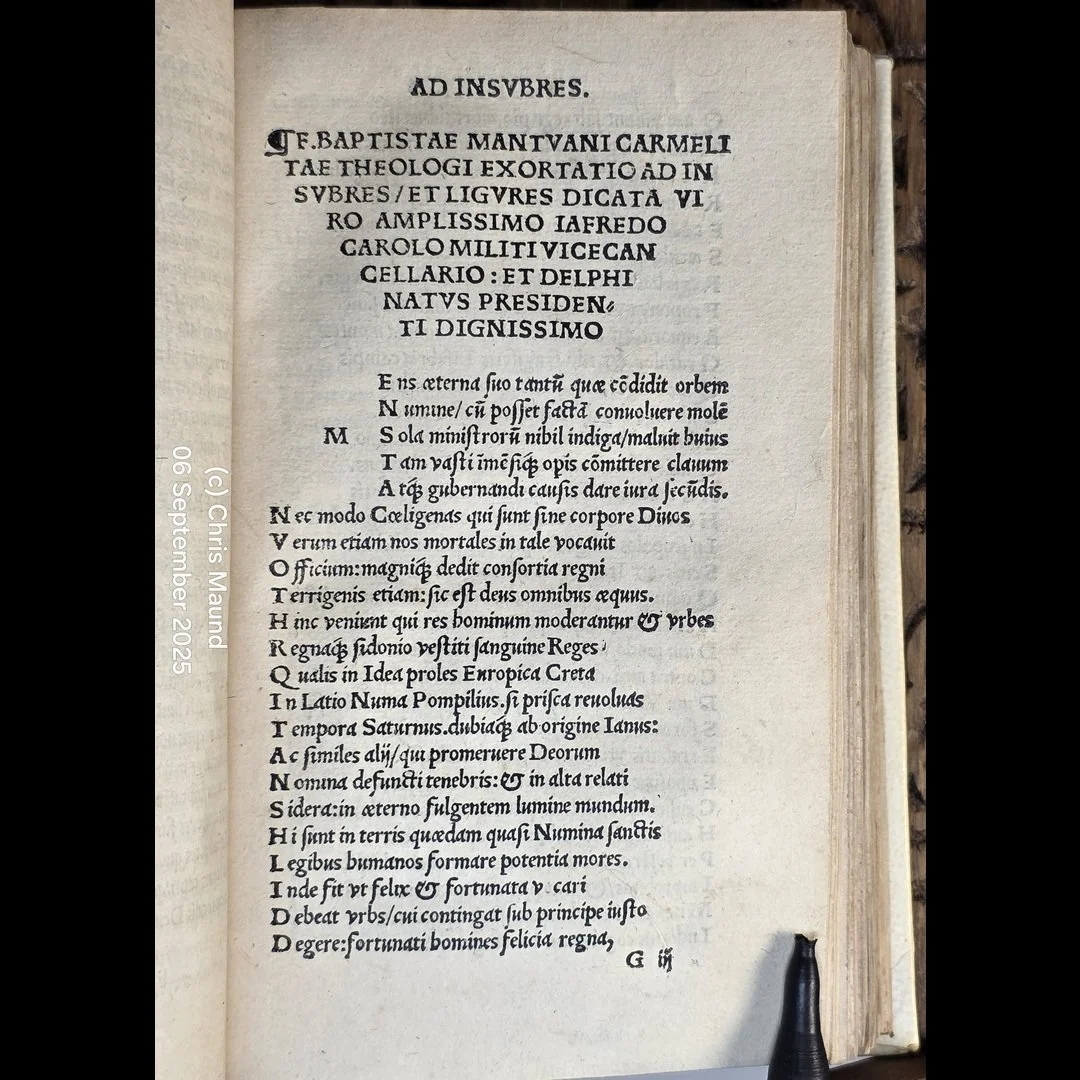 Image 22 of 34
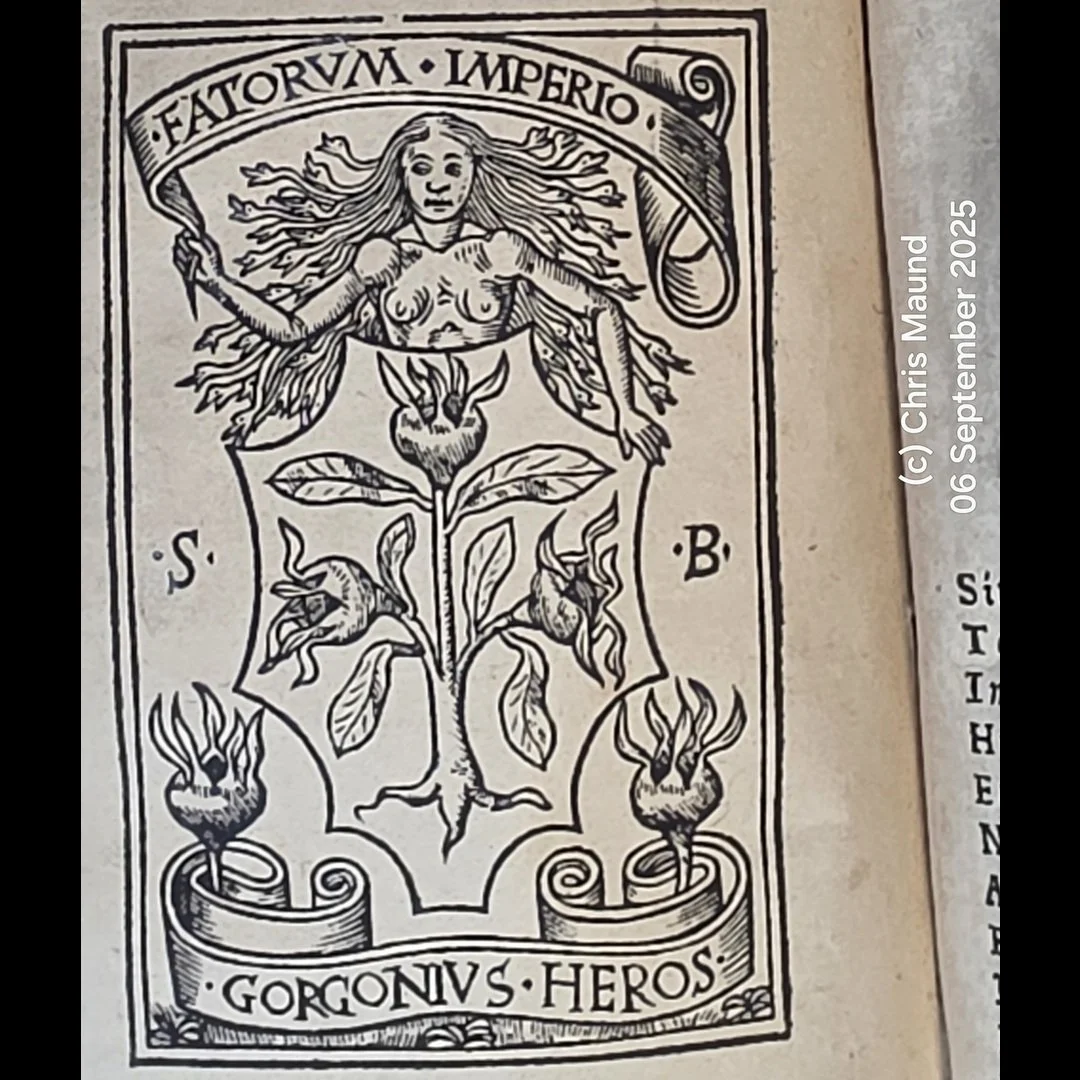 Image 23 of 34
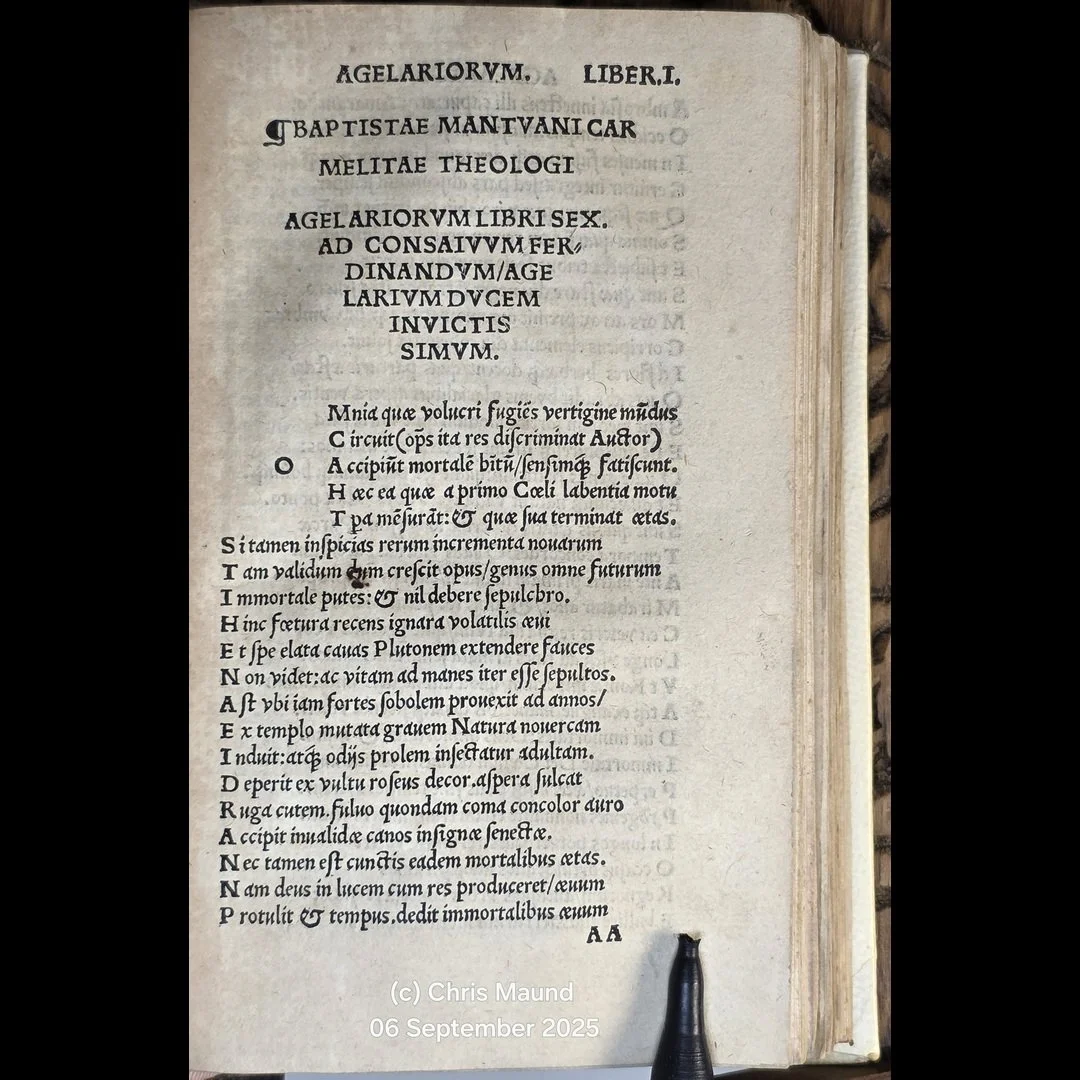 Image 24 of 34
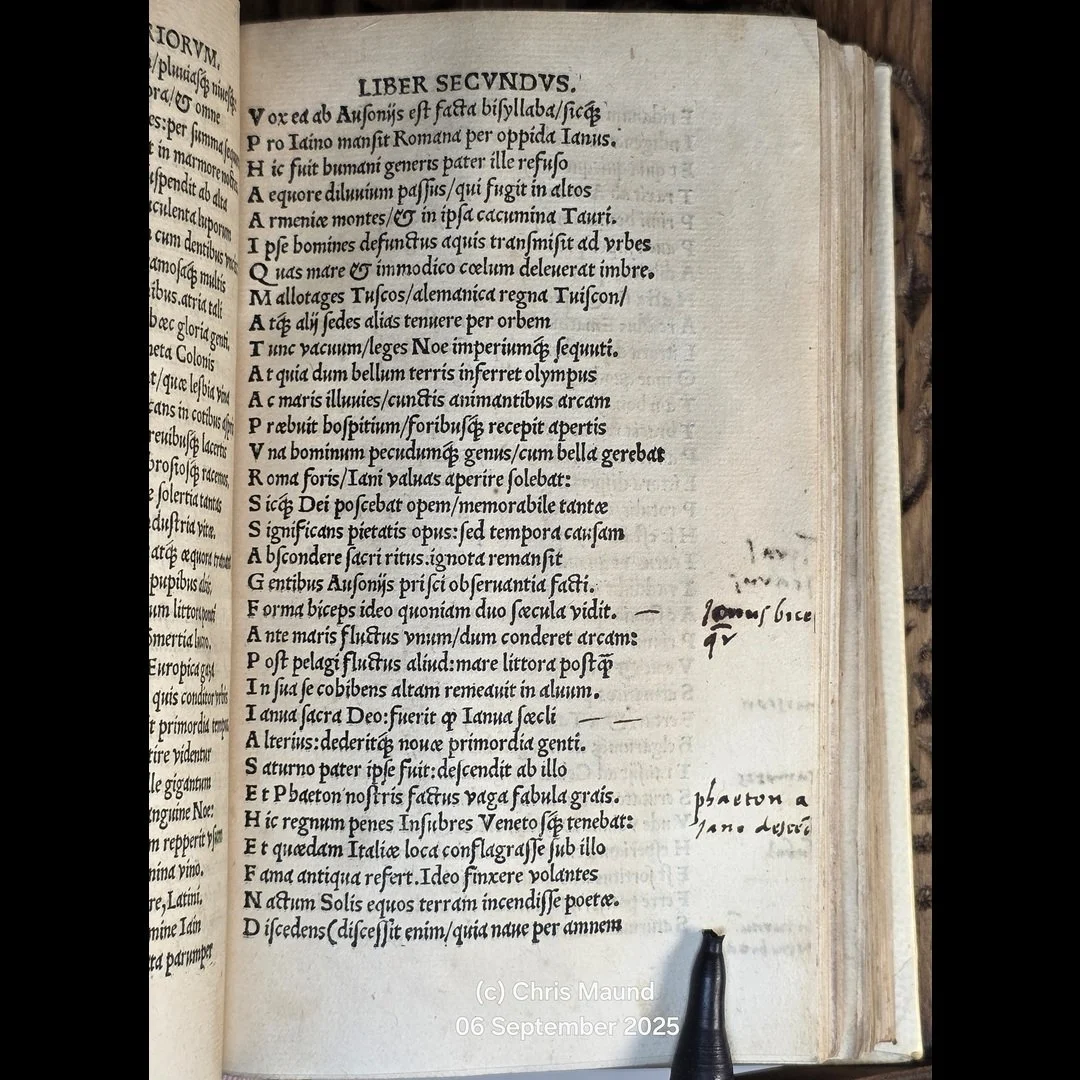 Image 25 of 34
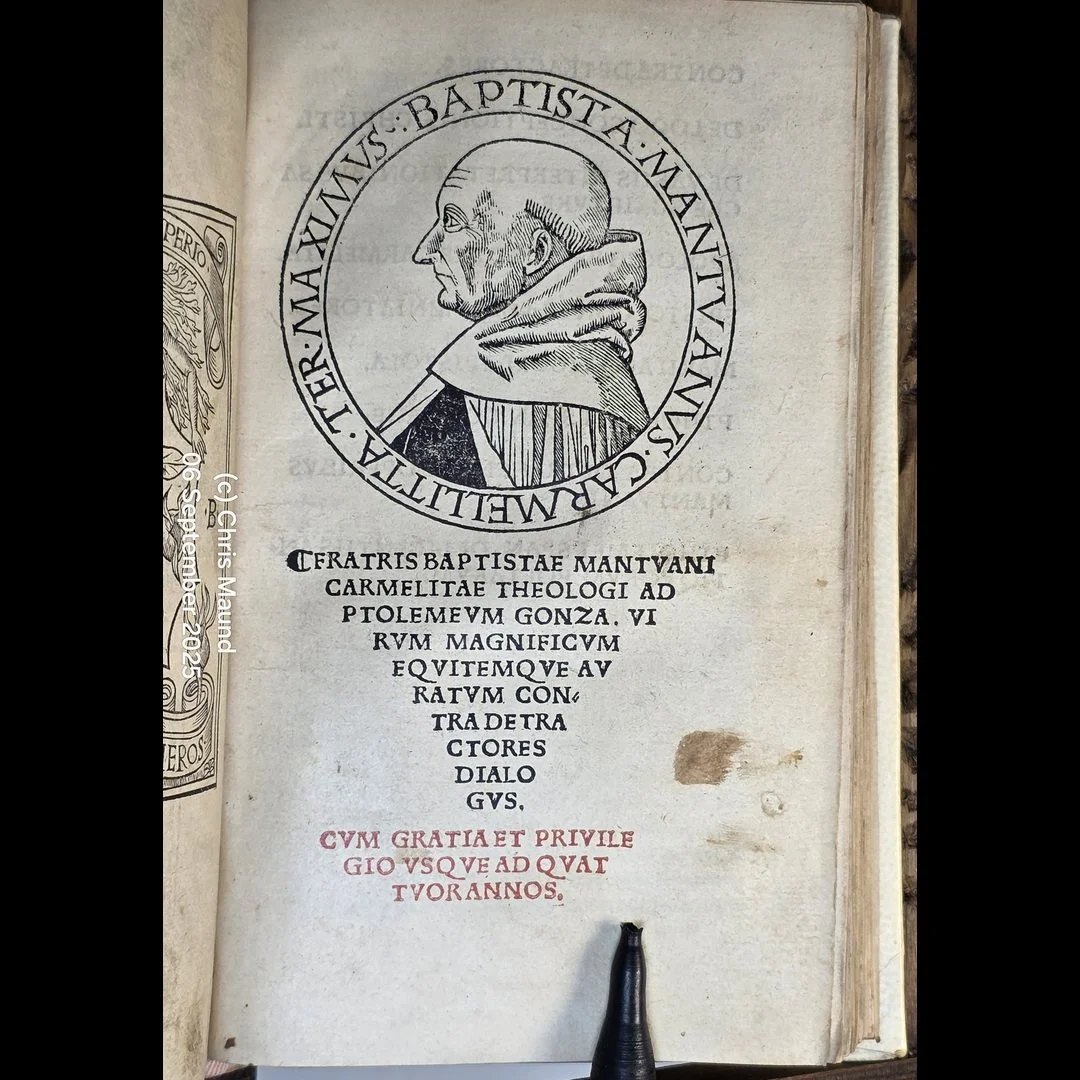 Image 26 of 34
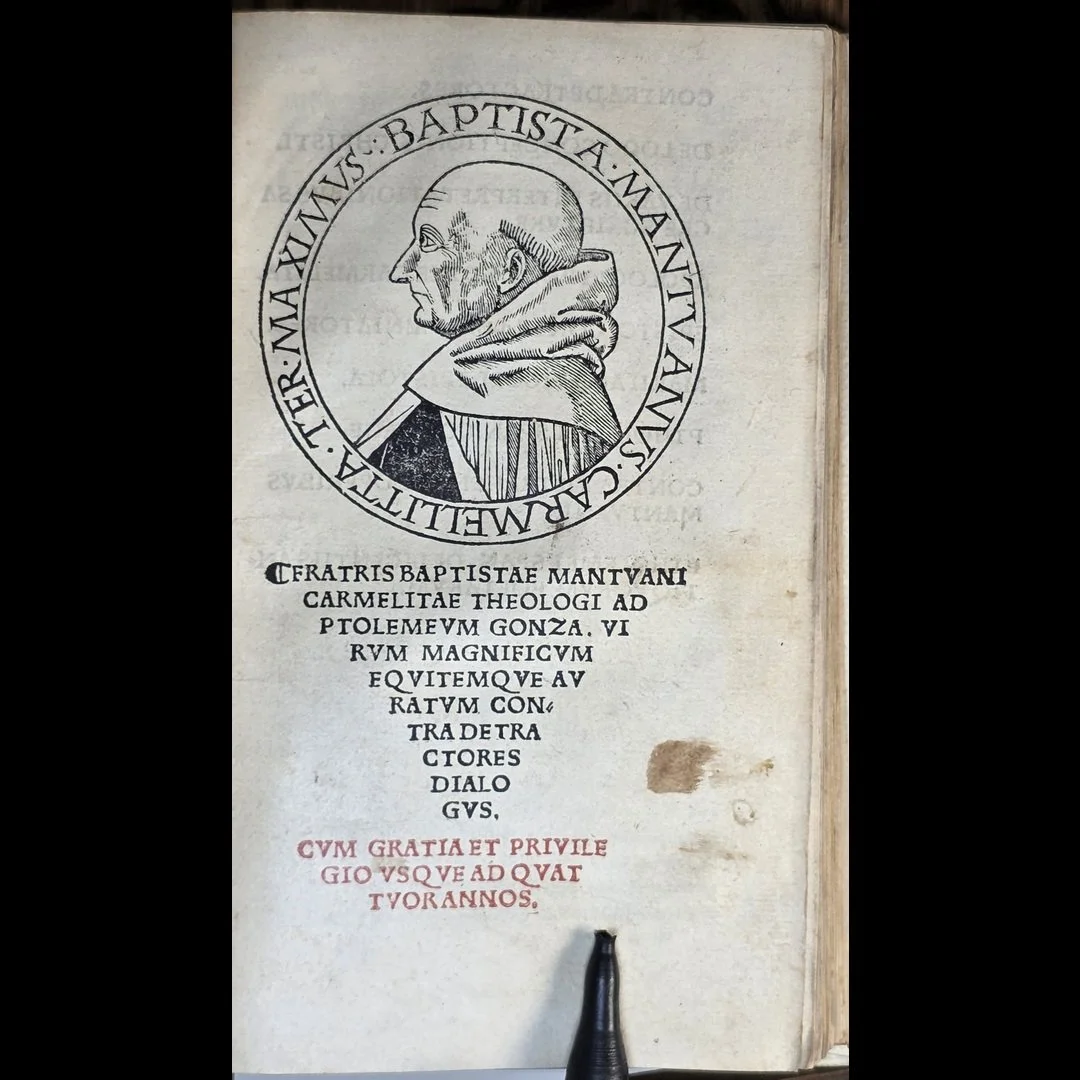 Image 27 of 34
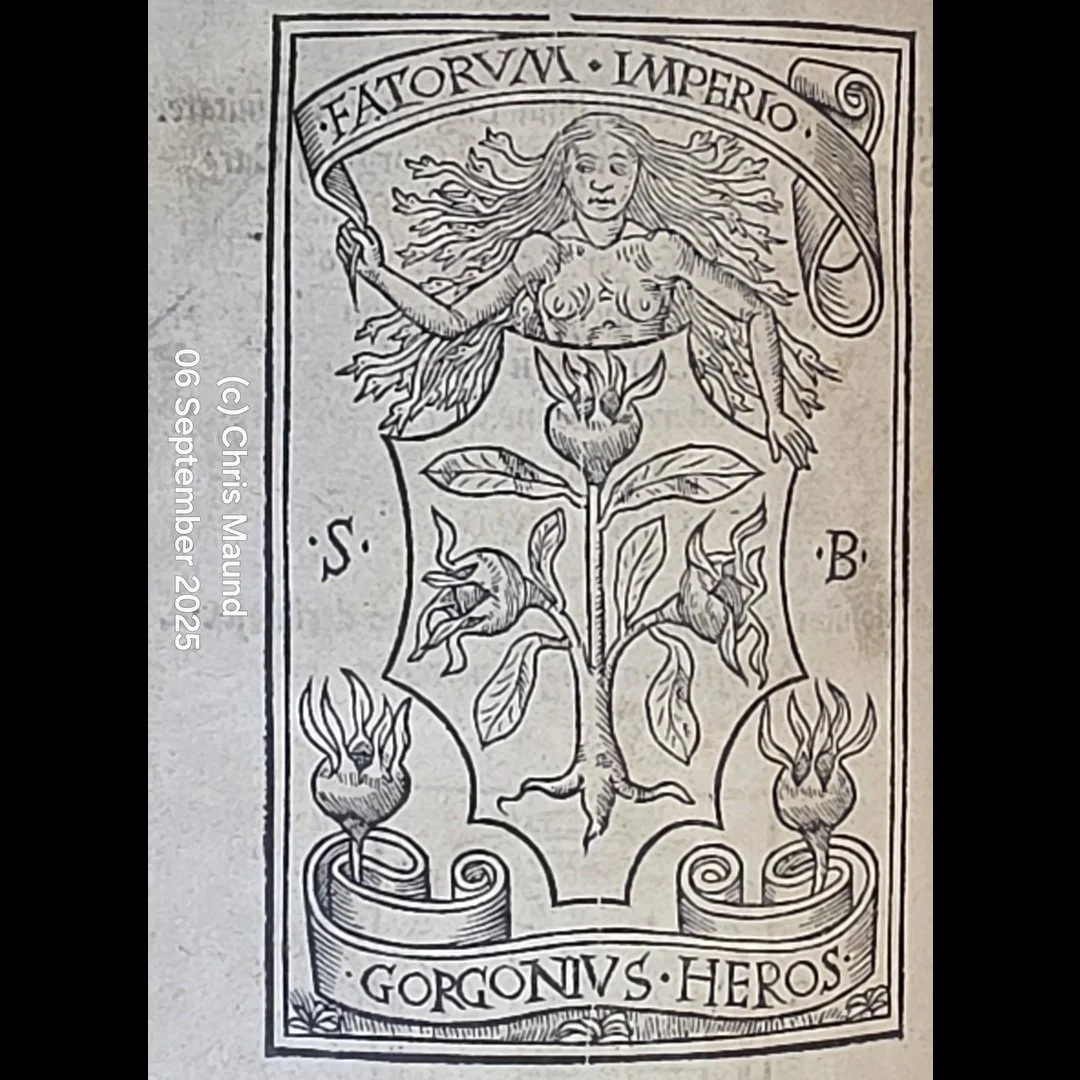 Image 28 of 34
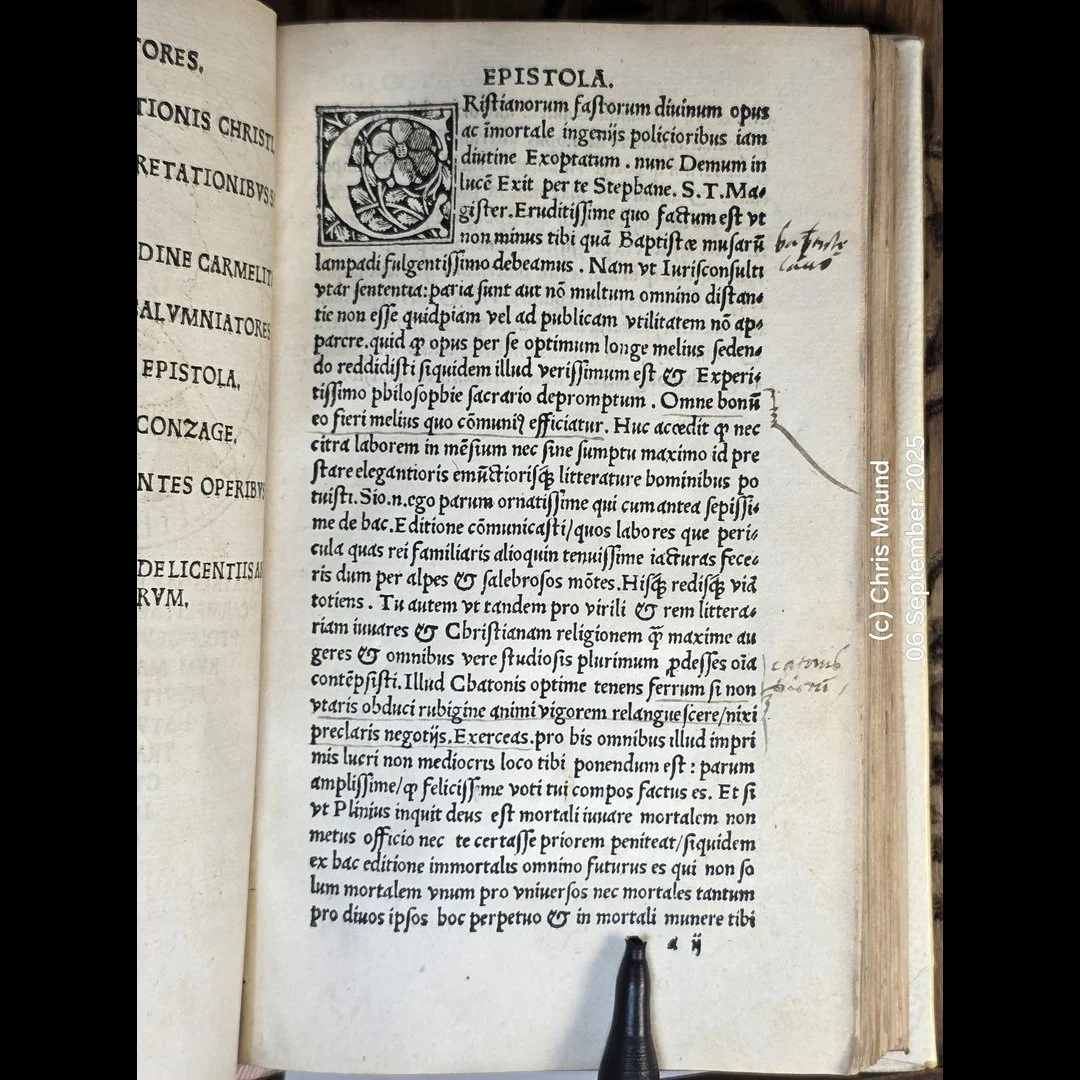 Image 29 of 34
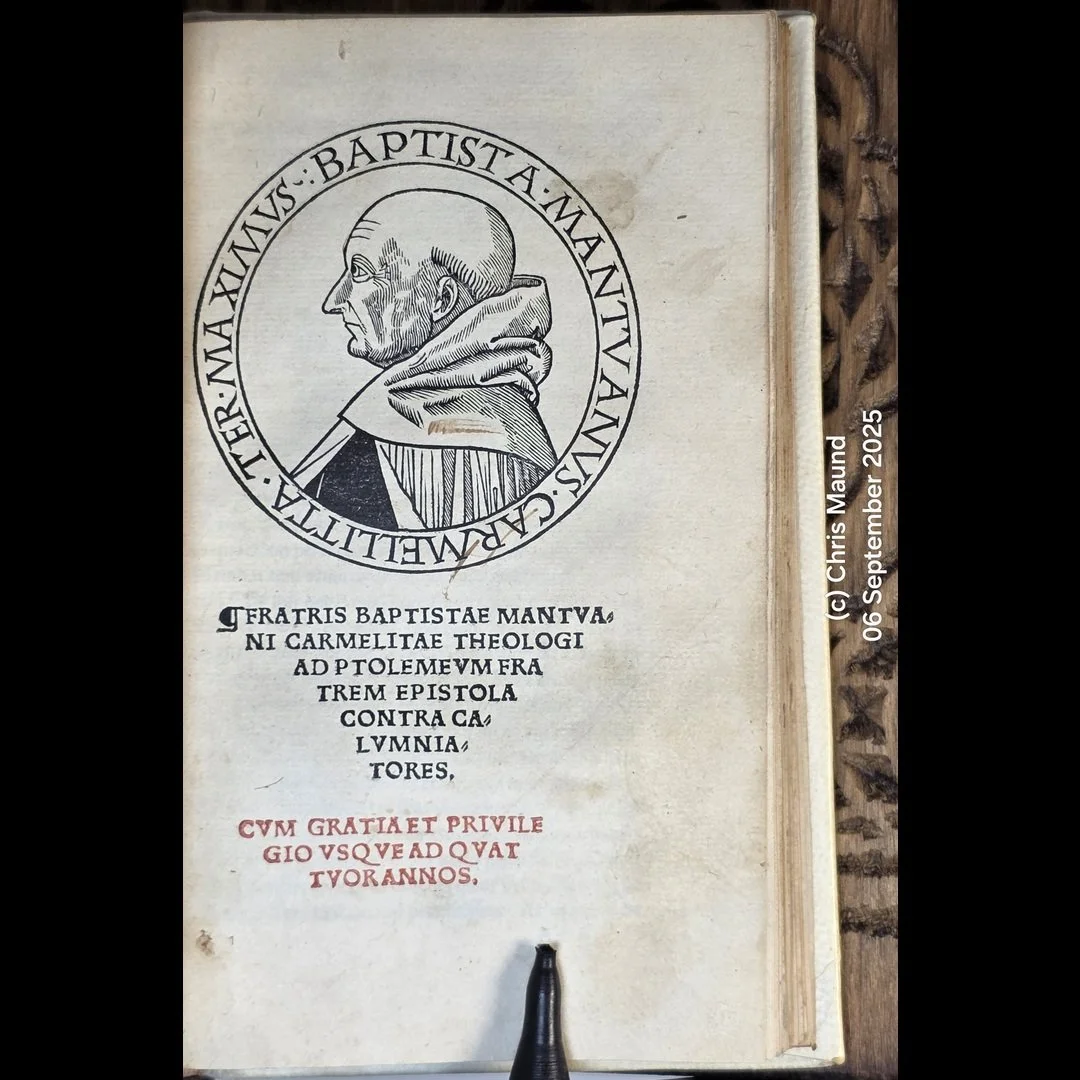 Image 30 of 34
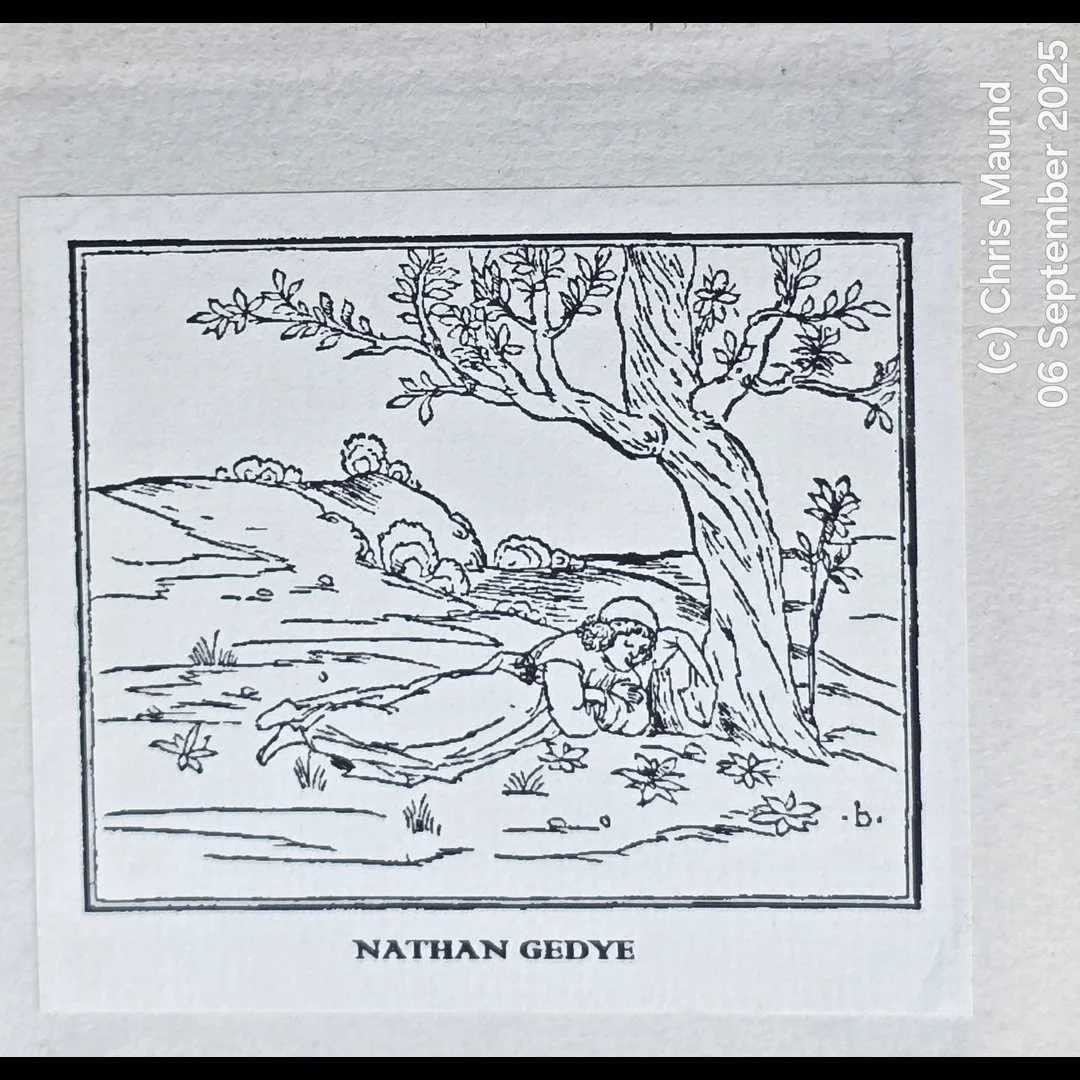 Image 31 of 34
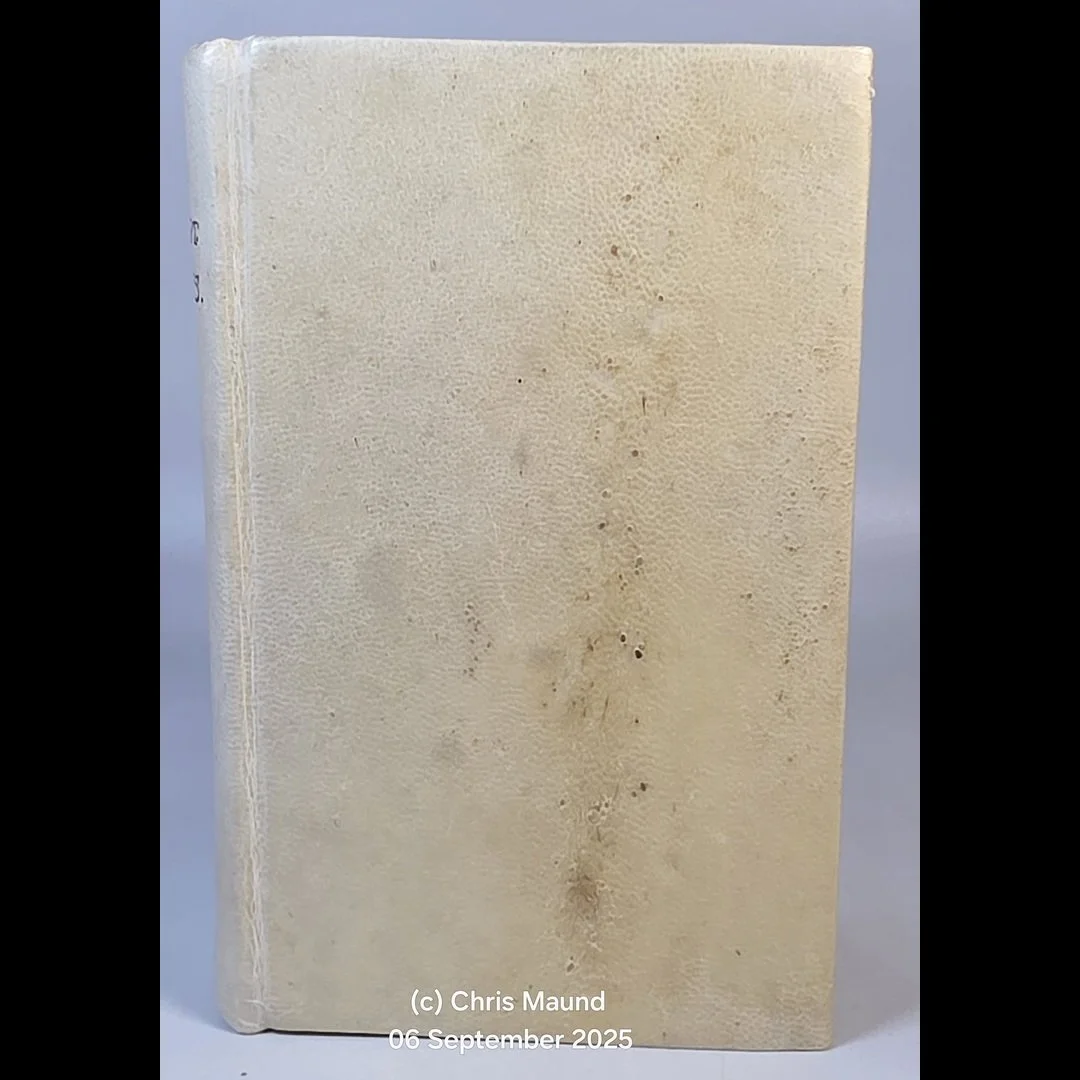 Image 32 of 34
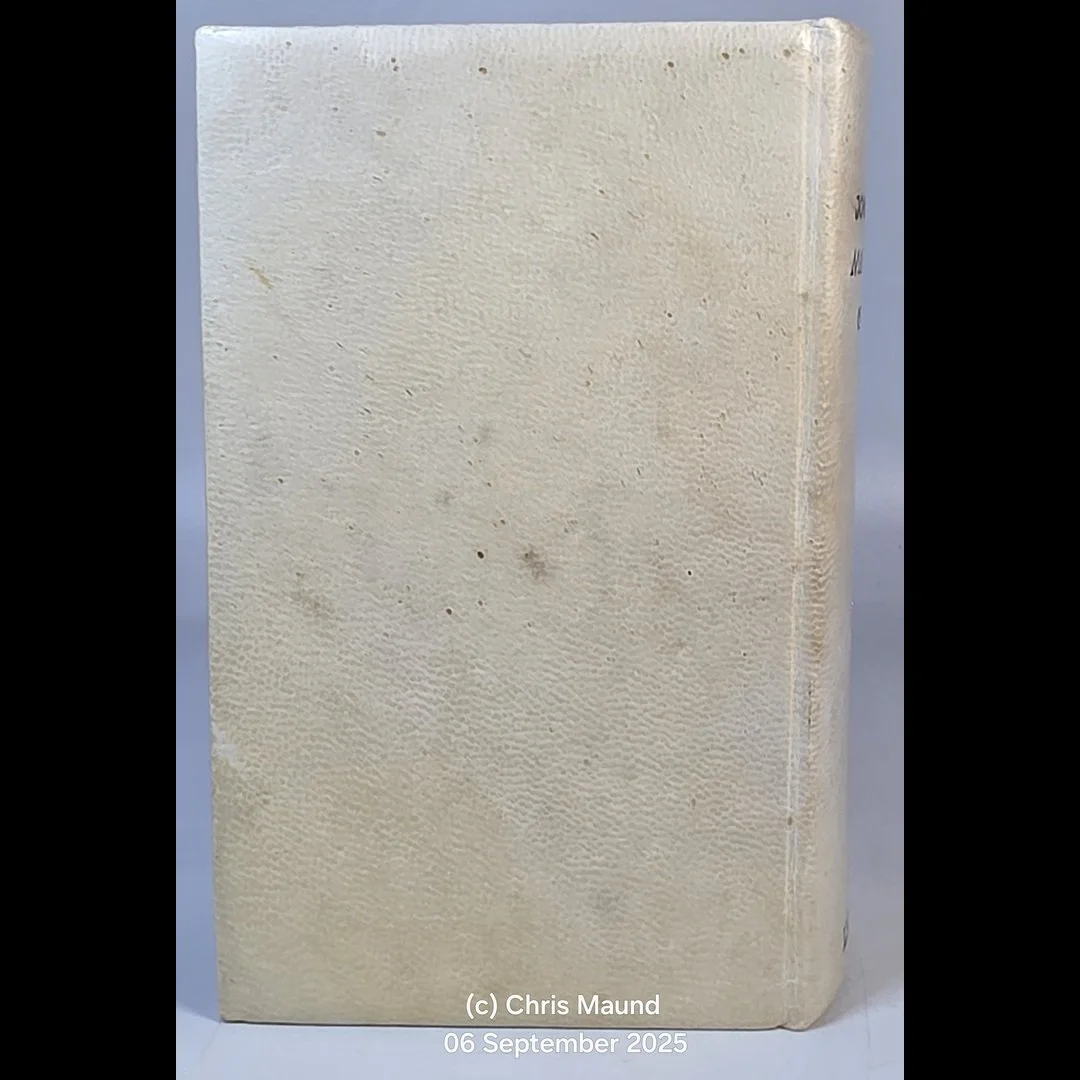 Image 33 of 34
 Image 34 of 34