1549 First Lyon edition (1549–1550)
MEDICAMENTORUM OPUS IN SECTIONES QUADRAGINTA OCTO DIGESTUM
By Nicolaus Myrepsus (Leonhart Fuchs)
KEY DETAILS
Condition: Good
Format: Vellum, Octavo (Standard) (8vo 6 × 9 in 152 × 229 mm )
Note: Binding/size selection follows standard bibliographic conventions and is approximate; exact measurements may vary.
Published By: Lugduni [Lyon], apud Balthazarem Arnolletum [Balthazar Arnoullet], Lyon, 1549
Language: Latin
Collation: [12] leaves, 712 pages, [8] leaves.; Signatures: a⁸, bb⁴, a–z⁸, A–Y⁸, Z⁴.; Complete.
Dust Jacket: None, as issued, No Jacket
SKU: BTETM0002625
Shipping Info: Approximate Package Dimensions H: 12.5, L: 30, W: 25 (Units: cm), W: 2Kg
Tracked Shipping, Insurance Coverage as per Customer Request
DESCRIPTION
MEDICAMENTORUM OPUS IN SECTIONES QUADRAGINTA OCTO DIGESTUM
The Great Byzantine Pharmaceutical Compendium · Leonhart Fuchs Translation & Annotations · Contemporary Limp Vellum
By Nicolaus Myrepsus
Translated and annotated by Leonhart Fuchs
A scarce and important Renaissance printing of one of the great pharmaceutical compilations inherited from Byzantium: Nicolaus Myrepsus's Medicamentorum opus, the Latin transmission of the vast medical work generally known as the Dynameron, translated from Greek and extensively annotated by the celebrated German physician and botanist Leonhart Fuchs.
Printed at Lyon by Balthazar Arnoullet, with the title page dated 1549 and the terminal colophon dated 1550, this is the first Lyon and first French-printed edition, issued in the same year as Johann Oporinus's Basel first edition of Fuchs's complete Latin translation.
The work represents an important stage in the transmission of Greek and Byzantine pharmaceutical knowledge into the medical culture of Renaissance Western Europe. Its compact octavo format placed an enormous corpus of practical pharmaceutical material into a form considerably more portable than the Basel folio.
The original Greek Dynameron is the most extensive surviving pharmaceutical compilation of the late Byzantine period, containing approximately 2,667 medicinal recipes. Drawing upon the accumulated traditions of Greek, Roman, Byzantine and wider Mediterranean medicine, it preserves preparations using botanical, animal and mineral ingredients for an extraordinary range of ailments.
Fuchs's Latin edition reorganises the material into forty-eight sections and supplements the text with his annotations and extensive indexes, including an index of medicines arranged according to the diseases for which they were intended. It is therefore both a repository of medieval pharmaceutical knowledge and an example of Renaissance medical humanism: the recovery, translation, annotation and practical reorganisation of an important Greek medical source.
This copy survives in its contemporary limp vellum binding, with old manuscript titling to the spine and further early markings to the covers. Of particular copy-specific interest, Leonhart Fuchs's name and associated wording have been deliberately struck through in old ink on the title page. The deletion is not repeated elsewhere in the volume: Fuchs's name remains clearly visible in the preliminary matter, at the opening of the principal text and again in the terminal indexes. The reason for the title-page cancellation is unknown and there is insufficient evidence to characterise it as formal censorship, but it provides an intriguing trace of the volume's early history.
A complete and characterful sixteenth-century medical book, with condition faults fully described below but with the text block remaining securely held within its original vellum binding.
CONDITION, COLLATION & COPY NOTES
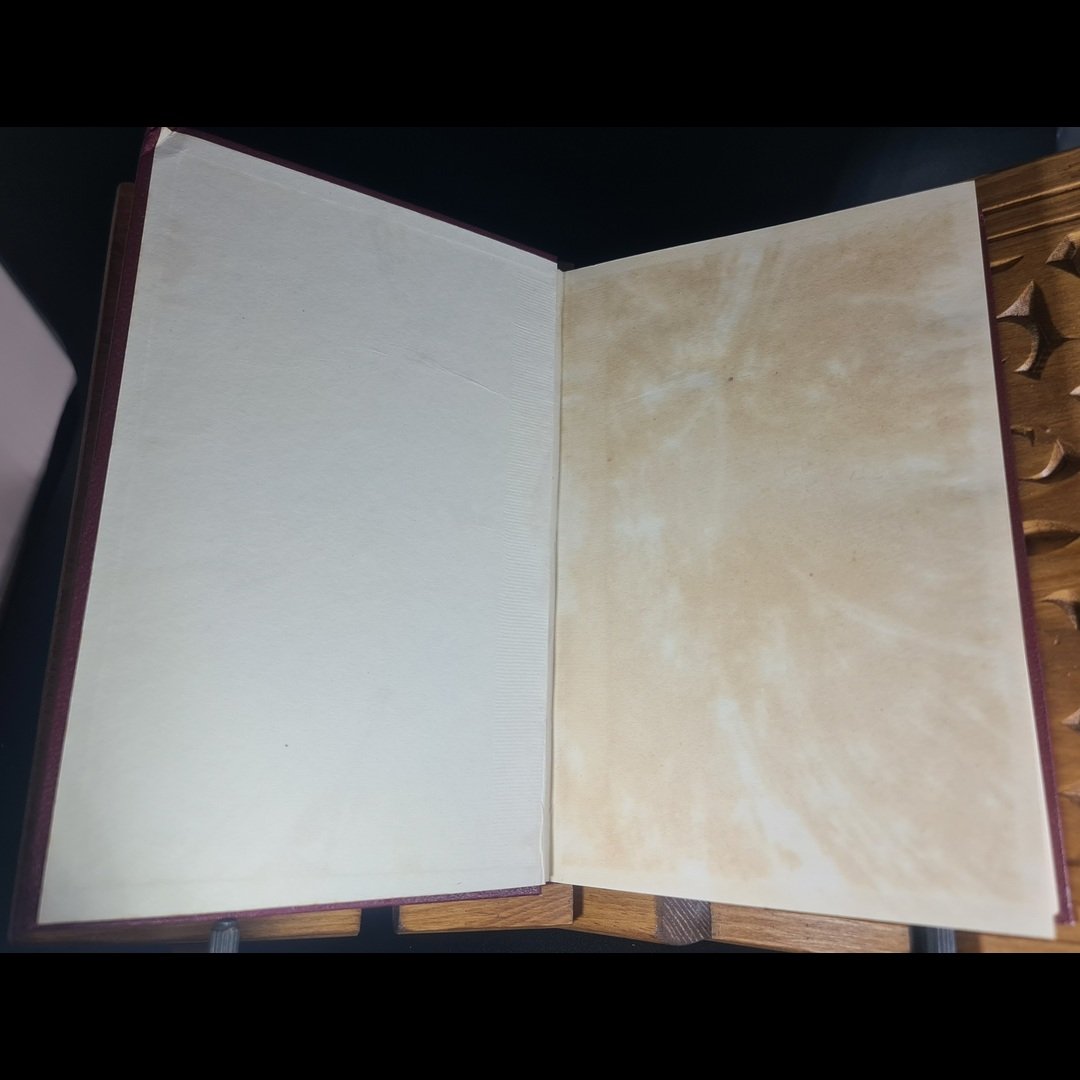
Complete in contemporary limp vellum with old manuscript spine titling and further early manuscript marks to the covers. Vellum age-soiled, stained, rubbed and creased, with local wear and small losses at the extremities, particularly around the spine ends; original ties absent. Internal linings and turn-ins with age-related creasing, tears and local losses.
Front free endpaper lacking. Front/upper inner hinge and attachment broken, with local loss and some binding structure exposed. The text block nevertheless remains firmly secured within the contemporary vellum, does not move independently of the covering, and there are no loose gatherings at either the front or rear. Rear attachment remains secure. External vellum spine covering substantially complete and continuous, without major splitting along the joints.
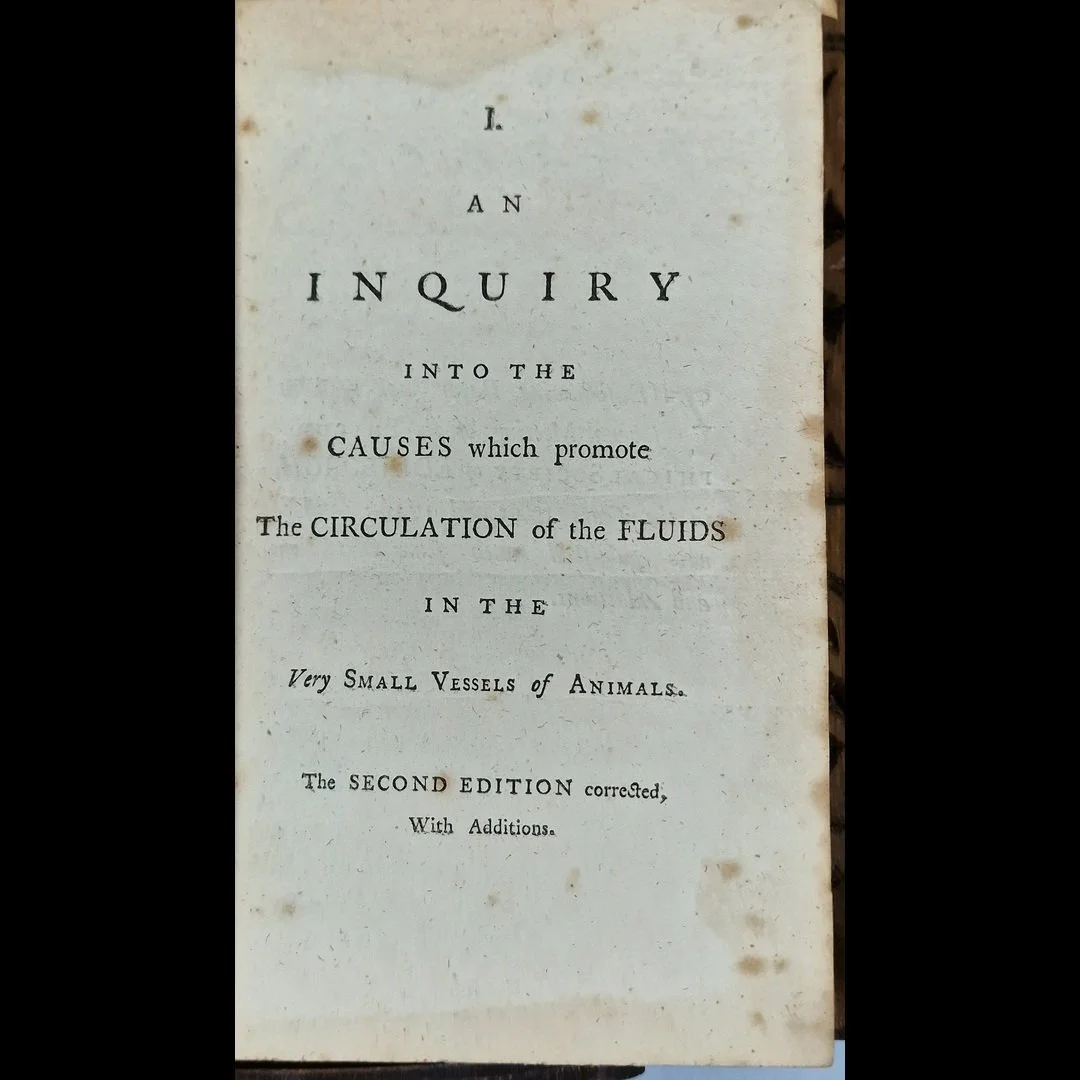
Title page present with Balthazar Arnoullet's woodcut printer's device and imprint dated 1549. Leonhart Fuchs's name and associated wording have been deliberately cancelled in old ink on the title page; the remainder of the title remains substantially legible.
Significantly, the cancellation appears to be confined to the title page. Fuchs's name survives uncancelled elsewhere in the volume, including within the preliminary matter, at the opening of the principal text and in the terminal index heading referring to Leonharti Fuchsii Annotationibus. There is therefore no evidence of a systematic attempt to remove his name throughout the volume.
Text with general age-toning, scattered spotting and staining.
Scattered worming occurs through portions of the volume, principally comprising small holes and narrow trails and most conspicuous in parts of the preliminary and terminal/index material. Much of the activity is marginal, although a number of trails enter the printed area with minor loss to individual letters or small portions of words. The preliminary leaves and final indexes are both affected. No substantial passage of text is lost and overall legibility remains unaffected.
Occasional old ink marginal strokes, numerals and other small reader's marks, particularly within the indexes, but no extensive manuscript commentary or systematic underlining identified. Old numerical inscription with flourish to a rear blank. Further old manuscript titling and numerals to the vellum binding.
Terminal colophon present and dated 1550, reading: Lugduni / Balthazar Arnoletus / Excudebat. / 1550
Scattered wormholes occur on and around the terminal leaf but without significant loss to the printed colophon, which remains clear and legible.
Complete with all preliminary matter, main text and terminal indexes. Pagination and collation checked.
Please see Photos as part of condition report.
REFERENCES
Durling / National Library of Medicine, 3346
Wellcome, I, 5353
Baudrier, Bibliographie lyonnaise
Bibliothèque nationale de France
Artcurial, Livres & Manuscrits, Paris, 19 June 2019, lot 19
SYNOPSIS
The Medicamentorum opus is an immense practical collection of pharmaceutical preparations derived from Nicolaus Myrepsus's Byzantine Dynameron.
The surviving Greek work contains approximately 2,667 recipes, making it one of the largest pharmaceutical compilations to survive from Byzantium. Its contents represent centuries of accumulated medical practice and preserve material inherited from Greek, Roman and Byzantine authorities alongside other strands of the medieval Mediterranean pharmacological tradition.
The preparations encompass an extraordinary range of treatments. They include antidotes, electuaries, pills, powders, plasters, ointments, oils and other compound medicines intended for complaints affecting virtually every part of the body.
Diseases and symptoms addressed include disorders of the eyes and ears, respiratory complaints, digestive problems, fevers, pain, wounds and ulcers, skin diseases, women's medicine, poisonous bites and numerous other conditions.
Ingredients range from familiar medicinal plants, herbs and spices to animal products, honey, oils, resins, minerals and metals. The recipes provide an exceptional window into both the material world of the medieval pharmacy and the intellectual traditions upon which early modern European medicine was constructed.
Fuchs's contribution was much more than the production of a readable Latin version. His translation and annotations formed part of the wider Renaissance humanist programme of recovering, correcting and interpreting Greek medical literature.
In the printed Latin version the material was arranged into forty-eight sections, accompanied by substantial indexes designed to allow the physician or apothecary to locate medicines and preparations according to their intended therapeutic use.
The resulting book therefore stands at an important historical intersection: Byzantine medicine, medieval pharmacy, Renaissance humanism and the emergence of early modern printed pharmacology.
For the modern collector it has interest across several fields — the history of medicine and pharmacy, Byzantine science, Renaissance printing, Greek-to-Latin translation, early pharmacopoeias and the work of Leonhart Fuchs.
This first Lyon printing is particularly appealing as a contemporary French response to the appearance of Fuchs's complete translation at Basel: a substantial sixteenth-century medical text preserved here in its old limp-vellum binding and retaining the marks of its long working life.
AUTHOR BIO
Nicolaus Myrepsus, or Nikolaos Myrepsos, was a Byzantine physician and pharmaceutical writer active during the thirteenth century. He is remembered above all as the compiler traditionally associated with the enormous pharmaceutical work known as the Dynameron.
The word myrepsos itself denotes a maker or compounder of ointments and medicines, an appropriate designation for the author of what became one of the most extensive pharmaceutical compilations of the medieval world.
The Dynameron preserves thousands of medicinal preparations accumulated from earlier Greek and Byzantine therapeutic traditions. Rather than representing the work of a single experimental physician, it functions as a vast repository of inherited pharmaceutical knowledge, bringing together recipes, ingredients, methods of preparation and therapeutic applications from centuries of medical practice.
Its importance lies partly in preservation: through compilations such as that of Myrepsus, substantial elements of classical and Byzantine pharmacology survived into the later medieval period and were ultimately transmitted to Renaissance physicians and printers.
Translator Bio:
Leonhart Fuchs (1501–1566) was one of the foremost German physicians, botanists and medical humanists of the Renaissance.
Professor of medicine at the University of Tübingen, Fuchs is celebrated above all for his monumental De historia stirpium commentarii insignes of 1542, one of the landmarks of Renaissance botany and one of the great illustrated herbals of the sixteenth century. The flowering plant genus Fuchsia was later named in his honour.
Fuchs belonged to the humanist medical tradition that sought to recover medicine from authoritative Greek sources rather than relying exclusively upon the accumulated Latin medieval tradition. Translation, textual criticism and annotation therefore formed an important part of his scholarly activity alongside practical medicine and botany.
His complete Latin translation of Myrepsus, first printed at Basel in 1549 and accompanied by extensive annotations, brought this enormous Byzantine pharmaceutical compilation before the Latin-reading medical world of Renaissance Europe.
The present Lyon edition, printed by Balthazar Arnoullet in 1549–1550, followed rapidly upon the Basel publication and testifies to the contemporary demand for Fuchs's work and for accessible editions of the recovered Greek medical tradition.
1549 First Lyon edition (1549–1550)
MEDICAMENTORUM OPUS IN SECTIONES QUADRAGINTA OCTO DIGESTUM
By Nicolaus Myrepsus (Leonhart Fuchs)
KEY DETAILS
Condition: Good
Format: Vellum, Octavo (Standard) (8vo 6 × 9 in 152 × 229 mm )
Note: Binding/size selection follows standard bibliographic conventions and is approximate; exact measurements may vary.
Published By: Lugduni [Lyon], apud Balthazarem Arnolletum [Balthazar Arnoullet], Lyon, 1549
Language: Latin
Collation: [12] leaves, 712 pages, [8] leaves.; Signatures: a⁸, bb⁴, a–z⁸, A–Y⁸, Z⁴.; Complete.
Dust Jacket: None, as issued, No Jacket
SKU: BTETM0002625
Shipping Info: Approximate Package Dimensions H: 12.5, L: 30, W: 25 (Units: cm), W: 2Kg
Tracked Shipping, Insurance Coverage as per Customer Request
DESCRIPTION
MEDICAMENTORUM OPUS IN SECTIONES QUADRAGINTA OCTO DIGESTUM
The Great Byzantine Pharmaceutical Compendium · Leonhart Fuchs Translation & Annotations · Contemporary Limp Vellum
By Nicolaus Myrepsus
Translated and annotated by Leonhart Fuchs
A scarce and important Renaissance printing of one of the great pharmaceutical compilations inherited from Byzantium: Nicolaus Myrepsus's Medicamentorum opus, the Latin transmission of the vast medical work generally known as the Dynameron, translated from Greek and extensively annotated by the celebrated German physician and botanist Leonhart Fuchs.
Printed at Lyon by Balthazar Arnoullet, with the title page dated 1549 and the terminal colophon dated 1550, this is the first Lyon and first French-printed edition, issued in the same year as Johann Oporinus's Basel first edition of Fuchs's complete Latin translation.
The work represents an important stage in the transmission of Greek and Byzantine pharmaceutical knowledge into the medical culture of Renaissance Western Europe. Its compact octavo format placed an enormous corpus of practical pharmaceutical material into a form considerably more portable than the Basel folio.
The original Greek Dynameron is the most extensive surviving pharmaceutical compilation of the late Byzantine period, containing approximately 2,667 medicinal recipes. Drawing upon the accumulated traditions of Greek, Roman, Byzantine and wider Mediterranean medicine, it preserves preparations using botanical, animal and mineral ingredients for an extraordinary range of ailments.
Fuchs's Latin edition reorganises the material into forty-eight sections and supplements the text with his annotations and extensive indexes, including an index of medicines arranged according to the diseases for which they were intended. It is therefore both a repository of medieval pharmaceutical knowledge and an example of Renaissance medical humanism: the recovery, translation, annotation and practical reorganisation of an important Greek medical source.
This copy survives in its contemporary limp vellum binding, with old manuscript titling to the spine and further early markings to the covers. Of particular copy-specific interest, Leonhart Fuchs's name and associated wording have been deliberately struck through in old ink on the title page. The deletion is not repeated elsewhere in the volume: Fuchs's name remains clearly visible in the preliminary matter, at the opening of the principal text and again in the terminal indexes. The reason for the title-page cancellation is unknown and there is insufficient evidence to characterise it as formal censorship, but it provides an intriguing trace of the volume's early history.
A complete and characterful sixteenth-century medical book, with condition faults fully described below but with the text block remaining securely held within its original vellum binding.
CONDITION, COLLATION & COPY NOTES
Complete in contemporary limp vellum with old manuscript spine titling and further early manuscript marks to the covers. Vellum age-soiled, stained, rubbed and creased, with local wear and small losses at the extremities, particularly around the spine ends; original ties absent. Internal linings and turn-ins with age-related creasing, tears and local losses.
Front free endpaper lacking. Front/upper inner hinge and attachment broken, with local loss and some binding structure exposed. The text block nevertheless remains firmly secured within the contemporary vellum, does not move independently of the covering, and there are no loose gatherings at either the front or rear. Rear attachment remains secure. External vellum spine covering substantially complete and continuous, without major splitting along the joints.
Title page present with Balthazar Arnoullet's woodcut printer's device and imprint dated 1549. Leonhart Fuchs's name and associated wording have been deliberately cancelled in old ink on the title page; the remainder of the title remains substantially legible.
Significantly, the cancellation appears to be confined to the title page. Fuchs's name survives uncancelled elsewhere in the volume, including within the preliminary matter, at the opening of the principal text and in the terminal index heading referring to Leonharti Fuchsii Annotationibus. There is therefore no evidence of a systematic attempt to remove his name throughout the volume.
Text with general age-toning, scattered spotting and staining.
Scattered worming occurs through portions of the volume, principally comprising small holes and narrow trails and most conspicuous in parts of the preliminary and terminal/index material. Much of the activity is marginal, although a number of trails enter the printed area with minor loss to individual letters or small portions of words. The preliminary leaves and final indexes are both affected. No substantial passage of text is lost and overall legibility remains unaffected.
Occasional old ink marginal strokes, numerals and other small reader's marks, particularly within the indexes, but no extensive manuscript commentary or systematic underlining identified. Old numerical inscription with flourish to a rear blank. Further old manuscript titling and numerals to the vellum binding.
Terminal colophon present and dated 1550, reading: Lugduni / Balthazar Arnoletus / Excudebat. / 1550
Scattered wormholes occur on and around the terminal leaf but without significant loss to the printed colophon, which remains clear and legible.
Complete with all preliminary matter, main text and terminal indexes. Pagination and collation checked.
Please see Photos as part of condition report.
REFERENCES
Durling / National Library of Medicine, 3346
Wellcome, I, 5353
Baudrier, Bibliographie lyonnaise
Bibliothèque nationale de France
Artcurial, Livres & Manuscrits, Paris, 19 June 2019, lot 19
SYNOPSIS
The Medicamentorum opus is an immense practical collection of pharmaceutical preparations derived from Nicolaus Myrepsus's Byzantine Dynameron.
The surviving Greek work contains approximately 2,667 recipes, making it one of the largest pharmaceutical compilations to survive from Byzantium. Its contents represent centuries of accumulated medical practice and preserve material inherited from Greek, Roman and Byzantine authorities alongside other strands of the medieval Mediterranean pharmacological tradition.
The preparations encompass an extraordinary range of treatments. They include antidotes, electuaries, pills, powders, plasters, ointments, oils and other compound medicines intended for complaints affecting virtually every part of the body.
Diseases and symptoms addressed include disorders of the eyes and ears, respiratory complaints, digestive problems, fevers, pain, wounds and ulcers, skin diseases, women's medicine, poisonous bites and numerous other conditions.
Ingredients range from familiar medicinal plants, herbs and spices to animal products, honey, oils, resins, minerals and metals. The recipes provide an exceptional window into both the material world of the medieval pharmacy and the intellectual traditions upon which early modern European medicine was constructed.
Fuchs's contribution was much more than the production of a readable Latin version. His translation and annotations formed part of the wider Renaissance humanist programme of recovering, correcting and interpreting Greek medical literature.
In the printed Latin version the material was arranged into forty-eight sections, accompanied by substantial indexes designed to allow the physician or apothecary to locate medicines and preparations according to their intended therapeutic use.
The resulting book therefore stands at an important historical intersection: Byzantine medicine, medieval pharmacy, Renaissance humanism and the emergence of early modern printed pharmacology.
For the modern collector it has interest across several fields — the history of medicine and pharmacy, Byzantine science, Renaissance printing, Greek-to-Latin translation, early pharmacopoeias and the work of Leonhart Fuchs.
This first Lyon printing is particularly appealing as a contemporary French response to the appearance of Fuchs's complete translation at Basel: a substantial sixteenth-century medical text preserved here in its old limp-vellum binding and retaining the marks of its long working life.
AUTHOR BIO
Nicolaus Myrepsus, or Nikolaos Myrepsos, was a Byzantine physician and pharmaceutical writer active during the thirteenth century. He is remembered above all as the compiler traditionally associated with the enormous pharmaceutical work known as the Dynameron.
The word myrepsos itself denotes a maker or compounder of ointments and medicines, an appropriate designation for the author of what became one of the most extensive pharmaceutical compilations of the medieval world.
The Dynameron preserves thousands of medicinal preparations accumulated from earlier Greek and Byzantine therapeutic traditions. Rather than representing the work of a single experimental physician, it functions as a vast repository of inherited pharmaceutical knowledge, bringing together recipes, ingredients, methods of preparation and therapeutic applications from centuries of medical practice.
Its importance lies partly in preservation: through compilations such as that of Myrepsus, substantial elements of classical and Byzantine pharmacology survived into the later medieval period and were ultimately transmitted to Renaissance physicians and printers.
Translator Bio:
Leonhart Fuchs (1501–1566) was one of the foremost German physicians, botanists and medical humanists of the Renaissance.
Professor of medicine at the University of Tübingen, Fuchs is celebrated above all for his monumental De historia stirpium commentarii insignes of 1542, one of the landmarks of Renaissance botany and one of the great illustrated herbals of the sixteenth century. The flowering plant genus Fuchsia was later named in his honour.
Fuchs belonged to the humanist medical tradition that sought to recover medicine from authoritative Greek sources rather than relying exclusively upon the accumulated Latin medieval tradition. Translation, textual criticism and annotation therefore formed an important part of his scholarly activity alongside practical medicine and botany.
His complete Latin translation of Myrepsus, first printed at Basel in 1549 and accompanied by extensive annotations, brought this enormous Byzantine pharmaceutical compilation before the Latin-reading medical world of Renaissance Europe.
The present Lyon edition, printed by Balthazar Arnoullet in 1549–1550, followed rapidly upon the Basel publication and testifies to the contemporary demand for Fuchs's work and for accessible editions of the recovered Greek medical tradition.

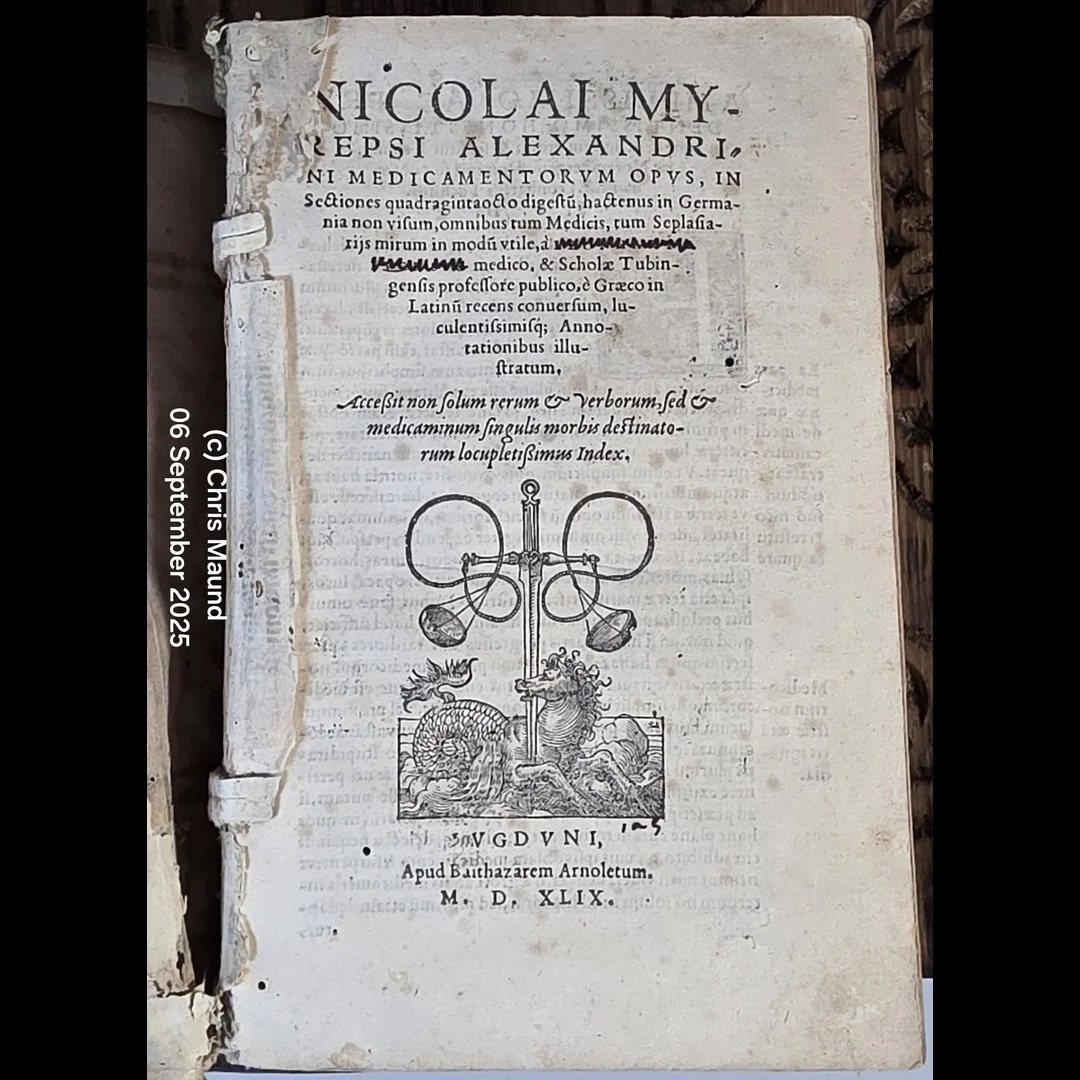 Image 1 of 16
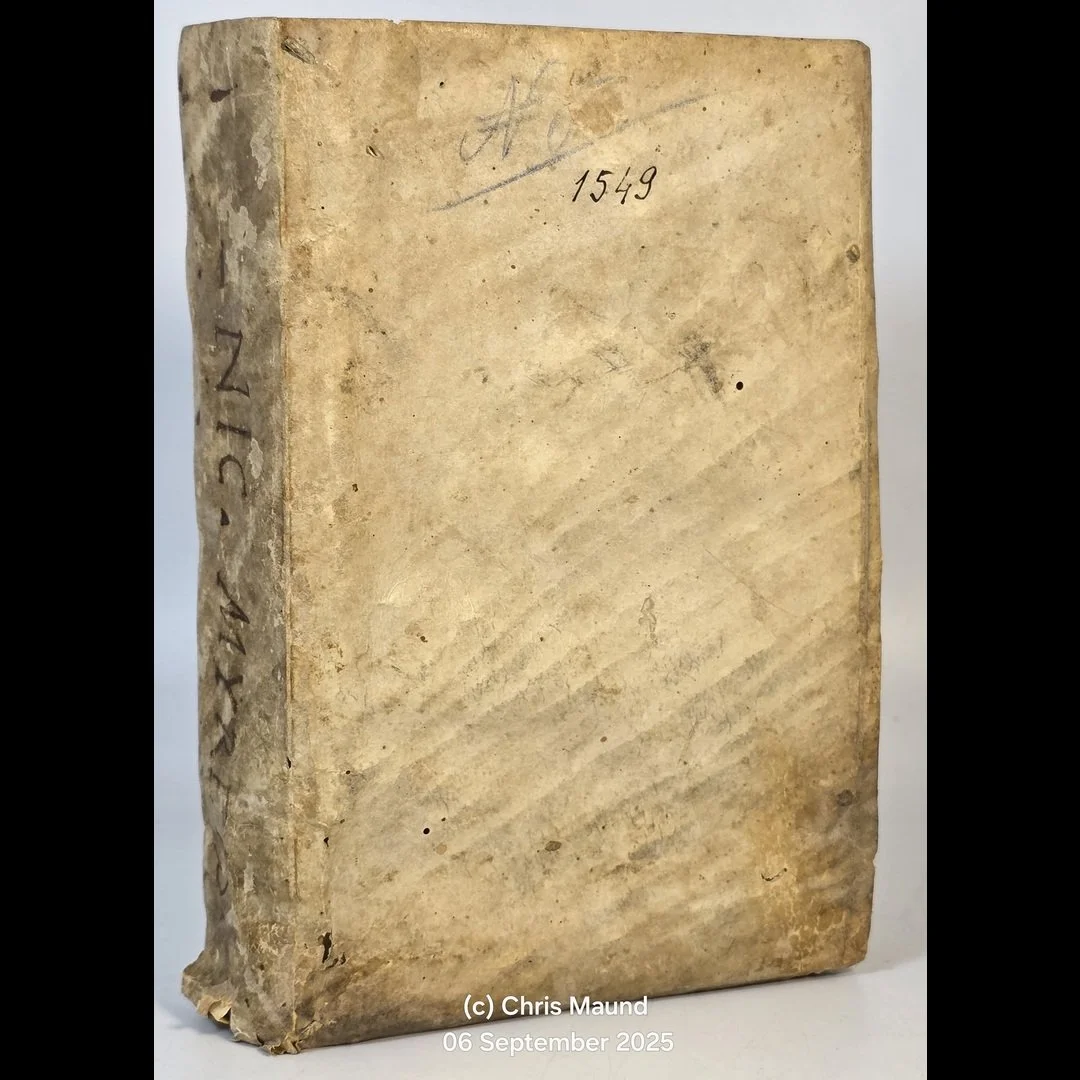 Image 2 of 16
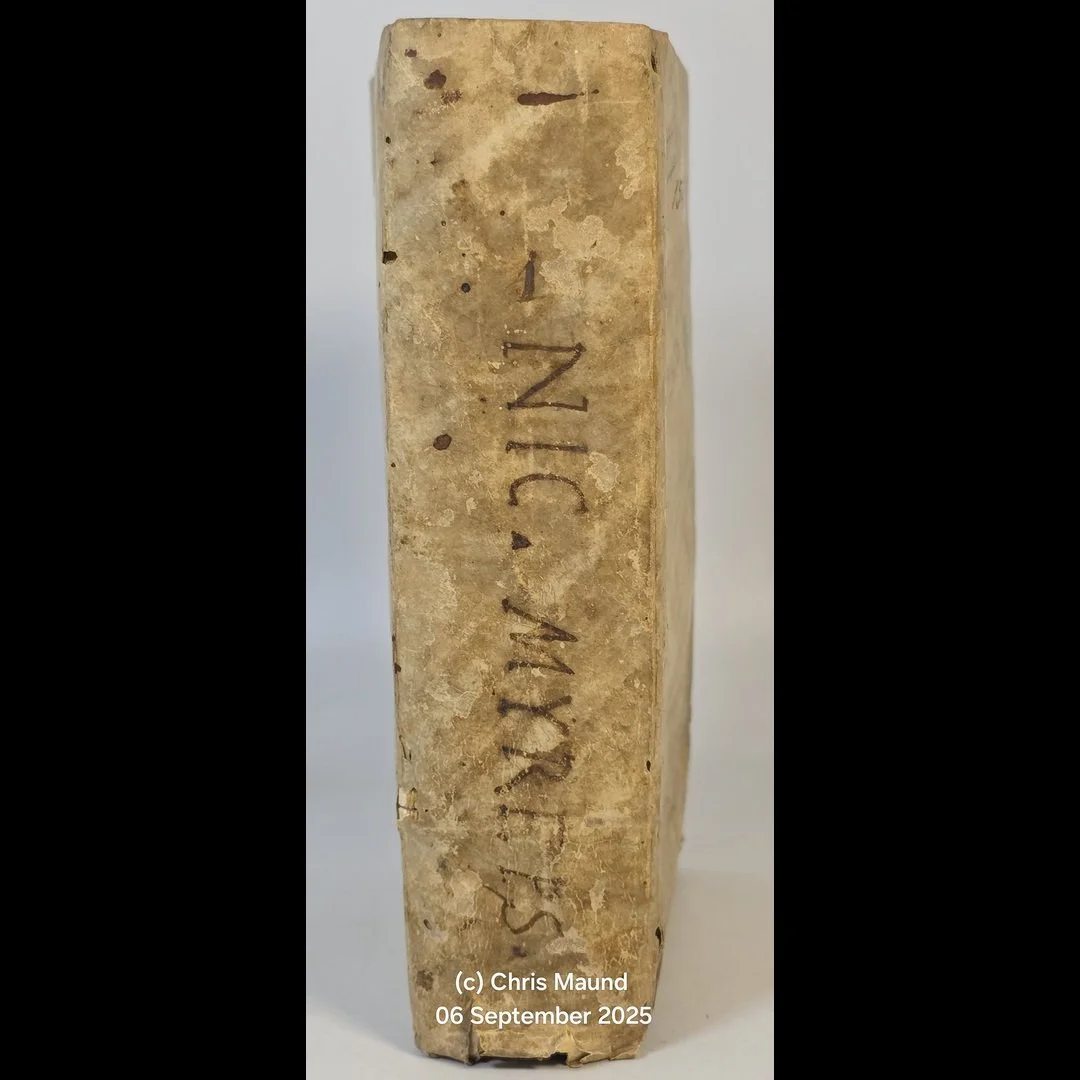 Image 3 of 16
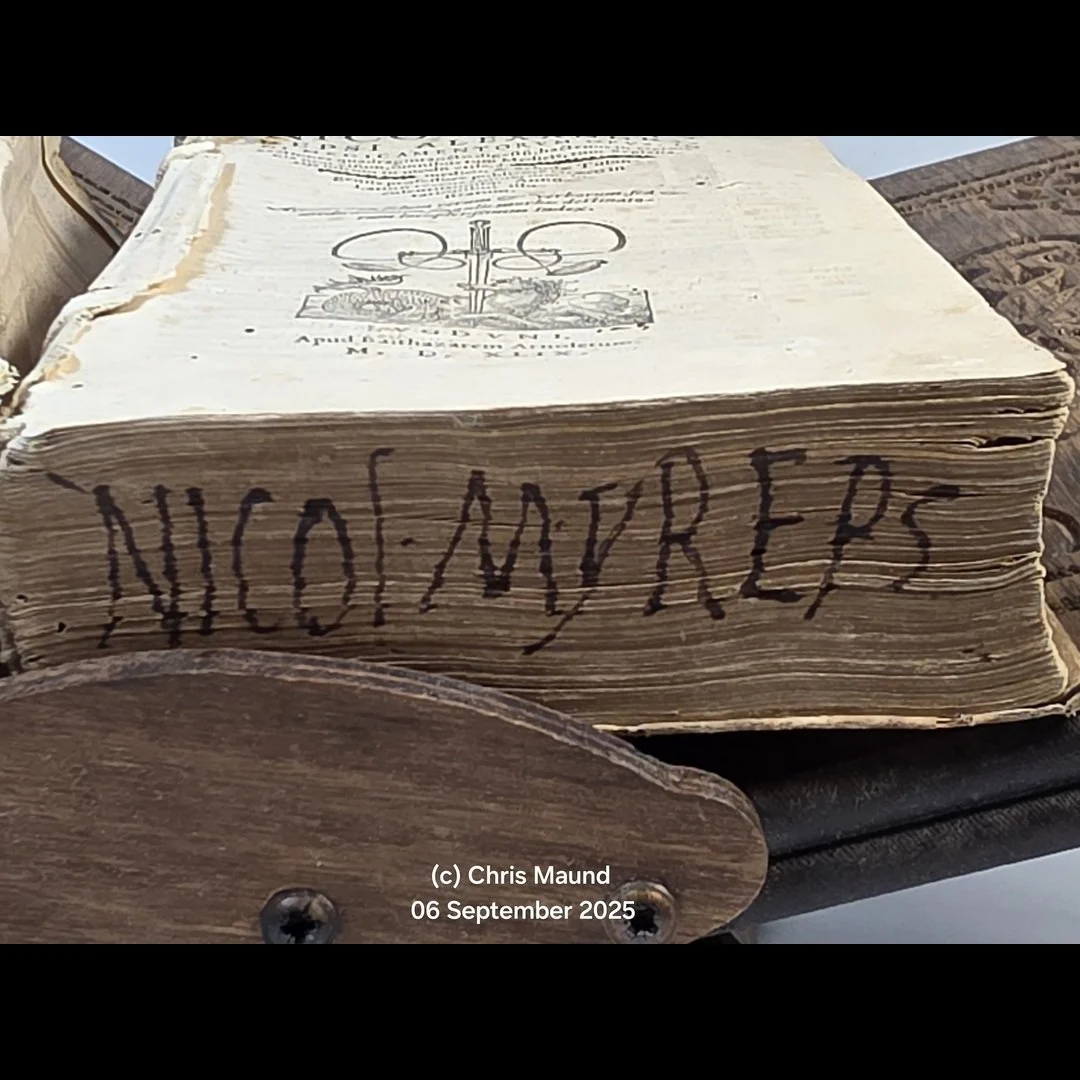 Image 4 of 16
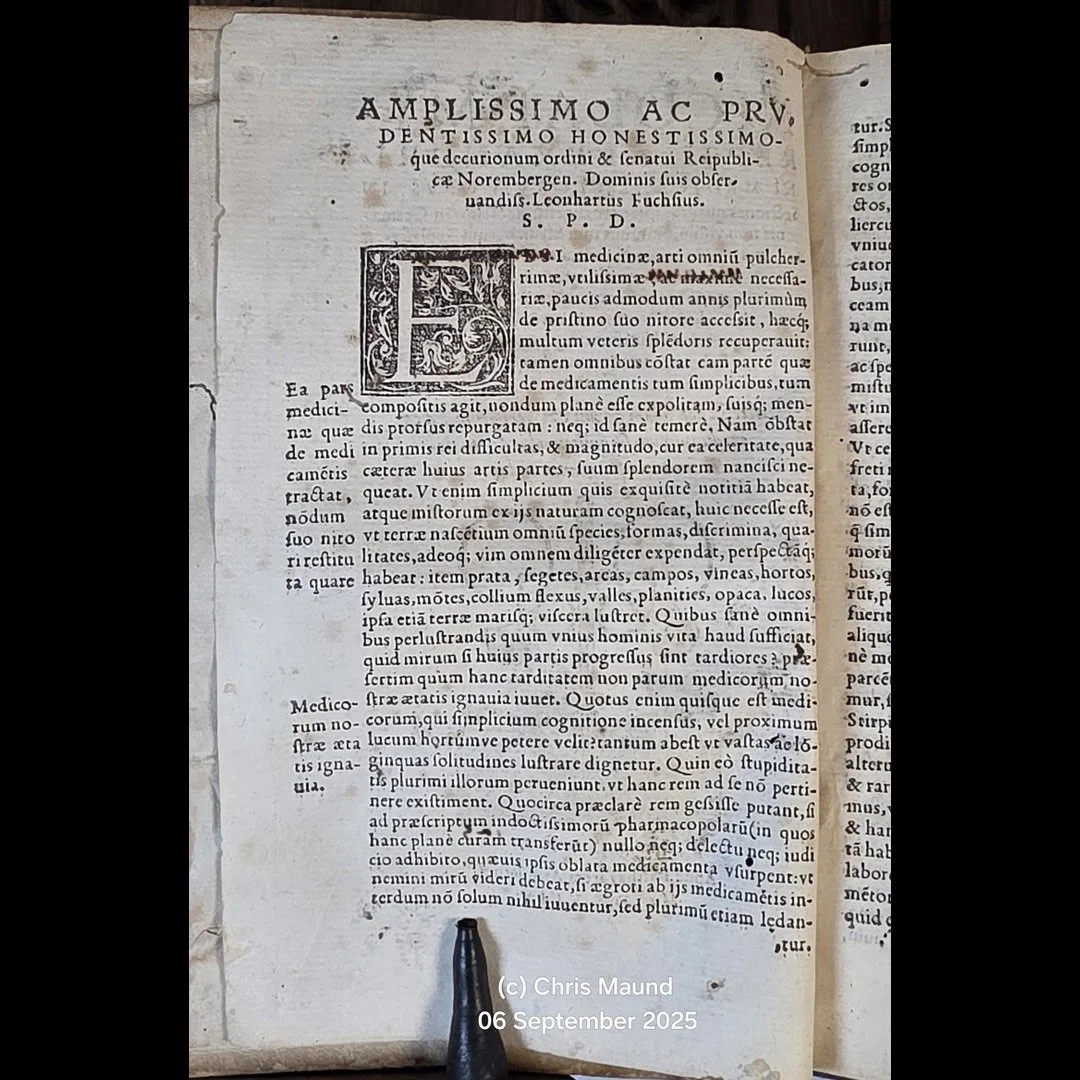 Image 5 of 16
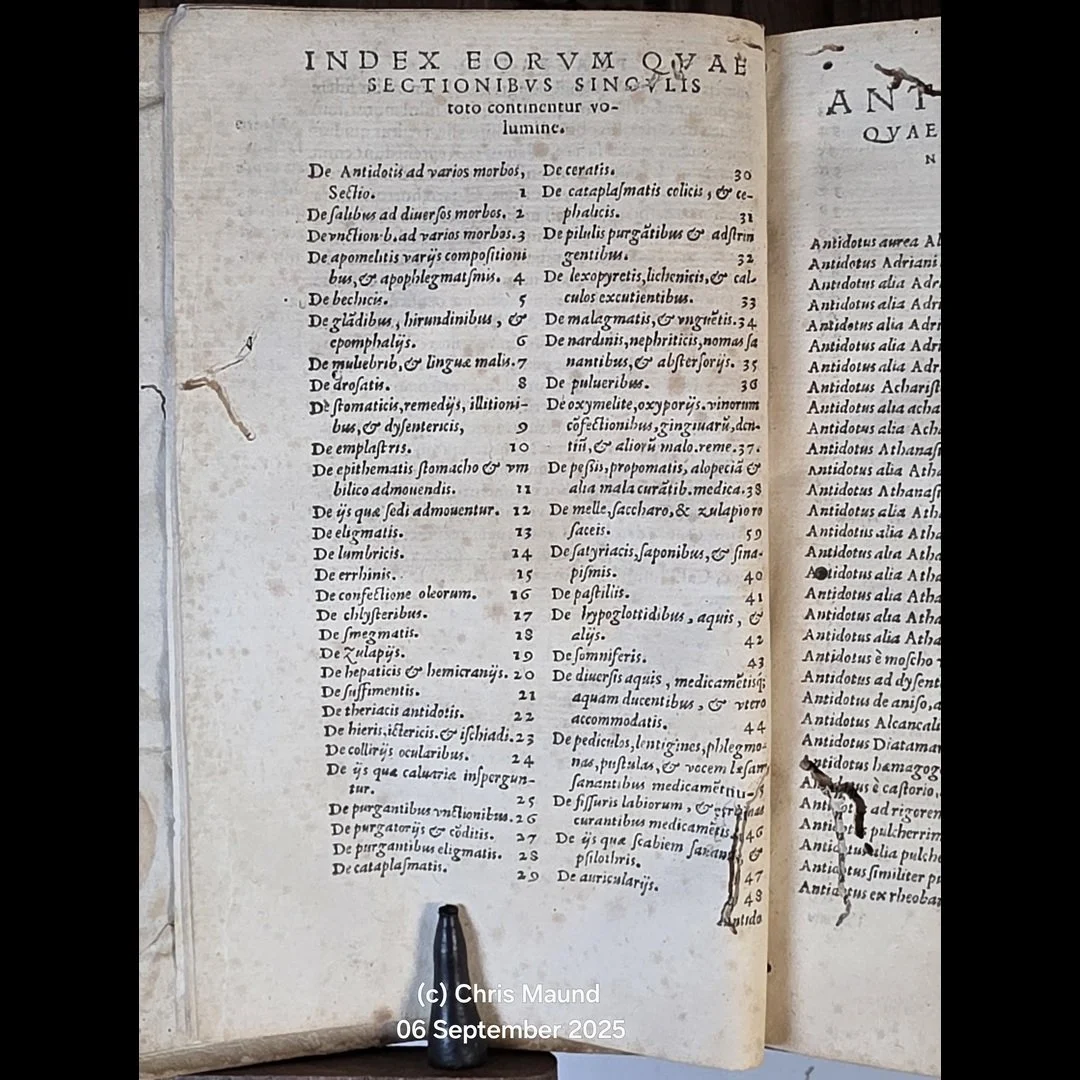 Image 6 of 16
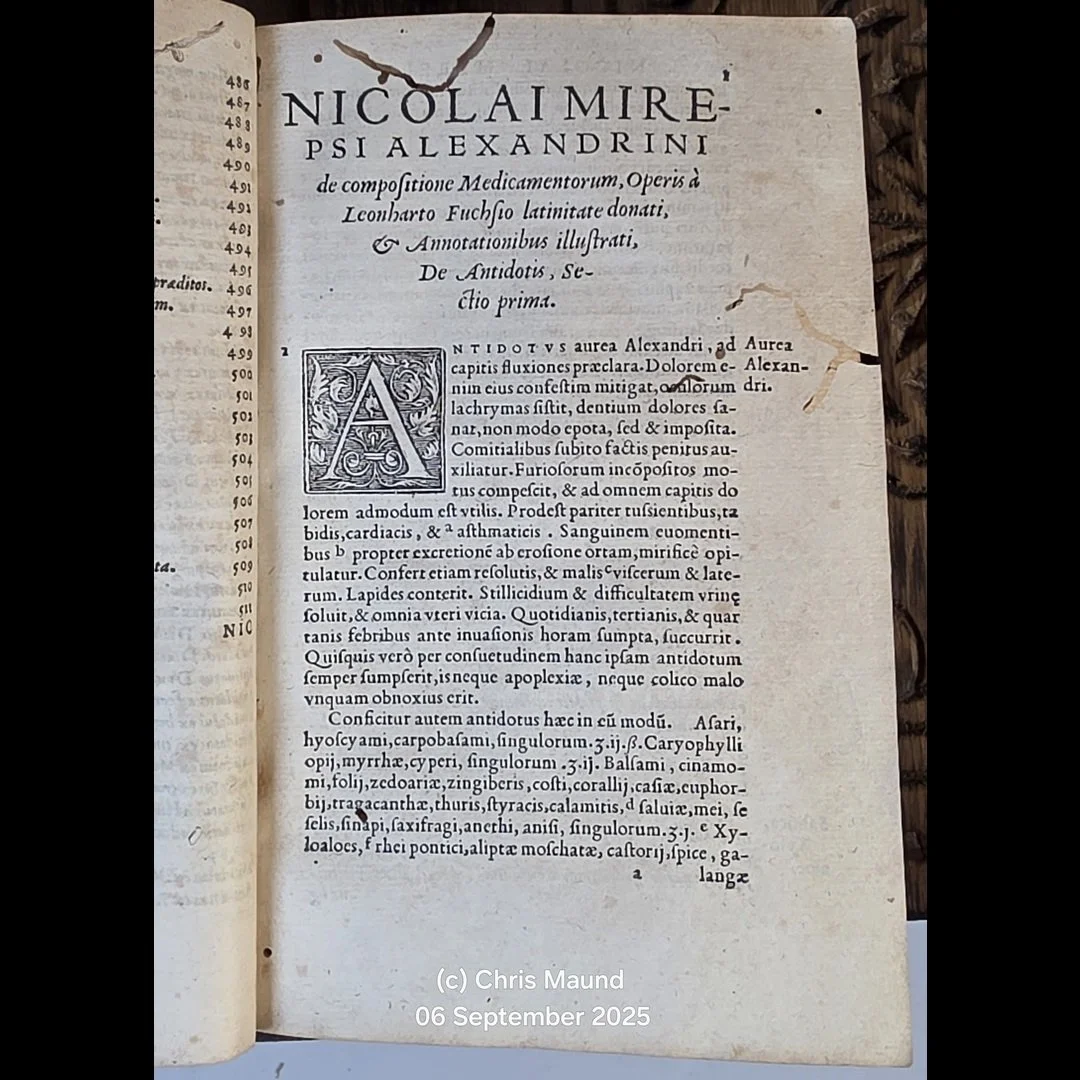 Image 7 of 16
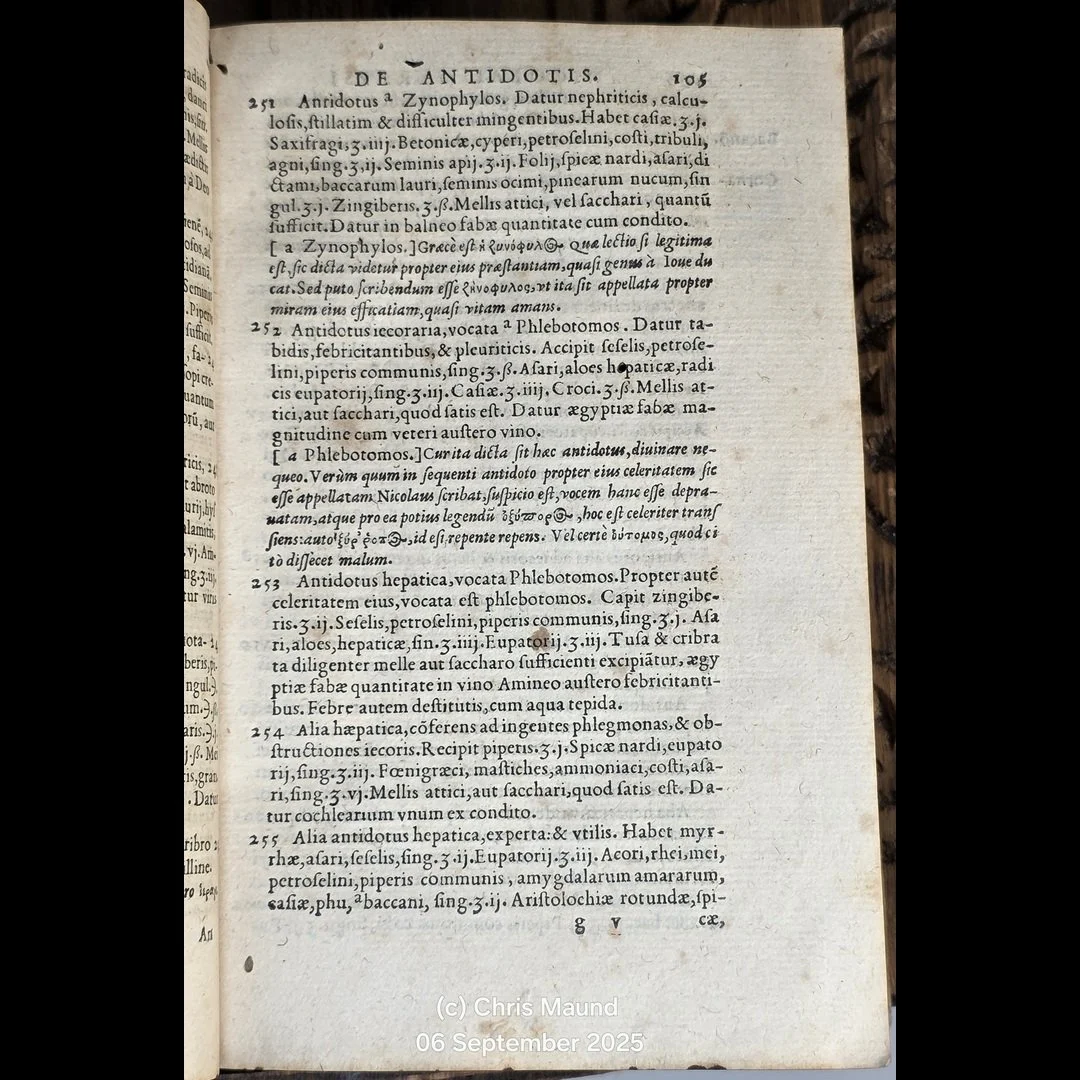 Image 8 of 16
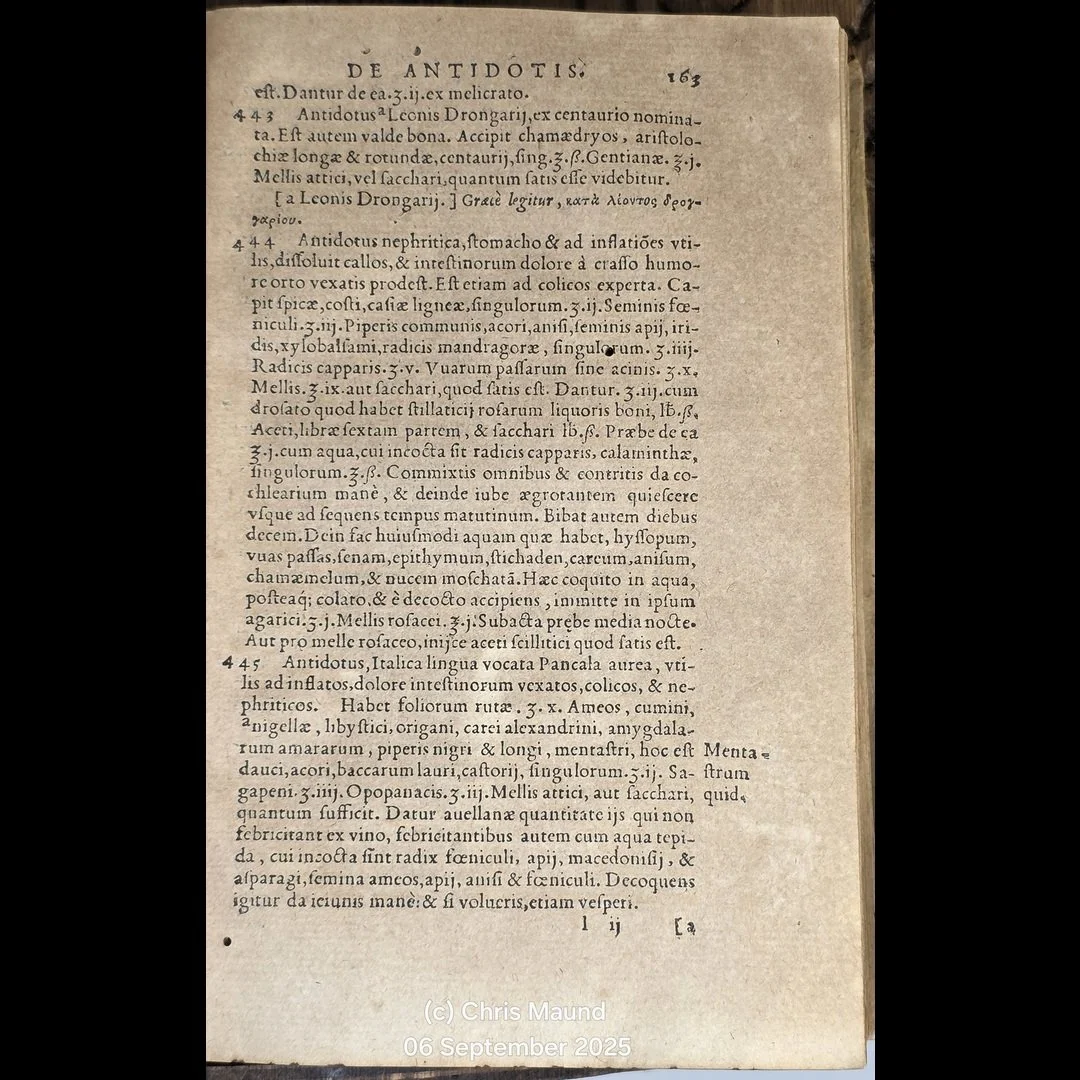 Image 9 of 16
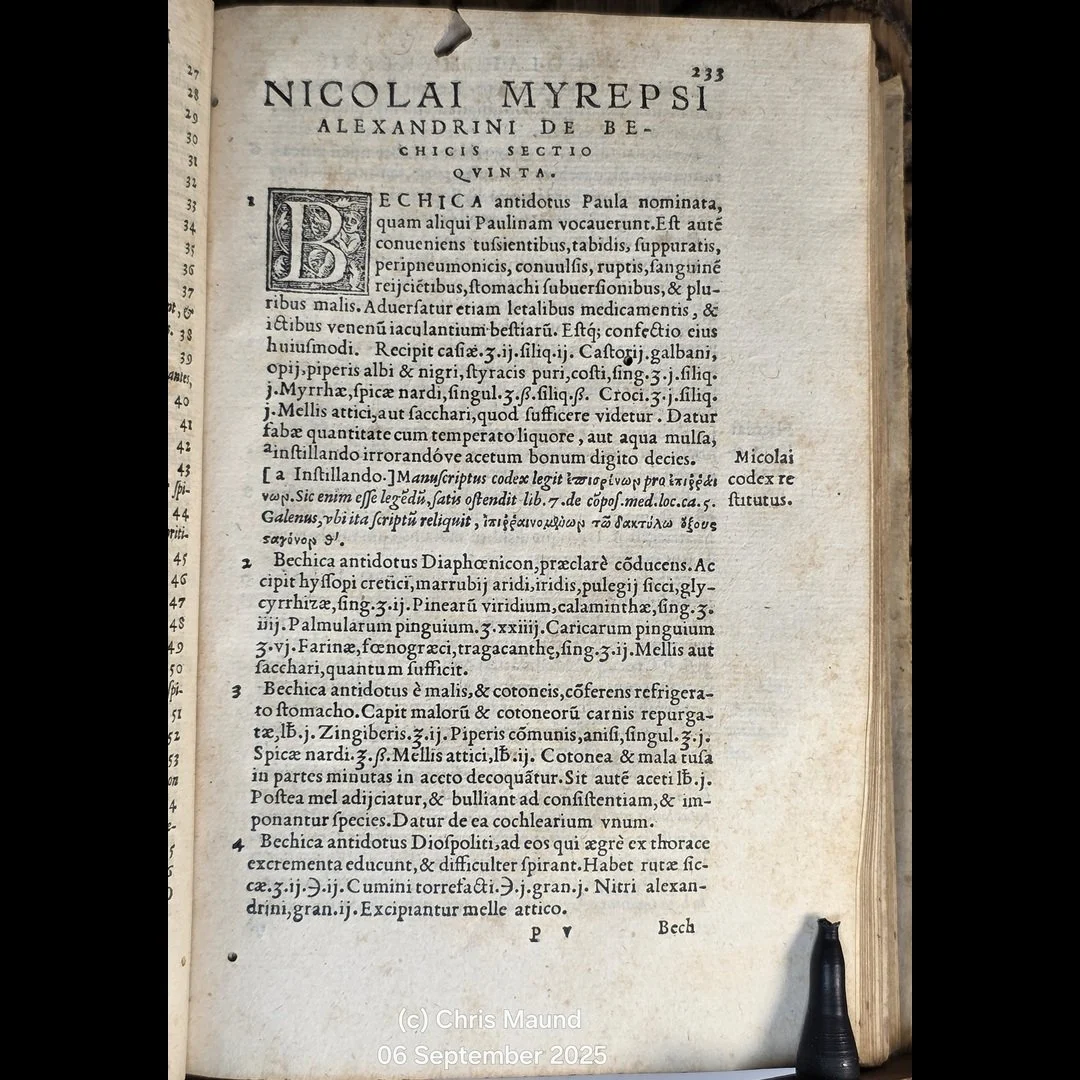 Image 10 of 16
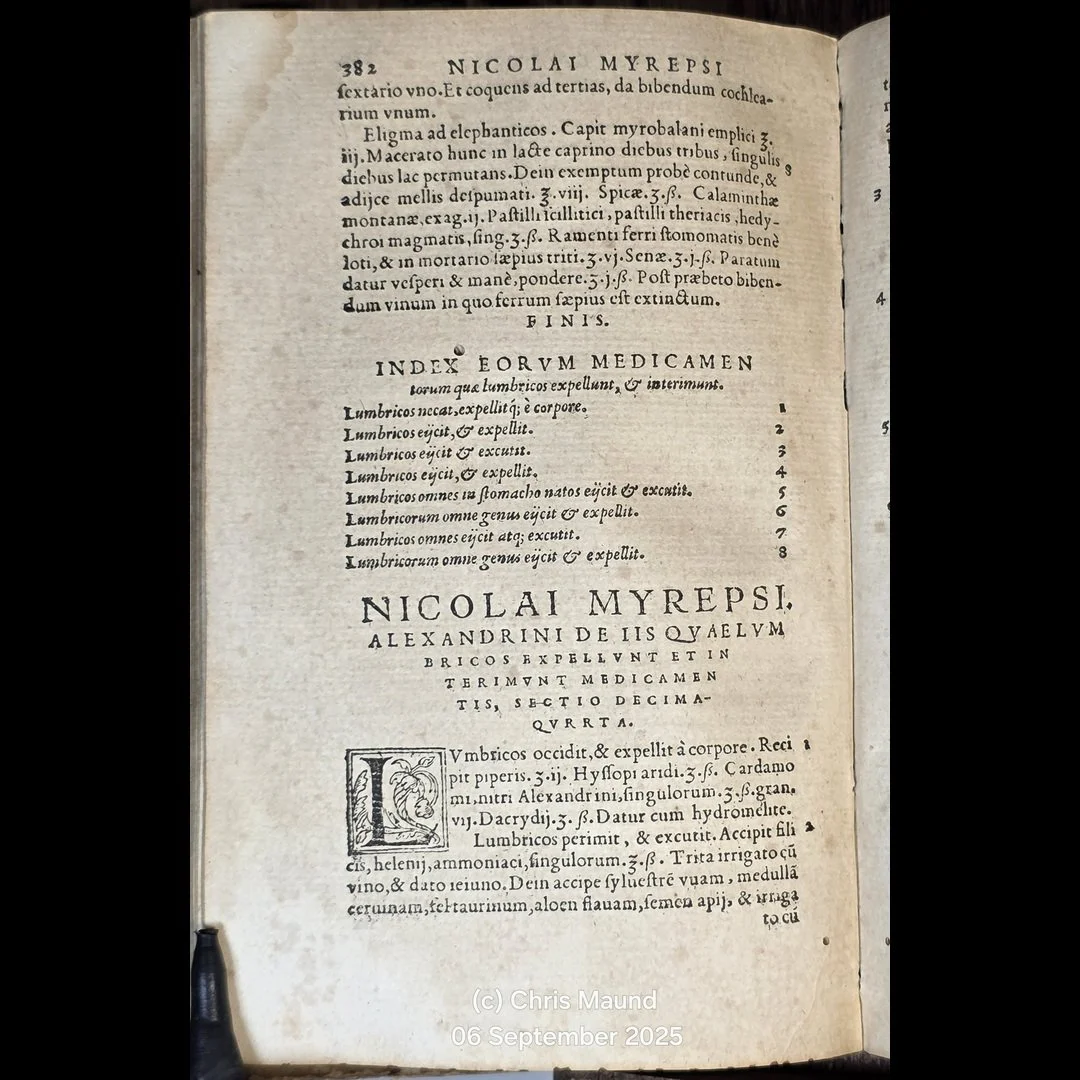 Image 11 of 16
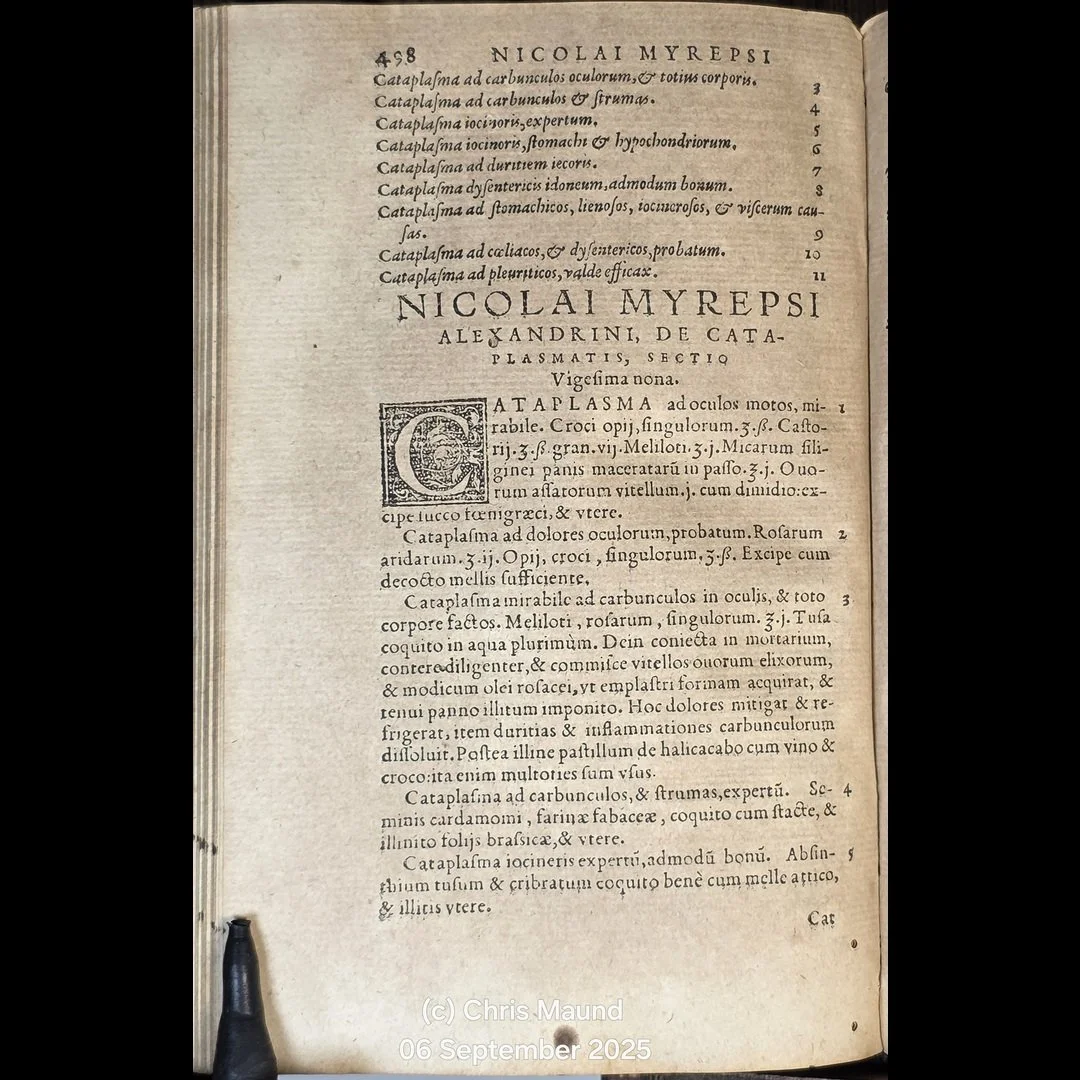 Image 12 of 16
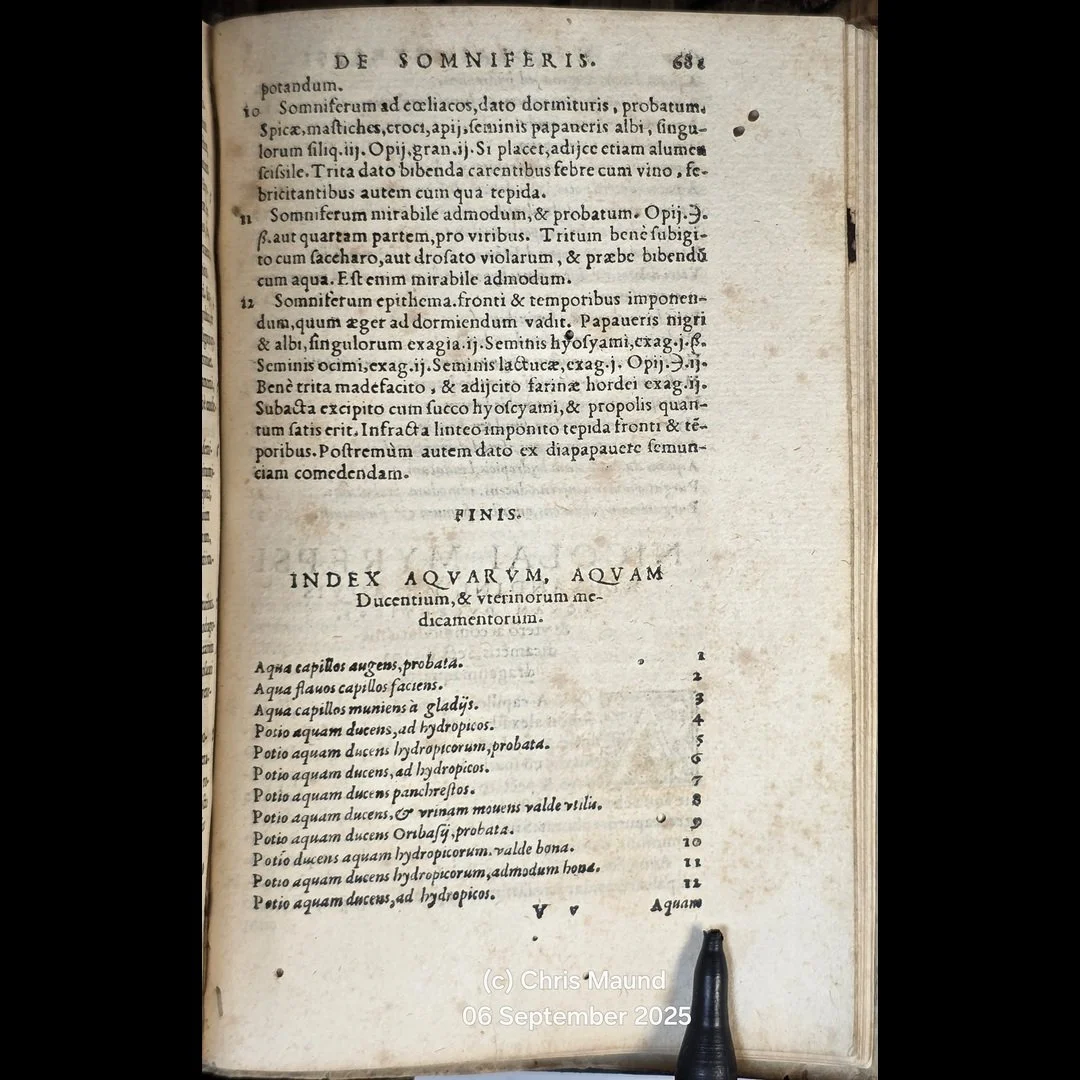 Image 13 of 16
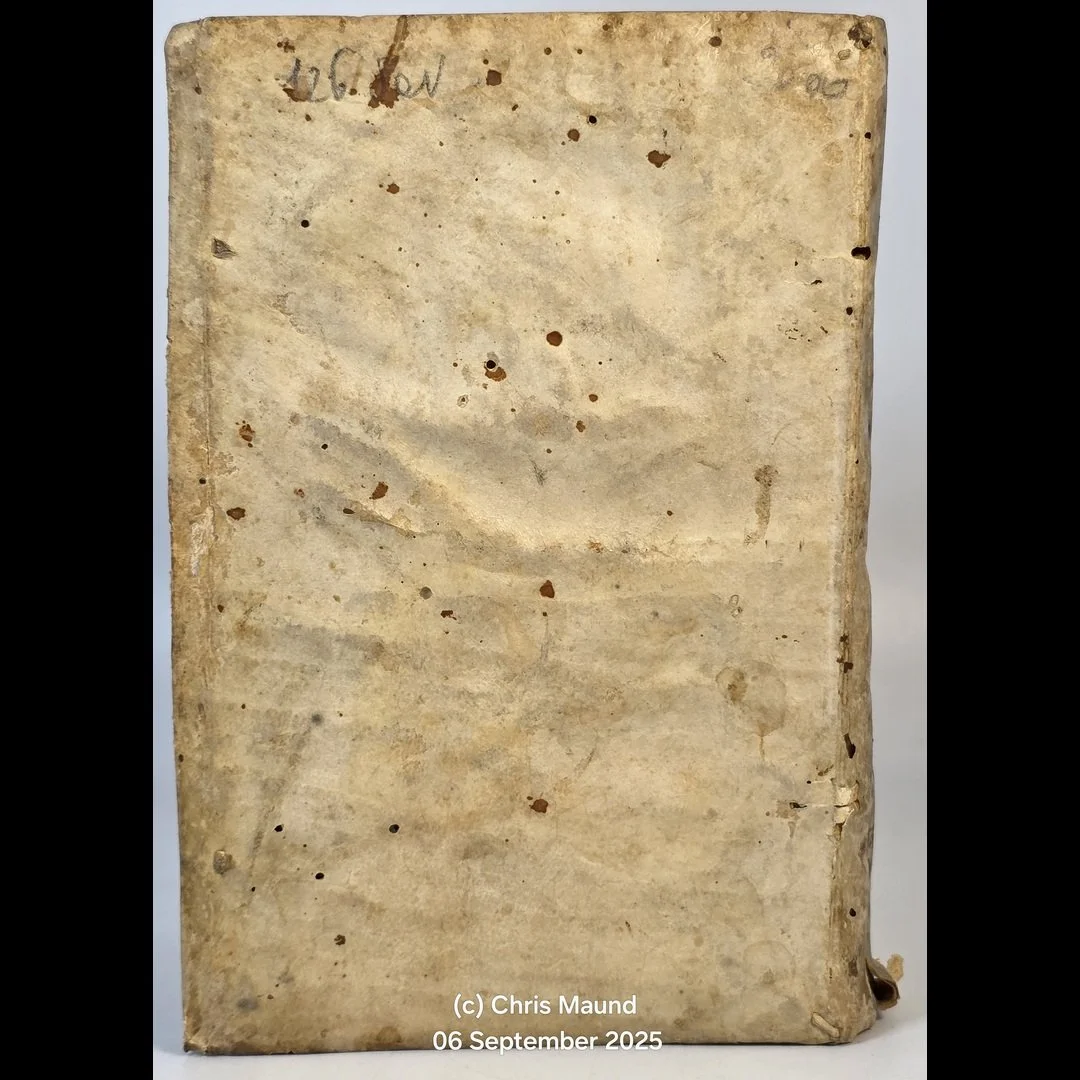 Image 14 of 16
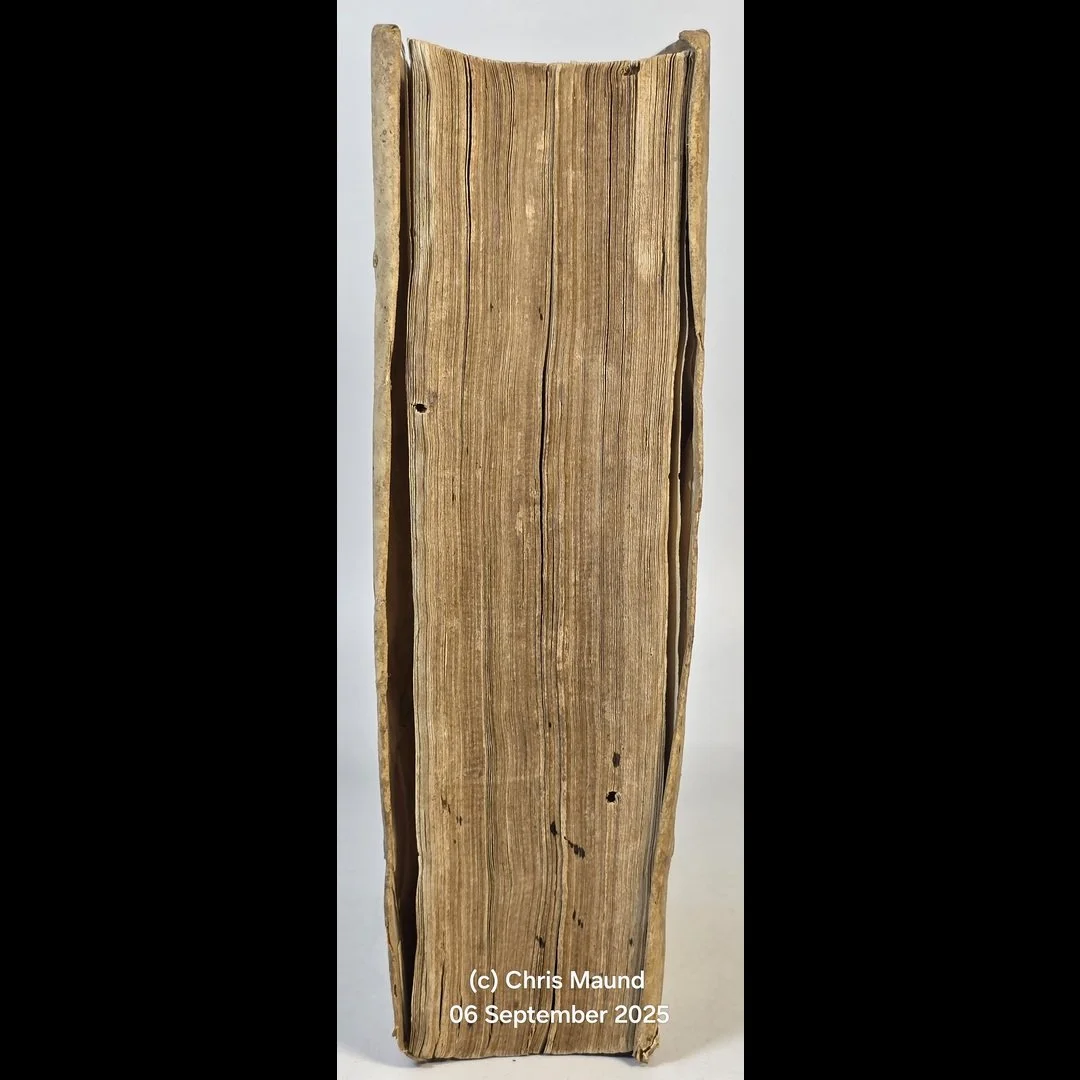 Image 15 of 16
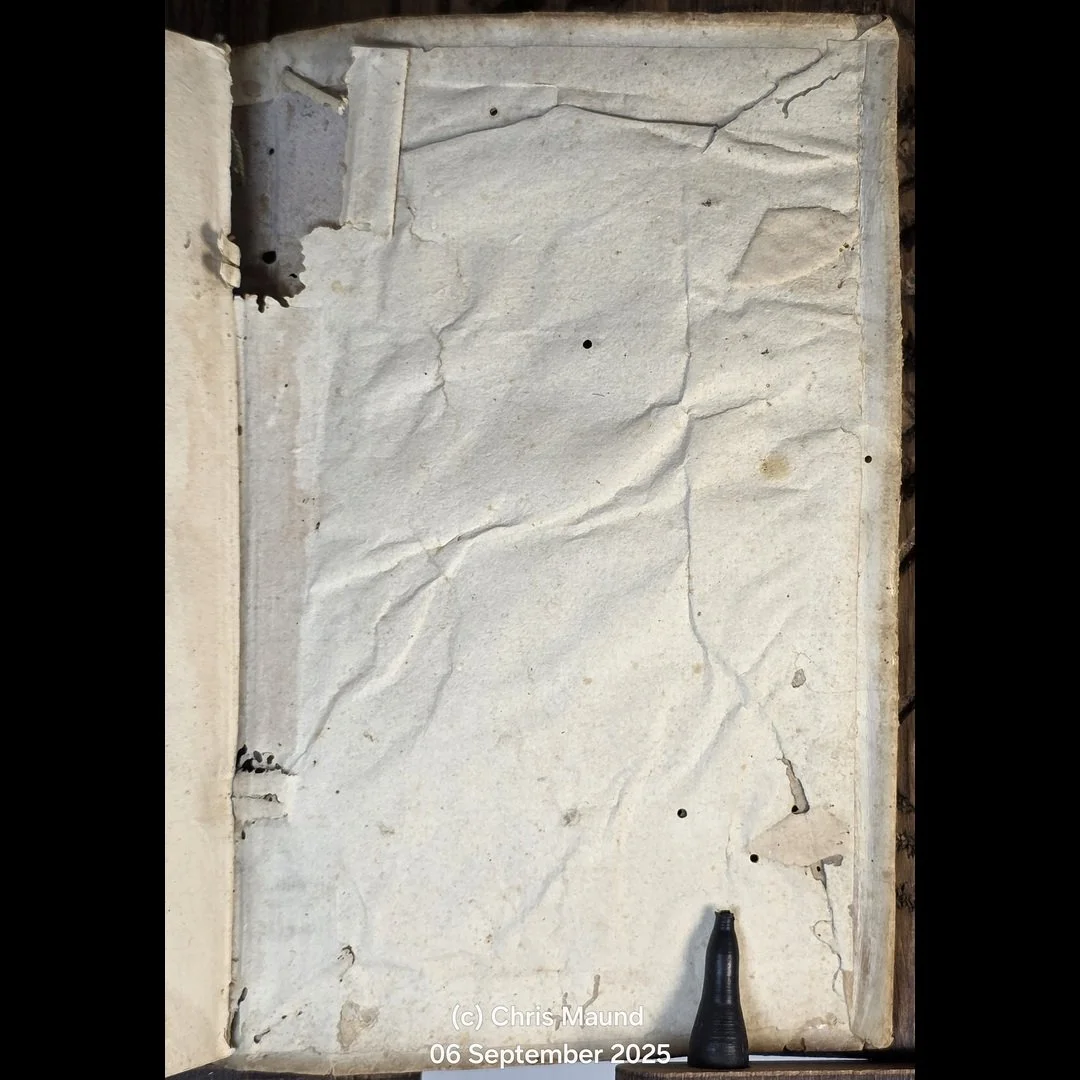 Image 16 of 16