1670 Second Edition Leigh family of Adlestrop Provenance
STATE-WORTHIES
By David Lloyd
KEY DETAILS
Condition: Very Good
Format: Hardcover, Octavo (Standard) (8vo 6 × 9 in 152 × 229 mm )
Note: Binding/size selection follows standard bibliographic conventions and is approximate; exact measurements may vary.
Published By: Thomas Milbourn for Samuel Speed, London, 1670
Language: English
Provenance: Leigh family of Adlestrop, Gloucestershire — the maternal family of Jane Austen.
Collation: Pagination corresponds with the bibliographical record: [20], 225, [7], 369–680, 721–1051, [5] pp.
Dust Jacket: None, as issued
SKU: BTETM0002627
Shipping Info: Approximate Package Dimensions H: 12.5, L: 30, W: 25 (Units: cm), W: 2Kg
Tracked Shipping, Insurance Coverage as per Customer Request
DESCRIPTION
State-Worthies
State-Worthies Or, The States-Men and Favourites of England
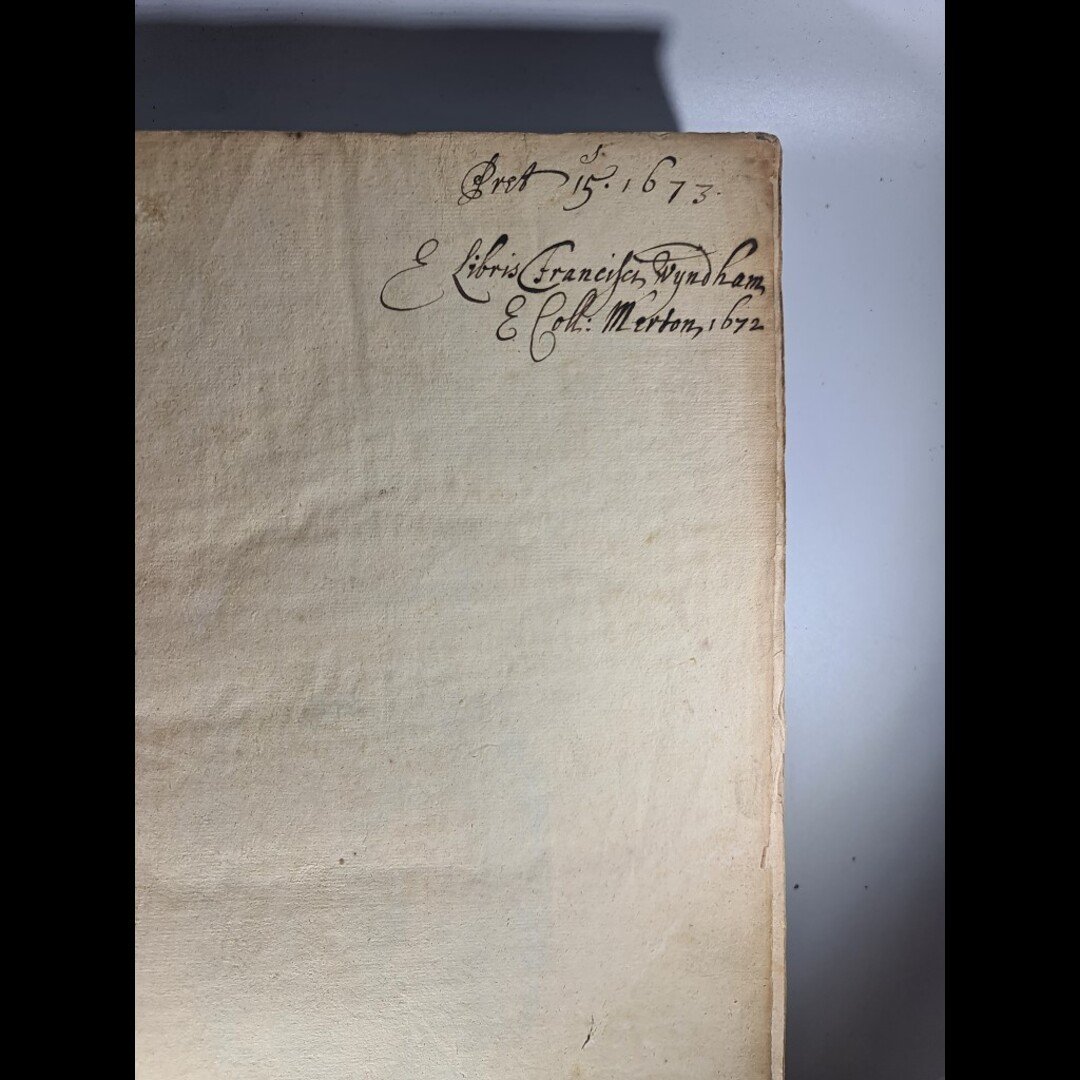
With ownership marks of members of the Leigh family of Adlestrop — the maternal family of Jane Austen — including William Leigh and the Rev. Dr Theophilus Leigh, Jane Austen's great-uncles, and the armorial bookplate of James Leigh of Adlestrop.
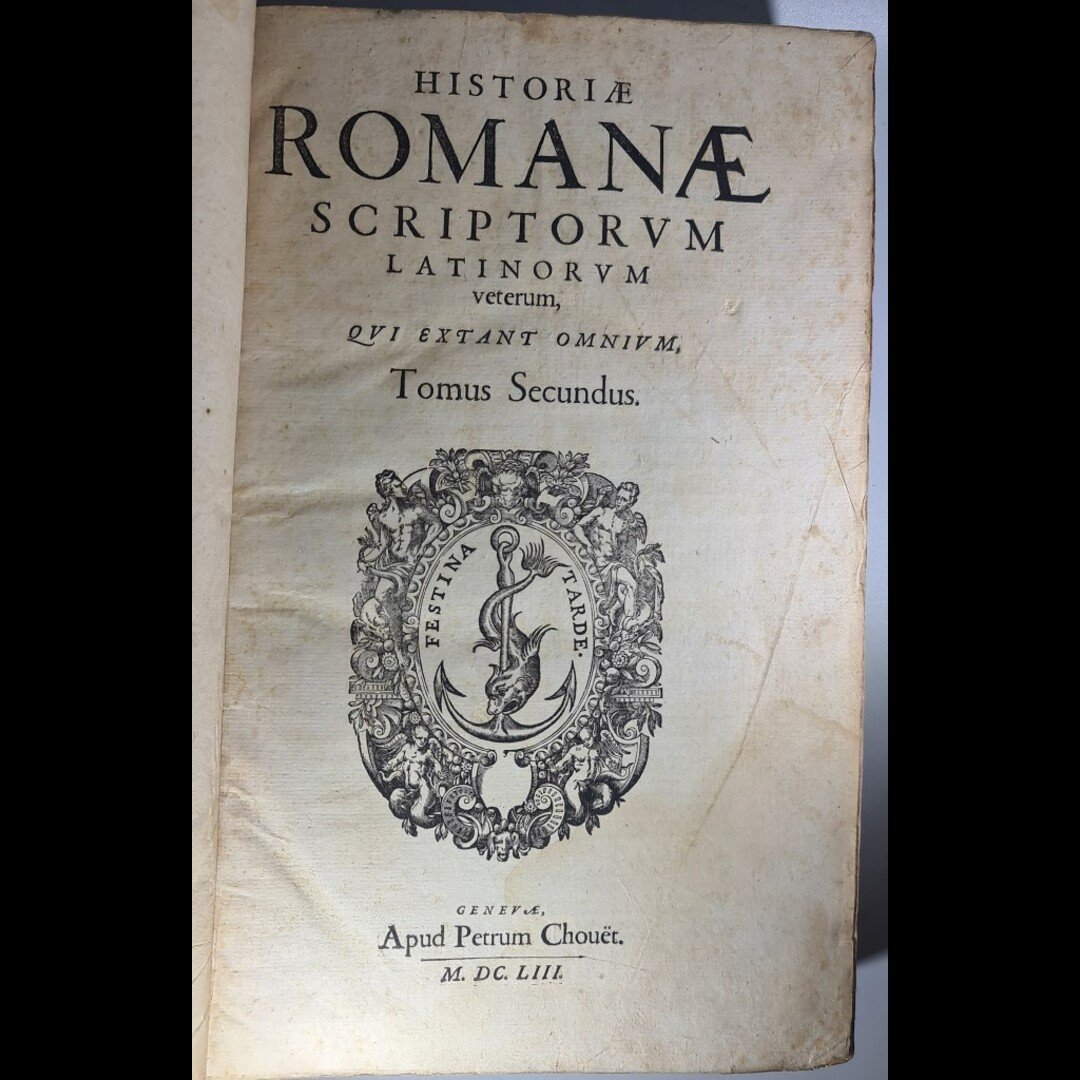
London: Printed by Thomas Milbourn for Samuel Speed, in Thread-needle-street neer the Royal-Exchange, 1670. Second Edition, with Additions.
Second edition, with additions, of David Lloyd's substantial Restoration collection of political and biographical character studies, first published in 1665 as The States-Men and Favourites of England since the Reformation.
8vo, approximately 195 × 145 mm. Title printed in red and black. Engraved frontispiece comprising six oval portraits of Henry VIII, Edward VI, Mary I, Elizabeth I, James I and Charles I, arranged around an architectural cartouche.
Pagination: [20], 225, [7], 369–680, 721–1051, [5] pp., including three advertisement leaves for Samuel Speed following p. [226] and two final advertisement leaves. The irregular jumps in printed pagination are correct for the edition and do not indicate missing text.
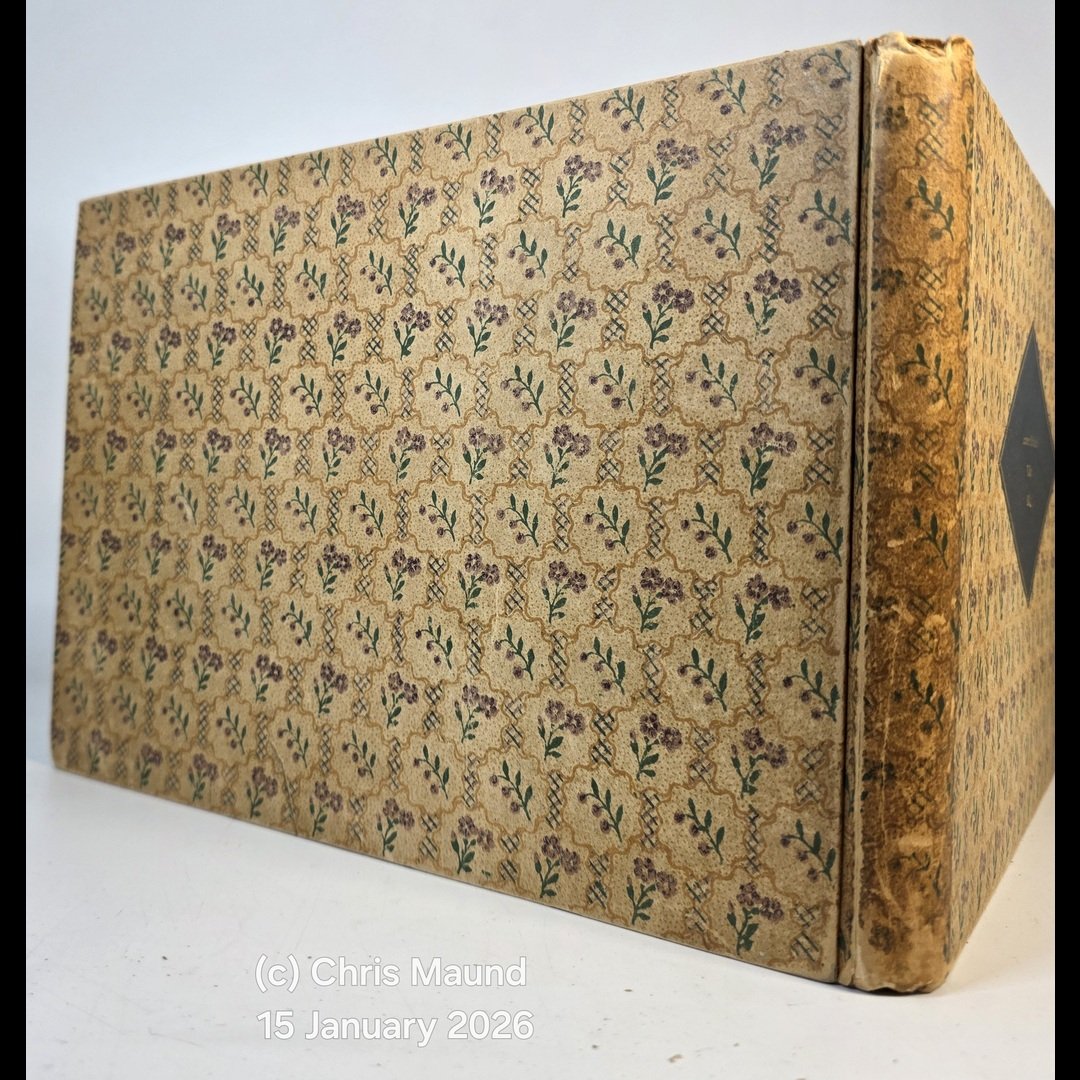
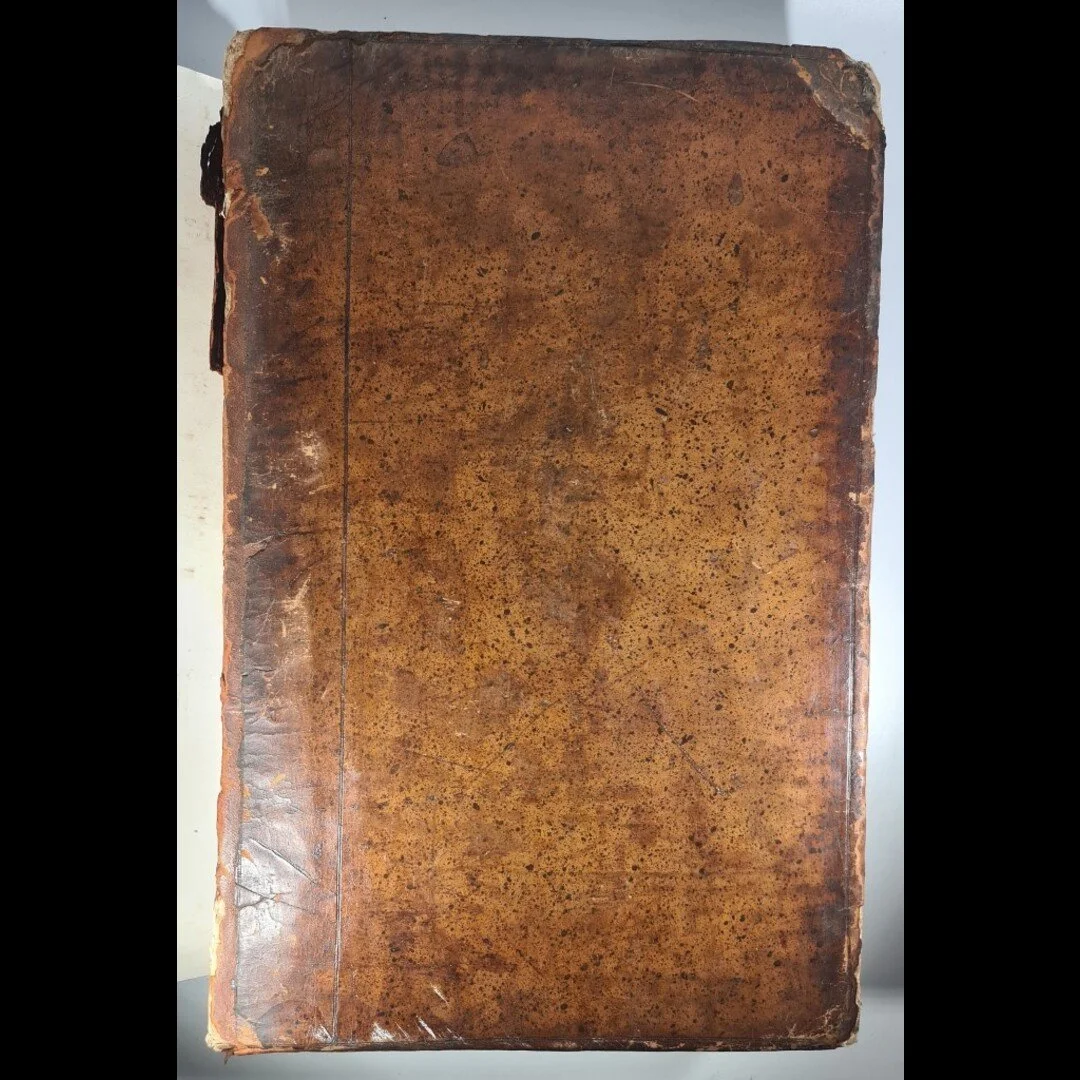
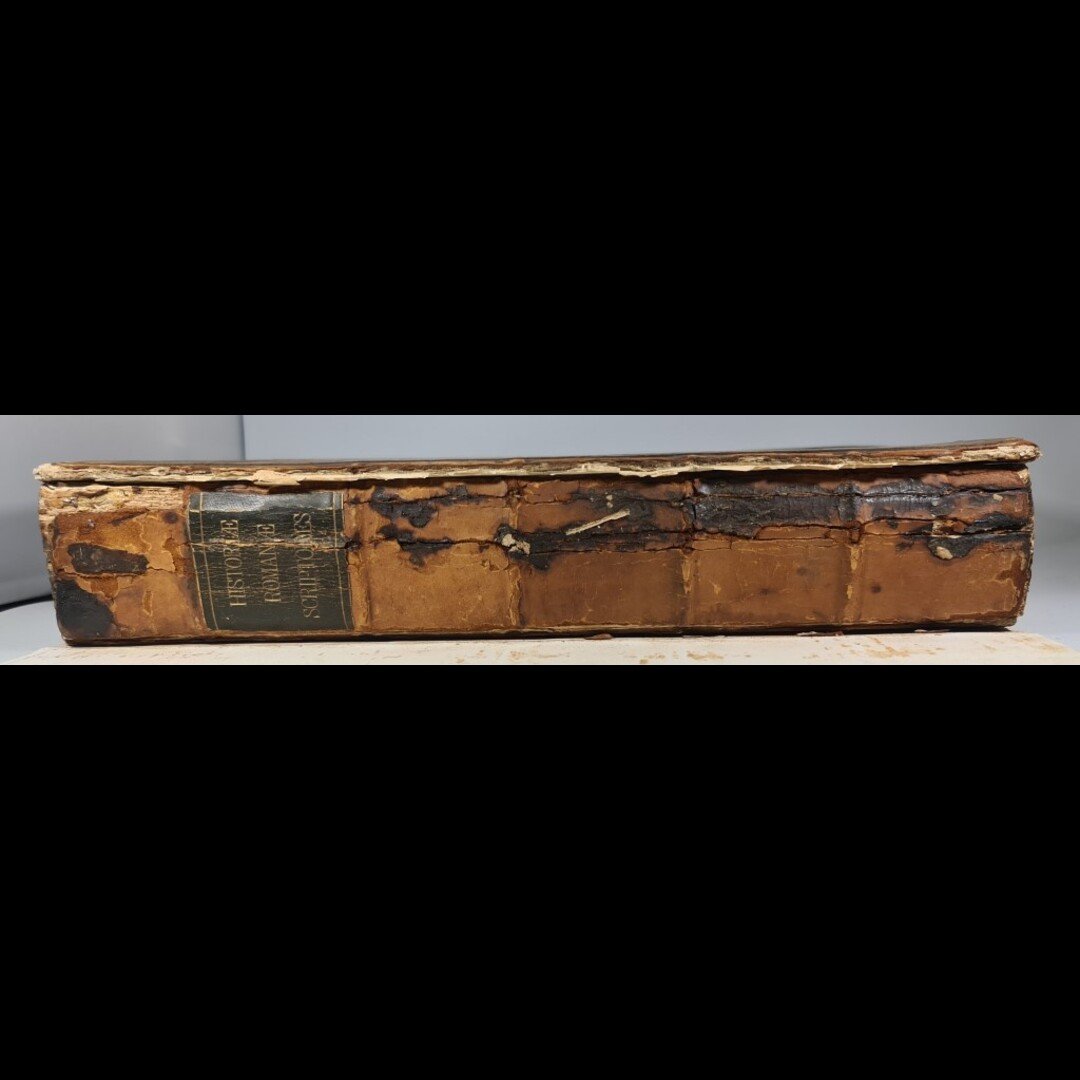
Bound in contemporary panelled calf, blind-ruled and blind-tooled, with raised bands to spine. An attractive and substantially unrestored seventeenth-century binding retaining considerable period character.
A particularly interesting copy distinguished by a group of eighteenth-century ownership marks placing it within the Leigh family of Adlestrop, Gloucestershire, the maternal family of Jane Austen.
PROVENANCE
Leigh family of Adlestrop, Gloucestershire — the maternal family of Jane Austen.
The volume contains three distinct eighteenth-century ownership marks associated with successive members of the Adlestrop Leigh family.
An early ownership inscription reads “William Leigh / Esq[r]”, attributable in this family context to William Leigh (1691–1757) of Adlestrop and Longborough, eldest son of Theophilus Leigh and the Hon. Mary Brydges.
A separate ownership inscription, “Theo: Leigh.”, is apparently in the hand of William's younger brother, the Rev. Dr Theophilus Leigh (1693–1785). Theophilus was elected Master of Balliol College, Oxford, in 1726 and remained Master for almost sixty years until his death. A substantial corpus of his correspondence survives in the Balliol College Archives and among the Leigh Family Papers at the Huntington Library.
To the front pastedown is the engraved armorial bookplate of: “James Leigh Esqr. / ADLESTROP”
with the arms of Leigh impaling Brydges and the family motto Tout vient de Dieu. The plate is that recorded for James Leigh (1724–1774), son of William Leigh, and can be associated with the period following James's 1755 marriage to Lady Caroline Brydges, daughter of Henry Brydges, 2nd Duke of Chandos.
The Austen connection is direct and precisely identifiable. William Leigh and the Rev. Dr Theophilus Leigh were brothers of the Rev. Thomas Leigh (1696–1764). Thomas's daughter Cassandra Leigh (1739–1827) married the Rev. George Austen and was the mother of Jane Austen (1775–1817).
William and Theophilus Leigh were therefore Jane Austen's maternal great-uncles.
James Leigh, William's son, was first cousin to Jane Austen's mother Cassandra Leigh Austen, making him Jane Austen's first cousin once removed.
The three ownership marks provide unusually persuasive physical evidence that this volume circulated within the eighteenth-century Leigh family of Adlestrop. While the precise order of use between William and Theophilus cannot now be established, the combination of their inscriptions with James Leigh's later Adlestrop armorial bookplate places the book firmly within the family library.
Adlestrop was one of the principal seats of the Leigh family and remained closely associated with Jane Austen's maternal ancestry. The provenance should therefore be understood as Leigh family / Austen maternal-family provenance, rather than as evidence that Jane Austen herself owned or handled the volume.
CONDITION, COLLATION & COPY NOTES
COLLATION
Pagination corresponds with the bibliographical record: [20], 225, [7], 369–680, 721–1051, [5] pp.
With the three advertisement leaves following p. [226] and two final advertisement leaves called for in the Folger copy.
The apparently discontinuous pagination — from 225 to 369 and subsequently from 680 to 721 — is an issue characteristic and does not represent loss of the intervening text.
The engraved frontispiece is unattributed here. Although this plate has occasionally been associated with Wenceslaus Hollar, no sufficiently authoritative evidence for that attribution has been established and it is therefore not repeated in this catalogue description.
Contemporary panelled calf with blind-ruled and tooled boards and raised bands to spine. General rubbing and surface wear consistent with age and use; corners rubbed and bumped, with wear at the spine ends. Joints show cracking and wear, particularly towards the head and foot, but the binding retains considerable integrity and seventeenth-century character. No obvious evidence of conventional rebacking is apparent.
Internally generally clean and crisp. Title printed in red and black remains strong. The engraved six-portrait frontispiece is present and gives a good impression. Scattered age-toning, spotting and occasional staining, but overall the text remains notably presentable for a heavily used historical work of this period.
With the important early ownership inscriptions “William Leigh / Esq[r]” and “Theo: Leigh.”, together with the engraved armorial bookplate of James Leigh Esq., Adlestrop, as described above.
Please see Photos as part of condition report.
REFERENCES
Wing L2646.
ESTC R21786.
Folger Shakespeare Library, State-worthies. Or, The states-men and favourites of England since the reformation, 1670, call number L2646.
A. W. Franks, Catalogue of British and American Book Plates Bequeathed to the Trustees of the British Museum by Sir Augustus Wollaston Franks — recording “Leigh, James, Esqr., Adlestrop”, arms of Leigh impaling Brydges.
Huntington Library, Leigh Family Papers, including extensive surviving correspondence of William Leigh (1691–1757) and the Rev. Dr Theophilus Leigh (1693–1785).
Balliol College Archives, MS 403, Original Letters of Theophilus Leigh, Master of Balliol, 1726–1785.
SYNOPSIS
David Lloyd's State-Worthies is an extensive collection of political and biographical portraits of the principal statesmen, ministers, courtiers, churchmen and royal favourites of England from the Reformation to the early Stuart period.
Organised through the reigns of Henry VIII, Edward VI, Mary I, Elizabeth I, James I and Charles I, Lloyd considers not simply the lives of his subjects but their character, political judgement, advancement, successes, failures and falls from favour. The result occupies a distinctive position between biography, political history and seventeenth-century character writing.
The work first appeared in 1665, only five years after the Restoration of Charles II. Lloyd wrote from an unmistakably Royalist perspective, and the book consequently offers more than retrospective Tudor and Stuart biography: it provides evidence of how England's recent political past was being reconstructed and interpreted in the intellectual climate following the Civil Wars, Commonwealth and Restoration.
Its subjects encompass many of the most consequential figures of sixteenth- and seventeenth-century English government, presenting their careers as examples of prudence, ambition, loyalty, political calculation and misfortune.
The present 1670 second edition considerably expanded Lloyd's original text. Its enduring interest is demonstrated by the later 1766 edition edited by Charles Whitworth, who supplemented Lloyd's accounts with additional material and alternative authorities in an attempt to temper what contemporaries and later commentators regarded as Lloyd's strongly Royalist sympathies.
As such, State-Worthies remains of interest not only as a source for Tudor and Stuart political biography, but as a substantial example of Restoration historical writing and political memory.
This particular copy is elevated considerably above an ordinary example by its survival in contemporary calf and, especially, by its unusually rich Leigh family of Adlestrop provenance, connecting the volume with two of Jane Austen's maternal great-uncles and with the wider family from which her mother, Cassandra Leigh Austen, descended.
AUTHOR BIO
David Lloyd (1635–1692) was a Welsh clergyman, biographer and historical writer. Born at Pant Mawr, Trawsfynydd, Merionethshire, he was educated at Ruthin School before entering Merton College, Oxford, as a servitor in 1653. He later graduated from Oriel College and proceeded M.A. in 1659.
After holding the rectory of Ibstone, Lloyd moved to London and became a reader at the Charterhouse. His literary career was not without controversy: publication of The Countess of Bridgewater's Ghost in 1663 resulted in his imprisonment for several months following objections from the Earl of Bridgewater.
Lloyd subsequently served as chaplain to Isaac Barrow, Bishop of St Asaph, and held a number of Welsh ecclesiastical livings, including Abergele, Northop and Llanddulas.
He published extensively on contemporary and recent history, political biography and the experiences of Royalist figures during the Civil Wars and Interregnum. His works include Modern Policy Compleated (1660), The States-Men and Favourites of England since the Reformation (1665), its expanded second edition State-Worthies (1670), and Memoires of the Lives, Actions, Sufferings and Deaths of Royalist sufferers.
His writing is characteristically partisan and strongly Royalist, but that very perspective gives his works considerable value for understanding the political culture and historical memory of Restoration England.

 Image 1 of 30
 Image 2 of 30
 Image 3 of 30
 Image 4 of 30
 Image 5 of 30
 Image 6 of 30
 Image 7 of 30
 Image 8 of 30
 Image 9 of 30
 Image 10 of 30
 Image 11 of 30
 Image 12 of 30
 Image 13 of 30
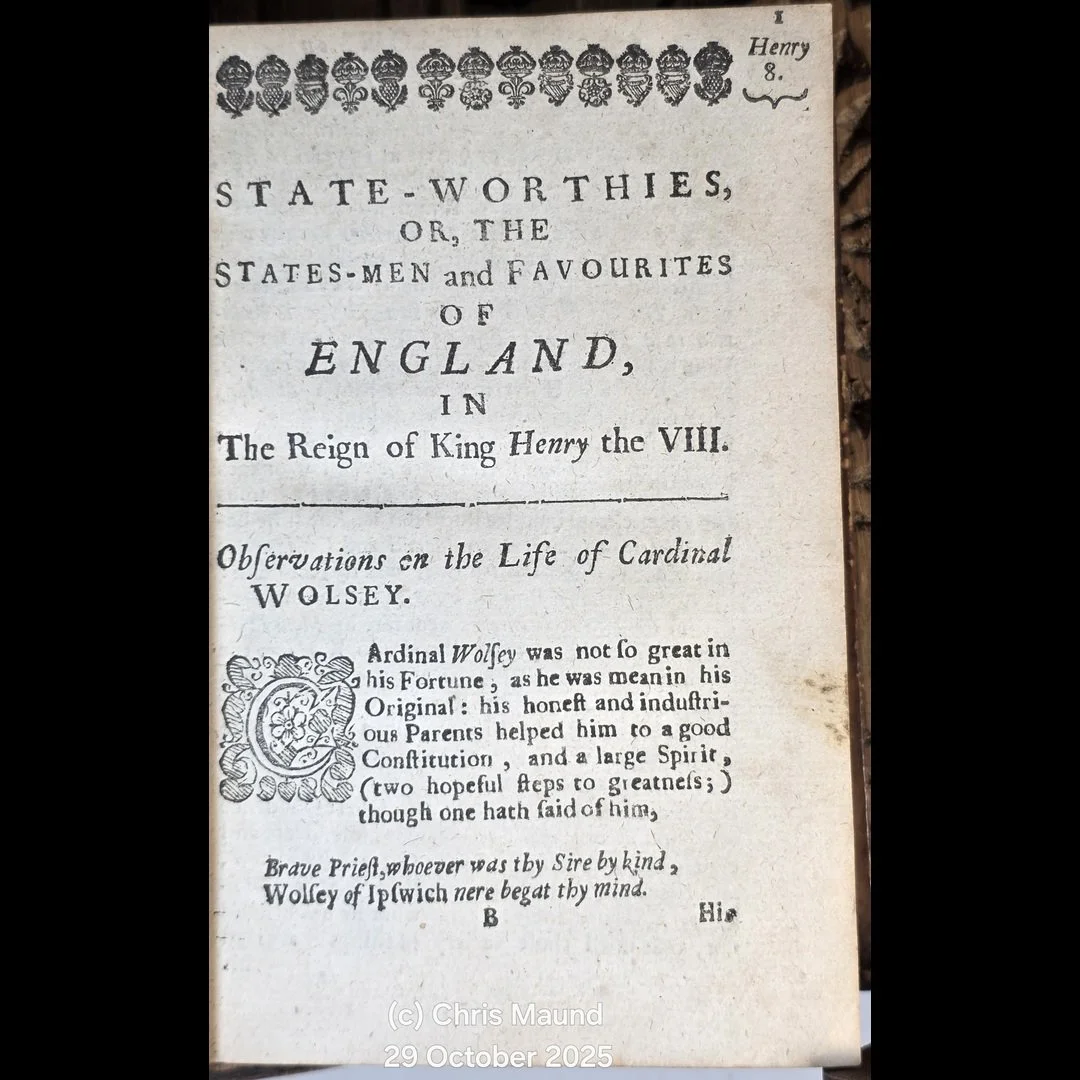 Image 14 of 30
 Image 15 of 30
 Image 16 of 30
 Image 17 of 30
 Image 18 of 30
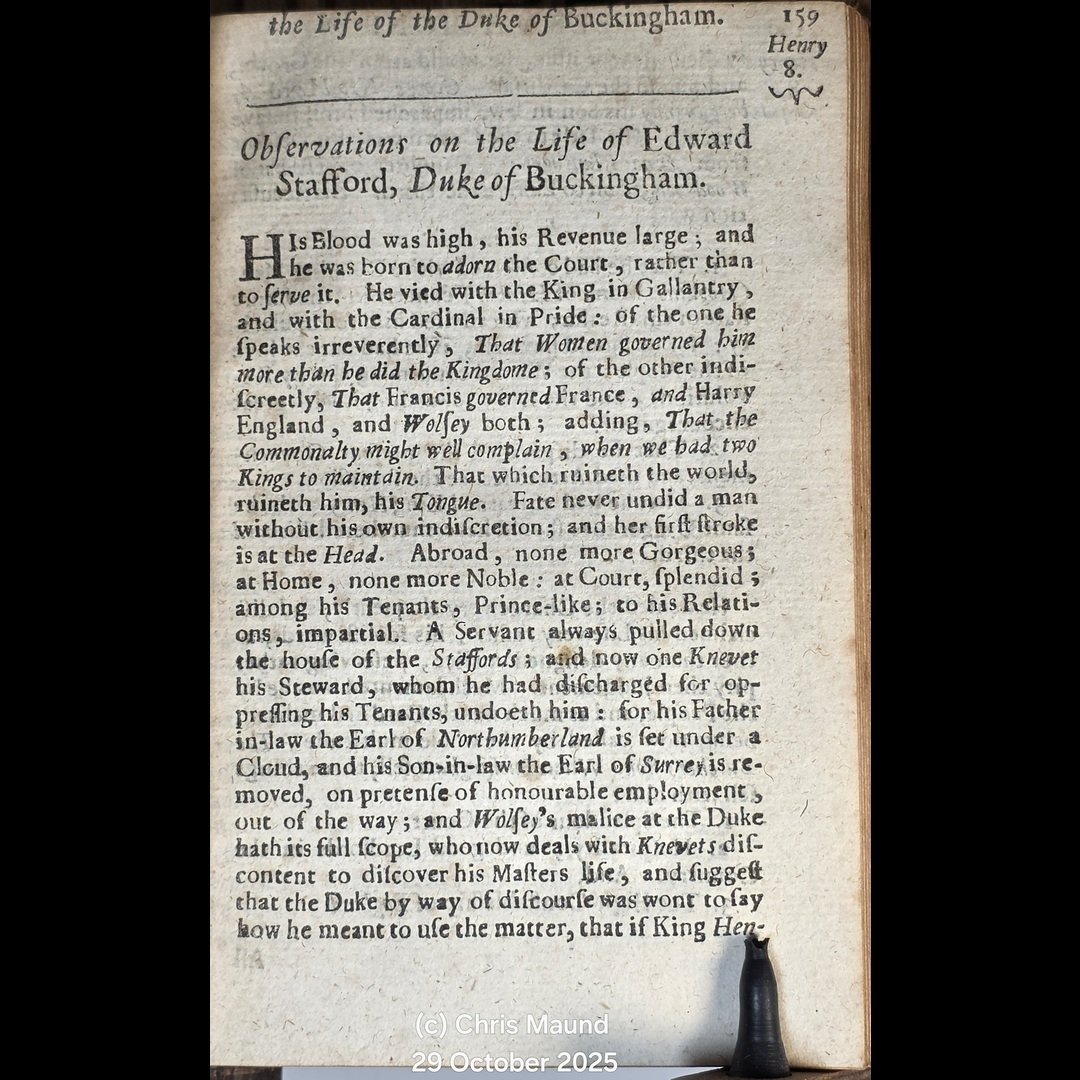 Image 19 of 30
 Image 20 of 30
 Image 21 of 30
 Image 22 of 30
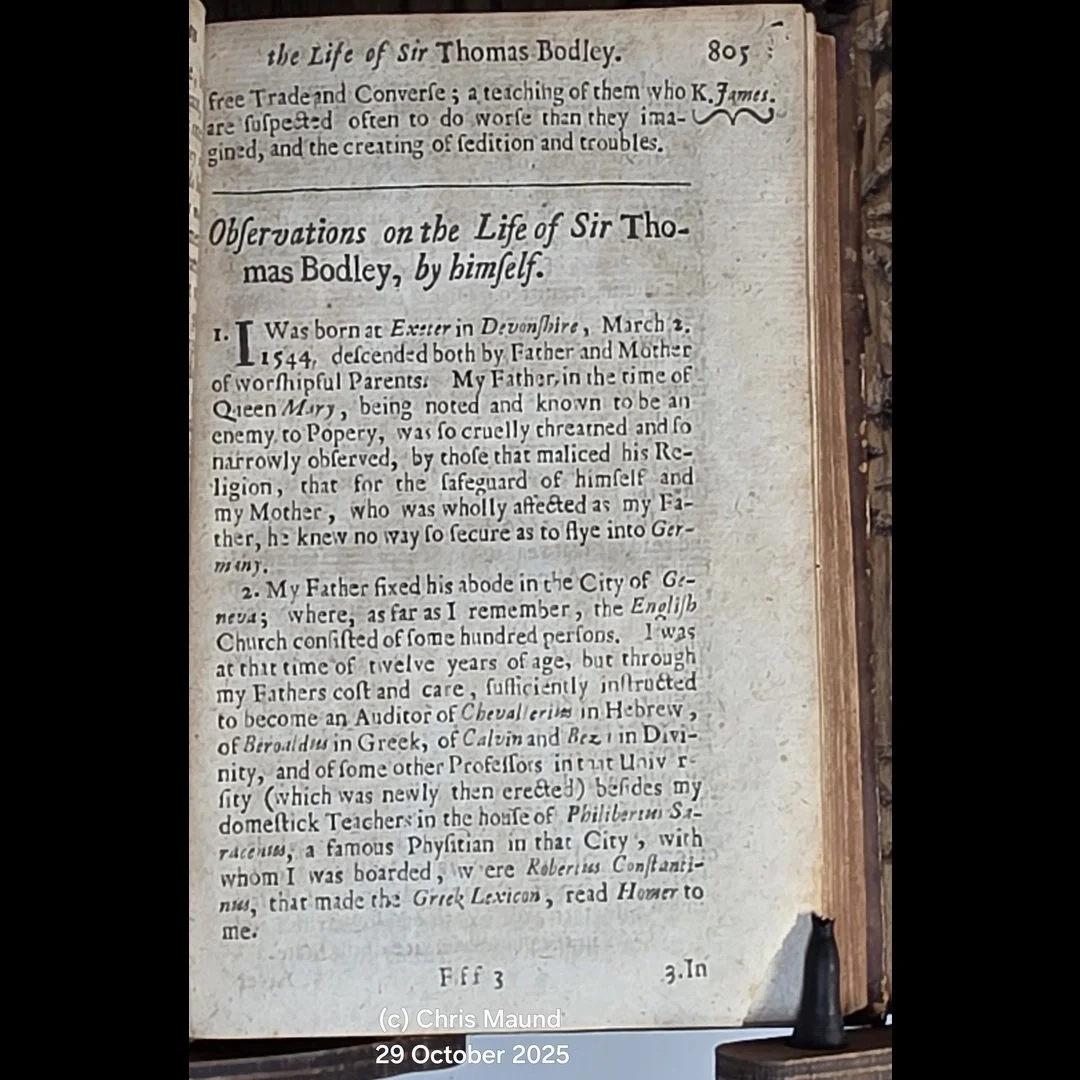 Image 23 of 30
 Image 24 of 30
 Image 25 of 30
 Image 26 of 30
 Image 27 of 30
 Image 28 of 30
 Image 29 of 30
 Image 30 of 30