1597 Second Edition
DANIEL HIS CHALDIE VISIONS
By Hugh Broughton
KEY DETAILS
Condition: Good
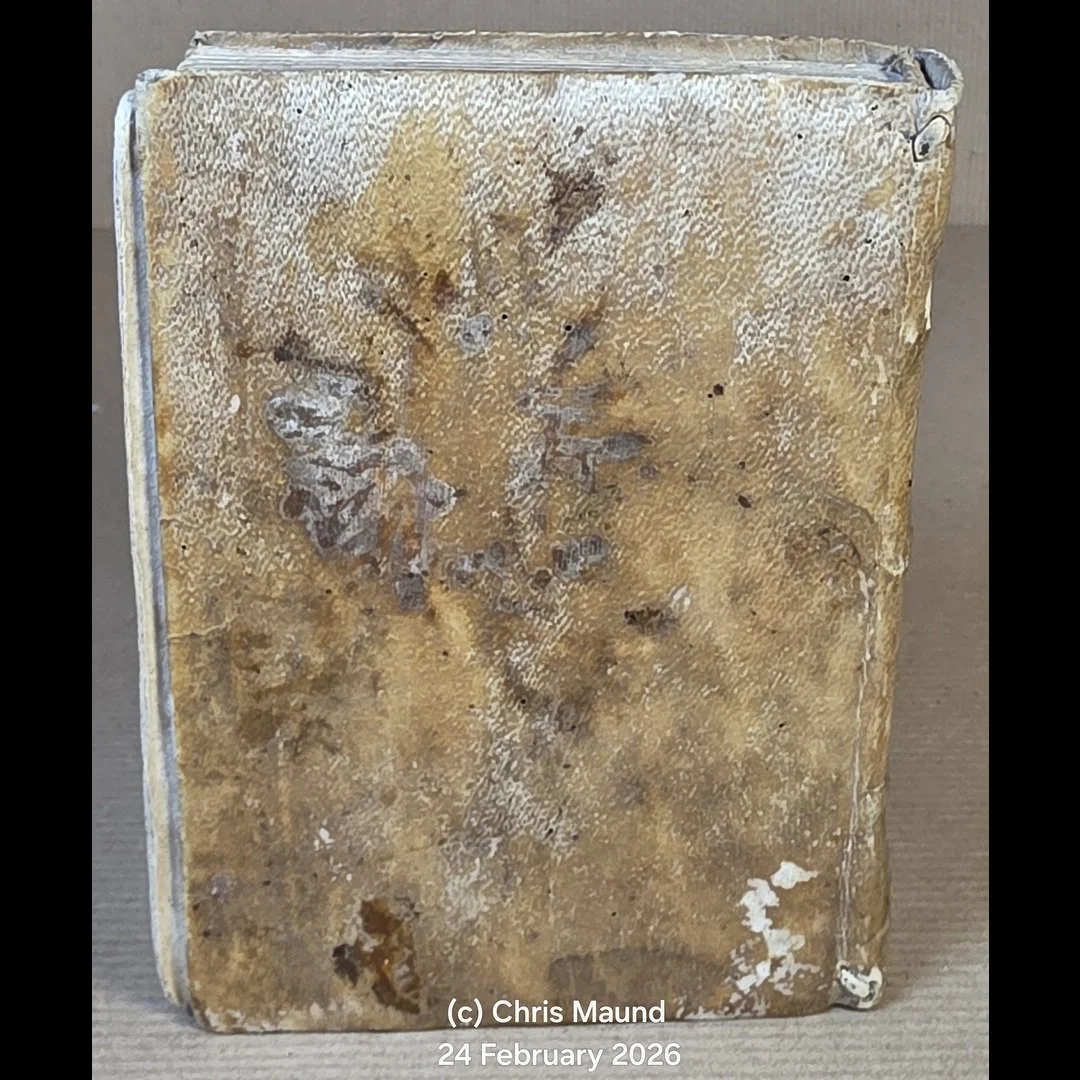
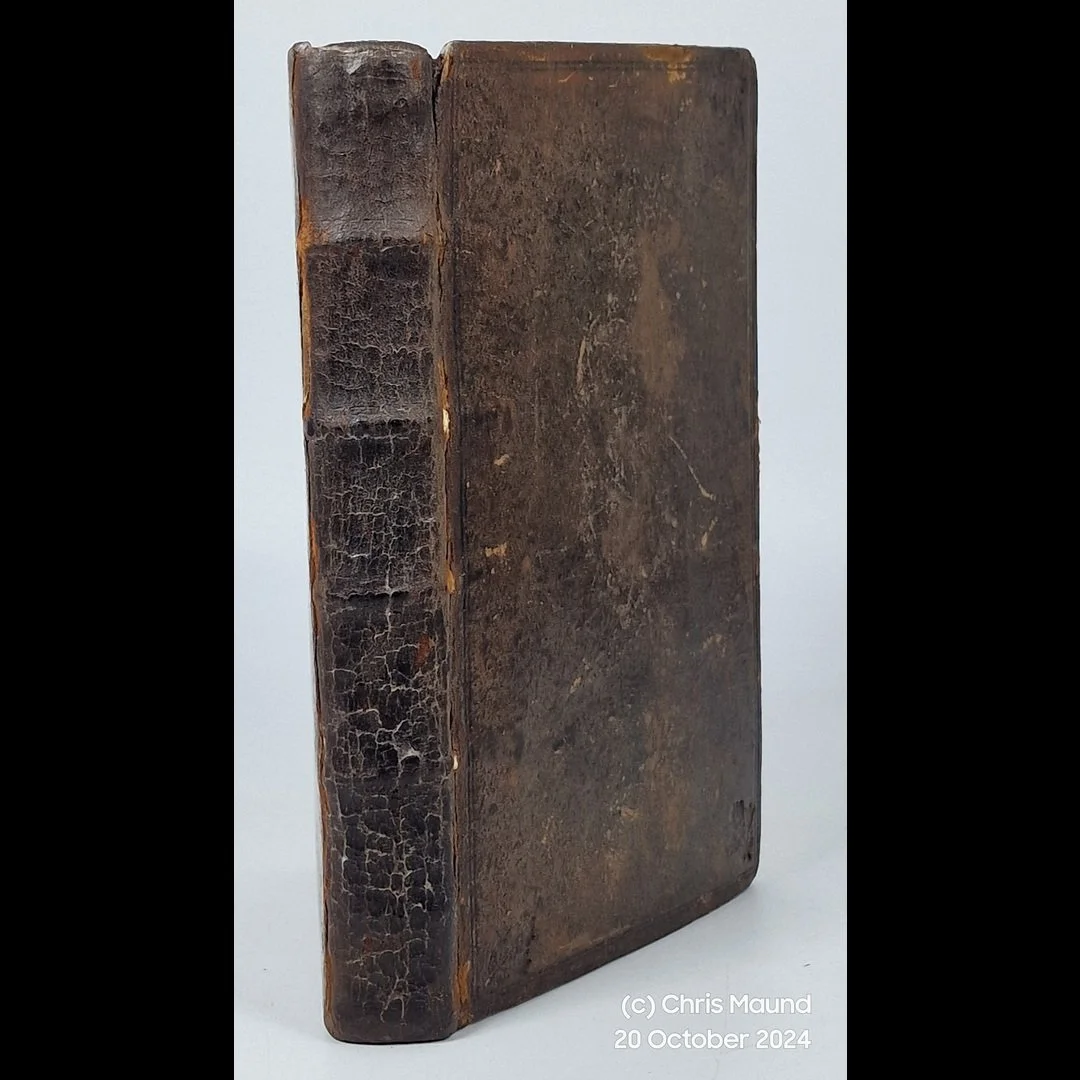
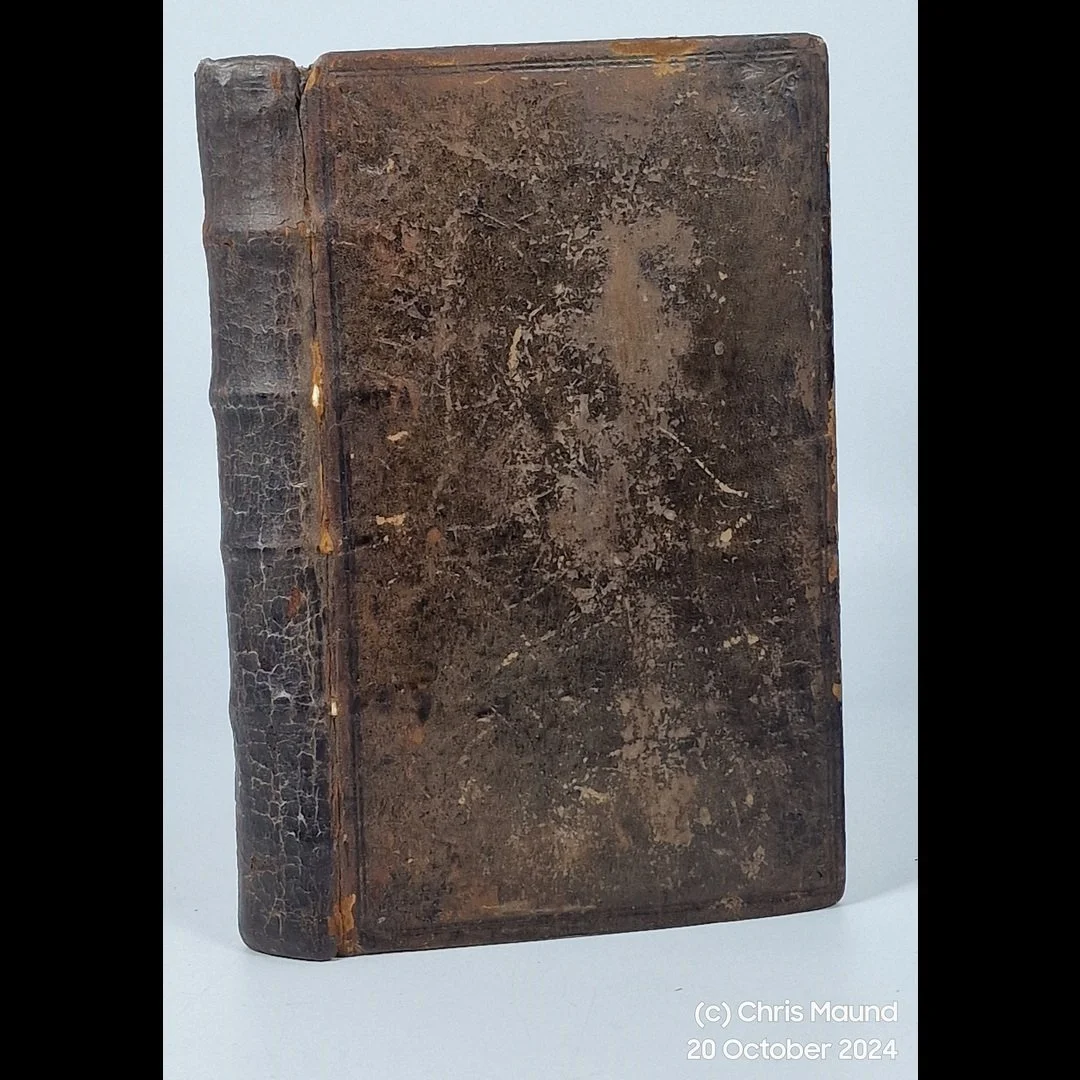
Format: Hardcover, Later half calf over marbled boards, small quarto (4to), approximately 19 cm tall.
Published By: At London, printed by Gabriell Simson dwelling in Fleete-lane, London, 1597
Language: English, with Hebrew, Aramaic and Greek.
Collation: *⁴ A–K⁴, H⁴, L–P⁴; Extent: [136] pages / 68 leaves; Plates: None present, of four called for
Dust Jacket: None, as issued, No Jacket
SKU: BTETM0002638
Shipping Info: Approximate Package Dimensions H: 12.5, L: 30, W: 25 (Units: cm), W: 2Kg
Tracked Shipping, Insurance Coverage as per Customer Request
DESCRIPTION
Daniel His Chaldie Visions
Daniel His Chaldie Visions and his Ebrew: both translated after the originall: and expounded both, by reduction of heathen most famous stories unto the exact proprietie of his wordes (which is the surest certaintie what he must meane:) and by ioyning all the Bible, and learned tongues to the frame of his worke.
A scarce Elizabethan biblical translation and commentary by one of the foremost English Hebraists of the sixteenth century, printed in London by Gabriell Simson in 1597. This is the second edition, following the first edition of 1596.
Much more than a conventional commentary on the Book of Daniel, Broughton’s work stands at the intersection of biblical translation, Hebrew and Aramaic philology, ancient history, chronology and Protestant scriptural interpretation. Working directly from Daniel’s Hebrew and “Chaldee” — Biblical Aramaic — Broughton attempts to establish the precise meaning of the prophet’s words before correlating the visions with Persian, Greek and other ancient historical traditions.
Of exceptional typographical interest is the substantial Hebrew material in quire K, where Hebrew type is strikingly printed in red and black beneath the heading “The certaintie of the Ebrew.” The first edition of 1596 has an important place in the history of Hebrew printing in England for its unusually extensive use of Hebrew type; this second edition, issued only a year later, preserves the same remarkable Elizabethan engagement with Hebrew language and typography.
The book is therefore of considerable crossover interest for collectors of early English printing, biblical translation, Reformation theology, Hebraica and Anglo-Judaica, Hebrew typography, ancient chronology and prophetic literature.
CONDITION, COLLATION & COPY NOTES
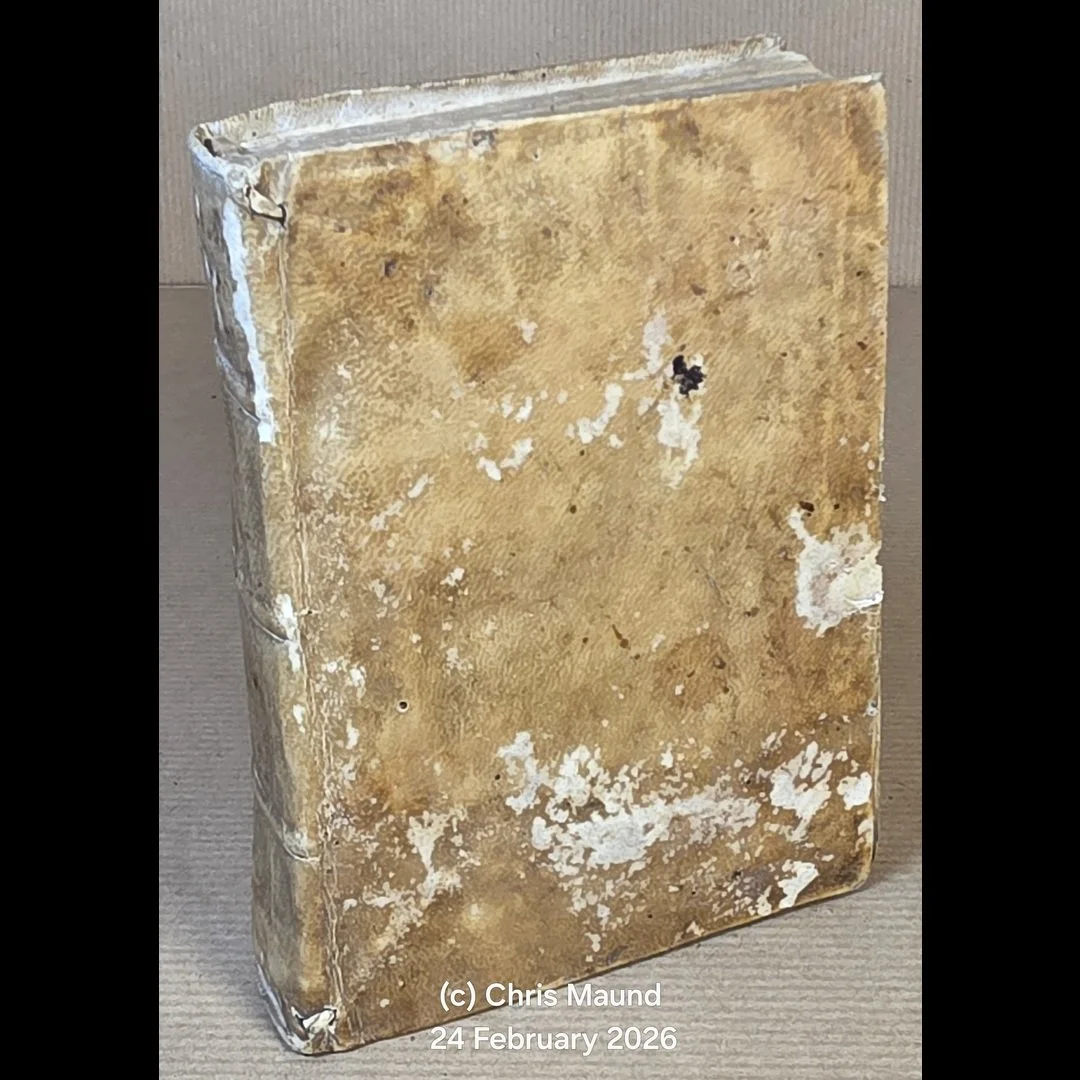
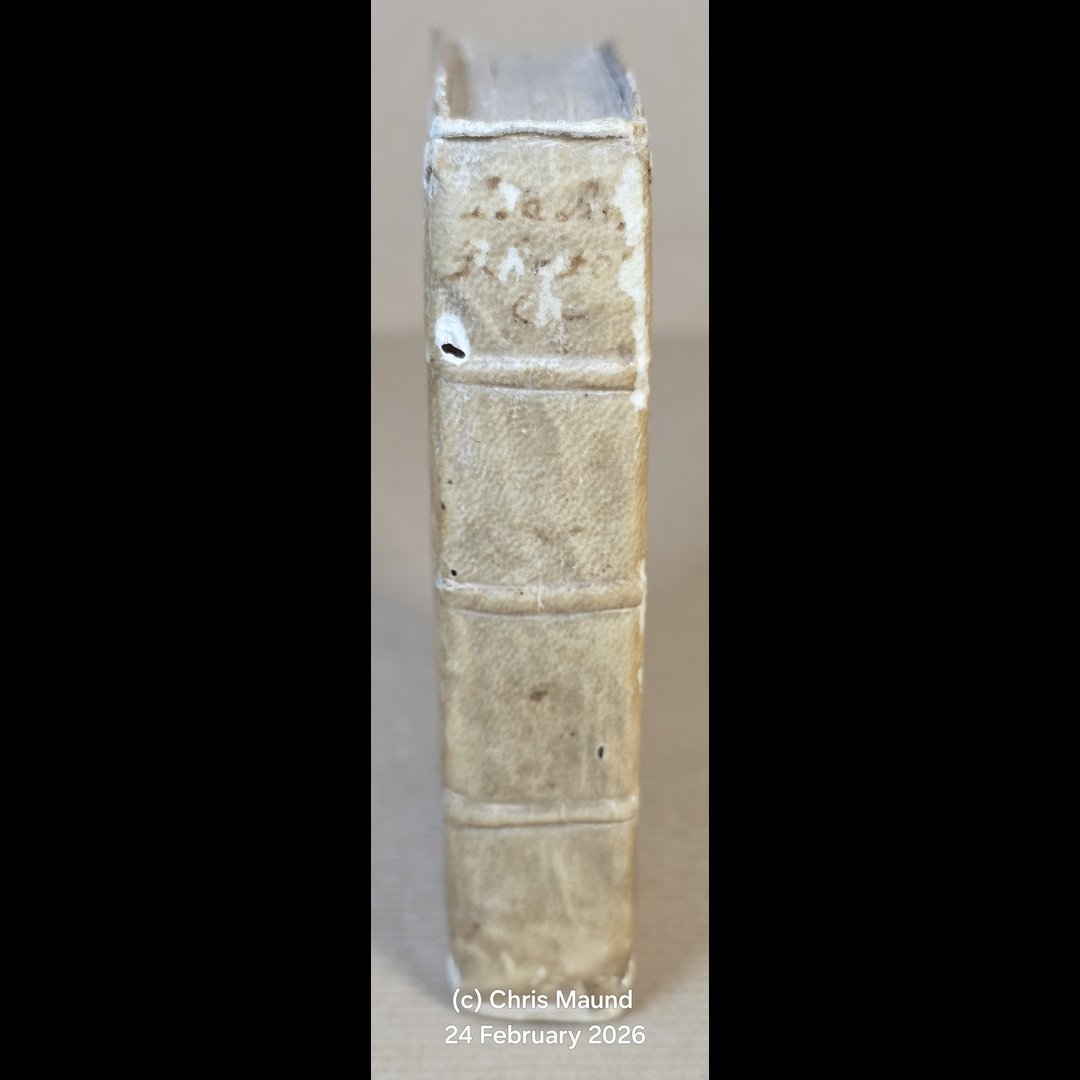
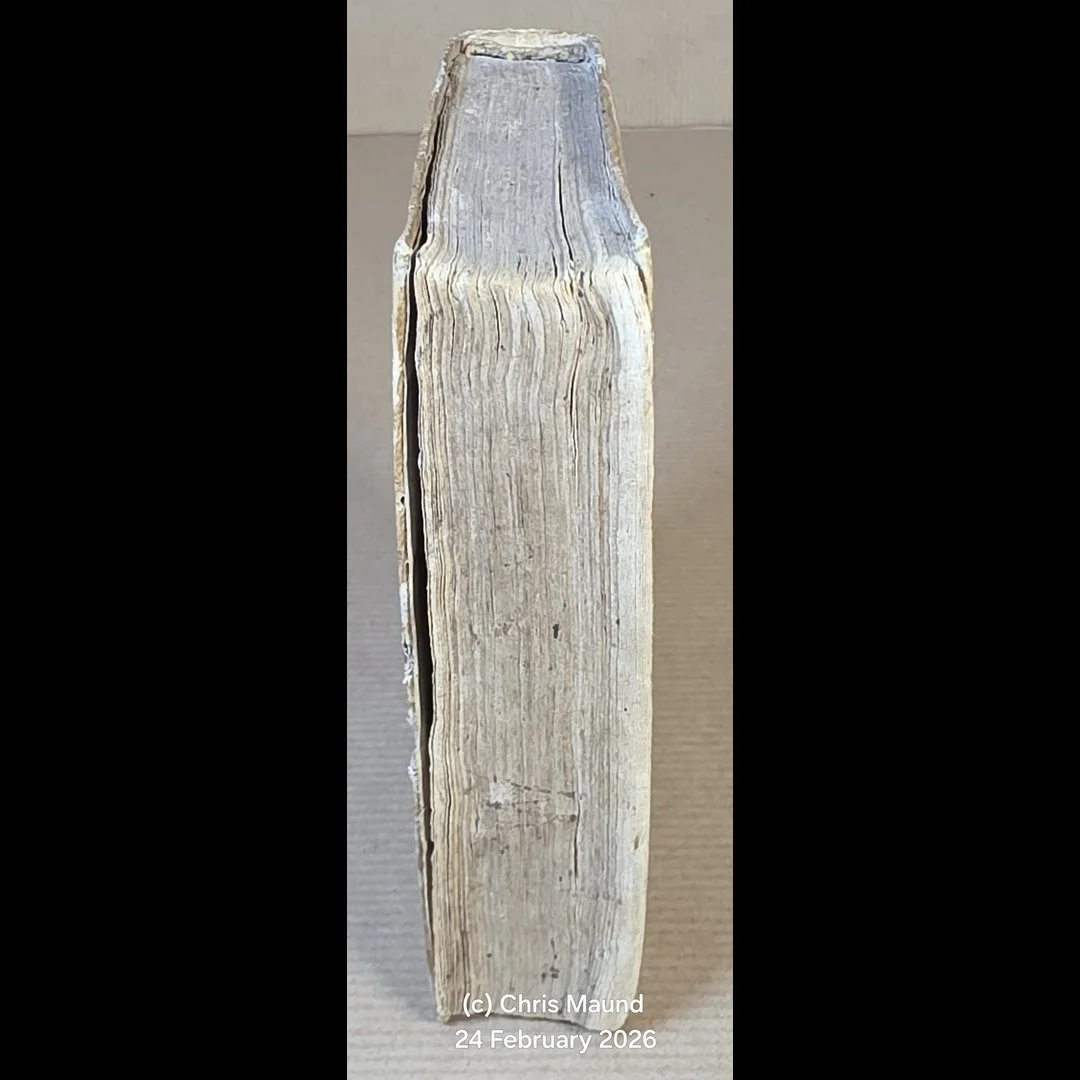
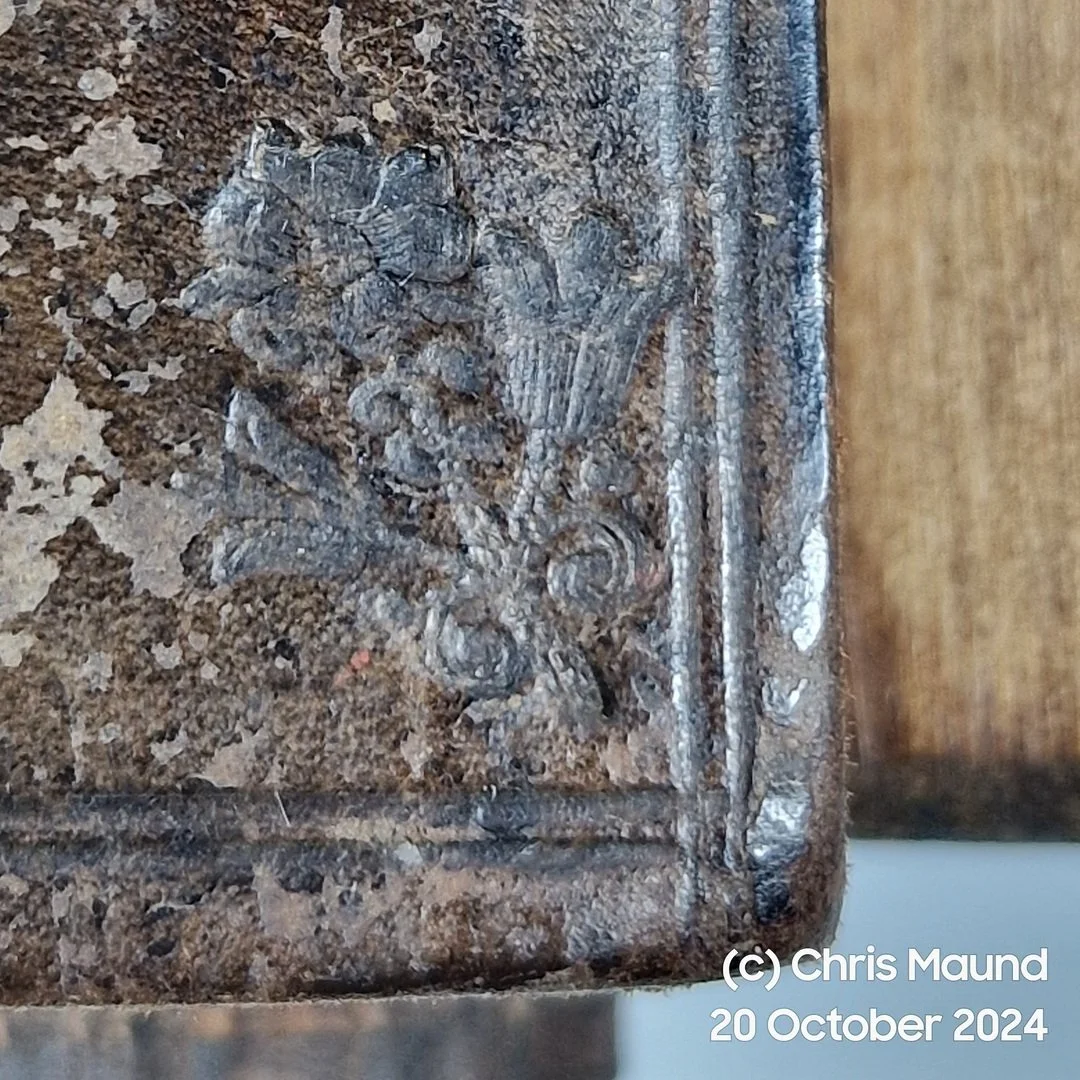
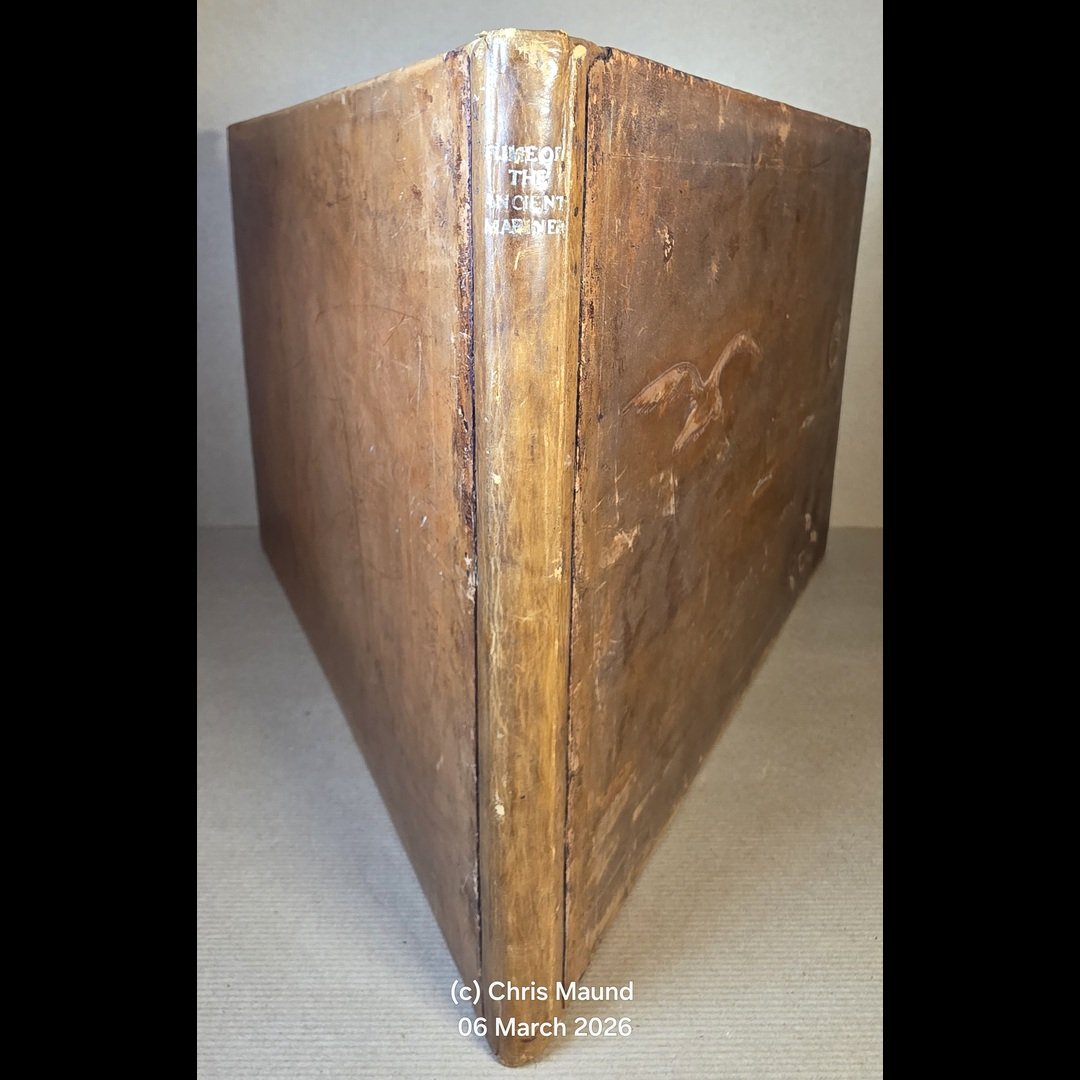
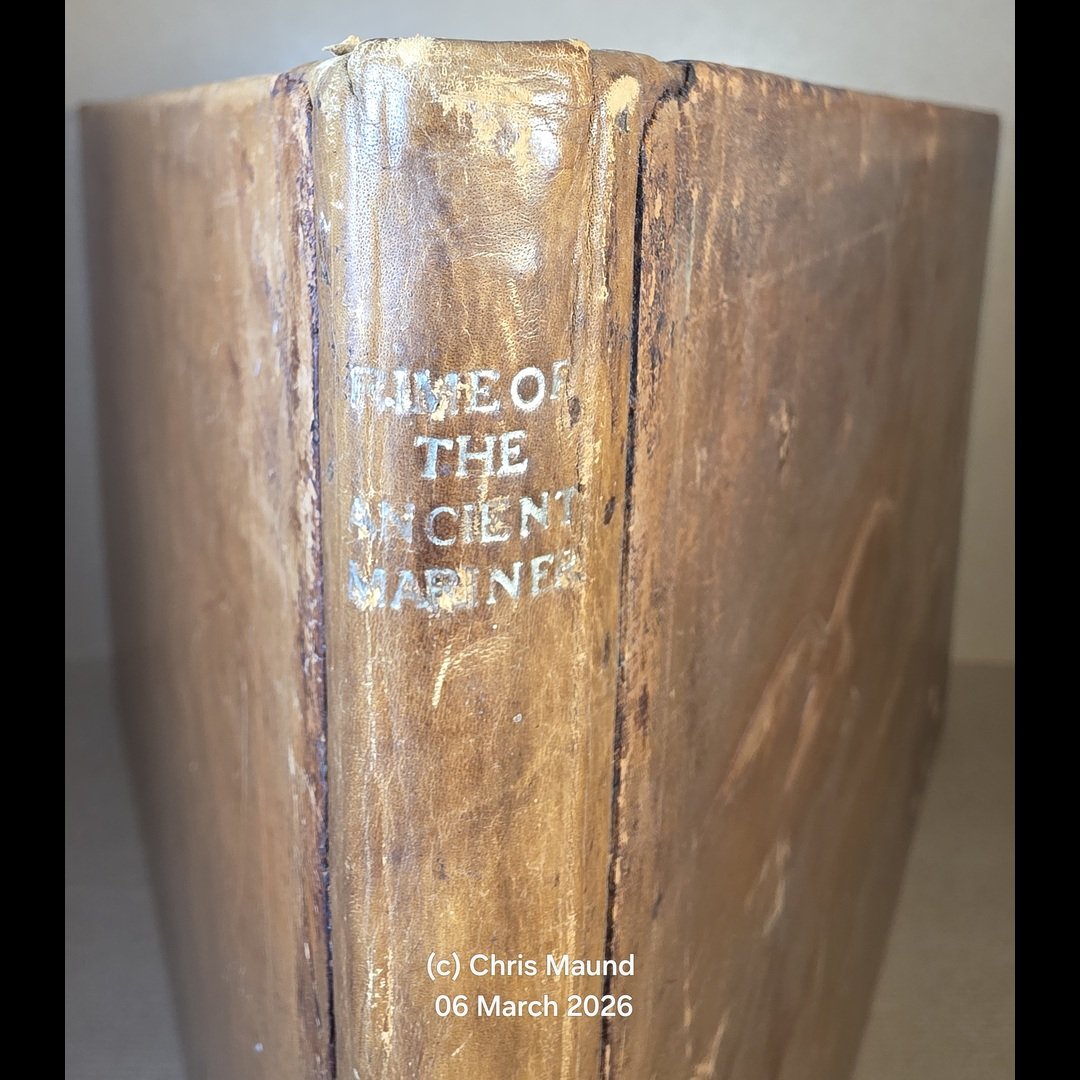
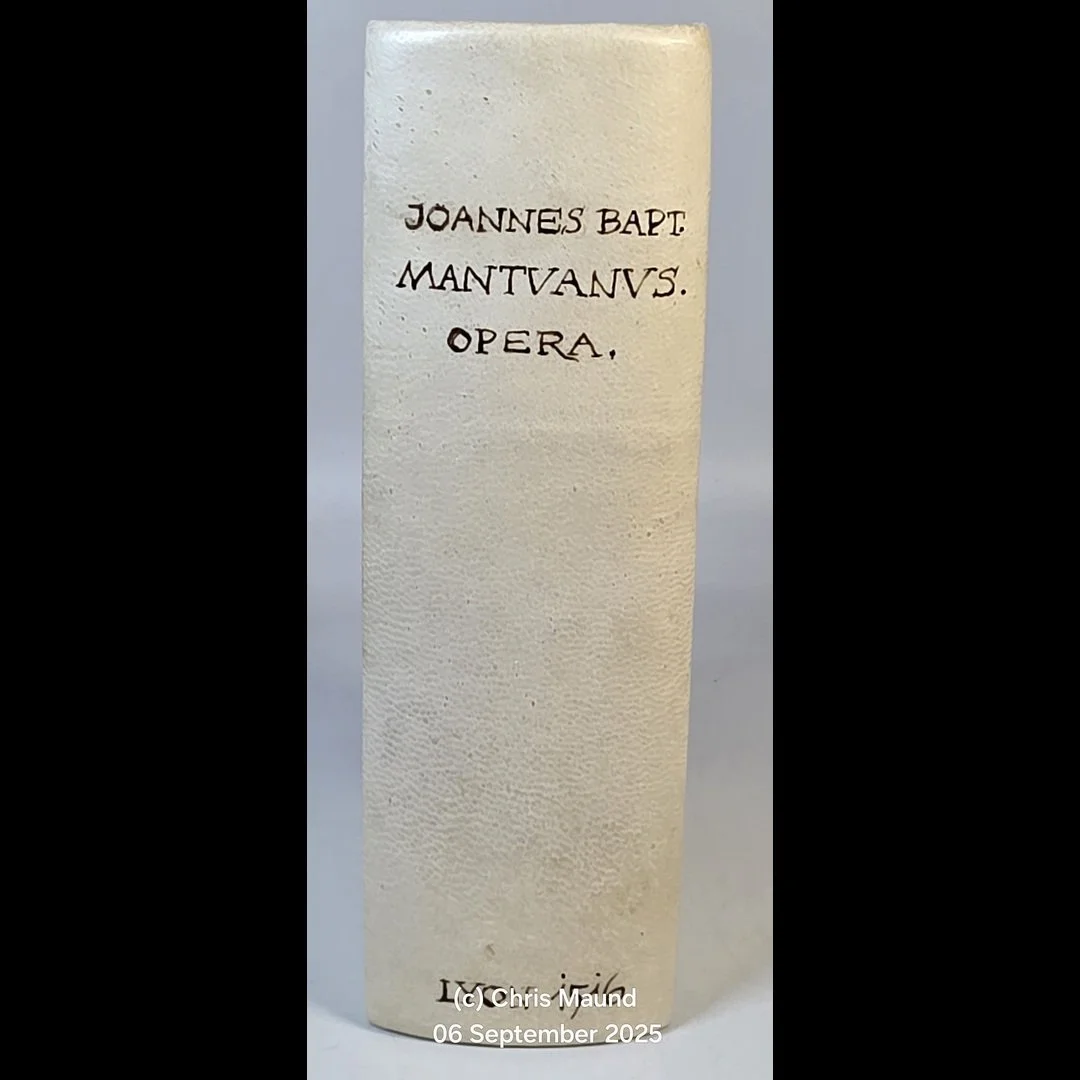
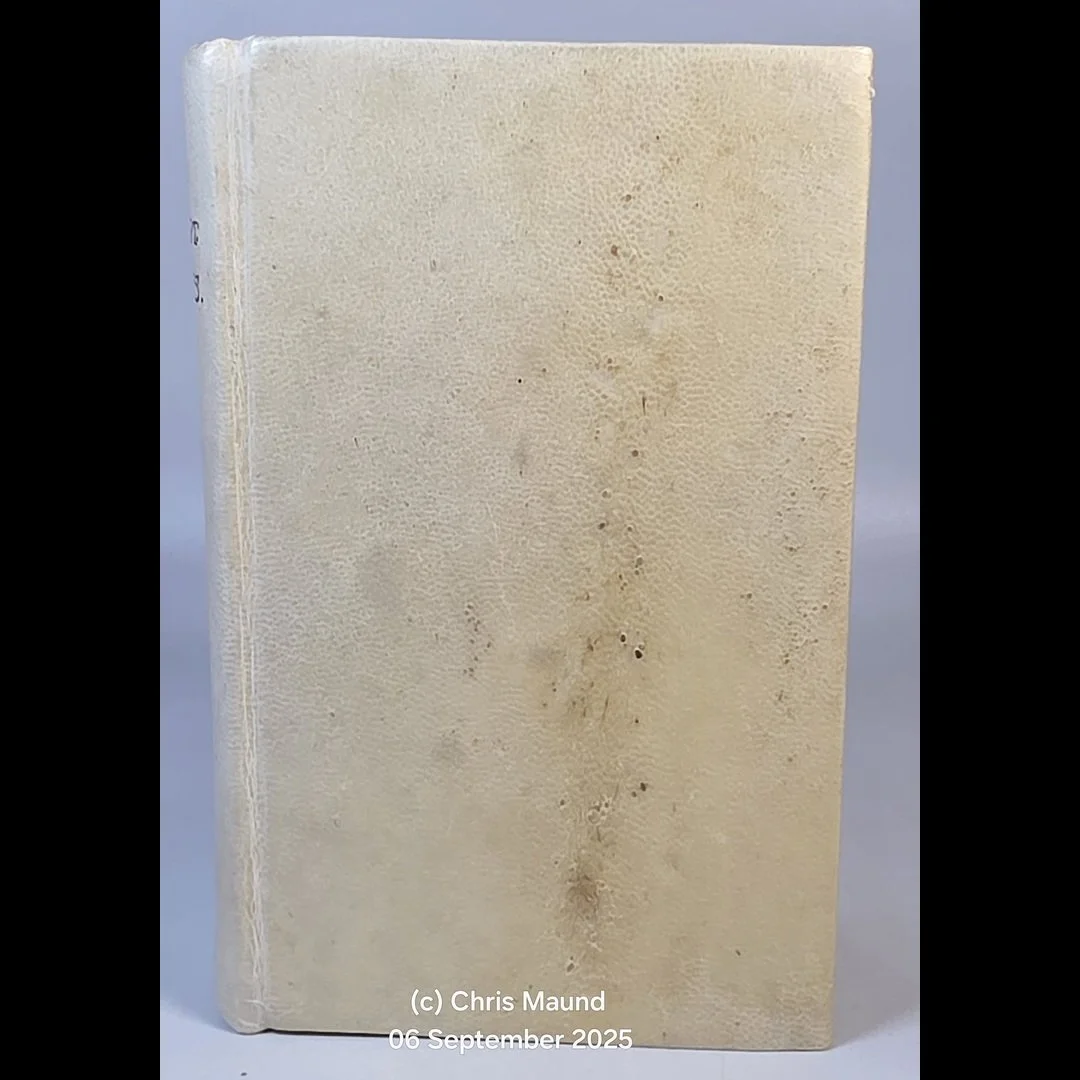
A sound and visually appealing copy in a later dark half-leather binding over attractive multicoloured marbled boards, with leather corners and morocco spine label. Binding with rubbing, scuffing and wear to the leather and extremities consistent with age and use, but remaining sound and presenting well.
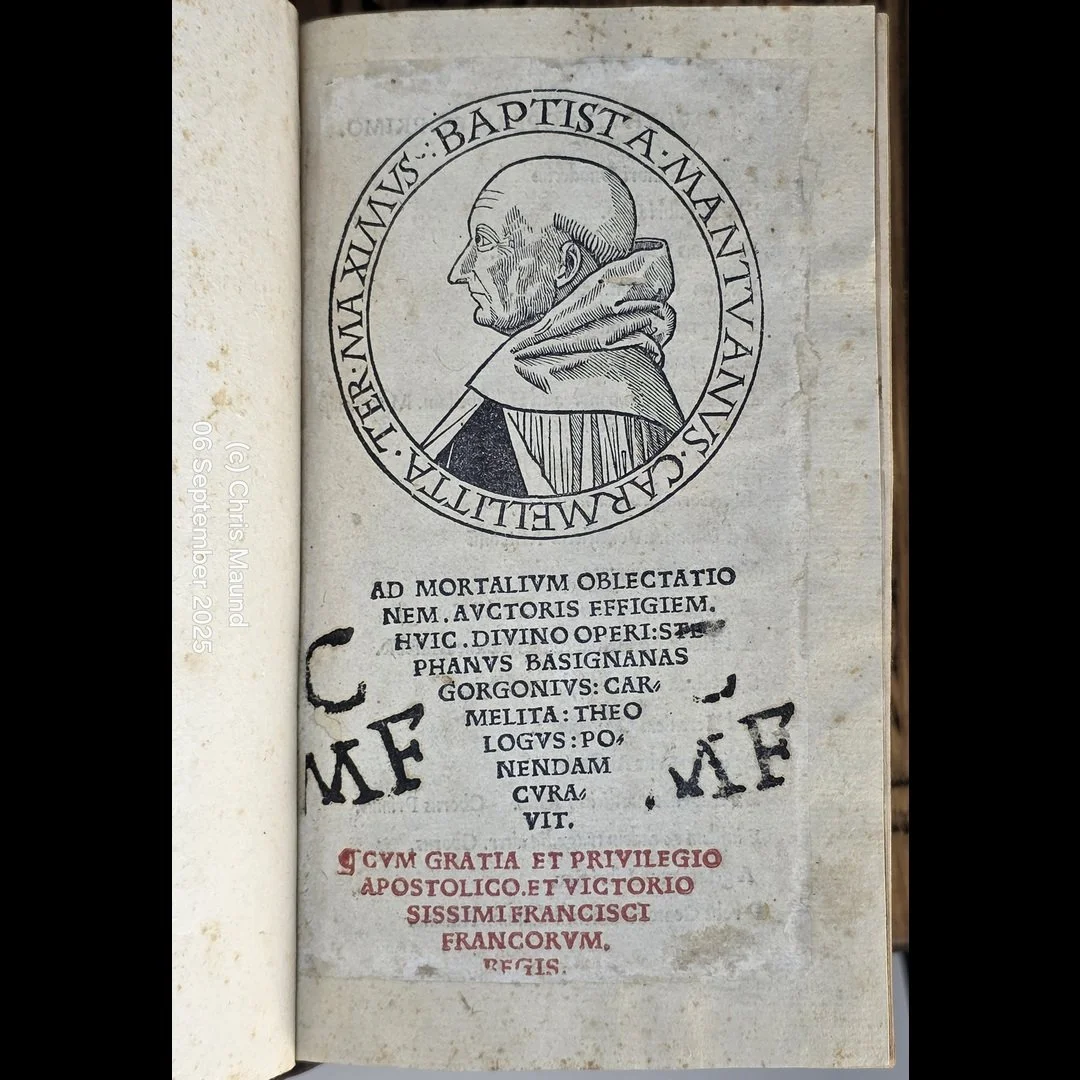
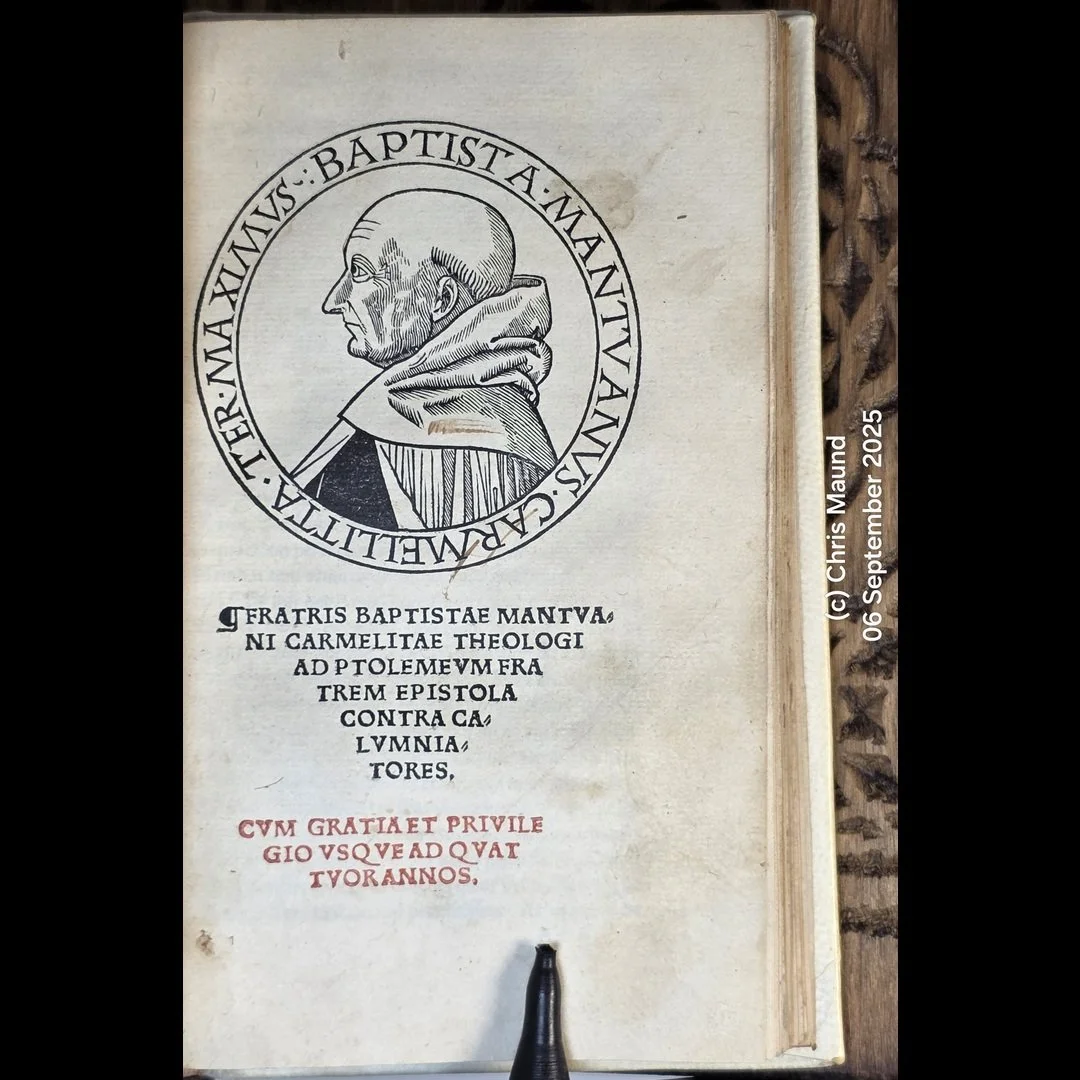
Title page present with a large woodcut device, strongly printed and with the 1597 Gabriell Simson imprint clear. Internally the type is generally crisp and dark, with woodcut initials and ornaments, Hebrew and Greek type, and other varied typographical material throughout.
Part of quire K contains the particularly striking Hebrew section headed “The certaintie of the Ebrew,” with Hebrew characters printed in alternating red and black. This survives strongly and provides one of the most visually and bibliographically important features of the book.
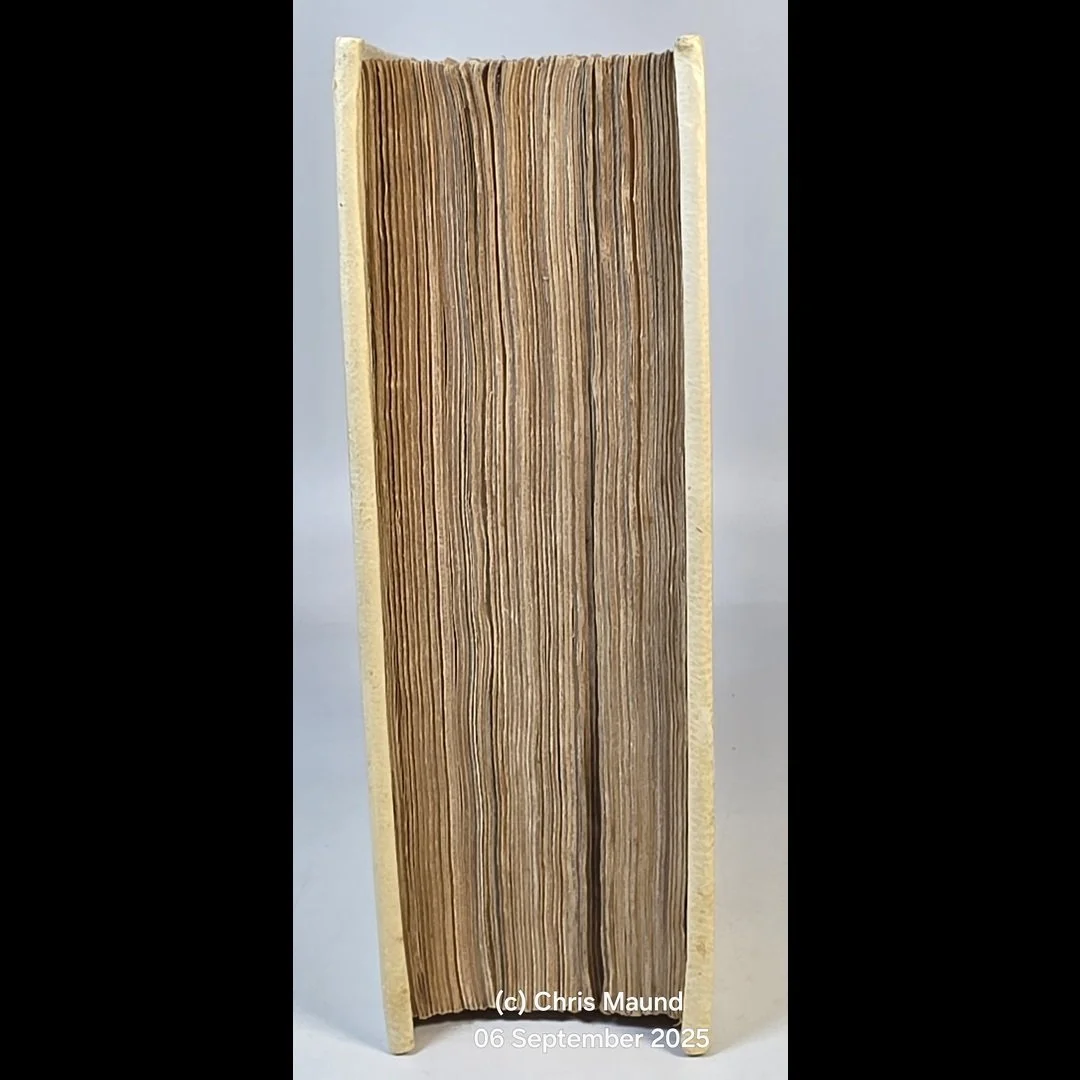
Variable old damp- or water-staining is present through much of the volume, principally affecting the margins, although on some leaves it extends more broadly across the page. Despite this, the printed text remains consistently clear and legible.
Several old marginal repairs are present. Most notably, repaired loss to the fore-margin of a leaf in quire K enters the printed marginal commentary and results in some loss or obscuring of the side-note; the corresponding repair is visible on the verso adjacent to the red-and-black Hebrew section. The principal Hebrew text itself remains intact.
B1 with a small area of loss confined to the blank upper corner. Very small marginal worm trace affecting the first and final few leaves, entering the printed area at P1–P2 but without loss of sense. Occasional minor spotting, marks, age-toning and handling wear consistent with a sixteenth-century book.
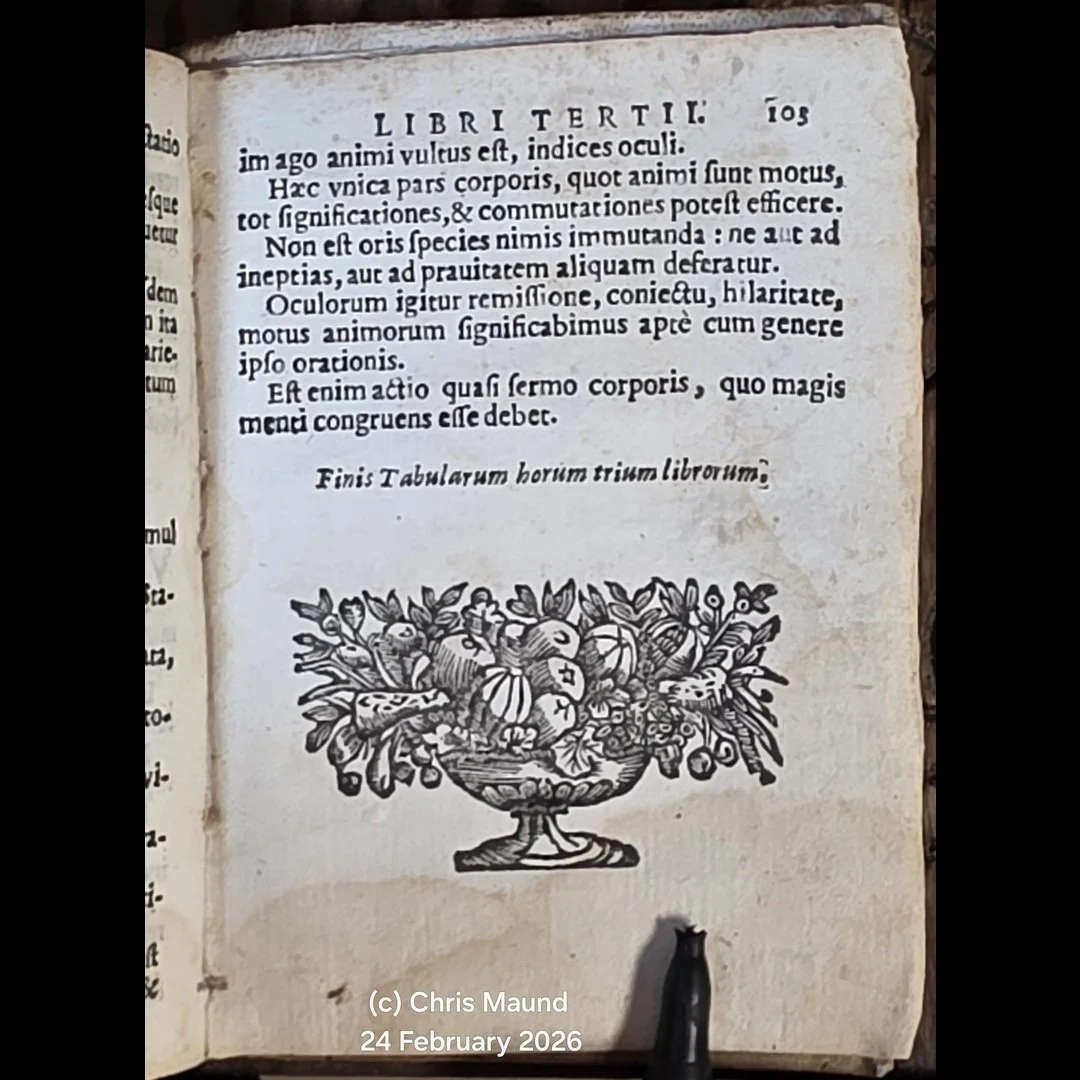
The terminal leaf is present, retaining the Hebrew line above the colophon and the substantial woodcut ornament beneath the Gabriell Simson imprint.
Four engraved plates are called for bibliographically and all four are absent from this copy. The engravings were taken from the same plates used for Broughton’s earlier A Concent of Scripture. The absence of the plates is fully reflected in the condition assessment and price.
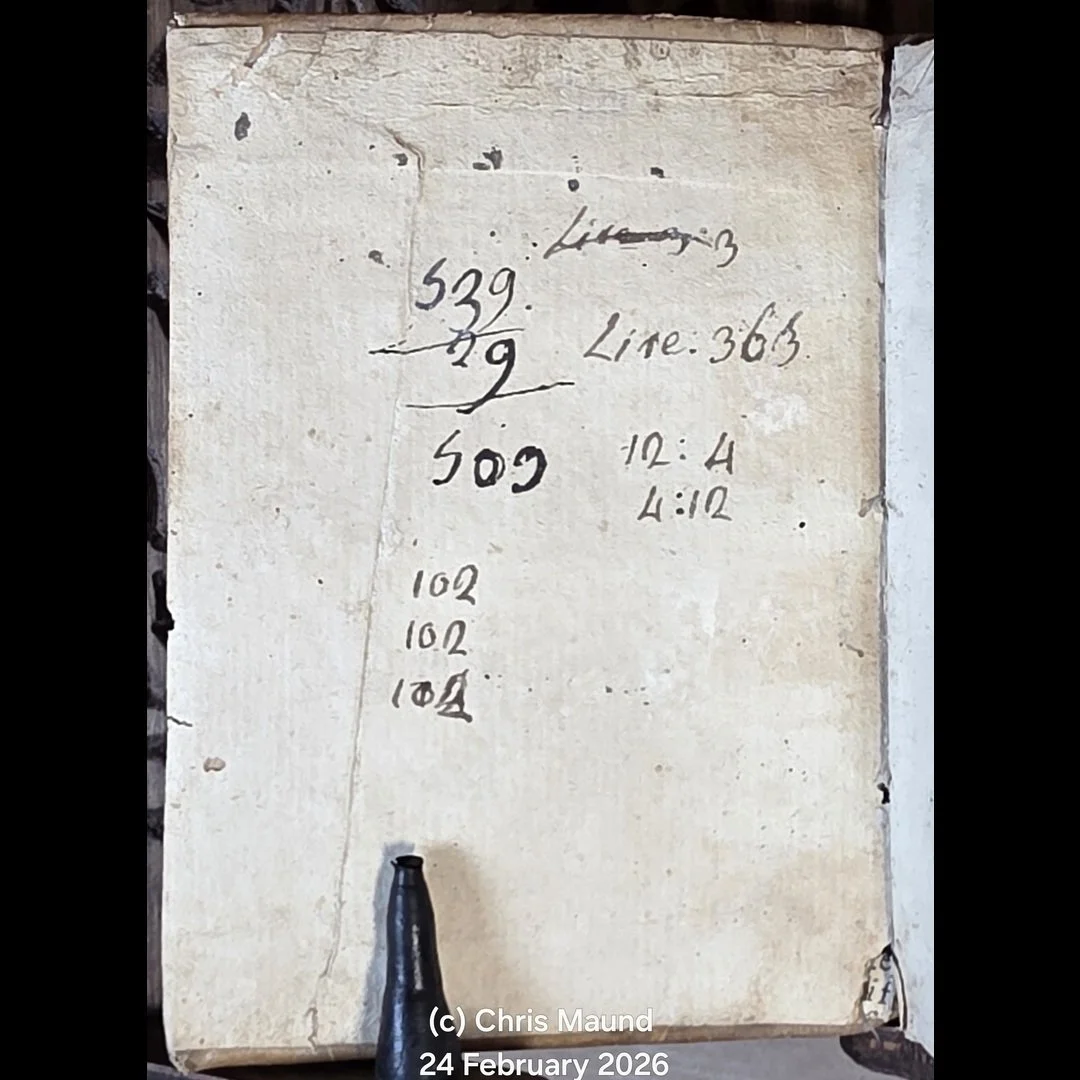
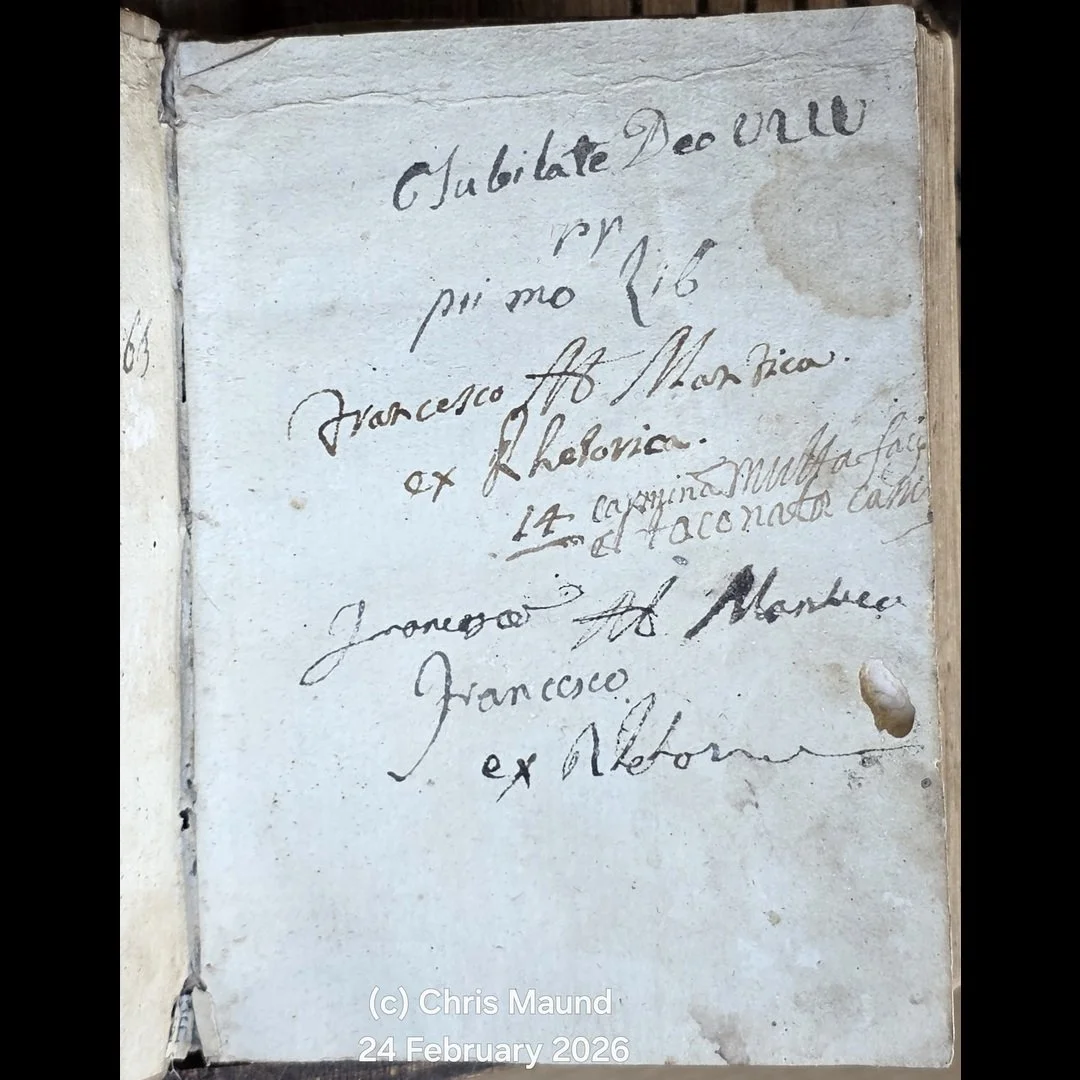
Please see Photos as part of condition report.
REFERENCES
STC (2nd ed.) 2786
ESTC S106761
Darlow & Moule 237
Folger Shakespeare Library, STC 2786
SYNOPSIS
Daniel His Chaldie Visions and His Ebrew is Broughton’s translation and extensive exposition of the Book of Daniel from its original Hebrew and Aramaic texts.
The title itself signals Broughton’s method. Daniel contains substantial passages written not in Hebrew but in the closely related language traditionally termed “Chaldee” and now normally described as Biblical Aramaic. Broughton treats this linguistic distinction as fundamental to accurate interpretation.
Rather than producing a straightforward devotional commentary, he constructs an elaborate philological and historical argument. The exact wording of Daniel must first be established from the original languages; only then, Broughton argues, can the chronology and meaning of the prophetic visions be understood correctly.
Daniel’s sequence of world empires, the kingdom of Nebuchadnezzar, the Medes and Persians, the rise of Greek power, prophetic chronology, the seventy weeks and messianic interpretation are consequently examined alongside biblical and classical historical traditions.
For Broughton, ancient secular history could be made to confirm the chronological structure revealed in Scripture. His reference in the title to reducing “heathen most famous stories” to the precise meaning of Daniel’s words reflects this programme: Persian, Greek and other histories are brought into alignment with the prophetic framework of the biblical text.
The extraordinary Hebrew typography is consequently not decorative embellishment but part of the intellectual argument of the book. Broughton repeatedly places the original languages visibly before his readers as evidence for the accuracy of his interpretation. The red-and-black Hebrew section provides a particularly striking demonstration of the technical ambition involved in printing such scholarship in Elizabethan London.
The work also belongs to the wider Protestant debate over biblical authority. Broughton’s insistence upon Hebrew and Aramaic philology reflects the Reformation-era conviction that Scripture should be understood through the earliest recoverable texts rather than solely through the authority of the Latin Vulgate or inherited commentary.
At the same time, the book demonstrates how closely biblical prophecy, chronology and political history were intertwined for a late-sixteenth-century scholar. Daniel’s visions were not treated as vague predictions of a distant “end time,” but as an ordered historical framework through which the succession of ancient empires, the coming of Christ and the providential direction of history could be understood.
The result is an intellectually ambitious Elizabethan book combining biblical translation, Hebrew and Aramaic scholarship, ancient history, chronology, Reformation theology and prophecy, and an important surviving example of the sophisticated use of Hebrew typography in late-sixteenth-century English printing.
AUTHOR BIO
Hugh Broughton (1549–1612) was an English biblical scholar, theologian, Hebraist and controversialist whose exceptional command of Hebrew and other biblical languages made him one of the most distinctive scriptural scholars of the Elizabethan period.
Educated at Cambridge, Broughton devoted much of his career to establishing biblical chronology and interpreting Scripture through close analysis of its original Hebrew, Aramaic and Greek texts. His scholarship brought together linguistic study, Jewish learning, ancient history and Protestant theology at a time when access to the original languages of Scripture had become central to European religious debate.
Broughton spent substantial periods on the Continent and actively engaged with Jewish scholars and Hebrew learning. His immense erudition was accompanied by an equally formidable reputation for controversy: he attacked translations and interpretations that he considered philologically inaccurate and frequently became embroiled in disputes with fellow Protestant scholars.
His works occupy an important position in the development of English biblical scholarship and in the early history of Hebrew printing in England.
1597 Second Edition
DANIEL HIS CHALDIE VISIONS
By Hugh Broughton
KEY DETAILS
Condition: Good
Format: Hardcover, Later half calf over marbled boards, small quarto (4to), approximately 19 cm tall.
Published By: At London, printed by Gabriell Simson dwelling in Fleete-lane, London, 1597
Language: English, with Hebrew, Aramaic and Greek.
Collation: *⁴ A–K⁴, H⁴, L–P⁴; Extent: [136] pages / 68 leaves; Plates: None present, of four called for
Dust Jacket: None, as issued, No Jacket
SKU: BTETM0002638
Shipping Info: Approximate Package Dimensions H: 12.5, L: 30, W: 25 (Units: cm), W: 2Kg
Tracked Shipping, Insurance Coverage as per Customer Request
DESCRIPTION
Daniel His Chaldie Visions
Daniel His Chaldie Visions and his Ebrew: both translated after the originall: and expounded both, by reduction of heathen most famous stories unto the exact proprietie of his wordes (which is the surest certaintie what he must meane:) and by ioyning all the Bible, and learned tongues to the frame of his worke.
A scarce Elizabethan biblical translation and commentary by one of the foremost English Hebraists of the sixteenth century, printed in London by Gabriell Simson in 1597. This is the second edition, following the first edition of 1596.
Much more than a conventional commentary on the Book of Daniel, Broughton’s work stands at the intersection of biblical translation, Hebrew and Aramaic philology, ancient history, chronology and Protestant scriptural interpretation. Working directly from Daniel’s Hebrew and “Chaldee” — Biblical Aramaic — Broughton attempts to establish the precise meaning of the prophet’s words before correlating the visions with Persian, Greek and other ancient historical traditions.
Of exceptional typographical interest is the substantial Hebrew material in quire K, where Hebrew type is strikingly printed in red and black beneath the heading “The certaintie of the Ebrew.” The first edition of 1596 has an important place in the history of Hebrew printing in England for its unusually extensive use of Hebrew type; this second edition, issued only a year later, preserves the same remarkable Elizabethan engagement with Hebrew language and typography.
The book is therefore of considerable crossover interest for collectors of early English printing, biblical translation, Reformation theology, Hebraica and Anglo-Judaica, Hebrew typography, ancient chronology and prophetic literature.
CONDITION, COLLATION & COPY NOTES
A sound and visually appealing copy in a later dark half-leather binding over attractive multicoloured marbled boards, with leather corners and morocco spine label. Binding with rubbing, scuffing and wear to the leather and extremities consistent with age and use, but remaining sound and presenting well.
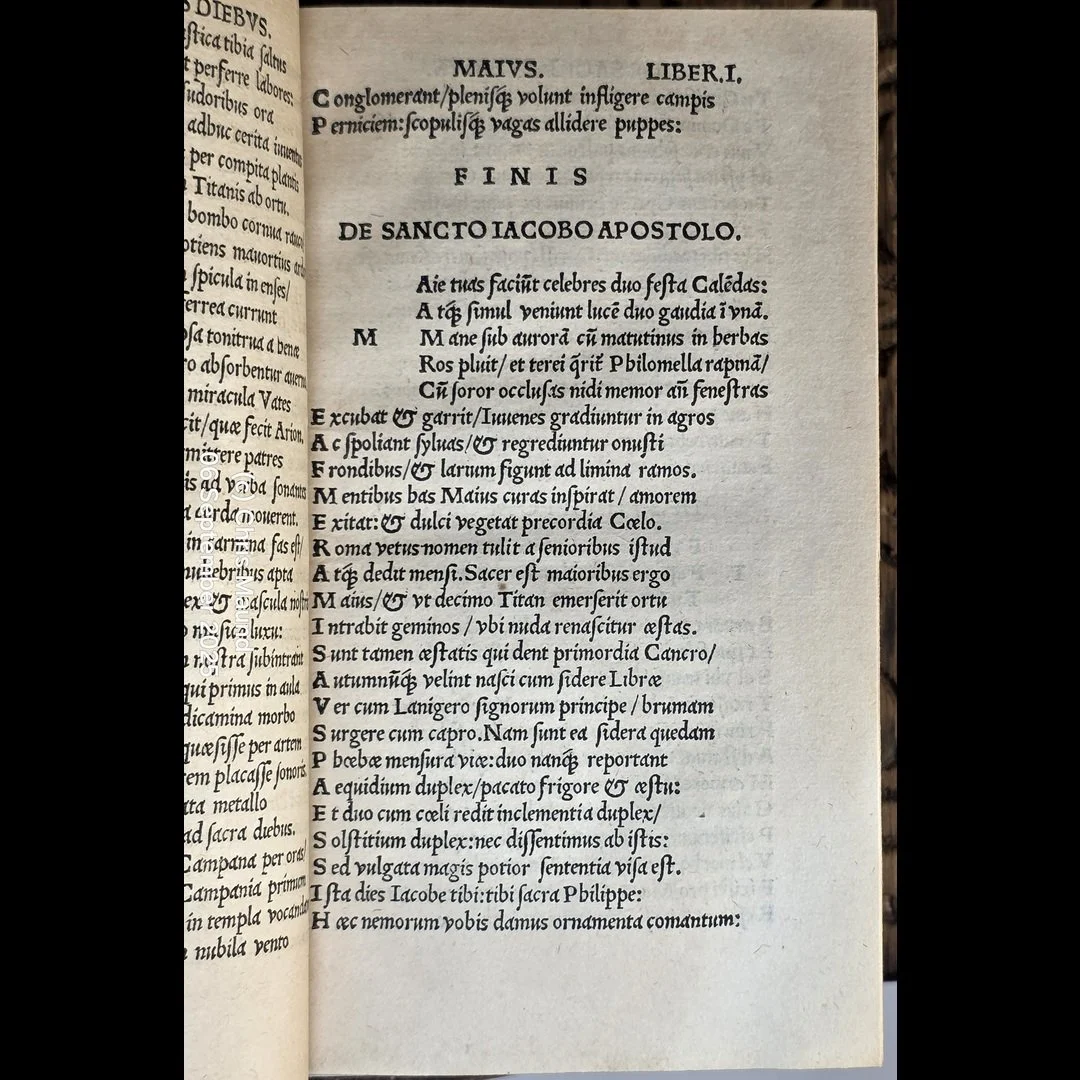
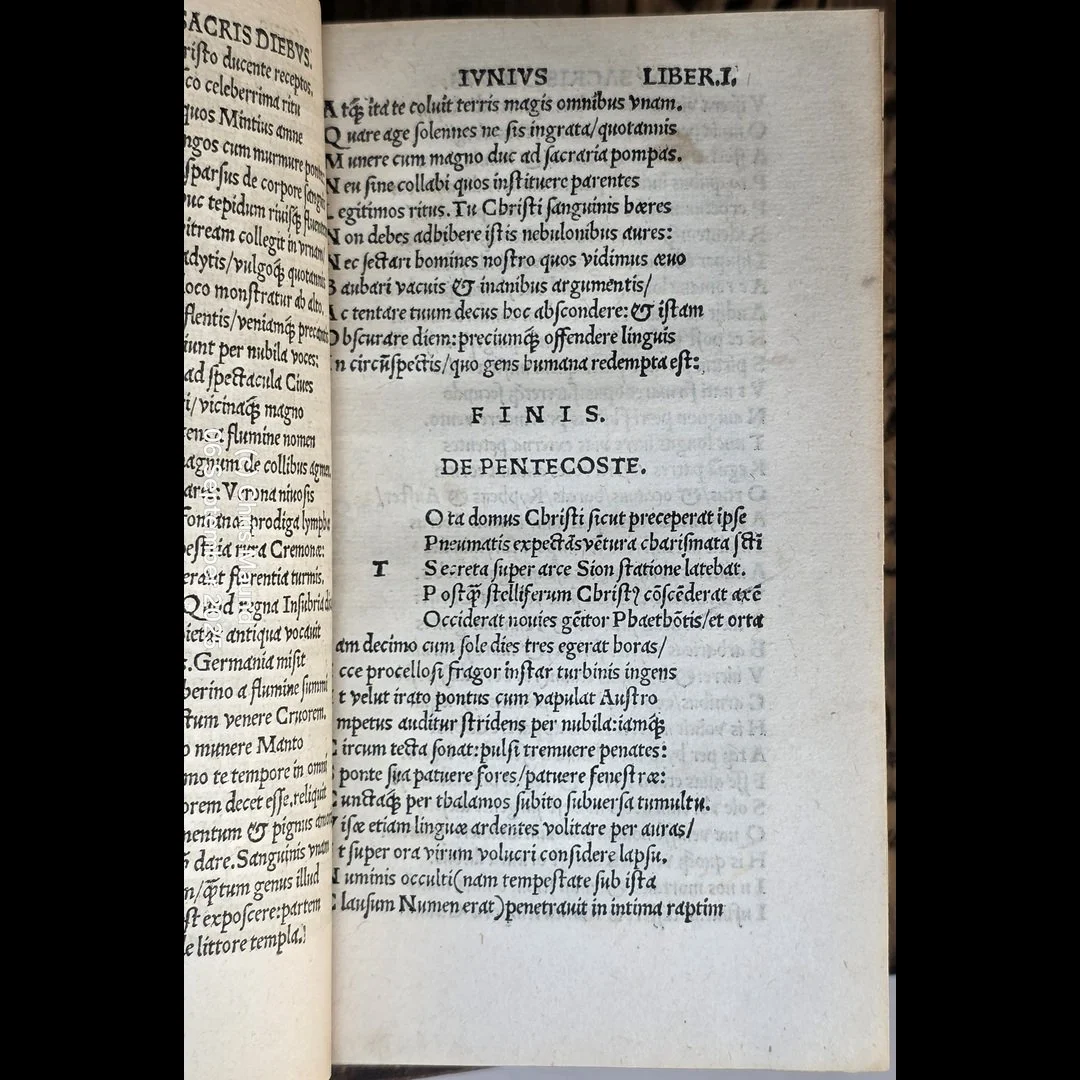
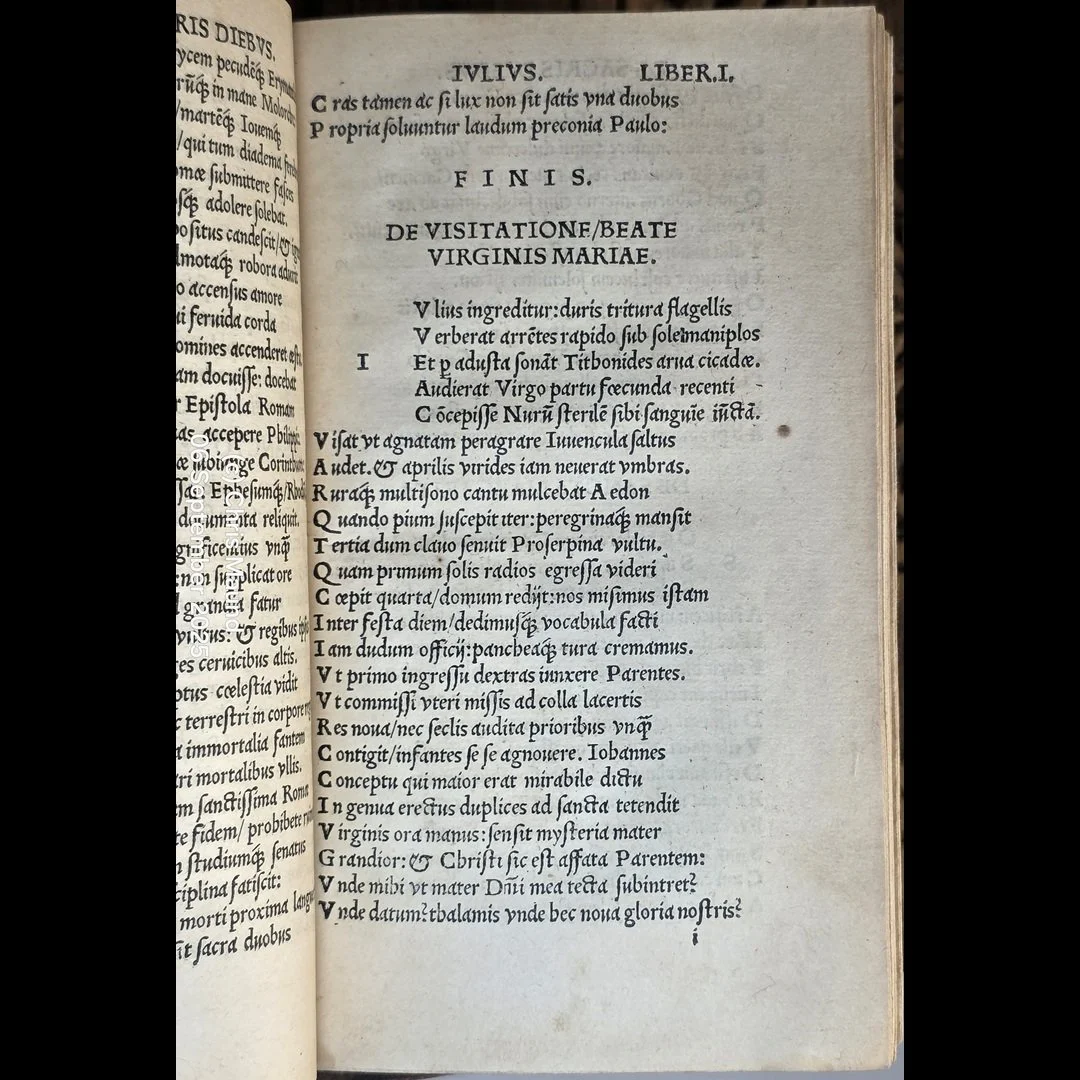
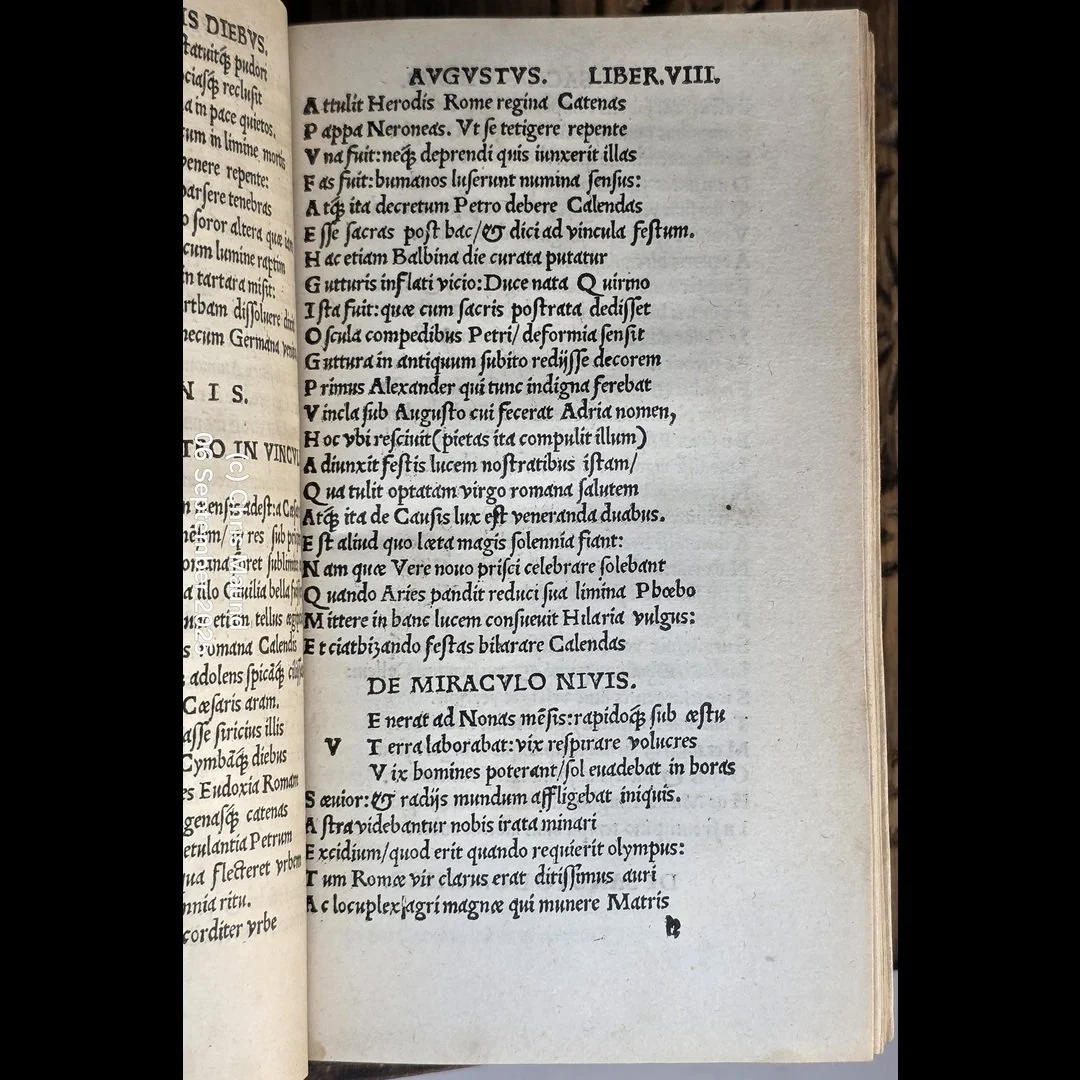
Title page present with a large woodcut device, strongly printed and with the 1597 Gabriell Simson imprint clear. Internally the type is generally crisp and dark, with woodcut initials and ornaments, Hebrew and Greek type, and other varied typographical material throughout.
Part of quire K contains the particularly striking Hebrew section headed “The certaintie of the Ebrew,” with Hebrew characters printed in alternating red and black. This survives strongly and provides one of the most visually and bibliographically important features of the book.
Variable old damp- or water-staining is present through much of the volume, principally affecting the margins, although on some leaves it extends more broadly across the page. Despite this, the printed text remains consistently clear and legible.
Several old marginal repairs are present. Most notably, repaired loss to the fore-margin of a leaf in quire K enters the printed marginal commentary and results in some loss or obscuring of the side-note; the corresponding repair is visible on the verso adjacent to the red-and-black Hebrew section. The principal Hebrew text itself remains intact.
B1 with a small area of loss confined to the blank upper corner. Very small marginal worm trace affecting the first and final few leaves, entering the printed area at P1–P2 but without loss of sense. Occasional minor spotting, marks, age-toning and handling wear consistent with a sixteenth-century book.
The terminal leaf is present, retaining the Hebrew line above the colophon and the substantial woodcut ornament beneath the Gabriell Simson imprint.
Four engraved plates are called for bibliographically and all four are absent from this copy. The engravings were taken from the same plates used for Broughton’s earlier A Concent of Scripture. The absence of the plates is fully reflected in the condition assessment and price.
Please see Photos as part of condition report.
REFERENCES
STC (2nd ed.) 2786
ESTC S106761
Darlow & Moule 237
Folger Shakespeare Library, STC 2786
SYNOPSIS
Daniel His Chaldie Visions and His Ebrew is Broughton’s translation and extensive exposition of the Book of Daniel from its original Hebrew and Aramaic texts.
The title itself signals Broughton’s method. Daniel contains substantial passages written not in Hebrew but in the closely related language traditionally termed “Chaldee” and now normally described as Biblical Aramaic. Broughton treats this linguistic distinction as fundamental to accurate interpretation.
Rather than producing a straightforward devotional commentary, he constructs an elaborate philological and historical argument. The exact wording of Daniel must first be established from the original languages; only then, Broughton argues, can the chronology and meaning of the prophetic visions be understood correctly.
Daniel’s sequence of world empires, the kingdom of Nebuchadnezzar, the Medes and Persians, the rise of Greek power, prophetic chronology, the seventy weeks and messianic interpretation are consequently examined alongside biblical and classical historical traditions.
For Broughton, ancient secular history could be made to confirm the chronological structure revealed in Scripture. His reference in the title to reducing “heathen most famous stories” to the precise meaning of Daniel’s words reflects this programme: Persian, Greek and other histories are brought into alignment with the prophetic framework of the biblical text.
The extraordinary Hebrew typography is consequently not decorative embellishment but part of the intellectual argument of the book. Broughton repeatedly places the original languages visibly before his readers as evidence for the accuracy of his interpretation. The red-and-black Hebrew section provides a particularly striking demonstration of the technical ambition involved in printing such scholarship in Elizabethan London.
The work also belongs to the wider Protestant debate over biblical authority. Broughton’s insistence upon Hebrew and Aramaic philology reflects the Reformation-era conviction that Scripture should be understood through the earliest recoverable texts rather than solely through the authority of the Latin Vulgate or inherited commentary.
At the same time, the book demonstrates how closely biblical prophecy, chronology and political history were intertwined for a late-sixteenth-century scholar. Daniel’s visions were not treated as vague predictions of a distant “end time,” but as an ordered historical framework through which the succession of ancient empires, the coming of Christ and the providential direction of history could be understood.
The result is an intellectually ambitious Elizabethan book combining biblical translation, Hebrew and Aramaic scholarship, ancient history, chronology, Reformation theology and prophecy, and an important surviving example of the sophisticated use of Hebrew typography in late-sixteenth-century English printing.
AUTHOR BIO
Hugh Broughton (1549–1612) was an English biblical scholar, theologian, Hebraist and controversialist whose exceptional command of Hebrew and other biblical languages made him one of the most distinctive scriptural scholars of the Elizabethan period.
Educated at Cambridge, Broughton devoted much of his career to establishing biblical chronology and interpreting Scripture through close analysis of its original Hebrew, Aramaic and Greek texts. His scholarship brought together linguistic study, Jewish learning, ancient history and Protestant theology at a time when access to the original languages of Scripture had become central to European religious debate.
Broughton spent substantial periods on the Continent and actively engaged with Jewish scholars and Hebrew learning. His immense erudition was accompanied by an equally formidable reputation for controversy: he attacked translations and interpretations that he considered philologically inaccurate and frequently became embroiled in disputes with fellow Protestant scholars.
His works occupy an important position in the development of English biblical scholarship and in the early history of Hebrew printing in England.

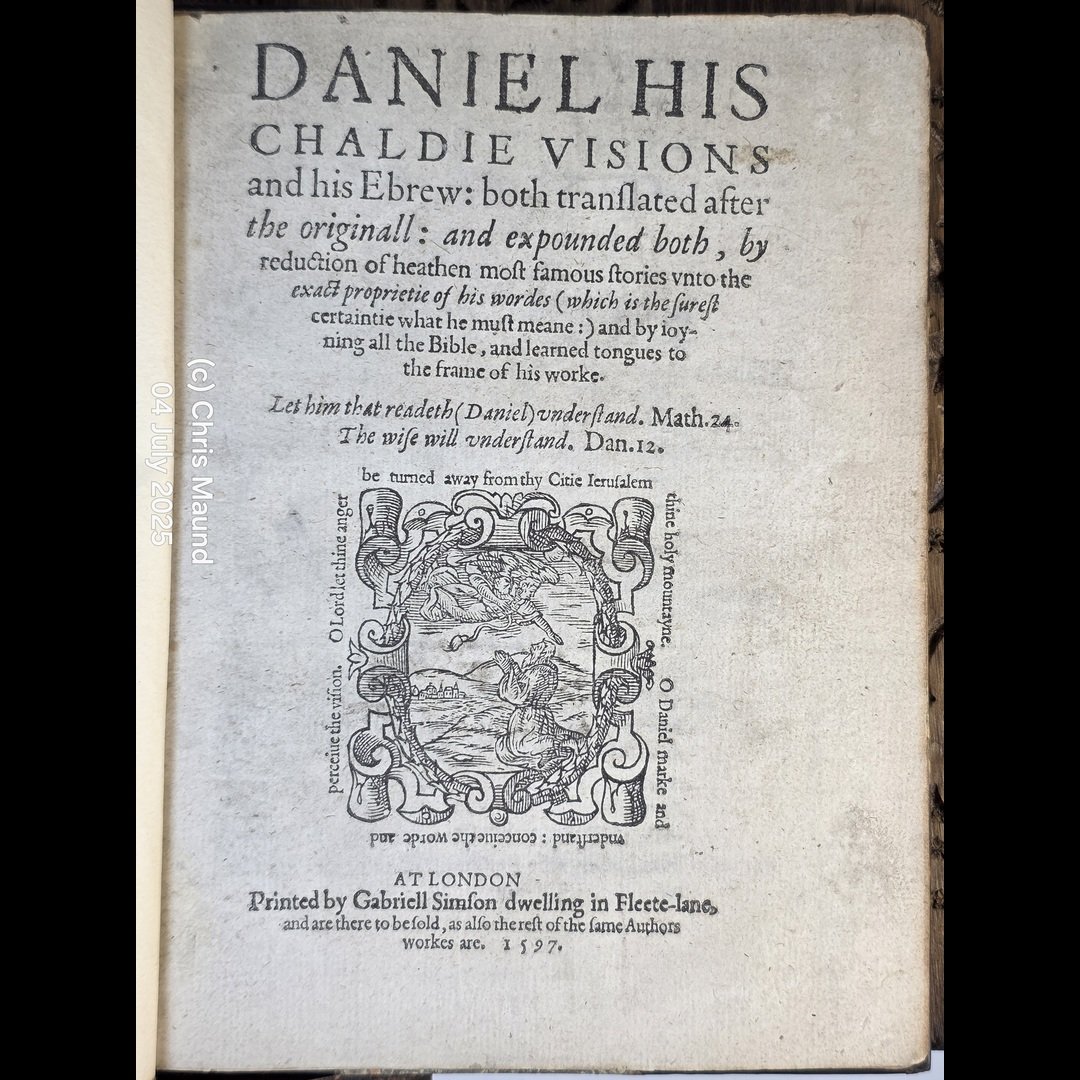 Image 1 of 19
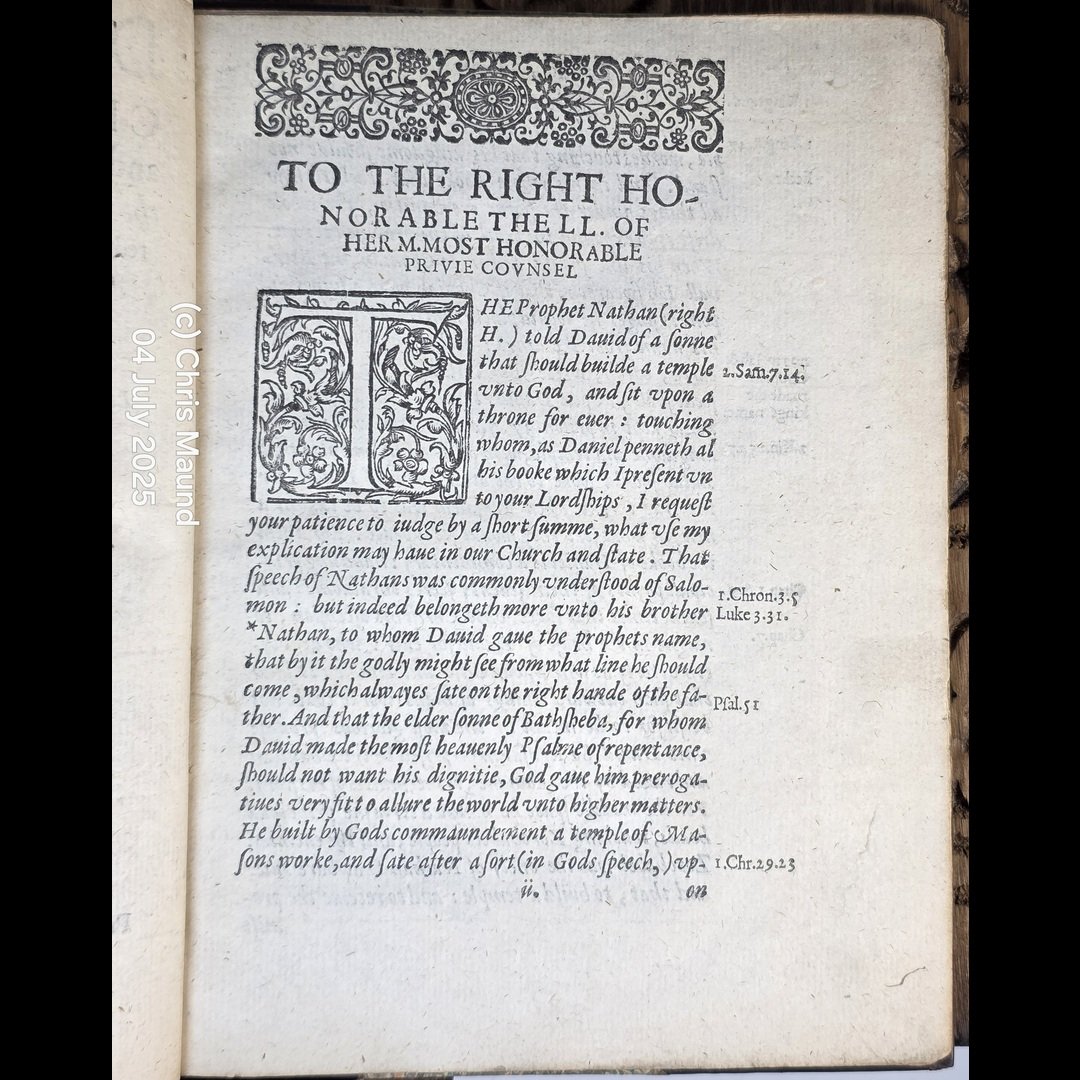 Image 2 of 19
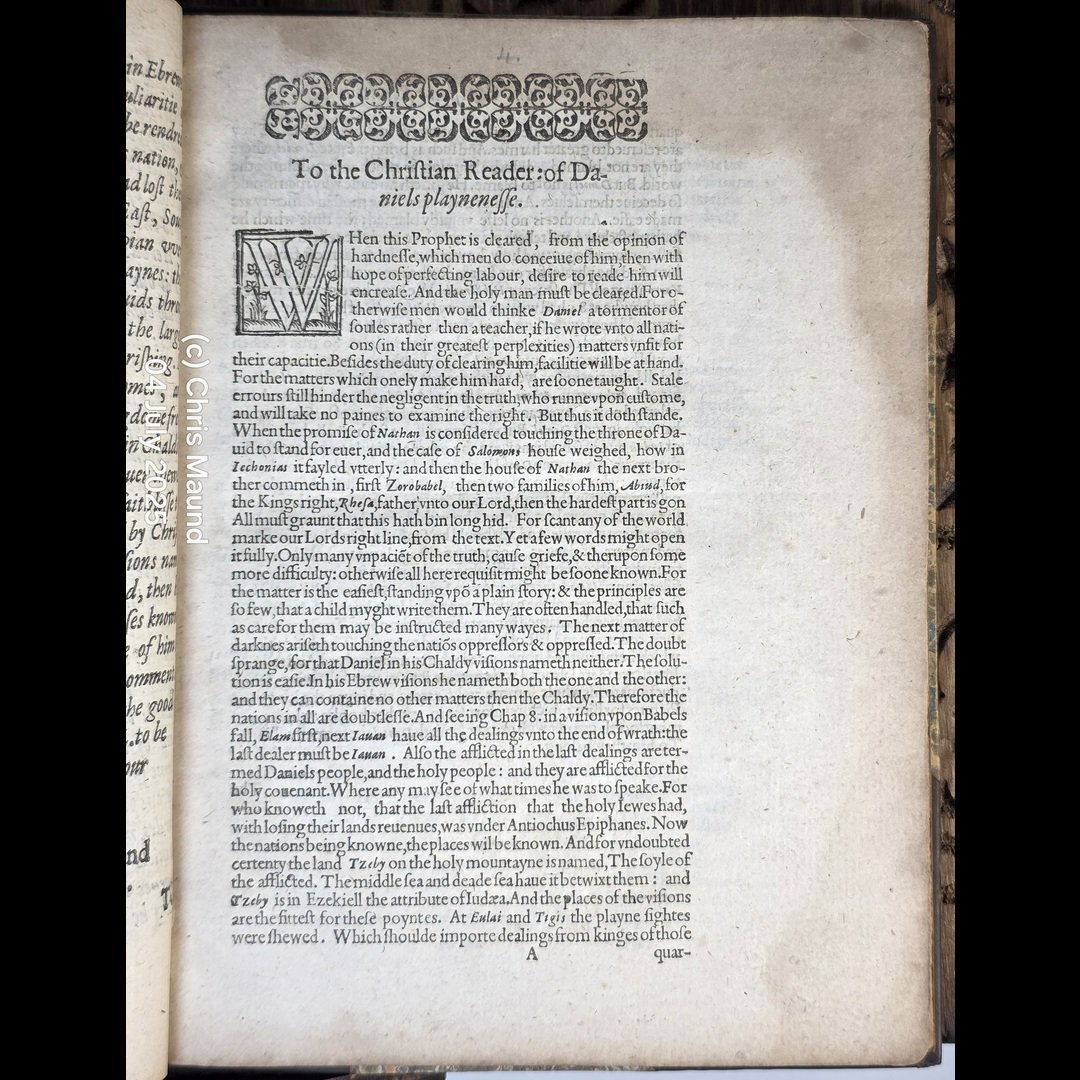 Image 3 of 19
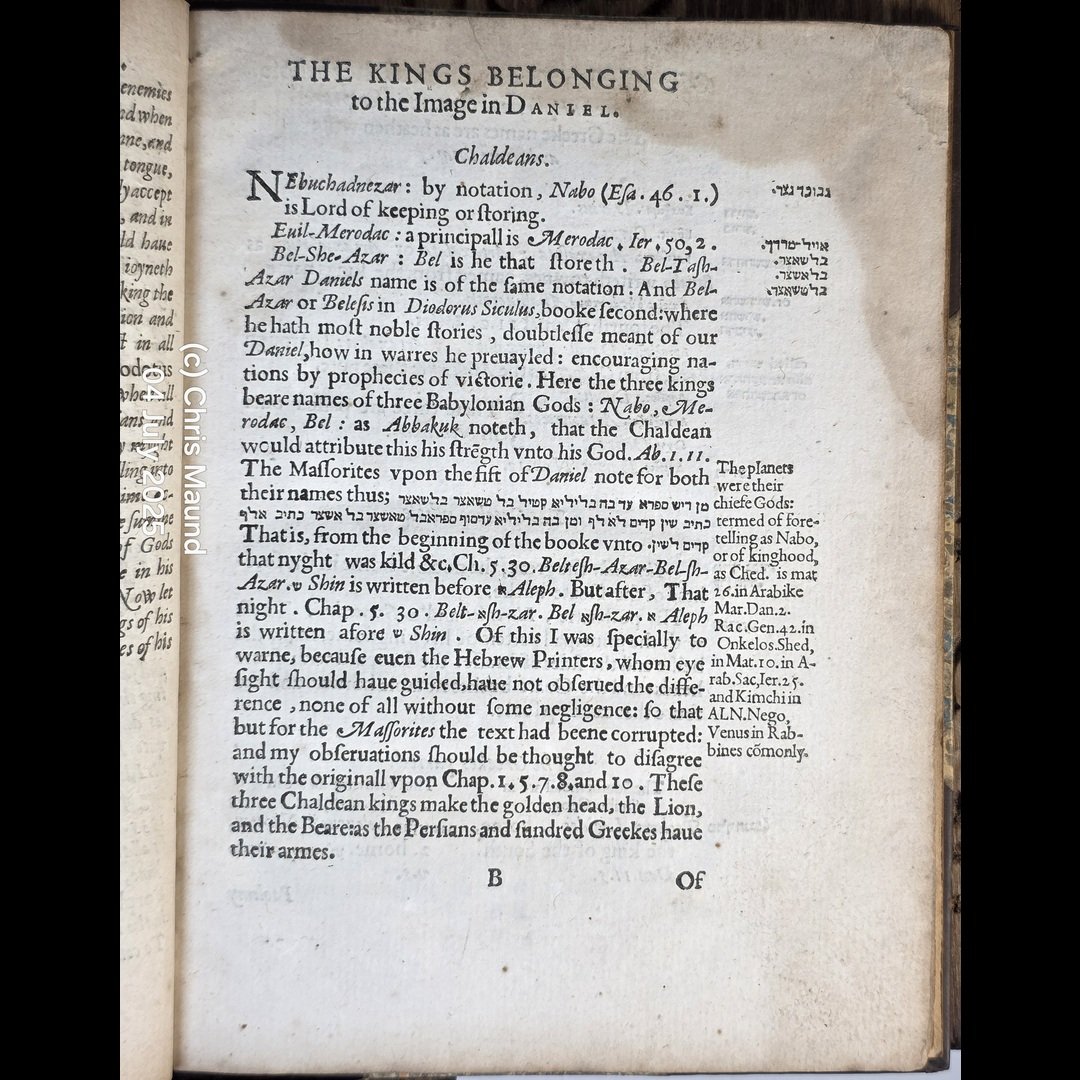 Image 4 of 19
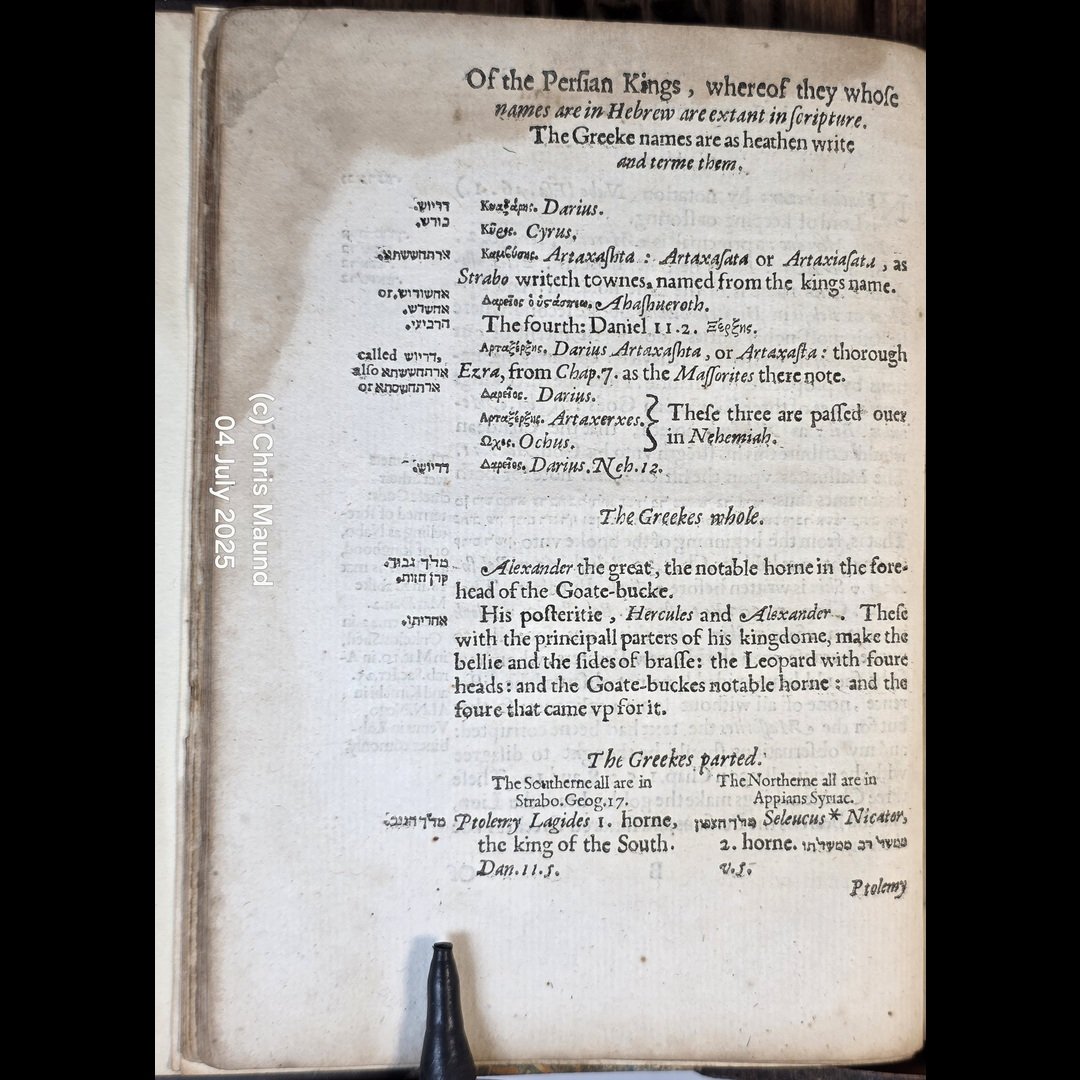 Image 5 of 19
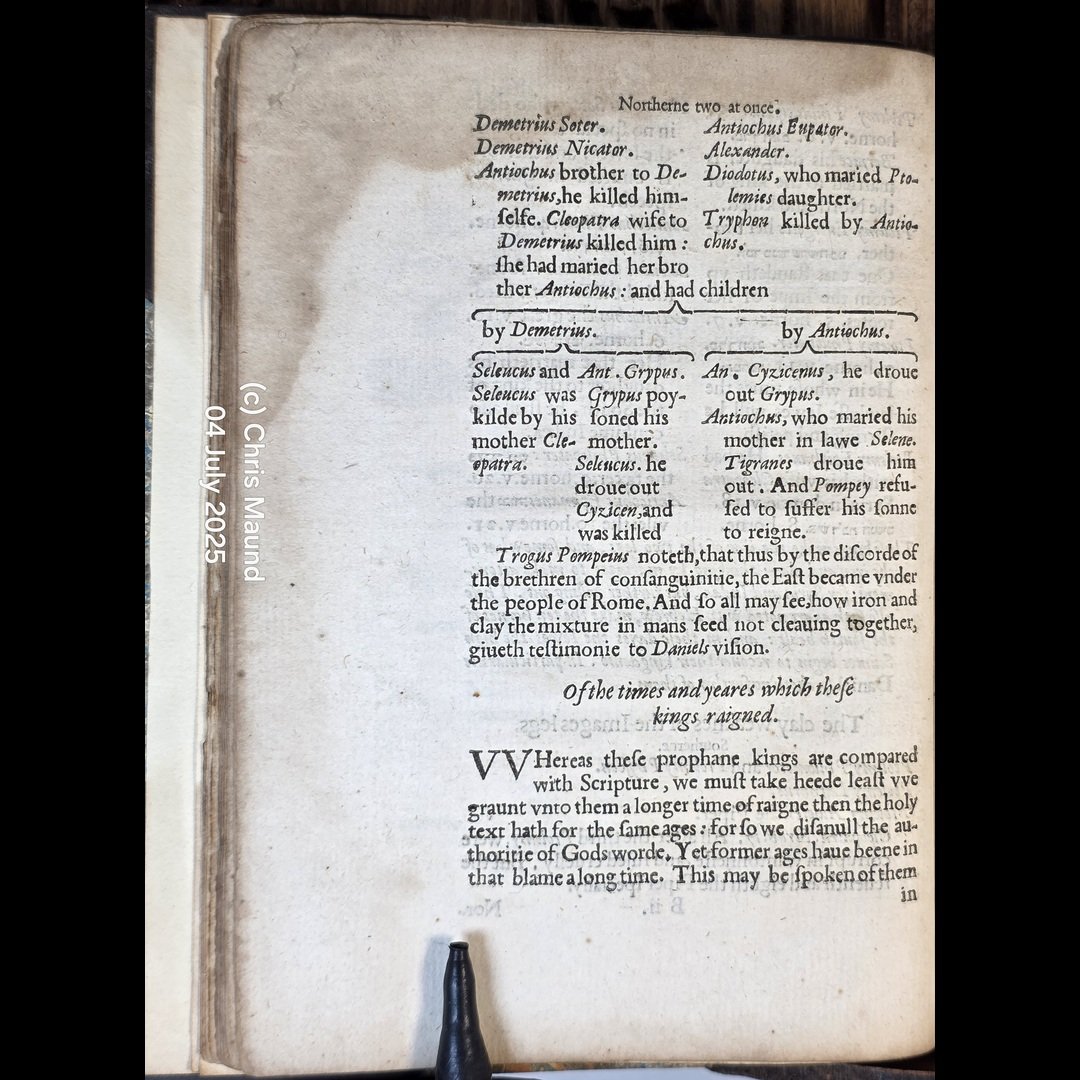 Image 6 of 19
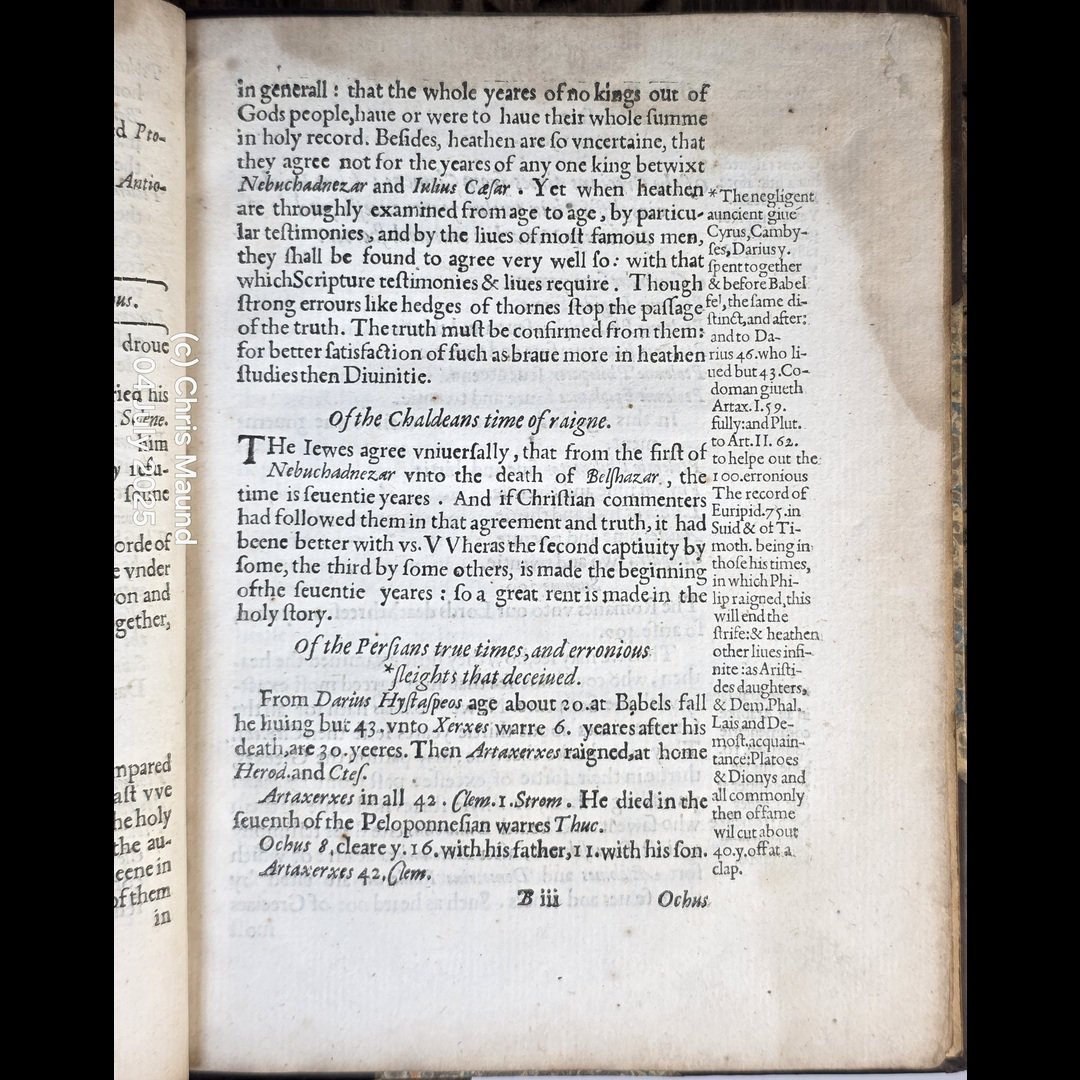 Image 7 of 19
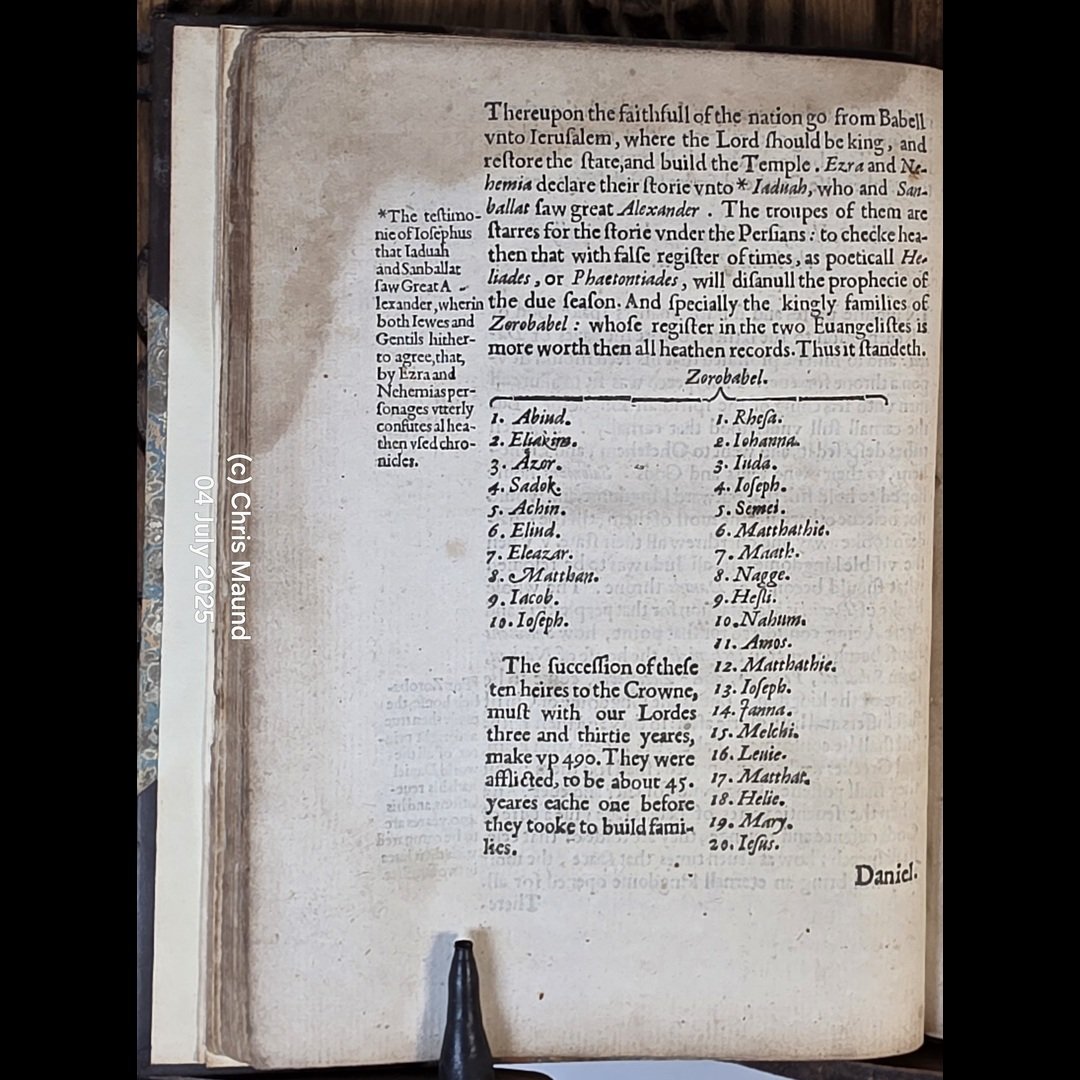 Image 8 of 19
 Image 9 of 19
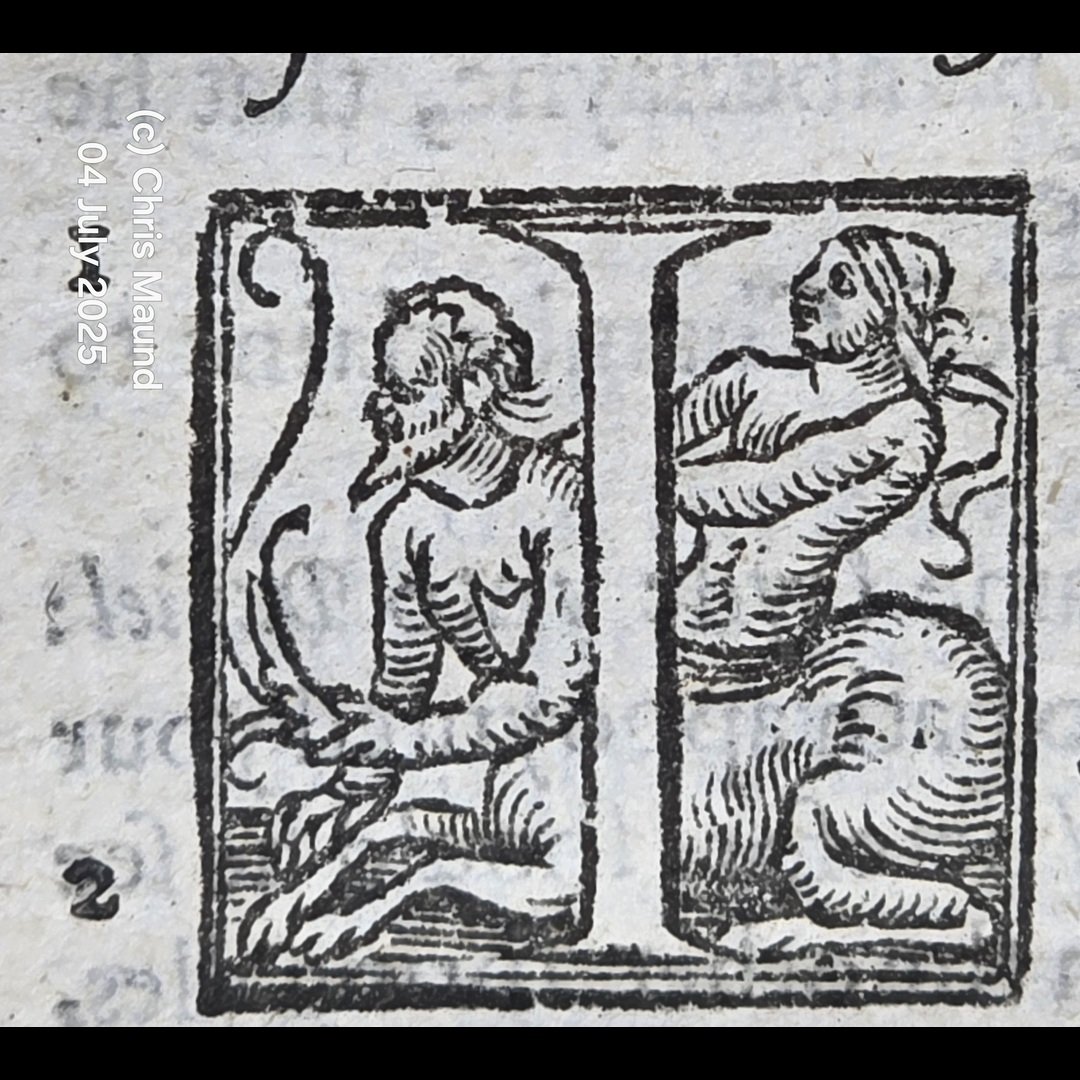 Image 10 of 19
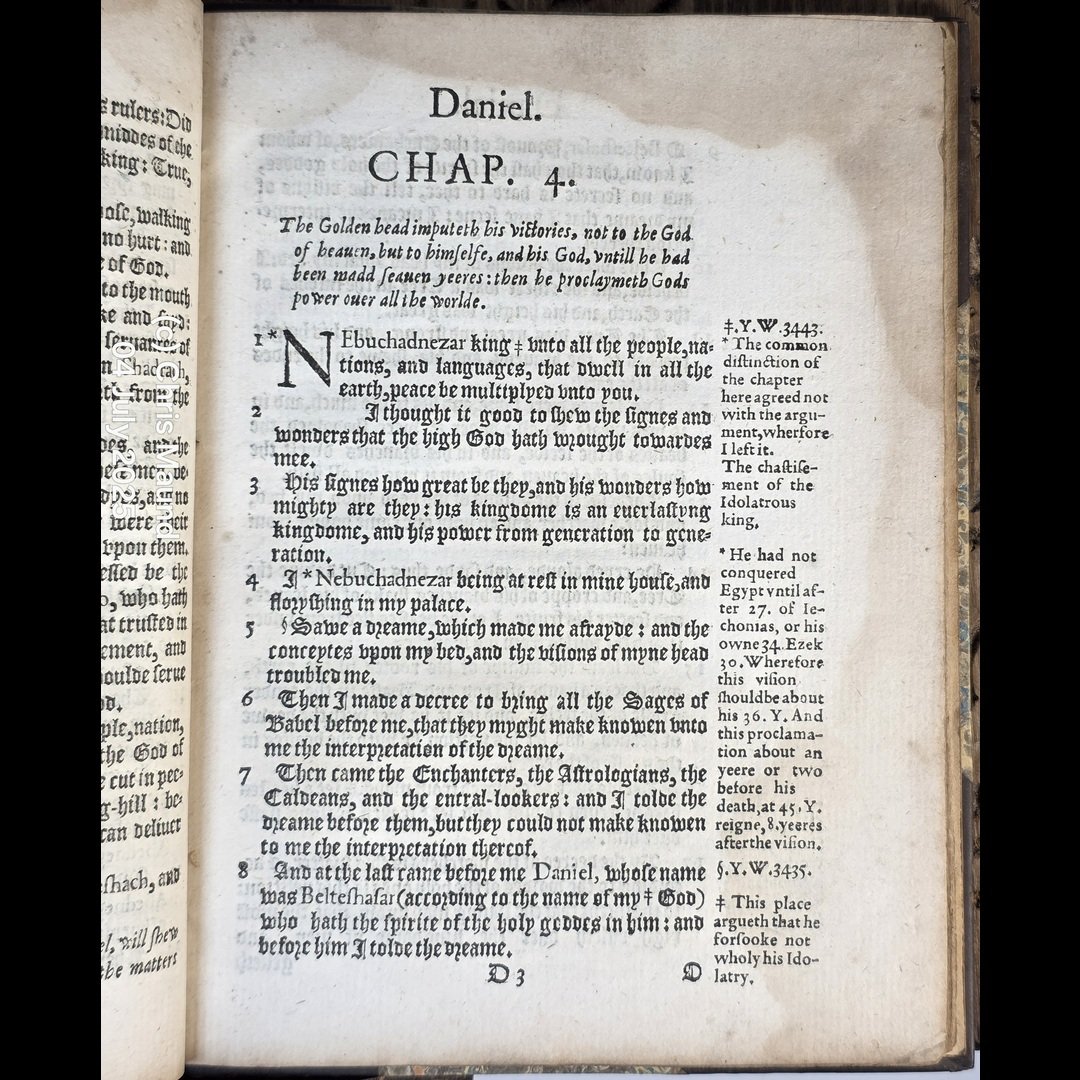 Image 11 of 19
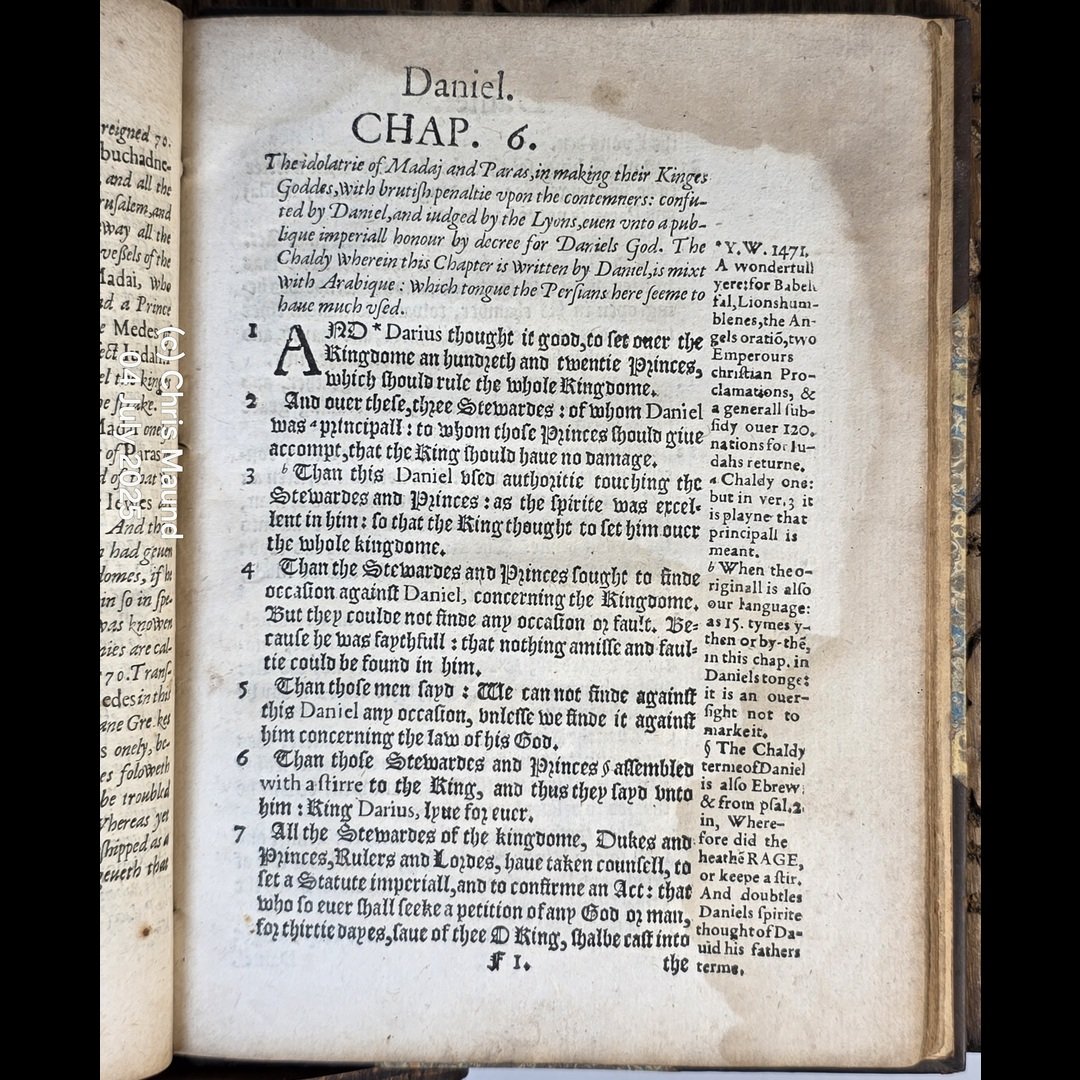 Image 12 of 19
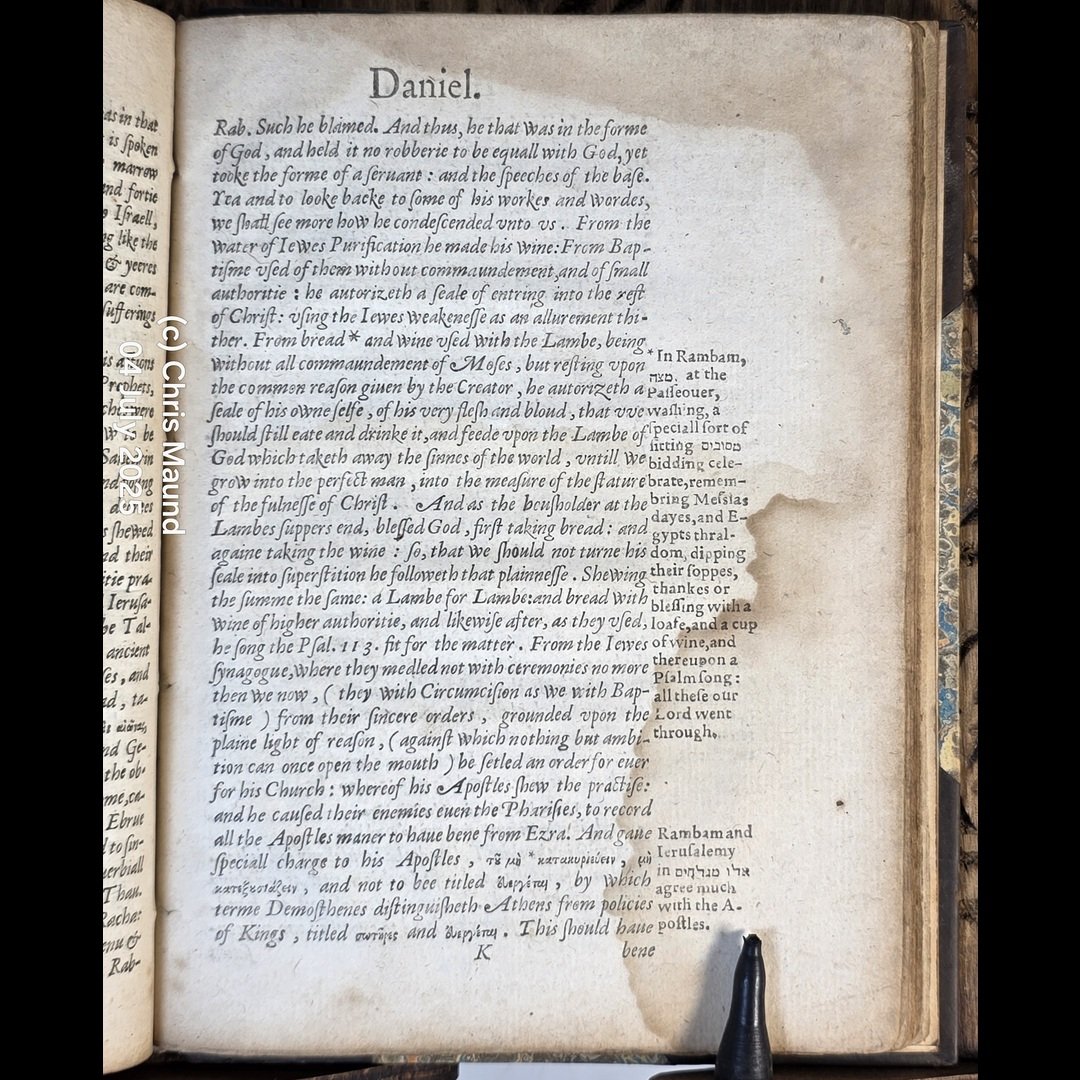 Image 13 of 19
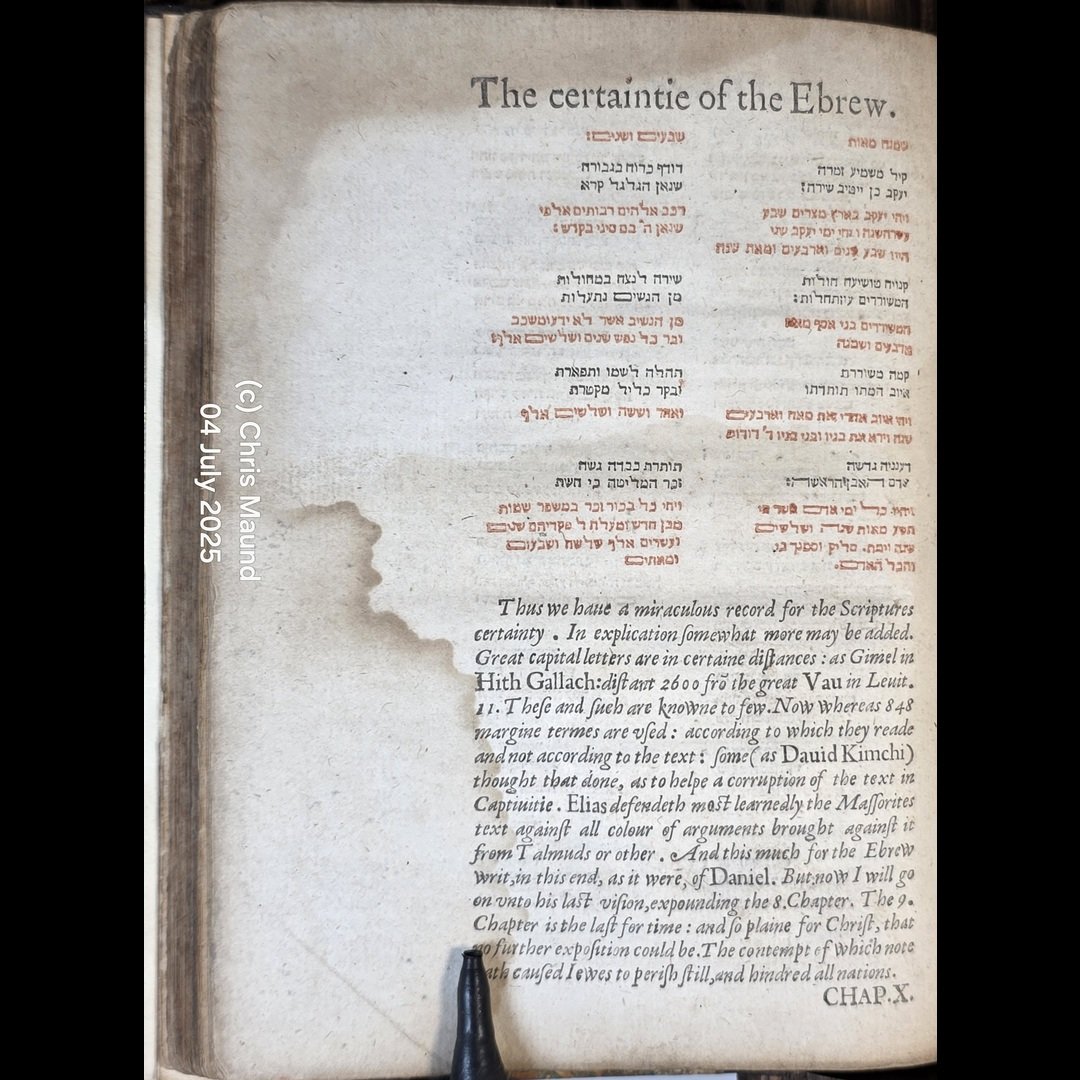 Image 14 of 19
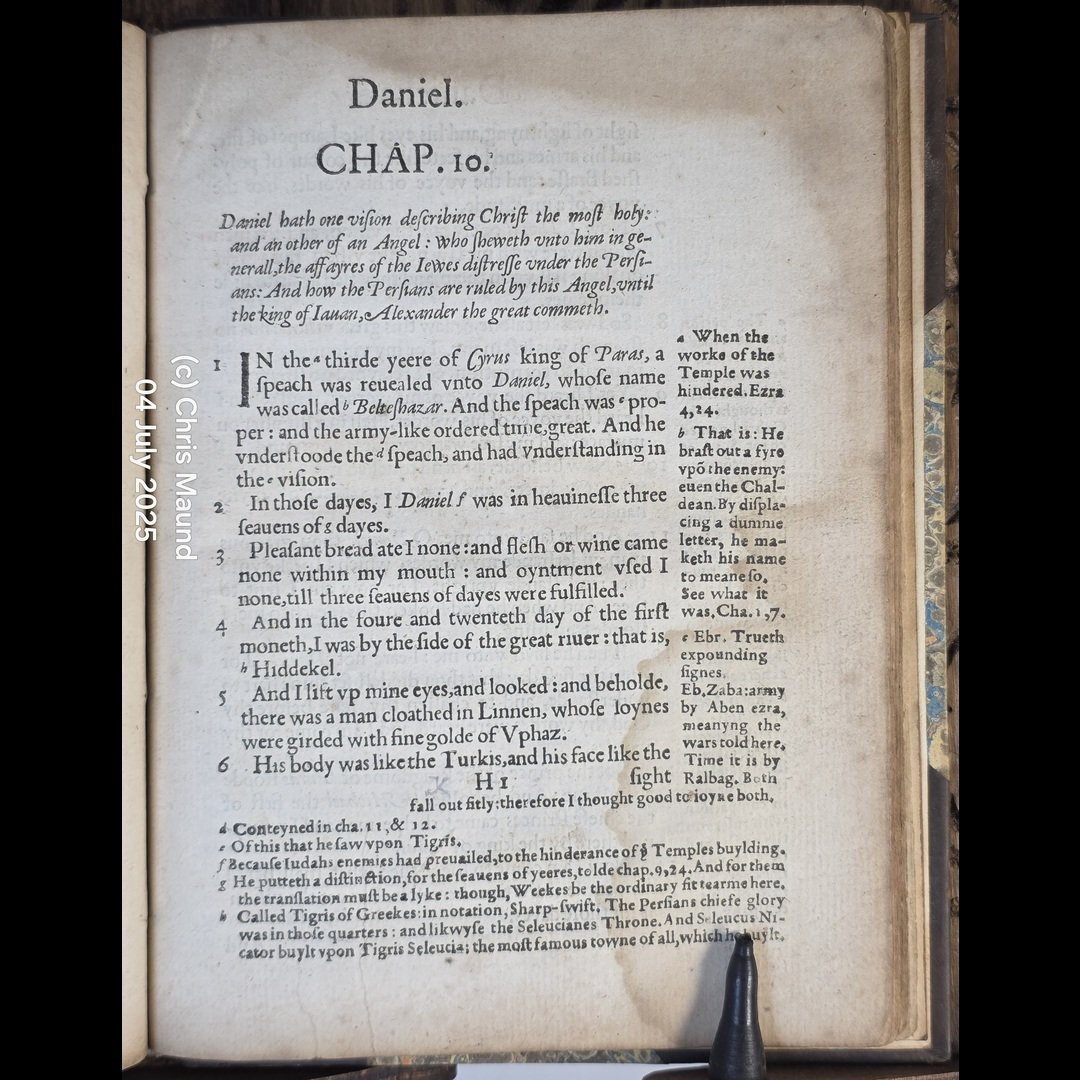 Image 15 of 19
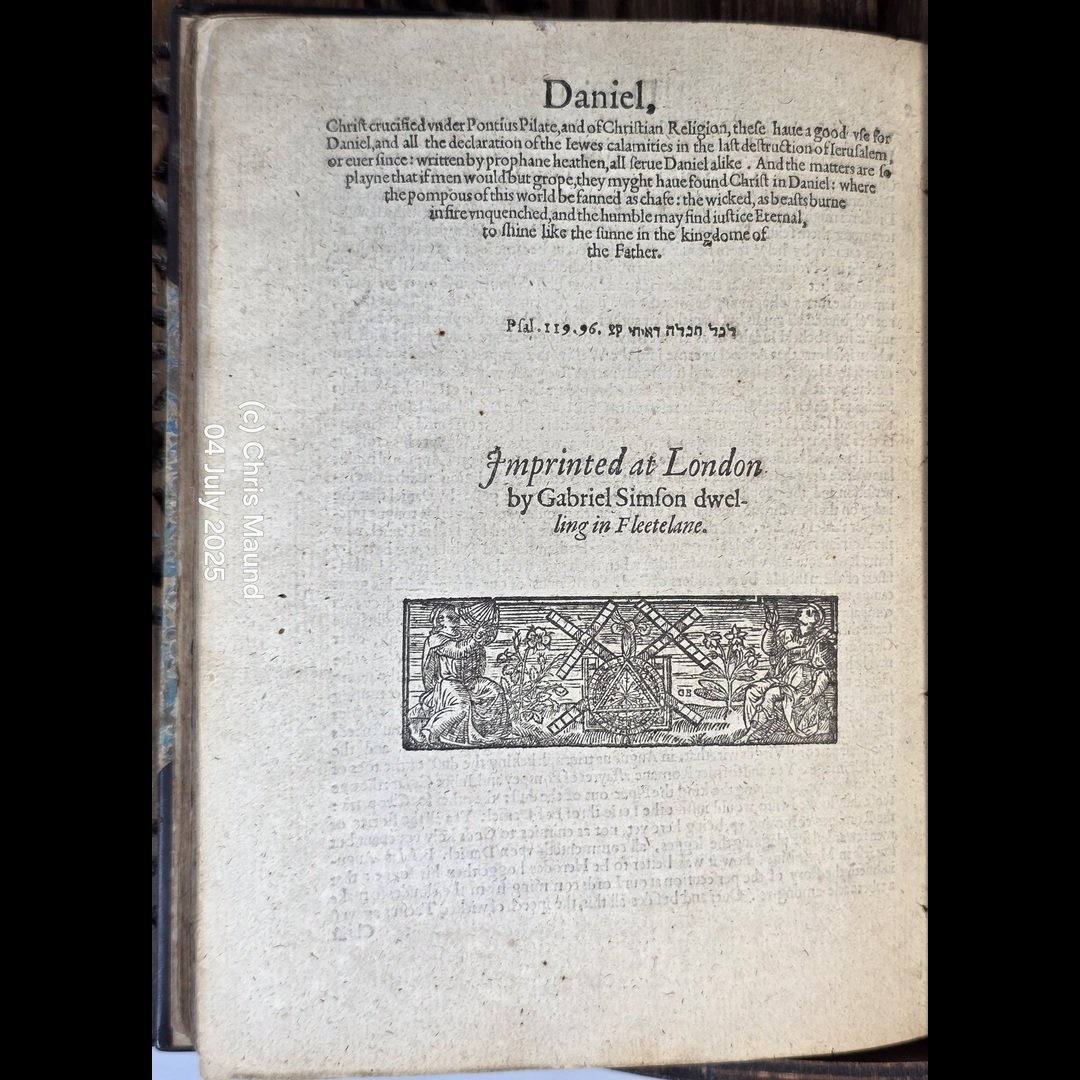 Image 16 of 19
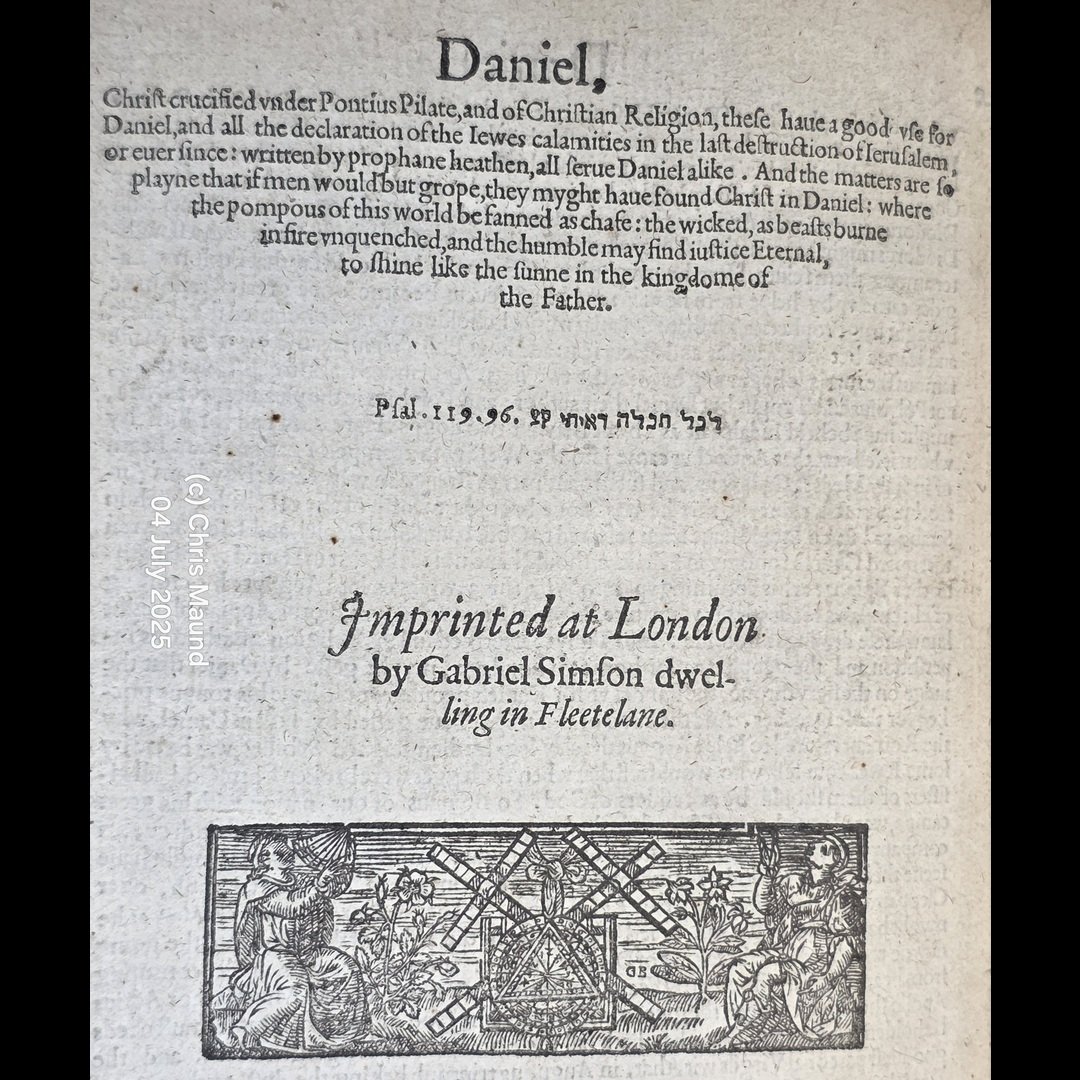 Image 17 of 19
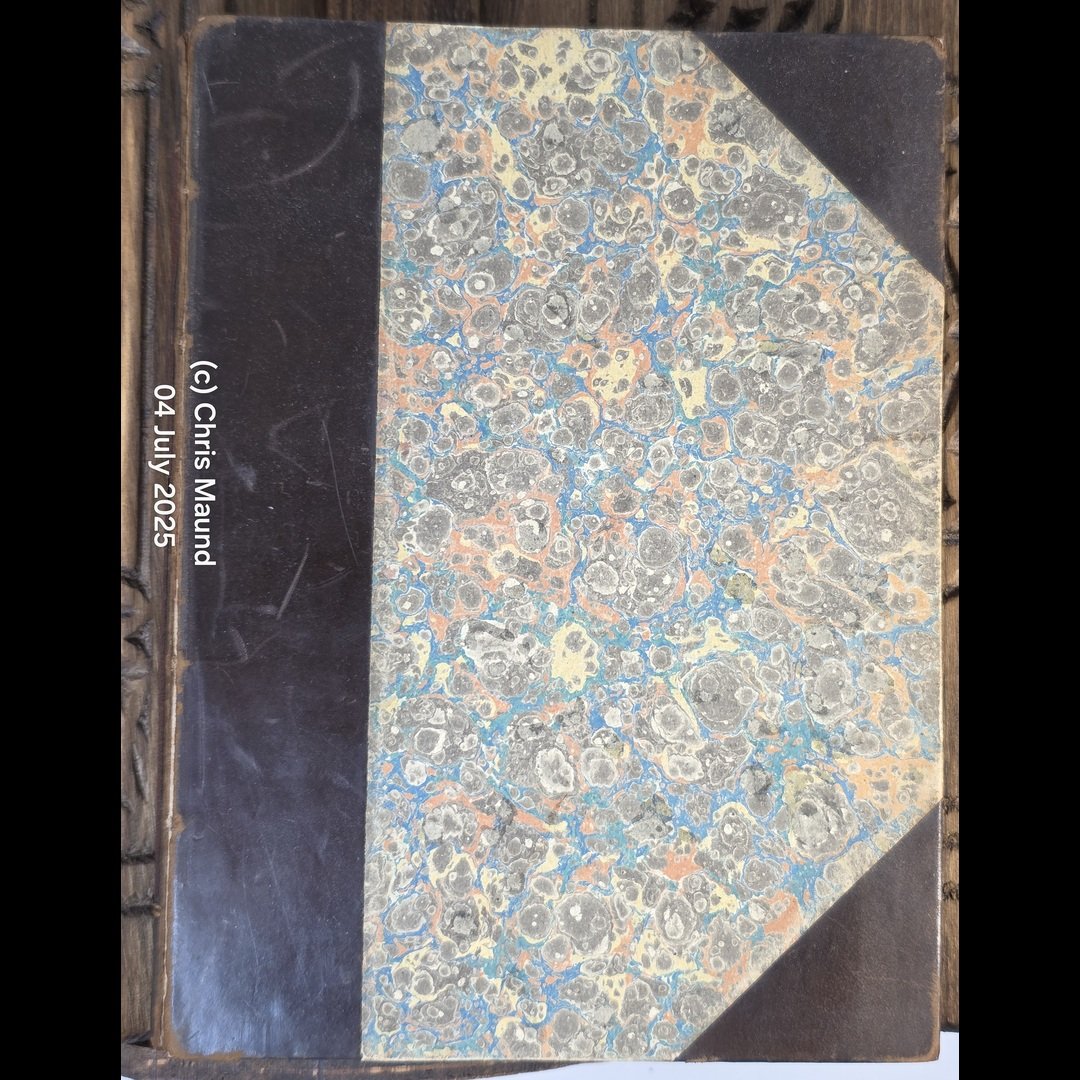 Image 18 of 19
 Image 19 of 19